SHOP STAFF WITH GLOVES BUT NO MASKS!

Diarmuid Breatnach
(Reading time: less than one minute)

IN TESCO PHIBSBORO TODAY

Image source: Internet
Staff wearing gloves (at last) but no masks. Distance instructions for shoppers at staffed checkouts but no masks — and what about floor staff, tending shelves, collecting empty baskets, ANSWERING QUERIES FROM CUSTOMERS AT CLOSE RANGE? !!
“Every little helps”?  TOO LITTLE!
 
Criminal neglect by big employers of their staff and also, in the long run, of the wider public. And the unions?!!

Lots of empty spaces on shelves by the way.  And I remembered the toilet paper!

End.

SHOP STAFF WITHOUT PROTECTION

Diarmuid Breatnach
(Reading time: 1 minute)
I went shopping tonight. No, not a stock-up raid — actual shopping. Of course, I forgot the actual thing I went to get — toilet paper. No shit! (well, not until I buy some, anyway).  So I got some other stuff I would need soon.
Irritated customer at self-checkout machine.
(Source photo: Internet)
I was glad for once, especially for the safety of the staff, to see the self-checkout machines there and happy, for a change, to use them. Even though the machine could not understand why my bag was “too heavy” (a small-medium backpack!). So a member of staff had to keep approaching to tell the machine I was all right and to carry on, which kind of negated the whole safety aspect.

Of course safety has nothing to do with why these machines were installed, nor even customer satisfaction but to reduce the number of employed staff (who still have to keep attending to machines that misunderstand the shoppers or vice versa).

One of the many models of hand-sanitiser available commercially.
(Source photo: Internet)
But NOT ONE OF THE STAFF WAS WEARING DISPOSABLE LATEX GLOVES OR FACE MASKS.
NOR DID I SEE A HAND SANITISER DISPENSER.
THEIR EMPLOYERS SHOULD BE OBLIGED TO PROVIDE THESE BY LAW IF THEY DO NOT DO SO VOLUNTARILY.
end.

SUSPENDED SENTENCE FOR GARDA WHO ASSAULTED RTÉ CAMERAMAN

Diarmuid Breatnach

(Reading time RB article: 5 mins; I.Times article: 3 mins)

In court on 6th March in Dublin, Garda Sean Lucey, who had struck an RTÉ cameraman with his baton in the groin, although his statement was “less than an apology”, received a suspended prison sentence. He had been found guilty by a jury in December but the Judge had postponed sentencing. Antifascists arrested on the same day as the assault by Garda Lucey, while preventing the proposed Dublin launch of the European islamophobic group Pegida, have been fined and three are still facing trial.

Garda Sean Lucey, leaving the court after his sentencing for assault on a journalist.
(Source: Irish Times).

          It was back on 6th February 2016, coincidentally the centenary of the 1916 Rising, when the islamophobic European organisation Pegida, announcing its intention to launch itself in a major city in every European state, planned a rally to launch an Irish branch in Dublin. The individuals and organisations supporting this initiative included racist, fascist and generally far-Right groups and individuals in Europe, including in Ireland.

Long before the planned Pegida rally, anti-racists and antifascists had occupied the intended space outside the GPO, while groups of anti-fascists mingled with curious bystanders on the other side of the street. Quite soon, some fascists of Eastern European background began to insult some women and also to threaten a filmmaker from Rabble, an independent alternative media organisation, calling him a “ fucking communist”.

Earlier that day, the anti-fascists and anti-racists had occupied the site of the
planned Pegida rally.
(Photo: D.Breatnach)
Fascists of E. European origin make their presence known in North Earl Street through threats and insults. (Photo source: Antifascist photographer)

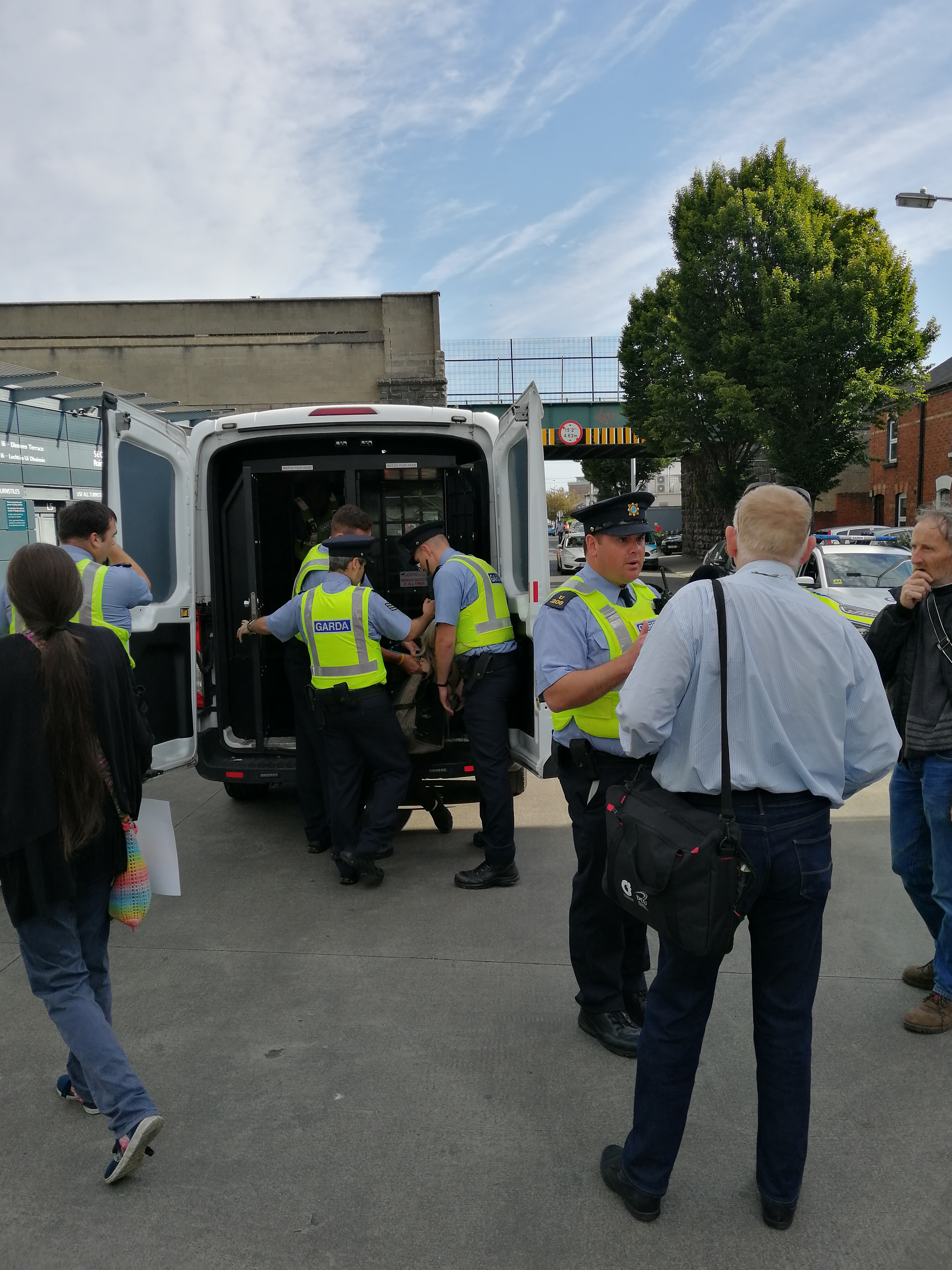
Having revealed themselves, the fascists quickly became the targets of antifascist hostility and scattered down North Earl Street. Some scuffles took place there and some of the fascists ran on down Talbot Street. Gardaí, including riot police (Public Order Unit) waded into the antifascists and also beat up a fascist, in an apparent case of mistaken identity. Subsequently the Gardaí cordoned off that area with drawn batons and police dogs.

It was soon revealed that some other fascists were holed up in a bar in Cathedral Street and many antifascists made their way there, only to run into another confrontation with riot police who repeatedly struck anti-fascists in order to drive them out into O’Connell Street. It was there that the assault on the RTÉ journalist took place.  It took until December 2020 for the case to come to court while, in the meantime, anti-fascists were charged, convicted and fined.

Gardaí wielding batons in Cathedral St.
(Photo source: Antifascist photographer)

The report of the case in the Irish Times (see References, Sources) reveals three things, it seems:

  1. The fact that his victim was a journalist of the State broadcaster and supported by his union and employers meant the Gardaí could not get away with the assault without some kind of punishment;

  2. On the other hand the Judge was determined to treat the assault as leniently as possible under the circumstances;

  3. The Garda’s whole attitude was in essence that he had done nothing really wrong.

Regarding Garda Lucey’s attitude, which even Judge Melinda Greally remarked upon (“his statement of regret falling short of an apology”), it suggested that he might well have assaulted or would in future assault some other member of the public – especially if he were not a journalist of a State broadcasting service. Perhaps an independent journalist …. or an anti-fascist demonstrator …. or even some member of the public who voiced some objection to his behaviour.

Furthermore, before Garda Lucey struck Mr. Colm Hand in the groin, he struck at his camera. What can that mean? Surely nothing less than that he did not wish his actions or those of his colleagues to be recorded! And perhaps a message to other potential journalists in future. Colm Hand declared that apart from the pain of the injury at the time (which could have caused permanent injury), “what happened on that day shattered my confidence and I have never fully recovered.” The five-day trial in December last year, necessary because Garda Lucey did not admit initially to the offence, was also stressful for Mr. Hand and that and the period leading up to it had caused him worry and sleeplessness.

The Judge must’ve been aware of all these possibilities in future and past Garda behaviour and yet, despite Garda Lucey’s attitude, decided to view his assault as “an aberration.”

This was because, she said, he had no previous blots on his career. But how would those blots have appeared if he had, indeed, behaved similarly in previous situations? Who would have recorded those incidents in his career? The only reason this occasion was noted was because he had struck a journalist of a state broadcasting service and neither the victim, his employers nor his union had been prepared to drop the matter so that, eventually, it had to come to court.

QUESTIONS NOT ASKED

          The Irish mass media – including RTÉ itself — does not ask such questions. Nor speculate whether Garda violence was inflicted on others in that area on that day.  It was and I myself witnessed it. 

Part of the struggle in Cathedral Street.
(Photo source: Internet)

After I moved forward to denounce one Garda who was beating the protectively-raised hands of a protester, one huge member of the POU struck at my fingers with his baton several times and when I evaded the blows, shoved the baton into my stomach, which caused me in reflex to grab it and engage in a short tugging battle, during which he grew increasingly irate and I increasingly worried for my personal safety.

During a sit-down protest outside the Dáil some years ago, Gardaí drew their batons and assaulted demonstrators peacefully sitting down, which was photographed in clear evidence. Not one Garda was charged with assault (nor likely reprimanded) arising out of that incident. And there have been many other such incidents.

No judge should quote an unblotted record of a Garda as any reason for leniency in sentencing. But of course, the judiciary realise that the Gardaí are the first physical line of defence of the system they uphold and for that reason they will always get special consideration. As Judge Greally was quoted as saying, “she has the highest regard for the work of the Gardaí.”

END AND AFTERMATH OF THE PEGIDA CONFLICT

          The Pegida V Anti-racists conflict in which that assault on Colm Hand took place is only vaguely referred to in the Irish Times report – surely a deliberate occluding of context and of an event that would have been of interest to its readers.

After the various struggles in North Earl and Cathedral Streets, Gardaí pretended to arrest the fascists and brought them out in police vans to safety while decoy vans made their way into O’Connell Street, drawing large crowds of anti-fascists to block them and curious onlookers to view the event. Earlier, some Irish fascists coming in to town by LUAS had run into antifascists and never made it to the intended Pegida launch, one needing to go to A&E instead.

Subsequently, antifascists monitoring fascist communications reported that some Eastern European fascists complained of the lack of spine of their Irish counterparts and swore they would never again cooperate with them. Dublin may have been the only European capital where Pegida did not succeed in launching itself and subsequently the whole initiative faded from the news.

Launch of the Pegida ship in Dublin.
(Cartoon D.Breatnach)

As noted earlier, a number of antifascists faced charges and were sentenced in court, including fined. Three Irish Republicans of different allegiances were charged and are currently awaiting trial; their charges are of “violent disorder” which on conviction carry a sentence of up to ten years imprisonment, an unspecified fine, or both. It is the first time this charge has been used by the Irish State against political activists.

End.

REFERENCES, SOURCES:

Irish Times report on sentence: https://www.irishtimes.com/news/crime-and-law/courts/criminal-court/garda-who-assaulted-rt%C3%A9-cameraman-gets-suspended-sentence-1.4195207

Violent disorder charge and penalty: http://www.irishstatutebook.ie/eli/1994/act/2/section/15/enacted/en/html

LION’S TEETH IN BLOOM FOR SUMMER

Diarmuid Breatnach

(Reading time: 7 minutes)

No, that title is not a cryptic clue for a crossword but instead refers to a very common and much-despised plant with a truly remarkable story. A plant that has found amazing ways of propagation and distribution.

         The week before last I saw my first dandelion of this year in bloom in Dublin. On a cold, dark and wet day, it had its sunny bloom shining on a bit of waste ground. And not far from it, a coltsfoot (Tussilago farfara) in bloom too, a relative in the same genus sometimes confused with the dandelion, also in bloom. But this is the story of the ubiquitous dandelion, which we knew as “Piss (or Wet) the Bed”, from a mistaken belief that keeping the blooms in one’s bedroom would make one void one’s bladder while sleeping.

We have two common species of dandelion in Ireland, T. vulgaris and T. officinalis, Caisearbhán and Caisearbhán Caol Dearg (?) respectively in Irish. They belong to the genus or larger family of Asteraceae, one of the two largest genera of the flower family, including so many species, from the diminutive daisy to the giant sunflower.

It is an important early source of pollen and nectar for insects in this latitude, when not many other blooms are about.

The name “dandelion” is a rendition of the pronunciation in French of “dents de lion”, i.e “lion’s teeth”, said to refer to the serration of the leaves reminding people of lion’s teeth. Well, perhaps of a cartoon or heraldic lion, or one as imagined by Europeans who had never seen the animal.

As the season progresses, soon those cheerful yellow blooms will be seen everywhere, on roadside verges and waste ground, in gardens and fields, in woodlands, on hillsides ….. Except in bogs and strangely in some parts of the Burren1, there is hardly a place where it cannot be found, which makes us see it as common and perhaps view it with disdain.

But it is far from being an everyday plant.

PUFF CLOCK AND PARACHUTE BABIES

       As children, we thought to tell the time by blowing on the fluffy balls that develop from the bloom in late Summer or Autumn, each puff being an hour and the correct time being the number of puffs to blow the last seed parachute away. It seems unlikely such an impractical idea would have occurred to us and we only did so because we had been told about it by adults.

But there is some wonder in those fluffy balls, full of separate parachutes, each bearing one seed. This is possible because what I have been deliberately calling a “bloom” rather than a “flower” is, properly speaking, a capitulum, a head actually containing many, many little flowers, or florets – and each one of those will bear a seed. It is a wonderful arrangement capable of producing a multiplicity of seeds even if parts of the bloom are damaged.

Each floret grows a silky “parachute”, the plant not only using the wind for seed dispersal (as do grasses with pollen) but developing such a means of delivery to cover great distance.

Seed-bearing puff-ball or “clock” of the dandelion (Source photo: Wikipedia)

Upon hitting disturbed ground or even a crevice with soil, the seed takes quickly – the dandelion’s children are great opportunists — and sends down a long taproot, while above ground, leaves grow in a rosette shape upon rosette, later sending out hollow stalks that will bear the bloom of florets. Each bloom responds to changes in light, in fine weather stretching the florets to the sun and following its course across the sky, or closing the head up as soon as rain threatens, opening also for sunrise and closing at evening.”1 As the florets die, their bracts close and the seeds and parachutes develop inside; then their surrounding bracts drop, allowing the expansion of the full ball of silky parachutes – i.e the maximum possible number of seed-carriers.

When the seeds have gone with the wind, the hollow stem dries up and falls away. The tap-root regularly shrinks and pulls the rosette of leaves tight to the ground: maximum absorption of sun and moisture but also maximum possible cover on ground, making it difficult for other plants to compete close to it.

Unless I dreamed it, somewhere I came across a phrase and image that I considered very democratic but have not been able to find it since. I had thought it spoken by a Shakespearian character but no search has turned it up. As I recall it, a worker or person of “low” social status says that his blood is as good as any royal person’s, for “a king on the march scatters his seed like a dandelion”!

Stages of flowering dandelion from bud to puff-ball, showing also leaves and root. (Photo sourced: Internet)

To the average flower or vegetable gardener, the dandelion is an invasive noxious weed, rapidly colonising newly-dug, hoed or even raked soil and competing with what it is desired to grow. And the fact that hoeing the leaves off even a couple of times will not kill the plant, the root sending out new shoots, makes it worse. Using a rotavator chops up the tap root but many of the resulting sections can regenerate and start a new plant.

All this is amazing enough, were it not for the plant’s sex life – or absence of it!

SEEDS WITHOUT SEX

       Most flowers, blossoms and blooms exchange pollen, usually with the assistance of pollinators – generally insects and in particular, bees. This fertilises the plants and causes the production of seeds, whether in the form of fruit or nuts or just plain “seeds”. The shape and colour of the bloom attracts the pollinator, knowing that inside there is nectar and pollen to be eaten (or collected, in the case of bees).

Well, dandelion blooms contain nectar and are visited by many insects, including bees – but the plants don’t exchange pollen in order to produce seeds. They produce the seeds alright, as we have seen – but asexually. Without sex. So why produce blooms and nectar at all?

Each new plant is a copy of the parent but no breeding occurs. Another mystery: there are a huge number of different microspecies of dandelion, differing in sometimes minute ways from one another and living and seeding in the same general area (more than 70 in Co. Dublin alone3). ‘In the British Isles alone, 234 microspecies are recognised in nine loosely defined sections, of which 40 are “probably endemic.”4

Let’s imagine an ancestral dandelion plant – how did it come to produce all these micro-species, seeding true but each separate and without cross-breeding? Botanists don’t seem to know: ‘the humble dandelion is, indeed, as the new Webb’s An Irish Flora confirms, “a very difficult genus”, its flowers not always to be told apart, even in the hand. The American ecologist Paul Ehrlich once described the reproductive policy of dandelions as “perhaps the greatest mystery in the world of plant sex”. 5

FOOD, DRINK, DYE …. AND RUBBER?

       All over Europe and Asia the plant has been known for culinary and/ or medicinal qualities but rather than just quote hearsay and unverified publications, I prefer to pass over most of the detail of these alleged qualities as the subject requires more research than I am prepared to undertake at this time.

All of the dandelion plant is edible1, except perhaps the bloom-stem: root, leaves, buds and blooms. Which is probably how this native Eurasian plant came to colonise America (though North America does have its own native species too) – brought there as a culinary plant by European colonists. The green leaves are likely to be too bitter for many tastes unless blanched first – i.e covered to deny them sun for a week or so, when they will turn yellow and lose much of their bitterness but still remain crisp.

The typical rosette growth-pattern of the dandelion leaves.
(Photo sourced: Internet)

Dandelion wine has been made from the flowers (a gallon of flowers for a gallon of wine7, but some other ingredients must be added, as with all European plants with the exception of the grape or the gooseberry). A mildly-fermented drink, dandelion and burdock8, has also been made from a combination of the dandelion flowers and burdock roots.

Dandelion wine
(Photo sourced: Internet)

The flowers have also been dried, then ground into a powder to make a light yellow dye but I lack information on its colourfastness.

The white sticky liquid (latex) in the stems and along the main rib of the larger leaves has been said to remove warts but having tried it myself without success I doubt this claim. Furthermore, I believe the remedy may be confused with a similar-looking white sap from a completely different plant, the petty spurge (also known as “milkweed” and other common names), Euphorbia peplus, which I have found efficacious. However, the white sap in the dandelion has been developed by selective cultivation in one species to replicate the latex of the rubber tree9 and dandelion rubber may one day become a familiar product.

Soon, this seemingly ubiquitous flower of many “cousins” and many uses, an opportunist colonist with thousands of daughters sailing the wind, will be brightening our ways everywhere. Once we know even some of its qualities, can we ever again look at the dandelion with disdain?

End.


A field of dandelions. (Photo sourced: Internet)

FOOTNOTES

1In New Atlas of British Irish Flora, quoted by Michael Viney, “Pissey beds lion’s tooth” etc (see Sources, References)

2Ibid, also Taraxacum – ‘A very difficult genus of a multitude forms, which set seed without pollinating, and never, therefore, interbreed.’ An Irish Flora by D A Webb, Sc.D. 1977, quoted in Wildflowers of Ireland (References, Sources).

3Ibid.

4 Stace, C.A, New Flora of the British Isles, quoted in Taxacum (References, Sources)

5Michael Viney, Irish Times (References, Sources)

6Taraxacum (Sources, References)

7Michael Viney, Irish Times (References, Sources)

8Not the commercially-produced and carbonated drink

9Taraxacum, ‘As a source of natural rubber’ (Sources, References)

SOURCES, REFERENCES:

https://en.wikipedia.org/wiki/Taraxacum

In Irish: https://blogs.transparent.com/irish/blath-bui-eile-an-caisearbhan-dandelion-in-irish/

http://www.wildflowersofireland.net/plant_detail.php?id_flower=86

https://www.irishtimes.com/news/environment/pissy-beds-lion-s-tooth-it-has-to-be-the-dandelion-1.515483

Petty Spurge as cure for warts (and variety as cure for skin cancer): https://en.wikipedia.org/wiki/Euphorbia_peplus

and https://www.teagasc.ie/media/website/crops/horticulture/vegetables/Illustrated_Guide_to_Horticultural_Weeds.pdf

GREYHOUND PROTESTERS SPLIT AS SOME CAVE IN TO SHELBOURNE INTIMIDATION

Diarmuid Breatnach

(Reading time: 5 minutes

A legal offensive by the management of the Shelbourne Greyhound Racing stadium failed to prevent protesters picketing the venue but did succeed in splitting their alliance.  The Irish Council for Civil Rights voiced its concern over the implications of the legal case.

Advertisement on the side of a Dublin public transport bus.
(Source photo: Internet)

This happened back in January and sorry I didn’t get to it then. However, the campaign is ongoing and lessons of the case are still relevant.

Six protesters, who became known as the “The Greyhound Six”, were named in application for an injunction by the Greyhound Stadium, along with “persons unknown”.  The legal case followed on local residents receiving a letter threatening them for allegedly supporting the Stadium, a letter which the campaigners deny sending and which looks more like dirty tricks by Greyhound racing supporters.

However, when the case came to court it transpired that four of them, without consulting the other two, had agreed to do a deal with the Stadium. This resulted in all six being banned from protesting within 50 metres of the entrance to the Stadium.

The two who had not agreed to the deal, Laura Broxson and Tawnie Ocampo, appealed the judgement to the High Court and won, Shelbourne Park also having to pay the court costs.

The Four Courts complex, Dublin, containing the High Court, viewed from Ó Donabháin Rosa Bridge.
(Photo source: Wikipedia)

What does all this mean in effect?

  • It is clearly undemocratic and unwise for defendants to decide on a course of action without consulting their co-defendants; they don’t have to agree with them but they should at least consult with them

  • The likelihood is that had all the Six stood together against the injunction, they would all have won

  • Had they done so, future targets of protests would have thought twice before seeking an injunction against protestors on a public highway

The unilateral action of the Four not only restricted their own protesting but potentially endangered the rights of other protesters in similar circumstances, a point taken up by the Irish Council of Civil Liberties, which had themselves joined to the High Court appeal and had this to say:

ICCL welcomes the settlement today in the High Court in the case of Shelbourne Greyhound Stadium v Broxson and Others.

ICCL became aware of the case in December and sought to become joined in the case, as we believed that nature of the injunctions being sought in the case gave rise to serious issues concerning the right to peaceful protest. In particular we were concerned at the nature and extent of the injunctions being sought, and the fact that injunctions were being sought not only against named defendants but also against “persons unknown”.

The High Court joined ICCL as an amicus curiae (friend of the court) in January, recognising that ICCL is an expert body with regard to civil liberties and human rights, and that important issues concerning the right to protest arose in the case.

ICCL was represented in the case by Sheehan and Company Solicitors and by Conor Dignam SC and Mark William Murphy BL. This legal representation was on a pro bono basis supported by the Voluntary Assistance Scheme of the Bar of Ireland.

Image sourced: Internet

GREYHOUND RACING IS CRUEL

          Many, perhaps most people will be under the impression that greyhound racing is a harmless sport. However the campaigners say that quite apart from injuries suffered by dogs on the tracks, the number of dogs bred for this activity means that a huge number of dogs are killed because of being considered not up to competition standard, whether as young dogs or those too old to race. Campaigners claim that over 6,000 dogs are killed annually and some animal welfare organisations believe the figure may be as high as 10,000. “Surplus” dogs have been proven to be sold abroad for meat and dogs of racing or stud standard have also been exported for racing, though both are illegal.

In addition, the demand means that greyhound bitches may be fertilised more often than healthy, constantly churning out pups for the industry.

It is the commercial drive that brings these results and the support of the betting public that sustains it – but not that alone, since the Irish State supports the industry with an annual grant of 16.8 million euro. Recently in the Dáil an attempt to remove this state subsidy failed as most TDs voted in favour of continuing it. Few countries apart from Britain and Ireland have greyhound racings stadia – and none in Europe.

Should you wish to support the campaign against greyhound racing and live in Dublin, you may wish to attend the protests on Saturday evenings and, when Tuesday evening racing resumes, on that day too.

end. 

Photo: D.Breatnach
Line of protesters facing Shelbourne Greyhound Racing Stadium July 2019 (there was another line on the opposite side too) (Photo: D.Breatnach)

REFERENCES AND FURTHER INFORMATION

Organisations: OPAGE (Ordinary People Against Greyhound Exploitation) and ARA (Animal Rights Alliance).

Statement of the NARA campaign (representing two of those who did not make a deal with Shelbourne Park, the greyhound racing venue): https://www.facebook.com/NARAcampaignsIRELAND/photos/a.273010276055655/2781577838532207/?type=3&theater

Media report before High Court appeal: https://www.breakingnews.ie/ireland/greyhound-track-protestors-delighted-with-outcome-as-they-reach-settlement-with-shelbourne-park-978467.html

RTÉ Investigates program “Running For Their Lives”: https://www.youtube.com/watch?v=ZYTb2qBjlMM

Official and company reactions to the RTÉ documentary: https://www.irishtimes.com/news/ireland/irish-news/sponsors-horrified-by-rt%C3%A9-programme-on-greyhound-racing-1.3942232

A LIFE CELEBRATED – SOCIALIST, REPUBLICAN, TRADE UNION ACTIVIST

Diarmuid Breatnach

(Reading time: 10 minutes)

A packed function room at Club an Múinteoirí (Teachers’ Club) in Dublin last night heard speakers, including Arthur Scargill and the Cuban Ambassador, praise some of the highlights of the life of irish activist Des Bonass (died 26 September last year). The meeting was chaired by Colm Kinsella of Unite.

          Strangely, up to yesterday afternoon, many socialist, Republican and trade union activists seemed unaware of the event, organised by Bonass’ branch of the trade union Unite. I only learned of it myself when Arthur Scargill and Nell Myles stopped at our weekly Save Moore Street From Demolition campaign stall earlier in the day and explained that he was in Dublin in order to speak at an event that evening.

Section of capacity crowd at event
(Photo: Labhrain Ní Dhúgáin)

The event was scheduled to begin at 7.30pm but by that time there were less than a dozen people present, arousing fear in some quarters that the attendance would be poor. As time went on, the side room leading off the main room was closed and the chairs removed. Some more people arrived and then as if by magic by 8.30 the room was packed, with extra seating being made available for people who arrived even after that.

IRISH TRADE UNIONISTS AND CUBAN AMBASSADOR

          John Douglas (former General Secretary of the Irish Congress of Trade Unions, currently General Secretary of Mandate trade union) spoke of how he had come to know Des Bonass when Douglas was a member of the Amalgamated Transport & General Workers’ Union (now part of UNITE), a section catering for bar workers which at the time represented a great many in the trade. He related how the bar workers would come off late shift and go to a union meeting around midnight, a meeting that sometimes would not finish until five a.m! Bonass had asked Douglas for a space to address the union members in support of the British miners, after which he had come away with buckets overflowing with financial contributions from the barmen.

John Douglas of MANDATE speaking.
(Photo: Labhrain Ní Dhúgáin)

Douglas also related that Bonass was in support of women’s right to choose abortion at a time when that would not have received popular support in Ireland and went on to speak about the strike against TESCO and how Bonass had brought Scargill to a number of picket lines around the city, raising their morale and drawing media attention.

Des Derwin (Executive Member of Dublin Council of Trade Unions and Vice-Chair of SIPTU Dublin District Council) gave what seemed a comprehensive list of the activities of Des Bonass down through the years, including how he had actively supported the struggles in the H-Blocks in the Six Counties and of the Palestinian people, as well as the struggle of the Dunne’s Stores strikers. Unknown to many, perhaps, Bonass had been a founder of People Before Profit and the Unemployed Workers’ Movement.

Des Derwin of SIPTU and DCTU.
(Photo: Labhrain Ní Dhúgáin)

When the Irish Labour Party conference had voted to go into coalition government, Bonass and Matt Merrigan had walked out together, after they had seen Noel Browne leave the room. The media thought Bonass and Merrigan had led a protest walkout, whereas they said they had followed Noel Browne. When Brown appeared in the lobby, the reporters asked him why he had led the walkout, which he adamantly denied, saying he had only left the conference to go to the toilet!

Subsequently Bonass and Merrigan had founded the Irish branch of the Socialist Labour Party. The Dublin Council of Irish Trade Unions had been another of his areas of activity and Bonass had been President of the organisation; he had also been active in Unite the union.

Also a supporter of internationalist causes, Bonass had been against such as the Chilean coup, for Nicaragua and Cuba, against the South African Apartheid regime and the invasion of Iraq.

Cuban Ambassador speaking at event.
(Photo: Labhrain Ní Dhúgáin)

          Hugo René Milanés, Cuban Ambassador to Ireland, expressed his gratitude to Des Bonass for the latter’s support for Cuba and in particular “against the Yanqui blockade” and for working for socialism throughout his life.

SCARGILL, BRITISH TRADE UNIONIST

          Arthur Scargill, ex-President of National Union of Mineworkers (Britain) spoke about Des Bonass’ support for the NUM, particularly those of South Wales, when they were in the big strike of 1984-’85 and how Bonass had agreed to receive money from the NUM to keep it safe from the British State’s sequestration. At first, the money had been couriered by Nell Myles, an NUM official (who was present at the meeting) and delivered to the ATGWU office in Parnell Square; on one occasion she had been mugged on her way but the money stolen was her personal money and not the union funds, which were safely delivered. Six months later, Scargill himself came to Dublin and Des Bonass accompanied him to a Dublin branch of a bank with a holdall stuffed full of a lot more money but the alarmed branch manager referred them to the bank’s head office, where the money was safely stored.

Scargill speaking
(Photo: Labhrain Ní Dhúgáin)

Des Bonass brought Arthur Scargill around to many Dublin pickets during the TESCO strike organised by the MANDATE union, which had been welcomed by the strikers and which had lifted their spirits. He had been happy to attend, Scargill said and related a journalist asking him about his reaction to a bomb threat against TESCO. To laughter and applause from the meeting’s audience, Scargill related his response to the journalist, that neither he nor the TESCO strikers could have anything to with any such bomb inside as they would never cross a picket line! Des Bonass had also got Scargill a spot on the popular Gay Byrne show, where he had been confronted with a Margaret Thatcher impersonator.

Bonass had been a founder of the Irish branch of the Socialist Labour Party which Scargill had founded in Britain as founded by James Connolly.

Paying tribute to the moral and practical support of the Irish people for the NUM’s struggle, Scargill said that their support in ratio to union members in Ireland had been the highest of all and went on to reveal that he and Nell both had Irish ancestry on both parental sides, referring also to the history of oppression of Irish people by the British State. Scargill talked about the financial contributions but also how Irish families had taken in miner’s children for holiday breaks, as British trade unionists had wanted to take in Irish children during the 1913 Lockout.

Later on in his speech, Scargill declared himself a firm follower of the “11th Commandment: Thou shalt not cross a picket line!” (loud applause) and went on to talk about the determination of the Thatcher Government to break the NUM and its leadership. Thatcher and Government personnel had claimed at the time that they had not intervened in the strike, which was allegedly between the NUM and the National Coal Board but Scargill stated that was a lie and the truth had emerged in documentation over the years, available on the Internet to anyone who wished to check it. “Unjust laws have to be broken” he said also because “if we hadn’t done that, women would not have the vote; we would not have trade unions!” He paid tribute to the Levellers, the Tolpuddle Martyrs and the Suffragettes.

Scargill emphasised that the best way to celebrate the life of Des Bonass and to honour his memory is to continue the struggle for the principles that Des Bonass upheld, then finished his speech to a standing ovation from those present.

Scargill and myself after the formal part of the evening.
(Photo: Labhrain Ní Dhúgáin)

Colm Kinsella then welcomed the last speaker, Ciarán Bonass. Ciarán announced that he was the son of Des Bonass and talked about what the family had learned from his father as they had also supported him in his activism. Thanking all the speakers and all others present on his family’s behalf, his mother Eileen and sisters Mairéad and Deirdre, along with in-laws and grandchildren, he ended his contribution to loud applause from the attendance.

Colm Kinsella announced that their branch of Unite was now named “the Des Bonass Branch of Unite” in Des Bonass’ honour, thanked all the speakers and the attendance and invited people to partake of refreshments while listening to labour and other songs performed by Richie Brown (of Unite) and friends.

End.

Des Bonass at European Day of Action Against Cuts protest 2010 (Photo: Paula Geraghty in Indymedia)

GETTING AWAY WITH MURDER?

Diarmuid Breatnach

(Reading time main text: 2 minutes)

Garda Armed Support Unit patrol car, one of a great many seen driving around many parts of Dublin including the city centre.
(Image source: Internet)

Last year, a Garda shot dead a man sitting inside a car who was harming himself with a Stanley knife.  In June 2019 the Department of Public Prosecution decided not to even charge the Garda who fired the shot.  What does this mean?

Since the evidence from witnesses (including his own colleagues) is that Garda A fired a deliberate shot at close range that killed Mark Hennessy through a closed window and that the man was not at that moment posing a threat to anyone (apart from himself), never mind a lethal one — how can we view this as anything but an on-the-spot execution by a Garda?  Since we are told that Gardaí are not authorised to carry out executions (and the State has abolished the death penalty), what can this be but MURDER?

It is useful to remember too that the founders of the Irish State deliberately resolved to set up the Garda Síochána as an primarily unarmed police force (in direct opposition to the armed colonial police forces that had suppressed Irish people in the past and continued to do so in the Six occupied Counties).

Not even charged?  For the moment, we need to forget about the fact that all the evidence points to the victim having murdered a child and hidden her body.  Killing the man could not bring her back (in fact might even have prevented her body being found but luckily the location was written on a piece of paper inside the car).

How can this killing be justified?  What possible legal reason can be given?  Dubious though it may be, the Gardaí who shot Mac Lochlainn (see below) at least claimed he had pointed a gun at them (interestingly, the officer who fired the fatal shot was himself killed a few years later in what was described as a firearm accident involving a colleague).  Well, in fact, in the Mark Hennessy killing NO REASON WHATSOEVER WAS GIVEN.  The DPP just “decided not to prosecute”.

Garda of the Armed Response Unit with machine gun.
(Image source: Internet)

If a Gardaí can decide when someone needs to die and act upon that decision, anyone might be a victim in future: political activist, whistleblower, personal enemy, mistaken identity ….

Unlikely?  Why?

There have been a number of questionable killings by Gardaí, including the shooting dead of Real IRA Volunteer Ronan Mac Lochlainn on May 1st 1988.  Mac Lochlainn was driving away from a Garda Special Branch ambush of a robbery team when he was shot dead by the Gardaí.  The matter was not seriously investigated until 20 years later when the investigators decided for whatever reason to clear all the Gardaí involved, leaving many important questions unanswered.

Another incident that might have ended fatally occurred in 2005 between two drunken senior Gardai who got into a fight and pulled guns on one another!  A personal quarrell ….

Armed Gardaí Detectives after a raid.
(Image source: Internet)

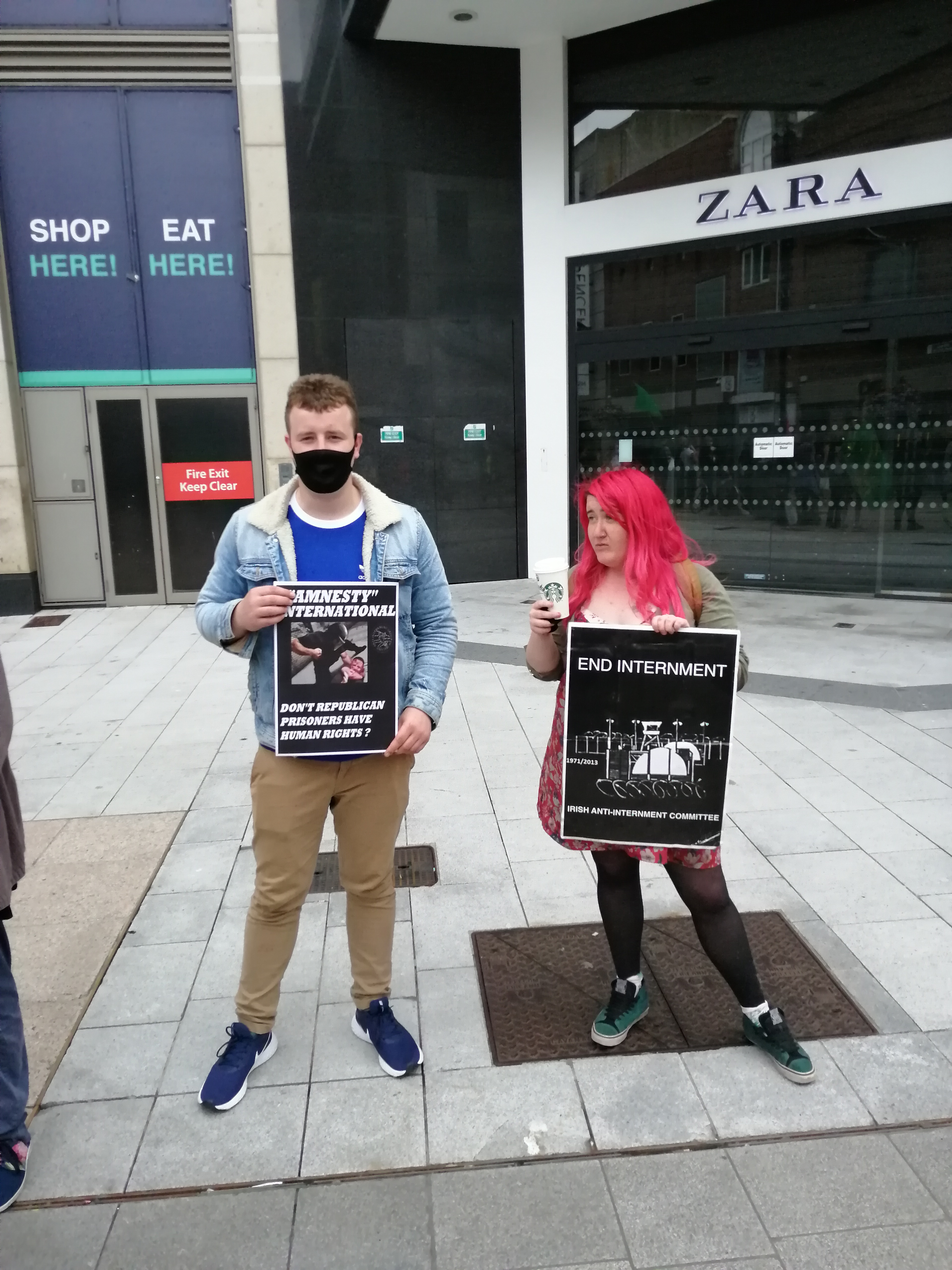
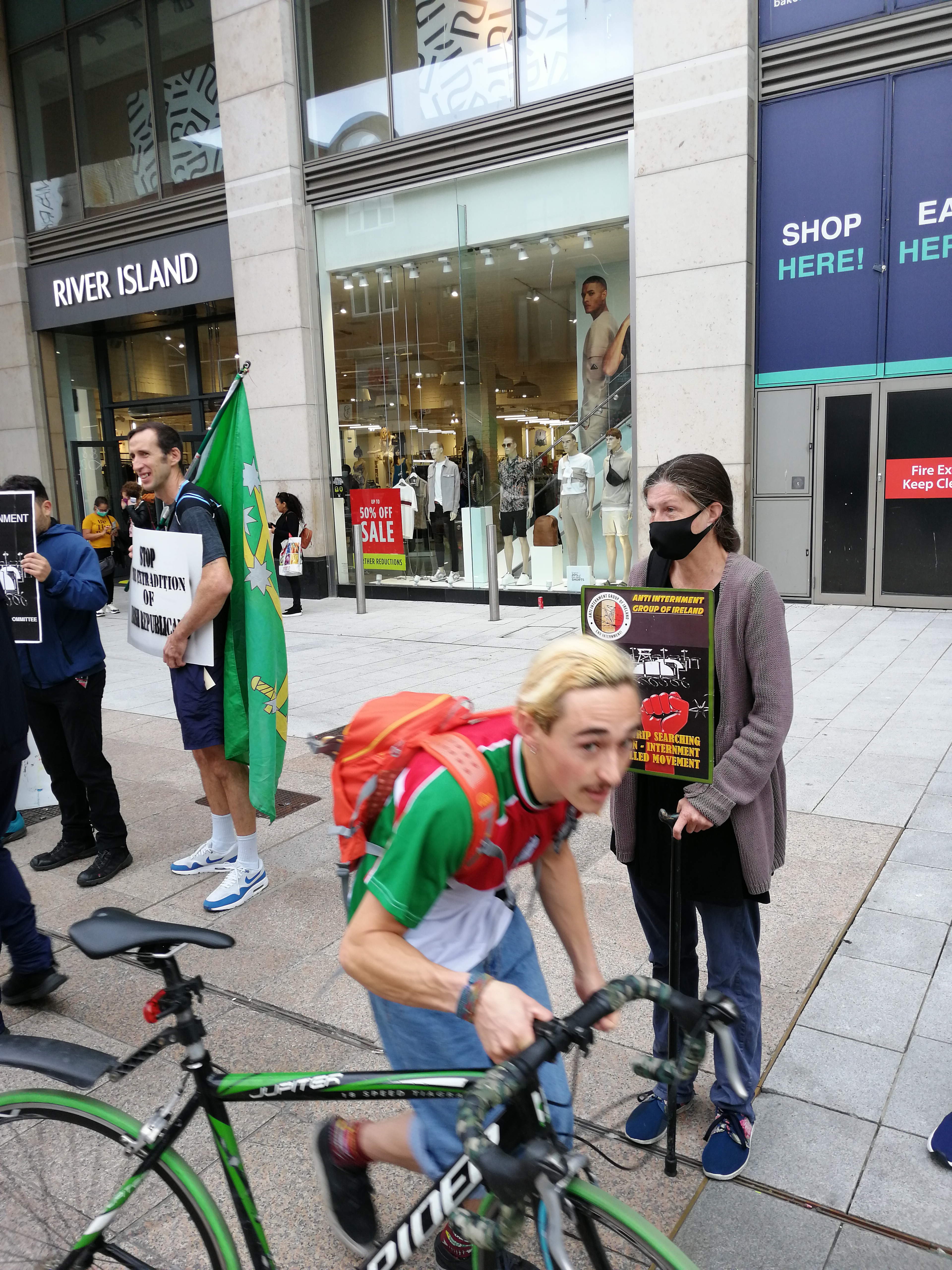
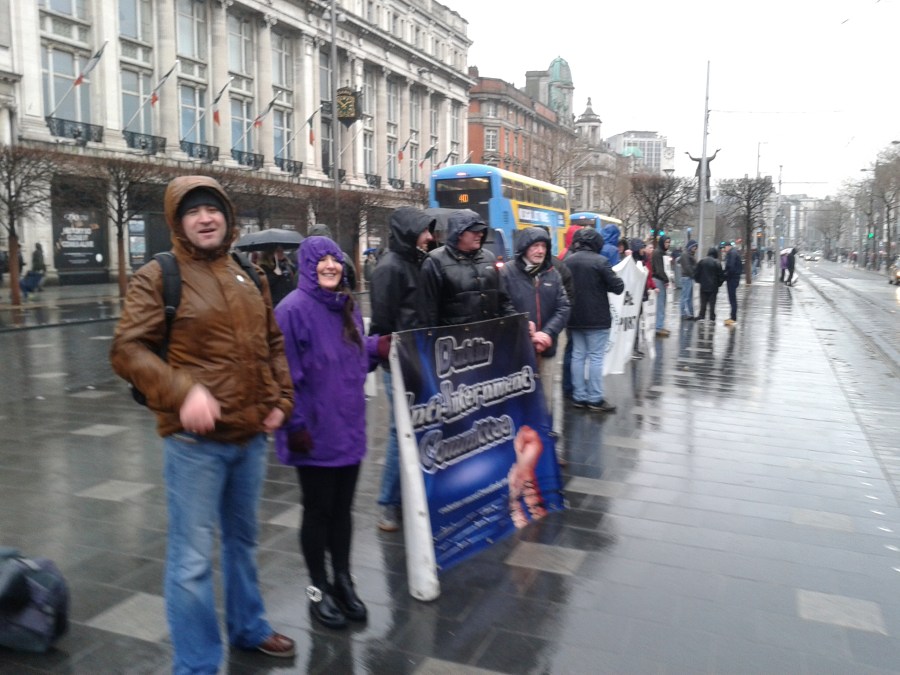
One can see on any day in Dublin the vehicles of the Garda Armed Response Unit driving around the city.  Nor do they restrict themselves to the duties for which one might imagine Gardaí would need to carry arms.  They have been seen stopping cars in traffic incidents, driving through busy streets, surveilling political demonstrations and even on one occasion last year stopping to caution people demonstrating against internment in Temple Bar.

In 2014 they turned up at a protest against Irish Water in Clonmell.  On another occasion last year they turned up to dispute between a private landlord and two of his tenants in Dublin and at a separate housing occupation action in Cork.  Last year also they attended a farmers’ protest in Limerick.

Is the Irish public being subjected to an armed Gardaí normalisation process? Why are the DPP not being made to justify their decisions not to prosecute Garda perpetrators of homicide?  How long before another unjustifiable killing?

end.

REFERENCES:

Inquest on Mark Hennessy: https://www.irishtimes.com/news/crime-and-law/man-who-killed-jastine-valdez-shrugged-before-being-shot-by-garda%C3%AD-inquest-told-1.4147055

Decision not to charge Garda: https://www.rte.ie/news/ireland/2019/0605/1053612-garda-hennessy/

Shooting dead of IRA Volunteer by Gardaí in ambush: https://www.irishtimes.com/news/crime-and-law/garda%C3%AD-exonerated-over-shooting-dead-of-real-ira-raider-maclochlainn-1.3738624

Senior Gardaí in brawl pulled guns on one another: https://www.breakingnews.ie/ireland/gardai-sacked-after-drunken-embassy-brawl-287170.html

Heckler & Koch machine-gun dropped out of Garda car: https://www.thesun.ie/news/4138462/garda-gsoc-machine-gun-lost-dublin/

Armed police attending farmers’ protest: https://www.farmersjournal.ie/garda-armed-response-unit-attends-limerick-factory-protest-484362
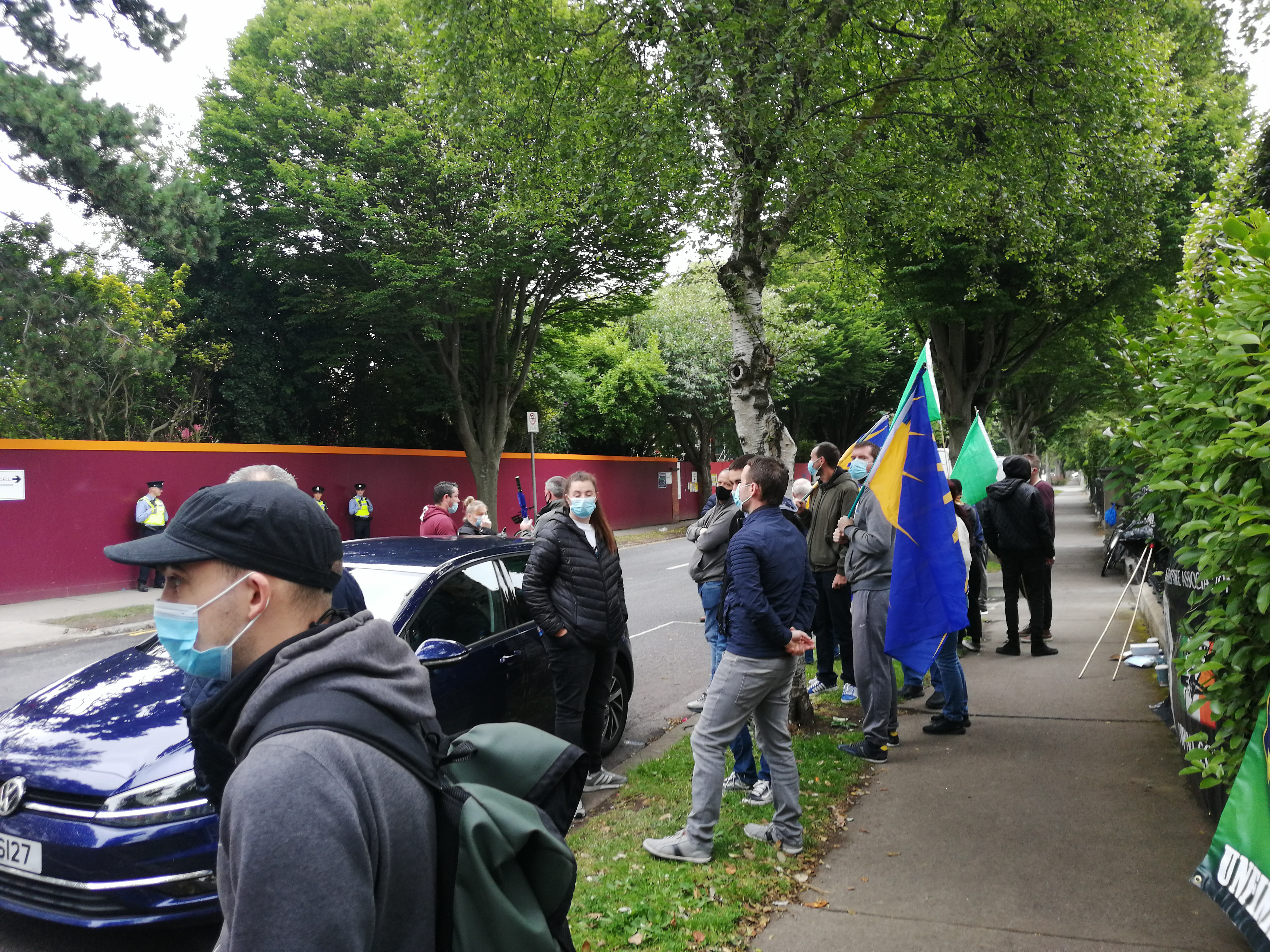
Armed police attending protest against Irish Water: http://www.rabble.ie/2014/11/10/stark-contrasts-in-protest-policing-by-gardai/

Armed police attending housing occupation action: https://cym.ie/2018/07/26/armed-response-unit-break-up-political-protest-in-cork-ireland/

https://en.wikipedia.org/wiki/Garda_S%C3%ADoch%C3%A1na#Armed_Gardaí

HAS FERRITER BEEN READING REBEL BREEZE?

Diarmuid Breatnach

(Reading time: 2 minutes)
On 15 February Ferriter’s column in the Irish Times expressed the opinion that comparison of Sinn Féin with Fianna Fáil in the 1930s only takes us so far. After looking at less of the overall history of the main Irish parties than I had in my article of 11 February in Rebel Breeze but adding some pieces I had not, what was his conclusion that differed so widely from mine? Well, that the military past was too new with SF!

Diarmaid Ferriter in Thinker pose
(Source: Internet)

But, actually, not true of Provisional SF with regard to FF, which came into government in 1932, less than two decades after the end of the Civil War and only six years after its split from Sinn Féin. De Valera, President of Fianna Fáil, had been a leader of the Republican side in the Civil War, from which side came the majority of Fianna Fáil’s supporters. By the time PSF gets into Government, it will be LONGER than two decades since Provisional IRA gave up its armed struggle!

On 11 February I posted an article of mine on Rebel Breeze and from there on to Facebook, making the point that, despite hostile media and politician claims to the contrary, Sinn Féin is very like the main Irish political parties – and that that is not a good thing. I traced the main elements of the parties’ history, how they had changed their positions and I elaborated the point that the main difference in their trajectories is that SF’s arrival on the neo-colonial capitalist political field was just more recent.

Meeting of Provisional Sinn Féin’s Ard-Choiste (national executive) in February 2020.
(Source photo: Niall Carson, AP, Internet)

It is worth noting (a point I had omitted in my piece) that nearly the entire Fianna Fáil government Cabinet in 1932 was composed of Civil War IRA men and that most of the remainder had been in Free State prison during that war.

It is said that imitation is the sincerest form of flattery but I can easily avoid being pleased by Ferriter substantially following my line of historical analysis. This is the man who, during the 2016 High Court hearing about the Government and property speculator plans for Moore Street, wrote a nasty attack on the demonstrators who had occupied the buildings and subsequently blockaded them against demolition. If he had been hoping to influence the High Court’s decision he failed – and spectacularly, because the judgement was that not only the buildings but the whole quarter is a 1916 historical monument.

Frank McDonald had also written an opinion piece during the trial against conservation and the demonstrators in the same newspaper (what WAS the Irish Times up to?) but after the judgement, he had the grace to apologise (sort of: he wrote that he had been in error).

But Ferriter? Nary a word.

End.

REFERENCES:

Piece by D. Breatnach in Rebel Breeze: https://rebelbreeze.wordpress.com/2020/02/11/despite-hostile-propaganda-sinn-fein-is-just-another-irish-political-party/

Piece by D. Ferriter in the Irish Times: https://www.irishtimes.com/opinion/diarmaid-ferriter-fianna-f%C3%A1il-s-trajectory-holds-lessons-for-sinn-f%C3%A9in-1.4173709?


LET THEM GO, LET THEM TARRY

Diarmuid Breatnach

(Reading time: 3 minutes)

Why doesn’t SF just step back and wait for whatever government is formed, hammer them from the opposition benches and wait for the next General election (which might well be in the Autumn)?

Sinn Fein President Mary Lou McDonald and Micheál Martin, leader of Fianna Fáil.
(Images source: Internet)

          There are 160 seats in the Dáil, the Lower House of the Irish Parliament. Mícheál Martin, leader of the Fianna Fáil party (38 seats), tells Mary Lou McDonald that he won’t go into coalition with her party Sinn Féin (37 seats) and she rages at him. Fine Gael (35 seats) wants to go into coalition with Fianna Fáil – but at a price. Eoin Ó Broin of SF admits the numbers don’t add up for a coalition of the Left (couple of surviving TDs from Left parties and independents led by SF) which was clear before Sinn Féin (and some on the Left) even started talking about it.

The main reason for the weakness of the Left in the Dáil is that the Irish Labour Party, founded by Connolly, Larkin and others, has degenerated to a remarkable degree. Another reason is that as a result of centuries fighting colonialism and concentration on the national question, there has never been a substantial nationwide party or grouping of the Left in Ireland. Also some left-wing TDs (members of the Dáil) actually lost seats in the general election this month.

On Monday I think it was, the Guardian published and I shared what I thought was a brief and fair analysis of the results and of the possible coalition governments and even suggested that SF would be wise to let the established parties flounder in government and beat them in the next election. After all, most commentators seem to agree that if SF had fielded more candidates, they would have got even more seats, an error they can remedy next time.

A LEFT COALITION NEXT TIME?

          Of course, that might not be anywhere near 81 seats, the number for an overall clear majority – but a Left coalition majority would be more possible then. Besides, they could form a Left platform to go into the next election, which would give a lot more transfers of votes and possibly get more people elected from the Left too.

But instead, Sinn Féin are chomping at the bit and their eagerness to get into Government right now, even in coalition with neo-liberal capitalist and neo-colonialist parties, is disturbing.

Why do I care? After all, I am not a SF supporter, nor even of any of the Left parties – a revolutionary, in fact, not a reformist. But that doesn’t mean I would not welcome some reforms nor, more to the point, that I don’t see how the people are crying out for them. Like an immediate building program of public housing and an effective overhaul of the health system (both linked to youth training and employment). A defence and development of our natural resources and services. Saving Moore Street from “development” by vultures. Abolition of the no-Jury Special Criminal Courts (which SF seems to be retreating from already before they even got a Government coalition offer).

I could list many more but what’s the point?

If what we get is a coalition government led by Fianna Fáil or even containing Fine Gael – forget it! And if SF is not prepared to play a longer game and the Left is not prepared to put together a platform package, then the longer-term hope of revolution becomes the only viable one for the shorter term.

End.

Leinster House, location of the Oireachtas (Irish Parliament). (Photo source: Internet)

DESPITE HOSTILE PROPAGANDA, SINN FÉIN IS JUST ANOTHER IRISH POLITICAL PARTY

Diarmuid Breatnach

(Reading time: 5 minutes)

Sinn Féin is not like other Irish political parties” goes the propaganda campaign against the party  by media commentators and rival mainstream politicians during the elections. What nonsense! It is exactly like the other main Irish political parties – and that’s the problem.

          Their opponents’ main objection seems to be that Provisional Sinn Féin was widely seen as the political wing of the armed resistance group Provisional IRA and, although the IRA have dissolved and decommissioned their weapons, the party still carries that mark in the eyes of its detractors (and, it must be said, fondly in the eyes of some of its supporters).

This propaganda campaign is acutely unhistorical. A few short lessons in Irish history might be of use here.

The Irish Labour Party was founded by, among others, the revolutionary socialist James Connolly and anarcho-sindicalist Jim Larkin. In 1913 both advocated arming union workers to resist armed police attacks. In 1916, the Irish Citizen Army they founded was part of the armed Rising and two of their leaders were among the 16 executed by British firing squads.

The party stayed neutral during the Civil War and was an opposition party to the Cumann na nGaedheal government. Since then, the Labour Party has been in Government only as a coalition partner – most times with the right-wing Fine Gael party. Except for it links with trade unions, the party has little claim to having “Labour” in its name and has turned away from everything if which its founders believed.

Fine Gael was formed in 1933 when two smaller groups joined Cumann na nGaedheal, which had been the governing party of the partitioned Free State from 1923 up until the merger. Michael Collins and his followers were the kind of people The founders of Cumann na nGaedheal were among the pro-Treaty and Free State supporters, i.e people who until then had been active in leading or supporting a campaign of armed resistance to the occupying British forces, including assassinations, ambushes and robberies. The Free State began the Civil War in 1922 by an artillery bombardment of Republican positions in Dublin and over the next few years carried out repression on the civilian population, torture, summary executions of prisoners of war as well as State executions – and assassinations.  The victors handed the reins over to Cumann na nGaedheal in 1923.

The parties that joined Cumann na nGaedheal in 1933 were 1) the National Centre Party, essentially a big farmers’ quasi-fascist party and 2) the Army Comrades Association (the fascist “Blueshirts”). Of the mainstream Irish political parties, Fine Gael has stayed truest to its founders and base.

Fianna Fáil emerged from a split from Sinn Féin in 1926; interestingly, much of what is being said against Sinn Féin by establishment political commentators now – and worse — was said then about Fianna Fáil: “murderers”, “revolutionaries” (and even “Communists”!). The party first entered power in 1932, its leader De Valera having been — little more than a decade previously — a leader of the Republicans during the Civil War, opponents of the Treaty and of the Irish Government of the time.  It freed the Republican prisoners locked up by the Cumann na nGaedheal government, also having a special police force (“Broy’s Harriers”) to persecute the Blueshirts, who aspired to taking power as had Fascists in Europe.

Cumann na nGaedheal (forerunner of Fine Gael) poster against Fianna Fáil during 1930s.
(Image sourced: Internet)

By 1939, the Fianna Fáil government had introduced the savage repressive legislation of the Emergency Powers Act to intern republicans without trial and after a successful habeas corpus challenge by Seán McBride (one of the founders of Amnesty International), the Government brought in the Offences Against the State Act, was re-arresting Republicans and interning them without trial again (around 2,000). Two Republicans died on a hunger strike protest in Mountjoy Jail. Under Fianna Fáil the State executed six Republicans and some more are alleged to have died as a result of their treatment in the concentration camp.

In 1957, a Fianna Fáil government once again brought internment without trial into force, the colonial administration of the Six Counties having done the same the year previously. The last prisoner was released by FF in 1959.

Left: Cumann na nGaedheal poster urging votes against FF because of the party’s history. Right: Fianna Fáil poster appealing to the working class and small farmers.
(Image sourced: Internet)

From having been seen as the main political party of Irish Republicanism, Fianna Fáil became in a short time the preferred party of the Irish capitalists (the “Gombeen” class) and has been in government more than any other party, more often indeed than the party that won the Civil War and set up the State.

JUST LIKE ANY OTHER IRISH PARTY

          There is no historical basis for saying that Sinn Féin is very different from the other Irish mainstream political parties. It has traversed a similar path to all those others, perhaps most similarly to Fianna Fáil – it’s just a more recent arrival on the mainstream scene. It is already very like other main Irish political parties and is getting to be exactly like them.

Leader of the Sinn Féin party, Mary Lou McDonald, at the launch of the party’s manifesto. With no intention of overthrowing capitalism it promised reforms for working people.
(Photo source: Internet)

That is not a compliment.

This is a party that, in recent decades, had a revolutionary Irish republican – or at least nationalist – position. It strongly opposed the partition of the country and the colonial occupation of one-sixth of the nation’s territory. With the latter came — naturally enough — opposition to the colonial police force, the Royal Ulster Constabulary but this was much more than an ideological opposition: the RUC was an armed force created specifically for the repression of Irish Republicans and acted consistently against the Catholic minority in the Six Counties, which SF sought to represent and among which it organised.

The colonial Statelet itself, with its gerrymandering of electoral boundaries, sectarian allocation of housing and employment and its Special Powers Act, was the sworn enemy of the Sinn Féin party. And when British troops were sent in 1969 to repress the civil rights uprising, of course Provisional Sinn Féin and Provisional IRA fought them too.

The Provisional IRA gave up armed struggle against the British in 1998 and, although it maintained its armed force for control of its community for some time afterwards, eventually dissolved its organisation. By then it had already decommissioned its weapons.

Martin McGuinness (right) of SF, formerly of the IRA, as Deputy Prime Minister of the British colony of the Six Counties. He partnered the Prime Minister Ian Paisley (left), a rabid religious sectarian, Christian fundamentalist and homophobe. They were dubbed “the Chuckle Brothers”.
(Photo sourced: Internet)

In 2007 the SF party became part of the British colony’s administration in Stormont, with Martin McGuinness, former chief of the IRA in Derry, partnering Ian Paisley, notorious Loyalist religious sectarian and social bigot.

That same year the party agreed to support the armed and sectarian police force and in the reorganisation of the RUC had the name changed to “the Police Service of Northern Ireland”. The essence of the force, naturally, remains the same.

All the austerity measures inflicted on the working class by the administration since the party entered joint government of the colony have been approved by Sinn Féin MLAs.

Martin McGuinness publicly shaking hand of British colonial Queen when SF officially opposed the visit. However SF did not demonstrate against her visit and Gerry Adams later approved of it.
(Photo sourced: Internet)

In 2011, despite an official SF policy of opposition to the visit of the Queen of England, Commander-in-Chief of the British Armed Forces, to the 26 Counties (the Irish state), leaders greeted her (one in person) and urged no protests be made against her visit.

In 2019, SF welcomed Prince Charles on a two-day visit to the colony and to the State; this man is not only son of the English Monarch but ceremonial commander-in-chief of the Parachute Regiment, authors of the massacres of Derry’s Bloody Sunday (14 dead) and Ballymurphy (11 dead) for which not a single soldier or commander has ever been tried. The SF Mayor of Derry, however, refused to meet him.

Gerry Adams shakes hands with Prince Phillip, titular head of the Parachute Regiment (the SF Mayor of Derry refused to meet him).
(Photo sourced: Internet)

This year, 2020, the Six-County part of the leadership of Sinn Féin joined others in publicly seeking recruits for the PSNI, while the 26-County leadership withdrew from its previous position of seeking abolition of the repressive emergency powers of the Offences Against the State Act.

In the 26 Counties, SF long ago indicated its willingness to join in a governing coalition with some one of the other mainstream political parties: i.e capitalist, neo-colonial political parties.

On so many occasions, it has shown itself to be like the other parties and prepared to ditch formerly-declared principles for what it considered a political advantage, proving itself a “safe pair of hands” to the rulers of the system.

Yes, Sinn Féin is indeed a party like any other Irish mainstream political party: capitalist, neo-colonial, undemocratic and supporting State repression. As to the latter, why not? It won’t be SF that the State will be repressing — it’ll be Irish Republicans. And if SF ever get where they want to, into majority control of government – they’ll have plenty of opponents themselves to drag before those non-jury courts.

End.

L-R: PSNI Chief Constable Simon Byrne, Anne Connolly, Chairperson of the NI Policing Board, Gerry Kelly MLA, Deputy First Minister Michelle O’Neill and Deputy Chief Constable elect, Mark Hamilton at recruitment launch for the colonial police force.

MORE INFORMATION LINKS

“Sinn Féin is not a conventional democratic party”: https://www.irishtimes.com/opinion/sinn-f%C3%A9in-is-not-a-conventional-democratic-party-this-is-undeniable-1.4161818?

The most vicious of unhistorical attacks on SF, although from an alleged historian: https://www.belfasttelegraph.co.uk/opinion/columnists/ruth-dudley-edwards/sinn-feins-rise-akin-to-that-of-nazis-in-1930s-and-is-a-threat-to-democracy-on-this-island-38940177.html

Internment without trial under Fianna Fáil 1957: https://www.anphoblacht.com/contents/19806

Sinn Féin shares in administration of the British colony for the first time: https://www.irishtimes.com/news/sinn-f%C3%A9in-endorses-psni-by-overwhelming-majority-1.1292110?

Sinn Féin accepts the colonial police force: https://www.irishtimes.com/news/sinn-f%C3%A9in-endorses-psni-by-overwhelming-majority-1.1292110?

Relatives of people murdered by Crown forces and allies object to SF support for the PSNI: https://wordpress.com/read/feeds/209838/posts/2580601201

Sinn Féin leader McGuinness welcoming Queen of England to the colony despite SF official policy against her visit: https://www.independent.co.uk/news/uk/home-news/queen-publicly-shakes-hands-with-sinn-feins-martin-mcguinness-after-historic-meeting-7892750.html

SF leader Gerry Adams commenting favourably on Queen’s visit to the Irish State despite official SF policy: https://edition.cnn.com/2012/06/27/world/europe/uk-queen-northern-ireland/index.html

Sinn Féin welcoming Prince Phillip: https://www.irishnews.com/news/northernirelandnews/2019/05/22/news/duchess-1625989/

https://www.bbc.com/news/world-europe-44474996

Gerry Adams meeting Prince Phillip: https://www.bbc.com/news/uk-northern-ireland-32786393

Sinn Féin recruiting for the colonial police force: https://www.irishtimes.com/news/crime-and-law/sinn-f%C3%A9in-presence-at-psni-recruitment-event-seismic-and-historic-1.4161267?

Sinn Féin and the Special Criminal Court: https://www.thejournal.ie/special-criminal-court-explainer-4993281-Feb2020/

https://www.irishexaminer.com/breakingnews/ireland/sinn-fein-call-for-review-not-abolition-of-special-criminal-court-976322.html

February 2020 Election results: https://www.theguardian.com/world/2020/feb/10/irish-general-election-everything-you-need-to-know