I remember my first lesson at school. First lesson from a teacher, that is, because you learn other lessons in school as well, from other kids. That particular lesson has remained with me for the rest of my life.
OK, it couldn’t have been the first lesson – it was my second year at school — but it is the first I remember which, in a way, does make it the first. And it wasn’t from any book or written on the blackboard.
That was in senior infants then, I was five years old and our teacher was Iníon Ní Mhéalóid, Miss Mellet in English. It’s a rare Connemara family name, I know now and that is where she was from. She was handsome, maybe even more than that, I can’t remember now. I never had a crush on any teacher who taught me but if I had, it would not have been on her.
The day of this particular lesson, I must’ve been misbehaving in some way, I suppose. Not paying attention to her and talking or laughing with another kid, probably.
She called me out from my desk, admonished me, told me to stick my hand out and … whacked it with a ruler. Maybe my eyes gave her a message, I’m not sure. They say the eyes are the windows of the soul and right then, at that moment, I guess my soul must’ve been pretty dark.
“What are you thinking?” she asked me in Irish.
Now, my Da had brought me and my brother up to tell the truth – always. Years later, my young sister at school would have teachers tell her that though I had often misbehaved, I had always told the truth. I did too, mostly.
When Iníon Ní Mhéalóid asked me that, my training came to the fore but it was more than that – I wanted to tell her what I was thinking.
“I think you’re horrible,” I replied, in Irish too, of course.
I thought I heard my classmates suck in their collective breath.
“Hold out your hand again!”
I did so, half disbelieving. She’d asked me, hadn’t she?
Whack!
“What are you thinking now?”
“That …. that …. you’re h-horrible,” I sobbed.
“Hold out your hand again!”
Whack!
“What are you thinking now?” She had a glint in her eye.
I paused, conflicted, then replied.
“Nothing.”
“An bhfuil tú cinnte (are you sure)?”
“Tá (I am)”.
“Go back to your seat then.”
So now you’re thinking things like “physical abuse, abuse of power, bully, traumatic experience” and feeling sorry for me. Right?
You have it wrong.
Iníon Ní Mhéalóid had taught me a very valuable lesson, relating to truth and power. It is this:
You can speak truth to power because you feel like it, through pride, to encourage others or for any other reason. But those in power are not like your equals down below. You don’t owe those in power any truth and it is perfectly acceptable to tell them lies, to protect yourself or others.
You can of course speak the truth out of choice but know that they do not respect it, will probably use it against you and ….. you must be prepared to pay the price.
You don’t care about history? Well, perhaps but history cares about you. Or rather, it affects you and the world you live in, explains how you got to where you are, your successes and failures – and where you might yet go.
Of course, what I said earlier was kind of a slick answer; history doesn’t really care about you …. or about me …. or anyone else. The wind moves the trees, fills the sails, cools us or brings rain or snow – it affects us, moves us and things around us …. but is not moved by us. That is a useful metaphor because often people think they can stop some things happening by wishing strongly that they would not. Liberals and social democrats, for example …. But the metaphor breaks down – unlike our relationship with the wind, we can move things.
The shape of a tree testifies to the forces that have come to bear upon it as it was growing and its bark rings tell us of years of plenty or scarcity. To say that you don’t care about history is like, in a way, saying you don’t care about your childhood. That period of your past life and the influences that came to bear upon it and how you reacted to them have made you, to an extent, who you are today. Certainly they have hugely affected you, as any psychologist will tell.
A tree shaped in its growing by prevailing wind etc, revealing an important part of its history. (Photo source: Internet)
If you really don’t care about history, you should not care whether you experience pain or pleasure. Typically, humans like to repeat pleasure and to avoid pain. But how do we know in advance what will give us pleasure or instead cause us pain? Experience. And that too is a kind of history. Which may also teach us what pleasure may be reached through pain, as for example in certain kinds of exercise – or what pleasures may end in pain, as with addictions. And we don’t only have our own experience to go on but that of many others, in their stories and in the accounts of those who have studied them. Another kind of history.
To say that you don’t care about history is to say that you don’t care about cause and effect. You don’t care about science, in other words. Science, in the sense of observation of processes and in the sense of experiment, is a kind of history. If you do this to that, in this atmosphere at that temperature, this will be the result. How do we know? It has been observed or tested, time and time again and recorded. Very like history.
Perhaps history was not taught to you in the way most suited to you at the time. Or rather, perhaps it was not introduced to you as it would best have been. A required subject to study, to gain marks and to ignore forever afterwards is hardly likely to inspire. A list of dates, of kings and queens, of prime ministers, along with their desires, though they figure in it, is not really history. “Facts” without encouragement to challenge, to interpret, to ask and to search for why and how – these drive some minds away while others learn them – but only as dogma.
Kings, Queens, Generals and Leaders of insurgents helped make history – but they didn’t really make history, though we are told they did and often say it ourselves. No king built a castle or a city though we are often told that is what happened. People build castles and cities: they dig foundations and sewers or latrines, dig wells or canals, cut timber and stone, mine and forge metal, construct buildings, grow food, settle, take up livelihoods, raise children, study nature, perform arts, record in print or orally …. History was made by people, ordinary people mostly with a few extraordinary individuals; history was made by people like you and I.
Or perhaps you acknowledge all that but think ok, as an ordinary person, there is nothing you can consciously do to alter the course of things now? Yes, our masters would like you to think that. The reality is that you can make choices: to join that organisation or movement, participate in that action or demonstration …. or not. To vote for one person or party or another – or to abstain. To treat people in this or that way.
What will help you make those choices? Well, for a start, your experience. And experience is a personal history. I did that and this happened; I didn’t agree with that outcome so now I will do something else. But we also have the experiences of millions of others upon which to draw, across thousands of years. History.
Thomas Paine’s writings influenced republican thinking which in turn led many to revolution. (Photo source: Internet)Washington DC Monument to Irish Republican revolutionary Robert Emmet, a United irishman (a copy of the monument is in Stephens Green, Dublin). He was part of a historical process. (Photo source: Internet)
You are not an isolated individual and your people, your nation or state, is not an isolated mass. The productive forces of emerging capitalism struggled with monarchy and feudalist systems and elites and produced republicanism. Republican ideas were promoted by English and French intellectuals, for example and found receptive minds among the capitalist sons and daughters of English colonists in Ireland, bringing about the bid for a democratic parliament of all the people in Ireland. When that attempt failed, the ideas impelled some to found the United Irishmen, which hundreds of thousands of others supported because they wished for freedom from the colonial power. Less than a decade after the failure of Grattan’s Parliament to admit representation by Catholic and Dissenter, the United Irish rose in revolutionary upsurge. That was in 1798 and they looked for support from republican France, which had its revolution less than a decade earlier, in 1789. The Irish and the French republicans were encouraged by the American Revolution, which had begun in 1765 and emerged victorious in 1783.
The republican revolutions were carried out by the ordinary mass of people but it was the capitalist class that they brought to power; today the working class struggle to overcome them and come into power themselves, for the first time a majority class taking power and holding up the possibility of the end of classes and therefore of class exploitation. “The history of all hitherto existing society is the history of class struggles”, wrote Karly Marx and Frederick Engels in the Communist Manifesto, published in 1848.
You are in history. You are a product of history. What you do now affects the historical outcome to some degree at least – to one degree or another you are making history. You might as well study its process and use its lessons to illuminate your way: the distilled and concentrated experiences of millions of human beings like you.
A recent article of the Belfast Telegraph, a British-Unionist paper, reports that nationalist youth have built a bonfire and decorated it with, among other things, a banner representing the Parachute Regiment and another representing “Soldier F”. The article reports that the Police Service of Northern Ireland are treating this as “a hate crime”.
The bonfire preparation referred to in the Belfast Telegraph article (Photo source: Internet)
The newspaper comments also that this bonfire is associated with “anti-social behaviour” the nature of which however they neglect to specify. Although the article treats the PSNI statement as unremarkable and neglects to interrogate it as responsible journalism should do, the police statement is actually not only totally inaccurate in terms of law but also discriminatory and oppressive.
One definition of “hate crime” from an on-line dictionary is a crime, typically one involving violence, that is motivated by prejudice on the basis of race, religion, sexual orientation, or other grounds.
Wikipedia posts at greater length and depth:A hate crime (also known as a bias-motivated crime or bias crime is a prejudice-motivated crime which occurs when a perpetrator targets a victim because of their membership (or perceived membership) in a certain social group or race.
“Hate crime” generally refers tocriminal acts which are seen to have been motivated bybias against one or more of the social groups listed above, or by bias against their derivatives. Incidents may involve physical assault, damage to property, bullying, harassment, verbal abuse or insults, mate crime or offensivegraffiti or letters (hate mail).
Now, how does placing an emblem or banner to represent the Paratroop Regiment constitute a “hate crime” under any of those definitions? First of all, is it a crime to burn the banner? Not in itself, no and therefore it cannot be a hate crime. But even if burning a banner were defined in law as a crime, how would it fit the definition of “hate crime” as given above? It is none of those categories above that leads to the Parachute Regiment being reviled.
It is interesting, since the issue of “hate crimes” was brought into law, how incorrectly they are being ascribed by people in authority and by mass media and, curiously, applied to people struggling for national self-determination against repressive states and also to those opposing fascists. In other words, it is progressive forces that are being accused of “hate crimes” because of their resistance to oppression and resistance. Not the reactionary forces one might suppose were the object of the classification.
Certainly, it is the discriminatory and repressive behaviour towards its large Catholic minority of the ‘Northern Ireland’ statelet since its formation which clearly fits into the definitions of “hate crime”, although often its actions were not defined as crimes since they were authorised by its repressive legislation. Nevertheless, even within the parameters of that body of legislation the Statelet and its police committed thousands of crimes, including petty harassment, beatings, torture, perjury, arson, collusion with Loyalist paramilitaries and murder.
The British Army became an active participant in those crimes when it was sent into the Six Counties to bolster the crumbling government and exhausted sectarian police. Chief among those in criminality was the Parachute Regiment, responsible for an admitted list of unarmed civilian fatalities which includes 10 in Ballymurphy in August 1971, 13 in Derry in January of 1972 and another five in July of that year on the Springfield Estate.
Booklet published by the Pat Finucane Centre documenting the murderous activities of the Parachute Regiment in just four years in Belfast. The bonfire preparation referred to in the Belfast Telegraph article (Photo source: Internet)
It is perfectly reasonable, natural and, I would say healthy to hate the people who carried out those massacres. And to hate them cannot reasonably be called a crime.
“Soldier F” is the only member of that regiment to have been charged with the crime of murder and to be facing trial. As a representative of that murderous regiment he did not become a public target of hate until the Loyalists chose to publicly flaunt their support for him with banners, graffiti and badges. None of those, motivated by hate for the nationalist community, were charged with committing a hate crime. However, when nationalist youth, responding to that hateful campaign of the Loyalists, place the soldier’s alias on a bonfire, suddenly it is they who are accused of perpetrating a “hate crime”.
Photographs of a small selection of prominent street banners in different areas of the Six Counties supporting ‘Soldier F’ and the Parachute Regiment erected by Loyalists (and over which no action was taken by the authorities). The bonfire preparation referred to in the Belfast Telegraph article (Photos source: Internet)
Unfortunate it may be that the nationalist youth have focused on this individual soldier but it is not a hate crime. They are targeting him not because of race, ethnicity, colour, religion, sexuality, disability etc, etc but because of his membership of a murderous regiment and, furthermore, in response to a campaign of provocation by Loyalists against which the sectarian PSNI and Statelet authorities have taken no action whatsoever.
And you know what? Although I am not from Derry or Belfast, I hate the Paratroop Regiment too.And the sectarian Statelet and its sectarian police force and the Loyalist bigots who support it and try to suppress the democratic rights of the nationalist population, as well as of migrants, women and LBGT people.
I could get to hate the Belfast Telegraph as well.
That’s how the brief conversation started, with the elderly woman in front of me in the queue for a service desk asking me that question.
“Yes,” I replied, thinking she might be from abroad and looking for information of some sort.
She wasn’t from abroad and she wasn’t looking for information but was seeking my solidarity with her viewpoint.
“These fucking foreigners,” she began and I didn’t hear the rest because I interrupted her.
“I don’t want to hear anything more about ‘these fucking foreigners’. Thousands, no millions of Irish people have been ‘fucking foreigners’ in other countries around the world and I don’t have any problem with migrants coming here.”
“You don’t?” (looking at me aggressively).
“No.”
“I know what I’m talking about,” she says.
“So do I. I’ve been a ‘fucking foreigner’ myself for decades.”
“You must have your head up your arse.”
“If you continue insulting me, madam, I will call security and have you removed. So if I were you, I’d button it.” (miming zipping mouth shut).
Eyeball to eyeball confrontation continues in silence for a few minutes before she turns to her companion and begins muttering to him. He might be her son and he appears emotionally challenged, his head bowed. He doesn’t seem to have a choice about whether to listen to her or not.
One service attendant, who is white and sounds Irish, is dealing with a couple who might be migrants; the other attendant is black and he is dealing with an elderly white woman. He is answering her questions and explaining things without any sign of impatience or condescension – possibly about a deal. I’m a little ashamed to admit it but I wish he’d hurry up.
The couple with the other attendant seem satisfied, shake hands with him and leave. The racist lady in front of me moves into place and begins to talk to the white, maybe Irish attendant.
I don’t hear what she is saying – she has her back to me – but I can hear snatches of what he is replying: “No madam ….. the company employs all different nationalities ….. No ….. No, Madam, sorry about that …. No, that’s how it is, madam ….. sorry about that …. There’s another service station of our company at xxxxxx, you might wish to try there. Yes, goodbye now.”
I move up to the desk and tell the Irish attendant my experience with the racist woman (the other attendant is now dealing with someone else) and he explains that at first, she had been next to be served by the black attendant but had refused, insisting on her “right” to be served by an Irish person – and had rejoined the queue to do so!
Meanwhile, the Irish attendant was telephoning their service shop at xxxxxx to warn them the racist was on the way, explaining briefly what her problem with the service was and, when I chipped in, that she had been insulting another customer. Then he sorted out what I needed done, we shook hands and I left.
Maybe I handled it wrongly. Maybe this is what I should have said:
“Yes, madam, I am Irish and no, I don’t wish to hear your unkind from a humanitarian aspect, as well as scientifically, statistically and financially incorrect statements emanating from a prejudiced outlook you have acquired by some strange process and with which you might make many people unhappy, were you ever to get some power but which instead are much more likely to make you deeply unhappy for what remains of your sad life.”
(Reading time: Introduction, one minute; Part One: 5 mins; Part Two 2 mins: Part Three: 3 mins; Part Four: 2 mins; Total: 13 mins.)
Diarmuid Breatnach
INTRODUCTION:
Although I often think about the big questions – and am generally guided by my philosophy on them, my mind and energy are usually too occupied with specific struggles to focus on them for long. Recently however I had the opportunity and the need to think about the war, the one we have yet to win.
The Storming of the Bastille (translation), French Revolution, 1789 by Jean-Pierre Houel. (Image sourced: Internet)
But to which war am I referring? The Irish war of national liberation that has been flaring up for centuries, being lost each time before flaring up again? Or the class war, which has had a few sharp Irish episodes but has been, for the most part in Ireland, in abeyance? The answer is BOTH, though it may seem that my emphasis in the discussion, certainly in the early part, is on the national liberation war.
In order to imagine how we might win, it is helpful to examine past struggles and analyse what went wrong with them. Pessimists love to focus on those things I know – but in order to push us towards reformism or just surrender; my approach instead is from a revolutionary perspective.
Generally, Socialists analysing the class struggle don’t even ask themselves why we have not had a revolution yet. From week to week, month to month, they tend to focus on this or that particular trade union or social struggle but without going into the big picture. It seems as though they can’t even imagine a socialist uprising in Ireland, it’s just too far away to think about, apparently. But if one can’t even imagine such a revolution, how could one consider the necessary steps to get there?
Communards at barricade, Paris Commune 1871. (Image source: Internet)
Irish Republicans on the other hand are often thinking in terms of revolution, usually including armed struggle. However it seems to me that Irish Republicans don’t like analysing past failures of the movement but when they do, their verdicts tend to be that the leaders betrayed the struggle or that taking part in public elections corrupted the movement; or that infiltration, spies and informers was the problem. And some other reasons. The thing is, although all those things played a particular part, they are not the fundamental reason.
“Defeat of the Rebels at Vinegar Hill” by George Cruikshanks, i.e United Irishmen last major position in Wexford overrun, 1798.
PART ONE: THE THIRTY-YEARS’ WAR – DOOMED TO LOSE
(Reading time this section: less than 5 minutes)
Derry Monument and Mural of the Civil Rights struggle which preceded the armed struggle in the Six Counties. (Image sourced: Internet)
The national liberation war that began in 1969 in the Six Counties and ended in 1998 (though some armed incidents continue from time to time) began as a civil rights struggle and changed into a war of communal defence and of national liberation. The military part of the struggle for the most part took place in the occupied Six Counties. The political element of the struggle was waged all over Ireland (and abroad) but in the main consisted of support for the struggle in the Six occupied Counties.
Fought in that way, the struggle was bound to lose. It could never win. How could anyone imagine that they could win a struggle fought against a world power in one-sixth of the country, where even the population there was divided against them? What could they have been thinking?
To my mind, there are only two possible sane replies to that question, which is that they believed: 1) that the British ruling class would get worn down by struggle and leave and/ or 2) that the Irish ruling class would intervene in some way to assist the struggle and make continued British occupation untenable.
1) ‘The British ruling class would get worn down and leave’: This theory must have depended on British repression being condemned abroad and being unpopular at home but had to rest fundamentally on the British having no great stake in continuing its possession of its colony there.
Anyone who thought that (and there were many who did and still many who do, not just Irish Republicans) made a fundamental error. Time and again the British ruling class has shown its determination to hang on to what might be considered its first colony, even as the ruling class’ composition changed from feudal-colonialist to capitalist-imperialist and as the world changed around it.
Mural in nationalist area in the Six Counties (Image sourced: Internet)
Even when the British ruling class, weakened by WW1 and facing an Irish guerrilla war which enjoyed the support of the vast majority of Irish people, with national liberation uprisings breaking out across its Empire and with its repression in Ireland increasingly unpopular at home, entered into negotiations with the Irish resistance, it held on to a foothold, the Six Counties.
Subsequently, it had that colony managed in a permanent state of emergency laws, with institutionalised sectarian discrimination at all official levels and outbreaks of pogroms in the street and workplace.
That became even more exposed during the civil rights struggle and the national liberation war that followed when the British State compromised whatever good international reputationremained to its Armed Forces, its judiciary, its legal establishment, its media and its very legal framework.
Even now, when many believe that the Good Friday Agreement means that a 50% plus-one-vote in favour in the Six Counties will be sufficient to end Partition, they do not realise that such a decision will have to also obtain a majority in the British Parliament and be endorsed by the British Monarch. They are also forgetting the broken promises that surrounded Partition in the first place.
British Army in Belfast 1969 (bayonets and guns pointed towards nationalist area). (Image sourced: Internet)
When analysing what holding on to the Six Counties has cost the British State in terms of reputation, military and financial contributions, one can only rationally assume that continuing to hold on to that foothold is of great importance to the British State. One may speculate as to the reasons underlying that but the central fact cannot be denied.
2) ‘The Irish ruling class would intervene in some way to assist the struggle and make continued British occupation untenable’:
There was some basis for this belief in that a section of Fianna Fáil, a party that had emerged from a split in Sinn Féin in the 1930s and had become one of the mainstream parties in the Irish state, had retained some traditional commitment to seeking a united Ireland. However it was a thin enough basis on which to depend in a national liberation struggle since that section had no majority within the party itself, to say nothing of the foreign-dependent nature of the Irish native capitalist class, the Gombeens, as a whole.
The question came to a trial of strength in the Arms Crisis of 1970, in which at least two Fianna Fáil Government Ministers were involved in secretly buying arms for the defence of nationalist areas in the Six Counties (since the IRA had insufficient weapons at the time) from rampaging Loyalist mobs and the Royal Ulster Constabulary (including the part-time B-Specials). The Ministers alleged that they had acted in the full knowledge of the rest of the Government. By the time the whole affair was over, two Ministers had been sacked and another two resigned in protest.
If it had not been clear before that the Gombeens, the native Irish capitalist class was no patriotic capitalist class but rather a neo-colonial one, it should have been clear after that. But the armed struggle in the Six Counties intensified, especially after the massacres of unarmed civilians carried out by British Paratroopers the following year, 1971 in Belfast and again in Derry in 1972. And the war lasted until 1998.
If, as had been demonstrated to be the case that the British ruling class were determined to hold on to the Six Counties and the Irish ruling class was not going to seriously challenge that possession, did the Republican movement have any other option than to fight on a war that they could not possibly win?
I am clear that it did.
Clearly, in order to have a chance of success, the war had to be extended to the other five-fifths of the country, which is to say into the territory under the control of the Irish native capitalist class. This class had seized power after the War of Independence (1919-1921) and had beaten and suppressed its opposition duringand afterthe Civil War (1922-1923) and furthermore was supported by a powerful ally, the Irish Catholic Church. Since the founding of the first Irish Republican organisation, the United Irishmen of the late 1790s, the Catholic Church hierarchy had opposed Irish Republicanism; it had condemned four Irish priests who participated in the uprising of 1798, excommunicated the Fenians, had at first condemned the 1916 Rising and the War of Independence only to latch on to it at the end along with the Gombeen class.
The general Irish population likely would not have supported or sustained an armed struggle in the 1970s against the Gombeen class but that class could have been fought politically, through agitation and mobilisation, on many social, political and economic fronts. Without going into the specific details of each, these were:
against the huge wastage of Irish youth through emigration
to remedy the shortage of affordable housing (which in part contributed to the above)
to end unemployment (also contributing hugely to emigration)
to raise the level of wages and lower wage earners’ taxation
for the right to divorce
for equality for women in law
for the right to contraception devices and medication for men and women
against decriminalisation and for equal rights for gay and lesbians
to halt the decline of the Irish language, in particular of the rural Irish-speaking areas
to improve services for the rural areas
to oppose the open-door policy for foreign multinationals to exploit Irish natural and human resources
to secularise the education service
and the health service.
to remove the privileged status of the Catholic Church within the state.
Irish women photographed at Connolly Station 1971, about to board train to Belfast to purchase contraceptives to bring back to the Irish state, illegal at the time. There was no right to abortion either or divorce and a husband’s signed permission was necessary to take out a hire purchase agreement. (Image sourced: Internet)
The Republican movement in general, with some exceptions, declined to take on any of those struggles. They did not organise in the trade union movement, left the social struggles to others and most of all, declined to take on the Catholic Church on any issue except its opposition to the national liberation struggle. Even there, it was happy to publicly avail of the services of members of the Church clergy who supported them. Republicanism was, from its very beginning, as well as anti-monarchist, about separation of Church and State but it was difficult to see that in the Irish Republican movement, particularly after the War of Independence.
A full half of those fourteen points above (nos. 5,6, 7, 8, 12, 13 and 14) would have meant taking on the Church head-on and no doubt the hierarchy would have hindered the struggle over most of the others too, due to its strong links with the State and its ruling class.
Because of its tactical and no doubt ideological refusal to take up those struggles, the Republican movement could do little more in the 26-County state than to agitate for solidarity with the beleaguered nationalist population inside the British colony.
Though this could be effective for a time it could not become a mass movement, nor survive a long struggle, without any remedy being sought for the issues facing the population within the state.
The wonder is not that the majority leadership of the Republican Movement threw in the towel on the military struggle in 1998 but that they had waited so long to do it. Of course, they never admitted the true nature of what they were doing: abandoning the armed struggle and revolution in total and instead, using their negotiating position to advance themselves politically – not in the economic, social and political struggle envisioned above but rather in a political struggle to find themselves a place among the Gombeen political class in the Irish state and as accomplices in the governing of the colonial state.
PART 2: COLLECTING THE FORCES FOR REVOLUTION
(Reading time this section: 2 minutes)
A successful revolution in Ireland, as in most places, would require the involvement of a mass movement. That mass movement would be unlikely to be one that had national self-determination as its only aim – certainly not in the 26 Counties (the Irish state). Mass movements arise at times around different issues and exist as long as the issue does or instead until the movement gets worn down or broken up. Such movements arose around the Household Tax and, later, around the additional Water Charges.
Section of protest against water charges, O’Connell Street, Dublin, 29 Aug. 2015 (Image source: Internet)
Even though the objectives of such movements are often not revolutionary, the participation in them by revolutionaries is necessary if, in the future, there is to be a revolution. Revolutionary activists can make contacts and prove themselves by the way they participate whilst at the same time pointing out that a revolution is necessary in order to resolve all these issues completely and permanently. Such activists can also influence the movement (or sections of it) to act in more revolutionary ways, so that the movement can be guided by – and imbued with — revolutionary spirit.
Working people in struggles come up against concrete problems which need to be resolved in order to move forward. Prior to 1913 in Ireland, workers learned the need for unity in struggle which was emphasised by the employers’ attempts to break the Irish Transport and General Workers’ Union in August 1913. The attacks on them by the Dublin Metropolitan Police illustrated the need for organised defence and Larkin and Connolly called for the formation of what became the Irish Citizen Army, which later also fought prominently in the 1916 Rising.
Members and supporters of the Irish Transport & General Workers’ Union cheering outside the union’s HQ, Liberty Hall, August 1913. Later the union formed the ICA to defend themselves from the DMP; the ICA took a prominent part in the 1916 Rising. (Image source: Internet)
Trade unions are the only mass organisations of the working class in Ireland and it is necessary for revolutionaries to be active within them. Currently, other than social democrats, it is mainly members of both trotskyist parties and independent activists who engage politically with the trade unions. Those members are mostly in clerical work and their political work tends to concentrate on employment demands around wages and working conditions. When they introduce politics it is generally to get some motion passed by their branch. Also at times, they will campaign to get a perceived left-wing candidate elected to some position within the trade union bureaucracy.
None of the above are without value but they remain disjointed in terms of program and often confined to just one trade union. Not only that, but often the Left party involved will engage in order to recruit some new members and in order also to retain their own members by providing them with activity. When broad front trade union groups are formed, they tend to become an arena where the dominant trotskyist parties compete for dominance.
If we are to have a successful revolution – and in particular a socialist one – participation in the struggles of workers in the trade union movement is absolutely necessary. But participation should be primarily among the rank and file of the trade union and also across trade unions, focused on providing solidarity to members of whichever union is in struggle – in addition to encouraging unorganised workers to organise and become active. The objective is not to help make one trade union or one section more militant but rather to create a militant workers‘ solidarity movement within the whole trade union movement. It is essential to have members in the ‘blue-collar’ work unions or departments as well as in the clerical unions or sections. And the cross-union organisation I advocated should be independent — the preserve of no political party.
Participation in such struggles provides an opportunity for revolutionaries to make contact with people who are activists but not yet revolutionaries and to give those people an opportunity to evaluate the revolutionaries in terms of their actual practice. Revolutionaries can support the people struggling for worthwhile reforms while at the same time pointing to their partial and temporary nature. Revolutionary activists can play an educational role in the mass movements while at the same time becoming educated themselves by the daily reality faced by the masses in this system.
PART 3: THE ABSOLUTE NEED FOR UNITY – BUT WHAT KIND?
(Reading time this section: 3 minutes)
It is, most people would think, a ‘no-brainer’ (i.e an obvious truth) that unity is necessary in the struggle to overthrow the current system. It might be thought surprising, therefore, that disunity is more the rule among those who aspire to revolution.
Generally, those who claim to be revolutionary socialists will not unite with Irish Republicans. In addition, those socialists of one party will often fail to unite with those of a different party. The same dynamic is to be seen among Irish Republicans also.
There have been many attempts to overcome this problem. In the 1930s the Republican Congress sought to unite Irish Republicans with revolutionary socialists. In the face of hostility within the mainstream Republican movement and also with divisions among the communist element in Ireland at the time, faced in addition with anti-communist hysteria whipped up by the Catholic Church, the experiment failed. The leadership of the Sinn Féin and the IRA of the later 1960s tried to combine socialism and republicanism within one party and military organisation, an attempt that crashed when it was discovered that the arms necessary to defend ‘nationalist’ community areas in the Six Counties, particularly in Belfast, were unavailable, leading to an acrimonious split in the movement. A subsequent attempt to combine the socialist and republican elements in another organisation survived a little longer but also failed for a number of reasons, some internal and also due to Irish State repression.
Socialist Republicans, members of Republican Congress from Shankhill Road, marching to annual Wolfe Tone commemoration, Bodenstown 1934. They were attacked by conservative Republicans. (Photo source: Internet)
There have been some attempts to unite the non-republican Left itself also, which usually failed due in part to ideological differences but also to political sectarianism and personality clashes. Currently both trotskyist parties have an uneasy working relationship, the small grouping of Independents for Change exists also, the Communist Party is very small too and the anarchists are scattered and unable for years now, for the most part, to mount united action.
Attempts to unite the various parts of the Irish Republican movement have, in general, focused on creating a new organisation or absorbing activists unhappy with one organisation into another.
A frequent approach has been for some people to sit down and produce what they consider solid policy and a constitution, then to propose this format to others around which to unite. Even when accepting amendments from the elements they seek to recruit, these attempts too have largely failed.
It seems a rational approach: if we want unity, surely first we have to agree on what for, how, etc, etc before we can go into action? I believe, contrary though it may seem, that actually we should unite in action first. Uniting in action tends to break down barriers of mistrust that are built on hearsay or suspicions fostered by sectarian elements. Action also tends to clarify certain questions that until then are theoretical only. Of course, at some point, action will need to be guided by worked out policy but initially the action itself can be sufficient guide, especially since approaching the question the other way around has been so generally unproductive.
The question then arises: with whom to unite? In general, I would say that the answer is: with all with whom we can, in actual practice, unite: different types of revolutionary socialists (including anarchists), Irish Republicans, Left social democrats, human and civil rights activists.
There are some exceptions I think necessary to mention: fascists, racists, religious sectarians and parties that participate in Government. Fascists seek to impose an undemocratic regime completely hostile to the interests of working people and, far from our uniting with them, need to be defeated; racists and religious sectarians seek to divide the movement along lines of ethnicity or religious affiliation. Revolutionaries need to draw a clear line of distinction between the movements of resistance and those who participate in a native capitalist or colonial government, i.e the management organisations of the enemy.
Many issues lend themselves to united action but perhaps none more so, and none are more essential, than against repression.
PART FOUR: UNITY AGAINST REPRESSION
(Reading time this section: 3 minutes)
All revolutionary movements – and many that are progressive but not revolutionary – face repression at some point in their existence. Not to recognise that fact and to have some kind of preparation for it, even if very basic, is indicative of a non-revolutionary attitude to the State. Nor have we any reason in Ireland to be complacent on this question.
The Irish State turned to military suppression in the first year of its existence as did also the colonial statelet. Detentions, torture, murders and official executions were carried out by Free State forces over a number of years, followed by censorship and arrests, all facilitated by emergency repressive legislation. In the Six Counties, in addition to similar even more repressive legislation, there were two sectarian militarised police forces and sectarian civilian organisations.
After a change of government, the Irish State introduced internment without trial during the Emergency (1939-1946), the Offences Against the State Act in 1939, Special Criminal (sic) Courts in 1972 and the Amendment to the OAS in that same year.
Poster for 2014 Commemoration of Bloody Sunday massacre, Derry 1972. The poster calls for unity. (Image source: Internet)
The Six County statelet had the Special Powers Act (1922) and brought in internment without trial in 1971 (the Ballymurphy Massacre that year and the Derry Massacre the following year, both by the Parachute Regiment, were of people protesting the introduction of internment). The statelet also introduced the Emergency Provisions Act and the no-jury Diplock Courts in 1973 and, though technically abolished in 2007, non-jury trials can and do take place up to today.
The British state targeted the Irish diaspora in Britain in 1974 with the Prevention of Terrorism (sic) Act and that same year and the following, framed and convicted nearly a score of innocent people of bombings in five different cases – had the death penalty not been previously abolished for murder, most of them would have been executed. It took the victims over 15 years to win their freedom, by which time one had died in jail. Brought in as a temporary measure, the PTA continued in force until 1989 but a general Terrorism Act was brought into British Law in 2000 and remains in force today.
Photos of the Birmingham Six, Irishmen resident in England, showing bruises from police beatings after their arrest in 1974; they were also beaten by jailers. Also arrested, brutalised, framed and convicted were the Guildford Four, Maguire Seven and Giuseppe Conlon and Judith Ward. (Photo source: Internet)
State repression rarely targets the whole population and, particularly in a capitalist “democracy” focuses on particular groups which it fears or feels it can safely persecute. However, we should also recall Pastor Niemoller’s words about the creeping repression which even the German Nazi state instituted, going after first one group, then another, and another …. Among the list of groups targeted eventually by the Nazis were Jews, Roma, Communists, Socialists, Anarchists, Social Democrats, Jehova’s Witnesses, Free Masons, Gays and Lesbians, Mentally Ill or challenged, physically challenged ….
It is in the interests of the vast majority of the population to oppose repression of different groups, whether those groups be based on ethnicity, gender, sexuality, citizenship status or democratic politics. Not everyone recognises this of course but one might expect that political activists challenging the status quo would do so. Sadly, experience shows that they do not in practice (though they may acknowledge it intellectually).
Anti-Internment and political prisoner solidarity picket September 2016 at Kilmainham Jail, Dublin (a former place of detention and execution for political prisoners under both the British occupation and the Irish State, now a museum). (Photo source: Rebel Breeze)
With some periodic exceptions, socialist groups in Ireland do not support protests against repression of republicans. Furthermore, some republican groups will not support others when the latter are subjected to repression. Yet at any time, Republicans of any group can be and are regularly harassed in public or raided at home; their employers may be warned about them by the political police; they may be detained on special repressive legislation, denied bail, effectively interned; they can be easily convicted in the non-jury Special Criminal Courts or Diplock Courts; ex-prisoners released on licence in the Six Counties can be returned to jail without any charge or possibility of defence.
The Irish State’s non-jury Special Criminal Court is a tempting facility for putting away people whom the State finds annoying and it is widely thought it was considered for the trials of the Jobstown protesters. The result of the trial, where the jury clearly took a different view to the presiding judge, may well have justified the opinion of those in the State who considered sending the defendants to the SCC.
Unity against repression is a fundamental need of a healthy society and of movements that challenge the status quo. Practical unity in any kind of action also tends to break down barriers and assists general revolutionarybroad unity. Unity against repression is so basic a need that agreement with this or that individual is unnecessary, nor with this or that organisation in order to defend them against repression. Basic democratic rights were fought for by generations and have to be defended; in addition they give activists some room to act without being jailed. On this basis, all must unite in practice and political sectarianism has no place in that.
Without some basic unity in practice across the sector challenging the status quo, there can be no revolution. But more than that: we stand together against repression ….. or we go to jail separately.
End.
Diarmuid Breatnach is a veteran independent revolutionary activist, currently particularly active in committees against repression, in some areas of internationalist solidarity and in defence of historical memory.
Well, I can see that it would be for Britain, to leave the European Union, the European Economic Community, the Common Market …… It will impact in particular on trade and they’ll have to leave the euro currency ….. no, wait, they never joined that anyway, kept their own currency throughout. In fact, British ruling circles were never that keen to join a “community” that they were not in charge of and, even worse, that Germany was.
And I can see that the Brexit drama has has had quite an unsettling effect on the leadership of the Conservative Party (sorry, Conservative and Unionist parties), with one Prime Minister getting sacrificed so an apparently worse one can step into the vacancy.
I can also see that it has rocked the shaky Union, with the majority of Scotland and the Six Counties voting to stay in the EU and (unproven) concerns among many in Britain that the vote in favour of leaving was dominated by right-wing, jingoistic and even racist elements.
But why is it a problem for the population of Ireland, as we keep being told it is – or will be?
Well, apparently we might get a “hard Border” around the British colony of one-sixth of our nation. There might be customs and military controls, checkpoints, watch towers ….. And this will all undermine the Good Friday Agreement. Apparently.
Why would it? Apparently the illusion of normality around the armed occupation of our country will disappear, once we have to go through checkpoints and pay tax on shopping from one side of the Border or the other. Once that illusion is swept away, those “dissident” Republicans will take arms and launch another war of resistance, or campaign of terrorism, according to how you feel about it.
Really? Border checkpoints will do that? Amazing!
So, was that what started the last three decades or so of armed conflict in what some geography-challenged people call “Northern Ireland”? Well, no, not really. Firstly, it was that fifty years earlier, those six counties (hence the title of “The Six Counties”) had been hijacked when the rest of the nation was being given a measure of independence, then had been put under a police state run by sectarian religious bigots. Yes I know it’s not nice to say that but when you go into a hardware shop to buy a spade, you don’t ask for “a spoon”.
And then those people who were at the receiving end of that bigotry and police state treatment felt a wind of change blowing around the world and had the temerity to demand an end to sectarianism in the allocation of work, housing and voting rights, along with wanting ordinary civil rights that were available in the rest of the UK but not for the people in the Six Counties, despite the colony being, we were told, “as British as Finchley”.
Naturally the police and the sectarian bigots set upon those marchers with batons, rocks and toxic tear gas – and even live rounds – but still couldn’t get them to give up their outrageous demands. The poor cops were getting worn down so, naturally again, the colonial power sent in the troops, with guns and fixed bayonets. And so the war started.
It wasn’t the checkpoints that led to war, honestly. It was other things completely.
Of course, it is possible that something different from before might trigger another war. That’s the thing about occupation forces and indigenous populations – the relationship usually begins with violence, has a number of recurrent bouts of violence …. and is ended by violence.
British colonial police force, the PSNI, harassing an Irish Republican in Newry. If armed struggle breaks out anew, it is more likely to be about regular incidents such as these rather than the customs checkpoints of a “hard Border”!
So, the Good Friday Agreement – a great achievement, right. Er … why? Oh, it brought peace. Actually no, it didn’t. It brought a pause in the armed resistance struggle is what it did. And that’s only something like peace if it holds. I don’t think it will, nor do I think border controls are what will undermine it. And even if it stayed as it is, it would be pacification, not peace.
The Good Friday Agreement amounts to this, in crude essence:
Colonising power: We can kill you and you can kill ours – but you can’t send ours to prison for decades and make their families suffer. We can’t beat you but we can outlast you and outhurt you.
Republican organisation: We will resist.
CP: Yes, you have been. But you are not going to win. Why not do a deal?
RO: What deal is on offer?
CP: Peace process.
RO: What does it involve?
CP: 1. We get to keep the colony. 2. You stop fighting. 3. You destroy your weapons.
RO: What do we get out of it?
CP: 1. You get your prisoners out (but under licence of good behaviour). 2. You get to build a political career, if you want it. 3. And if you do, one day you could help us manage this colony.
RO: Hmmm. OK, we’ll take it.
In all the discussion about the Brexit question, particularly by mass media pundits and establishment politicians (and wannabe establishment politicians like SF’s), when do we hear it being said that the Six Counties is a colony occupied by force?
This isn’t another country with which we happen to have a border, such as between Germany and the French state, for example, or between the French and Spanish states. They aren’t people of another nation on the other side of that Border — they are Irish. It is a part of our country and for nearly eight centuries the British invaders and colonisers saw it as one country too — until they had to pull out and decided it was important to keep a foothold in it.
So, coming back to the question of the people in Ireland, why should we be too concerned, one way or another with regard to Brexit? Apart from people in the Border areas who need to travel regularly across it and are going to be greatly inconvenienced by it, I don’t think we should.
Maybe we can find some real problems for us to deal with instead. Apart from the colonial status of those Six Counties, along with its continuing dominant sectarianism and bigotry, which is not even mentioned in the dominant discourse, we have a continuing bank bailout debt, a massive social housing deficit, a crumbling health service, public services and natural resources being plundered and a corrupt police force …..
Part of series HOW TO WIN THE WAR — GETTING INTO POSITION.
See also: INTRODUCTION:
PART ONE: THE THIRTY-YEARS’ WAR – DOOMED TO LOSE
PART TWO: COLLECTING THE FORCES FOR REVOLUTION
PART THREE: THE ABSOLUTE NEED FOR UNITY – BUT HOW AND WHAT KIND? WITH WHOM?
All revolutionary movements – and many that are progressive but not revolutionary – face repression at some point in their existence. Not to recognise that fact and to have some kind of preparation for it, even if very basic, is indicative of a non-revolutionary attitude to the State. Nor have we any reason in Ireland to be complacent on this question.
The Irish State turned to military suppression in the first year of its existence as did also the colonial statelet. Detentions, torture, murders and official executions were carried out by Free State forces over a number of years, followed by censorship and arrests, all facilitated by emergency repressive legislation. In the Six Counties, in addition to similar even more repressive legislation, there were two sectarian militarised police forces and sectarian civilian organisations.
After a change of government, the Irish State introduced internment without trial during the Emergency (1939-1946), the Offences Against the State Act in 1939, Special Criminal (sic) Courts in 1972 and the Amendment to the OAS in that same year.
Poster for 2014 Commemoration of Bloody Sunday massacre, Derry 1972. The poster calls for unity. (Image source: Internet)
The Six County statelet had the Special Powers Act (1922) and brought in internment without trial in 1971 (the Ballymurphy Massacre that year and the Derry Massacre the following year, both by the Parachute Regiment, were of people protesting the introduction of internment). The statelet also introduced the Emergency Provisions Act and the no-jury Diplock Courts in 1973 and, though technically abolished in 2007, non-jury trials can and do take place up to today.
The British state targeted the Irish diaspora in Britain in 1974 with the Prevention of Terrorism (sic) Act and that same year and the following, framed and convicted nearly a score of innocent people of bombings in five different cases – had the death penalty not been previously abolished for murder, most of them would have been executed. Brought in as a temporary measure, the PTA continued in force until 1989 but a general Terrorism Act was brought into British Law in 2000 and remains in force today.
Photos of the Birmingham Six, Irishmen resident in England, showing bruises from police beatings after their arrest in 1974; they were also beaten by jailers. Also arrested, brutalised, framed and convicted were the Guildford Four, Maguire Seven and Giuseppe Conlon and Judith Ward. (Photo source: Internet)
State repression rarely targets the whole population and, particularly in a capitalist “democracy” focuses on particular groups which it fears or feels it can safely persecute. However, we should also recall Pastor Niemoller’s words about the creeping repression which even the German Nazi state instituted, going after first one group, then another, and another …. Among the list of groups targeted eventually by the Nazis were Jews, Roma, Communists, Socialists, Anarchists, Social Democrats, Jehova’s Witnesses, Free Masons, Gays and Lesbians, Mentally ill or challenged, physically challenged ….
It is in the interests of the vast majority of the population to oppose repression of different groups, whether those groups be based on ethnicity, gender, sexuality, citizenship status or democratic politics. Not everyone recognises this of course but one might expect that political activists challenging the status quo would do so. Sadly, experience shows that they do not in practice (though they may acknowledge it intellectually).
With some periodic exceptions, socialist groups in Ireland do not support protests against repression of republicans. Furthermore, some republican groups will not support others when the latter are subjected to repression. Yet at any time, Republicans of any group can be and are regularly harassed in public or raided at home; their employers may be warned about them by the political police; they may be detained on special repressive legislation, denied bail, effectively interned; they can be easily convicted in the non-jury Special Criminal Courts or Diplock Courts; ex-prisoners released on licence in the Six Counties can be returned to jail without any charge or possibility of defence.
The Irish State’s non-jury Special Criminal Court is a tempting facility for putting away people which the State finds annoying and it is widely thought it was considered for the trials of the Jobstown protesters. The result of the trial, where the jury clearly took a different view to the presiding judge, may well have justified the opinion of those in the State who considered sending the defendants to the SCC.
Anti-Internment and political prisoner solidarity picket September 2016 at Kilmainham Jail, Dublin (a former place of detention and execution for political prisoners under both the British occupation and the Irish State, now a museum (Photo source: Rebel Breeze)
Unity against repression is a fundamental need of a healthy society and of movements that challenge the status quo. Practical unity in any kind of action also tends to break down barriers and assists general revolutionary broad unity. Unity against repression is so basic a need that agreement with this or that individual is unnecessary, nor with this or that organisation in order to defend them against repression. Basic democratic rights were fought for by generations and have to be defended; in addition they give activists some room to act without being jailed. On this basis, all must unite in practice and political sectarianism has no place in that.
Without some basic unity in practice across the sector challenging the status quo, there can be no revolution. But more than that: we stand together against repression ….. or we go to jail separately.
End.
Diarmuid Breatnach is a veteran independent revolutionary activist, currently particularly active in committees against repression, in some areas of internationalist solidarity and in defence of historical memory.
(Part of series “HOW TO WIN THE WAR — GETTING INTO POSITION”. See also INTRODUCTION; PART 1: THE THIRTY-YEARS’ WAR – DOOMED TO LOSE; PART 2: COLLECTING THE FORCES FOR REVOLUTION; PART 4: UNITY AGAINST REPRESSION)
It is, most people would think, a ‘no-brainer’ (i.e an obvious truth) that unity is necessary in the struggle to overthrow the current system. It might be thought surprising, therefore, that disunity is more the rule among those who aspire to revolution.
Generally, those who claim to be revolutionary socialists will not unite with Irish Republicans. In addition, those socialists of one party will often fail to unite with those of a different party. The same dynamic is to be seen among Irish Republicans also.
There have been many attempts to overcome this problem. In the 1930s the Republican Congress sought to unite Irish Republicans with revolutionary socialists. In the face of hostility within the mainstream Republican movement and also with divisions among the communist element in Ireland at the time, faced in addition with anti-communist hysteria whipped up by the Catholic Church, the experiment failed. The leadership of the Sinn Féin and the IRA of the later 1960s tried to combine socialism and republicanism within one party and military organisation, an attempt that crashed when it was discovered that the arms necessary to defend ‘nationalist’ community areas in the Six Counties, particularly in Belfast, were unavailable, leading to an acrimonious split in the movement. A subsequent attempt to combine the socialist and republican elements in another organisation survived a little longer but also failed for a number of reasons, some internal and also due to Irish State repression.
Socialist Republicans, members of Republican Congress from Shankhill Road, marching to annual Wolfe Tone commemoration, Bodenstown 1934. They were attacked by conservative Republicans. (Photo source: Internet)
There have been some attempts to unite the non-republican Left itself also, which usually failed due in part to ideological differences but also to political sectarianism and personality clashes. Currently both trotskyist parties have an uneasy working relationship, the small grouping of Independents for Change exists also, the Communist Party is very small too and the anarchists are scattered and unable for years now, for the most part, to mount united action.
Attempts to unite the various parts of the Irish Republican movement have, in general, focused on creating a new organisation or absorbing activists unhappy with one organisation into another.
A frequent approach has been for some people to sit down and produce what they consider solid policy and a constitution, then to propose this format to others around which to unite. Even when accepting amendments from the elements they seek to recruit, these attempts too have largely failed.
It seems a rational approach: if we want unity, surely first we have to agree on what for, how, etc, etc before we can go into action? I believe, contrary though it may seem, that actually we should unite in action first. Uniting in action tends to break down barriers of mistrust that are built on hearsay or suspicions fostered by sectarian elements. Action also tends to clarify certain questions that until then are theoretical only. Of course, at some point, action will need to be guided by worked out policy but initially the action itself can be sufficient guide, especially since approaching the question the other way around has been so generally unproductive.
The question then arises: with whom to unite? In general, I would say that the answer is: with all with whom we can, in actual practice, unite: different types of revolutionary socialists (including anarchists), Irish Republicans, Left social democrats, human and civil rights activists.
There are some exceptions I think necessary to mention: fascists, racists, religious sectarians and parties that participate in Government. Fascists seek to impose an undemocratic regime completely hostile to the interests of working people and, far from our uniting with them, need to be defeated; racists and religious sectarians seek to divide the movement along lines of ethnicity or religious affiliation. Revolutionaries need to draw a clear line of distinction between the movements of resistance and those who participate in a native capitalist or colonial government, i.e the management organisations of the enemy.
Many issues lend themselves to united action but perhaps none more so, and none are more essential, than against repression.
Diarmuid Breatnach is a veteran independent revolutionary activist, currently particularly active in committees against repression, in some areas of internationalist solidarity and in defence of historical memory.
(Part of series “HOW TO WIN THE WAR — GETTING INTO POSITION”. See also INTRODUCTION; PART 1: THE THIRTY-YEARS’ WAR – DOOMED TO LOSE; PART 3: THE ABSOLUTE NEED FOR UNITY – BUT HOW AND WHAT KIND? WITH WHOM? PART 4: UNITY AGAINST REPRESSION
A successful revolution in Ireland, as in most places, would require the involvement of a mass movement. That mass movement would be unlikely to be one that had national self-determination as its only aim – certainly not in the 26 Counties (the Irish state). Mass movements arise at times around different issues and exist as long as the issue does or instead until the movement gets worn down or broken up. Such movements arose around the Household Tax and, later, around the additional Water Charges.
Section of protest against water charges, O’Connell Street, Dublin, 29 Aug. 2015 (Image source: Internet)
Even though the objectives of such movements are often not revolutionary, the participation in them by revolutionaries is necessary if, in the future, there is to be a revolution. Revolutionary activists can make contacts and prove themselves by the way they participate and also regularly point out that a revolution is necessary in order to resolve all these issues completely and permanently. Such activists can also influence the movement (or sections of it) to act in more revolutionary ways, so that the movement can be guided by – and imbued with — revolutionary spirit.
Working people in struggles come up against concrete problems which need to be resolved in order to move forward. Prior to 1913 in Ireland, workers learned the need for unity in struggle which was emphasised by the employers’ attempts to break the Irish Transport and General Workers’ Union in August 1913. The attacks on them by the Dublin Metropolitan Police illustrated the need for organised defence and Larkin and Connolly called for the formation of what became the Irish Citizen Army, which later also fought prominently in the 1916 Rising.
Members and supporters of the Irish Transport & General Workers’ Union cheering outside the union’s HQ, Liberty Hall, August 1913. Later the union formed the ICA to defend themselves from the DMP; the ICA took a prominent part in the 1916 Rising. (Image source: Internet)
Trade unions are the only mass organisations of the working class in Ireland and it is necessary for revolutionaries to be active within them. Currently, other than social democrats, it is mainly members of both trotskyist parties and independent activists who engage politically with the trade unions. Those members are mostly in clerical work and their political work tends to concentrate on employment demands around wages and working conditions. When they introduce politics it is generally to get some motion passed by their branch. Also at times, they will campaign to get a perceived left-wing candidate elected to some position within the trade union bureaucracy.
None of the above are without value but they remain disjointed in terms of program and often confined to just one trade union. Not only that, but often the Left party involved will engage in order to recruit some new members and in order also to retain their own members by providing them with activity. When broad front trade union groups are formed, they tend to become an arena where the dominant trotskyist parties compete for dominance.
If we are to have a successful revolution – and in particular a socialist one – participation in the struggles of workers in the trade union movement is absolutely necessary. But participation should be primarily among the rank and file of the trade union and also across trade unions, focused on providing solidarity to members of whichever unions are in struggle – in addition to encouraging unorganised workers to organise and become active. The objective is not to help make one trade union or one section more militant but rather to create a militant workers solidarity movement within the whole trade union movement. It is essential to have members in the ‘blue-collar’ work unions or departments as well as in the clerical unions or sections. And the cross-union organisation I advocated should be independent — the preserve of no political party.
Participation in such struggles provides an opportunity for revolutionaries to make contact with people who are activists but not yet revolutionaries and to give those people an opportunity to evaluate the revolutionaries in terms of their actual practice. Revolutionaries can support the people struggling for worthwhile reforms while at the same time pointing to their partial and temporary nature. Revolutionary activists can play an educational role in the mass movements while at the same time becoming educated themselves by the daily reality faced by the masses in this system.
PART THREE: THE ABSOLUTE NEED FOR UNITY – BUT HOW AND WHAT KIND? WITH WHOM?
PART FOUR: UNITY AGAINST REPRESSION
The national liberation war that began in 1969 in the Six Counties and ended in 1998 (though some armed incidents continue from time to time) began as a civil rights struggle and changed into a war of communal defence and of national liberation. The military part of the struggle for the most part took place in the occupied Six Counties. The political element of the struggle was waged all over Ireland (and abroad) but in the main consisted of support for the struggle in the Six occupied Counties.
Derry Monument and Mural of the Civil Rights struggle which preceded the armed struggle in the Six Counties. (Image sourced: Internet)
Fought in that way, the struggle was bound to lose. It could never win. How could anyone imagine that they could win a struggle fought against a world power in one-sixth of the country, where even the population there was divided against them? What could they have been thinking?
To my mind, there are only two possible sane replies to that question, which is that they believed: 1) that the British ruling class would get worn down by struggle and leave and/ or 2) that the Irish ruling class would intervene in some way to assist the struggle and make continued British occupation untenable.
1) ‘The British ruling class would get worn down and leave’: This theory must have depended on British repression being condemned abroad and being unpopular at home but had to rest fundamentally on the British having no great stake in continuing its possession of its colony there.
Anyone who thought that (and there were many who did and still many who do, not just Irish Republicans) made a fundamental error. Time and again the British ruling class has shown its determination to hang on to what might be considered its first colony, even as its ruling class’ composition changed from feudal-colonialist to capitalist-imperialist and as the world changed around it.
Mural in nationalist area in the Six Counties (Image sourced: Internet)
Even when the British ruling class, weakened by WW1 and facing an Irish guerrilla war with the support of the vast majority of Irish people, with national liberation uprisings breaking out across its Empire and with its repression in Ireland increasingly unpopular at home, entered into negotiations with the Irish resistance, it held on to a foothold, the Six Counties.
Subsequently, it had that colony managed in a permanent state of emergency laws, with institutionalised sectarian discrimination at all official levels and outbreaks of pogroms in the street and workplace.
That became even more exposed during the civil rights struggle and the national liberation war that followed when the British State compromised whatever good international reputation its Armed Forces had, its judiciary, its legal establishment, its media and its very legal framework.
Even now, when many believe that the Good Friday Agreement means that a 50% plus one vote in favour in the Six Counties will be sufficient to end Partition, they do not realise that such a decision will have to also obtain a majority in the British Parliament and be endorsed by the British Monarch. They are also forgetting the broken promises that surrounded Partition in the first place.
When analysing what holding on to the Six Counties has cost the British State in terms of reputation, military and financial contributions, one can only rationally assume that continuing to hold on to that foothold is of great importance to the British State. One may speculate as to the reasons underlying that but the central fact cannot be denied.
2) that the Irish ruling class would intervene in some way to assist the struggle and make continued British occupation untenable:
There was some basis for this belief in that a section of Fianna Fáil, a party that had emerged from a split in Sinn Féin in the 1930s and had become one of the mainstream parties in the Irish state, had retained some traditional commitment to seeking a united Ireland. However it was a thin enough basis on which to depend in a national liberation struggle since that section had no majority within the party itself, to say nothing of the foreign-dependent nature of the Irish native capitalist class, the Gombeens, as a whole.
British Army in Belfast 1969 (bayonets and guns pointed towards nationalist area). (Image sourced: Internet)
The question came to a trial of strength in the Arms Crisis of 1970, in which at least two Fianna Fáil Government Ministers were involved in secretly buying arms for the defence of nationalist areas in the Six Counties (since the IRA had insufficient weapons at the time) from rampaging Loyalist mobs and the Royal Ulster Constabulary (including the part-time B-Specials). The Ministers alleged that they had acted in the full knowledge of the rest of the Government. By the time the whole affair was over, two Ministers had been sacked and another two resigned in protest.
If it had not been clear before that the Gombeens, the native Irish capitalist class was no patriotic capitalist class but rather a neo-colonial one, it should have been clear after that. But the armed struggle in the Six Counties intensified, especially after the massacres of unarmed civilians carried out by British Paratroopers the following year, 1971 in Belfast and again in Derry in 1972. And the war lasted until 1998.
If, as had been demonstrated to be the case that the British ruling class were determined to hold on to the Six Counties and the Irish ruling class was not going to seriously challenge that possession, did the Republican movement have any other option than to fight on a war that they could not possibly win?
I am clear that they did.
Clearly, in order to have a chance of success, the war had to be extended to the other five-fifths of the country, which is to say into the territory under the control of the Irish native capitalist class. This class had seized power after the War of Independence 1919-1921 and had beaten and suppressed its opposition during the Civil War (1922-1923) and after and furthermore was supported by a powerful ally, the Irish Catholic Church. Since the founding of the first Irish Republican organisation, the United Irishmen of the late 1790s, the Catholic Church hierarchy had opposed Irish Republicanism; it had condemned four Irish priests who participated in the uprising of 1798, excommunicated the Fenians, had at first condemned the 1916 Rising and the War of Independence only to latch on to it at the end along with the Gombeen class.
The general Irish
population likely would not have supported or sustained an armed struggle in the 1970s against the Gombeen class but that class could have been fought politically, through agitation and mobilisation, on many social, political and economic fronts. Without going into the specific details of each, these were:
against the huge wastage of Irish youth through emigration
to remedy the shortage of affordable housing (which in part contributed to the above)
to end unemployment (also contributing hugely to emigration)
to raise the level of wages and lower wage earners’ taxation
for the right to divorce
for equality for women in law
for the right to contraception devices and medication for men and women
against decriminalisation and for equal rights for gay and lesbians
to halt the decline of the Irish language, in particular of the rural Irish-speaking areas
to improve services for the rural areas
to oppose the open-door policy for foreign multinationals to exploit Irish natural and human resources
to secularise the education service
and the health service.
to remove the privileged status of the Catholic Church within the state.
The Republican movement in general, with some exceptions, declined to take on any of those struggles. They did not organise in the trade union movement, left the social struggles to others and most of all, declined to take on the Catholic Church on any issue except its opposition to the national liberation struggle. Even there, it was happy to publicly avail of the services of members of the Church clergy who supported them. Republicanism was, from its very beginning, as well as anti-monarchist, about separation of Church and State but it was difficult to see that in the Irish Republican movement, particularly after the War of Independence.
Irish women photographed at Connolly Station 1971, about to board train to Belfast to purchase contraceptives to bring back to the Irish state, illegal at the time. There was no right to abortion either or divorce and a husband’s signed permission was necessary to take out a hire purchase agreement. (Image sourced: Internet)
A full half of those fourteen points above (nos. 5,6, 7, 8, 12, 13 and 14) would have meant taking on the Church head-on and no doubt the hierarchy would have hindered the struggle over most of the others too, due to its strong links with the State and its ruling class.
Because of its tactical and no doubt ideological refusal to take up those struggles, the Republican movement could do little more in the 26-County state than to agitate for solidarity with the beleaguered nationalist population inside the British colony.
Though this could be effective for a time it could become a mass movement, nor survive a long struggle, without any remedy being sought to the issues facing the population within the state.
The wonder is not that the majority leadership of the Republican Movement threw in the towel on the military struggle in 1998 but that they had waited so long to do it. Of course, they never admitted the true nature of what they were doing: abandoning the armed struggle and revolution in total and instead, using their negotiating position to advance themselves politically – not in the economic, social and political struggle envisioned above but rather in a political struggle to find themselves a place among the Gombeen political class in the Irish state and as accomplices in the governing of the colonial state.
Diarmuid Breatnach is a veteran independent revolutionary activist, currently particularly active in committees against repression, in some areas of internationalist solidarity and in defence of historical memory.


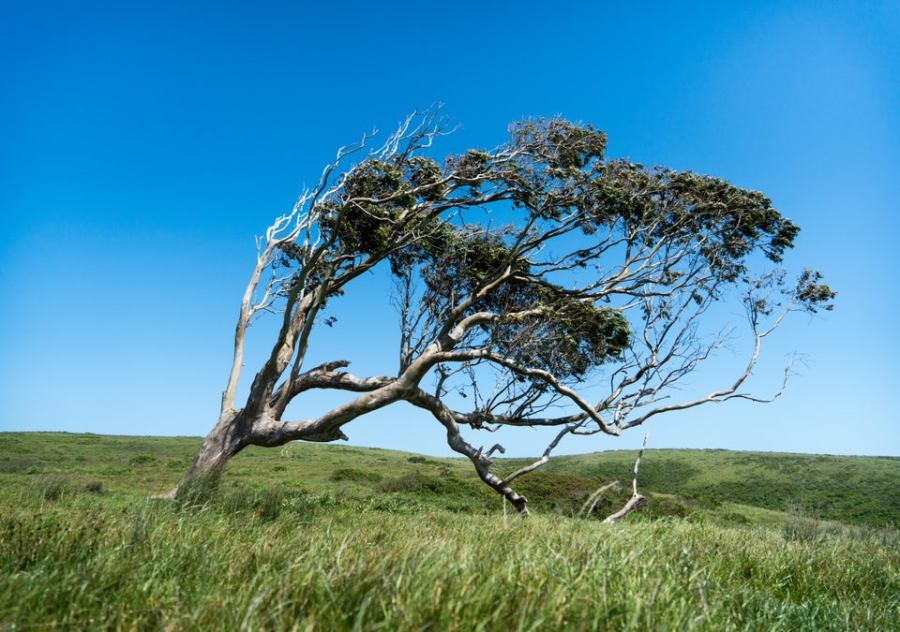


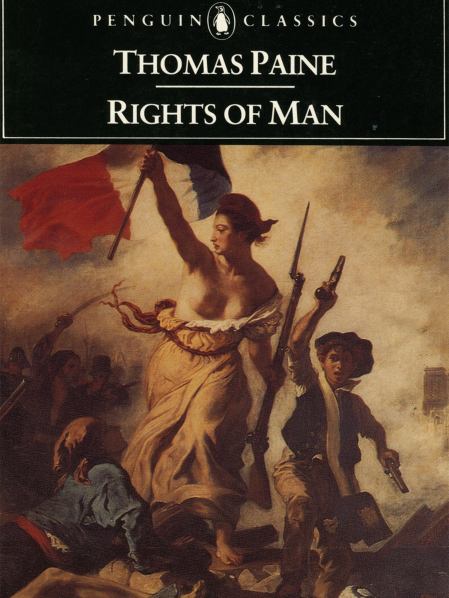
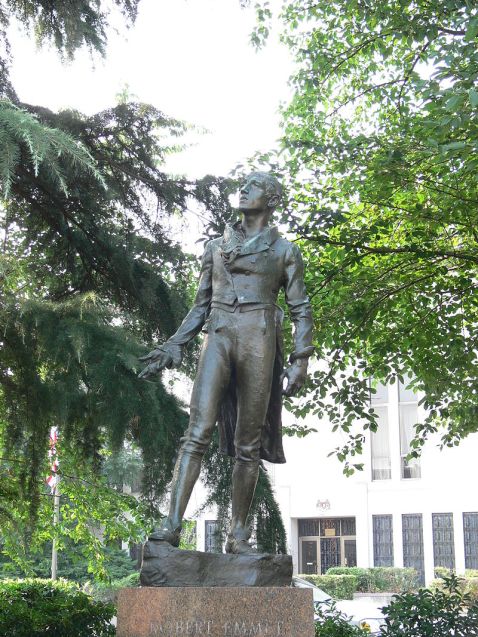
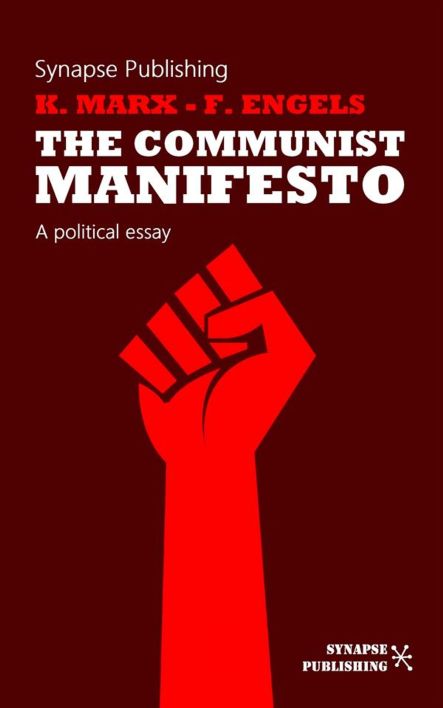

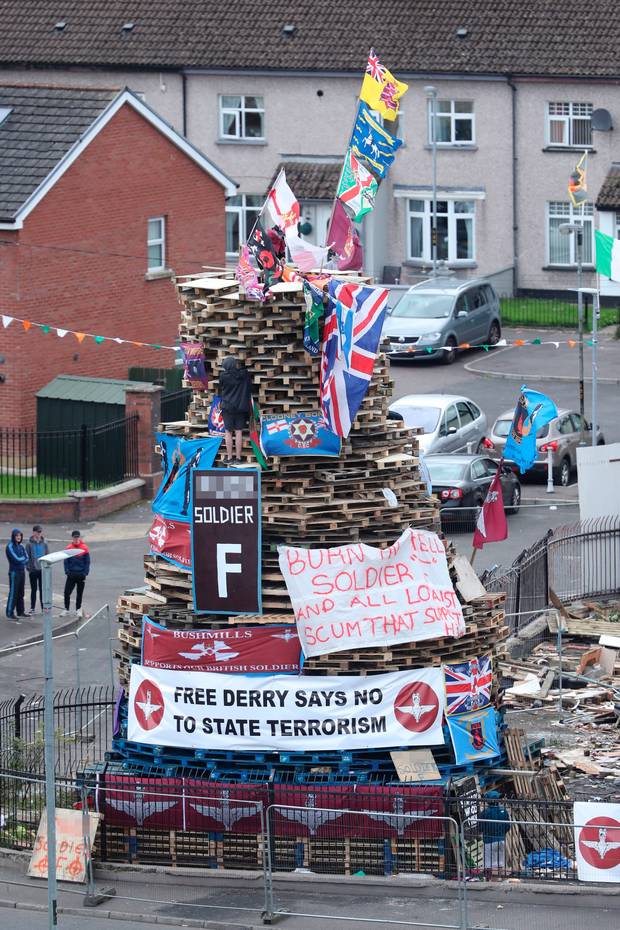
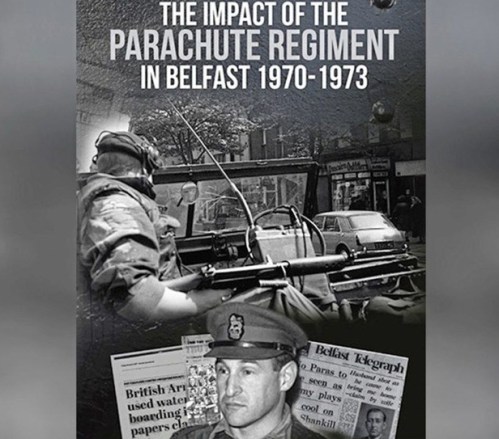


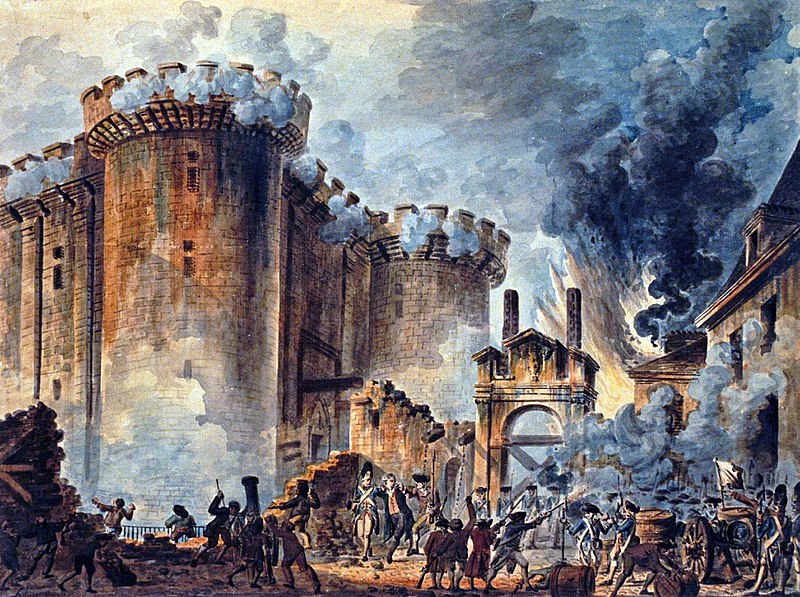

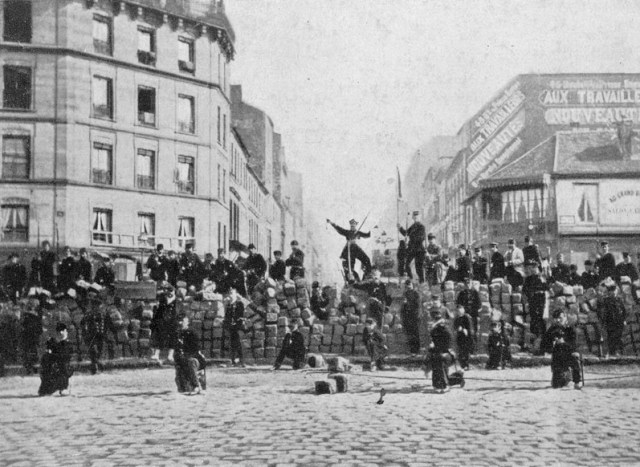


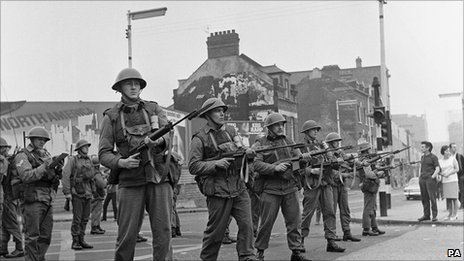
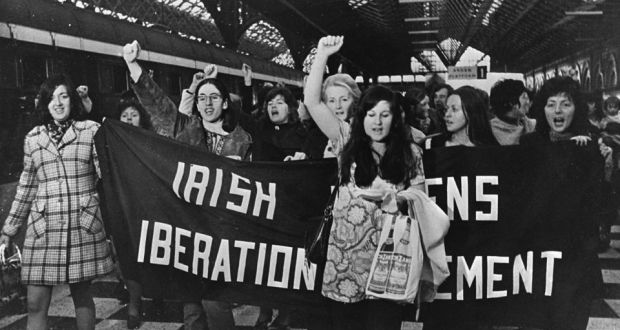


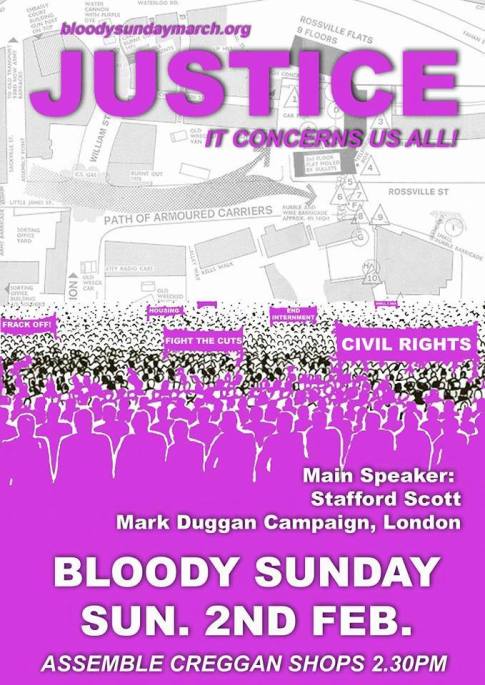
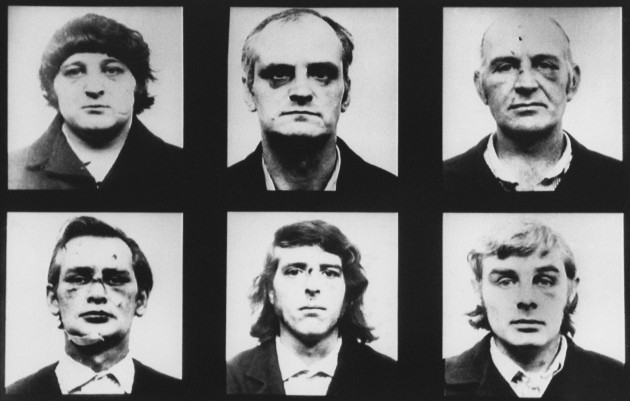
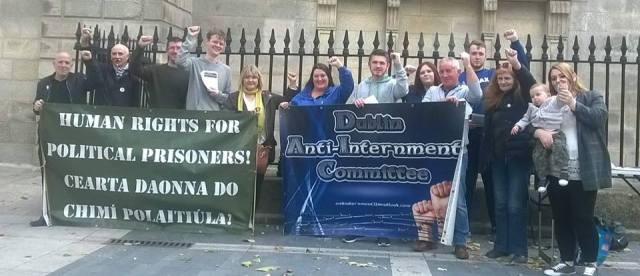


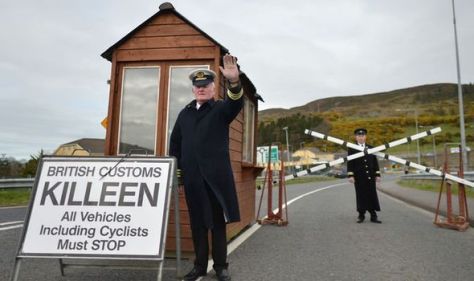

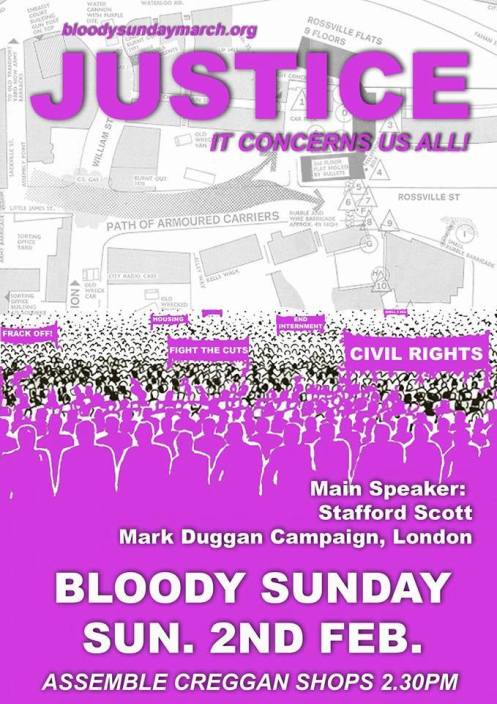

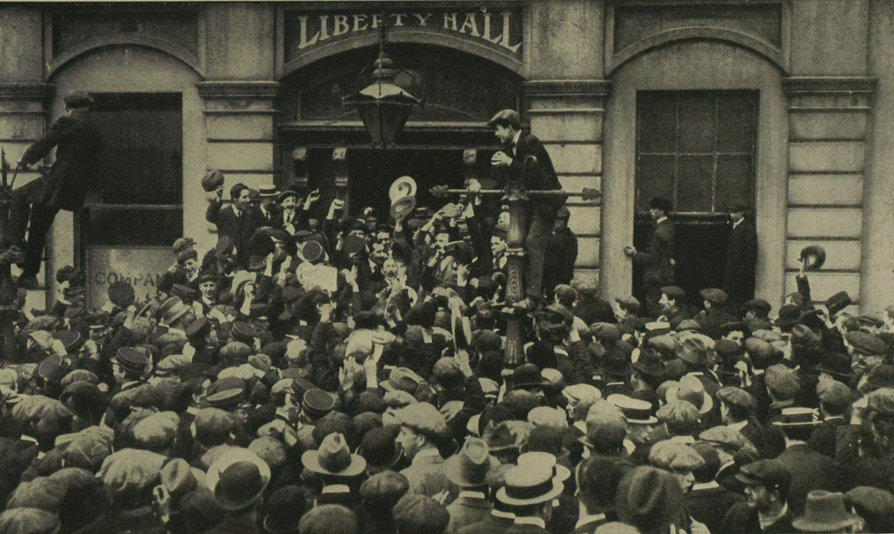


 rebelbreeze