CHECKPOINTS OF HUMILIATION AND DEATH

Diarmuid Breatnach

(Reading time: 3 mins.)

Most people in the Western world will have experienced being stopped at a checkpoint, usually feeling irritated at the delay to their journey, commonly afraid only if driving under the influence of alcohol or drugs.

Or curious perhaps – what is this stop about? In many parts of the world however, apprehension or fear are the normal emotions for drivers approaching a checkpoint. The mind wonders: Might I be arrested, beaten, robbed, raped, killed?

For people in a country invaded and occupied, those are rational fears; the people staffing the checkpoints are occupying soldiers or police; or perhaps auxiliaries, locals working for the occupation, perhaps from a different ethnic group. Which can sometimes be worse.

Many Palestinians have been arrested at checkpoints and certainly some have been killed there, while arrest does not mean one will not be killed anyway, or not be used as a human shield under threat of death, or even killed despite doing what their captors asked.

In those situations there are other negative experiences not necessarily including physical harm: humiliation, harassment, the display of power imbalance in how people are treated, delayed, mocked, insulted. An everyday experience for Palestinians passing through IOF checkpoints.

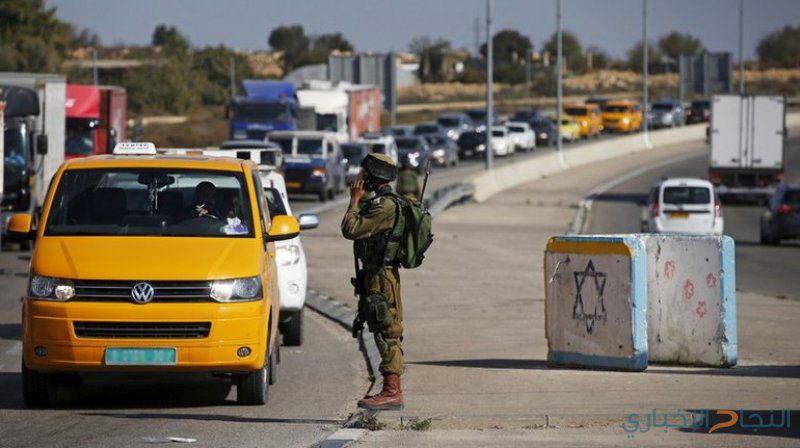
A busy checkpoint, the Palestinians packed worse than cattle. (Photo source: Internet)

It was so also for many people going through British Army and colonial police checkpoints in the occupied Six Counties of Ireland. Cars with Irish registration plates might be held up for half an hour or longer. Or people who answered that their destination was Derry, instead of “Londonderry” (sic).

People have had their children upset by searches, cuddly toys ripped open, intimate adult clothing in luggage inspected, been body-searched, intimidated by loaded weapons pointed at them and, if known as activists, or even related to activists, been threatened with murder.

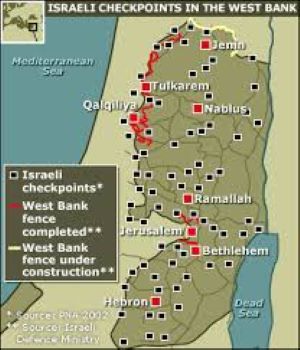
All of this happens to Palestinians at checkpoints where Israelis can pass through, hardly stopping. And there are LOTS of checkpoints throughout the West Bank or on the way into “Israel” (i.e. the lands seized and occupied by the Zionists since 1948).

Map of established Occupation checkpoints in the West Bank, illegally occupied according to the UN. Temporary checkpoints in addition are often established. (Source: Internet)

The guards on checkpoints are often bored or irritated and take out their feelings on those trying to pass through. But the oppressing power wants that to happen: the checkpoints are part of the control structure, physical and mental in effect.

The structural effects and attitudes of the checkpoint guards affect Palestinians travelling to and from their jobs inside ‘Israel’ in addition to Palestinians travelling between one place and another in the occupied lands outside official ‘Israel’.

Those journeys can be for medical treatment (including emergencies), to work or apply for work, to school or university, shopping, to visit friends or relatives, to attend weddings, births, funerals, to support the elderly or disabled, to assist in community work, to take a break, attend festivals …

Apart from anything else, for the Palestinians queuing it may mean a long time in stifling heat in close proximity to other bodies, without water or with a limited supply, no access to a toilet, possibly in direct sun or, in winter, exposed to cold wind and rain …

An Occupation soldier at a pedestrian checkpoint examines the IDs of Palestinian children accompanied by an adult for their protection. (Source: Internet)

VULNERABLE

Temporary checkpoints however are also vulnerable. A soldier or policeman approaching a vehicle or even pedestrians on foot has only his body armour and firearm standing between him and attack, even if having done this four hours a day for weeks without a single misadventure.

Because one day, just that once, it might be different.

In the past, a Palestinian might blow himself up at a checkpoint. More recently another who’d had enough drove his car through a checkpoint at speed, fatally wounding one of the guards and then shot another. On another occasion, a Palestinian seriously injured two guards by stabbing them.

A long line of Palestinian vehicles await clearance to proceed through IOF checkpoint (Photo sourced: ARU)

Now, more and more frequently, IOF checkpoints are coming under fire. An incident might last no more than a minutes or two but how long does it take a bullet to travel and enter a body? And even without killing or wounding the body, what is the affect on the mind to feel like a stationary target?

These might seem easy operations but no armed action against the Zionist state is free from danger, especially with IOF drones to record or even fire at Palestinian fighters, to say nothing of artillery shells, bombs and missiles. Success rate in killed or injured IOF in such operations tends to be low.

But their psychological effects are quite significant and wars are not fought just by and on bodies; they are fought by and on minds too. The checkpoints, instruments and symbols of power and oppression have become vulnerable and targets … like the repressive forces staffing them.

End.

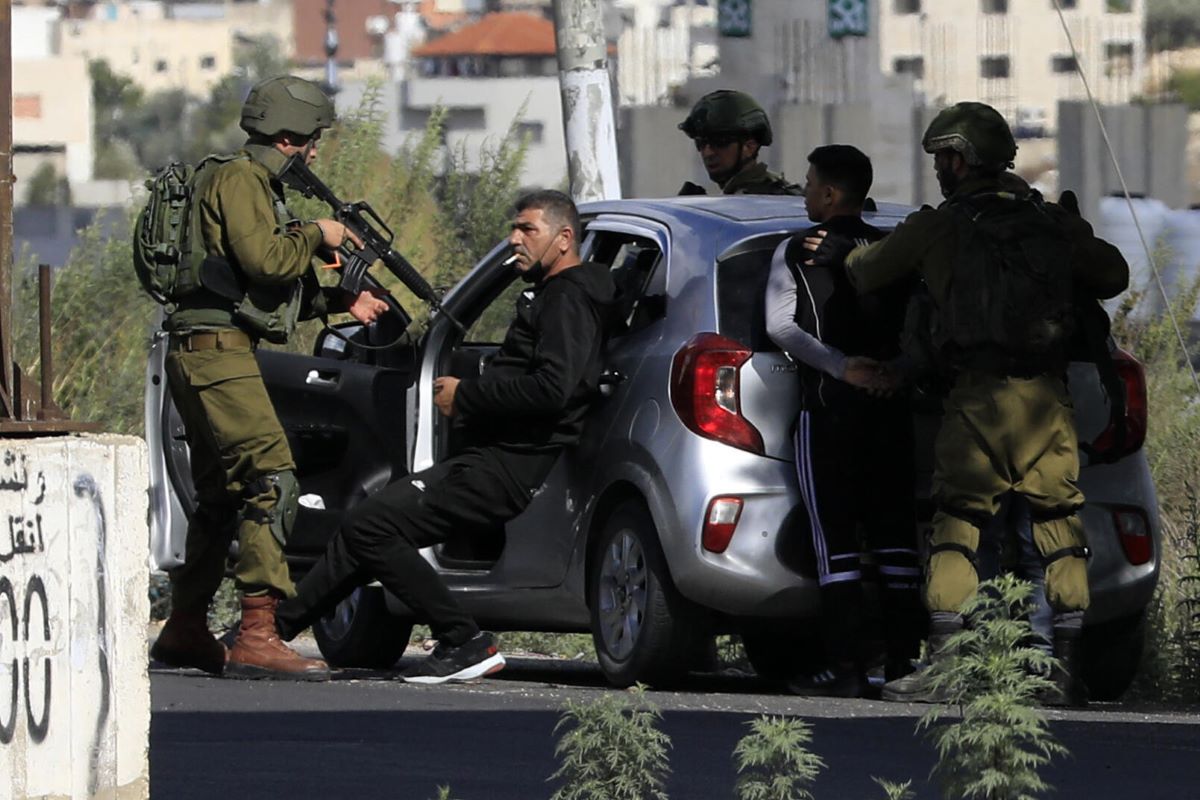
A Palestinian youth being arrested by Occupation soldiers at a checkpoint. (Photo cred: Zain JAAFAR / AFP)

SOURCES & FURTHER INFORMATION

2023 report on obstacles to movement in Palestine: https://www.ochaopt.org/2023-movement

June 2024 article about military checkpoints in Palestine: https://www.btselem.org/freedom_of_movement/checkpoints_and_forbidden_roads

https://www.france24.com/en/live-news/20240209-israeli-checkpoints-paralyse-west-bank-life-as-gaza-war-rages
Checkpoints as deathtraps: https://reliefweb.int/report/occupied-palestinian-territory/israeli-checkpoints-have-become-death-traps-occupied

THOUSANDS MARCH THROUGH DUBLIN CITY CENTRE IN SUPPORT OF PALESTINE

Diarmuid Breatnach

(Reading time: 3 mins. Note: Apologies for delay in publishing this report)

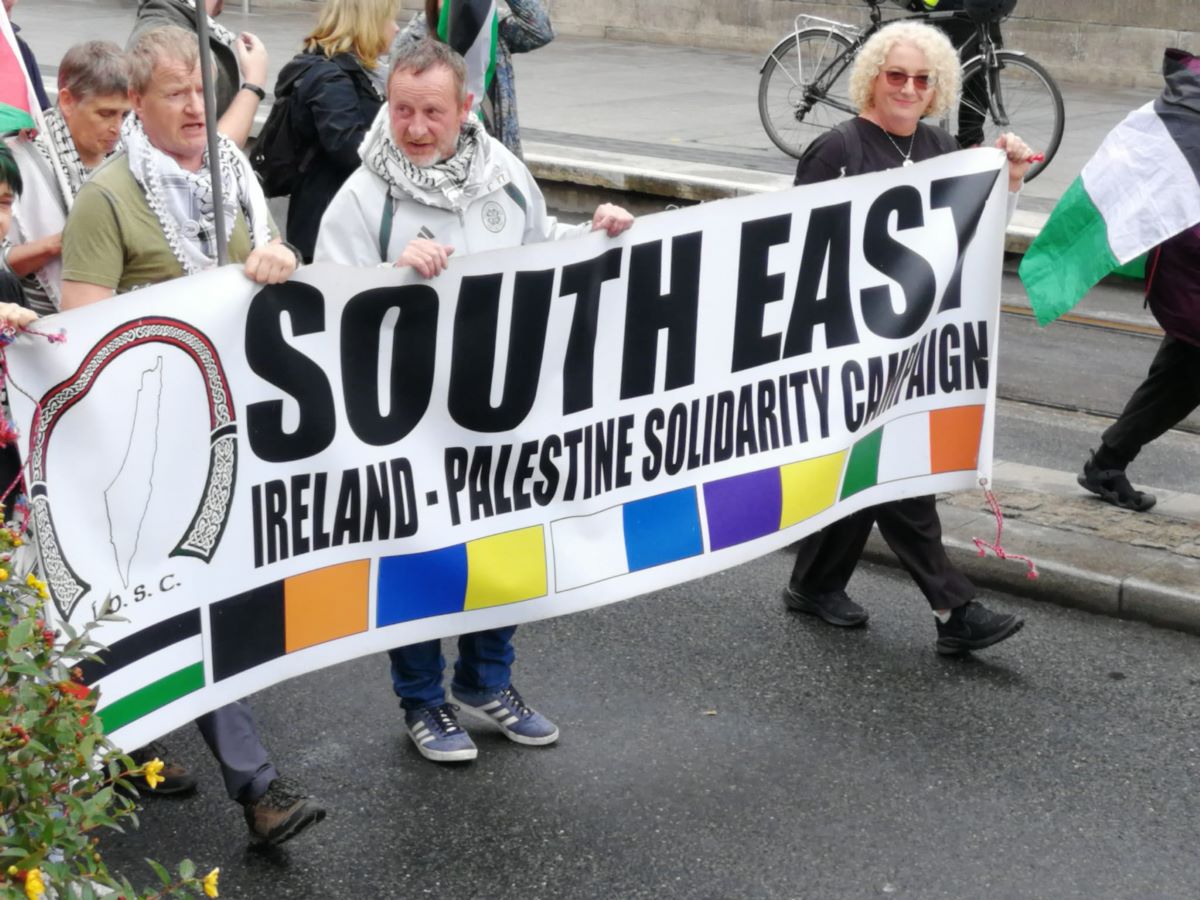
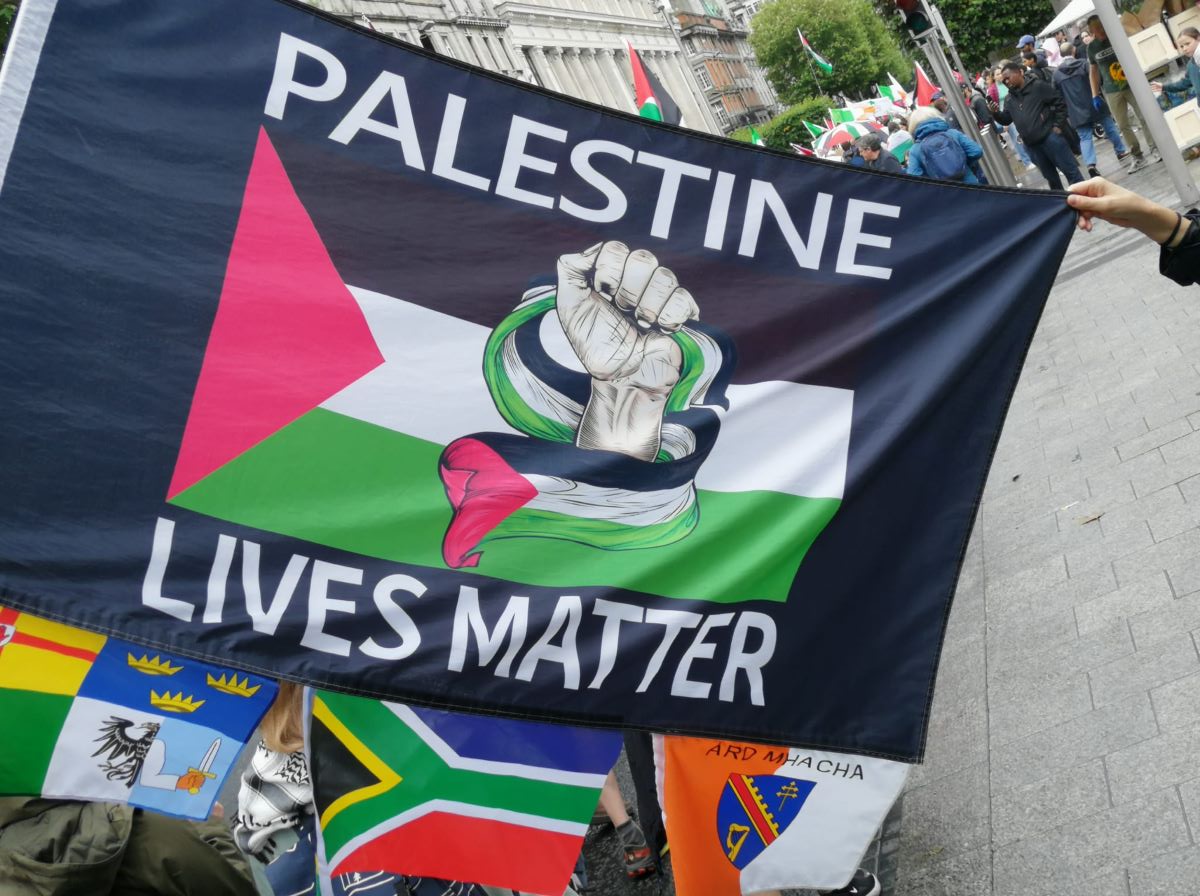
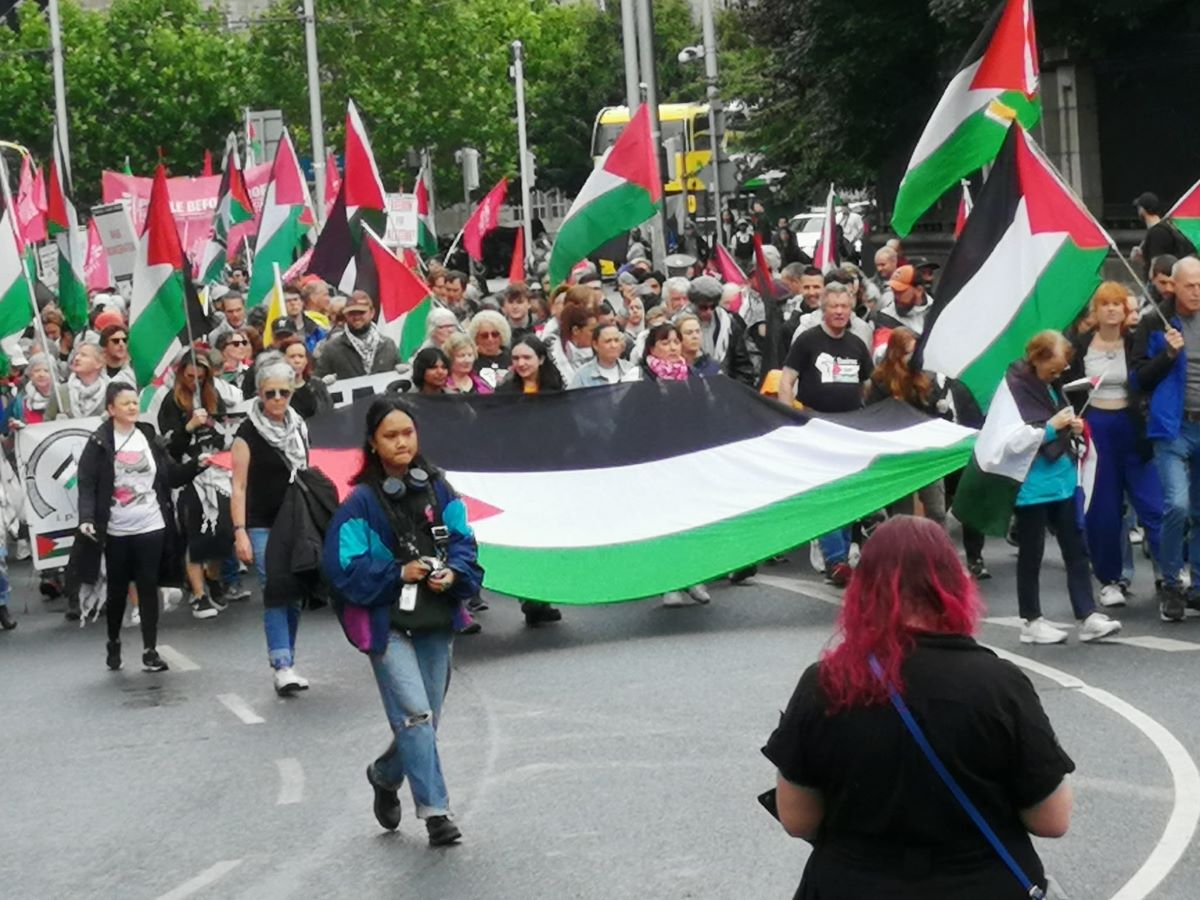
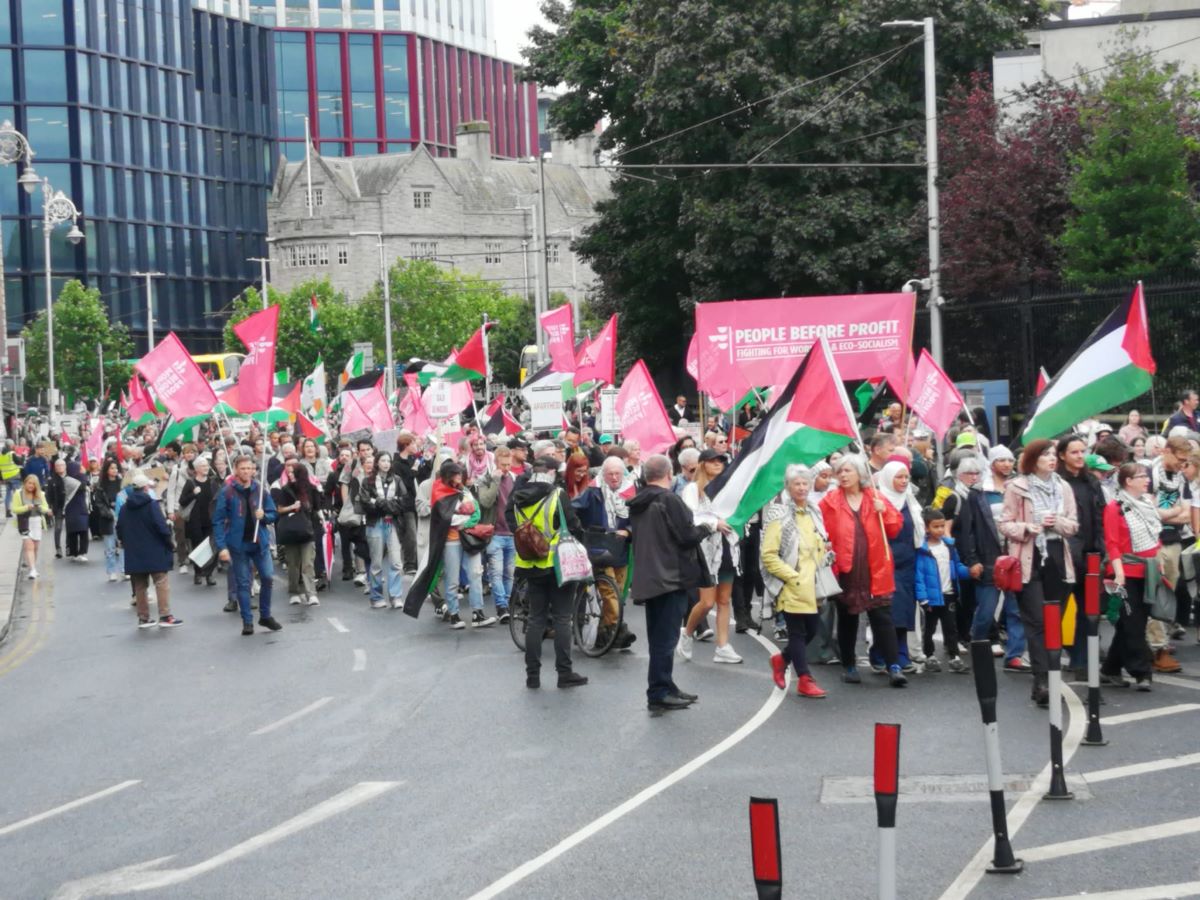
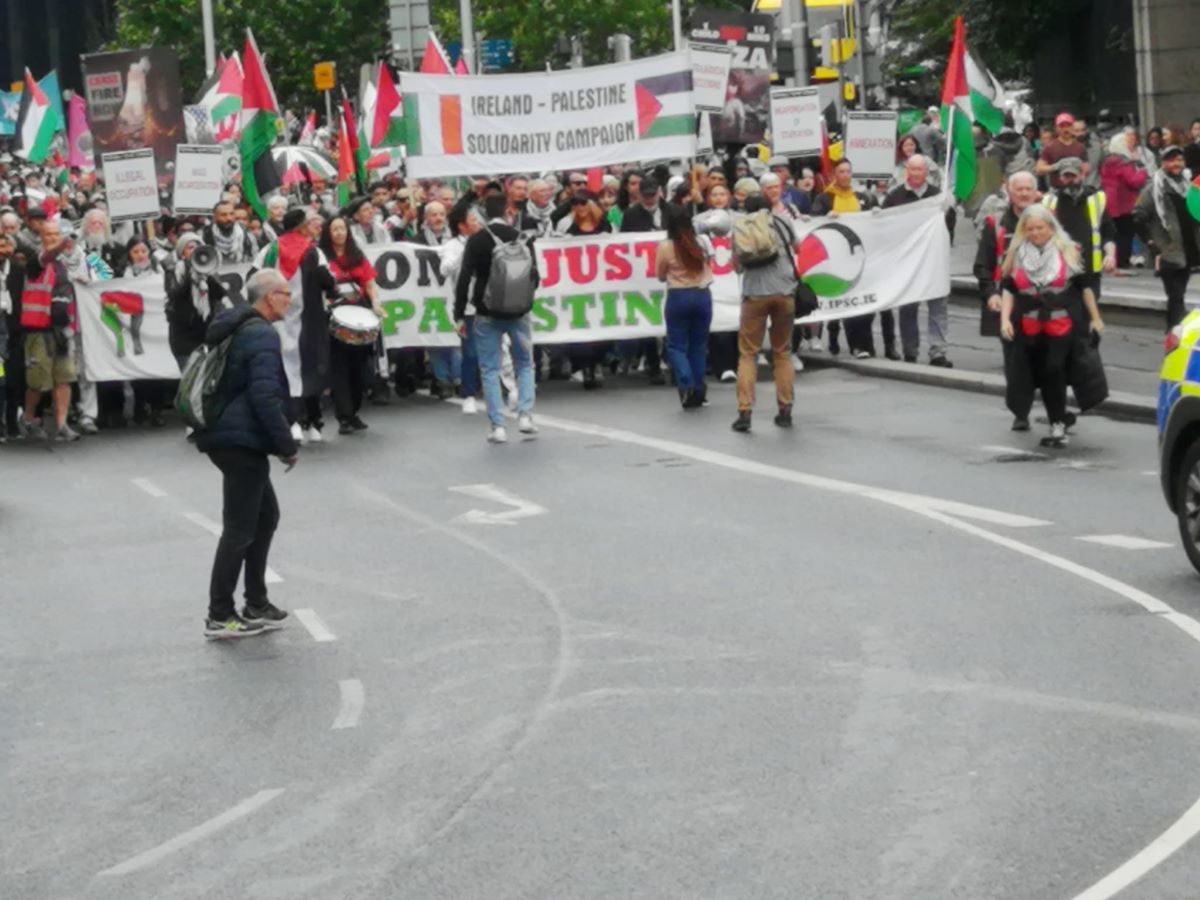
On Saturday 20th June the Irish people, despite their Governments once again marched in a national demonstration to show the Irish majority solidarity with Palestine and horror at their continuing genocide by the ‘Israeli’ armed forces.

The march had been convened by the long-standing Ireland Palestine Solidarity Campaign which has branches across Ireland from Cork to Donegal, including in some parts of the British colony (where however the Loyalists are anti-Palestinian).1

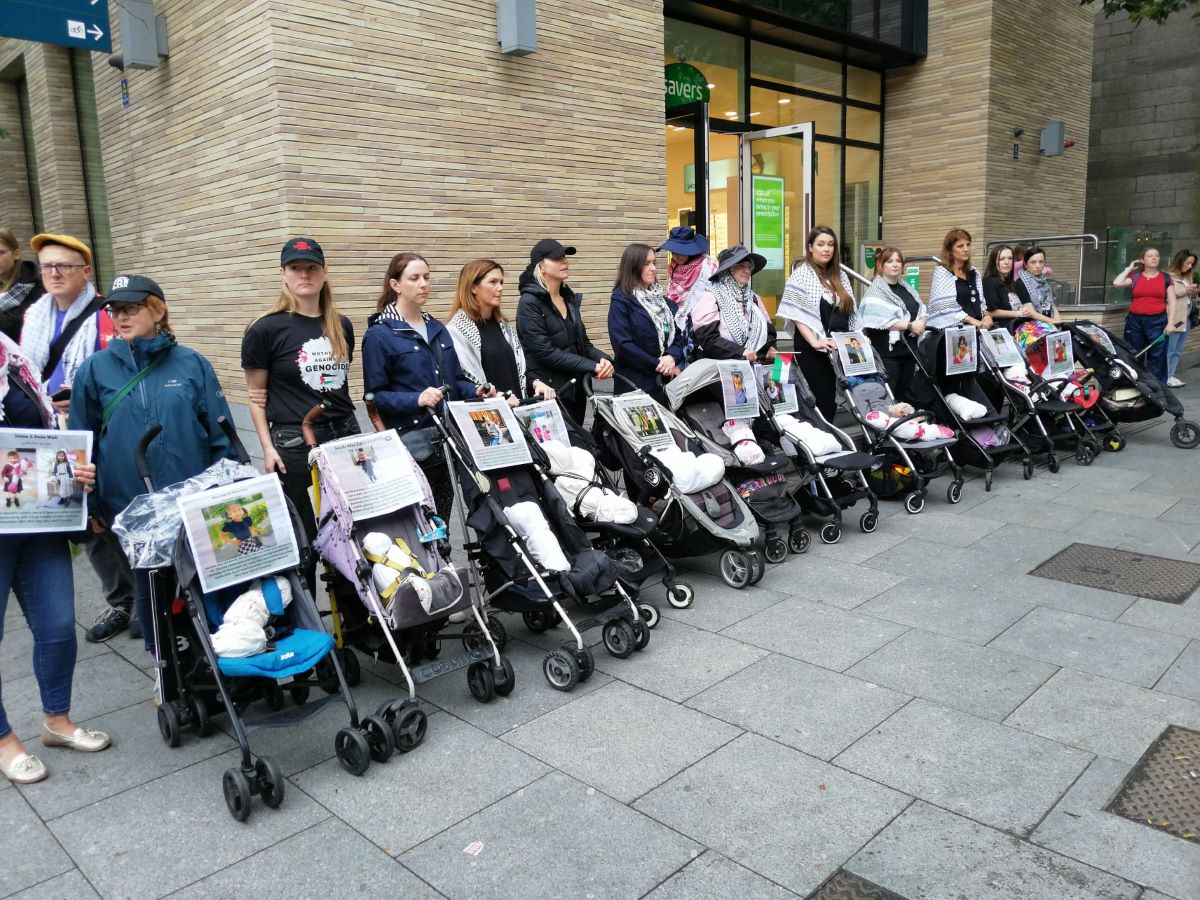
Mothers Against Genocide group in Dawson St. (around corner from Molesworth St.) evoking individual children murdered by ‘Israel’. (Photo: D.Breatnach)
Dublin community group that holds Thursday evening vigils in four areas of North Dublin. (Photo: D.Breatnach)
(Photo: D.Breatnach)

The assassinations of resistance leaders were still to come2 but it had been business as usual in Palestine with daily massacres of civilians by the ‘Israeli’ Occupation forces, ongoing starvation, destroyed health service, impending epidemics, prisoners released as ghosts of their former selves.

Also IOF raids and kidnappings3 in the West Bank, at times with Palestinian Authority4 collusion in arrests of activists, confiscation or destruction of Resistance weapons …

(Photo: D.Breatnach)

To all this the Palestinians in general have responded by helping one another trying to survive, digging people out of bombed rubble, documenting atrocities, burying their dead, trying to feed their children and elderly …

And their Resistance in all factions (and none) threw stones, fired bullets, launched anti-tank rockets, mortars, missiles and blew up bombs against Occupation armour and soldiers. And of course, contributed new names to the long list of martyred resistance fighters and commanders.

The ECJ,5 to howls of protest from the regime had pronounced its verdict that Israel was indeed, as has long been evident, guilty of practising apartheid against the Palestinians. However not one state ceased giving political or financial cover to the Occupation or supplying it with arms as a result.

Irish Healthcare Workers for Palestine. (Photo: D.Breatnach)

(Photo: D.Breatnach)

IPSC Police?

Only a few Irish Tricolours were displayed on the march which is visually a political mistake, as I’ve observed earlier and the organisers should state that such are welcome. Not one Starry Plough flag, that of socialist Republicans, could be seen either, despite no doubt there being many such participating.

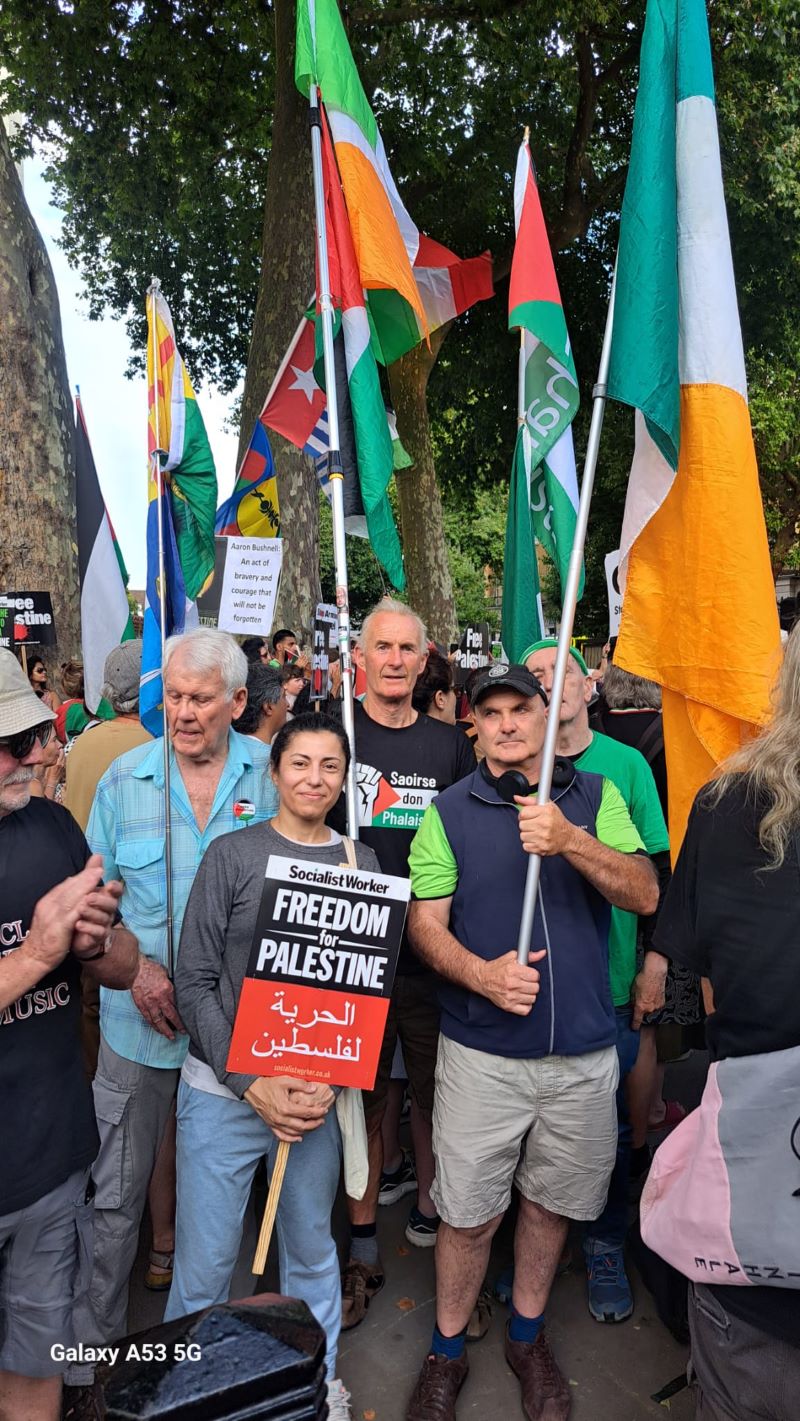
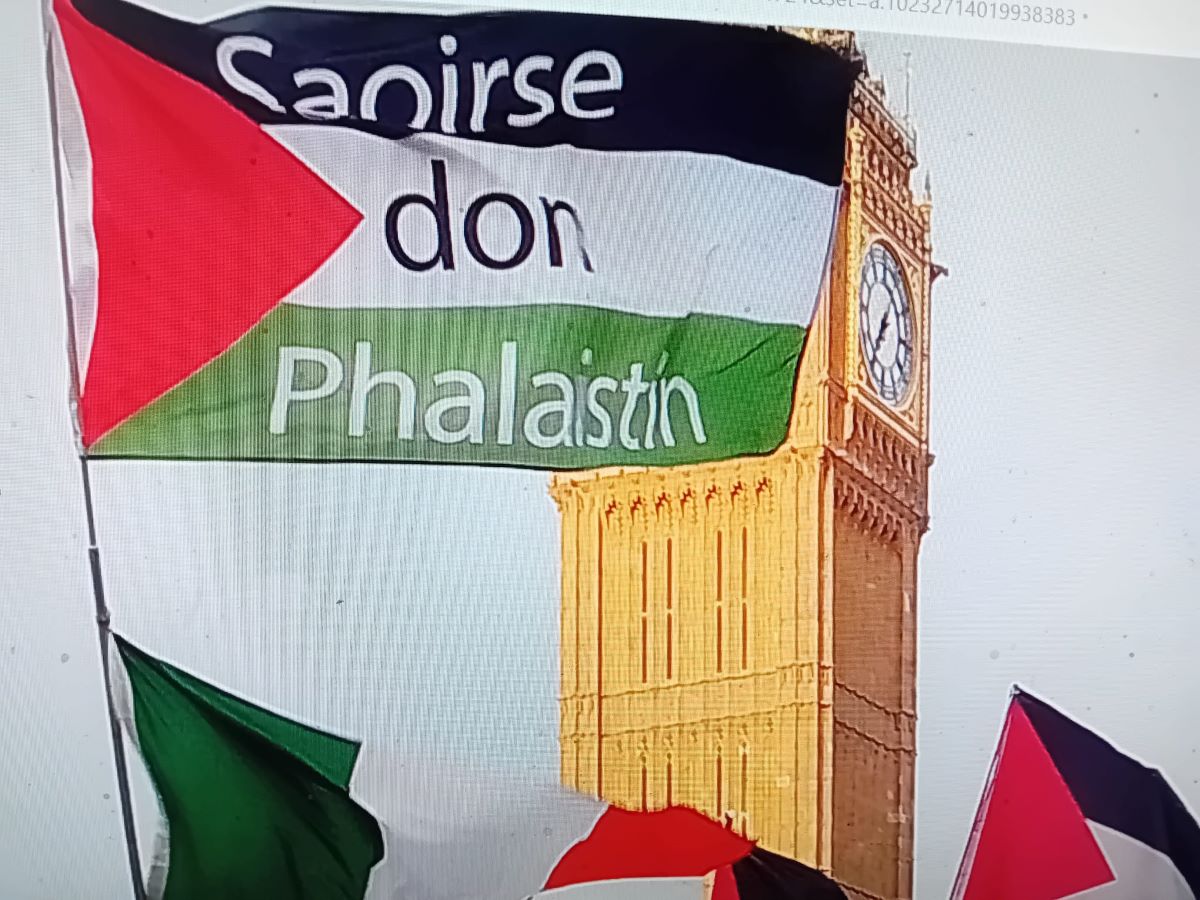
Irish language placards and banners have been getting rarer, despite a previous welcome upsurge upon which I’ve commented in the past. However there were some to be seen, including a number of Saoirse Don Phalaistín flags and the banner of a Newry group, from Co. Down, under British occupation.

(Photo: D.Breatnach)

As they filled Molesworth Street towards the IPSC stage and police barriers at the end, facing the Leinster House Irish Parliament building, some marchers already began to leave, having heard speeches before and perhaps heading for their transport back to their earlier points of departure.

The company that erects crowd barriers were ready to install them to cut off a section of Molesworth Street at the intersection of narrow lanes and the Gardaí wanted to cram the crowd in beyond the barriers. IPSC stewards began to usher marchers further into Molesworth street.

One approached a group of marchers telling them what the police wanted to which one of the group replied: “I don’t give a f..k what the police want!” and after the steward’s persistence, accused him of doing the job of the police.

The IPSC stewards have helped the police pack marchers into the stretch of Molesworth Street beyond the intersection (and incidentally leaving any demonstrating in Dawson Street cut off from the main group). (Photo: D.Breatnach)

Aside from the rough language, what were the IPSC stewards doing passing on police orders?

People in the group said that the IPSC stewards have done this before and that furthermore there was no important-through way being cleared,6 the exercise serving no real purpose other than getting the public used to being corralled and that at the least the police should do their own job.

(Photo: D.Breatnach)

The main purpose of stewards is to keep the march moving and safely from traffic. The route has been agreed beforehand by the IPSC with the Gardaí which is not a legal requirement in Ireland. Even in that case the stewards should keep a strict separation in functions from the police.

The IPSC does an important job, publishing information and organising events, especially nationally but back in October delayed in even calling for the Zionist Ambassador’s expulsion. Some other groups also organise events and it appears that the IPSC supports some and not others.

Young Palestinian women leading the slogans call-out. (Photo: D.Breatnach)
(Photo: D.Breatnach)

Going forward it seems that the solidarity movement, including of course the IPSC, will need to take into account their meagre effect on the Irish Government, not to speak of upon the genocidal state itself and on its supporting states in the West, in particular the USA, Germany, UK …

Such recognition will call for escalation, for direct action, for different kinds of solidarity action … whether some organisations want to participate or not.

(Photo: D.Breatnach)
Some trade union banners on the march (though the unions do little to mobilise support, much less take action against ‘Israeli’ products etc.). (Photo: D.Breatnach)
Front of the march turning into College Street. (Photo: D.Breatnach)

FOOTNOTES

1This could be because they see themselves as ‘British’ settlers, while the ‘Israelis’ are European settlers too but is more likely a knee-jerk reaction to the Palestine solidarity exhibited by Irish nationalists (something like “If they’re for them, we must be against them”.

2Assassinations of leaders of Hamas, Hezbolah and senior officers of Islamic Resistance Iraq.

3The IOF and the Zionist State may call them “arrests” or “detentions” but typically they are random or working off a list without warrants or due process. Former prisoners are re-arrested constantly; family of ‘wanted’ individuals are detained in order to pressure the ‘wanted’ to give themselves up. Typically the detained are served ‘administrative detention’ orders, jailing them for months without trial or evidence. Prisoners are underfed, overcrowded, beaten by guards, have dogs set upon them and medically neglected.

4Unelected, undemocratic, corrupt and zionist-colluding body financed by some Western powers and some colluding Arab states.

5https://palestinecampaign.org/icj-ruling-finds-israel-guilty-of-unlawful-occupation-and-apartheid/

6Furthermore, with no side-streets available in that section beyond the intersection, the police could close that west end of the street should they wish to, ‘kettling’ all the demonstrators between two Garda barriers.

“Long live the Intifada!” in Dublin as ‘Israel’s’ Genocidal War Reaches 300 Days

Clive Sulish

(Reading time:4 mins.)

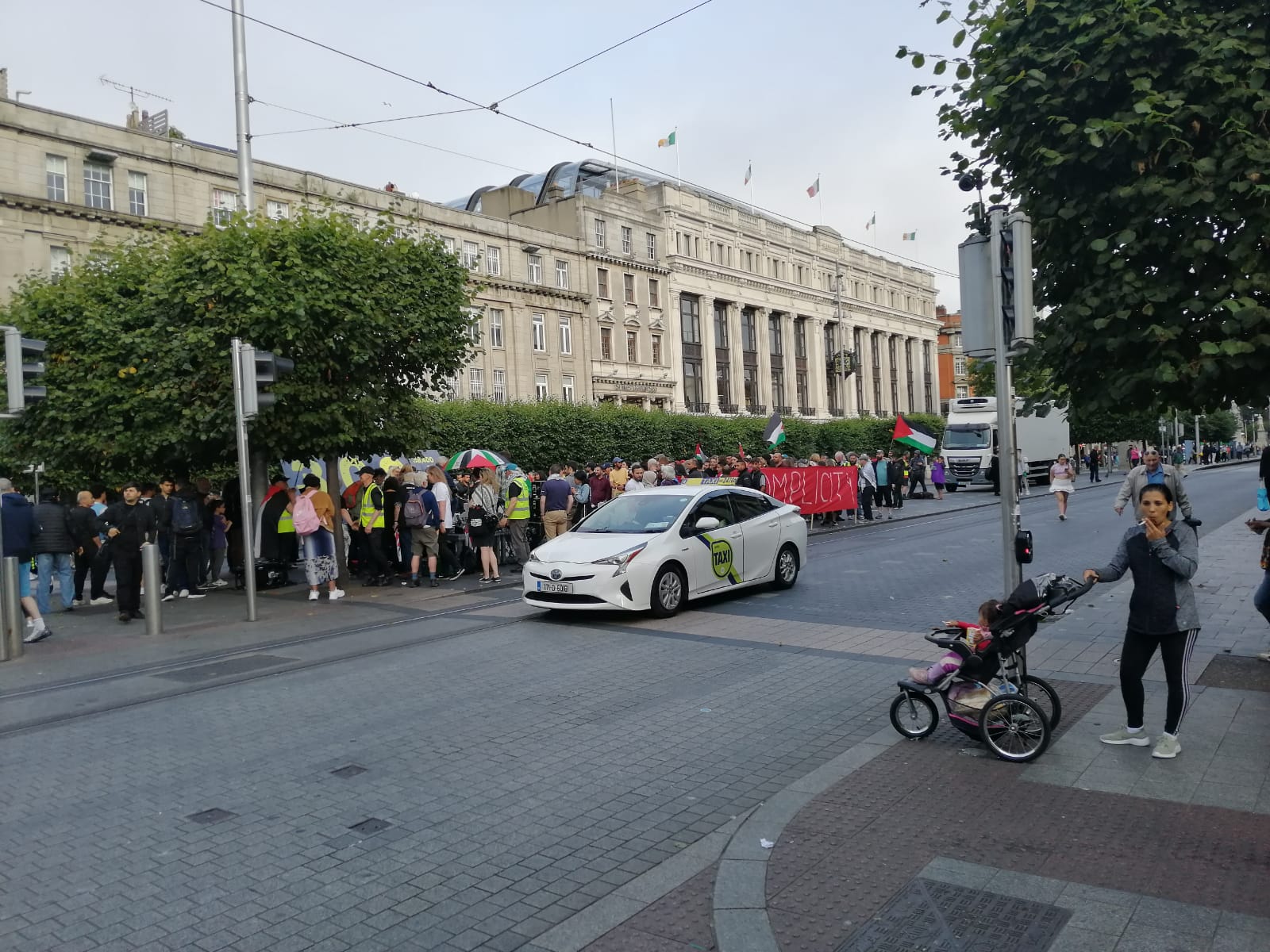
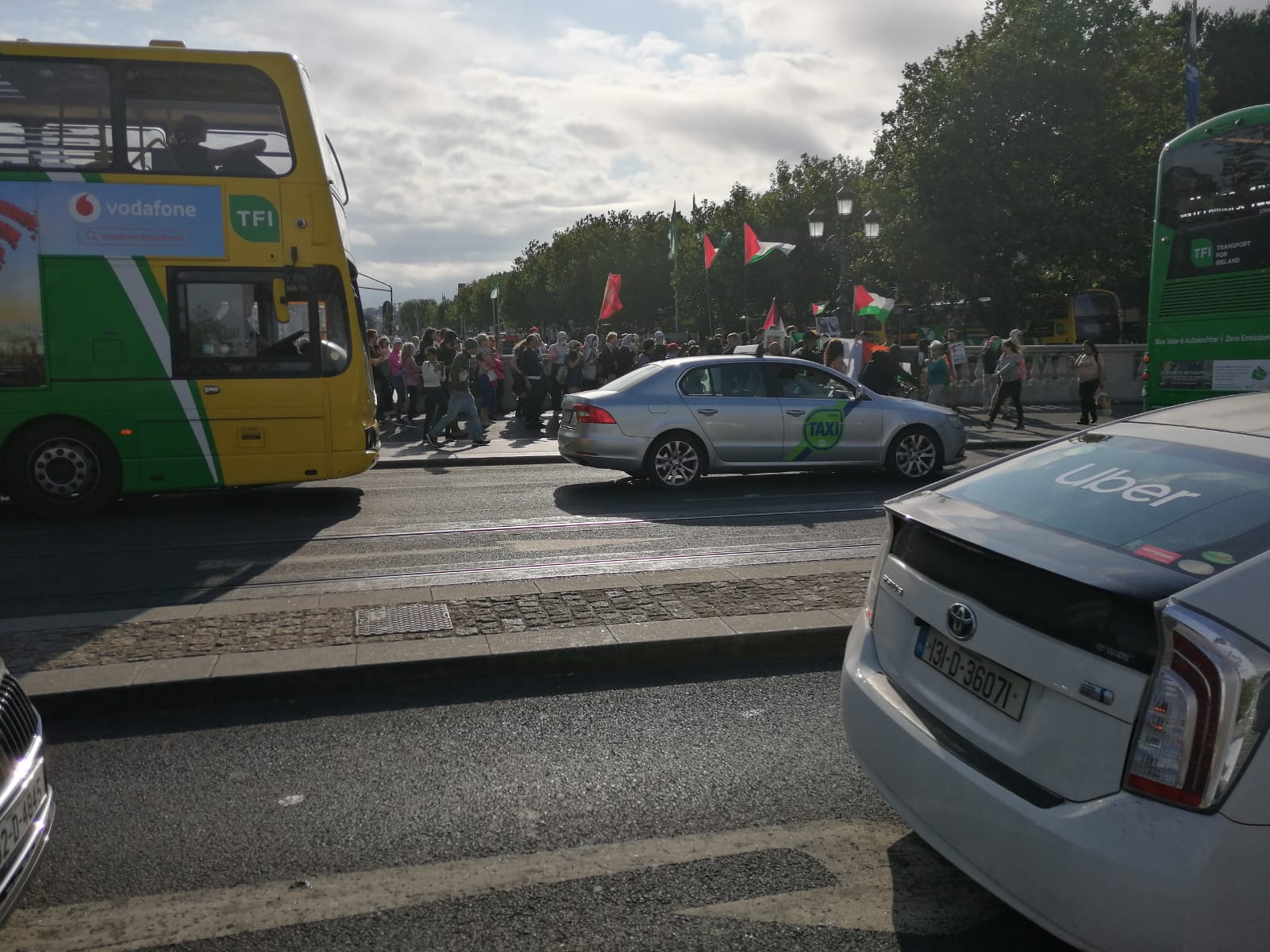
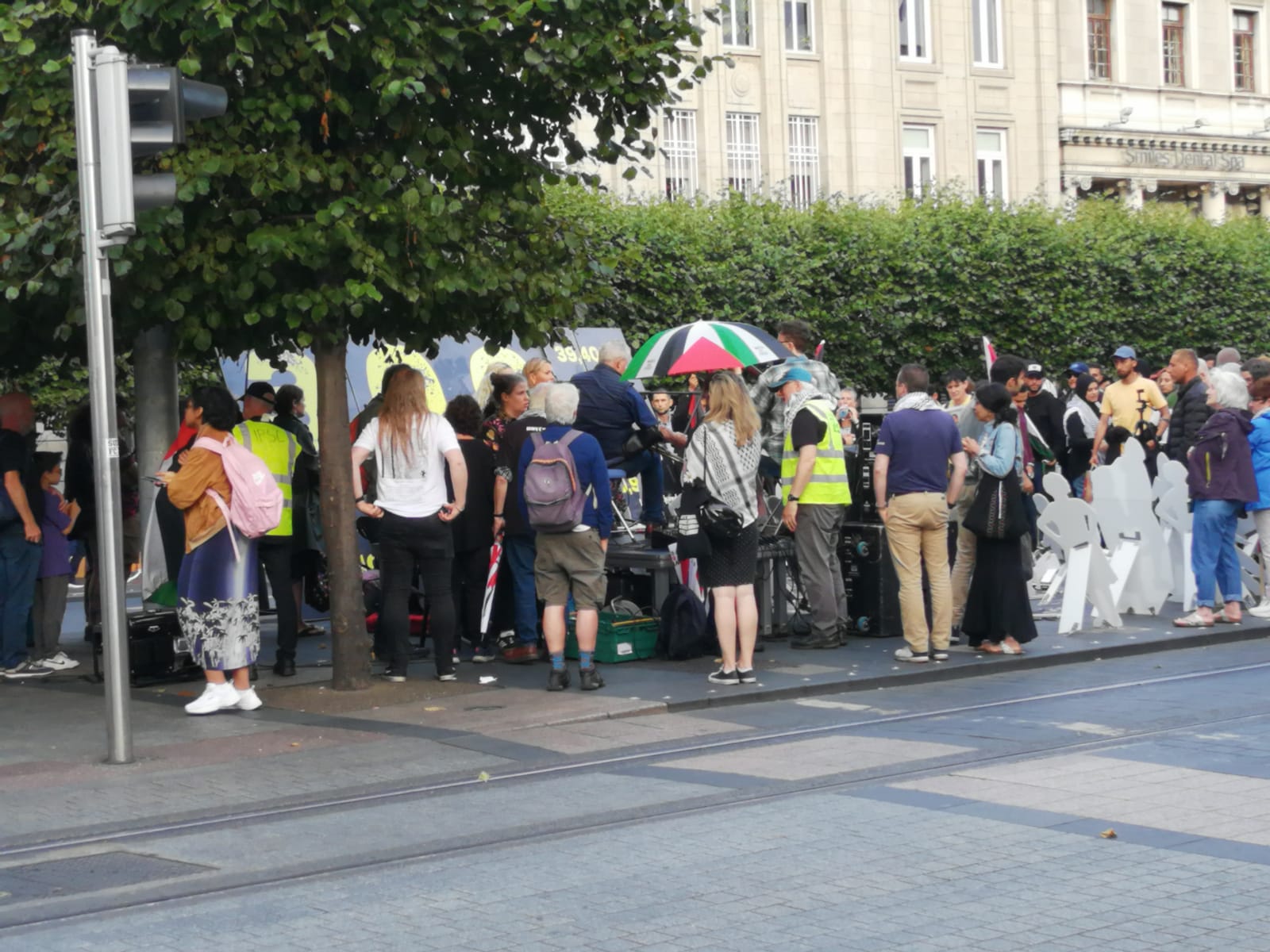
On Friday 2nd August two events of Palestine solidarity advertised at short notice took place a couple of hundred metres apart in Dublin City centre, attracting up to a couple of thousand participants overall.

The larger event by far was organised by the Ireland Palestine Solidarity Campaign and focused on the 300th day of the Genocidal war on the people of Gaza by the Israeli state. The smaller, approaching a hundred participants, concentrated on the assassination of leaders of the Resistance.

The IPSC-organised vigil on O’Connell Street (Source photo: R.Breeze)

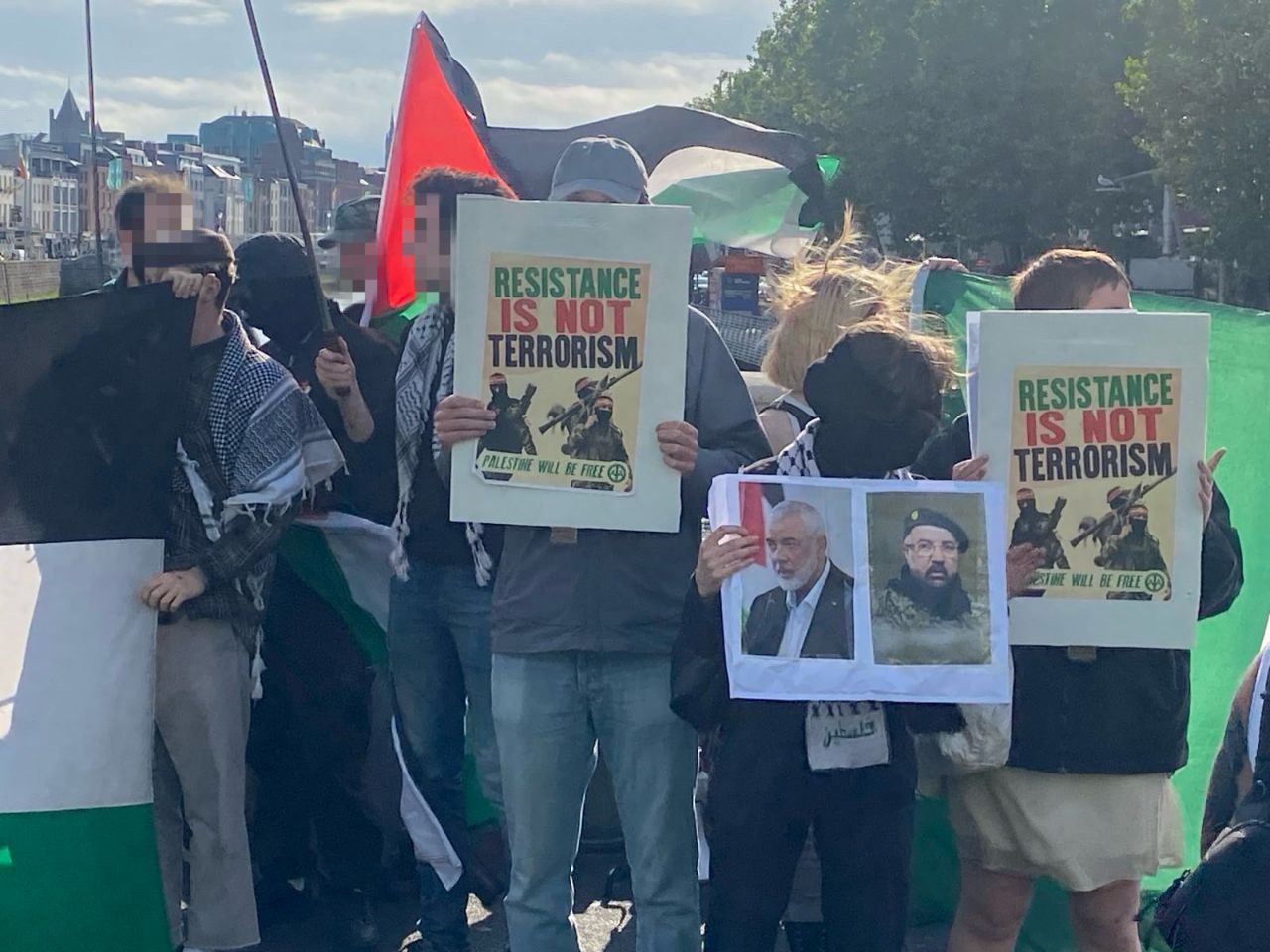
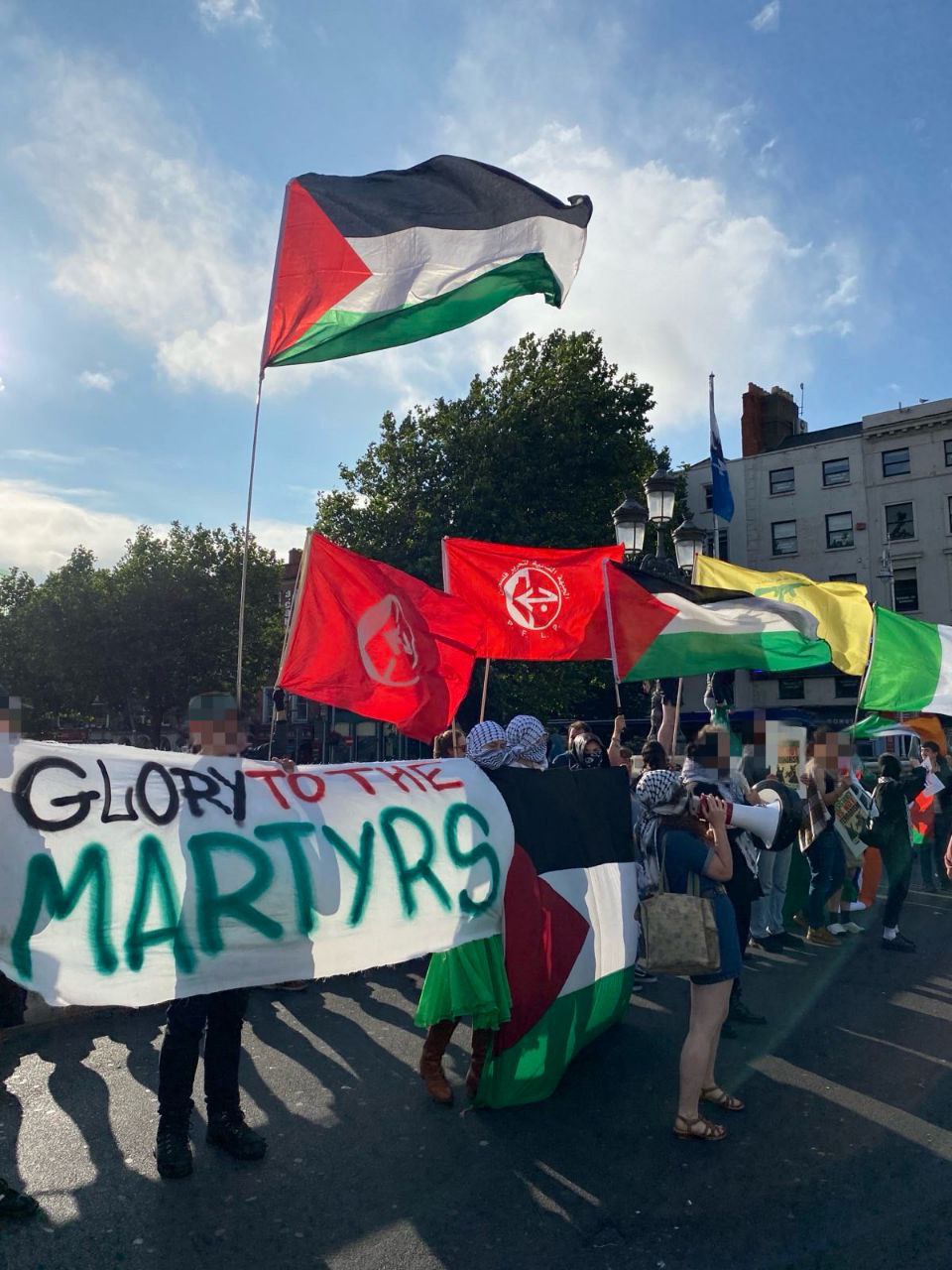
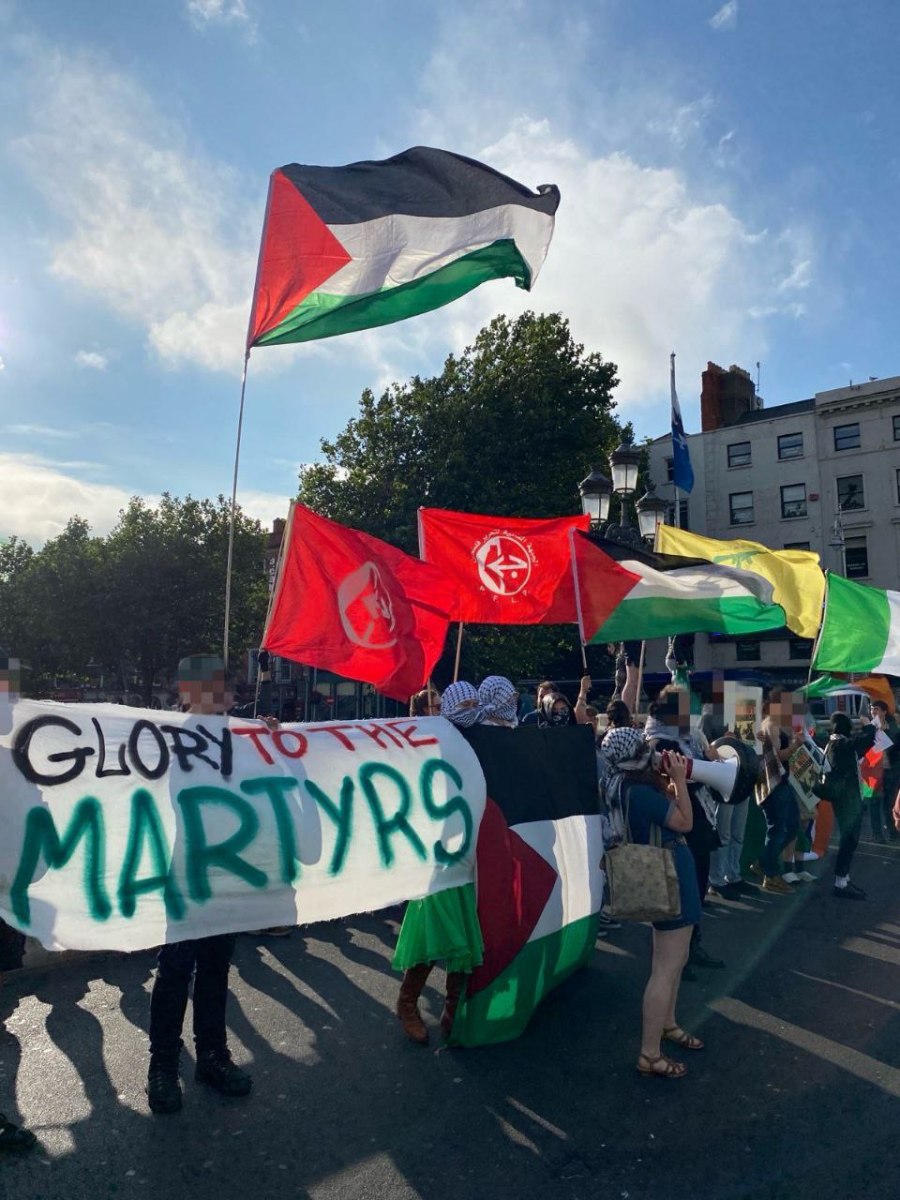
The IPSC occupied the space to which they have become accustomed in front of the GPO, the other, organised by Anti-Imperialism Action and the Saoirse Don Phalaistín coalition, took up position on the west side of O’Connell Bridge, where flags of the PFLP, Hamas and Hezbollah could be seen.

Some carried portraits of martyred Resistance leaders Haniyeh and Fouad; among the usual Palestinian national flags and resistance faction flags, a number of Irish Tricolours could also be seen, along with a green-and-gold Starry Plough.

Close-up section of the AIA-SDP protest on O’Connell Bridge (Source photo: AIA)

Some printed placards stated that Resistance Is Not Terrorism, while a couple of home-made placards stated that ‘Israel’ and US/NATO are the real terrorists! and a home-made banner declared Glory to the Resistance!

An almost constant stream of slogans were called by young people taking turns (one male and two females) and answered by the crowd, “Long live the Intifada” and “In the face of occupation, resistance is an obligation” in particular leaving no doubt where their sympathies lay.

Shot taken early as protest was getting started (Source photo: R.Breeze)

The crowds passing by were either openly supportive or non-committal but a few hostile comments were thrown and one middle-aged man shoved the loudhailer into the mouth of a young Palestinian woman who was calling out slogans for the crowd’s response.

She reacted immediately to the hostile act and was quickly supported by a group of young women who pushed the man away. Three Gardaí who were watching from the central reservation then came across to the group and took the man to one side but also demanded the Palestinian woman’s ID.

One of two placards with the same message displayed on the AIA-SDP protest on O’Connell Bridge. (Source photo: R.Breeze)

Unaware of her rights, she gave them that information. The Gardaí said they had not seen the man’s action, only that of the women pushing him along the Bridge. He claimed that the megaphone had been blaring in his ears but the suspicion is that he had been expressing his hostility to the cause.

The opinion of some people was that there would be no subsequent police action against the woman but some others gave her precautionary advice and also contact numbers for witnesses.

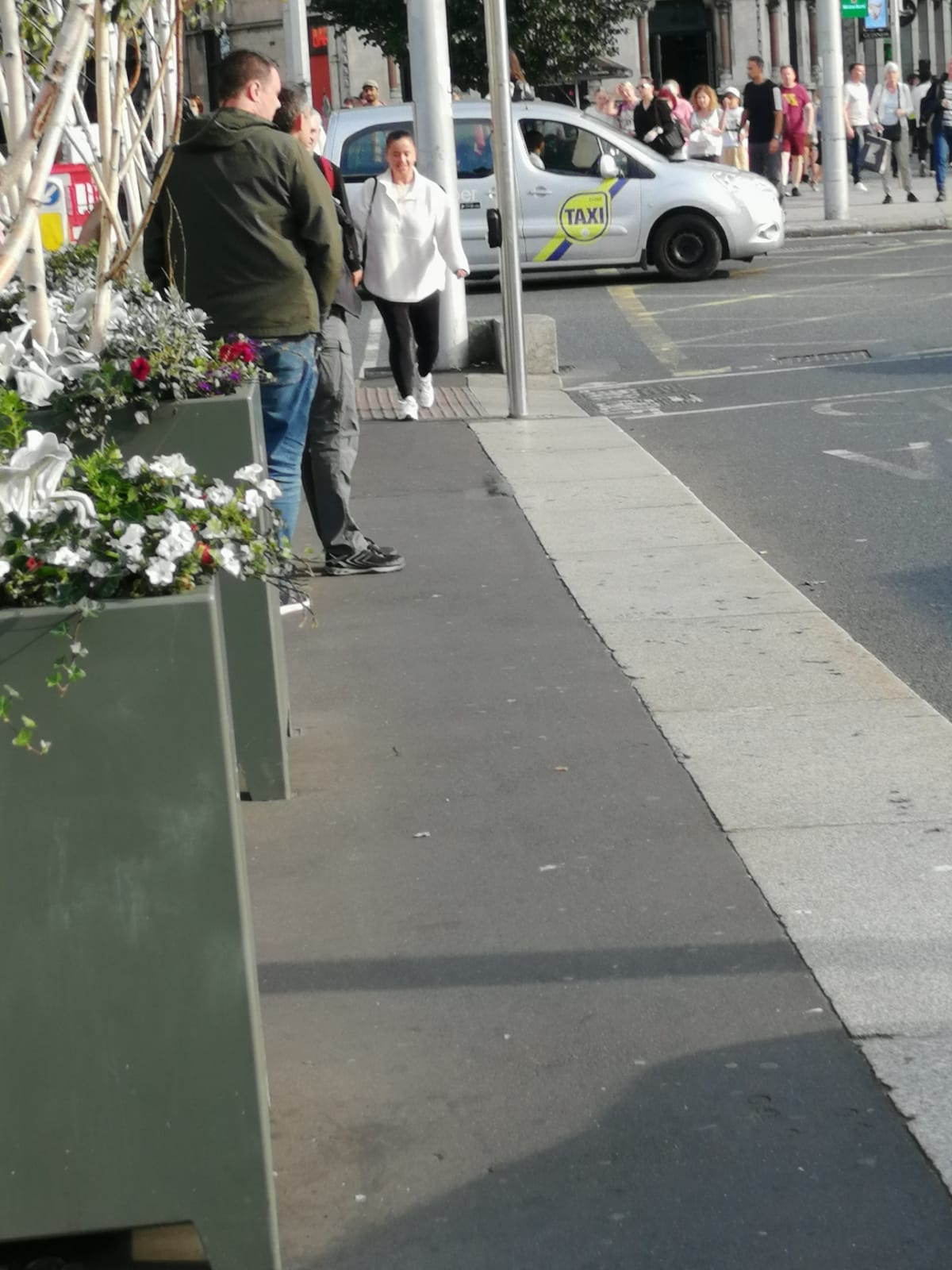
A Garda jeep and number of uniformed Gardaí had taken up station on the east side of the Bridge and a couple of Special Branch (plain-clothes political police) were also noted observing and videoing from the central reservation but none approached the demonstrators.

Two Special Branch officers immediately after their arrival on the central pedestrian reservation on O’Connell Bridge. (Source photo: R.Breeze)

A sinister individual who met the SB men on the central reservation, constantly on his phone and at times directing the SB where to film, may have been Mossad, the ‘Israeli’ foreign secret service, well-known for assassinations such as that of Palestinian Mahmoud Al-Mabhouh in Dubai in 2010.

Possible Zionist agent seen here near the SB officers on the central pedestrian reservation on O’Connell Bridge. (Source photo: AIA)

The photographs of 26 of his suspected assassins and their aliases were circulated by Interpol and Dubai police found that 12 of the suspects used British passports, along with six Irish, four French, one German, and three Australian passports; this causing some diplomatic storm at the time.

Approximately an hour after the start of the event on the Bridge, it was concluded while in front of the GPO, the other event was still continuing.

Section of the IPSC-organised vigil in O’Connell St. (Source photo: R.Breeze)
Close-up of section of the AIA-SDP organised protest on O’Connell Bridge. (Source photo: AIA)

End.

HEZBOLLAH DRONE TECHNOLOGICAL ADVANCES SHOCK ‘ISRAELI’ SECURITY

Clive Sulish

(Reading time: 4 mins.)

The ability of enemy drones to evade detection and even attack, reaching into the heart of the ‘Israeli’ state’s territory, both to photograph and, in the case of the Jaffa (‘Haifa’) town and ‘Eilat’ port to strike, have shocked the state’s military.

They have shocked settler society too. Hadashot Bazman1 reported: “Hezbollah’s drones do not need a visa, and they are controlled remotely via cameras with an operator in the control room. What you do not know will not kill you now …2

they are telling us: ‘We are here, inside you, planning, and capable of delivering harsh strikes’.” ‘Israeli’ daily newspaper Maariv added: “The Air Force has been asleep at the wheel for years.3

‘The sarcasm reached the point where one person wrote: “I lost a black leather wallet at Haifa (sic) Port; we hope Hezbollah will locate it accurately and professionally.”4

The hit in Jaffa was by Ansar Allah, exploding a drone near what was the former main US Embassy building (before its internationally illegal relocation to Jerusalem)5; the other was claimed by the Islamic Resistance in Iraq. But the drones hitting them almost daily are from Hezbollah.

Why the shock? It’s because they have come to believe in their security, their own racist European settler propaganda of innate superiority, instead of recognising the real source of their domination over the indigenous: the financial, military and political support of the Western powers.

With constant propaganda through western mass media, that image of the westernised (‘civilised’) ‘Israelis’ has permeated throughout the west, even infecting many who detest the Occupation’s genocidal actions.

Imagine the reaction as we explain years of Hezbollah’s drone development, testing, production, more testing … “We thought they got their weapons from Iran.6 Wait a minute! You’re talking engineers, designers, labs, test crews … Actual factories, assembly lines! In an Arab insurgency army?!”

We have been trained to see the ordinary people of the Middle East as underdeveloped industrially and (therefore!) socially, their fighters as religious fanatics. This image is not compatible with decades devoted to research development and production of sophisticated modern weaponry.

And yet, that is the ‘secret’ of the Yemeni success: determination, years of R&D, testing their ability, testing the enemy’s, redesign, more testing, tight security and deceiving the enemy … until the cat is out of the bag, spitting, claws fully extended.7

Hezbollah’s Karar drone. (Source: Yemen’s Air Force PDF)

And yet … and yet … Hezbollah is still showing restraint. Yes, they are targeting the IOF in the occupied lands and, in response to genocidal attacks on Palestinians, also some of the colonial settlements until recently untouched.

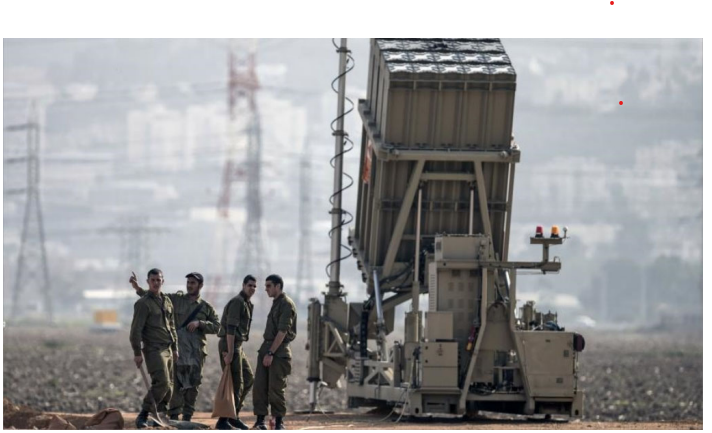
They are also hitting and destroying parts of the genocidal state’s surveillance and defence infrastructure, practically on a weekly basis. The “Iron Dome” depends on launching interception missiles and the launchers are being periodically hit by Hezbollah too.

‘Iron Dome’ launcher of interception missiles with members of the IOF in attendance (Source: Yemen’s Air Force PDF)

And they will continue doing this, they say, until the genocidal attacks on Palestinians cease and international humanitarian aid returns unimpeded (Yemen’s attacks on certain shipping will continue until the same point, as made clear by Ansar Allah).

Hezbollah, like most anti-imperialists, Arab or otherwise, want to see the demise of the genocidal state. But they clearly don’t want all-out war with it at present, with attendant wide-scale destruction of Lebanon by the air forces of the imperialist alliance.

So they have published the results of their surveillance drones flyovers, including most recently of the IOF’s high-security military airport, noting the identity of its commanding officer and also exploded a warning in the centre of the state’s third-largest city.

Published results from the earlier ‘Flight of the Hoopoe’ in June.

THE SHORT, MEDIUM AND LONGER-TERM SIGNIFICANCE

In the short term, the significance of this development is that the settler state is very vulnerable. It must endure Hezbollah’s attacks on its military and its defence systems, knowing that its vulnerability increases steadily.

Scenes from and commentary on the most recent published results of Hezbollah’s undetected drone flight containing detailed aerial film of the IOF’s airbase.

Or attack the source, which Gallant has threatened and Netanyahu desires — for which, as this was being written, they tried to find an excuse in a deadly explosion on children playing football in the occupied Golan, blamed on Hezbollah but for which they’ve denied responsibility.8

But it is extremely doubtful that their armed forces now have the necessary numbers of armour or troops to attack Lebanon, having suffered so many damaged or destroyed of the first and dead or severely injured of the second, inflicted by the lower-tech fighters of the Palestinian Resistance.

In the short-to-medium term, all the allies of the Palestinians in the Middle East draw encouragement in their own contention with the ‘Israeli’ state and with its imperialist supporters and suppliers, while some other states reconsider their alliance with what looks increasingly like a loser.

There is no question but that in recent decades the role of drones in wars between states has been significant but also in asymmetrical conflicts against resistance fighters, such as that of the ‘Israeli’ state against the Palestinians, both against fighters and more commonly against unarmed civilians.

(Source: Yemen’s Air Force PDF)

From now on, insurgency movements will have to organise not only to neutralise the adverse effects of drones in their adversaries’ hands but also to maximise the numbers and efficiency of their own against their enemies’ troops, armaments and battle HQs, production and administrative centres.

The term “drone” is used to describe UACVs (unmanned aerial combat vehicle) but versions operating on the ground, on and under sea have also been developed.

Sea versions like an unmanned boat exploding on contact or from radio signal have been used by Yemen recently. In the NATO proxy Ukraine war, the latter has also deployed them against Russian assets. The development of multi-environment military drones cannot be far away.

Drones can also observe, record, hunt and attack through detection of infra-red imaging, attacking human fighters of either side at night or in heavy fog, rain or snow – as long as the drones can fly.

In future, killer combat drones may hunt not only by detecting infra-red light and carbon dioxide emission,9 gun oil odour, presence of ammonia etc but even of pheromones, able to distinguish between sexually active males and females.

Of course, the development of drones could focus on means to find survivors (or recover bodies) in collapsed mines or buildings (something the Palestinians could make great use of due to IOF bombing), locate missing persons etc, instead of for observing people in order to kill them.

Well … not much chance of that, is there?

End.

FOOTNOTES

1Middle East commentator.

2Hezbollah_Air_Force.pdf from Resistance News Network (see Sources).

3Ibid.

4Ibid.

5Under Trump’s previous Presidency but not withdrawn under Biden’s.

6Well Iran might be viewed as ‘mad Arabs’ (they’re not even Arabs, for the most part) but at least it’s a state, not an insurgent army. In fact, it appears to be the case that Hezbollah have not only developed their own drone-building capacity but contributed to Iran’s.

7Or one of the cats, anyway; Hezbollah says it has more surprises in store and it’s hard not to believe them.

8The western mass media has recorded Hezbollah’s denial of responsibility for the explosion perfunctorily while giving much space to ‘Israeli’ and US accusations against the organisation. This should be bizarre, given Hezbollah’s record of accuracy in missile firing and in statements, compared with an ‘Israeli’ history of blatant and monstrous lies (as recently as by Netanyahu in his address to the US Congress in Washington) … but has sadly become routine.

9One of the ways in which female mosquitoes locate their prey from which to suck blood.

PALESTINE AUTHORITY PREVENTED FROM ARRESTING RESISTANCE FIGHTER IN HOSPITAL

Clive Sulish

(Reading time: 3 mins.)

Conflict with security forces of the Palestinian Authority broke out in Tulkarm city in the West Bank today as they tried to seize Palestinian Resistance commander Abu Sujaa (Mohamed Jaber), who was receiving treatment in Thabet Thabet Hospital.

According to reports the PA fired tear gas and used pepper spray inside the Hospital grounds, also striking with batons at protesters including women. Shots were fired at the PA’s HQ and protesters are calling the PA “traitors” and “collaborators”.

After a tense stand-off the PA forces eventually had to leave empty-handed.

Abu Sujaa is a commander of the Tulkarm Brigade, Soraya Al-Quds (Islamic Jihad), one of the main organisations of the Resistance. It is reported that he was injured while handling explosives and taken to hospital; when the PA learned of his presence there they sent forces to capture him.

The arrest attempt by the PA and treatment of protesters has been condemned Soraya Al-Quds and by a number of other Palestinian Resistance organisations including the Al Aqsa Martyrs Brigade coalition, Mujahadeen Movement, PFLP, Hamas and Popular Resistance Committees.

A statement also condemning the PA’s action by students at Birzeit University was signed off by the student movements of Hamas, PFLP, DFLP, PPSF, and PPP.

The point was also made that Abdul Nasser, one of the own PA’s employees, a security officer in uniform, was filmed executed by the IOF recently in cold blood in front of their headquarters in Tubas “without any action, condemnation, or denunciation” by the PA’s leaders.

Abu Sujaa is far from being the first Palestinian Resistance fighter targeted by the PA which holds many prisoners but has also killed fighters, including Ahmed Abu Al-Ful in early May1 and Motasim Al-Arif a month later, on that occasion also while trying to capture Abu Shujaa.2

Two Palestinian civil society activists recently went on hunger strike in protest at their detention by the PA, Fakri Jaradat being released after a week of hunger strike (but 16 days detention) but Ghassan Al-Saadi was transferred to Al-Razi Hospital in Jenin in deteriorated health condition.

This evening, according to local sources quoted on Resistance News Network, PA Security Forces stormed the city of Tubas, apparently in order to assassinate the resistance fighter Omar Meselmani who is wanted by the Occupation, since they shot at him directly.

Palestinian unity?

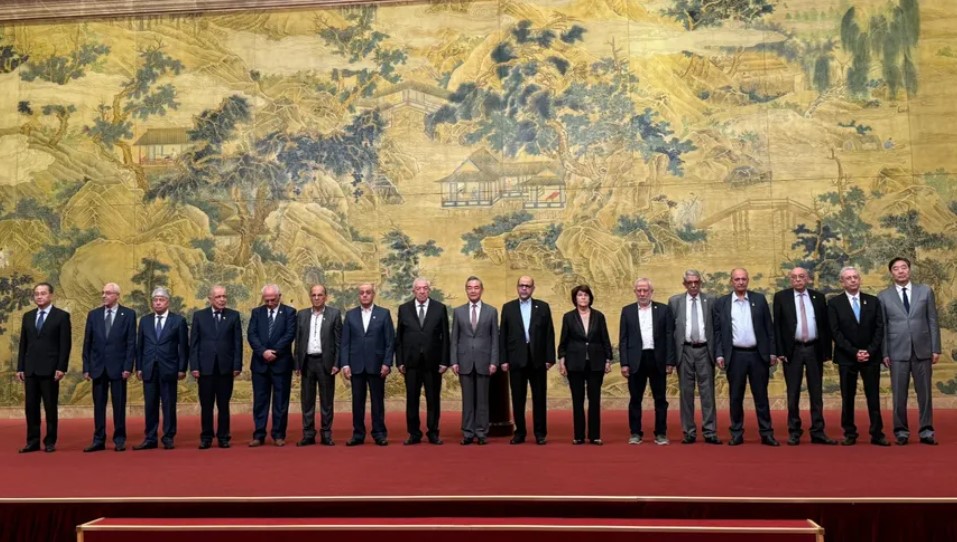
The Palestinian representative bodies recognised internationally are the PA and the PLO,3 both dominated by the Fatah leadership. The latter were represented at the Beijing Palestinian Unity conference last weekend at which all 14 factions agreed on the need for a unity government.

The PLO excludes Islamist organisations from membership, though both the PFLP and the DFLP delegates stated at the conference that they wished to admit those resistance organisations to the PLO, no such decision was recorded (presumably blocked by Fatah) in the conference decisions.

One might have thought that in the circumstances of the Beijing Agreement, the PA would be keeping a low profile or at least certainly steering clear of conflict with Resistance organisations. On the contrary however, the PA seems to be intent on exacerbating divisions.

Islamic Jihad, possibly divining the PA’s intentions, has declared it will not be drawn into a civil war with the organisation, despite its actions and collusion with the Occupation. But can that posture be maintained if the PA continues persecuting and even shooting its fighters?

Perhaps the PA is doing its best, in order to avoid its being sidelined and as an aid to the beleaguered Israeli occupation, to ensure that civil war breaks out among the Palestinians.

End.

FOOTNOTES

SOURCES & FURTHER INFORMATION

PA arrests of Resistance fighters and other opponents of the Occupation:

https://www.jewishvirtuallibrary.org/political-detainees-in-the-palestinian-authority

https://en.wikipedia.org/wiki/Palestinian_Authority

1https://x.com/PALMENA_IC/status/1786005323565633947

2(https://t.me/PalestineResist/34391)

3Palestine Liberation Organisation

EXCLUSION OF ISLAMISTS FROM THE PALESTINE LIBERATION ORGANISATION ENDING
Diarmuid Breatnach

(Reading time article: 5 mins.)

The historic exclusion from the Palestine Liberation Organisation of Islamist resistance organisation is ending. In a conference taking place currently in Beijing, two secular resistance organisations called for the Islamists’ inclusion in the PLO.

That news came earlier in the day from Resistance News Network (on Telegram) and much later, from the same source, the news of an agreement (see Appendix) of all on forming a consensus resistance government – but no mention of opening the PLO to the Islamist groups.

Participants in the Palestine Resistance Unity Conference in Beijing days ago. (Photo sourced: Internet)

The PLO has been internationally recognised as the sole legitimate representative of the Palestinian people but it was dominated by Arafat’s Fatah, which became a corrupt organisation colluding with the Occupation and with US Imperialism.

This morning some of the published contents of the agreement1 leaked to the media, were disputed in statements from Palestinian Islamic Jihad’s Ihsan Ataya2 and Hussam Badran of Hamas,3 in particular in reference to UN resolutions which contained a recognition of the state of ‘Israel’.

Reading between the lines one suspects an attempt to bring in false elements of agreement with elements of collusion with the entity and/or undermining and sabotaging any agreement at all. In any such manoeuvres, due to past behaviour first suspicion must fall on the Fatah leadership.4

If no agreement was reached on enlarged PLO membership, then given the statements of the PFLP and the DFLP, one must assume that the Fatah leadership vetoed that decision. In agreeing to a consensus government then one must also suspect the Fatah leadership of playing for time.

The Western Left and the Palestinian Resistance

A decision on opening the PLO has been coming for some time but will not be welcomed by some groups in the West. Islamist resistance organisations hold a number of socio-political ideological positions that are in opposition to the socialist or even secular positions held in Left circles.

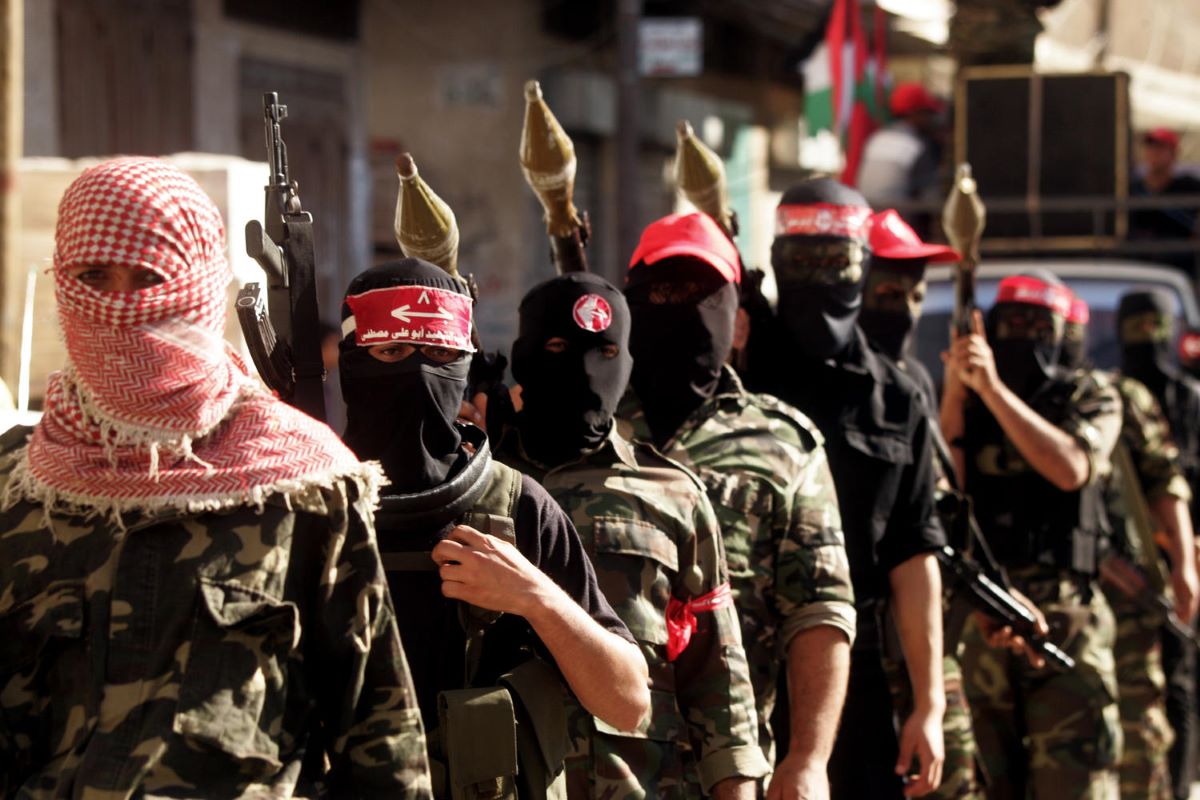
Palestinian militants from the Popular Front for the Liberation of Palestine (PFLP) in parade in Khan Yunis in the southern Gaza Strip on April 29, 2014. (Photo cred: Abed Deb /Pacific Press Credit: PACIFIC PRESS/Alamy Live News)

In those sectors of the Western Left, most support was divided among Fatah, the leading faction in the PLO, or for the Peoples Front for the Liberation of Palestine, its second organisation in size there, with some supporting the Democratic Front for the Liberation of Palestine.

With regard to the first, the ability of organisations claiming to be revolutionary or even just democratically socialist to support a leadership founding the Palestine Authority as a Vichy-type government run by the corrupt Quisling Abbas has been astonishing and also revolting.

While the PA and Fatah leadership engage in active collusion, a military section of Fatah has broken away and is part of the active armed resistance to the Occupation,5 though overshadowed in quantity and effect by the operations of the Islamist groups.

Two Islamic Jihad fighters (Photo sourced: Internet)

Need for Unity but Not a Simple Thing to Achieve

There is clearly a need for a unified resistance in terms of military operations but also with regard to political position. How far is the resistance to go? What are to be its objectives beyond defeating the current genocidal campaign? Who will run the territory and how will that be decided?

And of course, what is the national territory to be claimed: historic Palestine? Or the territory as it stood prior to the 1967 War? Into that question comes the other: a unitary secular state of the whole of Palestine, or 20% of the national territory under sight and guns of the larger Occupation state?

According to reports from Resistance News Network two secular organisations, PFLP and DFLP have already laid out their initial positions and both called for the inclusion in the PLO of the Islamist organisations Hamas and ICJ, along with the formation of an interim unity government.

This is a demand made in the past by Hamas and the ICJ also. Should all 14 organisations participating agree, there will remain a long road ahead of them. The Fatah leadership is wedded to Western imperialism and is likely to face rejection in elections, even more than it did in 2006.

Western imperialism and of course the Israeli settler regime don’t want a united Palestinian national resistance.

The fact is that not only are the Islamist organisations doing most of the fighting against the ‘Israeli’ Occupation’s genocidal campaign but there are more of them and they generally acknowledge the leadership of Hamas and Islamic Jihad, who have also been careful to consult them.

It was the latter two that organised and led the October 7th breakout from the Gaza ‘concentration camp’ into Palestinian territory seized and occupied by the settler regime, though resistance operations immediately afterwards were coordinated by the Joint Operations Room.

Hamas is not only the major leader in terms of military resistance, it is also a political organisation and was the electoral choice of the Palestinian people in the 2006 elections, the result of which was repudiated by the Fatah leadership and by the Western powers.

In addition, while the Palestinian secular Leftists have few external allies, those of the Islamist Palestinian resistance are active and powerful: Hizbollah in Lebanon and Syria, Islamic Resistancein Iraq,6 Ansar Allah in Yemen7 and the leadership of the Islamic Republic of Iran.

All of those with the exception of Iran are in constant action against the ‘Israeli’ Occupation and Iran has shown its capacity to flood ‘Israel’s’ air defence systems and, despite Western allies’ air force operations, to strike three military bases of its choice in occupied territory.

Yemen, in addition to its effective interdiction in three seas of shipping allied to the genocidal entity, last week slipped an explosive drone into Tel Aviv without even setting off alarms. The IOF bombed its oil tanks and electricity generator in revenge but this contest is far from over.

Hizbollah developed missiles capable of striking anywhere inside territory occupied by ‘Israel’ and has displayed detailed footage captured by their undetected drone over ‘Israel’s’ claimed territory comprehensively detailing military, industrial and civilian infrastructure.

In the event of the creation of a genuine national independent Palestinian state, it will not be socialist, at least initially — but will it be secular or Islamic in law? In the case of the latter, what will be the fate of the secular resistance sector?

In 2007 Hamas dealt harshly with Fatah forces in Gaza but that was after months of the Fatah administration refusing to relinquish control in line with the 2006 election results and also, no doubt, in recognition of the PA’s collusion with imperialism and the Occupation.

And will Shia and Sunni sections of the Islamist sector find a long-lasting accommodation? Come to that, will the secular organisations agree with one another? Apart from the collusive role of Fatah, in their statement the DFLP supported a two-State solution which the PFLP does not.

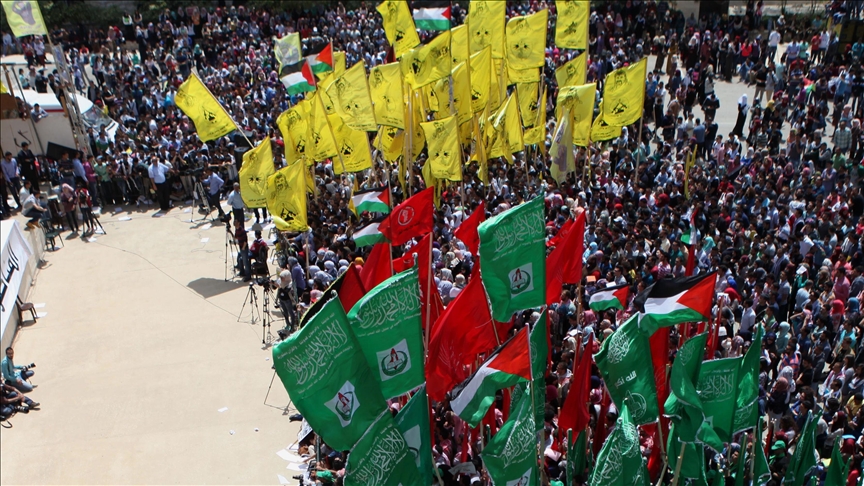
Mass demonstration of unity of different Palestinian resistance organisations (Source photo: Internet)

These questions will be answered by events yet to come and of course the right to decide on them belongs to the Palestinians. The Left in Palestine and outside will need to find a way to accommodate themselves to the results and continue to oppose imperialism and Zionism.

The defeat of the genocidal state of ‘Israel’ will be a huge boon to humanity, a significant damage to western imperialism (in that also a huge great boon to the world) and a huge achievement of the heroic resistance, armed and unarmed, of the Palestinian people.

End.

FOOTNOTES

1See Appendix

2Head of Arab and International Relations, statement to Al Mayadeen, summarised in Resistance News Network. Excerpt:

3Head of the National Relations Office in the Hamas movement and a member of its political bureau, in press statement summarised in Resistance News Network. Excerpt: Some points that implicitly and explicitly recognize the naming of UN resolutions that include recognition of “israel” have been amended. The Palestinian political leadership must realize that all negotiations with the occupation forces have failed. The guarantee of implementing the clauses of the “Beijing Declaration” lies in the hands of the Palestinians themselves. The dialogue in Beijing took place in two sessions, and after drafting the statement, there were objections to a number of its contents, and our position was clear. The final reading of the statement was supposed to take place before its approval, but due to the limited time, it was based on what the committee drafted. We passed the statement with our implicit reservations to thwart those who wanted to sabotage this meeting.

4The possibility of collusion in such manoeuvres by the DFLP cannot be excluded, given its position (reiterated in its opening statement to the Beijing Conference, as published by RNN) of claiming Palestinian land on the basis of pre-1967 War only, thereby accepting the State of Israel and its occupation of most of Palestine.

5I have not seen a full list of the represented organisations at the Beijing conference and therefore am unable to say whether they were there. They have been mostly fighting the Occupation in the West Bank and two of their field commanders were martyred yesterday in Tulkarem alongside a commander of Hamas forces by an IOF drone strike during the battle there.

6This coalition recently decided to end its truce in attack on US military bases in Iraq as a result of the long delay by the US in carrying out their agreed departure.

7In effect the government of Yemen, though the Western powers recognise only their proxy, a government in exile.

REFERENCES & SOURCES

Number of postings by Resistance News Network (on Telegram platform) yesterday and today.

https://ecfr.eu/special/mapping_palestinian_politics/plo_parties/

https://ecfr.eu/special/mapping_palestinian_politics/introduction_armed_groups/ (RNN gives a more comprehensive list and more detailed explanation but the link is for Telegram only)

APPENDIX

🚨🇵🇸 “The Beijing Declaration to End Palestinian National Division: To unify national efforts to confront aggression and stop the genocide war.”

The following was agreed upon by 14 Palestinian factions at the end of the reconciliation meeting in Beijing, China (https://t.me/PalestineResist/49595) today, including Hamas, PIJ, PFLP, DFLP, and Fatah:

– The Palestinian factions welcome the opinion (https://t.me/PalestineResist/49245) of the International Court of Justice, which confirmed the illegality of presence, occupation, and settlement.

– Continuing to follow up on the implementation of the agreements to end the division that took place with the help of Egypt, Algeria, China, and Russia.

– Commitment to the establishment of an independent Palestinian state with its capital in Al-Quds in accordance with international resolutions, especially 181 and 2334, and ensuring the right of return.

– We affirm the right of the Palestinian people to resist occupation and end it in accordance with international laws, the UN Charter, and the right of peoples to self-determination.

– To form a temporary national unity government with the consensus of Palestinian factions and by a decision of the president based on the Palestinian Basic Law.

– The formed government exercises its powers and authorities over all Palestinian territories, confirming the unity of the West Bank, Al-Quds, and the Gaza Strip.

– To resist and thwart attempts to displace our people from their homeland, especially from the Gaza Strip, the West Bank, and Al-Quds.

– Working to lift the barbaric siege on our people in the Gaza Strip and the West Bank and deliver humanitarian and medial aid without restriction or condition.

AN APPROPRIATE WELCOME FOR HIM OR HER

Diarmuid Breatnach

(Reading time: 4 mins.)

It is reported that at some point in the near future a representative of the Palestine Authority will be officially received in Leinster House as part of the recognition of the Palestinian State by the Irish Government (and presumably by the Irish State).

This will be an important occasion and all who support the Palestinian people should get ready to give this representative of the Palestine Authority an appropriate welcome.

The PA is an unelected, unrepresentative, corrupt, repressive and occasionally murderous organisation colluding with the ‘Israeli’ occupation, feeding its Occupation master (and their master’s masters) with information on the activities and persons of the Palestinian Resistance.

In the course of the current genocidal offensive of the Occupation, operatives of the PA have seized weapons of the Resistance, dismantled explosives1 and for years have arrested and jailed activists. They also arrest Resistance activists to hand over to the Occupation.

In carrying out this dirty ‘duty’ for their masters, the PA encounter natural resistance and in overcoming that resistance the PA has executed and killed under interrogation dissidents and members of the Resistance, including since October last year.2

Palestinians objecting to repression face the security force of the Palestinian Authority. (Image sourced: Internet)

Elected once, then widely rejected

Since it was created in 1994 arising out of the Palestine Pacification (wrongly named ‘Peace’) Process,3 elections were held by the PA just twice. The Fatah political (and military) party under Yasser Arafat won the first ones in 1996 but Hamas overwhelmingly won the next, in 2006.

The largely secular-voting Palestinian society rejected Fatah in favour of an Islamist party largely because of Fatah’s corruption and nepotism in the PA and also due to its collusion with the Israeli state, formally and informally in fact.4

The Hamas electoral victory of 2006 was not accepted by the Western powers, nor by Fatah, who refused to vacate their administrative control. Eventually, after a short, sharp struggle in June 2007 Hamas evicted them from the positions in Gaza to which the electorate had voted Hamas.

However, Hamas refrained from doing the same in the West Bank, presumably to avoid all-out civil war and so Fatah remains in control of that section of Palestinian governance, which is the one universally known as “the Palestinian Authority” (and, since 2013, as “The State of Palestine”).

Since 2006, the PA has held no elections though it was supposed to do so every four years.5 The reason is clear: Hamas would win again and the Fatah leadership want to hold on to their corruption opportunities and are decidedly opposed to having their funding streams6 cut.

Currently Hamas runs the government of Gaza and is the leading element in the Palestine armed Resistance, a coalition of Islamist and secular organisations that are united in fighting the Israeli occupation and in the negotiation position of the Resistance.

Fatah had been invited to participate in talks in Beijing in April to present a united Palestinian front but at the last minute declined to attend. Nevertheless, in recent days they have been invited again; it is not known at present whether their representatives will attend or not.7

Hamas and others have called for a unified position on Palestinian self-determination and for participation in a broad united Palestinian government.

Netanyahu, with the support of his internal allies and with the US and Western powers externally, refuses to accept the verdict of the Palestinian electoral process and wants a pro-Israeli administration there which, for the Western powers, means a “revitalised”8 Palestine Authority.

US Middle East would-be ‘fixer’ Blinken, already mooted that9 and Mahmoud Abbas, sitting grossly at the head of the PA in the West Bank, indicated his willingness for the job.

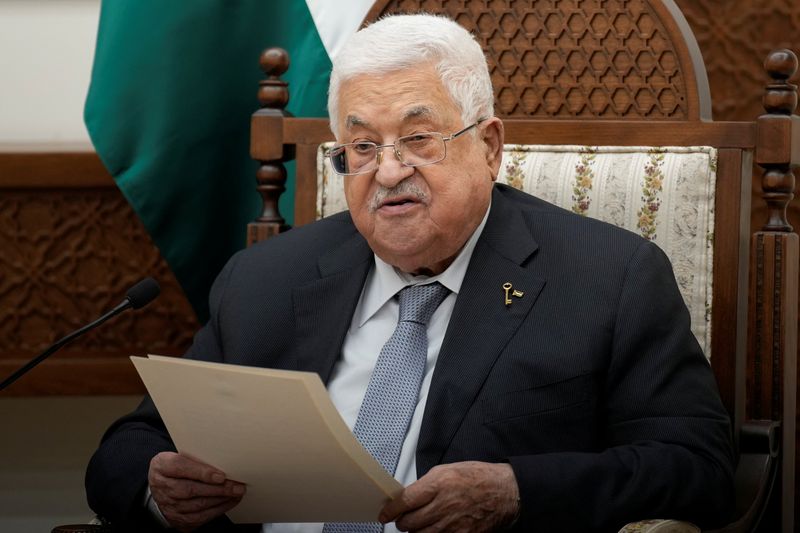
Palestinian Authority President Mahmoud Abbas reads a statement as he meets French President Emmanuel Macron, in Ramallah, West Bank, October 24, 2023. Christophe Ena/Pool via REUTERS/File Photo. Note: The key on his jacket lapel is a symbol of the right of return of Palestinian refugees for which the PA has done nothing at all and which Fatah agreed to exclude from the Oslo Accords under which the PA was founded.

The USA also proposed a coalition of their Arab regime clients for that job but the Resistance has made it quite clear that managing Palestinian society and resources is for Palestinians elected democratically only and anyone else will be a usurper for the Occupation and treated accordingly.

The real purpose of Palestinian State ‘recognition’ by the Three

Sadly, it is in this context that we should see the Irish, Spanish and Norwegian recognition of the Palestinian State. It does not represent a break from the EU’s imperialist position of support for Israel in principle but rather only in tactical approach.

These states are giving the imperialists “good advice”. What they are saying in effect is this: “You have to make the Palestinians thing that they are gaining something and use Palestinians to control Palestinians. Otherwise they’ll continue resisting and you could lose the whole thing.”

Coat of arms of the Palestinian Authority (Image sourced: Internet)

They know of what they speak. This was what the British colonialists imposed on Ireland in 1922 and what the Spanish ruling class imposed on the southern Basque Country, Catalonia and Galicia after the Franco Dictatorship, granting them limited autonomy under Spanish control.

And cultivating “independent” locals to run these for them.

The program these states desire for the Palestinian people is one in which they will have their local autonomy in a Palestinian state on approximately 20% of their nation, with worst land and least water and under the guns and watchtowers of their expansionist and dominating neighbours.

The reality of Israeli genocidal colonisation and the “two-state solution” beloved of imperialists and liberals. (Image sourced: Internet)

The decision on what the Palestinian people accept or reject is ultimately theirs, of course. Equally, how we decide to receive representatives of this undemocratic, corrupt, treasonous and violent PA is ours.

Let us not fail to make it a hot welcome, both in solidarity with the Palestinian people and in apology for the neo-colonial proposals of this Gombeen state.

Let those Irish political parties that support the PA answer for their position. Ours should be clear, from which too our actions should flow.

End.

FOOTNOTES

142 times in the West Bank since October 7th and most recently this week as I was writing this piece, blowing some up at 3am on the morning of the 17thJuly.

2https://www.jpost.com/breaking-news/article-799496

3Arising out of the 1993-1995 Oslo Accords.

4e.g. in concluding a deal that excluded the Palestinians still in “Israel” and any right of return for the millions of Palestinian refugees around the world.

5https://www.aljazeera.com/opinions/2021/1/27/palestinian-elections-democracy-for-no-one

6Mainly from the EU and USA but also from Arab and Russian sources.

7An anti-Hamas reference https://www.al-monitor.com/originals/2024/07/guarded-optimism-palestinian-reconciliation-ahead-fatah-hamas-meeting-china Hamas has indicated they want them to attend and at least some of the other Resistance groups are likely to do so.

8i.e, cleaned up a bit.

9https://www.washingtonpost.com/politics/2023/11/01/blinken-envisions-revitalized-palestinian-authority-charge-post-war-gaza/

SOURCES & ADDITIONAL INFORMATION

https://en.wikipedia.org/wiki/Palestinian_Authority

I do not endorse some of the opinions in this: https://www.fdd.org/analysis/2024/03/06/10-things-to-know-about-the-palestinian-authority/

https://www.irishtimes.com/world/middle-east/2024/07/14/the-palestinian-authoritys-shrinking-influence-in-the-west-bank/

Repression of dissent by the Palestinian Authority: https://www.amnesty.org/en/latest/news/2021/07/palestinian-security-forces-escalate-brutal-campaign-of-repression-2/

https://www.aljazeera.com/features/2022/1/25/analysis-palestinian-authority-cracking-down-on-opposition

MAJOR PRO-SETTLER CENSORSHIP BY META

Diarmuid Breatnach

(Reading time: 7 mins.)

Meta, the company that runs the social media platform Facebook, is banning1 the use of the word Zionism by FB users, claiming the word is used interchangeably with ‘Israel’ and Jewry and is ‘anti-semitic’ and that their ban is in defence of Jews.

The word Zionism is often used in connection with Israel but it does not follow that its use is synonymous with Judaism or that it is therefore antisemitic, any more than to use the word “Nazism” in the 1930s and 1940s would have necessarily been anti-German.

The word ‘Zionism’ is associated with the state of ‘Israel’ for a very good reason – it was founded precisely as a Zionist project, a homeland for people of Judaic background. Palestine happened to be already occupied and so the initiative became also a European settler project in the Middle East.

Christians who support the project for religious – as distinct from political — reasons, mostly in the US, are also regularly described as “Zionist Christians” and form the majority of US Zionists.

But Zionism, rather than describing a religious movement, is essentially political. The Israeli State gives right of citizenship to those from anywhere who can prove being of Judaic background but does not require them to practice the religion or, in fact, to believe any Judaic tenet.

A Gallup survey in 2015 had 65% of Israelis self-identifying as being either “not religious” or “convinced atheists”, while 30% identified as being “religious”. More recently, polls found only 55% identifying as non-secular.

But its Jewish citizens being religious or not, the State is Jewish and the result of a Zionist movement with 19th -Century origins.

Of course, not all Israelis are Jewish either – there are also Muslims, Christians of various Eastern varieties and some western, Druze and others.

The Israeli State came into being on 14 May 1948 as a Zionist state, the culmination of decades of Zionist planning and search for a location, also a settlement project in Palestine promoted by British imperialism and a terrorist campaign against the indigenous Palestinians.

Theodor Herzel, key founder of Zionist Movement and author of Der Judenstaat (The Jewish State) and one of his statements. (Image sourced: Internet)

Origins of Zionism

Zionism as an ideology and movement was founded “in the late 19th century by secular Jews, largely as a response by Ashkenazi Jews to rising antisemitism in Europe, exemplified by the Dreyfus affair in France and the anti-Jewish pogroms in the Russian Empire.

“The political movement was formally established by the Austro-Hungarian journalist Theodor Herzl in 1897 following the publication of his book Der Judenstaat (The Jewish State).

“At that time, Herzl believed that Jewish migration to Ottoman Palestine, particularly among poor Jewish communities, unassimilated and whose ‘floating’ presence caused disquiet, would be beneficial to assimilated European Jews and Christians. 

“Political Zionism was in some respects a dramatic break from the two thousand years of Jewish and rabbinical tradition.

“Deriving inspiration from other European nationalist movements, Zionism drew in particular from a German version of European enlightenment thought, with German nationalistic principles becoming key features of Zionist nationalism.

“Although initially one of several Jewish political movements offering alternative responses to Jewish assimilation and antisemitism, Zionism expanded rapidly. In its early stages, supporters considered setting up a Jewish state in the historic territory of Palestine.

“After World War II and the destruction of Jewish life in Central and Eastern Europe where these alternative movements were rooted, it became dominant in the thinking about a Jewish national state.

“During this period, Zionism would develop a discourse in which the religious, non-Zionist Jews of the Old Yishuv who lived in mixed Arab-Jewish cities were viewed as backwards in comparison to the secular Zionist New Yishuv.”

Jewish use of the word

It was the Jewish Zionists who tried to equate Judaism with Zionism, an effort that was initially repudiated by many (probably most) Jews around the world prior to the Holocaust. After that and in particular with the creation of ‘Israel’, the majority seemed to identify with the Israeli state.

But there was always opposition to that among Jews, including famous ones. The Jewish historian of nationalism Hans Kohn argued that Zionism nationalism “had nothing to do with Jewish traditions; it was in many ways opposed to them”.2

Zionism had its critics from early on and the cultural Zionist Ahad Ha’am in the early 20th century wrote that there was no creativity in Herzl’s Zionist movement, and that its culture was European and specifically German.3

“He viewed the movement as depicting Jews as simple transmitters of imperialist European culture.”4

In recent decades the Zionists worked harder to demonise anti-Zionist Jews, calling them “self-hating Jews” and hounding those who spoke out against Zionism and the apartheid and genocide of the Israeli state, even destroying the employment prospects of such academics.

However, increasingly non-Israeli Jews around the world, including some commentators think the majority of their youth in the USA, are non-Zionist and even anti-Zionist. Many have been prominent in Palestine solidarity and anti-Israel actions.

A well-established Jewish sect that rejects Zionism and therefore the State of Israel. (Image sourced: Internet)

Jews using the term “Zionism” seem to be clear about its meaning and increasingly tend to identify themselves as either Zionist or Anti-Zionist. But most Jews in Israel might be considered ‘Zionist’ in the de facto sense of special ethnic entitlement status and occupation of Palestinian land.

Meta’s ban on use of the word on its social media platform therefore has nothing to do with defending Jews from anti-Semitism and in fact is aligning itself with the Zionist coercion of Jews from which a large section around the world are escaping.

By equating Judaism with Zionism, with the genocidal actions of the Israeli State, Meta is actually strengthening anti-Semitic thinking in many parts of the world.

Jews in solidarity with Palestine and therefore presumably anti-Zionist, photographed on Palestine Solidarity march in London recently. (Photo: Morning Star)

Non-Jewish Use of the word

It may be that not everyone is clear on the difference between Jews and Zionists but the likelihood is that despite obfuscation by the Zionists themselves, most understand the difference.

It is also possible that some may disguise their anti-Semitism by denouncing Zionists when they mean “Jews”.

Even so, that cannot serve as an excuse for banning the use of an appropriately descriptive and historical word, one in addition based on a political movement created — and practice carried out — by Jewish Zionists themselves.

Effect of the ban

The immediate effect of the ban is to increase the one-sided censorship which is already prevalent in the West, sheltering the European Settler State in the Middle East from much criticism for its genocidal policy and actions against the Palestinians.

The effect of that “sheltering” (and in many cases its objective) is to assist that state to continue its genocide and also to facilitate the western states’ support for that genocide in politics, journalism, sport, culture, trade, finance and armament.

The longer-term effect will be to energise the search for other platforms that will not impose such bans on speech. Already Telegram is gaining many users on both Right and Left ends of the political spectrum. This does not mean however that the State cannot find the means to spy on them.

Those wishing to use terms that describe what the western imperialists do not wish described may abandon platforms owned by Meta in favour of others, at the same abandoning many mainstream Meta users to the dominant discourse and ideology.

Image sourced: https://palestinelegal.org/distorted-definition

Other pro-Israeli censorship

Meta previously banned the word Shaheed, meaning “martyr”, which it lifted after a period of a year. This is a term regularly used by the Palestinians to describe their dead, their fallen Resistance fighters but also the huge number of civilians killed by the Israeli Occupation Forces.

The term is also used in a similar way in relation to other other Arab resistance groups from the Lebanon to Yemen. Meta suspends accounts or closes them for promotion of resistance organisations (termed “terrorists” by Western states) across the globe, not only in the Middle East.

Ex-Minister for Home Affairs for the UK Suella Braverman attempted to ban the slogan “From the river to the sea” in Palestine solidarity context,5 claiming that because it encapsulated the desire for a Palestinian state, it was anti-Israeli and therefore anti-Semitic, a giant anti-logical leap.

A small group of anti-Zionist protesters in ‘Israel’ some weeks ago was suppressed by Israeli police and one of the latter was filmed loudly declaring that any placard or banner including the word “genocide” would be removed, an attitude mirrored by police in Germany.

People, including supporters of Juedische Stimme (Jewish Voice), a Jewish organisation, gather for a ‘Global South United’ protest to demand freedom for Palestine on 28 October 2023 in Berlin, Germany. [Getty]

Challenging Israeli atrocity hoaxes of the Palestinian resistance beheading babies or mass raping Israeli women has also drawn fire and accusations of “anti-Semitism”. Placard representations likening Israeli actions to those of the Nazis were often suppressed in the West.6

The issue of banning publication of certain words is not an easy one though liberal and social-democratic trends present it uncritically. We may object to the use of any of a huge number of racist epithets, for example and understand that these can be used to build up racist cultures.

However, when the State is asked to ban these and other kinds of speech, it is in effect being publicly empowered to ban what is in the interests of the elite to ban, i.e those words that convey unpleasant images of the ruling class, however valid.

“Property speculator”, “vulture capitalists”, “imperialists”, “colonialists”, “sectarian”, “collaborators”, “quisling” and “settlers” could be on a future list for banning under “hate speech”, along with combinations of words such as “police” with “brutality” or “politician” with “corrupt”.

Liberals and social-democrats tend to forget at times where the real power lies and what interests are served by the State.

Meta’s ban will be circumvented in many ways of course but it represents a major attack in social media on democratic freedom, all in the service of a genocidal colonial state which itself is in the service of imperialism.

End.

Footnotes:

1 https://www.theguardian.com/technology/article/2024/jul/09/meta-hate-speech-policy

2https://en.wikipedia.org/wiki/History_of_Zionism

3Ibid

4Ibid

5Though it has also been used as a slogan of Zionist expansion, including by Netanyahu.

6Including by mainstream Palestine solidarity organisations.

Sources:

Meta banning most use of the word: https://www.theguardian.com/technology/article/2024/jul/09/meta-hate-speech-policy

Zionism: https://www.collinsdictionary.com/dictionary/english/zionism

https://www.britannica.com/topic/Zionism

https://en.wikipedia.org/wiki/History_of_Zionism

https://www.aljazeera.com/opinions/2012/12/24/zionism-anti-semitism-and-colonialism

https://palestinelegal.org/distorted-definition

Religion in Israel: https://en.wikipedia.org/wiki/Religion_in_Israel

THE REPRESENTATION OF REVOLUTIONARY ICONS

The role of culture in revolution is of great importance – greater even than that of the armed struggle, certainly in the initial and later stages. We are created by evolution but we are born into and raised in culture.

The question of whether that culture is to be revolutionary or liberal is of crucial importance.

I have remarked on how Mandela, jailed for his revolutionary armed activities, was marketed as a peacemaker and later became a figurehead of pacification of the South African struggle. Bobby Sands, a revolutionary fighter to the last, has also been represented as a peaceful icon.1

And so also was Terence McSwiney who, like Bobby Sands, died on hunger strike.2

The following article from Resistance News Network, reflecting on the work of the revolutionary writer Ghassan Kanafani who was murdered by Israeli Zionism and his subsequent representation as an icon is I think of substantial interest. D.Breatnach

Translated by Resistance News Network
Originally by 
Nidal Khalaf, 16 July 2022

(Reading time: 6 mins.)


Ghassan the poet? Ghassan the Palestinian? No, 
Ghassan the revolutionary!

In colonial wars, the creation and dissemination of symbols to the public is a crucial battle in the war of consciousness building, even if its effects are not clearly visible in the present.

Perhaps the most prominent example of these battles was the image of Che Guevara in the wars of liberation in Latin America. Ernesto Guevara’s persona represented an individual model that encapsulated the revolutionary spirit of people fighting for their freedom from American hegemony.

As the American empire recognized its inability to destroy Guevara’s image, they transformed his image into a consumer commodity.

This was to divert his image from its original revolutionary meanings and repurpose it in the service of economic and cultural agendas that contradicted Guevara’s own principles and what he represents.

In the Arab context, the war to liberate Arab symbols from the captivity of history monopolists continues to intensify, as it involves obscuring forgotten heroes in favour of fabricating mythical legends designed to tamper with the boundaries of nationalism and betrayal in the Arab mind.

In this context, the fiftieth anniversary of the assassination of the martyr Ghassan Kanafani is being observed, with pages and websites filled with commemorations of Ghassan’s life, his quotes, and his most significant works.

It is no longer surprising that Ghassan Kanafani is celebrated on both normalization platforms as well as liberal ones, when voices are raised to commemorate Ghassan even as they are in the heart of the hostile project under the umbrella of its military bases.

Thus, the question arises: which Ghassan Kanafani are we commemorating today? And how do we protect the Ghassan we know?

Ghassan Kanafani’s life provided rich material for readers, followers, and analysts after his martyrdom.

However, the perception of Ghassan was not independent of the political contexts of the recipient interpreting his word, resulting in multiple “versions” of Ghassan Kanafani, some of which we review below.

Ghassan Kanafani: The Writer (only?)

The most widespread version of Ghassan Kanafani is that of a “writer” who wrote stories, plays, and depicted the Palestinian reality.

The spread of this version may be justified since Ghassan’s literary works are the most popular among people and have played a significant role in spreading his name.

However, confining Ghassan Kanafani to the realm of “literature” is not always innocent, and in some respects, it is a deliberate reduction of Ghassan Kanafani’s political work.

Ghassan was responsible for mobilization, media, and was a part of the political decision-making circle in the Popular Front for the Liberation of Palestine since it was part of the Arab Nationalist Movement. He remained in this role until his martyrdom.

Moreover, Ghassan’s literary output never compromised or was at the expense of his political positions or took precedence at any point in his career.

In terms of production, his political studies, research, articles, and editorial journalism are as abundant and important as his narrative and theatrical works.

Even the latter were never detached from the political context; instead, the narrative served as a framework through which Ghassan conveyed his political, social, and even philosophical ideas.

Consequently, the image of Ghassan as “the writer engaged in politics” falls away, replaced by the truth of Ghassan — the politician who harnessed literature in the service of a political cause.

The danger of this deliberate reduction lies in paving the way for a sanitized image of Ghassan Kanafani, presented to the public by liberal (and even normalization) pages and platforms to gain credibility in Ghassan’s name.

Kanafani tackles a fundamental dilemma that burdens our political reality to this day, which is the crisis of “the prioritization of internal change over liberation.”

Thus, reductionism turns into deliberate distortion, making Ghassan Kanafani’s name a “honey” slipped into the poison of isolationist, liberal, and anti-resistance ideas on our land under the guise of freedom and liberation.

Otherwise, how can we understand the celebration of Ghassan Kanafani by liberal platforms and influencers at Al-Udeid Air Base?

Ghassan Kanafani: the Palestinian (only?)

One of the unjust reductions of Ghassan Kanafani is the confining of his personality and his works to “Palestine,” as delineated by colonialism.

Again, one can find an excuse for this reduction because Palestine represents the primary aspect of Kanafani’s political and literary identity, and his experience is closely tied to the general Palestinian experience of war, forced displacement, diaspora, and the struggle for return.

Some people overly emphasize Ghassan’s Palestinian identity, overshadowing his Arab dimension, which he never concealed.

In reality, examining Ghassan Kanafani’s political studies unveils to us the truth of Ghassan as an Arab nationalist thinker who worked hard and struggled to develop practical frameworks for Arab revolutionary theory.

This is made clear in his in-depth study, “The Arab Cause in the Era of the United Arab Republic,” where he discusses the essence of the imposed war on our region, identifying enemy and friend camps, and ultimately defining the main goal of the war: liberation as a condition for unity and renaissance.

Ghassan further elaborates on this study’s conclusions in another study titled “The Revolutionary Applications of Arab Nationalism,” published in 1959, in which he masterfully details the concept of Arab unity and the tools for its practical implementation.

Ghassan Kanafani goes beyond this by considering the confrontation of isolationist (regionalist) thought a revolutionary necessity, describing “isolationism” as something that “contradicts the nature of the formation of societies.”

Isolationism or “regionalism” are anti-unity tendencies, based on defining society’s interests from colonial borders and treating each Arab state as “independent” in itself, as Sykes and Picot intended.

Kanafani tackles a fundamental dilemma that burdens our political reality to this day: the crisis of “the prioritization of internal change over liberation.”

No better formulation to this question can be found than Ghassan’s own words when he stated that “raising the concept [of focusing on internal development first] is a deliberate exclusion of the popular current directed towards unity with determination,

and diverting it to side and regional battles that are easily manipulated (as long as each Arab country is not -nationally- at a level of complete liberation worthy of proper social construction).”

Ghassan concludes his argument by asserting that “unity is a prerequisite of the renaissance… even its regional aspect.”

We mention these ideas as examples of Ghassan Kanafani’s Arab nationalist thought, which fundamentally opposed isolationism and the canned projections of Marxism and others, with strength and clarity.

Therefore, the celebration of Ghassan by the proponents of these ideas indicates their exploitation of Ghassan’s legacy (from their side) and a significant failure in protecting Ghassan (from the side of those who believe in his ideas).

How, then, do we protect Ghassan Kanafani?

The starting point lies in defining ourselves. Are we believers in Ghassan Kanafani’s approach and vision for the ongoing conflict on our land, which comes at the expense of our blood, lives, and destinies?

If so, our foremost duty is to reclaim Ghassan Kanafani from the chains of cheap consumerism and to present him to the public in his true and impeccable form: an Arab nationalist fighter who made among the most significant contributions to modern Arab revolutionary theory.

Additionally, our responsibilities also include reviving the spirit of party work, in which Ghassan was a pioneer, and correcting the Arab party frameworks to harness the wasted energies in the prisons of virtual activism,

within the halls of “non-governmental organizations” and the labyrinths of despair and discouragement.

Our obligation towards Ghassan Kanafani demands that we comprehend our reality and its conditions and that we clearly define our goals, grounded in a deep conviction in our civilizational role as a nation.

We must believe that the liberation of the land is a step towards unity, and that unity is a prerequisite for the renaissance that will elevate us to our rightful civilizational status among nations. Finally, here is a part from Ghassan Kanafani’s ongoing will:

“A human being who does not live the average of sixty years will not find enough space to live peacefully; instead, they will carry the crisis from the moment they are born… and pass it on to their children at the hour of their death.

“The results of this struggle will be for a generation we do not know when it will arrive, even though we are optimistic about witnessing its early days towards the end of our lives…

“Our only reward may be that the next generation, the happy generation that will enjoy our victories, will envy us for having earned the honour of living in the age of struggle for life. And that is enough for us temporarily.”

End.

Footnotes

1In particular by the constant reproduction of his statement that “our revenge will be the laughter of our children”, completely abstracted from his role as an armed freedom fighter and what he wrote in support of that.

2Similarly to Bobby Sands, his statement that is those who who endure, rather than inflict the most who will triumph. The statement taken in isolation seems to endorse passive resistance but McSwiney was an officer of the IRA in the War of Independence, a role skated over in the Wikipedia entry dedicated to him.

A FOUNDER OF THE PALESTINIAN RESISTANCE AND MARTYR

(The following text is taken with minor organisational editing from Resistance News Network as are also the images)

(Reading time: 3 mins.)

On April 8th, we commemorate the anniversary of the martyrdom of one of Palestine’s foundational resistance leaders in 1948, the eternal Martyr Abdulqader Al-Husseini, who gave his life in the noble pursuit of our people’s liberation. 

(Image sourced: Resistance News Network)

From childhood, Al-Husseini witnessed the beginnings of the colonial zionist project in Palestine and its implementation at the hands of the British. As he grew older, he became actively involved in organizing protests and demonstrations against the British occupiers.

After completing his secondary studies in Egypt, he returned to Al-Quds in 1933, and received a job in the land department. This job meant he was able to not only learn about the plans of land theft by the zionists, but also get close to the people of the villages. 

That same year, Abdelqader and other Palestinian leaders began laying the foundations of a new type of struggle: revolutionary armed struggle and founded the Organization for Holy Jihad (Munathamat al-Jihad al-Muqadas).

In May, they announced the beginning of the Great Palestinian Revolt. 

Al-Husseini, as one of the commanders of the Army of the Holy Jihad, led his troops in acts of resistance against both British and zionist occupiers during the Great Revolt between 1933-1936.

(Photo sourced: Resistance News Network)

In October 1936, he was arrested after he was wounded during the Battle of Al-Khader but managed to flee from the hospital to Damascus. 

His leadership extended beyond military operations in Palestine, as he also worked tirelessly to mobilize support for the Palestinian cause abroad and participated in the Iraqi struggle for liberation against the British, where he was arrested until 1943.

He remained in exile, passing through Germany where he learned to make explosives and mines and Cairo, setting up training camps and importing weapons, and finally returning to his homeland in 1947 when the partition plan was announced.

(Photo sourced: Resistance News Network)

Upon his return he instantly began orchestrating and taking part in armed actions against zionist expansion.

In April 1948, Al-Husseini left for Damascus to meet with the Military Committee of the League of Arab States in order to ask for arms to repel the zionist incursion into Al-Quds, but the League failed him and the people of Palestine.

(Photo sourced: Resistance News Network)

It was at that time he received news of the occupation of Al-Qastal, a strategically located village west of Al-Quds. Before he left, Al-Husseini wrote a letter to the League in which he says, “I hold you accountable after you left my soldiers at the heights of the victories without aid or weapons”. 

He returned one last time to fight, waging a fierce battle against the incursion into Al-Quds and proclaimed, “I am going to al-Qastal, and I will storm it and occupy it, even if that leads to my death.”

(Photo sourced: Resistance News Network)

“By God, I am tired of life and death has become dearer to me than this treatment that the League has dealt us. I am now wishing for death before I see the Jews occupying Palestine. The men of the league and the leadership are betraying Palestine.”

When the news spread that he planned to liberate Al-Qastal, fighters across Palestine came to his aid, liberating the village and raising the Palestinian flag later that afternoon on April 8, 1948. Fighters would later find out he was martyred during its liberation. 

(Photo sourced: Resistance News Network)

His legacy was carried forward by his wife Wajeeha Al-Husseini who was his partner in struggle, a daughter and three sons, who fought in the ranks of the Palestinian revolution after the Nakba of 1948.

Al-Husseini’s unwavering bravery and tireless efforts to defend our homeland and resist occupation continue to inspire us in our struggle for liberation. His courage and sacrifice remain a guiding light as we persevere steadfastly in the face of the cowardly zionist enemy.

We honor Al-Husseini’s legacy by renewing our commitment to our struggle. We draw strength from his sacrifice and all those who followed in his footsteps. Together, we will continue the struggle until martyrdom or victory. 

(Photo sourced: Resistance News Network)

Glory to the eternal Martyr Abdelqader Al-Husseini. 

Long live the resistance. 

Long live Palestine.

End.