Diarmuid Breatnach
Very recently, the pro-Catalan independence on-line periodical VilaWeb interviewed Marta Vilalta, the spokesperson for the ERC (Republican Left of Catalonia) party, an important component of the pro-independence majority in the Catalan Parlament. Her replies and statements presumably reflect the thinking in the leadership of the ERC party or, if it should not be unanimous, at least the thinking of the dominant section of the party’s leadership.
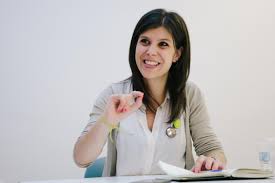
ERC has 32 Deputies in the Catalan Parlament (and two Members of the European Parliament). The other components of the Catalan independist majority at the time of writing (June 2018) are JuntsxCat (Together for Catalonia – 34 seats) and CUP (Candidatura d’Unitat Popular — 4 seats). The latter is taking the ‘confidence and supply position’ (i.e they will not vote with the Opposition and will vote to keep the Government in power if necessary).
ERC’s President, Oriol Junqueras, has been in a Madrid jail since the October Referendum, awaiting trial on charges of “Rebellion”. The party’s General Secretary, Marta Rovira, went into exile to avoid a similar fate.
The party, along with JuntsxCat, whose President Carles Puigdemont is also in exile, has faced repression by the Spanish State, as has also the cultural organisation ANC (Asamblea Nacional Catalana), whose President, Jordi Sànchez i Picanyol, is also in the Madrid jail.
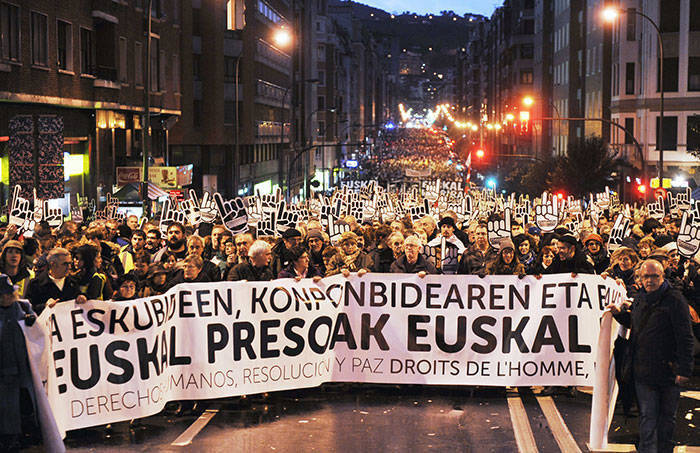
The independist parties are to be commended for continuing their stance for independence and for facing up to Spanish State repression. In this, they enjoy the support of the majority of the Catalan population, as evidenced by votes in the December elections and the mobilisations and votes cast in the October Referendum, albeit disrupted by Spanish police raids to confiscate ballot boxes and assault voters and demonstrators.
But how prepared are they for the struggle ahead? How critically do they evaluate their past performance and expectations? How willing to learn from mistakes? The signs are not encouraging.
ILLUSIONS ABOUT THE SPANISH STATE
“The Spanish State has been capable of everything …. to defeat independence and the Republic project”, Vilalta says in the course of the interview, with what seems to be an air of surprise, meaning one presumes that there was no lengths to which they were not prepared to go to suppress Catalonian independence. If the Spanish state has been capable of everything, one must assume that it will also be “capable of everything” in future, at least in the absence of some limiting factors, which were not mentioned by Vilalta (except perhaps in the context of reactions outside the Spanish state, which we can look at under the heading of “Illusions about other states”).
So this admission of Vilalta should imbue us with confidence that ERC is taking that into tactical and strategic consideration. However, this appears to be far from the reality, based on the insistence of Vilalta that their struggle will be based exclusively on both “peaceful and democratic” means; nor is this only an iteration of Vilalta’s but it has been stated repeatedly by leading figures of the ERC and of the JunstxCat, i.e of the parties with by far the most numerous deputies in the Parlament. We’ll look at this more carefully under the section dealing with Pacificism but for the moment we can reflect that history in general (and the history of the Spanish state in particular) demonstrates that the combatant that relies principally on moral and or legal means must be defeated by the aggressor who relies on force and its tactical application.
“I suppose the Spanish State understands and agrees with the International treaties that it has signed and which are included in the Constitution,” says Vilalta, in reference to the right to self-determination recognised by the Charter of Human Rights of the United Nations. Why does Vilalta suppose that the Spanish State “agrees” with this right? On the contrary, all its actions with regard to the nations incorporated within its state territory show that it fundamentally disagrees with them, at least where applied to itself. In fact, its own Constitution forbids the secession of any part of the State without a majority vote in favour in the Spanish Parliament and further underlines that the Armed Forces are the guarantors of the Constitution!
Of course, it is possible that Vilalta is being somewhat ironic here, or making a statement for its propaganda value. Maybe she only means that the Spanish State should uphold the right to self-determination in the international treaties which it has signed. Let us hope so. But surely it would be more useful to point out that the Spanish State has a record of fundamentally violating most of the human rights to which it has signed up, including some actually stated within its own Constitution? Such an exposure would help in any project of isolating the Spanish state internationally, undermine its propaganda and, crucially, help to prepare the Catalan people and their allies for what the Spanish State may bring against them.
The Spanish State has repeatedly violated not only the human rights to life (for example in running assassination squads against the Basque movement for independence); the right to serve one’s prison sentence in a prison near one’s relatives, children and friends (by deliberately dispersing its political prisoners as far from their homes as possible); the right for terminally and seriously ill prisoners to be released on parole to continue their sentences at home or in hospital (routinely violated in the cases of political prisoners); the right to freedom from torture (routinely used until very recently against political detainees and against some migrant minorities); and the right to upholding one’s language (by originally outlawing the use of Iberian languages other than Castillian and currently banning them from the Spanish Parliament).
Furthermore the Spanish State has a lively record of violating the civil rights of political activity, of assemply, of speech, of publishing, of broadcasting: it has banned Basque demonstrations, cultural and political organisations, radio stations, newspapers and even seized the financial and property assets of organisations; it has jailed Basque and Catalan (and some Spanish) political and cultural activists; jailed and fined rappers and cartoonists and social media posters elsewhere in the Spanish State. It is illegal to “insult” the Spanish King publicly in speech, writing, or other means. Fairly recently the Spanish State created a law which makes it illegal to film police misbehaviour in public, to insult them (i.e denounce what they are doing) or to hold demonstrations in the vecinity of certain state buildings, including Ministries and the Parliament, with very high fines and/ or prison sentences for transgression of any of these prohibitions.

PACIFISM
For pacifists, of course, pacifism is a principle. For others, peaceful methods and civil disobedience are tactics, i.e responses to specific issues at a particular time and place, not principles to uphold in all situations on every occasion.
It is a fact that no class has freed itself from domination by peaceful means alone and that similarly, no nation has liberated itself from colonial or imperialist domination without resorting to the use of force. This is not, in a sense, a choice for oppressed people – it is the oppressor itself which uses force and obliges the oppressed, in self-defence, to use force too.
Some recent examples will hopefully suffice to convince the doubtful. The first public actions against the division of Vietnam and the grooming by the French and USA of a puppet regime in the southern part of the nation were largely pacific. Demonstrations were suppressed and activists arrested by the puppet regime. Monks immolated themselves in public. Monks too were suppressed. Anti-imperialist forces within the southern part united in armed action with the Vietnamese state set up in the northern part of the country, which was supported by the People’s Republic of China (the Chinese communist state). Decades of terrible war followed but today the country of Vietnam is united and largely independent of imperialism.
In fact we can observe that all of the states of Europe which were formerly under the domination of another have had to rely on armed force to free themselves from their armed dominators: e.g Austria, Belgium, France (from Nazi Germany), Denmark, Holland (from Spain, France, Nazi Germany), Hungary, Italy (from France and Austria), Norway, Poland (from Russia, Nazi Germany), Switzerland (from the Austro-Hungarian Empire), and indeed the Spanish state itself (from France).
If that were not enough and though it should be, the history of the Spanish State itself shows its reliance on armed force, from the medieval period right up to the 20th Century. The Kingdom of Spain was created firstly by the joint kingdoms of Castile and Aragon, picking up other allies, driving out the Arab kingdoms (and incidentally driving out also Jews, the origin of the Sephardics, along with the Arabs, even their own allies who would not convert to Christianity. The Spanish kingdom became an imperial force outside its own state territory and conquered and plundered territories from the Canary Islands to the Caribbean, the South American sub-continent, Central America and parts of what are now the southern USA. It did the same to parts of Northern Africa and the Philippines. In no circumstance did it refrain from the use of armed force.
In the struggles within the State itself, the ruling class suppressed by armed force the uprisings of the Communeros and many others regionally-based and, crucially, both the First and Second Republics, which had come into being through popular elections. To take the most recent, the ruling class instigated an uprising among its military against the elected Spanish Government, which led to what some call the Spanish Civil War (1936-1939), with enormous loss of life and destruction, and the instalation by the victors of a fascist military dictatorship and a monarchy.
Unlike the other fascist states of Europe (with the exception of Portugal and even they had their Carnation Uprising), no purges of former fascist rulers took place within the Spanish State; on the contrary, the heirs of the fascist military leaders, politicians and industrialists continued in the footsteps of their parents and in the luxury of their appropriations.
Under some external and internal pressure, a veneer of democracy was drawn over the State after the death of the dictator Franco and the social-democratic PSOE and the Communist Party of Spain were drawn into an alliance with the existing fascist ruling class1 in what is often called the Transition (i.e to “democracy”). Far from this addition adulterating the fascism of the ruling class, the reverse happened and both political parties colluded in the suppression of movements of resistance both national and of class; the PSOE in government actually ran assassination squads against the Basque independence movement in the 1980s.
Hopefully this short review of Spanish State history has been sufficient to illustrate the readiness of the State to resort to violence against opposition, whether peaceful or not. What then are the prospects of a resistance which will confine itself to peaceful means alone? Its leadership will be killed or imprisoned, as will the cadres of the popular movement, repression will be the order of the day. The militants will be driven underground, dispersed and the movement will lose the initiative, which is fatal for a revolution.
As to the prospects of a comparatively small nation like Catalonia2 in insurrection against a major power and its military resources, we shall address near the end of this article.
INADEQUATE SELF-CRITICISM
With regard to the issue of preparedness for the actions of the Spanish State, Vilalta responds to a question by saying that ERC have carried out self-criticism of their inability to defend the Catalan referendum against Spanish State attack. Such an admission should not shame them nor demoralise their followers and allies (though it sometimes does so, sadly) – on the contrary, an organisation that does not admit its mistakes is unlikely to learn from them and in any case is not going to be honest with its membership and followers.
It is however worrying that a party pursuing an independist and Republican path in the teeth of the historical and well-known opposition of the quasi-fascist and monarchical state, should have been unprepared for the response of that State. Nevertheless, one could draw reassurance from the fact that ERC acknowledge their error and carried out self-criticism. Or at least, that would have been the case were it not for the fact that Vilalta states that “it is very easy to look back with perspective and think that it could have been done in a different way. I do not dare to say what we should have done differently. The decisions taken at that time, in a specific context and with the information that was had, seemed the best.”
Whether that can be called “self-criticism” is debatable but it certainly does not qualify as adequate. It amounts to saying “we were wrong but could not have come to any other conclusion and even now I can’t think of what we could have done differently.” Which is almost to say “We are likely to be as mistaken and to prepare as insufficiently in future.”
As discussed earlier, both the history of national struggles in general and the history of the Spanish State in particular should have informed the independist forces of the full range of possible responses of the Spanish State. Those who were unable to anticipate the actions of the Spanish State need to ask themselves a vital question: “Why, despite that accumulation of historical practice, were we unable to count on a police invasion as one of the possible measures of our opponent?” A truthful reply to that question would tell them and us a lot about their limitations but their refusal to even consider the question is more worrying than whatever their current conceptual limitations might be.
ILLUSIONS ABOUT OTHER STATES
In the course of her interview, Vilata commented that “the international situation is key.” She said that in the context of forcing an unwilling–to–negotiate Spanish State to, in fact, negotiate. How she sees this happening is not very clear. In this context she also said the following:
“The Charter of the United Nations recognizes the right of self-determination of peoples. The Spanish government has had and has the opportunity to discuss and negotiate how other countries, such as the United Kingdom and Scotland, have done. They have opted for repression to the limit and always say no. It is they who have pursued political leaders and freedom of expression. We will continue to defend dialogue and negotiation by asserting that Spain has subscribed to the right of self-determination and confronting violence and repression.”
Leaving aside the fact that Scotland is not truly independent, somehow Vilalta envisages using the treaties referred to above to force the Spanish State to negotiate or to have “it is forced from the outside. This mandate to make it possible to negotiate can come from international spheres.” What does she mean by “international spheres”? She is not specific but in this context mentions the reversals for Spanish extradition warrants, the Catalan Members of the European Parliament (and presumably other friendly MEPs) and the Catalan politicians in exile in European countries, presumably all coordinated by the Council for the Republic, which also gets a mention.
But even in a best case scenario, how is the Spanish state to be “forced”? Economic sanctions? They can only be imposed by individual states or by groups of states, for example the EU. The European Parliament has not seen fit even to condemn in words the repressive actions of the Spanish state and, in fact, the EU President, Junkers, commented that they don’t wish to see “an EU of 99 states”, a clear indication that the independence of Catalonia and other states breaking away is not something the EU would welcome.
And in fact, even without Junker’s comments, that attitude could easily have been predicted. In the case of a successfully independent Catalonia, not only would the Spanish state be vulnerable to similar bids by other nations within its state territory but so would the French and Italian states also. It seems that Vilalta expects the EU to act against the interests of not only its Spanish member state but the interests of two other major European states as well. But why would it do that or, more to the point, why does Vilalta think they will or even might?
Possibly Vilalta envisages some kind of external moral pressure or perhaps “good neighbour advice”. With regard to moral pressure, the Spanish state, both during and after Franco, has shown itself impervious to that. Its practice of torture and impunity for torturers has been criticised regularly by relevant committees of the United Nations and the EU and every year by Amnesty International. None of that has brought about any change.
The European Court of Human Rights has found against the Spanish State on a number of occasions (failure to investigate torture allegations, illegal extension of sentences by retrospective legislation — but never on actual torture, which is “difficult to prove”); the Spanish State sometimes appeals the judgement (and loses) but eventually pays the fine, releases the prisoners at their release dates and …. carries on as before.
The major European state response to the PSOE Government’s undercover campaign of terrorism in the northern Basque Country (i.e within the French State) has been to facilitate the extradition of Basque refugees to the Spanish state (sometimes without even bothering with a court appearance).
No doubt the Spanish State has been given “good neighbour” advice from time to time from European states and even by the USA, advised to appear nicer, to be more democratic etc and even advised that it was in the long-term interests of its own ruling class to do. Perhaps the Spanish State responded, with well-known Spanish fascist arrogance, that it knows its own busisness best or perhaps they replied that only an iron grip can keep Spain “Una, Grande y Libre” (United, Great and Free”, i.e non-communist). In either case, neither good neighbour nor critical state has shown an interest in taking any kind of coercive action against the Spanish State and there is no reason to believe that they will do so now.
European states may not wish to soil their hands doing Spain’s dirty work for them by extraditing refugees to Spain on dodgy European Arrest Warrants but that is a long, long was from being willing to act in a coercive way against a major European partner.
It seems almost certain that Vilalta, in discussing “international force” against the Spanish state was referring to action by other European states and traditionally when “the international community” has been invoked in discussions of ‘peace processes’ and sanctions that is generally what is meant. But there is another way of looking at international pressure.
To examine that possibility, we need to ask ourselves: What are the circumstances in which the Spanish State would be unable to send armed forces to suppress Catalan independence or, if it did, that they would be neutralised?
Such a situation could only be envisaged occurring when the State faced insurrections and similar crises in many other parts of the State at the same time as its crisis in Catalonia. And in fact the Spanish state, of all those in the EU, is probably the most vulnerable to such a scenario. Along with Catalonia and the Catalan Countries, there are the nations of Asturias and Galicia (both of Celtic culture) and the four southern Basque provinces.
Within those areas and in all others of the Spanish state, there is a major disaffection with the dominant order. Never have the institutions of banking and politicians been so widely exposed in corruption, never has the Royal Family been so condemned, nor repression by police so exposed. Unemployment is high as is work on short-term or casual contracts, the housing crisis is serious and numerous victims of eviction have publicly comitted taken their lives over the years. Both political parties of the traditional bi-party system (PP and PSOE) have lost prestige and electoral support, so that now each can only govern as a minority party and their decline has allowed the emergence of a two more sizeable parties, Podemos of the Left and Ciudadanos of the Right (without however much hope of a fundamental change from either). Huge demonstrations have taken place across the state and in particular in Madrid. The collusive trade unions of the Comisiones Obreras and the Unión General de Trabajadores have been found wanting and many independent unions have sprung up.
In other words, the prestige of the State has been slipping and its enemies multiplying. But to tap into these currents of disaffection with the Spanish State, the independist forces would need to do more than threaten the State with the independence of Catalonia. It would need to develop a social-economic program that would not only benefit the majority of Catalons but would also serve as an illuminated example to the rest of what is currently the Spanish territory.
Vilalta does talk a little about a socio-economic program emanating from the Catalan Government and local authorities but says next to nothing about its content. Last week a man about to be evicted in Catalonia killed himself and there are many others facing eviction through inability to pay their rents or their mortgage instalments. A solution to that problem would not only bring many doubters in Catalonia over to the side of the Republic but serve also as an example of what could be done elsewhere in the Spanish State. Support for a Spanish military intervention would be severly undermined in such a scenario, both externally and from within the armed forces and the breaking out of many fires across the state would leave the firefighters stretched too thinly to carry out their task.
This scenario could also affect the French state should it consider a military intervention of its own and the Bretons, northern Basques, northern Catalans and Occitans might seize that opportunity to advance their own claims for independence or autonomy.
The problem for ERC with instituting deep socio-economic changes in Catalonia and in appealing to wide national and class disaffection is that, notwithstanding the “Left” in its title, it is a bourgeois or capitalist party and can hardly be expected to cut off its own head just because it will make its legs firmer. And the JuntsXCat is even more so, at its core a liberal capitalist party.
All of which might serve to remind us of the quotation from James Connolly, a revolutionary socialist who also fought for the independence of a small nation – Ireland. Recognising that only the working class was unable to gain some advantage through a compromise with the imperialist and coloniser, he wrote: “Only the Irish working class remain as the incorruptible inheritors of the fight for freedom in Ireland”. If the words “Irish” were to be replaced by “Catalan” and “Ireland” by “Catalonia”, leaving the rest of the statement intact, would it also be true?
End.
FOOTNOTES
1This was necessary for the Spanish fascist ruling class not mainly as partners in the production of the farce of ‘democracy’ but chiefly for their control of the two main non-fascist trade unions then (and still): the Comisiones Obreras of the CPE and the Unión General de Trabajadores of the PSOE, both illegal until that point but also powerful and with a potential for creating industrial and political instability.
2For the sake of convenience, Catalonia is being described here as a nation, although for many, including the ERC party, at least in the past, it is the Paises Catalans (Catalan Countries) which is the Catalan Nation, a territory extending from Pau in the French state through Catalonia to Tarragon, Valencia and the Balearic Islands.
APPENDIX
Link for original interview in Catalan:
My full translation to English of introduction and interview:
Marta Vilalta (Torregrossa, 1984) is the spokeswoman for Esquerra Republicana since March. A journalist by profession and Parliamentary representative since 2015, Vilalta has been a member of the ERC since 2004 and, after handling several responsibilities, has now taken a step forward as a result of the repression suffered by the party, with President Oriol Junqueras in prison, Secretary General, Marta Rovira, exiled and members of the Executive persecuted and prosecuted by Spain for having collaborated in the organization of the 1st October Referendum.
We talked with Vilalta about theCatalan political situation, the Republic, autonomism, the new Government of the Generalitat, the effects of repression and the new road map that ERC must approve in its national conference at the end of June . Young, energetic and smiling, Vilalta takes this new stage as a personal challenge, but with the bitter aftertaste of having had to go through the situation of repression against the party and independence.
– Is it true that you do press conferences prepared not to answer questions? Will you respond to this interview?
– [Laughs] I did not say that! It was a joke in relation to this and Sergi Sabrià [the previous spokesman], speaking to the journalist, said laughingly that he had advised me not to answer the questions. We laughed, but it was included in the interview. I am a journalist and I am empathizing with you, it is about responding well.
-Good! Now that there is ‘effective government’, how is the Republic to be brought about?
-Firstly, getting the Government back has been an important and indispensable step towards achieving the objective, which is the Republic. We advocate that to make the Republic real and to complete it we must be strong at all levels and have all the possible tools. Therefore, this also means recovering the Government and the institutions, being connected with the social mobilization and citizenship, being strong in the international bodies, the city councils and the Parliament. We have to be stronger and stronger, to increase and have an amazingly hegemonic social majority that will allow us to bring into existence the Republic we have decided to have, but unfortunately we have not yet been able to make it effective. But it will happen, we’re sure.
-Let’s talk about the ERC strategy paper, the new roadmap to be approved. A fear has been expressed because a section of the grassroots, such as the Mayor of Montblanc, Josep Andreu, believes that the unilateral path is not given enough importance.
-I think that the debate or the controversy about the strategic presentation has been magnified, I do not know if deliberately or not. It analyzes the situation based on the lessons of recent months. It places us where we are and helps us to define what we do and with what instruments to do it in order to bring about the Republic. That’s why it is called ‘Let Us Create the Republic’. We do not rule out any path, providing it is peaceful and democratic, to arrive there. Yes, it is true that it emphasises the need to be stronger and stronger, to expand support in many sectors that share the anti-repressive struggle but yet do not see the need for the Republic. And it defines the multilateral framework of play because it is a process where many political, judicial, economic, and social agencies intervene … We need to know how to move in all this multiplicity of agencies and to maximize opportunities.
– And the unilateral path?
-The paper does not rule out the unilateral path, we understand it as part of the multilateral framework. Perhaps part of the membership thinks that we have not been explicit enough. We are in the process of making amendments so that all the membership can participate and improve the text. We debate with a wish to reach a consensus and for everyone to feel represented. We are very pleased with the level of participation, with 1,400 amendments. Some 1,100 have been incorporated to be negotiated. This shows a vital strength in the organization and the very participative health of the membership of ERC. One must shine the lights ahead to see the medium term to bring about the Republic and to see what we need to do to achieve it.
-Andreu regretted, however, that there was little participation in the territories (? Trans), and he made a public appeal.
-Yes, the call to participation should be done by all. But I insist, there has been a huge volume of amendments. In 2013, some 300 amendments were presented and now there are 1,400! There have been assemblies in the territories. We hope that on June 30 and July 1 there will also be a lot of participation because the moment requires it. The more participation, the more endorsement of the final paper.
-The CUP accuses the Government of being autonomist.
-We have heard them say this several times, but I do not agree. Whenever we have had the chance to rule, we have done it with a republican call and overtaking autonomy. Interest in autonomy is minimal. Willingness to create a republic, total. This is what the Government of the Generalitat is doing at the moment. The examples of recent days show that there is no intention to go for autonomy nor to drag out the process.
-What examples?
-We need to recover the institutions because we believe that makes us stronger. This is not autonomism, it is to put them into the hands of the citizens and in the service of the country to be able to move forward. With the first government actions alone, both symbolic and effective, it was shown that it was essential to recover the Government. Unlock the money that social agencies had to receive, more than 300 million euros, the reactivation of delegations abroad, the money to recover the quality of TV3 and Catalunya Ràdio, 250 million for social rental … Damn it, they are essential policies! And since they are destined to improve the country, we are sure that they will help us to add more people (to our support — Trans).
-The people who have doubts about independence understand this?
-This is one of the main ideas. From government action and being able to respond to people’s needs and make policies with Republican logic, we can show that with good governance and caring for the citizenship we are able to respond to needs and to improve well-being. We are convinced that this will lead us to make more people see that this is the only way to defend the social, civil and political rights of citizens. This will surely result in an increase of the people who will see that the republican project is the only alternative to guarantee well-being, social justice and equal opportunities. There is no other project that guarantees us all this. It has become clear that in Spain these fundamental rights are not guaranteed and that they have been violated. We have to be capable and must strive to explain all this.
– Will this legislature be a constituent process?
-The intention is that it will be. I cannot say when. We see it as a great space for debate about how we want the country in all its aspects. It also has to serve to reach many people who feel called to participate. In fact, the project of the Catalan Republic is the only one which will ask this of the citizens. The Spanish state will not enact any constituent process. It is only with that that many people can see the opportunity that there is an opportunity for real change and everything that implies. To think and rethink how we want to organize ourselves and how we want our society to be. This will happen, soon; we must ensure maximum participation of the convinced people and of those who feel called to participate. It will help us to add to our numbers and open the project to accumulate forces. It must be a consensual process, with territorial capillary (reach? – Trans) that allows us to know what we want and what goals to have as a country. The constituent process can be one of the tools at our disposal to exceed the limits of the Republican project.
-The conclusions of the citizens’ debate within the territory will be taken to Parliament?
-I do not know the methodology nor what the phases are. To be successful, we will have to agree with all the political, social and economic actors that can participate. Therefore, we will see what steps must be taken. It is obvious that everything that comes out of the constituent process must be channeled institutionally so that it has the effects that we want and so that it does not remain only in a debate.
-Your party has carried out self-criticism of the October events?
-Yes, it’s been done. In any case, it is very easy to look back with perspective and think that it could have been done in a different way. I do not dare to say what we should have done differently. The decisions taken at that time, in a specific context and with the information that was had, seemed the best. Everything was done with the intention of making effective the 1-O (Referendum – Trans) and to be able to vote, after facing the repression and proclaiming and bringing about the Republic. Unfortunately, we could not defend it. Maybe over time we will have more information. In any case, I really appreciate that everything that was done was because at that time it was believed that it was the best way to reach the goal that we all wanted. From now on, I think the most important thing is to learn from lessons. One of the most important is that Spain is willing to anything. We thought they ‘would not be able’, that ‘could not be allowed’, but they were.
-The Spanish state has been capable of everything.
-To defeat independence and the Republic project, it has been capable of dispensing with the rule of law and democracy. This is a very important lesson, because we moved in an ambit of democracy and defence of rights and freedoms, and we continue there. But we have seen the axis upon which Spain moves. We have to be stronger and stronger because it is the only way to face this repressive and strong State. We must continue defending all democratic channels with allies at all levels. Surely we will have a new opportunity. If we keep alive and resisting, we’ll be able to win.
– Do you have any expectation of the new Spanish government? On Thursday, Grande-Marlaska disclaimed the responsibility for bringing the political prisoners closer to home and then Llarena reminded him that this depended on the Ministry of the Interior (of which Grande-Marlaska is Minister — Trans).
– Different things. First of all, to go back a little. We supported the motion of censure (against the PP Government of Rajoy – Trans) because we believe that it was the responsible action to remove the PP and bring down Rajoy. That Government that had repressed us, the leader of repression and corruption …
-The PSOE too.
-Yes, yes. I say that was the responsible action at that time to make that government fall. Not to support the PSOE. That said, obviously, a new scenario opens, but we do not have much expectation of it. We will observe the following steps. On the concrete question of the prisoners, it is shameful what happened on Thursday. The Minister and the Judge passed the ball about the prisoners to one another. It is an aberration, an arbitrariness, that they are detained as hostages, as revenge. And we demand, it is not contradictory, that they bring them to Catalonia. It is a correct action, the law says, that they be as close as possible to families and children. If the Spanish Government had wanted to, it could have already made the decision.
-The other day you commented that any negotiation should start from the first of October. What does this mean?
-We continue defending dialogue and negotiation. If we want a sincere and effective dialogue, we must be able to speak of everything, without renunciations or initial conditions. We should not only talk about concrete demands of economic, social and sectoral policies that have been dragging on for many years, but also about the situation in Catalonia and how we exercise the right of self-determination and make the Catalan Republic real. When we say that we must start from the first of October, let’s talk about it. Conflict must be resolved through the political path, negotiation and dialogue. The 1-O is the founding moment of the Catalan Republic, marks a point of departure in our most recent history.
– Can this be negotiated with Spain?
-I suppose the Spanish State understands and agrees with the International treaties that it has signed and which are included in the Constitution. The Charter of the United Nations recognizes the right of self-determination of peoples. The Spanish government has had and has the opportunity to discuss and negotiate how other countries, such as the United Kingdom and Scotland, have done. They have opted for repression to the limit and always say no. It is they who have pursued political leaders and freedom of expression. We will continue to defend dialogue and negotiation by asserting that Spain has subscribed to the right of self-determination and confronting violence and repression.
– If we want to open a negotiation, the international field will be important. Until now, Spain has refused to accept any mediation offer. Does the Council for the Republic have any role in this regard?
– The international situation is key. When we talk about negotiating with the State, we know that it will not negotiate because it has not given any evidence (of such willingness — Trans). We must force the State to negotiate, or force it so that it is forced from the outside. This mandate to make it possible to negotiate can come from international spheres. The judicial battles of the exiles must also be taken into account. Spain has suffered the first judicial reversals because no European justice recognizes non-existent crimes that are and invented to punish and silence the people of Catalonia. International action must be organized and coordinated. It is clear that the Council for the Republic can be an instrument that helps us to make heard this voice of the demands of Catalonia everywhere and that can help us denounce the violations of rights and repression. We will help the voice that we have in the European Parliament, the exiles, the government delegations that will be reopened … With all these tools we must be able to win.
– Will Marta Rovira be part of the Council for the Republic?
-We will have see how it will be composed. Much has been said about it, but it must be ascertained how the Council is composed by the Republic. Marta Rovira was forced to leave because of this brutal persecution by Spain and will surely play a relevant and important role in the international arena in defense of individual and collective rights and freedoms. We’ll see what role everyone has.
– Does she participate in the internal life of the party?
– She is the General Secretary of Esquerra Republicana and that continues to be the case. She participates in internal meetings and we hope that in the future she will have a more public role. It continues on a daily basis in the way that new technologies permit her.
– In this situation of abnormality and repression, ERC has recovered from having the General Secretary in exile and the President in prison?
-Our organisation has suffered a brutal persecution. They have tried to behead us to weaken, frighten us and make us disappear. In addition to Marta Rovira in exile and Oriol Junqueras in prison, we have many members of the Executives accused and activists persecuted for having done everything possible so that Catalans could vote on 1-O. It was a tough blow, but luckily we are a broad, strong and cohesive organisation. Other people who have been able to take up the duties and responsibilities to continue resisting and persisting, despite the cruelty of the moment.
-The municipal elections will be a good test to measure if the base has been expanded?
-Once polling has taken place we will count and validate the majority in favor of independence and the Republic. Democracy does not frighten us. That is why we know that the Republic will end up winning. The democratic and peaceful way is ours and what we have to use to reach the Republic. In addition to revalidating the majority, we must increase it to show that we are many and that we are multiplying. The independentist movement has grown in recent years, although we still have on the margins many people who have not taken the step but that are in favor of democracy, rights and freedoms.
– Will more than 50% of the votes in the municipal councils involve some change in the political landscape?
-For a start, it places us in a new scenario. Let’s see how the correlation of forces turns out. Surpassing 50% is to pass over one of the important thresholds to validate and certify the majority in favor of independence. We will have to evaluate new steps because we will be stronger and stronger, which is what we want. I cannot specify what will happen, but it would be a very important step to advance, materialize and consolidate the Republic.
– Is it decisive if independentism wins in Barcelona?
– It is very important. But also in other important cities and other capitals, such as Lleida and Tarragona.
-The usual debate has been begun. United lists, separate lists.
-We must be able to compare the projects with everyone in all the elections, whether they are municipal or parliamentary. Confronting all ideas and projects makes us maximize results for all. The elections on December 21 were a test, distinct from September 27. When we present all together as one, it is difficult to widen the base, we are small. When we each present separately, each trying to maximize their results with their project, is when we truly achieve the maximum widening of our perimeter. With the results achieved there will be a need to agree, join and have unity of action to going ahead with the town councils and the policies that are decided. The municipalities must serve so that there are as many republican and independentist city councils as possible. We can make a qualitative leap in many areas, especially in the metropolitan area and the capitals.
-Do you think that you can govern Barcelona without a pro-independence list being the most voted? The last published survey gave a draw between Barcelona in Comú and Citizens.
-If the votes independentist lists are compiled and achieve a majority, we can govern. The Council will end up being controlled by those that who can unite and that are able to agree. So, obviously, yes.
-Will ERC agree with the communes (Catalan version of Podemos – Trans.) and the PSC (Catalan version of the PSOE – Trans.)?
– We do not rule out any option with the objective of being able to guarantee republican, independentist city councils and allowing us to develop the policies to advance. In each case we will have to look at how that turns out. Right now we do not rule it out. But our logic and the priority is to have as many republican city councils as possible for the better. We know that ERC can often be this binding agent, this project that from the centrality of the independentism can unite the most.
-Oriol Junqueras was your teacher. You have a very personal relationship with him. Did you watch the videos from inside Estremera prison?
-I did not want to see them. I have seen some images, but nothing else.
-What did you hear?
-From the little I have seen and what I know, the dignity of these people is clear. The images have been stolen and that is undignified. But their dignity, even though the State holds them as hostages in prison … They are good people. Oriol is one of the best people we know and is kidnapped because he is able to lead, bring together and unite like no one else. With an open mindedness and caring, to be in the company of people and to listen. He and the rest of prisoners are seen as a threat to the State, and that is the reason they are kidnapped.
-Well there is a government in Catalonia, change of Executive in Spain, is there a risk of normalizing the situation of political prisoners?
-We must do everything possible so that it is not normalized. This country will not be normal until all judicialization is ended, until all imprisoned people are on the street or until all exiled people return home. We know that all acts to remember reprisals, lunches and yellow dinners, actions to raise money and report the situation help to ensure it is not normalised. The prisoners tell us not to cry but rather to demand their freedom.
-The situation of the party has led you personally to have to take a step forward. How have you found it?
-It’s a contradictory and bittersweet feeling. Any new responsibility is always accompanied by enthusiasm, but at the same time I have the bitter and sad feeling of having to do it in this context. In addition, it coincided with the second round of imprisonments of Carme Forcadell, Dolors Bassa, Raül Romeva, Jordi Turull and Josep Rull. And when Marta Rovira went to exile. Therefore, in a very tough context. But absolutely convinced that we all have to fight and each one contributes the grain of sand and plays the role that falls to us in the anti-repression struggle and which at the same time advances the Republic. This we do, not only myself, but many colleagues, each with the desire to be of use for the project.
END