Better Be Hanged At Home Than Die Like Dogs In Ireland

ANTI-IRISH RACISM IN SHAKESPEARE SERVED A COLONIAL MILITARY PURPOSE

An Sionnach Fionn's avatarAN SIONNACH FIONN

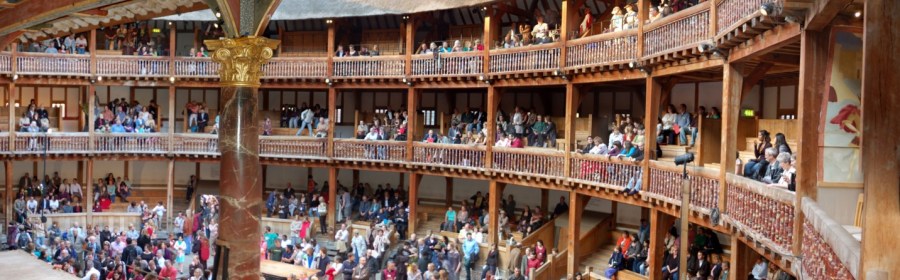
The literary historian, James Shapiro, has a fascinating article in the Irish Times on William Shakespeare’s aversion to Ireland and the Irish. In many ways the 16th century English playwright and poet was the codifier of the racist stereotypes that define Irish characterizations in British – and anglosphere – writing to the present day (albeit building upon the works of his predecessors, right back to Gerald of Wales and the publication of the partisan Topographia Hibernica in 1188). The portrayal of Irish men as drunken, slow-witted, quick-tempered killers in the likes of FX’s television series, Sons of Anarchy, or the recent season of Netflix’s Daredevil, can be traced to an original theatrical source in Henry V’s quarrelsome clown, Captain Macmorris. Some four centuries after Elizabethan England’s wars in Ireland the propaganda born out of that bloody era continues to determine the portrayal of the Irish – from buffoon to brute – in English language comics, books, television shows and movies.

“In the late 1980s, when I began research on what turned…

View original post 551 more words

DEVELOPING A MULTI-PERSONALITY CONDITION BY READING

Diarmuid Breatnach

Reading a novel brings on something like the development of a multi-personality disorder without – usually – the harmful and long-term effects of the pathology.

The novel requires the readers to identify with the main character or characters to the extent to which we lose, to some extent, the posture of the observer and almost become a participant. And this is even more so in the case of the thriller-type novel. We can become anxious, frightened, angry, disgusted, elated, tearful, satisfied, sexually aroused – and the novel writer will aim at giving rise to at least a number of those emotions and in some cases, all of them.

No doubt this experience is greater or lesser depending on the individual – perhaps to the extent of his or her suggestibility but also certainly depending on the political, social and cultural values of the reader. And of course, the skill and knowledge of the writer in presenting the character, story and scenes.

Yet, for all the effect of identification with the main character, we retain an awareness that we are not that person, whoever it may be in different novels. We know that we are not the fugitive (hopefully!) wrongly accused of a murder, the undercover police officer penetrating a drugs gang, the soldier in a war, the lover being cheated upon, the ordinary employee in a mundane job suddenly thrust into a conspiracy, the witness to a murder, the participant in a past historical event.

We know we are not, yet feelings appropriate to the circumstances of the story’s character are aroused within us. This is what I mean by development of a multiple personality – albeit a temporary one. We can become the person in the story while retaining the person we are and an awareness of which of the personalities is acting in the physical world.

And this is not like dreaming, even when one retains a consciousness that one is dreaming. Dreams do not need characters, places or sequences that we perceive as logical when awake and in fact usually flatly contradict waking logic in at least some features. But presenting that kind of illogicality in a novel would soon have us throwing the book down in disgust. “Suspending disbelief” is possible up to a degree, as in reading about a compassionate head of a state intelligence agency, for example, or a CEO of a multinational company with a social conscience, on in other kinds of fantasy involving magic. But put too many of those illogicalities together, mix up locations and characters, and we would quickly part company with the book.

Our dreams are of course projections of our personal psyches and events and settings in the dream, with consciousness more or less suspended, are judged consistent with another reality. But the novel is a creation of someone else and of course may well — inevitably does, some would say – contain elements or products of the pysche of the author. Be that so, and even be our psyche engaged in the story, our consciousness demands a certain rationality for it to be acceptable.

The degree to which it is possible to “adopt” the personality of the principal character in a novel was brought home to me fairly recently – and with something of a shock. I had just finished reading Far From You by Tess Sharpe, one of the random choices I often make in the Fiction section of the public library. I judge this first novel by Sharpe to be well-written and effectively constructed as a thriller. Usually the genders of author and main character coincide and this book was no exception. Her character, Sophie, was female and also bisexual but none of that prevented me identifying with her while reading the story.

Very soon afterwards, I began to read Faithful Place by Tana French, in this case a female author writing about a main character who is male – an undercover cop. The story is set in working-class Dublin and so I found many cultural and geographical references with which to feel at ease; the story is interesting, the narrative engaging and at times very funny. However, something kept feeling wrong about it – and it wasn’t that the main character is a cop. Nor was it that I was conscious of the author as being female while the character is male. It took me some pages to identify the problem: the character is male while I was still partially stuck in the female persona of Sophie, the main character in the book I had previously read. I needed to change the gender of that other personality in me, as the reader, back to male, so that I could feel ‘in synch’ with the male character in French’s story.

End

“BELIEVE” — short poem by Donal O’Meadhra

From their homes stolen lives.
Injustice never new.
Not one crime done nor crime seen.
A sentence served undue.

Witness blind and judge astray.
Trial a kangaroo.
You want a reason to believe?
My friend, I’ll give you two.

Two sons of Craigavon Ireland,
Our voices now are due.
The cry should shout until it cracks
For justice to the two.

It happens time and time again,
Shadows of me and you.
Where once stood four and then the six,
The mirror shows the two.

Together we can make this right.
As one we’ll see it through.
You want a reason to believe?
My friend, I’ll give you two.

Believe poster J4C2


The poem is about the incarceration of the “Craigavon Two”, Brendan McConville and John Paul Wooton.  On the 30th of March 2012 both men were convicted and given life sentences.  They were accused of the fatal shooting of Constable Steven Carroll in Craigavon on the 9th of March 2010.  The evidence was a hotch-potch of questionable material including an “eyewitness” who only came forward a year later after both Republicans had been in jail for a considerable time, a man whose evidence was contested by that of his wife and of his own father.

The case against them was so riddled with inconsistencies and suspect material, alongside new evidence of police interference with witnesses for the Defence, that there were high hopes of both men being cleared and freed when the appeal concluded in October last year.  However, to the shock of many, including a number of Independent TDs (members of the Dáíl, the Irish parliament) and the late Gerry Conlon, their appeal was denied.

The campaign is on-going and supported by a number of organisations and individuals.  It was in support of the Two that Gerry Conlon, formerly of the Guildford Four (and a subject of the film In the Name of the Father), made his last public statement days before he died.

Their campaign website http://justiceforthecraigavontwo.com/we-are-innocent/

“Where once stood four and then the six” in the second-to-last stanza is a reference to the Guildford Four and to the Birmingham Six, ten people (all Irish save one) who in 1974 were wrongly convicted of bombings in Britain and were finally cleared only fifteen and sixteen years later.  Also wrongly convicted were the Maguire Seven (which included Giuseppe Conlon, Gerry’s father, and teenagers) and Judith Ward (a woman who was mentally ill at the time).

STATE MURDER; GOVERNMENT LIES, BLACKMAIL AND CENSORSHIP; MEDIA SMEARS

Just missed the anniversary date to reprint this I wrote last year

rebelbreeze's avatarrebelbreeze

Anniversary

Sunday 6 March 1988

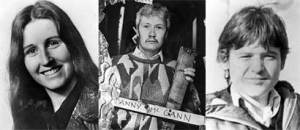
Three unarmed Irish Republican Army (IRA) Volunteers were shot dead by undercover members of the Special Air Service (SAS) in Gibraltar.  The three were Mairéad Farrell, Sean Savage and Daniel Mc Cann.
GIBRALTAR 3
The episode sparked intense controversy and began a chain of events that lead to a series of deaths in the Six Counties.
The British government claimed that the SAS shot the IRA members because they thought a bomb was about to be detonated. Eyewitnesses said that those shot were given no warning.Magill Carmen ProetaBritish Intelligence and some media tried to discredit one of the witnesses, Carmen Proeta, whose flat overlooked the murder scene and who came forward to say what she had seen. A British newspaper claimed that she was a prostitute running an escort agency and later had to pay her damages in a libel case.
An undercover unit of the Spanish Guardia…

View original post 1,038 more words

A CHRISTMAS STORY (with the participant’s own stories)

Diarmuid Breatnach (with initial contribution from another Breatnach)

(Extracts from interviews reprinted variously by kind permission of The Palestinian Prophet, Judean Eye, Jerusalem Sentinel and The Samaritan Times)

The Shepherd’s story:

“Hey, man, we’d just settled the sheep down and were settling down ourselves, chilling out with a bong before sleep, you know? Then there was this light in the sky, and a bloody heavenly choir of angels, I swear to God!

“No, man, we weren’t tripping; the bloody sheep all woke and wouldn’t go back to sleep. So in the end, we couldn’t get any sleep either, what with strange light in the sky, angels singing, and sheep baa-ing. So we went down into town, and that’s where we found the Travellers, with their newborn baby.

“We didn’t have anything to give them except a draw or two and we didn’t know whether they were into that, so we brought along a lamb for the grown-ups’ dinner.

“They said the baby was a King, and him in a stable! Well we didn’t like to contradict them or anything, so we played along with it. And while we were there, didn’t this caravan come by with these three old geezers, who said they were looking for the baby King! Yeah, that was kind of strange, all right.”

Mary’s story:

“It was before my first wuz born. That Gaybriel, he came to tell me I was going to be pregnant – didn’t he Joseph?”

“Yes, dear, so you told me”.

“Yeah, he minces in out of nowhere, appears in my Mum’s living room, and tells me I’m going to have a baby! And I hadn’t even been with a man, had I Joseph?”

“No dear. So you …. No dear.”

“So when I was near my time – I was huge by then, you know – we had to go off to Jerusalem. It was a long journey and I was knackered and so was poor Joseph. I said to him, I said ‘Joseph, you’ve got to sit your arse down somewhere warm, and so have I.’ So Joseph went and asked in a few bed and breakfast places, but they was all full. Wasn’t they, Joseph?

I said, Joseph, they was all full, wasn’t they?

“Yes, Mary, they was all full”.

“So after a while, someone let us stay in his stable! Well, it was warmer than outside, and it was great to sit down, but the straw was scratchy, you know what I mean? Well we wasn’t there more than half an hour when me waters broke. I started to cry, and I said to Joseph: ‘Our first child is going to be born in a stable; what kind of a start is that in life for a child?’ I was really upset you know. So that was where he was born. And they called him names is school years later, like ‘Donkey’, and ‘Stable Boy” – didn’t they, Joseph?”

“Yes, Mary, they did”.

The Wise Men’s from the East story:

Balthazar: “We had met up, the three of us, at the previous year’s Annual Conference of the AWM … Oh, you don’t know? That’s our association, the Association for Wise Men! You’ve heard of us, of course? No? How peculiar! Where did you say you were from?

“Anyway, we had met up, and we’d had such a great time together, that we arranged to meet up again. And when we did, we were discussing this interesting prophesy, about a sign in the heavens, and the birth of a King, etc., and then what should we see but this strange star in the night sky. So we decided that could be it and we should at least go and see. So we packed up our camels and horses, hired some help, and set off.

“It was weeks later when we came to this little town, Bethlehem the locals called it, and eventually tracked the couple and newborn baby down, and there they were. Well they looked quite grubby, you know, and in a stable, too!”

Melchior: “It wasn’t the most hygienic place to have a baby, and hardly appropriate for the birth of a King. But that was where the star brought us to, and there was already a crowd of shepherds in there paying him homage. So we discussed it in private, and decided that this must be the King whose birth would be predicted by a sign in the heavens, and we gave him our presents.”

“What presents? Oh, frankiscence and myhrr, that kind of stuff.”

Gaspar: “And gold, of course – so they could pay for some proper lodgings.”

Balthazar: “Herod? King Herod Antipas? Yes of course we’ve heard of him. Met him? No, never.”

Melchior: “No, not on the way to Bethlehem nor anywhere else.”

Gaspar: “Sorry, but are you crazy? We didn’t meet him or any other kings – we try to stay well away from them … and from Roman Consuls too!”

Joseph’s story:

“Well, I was getting on and I’d missed out on all the eligible women except for Mary and she was out of my class, if you know what I mean. I didn’t have a chance with her.

“But then she got pregnant and whoever it was didn’t stay around. So I jumped at the chance, of course I did. I even made up a story about being visited by an angel and all that, so as to match hers. Well, I didn’t want them saying she was a slut, you know? Or later, that Jesus was a bastard. Yes, Jesus, that’s my boy. Bad enough them calling him ‘Donkey Boy’ or ‘Barn Boy’ or ‘Hayborn’ … People can be very cruel – even children.

“Well we had to go to my home town Bethlehem to register for the census since Caesar Augustus decreed it. It was bloody cold and the town was full, except for the luxury suites and I’m just a carpenter. I mean, it’s a good trade but doesn’t pay for luxuries.

“Anyway, we got the stable for what they call a “cut rate” (‘cut-throat rate’ would be more like it) and then her waters broke and she had the baby right there. Well from that moment on, there wasn’t a moment’s peace, what with an angelic choir somewhere, smelly shepherds crowding in, wise men, curious passers-by …. We were glad to get our registration over with and be back on the road, I can tell you.

“The baby? Jesus, my foster-son. He’s a good boy but a bit dreamy. I can’t seem to get him interested in my trade. I do worry about him – I don’t know what will become of him when he grows up, honest. His mother says he has her crucified.”


Herod’s story:Herod engraving

“Oh please! Not that old ridiculous slander and libel again! Slaughtering the babies, indeed. Wasn’t it Jehovah himself who did that to Pharaoh’s people? No, no I never – why would I?

“Because of a prediction he’d be King of the Jews? Oh, puleeeeze! Nearly every fucking village in Judea has someone in it they’re predicting will be a King. If I went around slaughtering the children in every village we’d soon have no population in Judea – and, more to the point, no taxes. Not for me OR for Rome.

“Wise men? I never meet any, not in my court anyway. Wily, cunning, even clever, yes …. but wise? No. Well, maybe that’s a definition of wise men: men who make sure not to meet me. Heh, heh, heh!”


The Donkey’s story:

“It got to be a very crowded in that stable.”
Donkey

The Cow’s story:

“Mmmmmm! Yes, it did – but warmer too, except when the door kept being opened as more people arrived. Mmmmmm!”

The lamb’s story:

“I didn’t like leaving my maaaaammy. And I thought I heard one of the shepherds mention kish kebaaaaab.”

The dog’s story:

“I really objected to being turfed out of the manger”.

Ends

DYSLEXIA – A COUNTRY WHERE SURPRISE IS EXPECTED

Diarmuid Breatnach

(The author is known as a traveller to many exotic places, including expeditions in search of mythical lands, most famously “The United Kingdom”, the “Republic”, “Norn Ireland” and “The Mainland.” Here he writes about the land of Dyslexia).

Dyslexia is, as the suffix “-ia” suggests, a country …. think of India, Mongolia, Russia, California [now relegated to a vassal state], Hibernia [also something of a vassal state], Narnia [er .. no, that is an imaginary land in a series of children’s tales]. The existence of Dyslexia strangely was not even suspected until 1881, when Oslawd Khanber claimed to have visited the land. His discovery was widely doubted until confirmed by Ludorf Linber in 1887. The people of this newly-discovered land were distinguished by all having a difficulty to varying degrees in spelling and/or in remembering sequences of numbers. Khanber and Linber both named this land (and the rest of the world agreed) “Dyslexia”, from the Greek root “dys” meaning “bad/ abnormal/ difficult” and “lex” meaning “word” (although in Latin it means “law”, understood as “written word”).

Dyslexia was, like many other lands and people, not named by the natives themselves, but by people from elsewhere. Such examples abound, for example “Australia”, “America”, “Scotland”, “Eskimo”, “Teddy Boys”, “Pagans”, “Celts”, “Saxons”, “Teagues”, “Gypsies”, “E.T.s” etc. Attempts to identify what the Dyslexics themselves called their land have so far collapsed in confusion, with different spellings and even pronunciations hotly argued for against others.

In fact, there have been accusations of racism aimed at those who named the land “Dyslexia” and the people “Dyslexics” — it seems particularly cruel to create a word itself so difficult to spell to name a people with a known disability in spelling. Previously, Dyslexics just called themselves “people” and the land “the land”, while those who came across migrants from there before Dyslexia was actually discovered called them other names such as “stupid”, “slow”, “thick” or “people with ADD or ADHD” (1) . However, most “Dyslexics” today have not only adopted the name and learned to spell it but are wont to proudly declare “I’m Dyslexic” (but rarely “I am a Dyslexic”).

When Dyslexia came to the attention of the rest of the World no-one seemed astonished that it should be discovered long after the North and South Poles, the Mariana Trench, the Matto Grosso Plateau and indeed a great number of planets. What did astonish the World was that Dyslexia had apparently independently within its borders invented television, radio, Ipads, microwave ovens, central heating and hot showers and of course the internal combustion engine and nuclear power.

This proliferation of technology would have been normally amazing (if anything normal can be said to be amazing, or vice versa) in a previously undiscovered country but what was really, really amazing was that everyone in Dyslexia had overcome a disability to climb to such industrial heights. The obstacles must have been tremendous. Imagine confusing, for example, sodium chloride, a common table salt, with sodium chlorate, which is used as a weedkiller (and also as an ingredient in making home-made bombs, a curious fact since nitrogenous fertiliser, with a directly opposite effect to sodium chlorate when spread on weeds, is also sometimes used in making home-made bombs). Anyway, shake sodium chloride in small quantities on your weeds and they probably won’t like it but most will survive – especially those that actually like a little of it, like relatives of the cabbages and such. Shake a little sodium chlorate on your food, however and …. well …. no, don’t try it – without urgent and skilled medical attention you will die quickly and painfully. For another example, imagine confusing “defuse” with “diffuse”: one goes to de-escalate a conflict and ends up spreading it around. Other confusions are possible between the noun or verb “ware”, the (usually) adverb “where” and the past tense verb “were”. And so on.

For physics, knowledge of and accuracy in mathematics is essential – algebra, logarithms, binary codes, sines and co-sines, square roots (these last are mathematical constructs, not mythical regulated-shape carrots as propagated by anti-EU campaigners). In calculating distances, heights and depths, spaces and circumferences, ability in geometry, trygonometry and ordinary mathematics is required. Somehow, the Dyslexics, the inhabitants of Dyslexia, had overcome their disability or compensated for it in some way, so that they had as flourishing and environment-poisoning an industrial society as the most developed parts of the world, such as the United States of America (most developed industrially, that is).

Dyslexics are said, despite this disability with letters and numbers, to be of above-average intelligence. They had to be, to develop all those complicated benefits of industrial society despite their handicap.

Strangely, one may think, many Dyslexics have become literary figures famous throughout the world, Hans Christian Andersen, Agatha Christie, F. Scott Fitzgerald and WB Yeats among them. Contrary to popular belief among non-natives, James Joyce was not from Dyslexia. This prevalence of Dyslexics among so many giants of literature and indeed of virtually every other field of human endeavour has given rise to a group of Dyslexians who call their disability “the gift of Dyslexia”.

The Dyslexics are often garrulous and sociable and this is especially true when in Dyslexia itself. The difficulty in remembering telephone numbers for example makes every telephone call an adventure. Say a native wished to phone another native called Cathy (also known as Cthy, or Ktay, Thyca etc), and the phone number was 731 1062 (please note, this is an imaginary telephone number by which Cathy or no-one else can be reached). The Dyslexic might phone 371 1026 – all the correct digits but in a different order (note, this also is an imaginary telephone number by which no-one may be reached).

The conversation, somewhat simplified, might go like this: “Yes, hello?” (female voice, breathless with anticipation of another adventure).

Our caller: “Hi, is that Cathy?”

Recipient (giggling): “No, it’s not. There isn’t any Cathy here. I’m Wanda.”

Our caller: “Oh, hi Wanda, you sound very nice. How about going on a wanda with me?”

Wanda (with a little giggle but playing cautious): “Maybe …. What’s your name?”

Our caller: “Terry.”

Wanda: “Where were you thinking of wandering with me?” (A moment’s pause while both mentally translate the last part of that into “wandering on me”).

Terry (clearing his throat which has suddenly gone dry): “Well, there’s a nice new Indian restaurant opened up in town. Do you like Indian food, Wanda?”

“Ohhh, Terry, I love it. So spicy!” (Very slight pause as both translate “spicy” as a description for food flavouring into a metaphor instead). “When were you thinking of?”

“Er … tonight too soon?”

“No, I happen to be free tonight.”

“Shall I come and pick you up? Say …. seven pm?”

“That would be lovely, Terry. I live off the Trans City Road, tenth left, first right, eighth left, in Hopeful Street, the seventh house on the left-hand side if you’re coming from town, with a brown and white door and a hydrangea bush in the garden.”

“Got it – tenth left off the Trans City Road, tenth left, first right, eighth left, Hopeful Street, seventh house on the left-hand side, brown and white door and a hydrangea bush in the garden. At seven pm. I’m looking forward to meeting you.”

Most Dyslexics are always open to adventure, ‘going with the flow’. One never knows what a simple telephone call may bring or to what an appointment or written address may lead. But as a result, Dyslexics are also philosophic about missed appointments, forgotten birthdays and so on; they waste little time mourning something lost and instead look forward to something gained. Terry might or might not make it to Wanda’s but they both know the world is full of other possibilities. Cathy, for example, who failed to receive a call from Terry to congratulate her on her gaining a dystinction in her dyploma, received later that evening what non-natives would term “a wrong number” call from a Sofia who had meant to call a Geraldine. Sofia had intended trying to patch up a long-running difficult relationship with Geraldine and instead found herself making the aquaintance of Cathy, who seemed much nicer and more understanding than was Geraldine. Sofia soon put her problems with Geraldine aside and agreed to Cathy’s suggestion that they meet for a late coffee (which they both knew could lead to an early drink and who-knows-what from there). Cathy had by now forgotten that she was hoping Terry would call.

Dyslexia is not just another land, nor even just a strange one – it’s an entirely different way to live.

end

Footnotes:

1.   A supposed disability the existence of which is hotly debated but has exonerated many teachers accused of bad teaching methods and states accused of having too large classes in their schools and which has been profitable for some educational psychologists and extremely so for some chemical companies.

WHAT TO WRITE FOR REBEL BREEZE?

Diarmuid Breatnach

Over the years I have written articles and published them, usually under my own name, in alternative publications.  Some of those having been written in Castellano (Spanish) has meant that, with the help of others to check or edit them, I have been able to publish in a number of on-line publications from the Spanish state, including a number in the Basque Country.  These articles have been political commentary, analyses and news reports.  They come from a revolutionary socialist perspective and from one who has been politically active for many years in London and in Ireland, which is where I grew up.

I do not find it easy to categorise my politics in a short phrase.  I have been an active anarchist, from which I learned much, later a supporter of a marxist-leninist party and that too has taught me a lot; I am not an anarchist now nor perhaps even a marxist-leninist (certainly not the type I was).  I am opposed to the presence of British Imperialism and colonialism on Irish soil but I am not an Irish Republican (though many in my family have been).  I have not found a revolutionary organisation in Britain or in Ireland that comes close to being what I want to belong to now: an organisation that is effective, learns by mistakes instead of covering them up, is honest with itself and with the class it purports to lead, is disciplined yet tolerant of internal criticism ….

As a revolutionary, I am interested in the experiences of people the world round but most of my experience has been with the Irish at home and abroad, with Afro-Caribbeans in London, with solidarity work with Irish prisoners, the Kurds, Palestinians and Basques.  Of course, I have also been active in community resistance to cuts in services and grants, to fascists and racists, as well as active in trade unionism.

We live in a time when many anti-imperialist movements and organisations have grasped or are reaching out for something they call a “peace process”.  But these processes are not about peace but instead are about pacification.  They cannot bring peace since they do not resolve the basic issues: imperialist and capitalist exploitation.  They bring instead fragmentation, betrayal, apathy and, from a small section, collaboration with oppression.  Ireland and South Africa, often quoted as good examples of “peace processes”, are actually excellent examples of the real nature of these processes.

It is common these days for someone who expresses opposition to pacification processes to be accused of militarism without a political agenda, of favouring immediate resumption of armed struggle, or of being undemocratic.  Often these criticisms are made by people from the very same organisations whose militarist acts and lack of political strategy I have criticised over the years.  But no matter.  It is easier to condemn the critic than to carry out a real analysis of what has been won and what lost through these processes.

Currently the working class (as well as other sections of society) in Europe and elsewhere are under attack by capitalist governments determined to make them pay for the losses incurred by their financial speculator friends and to ensure that the big capitalists not only lose no profits but actually increase them.  In the course of that process they are plundering the public purse and stripping the states of their public assets.  Energetic and determined resistance is called for but the organisations to which we might look for that have been either completely useless or ineffective.    Never before have so many institutions of the capitalist class been so exposed and so reviled by the ordinary people, yet none of the European states seems to be near to revolution.  The necessary preparations were not made and we are not in a position, it seems, to lead those disenchanted and angry masses to effective resistance and then to the overthrow of this exploitative system.  Not yet anyway.  We need to learn from this and build the bases and organs so necessary for effective resistance.

Cultural Interests

My main cultural activity is singing, mostly traditional/ folk and I attend regularly a number of singing circles of sessions around the Dublin Bay area (of which there are a surprising number).  I did sometimes play percussion by hand on a dholak (type of Indian drum) in Irish traditional sessions but not since I misplaced the drum and have been unable to find it.  I also sometimes compose songs (lyrics and music), write poetry and short stories, along with humorous pieces.  Among my many interests is history, both recent and more ancient and I have been known to conduct walking history tours around Dublin on occasion.  Another strong interest is natural history, the world of plants and animals.
I am likely to write about all those things at one time or another.

I am primarily trilingual in Irish, Castellano and English.


End