EU Vice-President Kallas referred to a number of state leaders meeting in China as ‘autocratic’, accusing them of challenging the ‘rules-based order’ of the Western states. But what is that ‘order’ and what are the ‘rules’ upon which it is based?
Kallas, in the course of her mostly economic briefing on behalf of the EU: While Western leaders gather in diplomacy, an autocratic alliance is seeking a fast track to a new world order. Looking at President Xi standing alongside the leaders of Russia, Iran, and North Korea in Beijing today.
These are not just anti-Western optics; this is a direct challenge to the international system built on rules. And it is not just symbolic: Russia’s war in Ukraine is being sustained by Chinese support. These are realities that Europe needs to confront.1
Leaders of states to which Kallas objected (without North Korea’s), L-R: Vladimir Putin, Xi Jianpeng and Masoud Pezeshkian, leaders respectively of Russia, China and Iran at the Victory of Japan (WWII) parade in Beijing following the recent Shanghai Cooperation Organisation conference. (Photo: CNN)
Who are the ‘western leaders’ to whom Kallas is referring? Presumably they are leaders of the “Western states”, a term usually understood to describe a bloc of the European Union, UK, the United States, Canada, Australia and New Zealand.
A number of the European Union collection of states are imperialist and some of those are generally considered to be the leading members of the whole EU, in particular Germany and France.
Most of the European states also have a recent record of colonialism and some still rule those external colonies in part or wholly, viz: UK, France, Spain.
In addition, some have practised internal colonisation, forcing nations to submit to their integration within and submission to the particular European state; in this regard there should be added Italy and Belgium in addition to the three examples above.2
The principal non-European states of the western alliance are all European settler colonies in origin, all having practised genocide upon the indigenous people, all with a record of racism towards their indigenous and other people and one, the USA, having stocked huge slave plantations.
Given the record above, it is not surprising that these states also have a record of colonial wars and even wars upon their neighbours. In WWI, Germany and Austria fought the UK and its Dominions of Australia, New Zealand and Canada, along with France, Belgium and the USA.
In WWII, Germany and Austria with some allied states went to war with most of the remaining states of Europe and the USA and countries further afield in North Africa and the Middle East.
SINCE WWII, the UK3 has fought 41 external conflicts and a three-decades war internally (against the Resistance in a colonised part of Ireland);4 France fought 34 external conflicts5 and the USA 57.6 The vast majority of these conflicts have been fought in lands outside Europe or the US.
Katja Kallas, Vice-President European Commission, who sanctified Western states in her statement and looking saintly in this photo. (Photo sourced: Internet)
So, on past historical threat record, how do these “autocratic states” compare to the states Kalas complains of? They don’t even come close, of course. Ah, but wait, we are told that they do things by rules – they are part of a “rule-based order”, which those “autocratic states” are not, apparently.
Therules under which the Western states operate for decades have not prevented them supporting – including in many cases with actual arms — a European settler colony carrying out apartheid, constant war crimes and recently genocide against the indigenous people in Palestine.
The rules have allowed these Western states, as distinct from “autocratic states”, to censor news and twist media reporting into Zionist propaganda, to forbid Palestine solidarity demonstrations and beat up participants, categorise solidarity actions as ‘terrorism’ and jail Palestine supporters.
The rules have permitted the state hosting the United Nations building to decide who cannot attend; to regularly veto votes of the majority member states; to ignore decisions of international courts and sanction its officials and to have the UN humanitarian agency de-funded and staff killed.7
In fact, we have been taught that this ‘order’ is based on the following rules: Any member of the Western states club can do what it likes so long as a) the club leader, the USA agrees to it and b) the other members of the club don’t take any real practical adverse action (which they haven’t).
2Arguably Scotland, Wales, Cornwall, Isle of Man and the Six Counties in Ireland are nations or parts thereof colonised and incorporated into its state by England; Brittany, northern Basque Country, Corsica and Pau by France; southern Basque Country, Galicia, Catalan Countries, Andalusia, Asturies by Castille/ Spain; Sicily by Italy …
3The UK includes the nations of Scotland, Wales, Cornwall and part of Ireland, essentially ruled by England and by that understanding the 30 Years War in Ireland was ‘internal’. The Isle of Man is not formally part of the UK but is effectively under its control. France also fought an ‘internal’ war against the Basque national Resistance but that was nothing like the degree of intensity of the British one in the northern Six Counties of Ireland.
A packed public meeting in Dublin city centre on Saturday listened to and applauded prominent people speaking against the Irish State becoming part of military alliances, whether PESCO1 (“NATO by stealth”2) or NATO itself.
The high-profile panel of speakers chaired by Irish MEP Clare Daly featured fellow MEP Mick Wallace, Sevim Dagdalen (MP Die Linke), Medea Benjamin (founder of Code Pink) and Anne Wright (ex-US Army Major and opponent of the US-Iraq War).
Celebrated anti-imperialist rapper Lowkey was also a speaker as was Yanis Varoufakis (ex-Syrza)3 who addressed the meeting by recorded video from abroad and applauded the Irish for their long resistance to colonialism and urged them to be proud of their state’s neutrality.
Yanis Varoufakis’ recorded speech video screened at the Neutrality Who Cares meeting on Saturday (Photo: Rebel Breeze)
BACKGROUND
There is a constitutional impediment to the Irish state’s participating in a war partnership with another state and during WW2 the state’s official position was neutrality.
However, it was always a pro-Allied neutrality with British downed airmen allowed to cross over into UK territory and US servicemen often crossing the UK border to visit the ‘south’, while German downed airmen were interned for the duration of the War.
The impediment is not absolute and is usually referred to as the ‘Triple Lock’, listing the three conditions which would enable to government to send more than 12 troops overseas:
In recent years some politicians and public commentators have floated the idea that the Irish state could rejoin the British Commonwealth and, since the war in the Ukraine, a discourse has arisen that the State needs to join an external military alliance in order to protect itself from Russia.
Sevim Dagdalen, Die Linke party MP, speaking at the Neutrality Who Cares meeting on Saturday (Photo: Rebel Breeze)
The Irish Times/Ipsos poll in April, amid criticisms of not following best practice in its design and even accusations of trying to steer respondents towards favouring joining some external military alliance, delivered two thirds clearly against the Irish state doing any such thing.
Russophobic propaganda has speculated on the activities of Russian trawlers in the Irish Sea. This is entirely a whipped-up alarm and discussion without the slightest foundation in fact since Russia has never presented the slightest threat, militarily or politically, to the Irish people.
On the other hand, Britain has invaded and occupied Ireland for over 800 years and is still in possession of one-fifth of its territory and has substantial economic and financial interests in the country as, more recently, have the USA and European Union states.
The UK’s Royal Navy frequently enters Irish national waters and the State has regularly permitted its ships, along with warships of other NATO countries, to dock in Irish harbours. And also the Royal Air Force, it has recently emerged, to patrol Irish territorial air space.
As part of this false alarm and discourse, the Irish Government5 recently founded the Consultative Forum on International Security Policy which was scheduled to meet last week in Cork and Galway, then for two days in Dublin Castle.
The President of the State, Michael D. Higgins, in an unusual intervention during an interview with the Examiner expressed concern at what he perceived as the “drift towards NATO” and criticised the composition of the speakers and chairperson of this organisation as being pro-NATO.
Michael D commented on “the admirals, the generals, the air force, the rest of it” and described its chair Louise Richardson, as a person “with a very large DBE – Dame of the British Empire”.
President Higgins apologised later for what he said was “a throway remark” about Richardson but did not withdraw his remarks about the overall composition of the Forum which has indeed been criticised by others, including Richard Boyd Barrett TD6 and Senator Frances Black.
THE DUBLIN MEETING
Varoufakis referred to Ireland as though the nation had won its independence, as was the case with every speaker that followed (with the exception of Lowkey).
A member of the audience was heard to remark ironically to another that he was grateful he had attended as heretofore he hadn’t been aware of Ireland’s ‘independence’.
Lowkey, the British-based rapper, tore the illusion of Irish state neutrality to tatters by recounting the use of Irish airports not only for US Army flights under Air America through Shannon, but also airlines run by the CIA and others using other airports in Irish state territory.
Lowkey, anti-imperialist rapper from London, speaking at the meeting in Dublin. (Photo: Rebel Breeze)
The rapper exposed the ‘neutrality’ of the Irish government in training soldiers going to fight in Ukraine and also in its continued support for the Israeli State and was cheered when he declared that, as an Iraqi, he was proud that his country had “kicked the ass of the British”.
In a masterful exercise in research-backed criticism, Lowkey went on to strip the pretence of independence and impartiality from the Government-founded “Consultative Forum”, exposing the imperialist and even NATO background of the main panel members and its chairperson.
All the members of the Neutrality Who Cares panel were effective speakers and made useful points although it was curious to hear one of them denouncing “Russian fascists” without commenting on the fascist units in the Ukrainian regime’s national army.
Medea Benjamin, founder of Code Pink, speaking at the Neutrality Who Cares meeting on Saturday (Photo: Rebel Breeze)
It was Lowkey who drove the sharpest and longest nails into the verbal crucifixion of the Irish Government’s drive towards NATO and who brought the loudest cheers from his mostly Irish audience.
Even celebrated speaker Daly did not come very close, though she too exposed the propaganda of the Government and pro-NATO cheerleaders. The MEP debunked the excuse of protecting underground communication cables, pointing out that 25% of them are out of action regularly.
The Irish MEP also lampooned the idea of any underwater cable being protected by NATO, considering where the responsibility for the blowing up of the Nord Stream gas pipeline lies!7
Finally she warned the audience to be on the look out for an attempt to remove the Triple Lock under some kind of excuse as a first step to permit the Government to enter a military alliance.
Clare Daly MEP speaking at the Neutrality Who Cares meeting on Saturday (Photo: Rebel Breeze)
A PART OF IRELAND ALREADY IN NATO
It was left to a youth member of the audience in the Q&A section, reading a statement on behalf of the Anti-Imperialist Action organisation, to point out that a part of Ireland is already in NATO, viz. the Six Counties, occupied by Britain and a part of the United Kingdom.
The youth called for a broad front to unite around opposition to becoming part of an external military alliance and imperialism (see full statement in appendix). Small flyers advocating the same course of action had been distributed inside the meeting earlier.
The People Before Profit party also distributed leaflets against joining NATO to people attending the meeting.
Indeed, it is hard to see why the presence of NATO in a part of Ireland should be so markedly missing from the panel’s speeches. Since it cannot have been accidental we must ponder what the rationale for its omission could have been.
Do those on the panel agree with the colonial occupation of a part of Ireland? That seems hard to believe, at least of some of them. Or perhaps they believe its discussion would be a distraction from the neutrality issue and if so, how can that be?
Or is it that they seek the support of sections of Irish society who are comfortable with the continued occupation and partition of Ireland? If so, they are seeking to build the movement against Irish membership of NATO in terms they think acceptable to timid sections of the middle class.
When resolute action becomes necessary or when reaction starts to bite, those sections will fade out of the anti-NATO movement. For practical as well as for ideological reasons, the campaign must appeal to the working class on an unashamedly anti-colonial and anti-imperialist basis.
Protest banner at Government’s Forum for International Security meeting in Cork while Tánaiste (Deputy Prime Minister, on far left of photo) was speaking (Photo sourced: Internet)
Wherever the Government’s Forum has gone, it has encountered public opposition. It was picketed at its Cork and Galway venues, while inside the former, an anti-NATO banner was unfolded and many in the audience denounced the Government’s direction.
Even after the protesters had been hustled out, another stood up to denounce the chairperson’s speech before he too was manhandled away.
In Dublin Castle, venue for the Forum on Monday and Tuesday with a long history as administrative centre of British occupation, people against NATO, war or militarism and for Irish independence displayed banners and placards of protest and flew national flags.
Protesters inside a Dublin Castle courtyard against the Government Forum on International Security held inside the complex this week. (Source photo: Anti-Imperialist Action)
AIA Tweet featuring National TV broadcaster RTÉ quoting Irish Government leaders’ ridiculous comments on the display of Irish Republican flags by protestors outside main pedestrian entrance to Dublin Castle in the city centre.
IN CONCLUSION
The general mass media silence on the Neutrality Who Cares meeting in Dublin and in downplaying the protests against the Forum at all its locations is part of the Irish Gombeen class drive to join NATO, despite the well-known opposition of the wide Irish population.
It is not forgotten that when tens of thousands thronged Dublin streets marching against triple water service taxation and privatisation, how the mass media reported participation merely by “several thousand” or even “hundreds”.
Nevertheless the comments of the President of the State and remarks by some journalists in the mass media do reveal that even in their own sections, the Gombeens do not have it all their own way. In the general population, however, the mood is clearly for non-militarisation of Ireland.
If the anti-NATO movement remains active and militant and adopts a generally broad anti-imperialist stance, going to most sections of society but especially to the working class, the Gombeens’ drive towards participation in PESCO and NATO will be decisively defeated.
End.
FOOTNOTES
1Permanent Structured Cooperation is the strange name of this proposed European Union-wide military alliance.
3Syriza is a Left social-democratic coalition party that was elected to government in Greece in 2015 on a promise to implement necessary social and economic reforms in the teeth of EU and other imperialist resistance. However, once the EU and the ECB began to tighten the screws, the resistance of the party’s leadership disintegrated. Varoufakis had been appointed finance minister and to give him his due, he tried to rally his cabinet colleagues around a program of non-compliance with EU diktats but was unsuccessful. Although it remains the main social-democratic opposition in Greece, the party has continued to slide in popularity in elections since.
4Irish UN peacekeeping forces exceeding 12 personnel have been sent overseas with those three conditions satisfied to many conflicts around the world, most notably Lebanon, where they have suffered some casualties and to the Congo, where they suffered many.
5The Irish Government is a coalition of two traditional main oppositional parties, Fianna Fáile and Fine Gael, with the Green Party. The Labour Party does not have a noticeably different position on external military alliance and Sinn Féin recently dropped their decades-long opposition to Irish membership of NATO and the EU.
6Barrett is a Teachta Dála (member of the Irish parliament) and member of the People Before Profit left-wing political party. Frances Black, with a successful career in singing, is an independent Senator in the same parliament who has sponsored a Bill to ban products from the illegal Israeli settlements. The Control of Economic Activity (Occupied Territories) Bill 2018 was passed in full by the Senate in 2018, and passed its first vote in Dáil Éireann in early 2019. It was then sent for detailed scrutiny in the Oireachtas Select Committee on Foreign & Affairs and Trade. This review took place over several months, hearing from expert testimony and input, and in December 2019 the Committee also voted in favour of the bill. Since then the Government is delaying bringing it forward.
7Although direct proof is not yet available, circumstantial evidence points towards US armed forces’ responsibility and journalist Seymour Hersh (Pullitzer Prize winner for exposing the US military massacre in Mai Lai, Viet Nam and its subsequent attempted cover-up) has confirmed the US military’s responsibility on the basis of inside knowledge from his contacts.
APPENDIX
Text of statement read out during Q&A period of Neutrality – Who Cares public meeting in Dublin 24 June 2023:
Anti Imperialist Action Ireland hold the revolutionary position that Britain, NATO and any other imperialist power is not welcome in Ireland. Anti-Imperialist Action have been active in opposing all forms of imperialism in Ireland and have been to the fore in opposition to NATO.
NATO is a great threat to Ireland and the Irish People, and in realisation of that, we urge and call on everyone here to vocally oppose the presence of NATO in Ireland whether you be an anti-war activist, a Socialist Republican, an anti-Fascist, a trade unionist, or just against the presence of a foreign power in Ireland, get behind this position and ensure that your sons and daughters aren’t sent off to be slaughtered in illegal wars of conquest.
While all the focus has been about the push towards NATO for the 26 Counties we cannot forget that the Six Counties are already occupied by NATO by virtue of Britain’s illegal occupation. Only a militant broad front of progressive forces all across the 32 counties can make a firm stand against NATO’s presence in Ireland. Everyone has a part to play in such a broad front which Anti-Imperialist Action and others are working hard to establish.
The Irish State nominally rules over the 26-Counties land territory and its corresponding sea and airspace. Yet these have been and are repeatedly violated by the US and UK military with Irish ruling class secret collusion.
Now a Senator in Leinster House is seeking a hearing in the High Court to have the behaviour of successive Irish Governments in allowing UK military overflights declared unconstitutional.
The Sea, oh the sea … and the air!
As stipulated by international law, a sovereign state’s area includes the sea up to 12-miles from its border1 and therefore Ireland has a 12 mile territorial sea, a 200 mile exclusive economic zone before any additional claims are made to the continental shelf including the Rockall Bank.2
According to media report, a comprehensive survey of the Irish State’s territorial waters was not undertaken until 2014, i.e nearly a century after its foundation, which in itself is an indictment of an allegedly independent island state.
According to The Geological Survey of Ireland (GSI) says potential territorial waters stretch to 898,442km sq – an area bigger than the oil rich North Sea.3
Royal Air Force fighter jet – the Irish State is reported to have secretly agreed to allow these to overfly Irish airspace (Photo sourced: Internet)
Through the decades when Ireland was a fishing nation and fresh fish was eaten weekly in most homes, Irish fishing boats had to compete with those from many other states fishing illegally inside Irish sea limits.
The Irish Navy was the only policing enforcement agency and through much of that time it had only three corvettes to patrol 12 miles out from the whole coastline of the Irish state. Subsequent EU legislation then left Irish seas more open to foreign-based fishing than it did to Irish boats.
The sovereign air space of a state corresponds to that over its land and 12-miles out to sea from its coastline.4
The use of Shannon airport by the US military in transit of troops, weapons and prisoners has long been known and protested.
Shannon Airport protests
Over the years there have been many highly-publicised protests over the US military use of Shannon, ranging from mass protests outside the airport buildings to deliberate trespass and even damage to a US warplane.
The response from the Government Minister to questions in Leinster House is always that the US is not violating Irish sovereignty, arms, military and prisoners are not being transported through there – because the US authorities have assured the Irish Government that they are not.
In February 2003 five members of the Catholic Workers’ Movement under the name Pitstop Ploughshares gained access to a hanger in Shannon Airport and damaged a USAF warplane there. They were Deirdre Clancy, Nuin Dunlop, Karen Fallon, Ciaron O’Reilly and Damien Moran.
They were jailed for up to 11 weeks awaiting committal for trial to which they were finally sent in Dublin Circuit Court in March and October 2005 on two counts of criminal damage, €100 and US $2.5 million. The faced a maximum 10 years if convicted.
Two aborted trials followed as one judge after another revealed their bias and partiality. In July 2006 after twelve days a mixed male and female jury acquitted the accused on all charges on the grounds that they had taken the action to save lives in Iraq and were justified in doing so.
In October 2012 dramatist, writer, former Republican prisoners and veteran activist Margaretta D’Arcy was arrested with Niall Farrell for scaling the fence and entering the grounds of Shannon Airport.
Four convicted Shannon Airport protestors, L-R Mick Wallace, Margarett D’Arcy, Niall Farrell, Clare Daly. (Photo sourced: The Journal.ie)
In June 2014 at the age of 80 and suffering from Parkinson’s disease D’Arcy was jailed for two weeks in Limerick Prison for refusal to pay the fine and remained defiant.
In July 2014 then members of the Irish Parliament Clare Daly and Mick Wallace5 used a rope ladder to climb over a perimeter fence and enter the grounds of Shannon Airport and made no attempt to avoid arrest.
They were both fined by a court for trespass in February 2015 and refused to pay the fine, eventually being taken to Limerick jail by Gardaí in December 2015 and released less than two hours later.
On 25 April 2017 anti-war activists Edward Horgan, a retired Irish soldier of 78, and civil servant Dan Dowling, 39, were arrested in the airport grounds and charged with criminal trespass and malicious damage (felt-tip graffiti slogan on a warplane).
In a very low-level publicity case in January this year (2023), a jury in Dublin found both guilty of trespass but not of criminal damage at the airport and were ordered to pay €5,000 each to a women’s refuge in Co Clare.
On St. Patrick’s Day 2019 two ex-USA military Ken Mayers and Tarak Kauff, now anti-war campaigners of the US chapter of Veterans for Peace, cut a hole in the airport’s perimeter fence, entered Shannon airfield with a banner and were arrested.
In May last year, a majority jury verdict found Mayers (85) and Kauff (80) guilty of interfering with the running of the airport but unanimously not of criminal damage to an airport perimeter fence and of trespassing the airport with the intent to commit an offence or interfere with property.
Ex-USA military Kauf and Mayers of Veterans for Peace (US) protesting US military use of Shannon Airport (Photo sourced: Internet)
The judge fined the anti-war activists 5,000 euro each. Both had spent 11 weeks in prison and had been required to spend nine months in Ireland awaiting trial, despite clear indications that they had no intention of absconding and indeed were looking forward to the trial to publicise the issue.
Senator Craughwell’s case to the High Court.
Less well-known is that successive Irish governments have for decades by secret agreement permitted permitted UK air force planes to fly over Irish airspace and to interdict, i.e. force or shoot down other aircraft. This is what has led to Senator Craughwell’s taking a case to the High Court.
The Independent Senator maintains that although not the case of a formal military alliance, granting permission to fly over Irish State airspace, unless validated by referendum, is a violation of Ireland’s neutrality and sovereignty and is seeking a number of declarations from the Court.
Craughwell, who is a former member of the Irish Defence Forces and the British Army, as well as being an ex-President of the Teachers Union of Ireland, said that his belief in the existence of a secret agreement is based on a reply from then Taoiseach Brian Cowen to Enda Kenny in 2005.
The Senator seeks High Court declarations including that the agreement between Ireland and the UK allowing armed British military aircraft to intercept aircraft over Irish airspace amounts to an impermissible dilution and breach of Articles 1, 5, 6, 13, 15, and 28 of the Irish Constitution.
He also seeks a declaration that the Government’s failure to exercise control over Ireland’s territorial waters, airspace and exclusive economic zone breaches Article 5 of the Constitution which declares that Ireland is a sovereign independent democratic state.
Craughwell further seeks an order restraining the government from bringing in legislation to give effect to the agreement, unless it has been passed by a referendum.
Aerial view of Ireland (Image sourced: Internet)
Irish State Neutral?
Most Irish people mistakenly believe that Ireland’s military neutrality is specifically enshrined in Bunreacht na hÉireann, the Irish Constitution. However Article 29, section 4, subsection 9° underlines the neutrality of the Irish State in respect of a military force of the EU:
The State shall not adopt a decision taken by the European Council to establish a common defence pursuant to Article 42 of the Treaty on European Union where that common defence would include the State.6
“This was originally inserted by the 2002 amendment ratifying the Treaty of Nice and updated by the 2009 amendment ratifying the Treaty of Lisbon. An earlier bill intended to ratify the Treaty of Nice did not include a common defence opt-out, and was rejected in the first Nice referendum, in 2001.”7
It is fairly clear that the citizens of the Irish state are generally in favour of retaining Irish neutrality but there are elements within the state frequently trying to undermine that policy, chiefly the native Gombeen ruling class.
The Irish State has never been truly independent; it came into existence agreeing to the partition of the nation and in waging war against the forces of national liberation, during which it executed more Irish Republicans than the British had during the War of Independence.
Subsequently, the Irish State has been characterised as neo-colonialist, dominated firstly by British capital, then by the US and finally by the EU.
There are elements within Irish upper circles who long to join the EU military and political club while some others share a nostalgia for the British Empire and Commonwealth and the kind of supporting and sharing role to which John Redmond and his Irish Nationalist Party aspired.
Finally, there are of course elements in the Irish armed forces that are attracted by career advancement through joint military operations with other armed forces along with greater weaponry, such as would be available in a joint European armed force or as part of NATO.
Worryingly, Mícheál Martin during questions in Leinster House some months ago denied that the population would have to be consulted in referendum before the State could join some military alliance.
What now?
Whatever formal position the State may take on neutrality in future, it has been undermining it for decades and doing so in secret.
Why the secrecy? Presumably because the ruling class is aware that most Irish people want to remain militarily neutral and would wish to get rid of a government that was trying to ditch the neutrality policy.
Ireland needs to be independent of all imperialist alliances. Should the Gombeen ruling class succeed in committing the State’s armed forces to some military alliance, the choice is certain to be either imperialist NATO or imperialist EU.
In the latter case, it is entirely possible that Irish troops would be sent to suppress social or national risings in Europe – for example in Catalunya or the Basque Country, with Spanish troops being sent to quell mass protests in Ireland.
Or in either case, that Irish troops would become part of some joint imperialist force in Latin America, Africa or Asia.
Meanwhile the Gombeens, because of the State’s allowing US and UK military aircraft over Irish skies and in Shannon airport, are potentially painting a target for retribution on to the Irish population.
End.
FOOTNOTES
1Except obviously where it intersects with another state’s borders (seeAirspace – Wikipedia)
4Airspace – Wikipedia and obviously this currently ends at the borders of the Six County colony, whose own 12-mile UK zone also ends where it meets the Irish borders on land, sea and air.
(Edited from a longer in-depth piece published in 2014 and divided into parts).
(Reading time main text: 8 mins.)
The dominant class in the UK and in some of the British Commonwealth will shortly be calling people to join in a cultural festival which they call “Remembrance” – but that’s not at all what it’s really about.
The organisation fronting this festival in the ‘UK’ is the Royal British Legion and their symbol for it (and registered trademark) is the Red Poppy, paper or fabric representations of which people are encouraged to buy and wear.
And in some places, such as the BBC for personnel in front of the camera, or civil servants in public, or sports people representing the UK, forced or bullied into wearing.1
In many schools and churches throughout the ‘UK’, Poppies are sold and wreaths are laid at monuments to the dead soldiers in many different places. The pressure to wear and display one of the symbols is intense and public figures declining to do so are metaphorically pilloried2.
Prominent individuals, politicians and the media take part in a campaign to encourage the wearing of the Poppy and observance of the day of remembrance generally and for a decade now, to extend the Festival for a yet longer period.
This alleged “Festival of Remembrance” includes concerts at the Royal Albert Hall and the military and veterans’ parades to the Cenotaph memorial in Whitehall, London, on “Remembrance Sunday”.
The Royal Albert Hall concert is replete with military uniforms, British Royals’ presence and “Poppy” symbols everywhere. The big Saturday evening concert starts and ends with the UK state’s anthem, God Save the Queen/ King played by military bands.
Tickets for the big event are restricted to members of the Legion and their families, and senior members of the British Royal Family (the reigning monarch, royal consort, Prince of Wales, the Duke of York and the Earl of Wessex). The event is televised.3
BUT WHAT IS IT ALL FOR?
We are told it’s for charitable purposes – the money raised from the sale of the “Poppies” and associated merchandise is to be used to support former military service people in need and the families of those killed in conflict.
We surely can’t object to that, can we? And isn’t putting up with the military and royal pomp a small price to pay for such charitable and worthwhile purposes?
Yet the main purpose of this festival and the symbol is neither remembrance nor charity but rather the exact opposite: to gloss over the realities of organised deadly violence on a massive scale, to make us forget the experience of the world’s people of war.
Worse, its purpose is to prepare the ground for recruitment of more people for the next war or armed imperialist venture – and of course more premature deaths and injuries, including those of soldiers taking part.
Video and song by Vincent Burke, “On Remembrance Day” from Veterans for Peace lists British conflicts (including Ireland) and condemns the Church of England for supporting the wars, calling also on people to wear the White Poppy.
The Veterans for Peace at the Cenotaph in London’s Whitehall in 2014. Jim Radford, singer and D-Day veteran had been there for the first of the VfP Remembrance Day events and every year since until Covid-19 got him. He was a friend and comrade of mine and I marched with the civilian supporters of VfP contingent in
PARTIAL REMEMBRANCE – obscuring the perpetrators and the realities of war
The Royal British Legion is the overall organiser of the Festival of Remembrance and has the sole legal ‘UK’ rights to use the Poppy trademark and to distribute the fabric or paper poppies in the ‘UK’.
According to the organisation’s website, “As Custodian of Remembrance” one of the Legion’s two main purposes is to “ensure the memories of those who have fought and sacrificed in the British Armed Forces live on through the generations.”4
By their own admission, the purpose of the Legion’s festival is to perpetuate the memories only of those who fought and sacrificed in the British Armed Forces – it is therefore only a very partial (in both senses of the word) remembrance.
It is left to others to commemorate the dead in the armies of the British Empire and colonies which the British ruling class called to its support: in WWI, over 230,500 non-‘UK’ dead soldiers from the Empire and, of course, the ‘UK’ figure of 888,246 includes the upper figure of 49,400 Irish dead.5
Cossack soldier volunteers WWI. Imperial Russia was an ally of Britain and France; the war was one of the causes of the Russian Socialist Revolution 1917. The following year, the war ended. (Photo sourced: Internet)
The Festival of Remembrance excludes not only the dead soldiers of the British Empire and of its colonies but also those of Britain’s allies: France, Belgium, Imperial Russia, Japan, USA – and their colonies.
Not to mention thousands of Chinese, African, Arab and Indian labourers, mule drivers, porters and food preparation workers employed by the army.
No question seems to arise of the Festival of Remembrance commemorating the fallen of the “enemy” but if the festival were really about full “remembrance”, it would commemorate the dead on each side of conflicts.
German soldiers playing cards during WWI. Photos of Germans in WWI more readily available show them wearing masks and looking like monsters. (Photo sourced: Internet)
That would particularly be appropriate in WWI, an imperialist war in every aspect. But of course they don’t commemorate both sides; if we feel equally sorry for the people of other nations, it will be difficult to get us to kill them in some future conflict.
CIVILIAN CASUALTIES IN WAR
A real festival of remembrance would commemorate too those civilians killed in war (seven million in WWI), the percentage of which in overall war casualty statistics has been steadily rising through the century with increasingly long-range means of warfare.
Civilian war refugees in Salonika, NW Greece, WWI
Civilians in the First World War died prematurely in epidemics and munitions factory explosions as well as in artillery and air bombardments, also in sunk shipping and killed in auxiliary logistical labour complements in battle areas.
They died through hunger too, as feeding the military became the priority in food production and distribution and as farmhands became soldiers.
In WWII 50-55,000,000 civilians died in extermination camps or forced labour units, targeting of ethnic and social groups, air bombardments, as well as in hunger and disease arising from the destruction of harvests and infrastructure.6
Air bombardments, landmines, ethnic targeting and destruction of infrastructures continue to exact a high casualty rate among civilians in war areas: a Reuters study gave over one million killed by the war in Iraq and another study gave between 184,382 and 207,156 civilians killed in Iraq during the war and aftermath.7
That figure for Iraq does not include dead from pre-US invasion western trade sanctions (yes, economic sanctions frequently kill) or the 46,319 dead civilians in Afghanistan8.
The number of civilians injured, many of them permanently disabled, is of course higher than the numbers killed. Most of those will bring an additional cost to health and social services where these are provided by the state and of course to families, whether state provision exists or not.
Real and impartial “remembrance” would include civilians but not even British civilians killed and injured are included in the Festival of Remembrance, revealing that the real purpose of the Festival is to support the armed forces and their activities.
The 2014 slogan “shoulder to shoulder with our armed forces” underlines that purpose9 while contributing at the same time to a certain militarisation of society and of the dominant national culture.
The propaganda is more sophisticated this year: “Our red poppy is a symbol of both Remembrance and hope for a peaceful future” but “Poppies are worn as a show of support for the Armed Forces Community.”10
WEAPONS AND INJURIES
If the Festival were really about “remembrance”, they would commemorate the numbers of injuries and detail the various types of weapons that caused them.
But that might reflect unfavourably on the armaments manufacturers, who run a multi-trillion industry11 in whatever currency one cares to name, so of course they don’t. And if really concerned about death and injury in war, they would campaign to end imperialist war.
Gassed Australian soldiers awaiting hospitalisation 1916
But then how else would the various imperial states sort out among themselves which one could extract which resources from which countries in the world and upon the markets of which country each imperial state could dump its produce?
So of course the Royal British Legion doesn’t campaign against war.
SANITISED HISTORY, MILITARY PROPAGANDA AND PUBLIC RELATIONS
Partial remembrance was indeed embodied in the song chosen by the British Legion to promote its Festival in the WWI centenary festival in 2014.
No Man’s Land, sung by Joss Stone, is actually a truncated version of the song of the same title (better known in Ireland as the Furey’s The Green Fields of France), composed by Scottish-raised and Australian-based singer-songwriter Eric Bogle.
The Joss Stone version contains the lyrics of the chorus as well as of one verse and one-half of another, omitting two and-a-half verses of Bogle’s song.
Some of the British media created a kind of controversy, at the behest of who knows whom, to have the British Legion’s song included top of BBC’s Radio One playlist. The song is reproduced in entirety below, with the lines sung by Joss Stone in italics and those she omitted in normal type.
I. Well, how do you do, young Willie McBride?
Do you mind if I sit here down by your graveside?
And rest for a while in the warm summer sun,
I’ve been walking all day, and I’m nearly done.
I see by your gravestone you were only 19
When you joined the great fallen in 1916,
I hope you died well and I hope you died clean
Or, Willie McBride, was it slow and obscene?
(Chorus) Did they beat the drum slowly, did they play the fife lowly?
Did they sound the death march as they lowered you down?
Did the band play The Last Post in chorus?
And did the pipes play the Flowers of the Forest?
II. Did you leave a wife or a sweetheart behind
In some faithful heart is your memory enshrined?
Although, you died back in 1916,
In that faithful heart are you forever 19?
Or are you a stranger without even a name,
Enclosed forever behind the glass frame,
In an old photograph, torn, battered and stained,
And faded to yellow in a brown leather frame?
(Chorus)
III. The sun now it shines on the green fields of France;
There’s a warm summer breeze that makes the red poppies dance.
And look how the sun shines from under the clouds
There’s no gas, no barbed wire, there’s no guns firing now.
But here in this graveyard it’s still No Man’s Land
The countless white crosses stand mute in the sand
To man’s blind indifference to his fellow man.
To a whole generation that were butchered and damned.
(Chorus)
IV. Ah young Willie McBride, I can’t help wonder why,
Do those that lie here know why did they die?
And did they believe when they answered the cause,
Did they really believe that this war would end wars?
Well the sorrow, the suffering, the glory, the pain,
The killing and dying, were all done in vain.
For Willie McBride, it all happened again,
And again, and again, and again, and again.
(Chorus)
It’s easy to see why the Royal British Legion might shy away from the omitted lyrics, which would hardly encourage recruitment or support for war.
Interviewed on video, Joss Stone herself said how important it was to be “true to the lyrics” and that “the last thing one would want to do would be to disrespect the lyric”.
Incredibly, she and John Cohen, the record producer, both separately claimed that they had captured the essence of the song lyrics in the British Legion’s version.12
Although Bogle stated that he did not think the Joss Stone version glorifies war, he did say that it did not condemn it and was ultimately a sentimentalised version that went against the intention and central drive of the lyrics.
“Believe it or not I wrote the song intending for the four verses of the original song to gradually build up to what I hoped would be a climactic and strong anti-war statement,” Bogle said.
“Missing out two and a half verses from the original four verses very much negates that intention.” (apparently in a reply from Bogle to a blogger’s email and quoted in a number of newspaper reports).13
The truncation of the song and the removal in particular of the anti-war lyrics epitomises partial “remembrance” and stands as a metaphor for it, the production of a lie by omission and obscuration.
Sanitised history, military recruitment propaganda and public relations is what this “Remembrance” is about.
12Videos containing quotations from Joss Stone and John Cohen about how they have stayed “true to the song” or “lyric” of No Man’s Land by Eric Bogle https://www.youtube.com/watch?v=ez1WBJaZZ7U#t=10and
Videos containing quotations from Joss Stone and John Cohen about how they have stayed “true to the song” or “lyric” of No Man’s Land by Eric Bogle were accessed at the following in 2014 but now appear to have been taken down: https://www.youtube.com/watch?v=ez1WBJaZZ7U#t=10and
On 2nd June a number of Left anti-imperialist organisations and individuals held a public rally in Bilbo/ Bilbao. The municipal authority refused them use of a building and they held it in the open air in the Etxebarrieta Square. The organisers issued a statement in Euskera (Basque language) and Castillian (Spanish) calling for unity against the war plans of NATO and the EU and denounced the equivocating posture of the ‘official’ left Basque movement, denounced also the militarism of the Spanish coalition Government and advertised a joint demonstration for 18th June in Moyua, on the south side of the river in Bilbao1.
STATEMENT ISSUED BY COORDINATING GROUP (translated by D.Breatnach from Castilian Spanish version published in Ecuador Etxea)
For several weeks, various people and groups from Bilbao, Meatzaldea, Uribe-Kosta, Ezkerraldea and Busturialdea2 have been coming together in this broad initiative to respond to the escalation of war that we are seeing around us. An escalation of war promoted by NATO, with the aim of shielding the world hegemony of the United States against the rise of emerging powers such as China, India, Iran or Russia. A strategy that is doomed to failure, but that will cause, if we do not prevent it first, destruction, misery and death throughout the planet.
In Bilbo/ Bilbao 2nd June, reading the declaration and call to unite and for rally on 18 June in Basque and Castillian (Spanish). (Photo source: Ecuador Etxea)
In relation to the conflict in Ukraine, we believe that in no case can one speak of an inter-imperialist struggle between the NATO countries and Russia. Rather, it is an offensive planned for years to overthrow the legitimate government led by Vladimir Putin and gain control of Russian energy resources and markets. A policy of looting and plundering that the current Russian President put a stop to, no matter how hard it is for some to admit it. Ukraine is nothing more than the operations base and the cannon fodder of Atlanticist imperialism against its historical enemy, Russia.
Many on the Left say that the Russia of today is not the Soviet Union of yesterday. And they are completely correct. The problem is that even the slightest economic planning for social purposes by any State has become an obstacle to the viability of the parasitic capitalism that we live under. There we have the cases of Slovdan Milosevic, Saddam Hussein or Muammar Gaddafi, sadly imprisoned and/or executed in the face of complicit silence or the enthusiastic support of what they call the “international community.”
Those of us who are here today have already learned our lesson: first they demonize the currently out of favour ruler through the media, and then they justify military offensives and imperialist massacres. That is why at this time we cannot make the mistake of placing ourselves at equidistance. Both Russia and the Donetsk and Luhansk People’s Republics have every right in the world to defend themselves against the aggressions of NATO and the EU, which conspire and supply weapons to fascist governments like Zelensky’s to harass Russia and destabilize the region. Not to mention the openly Nazi battalions captured in Azovstal, whose release France and Germany now demand in order to advance in the negotiations. What do European governments owe the Nazis in Azov? What do they have to hide and why do they intend to buy their silence?
The truth is that we still do not know the exact reason why the States of the European Union have completely bowed to the interests of the United States. It is evident that the sanctions against Russia and the new oil and gas supply routes imposed by the US only benefit the Yankee tycoons, the Arab sheikhs and the absolutist monarchies of Saudi Arabia, Qatar or the United Arab Emirates. NATO vassals like Borrell have definitively cast the old European project into History’s dump. They prioritize profit and military spending to the detriment of the health and living conditions of the broad masses and announce a future of misery and sacrifice for a war in favor of a capitalism that is against us. The European Union is definitely a rotting political corpse, in case anyone ever thought that it could have been a progressive alternative or for oppressed nations like ours.
Arnaldo Otegi, leader of “the institutional Abertzale Left” (Basque left-nationalist movement). (Photo source: Internet)
Precisely here in the Basque Country, the official position of the institutional Abertzale Left3 regarding what is happening in the Ukraine is especially embarrassing. It seems unbelievable that those who proclaim themselves heirs to the historic struggles of the Basque Working People, a people of which the majority in 1986 opposed remaining in this criminal organization4, now wave the flag of “no to war” and of ambiguity. It seems immoral to us, both the pacifism that denies the just right to defense of those who are attacked by imperialism, as well as the lukewarm posture of those who do not take a stand, thus facilitating the advance of imperialism. Anti-imperialism and anti-capitalism must be cultivated day by day, if we do not want the ideological and cultural offensive of NATO and the EU to continue having effect, in particular among the sons and daughters of the working class. Thirty-six years later we unambiguously reaffirm ourselves in NO to NATO, no to FASCISM, no to GENOCIDAL IMPERIALISM.
As we said, we are witnessing an implacable propaganda to make us part of this imperialist strategy, so that we do not rebel against what is happening. While they continue to spread one-sided thinking through the big media, television channels that question the official story — such as Russia Today — are closed without the slightest shame, content on the Internet is censored by appealing to supposed “verified information”, journalists like Pablo González5 are imprisonedor political information is systematically eliminated from our streets. They not only want to indoctrinate us, they directly deny us the right to be informed. Where are the defenders of freedom of expression? Are we already living in a hidden state of emergency?
It is our obligation, therefore, to denounce, not only the rise of international fascism, but also the fertile ground that the fascists have in the Spanish State of the bannings, the GAL6, the closure of newspapers and the systematic torture of political dissidents7. Atlantic capitalism will never be able to find a better ally than the PSOE8, veritable experts in the art of manipulating and deceiving the working and broad masses. Sadly, there are times when collective memory seems too fragile. Of course, for this new phase they have found a faithful shield-bearer, the party of Yolanda Díaz9. Seconds were never good, we are already seeing where these wolves in sheep’s clothing are leading us…
We said at the beginning that different people have come together to counteract this hegemonic discourse that manipulates consciences and protects the sequestration of rights and freedoms. From Muskiz to Gernika we rebel today here against this ominous imperialist offensive. All this suffering is not necessary, there is no reason to accept the misery and the war to which NATO and the EU want to condemn us. It is also not the time to stay at home watching, or to follow the war as if it were a video game.
We therefore issue a call to all the towns and neighborhoods of Euskal Herria and other nations to continue organizing the fight against imperialism, capitalism and fascism. And we also invite all the people who are against the imperialist offensive of NATO and the EU to participate in the demonstration that we will carry out in Bilbao, on June 18 at 6:30 p.m. from the Plaza Elíptica.
NO TO NATO! NO TO THE EUROPEAN UNION! NO TO IMPERIALISM!
End statement.
TRANSLATOR FOOTNOTES
1Which is also the location of the representation of the Spanish State in Bizkaia and guarded by armed police.
2A number of towns and districts across the SW Basque province of Bizkaia.
3The ‘official’ leadership of the left-Basque independence movement, e.g the EH Bildu party under the leadership of Arnaldo Otegi and others.
4In the 1986 referendum on whether to remain in NATO, the Basque Country gave the highest majority for No, with the Canaries and Catalonia coming behind. For the whole Spanish state, nearly 57% voted Yes against 43.15%.
5Basque freelance journalist reporting for Publico (Spanish left online media) and La Sexta, threatened and advised to leave Ukraine by state intelligence services, which he did but arrested by Polish intelligence on 28 February as he was about to re-enter Ukraine with a group of journalists. Poland has charged him with spying for Russia but to date produced no evidence and even denied him access to his lawyer. The Spanish State sent intelligence service agents to question his wife, mother and friends.
6GAL: A Spanish state terror and assassination organisation of the 1980s operating against the Basque resistance which was exposed as led by the Prime Minister (though never even questioned) Felipe Gonzales and directed operationally by the Minister of the Interior and senior Army and Police officers, a number of which received prison sentences.
7The Spanish state has long been accused by human rights organisations of torturing political dissidents and convicted in the European Court of Human Rights a number of times of failure to investigate complaints of torture. The State has closed newspaper and social media sites, jailed rappers, banned political parties, banned demonstrations, closed political cultural centres, disqualified political activists from representation in elections and jailed political activists.
8The main Spanish social-democratic party, currently in coalition government with Podemos.
9Yolanda Díaz resigned from Izquierda Unida (United Left – a broad coalition) but remained a member of the Communist Party of Spain; she is currently Deputy Prime Minister in the Spanish coalition government.
FromLa Izquierda Diario (the Daily Left) by Carlos Rubio (Translated by D.Breatnach)
Foreign Affairs and Interior Departments spare no expense when it comes to strengthening the Atlantic Alliance summit, scheduled for June 29 and 30th. The budget increase of 1.95 million euros for the State Security Forces includes the purchase of 6,000 Taser chargers for the convened protests.
On October 8, 2021, the next NATO summit meeting in Madrid was officially announced, where Prime Minister Sánchez announced that “they would have all the capabilities” to “guarantee security”, at a key “historic moment” for the organisation.
(Image from Social Revolution)
Two months before the official date, Ministers of the Interior Marlaska and Exterior Albares are already anticipating some of the measures to be taken to prepare for the Summit. €37 million will be the budget limit, which will include the cost of assembly and adaptation of Ifema (Madrid festival organising consortium — DB), the catering and the security of the meeting.
More specifically, the State Security Forces will have almost 2 million euros to reinforce their equipment, which includes the purchase of 6,000 chargers for Taser pistols, to guarantee “a safe environment in the face of a possible threat”, according to the Marlaska himself.
Together with this acquisition, the purchase of metal detector arches, parcel inspection scanners, digital personal video cameras and computer graphics equipment for the preparation of three-dimensional plans of complete buildings is expected.
(Image from Social Revolution): “70 years of war, NATO no, bases out”
The National Police will be the body deployed for this summit, which will be involved in “establishing a comprehensive security arrangement for it that will cover, in addition to the place where the meetings are held, travel and all those places of accommodation where the delegations of different countries that are planning their assistance will be staying”.
According to the Government, all these measures are a priority since “several organisations and social groups are already announcing protests.”
The leading issue at this summit, given the context, is the war in Ukraine and the position that NATO is to take against Putin’s reactionary invasion. This time, there will be 50 delegations, some of them invited from outside NATO but close to it, as in the cases of Ukraine, Sweden or Finland.
At this summit, it is foreseeable that the main trend that has already been taking place in recent months and has been justified by the war between Kyiv and Moscow will be strengthened: imperialist rearmament.
In recent months, from the various partners of the alliance and from the EU, weapons have been sent successively to Ukraine, defending the interests of the alliance, arming the Ukrainian Security Forces and militias, among which are groups such as the well-known Azov Battalion and the Pravy Sektor, to name a few examples. While Russian troops remain… on their battlefronts, these armed far-right groups are strengthening their hegemony and repression in the parts of the country they control.
(Image from Social Revolution)
In this regard, as Sánchez stated: “Madrid and Spain are going to play a determining role”. Last Thursday, the President of the Government announced that Spain was going to double military aid to Ukraine, at the same time that the Army ship “Ysabel” is sailing to Poland with 200 tons of ammunition and war material of various kinds.
Since March 2nd, when the first shipment of weapons by the Spanish State was approved in Congress, the efforts of the “progressive government” (i.e social-democrat and Podemos coalition – DB) to actively participate in the escalation of war have continued uninterruptedly.
(Image from Social Revolution)
Sánchez seems to reinforce his intention to turn the Spanish state into one of the main partners of NATO and the US in Europe. In accordance with the positive historical diplomatic relations between the US and Morocco, Spain legitimised less than a month ago the illegitimate occupation of Western Sahara by the Alaouite monarchy, selling the Saharawi people in exchange for a diplomatic relationship that maintains a strong border policy between Africa and the EU; and to ensure the economic interests of Spain over her former colony.
(Image from Social Revolution)
Spain is the seventh ranking country in contribution of money to the organisation and which, in line with the other members of the Treaty Organisation, raised its defence budget by 1.5 billion euros between 2020 and 2021, which is still far from the 2% requested by “the White House” from its partners.
With the 2018 budgets the “progressive government” approved from the beginning an increase of almost 11% in defence and 6.5% in the National Police and Civil Guard, so it is expected that this trend will continue to rise.
End.
“Prime Minister Sanchez and his master” (Image from Social Revolution)
The United States could immediately take direct actions that would de-escalate the over-arching nuclear threat that haunts Russia’s war of aggression in Ukraine. A few such actions would demonstrate good will and indicate a real intention to reduce tensions in the crisis which seems every day to grow more dangerous.
1. U.S. hydrogen bombs stationed in Europe could be withdrawn and their planned replacement cancelled.
The United States and Germany are formal states parties to the Treaty on the Nonproliferation of Nuclear Weapons (NPT). Articles I and II of the NPT flatly prohibit the transfer of nuclear weapons from one states party to another. Any fourth grader can understand that the NATO practice of “nuclear sharing” with Germany, Italy, Belgium, The Netherlands, and Turkey — which together have over 100 U.S. nuclear weapons — is an open violation of the clear, unambiguous, unequivocal and binding prohibitions of the NPT.
(Image sourced: Internet)
The United States stations an estimated 20 of its B61-3 and B61-4 thermonuclear gravity bombs at the German Air Force Base Büchel, 80 miles southeast of Cologne. These B61 H-bombs at Büchel are identified as “intermediate-yield strategic and tactical thermonuclear” bombs, and “the primary thermonuclear gravity bomb in the U.S.” according to the NuclearWeaponArchive.org.
Calling these weapons “intermediate” or “tactical” is shocking disinformation. The maximum yield of the B61-3 is 170 kilotons, and the maximum B61-4 yield is 50 kilotons, as reported by the Bulletin of the atomic Scientists. These H-bombs respectively produce over 11 times and 3 times the explosive blast, mass fire, and radiation of the 15-kiloton Hiroshima bomb that killed 140,000 people. (For background, see Lynn Eden’s “Whole World on Fire,” or Howard Zinn’s “The Bomb.”
The effects of detonating B61-3 or B61-4 bombs would inevitably be catastrophic mass destruction involving disproportionate, indiscriminate and long-lasting devastation. Plans to replace the current B61 with a new “model 12” could be cancelled now, and constitute a real ratcheting down of tensions in Europe.
2. The U.S. can discontinue its nuclear attack courses underway at Ramstein Air Base in Germany.
The U.S. studies and plans nuclear weapon attacks at classrooms of its Defense Nuclear Weapons School (DNWS), and the one branch school outside the U.S. is at Ramstein in Germany, the largest U.S. military base outside the country, headquarters of the U.S. Air Forces in Europe, and NATO Allied Air Command. Outlines of nuclear attack coursework can be read on the DNWS website, which boldly declares the school: “is responsible for delivering, sustaining and supporting air-delivered nuclear weapon systems for our warfighters …every day.”
One class outlined on the DNWS website is for “Theater Nuclear Operations,” described as “a 4.5-day course that provides training for planners, support staff, targeteers, and staff nuclear planners for joint operations and targeting. The course provides an overview of nuclear weapon design, capabilities, and effects as well as U.S. nuclear policy, and joint nuclear doctrine…. Objectives: … Understand the U.S. nuclear planning and execution process…; Understand the targeting effects of nuclear weapon employment….”
Dispensing with this nuclear attack planning school would reduce tensions and help eliminate Russia’s dread of the U.S./NATO nuclear posture.
3. NATO can suspend its provocative military exercises.
Attacks with U.S. nuclear weapons in Europe are regularly simulated or “rehearsed,” as is often reported. Recent headlines noted: “German Air Force training for nuclear war as part of NATO” (Kazakh Telegraph Agency 2020), “Secret nuclear weapons exercise ‘Steadfast Noon” (German Armed Forces Journal 2019), “NATO nuclear weapons exercise unusually open” (2017), and “NATO nuclear weapons exercise Steadfast Noon in Büchel” (2015).
Giant NATO war games routinely zero in on Russia. In 2018, there was “Trident Juncture” with 50,000 troops in Norway, and “Atlantic Resolve” was conducted in Eastern Europe. In 2016, some 16,000 troops gathered in Norway for “Cold Response,” and in “Anaconda 2016” another 31,000 troops from 24 countries were again in motion across Poland, Lithuania, Estonia and Latvia. In 2015, there was “Atlantic Resolve,” “Dragoon Ride,” and “Spring Storm,” all conducted across Poland, Lithuania, Estonia and Latvia. In 2014, the routine “Cold Response” game in Norway involved 16,000 troops, and “Atlantic Resolve” took place in Estonia, Lithuania, Latvia and Poland.
Beyond the annual “Steadfast Noon” simulations, complex, multinational NATO exercises in Eastern European countries just recently ballooned in number. In 2019, there was a single big exercise called “Atlantic Resolve.” In 2020 there were five. In 2021 the number leaped to eleven, and NATO that year made plans for a total of 95 exercises. Individual NATO states had plans for another 220 of their own war games. Nothing justifies Putin’s naked aggression, but the marked increase in NATO war practices would even make the Dali Lama defensive.
4. The U.S. and NATO could end their nuclear weapon “first-use” policy.
The public policy of readiness to initiate attack with nuclear weapons — not as a deterrent against being attacked with nuclear weapons, but its exact opposite — is at the heart of both U.S. and NATO “nuclear posture.” This perpetual threat to start nuclear attacks during a conventional conflict, especially in the context of routine NATO nuclear war exercises, is unnecessarily destabilizing and reckless. In view of the enormously overwhelming power of U.S. and NATO conventional military forces, the nuclear option is grossly redundant and militarily useless.
(Source image: The Irish Sun 2019)
After he retired, Paul Nitze, a former Navy Secretary and personal advisor to President Ron Reagan, wrote “A Threat Mostly to Ourselves” where he observed: “In view of the fact that we can achieve our objectives with conventional weapons, there is no purpose to be gained through the use of our nuclear arsenal.”
Now that the U.S. public as a whole has been transformed into one big anti-war group, it should recognize that it can influence our own government but not Russia’s. Our demands for negotiation, cease-fire, de-escalation and a peace agreement need to be directed in a way that has some chance of success. ###
John LaForge is a Co-director of Nukewatch, a peace and environmental justice group in Wisconsin, and edits its newsletter.
Iran has informed the International Atomic Agency that it is stepping up its uranium enrichment to 20% purity, which significantly exceeds that set by the restrictive 2015 Agreement and which according to media reports places it one step away from achieving weapons grade. This has set off concerns and what might even be interpreted as threats from other states but whether we agree with the existence of nuclear weapons or not, what gives some states the right to have them and to tell others that they can’t?
Iran entered into that Agreement in exchange for ending of the economic blockade on it by the USA. However, recently Trump withdrew the USA from the Agreement, leaving little incentive for Iran to continue restricting its development of nuclear fuel.
Three big European powers signed a public call on Iran to return to the Agreement levels in the hope that Biden will bring the USA back into the Agreement (which he has indicated he will). Meanwhile, some media are reporting that a similar step by Iran prior to the Agreement led Israel to prepare to launch a strike on Iran’s nuclear facilities. And Israel is in fact believed to have assassinated Iran’s foremost nuclear scientist, Mohseh Fakhrizadeh last year.
Map showing states with estimated numbers of nuclear warheads.
(Source image: Arms Control Association)
NUCLEAR WEAPONS GATEKEEPERS
Whether we agree with any state having a nuclear arsenal (and I don’t), what gives some states the right to dictate to others that they can’t have them? And what is the record of these “nuclear weapon gatekeepers”? The partners in the 2015 Agreement were: USA, UK, Germany, France, Russia and China. These are, if we believe the slant of much of the mass media, the states that are justified in telling others that they cannot be permitted to have nuclear weapons.
The USA is one of the states with most nuclear weapons in the world (according to some estimates, Russia has the most, followed by the USA), a state which has been involved in wars of aggression against other peoples and states almost since its creation (10 directly – not through proxies — in the last 20 years alone). Furthermore, it is the only state to have attacked another with not only one but two weapons of mass destruction, causing at least a million casualties of mostly civilians.
Map showing estimated US troops officially based in the Middle East in January 2020 (Source image: Newsweek)
The European states that made that public call on Iran are Germany, France and Britain, of which only Germany does not have nuclear weapons of its own (though it permits them to be sited there). The reason that Germany does not have them is probably because its European neighbours and in particular world powers France and the UK would not allow them to have them, with memories of two world wars in four decades during the last century.
France and the UK are imperialist states with massive armed forces which, when they have not been at war with the other, have attacked nations and peoples across the globe.
The other owners of nuclear weapons are Russia, China, India, Pakistan and North Korea. And Israel, a Zionist occupation-settler state established through ethnic cleansing and which, since its inception, has been at war with its neighbours. And massively supported by the USA, financially, militarily and politically.
IRAN
The Islamic Republic of Iran, on the other hand, has been at war with no-one since it came into existence except Iraq, when the Western powers were supporting Saddam Hussein and all his atrocities because he was attacking Iran. Saddam attacked Iran very soon after the latter’s revolutionary change of regime but within three months its offensive stalled and it began to get pushed back despite the support of the Western powers (including the supply of chemical weapons by the USA and Germany) and the international isolation of the Iranian clerical leadership. Nevertheless the war lasted eight years and was extremely draining for Iran, in particular since it was also facing US-led economic and financial sanctions.
Currently Iran has full diplomatic relations with 97 states and although it has some territorial disputes with the United Arab Emirates in the Gulf and some Caspian sea disputes with Azerbaijan and Turkmenistan, along with some outstanding issues from the Iraq-Iran war, these are being dealt with on the whole peacefully.
In the midst of slanted or even hysterical “reporting” — or beating of war drums — we should be aware of these facts.
End.
USA Ally States with Bases Surrounding Iran. (Source image: Internet)
NOTE: NOT “NATIONS”
By the way, the news report headline “European nations urge Iran” etc. (see below) is inaccurate: France and Britain (sic, actually the UK) are not “nations” but states, each one containing a number of nations and for example in a number of sporting bodies the existence of nations within the UK is recognised. That a number of such states are permitted to call themselves “nations” for membership of various bodies does not change that fact and journalists should be more exact in using the term.
(Article originally published 2017 in New York Irish History, journal of the New York Irish History Roundtable, abbreviated slightly and reprinted here with kind permission of the author)
In her article, “Dr. Gertrude B. Kelly: A Forgotten Feminist,” Wendy McElroy summarizes the paradoxes in Dr. Kelly’s worldview that make her a complex, seemingly contradictory figure: A labor radical who was deeply skeptical of unions, a medical doctor who opposed state licensing of medicine, a staunch anti-statist who broke with the most prominent individualist anarchists of her day, an ardent feminist who denied that there were “women’s rights” as distinct from “human rights.” (McElroy, “Gertrude B. Kelly”)
Gertrude Kelly (photo sourced: Wikipedia)
Kelly’s seemingly paradoxical and contradictory juxtapositions come into focus, though, in the light of her Irish birth and anarchist beliefs. Individual anarchists, like Kelly, were a group of anti-authoritarian radicals who regarded total individual autonomy and free labor as the answer to the social and economic problems of the day. Kelly believed that overthrowing power structures and maximizing individual autonomy and responsibility would create a truly free society, which would evolve organically once society had liquidated the oppressive state. Because individualist anarchists regarded labor as the source of value and exchanges of unequal values to be exploitative, they may be regarded as a part of the broader socialist movement. Kelly’s views not only were highly uncommon and radical, but they also placed her in direct conflict with the establishment: the church, the state, and the capitalist order.
Nameplate of the New York, Chelsea area playground named in Gertrude Kelly’s honour. (Photo sourced: Internet)
Shaping Kelly’s perspectives was that in her eyes, Ireland was victim of both capitalism and the British state.
Although she left Ireland at age eleven, the experiences and opinions of her parents profoundly shaped Kelly’s perspectives. She was born into a family of Irish nationalist educators in 1862 in Carrick-on-Suir, Co. Tipperary (Co. Waterford identifies Kelly as being born in the same year but in Ballyneale, across the border from Tipperary). Her father was a schoolmaster apparently forced out of his job for his Fenian sympathies. He left Ireland in 1868, five years before Gertrude would join him in New Jersey in 1873. He would become a high school principal, but he and the whole family remained passionately devoted to Irish affairs. Her older brother, John, played a huge role in shaping her anarchist worldview.
Kelly was one of twelve children, but little is known about any of her other siblings except for John who had a profound influence on her attitudes towards Ireland and anarchism. John graduated from Stevens Institute of Technology in Hoboken and went on to earn a Ph.D at age twenty-two in electrical engineering. An assistant for a time to Thomas Edison, Kelly became one of the world’s foremost experts in using dynamos to transmit telephone signals. During Kelly’s lifetime he held over seventy electrical related patents and pioneered high voltage electricity generating and transmission systems.
However, he was not just a man of science; he was also devoted to Ireland and used his considerable wealth generously to advance the cause of Irish freedom. In the 1880s, he wrote articles for individualist anarchist publications including Liberty, Alarm, and Lucifer, which must have greatly influenced his sister. John Kelly spent the last years of his life supporting Irish causes, working closely with his sister. From 1916–18, he served as the president of the Massachusetts State Council for Friends of Irish Freedom. From 1920–21, he wrote a third of the Irish World’s anonymous political commentaries, and in 1921, from July to December, he and his young sister agitated for a nationwide boycott of British goods.
Despite being in America, Kelly still remained keenly interested in events within Ireland. Although she was busy with her medical studies she followed Ireland from articles in the Irish World, published in New York, and the Boston Pilot. Both newspapers featured several stories on the failure of the Irish Land Act of 1870 to improve the lot of tenant farmers, the formation of the Irish Land League in 1879, the subsequent Land Wars, the No-Rent movement, and the indiscriminate evictions of Irish tenant farmers from their land by agents of absentee English landlords. These stories cemented Kelly’s rejection of British imperialism and private ownership of land.
In 1879, John Devoy of Clan na Gael in the United States forged a broad-based coalition called the “New Departure,” with Michael Davitt of the Irish Republican Brotherhood and Charles Stewart Parnell of the Home Rule League to create a joint front that united believers in physical force, agrarian agitation, and constitutional nationalism to aid the suffering Irish tenant farmer and demand Irish Home Rule from England. Parnell and Davitt were also members of the Irish National Land League. In support of that initiative Fanny and Anna Parnell founded the Ladies Land League in America in 1880 with branches in Hoboken, Jersey City, Newark, and Patterson.
Building on Parnell St. junction with O’Connell St Dublin which was the HQ of the Ladies Land League in ireland. They ran the whole campaign while the male leaders were locked up in Kilmainham. (Photo: D. Breatnach)
Fanny Parnell who with her sister Anna formed the Ladies Land League. Fanny died of an illness very young. (Photo sourced: Internet)
Young Gertrude Kelly became an active member of the League and a vocal supporter of a No-Rent Manifesto published by the National Land League in 1881. Kelly’s understanding of individualistic anarchist philosophy was strengthened by the columns of “Honorius” in the Irish World, an organ of the Irish No-Rent movement. Honorius was, in fact, a pseudonym for the American natural rights advocate Henry Appleton, who contributed frequently to the early issues of Liberty, both under his own name and under the pen name of “X.”(McElroy, “Gertude B. Kelly”)
PROLIFIC WRITER AND FEMINIST
Anger at how British imperialist government had subverted its proper role in Ireland shaped Kelly’s anti-authoritarian worldview. Kelly was not only a dedicated Irish-Nationalist, but she was also a prolific writer and insightful social and political commentator. In articles published in the individualist periodical Liberty and the Irish World she expressed her indignation and abhorrence at the lack of fairness empathy or sense of humanity inherent in the attitude of the ruling elite towards the poor of Ireland. She contributed a number of other well-received articles for Liberty whose founder and editor, Benjamin Tucker, said of her “Gertrude B. Kelly…by her articles in Liberty, has placed herself at a single bound among the finest writers of this or any other country.” (McElroy, “Gertrude B. Kelly”).
(Photo sourced: Internet)
Kelly, however, would later break with Tucker and cease writing for Liberty, a sign of her fiery independence. Kelly was more than a mere analyst of Irish anti-imperialism. She was also an avant garde feminist who understood the struggles that women faced, especially poor women, with whom the doctor had a lifelong affinity and her articles for Liberty reflect a keen understanding of the special problems females faced. In one of her articles for Liberty she developed a highly controversial argument about prostitution. Instead of seeing prostitutes as “fallen women,” Kelly saw them as economic victims. Her first article in Liberty, “The Root of Prostitution,” claimed that women’s inability to earn enough money through respectable forms of labor was the root cause of sex work. She wrote: “We find all sorts of schemes for making men moral and women religious, but no scheme which proposes to give woman the fruits of her labor. In her writing, she railed against men forcing women to conform to paternalistic codes of behavior. Men…have always denied to women the opportunity to think; and, if some women have had courage enough to dare public opinion, and insist upon thinking for themselves, they have been so beaten by that most powerful weapon in society’s arsenal, ridicule, that it has effectively prevented the great majority from making any attempt to come out of slavery.” (McElroy,“Gertrude B. Kelly”)
Despite Kelly’s sincere feminism, she could make the following statement that must have alienated her from many of the leading feminists of her day: “There is, properly speaking, no woman question, as apart from the question of human right and human liberty.” She added: “The woman’s cause is man’s— they rise or sink/Together—dwarfed or godlike-bond or free.” She saw women’s struggles in the wider context of humanity’s struggle against all forms of coercion. Women would gain their deserved social status only when all of society had also liberated itself. Kelly also became a militant suffragette, believing that women with the power to vote could solve many of the issues they faced. (McElroy, “Gertrude B. Kelly”).
In Kelly’s eyes both women and men were in fact the victims of a coercive capitalist society. Radical individualists of nineteenth-century America, like Kelly, saw capitalism as the root cause of poverty and social injustice. Kelly subscribed to the labor theory of value espoused by the anarchist individualist theoretician Josiah Warren who posited that capitalists stole the fruits of labor by underpaying the worker for his or her efforts. She also accepted the popular radical belief that capitalism was an alliance between business and government, in which the state guaranteed the rich their privileged position. Kelly considered all forms of capitalism to be what individualist anarchists called “state capitalism.”
In Irish-America, where so many fellow immigrants had climbed the ladder by joining the civil service, her anti-government stance was especially incendiary.
KELLY’S WORK AS A DOCTOR
Kelly’s becoming a physician is an extraordinary story in itself. She became one of the very few women to study medicine and become a doctor thanks to two English sisters, Elizabeth and Emily Blackwell who set up the first school to grant women licenses to practice medicine, the Women’s Medical College of New York. Kelly graduated from Blackwell’s school in 1884 with an M.D. degree and became an accomplished surgeon.
If Kelly is recalled today in New York City, it is not for her important role in agitating for Ireland, but in helping the city’s poor through her work as a doctor. Although she campaigned for many deserving causes during her lifetime, her primary focus was on treating the downtrodden and poor working women and their families in the clinics she worked in. She set up such a clinic in Manhattan’s Chelsea neighborhood where she became legendary for surreptitiously leaving cash under her dinner plate when she made house calls at the homes of impoverished patients. Kelly was also a renowned surgeon who, in addition to her work at the clinic, was a member of the surgical staff at the New York Infirmary for Women and Children, the institution where she had received training. During her medical career she authored and co-authored papers on abdominal surgical procedures and other medical and health care-related issues.
Dr. Gertrude Kelly practiced at the New York Infirmary for Women and Children, founded by the Blackwell sisters and Marie Zackrewska, now known as the New York Presbyterian – Lower Manhattan Hospital. (Photo sourced: Internet)
KELLY AND THE RISING
Kelly would play an oversized role in the events before and after the 1916 Easter Rising. In 1901, John Redmond, who assumed leadership of the reunited Irish Parliamentary Party (IPP), established the United Irish League of America to raise funds for the IPP and promote its Home Rule agenda in the United States. Dr. Kelly supported the United Irish League, even though its acceptance of continued British sovereignty over Ireland disturbed her. In accepting home rule, she reasoned that it could serve as an intermediary step before launching a nonviolent, anti-British, grassroots campaign that would lead to an independent Irish Republic.
In October of 1914, Kelly issued a call to “women of Irish blood” to join the first chapter of Cumann na mBan formed in the United States. Hundreds of women met at the Hotel McAlpin, where Kelly, Mary Colum, and Sidney Gifford, a recently arrived émigré from Dublin outlined the aims of the organization. Their chapter would follow the lead of Cumann na mBan in Ireland by raising funds and garnering support for the Irish Volunteers formed in 1913 in response to the formation of the anti-independence Ulster Volunteer Force the previous year. The declared aim of the Irish Volunteers was “to secure and maintain the rights and liberties common to the whole people of Ireland.” (“Dr. Gertrude B. Kelly” in Feniangraves.net). Chosen as president of the organization, Kelly helped set-up other branches and arranged for speakers from Ireland to address its members, conduct lecture tours and help in fundraising efforts.
When Redmond in a speech called on young Irishmen to enlist and fight in the British Army, it was too much for the anti-imperialist Kelly, who issued the following statement: “May I, as a woman, an Irishwoman and physician, spokeswoman of hundred, thousands of my sisters at home and abroad ask our leaders what it is they propose to Ireland to do—commit suicide? Admitting for the moment that this is “a most righteous war” not—”a war of iron and coal”—a war between titans for commercial supremacy— why should little Ireland have to do what the United States, Switzerland, etc., do not. Is Home Rule to be secured for the cattle and sheep when the young men of Ireland are slaughtered, the old men and old women left sonless, the young women obliged to emigrate to bring up sons for men of other climes.” (“Dr. Gertrude B. Kelly” in Feniangraves.net)
After the Easter Rising, Cumann na mBan’s fundraising efforts were redirected to the support of the thousands of families of imprisoned Volunteers. Kelly and other Irish women activists including Margaret Moore, a Land League veteran and labor leader Lenora O’Reilly led the highly successful fundraising campaign.
In 1917, America entered World War I on the side of the British. President Wilson threatened members of any organizations that protested against the British Empire with jail sentences. Nevertheless, in the same year Dr. Kelly was part of a group that formed the Irish Progressive Party, whose aim was to lobby the government in Washington to protest British imperialism and recognize the Irish Republic.
In 1920, Dr. Kelly would perform her greatest services to Irish freedom. She understood that women could take bold actions, such as in public protests, that would capture popular attention and focus the American public on the continued presence of Britain in Ireland, which violated one of the Fourteen Points identified by Wilson in 1918 as necessary for world peace—self-determination for small nations. The first official meeting of the activist group, American Women Pickets for the Enforcement of America’s War Aims, was held in New York on April 20, 1920, organized by Gertrude Kelly.
Women supporters of the Irish struggle and others in the USA tearing a Union Jack flag. Date uncertain but after WW1. (Photo sourced: Internet)
With Irish men in America mired in fighting one another, this women’s movement grabbed headlines through a succession of highly effective public acts, some of which created chain reactions across the eastern seaboard of the United States. In September, 1920, Kelly was one of the organizers of a female blockade of the British Embassy in Washington as response to their actions in Ireland. Kelly was arrested for her part in the agitation.
One of the Women Picketers in 1920, Mae Manning, being issued a ticket by a policeman outside the White House. (Photo sourced: Internet)
In December, 1920, the women pickets and the Irish Progressive League organized a strike at a Chelsea pier in Manhattan to protest the arrests of Irish-born Australian Archbishop Daniel Mannix, an outspoken foe of British rule in Ireland, and Terence MacSwiney, the Lord Mayor of Cork, who was on hunger strike and near death. Kelly, Leonora O’Reilly, Hannah SheehySkeffington, and Eileen Curran of the Celtic Players assembled a group of women who dressed in white with green capes and carried signs that read: “There Can Be No Peace While British Militarism Rules the World.”(“Dr. Gertrude B. Kelly” in Feniangraves.net)
The strike which, lasted three and a half weeks, was directed at British ships docked in New York. Striking workers included not only Irish longshoremen but also, Italian coal passers, AfricanAmerican longshoremen, and workers on a docked British passenger liner. According to a New York Sun report it was “…the first purely political strike of workingmen in the history of the United States. The strike became famous and spread to Brooklyn, New Jersey, and Boston. When reporters asked who exactly was behind these protests, Dr. Kelly responded “American women.” (“Gertrude B. Kelly” in Irish Echo).
Aerial view of New York Harbour, 1920s, showing many of the multiple wharves and docks both sides of the river. (Photo sourced: Internet)
By the end of 1920, many thought the only prospect for an independent Ireland was an acceptance of partition. Dr. Kelly was a fiery opponent of division and expressed her views on Ireland being divided: “The thing itself is absolutely unthinkable. We have always been slaves, but unwilling slaves. Now we are subscribing to our slavery. I cannot believe that the Irish people will do this. The whole thing is a fake from start to finish. Summed up I would say that after 750 years we have given England moral standing in the world when she has none: it’s a tremendous defeat.” (“Gertrude B. Kelly” in Feniangraves.net)
Women protesting in the USA in solidarity with the Irish struggle in 1922. (Photo sourced: Internet)
Nevertheless, partition did take place, much to Kelly’s dismay. Bitterly disappointed, she continued her work treating the poor of the city. In the first quarter of the twentieth century she was on the “must meet” list of every Irish political and literary figure who came to the United States.
Kelly passed away on February 16, 1934. The poor of Chelsea mourned her and remembered her acts of kindness. In 1936, Mayor Fiorello H. LaGuardia named the Dr. Gertrude B. Kelly Playground located in Chelsea west of Ninth Avenue between Sixteenth and Seventeeth Streets in her honor. It was one of five model playgrounds developed in New York City during the mid-1930s. (“Gertrude B. Kelly Playground” in NYCgovparks.org)
The playground is perhaps the only public tribute to a woman who made an outsized contribution to Irish independence and to the City of New York. Perhaps in the future Dr. Kelly will garner more.
End.
The original article in full may be found here, including also a list of sources: nyih32.CobbG_pdf2%20(3)%20(1).pdf
An internal view of the New York, Chelsea area playground named after Gertrude Kelly. (Photo sourced: Internet)
A packed function room at Club an Múinteoirí (Teachers’ Club) in Dublin last night heard speakers, including Arthur Scargill and the Cuban Ambassador, praise some of the highlights of the life of irish activist Des Bonass (died 26 September last year). The meeting was chaired by Colm Kinsella of Unite.
Strangely, up to yesterday afternoon, many socialist, Republican and trade union activists seemed unaware of the event, organised by Bonass’ branch of the trade union Unite. I only learned of it myself when Arthur Scargill and Nell Myles stopped at our weekly Save Moore Street From Demolition campaign stall earlier in the day and explained that he was in Dublin in order to speak at an event that evening.
Section of capacity crowd at event (Photo: Labhrain Ní Dhúgáin)
The event was scheduled to begin at 7.30pm but by that time there were less than a dozen people present, arousing fear in some quarters that the attendance would be poor. As time went on, the side room leading off the main room was closed and the chairs removed. Some more people arrived and then as if by magic by 8.30 the room was packed, with extra seating being made available for people who arrived even after that.
IRISH TRADE UNIONISTS AND CUBAN AMBASSADOR
John Douglas (former General Secretary of the Irish Congress of Trade Unions, currently General Secretary of Mandate trade union) spoke of how he had come to know Des Bonass when Douglas was a member of the Amalgamated Transport & General Workers’ Union (now part of UNITE), a section catering for bar workers which at the time represented a great many in the trade. He related how the bar workers would come off late shift and go to a union meeting around midnight, a meeting that sometimes would not finish until five a.m! Bonass had asked Douglas for a space to address the union members in support of the British miners, after which he had come away with buckets overflowing with financial contributions from the barmen.
John Douglas of MANDATE speaking. (Photo: Labhrain Ní Dhúgáin)
Douglas also related that Bonass was in support of women’s right to choose abortion at a time when that would not have received popular support in Ireland and went on to speak about the strike against TESCO and how Bonass had brought Scargill to a number of picket lines around the city, raising their morale and drawing media attention.
Des Derwin (Executive Member of Dublin Council of Trade Unions and Vice-Chair of SIPTU Dublin District Council) gave what seemed a comprehensive list of the activities of Des Bonass down through the years, including how he had actively supported the struggles in the H-Blocks in the Six Counties and of the Palestinian people, as well as the struggle of the Dunne’s Stores strikers. Unknown to many, perhaps, Bonass had been a founder of People Before Profit and the Unemployed Workers’ Movement.
Des Derwin of SIPTU and DCTU. (Photo: Labhrain Ní Dhúgáin)
When the Irish Labour Party conference had voted to go into coalition government, Bonass and Matt Merrigan had walked out together, after they had seen Noel Browne leave the room. The media thought Bonass and Merrigan had led a protest walkout, whereas they said they had followed Noel Browne. When Brown appeared in the lobby, the reporters asked him why he had led the walkout, which he adamantly denied, saying he had only left the conference to go to the toilet!
Subsequently Bonass and Merrigan had founded the Irish branch of the Socialist Labour Party. The Dublin Council of Irish Trade Unions had been another of his areas of activity and Bonass had been President of the organisation; he had also been active in Unite the union.
Also a supporter of internationalist causes, Bonass had been againstsuch as the Chilean coup, for Nicaragua and Cuba, against the South African Apartheid regime and the invasion of Iraq.
Cuban Ambassador speaking at event. (Photo: Labhrain Ní Dhúgáin)
Hugo René Milanés, Cuban Ambassador to Ireland, expressed his gratitude to Des Bonass for the latter’s support for Cuba and in particular “against the Yanqui blockade” and for working for socialism throughout his life.
SCARGILL, BRITISH TRADE UNIONIST
Arthur Scargill, ex-President of National Union of Mineworkers (Britain) spoke about Des Bonass’ support for the NUM, particularly those of South Wales, when they were in the big strike of 1984-’85 and how Bonass had agreed to receive money from the NUM to keep it safe from the British State’s sequestration. At first, the money had been couriered by Nell Myles, an NUM official (who was present at the meeting) and delivered to the ATGWU office in Parnell Square; on one occasion she had been mugged on her way but the money stolen was her personal money and not the union funds, which were safely delivered. Six months later, Scargill himself came to Dublin and Des Bonass accompanied him to a Dublin branch of a bank with a holdall stuffed full of a lot more money but the alarmed branch manager referred them to the bank’s head office, where the money was safely stored.
Scargill speaking (Photo: Labhrain Ní Dhúgáin)
Des Bonass brought Arthur Scargill around to many Dublin pickets during the TESCO strike organised by the MANDATE union, which had been welcomed by the strikers and which had lifted their spirits. He had been happy to attend, Scargill said and related a journalist asking him about his reaction to a bomb threat against TESCO. To laughter and applause from the meeting’s audience, Scargill related his response to the journalist, that neither he nor the TESCO strikers could have anything to with any such bomb inside as they would never cross a picket line! Des Bonass had also got Scargill a spot on the popular Gay Byrne show, where he had been confronted with a Margaret Thatcher impersonator.
Bonass had been a founder of the Irish branch of the Socialist Labour Party which Scargill had founded in Britain as founded by James Connolly.
Paying tribute to the moral and practical support of the Irish people for the NUM’s struggle, Scargill said that their support in ratio to union members in Ireland had been the highest of all and went on to reveal that he and Nell both had Irish ancestry on both parental sides, referring also to the history of oppression of Irish people by the British State. Scargill talked about the financial contributions but also how Irish families had taken in miner’s children for holiday breaks, as British trade unionists had wanted to take in Irish children during the 1913 Lockout.
Later on in his speech, Scargill declared himself a firm follower of the “11th Commandment: Thou shalt not cross a picket line!” (loud applause) and went on to talk about the determination of the Thatcher Government to break the NUM and its leadership. Thatcher and Government personnel had claimed at the time that they had not intervened in the strike, which was allegedly between the NUM and the National Coal Board but Scargill stated that was a lie and the truth had emerged in documentation over the years, available on the Internet to anyone who wished to check it. “Unjust laws have to be broken” he said also because “if we hadn’t done that, women would not have the vote; we would not have trade unions!” He paid tribute to the Levellers, the Tolpuddle Martyrs and the Suffragettes.
Scargill emphasised that the best way to celebrate the life of Des Bonass and to honour his memory is to continue the struggle for the principles that Des Bonass upheld, then finished his speech to a standing ovation from those present.
Scargill and myself after the formal part of the evening. (Photo: Labhrain Ní Dhúgáin)
Colm Kinsella then welcomed the last speaker, Ciarán Bonass. Ciarán announced that he was the son of Des Bonass and talked about what the family had learned from his father as they had also supported him in his activism. Thanking all the speakers and all others present on his family’s behalf, his mother Eileen and sisters Mairéad and Deirdre, along with in-laws and grandchildren, he ended his contribution to loud applause from the attendance.
Colm Kinsella announced that their branch of Unite was now named “the Des Bonass Branch of Unite” in Des Bonass’ honour, thanked all the speakers and the attendance and invited people to partake of refreshments while listening to labour and other songs performed by Richie Brown (of Unite) and friends.
End.
Des Bonass at European Day of Action Against Cuts protest 2010 (Photo: Paula Geraghty in Indymedia)

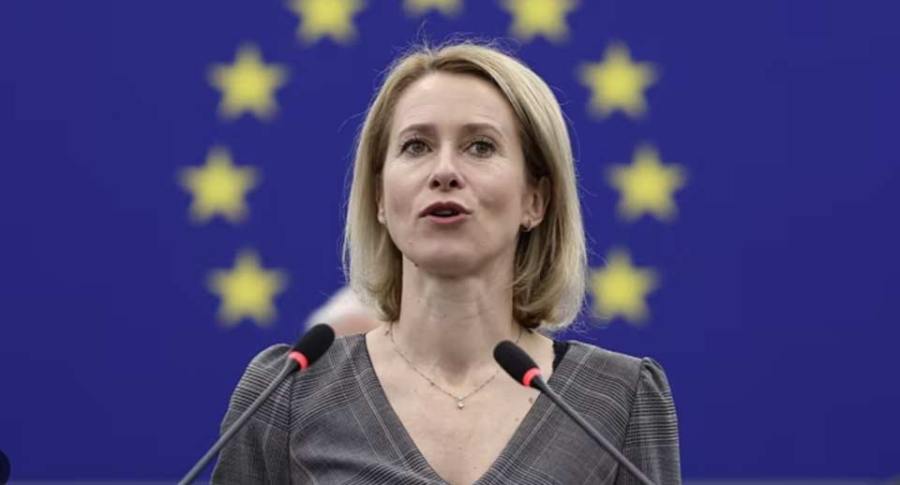


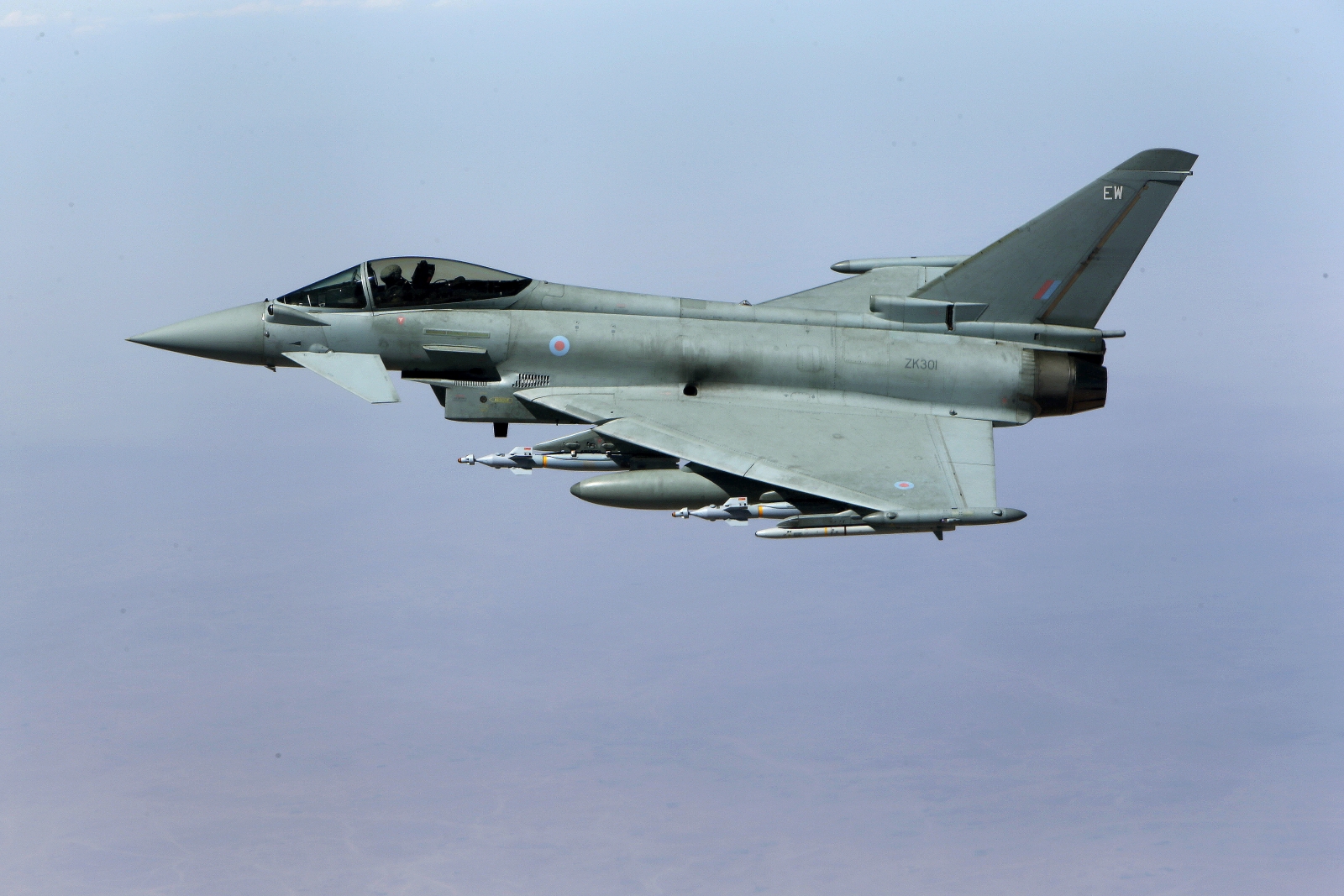


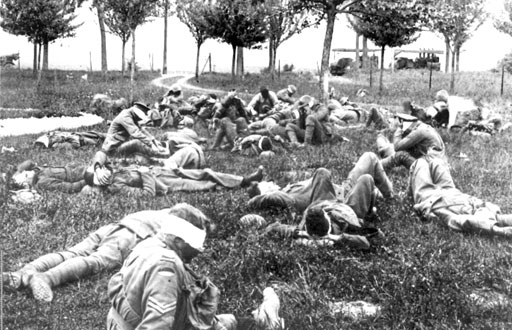

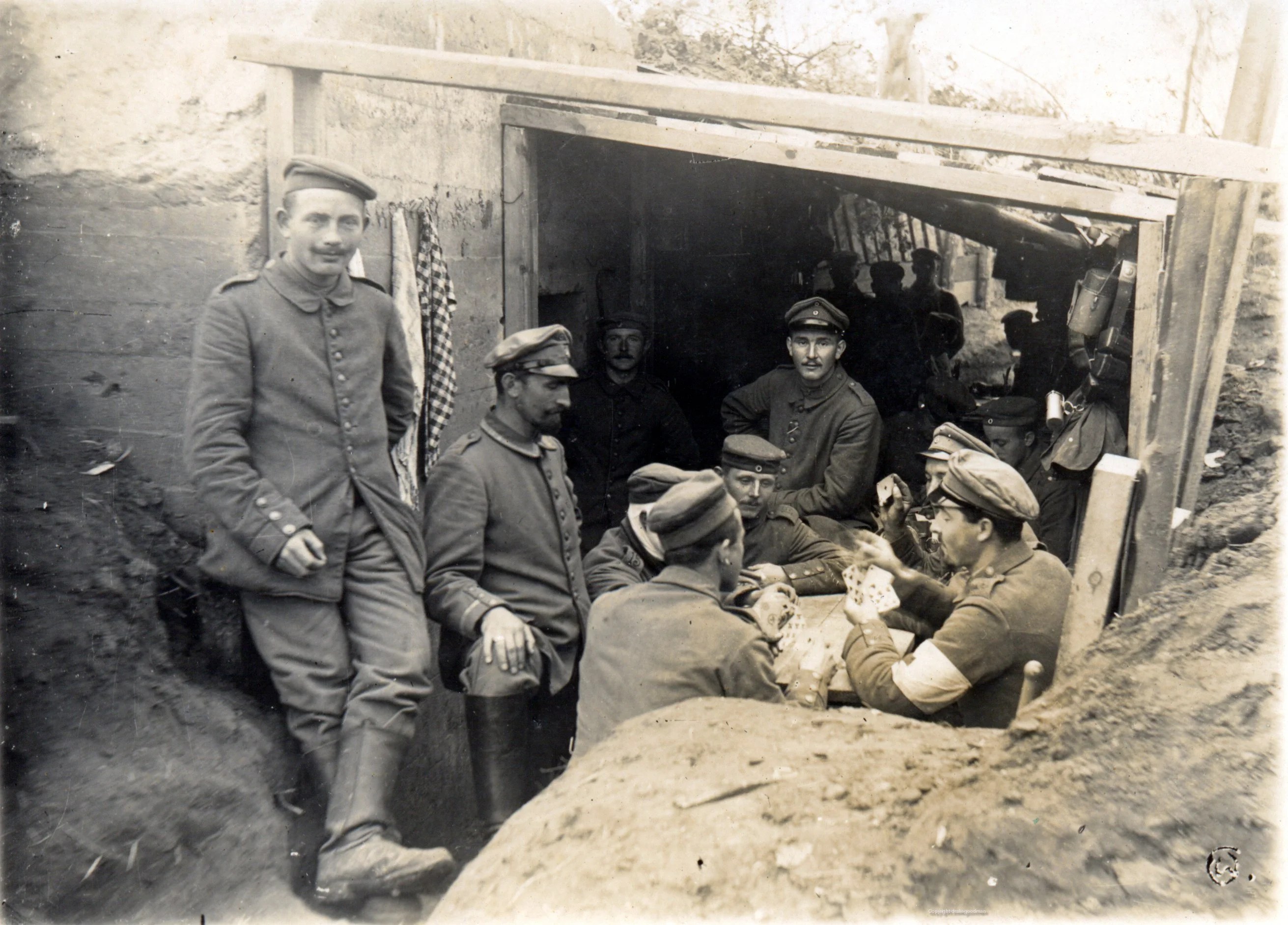
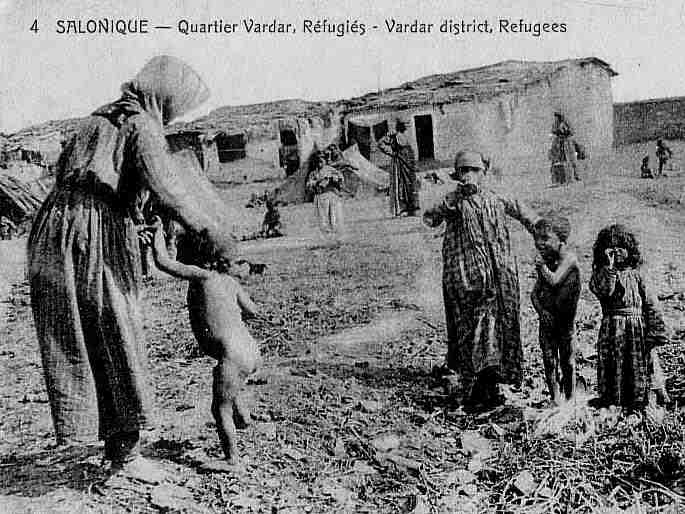


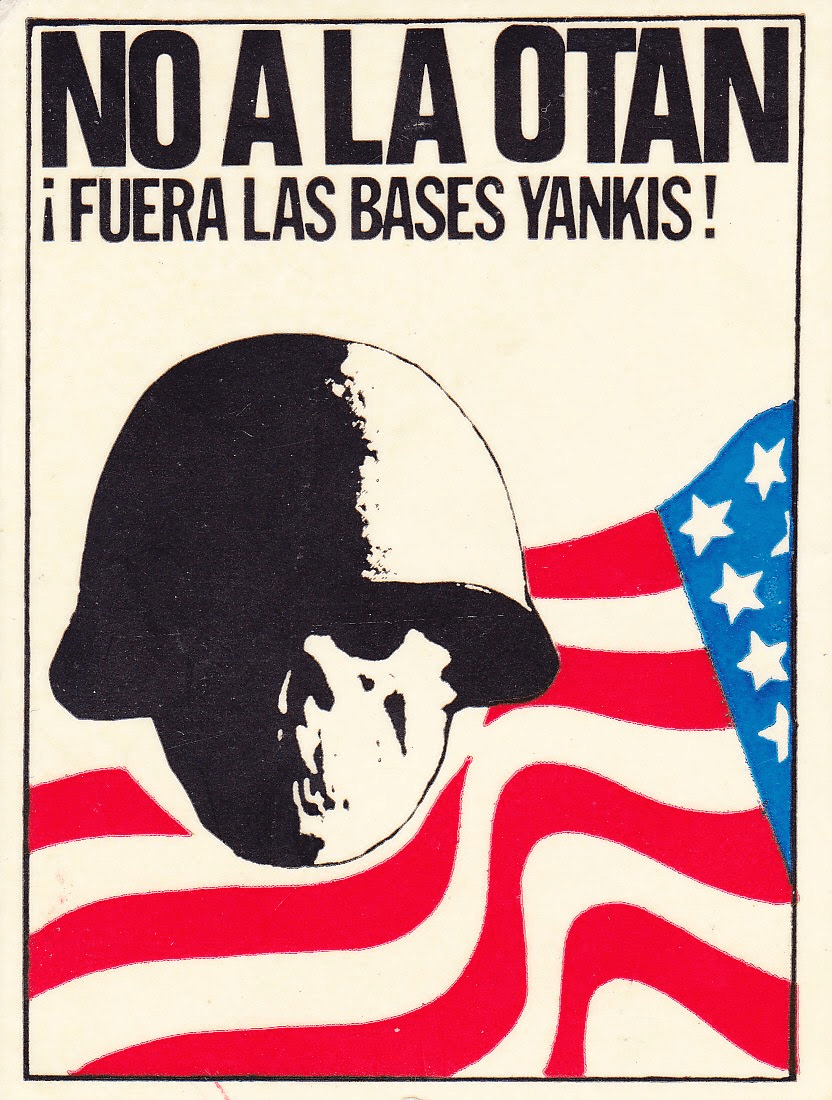
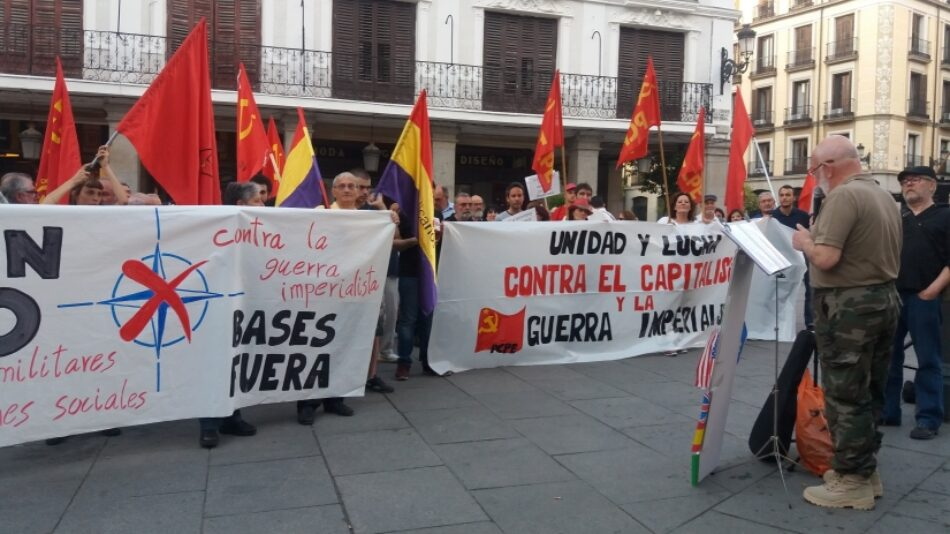
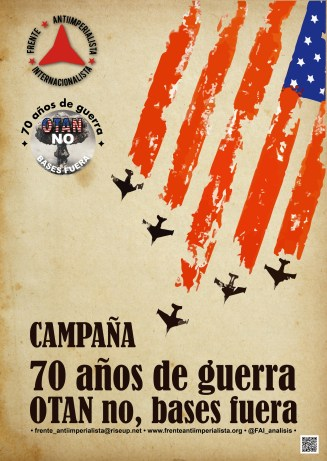
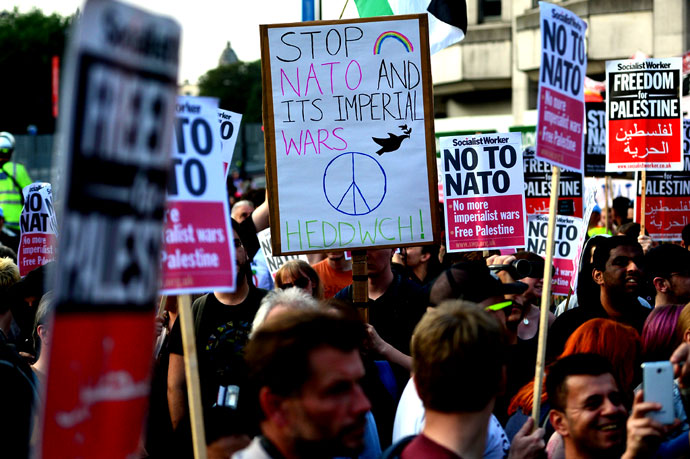


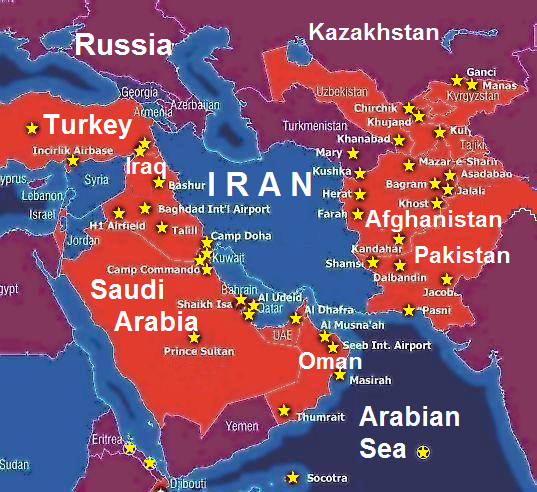


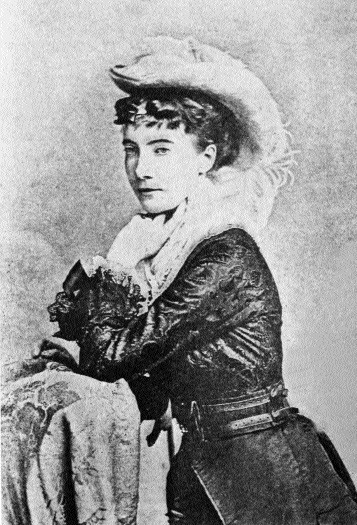


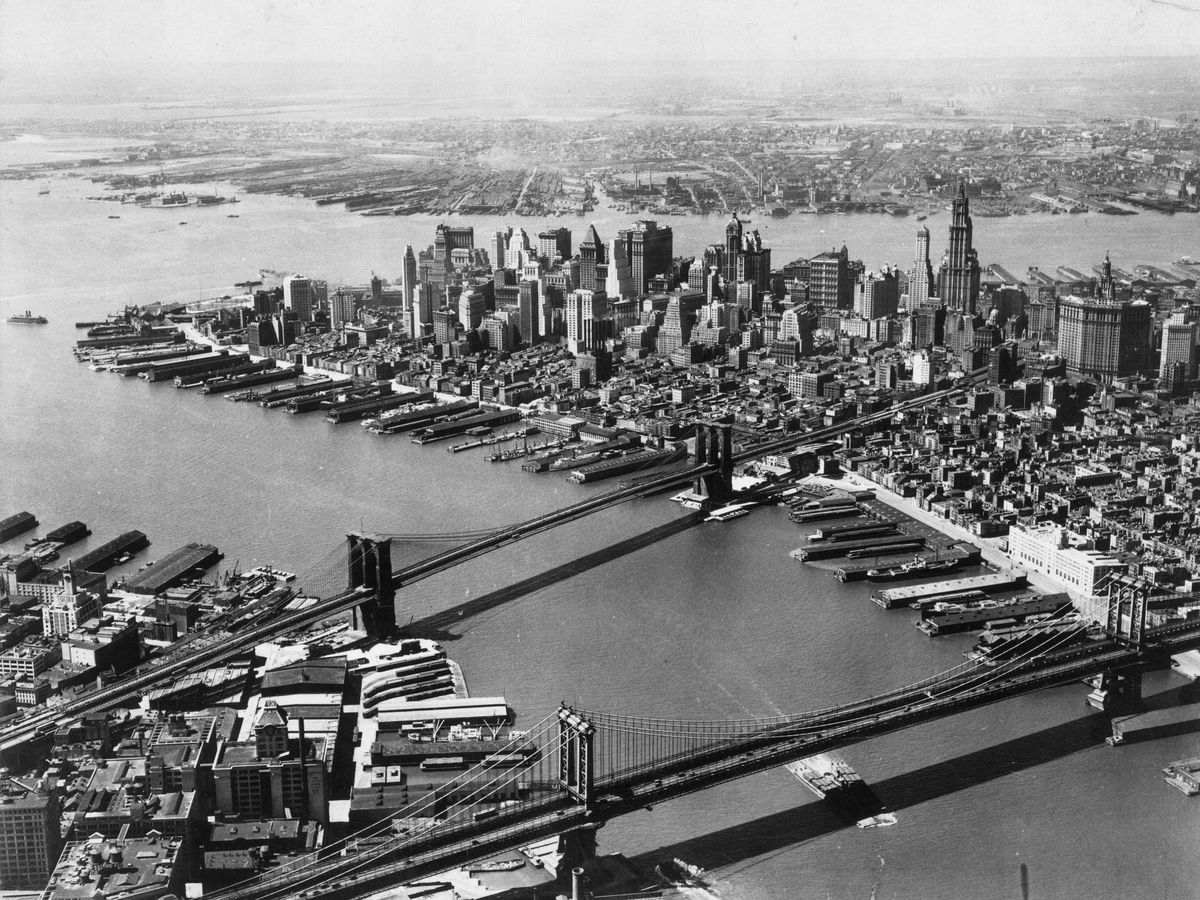

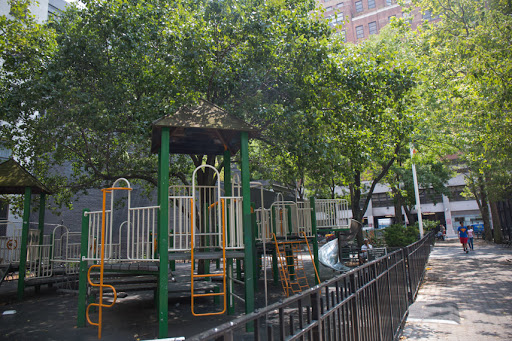


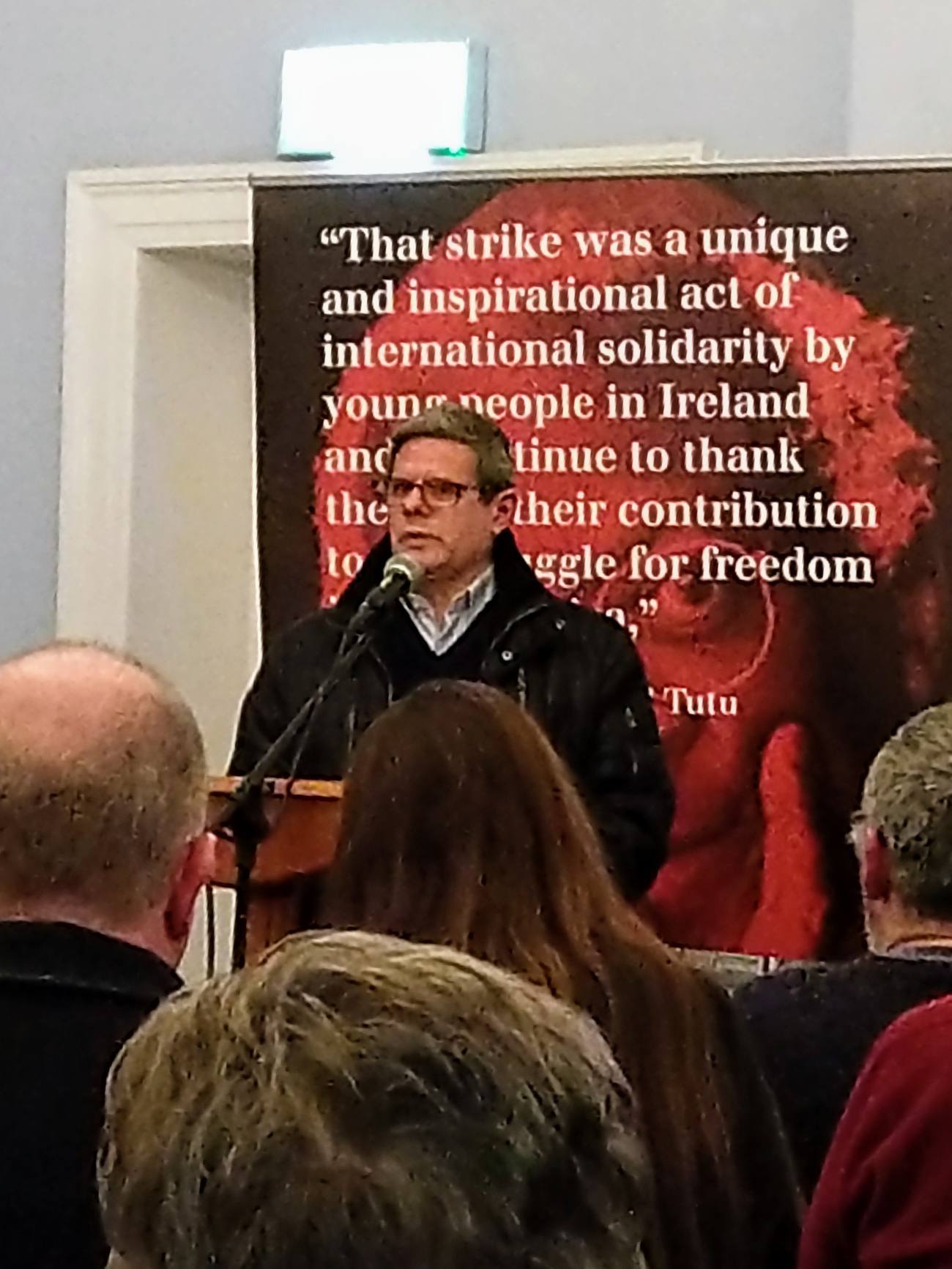


 rebelbreeze
