
Diarmuid Breatnach
(Reading time: 3 mins.)
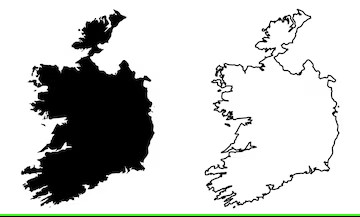
There is an unfortunate trend in the socialist movement in Ireland to underplay or even to completely ignore the continuing colonial occupation of Ireland, while at the same time raising the other evils of imperialism and capitalism.
This harmful trend is epitomised by an article from Paul Murphy in the current issue of the ecosocialist Rupture magazine1 (of RISE, a network of the People Before Profit political party) – without conscious irony entitled THE MAIN ENEMY IS AT HOME – TODAY.
In the piece under discussion, Murphy discusses the blocs forming up in contention and for world war, with the US leading the western bloc and China-Russia the Eastern,2 with the ruling classes of the EU and Ireland lined up with the USA, though the Irish State is not yet a part of NATO.

This is a correct analysis by Murphy and he is right to call for defence of the Triple Lock3 as far as we can in order to prevent or at least impede the Irish ruling class from dragging the population of the Irish state into imperialist war.
Invoking the threat of NATO as a war-making alliance and danger to the limited neutrality of the Irish state is of course absolutely correct. But how can the actual NATO membership of the Occupied Six Counties be ignored in that analysis? Yet Murphy does so, completely.
Murphy is neither blind nor stupid and one must suspect that he does not mention Britain’s Irish colony because his former and current parties both fear to mix their ‘class politics’ with any kind of Irish nationalism – even anti-colonialism – or to find common cause with Irish Republicans.
Those parties took a sudden interest in the potential politics of a united Ireland only when discussion of that possibility was being thrown around in the media and by some political actors.4 But before and afterwards, they ignored them (except on occasion to castigate Irish Republicans).
The ‘enemy at home’ is indeed, as Murphy states, Irish capitalism – however not also British colonialism? But it cannot be ignored that Irish capitalism is subservient to British colonialism, US and EU imperialism. Well, can’t be ignored by revolutionaries that is, whether Marxist or not.
It was through analysis of the subservience of the Irish capitalist class that Connolly wrote that “Only the Irish working class remains as the only incorruptible inheritors of the fight for freedom in Ireland”5 – and that was even before the bourgeois counter-revolution/ Civil War of 1922-’23.
Murphy, PBP and the Socialist Party are all fond of quoting James Connolly but only selectively and never on the question of overthrowing British rule in Ireland.6
A TIMELY WARNING
Before ending let us note that Paul Murphy’s words are not those of some green novitiate; aside from being a TD,7 he is a long-standing member of the Irish Trotskyist movement, formerly a leading member of the Irish Socialist Party before he left it to join PBP-Solidarity.8
Furthermore he has been active at times in street events and was one of the Jobstown Five who were arrested in early-morning raids by the Gardaí and tried but found ‘not guilty’ on charges of ‘kidnapping’ Joan Burton, Tánaiste9 of the Fine Gael-Labour Party coalition government.10
We are entitled to assume, given his prominence and the article’s publication, that Murphy’s political position outlined here is one with which PBP-Solidarity and Rise find no serious disagreement, to the disgrace of any party claiming to be Marxist and revolutionary in Ireland.
Furthermore, their position gives activists timely warning once again that although we may well join with PBP on certain issues, including opposition to US imperialism, they will not be found to the serious side against British colonialism in Ireland or in any fully-committed struggle against NATO.
While upholding principles of a broad front, in any struggle we need to be fairly sure of which forces will stand with us to the end and which may drop us, perhaps even at the worst and most dangerous moment.
End.
Note: If you found this article of interest, why not register with Rebel Breeze for free, so that you will be notified by email of subsequent articles. You can de-register any time you wish.
FOOTNOTES
1p.5, Issue 17, Winter 2025-2026
2In the course of which Murphy states that Russia is an imperialist country but neglects to show any evidence of that. Capitalist and undemocratic does not equal imperialist, which Marxists today understand as the export of finance capital to extract super-profits from under-developed lands through exploitation of the labour there and plunder of their natural resources.
3Ireland’s “Triple Lock” is a policy requiring UN mandate, Government approval, and Parliamentary approval before more than 12 Irish troops may be deployed in overseas support operations.
4Though never taken seriously by some, including myself. I commented that British colonialism/imperialism had many opportunities to end their colonial rule in Ireland and on each occasion had dug their heels in harder, most recently by fighting a vicious war of three decades. In addition, if it were ever even half-considered, it is the British who would decide what the proper majority percentage would be, after which it would need to be agreed in Westminster and then approved by the British Monarch.
5Connolly’s foreword to his Labour in Irish History (1910), last line of the final full paragraph. https://www.marxists.org/archive/connolly/1910/lih/foreword.htm
6Sadly it is also true that many Irish Republicans quote Connolly only in the reverse, i.e. only about Ireland’s national liberation struggle.
7Teachta Dála, elected member of the lower house of the parliament of the Irish State.
8People Before Profit is now what used to be called the Socialist Workers’ Party, an iteration of a British-based Trotskyist party, as is the Irish Socialist Party similarly of the British-based Socialist Party.
9The Tánaiste is equivalent to Deputy Prime Minister in the UK and many other parliamentary systems.
10(2011-2014)





















 rebelbreeze