The death is announced on mass media today at 81 year of age of Jamaican reggae singer, songwriter and author Jimmy Cliff,1 famous for songs such as The Harder They Come and for his role in a film of the same title.
As is usual in such cases, tributes have been posted on social media and quoted in the western mass media, including by Ali Campbell of the UB 40 band who was reported to be ‘so sad’2 (which to be honest, seems a little strange as Jimmy Cliff lived to a good 81 years of age before he died).
I first heard a few of Jimmy Cliff’s nearly 30 recordings among the Caribbean community of SE London.
Jimmy Cliff grew up James Chambers in a family of nine in St. James in Jamaica, often mistakenly thought of as the largest Caribbean island (which it is not – that is in fact Cuba). Jamaica, like Trinidad & Tobago, another larger island and Barbados, were among the British colonies in the Caribbean.
The Caribbean islands and coastline3 were first European-colonised by the Spanish, then by the French, Dutch and British Empires, often in armed conflict against its indigenous people but also among themselves, also against slave uprisings and later against local struggles for independence.4
Since WWII the dominant imperialist power in the Caribbean is undoubtedly the United States of America, though France retains some colonial possessions and a few remain part of the British Commonwealth.
Today the Caribbean is in the news through a large force of US Naval forces posted there, along with nearby posting of bombers, along with the murder of over 80 small boat sailors, allegedly drug smugglers (without evidence and as though drug smuggling gets the death sentence).5
According to threats of President of the USA Trump, he intends to target Venezuela and its President Nicolás Maduro, whom he claims – without a shred of evidence — to be the leader of a drug cartel.
Migrant communities and the spread of Reggae
During the decades I spent in London I had a fair amount of contact with parts of the Caribbean immigrant and diaspora community, partly through working alongside some of its members, partly through socialising in SE London and through activity in resistance to fascism and racism.
I first came across Reggae music while living as a migrant in the SE London areas of Lewisham, New Cross and Peckham. There were large Irish and Caribbean communities there with some but not a great deal of interaction between both communities but little hostility between them either.
Both communities were subject to institutional racism and politicised communal racism as organised by the fascist National Front and British Movement, both of which had connections to British Loyalist paramilitary organisations in Scotland and in the Six Counties in Ireland.
I recall reading in a British 1950s sociological study on ‘deviant behaviour’ that ‘Teddy Boy’ gangs would target the post-War newly-arrived Caribbean immigrants (but also the ‘Micks’, i.e the Irish) and a Jamaican workmate told me about the gangs waiting for them on Childeric Rise.6
How he went out armed with a home-made knuckle-duster and how the police would come to the fighting, arresting mostly the Caribbean victims. “Them turn me away when dem see me,” a Caribbean migrant discussing racism told me, “but dem turn you away when dem hear you.”
In Caribbean shebeens7 or illegal ‘clubs’ in that SE London area, one could buy for a modest sum a plate of goat curry and rice, or a can of pale ale or Guinness, while listening to vinyl records of Bluebeat, Ska, Rock Steady, Reggae and, to a lesser extent, Calypso.8 And dance, perhaps.9
Jimmy Cliff composed songs and rode the rising Reggae tide, for a short while rivalling Bob Marley for most popular position. What launched him and the Reggae ship into wider seas was the film The Harder They Come based on the novel of the same name featuring Cliff’s own song.
The Harder They Come novel by Ekwueme Michael Thelwell charting the fictionalised career of a Jamaican who fails to succeed as a reggae singer and becomes a gangster is based on the real life of Jamaican folk hero and reggae star Rhygin.10
But the film’s hero was performed by Jimmy Cliff and his music played as soundtrack.
In Peckham I watched the film years later and enjoyed it but I also read the novel. The latter gives an interesting background of the hero growing up in his grandmother’s care in rural Jamaica, before he goes to Kingston, while the film opens only with the hero’s arrival in the city by bus.
Famous folk singer Bob Dylan is reported to have said that Jimmy Cliff’s 1969 song Vietnam was the best protest song he had ever heard. It is hard to credit that as a true statement; Pete Seeger, Dylan’s contemporary, many others and Dylan himself had composed many better.
Jimmy Cliff’s Vietnam song takes as its theme a US soldier in Vietnam writing about his impending return home at the end of his tour of military service in Vietnam and his desire for his girlfriend, followed by another missive to the soldier’s mother announcing her son’s death in Vietnam.
The tragic juxtaposition of youth, romantic love, violent death and parental bereavement is an inherent theme of war and of course works on our emotions. But the song says nothing about who sent the soldier there nor the reasons for the Vietnam War, though one line calls for its end.
The lyrics tell us nothing about the devastation of the US war upon the peoples of Vietnam, Laos and Cambodia, nor about the heroism of the people’s resistance.11 Not even about the huge protests of many people in the USA — particularly youth — and in much of the western world.
Jimmy Cliff in performance (Photo credit Alastair Wison/ PA)
However, Jimmy Cliff’s performance of the song 20 years ago in Jamaica brings the point of the anti-war movement much more into context as in his introduction to the song on stage he castigates Tony Blair and George Bush and names a number of other imperialist wars.
It was a great performance of Cliff’s at the end of his sixth decade of life and I hope you enjoy it here on video.
Note: If you found this article of interest, why not register with Rebel Breeze for free, so that you will be notified by email of subsequent articles. You can de-register any time you wish.
2Facebook · UB40 Featuring Ali CampbellSo sad James chambers has left a void in reggae music, his voice and influence was exemplary. He was a reggae pioneer, RlP Jimmy cliff.
6This rise gave on to the New Cross Road from terraced housing down below where a number of Caribbean families lived, in one house of which I shared a double room with another Irish migrant. Almost at the top of Childeric Rise itself was the entrance to The Harp Club Irish dance hall with an Irish pub on an opposite corner and another across the road.
7From the acknowledged Irish language word ‘síbín’, etymology uncertain but adopted as far away as the Caribbean and South Africa.
8Music mostly of Trinidad and Tobago, often accompanied by steel band instruments, based on folk dance music from a part of West Africa. https://en.wikipedia.org/wiki/Calypso_music
If it is true that language at least influences the way we think, then surely it behoves us to pay more attention to our choice of words. But not only because of the influence of our words on others but indeed on us as we utter them.
Take the word ‘Ireland’ – surely a neutral one describing a geographical entity? But if we query “the population of Ireland” on line and receive a reply that the figure is 5.83 million, whereas we know it to be over 7 million, we experience at least puzzlement at the disparity in figures.
Of course, what has has occurred is that “Ireland” is being considered in political terms and the Six County colony’s population is being omitted. The reply may qualify that it is referring to “the Republic of Ireland” (as when commenting on the FAI’s football selection internationally).
But this does not really make everything alright semantically (i.e. in meaning) either. True, the Irish State holds regular elections and does not acknowledge a monarch, so it generally fulfils the description of ‘a Republic’. But that is not a historically or politically-neutral term in Ireland.
The word has a long history in Ireland as applied to the nation and was always imagined as referencing the whole geographical entity. The most influential use of the word in documentary form was probably the 1916 Proclamation, which did not in the least anticipate partition.
Even the 1937 Constitution, which formally baptised the Irish State a ‘Republic’, claimed sovereignty over the entire 32 Counties, a position that stood until the removal of Articles 2 and 3 from the Constitution by the current State in 1999.
The Football Association of Ireland is actually only the Association of the sport for the 26 Counties state and the use of “R.o.I” on the screen to refer to the State’s team during games is, as explained, deeply problematic. However the Irish Rugby Team is indeed an all-Ireland one.
As is the largest sports association of Ireland, the Gaelic Athletic Association. And also Tennis Ireland, Cricket Ireland, Table Tennis Ireland, and both Badminton Ireland and the Irish Judo Association organise on a four-province basis.1
If we call the entity the ‘Irish State’ instead we would be correct. And we could call its territory ‘the Irish state’, with a lower-case ‘s’ to distinguish between the political construction and the territory over which, in constitutional and legal terms, it holds power.
Or we could call it the ‘26 Counties.’ Or, seemingly becoming increasingly popular in some quarters: ‘the Free State’.2 But what about the entity’s parliament? That’s ‘the Dáil’, right?
That’s how we hear it described and, as “Dáil” is an equivalent of ‘parliament’ in Irish, that’s ok, right? No, not at all really; its full title is actually “Dáil Éireann” and we’ve already established that not even by Constitutional lip service does this parliament govern the whole nation.
The first time we had an all-Ireland parliament, open to election across the whole of the nation and open also to participation of all elected candidates was in January 1919 but it was banned in September by the occupying British authority, thenceforth operating under conditions of secrecy.
Then in January 1922, the pro-Treaty majority in the Dáil supported the British Treaty, including Partition, ending Dáil Éireann. There has not been a Dáil Éireann since. The most accurate brief description of the current institution is “Leinster House”.3
Is this the home of Dáil Éireann? Leinster House, west-facing side. (Image: Wikipedia).
Well, does it matter what we call them – we know what they are, right?
If it’s true that the words we use to describe things influence how we think about them, then it matters quite a lot. And how we describe them may also influence how others think about them, which also matters a great deal.
If we want to imply by the words we use that this state is independent and covers the whole nation – and that its parliament administers the whole nation – well then, there’s no need to change our words. Especially if we think that the extent of Irish sovereignty is fine or sufficient.
But if we don’t think along those lines then perhaps we need to examine our terminology more carefully and, where appropriate, amend it.
End.
Note: If you found this article of interest, why not register with Rebel Breeze for free, so that you will be notified by email of subsequent articles. You can de-register any time you wish.
FOOTNOTES
1Interestingly, I note that the Irish Ten-Pin Bowling Association (ITBA) is in the process of becoming a 32-county association.
2This was the official title of the State following its adoption of the terms of the Anglo-Irish Treaty.
3The building is actually formally called “Leinster House” since it was the city resident of the Duke of Leinster, of the Cambro-Norman invader dynasty of FitzGeralds and FitzMaurices. The Duke was Lord Deputy and at times Chief Justice of Ireland under the English Occupation.
(The author is known as a traveller to many exotic places, including expeditions in search of mythical lands, most famously “The United Kingdom”, the “Republic”, “Norn Ireland” and “The Mainland.” Here he writes about the land of Dyslexia).
Dyslexia is, as the suffix “-ia” suggests, a country …. think of India, Mongolia, Russia, California [now relegated to a vassal state], Hibernia [also something of a vassal state], Narnia [er .. no, that is an imaginary land in a series of children’s tales].
Strangely the existence of Dyslexia was not even suspected until 1881, when Oslawd Khanber1 claimed to have visited the land. His discovery was widely doubted until confirmed by Ludorf Linber2 in 1887.
The people of this newly-discovered land were distinguished by all having a difficulty to varying degrees in spelling and/or in remembering sequences of numbers.
Khanber and Linber both named this land (and the rest of the world agreed) “Dyslexia”, from the Greek root “dys” meaning “bad/ abnormal/ difficult” and “lex” meaning “word” (although in Latin it means “law”, understood as “written word”).
Dyslexia was, like many other lands and people, not named by the natives themselves, but by people from elsewhere. Such examples abound, for example “Australia”, “America”, “Scotland”, “Eskimo”, “Teddy Boys”, “Pagans”, “Celts”, “Saxons”, “Teagues”, “Gypsies”, “E.T.s” etc.
Attempts to identify what the Dyslexics themselves called their land have so far collapsed in confusion, with different spellings and even pronunciations hotly argued for against others.
In fact, there have been accusations of racism aimed at those who named the land “Dyslexia” and the people “Dyslexics” — it seems particularly cruel to create a word itself so difficult to spell to name a people with a known disability in spelling.
Previously, Dyslexics just called themselves “people” and the land “the land”, while those who came across migrants from there before Dyslexia was actually discovered called them other names: such as “stupid”, “slow”, “thick” or “people with ADD or ADHD”.3
However, most “Dyslexics” today have not only adopted the name and learned to spell it but are wont to proudly declare “I’m Dyslexic” (but rarely “I am a Dyslexic”).
When Dyslexia came to the attention of the rest of the World no-one seemed astonished that it should be discovered long after the North and South Poles, the Mariana Trench, the Matto Grosso Plateau and indeed a great number of planets.
What did astonish the World was that Dyslexia had apparently independently within its borders invented television, radio, Ipads, microwave ovens, central heating and hot showers and of course the internal combustion engine and nuclear power.
This proliferation of technology would have been normally amazing (if anything normal can be said to be amazing, or vice versa) in a previously undiscovered country.
But what was really, really amazing was that everyone in Dyslexia had overcome a disability to climb to such industrial heights. The obstacles must have been tremendous.
Imagine confusing, for example, sodium chloride, a common table salt, with sodium chlorate, which is used as a weedkiller.
Also by the way, as an ingredient in making home-made bombs, a curious fact since nitrogenous fertiliser, with a directly opposite effect to sodium chlorate when spread on weeds, is also sometimes used in making home-made bombs).
Anyway, shake sodium chloride in small quantities on your weeds and they probably won’t like it but most will survive – especially those that actually like a little of it, like relatives of the cabbages and such. Shake a little sodium chlorate on your food, however and ….
well …. no, don’t try it – without urgent and skilled medical attention you will die quickly and painfully.
For another example, imagine confusing “defuse” with “diffuse”: one goes to de-escalate a conflict and ends up spreading it around. Other confusions are possible between the noun or verb “ware”, the (usually) adverb “where” and the past tense verb “were”. And so on.
For physics, knowledge of and accuracy in mathematics is essential – algebra, logarithms, binary codes, sines and co-sines, square roots (these last are mathematical constructs, not mythical regulated-shape carrots as propagated by anti-EU campaigners).
In calculating distances, heights and depths, spaces and circumferences, ability in geometry, trigonometry and ordinary mathematics is required. Somehow, the Dyslexics, the inhabitants of Dyslexia, had overcome their disability or compensated for it in some way.
They had developed as flourishing and environment-poisoning an industrial society as the most developed parts of the world, such as the United States of America (most developed industrially, that is).
Dyslexics are said, despite this disability with letters and numbers, to be of above-average intelligence. They had to be, to develop all those complicated benefits of industrial society despite their handicap.
Strangely, one may think, many Dyslexics have become literary figures famous throughout the world, Hans Christian Andersen, Agatha Christie, F. Scott Fitzgerald and WB Yeats among them. Contrary to popular belief among non-natives, James Joyce was not from Dyslexia.
This prevalence of Dyslexics among so many giants of literature and indeed of virtually every other field of human endeavour has given rise to a group of Dyslexians who call their disability “the gift of Dyslexia”.
The Dyslexics are often garrulous and sociable and this is especially true when in Dyslexia itself. The difficulty in remembering telephone numbers for example makes every telephone call an adventure.
Say a native wished to phone another native called Cathy (also known as Cthy, or Ktay, Thyca etc), and the phone number was 731 1062 (pleasenote, this is an imaginary telephone number by which neither Cathy nor anyone else can be reached).
The Dyslexic might phone 371 1026 – all the correct digits but in a different order (note, this also is an imaginary telephone number by which no-one may be reached).
The conversation, somewhat simplified, might go like this:
“Yes, hello?” (female voice, breathless with anticipation of another adventure).
Our caller: “Hi, is that Cathy?”
Recipient (giggling): “No, it’s not. There isn’t any Cathy here. I’m Wanda.”
Our caller: “Oh, hi Wanda, you sound very nice. How about going on a wanda with me?”
Wanda (with a little giggle but playing cautious): “Maybe …. What’s your name?”
Our caller: “Terry.”
Wanda: “Where were you thinking of wandering with me?” (A moment’s pause while both mentally translate the last part of that into “wandering on me”).
Terry (clearing his throat which has suddenly gone dry): “Well, there’s a nice new Indian restaurant opened up in town. Do you like Indian food, Wanda?”
“Ohhh, Terry, I love it. So spicy!” (Very slight pause as both translate “spicy” as a description for food flavouring into a metaphor instead). “When were you thinking of?”
“Er … tonight too soon?”
“No, I happen to be free tonight.”
“Shall I come and pick you up? Say …. seven pm?”
“That would be lovely, Terry. I live off the Trans City Road, tenth left, first right, eighth left, in Hopeful Street, the seventh house on the left-hand side if you’re coming from town, with a brown and white door and a hydrangea bush in the garden.”
“Got it – off the Trans City Road, tenth left, first right, eighth left, Hopeful Street, seventh house on the left-hand side, brown and white door and a hydrangea bush in the garden. At seven pm. I’m looking forward to meeting you.”
Most Dyslexics are always open to adventure, ‘going with the flow’. One never knows what a simple telephone call may bring or to what an appointment or written address may lead.
But as a result, Dyslexics are also philosophic about missed appointments, forgotten birthdays and so on; they waste little time mourning something lost and instead look forward to something gained.
Terry might or might not make it to Wanda’s but they both know the world is full of other possibilities.
Cathy, for example, who failed to receive a call from Terry to congratulate her on her gaining a dystinction in her dyploma, received later that evening what non-natives would term “a wrong number” call from a Sofia who had meant to call a Geraldine.
Sofia had intended trying to patch up a long-running difficult relationship with Geraldine and instead found herself making the acquaintance of Cathy, who seemed much nicer and more understanding than was Geraldine.
Putting her problems with Geraldine aside, Sofia agreed to Cathy’s suggestion to meet for a late coffee (which they both knew could lead to an early drink and who-knows-what from there). Cathy had by now forgotten that she was hoping Terry would call.
Dyslexia is not just another land, nor even just a strange one – it’s an entirely different way to live.
End.
Note: If you found this article of interest, why not register with Rebel Breeze for free, so that you will be notified by email of subsequent articles. You can de-register any time you wish.
3A supposed disability the existence of which is hotly debated but has exonerated many teachers accused of bad teaching methods and states accused of having too large classes in their schools and which has been profitable for some educational psychologists and extremely so for some chemical companies.
Diarmuid Breatnach – Talk given at 1916 Performing Arts Club, May 2024.
(Reading time: 6 mins.)
There was a time when from Dublin to Galway, from Kerry to Donegal, the dominant language was Irish. There was a time too when it was widespread in Scotland, in parts of Wales and the main language on the Isle of Man.
Now however one can travel through all of those places and not hear it.
Irish was the first vernacular language to be written down in Europe and though island people, its speakers were not “insular”. The educated spoke Greek and Latin too and when the Dark Ages fell upon Europe it was the Irish intellectuals, the monks who revived and spread literacy there.
But here we are, you and I, speaking English – which did not even exist until at least the 12th Century.
She (I say ‘she’ because language in Irish is a feminine noun and in many other languages too) – she is all around us in place names, though we may know them only through their corrupted forms into English.
Árd/ Ard, a height; Baile/ Bally, a town or village; Béal/ Bel, the mouth of; Bun, the bottom of; Carraig/ Carrig, a rock; Cnoc/ Knock, a hill; Cluain/ Clon, a meadow; Dún/ Dun, a fort or castle; Inis/ Inis or Ennis, an island or a raised mound surrounded by flat land; Loch/ a lake …
The English-language names of twenty-nine of our counties are corruptions of words in Irish: from Ciarraí to Dún na nGall, from Átha Cliath Duibhlinne to Gaillimh. This includes all six counties in the colony: Aontroim, Árd Mhacha, Doire Cholmcille, An Dún, Tír Eoghain, Fear Manach.
Just over half the States of Stáit Aontaithe Meiriceá on Turtle Island have names in the indigenous native languages, so we’re doing well with placenames and also of course have survived the colonial genocidal campaigns and wars much better.
By the way we also have Irish names for some places in Britain: Glaschú, Dún Éidin, Manchuin, Leabharpholl, Brom agus Lúndain. In fact probably none of the names of those cities are originally English anyway.
Irish has left only a small imprint on the general English language for example with “a pair of brogues, whiskey and slogan” (from slua-ghairm, a call to or by a multitude), banshee, carn and smithereeens. And shebeen, in parts of the USA, the Caribbean and in South Africa.
But its influence on the way we speak English in Ireland is clear.
We might say, instead of complaining that we are thirsty, that we have a thirst on us – a direct translation from Tá tart orainn. Or that the humour is on us – Tá fonn orainn. We might “have a head on us”, as in a headache. “The day that’s in it” – an lá atá ann.
We pronounce “film” with a vowel between the L and the M, as it would be in Irish – take the name for a dove and also a personal male name, Colm. We get that with R and M and R and N too, in some areas “a carun of stones” or “down at the farrum”.
We often indicate the absence of ‘Yes’ or ‘No’ in Irish by replying in English to the verb in the question: ‘Will you be there?’ ‘I will surely’ (Beidh, cinnte). ‘Will you do it?’ ‘I will not’ (Ní dhéanfad).
We have an extra tense in Irish, the very recent past tense, which we translate into English as spoken in Ireland: ‘I’m just after cleaning that floor!’ Táim díreach thréis an urlár sin a ghlanadh!
Renaissance of language and culture has often preceded periods of heightened national struggle: the Harp Festival of 1792 was followed soon by the uprising of the United Irish; the cultural work of The Nation newspaper was followed by the rising of the Young Irelanders.
The Nation newspaper of the Young Irelanders sought to create and encourage a nationalist republican culture and was followed by an unsuccessful rising in 1848, during the Great Hunger. (Source image: Internet)
LANGUAGE AND NATIONAL STRUGGLE
The Fenians too had their cultural precursors and the great revivals of the Irish language, Irish sport, speaking and writing in Irish and Irish theatre were not long in finding expression of another kind in the 1916 Rising and the War of Independence.
And campaigns of civil disobedience in the 1960s secured for us Irish-language broadcasting in Radió na Gaeltachta and TG4. Not to mention motor insurance documentation in Irish which Deasún Breatnach won only after going to jail for refusing to display the documentation in English.
Though we can hear the influence of the indigenous language upon our speaking Sacs-Bhéarla, or English, the Irish language itself at this point is in retreat. In fact some might say that it’s in a rout.
Yes, the Gaelscoil movement is broader and deeper than ever before but outside the schools? The Gaeltacht areas are receding, receding … and where can the language be heard outside of those?
Though the Great Hunger caused the most impressive loss of Irish-speaking modern Ireland on the map, the percentage lost during the period of the Irish State is greater. (Image source: Internet)
I had an experience recently that illustrates the problem. In a pub with some friends, I observed a man wearing a silver fáinne, the ring that many people wore to show a proficiency in Irish. It identified the wearer to other Irish-language speakers (my father wore a gold one).
The man had overheard me bidding farewell to friends in Irish and asked me: “Are you an Irishman?” I thought the question strange and said so. Then he asked me was I an Irish speaker, to which I replied in Irish language.
Eventually he came over and said that he didn’t speak Irish himself.
The fáinne was a family heirloom and he had been wearing it, he said, for six months in Dublin, wanting to come across an Irish speaker to whom he would give the ring. Since I had been somewhat abrupt with him, he gave the ring to one in the company who can speak Irish.
Badge inviting people to speak Irish to the wearer (Image sourced: Internet)
LABHAIR Í
Six months in Dublin without hearing Irish spoken or recognition of the fáinne! That illustrates one aspect of the linguistic problem in Ireland. But it is one that we can resolve, fairly easily too. And that brings me to the kernel, the poinnte or point of this talk here today.
I am asking you to speak a cúpla focal, regularly, go rialta, so that she may be heard. Labhair í ionnas go gcloisfear í. Imagine if everywhere in Dublin, on every side, one heard just a few words in Irish – imagine the social and psychological effect over time!
Those who know some Irish would speak her more often. Many who don’t, would feel it worthwhile to learn at least some phrases and some responses. Some might take it further and learn Irish well. Public services might regularly facilitate services through Irish.
Dia dhuit. Dia’s Muire dhuit. Or the non-religious form: Sé do bheatha. Go mba hé duit.
Má sé do thoill é or le do thoill.
Go raibh maith agat in many situations, including to the driver of the bus.
Tá fáilte romhat.
Gabh mo leithscéil.
Would you like a bag? Ní bheidh, go raibh maith agat.
Cash or card? Íoch le cárta, le do thoill as you wave your bank card. Or Airgead thirm, as you take out your wallet or purse.
Go léir, as you indicate that you wish to pay the full amount.
Isteach, le do thoill, when returning a book to the library. Amach, le do thoill, when borrowing one.
Slán, as you leave.
Easy enough, yes? Yes? But though a part of the mind is willing, another part is afraid.
“What if I get a big load of Irish in response and not even understand it? Won’t I look like a right eejit!” Well, there are risks in anything worth doing as was demonstrated in a short play here some time back when two fellas were debating whether and when to chat up a certain woman.
She was not uninterested but they took so long about it she walked out and left them, like fish brought up by fishing line, gasping on the dry quay.
So you could prepare a small survival kit: “Gabh mo leithscéil. I only have a few words/ níl agam ach cúpla focal.”
“Níl agam ach beagán ach tá mé ag iarraidh í a úsáid/ I only have a little but I want to use it. Is foghlaimeor mé/ I am a learner.”
I am not asking for any of us to campaign, to agitate for services to be provided through Irish though that is certainly a linguistic civil right and, as far as state or semi-state services go, a constitutional one.
I am only asking that you contribute to the audibility of the language, to use a few standard greetings and responses and to use them not only to people you know to be Irish speakers, not only to friends and relations … but everywhere in public.
Everywhere
in public.
Go ye out among the people and spread the word – or rather the few words. Scapaigí an cúpla focal.
Beyoncé, Cowboy Carter (2024) (Image sourced: Internet)
Beyoncé was back in the news once again for a spot of cultural appropriation. It was not her first brush with cultural Neanderthals, she has been here before for apparently “stealing” Egyptian culture by dressing as Nefertiti.
Added into the mix was a lesser-known black artist, Kaitlyn Sardin, who excels at Irish dancing and dared produce some fusion dance routines.
I have dealt with Beyoncé and Rihanna wading into the murky cesspit of the cultural appropriation debate in the past when they were accused of appropriating Egyptian culture(1) and won’t deal with it here.
This time though, the debate is clearly about music, produced by people who are still around and not the attire of long dead Egyptians with little connection to the modern country.
The fact that white country music fans are still around to complain, doesn’t make the debate any less sterile or ridiculous.
Beyoncé’s faux pas was apparently to record a country & western album titled Cowboy Carter. Apparently, some were of the view that a black artist shouldn’t record a “white” song or perform in a “white” musical genre.
Her first release from the album was a song she composed, Texas Hold ‘Em.(2) And the hounds of hell were let loose to howl and drown out the music.
Some radio stations refused to play the song, though that didn’t stop it going to No.1 in the country music charts and the debate, though debate might be too fine a word to put on it, erupted.
She is not white, she is not part of the country music scene and she should stay in her lane, is a crude but accurate summary of most of those criticising her. She is actually from Houston, Texas, not that it matters.
One person interviewed by The Guardian responded that “It doesn’t matter that you came from Texas. It matters if you’re actually living a country lifestyle. It bothers me that her song is being called country.”(3) These words might be familiar to some.
They are normally advanced by identitarians when talking about whites playing genres considered “black” and in some cases other non-whites have levelled this accusation against a whole array of non-white artists including Beyoncé.
It is reactionary rubbish with the racism, in this case, hiding just under the surface, behind a veil of cultural purity. One even went as far as to say that he would bet that Beyoncé had never been in the country saloon he was being interviewed in.
Well, many black women would steer clear of such venues, for more than obvious reasons.
Cultures are not pure, ever. None. Not now, not ever, not even going back to the stone age.
I am very sure, no stone age hunter armed with a flintstone hatchet ever shouted “You’re appropriating my culture” when he realised some other village had come up with the same invention, or even just “stole” the idea.
Country music is not pure either and to the shock and horror of many a man yearning for the days he ran around in his white bedsheets, it isn’t even that white. Blacks have made significant contributions to country music, not least the musical instrument known as the Banjo.
What would country be without the banjo? Rhiannon Giddens, the black musician has dedicated her time to reviving the banjo as a black instrument and recording some excellent music, though unsurprisingly she doesn’t quite stick to genres either.(4)
Her site describes her thus: Singer, multi-instrumentalist, composer, and impresario, Rhiannon draws from many musical traditions including blues, jazz, folk, hiphop, African, Celtic, classical, and jug band. She bridges contemporary and traditional forms, and few musicians have done more to revitalize old-time influences in current music.(5)
Rhiannon Giddens with banjo (Image sourced: Extra.ie)
She composes her own songs, covers others, even ones such as Wayfaring Stranger, recorded by many white country artists, though actually written and composed by two Germans in the 1660s.
As far removed from her as from the whites who might like to claim the song as their own (Links below to Gidden’s version,(6) Johnny Cash’s(7) the Mormon Tabernacle Choir(8) and even Ed Sheeran’s(9) very uncountry version.
I have included links to all songs and routines mentioned in this article). The song belongs to whoever wants to sing it, however they wish to, though I personally think Sheeran murders the song with a flintstone hatchet, but each to their own.
So, Beyoncé is quite entitled to record in whatever style she wants. Part of what rankles some is that she went straight to No.1 and will make a fortune from the album and this is part of the ‘stay in your lane’ slogan applied to blacks and whites.
Elvis made a fortune singing what was essentially considered, at least initially, to be a black musical form and other white artists who have done this have been criticised by a black bourgeoisie who want that slice of the cake for themselves.
Some of the whites criticising Beyoncé are undoubtedly racist, some might just be musical purists, though music is one art form that just doesn’t lend itself to purity. Others, like identitarians everywhere, think that the money is theirs. Flip sides of the same coin.
Beyoncé is not the only black artist to venture into the world of country,(10) Charley Pride and Ray Charles did so back in the 1960s at times of heightened tensions in the midst of the racial violence meted out against those demanding civil rights for blacks.
When Charley Pride released his first country album, his image was not put on the record sleeve and they initially hid the fact he was black as part of their marketing strategy. He would eventually make it to the Grand Ole Opry in 1967.
He had a total of 52 top ten hits on the Billboard Hot Country Songs chart.(11) No mean feat and not a once-off foray into country music either, he was a country artist.
Linda Martell fared worse as she never hid that she was black and though she would also perform at the Grand Ole Opry in 1970, her album Color Me Country(12) never had the same success.
Ray Charles also dipped his fingers into the pond producing Modern Sounds in Country and Western Music(13) in 1962. It was a best seller, topping the charts. So, Beyoncé is by no means the only or even the first black artist to find success in the genre.
Black artists have always ventured into genres that were not considered to be black.
Others have gone the other way and identitarians tend to criticise white artists doing “black” music, though when Gene Autry, the white country and western singer, nicknamed The Singing Cowboy recorded a blues album, nobody accused him of cultural appropriation.
Though even non-whites get accused by the black bourgeoisie closely aligned to the US Democratic Party of cultural appropriation, Jews, Asians, even Africans get in the neck.
Samuel Jackson infamously accused black British actors of stealing their jobs because they were cheaper and questioned the cultural bonafides of British-Nigerian actor David Oyelowo when he was cast as Martin Luther King in the film Selma.(14)
He never criticised the decision to cast the black Yank, Morgan Freeman as Nelson Mandela in the film Invictus or Matt Damon as the white South African rugby captain in the same film.
Given the backlash against his comments he decided to keep his mouth shut when the British-Ugandan actor Daniel Kaluuya was chosen to play the black revolutionary leader of the Black Panther Party, Fred Hampton. No one is safe from the accusation.
It is a bit like the MacCarthy trials. “Are you now or have you ever been a homosexual? No, but I slept with a man who was. Have you ever appropriated a culture? No, but I hummed a tune by a man who had.”
Which brings us now to Kaitlyn Sardin, the US black Irish dancer. She has recently gone viral, though not for the first time, with her dance routines and not being as powerful as Beyoncé has come in for some vile racist abuse.(15)
She produced a new video which is what is now termed fusion i.e. Irish dance with some developments.
This is now quite common and there is a host of Irish groups producing fusion. My favourite is a routine called Freedom with the voice of Charles Chaplin and images from Belfast in the early seventies.(16)
Though the first person to do this was Michael Flatley with River Dance which not only broke many of the “rules” of Irish dancing, it even went as far as to incorporate the Lambeg War Drums in a much more positive sense than the annual announcement of Protestant supremacy for which they are used every July 12th.
Of course, Flatley, unlike Sardin is white and of Irish descent.
Kaitlyn Sardin (Image sourced: Internet)
As I said there are many fusion groups in Ireland, the one I previously mentioned and even one which is danced to classical music titled Fusion Fighters Perform Fusion Orchestra.(17) Again, all as white as the driven snow in Siberia.
There is even an all-female Fusion Fighters group from the USA that does a tap dance routine to William Tell.(18)
The particular group started off with Irish dance and moved into other styles over time, so much so that even their website acknowledges it has less to do with Irish dance than they used to.(19) It is what happens with culture. It evolves, all the time.
Again, they are white and no one said fusion is not Irish dancing and no one said anything about not being Irish, even though their Irish connections may be as tenuous as Darby O’Gill.
The term fusion is one of those designed to assuage musical purists more than racists. In reality there is no such thing as fusion music. ALL music and dance are fusion till it becomes accepted as the standard, when new deviations or fusions arrive.
Though dancing has existed in Ireland for centuries it has not been immune to outside influences such as French Quadrilles in the 1800s or other forms.
The clues are in the names, hornpipes and polkas for example are two types of music that you will find in other parts of Europe and indeed in the case of polkas they clearly originated in Eastern Europe, though most forms including reels and jigs are not exclusively Irish either.
All cultures borrow.
Most instruments used in Irish music are not Irish in origin. Some, like the flute have arisen in most cultures around the world and archaeological remains have thrown up examples everywhere of flutes and whistles made from everything, including animal bones.
Fiddles arose over a long process around the world and it is a bit difficult to pinpoint them to one country. Uillean pipes are Irish, though they too were part of a wider process in Europe with different types of pipes arising.
Though Scottish bag pipes are perhaps the most famous type of pipe, there are in fact lots of pipes throughout Europe and parts of Africa, Iran, Azerbaijan and even India.
Other instruments such as the banjo are African in origin, though the modern banjo has developed over time since it was first brought to the western world by slaves.
The piano accordion is a relatively recent European invention from the mid 1800s, a further development of the accordion, which was also a European instrument.
If we rejected all outside influences and demanded purity, we would have little in the way of Irish music or dance, were we to have any at all.
So, Kaitlyn Sardin should be celebrated. She is from the US, is black and more importantly is very good at what she does: dancing. The fact that she is not Irish or she recently produced a fusion routine is neither here nor there.
Any liberal who got lost on the internet and accidentally read this article will probably have nodded most of the way down: until now. The ridiculous statements made about Beyoncé and Sardin are generally rejected by liberals.
But when the cultural capitalists hiding behind identity politics make similar claims against white artists or indeed between other non-white artists this rubbish is taken seriously.
Culture does not belong to anyone, you don’t have to be white, black, Asian or Latin to perform in a particular style. Culture is a gently flowing river you bathe in, swimming ashore where you please along its route or letting it sweep you out into the sea.
It has always been thus and always will be, despite the attempts of cultural capitalists to appropriate culture for their own grubby money-making ends, or racists imagining some non-existent purity. It doesn’t mean that some of the commercial outings by Beyoncé and other artists do it well.
They don’t.
Beyoncé was criticised for her depiction of India as a white paradise and other artists such as Gwen Stefani, Nicki Minaj and Iggy Azalea have been accused of engaging in crass portrayals of the cultures they seek to borrow from(20) and in Ireland we know a thing or two about how crass Hollywood can be when it comes to depicting Irish music.
But that is another matter, many artists in particular genres have come up with really crass portrayals of their own cultures. The point is whether culture is pure, has lanes and you stick to them due to an accident or birth.
The legendary US folk singer Pete Seeger would joke that plagiarism was the basis of all culture and he was a wonderful plagiarist who introduced musical forms from around the world to a US audience at a time when there was no internet and it was not an easy feat.
He introduced the song Wimoweh to the world, which has gone through multiple adaptations,(21) some of them very good and others absolutely dire, such as that recorded by the English pop group Tight Fit in the 1980s.(22)
The original song however was quite different in style and written and recorded by the South African musician Solomon Linda(23) who was swindled out of the royalties on the song.
Had Seeger stayed in his lane, most of us would never have ever heard of Linda or the story behind his song.
Demands for cultural purity are inherently reactionary, as are demands to ‘stay in your lane’, be they levelled by whites, blacks or Asians. Culture is to be celebrated and expanded.
The accusation of appropriation would only make sense if someone like Seeger had said he wrote Wimoweh, that would be straightforward dishonesty, something he could never be accused of in his multiple adaptations of songs from Ireland, Japan, China, Indonesia, Scotland, Chile, Nicaragua amongst other places.
Beyoncé’s foray into country is perfectly fine, though personally, I don’t like her music, including her country. But that is my personal taste and has nothing to do with appropriation or other rubbish from cultural capitalists.
The Irish radio on Saturdays used to broadcast an Irish music show from the musical company Walton’s. It always finished off saying “If you do feel like singing a song, do sing an Irish one.” The exhortation was for all, not some; the point was to celebrate and enjoy music.
Let’s leave the cultural capitalists, purists, identitarians and racists to the handful of songs they mistakenly believe to be pure.
Delighted to repost with thanks another contribution to recent discussion of the British monarchy — delayed by technological difficulties.
Gearóid Ó Loingsigh
11 September 2022
The British monarch Elizabeth Windsor, formerly Saxe Coburg Gotha, has died at the grand old age of 96, thanks in no small part to the subsidised lifestyle and medical care she enjoyed throughout her long life. Her death has produced the usual outpouring of manufactured grief from the media and also “genuine” grief from a sector of that population groomed by that same media.
But what is to be said of her passing? There has been some reaction to her death that concentrated on her being a mother and grandmother. But we were not invited to mourn the passing of mothers or grandmothers, but the death of a monarch and all that monarchy represented. So, before we look at the legacy of Elizabeth Windsor we should ask ourselves what is monarchy. The Irish revolutionary James Connolly, executed by the British state under the reign of George V, stated in relation to that same king’s visit to Ireland.
What is monarchy? From whence does it derive its sanction? What has been its gift to humanity? Monarchy is a survival of the tyranny imposed by the hand of greed and treachery upon the human race in the darkest and most ignorant days of our history. It derives its only sanction from the sword of the marauder, and the helplessness of the producer, and its gifts to humanity are unknown, save as they can be measured in the pernicious examples of triumphant and shameless iniquities.(1)
In this, Connolly only described monarchies in general as the most ignorant and backward manifestations of humanity. It is a point that bourgeois revolutionaries such as Rousseau and Voltaire would not have disagreed with. In fact, it was a standard capitalist argument for much of history. However, various capitalist nations hung on to their royal households, either as symbolic figures or as propaganda figures for their campaigns and conquests.
Much is now made of the contribution of Mrs Windsor to society, the arts, and even peace through her now celebrated handshake with Martin McGuinness, though who gave more in that handshake is not questioned. Connolly was very clear about the contribution of monarchies to the progress of society.
Every class in society save royalty, and especially British royalty, has through some of its members contributed something to the elevation of the species. But neither in science, nor in art, nor in literature, nor in exploration, nor in mechanical invention, nor in humanizing of laws, nor in any sphere of human activity has a representative of British royalty helped forward the moral, intellectual or material improvement of mankind. But that royal family has opposed every forward move, fought every reform, persecuted every patriot, and intrigued against every good cause. Slandering every friend of the people, it has befriended every oppressor. Eulogized today by misguided clerics, it has been notorious in history for the revolting nature of its crimes.(2)
Connolly had no truck with royalty. No time for tales of cute old grannies who shook the hands of erstwhile enemies. Any evaluation of the queen of the British state has to go beyond her supposed personal qualities. Criticisms of royals are not well received. When the then British diplomat and future Irish revolutionary, Roger Casement, exposed the atrocities of the Belgium king Leopold II in Congo and his mass murder of over ten million Congolese, the report was not well received initially and the descendants of the man who murdered more than Hitler are the actual monarchs in Belgium and are apparently a lovely couple and third cousins of Mrs. Windsor. Discussions about royalty are not about the individual qualities of the monarchs but the system as such. Though even on this point Mrs. Windsor comes a cropper.
In 1972 the British army murdered 14 civilians in Derry on what was to be the last Civil Rights march in the country. The British quickly engaged in a cover up which basically blamed those murdered as having been armed members of the IRA. Everyone now accepts that this was not true. Even the Saville Inquiry which stopped short of blaming the British state directly for the murders accepted they were all unarmed civilians. But Elizabeth Windsor nonetheless decorated Lt Colonel Derek Wilford, the man in charge on the day and has never apologised for that. Her role in this is often forgotten.
So, any question of looking at the death of Elizabeth Windsor cannot be ahistorical. Though Sinn Féin have issued statements that are breath taking in their servility. The Sinn Féin leader Mary Lou McDonald tweeted.
To the Royal Family and all who mourn the death of Queen Elizabeth, especially Irish Unionists, I extend sincere sympathy. She lived a long, full life. In her lifetime relationships between our countries were changed and changing. I salute her contribution to this transformation.(3)
She is of course, referring to the Peace Process and her handshake with Martin McGuinness. This says more about Sinn Féin than it does about Elizabeth Windsor. As a monarch she never had a problem dealing with people she saw as her inferiors, or those bowed in deference to her. Michele O’ Neill was equally effusive about the queen acknowledging the apparently profound sorrow of Unionists. And added that.
Having met Queen Elizabeth on a number of occasions alongside my colleague, the late Martin McGuinness, I appreciated both her warmth and courtesy.(4)
Her courtesy is a diplomatic ploy, as for her warmth that is not the image given in any of her public engagements, not even when greeting her son Charles after a long trip. The poor kid did not get a hug, he was made genuflect. But we can take O’Neill’s word for it. It is not important. Neither her courtesy or alleged warmth are political evaluations. Whether we should mourn a monarch does not depend on such personal qualities. Henry Kissinger the Butcher of Cambodia and Chile comes across as an affable, even charming old man, and he may well be in real life, but that is not how we judge him. Likewise, George Bush the Lesser (as Arundhati Roy dubbed him) also comes across as likeable, though it would be hard to convince the dead of Iraq that this mattered one jot: it doesn’t.
The press coverage of her death and much of the commentaries indicate that there is clear obfuscation on the part of the press and ignorance on the part of the population about the nature of the English royal family and the role of Elizabeth Windsor as queen. One of the myths is that she is just a mere figurehead, with little or no power. It is true that most power rests with Parliament and the Prime Minister and the Cabinet. But she has powers that she has exercised from time to time. She has instructed governors of overseas territories not to sign laws. In 1975, through John Kerr, her governor general in Australia, she dismissed the then prime minister Gough Whitlam.(5) It was a rarely used power, but it exists as do other powers she never had to invoke, like her control over the military. She has invoked the Queen’s Consent more frequently to prevent parliament discussing Bills she was not happy with. She also was the last port of call for those sentenced to death, when capital punishment was still on the statute book.
In the 1950s three Greek Cypriots were sentenced to death, Michalaki Karaolis, Andreas Dimitriou and Evagora Pallikaridis. The last of these was a particularly notable case. Pallikardis confessed under torture to carrying weapons. His lawyers pleaded to Elizabeth Windsor for clemency. She refused. The warmth that Sinn Féin leader O’ Neill felt was not on display for the 18-year-old, nor was she the loveable old grandmother that others have referred to. Likewise, the other two were also hanged. On the rare occasions that she has had to exercise power she has shown herself to be of the same pedigree as her blood thirsty forebears who raped and pillaged their way across the planet.
She never spoke out about the situation in Kenya and the Mau Mau rebellion, which kicked off early in her reign. The Pipeline, as it was known, that the British set up in Kenya was a camp system in which prisoners were moved up and down it according to the degree of torture that was required to break them. That matter was raised in Parliament at the time by some Labour MPs. The prisoners even managed to smuggle out letters to MPs and other officials, amongst them Elizabeth Windsor.(6) She knew what was happening. She was fully aware. She exercised no powers to bring an end to it. She just didn’t talk about it publicly, ever. It was not the only situation that she kept quiet about. Her relationship with the issue of race has never been a good one. She negotiated exemptions to racial and sexual discrimination laws and employs very few non-whites.
In 1990 the journalist Andrew Morton reported in the Sunday Times that “a black face has never graced the executive echelons of royal service – the household and officials” and “even among clerical and domestic staff, there is only a handful of recruits from ethnic minorities”.
The following year, the royal researcher Philip Hall published a book, Royal Fortune, in which he cited a source close to the Queen confirming that there were no non-white courtiers in the palace’s most senior ranks.(7)
In her Christmas speeches she tended to talk of banal matters and family. However, she did wade into politics some times and these speeches, unlike the speeches when she opens Parliament, are hers.
In her Christmas speech of 1972, she referred to various situations around the world and also the North of Ireland. Her take on it was simple.
We know only too well that a selfish insistence upon our rights and our own point of view leads to disaster. We all ought to know by now that a civilised and peaceful existence is only possible when people make the effort to understand each other.(8)
Exactly who was selfishly insisting on their rights was not explicitly spelt out, but it was obvious that she didn’t mean the British state, but uppity Paddies and others around the world. This was made clear when in 1973 she awarded an OBE to Lt Col Wilford, the officer in charge of the Bloody Sunday massacre in Derry in 1972. The families of those murdered and injured on that day called upon her to apologise.(9) She did not do so. The nearest she came to it was a banal statement on history during a visit to Ireland in 2011 when she stated “It is a sad and regrettable reality that through history our islands have experienced more than their fair share of heartache, turbulence and loss… with the benefit of historical hindsight we can all see things which we wish had been done differently, or not at all.”(10) She did not accept Britain’s actual role in that and there was no specific reference to the Bloody Sunday massacre.
There is no shortage of sycophants and royalists who claim she had no powers, when in fact, she did as her son Charles now has. Others have preferred to go the route of she didn’t do it, it was others. Not quite true. She did preside over the dying days of Empire and gave succour to the troops busy murdering and torturing people in places she liked to visit on the Royal Yacht. But the many atrocities committed before she acceded to the throne are also hers. The Irish revolutionary James Connolly said of the visit to Ireland of one of her predecessors in the role.
We will not blame him for the crimes of his ancestors if he relinquishes the royal rights of his ancestors; but as long as he claims their rights, by virtue of descent, then, by virtue of descent, he must shoulder the responsibility for their crimes.(11)
And she did claim them. One of her other forays into matters of Empire was her Christmas speech of 1982.
Earlier this year in the South Atlantic the Royal Navy and the Merchant Navy enabled our sailors, soldiers and airmen to go to the rescue of the Falkland Islanders 8,000 miles across the ocean; and to reveal the professional skills and courage that could be called on in defence of basic freedoms.(12)
It should be remembered that Britain gained control of the Malvinas in a colonial war, in 1833, against the newly independent Argentina. In 1982, what was at stake was mineral wealth in the sea. She, like Thatcher, rejoiced at the sinking of the General Belgrano ship, lest we forget that those who now joke about her death are not that far removed from her own sense of mourning people she sees as enemies of her dwindling Empire. She had no sense of shame. In 1990, following Saddam Hussein’s invasion of Iraq she stated without any sense of irony that
The invasion of Kuwait was an example on an international scale of an evil which has beset us at different levels in recent years – attempts by ruthless people to impose their will on the peaceable majority.(13)
This was the queen of a country that had imposed itself on more of humanity than any other previous empire had ever done. Of course, Hussein had been a friend of Britain. In 1953, the CIA and the British overthrew the democratically elected government of Iran, which had nationalised the oil industry dealing a blow to the Anglo Persian Oil Company, now known as B.P. This set in motion a chain of events that would see Britain install another royal, the Shah of Iran, Reza Pahlavi whose despotic rule would lead to the Islamic Revolution of 1979. Enter Saddam. He launched a brutal and bloody war against Iran, invading it in 1980. The war lasted 8 years and cost 500,000 lives. It was bankrolled by the west through the Saudis. There was no one claiming that he had imposed his will, nor were British troops sent to attack this important ally.
Part of her role is that of cheerleader for empire and war. British troops serve under her, not Parliament. They are called upon to serve Queen/King and country and a major part of her role is to encourage young men (and lately women) to throw their lives away in places like Iraq as part of imperial exercises in power and the theft of natural resources.
It is also laughable that the English monarch talks of the peaceable majority when Britain is one of the major arms manufacturers and exporters in the world, supplying despots around the world with the necessary wherewithal to keep local populations in line. Her own son Andrew was appointed Special Representative for International Trade and Investment for the UK Trade & Investment (UKTI) in 2001 and in that role he promoted arms sales. When he was forced by circumstances surrounding his role in the abuse of young girls alongside Jeffrey Epstein to step back from a public role, Andrew Smith of the Campaign Against the Arms Trade commented that:
The news that Prince Andrew will step back from Royal duties is unlikely to provoke feelings of sorrow or regret for most British citizens – but for despots, dictatorships and arms dealers around the world it will be a sad day. They have lost one of their most high profile and influential supporters.(14)
During Mrs. Windsor’s reign Britain exported almost 135 billion (in current prices for each year) of arms and is the fourth largest exporter of arms in the world.(15) Some British companies with operations outside of Britain also export arms. These figures do not include what Britain manufactures for its own armed forces or what it buys from other countries.
Remarkably even feminists in Britain and Ireland have publicly lamented the death of Mrs. Windsor ignoring her role in her son’s abuse of young girls. What little action she took against him was due to public outcry and pressure helped along by a disastrous interview in which his sense of entitlement oozed out of the pores he claims not to sweat from. She also forked out part of the money that was paid as part of the settlement with Virginia Guiffre, one of his and Epstein’s victims, though her part could not be used directly to pay the victim but only for the part that went to charities.(16) Not a minor point for feminists, you would have thought. Nonetheless, they lament the death of the loving mother and grandmother. One who showed none of the warmth Sinn Féin claim she shows.
Monarchies are inherently reactionary, even without the atrocities committed by them or in their name. They are hereditary positions occupied by parasites living off the public purse. A lavish funeral and later coronation of Charles will be held, costing millions of pounds. Other old grandmothers will go hungry this winter or die of hypothermia as energy prices soar, a fate Elizabeth did not face and neither will Charles. The old grandmothers around England, who will die of hypothermia this year, through their taxes ensure that Charles will see the winter through, unless a horse-riding accident upsets his plans. Monarchy is all that is rotten in society, the sycophantic outpouring of fake grief is of a people who do not seek a better society, who are enthralled to their masters and their betters, those who bow down to the great and the good. But it was again James Connolly who had said “the great appear great because we are on our knees, let us rise!”
The idea of rising off our knees has been abandoned by most. Sinn Féin is lavish in its praise for her, one of the political and cultural shifts that results from the Good Friday Agreement. The rot has even spread to their friends in Colombia. Timochenko the former FARC guerrilla leader tweeted his condolences to the people of Great Britain and also mentioned that handshake with McGuinness.(17) Britain’s trade unions through the TUC have also bowed down to the royals. The ideological role of the Windsors in class conflict is ignored. Even the otherwise militant RMT has called off strikes planned for September 15th and 17th. There was a time calling for the abolishment of the monarchy was a no brainer for progressives. In the 1980s Arthur Scargill made just that call and when questioned as to what the royals would do then, he replied, “they can work in Sainsburys”. Though some of them have pilots licences, maybe they can do the Gatwick – Dublin route with Ryanair.
Those who mourn Elizabeth Windsor are complicit in what she represents: privilege, war, torture, racism. There are no ifs or buts to that. It is as Robespierre said, “The King must die so the country can live”. It is time to abolish the monarchy and throw onto the putrid rubbish pile of history all that it represents and Charles and William can, as Scargill suggested, get a job and sycophants can go back to worrying about Madonna or Beyoncé.
When I asked the guy filling shelves in the supermarket where the milk powder was I had no idea what was to come.
Picking up on his accent as he showed me, I asked him where he was from.
“Poland,” he replied, so naturally I thanked him in one of the few words or phrases I know in Polish. He responded in Polish too, then asked me where I was from.
“Here”, I replied.
“Dublin’”, he replied, “wha? ah Jayzus. How’re ya doin’, Bud? Allrih?” And there followed a stream of Dublinese: words, accent and even gestures.
This of course, is our third language here in the capital city – not the native one relinquished by so many, not the colonisers’ appropriated by so many, though a version of it, moulded, turned, somewhat UStaterised, slanged, missing endings ….
He had me laughing, of course and as I paid for my purchases I mentioned it to the cashier, who told me the guy works part-time on nightclub security, so he picks up plenty of it on the door. We both agreed he does it very well.
I went off smiling — another small but interesting experience in our capital city.
When I read or hear someone say something like: “We should stop supporting Israel” or even “We need to stop ignoring Israel’s crimes”, my hackles rise somewhat and I ask myself “Who are this ‘we'”?
Are you turning a blind eye? No, you are not. Amy I? Are those who post the crimes of the Zionist state and all the others who have “liked” those posts, or the thousands who have demonstrated in Ireland in solidarity with Palestine? Or those who go on solidarity visits every year, braving Zionist surveillance and traveling under cover? Or the unknown thousands who don’t buy goods produced in Israel, so much so that when supermarkets display avocados from Israel they leave off the country of origin and one no longer sees herbs for Israel on sale in their shops (not in Dublin anyway). No matter the limited effect these actions have, clearly “they” are not supporting Israel and are in solidarity with the Palestinians.
Part of Palestine solidarity march in Baggot Street, Dublin, June 2021 (Photo: D.Breatnach)
This is more than personal protest at being lumped in with the imperialists and their collaborators or even the apathetic in the “we”. More importantly, I am making what I consider to be an essential political point.
I and “we” are not part of the oppressors (nor of the apathetic sections, those who have not yet awoken). To speak in that way is liberalism. It implies that you and I and so many others are part of a society that we order and run and that its rulers represent us. We are not and they do not.
Our society’s managers are representatives of capitalists and worse, monopoly capitalists, whose governing ethos is profit, maximisation of profit and continuation of profit, amen. In pursuit of that they compete with other monopoly capitalists and other monopoly capitalist-run states but also cooperate and collude with them when their interests coincide. Clearly for some substantial time now the interests of the rulers of the EU and other Western capitalist states coincide with those of the USA. And clearly, Israel serves US interests in the Middle East, the only state in that region which is safe from a) socialist revolution and b) take over by anti-imperialist Islamicism.
People in Grafton Street, Dublin (Photo credit: Stephen Collins)
So if WE are in solidarity with Palestine and WE want to see it free, WE must be against Israel. And if WE are against Israel, WE have to be against the USA. And if WE are for that people and against those powers, then WE are on the other side of a line from the Zionists and their local supporters. The greatest help WE can give the Palestinians in addition to expressions of solidarity is to overthrow the imperial powers and their monopoly capitalist allies wherever WE are.
If we think of those rulers as being part of us, as part of “We”, we are ideologically disarmed and unfit to go into battle against them. In that case, the assistance WE can give the Palestinians will be even more limited than that for which we have the potential at the moment.
The oppression of the Palestinians led to an outbreak of active resistance recently in Jerusalem, to which the Israeli Army reacted with increased repression, timed to harass Palestinian Muslims during the period of Ramadan.
At the height of devotees attending the Al-Aqsa mosque, this escalated into attacks on worshippers within the temple itself. At the same time, Israeli Zionist settlers threatened dozens of Palestinian families with eviction from their homes in East Jerusalem.
Reacting to these events, one of the Palestinian organisations fired home-made rockets into officially Israeli territory, to which the Israeli armed forces responded in turn with drone missiles and missiles from its air force jets on Gaza.
The Zionist military fired on protesting Palestinians in the West Bank with live ammunition. The death toll has climbed to 200 Palestinians, according to Gaza’s Health Ministry, including 59 children and 35 women, with 1,305 people wounded. Ten Israelis have been killed, two of them children.
The casualty figures once again show the gross disproportion between what the Palestinians and their Zionist masters experience: in civil and human rights, citizenship, in land ownership, electricity and clean water supply, heating, fishing, education facilities, building materials …
… in freedom to travel inside and outside the state, in depth and breadth of surveillance, in arms and defence capability, in states that support them.
And in city structural damage: despite the many home-made rockets launched against the zionists, there has yet been no significant damage in Israeli towns, while their armed forces have effected large-scale structural damage in Gaza and bodies are still being pulled from the rubble.
In only one area perhaps do the Palestinians have the advantage over the Israeli Zionists: in support among the people around the world.
Israeli Zionist missiles strike the tower housing many media services, including Associated Press and Al Jazeera, which drew broad criticism from the mass media for a change. But families also lived here. Everyone was given ten minutes to get out. The Israeli Occupation Force has not yet bothered to explain its rationale for targeting this building. (Photo source: Internet)
PALESTINIAN SOLIDARITY MARCH DEFIES POLICE THREATS
Responding to these attacks on Palestinians, the Ireland Palestine Solidarity Campaign, the main organiser of Palestinian solidarity action in Ireland, called for solidarity demonstrations and in particular advertised a solidarity rally to take place in Dublin’s city centre for 2pm on Saturday 15th May.
The organisation asked those in attendance to comply with measures against Covid19 infection, to wear masks, maintain social distancing and comply with stewards’ instructions.
However the IPSC was contacted by the Irish police force, the Gardaí, who told them not to go ahead with the event, that if they did they would intervene to stop it and also made threats of €5,000 fines and prison against the organisers.
In a later public statement the Gardaí declared that they “have no role in permitting or authorising marches or gatherings. There is no permit/ authorisation required for such events”!
But there is apparently an ability and power to intimidate and threaten progressive organisations to deter them from organising solidarity events.
Or to kettle socialist and socialist republican Mayday marchers and demand all their names, addresses and dates of birth before threatening them with arrest if they did not disperse.
Or to threaten Debenham workers and their supporters, assaulting some of them while escorting KPMG forces in to evaluate stocks during pandemic restrictions.
A Palestinian policeman stands among the rubble of the tower in Gaza recently occupied by families and media agencies. (Photo source: Internet)
The predicament of the IPSC exposed the vulnerability to this kind of intimidation of a broad organisation that seeks to win friends in ruling circles. The leaders and organisers are placed in a position of not only personal but also of organisational vulnerability.
Even should they be prepared to defy the State to fine and/or imprison them, would they also be prepared to damage their organisation or to lose some friends they are cultivating in the circles of political influence?
What was one of the strengths of a broad organisation thus becomes a weakness; a more radical or even revolutionary organisation, with less influence in influential circles can decide on defiance, risk fines and jail with however perhaps less possibility of influencing official opinion and ultimately, action.
Fortunately in this case one such organisation did step forward and took up the baton: the Trinity College BDS group expressed its solidarity with the IPSC on its treatment by the Gardaí and called their own rally for the exact same place and time as the original one called by the IPSC.
Video of rally at end of demonstration, near Israeli Embassy
Despite concern over Covid19 transmission and Garda threats – and the extremely short notice and much smaller circle of contacts of the TC BDS group — the response was magnificent, both in internationalist solidarity and in maintenance of the right to organise such progressive events.
Before the appointed hour, people began to gather in large numbers at the Spire in O’Connell Street, Dublin’s main street and north city centre.
After being addressed by a number of speakers, they set off in a march towards the Israeli Zionist Embassy near Ballsbridge, beyond the south city centre. As they marched their numbers grew until, approaching the Embassy, they numbered several thousand.
Along the way, bystanders applauded the marchers and passing vehicles blew their horns in solidarity.
A section of the Dublin rally in solidarity with Palestine photographed outside the GPO in the city’s main street before they set off on the 5.5km march to the Israeli Embassy (Photo credit: PA, Breaking News)
Marchers shouted slogans of solidarity with the Palestinians, calling for the freedom of Palestine and the expulsion of the Israeli Ambassador as a mark of the Irish people’s objection to what is being done to the Palestinians.
Near the Embassy, a number of speakers addressed the crowd and after dispersing, a number of demonstrators boarding public transport to return home were congratulated by the drivers.
LESSONS FOR US
The situation regarding calling and holding the demonstration in Dublin outlined some of the weaknesses of a broad organisation when it faces repression from the State and the greater resilience of a smaller organisation in being able to defy the State.
It may be necessary in future to maintain support for both types of organisation, each being appropriate for particular situations.
Also demonstrated was the necessity to openly defy unjust laws and prohibitions at times and particularly around the right to organise, to protest and to show solidarity, which the demonstrators did so well on Saturday.
Such situations also reveal the difficulty for the Gardaí in carrying out repressive actions and they are reduced to threatening individuals.
THE FAR-RIGHT MARCHES TOO – FOR WHAT?
Meanwhile, a couple of hundred of the far-Right also marched in Dublin, allegedly in defence of civil liberty. Not in solidarity with the Palestinians’ civil liberties and not in defence of our civil liberty to organise to show solidarity with people in other struggles.
No, they marched in defence of the right to defy health protection regulations, in proclaiming the Covid19 pandemic to be a) a hoax or b) greatly exaggerated and in claiming that wearing masks damages one’s health and even intelligence(!).
They were insisting that vaccinations are a) dangerous to one’s health or b) means of injecting nano-machines into people’s bloodstream in order to control them.
A clip posted by Ireland Against Fascism showed one of the QAnon Saturday screechers for months outside the GPO, Dolores Webster, aka Dee Wall, lately self-declared “digital journalist” (don’t laugh) posting her reactionary propaganda.
In apparent total ignorance of the actual reality (but when has that mattered?), she broadcasted a claim by video from her studio (her car), accompanied by the strains of Abba from the headphones of her head-bobbing passenger.
She claimed that the “scum in the Dawl” had allowed the Palestinian solidarity march to go ahead to distract from the alleged general removal of freedom and in particular from the far-Right group Irish Yellow Vests to hold their rally on May 1st!
When all the Covid19 precautionary restrictions are removed, what will these elements have to march about? The will need to return to the topics that engaged many of them in the recent past: racism, anti-immigrants, islamophobia, homophobia and anti-socialism, along with their false patriotism.
None of that is welcome of course but at least it will be without this false concern for “civil rights and freedom” and closer to the reality of what the far-Right in general – and fascists in particular — stand for.
SUPERPOWER BACKING AND IMPUNITY
The current atrocities of the Zionist State, which it carries out with impunity, along with its history, starkly reveals the effect of its main backing power, the USA, and the imperialist alliance dominated by that Power.
The USA backs Israel with military aid to the tune of $10 Million daily, which is aside from other direct and indirect aid. Israel is the only state in the Middle East which is not only very friendly to the USA but totally dependent on the support of that superpower.
For the ruling class of the USA, Israel is the only state in the Middle East which is totally safe forever from fundamentalist Muslim revolution or from left-wing anti-imperialist revolution and is therefore an extremely important factor in the USA’s plans to totally dominate the Middle East.
Solidarity marcher in Dublin on Friday with a home-made placard (Photo Credit: PA, Breaking News.ie)
This imperialist alliance finds reflection not only in the action/ inaction of governments in Europe, for example but also in the reporting of the mass media.
One of the latter’s tropes is the constant emphasis on the numbers of Palestinian missiles fired, without revealing their general ineffectiveness in delivering destruction, in total contrast to the Israeli missiles. Another is their constant repetition of a lie, that “Hamas seized power in Gaza”.
The truth is that Hamas swept the board in the 2006 elections for the Palestinian Authority. The “seizing” that was done was by Al Fatah, which usurped the results in the West Bank and installed themselves there; they tried to do the same in Gaza and, in a short fierce struggle, were beaten.
But the Western powers decided that Hamas was illegitimately in power, seized funds due to it and supported its blockading – by both Israel and Egypt.
No explanation is offered in the general mass media as to how a generally politically-secular Palestinian public would turn from its decades of allegiance to Fatah to vote for the fundamentalist Muslim Hamas.
The main reason was Fatah’s surrender of the goals of Palestinian independence and freedom and the return of the refugees, in exchange for running a colonial administration with opportunities for living off bribery and corruption and Fatah’s settling down to that status quo.
CASTING A GIANT DARK SHADOW
It was not only in Dublin and in towns across Ireland that Palestine solidarity demonstrations were held on May 15th but by people across much of the world, generally in opposition to the wishes of their governments and ruling elites.
It is worth thinking about how this has come about, in particular in contradiction to a mass media hostile to the Palestinians.
Palestinians come to view the remains of the tower block that was home to families and that housed a number of media agencies. (Photo source: Internet)
The Zionist state of Israel was declared in 1948, its anniversary actually only three days ago – May 14th, the first states to recognise it being the USA and the USSR. In Ireland at the time, there was general support for the new state which continued to the “June War” of 1967 and somewhat beyond.
The general Irish population were horrified by the history of the Nazi-organised Holocaust and sympathised with the Jewish survivors.
Irish nationalists and even Republicans empathised with the Zionist civil and armed struggle against the British (who, ironically, had begun the process of Zionisisation of Palestine).
The 1966 film Cast a Giant Shadow purporting to show that struggle, starring Kirk Douglas and a cameo appearance by Frank Sinatra, was widely enjoyed and cheered in cinemas across Ireland.
Though some of the film’s characters were based on real-life counterparts, the general narrative was a grotesque distortion, hiding the massacres of Palestinians and the expulsion of thousands as the Zionist state was created.
Many Irish language supporters admired how the new state had brought the Hebrew language, for centuries only spoken in religious contexts, back into everyday usage.
Solidarity marcher in Dublin on Friday with a home-made placard and a thought-provoking message (Photo Credit: Sam Boal, The Journal)
Yet, by a few years ago, general pro-Palestinian sympathy across Ireland had become so strong that Israel’s Ambassador to Ireland declared the country “the most anti-semitic in Europe”. That of course is the Zionists term for anyone who supports the Palestinians or criticises the Israeli state harshly.
Only a few days ago, the current Ambassador accused some politicians of spewing hate towards Israel. He was responding not only to Left and Sinn Féin TDs who criticised the actions of Israel towards the Palestinians, but also to the Tánaiste (Deputy Prime Minister equivalent) Leo Varadkar!
Varadkar had commented that Israel’s actions are “indefensible” and Government Minister for Foreign Affairs Simon Coveney said at an EU conference that the EU had “fallen short” and failed to project its influence in agreeing a position in against illegal activity by the Israelis against Palestinians.
Palestinian solidarity march in Cork on Saturday (Photo source: Internet)
The fact that establishment right-wing/ conservative politicians feel obliged to take a public stand, however ineffectively, against actions of the Israeli Zionists is a strong indication of how much Irish public opinion has changed over decades.
Implicitly such stands reflect against the Zionists’ biggest international backer and world superpower, the USA. Since the Cast a Giant Shadow film, the state’s shadow of which we are aware now is indeed frighteningly giant and very dark.
In response, the natural cultural and historical feelings of the Irish people have stirred in sympathy with the oppressed Palestinians – and in defiance of threatened police repression at home.
Apparently the Subjunctive Mood is disappearing from modern languages, including the Indo-European groups of Celtic, Germanic, Nordic, Romance and Slavonic. The Subjunctive is the grammatical mood by which we expressed wishes and desires, with an underlying feeling that their realisation was uncertain. But why is the Subjunctive disappearing? I think that its disappearance reflects a profound change in our general thinking, a definite shift towards a scientific view of the world.
“Subjunctive forms of verbs are typically used to express various states of unreality such as: wish, emotion, possibility, judgement, opinion, obligation, or action that has not yet occurred; the precise situations in which they are used vary from language to language.” (Wikipedia)
Wishing while blowing the seed parasols off a dandelion ‘clock’. The form of words combined with an object and perhaps an element of chance was believed to have a power of realisation. (Image sourced: Internet)
Firstly, let’s look at relatively common phrases where we find the Subjunctive Mood and in English, these are not as common as in other Indo-European languages such as Irish and Castillian (Spanish), for example.
In its article on the grammatical use of the subjunctive mood in English, the online Collins Dictionary gives, among others, these examples:
Godsavethe Queen!
Godblessyou!
Godhelpus!
Heavenhelpus!
Heavenforbidthat that should happen to me.
Sufficeit to say he escaped with only a caution.
As an antidote to monarchical and religious expression, I give you the example Long live the Revolution! which is also in the subjunctive mood.
Often we can arrive at the subjunctive form by beginning the sentence with the word “May”: e.g May God bless you; May Heaven help us; May Heaven forbid. Sometimes when we use “May” we have to change the order of words a little: May it suffice to say from Suffice it to say; May you go with God from Go with God; May the Revolution live long from Long live the Revolution! And sometimes the May or even more words might have disappeared in common modern usage but be understood as in (May) thy Kingdom come1 and (May you be) welcome or (May) God speed (you).
Certainly the calling or greeting of Happy Christmas and a Merry New Year heard and read everywhere around this time of year were originally preceded by May you have a ….
Well and good2 but what has that to do with the “profound change in our general thinking, a definite shift towards a scientific view of the world” which I interpreted as the cause of the disappearance of the subjunctive?
Well, although the use of the subjunctive expressed a wish about the outcome of which we were not certain, it seems clear that its use was believed to have power. So to wish someone to (May you) go with God in English ((Que) Vaya con Dios3 in Castillian and still common in most of South and Central America and in the USA Southwest4) expressed a feeling that by saying those words, one could invoke protection upon the person leaving. Go5 dté tú slán, an equivalent in Irish but without any mention of God, one can find in the last line of the chorus in the Irish Jacobite song Siúil a Ghrá. And when we did not wish someone well, we might express a curse, invoking ill upon them: May you go to Hell! May you never prosper!
A curse tablet from ancient Athens — sometimes it was not enough to say or to write the curse but one had to attach it to an object (or to the object of the curse). (Image sourced: Internet)
Uncertain as the outcome of expressing a wish for another, whether good or ill, was believed to be in more ancient times, we are fairly convinced today that it is empty of any predictive or enforcement power, i.e we can’t make it happen by wishing alone. The only power left in the words is in the expression of emotion for us and to convey a strong wish of good (even if only socially conventional) or conversely an intense dislike towards the object of the phrases.
So when we wish someone well today we are only expressing a positive regard (whether strongly emotional or only as a social convention) and similarly the reverse with an ill-wish. Gone is the belief that the use of the words themselves had any power at all over the outcome. If we were to say nowadays May you go to Hell or the truncated Go to Hell, we would do so without the slightest belief that we can somehow convey the person to that destination6 by the use of those words – we’d merely be saying something like “I really dislike (or hate) you” or perhaps “I am angry with you at the moment”. To really express a malevolent feeling, we might instead use “I hope” but again with without any expectation of realisation, as when Bob Dylan sang to the Masters of War:
“I hope that you die
and your death will come soon”.
Today, we find the remains of the Subjunctive mostly in prayers and greetings7 and to some extent in curses and in prayers. In religion, the traditional forms of prayer tend to be preserved, whether through strong devotion, convention or habit. The survival of the Subjunctive in greetings is probably retained through the inertia of convention. We also find its survival in a few grammatical constructions and in the feeling that “I wish I were in Carrickfergus8” is somehow better than the more commonly-heard “I wish I was in Carrickfergus”.
Hands in prayer, by Albert Durer. (Image sourced: Internet)
In general we no longer believe in the power of invocation, in making things happen by expressing a wish for them in a certain verbal way. We know now or believe that to make something happen, that we need to act. Even if wishful thinking can still be seen in much of political and social expression, that is more a reflection of a reluctance to confront reality or of hope for the future, rather than a real belief in the power of expression in verbal form. A scientific outlook has replaced that of the religious, of the otherworld, giving us a stronger intellectual tool to govern our actions, to bring a wish to reality.
As with the study of history, the study of language tells us a lot about who we were and who we are now — and helps us to speculate on who we are becoming.
End.
La Malediction Paternelle (the Curse of the Father) by
Jean-Baptiste Greuze (1725–1805).
(Image sourced: Internet)
FOOTNOTES
1go dtaga do Ríocht in Irish, from The Lord’s Prayer of Christians.
2 Or the full Conditional Mood: That may be all well and good 🙂
3“May you go with God” — the subjunctive mood – compare with Ve te con Dios (“Go with God”), the imperative mood.
5The Irish word Go (pronounced as guh might be in English) in the Subjunctive precedes the verb to correspond to the use of the word May in English we saw earlier. In Irish, the name for the group of greetings is Beannachtaí which interestingly translates as “Blessings”.
6If we even believe any more in the existence of that place.
7And since greetings are important for social communication the Subjunctive often gives the learner of a language some difficulty, as in the Irish Go raibh maith agat, for example.
8A line in a centuries-old macaronic Irish song (i.e a verse in Irish followed by one in English etc), Do Bhí Bean Uasal or in English, Carrickfergus. Sadly most people are probably completely unaware of the verses in Irish.


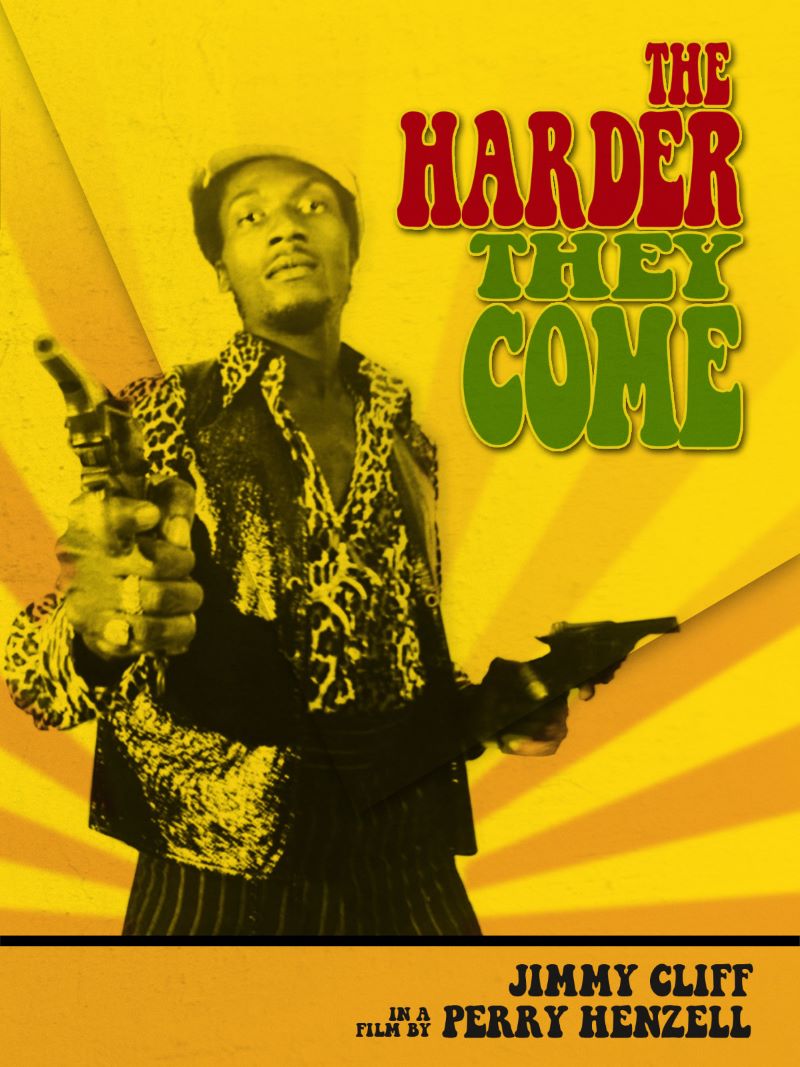


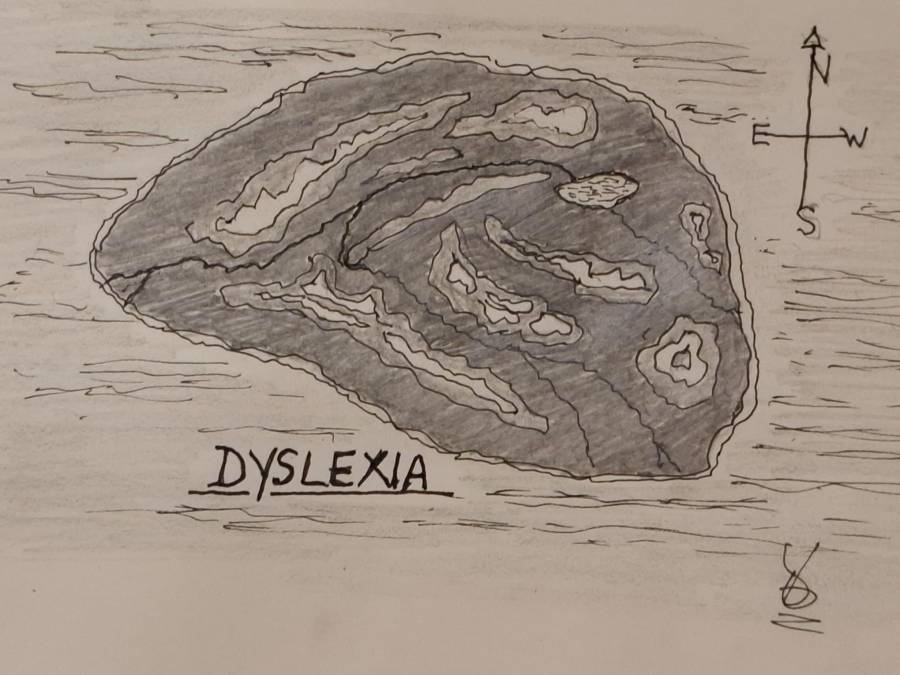
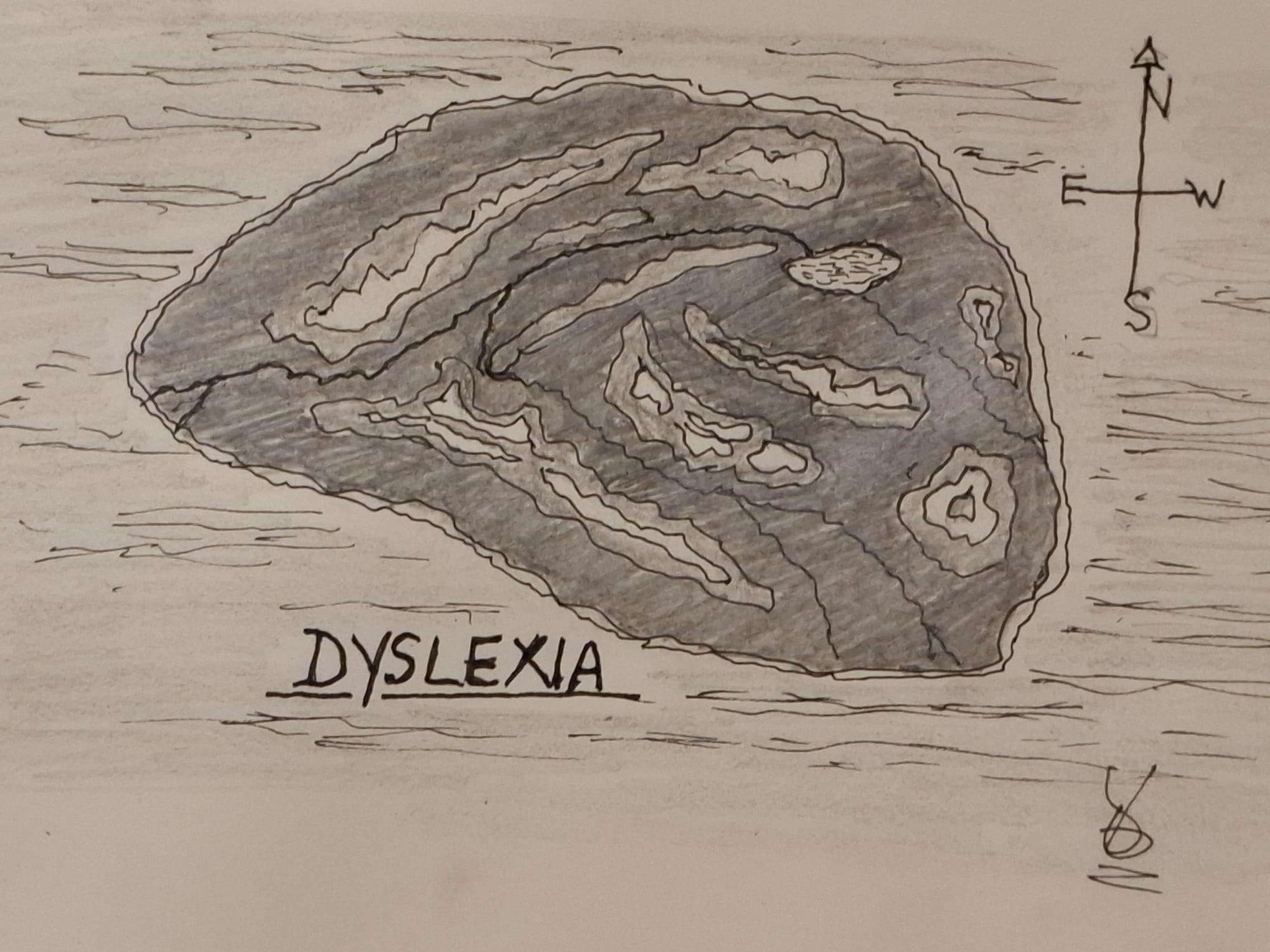


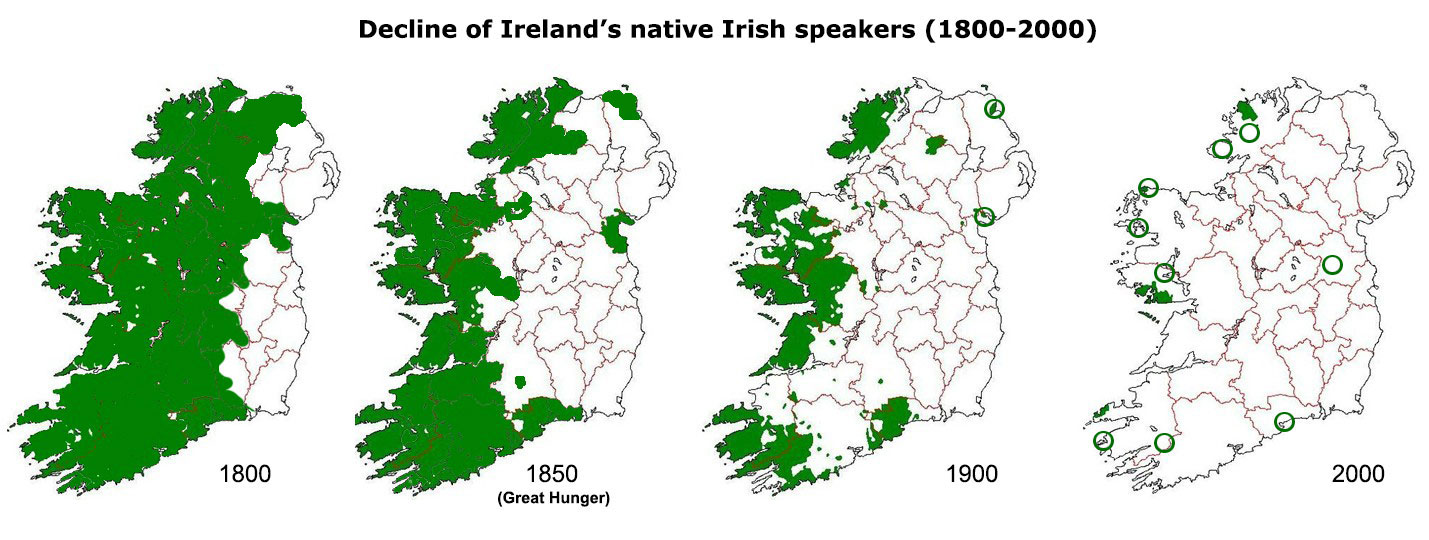

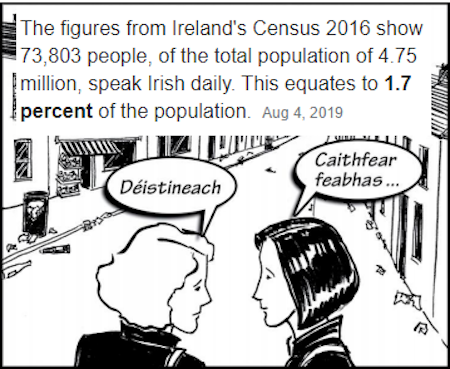


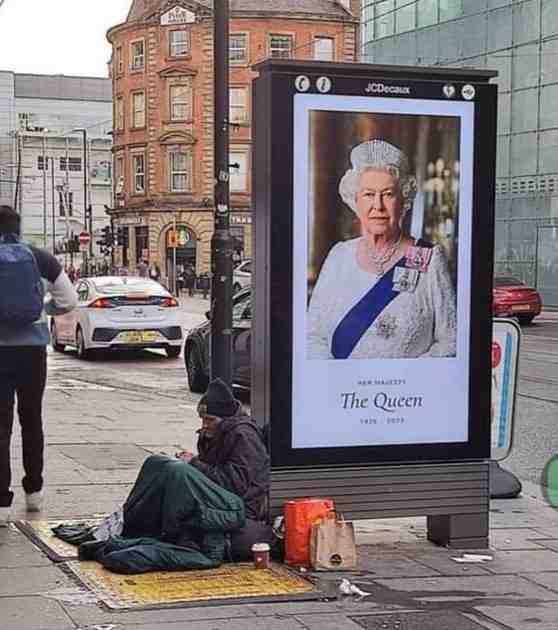
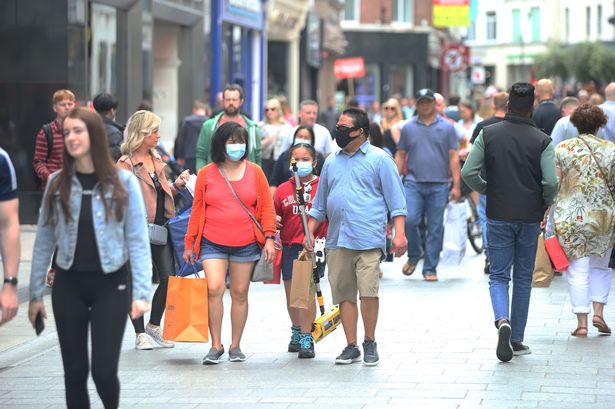
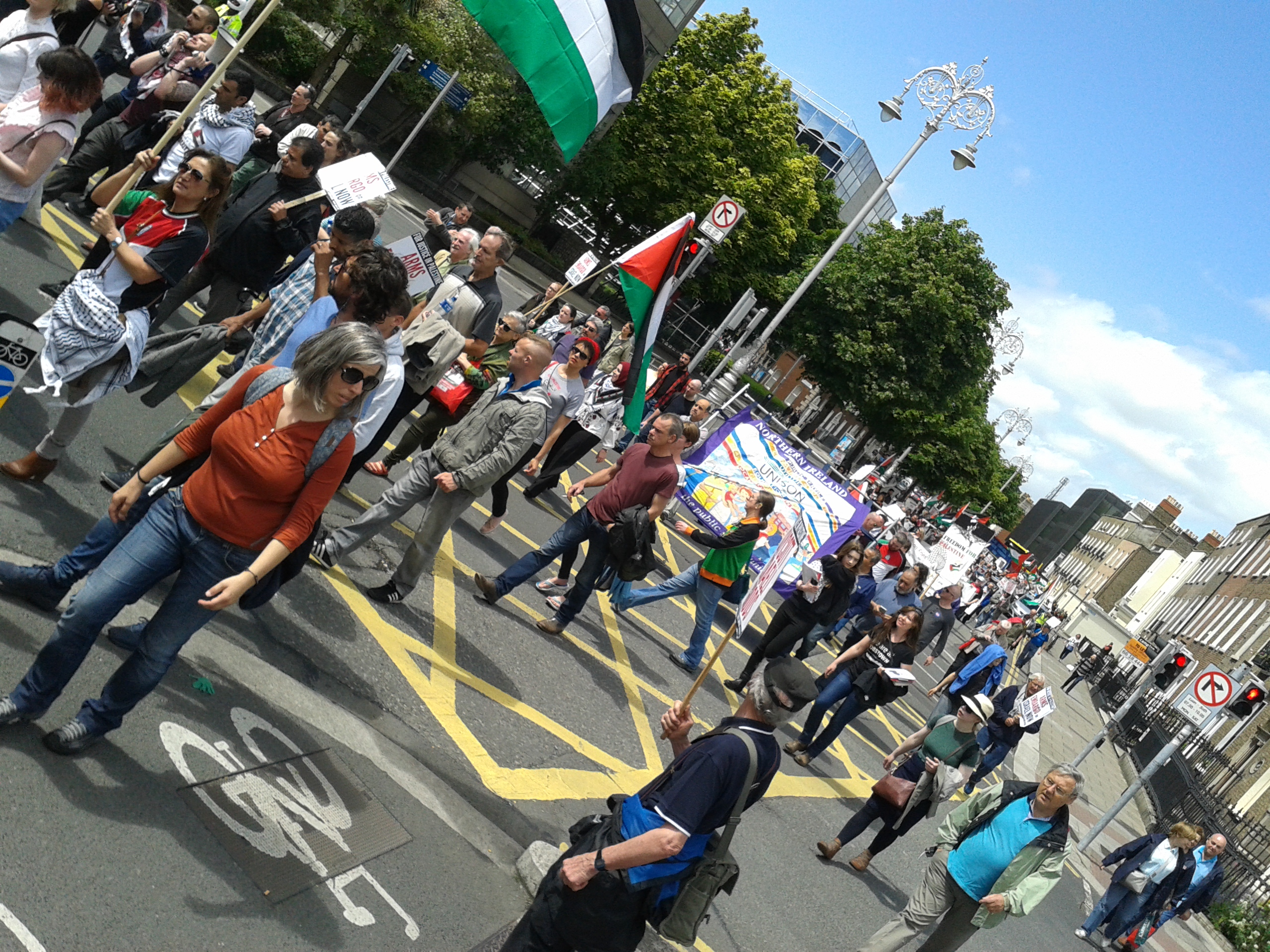


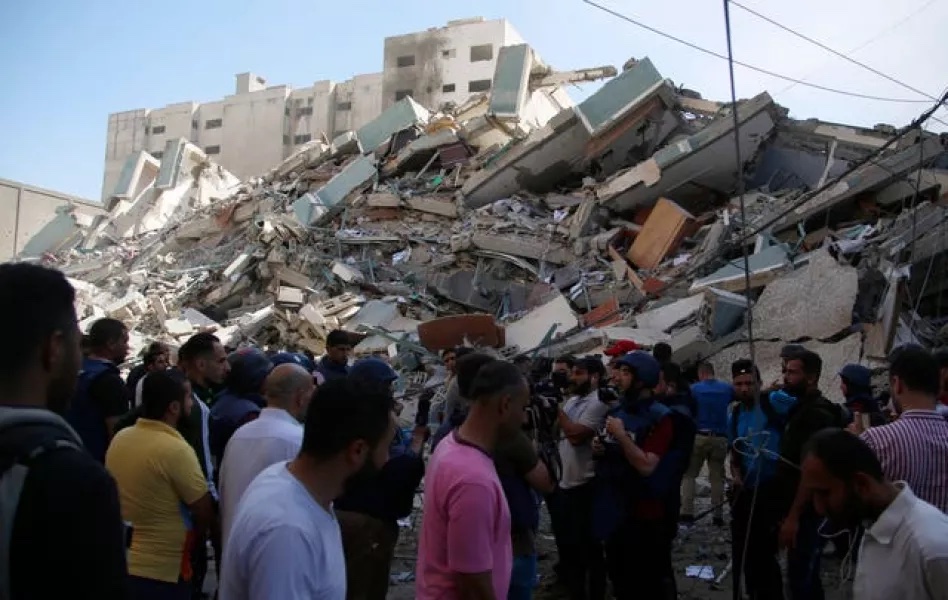

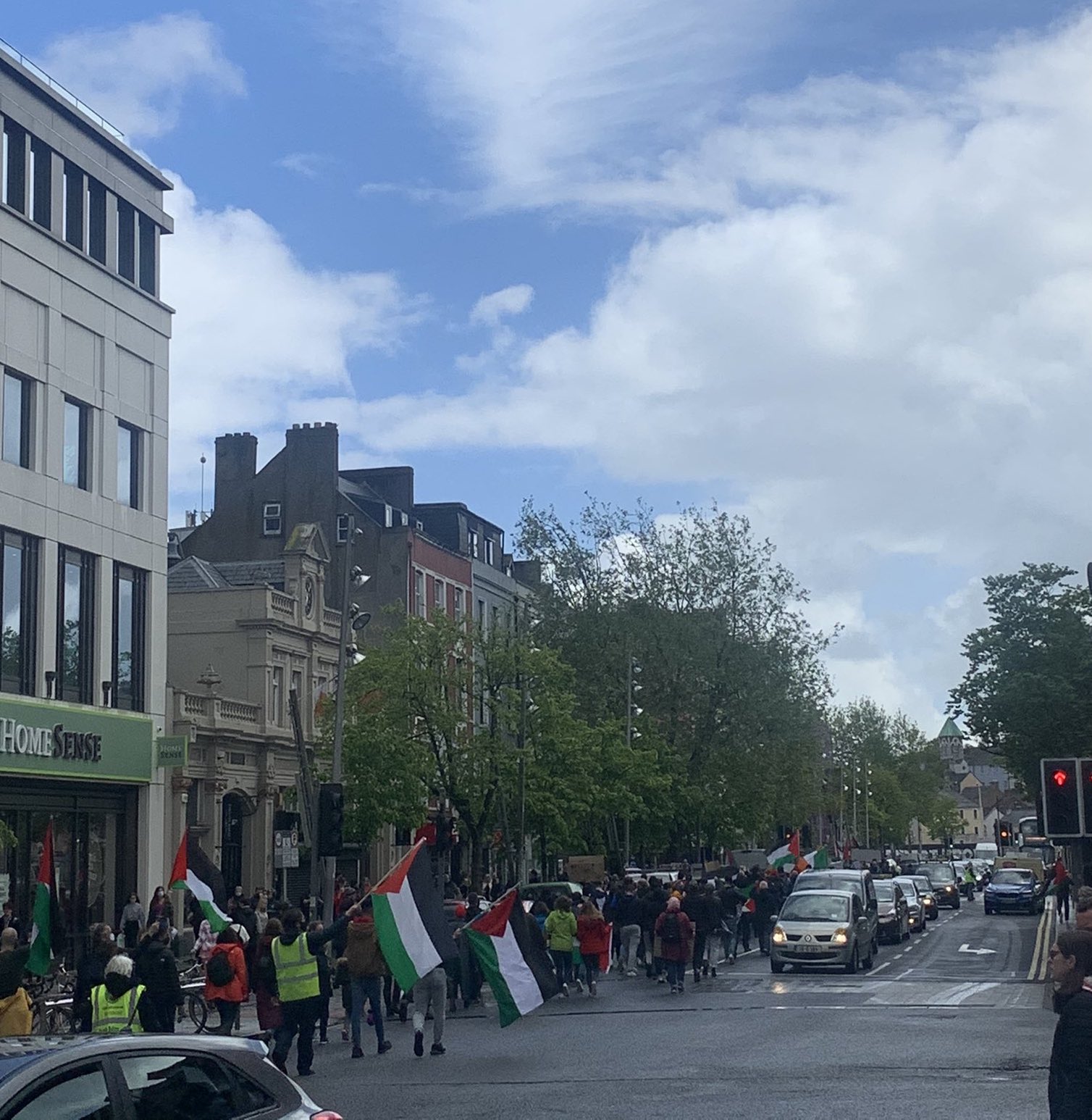


 rebelbreeze