BLANKET, NO WASH AND HUNGER-STRIKE – FIVE YEARS OF REPUBLICAN PRISONER STRUGGLE AGAINST CRIMINALISATION

Diarmuid Breatnach

(Reading time main text: 4 mins.)

We’ve recently passed by the date of the start of a monumental prison resistance struggle when IRA prisoner Kiaran Nugent refused on 14 September 1976 to wear prison uniform.

The Hunger Strike of 1981 tends to be remembered as an isolated event in the history of the Irish Republican prisoners’ opposition to criminalisation. But it was five years of struggle through stages that ended eventually in the martyrdom of ten Republicans.

Irish Republicans had been in imprisoned in British jails since the late 18th Century.1 After the Irish national bourgeoisie accepted the British partition of Ireland, Republican prisoners were held in prisons in the Irish State and in the British colony of the Six Counties and at times in Britain too.
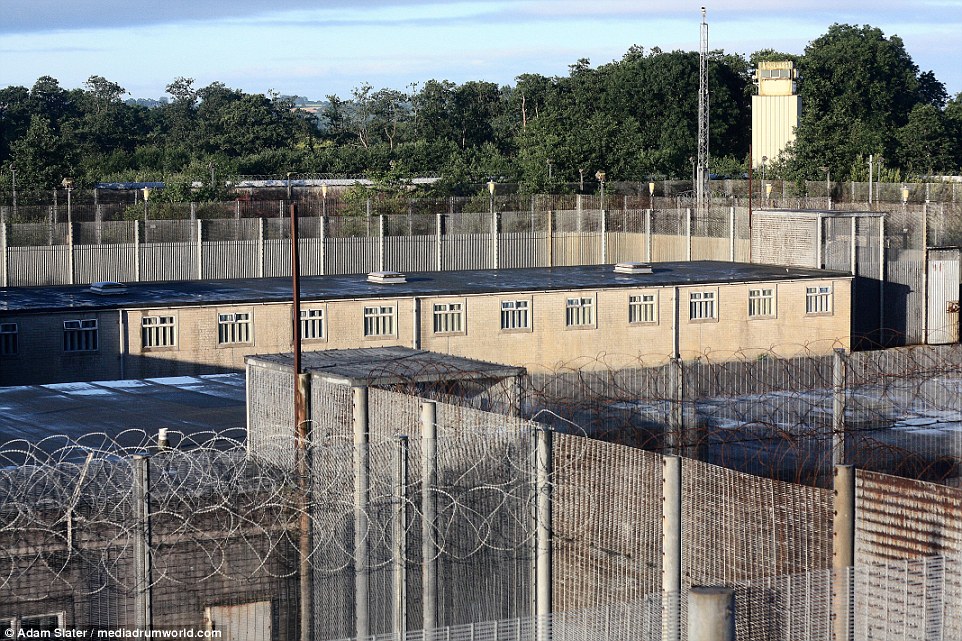
Long Kesh/ the Maze Prison, in the occupied 6 Counties.

This situation continued on low but constant level with higher points during the Civil War (1922-1923), the pogroms in the Six Counties, the 1930s,2 the 1940s, the Border Campaign (1958-1962) and the Civil Rights campaign from the mid-1960s onwards.

The Wikipedia section on Special Category Status states that it was introduced for Republican prisoners serving sentences in the Six Counties in 19723 but neglects to mention that it was already widespread among nationalist prisoners due to internment without trial a year earlier.

The British introduced internment without trial in their Irish colony in 1971 and one of the effects of that measure was to put a huge number of mostly nationalists from the Six County colony into jail. These prisoners were all accorded Special Category Status and wore their own clothes.

British soldiers capturing and taking away a civilian in the Occupied Six Counties of Ireland (Photo sourced: Internet)

Over the life of the measure, 1,981 people were interned without trial in the Six Counties (British Army’s Operation Demetrius). Of those detained 1,874 were from a Catholic/Republican background while, towards the end, 107 were from a Protestant/Loyalist background.

Special Category Status distinguished the internees from other political prisoners which were few in number at the time but its major impact was to distinguish them visibly from social prisoners or what are commonly called ‘criminals’ and was often called Political Prisoner Status.

In June 1972 other nationalists/ Irish Republicans4 charged and convicted were also accorded Special Category Status,5 which came to be seen as prisoner of war status for opponents of the British colonial occupation, despite Britain’s claims that the prisoners were just criminals.
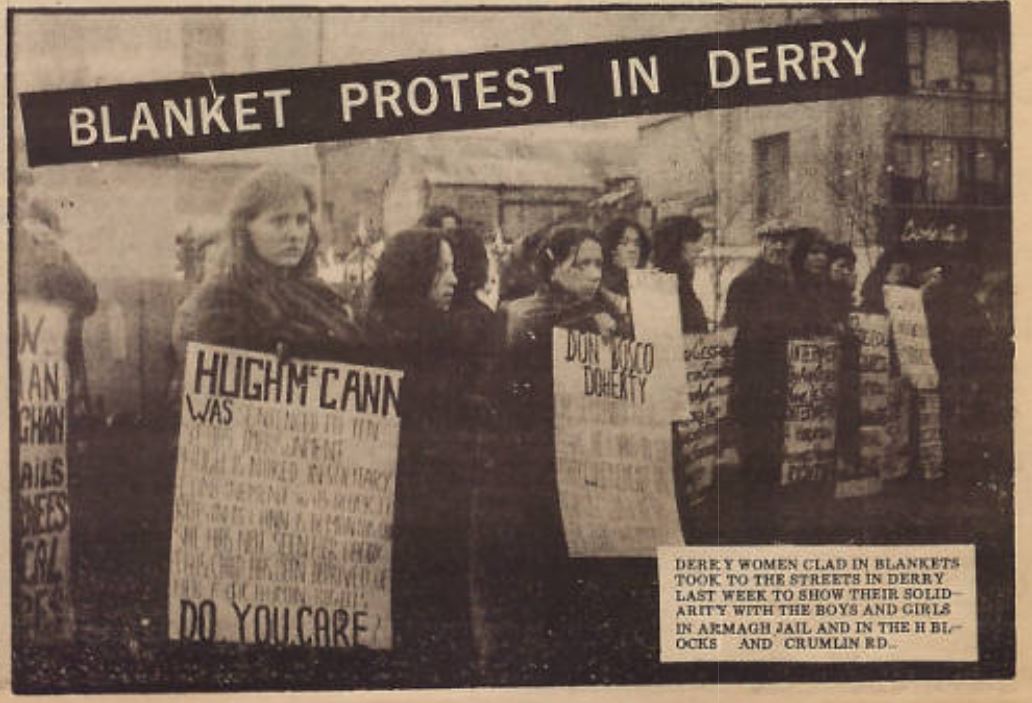
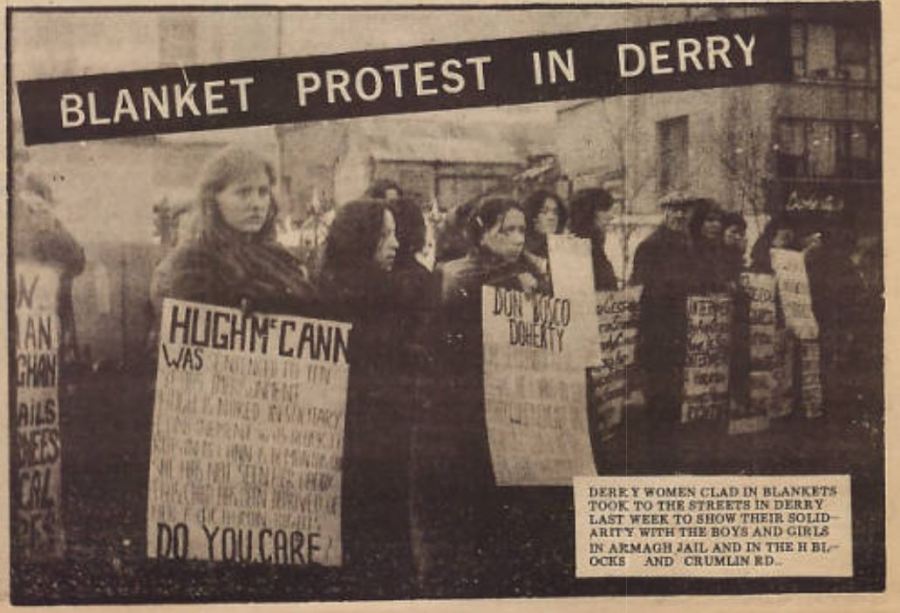
Early protests in support of the prisoners ‘on the blanket’ in 1976. It was mostly women relatives, partners and their friends who launched the Republican prisoner solidarity movement. As the photo legend also illustrates, there was still another male political prison, Crumlin Road (‘the Crum’) and Armagh Jail for female Republican prisoners. (Photo sourced: Internet)

Internment without trial in the Six Counties, generally recognised as a failure from both political and military points of view, was formally ended after four-and-a half years on 5 December 19756. As resistance continued, including now an armed aspect, more prisoners saw the inside of jails.

But they were still under Special Category regime and wearing their own clothes. The following year on 5 March 1976, Merlyn Rees as Secretary of State implemented the Labour Government’s7 decision to remove Special Category Status from any subsequently-convicted prisoners.

MERL
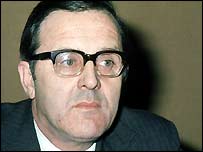
Merlyn Rees, British Labour Home Secretary who removed the Special Status from the Irish Republican prisoners, which precipitated the struggle that ended in the prison hunger strikes of 1981. He died at 85 years of age, having lived much longer than many of his victims. (Photo sourced: Internet)

The first Irish Republican prisoner to be informed he would have to wear prison uniform under the new rules was Kiaran Nugent. His reply, though pithy has gone down in the records of Irish resistance statements: “You’ll have to nail it to my back.

Stripped naked, Vol. Nugent was put in a cell, from which he found a blanket and wrapped it around himself. It was a natural act to cover his nakedness but he may also have known that Irish Republican prisoners of the Irish State in the 1940s had done the same.

The Blanket Protest had begun and spread as more prisoners coming into the prison system took the same stand. There it might have stayed were it not for the violence and cruelty of HM Prison regime by its warders regularly assaulting prisoners on their way to and back from the showers and toilets.

In 1978 the Irish Republican prisoners in the Maze H-Blocks8 resolved to remain in their cells, emptying their excreta out the window and their urine under their cell doors into the passageway. So the prison authorities blocked up their windows and warders pushed urine back under their doors.

The Irish prisoners then had nowhere to put their excreta so they smeared it on the walls. They built a dam of bread fragments around their door to prevent their urine being pushed back in. These conditions they endured until the prison riot squad beat them out of their cells for power-hosing.

Those who watched the film Hunger (2008) directed by Steve McQueen will have seen some of that and how they treated the naked prisoners too, beaten to the ground, anus probed for contraband messages or materials, the same gloved hand often opening their mouths to look inside also.

Their flesh was forcibly abraded with scrubbing brushes and they were often inserted into cells still wet from the hosing. Once back inside cells, they continued the protest.

On 27 October 1980 seven Republican prisoners, against the orders of IRA GHQ, embarked on a hunger strike included the Five Demands to break the system, which they terminated after 53 days on receiving promises from the authorities which were then reneged upon.

The 5 Demands:

  1. The right not to wear a prison uniform;
  2. The right not to do prison work;
  3. The right of free association with other Republican prisoners, and to organise educational and recreational pursuits;
  4. The right to one visit, one letter and one parcel per week;
  5. Full restoration of remission lost through the protests.9

Outraged at the reneging, Republicans renewed the hunger strike with their previous Provisionals’ jail Commanding Officer10 insisting he be first. So was Bobby Sands the first to die and another nine martyrs behind, seven Provisional IRA and 3 INLA as they came on to the strike in sequence.
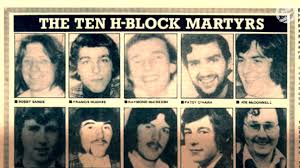
Photograph images with names of the ten Hunger Strike Martyrs of 1981 in the sequence of their death: Vols. Bobby Sands (IRA), Francis Hughes (IRA), Ray McCreech (IRA), Patsy O’Hara (INLA), Joe McDonnell (IRA), Martin Hurson (IRA), Kevin Lynch (INLA), Kieran Doherty (IRA), Thomas McElwee (IRA), Mickey Devine (INLA). (Photo sourced: Internet)

The effect of the hunger strikes of 1981 was huge in Ireland, Britain and further abroad. IRA Vol. Kieran Nugent had an important hand in pushing the process but so did Mervyn Rees, William Whitelaw, Brian Faulker and Edward Heath,11 in a long process of repression and resistance.

Today the struggle continues with approximately 20 Irish Republican prisoners, male and female in prisons between the neo-colonial Irish state and the British colony of the Six Counties. They have essentially won the five demands, though official harassment in the colony’s jails is endemic.

End.
NB: If you found this article interesting you may wish to subscribe to the blog free of charge, after which you would receive a notification in your email every time an article was published. You can unsubscribe any time you wish.

APPENDIX: Brief biography of Kieran Nugent (12th September 1958 – 3rd May 2000).

Volunteer Kieran Nugent began his short life presumably in the occupied Six Counties of Ireland but all the references I have found so far begin with him at the age of 15 years of age, standing at a corner with a friend on the corner of Merrion Street and Grosvenor Road, West Belfast.

It was 20th March 1973.12 A car pulled up beside them asking for directions but an occupant of the vehicle then opened fire with a submachine gun. Nugent was seriously wounded, shot eight times in the chest, arms and back. His friend, Bernard McErlean, aged 16, was killed.
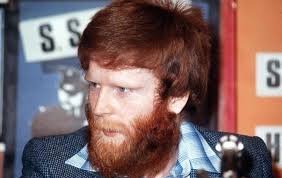
Kieran Nugent, first of the Republican prisoners ‘on the Blanket’ (Photo sourced: Internet)

Another youth was seriously injured also.13 Local people reported that a British Army Saracen armoured car had crashed through a nearby barricade and that was what had allowed entry for the murder gang, later claimed by the UDA, a British proxy Loyalist militia.

“At some point afterwards, Nugent joined the IRA.”14 The youngest age for IRA membership was 17 and Nugent aged 16 was arrested by the British Army, automatically refused bail, and at trial, after five months on remand in Crumlin Road Prison, Belfast, case withdrawn, he was released.

Kieran became an active volunteer until his arrest and internment without trial, on 9 February 1975. He served nine months in Cage 4 of Long Kesh Detention Centre (later renamed The Maze) in the Six Counties, until 12 November 1975. But was arrested and imprisoned again on 12 May 1976.

Vol. Nugent was charged with hijacking of a bus, a frequent Republican resistance activity in Belfast where the vehicle would then be utilised as a barricade. His sentence was three years in jail which he was commencing when he began the blanket protest.

The cause of death for Kieran Nugent was given as heart attack. A number of his acquaintances remarked that he had sunk into alcoholism with some adding that the movement had given him no support. Whether true or not, many former Republican prisoners of the period had shortened lives.

FOOTNOTES

SOURCES

https://en.wikipedia.org/wiki/Special_Category_Status

SC status generalised for Republican prisoners: https://cain.ulster.ac.uk/events/bfriday/bac.htm

https://cain.ulster.ac.uk/events/intern/chron.htm

1Republican prisoners were held in British jails in Ireland, Britain and Australia – and for centuries before that Irish clan members had been incarcerated in Britain and Ireland.

2When the anti-fascist struggles also contributed to prisoner of the states.

3https://en.wikipedia.org/wiki/Special_Category_Status

4I am using the term “nationalists” as a broad and not strictly accurate term to describe the people of the Catholic ghettoes and areas of the British colony; of course many of them could have been also or instead mainly democrats, socialists. The term “Irish Republicans” I am using to describe those belonging to organisations nominally of Irish Republican kind but again how much each was truly Republican in ideology varied, for example in their opinion of the appropriate role of the Catholic Church in Irish society.

5Sentenced and remanded in custody Irish Republicans in jails went ona hunger strike for ‘political status’ in 1972 and the Provisional IRA during the Truce negotiations of June that year asked for political status for them which William Whitelaw conceded.

6https://cain.ulster.ac.uk/events/intern/chron.htm However internment without trial in fact continued by charged Republicans being refused bail and remaining in jail for two years or more awaiting trial. Bail decision and trial would be in the special no-jury Diplock Courts.

7It is difficult to understand any Irish person or indeed any anti-imperialist putting any faith in a British Labour government. Apart from its long imperialist history, it formed part of the national government that executed leaders of the 1916 Rising, sent troops to the Six Counties to quell the civil rights struggle in 1969, introduced the Prevention of Terrorism Act in Britain in 1974 and framed a score of Irish people for bombings, removed Special Category Status in 1976 …

8A special male political prison containing panopticon-designed blocks in Lisburn, Co. Antrim, built in 1971 and closed in 2000, the future of the empty buildings uncertain. Female Republican political prisoners were kept in Armagh Jail and fought with different tactics, including taking the Prison Governor hostage at one point.

9Prisoners disobeying prison rules are punished in a number of ways, one of which is loss of the remission off sentence normally expected.

10In a long tradition the prisoners of each political group in jail elect their leader and previous ranks are abandoned for the duration of the incarceration.

11In sequence: Labour Party Secretary of State; Conservative party Cabinet Minister; Unionist Prime Minister of the colony; Conservative Prime Minister of the UK.

12https://www.facebook.com/story.php?story_fbid=672093692010347&id=100076291652304&_rdr

13Ibid.

14Various sources

PICKET PROTESTS ONGOING INTERNMENT WITHOUT TRIAL AND EXTRADITION OF IRISH REPUBLICANS

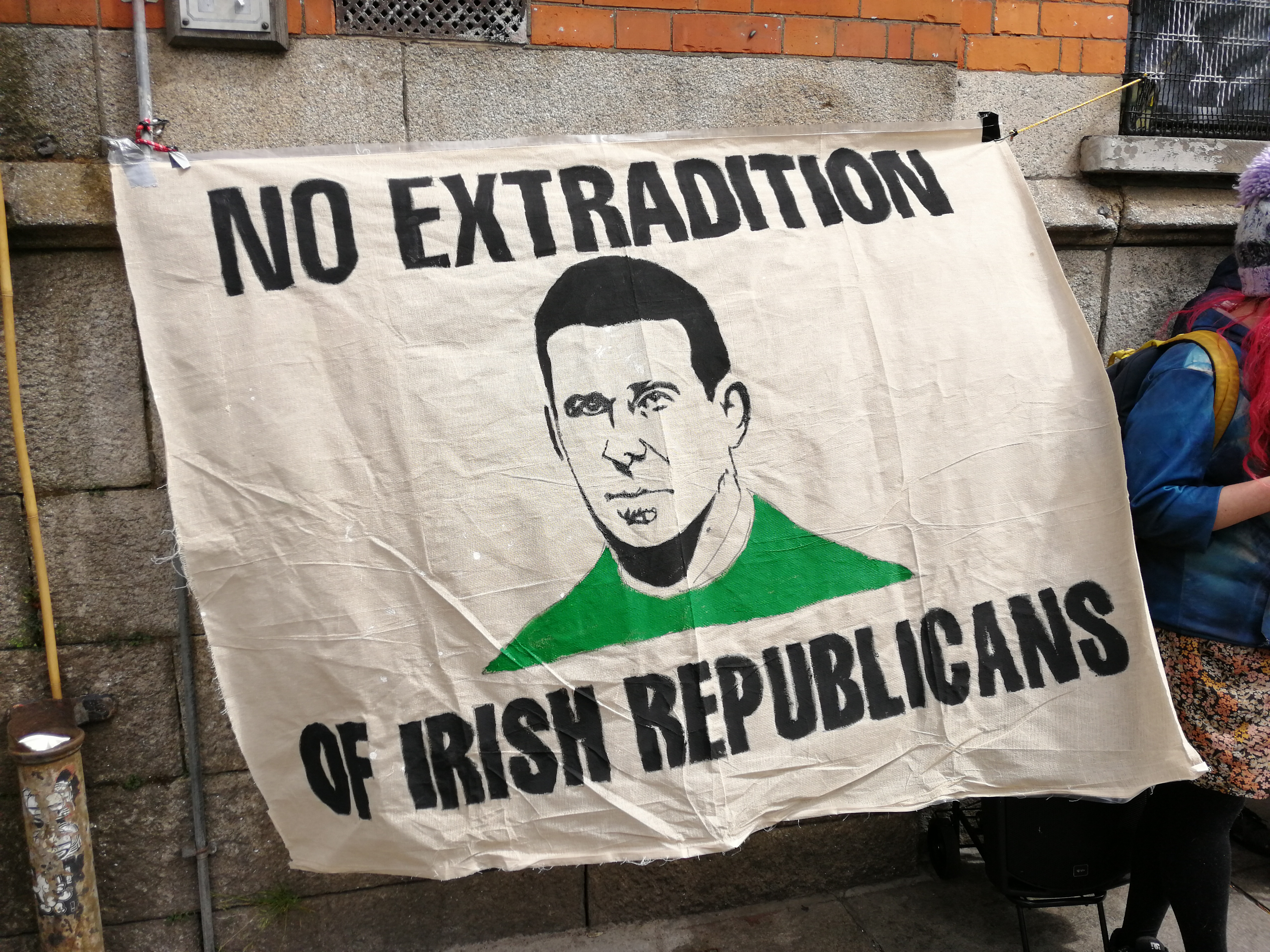
The Dublin Committee of the Anti-Internment Group of Ireland held a picket yesterday to highlight the ongoing internment without trial of Irish Republicans and to protest the recent extradition of Liam Campbell to Lithuania, a country to which he has never been. The picket was held in Temple Bar, a tourist quarter of the Dublin’s south city centre.

(Photo source: Anti-Internment Group of Ireland)

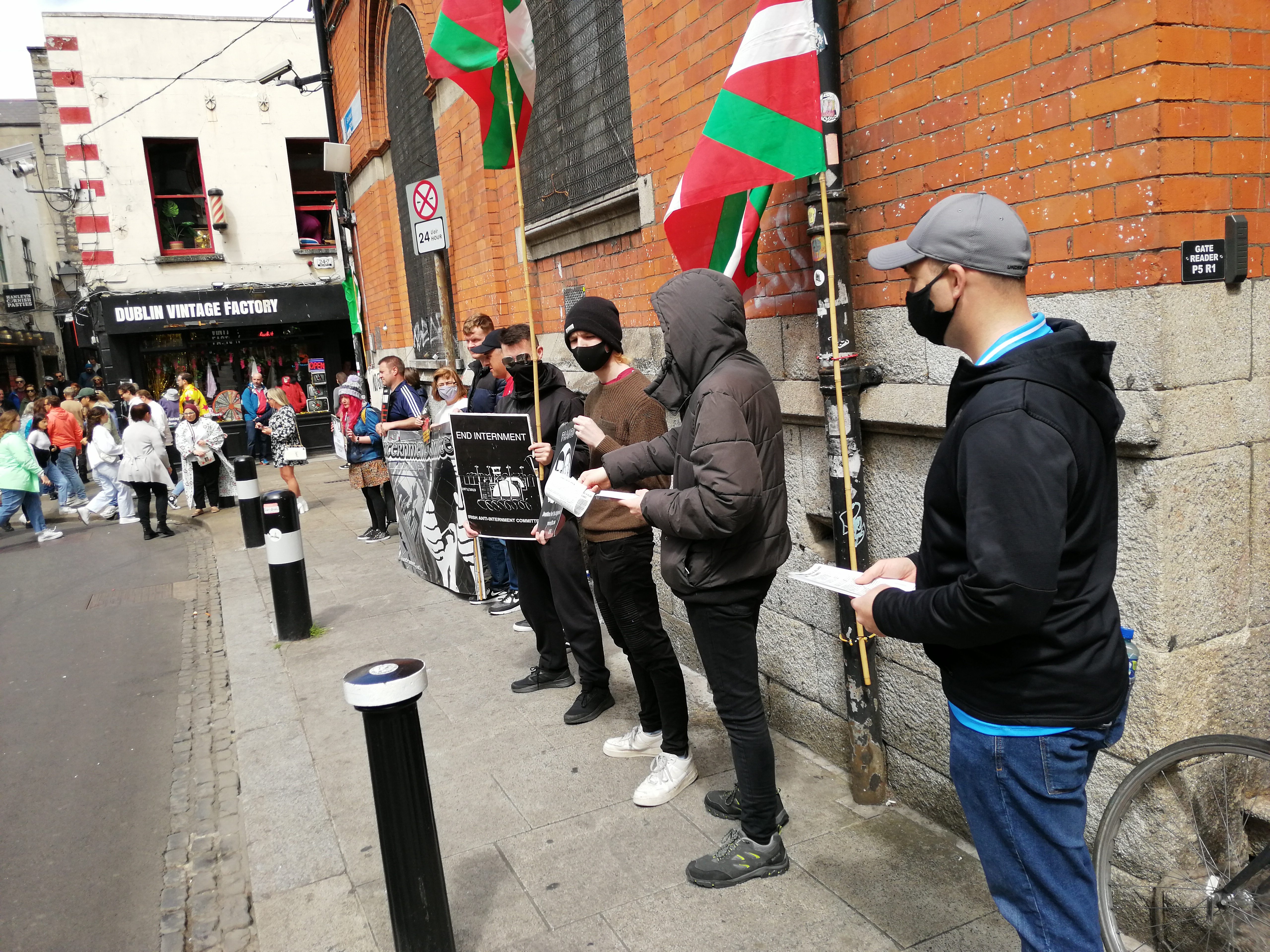
Afterwards, the AIGI issued the following report (reposted with kind permission): “Tourists, Irish shoppers and young people socialising in Dublin city centre were interested to see the banners and placards against internment in Ireland, along with a banner against extradition of Irish Republicans. They also noted the various placards of the Anti-Internment Group of Ireland and the flags of Palestine and the Basque Country, in addition to the Starry Plough flag of the Irish Citizen Army, representing three of the many nations holding political prisoners.

(Photo source: Anti-Internment Group of Ireland)

Supporters distributed up to 200 leaflets and had a number of engagements with people wanting to know more. People were surprised and angry to learn that internment under another name continues in Ireland on both sides of the British Border.

A portable PA machine played resistance music and an AIGI speech from a previous public event which attracted some interest.

(Photo source: Anti-Internment Group of Ireland)

The AIGI’s Facebook page lists approximately 60 political prisoners held in Ireland, mostly in Portlaoise Prison in the Irish state and Maghaberry Jail in the British colony in the north-east of the country. All of those were convicted in special no-jury courts created for the purpose of sentencing political prisoners — i.e nearly always exclusively Irish Republicans. Frequently some charged and facing trial in those special courts are denied bail and are held in custody until their trial comes up, two or three years later and if then chance to be found ‘not guilty’, they will still have spent that time in jail. When granted bail on the other hand it is always under restrictive conditions that prevent them continuing their political activity: e.g night curfew, wearing an electronic tag, banned from attending political activities, etc.

Liam Campbell, an Irish Republican from Dundalk, Co. Louth, was extradited to Lithuania last week to face charges relating to trying to obtain arms in that country. Campbell says that he has never been in that country, which Lithuania and the Irish State both seem to accept yet, after a legal battle of almost 12 years up to the Irish Supreme Court, the Irish Republican was extradited. According to unconfirmed reports Campbell has been granted bail in Lithuania but under what conditions is currently unknown.

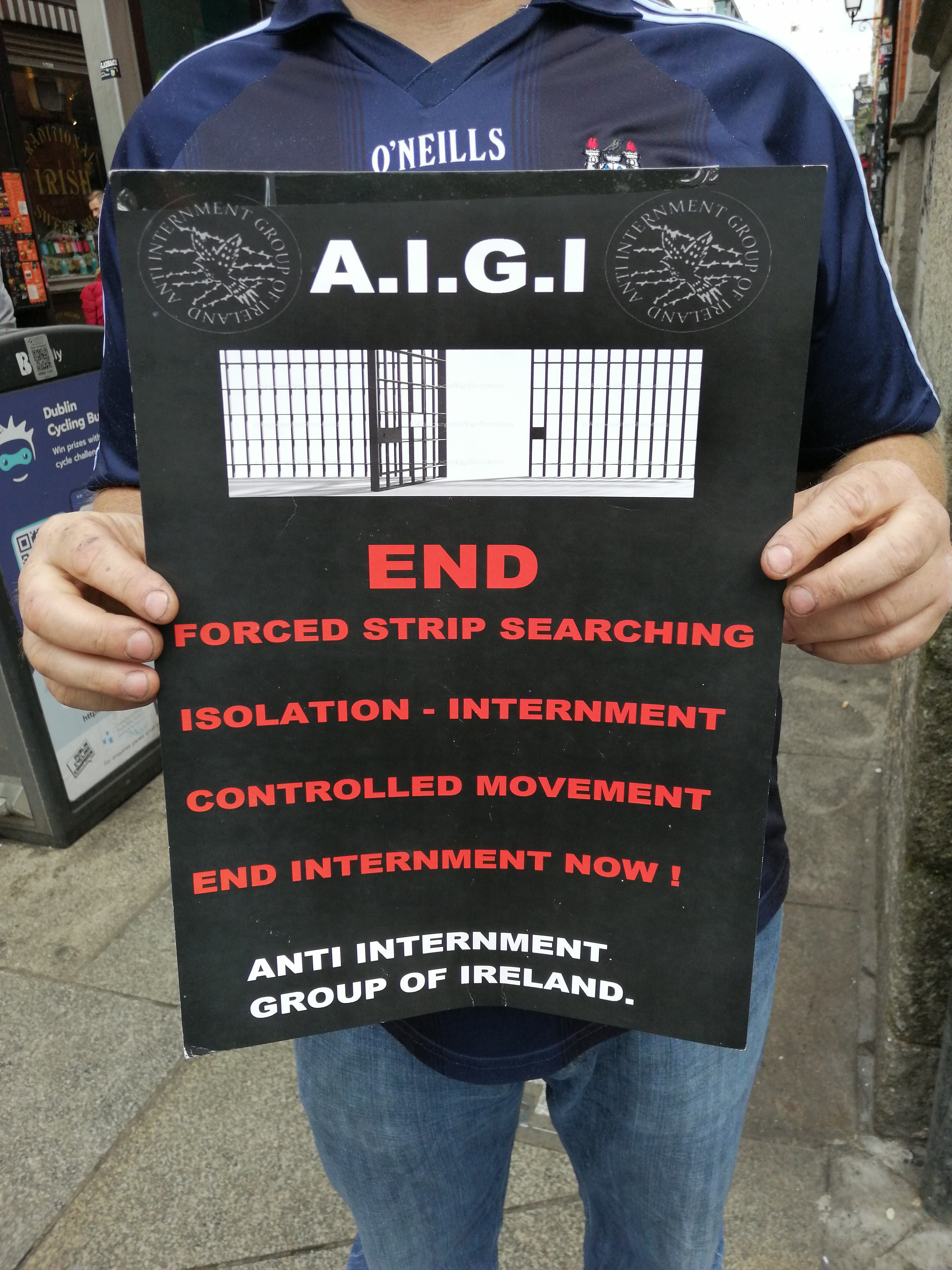
The group campaigning against what it sees as ongoing “internment by different names” developed from the campaign to free Marian Price around six years ago and, apart from monthly pickets, has also organised conferences and concerts and representatives have travelled to Belfast, Cork, Derry, Newry and Glasgow. The group has sent messages of solidarity to a Basque liberation group which was read out at the latter’s public event and also to the Mumia Al Jamal and Leonard Peltier campaigns in the USA, Munir Farooghi campaign in England (for which AIGI spoke at public meetings in Ireland), to prisoners in Turkey, Palestine and Latin America. Its street pickets, though legal, have frequently been subject to police harassment on both sides of the British Border — in the Irish state nearly exclusively by the plain-clothes political police, the Special Branch.

The picket yesterday in Temple Bar, view southward towards the Liffey River. (Photo source: Anti-Internment Group of Ireland)

The AIGI report concluded: The Anti-Internment Group of Ireland is a democratic group independent of any political party or organisation that holds monthly awareness-raising pickets, as well as a few special public events every year. It is organised by a democratic committee composed of people who attend our pickets and who would like to become involved in running the group.

NÍ NEART GO CUR LE CHÉILE. AN INJURY TO ONE IS AN INJURY TO ALL.

End.

Contact link for the Anti-Internment Group of Ireland: https://www.facebook.com/Anti-Internment-Group-Of-Ireland-581232915354743/

DUBLIN PICKET AGAINST ONGOING INTERNMENT MARKS 50th ANNIVERSARY OF BRITISH INTERNMENT IN THE SIX COUNTIES

Clive Sulish

(Reading time: 5 mins.)

As Limerick and Waterford county teams prepared to face one another in the GAA hurling semi-final at Croke Park stadium, anti-internment protesters and campaigners lined up outside Dublin’s General Post Office, in the city centre, to mark the 50th Anniversary on the introduction of internment without trial in the British colony of the Six Counties. Their placards, leaflets and speakers denounced the continuing practice of interning political activists in Ireland today.

Seen at the anti-internment event in Dublin today (Photo crdt: Sean Hogan)

The event was organised by the Anti-Internment Group of Ireland, an independent and non-affiliated campaigning organisation and the supporters included a mixture of socialist Irish Republicans and anarchists. The heavy and persistent rain of the morning held off and Dublin city centre was thronged as GAA hurling supporters added to the usual shoppers. The banners and placards of the picketers drew considerable interest from those passing and here and there people stopped to discuss with them.

Some young Basque girls were curious but also delighted to see their nation’s flag, the ikurrina, being flown at the event and stopped to engage one of the picketers in discussion. Also in evidence was the flag of Amnistia, Basque organisation around solidarity with its political prisoners and against repression, along with the flag of Palestine.

Flag of the Amnistia organisation (solidarity with their political prisoners) in the Basque Country seen on the anti-internment event in Dublin today (Photo crdt: Sean Hogan)

Around 200 leaflets were distributed to passers-by, discussions were held and contacts were made with people interested in supporting the work of the Anti-Internment Group Ireland.

After some time in a picket line and distributing leaflets, a representative of the organisers, speaking in Irish and in English, welcomed the attendance and introduced a speaker from the Anti-Imperialist Action organisation.

One of the leafleters outside the GPO at the anti-internment event in Dublin today (Photo: C.Sulish)

SPEAKERS

Speaking in Irish as some passers-by stopped to listen, the young man said they were there to commemorate the introduction of internment and mindful of the existence of political prisoners all over the world. The were also protesting the extradition to Lithuania of Liam Campbell to face trial in a country in which he had never previously set foot.

The organisers’ representative then spoke in English about the history of repression in the Six Counties colony, how from the moment the nationalist community there stood up to demand equal rights and justice the State had responded with violence. Since the people raised the level of their resistance in response, the State in turn raised the level of its violence higher again, in a rising spiral of violence.

The nationalist community in the Six Counties had marched for civil rights and had been met with the violence of the colonial police and of the Loyalists — the speaker said — but they had continued to resist. Internment without trial was introduced to break that resistance but, knowing that would also lead to increased resistance, the State had prepared the Paratroopers to shoot unarmed civilians dead. They had done that in Ballymurphy on the very day that internment had been introduced1, he reminded his audience and later had shot dead two unarmed Cumann na mBan Volunteers (Republican women’s organisation) who were alerting people to the raiding parties of the British Army. At the start of the following year, the British Army murdered unarmed civilians again, this time in Derry2.

That year 1972, the speaker stated, had the highest death toll of any year during the three decades of the war3 and Loyalists were also bombing streets nearby in Dublin, again in 1973, killing workers. In 1974 Loyalists and British intelligence bombed the Dublin city centre again and Monaghan, killing the highest number of people killed in one day during the war4. That year too, the IRA bombed pubs in England and killed people and the State brought in the repressive Prevention of Terrorism Act against the Irish community. They jailed a score of innocent people on extremely serious charges5 and one of them, Giuseppe Conlon, died in jail6.

The speaker went on to say that although there had been hard repression before, the introduction of internment without trial and the follow-up massacres by the British Army had lit a fuse to a chain-reaction of violence for decades to follow.

Pointing out that internment consists of jailing people without trial, the speaker stated that the practice continues today, by refusing bail to political activists awaiting trial in the non-jury courts on both sides of the British Border. The Anti-Internment Group of Ireland will continue striving to expose this reality and he called on people to support the monthly pickets in the city centre and to follow the End Internment page on Facebook.

ONGOING AGITATING AGAINST INTERNMENT

As the applause died down people began to pack away flags, banners, placards and leaflets and to catch up socially among themselves or to engage with passers-by who had stopped to listen and/ or to ask questions.

Organisers of the event said they hope to hold another picket at some venue in the city centre in a month’s time – when scheduled, the event will be announced on the End Internment FB page.

End.

Leafleter right foreground, person reading leaflet left foreground, picket line of the anti-internment event in Dublin today. ( Photo: C.Sulish)
(Photo: S.Hogan)


(Photo: S.Hogan)
View of the picket with a passer-by expressing solidarity with the picketers (far right of photo). (Photo: C.Sulish)

FOOTNOTES

1Between 9-11 August, British paratroopers caused the deaths of 11 unarmed civilians in Ballymurphy.

213 people were shot dead by British paratroopers on Bloody Sunday in Derry as they protested against internment and a 14th died later of his wounds.

3The period from August 1971 to the end of the year saw a huge jump to 136 violent deaths (including British and colonial armed forces) and the following year, 1972 is counted the most violent year of the conflict overall with 479 people killed (including 130 British soldiers) and 4,876 injured.

434 people were killed that day, all civilians.

5The Birmingham Six, Guildford Four, Maguire Seven, Giuseppe Conlon and Judith Ward. All were eventually cleared after long years of campaigning around them and failed court appeals.

6Giuseppe Conlon, hearing that his son Gerry had been arrested for the Guildford Pub Bombings, came to London to help him in 1974 and was swept up into the police net to become one of the innocent framed victims. Giuseppe Conlon was not a healthy man and died in his 7th year in jail, before the verdicts on the other framed prisoners were finally overturned. His son Gerry, also an innocent man in jail, was not permitted to attend his father’s funeral.

Highlighting internment of Republican activists today — protest held in historic Dublin area

Reprinted with permission from Dublin Committee, Anti-Internment Committee, Ireland (posted on their FB page 9th September 2017.

DUBLIN COMMITTEE HOLDS PICKET TO HIGHLIGHT ONGOING INTERNMENT OF REPUBLICAN ACTIVISTS 9th September 2017.

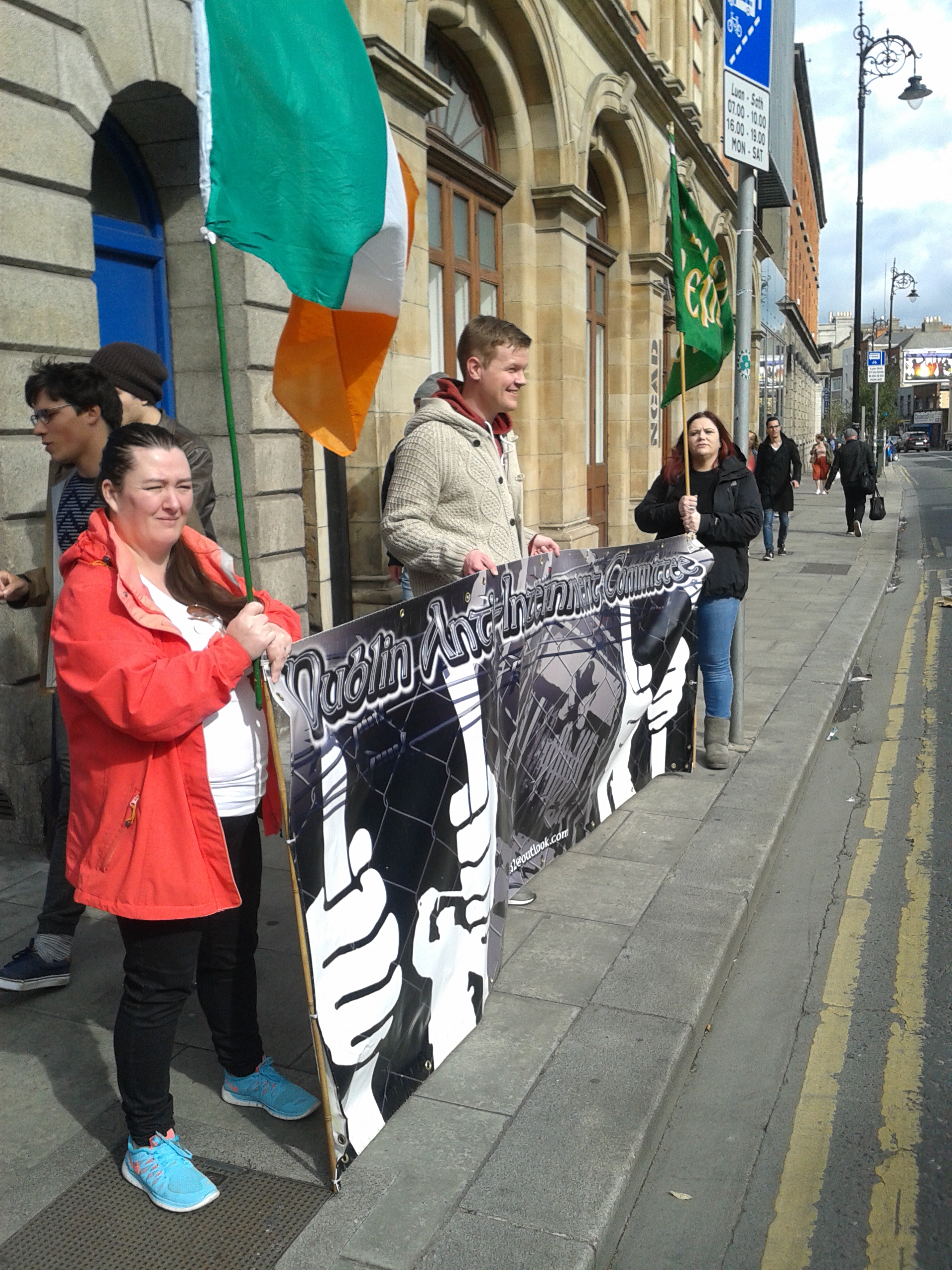
On a Saturday afternoon alternating between showers and sunshine, the Dublin Anti-Internment Committee held their awareness-raising picket at the busy junction of Thomas Street and Meath Street.

AIGI Banner 3 people
Some of the picketers with banner

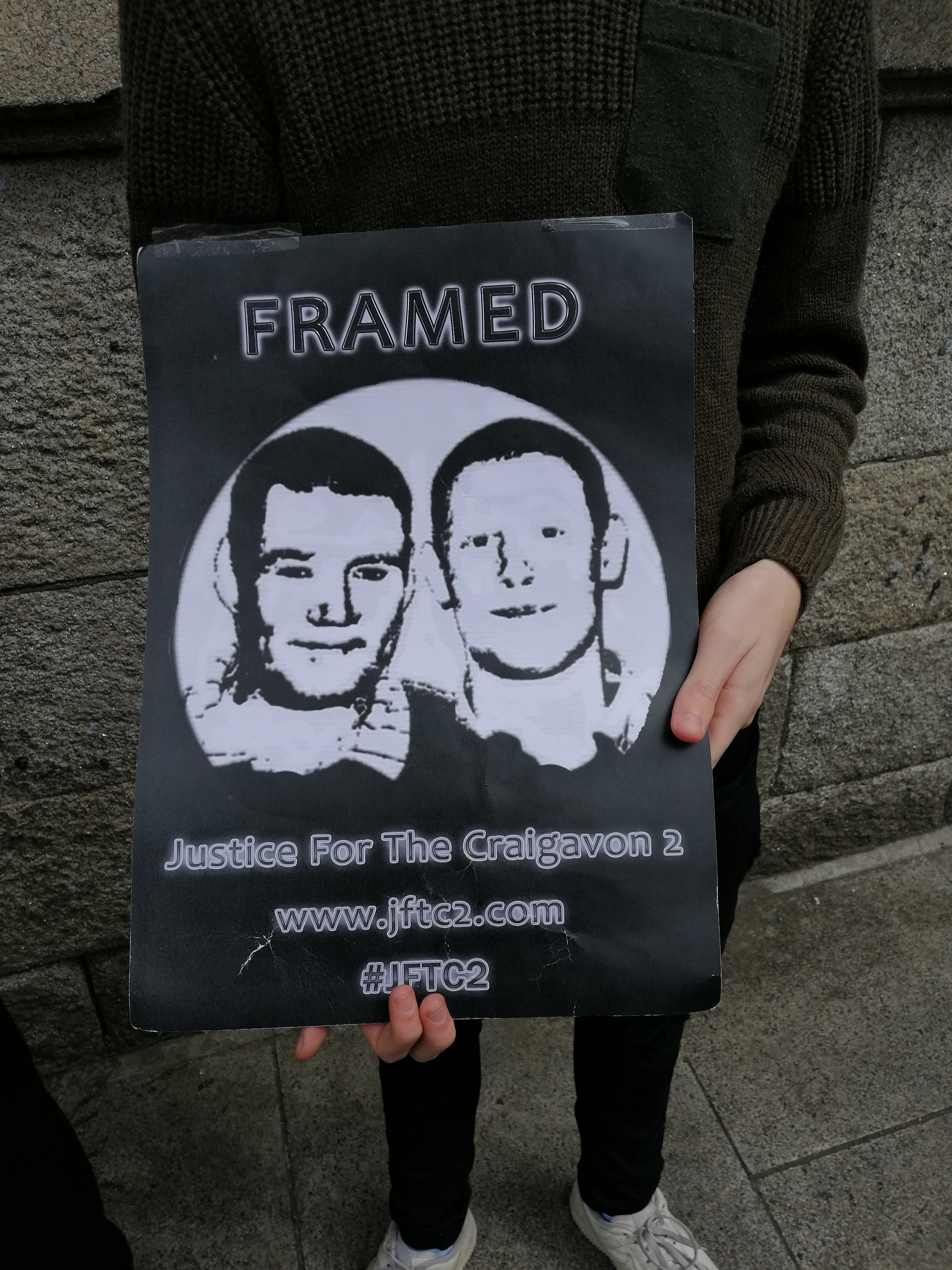
They erected banners at the junction and distributed leaflets, including some about the Craigavon Two.

Tourists(on their way to and from the Guinness brewery museum) and local people passing took leaflets with interest and good humour.

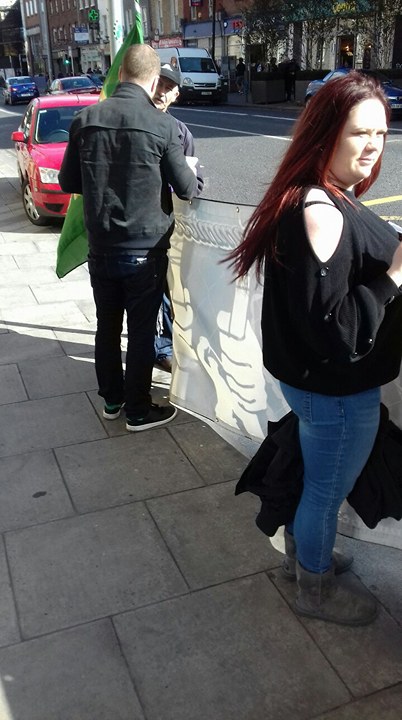
Dublin Commitee AIGI activist distributing leaflets in Meath Street to passers-by. (Photo source: AIGI)

Less welcome was the Special Branch Garda (police force of the Irish state) who wanted the picketers to give him their names and addresses. Several refused to do so. The Garda went away to his car, drove back heading west, halting in the middle of the road in order to photograph the picketers and blocking the traffic coming out of Meath Street as he did so. (There was no need, Garda, we’re posting our photographs on here  ).

SB Asking DB name & address
Left of photo: Special Branch (plainclothes political police) asking a protester his name and address. (Photo source: AIGI)

The Garda then carried out an illegal and somewhat dangerous U-turn, briefly turning on his blue light and drove eastwards at speed.

The Committee refuses to be intimidated, holding regular peaceful pickets in different parts of Dublin and will be holding another one soon.

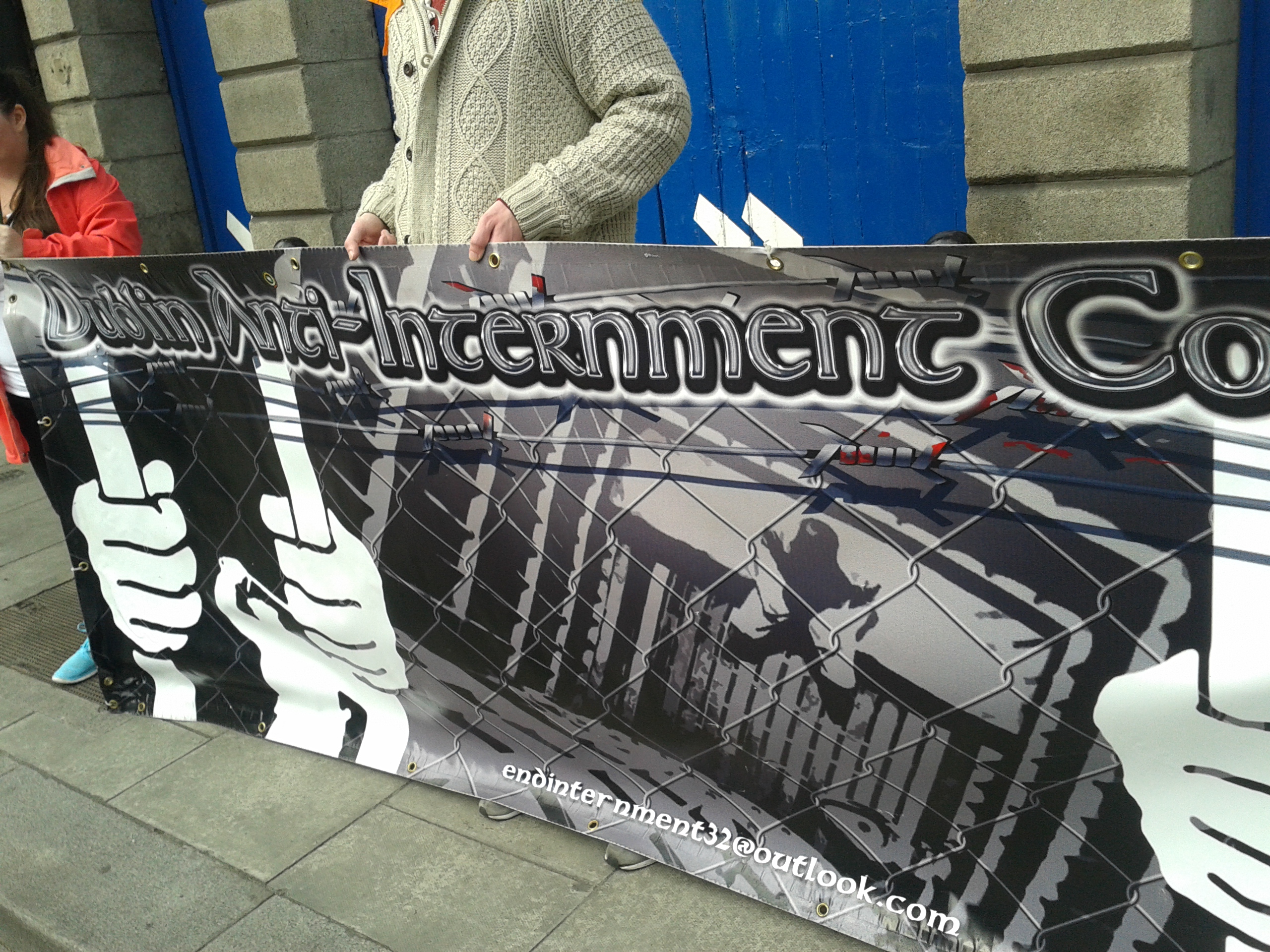
AIGI Banner
(Photo source: AIGI)

A HISTORIC AREA

The Thomas Street area, bordering on the Liberties, has a long history and is represented “in song and story”. The United Irishmen at the end of the 18th Century enjoyed much support here.

Not ten minutes walk away eastward from where the picket took place today is Taylor’s Hall, the site of the “Back Lane Parliament” and down by the Liffey, in Bridge Street, is the site of Oliver Bond’s house, where most of the Leinster Executive of the United Irish were arrested in 1798.

In hiding, Edward Fitzgerald, one of the main leaders of the United Irishmen, was moved between houses in the area, one of them being No.158 Thomas Street, where on 19th May he was located by Major Sirr through paid informers. Fitzgerald was ill but grabbed a knife and jumped out of bed, wounding Captain Ryan and Major Swan, the latter mortally. Major Sirr (who, according to folklore, was wearing a steel vest) then came in with more soldiers and shot Fitzgerald in the shoulder which facilitated his overpowering and arrest. Fitzgerald died of his wound some weeks later (4th June 1798).

A little to the east along Thomas Street is where most of the fighting in the brief and aborted Emmet uprising took place in 1803. Lord Kilawarden was heading into town for his safety but ran into the insurgency, was dragged from his coach and piked. He was found later it is believed in Vicar Street, still alive but died soon afterwards.

Further west along the street is St. Catherine’s Church, outside which the scaffold was erected in 1803 and Robert Emmet was hung in public, his head being then struck off. It is said in Dublin folklore that his relations attended the execution and shed not one tear in public, determined not to give the Crown and its followers the satisfaction of witnessing their grief.

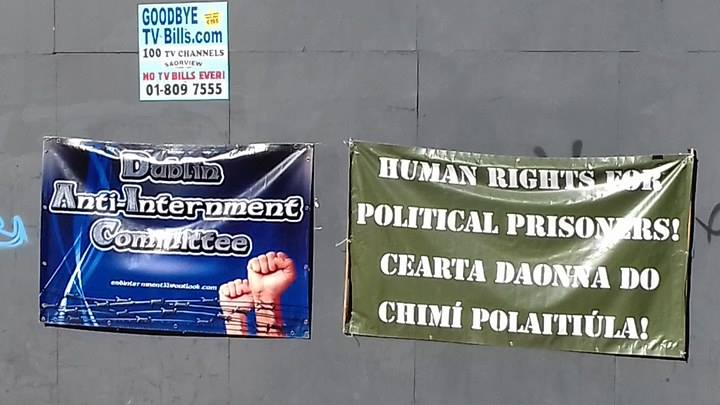
Banners Hoarding
(Photo source: AIGI)

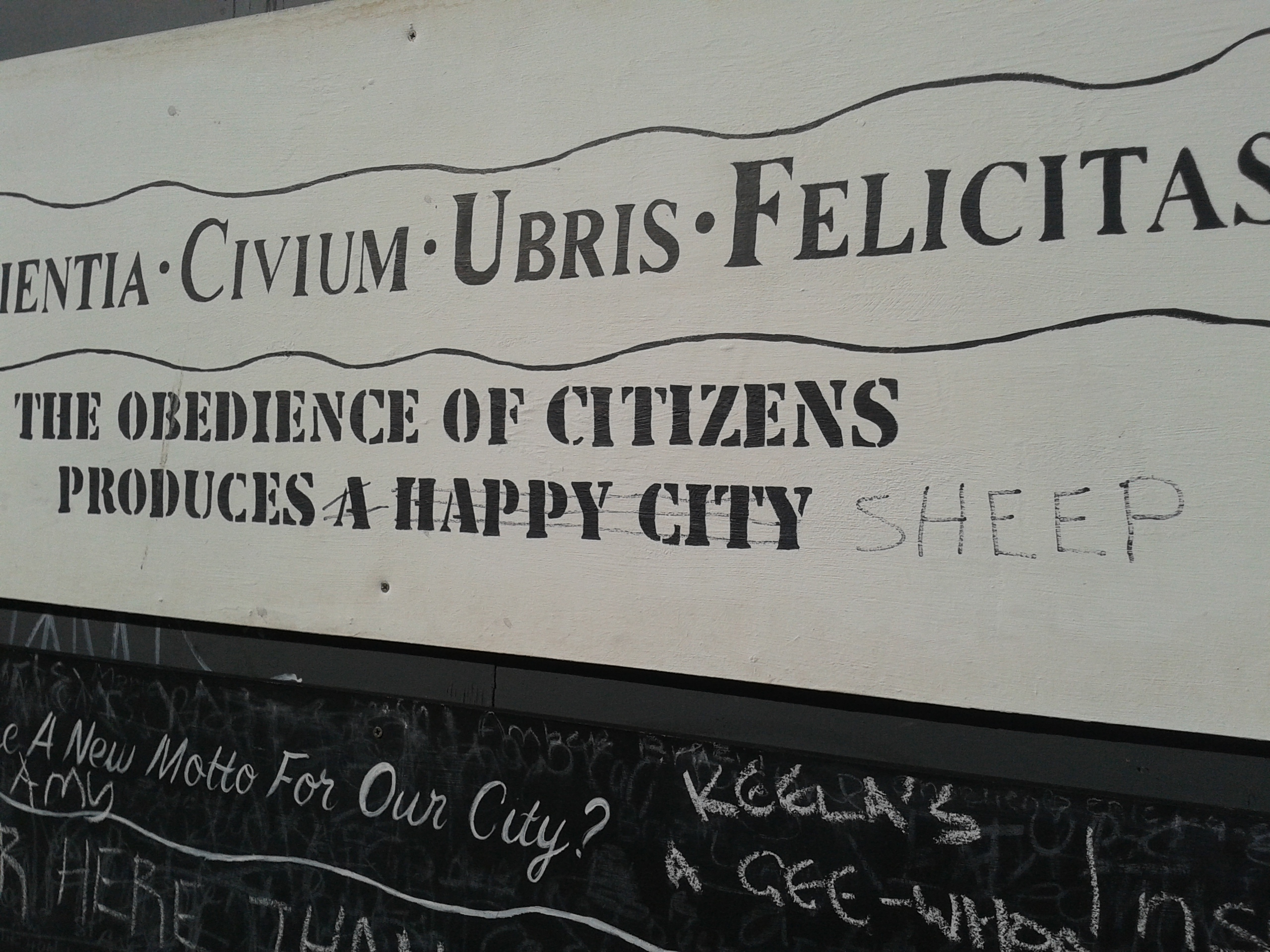
Obedience of citizens
Spotted by the picketers as they were leaving: Dublin City Council motto with appropriate comment by some passing citizen. (Photo source: AIGI)