The History Beat

Diarmuid Breatnach

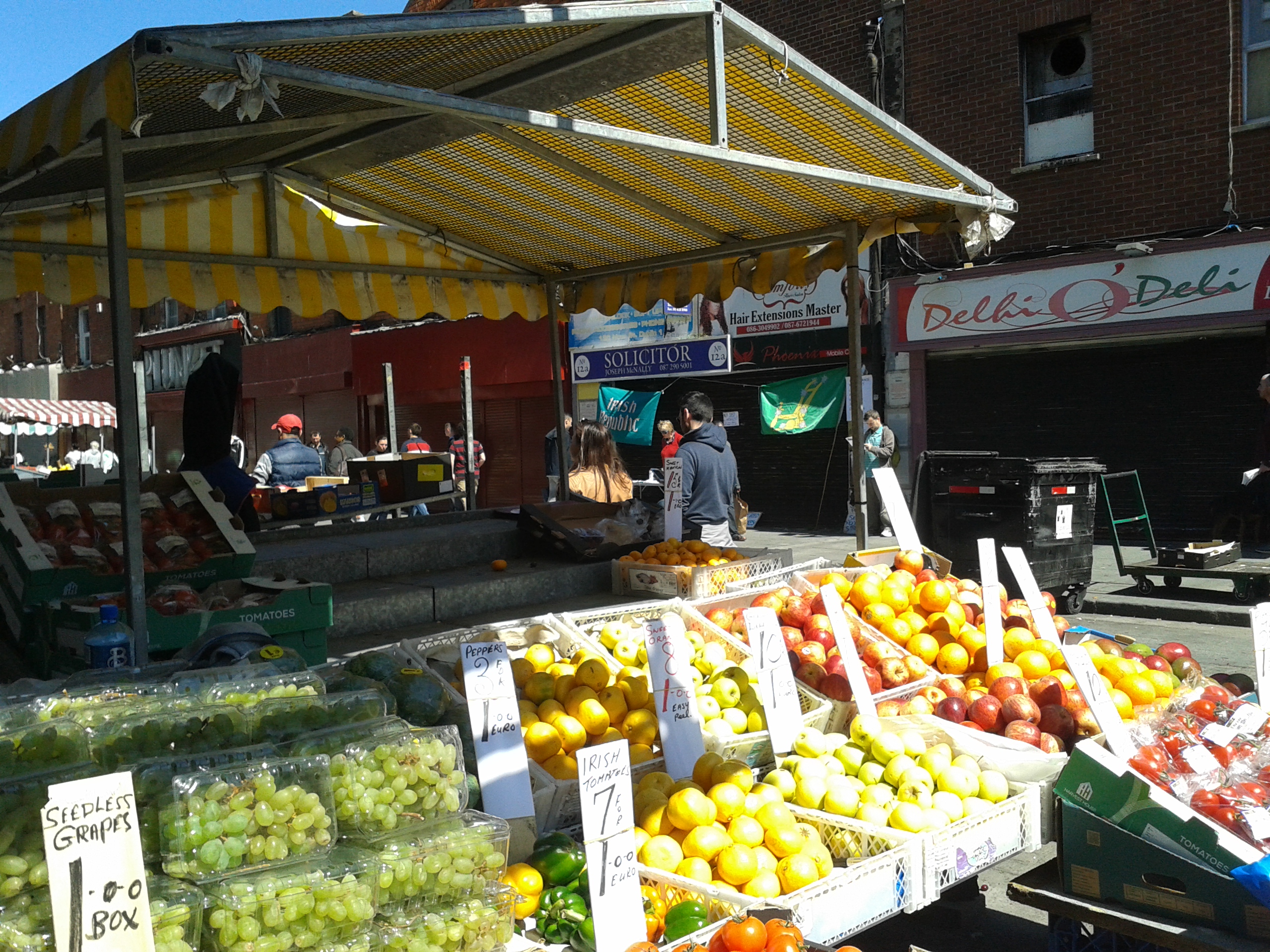
View of the campaign table through fruit stall on a sunny Saturday in Moore St in June 2015 (Photo D.Breatnach)


Here we are on famed Moore Street

in close touch with market beat,

in the air and beneath our feet,

defending heritage and history

knowing that it’s no mystery —

no accident or just a mistake —

why they want our history to take

to offer on the altar of the speculator,

Gombeen and foreign vulture taker.


A people without history is easier to rule

without that memory, easier to fool;

without a past, having no future

our masters hope we’ll be safely neutered

to be consumers dumbly tutored.


But history trembles beneath our feet

here we hear it and also feel it

we speak to the foolish and the wise

denouncing speculators and their allies

refuting Government Minister lies

our voice joining street traders’ cries.


Lemons and leeks here for selling

History stories here for telling

You never know who you’ll be meeting

Old friend or new to be greeting.


This whole area was a battleground;

A knot of people gather to sign the petition in Moore Street (photo: D.Breatnach)
A knot of people gather to sign the petition in Moore Street on a colder day in 2017 (photo: D.Breatnach)

it is again, the speculators found:

through city streets protests wound,

people stood and linked arms around,

occupied also against demolition,

blockaded five weeks of attrition;

and here on Saturday some of us meet

to set up our table on the street

a part of the Saturday market beat

in dry or wet or sun or sleet.


Diarmuid Breatnach, Feabhra 2017.

I ONCE KNEW A CAT

Diarmuid Breatnach

I once knew a cat but, what is more to the point, the cat knew me.

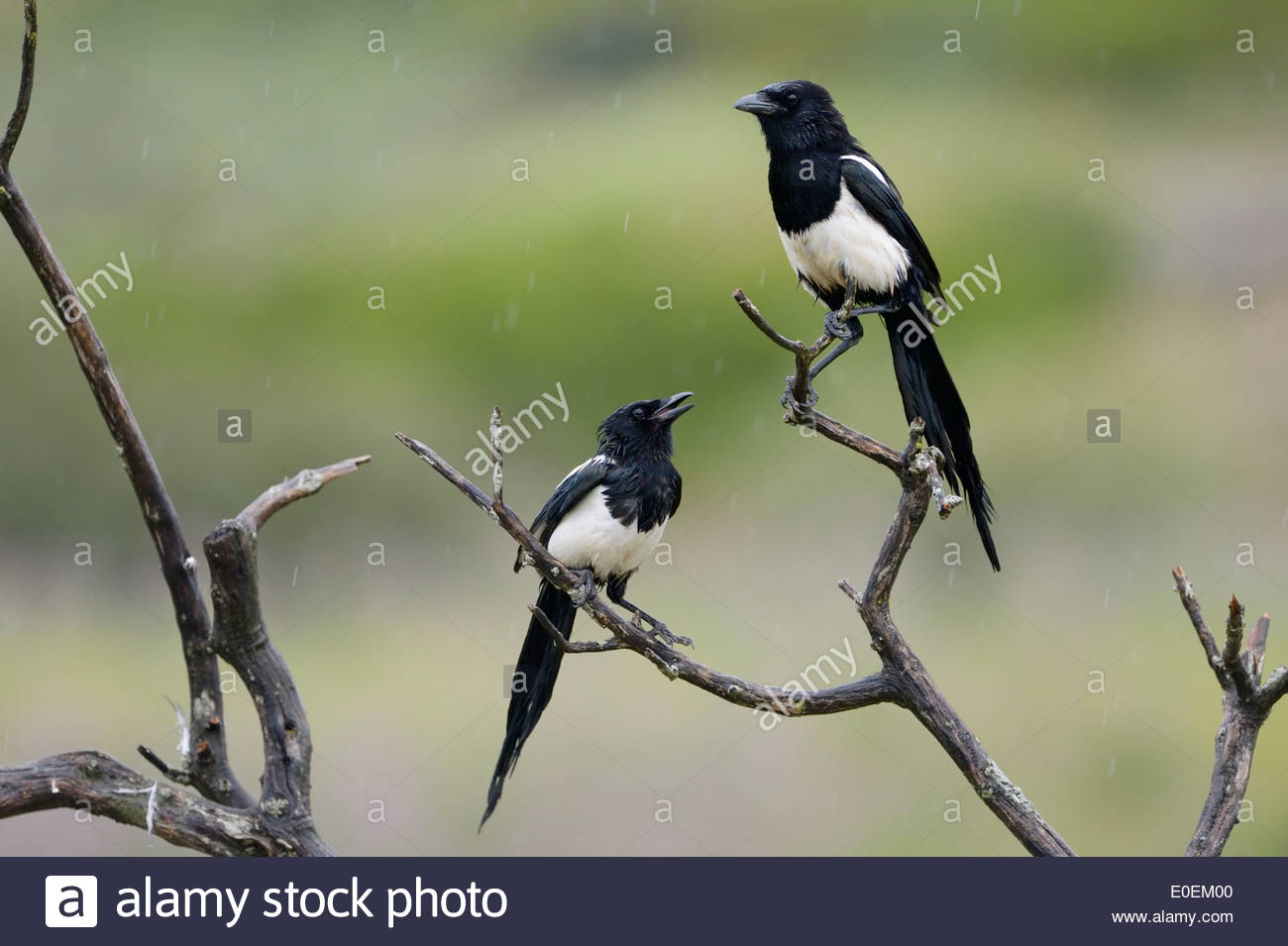
pair-magpies-tree-branches
A pair of European Magpies on branches

I knew the cat not well, but as a kind of nearby resident I had helped a little once and made friendly overtures to. He or she (I suspect she and will refer to it so from now on) first came into contact with me when a racket of magpies not far from my home attracted my attention. I found magpies harassing a marmalade (orange tabby) cat in a tree and the cat seemed trapped there.

Since there was no nest in the tree for the magpies to be protecting, I chased them off some distance with the aid of shouts and stones, then tried to persuade the cat to come down but she just looked at me – afraid of me too, I thought. Some days later, I came across a marmalade cat outside some nearby houses and called to her and, when she came, stroked her and then went on my way. She made as if to follow me but then gave up.

A few weeks later, I was coming up the road when I saw a marmalade cat about 50 yards away and wondered if it was her. She however looked up, saw me and hurried over, then began rubbing her body against my leg.

So how did she recognise me? Cats have very good hearing but I very much doubt she could identify my footsteps on a concrete footpath amidst all the traffic noise from so far away. Cats also have a good sense of smell but I don’t think it’s good over distance. They are not good at recognising human faces, according to tests. So, she probably recognised my shape and gait (like those recognition software programmes the secret services have developed and with which they monitor a lot of CCTV coverage — reassuring, huh? Not so much!).

(Photo source: Internet)

It is true I have a somewhat identifiable gait, so I am told – a swagger learned as protective colouring in my teens but about which I am nearly always unconscious and when I am, try to control. Once doing that in New Cross in SE London, a black youth I knew from my work in a local youth club shouted from across the street: “Walk like a white man!” Apparently my attempt to control the Dublin swagger was resulting in the kind of walk adopted by many Afro-Caribbean youth.

But, back to the cat. Anyway, it was an amazing feat of recognition of an individual of a different species and of minimal acquaintance and I think she would have recognised me no matter how subdued my usual type of walk. I wonder how many individuals considered friendly or otherwise a cat can identify by sight at a distance – just how big is their database?

Another time I came upon this cat, she was stretched out on a warm sunny pavement but being persecuted by a pair of magpies (probably the same ones as before). The cat saw me and so did the magpies but I stopped at a distance to observe what was happening.

One magpie distracted her attention by strutting up and down in front of her head, but out of reach of swipe or sudden rush, while the other waited its chance and pecked at the cat’s tail. She lay there suffering this persecution, only twitching her tail from time to time in a futile attempt to keep it away from the bird or perhaps out of tension.

“But why don’t you move, Cat?” I asked her, half in amusement and half in sympathy.

She looked at me and seemed to say:

“Why should I? This is MY pavement and I am harming no-one! I am not going to let two BIRDS chase me off!”

“Well, you could spring at them …”

“What’s the point? They keep just out of range and I’d miss, giving them a reason to mock me.”

The Magpies, in turn, might have been saying:

“This has nothing to do with you, Mister. This is a Cat, ancestral predator on birds and fair game for us at any time. Keep out of it!”

“Yeah, we remember you butting in before!”

And magpies probably can identify human faces – at least tests with their close relatives, crows and jackdaws, show that they can. And magpies are the only bird so far shown able to identify themselves in a mirror.

I did keep out of it. I had things to do and left them to it – the cat after all had the option to leave and even were I to chase them off, the birds would only fly a little distance and then come back. I’ve seen magpies do this “torment-the-cat” thing before. And cats will kill a magpie, if they can.

The cat’s refusal to move or to make a lunge she knew the birds would easily evade, the provocative tormenting by the magpies and the way they worked in unison, all seemed to me so very human, even allowing for anthropomorphism.

But thinking about it later, I came to a different conclusion: it is not the animal behaviour that is human-like – it is OUR behaviour that is animal-like! After all, are we not descended from a common ancestor, albeit nearly 300 million years ago?

In total, I saw that Marmalade Miss maybe four or five times and then no more. Perhaps her owner(s) moved – I hope so and that she was not killed by traffic.

I had nothing I could gain from the cat, other than a kind of feeling of kinship perhaps. Other than a stroke now and again, she had nothing to gain from me. It was an uncomplicated friendship and not, like with some dogs, a dependency by either of us. I know she is gone but years later, as I pass near that street, sometimes still look out for her.


end.  

HUNDREDS ATTEND MIDDAY WEEKDAY RALLY TO SUPPORT APOLLO HOUSE OCCUPATION

Diarmuid Breatnach


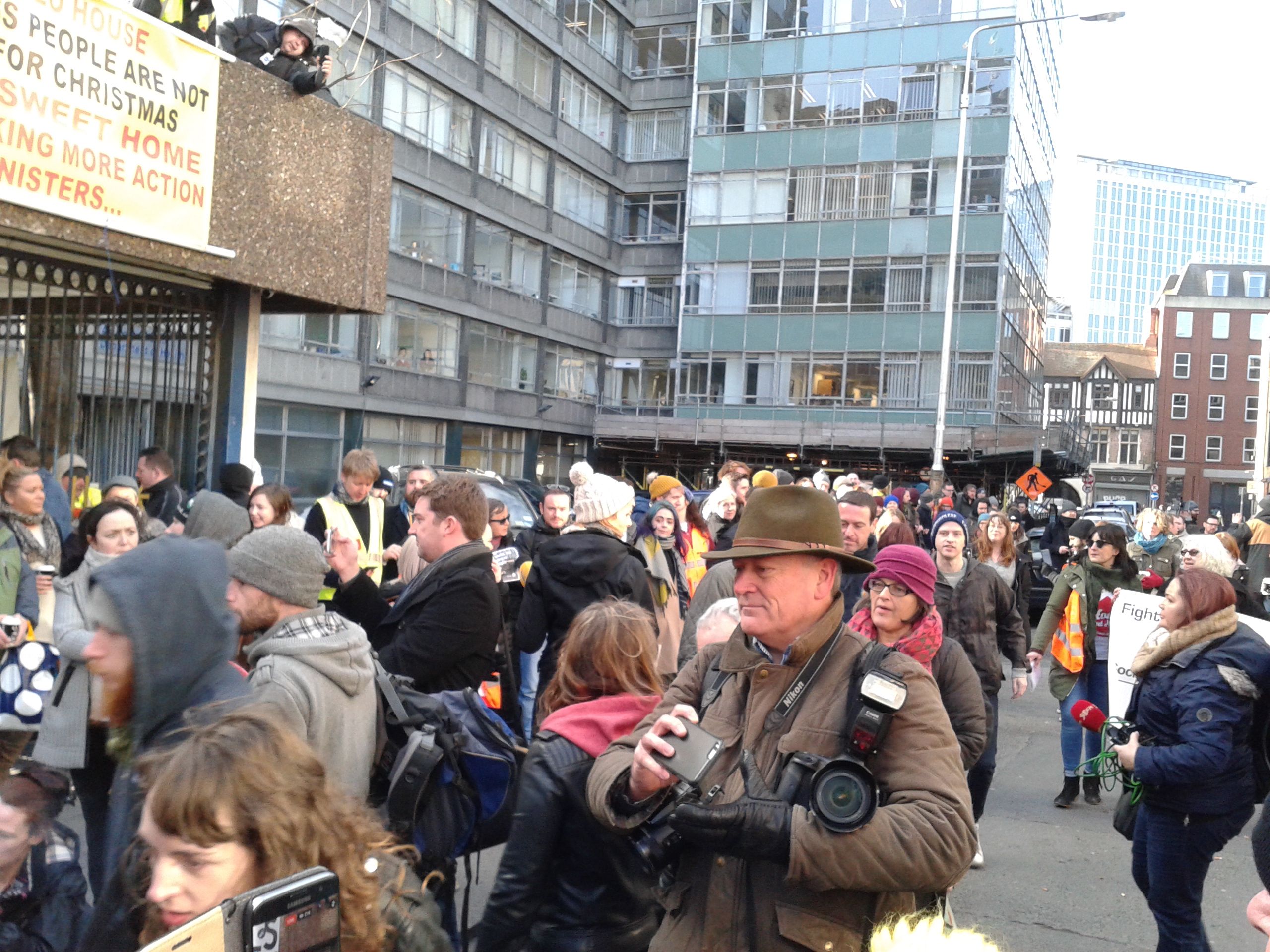
HUNDREDS ATTENDED AT APOLLO HOUSE in bitter cold from late morning today to indicate their support for the homeless people and housing activists in occupation of the building.  At the same time, a court refused to extend the

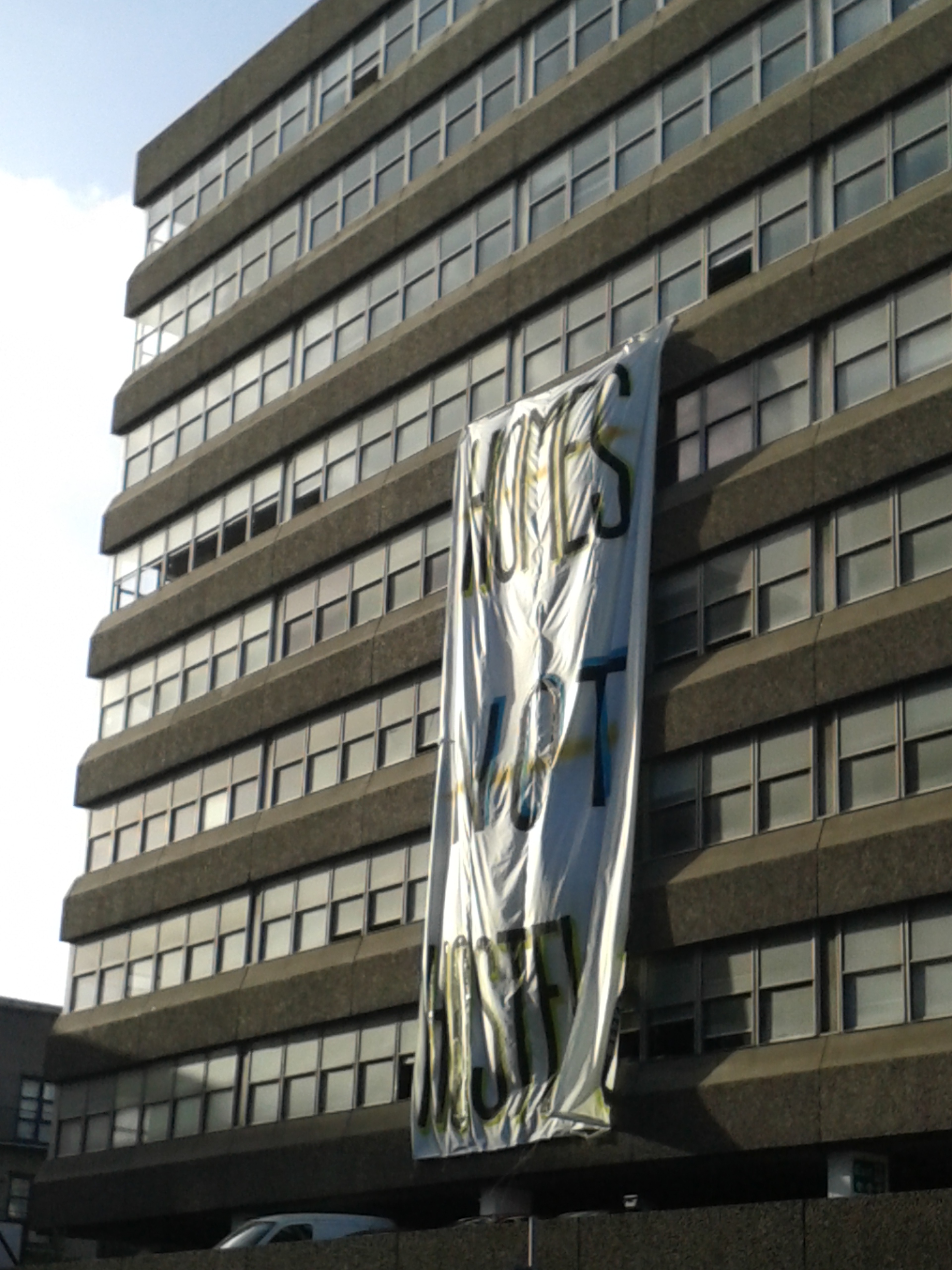
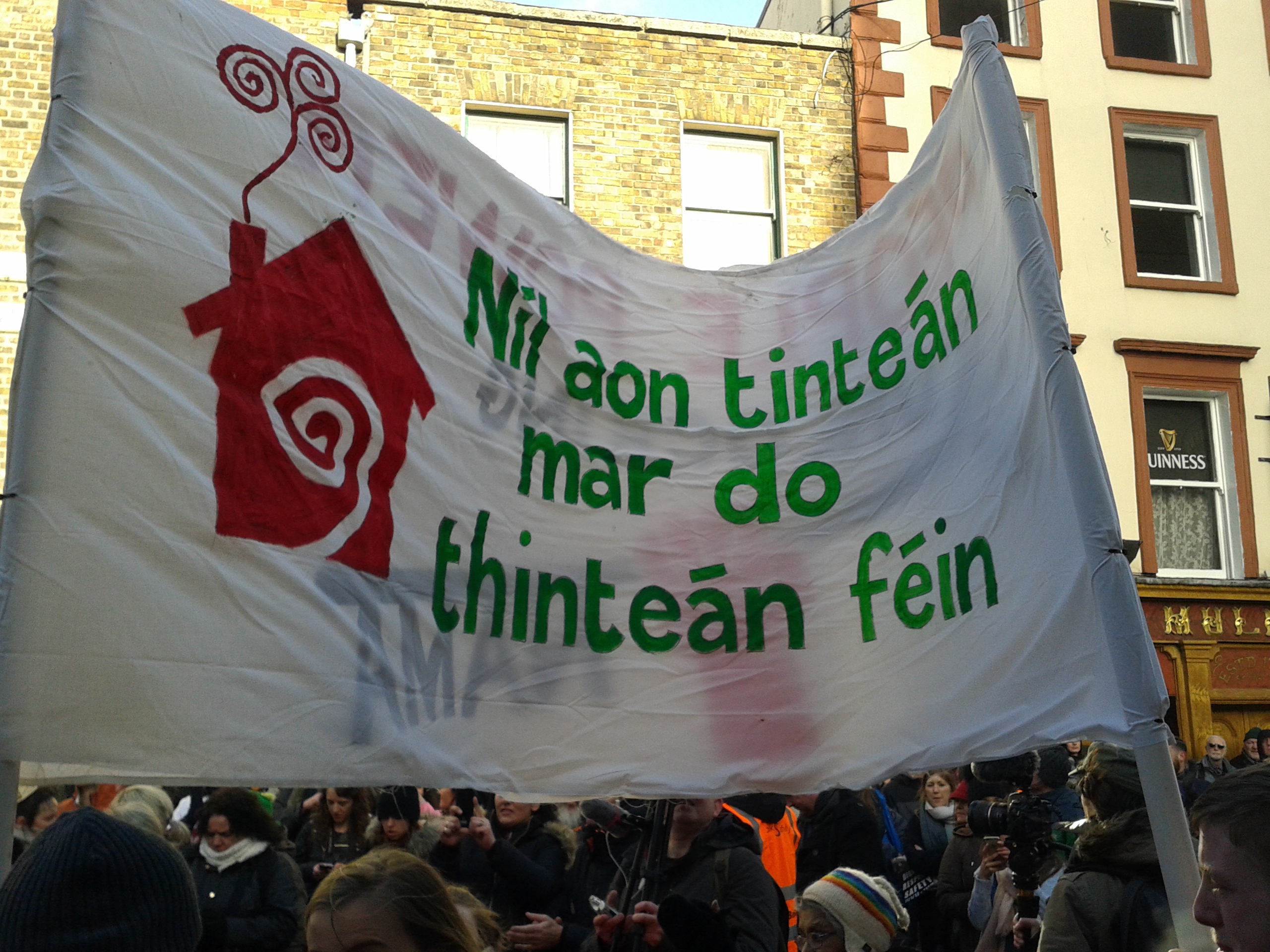
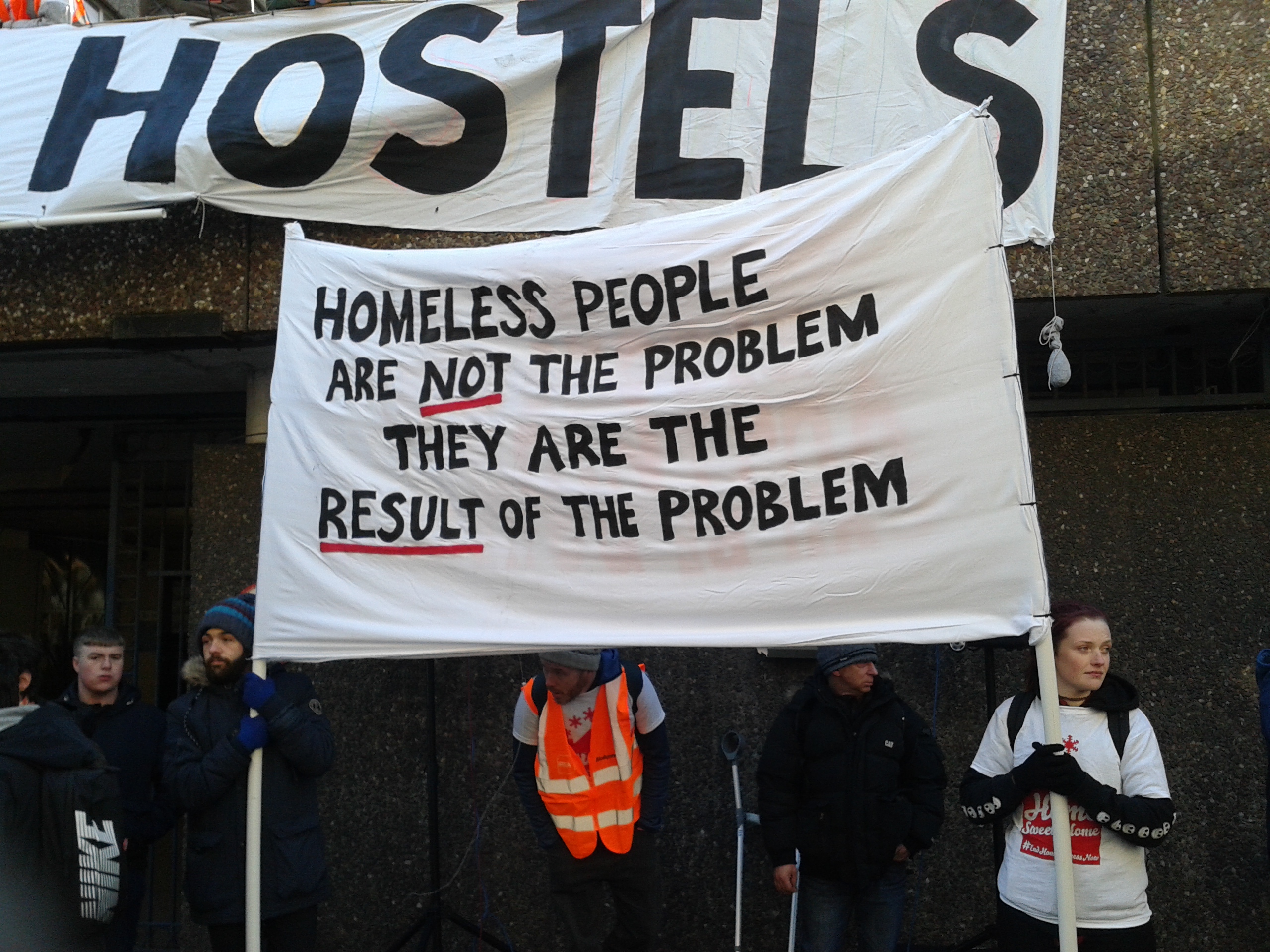
 Closer view of banner on Tara Street side of occupied Apollo House (Photo: D.Breatnach)
Closer view of “Homes Not Hostels” banner on Tara Street side of occupied Apollo House (Photo: D.Breatnach)

deadline by which it has ordered the occupiers to leave.

Banner suspended from the Tara Street side of Apollo House (Photo: D.Breatnach)

While they were there, representatives were attending court seeking an extension on the deadline given by a court order to leave the building by noon today.

Housing activist Rosie Leonard told the crowd that the alternative accommodation some Apollo House homeless people had been offered was totally unsuitable and that some were houses for people with addiction issues and that there were even bloodstains on the walls. They had asked for an extension as the State had not provided alternative accommodation but this had been refused.

In response, people cried “Shame!” and “We shall not be moved!”

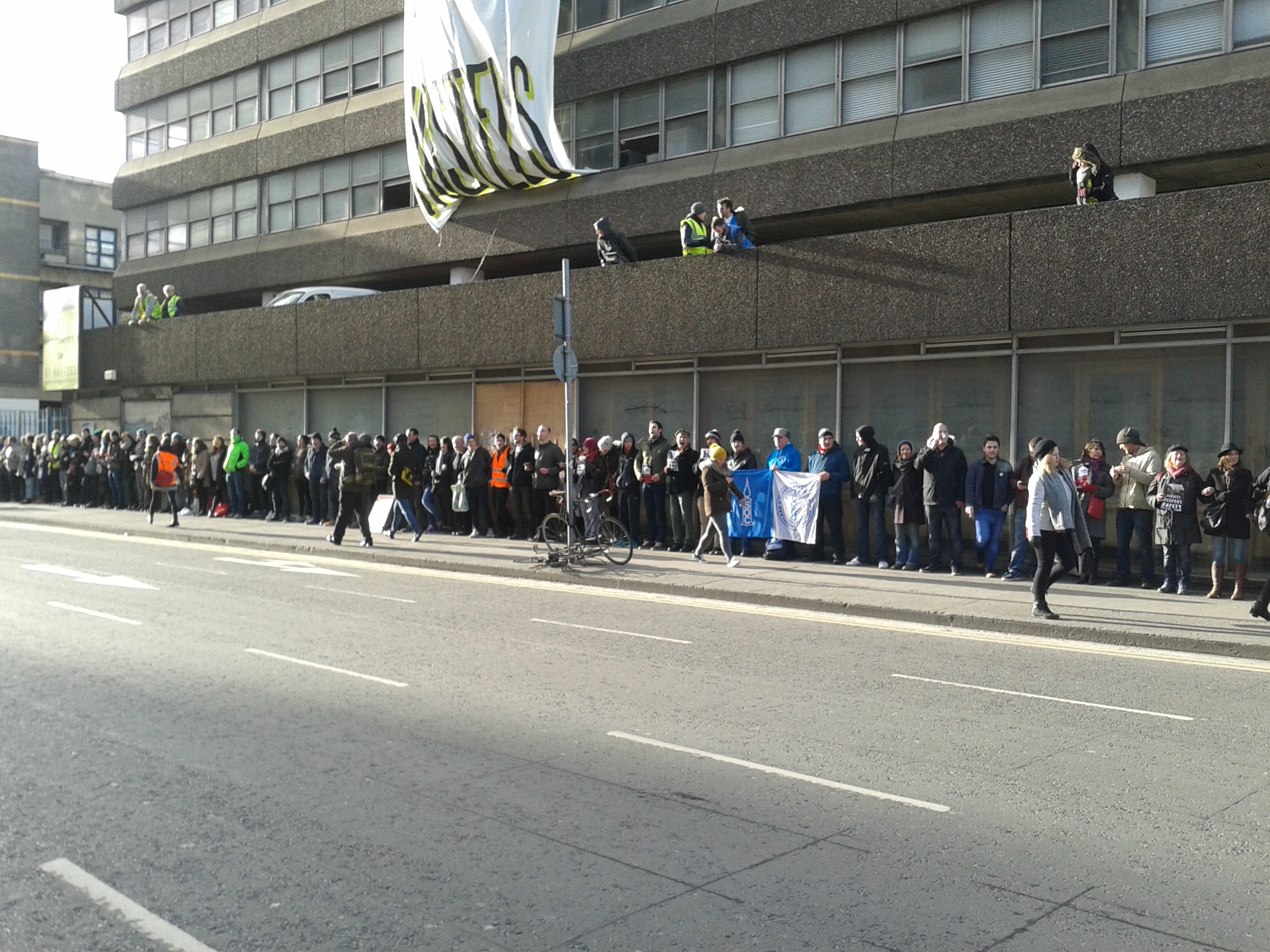
Supporters linking arms around Apollo House from Townsend St, through Tara St to Poolbeg St. (Photo: D.Breatnach)
Supporters linking arms around Apollo House from Townsend St, through Tara St to Poolbeg St.
(Photo: D.Breatnach)

People were asked to link arms symbolically around the building, which many did and the line extended from Townsend Street/ Tara St. and the full length of Poolbeg Street.

PEOPLE QUEUE TO SIGN UP TO ACTIVELY SUPPORT

Shortly afterwards, announcements were made asking people willing to support the continued occupation to give their names to organisers and queues of people formed giving their names and phone numbers to put on a list.

People linked arms symbolically protecting Apollo House occupiers from Townsend St, through Tara St and here seen to western end of Poolbeg St. (Photo: D.Breatnach)
People linked arms symbolically protecting Apollo House occupiers from Townsend St, through Tara St and here seen to western end of Poolbeg St.
(Photo: D.Breatnach)

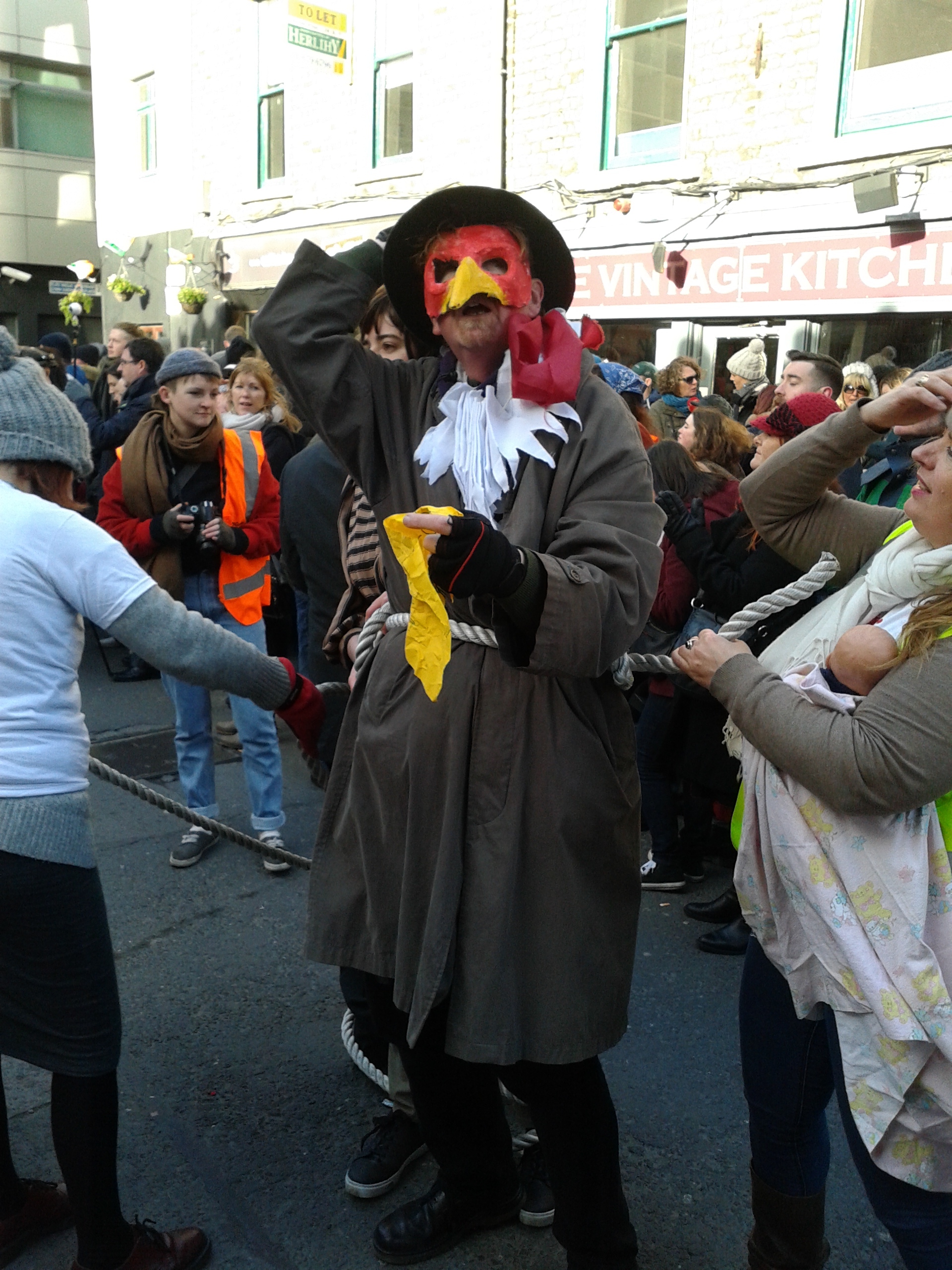
Speakers addressed the crowd at intervals and musicians, singers and percussionists also performed for the crowd. A group including a Vulture Capitalist, Banker and Woman & Child being evicted also performed for the crowd.

Chants included:
What do we want?
Homes not hostels!

Also: Is a doorway a bed?

No!
Is a mattress a bed?

No!

Since December 15th, the Home Sweet Home coalition of activists and homeless people has been occupying this building which state agency NAMA had repossessed from a property developer with unrepayable debts. The group is calling for NAMA to use the properties it has taken control of to house the homeless.

Rosie Leonard relaying court decision to cries of "Shame1" and chants of "We shall not be moved!"
Rosie Leonard relaying court decision to cries of “Shame1” and chants of “We shall not be moved!”
Percussionist, Guitarist, Acitivist (Photo: D.Breatnach)
Percussionist, Guitarist, Acitivist
(Photo: D.Breatnach)
Vulture Capitalist (Photo: D.Breatnach)
Vulture Capitalist
(Photo: D.Breatnach)
 (Photo: D.Breatnach)

(Photo: D.Breatnach)
 (Photo: D.Breatnach)

(Photo: D.Breatnach)

THE SCREAM ON A DECEMBER NIGHT


Diarmuid Breatnach


A high-pitched but hoarse scream cuts through the night. Again and again it is heard, then is silent. A frightening sound, perhaps of a person being attacked …. But no, it is a vixen, a female red fox (Vulpes vulpes). Why is she screaming? Is she in pain?  Not exactly — she is informing dog-foxes in the area that she is ready to mate and where they can find her.

Vixen screaming (sourced on Internet)


But this is December and, according to Internet site after site dealing with foxes in Britain and in Ireland, she is at least a month early1. Perhaps she is a rare exception, this vixen in the Drumcondra area but it seems to me more likely that the sites have it wrong: either urban foxes breed earlier or the breeding pattern of foxes is changing. Actually, a combination of both is likely.

A vixen breeding in January would give birth to her cubs just over 50 days later, when in rural areas the earth is warming up in the Spring and when lambs are born, hares are boxing, eggs are being laid, greens are growing and being eaten by rabbits – in other words, food is becoming available for the vixen. Obviously vixens breeding in February or March will have yet more food available in April or May but may also find greater competition, in food and for a mate.

Say this rural vixen conceived on 1st January, then she would give birth on or around 22nd February. She will need feeding just before that and probably up to 24th March, a task falling to the dog fox and to unmated young females who may be part of the community. The cubs need the warmth of the mother’s body for up to three weeks after birth and she cannot leave the den. One month after giving birth the mother vixen may go hunting while the “aunts” look after the cubs, who are now venturing out of the den or “earth” (but staying very close to it).

The food brought to the young is carried inside the hunters’ bellies and regurgitated for the young to consume along with their mother’s milk which they will suckle until six weeks of age. After weaning, the cubs will eat solid food but cannot yet hunt for it themselves until perhaps mid-late Summer and, if males, will leave to establish their own territories in the Autumn.2 Males become sexually mature at one year of age.

A vixen breeding in December in an Irish rural area might have difficulty receiving enough sustenance in January or even early February, especially in decades past when winters were usually harder. However, with changing seasonal weather patterns tending to warmer winters – and in urban areas where a lot of food tends to be available for scavenging all year round – these problems are substantially reduced and so breeding in December should present little difficulties. So the thinking goes among the vixens in Drumcondra, anyway and, I suspect, in many other Irish and British urban areas.

The male or ‘dog’ fox can be heard sometimes too in a staccato bark, normally three (but occasionally four) rapid barks: bak, bak, bak!


THE URBAN FOX

The urban fox is a relatively new phenomenon in Ireland3, as far as we know, although in Bristol, for example, they have been recorded since the 1930s. Up to fairly recently, a number of experts maintained that the fox populations of city and countryside had little contact with one another. But in January 2014 “it was reported that “Fleet”, a relatively tame urban fox tracked as part of a wider study by the University of Brighton in partnership with the BBC’s Winterwatch, had travelled 195 miles in 21 days from his neighbourhood in Hove, at the western edge of East Sussex, across rural countryside as far as Rye, at the eastern edge of the county. He was still continuing his journey when the GPS collar stopped transmitting, due to suspected water damage.”4


and the Country Foxes

Decades before I heard of this I often fancifully imagined a conversation between a fox, now settled in the “big city”, and his country relations when he returned on a visit. After the initial customary welcoming, sniffing, licking etc are over, the conversation might go like this:

So, Darkie, tell us, what is life like in the big city?”

Ah, it was scary at first, with cars and buses and lorries going all day. You wouldn’t believe the noise.”

(Sympathetic whine from the audience).

But I’m used to it now, Redthree, I have to say. And the food! You could not imagine!”

Good, is it?”

Lovely, Whitepatch, absolutely delicious.”

(Sounds of salivating all around).

Chicken, beef, lamb, fish, potatoes, bread, rice, vegetables, fruit – just left out there to be eaten!”

Ah, you’re havin’ us on, Darkie. We might be “Culchies” but we’re not stupid! You expect us to believe the humans feed you like they do their dogs, do you?”

No, of course not, Greymuzzle. Well, actually a few do leave out food on purpose for us but no, this is mostly food that humans are throwing away. We find it in plastic bags and metal containers.”

They throw away food?”

They do and huge amounts of it too. Then big lorries come and take away what we have not eaten ourselves.”

Where do they take it?”

I am not sure. I’ve never troubled to find out because, to be honest, I have all the food I need nearby.”

(Silence while country foxes imagine a huge mountain of food somewhere).

Er …. Darkie, so you never hunt now?”

Oh, yes, some – the city rats and mice eat the discarded food too and they grow plump and big. Yes, I catch and eat them too.”

Well now, what about all the humans?”

What about them, Lighteyes? They don’t bother us.”

Don’t the humans have guns in the city?”

Some of them do, Lighteyes. But they don’t shoot foxes with them.”

Really? What do they shoot with their guns then?”

Other humans, Lighteyes, just other humans.”

(Noises of amazement and disbelief)


THE INNER CITY FOX

The Internet sites all agree that foxes are more likely in suburbia than in the inner city but I think they ignore some important features of the inner city which foxes can frequent in relative safety and around which they are likely to find sufficient food: railroad lines and their banks, canal and river banks, parks, allotments, cemeteries and derelict sites. One can’t get much closer to Dublin’s inner city than Parnell Square, yet I have seen foxes in a laneway off there and also squeezing through the railings to enter the Garden of Remembrance. They have been photographed near the Irish Parliament, the Dáil (though some people might say that’s less surprising with the number of scavengers nearby :). I’d be surprised if they are not to be found along the banks of the Dodder, the Liffey, the Tolka and both canals, also along the railway lines and in Glasnevin and other cemeteries.

Fox in Leinster House car park in the winter of 2013 (Source: Sasko Lazarov via Photocall Ireland, reproduced in Journal.ie)
Fox in Leinster House (Irish Parliament building) car park in the winter of 2013 (Source: Sasko Lazarov via Photocall Ireland, reproduced in Journal.ie)


According to one Internet site5, the urban fox population in Dublin may be growing too big for its own health, as the ready availability of food allows unhealthy individuals to exist, diseased and covered in mange infestation (mites that denude patches of fur). I would need to explore this argument before I could accept it.

I am familiar with the overpopulation argument in the case of grazing animals or rodents, where too many individuals consume the available resources and the whole population suffers – a fate usually occurring when natural predators are not present to thin out the weaker individuals and thereby unconsciously preserve the general population in a healthier state.

But how would this work with regard to Dublin foxes? It seems unlikely that the food available is being reduced yet and if and when it is, one presumes healthier foxes will outcompete their sicker species members. Also, sick and undernourished foxes are less likely to come into oestrous and should they do so and conceive, to be able to raise their young. It seems to me most likely that what is occurring is that foxes that would normally have been winnowed out in the struggle of survival are now able to sustain themselves, which might be distressing to see but which will not necessarily have any effect on the healthy population.6 And will healthy individuals necessarily succumb to mange infection from infested individuals? And if they do now, might they not in time learn to chase infected individuals away?

Theories of overpopulation and scare stories about foxes attacking babies, cats and so on seem prompted by the intention to cull foxes, as Boris Johnson, Mayor of London, proposed. Johnson seems unwilling to learn from history, as “there was a large and expensive effort to reduce the number of urban foxes across the UK in the 1970s, but the population subsequently bounced right back.”7 The average litter now may be four cubs but vixens have been known to bear up to a dozen and with a low population-to-high-food-sources ratio, are likely to bear a greater number of cubs. And a recent National Health Service survey in the UK indicated that nearly 60% of all stings and bites admitted to emergency rooms were inflicted by dogs8 but anyone suggesting a cull of urban dogs would probably find a gathering bearing pitchforks and burning torches outside their home.

Boris Johnson, Mayor of London, was proposing a cull of London foxes (source photo: Internet)

There have been claims that foxes kill and eat lambs, cats, other domestic pets and poultry. Most experts have concluded that if indeed a fox killed a lamb, such incidents are very rare. A ewe is capable of protecting a lamb from a fox, an animal not much larger than a cat. However, foxes have been found to eat the afterbirths of lambs and would of course eat a stillborn lamb or one that died soon after birth, after which its mother would leave and the opportunist would move in; such incidents may have convinced some people in rural areas that the fox was the cause of the lamb’s death.

The Foxwatch study program in Bristol city filmed a number of confrontations between urban foxes and cats and found that in all cases, it was the fox that backed down. This makes sense, for a predator does not usually take on another predator of similar size except in defence of its young, its own life or, at times, its kill.

Yes of course foxes will kill poultry if they can get at them and are often accused in such situations of going on a killing spree. Foxes do kill and gather more food than they need at times and, like many other animals, hide it for recovery later, marking the spot with their scent. But when a fox breaks into a poultry pen and kills its inhabitants, it usually has to leave with what it can carry and will not be permitted to return for the rest. The answer for humans is to build secure pens into which to bring the poultry at night – and that applies also to rabbits kept as pets or for the table, etc. — or keep a dog outside, unleashed.

Scare stories and unscientific suggestions to one side, wild animal populations living alongside humans frequently do need management. All species of bats are protected in Ireland and Britain and should you find them in your attic you are not permitted to remove them but must instead notify the appropriate authorities. Some people have suggested that the red fox should be granted protected species status but it is difficult to see the rationale for this, since it is on the species of “least concern” list of the International Union for the Conservation of Nature. Pigeons receive no protection and, though often fed by people who consider them cute or pretty, do have a negative effect on our urban environment and, in the case of seagulls, who are protected, may be responsible for the disappearance of the many species of ducks that once were common in Stephens’ Green. Rats and mice are not deliberately fed or considered cute by most people (though I have kept both myself and found the individuals tame and harmless and, in the case of rats, quite intelligent) and humanity wages war upon them with traps and poison.

Do urban foxes require management? Zoologist Dave Wall9, who has studied Dublin’s urban foxes for some years, thinks not. In his opinion, the fox population in Dublin has remained constant since the 1980s. According to statistics regularly quoted but never referenced that I can find, Dublin fox families occupy on average 1.04 Km². 10 Given a rough and probably low estimate of six individuals per fox family (a mated pair and two unmated females and two cubs) and a Dublin City area of 115 km² would give us a fox population of 663 in the city. That might seem a lot, until one hears that London holds an estimated 10,000.

Given statistics of that sort, and information that the average litter is of four cubs, one may wonder why most urban dwellers see them but rarely and also why urban foxes are not a massively growing population. There are a number of controlling influences, ranging from the need to establish territory and fight to hold it, which may cost in injuries or even death, to deaths by traffic, the most common cause of fox death according to Internet sites (although how often do we see a dead fox on the road?). A common non-captive life-span of from two to four years and a fertility “window” of only three days for a vixen would be population-controlling factors and yet the allegedly stable population is puzzling, to me at least.

The rural fox tends to inhabit, widening when necessary, burrows already excavated by rabbits and badgers. In urban areas, the fox may have to excavate its own – under buildings and sheds and into railroad banks, for example – but will also use and expand other holes and gaps.

Many urban human dwellers, probably most, never see urban foxes, although they are becoming increasingly visible. They are active mostly at dusk and shortly before dawn and are mostly likely to be seen by people who rise very early for work, or who work at night or who are returning from late night socialising on foot, by bicycle or on foot.

In the Lewisham area of South-East London where I lived for some decades, I regularly saw them on the roads while cycling home from a late music session or a friend’s house. Lewisham would be considered midway between being city and suburban in nature and contained parks, cemeteries, allotments, streams or rivers and railway lines, houses with gardens but also high-rise blocks of local authority housing and very busy roads. I once passed about three yards near to an adult fox on the housing estate I lived on for awhile between Grove Park and Eltham (also in SE London). On my allotment in Catford, if I worked until dusk (which I did often enough when I managed to find the time), they would come out and play and dig for food less than ten yards away from me. And I frequently found trainers (running shoes) and balls they had taken from outside local houses and gardens, discarded on my allotment.

A number of theories have been forwarded for the penetration of urban areas by the fox, including the shameful wiping out of rabbit populations by state-inflicted plagues of myxomatosis but the real reasons are probably the same as those of the pigeon, rat and mouse – availability of food and home provided by humans and the adaptability of the species themselves.


THE MOST WIDESPREAD CARNIVORE ON EARTH

Indeed, the red fox has proved an adaptable animal – much like ourselves. She is an omnivore, as are we and can take her prey from animals as large as a goose to those as small as beetles or earthworms, also frequently eating wild fruit, especially in the Autumn. Studies in the former Soviet Union found that up to 300 animal and a few dozen plant species were known to be consumed by her11. Mice and rats are frequently on her menu and her ancestors are thought to have developed as specialist rodent hunters in Eurasia five million years ago but her kind is now the most widespread carnivore on Earth, with 46 recognised subspecies.

The fox has binocular vision which is particularly effective at night, excellent hearing over distance, including the ability to detect the squeaking of mice at about 100 metres (330 ft) and capable of locating sounds to within one degree at 700–3,000 Hz, though less accurately at higher frequencies12, compensated for by an ability to hear at very low frequencies, including a rustle in grass or leaves and the burrowing of rodents underground. It has evolved many tactics for hunting, including tracking, ambush, stalking, leaping, pouncing and digging.

The fox can also run at a speed of 42 km/ hour, climb some trees, leap high and swim well. Considering the latter, its absence from many islands near to mainlands may come as a surprise but I think that is easy to explain through eradication by human agency.

The red fox is to be found everywhere in Europe (where she is thought to have reached 400,000 years ago) and in North America, Canada, China, Japan and Indochina. Sadly, in the mid-19th Century her species was introduced to Australia by European settlers (at first for sport and later perhaps to control the rabbit, also introduced there by Europeans), where a population of 7.2 million red foxes now is wreaking damage among rarer indigenous wildlife and is considered responsible for the extinction of a number of species. It is classified as the most harmful invasive species in Australia and eradication and population control measures are adopted against it there, as are also against feral domestic cats and dogs, also imported by Europeans.

The dingo is regarded as a controlling agent on red fox population growth in Australia though not totally effective due to the fox’s habit of burrowing; this is interesting for a number of reasons: firstly, the dingo (Canis lupus dingo) is itself a wild dog most likely imported from Asia by Aborigine settlers somewhere between 4,500 and 10,000 years ago and secondly, the red fox in Ireland and Britain does not tend to excavate its own burrows but rather to enlarge existing ones and then generally only for mating and rearing cubs. The Red Fox is currently absent from Iceland, Greenland, South America and sub-Saharan Africa.

The fox has been hunted by humans primarily for its fur, especially in winter when it is thicker and from foxes in the far north its silkiness is considered very valuable.

Reynard (one of the names traditionally given to the fox) has also been hunted for sport, usually by the aristocracy or country gentry, on horseback with hounds, an activity which gave rise to one of Oscar Wilde’s many memorable phrases: The English country gentleman galloping after a fox – the unspeakable in pursuit of the inedible.” Of course, it was not only the English who did this but also the Anglo-Irish Ascendancy (from which Wilde’s father himself came) and the upwardly-climbing Irish who aped them, ag sodar i ndiaidh na nuaisle.13 There have been numerous attempts to get fox-hunting banned and direct action such as protests and sabotage of hunts but it is still legal in Ireland and in Britain, though substantially reduced from a century ago.

Gamekeepers have also hunted the fox in order to keep it from killing ground-nesting birds such as wild pheasants, grouse and partridge, so that the landowner and his friends could shoot these birds down later14. Finally, the farmer has taken his toll, sending specially-bred dogs such as cairn terriers down earths to kill a hiding fox and in particular the cubs. The farmer wishes to protect his poultry but avoid the cost of building secure pens and so hunts foxes down; he could let his dogs roam his poultry area which would keep foxes away but dogs do often go chasing sheep too, which will also represent a loss to the farmer, either because the sheep are his or because his neighbours will claim compensation from him.


AN MAIDRÍN RUA and tradition

In Ireland, the fox was known as Sionnach, Madagh Rua (“red dog”) or Maidrín Rua (“little red dog”) and has given its name to a number of places, eg Cnoc an tSionnaigh (Fox Hill, Co. Mayo; another as a street name in Co. Laois); Oileán an tSionnaigh (Fox Island, Co. Galway); Carraig an tSionnaigh (Foxrock, Co. Dublin); possibly Léim an Mhadaigh, (Limavady, Co. Derry) and Lag an Mhadaigh (Legamaddy, Co. Down); possibly Ráth Sionnaigh (Rashenny, Co. Donegal), etc.15

Fox is also a family name and the Irish language version of it is Mac an tSionnaigh (literally “Fox’s son”).  The Maidrín Rua or Sionnach features in a number of songs in Irish and in English and here is one from the Irish language tradition of song but in a non-traditional choral arrangement: https://www.youtube.com/watch?v=6bJyqbPxTwU.

Widely represented in folklore from China to Ireland, the fox is also mentioned in the Old Testament Bible and in Greek stories such as the fables of Aesop as well as among the Indigenous people of the Northern Americas. He is never stupid but his intelligence or cunning is also often portrayed as devious, tricky and even malicious. On the other hand, let us not forget that the anti-feudal Mexican hero created by USA writer Johnston McCulley (February 2, 1883 – November 23, 1958), who fights for the downtrodden and indigenous people and mocks the Mexican aristocracy and large landowners, always escaping them, used the nom-de-guerre of “El Zorro”, the fox.

There is a sexual connection too in the representation for the fox: for example in English a “foxy lady” is one with a high level of sexual attraction and in Castillian (Spanish) a “zorra” (vixen) is a pejorative term for a woman trading in sexual favours or “of low morals”16. Have we come around in a circle to where we began, to the vixen’s scream? I think so, but loaded now with a patriarchal outlook. Men can openly want and enjoy sex, of course, that is natural – but a woman? Surely not … or, if she does, she must be bad!


End.


Internet Sources:

http://www.thejournal.ie/fox-urban-dublin-1537602-Jun2014/

http://www.newforestexplorersguide.co.uk/wildlife/mammals/foxes/family-life.html

http://www.wildlifemanagement.ie/dublins-urban-foxes/

http://www.irishtimes.com/life-and-style/people/our-confused-relationship-with-foxes-cull-them-feed-them-hunt-them-kill-them-1.1251806

http://www.newsfour.ie/2013/04/city-fox-controversy/

http://www.noticenature.ie/files/enfo/factsheet/en/WL33%20Foxes.pdf

http://www.conserveireland.com/mammals/red_fox.php

https://en.wikipedia.org/wiki/Red_fox

https://books.google.ie/books?id=GjK93IUdAX4C&pg=PA96&lpg=PA96&dq=fox+can+hear+low+frequencies&source=bl&ots=BdWCosvgXg&sig=z76bvVOGnUjEQMnGTf4w44mqTyU&hl=en&sa=X&ved=0ahUKEwjN-dOm7v7QAhXoKsAKHQtsCGcQ6AEILTAD#v=onepage&q=fox%20can%20hear%20low%20frequencies&f=false


Footnotes:

1This is one of the very few sites to state that breeding may start in December http://www.newforestexplorersguide.co.uk/wildlife/mammals/foxes/family-life.html and Wikipedia also gave December as the start of the mating season and also as the month when the dog-fox’s testes are heaviest.

2Young females may remain another season and help care for the next litter of cubs.

3Although one article, without giving a reference, stated that foxes have been in Dublin since Victorian times.

6Other feature which makes this claim suspect are a number of scare items in the article: a) the sensationalist reference to the alleged danger to a baby from a fox in a bedroom and a link to the article reporting this event. Such an event, supposing it occurred, must be on a level of likelihood way below the danger to babies from, for example, pet cats and dogs. Also b) the reference to the danger of contracting roundworm (Toxocara canis), which can cause toxocariasis in children, while not however mentioning how low that risk is and that infection for children is most likely to be encountered from dogs and cats.

9Dave Wall B.A. is a postgraduate researcher in zoology at UCD. He has studied otters, marine mammals and Alpine badgers as well as studying Dublin’s urban foxes for the past few years. He is a Director of the Irish Whale and Dolphin Group.

12Ibid

13“Trotting after the nobles”, a derogatory phrase in Irish.

14Gamekeepers in Ireland and Britain also shot, poisoned or trapped badgers, otters, pine martens, stoats, escaped mink, eagles, hawks, buzzards, crows and magpies and often hung their carcasses in near their lodges to display their diligence in their tasks

16Often the condemnation of “low morals” is applied to a sexually active female but not to a sexually active male.

IRISH LANGUAGE CAMPAIGNERS CALL FOR URGENT ACTION — “10 years remaining for Irish as a living language in the Gaeltacht”

(English-language version below)

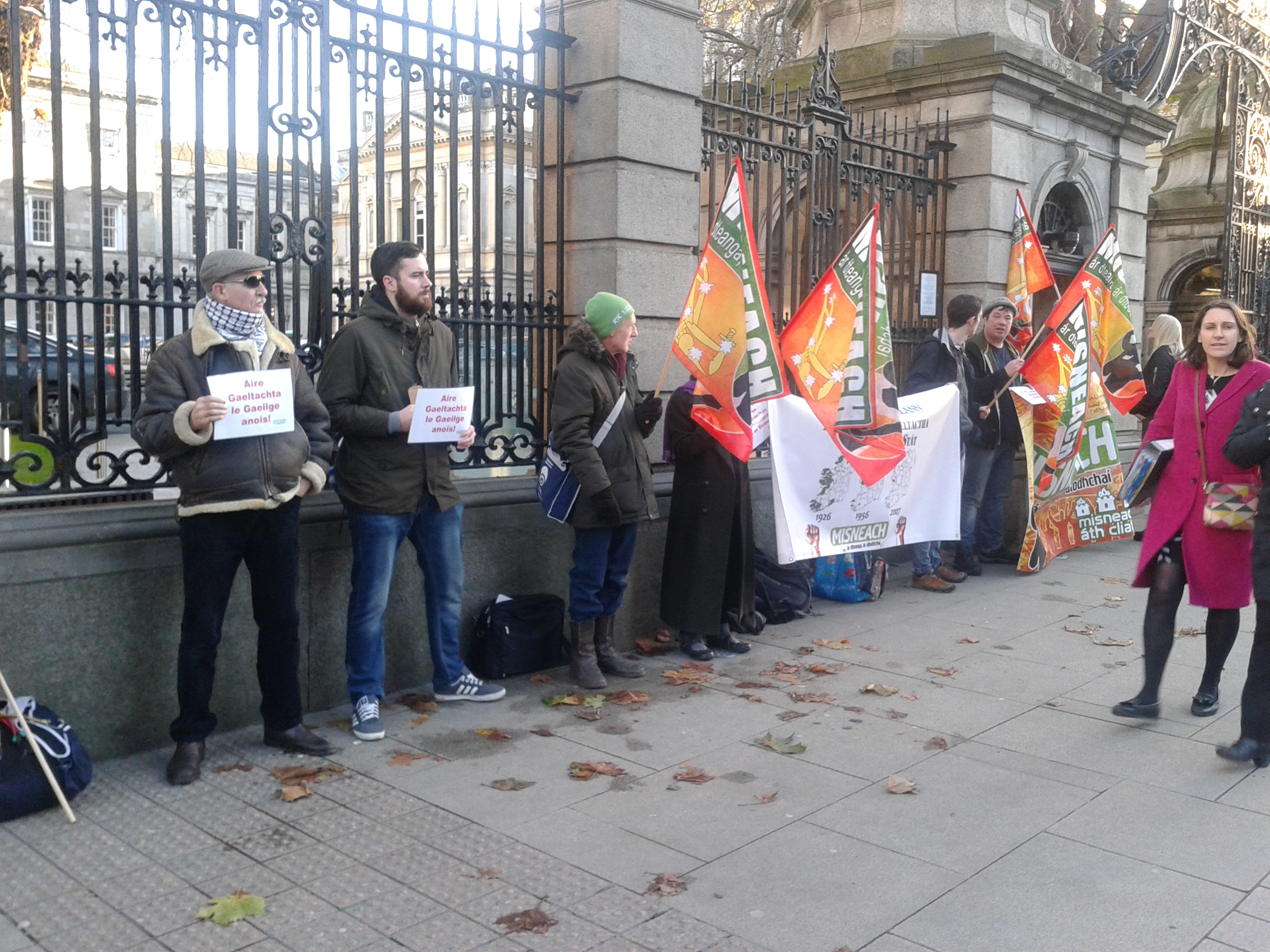
De réir ráiteas a d’eisigh craobh BÁC den dream Misneach inné (15/12/2016) d’éirigh go maith le hagóid Misneach  ar son Cearta Teanga lasmuigh de Theach Laighean. Bhailigh daoine i rith am lóin chun seasamh i gcoinne cur i gcéill na hairí Humphreys agus Kyne. Bhí neart tacaíochta don agóid ó dhaoine a d’imigh thar bráid, cuid mhaith acu a d’iarr leithscéil nach raibh mórán Gaeilge acu féin agus cúpla daoine ó thíortha i gcéin ina measc.


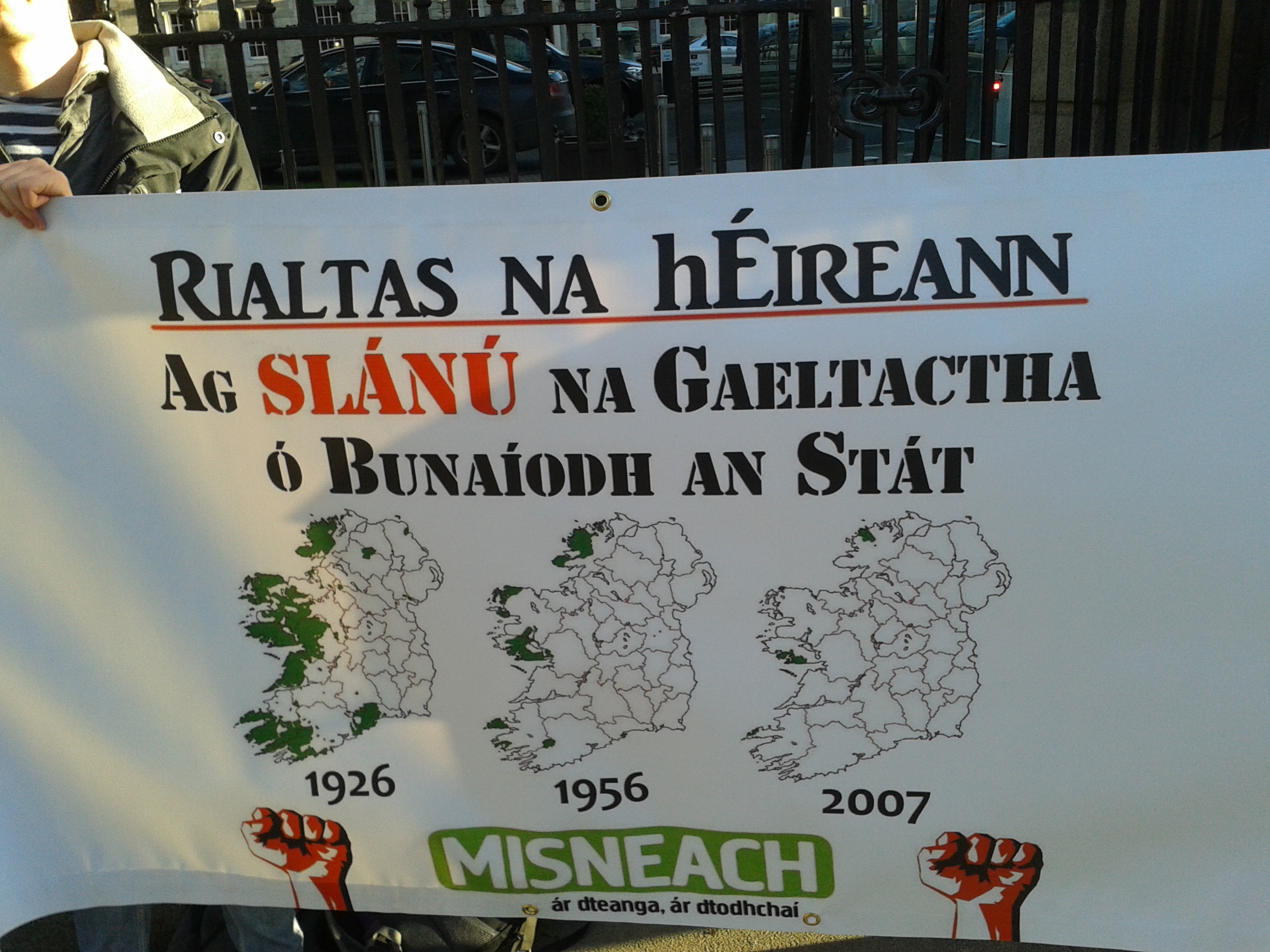
Map on Misneach banner illustrates the decline of areas where Irish is a living community language under the Irish state's administration. (Photo D.Breatnach)
Map on Misneach banner illustrates the decline of areas where Irish is a living community language under the Irish state’s administration. (Photo D.Breatnach)

D’ardaigh urlabhraí Misneach, Kerron Ó Luain, ceist an buiséad a pléadh i measc an chomhchoiste inniu:

Gheall Sean Kyne go dtabharfaí 1,000,000 euro breise don Ghaeilge ar Adhmhaidin ar RnaG níos luaithe. Is ardú 1% atá i gceist le sin. Ach, is méid suarach é 1% nuair a smaoinítear go gearradh 75% de bhuiséad Údarás na Gaeltachta agus 35% ó bhuiséad Foras na Gaeilge ó 2008.

D’fhógair an tAire McHugh i rith 2015 go mbeadh 1,000,000 euro breise do bhuiséad caipitil na Gaeilge chomh maith. Tá sé soiléir gur cleas atá sna fógraí seo. Gearrtar na deicheannaí de mhilliún ó bhuiséad ach, ar an láimh eile, fógraítear “airgead breise” de mhéid an-bheag amhail is gur dul chun cinn é. Is cleas é leis an bpobal Gaeilge a cheannach agus faraor tá an cuma ar an scéal go n-oibríonn an chleasaíocht seo.’

Chríochnaigh Ó Luain:

Arís tá Misneach ag glaoch ar na ceanneagraíochtaí Gaeilge gníomhú agus Lá Mór eile a eagrú. Tá sé feicthe ón ngluaiseacht a d’fhás i gcoinne príobháidiú a dhéanamh ar ár n-uisce, gurb é an t-aon chineáil cumhacht a dtugann na polaiteoirí aird ar bith air ná cumhacht na sluaite amuigh ar na sráideannaí.

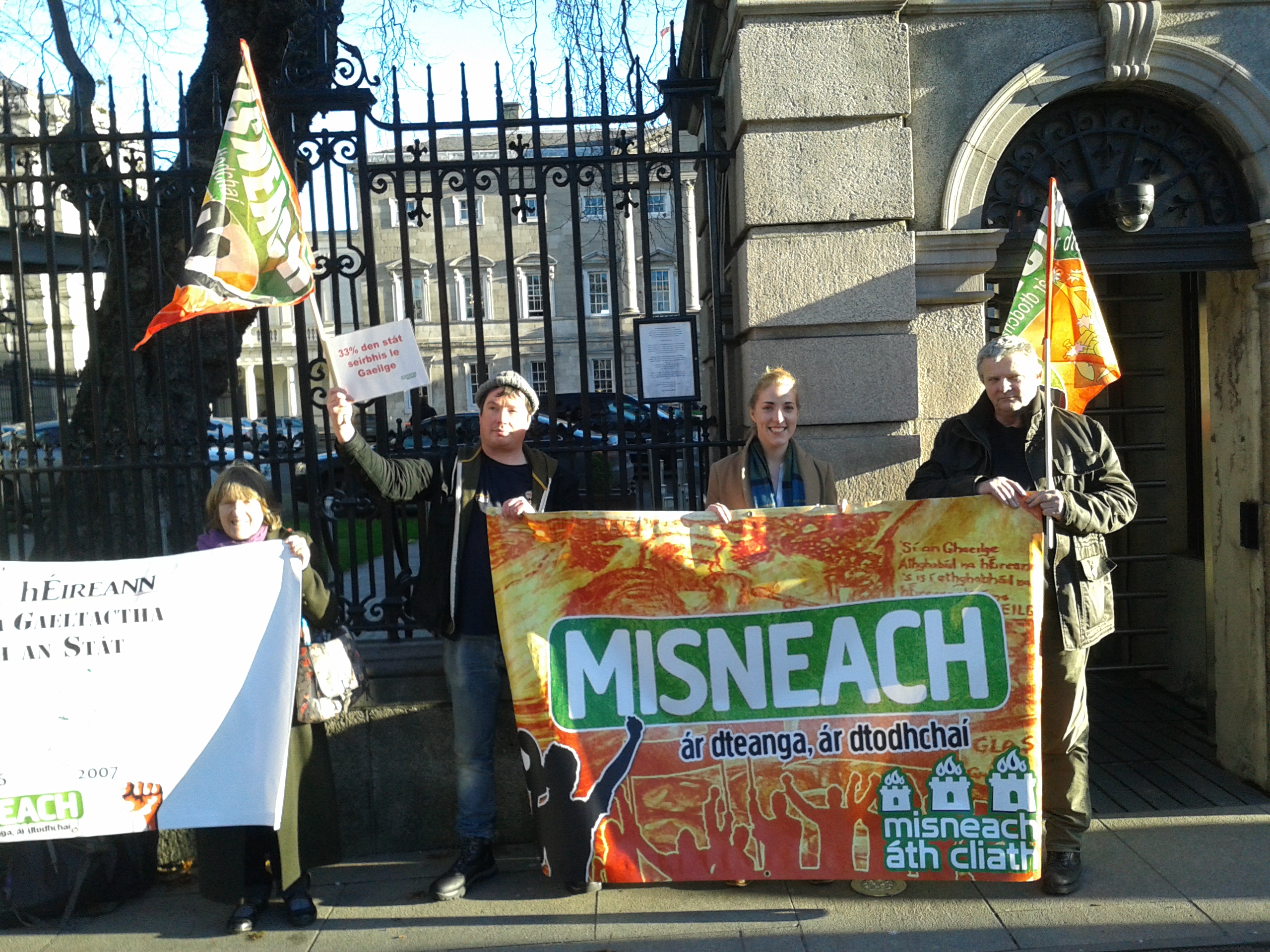
Section of protest demonstration outside the Dáil (Photo D.Breatnach)

Má leantar ar aghaidh mar atá agus an pobal Gaeilge ina dtost caithfear milliúin euro chugainn anseo is ansiúd i mbealach soiniciúil ach ní dhéanfar aon dul chun cinn i ndáiríre. Agus gan ach 10 mbliain fágthaí ag an nGaeilge mar theanga pobal laethúil sa Ghaeltacht tá gníomh raidiciúil de dhíth láithreach.’

———————————————————————-

According to a statement of the Dublin branch of the Misneach organisation yesterday (15/12/2106),  a successful demonstration for Language Rights was held outside Leinster House. People gathered during lunchtime to highlight the hypocrisy of the government ministers charged with overseeing the language, Heather Humphreys and Sean Kyne. There was plenty of support from passers-by, including people who apologised for their own lack of Irish and a few people from abroad.

Spokesperson for Misneach, Kerron Ó Luain, alluded to the budget being discussed by the committee today:

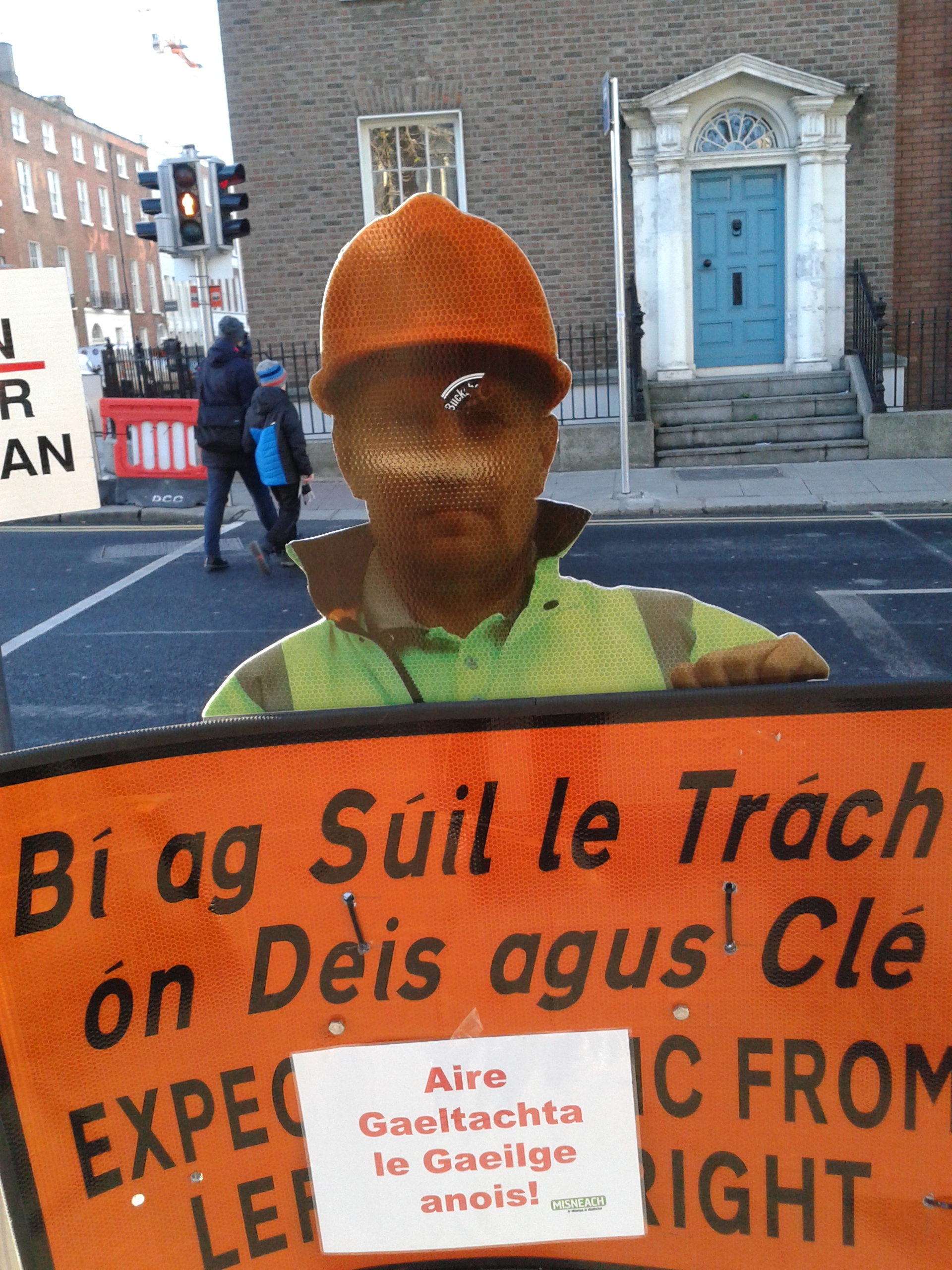
Tongue-in cheek use of road traffic sign (Photo D.Breatnach)
Tongue-in cheek use of road traffic sign
(Photo D.Breatnach)

Sean Kyne apparently promised an additional million euro for the Irish language on RnaG’s Adhmhaidin programme this morning. That amounts to a 1% rise. Realistically, 1% is a pitiful amount when it is considered that 75% has been cut from the budget of Údarás na Gaeltachta agus 35% from that of Foras na Gaeilge since 2008.

Then Minister for the Gaeltacht, Joe McHugh, made a similar announcement in 2015 when he said that one million additional euros would go to the capital budget for the Irish language. It is patently obvious to all that this is a cynical ploy. Tens of millions are cut from the budget only for grand announcements of “additional funding” of pitiful amounts to be made afterwards as if this were progress. It is a ploy being adopted to buy off the Irish language community, and unfortunately it appears to be working.’

Ó Luain finished:

Misneach is once more calling on the chief Irish language organisations to mobilise towards another Lá Mór. It is evident from the movement which opposed the privatisation of our water that the only type of power politicians pay any heed to is the power of the people marching on the streets.

If the situation persists and the Irish language community remains silent, and accepting of token gestures of one million euro here and there, then no real progress will be made. With only 10 years left for Irish as a living community language in the Gaeltacht now is the time for radical action.’

(Photo D.Breatnach)
(Photo D.Breatnach)
Section of protest after some people had left (Photo D.Breatnach)

Joe Kelly — and a generation passing

A generation is passing. Actually they have been passing for some time, the generation of the fighting years of the late 1960s, the 1970s, the 1980s and even the 1990s.

They campaigned variously for social housing; civil rights north and south; for human rights; against Church domination; against Unionist sectarianism; for free access to contraception; for right to divorce; for an end to censorship; for national self-determination; for Gaeltacht civil rights; for Irish language rights and Irish on TV; in support of political prisoners; the rights of women; for Irish Traveller rights; protection of heritage and environment; solidarity with many struggles around the world, including Cuba, Vietnam, Rhodesia, South Africa, Chile, the Black Panthers; against drug dealers; for freedom to choose lifestyle; decriminalisation of gay and lesbian life; for community projects in deprived areas including youthwork and, let’s not forget, organised, fought in and supported strikes.


That generation fought many battles, some of which they won and some which built bases for later battles and their story is told only in bits and pieces here and there. They organised, marched, sat in, occupied, wrote, made placards, painted slogans, put up posters and some fired guns; they were watched, raided, beaten, fined, jailed, calumnied, sacked, expelled, kept unemployed, derided from pulpit, press and judge’s bench, some were shot, and not just they but their families made to suffer too.

I am not referring to people of any specific age but of all those who were any age from young to old and active during those years. The causes of death have been many, from simple old age and life lived out to the death penalty.

But the death penalty was not in force in Ireland in the 1960s, you may think? Actually it was, it wasn’t abolished until 1990 in this state. But you’d be kind of correct as in practice no formal execution has been carried out by this state since 1954.

So, then what am I talking about? Maybe referring to the ‘United Kingdom’, since six counties of Ireland are included in that state? Yes, and no. The death sentence still exists in the UK only for “Arson in Her Majesty’s shipyards” but it was abolished in Britain for the crime of murder in 1965 and, in fact, no-one had been formally executed there from the year before. If the judicial death penalty had still been in force, the people in charge of that state might’ve been been spared the embarrassment of seeing nearly a score of Irish people they had wrongly convicted in 1974 walk free decades later as judges eventually had to find them ‘Not Guilty’.

A bit late for Giuseppe Conlon, against whom there had not even been a shred of doubtful evidence, but never mind. But had they all died in prison or been executed, people might not have worked so hard to see their convictions in court overturned – people among whom Joe Kelly, who died this week and who was cremated on Saturday, stands tall.

But the death penalty was not removed from the judges’ arsenal in that bastion of reaction, Six Counties state, until 1973, when the 30 Years’ War had entered its early years (somebody from the British state clearly had to sit down with the Unionist bigots and explain, although of course they sympathised with their loyal brethren, how bad it would be for Britain and the Queen if they started sentencing and executing IRA and INLA fighters).

There are more ways to skin a cat …. yes, and to kill too. The orange and SAS and MRF death squads killed more against whom there was not even a court conviction. And some of the Republicans killed one another too. And twelve died on hunger strike, one each in 1974 and in ’76 and ten in 1981. Actually, considering the brutality of force-feeding, it’s surprising there weren’t more deaths – Marian and Dolours Price were force-fed 167 times over 203 days in 1973 and it was the publicity around their case and the deaths of Gaughan and Stagg that ended the practice of force-feeding, ensuring that the Hunger Strikers of 1980 and ’81 at least did not have to endure that experience.

But there are more ways to kill …. Many of that generation of fighters died from ‘natural’ causes but died early – cancers, heart attacks, liver damage, despair ….. ah, yes, that brings to mind suicide, of which some also died. But despair also can drive you to drink, even more easily if it has been part of your experience of socialising and alcohol is one of the top killers in the world. And some died of drugs …. or drugs and alcohol …. or infections from unsafe drug injection …. But most who died early did so in summary from the wear and tear of struggle, of prison, of separation, of relationship breakdowns, of betrayal, despair.

Not all died, even those who are not among the fighters today. Some walked away from the struggle and though I can’t imagine being in their shoes, I do not begrudge them. So long as they didn’t betray any on their way out or make a living out of spitting on their former comrades and causes afterwards. But some, a very few, did exactly that and you can read what they have to say quite often in their articles or hear them quoted in the newspapers or on TV or radio.

Some found other ways to betray and did it in secret, feeding information to their handlers and some even diverting attention from themselves by accusing others, some innocent and some of a lesser grade of betrayal than that of the accusers. We know of some of them but may never learn about them all.

Joe Kelly

Poster displayed at memorial in Teacher's Club (photo accessed from a Facebook posting)
Poster displayed at memorial in Teacher’s Club (photo accessed from a Facebook posting)

A few have survived and are still around, fighting the struggle, whether in organisations or as independents. Joe Kelly was one in both categories, in a sense. I knew him but did not know him well and met him only in the last decade, after I had returned from decades living and working in London. I am given to understand that he had passed through a number of political organisations, including Fianna Fáil and the Labour Party. A strange CV, one might think, for a radical left-wing social and political activist. The last political group with which I had associated Joe was People Before Profit, on a local level, around Phibsboro. Joe invited me to attend a quiz they were running and I did so mainly to return a favour – he had attended, to contribute to the singing at my invitation, an evening of the Clé Club where I had been “Fear a’Tí” for that night. I was amazed to win a Blackberry at the quiz (sorry, Joe, I still haven’t gotten around to learning and using it!). Last I heard, he wasn’t with the PBP.

Somebody told me years back that he had been a central organiser of a solidarity event in Dublin for the Birmingham Six in which lights had been floated down the Liffey. Of course I was impressed – on a political/ human rights level but also for the poetic vision involved. I have found little about that event since and Joe, who I found a modest man, didn’t give me much in response to my pressing. A couple of searches on the Internet yielded me only a passing reference to the River Parade, of 1990, a year before the Birmingham Six were finally cleared in court and released. Likely I have not been asking the right people or looking in the right corners.

I met Joe by arrangement for a coffee a couple of times, while I tried to get him into something I was doing and he tried to get me into something he was working at – neither of us succeeding in our efforts to recruit the other. Since Joe was working for awhile in the community sector I also approached him to explore possibilities for me when, despite a long track record in the fields of working in homeless shelters and addiction as well as other community activism I was out of work, but he wasn’t able to help me.

And of course I bumped into him on demonstrations, as in those in solidarity with Palestine or against the Water Tax or against the Lisbon Treaty. For awhile we were active together in the Dublin branch of the Ireland Palestine Solidarity Committee and I believe he left like me after witnessing some nasty in-fighting years ago, though we both often turned up to protest pickets and demonstrations and public meetings called by the organisation. We would also meet at events in solidarity with the Cuban people.

I heard him described at his funeral service, by someone who should know, as a Republican. Certainly Joe was very proud of his father and uncle who had both fought in the 1916 Rising, the first in the GPO and the second in Bolands’ Mill and proudly displayed his father’s medal at a public event in the Teachers’ Club in Dublin.

Joe Kelly displaying his father's 1916 service medal at a 1916 commemoration event (photo: D.Breatnach)
Joe Kelly displaying and talking about his father’s 1916 service medal at a 1916 commemoration event (photo: D.Breatnach)

However, he was among the number that I invited but failed to get to events over the last decade to highlight the plight of Irish Republicans being hounded by the State and imprisoned without trial. That did puzzle me, for I knew Joe to have a track record of fighting for human rights. And this was shown not only in his campaigning for the Birmingham Six.

Joe fought for the rights of divorce and choice of abortion, as well for the right to freedom from partner abuse, in particular through the movement for women’s refuges, what many people still refer to as “battered wives hostels”. He was active in the campaign for the right to gay marriage, so amazingly successful in Ireland. And Joe was also active in campaigns against racism towards migrants.

“Conas atú tú?” or “Dia dhuit”, Joe would invariably greet me whenever we met. I would not call him exactly fluent but he could understand and speak Irish. I suppose I assumed he had some affection for the language and was also paying me, a known native speaker, the courtesy of addressing me in Irish and speaking awhile in the language. At his funeral service, I learned it went further than that. I heard his grandchildren say that he frequently spoke to them in Irish and when they did not understand him, would translate what the words meant. Some people in the audience chuckled to hear this. I felt sad and somewhat angry too, that a question so important to our cultural identity, an aspect so threatened today, should be treated so apparently lightly by some and that the only words to be spoken at his funeral service in Irish were those in the final sentence spoken by his brother, Jim, in his eulogy: “Slán leat, Joe”. In the booklet produced for the occasion and freely available at Club na Múinteoirí, there was however one dedication in Irish (and I have since learned that one of the speeches at the Teacher’s Club was in Irish) and I note that both grandchildren who spoke bear Irish-language names.

Paying respects and memorial service

On Saturday, laid out in the lovely Room 2 in the Teacher’s Club (sin Club na Múinteoirí, Joe) in Dublin’s Parnell Square, a venue often used for social, cultural and political events, in a closed wicker basket coffin, Joe received his visitors. And they were MANY. Feminists, Palestine solidarity activists, Cuba solidarity activists, community activists, independent political activists and a sprinkling of activists in various parties all attended and many contributed their memories or words dedicated to him while he was laid out there.  (I took many photos here and some at Mount Jerome but somehow seem to have lost them all).joe-kelly-speaking-at-event

Attending first another funeral (of another singer) that morning in Howth, then travelling into Dublin to take part in the Moore Street Awareness weekly table, I had to miss some of that. I spelled a comrade while he attended to pay his respects, then attended later while he took over back at the table.

Room No. 2 was still packed but so was the whole bar lounge area. I had missed all the eulogies and reminiscences and even singing – “The Foggy Dew” I was told. Had anyone sung “The Parting Glass”, I asked. No, apparently not. So then to ask his sister if it would be alright to do it, then the MC, his long-time collaborator, comrade and friend, Brendan Young. It would be welcome, I was told. And Fergus Russell (also his second funeral that day) and I did three verses together, using a mic so it might carry through to the lounge and, though we took turns at fluffing a line, not too badly. It is a great song for such occasions and each verse was particularly appropriate to Joe.1

A little later, the Internationale was sung by all (copies of the words of a verse and the chorus distributed beforehand), the wicker coffin (I must have one of those when my time comes!) was lifted on to shoulders by family and friends and brought through the respectful lines while Joe’s daughter sang The Night They Brought Old Dixie Down.2

Then the hearse came out and led the cortege to Mount Jerome cemetery. I didn’t know the protocol regarding cycling in a funeral cortege but followed anyway, managing to get temporarily lost on the way and arriving just as the hearse arrived at the cemetery. Again, the chapel was packed.

The ceremony was non-religious and officiated by Therese Caherty, ex-partner and friend. In turn Therese herself, his brother, his bereaved current partner, relatives and his comrade and friend Brendan Young all gave their moving eulogies and often funny anecdotes. Brendan emphasised that for Joe, the process of the conduct of a struggle was as important as the end to be reached, which I knew to be true from our time together in the Dublin IPSC and I’d be in agreement with Joe on that.

There were, despite the many I did see during those events, some faces I did not see in the congregation or at the Club na Múinteoirí before the service or later, when many returned to the Club to free sandwiches and soup laid on by the management there. It was their loss.

I never saw him dance but am told he loved it and taught his grandchildren not only to sing but to dance too. I did know he’d learned to tango. He’s left this dance floor now and gone on to another and whateverone steps and two steps and the divil knows what new steps”they are dancing there, I’m sure Joe is learning them and probably teaching a few of his own.

Slán leat, Joe – árdaigh iad!

A chríoch.

FOOTNOTES

1  “Of all the money that e’er I had, I spent it in good company


And all the harm that e’er I’ve done, alas, it was to none but me


And all I’ve done for want of wit to memory now I can’t recall


So fill to me the parting glass, good night and joy be with you all

“If I had money enough to spend and leisure time to sit awhile


There is a fair maid in this town, that sorely has my heart beguiled


Her rosy cheeks and ruby lips I own, she has my heart enthralled


So fill to me the parting glass, good night and joy be with you all

“Of all the comrades that e’er I’ve had, they are sorry for my going away


And all the sweethearts that e’er I’ve had,

they would wish me one more day to stay


But since it falls unto my lot that I should rise and you should not


I’ll gently rise and I’ll softly call good night and joy be with you all”

2  This song of nostalgia for the American Confederacy has a haunting melody but its ideology is often ignored by those who sing it.

3  Line from The Charladies’ Ball

DEFENDING DUBLIN FROM JAPANESE INVASION

Manager of Dublin City Council Road Management Department

Dear Sir/ Madam,

Please allow me to extend my heartfelt thanks for your work on the city roads and more than that, the ingenuity displayed by your staff. Dublin and to an extent the whole of Ireland is being kept safe, thanks to the work of your Department, from Japanese Army invasion. Or any other cycle-born troops.

I must admit I was not expecting to find that people working for the local authority had studied the Imperial Japanese Army assault on Singapore in 1942 and who had learned from it. If only there were more like your staff in the rest of Ireland! But no, complacency rules. “Ah, sure it’ll do” is the order of the day.

Few people now seem to recall the complacency with which Lieut. General Arthur Percival faced the Imperial Japanese threat to Singapore in 1942. Almost an island, Singapore had massive artillery pointed out to sea, ready to pound the Japanese invasion fleet. No artillery of any size was pointing towards the mainland. The jungle there was impassable to an army of any size, apparently.

Unfortunately someone neglected to tell the Imperial Japanese Army that. They sent their soldiers on bicycles down jungle trails, moving thousands of troops into position in days. Then they stormed across the Causeway and attacked Singapore.

Lieut. General Arthur Percival surrendered an estimated 85,000 soldiers, most of whom had never fired a shot in Singapore. The Japanese had nothing but contempt for these soldiers and officers who had been surrendered by Percival, not only that, but had done so for the most part without putting up any kind of resistance at all. That was part of the reason they treated the prisoners so badly.

British soldiers surrendering to Japanese Army at the Surrender of Singapore 1942.
British soldiers surrendering to Japanese Army at the Surrender of Singapore 1942. (Sourced on Internet)

Had the British command in the region not been so complacent, they would not only have turned some of Percival’s big guns around to fire on the mainland but would have sent sappers – British and Commonwealth Armies’ engineers — out into the jungle to dig bicycle traps. Like your engineers have installed on Dublin city streets, roads and laneways.

How Lieut. General Arthur Percival could have used your engineers, if only he had realised the danger in time! But your engineers have used ingenuity above and beyond anything that British sappers might have thought up. A simple hole in the road after all is visible, even at night in dim Dublin street lighting — and may be avoided. But your engineers are more skilled than that – they consider: “OK, so the invading cyclist will see this hole and swerve to avoid it. He’ll swerve on the inside, so he doesn’t get hit by a passing vehicle. So we’ll place another hole, a little further on, on the inside.”

bad-road-surface-henry-place-bend
Excellent bicycle trap designed by Dublin City engineers, one of many in a whole defence network

Now, a rather pedestrian (if you’ll forgive the pun) engineer, might very well leave it at that. But no – your engineers ask themselves: “But after a number of disasters, jarring bumps, split tires and crashes, won’t the invading cyclists automatically swerve to the outside when they spot a hole ahead?” And so naturally, just to vary the rule, the engineers put another hole on the outside of the first from time to time.

Your engineers go yet further. “Wouldn’t it be better if they couldn’t see the hole at all?” they ask one another. After all, this is a common feature of traps – almost obligatory, one might think — so no great credit to your engineers in thinking of that. No, their genius is in how they carry out the disguising.

Normally, on a jungle path or trail, a pit (or a land-mine) would be covered over with loose earth and dead leaves to disguise it. But on a tarmacadamed road such is not possible (and even if it were, might claim the lives of innocent pedestrians or even motorists, for example trying to pass other traffic on the inside). This is where the true genius of your engineers is displayed.

Firstly, they place the holes in dark places – e.g where street lamps are not functioning, or under shade of trees. Sometimes instead of a hole, they construct a sharp dip in the tar macadam. And aware that cyclists often look ahead, see darker patches in the shade and swerve to avoid them, thinking “Aha! The sappers have placed a hole in the shade!” (sorry, I don’t know how to say that in Japanese) – yes, imagining that, your sappers darken a small area of road a little before a real dip! The cyclist sees the darker spot, thinks “Aha!” etc, swerves to avoid and, a moment later, hits the real dip. Masterly!

Of course, holes and dips are not the only useful anti-cycling device – ridges function quite well at times and can take unawares a cyclist who has been on the lookout for holes. Another clever ruse is the one of making the ridge small, therefore not too destructive to ride over, but placing a number of ridges beyond it, so that the cyclist experiences a shuddering sensation going over one ridge after another. He might even be induced to swerve here, when a passing vehicle may obligingly side-swipe him.

Then there is the principle of distraction. I don’t know what Percival’s engineers might have done, perhaps placed pictures of disrobing geishas near a pit but your engineers are more prosaic. Besides, exposure to many pictures of disrobing geishas might dull the effect over a period, or even become unfortunately forever associated in the minds of Japanese soldiers with pits and horrible crashes. No, your engineers think to themselves: “At what locations are the eyes of all cyclists likely to be diverted from the road surface straight ahead?” And they hit upon the answer, of course (perhaps they even had some cyclist double-agents working for them?).

Cyclists take their eyes off the surface of the road ahead when approaching traffic lights, or intersections, or crossing intersections or just having crossed one. They want to be sure that they obey the traffic lights and even more than that, that they don’t get hit by a vehicle coming from another direction, or side-swiped by one as they swerve out to avoid a parked vehicle just after having safely got across another intersection. So holes, dips and wheel seizing cracks are placed in shortly before traffic lights, in the middle of intersections or just on the other side!

There is also an economic benefit to all this necessary work of cyclist-trapping, and it is in the saving of the Motor Tax allocated to the local authority. The money saved by not filling in these holes goes to pay the Water Charge – a worthy recipient and appropriate diversion of revenue, if ever there was one!

There is even, dare I say it, a greening side-benefit, for inside those holes, little plants, grasses and even shrubs can take hold, bringing more green to our sometimes too grey city.

In days to come I hope that the work of your engineers, ably led and directed by yourselves, of course, may become properly recognised. Some recognition is surely due to men (and women?) who toil in anonymity to save us from a bicycle-mounted troop invasion. Besides which we don’t want to have to learn Japanese, being already fluent in another conqueror’s language – we have enough difficulty ordering food by numbers in Chinese restaurants. And if were taught Japanese in school, we wouldn’t want to have to actually speak it (as can be seen from the case of our National Language).

For appropriate recognition of the work of your Department, a public monument could be considered – perhaps one constructed from crushed bicycles. And plaques – perhaps set into roads at appropriate places or on signs as one approaches traffic lights and junctions. One can only hope. Keep up the good work!

Yours etc.

VARIATIONS ON A NAME

Diarmuid Breatnach

(Gaelic football team Sheares Brothers has been doing very well for a change. A reporter from the Irish Times is about to conclude his interview of the club’s Bainisteoir).

gaa-empty-field-changing-rooms
(Photo sourced: Internet)

Your club’s local nickname is “the Pats”, I’m told.

Yes, I’ve heard that too.

Is it true – what I’ve been told – that all your players, in your entire team, are called Patrick?

Well, now, many are named Patrick, right enough, but they are not all called Patrick.

[Reporter jots down in his notebook: ‘named not called – wtf???’]    Does that not cause problems, though, on the field? I mean, it must be difficult at times for your players to know to which of them the Captain is referring when he shouts out: “Patrick”.

[The interviewer smiles. He has shown the ridiculousness of this situation].   (Fucking unbelievable that this team got as far as its current position in the League! he thinks)

No, not all. Sure if the Captain called out “Patrick”, he’d be referring to himself! That would be a strange thing to do, for sure, to be talking to himself! Well, when with the team, anyway.

(This man is an idiot. An idiot managing a ridiculous team. Still, get the interview done, file the story. Then the pub ….)   Ok …. what if he wants to say, to indicate to a player, to pass the ball to the left midfielder? Would he just call the position – as in “Pass the ball to Left Midfield”?

Well, he might …. but he’d more likely say “Give Paudie the ball”. That’s Paudie’s usual position, you see.

Oh, right.

No, left.

(What a thicko!)     I meant “ok”. Your left Midfielder’s nickname is “Paudie”?

Well, it’s the name he goes by anyhow. Paudie Whelan.

So are all your players called a variation on Patrick?

Pretty much, yes.

Fifteen variations on Patrick?  And no repetitions?  That’s not possible, is it?

It seems to be.

OK, all right …. what about say, your Centre Forward?

Pa. Pa Walsh.

Hmm. Left Forward?

Packy Ó Braonáin.

Right Forward?

Emm …

(Got you now!)

Sorry, he’s just back from an injury. Patchy …. Patchy Stokes.

Left Half-Forward?

Patchik Mulhearn.

Centre Half-Forward?

Paddy plays that position – Paddy McGuinness.

Right Half-Forward?

Patch Hennessy.

(Has to run out of them soon).    Left Mid-Field?

You had his name already – Paudie Whelan.

(Smartass!)    Yes, of course. Right Mid-Field?

That’d be Pád Óg Trainor.

That’s P, a, u, d ……

No. P, á, d; Ó, g.

Right.

Right Half-Back?

No, I meant just “Right” , as in “OK’.

Right.

(Is he taking the piss?)    Well ….. where was I?

Midfield.

Yes …. thanks …. Right Half-Back?

I thought you said ….? Never mind …Paudeen Sullivan.

Centre Half-Back?

Pád …. Pád Carney.

P, a, u ….

No, P, á, d; C, a, r ….

I know how to spell Carney, thanks.

Oh, ok.

Left Half-Back?

That’s Patrick … our Captain. Patrick Burke.

Left Corner-Back?

Ah ….

(Have I got him?)

Ah, sorry ….

(Aha! At last!)

Pat Sheehan. His name slipped me mind there for a minute, sorry.

Oh …. Ah. Good. Full Back?

Páraic Ó Flaithearta. Will I spell it for you?

(Fucking smart-ass! I’ll get it from their website. Just let me run him out of Patrick variants first.)    No, it’s ok, I know my koopla fokol, gurra mah hugut.

Muise, tá fáilte romhat. Bail ó Dhia ort.

Well …. let’s carry on. Right Corner-Back?

Pádraig. Pádraig Lehane.

(Got you now!)  Pádraig. The same as the man next to him, the Full Back.

No, that’s Páraic. P, á, r, a, i, c.

Oh!  Ok, yes, I see. My mistake. Goalie?

Patsy O’Farrell.

Yes. Well, thanks. Yes …. I don’t suppose your substitutes are called Patrick?

No, neither is.

Oh, good.

Sorry?

Good … good story, thanks. I must be going ….

Don’t you want to know their names?

The subs?

Yes.

OK, yes I suppose. Yes, please.

PJ Hanley and Packer Dunne.

I …. see …. ‘PJ’ as in ….. Patrick Joseph?

Dead on!

Um … Well …. Thanks for your time. All the best for your next game in the League. I don’t suppose, heh, heh, your Junior team are all variants of Patrick too?

Ah, not at all! Of course not. Sure, that would be awful confusing. No, there’s Michael Fitzgerald, Mick Smith, Mickey Doyle, Mícheál Connors, Micilín Seoighe, Mikhail ….

End.
 

Appendix:


The Sheares Brothers GAA team.

Packy Ó Braonáin, Pa Walsh, Patchy Stokes.

Patchik Mulhearn, Paddy McGuinness, Patch Hennessy.

Paudie Whelan,                         Pád Óg Trainor.

Patrick Burke, Pád Carney, Paudeen Sullivan.

Pat Sheehan, Páraic Ó Flaithearta, Pádraig Lehane.

                       Patsy O’Farrell.

Subs: PJ Hanley, Packer Dunne

WHEN DUBLIN WANTED MAYO TO WIN — MEN OF THE WEST AND THE MAN FROM DUBLIN

Diarmuid Breatnach

As Mayo began to prepare for a replay of the 2016 championship Gaelic Football final against Dublin, I stood with others on a very wet day in Dublin’s Croppies’ Acre to commemorate and honour Robert Emmet and the United Irishmen – an event replete with Mayo connections.

line-enniscorthy-group-at-monument
Eniscorthy Historical Reenactment Society inside the monument during the ceremony. (Photo: Paddy Reilly)

The event, organised by the Asgard Howth 1916 Society, was graced by the presence of the Enniscorthy Historical Reenactment Society, men and women in 1798 costume bearing pikes, including officer uniforms – they had travelled up from Wexford that morning to attend the event. Donal Fallon, historian, blogger, tour guide and broadcaster was to give the oration. Padraig Drummond, the organising persona, had asked me to sing two songs at the event, one near the start and the other near the end.

For the first song, I had chosen the Bold Robert Emmet ballad1 (originally known as The Last Moments of Robert Emmet2), a song that commonly sung more often a few decades ago but still reasonably well remembered. For the second, I was spoiled for choice of relevant songs: Anne Devlin, Boolavogue, The Croppy Boy, Henry Joy, The Irish Soldier Laddie. Kelly the Boy from Killane, The Rising of the Moon, Rodaí Mac Corlaí, Sliabh na mBan, the Three Flowers, The West’s Awake, The Wind That Shakes the Barley …… or I could finish learning some of which I knew bits, like the Sean Bhean Bhocht, General Munroe, Memory of the Dead (Who Fears to Speak of ’98?) or the Mayo version of An Spailpín Fánach.

Drawing depicting the trial of Robert Emmet in Green Street Courthouse, Dublin
Drawing depicting the trial of Robert Emmet in Green Street Courthouse, Dublin. (Photo source: Internet)

Though a beautiful song in lyrics and air, I felt Sliabh na mBan was too long for the event and cutting it would also feel wrong. Anne Devlin remembers an extremely brave comrade of the United Irishmen and gives rare acknowledgement to the role of women in the struggle for Irish freedom, which had me veering towards that choice. However, I eventually settled on Men of the West, celebrating the 1798 uprising in Mayo when a small French force under General Humbert landed to support them.

Diarmuid Breatnach singing "Men of the West/ Fir an Iarthair". (Photo: Paddy Reilly)
Diarmuid Breatnach singing “Men of the West/ Fir an Iarthair”.
(Photo: Paddy Reilly)

MEN OF THE WEST

The Mayo connection in the forthcoming GAA final was one reason for the choice, another was that this time of year is that which witnessed the repression in Mayo after the defeat of the last rising of that year (and the last forever, the British and their Orange supporters may have thought, until Emmet came out five years later). And other reasons were that I could sing it as a macaronic song (with some of the verses in Irish and some in English), the song was not too long and it has a chorus in which participants could join.

Bartholomew Teeling, with the French who landed at Mayo, captured when they surrendered at Baile na Muc. Hung in Dublin and his body thrown into the "Croppy Hole".
Bartholomew Teeling, with the French who landed at Mayo, captured when they surrendered at Baile na Muc. Hung in Dublin and his body thrown into the “Croppy Hole”. (Photo source: Internet)

There were yet other reasons for the choice too – not in our culture of song and game, nor in the calendar, but in the ground under our feet, for somewhere under there in what was first called “The Croppies’ Hole” and later “Croppies’ Acre”, the mass grave of many United Irish, lie the bodies of the executed Matthew Tone — younger brother of Theobald Wolfe Tone (who was soon after to give his own life to the Rising) – and Bartholomew Teeling. The younger Tone and Teeling had landed with the French in Mayo, been taken prisoner after the surrender of the French at Baile na Muc, in Co.Longford, brought to Dublin and, despite their French Republican Army officer rank, tried as rebels and hung there.

And in researching background for this article, I came across even further Mayo connections.

The lyrics of Men of the West were written by William Rooney and put to the air of an Irish song called Eoghan Chóir written in turn — and also air apparently composed — by a Mayo United Irishman and songwriter, Riocard Bairéad (Richard Barrett3), who composed the even better-known Preab San Ól4.

The lyrics of Men of the West were later translated into Irish by Conchúr Mag Uidhir, who won a prize for that work at a Feis Ceoil in 1903 – again in Mayo. It was the lyrics of both these versions that I combined to make the macaronic version I chose to sing at the commemoration at Croppies’ Acre5.

THE DUBLIN SONGWRITER — BACKGROUND

While I need to do some research to find out more about this Mag Uidhir, quite a lot is known about William Rooney (Liam Ó Maolruanaigh). Born in the Dublin former red-light district known as “The Monto”6 in 1873, Rooney grew up in a what had been considered the second city of the British Empire but had declined in status with the abolition of the Irish (colonial) Parliament in 1800. The city contained the residence of the Crown’s representative in Ireland, a number of British army barracks and the administration apparatus of the colony, the latter in Dublin Castle. Dublin also contained a substantial loyalist population of the Ascendancy, in addition to “Castle Catholics”7. However, Dublin was also a focal point in Irish nationalist and separatist politics. Relatives and descendants of members and sympathisers of the United Irishmen of 1798 and 1803 lived in the city and the events were in the living memories of some.

William Rooney, journalist, organiser, Irish language revivalist and author of songs.
William Rooney, journalist, organiser, Irish language revivalist and author of songs. (Photo source: Internet)

Irish Republicanism had seen a resurgence with the Young Irelanders of 1848 and some of their supporters were easily alive when William Rooney was born in 1873 and during his childhood. The founding of the Irish Republican Brotherhood in 1858 preceded Rooney’s birth by only 15 years and although the raid on the The Irish People newspaper took place in 1865, followed by the trial and conviction to penal servitude of Ó Donnobháin Rosa, Thomas Clarke Luby and John O’Leary, they would have been still talked about during Rooney’s childhood.

The following year, 1866 saw the failed rising of the Fenians in Ireland and also their shock invasion of Canada and, in 1867, the stirring freeing of the American Fenian prisoners in Manchester and the subsequent hanging of the three martyrs, Allen, Larkin and O’Brien. The spectacular rescue of escaping Fenian prisoners from Australia by the Catalpa and their celebrated delivery to the freedom in the United States took place in 1876.

Although these events were all over (or just occurring, in the case of the Catalpa) by the date of Rooney’s birth, their echoes remained – in living memory, in the cause of prisoners serving sentences in English jails or penal colonies and in agitation for a political prisoners’ amnesty. And God Save Ireland8, written to commemorate the Manchester Martyrs in 1866 by Timothy Daniel Sullivan would have been an extremely popular song among a wide section of the Dublin population during Rooney’s childhood, along with patriotic verses and songs by Thomas Moore (1779-1852), Thomas Davis (1814-1845) and James Clarence Mangan (1803-1849). Verse and songs by these poets were learned by ear and recited or sung but were also available in printed form, in songbooks, song sheets and nationalist publications.

Sullivan was a journalist, owning and editing the publications The Nation, Dublin Weekly News and Young Ireland. As a journalist, Sullivan published reports of meetings of the banned National League in December 1887, for which he was convicted and imprisoned for two months by the British administration. William Rooney was in his late teens at that time and Sullivan lived until 1914.

At the age of around thirteen William Rooney became acquainted with a leading Irish nationalist of his times, Arthur Griffith, through Rooney’s membership of The Irish Fireside Club, a literary discussion group. Both of them joined the Leinster Debating Society (which later became the Leinster Literary Society) which they soon led, Griffith as presidents and Rooney as Secretary. The early 1890s controversy surrounding Parnell’s relationship with Catherine O’Shea caused a serious disruption in the nationalist movement of the time and caused a serious split in the Irish Parliamentary Party of which the Leinster Literary Society became a casualty.

Rooney then formed the Celtic Literary Society in 1893, of which he became president; he also edited An Seanachuidhe (old spelling of “Seanchaí”, a story-teller, a relater of things past), the Society’s journal. The Society’s aims were the study of the Irish language, history, literature and music; it had branches in different parts of the country and its members included John O’Leary, Frank Hugh O’Donnell and Arthur Griffith.

AN GHAEILGE

William Rooney was fluent enough in the Irish language to write and to give orations in it and journalists of his times, after summarising a speech in English from the same platform, generally wrote only that he had spoken in Irish9. When he learned his Irish is not clear but he was teaching it in the offices of the Celtic Society. Then Eoin MacNeill got him to join the Gaelic League/ Connradh na Gaeilge after it was formed in 1893.

The Connradh was mainly concerned with promoting the Irish language and literature but also became a social focus in later years, hosting céilidhe (dances and occasion for songs, recitations). Patrick Pearse advocated a more political approach to promoting Irish culture and this accorded with Rooney’s opinion. On the other hand Rooney regarded Irish independence without the revival of the language and culture as meaningless and he castigated the Irish Parliamentary Party for its inaction on the Irish language.

Rooney gave an alternative example, traveling the country speaking publicly in Irish and in English on the need for Irish independence and for the revival of the Irish language.

JOURNALISM AND POLITICAL ORGANISATION

Building on his earlier writing in An Seanachuidhe, Rooney founded with Griffith The United Irishman newspaper in 1899 and his articles and other writings were published in a number of publications of his times:United Ireland, The Shamrock, Weekly Freeman, The Evening Herald, Shan Van Vocht and Northern Patriot (the latter two in Belfast).

Near the end of 1900, again in conjunction with Griffith, William Rooney helped found Cumann na nGaedheal.  The former Fenian John O’Leary was president and the Cumann was intended as an umbrella organisation to co-ordinate the activities of a number of nationalist groups (it was merged with others in 1907 to form the original Sinn Féin).

As the centenary of the 1798 Uprising approached, there was something of a fever of preparation with many indicating an interest in participation. Rooney would see his 25th birthday during centenary year and became of the most prominent organisers for the National Commemoration committee, if not, indeed, the main one.

The year 1898, somewhat similarly to the current centenary of the the 1916 Rising, saw commemorative plaques and monuments being erected, along with talks, meetings, lectures, articles and songs being written. According to historian Ruan O’Donnell, a feeling that the 1889 events had not reached an appropriate level led in 1903 to substantial commemorative events of Emmet’s rising in 1803. Many political working relationships were made during those years which were to survive into much more active days less than two decades since. Many of the songs we have today about the 1798 Rising were written during this period too and Rooney’s Men of the West was presumably also.

In the year of the 1798 centenary commemoration, one of the main centenary commemorations was held in Croppies’ Acre, attended by a reported 100,00010. Rooney was one of the main organisers and a stone was laid on the site which is there to this day.

Stone laid (or unveilled) during commemoration event in Croppies' Acre in 1898, the first centenary of the Rising. (Photo: Paddy Reilly)
Stone laid (or unveilled) during commemoration event in Croppies’ Acre in 1898, the first centenary of the Rising. The stone is on the ground near the north-west gate and corner of the park. (Photo: Paddy Reilly)

WILLIAM ROONEY IN MAYO

(The following text is taken from an article by Brian Hoban in the on-line edition of the Castlebar News for 22, Apr 2011)

William Rooney had visited Castlebar with Maud Gonne in 1898 for the centenary celebrations of ‘The Year of the French’. He gave a passionate speech in Irish in which he exhorted people to think for themselves, to educate themselves, and not to take their teachings from others.

He founded Castlebar’s first Public Library at the Town Hall, to which he dedicated his books. Three years later, at the early age of twenty-eight, William Rooney was dead, but the esteem in which he was held in Castlebar continued to grow. In 1911, a new Hurling Club in the town was named the ‘William Rooney’ in his honour. The following year “The Rooney Hall” was opened in Tucker Street. It became a local landmark for several generations, much used by various civic and voluntary organisations, including the PTAA.

The one surviving connection is in ‘Poems and Ballads’, a collection of Rooney’s poetry edited by Arthur Griffith and published in 1902, a year after his death. An original of this title is held by Mayo County Library where it can be consulted.

1798 Centennial Celebrations

William Rooney was one of the main protagonists in establishing the National Commemoration to celebrate the centennial of the 1798 rebellion. Only one month after its inception nationalists in Mayo formed the “Castlebar Central and Barony of Carra ’98 Centenary Association with James Daly appointed as president of the Connaught ’98 Centenary Council. On the 9th January 1898 a commemoration, which was presided over by James Daly, was held at Frenchill, near Castlebar. This was attended by Maud Gonne Mac Bride and addressed by James Rooney. ……………….

James Daly pointed out that the event was both about remembering dead patriots and undertaking “to abide by the principles of the men of ’98 until their country was free again and took its place among the nations of the earth.”

EARLY DEATH AND MEMORY

William Rooney died of TB in 1901 at the age of 27, shortly before he was due to marry. He is buried in Glasnevin Cemetery.

In 1902 the United Irishman published a collection of his writings and in 1908 a collection of his work edited by Griffith, Poems and Ballads of William Rooney, was published. The publication was reviewed disparagingly in the Daily Express that year by James Joyce but Yeats dedicated the 1908 edition of Cathleen Ni Houlihan “To the Memory of William Rooney”. A collection of his lectures and articles, from the United Irishman was published by M.H. Gill the following year.

Griffith described William Rooney as “the Thomas Davis of the new movement”. Brian Ó hUigín (“Brian na Banban1882–1963), editor for many years of The Wolfe Tonne Annual and himself no slouch as a writer of songs and verse, said of Rooney that “he blazed the trail to 1916 and gave his life for Ireland”.

And many of William Rooney’s songs are still being sung.

End.

Wreath being laid by Pól Ó Scannaill inside the monument on behalf of a number of groups. (Photo: Paddy Reilly)
Wreath being laid by Pól Ó Scannaill inside the monument on behalf of a number of groups.  Padraig Drummond of Asgard 1916 Society MC of event.
(Photo: Paddy Reilly)


APPENDIX

THE MACARONIC VERSION OF MEN OF THE WEST/ FIR AN IARTHAIR

(Arranged by D.Breatnach)

1.

Má mholtar le dán is le h-amhrán,

Na fir a bhi tréan agus fíor,

Donal Fallon, historian, blogger, tour guide and broadcaster who gave the main oration

Chuir clú agus cáil lena ndánacht

Ar shruthán ‘s gleann agus sliabh:

1798-panel-monument-wall
One of the panels inside the circular monument. (Photo: Paddy Reilly)

Ná fágaidh ar deire na tréan-fhir

Do chruinnigh ar phlánai Mhuigheo –

Nuair a ghnóthaí na Gail I Loch gCarman,

Said muinntir an Iarthair ‘bhí beo.

Chorus

I give you the gallant old West, boys,

Where rallied our bravest and best;

When Ireland lay broken and bleeding:

Hurrah boys, hurrah for the West!

enniscorthy-marching-to-gat
(Photo: Paddy Reilly)

2.

The hilltops with glory were glowing

‘twas the eve of a bright harvest day,

And the ships we’d been wearily awaiting

Sailed into Killalla’s broad bay.

And over the hills went the slogan

To awaken in everyone’s breast

That spirit that’s never been broke’ boys

Among the true hearts of the West.

Curfá

Seo sláinte muinntir an Iarthair daoibh,

Section of Croppies Acre showing circular 1798 monument in middle distance and Collins Barracks Museum in the far background. View is from NE gate on Wolfe Tone Quay. (Photo: D.Breatnach)
Section of Croppies Acre on a drier day, showing open circular 1798 monument in middle distance and Collins Barracks Museum in the far background. View is from SE gate on Wolfe Tone Quay. (Photo: D.Breatnach)

Do chruinnigh le cunamh san áir,

Mar sheas siad in aimsir an ghéar-chaill:

Seo sláinte fear Chonnacht go brách!

3.

Níor bhuail sé an dó dhéag san oíche

Gur ghlan’mar Cill Ala go breá:

‘S ní dheachaidh an ghrian síos ‘na dhiadh sin

Go raibh brat glas ar chúirt Bhéal an Átha.

Chruinnigh na céadta le cúnamh,

Agus mairfidh an scéal sin go buan;

An chaoi inar ruaigeadh na redcoats

As Caisleán an Bharraigh go Tuaim!

Chorus

I give you the gallant old West, boys,

Where rallied our bravest and best;

When Ireland lay broken and bleeding:

Hurrah boys, hurrah for the West!

4.

Agus gairim na Franncaigh breá láidre

Do tháining le Humbert anall,

Mar thug siad dúinn croí agus misneach

Nuair a bhíomar go brónach sa ngabháil.

Agus trócaire Dé ar na céadta

Do thuit is do leagadh san áir;

Tá a gcnámha faoi fhód ghlas na hÉireann

‘s cuimhneoidh muid orthu go brách.

Curfá

Seo sláinte muinntir an Iarthair daoibh,

Do chruinnigh le cúnamh san áir,

Mar sheas siad in aimsir an ghéar-chaill:

Seo sláinte fear Chonnacht go brách!

5.

Though all the bright dreamings we cherished

Went down in disaster and woe,

That spirit of old is still with us

That never will yield to the foe;

And Connacht is ready and awaiting

When the loud rolling tuck of the drum

Rings out to awaken the echoes

to tell us the morning has come.

Chorus.

I give you the gallant old West, boys,

Where rallied our bravest and best;

When Ireland lay broken and bleeding:

And looked for revenge to the West!

THE VERSES OMITTED IN THE MACARONIC VERSION

IN THE TRANSLATION INTO IRISH

2.

Tháinig na longa lá Fómhair,

Go cuan Chill Ala ag snámh,

‘S bhíomar chomh fada ag súil leo

Gur shíleamar nach dtiocfadh go brách.

Agus thosaigh na hadharca ag séideadh,

Ag fógairt go raibh siad ar fáil,

Agus corraíodh spreagadh in Éirinn

Nach múchfar i gConnacht go brách!

5,

Má caitheadh le fána ár smaointe,

S ár ndóchas faoi scrios agus léan,

Tá an fíor-spiorad beo inár gcroíthe

Nach ngéillfidh don námhaid go héag!

Agus féach: Táimid réidh ar an nóiméad

A chluinfimid torann an áir

Ag fógairt ar chlanna na hÉireann

Go bhfuail saoirse ár n-oileáin ar fáil!

Also, the final chorus in the Irish version:

Seo sláinte na gConnachtach fíora

Do chruinnigh le cúnamh san ár!

Siad togha agus rogha na tíre:

Seo sláinte sean-Chonnacht go bráth!

IN THE ENGLISH ORIGINAL

1.

While you honour in song and in story

the names of the patriot men,

Whose valour has covered with glory

full many a mountain and glen,

Forget not the boys of the heather,

who marshalled their bravest and best,

When Éire was broken in Wexford,

and looked for revenge to the West.

4.

And pledge we “The stout sons of France”, boys,

bold Humbert and all his brave men,

Whose tramp, like the trumpet of battle,

brought hope to the drooping again.

Since Éire has caught to her bosom

on many a mountain and hill

The gallants who fell so they’re here, boys,

to cheer us to victory still.

MODERN LAST VERSE ADDITION TO “BOLD ROBERT EMMET”

11Erin, mo mhuirnín, my love and my country!

Ireland, my Ireland, though dead I shall be,

Hear now the words of my final oration:

Write me no epitaph ‘til my country is free!

FOOTNOTES

1

Unknown author but sometimes credited to Tom Maguire (1892– 1993, famed leader of the Mayo Flying Column [yet another Mayo connection!] in the War of Independence, who later took the Republican side in the Civil War). On the other hand Zimmermann (1967) gives the song its earliest appearance as c.1900, when Maguire would have been around only eight years of age. For Tom Maguire credit see http://thewildgeese.irish/profiles/blogs/robert-emmet and a number of other references, some of which state inaccurately that Emmet was “hung, drawn and quartered”; that was indeed his sentence but the British practice of cutting the body of “traitors and rebels”open while still alive to access the entrails had been discontinued for decades although the decapitation part was still practiced and was carried out on Emmet.

2Bottom p.159, Remember Emmet, Ruan O’Donnell

3In the very brief research I carried out on the Mayo songwriter, I came across another songwriter by the name of Richard “Richie” Barrett (1933– 2006), an Afro-American who was also a singer, musician and band promoter, involved with such famous rythm ‘n blues groups as the Chantels and Three Degrees. One might hope for a family connection ….

4Translated later into English, recorded by the Dubliners folk and ballad group under the title Another Round.

5For lyrics, see the Appendix after article body and Sources.

6No.39 Mabbot Street, D1

7A pejorative term to describe Catholics who cooperated with the colonial Ascedancy regime in Ireland and sought admission to their social circles (for example, to balls and receptions held at the Castle in the 19th Century). An even more contemptuous description for the behaviour of this stratum was the Irish “ag sodar i ndiaidh na h-uaisle” (‘trotting after the nobles’, i.e. like dogs or perhaps servants)

8He also wrote the All for Ireland! anthem, Song from the Backwoods and the Michael Dwyer ballad.

11This last verse was written in 2014 by Alan P. Barrett

INFORMATION SOURCES:

http://www.castlebar.ie/Nostalgia/HISTORIC-PAINTING-RETRIEVED.shtml

http://www.anphoblacht.com/contents/4034

http://www.ricorso.net/rx/az-data/authors/r/Rooney_W/life.htm

http://www.iol.com/~fagann/1798/songs.htm

http://www.ainm.ie/Bio.aspx?ID=1038 (NB: I am not the Diarmuid Breathnach, joint author of this piece — please note the slightly different spelling of his family name)

http://www.historyireland.com/20th-century-contemporary-history/and-william-rooney-spoke-in-irish/

https://rebelbreeze.wordpress.com/2016/08/01/mass-croppies-burial-ground-open-to-the-public-once-again/

https://rebelbreeze.wordpress.com/2014/03/23/captain-bartholomew-teeling-united-irishmen-hero-believed-to-be-buried-in-croppies-acre/

O’Donnell, Ruan: Remember Emmet: Images of the Life and Legacy of the Irish Revolutionary Robert Emmet, National Library of Ireland (2003)

Zimmermann, Georges-Denis, Songs of Irish Rebellion: Political Street Ballads and Rebel Songs 1780-1900 (1967), Allen Figgis, Dublin; reprinted (2012) by Four Courts Press.

The Ministry of Heritage is taking care of Moore Street


The irish state's Ministry of Arts, Heritage, Rural, Regional and Gaeltacht Affairs is facilitating speculators' plans to demolish the Moore Street 1916 Historical Quarte (with the exception of four houses) in order that they may build a giant shopping centre (mall). (Non-revenue copying welcome but acknowledgement expected)
The Irish state’s Ministry of Arts, Heritage, Rural, Regional and Gaeltacht Affairs is facilitating speculators’ plans to demolish the Moore Street 1916 Historical Quarte (with the exception of four houses) in order that they may build a giant shopping centre (mall).
(Non-revenue copying and distribution welcome but acknowledgement of source expected)