COLONIAL PROXY MILITIAS, FROM IRELAND TO PALESTINE

Diarmuid Breatnach

Reading time main text: 5 mins.)

Currently the Palestinian Resistance is engaged in an important struggle to eliminate four Israeli-proxy militias. This type of militias of colonial and imperial powers have a long history, not least in Ireland from the 1800s to the present.

SETTLER AND NATIVE MILITIAS IN IRELAND

The British colonial occupation of Ireland had an army to quell native resistance but many settlers also organised themselves into armed bands (as in Palestine), such as the Hearts of Steel or Hearts of Oak in the late 18th Century in order to resist the big landlords.

The United Irishmen were successful in uniting a number of these, both native and settler bands such as the Whiteboys and Hearts of Oak, particularly in Antrim but the Peep O’Day Boys went mostly with the sectarian and royalist Orange Order.

The settlers also organised yeomanry militias which they labelled ‘Volunteers’, initially to defend against a feared invasion from Napoleonic France. Some of those contained Republican sympathisers and some quite the opposite.1

In response to the successful uniting efforts of the mostly Protestant-led United Irishmen, the Orange Order was founded by British loyalists and soon received official support in organising anti-Catholic pogroms and in exposing United supporters, especially among the Protestant communities.

LOW INTENSITY OPERATIONS AND “PSEUDO-GANGS”

During the three-decades war towards the end of the 20th Century mostly in the 6 Counties, the British Occupation also organised proxies such as the Ulster Volunteer Force and the Ulster Defence Association. These were recruited among the Protestant/unionist community.

But not only among civilians.

As has been a pattern among colonial possessions, the occupying power organised a gendarmerie, i.e an armed police force under central command of the occupying power. In Ireland that was the Royal Irish Constabulary which came to prominence in the suppression of the 1867 Fenian rising.

After the partition of Ireland by the British in May 1921, the RIC within the remaining direct colony of the Six Counties was renamed the Royal Ulster Constabulary2. British Intelligence used this force to channel intelligence, arms and recruits into the Loyalist gangs.

In addition, many members of the disbanded RUC’s semi-militia, the part-time B-Specials, were reorganised into the RUC Reserve of the colonial police or recruited into the British Army as the newly-formed Royal Ulster Regiment, from which the Loyalist militias could be supplied as before.

Brigadier Frank Kitson was a leading colonial counter-insurgency strategist who had served in Kenya and Malaya before he was sent to the Six County colony to coordinate the Loyalist militias and the official armed forces and gendarmerie, no doubt in coordination with MI5.

Kitson published Gangs and Pseudo-Gangs (1960) and Low Intensity Operations (19713) based on the experience of colonial resistance repression in Malaya and Kenya, going on to introduce these ideas organisationally in the occupation of the Six Counties.

Pseudo gangs give the occupying power deniability and, being generally from the occupied country,4 have local knowledge. They can carry on terrorism and assassinations at ‘a remove’ from the occupying power.5 In the case of criminal gangs, they have an existing organisation.

Such gangs may have family or other social relationships with some in the targeted community, introducing allegiances and communal fragmentation as has been occurring to some extent in Gaza. However, in Ireland, the gangs were all originating from the unionist community.

Frank Kitson (now Brigadier) in 1971 (Photo source: Internet)

Jeffrey Sluka summarises6 “… beginning in 1972, there has been a vicious, continuous campaign of sectarian assassination against Catholics in Northern Ireland waged by Loyalist paramilitary groups (the Ulster Defence Association [UDA] and Ulster Volunteer Force [UVF]) …

“… and their associated death squads (the Ulster Freedom Fighters [UFF], Red Hand Commandos, Protestant Action Force, etc.), who have killed nearly 700 innocent Catholic civilians – the largest category of casualties in the war.

“Thousands of other Catholics have survived Loyalist attempts to murder them.

“The existence of this campaign has never been publicly acknowledged by the British authorities, who have ignored it, downplayed it, and actively misrepresented it …

“… to influence the media and public in this regard, both at home and abroad, as an integral part of their counterinsurgency strategy.

“The official position of the British authorities is that there is no state terror in Northern Ireland, and certainly no death squads. When pressed, they admit that there is Loyalist terror against Catholics, but insist that they have nothing to do with it.

“When pressed with evidence such as the fact that hundreds of members of the Security Forces have been convicted of involvement with Loyalist paramilitaries, they claim that this collusion is informal – individual acts by rogue soldiers and policemen

“- and not a reflection of government policy or military strategy. All of these are political lies.”7

SEPOYS

The use of military forces recruited among the occupied people dates back further even than the Roman Empire and the British Empire used them extensively in India, where they called them ‘Sepoys’,8 which is what the Basque pro-independence people call the Basque Autonomous Police.9

In India, one of the most serious uprisings against British rule was sparked by a mutiny of its Sepoys.10

In Palestine, the ‘Zipaios’ equivalent are the police of the Fatah-controlled Palestine Authority. They are bad enough, brutally suppressing dissent, spying on and even attacking Palestine organisations in the West Bank, arresting and even killing critics.

The Royal Irish Constabulary in Ireland were a gendarmerie mostly composed of sepoys and of course there were many Irish regiments in the British Army and Irishmen also served in other British Army units, the Royal Navy and the Royal Air Force.

WORSE THAN SEPOYS

The militias in Gaza are however even worse. Based on criminal gangs and social groups, they have consistently looted aid trucks coming into Gaza before Israel closed all the gates, then selling the goods at high prices to the hungry population as Gaza starved and medicine became scarce.

According to reports there are currently four Zionist-linked militias in Gaza: Abu Shabab around Rafah in southern Gaza; Husam al-Astal in Khan Younis, Ashraf al-Mansi in Beit Lahia in the North, and Rami Heles in eastern Gaza.

Sourced from The Cradle based on Sky News investigation.

Their looting, supported by the Zionist state, was even used to try to blame on the Resistance, with Israeli spokespersons claiming that Hamas was stealing the aid. Conversely, as the Resistance strove to counter the proxy militias, the fighters were targeted by the Israeli Occupation Force.

Consequently it was almost impossible for the Resistance to suppress the proxy militias – until the current ‘ceasefire’. Now, able to operate to some extent more openly, the Resistance is settling accounts with the proxy militias. And it is very important that they do so.

Not only for what they have done, the plundering of emergency aid, attacks on displaced persons, torture and murder of famed journalist Salah al-Jafarawi.11 But because they are a serious infection, injected into Gazan society by the Zionazi occupation in order to cause serious harm to the society.

According to reports, undercover operatives of the Resistance have infiltrated the gangs and managed to appropriate a large number of weapons and vehicles of the gangs donated by the IOF or by the United Arab Emirates.12

Hamas advertised a truce for gang members to hand over their weapons and surrender themselves to the authorities, which some have done but many have not. The Resistance has operational clashes with the militias and has captured many. Some were publicly executed by gunshot.

Whether full-scale war returns to Gaza after this ‘ceasefire’ (full of IOF bombings, shelling and shooting) or not, their presence in Palestinian society cannot be tolerated, not by the civil government, nor by the broad community, nor by the armed resistance.

End.

Note: If you found this article of interest, why not register with Rebel Breeze for free, so that you will be notified by email of subsequent articles. You can de-register any time you wish.

APPENDIX:

A Sky News investigation has revealed that Israel is backing four Palestinian militias inside Gaza to weaken Hamas as part of what militia leaders call “Project New Gaza.” Hossam al-Astal, head of one of the groups, said the militias are coordinating their efforts to remove Hamas from power.

He claimed that Yasser Abu Shabab and Ashraf al-Mansi, leaders of other groups, have also joined the project. All four militias are reportedly positioned along the yellow line in areas under Israeli control.

Astal told Sky News his headquarters is only 700 meters from an Israeli military outpost and that an Israeli coordinator had agreed to establish a “Green Zone” free of shelling or gunfire. Footage reviewed by the outlet showed militia vehicles with Hebrew markings scratched off.

Astal admitted the group receives logistical support and ammunition from outside Gaza and has bought Hamas weapons on the black market. A senior fighter in the Abu Shabab militia also said Israel had enabled the smuggling of guns, cash, and vehicles.

The militias reportedly coordinate their movements with Israeli forces at Kerem Shalom to bring in supplies, while western powers are said to provide indirect material support. Two of the militia leaders are former Palestinian Authority security officers.

While the Mansi militia denied direct contact with the Israeli military, it acknowledged coordination with Israel’s District Coordination Office. Abu Shabab previously told Army Radio he was open to working with Israel, calling Trump’s ceasefire plan “a way to end the war.”

“Soon we will achieve full control of the Gaza Strip,” he told Sky News.

(Summarised by The Cradle online news updates on Telegram 26 October 2025).

FOOTNOTES

1The yeomanry militias deployed in Wexford, such as the North Cork, proved to be the most vicious and indisciplined of the Occupation’s forces and are noted in a number of songs in English and Irish:
“… He led us on against the coming soldiers,And the cowardly yeomen we put to flight…” (Boolavogue, Patrick McCall, 1898);

“… Is go gcuirfeam yeomen ag crith in a mbrógaibh
Ag díol a gcomhair ar Shliabh na mBan.”
(Sliabh na mBan, believed by Mícheál Óg Ó Longáin, 1798).

2Since then renamed the Police Service of Northern Ireland (sic).

3The same year that mass internment without trial was introduced by the British Occupation and that the Ballymurphy Massacre of protesting nationalist civilians was carried out by the Parachute Regiment.

4Sometimes even from the oppressed native community.

5They are more easily dispensed with too, should they be no longer needed or their relationship become too public.

6In his own chapter For God and Ulster: The culture of terror and Loyalist Death Squads in Northern Ireland in Death Squad: The Anthropology of State Terror, Ed. Jeffrey Sluka (200), USA.

7Excerpt from ibid, sourced in https://cain.ulster.ac.uk/issues/violence/docs/sluka00.htm

8The term in Persian originally denoted ‘soldier’ but borrowed into Urdu and Hindi and under British rule, denoted native soldiers and their units in the British armed forces.

9The Ertzaintza. The Navarran police (‘Forales’) could also be called ‘Sepoys’ but are more usually called by other uncomplimentary names.

10https://www.bbc.com/news/world-asia-india-40528129

11https://www.aljazeera.com/news/2025/10/12/palestinian-journalist-saleh-aljafarawi-shot-dead-in-gaza-city-clashes

12Weapons, warlords, and wasteland: Israel’s new strategy for Gaza

SOURCES

Weapons, warlords, and wasteland: Israel’s new strategy for Gaza

https://news.sky.com/story/revealed-the-plan-for-a-new-gaza-and-the-four-militias-israel-is-backing-to-defeat-hamas-13456416

SOLIDARITY WITH THE RESISTANCE ON DUBLIN PALESTINIAN SOLIDARITY MARCH

Clive Sulish

(Reading time: 3 mins.)

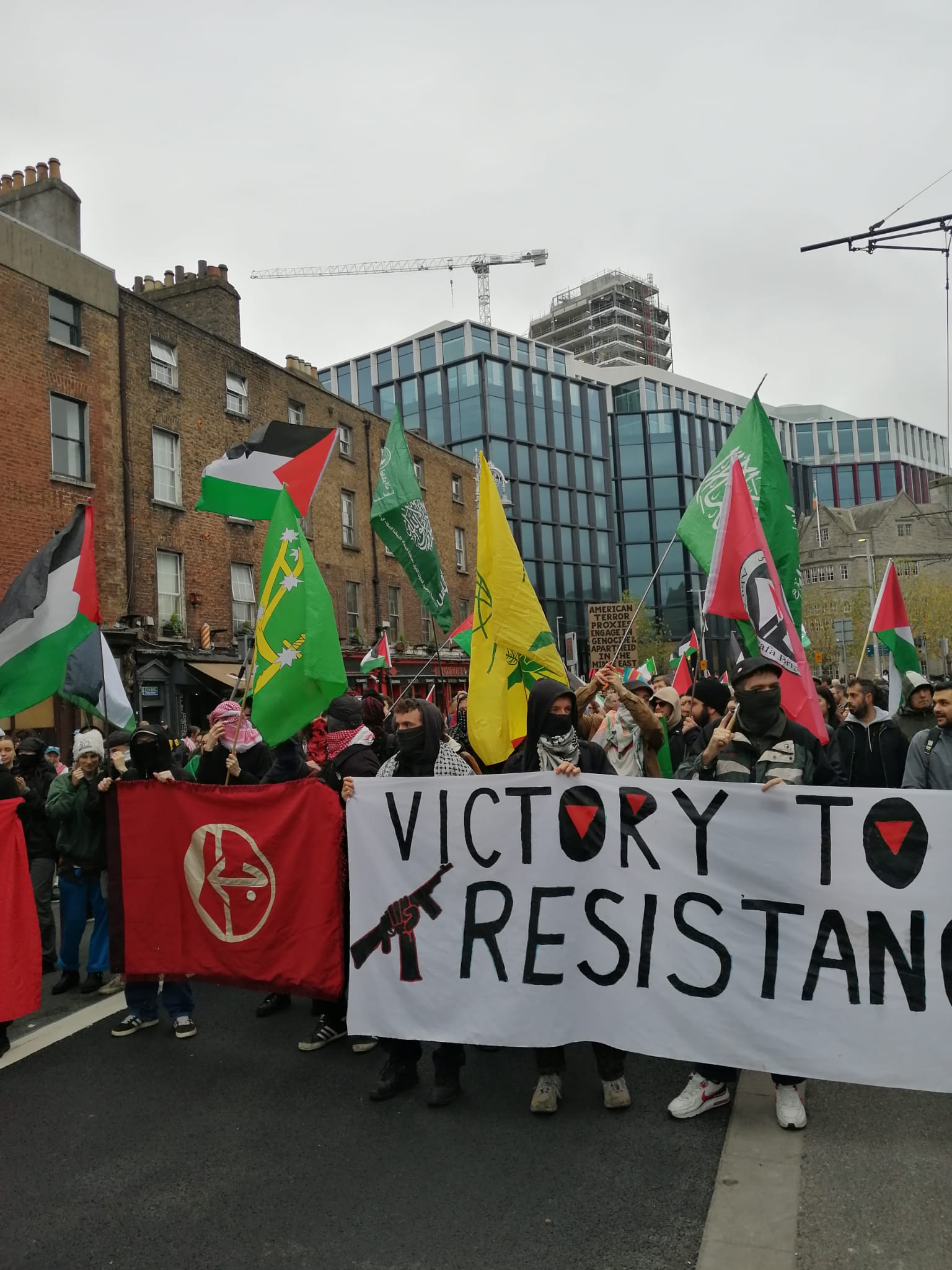
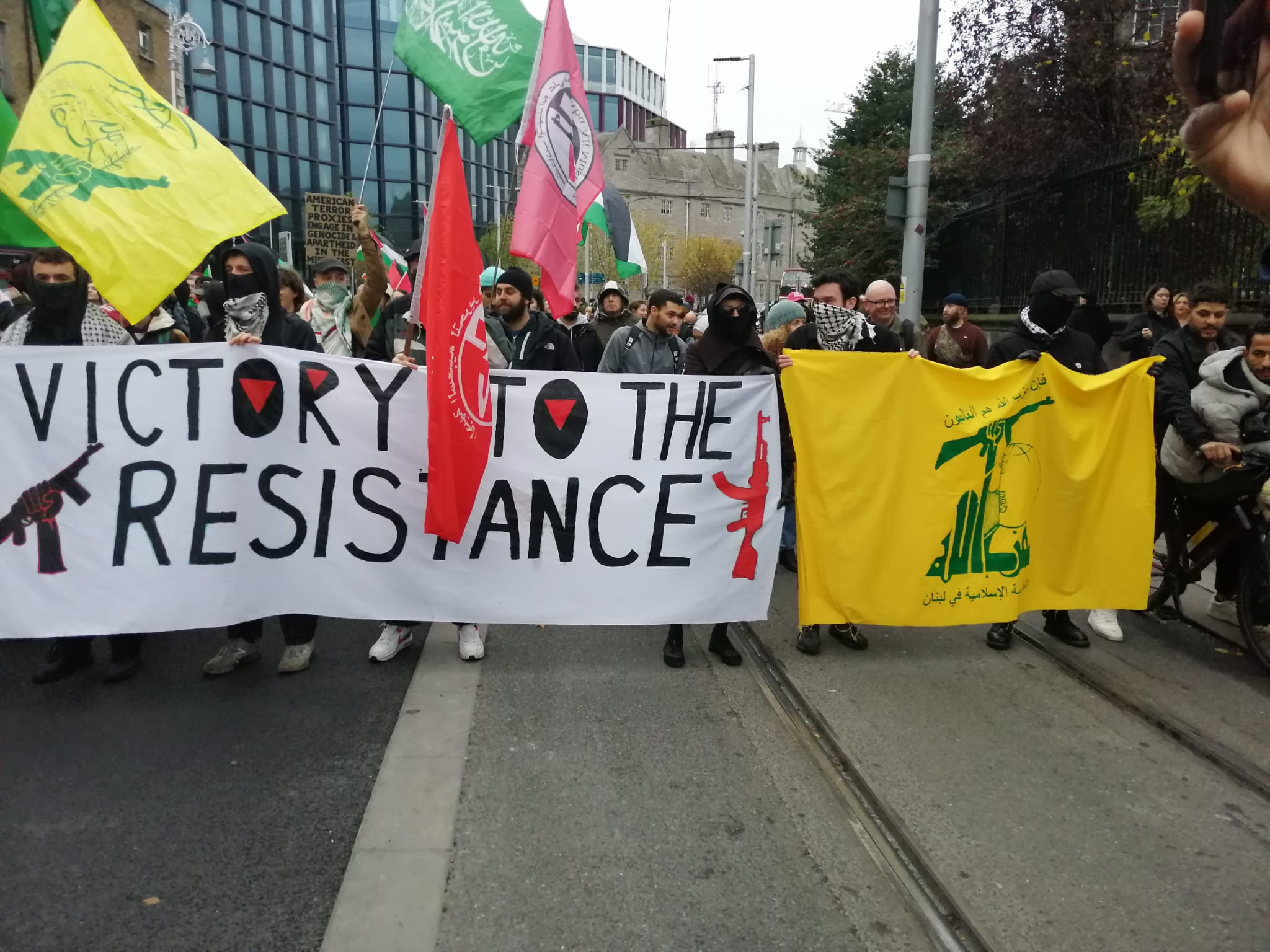
While thousands marched once again in Palestine solidarity in Dublin, a section of the demonstration marched as a bloc in specific solidarity with the Palestinian Resistance with banners, flags and slogans declaring their position.

The Ireland Palestine Solidarity Campaign with a number of branches has been for many years the major organiser of Palestinian solidarity events and had once again called for a national march in Dublin, again to Leinster House, home of the Irish Parliament.

Section of the front of the Palestinian Resistance Solidarity Bloc in Dublin on Saturday. In this photo may be seen the flags of three factions of the Palestinian Resistance and, left foreground, the flag of Irish revolutionary socialist Republicanism, the Starry Plough (Photo: R.Breeze)

This has become a pattern of the main IPSC street activity in Dublin, along with holding a rally on the central pedestrian reservation in Dublin’s O’Connell Street, with occasional marches to the Department of Foreign Affairs (though in the past it organised boycott pickets of ‘Israeli’ products).

The US Embassy seems to have become out of bounds for the IPSC. This is despite the clear responsibility of the USA for supplying most of the armament, political and financial backing for the genocide being carried out by the Zionist state against the Palestinians.

Some believe that the IPSC leadership is complying with the wishes of the Irish police, the Gardaí, not to have Palestine solidarity marches go to the US Embassy. The offices of the EU, Germany and the UK, major contributors to the genocide, have also been given in effect a waiver.

The national march called by the IPSC at its destination in Molesworth Street last Saturday. The photo is taken from the platform and PA lorry facing the crowd, with its back to Leinster House (of the Irish Parliament) which also has crowd barriers erected behind it. (Photo sourced: IPSC)

Neither the march last Saturday nor any organised before it by the IPSC was going to promote solidarity with the Resistance, despite their former chairperson having once said of them in public that they are ‘freedom fighters’. Of course, to the ‘Israelis’ and EU they are ‘terrorists’.

Section of the front of the Palestinian Resistance Solidarity Bloc in Dublin on Saturday (Photo: R.Breeze)

The IPSC has organised only one public meeting during this year’s genocide to highlight the terrible conditions of the thousands of Palestinian political prisoners in ‘Israeli’ jails and rarely mentions them, nor in solidarity with the Samidoun1 organisation being banned in USA and Canada.

In October last year, as this phase of the genocide began, the IPSC dithered over whether to call for the expulsion of the ‘Israeli’ Ambassador to Ireland, as did the Sinn Féin leadership until a near revolt of the party’s members forced them to return to their previous position. As did the IPSC.

Clearly the IPSC leadership is trying to keep itself somewhere around the ‘middle road’ in Palestinian solidarity, probably in order — as it sees it – to remain with influence among the ruling circles. However, the actual results among those circles do not bear testimony to their effectiveness.

NO CHANGE

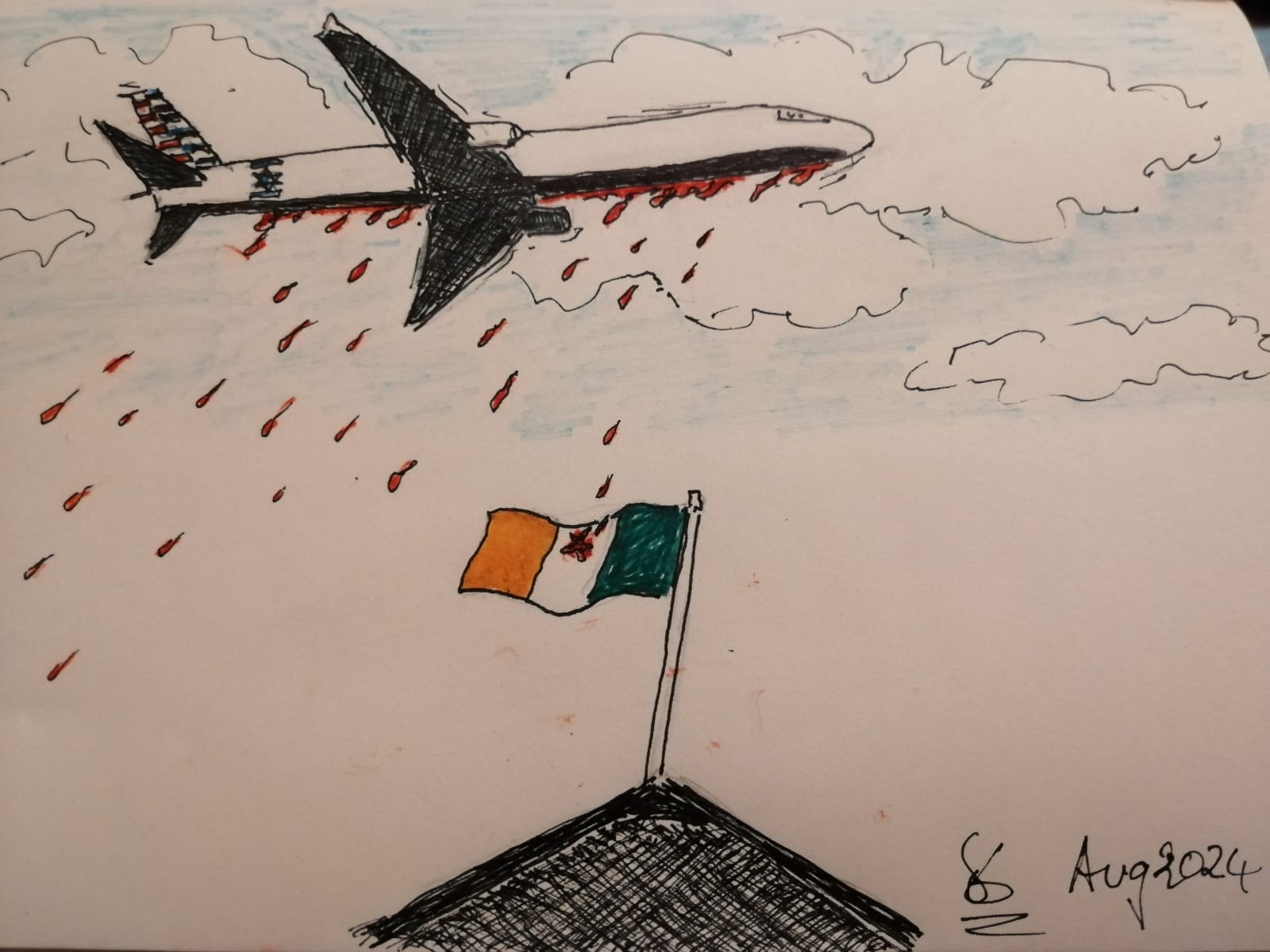
The Irish state continues to permit US military planes and personnel to violate the State’s nominal independence through Shannon International Airport, to permit Zionist armament overflights of its air space (similarly with the RAF) and to permit British Navy docking in Irish ports.

The relatively mild Occupied Territories Bill, long approved through Leinster House, remains not brought into force, blocked by the Coalition Government of Fianna Fáil, Fine Gael and the Green Party. It could not be clearer that the ruling class in Ireland do not feel under enough pressure.

This is despite a clear popular feeling among the public in Ireland of solidarity with Palestine and revulsion at their genocidal attacks by the Zionist state.

There is a long-established train of thought that maintains that solidarity with the Palestinians is not just calling for the genocide to stop – that alone is charity and that actual solidarity means solidarity with the people’s resistance and the political prisoners.

If the IPSC were to adopt that position they might find it easier to support more radical action to pressure the Irish state to break with the western powers’ consensus of support for the ‘Israeli’ state and consequently for its genocide against the Palestinians.

Perhaps that is one of the very reasons that the IPSC leadership will not take that stand and that its stewards have at times even tried to convince people to remove their flags supporting various Resistance factions.

Section of the front of the Palestinian Resistance Solidarity Bloc in Dublin on Saturday (Photo: R.Breeze)

On Saturday independent activists joined those of Saoirse Don Phalaistín, Anti-Imperialist Action Ireland and Queers For Palestine in forming a sizeable bloc on the march with banners, flags and call-and-answer slogans advertising its solidarity with the Resistance.

This seems a welcome trend likely to grow.

End.

FOOTNOTE

1Palestinian political prisoner support and advocacy organisation.

IRAN – WILL IT OR WON’T IT?­

Diarmuid Breatnach

(Reading time: 5 mins.)

Opinions seem divided on whether ‘Israel’s’ recent attack on Iran did much damage and whether Iran will retaliate. On the first, the Zionist Government and its allies claim great success while Iran claimed most missiles shot down and minimal damage.

One takes it for granted that all sides in a war will have an eye to useful propaganda. During the attack, while Zionist and western mass media were claiming numerous ‘Israeli’ strikes on Iran, allegedly real time videos of a quiet Tehran were being posted on line.

It must be said that no satellite photos of any real damage to Iranian installations have been posted on the internet and one of a military facility seeming to show a huge crater appeared later intact on the Internet with a claim that the earlier photo had merely shown a shadow.1

The Iranian authorities did admit to the deaths of four soldiers and a little minor damage, the latter quickly repaired, according to their updates. They also claimed to have shot down all but a few of the incoming missiles.

It seems that none of the manned Zionist aircraft entered Iranian airspace but a few approached the border from Iraq in order to launch their missiles from there, which raises another issue regarding the violation of Iraqi sovereignty by the US military.

According to Alastair Crooke, commentator on Middle East affairs, former British diplomat (then probably MI6 asset) on Judge Napolitano’s Youtube site,2 the first of three planned ‘Israeli’ attack waves encountered something unexpected in the Iranian air defence and the rest of the attack was aborted.

Narratives from each side would be tailored to suit their own propaganda needs but even some of the ‘Israeli’ media and other commentators were critical of the effectiveness of the attack, some saying Iran was hardly damaged while others said economic targets should have been included.

It also does seem that the Zionist attack was unusually restrained in restricting its targeting to military installations.

The speculation has been that the reason for that restraint was the US being quite firm with Netanyahu that the oil etc. installations were not to be hit as Iran’s retaliation would have engulfed not only the Zionist colony but wider western interests in the region and the world economy.

Whichever side is correct in its damage estimation may be relevant or may not. Iran has reiterated its right to defend itself but seemed not to be saying that it would definitely retaliate.

But on Wednesday Admiral Ali Fadavi, Commander-in-Chief of the Islamic Revolutionary Guard Corps of Iran was quoted in some media stating that his country’s military will retaliate, stating that such “is inevitable”, today backed by the Director of the Supreme Leader’s Office.

Michael Jansen, a correspondent on the Middle East in the Irish Times wrote that because Iran was allegedly hard hit in the ‘Israeli’ attack, it will not retaliate and claims that Iran’s previous retaliation was a flop. If that is Jansen’s main basis for her opinion, it is to my mind an unsafe foundation.

In the past I’ve had respect for Jansen’s analysis of the war in Syria and the positions of different factions but this time I think she is very wide of the mark. The previous Iranian retaliations swamped the Zionist air defence system3 with cheap drones but hit many targets with missiles.

It seems to me that Iran WILL retaliate and the only thing that might hold that off or at least moderate the strength of its attack would be if the ‘Israeli’ Government ties up a peace deal with the Palestinian Resistance, led by Hamas. And that looks extremely unlikely, for a number of reasons.

The Resistance is sticking to the terms that were announced by Biden back in May, which he claimed were the ‘Israeli’ Government’s and to which the Resistance agreed, only to see the talks sabotaged again and again by Netanyahu in proposing additions and deletions.

The basics of the Resistance position are:

  • Immediate end to the ‘Israeli’ attacks now and in future
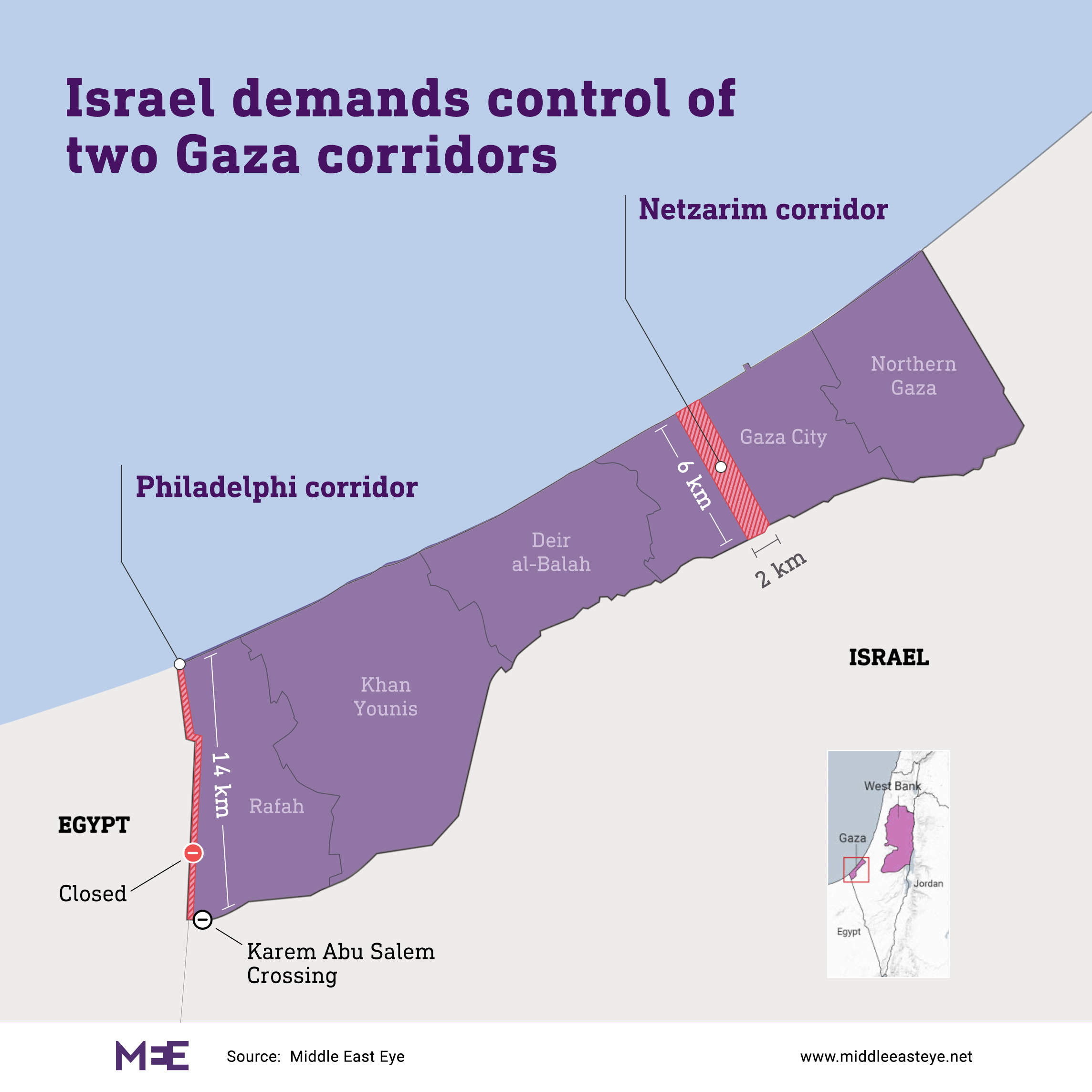
  • Total withdrawal of the IOF from Gaza (including the Nezarim Corridor and Rafah)
  • Total removal of all obstacles to arrival of humanitarian food, medicine etc. supplies
  • Return of all displaced from parts of Gaza as they wish
  • Exchange of prisoners (including bodies of dead Israelis and to include Palestinians nominated by the Resistance, without Israeli veto)
  • Reconstruction of infrastructures and buildings: housing, medical, educational, social, commercial

None of those terms except the exchange of prisoners has been agreed and even there, Netanyahu wanted to exclude some Palestinian prisoners from the exchange. Most fundamentally, he insists on the IOF staying in Gaza, in particular in the “Nezarim corridor”.

It is frequently commented that Netanyahu cannot afford personally to end the attacks in defeat as a postponed court case for alleged fraud and bribery awaits him and, without a victory in his belt, his political fascist friends would abandon him to be savaged by his enemies in the Zionist entity.

However, the continuing Zionist massacres of civilians and wide-scale urban destruction is intended in large part to force the Resistance to accept terms with which the Zionist state agrees, to gain in negotiations what it has been unable to win on the battlefield against the Resistance fighters.

No doubt there are some who think that the Resistance should abandon its demand about total IOF Gaza withdrawal, just to end the massacres. That kind of thinking results in a partial peace to which the enemy will return again and again with violence.

The Palestinian Resistance has clearly decided that they will tough this out in the sacrifice of their people, fighters and leaders in order to get a more stable position for the Palestinian nation, from which to go forward to self-determination – and peace, should that be obtainable.4

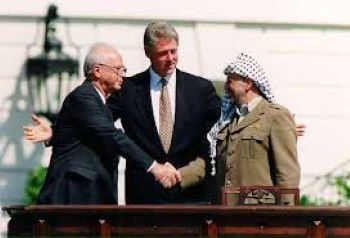
US Imperialism in the form of Bill Clinton supervises handshake between Yitzhak Rabin, Prime Minister of US proxy’Israel’ and Yasser Arafat, then leader of Fatah in control of the PLO at the conclusion of the Oslo pacification process. The Agreement spawned the Zionist-colluding and repressive Palestinian Authority but never gained the Palestinians anything. (Image sourced: Internet)

The last time the Resistance caved in to Zionist and imperialist demands was with the Oslo Accords in 1993, signed for the Fatah leadership by Yasser Arafat. Since then not only did the Palestinians not make any advances but additional Zionist settlements have grown apace.

And every few years have seen new genocidal attacks on the Palestinian people.

The Axis of Resistance considers the Zionist State to be a constant threat to the Arab states and indigenous people of the Middle East, in addition to the Islamic Republic of Iran. The history of the Zionist state’s wars with its neighbours and its backing by imperialism seems to bear that out.

Looked at soberly, the Palestinian Resistance has inflicted a huge defeat on the IOF and the Zionist military mystique on October 7th and, notwithstanding daily genocidal massacres, the Resistance has gone on for a year to deny the IOF a victory in Gaza or on the West Bank.
Hezbollah’s bombardments have cleared much of north Palestine of settlers in addition to hitting targets in central ‘Israel’ and they’ve also fought the IOF to a standstill on Lebanon’s borders. Missiles and drones of the Iraqi Resistance and the Yemeni State have also hit the Zionist State.

The balance of battlefield supremacy is tilting against Israel, thanks to the adaptability, courage and sacrifice of in particular the Palestinian people but now also the Lebanese — and world popular opinion is against the Zionist European settler project as never before.

Iranian drones, one launching, Iran 4 October 2023 (Photo cred: Reuters)

It is necessary to continue the process both to inflict an unmistakeable defeat on the Zionist State and to win substantial advances for the Palestinian people and, incidentally, for the people of the Middle East. These advances entail in addition setbacks for US and western imperialism.

It is important to hammer that nail home, lest it works itself loose before long. I think that at some point Iran will likely retaliate against the Zionist state for its own dignity and defence but also as part of the Axis of Resistance, striving to rid the area of an extremely dangerous infestation.

End.

FOOTNOTES

SOURCES

1The imperialists have Iran constantly under satellite surveillance and it beggars belief they would not have posted photos of significant damage were such to exist.

2Crooke claims that the first wave was to destroy the air defences but failed and encountered something which put all the rest of the attack in danger so they called the attack off and then claimed a victory. Crooke is speculating up to a point about the reasons but claims the facts about the attack are from ‘Israeli’ sources. https://www.youtube.com/watch?v=txkNk76E3SI

3Both ground-based, as with Iron Dome and David’s Sling but also airborne with US and European allied aircraft.

4A similar position was outlined with respect to Hezbollah by Sheikh Naim Qassem in his first speech on Wednesday since his election to the General Secretaryship of the organisation.

PICKETING THE PALESTINIAN AUTHORITY IN DUBLIN

Clive Sulish

(Reading time: 3 mins.)

The Palestinian Authority had a small protest against it in Dublin on the afternoon of Friday 23rd August 2024. This seems to be the first protest that has taken place outside the Palestinian Embassy at 66 Lower Leeson Street.

It would perhaps have been the first protest against the PA in Ireland, were it not for the Palestinian solidarity activists who attempted to convey the Palestinian reality in contrast to the Ambassador’s speech at a public meeting in Belfast in February, before being evicted by Sinn Féin supporters.

Palestinian solidarity activists protesting the Palestinian Authority and Embassy?

At first sight that seems bizarre but as some solidarity activists and most people of Middle Eastern origin know, the PA is not only widely considered unrepresentative and corrupt – and in fact has not held elections since 2006 – but also represses protests in the West Bank against ‘Israel’.

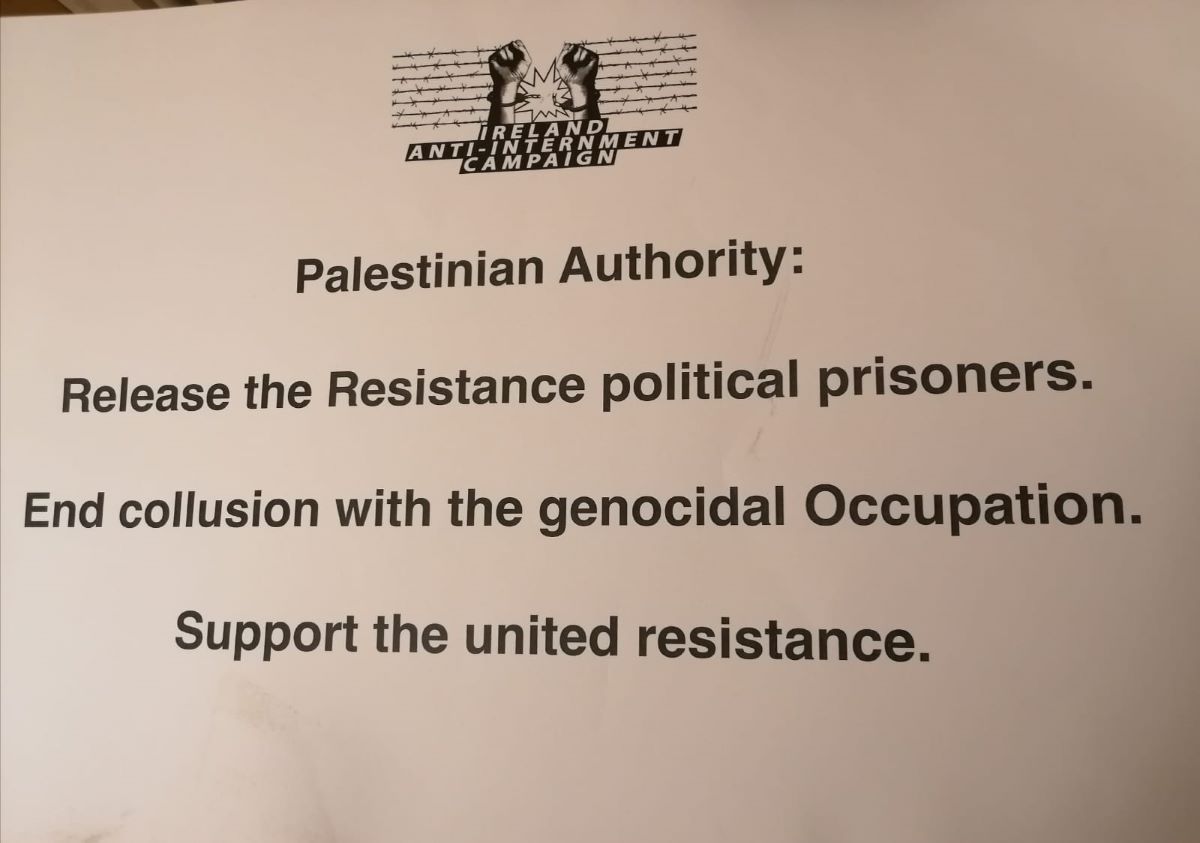
However, the Ireland Anti-Internment Campaign says that its main purpose in calling the protest was to raise awareness of the harm the PA is doing to the Palestinian Resistance, in arresting Resistance fighters and disrupting resistance defence against ‘Israeli’ army incursions.

Photo of placard being displayed outside the Palestine Embassy today. (Photo: R.Breeze)

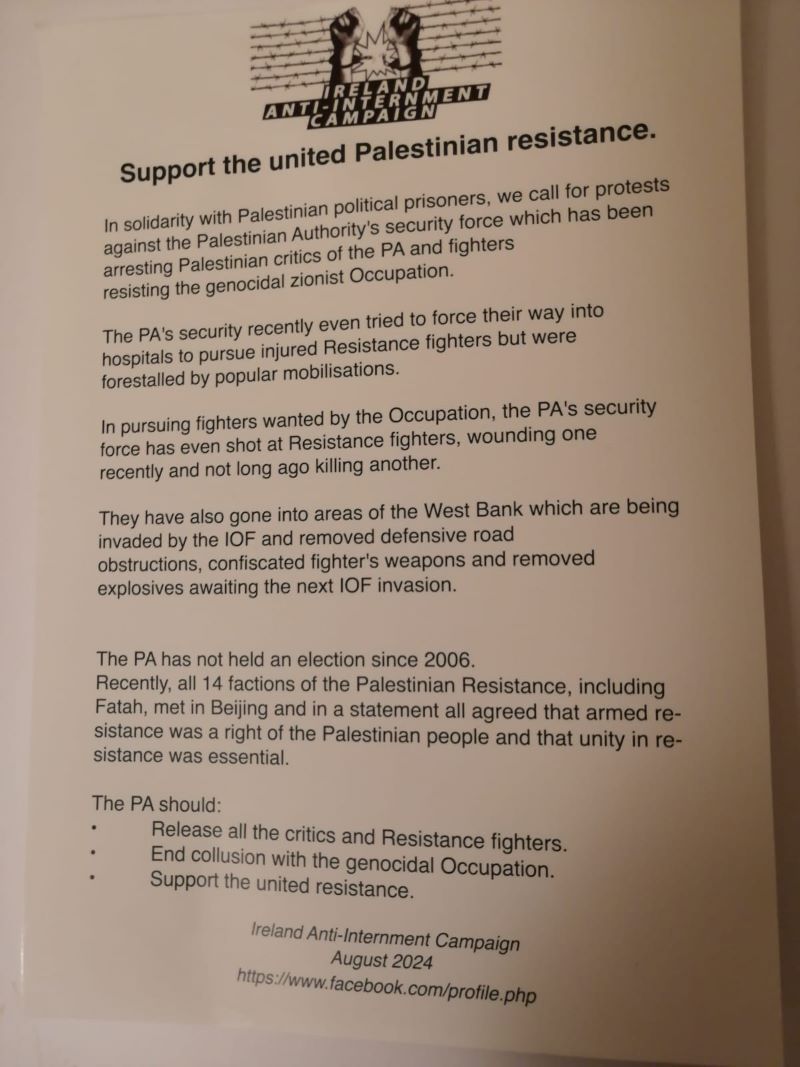
The IAIC’s leaflet handed out at the event points out that the PA’s security force shot and wounded and even killed Resistance fighters, also attempting to enter hospital in force to arrest fighters on two occasions recently, their attempts being frustrated by large mobilisations.

Could a picket on the Palestinian Authority and its Embassy be considered divisive? “Not with justification,” replied an IAIC spokesperson. “It’s the actions of the PA that are divisive. We are supporting the broad resistance there, not one faction or another.”

He points out – as did their leaflet – that 14 Resistance factions including Fatah met in Beijing recently and agreed that the Palestinians have a right to resist, including with weapons and called for unity of all the resistance organisations. “The PA is acting against that unity”, he said.

But why is it that the IAIC called this protest and not one of the Palestinian solidarity organisations? “You’d need to ask them that,” says the spokesperson. “We regularly fly a Palestinian flag on our anti-internment in Ireland pickets; the PA was overdue to be done but nobody else was doing it.”

(Photo: R.Breeze)

The IAIC was founded a decade ago to raise awareness about ongoing internment of Irish Republican activists by revoking ex-prisoners’ licence and through refusal of bail by special no-jury courts. In those cases it can take two years for a case to come to trial.

However the IAIC has organised or participated in other events also, such as those around framed prisoners like the Craigavon Two in the Six Counties and the Munir family in England. It has also called two of its pickets since October 2024 to specifically highlight Palestinian prisoners.

Will the group be regularly picketing the Palestinian Authority now? “Probably not. It’s not what we were set up for but we felt the ice needed breaking on this. Others need to step forward now,” replied their spokesperson, though signalling that they would support others in doing it.

Photo of copy of the leaflet being distributed outside the Palestine Embassy today. (Photo: R.Breeze)

It is probable that a representative of the PA will be welcomed soon by the Irish Government as part of its recognition of the ‘Palestinian State’. One wonders how this reception of a corrupt and Occupation-collusive organisation will be mediated in the Palestinian solidarity sector in Ireland.

The Governments of the EU, including Ireland’s, formally recognise the PA but not only that – so does Sinn Féin in Ireland, EH Bildu in the Basque Country and Esquerra Republicana in Catalonia. This corresponds across the board also to support for ‘the Two-State Solution’ (sic).

What that entails is allocating the Palestinians less than 20% of their homeland weaving around illegal zionist settlements, with least water and some of the worst land, under the permanent watchtowers and guns of their genocidal neighbour.

Organisations and individuals within the broad Palestinian solidarity movement will need to decide exactly what their solidarity with Palestine actually means, especially for the Palestinians themselves.

End.

Reference

Ireland Anti-Internment Campaign: https://www.facebook.com/p/Ireland-Anti-Internment-Campaign-100063166633467/

CHECKPOINTS OF HUMILIATION AND DEATH

Diarmuid Breatnach

(Reading time: 3 mins.)

Most people in the Western world will have experienced being stopped at a checkpoint, usually feeling irritated at the delay to their journey, commonly afraid only if driving under the influence of alcohol or drugs.

Or curious perhaps – what is this stop about? In many parts of the world however, apprehension or fear are the normal emotions for drivers approaching a checkpoint. The mind wonders: Might I be arrested, beaten, robbed, raped, killed?

For people in a country invaded and occupied, those are rational fears; the people staffing the checkpoints are occupying soldiers or police; or perhaps auxiliaries, locals working for the occupation, perhaps from a different ethnic group. Which can sometimes be worse.

Many Palestinians have been arrested at checkpoints and certainly some have been killed there, while arrest does not mean one will not be killed anyway, or not be used as a human shield under threat of death, or even killed despite doing what their captors asked.

In those situations there are other negative experiences not necessarily including physical harm: humiliation, harassment, the display of power imbalance in how people are treated, delayed, mocked, insulted. An everyday experience for Palestinians passing through IOF checkpoints.

A busy checkpoint, the Palestinians packed worse than cattle. (Photo source: Internet)

It was so also for many people going through British Army and colonial police checkpoints in the occupied Six Counties of Ireland. Cars with Irish registration plates might be held up for half an hour or longer. Or people who answered that their destination was Derry, instead of “Londonderry” (sic).

People have had their children upset by searches, cuddly toys ripped open, intimate adult clothing in luggage inspected, been body-searched, intimidated by loaded weapons pointed at them and, if known as activists, or even related to activists, been threatened with murder.

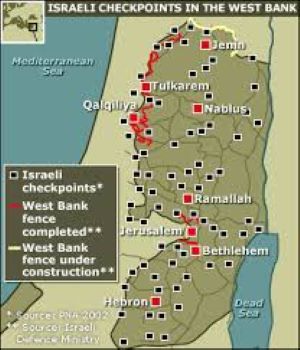
All of this happens to Palestinians at checkpoints where Israelis can pass through, hardly stopping. And there are LOTS of checkpoints throughout the West Bank or on the way into “Israel” (i.e. the lands seized and occupied by the Zionists since 1948).

Map of established Occupation checkpoints in the West Bank, illegally occupied according to the UN. Temporary checkpoints in addition are often established. (Source: Internet)

The guards on checkpoints are often bored or irritated and take out their feelings on those trying to pass through. But the oppressing power wants that to happen: the checkpoints are part of the control structure, physical and mental in effect.

The structural effects and attitudes of the checkpoint guards affect Palestinians travelling to and from their jobs inside ‘Israel’ in addition to Palestinians travelling between one place and another in the occupied lands outside official ‘Israel’.

Those journeys can be for medical treatment (including emergencies), to work or apply for work, to school or university, shopping, to visit friends or relatives, to attend weddings, births, funerals, to support the elderly or disabled, to assist in community work, to take a break, attend festivals …

Apart from anything else, for the Palestinians queuing it may mean a long time in stifling heat in close proximity to other bodies, without water or with a limited supply, no access to a toilet, possibly in direct sun or, in winter, exposed to cold wind and rain …

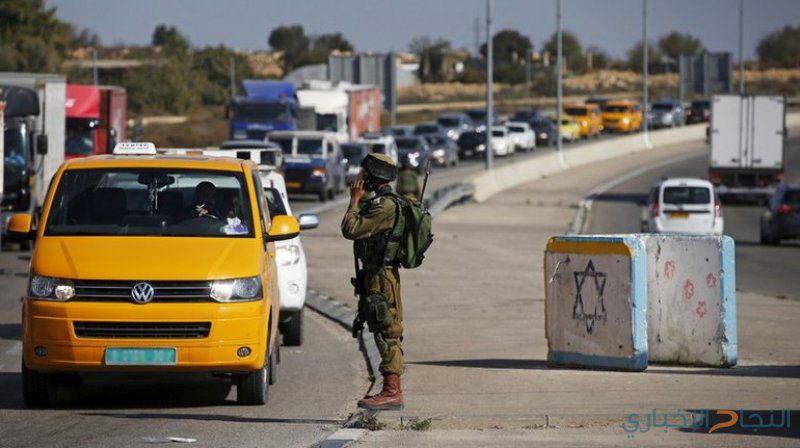
An Occupation soldier at a pedestrian checkpoint examines the IDs of Palestinian children accompanied by an adult for their protection. (Source: Internet)

VULNERABLE

Temporary checkpoints however are also vulnerable. A soldier or policeman approaching a vehicle or even pedestrians on foot has only his body armour and firearm standing between him and attack, even if having done this four hours a day for weeks without a single misadventure.

Because one day, just that once, it might be different.

In the past, a Palestinian might blow himself up at a checkpoint. More recently another who’d had enough drove his car through a checkpoint at speed, fatally wounding one of the guards and then shot another. On another occasion, a Palestinian seriously injured two guards by stabbing them.

A long line of Palestinian vehicles await clearance to proceed through IOF checkpoint (Photo sourced: ARU)

Now, more and more frequently, IOF checkpoints are coming under fire. An incident might last no more than a minutes or two but how long does it take a bullet to travel and enter a body? And even without killing or wounding the body, what is the affect on the mind to feel like a stationary target?

These might seem easy operations but no armed action against the Zionist state is free from danger, especially with IOF drones to record or even fire at Palestinian fighters, to say nothing of artillery shells, bombs and missiles. Success rate in killed or injured IOF in such operations tends to be low.

But their psychological effects are quite significant and wars are not fought just by and on bodies; they are fought by and on minds too. The checkpoints, instruments and symbols of power and oppression have become vulnerable and targets … like the repressive forces staffing them.

End.

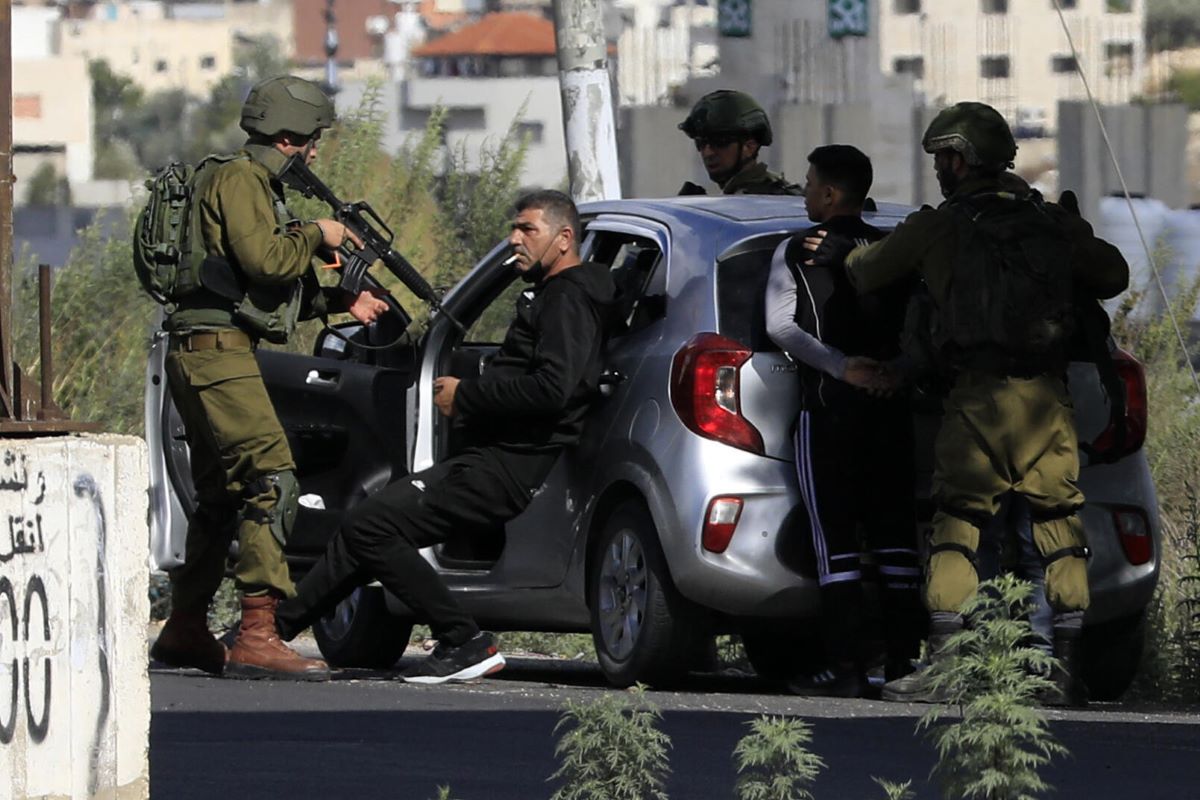
A Palestinian youth being arrested by Occupation soldiers at a checkpoint. (Photo cred: Zain JAAFAR / AFP)

SOURCES & FURTHER INFORMATION

2023 report on obstacles to movement in Palestine: https://www.ochaopt.org/2023-movement

June 2024 article about military checkpoints in Palestine: https://www.btselem.org/freedom_of_movement/checkpoints_and_forbidden_roads

https://www.france24.com/en/live-news/20240209-israeli-checkpoints-paralyse-west-bank-life-as-gaza-war-rages
Checkpoints as deathtraps: https://reliefweb.int/report/occupied-palestinian-territory/israeli-checkpoints-have-become-death-traps-occupied

Great Leaders Fall

Diarmuid Breatnach

(Reading time: 5 mins.)

A number of great leaders of Arab resistance to imperialism and zionism have fallen in the last few days. “Those who live by the sword …”, the wise will comment. But they did not die by the sword but rather by long-range missile assassination.

Still, we can take the comment as a metaphor, that those who live by violence die by violence. But do they? Has Genocide Joe Biden died by violence? Sunak? Von der Leyen? Scholz and Merkel? Macron? Netanyahu, Gallant, Smotrich? No, it is clearly not a general rule.

But revolutionary fighters, commanders and leaders – they are killed, again and again. Fighters who become commanders are particularly targeted and, in the Middle East for sure, so are their spouses, their children, their parents … This is the way of Mossad and the IOF but also of the US and UK.

The SAS and MRF units of the British Army did that in the 30 Years’ War in the occupied Six Counties too. Assassinations of leaders are intended to disrupt the revolutionary organisation and demoralise the Resistance.

Sometimes, the intention is to have a revolutionary leader replaced by a traitor or someone who is ideologically pliable but often too the fallen are replaced by others as dedicated and competent, if not more so.

The IOF are accomplished assassins of individuals, also killers of civilians, just not very good at combating armed resistance, particularly in the absence of air cover..

But why shouldn’t revolutionary leaders be felled – don’t they send others out to kill or be killed? Certainly they do and all Arab resistance movement commanders know that they risk assassination, many of the commanders and fighters writing their wills while in active service.

However, visit imperialist war memorials listing the names and ranks of the fallen in war and see how many names of their armies’ generals can be found there. Not many, that’s for sure.

Haniyeh was the chief Resistance representative in the Gaza ceasefire/ peace talks. Prime Minister Mohammed bin Abdulrahman al-Thani of Qatar, which is mediating the talks, tweeted: “How can mediation succeed when one party assassinates the negotiator on other side?”1

Two revolutionary leaders who fell to assassination so recently were Sayyed Fouad Shukr of Hezbollah in a suburb of Beirut and Ismail Haniye of Hamas in the Iranian capital, Tehran. Each organisation has issued statements that they will not be stopped and that they will claim revenge.

In another assassination strike on Tuesday in Iraq, admitted by the USA, Khateb Hezbollah suffered the loss of martyred leader Abu Hassan Al-Maliki and martyred fighters Ali Al-Moussawi, Hassan Al-Saadi and Hussein Karim Al-Daraji,2 bringing huge crowds out in protest there.

The Iraqi Islamic resistance had begun shelling US Army bases there recently, partly in frustration at the lack of any move to leave the country despite having indicated they would but partly also no doubt in frustration at not contributing to the united effort in solidarity with the Palestinians.

Iran declared furthermore that since the assassination of Ismail Haniyeh took place on their national territory that the obligation of response falls upon them. One imagines that another strike on somewhere in Israel will be considered necessary though the precise target is unknown.

Declarations of condolence, defiance and continuity were also issued by resistance factions in Palestine, Lebanon and Iraq, as well as by the leaderships of Yemen and Tunisia. A general strike was called in the West Bank and marches of defiance and solidarity held in a number of countries.

Confrontations with settlers and with the Occupation army have been taking place in towns across the West Bank and the war in Gaza continues, more or less as normal: daily massacres by the IOF, actions by the Resistance.

Collateral damage’

The strikes on the leaders also claimed other lives: six people including three women and two children, along with Iranian Revolutionary Guard Corps member Milad Bedi were killed in the Beirut assassination of Fuad Shukr and 78 injured in the collapsed building.3

Along with Haniyeh in Iran died his bodyguard and veteran Palestinian resistance fighter, Wassim Shabu, with no details of other ‘collateral damage’ from there or from Iraq so far.

According to the rules of war agreed among the imperialists, assassination of commanders, even civilian ones in times of war, is justified. ‘Collateral damage’ to a certain degree is also permitted by those rules but how can the bombing of journalists and killing two in Gaza be justified?

They were at the rubble site of Haniyeh’s former home, perhaps reporting on some kind of event marking the assassination, since they cannot attend the equivalent of a wake or a laying out of the body, the funeral to be held in Iran. How was their killing justifiable by any stretch of rules?

Ismail Al-Ghoul and Ramy Al-Reef were the two press men martyred there. Those two deaths bring the number of journalists killed in Palestine (always by the IOF), to 165, the highest number of journalists killed in any conflict since data began to be collected by the CPJ in 1992.4

Life of revolutionary leaders

The life stories of the martyred leaders are instructive in themselves. Ismail Haniyeh grew up in a refugee camp in Al-Shati in Gaza, son of a community driven out of their home in Jura in Askelan5 in 1948. He graduated with a degree in Arabic Literature from the Gaza University in 1981.

It was in university Haniyeh became politically active, joining the student section of Islamic Bloc (forerunner of Hamas), becoming arrested and detained three times, the final one for three years, after which he was deported to southern Lebanon with other leaders.

Ismail Haniye survived at least four assassination attempts, including in 2003 and in 2006.

Haniyeh led Hamas to victory in the 2006 elections for the legislature of the Palestinian Authority. The Fatah leadership refusing to hand over the administration in Gaza, Hamas removed them in a short struggle,6 then Abbas7 refused to recognise the election results there or in the West Bank.

The Zionist State followed, as did the Western powers and the siege of Gaza began.

Haniyeh’s granddaughter was killed last November in a bombing on a school. Three of his sons and three grandsons were assassinated in an IOF strike on their car in April and last month, 10 of his family, including his sister, were killed in an IOF bombing.

Sayeed Fuad Shukr 62, also known as Al-Hajj Mohsen, was born in the city of Nabatieh in Baalbek in eastern Lebanon, according to the US government’s Rewards for Justice website, which offered up to $5 million for information on Shukr.

He came to political struggle in the resistance to the IOF invasion and occupation of Lebanon which was the spur to the creation of Hezbollah. Fuad Shukr as a fighter rose through the political and military ranks to the Jihad Council fighting the IOF and its Lebanese proxy.

Sayeed also would have been party to the decision to send Hezbollah fighters to assist the Syrian state resist attacks by NATO forces and their proxies and probably also Turkish.

He was married with children; his daughter wrote pieces in particular about martyrs under a pseudonym but just published a piece about her father under her own name on Resistance News Network (on Telegram).

Dying Gaul statue, 1st Century CE, probably Roman sculpture. By his neck ornament, the Gaul appears to be a warrior of high rank. The Gauls were a Celtic culture inhabiting most of modern-day France, Switzerland and parts of Italy; after many wars they were crushed by the Roman Empire. (Source image: Internet)

Great leaders

I commented that they were great leaders. By all accounts they were. They were Muslim revolutionaries and I am an atheist but more to the point their religious belief was an important part of their politico-social ideology, to which my own secular revolutionary ideology is opposed.

But they were revolutionaries non the less, courageously leading their people in struggle against their oppressors, who are very powerful enemies. They had emotion, which they let out in speech. In planning and in response to events however, they thought things through before acting.

Ismail Haniye probably underestimated the extent – in length of time and numbers of dead, in starvation and destruction of all infrastructure — of the ‘Israeli’ genocidal war after October 7th.8 That does not mean however that the breakout and attack was not necessary.

But the resistance was led, day after day, using the tunnels that had been dug through the years of preparation and the weapons researched, developed and produced over that time. In the truce/ ceasefire negotiations, the leadership stuck to the necessary minimum, which must’ve been hard.

Great fighters of the rank and file fall and are constantly being replaced and multiplied. Thousands of civilians have been killed, disabled and traumatised, yet the Palestinian population will recover and rebuild. Great leaders have fallen – let us hope their replacements will be great too.

End.

Footnotes

1https://www.axios.com/2024/07/31/hamas-ismail-haniyeh-killed-iran Just one more proof, in addition to going back on agreements, adding new requirements etc showing that Netanyahu never had any intention of negotiating a genuine ceasefire, exchange of prisoners and withdrawal from Gaza and the Rafah Gate to allow humanitarian aid to enter. Indeed he often said that his chief aim was wiping out Hamas and would not permit self-governance in Gaza – it was only a few of his officials and the US administration which kept pretending otherwise.

2 https://t.me/PalestineResist/50870

3https://www.reuters.com/world/middle-east/hamas-chief-ismail-haniyeh-killed-iran-hamas-says-statement-2024-07-31

4Committee to Protect Journalists https://cpj.org/

5Now Zionist settler district ‘Ashkelon’.

6This is the reality usually disguised in the western mass media by phrases like “Hamas seized power in Gaza” or “Hamas took control in Gaza”.

7Mahmoud, Fatah’s boss of the PA, widely known for personal corruption and nepotism and also for collusion with the Zionist Occupation.

8Even the most pessimistic could hardly have expected the extent of the genocide or the extent of the collusion or forbearance of the West and most of the Arab states.

Sources

Sayyed Fouad Shukr (but including rubbish about the explosion killing children in the Golan): https://www.aljazeera.com/news/2024/7/31/who-isfuad-shukr

Iraq assassinations: https://www.middleeastmonitor.com/20240731-us-air-strike-in-iraq-as-regional-tensions-worsen/

AN APPROPRIATE WELCOME FOR HIM OR HER

Diarmuid Breatnach

(Reading time: 4 mins.)

It is reported that at some point in the near future a representative of the Palestine Authority will be officially received in Leinster House as part of the recognition of the Palestinian State by the Irish Government (and presumably by the Irish State).

This will be an important occasion and all who support the Palestinian people should get ready to give this representative of the Palestine Authority an appropriate welcome.

The PA is an unelected, unrepresentative, corrupt, repressive and occasionally murderous organisation colluding with the ‘Israeli’ occupation, feeding its Occupation master (and their master’s masters) with information on the activities and persons of the Palestinian Resistance.

In the course of the current genocidal offensive of the Occupation, operatives of the PA have seized weapons of the Resistance, dismantled explosives1 and for years have arrested and jailed activists. They also arrest Resistance activists to hand over to the Occupation.

In carrying out this dirty ‘duty’ for their masters, the PA encounter natural resistance and in overcoming that resistance the PA has executed and killed under interrogation dissidents and members of the Resistance, including since October last year.2

Palestinians objecting to repression face the security force of the Palestinian Authority. (Image sourced: Internet)

Elected once, then widely rejected

Since it was created in 1994 arising out of the Palestine Pacification (wrongly named ‘Peace’) Process,3 elections were held by the PA just twice. The Fatah political (and military) party under Yasser Arafat won the first ones in 1996 but Hamas overwhelmingly won the next, in 2006.

The largely secular-voting Palestinian society rejected Fatah in favour of an Islamist party largely because of Fatah’s corruption and nepotism in the PA and also due to its collusion with the Israeli state, formally and informally in fact.4

The Hamas electoral victory of 2006 was not accepted by the Western powers, nor by Fatah, who refused to vacate their administrative control. Eventually, after a short, sharp struggle in June 2007 Hamas evicted them from the positions in Gaza to which the electorate had voted Hamas.

However, Hamas refrained from doing the same in the West Bank, presumably to avoid all-out civil war and so Fatah remains in control of that section of Palestinian governance, which is the one universally known as “the Palestinian Authority” (and, since 2013, as “The State of Palestine”).

Since 2006, the PA has held no elections though it was supposed to do so every four years.5 The reason is clear: Hamas would win again and the Fatah leadership want to hold on to their corruption opportunities and are decidedly opposed to having their funding streams6 cut.

Currently Hamas runs the government of Gaza and is the leading element in the Palestine armed Resistance, a coalition of Islamist and secular organisations that are united in fighting the Israeli occupation and in the negotiation position of the Resistance.

Fatah had been invited to participate in talks in Beijing in April to present a united Palestinian front but at the last minute declined to attend. Nevertheless, in recent days they have been invited again; it is not known at present whether their representatives will attend or not.7

Hamas and others have called for a unified position on Palestinian self-determination and for participation in a broad united Palestinian government.

Netanyahu, with the support of his internal allies and with the US and Western powers externally, refuses to accept the verdict of the Palestinian electoral process and wants a pro-Israeli administration there which, for the Western powers, means a “revitalised”8 Palestine Authority.

US Middle East would-be ‘fixer’ Blinken, already mooted that9 and Mahmoud Abbas, sitting grossly at the head of the PA in the West Bank, indicated his willingness for the job.

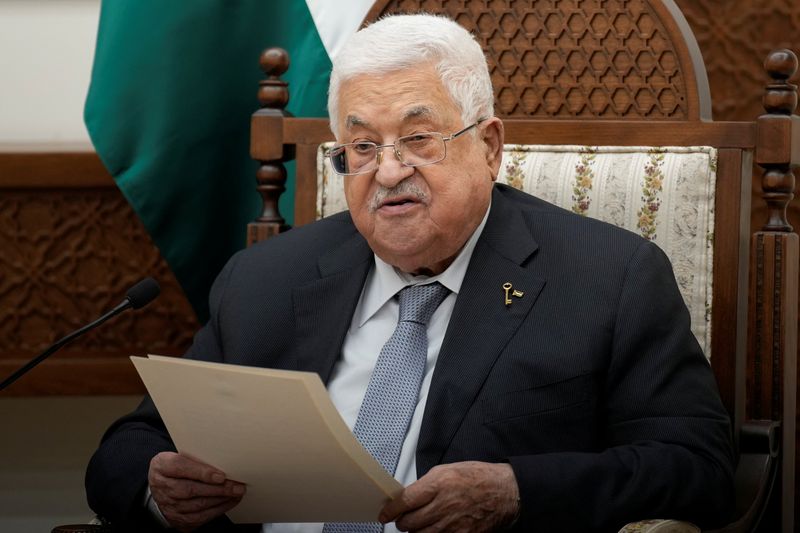
Palestinian Authority President Mahmoud Abbas reads a statement as he meets French President Emmanuel Macron, in Ramallah, West Bank, October 24, 2023. Christophe Ena/Pool via REUTERS/File Photo. Note: The key on his jacket lapel is a symbol of the right of return of Palestinian refugees for which the PA has done nothing at all and which Fatah agreed to exclude from the Oslo Accords under which the PA was founded.

The USA also proposed a coalition of their Arab regime clients for that job but the Resistance has made it quite clear that managing Palestinian society and resources is for Palestinians elected democratically only and anyone else will be a usurper for the Occupation and treated accordingly.

The real purpose of Palestinian State ‘recognition’ by the Three

Sadly, it is in this context that we should see the Irish, Spanish and Norwegian recognition of the Palestinian State. It does not represent a break from the EU’s imperialist position of support for Israel in principle but rather only in tactical approach.

These states are giving the imperialists “good advice”. What they are saying in effect is this: “You have to make the Palestinians thing that they are gaining something and use Palestinians to control Palestinians. Otherwise they’ll continue resisting and you could lose the whole thing.”

Coat of arms of the Palestinian Authority (Image sourced: Internet)

They know of what they speak. This was what the British colonialists imposed on Ireland in 1922 and what the Spanish ruling class imposed on the southern Basque Country, Catalonia and Galicia after the Franco Dictatorship, granting them limited autonomy under Spanish control.

And cultivating “independent” locals to run these for them.

The program these states desire for the Palestinian people is one in which they will have their local autonomy in a Palestinian state on approximately 20% of their nation, with worst land and least water and under the guns and watchtowers of their expansionist and dominating neighbours.

The reality of Israeli genocidal colonisation and the “two-state solution” beloved of imperialists and liberals. (Image sourced: Internet)

The decision on what the Palestinian people accept or reject is ultimately theirs, of course. Equally, how we decide to receive representatives of this undemocratic, corrupt, treasonous and violent PA is ours.

Let us not fail to make it a hot welcome, both in solidarity with the Palestinian people and in apology for the neo-colonial proposals of this Gombeen state.

Let those Irish political parties that support the PA answer for their position. Ours should be clear, from which too our actions should flow.

End.

FOOTNOTES

142 times in the West Bank since October 7th and most recently this week as I was writing this piece, blowing some up at 3am on the morning of the 17thJuly.

2https://www.jpost.com/breaking-news/article-799496

3Arising out of the 1993-1995 Oslo Accords.

4e.g. in concluding a deal that excluded the Palestinians still in “Israel” and any right of return for the millions of Palestinian refugees around the world.

5https://www.aljazeera.com/opinions/2021/1/27/palestinian-elections-democracy-for-no-one

6Mainly from the EU and USA but also from Arab and Russian sources.

7An anti-Hamas reference https://www.al-monitor.com/originals/2024/07/guarded-optimism-palestinian-reconciliation-ahead-fatah-hamas-meeting-china Hamas has indicated they want them to attend and at least some of the other Resistance groups are likely to do so.

8i.e, cleaned up a bit.

9https://www.washingtonpost.com/politics/2023/11/01/blinken-envisions-revitalized-palestinian-authority-charge-post-war-gaza/

SOURCES & ADDITIONAL INFORMATION

https://en.wikipedia.org/wiki/Palestinian_Authority

I do not endorse some of the opinions in this: https://www.fdd.org/analysis/2024/03/06/10-things-to-know-about-the-palestinian-authority/

https://www.irishtimes.com/world/middle-east/2024/07/14/the-palestinian-authoritys-shrinking-influence-in-the-west-bank/

Repression of dissent by the Palestinian Authority: https://www.amnesty.org/en/latest/news/2021/07/palestinian-security-forces-escalate-brutal-campaign-of-repression-2/

https://www.aljazeera.com/features/2022/1/25/analysis-palestinian-authority-cracking-down-on-opposition

THE REPRESENTATION OF REVOLUTIONARY ICONS

The role of culture in revolution is of great importance – greater even than that of the armed struggle, certainly in the initial and later stages. We are created by evolution but we are born into and raised in culture.

The question of whether that culture is to be revolutionary or liberal is of crucial importance.

I have remarked on how Mandela, jailed for his revolutionary armed activities, was marketed as a peacemaker and later became a figurehead of pacification of the South African struggle. Bobby Sands, a revolutionary fighter to the last, has also been represented as a peaceful icon.1

And so also was Terence McSwiney who, like Bobby Sands, died on hunger strike.2

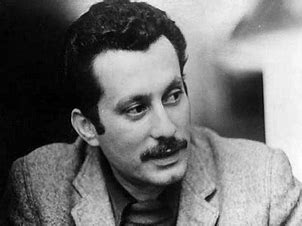
The following article from Resistance News Network, reflecting on the work of the revolutionary writer Ghassan Kanafani who was murdered by Israeli Zionism and his subsequent representation as an icon is I think of substantial interest. D.Breatnach

Translated by Resistance News Network
Originally by 
Nidal Khalaf, 16 July 2022

(Reading time: 6 mins.)


Ghassan the poet? Ghassan the Palestinian? No, 
Ghassan the revolutionary!

In colonial wars, the creation and dissemination of symbols to the public is a crucial battle in the war of consciousness building, even if its effects are not clearly visible in the present.

Perhaps the most prominent example of these battles was the image of Che Guevara in the wars of liberation in Latin America. Ernesto Guevara’s persona represented an individual model that encapsulated the revolutionary spirit of people fighting for their freedom from American hegemony.

As the American empire recognized its inability to destroy Guevara’s image, they transformed his image into a consumer commodity.

This was to divert his image from its original revolutionary meanings and repurpose it in the service of economic and cultural agendas that contradicted Guevara’s own principles and what he represents.

In the Arab context, the war to liberate Arab symbols from the captivity of history monopolists continues to intensify, as it involves obscuring forgotten heroes in favour of fabricating mythical legends designed to tamper with the boundaries of nationalism and betrayal in the Arab mind.

In this context, the fiftieth anniversary of the assassination of the martyr Ghassan Kanafani is being observed, with pages and websites filled with commemorations of Ghassan’s life, his quotes, and his most significant works.

It is no longer surprising that Ghassan Kanafani is celebrated on both normalization platforms as well as liberal ones, when voices are raised to commemorate Ghassan even as they are in the heart of the hostile project under the umbrella of its military bases.

Thus, the question arises: which Ghassan Kanafani are we commemorating today? And how do we protect the Ghassan we know?

Ghassan Kanafani’s life provided rich material for readers, followers, and analysts after his martyrdom.

However, the perception of Ghassan was not independent of the political contexts of the recipient interpreting his word, resulting in multiple “versions” of Ghassan Kanafani, some of which we review below.

Ghassan Kanafani: The Writer (only?)

The most widespread version of Ghassan Kanafani is that of a “writer” who wrote stories, plays, and depicted the Palestinian reality.

The spread of this version may be justified since Ghassan’s literary works are the most popular among people and have played a significant role in spreading his name.

However, confining Ghassan Kanafani to the realm of “literature” is not always innocent, and in some respects, it is a deliberate reduction of Ghassan Kanafani’s political work.

Ghassan was responsible for mobilization, media, and was a part of the political decision-making circle in the Popular Front for the Liberation of Palestine since it was part of the Arab Nationalist Movement. He remained in this role until his martyrdom.

Moreover, Ghassan’s literary output never compromised or was at the expense of his political positions or took precedence at any point in his career.

In terms of production, his political studies, research, articles, and editorial journalism are as abundant and important as his narrative and theatrical works.

Even the latter were never detached from the political context; instead, the narrative served as a framework through which Ghassan conveyed his political, social, and even philosophical ideas.

Consequently, the image of Ghassan as “the writer engaged in politics” falls away, replaced by the truth of Ghassan — the politician who harnessed literature in the service of a political cause.

The danger of this deliberate reduction lies in paving the way for a sanitized image of Ghassan Kanafani, presented to the public by liberal (and even normalization) pages and platforms to gain credibility in Ghassan’s name.

Kanafani tackles a fundamental dilemma that burdens our political reality to this day, which is the crisis of “the prioritization of internal change over liberation.”

Thus, reductionism turns into deliberate distortion, making Ghassan Kanafani’s name a “honey” slipped into the poison of isolationist, liberal, and anti-resistance ideas on our land under the guise of freedom and liberation.

Otherwise, how can we understand the celebration of Ghassan Kanafani by liberal platforms and influencers at Al-Udeid Air Base?

Ghassan Kanafani: the Palestinian (only?)

One of the unjust reductions of Ghassan Kanafani is the confining of his personality and his works to “Palestine,” as delineated by colonialism.

Again, one can find an excuse for this reduction because Palestine represents the primary aspect of Kanafani’s political and literary identity, and his experience is closely tied to the general Palestinian experience of war, forced displacement, diaspora, and the struggle for return.

Some people overly emphasize Ghassan’s Palestinian identity, overshadowing his Arab dimension, which he never concealed.

In reality, examining Ghassan Kanafani’s political studies unveils to us the truth of Ghassan as an Arab nationalist thinker who worked hard and struggled to develop practical frameworks for Arab revolutionary theory.

This is made clear in his in-depth study, “The Arab Cause in the Era of the United Arab Republic,” where he discusses the essence of the imposed war on our region, identifying enemy and friend camps, and ultimately defining the main goal of the war: liberation as a condition for unity and renaissance.

Ghassan further elaborates on this study’s conclusions in another study titled “The Revolutionary Applications of Arab Nationalism,” published in 1959, in which he masterfully details the concept of Arab unity and the tools for its practical implementation.

Ghassan Kanafani goes beyond this by considering the confrontation of isolationist (regionalist) thought a revolutionary necessity, describing “isolationism” as something that “contradicts the nature of the formation of societies.”

Isolationism or “regionalism” are anti-unity tendencies, based on defining society’s interests from colonial borders and treating each Arab state as “independent” in itself, as Sykes and Picot intended.

Kanafani tackles a fundamental dilemma that burdens our political reality to this day: the crisis of “the prioritization of internal change over liberation.”

No better formulation to this question can be found than Ghassan’s own words when he stated that “raising the concept [of focusing on internal development first] is a deliberate exclusion of the popular current directed towards unity with determination,

and diverting it to side and regional battles that are easily manipulated (as long as each Arab country is not -nationally- at a level of complete liberation worthy of proper social construction).”

Ghassan concludes his argument by asserting that “unity is a prerequisite of the renaissance… even its regional aspect.”

We mention these ideas as examples of Ghassan Kanafani’s Arab nationalist thought, which fundamentally opposed isolationism and the canned projections of Marxism and others, with strength and clarity.

Therefore, the celebration of Ghassan by the proponents of these ideas indicates their exploitation of Ghassan’s legacy (from their side) and a significant failure in protecting Ghassan (from the side of those who believe in his ideas).

How, then, do we protect Ghassan Kanafani?

The starting point lies in defining ourselves. Are we believers in Ghassan Kanafani’s approach and vision for the ongoing conflict on our land, which comes at the expense of our blood, lives, and destinies?

If so, our foremost duty is to reclaim Ghassan Kanafani from the chains of cheap consumerism and to present him to the public in his true and impeccable form: an Arab nationalist fighter who made among the most significant contributions to modern Arab revolutionary theory.

Additionally, our responsibilities also include reviving the spirit of party work, in which Ghassan was a pioneer, and correcting the Arab party frameworks to harness the wasted energies in the prisons of virtual activism,

within the halls of “non-governmental organizations” and the labyrinths of despair and discouragement.

Our obligation towards Ghassan Kanafani demands that we comprehend our reality and its conditions and that we clearly define our goals, grounded in a deep conviction in our civilizational role as a nation.

We must believe that the liberation of the land is a step towards unity, and that unity is a prerequisite for the renaissance that will elevate us to our rightful civilizational status among nations. Finally, here is a part from Ghassan Kanafani’s ongoing will:

“A human being who does not live the average of sixty years will not find enough space to live peacefully; instead, they will carry the crisis from the moment they are born… and pass it on to their children at the hour of their death.

“The results of this struggle will be for a generation we do not know when it will arrive, even though we are optimistic about witnessing its early days towards the end of our lives…

“Our only reward may be that the next generation, the happy generation that will enjoy our victories, will envy us for having earned the honour of living in the age of struggle for life. And that is enough for us temporarily.”

End.

Footnotes

1In particular by the constant reproduction of his statement that “our revenge will be the laughter of our children”, completely abstracted from his role as an armed freedom fighter and what he wrote in support of that.

2Similarly to Bobby Sands, his statement that is those who who endure, rather than inflict the most who will triumph. The statement taken in isolation seems to endorse passive resistance but McSwiney was an officer of the IRA in the War of Independence, a role skated over in the Wikipedia entry dedicated to him.

A FOUNDER OF THE PALESTINIAN RESISTANCE AND MARTYR

(The following text is taken with minor organisational editing from Resistance News Network as are also the images)

(Reading time: 3 mins.)

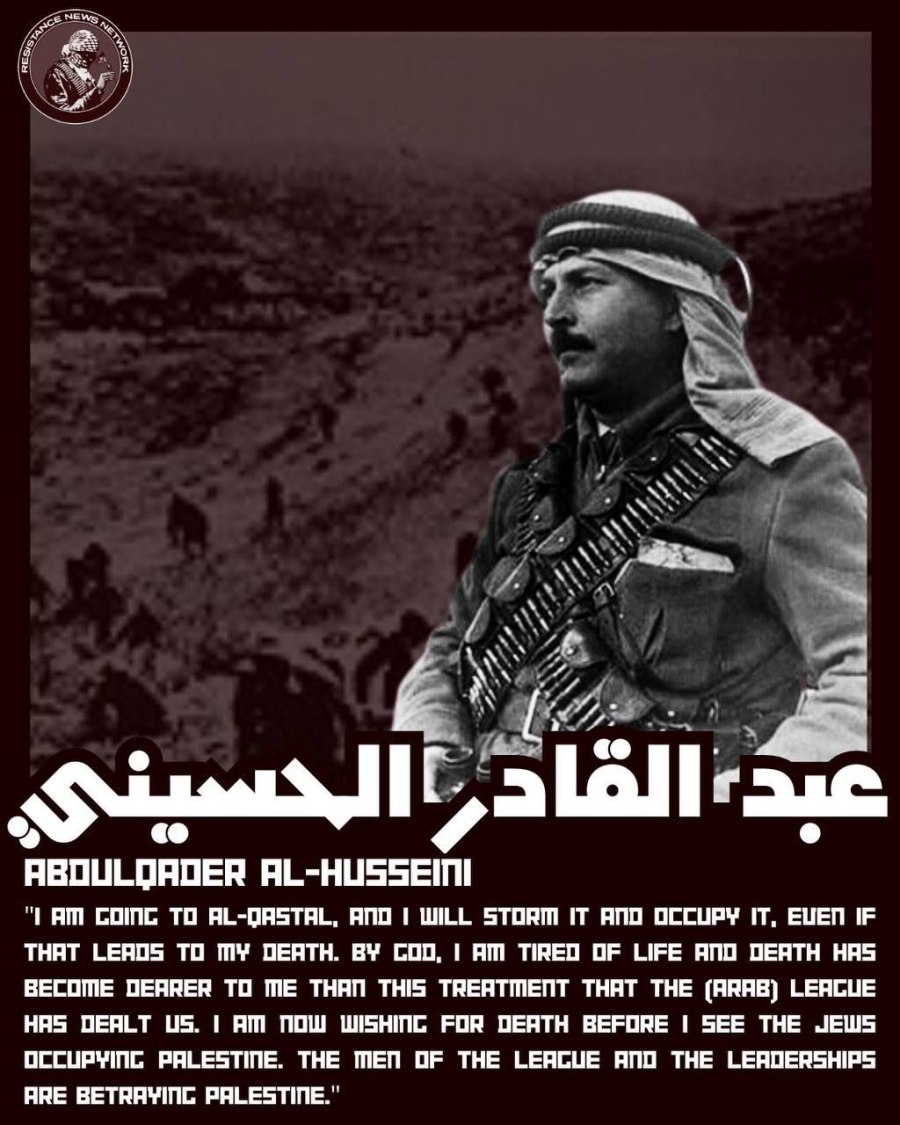
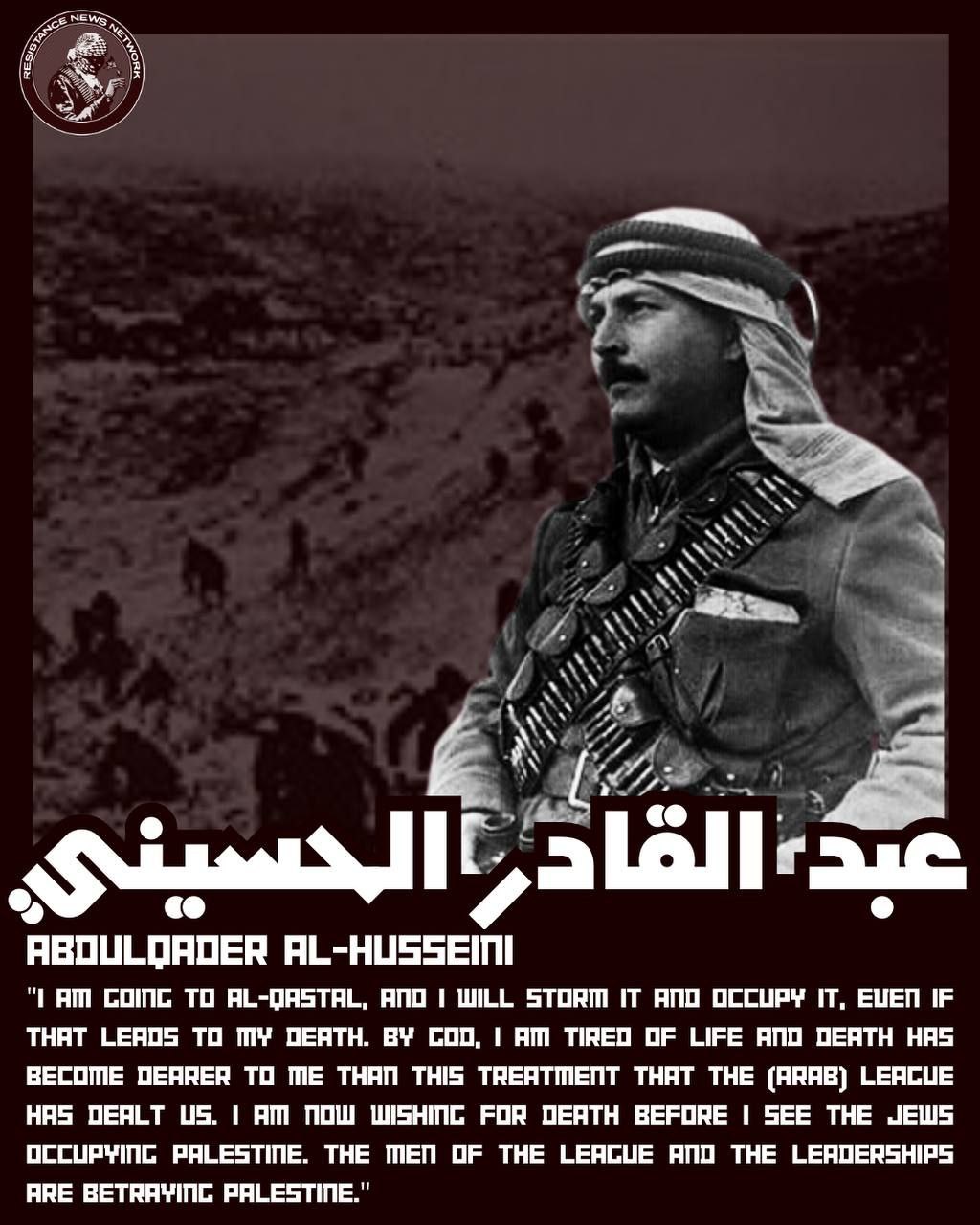
On April 8th, we commemorate the anniversary of the martyrdom of one of Palestine’s foundational resistance leaders in 1948, the eternal Martyr Abdulqader Al-Husseini, who gave his life in the noble pursuit of our people’s liberation. 

(Image sourced: Resistance News Network)

From childhood, Al-Husseini witnessed the beginnings of the colonial zionist project in Palestine and its implementation at the hands of the British. As he grew older, he became actively involved in organizing protests and demonstrations against the British occupiers.

After completing his secondary studies in Egypt, he returned to Al-Quds in 1933, and received a job in the land department. This job meant he was able to not only learn about the plans of land theft by the zionists, but also get close to the people of the villages. 

That same year, Abdelqader and other Palestinian leaders began laying the foundations of a new type of struggle: revolutionary armed struggle and founded the Organization for Holy Jihad (Munathamat al-Jihad al-Muqadas).

In May, they announced the beginning of the Great Palestinian Revolt. 

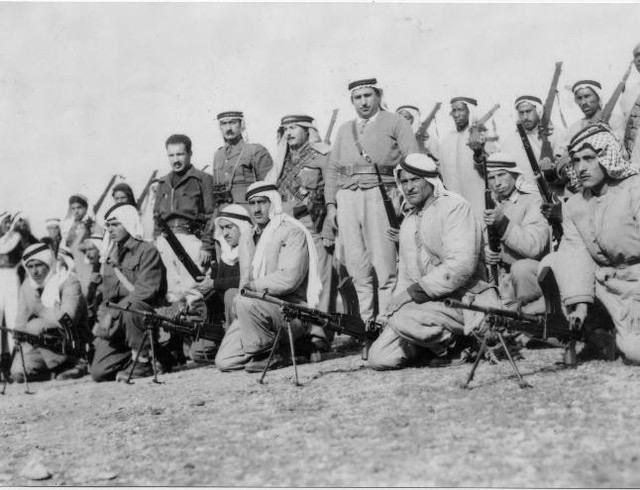
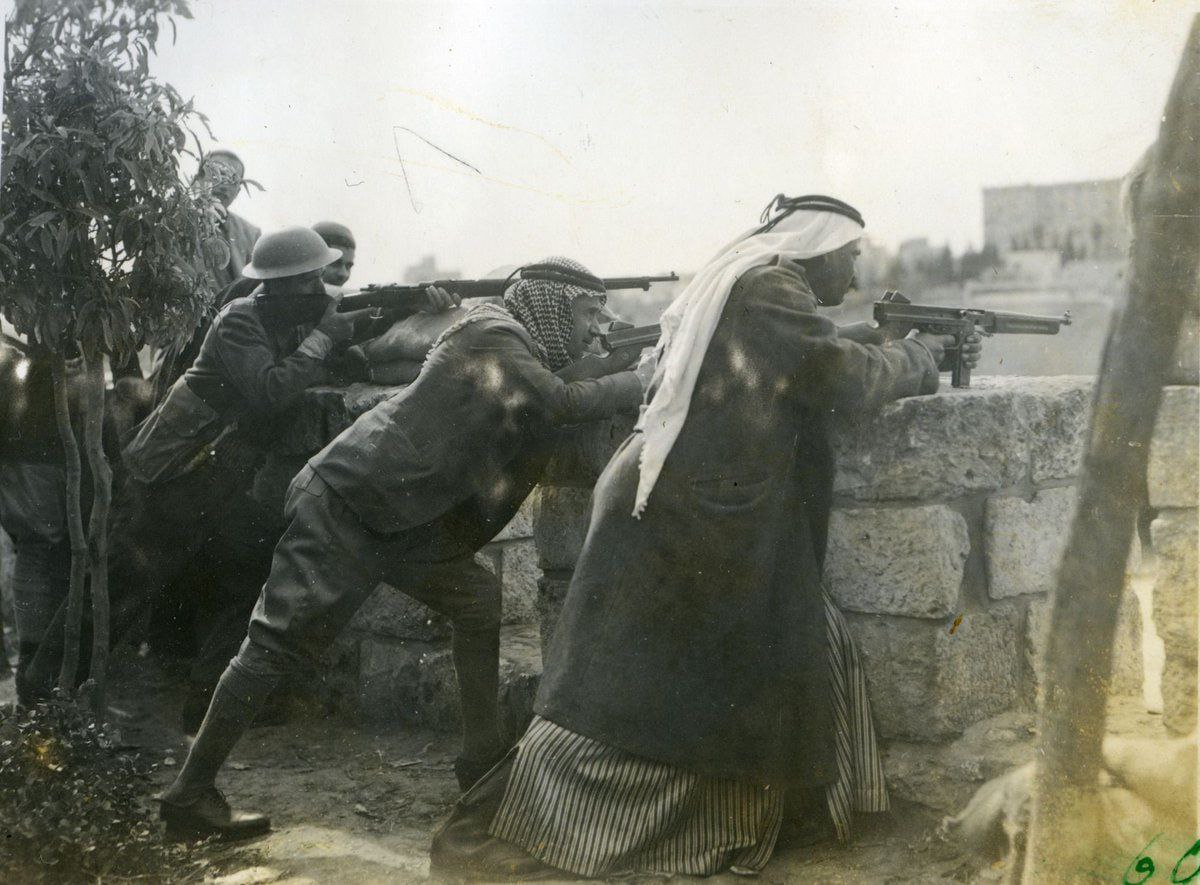
Al-Husseini, as one of the commanders of the Army of the Holy Jihad, led his troops in acts of resistance against both British and zionist occupiers during the Great Revolt between 1933-1936.

(Photo sourced: Resistance News Network)

In October 1936, he was arrested after he was wounded during the Battle of Al-Khader but managed to flee from the hospital to Damascus. 

His leadership extended beyond military operations in Palestine, as he also worked tirelessly to mobilize support for the Palestinian cause abroad and participated in the Iraqi struggle for liberation against the British, where he was arrested until 1943.

He remained in exile, passing through Germany where he learned to make explosives and mines and Cairo, setting up training camps and importing weapons, and finally returning to his homeland in 1947 when the partition plan was announced.

(Photo sourced: Resistance News Network)

Upon his return he instantly began orchestrating and taking part in armed actions against zionist expansion.

In April 1948, Al-Husseini left for Damascus to meet with the Military Committee of the League of Arab States in order to ask for arms to repel the zionist incursion into Al-Quds, but the League failed him and the people of Palestine.

(Photo sourced: Resistance News Network)

It was at that time he received news of the occupation of Al-Qastal, a strategically located village west of Al-Quds. Before he left, Al-Husseini wrote a letter to the League in which he says, “I hold you accountable after you left my soldiers at the heights of the victories without aid or weapons”. 

He returned one last time to fight, waging a fierce battle against the incursion into Al-Quds and proclaimed, “I am going to al-Qastal, and I will storm it and occupy it, even if that leads to my death.”

(Photo sourced: Resistance News Network)

“By God, I am tired of life and death has become dearer to me than this treatment that the League has dealt us. I am now wishing for death before I see the Jews occupying Palestine. The men of the league and the leadership are betraying Palestine.”

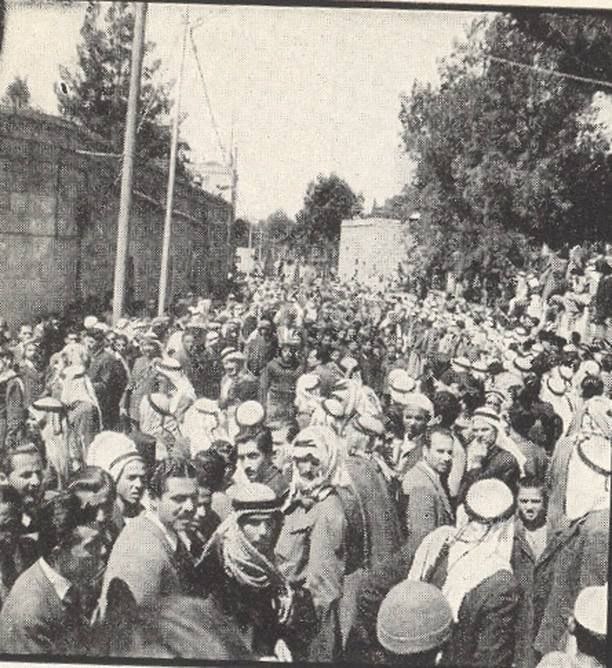
When the news spread that he planned to liberate Al-Qastal, fighters across Palestine came to his aid, liberating the village and raising the Palestinian flag later that afternoon on April 8, 1948. Fighters would later find out he was martyred during its liberation. 

(Photo sourced: Resistance News Network)

His legacy was carried forward by his wife Wajeeha Al-Husseini who was his partner in struggle, a daughter and three sons, who fought in the ranks of the Palestinian revolution after the Nakba of 1948.

Al-Husseini’s unwavering bravery and tireless efforts to defend our homeland and resist occupation continue to inspire us in our struggle for liberation. His courage and sacrifice remain a guiding light as we persevere steadfastly in the face of the cowardly zionist enemy.

We honor Al-Husseini’s legacy by renewing our commitment to our struggle. We draw strength from his sacrifice and all those who followed in his footsteps. Together, we will continue the struggle until martyrdom or victory. 

(Photo sourced: Resistance News Network)

Glory to the eternal Martyr Abdelqader Al-Husseini. 

Long live the resistance. 

Long live Palestine.

End.

IF WE DON’T SUPPORT THE RESISTANCE

Diarmuid Breatnach

(Reading time: 5 mins.)

In an anti-imperialist struggle, if we don’t support the Resistance, what are we doing?

Among the Left – and even among many liberals — the importance of internationalist solidarity is generally accepted as taken for granted. However, as with many principles, it is in its application that we find substantial disparity.

After the October 7th breakout from the Zionist siege of Gaza the leading elements of the western world rushed to condemn the Palestinian resistance led by the Hamas group. Atrocity propaganda created by the Zionists abounded.1

Hamas2 and Islamic Jihad3 had planned and carried out the breakout operation in which they knocked out the Zionist surveillance and automatic firing defences, damaged communications, went through and over the apartheid wall and overran the Golani Brigade4 forces.5

The Resistance killed many of the IOF6 and captured others. In addition, the Resistance captured a number of civilians in order to exchange them for the huge number of Palestinian political prisoners held by the Zionist authorities.

Some Left groups joined the anti-Resistance chorus immediately while others took a little longer but then did so too. In Ireland, for example, leading figures in People Before Profit and the Socialist Party condemned Hamas, seen as the leading Palestinian element in the operation.

So too did the leadership of the formerly revolutionary Irish Republican political party Sinn Féin.7

Of the Left Zionists in ‘Israel’ (in so far as they can be called ‘Left’), they too joined the chorus. The Israeli state’s presidency has had representation from the Labour Party without interruption from 1948 to 1977 and most of the settlement expansions took place under a Labour government.8

Saoirse Don Phalaistín solidarity group banner (bearing logo of the People’s Front for the Liberation of Palestine on right of photo) after Palestine solidarity march in Dublin 27 January 2024. Also visible in addition to the Palestinian national flag perhaps are two versions of the Starry Plough flag of the Irish Citizen Army, the Republican Congress version at extreme left and the original version above the banner. (Photo: D.Breatnach)

CIVILIANS

Some of the western ‘Left’ organisations stated that it was not the armed breakout of the Palestinians to which they objected but instead the killing of civilians. The liberals and media also made much of the issue of ‘civilians’ – to an extent never accorded to Palestinian civilians.

It is important to note that the adult civilians in the ‘Israeli’ state are, apart from tourists, settlers. They are colonising land from which the indigenous Palestinians have been ethnically cleansed. In addition military service is required of all ‘citizens’9 and a great many are armed anyway.

This is similar to what the Indigenous people of the Americas and Antipodes faced from European settlers from the 18th to the 20th Centuries or the Irish during the various plantations from the 17th Century onwards and the Land War during the 19th.

One baby was killed on October 7th quite likely by excessive heat in a burning building and another 13 children were killed, according to ‘Israeli’ social services. But by whom? By Palestinians or by indiscriminate Hellfire missiles from IOF helicopters and at least one tank firing into a building?10

Civilians may have been deliberately killed knowing they were civilians or by crossfire or by Israeli counterattack. Certainly there was at least one teenager taken captive, the daughter of the Irishman settler who infamously said he would rather his daughter were dead than captured by Hamas.

We’d like to know, of course, which case and how many. But in terms of solidarity principle, it’s beside the point: While we are not required by internationalist solidarity basic principles to approve of every one of its actions, we ARE required to be in solidarity with the Resistance.

A number of Palestinian armed resistance groups displaying unity in the struggle (Photo sourced: Iran News)

BUT, ISLAMIST…!

Many in western society are secular in their politics, many of agnostic or atheist position. So, that is our choice. Others belong quite strongly to one religious belief or another. What is different about Islamists (or fundamentalist Christians) is that they aspire to a society run in accordance with their religious beliefs.

We may not agree with that objective. We should not agree with the subordinate social and political status accorded to women in some religious cultures nor to the outlawing of LGBT sexuality. But even so, we should support the Resistance, Islamist or otherwise, in resisting repression.

Basque society was largely conservative Catholic while resisting Spanish State fascism up to the 1970s; Welsh mining society was often conservative Methodist in the struggles of the miners in the 1930s. The Irish Republican movement was permeated by Catholic symbolism and ideology.

We could have been, should have been capable of supporting the resistance in each of those cases while not supporting the religious conservative, reactionary or fundamentalist beliefs or conduct of participants or leaders in those struggles.

For revolutionaries, the general principles or internationalist solidarity are not of the kind from which one can pick and choose, while rejecting others. We are however entitled to accord ‘favoured status’ to an organisation the ideology and practice of which we most approve.

We may for example prefer a secular or even socialist resistance organisation (e.g the People’s Front for the Liberation of Palestine). We may carry its flags, promote its statements, share its social media postings. But we do so while also expressing solidarity with the Resistance as a whole.

That is reasonable and honourable. It is neither to participate in attempts to break up whatever unity exists among the organisations of the resistance.

During the 30 Years War in Ireland, there were those in Britain who participated in those activities – people who colluded for example with SF refusing to share a platform with the IRSP11 on Hunger Strike commemorations, threatening refusal to attend if their wishes were not acceded to.

No doubt that seemed justified to the Provisionals in their promotion of their organisation above any other choice but that activity split commemoration committees, disheartened activists and killed some solidarity events on the annual calendar.12

HOW BEST TO DO IT … AND IN PUBLIC

We often hear people ask a speaker from the resistance movement what we should do in solidarity. This is in general incorrect behaviour because we have our own revolutionary program and we best know our own circumstances and capabilities.

It is a different thing to ask what are the things that the resistance movement needs: medicines, weapons, representation, contacts, publicity etc. But we still have to decide how well to fit the effort of obtaining those within our capabilities or even whether the objective is worth the energy expanded.13

The Resistance can tell us what they need but the decision on which solidarity actions to take is ours. However whether to express solidarity is not a choice for revolutionaries – it is an obligation.

As revolutionaries we have a public position and part of that should be public solidarity with the Resistance. It is not unknown for some to claim to support a resistance organisation but to decline to do so publicly.

An African National Congress speaker in London years ago told me privately that they supported the Palestinian and Irish resistance but would not do so publicly as it might undermine support they were receiving from UK and other western bourgeois organisations.

I argued with him against this.14 Relating the discussion to a senior SF activist later I was astounded at the response that they would do the same if required.

Solidarity with the Resistance means also solidarity with those incarcerated during the struggle, the resistance in the jails. Again, though an organisation may think differently, we are not required to support the specific organisation to which the prisoners owe allegiance.

Nor does any Resistance organisation have the right to dictate to us whether we may or may not express solidarity with political prisoners who are aligned with that organisation. Over the years, the Ireland Anti-Internment Campaign has faced down attempted coercion along those lines.

So also did the Irish Political Status Committee in London. And both groups remained independent. Unfortunately the Troops Out Movement of the day was unable to do so and after a brief period of asserting independence, eventually succumbed to domination by Provisional Sinn Féin.15

Supporting political prisoners is an act of necessary solidarity with the resistance and also one of self-defence in the longer term but it does not necessarily mean expressing support with the actions or organisation of the prisoners before or indeed after they were jailed.

Banners and flags presumably at Celtic FC home stadium during the current episode of the Zionist genocidal war. (Photo sourced: Internet).

SUMMARY

We are entitled if we wish to prioritise support for a specific organisation or its program but not obliged to do so, nor to accept their advice on how to conduct our solidarity work. Nor is it required of us to condone every action of the Resistance in general.

But we are required to publicly support the Resistance in general and not to join in public condemnations. And that’s the minimum to do if we are going to claim being in solidarity with a struggle.

For any revolutionary struggle, internationalist solidarity is an important factor, in encouragement to the Resistance, in de-legitimising the repression and in practical terms of supplies to the resistance, also in hampering the repression through blockades, boycotts or industrial action.

If we don’t support the Resistance, how can we claim to be in solidarity with Palestinians? Charity is not the same as solidarity. Pity is not the same as support. Outrage at the crimes of the oppressor is not the same as solidarity with the Resistance.

Furthermore, why should we expect solidarity with our struggles, now and in the future, if we cannot express that solidarity with the struggles of others?

End.

POSTCRIPT

Some will have searched in vain for a reference from Lenin, Mao, Trotsky, Luxemburg – or Connolly or even a famous Irish Republican leader – to justify the principles I have discussed here. At the end of the day, people should stand by principles because they have been tried and tested and are aligned with revolutionary experience but should also test them on their own experience in struggle.

In presenting some credentials towards giving these principles some consideration I can only say that I have thought about them and sought to practise them over decades of activism in Britain and Ireland.

Among the areas of Resistance and of political prisoners which have claimed my activity have been Ireland, Palestine, S. and SW Africa, Vietnam, Housing struggle, US Indigenous and African American people, organised Workers, Anti-Fascism & Anti-Racism, Kurdistan, the Basque Country, Syria, Haiti, Western Sahara, Catalunya, the Donbas …

FOOTNOTES

1All since thoroughly debunked though still repeated on occasion: “‘Israeli’ babies beheaded, torn from a womb and stabbed, women raped, people and houses burned.” These fake atrocity stories were repeated in the western media and by some politicians, including Biden and helped create an atmosphere assisting genocide by the ‘Israeli’state.

2Hamas began as an Islamist community organisation which then became a political party and developed an armed wing (like most Palestinian political groups, in response to the armed Zionist State and its settlers). In 2006 the party won the Palestinian legislative elections but the defeated Fatah (widely acknowledged as corrupt) administration in Gaza refused to give way and, in a short conflict, the Fatah armed group was defeated by that of Hamas. They chose not to do the same in the West Bank, presumably to avoid civil war from which the ‘Israeli’ state would benefit but from that moment onwards the Zionist State blockaded Gaza and the organisation was labelled a “terrorist” group in the west and financial support went instead to the Fatah-run Palestinian Authority in the West Bank (which has refused to run new elections in two decades).

3Palestinian Islamic Jihad was formed in 1981. The armed wing of PIJ is Al-Quds Brigades (also known as “Saraya”), also formed in 1981, which is active in the West Bank and the Gaza Strip, with its main strongholds in the West Bank being the cities of Hebron and Jenin. In addition to this organisation and Hamas there exist a number of other resistance factions, some of which are secular, all working together as a broad armed resistance front with organisational autonomy but ofen in joint operations also.

4The Golani Brigade of the Gaza Division is the most highly decorated IOF Brigade, having taken part in all of the state’s major ethnic cleansing and genocidal operations. On October 7th hey were overrun in minutes and 72 killed with an unknown number captured (‘unknown’ because many, along with their Palestinian fighter captors were burned to death in their cars by ‘Israeli’ Apache helicopter Hellfire missiles).

5 The Palestinian operation went deep, passing Golani’s 3rd defensive line.

6‘Israeli’ Occupation Forces, aka the official but misnomer IDF (“Israeli Defence Forces”).

7The current iteration of Sinn Féin abandoned its revolutionary anti-colonial and anti-imperialist path in embracing the pacification process in1999. It stood down its armed wing, the IRA and largely dissolved it, also having their weapons decommissioned, since when it has participated in the administration of the colony and in recruitment of the colonial police force.

8Yet for years the Socialist Party have opposed boycotting the Zionist State, calling instead for unity with the “Israeli Left”.

9With the exception of most ‘Israeli’ Palestinians and all ultra-Orthodox ‘Israelis’ but for the latter is in the process of change https://www.aljazeera.com/news/2024/6/11/israels-knesset-advances-contentious-ultra-orthodox-conscription-law

10Documented by military and survivor sources on ‘Israeli’ media.

11The Irish Republican Socialist Party with an armed wing up to the 1990s, the Irish National Liberation Army, which contributed three Volunteers to the 10 martyrs who died on hunger strike in 1981.

12And what, in the end, did the Provisionals achieve with the supremacy gained?

13The Resistance organisation may ask us to arrange meeting for them to address our state’s parliament, or for interviews with the media … Or even to restrict our propaganda from solidarity to self-interest for people, as Sinn Féin did in England in the 1980s when they were promoting Time To Go: “Push the issue of the expenditure on troops, better spent on the health and social services.@

14If to do so incurred a legal penalty would have been a different situation, of course.

15And from that moment onwards became a less broad and less effective, eventually ceasing to exist as a solidarity organisation.

SOURCES

Including a discussion on the importance of solidarity with the Resistance: https://youtu.be/yj9hQaqeeio?si=z1oSOAYGX8z-Ney8

Ireland Anti-Internment Campaign: https://www.facebook.com/p/Ireland-Anti-Internment-Campaign-100063166633467/