

Diarmuid Breatnach
(Reading time main text: 6 mins.)
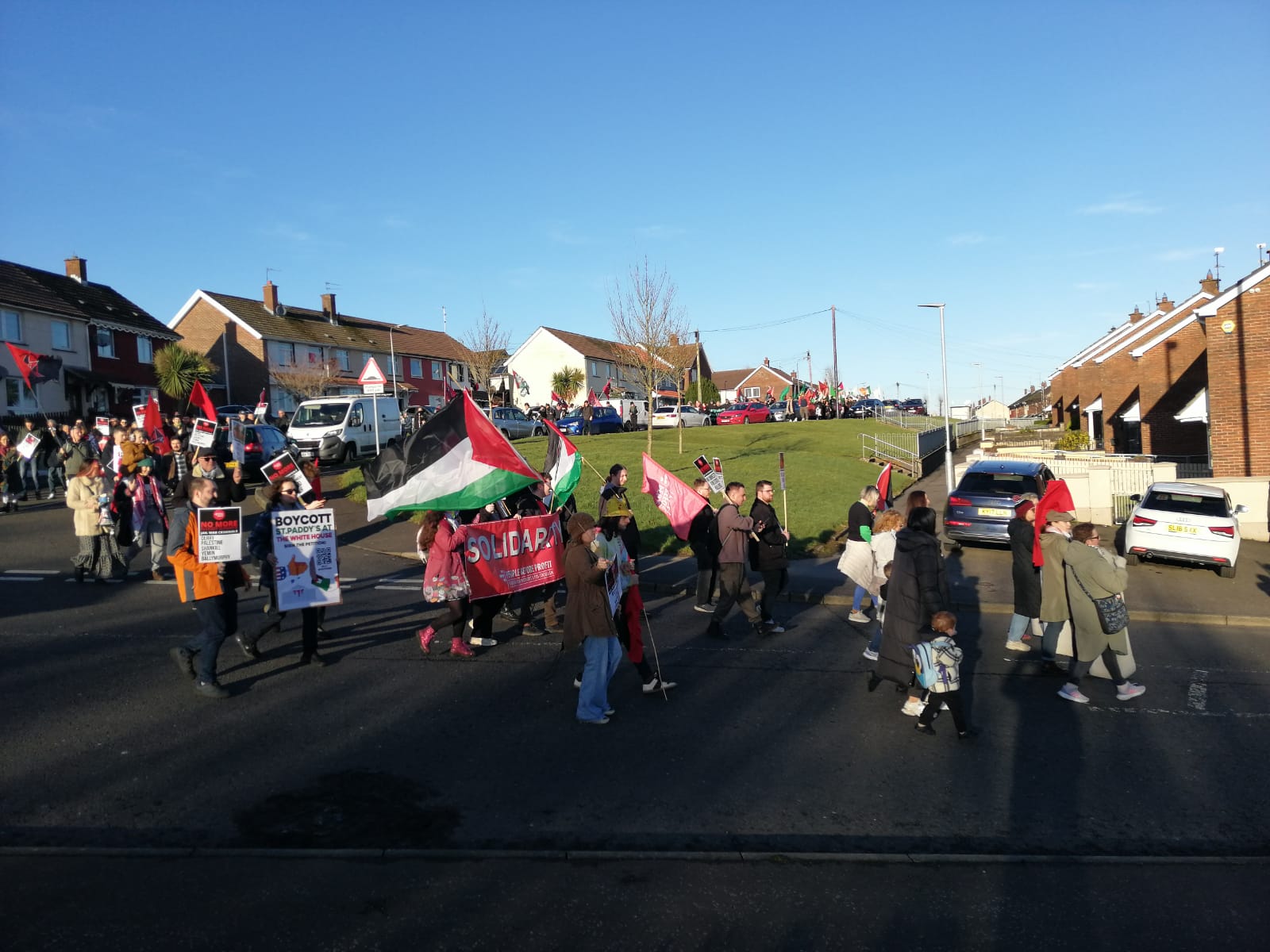
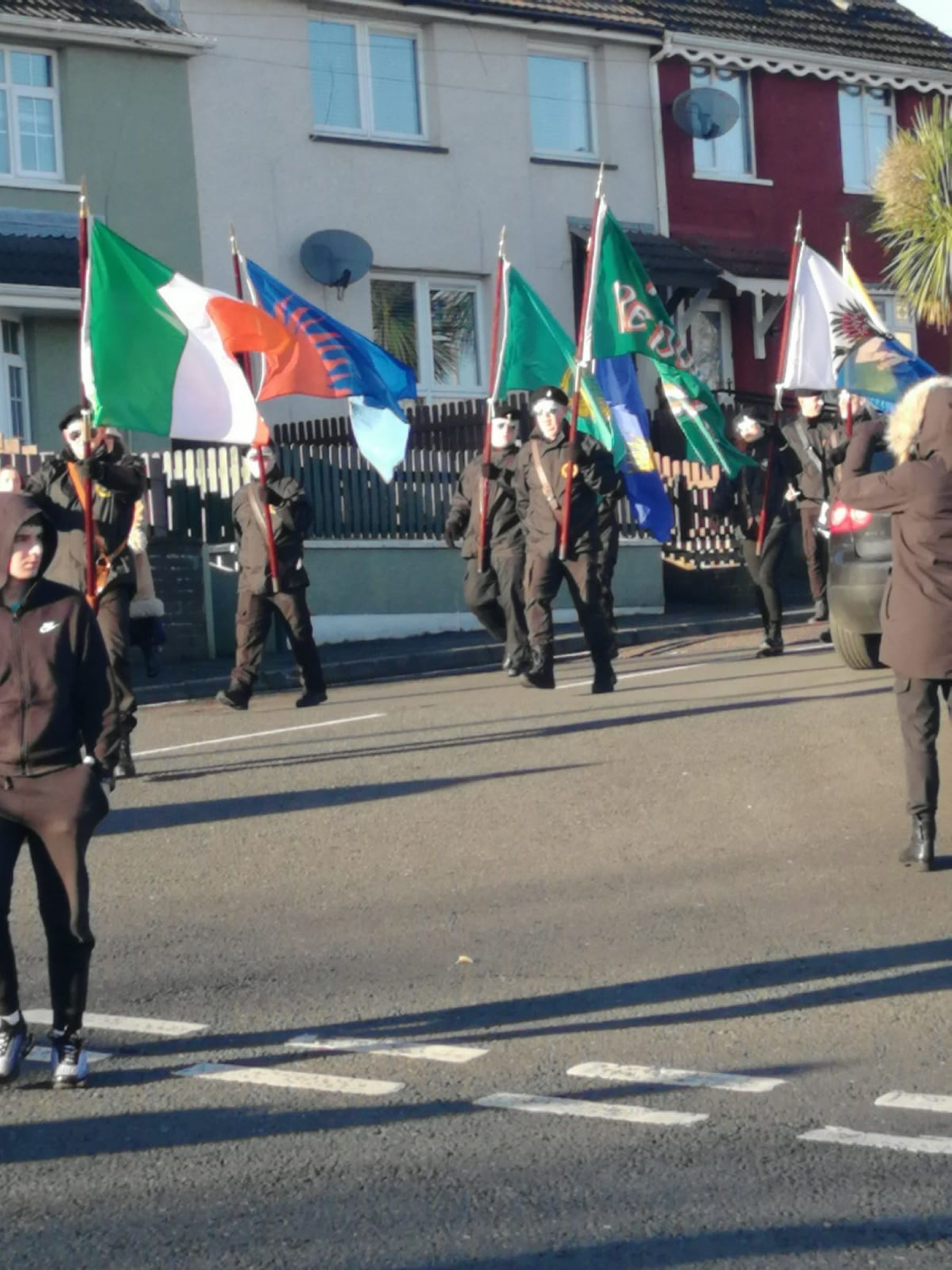
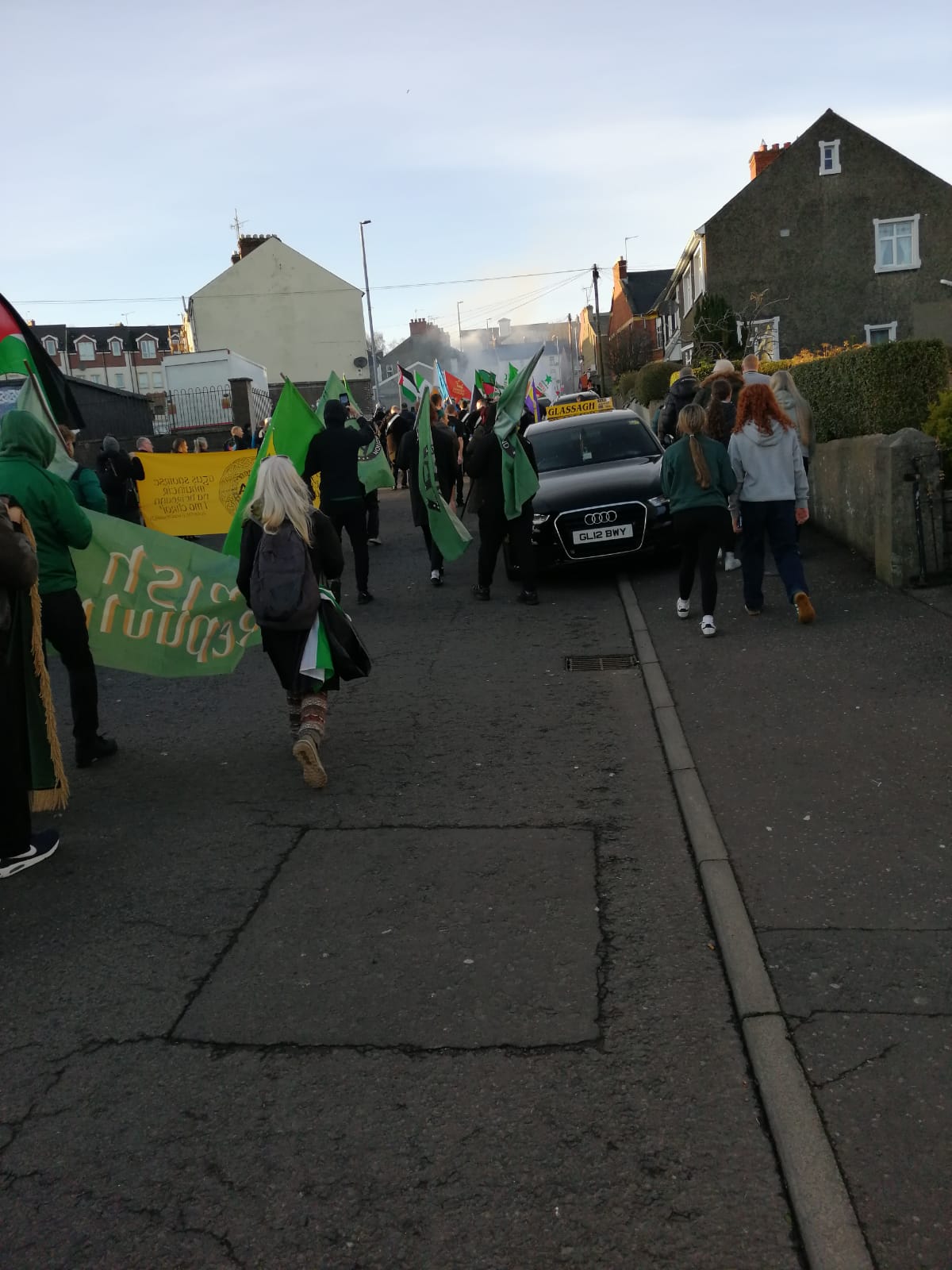
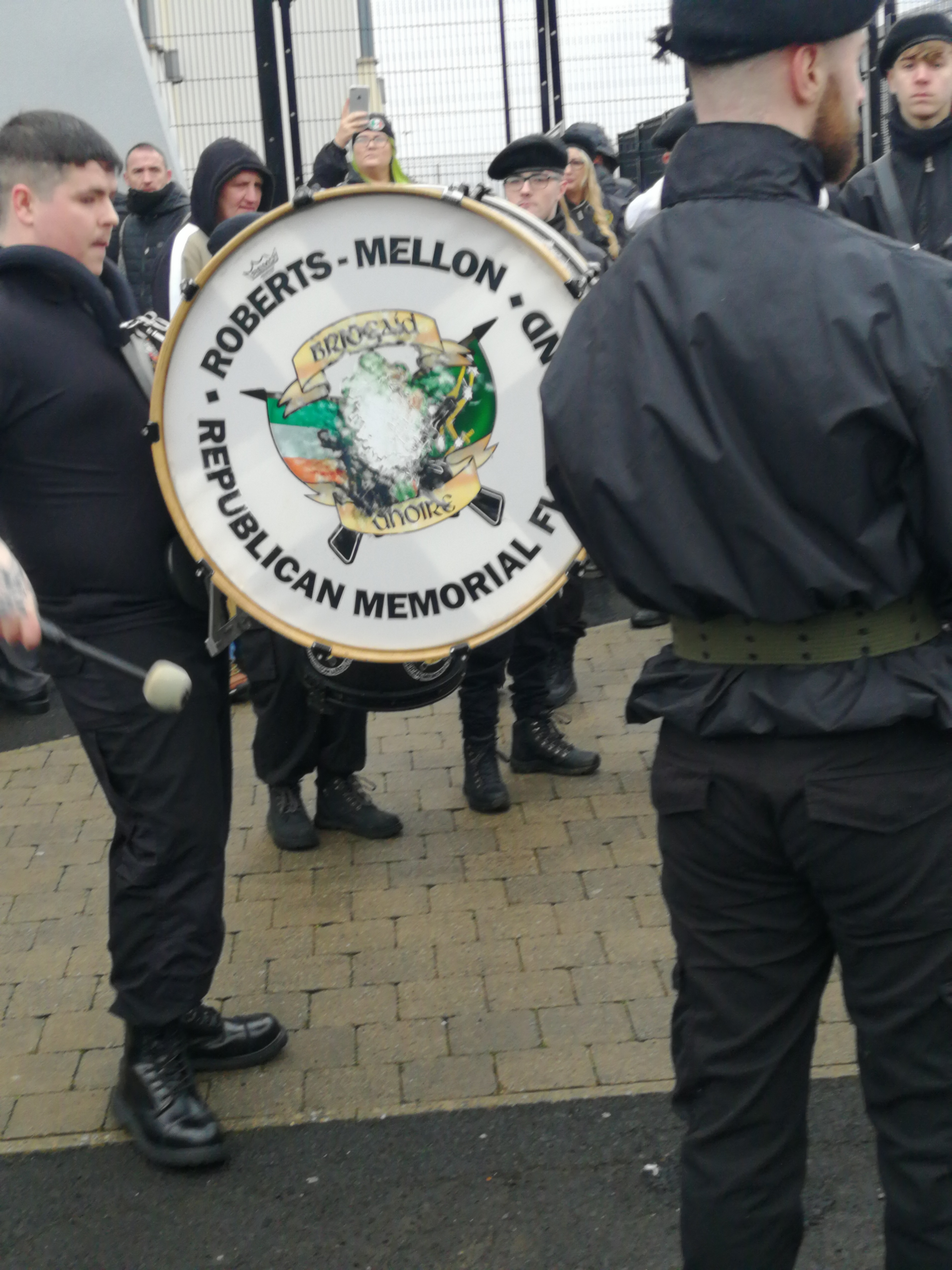
Thousands of marchers with flags, banners and three marching bands retraced the route of the anti-internment march in 1972 that ended in the infamous Derry Bloody Sunday1, a massacre of unarmed civilians by the British Parachute Regiment.
The nearest Sunday to the date of the original march, which this year fell on February 2nd has been chosen annually for the commemorative march over the 53 years since the massacre. People travel from different parts of Ireland and indeed from beyond in order to attend.
Derry is not well served by public transport from other parts of Ireland and there is no train station there.
There is a bus service from Dublin from the Translink company of the occupied colony but one would need to catch it at seven in the morning and then hang around in Derry for 3.5 hours waiting for the march to start. For this reason, many travel to Derry by car.
Equally, many others who would attend were the public transport available, stay home but an estimated over 7,000 participated in this year’s march. The theme this year was Palestine, once again as was last year’s too.
The day of the massacre
The original march was a protest against the introduction in August 1971 of internment without trial in the occupied colony. Almost immediately afterward the Parachute Regiment had massacred 11 people protesting against it in Ballymurphy, Belfast.2
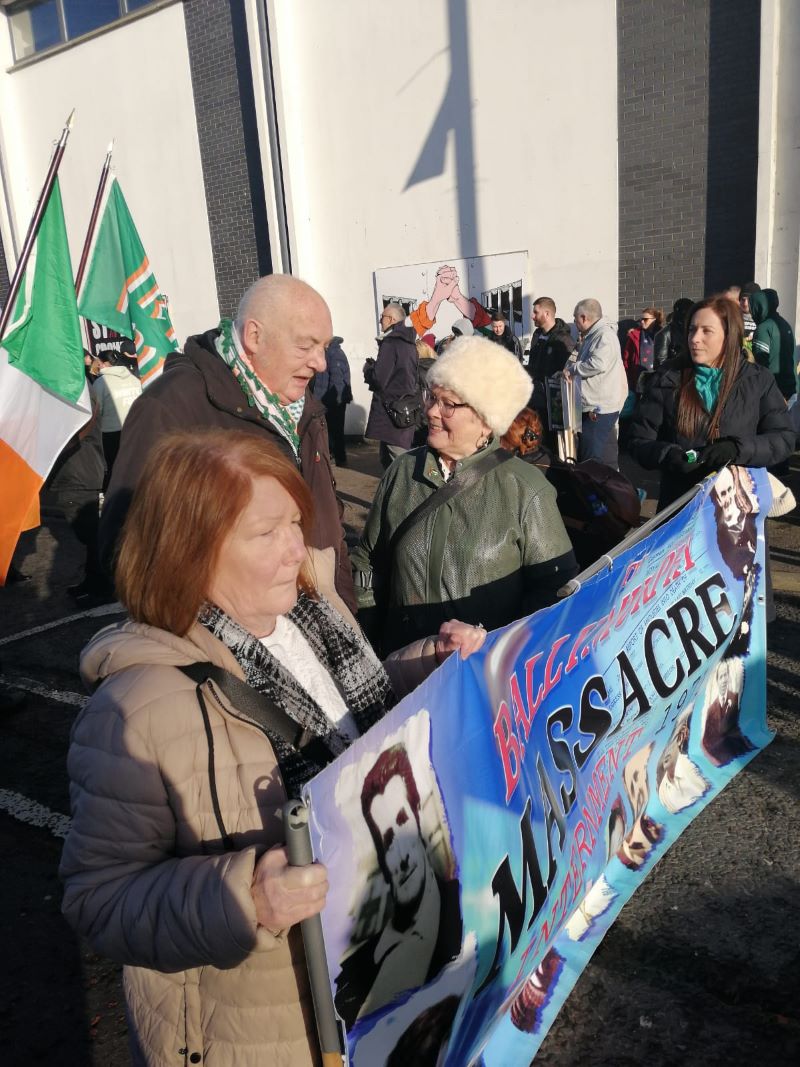
The 1972 march, along with many others, had been banned by the sectarian colonial administration. The Civil Rights campaigners knew that their legitimate demands3 were being obstructed by use of the Special Powers4 of the statelet and that they could win nothing if they were to acquiesce.
After the previous massacres it took considerable courage to march that day but perhaps they thought that with an advertised march, in daylight, with many film cameras covering, the Paras were unlikely to open fire. In any case, they decided to risk it.
At 4.10pm the first shots were fired by the Paras5 without warning and by around 20 minutes later they had killed 13 men and youths and wounded another 13, one of whom would die weeks later. According to the Saville Inquiry in 2010, they had fired over 100 rounds.
Not one of their targets was armed.
To justify the slaughter, the British Army claimed that they were fired upon and returned fire, killing IRA fighters. The British Government, in particular through Home Affairs Minister Reginald Maudling, repeated the lies as did the British media.
Bernadette (then) Devlin6 MP, a survivor, was prevented from speaking in the Westminster Parliament and she walked up to Maudling and slapped his face. In Dublin a general strike took place with schools closing and a huge crowd burned the British Embassy down.
In London, a giant march reached Trafalgar Square as its end was still leaving Hyde Park. In Whitehall the police prevented them from laying the symbolic coffins outside No.10 and in the scuffles the ‘coffins’ were eventually thrown at the police or knocked to the ground.
And a number of construction sites in Britain went on strike also.
The judicial response varied wildly. Coroner Hubert O’Neill, an ex-British Army major, presiding on the inquests in 1973, called it “Sheer unadulterated murder” whereas Lord Chief Justice Widgery in the ‘inquiry’ he led ignored all the local evidence and accepted the British Army’s lies.7
“The last Bloody Sunday march”
Provisional Sinn Féin organised and managed the annual march for many years but in January 2011 Martin McGuinness announced that year’s march would be the last, because of the UK’s Prime Minister David Cameron’s public apology to the relatives of the 14 killed in Derry.
The apology followed quickly on the verdict of the Saville Inquiry8 which totally refuted the statements at the time by representatives of the Army and of the Political and Judicial establishments: the victims had been unarmed and the Army had not been “returning fire”.
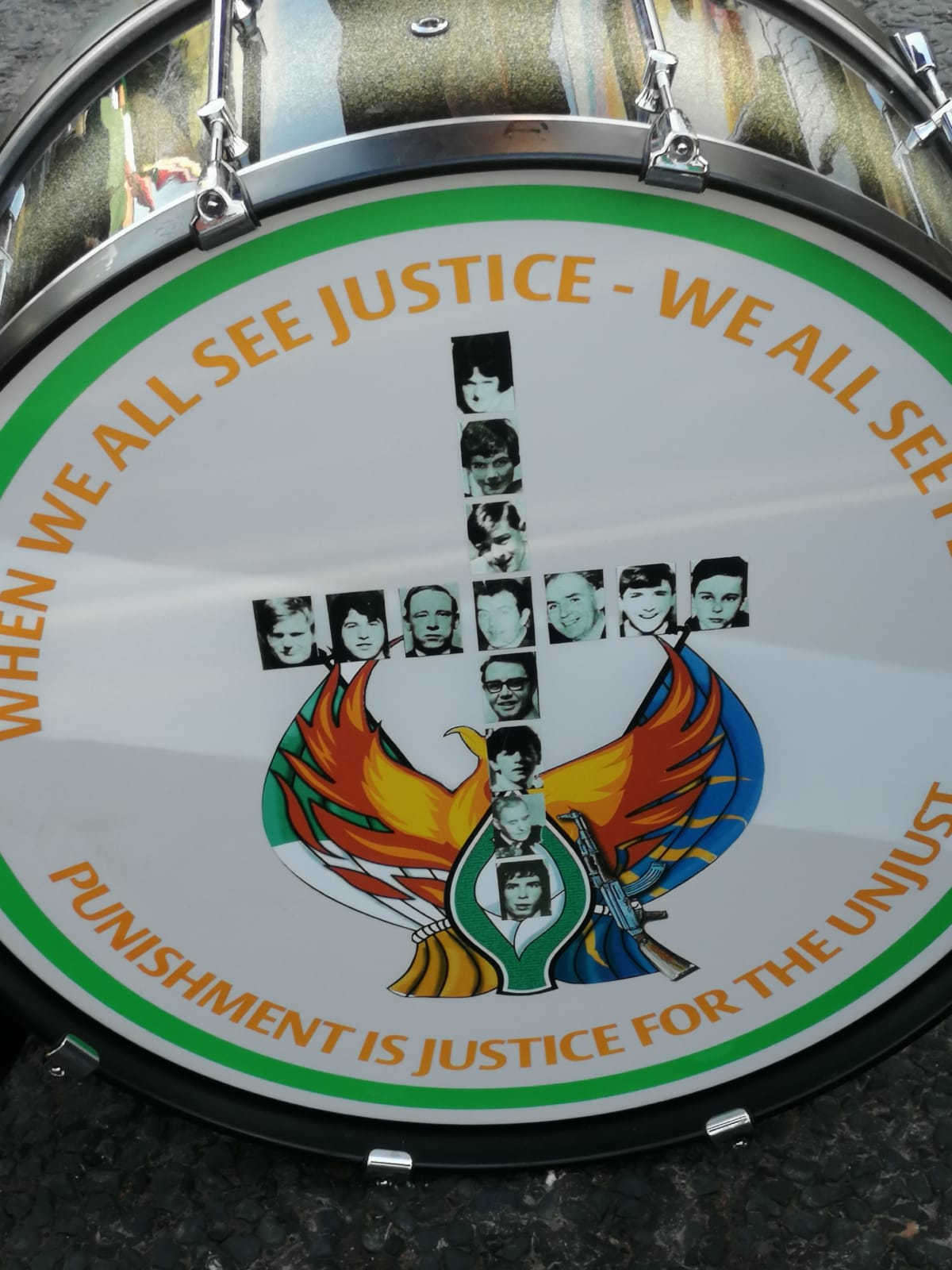

Despite the UK State’s acknowledgement that they had no excuse for the massacre, not one of those who planned, organised or carried out the atrocity had been charged, never mind convicted, nor had those who conspired to cover up the facts. To this day, only a low-level soldier has faced charges.
Nor had there been government admissions of wrongdoing in the other massacres by the Paras intended to crush the resistance to the repressive internment measure, at Ballymurphy and Springhill.
A number of relatives and survivors of the original march declined to have the annual march cancelled, among them Kate Nash and Bernadette McAlliskey. Kate Nash’s brother William was shot dead on Bloody Sunday and her father, William, was wounded trying to save his son.
Bernadette McAlliskey was a survivor of the massacre and also survived nearly a decade later an assassination attempt in her home, being struck by nine bullets of a Loyalist murder gang. Despite opposition by and denunciation from SF, volunteers have kept the march going every year.
Each year different themes have also been incorporated into the Bloody Sunday March for Justice, including ones in Ireland, such as the framed Craigavon Two prisoners but also ones from beyond, e.g. the resistance of the Broadwater Farm housing estate in London to Metropolitan Police attack.


Since 2011 Sinn Féin have boycotted the march but also sought to mobilise public opinion against it, claiming that relatives of the victims didn’t want the march to continue. The truth is that some hadn’t wanted it even when SF were running it, some didn’t afterwards but some did.
Such an atrocity has of course huge personal impact on relatives of victims but its impact is also much wider on a society and beyond, historically and politically. That historical memory ‘belongs’ to the people of Derry but also to the people of the world (as do others such as Sharpeville SA).
Those in power in society are aware of that and the media outside of Derry gives little or no coverage to the annual march while promoting other events there of lesser numbers and significance.
The ‘Derry Peoples Museum’ ignores the march in its Bloody Sunday commemorative program.
This year’s march
Sunday just past was one of sunshine and little wind, as it was on the day of the Derry massacre. But regular marchers remember other Bloody Sunday commemoration days of pouring non-stop rain, of squalls, of snow and sleet, of wet clothes, socks and freezing fingers and toes.
The march starts in the afternoon at the Creggan (An Chreagáin) and winds down to just below the Derry Walls, then up a long slope again before eventually ending down at Free Derry Corner9, the destination of the original march, where speakers address the crowd from a sheltered stage.


The sides of residential blocks in this area are also painted in giant murals to represent scenes from the civil rights and armed resistance period while nearby stands a monument to the martyrs of Bloody Sunday 1972 but also another to the 10 H-Blocks’ martyrs of the Hungers Strikes of 1981.
In this area, one needs to be blind not to be at least peripherally aware of the icons of proud struggle and of loss, of sacrifice.
Eamon McCann and Farah Koutteineh addressed the rally at the end of the march. McCann, a journalist and member of the People Before Profit political party is a survivor of the massacre. He is an early supporter of the Bloody Sunday March for Justice at which he has spoken on occasion.
Farah Koutteineh is a Palestinian journalist who was herself the news when in December 2023 she and a few other Palestinians were ejected from a Sinn Féin-organised meeting in Belfast being addressed by the Palestinian Ambassador as a representative of the Palestinian Authority.
Koutteineh had been denouncing the Palestine Authority’s collusion with Israel when she and the other Palestinians were hustled out to applause from many of the attendance. Not surprisingly from the Derry platform on Sunday she too drew applause in criticising SF’s position on Palestine.10
Speaking to this reporter after the march, Kate Nash said: “There is no chance the march will be ended. It will go forward into the future, a beacon of resistance against the injustices and crimes of states around the world.
“There are millions of us … people come from around the world to commemorate this massacre with us.”
end.
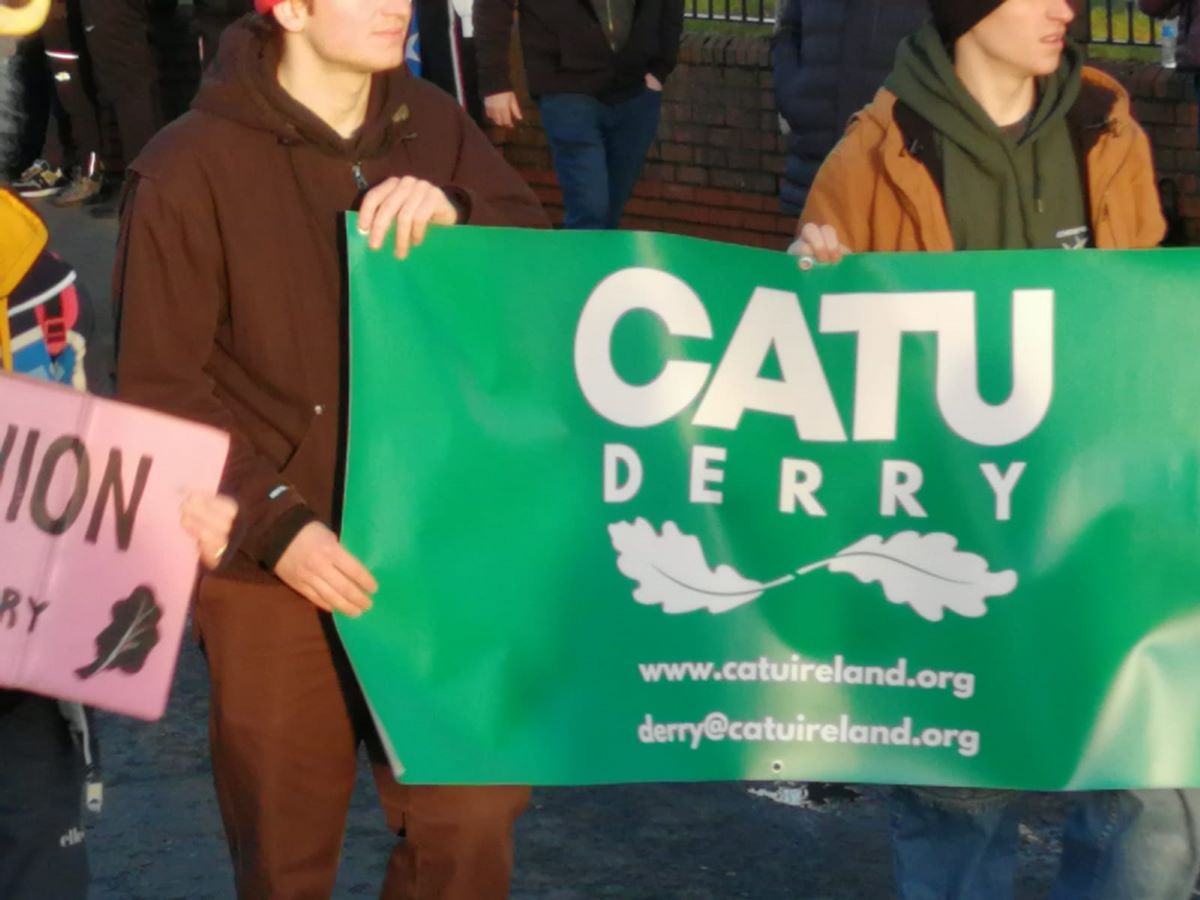
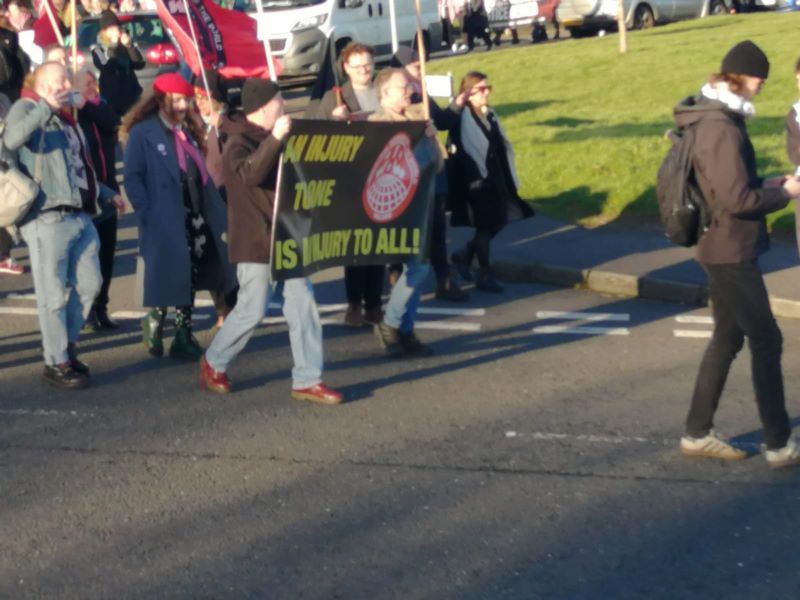
Series of images from the march (Photoa by D.Breatnach)




Footnotes:
1There have been a number of Bloody Sundays in the history of Ireland under colonialism and therefore the location and year are often incorporated into the name for clarity as to which is being discussed.
2There was substantial State interference with inquests during the period of the 30-years’ war in the Six Counties (and in some cases in the Irish state also), in order to avoid inquest juries finding the state armed forces culpable of homicide unjustified in law. The original inquest in 1972 on the Ballymurphy massacre recorded an ‘open verdict’ but a 2021 reopened inquest found the British Army killings “unjustifiable”. Even after the Derry massacre, in July of that year, the Paras again killed five unarmed people and injured two in the Springhill area of Belfast and again an ‘open verdict’ was recorded into the fatalities which included three teenagers and a priest.
3The demands were all of rights that were in existence in the rest of the UK, including an ending to discrimination in allocation of housing and employment and general enfranchisement.
4The Special Powers (Northern Ireland) Act 1922 gave legal powers to the authorities similar to martial law. Allegedly temporary, as is often the case the Act kept getting renewed until made permanent and its repeal was one of the demands of the Civil Rights campaign. The Act was finally repealed in 1973.
5There was a unit of other British Army soldiers stationed on the Derry Walls with special rifles and there has been speculation that some of the shots might have been fired by them but this has never been confirmed to date.
6Now McAlliskey then Devlin, she had been a candidate for the People’s Democracy party of the time, the youngest MP elected.
7And that was the ‘official record’ until the Saville verdict 38 years later. A clever contemporary lampooning of Widgery and playing on a soap powder advert, with excellent alliteration, had it that “Nothing washes whiter than Widgery White!”
8Although the Saville Inquiry delivered its verdict in June 2010, it had been set up in 1998, taking an inordinately long time (and a bonanza in legal fees for judge, barristers, lawyers and clerks) to reach a verdict already obvious to all the nationalist people of the Six Counties, most of the Irish people and probably millions around the world. The date of its setting up so near to that of the Good Friday Agreement suggests that its creation (and eventual verdict) was part of the ‘sweeteners’ of the Pacification Process and the Good Friday Agreement.
9A reconstruction of the iconic gable end of a small local authority house in the Bogside area of Derry which had been painted in 1967, during the Civil Rights resistance period, with giant letters proclaiming: YOU ARE NOW ENTERING FREE DERRY. The house was demolished during redevelopment of the area but the gable end was reconstructed as a monument to the resistance of the people of the city.
10Sinn Féin support the corrupt and collaborationist Palestine Authority and its backing political party Fatah and also celebrated St. Patrick’s Day with (then) President Joe Biden while the US was supplying the Zionist genocide with weapons, money and political backing.
1There have been a number of Bloody Sundays in the history of Ireland under colonialism and therefore the location and year are often incorporated into the name for clarity as to which is being discussed.
2There was substantial State interference with inquests during the period of the 30-years’ war in the Six Counties (and in some cases in the Irish state also), in order to avoid inquest juries finding the state armed forces culpable of homicide unjustified in law. The original inquest in 1972 on the Ballymurphy massacre recorded an ‘open verdict’ but a 2021 reopened inquest found the British Army killings “unjustifiable”. Even after the Derry massacre, in July of that year, the Paras again killed five unarmed people and injured two in the Springhill area of Belfast and again an ‘open verdict’ was recorded into the fatalities which included three teenagers and a priest.
3The demands were all of rights that were in existence in the rest of the UK, including an ending to discrimination in allocation of housing and employment and general enfranchisement.
4The Special Powers (Northern Ireland) Act 1922 gave legal powers to the authorities similar to martial law. Allegedly temporary, as is often the case the Act kept getting renewed until made permanent and its repeal was one of the demands of the Civil Rights campaign. The Act was finally repealed in 1973.
5There was a unit of other British Army soldiers stationed on the Derry Walls with special rifles and there has been speculation that some of the shots might have been fired by them but this has never been confirmed to date.
6Now McAlliskey then Devlin, she had been a candidate for the People’s Democracy party of the time, the youngest MP elected.
7And that was the ‘official record’ until the Saville verdict 38 years later. A clever contemporary lampooning of Widgery and playing on a soap powder advert, with excellent alliteration, had it that “Nothing washes whiter than Widgery White!”
8Although the Saville Inquiry delivered its verdict in June 2010, it had been set up in 1998, taking an inordinately long time (and a bonanza in legal fees for judge, barristers, lawyers and clerks) to reach a verdict already obvious to all the nationalist people of the Six Counties, most of the Irish people and probably millions around the world. The date of its setting up so near to that of the Good Friday Agreement suggests that its creation (and eventual verdict) was part of the ‘sweeteners’ of the Pacification Process and the Good Friday Agreement.
9A reconstruction of the iconic gable end of a small local authority house in the Bogside area of Derry which had been painted in 1967, during the Civil Rights resistance period, with giant letters proclaiming: YOU ARE NOW ENTERING FREE DERRY. The house was demolished during redevelopment of the area but the gable end was reconstructed as a monument to the resistance of the people of the city.
10Sinn Féin support the corrupt and collaborationist Palestine Authority and its backing political party Fatah and also celebrated St. Patrick’s Day with (then) President Joe Biden while the US was supplying the Zionist genocide with weapons, money and political backing.
Useful links:






 rebelbreeze