
Diarmuid Breatnach
(Reading time: 4 mins.)
The Oasis rock band are performing on 16 and 17 August in Croke Park, the Gaelic sports stadium in Dublin, to a sold out capacity of 82,300. Brothers Liam and Noel Gallagher are the two leading members of the band.
Oasis-marked t-shirts and caps are being sold from stalls in the city and posters announcing the forthcoming concerts adorned shop windows and lampposts but how many fans know the Gallaghers’ background?
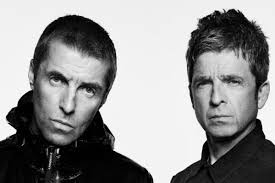
Liam and Noel were born in Manchester to Irish migrant parents but their mother Peggy split from her abusive husband and moved elsewhere in Manchester, taking the kids with her. Liam dedicated Stand by Me to her on Saturday night and gave a shout-out to her her birthplace in Co. Mayo.1
Ireland fed the British ‘industrial revolution’ and the Irish have a long association with Manchester. In 1845 the city’s factories were already attracting Irish workers and its farms probably also agricultural workers to replace English labourers deserting the farms for the factories.
Friedrich Engels wrote The Condition of the Working Class in England,2 published in 1845 (the first year of the Great Hunger) and mentioned the Irish migrants not too favourably. He was writing mostly about Salford, the subject of Ewan McColl’s Dirty Old Town,3 just outside the city then.
By the time Engels’ book was published, the Great Starvation was gearing up. Uncomplimentary references to the Jews can also be found in that work but whatever about that ethnic minority,4 Engels changed his mind radically about the Irish in Britain and came to admire them greatly.
Instrumental in learning about the Irish for Engels were two Irish sisters living in Manchester, Lizzie and Mary Burns, illiterate but intelligent and militant mill workers. Mary and Friedrich became life partners and, after her death, Friedrich became Lizzie’s partner thereafter.
The Irish, as the natives and diaspora of what is often referred to as “England’s first colony” were of considerable interest to the revolutionary partnership of Engels and Karl Marx and more so still as the Fenian movement, the Irish Republican Brotherhood, spread throughout Britain.5

A largely proletarian movement, the Fenians were admitted to the First International Workingmen’s Association6; no doubt the Irish struggle against British domination greatly influenced the political opinions of Marx and Engels in relation to nations under colonialist rule by capitalist states.
The struggle spilled over from Ireland into the Irish diaspora, particularly that in North America, Australia and Britain. In Australia the Fenians’ role seems to have been mostly in facilitating and escaping British jails there7 while in America, they invaded the British colony of Canada.8
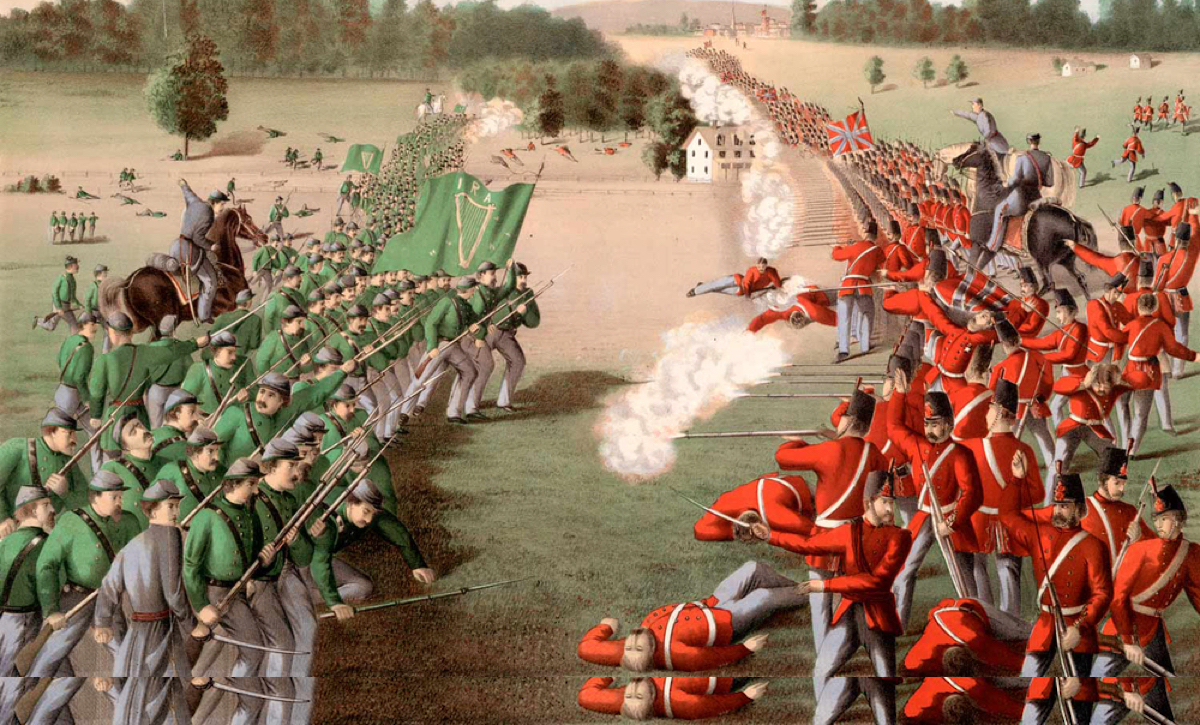
In Britain itself, the Fenians went to war against the ruling class with dynamite. To spy on them, Scotland Yard created the Irish Special Branch which evolved into the Special Branch, the political police in Britain and in any colony the British had since then.9
The activities of the US Fenians intersected with those of Britain-based Fenians when two of the former, Thomas J. Kelly and Timothy Deasy, American Civil War veterans, were arrested in England. On their prison van’s journey to jail it was ambushed10 and both officers spirited away.

(Image source: Internet)
Unfortunately and entirely unintentionally, Constable Brett was killed during the breakout. Refusing to hand over the keys from inside the wagon, he was bending to look through the keyhole when in order to release the prisoners one of the Fenians fired at the lock, the bullet entering Brett’s brain.11
The British police swept vengefully through the Irish quarters of Manchester and Salford arresting at least 28 people but eventually sending five for trial on ‘murder’ charges. Three were hanged, all innocent of intentional killing and at least two probably not even present at the scene.
As sentence of death was passed upon them, all five cried “God save Ireland!” Although the sentences on two were commuted, Timothy Sullivan used those words for his ballad about The Manchester Martyrs, as the executed three became known among the Irish at home and abroad.
The song travelled quickly and became an unofficial national anthem of Ireland and the Irish until it was decisively supplantedafter the 1916 Rising by Peadar Kearney’s The Soldiers Song (latertranslated: Amhrán na bhFiann).12 A memorial to the three was erected in Mostyn Cemetery.

(Image source: Internet)
Manchester continued to be a destination for Irish migrants, for factories still, including motor car production but also post-WW2 reconstruction and motorway building.
Manchester United FC, along with a number of other British soccer teams, recruited Irish players and Irishman Liam Whelan was one of the eight players killed in the Munich air crash of 1958. Another 30 Irish have played for the club at one time or another, some quite famous.13
The city is one of a number of British cities that has a name in the Irish language; Mancunians would probably be delighted to know that their city’s name in Irish is Manchuin.
From the late 1960s to late 1990s the city was host to an active branch of the Troops Out Movement in solidarity with Ireland, also from 1980s to an active branch of the Irish in Britain Representation Group; the Special Branch was active in monitoring and, from time to time, harassing their activists.
The Provisional IRA bombed the city in 1996 as part of its campaign against the British State and — despite a 90-minute warning — 212 were injured.
Today Manchester, alongside South Asian ethnic influences, continues its Irish ethnic presence with Irish traditional cultural activities14 and no doubt the sons and daughters of Manchester’s Irish diaspora will continue to contribute to other sport and artistic culture in Britain and in the world.
Footnotes
1https://www.breakingnews.ie/ireland/oasis-review-the-band-were-great-the-service-was-not-1793012.html
2https://en.wikipedia.org/wiki/The_Condition_of_the_Working_Class_in_England
3https://www.youtube.com/watch?v=s11BuatTuXk here performed by The Pogues
4Given that Marx, a German Jew, became his closest political comrade and writing partner, it’s likely he changed his bias against Jews also.
5https://www.marxists.org/history/international/iwma/documents/1867/fenians.htm and Introduction to https://journals.sagepub.com/doi/10.1177/030639688202400204
6https://en.wikipedia.org/wiki/International_Workingmen%27s_Association
7For example, the escape on board The Catalpa https://www.irishtimes.com/opinion/an-irish-diary/2023/11/01/the-greatest-escape-frank-mcnally-on-one-mans-mission-to-make-a-movie-about-the-catalpa-rescue/
8https://www.irishcentral.com/roots/history/irish-fenian-invasion-canada Unlike many other accounts easily available this one gives a reasonable assessment of the rationale for the invasion, including its potential and the reasons of its ultimate failure, the interests of the ruling class of the USA, which the Irish Republican movement should have learned from forever afterwards – but failed to do.
9Often referred to simply as ‘the Branch’ or ‘Branchmen’ (though the organisation of course also recruits women).
10The location, by an arch under a railway bridge, is still unofficially known as “Fenian Arch.”
11https://en.wikipedia.org/wiki/God_Save_Ireland
12https://en.wikipedia.org/wiki/God_Save_Ireland
13For example, George Best and Roy Keane.
14Manchester has a Comhaltas Ceoltóirí Éireann club (for Irish traditional music) and informal music sessions, also an Irish dancing school https://www.facebook.com/profile.php; Gaelic Athletic Association clubs including St Brendan’s, St Peter’s, Oisín, and St. Lawrence’s.
Sources
The Fenian Ambush: https://ballymacoda.ie
The ballad: https://en.wikipedia.org/wiki/God_Save_Ireland
The First International and Fenians: https://www.marxists.org/history/international/iwma/documents/1867/fenians.htm
The Saturday concert in Croke Park: https://www.breakingnews.ie/ireland/oasis-review-the-band-were-great-the-service-was-not-1793012.html
 rebelbreeze
Hi Diarmuid, I thought you might be interested in this, it might make an interesting column. If you can ignore the presenter’s very dodgy grasp of history the rifle itself is a very valuable and interesting artifact which I hadn’t came across before. I would have thought an essential purchase for any interested Irish museum. Solidarity. Chris Patton.
grma, Chris. Diarmuid Breatnach replies: Yes, very interesting, thanks. “Very dodgy grasp of history” was being kind to him – even Wikipedia would have given him better grounding. As I understand it, it was the first invasion in 1866 that was the major one and it was very successful up to the point where the US stopped the rest of the force crossing to support the advance party and, according to some accounts, even with a number of artillery pieces. The major importance of this whole story politically in my opinion was that the US ruling class, at the most maximum point of its contradiction with the UK ruling class since the American Revolution, nevertheless put its future partnership with British imperialism above the Irish sympathies of a large portion of its citizens – a lesson from which most Irish Republicans failed to learn.
When suggesting a ‘column’ did you mean about weapons of Irish revolutionaries? Yes, interesting but I don’t have the time for it. A few have written about later weapons and published books. Want to have a go at it yourself for the Rebel Breeze blog?