THE FIRST WORKERS’ ARMY IN THE WORLD – FORMED IN DUBLIN

Diarmuid Breatnach

(Reading time: 6 mins)

Last week saw the anniversary of the creation of the Irish Citizen Army, a militia formed initially to defend the workers from attacks of the Dublin Metropolitan Police on behalf of the Dublin capitalists but that went on to fight in the 1916 Rising.

The ICA was born in the struggle of the consortium of Dublin employers, led by big capitalist and Irish nationalist William Martin Murphy, to smash the militant and successful Irish Transport & General Workers Union in Dublin, where the union had its headquarters, in August​​​​​​​​​​​​​​ 1913.

The workers were presented with a declaration to sign that they would not support the ITGWU but no union in Dublin at the time, whatever they thought of the targeted union and its founder,1 could sign such a declaration. As workers began to be sacked, others came out in solidarity strikes.

Dublin entered an extended struggle between the organised capitalists and the organised workers. In such a struggle of course, the organised capitalists had on their side the magistrates, the hierarchy of the various churches, the mass media2 – and the Dublin Metropolitan Police.

Anti-WW1 banner across Liberty Hall, HQ of the Irish Transport & General Workers’ Union in October 1914, with the Irish Citizen Army parading outside.

The DMP, a British colonial police force for Dublin would have needed no specific instructions to attack demonstrations of the ITGWU, their instincts as guardians of colonial ‘law and order’ sufficing but in addition, the attitude of the media would have outlined their ‘duty’.

And after representation from W.M. Murphy to Dublin Castle, the HQ of British control, the ‘duty’ of the DMP was outlined and they were reinforced by a number of the colonial gendarmerie,3 the Royal Irish Constabulary.4

On the evening of 30th August a mass meeting of the ITGWU in Beresford Place, outside the union’s headquarters, Liberty Hall, was attacked by a baton-wielding force of the DMP, leaving two workers mortally wounded5 with resulting running battles towards city working class areas.6

The following day, the DMP again viciously attacked crowds in O’Connell Street in front of Clery’s from which Larkin attempted to address the crowd in a meeting banned by the city magistrate.7

Not long after, a marching music band leading a strikers’ parade was also attacked by the DMP with musical instruments damaged and members injured and the leadership of the union decided that a counter-strategy was required for self-defence and possibly the very survival of the union.

The Lawrence O’Toole Pipe Band’s website lays claims to having been the victims of this attack while other history talks and articles have claimed that the ITGWU’s Fintan Lawlor Pipe Band was the one attacked. It is not impossible that the DMP attacked both.

On 19th November 1913 the Irish Citizen Army was born8 following a suggestion by Seán O’Casey and a call by Jim Larkin as a workers’ defence militia. After Larkin left Ireland for the USA in 1914, James Connolly took over leadership of the ICA and wielded it into a revolutionary force.

I recall attending a book launch or talk about the ICA in which it was described as “the first workers’ army in the world” but searching for that quotation I now find it refuted by AI online and replaced by “first working-class army”.9 I cannot agree with the latter.

Most armies, especially nowadays, are “working class” in that this most numerous social class will contribute the vast majority of its rank-and-file. In the past, the peasantry and landless labourers would have been the majority.

Despite the overwhelming worker membership of the ICA, its most important distinction was not in the social class of its membership. Nor was it totally working class, containing as it did some notable members of middle-commercial and one of a landowning classes.10

What made the Irish Citizen Army very different from other armies and qualified it, I maintain, for the title of “workers’ army” were the intentions and ideological perspective of its founders, the conditions of its birth, ethos of its members and – most of all – its declared purpose.

The ICA was founded with the express intention and necessity of defending a worker’s organisation which was resisting an attempt by the capitalist employers to break that organisation. The struggle was led by declared openly-socialist leaders who gave the call for the ICA’s founding.

In every respect, I maintain, even without a specifically socialist constitution, this was a workers’ army, formed by workers, in a workers’ struggle in defence of their organisation and of the right to organise, defending their previously-won improvements and their dignity.

And the lack of evidence of any such precursor qualifies the Irish Citizen Army as “the first workers’ army in the world.”

The Starry Plough design of the Irish Citzen Army’s flag, created in 1914. (In case of confusion about the design or colour see https://rebelbreeze.com/2025/06/05/changing-the-starry-plough-colour-and-sean-ocasey/)

However, none of the preceding makes it a socialist organisation, in my opinion. A socialist organisation would have as one of its principal objectives the attainment (whether by reformist or revolutionary methods) of a socialist organisation of society.

As to Lenin having allegedly called the ICA “the first Red Army in the world”, I have searched for the original reference without success, finding only it quoted by speakers, writers, organisations and authors – but never with a reference of where and when Lenin supposedly said it.

I strongly suspect that Lenin never said that. But even if he had, the ICA’s constitution does not support it, being rather of a democratic nationalist and anti-colonial character.11

Socialist Republicans today approve of the Irish Citizen Army throughout the 1913-1916 period. But it is not unknown for them to go further and to characterise it as socialist republican in nature and orientation. I don’t see evidence of this in either the ICA’s constitution or in its membership.

Though certainly Irish nationalist in intention, the word ‘Republic’ is not mentioned anywhere in the constitution. One might argue that it was understood but I can’t see the evidence for that either. Some contemporary prominent Irish nationalists were not even wedded to the idea of a Republic.

The 1919-1921 IRA was not a socialist organisation. Nor was the monarchist Sinn Féin party, even after its founder Griffiths permitted its reformation as Republican in order for the disparate nationalist movement to contest the UK’s 1918 General Election on an abstentionist manifesto.

The political leadership of the Republican movement split over the British offer of dominion status with partition as against a unitary Republic. Churchill was quite adamant that the new Irish State could not be a Republic and it was not declared so until the 1937 Constitution.

Certainly the founders of the ICA were socialist Republicans but in the absence of its constitution being of a kind, for the organisation to qualify as such it must be shown to have been also the widely-embraced ethos of its membership.

Even if imagining that the membership of the ICA, like its founders and a number of its officers, were Irish Republicans, it is still a greater step to assert that they were socialist Republicans, in the sense of intending the socialist organisation of society and elimination of capitalism.12

Irish Citizen Army on the roof of Liberty Hall during a flag-raising activity.
(Photo sourced from Internet)

TODAY AND TOMORROW

Whereas these historical questions may fuel debate, no debate should be needed regarding the right of workers to organise to defend and improve their conditions, nor to change the dominant political shape and allegiance of their country, nor to defend their organisation from the police.

Indeed, not only can we take those rights as legitimate and necessary to exercise but it also becomes clear that at some point we will, as workers, as socialists and/ or as Republicans, need such an army. The ruling class has its physical force organisations in the Gardaí and the Irish Army.

The history of ruling classes bears testament to the fact they never relinquish power without using violence against challenges from the rising social forces; even such social and political rights as we have were won through hard struggle, sacrifice and indeed martyrdom.

Commemorative postcard 1916, showing severe British shelling damage to the original Liberty Hall building, Beresford Place, Dublin.

The Far-Right has also given ample proof of their readiness to employ violence against the vulnerable sections of our class and against also those they consider opposed to them ideologically; the history of fascism too warns us of the need to organise our defence.

In that respect too let me briefly comment on the false “ICA” recently proclaimed in a video which, while claiming a 32-County outlook and repeating that Britain has no right in Ireland, filled the rest of their video with racist anti-migrant rhetoric, conspiracy theory and lies.

Of course they contain nothing of the workers’ solidarity ethos of the ranks of the real ICA, not to mention the anti-fascist, anti-racist internationalist and socialist outlook of the ICA’s leadership.

The ICA developed as a force for physical defence of workers’ rights on the streets, which is where the DMP and RIC attacked them. It was some years later, in the course of inter-imperialist World War I that the ICA fought in an armed rising alongside other democratic national forces.

Some, usually only among Irish Republicans, have striven also to organise a fighting force. Typically they concentrated on gaining arms and planning armed actions. Isolated from the masses, they were easily infiltrated by State agents, resulting in activists going to jail.

Captain White & Irish Citizen Army on parade on their grounds at Croydon House, Fairview, N. Dublin City. (Sourced: Internet)

While needed, I believe a workers’ defence force should, in current circumstances, concentrate on street defence-and-offence fighting tactics, also that it should be based on the broad democratic political front, on unity in action against imperialism, colonialism, fascism and Loyalism.

Defence on a broad front basis can and should educate the whole resistance movement, in its disparate ideological influences, as it may be that similar recruits in the Irish Citizen Army were educated and trained under the leadership of revolutionary socialists and republicans.

End.

Note: If you found this article of interest, why not register with Rebel Breeze for free, so that you will be notified by email of subsequent articles. You can de-register any time you wish.

FOOTNOTES

SOURCES AND REFERENCES

Reprint of Sean O’Casey’s account of the formation of the ICA with a short anti-Irish nationalist introduction: https://libcom.org/article/story-irish-citizen-army-1913-1916-sean-ocasey

In important respects a different account from those by most socialists and Irish Republicans of the origins of the Irish Citizen Army: https://www.thepensivequill.com/2021/04/the-irish-citizen-army-james-connolly.html

St. Lawrence O’Toole Pipe Band: https://slotpb.com/about.html

1913 – A Policeman’s Lot and Murphy’s Law. Talk given at Garda Historical Society at Store Street Station, August 29th 2013  and Dublin Castle at Police Memorabilia Exhibition, November 16th, 2013 (speaker’s name not listed). https://1913committee.ie/blog/?p=1800

1Jim Larkin, a migrant and union organiser from Liverpool, had formed the ITGWU as a split from the British-based National Union of Dock Labourers after serious clashes with the latter’s General Secretary, ?????? Sexton (also an Irish nationalist). Larkin was very popular with the ITGWU’s members but much less so with other union leaders around Dublin.

2Not least the editorial and management boards of the Irish Independent, owned by William Martin Murphy, leader of the union-busting consortium.

3An armed police force under central State control, like the Guardia Civil (Spain), Carabinieri (Italy) and similar in France and Turkey.

4A Policeman’s Lot and Murphy’s Law. https://1913committee.ie/blog/?p=1800

5James Nolan and John Byrne, which Wikipedia has for years erroneously recorded as killed the subsequent day in another DMP riot in O’Connell Street, known as Bloody Sunday (1913).

6South-eastwards along Townsend Street towards Ringsend and Northwards towards Corporation Street in the Montgomery (Monto) Street area. There the residents defended the strikers and attacked the police, an example of class solidarity for which they paid soon afterwhen a DMP force paid them a visit, smashing household furniture and ornaments and beating John McDonagh. Paralysed from the waist down and in bed, McDonagh was unable to effectively defend himself and when his wife attempted to do so, she also was beaten and McDonagh died shortly afterwards in Jervis Street Hospital. (see Police Retaliation [sic] in A Policeman’s Lot and Murphy’s Law https://1913committee.ie/blog/?p=1800)

7See a number of entries, including Wikipedia on Bloody Sunday Dublin 1913. Though some of those claim the deaths of James Nolan and Patrick Byrne were caused then, in fact it was the previous day that they received their fatal wounds from the police. Unmentioned in most is the case of Fianna Éireann youth Patsy O’Connor, knocked unconscious as he gave first aid to another victim of the police. Patsy O’Connor suffered repeated headaches thereafter and died on 15th June 1915 at the age of 18. https://1913committee.ie/blog/?p=2293

8https://www.nli.ie/1916/exhibition/en/content/stagesetters/other/jimlarkin/index.pdf

9https://www.connollybooks.org/product/irishcitizenarmy

10I state this qualification despite Connolly’s remark in Workers’ Republic, 30 October 1915: Hitherto the workers of Ireland have fought as parts of the armies led by their masters, never as a member of any army officered, trained and inspired by men of their own class. Now, with arms in their hands, they propose to steer their own course, to carve their own future.

Constance Markievicz and Katherine Lynn were officers in the ICA but neither were born into the working class.

11See https://cartlann.org/dicilimt/2022/05/ConstitutionOfTheIrishCitizenArmy.pdf

12I am not unaware that a significant number of individuals and organisations claiming to be Irish socialist Republicans currently spend hardly any time at all discussing the socialist organisation of society.

MIND YOUR LANGUAGE!

Diarmuid Breatnach

(Reading time: 3 mins.)

If it is true that language at least influences the way we think, then surely it behoves us to pay more attention to our choice of words. But not only because of the influence of our words on others but indeed on us as we utter them.

Take the word ‘Ireland’ – surely a neutral one describing a geographical entity? But if we query “the population of Ireland” on line and receive a reply that the figure is 5.83 million, whereas we know it to be over 7 million, we experience at least puzzlement at the disparity in figures.

Of course, what has has occurred is that “Ireland” is being considered in political terms and the Six County colony’s population is being omitted. The reply may qualify that it is referring to “the Republic of Ireland” (as when commenting on the FAI’s football selection internationally).

But this does not really make everything alright semantically (i.e. in meaning) either. True, the Irish State holds regular elections and does not acknowledge a monarch, so it generally fulfils the description of ‘a Republic’. But that is not a historically or politically-neutral term in Ireland.

The word has a long history in Ireland as applied to the nation and was always imagined as referencing the whole geographical entity. The most influential use of the word in documentary form was probably the 1916 Proclamation, which did not in the least anticipate partition.

Even the 1937 Constitution, which formally baptised the Irish State a ‘Republic’, claimed sovereignty over the entire 32 Counties, a position that stood until the removal of Articles 2 and 3 from the Constitution by the current State in 1999.

The Football Association of Ireland is actually only the Association of the sport for the 26 Counties state and the use of “R.o.I” on the screen to refer to the State’s team during games is, as explained, deeply problematic. However the Irish Rugby Team is indeed an all-Ireland one.

As is the largest sports association of Ireland, the Gaelic Athletic Association. And also Tennis Ireland, Cricket Ireland, Table Tennis Ireland, and both Badminton Ireland and the Irish Judo Association organise on a four-province basis.1

If we call the entity the ‘Irish State’ instead we would be correct. And we could call its territory ‘the Irish state’, with a lower-case ‘s’ to distinguish between the political construction and the territory over which, in constitutional and legal terms, it holds power.

Or we could call it the ‘26 Counties.’ Or, seemingly becoming increasingly popular in some quarters: ‘the Free State’.2 But what about the entity’s parliament? That’s ‘the Dáil’, right?

That’s how we hear it described and, as “Dáil” is an equivalent of ‘parliament’ in Irish, that’s ok, right? No, not at all really; its full title is actually “Dáil Éireann” and we’ve already established that not even by Constitutional lip service does this parliament govern the whole nation.

The first time we had an all-Ireland parliament, open to election across the whole of the nation and open also to participation of all elected candidates was in January 1919 but it was banned in September by the occupying British authority, thenceforth operating under conditions of secrecy.

Then in January 1922, the pro-Treaty majority in the Dáil supported the British Treaty, including Partition, ending Dáil Éireann. There has not been a Dáil Éireann since. The most accurate brief description of the current institution is “Leinster House”.3

Is this the home of Dáil Éireann? Leinster House, west-facing side. (Image: Wikipedia).

Well, does it matter what we call them – we know what they are, right?

If it’s true that the words we use to describe things influence how we think about them, then it matters quite a lot. And how we describe them may also influence how others think about them, which also matters a great deal.

If we want to imply by the words we use that this state is independent and covers the whole nation – and that its parliament administers the whole nation – well then, there’s no need to change our words. Especially if we think that the extent of Irish sovereignty is fine or sufficient.

But if we don’t think along those lines then perhaps we need to examine our terminology more carefully and, where appropriate, amend it.

End.

Note: If you found this article of interest, why not register with Rebel Breeze for free, so that you will be notified by email of subsequent articles. You can de-register any time you wish.

FOOTNOTES

1Interestingly, I note that the Irish Ten-Pin Bowling Association (ITBA) is in the process of becoming a 32-county association.

2This was the official title of the State following its adoption of the terms of the Anglo-Irish Treaty.

3The building is actually formally called “Leinster House” since it was the city resident of the Duke of Leinster, of the Cambro-Norman invader dynasty of FitzGeralds and FitzMaurices. The Duke was Lord Deputy and at times Chief Justice of Ireland under the English Occupation.

REFERENCES

https://www.bonn-institute.org/en/news/psychology-in-journalism-2#introduction-82539

THE BLOOD-RED POPPY – remembrance or militarisation?

Diarmuid Breatnach (edited from article posted in Rebel Breeze 2014)

(Reading time: 6 mins.)

Part 1 – who and what gets ‘remembrance’

In the lands under the direct dominion of England, i.e. the “United Kingdom”, and in some others that are under its influence, the dominant class calls the people to join in a cultural event in November which they call “Remembrance”.

The organisation fronting this event in the ‘UK’ is the Royal British Legion and their symbol for it (and registered trademark) is the Red Poppy, paper or fabric representations of which people are encouraged to buy and display — and indeed often pressured to wear.

In some places, such as the BBC for personnel in front of the camera,  they are forced to wear them. In many schools and churches throughout the ‘UK’, Poppies are sold and wreaths are laid at monuments to the dead soldiers in many different places.

Prominent individuals, politicians and the media take part in a campaign to encourage the wearing of the Poppy and the participate in the ‘Festival of Remembrance’ generally and of late, to extend the Festival for a longer period.

High points in the ‘Festival’ are the Royal Albert Hall concerts on the Saturday and the military and veterans’ parades to the Cenotaph memorial in Whitehall, London, on “Remembrance Sunday”. (Also a focus for commemorations by the British far-Right and fascists).

“The concert culminates with Servicemen and Women, with representatives from youth uniformed organizations and uniformed public security services of the City of London, parading down the aisles and on to the floor of the hall. There is a release of poppy petals from the roof of the hall.1

An embroidered version of the poppy emblem (Sourced: Internet)

“The evening event on the Saturday is the more prestigious; tickets are only available to members of the Legion and their families, and senior members of the British Royal Family (the Queen, Prince Phillip, the Prince of Wales, the Duke of York [not this year!] and the Earl of Wessex). 2

“The event starts and ends with the British national anthem, God Save the Queen3 (and) is televised. Musical accompaniment for the event is provided by a military band from the Household Division together with The Countess of Wessex’s String Orchestra.”4

The money raised from the sale of the “Poppies” and associated merchandise is said to be used to support former military service people in need and the families of those killed in conflict. On the face of it, military and royal pomp apart, the Festival may seem a worthy charitable endeavour.

Also one which commemorates very significant historical events — therefore a festival which at the very least, one might thing, should not be opposed by right-thinking and charitable people.  

Yet the main purpose of this festival and the symbol is neither remembrance nor charity but rather the exact opposite: to gloss over the realities of organised violence on a massive scale and to make us forget the experience of the world’s people of war.

And to prepare the ground for recruitment of more people for the next war or armed imperialist venture – and of course more premature deaths and injuries, including those of soldiers taking part.

Video and song “On Remembrance Day” from Veterans for Peace lists British conflicts (including Ireland) and condemns the Church of England for supporting the wars, calling also on people to wear the White Poppy (see Part 3 for the White Poppy)

Partial Remembrance – obscuring the perpetrators and the realities of war

The Royal British Legion is the overall organiser of the Festival of Remembrance and has the sole legal ‘UK’ rights to use the Poppy trademark and to distribute the fabric or paper poppies in the ‘UK’.

According to the organisation’s website, “As Custodian of Remembrance” one of the Legion’s two main purposes is to “ensure the memories of those who have fought and sacrificed in the British Armed Forces live on through the generations.”

By their own admission, the Legion’s “remembrance” is only to perpetuate the memories of those who fought and sacrificed in the British Armed Forces – it is therefore only a very partial (in both senses of the word) remembrance. More recently it tries to hide this exclusivity.5

It is left to others to commemorate the dead in the armies of the British Empire and colonies which Britain called to its support: in WWI, over 230,500 non-‘UK’ dead soldiers from the Empire and, of course, the ‘UK’ figure of 888,246 includes the 27,400 Irish dead.  

Cossack soldier volunteers WWI. Imperial Russia was an ally of Britain and France; the war was one of the causes of the Russian Socialist Revolution 1917. The following year, the war ended. (Image sourced: Internet)

The Festival excludes not only the dead soldiers of the British Empire and of its colonies (not to mention thousands of Chinese, African, Arab and Indian labourers employed by the army) but also those of Britain’s allies: France, Belgium, Imperial Russia, Japan, USA … and their colonies.

No question seems to arise of the Festival of Remembrance commemorating the fallen of the “enemy” but if the festival were really about full “remembrance”, it would commemorate the dead on each side of conflicts.

German soldiers playing cards during WWI. Photos of Germans in WWI more readily available show them wearing masks and looking like monsters. (Photo sourced: Internet)

That would particularly be appropriate in WWI, an imperialist war in every respect.  But of course they don’t do that; if we feel equally sorry for the people of other nations, it will be difficult to get us to shoot, bomb or stab them in some future conflict.

A real festival of remembrance would commemorate too those civilians killed in war (seven million in WWI), the percentage of which in overall war casualty statistics has been steadily rising through the last century with increasingly long-range means of warfare.

Very recently, the Royal Legion has tried to claim that the “acknowledge innocent civilians who have lost their lives in conflict” but add “and acts of terrorism.” Since we know that that ‘terrorism’ is a highly politicised word and for imperialists has mostly meant resistance struggle, that is hardly welcome.

Civilian war refugees in Salonika, NW Greece, WWI (Photo sourced: Internet)

Civilians in the First World War died prematurely in epidemics and munitions factory explosions as well as in artillery and air bombardments, also in sunk shipping and killed in auxiliary logistical labour complements in battle areas.

And through hunger, as feeding the military became the priority in deliveries and as farmhands became soldiers.

In WWII 85,000,000 civilians died in extermination camps or forced labour units, targeting of ethnic and social groups, air bombardments, as well as in hunger and disease arising from the destruction of harvests and infrastructure.

Air bombardments, landmines, ethnic targeting and destruction of infrastructures continue to exact a high casualty rate among civilians in war areas.

One admittedly low estimate up to 2009 gave figures of 3,500 dead in Iraq during the war and aftermath and another 100,000 dead from western trade sanctions, along with 32,000 dead civilians in Afghanistan.

Another review up to 2011 gave a figure of 133,000 civilians killed directly as a result of violence in Iraq and “probably double that figure due to sanctions”.6

The number of civilians injured, many of them permanently disabled, is of course higher than the numbers killed.  Most of those will bring an additional cost to health and social services where these are provided by the state and of course to families, whether state provision exists or not.

Real and impartial “remembrance” would include civilians but not even British civilians killed and injured are included in the Festival of Remembrance, revealing that the real purpose of the Festival is to support the existence of the armed forces and their activities.7

And contributing at the same time to a certain militarisation of society and of the dominant culture.  

If the Festival were really about “remembrance”, they would commemorate the numbers of injuries and detail the various types of weapons that caused them.  

But that might reflect unfavourably on the armaments manufacturers, who run a multi-billion industry in whatever currency one cares to name, so of course they don’t.  

Australian soldiers who survived gas attack but injured by it awaiting hospitalisation, Northern France, WWI 1916. (Photo sourced: Internet)

And if really concerned about death and injury in war, they would campaign to end such conflict – for an end to imperial war.

But then how else would the various imperial states sort out among themselves which one could extract which resources from which countries in the world and upon the markets of which country each imperial state could dump its produce?

So of course the Royal British Legion doesn’t campaign against war. That’s not its role. Quite the opposite.

End.
(Parts 2 and 3 to follow).

Note: If you found this article of interest, why not register with Rebel Breeze for free, so that you will be notified by email of subsequent articles. You can de-register any time you wish.

FOOTNOTES:

1Sourced from the British Legion’s website in 2014, its WW1 centenary year.

2Ibid.

3Now of course God Save the King.

4Sourced from the British Legion’s website in 2014.

5 “We unite across faiths, cultures and backgrounds to remember the service and sacrifice of the Armed Forces community from United Kingdom and the Commonwealth. We will remember them.” https://www.britishlegion.org.uk/get-involved/remembrance/about-remembrance

6 Civilian war deaths Iraq and Afghanistan to 2009 http://www.foreignpolicy.com/posts/2009/11/30/why_they_hate_us_ii_how_many_muslims_has_the_us_killed_in_the_past_30_years Civilian war deaths Iraq to 2011: http://costsofwar.org/article/iraqi-civilians

7“shoulder to shoulder with our armed forces” from the British Legion’s website.

COLONIAL PROXY MILITIAS, FROM IRELAND TO PALESTINE

Diarmuid Breatnach

Reading time main text: 5 mins.)

Currently the Palestinian Resistance is engaged in an important struggle to eliminate four Israeli-proxy militias. This type of militias of colonial and imperial powers have a long history, not least in Ireland from the 1800s to the present.

SETTLER AND NATIVE MILITIAS IN IRELAND

The British colonial occupation of Ireland had an army to quell native resistance but many settlers also organised themselves into armed bands (as in Palestine), such as the Hearts of Steel or Hearts of Oak in the late 18th Century in order to resist the big landlords.

The United Irishmen were successful in uniting a number of these, both native and settler bands such as the Whiteboys and Hearts of Oak, particularly in Antrim but the Peep O’Day Boys went mostly with the sectarian and royalist Orange Order.

The settlers also organised yeomanry militias which they labelled ‘Volunteers’, initially to defend against a feared invasion from Napoleonic France. Some of those contained Republican sympathisers and some quite the opposite.1

In response to the successful uniting efforts of the mostly Protestant-led United Irishmen, the Orange Order was founded by British loyalists and soon received official support in organising anti-Catholic pogroms and in exposing United supporters, especially among the Protestant communities.

LOW INTENSITY OPERATIONS AND “PSEUDO-GANGS”

During the three-decades war towards the end of the 20th Century mostly in the 6 Counties, the British Occupation also organised proxies such as the Ulster Volunteer Force and the Ulster Defence Association. These were recruited among the Protestant/unionist community.

But not only among civilians.

As has been a pattern among colonial possessions, the occupying power organised a gendarmerie, i.e an armed police force under central command of the occupying power. In Ireland that was the Royal Irish Constabulary which came to prominence in the suppression of the 1867 Fenian rising.

After the partition of Ireland by the British in May 1921, the RIC within the remaining direct colony of the Six Counties was renamed the Royal Ulster Constabulary2. British Intelligence used this force to channel intelligence, arms and recruits into the Loyalist gangs.

In addition, many members of the disbanded RUC’s semi-militia, the part-time B-Specials, were reorganised into the RUC Reserve of the colonial police or recruited into the British Army as the newly-formed Royal Ulster Regiment, from which the Loyalist militias could be supplied as before.

Brigadier Frank Kitson was a leading colonial counter-insurgency strategist who had served in Kenya and Malaya before he was sent to the Six County colony to coordinate the Loyalist militias and the official armed forces and gendarmerie, no doubt in coordination with MI5.

Kitson published Gangs and Pseudo-Gangs (1960) and Low Intensity Operations (19713) based on the experience of colonial resistance repression in Malaya and Kenya, going on to introduce these ideas organisationally in the occupation of the Six Counties.

Pseudo gangs give the occupying power deniability and, being generally from the occupied country,4 have local knowledge. They can carry on terrorism and assassinations at ‘a remove’ from the occupying power.5 In the case of criminal gangs, they have an existing organisation.

Such gangs may have family or other social relationships with some in the targeted community, introducing allegiances and communal fragmentation as has been occurring to some extent in Gaza. However, in Ireland, the gangs were all originating from the unionist community.

Frank Kitson (now Brigadier) in 1971 (Photo source: Internet)

Jeffrey Sluka summarises6 “… beginning in 1972, there has been a vicious, continuous campaign of sectarian assassination against Catholics in Northern Ireland waged by Loyalist paramilitary groups (the Ulster Defence Association [UDA] and Ulster Volunteer Force [UVF]) …

“… and their associated death squads (the Ulster Freedom Fighters [UFF], Red Hand Commandos, Protestant Action Force, etc.), who have killed nearly 700 innocent Catholic civilians – the largest category of casualties in the war.

“Thousands of other Catholics have survived Loyalist attempts to murder them.

“The existence of this campaign has never been publicly acknowledged by the British authorities, who have ignored it, downplayed it, and actively misrepresented it …

“… to influence the media and public in this regard, both at home and abroad, as an integral part of their counterinsurgency strategy.

“The official position of the British authorities is that there is no state terror in Northern Ireland, and certainly no death squads. When pressed, they admit that there is Loyalist terror against Catholics, but insist that they have nothing to do with it.

“When pressed with evidence such as the fact that hundreds of members of the Security Forces have been convicted of involvement with Loyalist paramilitaries, they claim that this collusion is informal – individual acts by rogue soldiers and policemen

“- and not a reflection of government policy or military strategy. All of these are political lies.”7

SEPOYS

The use of military forces recruited among the occupied people dates back further even than the Roman Empire and the British Empire used them extensively in India, where they called them ‘Sepoys’,8 which is what the Basque pro-independence people call the Basque Autonomous Police.9

In India, one of the most serious uprisings against British rule was sparked by a mutiny of its Sepoys.10

In Palestine, the ‘Zipaios’ equivalent are the police of the Fatah-controlled Palestine Authority. They are bad enough, brutally suppressing dissent, spying on and even attacking Palestine organisations in the West Bank, arresting and even killing critics.

The Royal Irish Constabulary in Ireland were a gendarmerie mostly composed of sepoys and of course there were many Irish regiments in the British Army and Irishmen also served in other British Army units, the Royal Navy and the Royal Air Force.

WORSE THAN SEPOYS

The militias in Gaza are however even worse. Based on criminal gangs and social groups, they have consistently looted aid trucks coming into Gaza before Israel closed all the gates, then selling the goods at high prices to the hungry population as Gaza starved and medicine became scarce.

According to reports there are currently four Zionist-linked militias in Gaza: Abu Shabab around Rafah in southern Gaza; Husam al-Astal in Khan Younis, Ashraf al-Mansi in Beit Lahia in the North, and Rami Heles in eastern Gaza.

Sourced from The Cradle based on Sky News investigation.

Their looting, supported by the Zionist state, was even used to try to blame on the Resistance, with Israeli spokespersons claiming that Hamas was stealing the aid. Conversely, as the Resistance strove to counter the proxy militias, the fighters were targeted by the Israeli Occupation Force.

Consequently it was almost impossible for the Resistance to suppress the proxy militias – until the current ‘ceasefire’. Now, able to operate to some extent more openly, the Resistance is settling accounts with the proxy militias. And it is very important that they do so.

Not only for what they have done, the plundering of emergency aid, attacks on displaced persons, torture and murder of famed journalist Salah al-Jafarawi.11 But because they are a serious infection, injected into Gazan society by the Zionazi occupation in order to cause serious harm to the society.

According to reports, undercover operatives of the Resistance have infiltrated the gangs and managed to appropriate a large number of weapons and vehicles of the gangs donated by the IOF or by the United Arab Emirates.12

Hamas advertised a truce for gang members to hand over their weapons and surrender themselves to the authorities, which some have done but many have not. The Resistance has operational clashes with the militias and has captured many. Some were publicly executed by gunshot.

Whether full-scale war returns to Gaza after this ‘ceasefire’ (full of IOF bombings, shelling and shooting) or not, their presence in Palestinian society cannot be tolerated, not by the civil government, nor by the broad community, nor by the armed resistance.

End.

Note: If you found this article of interest, why not register with Rebel Breeze for free, so that you will be notified by email of subsequent articles. You can de-register any time you wish.

APPENDIX:

A Sky News investigation has revealed that Israel is backing four Palestinian militias inside Gaza to weaken Hamas as part of what militia leaders call “Project New Gaza.” Hossam al-Astal, head of one of the groups, said the militias are coordinating their efforts to remove Hamas from power.

He claimed that Yasser Abu Shabab and Ashraf al-Mansi, leaders of other groups, have also joined the project. All four militias are reportedly positioned along the yellow line in areas under Israeli control.

Astal told Sky News his headquarters is only 700 meters from an Israeli military outpost and that an Israeli coordinator had agreed to establish a “Green Zone” free of shelling or gunfire. Footage reviewed by the outlet showed militia vehicles with Hebrew markings scratched off.

Astal admitted the group receives logistical support and ammunition from outside Gaza and has bought Hamas weapons on the black market. A senior fighter in the Abu Shabab militia also said Israel had enabled the smuggling of guns, cash, and vehicles.

The militias reportedly coordinate their movements with Israeli forces at Kerem Shalom to bring in supplies, while western powers are said to provide indirect material support. Two of the militia leaders are former Palestinian Authority security officers.

While the Mansi militia denied direct contact with the Israeli military, it acknowledged coordination with Israel’s District Coordination Office. Abu Shabab previously told Army Radio he was open to working with Israel, calling Trump’s ceasefire plan “a way to end the war.”

“Soon we will achieve full control of the Gaza Strip,” he told Sky News.

(Summarised by The Cradle online news updates on Telegram 26 October 2025).

FOOTNOTES

1The yeomanry militias deployed in Wexford, such as the North Cork, proved to be the most vicious and indisciplined of the Occupation’s forces and are noted in a number of songs in English and Irish:
“… He led us on against the coming soldiers,And the cowardly yeomen we put to flight…” (Boolavogue, Patrick McCall, 1898);

“… Is go gcuirfeam yeomen ag crith in a mbrógaibh
Ag díol a gcomhair ar Shliabh na mBan.”
(Sliabh na mBan, believed by Mícheál Óg Ó Longáin, 1798).

2Since then renamed the Police Service of Northern Ireland (sic).

3The same year that mass internment without trial was introduced by the British Occupation and that the Ballymurphy Massacre of protesting nationalist civilians was carried out by the Parachute Regiment.

4Sometimes even from the oppressed native community.

5They are more easily dispensed with too, should they be no longer needed or their relationship become too public.

6In his own chapter For God and Ulster: The culture of terror and Loyalist Death Squads in Northern Ireland in Death Squad: The Anthropology of State Terror, Ed. Jeffrey Sluka (200), USA.

7Excerpt from ibid, sourced in https://cain.ulster.ac.uk/issues/violence/docs/sluka00.htm

8The term in Persian originally denoted ‘soldier’ but borrowed into Urdu and Hindi and under British rule, denoted native soldiers and their units in the British armed forces.

9The Ertzaintza. The Navarran police (‘Forales’) could also be called ‘Sepoys’ but are more usually called by other uncomplimentary names.

10https://www.bbc.com/news/world-asia-india-40528129

11https://www.aljazeera.com/news/2025/10/12/palestinian-journalist-saleh-aljafarawi-shot-dead-in-gaza-city-clashes

12Weapons, warlords, and wasteland: Israel’s new strategy for Gaza

SOURCES

Weapons, warlords, and wasteland: Israel’s new strategy for Gaza

https://news.sky.com/story/revealed-the-plan-for-a-new-gaza-and-the-four-militias-israel-is-backing-to-defeat-hamas-13456416

SOLIDARITY AND RESISTANCE IN MUSIC AND SPOKEN WORD IN DUBLIN

Clive Sulish

(Reading time: 3 mins.)

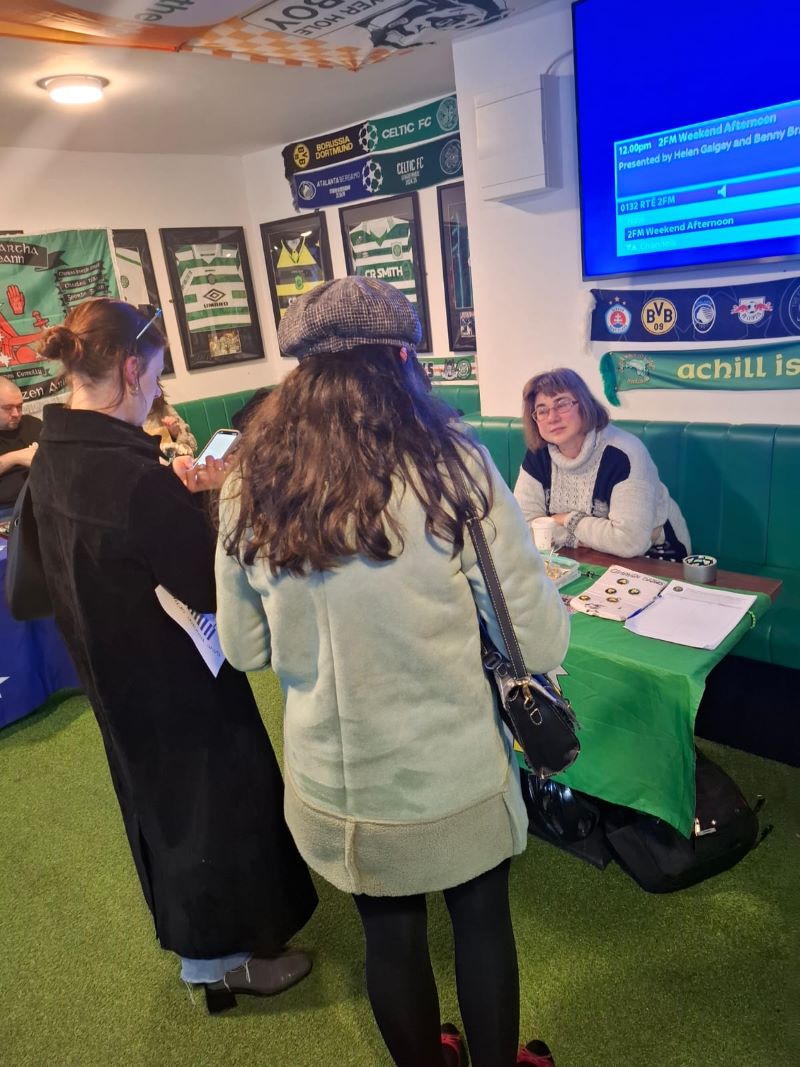
Thursday night (30th), with almost non-stop downpour of rain was a dreary and miserable one in Dublin. Not so however inside the Cobblestone’s back room where solidarity and resistance resounded in song, instrumental and spoken word.

The event organisers, Solidarity Sessions collective, an independent organisation founded late last year have declared a number of times that they wish to contribute to “creating a community of solidarity and resistance through culture.”

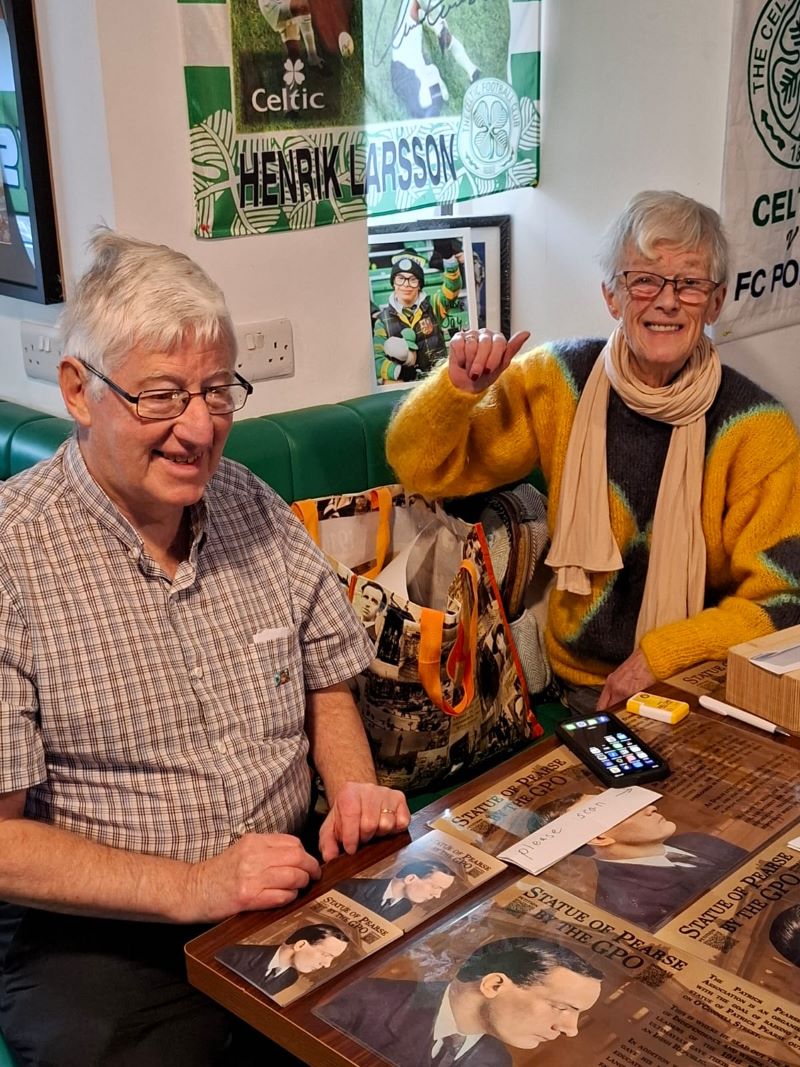
Certainly the flags on the stage of the Tricolour, Starry Plough and Palestine conveyed some of the context, as did posters of 1916 martyrs Connolly and Pearse with text pointing out that the first was a migrant and the second, son of a migrant.1

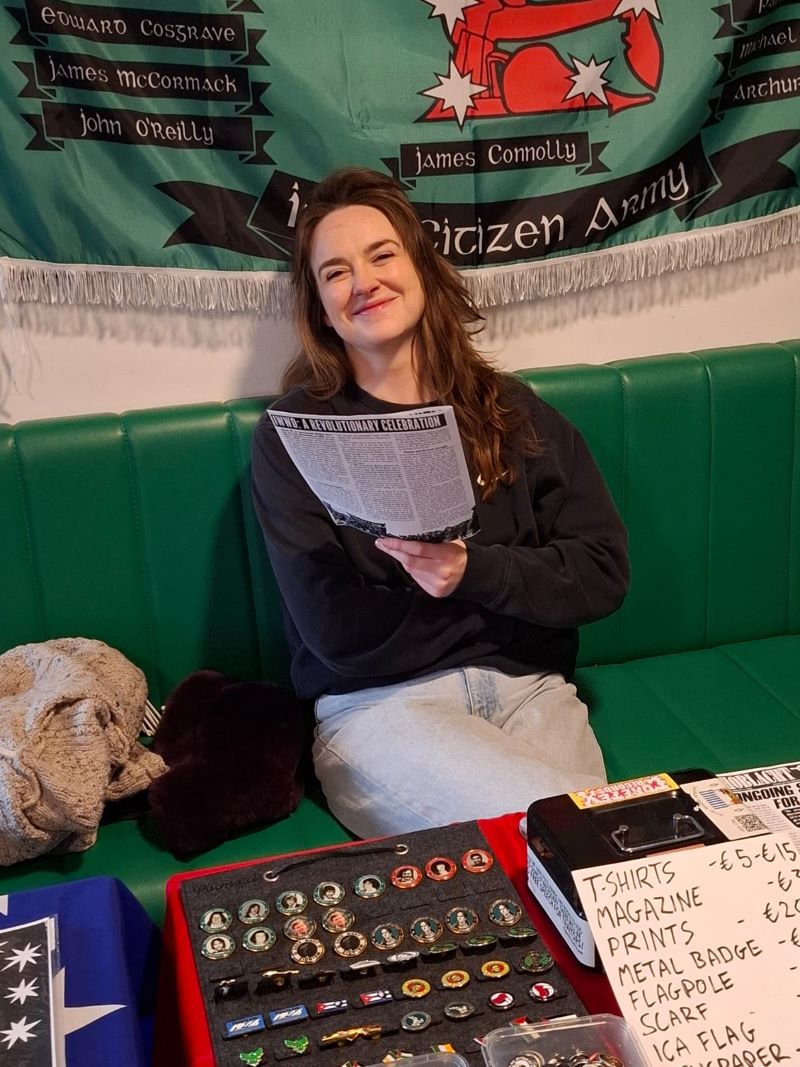
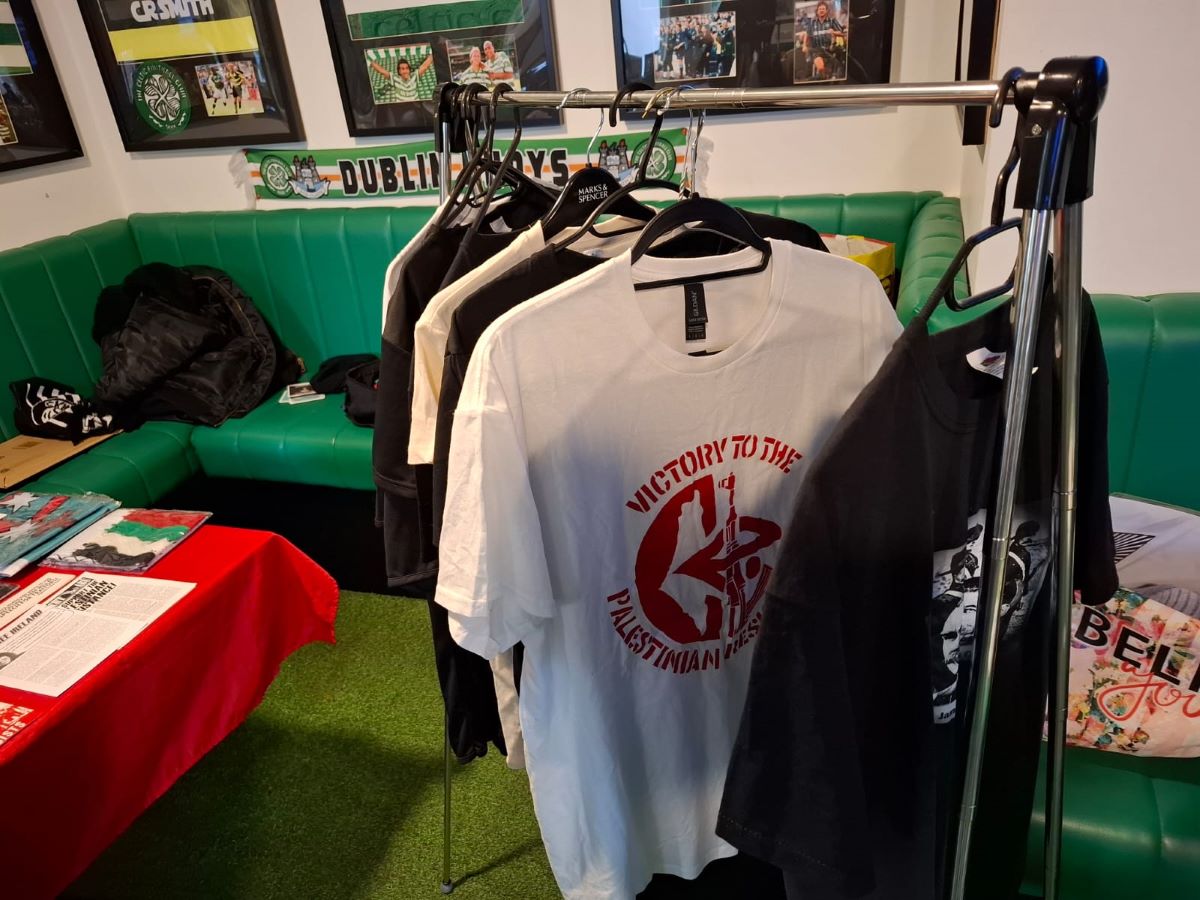
In addition a merchandise stall sold T-shirts figuring the Palestinian Resistance with funds raised going to Palestinian relief work on the ground. Solidarity Sessions have also donated to ‘buy’ a water truck from Uisce for Gaza and also donated to Streetlink Homeless Support in Dublin.

Mark Flynn performing at Solidarity Sessions No.3 in the Cobblestone. (Photo: R.Breeze)

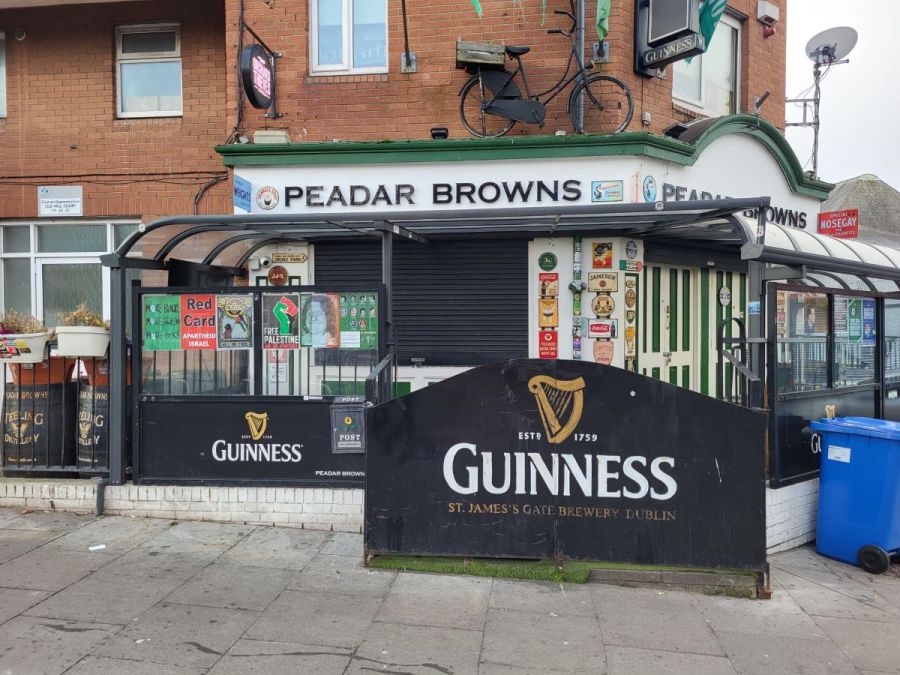
The material performed on stage contributed much of solidarity and resistance also. This was the third event this year and the second at the Cobblestone pub, one other being at the International Bar and the fourth expected at the Peadar Brown pub on Southside’s Clanbrassil Street.

There was a lot of audience participation at times during the evening, with Alan Burke joined from the floor in the chorus of his spirited rendition of The Aul’ Triangle (to which he added a verse of his own) and Sive was accompanied on request by continuous refrain under her singing.

Mark Flynn was also backed by the audience in his adaptation of A Roving I’ll Go to a sailing to Portugal song he told his audience he had put together in minutes of a creative flash the like of which he ruefully admitted not having experienced since. Flynn also sang Bogle’s antiwar Waltzing Matilda.

Alan Burke performing at Solidarity Sessions No.3 in the Cobblestone. (Photo: R.Breeze)

The audience was extremely quiet during Dorothy Collin’s spoken word pieces about assassinations by the Zionist Occupation and Palestinian resistance, interrupting her performance with applause only after a haiku in Irish and at a point where she became visibly emotionally affected.

The Resistance Choir included in their performance an exuberant Bread and Roses, the lyrics originating in a speech at a mostly female textile workers’ strike in Massachusetts, USA in 1912 and Burke sang of an innocent miner framed on a murder charge and hanged – but pardoned posthumously.

Class struggle was also present in Burke’s singing My Name Is Dessie Warren, about a trade union activist with flying pickets2 during the 1970s construction workers’ strike in England. Some were tried under the Conspiracy Laws and jailed, including Ricky Tomlinson and Des Warren.3

The Resistance Choir about to perform at Solidarity Sessions No.3 in the Cobblestone, being introduced by the MC, Ru O’Shea. (Photo: R.Breeze)

ANNOUNCEMENTS

Three imminent resistance events were announced from the stage: Friday morning, due to appear in court4 were two Palestine solidarity activists attacked by Gardaí at Dublin Port and a good show of numbers in solidarity was requested.5

On Saturday a picket in solidarity with Irish Republican prisoners would be held outside Kilmainham Jail6 and on Sunday a demonstration to blockade Dublin Port was announced, people being requested to gather at The Point on the north Liffey quays.

Sive, who performed at Solidarity Sessions No.3 in the Cobblestone. (Photo sourced: Internet)

The organising collective, volunteers on door duty and the performers all donated their services free of charge. Further donations will be made to causes considered worthy, the collective assured their guests and supporters.

Ru O’Shea, MC for the evening, thanked all the performers who gave their services for free, the audience for their attendance, supporters staffing the door, the Cobblestone and sound engineer. The next Solidarity Sessions night will be at Peadar Brown’s on Thursday 4th December.

Ongoing “contributing to building a community of solidarity and resistance.” And outside, it had stopped raining for awhile.

End.
Note: If you found this article of interest, why not register with Rebel Breeze for free, so that you will be notified by email of subsequent articles. You can de-register any time you wish.

FOOTNOTES

1James Connolly was born into the Irish diaspora in the poor area of Cowgate in Edinburgh and first came to Ireland as an adult in response to an invitation to found the Irish Socialist Republican Party. Subsequently Connolly went to the USA for a period before returning to Ireland (therefore 3 times a migrant). Patrick Pearse was born and raised in Dublin but his father was English. Both Pearse and Connolly were executed in Kilmainham Jail with another twelve by British bullets after their surrender of the 1916 Rising.

2‘Flying pickets’ operate in principle like the guerrilla ‘flying columns’, sending a large number of union picketers to specific locations chosen in secret, thereby reducing the opportunities for the police etc to mobilise at the spot in advance

3Ricky Tomlinson after release became a famous actor, mostly in comic roles. Warren developed Parkinson’s from forcible injections with restraining drugs and long periods in isolation in jail, dying not long after release. I remember the case and campaigns when I was working in England and a period afterwards when I was briefly active in the Construction Safety Campaign and read statistics about on average a construction worker killed weekly and one seriously injured daily on British construction sites.

4Yes, the Gardaí charging with criminal offences people they pepper-sprayed and batoned without warning.

5For report on that, see https://rebelbreeze.com/2025/10/31/strong-solidarity-support-for-arrested-port-blockade-activists/
6Kilmainham Jail was a British colonial prison in Dublin, also used for a while by the Irish Free State to imprison the Resistance during the Civil War/ Counterrevolution. It is now a very popular museum and holds the execution site of 14 prominent Irish Republicans after their surrender in 1916.
STRONG SOLIDARITY SUPPORT FOR ARRESTED PORT BLOCKADE ACTIVISTS

Diarmuid Breatnach

(Reading time: 2 mins.)

Many people endured heavy rain on Friday morning to support two Palestine solidarity activists in court as a result of the now-infamous Garda pepper-spray and baton attack on a peaceful march to Dublin docks on 18th October.

Small section of the crowd of supporters outside the Court on 31 October 2025 for the two pepper-sprayed and charged Palestine solidarity activists (Photo: D. Breatnach)

The Port march was a breakaway from a periodic Ireland Palestine Solidarity Campaign national march to Leinster House, the home of the State’s parliament; some IPSC stewards denouncing it as it diverged at O’Connell Bridge and called on others to march on Dublin Port instead.

From video and eyewitness reports it is clear that the Public Order Unit of the Garda determined not only to stop them but to ‘teach the protesters a lesson’. No sooner had the linked-arms marchers reached the police line than some of them sprayed pepper-spray on the Palestine solidarity activists.

So heavy was the spraying that it affected a number of the Gardaí themselves. Many also drew their batons and attacked the demonstrators reeling from the effects of the spraying. The POU unit had their ID numbers concealed and Gardaí pursued activists moving away, spraying them again.

The Gardaí later claimed they had given a warning before spraying as they are required so to do by their own regulations but both Irish Council for Civil Liberties observers and video evidence show this to be untrue.

Solidarity activists were arrested at the scene of the Garda attack and one other outside a special sitting of the court on Saturday evening. The charges were of the usual kind with police repression of demonstrations: offences against Public Order, resisting arrest and obstruction of traffic.

The Irish State is the 2nd-largest single importer of Israeli products, second only to the USA and clearly has no intention of moving from that situation.

Nor of demilitarising Shannon Airport nor of banning Irish airspace to overflights ferrying military supplies to Israel. Two years of giant solidarity marches and smaller ones up and down the country have not moved the Irish ruling class to any degree beyond making statements.

As people move to take actions that have the potential to force the Government to end their collusion it seems inevitable that the State will increase its repression, which will work towards intimidation but also to increased resistance.

Small section of the crowd of supporters for the two pepper-sprayed and charged outside the Court on 31 October 2025. (Photo: D. Breatnach)

Those gathering at the court today were for the most part independent activists and activists of very small political organisations but many also of broad Palestine solidarity groups.

The two facing charges today had their cases postponed to January 2026, with talk of the Gardaí possibly returning shortly to court to press more serious charges, with the potential of heavier punishment — but conversely also of greater political statements made before a jury.

Solidarity with people fighting in struggles in other parts of the world often has a price of repression where the solidarity is originating, which makes solidarity to the targeted activists essential too. In that context, the numbers attending the court on Friday morning were very encouraging.

End.

Note: If you found this article of interest, why not register with Rebel Breeze for free, so that you will be notified by email of subsequent articles. You can de-register any time you wish.

FOOTNOTES

FURTHER INFORMATION:

Recognition of Palestine in Two-States – A Solution Only for Imperialism

Diarmuid Breatnach

(Reading time: 9 mins.)

A wave of “recognitions of the State of Israel” have occurred around much of the world. Though at first glance these appear politically progressive, in fact they are all tied to supporting the colonial alleged “Two States Solution.”

This is quite apart from the fact that not one practical step is being taken by any of those states in order to prevent the ongoing genocide and massive displacement of Palestinians which many of the states are actually aiding.

The fourth image is what is available for the Palestinians in the imperialist two-state plan. (Image sourced: Internet)

Soon all but 30 member states of the UN will have recognised the Palestinian state (yet to exist) and they include western imperialist states such as Australia, Canada, France, Spain, the UK, supported by political parties both in government and opposition,1 all proposing a ‘two-state solution’ (sic).

This proposal involves accepting the ‘right’ of a European colonial settler regime to invade and occupy a land,2 subjugate most of the indigenous people, racially discriminate against them, set up an ethno-state, then carry out ethnic cleansing, genocide and further expansion.

This while simultaneously proposing 20% of the land with least water as a reservation for the indigenous people, under the guns and surveillance of the genocidal Occupier, with its borders, water and electricity supply all under the Occupiers’ control.

Many liberals and social-democrats will support the imperialist ‘solution’ being foisted upon the Palestinian people of the occupation of Gaza by a client regime and the creation of a formal Bantustan3 colony – the “Palestinian State” (sic).

This ‘solution’ was insisted upon at the three-day UN Conference in July, mandated by the UN General Assembly through resolutions ES-10/24 and 79/81 and sponsored by France and Saudi Arabiab, backed by the General Assembly President, Philémon Yang.

Also by Secretary-General of the United Nations, António Guterres, stating that the “… only just and sustainable path forward is the establishment of two independent, democratic States – Israel and Palestine – living side by side in peace and security, with Jerusalem as the capital4…” 5

Firstly, we’d have to say that there is nothing “just” about that path and secondly ask why is that the ‘”only sustainable solution?” Why cannot a democratic state of the entirety of Palestine, as pre-1948, be sustainable? Is it because the Zionists and their imperialist won’t let it be?

Then we’d be entitled to ask whether Guterres and Yang speak for the world or instead for the imperialist states and their clients and allies. In fact, since there can be no peace without justice, a democratic state of Palestine on pre-1948 territory is the only just and sustainable solution.

This scrambling to recognise the ‘Palestinian State’ within a “two-state” framework was also reflected in the recent United Nations vote for a ceasefire, which was tied to the acceptance of the two-state solution, emphasising that it has nothing to do with justice but is all about management.

The imperialist states and their allies, with the particular exception of the US and Israel, are very worried that the legacy of the current genocide will threaten their interests in Western Asia in the near future, including the regimes they depend upon to control the Arab people.

To some extent the western states are also concerned at the exposure of their regimes to their own populations in terms of collusion with genocide, financial implications , suppression of information and, in many cases, repression of democratic rights to protest.

The western states want to save West Asia for imperialism and they think that the USA and current behaviour of Israel are endangering it.

The two-state plan is not at this point supported by the Zionist state and the chief imperialist, the USA, though the plan seeks to impose what they also want: stability within the imperialist system.

Recently another international conference was held to discuss the way to resolve the situation of Western Asia and crisis in Palestine, this conference organised by Qatar following Israel’s bombing of their capital Doha in an assassination attempt against the Hezbollah negotiating team.6

The Iranian representative pointed out at the conclusion that although they supported some of the resolution adopted they could not agree to recognition of a Palestinian state within or adjacent to Israel, since that meant de facto recognition of the right of the genocidal Zionist state to exist.7

Recognition of the Palestinian State as is being done now is also recognition and acceptance of the totally unrepresentative and undemocratic Palestinian Authority and in fact, Palestinian Embassies (such as the one in Dublin) and Consulates are run through the Authority.

Leaflet issued by an Irish solidarity organisation for a picket of the Palestinian Authority Embassy last year – subsequently there was a broad protest held outside. (Image sourced: from my archives)

Although Palestine has been officially occupied by a Zionist colonial settler regime since 1948, it has had an imperialist and Zionist client Palestinian regime since the conclusion of the Oslo process (overseen for US imperialism by Bill Clinton): the Palestine Authority.

What would one expect from such a client regime? Collusion, spying, pacification? Certainly, the PA came to represent all those things. But in addition: bullying and brutal suppression, along with widespread corruption. It was managed by the Fatah leadership through the PLO.8

Whatever we may think of the Fatah leadership, they were by far the majority choice of the Palestinian people in the legislative elections of 1996. But by the time of the next elections in 2006, most of Palestine society had become sick of Fatah and elected Hamas instead.

A 2007 decree by President of the Palestinian Authority Mahmoud Abbas disqualified from election any party that did not recognise the leading role of the Fatah-dominated PLO, thereby disqualifying Hamas which denounced the decree as undemocratic and illegal.

There is a long history of imperialism choosing tame representation for occupied peoples, including British colonialism doing the same thing in Palestine.9

Fatah, unprepared to accept the loss of their power and corruption opportunities, refused to leave their governing positions until they were helped to leave by Hamas in a short, sharp struggle in 2007.10 Whereupon the Zionists blockaded Gaza and imperialists paid their grants instead to the PA.

However Hamas did not force the issue of their election in the West Bank, which continued under the rule, not to say dictatorship of the Palestinian Authority.

The corruption of and repression by the PA is not an opinion of the Palestinian resistance organisations alone but is widely acknowledged by all kinds of western observers, including enemies of the Resistance,11 which is one reason the imperialist are calling for its ‘revamping’.

Meanwhile Abbas, ‘President’ of the PA since its inception in 2003 (and ensuring no elections since) is already laying out how democratic the rule of the PA in Gaza would be. Unlike two decades ensuring no elections in the West Bank, Abbas has been enthusiastically preparing for them in Gaza.

He seems to feel quite confident in the outcome of elections which is perhaps not surprising since he has stated that only those in agreement with the imperialist positions and the traitorous one of the PA will be allowed to stand or field candidates.

Regarding weapons, Abbas’ statements have seemed a bit contradictory. On the one hand he said that the Palestinian State alone should hold weapons while on the other he declared that the Palestine State will be unarmed.

However we can understand this to mean that Abbas and his types will ensure they are armed so as to control the Palestinians but will never use weapons against the Zionist Occupation. Even had we not the record of the Palestinian Authority to draw upon, this is clearly not a deal to support.

But it will be supported – in the first place by most of the imperialists and their client states and perhaps later by the Zionists who fear even a mention of a Palestinian State and also by those ‘friends of the Palestinians’ among the liberals and social democrats because it will bring ‘peace’.

And for them, hopefully eliminate or reduce the influence of Muslims (in particular those who are sworn to resist colonisation and imperialism). And isn’t it after all better than genocide by starvation and bombing? And so on.

We in Ireland know – or should know – that such patch solutions don’t work for the people. Our nation’s similar makeover in 1921 resulted in civil war and, within the colonial statelet, pogroms, greater poverty than anywhere in the UK, civil rights marches and sectarian assassinations.12

And of course, internment and an ultimately unsuccessful national resistance war of three decades. On the other side of the British Border, it meant years of underdevelopment, emigration, clerical domination and imperialist appropriation of natural resources, labour and infrastructures.

The alternative being offered to the Palestinians was summed up by a patriot at his trial, where he was convicted and sentenced to hang:

If we are to be indicted as criminals, to be shot as murderers, to be imprisoned as convicts, because our offence is that we love our land more than we value our lives, then I do not know what virtue resides in any offer of self-government held out to brave men on such terms.

Self-government is our right, a thing born in us at birth, a thing no more to be doled out to us, or withheld from us, by another people than the right to life itself, than the right to feel the sun, or smell the flowers, or to love our kind.

It is only from the convict these things are withheld, for crime committed and proven, and my land, that has wronged no man, has injured no land, that has sought no dominion over others, my land is being treated today among the nations of the world as if she were a convicted criminal.

If it be treason to fight against such an unnatural fate as this, then I am proud to be a rebel, and shall cling to my ‘rebellion’ with the last drop of my blood.

If there be no right of rebellion against this state of things that no savage tribe would endure without resistance, then I am sure that it is better for men to fight and die without right than to live in such a state as this.

Where all your rights have become only an accumulated wrong, where men must beg with bated breath for leave to subsist in their own land, to think their own thoughts, to sing their own songs, to gather the fruits of their own labours …

and, even while they beg, to see things inexorably withdrawn from them then, surely, it is a braver, a saner and truer thing to be a rebel, in act and in deed, against such circumstances as these, than to tamely accept it, as the natural lot of men.”13

It seems to me that throughout history there have been people that it was crucial for the dominant system to defeat but of which their resistance was difficult for the system to overcome.

The culture of these people resisted domination and, like grass flattened by passing footsteps, sprang up again. And again and again.

Perhaps it was the strength of these peoples’ cultures, the way their stories of themselves could not be supplanted by the stories of the invader, of the occupier, or perhaps it was some special quality of their leaders.

Perhaps it was their ability, as leaders and as people, to draw others in under the banner of resistance.

These people fought their occupiers, occasionally winning, often defeated in battle but rising again and again. Where leaders compliant to the Occupation arose, they were overthrown or sidelined, the people again taking the road of resistance. As a people, they rejected ‘peace’ in bribes or chains.

The examples of such people that march and flock into my mind as this thought occurs to me include in ancient times perhaps the Gauls, certainly the Irish and in modern times the Irish again, the Indigenous American Cheyenne, Sioux, Apache – and the Palestinians.

Cartoon by D.Breatnach

It is something to see now, all the European imperialists and the imperialist client regimes of the Arab world in a united front to try to pacify the Palestinians, to occupy Gaza and to force the resisting Palestinians under their client manager of the ‘Palestine’ Authority.

It is doubtful that they will succeed and we should hope that they don’t, not only for the sake of the Palestinians and other people of West Asia (the ‘Middle East’) but for our own sakes, fighting the oppression of imperialism and colonialism and the exploitation of our labour by capitalism.

For as observed earlier, the struggle of the Palestinians has destabilised the imperialist system, exposed the fraud of an international humanitarian legal system and in its member states exposed the frauds of capitalist democracy, free press and government representing the will of the people.

Solidarity with the Palestinians and outrage at Zionist genocide and imperialist collusion has brought millions of previously uninvolved people into street action which bodes well for the future and ill for the imperialist system. It’s been an education we need to continue.

End.

NB: If you found this article interesting you may wish to subscribe to the blog free of charge, after which you would receive a notification in your email every time an article was published. You can unsubscribe any time you wish.

Footnotes

1Within the Irish state this is also the position of Sinn Féin, Fianna Fáil, Fine Gael, Social Democrats and Labour.

2Commenting on this and in particular on the Australian Prime Minister’s statement on the question, Ali Albunimah of the Electronic Intifada podcast on 25/09/2025 pointed out that the question of ‘right’ was only mentioned once, and that was in reference to Israel’s alleged ‘right to self-defence’, never with regard to the right of the Palestinian people to self-determination (a right recognised in the UN Charter, unlike the ‘right of a state to self-defence’ which does not exist).

3AI summary: A bantustan was a politically created territory for black Africans in South Africa and South West Africa (now Namibia) during the apartheid era, officially termed “homelands” or “black states”. The policy aimed to segregate and control the black population by granting them limited self-governance within these ethnically defined areas, which were never recognized internationally and were reincorporated into South Africa in 1994. The term “bantustan” was a critical term coined from “Bantu” and the Persian suffix “-stan” (meaning “land”). 

4 “… based on pre-1967 lines and in line with international law and UN resolutions.”

5https://news.un.org/en/story/2025/07/1165509

69th December 2025.

7https://www.iranintl.com/en/202509165715

8The Palestine Liberation Organisation, in its time comprising the secular liberation organisations of Fatah, PFLP and DFLP. The PA has repressed alternative resistance organisations and suppressed freedom of speech, even to arresting people for criticising it or posting other material on social media. Its forces have killed a civilian critic and a Resistance fighter.

9See https://www.middleeasteye.net/opinion/why-recognising-palestine-rewards-israels-pa-collaborators-not-palestinian-people

10Mass media sources usually represent this as the “Hamas takeover” which conceals the fact that they were elected to replace the previously-elected Fatah administration, whose officials refused to concede the popular will.

11https://en.wikipedia.org/wiki/Corruption_in_Palestine

12In case of misinterpretation, innocently or otherwise, let me state that by ‘sectarian assassinations’ I mean those carried out by British colonial proxies, i.e. Loyalist murder gangs.

13This was part of the speech of Roger Casement at his trial; my only change was to substitute the words “my land” for his own: “Ireland.” Casement’s was the 16th execution arising out of the 1916 Rising in Ireland though he received a criminal trial instead of military court and was hanged instead of being shot by firing squad, as were the earlier 15.

Sources

https://www.un.org/unispal/document/annex-new-york-declaration-06aug25/

https://news.un.org/en/story/2025/07/1165509

https://www.iranintl.com/en/202509165715

https://www.middleeasteye.net/opinion/why-recognising-palestine-rewards-israels-pa-collaborators-not-palestinian-people

IS ISRAEL CAPABLE OF KEEPING TO AN AGREEMENT?

Diarmuid Breatnach

(Reading time: 3 mins.)

It’s a legitimate question in view of the Zionist state’s actions preventing aid entry and killing Palestinians every day since it signed a ceasefire agreement — but also from historical,1 cultural and perhaps even psychological standpoints.

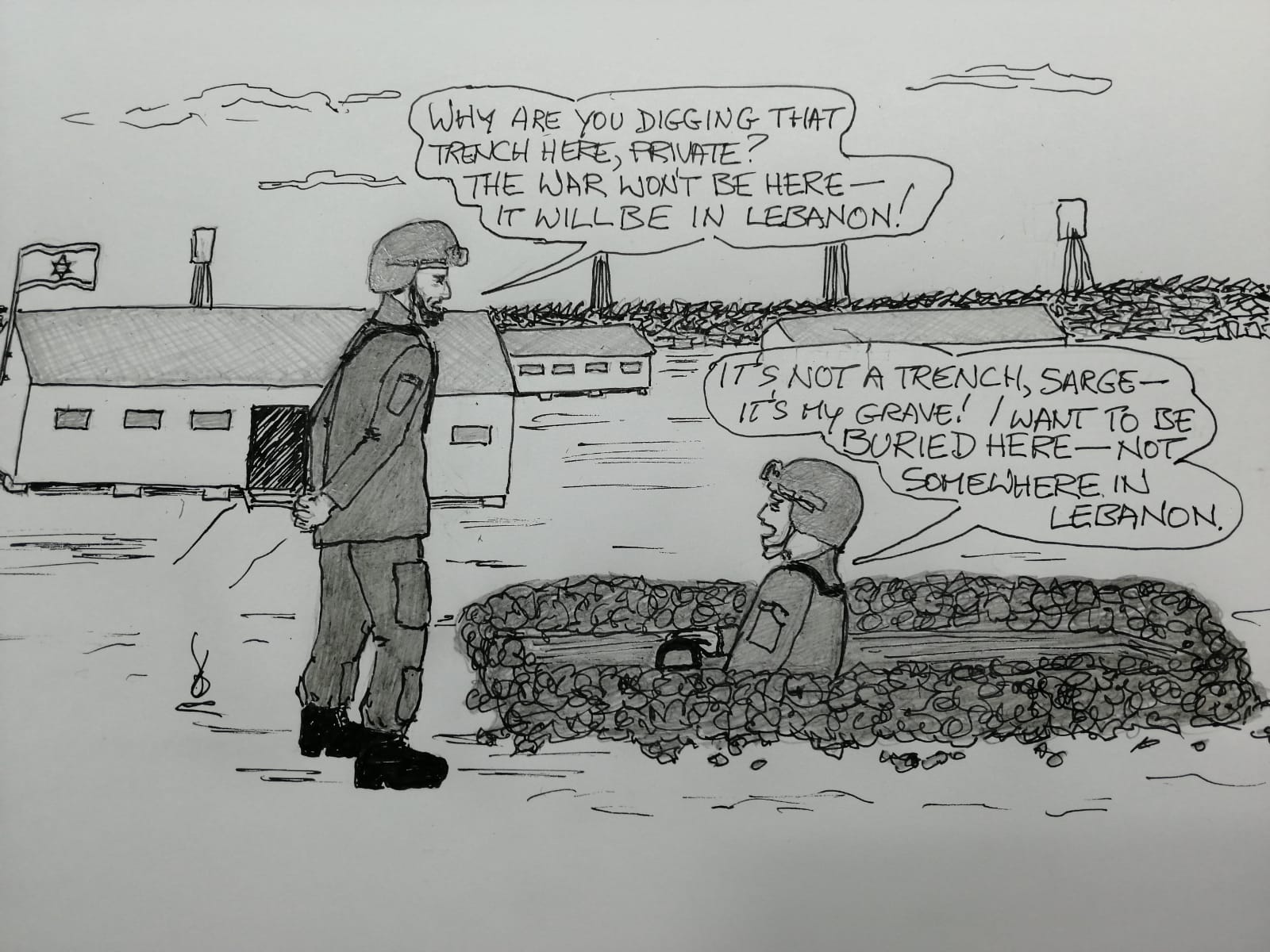
Cartoon by D.Breatnach

Since 11 October the Israeli Occupation Force has killed 46 Palestinians Palestinians, including 11-year-old Mohammed Bajhat Al-Hallaql and injured 132 others since the ceasefire took effect. Half of the victims were children, women, and elderly people.2

Among the dead was the Abu Shaban family, completely wiped out, seven children and two women.3

As winter looms, tents and construction materials are blocked. And as sowing time for next year’s crops is here, Israel has blocked agricultural materials, including seeds, fertilizers, and solar panels from entering4 to replace the IOF-destroyed crops and greenhouses.

The IOF has also greatly restricted the number of aid trucks it allows entry, from 700 to 450 daily, which is another kind of ceasefire violation and banned key food items like meat, poultry, and livestock. And allowed just 7% of the agreed quota of 50 gas and oil trucks daily in nine days.

The latest large scale violation, as I was writing this, was its killing of more than 30 Palestinians after one of the IOF’s bulldozers ran over Israeli unexploded ordinance in Rafah, which they decided to frame on the Resistance and use as an excuse for more murder and Rafah gate closure.5

Reports have now emerged of IOF recently burning and otherwise destroying urgently-needed food aid. Which of the ceasefire negotiators or guarantors has called the IOF or the Zionist State’s leadership out over this? None, of course.

And of course too, that’s one important reason why it keeps doing it – because it can. And because none of its allies will call it to account. But perhaps also there is some kind of deep Zionist bias against sticking to agreements made.

Last Autumn, in the midst of its unsuccessful attack on South Lebanon, the IOF asked its allies to seek a ceasefire and truce with Hezbollah. Weakened by exploding pagers6 and assassination of their renowned leader Nasrallah, Hezbollah agreed to the ceasefire.

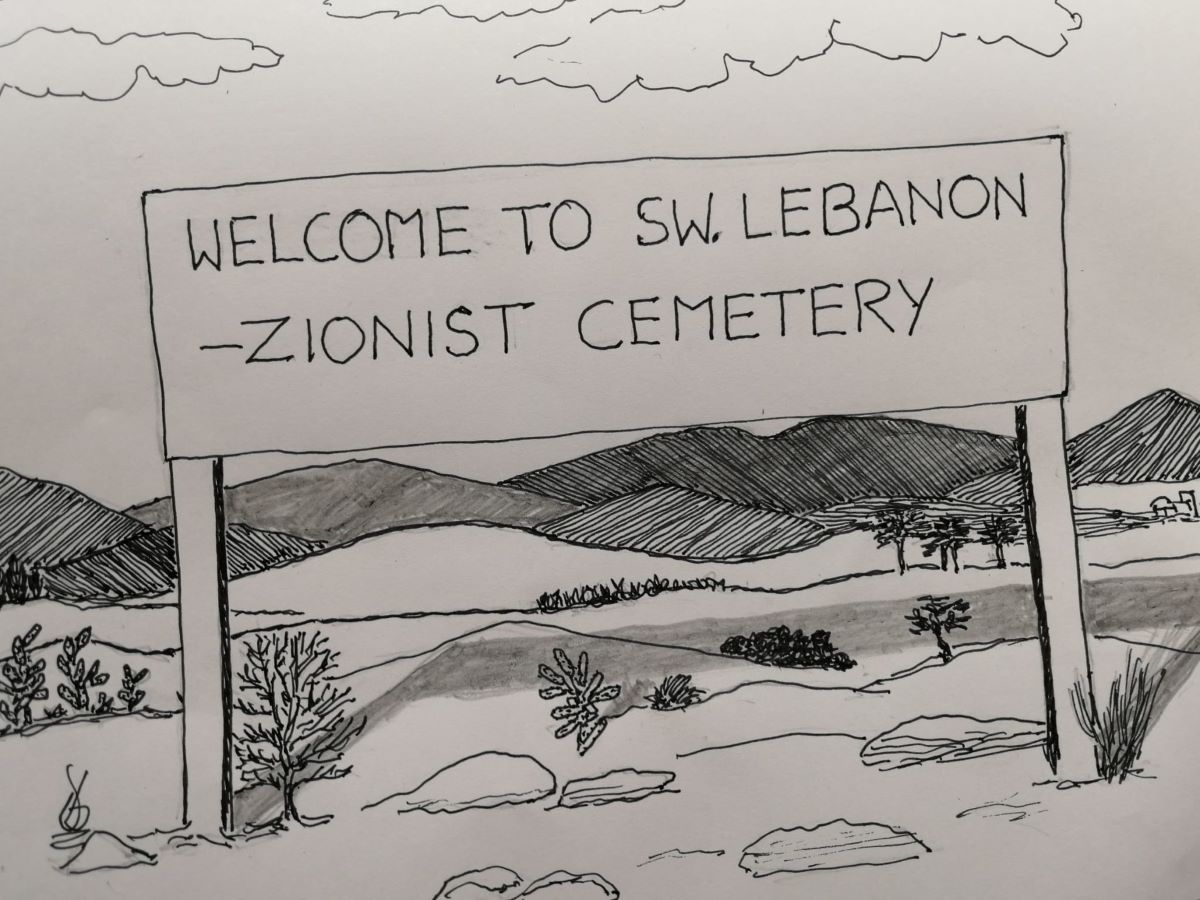
Cartoon by D.Breatnach

That was on 27 November 2024. Of course, true to form, the IOF violated the ceasefire daily, though Hezbollah kept to the terms. Not dozens or scores of violations, not hundreds … No, the IOF has committed approaching 3,000 separate violations by April this year.7

The brass neck of the Zionists sometimes exceeds belief. In the midst of their daily ceasefire violations, they are now threatening to again prevent food and medical aid entering until the Resistance complies with the ceasefire agreement.

Hamas has not delivered all the prisoner bodies, it says. But Hamas replies that it delivered all those it could access, others lying under tons of rubble, remains of buildings collapsed by IOF bombing, which is what killed the Israeli prisoners of the Resistance (probably along with their guards).

But somehow this is a reason to abandon the ceasefire! Locating the dead prisoners requires rubble-moving machinery and expert forensic help. The IOF long ago bombed all such Palestinian machinery to scrap and are not permitting its entry from any others at the moment either.

Cartoon by D.Breatnach

At the same time, the Zionists rejected two of their own forces’ bodies. One was a non-Israeli who worked for them and another a Palestinian in Israeli uniform, possibly a human shield employed or coerced by the IOF, sent into a tunnel and killed by the Resistance.8

Meanwhile, what of the estimated 2,000 Palestinian bodies held by the Zionists? As a Hamas statement said, their return is a question of human rights and law, not for negotiation. But when the few have been delivered as part of this ceasefire agreement, some have shocked their receivers.

Bodies showing hands tied behind backs and with bullet wounds … or a rope around the neck … signs of blindfolding over eyes, signs of torture … Some with tank-tread marks; all without identification, leaving a grotesque task for the Gaza administration and possible relatives.

Cartoon by D.Breatnach

And still … and still … the Zionists scream about the Resistance not fulfilling the terms of the ceasefire. I would think them to be totally beyond shame, were it not for the lies and excuses for their behaviour that they spew out into the world, which indicates a certain feeling of guilt.

Well, that is the Enemy. Not just of the Palestinians, or the Lebanese, or Syrians, or Yemenis, Iranians, Iraqis … No, they are the enemies of humanity, just as the Nazis were enemies of more than their victims and the countries they attacked.

And this Enemy is ready to resume the genocide at any time.

End.

Note: If you found this article of interest, why not register with Rebel Breeze for free, so that you will be notified by email of subsequent articles. You can de-register any time you wish.

And yet … still (Cartoon by D.Breatnach)

FOOTNOTES

1https://imeu.org/resources/resources/fact-sheet-israels-history-of-breaking-ceasefires/410

2 https://qudsnen.co/hamas-releases-full-report-on-israeli-violations-of-trumps-gaza-ceasefire/

3Ibid

4Ibid

5https://www.palestinechronicle.com/us-government-knew-hamas-was-not-behind-rafah-blast-reports/

6Yet another war-crime by the Zionist State, this time by its intelligence services.

7https://thecradle.co/articles/nearly-200-killed-in-2740-israeli-violations-of-ceasefire-with-lebanon

8https://www.timesofisrael.com/liveblog_entry/4th-body-handed-over-by-hamas-said-to-be-west-bank-palestinian-used-by-idf-in-gaza-as-a-human-shield/ As has been observed by some military commentators, the IOF do not go down into Resistance tunnels they find but blow them up instead. If this man was in a tunnel in IOF uniform the chance are high he was sent down by the IOF under threat (as they have done with others into a hospital or houses they suspect might be booby-trapped) or perhaps just considered ‘expendable’.

SOURCES

Gaza Government report on Israeli violations: https://qudsnen.co/hamas-releases-full-report-on-israeli-violations-of-trumps-gaza-ceasefire/

Israeli ceasefire violations in Lebanon: https://www.aljazeera.com/news/2025/10/17/iran-condemns-ongoing-israeli-strikes-in-lebanon-as-ceasefire-violation

An Israeli history of ceasefire violations and breaking agreements: https://imeu.org/resources/resources/fact-sheet-israels-history-of-breaking-ceasefires/410

Israeli detention of many hundreds of Palestinian bodies: https://bylinetimes.com/2025/05/28/israel-cemeteries-of-numbers-gaza/

Dear Minister Humphreys,

(Another one from the Rebel Breeze archives, this one from 2015)

I write to express my admiration for your work and my sympathies with regard to the criticisms with which you are currently being bombarded.

I hope you will forgive my ignorance of much of the work you have been doing in the area of Heritage, which is not really where my strengths lie. But I love the way you talk, the way you shoot down those critics, especially those TDs who ask those nasty questions.

And I’m sure you had something to do with removing Westport House from the NAMA sell-off, even if it is in Enda’s constituency. Such a fine example of our colonial architectural heritage!

Heather Humhpreys, Minister for Arts, Heritage and the Gaeltacht

But as we know, Minister, that wouldn’t be the kind of thing that would be appreciated by your critics. They’d rather you devoted your talents to a shabby row of Dublin houses of dubious architectural importance in a grubby street market.

A street which they say is “pre-Famine” — as if that were something to boast about! Laid down earlier than Sackville Street (now O’Connell Street) they say ….

Sure why would we want to keep a street that old …. or remember that embarrassing episode in our history either, when we lost a third of our population to over-reliance on one crop! We learned from that, though, didn’t we? Sure we grow hardly any crops at all now and get them all in from abroad. 

And we live in cities now — who wants to be getting up at 6 a.m. in all kinds of weather and plodding through muck? If people like growing things that much, get a house with a garden, I say. And a gardener to do the donkey work.

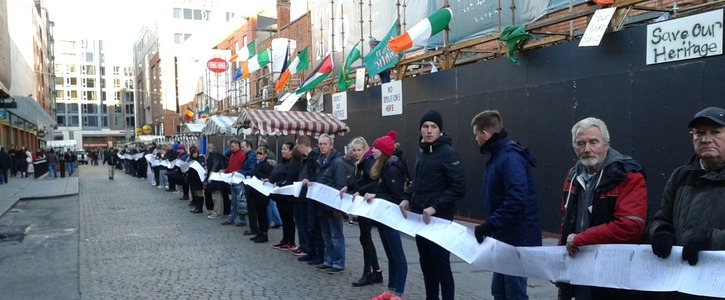
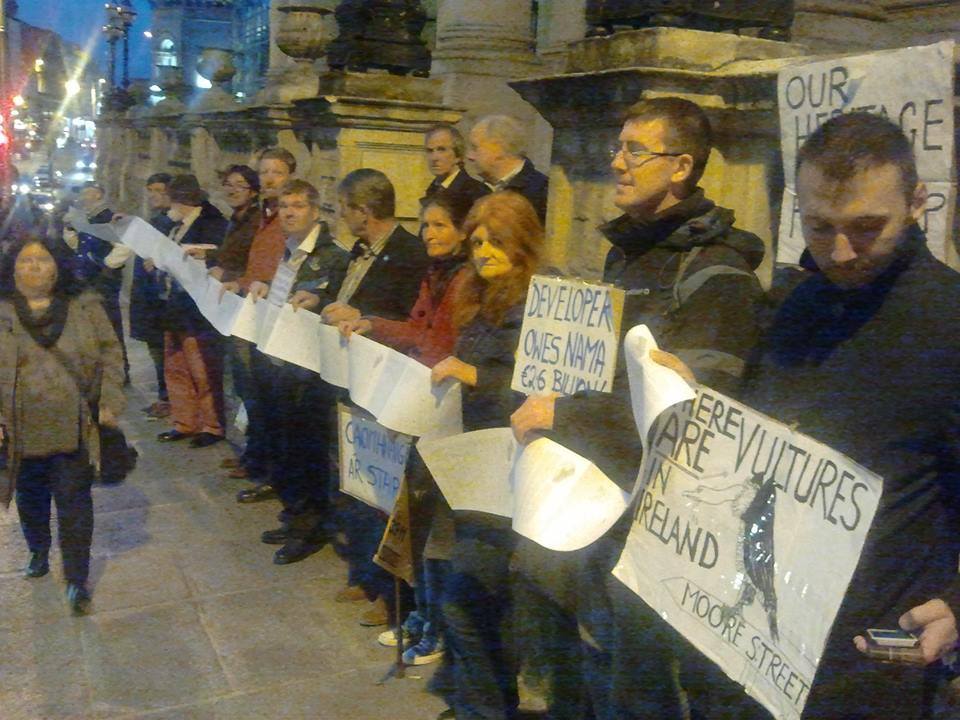
Supporters at the symbolic Arms Around Moore Street event organised by the Save Moore Street From Demolition campaign in June this year.
Supporters at the symbolic Arms Around Moore Street event organised by the Save Moore Street From Demolition campaign in June 2016. This is the corner of Moore Lane and Henry Place, across which Volunteers had to run under machine-gun and rifle fire from Parnell Street (at the end of Moore Lane, to the right of the photo) and at least one Volunteer died here.

But I’m digressing, Minister, my apologies. Apparently the reason they want to save that shabby terrace, that “pre-Famine street” — and the backyards and surrounding lane-ways, if you please! — is for HISTORICAL reasons. Historical!

Sure have we not had enough of history – Brehon Laws, Golden Age, Clontarf, Normans, 800 years of British occupation, blah, blah, blah! Weren’t we sick of it at school?

I’ve never liked Labour too much (somehow even the word sounds sweaty) but I have to admire their Education Ministry’s efforts to remove history as a subject from the compulsory school curriculum.

I’m sure they’re doing it for their own reasons – after all, wasn’t their party founded by that communist James Connolly? Sorry, revealing my own knowledge of history there, ha, ha! But whatever their reasons, they are on the right track.

Who wants to know where we are coming from? It’s where we ARE and where we are GOING TO, that matters!

But some people just can’t let it go, can they? They trail history around like something unpleasant stuck to a shoe. So what if 300 of the GPO garrison occupied that terrace in 1916?

The Rising, if you ask me, was a big mistake and I know plenty of people agree with me, even if most don’t have the courage to say so. Wouldn’t we be much better off if we’d stayed in the UK? And kept the Sterling currency? And as for the War of Independence …. don’t get me started!

Aerial View Moore St. 60s
Aerial view Moore Street, looking northwards, 1960s, before the building of the ILAC and the running down of the street market.

And then there’s all that communist-sounding stuff about treating “all the children of the nation equally” — what kind of rubbish is that? Some are born to big houses with swimming pools and some are born to flats, or even rooms. That’s just the way of life.

And some will claw their way up to get to own big houses and if they are a bit uncouth, well that can’t be helped, they still deserve where they get to. And their children at least will be taught how to fit into their new station. That’s democracy! But everyone equal? Please!

Sorry, back to the Moore Street controversy. OK, after the mob pressured the Government, four houses in the street were made a national monument. But was that enough for the mob? Oh, no, not at all — eight years later the State had to buy the four houses to satisfy them.

Thankfully the specul ….. sorry, the developer, got back a good return on his investment – four million, wasn’t it? That’s the kind of thing that makes one proud to be Irish – buying run-down buildings and letting them run down more, then selling them for a million each.

That’s your entrepreneur! If only we had more like that, to lift this country up!

I must say I really liked that developer’s plan to build a big shopping centre from O’Connell Street into the ILAC, knocking those old houses in Moore Street down (although I know he had to leave those “national monument” four houses still standing in the plans).

I do hope whoever has bought the debt off NAMA and now owns those houses will carry on with that plan. Actually, I’d like the whole of O’Connell Street under glass if it were possible.

Wouldn’t it be great to do your shopping from the north end of the street to the south and from left to right, without ever having to come out into the weather? Of course, not much shopping there now, with Clery’s closed …. still ….

And then they’re going on about the market ….. traditional street market …. blah, blah. What’s wrong with getting your veg and fruit from the supermarket? Or getting them to deliver it your house, come to that? “Traditional street market” my ar….. excuse me, I got carried away there.

Those street markets are all very well for your Continentals, your Africans, Asians, Latin Americans and so on. Or for us to go wandering around in when we’re abroad on holiday, maybe.  But back home?  It’s the nice clean supermarkets for me any day.

Well now, if the mob insists on saving the street market, here’s an idea: why not provide a showcase stall or barrow, stacked with clean vegetables and polished fruit, right in the middle of the new shopping centre. After all, that’s heritage, isn’t it? And aren’t yourself the Minister for Heritage?

Most sincerely,

Phillis Tine-Fumblytil

Note: If you found this article of interest, why not register with Rebel Breeze for free, so that you will be notified by email of subsequent articles. You can de-register any time you wish.

“NO TO NATO” PROTEST AT DUTCH AND GERMAN WARSHIPS IN DUBLIN PORT

Clive Sulish

(Reading time: 2 mins.)

Dutch and German warships docked in Dublin’s Liffey Port were met by anti-NATO protesters late Saturday afternoon with banners, an Irish Tricolour and Starry Plough flags and shouts through a loudhailer with passing traffic beeping in solidarity.

The huge Dutch naval landing platform Johann De Witt was immediately visible on the north Liffey quay just on the seaward side of the Tom Clarke Bridge and the protesters took their stand there in front of the security gates, visible to airport and south and northbound Dublin traffic.

German NATO frigate FGS Hamburg entering Dublin Bay, bound for the Port security gate. (Photo cred: Afloat)

The Dutch ship was flying Holland and NATO flags. Among the slogans the protesters periodically chanted were: No NATO troops in Ireland! NATO, NATO, NATO: Out, out, out! From Belfast to Killarney – We don’t want your NATO Army! NATO imperialism – Out of Ireland!

Anti-Nato stickers being affixed to the Dublin Port security gate. (Photo: R.Breeze)

The chants grew louder as military personnel (in street clothes) approached or emerged from the security gates behind the protesters but there was no physical confrontation from either side. No Gardaí attended either, unlike the protest at Ireland’s NATO HQ in April this year.

On that occasion Gardaí pepper-sprayed the peaceful protesters and broke the ankle of one of their number, in addition to arresting them. Some of the arrested were bailed and are due to appear in court in Dublin on 23rd February 2026.

Anti-Nato protesters, the Dutch NATO naval ship clearly visible in background. (Photo: R.Breeze)

NATO was originally claimed to be a western European military defensive force against the Soviet Bloc. However, after the Bloc’s collapse, NATO continued to expand until it has now an additional 17 member states (and the threat of Ukraine joining led to the current war with Russia).

The individual western member states, for example the US, UK, France have been waging imperialist wars for decades. But the NATO military alliance’s forces also fought imperialist wars in a number of countries: Bosnia, Kossovo, Afghanistan and Libya.

Anti-Nato protesters. (Photo: R.Breeze)

The protest on Saturday was organised at very short notice by Action for Palestine Ireland and Anti-Imperialist Action Ireland. Many passing vehicles, both private, company and taxi sounded their horns in support and also gave a thumbs-up or clenched fist salute.

Clearly the protest context was not only a lack of welcome for a member of the western imperialist military alliance but also fears that the Irish ruling class wants to join that alliance too and is currently trying to remove the ‘Triple Lock’ impeding its move in that direction.

End.

Note: If you found this article of interest, why not register with Rebel Breeze for free, so that you will be notified by email of subsequent articles. You can de-register any time you wish.

Anti-Nato protesters on Saturday, the Dutch NATO naval ship clearly visible in background. (Photo: R.Breeze)

SOURCES

https://afloat.ie/port-news/naval-visits/item/69129-dutch-navy-visits-dublin-port-with-german-frigate-also-in-capital

https://ondisc.nd.edu/news-media/news/the-addition-of-nato-members-over-time-1949-2023/

https://www.tni.org/en/publication/saving-the-triple-lock