Revolutionary socialist & anti-imperialist; Rebel Breeze publishes material within this spectrum and may or may not agree with all or part of any particular contribution. Writing English, Irish and Spanish, about politics, culture, nature.
Irish Socialists, though they seem to have little idea of taking on the State in revolution, have at least a rough economic plan for socialism: nationalise the banks and essential services, tax multinationals highly in the meantime, force them to pay higher wages, abide by worker and environmental protection regulations, etc … But Irish Republicans, who have a very clear concept of overthrowing the State, in general appear to have no economic program. How can this be?
Firstly, let’s do away with any idea that Irish Republicans have no awareness of the impact of economics on their lives. Irish Republicans are not nearly as focused on the trade unions as are the Socialists but they are well aware of austerity measures, of wage levels, the cost of housing etc. Irish Republicans are overwhelmingly working or lower-middle class and they feel these impacts and think about them. But they do not, collectively, formulate plans to change these factors.
It would be illogical to think that they don’t care, or that they think that there is nothing that can be done about these things. The rational conclusion to arrive at rather is that they are consciously shelving the question. They don’t have an economic program because they don’t want to – they are actively and consciously avoiding having one.
There is a rational reason for behaviour, even when it seems irrational and this case is no exception. Irish Republicans know that the field of economics is going to have different theories and a variety of proposals tendered for action and this will lead to divisions, some on a very fundamental level. It was part of the reason for the avoidance in the movement of burning social questions in the past. Many of those social questions have been largely resolved without any leadership from the movement, by changes in thinking across society, of which the Republicans are of course a part: contraception, gender equality, divorce, LGBT equality …. even intentional pregnancy termination may be approaching acceptance by the majority of Irish Republicans now.
The notional acceptance of “socialism” as part of the program of Irish Republicanism has led to divisions in the past. The Republican Congress project of the 1930s failed and the Republican movement lost many of its most advanced social theorists and organisers, while the IRA placed an official ban on communist membership.
The essentially social democrats1 who came to lead the 1960s pre-split Republican movement were very strong advocates of socialist economic measures but they foundered on the question of opposition to the State – the deeply sectarian Six-County colonial statelet. When the movement’s leadership failed to supply the arms which the ‘nationalist/ Catholic’ areas needed to defend themselves, the movement split and many in the new camp, the Provisionals, blamed the debacle on “politics” or even more concretely on “socialism”.
Members of the first socialist party in Ireland, the short-lived Irish Socialist Republican Party (distinct from the IRSP) in Dublin’s Phoenix Park, 1901. James Connolly is seated, fourth from left. (Photo sourced: Internet)
It was of course judgement of guilt based on association rather than on intrinsic nature but effective nonetheless (as such often is)2. Subsequently the Adams camp used “socialism” – without of course outlining any real socialist economic program — to unseat the historical leadership of the Provisionals. The objective was to replace them with Adams and his own clique and in this they were successful, through that and other maneouvres.
Now that Provisional Sinn Féin seeks to become a partner in managing the state for the neo-colonial Gombeen class, it has dropped the “socialist” tag (though occasionally, when convenient, likes to describe itself as “Left”).
But not since the 1960s split (apart perhaps from a brief moment in the Irish Republican Socialist Party) has the Irish Republican movement had an explicit economic program, much less a socialist one. “These are all questions that will be resolved later” is and has been the message – i.e after the colonial Statelet and the neo-colonial State have been overthrown, after the nation is free and united.
What is much more likely, however, is that at that point, should we reach it, we’ll have another civil war. And really socialist Republicans will likely lose, because they’ll be trying to sort out priorities and alliances in the midst of a struggle for survival, against a new capitalist order or a foreign invasion – or a combination of both.
The Jim Larkin monument in Dublin’s O’Connell Street today (Photo: D.Breatnach)
DEFINE AND DECLARE OR PREPARE FOR DEFEAT
All Irish Republican organisations and parties now define themselves as “socialist Republican”, which is something that was not true until fairly recently. They need not only to put flesh on those bones but to grow the very bones themselves. If they want to succeed, they need to answer the questions:
what do they mean by “socialist”?
What practical economic measures do they intend to implement?
What is their notional timetable for this implementation (i.e which are immediate, which transitional etc)?
James Connolly Monument, Beresford Place, Dublin. (Photo: D.Breatnach)
The implications of answering these questions or not are crucial not only in whether we build a viable socialist society to benefit the vast majority of the working people on this island, but crucial also in whether we achieve independence for the nation in the first place. The working people need a visible stake in a free, united and independent Ireland; I am in agreement with James Connolly when he made the profound declaration that “only the Irish working class remain as the incorruptible inheritors of the fight for freedom in Ireland.”3
end.
FOOTNOTES
1Some may object to this definition but it seems to me correct to describe followers of a doctrine of installing a socialist regime without a fierce struggle to overthrow the existing State.
2There was of course also the wish not to alienate the Irish capitalist elements which the Provisionals hoped would support them, both in Ireland and in the USA.
Dear Mr. Tony Holohan, We write to congratulate you on being voted Man of the Year for 2020 in the Today FM poll this month1. It must have come as a pleasant surprise to you – it certainly surprised us. We couldn’t have expected the Irish public would forget that embarrassing debacle with the cervical cancer checks.
People might think it reasonable to send the test results off to the USA for screening but, when it turned out that many of those “all clear” results were in error and that some who who later learned of the error were too late for treatment and going die …. you couldn’t hope they would forgive you for trying to keep a lid on the news or for declining to create an urgent response. Well, of course, some of those who wouldn’t be likely to forgive you aren’t with us any more …. but surely so many others would remember? Well thank God for short memories, you must’ve thought!2
Mr. Tony Holohan in a sombre moment.
(Image sourced: Internet)
Still, that was news in 2018 and your award was for this year. What is more surprising is that they forgot that when the HSE first became officially aware of the pandemic in February this year, as Chief Medical Officer, you did not advise the Government to close the ports. Or even to isolate those returning from watching the rugby in Italy, where the pandemic was raging. Well, we can’t have the flow of capital interrupted, can we?
We wonder too how it slipped the mind of so many that you did not advise the Government to order precautionary arrangements and protective measures in essential services, so that An Post workers had to strike for such provision and shops and supermarkets only put them in place slowly, piecemeal. We’re sure your thinking was that those who are making money out of such establishments are the best placed to decide what is needed and when – even if they won’t actually be working at the danger point.
Then there was the advice to lockdown, relax, lockdown, relax, lockdown again …. what one know-it all TD called “the yo-yo policy” as reducing rates of contagion recovered and shot up again, etc.
More surprising still — and must have been more than you dared hope — was that people who are nearly unanimously and everywhere now wearing masks, apparently forgot that back in the early days you declared in public that wearing masks was of no help at all in reducing the spread of the virus.
We thought your humble acknowledgement of the award was excellent and especially that you refrained from one of those insincere responses one often hears like: “I feel I don’t really deserve this award.”
November is a bad month in the memory of many Basque independence supporters, bringing with it the recollection of the violent deaths of two of their most prominent activists, Santi Brouard and Josu Muguruza. Both men were murdered by Spanish assassination and terror squads in which foreign and native fascists, criminals, police and army cooperated under State political direction in attacking the Basque liberation movement and attempting to spread terror among its supporters.
THE MURDERED BASQUE ACTIVISTS
Santi Brouard was killed on the 20th of November 1984 in the Basque city of Bilbo (Bilbao), capital of the province of Bizkaia, one of the four provinces of the nation under Spanish control1. He was a children’s doctor, Deputy Mayor of the city and a member of the leadership of the Basque socialist independentist political party Herri Batasuna.
Santi (abbreviation for Santiago) Brouard was born in Lekeitio in 1919, an important town for the fishing industry in Bizkaia province. Having completing his schooling he went to study medicine at the University of Valladolid, a city in the north-east-central part of the Spanish state, culturally and politically far from his native home. After graduating, Brouard returned to the southern Basque Country and practiced medicine, specialising in paediatrics in the hospital in Basurto Hospital in Bilbo (very near the San Mamés stadium, home ground of the Athletic Bilbao soccer team).
At the age of around 40, Brouard married the poet Teresa Aldamiz, a Filipino woman of Basque descent and the couple had three children. Likely while striving to achieve his children’s educational and cultural needs, Brouard became active in the underground Ikastola movement (offering education through the medium of Euskera, the then banned Basque national language).
In 1974, in his 55th year, after treating a member of the armed Basque liberation organisation ETA, gunshot-wounded by Spanish police, Brouard was forced to flee the Spanish State jurisdiction into the French-administered part of the nation, where many others had settled for their safety from the forces of the Spanish State2. There the refugee met Argala3 and other members of the ETA leadership, the Basque armed socialist national liberation movement and in the early post-Franco years hr collaborated with Argala and others in developing the KAS Alternative, organised around minimum lines of agreement across the Basque nationalist sector, including armed organisations, political parties and collectives and trade unions.
When Brouard felt it was safe to return to the Basque Country he became active in the political aspect of the movement for Basque independence, was one of the founders of EHAS (Basque Socialist Party of the Basque Nation) of which he was elected President in 1978; he was also on the national executive body of Herri Batasuna until the day of his death. For the HB party he stood in the 1979 elections for Mayor, gaining the position of Deputy-Mayor which he held during the term of that office, i.e until 1983 but that year he was elected as a representative on the Bizkaia Provincial Council. It was in that capacity that he was jailed by the Spanish State and in 1984 was elected as Bizkaia representative to the Basque Autonomous Government4.
The jailing in 1983 came about because he joined other Herri Batasuna elected representatives in singing Eusko Gudariak5 during the King’s6 visit to Gernika and in the presence of the Monarch. Juan Carlos had been Franco’s protege from the end of the 1940s and had also acted as head of state for such occasions in place of Franco in the latter’s final years. Gernika had been infamously bombed by the Condor Legion and also strafed by Italian Fascist airplanes, planes and pilots loaned by Nazi Germany and Fascist Italy to the fascist-military forces led by Franco, in an attack on a civilian population perhaps mostly remembered today through the image of Picasso’s painting Guernica (sic). Franco’s publicity department at first blamed the bombing and conflagration on the antifascist opposition, then apologists later claimed it had been bombed in mistake for another target.
It is unclear what the final judicial sentence was (it was revised by the Supreme Court in 1986) or to how long in jail the accused were sentenced but it seems to have been for a year or less.
Santi Brouard who, despite having been warned of fascists focusing on him, declined to hide or even to lock his clinic door, was murdered on 20th November while working in his clinic by Luis Morcillo and Rafael López Ocaña, killers hired by senior officials within the Spanish Interior Ministry and at least endorsed, if not actually organised, at the highest level of the State.
Josu Muguruzawas shot on the same date but five years later (1989) – and in Madrid. He was sitting at a table with Herri Batasuna comrades, planning their participation the following day in the Spanish Parliament, to which they had been elected from the southern Basque Country. For the left Basque independentist party, it was the first time their representatives were to take part in the Spanish Parliament. Muguruza died on the spot in the attack and a comrade Iñaki Esnaola was seriously wounded.
Monument to Josu Muguruza in his native Recalde, completed by unknown artist in 1989. (Image sourced: Internet)
Josu Muguruza was born in 1958 in the Recalde district of Bilbo (Bilbao). Following his schooling he enrolled in university to study teaching but switched to study journalism instead in Lejona (still in the province of Bizkaia). Apparently he had had been reared speaking only Castillian (Spanish) as Euskera (Basque language) was illegal under the Franco dictatorship but he learned the banned language and was an activist in ASK (Socialist Patriotic Committees), an assemblist collective founded in Bizkaia and also in both KAS and Herri Batasuna.
When his girfriend (and later wife) Elena Bartolomé was arrested on suspicion of connection to the armed group ETA, Muguruza, like Brouard and many others, fled to the northern Basque Country (under French administration). Without a need to worry about extradition from the French state in those years, Muguruza was able to lead a fairly normal life, working as a journalist (although he had left his studies before qualifying). During his six years in that part of his homeland, he taught Euskera for AEK (organisation for the promotion of Basque language to adults) in Bayonne, broadcast for local Basque radio station Gure Irratia and, under a pseudonym, reported for the northern Basque Country edition of Egin7 (a Basque patriotic-left newspaper).
It is believed that Muguruza grew to significant political importance among the Basques in the northern Basque Country, both natives and southern country refugees living there and that he was pushing within the movement for negotiations between ETA and the Spanish State.
In early March 1987 the French police arrested Muguruza on foot of extradition request from the Spanish State and hustled him over the border without an opportunity to challenge the process. Having been released towards the end of the year due to the absence of charges against him, he was able to reestablish himself in the southern Basque Country with his wife Elena but in Gastheiz (Vitoria), in the province of Álava. Muguruza went back to work for Egin but this time as Editor-in-chief, rose in the Basque liberation movement with activity in KAS and election to the national executive body of Herri Batasuna, the electoral party of the movement. For some in the know, although publicly in the background, he was considered among the most important of HB’s leaders and was actively pushing for the participation of the party in the electoral system of the Spanish State.
THE SIGNIFICANCE OF THE DATE
The killing of both on the same date though some years apart was no accidental coincidence and clearly signalled the ideological source of the murders – though separated by decades, 20th November was the date of the execution of Primo Rivera and also of the death of the dictator General Franco8.
Primo Rivera was founder and leader of the fascist Falange organisation; he had been captured by Republican forces during the Spanish Anti-Fascist War and was executed on 20th November 1936 in Alicante jail. General Franco became the sole leader of the military-fascist coup and later Dictator of the Spanish State for four decades, dying in 1975. Fascists and Far-Right in Spain revere the memory of both men who, although they were rivals, were eventually interred together in the mausoleum of the Valle de los Caídos (“Valley of the Fallen”), which became a shrine for the Fascists and Far Right9, in particular for processions on the 20th of November — and a cause of bitter complaint for Spanish Republicans, members of the Spanish Left and national independentists (for example of the Basque Country and of Catalonia).
The murders of both Basques on the same date indicated the ideological background of the murderers – Spanish fascism. However, the organisations that carried out the murders were of significant difference and status within the Spanish state.
THE MURDERERS — SPANISH PARAPOLICIAL AND FASCIST ORGANISATIONS
As noted above, the murderers of Brouard were hired killers, contracted by high-ranking officials of the Spanish State.
Protest on 18th October 2008 by Askatasuna organistation on 25th Anniversary of the kidnapping, torture and murder of Jose Antonio Losa and Jose Ignacio Zabala, the first victims of GAL. The Spanish National Court had forbidden the commemoration in Tolosa, Guipuzkoa province. The commemorators are being confronted by the Ertzaintza, Basque Government police and at least six protesters were arrested. (Photo credit: EFE/GORKA ESTRADA)
Wikipedia’s account of the Spanish State assassination squad refers to GAL and the Dirty War, with the years of activity of GAL listed as 1983-1987, in total less than five years. However the whole period of Spanish State/ Far-Right terrorist murders lasted 26 years, beginning in 1975 and ending in 1990. The period claimed at least 66 lives10 and many injured. La Triple A (Acción Apolostolica Anti-communista) was active killing (eight murders according to Spanish State list of victims of this kind of terrorism) and injuring from 1975 until 1982, after which it may be said that GAL took over until 1987. GAL shared some of its time with the BVE (Batallón Vasco Español – “Spanish Basque Batallion”), claiming actions (21 murders and at least 10 serious injuries) between 1975 and 1981.
Poster for film about GAL (Image sourced: Internet)
The hitmen were criminals and mercenaries, sometimes from abroad but usually with a right-wing background, for example with the French-Algerian OAS, Italian fascist movement or the Argentine Triple A.
Some of the terror was directed in general at the Left within the Spanish state and some at Catalan independentists but most of the actions by far were aimed at the Basque Left independentists, many of these residing in the northern Basque Country, i.e under French rule. The terror of these parapolicial murders had a number of objectives:
eliminating specific antifascist and left activists during the period of the Transition from Dictatorship to “democracy”
causing fear and terror to encourage people to vote for the 1977 royalist and unitary state constitution
eliminating specific Left Basque independentists, in particular leaders
coercing the French Government into handing over Basque fugitives to the Spanish State
GAL was exposed in an invesigation by a Spanish controversial judge Baltasar Garzón11 and by journalists of El Mundo, newspaper of the right-wing conservative Partido Popular in a series starting in 198912. Although the Minister of the Interior, high-ranking police and army officers were convicted of a number of crimes including kidnapping, murder and embezzlement of Government funds (for personal enrichment, paying terror gang operatives and bribes), their actual time served was very short indeed.
The trial of the first of the senior13 State members of the terror operation did not take place until 1996, when the PSOE Minister of the Interior, José Barrionuevo and his Deputy Rafael Vera were tried on charges of funding and directing a number of murders. They were sentenced to ten years each. In 2001 they were pardoned, having served little more than a year in prison. That year Barrionuevo and José Luis Corcuera, his successor as Minister of the Interior, were tried for embezzlement but found not guilty the following year.
In 2000 General Galindo of the Guardia Civil was sentenced to 75 years for kidnapping and murder – of which he served only four, being released on health grounds.
The finger for Señor X, top director of GALpointed at Felipe González, Prime Minister of the PSOE Government at the time but, though widely believed to be him, he was never even questioned. Earlier this year a CIA document revealed that González was the Señor X but he remains uncharged.
Felipe Gonzalez in more recent years. Gonzalez was head of the social-democratic PSOE, Prime Minister in 1980s and “Senor X”, mastermind of the Spanish State murder and terror squads. He has never even been questioned. (Image sourced: Internet)
The murder of Josu Muguruza, unlike that of Santi Brouard and many others, appears not to have been sanctioned by the Spanish State and was contrary to its interests in a number of ways:
Muguruza was to attend the Spanish Parliament for the first time the following day and his murder, including being in the capital of the Spanish State, reflected badly on “Spanish democracy”;
The murder stood to weaken those in the Abertzale Left who supported entering the institutions of the Spanish state and strengthened those for whom armed struggle was the main vehicle towards liberation.
The Spanish police clamped down on the Triple A in Madrid after Muguruza’s murder and in response the network officially dissolved itself (though not for long).
Poster for what looks like a documentary film about GAL (contains images of what appears to be real people). (Image sourced: Internet)
THE BASQUE ORGANISATIONS
The history of these organisations is one of struggles for unity alongside splits, including the unseating of one political leadership and its replacement by another. Naturally the murdered Basque activists, along with all other prominent Basque activists of the time, played a part in these conflicts.
HASI in Euskera means “to begin” but is also an acronym for Herri Alderdi Sozialista Iraultzailea (People’s Revolutionary Socialist Party) and was considered the political expression of ETA militar (ETA (m)), a split in the armed libertion organisation. Founded in 1977 out of the fusion of the Basque socialist parties EHAS and ES, HASI was one of the founding members of KAS and of Herri Batasuna.
HASI was dissolved in 1992.
KAS began its existence in 1976, in the dying days of the Franco Dictatorship, as the establishment of a minimum democratic platform for unity across the Basque socialist independentist movement, drawing in a variety of Basque socialist and independentist organisations and later, trade unions. Originally supported by a minority of the movement, it began to quickly gain more widespread support. In 1977 the “Alsasua Table” brought together nearly all the relevant players. KAS put together a transitional program for the independence of the Basque nation, including the removal of repressive forces and the Basque people deciding on the future of the nation; this program was revised in 1978. ETA (militar) came to dominate the alliance after the dissolution of ETA (politico-militar) in 1982.
The ETA leader Argala considered implementation of KAS proposals necessary if ETA was to cease armed struggle; in addition the PSOE and PNV proposed watered-down versions of the proposals.
Alternatiba KAS was dissolved in 1992 to be replaced by Alternatiba Democratica in which Herri Batasuna would negotiate on behalf of the Basque nation.
ETA, which arguably Brouard also helped promote, was founded originally in 1959 as an unarmed Basque socialist group Euskadi Ta Askatasuna (Basque Country and Freedom); it became the armed organisation of the Basque socialist independentist movement, with its first victim and also first martyr in 1968. ETA announced a unilateral truce in 2011, disposal of its armament in 2017 and its disbandment and dissolution in 2018. There are over 250 Basque political prisoners who are recognised as serving sentences — often of a number of decades — in prisons dispersed throughout the Spanish and French states for actual or alleged membership of ETA or assisting the organisation14. The Spanish State insists the prisoners must express regret for their past actions to gain any degree of relaxation of their prison conditions or release on parole.
Although EPPK, the coordinating organisation of ETA prisoners continues in nominal existence, ETA does not exist at least since 2018, arguably since even earlier.
Herri Batasuna, to which Santi Brouard belonged and helped build, as did Josu Muguruza, registered as a political party in 1981 but had been in existence, arising out of KAS, since 1978. The party, like KAS, was a coalition of different strands.
It became the majority party of the Basque socialist independentist movement and performed well in elections but was outlawed by the Spanish State as were a number of its replacement formations, one of the effects thereof being to disqualify them from standing in elections. Its remnants today are to be found in the EH Bildu and Sortu political parties. Although changed from revolutionary socialist independentist to social-democratic nationalist but continuing to advocate for an independent Basque nation, they are arguably the only organisational survivors of the years of the Spanish State’s terrorist war against the Basque liberation movement.
Outside of the influence of the ‘official’ leadership of the movement a number of new Abertzale Left organisations exist which would claim to be continuing the original trajectory of the Abertzale Left (or perhaps to be improving upon it) such as Amnistia15, Ikasle Abertzaleak16, Jarki and Jardun, the latter seeking to act as a coordinator for the movement as a whole. In addition there are a number of autonomous collectives of various types, often focused on specific aspects such as the environment, anti-racism and anti-fascism, etc.
A FIGHT OVER THE MARTYRS’ MEMORY
Monument to Santi Brouard with placards bearing images of both martyrs and Basque flag, Ametzola Park, Bilbao, Nov 2017 (Image sourced: Internet)
Today there exists a three-cornered fight over the memory of the Basque martyrs since 196817. What is now becoming known as the “oficialista” leadership of the Abertzale Left and its “dissident” opposition both commemorate the murders of those Basque martyrs, including of course those of Muguruza and Brouard. But they rarely do so together and on occasion the oficialistas have commemorated them alongside victims of ETA18.
A woman dances the aurresku, an honour dance, in front of projections of the images of Brouard and Muguruza, Bilbao November 2014. (Image sourced: Internet)
The third party to the struggle is the Spanish State, which claims that any commemoration of those martyrs is, in essence, enaltecimiento del terrorismo — “exaltation of terrorism” and, while it does not always intervene, the possibility is always present of judicial prohibition, police action or subsequent charges under “anti-terror” legislation.
Historical memory is a political battleground.
In 2009 the Ertzaintza, police of the Basque ‘Autonomous’ Government, remove banner that declares that Brouard and Muguruza were murdered by the PSOE (Image sourced: Internet)
Ignoring protest of Tasio Erikizia, a leader of the Abertzale Left, the Ertzainza, police of the Basque ‘Autonomous’ Government, remove banner that declares that Brouard and Muguruza were murdered by the PSOE. This took place during a 2009 commemoration in Bilbao of the Spanish State murders of Brouard and Muguruza (Image sourced: Internet)
End.
FOOTNOTES
1The three northern provinces are under the control of the French State, which shares a border with the Spanish State.
2The Spanish State was under the dictatorship of General Franco, which it had been since the victory of his military-fascist forces in a coup against the Popular Front Government and the ensuing Spanish Anti-Fascist War (1936-1939).
3Nom de guerre of Jose Miguel Berañan Ordeñana, leading theoretician and activist of ETA, also murdered by GAL in the northern Basque Country by bomb under his car in December 1978, which makes December too a month of sad recollection for Basque independentists.
4A semi-autonomous body under the 1977 Spanish Constitution, composed of three of the four southern provinces of the Basque nation. It has traditionally been dominated by representatives of the PNV (Basque Nationalist Party) with representation of the Basque socialist independentists either in second place or in third (after the Spanish social-democratic PSE).
5“Basque Soldiers”, national anthem of the Basque independentist movement, similar in theme to The Soldiers’ Song/ Amhrán na bhFiann, the Irish national anthem.
6Juan Carlos was a protege of Franco, swore allegiance to the fascist State and, due to the Dictator’s declining health often presided over or attended functions in the role of head of state. Contrary to some versions of history, Juan Carlos was foisted upon the citizens of the Spanish state as part of a new Constitution in 1977, in turn part of the “Transition” of the State and accompanied by much violence and threats of the reimposition of a dictatorship. Though rejected in the Basque Country, the Constitution was accepted by a majority of the Spanish state electorate with the support of two of the main opposition parties (and their allied trade unions), the Partido Comunista de España and the Partido Socialista Obrero de España, the latter now one of two main parties of government in the Spanish state. Surrounded by controversy and allegations of financial corruption, Juan Carlos abdicated in June 2014 in favour of his son Felipe (now Felipe VI of Spain) and in August 2020 left the state, reportedly ahead of investigations that would lead to charges of financial corruption. The former King is reported to be living in luxury in the United Arab Emirates from which historically any extradition request to the Spanish State has failed.
7A bilingual Basque daily newspaper. In 1998, following many accusations of representing ETA in journalism, Egin was closed by Baltazar Garzón, the much-loved by liberals Judge of the Spanish National Court, with the mantra that “everything is ETA”. However, on appeal the newspaper was absolved of any connection with ETA but that was in 1989, over a decade later, when it was beyond possibility of reopening. The space was filled for many of those years by GARA, which is still in operation. A similar fate was that of Egunkaria, the first all-Euskera daily newspaper in the world – except that some of its managers were also tortured – all also absolved years later.
8Spanish fascists like to use dates as their signature – GAL killed “Argala” (José Miguel Beñaran Ordeñana) on 21st December 1978, the same date in 1973 in which the Basque armed organisation ETA had assassinated Admiral Carrero Blanco, the Spanish Prime Minister in Madrid.
9On 24th October last year 1919, the long-promised (by the PSOE) removal of the remains of both from the mausoleum at last took place, Spanish TV covering the occasion in a style reminiscent to a State funeral. It had been ordered by the PSOE-Podemos-Unida coalition government.
10This does not include ETA fighters or their associates killed during shootouts with the police, summary execution of prisoners taken by police or deaths in police custody, including cases of torture.
11Controversial in a number of ways: beloved by many Spanish and European liberals for ordering the exhumation of a mass grave of victims of the Anti-Fascist War and seeking the extradition of Pinochet for crimes of mass murder, he was also the directing judge in raids on Basque independentist activists whose 5-day incommunicado detentions he authorised and whose denunciations of torture to obtain “confessions” by the victims he ignored or accused them of their visible signs being self-inflicted. He is also infamous for his quoted remark that “Everything is ETA”, i.e that even perfectly legal organisations and activities of the pro-independence movement are organically linked to the armed liberation organisation, justifying the banning of organisations, closure of media agencies and social venues.
12According to their summary report on line (see Sources) these included “thousands of days of investigation, requiring more than 5,000 hours of journeys in Europe, Africa, America and Asia …. with 300 encounters with protagonists directly implicated ….”
13Some lower-level Guardia Civil officers were tried in 1991 and apparently paid money to keep quiet.
14A very small number of those have publicly dissented from the organisation’s leadership.
15Formerly Amnistia Ta Askatasuna (ATA – Amnesty And Freedom) but its full name now is Amnistiaren Aldeko eta Errepresioaren Aurkako Mugimendua (Movement for Amnesty and Against Repression).
16Students’ Union of the Basque Country, over which the ‘official leadership” has lost control to the “dissidents”.
17All Basques who are not diehard Spanish unionists commemorate the Basque martyrs who fell in the Spanish Anti-Fascist War but the PNV (Basque Nationalist Party) stops there while the Basque socialist independentist movement includes those who died fighting against Franco’s following repression. Accordingly the date of Gudari Eguna (Day of the Basque Soldier) for the PNV is October 28th while for the socialist independentist movement it is 27th September.
18In 2017 and again in 2018, Julen Mendoza, member of EH Bildu and Mayor of Errenteria participated in honouring the memory of the armed Guardia Civil killed by ETA in the area and this year in November the Basque Parliament, with the agreement of EH Bildu, commemorated the murder of Santi Brouard along with a number of elected representatives killed by ETA.
‘Today’, she said, ‘we will discuss the training of dogs’.
The class looked at her face to see whether she was joking. She looked back at them patiently.
‘But Teacher,’ ventured one braver student. ‘We are here to learn how to control humans.’
‘That is correct,’ replied the Teacher. ‘This is a sociology class. But there is much to learn from the training of dogs. In many ways, it is the same thing.’
‘
(Image sourced: Internet)
So, to begin: Where do dogs come from to us? Where did they originate?’
‘Are they not descended from wolves, Teacher? I think I read that somewhere.’
‘Yes, I did too. And dogs and wolves can interbreed, so they would have to be closely related.’
‘That is correct, they are closely related,’ replied the Teacher approvingly. ‘There is only 0.1% of a DNA difference between them and they can interbreed quite easily. The wolf is classified as Canis lupus and the dog as Canis familiaris. It is not strange to find dogs that are part wolf. The assumption is therefore that the common dog is descended from the wolf. And in some parts of the world, for example in South Africa and in Australia, there are wild dogs, dogs that live like wolves. We presume these were domesticated wolves that became dogs, that later again returned to the ways of wolves. So our question for discussion today is: How did wolves become dogs in the first place?’
‘But Teacher, if this occurred it must have done so in prehistory, surely?’
‘I think I read that it was in the Paleolithic Era.’
‘Well, then surely nobody knows, Teacher? No-one would have written to describe it as humans did not develop writing until much later.’
‘You are all correct, yes. But we can speculate. We can extrapolate from what we know. Now, when we have a dog as a pet – or as a working animal – it is in a social relationship with us, right?’
‘Well, yes. Some people see their dog as part of the family – you even hear them say that. But working dogs?’
‘Working dogs too, I suppose. A shepherd would have a close relationship with his dog … and so would a hunter. Even if the bond was primarily between the one person and the dog, it would have to recognise those close to the owner as ok, as safe, not to be attacked or growled at.’
(Image sourced: Internet)
‘Good, yes, we are getting there. The guard dog needs to know its owner or owners and who is acceptable. Sled dogs the same, even though they are a group, like a hunting pack. The hunter, the shepherd, the truffle-searcher, the seeing-eye guide dog – they are all in a social relationship with humans. We could, in fact, describe a dog as “a wolf-descendant in social relationship with humans.” But what is the normal social group of the wolf?’
‘It is the pack, isn’t it?’
‘Yes, that’s what I have read too. A hunting pack.’
‘Yes but not just a hunting pack. They have to raise pups, don’t they?’
‘Oh, and don’t they have an accepted leader?’
‘Yes, very good. The social organisation of the wolf is the pack. And they have leadership – a male and a female. They are called Alphas, Alpha Male and Alpha Female. They lead the pack – the other wolves obey them. So, how is it decided, do you think?’
‘They must have elections, Teacher.’
‘Very amusing. It is a serious question however, part of our discussion today.’
‘Maybe …. they fight over it? The strongest wins?’
‘Yes, correct, that is part of it. The male fights other males and the female fights other females.’
‘How civilised of them!’
‘You all laugh but you don’t realise how true that comment is. Now, let’s tease the process of leadership selection out a bit. Let’s concentrate on the males, for simplicity. Male A wants to be leader, so does male B and they fight. Male A is successful and wins. But he will be wounded, right? Right?’
‘Well, yes he would be. Bite marks, bleeding ….’
‘So up comes Male C now and he is not wounded. He fights Male A and beats him, so now he is top dog, or wolf, the leader of the pack, right? Right?’
‘Yes, it must be like that.’
‘Then we have at last an accepted leader of the pack. But in what state are the males? And if the females went through the same process, what state are they in and what are the consequences?’
‘They’d be walking wounded.’
‘A wounded pack can’t hunt well.’
‘Some might die of their wounds. Some would die of hunger.’
‘It’s not like that, is it Teacher? There has to be another way.’
‘Another process, yes. They must have a system, right Teacher?’
‘Yes. Very good. Exactly. They do have another system. Firstly, they very rarely fight a full fight to the end. And if there is a challenger, it is usually only one. Not all wolves want to lead. Maybe not all wolves think they can. So if there is to be a leadership conflict, Male A and Male B, for example, they will fight but usually to the point where one recognises the other is tougher or wants to be leader more, or has more to lose — say Male A. Then Male B gives up. And if Male A has to remind him or any of the other males at any point, he only has to threaten and they give up. They lie on their back or show their submission in some other way. The pack stays healthy and the Alpha Male and the Alpha Female are in charge. The rest of the pack accept them. And if they are good at what they do, the pack does well. If not, well, maybe another leadership contest. Or the pack breaks up.’
Wolf pack.(Image sourced: Internet)
‘Teacher? When pups are born, I presume they accept the hierarchy of the pack. But when the Alphas get old, or killed or injured in the hunt – or by hunters, humans – the process must start all over again?’
‘Yes and no, not completely. I didn’t tell you earlier but only the alpha females in the pack mate. The Alpha Female chases away other females if they come into heat and the Alpha Male may accept some males mating with her or may threaten other males so only he will mate with the Alpha Female, when she is in season. So the pups are all from the alpha female and from the alpha male or a few others. The next leaders will likely come from those pups – but not certainly. There are possible variations. They might all be killed or injured. An alpha descendant might take a different mate and that one will be alpha too. And so on. Now, let’s think about dogs. How did dogs come to be human-bonded?’
‘Hmmm. Maybe hunters killed the parents, took the cubs and raised them?’
‘Or found the cubs ….’
‘Yes, that is the common scenario. But after generations of the pack, how does a pup come to bond with humans? More to the point, how does it come to obey a human or a family?
‘Hmmm. Does it see the family as the pack, Teacher?’
‘Yes, and its master or mistress as the Alpha or Alphas?’
‘Very good. Yes, now you have it. I must be that way. But …. pups in a pack grow up and may want to become leaders themselves. We don’t hear of dogs deciding they want to run the human family, do we? What would we do if our dog decided it wanted to be boss and was prepared to fight?’
‘We’d have to shoot it.’
‘Yes, we couldn’t allow that.’
‘Wait a minute. Teacher, has that happened?’
‘Probably, in the early days. A domesticated wolf that would not accept the human as the Alpha was killed. Or ran away, maybe. Perhaps joined a wild pack, if it survived …. was accepted …. But in any case, the pups being raised by humans would not be descended from that disobedient wolf.’
‘So …. over generations, wolves …. were bred into dogs. Obedient individuals chosen …. disobedient ones killed …. or run off …. so only obedient dogs mate ….’
‘Yes … and every now and again you hear of a dog being “put down” because it attacked a human being …. especially a child …’
‘Wait! Are you saying humans have been bred to accept a hierarchy? And that the hierarchy is hereditary?’
‘Well, now – I hope I am not being accused of advocating monarchy … or feudalism?”
‘No, Miss …. of course not …. but …..’
‘Slow down, now. Don’t jump too far ahead to conclusions. Stay with the discussion a little longer, ok?’
‘Yes, Teacher. Sorry.’
‘That’s alright. Now, let’s unpick this a bit more. Is the non-Alpha wolf in the pack governed by fear alone? Does he or she have nothing to gain from its position in the pack?’
‘The pack hunts together, doesn’t it? So I suppose …. a pack can kill a bigger animal …. by working together?’
‘Yes, of course. A deer …. or antelope …. or bovine …. and then the whole pack will have enough to eat. Any other benefits?’
‘Defence? Lots of teeth, many individuals.’
‘Vigilance …. warning? Lots of eyes to keep lookout.’
‘Maybe warmth, huddling together against the cold?’
‘Yes, all those are true. And emotional warmth too, the solidarity of the group. The pack looks after the cubs also, as soon as they start to run around. This benefits the future of the whole pack as well as relieving the Alphas of their childcare from time to time. And the pack seems to get an emotional reward from looking after the cubs.’
‘Being a dog is quite a change then, Teacher. From being a wolf.’
‘Yes. But what are the advantages and disadvantages for the dog who is no longer a wolf? And there must be disadvantages, for some dogs have returned to the wild and the pack. As those I mentioned in South Africa and Australia. Advantages, first.’
‘The dog gets regular guaranteed food, doesn’t depend on the hunt for it.’
‘And the dog gets protection …. humans have weapons.’
‘And the dog gets …. gets …. medical care?’
‘Yes, all those things. But one very important thing dogs get that very few in the wolf pack get.’
‘They get to mate.’
‘Yes, exactly. No alpha telling them they can’t. Well, humans lock a bitch in heat up sometimes or we sterilise a male or female but otherwise, they mate. And a bitch gets to have her own cubs.’
‘Teacher …. are you implying that dogs chose not to be wolves?’
‘Well, it’s certainly an interesting question. If some dogs go feral, if some dogs form packs, and other dogs don’t, there would seem to be a choice involved, hmmm? And perhaps the ancestors of the dog did choose to leave the pack, rather than just being socialised and conditioned as captured pups. Some wolves may have hung around human encampments, getting scraps, warning humans of the approach of dangerous beasts …. other humans …. They may have been renegades from the pack …. dissidents …. The first domesticated wolf may have been an illicitly pregnant bitch, knowing that in the pack, her pups would get killed by the alpha female …. Her pups, socialised to humans as soon as they were born. Then, selection by the humans for non-aggression … obedience …. culling the ones that didn’t fit …”
‘Wow!’
‘So now we come to extrapolating what we can from managing wolves and dogs to managing humans. Postulate, please.’
‘The pack is a metaphor for our society.’
‘We generally accept our leaders, so long as they are effective.’
‘Sir, we train humans from childhood. Like pups in the pack’
‘And we give them some benefits so they choose to be in our pack’.
‘Yes, very good. And what about those who choose not to be in our pack?’
‘We eliminate them.’
‘Cull them.’
‘Isolate them.’
‘Marginalise them’.
‘Very good. For your written assignment, summarise in around a thousand words to be handed in next Monday.’
Around 30 Republicans and Socialists gathered on a very wet O’Connell Street in the Dublin City centre on Friday evening in solidarity with Irish Republican prisoners. Despite the rain and darkness, many passers-by took an interest in the banners and placards and some stopped to converse with the picketers. Behind the picket line other events were illustrating the sad state of a section of Irish society: one voluntary free meals service finished and another began, a Muslim one, with a queue along half the length of the General Post Office.
View of picket line from across the road
(Photo: C. Sulish)
The December prisoner solidarity event is organised annually by the Anti-Internment Group of Ireland, an independent collective of activists which also organises other awareness-raising pickets during the year; this evening it was supported by Irish Republicans and Socialists of different organisations and by independent activists.
(Photo: C. Sulish)
As the picket drew near to its scheduled end, placards were gathered, banners rolled up and picketers gathered (though some had already left) to hear a few words from the organisers.
The man speaking on behalf of the AIGI spoke a little in Irish welcoming those present before doing so again in English.
(Photo: C. Sulish)
“60 POLITICAL PRISONERS IN IRELAND BETWEEN BOTH ADMINISTRATIONS”
“We send solidarity greetings from here to the political prisoners in jail,” he said. “We do this every year at a particularly difficult time for the prisoners and their families and friends.”
He went on to say that they also did it to remind people, “those who would like to be reminded and those who would not” of the existence of “60 political prisoners in Ireland between both administrations.”
In reference to the pandemic, the speaker noted that it had been a difficult year for ordinary people but even more so for the prisoners, their families and friends, with restrictions and reduced visits and that in some cases the authorities had used the health restrictions “as a stick to beat the prisoners with.”
“It’s been a hard year too for Republicans, for some more than others”, he continued, alluding to house raids, arrests, incarcerations, cars stopped and searched, intimidation and harassment of pickets by the police.
On the other hand, the AIGI spokesperson stated, “anti-vaxers, racists and fascists” had been “strutting around” pretending to be patriots and “desecrating our national monuments”, without any attempt being made to compel them to adhere to the pandemic regulations.
(Photo: C. Sulish)Closeup Saoirse Banner (Photo: C. Sulish)
The speaker said that when Republicans and socialists had confronted with approaching or equal numbers those elements, they had “seen them off” clinging to “the protection of the British colonial police or of the Gardaí.” He pointed out that “They scream about ‘freedom’” but “they don’t know what freedom is”, pointing out that they are not being jailed for being active for the freedom of their country (implying that such is what is happening to Irish Republicans).
View of section solidarity picket line looking southward
(Photo: C. Sulish)
“We are here today,” said the spokesperson, “for those who cannot be, who would be here for us if we, in turn, could not.”
He thanked all who had attended the event that evening, “go raibh maith agaibh, particularly those who have supported our picket during the year.” On behalf of Anti-Internment Group of Ireland he thanked those present again and wished them and the prisoners, along with their friends and families all the best for the festive season.
The AIGI spokesperson concluded by saying. “Feicfimíd sibh arís ar an tsráid. We will see you again on the street.”
end.
NB: An updated list of political prisoners and the addresses of the prisons may be found on the End Interment FB page.
View of section of solidarity picket line looking northward (Photo: C. Sulish)
French electricity workers switching low-cost electricity to workers’ homes (Photo source: The Free)
“For Christmas, the CGT lowers the price of electricity”: words on banner on French electricity generating station or routing installation (Photo source: The Free)
Hoy, hace un año Dilan Cruz cayó bajo los disparos de la Policía. Un bean bag incrustado en su cráneo, acabó con la vida de este joven. Conocimos luego de los hechos, las fotos sonrientes del fue que buen estudiante, buen muchacho y muy querido por sus compañeros.
Nada en la vida de Dilan fue fácil, nació y se crío en un barrio popular, dejó sus estudios para luego retomarlos y soñaba con entrar a la universidad. Como a muchos colombianos le negaron esa posibilidad, primero por la pobreza y luego por un disparo a su cabeza.
Ni siquiera su muerte fue fácil. No murió en el instante, luchaba contra la muerte varias horas, y luego murió en el Hospital San Ignacio de Bogotá. Ahora muerto, las cosas siguen igual de difíciles para este joven. Todos sabemos el nombre y rango de sus asesino. El verdugo se llama capitán Manuel Cubillos del ESMAD y sigue vinculado a la Policía de Colombia. El anda tranquilo y la familia de Dilan anda angustiada. Hoy en la protesta organizada en el sitio del crimen, la calle 19 con carrera 4ª en Bogotá, la mamá del joven fue clara. “No estamos buscando indemnizaciones sino judicializaciones de los responsables.” Y está claro la responsabilidad no cae únicamente sobre los hombros del ogro Manuel Cubillos, sino sobre el entonces alcalde de Bogotá Peñalosa y el rey de los payasos, el sub presidente Iván Duque.
Pero Colombia está gobernado por un rey de payasos donde la impunidad es reinante y pavonea por las calles armada hasta los dientes, asesinando a diestra y siniestra. El monstruo Manuel Cubillos es apenas uno de los miles de asesinos a sueldo en Bogotá.
Hoy lloramos por Dilan Cruz, y no podemos equipararlo a sus verdugos. Cuando nos pidan llorar por algún policía muerto, recordemos a Dilan y lloremos por él y los 13 jóvenes asesinados luego de la tortura y asesinato de Javier Ordóñez y no por ellos, jamás. Que no nos caiga ni una sola lágrima por ellos, son ellos quienes cada año nos arrancan ríos de sangre y lágrimas.
En honor a Dilan Cruz y todas las víctimas de terrorismo de Estado en Colombia.
Few people know the pain of being dispossessed of their land better than the Irish, but tragically in the 1870s, thousands of impoverished Irish immigrants ended up enlisting in American armies that were fighting to push Native Americans off their land.
Irishmen fought and died in the most iconic conflict between Native Americans and the United States Army at the Battle of the Little Bighorn in Montana. The defeat of the General Custer’s 7th Cavalry by Native Americans on June 25, 1876 has become legendary. Many people know the story of Custer’s defeat, but few are aware of the role the Irish played in fighting the battle, and in creating the most famous painting of it.
One hundred and three Irish soldiers perished on that fateful day, and yet another Irishman, John Mulvany, realizing the popularity a canvas of the battle would create, painted his iconic “Custer’s Last Rally,” which remains today one of the most celebrated paintings of the American West.
Custer’s Last Rally, painted by John Mulvaney (Photo sourced: Internet)
In the 1870s, the hard and dangerous life of an American cavalry trooper was still the best option for many poor, newly arrived Irish immigrants. In 1875, Custer’s 7th Cavalry was full of Irish-born recruits when gold was discovered in the Black Hills of South Dakota, the sacred ground to the Lakota. These soldiers must have known the danger they faced when the United States claimed the land and invaded it, despite treaties the American government had signed with the Lakota, guaranteeing them its ownership. The military’s armed incursion into the area led many Sioux and Cheyenne tribesmen to leave their reservations, joining the rebel leaders, Sitting Bull and Crazy Horse, in Montana. By the spring of 1876, more than 10,000 Native Americans were camped along the Little Bighorn River – defying a War Department order to return to their reservations and setting the stage for the famous battle.
The charismatic General George Armstrong Custer and almost 600 troops of the 7th Cavalry rode into the Little Bighorn Valley, determined to attack the native encampments. Riding with Custer were over 100 Irishmen, ranging in rank from newly recruited troopers, many of whom could barely control their mounts, to Captain Myles Keogh, a heroic veteran of the Civil War from County Carlow. There were 15 Irish sergeants and three Irish corporals in Custer’s command, the backbone of his noncommissioned officers.
Today, we imagine Custer wearing his trademark buckskin jacket – it was sewn by an Irishman, Sergeant Jeremiah Finley from Tipperary, the regiment’s tailor. The song of the 7th Cavalry was another Irish influence. Just prior to Custer’s arrival in Fort Riley, Kansas, where he took command of the 7th Cavalry, Custer ran into an Irish trooper who, “under the influence of spirits,” was singing “Garryowen,” an Irish song. Custer loved the melody and began to hum the catchy tune to himself. Custer made it the official song of the 7th Cavalry and it was the last song played before Custer and his men separated from General Terry’s column at the Powder River and rode off into history.
Centre section of The Battle of Aughrim, by John Mulvany. (Photo sourced: internet
John Mulvany, who is known for his paintings of the American West and in particular “Custer’s Last Rally,” also painted “The Battle of Aughrim,” in 1885, which was exhibited in Dublin in 2010. The battle, fought between the Jacobite and the Williamites forces in Aughrim, County Galway on July 12, 1699, it was one of the bloodiest battles in Ireland’s history, over 7,000 killed. The battle marked the end of Jacobitism in Ireland, a movement that aimed to restore the Roman Catholic Stuart King James II of England and Ireland (as James VII in Scotland) to the throne
Before the battle, the legendary Lakota chief Sitting Bull had a vision in which he saw many soldiers, “as thick as grasshoppers,” falling upside down into the Lakota camp, which his people saw as a foreshadowing of a major victory in which a large number of soldiers would be killed. Custer, however, blinded by ego and visions of glory, made a reckless decision to attack the huge gathering of Native Americans head on, saying, ironically, “Boys, hold your horses, there are plenty down there for us all.”
Foolishly splitting his command into three units, Custer tried in vain to attack and envelop the largest concentration of Native American fighters ever to face the American Army. The first assault against the Native American encampment was launched shortly after noon by three companies – 140 officers and men – led by Major Marcus Reno, whose men attacked along the valley floor towards the far end of the camp. Thrown back with many casualties, the survivors scrambled meekly for their lives to the top of a hill. Custer, with five companies totaling more than 200 men, advanced along the ridgeline, commanding the river valley on its eastern side. He further divided this force into two groups, one of them led by Captain Keogh.
There is debate about what occurred when Custer engaged the Native American forces just after 3 p.m. because the General and all his men were killed, so no one from Custer’s command could tell their tragic tale. Archaeological evidence suggests that Keogh and his men fought bravely, being killed while trying to reach Custer’s final position after the right wing collapsed.
On June 27, 1876, members of Gen. Terry’s column reached the Little Bighorn battlefield and began identifying bodies. Keogh was found with a small group of his men and his was one of the few bodies that had not been mutilated, apparently owing to a papal or religious medal that he wore about his neck (Keogh had once served in the in the Battalion of St. Patrick, Papal Army). Although Captain Keogh did not survive the battle, his horse, Comanche, did. The horse, spared by the Native American fighters for its heroism, recovered from its serious wounds and was falsely honored as the lone survivor of the battle (many other U.S. Army horses also survived). Comanche was retired with honors by the United States Army and lived on another 15 years. When Comanche died he was stuffed, and to this day remains in a glass case at the University of Kansas.
Comanche, Keogh’s horse, which survived his master who died at the battle.
(Sourced: Internet)
White Americans, shocked and angered by the defeat of Custer and his men, demanded retaliation. And they got it. Soon after, over 1,000 U.S. troops under the leadership of General Ranald Mackenzie opened fire on a sleeping village of Cheyenne, killing many in the first few minutes. They burned all the Cheyenne’s winter food and slit the throats of their horses. The survivors, half naked, faced an 11-day walk north to Crazy Horse’s camp of Oglalas.
The victory at Little Big Horn marked the beginning of the end of the Native Americans’ ability to resist the U.S. government, but 37-year-old John Mulvany from County Meath saw opportunity in the tragedy.
John Mulvaney, photo by Anne Webber (Sourced: Internet)
12 YEARS OLD IN THE USA
Mulvany arrived in America as a 12-year-old. He went to art school in New York City and became an assistant of famed Civil War photographer Mathew Brady. He later covered the Civil War as a sketch artist for a Chicago newspaper, developing an amazing ability to capture battlefields on canvas.
Mulvany knew that a painting of the fight would be a sensation. He visited the battlefield twice and also found Sitting Bull in Canada so that his painting could capture even minute details of the battle and its combatants. Mulvany finished the epic 11 ft. x 20 ft. canvas in 1881, which was hailed as a masterpiece, and began a 17-year tour of the United States. The canvas made Mulvany the toast of Chicago, but his good fortune would not last.
Sitting Bull of the Lakota, photo by William Notman. John Mulvany sought him out to consult him about the Battle of the Little Big Horn. (Image sourced: Internet)
Mulvany eventually sold his painting and ended up destitute in Brooklyn, where he drowned in the East River in 1909 in what many labeled a suicide. Mulvany quickly became forgotten, but not the fame of his great canvas, which recently sold for $25 million. Mulvany painted many great works, but they are lost and there is a concerted effort to find these missing canvases. Perhaps we will soon find more works of this great, tragic Irish painter.
Last Saturday (November 28th) saw the centenary of the Kilmichael Ambush, when a column of the West Cork IRA commanded by Tom Barry ambushed two lorry-loads of Auxiliaries and fought them to a finish, losing three of their own in the fight. It was a battle of tremendous importance in rural Ireland during the War of Independence, when the forces of British occupation of the nation turned to undisguised terrorism and employed the Auxiliaries as the knife edge of that terror. Despite the Covid19 pandemic restrictions, the 100th centenary was marked by physical commemorations in addition to on-line talks and articles. However, it appears that the “patriots” of the Far Right and fascists1 in Ireland failed to commemorate this important event – why might this be?
The Auxiliary Division were all ex-British Army officers but were recruited in July 1920 as a mobile strike force to bolster the British colonial police, the paramilitary Royal Irish Constabulary. This was in addition to another police support group which became known as the “Black and Tans”. The massive swelling of the ranks of the police was because the British rulers wanted to deny that they were fighting a liberation war and instead to present it as a policing problem (though they were obliged to use 20,000 British Army nevertheless)2. Both the ‘Tans and the Auxies gained a reputation for rough and arrogant treatment of civilians, torture of captives, theft, drunkenness and general indiscipline. However, a fear of the the “Auxies” had also grown, a feeling that they could not be beaten. The Kilmichael Ambush smashed that myth and was as important in the rural areas as the wiping out of much of the British intelligence network in Dublin was for the city.
Auxies raiding the James Connolly College and Irish Socialist Party at 42 North Gt. Georges Street, November 1920 (they raided the building twice that month, along with many other organisations considered subversive by the colonial authorities).
However although they have been posing as Irish patriots, we saw no sign of the commemorative celebration of the Kilmichael Ambush from the Irish Far-Right and fascists. They have played patriotic ballads and anthems often at events and strutted around under — and sometimes wrapped in — Irish flags. They have tried to appropriate Irish patriot heroes and martyrs including Wolfe Tone, James Connolly and Terence MacSwiney. But they left Tom Barry untouched.
Niall McConnell, head of the fascist organisation (registered as a business) Síol na hÉireann, posted about James Connolly as though Connolly would have supported McConnell’s type of people and claimed Connolly was born in Ireland. Laughable though it may be to think that revolutionary socialist and anti-sectarian, anti-imperialist Connolly would ever have supported a little Ireland religious sectarian and fascist like McConnell, the latter did try to appropriate him. And although Connolly was born to Irish parents in Edinburgh, where he grew up, that was not enough for McConnell, who had to claim he’d been born in Ireland.
Wolfe Tone, a revolutionary patriotic democrat who strove to unite the mass of people in Ireland of different religions and who fought for a secular independent state, would have crossed the street to avoid the likes of McConnell – but that didn’t prevent McConnell from trying to appropriate him.
Recently we passed through the 100th anniversary of the death on hunger strike of Terence MacSwiney – and they tried to appropriate him too. MacSwiney was a devout Catholic but the IRA, of which he was a prominent officer in Cork, was a non-sectarian body. Presumably MacSwiney, like his IRA comrades, fought under the principles of the 1916 Proclamation, part of which read: “The Republic guarantees civil and religious liberty to all ….” Nevertheless, got up somewhat reminiscently of the Ku Klux Klan, McConnell led a small torchlit group allegedly to MacSwiney’s grave and had himself videoed making a speech there.
Dee Wall (real name Dolores Webster), whose Saturday afternoon screeching on behalf of the QAnon negationists and conspiracy theorists assails the ears of people passing the GPO in Dublin and whose social media tries to reach those who avoided that experience, tried to claim MacSwiney too, only she pronounced the surname as rhyming with “tiny” instead of like “sweeney” (as one who had never heard the name before might from the spelling alone).
Jim Dowson, a British fascist and sectarian Loyalist, who has shared a platform with fascists Rowan Croft (aka “Tan” Torino) and Herman Kelly of the Irish Freedom Party (but formerly of UKIP), has cheered the armed fascists of the National Party in attacking unarmed counter-protesters, calling them “my Fenians”. Yes, bizarre to call his fascist comrades anything to do with the revolutionary Irish Republican Brotherhood but even more so when “Fenians” is one of the hate-names of Dowson’s Loyalist brethren for Irish Republicans.
Another centenary we passed by very recently with a number of commemorations held outside the stadium was that of the Bloody Sunday Massacre in Croke Park by Auxiliaries, ‘Tans and RIC. Apparently the fascist National Party sneaked in an early videoed commemoration of their own before anyone else on the day and left a wreath among other floral tributes there.
Yet, despite this focus on recent centenaries in the Irish struggle for independence, the “patriots” of the Far Right and fascists in Ireland seem to have let that great event of the Kilmichael Ambush slip them by without a commemoration of any kind. Not a murmur, not a video, not a post, not a photo, not even a tweet from these publicity-obsessed types.
The start of the action in the Kilmichael Ambush as depicted in a scene from Loach’s film The Wind that Shakes the Barley. (Image sourced: Internet)
THEIR PROBLEM WITH KILMICHAEL AND TOM BARRY
What possible reason could there be for this omission by the fascists and Far Right?
Was it because Tom Barry, who led that ambush was anti-sectarian and proved it by publicly punishing two men who had robbed from a Protestant chapel in West Cork? Doubtful, because that did not stop the fascists trying to appropriate Wolfe Tone, whose main effort was precisely to end sectarianism.
Photo of a young Tom Barry, guerrilla leader, on the cover of a reprint copy of his memoir (Image sourced; Internet)
Or was it because following the Kilmichael Ambush, the IRA were condemned by the Bishop of Cork, Daniel Colohan? We might be on to something there. “Demented” Dee Wall, Niall McConnell and National Party representatives all attended the anti-Muslim protest earlier this year, organised by Gemma O’Doherty, who unfurled a banner bearing the slogan “Make Ireland Catholic Again”, where they prayed the rosary through amplification. The new fascist parties, far-right organisations and the anti-mask people are building on the remaining fundamentalist hard-right reactionary core of the Catholic Church in Ireland who have seen its grip on the social and political life of society slipping over the years, due to its scandals and people’s democratic desire for equality.
By the way, Barry commented in his memoir that, although practicing Catholics, the threat of excommunication deterred the patriots of West Cork not in the least, as they were able to separate their religious from their patriotic views.
It may be that the false patriots have another problem with Barry: he fought against the Free State at least twice. Tom Barry, like the overwhelming majority of the military part of the resistance movement, rejected the terms of the Anglo-Irish Agreement of 1921 and refused allegiance to the 26-County Free State. The latter, in 1922 under Michael Collins, opened artillery fire upon the Republicans, launching a civil war which persisted until 1923 and during which the State, apart from those killed in battle, killed at least another 120, either through shooting prisoners, martial court executions or covert assassinations. Barry was part of the IRA’s leadership in the Civil War.
Bombardment of Republican-held Four Courts in Dublin by Free State forces from the bottom of Winetavern Street (with British artillery on loan) starts the Civil War on 28 June 1922 (Source Internet)
Although because he felt the war could no longer be won and was narrowly outvoted on ending it, Barry had resigned his leadership position shortly before the end of the Civil War, he rejoined the IRA leadership in 1927 and was jailed by the DeValera Government in 1934 for seven months on a charge of illegal possession of firearms.
In March 1936 Barry was suspected — but never charged — of involvement in the assassination of retired Vice-Admiral Henry Somerville at his home in Cork, because he was attempting to recruit people into the British Naval forces3. In 1937 Tom Barry was elected Chief of Staff of the IRA after the resignation of Seán McBride but resigned the position himself in 1938 over a tactical dispute.
Yet another problem for the Far Right and the fascists is that from the 1970s onward, though he publicly disagreed with some of their actions, Tom Barry stated he supported the Provisionalsand later, Republican prisoners in the H-Blocks. At a commemoration at Crossbarry in 1980, the scene of another of Barry’s famous battles, shortly before his death, he was quoted as saying:
‘I don’t want you to fall out4 until the same prayers are said for men who are being crucified in H-block, Long Kesh. I want you to say prayers for them to show our unity with these men, many of whom are completely innocent and are railroaded by the same British that killed these men whom we are commemorating.’
The Far Right and fascist “patriots” have a big problem with the Provisionals5 and others who were, during the recent war of three decades, at the time fighting against British occupation for a united, independent Ireland.
IN CONCLUSION
Of course, given their flexibility with history, logic and integrity6, there is no guarantee that at some time in the future the Far Right and fascists will not try to appropriate the Kilmichael Ambush. However, their present difficulty with commemorating the event and celebrating the memory of a true patriot, Tom Barry, exposed the false patriotism of the Far Right and fascists in Ireland. But it did more: it gave a clear indication of what they do support.
The Far Right and fascists in Ireland support:
the 26-County neo-colonial State
the continuation of British colonial occupation and division of Ireland
a Catholic Church dictating in political and social affairs to the population within the Irish state
The Far Right and fascists, for all their slogans about “freedom”, “free speech” and posturing as “patriots”, are in oppositionto freedom, both national, social and individual. There is nothing patriotic about them.
End.
FOOTNOTES:
1 Though the dividing line in Ireland between most of of the Far Right and committed fascists is a thin one, it nevertheless exists but it is important to note their past cooperation in staging public events and the continued presence of fascists within the Far Right.
2 Wikipedia gives the following figures: British Army 20,000; Royal Irish Constabulary 9,700; Black and Tans 7,000; Auxiliary Division 1,400; Ulster Special Constabulary 4,000 (i.e a total of 42,000 combatants). These were opposed in fighting by little more than 15,000 IRA and about 250 ICA (although those were supported by a large network of formal and informal non-combatants).
3 With the signing of the Anglo-Irish Agreement of 1921, the British had retained the three deepwater “Treaty Ports” of Lough Swilly in Donegal, Berehaven and “Queenstown” (Cóbh) in Cork. The Irish State took these ports over with British agreement in 1938. De Valera’s refusal to allow the UK to use these ports during WW2 led to a threat of invasion by Churchill and the resultant declaration of an “Emergency” by the Irish Government and recruitment into its armed forces; the threat was unfulfilled and the Irish State remained neutral through the war though generally friendly to the Allies.
4 A military parade command: “Fall out” indicates that the parade is formally over and soldiers may disperse for recreation or take up other duties.
5 However the history-illiterate Dee Wall of the QAnon group, protesting outside Maghaberry Jail in solidarity with an anti-masker jailed for a few days in Maghaberry for refusing to give his name, stated that Bobby Sands had died there. Bobby Sands, the first of ten hunger strikers of the Provisional IRA and of the INLA, died on hunger strike in the H-Blocks of the Maze prison, which was closed 20 years ago.
6 Along with their willingness to libel with the most vile and outlandish personal accusations individuals who oppose them
In Irish history, which arquably is full of such wars, what is generally termed “The War of Independence” began with the Soloheadbeg Ambush on 21st January 1919 and ended with the Anglo-Irish Treaty on 11th July 1921 (which however, because of its limited measure of Irish independence led shortly afterwards to the Civil War 1922-1923). That ambush was one of many during the war by Irish guerrillas on the Royal Irish Constabulary, the British colonial police force and these attacks continued with a three-fold aim: to capture arms for the guerrillas, to eliminate much of the intelligence source for the Crown from rural districts and to open up areas of relative safety in the Irish countryside for the forces of independence.
In 1920 two different constabulary forces were recruited in Britain to bolster the Royal Irish Constabulary: the “normal” recruits in January and the Auxiliary Division RIC in July1. There were insufficient police uniforms for the “normal” constable recruits at first, leading to their being issued a mix of dark green RIC and khaki Army uniforms (usually Army trousers and RIC tunics) and Christopher O’Sullivan wrote in the Limerick Echo that they reminded him of the “Black and Tans”, from a well-known pack of Kerry beagles in the Scarteen Hunt. The nickname spread quickly and soon they were almost universally known (and thereafter in Irish history and folklore) by that name or shortened to “the ‘Tans”. The Irish translation is “na Dubhchrónaí” but it is likely that even in the Gaeltachtaí, the Irish-speaking areas, they were also known as “na ‘Tans”.
WW1 had ended in November 1918 and many of the ‘Tans were ex-British Army soldiers. Some were perhaps even demobbed (discharged) specifically in order to enlist in the new force. At the time there was ongoing agitation for discharge from the armed forces and even riots among thousands of British soldiers, many of whom had been conscripted but whom the British High Command was reluctant to allow to leave, knowing that many would be needed to suppress resistance to British colonial rule across the Empire, on the Indian sub-continent, in the Middle East, Africa and China.
The Tans quickly gained a reputation for brutality towards prisoners and the general civilian populace when conducting personal and home searches. They were also considered generally indisciplined, liable to intoxication on duty and to carrying out theft and harassment of women. Their behaviour towards civilians was so bad that even some British Army officers and loyalists in Ireland complained of it. The fighters of the Irish Republican Army, the new name for the reorganised Irish Volunteers, though they might fear being captured by the Tans, quickly enough gained their measure and were soon engaging them with arms.
The Auxiliaries, or “Auxies” as they became known, were a different matter. Their role was a rapid response motorised strike force and every single member was a War veteran and ex-officer, some indeed having been awarded battle decorations. Just as inclined to brutality and indiscipline in some respects, they gained a fearful reputation for their counter-guerrilla aptitude; though their commanding officer, Frank Crozier, sacked 21 of them in January 1921 because of their brutal raids in Trim, Co. Meath and murder of two Republicans in Drumcondra, Dublin, Chief of Police Henry Hugh Tudor reinstated them, so that Crozier resigned. One IRA officer commented that if the Tans were ambushed they would hide behind cover to return fire, whereas the Auxies would quickly be seeking to outflank their opposition and counter-attack.
The relaxed but warlike attitude of the Auxies is evident in this photograph of two of them with a Dublin Metropolitan Police officer (not sure what unit the fourth man represents).
(Source photo: Internet)
The Auxies could carry out operations against the IRA and the civilian population with impunity, it seemed. The Kilmichael Ambush was planned specifically to take on the Auxiliaries and smash the myth of their invincibility.
THE LEADER AND THE COLUMN
The operation was led by a 23 year-old ex-British soldier: Tom Barry, Commandant of the West Cork Flying Brigade was at the time only 23 years of age and only a little over three months active in the IRA. When news of the 1916 Easter Rising reached him and other British troops fighting the Ottoman Empire in Mesopotamia (now Iraq), he “had not a nationalist thought in my head”, he confessed in his book Guerrilla Days in Ireland (1949). Barry was discharged at the end of the War but did not join the IRA until the capture and torture of Republicans Tom Hales and Pat Harte by Arthur Percival of the Essex Rifles in July 19202 so appalled him that he joined the IRA’s 3rd Cork Brigade, operating in the West Cork area. Barry’s highest rank in the British Army had been Corporal, in which role the limit of his command would usually have been of seven to 14 men. By the end of 1920, Barry had quickly risen to command 310 men in the IRA, operating over large areas of West Cork and occasionally further afield.
Early print of Tom Barry’s memoir by Anvil in pulp fiction paperback cover style. (Image sourced: Internet)
Later reprint copy of Barry’s memoir showing Tom Barry at the age of 23 when he commanded the Flying Column (Image sourced: Internet)
One of the many innovations of the IRA at that time was the flying column, designed to maximise the effective striking force of a guerrilla army in rural Ireland. This had been advocated by Seán McLoughlin while organising in South Tipperary. McLoughlin had been a member of the Irish Volunteers during the 1916 Rising, employed on reconnaisance and communication work by Commandant James Connolly in Dublin. He was only 20 years of age when, impressed by his conduct up to that point and during the evacuation from the GPO to Moore Street, James Connolly3 promoted him to Dublin Commander. Later, McLoughlin had proposed the flying column tactic in discussion with guerrilla leaders from Tipperary, Limerick and North Cork4 and recommended it to IRA HQ in Dublin, where the idea found favour and was soon disseminated. In West Cork the flying column organisation reached perhaps its apogee.
Younger and mature men in a rural community are likely to be engaged in agriculture or servicing that economy. In the first they are needed intensively at particular times of the year and families may depend on their work. Servicing work is usually more evened out throughout the year but is also less likely to have long periods when those employed in it are not needed. This is one reason why maintaining a medium-sized permanent guerrilla force in the field was difficult.
Another restricting factor was the shortage of armament – the guerrilla movement was dependent on firearms and ammunition captured from the opposing armed forces, confiscated from loyalists or purchased in small amounts at home or abroad. Some explosive material could be home-made but was sometimes of unreliable effectiveness, especially so in the case of hand-grenades.
Supposing sufficient armament could be found, a force of around 50 fit men could be maintained in a flying column, trained in the field, flexible, able to travel fairly long distances, carry out an attack and then travel far enough out of the area to avoid enemy encirclement. They had to carry their equipment and their own food or be fed by civilians in the localities through which they passed.
But this arrangement left a larger potential force of men mostly untrained and inactive. Barry solved that problem by the rotation of men to the flying column in his brigade area. For a period of a number of weeks, a force of perhaps up to 100, fully armed, would be engaged in a training program in the field, in the course of which at least one attack operation would be planned and carried out. A small core of permanent officers and guards would be maintained to ensure continuity of command, intelligence, armament supply and security. After their training period, the majority of the column would be demobilised, leaving the command core and at some point a new batch taken on. The arms carried by the previous trainees would be distributed to the next batch. Smaller groups could be rotated in and out of the column too.
The highest number fielded by Barry at any one time was a little over 100 when, on the 19th March 1921, four motorised columns totaling 1,200 British Army and Auxiliaries, supported by spotter planes, set out to encircle the column at Crossbarry5, Co.Cork. In a fighting retreat, the column killed at least ten of the enemy but lost only two men (a third, senior officer Charlie Hurley, had been surprised by the encircling British just prior to the engagement at a local house some distance from the main body and shot dead).
Charlie Hurley, Adjutant to Tom Barry, was the first casualty of the Crossbarry Battle and his monument lies a little distance from the centre of the main fighting. (Photo sourced: Internet)
This development of the flying column proved effective and made the West Cork area a particular problem to the British occupation forces and it was not long before Cork was declared a “martial law area”, along with Limerick, Kerry and Tipperary (December 6th 1920). The military in these areas were empowered to execute anyone found carrying arms or ammunition and intern people without trial, also to carry hostages on their trucks to discourage attacks.
Auxies with prisoner explains the caption on this photo but the unfortunate passenger may have been a hostage against attack. (Image source: National Library Ireland)
In November 1920 local IRA intelligence had noted the regular travelling on Sundays of two British Army lorries, Crossley Tenders, from the Auxies’ base at Macroom Castle to Dunmanway and it was decided to attack them. The Crossleys normally carried up to three men in front and eight in the rear so the maximum force with which the IRA would need to contend would be 22, well-trained and armed. The flying column had only recently been given permanent status and three days’ training with only three rounds for firing practice (due to shortage of ammunition). Barry mobilised a force of 37 for the operation, barely sufficient to take on two lorries, no more.
On the 28th Day of November,the Auxies came out of Macroom;
They were seated in two Crossley Tendersthat were taking them straight to their doom.They were on the road to Kilmichael and never intending to stop .....
The spot chosen for the ambush was at Dus a’Bharraigh, on a stretch of the road between the village of Kilmichael and Gleann but it was remarkable in IRA ambush sites in having no obvious escape route for the attackers to use in case the operation were unsuccessful or only partially so.
The start of the ambush is fairly well represented in a scene from the Ken Loach-directed film The Wind That Shakes the Barley (2006). Barry, dressed in Irish Volunteer uniform on the assumption that most British soldiers had never seen one and would take it as being of an officer in some branch of their own armed services, flagged down the leading lorry, threw one of two Mills grenades at the driver, fired a pistol and the attack began (Loach has the ambush organiser in British officer uniform, standing by an apparently malfunctioning motorbike and shooting the driver when he slowed down).
Still from the film The Wind that Shakes the Barley, depicting Auxies approaching an ambush site.
(Image sourced: Internet)
The earliest full account of the ambush is Tom Barry’s (in Guerrilla Days etc) and that should be read but Conor Kostik put together an even fuller account, drawing on material that would not have been available to Barry in 1949.6
Those Auxies not killed outright quickly took cover and fought back. They were pinned down and surrounded and their position was hopeless without reinforcements, of which there was no reason to expect any soon. The Auxies called out they wanted to surrender and two IRA men stood up, whereupon the Auxies immediately shot them dead. Barry had signalled to cease firing but had also issued orders that none of the ambushing party were to reveal themselves until he gave the order to do so but the two Volunteers, flushed with the battle and success, had forgotten the order and left their cover.
Raging at the treachery of the Auxies and at the unnecessary loss of two of his men, Barry ordered the battle to continue, ignoring all further cries of “we surrender” until every single Auxie appeared dead or seriously injured. The ambush party then, with the exception of the lookouts, came down into the road, collected the enemy’s arms and, removing the bodies from the vicinity of the Crossley tenders, set fire to the vehicles. Two men of the Flying Column were dead and a third was seriously wounded: Vice-Commandant Michael McCarthy in the fighting and Volunteer James O’Sullivan and 15-years-old Signals Lieutenant Pat Deasy7 by the false surrender, the former dead and the teenager dying.
Then Barry did a truly remarkable thing. Amidst the bodies of the Auxies, near the burning lorries, he took his men suffering from reaction through parade drill, then in front of the rock where the bodies of Michael McCarthy and Jim O’Sullivan lay, they presented arms as a tribute to the dead Volunteers. It was half an hour after the opening of the ambush when Barry called down the lookouts and the column moved away southwards, intending to cross the Bandon River upstream from the British-held Manch Bridge. Eighteen men carried the captured enemy rifles8 slung across their backs. It started to rain again and the men were soon drenched. The rain continued as the IRA marched through Shanacashel, Coolnagow, Balteenbrack and arrived in the vicinity of dangerous Manch Bridge. The Bandon River was crossed without incident and Granure, eight miles south of Kilmichael, was reached by 11pm.
One severely wounded Auxie had survived and was rescued when the British arrived at the scene. The driver of the second lorry somehow got away and made it to a house when two local IRA sympathisers took him prisoner — he was executed the next day and his corpse hidden.
The lorries were ours before twilightAnd high over Dunmanway town
Our banner in triumph was waving
For the Auxies were beaten right down.So we gathered our rifles and bayonets
And soon left the glen so secure
And we never drew rein till we halted
At the faraway camp at Granure
In the first planned attack on the Auxiliaries, the IRA had defeated a platoon of 18 (the lorries were not travelling full to capacity), of which they had killed 16. The guerrillas’ casualties were two dead, one of whom had been victim of the false surrender and the second victim severely wounded; these were removed to safe houses by horse and cart. The column had all the weapons and remaining ammunition of the Auxies and had burned the two lorries. It was a hard slog after the battle and carrying all that equipment to their billet in an empty house at Granure, eight miles away, which they reached at eleven. There the wounded were treated, they were fed by local people and the Column’s support structure, with men and Cumann na mBan standing guard over them while they slept.
Pat Deasy died during the night and temporary graves had to be found for his and the other two bodies until the area had calmed down.and high over Dunmanway town
Pat Deasy died during the night and temporary graves had to be found for his and the other two bodies until the area had calmed down.
BATTLE TACTICS
BATTLE TACTICS
The topography along the Auxies’ route had made the choice of a good ambush site far enough away from quick enemy reinforcements impossible, which was what dictated the eventual choice of the site by Barry and Vice-Commandant McCarthy. Available cover for the ambush was in short supply and even more so along any possible route of evacuation; which would mean heavy casualties for the guerrillas in any retreat from an undefeated enemy at that site. This in turn meant that the battle had to be fought to a successful conclusion – the complete defeat of the Auxie column. In this respect the planning of the engagement violated the general practice of the IRA at that time as well as the general rules of guerrilla warfare, which are of heavily outnumbering the enemy at the point of attack9 and at least being able to withdraw quickly and safely from enemy reaction. Barry and McCarthy no doubt knew this and were opting for daring rather than caution, taking a calculated risk (which is not the same as being reckless).
Old but post-ambush photo showing the ambush location.
(Image sourced: Internet)
For a maximum enemy number of 22, Barry had mobilised a force of 37 but three of those and perhaps more would have to be scouts, to alert of the approaching Auxie lorries and to guard against being surprised by British reinforcements. Eventually, 34 including Barry were appointed to the actual fighting, his command post with three riflemen, another two sections of ten and a third section of twelve — but six of those would have to be prepared to hold off a third lorry if one appeared. The ratio of attackers to the target force was therefore just under two to one, which is far from ideal for an attacking force and less so when taking the topography into account. It would indeed have been wonderful for the Column had they the 100 in the ambush party group later claimed by the British!
The enemy could be expected to have the latest in Lee Enfield rifles, firing two clips of five bullets before needing to reload and also quickly re-loadable. In addition, they carried holstered revolvers. They would probably have some grenades and might well have at least one Lewis machine gun. Against that impressive potential and even certain firepower, the IRA column had a mix of rifles, shotguns, a few revolvers and two grenades10.
These considerations dictated the order of battle for the guerrilla force and plan of action: the battle could not be a long one and many of the enemy had to be eliminated at short range and in the first few minutes of the battle. This meant that after throwing one of their two British Army-issue Mills grenades, to disable the first lorry and front occupants, the attack on those in the rear of the lorry would have to be savage and almost hand-to-hand after discharge of shotguns at close range, followed by bayonet and rifle-butt.
Apart from Barry who had experience of combat in the British Army, few of the guerrillas had any military experience other than guerrilla training periods during earlier months and most had no combat experience whatsoever. The force they were intending to attack however were all ex-military, probably every single one with combat experience at least in WW1, which had ended only two years previously.
In terms of leadership, all of the Auxies had held officer rank and, if in the field, had commanded a minimum of 30 soldiers if at the rank of lieutenant and 120 if a captain. Barry would hardly have commanded more than 14 at a stretch and no more than seven normally. All the British officers other than those who had been appointed in the field during wartime perhaps, would have received training in officer school whereas Barry had had to train himself while also training their fighting force.
One hundred years ago this force of guerrillas in West Cork carried out a courageous and successful attack on a merciless enemy, in conditions both physically and emotionally difficult. The result was a huge boost in morale for the forces of Irish resistance at a time when it was needed, in particular in rural Ireland, while other responses were being developed to meet the changing tactics of the enemy in the cities, for example seven days earlier in Dublin with the wiping out of the “Cairo Gang” of British Intelligence. Both events shook the British occupation authorities but did not deter them and the war thereafter intensified further.
AFTERMATH
As was becoming standard behaviour of the British armed forces after an attack on them, they retaliated against the civilian population. All the houses near the ambush site were burned but they also went on to burn houses, shops and barns in Kilmichael, Johnstown and Inchigeelagh. And four days later, on 3rd December, three IRA Volunteers were arrested in Bandon, Cork County by soldiers of the Essex Rifles; after beating them, their dead bodies were dumped on the roadside.11
Barry wrote that some of the British media printed lies about the Kilmichael ambush, claiming that the dead Auxies had been mutilated but of course that could have been on the basis of information supplied by the British occupation forces; certainly there had been close quarter fighting which included bayonets and rifle-butts. He also recorded that after that War, the British State had written to him asking him to confirm details of the Auxies’ deaths for the sake of pensions to relatives and that he had declined to reply. However the body of Gutteridge, the driver of the second lorry, who had been killed after escaping the ambush site, was disinterred in 1926 by the IRA at the request of relations and buried in the Church of Ireland graveyard in Macroom.
The false surrender of the Auxies was an important issue to explain the wiping out of the column which otherwise might have been seen as execution of prisoners after the battle. The incident was described in a number of recorded accounts, of which the earliest was in 1937 by participant Stephen O’Neill. Tom Barry’s, although years later (1949), remains the fullest published account of the battle by a participant. The false surrender was mentioned in a number of British sources, including by the Auxies’ former commander, Crozier, who quoted an unnamed source in the area in his Ireland Forever (1932).
In The IRA And Its Enemies Professor Peter Hart (1963–22 July 2010) took issue with the false surrender account, focussing on Tom Barry’s recall in his book. Mistakenly believing Crozier’s to have been the first published account (and a concoction), Hart asserted that the false surrender claim was invented to conceal the killing of surviving Auxiliary officers after surrendering.
Most of Hart’s claimed sources in interviews in 1988 have been disproved in research by a number of historians, including Meda Ryan, Brian Murphy and Niall Meehan, among others (including by some of his supporters): one participant was already dead when supposedly interviewed by Hart, another was considered by his son incapable due to ravages of age and a stroke (he would have been 97 years of age) and some utterances quoted were matched to recorded interviews, including Fr. John Chisholm’s in 1970, taken long before Hart’s alleged interviews (and to which only Hart had been given access for over a decade).
It would seem that the issue has been long settled but the controversy continues albeit without any real substance. Hart was one of those people active around Irish history who have been called “revisionists” which, in the Irish context, means historians who wish to present an alternative discourse to the popular one of anti-colonialist Irish forces fighting a courageous war of resistance against a powerful and ruthless military occupying power.12 History is not just about the past but also about the present and the future, in which we all have a stake, which no doubt influences what some historians would like to believe (and to make others believe). Understandable though all that may be, to plagiarise and to falsify in order to achieve the desired result is inexcusable.
The Kilmichael Ambush modern monument (Image sourced: Independent Left)Information text and diagram display at the ambush site (Image sourced: Internet)
TOM BARRY
After the 28th of November 1920 the myth of Auxiliary invincibility had been well and truly shattered and there would be many further engagements between the IRA and the Auxies, with varying results. A figure of 12,500 British Army troops stationed in County Cork during the conflict has been quoted but it is not clear whether this includes the ‘Tans, Auxies and the regular RIC. The war would continue with assassinations by both sides, ambushes and attacks on barracks by the guerrillas, burning of homesteads and towns by Crown forces along with raids including murders, detentions, torture and executions. Barry stated that the West Cork Flying Column had suffered 34 fatalities but that his 310 men had killed over 100 enemy combatants and wounded another 93 during that conflict.
The Truce of 11th July 1921 was followed by the Anglo-Irish Agreement, signed in London by Michael Collins and the Irish negotiating party against the advice of their English adviser Erskine Childers13 and ratifed by a slim enough majority in the First Dáil, the separatist Irish Parliament. Its limited provisions would lead to a vicious Civil War in which the majority of the guerrilla fighters and their close support structures were opposed to the new Free State Government; the latter however had the support of British armament and transport and a hastily-recruited regular army of native personnel.
During the Truce, Tom Barry married Lesley Mary Price, a 1916 Rising veteran (and later Director of Cumann na mBan, the Republican women’s auxiliary military organisation) and survived the War of Independence. He took the Anti-Treaty side and was appointed to the IRA Executive (although he later wrote that the considered the struggle unwinnable once Dublin was lost to the Free State forces – he believed a decisive blow should have been struck at the outset against the Free State and to challenge the British). Barry was taken prisoner with most of the Republican garrison of the Four Courts in the Battle for Dublin in July 1922 and imprisoned in Mountjoy Jail, later transferred to the internment concentration camp at Gormanstown in Co. Meath.
In September Barry escaped from the concentration camp and headed south, where he was appointed to command the Southern Division of the Republican forces, which eventually defeated, ended their resistance in May 1923. However, Republicans continued to be liable to arrest (and murder) by Free State forces and had to remain on the run (or emigrate) at least until the Amnesty of November 1924.
Narrowly outnumbered in a leadership vote on whether to end the Civil War, Barry had resigned from the IRA leadership as the Republican resistance limped on for a short period before the order to cease hostilities. However he returned to the leadership in 1927 and during the 1930s, like Republicans elsewhere in the territory of the State and the Republican Congress in Dublin, he was engaged in fighting the “Blueshirts”, the Irish fascist movement led by former IRA officer and comrade Eoin O’Duffy.14 And in May 1934, under the De Valera government, Barry was convicted of arms possession and jailed until December of that year. In March 1936 Vice-Admiral Henry Somerville was shot dead in his home in Castletownshend, Cork for attempting to recruit men to join the Royal Navy and Barry, though not tried for the act was believed to have been involved. When Sean McBride resigned as IRA Chief of Staff, Barry was elected to the position but resigned in 1938 over a tactical dispute.
Otherwise Barry settled down to a civilian post as Superintendent of Cork Harbour Commission from 1927-1965, during which he published his book but was much in demand for interviews and led Cork Republicans in commemorations of the War of Independence and of the Civil War. In the 1970s he publicly declared his support for the Provisional IRA (while disagreeing with some of their actions).
Tom Barry in 1966 addressing a meeting at the site of the Kilmichael Ambush at the age of 69 (Image sourced: Internet)
Tom Barry died on 2nd July 1980 — despite a number of questions regarding his political trajectory,15 perhaps Ireland’s foremost guerrilla leader, certainly in modern times. He had led many engagements against the British enemy and had lost not one; although in those engagements his force suffered some casualties they were always relatively very low. There are monuments to two of those battles at the site of the initial engagements, the Kilmichael Ambush and the Crossbarry Retreat, and to him personally at Fitzgerald Park in Cork City, near the bank of the river Lee (which also holds a monument to fellow Corkman and Barry’s opponent during the Civil War, Michael Collins).
Tom Barry bust in park in Cork City, where there is also the bust of an urban guerrilla who became an adversary of his but who died long before Tom Barry.
THE BALLAD
In admittedly light research, I have been unable to find the date of the composition or publication of the Boys of Kilmichael ballad (which I presume to have been around the mid-1960s) and only a little about the author? (listed on a couple of sites), Declan Hunt himself, who played with groups Battering Ram and Marks Men. The musicians received enthusiastic reviews for the quality of their singing and playing, as well as for commitment impact of their lyrics.
From a historical point of view the Kilmichael song contained a surprisingly inaccurate theme in its depiction of the ‘Tans as being the targets of the ambush and perhaps this is a reflection of the also inaccurate description of that conflict as “the Tan War”. I amended the lyrics to figure the Auxies instead of the Tans and, in order to maintain the rhythm, had to change one line completely (see footnotes to lyrics).
The song has a number of slightly different versions both published and in the vernacular16 and has been recorded by a number of artists. The structure and even some of the lyrics are strongly based on an earlier song, Men of the West, by Michael Rooney (1873-1901)) and the air to which it is sung is the same as the other’s. Men of the West is about the 1798 United Irishmen rising in Mayo with some French military assistance and Conchúr Mag Uidhir won a prize for the translation of the lyrics into Irish as Fir and Iarthair at the 1903 Feis Ceoil (a traditional music convention held in different areas annually) in Mayo.
The video below (reproduced with kind permission of Anti-Imperialist Action) includes near the beginning a clip of the ballad being sung in Glasnevin Cemetery, Dublin at the end of last month. There are of course better renditions musically but this is the only one publicly available to date in which the lyrics record that it was the Auxiliaries who were defeated there.
LYRICS OF THE BALLAD (amended by me for historical accuracy)
BOYS OF KILMICHAEL
By Declan Hunt?
I
While we honor in song and story The memory of Pearse and McBride17 Whose names are illumined in glory With martyrs who long have since died; Forget not the boys of Kilmichael Who feared not the might of the foe: The day that they marched into battle They laid the Auxilliaries low.
Chorus
So here’s to the boys of Kilmichael Those brave lads so gallant and true — They fought ‘neath the green flag of Erin And conquered the red white and blue.18
II
On the 28th day of November The Auxies came out of Macroom; They were seated in two Crossley Tenders That were bringing them straight to their doom. They were all on the road to Kilmichael And never expecting to stop, They there met the boys from the Column Who made a clean sweep of the lot.
(chorus)
So here’s to the boys of Kilmichael …
III
The sun in the west it was sinking ‘Twas the eve of a cold winter’s day When the Auxies we were eagerly waiting Sailed into the spot where we lay And over the hill came the echo The peal of the rifle and gun And the flames from the lorries brought tidings That the boys of Kilmichael had won.
(chorus)
So here’s to the boys of Kilmichael …
IV
The lorries were ours before twilight And high over Dunmanway town Our banners in triumph were waving For the Auxies were beaten right down19. So we gathered our rifles and bayonets And soon left the glen so secure And we never drew rein till we halted At the faraway camp at Granure.20
(chorus)
So here’s to the boys of Kilmichael …
End.
FOOTNOTES
1At its height the Auxiliary Division RIC numbered 1,900.
2For whose capture Percival was awarded the Order of the British Empire.
3James Connolly, born to Irish migrants and reared in Edinburgh, developed into a revolutionary socialist and was Dublin Commandant of the Easter Rising but could not have known that McLoughlin would later himself become a communist.
4McLoughlin proposed the formation of bands of around 40 in which those for whom there were not enough firearms would be employed in roles such as first aid and demolition (scouting would have been another obvious role). Of course, as arms were seized those men could be armed. Interestingly, Liam Lynch had proposed the inclusion of Cumann na mBan and McLoughin had agreed; given the attitudes of the time one assumes their role would have been in an auxiliary one to that of the fighters.
5The location’s name is not directly related to Tom Barry but rather to the Norman family De Barry or, in Irish, De Barra; or possibly in West Cork of Ó Báire, an ancient Irish family name.
6I came across that account while searching for images for this article which by then was nearly completely written; had I come across it much earlier I doubt I would have written on the event at all but I hope I have added an additional something to the account, even if no more than about the ballad and about Barry himself.
7He had not been enlisted for the ambush party but followed them at a distance, his presence being discovered when nearing the site. He had begged to be allowed to stay and, unfortunately for him, had convinced them to do so.
8The Auxie who ran away had left his rifle behind so the Column had gained 18 modern rifles.
9Obviously this does not include the sniper or bomb attack.
10A number of accounts state that each of the attacking party had a rifle with 35 rounds which, if accurate, since accounts agree that shotguns were used, must mean some men carried a rifle in addition to a shotgun, which hardly makes sense. It is more likely that there were insufficient rifles for all and that some had shotguns, those in particular being assigned close-quarter fighting.
11Barry wrote that apart from the Auxies and Tans, who soon gained no mercy from the IRA, generally those who surrendered to the IRA were deprived of their weapons, told not to take up arms against the Irish people again and set free. Because of their treatment of civilians on raids and prisoners, an exception was made of soldiers of the Essex Regiment – but not until a note from Barry to their Commanding Officer warning him to have his men – and in particular his Intelligence Officer Arthur Percival — desist from torture and murder, was ignored. During WW2, to the disgust of many British, Dominion and Empire troops under his command, and civilians on the island, Lieut-General Percival surrendered Singapore to the Japanese Imperial Army along with 80,000 of his command, most of whom had not fired a shot. More than half of those POWs never returned home.
12Peter Hart rejected the term “revisionist historian”, saying it was pejorative, which in terms of Irish history it generally has been. In some other historical contexts however, for example the USA, revisionist historians have gone against the historical canon and have been concerned to tell the stories of the working class, women, indigenous people, slaves and ethnic minorities. Something similar has occurred in Britain. In Europe some revisionist historians have questioned the dominance of the post-Nazi discourse of a generally resisting population and researched the degree of collaboration among the occupied populations.
13Erskine Childers was an English sailor and author of the best-seller The Riddle of the Sands. He had brought his yacht The Aud, crewed by his wife and others, to Howth in 1914 to deliver Mauser rifles for the Irish Volunteers; these were in particular use during the 1916 Rising. He enlisted in the British Army for the duration of WW1 but, returning to Ireland, joined the reorganised Volunteers/ IRA, where he directed the insurrectionary war’s publicity department. Siding with the majority of the resistance military against the Anglo-Irish Treaty, he was captured during the Civil War, condemned to death by Free State military tribunal and executed. His son became fourth President of the Irish State.
14These were later incorporated into the Fine Gael political party, for generations one of the two main political parties in Governmentwhich, at the time of writing, is in coalition government with the Fianna Fáil and Green parties.
15He had advocated joining forces with Fianna Fáil during the 1930s and had also opened relations with Nazi Germany which he maintained up to 1939 while during WW2 he worked for the Irish State’s Army intelligence for the Southern Command with the rank of Commander and even wrote for its publication An Cosantóir.
16As for example in the lines
"For the boys of the Column were waiting
With hand grenades primed on the spot
And the Irish Republican Army
Made shit of the whole bloody lot."
17Two of the 14 executed by the British in Dublin after the 1916 Rising; Patrick Pearse was Commander-in-Chief and stationed at HQ (GPO and Moore Street) while Major John McBride joined the garrison at Jacobs at the last minute (he had his rank from the Irish Transvaal Brigade, in which he had fought the British in the 2nd Boer War).
18The Tricolour, not the green flag was the generally-accepted national flag at this time. The “red, white and blue” are the colours of the “Union Jack” the flag of the United Kingdom. The name of Ireland is “Éire” and “Erin”, although often used, does not exist (probably originally taken in error from the Genitive “na h-Éireann” or the dative, “in Éirinn”).
19My substituted line for “to show that the Tans had gone down”.
20The song lyrics I saw list “Glenure”; there are two places listed as “Glenure” in Cork County, both a long distance from Kilmichael, even without having fought a battle and being loaded down with captured equipment. However, in the military pension statement of Stephen O’Neill, one of the participants, I found the place listed as Granure which, at just over 8 miles away from the ambush site, was more reasonable, though still a heavy slog. They reached it about an hour before midnight.


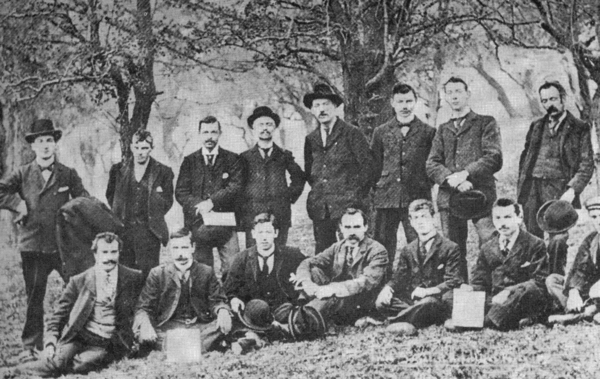
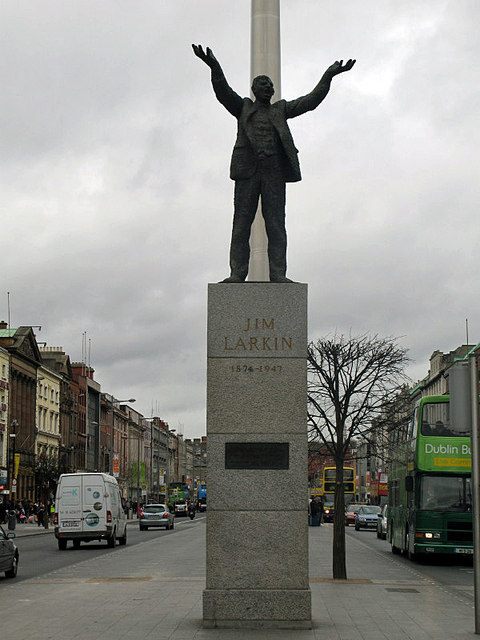
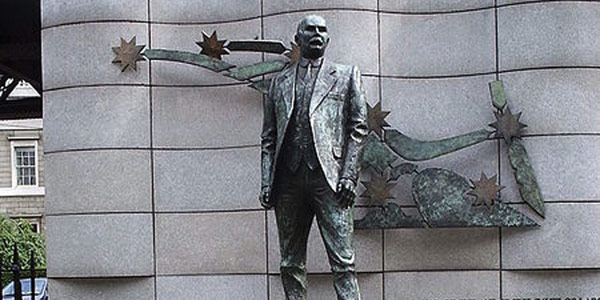


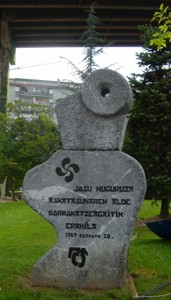

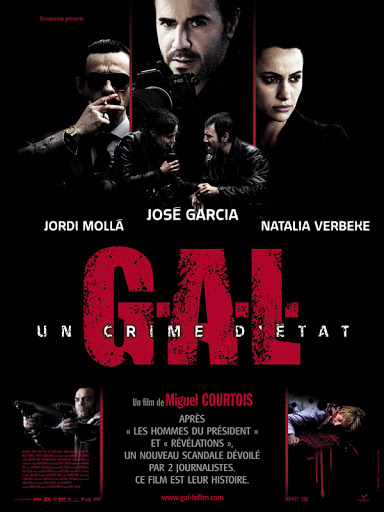


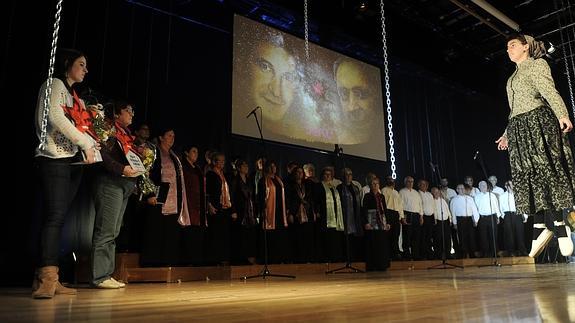




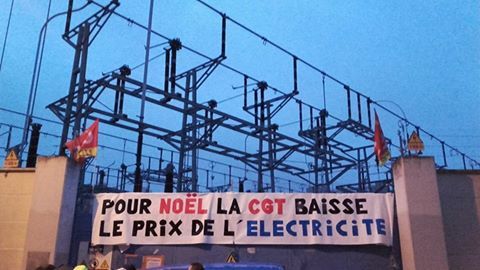
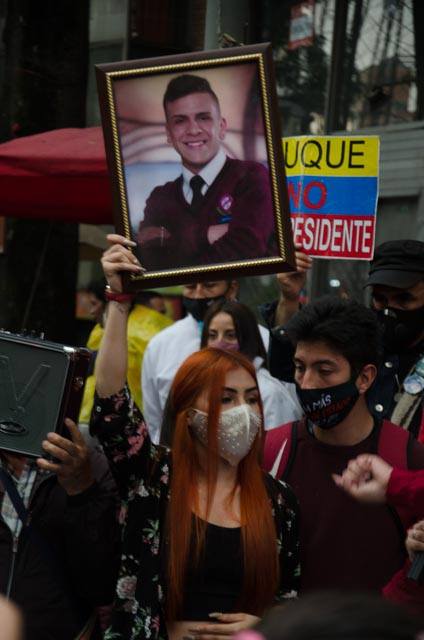
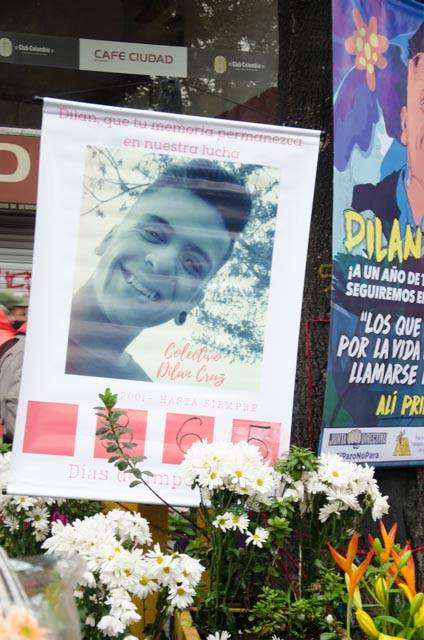

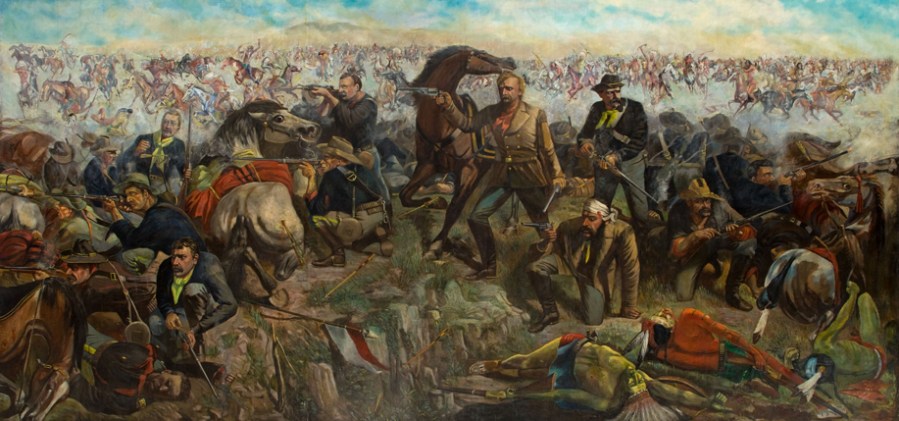


 rebelbreeze