SCRAPPING CARRIERS SINKS BRITISH WORLD POLICEMAN PLAN

Kit Klarenberg (republished with author’s kind permission from Al Mayadeen)
(Reading time: 6 mins.)

On November 15th, The Times published a remarkable report, revealing serious “questions” are being asked about the viability of Britain’s two flagship aircraft carriers, at the highest levels of London’s defence establishment.

Such perspectives would have been unreportable mere months ago. Yet, subsequent reporting seemingly confirms the vessels are for the chop.

Should that come to pass, it will represent an absolutely crushing, historic defeat for the Royal Navy – and the US Empire in turn – without a single shot fired.

The HMS Queen Elizabeth and HMS Prince of Wales first set sail in 2017 and 2019 respectively, after 20 years in development.

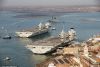
HMS Queen Elizabeth and HMS Prince of Wales in dock and at anchor.

The former arrived at the Royal Navy’s historic Portsmouth base with considerable fanfare, a Ministry of Defence press release boasting that the carrier would be deployed “in every ocean around the world over the next five decades.”

The pair were and remain the biggest and most expensive ships built in British history, costing close to $8 billion combined. Ongoing operational costs are likewise vast.

Fast forward to today however, and British ministers and military chiefs are, per The Times, “under immense pressure to make billions of pounds’ worth of savings,” with major “casualties” certain.

Resultantly, senior Ministry of Defence and Treasury officials are considering scrapping at least one of the carriers, if not both.

The reason is simple – “in most war games, the carriers get sunk,” and are “particularly vulnerable to missiles.” As such, the pair are now widely perceived as the “Royal Navy’s weak link.” 

Matthew Savill of British state-tied Royal United Services Institute told The Times that missile technology is developing “at such a pace” that carriers are rapidly becoming easy for Britain’s adversaries to “locate and track”, then neutralise.

“In particular,” he cautioned, China is increasing the range of its ballistic and supersonic anti-ship missiles.

Meanwhile, Beijing’s “hypersonic glide vehicle”, the DF-17, “can evade existing missile defence systems,” its “range, speed and manoeuvrability” making it a “formidable weapon” neither Britain nor the US can adequately counter.

Savill advocated “cutting one or both of the carriers,” as this “would free up people and running costs and those could be reinvested in the running costs of the rest of the fleet and easing the stresses on personnel”.

Nonetheless, he warned that scrapping the carriers would be a “big deal for a navy that has designed itself around those carriers…and that the £6.2 billion paid for them would be a sunk cost.”

That the Royal Navy has “designed itself” around the two carriers is an understatement.

For just one to set sail, it must be supported by a strike group consisting of two Type 45 destroyers for air defence, two Type 23 frigates for anti-submarine warfare, a submarine, a fleet tanker and a support ship.

British aircraft carrier as part of allegedly “strike force” but in reality sailing with its necessary escorts. (Photo sourced: Internet)

This “full-fat protective approach”, Savill lamented, means “most of the deployable Royal Navy” must accompany a single carrier at any given time:

‘You can protect the carriers, but then the Navy has put all of its eggs in a particularly large and expensive basket.’

‘National Embarrassment’

March 2021 saw the publication of a long-awaited report, Global Britain in a Competitive Age – “a comprehensive articulation” of London’s “national security and international policy,” intended to “[shape] the open international order of the future.”

The two aircraft carriers loomed large in its contents. One passage referred to how HMS Queen Elizabeth would soon lead Britain’s “most ambitious global deployment for two decades, visiting the Mediterranean, the Middle East and the Indo-Pacific”:

“She will demonstrate our interoperability with allies and partners – in particular the US – and our ability to project cutting-edge military power in support of NATO and international maritime security.

Her deployment will also help the government to deepen our diplomatic and prosperity links with allies and partners worldwide.”

Such bombast directly echoed the bold wording of a July 1998 strategic defence review, initiated a year earlier by then-prime minister Tony Blair.

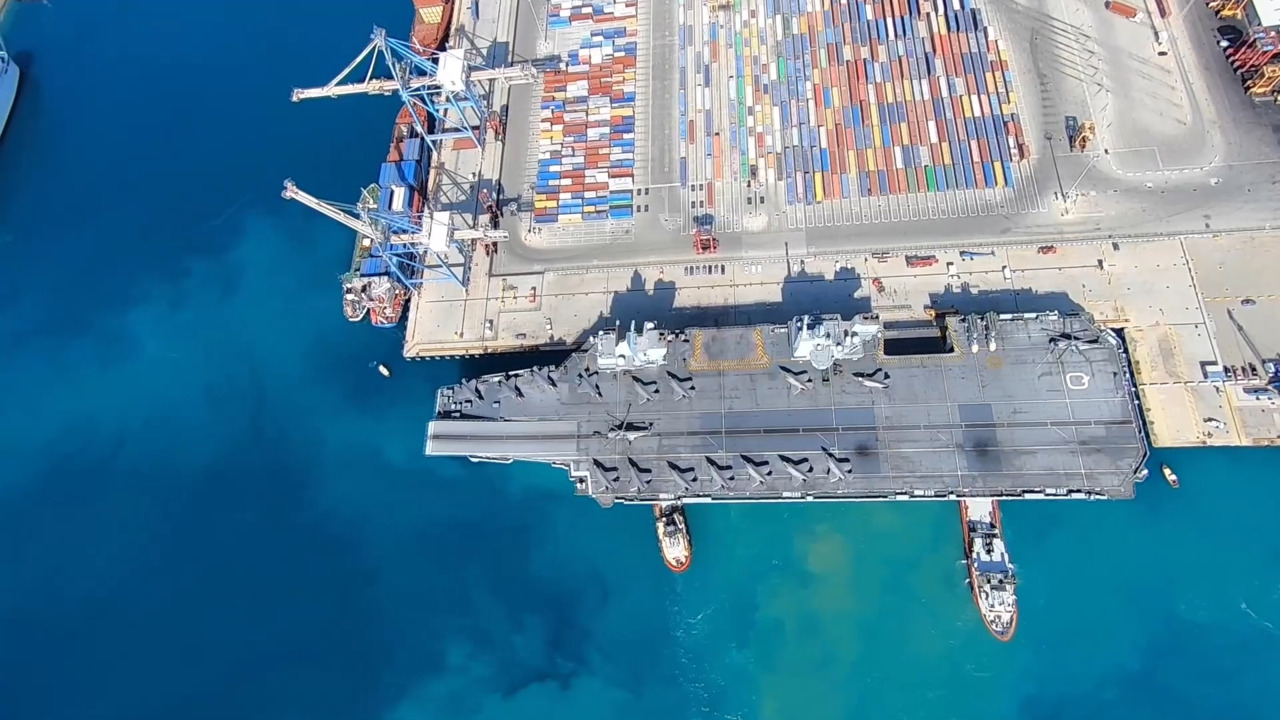
As world naval policeman: HMS Queen Elizabeth aircraft carrier docked in Cyprus (where the UK has two military bases)

Its findings kickstarted London’s quest to acquire world-leading aircraft carriers, which culminated with the birth of HMS Queen Elizabeth and HMS Prince of Wales.

Britain’s explicit objective, directly inspired by the US Empire’s dependence on carriers to belligerently project its diplomatic, economic, military and political interests abroad, was to recover London’s role as world police officer, and audaciously assert herself overseas: 

“In the post-Cold War world, we must be prepared to go to the crisis, rather than have the crisis come to us. So we plan to buy two new larger aircraft carriers to project power more flexibly around the world…

This will give us a fully independent ability to deploy a powerful combat force to potential trouble spots without waiting for basing agreements on other countries’ territory. We will…be poised in international waters and most effectively back up diplomacy with the threat of force.”

Blair’s reverie appeared to finally come to pass in May 2021, when HMS Queen Elizabeth set off on a grand tour of the world’s oceans, escorted by a vast carrier strike group.

Over the next six months, the vessel engaged in a large number of widely-publicised exercises with foreign navies, including NATO allies, and docked in dozens of countries. Press coverage was universally fawning.

Yet, in November, as the excursion was nearing its end, an F-35 fighter launched from the carrier unceremoniously crashed. 

The F-35’s myriad issues were by that point well-established. The jet, which has cost US taxpayers close to $2 trillion, entered into active service in 2006 while still under development. It quickly gained a reputation for hazardous unreliability.

In 2015, a Pentagon report acknowledged its severe structural issues, limited service life and low flight-time capacity.

Two years later, the Department of Defense quietly admitted the US Joint Program Office had been secretly recategorising F-35 failure incidents to make the plane appear safe to fly. 

Despite this, the HMS Queen Elizabeth and HMS Prince of Wales were specifically designed to transport the F-35, to the exclusion of all other fighter jets.

However, Britain has all along struggled to source usable F-35s, which produces the ludicrous situation of the two carriers almost invariably patrolling seas with few if any fighters aboard at all, therefore invalidating their entire raison d’être.

In November 2023, the Daily Telegraph dubbed these regular “jet-less” forays a “national embarrassment”.

‘Carrier Gap’

An even graver embarrassment, rarely discussed with any seriousness by the British media, is that the two aircraft carriers have been plagued with endless technical and mechanical issues as long as they’ve been in service.

Flooding, mid-operation breakdowns, onboard fires, and engine leaks are routine. Both vessels have spent
 considerably more time docked and under repair than at sea over their brief lifetimes. In 2020, an entire HMS Prince of Wales crew accommodation block collapsed, for reasons unclear.

As the elite US foreign policy journal National Interest acknowledged in March 2024, “the Royal Navy remains unable to adequately defend or operate” its two carriers “independently” – code for the Empire being consistently compelled to deploy its own naval and air assets to support the pair.

This is quite some failure, given British officials originally intended for the vessels to not only lead NATO exercises and deployments, but “slot into” US navy operations wherever and whenever necessary.

The Empire’s inability to outsource its hegemonic duties to Britain has created a critical “carrier gap”.

Despite maintaining an 11-strong fleet, Washington cannot deploy the vessels to every global flashpoint at once, grievously undermining her power and influence at a time of tremendous upheaval worldwide.

In a bitter irony, by encouraging and facilitating London’s emulation of its own flawed and outdated reliance on aircraft carriers, the US has inadvertently birthed yet another needy imperial dependent, further draining its already fatally overstretched military resources. 

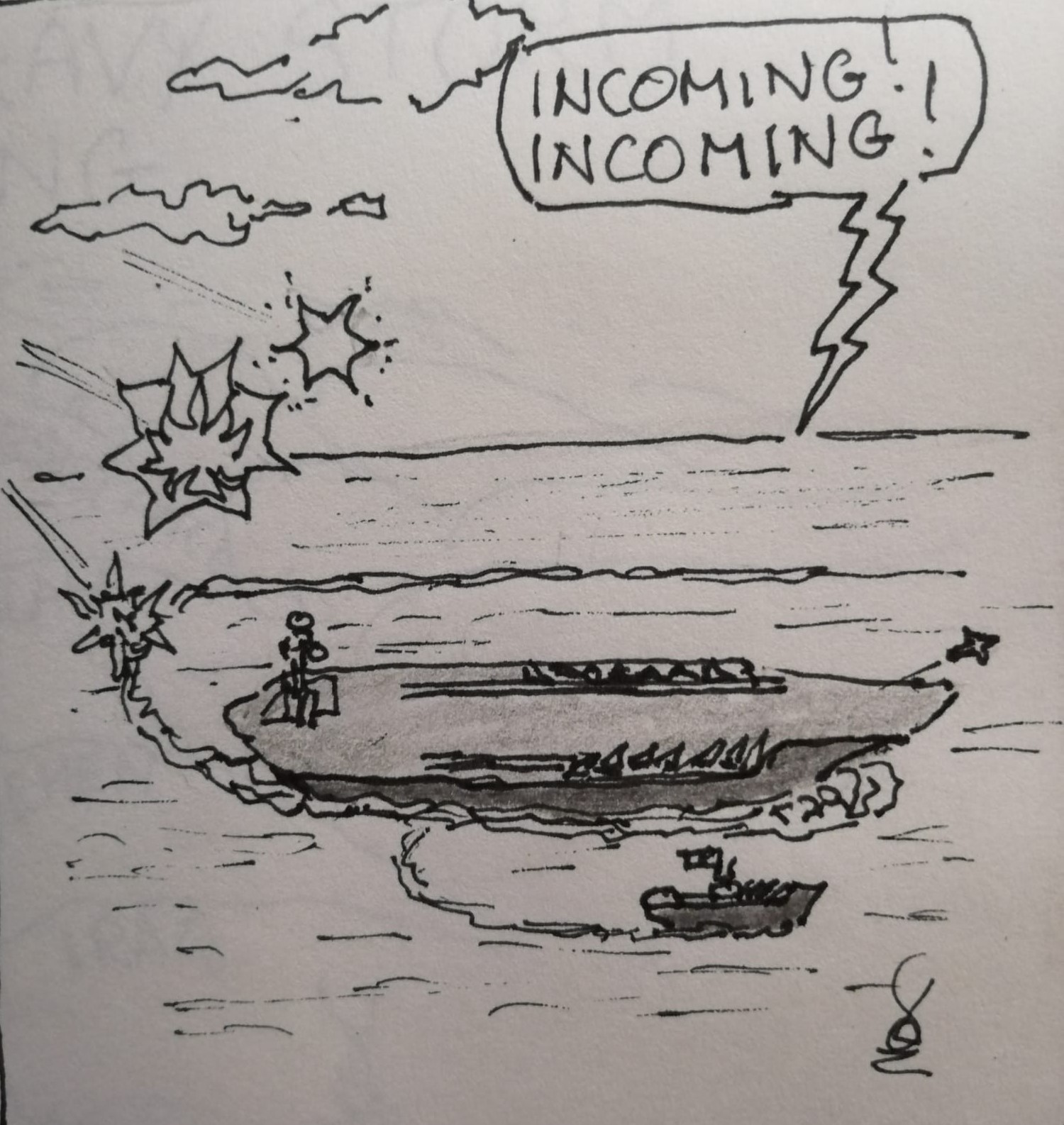
Frame 2 of a DB cartoon depicting US Navy aircraft carrier sailing to teach Ansar Allah (‘Houthis’) a lesson but instead getting chased out of the Arabian Sea by Yemeni missiles in June this year. (Image source: DB cartoons)

Several Royal Navy destroyers were originally part of abortive US-led Operation Prosperity Guardian, launched in late 2023 to smash Ansar Allah’s righteous anti-genocide Red Sea blockade.

Almost immediately, it became apparent the British lacked any ability to fire on land targets, therefore rendering their participation completely useless.

Subsequently, photos emerged of areas on Britain’s ships where land attack cruise missiles should’ve been situated. Instead, the spaces were occupied by humble treadmills, for use as on-board gyms.

It transpired that the appropriate weapons hadn’t been purchased, due to a lack of funds – the money having of course been spent instead on constructing barely operable aircraft carriers, which now face summary defenestration.

By investing incalculable time, energy, and money in pursuing the mythological greatness associated with carrier capability, Britain – just like the US Empire – now finds itself unable to meet modern warfare’s most basic challenges.

Meanwhile, its adversaries near and far have remorselessly innovated, equipping themselves for 21st century battle.

Days after The Times portended the impending death of London’s aircraft carriers, mainstream media became awash with reports of savage cutbacks in Britain’s military capabilities, in advance of a new strategic defence review.

Potentially a huge pile of scrap or to be dumped on an ally …

Five Royal Navy warships, all of which had lain disused due to staffing issues and structural decay for some time, were among the first announced “casualties”. What if anything will replace these losses isn’t certain, although it likely won’t be an aircraft carrier.

End.

Source: https://english.almayadeen.net/articles/analysis/collapsing-empire–rip-royal-navy

Britain secretly helped Chile’s military intelligence after Pinochet coup

John McEvoy 5 September2023

(Reading time: 6 mins.)

NB: Rebel Breeze shares this near the anniversary of the fascist military coup in Chile, the same date as the Twin Towers massacre years later.. The article is a year old but relevant as long as British imperialism exists.

As the Pinochet regime rounded up and murdered its political opponents after the 1973 coup, a UK Foreign Office propaganda unit passed material to Chile’s military intelligence and MI6 connived with a key orchestrator of the coup, newly declassified files show.

  • Foreign Office helped Pinochet regime to develop a counter-insurgency strategy based on British military campaigns in Southeast Asia
  • MI6 officer David Spedding was attached to British embassy in Santiago in 1972-4, and had relations with a key member of the military junta

The UK government assisted Chile’s military intelligence in the aftermath of the brutal 1973 coup against elected president Salvador Allende, newly declassified files show.

The assistance was authorised by the Information Research Department (IRD), a secret Foreign Office propaganda unit which worked closely with Britain’s secret intelligence service, MI6.

Foreign and Commonwealth Office building, Whitehall, London. Many a dark deed was planned here. (Photo accessed: Internet)

The IRD had long seen Allende as a political threat. As Declassified previously revealed, throughout the 1960s, the unit had sought to prevent Allende from ever becoming president through election interference and covert propaganda operations.

After Allende was elected in 1970, the IRD’s distribution of propaganda material became “strictly limited”, with the British embassy having fewer reliable contacts in the Chilean government. 

This all changed after the coup.

In January 1974, the IRD began to “extend the distribution” of its material, which was now passed “to the Chilean Ministry of Foreign Affairs, Government information organisations” and, crucially, the dictatorship’s “military intelligence” services.

At this time, Chile’s security forces – including the country’s intelligence apparatus – were responsible for massive human rights violations, including the widespread use of torture as a political weapon.

The UK government was under no illusions about this. As Foreign Office official Christopher Crabbie noted three months after the coup in December 1973, “I do not think that anyone seriously doubts that torture is going on in Chile”. 

Reliable figures indicate that, between 1973 and 1988, Chilean state agents were responsible for over 3,000 deaths or disappearances and tens of thousands of cases of torture and political arrests. This was in a country which, in 1973, had a population of only 10 million people.

‘Our major interest is copper’: Britain backed Pinochet’s bloody coup…

Chile Army 1973 coup soldiers watch detainees – many were shot, many more tortured then shot, many more still ‘disappeared’, probably tortured and shot. Many, many more were jailed where they were also tortured; young children were also abducted and given to fascist childless couples. (Photo accessed: Internet)

‘Hearts and minds’

The nature of the information passed to Chile’s military intelligence remains unclear, though the files suggest it may have included material for use in propaganda, research reports on left-wing activity, and even manuals on domestic security operations.

For instance, newly declassified files show how the UK government secretly helped the Chilean authorities to develop a counter-insurgency strategy, using techniques refined during Britain’s colonial interventions in Southeast Asia.

The idea for such assistance was first raised during the visit of British navy chief Sir Michael Pollock to Chile in late November 1973, two months after the coup. 

The timing of Pollock’s visit was “politically tricky”, noted the British ambassador in Santiago, Reginald Secondé, since there was “much critical attention” being given “to the Chilean Government’s treatment of their political opponents”.

However, there were “two frigates and two submarines for the Chilean Navy under construction in British yards” – an arms deal worth around £50m – and “this was not a moment to prejudice the historic tradition of Anglo-Chilean naval friendship”. 

“This was not a moment to prejudice the historic tradition of Anglo-Chilean naval friendship”

In Santiago, Pollock and Secondé met with a number of regime officials, including navy chief José Toribio Merino Castro, defence minister Patricio Carvajal Prado, and foreign minister Ismael Huerta.

With Huerta, the British officials spoke about the UK government’s “hearts and minds” campaign in Northern Ireland, a counter-insurgency strategy inspired by Britain’s war in Malaya (1948-60).

Huerta “seemed impressed with the concept”, and Secondé “later twice heard him muttering to himself ‘hearts and minds’”.

Subsequent meetings were held between Secondé, British information officer Tony Walters, and Captain Carlos Ashton, the director of overseas information in Chile’s Ministry of Foreign Affairs.

Like Huerta, Ashton was “very receptive to the idea that this kind of approach to Chilean security problems might be the right answer”, and requested “details of what practical measures a ‘hearts and minds’ exercise would involve”.

Exclusive: Secret cables reveal Britain interfered with elections in Chile

Counter-insurgency advice

Ashton’s request for assistance was forwarded to Rosemary Allott, the head of the IRD’s Latin American desk.

In a letter dated 15 February 1974 and marked ‘secret’, Allott agreed to provide the Chilean regime with counter-insurgency advice, but limited this to material on Britain’s past colonial interventions.

“In view of the delicate political considerations involved”, Allott wrote, “it would be best to confine, at this stage at least, the material we send you of insurgencies of the past, rather than those currently preoccupying HMG” such as Northern Ireland.

The Pinochet regime was soon issued with three books on British counter-insurgency strategy, alongside a “Manual of Counter Insurgency Studies”. 

“Britain agreed to share its colonial policing methods with the Chilean junta”

Allott also tracked down “various official reports on Malaya” including “The Fight Against Communist Terrorism in Malaya”, the “Review of the Emergency in Malaya (1948-57)”, and “two booklets on the Philippines insurrection”. 

Britain’s military campaign in Malaya involved the “resettlement” of over 500,000 civilians, aerial bombardment, and an intensive propaganda operation. 

Embassy officials suggested that they were teaching Chilean officers “tactics of tolerance and magnanimity”. However, brutal repression often lay behind the UK government’s rhetoric about “winning hearts and minds”, and the Chilean authorities were only sharpening their repressive techniques.

None of the material given to the Pinochet regime was “for attribution to HMG”. This meant that the Chilean authorities could use the information but not source it to the UK government. 

The extent to which Britain’s advice was acted upon remains unclear; the Pinochet regime was certainly not lacking in support from the CIA. 

Nonetheless, it is clear that Britain agreed to share its colonial policing methods with the Chilean junta, with the goal of stabilising Pinochet’s regime against domestic opposition.

MI6 in Chile

Evidence of British assistance to Chile’s intelligence services raises further questions about what Britain’s own secret intelligence service, MI6, was doing in Chile. 

In 1972, MI6 officer David Spedding was attached to the British embassy in Santiago – his only foreign posting outside of the Middle East throughout his career. 

This was not Spedding’s first visit to Chile. As a postgraduate student at Oxford University during the mid-1960s, Spedding had spent his gap year in Santiago and found work as an assistant in the British embassy’s press office. 

Spedding’s first role in the diplomatic service was thus in the same British embassy that had been directing covert propaganda operations against Allende throughout the 1960s. The job gave him “an entrée into SIS [MI6]”, historian Nigel West noted.

Spedding remained in Chile until September 1974. He was subsequently made responsible for MI6 operations across the Middle East, and would go on to become MI6 chief between 1994 and 1999.

‘Our relationship with Admiral Merino’

Spedding’s name rarely appears in declassified Foreign Office files on Chile.

Yet in one file, dated 4 December 1973, Spedding informed the Foreign Office that 2,800 civilians and 700 armed forces personnel had been killed during and after the coup. 

“In order to protect our relationship with Admiral Merino”, Spedding noted, “we would not like these figures to be quoted, at least for the time being”. 

Admiral Merino was one of the key orchestrators of the 1973 coup. He was head of the Chilean navy in September 1973, and remained in post until the fall of the dictatorship in 1990. Merino claimed responsibility for convincing Pinochet to join the coup.

Some of the culprits saluting (Photo accessed: Internet)

One of Spedding’s roles, then, was to ensure close collaboration with the Chilean junta by covering up its responsibility for massive political repression and human rights violations. 

The MI6 station in Santiago was only closed down in 1974 amid the UK Labour Party’s return to government.

It would not be surprising if MI6 played a supporting role to the CIA’s covert operations against Allende during the early 1970s. It was recently revealed that the Australian Secret Intelligence Service (ASIS) had “opened a base in Santiago to assist in the US Central Intelligence Agency’s destabilisation of the Chilean government” in 1971.

Britain’s secret assistance to the Pinochet regime was consistent with the UK government’s position on the coup. 

The Conservative government under Edward Heath had welcomed the coup and rushed to give diplomatic recognition and arms to the Chilean junta, with the Foreign Office noting that it had “infinitely more to offer British interests than the one which preceded it”.

The coup against Allende inaugurated a 17-year dictatorship under General Augusto Pinochet, who only left office in 1990.

end.

John McEvoy is co-directing a forthcoming documentary investigating Britain’s hidden role in the death of Chile’s democracy and rise of the Pinochet dictatorship. You can support the film’s production here.

No Welcome for Starmer Demonstration OConnell Bridge Dublin

Clive Sulish

(Reading time: 3 mins.)

A number of demonstrations were held in Ireland to make it clear that Kier Starmer, Prime Minister of the UK and supporter of the Zionist state of ‘Israel’, has no céad míle fáilte in Ireland, or indeed any fáilte whatsoever for his Dublin visit.

After fourteen years of Conservative Party management of the UK, Starmer at the head of the Labour Party rode a change-seeking wave to win the General Election in July this year. But he soon revealed how little difference there is between the parties, including on Palestine.

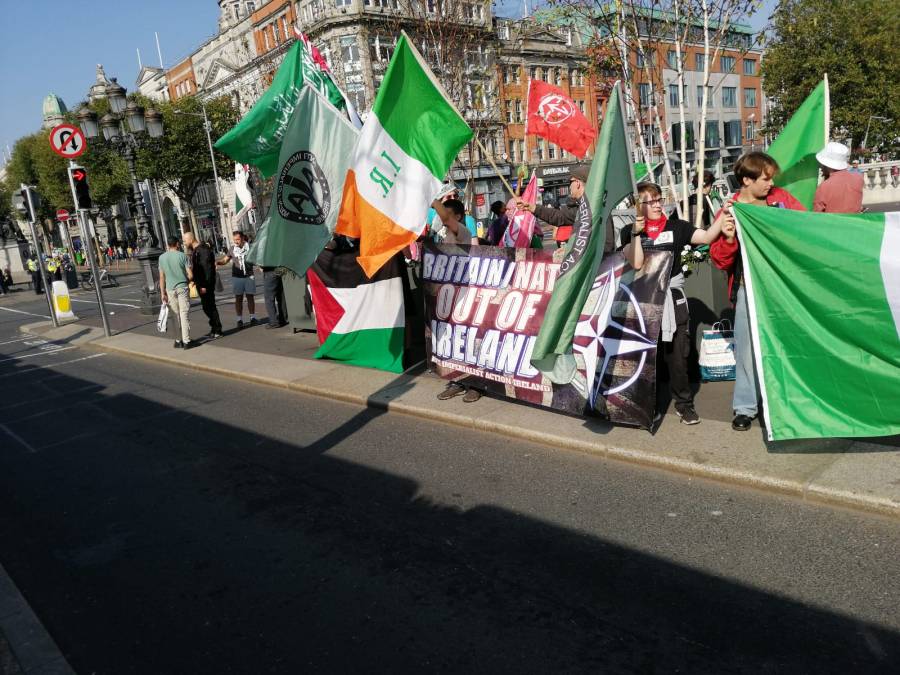
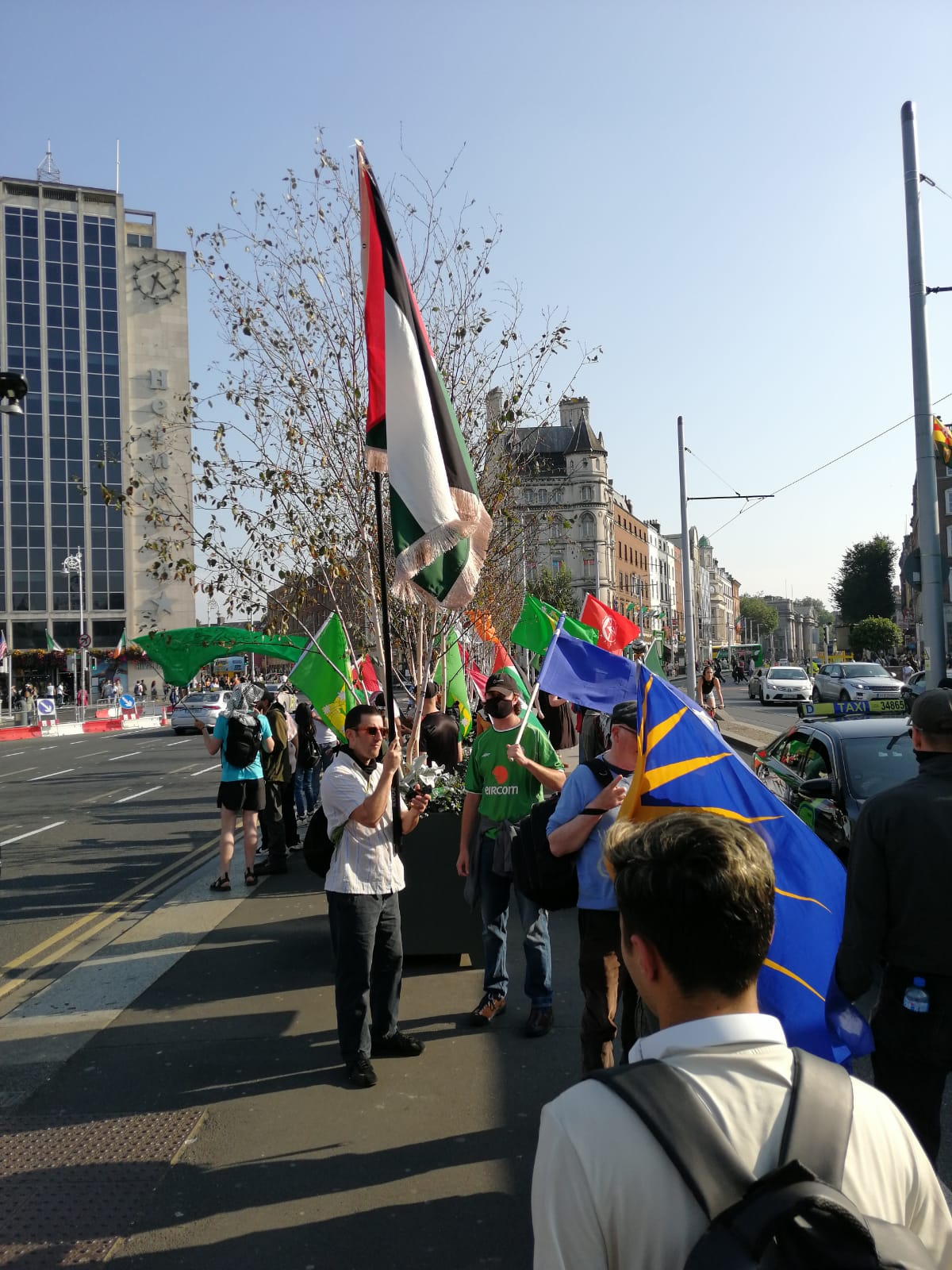
Mostly of the east-facing section on the Bridge (Photo: R.Breeze)

Although the Labour Party on the Zionist State, its Government continues to support that state politically and economically, also militarily with supply of weapons components and RAF missions.1

Very recently the UK Labour Government temporarily suspended 30 military items which may (may!) be implicated in genocide. The UK, holder of one of the five Permanent seats of the UN Security Council is complicit in the ongoing Zionist colonial settler genocide of Palestinians.

In fact, the UK is responsible for settling Zionist Jews in Palestine and then for allocating much of Palestinian land to the settler who, as European settler colonists do, expelled hundreds of thousands of Palestinians and continued extending their land-grabbing ever since.

West-facing section of protest (Photo: R.Breeze)

PROTEST ON O’CONNELL BRIDGE

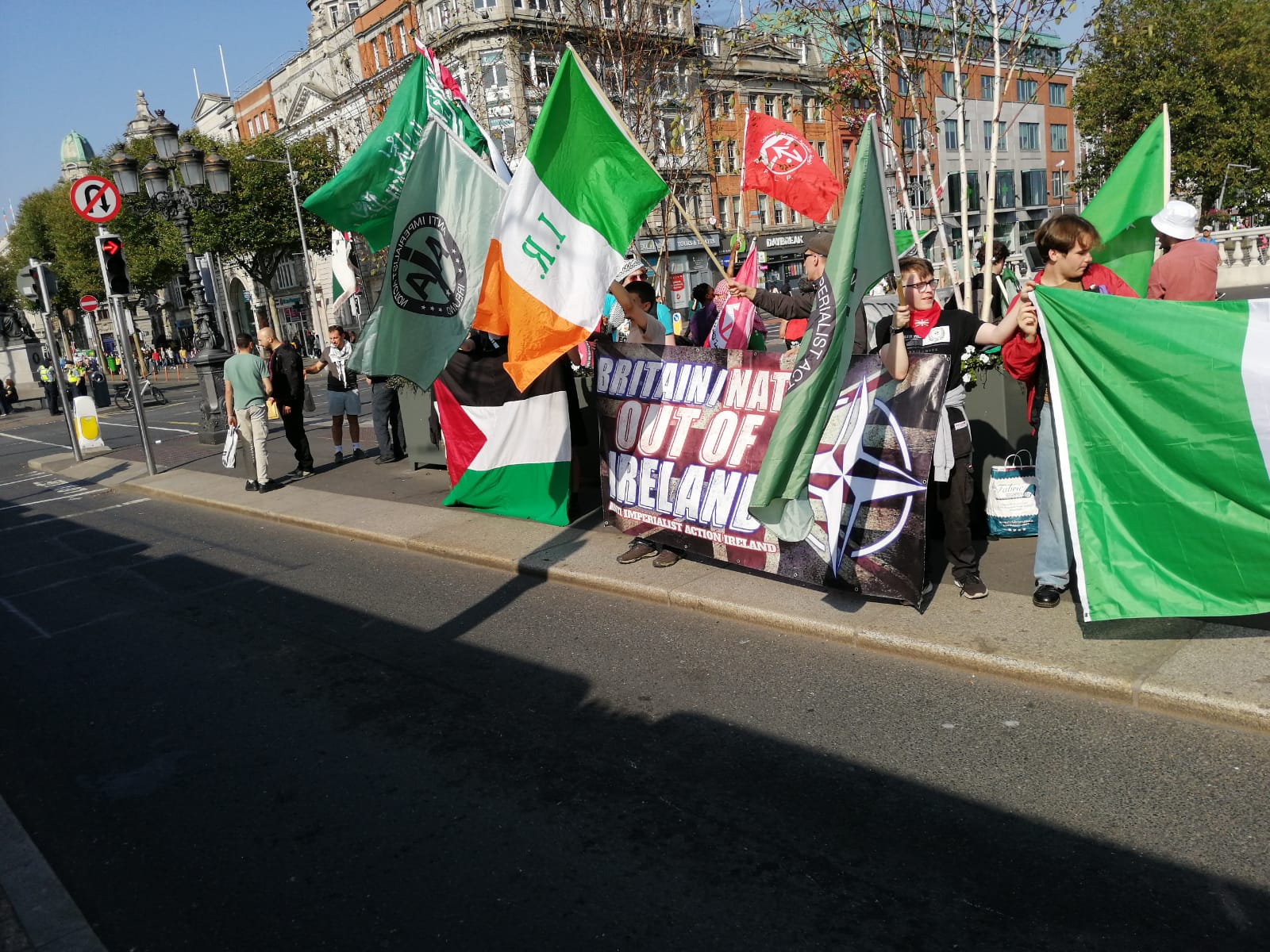
The Saoirse Don Phalaistín and Anti-Imperialist Action groups organised a protest against Starmer’s visit to take place on O’Connell Bridge at 3pm on Saturday and took up position on the central pedestrian reservation, with one section facing eastward and the other towards the West.

The Bridge spans the River Liffey and is in the heart of the city centre, crossed by north and southbound traffic and in view of westbound and eastbound traffic along the quays also.

There was a heavy presence of uniformed police in the vicinity, with five Special Branch nearby and a Public Order Unit van driving by a number of times as did other Garda vans. A prisoner transport van was also parked on the Bridge for a period but no attack was forthcoming.

Collection of banners and flags in west-facing section of protest. (Photo: R.Breeze)

RECORD OF THE LABOUR PARTY

One of the speakers at the O’Connell Bridge event reminded people of the history Labour Governments vis-a-vis Ireland, having sent the troops to the Six County colony to quell the struggle for civil rights there and also targeting the Irish in Britain with the Prevention of Terrorism Act.

This 1974 PTA, the speaker said, was later extended into the current Terrorism Act of repression in Britain. He reminded people too of the innocent Birmingham Six, Guildford Four, Maguire Seven and Judith Ward who were framed and jailed for long years under a Labour Government.

A speaker at the protest giving some reasons why Keith Starmer is not welcome in Ireland. (Video cred: Social Action Ireland)

The speaker could have also mentioned the Labour Party’s participation in the WWI War Cabinet which had sentenced and executed 16 Irish leaders after the 1916 Rising and its bipartisanship with the Conservatives on the partition of Ireland in 1921 and instigation of the Civil War in 1922.

SUPPORT AND OPPOSITION

The attitude expressed by protest passers-by on foot, bicycle or in motorised transport was nearly uniformly supportive. One exception was a fascist who called the protesters ‘traitors’ and attempted to take closeup photos before being blocked by a participant with a flag and seen off.

(Photo: R.Breeze)

Another was a big man who in a UStates accent seemed to shout something derogatory about Ireland and then claimed to be Irish (he might have been part of the diaspora there since the Irish tricolour colours appeared on the back of his top).

For much of the two hours of the event, slogans were shouted in support of Palestine, against the Zionist State, against Starmer, against British occupation of Ireland, for Intifada revolution, and for the solidarity action of Yemen at sea regarding Zionist-collusive shipping companies.

End.

Another view of west-facing section of protest with newly-made ornate Starry Plough flag. (Photo: R.Breeze)

FOOTNOTE

1There have been a number of reports of special units of the British army in Palestine and on British Intelligence personnel assisting the ‘Israeli’ Occupation Force.

INDEPENDENT HUNGER STRIKE COMMEMORATION DUBLIN GETS BROAD PARTICIPATION

Diarmuid Breatnach

(Reading time: 3 mins.)

Irish Republican hunger strikers were commemorated in Dublin with a march and rally on 24th August. The event was organised by Dublin Independent Republicans and attracted representation from many groups in addition to independent activists.

Those ten Irish Republicans who died on hunger strike in 1981 are still remembered well in the general Irish population, most of all their leader Bobby Sands. However another twelve died on hunger strike in earlier days, going back to 1917, before the War of Independence (1919-’21).

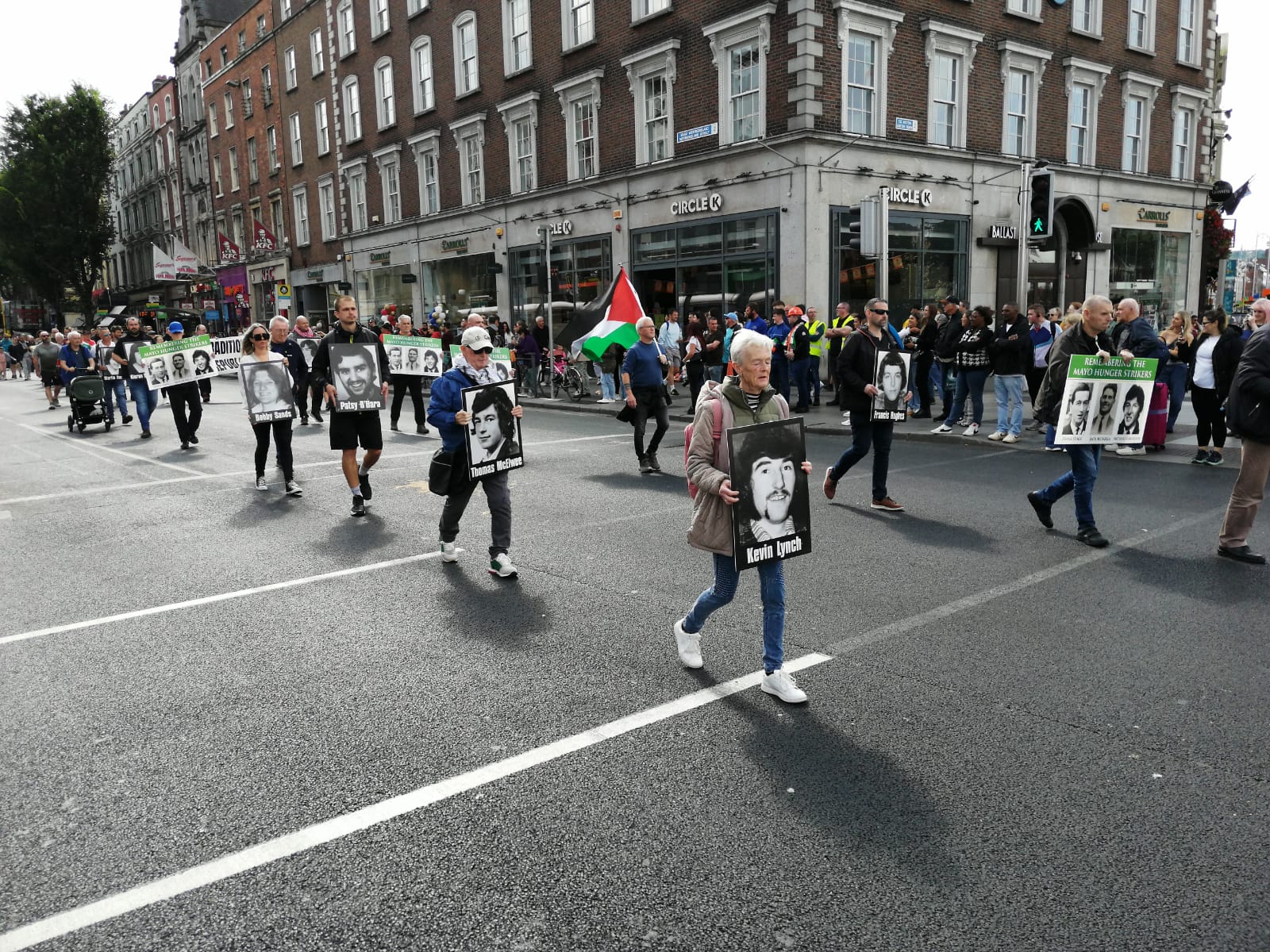
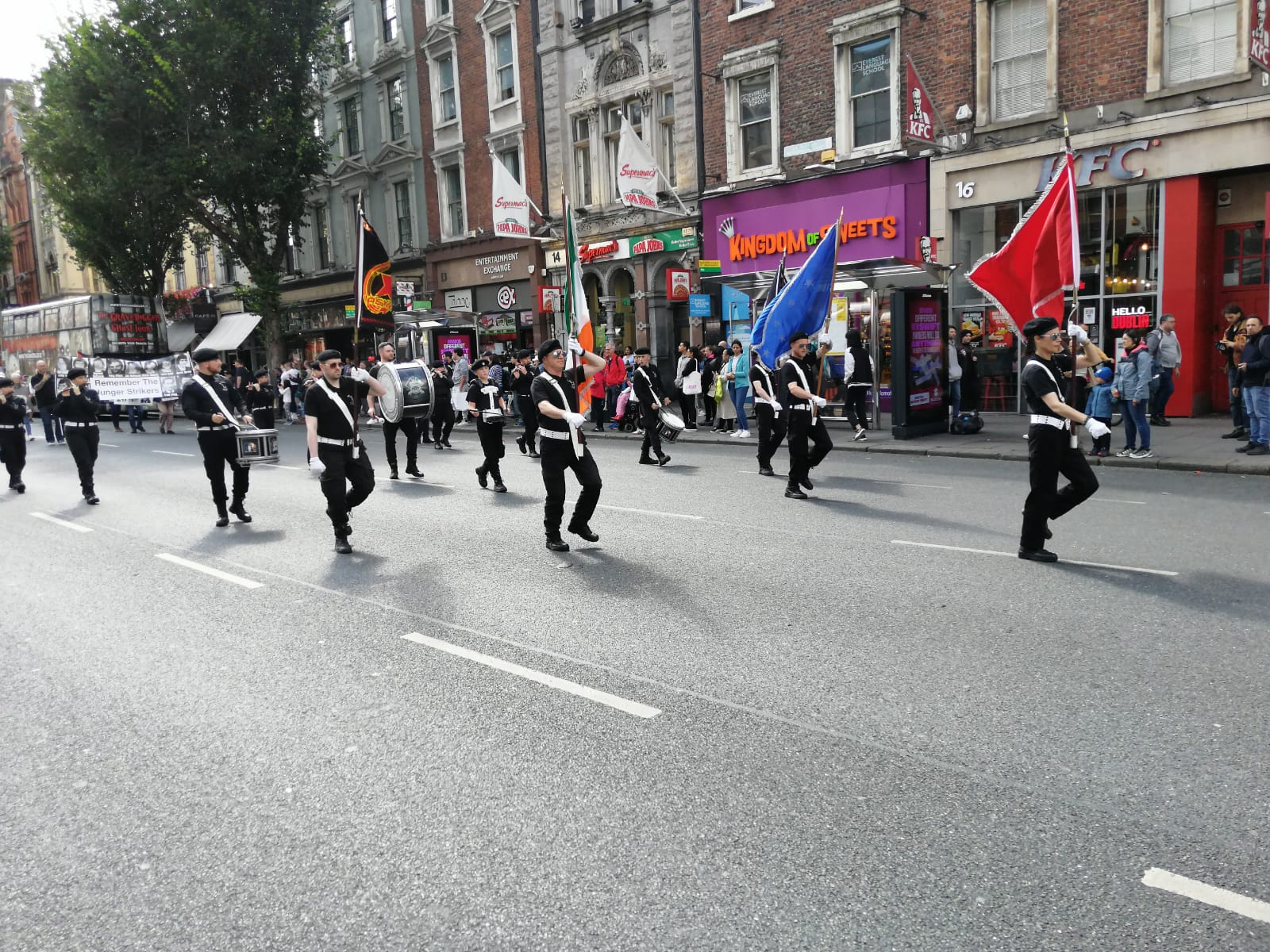
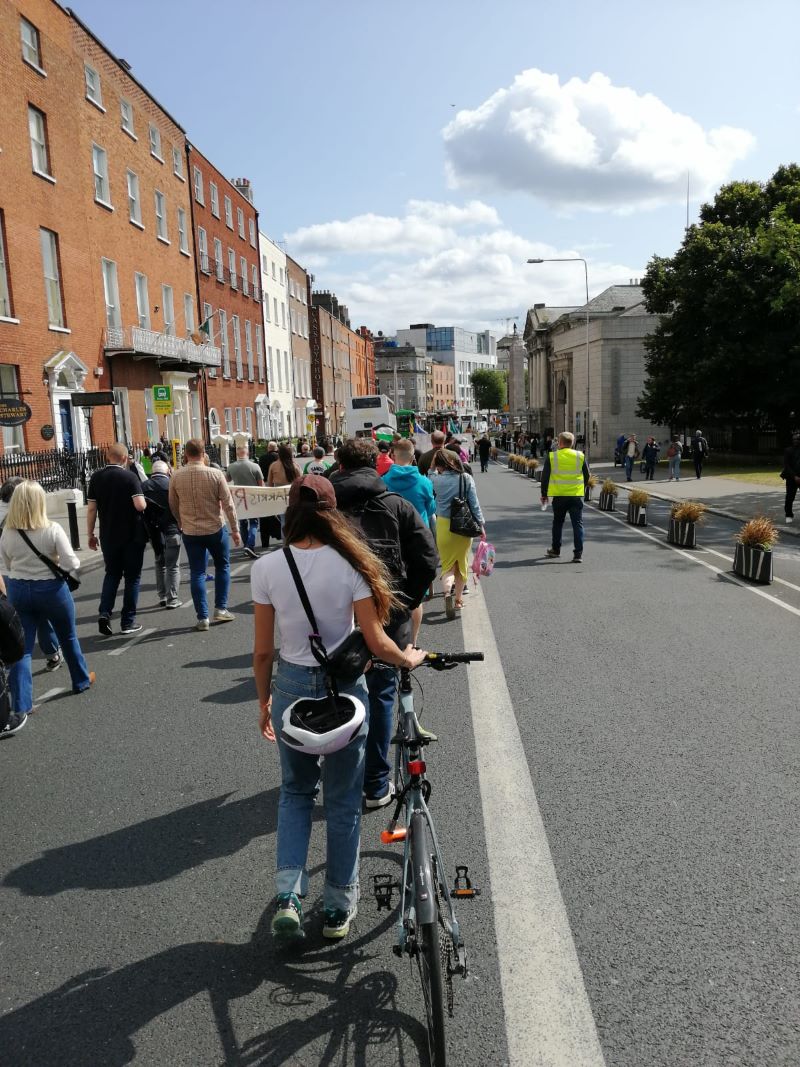
Marchers in Westmoreland Street carrying images of the hunger-strike martyrs on the return to the Garden of Remembrance. (Photo: D.Breatnach)

For over a century, hunger strikes have been one of the traditional methods of protest and struggle by Irish Republican prisoners in jails of the British and also of the Irish State.

Those Republican prisoners who died on hunger strike in 1981 did so from the effects of starvation but some died through force-feeding also, which was the case with Vols. Thomas Ashe (1917), Michael Gaughan (1974) and Frank Stagg (1976).1

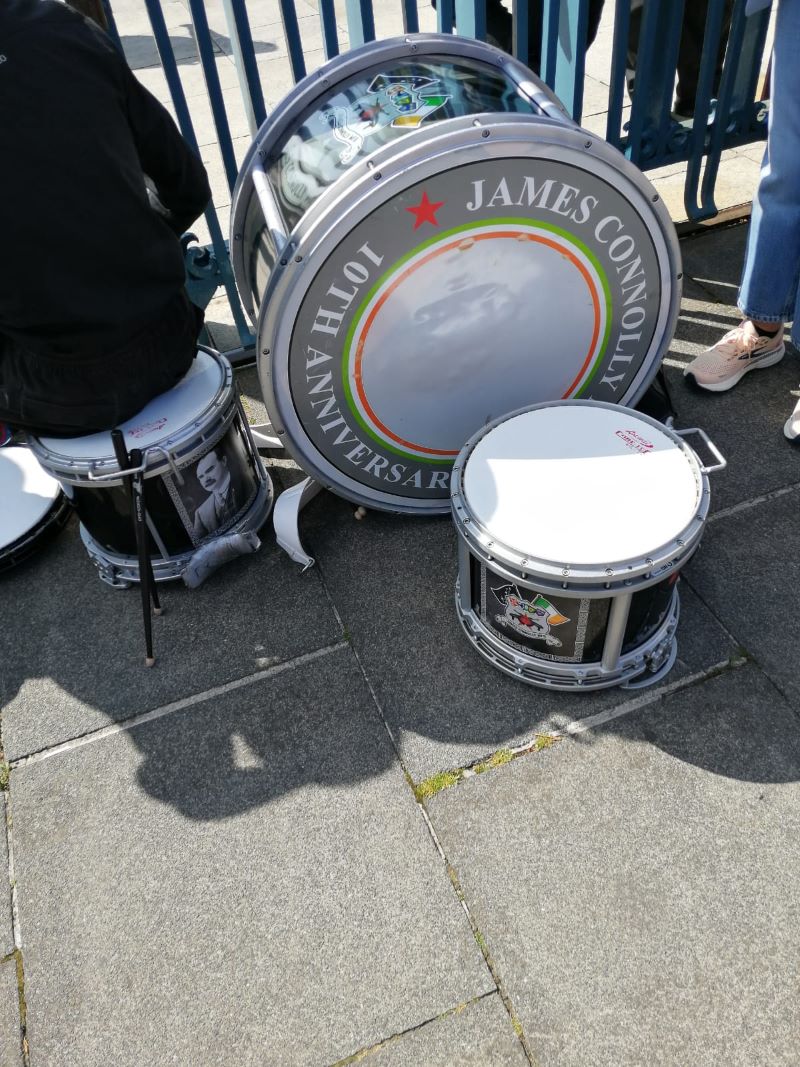
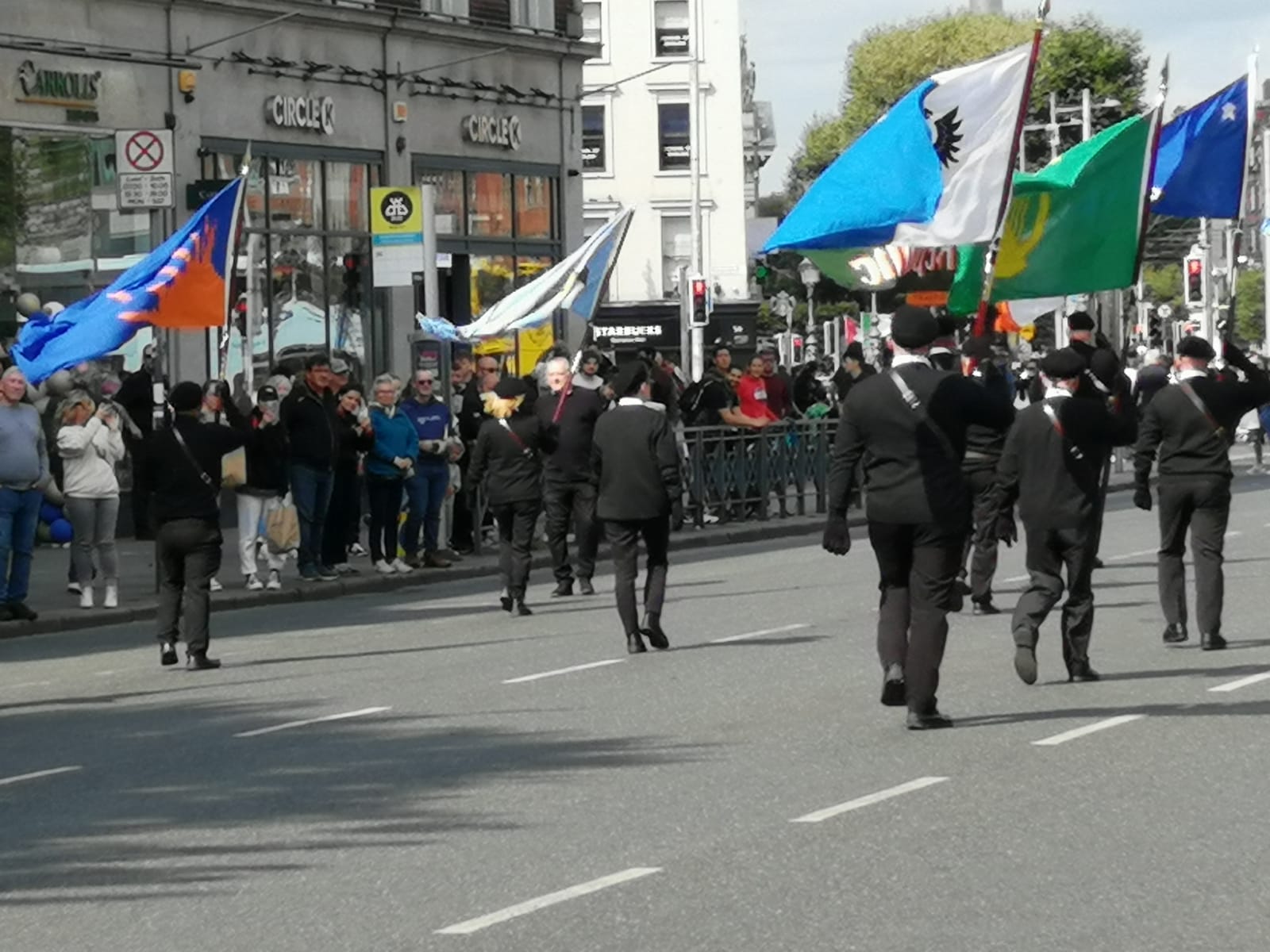
James Connolly Memorial Band with their own colour party in Westmoreland Street on the return to the Garden of Remembrance. (Photo: D.Breatnach)

PARADE THROUGH CITY CENTRE AND RALLY

Led by a colour party,2 the parade set off in two columns3 from the Garden of Remembrance in Parnell Square with the James Connolly Memorial Republican Flute Band leading and along the City’s main thoroughfare, O’Connell Street, crossed the Liffey to ‘touch’ Trinity College and back again.

Marchers setting off from the Garden of Remembrance in Parnell Square. (Photo: D.Breatnach)

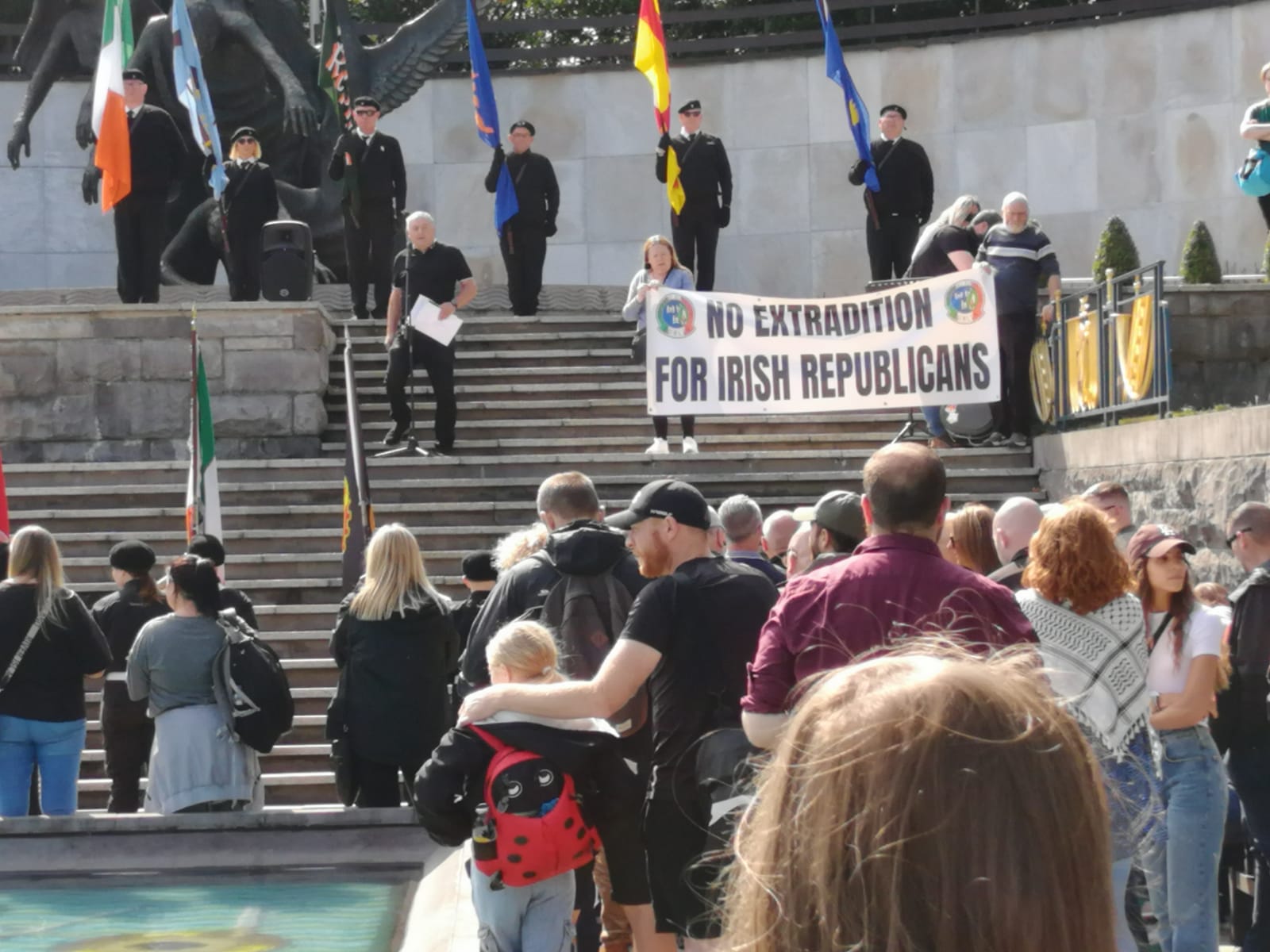
Upon returning to the Garden of Remembrance, the banners and band took up position in front of the memorial with the audience facing them, where Ado Perry as MC for the event welcomed all.

As well as recalling the struggles of Republican prisoners within the jails and deaths on hunger strike, Perry also took some time to denounce the Zionist genocide in Palestine and to express the Palestinian solidarity of Republicans (and of the majority of the Irish people).

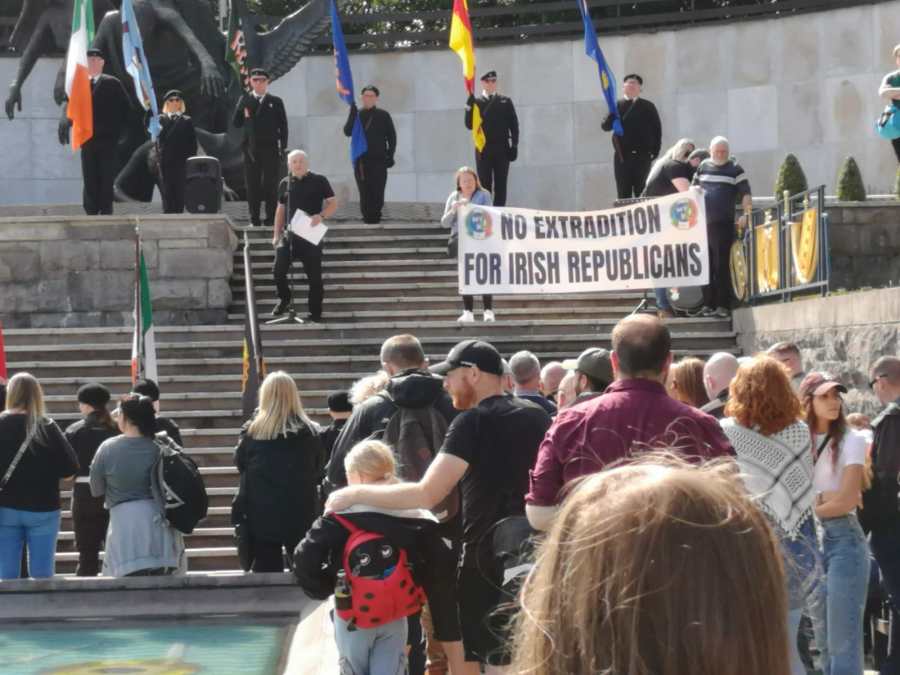
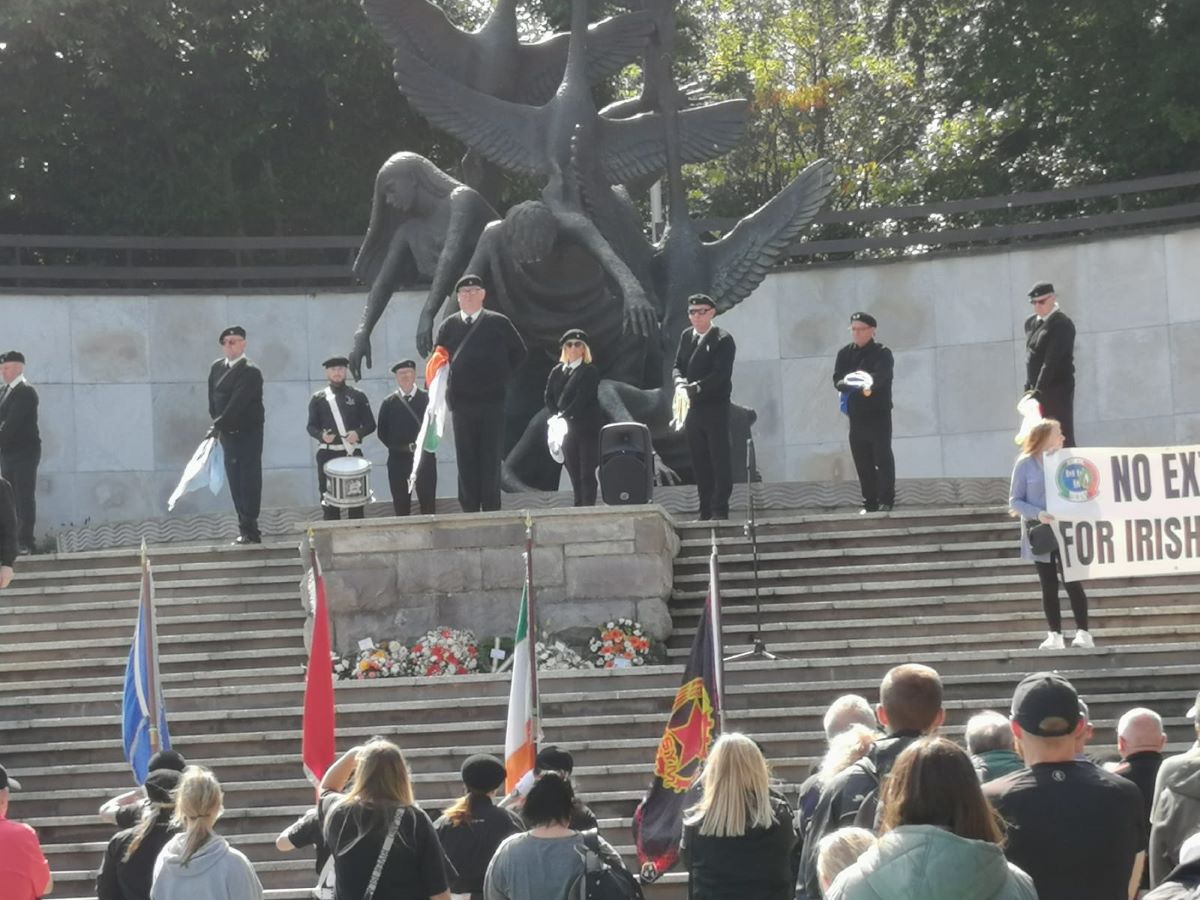
Ado Perry as MC of the rally in the Garden of Remembrance, flanked by the No Extraditions banner, the colour party behind and behind them, the Monument to those who fell in the struggle for Irish freedom. (Photo: D.Breatnach)

Perry also condemned the planned extradition of Irish Republican prisoners to British jurisdiction and called for Irish Republicans to unite in opposition, recalling the struggles against extradition over the years.

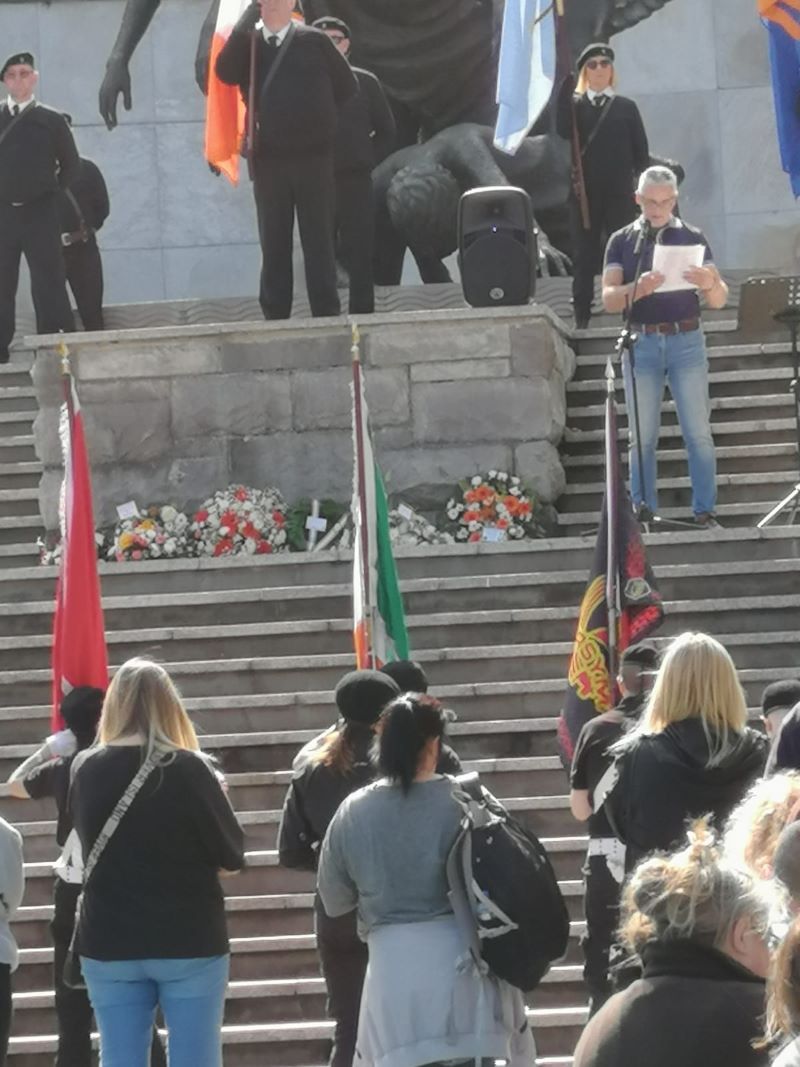
Floral tributes were laid at the Monument and Cáit Inglis read the names of the 22 who died on hunger strike, before the MC called on Cathal Graham for a song. Graham performed Wrap the Green Flag Around Me, a song that seems to have fallen somewhat in popularity in recent years.

Frankie Quinn giving his speech at the rally. (Photo: D.Breatnach)

The main speaker for the day was Frankie Quinn, a long-time Republican, community activist and ex-political prisoner who spoke first in Irish before turning to English. Quinn too condemned the genocide in Palestine and expressed solidarity with the Palestinian resistance.

In a reference to recent racist mobilisations in Ireland, Quinn made it clear that those people had nothing in common with Republicans or with the Irish national struggle for a socialist republic. (A known racist female activist had reportedly been encouraged to leave the scene a little earlier.)

The speaker was vigorously applauded and was followed by Gráinne Gibson who performed hunger strike martyr Bobby Sands’ poem The Rythm of Time.

(Photo: D.Breatnach)

Cathal Graham returned to perform The Time Has Come, a representation of hunger strike martyr Patsy O’Hara’s plea to his mother not to withdraw him from the fast when he lost consciousness, unless their demands were conceded. The colour party lowered their flags in respect to the martyrs.

Perry thanked all for their attendance in particular the marching band, colour party, performers and stewards, once again emphasising the need for united action to prevent the extradition of Irish Republicans to British jurisdiction, then called the band to perform Amhrán na bhFiann.4

The colour party leading the march out of Westmoreland to cross the river to the rally in the Garden of Remembrance. (Photo: D.Breatnach)

There was broad support for the event as shown by the participation of a number of different organisation and individual activists, which is a hopeful sign for the future. The real test however will be whether the disparate elements will act in unity as called for by Perry and Quinn.

End.

The lowering of the flags in honour of the martyrs in the struggle. (Photo: D.Breatnach)

Footnotes

1Their deaths under medically-supervised force-feeding caused the British Medical Association to oppose force-feeding of any hunger-striker in possession of normal cognition.

2The flag composition of Irish Republican colour parties varies but when flags and members are available traditionally are composed of the Irish Tricolour, the Starry Plough (blue or green version), the Sunburst and the flags of the Four Provinces. I have also seen on occasion the inclusion of a Scottish Saltere and on another, the Palestinian flag.

3More or less two columns – outside of the Six Counties marchers are unaccustomed to that formation and stewards were hard-pressed to ensure marchers kept to either one column or the other, a difficulty I remember well myself from my capacity as chief steward on a Dublin march against internment of Marion Price years ago.

4Irish language translation of The Soldiers’ Song by Peadar Kearney and Patrick Heeney, the air of the chorus which is the official National Anthem of the Irish State. At commemorations and such events it is usual for the air of both the verses and the chorus to played. In the 26 Counties it is common for people to sing along to the air played (or to a solo singer) but not in the 26 Counties. Unusually with cases of songs with versions in both langauges, it is the translated lyrics into Irish which most people know.

Useful Link

Independent Irish Republicans: https://www.facebook.com/profile.php?id=100090801607007

THE TRICOLOUR IN LONDON RECENTLY

Pat Reynolds & Diarmuid Breatnach

(Reading time main report: 3 mins.)

The photo of the massive antifascist rally in London on 28th July following a march from Russel Square shows the recapture of Trafalgar Square from Tommy Robinson and his sea of Union Jacks. Not for the first time, the Irish made their mark upon the place.

There the only two high flying flags were the Irish Tricolours and the Palestinian flags, the Irish contingent being one of the few on the day to see the fight in Britain against the fascists as part of the same fight against the fascist Zionist regime.

Irish and Palestinian flags in Trafalgar Square rally against racism, end July 2024 (Photo cred: PA)

We are mindful of the history of our occupied territories and our 1930s fight against the anti-Semitic Blackshirts1 in London (e.g. standing with the Jewish community at the Battle of Cable Street, 1936) and against the Bridgeton Billy Boys in Glasgow in the 1930s.2

On 28th July our flags sent out a message: We stand against all fascists, at home or abroad. That day we could not but remember all our brave men and women who marched past here from 1971 to 1998 carrying our fight to the heart of government3 in harder times.

We also know that the anti-racist movement now takes its new life from the strength of the Palestinian solidarity movement in Britain and needs to recognise this.

It was strange being in Trafalgar Square again with Tricolours given that we were barred from being there during the ‘Troubles’. Irish solidarity events were banned from using the Square under any circumstances from 1972 to 2001, well after the Good Friday Agreement.

The ban was lifted only once for an Irish event during that period and that was for the Peace Women4 (sic) calling for an ‘end to violence’ (mainly that of the Resistance) and famous US folk singer/ political activist Joan Baez displayed her ignorance of the Irish situation by speaking there.

It was interesting that a reporter for GB News of the British mass media was aware that a picket had been held in Dublin in protest against the assassinations of Palestinian and other Arab resistance leaders. He tried to link the Irish contingent in Trafalgar Square with ‘support for Hamas’.

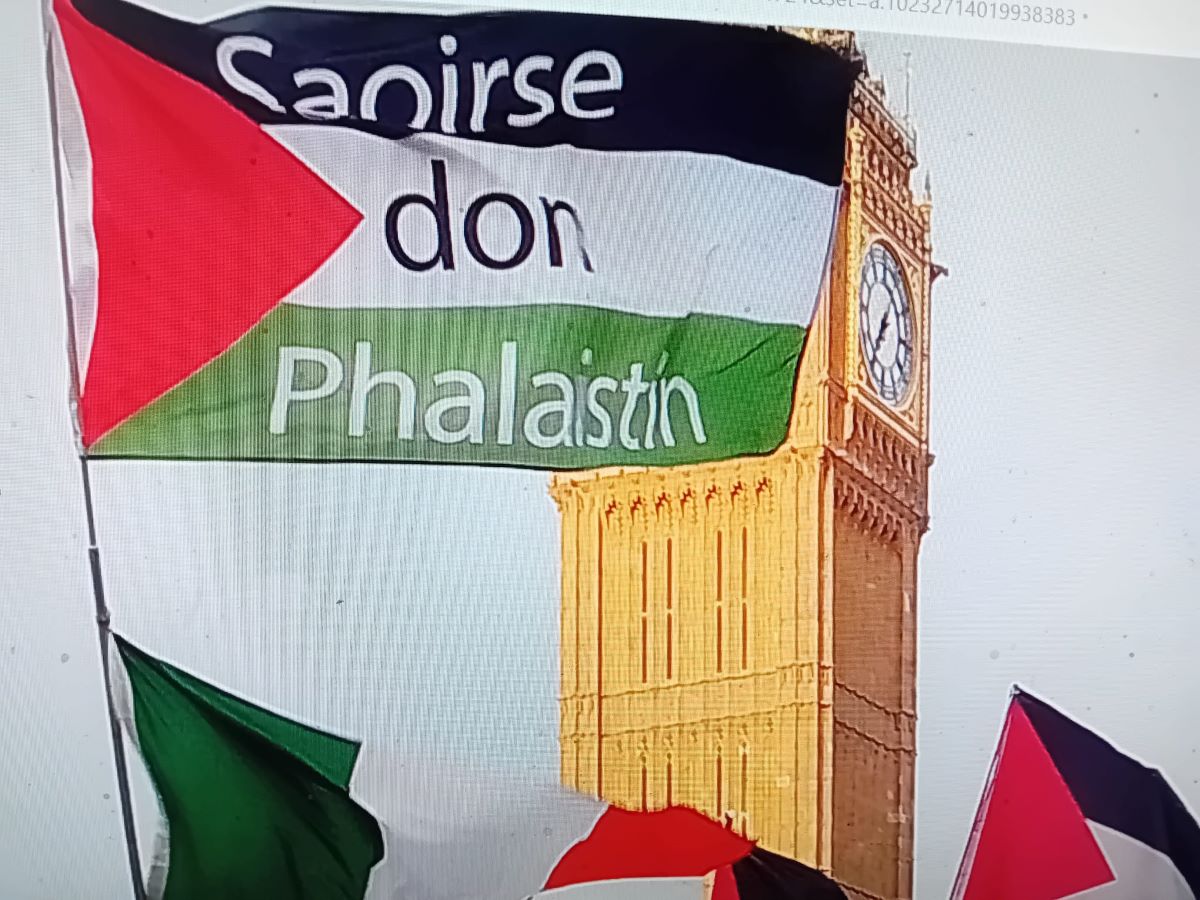
The linkage was hinted in his broadcast report though he was careful enough not to report a direct link as the Irish group in Trafalgar Square had in fact no connection with the Dublin group. The reporter asked how to pronounce ‘Saoirse Don Phalaistín’ — but still got it wrong in his report.

One of the Irish contingent spoke to the young GB News journalist: He had the stuff from Dublin on his phone and wanted to say that the Irish in the Square were part of the Dublin group.

“Next thing you’d know the Zionists would call for a ban on the Irish for ‘supporting Hamas’”,5 commented one of the veteran Irish activists. “We also get targeted because of the flag and our placards.”

The UK State and the police are all pro-Zionist and the Zionist press tries to trap the Irish into dangerous statements but “We know our history and are well able for them; we just say we support Palestinian resistance to Israeli occupation just as we did with the British in Ireland.”

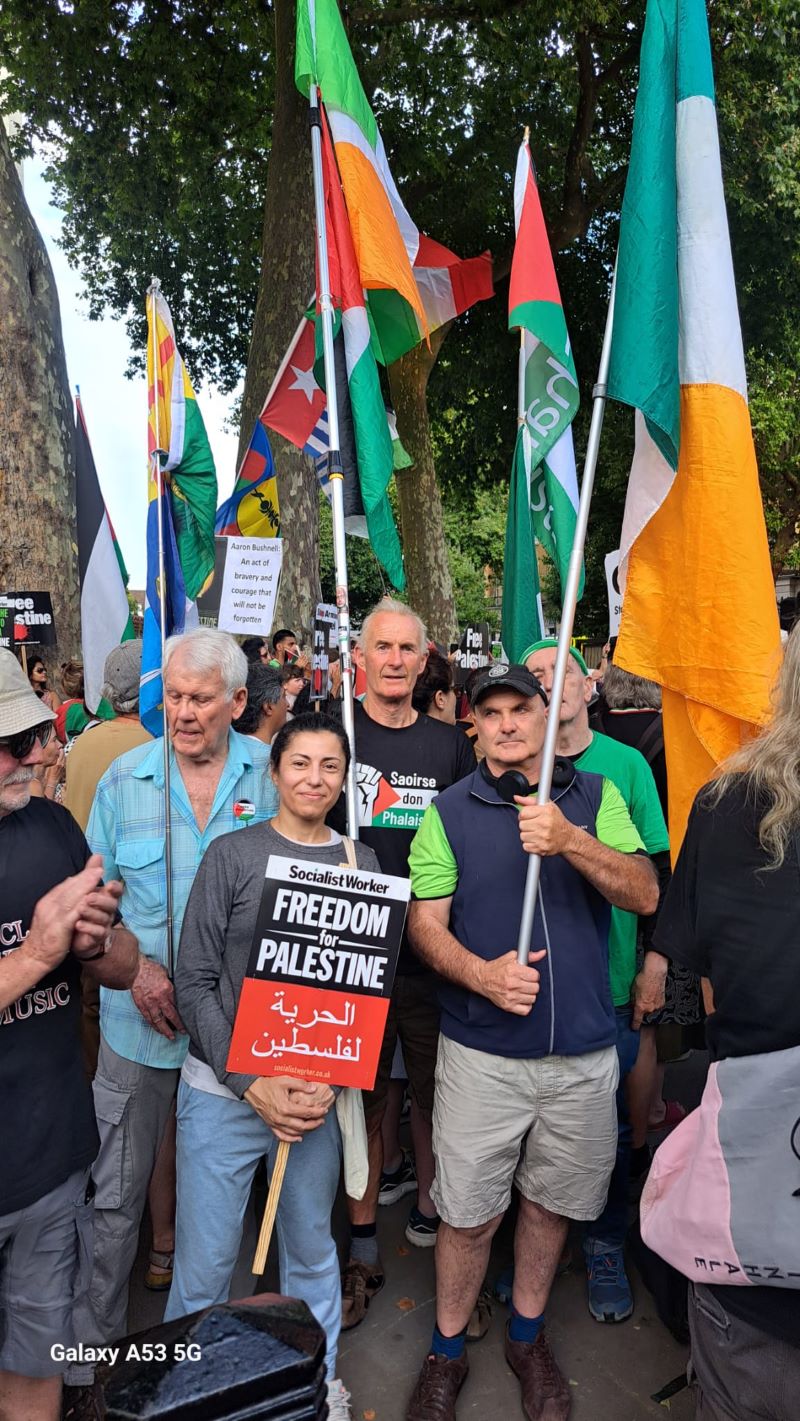
Irish contingent with flags on Palestine solidarity march to Downing Street very recently (not sure whether the SW person is part of it). (Photo sourced from participant).

The Irish Tricolours, often in the company of the Palestinian national flag with Saoirse Don Phalaistín printed on it have been seen on Palestine solidarity marches in London since the current Zionist genocide began but also on anti-fascist rallies and in support of Julian Assange.

This is in keeping with the history and tradition of the Irish in Britain who helped found the republican United Englishmen6, the Chartists,7 many trade unions, a section of the First International8 and also gave the British working class their anthem9 and their classic novel.10

Classic novel of the working class in Britain was written by Robert Noonan, aka Robert Tressell, from Dublin. (Image sourced: Internet)

In later times they were prominent in organising solidarity with Vietnam and of course Ireland, against repressive legislation and fascist organisations, solidarity with Nicaragua, Palestine etc. and in struggles against state repression, including within the jails.

The Prevention of Terrorism Act (1974), forerunner of the current Terrorism Act (2000) specifically targeted the Irish community in Britain with suspension of habeas corpus for a period of up to five days, refusal of access to solicitor, as did also the framing of a score of people.

In the midst of the Irish Hunger Strikes of 1981, the Irish community broke out of the State terror stranglehold and formed the Irish in Britain Representation Group, among its objectives being the abolition of the Labour Government-introduced Prevention of Terrorism Act.

End.

Saoirse don Phalaistín and Irish Tricolour flags on Palestine solidarity march this year photographed against Westminster’s ‘Big Ben’. (Photo cred: being investigated)

NOTE ON AUTHORS

Pat Reynolds is a former trade unionist, social worker, a veteran anti-racist, anti-fascist activist, also for Irish independence and for rights for the Irish community in Britain. He was PRO for the Irish in Britain Representation Group for two decades, founding the Haringey Branch and the Green Ink Bookshop. Reynolds is from Granard in Co. Longford and lives in London.

Diarmuid Breatnach is a former trade unionist, worker with homeless/ substance misusers (manual worker before that), also a veteran anti-racist, anti-fascist activist and campaigner for Irish independence. For a decade he was on the Ard-Choiste of the IBRG, founder of the Lewisham Branch and of the Lewisham Irish Centre. Breatnach is from Dublin to which he has returned to settle.

FOOTNOTES

1The British Union of Fascists led by Sir Oswald Moseley which had substantial support in the British elite, including the publisher of the The Daily Mail with police attacks on anti-fascists.

2The Billy Boys were founded and led by Billy Fullerton, a former member of the British Fascists. Fullerton also later became a member of the British Union of Fascists in the 1930s. The Billy Boys adopted a militaristic style of behaviour, marching on parades, forming their own bands, composing their own songs and music, and all dressed in a similar manner.[3] The Billy Boys also formed a junior group whose members were teenagers called the Derry Boys. (Wikipedia)

3From Trafalgar Square to the Houses of Parliament in Westminster runs a broad thoroughfare, in the centre of which is the Cenotaph and a little further, the entrance to Downing Street.

4The organisation/ campaign was founded by Betty Williams and Mairead Corrigan in 1976 after a car driven by an IRA fighter mortally wounded by British soldiers in Belfast crashed into pedestrians and mortally wounded three children of Anne Maguire, sister of Mairead. Branding itself as against all violence the Peace Women in fact targeted primarily the Republican movement, secondarily the Loyalist paramilitaries and hardly ever the Occupation Army. Williams accused the IRA unit of having fired on the Army unit that killed the driver which was untrue (but is repeated on her Wikipedia entry). Both founders received the Nobel Peace Prize in 1976 and a substantial cash prize. Williams resigned from the group in 1980 and disappeared from Irish-related activities though prominent externally. Corrigan however remained politically active in Ireland and elsewhere against war and has campaigned among other things for the end of the ‘Israeli’ siege on Gaza, being arrested with crew and passengers on the Spirit of Humanity aid ship in 2009 by by the Zionist navy, taken to ‘Israel’ and subsequently deported.

5Hamas is proscribed organisation in the UK since March 2001 and a person promoting it would be liable to prosecution under the Terrorism Act.

6A spin-off from the United Irishmen in Ireland; the English chapter led the Spithead and Nore naval mutinies. The Irish also reformed the United Scotsmen when it was faltering.

7Karl Marx called the Chartists “the true mass movement of the working class” – two of its principal leaders, Bronterre O’Brien and Fergus O’Connor were Irish, as their surnames would suggest.

8The Fenians were accepted into the First International Workingmen’s Association.

9The lyrics of The Red Flag were composed by Jim Connell from near Kells, Co. Meath and set to the brisk air of The White Cockade, later changed to the mournful air of Tannebaum.

10The Ragged-Trousered Philanthropists was written by Robert Tressell (real name Robert Noonan) from Dublin.

SOURCES & FURTHER READING

https://libcom.org/history/bloody-sunday-trafalgar-square

Leaked files: Britain’s secret propaganda ops in Yemen

April 2023: Leaked files reveal that British intel used local Yemeni NGOs and social media in a covert campaign to undermine the Sanaa government and influence the war-torn country’s peace process.

Kit Klarenberg

(Reading time: mins.)

The Cradle Editor’s note: All Yemeni NGO employees, journalists, and other private individuals named in this article appear in the ARK documents seen by The Cradle. These Yemenis may be unaware of the UK’s role and/or intent in funding their activities.

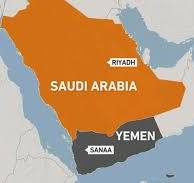
Yemen’s civil war, considered the world’s gravest humanitarian crisis, appears to be nearing its end due to a China-brokered detente between Iran and Saudi Arabia, who support opposing sides in the bitter conflict.

Early signs suggest that the rapprochement between Tehran and Riyadh may not only end hostilities in Yemen, but across the wider region.

The US, Israel, and Britain have the most to lose from a sudden onset of peace in West Asia. In the Yemeni context, London may be the biggest loser of all.

For years, it provided the Saudi-led coalition with weaponry used to target civilians and civilian infrastructure, with receipts running into billions of pounds sterling.

During the entirety of the war, Yemen was struck by British-made bombs, dropped by British-made planes, flown by British-trained pilots, which then flew back to Riyadh to be repaired and serviced by British contractors.

In 2019, a nameless BAE Systems executive estimated that if London pulled its backing for the proxy war, “in seven to 14 days, there wouldn’t be a jet in the sky.”

A Typhoon at RAF Akrotiri, near Limassol in Cyprus, after striking Houthi targets in Yemen (Photo cred: Sgt. Lee Goddard/ AFP)

In addition to supplying weapons, the war also presented a golden opportunity for Britain to establish a military base in Yemen, fulfilling long-held fantasies of recovering the Empire’s long-lost glory days “East of Suez.”

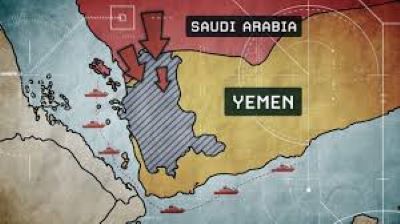
Al-Ghaydah airport in al-Mahrah, Yemen’s far eastern governorate, has for some time quietly housed “a fully-fledged force” of British soldiers, providing “military training and logistical support” to coalition forces and Saudi-backed militias.

There are even indications that this involvement could extend to torture methods, which is a troubling reflection of one of London’s leading exports.

The Cradle has obtained exclusive information about a previously undisclosed aspect of London’s role in the proxy war against Yemen’s Ansarallah-led resistance.

It has been revealed that a multi-channel propaganda campaign, led by the intelligence cut-out ARK and its founder Alistair Harris, a veteran MI6 operative, has been operating in complete secrecy throughout the nine-year-long conflict – one that specifically targeted Yemen’s civilian population.

Anti-Ansarallah ops

Leaked Foreign Office documents have revealed that ARK’s “multimedia” information warfare campaign was designed to undermine public sympathy for the Ansarallah movement and ensure that the conflict would only end on terms that aligned with London’s financial, ideological, and geopolitical interests.

For instance, public acceptance of the UN’s widely unpopular peace proposal required propaganda support from local NGOs and media organizations that “support UK objectives” to “communicate effectively with Yemeni citizens” and change their minds.

It was also necessary to counter “new actors” in the information space that were critical of the Saudi-led coalition’s brutal bombing campaigns and the illegitimate, US-backed puppet government that the aerial assaults sought to protect.

Considering the high rate of illiteracy in the local population, ARK conceived the creation of a suite of “visually rich” products extolling the virtues of a Riyadh-dominated peace plan.

These products would be disseminated on and offline and would “deliberately include different demographics, sects, and locations to ensure inclusivity,” informed by focus groups and polling of Yemenis.

ARK’s campaign even extended to convening “gender-segregated poetry competitions using peace as a theme” and “plays and town hall meetings.”

Publicly, many of these propaganda products appeared to be the work of Tadafur – Arabic for “work collectively and unite” – an astroturf network of NGOs and journalists constructed by ARK.

Its overt mission was to “resolve local level conflicts” and “unite local communities in their conflict resolution efforts.”

The campaign began initially at a “hyper-local level” across six Yemeni governorates, “before being amplified at the national level.” Activities “[in] all areas and at both levels” had unified messaging across “common macro themes,” such as the slogan “Our Yemen, Our Future.”

In each governorate, a “credible” local NGO was identified as a messenger, along with “well-known” and “respected and influential” journalists who served as “dedicated field officers” across the sextet, managed by ARK.

In Hajjah – “a site of strong Houthi influence” – the Al-Mustaqbal Institute for Development was ARK’s NGO of choice; in Ansarallah-governed Sanaa, it was the Faces Institution for Rights and Media; in Marib, the Marib Social Generations Club.

In Lahij, ARK’s choice was the Rouwad Institution for Development and Human Rights; in Hadhramaut, Ahed Institute for Rights and Freedom; in Taiz, Generations Without Qat.

These local NGOs were instrumental in promoting ARK’s agenda and advancing the narrative that aligned with Britain’s objectives in Yemen.

The company’s roster of “field officers” comprised of individuals with various backgrounds, such as:

“Human rights abuse” specialist Mansour Hassan Mohammad Abu Ali, TV producer Thy Yazen Hussain, Public Organisation to Protect Human Rights press official and “experienced journalist” Waleed Abdul Mutlab Mohammed al-Rajihi,

Also producer from Alhadramiah Documentary Institute Abdullah Amr Ramdan Mas’id, editorial secretary of Family and Development magazine and the Yemen Times’ Taiz news manager Rania Abdullah Saif al-Shara’bi, as well as journalist and activist Waheeb Qa’id Saleh Thiban.

A Trojan Horse

Once ARK’s field officers and NGOs “successfully designed and implemented hyper-local campaigns,” coverage of “information around the related activities will then be amplified at the national level.”

A key platform for this amplification was a Facebook page called “Bab,” launched in 2016 with tens of thousands of followers who were unaware that the page was created by ARK as a British intelligence asset.

Under the guise of a popular grassroots online community, ARK used the Bab page to broadcast slick propaganda “promoting the peace process,” including videos and images of “local peacebuilding initiatives” organized by its NGO and field officer nexus.

“Campaign content will highlight tangible, real-life examples of compelling peacebuilding efforts that all Yemenis, regardless of their political affiliation, can relate to,” ARK stated.

“These will offer inspirational examples for others to emulate, demonstrating practical ways to engage with the peace process at a local level. Taken together, these individual stories form the broader campaign with a national message: Yemenis share a collective desire for a peaceful resolution to the conflict.”

When “high engagement levels” with this content were secured, Bab users were invited to submit their own, which demonstrated “support for the peace process.” They were explicitly asked “to mirror content ARK has produced, such as voxpops, short videos, or infographics.”

This was then “shared by the project and field teams through influential WhatsApp messaging groups, a key way of reaching Yemeni youth.”

ARK’s “well-connected communications team” would then “strategically share packaged stories with broadcast media or key social influencers, or offer selected journalists exclusive access to stories.”

Creating a constant flow of content was a deliberate ploy to “collectively be as ‘loud’ as partisan national political and military actors.” In other words, to create a parallel communications structure to Ansarallah’s own, which would drown out the resistance movement’s pronouncements.

ARK’s role in Yemen’s peace process

While one might argue that the non-consensual recruitment of private citizens as information warriors by British intelligence was justified by the moral urgency of ending the Yemen war quickly, the exploitation of these individuals was cynical in the extreme.

It amounted to a Trojan Horse operation aimed at compelling Yemenis to embrace a peace deal that was wildly inequitable and contrary to their own interests.

Multiple passages in the leaked files refer to the paramount need to ensure no linkage between these propaganda initiatives and the UN’s peace efforts. One passage refers to how campaign “themes and activities” would at no point “directly promote the UN or the formal peace process.”

Another passage says concealing the operation’s agenda behind ostensibly independent civil society voices “minimizes the risk” that “outputs are perceived as institutional communications stemming from or directly promoting the UN.”

Yet, once ARK’s campaigns began “performing successfully at the national level,” the company’s field officers planned to “build a bridge” between its local foot soldiers and national “stakeholders” – and, resultantly, the UN.

In other words, the entire ruse served to entrench ARK’s central role in peace negotiations via the backdoor.

Diminished western influence

At that time, the ceasefire deal proposed by the UN required Ansarallah and its allied forces to virtually surrender before Riyadh’s military assaults and economic blockade of the country could be partially lifted, along with other stringent requirements that the Saudis refused to compromise on.

Newly recruited Houthi fighters gathered for training outside Sana, the capital of Yemen – they became the Ansarrallah Army. (Photo credit: Yahya Arhab/EPA, via Shutterstock)

The US aggressively encouraged such intransigence, viewing any Ansarallah influence in Yemen as strengthening Iran’s regional position.

However, these perspectives are no longer relevant to Yemen’s peace process. 

China has now encouraged Riyadh to offer significant concessions, and as a result, the end of the war is within sight, with critical supplies finally allowed to enter Yemen, prisoners returned, Sanaa’s airport reopened, and other positive developments.

Evidently, Washington’s offers of arms deals and security assurances are no longer sufficient to influence events overseas and convince its allies to carry out its agenda.

The failure of ARK’s anti-Ansarallah propaganda campaigns to coerce Yemenis to accept peace on the west’s terms also highlights Britain’s significantly reduced power in the modern era.

Whereas wars could once be won on the coat-tails of well-laid propaganda campaigns, the experiences of Yemen, Syria, Iraq, and Afghanistan show that the tide has turned. Subversive information campaigns can confuse and misdirect populations but, at best, can only prolong conflict – not win it.

End.

Republished with kind permission of the author Kit Klarenberg from https://thecradle.co/articles-id/685.

A FOUNDER OF THE PALESTINIAN RESISTANCE AND MARTYR

(The following text is taken with minor organisational editing from Resistance News Network as are also the images)

(Reading time: 3 mins.)

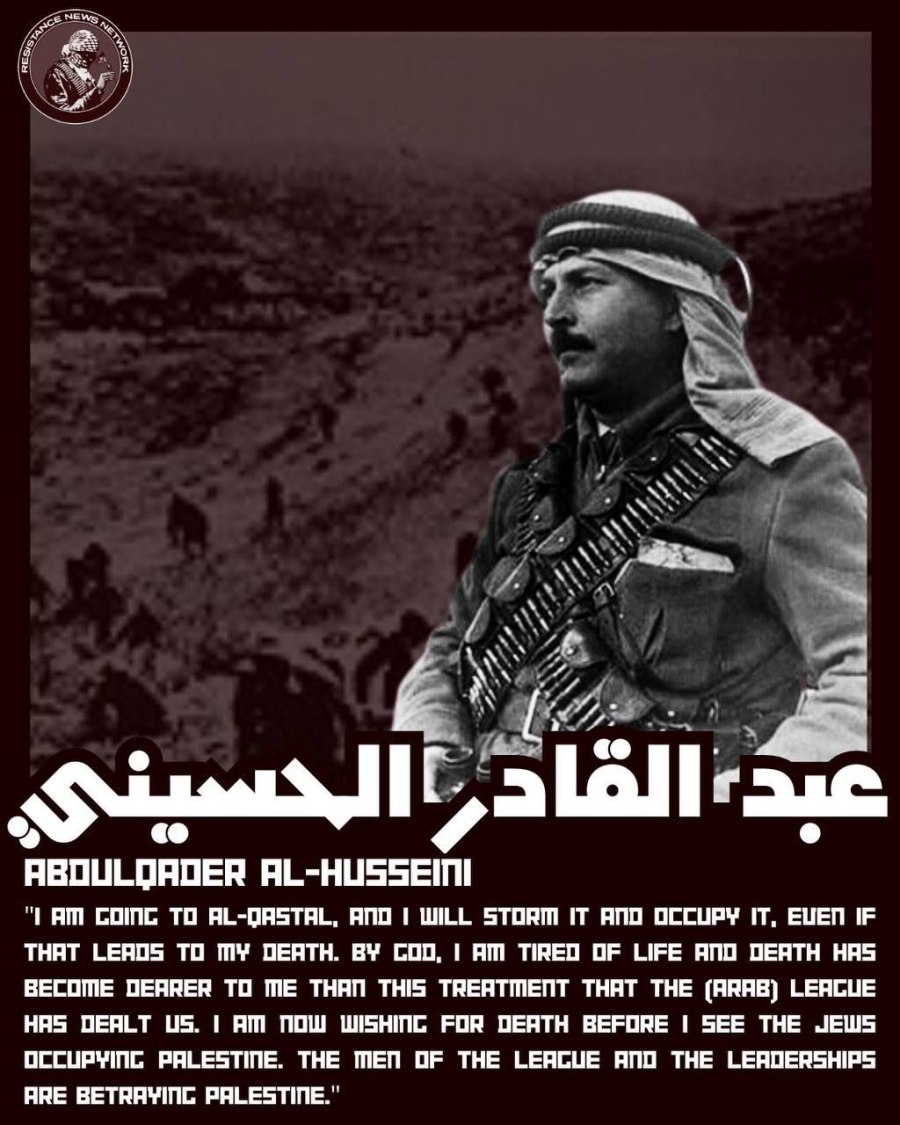
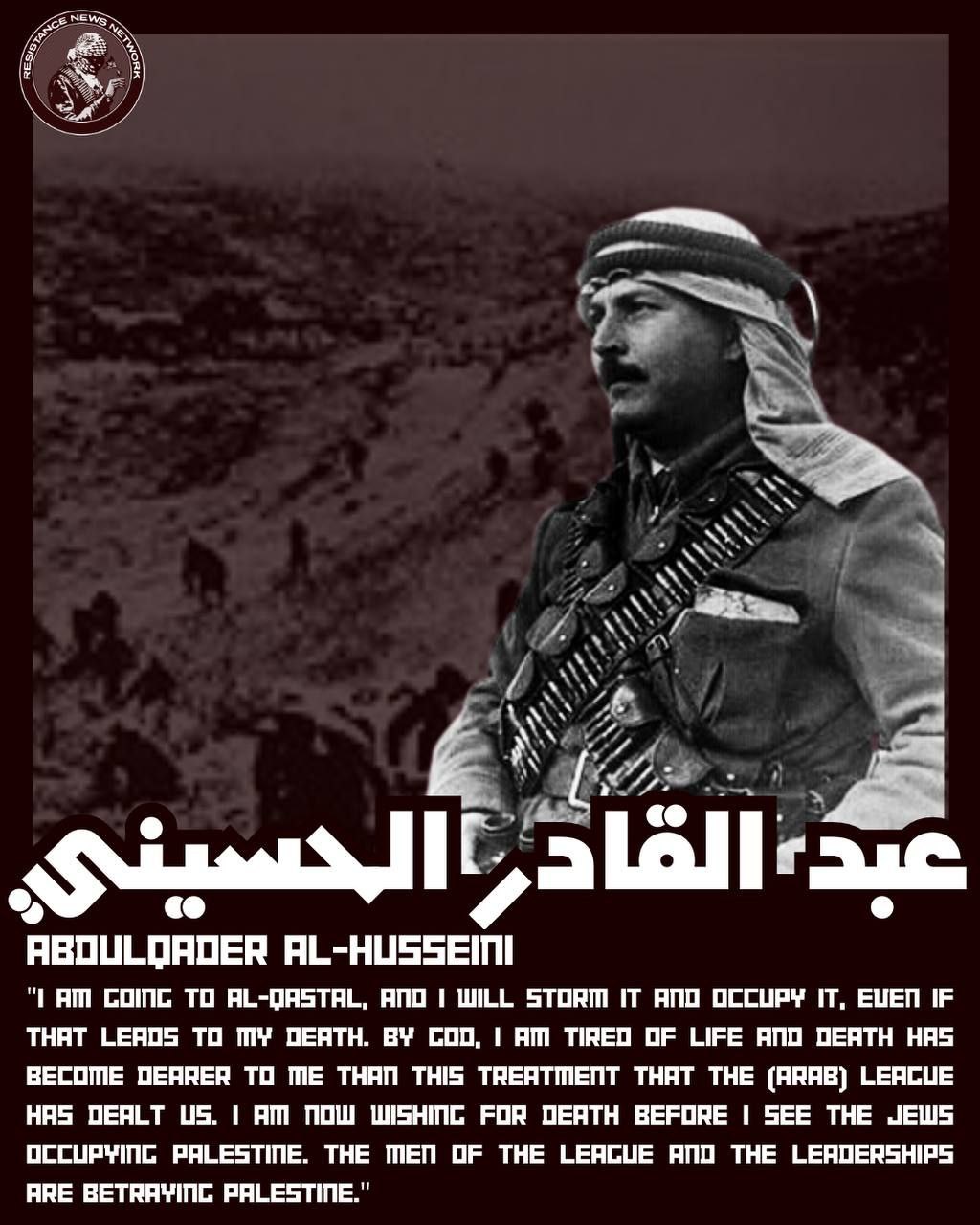
On April 8th, we commemorate the anniversary of the martyrdom of one of Palestine’s foundational resistance leaders in 1948, the eternal Martyr Abdulqader Al-Husseini, who gave his life in the noble pursuit of our people’s liberation. 

(Image sourced: Resistance News Network)

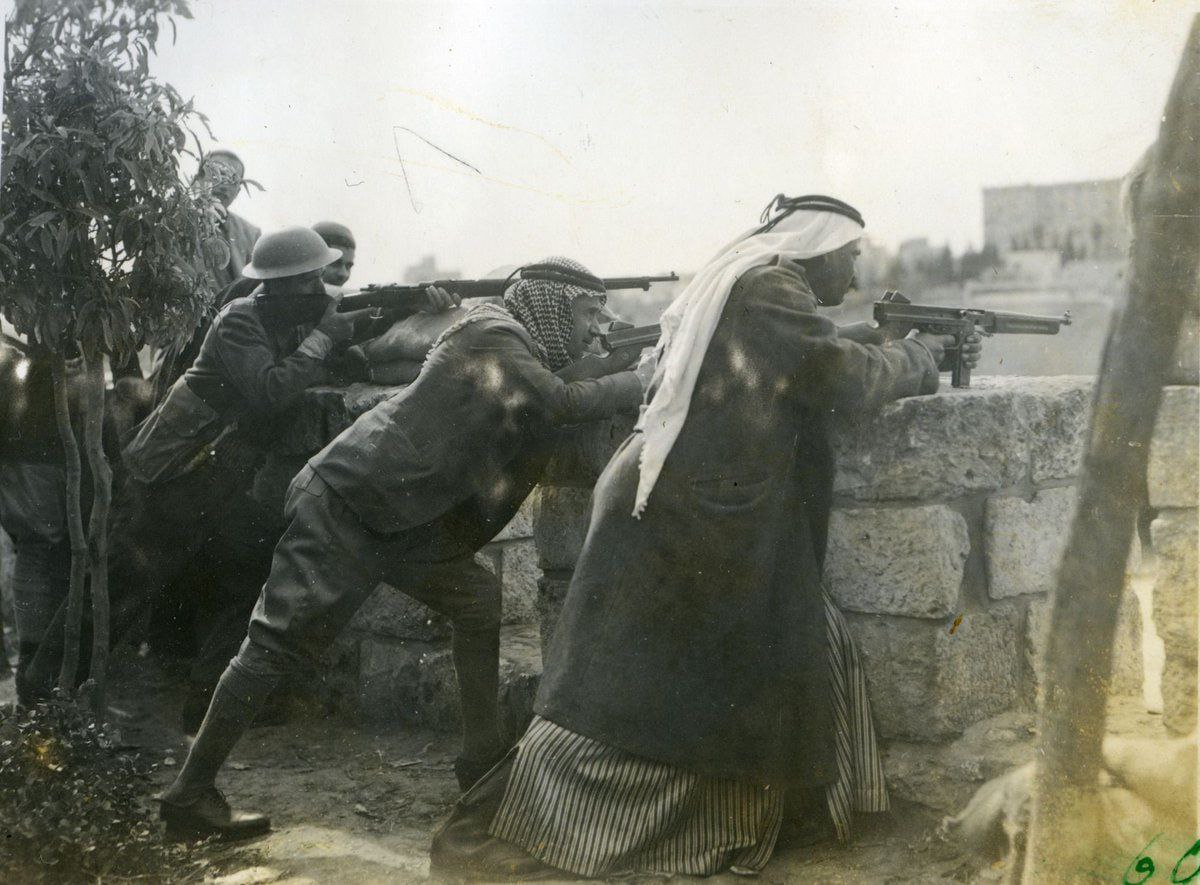
From childhood, Al-Husseini witnessed the beginnings of the colonial zionist project in Palestine and its implementation at the hands of the British. As he grew older, he became actively involved in organizing protests and demonstrations against the British occupiers.

After completing his secondary studies in Egypt, he returned to Al-Quds in 1933, and received a job in the land department. This job meant he was able to not only learn about the plans of land theft by the zionists, but also get close to the people of the villages. 

That same year, Abdelqader and other Palestinian leaders began laying the foundations of a new type of struggle: revolutionary armed struggle and founded the Organization for Holy Jihad (Munathamat al-Jihad al-Muqadas).

In May, they announced the beginning of the Great Palestinian Revolt. 

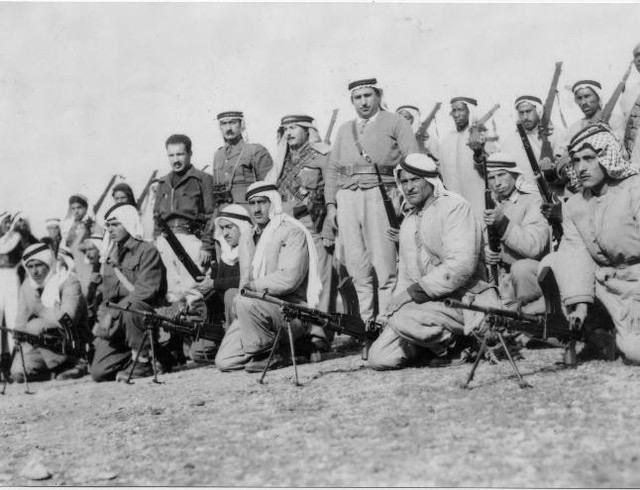
Al-Husseini, as one of the commanders of the Army of the Holy Jihad, led his troops in acts of resistance against both British and zionist occupiers during the Great Revolt between 1933-1936.

(Photo sourced: Resistance News Network)

In October 1936, he was arrested after he was wounded during the Battle of Al-Khader but managed to flee from the hospital to Damascus. 

His leadership extended beyond military operations in Palestine, as he also worked tirelessly to mobilize support for the Palestinian cause abroad and participated in the Iraqi struggle for liberation against the British, where he was arrested until 1943.

He remained in exile, passing through Germany where he learned to make explosives and mines and Cairo, setting up training camps and importing weapons, and finally returning to his homeland in 1947 when the partition plan was announced.

(Photo sourced: Resistance News Network)

Upon his return he instantly began orchestrating and taking part in armed actions against zionist expansion.

In April 1948, Al-Husseini left for Damascus to meet with the Military Committee of the League of Arab States in order to ask for arms to repel the zionist incursion into Al-Quds, but the League failed him and the people of Palestine.

(Photo sourced: Resistance News Network)

It was at that time he received news of the occupation of Al-Qastal, a strategically located village west of Al-Quds. Before he left, Al-Husseini wrote a letter to the League in which he says, “I hold you accountable after you left my soldiers at the heights of the victories without aid or weapons”. 

He returned one last time to fight, waging a fierce battle against the incursion into Al-Quds and proclaimed, “I am going to al-Qastal, and I will storm it and occupy it, even if that leads to my death.”

(Photo sourced: Resistance News Network)

“By God, I am tired of life and death has become dearer to me than this treatment that the League has dealt us. I am now wishing for death before I see the Jews occupying Palestine. The men of the league and the leadership are betraying Palestine.”

When the news spread that he planned to liberate Al-Qastal, fighters across Palestine came to his aid, liberating the village and raising the Palestinian flag later that afternoon on April 8, 1948. Fighters would later find out he was martyred during its liberation. 

(Photo sourced: Resistance News Network)

His legacy was carried forward by his wife Wajeeha Al-Husseini who was his partner in struggle, a daughter and three sons, who fought in the ranks of the Palestinian revolution after the Nakba of 1948.

Al-Husseini’s unwavering bravery and tireless efforts to defend our homeland and resist occupation continue to inspire us in our struggle for liberation. His courage and sacrifice remain a guiding light as we persevere steadfastly in the face of the cowardly zionist enemy.

We honor Al-Husseini’s legacy by renewing our commitment to our struggle. We draw strength from his sacrifice and all those who followed in his footsteps. Together, we will continue the struggle until martyrdom or victory. 

(Photo sourced: Resistance News Network)

Glory to the eternal Martyr Abdelqader Al-Husseini. 

Long live the resistance. 

Long live Palestine.

End.

BRITISH NAVY VESSEL PROTESTERS SENTENCED IN DUBLIN

Diarmuid Breatnach

(Reading time: 5 mins.)

Around 30 people demonstrated outside Dublin’s Criminal Court on Thursday, many of them displaying Irish flags (Tricolour and Starry Plough) along with those of Palestine in solidarity with three activists before the court.

The activists were charged under Public Order legislation arising out of protesting a British war ship at Dublin docks in November last year, in solidarity with Palestine and against NATO’s support for the Israeli state’s slaughter in Gaza.

It was alleged that the activists (variously from Saoirse Don Phalaistín and Anti-Imperialist Action organisations) had entered a restricted part of the Dublin Docks and, holding a Palestine flag, had approached a British warship docked there and then occupied the gangway.

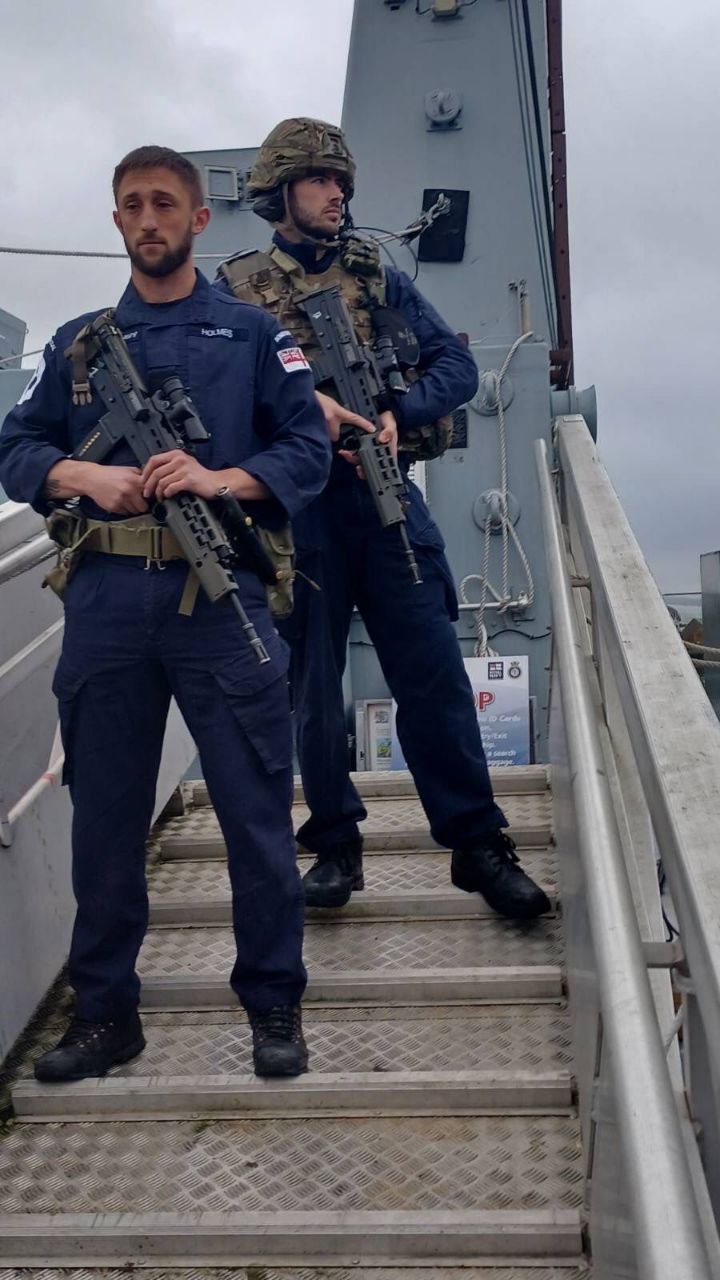
British military displaying firearms on Irish state soil in November last year. (Photo: Anti-Imperialist Action)

Gardaí had been called and the activists had refused their instruction to leave under the Public Order legislation and they had then been arrested. No act of violence, physical or verbal, took place on either side other than the refusal to leave and the arrests.

The activists appeared in the Parkgate Street building before Justice John Hughes and all three were defended by Damien Coffey of Sheehan Partners, a law firm which often handles political and human rights cases. Three Gardaí from Store Street acted in the role of the Prosecution.

The Garda in charge of the prosecution and his two colleagues gave evidence as to the arrests. Questioned by Coffey for the Defence, all confirmed that although the protesters had refused to leave, there had been no violence offered by them during their arrests.

Strangely, as shall become evident and relevant, one did not recall the British military presence on the gangway to be armed, whereas another did and confirmed that a photo of the armed men was of those who had been present.

One of the Garda offered his opinion that whereas the vessel was regarded in law as “British soil”, the gangplank was legally “Irish soil” and, if the protesters had actually set foot on the ship, they might have been charged with piracy. This piece of evidence also had unintended consequences.

One of the placards displayed by supporters outside the courthouse (Photo: Rebel Breeze)

According to this evidence, the British in a foreign military uniform had been present on Irish state soil and all replied to the defence lawyer that they were unaware of any Ministerial permission to do so — or that this could have constituted an offence under Section 317 of the Defence Act 1954.1

Furthermore, none were aware of any special permission granted to them to carry firearms on Irish state ground. The British military personnel themselves were not present as witnesses as their superiors had not replied to the Garda request to discuss giving evidence in the case.

Port security camera footage was shown as evidence by which protesters could be seen at the gates of a fenced-off section of the docks and some time later proceeding through a gate. A port security employee had been summoned by the Gardaí as a witness.

After he had been taken through his evidence (and failed to respond to what seemed an attempted prompt) by the Garda in charge the only relevance of his evidence was that a) the area was restricted and b) that he was worried for the safety of the protesters.

This (and the reason for the possible attempted prompt) was of importance when Coffey developed his defence summary on the legal grounds that Section 14 (1) of the Public Order Act required there to be an element of fear arising from the actions of those to be charged under the Act.

None of the evidence for the Prosecution had shown the presence of fear of anyone from the defendants and, furthermore, he submitted, any element of fear was much more likely to arise from the presence of two men holding firearms, to whit, the British military personnel.

The second part of the Defence summary dealt with right to protest, Coffey quoting a number of legal sources, also referencing the Irish Government’s recognition of a Palestinian state and statistics of people killed by the Israeli state against which the activists had been protesting.

Judge Hughes announced that a recess was due for lunch and that he wished to consult legal authority (case law etc) so they would recess and reconvene in an hours’ time.

A number of supporters who had taken time off from other commitments left at this point while a few arrived instead.

THE JUDGEMENT

After reconvening Judge Hughes began his long drawn out summing up and it gradually became clear that he intended to find the accused guilty. However people awaited with varying degrees of patience for the details of the sentence.

The Judge referred to the right to protest but also to the restrictions upon it (usually limiting its effectiveness) though he did not say that, nor that powers exist to abolish those rights when the State feels it necessary.

With regard to the ‘element of fear’ required for conviction under the Public Order Act Hughes quoted a judgement as a reference that seemed neither relevant nor reasonable, involving a woman experiencing fear of being broken into and even fear of children playing outside her home.

Despite repeating the standard claim of capitalist law that judges cannot adjudicate emotionally nor be swayed by what was occurring in Palestine, John Hughes revealed his own political bias when he bizarrely claimed that a British fleet had been welcomed into an Irish port in 1820.

He revealed his political naivety also when he expressed surprise that the British had not replied to the Garda communication regarding the incident.

On submission by Coffey regarding the lack of previous convictions and effect of criminal convictions on the lives of the three, Johnson, again drawing out the moment, gave them what amounts to a conditional discharge with a provisional forfeit of 500 euro.2

No doubt the desire not to create martyrs around whom solidarity campaigns might intensify played at least as much a part as any concern for the lives of the activists.

The defendants and their supporters left; outside the court they were embraced by a number of supporters before the gathering broke up, some attending to other solidarity activities elsewhere. The show of support was a good sign of solidarity against state repression.3

View of some of the people outside the courthouse on Thursday in solidarity with the three activists (Photo: Rebel Breeze)

SERIOUS ISSUES AMONG ELEMENTS OF COMEDY

The name of the British naval vessel being The Penzance and the mention of a possible piracy charge brings to mind of course the Gilbert & Sullivan opera The Pirates of Penzance (1879).

The focus of the Gardaí on arresting peaceful protesters in preference to unauthorised people in foreign military uniform carrying unlicensed firearms on Irish soil and also trying to suggest that not they but the protesters would give rise to fear is not without its comedic elements.

However overall the whole matter is extremely serious, with regard to the zionist genocide in Palestine, the active collusion of the UK/NATO, the active collusion of the Irish ruling class4despite its verbal positions – and the repression of its State on more active and directed solidarity actions.

End.

FOOTNOTES

1 317. — (1) No person shall, save with the consent in writing of a Minister of State, enter or land in the State while wearing any foreign uniform. (2) No person shall, save with the consent in writing of a Minister of State, go into any public place in the State while wearing any foreign uniform.

2 It will not appear as a criminal record but in the event of a subsequent conviction, the 500 euro can be levied as a fine in addition to any other punishment in court sentence.

3 Though the absence of a number of political organisations and trends was also marked.

4 “Dual-use”exports to the zionist state which can be adapted to military use; failure to press for any economic, academic or cultural sanctions against the zionist state; shelving of the Occupied Territories Bill; failure to impose diplomatic sanctions of any kind.

REFERENCES AND USEFUL LINKS

Anti-Imperialist Action

Defence Act, 1954, Section 317 – irishstatutebook.ie

Dublin and Monaghan Bombings: A Legacy of Lies

Gearóid Ó Loingsigh 19 May 2024

(Reading time: 4 mins.)


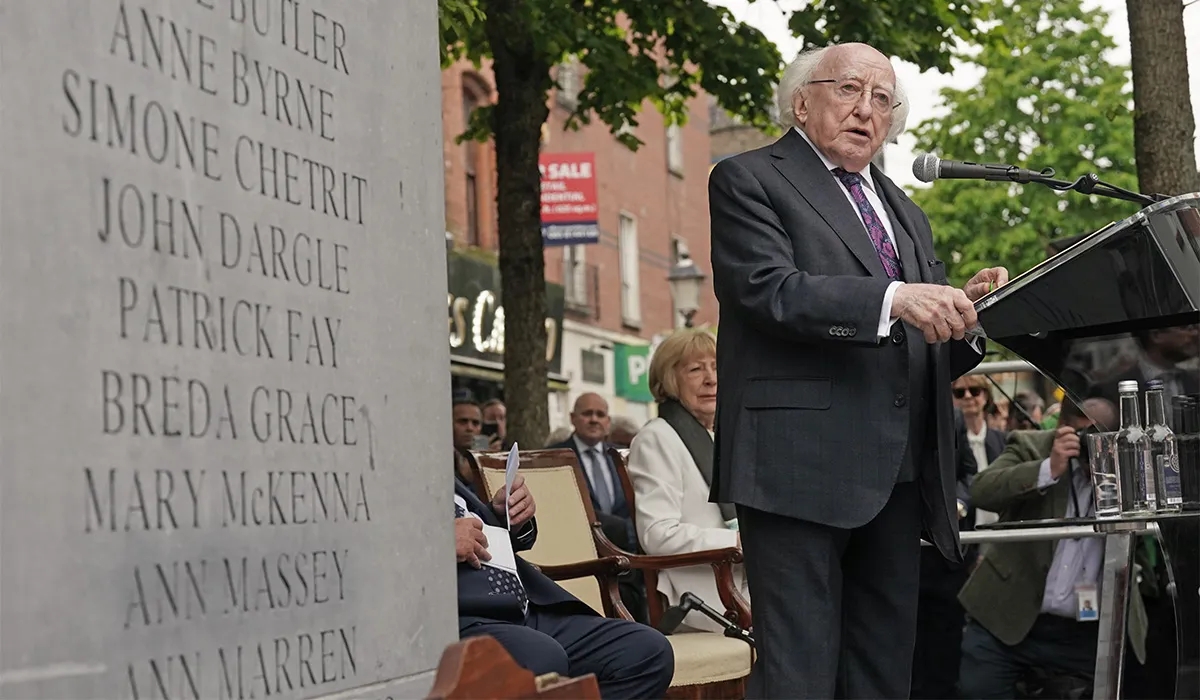
President Michael D Higgins speaks during a wreath-laying ceremony at the Memorial to the victims of the Dublin and Monaghan bombings on Talbot Street in Dublin, to mark the 50th anniversary of the Dublin and Monaghan bombings. (Photo cred: Brian Lawless/PA Wire)

Fifty years ago, on May 17th bombs exploded in Dublin and Monaghan killing 34 people. The anniversary was marked in Talbot St. Dublin beside the monument erected in memory of those murdered on that day. 

The attendance at the anniversary was addressed by Michael D. Higgins, the southern president.(1)

He made a number of points in his speech, mixing his praise for the Good Friday Agreement and Elizabeth Windsor’s visit to Ireland with calls for the rights of the victims to know the full truth, oblivious to the inherent contradictions in his statement.

He did acknowledge that there were huge problems with the subsequent investigations and cited the Barron Report.

The report compiled by the late Judge Henry Barron, published 10th December 2003, provided some of the answers, pointing as it did to systemic failures at State level, one that included possible collusion between the security forces and loyalist paramilitaries.

Also featured was the disappearance of important forensic evidence and files, the slow-motion conduct of the investigation, a reluctance to make original documents available, and the refusal to supply other information on security grounds.(2)

There is nothing surprising about this. The dust had barely settled in Dublin and Monaghan and the Irish Government and the Opposition rushed out to deflect and suppress any debate.

Both the Taoiseach at the time, Cosgrave (Fine Gael) and the Opposition leader Jack Lynch (Fianna Fáil) both issued statements that were remarkably similar.

In them they broadened out responsibility for the attacks to anyone who had been involved in any violent act; i.e. they blamed the IRA by implication and failed to mention loyalists at all. This was not accidental. It was deliberate.

The nature of the bombings, the coordination, technology used all indicated the involvement of the British secret services, coupled with the fact that the loyalists never again showed the same capability ever.

Under no circumstances was the southern establishment going to accuse the British of anything.

Just over two years earlier, following the murder of 14 people on the streets of Derry by the Parachute Regiment in full view of TV cameras, an angry nation protested and burned the British Embassy in Dublin to the ground. Cosgrave and Lynch sought to avoid a repetition of that.

As the Barron Report pointed out the Garda investigation was poor, forensic evidence was destroyed, the team set up to investigate it was wound down after just two months and the murder inquiry itself was closed after seven months.

All of this shows clearly that they had no interest in getting to the bottom of it. So much so, when the RUC informed them that they had arrested some suspects in relation to the bombing, the Gardaí did not follow it up.

Years later when Judge Barron carried out his investigation, it was not just the British who were uncooperative. The Gardaí and the Department of Justice didn’t provide him with any information, their files were “missing”.

So, any call for truth means demanding the southern government reveal what it knows and also who shut down the inquiry, why, what happened to the files etc.

It was ironic that the Taoiseach, Simon Harris, the former Taoisigh, Micheál Martin (Fianna Fáil) and Leo Varadkar (Fine Gael) who were present and laid wreaths represent those who covered up the bombings.

If we are going to talk about truth, then a starting point should be that Fine Gael and Fianna Fáil covered it up and bear part of the blame for the failure to prosecute anyone.

But when Higgins and others demand the British hand over files and information, including the information offered at the time but not sought by the Gardaí, a question arises. Why would you ask the British government for information and files on a bombing that took place in Dublin?

There is only one possible answer: the British were involved in the bombing.

So, a good starting point would be not so much to talk euphemistically of full disclosure, but rather for them to admit their guilt and tell us all what they did and how and provide all the documentation relevant to their admission of guilt.

No Irish politician has ever demanded that the British own up for it. The demand is they give over information on those who carried it out, as if they were not serving members, at the time, of the British security forces.

The Irish state deliberately failed the victims of the bombings and continues to do so, to this day.

It is telling that the Barron Report on the bombings in not available on Irish government sites but rather on a site set up by victims of the bombings, Justice for the Forgotten (http://www.dublinmonaghanbombings.org/home/).

The Irish state has little interest in talking about the issue or of informing the Irish public, most of whom were born after the bombings.

Though Higgins criticised the Legacy Act, which puts a time limit on prosecutions, the Good Friday Agreement was always about drawing a line under what had happened. The GFA rewrote history to portray the British as honest brokers in a tribal sectarian conflict and not as an imperial power.

Acknowledging their role in the Dublin and Monaghan bombings would undermine that carefully crafted and now universally accepted lie about the British role in Ireland. The British will not release the files as to do so would be an admission of what their role in Ireland is.

The southern establishment despite its occasional calls for clarity and truth, dreads the British even considering such a move, as again it would undermine their role in the conflict as well and their responsibility for the ensuing cover up.

Notes

(1) See Speech at the Commemorative Event Marking the 50th Anniversary of the Dublin and Monaghan Bombings https://president.ie/en/diary/details/president-attends-the-50th-anniversary-of-the-dublin-and-monaghan-bombings/speeches

(2) Ibíd.,


WHY BOMB DUBLIN AND MONAGHAN?

Diarmuid Breatnach

(Reading time: 9 mins.)

Thirty-five people were killed by bombings on 17th May 1974, the most in one day during the recent 30 Years War but outside of Ireland and even within it, most people are unaware of that fact. That’s because the perpetrators were not the IRA.

And probably also because the victims were killed not just in Ireland but within the Irish state. Also no doubt because the perpetrators were Loyalists led by British Intelligence.

Section of westward end of attendance at event as President Michael D Higgins approaches (just out of view)(Photo: D.Breatnach)

Three bombs exploded on that day in the middle of a rush hour in Dublin City Centre: Talbot Street, Parnell Street and South Leinster Street. Somewhat later, a bomb exploded also in Monaghan Town. Altogether 35 were killed1 and “about 300”2 injured, some permanently.

The names of some of the victims being displayed at the premiere of the Anatomy of a Massacre documentary. (Photo: D.Breatnach)

Within days and perhaps hours a number of suspects among Loyalist murder gangs had been identified but they were not arrested or even questioned about the atrocity – no-one ever was. Despite that, the Gardaí closed the case investigation seven months afterwards that same year.

A new documentary on the atrocities by Fergus Dowd was premiered in Dublin on Friday to two full screen auditoria in the Lighthouse Cinema, Smithfield, featuring interviews with witnesses, victims and relatives of victims, a former Taoiseach and a former State forensic scientist.

May-17-74 Anatomy of a Massacre is directed by Joe Lee and produced by Fergus Dowd.

The forensic expert had been given very little of the remains of cars containing the bombs since most had been sent to the RUC (colonial police) for their analysis (!) from which nothing useful emerged but he was able to determine that a high amount of amatol had been used.

At that time only the IRA among “paramilitary organisations” had the expertise to develop that explosive material which leads commentators to believe that the Loyalists received the necessary quantities from those seized from the IRA and held by the British armed forces.3

Given that many of the Loyalists involved were members of the Ulster Defence Regiment, a British Army unit, on the face of it the explosives could have been directly supplied by the British Army or indirectly obtained through the UDR as members of the British Army.

Nothing adverse is known about the Garda Commissioner who sent the exploded car remains to the colonial police but his Deputy and successor was Ned Garvey and whistle-blowing British spook Fred Holroyd claimed Garvey was a British Intelligence “asset” and to have met him in Dublin.

Confronted with this exposé years later Garvey admitted having met Holroyd but not to being a British spy – though he had not informed his superiors of his meeting with a foreign secret service agent. 4 Sadly this is not alluded to in the documentary.

As documented in Anatomy there had been a Loyalist bombing campaign of Dublin since 1969,5 with those in 1972 and 1973 killing between them three transport workers and no-one had been arrested by Gardaí or extradition sought in connection with even those fatal explosions.

No documentary about the bombing was made by RTÉ, the Irish broadcaster until 2004, thirty years after the atrocity.

However a much earlier documentary was by British company Yorkshire Television on ITV in 19936. RTÉ had declined the offer of joint screening and many people in Ireland who did not have access to ITV at the time missed it or had to go to a friend or relative to view it.

The British documentary was mentioned only in passing by one of the interviewees in Anatomy but without reference to RTÉ’s declining of the offer of joint screening.

British spook whistleblower Colin Wallace states that he was obliged to report on every meeting he had with Loyalists or others and his erstwhile bosses would have kept those papers, as they would have for the MI5 operatives who steered the bombing gang for Dublin and Monaghan.

The existence of MI5 documents that would throw much light on the bombings was referred to a number of times in Anatomy and the Justice for the Forgotten campaign keeps seeking them. Irish Government ministers regularly state that they have requested them but are always refused.

Missing from the documentary was what is now known of the secret contemporary memos of Arthur Galsworthy, British Ambassador to the Irish state: It is only now that the South has experienced violence that they are reacting in the way that the North has sought for so long …

… I think the Irish have taken the point.

Galsworthy also noted that the Irish Foreign Affairs Minister Garret FitzGerald told him that “the government’s view was that popular hostility appeared to be directed more against the IRA“.

In the immediate aftermath of the bombing, both Liam Cosgrave for the Government and Jack Lynch for the Opposition sought to widen the blame to include Irish Republicans.7

VIEWING THE DOCUMENTARY

Two screens at the Lighthouse cinema were fully booked to view the premiere.

The documentary is fascinating and some of the witnesses and relatives really excellent in their descriptions and commentary. Others interviewed pulled no punches in castigating successive Irish governments for closing the investigation and allowing it to remain closed.

Some, too, alleged a conjunction of interests between the Irish and UK states in ensuring the truth about the perpetrators and the Irish State’s reaction never surfaced.

Many people prominent in Irish political circles at different ends were present to see the premiere and after a few words from Margaret Unwin, Coordinator of the Justice for the Forgotten campaign, along with filmaker Dowd, the Resistance Choir sang their song composed about the bombing.

The Resistance Choir performing their song about the bombing massacre (Photo: D.Breatnach)
Section of crowd from the Monument eastward (Photo: D.Breatnach)

Justice for the Forgotten organise a commemoration of the atrocity every year at which some music and poetry is performed, along with speeches by politicians representing the Irish State, and the local authority Councils of Dublin City and Monaghan and another individual or two.

Some of what is said there I have welcomed and some disliked but most of all I detest Ministers in the Irish Government coming there to tell us how they want the British State to release their secret documents regarding the event but never have any action to pressurise its Ministers in mind.

Cormac Breatnach playing low whistle at event (Photo: D.Breatnach)

This year, the 50th anniversary, the event took place after noon on Friday 17th May with a large crowd but only one speaker listed, President of the Irish State Michael D. Higgins, with traditional Irish music from Cormac Breatnach and Eoin Ó Dillon, a duo performing at the event for years.

Eoin Ó Ceannabháin sang The Parting Glass and poet Rachel Hegarty performed her poem about the bombing. But there was a surprise speaker also, an Italian from Breschia who also referred to state collusion in a bombing against an anti-fascist rally in his home town the same year, a few weeks later.

Poet Rachel Hegarty performing her poem about the event (Photo: D.Breatnach)

The MC of the event, Aidan Shields, son of fatal victim Maureen, told the audience to applause that Justice for the Forgotten would be sending a delegation to Breschia for the 50th commemoration of the atrocity in their town.

At left, Aidan Shields, son of fatal victim and MC at event, with Monument to the victims centre (Photo: D.Breatnach)

WHY THE BOMBING?

Trainee journalists are told to answer the ‘Five Ws’ in their reports: who, what, where, when and why.

The answers to four of those questions have been known for decades: Dublin and Monaghan is where; 17 May 1974 was the when; the bombing atrocity was the what. The who were the Loyalists and British Intelligence. But nobody seems to attempt to answer the why – or even to ask that question.

For the earlier 1972 bombing, the “why” is clear: to get the Irish parliament to vote for the Amendment to the Offences Against the State Act.

And they were successful in that since, all logic to the contrary, some of the Opposition decided to believe that the bombing was the work of Irish Republicans. So we now have that no-jury political court and senior Gardaí can give ‘evidence’ unseen by the accused from Garda “secret files”.

Apart from the guidelines of journalism, there are also those with regard to criminal investigations, which outline the importance of motive and opportunity. The British secret service certainly had opportunity – but what was their motive?

A bombing such as that in Dublin on 1974, in the Irish State’s capital city, is a message to the Irish ruling class (though the victims be different) were the. And from the British state through their intelligence service, which would hardly dare to carry out such an attack without at least the endorsement of their masters.

So the message was … what? “We will bomb your capital city if you don’t do what we want or if you do what we don’t want”? But the Irish ruling class was already cooperating about as fully as possible with the occupation in the Six Counties and repressing resistance in the Twenty-Six.

A similar campaign occurred in the 1980s, in the Basque Country within the French state (mostly). The Spanish Government waged a terrorist campaign8 of bombings, kidnappings and assassinations against suspected activists of the armed Basque liberation group ETA.

It seemed that what the Spanish authorities wanted was for the French to turn over Basque activists who were on the “French” side of the Border to the Spanish authorities, something the French had been unhappy to do, the Guardia Civil believed to be torturers even after Franco’s death.

After some of those bombings, the social-democratic French Government led by Mitterand began to hand over Basque activists to the authorities across the border, sometimes without even going through the official extradition procedures.

The Irish State did also permit extradition of Irish Republicans to the Six Counties (and later to Britain too) after the Dublin and Monaghan bombings, but not until ten years later, with Dominic McGlinchy, which hardly looks like the effect following its cause.

The Sunningdale Agreement had been signed in December 1973 which proposed some kind of power-sharing between nationalists and unionists with a role for the Government of the Irish state against which the Loyalists of the Ulster Workers’ Council had organised a general strike.

A British whistleblower, Colin Wallace claims that the bombing was a warning to the Irish ruling class to keep their fingers out of the colony.

VICTIMS AND RULING CLASS

Apart from not answering or even seeking the motivation for MI5 to arrange and oversee the bombing, I have not seen any discussion of the class nature of the locations. The bombings of 1972 and 1973 targeted transport workers.

But the bombings on the north side of the river in areas to the east of O’Connell Street also took place in areas where working and lower middle-class people worked, shopped and got on to the public transport buses. This hardly seems accidental.

Aftermath in Talbot Street facing westward with Connolly Station tower in far background (Photo: PA)

A part of MI5’s message could have been: “This time it was mostly the kind of people nobody (who are in power) cares about, so be thankful. Next time we might hit the north-east centre around Henry Street, or areas around Trinity College, Dame Street and Grafton Street on the south side.”

One other point that is rarely made is that the bombing and the State’s reaction to it showed the totally craven and foreign-dependent nature of the Irish ruling class, to allow their capital city to be bombed by another state without seeking revenge or even restitution.

The French state made a deal with the Spanish after some bombs exploded in territory to which it laid claim but does anyone believe the result would have been the same if the Spanish terrorist groups had bombed Paris?

End.

FOOTNOTES

1 Some accounts give a total of 34 or 35 dead from the four bombings: 34 by including the full-term unborn child of victim Colette Doherty, who was nine months pregnant; and 35 by including the later still-born child of Edward and Martha O’Neill. Edward was killed outright in Parnell Street.

2 https://en.wikipedia.org/wiki/Dublin_and_Monaghan_bombings

3 Whether as a gift or stolen from the stores.

4 When Fianna Fáil came into government, they sacked Garvey but presumably not wanting to expose British Intelligence penetration of the Irish State’s management upper echelons, gave as a reason only that they had no confidence in him. This opened the way for Garvey to claim wrongful dismissal and win, giving him a payout and retaining his pension. Garvey was also important in running the notorious “Heavy Gang” within the Special Branch.

5 The Wolfe Tone Monument in Stephens Green had been blown up and the O’Connell monument, the Glasnevin ‘Round Tower’ had also been bombed.

6 “Yorkshire Television broadcast a documentary entitled ‘Hidden Hand – the Forgotten Massacre‘ made as part of its ‘First Tuesday‘ series. The programme dealt with the Dublin and Monaghan bombings of 17 May 1974. [The programme came to the conclusion that the Ulster Volunteer Force (UVF) would have required assistance to carry out the bomb attacks. There was speculation as to where such assistance might have come from. While no firm conclusions were reached, it was suggested that the security forces in Northern Ireland were the most likely source of help. Allegations concerning the existence of a covert British Army unit based at Castledillon were considered; as well as alleged links between that unit and Loyalist paramilitaries. It was shown that Merlyn Rees, the former Secretary of Sate, had known of the unit’s existence. On 15 July 1993 the UVF issued a statement in which it claimed sole responsibility for the Dublin and Monaghan Bombings.]” https://cain.ulster.ac.uk/events/dublin/chron.htm

7https://en.wikipedia.org/wiki/Dublin_and_Monaghan_bombings (The Aftermath)

8 Mostly using the GAL (Grupos Antiterroristas de Liberación [sic]) cover name.

SOURCES& USEFUL LINKS

Justice for the Forgotten campaign: https://www.patfinucanecentre.org/projects/justice-forgotten

https://en.wikipedia.org/wiki/Dublin_and_Monaghan_bombings

https://cain.ulster.ac.uk/events/dublin/chron.htm

Breschia fascist bombing: https://en.wikipedia.org/wiki/Piazza_della_Loggia_bombing