USA’s ambitions bring danger of war

Diarmuid Breatnach

(Reading time: 13 mins.)

“Wars and rumours of wars …”1 The sabres are rattling around Eastern Europe. The mass media in our latitudes largely takes the position of the USA under the guise of democracy; however with some text and the use of a few maps I hope to show that Russia’s position is essentially defensive in this regard and that the USA is the main aggressor. I hope to do that without expressing any support for the Russian regime.

WHAT IS ACTUALLY HAPPENING?

The USA sees Russia as its main opponent or competitor in Europe and has been working since the post-WWII decades to neutralise it, earlier under the guise of stopping the spread of “communism” and defending “democracy”. Since the fall of the USSR system the talk is no longer about defeating “communism” but “defending democracy” continues to used in anti-Russian rhetoric. Russia is no democracy but the notion that the US, the world superpower, the biggest imperialist power on the planet since WWII, cares about democracy should make us laugh. It would perhaps, except that the mass media keeps feeding us the USA’s rhetoric and shaping us to support it in war.

The USA is actually squeezing Russia from two directions — from Europe and from the Middle East. NATO, the North Atlantic Treaty Organisation is a US-led military alliance which now has the membership of most states in the EU, along with the UK and nearly every state of the former USSR to the west of Russia. A look at the map of NATO states will demonstrate that2. Nearly every state in the Middle East is also formally or informally in the sphere of influence of US imperialism3.

“Russia says it wants Western guarantees that Nato will not allow Ukraine and other former Soviet countries to join as members. Moscow has also demanded the alliance halt weapons deployments to Ukraine and roll back its forces from eastern Europe – demands flatly rejected by the West.4

Map NATO & non-NATO countries in Europe, showing also periodic expansion (Source: The Economist)

So the Russian ruling class is naturally worried and feeling besieged. On or near their European borders they only have Sweden, Finland, Moldova, Belarus and Ukraine which are not formally part of NATO and Ukraine has clearly indicated an interest in that direction. Beyond those last three aforementioned, all the states through central Europe are NATO members right through to the UK: Poland, Slovakia, Hungary and Romania actually bordering on Russia, with – heading generally westward and south-westward– Czech Republic, Croatia, Slovenia, Bulgaria, Albania, Greece, Germany, Netherlands, Belgium, Italy, Spain, Portugal, France and UK. In addition, some of those states have highly-developed military power such as Germany and two of them have nuclear armament of their own — UK and France – while the US has ready-to-launch nuclear missiles on the lands of many of the NATO states — Belgium, Germany, Italy, the Netherlands and Turkey5.

Sweden, Austria and Switzerland may remain nominally neutral but are in general politically aligned with the EU and the USA rather than with Russia, while non-NATO Finland is definitely, for historical and geographical reasons, extremely wary of its Russian neighbour.

The smaller non-NATO states of the former Yugoslavia – Bosnia & Herzegovina, Serbia, Montenegro, Montenegro and Kosovo are in some cases friendly towards Russia (or not overly-friendly towards NATO) but they are completely surrounded by NATO states.

On its borders with the Middle East, Russia is also being squeezed. Turkey has long been a major NATO state in the region and only Georgia is located between it an Russia to the latter’s south-west, with Armenia and Azerbaijan to its south-east. Nearly all of the states in the Middle East are in formal or informal alliance with the West and therefore with the US: Cyprus, Lebanon, Iraq, Israel, Jordan, Egypt, Sudan, Libya, Saudi Arabia, Kuwait, Oman, Bahrain, Qatar and United Arab Emirates. Yemen is embroiled in its own Saudi and West-proxy war, while Syria is threatened by Israel, Turkey and NATO. Only Iran is fairly safe for the moment on that part of Russia’s border, which is why Russia will take its side in any conflict with the West, despite the Russian ruling class’ dislike of and vulnerability in some regions, as in Chechnya, to militant fundamentalist Islam.
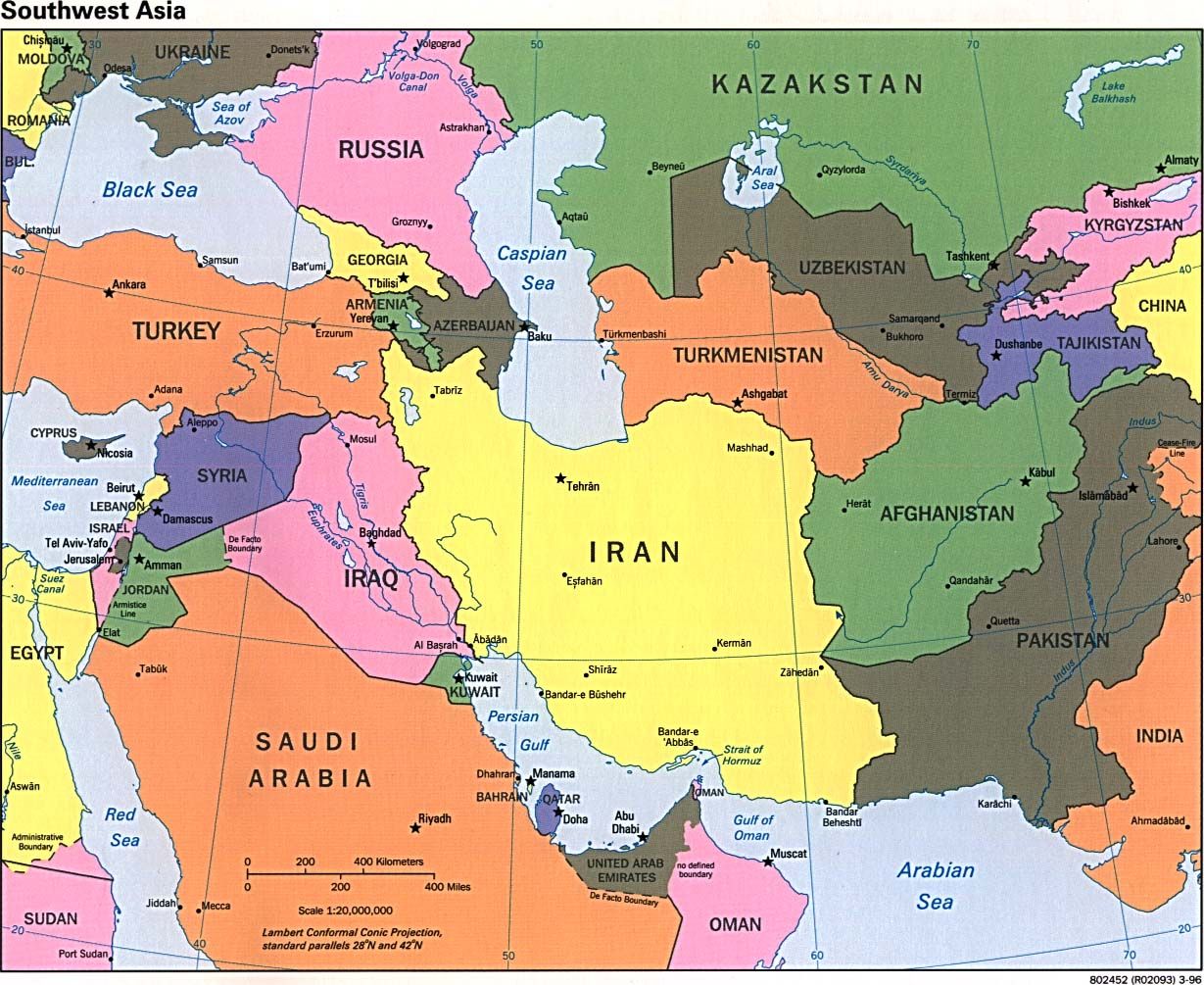
Middle East states and Russia (Source: Internet)

Syria is next to Iran which is also why Russia has been supporting the Assad regime and why, during the past week, it has warned Israel about its bombing raids into Syria as the latter attacks Hizbollah bases there. In fact we may see the invasions by western alliances of Iraq and Libya as part of huge US/NATO ‘domino’ plan to attack Syria with Iran next; then the pressure on Azerbaijan and Georgia on Russia’s doorstep. While on the eastern side of Iran, Afghanistan and Pakistan are also allies of the West ….

Further east, there is India which has long been friendly to Russia and in tussles with Pakistan — and China, which is not openly hostile to Russia as a rule but which is not a real friend either, though its competition and contention with the US keeps it friendly enough towards Russia for the moment.

What the Russian ruling class is doing is attempting to bring a halt to its encirclement by NATO at the point of Ukraine. And the US-NATO and EU are issuing a counter-threat – an open one of sanctions and a more veiled one, in the case of US-NATO, of armed action.

This week it appears that some parts of Ukraine have sought to break away from the main part, probably instigated by Russia or at least promised support if they did – which has materialised in Russian diplomatic recognition and in troop movements. This may amount to an annexation or may not but what is clear is that Russia, in the face of what it considers a threat to its existence and NATO intransigence, has decided to take some decisive action.

WHAT IS REPORTED

The western mass media reports the situation painting a picture of big powerful Russia threatening its much smaller neighbour, by threat of invasion seeking to force it into submission to Russia’s regime, in denial of the small nation’s democratic rights. And the democratic West, through NATO, is moving troops to support the Ukraine, warning Russia of consequences.

Russian Tanks and Troops Reportedly entering part of Ukraine (Photo source: The Telegraph)

The picture contains much truth but overall it is a lie. Russia is much bigger than the Ukraine and it is threatening it with troop movements. And NATO is moving troops up to counter-threaten. But to evaluate a situation properly, we need to know its antecedents, what led up to it. We also need to see the situation through the eyes of the participants, whether we agree with them or not. The mass media, apart from a couple of honest analysts tucked away inside a newspaper, far from the headlines, does not supply us with that information.

The Irish Times, one of Ireland’s main daily newspapers, on 12 February reported that “Russia’s military build-up near Ukraine and a surge of Russia’s military activity has fueled fears that Russia could invade the country. Russia denies having any such plans. However a US official has said that the US had picked up intelligence that Russia is looking at Wednesday as a target date for an incursion.”

So on the basis of the quoted paragraph, we were to draw the conclusion that Russia was threatening to invade Ukraine. OK, Russia denied it but then why the military buildup near Ukraine? Finally, the authority voice of the USA, quoting what we are supposed to see as excellent intelligence sources (which we cannot of course question), predicting a probable Russian invasion four days away. So which state are most people in this part of the world likely to believe, the Russians or the US?

Some weeks earlier, on 25th January, another Irish daily newspaper, the Examiner, reported on reactions to a Russian naval fleet exercise in the Atlantic. The Irish Government told the Russians the exercise was not welcome although not illegal6, because the area of the exercise is regarded as international waters. This from the same government that facilitates US military flights via Shannon airport, i.e on its own national territory. And NATO carries out at least one major exercise in European waters annualy, with the UK doing so twice yearly without complaint from the Irish Government.7

The Ukrainian Ambassador to Ireland, Ms Gerasko moved to take advantage of the situation “A plan to hold a major exercise by the Russian navy and air force in the Atlantic off the southwest coast of Ireland is yet another demonstration of the threat that Russia poses for the world,” she said, in a statement to the Irish Examiner.” 8

Attempts were made at the same time to whip up Irish offshore fishermen against the Russians and to whip up the Irish public in defence of “our fishermen”. The latter project failed miserably since the Russian Ambassador to Ireland met and negotiated with the fishermen, leading one of their leaders to comment that the Russians had treated his members better than their own (Irish) government.

We might expect an alternative discourse about the Ukraine crisis from Al Jazeera but its report on the 24th of January, although emphasising US military movements in the area, attached a number of articles which were generally relaying the western line. The Irish Independent carried a much more in-depth explanation, though based on the position of the UK through its premier, Boris Johnson; however it did list the Russian demand that NATO cease pushing towards them and that Russia considered Ukraine joining NATO “an existential threat” while in general still following the general anti-Russian pattern9.

Closing ceremony of Sea Breeze, NATO-Ukraine joint naval exercises in the Black Sea 12 July 2019 (Photo by US Naval Officer)

POSITION OF THE IRISH STATE

An analysis piece in its business section by the Irish State’s national broadcaster, RTÉ, concentrated on the possible economic impact of loss or drastic reduction in gas and oil exports from Russia, either as a direct consequence of conflict or through imposition of sanctions by the West. “Russia produces 11% of global oil supplies and according to David Horgan, managing director of Petrel Resources, any significant loss of Russian energy exports would result in a further spike in prices.”10

Russia is the biggest supplier of gas in the world and the largest to Europe with a third of of its gas pipeline supply to Europe crossing Ukraine. Ireland’s electricity supply is highly dependent on gas for its generating stations so any disruption will impact heavily of prices which “have already gone from $2 to about $30 per million BTU”, according to the Petrel managing director.11

It is clear that while the USA is driving the agenda through its dominance of NATO and the the threat of sanctions on Russia, which the USA regularly insists upon when teaching other countries a lesson, its own economy would suffer little as a result. However, it is a different question for the European states, which would be obliged to bear the weight of economic impact. Mícheál Martin, the Taoiseach (Prime Minister) of the Irish State felt obliged to comment on this possibility but, rather than criticise the USA and NATO’s expansionism, spoke about the need to break from their dependence on Russian energy supplies.

Micheál Martin said the EU is unified in responding “very strongly” to any Russian invasion of Ukraine and stated that in Europe’s view the huge build-up of troops by Russia on the Ukraine border is “not justifiable” in any circumstances. While calling for “diplomacy and de-escalation” he clearly sided with the USA in the conflict as both the Irish ruling class and the EU’s would expect of him.12

Despite many criticisms to the contrary, the policy of the Irish state during WWII was essentially one of neutrality in favour of the Allied forces while the government of the Six Counties was of course wholly aligned with the UK. Nevertheless Irish commercial shipping was sunk by Nazi German action and cost many Irish seamen their lives.

So far the Irish state has remained outside NATO but over the past decade there has been discussion envisaging the creation of an EU rapid deployment force made up of personnel contributed from all member states. It would hardly be surprising if such a move appealed to some within the career personnel in the Irish armed forces, envisaging taking part in wider military action, alongside varied forces, employing advanced weapons and systems and with possibly better promotion prospects. Additionally in recent weeks there has been media discussion of greater funding for those forces.

Ireland – and not only the UK’s colony here – can be dragged into war more easily than we perhaps imagine and also into being targeted for retaliatory action. Indeed, the facilitation of US military personnel and materiel through Ireland’s airport at Shannon, along with CIA transport of secret prisoners (“rendition”) has already exposed the State (and succeeding governments) to accusations of military partisanship.

Contrary to popular belief, the Irish State’s ‘neutrality’ is in general a matter of government policy rather than a requirement of the Constitution or Statute law.13 

The principal statute governing the Irish Defence Forces is the Defence Act 1954, which did not oblige members of the Irish Army to serve outside the state (members of the Air Corps and Naval Service are not so excused). A 1960 amendment intended to allow deployment in United Nations Peacekeeping missions requires three forms of authorisation, since the 1990s often described as the “triple lock”:

  1. A UN Security Council Resolution or UN General Assembly Resolution;
  2. A formal decision by the Irish government;
  3. Approval by a resolution of Dáil Éireann (the lower house of the Oireachtas, to which the government is responsible).

From those last two it is clear that the 26 Counties can be put on a war footing by a decision of the Irish Government or even a majority vote in favour in the Dáil. Anyone who believes that the party with most TDs would necessarily vote against such a motion is fooling themselves since the SF party has been at pains to portray itself as a safe pair of hands for Irish capitalism and recently called for greater funding for the armed forces of the Irish state; in addition it has long had an uncritically friendly relationship with the USA, in particular – though not only – with its Democratic Party.

A resolution from the UN Security Council obliging the Irish state to go to war against Russia is impossible and though such from the General Council might be possible, albeit unlikely.14

These provisions were modified in 1993 to allow for UN Chapter VII missions and again in 2006 to allow for regionally organised UN missions.
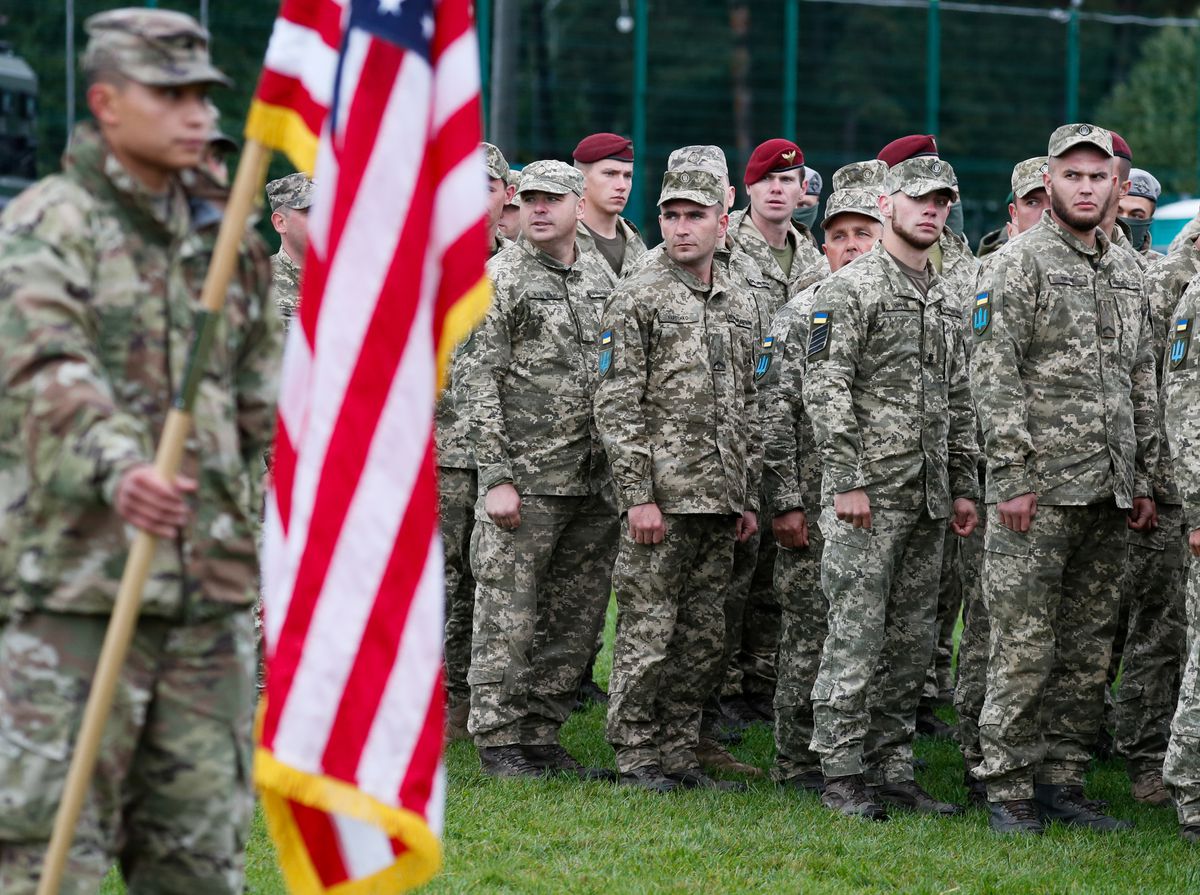
Joint NATO-Ukraine military exercise September 2021 (Photo sourced: Internet)

WHAT WE CAN DO

There seems no middle way — either NATO will back down or Russia will. No doubt the Western powers think it reasonable that Russia be the one to blink but as commented earlier, for the latter NATO creep to their borders is seen as a threat to their very existence. The same people who thought it reasonable for John Kennedy as President of the US to threaten war on the Soviet Union for the location of some missiles on the Caribbean island of Cuba think Russia should accept the advance of NATO to its borders.

In practical terms there seems little we can do in Ireland except struggle to resist the state and colony in which we live being dragged into war – for which we need to mobilise the opposition we can on the street. Sadly the anti-imperialist war movement in Ireland of years ago was allowed to deteriorate — but we should work to rebuild it.

In order to assist in this it is essential that we expose the reality of what is going on in the world. Some will say that because the USA is the main aggressor in this case and the biggest bully, we should support Russia but to do so would be a big mistake. Not long ago, while joining others in anti-fascist solidarity with people in the Donbas region in SE Ukraine, I found us being increasingly nudged towards support for Russia which I did not view as being the same thing at all.

Russia has its own crimes against people and workers and calling for support for it now will cause confusion when in future we will need to condemn it. Our position should be that while neither the USA’s regime or Russia’s is to be supported, the biggest danger of war comes from the USA and therefore it will be the main target of our hostility – besides which it is the power with which the ruling classes of Ireland and the UK are aligned. It is the biggest imperialist power in the world by far along with being the biggest military power in most of the world.

Most Irish people have no wish to be dragged into an armed conflict anywhere where they do not feel threatened. On the other hand our society is conditioned not only by decades of strong cultural influences from the USA, in particular through film but also by media reporting that is biased towards the dominant western European view and that of the USA. In that paradigm, the Russians are the bad guys, the gunfighters in the black hats, while the US and the West in general are on the side of the angels.

With the 1916 Rising in the middle of WWI, Ireland became the first country to carry out an uprising against world war15, against the dominant trend throughout Europe at the time — a tradition worth upholding. As long as imperialism exists, the world will continue to suffer smaller wars and the danger of another major war. It is necessary to overthrow imperialism and we can best contribute towards that aim by coordinating our struggles with the aim of carrying out a revolution in Ireland, thereby depriving imperialism of one of its supporters in Europe.

End.

FOOTNOTES
1
“And you will begin to hear of wars and rumors of wars. Behold, do not be alarmed; for it is necessary to take place, but the end is not yet” — Christian New Testament Bible, Matthew, Chapter 24:6.

2See map NATO states

3See appropriate map for this also

4https://www.breakingnews.ie/world/white-house-calls-russian-moves-on-ukraine-an-invasion-1262219.html

5https://armscontrolcenter.org/fact-sheet-u-s-nuclear-weapons-in-europe/

6https://www.irishexaminer.com/news/arid-40792923.html

7https://www.royalnavy.mod.uk/news-and-latest-activity/operations/united-kingdom/exercise-joint-warrior

8Ibid.

9https://www.independent.ie/world-news/europe/ukraine-crisis-why-russia-might-invade-and-what-could-happen-next-41279592.html

10https://www.rte.ie/news/business/2022/0128/1276522-ukraine-ireland-analysis/

11Ibid.

12https://www.irishexaminer.com/news/arid-40811598.html

13According to Wikipedia: “One exception is Article 29, section 4, subsection 9° of the Irish constitution:

The State shall not adopt a decision taken by the European Council to establish a common defence pursuant to Article 42 of the Treaty on European Union where that common defence would include the State.

This was originally inserted by the 2002 amendment ratifying the Treaty of Nice,and updated by the 2009 amendment ratifying the Treaty of Lisbon. An earlier bill intended to ratify the Treaty of Nice did not include a common defence opt-out, and was rejected in the first Nice referendum, in 2001.”

14Resolutions of the UN Security Council, the only ones binding on all member states, require unanimous agreement by all five Permanent Members: UK, France, USA, Russia and China. Forcing a vote such as this in the UN General Assembly would likely lead to the fracture of the organisation.

15The following year there were two in Russia and in 1918 another in Germany.

SOURCES

Matthew 24:6 https://biblehub.com › matthew

https://www.dw.com/en/thousands-of-russian-troops-leave-ukraine-border/a-60257452

https://www.breakingnews.ie/world/putin-orders-forces-to-maintain-peace-in-eastern-ukraine-1261744.html

https://www.breakingnews.ie/world/emergency-meeting-called-by-un-security-council-over-ukraine-crisis-1261794.html

Map Middle-East towards Russia: https://www.pinterest.com/pin/291678513336896419/

European states holding US nuclear weapons: https://armscontrolcenter.org/fact-sheet-u-s-nuclear-weapons-in-europe/

Map NATO states towards Russia: https://www.businessinsider.com/map-europe-divided-nato-russia-2016-7?r=US&IR=T

UK bi-annual military including naval exercises: https://www.royalnavy.mod.uk/news-and-latest-activity/operations/united-kingdom/exercise-joint-warrior

NATO exercise 2021: https://mc.nato.int/media-centre/news/2021/nato-exercise-dynamic-mariner-and-joint-warrior-begins-in-the-atlantic#:~:text=It%20runs%20between%2018%20and,Kingdom%20and%20the%20United%20States.

Mass media:

Ireland, on Russian Naval fleet in the Atlantic and Ukraine Ambassador: https://www.irishexaminer.com/news/arid-40792923.html

Al Jazeera on the Ukraine confrontation: https://www.aljazeera.com/news/2022/1/24/uk-pulls-staff-from-ukraine-as-fears-of-war-rise-liveblog

Much more in-depth coverage with emphasis on the UK position: https://www.independent.ie/world-news/europe/ukraine-crisis-why-russia-might-invade-and-what-could-happen-next-41279592.html

Irish Government position: https://www.irishexaminer.com/news/arid-40811598.html

Irish neutrality — facts: https://en.wikipedia.org/wiki/Irish_neutrality

Calls for a joint EU countries armed force: https://www.france24.com/en/europe/20210902-proposals-for-an-eu-army-re-emerge-after-afghan-pullout-%E2%80%93-but-many-remain-hard-to-convince

The Queen’s Service To ….

Gearóid Ó Loingsigh

(Reading time: one minute)


Queen Elizabeth II / Sinn Fein president Mary Lou McDonald

Mary Lou McDonald, the current president of Sinn Féin, surprised a few, just a few, with her recent comments thanking the English queen, Elizabeth, for her service.  She stated that “Can I also extend to the British Queen a word of congratulations because 70 years is quite some record.  That is what you call a lifetime of service.”(1)

Why someone who describes herself as a republican would want to heap praise on a monarch and refer to the reign of the monarch as service is bewildering.  However, it is not that strange in the context of the Irish peace process.  It is part of the long road of Sinn Féin’s accommodation to the British state that was laid out in the Good Friday Agreement.  Sinn Féin at that time abandoned any pretence of having a critique of imperialism and capitalism.

The agreement signed basically stated that the British had no selfish interest in Ireland and the conflict was a communal one.  Putting it in blunt terms, two savage tribes agreed to settle their differences, the British state was not one of those savage agents in the conflict.(2)

Exactly what service has the English queen given and to whom?  As a monarch she has blessed every British military adventure since her coronation in 1953, including the savagery of the British repression of the Mau Mau rebellion in Kenya, various other colonial wars, not to mention her awarding of an OBE to Lt. Colonel Derek Wilford the man responsible for Bloody Sunday in Derry in 1972.  In 2019 she stood over her behaviour when she stated that the British government would “bring forward proposals to tackle vexatious claims that undermine our armed forces, and will continue to seek better ways of dealing with legacy issues that provide better outcomes for victims and survivors”.(3)  The massacre of Bloody Sunday was placed in the category of vexatious claims.

Part of the service that McDonald now lauds includes this and many more such incidents.  Though it is not unexpected.  It can only surprise those who pay no attention to the outcomes of peace processes around the world.  Yasser Arafat spent more time repressing Palestinians than he did fighting the Israelis after the Oslo Accords.  In South Africa, the former mining trade union leader Cyril Ramphosa became a mining magnate, whose company was involved in the massacre of 34 striking miners at Marikana in 2012.(4)  He and the ANC made their peace with white capitalists and obtained a share of the wealth, in Ramphosa’s case a very substantial amount which some estimates place around $780 million dollars.  In El Salvador, the FMLN eventually gained power, but did not implement a single thing they had ever fought for and their former commander Joaquín Villalobos is now a consultant to right wing forces on how to defeat left wing movements and contributes to the right-wing think tank The Inter-American Dialogue, which includes such illustrious figures as Violetta Chamorro from Nicaragua and former head of the World Bank, Robert Zoellick, to name just two unsavoury characters.(5)  In Colombia, the ink hadn’t even dried on the agreement and the FARC commander Timochenko declared that the Colombian armed forces would be allies of the FARC in building a new country.  The murder of just over 300 members of the FARC since the signing of the peace agreement has not caused him to change his evaluation of the Colombian armed forces, in fact he has doubled down on his position.
It is in the nature of the beast.  In every peace process that has happened, the former enemies of the state reconciled themselves to the regime and the system, without exception.  McDonald’s declarations are just a confirmation of that and also a sign that it is a bottomless pit and there is no level of political depravity that Sinn Féin will not sink to.

Notes

(1)  Belfast Telegraph (10/02/2022) Sinn Féin leader congratulates Queen on ‘lifetime of service’ https://www.belfasttelegraph.co.uk/news/northern-ireland/sinn-fein-leader-congratulates-queen-on-lifetime-of-service-41334673.html

(2)  The agreement can be consulted at https://www.dfa.ie/media/dfa/alldfawebsitemedia/ourrolesandpolicies/northernireland/good-friday-agreement.pdf

(3)  The Irish Post (20/12/2019) Anger as Queen’s speech appears to dismiss fight for justice for Bloody Sunday victim’s as ‘vexatious claims’ https://www.irishpost.com/news/anger-queens-speech-appears-dismiss-fight-justice-bloody-sunday-victims-vexatious-claims-175999

(4)  The Guardian (19/05/2015) Marikana massacre: the untold story of the strike leader who died for workers’ rights https://www.theguardian.com/world/2015/may/19/marikana-massacre-untold-story-strike-leader-died-workers-rights
 
(5) See https://www.thedialogue.org

POLITICAL PRISONERS’ SOLIDARITY PICKET IN DUBLIN

Clive Sulish

(Reading time: 3 minutes)

Amidst festive season lights, passing Santa Clauses on horse-drawn carriages and hungry people being fed by volunteers in the Dublin city centre, Irish Republicans and Socialists gathered to send a public message of solidarity to political prisoners in Ireland and elsewhere.

Photo: Rebel Breeze

The event is an annual one organised by the Anti-Internment Group of Ireland, an independent non-aligned group raising awareness that internment without trial continues in Ireland, through revoking of licence of ex-prisoners and through refusal of bail in the no-jury courts both sides of the British Border. The Dublin committee of the AIGI holds monthly public awareness-raising pickets in the city centre.

The annual picket on Thursday early evening was supported by activists of the Irish Republican Prisoners’ Welfare Association and of the Anti-Imperialist Action organisation, along with some independents and took place in front of the iconic GPO building, on Dublin’s main street.

Photo: Rebel Breeze

The picketers and passers-by were addressed by a representative of the Anti-Internment Group outlining the participants’ presence to send solidarity greeting to political prisoners in Ireland and around the world. The speaker drew particular attention to three prisoners: Leonard Peltier, Native American, 45 years in jail and Black American Mumia Al Jamaal, 40 years in prison, both framed by police in the USA. Also highlighted was the case of Ali Osman Kose, 37 years in jail, 21 of which he has spent in solitary confinement. The speaker informed the audience that those three political prisoners, apart from their very long years of incarceration, have multiple health issues and should be released, he said on humanitarian grounds alone. “But no ….. they want them to die in jail”, he said.

Photo: Rebel Breeze

Going on to speak about political prisoners in Ireland, the speaker said that they and hostages had existed almost from the moment Ireland had been invaded by its neighbour and from the defeated United Irishmen up to the Fenians, had included not only dungeons and prison cells but also penal colonies on the other side of the world, after which they had been confined in special prisons and concentrations camps.

The creation of the Irish State on a partitioned Irish country a century ago this month had not brought freedom nor an end to the struggle, the speaker said and pointed out that the Irish State had executed 80 Irish Republicans during the years of the Civil War, which was more than the British had done during the War of Independence preceding it.

Photo: Rebel Breeze

“Whether we are religious or not ….. in our culture at this time of year we expect to be with our families, our partner, children and friends,” the AIGI representative said but pointed out that this opportunity is not available to the prisoners, which makes this a particularly difficult time of year for them, which is why the Group and others hold this event every year.

The speaker then called a young boy forward “to send a message to the prisoners from this younger generation who hopefully will see a free and united Ireland with social justice and equality. The young boy stepped forward and through the PA, asked all at this time of year to think of the Republican prisoners.

Photo: AIGI

The Starry Plough, the Palestinian flag and the Basque Ikurrina were flown by participants and among the banners of the IRPWA and Dublin Committee of the AIGI there was also one displaying the Carlos Latuff graphic of Palestinian and Irish Republican prisoner solidarity. The centrepiece in the picket line was the word Saoirse (‘freedom’ in Irish) picked out by lights on a dark background. Appropriate music was also played during the picket from a PA system, except while being addressed by the speaker.

The event concluded with thanks to all the attendance and the singing the first verse and chorus of the battle-song Amhrán na bhFiann (The Soldiers’ Song in Irish, which is also the National Anthem).

It is understood that seasonal greeting cards have also been sent by AIGI to political prisoners in prisons in the Irish state and in the colonial statelet.

End.

Photo: Rebel Breeze
Signing Christmas cards for the prisoners. (Photo: AIGI)
Photo: Rebel Breeze

Further information:

https://www.facebook.com/End-Internment-581232915354743

PROTESTS GREET PRESENTATION OF CHANCELORSHIP TO HILLARY CLINTON

Diarmuid Breatnach

(Reading time: mins.)

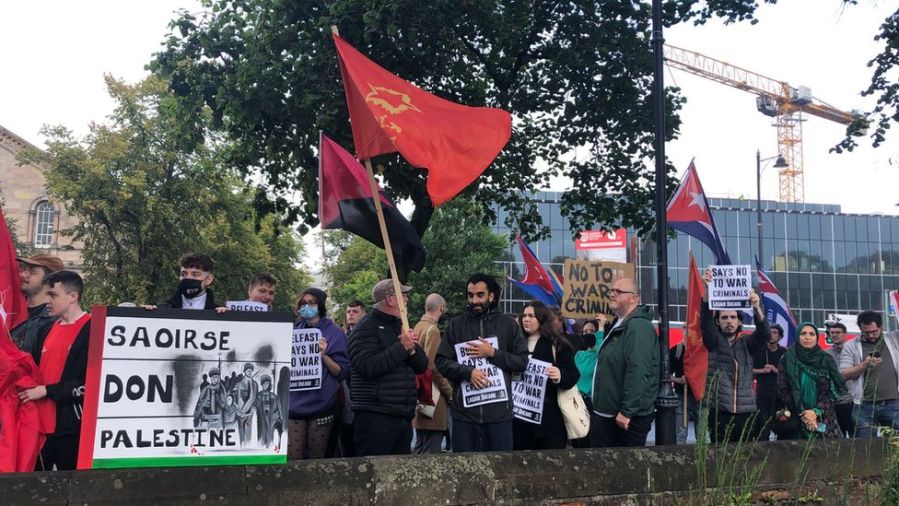
Queen’s University Belfast appointed Hillary Clinton as the institution’s Chancellor1. On 24th September 2021 the University authorities organised an event to mark her formal inauguration; however a large and voluble crowd gathered to protest the inauguration and the authorities’ choosing her as Chancellor of the University. Among the shouts of protesters were “War criminal!” and “Hillary, Hillary, Hillary – Out, out, out!” (This story is now “old”, apologies but nevertheless worth posting for those who might not be aware of it as media coverage was muted)

Although the Belfast Telegraph’s coverage of the event made no mention whatsoever of protests, they were reported in a number of other media. The protest saw Irish Republican and Left socialist groups come together to carry out the protest, with a number of them taking turns to speak.

The speakers at the protest included Pól Torbóid of Lasair Dhearg; Aidan Moran, a former ISM activist in Occupied Palestine, on behalf of Cairde Palestine; Conal MacMathúna on behalf of the Connolly Youth Movement; Local Councillor Michael Collins from People Before Profit; and Dr. Azadeh Sobout, Scholar of Transitional Justice and Peace building and Member of Academics for Palestine.

In addition to Irish organisations’ banners and flags, the national flags of Palestine and Cuba were also in evidence.

Hillary Clinton has been a member of the USA Congress from 2001 to 2009, followed by Secretary of State from 2009 to 2013, having also held the ceremonial position of First Lady during her husband Bill Clinton’s tenure as President of the USA 1993-2001. The Secretary of State of the USA, appointed by the President with the advice and consent of the Senate, is the President’s chief foreign affairs adviser. The Secretary carries out the President’s foreign policies through the State Department and the Foreign Service of the United States.

Lasair Dhearg’s Pól Torbóid, who helped organise and also spoke at the event, said, “Queen’s University’s complicity in the whitewashing of Hillary Clinton and her war crimes further epitomises the university’s role in an international framework of imperialism that sees it not only glorify warmongers like Clinton, but have immense financial investment in military contracts and companies guilty of immense environmental destruction.”

“Queen’s has facilitated the visitation of many war criminals and parasites over the years, but arguably none as big as the visit of Hillary Clinton as its chancellor. A proud Zionist and imperialist; with a war record as long as your arm, Clinton has helped oversee US bombing campaigns in over 9 countries.”

“As US secretary for war, she authorised over 400 drone strikes across multiple nations, which overwhelmingly killed civilians and even children at a proportion of almost 90%.”

“She labelled black men ‘super-predators’ when she helped lobby for the 1994 US Clinton Crime Bill, which was immensely important in creating the mass incarceration levels that exists today in the US to benefit the prison-industrial complex – which is a system of slavery by new means.”

Section of the protest as seen from the inside of the University (Photo sourced: Internet)

“A Zionist, Hillary Clinton has shown herself to be an enemy of Palestinian liberation, siding with the oppressor every time it mattered, like during the 2014 Israeli bombing campaign of Gaza. She increased annual US funding to Israel from 2.5billion, to 3.1 billion US dollars whilst she was US Secretary of State, and she stated that countering the BDS movement globally should be a priority for Israel’s defence.”

“All this – and Queen’s award her chancellor for her Peace and Reconciliation efforts. For all the books Queen’s have at its disposal, I don’t think their management have ever read one! PEACE IS SOMETHING HILLARY CLINTON CAN’T EVEN SPELL, NEVER MIND DISPENSE!”

Full video below (with thanks to Lasair Dhearg organisation):

(Photo sourced: Internet)

FOOTNOTES

  1. In the UK university system, the office of Chancellor is held by a distinguished individual, from academia or public life, who is not usually resident and does not hold any other University office.

SOURCES

https://www.thejournal.ie/hillary-clinton-installed-chancellor-queens-university-belfast-5557234-Sep2021/

https://www.v-c.admin.cam.ac.uk/chancellors-role

Unapologetic Killers, Unrelenting Liars, And Their Uncaring Supporters

Brandon Sullivan ✒ (in The Pensive Quill)

From the window of the government building I worked in, I noticed a gathering of men.
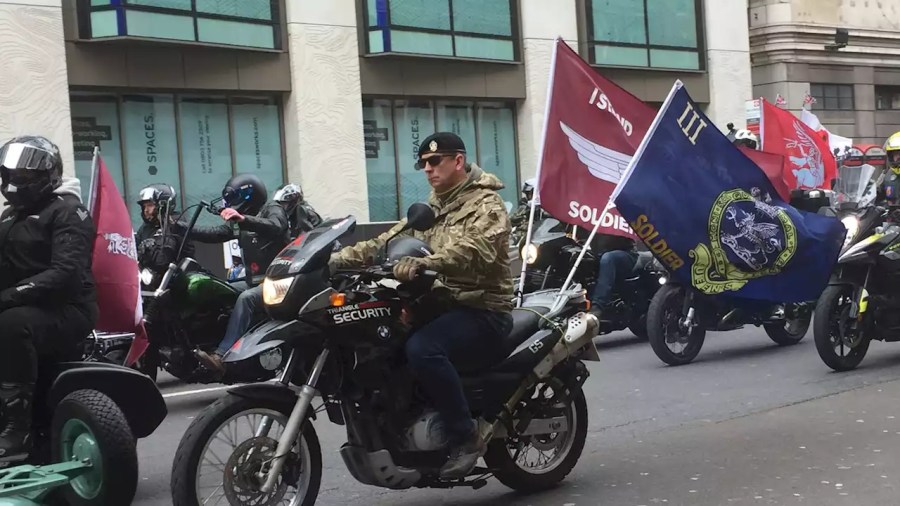
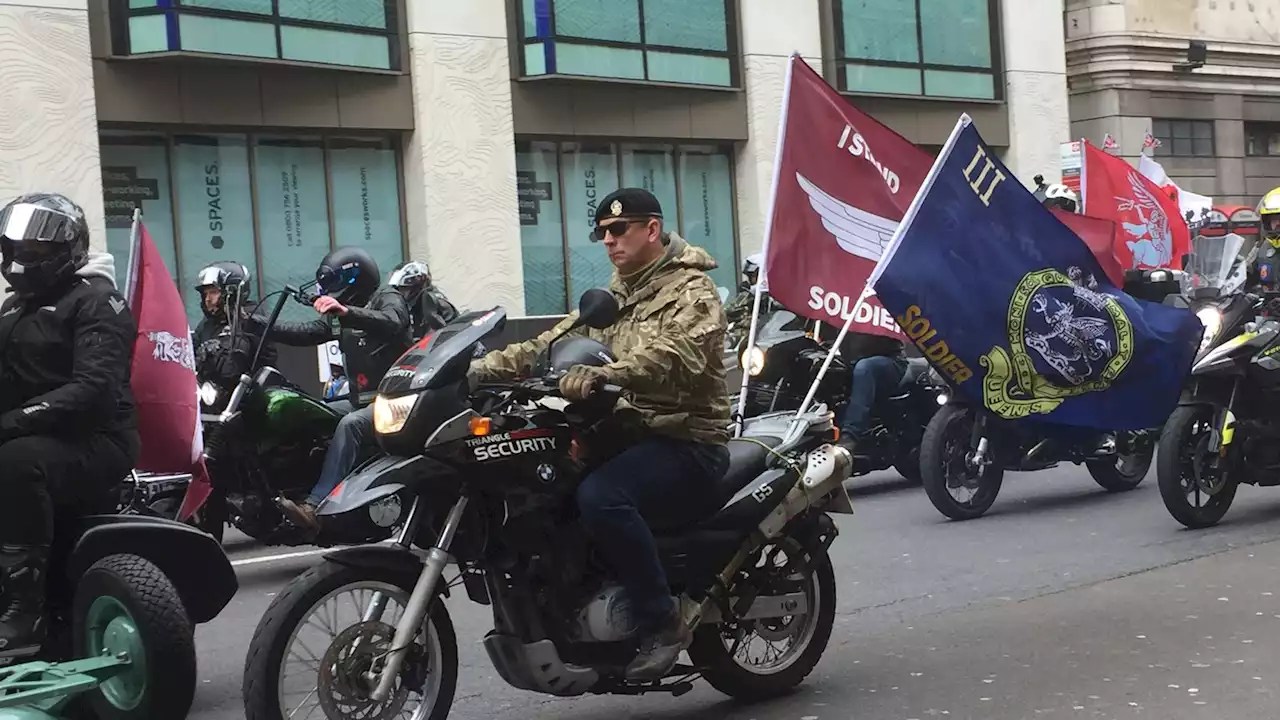
Mostly dressed in motorcycle leathers, many of them very overweight, and bearded, the crowd grew to perhaps 70 or 80. Some of the men were wearing maroon berets. They were a comedic spectacle: imagine a few score of Ken Maginnis-types in motorcycle leathers. They lined up in military formation, their physical condition making this pretence pathetic rather than sinister, and unfurled a very small banner which read “WE SUPPORT SOLDIER F.”

I couldn’t help thinking of protests against the injustices visited upon the Guilford Four and the Birmingham Six, protests held in England. How society seems to have changed, and not for the better.

Douglas Murray, a neo-conservative thinker and writer much respected and admired by many on the right, had this to say about Soldier F in his peerless account of the Bloody Sunday Inquiry: Soldier F — who fired 13 rounds on the day — whose performance in 1972 and 2003 was most disturbing. It always seemed to me that if anyone was deserving of prosecution, then it was him.

Murray also had this to say about the killers of 14 civilians on Bloody Sunday: “The soldiers of 1 Para weren’t just unapologetic killers, but unrelenting liars.”

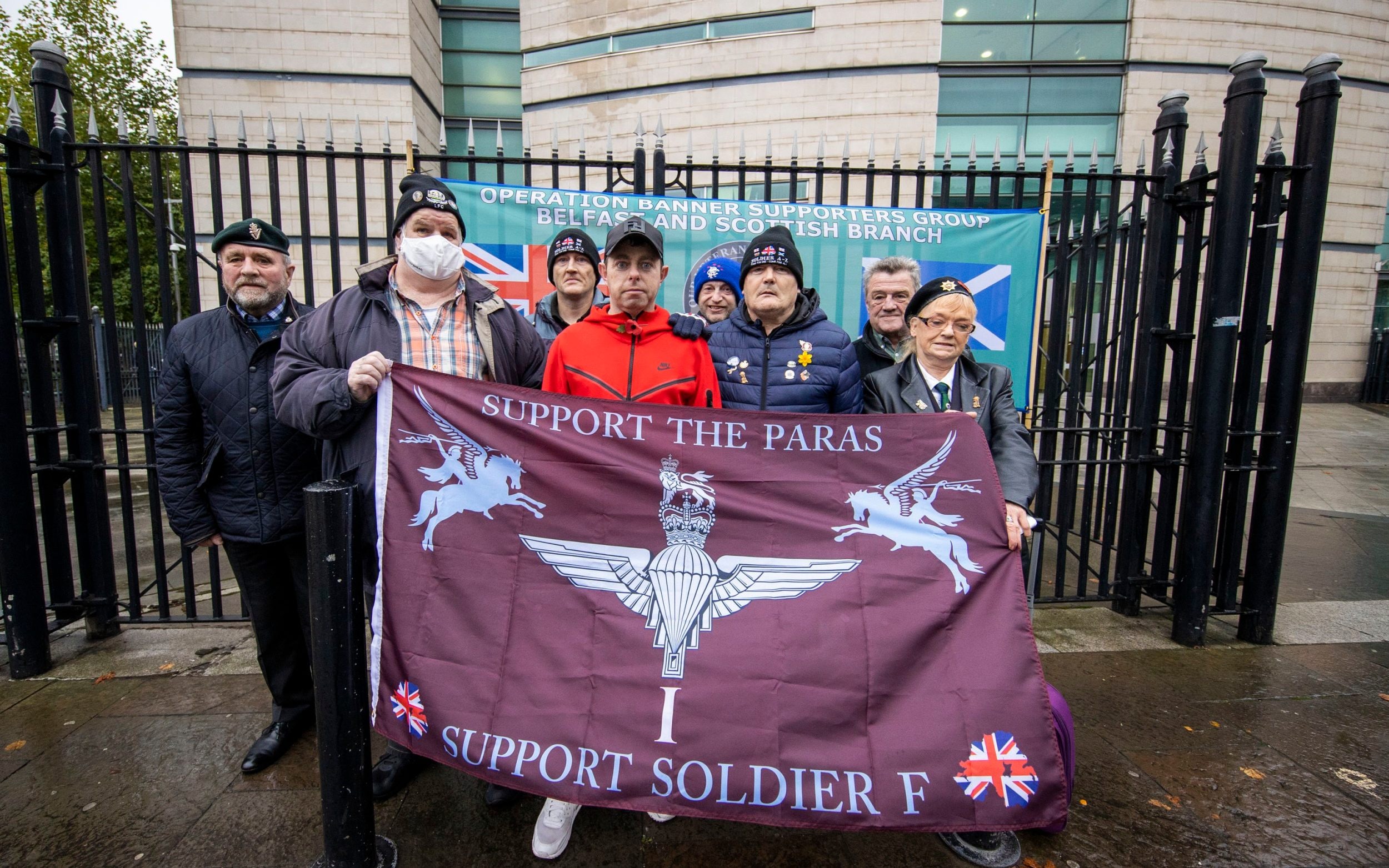
“Support the Paras (Parachute Regiment) and Soldier F” — i.e any British soldier who has murdered people from the Nationalist community. (Image sourced: Internet)

Recently, former British solider Dennis Hutchings faced trial for the killing of John Pat Cunningham. Hutchings received much support, including high profile political support, from those who objected to his prosecution. The circumstances of John Pat’s death could scarcely be more upsetting:

A Benburb doctor said the victim, who was his patient, had been born with an incomplete development of mind, and had been declared a person requiring special care. The doctor said that about a year earlier, near the scene of the shooting, he had come across soldiers pushing John Cunningham into a Saracen armoured car. He spoke to the soldiers who said he had been hiding in the bushes and acting suspiciously. The doctor said he had told the young man’s mother about the incident and advised her to keep a special watch on her son’s movements, in view of his apprehension towards soldiers and their uniforms.

Dennis Hutchings is alleged to have shot John Pat in the back as he ran away from an army patrol. There is simply no way that John Pat was a threat to them. British and Unionist politicians were outraged over a prosecution taking place. They were silent when the prosecution of Soldier F, a perjurer, multiple-killer, and perhaps the single greatest recruiting sergeant the PIRA ever had, fell apart.

From tragedy to farce, we can now look at the case of Donald MacNaughton, who was tried and acquitted of attempted murder in 1974. The case against him fell apart because of “inconsistencies” with the victim’s evidence, and the evidence of MacNaughton and his comrades “fitted together and was not mutually contradictory .” MacNaughton was a member of the Parachute Regiment, whose soldiers colluded with each other to lie to several British Government Inquiries, and indeed to British Army investigators. The farce in this case, I think, demonstrates something of the self-degradation of those on the English right: MacNaughton became a Brexit Party campaigner, and is widely believed to have thrown yogurt over himself to gain media attention.

Motorbike rally in Belfast in support of Soldier F, who admitted to firing 13 bullets during the 1972 massacre of unarmed protestors in Derry. (Image sourced: Internet)

Hutchings died before his trial, and will be given full military honours at his funeral. Soldier F was promoted and decorated several times in his military career. Just as their killings of Irish citizens did not unduly affect their lives for decades, was there any serious attempt at prosecuting them to the full extent of the law?

But their prosecution is not really the point. The level of support for them is.

What does it say about sections of society, and politicians, if they can support those suspected of murder, so long as it was committed by a uniformed killer, regardless of the status of the victim?

⏩ Brandon Sullivan is a middle aged, middle management, centre-left Belfast man. Would prefer people focused on the actual bad guys.

HOWARD ZINN — US INTELLECTUAL CRITIC AND ACTIVIST

By Geoff Cobb

(Reading time: 3 mins.)

Like many Brooklyn Jews of his generation, Howard Zinn, an icon of the American left, questioned laissez fair American capitalism and American nationalist glorification of country. He was the author of “A People’s History of the United States,” a best seller which sold more than two million copies and inspired a generation of high school and college students to rethink American history. He was also a strong supporter of the civil rights movement and an opponent of the Vietnam war, as well as being a much-loved professor. Proudly, unabashedly radical, Zinn delighted in debating ideological foes, including his own college president, and in attacking conventional ideas, not the least that American history was a heroic march toward democracy.

One of the many different jacket covers for reprints of Zinn’s most famous book — this one abridged for teaching purposes (Image sourced: Internet)

Born Aug. 24, 1922, Howard Zinn grew up in Bedford Stuyvesant. His parents were Jewish immigrants who met in a factory. His father worked as a ditch digger and window cleaner during the Depression. His father and mother ran a neighborhood candy store for a brief time, barely getting by. For many years his father was in the waiter’s union and worked as a waiter for weddings and bar mitzvahs. “We moved a lot, one step ahead of the landlord,” Zinn recalled. “I lived in all of Brooklyn’s best slums.”

“NO LONGER A LIBERAL”

His parents were not intellectuals and Zinn recalled that there were no books in his home growing up. At some point his parents, knowing his interest in books, and never having heard of Charles Dickens, sent in a coupon with a dime each month to the New York Post and received one of ultimately twenty volumes of Dickens’ complete works. He became interested in fascism and began to read about its rise in Europe and to engage in political discussions and debates with some young Communists in his neighborhood. Zinn was radicalized thanks to a peaceful political rally in Times Square, where mounted police charged the marchers, hit Zinn knocked him unconscious. Zinn explained, “From that moment on, I was no longer a liberal, a believer in the self-correcting character of American democracy. . . The situation required not just a new president or new laws, but an uprooting of the old order, the introduction of a new kind of society—cooperative, peaceful, egalitarian.”

After graduating from Thomas Jefferson High School, Zinn became an apprentice shipfitter in the Brooklyn Navy Yard, where he and a few other apprentices began to discuss books and strategize about how to improve their dangerous working conditions. Excluded from the craft unions of skilled workers, they formed their own Apprentice Association. On an overnight boat trip he organized to raise money for the association, he met his future wife, Roslyn Shechter, who shared Howard’s progressive views and was also a Jewish child of immigrants. Zinn joined the Army Air Corps in 1943, eager to fight the fascists, and became a bombardier in a B-17. While in the Air Force he was disturbed by the race and class inequality among the servicemen. It wasn’t until years after the war that he questioned the necessity of the bombs that he dropped.  But at the end of the war, back in New York, he deposited his medals in an envelope and wrote: “Never Again.”

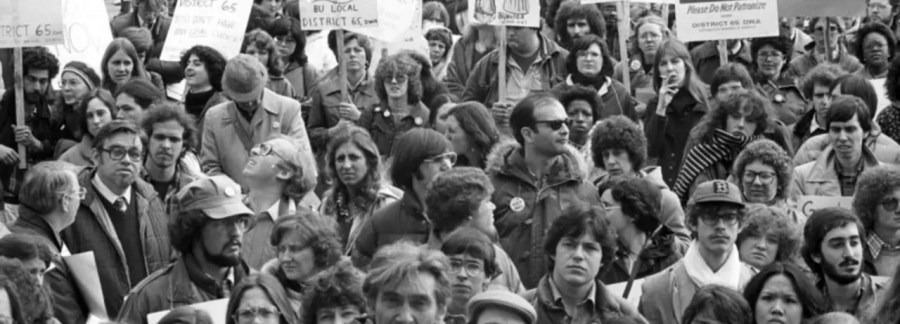
View of students and faculty carrying signs during a strike by faculty and staff of Boston University, on Commonwealth Avenue, Boston, 1979. Historian Howard Zinn, then a professor at BU, is just visible in the centre foreground. (Photo by Spencer Grant/Getty Images)

“I would not deny that [WWII] had a certain moral core, but that made it easier for Americans to treat all subsequent wars with a kind of glow,” Zinn said. “Every enemy becomes Hitler.”

After the war, he went back to interview victims of the bombing, and later wrote about it in two books. His own experience and his subsequent interviews led him to conclude that the bombing had been ordered more to enhance the careers of senior officers than for any military imperative, and he later wrote about the ethics of bombing in the context of Hiroshima and Nagasaki, Tokyo and Dresden, as well as Iraq.

Zinn and Roz married in 1944. While Zinn worked various jobs after the war, they lived on meager income in a rat-infested basement apartment in Brooklyn. Their daughter Myla was born in 1947 and Jeff in 1949. They moved to new public housing in 1949 and Zinn went to New York University for his B.A in history.

Thanks to the GI Bill, which paid the tuition of veterans, Zinn went to Columbia, where he earned an MA in 1952 with a thesis about a famous coalminers’ strike in Colorado, then obtained his PhD with a dissertation about the career in Congress of Fiorello LaGuardia, the reforming mayor of New York. He studied at Columbia under Richard Hofstadter who taught Zinn that American liberals were not as liberal as they thought they were, and that the two common threads in all American history were nationalism and capitalism.

PROFESSOR ZINN

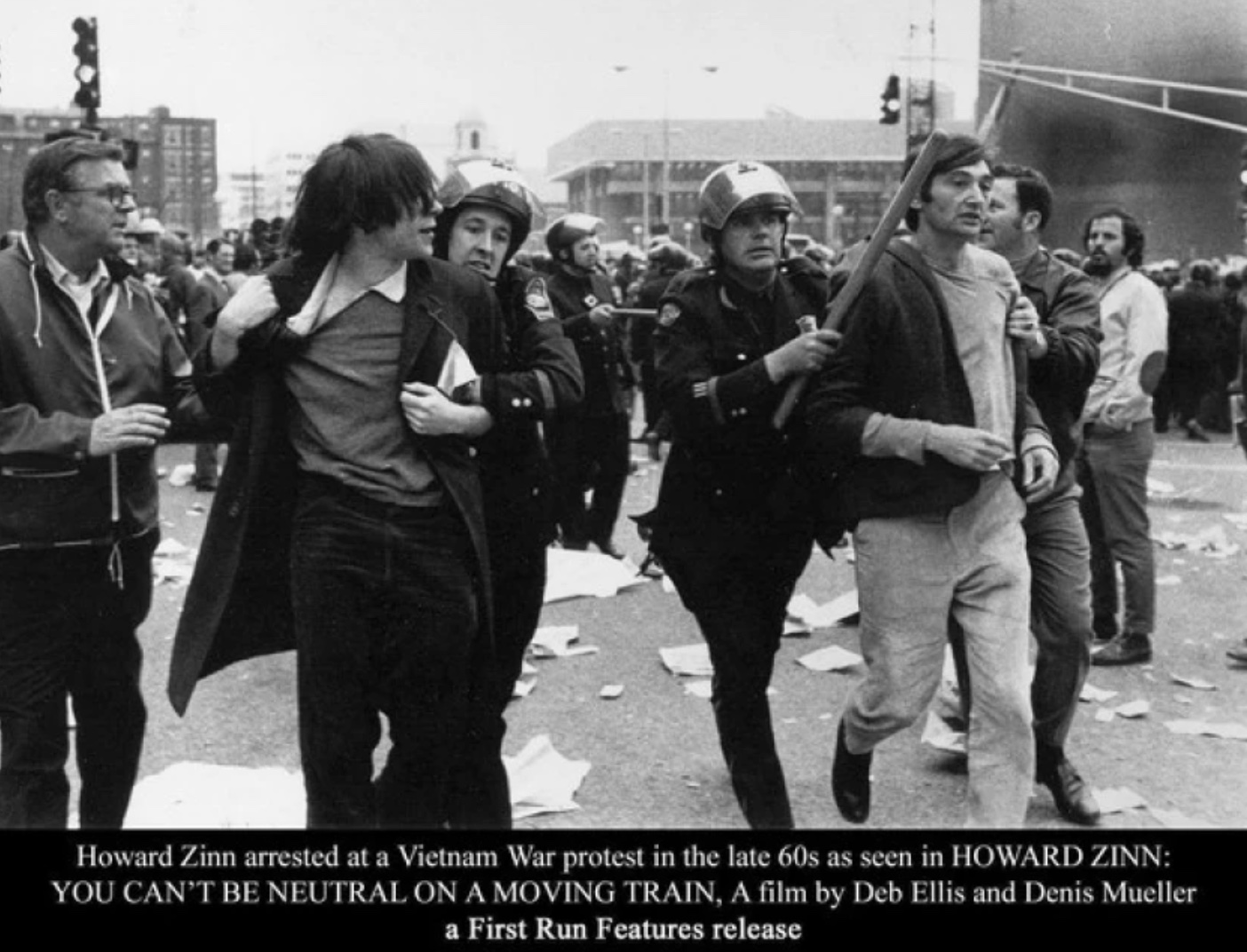
In 1956, Zinn accepted a professorship at Spelman College, a traditionally black college for women in Atlanta, Georgia. Among his students were Maria Wright Edelman, the campaigner for children’s rights, and the future novelist Alice Walker, author of The Color Purple. At Spelman, he was a mentor to and later the historian of the Student Non-Violent Co-ordinating Committee (SNCC), the radical student wing of the civil rights movement. Zinn took part in many civil rights protests, and he encouraged his students to join him in these marches, which angered Spelman’s president. Zinn angered the authorities at Spelman over his insistence that its students should not be trained to be ladies, but should be actively involved in politics. “I was fired for insubordination,” he recalled. “Which happened to be true.” Zinn moved to Boston University in 1964, where he quickly became an outspoken critic of the Vietnam War. He angered many Americans, including Boston University’s president, by traveling with the Rev. Daniel Berrigan to Hanoi to receive prisoners released by the North Vietnamese, and produced the antiwar books “Vietnam: The Logic of Withdrawal” (1967) and “Disobedience and Democracy” (1968). When Daniel Ellsberg, a previously gung-ho John F Kennedy and Lyndon B Johnson administration official, came out against the war, he gave one copy of the Pentagon Papers (officially titled United States-Vietnam Relations, 1945–1967: A Study Prepared by the Department of Defense, the government’s secret history of the war) to Zinn and his wife, Roslyn. Zinn and Noam Chomsky edited what became known as the Mike Gravel edition, published in Boston in 1971-72 by the Beacon Press.

In 1980, he published his most successful work, A People’s History of the United States, which was a highly controversial revision of American history. Instead of the usual congratulatory tone of most American history textbooks, his work concentrated on what he saw as the genocidal depredations of Christopher Columbus, the blood lust of Theodore Roosevelt and the racial failings of Abraham Lincoln. He also highlighted the revolutionary struggles of impoverished farmers, feminists, laborers and resisters of slavery and war. Bruce Springsteen said the starkest of his many albums, “Nebraska,” drew inspiration in part from Mr. Zinn’s writings.

For decades, he poured out articles attacking war and government secrecy. 

When President Ronald Reagan bombed Tripoli in 1986, Zinn wrote: “There is no flag large enough to cover the shame of killing innocent people for a purpose which is unattainable.” He denounced the invasion of Iraq and also criticized President Barack Obama’s intensification of the war in Afghanistan. He was sharply attacked in Israel and by many of his fellow American Jews for saying that war was morally the equivalent of terrorism.

Howard Zinn (Photo sourced: Internet)

Mr. Zinn retired in 1988, concluding his last class early so he could join a picket line. He invited his students to join him. Zinn also wrote three plays: “Daughter of Venus,” “Marx in Soho” and “Emma,” about the life of the anarchist Emma Goldman. All have been produced. Zinn died in 2010.

Zinn always believed in standing up to injustice and fighting for oppression. He said near the end of his life, “Where progress has been made, wherever any kind of injustice has been overturned, it’s been because people acted as citizens, and not as politicians. They didn’t just moan. They worked, they acted, they organized, they rioted if necessary to bring their situation to the attention of people in power. And that’s what we have to do today.”

End.

POSTSCRIPT from Rebel Breeze:

TRUMP ATTACKS ZINN AFTER LATTER’S DEATH

“If you want to read a real history book,” Matt Damon’s character tells his therapist, played by Robin Williams, in the 1997 film “Good Will Hunting,” “read Howard Zinn’s ‘A People’s History of the United States.’ That book will knock you on your ass.”

It is very unlikely that President Donald Trump knew who Howard Zinn was before he saw the name on his teleprompter. And it is even less likely that he’s read “A People’s History of the United States.” But that didn’t stop him from saying — at the White House Conference on American History on Thursday — that today’s “left-wing rioting and mayhem are the direct result of decades of left-wing indoctrination in our schools. It’s gone on far too long. Our children are instructed from propaganda tracts, like those of Howard Zinn, that try to make students ashamed of their own history.”

Quoted from https://www.commondreams.org/views/2020/09/23/rights-long-war-howard-zinn-reaches-white-house

SEPTEMBER 8, START OF NEARLY 900 DAYS OF NAZI SIEGE

Diarmuid Breatnach

(Reading time: 3 mins.)

SEPTEMBER 8, START OF NEARLY 900 DAYS OF NAZI SIEGE

On 21st June 1941 Hitler broke Nazi Germany’s non-aggression Treaty with the Soviet Union and invaded through Poland, sending roughly 3 million personnel through, in addition to its Finnish and Romanian allies, in a three-pronged attack.

Leningrad was one of the primary objectives as it was the most industrialised next to Moscow, with numerous arms factories among its 600 factories turning out 11% of all Russia’s industrial production, along with being the port of the Russian fleet. For those reasons it was important to the Soviet Union too but there was another very important one: the Petrograd Soviet had played a key role in the 1917 February and October revolutions in Russia.

The Nazi German advance in its various Army Groups through Soviet Russia overcame most resistance fairly easily but in September the advance of Army Group North was finally halted in the Leningrad suburbs. The German and other Axis troops had air dominance and a massive artillery capability. Hitler instructed his troops not only to besiege the city but to wipe it out. The Finnish troops controlled the area to the north and the Nazis placed the División Azul (the Blue Division), the fascist Spanish unit, along the south-east1.

“The Führer has decided to erase the city of Petersburg from the face of the earth,” he wrote in a memo. “It is intended to encircle the city and level it to the ground by means of artillery bombardment using every caliber of shell, and continual bombing from the air.” The memo stressed that requests for surrender negotiations were to be ignored, since the Nazis didn’t have the desire to feed the city’s large population.2

Civilians in Leningrad worked frantically on the construction of defences, digging trenches and constructing antitank fortifications as the Red Army and partisans lost one battle after another. The town of Mga was taken, recaptured and then taken again by the Nazis, severing the city’s last rail connection. With the capture of Shlisselburg in early September, the last road was cut. The only way to supply Leningrad now was across Lake Ladoga.

IRON RING AROUND THE CITY

Artillery and air bombardment of the city began almost immediately; the city could receive supplies only by barge across the lake which could also be targeted by Luftwaffe attack. Incendiary attacks caused huge damage and destroyed vital supplies of oil and food and on September 19th Nazi aircraft dropped 2,500 high explosive and incendiary bombs.

Buildings damaged by Nazi German artillery in Leningrad during the siege (Photo credit Vsevolod Tarasevich)

The authorities evacuated around 600,000 civilians before the Nazi “iron ring” closed around the city but 2.5 million civilians still remained inside. It is said that officials had been negligent in stockpiling food, so the only way to feed the city was to bring fresh supplies across Lake Ladoga, the only open route into the city. Transport of Food and fuel was by barge until the lake froze, then by trucks and sleds – all of these frequent targets of Nazi aerial attack.

Women on the move during the siege of Leningrad, perhaps being evacuated or merely relocated from damaged buildings (Photo credit Unknown)

“By November, food shortages had seen civilian rations cut to just 250 grams of bread a day for workers. Children, the elderly and the unemployed got a scant 125 grams—the equivalent of three small slices.”3

The winter of 1941-’42 was bitterly cold and as many as 100,000 a month died of starvation. “In their desperation, people ate everything from petroleum jelly and wallpaper glue to rats, pigeons and household pets. For warmth, they burned furniture, wardrobes and even the books from their personal libraries. Theft and murder for ration cards became a constant threat, and the authorities eventually arrested over 2,000 people for cannibalism. As the famine intensified, one 12-year-old Leningrader named Tanya Savicheva recorded the dates of the deaths of all her family members in a journal. “The Savichevs are dead,” she wrote after the passing of her mother. “Everyone is dead. Only Tanya is left.””4

And yet the city held out. Another 500,000 civilians were evacuated early the following year, 1942, which reduced the city’s population to 1,000,000. As the city thawed in Spring, the survivors went out to bury the dead lining their streets and cleared bombardment rubble. Courtyard areas and parks were planted for vegetables but even so and despite the “Road of Life” across Lake Ladoga, food was short.

Young girls assembling machine guns during siege of Leningrad (image source uncertain)

A number of Red Army attempts to break through to the city failed, with very high loss of Russian soldiers. In January 1943 the Red Army won a land strip from the Nazis and its engineers built a special railway link to run through it which, by the end of the year nearly 5 million tons of food and other supplies had been delivered into Leningrad. Machinery and ammunition were soon being turned out in the factories by a workforce nearly 80% composed of women.

Trucks driving on the “Road of Life” across the ice of Lake Ladoga to bring food and material to the besieged city (Photo credit Unknown)

MUSIC OF RESISTANCE

In august 1942 it was played and broadcast towards the Nazi German lines over loudspeakers.

The Red Army finally broke the Nazi blockade on 27th January 1944 and, with the Nazi forces all over Russia in retreat, the city was free. Survivors celebrated but the death toll was huge; some had lost all their family during the siege.

Altogether an estimated 75,000 bombs were dropped on Leningrad during the period of the siege and killed many – but more died from hunger and hunger-facilitated illness.

Because of the declared intentions of Hitler and the Nazis and the effect on the civilian population of the city, many historians categorise this siege as genocide; it was also the longest siege of WWII and one of the longest in history.

“In total, the siege of Leningrad had killed an estimated 800,000 civilians—nearly as many as all the World War II deaths of the United States and the United Kingdom combined. Soviet-era censorship ensured that the more grisly details of the blockade were suppressed until the end of the 20th century, yet even while World War II was still underway, the city was hailed as a symbol of Russian determination and sacrifice.”5

Perhaps the most appropriate accolade to the resistance of Leningrad was penned by the New York Times in 1945: “There is hardly a parallel in history for the endurance of so many people over so long a time. Leningrad stood alone against the might of Germany since the beginning of the invasion. It is a city saved by its own will, and its stand will live in the annals as a kind of heroic myth.”6

End.

FOOTNOTES

1https://en.wikipedia.org/wiki/Siege_of_Leningrad

2https://www.history.com/news/the-siege-of-leningrad

3Ibid.

4Ibid.

5https://www.history.com/news/the-siege-of-leningrad

6Ibid.

SOURCES

https://www.britannica.com/event/Siege-of-Leningrad

https://www.history.com/news/the-siege-of-leningrad

https://en.wikipedia.org/wiki/Operation_Barbarossa

https://en.wikipedia.org/wiki/Siege_of_Leningrad

https://en.wikipedia.org/wiki/Symphony_No._7_(Shostakovich)

Shostakovich’s Seventh Symphony performed by the Frankfurt Radio Symhony in 2019 (Russian composition, played by a German Orchestra, conducted by a Finn!) almost 1 hour 25 minutes: https://www.youtube.com/watch?v=GB3zR_X25UU

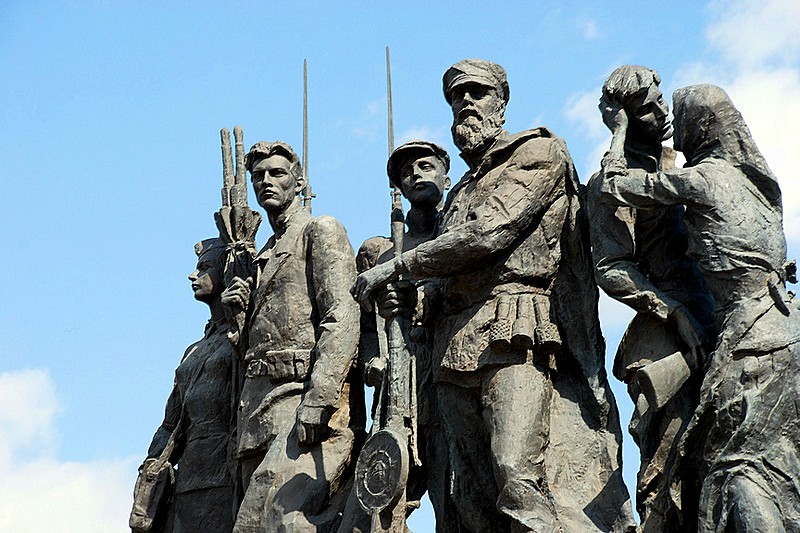
MONUMENT TO THE HEROIC DEFENDERS OF LENINGRAD AND SCULPTURAL GROUPS IN VICTORY SQUARE PETROGRAD

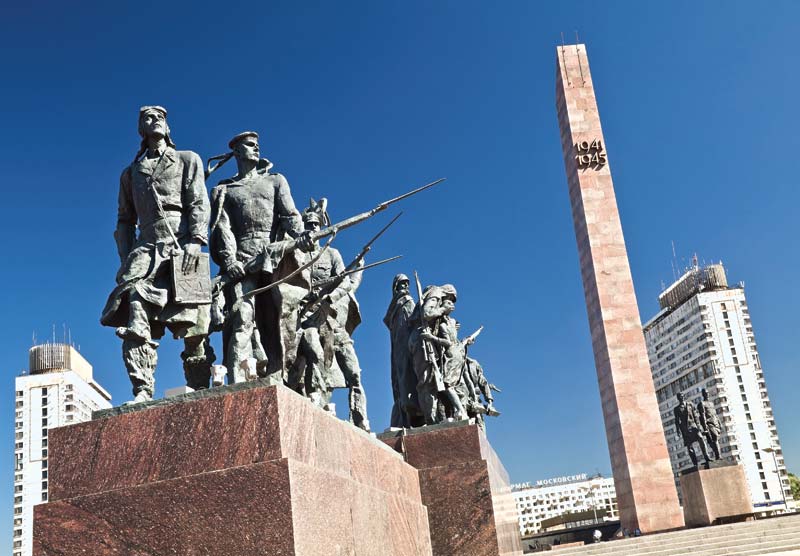
Sculptural group airmen and sailors in front of the Monument to the Heroic Defenders of Leningrad (image sourced: Internet)

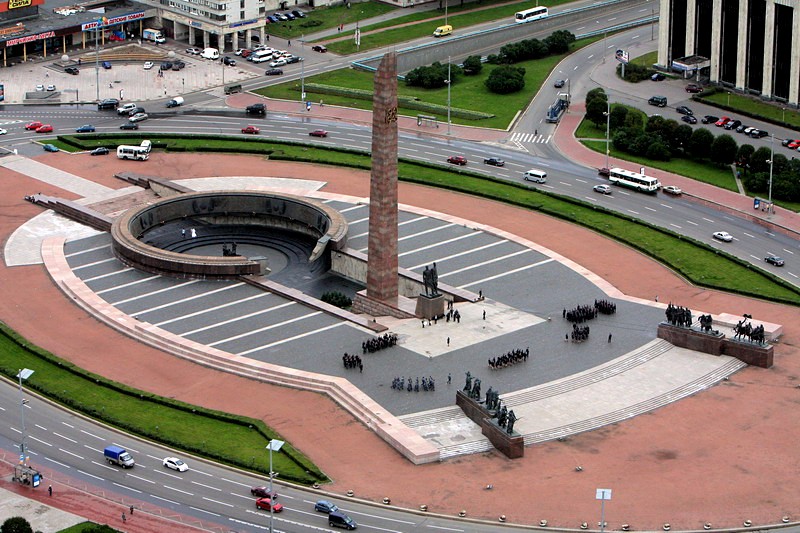
Aerial view of the Monument to the Heroic Defenders of Leningrad and sculptural groups in Victory Square (image sourced: Internet)
Sculptural group workers building the city’s defences, front the Monument to the Heroic Defenders of Leningrad in Victory Square (image sourced: Internet)
Sculptural group snipers (one saying goodbye to a child) in front of the Monument to the Heroic Defenders of Leningrad, Victory Square (image sourced: Internet)
Sculptural group partisans (one being bid goodbye by a woman) in front of the Monument to the Heroic Defenders of Leningrad, Victory Square (image sourced: Internet)
Death, loss and resistance depicted by sculptural group in front of the Monument to the Heroic Defenders of Leningrad, Victory Square (image sourced: Internet)

TEN SIMPLE STEPS IN INVASION VENTURE

Diarmuid Breatnach

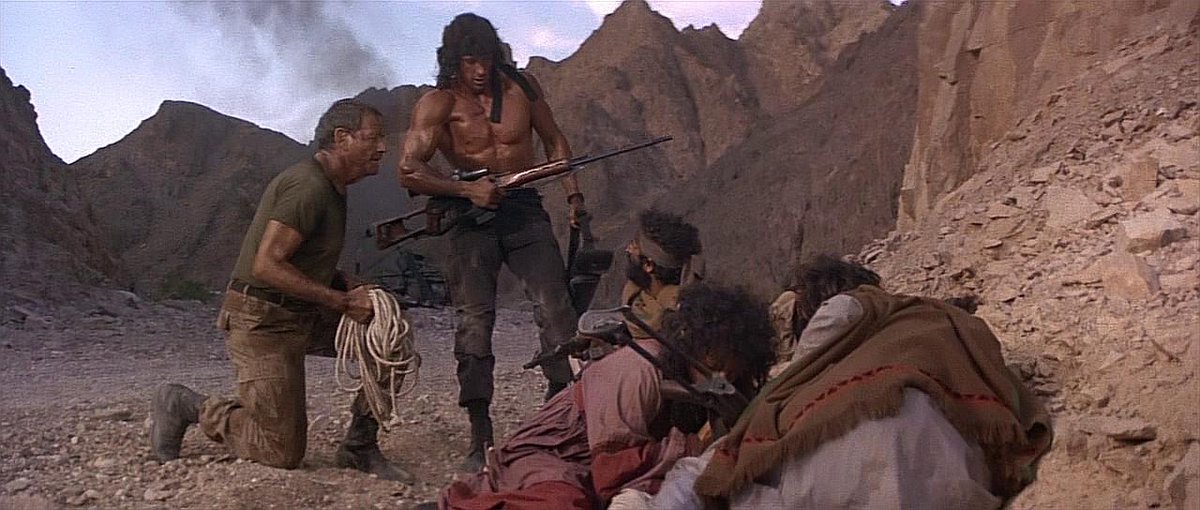
Scene from Rambo film promoting USA-aided Islamic fundamentalist insurgency against Soviet puppet Afghanistan Government (Photo sourced: Internet)
  1. Foster Islamic fundamentalist groups and arm them to overthrow a competitor’s puppet government. Use a nearby ally as a conduit.
  2. Portray the fundamentalist insurgency as a liberation war and keep supplying them with weapons, training, through your nearby ally. This might cost as much as US$20 billion. Have a film made about it in which a former male porn film star is the USA hero with the local fundamentalist Islamic militias (underplay the Islamic part).
  3. When they’ve overthrown the competitor’s puppet, attempt to instal your own puppet instead.
  4. When your Islamic fundamentalist warlords don’t accept this and become a problem, invade the country. You have to get lots of your own soldiers killed because you armed and trained the opposition, they have grown more powerful and why should anyone fight them for you?
  5. Keep telling the relatives of your dead soldiers (and those not yet dead) that they are fighting for democracy and to protect their homes (although they are nowhere near their homes).
  6. Set up your own puppet regime, build a local army, let your investors back home in to gobble up what they can, dispense bribes (even to notorious warlords, torturers, murderers).
  7. Use airpower to bomb your previous allies, even though you will be killing a lot of uninvolved people (and even though airpower didn’t work in the end for the other’s puppet government).
  8. When it’s clear you are not going to win without an even more massive investment of money and your soldiers’ lives (which will make your politicians unpopular at home), pull out. Leave your puppets and local employees behind (shoot some as they try to get on your planes).
  9. Then blame your puppet government for running. Blame the puppet army soldiers for surrendering, ignoring the fact that thousands of them have been killed even when you gave them air cover and that was then withdrawn or that surrounded units fought on for days on promises of relieving columns that never came.
  10. You might lose some superpower status and get criticised at home. BUT your arms industry has increased its profits at least TEN TIMES since the invasion. After all, who really matters in all this?
  11. Get ready for your next adventure.
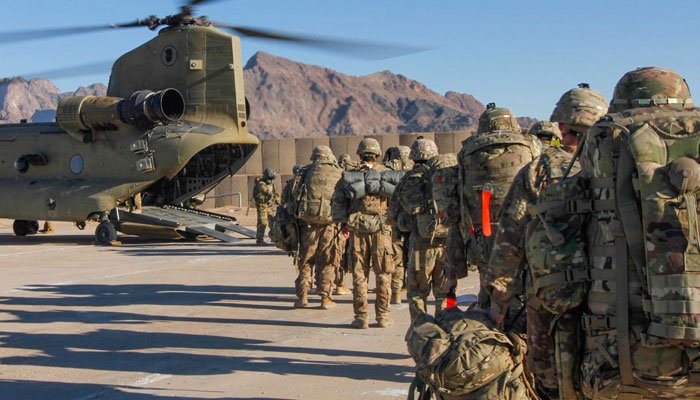
US troops in Afghanistan marching towards evacuation helicopter (Photo sourced: Internet)
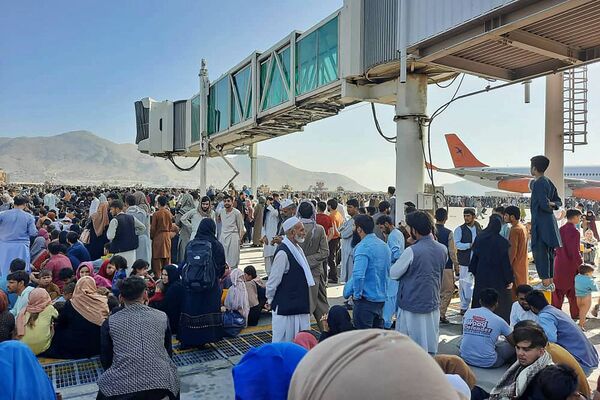
Afghan people climb on plane Kabul Airport Photo- Wakil Kohsar / AFP 16 Aug 2021
Afghans crowd the tarmac of Kabul airport to flee the country. Photo- AFP
Taliban fighters take control of Afghan presidential palace in Kabul after Afghan President Ashraf Ghani fled the country. Photo- AP/Zabi Karimi
U.S soldiers take a position to guard along a perimeter at the international airport in Kabul, Afghanistan, Monday, Aug. 16, 2021. Picture- AP Photo/Shekib Rahmani
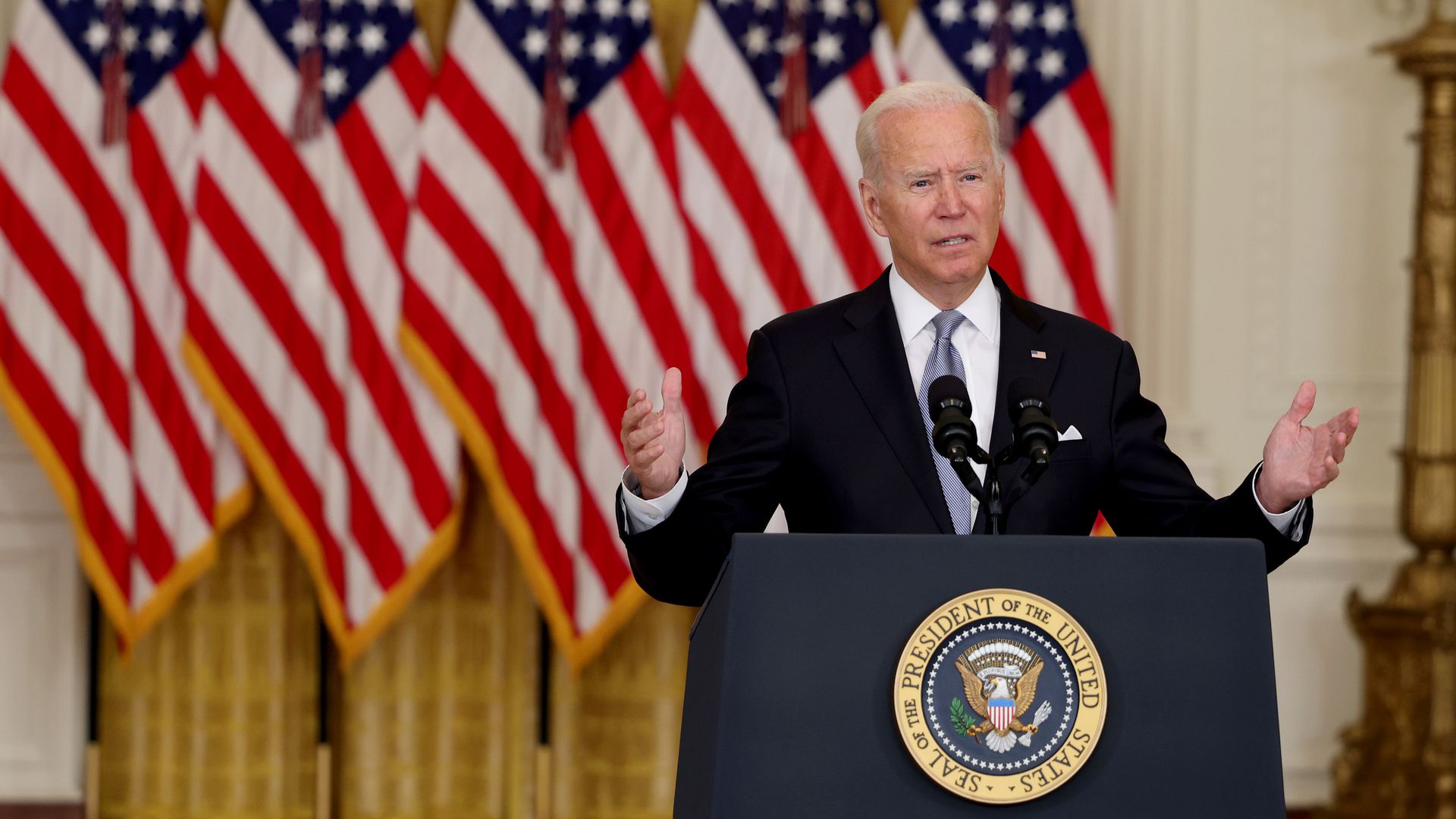
USA President justifying USA pullout of Afghanistan and blaming Afghan people (Photo sourced: Internet)

FURTHER READING

Quick overview of Afghanistan history (without listing USA support for Taliban: https://www.nationalgeographic.com/history/article/how-centuries-of-strife-shaped-modern-afghanistan

US support for Taliban: https://www.jstor.org/stable/29768089

https://www.democracynow.org/shows/2021/8/17# (For Afghanistan jump to Haran Rahoumi at 17.19 mins. on video to 31.4 mins; and again to from 37mins. with Azmat Khan to 46mins. In my opinion much more informative than ex-US Col. Amy Wright, now in Codepink, Vets for Peace.)

https://www.foxnews.com/world/taliban-fighters-execute-22-afghan-commandos

WHO ARE “WE”?

Diarmuid Breatnach

(Reading time: one minute)

When I read or hear someone say something like: “We should stop supporting Israel” or even “We need to stop ignoring Israel’s crimes”, my hackles rise somewhat and I ask myself “Who are this ‘we'”?

Are you turning a blind eye? No, you are not. Amy I? Are those who post the crimes of the Zionist state and all the others who have “liked” those posts, or the thousands who have demonstrated in Ireland in solidarity with Palestine? Or those who go on solidarity visits every year, braving Zionist surveillance and traveling under cover? Or the unknown thousands who don’t buy goods produced in Israel, so much so that when supermarkets display avocados from Israel they leave off the country of origin and one no longer sees herbs for Israel on sale in their shops (not in Dublin anyway). No matter the limited effect these actions have, clearly “they” are not supporting Israel and are in solidarity with the Palestinians.

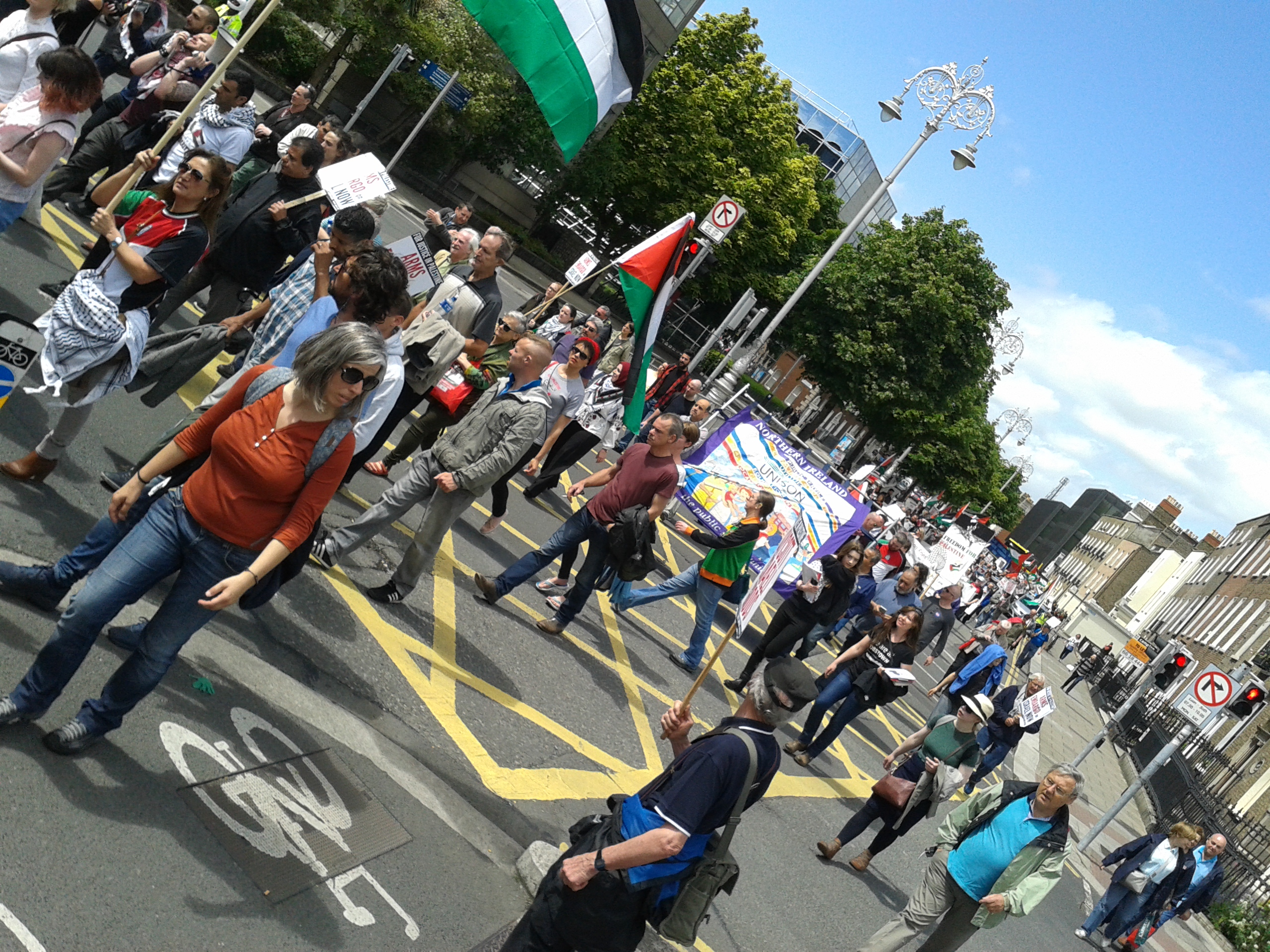
Part of Palestine solidarity march in Baggot Street, Dublin, June 2021 (Photo: D.Breatnach)

This is more than personal protest at being lumped in with the imperialists and their collaborators or even the apathetic in the “we”. More importantly, I am making what I consider to be an essential political point.

I and “we” are not part of the oppressors (nor of the apathetic sections, those who have not yet awoken). To speak in that way is liberalism. It implies that you and I and so many others are part of a society that we order and run and that its rulers represent us. We are not and they do not.

Our society’s managers are representatives of capitalists and worse, monopoly capitalists, whose governing ethos is profit, maximisation of profit and continuation of profit, amen. In pursuit of that they compete with other monopoly capitalists and other monopoly capitalist-run states but also cooperate and collude with them when their interests coincide. Clearly for some substantial time now the interests of the rulers of the EU and other Western capitalist states coincide with those of the USA. And clearly, Israel serves US interests in the Middle East, the only state in that region which is safe from a) socialist revolution and b) take over by anti-imperialist Islamicism.

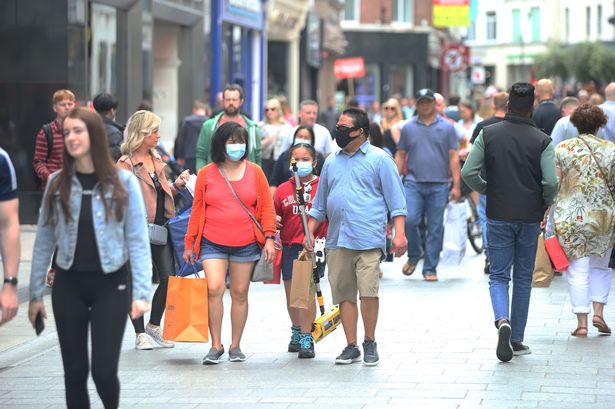
People in Grafton Street, Dublin (Photo credit: Stephen Collins)

So if WE are in solidarity with Palestine and WE want to see it free, WE must be against Israel. And if WE are against Israel, WE have to be against the USA. And if WE are for that people and against those powers, then WE are on the other side of a line from the Zionists and their local supporters. The greatest help WE can give the Palestinians in addition to expressions of solidarity is to overthrow the imperial powers and their monopoly capitalist allies wherever WE are.

If we think of those rulers as being part of us, as part of “We”, we are ideologically disarmed and unfit to go into battle against them. In that case, the assistance WE can give the Palestinians will be even more limited than that for which we have the potential at the moment.

end.

UNREMITTING SLAUGHTER OF WORKERS

Diarmuid Breatnach

(Reading time: 4 mins.)

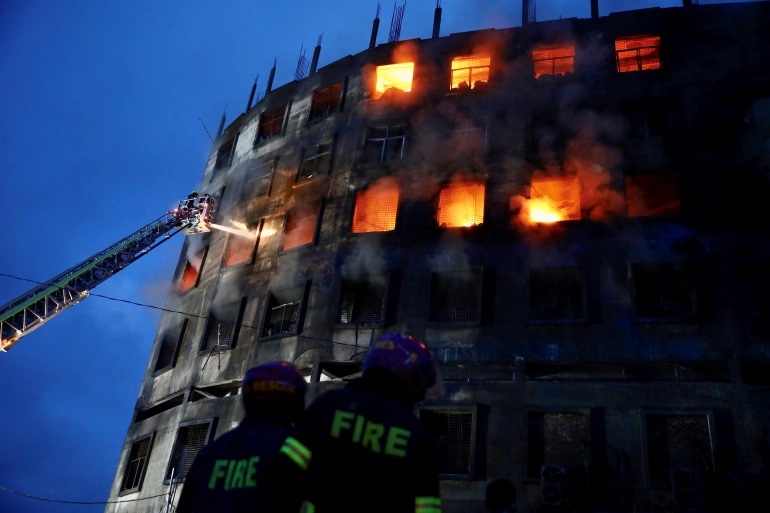
A fire in a Bangladesh factory last Thursday killed at least 52, some of them children as young as 11 years of age, according to relatives and neighbours. “Emergency services told Al Jazeera they had recovered 49 of the bodies at the Hashem Food and Beverage factory in Rupganj, an industrial town 25km (15 miles) east of the capital, Dhaka. Three people also died after jumping out of the building.” The police chief of Narayanganj district in which the factory was located, Jayedul Alam, was quoted saying that multiple fire and safety regulations had been breached and that, at the time of the fire, the entrance/ exit had been padlocked, the latter also confirmed by firefighters.

Those who died were workers, part of the world-wide slaughter of workers to satisfy the greed of a few. Every second, every minute of every day, all over the world, workers are killed or mutilated by the capitalist system in accidents at work. They are “accidents” only in the sense that the employers in most cases did not deliberately set out to kill the workers – they merely required them to work in conditions and without precautions that risked – no, ensured — accidents would happen. In fact, as a safety blog writer recommended (see Sources), we should stop calling them accidents – let’s call them mishaps instead, incidents that could have been avoided. And a proportion of those mishaps that were bound to occur would be fatal.

Those left behind to mourn a sibling, parent, partner, friend or – heavens above – a child, are of the workers also. Gone too, an income, a precarious investment in survival. The ripples of the “accident” spread outward through family and worker neighbourhood, ripples that very rarely, if ever, reach the rich neighbourhoods, the place where live those who profit from those workplaces.

From time to time here in the “western world” or the “North” as this sector, more in economic terms than political is variously described, we hear of such disasters in the “other” world, such as that at Rana Plaza in 2013. These are the places around the world where smaller-to-medium local capitalism is at work alongside foreign mega-capitalism. Many of the brand-name products we consume, wear or use are manufactured or processed in those countries. For the capitalists to make the profits their system requires and to compete with one another, consumption needs to be high and therefore the prices to be relatively low. And the wages – much, much lower. And safety conditions? Negligible.

The Tazreen Fashions factory fire in Dhaka, 2012 killed 112 workers (Photo source: Al Jazeera)

In November 2012 a blaze at Tazreen Fashions in Dhaka, which makes clothes for foreign clients including C&A, Walmart, Sears, Disney and others, killed 112 workers. Commenting on the background to the disaster, in a Guardian article in 2012, journalist Scott Nova, (see Sources) stated:

“In the last two years, fires in Bangladesh and Pakistan have taken the lives of nearly 500 apparel workers, at plants producing for Gap, H&M, JC Penney, Target, Abercrombie & Fitch, the German retailer KiK and many others”. Nova went on to comment (in 2012): Bangladesh is now the world’s second-largest apparel producer. It did not attain that status by achieving high levels of productivity, or a strong transportation infrastructure; it got there by being the rock-bottom cheapest place to make clothing.

“This derives from three factors: the industry’s lowest wages (a minimum apparel wage of 18 cents an hour), ruthless suppression of unions and a breathtaking disregard for worker safety. The industry in Bangladesh has been handsomely rewarded for its cost-cutting achievements, with an ever-rising flood of business from western brands …… And local factory owners understand that if they do not continue to offer the lowest possible prices, those brands will be quick to leave.”

Some of the western world’s high street brands that are produced by super-exploited workers in firetrap factories abroad. (Photo sourced: Internet)

Added to that is the apparel industry’s indulgence in “fast fashion”, in order to boost consumption still further. No longer is the year divided into four seasons but “52 micro-seasons”. “Fast fashion giants H&M and Forever 21 receive new garment shipments every day. Topshop features 400 new styles every week, while Zara releases 20,000 designs annually” (see Green America link in Sources). To keep up with that demand requires a frenetic level of production, albeit at lower quality, layoffs when each ‘micro-seasonal” demand is filled and of course, even less concern with safety conditions. The factory fire last Thursday is only the latest in a long list and there will be many more.

But lest we think industrial mishaps are a problem only somewhere else, it would be useful to remind ourselves that even in our relatively under-industrialised economy in Ireland, workplace accidents continue to maim and kill. According to the Irish state’s Health & Safety Authority: “Regrettably, 47 fatal work-related accidents were reported to the Authority in 2019, representing a substantial increase from 2018, which was the lowest year on record with 39 fatal accidents. … The number of work-related non-fatal injuries also increased in 2019, with 9,335 reported to the Authority.” And: “the 39 fatalities recorded in 2018 was one of the lowest numbers of workplace fatalities on records. However, despite the current pandemic circumstances, it would appear that 2020 is heading for number in the mid to late 40s.”

As we may imagine, construction comes high on the mishap list but so also do factories, agricultural work, transport and fishing and mishaps occur also in hospitals and care homes, shops, restaurants and even offices. The Covid19 pandemic revealed that many areas of occupation are necessary for our daily lives but are also vulnerable. And revealed also how slowly and inefficiently protective measures for those workers were taken by their management levels or sadly, enforced or even monitored by trade unions.

Firefighters work at the scene of the burning Bangladesh factory last Thursday (Photo credit: Mohammad Ponir Hossain/Reuters)

IMPUNITY OR CRIMINAL PENALTY?

It is reported that the owner of the burned Bangladeshi factory and a number of his sons have been arrested. This is to be welcomed and hopefully the prosecution of those responsible will be followed through. Prosecution of employers responsible for mishaps is one measure that can be taken to extend the protection of workers but the process is rarely in the hands of the workers and in addition deals with structures that are more aligned with the interests of employers than they are with those of their workers.

Such procedures that have been tried have usually been under civil1 law and involved claims for financial compensation alleging negligence; however increasingly criminal law is being invoked, as is presumably the case with the Bangladeshi factory.

Years ago I was associated with a militant organisation by the name of The Construction Safety Campaign.2 If I recall correctly, at the time, one worker was being killed every week on a construction site in Britain, with injuries on a daily basis.

The CSC maintained that every time a fatality occurred on a construction site, work should cease for the whole day. It is indicative of the attitude of the big construction companies and indeed of many subcontractors that such a demand actually required voicing.

Among their other demands was that whenever there was such a fatality, that the main contractor be charged with manslaughter, i.e the crime of being responsible for an unintended fatality through action or inaction. Such a demand was very reasonable but was seen as almost revolutionary at the time. But a few years later a construction company boss did indeed stand trial for manslaughter and, although he was acquitted, a precedent had been set. However it remained a difficult process to even have the employer charged, to say nothing of convicted.

It was not until 2008 that legislation was specifically enacted to facilitate the charging of companies when individual company directors proved difficult to charge with manslaughter in the event of fatalities in their workplaces. The first case under the new legislation took place in 2009 and the sole company director in this case was also charged separately under common law with manslaughter. Seeing alleged culpability of the employer in this case, that he had required a geologist to work in an unshored trench deeper than his own height which, when collapsed, suffocated the geologist, reminded me of the claim of the defendants in the Shrewsbury 24 trials arising out of the 1972 construction strike.3

(Sourced at IDCOMMUNISM.ORG)

CONTINUING SLAUGHTER? 6,000 DEATHS A DAY.

“The ILO (International Labour Organisation) estimates that some 2.3 million women and men around the world succumb to work-related accidents or diseases every year; this corresponds to over 6000 deaths every single day. Worldwide, there are around 340 million occupational accidents and 160 million victims of work-related illnesses annually.” (see Sources)

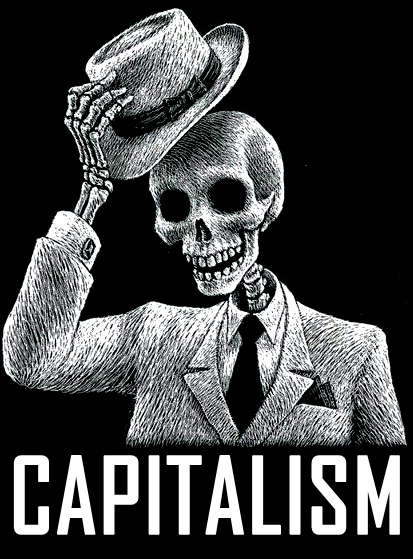
Capitalism kills. It kills and maims millions of workers by workplace mishaps, overwork, diseases, psychological stresses, environmental disasters – and let’s not forget wars.

Revolution, we are often cautioned, is chaotic and entails death and injury to many – most of which will be workers, whether in the revolutionary forces, or enlisted by the system, or in one way or another swept into the casualty figures. This is all true. But Revolution killing as many as capitalism? Hardly. And after successful Revolution, production can be organised to eliminate mishaps and unhealthy working conditions. At least, with the mechanisms in the hands of the workers, they have the possibility of removing workplaces from danger or, where danger might be inevitable, to reduce it greatly. Industrial mishaps, let’s not forget, are avoidable.

MEANWHILE

While we work for revolution and a society under the control of the workers, we have a duty to ourselves and to our dependents to work to reduce the occurrence of mishaps. We can do this by improving conditions and prevention in our own workplaces, by reporting health and safety violations elsewhere to the relevant authorities and by demanding reparations and improvements from the companies whose products we consume through their use of production facilities abroad – such as firetrap sweatshops4.

Under legislation in Ireland and the UK, workers are entitled to elect health and safety representatives, with which management are obliged to consult. These may be coincidentally representatives of a trade union but they need not be even union members – the legal right to health and safety representation is separate from the question of trade union representation. Of course, raising issues of concern that would cost the management time and money to address may necessitate the H&S representatives to ensure they have trade union protection, legislation notwithstanding.

In a workplace years ago, wishing for a period of relative calm, I declined nomination as trade union shop steward and instead accepted that of staff health and safety representative. Quite quickly I found myself in more arguments with local management than the union representative needed to be and across the organisation too, as I pushed for Risk Assessments to be carried out, as we had done in my workplace, examining every operation. The organisation’s Health & Safety Committee agreed the need for the assessments but failed to push for them and unfortunately so did the trade union itself. Health and Safety representatives may find themselves struggling not only with Management but also with their own trade union structures (and at times with their own co-workers). Nevertheless, comprehensive workplace risk assessments are the only reasonable way to avoid or limit mishaps.

Practice fire procedures or drills are necessary too. In another workplace, this time as a manager myself, we made recorded fire checks on every shift and stepped up fire drills from every six months to monthly, from always announced to some unannounced. Who would remember was required after six months? Had there been changes in the building, procedures or staff since the lat exercise? On one of our early drills, the observer we had detailed to follow with checklist and notepad found problems that had never been recorded previously and which required our team to take remedial measures. On the occasion of another drill, I learned that the front entrance had been used instead of the emergency exit. Investigation revealed that in the passage way towards that emergency exit, one of the staff had placed his bicycle for safe-keeping – and he was the staff health and safety representative!

The election of workers’ representatives and the monitoring of their performance in those roles is the responsibility of the workers, not management. All I could do was to instruct the person to remove the bicycle and to make all staff aware that the placing of any obstruction in the emergency exit passage way was a serious disciplinary offence.

SOLIDARITY

As most of us around the world are workers, it is necessary for us to express internationalist solidarity towards one another. Note I said “necessary”, not just desirable. When our labour power is at the mercy of employers who move factories around the world, or contract factories anywhere they find sufficiently profitable, our gains in separate countries can be undermined, we can be undercut and made unemployed. The effective response to these threats lies in internationalist solidarity, so that we assist workers in other lands in their organisation and we target their exploiters when we find them nearby.

In 2015 I joined a picket of major French clothing company Benetton’s shop in the Stephens Green Shopping Centre, Dublin. We also did a sit-in inside the shop, defying threatening behaviour of the Centre’s security staff and likewise the threat to call the police. A subsequent picket and sit-in also took place (see Sources). Benetton was one of the many foreign companies exploiting the workers of Rana Plaza and, after the disaster there, had promised to pay financial compensation to the relatives of the workers killed there. Such offers are often made in similar situations for public relation reasons, usually without admitting culpability. At the time their store in Dublin was picketed, Benetton had still not paid the compensation promised two years earlier.

In contrast to fascists and other racists who advocate protecting our own native workforce above all else, we should extend solidarity to all other workers who are being exploited. When all workers are achieving protection from the worst working conditions and lowest wages, it will be that much harder for our employers to use one section against another. In the past, our employers in every business, industry, city or country tried to treat with us as individual workers but we found that banding together was the only way to improve our conditions and remuneration for all. Internationalist solidarity is the application of that lesson on an international level — the same level as that on which our exploiters operate.

End.

FOOTNOTES:

1 Civil law deals with matters like company law, family law, personal injury cases, libel and slander. A number of penalties including financial damages can be imposed and awarded by the judiciary in such cases but not prison terms (however failure to comply with penalties imposed can result in imprisonment for “contempt of court”).

2 I got a bit of a scare when attending one of the CSC’s pickets which was of the Houses of Parliament in Westminster, prior to a meeting inside booked by an MP and which we were going to attend. As we went through the security sensors, the construction worker I had been talking to set off the sensor alarms. As we were both political activists and I was Irish in Britain at a time of IRA bombings there, this made me very nervous. The construction worker began pulling nails and screws out of his pockets and piling them into a tray while I grinned nonchalantly at the security police. His pockets emptied, he went through again – and set the alarms off once more. I was sure we were going to be taken into a room and strip-searched. However, once they ascertained that it was the steel toecaps in his construction boots that were setting off the alarms, we were allowed through, me wanting to punch my comrade a number of times.

3 During their trial for alleged intimidation in flying pickets from construction site to site during the 1972 construction strike in Britain, some of the Shrewsbury 24 gave evidence that among the violation of health and safety regulations they had witnessed at sites they had picketed was workers being obliged to work in unshored trenches deeper than their own height. Twenty-four construction trade unionists were charged with serious crimes as a result of their activism during the strike and twenty-two were convicted across three trials in 1973 and 1974 with six, including the later actor Ricky Tomlinson, being sentenced to years in prison. The convictions of all 22 were overturned on appeal earlier this year but a number had died in the intervening years.

4. In view of the reality, it is shocking that a fashion clothing company should call itself, even in some attempt at irony, “Firetrap”. This company is now part of the Fraser Group, with factories in much of the world producing clothing, in particular sports wear. https://en.wikipedia.org/wiki/Firetrap

SOURCES:

Recent Bangladesh factory fire: https://www.aljazeera.com/news/2021/7/10/murder-bangladesh-factory-owner-held-after-deadly-fire

Rana Plaza disaster 2013: https://www.corpwatch.org/article/benetton-others-tied-bangladesh-factory-disaster-400-killed

https://www.theguardian.com/world/2015/apr/17/rana-plaza-disaster-benetton-donates-victims-fund-bangladesh

https://www.theguardian.com/world/2014/apr/19/rana-plaza-bangladesh-one-year-on

https://www.thejournal.ie/rana-plaza-benetton-2065943-Apr2015/

Number of other factory fire disasters: https://www.theguardian.com/commentisfree/2012/dec/13/apparel-industry-outsourcing-garment-workers-bangladesh

Dublin Benetton picket and sit-in:

https://www.thejournal.ie/rana-plaza-benetton-2065943-Apr2015/

Fast fashion: https://traidcraftexchange.org/fast-fashion-crisis-2020-campaign

https://www.greenamerica.org/blog/factory-exploitation-and-fast-fashion-machine

Ireland, industrial mishaps: https://www.hsa.ie/eng/publications_and_forms/publications/corporate/annual_review_of_workplace_injury_illness_and_fatality_statistics_2018-2019.pdf

First case under (2008) UK law on corporate manslaughter: https://www.theguardian.com/uk/2009/jun/17/mudslide-corporate-manslaughter-charge

Shrewsbury Twenty-Four: https://www.thejournal.ie/shrewsbury-24-ruling-ricky-tomlinson-5389409-Mar2021/

General: https://www.memic.com/workplace-safety/safety-net-blog/2019/march/are-all-accidents-preventable

https://www.ilo.org/moscow/areas-of-work/occupational-safety-and-health/WCMS_249278/lang–en/index.htm

Health & Safety worker representation: Safety, Health & Welfare at Work Act (2005): https://www.hsa.ie/eng/Topics/Safety_Representatives_and_Consultation_/