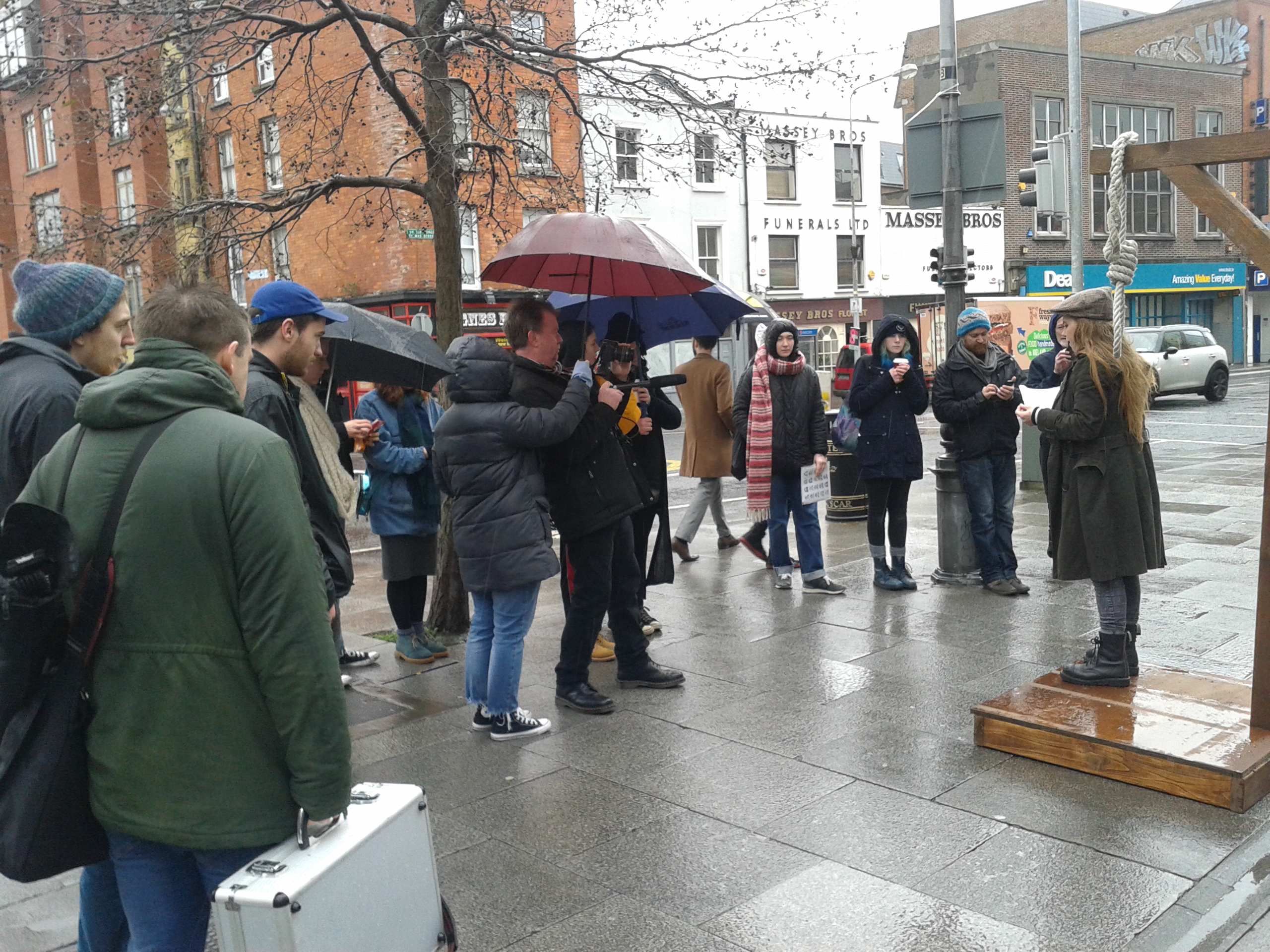
PLAIN-CLOTHES POLICE OFFICER SHOT DOWN IN DUBLIN STREET


Diarmuid Breatnach

He’s up there if you want him …. on the footpath.”

On 14th April 1920, a man in plainclothes was shot by another, also in plain clothes, in Camden Street, Portobello, on the south side of the city and not far from the centre. A passing motorist rushed the gunshot victim to the nearby Meath Hospital but he died there.

The victim was Det. Constable Harry Kells of the Dublin Metropolitan Police, a man of 41 years of age who lived in No. 7 Pleasant Street, i.e very close to where he was shot. He was married without children.

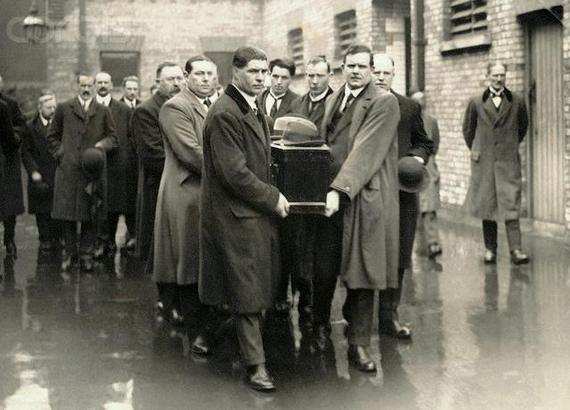
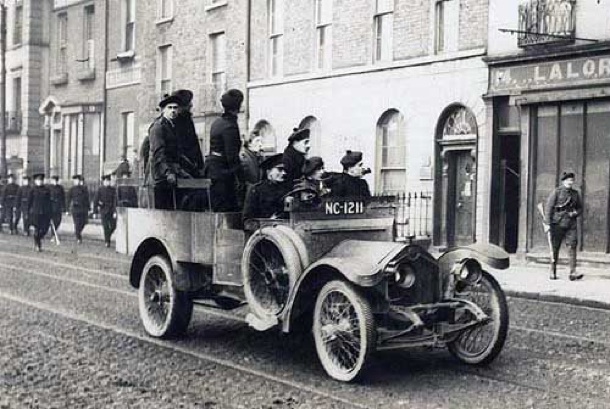
Funeral party of DMP colleagues of Det. Constable Kells, with the coffin holding his remains.
(Source: irishconstabulary.com)

Many reports say that Kells was a member of the DMP “G” Division, which were known as “the political police” (apparently both within the DMP and outside). However, “McRIC” in the irishconstabulary forum states that this is inaccurate and that the man, although recently promoted to plain clothes work, was rather in “B” Division and investigating a number of burglaries in the city.

From a number of investigations carried out it seems that this question may never be resolved but it is highly likely that Kells was at least in the process of being transferred to “G” Division. However, the reason for his killing is almost certainly much more specific. It seems that Kells had been reviewing identity parades in Mountjoy Jail in attempts to find the killers of British intelligence agent Alan Bell, who had been assassinated on the 27th March. While engaged in this work, he had been identified by Peadar Clancy1, Vice-Commandant of the Dublin Brigade of the IRA, who sent a note about him to Michael Collins, who put the execution order on Kells.

It is worth noting that Republican prisoners in Mountjopy had also been taking part in a hunger-strike at that time in protest at removal of political status while detained without trial. Ironically, 90 prisoners were released on the very day Kells was killed.

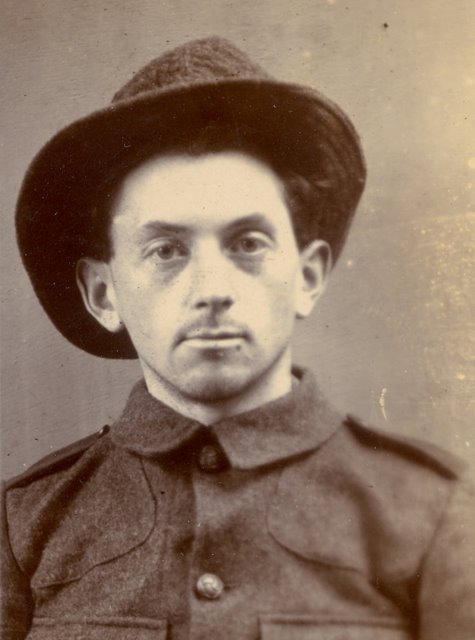
Peadar Clancy, who got the word out to Collins about Kells working Identification parades in Mountjoy Jail, Dublin. (Image source: Wikpedia)


THE LARGEST RAID EVER CARRIED OUT BY BRITISH TROOPS IN DUBLIN

“Aul Decency”, posting on Dublin Forum.ie on 31st March 2012, drawing on April reports in the Irish Times and New York Times, says that the incident “was the cause of the largest raid ever carried out by British Troops in Dublin.”

According to “Aul Decency”: “Two of those sought in connection with Kells’ killing were Sinn Féin members Michael and William Kavanagh who lived at 5 Pleasant St., who had previously been “fingered” by Kells, and it was thought they would seek refuge among friends in the neighbourhood. The troops swarmed over Camden St from Cuffe street and into Portobello and the homes of the local Jews2. Over 100 people were arrested that day but Kells’ killer was not among them.”

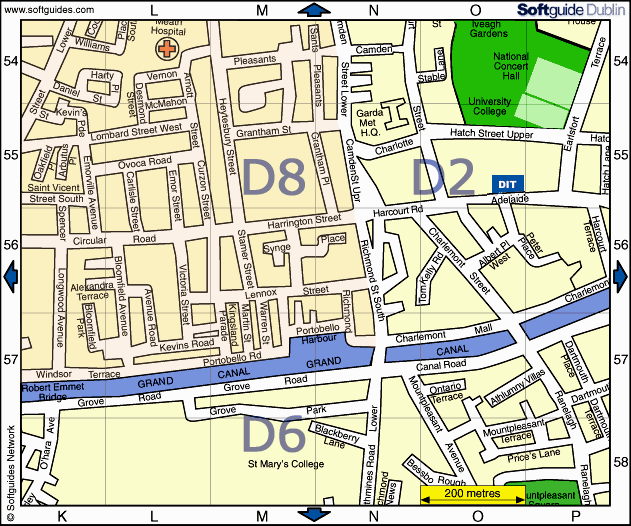
Portobello area map today,  Camden Street is a longish one right between the D8 and D2 legends.   Pleasant St. is off Camden St. to the left, near the top of the image. (Source: Internet)


This “fingering” had in fact been carried out after the 1916 Rising when Kells reported that the brothers had been seeing changing into Volunteer uniforms in the house, information which had resulted in at least one of the brothers ending up in Frongoch concentration camp that year and losing his job.

It is enough perhaps to know that Kells was killed by Republicans and the probable reason but we can go a bit further, drawing on The Squad by T. Ryle Dwyer (quoted in irishconstabulary.com) where Paddy Daly of the Squad is quoted about the operation to kill the police officer:

On our way we picked up Hugo MacNeill, a nephew of Eoin MacNeill3 the initial President of the Irish Volunteers. He was not a member of the Squad but he asked to come along.

We divided up into patrols of two4, MacNeill was with Joe Leonard. ODaly said he heard a couple of shots, and saw MacNeill sauntering down Pleasant St. as if nothing had happened.

What was the shooting about? O’Daly asked.

Kells is up there if you want him, MacNeill replied.

Where?O’Daly asked.

On the footpath‘, replied MacNeill.

Det. Constable was the third police officer to be killed in Dublin so far in 1920 in a war between the British occupation forces and the IRA, in which not only police officers but intelligence agents and British soldiers on one side were killed and, on the other, Volunteers, active Republicans, sympathisers and uninvolved civilians. Of course the war was going on in many other parts of Ireland but it is often forgotten that among those areas subject to martial-type law were Dublin County and City, where had been the HQ of the British occupation since 1171: Dublin Castle.


SOURCES:


http://www.dublinforum.net/forum/showthread.php?t=2110&page=3

http://irishconstabulary.com/topic/1477#.WO6mGEvb-_s

https://en.wikipedia.org/wiki/Timeline_of_the_Irish_War_of_Independence

http://www.irishmedals.org/r-i-c-d-m-p-k-i-a-.html

1Peadar Clancy was one of two Volunteers and one civilian who were tortured by RIC Auxiliaries in Dublin Castle and killed on November 21, 1920 (Bloody Sunday).

2Portobello had a Jewish quarter at that time. Some of the residents are reputed to have been active in the resistance movement and a number had been on strike or locked out in 1913.

3He who had on Easter Saturday 1916 issued the cancellation order for the Rising.

4According to testimonies by Squad members, working in two groups of two was standard procedure. Typically each pair would take one side of the road. Once the assassination was carried out, the two who had not done the killing would cover the escape of the two who had.

AN EASTER STORY


Diarmuid Breatnach

There are many different kinds of Easter stories – religious ones, or about Easter parades and processions, ones about family reunions, Easter egg hunts, even holidays …. this isn’t one of those.

The man, let’s call him Jeremiah or Jerry for short, stood outside the pub on a Sunday afternoon and struggled to quell the apprehension threatening to flood his mind and body. It had to be done. He turned to his companion, who seemed to view everything through laughing eyes and was no different now. Brian had three teenage kids with him, two of his own and a friend of one of them. Hardly ideal, but Brian had turned up with them a little while ago and there was no-one to leave them with. Well, they’d be all right – Jerry would be the target and, after him, Brian. They wouldn’t touch the kids.

Best give me the bag, Brian,” he said and, receiving it, checked inside. The stuff was there. Of course. Jerry folded the bag and stuck it under his jumper, under his coat.

He was focused on the tasks ahead but the trail that led them here had started days earlier. And, in some ways, years before that.

He squared his shoulders, turned and entered the pub. Brian and the kids followed.

**** **** ****

He had been at work on Friday afternoon when the call came from the Manager of the Irish Community Centre. Of course, he asked the staff to put it through to his office.

Do you know your event is in the newspapers?”

Something in the Manager’s voice alerts him that he is not being congratulated on the publicity.

The Easter Rising commemoration?”

Yes. It’s in the Evening Standard.”

Well, that answered the second question he had in mind.

No, I didn’t know. What are they saying?”

He knows what the British media are like and he’s got a sinking feeling.

It transpires that an Irish Republican organisation had put the event on their website, which had been noted by an Englishman who lost his son in the Omagh bombing of 1998. There are many questions to be answered about that bombing, both within the Republican and the State side, but for many years, not unnaturally, the father had been focused on the Republican group allegedly connected to the Real IRA, who had placed the bomb. In addition to his son, the bomb had killed 28 other people, the second-highest death toll for any day during the war in Ireland, the highest being the Dublin-Monaghan bombing of 1974, with a toll of 34. Jerry was aware that the 1974 bombings did not attract anything like the same media attention and understood the reason – they had been carried out by Loyalists under British Intelligence Service direction.

But what had all this to do with the Irish in Britain Representation Group in South London, and their Easter Rising Commemoration? Or with the Irish Community Centre? Well, the grieving father had noted the posting by the Irish organisation, noted the venue and rang, demanding that the event be cancelled.

I told him the commemoration is an annual event organised by an Irish community organisation and that there’s never been any trouble at it. I told him it has nothing to do with that Republican organisation …. it doesn’t, does it?”

No, it’s just us, the local Irish in Britain Representation Group branch. But surely any organisation is entitled to advertise the event?” replies Jerry.

Jerry is noting doubt in the Centre Manager’s voice responding to him. He is on the receiving end of huge pressure, working in his office, alone.

He wanted me to cancel the booking and I said I couldn’t do that,” said the Manager.

The grieving father had got on to the local authority, who replied that the event was the business of the Irish Centre. The father then contacted the media, who rang the local authority again and this time, instead of sticking to their original line and weathering what would be a short-lived storm, and without phoning the Centre Manger, their spokesperson condemned the event and stated they would be asking hard questions of the Centre, which they part-funded.

Jerry reads all this again when he slips out to get a newspaper. He feels for the beleaguered Centre Manager but can do nothing. It’s too late to contact the newspapers because the story is published. The event is to be held that evening. It has been advertised in the local area and in the Irish Post, the main newspaper at the time for the Irish diaspora in Britain. And in any case, one cannot – should not – give in to intimidation, coercion. The community had mostly caved under the Prevention of Terrorism Act in 1974 and had not really rallied again until the Hunger Strikes of 1981. The event must go on.

Jerry heads home, thinking about additional security needed on the door for the event, composing replies to the local authority, a letter in the newspaper ….

The IBRG Ard-Choiste, its governing body, had withdrawn its support of the Time To Go coalition in Britain some years earlier because of undemocratic maneuvering by some left Labour politicians, along with the sidelining of specific Irish community concerns. They had not been alone: Stop the Strip Searches Campaign and the Troops Out Movement had pulled out also, leaving the tiny Labour Committee on Ireland, the Socialist Workers Party and Communist Party of Great Britain to be supported by only the Wolfe Tone Association (SF support group in London) and the Connolly Association (linked to the CPGB) among the Irish campaigners .

Later, in 1998, the IBRG had been divided on the Good Friday Agreement. It was not the issue of continuing or ceasing the armed actions of the IRA that had been the source of the division, rather the acceptance of colonial rule, albeit claimed to be for tactical reasons only. A majority within the IBRG came out against the Agreement and that was in accordance with Jerry’s position too.

Although he supports none of the Republican groups opposing Sinn Féin, he has heard whispers in the Irish community at various times associating him with this or that group. This might well be feeding doubts in the Centre Manager’s mind.

Jerry is in a more difficult position than might seem. He is not only Secretary of the local IBRG branch that has organised the event and is affiliated to the Community Centre, but also the Chairperson of the Irish Centre’s Management Committee itself. The Management Committee is the Centre Manager’s employer and has a duty of care to him. And after nearly a decade of campaigning for the provision of the Centre and the meagre funding it receives, no-one on the Committee would want to antagonise the local authority.

But it was the IBRG branch itself and in particular the Irish Pensioners’ Association which was then a part of it, which had won the provision for the community in the end. And Jerry had been part of the campaign, elected as Chairperson of the Steering Group in the years while renovations of the building and available funding were discussed, elected Chairperson for the first six months after the Centre opened and at the Annual General Meeting for every year afterwards. In fact, recently Jerry had been trying unsuccessfully to step down, to ease a replacement into his position.

On the train from London Bridge on the last leg of his journey home, Jerry reflects ruefully that this controversy might cause his stepping down, which was hardly the way he had anticipated his leaving. No stepping back slowly, supporting someone new in position and easing himself out. No – thrown out instead! That would of course imply he had done something wrong, which he hadn’t and that the IBRG had been wrong to commemorate the Rising, which they hadn’t either. Ironically, if moves were made now to replace him, he’d have to fight them.

**** **** ****

Before he arrives at the Irish Community Centre, Jerry looks carefully around the mostly residential street. Nothing seems threatening but can one be sure? He is carrying the IBRG’s branch’s banner, wrapped up in black bin liners, which makes him a visible target if someone’s searching. On the other hand, one of the poles of the banner is loose within the bundle, in case of need ….

He drops the Centre’s keys in his nervousness and enters, disabling the alarm and turning quickly to retrieve the keys and lock the door. Then, into the hall, to begin arranging some of the material ….

He is anxious for some of the IBRG members to arrive but jumps when the doorbell rings. Checking through the fish-eye spyhole, he is surprised to see one of the Irish Pensioners, who lives locally.

Opening the door and ushering her in, he locks the door behind her, saying apologetically “There’s only myself here so far.”

Are others coming?” she asks – she has read the newspaper and unerringly touches Jerry’s main fear at the moment.

I’m sure they are, Ellie. What are you doing here so early?’

I thought you might need some help.”

Jerry is touched straight through to his heart but has to refuse. He can’t have her here if there’s an attack with no-one else but himself to defend her.

Oh no, Ellie that’s very kind of you. But I kind of know what I have to do and explaining it to others will just take longer and make me flustered. You know how it is. Thanks a lot. Besides the others will be here soon. Come back when we’re open …..” he trails off guiltilly.

Still, she goes and he heaves a sigh of relief, at the same time feeling shame.

But there’s work to be done.

A scattering of volunteers arrives over the next half hour. The reception table is set up in the lobby, to sell tickets and distribute leaflets. Hidden behind, are the lengths of wood in case of attack by one of the British fascist groups. Up goes the green-white-&-orange bunting, portraits of the executed 1916 leaders, enlarged copies of the 1916 Proclamation. At the back of the stage, facing the hall, the large artwork Jerry made a few years ago of green, white and orange flames bursting from the date 1916. And the IBRG branch banner.

The stage is ready for the band, a group called The Mc ____ Brothers, who play Irish ballads, including Republican material. Water jug and glasses for the speakers. Tables and chairs rearranged on the hall floor (the part-time Caretaker had laid them out but Jerry always prefers a more “club” arrangement, of smaller tables spaced apart surrounded by some chairs).

By the time the opening hour arrives, Jerry is sweating but it is the sweat of work, not of fear or apprehension. The hall looks good. People are starting to arrive. Maybe he can relax now. Maybe. Brian is on the door with others close by.

The event is a bring-your-own-alcohol one and Jerry and others in the lobby spend some time directing people to the nearest off-licence, so that people are coming in, going out, coming in, sitting in the hall …. Jerry is scanning their faces, looking for possible sources of trouble.

An hour later and the band has not arrived. Pol phones them but gets no reply. Phones their manager but no reply either. Another hour later, the reality dawns on the organisers. The band will not be coming. They have seen the newspaper and decided to look after their safety. But they haven’t even bothered to tell them.

The organisers confer, after which Jerry mounts the stage, calls for attention and begins to speak.

A Chairde Gael agus a chairde ó thíortha eile, go raibh míle maith agaibh for coming here tonight to commemorate the 1916 Easter Rising with us. This is a hugely important event in Irish history and indeed in the history of the world and the local branch of the IBRG has been not just commemorating but publicly celebrating this historic event every year for some time now.

But we are very sorry to say that we have some bad news for you now. Some of you will know that very recently pressure was put on us to cancel this event but that we refused to do so. Pressure was put on the Irish Centre to cancel the event which they also and rightly refused to do.

That the British media would attack us is no surprise, they have been doing that for years. But that the local authority’s spokesperson should bow down to them and, without consulting with us, imply that we are doing something wrong here, that the Centre should not have taken our booking, is something else.

And worst of all, that an Irish band, which makes a living playing Irish ballads, should allow themselves to be scared off and not even have the decency to ring us – well, I don’t really have the words to tell you what I think about that.

So, a chairde, we offer you your money back and no questions and our sincere apologies. However, those of you who wish to remain are welcome to do so and we’ll make our own entertainment with a few songs …. we have a guitar player here …. another man plays a whistle …. But please, you are entitled to your money back and those who wish to please go to the table in the lobby now.”

As though he had been primed to do so (but Jerry knew he had not), a middle-aged Irishman at a table nearer the stage jumps up and shouts: “NO! We will not ask for our money back! We’re not going to be chased out by no British newspapers!”

A round of applause from the audience and a few cheers greet his outburst. And just like that, the evening is saved.

The guitarist plays some numbers and sings. Jerry gives an abbreviated oration and sings a few ballads. The whistle player plays some tunes. People sing along to songs. They drink, chat and buy raffle tickets. One of the raffle prizes is auctioned by the winner, a local publican Jerry had been surprised to see in the audience. The money goes into the takings. At the end of the evening, as they finally cajole the last of the audience out of the Centre (still with a wary eye on the street) and finish cleaning and tidying up, they count the takings. Financially, it has been their most successful evening ever, especially since they didn’t have to pay a band.

But the band ….. their action and lack of notification have left a sour taste in the mouths of the organisers. And during the evening, they learned that the Mc___ Brothers are booked to play at an Irish pub, on Sunday afternoon, just two days away. And only a five minutes’ drive from the Irish Centre.

**** **** ****

A council of war decides that the bar will be visited, Jerry will mount the stage (“you’re our best speaker”) and present the band with white feathers, symbolising cowardice. Some can’t be there. One or two think it will be dangerous. Brian, Pol and Jerry think it’s a good plan — so then they just need some white feathers. How hard can it be to get some?

Visits to duck pond parks yield none. The quaysides along the Thames show no seagull feathers. Brian drives to the coast and walks some beaches – and finds a couple of wispy ones. In desperation on Sunday morning, they burst open a pillow and drag out a handful of feathers. They are small, not at all like the large ones they had envisaged presenting to the band but they are white and they are feathers. Into the plastic bag they go and then Brian is driving Jerry and the kids to the pub. Brian has remarkable personal resources and has been through some very serious situations so this might be small potatoes to him …. but Jerry’s guts are churning.

Some faces in the pub turn to look at them as they enter. Jerry has been here before only once but a number of the clientele are known to him from other pubs and events. And he is probably known to more of them, as Chairperson of the Irish Centre. A few catch his eye and he nods at them, keeping his face impassive.

Do they know that the band playing here let down the audience two days ago? Of course they do …. or at least many would. This is the Irish community in SE London. Besides, the Manager of this bar, Kate, until recently worked for the publican who auctioned the raffle prize at the event on Friday night. At least one of them was there that night too.  Are they wondering what Jerry intends to do?

The band, which Brian has taken to calling the “McChicken Brothers”, is already playing on stage. Jerry had meant to get here before they got on but the feather search had been a delay. To get in front of them now might be resented by the audience and anyway, the band’s control of the microphones could drown out what needs to be said. Jerry goes to the bar, orders pints for himself and Brian and soft drinks for the kids, stitches a smile on his face and chats to Brian. And they wait.

Eventually the band takes a break and Jerry waits tensely for the indication that they are returning for the second half of their gig. When he sees them coming he nods to Brian, whose job is to fend off anyone attacking him before he has finished.

Just as the band reach the low stage but have yet to mount it, Jerry jumps up on it and begins to speak in a loud voice.

Ladies and gentlemen, your attention for a moment please!” EVERYBODY turns to look.

These musicians here were booked to play at an Easter Rising commemoration at the Irish Community Centre on Friday. They didn’t turn up. They left the audience (ok, bump up the figures a little!, he thinks) — 200 people – and the organisers stranded. And they didn’t even have the decency to tell us they weren’t coming. They ran scared, my friends, from lies in the British press.”

Jerry has the plastic bag in his hand and now dips into it, withdrawing a handfull of fluffy little white feathers.

Shame on you!” he says, facing the band members. “And this is what we think of you!”

So saying, he tries to throw the bunch of feathers at them but they erupt in a cloud between them, some clinging to Jerry’s hands. No matter, it is done. He steps off the stage and heads for the door, hoping to make it before anyone tries to stop him, before Brian has to get into physical stuff.

Surprisingly, someone shouted “Hear, hear!” and there had been a scattered round of applause.

Outside, they head for Brian’s car. A man comes running out and Brian steps forward to confront him, Jerry getting ready too, the kids behind him. Kate, the Manager, comes running out too and grabs the man. She says some things to him and he goes back in reluctantly, Jerry thinking the man doesn’t know how lucky he is that he didn’t tangle with Brian. Then Kate comes up to Jerry, shaking with anger, her face white.

You had NO right, NO right to do that in my pub!” she says.

We couldn’t let them get away with that, Kate,” Jerry replies.

Anywhere else. Not in my pub,” she says again.

The adrenaline is now seeping away and Jerry knows that his leg will start to shake soon. He feels a little sorry for Kate but needs to get away.

Sorry, Kate, that’s where they were,” Jerry replies and turns to go.

Don’t ever come in my pub again,” she calls out at his back.

**** **** ****

Many things were probably said in the local Irish community about the IBRG branch before and after that incident but probably that action contributed to an estimation that whatever you might think of them, they stood up for themselves and didn’t back down. That and their annual Children’s Irish Hallowe’en Party, their weekly Children’s Irish Art and History Group, their participation in the South London St. Patrick’s Day Parade and their occasional dramatic productions earned the small group a kind of respect in the local Irish community, a community often quite conservative in social outlook, often insular, often riven by jealousies and back-biting.

One night two weeks after the 1916 commemoration, there was a crude arson attempt on the Centre – a bottle with accelerant leaned against the front door and set alight. It burned a hole in the door and set off the fire alarms. Jerry, as a keyholder, got a call to attend from Ellie. The police were already there and Jerry dealt with them politely. Any enemies? they asked. Jerry wondered whether he should give them a list.

My guess is some British far-right group”, he replied, very glad that back in the Steering Group days, he had insisted on all the windows being covered with wire mesh panels, thinking of possible rock or even petrol bomb attack.

The police suggested they look through a list of recent attendance at the Centre. Jerry politely refused. Security provisions were made at the Centre.  Nothing came of whatever investigations the police carried out and Jerry was not surprised.

Media attention went away and the local authority didn’t take the matter further. Jerry wrote a letter to the Irish Post, denouncing the pressure applied against the IBRG and the Irish Centre and which might even have encouraged the arson attack. He did so under an assumed name because, as Chairperson, he wished not to implicate the Centre in his denunciation of the craven action of the local authority spokesperson. The beleaguered Centre Manager did not see it that way, assuming that Jerry was trying to have his say while avoiding responsibility.

When, a number of years later, in a heavy round of cuts in expenditure, the Centre’s main funding, the Manager’s and caretakers’ salaries were targeted in the local authority’s budget, Jerry led the Management Committee in a campaign of resistance. They picketed Council meetings and drew up lists of elected Councillors to lobby. Irish musicians and children in Irish dancing school costumes were brought to perform in front of the Council offices, leading to photographs in the local press. The Pensioners’ Association, amicably separated some years earlier from the IBRG branch, played a prominent part once more. Some local English people came forward to support the Centre’s case. Jerry prepared a submission for the IBRG branch and spoke to it at a Council meeting. Eventually, their meagre funding, the removal of which would have meant the closing of the Centre except for sporadic events, was saved.

Jerry didn’t go back to that bar where he had confronted the “McChicken Brothers” for about a year after that incident. When he did, he wondered whether he’d be served. He was — but it was another two years before Kate spoke to him again.

End.

SHOOT-OUT IN DUBLIN ON MARCH 14 LEAVES SEVEN DEAD

SHOOT-OUT IN DUBLIN ON MARCH 14 LEAVES SEVEN DEAD1

By John Dorney

(Re-published from The Irish Story, History webpage http://www.theirishstory.com/2015/01/26/the-pearse-street-ambush-dublin-march-14-1921/#.WN6_Ukvb-_s by kind permission of John Dorney)

Dublin awoke on the morning to March 14th 1921 to the news that six IRA Volunteers, captured in an ambush at Drumcondra two months before, had been hanged.

The gates of Mountjoy Gaol were opened at 8:25 am and news of the executions was read out to the distraught relatives of the dead. As many as 40,000 people had gathered outside and many mournfully said the rosary for the executed men.

On the morning of March 14 1921 six IRA Volunteers were hanged in Mountjoy Gaol.

Crowds of protesters outside Mountjoy Jail being held back by British troops and a tank (image from Dorney’s article)

The labour movement called a half-day general strike in the city in protest at the hangings. The clandestine Republican Government declared a day of national mourning. All public transport came to a halt and republican activists made sure the strike was observed. IRA officer Frank Henderson recalled:

Patrick Sweeney, Vice Commandant of the 2nd Battalion, and other members of the Battalion paraded the Battalion area during the hours of public mourning to ensure that shops were closed. With the exception of one or two public houses which had to be cleared, the order to cease work was loyally obeyed by the citizens.”

By evening, the streets cleared rapidly as the British-imposed curfew came into effect at 9pm each night. The city must have been a fearful place, patrolled by regular British troops and the much-feared paramilitary police, or Auxiliaries, as people scurried home and awaited IRA retaliation for the hangings. This was not long in coming.

Pearse Street, or Great Brunswick Street as it then was, nestles just south of the river Liffey, running from Ringsend, an old fishing port, to the city centre. Number 144 housed the company headquarters of the Dublin IRA’s 3rd Battalion at St Andrews Catholic Hall. It had been used for this purpose since before insurrection of 1916.

On the evening of March 14, their captain Peadar O’Meara sent them out to attack police or military targets. As many as 34 IRA men prowled the area, armed with the standard urban guerrilla arms of easily-hidden handguns and grenades. One young Volunteer, Sean Dolan threw a grenade at a police station on nearby Merrion Square, which bounced back before it could explode, blowing off his own leg.

Auxiliaries on a raid c.1920 (image sourced on Internet)

It was about 8 o’clock. The curfew was approaching. A company of Auxiliaries, based in Dublin Castle was sent to the area to investigate the explosion. It consisted of one Rolls Royce armoured car and two tenders (trucks) holding about 16 men. Apparently the Auxiliaries had some inside information as they made straight for the local IRA headquarters at 144 Pearse Street. One later testified in court that – “I had been notified there were a certain number of gunmen there”.

But the IRA were also waiting. As soon as the Auxiliaries approached the building, fire was opened on them from three sides.

What the newspapers described as ‘hail of fire’ tore into the Auxiliaries’ vehicles. Five of the eight Auxiliaries in the first tender were hit in the opening fusillade. Two of them were fatally injured, including the driver (an Irishman named O’Farrell) and an Auxiliary named L. Beard.

But the IRA fighters were seriously outgunned. The Rolls Royce armoured car was impervious to small arms fire (except its tyres, which were shot out) but mounted a Vickers heavy machine gun, which sprayed the surrounding houses with bullets. The unwounded Auxiliaries also clambered out of their tenders and returned fire at the gun flashes from street corners and rooftops.

Civilian passersby flung themselves to the ground to avoid the bullets but four were hit, by which side it was impossible to tell. The British military court of inquiry into the incident found that the civilians had been killed by persons unknown; if by the IRA then they were ‘murdered’, if hit by Auxiliaries the shootings were ‘accidental’ — which, aside from demonstrating the court’s bias, shows us that no one was sure who had killed them.

Firing lasted for just five minutes but in that time seven people (including the two Auxiliaries) were killed or fatally wounded and at least six more wounded. A young man, Bernard O’Hanlon aged just 18, originally from Dundalk, lay sprawled, dead, outside number 145, his ‘bull-dog’ revolver under him which had five chambers, two of which contained expended rounds and three live rounds – indicating he had got off just two shots before being cut down.

Another IRA Volunteer, Leo Fitzgerald was also killed outright. Two more guerrillas were wounded, one in the hip and one in the back. They, along with Sean Dolan who had been wounded by his own grenade were spirited away by sympathetic Fire Brigade members and members of Cumann na mBan and treated in the nearby Mercer’s hospital.

Three civilians lay dead on the street. One, Thomas Asquith was a 68 year-old caretaker, another, David Kelly was a prominent Sinn Fein member and head of the Sinn Fein bank. His brother, Thomas Kelly was a veteran Sinn politician and since 1918 a Member of Parliament. The third, Stephen Clarke, aged 22, was an ex-soldier and may have been the one who had tipped off the Auxiliaries about the whereabouts of the IRA meeting house. An internal IRA report noted that he was ‘under observation… as he was a tout for the enemy’.

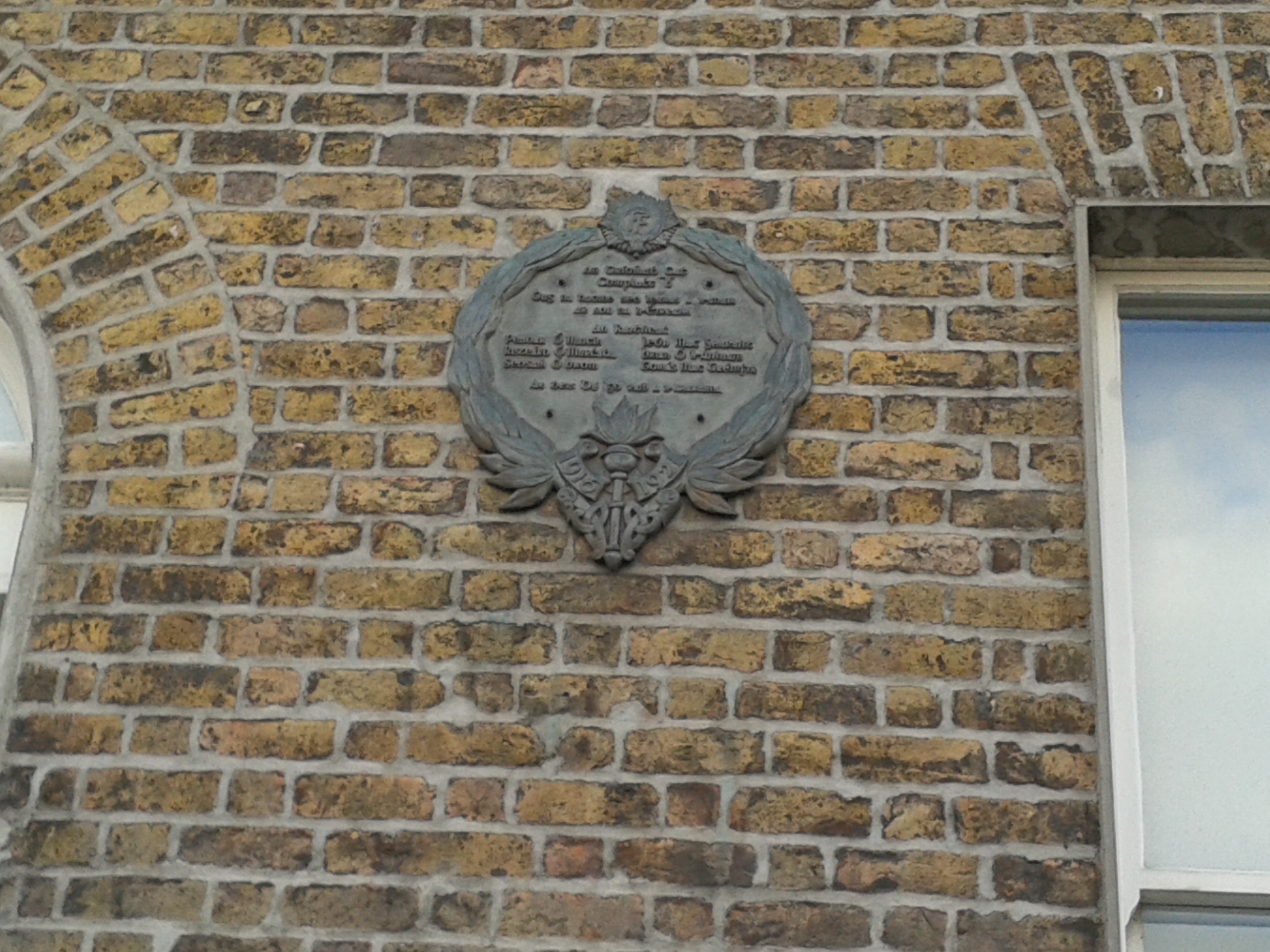
Location of the plaque on house near to Library in Pearse St. (formerly Gt. Brunswick St.) commemorating the fight. The plaque is in the 3 o’clock position on the photo. (photo D.Breatnach this year)

In five minutes of intense gunfire, seven people were mortally wounded; two IRA Volunteers, two Auxiliaries and three civilians.

Two IRA men were captured as they fled the scene, one, Thomas Traynor a 40 year-old veteran of the Easter Rising, was carrying an automatic pistol but claimed to have had no part in the ambush itself. He had, he maintained, simply been asked to bring in the weapon to 144 Great Brunswick Street. The other was Joseph Donnelly a youth of just 17.

As most of the IRA fighters got away through houses, over walls and into backstreets, the Auxiliaries ransacked St Andrew’s Catholic Hall at number 144, but found little of value. Regular British Army troops quickly arrived from nearby Beggars Bush barracks and cordoned off the area, but no further arrests were made. Desultory sniping carried on in the city for several hours into the night.

The plaque closer.
(Photo sourced Internet)

Footnotes

1The title is our own, i.e of Rebel Breeze blog

MOORE STREET AND 1916 RISING — OF GREAT INTERNATIONAL SIGNIFICANCE

Diarmuid Breatnach

(This is another part of my personal submission to the Minister of Heritage’s Consultative Group on Moore Street. Some others may be found on https://rebelbreeze.wordpress.com/2017/02/15/the-1916-history-of-moore-street/https://rebelbreeze.wordpress.com/2017/02/10/the-moore-street-market-a-possible-future/https://rebelbreeze.wordpress.com/2017/03/21/personal-recommendations-for-the-moore-street-quarter/ and https://rebelbreeze.wordpress.com/2017/03/22/moore-street-mus…tourists-account/.

I have tackled the particular subject of the International Importance of the 1916 Rising and therefore of the Moore St. Quarter on a number of occasions elsewhere and at some greater length on Rebel Breeze here https://rebelbreeze.wordpress.com/2016/01/20/the-moore-street-terrace-a-world-heritage-site/ )

The 1916 Rising, to which Moore Street is so closely linked, represented some very important events for the people of the world and it impacted on people in all populated continents of the globe.

FOR DEMOCRACY, EQUALITY

The 1916 Proclamation, printed in Liberty Hall and signed in No.21 Henry Street, just around the corner from Moore Street, is a document not only of clear patriotic and anti-colonial expression but also a democratic and inclusive one. At a time when hardly a state anywhere in the world permitted women to vote in elections, the document specifically addressed “Irishmen and Irish women”. It also clearly expressed the wish of the insurgents to overcome the religious sectarianism which had played such an important part in securing continued colonial rule: “ … religious and civil liberty … oblivious of the differences carefully fostered by an alien Government, which have divided a minority from the majority in the past.” 

Site of signing of 1916 Proclamation, 21 Henry St, almost opposite end of Moore Street.  At the time the business premises and cafe of Jennie Wyse Power of Cumann na mBan was there (plaque erected in 1919 by the 1916-1921 Club). 

The Rising had expressed the gender equality intentions of the insurgents in more than the words of its address: women fought in the Rising and, in two garrison areas, commanded for awhile. The British colonial authorities recognised the role of some of those women by sentencing one to death, albeit a sentence later commuted, and keeping a number of them in prison even after many men had been released.

Headline of 1916 Proclamation and specific mention address to Irish women (sourced oh Internet)

FOR GENDER EQUALITY

Irish women organised for and acted in the Rising in two separate organisations: Cumann na mBan and the Irish Citizen Army.

The women founded as an auxiliary force to the Irish Volunteers, Cumann na mBan, later to assert considerable organisational independence, wore their own uniforms and had their own female officers. Women had participated in many insurrections and resistance movements across the world but no insurrectionary force in history ever before had such a consciously women-organised force.

The women in the Irish Citizen Army had formally equal status with men and a number carried arms in the Rising and fired them at the enemy. Men acted on orders from women officers in at least two garrison areas and, in medical matters, also in at least a third.

Such a situation was of great significance in the struggle for women’s rights and gender equality, not only in Ireland but in the world.

FOR WORKERS AND SOCIALISM

Captain White & Irish Citizen Army on parade on their grounds at Croydon House, Fairview, N. Dublin City. (Sourced on Internet)

The Irish Citizen Army was founded in 1913 as a workers’ defence force by trade unionists and socialists and later as a workers’ army and, despite its strongly anti-colonial stance, until the 1916 Rising, maintained a strict separation from the nationalist republican organisations of the Irish Volunteers and Cumann na mBan. As detailed earlier, it formally recognised women within the organisation as of equal status with men.

Workers’ organisations had existed before, including armed ones but nowhere had such an armed organisation existed outside of armed conflict for so long (1913-1916), led by socialists and with equal status for men and women. In the history of socialist organisation and particularly of a revolutionary and insurgent kind, this was a development of enormous importance.

AGAINST WAR

The 1916 Rising took place in the middle of the first of two huge international conflicts that were later called World Wars. WW1 was a struggle for markets, resources and strategic positions and bases between a number of states ruled by capitalists and those states recruited heavily from among the nations they had colonised; in Britain’s case, that included Ireland.

To many nationalist Republicans, the War represented an opportunity, expressed in the maxim that “England’s difficulty is Ireland’s opportunity”. But to many socialists around the world, the War represented a disastrous pitting of the working people under one Power against the working people of another, as well as an excuse for the suppression of demands to fulfill the needs of their workers while the capitalists gathered huge profits. James Connolly was one of those socialists.

“WE SERVE NEITHER KING NOR KAISER banner on Liberty Hall (prior wartime repressive legislation), HQ of the IT&GWU, the WUI and of the ICA. (Sourced on Internet)

Connolly, Edinburgh-born Irish revolutionary socialist, formerly Acting General Secretary of the Irish Transport & General Worker’s Union, had joined the International Workers of the Word, the hugely influential in the USA syndicalist organisation. As well as being an energetic organiser, Connolly was a historian and revolutionary theoretician. Connolly took to heart the resolution formally adopted by representatives of the vast majority of European socialists to oppose war and, should it come, to turn it into class war against their rulers. In the event, Connolly was one of the few European socialist leaders to live up to that resolution: as Commandant of the Irish Citizen Army, GPO Garrison commander in a rising against Ireland’s British colonial masters, James Connolly was also striking a blow against imperial and colonial war.

That aspect of the Rising, of being consciously or unconsciously against War, predated the February Russian Revolution of 1917, also in part an anti-war uprising, by ten months. And of course, predated the October Socialist Revolution in Russia by seventeen months and the nearest uprising geographically to Ireland, also in part an anti-war one, the German socialist uprising in November 1918, by two-and-a-half years. For all these reasons, the 1916 Rising, the Headquarters of which were in the GPO and later removed to Moore Street, was and remains of enormous significance in the world-wide history of people’s movements against war.

AGAINST COLONIALISM IN THE WORLD

The 1916 Rising reverberated around the world. It took place in what had a century earlier been widely regarded as the second city of the British Empire and, when it erupted, did so against the largest empire, in terms of directly-controlled areas and population numbers ruled, that the world has ever known. How can such an event be of other than huge interest, not only to other peoples under British colonial rule but also to those under the colonial rule of France, Belgium, Germany, Holland, Portugal, Spain, Russia and the United States? How could it not have been of considerable interest to socialist revolutionaries everywhere?

Lenin speaking in Red Square in October 1918. He was among Russian revolutionaries who commented on the 1916 Rising. (Sourced on Internet)
Map of world empires, colonies and territories in 1914 (Sourced on Internet)


Socialists around the world discussed the Rising, at first often criticising it, while Lenin, of huge importance in the socialist movement at that time and some others commented favourably upon it. Consequently, the Rising and the War of Independence was to play an important part in the development of a revolutionary theory around the world that advocated the linking of the struggles of worker, peasant and small farmer, of anti-imperialism and anti-colonialism with struggle for a socialist republic.

August 4, 1916: From left: Irish American labor leaders Timothy Healy, William B. Fitzgerald, William D. Mahon, Hugh Frayne (general organizer in New York for the American Federation of Labor), and Louis Fridiger. Fitzgerald, Mahon, and Fridiger represented the Amalgamated Association of Street Railway Employees of America. (Source http://irishamerica.com/2016/02/hand-in-hand-for-freedom-u-s-labor-and-irish-rebels/

The Rising was a topic of great discussion in the United States and in Australia, and in the USA of financial and other support, as is well known. Connolly had been active there and had published his songbook in New York in 1910; Larkin was actually there in 1916. For a number of reasons, including the sentencing to death of Eamon Bulfin for his role in the GPO and in Moore Street, a sentence later commuted and Bulfin deported to Buenos Aires, the Rising was discussed in Argentina and in other Latin American countries (where, at that time, the British were the main imperialist power).

Eamon Bulfin, born in Argentina and exiled there after 1916, his photo in Australian paper the Southern Cross that year. (Sourced on Internet)
Members of 1st Battalion Connaught Rangers including the leader of the 1920 mutiny in the Punjab, James Daly. (Sourced on Internet)

It was certainly discussed in the huge country of India (which at that time included what is now the states of Pakistan and Bangladesh), whose revolutionary nationalists had contact with Fenian revolutionaries from decades earlier. The Connaught Ranger mutiny in the British Army was a direct result of the Rising and the War of Independence and, before the mutiny was crushed, the soldiers and oppressed Indians had begun to make movement towards reciprocal solidarity. And we know, from history and the writings of Indian nationalists and socialists, that the Rising and the War of Independence which organically followed the Rising influenced the struggles against colonialism and imperialism in India right up to the Second World War. We are also aware of correspondence between the Nehru and Ghandi families and the McSwineys.

A young Ho Chi Minh (not his name then) at Marseilles conference in 1919
(Sourced on Internet)

We know also that the War of Independence influenced African uprisings and Ho Chi Minh, later leader of successful wars against Japanese invasion and French colonialism. In South Africa, the Rising must have been a subject of discussion too, at least among the whites. John McBride, sentenced to death ostensibly for his role in Rising was probably in reality being shot for having organised and led an Irish Brigade to fight the British in the Second Boer War, which had ended but fourteen years earlier.

In Britain itself, the Rising influenced the huge Irish diaspora in England, Scotland and Wales and a significant proportion of the insurgent forces in Dublin had actually come from there. The Rising and especially the War of Independence caused a crises of a kind in British socialist thinking, threatening an irrevocable rupture between revolutionary socialists and even sections of radical social democrats on the one hand and pro-imperial social democracy on the other.

This is not the place to discuss this further but that situation, allied to anti-colonial struggles around the world, huge dissatisfaction and mutinies in the British armed forces and a growing strike movement in Britain, provided great opportunities for an Irish revolutionary movement to influence the history of the world in a direction other than that which it has taken.

For all the reasons outlined above, the Moore Street quarter should be of recognised World Heritage Status.

UNESCO WORLD HERITAGE AND OTHER CONSERVATION STATUS

The Irish State ratified the World Heritage Convention in 1991, which qualifies Ireland to apply for that status for the Moore Street quarter. Up to US$1 million is available from the World Heritage fund for the saving and development of a World Heritage site and funds are also available for urgent works to save it. World Heritage status attracts considerable tourist interest and substantial revenue is of course also available to the State and businesses surrounding the area from such tourist interest.

Currently Ireland has only two sites which have been accorded full World Heritage status (one of archaelogical and the other or natural, mainly geological, importance). However, another seven sites are under “Tentative” categorisation since 2010 and Dublin City is one of those. The Moore Street battleground could be afforded that full World Heritage status in its own right, which I believe its history deserves but it can also be used to strengthen the case for full such status for Dublin City.

The ten grounds on which UNESCO currently relies in order to examine the “the unique importance” of a site is admittedly rather restricted in the category of historical importance, particularly in the development of social movements. However, even under the existing list, I would submit that the Moore Street battleground meets four of the criteria: 2, 4, 6 and 8. The USA has the Statue of Liberty and Independence Hall building as World Heritage sites.

Registering under EU programs may also be possible, in particular Horizon 2020.

MOORE STREET MUSEUM — A FUTURE TOURIST’S ACCOUNT

A MOORE STREET HISTORY TOUR — A VISITOR’S EXPERIENCE IN THE FUTURE

Some decades into the future, I invite you to imagine a foreign-based tourist writing of her experience of the 1916 History and Cultural Quarter. Her name might be Isabela Etxebarria, from Argentina; she may be writing in her excellent English or perhaps her Castillian was translated.

This also formed part of my submission to the Minister’s Consultative Group on Moore Street which is soon to publish their recommendations.  A number of important, not to say crucial, campaigns were excluded from that group but were permitted to make submissions.  I contributed to two group contributions but this is piece is from my personal one, of which I have previously posted some sections:

https://rebelbreeze.wordpress.com/2017/02/15/the-1916-history-of-moore-street/

https://rebelbreeze.wordpress.com/2017/02/10/the-moore-street-market-a-possible-future/

https://rebelbreeze.wordpress.com/2017/03/21/personal-recommendations-for-the-moore-street-quarter/


“Dublin is an amazing city for someone interested in culture, literature or history. By virtue of its long existence as a centre of population, and also as a result of its history of invasions, occupations and resistance, it has enormous historical interest. It has also contributed three writers to the Nobel Prize pantheon and arguably would have contributed another one or more, were it not for certain prejudices of their times. I had read something about the Rising in Dublin against the British Empire early in the 20th Century — right in the middle of the First World War — and was eager to learn more.

I was also aware that an Argentinian citizen, Eamon Bulfin, of the Irish diaspora to my country, had raised the Irish Republic flag on the GPO, had been condemned to death after the Rising and then deported to Buenos Aires where he had functioned as a foreign representative of the revolutionary Irish Republican government. His sister Catalina had married Seán McBride, a Nobel laureate and also winner of the Lenin Peace Prize, son of John McBride, one of the sixteen executed in 1916, and of Maude Gonne, a prominent Irish Republican activist.

“Irish Republic” flag, the design of the flag which was raised by Eamonn Bulfin on top of the GPO.
(Photo source: Internet)

On Friday, we went to experience one of the famous historical tours of inner city Dublin. There are various history tours, some of which lead to a building called the General Post Office but which all the locals refer to only as “the GPO”. Other tours then take the ‘GPO’ as their starting point and it is one of those that I joined – its title was ‘The 1916 Rising – Evacuation, Advance & Surrender’.

The tickets of those participating were checked (except for children’s tours, the regulations restrict to no more than thirty at a time including ten children,) and we were handed audio earphones, radio receivers and issued with our instructions – stay with the group, obey the instructions of the guide, etc.

Our group contained some young children and a few in their late teens, with their parents. About half or more of the group looked like tourists and some asked for the foreign-language options of receivers. There was one man in a wheelchair.

As instructed by the guide in a number of languages, we tested our receivers to find the volume settings appropriate for each individual. Then our guide motioned for us to listen to our earphones … and the narration began.

Depiction of 1916 Rising in art
(Sourced on Internet)

Gradually, we were pulled back across the decades until we were in that amazing Rising, taking place in what had once been considered the second city of the British Empire, rising up against that very same Empire, the largest the World had ever seen.

Eamon Bulfin, from Argentina, who raised the Irish Republic” flag on the GPO at the Henry St. corner (Photo sourced on Internet)

In our imagination, aided by a commentary, it was the fifth day of the Rising and many of the buildings in the city centre were ablaze. Through our earphones, against a backdrop of booming cannon and crashing shell, chattering machine guns, rifles’ crack and whining ricochet, we could hear the crackle of flames. Irish Volunteers’ voices reported that the glass in Clery’s building opposite had melted and was running across the street like water. The heavy ledgers the Volunteers had placed in the GPO windows to protect against bullets were smouldering. Other voices added that despite fire-fighting efforts the roof was on fire and the roof lead melting. We could almost smell the smoke. Then finally, on the following day, the order to evacuate given in an Edinburgh accent – James Connolly, the socialist commandant of the HQ of the Rising, the General Post Office.

The scene inside the GPO just prior to the evacuation through Henry Place as imagined by Walter Paget
(Sourced on Internet)

In the hubbub of people getting ready to evacuate some voices stood out: Elizabeth O’Farrell, giving instructions about the moving of the injured James Connolly; calls to evacuate by the side door and caution about crossing Henry Street, with machine-gun sniper fire coming from the east all the way down Talbot Street from the tower of the train station at Amiens Street and indeed, some bullets traveling from the west along the street too.

A man’s voice in our earphones says “It’s lucky we have oul’ Nelson there to shield us some of the way!” and we hear a few people laugh.

Then, The O’Rahilly’s voice, calling for volunteers to charge the barricade at the top of Moore Street and a chorus of voices answering, clamouring to be chosen.

Now we are out in a group and crossing Henry Street. The man in the wheelchair, having politely declined offers to push his chair, is propelling his wheels strongly along with his leather-covered hands. Brass ‘footsteps’ laid into the street draw attention to the GPO Garrison’s evacuation route. It is weird to see the pedestrian shoppers and sightseers of the Twenty-First Century as half our minds are back in the second decade of the Twentieth.

Across this short stretch to Henry Place we went, the crack of rifles and chatter of machine guns louder now in our earphones. And explosions of shells and of combustibles. The garrison scurried across this gap carrying the wounded Connolly on a bed frame and Winifred Carney, carrying her typewriter and Webley pistol, interposed her body between Connolly and a possible bullet from the train station tower.

The laneway here has murals and marking on the ground to mark the route of the evacuation. Immediately we stepped on the restored cobbles of the lane-way, the sounds of battle in our earphones receded somewhat.

No bullets can reach us here!” shouts a voice in our earphones.

No, but bejaysus them artillery shells can!” replies another.

Other shouts a little ahead warn us that gunfire is being directed down what is now Moore Lane from a British barricade on the junction with Parnell Street.

A sudden shouted warning about a building ahead of us, to our left, facing Moore Lane.

See the white house? The bastards are in there too,” shouts a strong voice which I am told is Cork-accented, a representation of the young Michael Collins’. “Let’s root them out. Who’s with me?”

Another chorus of voices, a flurry of Mauser and Parabellum fire, then only the steady chatter of the machine gun up at the British barricade and the sound of bullets striking walls.

The Cork sing-song voice again. “I can’t believe it — The place was empty, like!”

Aye, it was so many bullet’s hoppin’ off the walls made us think the firing was coming from inside,” a voice says, in the accents of Ulster.

The “white house” at the junction of Henry Place and Moore Street, on the GPO Garrison’s evacuation route on the way to Moore Street, photographed soon after the Rising. (Photo sourced at the Internet).

Then an unmistakably Dublin working class accent: “Would yez ever give us a hand with this!” followed by the creak and rattle of wheels on the cobblestones as the cart is dragged across the intersection. Now we can hear the machine gun bullets thudding into the cart.

Quick now, cross the gap!” comes the order and the dash across the gap begins. Nearly 300 men and women? Someone is bound to get hit and yes, they do and we hear that one of them died here.

Across the gap, nowadays mercifully free of enemy fire but still feeling vulnerable, we follow Pela, our guide, to the corner with Moore Street. In character, she peers carefully around as we hear machine-gun and rifle here too, but Mausers and Parabellum as well as Lee-Enfields.

Gor blimey!” exclaims a London accent from our earphones, reminding us that some of the Volunteers had been brought up in Britain. “O’Rahilly’s lads are getting a pastin’. None of ’em made it as far as the barricade!”

An Irish voice: “Into these houses then – no other way! We have to get into cover to plan our next move.” This is followed by the sound of a door being hit and then splintering as they break into No.10, the first house on the famous 1916 Terrace.

“Careful now,” Elizabeth Farrell’s voice, followed by a muted groan of pain as Connolly is maneouvred through the doorway and up the stairs.

Pela sends the man in the wheelchair up in the lift and leads us up the stairs. When the lift and the last of our group arrive we proceed across the restored upper floors from house to house, passing through holes in the walls, as the GPO Garrison did in 1916 – except that they had to break through the walls themselves, working in shifts and our ‘holes’ are more like jagged doorways.

No.10 was the field hospital and here, represented by dummies and holograms, are the cramped bodies of wounded Volunteers and the British soldier rescued by George Plunkett. The woman of the house is trying to prepare food for the fighters.

Through a few unshuttered windows, we can see the busy street market below us going about its business, apparently oblivious of our passage above them. But then, thousands of tour groups have gone through here over the decades. The weather being fine, the transparent roof covering the street is withdrawn and through the double glazing of the houses one can just barely hear the street traders calling out their wares and prices.

We pass through those hallowed rooms, listening to ghosts. Here and there a hologram appears and speaks, echoes of the past. Dummies dressed in the uniforms of the Irish Citizen Army, the Irish Volunteers, Cumann na mBan, Na Fianna and Hibernian Rifles are on display here and there. Imitation Mausers and Parabellums and Martinis, each one carefully made and to the same weight as the original, are there. They are security-chained but we know people are free to pick them up and feel the weight, as a couple of children do, to imagine carrying and firing one. But not to be flash-photographed, which is not permitted here.

Working people’s bath in the early 1900s.
(Sourced on Internet)
Black cast-Iron kettle from the period
(Sourced on Internet)
Candleholder for lighting for the bedroom
(Sourced on Internet)

Replica Cumann na mBan medical kits are on display, open so one could inspect the contents. The houses also have period furniture, fireplaces, beds …. chamber pots …. kitchens with utensils … bedrooms …..

Mauser ‘Howth’ Rifle
(Sourced on Internet)

There are dummies dressed too in civilian clothes of the time typical of that area — women, men, children (even the dog fed by Tom Crimmins, the last Volunteer to leave Moore St.).

ICA Male Uniform
(Sourced on Internet)

Here are some Volunteers breaking through a wall; over there, exhausted Volunteers sleeping

Cumann na mBan uniform.
(Sourced on Internet)

We see magnified historical newspaper headlines, photos, badges and medals. A map of Dublin with fighting locations flashing on them, some of them going out as they fall, the dates appearing above them to show when that happened. But many were only surrendered on receipt of the order from Pearse or Connolly.

Snatches of poetry, of song come to us as we cross from room to room, from house to house, some of it nationalist, some traditional or folk, some even music hall from the era. And for our eyes, the holograms of the Proclamation, the portraits of the executed 16 and many others who fought and died or who survived, flags, the Tricolour, the Irish Republic, the green-and-gold Starry Plough, waving in the wind above Clery’s ….

Half-way along the terrace we come to the historical discussion between the leaders, creatively reconstructed on the basis of some witness statements. Pearse wishing to surrender to avoid further loss of civilian life (the names of the dead civilians in Moore Street, their ages and the manner of their dying appearing above him), Clarke arguing, a sob in his voice, Connolly saying maybe they should wait for Sean McLoughlin to get back (he is out preparing a diversion attack to allow a breakout) …. Then the arguments with some of the other Volunteers, Mac Diarmada having to use all his powers of persuasion.

Oh, such emotion in such short discussions! Then the decision, and Elizabeth O’Farrell volunteering to go with the white flag to open negotiations with the enemy …. even though civilian men and women have already been shot in died in that street, including one beneath a white flag.

Shortly afterwards, the faces of the dead civilians and Volunteers appear, then the sixteen executed come into view, suspended in the air in front and a little above us. We stand there while passages are read out from their trials, letters from their condemned cells, words to relatives …. Then the dates appear above them and we hear the fusillades as by one their faces blink out, until finally only Casement remains, the image of the gallows and then he too is gone. All is dark for a moment, then all sixteen faces appear again, over a background of the three flags of the Rising, with a list of the fallen rank-and-file, to a swelling chorus of The Soldiers’ Song, in English and in Irish.

Portrait of the 16 executed in 1916.
(Sourced on Internet)

At the end of the Terrace, we descend again, somewhat dazed and here view the O’Rahilly monument plaque and in our earphones hear the words of his final letter to his wife read out – he wrote it as he lay dying from a number of bullet wounds. I found my eyes moistening again as they had several times during the tour and some of the others were visibly crying – including other foreign tourists.

The end of our tour lay ahead, through the underground tunnel under Parnell Street to the Rotunda. There the Volunteers had been publicly launched and recruited in 1913 and there too, in 1916, the GPO/ Moore Street garrison had been kept prisoners without food and water or toilet, some for two days, while political colonial police came down to identify whomsoever they could from among the prisoners. Here Tom Clarke had been cruelly stripped by his captors, diagonally across the road from one of his two tobacconist shops, on the corner of Parnell and O’Connell Streets. Elizabeth Farrell had been kept prisoner in that shop too by the British, before being escorted to deliver the surrender order to a number of garrisons.

In between the shop and the Rotunda stands the Parnell Monument, as it did then, honouring “the uncrowned King of Ireland”, who had tried by mostly parliamentary means, two decades earlier, to bring about Home Rule for Ireland and had failed. British officers had been photographed in front of the monument with the “Irish Republic” flag held upside down – had they been entirely conscious of the irony?

British soldiers posing with captured Irish Republic Flag upside down in front of Parnell Monument, just near where prisoners were kept on Easter Saturday and Sunday. (Photo sourced on Internet).

Directly across the road from us stands a historic building too – the premises of the Irish Land League and where the Irish Ladies Land League had been formed and also raided by the police.

Now the recordings in our earphones ask us to remove our earphones and to hand them to our guide, also to listen for a moment after she has collected them. Having gathered the sets and put them away in her bag, Pela asks us all to give a moment’s thoughts to the men and women and children, particularly of the years each side of the centenary year of the Rising, 2016, who had campaigned to preserve this monument for future generations. Pela tells us that her own grandmother had been one of the activists.

Incredible though it may now seem, the whole terrace except for four houses had been about to be demolished to make way for a shopping centre, which would also have swallowed up the street market. It had taken a determined campaign and occupations of buildings with people prepared to face imprisonment to protect it for our generation and others to come. The State of those years had little interest in history and much in facilitating speculators.

Pela invited us to applaud the campaigners, which we did, enthusiastically. She then asked us to turn around and view the reconstructed building we had left. There was a plaque on the wall there “Dedicated to the memory of the men, women, girls and boys of the early 21st Century ……” In bronze bas-relief, the plaque’s image depicts 16 houses in a terrace with activists on the scaffolding erected by those who intended demolition, with a chain of people of all ages holding hands around the site and in one corner, a campaign table surrounded by people apparently signing a petition.

Once through the underpass and inside the Rotunda building, the tour officially over, we thanked our guide and made for the Republican Café. I found we couldn’t say much, as my mind was half back in 1916. My companion was quiet too as were some other from our tour but some of the children seemed unaffected, brightly debating what to choose from the menu in the Rotunda café, or what souvenir they fancied from those on display.

We took a program of events, including film showings, lectures, dramatic representations and music and poetry performances, in order to choose which to attend later. There’s also a Moore Street and Dublin Street Traders’ Museum in the Rotunda which we intend to visit, perhaps tomorrow, after some shopping in the existing ancient street market.

Some of our tour group, we could hear, including the indefatigable man in the wheelchair, were going on the short walk up to the Remembrance Garden and we heard mention also of the Writers’ Museum and the Hugh Lane Gallery adjacent to the Garden.

We’d had enough for one day, however – we were full. It was truly an unforgettable experience and I knew that for me and probably for my companion, it was something that would remain forever alive in our memories.”

PERSONAL RECOMMENDATIONS FOR THE MOORE STREET QUARTER

Introduction: Earlier this year I sent my personal recommendations for the conservation and appropriate development of the Moore Street Quarter to the Minster of Heritage’s Consultative Group on Moore Street.  Given that Group had been chosen by the Minister who has fought against the conservation of the quarter and denied it is a historic battleground and that she has appealed the judgement of the High Court Judge who ruled against her, I did not expect great things from this group.  When membership of the group was refused to important participants in the campaign such as the National Graves Association, the Save Moore Street from Demolition campaign and the Save Moore Street 2016 campaign, my cynicism was further justified.  However, “let them not be able to say that campaigners did not supply them with our opinions” is what I think and so I contributed to a number of group submissions and then presented my own.  Two parts of this I have already published here

https://rebelbreeze.wordpress.com/2017/02/15/the-1916-history-of-moore-street/

https://rebelbreeze.wordpress.com/2017/02/10/the-moore-street-market-a-possible-future/

and I have skipped ahead of some to other sections to publish this, the recommendations at the end of my submission. 

Aerial view of a part of the Quarter, with Moore Street in the foreground and Moore Lane nearly at the top of the photo. The four houses with red-painted shutters in the centre of the photo were the only ones the Minister wanted saved, the rest to become part of the huge shopping ‘mall’ (see diagram image below).                         (Photo sourced: Internet)

Diarmuid Breatnach


CONCRETE RECOMMENDATIONS FOR THE MOORE STREET QUARTER

In consultation with campaigners, street traders, the public, small shopkeepers, local residents, historians, architects and elected representatives: Save, Restore, Rebuild, Improve.

  • The whole area should be pedestrianised with the usual access exemptions for deliveries within certain hours, emergency services etc.

  • Buildings of the 1916 period in the Quarter should be preserved

  • All other buildings in the quarter should be preserved, renovated or reconstructed as necessary to appearance appropriate to the period and area (and appropriate to their current use – I am not advocating the building of public outside toilets or slaughterhouses)

  • The upper floor of the 1916 Terrace should be developed into a 1916 history experience, integrated with the GPO and the Evacuation Route, with disabled access

  • and the history being ‘social’ (i.e. how people lived) as well as a ‘political’ (about 1916)

  • The Evacuation Route should be conserved and appropriately renovated where necessary, with important events marked by plaques, panels and murals along its route

  • The Evacuation Route should be brought back to the period cobbles and kept clear of rubbish or graffiti with disabled access

  • Moore Lane and O’Rahilly Parade should be brought back to original cobbles with disabled access

  • The Moore Street Market should be valued and promoted

    Moore Street Market in busier days (but traders then also working in bad conditions), viewed from the GPO building presumably, looking northwards.
    (Photo source: Internet)
  • Petty official harassment of traders and small businesses should cease and appropriate expansion and regulations eased to assist in more varied use of the market

  • The traders should be provided with toilets, nearby water supply ports, heating and lighting for stalls

  • The whole street market should be provided with retractable transparent roof and sliding doors at each end

  • The street market should be made available as a “farmers’ market” on Sundays

  • The Historical Quarter and Cultural Quarter should be linked informationally

  • and with and underground pedestrian way connecting the two under Parnell Street

  • The development should take place in the context of upgrading the area as a history, culture and leisure area, most of it accessible by day and night

  • The part of Moore Street not currently part of the Barrett judgement should be included in the overall plan

  • The State should investigate the potential of applying for World Heritage Status, consulting widely and publishing its recommendations

  • Also for conservation within a European framework (some aspects of Horizon 2020 may be useful in this respect)

  • In order to do all this, a first priority is to formally urge the Minister to drop the appeal and I submit that the Consultative Group should do exactly that.

  • Develop a democratic, open and transparent partnership process to oversee the development, with representation for all stakeholders, including street traders and local small businesses, nearby residents, historians, campaigners (including activists currently excluded from the Consultative Group), historians ….


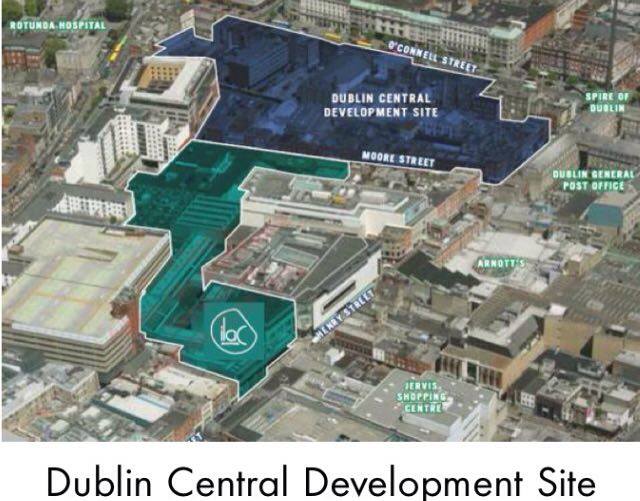
Two toxic waste spills for Moore Street? The Hammerson plan in dark blue and the existing Hammerson/ Irish Life/ Chartered Land ILAC centre in green. (Photo source: Internet).

AN SEAMRÓG — THE THREE-LEAVED PLANT

Diarmuid Breatnach


The Shamrock, contrary to expectations, cannot be said to be a specific plant. It is of course a kind of clover but which one? People writing about it frequently state that it is generally accepted that the most likely candidates are the species Trifolium dubium (variously called Lesser Trefoil, Suckling Clover, Little Hop Clover and Lesser Hop Trefoil; Irish: Seamair bhuí), with yellow flowers or the white-flowered Trifolium repens (White Clover; Irish: Seamair bhán).  But which one?  Well, excuse the pun but take your pick.

Trifolium dubium, the lesser clover, an seamair bhuí, top of the candidate list for the “shamrock” title.
(Photo: Internet)


Generally accepted by whom? One supposes by botanists and Irish folklorists but those sites rarely supply a reference. However, amateur botanist and zoologist Nathaniel Colgan (1851-1919) asked people from around Ireland send him specimens of what they believed to be an Irish shamrock and identified the five most common plant species, of which the two most common were the yellow clover followed by the white. A hundred years later, Dr Charles Nelson repeated the experiment in 1988 and found that yellow clover was still the most commonly chosen. According to Wikipeida, yellow clover is also the species cultivated for sale in Ireland on Saint Patrick’s Day and is the one nominated by the Department of Agriculture as the “official” shamrock of Ireland.

The word “shamrock” is an Anglic corruption of the Irish seamróg, itself a contraction of seamair óg, meaning a sprig of young clover. The Irish shamrock is usually the species Trifolium dubium (lesser clover; Irish: seamair bhuí), with yellow flowers or the white-flowered Trifolium repens (white clover; Irish: seamair bhán).

A trawl through the internet looking for images of shamrock plants throws up a bewildering multiplicity of images of trefoil plants, the only thing they have in common being that they are (mostly) green. It soon becomes apparent that many of the images are taken from a different genus, that of oxalis, usually the one named wood-sorrel (Oxalis acetosella) in English-speaking Europe1.

People today should know better. Edmund Spenser, an anti-Irish colonist and commentator on Irish culture, also poet and ancestor of the late Princess Diana, reported the Irish eating shamrock and so have some other colonial observers but almost certainly what they observed was the Irish eating the wood-sorrel – in Ireland it has some common names associated with eating. Spenser and other colonists can be blamed for many things but not that confusion – they were not botanists and did not have access to the Internet. Also, seamsóg, the Irish name for wood-sorrel, does sound a bit like seamróg, especially if one is not listening carefully. The confusion can be continued in English, where the common sorrel (Rumex acetosa) is a completely different plant and a common enough culinary one.

Many species of the genus oxalis close their leave sand flowers at night – a handy trick which the trifolii do not have; indeed, try as they may, trifolii could not possibly close their flowers since each one is in the form of a cluster, while those of oxalis tend to be trumpet-shaped.

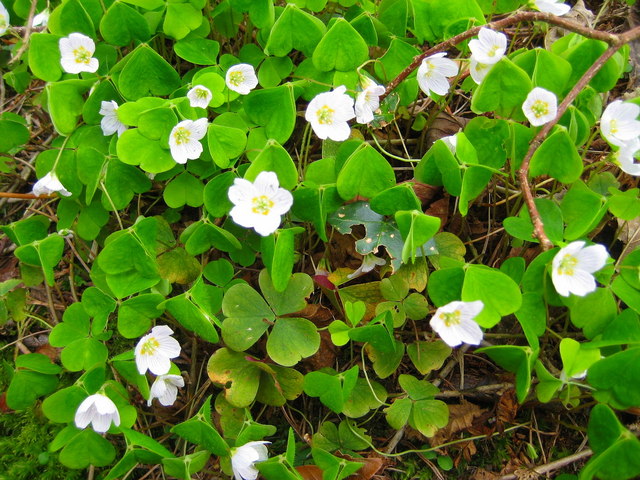
Wood Sorrel — defintely not the shamrock, despite numerous claims since Edmund Spenser, the Elizabethan poet.
(Photo: Internet)

The wood-sorrel grows typically in woods which are shady but not too dark and is characterised, as with many other oxalis, by an acidic taste in the stems. As children in the area in which I grew up in south Co. Dublin we chewed the stems of a cultivated species with large green leaves and pink flowers, commonly grown in window-boxes and gardens and known to us by the name of “Sour Sallies”.

The shamrock (both varieties of trifulium) grows best in meadows receiving a fair amount of sunlight, in among grasses. It belongs to the clovers, a different family completely from oxalis, belonging in turn to a very large group of plants as different in appearance from one another as peas and beans on the one hand and furze (also known as gorse) on the other (but many bearing fruit pods). They are the legume group, plants that concentrate nitrogen in nodules around their roots, making many of them good crops with which to precede plants that require a lot of nitrogen, such as the cabbage family or cereals.

The expression “in the clover” as an idiom for being successful or having a good time alludes to the alleged fondness of grazing animals for the plants but this is much more likely to be the white clover, Trifolium repens (Irish: seamair bhán) than dubium, as the former grows bigger and thicker. Clovers are important plants not only for grazing animals and nitrogen-fixing but also for bee-keepers, being rich in nectar and pollen.

End


FURTHER READING

https://en.wikipedia.org/wiki/Trifolium_repens

https://en.wikipedia.org/wiki/Trifolium_dubium

http://slowfoodireland.com/food/foraging/wild-sorrels/

https://en.wikipedia.org/wiki/Oxalis

https://en.wikipedia.org/wiki/Nathaniel_Colgan


FOOTNOTES

1 In North America, Oxalis montana is also called “common wood sorrel”.

THE SHAMROCK AND THE COLOUR GREEN – NATIVE OR FOREIGN IMPORTS INTO IRISH ICONOGRAPHY?

Diarmuid Breatnach

We are long accustomed to the association of these two symbols with Irish ethnicity and nationalism, the shamrock and the colour green — but historically can they be shown to be authentically Irish?

Shamrock closeup
(Photo sourced at Internet)


The shamrock symbol has been used by a number of products and services, including Aer Lingus, formerly the Irish national airline and now a subsidiary of the International Airways Group1. Both as a plant and a living symbol it is now being sold on the streets and in shops in preparation for the celebration of the male patron saint of Ireland, St. Patrick on March 17th.

St. Patrick himself was a foreign import, albeit one seized unwillingly by Irish raiders. The son of a Romanised Celt it seems and probably from Wales, Patricius was kept as slave labour herding sheep until his escape but he returned as a Christian missionary and became one of the founders of the Celtic Christian Church in Ireland. 

We may view this as an amazing feat in itself – Ireland was one of the few European countries which went from the old multi-gods religion to the monotheism of Judeo-Christianity in a largely peaceful transition. However the Celtic Church at least tolerated and many would say condoned many of the laws and customs of the old culture, including marriage of priests, the right to divorce by men or women and a higher status for women than was common in an increasingly feudal Europe.

The word “shamrock” is an Anglic corruption of the Irish seamróg, itself a contraction of seamair óg, meaning a sprig of young — or more likely small –clover. The Irish shamrock is usually the species Trifolium dubium (lesser clover; Irish: seamair bhuí), with yellow flowers or the white-flowered Trifolium repens (white clover; Irish: seamair bhán) with the bias towards the yellow-flowered.

Children at schools influenced by the Catholic clergy in Ireland (which was and still is in control of the vast majority of the schools within the Irish state) were taught that St. Patrick used the shamrock to illustrate the existence of the Christian Holy Trinity of the Father, Jesus Christ and the Holy Ghost, i.e. explaining how there may be three different aspects in one entity, as in the three leaves on the one stem of the shamrock.

A charming story but clearly without any foundation whatsoever – not only is it not mentioned in what is believed by historians to be Patrick’s autobiography but the story only emerged much later. However, the crucial case against the veracity of the story is that neither the Gaels nor the Celts in general2 had any need to be convinced of the existence of trinities of gods: in Ireland we already had the Morrigan, a female trinity of Badhb, Macha and Anand and of course the Celts had the ubiquitous triskele symbol (surviving as the national symbol of Manx) to illustrate a trinity, religious or otherwise. 

The first clear association of the shamrock with St. Patrick in Ireland comes in an account by an English traveller to occupied Ireland, Thomas Dineley, who described in 1681 Irish people on St. Patrick’s Day wearing green on their clothes, including the shamrock. But the first account of St. Patrick’s use of the shamrock is not seen until 1726, when it appears in a work by Caleb Threlkeld, a botanist.

But what of the colour green? Surely that at least is authentically Irish? Well, it certainly has a longer pedigree. Dineley’s account in 1681 associates wearing green with the celebration of the feast day of St. Patrick’s, one of the three patron saints of Ireland3 (yet another trinity?). But the Catholic Confederacy of 1642-1652, an alliance of Gaelic chieftains with Norman-Irish aristocracy against the Reformation being imposed upon them, also flew a green flag, with a gold harp upon it.

The symbol of Ulster was the Red Hand from an ancient Irish myth of arrival but what was the background? Both the O’Neills and O’Donnells, dominant clans of Ulster, have designs in red and blue against a white background. Only Leinster province has a design in green and yellow.

BLUE?

The colour of an old design for Meath is blue. There is an old heraldic design for Ireland of three crowns on a blue background and although this was the arms granted by Richard II of England to Robert de Vere as Lord of Ireland in 13864, over two centuries after the Norman invasion, it may have drawn on the colour of an existing Irish flag or design.

The Wikipedia page on the Coat of arms of Ireland, although commenting that heraldry is a feudal practice suggests an older inspiration:

The colour of the field is sometimes called ‘St. Patrick’s blue’, a name applied to shades of blue associated with Ireland. In current designs, used by the UK and Irish states (sic), the field is invariably a deep blue. The use of blue in the arms has been associated with Gormfhlaith, a Gaelic mythological personification of Ireland. The word Gormfhlaith is a compound of the Irish words gorm (“blue”) and flaith (“sovereign”); it is noted in early Irish texts as the name of several queens closely connected with dynastic politics in the 10th and 11th century Ireland. The National Library of Ireland, in describing the blue background of the arms, notes that in early Irish mythology the sovereignty of Ireland (Irish: Flaitheas Éireann) was represented by a woman often dressed in a blue robe.”

The designers of the Cumann na mBan flag may have been aware of the ancient claim of the colour blue when they made that the background colour of their own flag.  Markievicz and Hobson would even more likely have been aware of it as well as the blue with an orange, golden or silver sunburst, alleged flag of the legendary band of warriors na Fianna, when they made that the flag of the Republican youth organisation they founded, Na Fianna Éireann.

THE GREEN FLAG

But what about the United Irishmen’s flag of green, with a golden harp? When talking about the United Irishmen we need to remember from where they received their ideological influences. These were mostly from radical and republican thinkers and agitators in Britain, the USA and France. The United Irishmen organisation was founded by Anglicans and Presbyterians, mostly colonists and settlers or their descendants and most of their leadership in the uprisings of 1798 and 18035 came from from among that section of Irish society. That goes a long way to explaining why most of the revolutionary texts of the time are in the English language, in a country where the majority even then still spoke Irish and with a rich literary and oral tradition in the Irish language.

United Irishmen harp motif with motto.
(Photo sourced at Internet)

There is a historical trend among colonists to feel disadvantaged with regard to their compatriots back in “the mother country”, to resent levels of taxation, to complain of inadequate representation and of corrupt or inefficient government. This occurred in English-speaking America and led to the American Revolution and the creation of the United States. It also occurred in the other America, where the Spanish-speaking colones developed conflicts with the Spanish Kingdom and eventually rose in rebellion against it across South and Central America, eventually gaining independence for a number of states.

A similar process was taking place in Ireland, where the disaffected who belonged to the established church, the Anglican or Church of Ireland, understood that to create a strong autonomous nation, even as part of the English-ruled unity of nations, they would need to bring into government the greater majority, the Presbyterians 6 and even the overwhelming majority, the Catholics (i.e the native Irish).

Henry Grattan attempted this by trying to get the excluded denominations admitted to the Irish Parliament but Crown bribery, sectarianism or fear of having to return lands grabbed by their grandparents or others, combined to have a majority vote the proposals down. That ensured that the organisers of the United Irishmen would realise that no progress to their objectives was possible without revolution.

Irish nationalists among the descendants of colonists often adopted Irish symbols and some other Irish identifiers as a sign of difference from the English. There was some interest in the Irish language but it does not appear to have been widely studied by most Irish Republicans of the time as witnessed by the incorrect appellation of “Erin” for Ireland – any Irish-speaker would know that Éire is the nominative form for the country and ‘Éireann’ is employed in the genitive and dative cases. United Irishmen were involved in organising the Belfast Harp Festival of 1792, while folk-song collectors and antiquarians dug among the people and archives for survivals of an older Irish culture.

The Harp, an ancient Irish musical instrument employed also to accompany poetry recitation was employed as a symbol by the Unitedmen — often with the motto “ ‘Tis new-strung and shall be heard”. In addition, the English had long recognised the instrument as a symbol for Ireland, albeit under the Crown.

THE COLOUR GREEN

But where did the colour green come from to be associated with Irish nationalism? This question could do with more research than I have the time or other facilities to devote to it but one may comment what green is not: it is neither the Red of Royal England nor the Blue of Royal France. Nor is it the red with a white saltire of the Order of St. Patrick, another colonial creation and clearly of Royal and colonial origin and patronage, created at the time of a bubbling of the nationalist pot in Ireland and only sixteen years before the 1798 Uprising.

Interestingly, the Irish Brigade (1688–1791) of the French Army did include the colour green in its flag design, four quarters alternately green and red, with a crown in each. And the standard of Napoleon’s La Légion Irlandaise in 1841 is described as of “emerald green”.

Regimental colours of one of the irish Regiments of the French Royal Amy, De Berwick, until 1791. (Photo sourced at Flags of Ireland — see Further Reading for link)


William Drennan (1754–5 February 1820), United Irishman, is credited with first use of the description “Emerald Isle” in his poem When Erin First Rose and it was much later re-used in the ballad Bold Robert Emmet. John Sheils, a Drogheda Presbyterian and United Irishman, employed the harp, the colour green, St. Patrick, Erin (sic) and the shamrock all in his song The Rights of Man, which he composed some years prior to the 1798 Rising. The “three-leaved plant” which is “three in one” is used in Sheils’ song:

to prove its unity in that community

that holds with impunity to the Rights of Man”

The trinity there is clearly the political one desired by the Unitedmen of Protestant (Anglican), Catholic and Dissenter (Presbyterian and other sects).

Green was widely worn by people with United Irish sympathies and particularly during repression by Orange militia, people wearing green were targeted. However, if one wanted to wear a suspect nationalist colour, how safer than to do so than on the feast day of the alleged founder of Christianity in Ireland and acknowledged by Protestant, Sects and Catholics alike?

From the United Irishmen onwards, green has been unarguably associated with Irish nationalism and Irish Republicanism, in the flags of the Fenians, the Irish Volunteers and even of the Irish Citizen Army, also part of the tricolour flag awarded by Parisian revolutionary women to the Young Irelanders which is now the national flag of the Irish state. Green was also the colour of the flag of the St. Patrick’s Battalion that fought for Mexico against the invasion by the USA (1846-’48) and of ceremonial uniforms of some Irish formations during the American Civil War along with the main colour of some of their regimental flags, also of the flags of the Fenian veterans of that war invading Canada in 1866.

Flag of the Irish Brigade (later the Fighting 69th) in the Union Army, American Civil War.
(Photo sourced at Internet)

Does it matter whether green is authentically an ancient Irish colour or not? Would Irish Republicanism or nationalism be de-legitimised if it could be proven the colour they are using was of dubious origin or of comparatively recent political significance for Ireland? I don’t think so. But it is good to be aware of the different origins of symbols and to question and even challenge what is handed to us as unquestionably authentic.

However, enough people have now fought under the green in eight uprisings in Ireland and struggles abroad; enough people have laid down their lives under the colour and indeed, once it became a symbol of Irishness, enough Irish have been persecuted, prosecuted and even executed for wearing it, to ensure that “wherever green is worn” can be Irish. And in that representation, the shamrock too, which of course happens to be green, and could be passed off as a devotional symbol to suspicious authorities and murderously insecure and sectarian minorities of colonial origin, has its place.

Painting depicting the Battle of Ridgeway, Fenian invasion of Canada, 1866. (Photo sourced at Wikipedia)
The Wearing o’ the Green

(by John Keegan “Leo” Casey (1846 – March 17, 1870). Keegan, known as the Poet of the Fenians, was an Irish poet, orator and republican who was famous for authorship of this song, apparently written when he was 15 and also as the writer of the song “The Rising of the Moon” (to the same air), also as one of the central figures in the Fenian Rising of 1867. He was imprisoned by the English and by a huge irony died on St. Patrick’s Day in 1870 at the age of 24).

O Paddy dear, and did ye hear the news that’s goin’ round?

The shamrock is by law forbid to grow on Irish ground!

No more Saint Patrick’s Day we’ll keep, his colour can’t be seen

For there’s a cruel law ag’in the Wearin’ o’ the Green.”

I met with Napper Tandy7, and he took me by the hand

And he said, “How’s poor old Ireland, and how does she stand?”

“She’s the most distressful country that ever yet was seen

For they’re hanging men and women there for the Wearin’ o’ the Green.”

So if the colour we must wear be England’s cruel red

Let it remind us of the blood that Irishmen have shed

And pull the shamrock from your hat, and throw it on the sod

But never fear, ’twill take root there, though underfoot ’tis trod.

When laws can stop the blades of grass from growin’ as they grow

And when the leaves in summer-time their colour dare not show

Then I will change the colour too I wear in my caubeen

But till that day, please God, I’ll stick to the Wearin’ o’ the Green.

But if, at last, her colours should be torn from Ireland’s heart

Her sons, with shame and sorrow, from the dear old soil will part;

I’ve heard whispers of a Country that lies far beyond the sea,

Where rich and poor stand equal, in the light of Freedom’s day!

O Erin! must we leave you driven by the tyrant’s hand!

Must we ask a Mother’s blessing, in a strange but happy land,

Where the cruel Cross of England’s thralldom’s never to be seen:

But where, thank God! we’ll live and die, still Wearing of the Green!

End.

John ‘Leo’ Keegan Casey monument, Glasnevin Cemetery, Dublin (Photo sourced at Wikipedia)

FURTHER READING

An undated interesting article about the origins of Irish national symbols (also giving a list of additional reading) http://www.gov.ie/en/essays/symbols.html

https://en.wikipedia.org/wiki/List_of_flags_of_Ireland

https://en.wikipedia.org/wiki/Coat_of_arms_of_Ireland

Reference to colour green in the standard of Napoleon’s Irish unit La Légion Irlandaise http://www.irishtimes.com/culture/heritage/enlisting-for-my-enemy-s-enemy-1.1779145

and in some uniforms and flags of Irish formations in the Union Army in the American Civil War https://www.abebooks.com/book-search/title/new-yorks-fighting-sixty-ninth-regimental/author/john-mahon/ and

https://www.amazon.com/Rising-Moon-Peter-Berresford-Ellis/dp/0312006764

https://en.wikipedia.org/wiki/Shamrock

About Leo Casey http://www.irishidentity.com/extras/gaels/stories/leocasey.htm

FOOTNOTES

1A consortium of Iberia, Vueling and ironically, British Airways.

2Nor indeed other cultures such as the Hindi or the classical Greeks

3Sts. Patrick, Bridget and Columcille

4It continued in use until 1541

5 And even many of the leaders, journalists and poets of the Young Irelanders and of the Fenians.

6And other “Dissenters” such as Unitarians, Methodists, Society of Friends (Quakers) etc.

7Napper Tandy was a United Irishman who lived in Dublin; his home is mentioned in the most common versions of the well-known Dublin song, The Spanish Lady.

A VERBAL HANGING IN DUBLIN’S THOMAS STREET

Clive Sulish

While eastbound drivers in Thomas Street on Friday 3rd March gawped, traffic slowed in the westbound lane to allow az small procession pushing a gallows, trundling along on wheels. There were surprisingly few witty comments, even the notoriously quick Dubliners too surprised to come up with a witty bon mot (or even a focal maith).

Diarmuid Breatnach outside St. Catherine’s Church, Thomas Street.
(Photo: /////)

The procession stopped at the Robert Emmet plaque, in the railing wall of the former Protestant St. Catherine’s Church, approximate place of execution of Robert Emmet on 20th December 1803.

Elayne Harrington, aka Temperamental MiscElaynous performing her piece outside St. Catherine’s Church, Thomas Street.
(Photo: D.Breatnach)

Despite continuous rain a small crowd had gathered on the pavement in front of the monument and the gallows, with a small platform less than a foot high, was placed facing them. Dublin artist Elayne Harrington, also known as the well-established street poet/ rapper artist from Finglas, Temperamental MiscElayneous, stood on the platform to announce that the event was to honour Robert Emmet and was a project as part of the Liberties Street Project, a continuation of the IPIP (In Public In Particular) program at the National College of Art and Design, Thomas Street, Dublin 8.

Harrington thanked people for attending despite the weather and, after outlining the program for the event, announced Diarmuid Breatnach, who took up position with the gallows and hanging noose just behind him.

Breatnach is best known as a co-founder of the Save Moore Street From Demolition campaign, maintaining a campaign table with a petition and leaflets on the market street for a few hours every Saturday but is also known as an acapella singer, particularly in Dublin traditional-folk circles.

Section of the crowd at the event outside St. Catherine’s Church, Thomas Street.
(Photo: D.Breatnach)

After thanking MiscElayneous for the invitation and the crowd for attendance, Breatnach proceeded to reiterate that the event was taking place very near the spot where, at the age of 25, Robert Emmet had been hung and then decapitated by the British colonial administration in 1803.

Harrington reminded him to stand on the low platform which Breatnach did, drawing a laugh from the crowd when he indicated the hanging noose and commented: “Me Ma always said I’d end up like this.”

Breatnach asked the audience to imagine the scene of the execution in 1803 and referred them to a painting of the scene available on the Internet, showing a huge crowd, with people looking out of windows in nearby buildings and mounted redcoats keeping the crowd back from the gallows. Many of in the crowd would have been supporters but the better-known would not have been there – they were in jail or in hiding.

The execution was carried out there, Breatnach said, because the whole Thomas Street and Liberties was known as a revolutionary area, which Breatnach went on to describe (see video below).

Elayne Harrington, aka Temperamental MiscElaynous performing her piece outside Stl Catherine’s Church, Thomas Street.
(Photo: D.Breatnach)

Executions, said Breatnach, have been carried out down through the ages on Irish people resisting invasion, colonialism and imperialism and fighting for social justice. The gallows have become an enduring image in Irish history and a number of songs (Breatnach mentioned ten from the 19th century up to the present) refer to it.

The state we have now, said Breatnach, set up in 1922, preferred shooting, which was the method by which it eliminated its opponents at the time, 81 of them in official executions. Hanging remained however in this state but the last execution was in 1954.

Breatnach stated that we are often taught history as a dead subject, something in the past to which we are largely unrelated but he believed history to be a living thing, in the stones of walls and streets, in the air and in the words people have left us. And in our songs.

Breatnach selected three songs that mentioned Robert Emmet: The Three Flowers, written early last Century by Norman G. Reddin (two verses); Bold Robert Emmet perhaps by Tom Maguire around 1916 but certainly published in 1934; and Anne Devlin in recent decades by Pete St. John. Breatnach sang the three songs one after the other with MiscElayneous accompanying on her bodhrán.

Diarmuid Breatnach outside St. Catherine’s Church, Thomas Street, talking about the radical revolutionary history of the area.
(Photo: ////)

During the applause which greeted the end of Breatnach’s performance, Elayne Harrington replaced him on the stage, thanked him and introduced herself as Temperamental Miscellaneous and spoke about her contribution, which was to be an extract of Emmet’s famous speech from the dock in the Green Street Courthouse, but re-worked into more modern Dublin idiom. Harrington then launched into a spirited rendition of her piece (see video below for the full performance).

No matter what words I utter, it’ll fail to change your mind and I wouldn’t have it any other way. You’ve made me a bed and I’ll lie in it. ………….

There’s plenty I could tell why my reputation should be kept clean from the utter lies and slander which’ve been lashed upon it. ……………

I wouldn’t dream that I could impress upon a court as trapped in its own self and corrupted, a fair impression of my character. …………………….

If merely dying was the case, after being deemed in the wrong and you in the right I’d take it on the chin and I wouldn’t breathe a word but that same law that not only wants to get rid of me also aims at filthying my name and sullying the memory of me. ……………..

In the hope that my memory won’t fade and that it might retain its honour among my brothers and sisters, I’ll stand up for myself and my integrity and weaken those charges against me. ……………

…. our cloths are entwined, mine and the martyred heroes of the gallows and battlefield, consecrated by sacrifice … for protection and guardianship of their homestead and their righteousness. ………..

This is what I hope: for my memory and name to serve those who live on by it being a source of empowerment …. witness the malignant malicious government that gains its false riches through sin alone, that treats a people as wolves to be domesticated and blooded to the taste of their fellows, to dance to their tune and to the death knell ……………..

Concluding the event, Harrington thanked the attendance and invited them to place small pots of growing flowers she had provided in front of the monument, which they did.

Stablising the scaffold outside St. Catherine’s Church, Thomas Street.
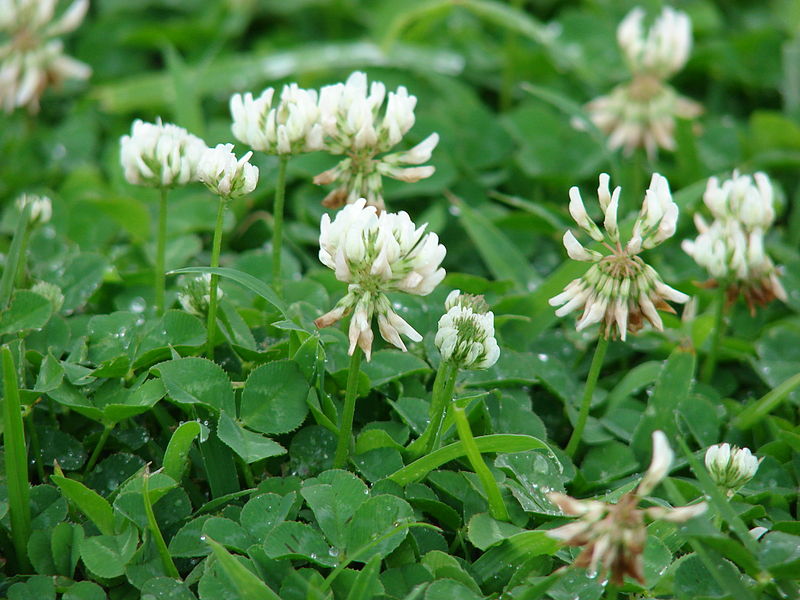
(Photo: D.Breatnach)

WHY THE EVENT?

What had led Elayne Harrington to choose this act as part of her course?

“I was interested in Robert Emmet and his uprising ever since I heard a Dublin tour guide dismiss Robert Emmet while briefly mentioning his uprising”, explained the rapper from Finglas.

“I came to think that although Emmet failed in his objective, he had attempted a brave and good thing and his speech was really impressive. His uprising attempt took place in the area where my college is and he was executed just down the road, so that’s how I came to think of this event.

“I’m thankful to my course tutor and fellow students for supporting me in this act and to another tutor who helped me with the construction of the gallows. I am grateful to Diarmuid Breatnach also, who has been very supportive and contributed to the performance and I was really glad that my Da was able to be here and help today too.”

Why did Harrington call this “the first of the verbal execution series”?

“I see this as an event that can be brought to other places – like the gallows I built, it is transportable” she says with a grin but then turns serious. “The performances can be adapted also to other occasions of which Irish history is full.”

We’ll be watching this space!

Elayne Harrington and section of audience outside St. Catherine’s Church, Thomas Street, looking eastward (in the direction of Dublin Castle, ten minute’s walk away).
(Photo: D.Breatnach)

VIDEO OF EVENT

(complete event outside St. Catherine’s)

https://www.youtube.com/watch?v=wJmb553yKf8


THE 1916 HISTORY OF MOORE STREET

Diarmuid Breatnach

The following is a part of the personal submission on the future of Moore Street which I made to the Minister’s Consultative Group on Moore Street; another section, 0n the Moore Street Market, has already been published.

The 1916 Rising historical aspect of Moore Street has been most commented upon, understandably and rightly so; however because of that I do not feel it is necessary for me to do aught than to outline the bare bones of the historical case.

The Easter Rising began on Easter Monday April 24th — it was a momentous occasion in Irish and in world history (see 1916 RISING – OF GREAT SIGNIFICANCE IN IRISH AND INTERNATIONAL HISTORY to be published separately) and of unparalleled significance in making possible the present national and international status of Ireland (whether it or subsequent events resulted in true independence or lived up to the dreams and vision of the Rising’s participants is another matter).

April 24th was not only the day the “Republic was asserted in arms” but also the day it was declared by written and spoken word, to Ireland and to the world. That was done through the Proclamation, signed earlier in the week at No.21 Henry Street and then read out by Patrick Pearse outside the GPO on behalf of the Irish Republic, copies being also distributed through the city.

Why read out at the GPO? Because the HQ of the Rising was there, the Provisional Government of the Irish Republic. And on Friday 28th, when that building was no longer habitable due to shell-fire and flames, the Government and those remaining of the GPO garrison evacuated the building.

Corner of Henry Place (centre) and Moore Lane (right) looking westward towards Moore Street (photo taken by supporter during "Arms Around Moore Street" event in June 2015)
Corner of Henry Place (centre) and Moore Lane (right) looking westward towards Moore Street (photo taken by supporter during “Arms Around Moore Street” event in June 2015)

Leaving by a side door that no longer exists, the evacuees crossed a smoke-covered and bullet-live Henry Street and entered Henry Place. There they made their way to the corner of Moore Lane and two men died on that journey. They entered houses seeking British soldiers, ready for hand-to-hand fighting and found none – the British soldiers were at distant remove and armed with machine-guns and rifles on the roof of the Rotunda and at a barricade on Parnell Street.

The `"white house`" in Henry Street, facing Moore Lane, showing the British Army machine-gun and rifle bullet damage from Parnell Street and from the Rotunda tower. The GPO Garrison had to cross this opening to proceed onwards to Moore St (to the right).
The “white house” in Henry Lane (photographer standing in  Moore Lane), showing the British Army machine-gun and rifle bullet damage from Parnell Street and from the Rotunda tower. The GPO Garrison had to cross this opening to proceed onwards to Moore St (to the right). Note also the little lane-way or “turning” to the left of the building which is now enclosed and built on).


Building a temporary barricade for cover, the evacuees made their way across this gap – indeed a bearna baoil — and continued on towards Moore Street. Here again the main body came to a halt, as another British barricade was firing down this street too.

Possibly one Volunteer died trying to cross here; certainly the majority instead decided to enter No.10 Moore Street (junction with Henry Place) and some houses in the southern terrace (that whole terrace and a part of No.10 were later destroyed by shelling and flames). Some volunteers also occupied the furthest house south but were forced by flames and heat to evacuate it later.

Nos.10, 14, the End of the Terrace and O’Rahilly Parade

market-stall-looking-south
Moore Street market trader and stall. Past her to the left is the junction with Henry Lane and No.10, first HQ of the Rising after the GPO and field hospital of the GPO Garrison. In 1916, a storm of British bullets came down this street from Parnell Street (behind the photographer). (Photo D.Breatnach)

In No.10, Volunteer Nurse O’Farrell set up the field hospital, treating up to 20 wounded men, including a wounded British soldier picked up under British fire by George Plunkett from near a Volunteer barricade at the Moore St./ Salmons Lane junction and brought inside to be cared for.

Such details would make No.10 of great historical importance but it is trumped by another – this was also where the Provisional Government met on the evening of Friday 28th, the last night of the Rising. And it was here that the decision was taken to tunnel through the rest of the houses.

Through the rest of that night tunneling continued to the last house in the terrace, which is to say at the lane now named O’Rahilly Parade. And the Government relocated to nearer the centre of the terrace, almost certainly No.16. Those facts alone make the whole terrace of important historical significance.

Yet there is more. Just prior to the evacuation, The O’Rahilly led a detachment of volunteers (in both senses) in a charge along Moore Street at the barricade. Of those who remained in the street only one somehow appears not to have been wounded but his luck was about to run out: as he ran across the road to the laneway which now bears his name, The O’Rahilly was hit by five bullets and lay, dying, in the lane. Here he composed and wrote that prosaic and yet heart-rending simple letter of farewell to his wife and children, the script and content of which is reproduced in the monument currently on the wall in this laneway, near the junction known for generations locally as “Dead Man’s Corner”.

O'Rahilly monument in Parade now bearing his name (photo: D.Breatnach)
O’Rahilly monument in Parade now bearing his name (photo: D.Breatnach)

ANOTHER SUICIDE ASSAULT PLAN AND SURRENDER

In this laneway the next day, Saturday 29th, there gathered another barricade suicide attack party mobilised by Seán McLoughlin, to provide at least a diversion for the rest of the Garrison to escape and proceed westward to continue the resistance. Included in this group was Oscar Traynor, subsequently serving at different times as Minister for Post & Telegraphs, Defence and Justice (also President of the Football Association of Ireland) (but also later instrumental in denying McLoughlin a pension at commanding officer level).

Impressed by McLoughlin’s conduct earlier and during the evacuation, Connolly had appointed him to replace himself as head of the GPO Garrison now in Moore Street: yet another great historical importance of Moore Street – McLoughlin went on to become an IRA organiser in Limerick and also Commandant of a Flying Brigade in Limerick during the Civil War (by which time he had become a communist).

McLoughlin’s group were pulled back from their attack almost at the last moment as Pearse was now contemplating surrender. A number of civilians, including women, had been shot dead by the British in Moore Street (the Volunteers had shot one civilian, a teenage girl, with an accidental discharge upon entering No.10 – incredibly almost, the father pleaded the Volunteer be not punished and the mother cooked for the soldiers).

In pursuance of the decision to surrender, Elizabeth O’Farrell left the terrace (perhaps from No.14) under an improvised white flag of truce (despite a civilian man lying dead in the street under another such improvised flag), climbed over the British barricade and met with General Lowe, then returned to Moore Street and eventually emerged again with Pearse, whereupon the Surrender was formally agreed and Pearse’s order and Connolly’s co-signing was also decided.

All those events make the whole Moore Street quarter of huge national historical significance but there is yet one more – McLoughlin marched the garrison out under arms, in defiance of the orders of the British and they retraced their evacuation route, saluting the GPO as they passed it on their way up to the Gresham and captivity.

Apart from the civilians and Volunteers wounded and killed in that quarter, five of the Signatories of the Proclamation, including the Commander-in-Chief of the Rising and with his brother Willie, six of the fourteen executed in Dublin spent their last days of freedom in Moore Street.

During the Easter Rising Volunteers and their supporters or anxious relatives came and went to and from the GPO and other buildings in the area, some of them taking side streets to do so, many passing through the Moore Street quarter (including parts of it now buried under the ILAC). From the GPO to the Moore Street quarter is clearly the site of a historical urban (and WWI) battlefield, most of it intact.

Judge Barrett rightly pointed out that the issue is not how many of the houses are of pre-1916 construction (despite the State’s defence team making much of this issue) but rather of the historical footprint. In other words, Max Barrett took an archaelogical historical view rather than a historical architectural one.

Map developed by Save Moore Street From Demolition superimposed on an old map of the area. The area taken by the ILAC is shown in green and points of historic interest are numbered.
Map developed by Save Moore Street From Demolition superimposed on an old map of the area.
The area taken by the ILAC is shown in green and points of historic interest are numbered.

Without being unmoved by architecture, I would concur with this viewpoint and emphasise it in stressing the historical importance of the street, laneways and buildings (including the eastern side of the southern terrace of Moore Street, included in the threat from the giant shopping mall plan). Nevertheless, it is a fact that some of the buildings are of pre-1916 vintage and that virtually all contain some of the original building, or cellars or courtelage. On the northwest side, bullet marks may be found on houses including parts of the wings of the ‘grotesque’ (on the roof of a fine “Dutch”-style house) which were shot off by British Army soldiers during the Rising.

CONCRETE CONSERVATION, RESTORATION AND DEVELOPMENT RECOMMENDATIONS

In consultation with campaigners, street traders, the public, small shopkeepers, local residents, historians, architects and elected representatives: Save, Restore, Rebuild, Improve.

  • The whole area should be pedestrianised with the usual access exemptions for deliveries within certain hours, emergency services etc.

  • Buildings of the 1916 period in the Quarter should be preserved

  • All other buildings in the quarter should be preserved, renovated or reconstructed as necessary to appearance appropriate to the period and area (and appropriate to their current use – I am not advocating the building of outside toilets for public use or slaughterhouses)

  • The upper floor of the 1916 Terrace should be developed into a 1916 history experience, integrated with the GPO and the Evacuation Route, with disabled access

  • and the history being ‘social’ (i.e. showing how the people lived) as well as a ‘political’, i.e. aspects of the Rising (see A MOORE STREET HISTORY TOUR — A VISITOR’S EXPERIENCE IN THE FUTURE, article soon to be published)

  • The Evacuation Route should be conserved and appropriately renovated where necessary, with important events marked by plaques, panels and murals along its route

  • The Evacuation Route should be brought back to the period cobbles and kept clear of rubbish or graffiti with disabled access

  • Moore Lane and O’Rahilly Parade should be brought back to original cobbles with disabled access

  • The development should take place in the context of upgrading the area as a history, culture and leisure area, most of it accessible by day and night

  • The part of Moore Street not currently part of the Barrett judgement should be included in the overall plan

  • The State should investigate the potential of applying for World Heritage Status, consulting widely and publishing its recommendations

  • Also for conservation within a European framework (some aspects of Horizon 2020 may be useful in this respect)

  • In order to do all this, a first priority is to formally urge the Minister to drop the appeal and I submit that the Consultative Group should do exactly that.

  • Develop a democratic, open and transparent partnership process to oversee the development, with representation for all stakeholders, including street traders and local small businesses, nearby residents, historians, campaigners (including activists currently excluded from the Consultative Group), historians ….


End.