Prominent among the many words quoted from Theobald Wolfe Tone, ‘the father of Irish Republicanism’, are that ‘Our Strength shall come from that great and respectable class, the men of no property’.
The interpretation of those words has led to some confusion between socialism and republicanism.
Wolfe Tone, as he is normally known historically, co-founded the Society of United Irishmen in 1791, which led a mass armed uprising in 1798 against British Rule in Ireland, as a speaker said at the Anti-Imperialist Action’s oration at their annual commemoration at Tone’s grave last month.1
Tone himself was arrested on a French ship captured by the British Navy and despite his French Army officer rank, tried on treason charges and sentenced to death upon the gallows … but died instead in prison of a wound to his throat.
Wolfe Tone Monument, Stephens Green, Dublin (Photo cred: National Built Heritage Service)
An important part of the leadership of the United Irishmen, most of the Leinster Directorate was arrested in Dublin but the Rising went ahead in other parts of Ireland, notably Antrim, Wexford and Wicklow, and another with French troop reinforcements, too few and too late, in Mayo.
The Rising was crushed, the leaders executed or exiled, along with many of their followers. A large body of Irish traditional and folk song, mostly in English and much of it composed in its centenary, commemorates the struggle and sacrifice of the United Irishmen.
The AIA speaker: “Tone’s most important belief was that we must ‘break the connection with England’ by any means necessary – one of the most important teachings for the Revolutionary Republican Movement today,” to work “for National Liberation by any means we decide necessary”.
No-one who has even the most cursory acquaintance with the historic figure of Wolfe Tone can deny that he was determined to break away from English colonial rule and, once he became convinced there was no peaceful way to do so, was determined to do it by force or arms.
“Tone was also clear that the revolutionary struggle could only be successful,” continued the speaker, “if it was based on the masses of the Irish People, stating that, ‘Our Strength shall come from that great and respectable class, the men of no property’.”
From that, the speaker went on to claim that “we learn from Tone that the fight for our Republic is a class struggle and that the driving force of that struggle will be the working class fighting for their own liberation.”
I do not believe that the writings or recorded words of Wolfe Tone justify that interpretation. Indeed, it would have been strange if they had; the 1798 Rising was what Marxists describe as a “bourgeois revolution”, i.e. one led by a section of the capitalist class in its own class interests.2
Such also were the Revolutions in England of 1649 and 1688, of the French in 1789 and the American in 1765-1783, the Italian of 1848, the Chinese of the early Kuo Min Tang and the Latin American revolutions against the Spanish Empire, along with the Mexican 1910-1920.
Yes, the capitalist class, which is always telling us to employ only constitutional means to get what we need or want, tries to conceal that they themselves came to power by revolution.
Colorised illustration by unknown artist of the storming of the Bastille in July 1789 (Source: Wikipedia)
The leadership of the United Irishmen was almost totally of the established Anglican church or of Protestant sects – “Protestant and Dissenter”, in Tone’s words. They were descendants of settlers from Britain and they were of bourgeois social strata.
This section of the bourgeoisie and petit-bourgeoisie were fed up with restraints imposed from England on developing the colony’s potential, on a taxation system they considered unfair, on corruption in the Irish Parliament and in management by the Monarch’s representative in Ireland.
Being only a very small minority of the Irish population3 they were aware that they needed the mass behind them in order to build an independent national economy, for which they tried to gain Catholics admission to the Irish Parliament, which at the time only admitted Anglicans as MPs.
When Henry Grattan, who had earlier led quite a rebellious Irish Parliament,4 failed in the attempt to make Parliament more representative, Tone and many others became convinced that only revolution could progress society in Ireland and from then on he strove to bring that about.
Grattan
Statue of Henry Grattan, failed reformer of the Irish Parliament, situated in Dame Street junction with Grafton Street and facing Trinity College. (Photo cred: Trip Advisor)
A revolution against England, a great European naval power, even with the help of revolutionary France, would require mass participation and support, as the AIA speaker remarked at the commemoration. So Tone aspired to the unity of “Catholic, Protestant and Dissenter.”
The section of the religions that most fell into the category of the “men of no property” were of course the Catholics, dispossessed of their lands and under Penal Laws of the Occupation. Without the support of the Catholic majority there was no chance of a successful revolution.
Tone may well have been a most democratic Republican in favour of all kinds of progressive social reform but nowhere in his writing does he advocate the overthrow of the bourgeoisie, seizure of private property and the setting up of a socialist system to be run by the working class.
united men
Reenactment of the United Irishmen in battle, depicting the “men (and women) of no property. (Photo sourced: Internet)
Theobald Wolfe Tone was a courageous democratic revolutionary, anti-colonial and a martyred patriot but was not nor could have been a socialist leader. That which he was, was the best of his time and among the best we had to offer and there is no need to try to make him something else.
The United Irishmen represented a section of the Irish bourgeoisie that was truly Republican and revolutionary. That section of society was mostly of settler descent since the mass of the native and Catholic population had been ground down and oppressed.
Thereafter most of the native Irish bourgeoisie developed as a subservient client class, “Castle Catholics” ag sodar i ndiaidh na n-uaisle,5 up to whatever “cute hoor”6 and gombeen7 tricks they could get up to but without a fraction of the spine necessary to fight for real independence.
A successful Irish national revolution does indeed need to be led by the Irish working class as demonstrated by what James Connolly – rather than Wolfe Tone – observed: “Only the Irish working class remain as the incorruptible inheritors of the fight for freedom in Ireland.”
The reason for that, as outlined by Connolly, is quite simple: the working class is the only social class of any size that has nothing to gain from compromise and betrayal of the revolution.
Some other key points laid down by Tone, continued the speaker, include that Republicanism is Anti Imperialist and it is Internationalist. Our struggle in Ireland is part of a wider international struggle of oppressed people against occupation, colonialism and imperialism.
Tone understood this when he looked to Revolutionary France to support the 1798 uprising.
This was well understood by Irish Republicans of Tone’s time who celebrated the fall of the Bastille in 1789 and the defeat of the English by the settlers in America. The United Irishmen also helped the creation of the United Englishmen and led two of the British Navy’s most serious mutinies.8
Today, continued the speaker, Republicans must fight our struggle while also supporting Liberation struggles around the world in the belief that every blow struck against imperialism brings our victory closer.
So from Palestine to the Philippines and from India to the Basque Country, and everywhere people take a stand against NATO, the Revolutionary Republican movement must raise our cries in solidarity.
End.
Footnotes
1The event was organised by Anti-Imperialist Action, a socialist republican organisation, with the oration being given on behalf of the organisation. A pilgrimage to Wolfe Tone’s grave in Bodenstown is a fixture on the calendars of most Irish Republican organisations.
2This should not be taken as a criticism since Marxists agree that many bourgeois revolutions were progressive in their time.
3Tiny, in the case of the Anglicans in particular; the Presbyterians were much more numerous.
6An admiring description in Ireland for one who manages to benefit by dubious means.
7Corruption of an Irish language term for the ‘carpet bagger’ types who benefited amidst the disaster of the Great Hunger in the mid 19 Century, snapping up land in particular at the lowest of prices.
The Irish Tricolour has been in the news recently in an unhappy circumstance. The flag was featured borne in a group of anti-immigration racists carrying a banner declaring Coolock Says No,1 next to Union Jacks2 and Loyalist flags at a Belfast riot.
This was a bizarre juxtaposition given that Loyalists are hostile to any signs of Irish Republicanism, of which the Tricolour is chief among its historical symbols. Furthermore, the Unionist state banned its public display in most situations between 1954 and 1987 leading to resistance and arrests.3
In the sectarian society created by the British in its occupied Six County colony, the Tricolour is burned annually on British Loyalist bonfires and is reviled by Unionism and its more extreme progeny, Loyalism, which in turn is associated with state-sanctioned sectarian murder gangs.4
The strange juxtaposition was remarked upon in mass media not only in Ireland (both sides of the Border) but even in Britain — and Irish State Taoiseach (prime minister) Simon Harris remarked that he found the flag in association with racism to be “repugnant”.5
But does Harris have the moral right to make that comment?
Origin and History of the Irish Tricolour
The Tricolour as we know it and its use dates from its sewing in silk by revolutionary women in Paris in 1848 and presentation to a delegation of the Young Irelanders, a revolutionary Irish Republican group of that period and its subsequent unfurling in Ireland by Thomas Meagher.
Thomas Francis Meagher as captain in the Union Army (Source: Drawing in Library of Congress, USA)
Irish revolutionary Thomas Francis Meagher was convicted by the English Occupation of sedition during trials around the planning and carrying out of the Irish Rising of 1848 and, with death sentence commuted, transported to Australia as a felon, from which he escaped to the USA in 1852.
As the American Civil War approached, Meagher, along with most of the Irish in the USA took the side of the Union, leaving only a rump following Mitchell, formerly a comrade of the Young Irelanders, to side with the slave-owning Confederacy in the conflict.
Meagher not only fought in the Union Army in the American Civil War against the slave-owning Confederacy, gaining the rank of Brigadier but he and his wife raised a regiment, the 69th New York Infantry, unofficially called The Irish Brigade or even Mrs. Meagher’s Own.
Plaque in Lower Abbey Street (opp. side of Abbey Theatre) to the first unveiling of the Irish Tricolour in Dublin, 1848. (Source: Internet)
The Young Irelanders were Republicans and the Tricolour was always seen not only as embodying the unity of all in Ireland, regardless of origin, against the British occupation but also for national liberation, against Monarchy and for complete separation of Church and State.
In addition, it had a strong internationalist element in that it was associated with revolution throughout Europe, presented to us in solidarity by French revolutionary women and flown alongside French Tricolours in Ireland at celebrations of the French revolution of 1848.
It was the principal flag of Irish anti-fascism too in the 1930s when Irish Republicans fought the fascist Blueshirts on Irish streets and a number of them went to fight in defence of the Spanish Republic against the fascist military coup of Franco and his Nazi German and Italian Fascist allies.
More recently when Irish Republicans and socialists mobilised against the attempts of the Irish ruling class to promote NATO and to ease cooperation with that alliance of Western imperialism, Harris also ranted against supporters of Anti-Imperialist Action flying of the Irish Tricolour.
The Tricolour among Loyalists was of course newsworthy and was covered by Irish mainstream media and Unionist mouthpiece The Belfast Telegraph along with photos by The Guardian on line. But all without comment on its presence in Palestine solidarity events in London.
Irish Tricolours have been flown at every current Palestine solidarity march in London (ten of them at the most recent London march) and, along with Saoirse Don Phalaistín printed on the Palastinian flag, have been seen also at university solidarity encampments and at events to free Julian Assange.
Section of Palestine solidarity protest at Barclays Bank, Tottenham Road, London on 24th April this year, showing Irish Tricolour and Saoirse Don Phalaistín flags. Zionists and British fascists are united in opposition to them across the road. (Photo cred: Northern Times)
The Tricolour Flown by Racists and Fascists?
Given its origins and history, why is the Tricolour being flown by fascists?
In recent years it seemed that whenever one saw a crowd with Tricolours among them, it was most likely a fascist or at least racist-led event. One reason for this is that the fascists historically try to portray themselves as nationalists, i.e organising ‘for the nation’.
In all cases historically, the “nation” represented by the fascists turned out to be that of the ruling class, the financial and industrial elite – never that of the working people, not even of those sections of the lower middle class that supported the rise of fascist movements.
Fascists however have also frequently colluded with the invader of their nation, for example with the Nazis in Europe, particularly in France, Greece, Yugoslavia, Ukraine.6 The fascists in Ireland today represent the neo-colonial,7 colonial and imperialist financial-industrial interests in Ireland.
Racist group from Dublin suburb finds common cause with British Loyalists in Belfast anti-immigration demonstration and riots 3 August 2024 (Photo cred: Irish News)
In that context, the unity of fascists from the Twenty-Six Counties with Loyalists from the Six Counties is not surprising, nor even with notorious English fascist Tommy Robinson. Prominent Irish fascists have had friendly interactions with Loyalist Jim Dowson and British fascist Farrage.
Portraying themselves as saviours of the nation, as moral guardians etc., just as the German Nazis did in the 1930s is hypocritical but absolutely necessary for them. If they revealed the class interests they represent and the kind of regime they really want, where would they get supporters?
The fascists are few and need those supporters, their easily-led mobs and stormtroopers. It is among sections of the down-trodden in society that they will find them, the ignorant, marginalised, abandoned by the capitalist system but all too often by the liberals and the Left also.
Substance addiction, mental illness, crime and cultural poverty is rife in these communities and it is sections of those who are presented with false enemies – migrants, LGBT people, muslims – by false saviours masquerading as patriots. Many in those communities are ripe for manipulation.
But the attempted takeover of the Tricolour and subversion has not occurred by Fascist manipulation and through historical and political ignorance alone.
When antifascists mobilise, rarely is the Tricolour seen amongst them, assisting the impression that it is the racists and fascists that are representing the nation. Understandably, Anarchists may not wish to fly the flag of a state and socialists may feel that the flag is representing a capitalist state.
Often too in the past, Republicans have been absent from antifascist mobilisations but on occasion too went to them ready for physical confrontation and therefore without flags. But what message do antifascists think is presented by Palestinian flags among them and Tricolours on the other side?8
Invited to speak at a conference on anti-fascism in Dublin some years ago, I raised the question of the appropriation of the Tricolour by fascists and how it was necessary for the antifascists to show it among themselves also but my recommendation did not win approval9.
It is depressing to see that the situation has not noticeably improved in this regard some years later.
A welcome recent exception to the rule: a number of Irish flags including the Tricolour among antifascists outnumbering fascists and racists in Dundalk, Co. Louth on 4 August 2024 (the day following the Belfast racist riots). The fascists and racists had to be escorted out of town by the Public Order Unit of the Gardaí (Source photo: Anti-Imperialist Action FB site)
The Irish state and the Tricolour
It took some time for the Tricolour to be adopted as the national flag in the Republican movement until its fluttering above the GPO at the Henry Street Corner during the 1916 Rising.10 Thereafter it represented the forces of national liberation in the War of Independence (1991-’21).
The Irish Tricolour (Photo cred.: Getty Images)
Facing treason and counter-revolution in 1922, it was the flag of the Anti-Treaty forces, the neo-colonial traitors only flying it in order to deny it to the Irish Republicans. Despite that fact it has remained the flag of Irish Republicanism, irreconcilable with neo-colonialism, racism or fascism.
Republican women activists of Cumann na mBan designed ‘Easter Lilly’ paper lapel pins to raise funds for dependants of Republicans imprisoned or killed during the Civil War and they did so in the colours of the Irish Tricolour: Green, White and Orange. The emblem is worn to this day.
The counter-revolutionary faction that spawned the fascist Blueshhirts11 did not formally adopt the Tricolour as the State flag in law, that was done by the next wave of counter-revolution, Fianna Fáil,12 while in government, situating it in the 1937 Constitution.
The Tricolour is in a sense the flag of everyone in Ireland who does not reject it or defile it but evidently too, in its origins and among those who bore it forward, it is anathema to racism.
Furthermore, it is symbolically anathema to colonialism, loyalism, neo-colonialism and monarchy. Clearly the Tricolour is not legitimately the flag of racists and fascists but neither is it of the gombeen regime that flies it; Harris and the neo-colonial State claiming it is also repugnant.
Effigy of Simon Harris showing the bloody hands of collusion in the ‘Israeli’ genocide against Palestinians at a Palestine solidarity protest last weekend (organised by Mothers Against Genocide, North Wicklow Against Genocide, Arklow Against Zionism) at the annual Bray Air Show which features UK Military fliers. (Photo cred: Aisling Hudson)
End.
FOOTNOTES
1Coolock (from the Irish place-name An Chúlóg) is a Dublin city suburban district that has seen riots and arson recently against plans to house refugees in a disused factory building there.
2Common name for the flag of the United Kingdom, more derogatorily known as ‘The Butcher’s Apron’, featuring heraldic cross and salterres of the nations of England, Scotland and Ireland (Wales had already been conquered and incorporated into the Kingdom of England).
4Such as the Ulster Defence Association and the Ulster Volunteer Force (see also ‘the Glennane Gang’) which targeted most of their victims on the assumption of their being of the Catholic faith but also occasionally those from the Protestant community they considered disloyal (see ‘the Shankill Butchers’) or with which they were in competition around gang crime. All operated with colonial police and British Army assistance.
6These fascist groups supplied police and auxiliary units to the Nazi occupation, collecting information on the antifascist Resistance and on fugitive Jews and Roma. In some cases, as in Ukraine, they also acted as prison and concentration camp guards (but their chief leader, Stepan Bandera, was nominated as a national hero by the current Kiyv regime).
7Sometimes called ‘comprador capitalist’ or ‘client regime’, a term describing a state that is nominally independent but is under the actual domination of an external state or states. The Irish state has been in turn dominated by Britain, the USA and the EU imperialists.
8This is an issue on Palestine solidarity marches and pickets upon which I have also commented before.
9A speaker from a very sectarian migrant group ridiculed the idea but no-one else spoke up in support.
10Incidentally, at the other corner of the GPO above Princes Street in 1916 flew the green flag with the words “Irish Republic” inscribed upon it in white and gold letters, which had been created for the occasion in the home of Constance Markievicz, socialist revolutionary of a settler landowning family and born in London. And the man who erected it was Argentinian-born-and-raised Eamon Bulfin. It is ironical in the extreme that this flag also is sometimes brandished by Irish racists opposing immigration.
11Irish fascist organisation officially called the Army Comrades Association (later The National Guard), led by former Gárda Commissioner Eoin O’ Duffy which later joined with two conservative parties to form the current Fine Gael, currently in the Coalition Government with its erstwhile opposition Fianna Fáil and the Green Party.
12A major split from Sinn Féin in the early 1930s, currently in the Coalition Government with its erstwhile opposition Fine Gael and the Green Party.
On Friday 2nd August two events of Palestine solidarity advertised at short notice took place a couple of hundred metres apart in Dublin City centre, attracting up to a couple of thousand participants overall.
The larger event by far was organised by the Ireland Palestine Solidarity Campaign and focused on the 300th day of the Genocidal war on the people of Gaza by the Israeli state. The smaller, approaching a hundred participants, concentrated on the assassination of leaders of the Resistance.
The IPSC-organised vigil on O’Connell Street (Source photo: R.Breeze)
The IPSC occupied the space to which they have become accustomed in front of the GPO, the other, organised by Anti-Imperialism Action and the Saoirse Don Phalaistín coalition, took up position on the west side of O’Connell Bridge, where flags of the PFLP, Hamas and Hezbollah could be seen.
Some carried portraits of martyred Resistance leaders Haniyeh and Fouad; among the usual Palestinian national flags and resistance faction flags, a number of Irish Tricolours could also be seen, along with a green-and-gold Starry Plough.
Close-up section of the AIA-SDP protest on O’Connell Bridge (Source photo: AIA)
Some printed placards stated that Resistance Is Not Terrorism, while a couple of home-made placards stated that ‘Israel’ and US/NATO are the real terrorists! and a home-made banner declared Glory to the Resistance!
An almost constant stream of slogans were called by young people taking turns (one male and two females) and answered by the crowd, “Long live the Intifada” and “In the face of occupation, resistance is an obligation” in particular leaving no doubt where their sympathies lay.
Shot taken early as protest was getting started (Source photo: R.Breeze)
The crowds passing by were either openly supportive or non-committal but a few hostile comments were thrown and one middle-aged man shoved the loudhailer into the mouth of a young Palestinian woman who was calling out slogans for the crowd’s response.
She reacted immediately to the hostile act and was quickly supported by a group of young women who pushed the man away. Three Gardaí who were watching from the central reservation then came across to the group and took the man to one side but also demanded the Palestinian woman’s ID.
One of two placards with the same message displayed on the AIA-SDP protest on O’Connell Bridge. (Source photo: R.Breeze)
Unaware of her rights, she gave them that information. The Gardaí said they had not seen the man’s action, only that of the women pushing him along the Bridge. He claimed that the megaphone had been blaring in his ears but the suspicion is that he had been expressing his hostility to the cause.
The opinion of some people was that there would be no subsequent police action against the woman but some others gave her precautionary advice and also contact numbers for witnesses.
A Garda jeep and number of uniformed Gardaí had taken up station on the east side of the Bridge and a couple of Special Branch (plain-clothes political police) were also noted observing and videoing from the central reservation but none approached the demonstrators.
Two Special Branch officers immediately after their arrival on the central pedestrian reservation on O’Connell Bridge. (Source photo: R.Breeze)
A sinister individual who met the SB men on the central reservation, constantly on his phone and at times directing the SB where to film, may have been Mossad, the ‘Israeli’ foreign secret service, well-known for assassinations such as that of Palestinian Mahmoud Al-Mabhouh in Dubai in 2010.
Possible Zionist agent seen here near the SB officers on the central pedestrian reservation on O’Connell Bridge. (Source photo: AIA)
The photographs of 26 of his suspected assassins and their aliases were circulated by Interpol and Dubai police found that 12 of the suspects used British passports, along with six Irish, four French, one German, and three Australian passports; this causing some diplomatic storm at the time.
Approximately an hour after the start of the event on the Bridge, it was concluded while in front of the GPO, the other event was still continuing.
Section of the IPSC-organised vigil in O’Connell St. (Source photo: R.Breeze)Close-up of section of the AIA-SDP organised protest on O’Connell Bridge. (Source photo: AIA)
Earlier this month there was an oration delivered at the grave of Wolfe Tone1 which contained some important elements which deserve inspection and discussion.
– The path to rebuild our struggle is the development of an Anti Imperialist Broad Front – said the speaker. – A United Front of Revolutionary republicans, working in cooperation to advance our common republican objectives and to achieve a common republican programme.
Looking around us at the parties and groups in the socialist and republican spectrum, the ostensibly revolutionary varieties, we see that for many of them, building up their own organisation takes precedence over anything else, including revolution – for them the revolution IS their party.
Speaker giving oration at Wolfe Tone’s grave in front of the monument, faced by colour party. (Photo: RSM)
The call given in this oration runs counter to that kind of thinking. “But we’ve heard all that about ‘unity’ before,” a reader might say. Yes we have and often “unity” meant only “unity” around that particular party or, even more often, around this or that leadership.
There is nothing of that to be found in this address “recognising and respectful of the autonomy and independence of the groups and independents involved”. “Hmmm,” the reader might say “but is it a genuine intention?” Given our experience, it’s a valid and important question.
The most dependable test is in the practice. The speaker of the oration at its annual Wolfe Town Commemoration2 was representing the Socialist Republican Movement organisation (more often manifested publicy in recent years in the form of the Anti-Imperialist Action broad group3)
As an independent revolutionary activist for many years I have often participated in AIA’s actions and at times they have supported actions of which I had been part of organising. I have found that their practice matches their words and there is no truer test.
The speaker followed with practical suggestions for the implementation of the broad front: Trust and co-operation must be developed … through activism and the development of National Republican Campaigns that can be taken up by all Republican groups and independents …
There are many campaigns that could be developed from support for POWs to opposing internment and extradition, environmental campaigns such as (overcoming) the unacceptable situation at Lough Neagh, to campaigns thatoppose the British and NATO presence in Ireland.
One of the banners in the crowd at the event in Bodenstown. (Photo: RSM)
Such a Republican Broad Front would be a fitting tribute to our Patriot Dead, the speaker added, to martyrs like Cathal Brugha,4 who gave his all in fighting for the sovereign, Independent Irish Republic and gave his life on this day in 1922 as a hero in the war in defence of the Republic.
In many of the pleas for unity of the fragmented resistance in Ireland, individuals have called for a conference to form a united front, others called for a unity document of principles around which to unite while in at least one case, two distinct organisations merged.
I have for years spoken out against such endeavours and advocated as a first step unity in practice. If organisations and individuals are not capable of that step, what kind of unity can they achieve around discussion of documents? Unity in practice also helps to break down distrust.
The speaker at the Wolfe Tone commemoration takes the same line, presumably speaking for the SRM when he does so and one supposes that this will continue to be the approach of the AIA in campaigns such as against internment, in solidarity with political prisoners5 or with Palestine.6
The above piece discussed two elements of the oration given by the SRM earlier this month which I believe to be of great revolutionary importance and in need of application in Ireland, one in advocating a principle and the other in suggesting avenues for practical application.
Later I will be taking a look at some other elements in that talk (the text of which, as published by the SRM, I attach as an appendix).
Beirimís bua.
(Image sourced: Internet)
End.
FOOTNOTES
1Wolfe Tone, born into settler stock and of the Establishment Anglican congregation, was a leading figure in the formation of the revolutionary republican organisation The Society of United Irishmen, seeking “to unite Catholic, Protestant (i.e Anglican) and Dissenter” (i.e the other sects, Presbyterian, Methodist, Unitarian, Quaker etc.) to “break the connection with England. In 1798, the year of the Unitedmen uprising, the first of many Irish Republican uprisings and campaigns, Tone was captured by the British Navy on a French warship and, despite his French officer rank, tried and sentenced to death.
Tone died in jail some months before his brother Matthew was taken prisoner during the surrender at Ballinamuck (Baile na Muc) in Co. Longford of another French expedition to Ireland, late and too small, at the tail end of the Rising that year. Also ignoring his officer POW status, he was hanged in Dublin and his body reputedly thrown into the mass grave at Croppies’ Acre in Dublin city.
2Since even earlier than Thomas Davis’ (1814-1845) song In Bodenstown Churchyard, Irish Republican organisations and individuals have been making the pilgrimage to that grave in County Meath, at times with thousands in attendance.
3Also for an intense time as the Revolutionary Housing League in its attempt to spark a movement of occupation of empty properties to overcome the widely-acknowledged housing crisis in Ireland.
4Cathal Brugha (nee Burgess), son of a mixed Catholic-Protestant marriage, was a leading figure in Irish nationalist movement and in Republican rebellion in the last decades of the 19th and early decades of the 20th Centuries, learned Irish as a member of the Gaelic League, member of the Irish Republican Brotherhood (which he later left, considering it undemocratic), officer in the Irish Volunteer, 2nd in command in the South Dublin Union in 1916 served as Minister for Defence in the revolutionary government from 1919 to 1922, Ceann Comhairle of Dáil Éireann in January 1919 and its first president from January 1to April 1919, Chief of Staff of the IRAfrom 1917 to 1918. He served as a TD (electe parliamentary representative) from 1918 to 1922. He was mortally wounded by Irish Government troops in the early days of the Irish Civil War.
5Both on their own and for example in support of the Ireland Anti-Internment Campaign.
6Both on their own and for example as part of the Saoirse Don Phalaistín broad front.
APPENDIX
The following is the text of the main oration of which some sections are discussed in the preceding article and more to be discussed anon. It was delivered at the annual Wolfe Tone Commemoration at Bodenstown, organised by the Revolutionary Irish Socialist Republican Movement on Sunday July 7, 2024 and published on its Telegram page.
A Chairde is a chomrádaithe,
Táimid anseo i relig bodenstown ag uaimh ár n-athair, Wolfe Tone agus táimid ag rá go bhfuil an gluaisteacht a bhunaigh sé fós beo, agus tá sé ag fás arís.
Wolfe Tone is the father of Irish Republicanism. We come here each year not just for commemoration, but like Pearse, Connolly, Mellows and Costello before us, we come because we believe that the ideas and the vision that Tone put forward of a free independent Ireland is as relevant today as they were in the 1790s and because we believe that by remaining true to the teachings of Wolfe Tone we can build a revolutionary movement that will successfully free our country. Maybe not today, but our freedom is inevitable.
Tone’s most important belief was that we must ‘break the connection with England’ by any means necessary. It is for this reason that he established revolutionary military-political organisation the United Irishmen in 1791 and led a mass armed uprising in 1798 against British Rule in Ireland.
Tone was also clear that the revolutionary struggle could only be successful if it was based on the masses of the Irish People, stating that, ‘Our Strength shall come from that great and respectable class, the men of no property’.
And in these two simple quotes from Wolfe Tone, we have two of the most important teachings for the Revolutionary Republican Movement today. Firstly, that Republicans must work as a priority for National Liberation by any means we decide necessary.
That we must break the connection with England and defeat all forms of Imperialism in Ireland to establish a sovereign, Independent, Irish Republic.
And secondly, we learn from Tone that the fight for our Republic is a class struggle and that the driving force of that struggle will be the working class fighting for their own liberation.
These are two key teachings that when deviated from lead to compromise and the selling out of our revolution.
It is the duty of all of us here today and of all Republicans across Ireland, to ensure that the struggle for national liberation is kept at the fore of our revolutionary republican objectives and that we work tirelessly to achieve it and to ensure that our movement remains centred on and driven by the working class.
Some other key points laid down by Tone include that Republicanism is Anti Imperialist and it is Internationalist. Our struggle in Ireland is part of a wider international struggle of oppressed people against occupation, colonialism and imperialism.
Tone understood this when he looked to Revolutionary France to support the 1798 uprising. Today, Republicans must fight our struggle while also supporting Liberation struggles around the world in the belief that every blow struck against imperialism brings our victory closer.
So from Palestine to the Philippines and from India to the Basque Country, and everywhere people take a stand against NATO, the Revolutionary Republican movement must raise our cries in solidarity. The tide of revolution is rising in the world and there is much to be optimistic about.
But as revolutionaries we also have to be realistic. Since the time of Wolfe Tone the tide of revolutionary Republicanism has ebbed and flowed.
After the days of Tone and Emmet and the final defeat of the United Irishmen in 1805, Republicanism was reduced to an ember, spoken about in quiet corners until the birth of Young Ireland and the uprisings of 1848 and 1849 when revolutionaries such as Thomas Davis, Fintan Lalor, James Stephens and John O’Mahony would carry forward the vision of Tone, take up the hard work of rebuilding the Republican Movement and become the spark that would renew the Revolutionary fire, giving birth to Fenianism and the struggle that has carried us until today.
And today, we are 26 years on from the surrender of 1998, a surrender that had a devastating effect on the movement. Later this month it will be 19 years since the Provisionals ended their armed campaign.
These two great betrayals have led to the situation where the movement is fractured and split.
The revolutionary forces, though active, are scattered and there is mistrust between Republicans, whether in different groups or independents across Ireland, and this mistrust and division is exploited by our enemies.
It is a situation that all Republicans want to reverse and one of the revolutionary priorities in this phase of our struggle to overcome.
Comrades, like the revolutionary republicans after the defeat of the United Irishmen and Young Ireland, we find ourselves with the hard and gruelling task of rebuilding and reasserting the revolutionary republican struggle.
And the path to rebuild our struggle is the development of an Anti Imperialist Broad Front. A United Front of Revolutionary republicans, recognising and respectful of the autonomy and independence of the groups and independents involved, working in cooperation to advance our common republican objectives and to achieve a common republican programme. This is what our enemies most fear.
But again, this will not just happen overnight.
Trust and co-operation must be developed and we assert that this will be best achieved through activism and the development of National Republican Campaigns that can be taken up by all Republican groups and independents in a unity of purpose, that shows the real and forgotten strength of the Republican Movement.
There are many campaigns that could be developed from support for POWs to opposing internment and extradition, environmental campaigns such as the unacceptable situation at Lough Neagh, to campaigns that oppose the British and NATO presence in Ireland.
Such a Republican Broad Front would be a fitting tribute to our Patriot Dead, to martyrs like Cathal Brugha, who gave his all in fighting for the sovereign, Independent Irish Republic and gave his life on this day in 1922 as a hero in the war in defence of the Republic.
Over the last seven years we have put down a solid foundation as a movement. We have reasserted Irish Socialist Republicanism as the driving force of Revolution in Ireland.
We have recruited a new generation of republicans not damaged by the 1998 surrender who are now working with more experienced republicans to drive the struggle on.
While we can be happy with these achievements, the Republic needs more from each and every one of us and we all need to ask what we as individuals can do to carry the struggle forward.
Now is the time to move to the next phase of development in our revolutionary struggle, unsurprisingly by taking it back to Tone. Now is the time to strengthen and embed ourselves in the people of no property and to engage in systematic Republican Community work across the country.
In doing so, we would do well to return to Seamus Costello and the oration that he delivered from this spot in 1966, signalling the rise of Socialist Republicanism within the Movement. Costello outlined how it was the duty of all republicans to be active in our community.
How we should be involved in community groups, trade unions, tenants and residents associations, sporting, cultural and educational organisations and how we must take and assert our revolutionary republican position within them.
This is a task for all revolutionary republicans. Look at the groups in your area and see which ones your involvement in would advance the strengthening of Socialist Republicanism in your community.
Where no such groups exist, establish them. Where help is needed reach out to us as we have experienced comrades who excel in this area that would be happy to help in this work.
To conclude the comrades, this is a brief outline of our tasks in the time ahead.
While these plans will be deepened with discussion and debate within the movement, no one should leave this graveyard thinking there is no work for them to do, and the responsibility is on you to come forward and volunteer instead of waiting for others to come and ask you.
Our work is to free Ireland and our people by any means necessary to establish the 32 county All Ireland Socialist Republic, sovereign, independent, Gaelic and free, and we will not be stopped.
Redouble your efforts comrades, onwards to the Republic of 1916.
Like that similar-sounding ailment affecting some males, most of us are not rising, at least not to the expectations of the electoral commission. Furthermore the problem appears to be no respecter of gender.
The issue, according to the Independent Electoral Commission, is that not enough of us are voting in elections. Only 49% turned out to vote in the Irish local (municipal) and European Parliament elections which means that more than half of registered voting age didn’t bother.
Well, so what? Why is that is troubling the IEC? It seems that generally, the authorities like to see a good turnout because it appears to signify that people believe that they really have a democratic choice through the electoral system and are actually exercising it.
If they don’t believe that they have a choice – or if the appearance of choice is not matched by the reality they perceive, the people might turn to other methods of deciding how the country should be run. And that might result in an outcome unwelcome to the ruling elite.
THE TWEEDLES
The Tweedledum and Tweedledee parties appear to give the electorate alternatives and though whichever party wins the capitalist system remains, it appears to give a choice – but a bet choosing between two horses of the same owner in a two-horse race.
Like both Tweedles in the folk nursery rhyme and in Lewis Carroll’s Alice Through the Looking Glass (1871), Tweedledum and Tweedledee are brothers and though they appear to be preparing for war with one another, they don’t actually fight, not in Western ‘democracies’.
Tweedledum and Tweedledee (or is it the other way around?). (Image sourced: Internet)
There are, after all, plenty of spoils to share between their masters. The creators of that wealth need to be controlled, fooled and, if necessary from time to time, repressed. “Red” social democrats and “Blue” conservatives have alternated to share power in the Western world for over a century.
In Ireland, the only European state which is a neo-colony and part of its land a direct colony, its national liberation unfinished, the Tweedles have been blue or green.
But for decades now the illusion of choice has been crumbling. There has not been a majority party government in Ireland since 1981, when Irish Republicans were elected during the hunger-strike campaign. All Irish governments since have been a coalition of one kind or another.
The Irish Labour Party, founded by Connolly and Larkin and far from their thinking for many a long year, has been in government a number of times but always in coalition – usually with the conservative Fine Gael, itself the product of a coalition that included the fascist Blueshirts.
Those years of government participation for Labour have thoroughly rubbed off the red paint of socialist opposition from the party. The Green Party, mixing a brand of concerns for the environment with those for society, has met a similar fate in coalitions.
Since 2020 the Irish state has had what is essentially a ‘national government’, a coalition of opposing parties normally only seen in times of war or under a fascist regime. The alleged political poles have joined in order to run the system for the Gombeen ruling class.
Though this gives stability for the Gombeen’s system their problem is that it has removed the illusion of choice. They might restore that illusion through the promotion of a third major party in opposition and the formerly revolutionary Sinn Féin has worked hard to fill that space.
In the 2019 General Election SF got the most representatives elected but insufficient to form a majority government, after which the Tweedles united, along with the Greens to make up the numbers to manage the State. But the Gombeens will hold SF in reserve, I’m thinking.
Harris of Fine Gael and Taoiseach (equivalent of Prime Minister) of the Coalition Government, commented on the closeness of his party and former Opposition party Fianna Fáil in votes, predicting “a Government of equals”1– but it’s not just in votes that they resemble one another.
Yes, I know I misspelled Government but I want to get this article out of the way. I’ll redo the cartoon sometime later and replace it.
RESULTS
I don’t think there is a great deal to be said about the actual results of the recent local and EU Parliamentary elections in Ireland but no doubt some commentators will be saying it anyway.
Of unwelcome interest is that five fascists of different groups got elected, three of them to Dublin City Council. The electoral Left lost some and gained some without big changes.
Independent socialists (and couple) Clare Daly and Mick Wallace both lost their EU seats but perhaps they and in particular Daly in Ireland would be more of an asset to the Left. Luke ‘Ming’ Flanagan in Midlands North West, another left Independent, kept his EU seat comparatively easily.
Sinn Féin had what was for them a disappointing run but had some new people elected to local councils and two seats in the EU Parliament, losing an existing one. Many of their enemies in the Republican ambit, often former comrades, rejoiced in their misfortunes.
Understandable though that may be one wonders how those who have some faith in the party at the moment are to be disabused of their illusions without having seen them in government. On the other hand their twists and turns on the road there may have disenchanted many already.
IT’S NOT A CHANGE OF PARTIES IN GOVERNMENT WE NEED
For most of my life I have been aware that it is not a change between political parties but between socio-political systems that is the issue. But I do vote sometimes in order to help keep a useful and decent voice in a parliament or a local authority.
An Irish community activist pensioner years ago in London, Co. Galway Teresa Burke, was a member of the British Labour Party. After a General Election, she asked me had I voted. I replied that I hadn’t; I’d not seen a candidate that stood anywhere close to that in which I believed.
“Well then, you must take responsibility for everything the Tories do if they get in!” Teresa remarked angrily.
“I’ll do that, Teresa,” I replied, “if you’ll take responsibility for everything Labour does in Ireland if they get in!”
Teresa’s lips twitched slightly. She knew as well as did I that the British Labour Party had sent the troops into the Irish colony to quell the struggle for civil rights in 1969 and supported the Tories in introducing internment in 1971 and massacres that year and in 1972.
In 1974 police under a Labour Government had killed the first anti-fascist on a demonstration,2 framed a score of Irish people in four separate cases for heavy jail sentences3 and had passed the fascist Prevention of Terrorism (sic) Act.
Whichever party is in government, the social-political-economic system is run by the capitalist class which it benefits and they will fight tooth and nail to maintain that system.
The alternative-party-within-the-system idea, so dear to social democrats, has failed time and time again. It betrayed its supporters by becoming like what it opposed, or consistently failed to get elected or was undermined, betrayed and destroyed, like Syriza in Greece, for example.
But in the unlikely event that route should ever show signs of being successful, for the ruling class there remains the military coup.4
2Kevin Gately, son of Irish immigrants, a student at Leeds University, died from injuries received from a mounted police baton during an antifascist demonstration in Red Lion Square, London on 15th June 1974.
4The serialised for TV A Very British Coup (1988) with Irish actor Ray McAnally from the Chris Mullins novel (1982) is well worth watching for this scenario.
Resistance to colonialism and imperialism takes many forms but there are those who try to downgrade, deny or even condemn its armed aspect and this has been happening recently in the case of the Palestinian struggle.
Historically, resistance has taken the form of strikes, sabotage, protest pickets, marches, rallies, placards, hunger strikes, songs, poetry, visual arts, arson, petitions, articles, books, leaflets, speeches, graffiti, clothing, language promotion, riots … and armed action up to and including revolution.
All have proved useful and the question of whether the prevailing circumstance favour some more than others is a tactical one, never one of principle. Those who seek to forbid some tactics to the movement in all circumstances are they who cannot be trusted in leadership of the struggle.
The facet of resistance that temporisers and outright opponents of the resistance movement most often seek to outlaw and remove from the struggle is the armed one, presumably because it is one of the least amenable to sidetracking into cosmetic reform.
Ruling classes of states regularly outlaw armed resistance activity including the organisations that espouse that, usually dubbing them “terrorists”, while of course ensuring they themselves have military forces which, even when aggressive invaders, they dub “defence forces”.
Indeed, those elites usually arm even their civil security forces, i.e their police. But arms and their use in the hands of working people or the invaded populations? No, that would be terrorism!
Joint press conference with representatives of different resistance organisations. (Photo sourced: Internet)
THREE-PRONGED ATTACK ON ARMED RESISTANCE
Recently a three-pronged ideological and propaganda attack was carried out on the Palestinian armed resistance from sources that are seen by some as friends of the Palestinian people: The Palestine BDS National Committee, the President of the Palestinian Authority and the Arab League.
The National Committee made their attack through a document advising on tactics and principles in presentation of BDS demands, in particular of the student campus encampments or occupations, advising activists that upholding the armed resistance was not advisable.1
Around the same time, the Arab League was having its summit meeting and, though not stupid enough to advocate giving up the armed struggle, long upheld by the Palestinian people, recommended the resistance to place themselves under the leadership of the PLO2 and the PA.
The PLO is controlled by the leadership of Fatah; their nominee, President of the PA Mahmoud Abbas, who was also at the Arab League summit, accused the October 7th attack by the Palestinian resistance of providing the Israelis the excuse for their genocidal war on Palestine.
In October 2023, during the genocidal war by “Israel”, Anthony Blinken, US Secretary of State and envoy to the Middle East, shakes hands with Mahmoud Abbas, “President” of the Palestinian Authority, who remains in office despite his term having concluded in 2009. (Photo sourced: Internet)
The Arab League is composed of the current 22 Arab states, i.e those for which the dominant language is Arabic.3 But the elites of the majority of those states are clients of imperialism, chiefly of the United States. In the case of Yemen, it is the overthrown ‘government’ that is a member.4
Apart from their weakness against imperialism, one must wonder at their impertinence in telling the Palestinian armed resistance, which they do not at all assist, who should be their leadership5 and that the “two-state solution” (sic) is the only option available and recommended.6
The leadership of Fatah under Arafat betrayed the struggle for an independent Palestine and the right of return of the millions of Palestinian refugees when they agreed to the Oslo Accords in 1993/’95, for which they received limited autonomy through a “Palestine Authority”.
The corruption of Fatah in the PA and their betrayal of fundamental objectives of the Palestinian struggle led to their ousting in the elections of 2006, which were won instead by Hamas, who then had to fight Fatah who were refusing to hand over administration in Gaza.
Fatah refused to recognise the electorally-expressed wish of the people in the West Bank too but Hamas chose not to enter into a civil war with them there. From that point onwards, Gaza was besieged by the zionist authorities and periodically bombarded.
Meanwhile the PA continued in their corruption, Abbas continued to be unelected President, occupying the office and sharing the funds coming in among his clique but using their security force primarily to control and repress the Palestinians of the West Bank.
During this week alone, Resistance News Network reported that the PA’s forces dismantled explosives prepared by the resistance in the home of Tamer Fugaha which was planned for demolition by the Israeli occupation forces, where the explosives would target them.
The zionist forces regularly demolish the homes of Palestinian fighters and Tamer Fugaha was killed, along with another four Palestinian comrades, in an epic 15-hour battle with the IOF early this month in Tulkarem.
The PA has Palestinian political prisoners and also identifies these for the IOF to arrest later. Naturally (as even admitted by western mass media) the PA is hated by Palestinians, yet the Arab League wants the armed resistance to place themselves under its rule!
The armed resistance movement, which is composed of a number of distinct organisations7 fighting in unity, has of course rejected any such move and instead continued its calls for the support of the Arab people and to break the zionist blockade at the Rafah gate of desperately-needed aid convoys.
Palestinian fighters from different resistance organisations. (Photo sourced: Internet)
The Palestine BDS National Committee headquarters is also, like that of the PA, in Ramallah (West Bank). A recent statement of theirs also advised organisations working for Boycott, Divestment and Sanctions with regard to the Israeli State to drop mention of armed resistance.
Furthermore, they did so in the name of a host of organisations that sponsor Palestine BDS but the Boycott and Anti-Normalization Campaign, condemning the advice given,8 established that those organisations had not been consulted at all and if they had, would not have given approval.
The BANC criticised the offending committee not only for the original statement but also for acting as though they commanded the BDS movement.9 The statement in question was quickly withdrawn and replaced with another with the offending section on armed struggle removed.
Among the Palestinian groups that criticised the statement was the PFLP’s Haitham Abdo, head of the organisation in Lebanon, at the Popular Women’s Committees festival in Beirut on the occasion of Nakba Day, celebrating also the memory of a group of women fighters:
“Holding the resistance responsible for what happened after October 7 serves the zionist narrative and harms our people’s struggle and national fight. This statement is rejected, regardless of who says it.”10
In Yemen, the weekly “million-men march”11 sent a solidarity message to the Palestinians12 but also rebuked the participants in the Arab League summit with a non-too subtle hint as to where lie their allegiances:
“to the rulers of the Arab regimes meeting in Manama, near the embassy of the enemy entity: We regret to inform you that the enemy has committed more than 3,000 massacres to date, and even one massacre should have stirred your consciences.”13
Scene from Palestine solidarity demonstration in Vancouver, Canada. (Photo sourced: Internet)
OPPOSITION TO ARMED RESISTANCE IN IRELAND
The dislike of or even hostility to promoting the armed Palestinian resistance can be seen in Ireland. A Garda confiscated a demonstrator’s a flag of one of the resistance groups, the secular Peoples Front for the Liberation of Palestine, while another was asked by IPSC stewards not to fly it.
In one of the student encampments, the PFLP flag was taken down too. The PFLP is a secular resistance organisation while others are Islamist but all are fighting in unity.
In some cases this opposition could be seen as a reluctance to have the solidarity movement associated with one specific liberation organisation which would be understandable but then a compromise would allow the flags of all groups — or one non-specific one of armed resistance.
To restrict the solidarity movement to the Palestinian national flag only is the imposition of an undemocratic “unity” and removes one of the most salient features of the Palestinian resistance – its armed aspect, fighting now amid the ruins and alleys of Gaza and in the West Bank.
Every week RNN posts photos of fighter martyrs of different resistance organisations, killed as they fought tanks, IOF bulldozers and, more rarely, IOF troops on the ground. The fighters too have been killed by aerial bombardment as of course there is no Palestinian air force or air defences.
Yet every week RNN also lists IOF tanks, bulldozers, troop carriers and IOF ground troops hit by the resistance at close quarters or at remove by mortars and rockets. The IOF dead and wounded are evacuated by helicopters which – unlike Palestinian ambulances – are never fired on.
The western mass media is not reporting these engagements and Al Jazeera reports only some of them.14
Our internationalist duty to support the Palestinians means also supporting their right to resist and that means in effect to support the armed resistance, whether we elevate one organisation or more, or just the broad principle of the right to armed resistance.
An Israeli tank hit by Palestinian fire. (Photo sourced: Internet)
THE IRISH EXPERIENCE
In the struggle for Irish liberation we have used – in different combinations – all the forms of resistance listed in the second paragraph at the beginning of this article ; indeed one of those forms during the Land War gave the word “boycott’ to the world!15
But the armed aspect has been a part of that struggle from the time of the clans right down through eight hundred centuries, against even internal opposition. In July 1846, John O’Connell’s proposal to have the Union Repeal Association renounce the use of armed force split the organisation.16
At the meeting, Thomas Meagher, said that “There are times when arms will alone suffice, and when political ameliorations call for a drop of blood, and many thousand drops of blood. Opinion, I admit, will operate against opinion. But … force must be used against force.
“The soldier is proof against an argument, but he is not proof against a bullet. The man that will listen to reason, let him be reasoned with; but it is the weaponed arm of the patriot that can alone avail against battalioned despotism.”17
LONG LIVE THE RESISTANCE – IN ALL ITS FORMS!
End.
Palestinian youth respond to an Israeli raid on Beita in the West Bank Aug 2023 (Photo cred: Nidal Esthayeh/ Xinhua)
FOOTNOTES
1 We reiterate our firm position and call for a just and comprehensive peaceful settlement of the Palestinian issue, and we support the call of His Excellency President Mahmoud Abbas, President of the State of Palestine, to convene an international peace conference and to take irreversible steps to implement the two-state solution in accordance with the Arab Peace Initiative and resolutions of international legitimacy to establish an independent and sovereign Palestinian state on the lines of 4 June 1967 with East Jerusalem as its capital, and to accept its membership in the United Nations as an independent and fully sovereign state in common with other countries in the world, and to ensure the restoration of all legitimate rights of the Palestinian people, in particular, the right to return and self-determination, empowerment and support.
2At its first summit meeting in Cairo in 1964, the Arab League initiated the creation of an organization representing the Palestinian people. The Palestinian National Council convened in Jerusalem on 28 May 1964. After concluding the meeting, the PLO was founded on 2 June 1964. Its stated “complementary goals” were Arab unity and the liberation of Palestine. (Wikipedia) Under Fatah domination it banned Islamist groups from membership.
3 Algeria, Bahrain, Comoros, Djibouti, Egypt, Iraq, Jordon, Kuwait, Lebanon, Libya, Mauritania, Morocco, Oman, Palestinian Authority, Qatar, Saudi Arabia, Somalia, Sudan, Syria, Tunisia, United Arab Emirates and Yemen.
4 Rather than those in power, the Ansar Allah (“Houthis”) government, preferred by the vast majority of Yemenis to the western-recognised exiled government.
5We call on all Palestinian factions to join together under the umbrella of the Palestine Liberation Organization (PLO), the sole legitimate representative of the Palestinian people, and to agree on a comprehensive national project and a unified strategic vision to focus efforts towards achieving the aspirations of the Palestinian people to achieve their legitimate rights and establish their independent national State on their national soil, on the basis of the two state solution, and in accordance with the resolutions of international legitimacy and established references.
6 The 2-state option, supported by the imperialist powers, is of a much smaller Palestine state alongside an Israeli state at least the size of its current dimensions. However even this has arguably been made impossible by the spread of Israeli settlements and is rejected by most Palestinians and many Israelis. The 1-state option envisages the whole of historic Palestine under a democratic regime.
7 Iz al-Din al-Qassam Brigades (QQB) – Hamas; Al-Quds Brigades (AQB) – Islamic Jihad; Abu Ali Mustafa Brigades (PFLP) – People’s Front for the Liberation of Palestine; National Resistance Brigades (DFLB) – Democratic Front for the Liberation of Palestine; Al Aqsa Martyrs Brigade – Fatah (not under Fatah political control); Al-Nasser Salah al-Deen Brigades (PRC) – Popular Resistance Committees; Lion’s Den; Mujahideen Brigades.
8The Boycott Campaign – Palestine condemns the statement issued by the Boycott National Committee, in Ramallah, which asserts the danger of supporting the Palestinian resistance on their work and the necessity to distance themselves from any positions that support the resistance, especially armed resistance.
This disgraceful stance comes at a time when the zionist enemy is committing the crime of genocide against our people in the Gaza Strip for over seven months, resulting in the killing and injury of more than 120,000 innocent Palestinians and the destruction of 70% of Gaza’s buildings.
Such dangerous statements provide cover and legitimacy for the enemy to continue its aggression.
What is more dangerous is that the BNC claims it issued the statement in consultation with a large number of national entities and organizations.
However, through our communications with several entities mentioned in the statement, it is certain that they were not presented with this statement nor consulted about it, and they would certainly refuse to sign such statements that promote non-national positions.
All struggles for freedom around the world have seen various forms of struggle side by side, with armed resistance at their core. Therefore, our Palestinian struggle strategy should reinforce different forms towards the major goal of dismantling this zionist project on our land.
Accordingly, we call on the BNC to revise its position and align with the authentic national stance that glorifies resistance in all its forms.
We also urge it to stop this approach that attempts to monopolize the legitimacy of international work for Palestine and issue top-down orders to everyone. Palestine is greater than all, and the global revolution today to support our people is greater than something that can be monopolized by anyone.
Boycott Committee — Palestine / Boycott and Anti-Normalization Campaign
11 For the 31st week, the Yemeni people turned out in massive crowds across various cities in Yemen in support of Gaza under the slogan: “With Gaza: Holy Jihad and No Red Lines.” A million-man flood took place in the capital Sana’a, a massive rally occurred in the city of Ibb, and marches were reported across 23 locations in Rima, among other cities. (RNN)
12 “The statement at the weekly turn out reiterated the legendary steadfastness of the fighting Palestinian people and the perseverance of its fighters in this critical phase. The people assured the American and British enemies that they will not be deterred from maintaining a steadfast stance.” (RNN)
14Electronic Intifada updates reports a number with analysis and RNN posts the reports of the groups themselves.
15 The word comes from the National Land League successful campaign of withdrawal of labour along with isolation of services (or even social contact) with Captain Charles Boycott, the agent of an absentee settler landlord who was planning to evict some tenants in 1886. https://en.wikipedia.org/wiki/Boycott Boycott is a non-violent tactic but the fact of the use of violence during the Land War by the Occupation and in response by the peasantry is often overlooked. The Fenians supported the campaign and landlord’s agents were shot at, police and bailiffs stoned and scab labour attacked.
16 The Repeal organisation’s leadership became dominated by the rising Catholic Irish bourgeoisie of which John and his father Daniel were leading members. The “split” became known as the Young Irelanders and contributed nationalist culture and journalism, in particular through The Nation newspaper and some long-lasting songs such as A Nation Once Again. The Irish Tricolour was first presented to Meagher by French women during the revolution in Paris in 1848; the Young Irelanders also staged an ill-fated uprising that same year.
Thirty-five people were killed by bombings on 17th May 1974, the most in one day during the recent 30 Years War but outside of Ireland and even within it, most people are unaware of that fact. That’s because the perpetrators were not the IRA.
And probably also because the victims were killed not just in Ireland but within the Irish state. Also no doubt because the perpetrators were Loyalists led by British Intelligence.
Section of westward end of attendance at event as President Michael D Higgins approaches (just out of view)(Photo: D.Breatnach)
Three bombs exploded on that day in the middle of a rush hour in Dublin City Centre: Talbot Street, Parnell Street and South Leinster Street. Somewhat later, a bomb exploded also in Monaghan Town. Altogether 35 were killed1 and “about 300”2 injured, some permanently.
The names of some of the victims being displayed at the premiere of the Anatomy of a Massacre documentary. (Photo: D.Breatnach)
Within days and perhaps hours a number of suspects among Loyalist murder gangs had been identified but they were not arrested or even questioned about the atrocity – no-one ever was. Despite that, the Gardaí closed the case investigation seven months afterwards that same year.
A new documentary on the atrocities by Fergus Dowd was premiered in Dublin on Friday to two full screen auditoria in the Lighthouse Cinema, Smithfield, featuring interviews with witnesses, victims and relatives of victims, a former Taoiseach and a former State forensic scientist.
May-17-74 Anatomy of a Massacre is directed by Joe Lee and produced by Fergus Dowd.
The forensic expert had been given very little of the remains of cars containing the bombs since most had been sent to the RUC (colonial police) for their analysis (!) from which nothing useful emerged but he was able to determine that a high amount of amatol had been used.
At that time only the IRA among “paramilitary organisations” had the expertise to develop that explosive material which leads commentators to believe that the Loyalists received the necessary quantities from those seized from the IRA and held by the British armed forces.3
Given that many of the Loyalists involved were members of the Ulster Defence Regiment, a British Army unit, on the face of it the explosives could have been directly supplied by the British Army or indirectly obtained through the UDR as members of the British Army.
Nothing adverse is known about the Garda Commissioner who sent the exploded car remains to the colonial police but his Deputy and successor was Ned Garvey and whistle-blowing British spook Fred Holroyd claimed Garvey was a British Intelligence “asset” and to have met him in Dublin.
Confronted with this exposé years later Garvey admitted having met Holroyd but not to being a British spy – though he had not informed his superiors of his meeting with a foreign secret service agent. 4 Sadly this is not alluded to in the documentary.
As documented in Anatomy there had been a Loyalist bombing campaign of Dublin since 1969,5 with those in 1972 and 1973 killing between them three transport workers and no-one had been arrested by Gardaí or extradition sought in connection with even those fatal explosions.
No documentary about the bombing was made by RTÉ, the Irish broadcaster until 2004, thirty years after the atrocity.
However a much earlier documentary was by British company Yorkshire Television on ITV in 19936. RTÉ had declined the offer of joint screening and many people in Ireland who did not have access to ITV at the time missed it or had to go to a friend or relative to view it.
The British documentary was mentioned only in passing by one of the interviewees in Anatomy but without reference to RTÉ’s declining of the offer of joint screening.
British spook whistleblower Colin Wallace states that he was obliged to report on every meeting he had with Loyalists or others and his erstwhile bosses would have kept those papers, as they would have for the MI5 operatives who steered the bombing gang for Dublin and Monaghan.
The existence of MI5 documents that would throw much light on the bombings was referred to a number of times in Anatomy and the Justice for the Forgotten campaign keeps seeking them. Irish Government ministers regularly state that they have requested them but are always refused.
Missing from the documentary was what is now known of the secret contemporary memos of Arthur Galsworthy, British Ambassador to the Irish state: It is only now that the South has experienced violence that they are reacting in the way that the North has sought for so long …
… I think the Irish have taken the point.
Galsworthy also noted that the Irish Foreign Affairs Minister Garret FitzGerald told him that “the government’s view was that popular hostility appeared to be directed more against the IRA“.
In the immediate aftermath of the bombing, both Liam Cosgrave for the Government and Jack Lynch for the Opposition sought to widen the blame to include Irish Republicans.7
VIEWING THE DOCUMENTARY
Two screens at the Lighthouse cinema were fully booked to view the premiere.
The documentary is fascinating and some of the witnesses and relatives really excellent in their descriptions and commentary. Others interviewed pulled no punches in castigating successive Irish governments for closing the investigation and allowing it to remain closed.
Some, too, alleged a conjunction of interests between the Irish and UK states in ensuring the truth about the perpetrators and the Irish State’s reaction never surfaced.
Many people prominent in Irish political circles at different ends were present to see the premiere and after a few words from Margaret Unwin, Coordinator of the Justice for the Forgotten campaign, along with filmaker Dowd, the Resistance Choir sang their song composed about the bombing.
The Resistance Choir performing their song about the bombing massacre (Photo: D.Breatnach)Section of crowd from the Monument eastward (Photo: D.Breatnach)
Justice for the Forgotten organise a commemoration of the atrocity every year at which some music and poetry is performed, along with speeches by politicians representing the Irish State, and the local authority Councils of Dublin City and Monaghan and another individual or two.
Some of what is said there I have welcomed and some disliked but most of all I detest Ministers in the Irish Government coming there to tell us how they want the British State to release their secret documents regarding the event but never have any action to pressurise its Ministers in mind.
Cormac Breatnach playing low whistle at event (Photo: D.Breatnach)
This year, the 50th anniversary, the event took place after noon on Friday 17th May with a large crowd but only one speaker listed, President of the Irish State Michael D. Higgins, with traditional Irish music from Cormac Breatnach and Eoin Ó Dillon, a duo performing at the event for years.
Eoin Ó Ceannabháin sang The Parting Glass and poet Rachel Hegarty performed her poem about the bombing. But there was a surprise speaker also, an Italian from Breschia who also referred to state collusion in a bombing against an anti-fascist rally in his home town the same year, a few weeks later.
Poet Rachel Hegarty performing her poem about the event (Photo: D.Breatnach)
The MC of the event, Aidan Shields, son of fatal victim Maureen, told the audience to applause that Justice for the Forgotten would be sending a delegation to Breschia for the 50th commemoration of the atrocity in their town.
At left, Aidan Shields, son of fatal victim and MC at event, with Monument to the victims centre (Photo: D.Breatnach)
WHY THE BOMBING?
Trainee journalists are told to answer the ‘Five Ws’ in their reports: who, what, where, when and why.
The answers to four of those questions have been known for decades: Dublin and Monaghan is where; 17 May 1974 was the when; the bombing atrocity was the what. The who were the Loyalists and British Intelligence. But nobody seems to attempt to answer the why – or even to ask that question.
For the earlier 1972 bombing, the “why” is clear: to get the Irish parliament to vote for the Amendment to the Offences Against the State Act.
And they were successful in that since, all logic to the contrary, some of the Opposition decided to believe that the bombing was the work of Irish Republicans. So we now have that no-jury political court and senior Gardaí can give ‘evidence’ unseen by the accused from Garda “secret files”.
Apart from the guidelines of journalism, there are also those with regard to criminal investigations, which outline the importance of motive and opportunity. The British secret service certainly had opportunity – but what was their motive?
A bombing such as that in Dublin on 1974, in the Irish State’s capital city, is a message to the Irish ruling class (though the victims be different) were the. And from the British state through their intelligence service, which would hardly dare to carry out such an attack without at least the endorsement of their masters.
So the message was … what? “We will bomb your capital city if you don’t do what we want or if you do what we don’t want”? But the Irish ruling class was already cooperating about as fully as possible with the occupation in the Six Counties and repressing resistance in the Twenty-Six.
A similar campaign occurred in the 1980s, in the Basque Country within the French state (mostly). The Spanish Government waged a terrorist campaign8 of bombings, kidnappings and assassinations against suspected activists of the armed Basque liberation group ETA.
It seemed that what the Spanish authorities wanted was for the French to turn over Basque activists who were on the “French” side of the Border to the Spanish authorities, something the French had been unhappy to do, the Guardia Civil believed to be torturers even after Franco’s death.
After some of those bombings, the social-democratic French Government led by Mitterand began to hand over Basque activists to the authorities across the border, sometimes without even going through the official extradition procedures.
The Irish State did also permit extradition of Irish Republicans to the Six Counties (and later to Britain too) after the Dublin and Monaghan bombings, but not until ten years later, with Dominic McGlinchy, which hardly looks like the effect following its cause.
The Sunningdale Agreement had been signed in December 1973 which proposed some kind of power-sharing between nationalists and unionists with a role for the Government of the Irish state against which the Loyalists of the Ulster Workers’ Council had organised a general strike.
A British whistleblower, Colin Wallace claims that the bombing was a warning to the Irish ruling class to keep their fingers out of the colony.
VICTIMS AND RULING CLASS
Apart from not answering or even seeking the motivation for MI5 to arrange and oversee the bombing, I have not seen any discussion of the class nature of the locations. The bombings of 1972 and 1973 targeted transport workers.
But the bombings on the north side of the river in areas to the east of O’Connell Street also took place in areas where working and lower middle-class people worked, shopped and got on to the public transport buses. This hardly seems accidental.
Aftermath in Talbot Street facing westward with Connolly Station tower in far background (Photo: PA)
A part of MI5’s message could have been: “This time it was mostly the kind of people nobody (who are in power) cares about, so be thankful. Next time we might hit the north-east centre around Henry Street, or areas around Trinity College, Dame Street and Grafton Street on the south side.”
One other point that is rarely made is that the bombing and the State’s reaction to it showed the totally craven and foreign-dependent nature of the Irish ruling class, to allow their capital city to be bombed by another state without seeking revenge or even restitution.
The French state made a deal with the Spanish after some bombs exploded in territory to which it laid claim but does anyone believe the result would have been the same if the Spanish terrorist groups had bombed Paris?
End.
FOOTNOTES
1 Some accounts give a total of 34 or 35 dead from the four bombings: 34 by including the full-term unborn child of victim Colette Doherty, who was nine months pregnant; and 35 by including the later still-born child of Edward and Martha O’Neill. Edward was killed outright in Parnell Street.
4 When Fianna Fáil came into government, they sacked Garvey but presumably not wanting to expose British Intelligence penetration of the Irish State’s management upper echelons, gave as a reason only that they had no confidence in him. This opened the way for Garvey to claim wrongful dismissal and win, giving him a payout and retaining his pension. Garvey was also important in running the notorious “Heavy Gang” within the Special Branch.
5 The Wolfe Tone Monument in Stephens Green had been blown up and the O’Connell monument, the Glasnevin ‘Round Tower’ had also been bombed.
6 “Yorkshire Television broadcast a documentary entitled ‘Hidden Hand – the Forgotten Massacre‘ made as part of its ‘First Tuesday‘ series. The programme dealt with the Dublin and Monaghan bombings of 17 May 1974. [The programme came to the conclusion that the Ulster Volunteer Force (UVF) would have required assistance to carry out the bomb attacks. There was speculation as to where such assistance might have come from. While no firm conclusions were reached, it was suggested that the security forces in Northern Ireland were the most likely source of help. Allegations concerning the existence of a covert British Army unit based at Castledillon were considered; as well as alleged links between that unit and Loyalist paramilitaries. It was shown that Merlyn Rees, the former Secretary of Sate, had known of the unit’s existence. On 15 July 1993 the UVF issued a statement in which it claimed sole responsibility for the Dublin and Monaghan Bombings.]” https://cain.ulster.ac.uk/events/dublin/chron.htm
The anniversary on Sunday of the death on hunger strike of IRA Volunteer Bobby Sands was marked with a number of posts on social media. I would like to add an Irish migrant’s1 perspective and some analysis of his legacy.
The Irish diaspora was a powerful sector in solidarity for the Irish struggle not only because of their cultural background but also because of their numbers. Some British cities had an estimated diaspora population of 10% (Irish-born and 1st and 2nd generations).
Furthermore, the higher proportion of those in turn was of the working class, a section of society which, although they in no way had their hands on the standard levers of power, certainly had a strong potential of the kind the British ruling class had learned to fear.
Irish Republicans of course formed part of that sector and organised within it but on the other hand the IRA’s bombing campaign in Britain was of no help at all. The popular fear of being caught in an explosion greatly enabled the Government to tighten the screws under the guise of “security”.
Karl Marx, a strong supporter of Irish freedom had commented after the Clerkenwell prison bombing of 18672 that “One cannot expect the London proletarians to allow themselves to be blown up in honour of the Fenian emissaries” (i.e who they were trying to free from the jail).
In 1974 the Labour Government had repressive legislation ready and on 29 November, using hysteria arising from the Birmingham and Guildford pub-bombings they rushed through the Prevention of Terrorism Act (1974) which permitted the holding of suspects for two days without charge.
An underground cell in London’s Paddington Green police station – this is where Irish detainees under the Prevention of Terrorism Act might be kept and interrogated for seven days without visitors or access to solicitor. “The old cells were 12-foot square, contained no windows and were reportedly too hot in the summer and too cold in winter” (Wikipedia).(Photo: Posted in 2020 on Internet by Green Anti-Capitalist Front who occupied the empty building intending to turn it into community centre.)
That could be extended for another five days – and often enough was — by application to the Home Secretary. Access to solicitor was usually denied and though not lawful, the fact of the detention itself was often denied to concerned people making enquiries of the police station.
The prospect of disappearing for seven days into police custody somewhere was naturally terrifying and a ‘suspect’ could also be deported without trial to Ireland – even to the British colony of the Six Counties, which amounted according to their law to “internal exile”.
Snapshot of London police harassment and intimidation of Irish solidarity activists in 1981. (Photo sourced: Internet)
The framing of a score of innocent Irish people3 in five different trials4 with very heavy sentences added to the intended terrorising of the Irish community in Britain, the “suspect community”5, many of whom believed the victims to be not only innocent but most not even politically active.6
Irish solidarity activity in Britain diminished greatly after 1974 as state repression impacted across the Irish community. But the hunger strikes and concerns to save the lives of the strikers in 1981 broke the hold of state terror as people took to the streets in their thousands once again.
They were unsuccessful but never returned to that state of immobilising fear that had settled over the community.
The Irish in Britain Representation Group got its initial start in 1981 which happened as follows: the bourgeois Federation of Irish Societies had its AGM in May 1981 and one of the members proposed that a motion of sympathy to the Sands family be recorded when he died.
IBRG and Irish Republican POW Support Committee banners on march Birmingham 1984 (Source: Mullarkey Archive)
The meeting’s Chairperson ruled the proposal out of order and ‘the Fed’ continued with their ordinary business. The then Editor of the Irish Post7, writing in his “Dolan” column, found this disturbing and suggested there might be a need for a new type of Irish community association.
A number of individuals wrote in and the ball got rolling, though it took until 1983 to set up the branch-based organisation with a constitution and democratic safeguards in operational rules. The IBRG soon had a number of branches in London and others in the North and Midlands.
For the next two decades the organisation campaigned for the release of the framed prisoners, against the Prevention of Terrorism Act, strip-searching, all racism but in particular the anti-Irish and anti-Traveller varieties, for Irish representation in education, services, Census category, etc.
Lewisham Irish Centre Management Committee and Staff, possibly 1994. The Centre was campaigned for and won by the Lewisham Branch of the IRBG in conjunction with the Lewisham Irish Pensioners’ Association (which the IBRG had also founded).
The IBRG also called for British departure from Ireland and collaborated with other organisations in marches, demonstration, pickets, conferences, producing also a number of important report documents. The organisation’s officers were drawn from migrant Irish and those born in Britain.
Bobby Sands Mural on gable end of a house in Belfast (Photo cred: Brooklyn Street Art)
REPRESENTATION OF BOBBY SANDS
Bobby Sands was a man of great courage whose leadership qualities were recognised by his fellow political prisoners when they elected him as their Officer Commanding in the H-Blocks. He was also an accomplished writer and poet.
When the British reneged on the agreement that ended the 1980 hunger strike and a new one was planned, Sands insisted on being first on the list, which also meant that in the event of resulting deaths, his would be the earliest.
Most people will agree easily with all the above evaluation of the man but from that point onwards, his representation is manipulated to suit different agendas, in particular those of pacifists, social democrats, liberals and a variety of opportunists.
Some of them love above all his quotation that “Our revenge shall be the laughter of our children”. They forget many other things he wrote and seek to turn him into an angel or saint of pacifism.
Since they embraced the pacification process, Sinn Féin try to represent Sands as an advocate for and proof of the effectiveness of participating in the parliamentary electoral system, based on his success in a 1981 Westminster by-election with 30,492 votes, 51.2% of the total of valid votes.
What both these groups fail to recognise is that Sands was an IRA volunteer and was sentenced for possession of handguns in 1972 and again in 1976. If he was an angel, it was of the Archangel type, fighting against what he considered evil.
He was proposed in the Fermanagh-South Tyrone by-election mainly in order to support the campaign of the prisoners against criminalisation and for the political status recognition that they had previously. Saving the lives of the hunger strikers was of course part of the plan too.
Nine protesting Republican prisoners contested the general election in the Irish State in June. Kieran Doherty and Paddy Agnew (who was not on hunger strike) were elected in Cavan-Monaghan and Louth respectively, and Joe McDonnell narrowly missed election in Sligo-Leitrim.
But that is a long way from proving that the electoral process is a viable way of dislodging the ruling class and their system and, in fact, history has proven the opposite.
Nobody knows what position Sands and the other nine would have taken on the electoral process had they lived. Possibly some would have gone along with the SF leadership on that and some others would now be reviled as “dissidents” (as are indeed some H-Block survivors).
All we can say for certain is that they were men of courage in that all of them had joined the armed struggle for Irish national liberation. They had even higher courage of a level hard to imagine, to risk and then experience slow physical disintegration and death by the day and by the hour.
Long after their erstwhile prominent enemies are forgotten, their names will shine in our history and Bobby Sands’s, the brightest of them all.
2A bomb was planted against the prison wall to free a member of their group who was being held on remand awaiting trial at Clerkenwell Prison, London. The explosion damaged nearby houses, killed 12 civilians and wounded 120; no prisoners escaped and the attack was a failure. Michael Barrett was found guilty of the bombing despite his claim supported by witness testimony of having been in Glasgow during the bombing and was hanged on Tuesday 26 May 1868 outside Newgate Prison, the last man to be publicly hanged in England (the practice was ended from 29 May 1868 by the Capital Punishment Amendment Act 1868). https://en.wikipedia.org/wiki/Clerkenwell_explosion.
3Carole Richardson of the Guildford Four was not Irish but she was the girlfriend of one of three Irishmen.
4Birmingham Six, Guidford Four, Giuseppe Conlon, Maguire Seven and Judith Ward. They were not acquitted and released until decades later, by which time Giuseppe Conlon had died in jail.
5Suspect Community by Paddy Hillyard, Pluto Press (1993)
6Believing them innocent and not active worked even better to terrorise because if the likes of those could be framed and jailed, no-one was safe. But perhaps safest was to do absolutely nothing to draw the attention of the State.
7Brendán Mac Lua, co-founder of the Irish community newspaper in 1970 which is now a very different periodical.
8The lark is associated with Sands because he wrote a story about a man who had captured a skylark, a bird that unusually sings in flight. In the cage the bird would not sing so the man draped the cage with cloth and still the bird would not sing, nor would it do so when he refused it food and water until eventually, it died in the dark, silent to the last.
Although the 1916 Rising had been planned to take place on Easter Sunday, April 23rd, it was publicly cancelled by the titular head of the Irish Volunteers, Eoin Mac Néill and it went ahead instead on the 24th, the following day.
The 1916 Rising was unsuccessful but is considered the birth event of the Irish Republic and for some therefore Republic Day is on April 24th, the first day of that Rising and when Patrick Pearse, with James Connolly by his side, read out that remarkable Proclamation of Independence.
Banner of the Republic Day event organisers in Arbour Hill (Photo: R.Breeze)
Tom Stokes, an independent Irish Republican campaigned for some years for April 24th to be recognised as Ireland’s national day, replacing St. Patrick’s Day which is religious festival and now an excuse for excessive drinking and pseudo-Irishness.
Replacing too Easter Sunday and Monday, these being religious dates that move around on the calendar, never being on the same dates in any consecutive year.
Tom Stokes died in December 2018 and a small group of disparate independent Republicans have striven to keep his campaign going.
Stokes always held his Republic Day event at noon on the 24th in front of the GPO, the location of the first public reading of the Proclamation (as did also the Save Moore Street From Demolition one year) but this group carrying on his campaign have been holding their event in Arbour Hill.
This is the location of an old British prison containing the location of a mass grave into which had been put the bodies of 14 of those executed by British firing squads after the surrender of the leadership and majority of the fighters, their bodies covered in quicklime and earth.
The mass grave of 14 of the sixteen executed in 1916, with their names in Irish one side and in English on the other. (Photo: R.Breeze)
CEREMONY IN ‘ARBOUR HILL’
The name Arbour Hill is a corruption of the original Irish name for the location which meant something distinct from “arbour”: Cnoc (hill) an (of the) Arbhair (cereal crop). Today it is a quiet spot tastefully laid out, the names of the dead etched around the mass grave-site in both languages.
A little distance away is a tall flagpole bearing the Irish Tricolour in front of a high wall on which are chiselled the words of the Proclamation in their original English and also in Irish translation.
Dramatist Frank Allen welcomed those present, in particular members of Limerick Men’s Shed who had travelled a distance to be present at the event. He also referred to descendants who were present of martyrs of the struggle Cathal Brugha, Thomas McDonagh and Harry Boland.
Frank Allen as MC for the event (Photo: R.Breeze)
Allen also reviewed the history of Tom Stokes’ campaign for the marking of the date as Republic Day and a national holiday, outlining also the man’s background and his family connections to the struggle for Irish independence, along with his support for Palestine..
First to be called to perform was Pat Waters, professional musician and a regular contributor to the 1916 Performing Arts Club who accompanied himself singing his own composition Where Is Our Republic Day? composed at request from Tom Stokes.
Pat Waters performing his composition Where Is Our Republic? (Photo: R.Breeze)
Allen called on Glen Gannon also of the 1916 PAC to read the Proclamation and then on Shane Stokes to read one of his father’s articles which clearly outlined the man’s socialist Republican principles and their distance from the reality of the current national society and polity.
In succession Fergus Russell of the Goleen Singers organising committee was called to sing The Foggy Dew, a song about the 1916 Rising which he performs every year and Shannon Pritzel to read Patrick Pearse’s famous oration on the grave of Ó Donnabháin Rosa.
Aidan recited the eulogy poem to the 1916 fighters composed by an ex-British Army officer living in Ireland. Anne Waters of the 1916 PAC was asked to present red roses to a number of those present to lay on the named dead on the stonework surrounding the mass gravesite.
Larry Yorell (best known as a long-time activist of the National Graves Association)1, made an appeal for support for an initiative to build a monument to Patrick Pearse.
Aidan reciting a eulogy poem for the 1916 Rising fighters (Photo: R.Breeze)
Frank Allen declared total opposition to a trend seeking to eliminate Amhrán na bhFiann as the “National Anthem” for being thought too war-like.
The Anti-Imperialist Action group called a picket against imperialism to take place in the evening of the 24th outside the General Post Office, which had been the HQ of the Rising forces in 1916.
(Photo: R.Breeze)
While a number distributed leaflets, others lined out carrying a number of national flags of Palestine and one of the PFLP, in addition to a large Irish Tricolour, smaller Starry Plough and flags of the New Philippines Army.
Along with some of the standard Palestine solidarity slogans heard everywhere in Ireland on demonstrations, they called out “From Ireland to Palestine – Occupation is a crime!”; “There is only one solution – Intifada revolution!” and “Saoirse – don Phalaistín!”
Flag of the New People’s Army of the Phillippines displayed alongside other flags of anti-imperialist struggle. (Photo: R.Breeze)
A number of passers-by congratulated the picketers while some stopped to discuss. A representative of the organisers gave a short address regarding the background to Republic Day and the current situation in Ireland, commenting also on the zionist genocide in Palestine.
The event concluded with a youth reading the 1916 Proclamation out loud, followed by an acapella singer performing The Larkin Ballad which relates a compressed history of the 1913 Dublin Lockout but concludes with verses about the 1916 Rising.
A youth reads the text of the Proclamation of Independence near where Patrick Pearse read it out on 24th April 1916 (Photo: R.Breeze)
End.
Southward view of part of the group marking Republic Day with a statement against imperialism today. (Photo: R.Breeze)
FOOTNOTES
1The main organisation throughout Ireland maintaining and renovating and erecting monuments, graves, plaques in memory of Irish patriot men and women and battle sites; the NGA remains independent of political parties and declines to be in receipt of funding from government or political party.
2Kearney wrote the lyrics in 1907 in cooperation with musical composer Patrick Heeney. The music for the chorus was adopted by the Irish Free State as its national anthem. The lyrics were translated into Irish in the 1930s and unusually it is the Irish version that one most often hears, first verse and chorus. The opening sentence of the chorus “Sinne fianna fáil” (‘we are soldiers of destiny’) have been changed by some to “Sinne laochra fáil” (‘warriors of destiny) in order to avoid reference to a specific political party that called itself Fianna Fáil.
Recent revelations about British intelligence services being in possession of film evidence of Martin McGuinness being a leading member of the IRA but choosing not to prosecute adds to many suspicious incidents over the years regarding this man.
Indeed this is but one additional item to add to many things that have raised suspicions over the years. He had been arrested in the Irish State in 1972 but his sentence from the Special Criminal Court was only six months; however in 1974 he received the more usual 12 months’ jail.
However, over the years in the Six Counties he received a string of convictions for assault on police and for obstruction, for which fines were his only punishment, despite the State being aware of his position within Derry’s Provisional IRA, failing even to convict him of membership in 1976.
McGuinness leaving Belfast Court 1976 after charges of IRA membership dismissed (Photo cred: Paul Lewis)
Nor was there ever an attempt on his life though he moved around openly in Derry; how he was awarded £2,000 damages for an incident with British soldiers at a checkpoint – a practically daily occurrence for nationalists in the Six Counties – and that he had made the claim!
Most damning of all was the very low level of armed resistance actions in the area over which he was commander of the Provisional IRA.
McGuinness went from crude militaristic outlook to belief in electoral politics and the pacification process without a clear track of his progress (unlike that of Adams). No evidence of gradual change or of Road to Damascus conversion though he was reported favourable to a truce in 1972.
McGuinness (furthest right) in the clip of The Secret Army (1972) filmed beside a car being loaded with a bomb which is later filmed destroying a building and killing people. MI5 had access to the film.
The suspicions about McGuinness can be added to the known cases of agents and informers in top levels of the military and political leadership of the Provisionals: Freddie Scappaticci, Denis Donaldson, Martin Gartland. Derry in particular had Raymond Gilmour and Frank Hegarty.
“Spies and informers” have been quoted by many over the years as the reason for failure thus far to achieve Irish independence; indeed these complaints go back at least as far as the United Irishmen and as recently as July 2020, Denis McFadden bugged meetings of the New IRA for his handlers.
McGuinness announcing his replacement by Michelle O’Neill as SF leader in the British colony in 2017.
THE REALLY FUNDAMENTAL PROBLEMS
The fundamental problems in the Republican movement go far beyond the serious enough ones of faulty security permitting influx of agents and recruitment of informers. The very strategic concept of the 30 Years War was at fault which facilitated the subsequent sellout in the Pacification Process.
If one were planning a campaign to break Ireland from colonial occupation and control by the British ruling class, a major military power, why would one largely confine it to one-sixth of the nation? And worse still, one-sixth divided between nationalist and unionist communities?
One might say in its favour as the choice of main zone that the contradictions in the British colony were the most acute there, the Catholic population being discriminated against socially, politically, economically and culturally. And they were already in struggle for civil rights.
And that might be an important reason for diverting a certain amount of resources there. But the bald fact remains that logically the struggle against the British ruling class could not succeed if it were largely confined to that area.
Yet that is what the Provisionals did as they split from the organisation that then became known as “the Officials” in 1970. Nevertheless by 1972 they were proclaiming on their newspaper’s front page that Blian an Bhua, “the Year of Victory” was at hand.
In fact they appeared so sure of the impending victory that it seems they were attracted by the film company’s plans to record them – they would have a film for general release at the same time as their victory parade, star-studded (well, McGuinness-studded anyway).
What could have induced them to think that victory was imminent? Only two possible imaginary scenarios:
That the British didn’t really want to remain and by 1972 were beginning to get a good taste of what hanging on to the colony was going to cost them, or
That the Irish national ruling class were going to step in and help ease the British out in the cause of national unification.
If they believed the first, which a lot of people believe even today, they were not carrying out a historical analysis. At every possible juncture when they could have left, the British colonialists dug in deeper.1 Which is what they were doing in 1972, the bloodiest year of the War.
If the Provisionals considered the second a real possibility, they would have had to ignore the history and current reality of the Irish Gombeen2 ruling class, a totally foreign-dependent neo-colonial class.
Of course, to fight the war to win, they would have had to extend the struggle to the whole of the country and also build alliances with movements of nations within Britain and with the British working class, in particular through the mostly working-class Irish diaspora there.
Extending the struggle to the whole nation would have meant taking on the State, its social police the Catholic Church, equality for women, right to divorce, decriminalisation of contraception and pregnancy termination, of LGB, secularisation of education, full state health care …3
No. While Adams and later McGuinness recognised the fallacy of a quick victory in the occupied Six Counties, instead of extending the struggle to the whole 32 Counties, they opted instead for “the long war” – long and unwinnable (which made it ripe for a pacification process in a few decades).4
But this too had to be based on one or both of the same two presumptions:
The British didn’t really want to remain and by 1972 were beginning to get a good taste of what hanging on to the colony was going to cost them, or
The Irish national ruling class were going to step in and help ease the British out in the cause of national unification.
And those presumptions were just as fallacious for a long war as they had been for a short victorious one.
The other fundamental weakness in the Republican movement that made victory impossible in this scenario and by no means confined to the Republican movement’s leadership, is that of: “the leadership is right, they know best and only trouble-makers (or cowards) question them.”
Clearly an organisation must have discipline and at certain times decisions arrived at democratically or otherwise in emergency situations have to be carried out without a debate. But they should be open to discussion beforehand if possible and certainly to review afterwards.
That was not the style of the Provisionals and people disagreeing with the leadership’s line were labelled as “troublemakers”, censored from the letters page of their newspaper and isolated by warning others not to associate with the critics – for fear they’d be considered dissenters also.
And since the leadership was ‘always correct’ it followed that the organisation was always correct too. Critics had to shut up or face the fact of exile to the cold outside the movement. And why unite with other groups in a broad front when your leadership is the only correct one`?
All this happened in the past and the Provisionals are no more, just the SF electoral party now.
However, the majority of the current movement of ‘dissidents’, far from carrying out a critical review of past operational principles, seems to have to have learned nothing and to be happily replicating the style and content of the organisation from which many split.
End.
FOOTNOTES
1Even after the 1916 Rising, the electoral massacre of their client ‘nationalist’ party in the 1918 General Elections and the War of Independence 1991-1921, the British ruling class still insisted on retaining Ireland within the Commonwealth structure and even then, just in case, retaining six counties in a direct colony.
2From “gaimbín” in the Irish language, used to describe the opportunist creditors and land-buyers during and in the aftermath of The Great Hunger, now describing an Irish foreign-dependent capitalist class.
3Provisional Sinn Féin not only did not lead those struggles but in some cases opposed them.
4A long armed resistance war entails a heavy toll on the fighters (in deaths and jailings) and their community and, as the decades go by without any sign of victory, war-weariness sets in creating fertile ground for growing a pacification process.


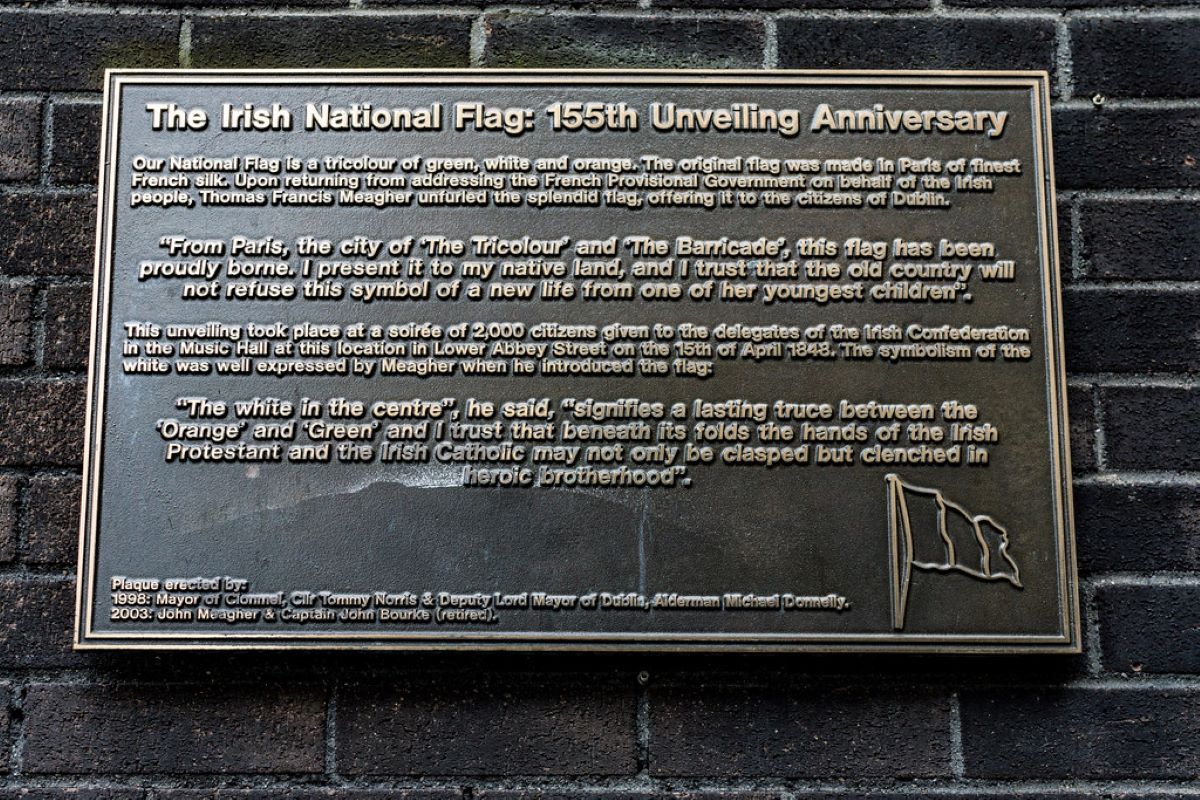


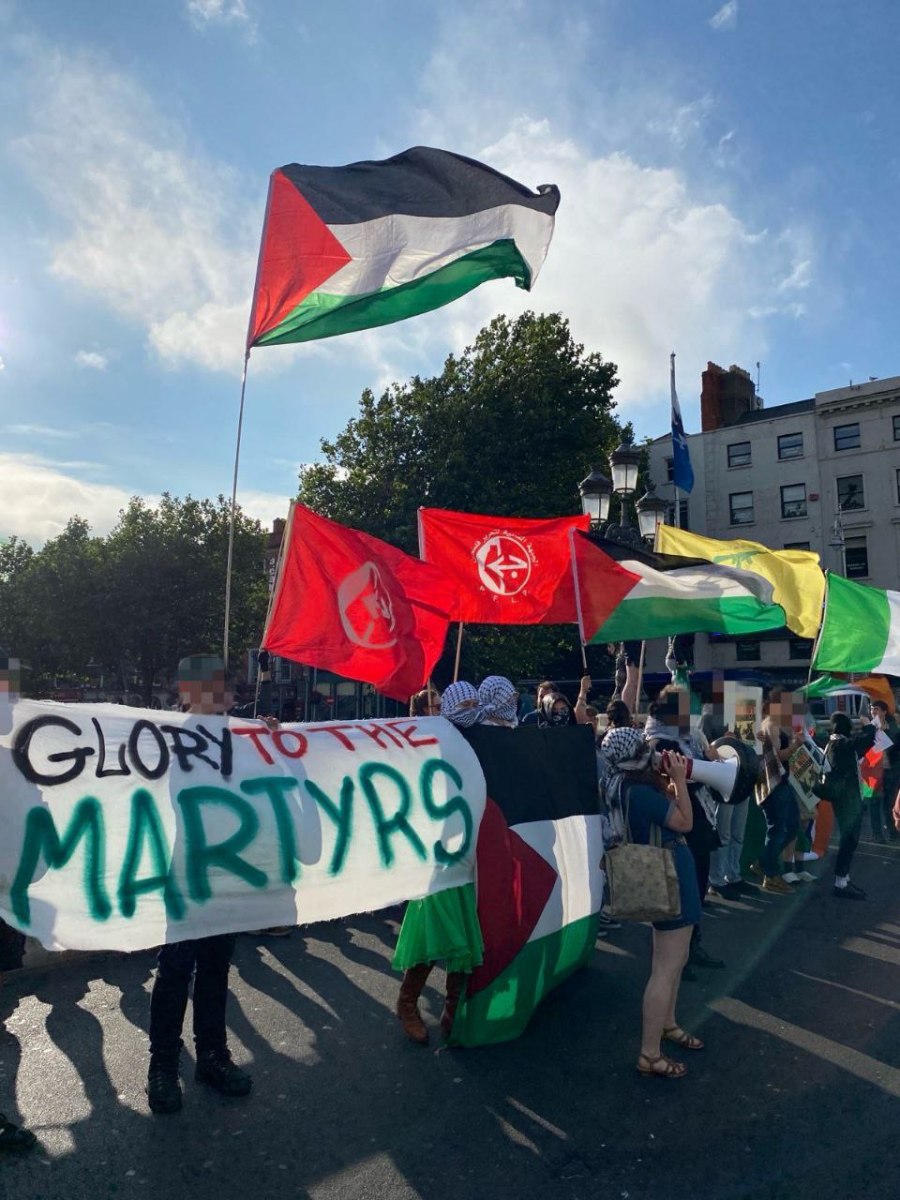
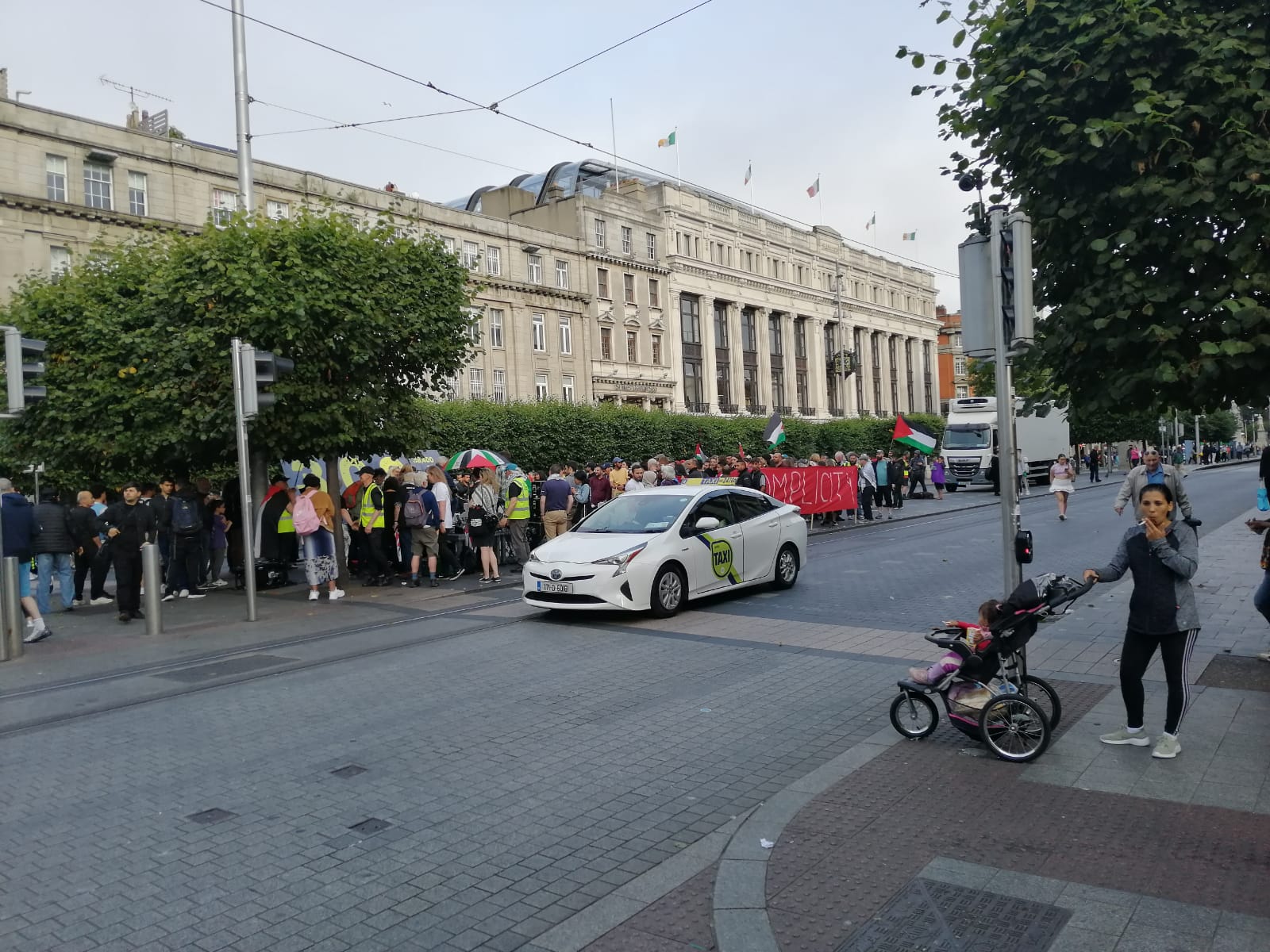
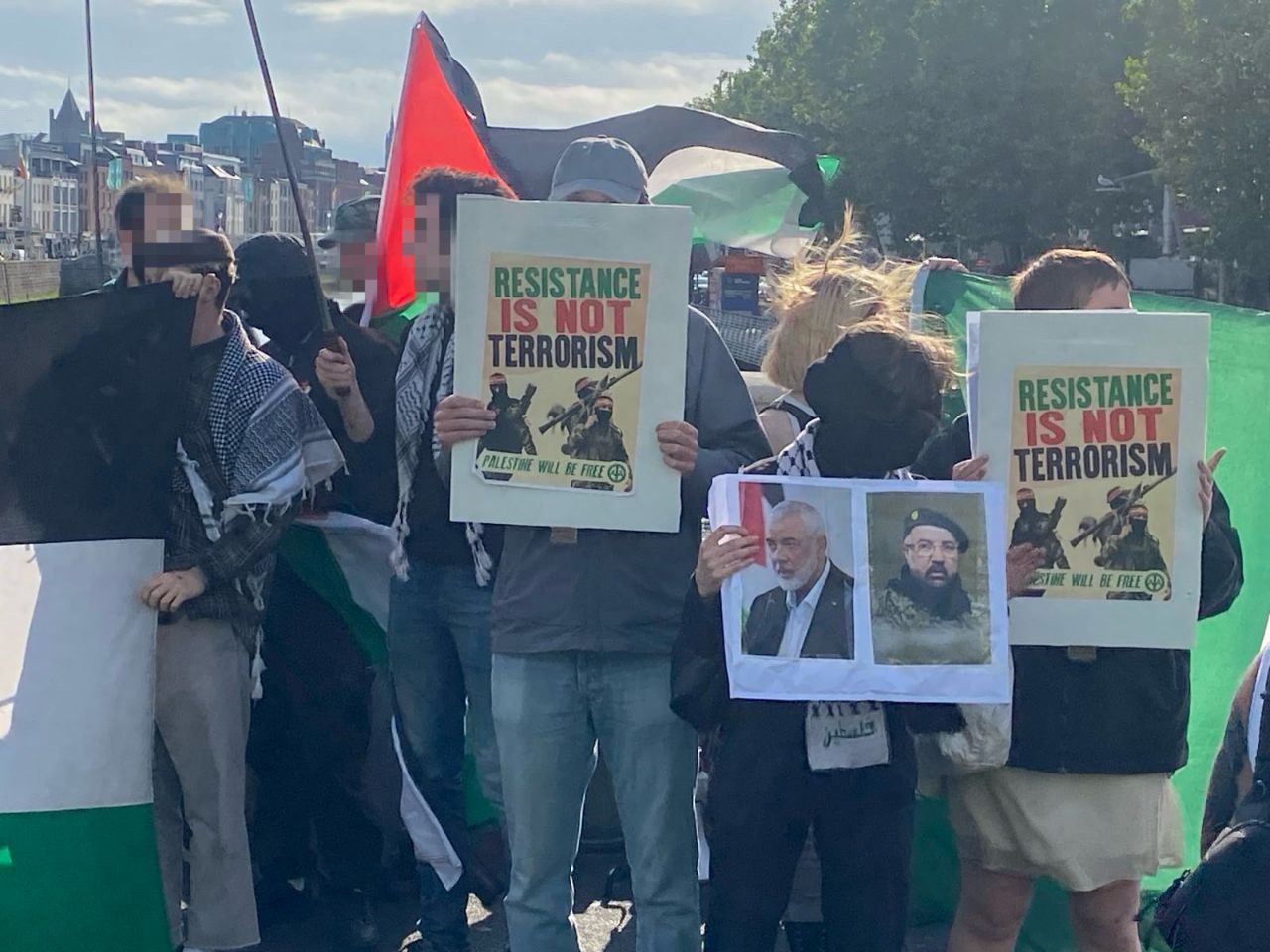
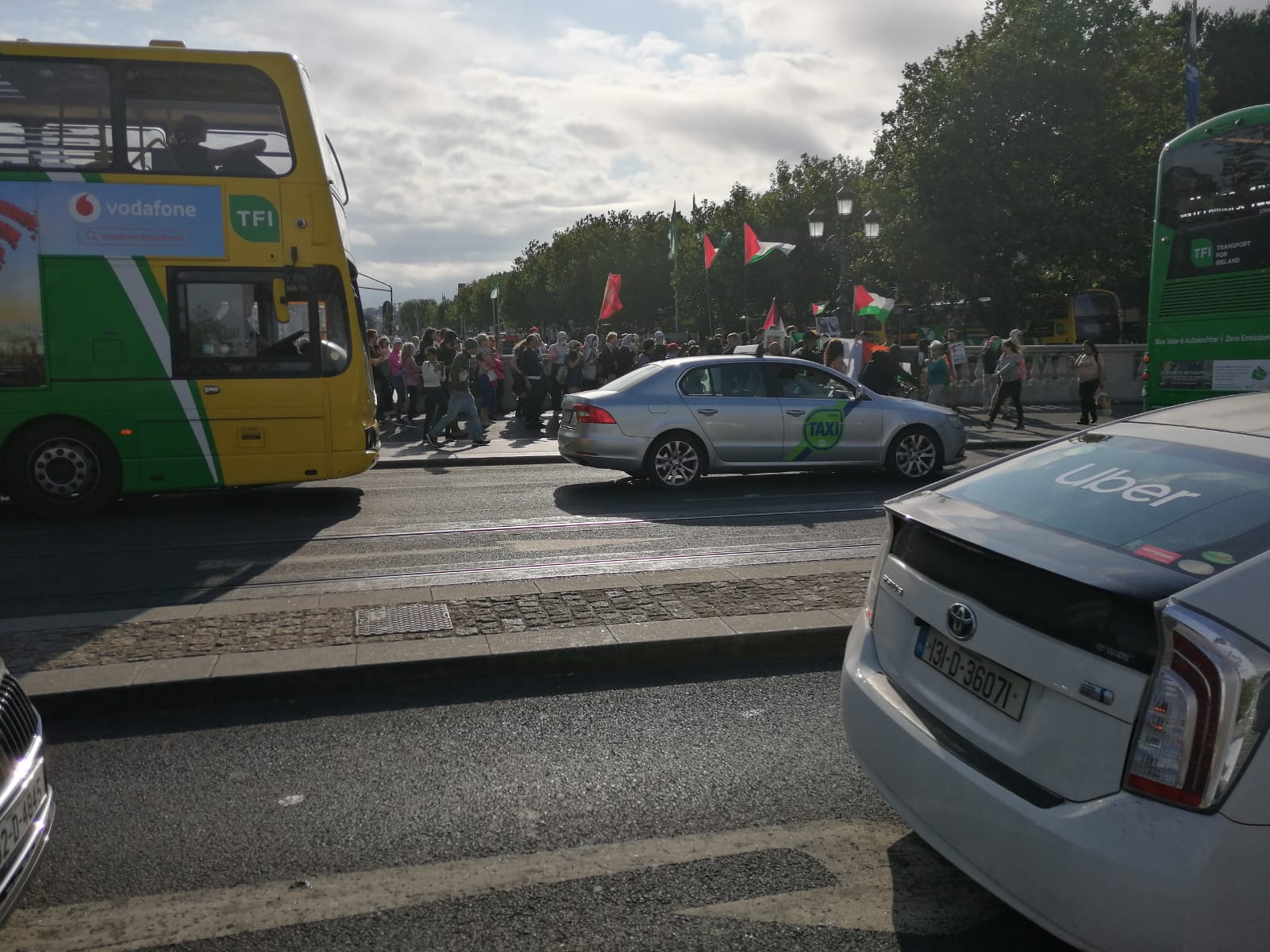

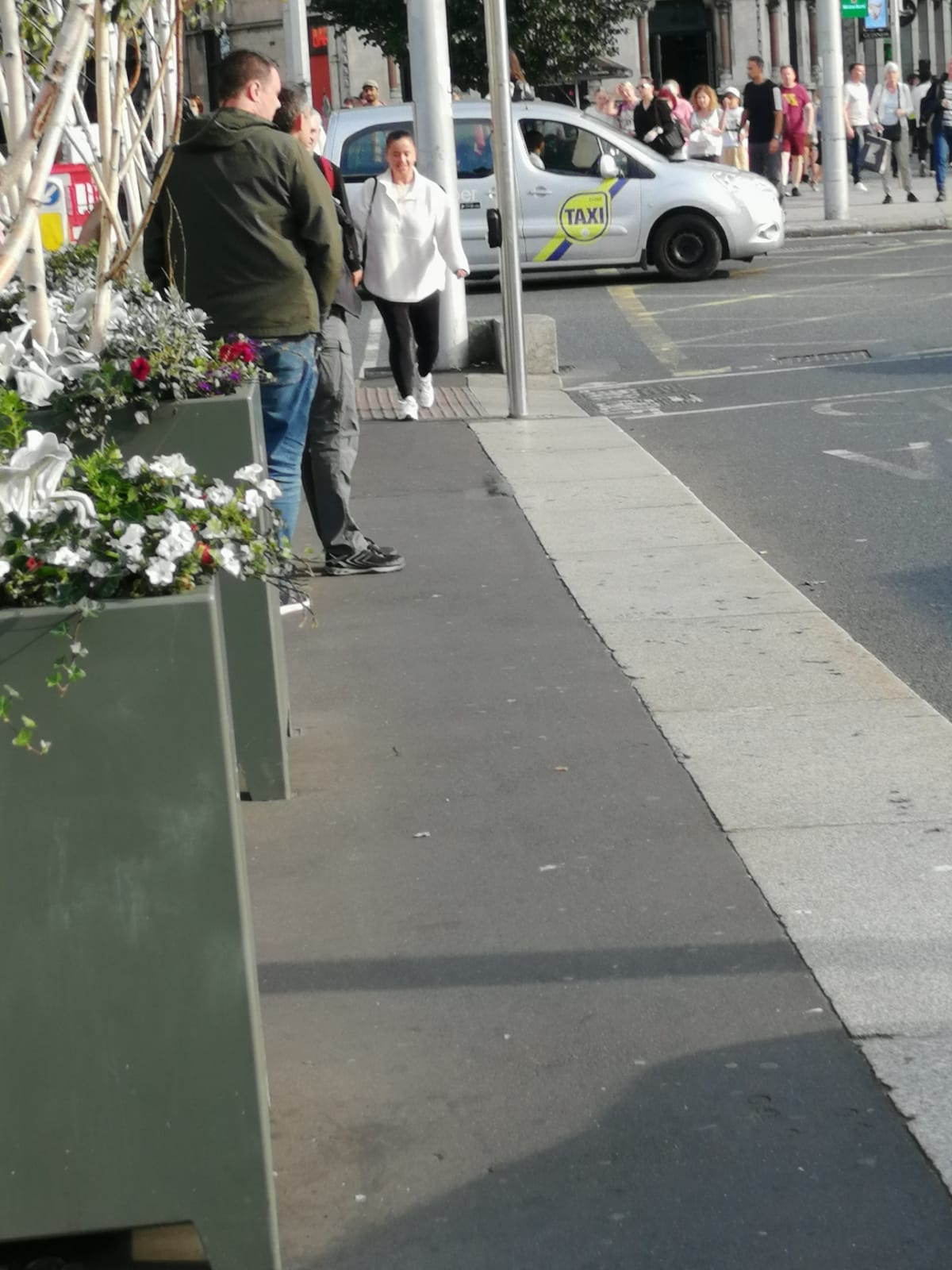
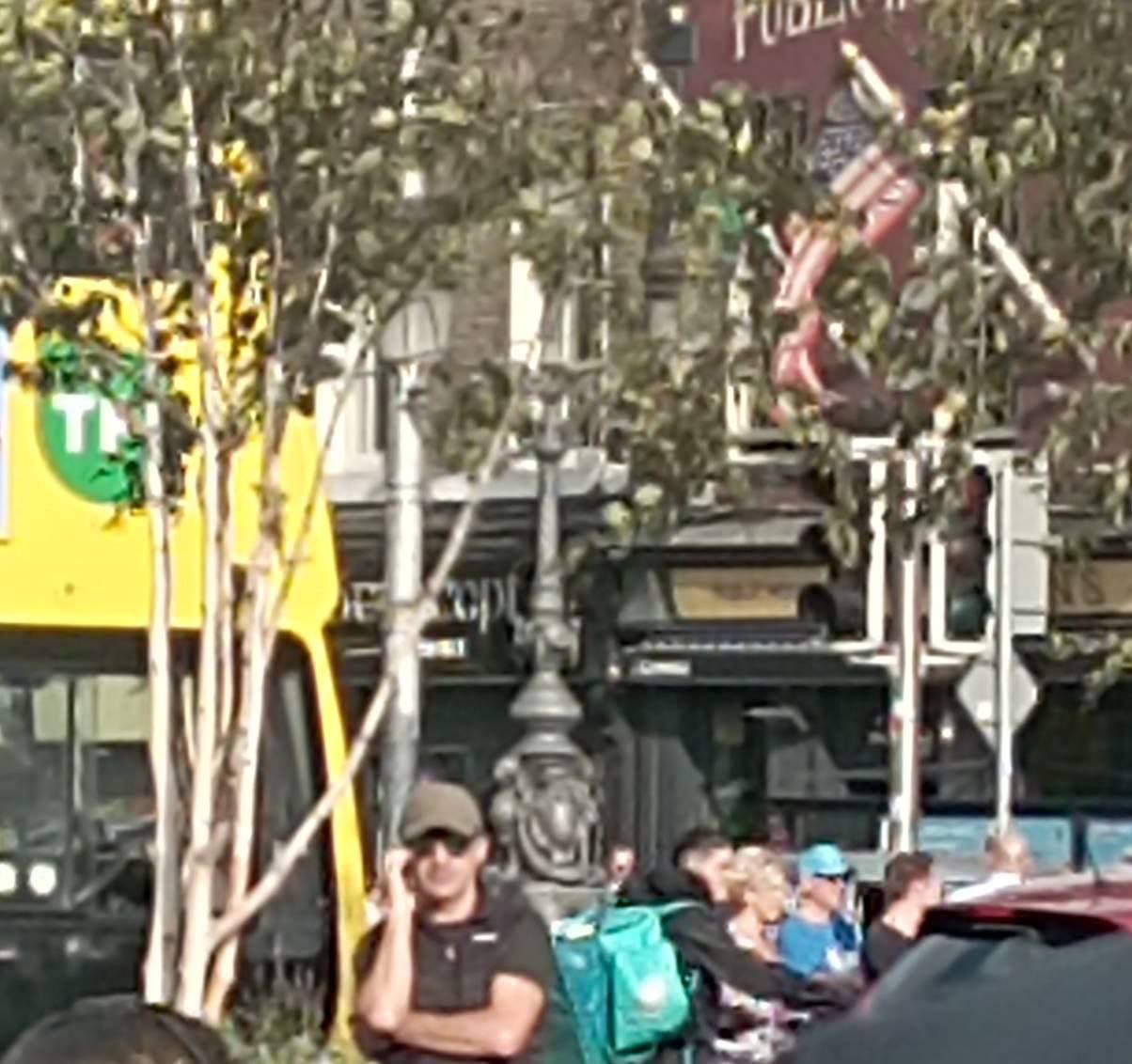
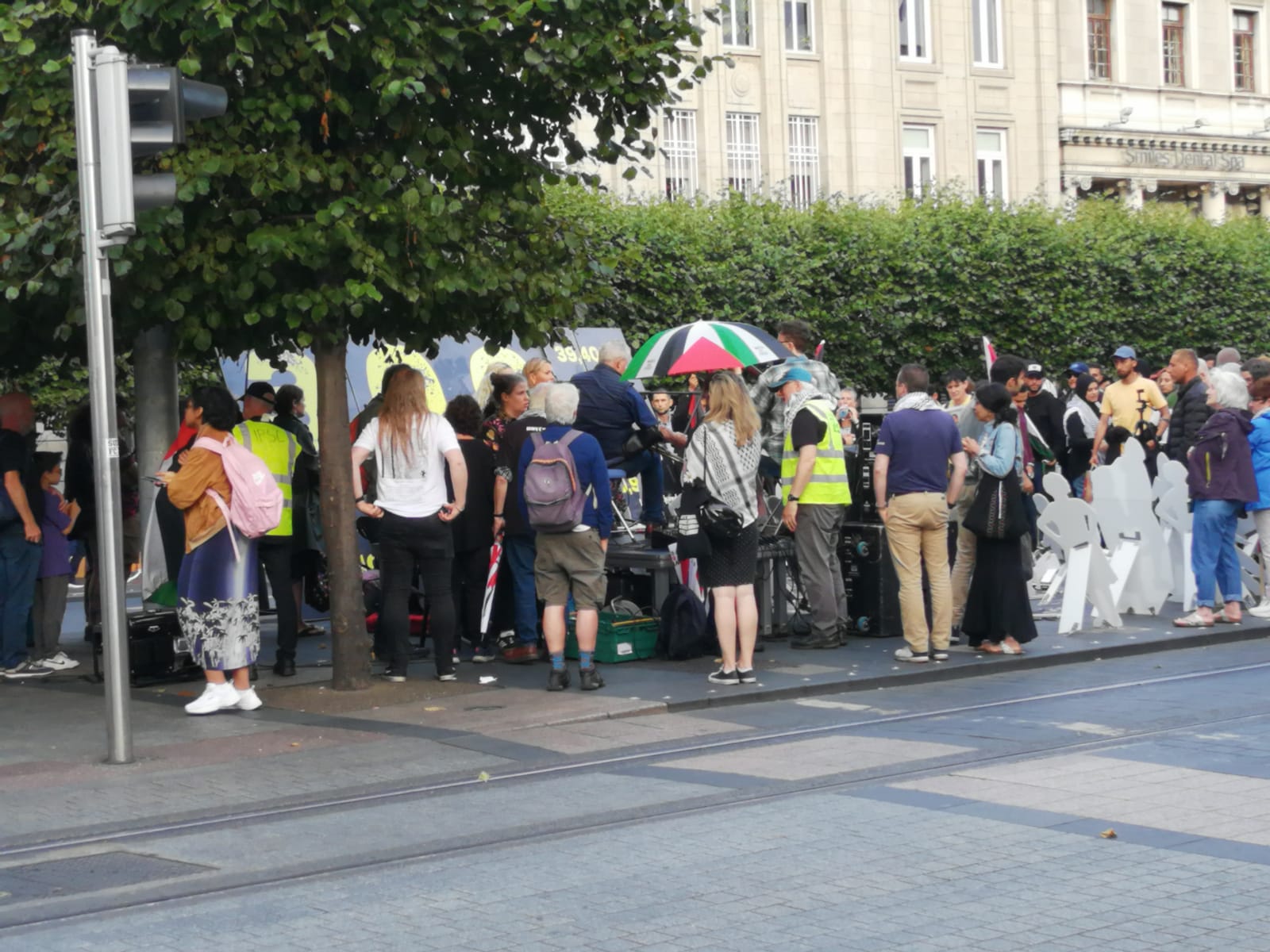
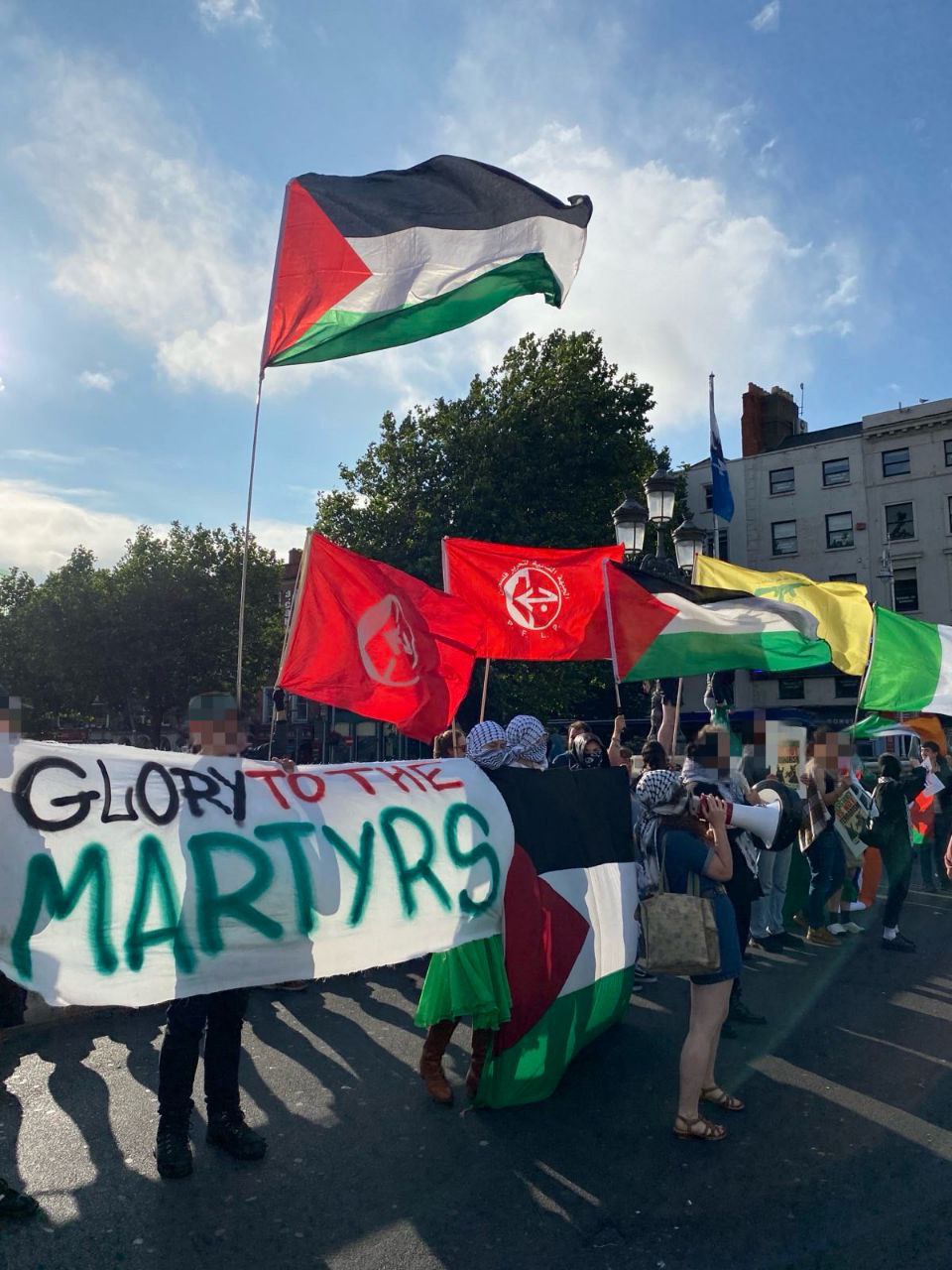


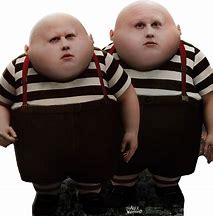
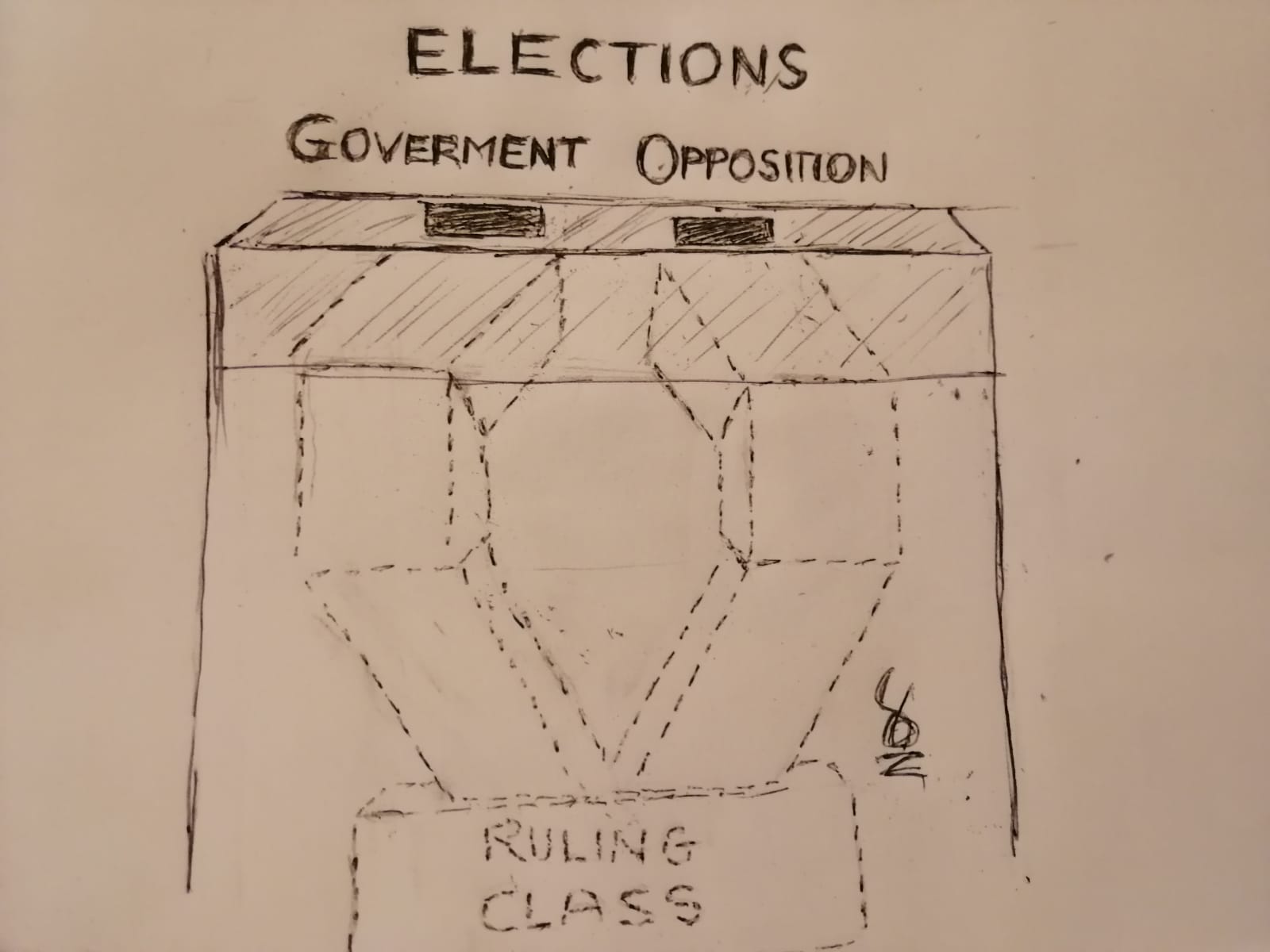
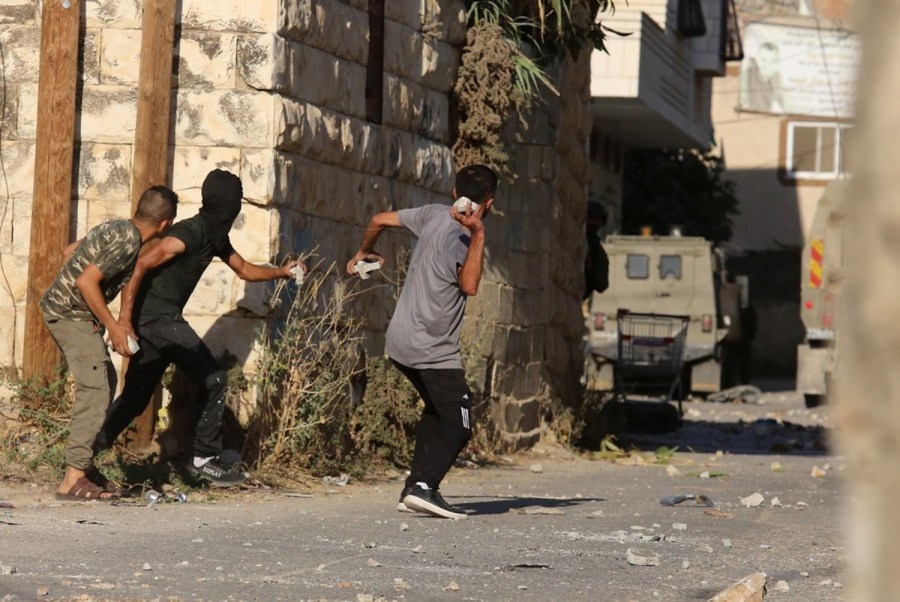
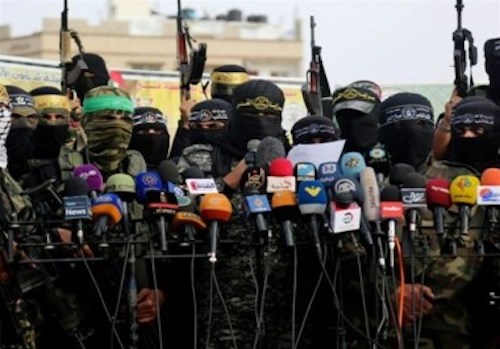
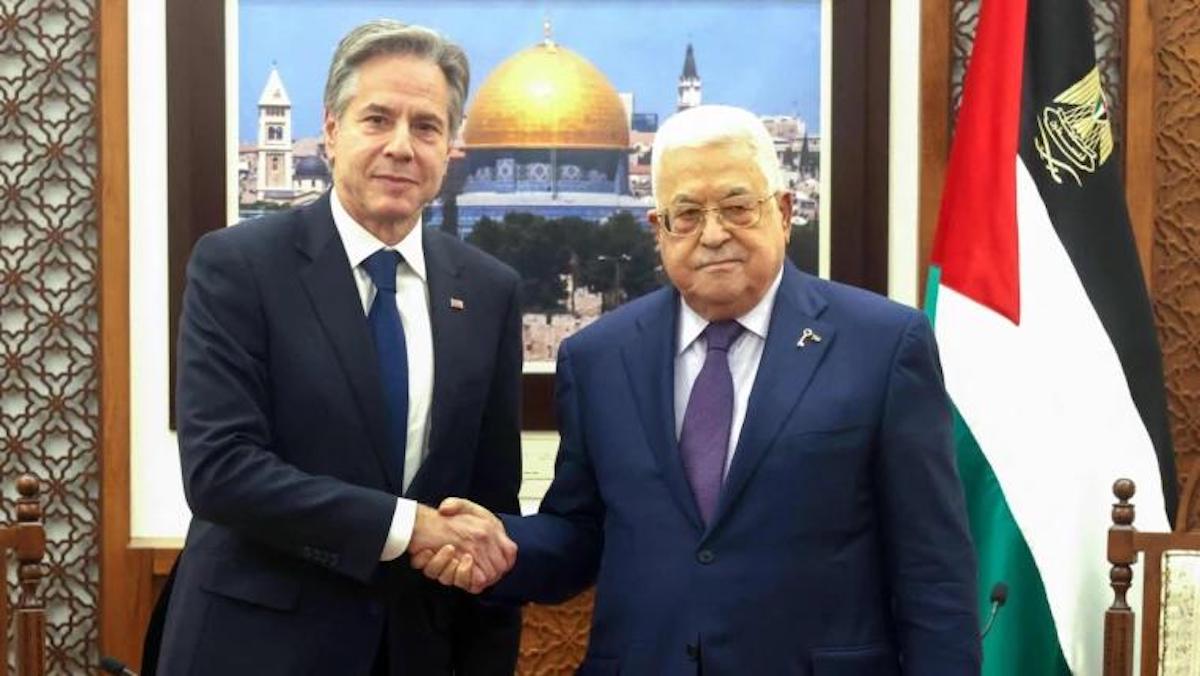
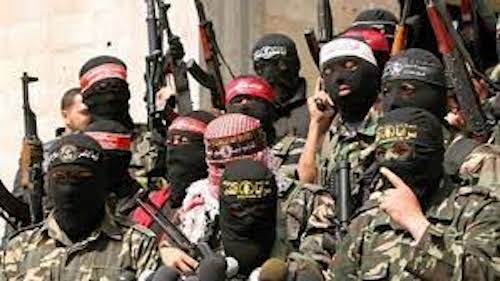
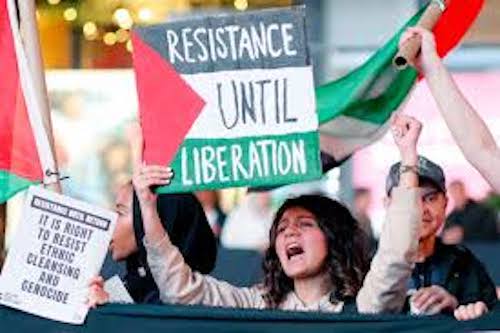
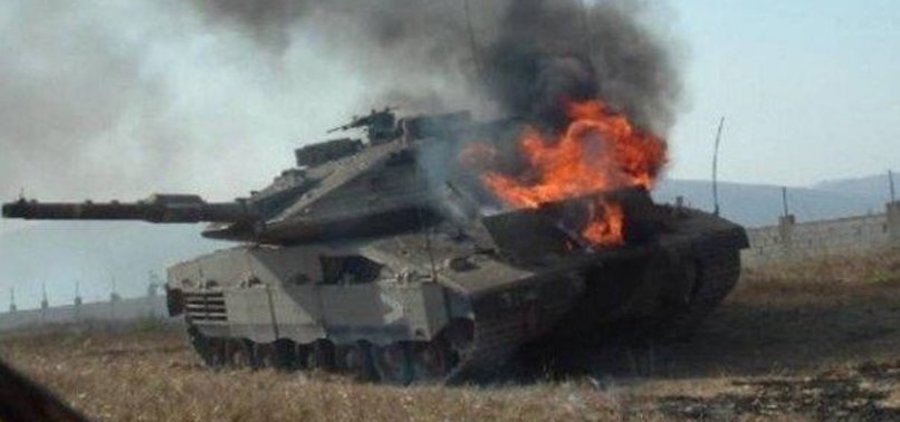
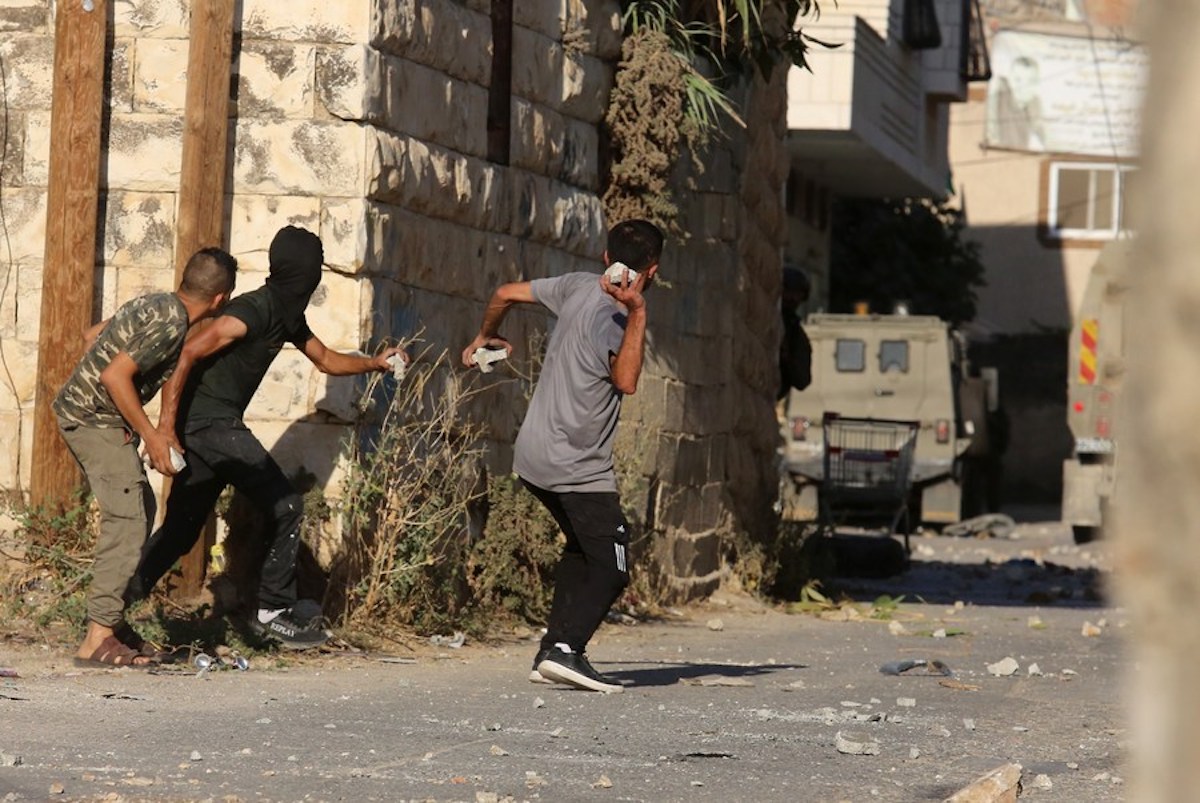
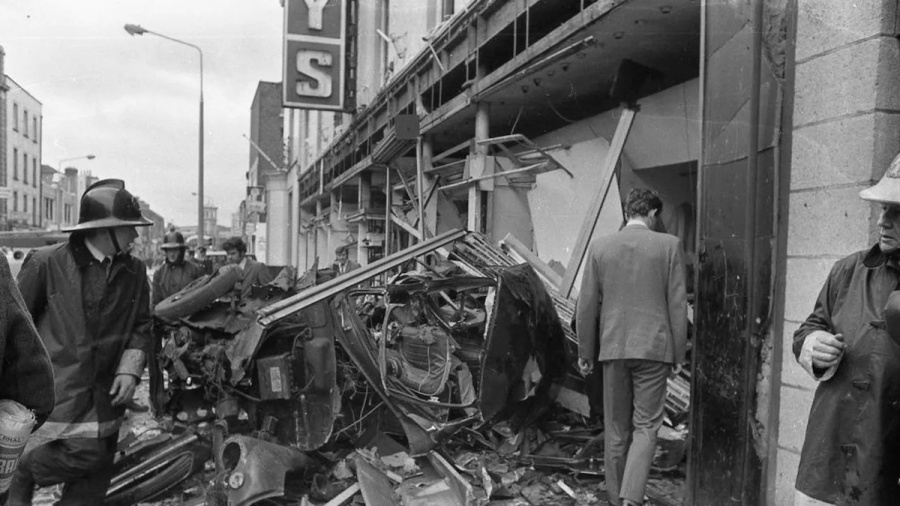


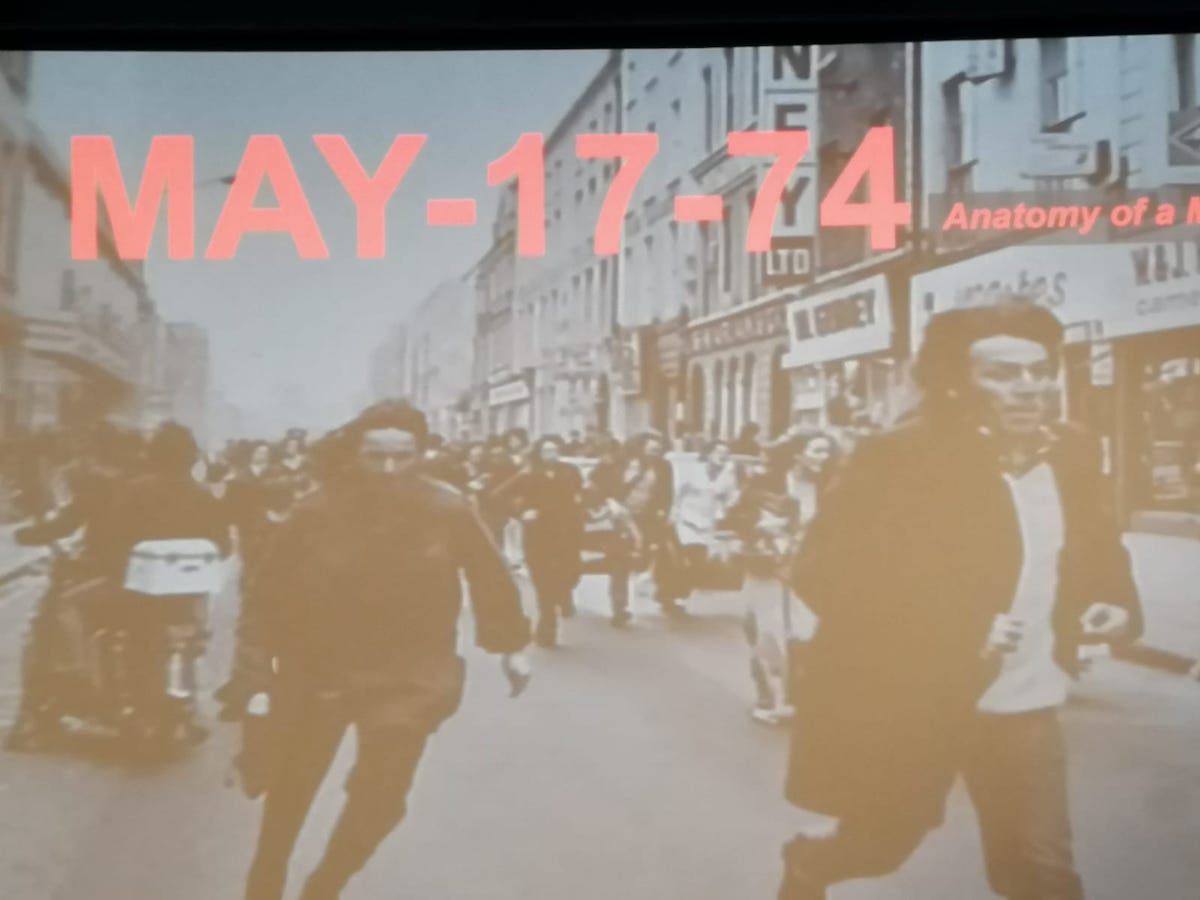

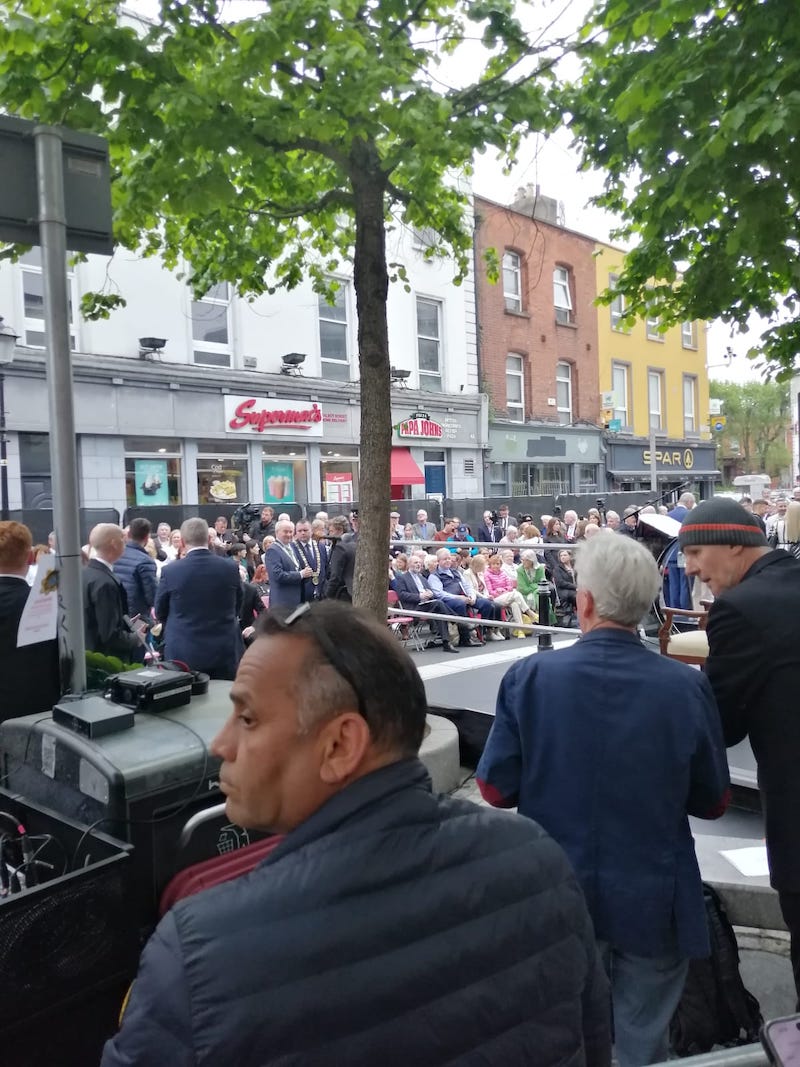

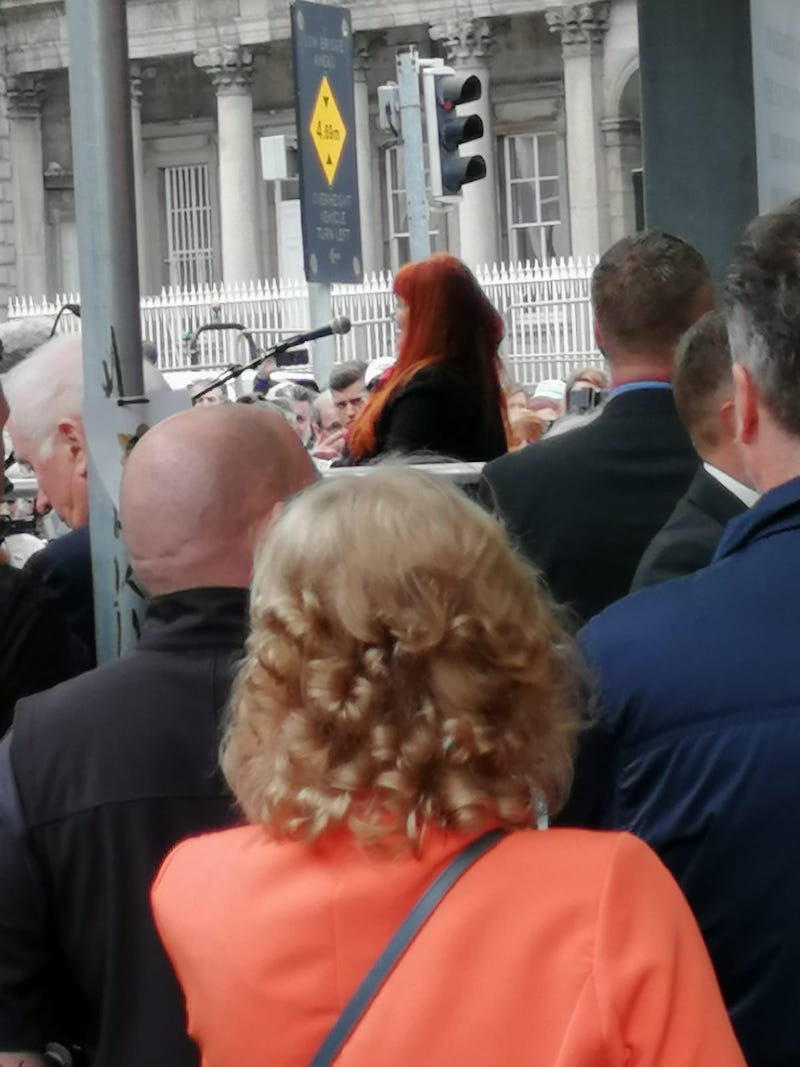




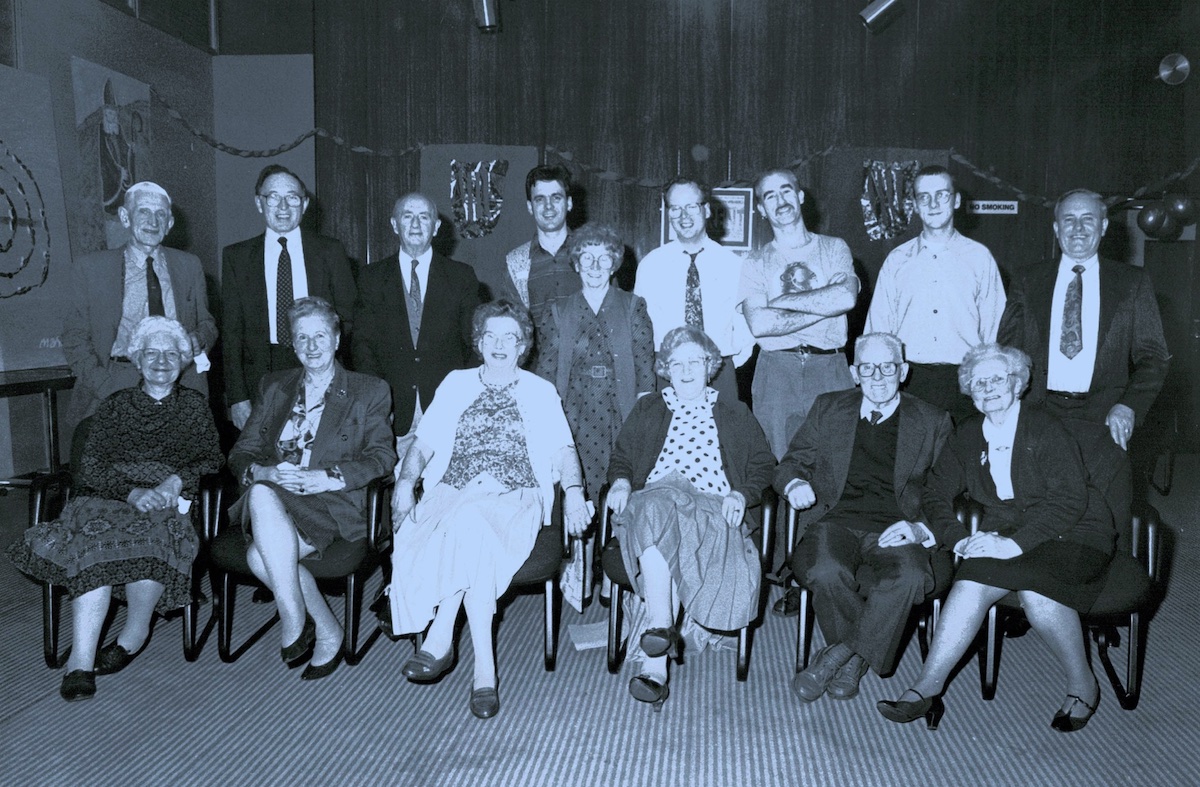

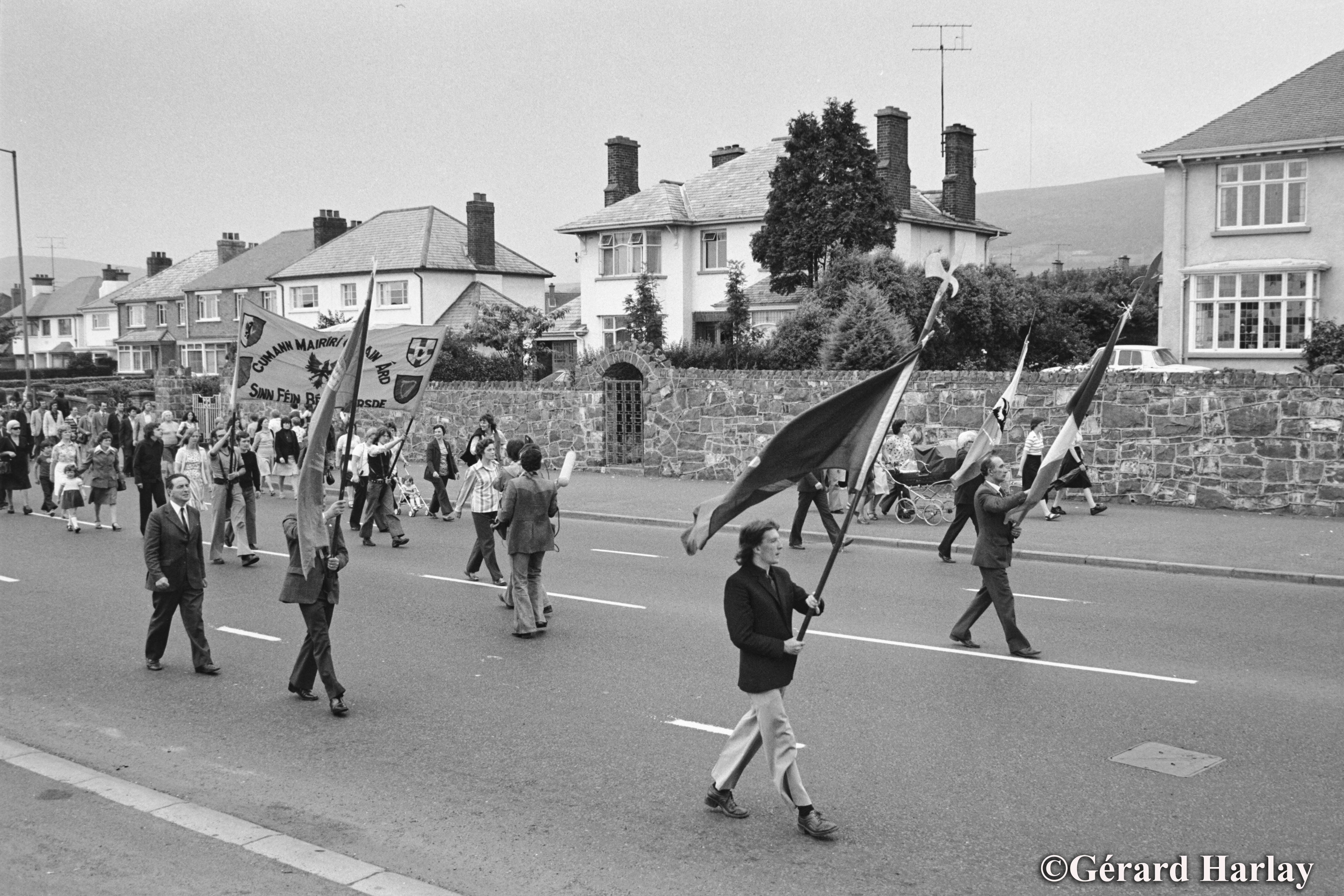


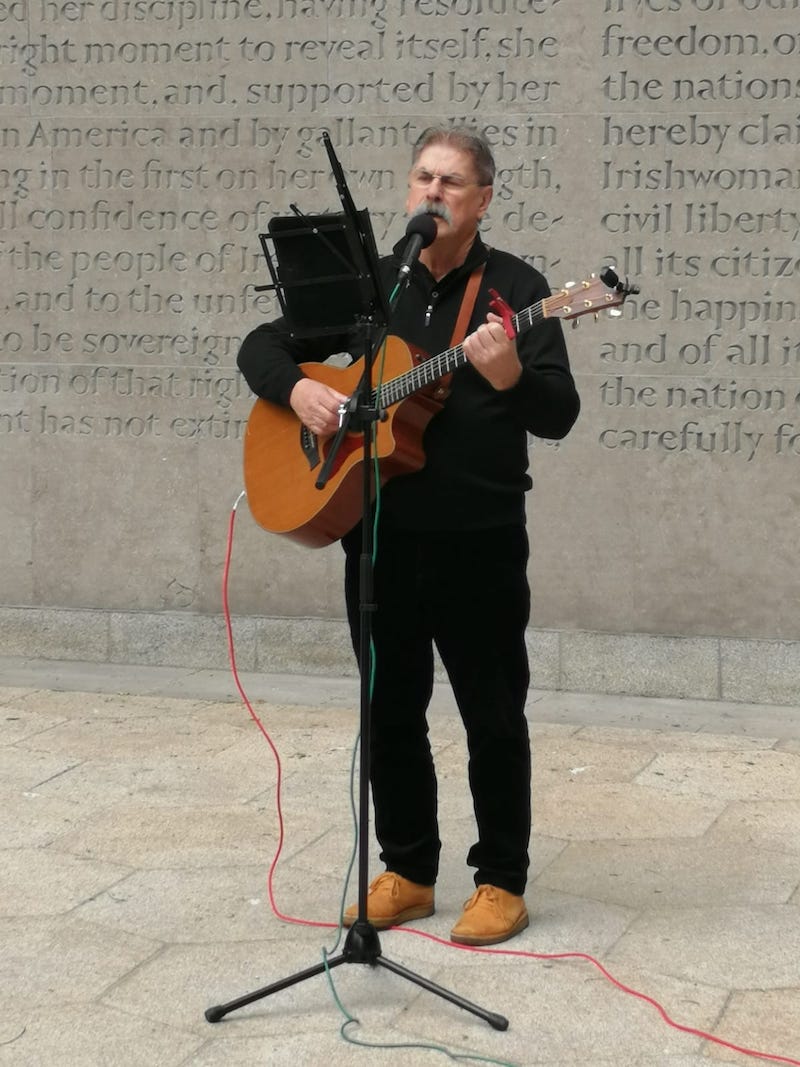
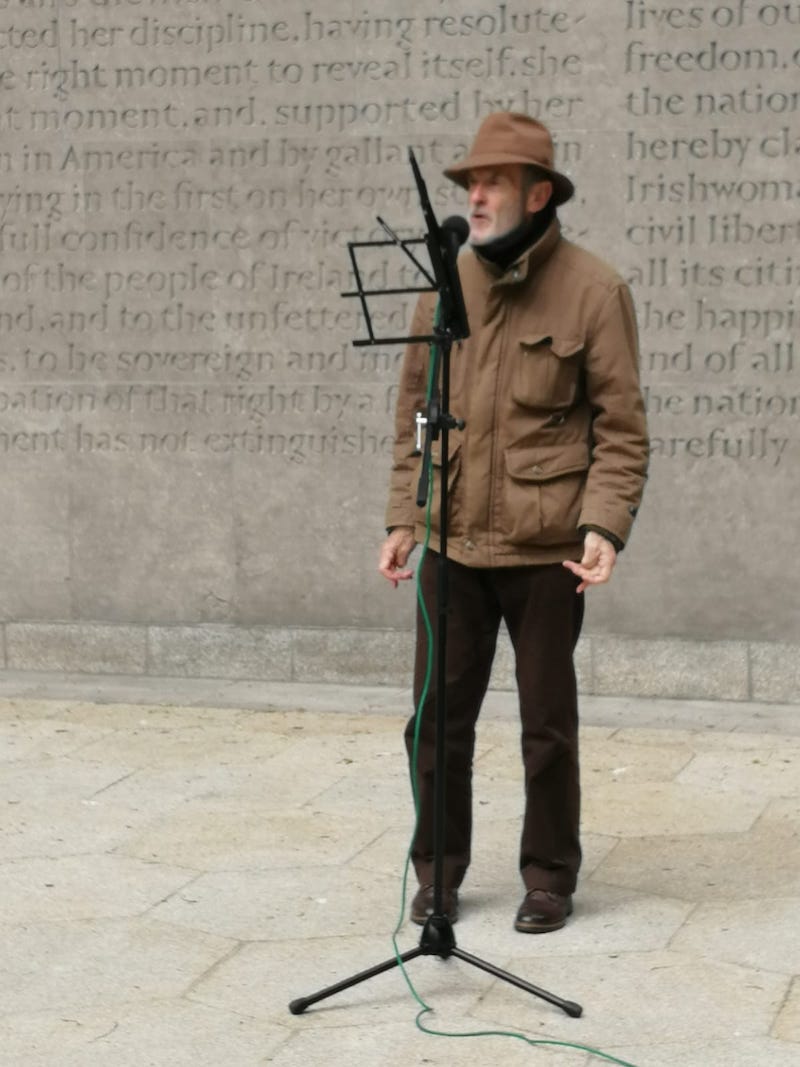



 rebelbreeze