A number of demonstrations were held in Ireland to make it clear that Kier Starmer, Prime Minister of the UK and supporter of the Zionist state of ‘Israel’, has no céad míle fáilte in Ireland, or indeed any fáilte whatsoever for his Dublin visit.
After fourteen years of Conservative Party management of the UK, Starmer at the head of the Labour Party rode a change-seeking wave to win the General Election in July this year. But he soon revealed how little difference there is between the parties, including on Palestine.
Mostly of the east-facing section on the Bridge (Photo: R.Breeze)
Although the Labour Party on the Zionist State, its Government continues to support that state politically and economically, also militarily with supply of weapons components and RAF missions.1
Very recently the UK Labour Government temporarily suspended 30 military items which may (may!) be implicated in genocide. The UK, holder of one of the five Permanent seats of the UN Security Council is complicit in the ongoing Zionist colonial settler genocide of Palestinians.
In fact, the UK is responsible for settling Zionist Jews in Palestine and then for allocating much of Palestinian land to the settler who, as European settler colonists do, expelled hundreds of thousands of Palestinians and continued extending their land-grabbing ever since.
West-facing section of protest (Photo: R.Breeze)
PROTEST ON O’CONNELL BRIDGE
The Saoirse Don Phalaistín and Anti-Imperialist Action groups organised a protest against Starmer’s visit to take place on O’Connell Bridge at 3pm on Saturday and took up position on the central pedestrian reservation, with one section facing eastward and the other towards the West.
The Bridge spans the River Liffey and is in the heart of the city centre, crossed by north and southbound traffic and in view of westbound and eastbound traffic along the quays also.
There was a heavy presence of uniformed police in the vicinity, with five Special Branch nearby and a Public Order Unit van driving by a number of times as did other Garda vans. A prisoner transport van was also parked on the Bridge for a period but no attack was forthcoming.
Collection of banners and flags in west-facing section of protest. (Photo: R.Breeze)
RECORD OF THE LABOUR PARTY
One of the speakers at the O’Connell Bridge event reminded people of the history Labour Governments vis-a-vis Ireland, having sent the troops to the Six County colony to quell the struggle for civil rights there and also targeting the Irish in Britain with the Prevention of Terrorism Act.
This 1974 PTA, the speaker said, was later extended into the current Terrorism Act of repression in Britain. He reminded people too of the innocent Birmingham Six, Guildford Four, Maguire Seven and Judith Ward who were framed and jailed for long years under a Labour Government.
A speaker at the protest giving some reasons why Keith Starmer is not welcome in Ireland. (Video cred: Social Action Ireland)
The speaker could have also mentioned the Labour Party’s participation in the WWI War Cabinet which had sentenced and executed 16 Irish leaders after the 1916 Rising and its bipartisanship with the Conservatives on the partition of Ireland in 1921 and instigation of the Civil War in 1922.
SUPPORT AND OPPOSITION
The attitude expressed by protest passers-by on foot, bicycle or in motorised transport was nearly uniformly supportive. One exception was a fascist who called the protesters ‘traitors’ and attempted to take closeup photos before being blocked by a participant with a flag and seen off.
(Photo: R.Breeze)
Another was a big man who in a UStates accent seemed to shout something derogatory about Ireland and then claimed to be Irish (he might have been part of the diaspora there since the Irish tricolour colours appeared on the back of his top).
For much of the two hours of the event, slogans were shouted in support of Palestine, against the Zionist State, against Starmer, against British occupation of Ireland, for Intifada revolution, and for the solidarity action of Yemen at sea regarding Zionist-collusive shipping companies.
End.
Another view of west-facing section of protest with newly-made ornate Starry Plough flag. (Photo: R.Breeze)
FOOTNOTE
1There have been a number of reports of special units of the British army in Palestine and on British Intelligence personnel assisting the ‘Israeli’ Occupation Force.
Earlier this month there was an oration delivered at the grave of Wolfe Tone1 which contained some important elements which deserve inspection and discussion.
– The path to rebuild our struggle is the development of an Anti Imperialist Broad Front – said the speaker. – A United Front of Revolutionary republicans, working in cooperation to advance our common republican objectives and to achieve a common republican programme.
Looking around us at the parties and groups in the socialist and republican spectrum, the ostensibly revolutionary varieties, we see that for many of them, building up their own organisation takes precedence over anything else, including revolution – for them the revolution IS their party.
Speaker giving oration at Wolfe Tone’s grave in front of the monument, faced by colour party. (Photo: RSM)
The call given in this oration runs counter to that kind of thinking. “But we’ve heard all that about ‘unity’ before,” a reader might say. Yes we have and often “unity” meant only “unity” around that particular party or, even more often, around this or that leadership.
There is nothing of that to be found in this address “recognising and respectful of the autonomy and independence of the groups and independents involved”. “Hmmm,” the reader might say “but is it a genuine intention?” Given our experience, it’s a valid and important question.
The most dependable test is in the practice. The speaker of the oration at its annual Wolfe Town Commemoration2 was representing the Socialist Republican Movement organisation (more often manifested publicy in recent years in the form of the Anti-Imperialist Action broad group3)
As an independent revolutionary activist for many years I have often participated in AIA’s actions and at times they have supported actions of which I had been part of organising. I have found that their practice matches their words and there is no truer test.
The speaker followed with practical suggestions for the implementation of the broad front: Trust and co-operation must be developed … through activism and the development of National Republican Campaigns that can be taken up by all Republican groups and independents …
There are many campaigns that could be developed from support for POWs to opposing internment and extradition, environmental campaigns such as (overcoming) the unacceptable situation at Lough Neagh, to campaigns thatoppose the British and NATO presence in Ireland.
One of the banners in the crowd at the event in Bodenstown. (Photo: RSM)
Such a Republican Broad Front would be a fitting tribute to our Patriot Dead, the speaker added, to martyrs like Cathal Brugha,4 who gave his all in fighting for the sovereign, Independent Irish Republic and gave his life on this day in 1922 as a hero in the war in defence of the Republic.
In many of the pleas for unity of the fragmented resistance in Ireland, individuals have called for a conference to form a united front, others called for a unity document of principles around which to unite while in at least one case, two distinct organisations merged.
I have for years spoken out against such endeavours and advocated as a first step unity in practice. If organisations and individuals are not capable of that step, what kind of unity can they achieve around discussion of documents? Unity in practice also helps to break down distrust.
The speaker at the Wolfe Tone commemoration takes the same line, presumably speaking for the SRM when he does so and one supposes that this will continue to be the approach of the AIA in campaigns such as against internment, in solidarity with political prisoners5 or with Palestine.6
The above piece discussed two elements of the oration given by the SRM earlier this month which I believe to be of great revolutionary importance and in need of application in Ireland, one in advocating a principle and the other in suggesting avenues for practical application.
Later I will be taking a look at some other elements in that talk (the text of which, as published by the SRM, I attach as an appendix).
Beirimís bua.
(Image sourced: Internet)
End.
FOOTNOTES
1Wolfe Tone, born into settler stock and of the Establishment Anglican congregation, was a leading figure in the formation of the revolutionary republican organisation The Society of United Irishmen, seeking “to unite Catholic, Protestant (i.e Anglican) and Dissenter” (i.e the other sects, Presbyterian, Methodist, Unitarian, Quaker etc.) to “break the connection with England. In 1798, the year of the Unitedmen uprising, the first of many Irish Republican uprisings and campaigns, Tone was captured by the British Navy on a French warship and, despite his French officer rank, tried and sentenced to death.
Tone died in jail some months before his brother Matthew was taken prisoner during the surrender at Ballinamuck (Baile na Muc) in Co. Longford of another French expedition to Ireland, late and too small, at the tail end of the Rising that year. Also ignoring his officer POW status, he was hanged in Dublin and his body reputedly thrown into the mass grave at Croppies’ Acre in Dublin city.
2Since even earlier than Thomas Davis’ (1814-1845) song In Bodenstown Churchyard, Irish Republican organisations and individuals have been making the pilgrimage to that grave in County Meath, at times with thousands in attendance.
3Also for an intense time as the Revolutionary Housing League in its attempt to spark a movement of occupation of empty properties to overcome the widely-acknowledged housing crisis in Ireland.
4Cathal Brugha (nee Burgess), son of a mixed Catholic-Protestant marriage, was a leading figure in Irish nationalist movement and in Republican rebellion in the last decades of the 19th and early decades of the 20th Centuries, learned Irish as a member of the Gaelic League, member of the Irish Republican Brotherhood (which he later left, considering it undemocratic), officer in the Irish Volunteer, 2nd in command in the South Dublin Union in 1916 served as Minister for Defence in the revolutionary government from 1919 to 1922, Ceann Comhairle of Dáil Éireann in January 1919 and its first president from January 1to April 1919, Chief of Staff of the IRAfrom 1917 to 1918. He served as a TD (electe parliamentary representative) from 1918 to 1922. He was mortally wounded by Irish Government troops in the early days of the Irish Civil War.
5Both on their own and for example in support of the Ireland Anti-Internment Campaign.
6Both on their own and for example as part of the Saoirse Don Phalaistín broad front.
APPENDIX
The following is the text of the main oration of which some sections are discussed in the preceding article and more to be discussed anon. It was delivered at the annual Wolfe Tone Commemoration at Bodenstown, organised by the Revolutionary Irish Socialist Republican Movement on Sunday July 7, 2024 and published on its Telegram page.
A Chairde is a chomrádaithe,
Táimid anseo i relig bodenstown ag uaimh ár n-athair, Wolfe Tone agus táimid ag rá go bhfuil an gluaisteacht a bhunaigh sé fós beo, agus tá sé ag fás arís.
Wolfe Tone is the father of Irish Republicanism. We come here each year not just for commemoration, but like Pearse, Connolly, Mellows and Costello before us, we come because we believe that the ideas and the vision that Tone put forward of a free independent Ireland is as relevant today as they were in the 1790s and because we believe that by remaining true to the teachings of Wolfe Tone we can build a revolutionary movement that will successfully free our country. Maybe not today, but our freedom is inevitable.
Tone’s most important belief was that we must ‘break the connection with England’ by any means necessary. It is for this reason that he established revolutionary military-political organisation the United Irishmen in 1791 and led a mass armed uprising in 1798 against British Rule in Ireland.
Tone was also clear that the revolutionary struggle could only be successful if it was based on the masses of the Irish People, stating that, ‘Our Strength shall come from that great and respectable class, the men of no property’.
And in these two simple quotes from Wolfe Tone, we have two of the most important teachings for the Revolutionary Republican Movement today. Firstly, that Republicans must work as a priority for National Liberation by any means we decide necessary.
That we must break the connection with England and defeat all forms of Imperialism in Ireland to establish a sovereign, Independent, Irish Republic.
And secondly, we learn from Tone that the fight for our Republic is a class struggle and that the driving force of that struggle will be the working class fighting for their own liberation.
These are two key teachings that when deviated from lead to compromise and the selling out of our revolution.
It is the duty of all of us here today and of all Republicans across Ireland, to ensure that the struggle for national liberation is kept at the fore of our revolutionary republican objectives and that we work tirelessly to achieve it and to ensure that our movement remains centred on and driven by the working class.
Some other key points laid down by Tone include that Republicanism is Anti Imperialist and it is Internationalist. Our struggle in Ireland is part of a wider international struggle of oppressed people against occupation, colonialism and imperialism.
Tone understood this when he looked to Revolutionary France to support the 1798 uprising. Today, Republicans must fight our struggle while also supporting Liberation struggles around the world in the belief that every blow struck against imperialism brings our victory closer.
So from Palestine to the Philippines and from India to the Basque Country, and everywhere people take a stand against NATO, the Revolutionary Republican movement must raise our cries in solidarity. The tide of revolution is rising in the world and there is much to be optimistic about.
But as revolutionaries we also have to be realistic. Since the time of Wolfe Tone the tide of revolutionary Republicanism has ebbed and flowed.
After the days of Tone and Emmet and the final defeat of the United Irishmen in 1805, Republicanism was reduced to an ember, spoken about in quiet corners until the birth of Young Ireland and the uprisings of 1848 and 1849 when revolutionaries such as Thomas Davis, Fintan Lalor, James Stephens and John O’Mahony would carry forward the vision of Tone, take up the hard work of rebuilding the Republican Movement and become the spark that would renew the Revolutionary fire, giving birth to Fenianism and the struggle that has carried us until today.
And today, we are 26 years on from the surrender of 1998, a surrender that had a devastating effect on the movement. Later this month it will be 19 years since the Provisionals ended their armed campaign.
These two great betrayals have led to the situation where the movement is fractured and split.
The revolutionary forces, though active, are scattered and there is mistrust between Republicans, whether in different groups or independents across Ireland, and this mistrust and division is exploited by our enemies.
It is a situation that all Republicans want to reverse and one of the revolutionary priorities in this phase of our struggle to overcome.
Comrades, like the revolutionary republicans after the defeat of the United Irishmen and Young Ireland, we find ourselves with the hard and gruelling task of rebuilding and reasserting the revolutionary republican struggle.
And the path to rebuild our struggle is the development of an Anti Imperialist Broad Front. A United Front of Revolutionary republicans, recognising and respectful of the autonomy and independence of the groups and independents involved, working in cooperation to advance our common republican objectives and to achieve a common republican programme. This is what our enemies most fear.
But again, this will not just happen overnight.
Trust and co-operation must be developed and we assert that this will be best achieved through activism and the development of National Republican Campaigns that can be taken up by all Republican groups and independents in a unity of purpose, that shows the real and forgotten strength of the Republican Movement.
There are many campaigns that could be developed from support for POWs to opposing internment and extradition, environmental campaigns such as the unacceptable situation at Lough Neagh, to campaigns that oppose the British and NATO presence in Ireland.
Such a Republican Broad Front would be a fitting tribute to our Patriot Dead, to martyrs like Cathal Brugha, who gave his all in fighting for the sovereign, Independent Irish Republic and gave his life on this day in 1922 as a hero in the war in defence of the Republic.
Over the last seven years we have put down a solid foundation as a movement. We have reasserted Irish Socialist Republicanism as the driving force of Revolution in Ireland.
We have recruited a new generation of republicans not damaged by the 1998 surrender who are now working with more experienced republicans to drive the struggle on.
While we can be happy with these achievements, the Republic needs more from each and every one of us and we all need to ask what we as individuals can do to carry the struggle forward.
Now is the time to move to the next phase of development in our revolutionary struggle, unsurprisingly by taking it back to Tone. Now is the time to strengthen and embed ourselves in the people of no property and to engage in systematic Republican Community work across the country.
In doing so, we would do well to return to Seamus Costello and the oration that he delivered from this spot in 1966, signalling the rise of Socialist Republicanism within the Movement. Costello outlined how it was the duty of all republicans to be active in our community.
How we should be involved in community groups, trade unions, tenants and residents associations, sporting, cultural and educational organisations and how we must take and assert our revolutionary republican position within them.
This is a task for all revolutionary republicans. Look at the groups in your area and see which ones your involvement in would advance the strengthening of Socialist Republicanism in your community.
Where no such groups exist, establish them. Where help is needed reach out to us as we have experienced comrades who excel in this area that would be happy to help in this work.
To conclude the comrades, this is a brief outline of our tasks in the time ahead.
While these plans will be deepened with discussion and debate within the movement, no one should leave this graveyard thinking there is no work for them to do, and the responsibility is on you to come forward and volunteer instead of waiting for others to come and ask you.
Our work is to free Ireland and our people by any means necessary to establish the 32 county All Ireland Socialist Republic, sovereign, independent, Gaelic and free, and we will not be stopped.
Redouble your efforts comrades, onwards to the Republic of 1916.
Around 30 people demonstrated outside Dublin’s Criminal Court on Thursday, many of them displaying Irish flags (Tricolour and Starry Plough) along with those of Palestine in solidarity with three activists before the court.
The activists were charged under Public Order legislation arising out of protesting a British war ship at Dublin docks in November last year, in solidarity with Palestine and against NATO’s support for the Israeli state’s slaughter in Gaza.
It was alleged that the activists (variously from Saoirse Don Phalaistín and Anti-Imperialist Action organisations) had entered a restricted part of the Dublin Docks and, holding a Palestine flag, had approached a British warship docked there and then occupied the gangway.
British military displaying firearms on Irish state soilin November last year. (Photo: Anti-Imperialist Action)
Gardaí had been called and the activists had refused their instruction to leave under the Public Order legislation and they had then been arrested. No act of violence, physical or verbal, took place on either side other than the refusal to leave and the arrests.
The activists appeared in the Parkgate Street building before Justice John Hughes and all three were defended by Damien Coffey of Sheehan Partners, a law firm which often handles political and human rights cases. Three Gardaí from Store Street acted in the role of the Prosecution.
The Garda in charge of the prosecution and his two colleagues gave evidence as to the arrests. Questioned by Coffey for the Defence, all confirmed that although the protesters had refused to leave, there had been no violence offered by them during their arrests.
Strangely, as shall become evident and relevant, one did not recall the British military presence on the gangway to be armed, whereas another did and confirmed that a photo of the armed men was of those who had been present.
One of the Garda offered his opinion that whereas the vessel was regarded in law as “British soil”, the gangplank was legally “Irish soil” and, if the protesters had actually set foot on the ship, they might have been charged with piracy. This piece of evidence also had unintended consequences.
One of the placards displayed by supporters outside the courthouse (Photo: Rebel Breeze)
According to this evidence, the British in a foreign military uniform had been present on Irish state soil and all replied to the defence lawyer that they were unaware of any Ministerial permission to do so — or that this could have constituted an offence under Section 317 of the Defence Act 1954.1
Furthermore, none were aware of any special permission granted to them to carry firearms on Irish state ground. The British military personnel themselves were not present as witnesses as their superiors had not replied to the Garda request to discuss giving evidence in the case.
Port security camera footage was shown as evidence by which protesters could be seen at the gates of a fenced-off section of the docks and some time later proceeding through a gate. A port security employee had been summoned by the Gardaí as a witness.
After he had been taken through his evidence (and failed to respond to what seemed an attempted prompt) by the Garda in charge the only relevance of his evidence was that a) the area was restricted and b) that he was worried for the safety of the protesters.
This (and the reason for the possible attempted prompt) was of importance when Coffey developed his defence summary on the legal grounds that Section 14 (1) of the Public Order Act required there to be an element of fear arising from the actions of those to be charged under the Act.
None of the evidence for the Prosecution had shown the presence of fear of anyone from the defendants and, furthermore, he submitted, any element of fear was much more likely to arise from the presence of two men holding firearms, to whit, the British military personnel.
The second part of the Defence summary dealt with right to protest, Coffey quoting a number of legal sources, also referencing the Irish Government’s recognition of a Palestinian state and statistics of people killed by the Israeli state against which the activists had been protesting.
Judge Hughes announced that a recess was due for lunch and that he wished to consult legal authority (case law etc) so they would recess and reconvene in an hours’ time.
A number of supporters who had taken time off from other commitments left at this point while a few arrived instead.
THE JUDGEMENT
After reconvening Judge Hughes began his long drawn out summing up and it gradually became clear that he intended to find the accused guilty. However people awaited with varying degrees of patience for the details of the sentence.
The Judge referred to the right to protest but also to the restrictions upon it (usually limiting its effectiveness) though he did not say that, nor that powers exist to abolish those rights when the State feels it necessary.
With regard to the ‘element of fear’ required for conviction under the Public Order Act Hughes quoted a judgement as a reference that seemed neither relevant nor reasonable, involving a woman experiencing fear of being broken into and even fear of children playing outside her home.
Despite repeating the standard claim of capitalist law that judges cannot adjudicate emotionally nor be swayed by what was occurring in Palestine, John Hughes revealed his own political bias when he bizarrely claimed that a British fleet had been welcomed into an Irish port in 1820.
He revealed his political naivety also when he expressed surprise that the British had not replied to the Garda communication regarding the incident.
On submission by Coffey regarding the lack of previous convictions and effect of criminal convictions on the lives of the three, Johnson, again drawing out the moment, gave them what amounts to a conditional discharge with a provisional forfeit of 500 euro.2
No doubt the desire not to create martyrs around whom solidarity campaigns might intensify played at least as much a part as any concern for the lives of the activists.
The defendants and their supporters left; outside the court they were embraced by a number of supporters before the gathering broke up, some attending to other solidarity activities elsewhere. The show of support was a good sign of solidarity against state repression.3
View of some of the people outside the courthouse on Thursday in solidarity with the three activists (Photo: Rebel Breeze)
SERIOUS ISSUES AMONG ELEMENTS OF COMEDY
The name of the British naval vessel being The Penzance and the mention of a possible piracy charge brings to mind of course the Gilbert & Sullivan opera The Pirates of Penzance (1879).
The focus of the Gardaí on arresting peaceful protesters in preference to unauthorised people in foreign military uniform carrying unlicensed firearms on Irish soil and also trying to suggest that not they but the protesters would give rise to fear is not without its comedic elements.
However overall the whole matter is extremely serious, with regard to the zionist genocide in Palestine, the active collusion of the UK/NATO, the active collusion of the Irish ruling class4despite its verbal positions – and the repression of its State on more active and directed solidarity actions.
End.
FOOTNOTES
1 317. — (1) No person shall, save with the consent in writing of a Minister of State, enter or land in the State while wearing any foreign uniform. (2) No person shall, save with the consent in writing of a Minister of State, go into any public place in the State while wearing any foreign uniform.
2 It will not appear as a criminal record but in the event of a subsequent conviction, the 500 euro can be levied as a fine in addition to any other punishment in court sentence.
3 Though the absence of a number of political organisations and trends was also marked.
4 “Dual-use”exports to the zionist state which can be adapted to military use; failure to press for any economic, academic or cultural sanctions against the zionist state; shelving of the Occupied Territories Bill; failure to impose diplomatic sanctions of any kind.
Easter is the time of year in Ireland for Easter Egg hunts and/or for attendance at religious services but for the Republican movement it is one of commemoration of the Easter Rising and its martyrs, with parades and speeches.
The commemoration parade proceeding along Phibsboro and approaching the Cross Guns canal bridge. (Photo: Rebel Breeze)
Easter Monday in Dublin saw one of those commemorations organised by the Socialist Republican organisation Anti-Imperialist Action at the Citizen Army plot in the St. Paul’s section of the famous Glasnevin Cemetery at the Republican Struggle Monument1.
Participants rallied near the Phibsboro Shopping Centre to march from there to the Cemetery, a distance of around two kilometres, over the “Cross Guns” bridge over the Royal Canal, then passing the main entrance to the Glasnevin Cemetery on the right before turning left for St. Paul’s.
Garda POU van parked extremely dangerously, hiding left turn from view of eastbound traffic, as they chat with other Gardaí and a ‘Branch man.As is said, “one rule for the people …!” In the laneway between houses visible in the background, a cameraman lurked taking photos. (Photo: Rebel Breeze)
In a marked departure from the previous year, the State’s political police, plainclothes Gardaí of the “Special Branch”2 did not approach the participants to attempt to intimidate them and gather intelligence, demanding their names and addresses under the Offences Against the State Act.3
That had been followed up by a raid on the home of one of the leading activists. Sunday’s police behaviour was an even greater difference from Saturday’s, when a different Republican group, Saoradh, had their Easter Rising commemoration in Dublin’s city centre.
Around 300 police, including many in riot cop uniform (Public Order Unit) had harassed the participants demanding names, addresses and other information, attempting to intimidate them. At least seven police vans had been in attendance also to the bemusement of onlookers.4
(Photo: Rebel Breeze)
LOCAL 1916 HISTORY
The Phibsboro/ Glasnevin area also figured in the 1916 Rising, with an insurgent barricade in Phibsboro and a Fianna youth, Sean Healy, mortally wounded at the crossroads by a British artillery shell fragment (a plaque on the ground at the SW corner commemorates his death.
Earlier, Irish Volunteers had guarded the canal bridge briefly; these were seen by the dozen Volunteers that marched along the canal from Maynooth, slept in Glasnevin Cemetery and got into the headquarters garrison at the General Post Office on Tuesday.
Later British soldiers set up a barricade on the Bridge preventing even foot traffic across and shooting dead a deaf and dumb man who could not hear their challenge.
EYE IN THE SKY? (Photo: Rebel Breeze)
PARADE THROUGH STREETS TO CEMETERY
The parade from Phibsboro on Sunday was led by the Glasgow Republican Flute band (formerly the Garngad RFB, which is where most of them are based) playing the airs of known Republican ballads, muted to regular tocks on their drums as they entered the housing estate.
(Photo: Rebel Breeze)
Also leading was the colour party dressed in white shirts, black trousers, jackets, berets and sunglasses, carrying the traditional flags for Republican colour parties: the Tricolour, Starry Plough, Sunburst, followed by the flags of the four provinces of Ireland: Connacht, Leinster, Munster and Ulster.
Over the marchers the flags of the Tricolour and the Starry Plough, flag of the Irish Citizen Army flew in the breeze while those of the Basque nation, Palestine and of the People’s Front for the Liberation of Palestine lent an international flavour to the commemoration of the Irish Rising.
There was some beeping of passing traffic and cheering from bystanders at the entrance to the laneway that leads to the bridge across the railway tracks to the St. Paul’s section of the graveyard. The marchers filed in and proceeded to the monument.
The Chair of the proceedings welcomed the attendance before reading from the 1916 Proclamation of Independence and calling a singer to step forward. Revolutionary activist Diarmuid Breatnach introduced the two songs he was going to sing as emphasising the role of the working class in the Rising.
(Photo: Rebel Breeze)
“The decision to go ahead with the Rising on Easter Monday was taken in Liberty Hall, the headquarters of the working class at the time,” he reminded the gathering, “which is also where the Proclamation of Independence was printed.”
He sang the “JimLarkin Ballad”: In Dublin City in 1913, the boss was rich and the poor were slaves; The women working, the children hungry, till on came Larkin like a might wave …
Diarmuid Breatnach singing(Photo: Donated by participant)
Pausing to focus on a different key, the singer followed the ballad with Patrick Galvin’s Where Is Our James Connolly?
After applause, floral tributes were laid on behalf of Anti-Imperialism Action Ireland and of Dublin Republicans Against Fascism.
(Photo: Rebel Breeze)(Photo: Donated by participant)
The chairperson asked for a minute’s silence in honour of those men and women who had given their lives in the struggle for freedom in Ireland. The colour party lowered their flags slowly in homage to the fallen, raising them again slowly to signify the continuation of the struggle.
(Photo: Rebel Breeze)
John Heaney, Republican ex-prisoner from Armagh was called to give the oration for the event, which he dedicated to all those men and women who had opened their doors and their homes to fighters in the struggle, whether the latter were in hiding or just resting – his audience applauded.
The speaker also congratulated on those who came forward to carry on the struggle, youth, women and stated he was proud to see the traditions of struggle being upheld in the process to achieve the Republic for which so many gave their lives.
The speaker, John Heaney delivering his oration. (Photo: Rebel Breeze)
The marching band then played the air of Amhrán na bhFiann/ The Soldiers’ Song, verse and chorus and the formal part of the event came to an end. Band members lined up in front of the Monument for photos and a little later played the air of “Black Is the Colour” on whistles, to general applause.
SECOND 1916 COMMEMORATION FOR AIA THIS EASTER
This was the second 1916 Rising Commemoration to be attended by Anti-Imperialist Action as they had also participated in another organised by the Seamus Costello Memorial Committee in Bray on the previous day.
AIA is a young organisation, founded by socialist Republicans unhappy with the direction of the Republican organisation of which they had been members but now containing many young people.
AIA gave rise to the Revolutionary Housing League that occupied empty buildings in a campaign against homelessness and called for a general occupation campaign across the state. A number of court cases against them followed but sadly their lead was not followed.
(Photo: Rebel Breeze)
AIA have also been very active against NATO, picketing promotional meetings and a number have been charged following a demonstration against a visiting British Navy ship in Dublin last November.5 They have also been active as part of the Saoirse don Phalaistín activist group.
Following the event in Glasnevin, many of the participants relaxed at a social evening in a different part of the city where many songs of struggle were sung.
(Photo: Rebel Breeze)
OTHER EASTER COMMEMORATIONS
Other Easter Rising commemorations have been held around this time, for example: Lasair Dhearg held one in Belfast on Easter Monday, while Independent Dublin Republicans held theirs in the capital, marching from Liberty Hall to the GPO, then to Moore Street to lay a floral tribute.
On Monday too the Derry 1916 Memorial Committee held an event in its city.6
Former revolutionary Republican party Sinn Féin held theirs in Arbour Hill7 cemetery on Sunday; a large part of their President’s address was devoted to justification of support for the EU and a plea to support the party whenever the state’s general elections are held (this year or next)8.
1My name for the Monument in the St. Paul’s part of Glasnevin Cemetery which stands in recognition of six periods of Irish Republican-led insurrectionary activity in Ireland: 1798-1916.
2Now officially the Special Detective Unit, they were previously known as the “Special Branch”, a name they inherited from the British occupation which had set up a political intelligence unit, the Irish Special Branch, to spy on and disrupt the Fenian movement among the Irish diaspora in British cities. Most political activists in Ireland continue to call them “the Special Branch” or simply “the Branch”. Their equivalent in Britain today and in a number of its colonies and former colonies continues to officially bear the name “Special Branch”.
3As amended in 1972 after a British Intelligence bombing killing two public transport workers in Dublin but blamed on the IRA; the amendment also permitted the setting up of no-jury Special Courts which are in existence to this day.
4In the context of assaults on persons in the city centre there have been regular complaints in the media and in the Parliament about the lack of Gardaí visibly patrolling the area.
7Where the 14 Dublin 1916 executed were buried, now a national monument in a former prison and church graveyard around the back of the former military barracks and now National Museum of Collins Barracks
I learned that the Truth and Neutrality Alliance would be organising a protest on Sunday afternoon (18th) in Dublin’s O’Connell Street and attended in order to take some photos, talk to some people and report on it.
The small gathering with a banner and placards on the central pedestrian reservation in Dublin’ main street opposite the iconic General Post Office building1 included apparently Irish and East European people. They were addressed by a number of speakers.
Separately nearby was a small number of floral tributes dedicated to Alexei Navalny, right-wing anti- immigration Russian political activist and opponent of the Putin regime about whose recent death in Russian jail the Biden regime had made critical statements.
(Photo: D.Breatnach)
SPEAKERS
The first speaker, who appeared to be one of the organisers, denounced the “massive censorship” about the conflict in Ukraine and said we live “in a world of lies” and that “anyone who tells the truth is accused of being a Russian agent”.
He went on to draw parallels between anti-Russian propaganda and that which had been against Syria also. “The end of the war in Ukraine is now in sight”, he said and looked forward to a democracy with full rights for all including Russian-speakers.
The speaker said that one cannot (legally, publicly) be a communist in the Ukrainian state and talked about radio stations being closed down by the Kiyv regime.
In preparation for the end of the war he said that the regime is planning sabotage groups, training terrorists to act in the post-war Donbas as they are doing currently in Russia.
He ended with a reference to “the Banderites” (a reference to followers of the memory of WWII Nazi collaborator Stepan Bandera) and the antifascist slogan from the defence of Madrid during the Spanish Antifascist/ Civil War: “No pasaran!”
(Photo: D.Breatnach)
Bill O’Brien spoke on behalf the Truth and Neutrality Alliance which, he said, had been founded two years previously. “The Russian intervention was necessary”, he said, to act against the carrying out “of atrocities like some in Gaza.”
He went on to refer to “proxy wars such as those in Gaza, Ukraine and Yemen which are financed by NATO” and referred to the Minsk Agreements to which the Ukrainian Government had signed but “had been told by Britain not to honour”, he said.
The Minsk Agreement had been signed twice, O’Brien said and if adhered to, “the war would be over.” He said that “we need to push for the implementation of the Minsk Agreements.”
(Photo: D.Breatnach)
The speaker felt that despite the use of Cold War propaganda, the war would soon be over since the Ukrainian Army was “mainly mercenaries” and currently recruiting women and 60-year-old men.
A third speaker with an Irish accent said that he had been in the Crimea until two weeks previously and that “no-one wants to return to Ukrainian rule. NATO will never get their hands on any of it”, he said.
The Crimea was invaded by Russia in February 2014 and later annexed after a referendum in which the vast majority voted for inclusion into the Russian Federation. Though condemned by NATO allies, the result was no surprise, partly because 60% of the residents were of Russian ethnicity.
(Photo: D.Breatnach)
The official result from the Autonomous Republic of Crimea was a 97% percent vote for integration of the region into the Russian Federation, with an 83% voter turnout and from Sevastopol where there was also a 97% vote for integration with Russia, with an 89% voter turnout.
Crimea and the Donbas region had been under threat or actual attack since the 2006 overthrow of the Ukrainian Government of Yanukovych in what many have described as a US proxy coup. As the war continued, Russia returned to invasion of other parts of Ukraine in February 2012.
The war continues in the Donbas and the Zelensky regime has sworn to retake the Crimea which does not look possible.
One of the people in attendance displays a satirical poster of Zelensky. (Photo: D.Breatnach)
CONVERSATIONS
I interviewed one person from the Ukraine/Russian region who was willing to talk and who asked me first whether I would report truthfully, to which I replied that I would. (But wouldn’t most reporters claim that they were being truthful?).
Larisa Keller told me that although born in Georgia she has lived in other countries during her life and now in Ireland for 14 years. Ms. Keller has grandchildren and wants an environmentally-sound and peaceful world for them in which to grow.
(Photo: D.Breatnach)
“Dismantle NATO is the solution”, she said and “Weapons kill everything in nature” and “new types of weapons” are worse, she indicated, arguing for a ban on the development of weapons. But isn’t Russia also a state with a military, I asked – how does she feel about that?
“At this moment Russia is defending itself,” Ms. Keller said and she herself is supportive of “activities against the pressure of fascism”.
In conclusion, she had this to say: “Tell the world that they should recognise that we live in one world and we should appreciate our ability to stay there; it’s important that we support one another”.
One of the placards displayed at the event (Photo: D.Breatnach)
A young man with an Irish accent in attendance approached and told me that he had an East European girlfriend. He told me also that priests from his Russian Orthodox Church have been killed while pastoring with troops in the Donbas,2 that they are targeted “because they are morale-boosters”.
The young man told me he had friends among the Chechens also.
1Many protests and other events take place in this vicinity, not only due to its central location but also because the building was occupied by the leadership of the 1916 Rising against British occupation for five days.
2The area in the east of Ukraine that is predominantly Russian-speaking where the war is taking place and was besieged by Ukrainian troops, often fascist-led, from 2014 onwards (i.e 8 years before the Russian invasion).
Crowds gathered in London on Tuesday and a solidarity picket with the Australian whistleblower was held in Dublin on Monday night as Julian Assange and his legal team fight their last chance in UK law to prevent his extradition to the USA.
On Wednesday the crowds in attendance inside and outside of the High Court and watching from around the world had to be content with awaiting the decision of the judges to be given at a later date.
(Photo: D.Breatnach)
Julian Assange has been hounded since he exposed murders and other murky secrets of the USA through the Wikleaks website he set up, posting items sent to him by former serving US Marine Chelsea Manning (who served military prison time but was pardoned by Obama) and others.
The CIA planned to assassinate Assange physically and then tried to assassinate his character by setting up a false rape allegation in Sweden and when all that failed, applied for his extradition from the UK under USA espionage legislation — though Wikileaks posting was entirely public.
Shamefully the UK colluded with the USA and, not trusting UK ‘justice’, he skipped bail from extradition hearings, sought and was granted asylum in the Ecuadorian Embassy in London. There a Spanish agency spied on confidential conversations between him and his legal team.
Assange lived in the Embassy under siege from 2012 to 2019, when the Ecuadorian State abrogated his asylum and allowed British police to enter what is legally Ecuadorian sovereign territory and remove him, since when he has been nearly seven years in high-security Belmarsh jail.
(Photo: D.Breatnach)
The Premier of Australia has now called for his release after the Parliament passed a motion valuing Wikileaks exposure of US wrongdoing and calling for dropping the case1 but for years governments of the ex-British colony, now much more under USA influence, did not do so.
As an indication of what Assange can face in the US system, the Guardian reports that “Earlier this month, in a separate case, Joshua Schulte, a former CIA officer, was imprisoned for 40 years for passing classified material to WikiLeaks.”
The small size of the picket in Dublin was in my view less a reflection of the level of concern in Ireland but about the organisation of his support being on occasion taken over and undermined and in earlier times depended on high-profile individuals rather than collective organisation.
(Photo: D.Breatnach)
The western mass media for which Assange provided a huge amount of column inches and many headlines through the Wikileaks exposés hardly fought for him. The Guardian spoke out for him recently but also took part in his character assassination years ago.
Even though it had been the main British benefactor of his news items. And the media is still getting footage viewing his travail, being drawn behind the cart on his way to – his execution?
The Irish Times recently spoke out for him and so did the Irish branch of the National Union of Journalists but the latter had no presence on the picket or on any other public protest at this time of which I’m aware.
Scene from very wet and windy day outside the High Court in London (note Irish Tricolour and Palestine joint flags in background). (Photo cred: Kin Cheung/ AP)
However, the Irish Tricolour flew near the Australian flag in London outside the High Court building. Our people have been executed in that city too and we’ve had their executioners here in Ireland as well.
What we are witnessing is years of mental torture and attempt to silence permanently a man whose “crime” is to expose the sins of the world superpower and some of its allies and clients. The chief criminal of the world is hunting down a whistleblower to shut him up about its crimes.
And the ruling class of the UK, a world-class criminal also but in this case the accomplice of Mr. Big, is assisting him. The writers and editors in the mass media should be outraged and campaigning as Victor Hugo did in the Dreyfus case.
But they know who buys their bread and on which side it is buttered, as their ‘reporting’ on the genocidal Israeli campaign in Palestine has shown every day – and on the war in Ukraine before that.
My father was a journalist who had been made somewhat cynical about “the free press” by his experiences but even so he would be thoroughly sickened were he alive today.
End.
US Liberty satirised outside the High Court in London (Photo cred: Alastair Grant/ AP)
The Irish State is one of four of the European Union which are not also members of the US/NATO military organisation1 but the Irish national ruling class keeps up propaganda to get its citizens to accept the “need” for membership.
The UK’s colony of Six Counties is included in NATO which means that over one-fifth of Irish land is already formally a part of the imperialist military alliance.2 In addition, successive Irish State governments have long been collusive in permitting US military use of Shannon Airport.
The ruling class’s propaganda is emitted not only by politicians’ statements and pro-NATO conferences3 but also through media articles. In this article4 the headline clearly gives the impression that the UK is rendering Ireland needed protection from Russia:
“UK had to come to Ireland’s aid with Russian submarine hovering off Cork harbour”!
Image shows two RAF Typhoons sitting off of the wing of a Voyager tanker after taking on fuel. A multitude of Royal Air Force aircraft flew in-support of Exercise Joint Warrior 2020, most notably 617 Squadron F-35B’s who flew alongside US Marine Corps (USMC) VMFA 211 Squadron F-35B aircraft. (Image sourced: Internet)
WITH ‘PROTECTORS’ LIKE THAT …!
In fact, throughout the history of the existence of the Russian entity, whether as kingdom, empire, socialist or capitalist state, not once has it caused or even threatened the Irish people (and during the 1916 Rising and war of independence its leaders praised the Irish struggle for independence).
On the other hand, the rulers of England, being cast as our protectors, have invaded and colonised Ireland, stolen our natural resources, exploited and massacred our people, repressed our resistance, undermined language and culture, sabotaged our economy and finally partitioned our nation.
To obliterate that reality from Irish popular consciousness is far from easy but first the English and then the Irish national ruling class or bourgeoisie has been at work on that project for centuries.
In 1366, less than two centuries after invasion, the Statutes of Kilkenny sought to end the cultural integration of its colonists, whom the English rulers called “the degenerate English” and whom they accused of having “become more Irish than the Irish themselves”.
During the 16th and 17th centuries the English Crown carried out a number of wars in Ireland to force the indigenous Irish and many of its colonists to accept the Crown’s religion as their own and even exported Irish people as slaves to their American and Caribbean colonies.5
They also organised a number of settlement colonies on Irish land from which they had expelled the natives, requiring the settlers to be English-speaking, non-Catholics, to build house and town for defence and not to employ Catholics.
In the 1780s the English occupation created an Irish colonial chivalric order, the Order of St. Patrick, with a red saltire, to which Irish settlers and Irish were encouraged to belong. That saltire, along with St. Andrew’s, is worked along with the cross of St. George to make the Union Jack.
Towards the end of the 18th Century the English founded the Orange Order to foster division between those of Catholic faith and adherents of the various Protestant sects; then repressed the Republican rising and instituted a reign of terror.
They followed that up at the turn of the Century by organising the dissolution of the Irish Parliament and repression of another Rising. Later that century they oversaw the elimination of a third of our population once again through starvation, disease and forced migration.
Their colonial education service spread the English language further, penalised Irish-speaking children and encouraged children to think of themselves as “English”: ‘Indeed, the following verse was to be hung in every national school:
“I thank the goodness and the grace That on my birth have smiled, And made me in these Christian days A happy English child.“’6
In the early decades of the 20th Century the English ruling class, by now of the UK, suppressed another rising and sent thousands off to die in imperialist war, outlawed an Irish popular democratic parliament and fought a war or repression and terror against the Irish people.
Following up on that, the Crown subverted a section of the nationalist movement and instigated a civil war against Irish Republicans, arming and clothing the army of the neo-colonial Irish Free (sic) State which executed formally and informally over a hundred Republicans.
During the 1970s British intelligence service agents and proxy militia terrorists carried out a number of bombings in Ireland, the one in 1974 killing 34 people (including a full-time foetus) in Dublin and Monaghan,7 the highest toll of any day during the whole three-decades war.
In the final three decades of the last decade the UK waged a direct military and proxy terrorist war against the Irish nationalist people in their colony.
MASS MEDIA PROPAGANDA
As noted earlier, the Gombeen (neocolonial) Irish bourgeoisie has been trying to obliterate the deep consciousness of that history by promoting equivocation and doubts through reactionary historical revisionism and even removing significant sections from the history curriculum.
The mass media is another important leader in this work. In the featured piece we see that it is the headline that delivers the NATO-and neo-colonial conditioning message, albeit without mentioning those and indeed by adding material that cannot be read in the actual text of the article.
British nuclear submarine (Image sourced: Internet)
“Security and defence analyst Declan Power said Britain often finds out about these things before we do.” Yes, we can be sure that it does!
“What exactly was the Russian submarine doing there? It should be looked at in the broader array of defence arrangements in that the Russians will be regularly testing the defence responses of Nato nations… in particular the UK.”
“Because the UK and the Scandinavian countries have responsibility for monitoring an area known as the Icelandic gap.”8The piece concludes with a suggestion of threat to Ireland, stating that the incident occurred “south of the entrance to Cork Harbour.
Perhaps but over at least 12 miles away, so in fact it would’ve also been in a line west of Devon and Wales in Britain and line north-west of France! The article concludes by stating that “Russia has been regularly testing British air defences off Irish shores in recently (sic) years.”
Yes, “testing BRITISH air defences” and the UK is no doubt doing the same to Russia. Britain, as the UK, is a member of US/NATO, which is not only opposed to Russia but has been encircling it for decades before instigating a proxy war against it.
Far from protecting Irish people, British military manoeuvres around and over9 Ireland, its bases in the Six County colony and US military uses of Shannon airport actually place us in great danger in any wide conflict in Europe or in world war.
And then of course, there’s the little matter of colonial occupation of a part of our nation and neo-colonial domination of the rest through our compliant national ruling class. The UK military is no friend of people anywhere — and least of all a friend of the Irish people.
End.
Footnotes
1The other three are Cyprus, Malta and Austria. As of yet nor is Sweden but the expectation is of joining very soon.
2There are 32 counties in the whole Irish nation and the names of all but three in English are corruption of Irish words (including all of the Six in the colony).
Oscar DíazTranslation from Castilian Spanish by D.Breatnach (Reading time main piece: 10 mins.)
1. What is Herri Ekimena?
Herri Ekimena is an initiative that emerged in March 2022. A series of organizations began to get together due to concern about the offensive of Atlanticist imperialism in Ukraine, in addition to the blatant manipulation of the media to get us to support their war strategy.
We also observed that, in a context of capitalist crisis and with the excuse of the war against Russia, economic measures were being imposed that resulted in greater impoverishment of the working class.
That is why we took to the streets at that time with the slogan “NATO and the EU condemn us to war and misery”, to turn the official discourse around a little and point to these two organizations as the main ones responsible for the increase in international tensions, as well as for the oppression of the working classes of the imperialist bloc itself.
Also in the month of June of that 2022 we called a demonstration in Bilbo, “against the imperialism of NATO and the EU” and calling for the end of the Russophobia that is still being promoted.
In parallel to the NATO summit that was held in Madrid, we also carried out a 48-hour poster campaign in Gernika, a city with great anti-fascist symbolism that the Ukrainian Nazis tried to appropriate, citing it in a speech before the Spanish Parliament by Zelensky himself.
After a short break, we resumed the fight in the streets at the end of the year, with the “Free Euskal Herria out of NATO and the EU” campaign. In March we held a massive demonstration in Bilbo, together with Askapena1 and the Bardenas Ya2 collective.
View of demonstration against NATO and war in Bilbao, June 2022. (Photo source: Bultza Herri Ekimena)
This demonstration was exciting to us as we saw that the work that had been done was already bearing fruit and that the anti-imperialist spirit that has historically characterized Euskal Herria was projected in the streets.
We are currently in a restructuring process in order to be more effective, and give new impetus to the anti-imperialist struggle in the streets, which is where this game is truly played.
2. Why combine anti-fascist and anti-imperialist slogans?
The imperialist offensive, which has to do with the systemic crisis of capitalism and the rise of new economic powers, is being accompanied by a general reduction of rights and freedoms.
Those in power fear popular revolts, like those that have been taking place in the French State in recent months.
In Euskal Herria we know well what emergency laws or illegal practices are employed to put an end to dissent, but these types of measures are spreading and becoming normalized throughout Europe. Concentration camps for migrants, deportations without any type of legal guarantee, electronic anklet tags are also normalized…
And also in the case of the countries bordering Russia, imperialism is responsible for waving old supremacist and anti-Slavic flags, such as is happening in Ukraine or Poland.
We see therefore that capitalism, in its most decadent phase, has little scruple when it comes to reactivating liberticidal policies or inciting openly Nazi military and paramilitary shock forces.
So in effect, we believe that the anti-imperialist struggle and the anti-fascist struggle are inseparable parts of the same struggle for our rights and freedoms.
3. A few years ago one could see Donbass flags in the stands of Atlethic3. Why mix football and politics?
Through various institutions, including football clubs, they want to force down our throats the supposed “depoliticization of public spaces.” It is false, because they are the first to try to control absolutely all areas of our lives that we may become submissive and uncritical people.
The media bombardment is constant, generating false debates among humble people about insecurity, occupying empty properties… They thus try to legitimize, by action or omission, measures of social control and police repression that are very, very worrying.
So when someone puts a poster on the street to denounce any injustice, or puts up a banner, or paints graffiti… They are calling into question that false normality that they want to impose on us.
Banner displayed by Athletic Bilbao FC fans during a match. The text is difficult to see in its entirety but in general it is clearly in solidarity with the Donbas region against attack from the Kiev administration.
It is sad — but this situation also reflects the weakness of the system in terms of political legitimacy. Who explicitly supports them? Who is not fed up with everything that is happening? So they are afraid of the flame that starts a prairie fire.
Sports venues do not escape this logic of imposing false normality, even if the laws have to be twisted or passed directly through the triumphal arch.
A Donetsk flag, for example, ruins their photo and calls into question the story that people agree with what they do. So they impose fines of €3,000 just for displaying the flag of a People’s Republic.
Let’s hope that in not many years we will be able to analyze all this as the blows of a dying regime, but for now it is up to us to organize the response and popular solidarity. Repression should not be normalized, nor should people who step forward feel alone.
We do not believe that the social base of EH Bildu is in favor of NATO. That is, if we asked EH Bildu voters if they were in favor of NATO, surely 99% would say no. The problem is that, for its leaders, opposing Atlanticist imperialism is not currently on the list of priorities.
Regarding the issue of the war in Ukraine, Arnaldo Otegi5 has openly positioned himself in favor of Ukrainian “sovereignty” and against the Russian “occupation.” Is Ukraine now a sovereign state? Or is it rather a puppet of NATO in its offensive against Russia?
Doesn’t Russia have the right to defend itself from NATO attacks? What about the thousands of people killed in Donbass since 2014? Should Russia have been obliged to watch this genocide impassively?
Have the self-determination processes in Donetsk, in Lugansk, in Crimea … not been practical exercises of sovereignty? In this context, we can say that the speech of some EH Bildu leaders has favored and continues to favor the interests of NATO.
Their support for the State Budget deserves special mention, which includes a 25% increase in military spending. A measure imposed precisely by NATO to approach 2% of GDP in 2029, which is truly outrageous.
So… perhaps it is harsh to say that EH Bildu is in favor of NATO so let us put it another way: What is EH Bildu doing to make Euskal Herria break with NATO? What teaching are they carrying out among their social base and at a public level to create a truly anti-imperialist consciousness?
Very little or nothing, we believe, that is the reality.
5. Will it be possible to continue to see reliable information about Ukraine in the Basque Country and the Spanish state now that military juntas have been formed in African countries that have expelled French embassies? They are very different countries and thousands of kilometers away…
The events that are taking place in the SAHEL area are complex processes, and surely have many sides that make it difficult for us to equate them with the decolonization processes that we have known historically.
But we would be committing a mistake if, due to these supposed “imperfections” with respect to the theoretical manual, we stopped supporting countries that are fighting for nothing less than to expel their occupiers (since those are true occupiers who try to impose themselves by force of weapons thousands of kilometers from their borders) and also to gain control of their enormous natural resources.
How can it be that in extraordinarily rich countries, like Niger or Gabon, the majority of the population survives in absolute poverty? We will have to carefully observe all these processes, but in anti-imperialist Euskal Herria we can only rejoice and tell them that they are not alone.
In this land that, to a degree, also knows what it is to fight against armed occupiers and various collaborators, we know very well that solidarity is the love between people.
Regarding the quality of the information that we are able to receive in Euskal Herria or in the Spanish state, we believe that right now it is below minimum.
It is pathetic to see how, every time an event occurs that could undermine the hegemony of Atlantic imperialism, the mainstream media wait to receive instructions before even reporting the event.
The control of capital over the big media is a reality, so we must promote and support alternative means of information and communication. And also to fight openly in the streets, so that they have no choice but to report our demands.
6. Couldn’t the creation of a multipolar world be dangerous on a war level?
Yes, in fact it already is. We had been talking for years about the end of Yankee hegemony and the economic rise of countries like Brazil, Russia, India, China and South Africa, the so-called BRICS.
Perhaps we thought that this change of orientation of world hegemony was going to be a calm process, without any surprises…
But nothing could be further from the truth. While it is true that Yankee imperialism is mortally injured (which we believe it is), the truth is that it seems willing to kill as it dies.
Currently it has restructured NATO in a few months, has de facto absorbed the European Union and is reconfiguring its alliance policy on a global scale. It is increasingly easier to identify “which side” the different states are on, which can be the prelude to a conflict on a planetary scale.
We have been able to verify this recently with Morocco. NATO and the EU buy Morocco and abandon the Sahara to its fate.6 What should the Sahrawis do if Algeria, Russia or China offer them help to win their rights and survive as a people?
Of course there may be geopolitical interests in this aid from emerging powers, but it is necessary to analyze whether the agreements, commercial exchanges, donations and aid are produced with mutual respect for sovereignty and benefit the currently oppressed nations.
Of course, from a revolutionary point of view we have to be exacting, and not give a blank cheque to these emerging powers.
In this entire process of multipolarity, whether we like it or not, which is already making its mark upon world geopolitics, there is a class struggle that we must not ignore.
But this critical stance cannot lead us to fall into ninism and evade our own historical responsibility: to combat Atlanticist imperialism from the very heart of the beast.
7. You say “Euskal Herria free from NATO.” And what about the rest of the Spanish state?
We say Euskal Herria should be free outside NATO, but also outside the EU. We believe that this contribution is important, since for many years consideration of leaving the EU has been a kind of taboo, also in Euskal Herria.
Some thought that the EU might even support a possible independence process in Euskal Herria, just as was thought in Catalonia.
“A Free Basque Country out of NATO and the EU”.
But the EU has definitively been revealed as a capitalist lobby, as an instrument at the service of elites with a more than dubious past, even with regard to their support for Nazism.
Úrsula von der Leyen, Josep Borrell… are faithful representatives of the EU of Capital, authoritarian and totally committed to the interests of the US. That is why we say that neither the nation nor as a class have a future within the EU.
We make this statement from Euskal Herria, which is our area of struggle. But of course it extends to the entire Spanish State, as well as to the French State and all the peoples of Europe.
A future in freedom is not possible belonging to these criminal organizations, neither in Euskal Herria nor anywhere else.
8. What do you think of the military administration by Margarita Robles of the PSOE/UP government?7
Margarita Robles is a pit bull of Spanish politics, a woman who knows perfectly the ins and outs of the State from the offices to the sewers. Not for nothing has she been in positions of power for more than 30 years, originally in the shadow of Belloch, later of Rubalcaba…
At first it may have been surprising to see her at the head of a Ministry like the Defense Ministry, she who comes from the judiciary and who, even in relation to the conflict between Euskal Herria and the Spanish State, had adopted a dialogue profile at certain times.
We are missing a lot of information (I wish that we in Herri Ekimena knew what was going on in the Ministry of Defense, haha), but Margarita Robles is probably dedicating herself to doing in the Spanish military what she also did in her day in the Ministry of Justice and Interior.
That was to send the most archaic elements to the refrigerator in a non-traumatic way to perfectly adapt to the current standards and guidelines of NATO and the EU. Change a minimum so that everything remains absolutely the same.
Can anyone imagine Spanish generals standing up for Spanish national sovereignty in the face of Atlanticist imposition? This could happen in the French State, in fact it would not be unreasonable for something like this to happen.
In the Spanish State it is much more unlikely, but it is the responsibility of politicians like Mrs. Robles that nothing should deviate from the script written by Washington and Brussels.
In this regard, it is worth highlighting the role of the PSOE in what has been the process of integration of the Spanish State into imperialist structures. In addition to Felipe González, we could mention Javier Solana (who became Secretary General of NATO), Josep Borrell8…
Whether it is a matter of affinity, or a matter of pragmatism, the truth is that it appears that the PSOE generates a lot more trust among the imperialist powers than any other political party at the level of the State.
9. There were elections this past July 23, 2023. Did any of the political forces propose the departure of NATO from the Spanish state?
We are not aware that this was the case. As we have said before, this government is responsible for the largest increase in military spending in history, and faithfully complies with NATO and EU mandates.
“No to NATO – Out of Bardenas!”
Vice President Yolanda Díaz has publicly supported sending weapons to Ukraine and, as far as we know, no party that supports the government has opposed these shipments as a matter of principle.
We remember that these are weapons that are being used by Nazi soldiers to bomb and murder, not alone Russian soldiers but also the civilian population of Donbass. So we have to organize and fight in the streets, because if we don’t, things will remain exactly the same or worse.
This is the reason for existence of Herri Ekimena, to activate the popular struggle against the imperialism of NATO and the EU. We are working at it and, if all goes well, there will be good news in this regard in the coming weeks.
1Askapena was the internationalist solidarity arm of the broad Basque national liberation organisation but split from it many years ago in concern at the deviation from the path of resistance by the leadership under Arnaldo Otegi.
2Bardenas Ya is an organisation campaiging against the military installation in Bardenas, Nafarroa (Navarre).
3Athletic Bilbao FC, whose fans and many of its players have a strong anti-fascist and pro-Basque independence tradition.
4EH Bildu is the political party of the current compliant ‘official’ leadership of the Basque national movement, replacing the Herri Batasuna of the past.
5Leader of EH Bildu who has led the party into what many consider its collaborationist current stance.
6Western Sahara was a Spanish colonial possession and it abandoned it without decolonisation, which allowed Morocco and Mauritania to invade and occupy it against the wishes of the Saharawi people. As a result of the national liberation struggle of the Polisario Front, Mauritania withdrew but Morocco remained in occupation and carrying out repression against the resistance. Shortly before Trump’s departure from the USA’s presidency, he agreed to endorse Moroccan defiance of the UN-recognised Sahawarwi resistance to occupation in exchange for Morocco reversing its long anti-Zionist policy and formally recognising the Zionist occupation of Palestine, which the Moroccan Kingdom has done.
7The recent coalition Government of the Spanish State, the social-democratic PSOE with the Left-social democratic alliance of Unidas Podemos. Currently, the PSOE is endeavouring to form a government in coalition with a somewhat reconfigured Left-social democratic coalition called Sumar.
8All three have been PSOE politicians, Felipe González a prime minister and widely believed head of the GAL anti-Basque terrorist gang. Borrell was President of the European Parliament (2004-2007) and Minister of Foreign Affairs of the Spanish Government from 2018 to 2019. He attacked Catalan self-determination which he characterised as part of a disease, despite his own Catalan origin and he is now the Foreign Minister of the European Union.
A recent article appearing briefly on breakingnews.ie was packed with some of the typical anti-Russian propaganda of the current western mass media but also, unintentionally, revealed the purpose of the US/NATO proxy war in Ukraine.
Whether one is pro-NATO, pro-Russia or of some other position, it can be instructive to dissect this mass media propaganda to which we are subjected daily in western states.
Let’s take the headline first, which serves not just as an ‘attractor’ or ‘hook’ to draw the reader but also as a statement in itself and, in this case, very definitely as propaganda.
“NATO prepares military plans to defend against bruised but unbowed Russia” is the headline. So straightaway we are being told that NATO needs to defend itself against Russia, which is turning truth completely on its head.
Firstly, where in the world is the Russian Federation attacking NATO? In Ukraine? But then the Ukrainian state is not actually in NATO, is it? Unless what is meant is US/NATO’s plans to get the Ukrainian state into NATO, of course, which they’re generally vague about.
But if not there, where? Nowhere, of course.
Who threatens whom?
As to reversing reality, one look at a map of Europe with NATO states indicated makes it clear that it is not NATO that needs to defend itself but Russia — and bears out the Russian line that one of the reasons they went to war was to stop their encirclement by NATO.
Map of European states currently in NATO (Image sourced: Internet)
Then, we need to consider that NATO is not a country or one region in the world that could need defence. No, it is a military alliance of European states with the United States. And if it ever was a defensive alliance, that ‘reason’ for its existence disappeared with the fall of the USSR in 1991.
Far from scrapping NATO or even freezing its expansion then, US/NATO started collecting former USSR states into its alliance until nearly every state on Russia’s eastern borders had joined the alliance or was friendly towards it and hostile towards Russia.
The former Ukrainian regime was friendly towards Russia until the coup in 2014 by pro-NATO elements, which are the regime now in power and responsible for a decade of cultural attacks on – and artillery bombardment of – the ethnic Russian population of the Donbas area.
Moldovan troops in joint NATO military exercise in Ukraine, 2017. (Image sourced: Internet)
Only a propaganda-blinded fool or a liar could deny that Russia has been and is under threat from US/ NATO, rather than the reverse.
We could do with looking at the record of states in invasion of – and interference in – other countries.
The USA is the founder and leader of NATO; since the end of WWII, the USA has beeninvolved in 34 armed actions against smaller nations, not including coups and proxy wars. This includes initiating 81% of all global armed conflicts from 1945 to 2001.
The United Kingdom is a major NATO member and, with direct involvement in 35 armed conflicts since WWI, has exceeded the USA’s tally by one and France’s tally of 33, also an important NATO member, by two.
How many Russian Federation armed conflicts since it came into existence? Thirteen, mostly on or around its own state’s territory, whereas the armed conflicts of the USA, UK and France were mostly outside their own territories and far from their borders.
So who has more reason to fear attack from whom?
“What we see in general is that the Russians are careful around NATO. They are not seeking a conflict with NATO. I think that is a sign that they are very, very busy,” the article quotes NATO Chairman, Dutch Admiral Rob Bauer saying. “Busy” with what, is he inferring?
Nuclear weapons
“NATO, as an organisation, does not provide weapons or ammunition to Ukraine and has sought to avoid being dragged into a wider war with nuclear-armed Russia,” states the article.
True, as far as that goes but how many NATO states are supplying the Ukrainian state with military equipment? It would be quicker to list how many are not supplying it!
In that quoted sentence, there is almost an admission that were it not for Russia’s nuclear weapons, the US/ NATO forces would be willing to intervene directly to attack and invade Russia.
Indeed, they may still do so. NATO Chairman, Admiral Rob Bauer, in briefing the press, “laid out the biggest revamp to the organisation’s military plans since the Cold War” (of course for purely defensive reasons!).
“US President Joe Biden and his Nato counterparts are set to endorse a major shake-up of the alliance’s planning system at a summit in the Lithuanian capital, Vilnius, next week,” we are told.
“About 100 aircraft take to the skies in that territory each day, and a total of 27 warships are operating in the Baltic and Mediterranean Seas, with those numbers set to rise. In new plans, NATO aims to have up to 300,000 troops ready to move to its eastern flank within 30 days.”
Of course, weapons and military transport require funding (a big source of profits for the arms industries). “In 2014, NATO committed to move towards spending 2% of GDP on their military budgets by 2024” (2014 was the year of the US/NATO-inspired coup, 8 years before the invasion).
“At their July 11-12 summit, the leaders will set the 2% figure as a spending floor, rather than a ceiling to aim for.”
“Russia bruised but unbowed”
When wishing to force the enemy to surrender, it may be sufficient to bombard it from the air and sea. But in order to extract its riches, the situation requires either invading troops on the ground or a compliant regime.
In this context it is significant that Admiral Baur commented that of Russia’s ground forces, around “94% is now engaged in the war in Ukraine”, meaning that the state’s principal ground defence forces are already engaged in war and presumably taking casualties.
But Russia’s armed forces are “bruised but by no means bowed” in the war in Ukraine, commented Admiral Bauer, which looks very much like an admission that pushing Russian forces into a proxy war in the Ukraine was intended to sap Russia’s military strength.
So that Russia can be invaded, carved up into US/NATO dependencies, its rich natural resources plundered for the benefit of western imperialist states? No, surely not, the USA, UK and France would never go to war for imperialist plunder, would they?
Recently the Taoiseach1 of the Irish State criticised people protesting the Government’s plans to slide the state into external military alliances of “misappropriating” the Irish Tricolour and, incredibly, even of “weaponising” it.
The Irish tricolour was a weapon from the moment it was sewn – a psychological weapon, laden with political meaning, sewn by French revolutionaries, presented to and flown by Irish Republican revolutionaries from generation to generation.
Painting by Philoppoteaux depicting the revolutionaries of the French 1848 Revolution outside the Paris Town Hall and Lamartine rejecting the Red Flag in favour of the French Republican one. Women participants in this revolution presented the Irish Tricolour sewn in silk to Young Irelanders including Thomas Francis Meagher (Source photo: Wikipeda) [When Paris rose again in 1871 under the Paris Commune, the preference was for the Red flag.]
Prior to the advent of the Tricolour, the Irish Republican flag was typically the gold harp on a green background2 but when a group of Young Irelanders went to Paris in solidarity with the revolution of 1848 there, the Tricolour sewn in silk was presented to them by revolutionary French women.
The symbolism of the Tricolour was firstly in its form; the French Revolution adopted a tricolour in opposition to the monarchist Fleur-de-Lison a blue background and different tricolours became popular as flags of new republics.
In the Irish Tricolour, the ancient Irish and the Norman-Irish, basically Catholics, were represented symbolically by green, with orange for the settlers (after William of Orange) of one sect or another of the Protestant faith; the colour white, symbolised peaceful national unity in an Irish Republic.
And it presented an equal unity, as opposed to the unity of Scotland and Ireland with England but under the clear domination of the latter, as represented in the Union Jack, which incorporates the St. Andrew’s and St. Patrick’s crosses with the English one of St. George.
THE TRICOLOUR UNFURLED IN IRELAND
The Irish Tricolour we know was first unfurled by Thomas Francis Meagher “of the Sword” at the Wolfe Tone Club in Wexford on 7th March 1848 and in Dublin in Lower Abbey Street on 13th April 1848.
Meagher’s nickname was due to his renunciation of the Gombeens of his day trying to deny the right to resort to arms if necessary to win freedom3.
Meagher and other Young Irelanders were arrested around the failed uprising of 1848, just after the worst year of the Great Hunger and, after wide-scale international and domestic protests at the sentences of execution, transported to penal colonies, from which many escaped.
Taking his Republicanism and inclusivity seriously, both in Ireland and abroad, Meagher raised and commanded the Irish Brigade (composed of five regiments4) in the United States, fondly nicknamed Mrs. Meagher’s Own, to fight for the Union against the Confederacy and slavery.
As the years of struggle progressed, the Tricolour took its place among the ranks of Irish Republicans alongside the older Harp on Green or, for some Fenians, the gold or orange Sunburst on a blue background and so it was in the 1916 Rising when it began to be the most chosen.
Other flags were flown during the 1916 Rising also but the Tricolour was one of two erected on the roof of the GPO, headquarters of the Rising and became the most prominent during the War of Independence (1919-1921).
The Irish Tricolour in modern times flying over the General Post Office building in Dublin City’s main street (Source photo: Internet)
During the Irish Civil war by the British-supported, armed and provisioned Free State Army against the Republican movement (1922-1923), it was flown by both sides. Even after the defeat of the Republican movement and repression, it was not immediately named the state’s flag.
Though it was displayed by the Free State when joining the League of Nations in 1923, and denounced by the Republican movement as an usurpation, it did not seem that the new state was too attached to it5 and some Irish ships flew the British Red Ensign until 1939 and WW2.
The first time the Tricolour was formally adopted by the Irish State was in the 1937 Bunreacht (Constitution) which was brought in by De Valera’s Fianna Fáil6 Government and even then it was under a pretence of Republicanism with claim laid to the whole of Ireland.
Display of the Tricolour was suppressed in the Six Counties colony from 1922 and officially banned under the Flags and Emblems Acts (1954). Many a battle was fought with the colonial police by people asserting their right to display it, the Act not being repealed until 1987.7
“A FLAG OF INCLUSIVITY, MISAPPROPRIATED BY A MINORITY”
One must agree with Varadkar that the flag signifies inclusivity and was misappropriated by fascists and other racists in recent years but it is shameful of him to attribute similar exclusivity to Republicans, who in many cases fought those same fascists to which he referred.
Leo Varadkar, current Taoiseach of the Irish Government, who accused protesters for Irish neutrality of “weaponising” the Irish Tricolour (Source photo: Internet)
Not only fought them in recent years but also back in the 1930s, when Irish fascists were called the Blueshirts. Surely Varadgar is familiar with the latter’s history also, since they were one of three reactionary groups that joined to create Fine Gael – yes, Varadkar’s own political party.
And the first Irish Republicans, the United Irishmen, sought the unity of “Catholic, Protestant (Anglican) and Dissenter (other Protestant sects)” for an independent Republic, an ideology carried on by all Republican groups thereafter and given expression in the 1916 Proclamation.
But this is not the first time that people in authority have tried to equate Irish Republicans with fascists, as a few years ago Garda Commissioner Drew Harris issued a press statement in which he accused Republicans of having organised a far-Right demonstration — which he later recanted.
One would think Drew Harris, ex-Assistant Commissioner of the British colonial police force, the PSNI8, well-known for their sectarianism and collusion with the colonial brand of fascism, the Loyalists, would be able to distinguish between Irish Republicans and fascists with ease.
Varadkar is ridiculous in accusing Republicans of “weaponising” the Tricolour since it wasalways an ideological weapon from the moment of its creation and then eventually used by the State to try, with monumental lack of success, to deny it to Republicans.
But Varadkar is right in that the Irish Tricolour has been misappropriated by a minority; but rather than Republicans, that minority is the Gombeen ruling class, foreign-dependent, neo-liberal, selling out the country’s resources and networks to foreign capitalist monopolies.
And causing homelessness, or rent and mortgage hopelessness, emigration and austerity for the vast majority of the people in the Irish state, both native and immigrant, for the benefit of a tiny minority of parasites incapable of even developing a viable Irish national economy.
Republican groups, like all groups are minorities but so are the elites, though even smaller. But in representation? Republicans, whatever faults they may have from time to time clearly represent a much larger and wider section of society than do the Gombeens.
This has been evidenced by the militant opposition of wide Irish society to triple water taxation and privatisation, repugnance for the celebration of British occupation forces and the wide opposition to joining a military alliance, all projects pushed by the Gombeens in different governments.
The Irish Tricolour has been commented upon in a number of Irish Republican songs, sometimes even in the song title: White, Orange and Green and Green, White and Gold.
Probably it is most appropriately referenced in the chorus of a song directed at the Gombeens, the very minority who have misappropriated it:
Take it down from the mast, Irish Traitors, It’s the flag we Republicans claim; It can never belong to Free Staters For you’ve brought on it nothing but shame9.
End.
The Irish Tricolour that was flown over the GPO in 1916 (Source photo: 1916 Rebellion Tours)
FOOTNOTES
1 Currently Prime Minister of the Coalition Government of Fianna Fáil, Fine Gael and the Greens.
2 Flag of the Society of United Irishmen, who led insurrections in 1798 and 1803.
3 Daniel O’Connell’s son intended to force a motion of that kind on the Irish Repeal Association founded by his father and also sought to have the motion passed without debate. O’Meagher said that while he did not exalt violence, neither would he allow his sword to be taken from him in case it should be needed. He and others such as Thomas Davis left the Association at that point and became known as “the Young Irelanders”, first mockingly and later with pride.
4 Including the 69th New York Infantry or “Fitghting 69th”. 7,715 men served in the brigade, 961 were killed or mortally wounded and around 3,000 were wounded. (Wikipedia The Irish Brigade)
5 A 1928 British document said: The government in Ireland have taken over the so called Free State Flag in order to forestall its use by republican element and avoid legislative regulation, to leave them free to adopt a more suitable emblem later. (Wikipedia)
6 The party was a split from the losers of the Civil War of which De Valera had been leader, formed in order to participate in elections for Government and presented itself as Republican. The 1937 Bunreacht also laid claim in Articles 2 & 3 to the whole of Ireland which were removed in
7 During a period of direct rule by the British Government.
8 The colonial gendarmerie, formerly the Royal Ulster Constabulary for the Six Counties, preceded by the Royal Irish Constabulary for the whole of Ireland.
9 Soldiers of ‘22 by Brian Ó hUigín, acclaiming the Republican resistance to the counter-revolution of the Free State during the Civil War.

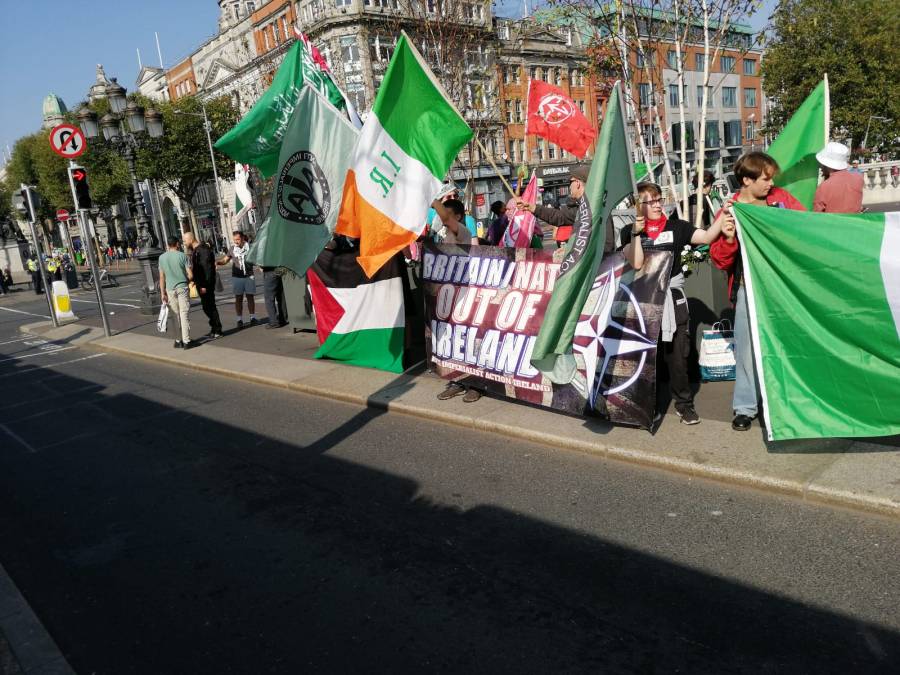


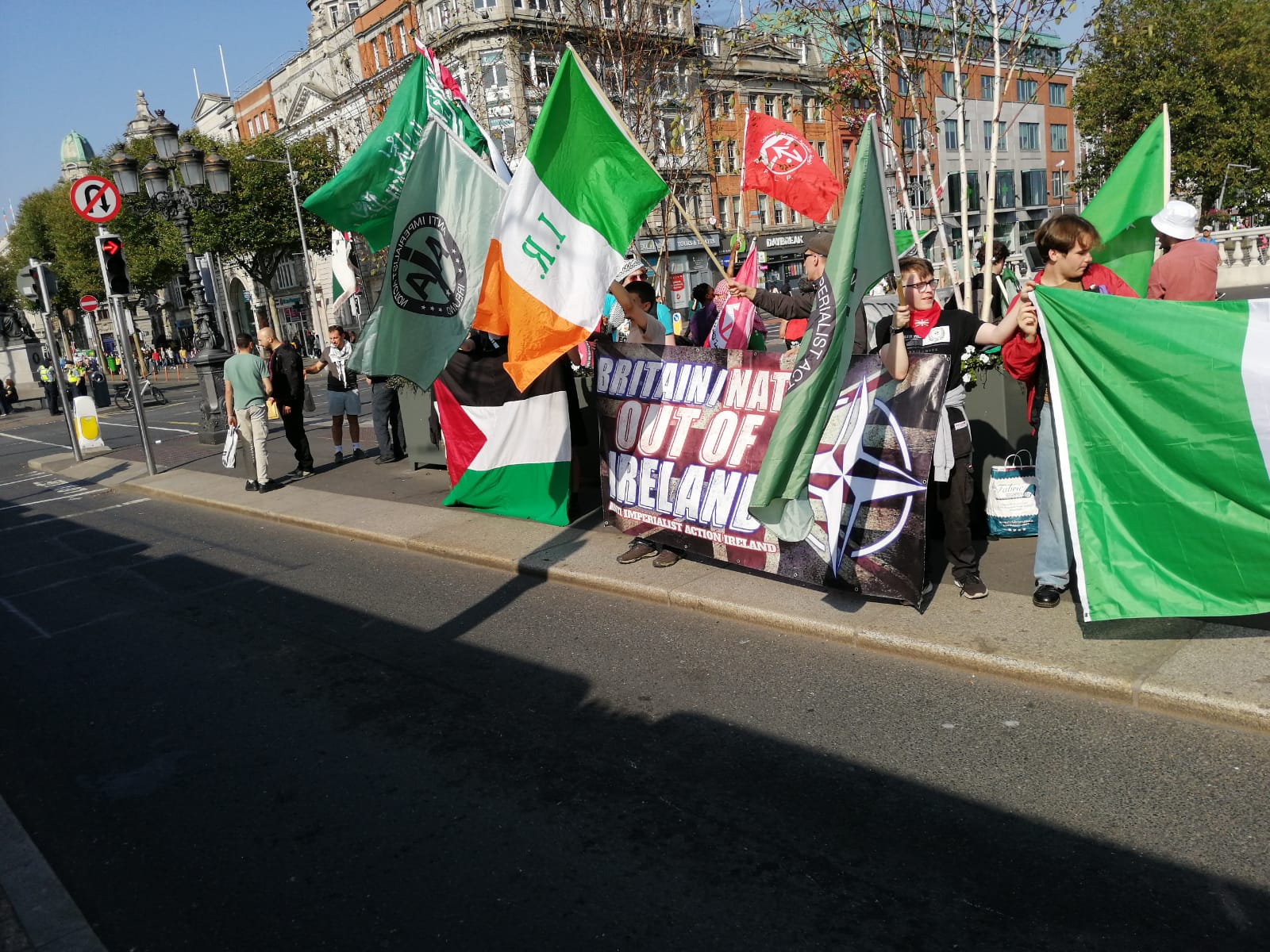
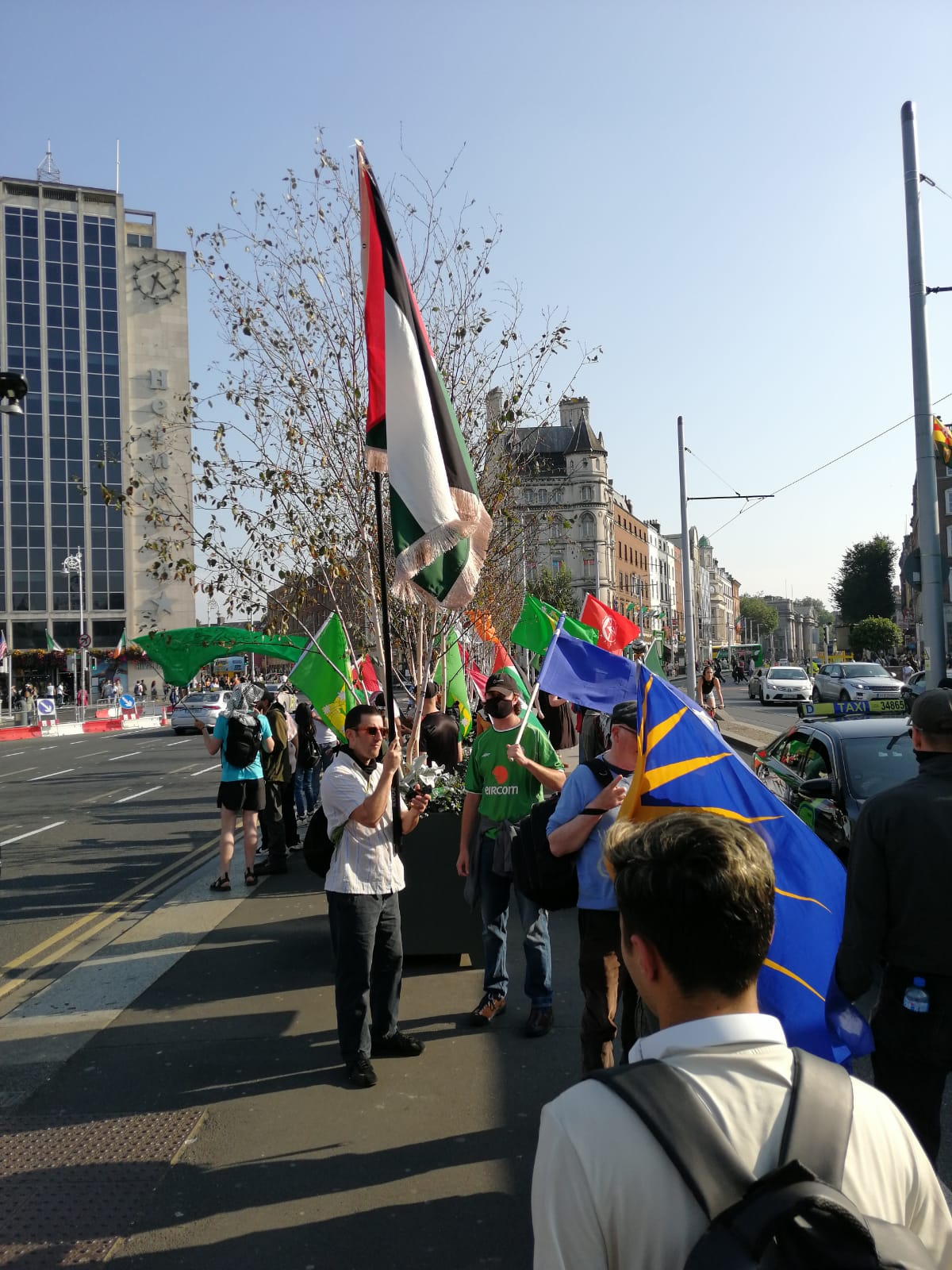


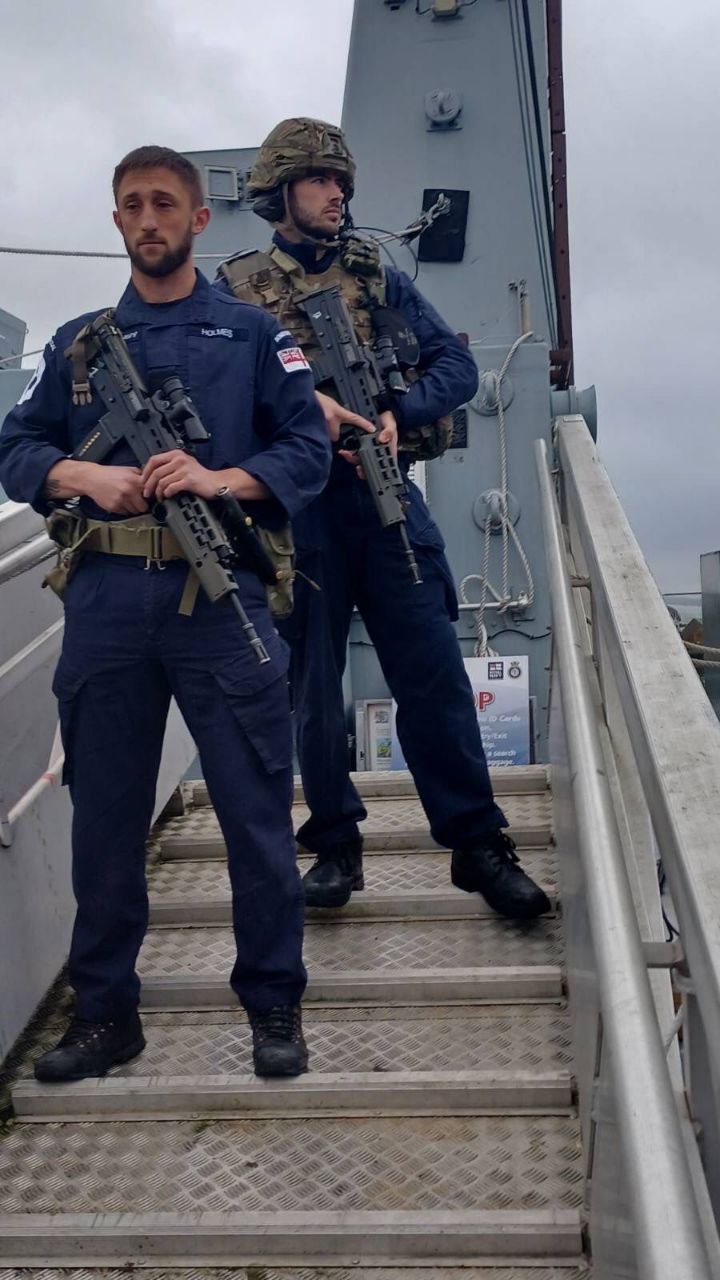


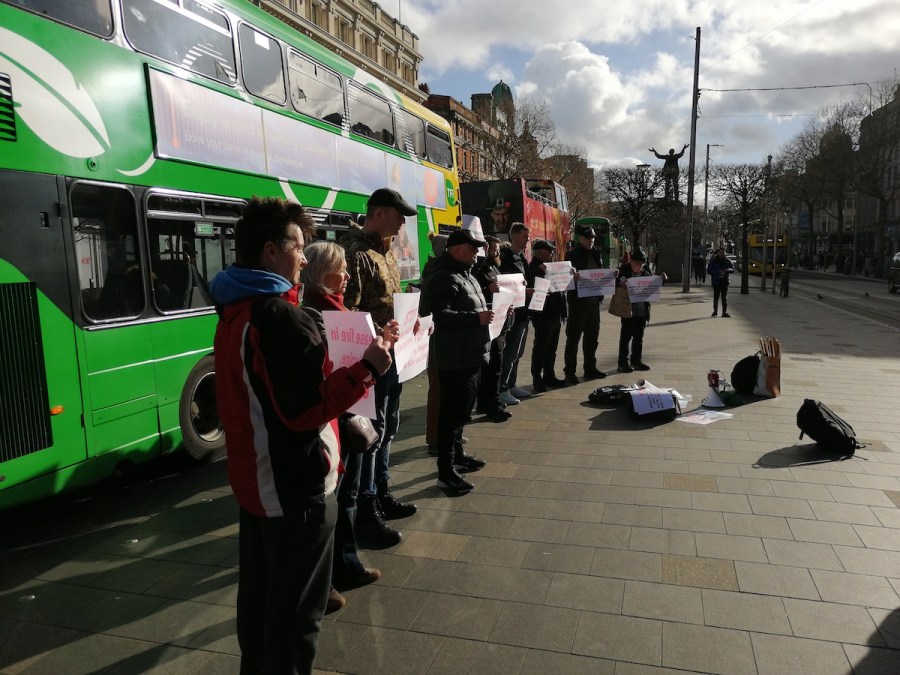
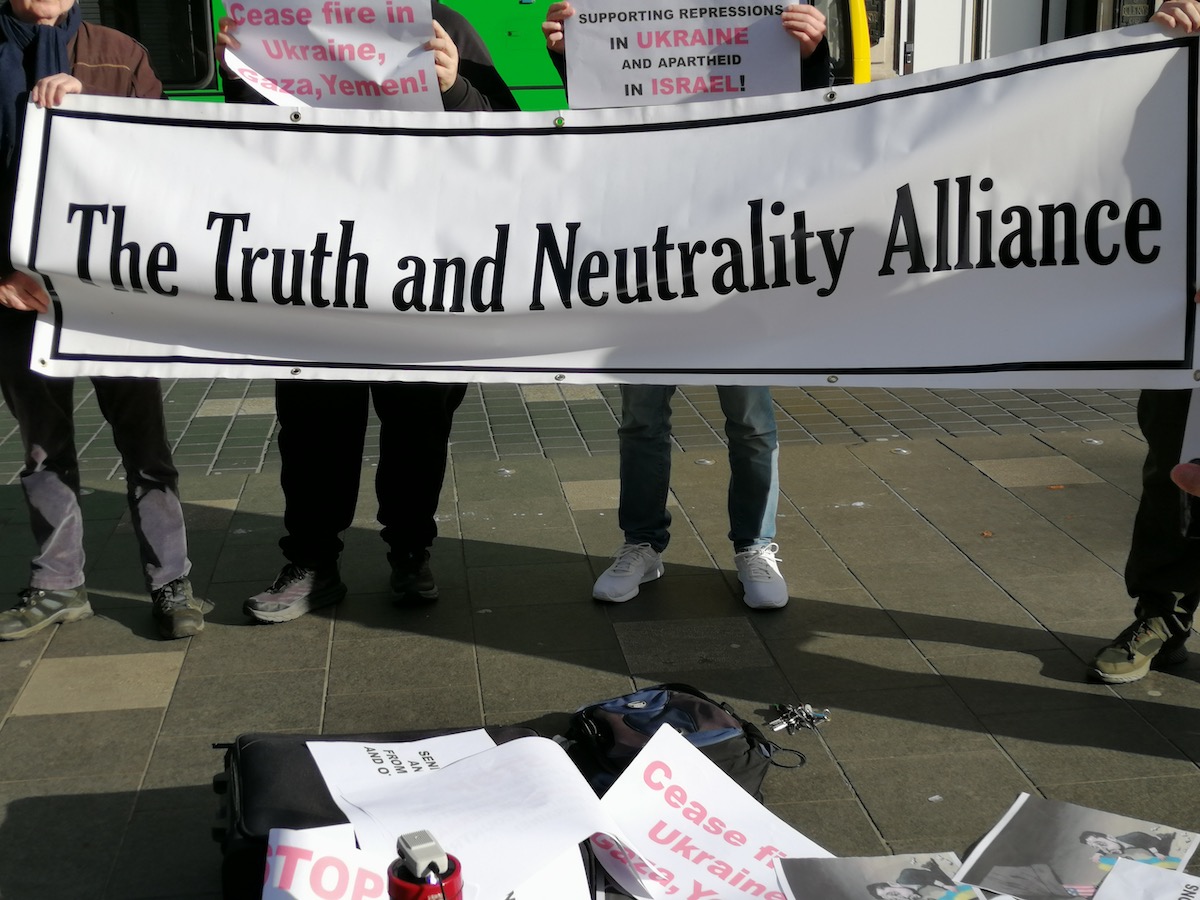

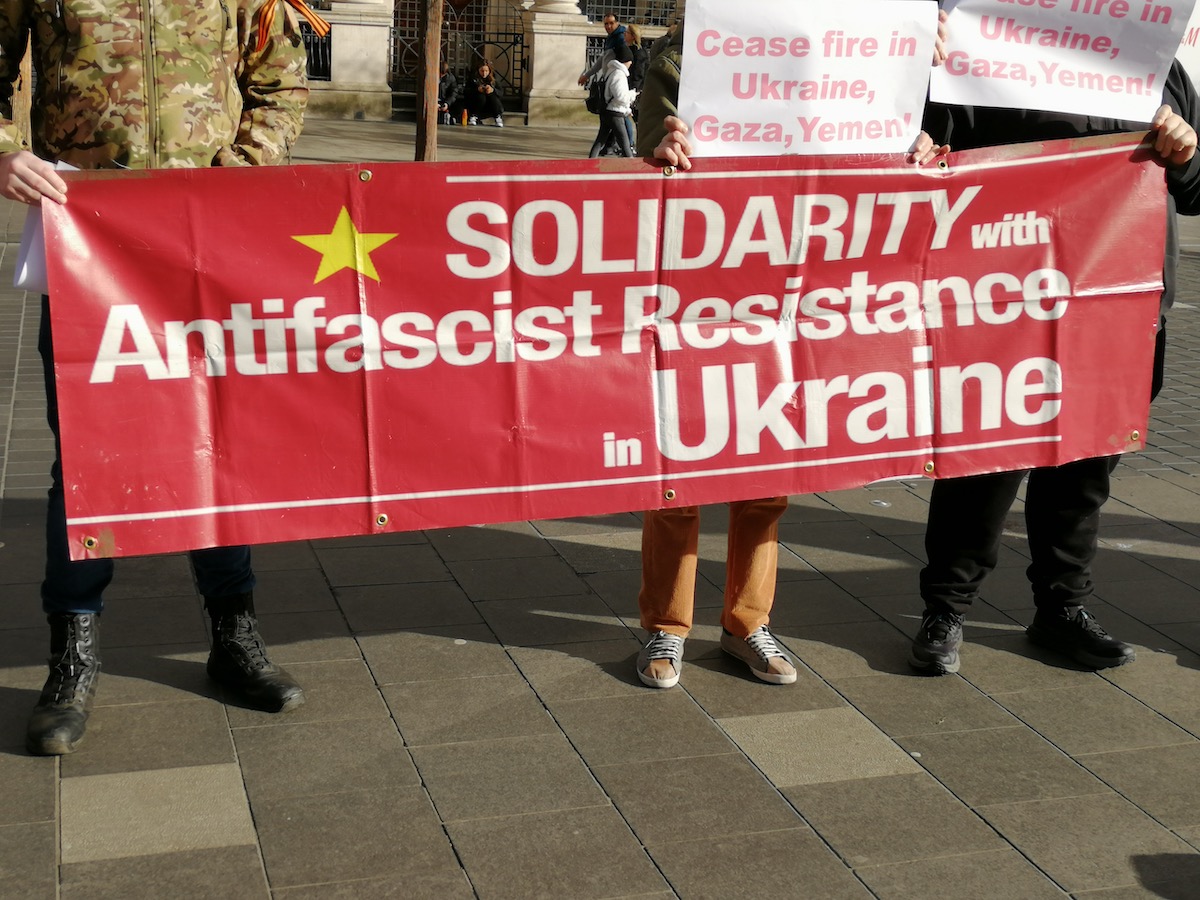
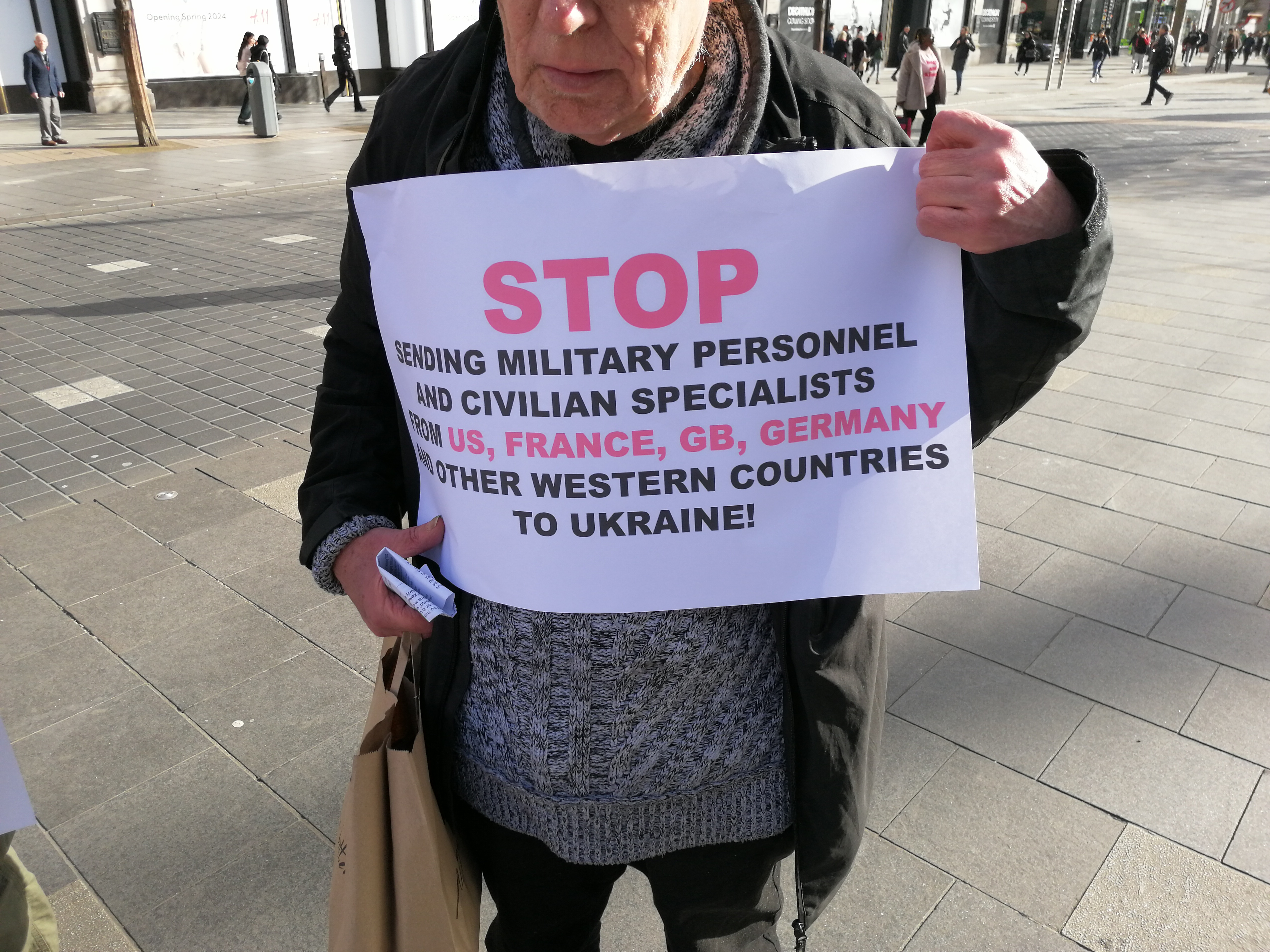




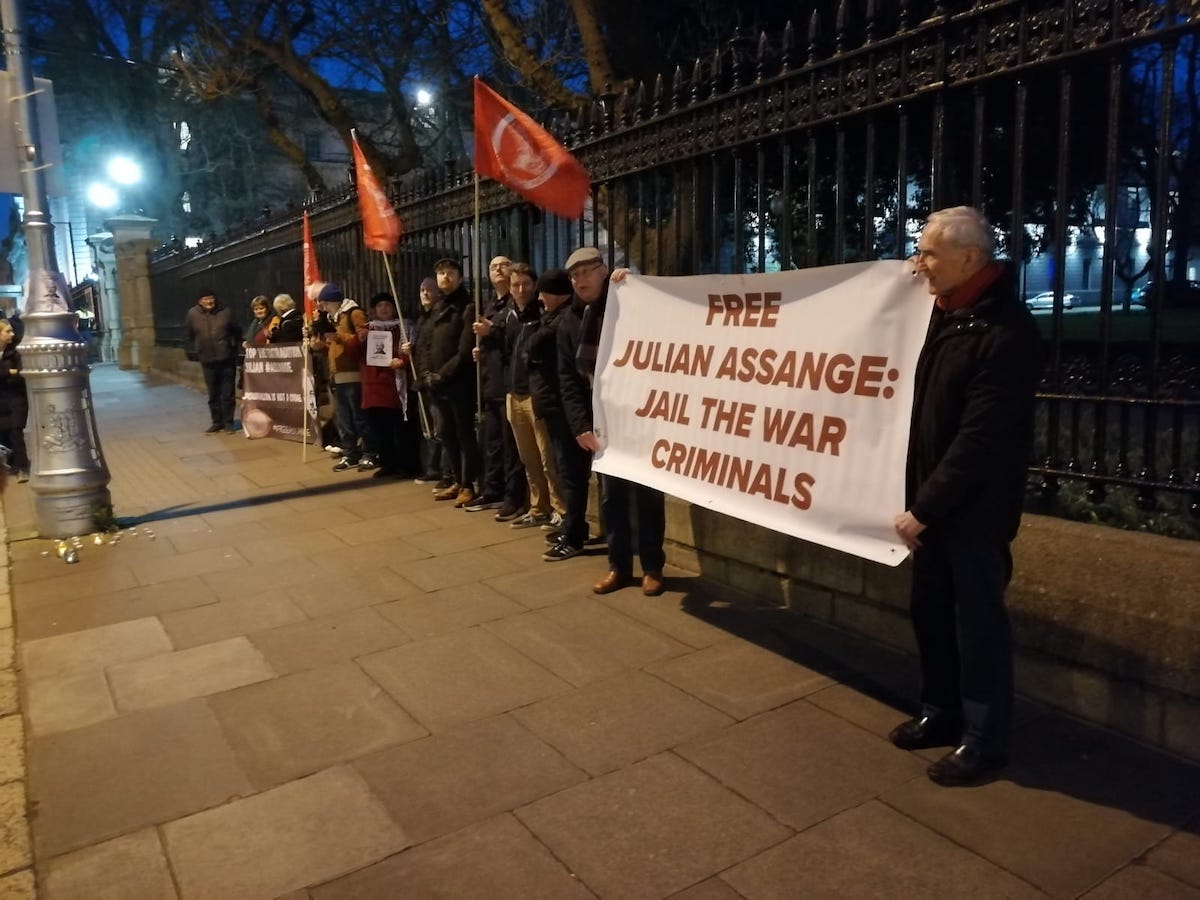
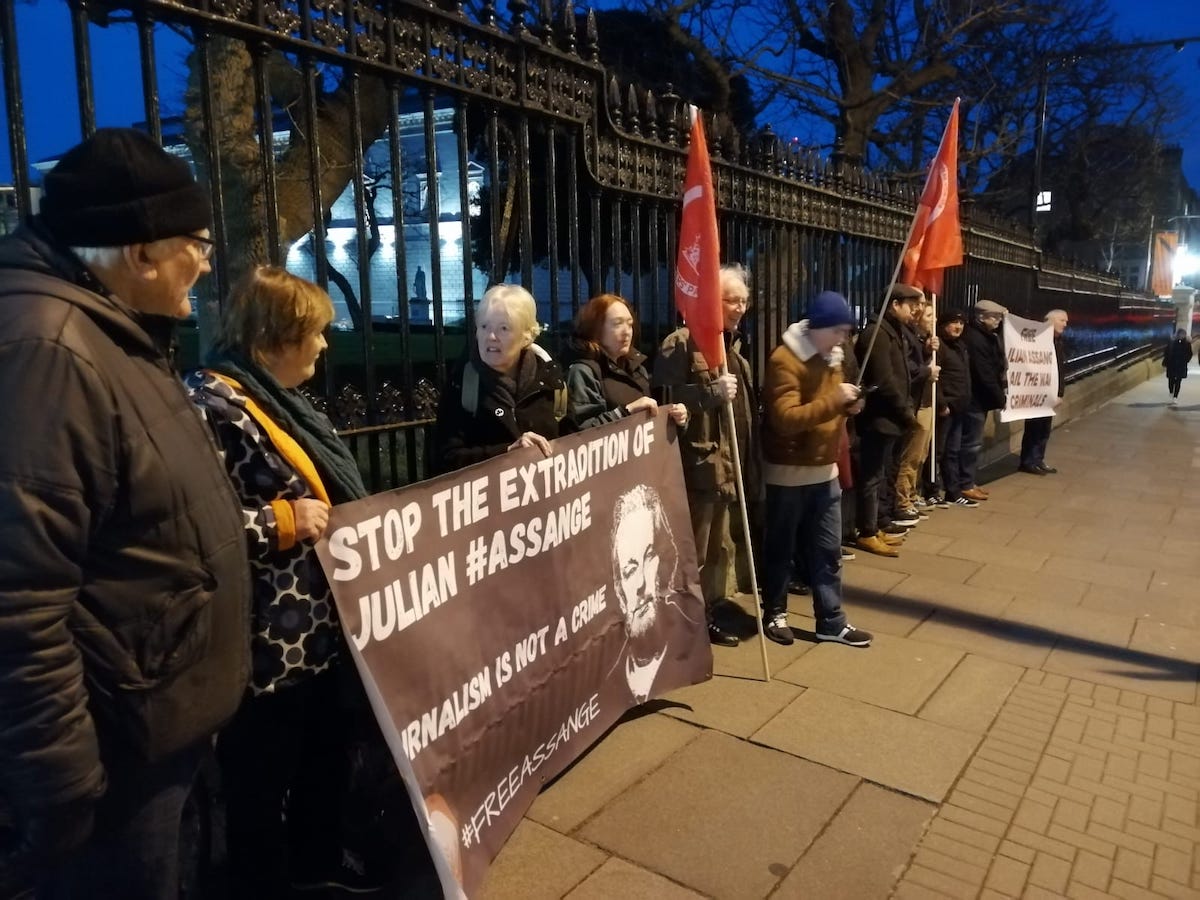
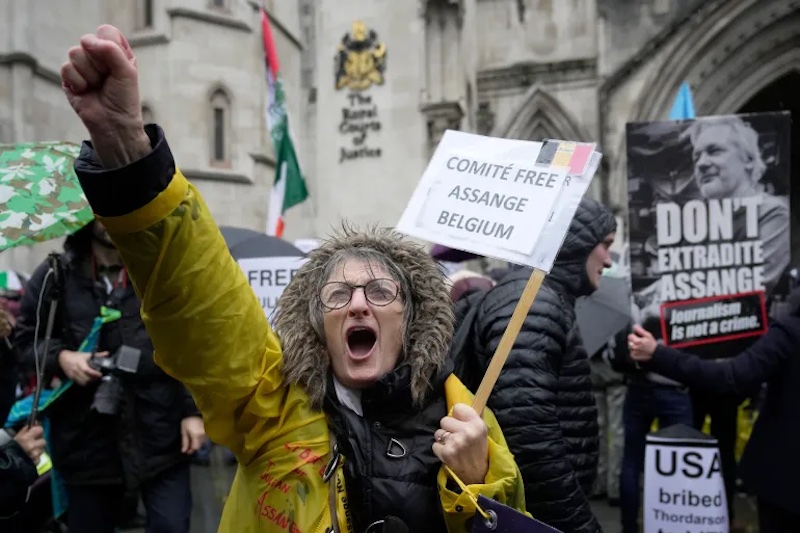
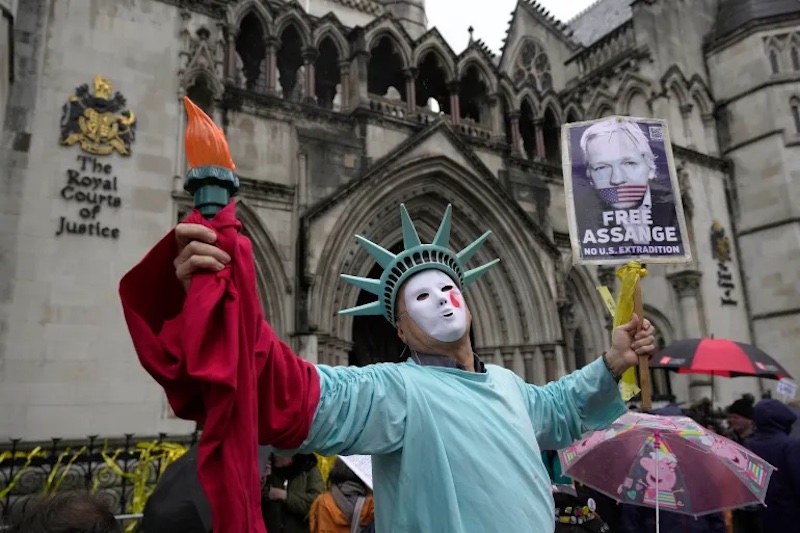


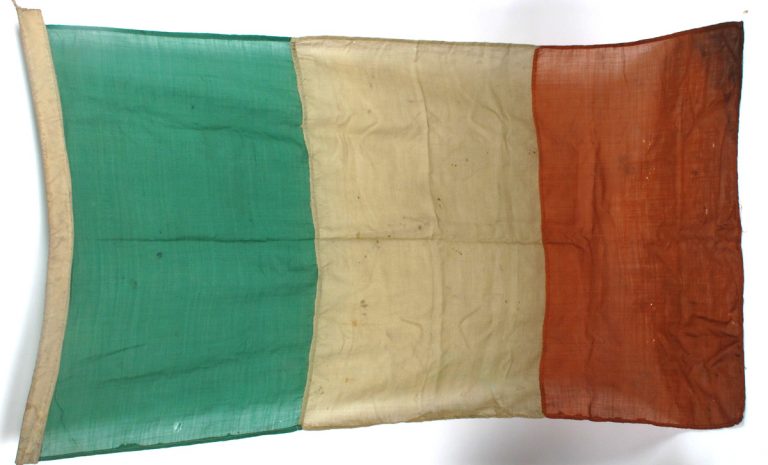

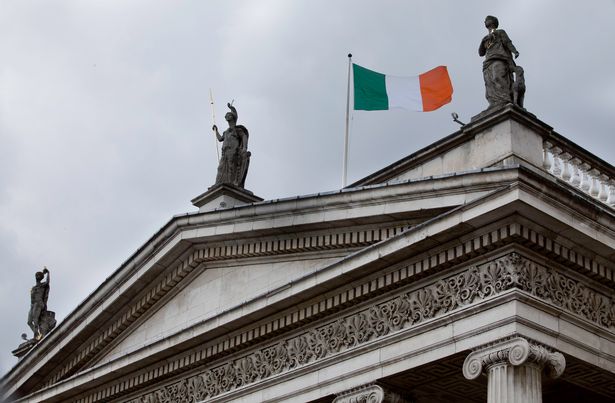


 rebelbreeze