An antifascist and anti-racist march in Dublin on Saturday 12th September ended without any major incident. However a handful of counter-protesters who attended a negationist protest outside Leinster House were assaulted by a mob of fascists, a woman being struck on the head with a blunt object causing an injury requiring hospital treatment. Photographs and some video footage shocked many as the Gardaí were seen to take no action against the assailants and instead, to usher the counter-protesters further away from the fascists, with a woman bleeding copiously from her head.
Left: Ms Izzy Kamikaze being pushed by Gardai down Kildare Street after being struck on the head with a club by a fascist. Right: Closeup (Photos sourced: Internet)View of the antifascist rally northward (Photo: D.Breatnach)
The Irish Yellow Vests, led by notorious islamophobe Glen Miller and the fascist Catholic fundamentalist and racist organisation Síol na hÉireann, led by Niall McConnell, cooperated in staging a rally and march from Custom House Quay to Government Buildings in Merrion Street. Custom House Quay was the scene of another IYV-organised event on 22nd August when a counter-protest of men and women was attacked by mob of masked and often gloved men (supporting an anti-mask rally!), many armed with clubs and metal bars. On that occasion too the Gardaí had arrested none of the attackers but pushed and shoved the counter-protesters away, threatening them with uplifted batons. On that occasion too a counter-protester had required hospital treatment, having been knocked unconscious.
The anti-fascist demonstration on O’Connell Street was called by the United Against Racism organisation and the People Before Profit/ Anti-Austerity Alliance and, since it had received threats of attack from fascists, it was supported too by independent antifascist activists from Anarchist, Republican and Socialist backgrounds.
(Photo: D.Breatnach)(Photo: D.Breatnach)
A number of speakers addressed the rally though the sound did not carry very well towards the rear of the rally but also many were distracted by keeping an eye out for fascists. One IYV activist approached the rally to photograph participants and soon got into an altercation with them, whereupon Gardaí arrived and removed him to the side of the road. Another brandished a placard, which was promptly seized by antifascists and torn. Some fascists were seen passing by, presumably on their way to Custom House Quay or Leinster House – one was observed carrying a thick length of wood with the Irish Tricolour attached to it — but did not engage with the antifascists.
A view southward of the anti-fascist rally (Photo: D.Breatnach)The “Refugees Welcome” flag accompanies the Irish Tricolour and Transgender flags with the GPO and its Tricolour in the background. The Proclamation read out in front of that building in 1916 included the words: “The Republic guarantees civil and religious freedom to all ….” (Photo: D.Breatnach)
Across on the other side of the road, at the corner with Princes Street, two or three older people had set up a couple of banners protesting about ill-treatment of the elderly in nursing homes — an entirely justified cause for protest however it is known to have been adopted by the Far-Right in Ireland. A very high proportion of Covid19 deaths in Ireland were in nursing homes and linked to Covid19 infection through lack of effective controls, which is a strange issue for the Far-Right to embrace since they variously claim that Covid19 is a hoax or that it is not at all a serious virus.
LED BY FAKE PATRIOTS BUT REAL FASCISTS
The rally on Merchants Quay, organised by the Irish Yellow Vest seemed somewhat larger than the one in O’Connell Street but a number were brought in from other parts of the country. Their promotional video showed the crowd being addressed in an energetic style by a man with a North American accent. His message was to refuse to wear masks, using exceptions permitted in the legislation, not to be afraid and to remain united. At one point he seemed to be arguing for anti-racism, which was somewhat bizarre while standing next to him was the mc of the event, Glen Miller, notorious racist and islamophobe.
After a little, the crowd formed up behind the colour party of Síol na hÉireann, a tiny fascist, racist and fundamentalist Catholic party from Donegal led by Niall McConnell. Apparently without any sense of irony, the party flew the Irish Tricolour, the “Irish Republic” flag and the golden Harp on a green field flag, with “Erin go bragh” (sic) of the Fenians.
The Tricolour signifies cooperation between Irish of different religions which, as we will see, is something McConnell will have no truck with; in addition the original pattern was sewn by French revolutionary women and presented to Thomas Meagher in 1848. Meagher was a member of the “Young Irelanders”, composed of Irish nationalists of both Protestant and Catholic religious backgrounds and he himself led a Union Army brigade in the American Civil War.
The Harp on a green field was modelled on the flag of the United Irishmen who rose against the British in 1798 and 1803 – nearly every one of their leaders was Protestant. The Fenians were a mixture of religious backgrounds (and perhaps none) and were excommunicated by the Irish Catholic hierarchy. The Fenians in England were accepted into the First Socialist International, led by Marx and Engels.
The “Irish Republic” flag was prepared in the home of Constance Markievicz for display in the 1916 Rising; she was a Socialist Republican and fought in the Rising as an officer in the Irish Citizen Army, the first working class army in the world.
March organised by Far-Right in D’Olier Street Saturday. (Photo sourced: Internet)
COLOUR PARTY LEADER REVEALS HIS TRUE COLOURS
Approaching the four Gardaí standing by a couple of unsecured crowd barriers at the end of the Quay, a little farce was played out in which the Gardaí seemed unwilling to move and then were “forced” to do so by the crowd. Those who have participated in protests over the years and seen the Gardaí in action and their barriers, when they truly wished to stop a march, would laugh to see the video recorded by the Far-Right of the event.
At a junction the procession stopped for people to catch up (some participants even complaining at Miller’s exhortation to give consideration to the elderly and children) and were addressed by a number of speakers. The man with the North American accent was in action again in revivalist style and Ben Gilroy, Miller’s lieutenant, also spoke. In a video during the week, Gilroy had minimised the Covid19 deaths by stating that all but 100 of them had been of people with underlying health issues. Given that according to the HSE over 30% of Irish people suffer from underlying conditions of ill-health, it was a shockingly uncaring statement to make in support of the negationist cause.
Here Niall McConnell spoke too, announcing himself as the leader of “Síol na hÉireann, a hard-line Catholic Irish nationalist party”, having the effrontery to quote, completely out of context James Connolly, revolutionary socialist and Republican. McConnell insisted that Ireland is for the Irish and, attacking the EU, hinted at the “Replacement” conspiracy theory, in which the EU is allegedly trying to replace Irish people with migrants. He also accused it of spreading “LGBT ideology”. “Ireland is a Catholic country”, he insisted and, in total contradiction to at least 220 years of recent history, ascribed the Catholic faith to the motivation of our ancestors in fighting for freedom. Then he got down on his knees and recited The Lord’s Prayer in Irish!
It was noticeable that only a small number followed him on to their knees and also that a number of his statements drew uncertain responses. Following his speech, Lorraine Eglinton of the Irish Yellow Vests spoke, stressing the need for unity, which might be taken as an implied criticism of McConnell for introducing religion and race into the equation or perhaps just for stating his beliefs so baldly at a shared event.
FASCIST ATTACK ON WOMAN COUNTER-PROTESTER
While the major part of the Irish Yellow Vests march went to rally outside Government Buildings in Merrion Street, a smaller group of maybe 40 or 50 people went to protest a block away outside Leinster House, seat of the Irish state’s Parliament. This was apparently a split in the Far Right.
If this split was trying to attract less fascist and racist people what followed was truly bizarre. A couple of people who attended in a counter-protest but at some remove were approached by Far-Right supporters who appeared to argue with them, which is recorded on video. This soon attracted a mob, some masked (!) and one of which can be seen grasping a length of wood attached to an Irish Tricolour. They begin to push the couple of counter-protesters roughly and then one of them strikes the woman on the head, opening a wound with much blood running down her face and knocking her to the ground. She regains her feet and continues to stand as Gardaí move in and gently usher the fascists back, making no attempt to arrest any of them and soon pushing the counter-protesters down the road.
The woman received hospital treatment later, being released the following morning. In a press release following the event the Gardaí reported that no arrests or serious incidents had occurred! When they were contacted by journalists and shown video taken at the scene they changed their story to say that “some demonstrators had to be separated” and ultimately changing it again to say that “they are investigating the incident” and “had not received a complaint”. Are the Gardaí saying that although they witness an assault, or at least the immediate aftermath of one, they can take no action unless they receive a complaint?
Ms Izzy Kamikaze, an LGBT campaigner and writer, who had received the head injury, said that she intended to make a complaint, not just about the assault but also about the behaviour of the Gardaí. Some photos have appeared on social media allegedly identifying two of the attackers by name and as members of the fascist National Party. According to media journalists, the Gardaí have video camera footage tracing one of the assailants also which would be no surprise as the area around Leinster House is one of the most highly covered by CCTV video cameras in Dublin.
A PATTERN OF GARDA COLLUSION
This is not the first occasion in recent times that the Gardaí have been accused of collusion with fascist violence. On July 11th a small counter-protest to the large homophobic rally outside Leinster House was physically attacked and their banners ripped without Garda interference for a period and, when they did intervene, arrested none of the assailants. On two different occasions fascists within the QAnon negationists outside the GPO attacked a peaceful counter-protester without being arrested by the Gardaí. However when, following these attacks, antifascists surged into the Qanon crowd, the Gardaí quickly intervened and arrested at least one of the antifascists. On August 22nd at Custom House Quay a mob of over 50 men, many of them masked and gloved (supporting an anti-masking rally!) and carrying wooden clubs and metal bars, attacked a peaceful smaller counter-protest and knocked one antifascist unconscious. A few Gardaí then gently shooed the fascists back while more, including the Public Order Unit, began to scream at the antifascists to get back, threatening them with raised batons and pushing them violently, knocking some over and preventing them from even assisting their unconscious comrade. Those scenes too were recorded on video and shared on social media, both by fascists glorying in their actions and by antifascists exposing the fascist violence and Garda collusion.
A Parliamentary Question about Garda behaviour to the Minister for Justice from Independents for Change TD Catherine Connolly was refused, she being told that this is an area within the competence of the Garda Commissioner.
This series of short pieces sets out to demonstrate not only that the “patriotism” claimed by the Far-Right in Ireland is profoundly fake but that so also are their chief symbols. It is not that the flags and songs are false in themselves – far from it — but that they are being employed falsely, i.e in disregard of their origins and in total contradiction to their historical context and meaning. The “patriots” displaying them are fake, not only in their use of the flags and songs but in the contexts in which they employ them, their discourse and the direction in which they wish to take the Irish nation.
OTHERS TO FOLLOW SEPARATELY:
Flag: The “Irish Republic” flag
Flag: The “Starry Plough”
Flag: The Harp on a green field flag
Patriotic song: Amhrán na bhFiann
Patriotic song: A Nation Once Again
The Far-Right creed of fake patriotism
The Irish Tricolour flag (Photo sourced: Internet)
1. THE IRISH TRICOLOUR
This is the flag design most commonly associated with Ireland and the official one of the Irish State, though it was not officially adopted by the State until the Constitution of 1937. The flag gained prominence during the 1916 Rising, when it was flown on the Henry Street corner of the GPO roof and was the flag of the Republic during the War of Independence (1919-1921). The Free State which came into being in 1922 controlling five-sixths of Ireland was not the Irish Republic most people had fought for and, in fact, it went to war against those who upheld that Republic. However, the neo-colonial State feared to leave all the symbols of Irish nationalism in the exclusive hands of its enemies and therefore eventually appropriated the flag, adopted the Irish language as its symbolic first language and the Soldiers’ Song to represent it.
On the other hand its display in public in the Six Counties colony was held to be illegal under the Flags and Emblems Act of 1954 until its repeal in 1987 and a number of street battles took place there when colonial police moved in on people to confiscate it.
Although the first use of the colours of green, white and orange as a tricolour arrangement (on cockades and rosettes) was in 1830, when Irish Republicans celebrated the French revolution of that year restoring the French Tricolour as the flag of France, their first recorded use on a flag was not until 1848.
On 28th July 1846 a group of progressive Irish nationalists had broken from Daniel O’Connell’s movement to Repeal the Union, i.e to give Ireland an Irish parliament again but under ultimate British rule. Meagher was one who led the breakaway, opposing the Repeal Association resolution to refuse the option of armed resistance in any and all circumstance, in a famous speech about the right to use weapons in the struggle for freedom, which earned him the nickname Meagher “of the Sword”.
The group became known disparagingly as The Young Irelanders but, like many mocking names, became fixed with respect in Irish history. One of its leaders was Thomas Davis, co-founder of The Irish Nation newspaper and composer of such iconic works as A Nation Once Again, The West’s Awake (songs) and Fontenoy (poem).
Monument in Dame Street to Thomas Davis, Republican, Young Irelander, author, composer, journalist. (Photo: D.Breatnach)
During what became known as “the Year of Revolutions:, 1848, Meagher went to Paris, which was in the hands of revolutionaries as an envoy to the Provisional Government and was there presented by revolutionary women with the Irish Tricolour, which they had sown in fine silk. They explained that its design was intended to reflect the revolutionary ideal of peace, represented by the colour white, between the Catholic Irish (indigenous and Norman descendants), represented by the colour green and the Protestants, descendants of planters and other colonists, represented by the colour orange. But an active peace, a collaboration in national liberation from English rule and the establishment of a secular Republic.
It would not be surprising had those women been aware of Les Irlandais Unis (the United Irishmen), who had risen less than fifty years earlier for a secular and independent republic and had sought military assistance from the French Republic.
Returning to Ireland with the flag, Meagher unfurled it in public for the first time on 7th March 1848 while speaking from an upper-floor window of the Wolfe Tone Club in Wexford to people celebrating the revolution in Paris. In Dublin it was unfurled in the Music Hall in Lwr. Abbey Street on 15th April 1848 but there was another Irish flag which at the time was more popular and the question of which flag was to represent an independent Ireland (or the movement to achieve such) was left undecided.
Plaque in Waterford recording the first public unfurling of the Irish Tricolour in Ireland. (Photo sourced: internet)Plaque in Abbey Street recording the first public unfurling of the Irish Tricolour in Dublin. (Photo sourced: internet)Illustration of the trial of Meagher, McManus and Donohoe. (Image sourced: internet)
Meagher was sentenced to transportation to Van Demien’s Land (now Tasmania), later freed on condition of not returning to Ireland and emigrated to the USA. He supported the Union in the American Civil War for the abolition of slavery and he and his wife actively recruited for the Union Army; he served as a Brigadier General in the Irish Brigade, of which one regiment, the 88th New York, became known as “Mrs. Meagher’s Own”. The Irish Brigade fought many important engagements against the Confederacy and suffered 4,000 dead in the course of the war; two of its commanding officers including Meagher were wounded and three killed. Meagher was believed drowned from a Missouri riverboat on a trip on 1st July 1867, leading some to suspect that he had been murdered, possibly by the nativist anti-migrant organisation known as the “Know Nothings”.1
Thomas Francis Meagher as Union Army officer and Governor of Montana. Plaque in Waterford recording the first public unfurling of the Irish Tricolour in Ireland. (Photo sourced: internet)
The Far-Right in Ireland, composed as it is of racists, fascists, Catholic conservatives and religious sectarians, seeks an Ireland far removed from the republican ethos of the flag, presented by French republican revolutionaries to their Irish republican counterparts. It is a flag symbolising inclusion rather than exclusion and explicitly, in its colours, rejecting religious sectarianism. It flies in declared opposition to those who seek an Ireland “made Catholic again”2, oppose immigration and seek an Ireland based on “Irish ethnicity” (meaning blood), a prescription that would have had no place for Thomas Davis’ Welsh father, nor for Meagher, who led thousands of Irish migrants who fought against slavery of Africans in the USA. Their Ireland would have had no place for the Young Irelanders who, like Thomas Davis, were mostly Protestant Republicans.
The Far-Right in Ireland wave the Tricolour flag outside Leinster House in this protest of theirs demanding “free speech” for racist diatribes in February 2020 in sharp contrast to the flag’s meaning and history. (Photo: D.Breatnach)
The irish Tricolour in Kilmainham Jail (now museum) in the execution yard of 14 patriots of the 1916 Rising (Photo source: Aitor Munoz Munoz, royalty-free).
FOOTNOTES:
1A nickname they earned through their habit of saying that they knew nothing in answer to questions by the police or in court.
2Slogan put forward by notorious racist and conspiracty theorist Gemma Doherty in preparation for an islamophobic rally outside Croke Park on 31st July, supported by fascist organisations Síol na hÉireann and the National Party, both parties opposed to immigration and promoting a racist concept of “Irishness” based on blood.
Republicans and other local antifascists countered a Far-Right rally and “prayer circle” who were protesting a Croke Park letting on Friday to some Muslims to celebrate their religious festival of Eid. When confronted by a handful of antifascists, the early fascists folded up their banner and cowered behind police protection, unfolding it later when many more reinforcements arrived. Later still there were some scuffles and a number of arrests.
The first shot fired on social media against the Croke Park letting was by Niall McConnell, leader of the tiny “Síol na hÉireann” group calling for a protest at the venue, followed by Gemma O’Doherty of “Anti-Corruption Ireland”, with other Far-Right posters quickly getting on the bandwagon. The main claim was that they were going there to prevent “creeping Sharia law” but alsotacked on being against ritual animal slaughter, child brides, pedophilia etc. What they were really about however was Christian or even Catholic fundamentalism, racism and fascism and this became crystal clear during the morning.
Eid festival celebrants at prayer in Croke Park on Friday. (Photo source: Internet)In the close foreground, an antifascist displays both languge versions of the quotation from the 1916 Proclamation. Behind him a number of Far-Right protesters. (Photo source: Dublin Republicans Against Fascism)
WHO THEY WERE AND WHAT THEY SAID
In contrast to many of the counter-protesters, none of the Far-Right seemed to be local and indeed many had travelled some distance to be there, some known to have come from Donegal and Mayo.
When calling out the responses of the Catholic prayer cycle of the Rosary1, Niall McConnell was roaring them out through a megaphone. McConnell, a founder of the tiny “Síol na hÉireann” group based in Donegal, believes in an Ireland built solely on Irish ethnicity (by which he means of Irish blood) and that its ethos should be Christian. How Irish blood “ethnicity” is to be judged is not explained, given that the Irish people are a mix of the Celtic population with many others, including Viking, Norman, Scottish, English, Welsh, possibly Basque, Italian, Polish etc. This is being “patriotic” according to McConnell, who is never seen campaigning for an end to the partition of Ireland nor of foreign occupation of one-sixth of the country.
Unloading rifles at Howth, 1915, Erskine and Molly Childers in foreground. Erskine was English but would later join the IRA and was executed by the Free State regime in 1922. (Source photo: Internet).
Patrick Pearse’s father being an English migrant did not prevent his two sons from being true patriots, promoting the Irish language, progressive education, national drama and literature and fighting for independence. Thomas Davis’ father being Welsh did not prevent his son from founding The Nation newspaper or from composing such songs as “A Nation Once Again” (a recording of which the Far-Right played!) and “The West’s Awake!” Erskine Childers being English did not prevent him sailing a yacht into Howth to deliver Mausers to the Irish Volunteers in 1914 nor in joining the IRA during the War of Independence and the Civil War and being executed by the Free State junta. And a missionary called Patricius being Welsh did not prevent him ending up as St. Patrick, a patron saint of Ireland!
Although billing himself as an “Irish Patriot”, McConnell calls for an alliance of “nationalists across Europe” and has posed for a photograph in a line-up of Far-Right European figures that included Nick Griffin, former leader of the fascist British National Party2. McConnell’s party’s website calls on people to join to “resist and turn back the new plantation”, a reference to a paranoid conspiracy in which the Far-Right claim to believe that the EU plans to replace Irish people with migrants.
A far-Right Lineup for meeting at the EU Parliament: Irish “patriot” Niall McConnell at the far right of photo (and in politics) with, among others, fascist Nick Griffin of the British National Party (fourth from left). (Photo source: Internet)
Apart from promising any new members of “Siol nah Eireann” (sic, no such words in Irish) the fantasy of joining “local cumans” (they have none and there is no such word in Irish either), they intend to provide them with “education” (i.e propaganda), “ideology” (fascism), “physical fitness and self-defence” (training in being bootboys) in Ireland and abroad …..!
Another who believes in an “ethnic Ireland” is Gemma O’Doherty who started off as an investigative journalist but turned into a proposer of illogical conspiracy theories and propagandist of racism. Protesting in a tweet against the recent election of Hazel Chu as Lord Mayor of Dublin, she ranted that Ms. Chu, born and raised in Ireland, is part of the Communist Party of China (!) takeover of Ireland. Parts of the Far-Right claim to believe that CPC is taking over the world through the UN (where China has ONE seat on the permanent Security Council out of FIVE!3) and on the other hand, President Trump is wonderful.4
One of the banners displayed by later Far-Right arrivals. The man in the foreground assaulted a Republican some weeks ago in full view of the Gardaí but was not arrested. He was involved in a scuffle here too while filming. (Photo source: Dublin Republicans Against Fascism)
Gemma O’Doherty has at times been caught out posting lying statistics to whip up racial fears and had two of her Youtube sites shut down by Google due to her continuous attempts to whip up race-hate. Since then she has been campaigning for “free speech” but for whom? Outside Croke Park she said that the country needs to become “a Catholic Ireland once again”. In this “Catholic Ireland” of her dreams, would there be “freedom of speech” for dissenting Catholics, Protestants, Jews, Muslims, atheists or agnostics? The “Catholic Ireland” State of the recent past censored films, banned books and newspapers and forbade not only abortion in all circumstances but also contraception and divorce, not to mention LGBT rights.
O’Doherty is another fake “patriot” who told her listeners that “our patriots died for a Catholic Ireland”, despite the fact that nearly every single leader of the United Irishmen was a Protestant, as were many of the Young Irelanders and not a few prominent members of the Irish Volunteers — and she totally ignored the words of the 1916 Proclamation.
Near the end of the event, some members of the National Party appeared, wearing green golf shirts with “NP” marked on them. Although their “Vision” for Ireland on their website claims to include “an Ireland united, Irish and free”, they have never been seen engaged in struggles against British colonialism and the partition of the country. The NP is against “replacement-level immigration”, i.e that racist conspiracy theory again and wants capital punishment for serious crimes, in which they include carrying out a pregnancy termination. Like most of the Far-Right, they oppose the “Black lives matter” campaign and the party’s founder, Justin Barrett (not there on Friday), tweeted that if he gets into government he will remove the Irish nationality of Hazel Chu, a woman who was born in the Mater Hospital in Dublin, was educated in Ireland and spent most of her life here.
The man on the right supports far-Right protests yet claims to be a Irish Republican. (Photo source: Dublin Republicans Against Fascism)Praying in support of religious sectarianism and racism. (Photo source: Dublin Republicans Against Fascism)
Also missing were racist and islamophobe leaders of the “Irish Yellow Vests” Glen Miller and Ben Gilroy, also Herman Kelly, founder of the tiny Irish Freedom Party, another “patriot” who believes in a “Christian and ethnic Irish Ireland”. Kelly has shared a platform with British fascist and Loyalist Jim Dowson and Irish fascist Rowan Croft (aka “Gran Torino”).
Aside from all that, on Friday one woman ‘innoculated’ the ground around the Far-Right protesters with sprinkled salt, apparently proof against “witches” (anti-fascist women). A few of them shook their rosary beads at the protesters while another woman seemed to go into ecstasy, praying with arms alternately raised high or spread. “I don’t know anything about politics,” she said to one of the counter-protesters, “I just come here to pray.” Of course, the handball alley entrance to Croke Park is a well-know prayer venue! (Perhaps for fans of other county teams hoping Dublin won’t win the All-Ireland yet again ….)
“I am not interested in politics, I just come here to pray”! said this woman of the Far-Right ensemble. (Note the Síol organisation have unfurled their banner again with the arrival of more reactionaries). Photo source: Dublin Republicans Against Fascism
One of their leaders, Dee Wall frequently seen at their rallies at the GPO, claimed she supported religious liberty for all but failed to explain how that squared with protesting at Muslims celebrating Eid at Croke Park. Unless that is she was in agreement with those whose reply to the slogan of “religious and civil liberty for all” was “for the Irish” and meant not only that, for some Muslims ARE Irish, but rather “for Christian, Catholic, several generations Irish only”. Another woman called an antifascist a paedophile(the Far-Right regularly call antifascists “paedophiles”) and told him that the Coronavirus was only in his head, i.e in his imagination – many of them believe that the coronavirus is just a scare to bring about “a one-world government”, one woman commenting that mask-wearers are part of the plot.
One of the Far-Rightists shouted that he never saw the antifascists protesting against the Government, which brought a chorus of incredulous protests from his opponents, the most telling being: “You’ve never seen us because you weren’t there!”
After the Muslims had left by another exit and as the antifascists were leaving, one woman called out antifascists that they were being funded by the millionaire Soros – another fantasy they pretend to believe. One of the antifascists shouted ironically back at her: “I haven’t received my cheque yet – can you have a word with him for me?”
Calling antifascists “paedophiles” might be useful in demonising their opponents but if believed by some could cause people real problems in their community. It is also ironic, given that these ultra-Catholics defended the Church hierarchy and its paedophiles right to the last, some even still maintaining that the scandal institutions were innocent and the targets of malicious accusations. Herman Kelly of the INP was for a time Assistant Editor of the Catholic Herald and maintained that the allegations were ‘fake news’. Also many of the Far-Right in Ireland and in Britain have been convicted in court of …. guess what? Yes, pedophilia.
WHAT WAS THE FAR-RIGHT FUSS ABOUT?
There was never going to be ritual slaughter of any animals in Croke Park, of course, nor any of the other scares being thrown by racists and fascists.
Just as the venue has been let for other large gatherings, in particular pop concerts, a Muslim religious organisation obtained permission from the GAA to hold a celebration of their festival of Eid there in the stadium.
The feast Day of Eid is an important one in the Muslim religious calendar and its main features are obligatory acts of charity towards the poor, communal prayer followed by social feasting and visiting of relatives and friends. Areas of large capacity are usually required (and more so if observing social distancing), such as large mosques, community centres or hired halls. A sermon is preached by a religious leader, after which a prayer is recited asking for Allah’s forgiveness, mercy, peace and blessings for all living beings across the world.
As to “creeping Sharia law”, since Muslims account for less than 2% of the population of the Irish state, the fascists and other islamophobes have to talk them up into something bigger as a threat, hence the “creeping”. Nor is it the case that all Muslims would support fundamentalist Muslim law any more than all Christians support fundamentalist Christian law or all Jews support Jewish Orthodoxy.
With regard to “child brides”, an unfortunate feature of many civilisations, including past European ones and parts of the United States, there is an age of consent in Ireland maintained by law and, furthermore, a law supported by the vast majority of the population of all religions and of none.
The Catholic Arch-Bishop of Ireland and leading clerics of the Anglican and Jewish community attended the event, as did Government Minister O’Gorman whose car was surrounded by Far-Right protesters screaming at him and banging on the car despite a walking Garda escort. Among the speeches at the Croke Park event – in a mix of English, Arabic and Irish – was a talk by 21-year-old Abood Aljumaili, encouraging the attendees to try out the native Irish sport played at the stadium, like hurling.
Photograph taken from behind fascist lines. On the other side of the police line a home-made placard against racism is held up by some local people. Some other counter-protesters were also there but are out of the camera view. (photo sourced: Internet)
SCUFFLES AND ARRESTS
In a headline on a video posted on line by one of her supporters, Gemma O’Doherty exclaimed: “Antifa tried to attack me” but the video shows nothing of the sort. It does show a minor confrontation far from her between an antifascist and a fascist, the one doing the filming. In reply to a question, the fascist can be heard saying that Protestants will be admitted to their movement if they convert to Catholicism. It appears that the fascist pushes the antifascist, who pushes back and then the police are separating the two. The rest of the video records O’Doherty talking, talking ….
A month ago a Far-Right poster claimed that the homophobic rally outside Leinster House had been attacked by “Antifa”. However video footage showed a large crowd of rally participants, some of them threatening a tiny group of antifascist counter-protesters. A fortnight ago the leader of theFar-Right organisation the Irish Yellow Vests told a crowd on Custom House Quay that “the Antifa” had attacked the Far-Right with petrol bombs – another fantasy. But it was some of his supporters’ crowd of 500 that attacked the 40 or so counter-protestors. And McConnell of the tiny “Síol” group claimed at a Far-Right gathering in Europe recently that the Israeli secret services were threatening him due to his lip-service support for the Palestinians (in his case, based on anti-semitism rather than Palestinian solidarity).
While regularly practicing violence, fascists like to portray themselves as victims, especially on their way to taking power. A few weeks ago a fascist crossed the road from their rally at the GPO to attack a Republican while their speaker was shouting in her microphone that they would not be provoked by the violence of the antifascists! They also like to pretend that the police are on the side of the antifascists, while historically and in recent times, the reality is otherwise. After all, the police have been facing Republicans and Socialists in protests for decades, on issues as diverse as Republican prisoners, political repression in both administrations, gender and sexuality rights, the BP oil pipeline in Mayo, lack of housing, cuts in welfare …..
This was underlined when one of the Far-Rightists outside Croke Park shouted that he never saw the antifascists protesting against the Government, which brought a chorus of incredulous protests from his opponents, the most telling being: “You’ve never seen us because you weren’t there!”
There were a number of incidents, one when a Far-Rightist threw water at a video photographer and, after the latter complained to the Gardaí, was taken aside and eventually could be seen walking away from the scene.
Altogether there were three arrests: an antifascist woman who was attacked by a woman on the Far-Right fought back. The police dived in but the Far-Right woman did not want to let go of her opponent’s hair even when the police were trying to separate them. It took three police about five minutes to get her away and into a police van. The antifascist woman walked calmly with a police officer to a patrol car. Some time later a young lad who seemed to be a local person but had not been with the counter-protest, pulled the cord on the Far-Right’s amplifier, silencing it temporarily. The police pounced on him and took him away. According to information received, all were released without charges and a Garda report is being prepared for the Director of Public Prosecutions.
Gardaí struggle to get Far-Right woman attacker of antifascist woman into Garda van. Her victim who fought back, also arrested is out of view standing quietly beside a Garda. Two Far-Right men protest to the Gardaí. (Photo source: Dublin Republicans Against Fascism).
WHAT DOES THIS ALL MEAN AND WHAT NEXT?
All over Europe and the USA, the Far-Right is on the rise, as they sense an opportunity in ruling class austerity measures and popular dissatisfaction and disaffection. The latter is demonstrated in street mobilisations but also electorally, as votes for traditional political parties fall and the main parties in Government or otherwise are forced to abandon their false opposition and resort to ruling in coalitions of various forms.
Fascists attempt to mobilise the popular discontent against the established political class but to misdirect the popular anger and throw it against ethnic or social minorities, creating a false unity based on a notion of purity of blood and, in some cases, religion. If they can be seen to build a strong enough movement that seems capable of both mobilising people and attacking the resistance movements of the people to austerity and repression, the ruling class turn to them as they did in Europe in the 1930s and 1940s.
Aside from the difficult circumstances, it is generally accepted by historians that a number of errors were made by the antifascist forces in the past. The leaders of targeted communities often counseled not responding to the threat as that would draw further attention and hostility towards them, some even denouncingthose in their communities who were organising resistance to the police. Some sections of targeted groups did not mobilise until it was too late, others argued that the fascists were a diversion from the anti-capitalist struggle. The antifascists did not all unite across ideological barriers. The fascists were permitted to get a grip at street level and intimidate some areas of their opposition, eventually receiving the full support of the ruling class and their State.
Those errors must not be repeated.
End.
8.45 am, early fascists of Síol na hÉireann confronted by small group of antifascists fold up their banner and cower behind Garda lines until more fascists and racists arrive. (Photo source: Dublin Republicans Against Fascism).
APPENDIX
A HISTORY OF RELIGIOUS OPPRESSION
Ireland has suffered different religions imposed upon it but none of those have been Muslim.
Presumably Christianity was imposed on a pagan Ireland of many centuries, although that seems to have been a largely painless process (unlike in many other parts of Europe). Subsequently the Celtic Church was suppressed across Europe by Rome and in 1155 Pope Adrian IV authorised King Henry II to invade Ireland, allegedly to bring the Irish Christian Church into conformity with Rome.
When Henry VIII of England broke with Rome in 1532 he tried to impose his religion not only on England but also on Ireland, a project continued by his daughter Elizabeth I and most other English monarchs. The administration of the Plantations of Ireland by colonists tried to ensure English-speaking Protestants were given the land taken from the Irish and that no indigenous Irish were allowed to live or work there. For a time priests and bishops were outlawed and hunted.
The Penal Laws (1607 in some degree right up to the 1840s) robbed Catholics of most civil and religious freedom and penalised also non-Anglican Protestant sects. The colonist Irish Parliament excluded Catholics and Presbyterians even after some were permitted to vote. From the moment the Irish Catholic Church stopped being persecuted, it collaborated with the foreign occupation of Ireland and its leaders condemned the Republican uprisings of 1798 and 1803 and every Irish resistance organisation since.
After the Irish national capitalist class joined with the Catholic Church leadership to agree to the partition of the country and Irish membership of the British Commonwealth Dominions and slaughtered those who had fought against foreign occupation 1922-1923, a puritanical conservative Catholic Church dominated the 26-County State while a sectarian, puritanical Presbyterian ethos dominated the 6-County statelet. Elements of anti-semitism were observed in the Church during the 1930s and the hierarchy supported Franco’s military-fascist uprising in Spain and blessed the fascist Blueshirts as they went to support Franco but condemned the Irish Republicans and Socialists who went to support the elected Popular Front Government. The Civil Rights movement in the Six Counties began a fight-back against sectarian oppression there at the end of the 1960s, about the same time as a slower struggle was breaking out in the rest of Ireland against the social and political domination of the Catholic Church.
The Irish people overall have shown that they wish to be free to make their own choices and decisions in matters of faith and social practice without being dominated by any religious authorities. The 1916 Proclamation of Independence declared that “The Republic guarantees religious and civil liberties to all” and, though that has yet to be realised, it seems to be what most people agree with. But clearly not the “patriots” of the Far-Right.
FOOTNOTES
1The prayers that compose the Rosary cycle are arranged in sets of ten Hail Marys, called decades. Each decade is preceded by one Lord’s Prayer (“Our Father”) and traditionally followed by only one “Glory Be” and five decades are recited per rosary. Rosary beads are an aid towards saying these prayers in the proper sequence. There have been several Catholic devotional movements in Ireland that have emphasised praying the Rosary and, in modern times, most associated with Fr. Peyton’s “Rosary Crusade” beginning in the 1940s. In the 50’s and 60’s it was influential in Ireland and the phrase “The family that prays together, stays together” became well-known, which might be considered ironic at least in the physical sense, given the very high rate of emigration from Ireland, which included Fr.Peyton himself and his siblings. According to historian Hugh Wilford, “Peyton himself was deeply conscious of the political dimension of his mission, proudly proclaiming in a 1946 radio broadcast, ‘The rosary is the offensive weapon that will destroy Communism—the great evil that seeks to destroy the faith'” (Living memory and Wikipedia https://en.wikipedia.org/wiki/Patrick_Peyton).
2 In addition to being a racist organisation against immigration, the BNP cultivated links with Ulster Loyalists in the Six Counties, Scotland and elsewhere, also with Nazi groups in Europe. It supported white colonist regimes in Africa and organised attacks on Irish community organisations in Britain and on Irish solidarity demonstrations.
3 The Security Council is the only body of the EU that can decide policy and any one of the five Permanent Members can veto a decision. The Five are France, UK, USA, Russia and China; the UK and France tend to vote in line with the USA.
4 The other permanent seats are held by the UK and France, which normally vote with the USA and Russia.
The Far-Right, including racists like Gemma O’Doherty and fascists like Niall McConnell, have called for a protest against the hire of Croke Park for a celebration of the Muslim festival of Eid on Friday. These clowns posing as “patriots” who strut around waving the Tricolour and “Irish Republic” flags seem to have forgotten the words of the 1916 Proclamation of Independence (if indeed they ever bothered to read it): “The Republic guarantees religious and civil liberty, equal rights and equal opportunities to all …”.
Monument Robert Emmett in Stephens Green (copy of another in Washington DC). Emmett gave his life not only for an independent ireland but for a republic, with separation of Church and State. (Photo source: D.Breatnach)
SEPARATION OF CHURCH AND STATE – A FUNDAMENTAL REPUBLICAN PRINCIPLE
A fundamental principle of republicanism is the separation of church and state – it is as fundamental as the elimination of monarchic rule. It is what the Anglicans Wolfe Tone, Edward Fitzgerald and Robert Emmet believed in, along with the Presbyterians Anne and Henry Joy McCracken – and what they died for, along with independence from England. Anne Devlin and Michael Dwyer were typical of the Catholics who supported the republican ideal. No government should be telling its people what religion they must or must not follow — nor indeed that they have to be religious at all.
A far-Right Lineup for meeting at the EU Parliament: Irish “patriot” Niall McConnell at the far right of photo (and in politics) with, among others, fascist Nick Griffin of the British National Party (fourth from left). (Photo source: Internet)
Gemma O’Doherty is calling for “a Christian prayer circle” at Croke Park at 9am as a protest against the muslim celebration. Christian prayers for intolerance, racism and fascism? These “patriots” think they have the right to decide which religion is acceptable and which not. That they dislike Muslim religion is their privilege but what is outrageous is that they think they have the right to dictate to people what their religion should be. These are the same people, let us not forget, who have been so stridently shouting about the “right to free speech”!
They say that they are doing this to “prevent Sharia law in Ireland”. Apart from the fact that the only religious domination we’ve had in Ireland has been various forms of Christianity, what kind of paranoia makes them think that there are enough Moslems in Ireland to get a Sharia party elected, even if Moslems wanted that, which many of them don’t? Not all Moslems are supporters of Sharia law any more than all Christians are fundamentalists — or all Catholics support the right of religious orders and clerics to abuse people over which they have control.
It was the Christian Pope Adrian IV in the 12th Century who, with the Laudabiliter document ‘authorised’ the invasion of Ireland by King Henry II of England. From the 15th Century we had Protestantism forced on us by the English Crown by the sword and plantation. In the second half of the 18th Century, Irish Republicanism sought to separate Church and State and to unite Catholic, Protestant (i.e the dominant Anglicans) and Dissenter (i.e Presbyterians, Methodists, Unitarians, Quakers). They failed but gradually Presbyterians and then Catholics won their rights (although Catholics continued to suffer discrimination in the Six Counties). In the 1930s the Blueshirts in the 26 Counties scapegoated Jews in order to divert the people from their real enemies and to build a fascist state, until they were beaten off the streets by Irish Republicans and socialists.
None of that religious persecution or strife was inflicted on us by Muslims.
Gemma O’Doherty supporters demonstrating for “free speech” outside the Dept. of Justice in November. (Photo source: D.Breatnach)
TELLING US HOW TO LIVE OUR LIVES
In the 26 Counties from 1921 we had a Catholic State and the Church dominated public and secular life, dictating laws and social rules about marriage, birth control, sex and sexuality, dance and socialisation, controlling also the education, welfare and health system. That would have been unhealthy enough but they abused their trust, not only physically, mentally and sexually abusing children, adolescents and adults, and exporting orphans abroad – but denying the victims and covering up for the abusers.
They told us what books and newspapers we could read, what films we could watch and what political parties we must not support. This is the kind of “free speech” sought by the fascists.
A fascist tweeter called Rionach has threatened to burn Croke Park down with the Muslims inside it!
All democratic forces need to oppose these reactionary gatherings, whatever the cover story under which they are calling them but under which the fascists are trying to organise their future stormtroopers. Already there have been a number of attacks on antifascist individuals and small groups.
If you disagree with what this collection of the bad, mad and sad are doing, with what they want to do to our country, you know where to be early on Friday morning. Bailligí le chéile!
End.
Prominent members of the United Irishmen, by unknown artist, print, 1798 or after (Image sourced on Internet)
I observed in Language Is a Treasure Chest 1 that it is full of wonders but that it has some horrors in it too. And I found it to be so again.
I was reading a novel in which the word “Cimarron” appeared and, doing some quick research on the word, I came across a 2004 query in an email website or page called Word Wizard:
What is the etymology of the word cimarron? I’ve always been told that it means “runaway slave” in Mexican Spanish. Can anyone verify this?
The reply is dated the same day:
From Greek. It refers to people who live in perpetual mist and darkness, akin to the ‘land of the dead’. Latin ‘Cimmerius’, Greek ‘Kimmerios’, Assyrian ‘Gimirri’ even the bible ‘Gomer’ Gen.10:2 and Esk. 38:6. In Western United States it refers to a stretch of land that gets rainfall when other near by areas are desert year round.
Apart from the topographical reference, I thought the expert’s explanation highly dubious. And in fact I happen to know something about the Spanish-language origins of the word.
The searcher replied:
Thanks, Jim. I just wonder what connection this word has to Hispanics of Mexican origin because it shows up in their surnames (although not as common as Lopez or Vargas or Garcia). Is it just Mexican in origin or did that also come from Spain? So the “runaway slave” theory has no foundation then?
The expert’s reply did come back with a Spanish-language connection and he may be on to something with the topography, though I think he has it the wrong way around (as we shall see).
The “runaway slave” theory is not so obsolete.
Mexico did not have slaves (Outlawed in 1810)but
American slaves who fled to Mexico had to pass
through lands with water, or else parish (sic).
When relating their tales of woe to the locals
the word ‘cimmaron’ arose to describe their flight
through the South West desert.
Very curiously, there was no further contribution to the discussion. I tried to leave my own but had to register, which I have done (though wondering if worth the trouble) and am now awaiting confirmation1.
A view of the Cimarron National Grassland, the largest piece of public land in Kansas, a 108,175-acre property in the southwestern part of the state. It was recovered from the Dustbowl ecological devastation by soil recovery and management practices. (Photo source: The Armchair Explorer – Kansas)
THE FOLK MEMORY WAS TRUE
Continuing with a little light online research I find that the Castillian-language (Spanish) origin is the explanation most often given, with rarely a reference to Greek or other classical or archaic languages. For example, in yourdictionary.com:
American Spanish cimarrón, wild, unruly ( from Old Spanish cimarra, thicket): probably origin, originally referring to the wild sheep (bighorn) found along its banks
(Latin America, of animals) feral (having returned to the wild)
Synonyms: alzado, bagual, feral
(Latin America, of people) rural; campestral
(Latin America, of plants) of a wild cultivar.
But …. what about the “runaway slaves”? Under the title Cimarron People, Wikipedia has this to say: The Cimarrons in Panama were enslaved Africans who had escaped from their Spanish masters and lived together as outlaws. In the 1570s, they allied with Francis Drake of England to defeat the Spanish conquest. In Sir Francis Drake Revived (1572), Drake describes the Cimarrons as “a black people which about eighty years past fled from the Spaniards their masters, by reason of their cruelty, and are since grown to a nation, under two kings of their own. The one inhabiteth to the west, the other to the east of the way from Nombre de Dios”. (location in Panama — DB)
While we may indulge ourselves in a sardonic smile at commissioned pirate Francis Drake talking about the cruelty of others, or about slave-owning by a country other than England in 1570, we remember also that at the time Spain was the main competitor with England in the rush to plunder the Americas – and had got there well before them.2 Both colonial powers were already plundering Africa for raw materials and slaves.
The meanings of animals having gone “feral” or “returned to the wild” would easily have been applied by the society of the time to escaped African slaves, a society which, despite evidence to the contrary including agriculture in Africa, would have considered indigenous inhabitants of Africa as people living in the “wild”. Once escaped and no longer under European control, they would be seen as “returning to the wild”.
So what happened to the Cimarron People? Their settlements were subject to punitive raids by the Spanish, killing people and burning crops, so that in the end they came to a treaty with their old enemy. The Wikipedia entry says no more except that the “Cimarrons” and the English quarreled (not surprising, given that they were of no further use to the latter). I believe some of their settlements in Florida were raided and burned by US “pioneers” and soldiers and that the remainder became part of the Seminoles, a native American tribe that resisted the USA in the longest and most costly of the USA’s wars against the indigenous people, the Native (North) Americans. The Seminole had many tribe members of part-African origin in their midst.
And here – a surprise: The word “Seminole” is derived from the Muscogee word simanó-li, which may itself be derived from the Spanish word cimarrón, meaning “runaway” or “wild one”!
So, in line with what that on-line searcher back in 2004 had heard, no doubt a folk belief, the word cimarronis, in Mexico (and in the USA), of Castillian (Spanish) language origin and is connected to escaped slaves of African origin.
Some of the sources for “cimarron” also give us “marron” or “marrón” which is also related to escaped slaves and, in English, became “Maroons”. The Maroons, escaped slaves who inhabited mountainous regions of Jamaica and elsewhere became a great problem to the English settlers (after they took the island from the Spanish) which they failed totally to quell, the Maroons emerging victorious in many military engagements. In the Cockpits area of Jamaica, I have read, there is a place called Nanny Town, which is believed to be one of the settlements of the Maroons; their chief was said to be a woman called “Granny Nanny”3, whether because of her former slave occupation or for other reason4. In the end, like the Spanish with the Cimarron People, the English had to treat with them. Sadly the treaty required the Maroons to return newly-escaped slaves, which they did and for which they received payment.
Marroons in treaty with the British, shown here in a reversal of the actual power relations in the “Pacification with Maroons on the Island of Jamaica, by Agostino Runias (1728-96). (Source image: Internet)
However if instead of being a voluntary escapee to go to a wild place you were forced by people or circumstance, well then, like Alexander Selkirk’s “Crusoe”, you’d be “marooned”!
Well then, what about the “cimarron strips” in the southwest of the USA? Could the word refer to strips of land “gone wild”? Or could the expert replying to the question in 2004 have been on to something?
If the slaves escaping through the desert from the USA to Mexico did indeed make their way through strips of watered land (not just for the water, as the expert speculates but for vegetation to conceal them), then there is a connection between escaped slaves and these strips of land. But not as the expert sees it, rather the other way around: since the escaped slaves, the “cimarrones” were travelling the strips, they would be called by those who knew about it (escapee hunters, escapee helpers and just observers), “cimarron strips”, i.e “those strips through which the runaway slaves travel.”
CHRISTIAN ETHNIC PREJUDICE
However, if the word comes from Castillian (Spanish) what were the origins of the word in that language?
Perhaps a year ago, I was reading a book that described the Spanish State as having been characterised, contrary to many other European states, by mass expulsions and exiles on a number of occasions throughout its history5. Naturally enough, first on the list of expulsions was the well-known example of the Moors and the Jews. Those who were not slaughtered by the forces of the “Christian Monarchs” of Ferdinand and Isabella in the “reconquest” were obliged to convert to Christianity or to leave “with only the clothes on their backs”. This also occurred in Portugal.
Those Jews who left were the Sephardim or Sephardic Jews, who spoke Ladino, an archaic kind of Iberian Romance6language with Aramaic and Hebrew words, along with the Moors, who spoke an Iberian-Arabic mixture or Arabic. The key of their houses or gates have been handed down to this day in families of both groups.7
Many converted, often referred to by Christians as “conversos” (Jews) or “moriscos” (Arabs) but were constantly under suspicion of reverting to their old religion even with the threat and constant trials and torture of the Spanish Inquisition. According to what I have read they too were sometimes called “marronos”, i.e in the eyes of the Spanish Christian ruling class, those who had been “domesticated” (Christianised) but had “returned to the their wild way”, (Moslem) i.e “gone feral”.
Forced conversions that had to appear genuine: “The Moorish Proselytes of Archbishop Ximenes”, Granada, 1500 by Edwin Long (1829–1891). (Image source: Internet)
Wikipedia on Marrones in Iberia confirms:The (Spanish) Inquisition was aimed mostly at Jews and Muslims who had overtly converted to Christianity but were thought to be practicing their faiths secretly. They were respectively called marranos and moriscos. However, in 1567 King Phillip II directed Moriscos to give up their Arabic names and traditional dress, and prohibited the use of Arabic. In reaction, there was a Morisco uprising in the Alpujarras from 1568 to 1571. In the years from 1609 to 1614, the government expelled Moriscos.
THE BUSH FROM THE NUT?
And is “ci” or “cy” in “cimarron” then merely a prefix? The word “marrón” exists as a colour in Castilian and a number of Romance languages and came into English as the colour “maroon”. Its development is taken as originating from the colour of the large ripe chestnut, rather than given to it later. Of course there are a number of words for colours or tints which have a botanical origin, “orange” being an obvious one.
Castanea Silva, the edible or Sweet Chestnut. (Image source: Internet)
Alright, then the nut and tree might have been associated with uncultivated or “wild” areas, similar to those to which the “cimarrons” would escape. But where did the “ci” suffix come from? Somewhere in the midst of what I have been researching I came across an explanation, derived from Latin, meaning “towering”, “high” etc. But can I find it now?
The online sources are telling me that the relevant pages are up for deletion and I can join the discussion. No thanks, I do not have anything like sufficient knowledge to enter a debate on that, nor the patience of an academic to research it thoroughly.
But “high” and “wild” could easily correspond, given that valleys and plains lend themselves more easily to cultivation, as a rule, than mountainy areas, which might remain wooded or with with thick undergrowth. And that might also give us the “bush” or “thicket” referred to in a number of references for “cimarron”, which in turn might describe the “cimarron strips”. In parts of Latin America (and for all I know, in all of them) such as Chile, a “cimarra” is also a thicket or densely-grown area. The article in the Language Journal (see reference) comments that the “arra” cannot be a Romance language word-ending but even if true it seems to me that the author (or authors quoted) might be unaware that among those from Iberia who colonised or settled in the Americas, Romance language speakers were not alone. There were also Basques who spoke Euskera/ Euskara and for evidence, they applied a number of toponomics and left family names from the Basque Country (Basque descendants make up to 10% of the population of some Latin American countries). And “-arra” would be a common enough suffix or word-ending in Euskera.8
Opening title for the weekly TV Western series Cimarron Strip, starring Stuart Whitman, Judy Gleeson, Percy Herbert and Randy Boone. Though popular, only a years’ worth of episodes were screened. (Image source: Internet)
OKLAHOMA PANHANDLE AND THE CIMARRON STRIP
In the 19th Century wars between the Mexican Republic, the USA and the Native Americans in the area, it was carved up with less and less left to the Native Americans. Prior to the American Civil War, white Texas wanted to join the Union as a slave state and due to a US federal law prohibiting slavery north of 36°30′ parallel north, white Texas surrendered a strip of land north of that latitude. The settlement (temporary of course), left a strip as “Neutral Territory” (one can only imagine the temptation for African slaves in Texas to make for there). After the Civil War big cattle ranchers moved in, disregarding treaties and named the area the Cimarron Strip.
Map of Oklahoma territory and “Neutral Strip” before the American Civil War. Image source: Wikipedia, Texas Panhandle.
But that was because the word Cimarron was already in the area, from the “Cimarron Cutoff” leading to a crossing of the Cimarron river. And yes, there was a popular 1967-1968 TV series called “Cimarron Strip”, starring Stuart Whitman. But, though I used to watch it, that is only faintly related to the story of the word that set me out on this journey.
End.
FOOTNOTES
1Which days later had still not arrived – perhaps the site is no longer in operation, which would explain the silence after those two posters.
2Columbus voyage to America 1641 and Spain’s first colonial settlement 1565 (now Florida); Mayflower expedition to America with English settlers 1587 (now Virginia). However, Europeans had founded settlements much earlier, as with the Norse in the 10th Century and very likely Irish monks in the 6th Century. But it was the English and Spanish who conquered most, the Dutch, French and Portuguese less. The descendants of the English settlers after gaining independence from England completed the seizure and colonisation of most of the North American continent, while English colonists remaining loyal to the English Crown seized land to form what is now Canada.
4All the folk tradition, albeit conflicting on some points, declares that she had not been a slave which leaves one to wonder how she might have reached Jamaica from Africa without having been enslaved.
5 I borrowed the book from the public library and cannot remember its title at the moment.
6“Romance languages” is the name give to the group on Indo-European languages such as Castillian (Spanish), Catalan, Galician, Portuguese, Romanian, Italian and French. They are sometimes called “Latin-based” or “Latin Languages” but there is some dispute about the origins and developments of these languages.
7 Ironically, the door or gate “key” is also a symbol of return for Palestinian refugees driven from their homes by Zionist massacres, threats and fear during the founding of the State of Israel.
8 Among toponomics of North America’s southwest Durango (Colorado and Mexico), Navarro and Zavala Counties (Texas) are perhaps the best known; while Aguirre, Arana, Bolívar (Bolibar), Cortazar (Kortazar), Duhalde, Echevarria (Etxebarria), García, Guevara (Gebarra), Ibarra, Larrazábal, Mendiata, Muzika, Ortiz, Salazar, Ugarte, Urribe and Zabala are but some among a host of family names of Basque origin from the American south-west to Latin America. And of course the country of Bolivia, from Simon Bolívar, a Basque surname from a Basque toponomic.
Excerpt on-line from Language journal, Linguistic Society of America, Leo Spitzer, Vol. 14, No. 2 (Apr. – Jun., 1938), pp. 145-147: https://www.jstor.org/stable/408879?seq=1
A recent article of the Belfast Telegraph, a British-Unionist paper, reports that nationalist youth have built a bonfire and decorated it with, among other things, a banner representing the Parachute Regiment and another representing “Soldier F”. The article reports that the Police Service of Northern Ireland are treating this as “a hate crime”.
The bonfire preparation referred to in the Belfast Telegraph article (Photo source: Internet)
The newspaper comments also that this bonfire is associated with “anti-social behaviour” the nature of which however they neglect to specify. Although the article treats the PSNI statement as unremarkable and neglects to interrogate it as responsible journalism should do, the police statement is actually not only totally inaccurate in terms of law but also discriminatory and oppressive.
One definition of “hate crime” from an on-line dictionary is a crime, typically one involving violence, that is motivated by prejudice on the basis of race, religion, sexual orientation, or other grounds.
Wikipedia posts at greater length and depth:A hate crime (also known as a bias-motivated crime or bias crime is a prejudice-motivated crime which occurs when a perpetrator targets a victim because of their membership (or perceived membership) in a certain social group or race.
“Hate crime” generally refers tocriminal acts which are seen to have been motivated bybias against one or more of the social groups listed above, or by bias against their derivatives. Incidents may involve physical assault, damage to property, bullying, harassment, verbal abuse or insults, mate crime or offensivegraffiti or letters (hate mail).
Now, how does placing an emblem or banner to represent the Paratroop Regiment constitute a “hate crime” under any of those definitions? First of all, is it a crime to burn the banner? Not in itself, no and therefore it cannot be a hate crime. But even if burning a banner were defined in law as a crime, how would it fit the definition of “hate crime” as given above? It is none of those categories above that leads to the Parachute Regiment being reviled.
It is interesting, since the issue of “hate crimes” was brought into law, how incorrectly they are being ascribed by people in authority and by mass media and, curiously, applied to people struggling for national self-determination against repressive states and also to those opposing fascists. In other words, it is progressive forces that are being accused of “hate crimes” because of their resistance to oppression and resistance. Not the reactionary forces one might suppose were the object of the classification.
Certainly, it is the discriminatory and repressive behaviour towards its large Catholic minority of the ‘Northern Ireland’ statelet since its formation which clearly fits into the definitions of “hate crime”, although often its actions were not defined as crimes since they were authorised by its repressive legislation. Nevertheless, even within the parameters of that body of legislation the Statelet and its police committed thousands of crimes, including petty harassment, beatings, torture, perjury, arson, collusion with Loyalist paramilitaries and murder.
The British Army became an active participant in those crimes when it was sent into the Six Counties to bolster the crumbling government and exhausted sectarian police. Chief among those in criminality was the Parachute Regiment, responsible for an admitted list of unarmed civilian fatalities which includes 10 in Ballymurphy in August 1971, 13 in Derry in January of 1972 and another five in July of that year on the Springfield Estate.
Booklet published by the Pat Finucane Centre documenting the murderous activities of the Parachute Regiment in just four years in Belfast. The bonfire preparation referred to in the Belfast Telegraph article (Photo source: Internet)
It is perfectly reasonable, natural and, I would say healthy to hate the people who carried out those massacres. And to hate them cannot reasonably be called a crime.
“Soldier F” is the only member of that regiment to have been charged with the crime of murder and to be facing trial. As a representative of that murderous regiment he did not become a public target of hate until the Loyalists chose to publicly flaunt their support for him with banners, graffiti and badges. None of those, motivated by hate for the nationalist community, were charged with committing a hate crime. However, when nationalist youth, responding to that hateful campaign of the Loyalists, place the soldier’s alias on a bonfire, suddenly it is they who are accused of perpetrating a “hate crime”.
Photographs of a small selection of prominent street banners in different areas of the Six Counties supporting ‘Soldier F’ and the Parachute Regiment erected by Loyalists (and over which no action was taken by the authorities). The bonfire preparation referred to in the Belfast Telegraph article (Photos source: Internet)
Unfortunate it may be that the nationalist youth have focused on this individual soldier but it is not a hate crime. They are targeting him not because of race, ethnicity, colour, religion, sexuality, disability etc, etc but because of his membership of a murderous regiment and, furthermore, in response to a campaign of provocation by Loyalists against which the sectarian PSNI and Statelet authorities have taken no action whatsoever.
And you know what? Although I am not from Derry or Belfast, I hate the Paratroop Regiment too.And the sectarian Statelet and its sectarian police force and the Loyalist bigots who support it and try to suppress the democratic rights of the nationalist population, as well as of migrants, women and LBGT people.
I could get to hate the Belfast Telegraph as well.
(Reading time: Introduction, one minute; Part One: 5 mins; Part Two 2 mins: Part Three: 3 mins; Part Four: 2 mins; Total: 13 mins.)
Diarmuid Breatnach
INTRODUCTION:
Although I often think about the big questions – and am generally guided by my philosophy on them, my mind and energy are usually too occupied with specific struggles to focus on them for long. Recently however I had the opportunity and the need to think about the war, the one we have yet to win.
The Storming of the Bastille (translation), French Revolution, 1789 by Jean-Pierre Houel. (Image sourced: Internet)
But to which war am I referring? The Irish war of national liberation that has been flaring up for centuries, being lost each time before flaring up again? Or the class war, which has had a few sharp Irish episodes but has been, for the most part in Ireland, in abeyance? The answer is BOTH, though it may seem that my emphasis in the discussion, certainly in the early part, is on the national liberation war.
In order to imagine how we might win, it is helpful to examine past struggles and analyse what went wrong with them. Pessimists love to focus on those things I know – but in order to push us towards reformism or just surrender; my approach instead is from a revolutionary perspective.
Generally, Socialists analysing the class struggle don’t even ask themselves why we have not had a revolution yet. From week to week, month to month, they tend to focus on this or that particular trade union or social struggle but without going into the big picture. It seems as though they can’t even imagine a socialist uprising in Ireland, it’s just too far away to think about, apparently. But if one can’t even imagine such a revolution, how could one consider the necessary steps to get there?
Communards at barricade, Paris Commune 1871. (Image source: Internet)
Irish Republicans on the other hand are often thinking in terms of revolution, usually including armed struggle. However it seems to me that Irish Republicans don’t like analysing past failures of the movement but when they do, their verdicts tend to be that the leaders betrayed the struggle or that taking part in public elections corrupted the movement; or that infiltration, spies and informers was the problem. And some other reasons. The thing is, although all those things played a particular part, they are not the fundamental reason.
“Defeat of the Rebels at Vinegar Hill” by George Cruikshanks, i.e United Irishmen last major position in Wexford overrun, 1798.
PART ONE: THE THIRTY-YEARS’ WAR – DOOMED TO LOSE
(Reading time this section: less than 5 minutes)
Derry Monument and Mural of the Civil Rights struggle which preceded the armed struggle in the Six Counties. (Image sourced: Internet)
The national liberation war that began in 1969 in the Six Counties and ended in 1998 (though some armed incidents continue from time to time) began as a civil rights struggle and changed into a war of communal defence and of national liberation. The military part of the struggle for the most part took place in the occupied Six Counties. The political element of the struggle was waged all over Ireland (and abroad) but in the main consisted of support for the struggle in the Six occupied Counties.
Fought in that way, the struggle was bound to lose. It could never win. How could anyone imagine that they could win a struggle fought against a world power in one-sixth of the country, where even the population there was divided against them? What could they have been thinking?
To my mind, there are only two possible sane replies to that question, which is that they believed: 1) that the British ruling class would get worn down by struggle and leave and/ or 2) that the Irish ruling class would intervene in some way to assist the struggle and make continued British occupation untenable.
1) ‘The British ruling class would get worn down and leave’: This theory must have depended on British repression being condemned abroad and being unpopular at home but had to rest fundamentally on the British having no great stake in continuing its possession of its colony there.
Anyone who thought that (and there were many who did and still many who do, not just Irish Republicans) made a fundamental error. Time and again the British ruling class has shown its determination to hang on to what might be considered its first colony, even as the ruling class’ composition changed from feudal-colonialist to capitalist-imperialist and as the world changed around it.
Mural in nationalist area in the Six Counties (Image sourced: Internet)
Even when the British ruling class, weakened by WW1 and facing an Irish guerrilla war which enjoyed the support of the vast majority of Irish people, with national liberation uprisings breaking out across its Empire and with its repression in Ireland increasingly unpopular at home, entered into negotiations with the Irish resistance, it held on to a foothold, the Six Counties.
Subsequently, it had that colony managed in a permanent state of emergency laws, with institutionalised sectarian discrimination at all official levels and outbreaks of pogroms in the street and workplace.
That became even more exposed during the civil rights struggle and the national liberation war that followed when the British State compromised whatever good international reputationremained to its Armed Forces, its judiciary, its legal establishment, its media and its very legal framework.
Even now, when many believe that the Good Friday Agreement means that a 50% plus-one-vote in favour in the Six Counties will be sufficient to end Partition, they do not realise that such a decision will have to also obtain a majority in the British Parliament and be endorsed by the British Monarch. They are also forgetting the broken promises that surrounded Partition in the first place.
British Army in Belfast 1969 (bayonets and guns pointed towards nationalist area). (Image sourced: Internet)
When analysing what holding on to the Six Counties has cost the British State in terms of reputation, military and financial contributions, one can only rationally assume that continuing to hold on to that foothold is of great importance to the British State. One may speculate as to the reasons underlying that but the central fact cannot be denied.
2) ‘The Irish ruling class would intervene in some way to assist the struggle and make continued British occupation untenable’:
There was some basis for this belief in that a section of Fianna Fáil, a party that had emerged from a split in Sinn Féin in the 1930s and had become one of the mainstream parties in the Irish state, had retained some traditional commitment to seeking a united Ireland. However it was a thin enough basis on which to depend in a national liberation struggle since that section had no majority within the party itself, to say nothing of the foreign-dependent nature of the Irish native capitalist class, the Gombeens, as a whole.
The question came to a trial of strength in the Arms Crisis of 1970, in which at least two Fianna Fáil Government Ministers were involved in secretly buying arms for the defence of nationalist areas in the Six Counties (since the IRA had insufficient weapons at the time) from rampaging Loyalist mobs and the Royal Ulster Constabulary (including the part-time B-Specials). The Ministers alleged that they had acted in the full knowledge of the rest of the Government. By the time the whole affair was over, two Ministers had been sacked and another two resigned in protest.
If it had not been clear before that the Gombeens, the native Irish capitalist class was no patriotic capitalist class but rather a neo-colonial one, it should have been clear after that. But the armed struggle in the Six Counties intensified, especially after the massacres of unarmed civilians carried out by British Paratroopers the following year, 1971 in Belfast and again in Derry in 1972. And the war lasted until 1998.
If, as had been demonstrated to be the case that the British ruling class were determined to hold on to the Six Counties and the Irish ruling class was not going to seriously challenge that possession, did the Republican movement have any other option than to fight on a war that they could not possibly win?
I am clear that it did.
Clearly, in order to have a chance of success, the war had to be extended to the other five-fifths of the country, which is to say into the territory under the control of the Irish native capitalist class. This class had seized power after the War of Independence (1919-1921) and had beaten and suppressed its opposition duringand afterthe Civil War (1922-1923) and furthermore was supported by a powerful ally, the Irish Catholic Church. Since the founding of the first Irish Republican organisation, the United Irishmen of the late 1790s, the Catholic Church hierarchy had opposed Irish Republicanism; it had condemned four Irish priests who participated in the uprising of 1798, excommunicated the Fenians, had at first condemned the 1916 Rising and the War of Independence only to latch on to it at the end along with the Gombeen class.
The general Irish population likely would not have supported or sustained an armed struggle in the 1970s against the Gombeen class but that class could have been fought politically, through agitation and mobilisation, on many social, political and economic fronts. Without going into the specific details of each, these were:
against the huge wastage of Irish youth through emigration
to remedy the shortage of affordable housing (which in part contributed to the above)
to end unemployment (also contributing hugely to emigration)
to raise the level of wages and lower wage earners’ taxation
for the right to divorce
for equality for women in law
for the right to contraception devices and medication for men and women
against decriminalisation and for equal rights for gay and lesbians
to halt the decline of the Irish language, in particular of the rural Irish-speaking areas
to improve services for the rural areas
to oppose the open-door policy for foreign multinationals to exploit Irish natural and human resources
to secularise the education service
and the health service.
to remove the privileged status of the Catholic Church within the state.
Irish women photographed at Connolly Station 1971, about to board train to Belfast to purchase contraceptives to bring back to the Irish state, illegal at the time. There was no right to abortion either or divorce and a husband’s signed permission was necessary to take out a hire purchase agreement. (Image sourced: Internet)
The Republican movement in general, with some exceptions, declined to take on any of those struggles. They did not organise in the trade union movement, left the social struggles to others and most of all, declined to take on the Catholic Church on any issue except its opposition to the national liberation struggle. Even there, it was happy to publicly avail of the services of members of the Church clergy who supported them. Republicanism was, from its very beginning, as well as anti-monarchist, about separation of Church and State but it was difficult to see that in the Irish Republican movement, particularly after the War of Independence.
A full half of those fourteen points above (nos. 5,6, 7, 8, 12, 13 and 14) would have meant taking on the Church head-on and no doubt the hierarchy would have hindered the struggle over most of the others too, due to its strong links with the State and its ruling class.
Because of its tactical and no doubt ideological refusal to take up those struggles, the Republican movement could do little more in the 26-County state than to agitate for solidarity with the beleaguered nationalist population inside the British colony.
Though this could be effective for a time it could not become a mass movement, nor survive a long struggle, without any remedy being sought for the issues facing the population within the state.
The wonder is not that the majority leadership of the Republican Movement threw in the towel on the military struggle in 1998 but that they had waited so long to do it. Of course, they never admitted the true nature of what they were doing: abandoning the armed struggle and revolution in total and instead, using their negotiating position to advance themselves politically – not in the economic, social and political struggle envisioned above but rather in a political struggle to find themselves a place among the Gombeen political class in the Irish state and as accomplices in the governing of the colonial state.
PART 2: COLLECTING THE FORCES FOR REVOLUTION
(Reading time this section: 2 minutes)
A successful revolution in Ireland, as in most places, would require the involvement of a mass movement. That mass movement would be unlikely to be one that had national self-determination as its only aim – certainly not in the 26 Counties (the Irish state). Mass movements arise at times around different issues and exist as long as the issue does or instead until the movement gets worn down or broken up. Such movements arose around the Household Tax and, later, around the additional Water Charges.
Section of protest against water charges, O’Connell Street, Dublin, 29 Aug. 2015 (Image source: Internet)
Even though the objectives of such movements are often not revolutionary, the participation in them by revolutionaries is necessary if, in the future, there is to be a revolution. Revolutionary activists can make contacts and prove themselves by the way they participate whilst at the same time pointing out that a revolution is necessary in order to resolve all these issues completely and permanently. Such activists can also influence the movement (or sections of it) to act in more revolutionary ways, so that the movement can be guided by – and imbued with — revolutionary spirit.
Working people in struggles come up against concrete problems which need to be resolved in order to move forward. Prior to 1913 in Ireland, workers learned the need for unity in struggle which was emphasised by the employers’ attempts to break the Irish Transport and General Workers’ Union in August 1913. The attacks on them by the Dublin Metropolitan Police illustrated the need for organised defence and Larkin and Connolly called for the formation of what became the Irish Citizen Army, which later also fought prominently in the 1916 Rising.
Members and supporters of the Irish Transport & General Workers’ Union cheering outside the union’s HQ, Liberty Hall, August 1913. Later the union formed the ICA to defend themselves from the DMP; the ICA took a prominent part in the 1916 Rising. (Image source: Internet)
Trade unions are the only mass organisations of the working class in Ireland and it is necessary for revolutionaries to be active within them. Currently, other than social democrats, it is mainly members of both trotskyist parties and independent activists who engage politically with the trade unions. Those members are mostly in clerical work and their political work tends to concentrate on employment demands around wages and working conditions. When they introduce politics it is generally to get some motion passed by their branch. Also at times, they will campaign to get a perceived left-wing candidate elected to some position within the trade union bureaucracy.
None of the above are without value but they remain disjointed in terms of program and often confined to just one trade union. Not only that, but often the Left party involved will engage in order to recruit some new members and in order also to retain their own members by providing them with activity. When broad front trade union groups are formed, they tend to become an arena where the dominant trotskyist parties compete for dominance.
If we are to have a successful revolution – and in particular a socialist one – participation in the struggles of workers in the trade union movement is absolutely necessary. But participation should be primarily among the rank and file of the trade union and also across trade unions, focused on providing solidarity to members of whichever union is in struggle – in addition to encouraging unorganised workers to organise and become active. The objective is not to help make one trade union or one section more militant but rather to create a militant workers‘ solidarity movement within the whole trade union movement. It is essential to have members in the ‘blue-collar’ work unions or departments as well as in the clerical unions or sections. And the cross-union organisation I advocated should be independent — the preserve of no political party.
Participation in such struggles provides an opportunity for revolutionaries to make contact with people who are activists but not yet revolutionaries and to give those people an opportunity to evaluate the revolutionaries in terms of their actual practice. Revolutionaries can support the people struggling for worthwhile reforms while at the same time pointing to their partial and temporary nature. Revolutionary activists can play an educational role in the mass movements while at the same time becoming educated themselves by the daily reality faced by the masses in this system.
PART 3: THE ABSOLUTE NEED FOR UNITY – BUT WHAT KIND?
(Reading time this section: 3 minutes)
It is, most people would think, a ‘no-brainer’ (i.e an obvious truth) that unity is necessary in the struggle to overthrow the current system. It might be thought surprising, therefore, that disunity is more the rule among those who aspire to revolution.
Generally, those who claim to be revolutionary socialists will not unite with Irish Republicans. In addition, those socialists of one party will often fail to unite with those of a different party. The same dynamic is to be seen among Irish Republicans also.
There have been many attempts to overcome this problem. In the 1930s the Republican Congress sought to unite Irish Republicans with revolutionary socialists. In the face of hostility within the mainstream Republican movement and also with divisions among the communist element in Ireland at the time, faced in addition with anti-communist hysteria whipped up by the Catholic Church, the experiment failed. The leadership of the Sinn Féin and the IRA of the later 1960s tried to combine socialism and republicanism within one party and military organisation, an attempt that crashed when it was discovered that the arms necessary to defend ‘nationalist’ community areas in the Six Counties, particularly in Belfast, were unavailable, leading to an acrimonious split in the movement. A subsequent attempt to combine the socialist and republican elements in another organisation survived a little longer but also failed for a number of reasons, some internal and also due to Irish State repression.
Socialist Republicans, members of Republican Congress from Shankhill Road, marching to annual Wolfe Tone commemoration, Bodenstown 1934. They were attacked by conservative Republicans. (Photo source: Internet)
There have been some attempts to unite the non-republican Left itself also, which usually failed due in part to ideological differences but also to political sectarianism and personality clashes. Currently both trotskyist parties have an uneasy working relationship, the small grouping of Independents for Change exists also, the Communist Party is very small too and the anarchists are scattered and unable for years now, for the most part, to mount united action.
Attempts to unite the various parts of the Irish Republican movement have, in general, focused on creating a new organisation or absorbing activists unhappy with one organisation into another.
A frequent approach has been for some people to sit down and produce what they consider solid policy and a constitution, then to propose this format to others around which to unite. Even when accepting amendments from the elements they seek to recruit, these attempts too have largely failed.
It seems a rational approach: if we want unity, surely first we have to agree on what for, how, etc, etc before we can go into action? I believe, contrary though it may seem, that actually we should unite in action first. Uniting in action tends to break down barriers of mistrust that are built on hearsay or suspicions fostered by sectarian elements. Action also tends to clarify certain questions that until then are theoretical only. Of course, at some point, action will need to be guided by worked out policy but initially the action itself can be sufficient guide, especially since approaching the question the other way around has been so generally unproductive.
The question then arises: with whom to unite? In general, I would say that the answer is: with all with whom we can, in actual practice, unite: different types of revolutionary socialists (including anarchists), Irish Republicans, Left social democrats, human and civil rights activists.
There are some exceptions I think necessary to mention: fascists, racists, religious sectarians and parties that participate in Government. Fascists seek to impose an undemocratic regime completely hostile to the interests of working people and, far from our uniting with them, need to be defeated; racists and religious sectarians seek to divide the movement along lines of ethnicity or religious affiliation. Revolutionaries need to draw a clear line of distinction between the movements of resistance and those who participate in a native capitalist or colonial government, i.e the management organisations of the enemy.
Many issues lend themselves to united action but perhaps none more so, and none are more essential, than against repression.
PART FOUR: UNITY AGAINST REPRESSION
(Reading time this section: 3 minutes)
All revolutionary movements – and many that are progressive but not revolutionary – face repression at some point in their existence. Not to recognise that fact and to have some kind of preparation for it, even if very basic, is indicative of a non-revolutionary attitude to the State. Nor have we any reason in Ireland to be complacent on this question.
The Irish State turned to military suppression in the first year of its existence as did also the colonial statelet. Detentions, torture, murders and official executions were carried out by Free State forces over a number of years, followed by censorship and arrests, all facilitated by emergency repressive legislation. In the Six Counties, in addition to similar even more repressive legislation, there were two sectarian militarised police forces and sectarian civilian organisations.
After a change of government, the Irish State introduced internment without trial during the Emergency (1939-1946), the Offences Against the State Act in 1939, Special Criminal (sic) Courts in 1972 and the Amendment to the OAS in that same year.
Poster for 2014 Commemoration of Bloody Sunday massacre, Derry 1972. The poster calls for unity. (Image source: Internet)
The Six County statelet had the Special Powers Act (1922) and brought in internment without trial in 1971 (the Ballymurphy Massacre that year and the Derry Massacre the following year, both by the Parachute Regiment, were of people protesting the introduction of internment). The statelet also introduced the Emergency Provisions Act and the no-jury Diplock Courts in 1973 and, though technically abolished in 2007, non-jury trials can and do take place up to today.
The British state targeted the Irish diaspora in Britain in 1974 with the Prevention of Terrorism (sic) Act and that same year and the following, framed and convicted nearly a score of innocent people of bombings in five different cases – had the death penalty not been previously abolished for murder, most of them would have been executed. It took the victims over 15 years to win their freedom, by which time one had died in jail. Brought in as a temporary measure, the PTA continued in force until 1989 but a general Terrorism Act was brought into British Law in 2000 and remains in force today.
Photos of the Birmingham Six, Irishmen resident in England, showing bruises from police beatings after their arrest in 1974; they were also beaten by jailers. Also arrested, brutalised, framed and convicted were the Guildford Four, Maguire Seven and Giuseppe Conlon and Judith Ward. (Photo source: Internet)
State repression rarely targets the whole population and, particularly in a capitalist “democracy” focuses on particular groups which it fears or feels it can safely persecute. However, we should also recall Pastor Niemoller’s words about the creeping repression which even the German Nazi state instituted, going after first one group, then another, and another …. Among the list of groups targeted eventually by the Nazis were Jews, Roma, Communists, Socialists, Anarchists, Social Democrats, Jehova’s Witnesses, Free Masons, Gays and Lesbians, Mentally Ill or challenged, physically challenged ….
It is in the interests of the vast majority of the population to oppose repression of different groups, whether those groups be based on ethnicity, gender, sexuality, citizenship status or democratic politics. Not everyone recognises this of course but one might expect that political activists challenging the status quo would do so. Sadly, experience shows that they do not in practice (though they may acknowledge it intellectually).
Anti-Internment and political prisoner solidarity picket September 2016 at Kilmainham Jail, Dublin (a former place of detention and execution for political prisoners under both the British occupation and the Irish State, now a museum). (Photo source: Rebel Breeze)
With some periodic exceptions, socialist groups in Ireland do not support protests against repression of republicans. Furthermore, some republican groups will not support others when the latter are subjected to repression. Yet at any time, Republicans of any group can be and are regularly harassed in public or raided at home; their employers may be warned about them by the political police; they may be detained on special repressive legislation, denied bail, effectively interned; they can be easily convicted in the non-jury Special Criminal Courts or Diplock Courts; ex-prisoners released on licence in the Six Counties can be returned to jail without any charge or possibility of defence.
The Irish State’s non-jury Special Criminal Court is a tempting facility for putting away people whom the State finds annoying and it is widely thought it was considered for the trials of the Jobstown protesters. The result of the trial, where the jury clearly took a different view to the presiding judge, may well have justified the opinion of those in the State who considered sending the defendants to the SCC.
Unity against repression is a fundamental need of a healthy society and of movements that challenge the status quo. Practical unity in any kind of action also tends to break down barriers and assists general revolutionarybroad unity. Unity against repression is so basic a need that agreement with this or that individual is unnecessary, nor with this or that organisation in order to defend them against repression. Basic democratic rights were fought for by generations and have to be defended; in addition they give activists some room to act without being jailed. On this basis, all must unite in practice and political sectarianism has no place in that.
Without some basic unity in practice across the sector challenging the status quo, there can be no revolution. But more than that: we stand together against repression ….. or we go to jail separately.
End.
Diarmuid Breatnach is a veteran independent revolutionary activist, currently particularly active in committees against repression, in some areas of internationalist solidarity and in defence of historical memory.
Well, I can see that it would be for Britain, to leave the European Union, the European Economic Community, the Common Market …… It will impact in particular on trade and they’ll have to leave the euro currency ….. no, wait, they never joined that anyway, kept their own currency throughout. In fact, British ruling circles were never that keen to join a “community” that they were not in charge of and, even worse, that Germany was.
And I can see that the Brexit drama has has had quite an unsettling effect on the leadership of the Conservative Party (sorry, Conservative and Unionist parties), with one Prime Minister getting sacrificed so an apparently worse one can step into the vacancy.
I can also see that it has rocked the shaky Union, with the majority of Scotland and the Six Counties voting to stay in the EU and (unproven) concerns among many in Britain that the vote in favour of leaving was dominated by right-wing, jingoistic and even racist elements.
But why is it a problem for the population of Ireland, as we keep being told it is – or will be?
Well, apparently we might get a “hard Border” around the British colony of one-sixth of our nation. There might be customs and military controls, checkpoints, watch towers ….. And this will all undermine the Good Friday Agreement. Apparently.
Why would it? Apparently the illusion of normality around the armed occupation of our country will disappear, once we have to go through checkpoints and pay tax on shopping from one side of the Border or the other. Once that illusion is swept away, those “dissident” Republicans will take arms and launch another war of resistance, or campaign of terrorism, according to how you feel about it.
Really? Border checkpoints will do that? Amazing!
So, was that what started the last three decades or so of armed conflict in what some geography-challenged people call “Northern Ireland”? Well, no, not really. Firstly, it was that fifty years earlier, those six counties (hence the title of “The Six Counties”) had been hijacked when the rest of the nation was being given a measure of independence, then had been put under a police state run by sectarian religious bigots. Yes I know it’s not nice to say that but when you go into a hardware shop to buy a spade, you don’t ask for “a spoon”.
And then those people who were at the receiving end of that bigotry and police state treatment felt a wind of change blowing around the world and had the temerity to demand an end to sectarianism in the allocation of work, housing and voting rights, along with wanting ordinary civil rights that were available in the rest of the UK but not for the people in the Six Counties, despite the colony being, we were told, “as British as Finchley”.
Naturally the police and the sectarian bigots set upon those marchers with batons, rocks and toxic tear gas – and even live rounds – but still couldn’t get them to give up their outrageous demands. The poor cops were getting worn down so, naturally again, the colonial power sent in the troops, with guns and fixed bayonets. And so the war started.
It wasn’t the checkpoints that led to war, honestly. It was other things completely.
Of course, it is possible that something different from before might trigger another war. That’s the thing about occupation forces and indigenous populations – the relationship usually begins with violence, has a number of recurrent bouts of violence …. and is ended by violence.
British colonial police force, the PSNI, harassing an Irish Republican in Newry. If armed struggle breaks out anew, it is more likely to be about regular incidents such as these rather than the customs checkpoints of a “hard Border”!
So, the Good Friday Agreement – a great achievement, right. Er … why? Oh, it brought peace. Actually no, it didn’t. It brought a pause in the armed resistance struggle is what it did. And that’s only something like peace if it holds. I don’t think it will, nor do I think border controls are what will undermine it. And even if it stayed as it is, it would be pacification, not peace.
The Good Friday Agreement amounts to this, in crude essence:
Colonising power: We can kill you and you can kill ours – but you can’t send ours to prison for decades and make their families suffer. We can’t beat you but we can outlast you and outhurt you.
Republican organisation: We will resist.
CP: Yes, you have been. But you are not going to win. Why not do a deal?
RO: What deal is on offer?
CP: Peace process.
RO: What does it involve?
CP: 1. We get to keep the colony. 2. You stop fighting. 3. You destroy your weapons.
RO: What do we get out of it?
CP: 1. You get your prisoners out (but under licence of good behaviour). 2. You get to build a political career, if you want it. 3. And if you do, one day you could help us manage this colony.
RO: Hmmm. OK, we’ll take it.
In all the discussion about the Brexit question, particularly by mass media pundits and establishment politicians (and wannabe establishment politicians like SF’s), when do we hear it being said that the Six Counties is a colony occupied by force?
This isn’t another country with which we happen to have a border, such as between Germany and the French state, for example, or between the French and Spanish states. They aren’t people of another nation on the other side of that Border — they are Irish. It is a part of our country and for nearly eight centuries the British invaders and colonisers saw it as one country too — until they had to pull out and decided it was important to keep a foothold in it.
So, coming back to the question of the people in Ireland, why should we be too concerned, one way or another with regard to Brexit? Apart from people in the Border areas who need to travel regularly across it and are going to be greatly inconvenienced by it, I don’t think we should.
Maybe we can find some real problems for us to deal with instead. Apart from the colonial status of those Six Counties, along with its continuing dominant sectarianism and bigotry, which is not even mentioned in the dominant discourse, we have a continuing bank bailout debt, a massive social housing deficit, a crumbling health service, public services and natural resources being plundered and a corrupt police force …..
(Left to right) Antoinette Keegan, Kate Nash, Stephen Travers and Eamonn McCann at the Garden of Remembrance before the public event. (Photo: Cate McCurry/PA Wire).
Speakers from the massacres at Ballymurphy, Derry, of the Miami Showband and the victims of the Stardust Fire addressed a Dublin Audience on Wednesday evening last (19th September) in the hall of Club na Múinteoiri.
They are victims and also campaigners and their stories held the audience spellbound. The campaigns arising from the Stardust Fire, the massacres of the Miami Showband, Ballymurphy and Derry all put speakers up to address the audience on their need for Truth and Justice under the banner of Justice Delayed Is Justice Denied. It was the personal sides to their stories that were particularly powerful, without losing at all the political thrust; McCann did his usual storming speech which he does very well but somehow, for all the eloquence and good points made, did not have the same impact – at least on this reporter.
Annette Keegan speaking at the event (Photo: D.Breatnach)
STARDUST FIRE
Ann (Antoinette) Keegan, chairing the event and welcoming the attendance, said that she spoke both as a victim and a survivor of the Stardust Fire where 48 young people were killed and 241 injured at a Valentine’s disco on 14th February 1981. Annette survived but lost her two sisters in that fire: Mary and Martina.
She listed the steps in the slow and unjust procedures of alleged investigation that followed the fire at the disco. The first inquest had listed arson as the “probable” cause of the fire which had caused the deaths but the relatives challenged this verdict as incorrect procedurally as well as in fact and eventually had it overturned in 2009. Another inquiry years later under Judge McCartan, appointed by the Government, heard that there had been two emergency calls, one about a small fire of 18” high which could easily be extinguished and another about “smoke pouring from the loft” which had not been discussed in any previous hearing (this is the area that campaigners believe to have been the real origin of the fatal fire – DB).
Ann Keegan recollected that Judge McCartan had said that the families should have located that caller, even after all those years and got her testimony but Anne stated that it was wrong to apportion the responsibility for that to the families.
Historical note: It is a matter of record that the building’s owners, the Butterly brothers, had flagrantly violated many fire safety regulations in the building and that Dublin City Council had failed in its duty of ensuring entertainment venues it licensed were compliant with fire regulations. The Butterlys never even apologised and were compensated under the original verdict of “probable arson” to the sum of Ir£580,000 (€634,869).
Anne Keegan went on to say that the campaign had now decided that any further inquiry would be a waste of time and was calling for the reopening of the inquests as a matter of public interest. They had launched their campaign objective on June 14th at the Dáil and were pressing ahead with it now.
Anne then called a member of the campaign up from the floor to talk about the experiences of her family.
Selina McDermott took the stage and said that she had lost two brothers and a sister in the fire: William (22), George (18) and Marcella (16). Her father, she told the audience, who was known by the nickname of “Minnow” was a Dublin Fireman, though not on duty that evening. Alhough he had saved many people in the course of his career it ate away at him that he could not save his two daughters.
Both he and Selina’s mothers campaigned for the truth but her father’s workmates, who were very supportive of him, calling often at the house when he was off duty, knew he was going against vested interests and the Government and advised him to give it up because he would never win. On the other hand their mother wanted to continue the fight, which led to arguments at home. Selina’s father died six years after the fire.
I thought how sad that so many, particularly in the working class, have become conditioned to the propaganda of the ruling class that the latter cannot be beaten, a way of thinking that is perhaps much weakened now but still influential for all that. It is one of the ways in which the very small minority which is the ruling class can keep down the vast majority from rising up against them.
BLOODY SUNDAY DERRY
Kate Nash speaking on the Derry Bloody Sunday Massacre at the event (Photo: D.Breatnach)
Selina sat down to applause and Anne Keegan called on Kate Nash, of the Bloody Sunday March for Justice campaign to speak.
Kate, like Ann and especially Selina before her, spoke in an informal way, telling the story of her family’s ordeal in Derry in 1972 when 14 unarmed civilians received fatal wounds from British Army bullets and another fourteen survived their injuries.
Kate’s teenage brother William was shot in the chest and three others were shot trying to go to his aid, including his father, Alexander Nash. Kate spoke about going to visit her father in hospital and he telling her that her brother was in the morgue. Her mother was in hospital too and it was considered unsafe to inform her of her son’s killing – until William was to be buried, when it was felt necessary to tell her so that she could attend the funeral. Kate said her mother never spoke until she returned to their home after the burial of her son but no sooner had she set foot inside the house than she let out a scream and broke down.
Kate also spoke about the devastation to the family and how her mother once said to her husband “It should have been you”, to which he replied “I know”, knowing what she meant.
The hurt did not stop there for the British Army alleged that all those shot had been armed and the Widgery Tribunal, convened with unusual speed, agreed with them. The majority of the media supported that verdict and also said nasty things about their family, in addition to alleging that they were IRA supporters (they were not, their allegiance had been to the SDLP1), accusing them also of living in filthy conditions.
Soldiers had also said nasty things to them at the hospital and at the morgue and on the streets afterwards.
Section of Dublin crowd before they burned the British Embassy in Merrion Square in 1972 (Image Source: Stair na hÉireann)The fire takes hold at British Embassy (then in Merrion Square) Dublin 1972 (Photo source: Internet)
Finally the Saville Inquiry was convened in the year 2000 which turned out to be the longest legal inquiry in British history, taking six years and costing a reputed 400 million pounds Sterling (approx. €450,800,000 today), with the families having to wait another six years for the publication of the report. Kate Nash made the point that the cost of the Inquiry was not the responsibility of the families and that “they (i.e the Government) spent that money clearing themselves”. David Cameron’s apology following the publication of the report in June 2010 was “a political thing”, she said.
The campaign wants prosecutions now of the British soldiers who had been identified as participating in the murders of unarmed civilians in 1972 but everything is being delayed and delayed, with the British Army providing legal advice and representation to those same murderers.
This recalled to me the words of Anne Cadwaller, speaking for the Pat Finucane Centre less than a week earlier, in the same building, as part of the Anarchist Bookfair. Cadwaller said that the British Government have what they call “three Ds” to deal with their scandals: Deny, Delay and Death (meaning hoping the accusers die meanwhile). Cadwaller could have added another “D” to her list: Deflect, i.e turn the blame in some other direction.
What Kate Nash did not tell the audience (and could not, considering the association of Sinn Féin with other campaigns represented on the platform), was that relatives and other activists had been dropping out of the Bloody Sunday campaign over the years and that when Cameron voiced his apology, Sinn Féin had called for the ending of the annual Bloody Sunday March, supported by some of the relatives. She and some other relatives and activists disagreed and have kept the march going every year since and it will take place again in Derry in the last weekend in January 2019.
She did not say either that she and some others had collected over 1,000 Derry signatures to a protest petition and conducted a sit-in protest at the “Museum of Free Derry” because of the inclusion of the names of British soldiers killed in the conflict alongside the names of Derry people killed by the Army, including the 14 Bloody Sunday victims. The protest was a success, at least for the time being.
Kate Nash sat down to applause and Ann Keegan called up the next speaker.
THE MIAMI SHOWBAND MASSACRE
Stephen Travers, Miami Showband Massacre survivor and author, photographed on another occasion (Photo source: Internet)
Stephen Travers described himself as the last remaining survivor of the attack on their showband in 1975. For many years he had refused to acknowledge that he was a victim and said that when he did so at last “the wall fell in on me.” Acknowledging yourself as a victim, he told the audience, makes one “lose the sense of self”.
Miami Band Massacre Monument on north side of Parnell Square, across from the Garden of Remembrance. (Photo source: Internet)
Historical note: Showbands were an Irish music phenomenon popular from the mid-1950s to the mid-1980s; a five or six-player dance band playing standard dance numbers, covers of popular music hits and waltzes. The bands’ versatility extended to traditional and folk numbers and even blues and a number of famous Irish musicians and singers got their start in showbands. The typical venue was the dance-hall, cheaply-constructed buildings without an alcohol licence located in towns and villages across the country and to these the bands travelled, usually in their minibus, returning home after the conclusion of their gig.
Stephen told the audience that as a bass guitar player he had been headhunted by major bands of the time but chose the Miami because unlike the others, they did not wear band suits (one needs to remember that even the Beatles and the Animals wore suits at first). He had not been interested in politics, nor had his family and the band included two of Protestant background although apparently religion was not a subject of discussion (or possibly of interest) among them either. However, people should take an interest in current affairs and the political background, he told the audience now.
The band (minus one who lived in Antrim) was returning from a gig in Banbridge Co. Down (one of the Six Counties) and heading to cross the Border (into the Irish state) when they were stopped at what appeared to be a British military checkpoint and asked to get out, which they did. Stephen made a point of saying that he would always refer to those men as “British soldiers” rather than Loyalists or paramilitaries although their membership of the Ulster Defence Regiment is often glossed over or even concealed.2
The soldiers exchanged jocular banter with the band members while they pretended to search the back of the van but were in fact placing a bomb in it. Stephen remarked on the mindset that could permit people to joke like that with those they intended to be their victims. Another man arrived of noticeable military bearing and the demeanour of the other soldiers changed immediately, smartening up and becoming more professional. This man was also in uniform but his beret was of a lighter shade and he had an upper-class English accent (Stephen said he had a good ear and had also worked in England for a period); other band members took him to be a British officer and expected that the whole thing would be expedited now and they would soon be on their way.3
Stephen believes that the plan was for the bomb placed in their van to explode as the band traveled on and that the incident would be used to justify checkpoints and searches of traffic crossing the border in the area, accusing the IRA of using the roads to transport arms and implicating the dead members of the Miami Showband as IRA “carriers” into the bargain.4
Softly spoken but his voice sometimes thickening with emotion, Stephen described how the bomb went off prematurely, dismembering the two UDR/UVF men and blowing the band members over a ditch and into a field. The soldiers then opened fire at the band members. Stephen was shot with a dum-dum bullet which made it impossible for him to walk, although he felt no pain; he could see no blood but his stomach was bloated as the bleeding was internal. He lay down and pretended to be dead. Two band members tried to drag him out of a pile of bodies but were shot down and Stephen described how the handsome Fran O’Toole, keyboard player, was shot many times in the face and a number of times in the groin. A number of band members pleaded not to be killed but were savagely shot amidst a stream of obscenities from their killers.
When the murderers left, there were only two band survivors in the field and the other flagged down a car and was taken to the nearest RUC5 barracks, from where officers hurried to the scene and, for awhile, were afraid to approach Stephen in case the bodies were booby-trapped. Three band members had been killed and two injured non-fatally (although one has died since, leaving Stephen the only survivor).
Stephen referred also to the fact that he had been around the Dublin City centre in 1981 when he learned of a big fire at the Stardust and headed out there in his van. He said he was able to drive right up to it since no attempt had been made by the Gardaí to preserve forensics at the scene of crime.
There was one unexpected postscript in this deeply personal and yet highly political story: Stephen Travers, who loved playing music and gigging, who had been head-hunted as a talented bass guitar player, told us that he never got to play in any showband again. Whenever a band was up on stage helping people to enjoy themselves, they could not afford to have the mood darkened by the survivor of the Miami Showband Massacre sharing the stage with them.
Stephen Travers concluded by saying that all those of whatever political background who had lost people in events of that kind or in the conflict wanted the same thing: truth and justice.
EAMONN McCANN
Eamonn McCann is a journalist and broadcaster from Derry and member of the People Before Profit Alliance (formerly Socialist Workers’ Party) and former elected Member of the Six County statelet’s legislature. He is a veteran campaigner and was prominent in the Civil Rights movement in the Six Counties; he was to be one of the speakers at the rally on what turned out to be Bloody Sunday and supports the ongoing Bloody Sunday March for Justice.
Journalist and activists Eamonn McCann speaking at the event (Photo: D.Breatnach)
McCann generally speaks forcefully without need of notes and in an enclosed space would not need a microphone (but unfortunately was handed one which thankfully failed some time later).
McCann referred to the Ballymurphy and Derry massacres by the Parachute Regiment and other killings by them of unarmed civilians in Ireland, including a drunk Shankill6 character who was heard to shout mockingly at them seconds before they gunned him down.
The Parachute Regiment’s last posting on active service had been Aden, which is in what is now Yemen, he told the audience, where they had been fighting a national liberation insurgency led by FLOSY7.. There the Paras had been engaging in atrocities against the Arabs and they had of course got away with it, so when they were sent to Ireland they did it again. And essentially got away with it there too.
The Saville Enquiry, which McCann said the Irish Government had insisted on as part of the Good Friday Agreement process, had essentially blamed seven low-ranking British Army soldiers. Then CaptainMichael Jackson and General Robert Ford, who were in charge overall and in Derry that day, were not harmed by the incident and Jackson’s career in particular had “taken off like a rocket”, McCann said, as by the time of the Saville Inquiry he was Chief of Staff of the British Army.
David Cameron’s apology for Bloody Sunday in the Westminster House of Commons was “a political thing” (Kate Nash) and “a cover” (Eamonn McCann). (Photo source: Internet)
Jackson had written a false account of the shootings of 14 victims as “terrorists” which could not correspond to any of the actual accounts of what had happened; “in some cases the bullets would have had to go through buildings” stated McCann and recalled that these had been presented to the world press after the murders and became the official British version around the world. However, when confronted with this evidence during the Saville Inquiry, at first Jackson “could not remember” and later “had a vague memory” of doing it.8
“They would not have been able to hold that Inquiry nor to make that apology in the House of Commons if Jackson and Ford were being held up to blame,” McCann told the audience. “They’ll sacrifice a few lower-rank soldiers – they are cannon-fodder and killers, that’s all they are to them – but they won’t blame their own.”
McCann alluded also to the Grenfell Tower disaster in London and was sure that the Inquiry would not end up placing the blame on the local authority and politicians’ connections to property companies. He then went on to draw connections between the Butterlys who owned the Stardust and the ruling class of Ireland on the one hand and the ruling class of Britain on the other, how their crimes are always being covered up and how it is necessary to change the system that protects that class.
After the applause that met McCann’s conclusion, Anne Keegan thanked everyone for their attendance and encouraged them to follow the campaigns and to continue to support them and people dispersed.
Audience and speakers gathering to exchange some words after the meeting. (Photo: D.Breatnach)
COMMENT: THE UNDERLYING REAL STORY?
The Stardust fire was an accident, possibly due to dangerous procedures and/ or lack of safeguards. It was not an accidentthat emergency exits were locked; they were locked deliberately, against all legal fire safety requirements, no doubt to prevent anyone entering without paying at the front entrance. But when the smoke and fire took hold, many people could not escape nor those outside break in to rescue them and 48 young people died and 241 were injured, families and whole communities devastated.
Therefore the owners, the Butterleys, should have faced trial for manslaughter; instead they were compensated to the tune of nearly €635,000. That the Butterlys were not charged, that the matter was badly investigated and that they were exonerated in the first inquest, was due to connections of the owners of the business with the Irish ruling class, and with the leaders of its main political party, Fianna Fáil. The appropriate term for that kind of collusion is criminal conspiracy.
Many people, most perhaps in Europe and the English-speaking world, would think that the sending of the Paratroop Regiment to Ireland and the British encouragement of Loyalist death-squads and active collusion with them was an aberration. Others might think them deliberate plans but the responsibility only of individual officers and politicians. Some would see the massacres carried out by the Paras and the Loyalist murder gangs as unconnected, as different initiatives.
However, any objective evaluation should take the following sequence of events and their nature into account:
The Six Counties was a portion of Ireland which the British colonialists insisted upon holding on to 800 years after their invasion of Ireland (1169), after a guerrilla war encouraged them to withdraw from the rest of the country (1921). It was ruled by a manifestly sectarian regime discriminating against its substantial but minority Catholic population in every area of life but most brutally in law, policing, employment and housing.
Popular resistance begins or is renewed in 1964 after a dormant period reaching a high point in 1968.
Repression is deployed (police baton charges, gas, bullets) in 1968-’69 but fails – resistance increases
British perception is that it is faced with insurgency and begins to deploy its various arms and methods
British Army is sent in 1969
At some point the SAS is also sent in (difficult to pin down the year)
Control of mass media increases over following years (many journalists attend Army briefings in hotel and file their reports without checking with local communities)
Brigadier Frank Kitson installed as Area Commander (1970) with a free hand
Gangs (UDA) and Pseudo-Gangs (MRF) are created under Kitson’s guidance (1970)
More British troops sent in. Raids on Catholic areas and 3-day curfew on Falls Road (1970)
Community resists and first armed retaliation against the British takes place (1970)
British Army arms the gangs through recruiting them into the Army itself (Disbandment of B-Specials and creation the UDR British Regiment January 1970)
Paratroopers sent in (1971)
Gangs (UVF) semi-pseudo gangs (UDA/ UFF) operating fully integrated with British undercover squads and Pseudo-gangs (MRF and UDR) Summer 1971
Internment without trial introduced August 1971
Immediate civilian protests against internment August 1971
Ballymurphy Massacre of protesters by Paratroopers August 1971
Derry giant demonstration against Internment and Ballymurphy Massacre January 1972
Massacre of protesters by Paratroopers January 1972
Formation of highly-secretive and untypical Red Hand Commando Loyalist paramilitary organisation (1972)
British Army-RUC-Loyalist murder gangs (UVF) joint operations
Trial by jury abolished for those charged with resistance “offences” and Diplock Courts founded Aug. 1973
The “conveyor belt” is created – standard torture in Castlereagh Barrack, conviction in courts using tortured “confessions”, prison sentences (1970s-1990s)
Prevention of Terrorism Act is introduced to terrorise and silence the large Irish community in Britain 1974
Nearly a score of innocent people from the Irish community in Britain are framed on bombing charges and sentenced to long terms in prison (if the death penalty were still in force they would have been hanged) 1974
SAS soldiers are detained on undercover operation within the Irish state but are soon released 1976
Rules for Coroner’s Courts in the Six Counties changed to restrict the scope of verdicts from pointing towards the perpetrators (e.g Crown forces) or the legal status of the homicide (e.g “murder”) 1976.
Campaign to break Republican prisoners’ resistance 1976-1981
Change in British electoral legislation to prevent prisoners standing for election (1981see link)
Recruitment of informers and double-agents by Army and RUC intelligence
Elimination of prominent figures in the Resistance unlikely to agree to the deal 1976-19879
Testing the remainder to find supporters for the deal
The deal is offered and some concessions made (but no fundamental ones), resulting in the Good Friday Agreement 1998.
One does not have to be a conspiracy theorist to see here a pretty standard response of a colonial power to insurgency in one of its colonies, escalating to deal with an escalating resistance and aiming, if military defeat seems impossible, for wearing down the resistance and the communities supporting it, then to subvert, suborn and to bring the leadership to negotiate a deal which will end the resistance but not the existence of the colony.
Of course the process was bound to have some tweaks, as this anti-colonial resistance was taking place within Europe and breaking out just 50 years after a national liberation war within that country. Still, overall, a pretty standard colonial war.
And there are many other aspects not dealt with in that timeline, including subversion of the early 20th Century Irish national liberation movement and the subsequent State, bombings and killing of civilians there in the 1970s, recruitment of agents among news reporters, blackmail operations, promotion of pseudo internal communal opposition to the resistance, such as the SDLP and “Peace (sic) Women”, the use of gas and plastic bullets in particular ways and others.
Indeed, it is those who insist on seeing all these factors as unrelated or not part of colonial policy, agreed at the highest level, who are taking the unrealistic view. One has to be determined not to seethe facts and their connection to colonial policy in order to maintain the illusion they insist upon, that the problem was/is one of “some bad apples” and “some bad decisions”.
End.
References and Further Reading (it is not suggested that everything stated in these sources is correct):
Travers, Stephen; Fetherstonhaugh, Neil (2007). The Miami Showband Massacre: A Survivor’s Search for the Truth. Hodder Headline Ireland, Ltd. ISBN978-0-340-93792-1
1 Social and Democratic Labour Party, a reformist party in the Six Counties which displaced the Irish Nationalist Party in nationalist area voter support and later got displaced by Sinn Féin.
2 The Wikipedia entry on the “Miami Showband Killings” (sic) and a Wikipedia entry on showbands (https://en.wikipedia.org/wiki/Irish_showband) which also mentions the incident as contributing to the decline of the showbands both refer to the unit involved entirely as UVF, the Ulster Volunteer Force (a Loyalist paramilitary organisation responsible for more than 500 deaths, mostly Catholic civilians and a great number chosen at random). Only later in the text does it reveal that “at least four of the gunmen were serving soldiers from the British Army’s Ulster Defence Regiment”.
3 In his book, which I have yet to read but referred to in the Wikipedia entry on the massacre, Stephen said that the RUC interviewing him were not willing to accept this description of that individual. The man is believed by some to have been Captain Robert Nairac of the Grenadier Guards regiment but seconded to one of the special undercover units of the British Army. The IRA announced that it had executed Nariac in May 1977, having been captured by them while undercover; his body is still missing.
4 The UVF did in fact issue a lying statement to that effect in a eulogy to two of their dead members.
5 The Royal Ulster Constabulary, notoriously sectarian and armed British colonial police force taking over from the also-armed Royal Irish Constabulary in 1922, soon after the partitioning of Ireland. In 2001 it was rebranded as the Police Service of Northern Ireland (PSNI).
7 The Aden conflict or “emergency” as usually referred to in posts about this British colonial conflict (and totally absent from a number of Wikipedia and other pages about Aden) was an insurgency against British forces in Aden, a British colony since 1839. Although an “emergency” was declared on 10 December 1963, the conflict had been going on for longer. At peak the British Army had 30,000 service personnel there and 15,000 South Arabian troops and of their combined forces suffered 382 killed (227 British Army) 1,714 wounded (510 B.A.). No statistics on the number of Arabs killed by British forces and their allies are easily available. “Britain dropped more than 3,000 heavy bombs and more than 2,500 rockets in a bid to pacify the guerrilla insurgency who used the Radfan Mountains for cover” (Daily Mail article 2017 glorifying the British in general and the Paras in particular).
A joint effort was created between the British forces and the Federation Regular Army (FRA – of the Federation of Southern Emirates, a British protectorate) to combat the National Liberation Front and the Front for the Liberation of Occupied South Yemen (FLOSY). The paramilitary groups initiated a guerrilla campaign of grenade attacks against the British forces. By 1967 the situation in Aden escalated and the evacuation of British families and citizens was enforced. The city erupted in riots, tensions were heightened further by the Six Day War and a mutiny broke out within the Federation Regular Army.
The conflict ended on 30 November 1967. British forces withdrew from Aden and the National Liberation Front seized control of the government. The People’s Republic of South Yemen was declared.
8 In a short piece in the Irish Times in September 2013 (see link in References and Further Reading section) Eamonn McCann cast doubt upon the same testimonies which he denounced in the meeting reported here. McCann attended nearly every day of the Saville Inquiry in London, staying with family there and traveling there and back at his own expense and wrote a weekly report on the Inquiry for the Irish Times.
9 Too many to list all here but covered in a number of publications; the first was probably Máire Drumm of Sinn Féin by the mysterious Red Hand Commando Loyalist paramilitary organisation (also claimed by the UFF) and those convicted afterwards included one “ex British soldier”. The eliminations encompassed the attempted murders of veteran Civil Rights campaigner, ex-MP and active anti-imperialist socialist Bernadette McAlliskey (shot 14 times) and her husband in 1981; the ambush and execution of members of the IRA unit of the East Tyrone Brigade, including IRA Vols. Jim Lynagh and Pádraig McKearney, by the Special Air Service in 1987; and the last perhaps, Dominic McGlinchey 1994 by persons unknown.
ln the Six Counties, the British colony in Ireland, the sectarian lines are drawn. The Good Friday Agreement did nothing to eliminate them, contrary to the praises of many and perhaps even the wishes of some who supported it. The majority section of the population has a badge of professed faith to identify it, Protestantism, while the other has its own badge, Catholicism. But each section also has other symbols of its own.
Politically, each section has a number of divisions within it but each has its majority representation: the Democratic Unionist Party for the Protestants and Sinn Féin for the Catholics. Both of these parties have overcome others to rise to prominence over their respective sections – the DUP deposed the Ulster Unionist Party and Sinn Féin overtook the Social Democratic and Labour Party. Both Sinn Féin and the DUP display the symbols of their respective sections and employ them to sectarian electoral advantage.
Apart from professed religion as a signifier, each section also has its own visible symbols: the Tricolour and Harp for the Catholics, the Union Jack and Crown for the Protestants. And to this has now been added language: Irish for the Catholics and Ulster Scots/ English for the Protestants.
The Irish Tricolour, a flag of the Irish Republican movement and official flag of the Irish State. (Image sourced on Internet)Flag of the United Kingdom, colloquially known as the “Union Jack” (it has other less neutral names too). (Image sourced on Internet)
There are other symbols too but they are of minor importance, for example for the Catholics flying the Palestinian flag in solidarity with Palestinians and, just because they must oppose anything the Fenians do, the Israeli flag for the Protestants. Soon we may see the Catholics adopt the Catalan Estelada flags and the Protestants, the flag of the Spanish State. But would Unionist Protestants fly the flag of a Catholic country? Yes, it’s quite possible – they already fly one of a Jewish state.
Coat Arms UK (black & white), itself a symbol of UK authority and power, displaying a number of other symbols within it, including the Irish Harp within the shield. Note the symbolic Crown above all. (Image sourced on Internet)United Irishmen Harp Motif (Image sourced on Internet)
The opposing sections are in this discussion described as “Catholic” and “Protestant”, as though religion were really the issue – however it is not. Some commentators like to speak in term of “nationalists and unionists”, with the more extreme wing of the latter described as “Loyalists”. That particular sub-group of Unionism is more likely to refer to Catholics as “Taigues” or “Fenians”.
There are religious differences in doctrine and in temporal supremacy between both religions: Catholics believe in the immaculate conception of Mary, the mother of the Christ figure and Protestants do not, though she is seen as a saint in their churches also. Perhaps more relevantly, for Catholics the Pope is, notionally at least, the supreme temporal religious authority while for Anglican Protestants, it is the ruling British Monarch (other British-based Protestant sects acknowledge only their own vicars, their reading of the Christian Bible or their own consciences). Currently, that monarch is Queen Elizabeth II Windsor and lest she be considered just some kind of figurehead, albeit with untold (literally!) riches quite apart from public funds allocation and properties, it is well to remember that she is also Commander-in-Chief of the British Armed Forces.
Back in the day, the Pontiff (the Pope) also controlled a fair share of armed force and also brokered deals between the monarchs of different kingdoms. And in that respect, we’ll shortly come to some great ironies with regards to the Six Counties but first there are other matters to deal with.
RELIGION AS A QUESTION OF STATE POWER
Henry VIII of England disestablished the power of the Pontiff in English-ruled domains and made himself head of the Church, which of course required a split in the Christian Church, and the whole process has since become known as the English Reformation. That happened in the 16th Century; Henry’s daughter Elizabeth I continued this policy in the 17th Century and also extended the power of England and the territories under its domain. Of course, none of this was done by those monarchs alone; powerful feudal and commercial interests were involved also. Being Head of the Church of England allowed Henry to dissolve monasteries and confiscate their lands, filling the coffers of the Crown and of the faithful – faithful to the Crown.
Unfortunately for Ireland, a large part of the country was in the possession of England at this time, though not without resistance. And the original “English” colonists, the Gall-Ghael (“foreign Gael” in Irish), the Normans who had invaded from a colonised Wales with their mercenaries, wanted to stick to their earlier religion, continuing to acknowledge the Pontiff as their spiritual leader. They held their lands through conquest of arms under English monarchs (though the first had been a French Norman) but their loyalty to the British Crown was somewhat shaky. In 1366, nearly two centuries after their conquest of the Irish lands they held, the English Normans called them “the degenerate English” and accused them of having become “more Irish than the Irish themselves”.1
And what of “the Irish themselves”? They too were of the old faith, although their earlier Celtic Christian Church had been more than a little lax in its application of Roman doctrine, especially in laws and mores around marriage, justice and the status of women. The Roman Church was feudal and Irish society still ran along clan lines.
An uneasy alliance was formed between the Gael and the Gall-Ghael which emerged first for the English king Charles I against Cromwell, in the middle of the 17th Century and later again near the end of that century for King James II against King William III (of Orange). On each occasion the Irish alliance lost.
BATTLE, SECTARIAN LINES AND IRONIES
And here we come to ironies. William of Orange was a Protestant and the victory of his forces at the Battle of the Boyne is considered by Unionists a victory of Protestant forces over Catholic. Actually, there were some Catholics among William’s force and some Protestants among the opposing James II forces but that is not the irony. Nor is the fact that William of Orange was a homosexual and that Rev. Ian Paisley, who founded the Democratic Unionist Party and led it until his death in 2014, led a campaign against decriminalisation of homosexuality under the slogan “Save Ulster from Sodomy!”
No, the irony is even greater than those two facts and it is this: William’s armed forces were part-financed by the Vatican, in other words through the Pontiff himself. Although in Ireland the conflict took on the shape of Catholics fighting for freedom to practice their religion (and even Gael and Gall-Ghael holding on to their respective powers), against Protestants forcing their religion and colonial power on others, it was part of a European-wide conflict known to historians as The Nine-Years War. A coalition of forces composed of Austria, the Holy Roman Empire, the Dutch Republic, Spain, England and Savoy, styling itself the League of Augsburg, drew up to oppose Louis XIV of France. And James found himself on the side of France and against his own Parliament.
The Pontiff, as leader of the Holy Roman Empire, was very much a member of the League of Habsburg as was the Kingdom of Spain and Savoy – all under Catholic rule. When news of William’s defeat of James’ forces at the Battle of the Boyne on 1st July 1690 reached the Vatican, a Te Deum mass of praise was celebrated there and similar demonstrations of praise were practiced in the Spanish Kingdom also. That war in Ireland had fundamentally little to do with religion in reality but everything to do with English state and colonial power and European power struggles.
And of course this is not only an irony for the Protestants, who annually celebrate the Boyne victory on the 12th of July in their most sectarian and anti-Catholic manner, but for the Catholics too, who see James as defending their Catholic faith, of which the Pope was the spiritual leader. Nor is that the only irony in connection with Ireland and the Vatican: it was a Pope, Adrian IV, who issued a Papal Bull (something like a warrant) in 1155 legitimising invasion and conquest of Ireland by Henry II of England. Pope Adrian IV, aka Nicholas Breakspear, was the only English Pontiff ever, true but he was a Pope and he must have had substantial support in Rome to issue such a document.
RELIGION
One of the characteristics of republicanism in the late 18th Century, apart from the abolition of the monarchy, was the separation of Church and State. Freedom of conscience and worship were important principles in the French and American revolutions. The United Irishmen also adhered to those principles with an even greater motivation, which was that the majority of the Irish population was excluded from participation in government, military and civil profession by a religious bar.
The Unitedmen were defeated, crushed. Their Protestant (Anglican) and Dissenter (Presbyterian) leaders and supporters were executed or exiled2 and the remnants for the most part became dominated by sectarian anti-Catholicism. And Irish nationalism, including republicanism, came to contain a strong Catholic bias (notwithstanding the continuing presence of Protestants and true Republicans in the movement).
Despite the fact that the Irish (and English) Catholic Church hierarchy has been publicly and energetically hostile to Irish Republicanism from the 1780s onwards, the majority of the Irish Republican movement of the early 20th Century observed the practices of the Catholic faith and never broke from its religious allegiance nor sought to overcome the dominance of the Church in society. As a result the Republican movement was unable, had it wanted to, to tackle many of the social injustices in the Irish State’s education, health, intellectual, literary, art, gender and sexuality policies and legislation, where the Church held sway.
Liberty of conscience and worship remains an important civil right, a democratic demand. People are entitled to practice their concept of religion or to abstain from it and their choices in this regard should not influence people’s participation in society as a whole. The Catholic Church is losing its power in the Twenty-Six Counties and that is reflected too in the Six. The Presbyterian churches are likewise losing influence. However, faith congregation membership continues to be a communal marker and to be used by the DUP and SF to hold their respective voting blocs together.
If separation of Church and State is an important principle of Republicanism then Republicans should actively campaign for that end. No school that bases its intake of pupils on the practice or belief of any religion should receive State support. But in the unlikely event that Sinn Féin should embark on a campaign to apply that principle, they would find themselves losing their voting block, for that is how their block is identified in the Six Counties: as Catholics, baptised in Catholic church, attending Catholic services to some degree or other and being educated in Catholic Schools.
The Unionists are of course just as careful to look after their own sectarian voting block and at least as sectarian. But they don’t claim to be Republicans.
THE ESSENCE OF THE SYMBOLS
Symbols of course do not merely stand for what they are themselves but, in being a symbol, for something else also. A sculpture or drawing of a lion may represent the animal but when used as a symbol, frequently stands for monarchy and power: for examples, the lion on the coat of arms of the United Kingdom and the lions at base of Nelson’s Column in Trafalgar Square, London. And symbols can also change their symbolic meaning and come to mean something else than was originally intended. The cross symbolised martyrdom for early Christians, later came to symbolise Christianity itself, later still the Holy Roman Empire and the Crusades, the Spanish Inquisition …. For the Ku Klux Klan in the southern states of the USA, the burning cross symbolises the power of their organisation and white anglo-saxon ethnic supremacy.
The Irish Tricolour flag was presented to Thomas Francis Meagher of the Young Irelanders by women revolutionaries in Paris in 1848, the Year of Revolutions in Europe (but not really in Ireland, where the fight had been knocked out of the remaining survivors of the Great Hunger 1845-1849). Reputedly the flag’s colours signified peace (White) between the traditions of the Gael (Green) and the descendants of those who had fought for William (Orange). The Unionists see it, however, firstly as a symbol of rebellion against the Crown (not without reason, given its historical use) and secondly as a flag of a Catholic Ireland.
The Harp is an Irish symbol of some antiquity and was reputedly flown on standards in ancient medieval times in Ireland. The Norman and English invaders appropriated it firstly as symbol of a conqueredIreland and incorporated it into their colonial standards and flags. Revolutionary republican grandchildren and great-grandchildren of Cromwellian settlers then appropriated the harp as the symbol of the republican United Irishmen, with the motto “It is newly strung and shall be heard”. After the defeat of the Unitedmen (whose leaders were nearly all Protestant), the Harp became a rather suspect symbol for Unionists, mostly Protestants and besides, it is the official symbol of the Irish State (the only state in the world with a musical instrument as its national symbol). However, it remains within the arms of the United Kingdom, representing the Six Counties colony still in British/ English possession.
“Easter Lilly” design, traditionally produced as a paper ‘flag’ and worn pinned to clothing with a straight pin. More recently also produced in enameled metal. (Image sourced on Internet)
The “Easter Lilly” emblem is a symbolic representation of a white lilly with an orange centre, with a green leaf as a background. It was developed by Irish women Republicans in the second decade of the 20th Century to commemorate those who died fighting for Irish national freedom, in particular during the 1916 Easter Rising. For decades it was produced as a simple paper representation for the Irish Republican movement and sold on streets or pubs in the lead-up to Easter Monday, when the Rising would be commemorated. In more recent times it has been worn for up to a week each side of Easter Monday and it has also been produced as a metal badge or pin, which some Republicans wear all year around.
The flag of the United Kingdom, commonly known as the “Union Jack”, embodying a design composed of the symbols of the Crosses of Saints George, Andrew and Patrick, represents the union of the nations through their respective patron saints3: Scotland and Ireland under the rule of England and its Royal Family. It was a forced, not a voluntary union and is therefore a reactionary symbol but Unionists in the Six Counties view it as a symbol of the union with England which they wish to maintain.
Paper “Remembrance Poppy” produced for the British Royal Legion (Image sourced on Internet)
The Crown represents the English Royal Family and UK State power. Since it is the same State that imposes its rule on the other nations of Ireland and the British Isles, it is fundamentally a reactionary symbol, also representing the reactionary institution of monarchy.
The Poppy, a cloth representation of the red flower, is worn by many British people in the lead up to Armistice Day, November 11th and sometimes for days afterwards. Many British people apparently believe that the purpose of this symbol is to commemorate the dead in wars or to support veterans and their families. In fact as research has shown, the primary purpose of commemorating ‘Remembrance Day’ and the Poppy is to gather public support behind the Armed Forces of the UK. Unionists seemingly see wearing it as proof of their political allegiance to Britain, England or the Crown – or all three.4
In the most recent history of the Six Counties, the symbols listed above have been those of the respective communities, with the added fact that Crown and Union Jack have also been symbols of the colonial statelet itself.
Recently two other symbols have been promoted, also with sectarian allegiances: Irish and Ulster Scots. Neither of these two languages is spoken by the majority of either community, for whom English (with some words specific to Ulster) is the majority language.
THE IRISH, ENGLISHAND ULSTER SCOTS LANGUAGES
Irish or an Ghaeilge, one of the languages of the Goidelic branch of the Celtic languages group, was the language of the people living in Ireland before it was invaded by England and remained the majority language in Ireland until the end of the19th Century. It continues as a community language5 in all provinces of Ireland including Ulster but there in parts of Co. Donegal, the northernmost county of Ireland (and not part of the Six Counties despite the statelet being called “Northern Ireland”).
Irish died out as a community language in the Six Counties from its last refuge, the Sperrin Mountains, sometime in the early decades of the 20th Century (the 1911 Census recorded a majority of Irish speakers in that region but also, interestingly, in the Protestant Sandy Row area of Belfast City). However, some Irish speakers survived and others learned the language so that it continued to exist in the colony after the partition of Ireland in 1921. During the recent 30 years’ war, Irish enjoyed a resurgence and to some extent became a badge of resistance to colonial rule.
English is, more than most, a language composed of a number of different languages. Given that it sounds like and is classified as a Germanic language, it is surprising that its major component is of French language origin with the minor component based on Saxon German. English developed in what became England over a period including the defeat of the Romanised Celtic tribes of the area by the Saxons and Angles and the subsequent conquering of the Saxons themselves by the French-speaking Normans.
A century after their victorious invasion of England, the Normans invaded Ireland. In most of the area they conquered in Ireland, the Normans soon came to adopt many local customs, including the speaking of Irish so that less than two centuries later, their England-based colleagues referred to them as “the degenerate English” who had become “more Irish than the Irish themselves.”6
Although the invaders failed to enforce the Statutes of Kilkenny, over the following centuries they managed through eviction of natives and plantation of colonists, as well as the exclusively official use of English and legal repression of the Irish language, to make Irish a minority language and to reduce it, as a community language, to a number of reservations in certain parts of the country.
Ulster Scots is a dialect of Scots, in turn a dialect of German spoken by Saxon colonisers of the Scottish Lowlands (the reason the dialect became known as “Lallands”). The Scottish colonists of Irish lands given to them by James I, Oliver Cromwell and English bankers brought the language into Ulster where it developed into “Ulster Scots”. That too gave way to English over time except in some pockets, without any serious effort to revive its fortunes. Until, that is, agitation began in recent times for rights for Irish speakers and for the teaching of Irish, when some Unionists, seeking an “Ulster”7 “Protestant” equivalent with which to oppose any benefits for Irish, began agitation for the preservation and teaching of Ulster Scots.
However, the real competitor with Irish for dominance in the Six Counties (as also in the Twenty-Six, the Irish State) is of course English.
“PARITY OF ESTEEM”
“Parity of esteem” is a concept that was put forward by Sinn Féin within the atmosphere of the Good Friday Agreement.
To many people at the time, including myself, it seemed like something between “soft” Republicanism and a token demand, something to represent to the party’s following that it was doing something for them in the Six Counties. Sinn Féin would have claimed it was much more than that – and it was.
When some critics of SF or of the Peace (sic) Process claimed that sectarianism was being institutionalised, was being “copper-fastened”, I wondered how that was. Obviously, people in Catholic areas would vote Sinn Féin but how was that any different other than how they would have voted previously, viz. Nationalist or SDLP?
But in the past, except for the brief “power-sharing” agreement8 which the Loyalists had so effectively sunk, no political representative on a Catholic voting base had even come close to carving up the Six Counties on a community proportional basis. Now Sinn Féin have done so – not just in local authorities but in the government of the statelet itself (present difficulties excepted). That is what SF has achieved, after some years of civil rights agitation, Catholic communal resistance to repression and nearly three decades of armed struggle – a sharing out of the spoils of office. Power-sharing. Parity of esteem. A sectarian carving out of areas of influence.
And every power-base must have its symbols. Recently the Irish Language has become one such. Obviously the Irish language is entitled to support and its speakers have civil language rights. Clearly the sectarian opposition of Unionist politicians to concessions in this direction is fundamentally wrong. Of course a Language Act is needed so that Irish speakers can use it to push for their rights where the institutions oppose and block them. But that is not why SF has come so late into this struggle. It’s another symbol of their ethnic power-base and another stick with which to beat the Unionists.
A view of a section of the “Dearg le Fearg” protest demonstration in Belfast in 2014, demanding State recognition of and facilities for the conservation and dissemination of the Irish language. (Image sourced on Internet)
And of course there are Irish language speakers and campaigners who are Sinn Féin members. They made clear you knew that during the huge demonstration in favour of Irish language rights, the Dearg le Fearg9 demonstration of 2014 in Belfast, when they were the only political party displaying a banner in violation of an understanding that no political party would do so.
But what does Sinn Féin do in order to forward the language among its own members and activists? Are its public speakers obliged to be competent Irish speakers? Are its Ard-Choiste (Executive Committee) meetings conducted through Irish? Its cumann (branch) meetings? Its Ard Fheis (annual congress)?10 No, none of those. Is the party even running an Irish language instruction program to overcome this deficit at some point in the future? No.
Apart from some enthusiasts among its activists and a vague nationalist emotional attachment, Sinn Féin as a party is not really interested in the language. In the Six Counties, it is interested in a sectarian carve-up which will keep it at the power table and the Irish language has now become useful for that. Just as, in the Twenty-Six Counties state, it is interested in coming to power in a different kind of power-sharing.
THE EASTER LILLY AND THE “REMEMBRANCE” POPPY
And the latest symbol to be sullied by joining this war of symbols is the Easter Lilly. In times past the Easter Lilly, commemorating in particular the dead who fell fighting for freedom in the 1916 Rising, was worn by many in the Twenty-Six Counties state who were not Republicans. In the latter decades of the last century, few wore it apart from Republicans and, in the Six Counties, it was asking for trouble from the colonial police or Loyalists (often the same thing) to display it. The Flags and Emblems (Display) Act (1954-1987) there empowered any police officer to decide it was likely to lead to “a breach of the peace” and to remove it by force; conviction of a breach of the Act was punishable by a fine of up to £500 (sum equal to about £15,300 in 2017) or up to five years in prison.11
The Act, the repeal of which was one of the demands of the Civil Rights movement of the late 1960s, was finally repealed in 1987 but of course, any signifier identifying a person as a Republican or even a Catholic in the Six Counties is at the very least an invitation to less favourable treatment by the authorities and at worse to harassment and assault by Loyalists or colonial armed forces personnel.
It is of course right that people should have the right to wear the Easter Lilly but to pose it as an equal right to wearing the Remembrance (sic) Poppy is to devalue the Lilly, to putting an anti-imperialist and Irish Republican history emblem on the same level as an imperialist military-glorifying one. But that is exactly what Sinn Féin is now doing12. And Leo Varadkar, Taoiseach (Prime Minister) of the Irish state, recently publicly agreed with that notion.13
And is that not the same project as those of the “Museum of Free Derry”14 and of the Glasnevin Cemetery Trust15, one on each side of the Border, commemorating dead British colonial force members side-by-side with their victims and those who fought against them? As though they are of the same worth to commemorate? As though the objectives of each were (are) of equal value?
What more effective way to undermine the power of an anti-imperialist and anti-colonialist symbol than to equate it with its opposite?
THE IMPORTANCE OF SYMBOLS
I once heard an organiser of a British-based left-wing party, himself of Irish parents, declaim against Irish political commemorations in London as “only of symbolic importance”. How little he understood of human beings to say that! Outside of urgent situations, natural surroundings and chemical reactions, symbols are the only things that convey meaning to human beings.
This page is covered in printed symbols, which we have learned to decipher into words which, in turn are symbols to convey meaning by association. If I write the letters h,o,u,s,e joined together, or say “house”, a symbol in sound, the listeners construct the shape of a house inside their heads, based on the culture and structures to which they have been exposed in their lives, to understand what I mean. If I write or say instead “tent”, they will visualise something else. If I write or say “party” the listener may struggle between visualising a festive occasion or a political party but should I have preceded that word with another, “house”, confusion disappears and the only question is whether the listener’s experience or understanding of a “house party” is the same as mine.
A nod of the head is a symbolic gesture which in most cultures signifies some level of agreement, a shake of the head its opposite. We understand symbolic hand gestures, shrugs, grimaces, smiles, winks, the lift of an eyebrow, bodily posture. Shapes of body or posture can convey sexual availability and induce arousal, or convey threat and give rise to fear. Symbols haunt our dreams, according to Jung and Freud, communications from our subconscious. Symbols are crucial to conveying and understanding meaning.
WHAT IS RIGHT AND WHAT IS NOT
It is right and proper that people should uphold the symbols of anti-imperialist and anti-colonial historical resistance, including the Irish Tricolour (although more appropriate to my thinking is the Starry Plough of the Irish Citizen Army16). Another symbol of that resistance, the Easter Lilly, is equally valid. It is right and proper that people should
“The Starry Plough”, design of the flag of the Irish Citizen Army, first produced 1914. (Image sourced on Internet)
value the cultural and political history embodied in the symbol of the Irish Harp. It is a matter of great cultural world importance that the Irish language survive and flourish. These are important symbols and, in the case of the language, an important thing in itself. These are not things to be equated with symbols of oppression, colonialism and imperialism.
The Union Jack, the Crown and the Poppy deserve to be shunned by all progressive people, because of the values they symbolise and the continuing effect of those things today. The English language, on the other hand, is worthy of a place in a bilingual Irish society.
Let Republicans and others promote the wearing of the Easter Lilly and the display of flags of historic Republican resistance. Let them never place them in the same context or on equal status with the symbols of imperialism and colonialism. Let many promote the use of the Irish language and rights for its speakers but let it not be used as a crude political weapon, much less to further the prospects of a party which actively colludes with and shares in colonial rule by an invader and has done nothing in reality to promote the language even among its own ranks.
End.
FOOTNOTES
1The Statutes of Kilkenny sought to halt this “degeneracy” with 35 Actsforbidding the “intermarriage between the native Irish and the native English, the English fostering of Irish children, the English adoption of Irish children and use of Irish names and dress.[7] Those English colonists who did not know how to speak English were required to learn the language (on pain of losing their land and belongings), along with many other English customs. The Irish pastimes of “hockie” and “coiting” were to be dropped and pursuits such as archery and lancing to be taken up, so that the English colonists would be more able to defend against Irish aggression, using English military tactics.[8]
“Other statutes required that the English in Ireland be governed by English common law, instead of the Irish March law or Brehon law[9] and ensured the separation of the Irish and English churches by requiring that “no Irishman of the nations of the Irish be admitted into any cathedral or collegiate church … amongst the English of the land”.[10]
“………. Statute XV, which forbade Irish minstrels or storytellers to come to English areas, guarding against “the Irish agents who come amongst the English, spy out the secrets, plans, and policies of the English, whereby great evils have often resulted”.[11]https://en.wikipedia.org/wiki/Statutes_of_Kilkenny
2 e.g William Orr, Edward Crosbie, Wolfe Tone, Edward Fitzgerald, Edward Hayes, Henry Joy McCracken, Henry Munroe, William Aylmer, Thomas Addis Emmet, Bagenal Harvey, Joseph Holt, Napper Tandy, Robert Emmet ….
3 Ireland has in fact three patron Christian saints: Patrick, Bridget and Columcille.
5 By use of the term “community language” here I mean a language used by a community settled on an area, as distinct from say a community of people separated by distance but united by use of a language, or a language used by a few families separated from one another by a majority not speaking that language.
7 A misnomer constantly repeated not only by Unionists but also by British public commentators: the province of Ulster has nine counties, of which three are in the Irish state and six in the British statelet.
8 The Sunningdale Agreement of 1973, which proposed power-sharing between Protestant and Catholic communities in the shape of the Northern Ireland Assembly and Executive, was overthrown by the Loyalist action of the Ulster Workers’ Council (and Ulster Army Council) strike of 1974, including armed intimidation of Catholic areas, with British Army troops and RUC police standing by (or in the latter case openly colluding) .
9 Literally “Red with Anger”, a campaign of demonstrations organised both sides of the Border, against administrations of both states, by Irish language campaigners and speakers. Connradh na Gaeilge (the Gaelic League, an organisation part-funded by the Irish state) took part in organising this but it was only one of many much more grass-roots organisations across the country involved. It had been agreed that political party representatives would not be speakers (this was violated in some instances) and that political party banners would not be displayed (violated by Sinn Féin on the Belfast demonstration).
10 This is very different from comparable movements for national independence in Catalunya and the Basque Country, where their own national languages dominate their political discourse, despite repression (until the 1980s) and lack of state support.


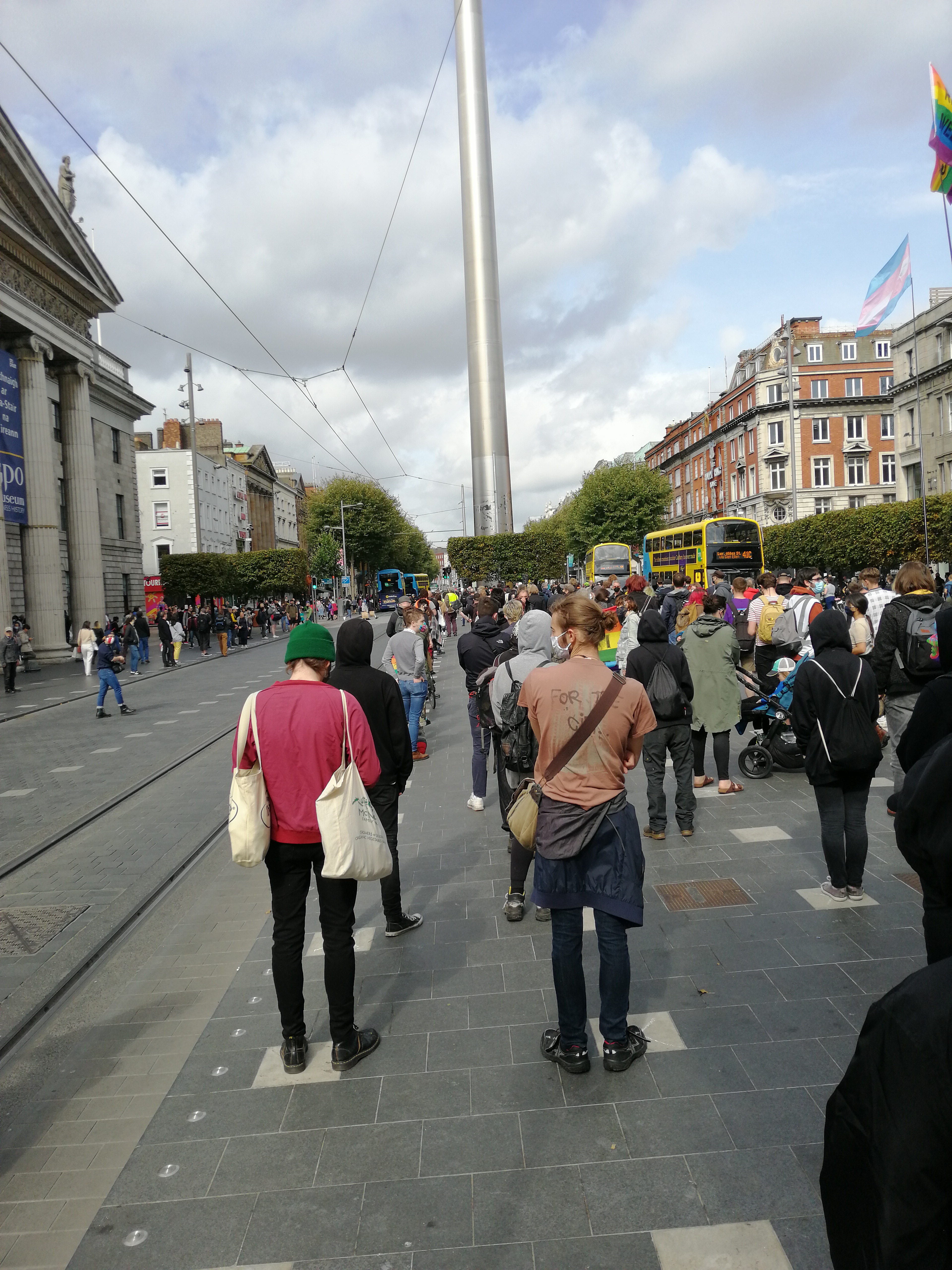


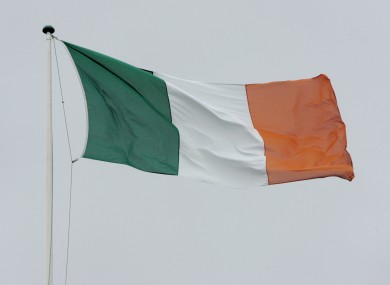
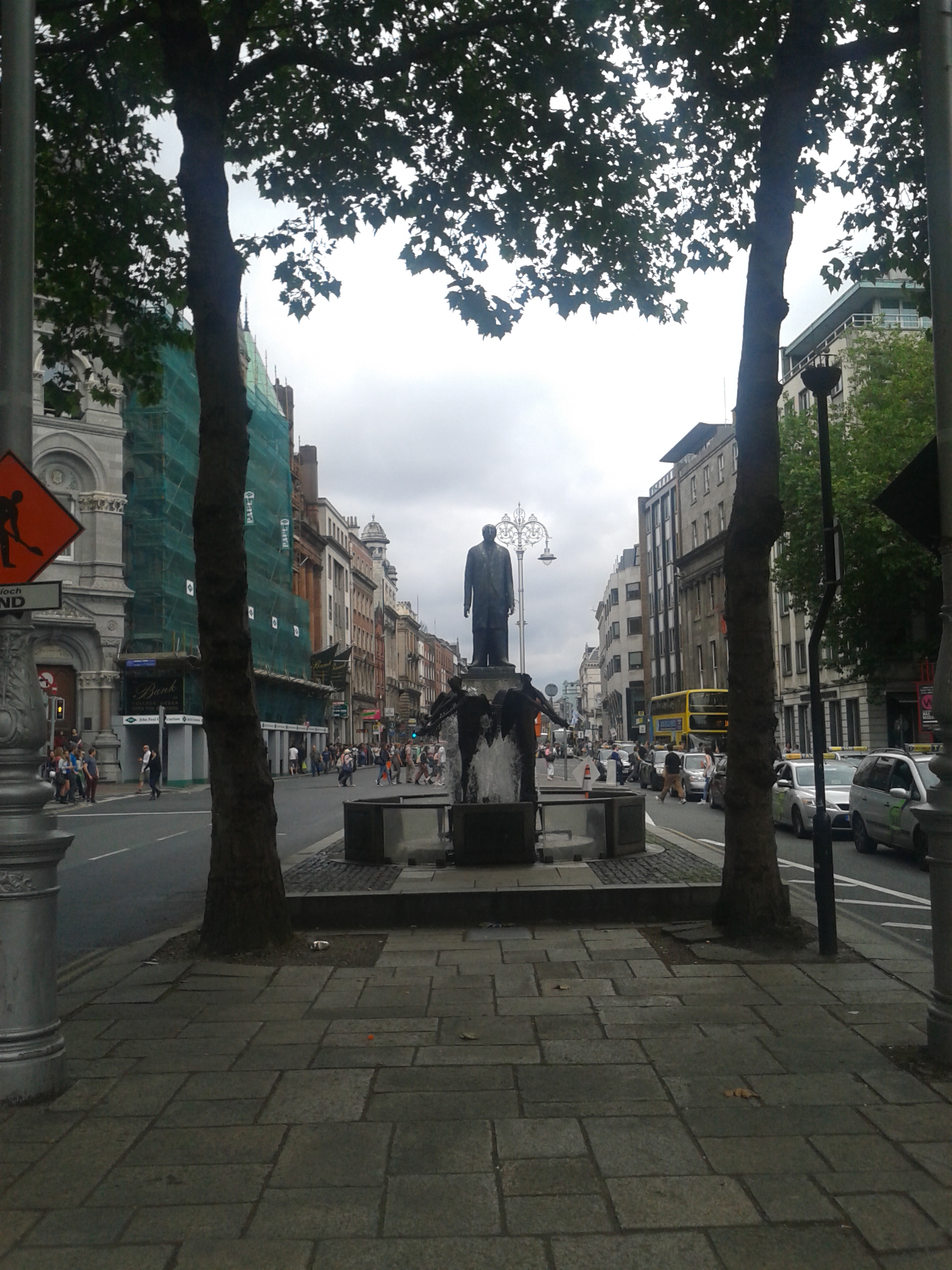


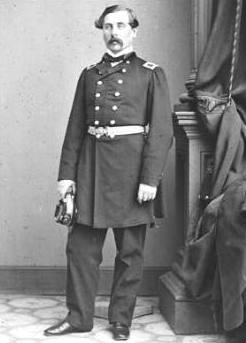


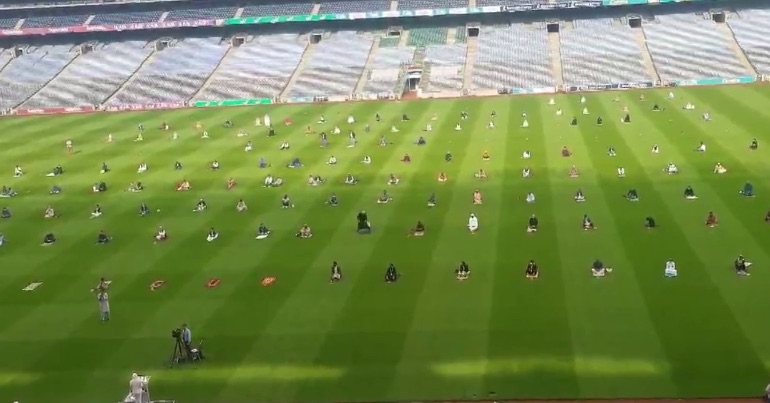


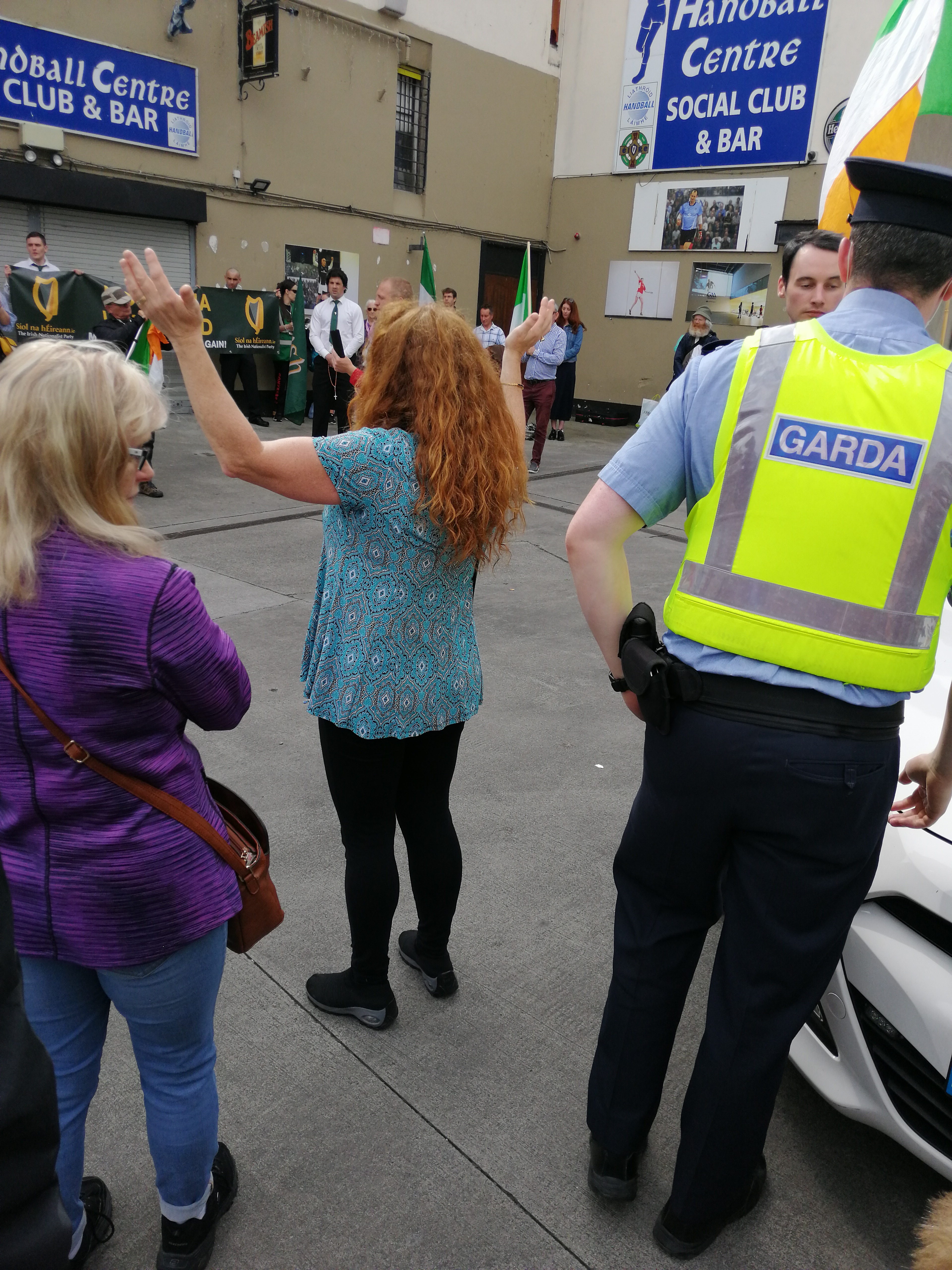

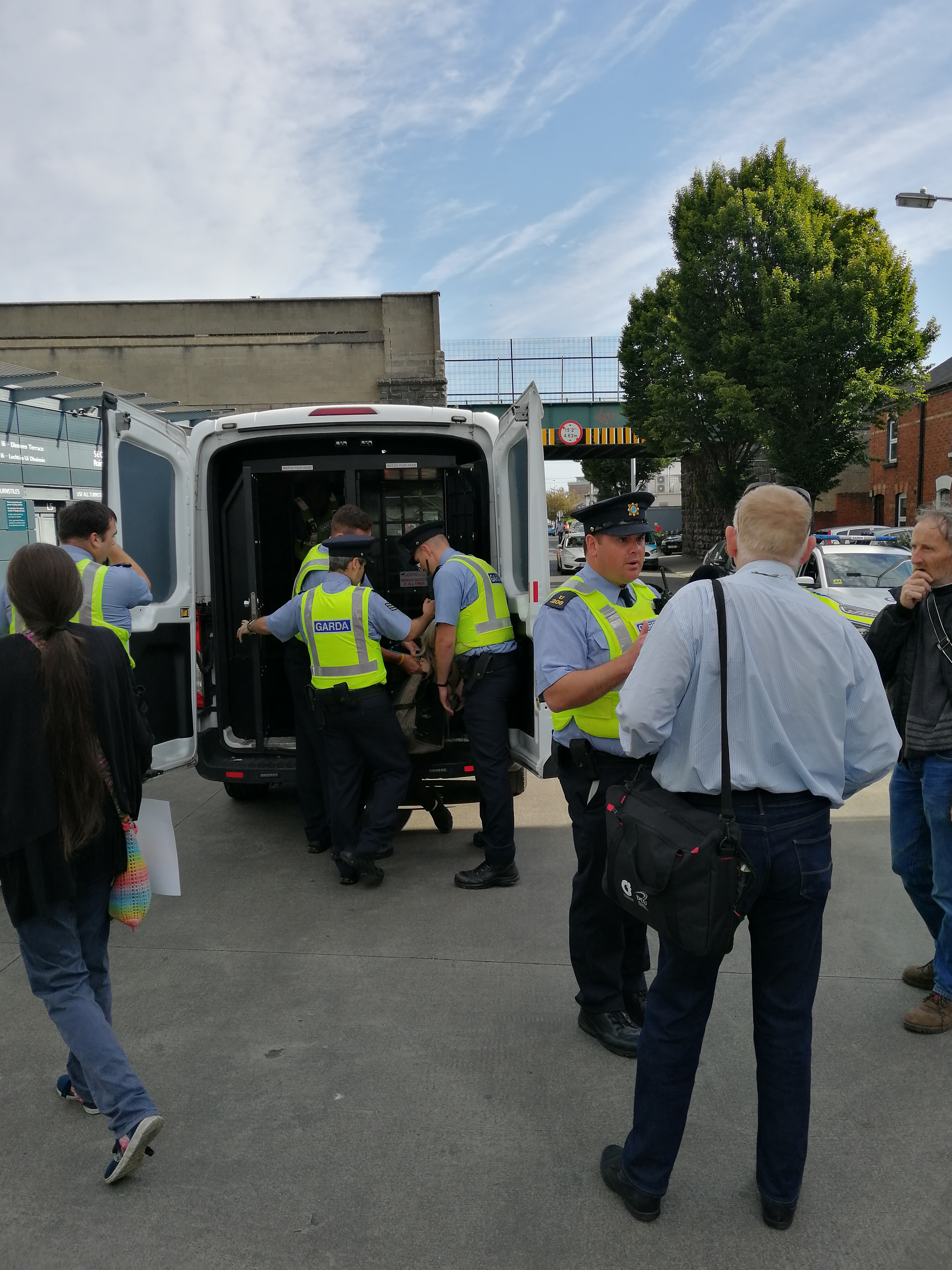

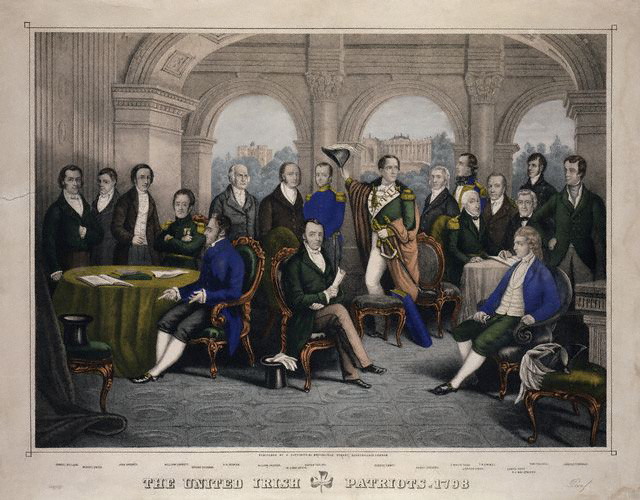
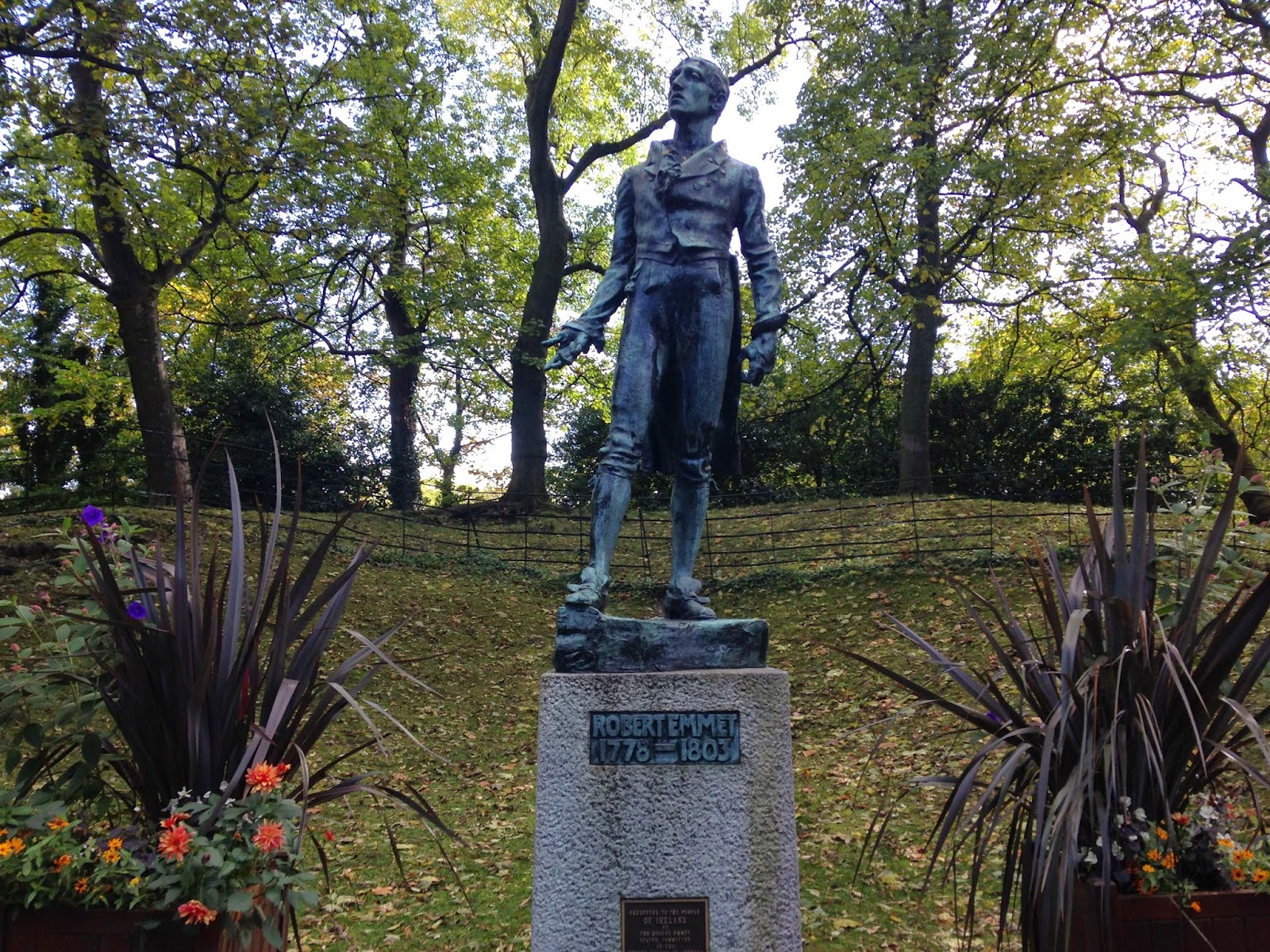


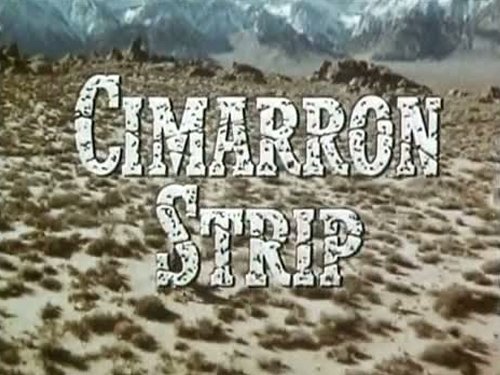
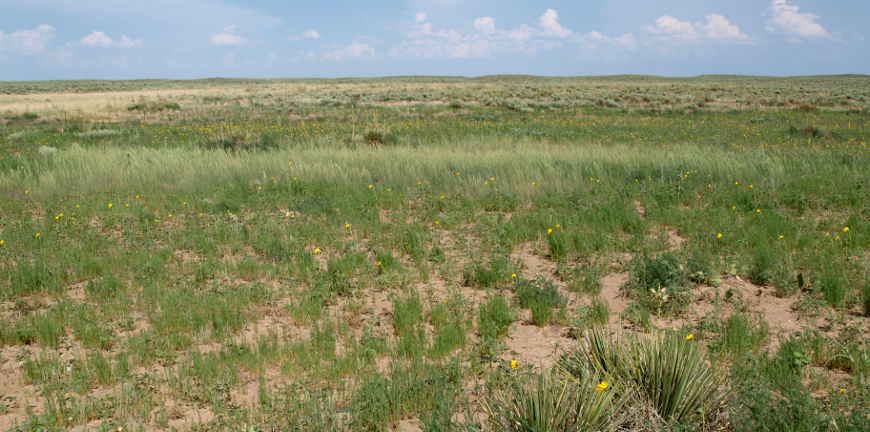


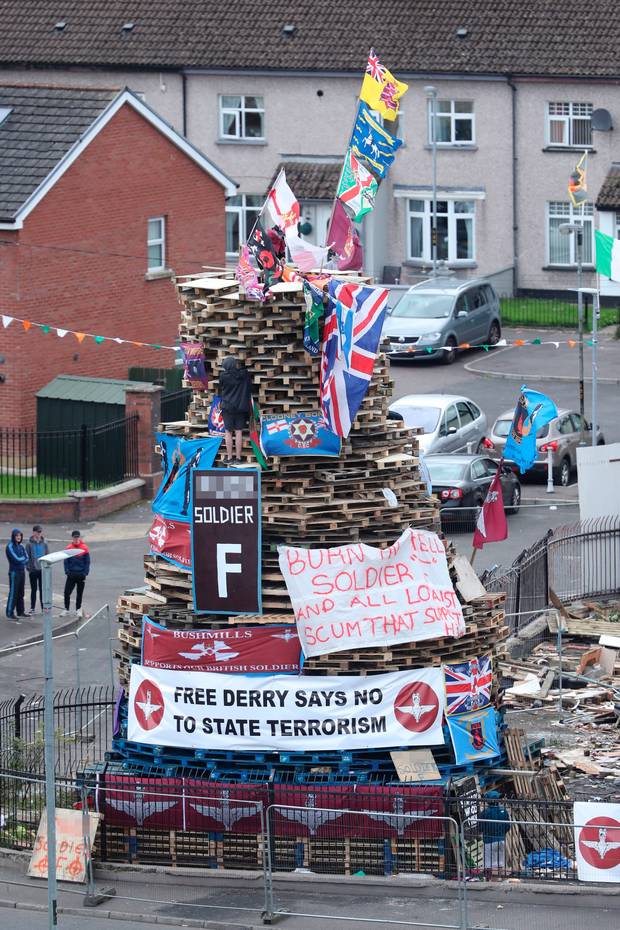
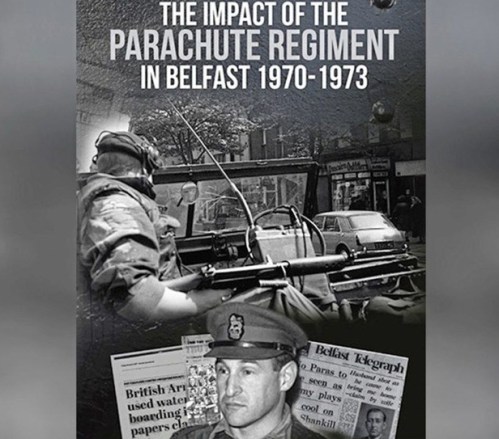


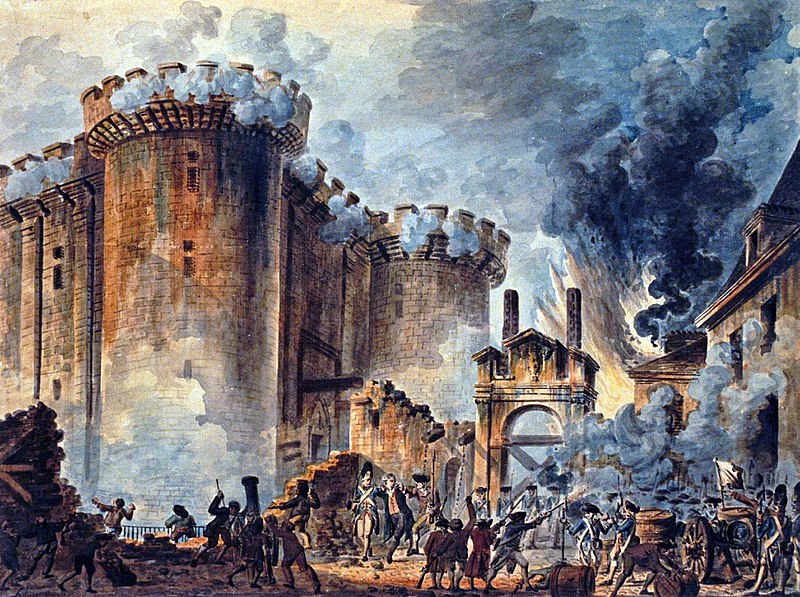

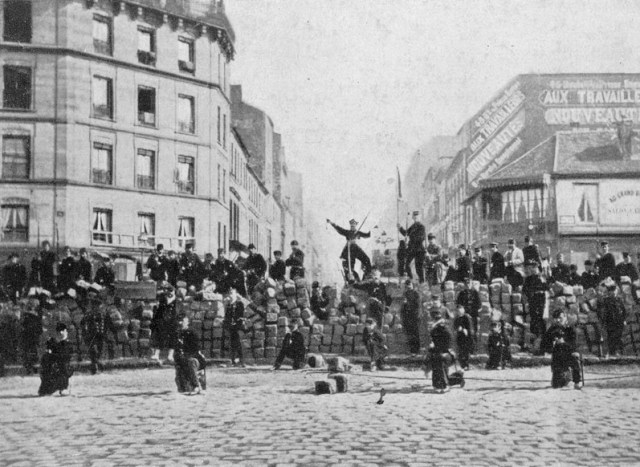


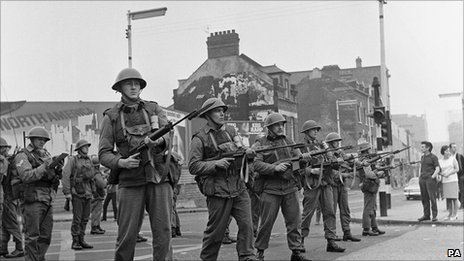
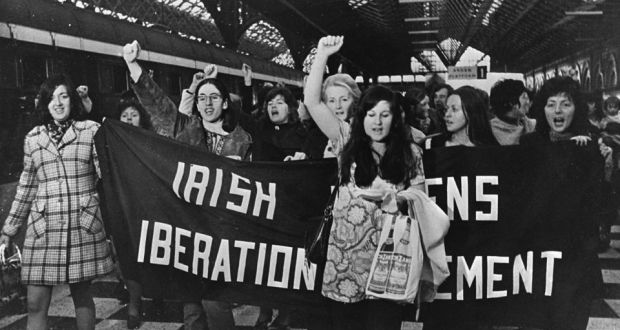


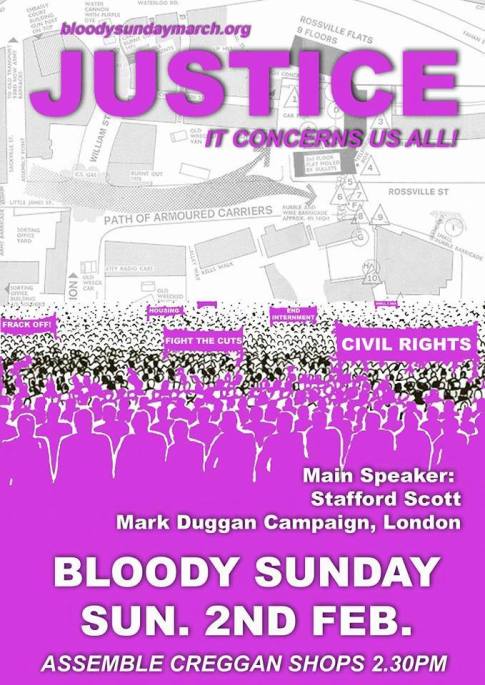
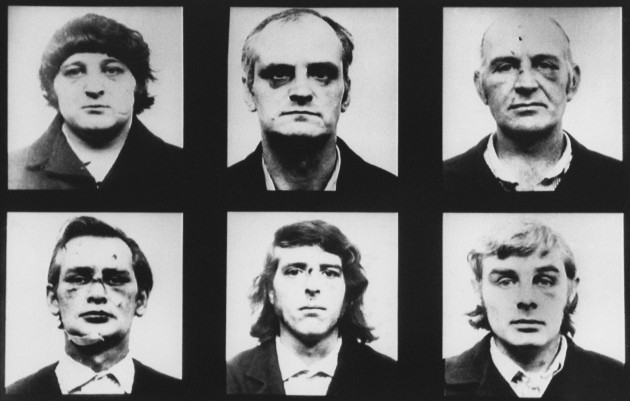
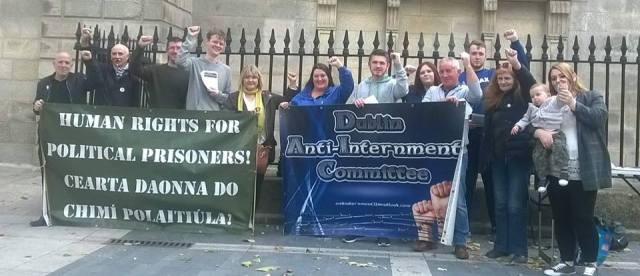


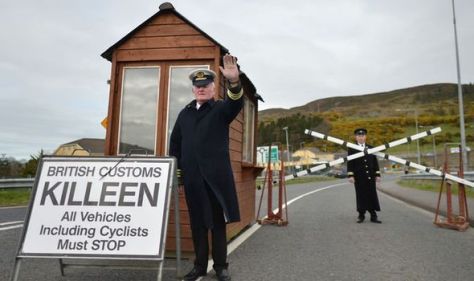


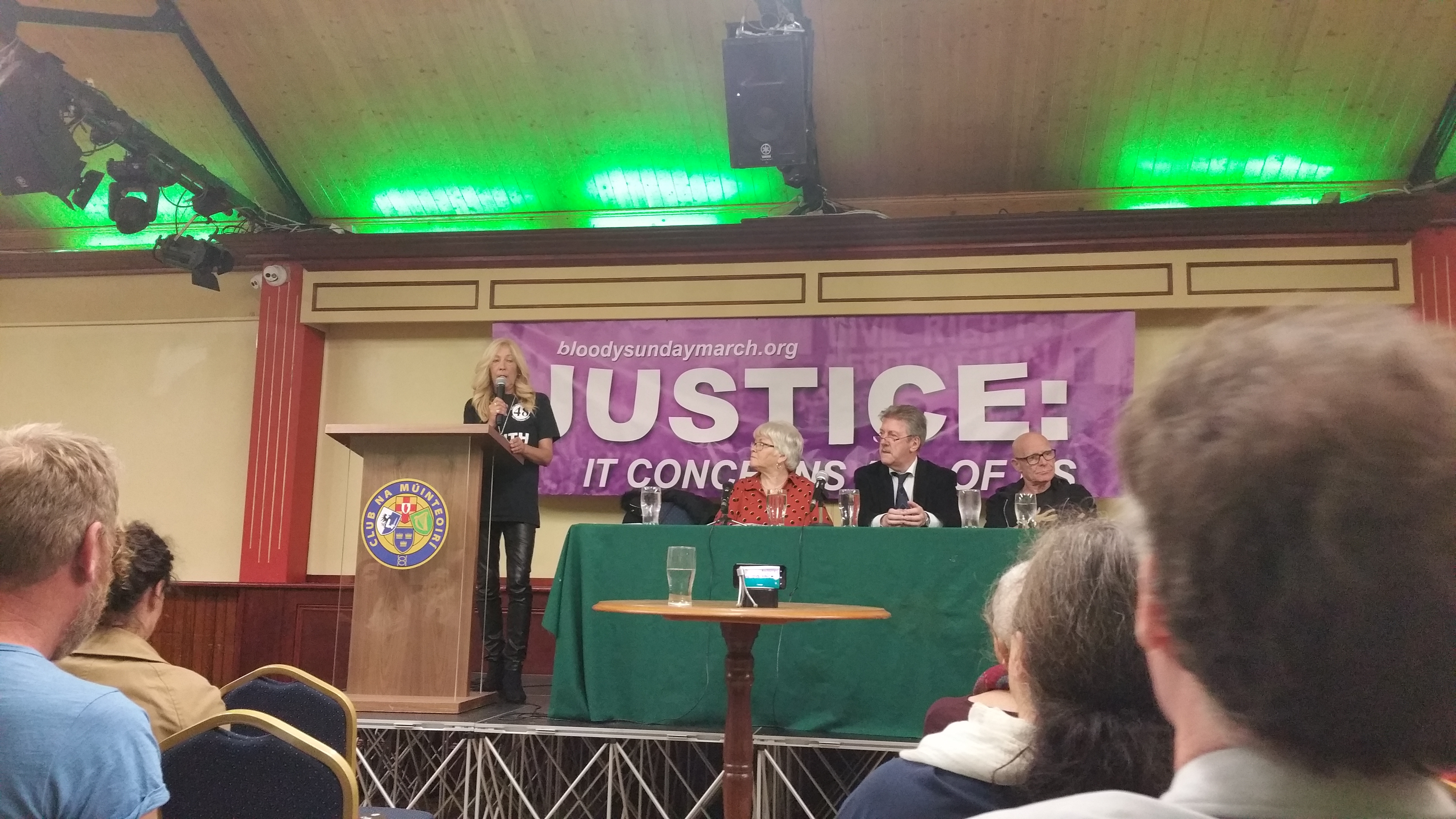






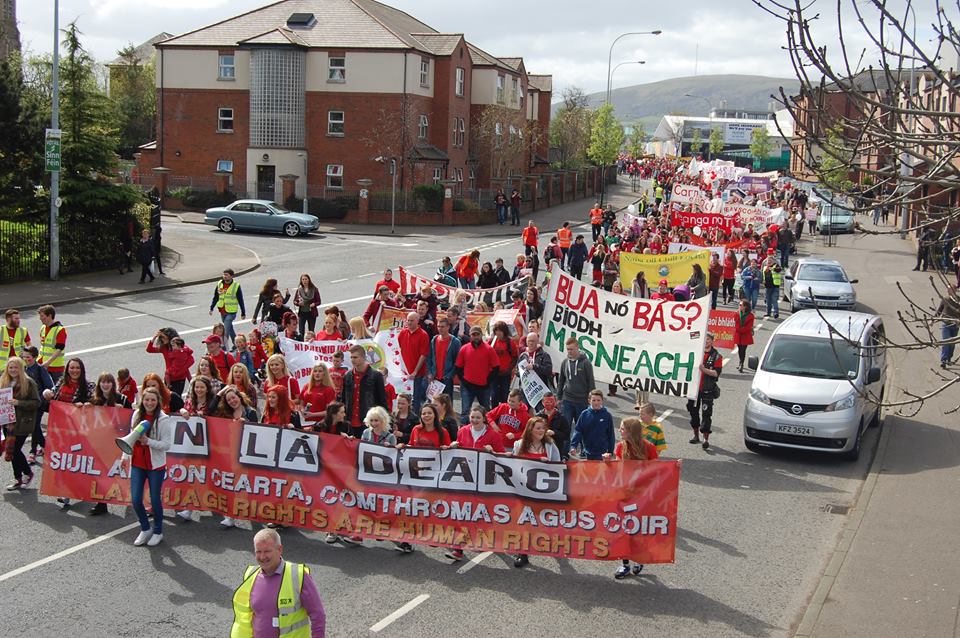

 rebelbreeze