Threats? What threats? That is the question on a lot of minds as scepticism continues to grow about recent claims of intimidation against local officials in the port of Larne and the city of Belfast who were working, however tangentially, on administrating the so-called Irish Sea border between Ireland and the post-Brexit United Kingdom. As the well-informed political correspondent Sam McBride notes for the regional News Letter, a decidedly hardline pro-union publication, most of the allegations of imminent violence directed at UK and European Union employees seems to have come from the Democratic Unionist Party. The chief opponent of the regulatory frontier agreed between Brussels and London under the so-called Northern Ireland Protocol.
[On Monday] news emerged that Mid and East Antrim Borough Council – on which the DUP is the largest party – had suddenly withdrawn its staff from the border post in Larne because of graffiti describing…
(Translated from the article in Castillian by Alejandro Torrús [Publico 01/24/2021] by Diarmuid Breatnach)
(Reading time text: 7 mins.)
The descendants of Alexandre Bóveda join the ‘Argentine complaint’ together with the grandchildren of Amancio Caamaño, president of the Pontevedra County Council; and Ramiro Paz, editor. The three were murdered in 1936 in Galicia by Franco’s forces. Around 5,000 Galicians were shot by the Franco regime.
– Provided by the family
Alexandre Bóveda in a conferenece in Vigo (Photo supplied by the family)
They say that after the body of Alexandre Bóveda fell to the ground, shot by firing squad, one of his friends approached and placed a small Galician flag in his jacket pocket, near a heart that no longer beat. Thus was the last will fulfilled of the man that Castelao himself had described as the engine of Galicianism. It was August 17, 1936 and Bóveda was murdered after a farce of a trial that sentenced him to die for treason. Just a few hours later, at dawn on August 18, 1936, at the other end of the peninsula, the poet García Lorca was also murdered by the Francoists. In just a few hours, in two of the most remote territories of the country, two elevated minds of the country were murdered. Point blank. One after a sham called a trial. Another, after being arrested as a criminal. Two elevated brains, two unique sensibilities, and two ways of fighting, fighting for a freer, more democratic and more plural country fell by force of arms. The country was entering the long Francoist night.
The figure of Alexandre Bóveda is so spectacular that it is difficult to summarize in just a few paragraphs. He was one of the drafters of the Statute of Galicia of the Second Republic (which would never come into force due to the Civil War); he was the soul and “motor” of the Galician Party; and, furthermore, he had participated in the founding of the first savings bank in Galicia. The list, in a telephone conversation with his grandson, Valentín García Bóveda, is practically endless. To the political successes must be added a good number of professional successes, which led him to participate in the founding of Campsa, the Hacienda de Pontevedra or to expand the funds of the Pontevedra Council using only the existing law. He was only 33 years old.
The focus of his political struggle, however, was Galicia. He was convinced that the economic and social backwardness of the country was due to the centralism of a State that squeezed every last drop of sweat from the workers of the periphery. His love for the land, in fact, was taken to its ultimate consequences and in front of the same court that sentenced him to death he declared: “My natural homeland is Galicia. I love it fervently, I would never betray it. If the court believes that for this love the heavy death penalty must be applied to mey, I will receive it as one more sacrifice for her. “
So it was. Bóveda stood in the February 1936 elections to Parliament in the Ourense constituency, competing against Calvo Sotelo, who would be finally elected. Months later, Calvo Sotelo would be murdered in Madrid, while, just a few weeks later, Bóveda would be murdered in Galicia. He face it tied to a pine tree, in the mount of A Caeira, in Pontevedra, some bark of which is still kept by the family.
Pieces of bark from the pine tree against which Bóveda was executed (Photo supplied by the family)
His grandson says that he could have escaped, that he was warned on several occasions of the danger he was running, but that Bóveda answered all those warnings with the words he recited in front of the court. “I wanted to do good, I worked for Pontevedra, for Galicia and for the Republic and the confused judgment of men (which I forgive and all of you must forgive) condemns me,” he wrote in a letter to his brother hours before being shot.
“My grandfather was a marvel of the economy and aa elevated brain. Everything he achieved within only 33 years is impressive, which was at the age at which he was killed. I have always wondered what would have happened to this country if people so important such as Bóveda, like Lorca and like so many others who were shot or had to go into exile by Francoism could have lived another 30 years … Surely now we would live in a different country”, explains Valentín García Bóveda, grandson of the political victim and Vice-President of the foundation that bears his name.
Now, almost 85 years after this murder, Valentín takes over the family struggle to reestablish the memory of Alexandre Bóveda and has filed a complaint with the Argentine Judicial system. In doing so, he joins the nearly 1,000 legal actions that the victims of the Franco regime have presented in the last ten years before Judge María Servini de Cubria in Federal Court No.1 of Argentina.
“I go to the Department of Justice of Argentina with several objectives. On the one hand, to reestablish the memory of my grandfather. I do it for him, but also for my grandmother, who had to die seeing how, legally, her husband was listed as being shot for treason to the homeland. I want that sentence to be judicially annulled. On the other hand, I also go to Argentina to fight against this amnesiac democracy that was based on the foundations of oblivion and injustice,” explains García Bóveda, who hopes that Argentina can declare the crimes of the Franco regime to be crimes against humanity.
The case of Alexandre Bóveda is not the only one to reach the Servini court recently. The descendants of the Republican doctor and politician, president of the Pontevedra County Council in May 1931, Amancio Caamaño, and of the printer and political leader Ramiro Paz, have also filed a complaint. Begoña Caamaño, Amancio’s granddaughter, explained to Público that her grandfather was arrested a week after the Francoist coup and shot on November 12, 1936.
“I could never agree with the Amnesty Law or with the Historical Memory Law. In this country the wounds were never closed even though others accuse us of wanting to open them. The Francoist hierarchy passed to democracy without being held accountable. The Police that were torturing was the new democratic police. And for this reason neither my family nor I have been able to sue in Spain about the execution of my grandfather and we have decided to go to Argentina. All I am looking for is justice and for the sentence against my grandfather to be annulled “, Begoña Caamaño explains.
That fateful November 12, 1936, the Francoist forces executed Caamano and Paz in A Caeria, but also doctors Telmo Bernárdez Santomé and Luis Poza Pastrana; the teachers Paulo Novás Souto, Germán Adrio Mañá and Benigno Rey Pavón; the lawyer José Adrio Barreiro; journalist Víctor Casas Rey; and Captain Juan Rico González. Their murders, however, were only a few more drops of pain in the midst of the slaughter that Franco’s forces were carrying out. The repression ended in just a few years with the lives of 4,699 Galician citizens. Seven out of ten (3,233) were executed in the so-called Francoist “strolls”1. The rest, 1,466, were killed by the carrying out of a death sentence, according to data from the Nomes e Voces (Names and Voices) project. A veritable extermination in an area where the war lasted no more than a few days. In the first months of the Civil War alone, the four civil Governors, the Mayors of five of the seven Galician cities and of the 26 most important towns and the highest Galician military authorities who opposed the coup were all murdered in Galicia.
However, selective or indiscriminate murder was not the only means of repression. With the aim of destroying a civil, plural and organized society, 1,597 citizens were sentenced to life imprisonment and 1,981 were sentenced to various shorter prison terms. In total, 28,234 Galician victims suffered some type of judicial persecution by the new military authorities.
The lawsuits of Bóveda, Caamaño and Paz are not the only ones that have reached Argentina for Francoist crimes perpetrated in Galicia. The “Argentine complaint” was born, in fact, after the complaint filed by a Galician citizen, Darío Rivas, for the murder of his father, Severino, Republican mayor of Castro de Rei and the first of the executed exhumed in Galicia.
Doctor and Politician Santiago Caamaño
Likewise, in 2014, Público reported on a good number of complaints filed about crimes committed in Galicia. Among them was the case of the murders of Manuel Díaz González, a doctor from O Incio (Lugo) and the first Mayor of the Republic in that town, and his brother José Díaz, elected in the last elections as the new Mayor of the municipality. His granddaughter Esther García then explained how her grandfather had been dragged for several kilometers tied by the tail of a horse to the municipality to be murdered where he had been Mayor.
The repression in Galicia also led to a long exile to Latin American countries. In 1942 Galician exiles in Argentina established August 17, the day of the assassination of Alexandre Bóveda, as ‘Día da Galiza Mártir’ (Galician Martyr Day) to commemorate a unique generation that was wiped out by the weapons of Francoism.
Descendants of victims at the Argentine Consulate in Vigo (Photo supplied by the Pontevedra Council)
COMMENT:
The dictator and leader of the coup General Franco was himself a Gallego, a Galician. So was Manuel Fraga Ibibarne (despite the Basque second surname), Minister of propaganda during the Franco Dictatorship and director of repression during the Transition years after Franco’s death (“The streets are mine” — yet claimed by some as steering the ‘democratic transition”) and founder of the Alianza Popular/ Partido Popular party. The claim of fascists to uphold and defend nationalism was exposed as a lie in so many examples in history but very starkly indeed in the Celtic nation of Galicia. The foremost national intelligentsia of Galicia, political, cultural and law-making – those that did not flee — was wiped out by the Franco military and the fascist Falange.
Also a Gallician — an elderly Franco on a Spanish State occasion (Photo sourced: Internet)
Also a Gallician, fascist Manuel Fraga, propaganda Minister and director of repression. (Photo sourced: Wikipedia)
The supporters of the military-fascist coup against the democratically-elected Popular Front Government of the Spanish State called themselves “Nationalists” and the media in much of the rest of the world did them the favour of referring to them likewise.
But it was the Spanish imperialist “nationalism” that was upheld by the coupists, one which denied the social aspirations of the population of the central “Spain” and denied the cultural, social and political aspirations of the Basque, Catalan, Galician and Asturian nations within the State and those of its colonies outside, for example the people of Western Sahara.
Today that false nationalism remains in power in the Spanish State, whether the social-democratic PSOE or the right-wing conservative PP are in government. It is supported in effect by sections of the Left as represented by the (old) CPE/ Izquierda Unida/ Podemos and by the extreme right-wing of Ciudadanos and Vox. The struggle between progressive national independentism and that centralist-imperialist bloc continues.
Diarmuid Breatnach
End.
Alexandre Bóveda addressing a mass meeting in Vigo (Photo supplied by the family)
1Translator: Many of those murdered by the Francoist repression were not as a result of firing squad ordered by military tribunal but, in particular by the fascist Falange, by unofficial execution which the perpetrators called “paseos” (strolls). They would collect the victims from places of detention or their homes, telling them that “We are going for a walk”.
Health Service, Broad Socialist Front, Anti-Fascism
Diarmuid Breatnach
(Reading time main text: 15 mins.)
A new periodical has emerged from the Irish Left. At the time of writing two issues of Rupture have been produced and Parts I and II of this article consist of a political overview (but of course from my individual viewpoint) of a number of issues discussed in the magazine. While the assessment of some is highly critical, overall my opinion is that Rupture is a welcome introduction to socialist analysis of conditions in Ireland.
Rupture is a quarterly magazine format produced by RISE, a group of socialists whose most publicly-prominent individual is Paul Murphy (see Appendix) who is also a TD, i.e a member of the Parliament of the 26 Counties. The formation of the party RISE was announced in September 2019 when Murphy announced his departure from the Socialist Party and his joining this new organisation, of which he is a founding member.
Rupture espouses “eco-socialism”, a drive to organise the production of food and fuel under socialist control while dramatically reducing its harmful impact on the environment. Most of its contributors address issues from a Marxist perspective but interviews with activists from some other perspectives are included.
The magazine’s two issues to date included features on public health, the environment and food production. In addition there have been a number of articles on developing a broad socialist front, combating racism and fascism, multi-national companies and neo-liberal capitalism, Big Pharm and trade union struggle. For the first time, the latest issue (November 2020) addressed the issue of the national question (and struggle) in Ireland. PART I of this article dealt mostly with the discussion of the magazine’s discussion of a) the Environment and b) the National Question, while PART II focuses on its coverage of the Health Service and the Broad Socialist Front, including Anti-Fascism. As a consequence each Part contains both positive and negative evaluation.
From another aspect, the layout is generally attractive and mostly easy to read with photography and artwork which is interesting (if its relevance is not always clear). Some articles are perhaps on the longer side for some tastes but then these are big issues being discussed, in many cases literally of life-and/or-death dimensions.
An annual subscription costs €40 all Ireland or €60 international and I would recommend taking out one for 2021).
HEALTH SERVICES
The articles on the health service in the Irish state, one might say health services, are particularly strong and, like those on the environment, use published statistics and analyses from other sources to illustrate their points.
It is a fact, as the contributors point out, that the Irish state has never had a national health service (and one of the benefits for people in the 6-County colony is that they have the UK’s National Health Service, for all its current troubles). What we have is a three-tier system: state, private not-for-profit and capitalist — the articles argue for a totally public health system, such as would be in place in a socialist society.
There are those, especially Government Health Ministers (though not necessarily when in Opposition) who argue that the three-tier is the optimum mix, all tendencies working together to deliver the best service to the population. If the fallacy in this argument were not obvious before, with long waitings lists for procedures including even testing, packed A&E departments with patients waiting hours for treatment and some patients even days on trolleys, along with the false negative cervical cancer results, it was brutally exposed by the Covid19 pandemic. Overburdened ICU wards, more pressure on hospital beds, deferment of procedures and longer waiting lists, shortages of protective equipment and overworked and stressed front-line health workers, including shocking death rates in care homes have been stark pointers to the urgent need for change. And now delays in contact tracing and vaccine roll-out.
Besides, the alleged mix of the three types of health service provider is a fallacy, as the articles point out; in fact, public money is funding them all. Whether run by religious institutions or by unashamedly profit-making enterprises, they are all dependent on funding through the Irish State and through tax exemptions.
It would seem rational and logical that if a health service provider insists on working within a religious ethos, that its services be funded entirely by its own institutions and congregation. It would seem rational and logical that a provider who wishes to work on a profit-making basis should fund itself entirely by investors, bank loans and its own profits, just like any other business. It would seem rational and logical that the entire wealth available to the State for health should be spend funding and improving its own services. In the Irish state, none of that is what happens.
Not Fun Facts
The Catholic Church owns and controls 90% of primary and around 50% of secondary schools in the state which however are funded publicly. “Out of the 1,735 total deaths in the first wave (of the pandemic), over half (967 ) were in nursing homes.” “In 2019 the HSE spent 31% of its current budget ( 5.4 billion euros) on outsourcing to outside agencies.” “Top 5 religious orders funded by the HSE (2019): Sisters of Mercy (including the Mater and Mercy University Hospitals) – 432 million; Sisters of Charity (St. Vincent’s University Hospital) — 373m; Brothers of Charity 218m; St. John of Gods – 166m; Daughters of Charity – 122m.” (Total: 1,311,000,000 euro). “By 2019, up to 80% of nursing home beds were private, up from 66% 1n 2009 and 25% in the 1980s.” While working people struggle with ill-health or pay privately, also seeking care for elderly relatives, the huge rise in private health insurance cost and sector growth is the main beneficiary.
The story, shockingly, is the same when it comes to vaccines. Though people are right to question the operations of Big Pharma, the companies that produce medicines to make a profit, the general case for the defence of vaccines against diseases is unanswerable. Many distressing medical conditions and epidemics have been eliminated in parts of the world through vaccines though in some other parts people continue to suffer because vaccinations are generally unavailable.
However the article in the current issue of Rupture points out that a number of companies are in a race to be first to produce an effective Covid19 vaccine so that their company alone can patent it and profit from it (and of course, set their own price). Although their end product is patented and belongs to them to profit by, 66% of their research is public-funded. And they spend a large proportion of their funds on advertising – “64 of the top pharmaceutical companies spend twice as much on advertising as they did on new research, while 27 companies spent 10 times as much.”
In a socialist system, all the scientists would be collaborating and sharing research and work so that not only would likely success be enormously hastened but the vaccine would be universally available and cheap. In fact, the permanently crippling disease of polio was eliminated in Ireland by a publicly-available and cheap vaccine – its inventor Johan Salk, despite its estimated worth of $7 billion, refused to patent it , saying that it was “owned by the people” (https://polio.ie/polio-vaccine-26th-march-1953/).
Johan Salk, who developed the polio vaccine and refused to patent it. (Photo source: Internet)
BROAD SOCIALIST FRONT
Contributors ofarticles in Rupture on the question of creating a mass resistance front to capitalism have criticised the traditional socialist party-building method, which they point out leaves them essentially small, with limited influence in the working class and, through loyalty to their leaderships and reluctance to learn from their mistakes, perpetuates both. Whatever different people may think of the reasons nobody can argue with the result.
The articles advocate participation in broader fronts and attempting to influence them with a Marxist approach while also being willing to learn, instead of using these broader formations primarily to sell their newspapers, recruit some members and project themselves as the main leaders (that last might be more my own point than that of the article authors). It is suggested that on some questions socialist organisations can join in a common struggle with other groups and activists with whom they don’t agree on other issues.
Sounds good? Yes, of course and some of us independent activists have been saying that for decades. Interestingly however (and curiously, one might say if one were unaware of the general trajectory of the Irish Left), there is no mention of uniting with other revolutionary groups such as Irish Republicans and Anarchists. This should be curious because active Irish Republicans usually number many more than the Socialists in Ireland and they – and the Anarchists – have been fighting in struggles for years (including some which the rest of the Left is only now beginning to take up). Furthermore, which should be of more than passing interest to socialists, in general Irish Republicans are significantly of more working class background than are the members of the socialist parties.
If the Socialists in Ireland don’t unite with those groups it is of course possible that they will unite around enough others to overthrow the State and usher in a socialist order. Possible – but hardly likely. What is much more likely is that, in their pathological desire to steer clear of those elements, they will instead drift or gallop into alliance with social democracy. And that element of the Left is one which raises the aspirations of working people only to constantly dash them and, at crucial junctures of struggle always has and will betray its working class and lower-middle class supporters. Clara Zetkin, in the article referred to in the next section, pointed to the betrayal of the struggles of the working class paving the way for the fascists, giving the examples of the factory occupations and agrarian struggles of 1920 and the 1st August 1922 general strike debacle.
At those junctures the socialist organisations that have been in alliance with the social democrats will splinter again, amidst recriminations and opportunism as some leaders jostle for position among the social democrats. In some situations of course, socialists have instead ended up in prison, concentration camps or against a blood-stained wall.
The road to social democracy has been the historical trajectory in the West of most of the parties of the Left claiming to be revolutionary, both of the Trotskyist and Communist Party variety. At this early stage of Rise and Rupture that tendency is already to be seen in contributions to the magazine discussion – one from the USA advocating working within the Democratic Party and others suggesting the possibility of building a mass Irish social-democratic party inside of which the revolutionaries can work.
ANTI-FASCISM
The rejection by Rupture contributors as allies of those active revolutionary elements, Irish Republicans and Anarchists, can once again be seen in its discussion of anti-fascism in Ireland. In the article on the subject in the November issue we are treated to eight pages of an address by Clara Zetkin to the Communist International in 1923, a time when fascism was still a very new force. The introduction from Rupture, dealing with Ireland and the world today, is barely one page long and doesn’t even mention the history of the struggle against fascism in Ireland.
Of course, discussion of Ireland being kept mostly free from fascism can only be even considered by ignoring the presence of the Loyalists and the colonial statelet, with its sectarian legislation, housing and education allocation and especially policing. As for the Loyalists, pogroms, individual murders and burning people out of their homes – that is not fascism? And it’s not as if there have not been plenty of connections established between Loyalist and fascist groups in and outside Ireland – and not only in Britain.
If the Irish state has been kept generally fascist-free so far, might it not be of some value perhaps to investigate why? In fact there have been fascist organisations operating within the Irish state but they were smashed by energetic action of Irish Republicans, both left and more generally nationalist throughout the 1930s, as well as by eventual banning by the De Valera government of Fianna Fáil, which was elected largely by Irish Republican and Socialist support.
Subsequently, every time until the very recent past the fascists have attempted to gain a foothold they have been smashed again, both by Irish Republicans and Anarchist and Socialists – but notably, never by the main socialist parties, who have sometimes demonstrated and more often written against fascism but always remained aloof and even critical of direct confrontation.
Irish antifascists in the 1930s, mostly of an Irish Republican background, contributed to the international struggle directly by participation in the International Brigades in the Spanish Anti-Fascist War (1936-1939), in Britain (notably in the Battle of Cable Street 1936), also the little-known burning of the Clonfert mansion of Sir Oswald Mosely, leader of the British Union of Fascists, the “Blackshirts” in 1954. And contributing since, down through generations of the diaspora to Red Action and Anti-Fascist Action in Britain.
When the European fascist network based on Islamophobia tried to include Dublin in its program of organisational launches in European cities, it was defeated in Dublin, making the Irish state probably the only one in Europe that was not host to a Pegida launch. The mobilisation against Pegida was huge but what really demoralised the organisers and ended the alliance of Irish and East European fascists in acrimony, was as a result of the physical confrontation which hospitalised some Irish fascists en route and required Garda vans to drive the East European variety away to safety.
The more active antifascist opposition was overwhelmingly Irish Republican, with some anarchists and independent socialists. And the people still facing charges of “violent disorder” and a maximum penalty of 10 years in prison (or an unlimited fine or both!) are all Republicans from different organisations. Those who confronted the fascist National Party on October 10th in Dublin last year and sent the nazis scurrying off under Garda protection included (unelectoral) Socialists but the largest element were undoubtedly Irish Republicans of various groups and none.
Today, even the new fascist groupings of Síol na hÉireann, the Irish Freedom Party and the National Party, along with the right-wing anti-vaxxer, anti-mask conspiracy theorists such a QAnon, all try to piggy-back on the history of the Irish Republican movement (at least until 1922), lacing their rhetoric with references to “700 (sic) years of struggle” and “the martyrs of Irish freedom”.
The formation of the Le Chéile antifascist alliance in early December last was an alliance of liberals, social-democrats and the electoral Left, with TDs of Rise and PBP in the lineup. Regarding the earlier discussions or founding meeting, a well-connected Irish Republican told me “I don’t know one Republican group that was invited” and when the alliance declared that they would not be organising any confrontations with the Far-Right, one suspects why. While it might be said that socialists should join such alliances in order to influence people towards the correct strategy and tactics, the least they could have done would be to publicly disagree with that stand. The reason the electoral Left did not do so seems to be because they agreed with it, as evidenced by their practice throughout the last two years.
October 2020: Supporters of the fascist National Party (right of photo) in shock as the antifascists (left of photo) clash with them. (Photo source: Internet)
By all means discuss and develop a theoretical understanding of the historical origins, development and nature of fascism but socialists need to remember that in the final analysis it was a huge expenditure of physical effort, with millions of martyrs, that brought fascism to its knees in most of Europe at the end of the 1940s.
RISE would do well to heed at least one of the remarks of Zetkin in the quoted speech: “Fascism confronts the proletariat as an exceptionally dangerous and frightful enemy”.As such, socialists require serious analysis of its history and current appearance in Ireland, along with an examination of the tactics and strategy necessary to defeat it.
End.
APPENDIX
A BRIEF INTRODUCTION TO PAUL MURPHY (RISE)
Formerly an activist and TD of the Irish Socialist Party, an Irish child of the British Trotskyist organisation the Socialist Party (and formerly, Militant, the largest among a number of entrist groups into the British Labour Party), Murphy left them gently in September 2019 to form the RISE group. It may be remembered that Clare Daly, also a TD, left the SP in August 2012 in a somewhat more acrimonious dispute and became part of Independent Left with some other socialist TDs and municipal councillors, since when she and her partner Mick Wallace were elected Members of the European Parliament and virtually disappeared from the Irish political scene (to be missed by many without allegiance to either group). Paul Murphy has also been an MEP in the past, from 2011-2014. Although now a member of a different political party, he has remained in the Solidarity-People Before Profit coalition of SP and PBP which retains another five TDs (four essentially of the Socialist Workers’ Party but no longer any of the SP).
Paul Murphy (centre, grey jacket, facing camera) speaking at his trial and that of others after the famous water protest at Jobstown against Minister Joan Collins (which led to his arrest and long trial before he and others (including Irish Republicans) were found not guilty by a jury).
Murphy has a long record of activism and has been violently handled by the Gardaí (Irish state police force) and also arrested as part of the celebrated Jobstown case defendants in 2015 (all acquitted two years later). His international activism includes participation in the Gaza blockade flotilla in 2011 and high seas capture by the Israeli Zionist state, detention and deportation. His production of regular video broadcasts to date during the Covid19 crisis, both from home and of his interventions in the Dáil have included lashing the Government on placing accommodation of capitalism above the lives or ordinary people, denouncing its “yo-yo policy” of precautionary restrictions followed by much-too-early relaxation and also demanding the nationalisation of private health facilities.
En 10 días vendrá a secuestrarme a la fuerza el brazo armado del Estado para encarcelarme porque no voy presentarme de forma voluntaria en prisión. No sé ni a que cárcel me llevarán ni cuánto tiempo. Entre todas las causas que acumulo por luchar, unas con condenas pendientes de recurso y otras de juicio, puedo pasar hasta casi 20 años en prisión.
Este constante acoso que sufro desde hace muchos años y que se materializa más allá de las condenas de cárcel, no sólo es debido a mis canciones revolucionarias, también por mi militancia más allá de la música y escritura. La propia Fiscal reconoció literalmente: “es peligroso por ser tan conocido e incitar a la movilización social”. Llevar a la práctica la lucha de la que hablo en mis canciones es lo que me ha puesto especialmente en el punto de mira, además de apoyar a organizaciones que han combatido al Estado, ser solidario con sus presos políticos y crear conciencia denunciando las injusticias señalando alto y claro a sus culpables.
Es muy importante tener claro que no es un ataque sólo contra mí, sino contra la libertad de expresión y por tanto contra la inmensa mayoría que no la tenemos garantizada como tantas otras libertades democráticas. Cuando reprimen a uno, lo hacen para asustar al resto. Con ese terrorismo quieren impedir que se denuncien sus crímenes y políticas de explotación y miseria, no podemos permitirlo. Saben que no voy a claudicar por estar preso, por eso lo hacen especialmente para que el resto lo haga. Por no interiorizar que es una agresión contra cualquier antifascista, ha faltado solidaridad para evitar mi encarcelamiento como tantos otros. El régimen se crece ante la falta de resistencia y cada día nos quita más derechos y libertades sin pensárselo dos veces a la hora de tocarnos, necesitamos organizar la autodefensa ante sus ataques sistemáticos. Muchas personas me escribís preguntando qué podéis hacer. Hace falta mucha difusión para que todo el mundo se entere de lo que hacen y se tome conciencia, pero sobre todo urge la organización no sólo para llevar la solidaridad a los hechos en las calles y coordinarla bien, también para defender todos los derechos que pisotean con impunidad.
También es necesario señalar al tan mal llamado Gobierno “progresista” por permitir esto y tanto más, mientras protegen a la Monarquía y le aumentan el presupuesto, no tocan la ley mordaza y otras leyes represivas, han añadido además la “ley mordaza digital”, siguen teniendo las cárceles llenas de luchadores en pésimas condiciones, además de otras políticas contra la clase trabajadora. Qué duda cabe de que si nos encarcelaran con un gobierno de PP y VOX habría mucho más escándalo, pero son estos farsantes quienes diciéndose de izquierdas ni se han opuesto firmemente a esto.
No voy a arrepentirme para reducir la condena o evitar la cárcel, servir a una causa justa es un orgullo al que jamás voy a renunciar. Si me liberan antes de finalizar la condena será porque la presión solidaria lo conquista. La cárcel es otra trinchera desde la que seguiré aportando y creciendo, como tantas otras personas yo empecé a luchar inspirado por el ejemplo de resistencia y otros aportes de numerosos presos políticos. Espero que este grave atropello sea aprovechado para sumar más personas a la lucha contra el Régimen enemigo de nuestra dignidad, que si me encarcelan para silenciar el mensaje tenga mucha más voz y salgan perdiendo. Respetando el exilio, decidí quedarme aquí para que esta oportunidad sea aprovechada para desenmascararlos aún más. Este golpe contra nuestras libertades puede tornarse contra ellos, pongámonos manos a la obra.
(translated from Castillian by Diarmuid Breatnach)
(Reading time: 2 mins.)
STATEMENT BEFORE MY IMMINENT IMPRISONMENT:
In ten days the armed wing of the State will come to kidnap me by force to imprison me because I am not going to present myself at the prison voluntarily. I don’t know to which jail they will take me or for how long (I will be detained). Among all the cases that I have accumulated through struggle, some with convictions pending appeal and others pending trial, I could spend up to almost 20 years in prison.
This constant harassment that I have suffered for many years and that goes beyond prison sentences, is not only due to my revolutionary songs, but also because of my activism beyond music and writing. The Prosecutor herself put it into words: “he is dangerous for being so well known and inciting social mobilization.” Putting the struggle I speak of in my songs into practice is what has put me especially in the spotlight, in addition to supporting organizations that have fought the State, being in solidarity with their political prisoners and raising awareness by denouncing injustices by pointing out the culprits loudly and clearly.
“Do you swear to tell the whole truth?” “I am here because of telling the whole truth.” (Image sourced: Internet)
It is very important to be clear that this is not an attack only against me, but against freedom of expression and therefore against the vast majority who are not guaranteed it like so many other democratic freedoms. When they repress one, they do it to scare the rest. With this terrorism they want to prevent their crimes and policies of exploitation and misery from being denounced, we cannot allow it. They know that I’m not going to give up because I’m in prison, but they they do it in particular so that the rest do. By not internalizing that it is an aggression against any anti-fascist, solidarity has been lacking to avoid my imprisonment like so many others. The regime grows in the face of the lack of resistance and every day it takes away more rights and freedoms without thinking twice when it comes to attacking us — we need to organize self-defense against its systematic attacks. Many people write to me asking what they can do. It takes a lot of diffusion so that everyone knows what they are doing and is aware of it, but above all organization is urgent not only to bring solidarity to the events in the streets and coordinate it well, also to defend all the rights that they trample on with impunity.
It is also necessary to call out the badly-named “progressive” Government1 for allowing this and so much more; while protecting the Monarchy and increasing its budget, they do not touch the gag law and other repressive laws, they have also added the “digital gag law”, they continue to keep jails full of fighters in terrible conditions, in addition to other policies against the working class. There is no doubt that if we were imprisoned during a government of PP and VOX2 there would be much more of a scandal, but these phonies who while claiming to be left-wing have not even firmly opposed this.
“From above they mock the past,
they tread on us in the present
to rob us of our future.” (Image sourced: Internet)
I will not repent3 to reduce the sentence or avoid jail, serving a just cause is a cause of pride that I will never renounce. If they release me before the end of my sentence, it will be because solidarity pressure conquers them. Prison is another trench from which I will continue to contribute and grow, like so many other people I began to fight inspired by the example of resistance and other contributions of numerous political prisoners. I hope that this serious outrage will be used to add more people to the fight against the regime, enemy of our dignity, that if they imprison me to silence the message, they will give rise to a much greater voice and lose out. With regard to going into exile,4 I decided to remain here so that this opportunity can be used to expose them even more. This blow against our freedoms can turn against them, let’s get down to work.
Pablo Hasél.
(Image sourced: Internet)
BRIEF INTRODUCTION TO PABLO HASÉL:
Pablo Hasél (Pablo Rivadula Duró), poet, writer, political rapper and activist from Leida in Catalonia, 32 years of age, has described himself as a revolutionary Marxist. Since 2011 Hasél has been convicted in Spanish courts on a number of occasions of “promoting terrorism” and for “slandering” Spanish State and Royal institutions in his lyrics, as well as for allegedly assaulting a TV3 reporter and being party to an assault on a Catalan far-right group.
Pablo Hasél burning the colours of the Spanish monarchical state during a performance.
(Image sourced: Internet)
Hasél began his recording in 2005 with Esto no es un Paradiso (This Is Not a Paradise) since when he has recorded another 64 discs on his own and another 35 in collaboration with others. In 2020 alone Hasél recorded two discs. He is also that author of nine poem collections, four of which are in collaboration with Aitor Cuervo Taboada, and one collection of stories.
FOOTNOTES
1The current Government, a coalition between the PSOE and Podemos. The former is the social-democratic party of the two-party system of the Spanish State which has been breaking down of late. Podemos-Izquierda is a coalition of trotskyist Left tendencies, Left social-democrats and the old Spanish Communist Party.
2The PP has been the right-wing conservative party of the two-party system of the Spanish State while Vox is even further to the Right.
3The Spanish penal and judicial system requires prisoners to repent of the “crimes” of which they have been convicted if they are to be moved to less harsh prison conditions or to be paroled. This is a particularly crushing requirement of inmates convicted of politically-inspired actions who are serving long sentences of a number of decades.
4 In May 2018, the day before he was due to surrender himself to Spanish jail, rapper Valtónyc (José Miguel Arenas) went into exile in Brussels.
A new periodical has emerged from the Irish Left. At the time of writing two issues of Rupture have been produced and Parts I and II of this article consist of a political overview (but of course from my individual viewpoint) of a number of issues discussed in the magazine. While the assessment of some is highly critical, overall my opinion is that Rupture is a welcome introduction to socialist analysis of conditions in Ireland.
Rupture is a quarterly magazine format produced by RISE, a group of socialists whose most publicly-prominent individual is Paul Murphy (see Appendix) who is also a TD, i.e a member of the Parliament of the 26 Counties. The formation of the party RISE was announced in September 2019 when Murphy announced his departure from the Socialist Party and his joining this new organisation, of which he is a founding member.
Rupture espouses “eco-socialism”, a drive to organise the production of food and fuel under socialist control while dramatically reducing its harmful impact on the environment. Most of its contributors address issues from a Marxist perspective but interviews with activists from some other perspectives are included.
The magazine’s two issues to date included features on public health and private services, the environment and food production. In addition there have been a number of articles on developing a broad socialist front, combating racism and fascism, multi-national companies and neo-liberal capitalism, Big Pharm and trade union struggle. For the first time, the latest issue (November 2020) addressed the issue of the national question (and struggle) in Ireland. PART I of this article deals mostly with the magazine’s discussion of a) the Environment and b) the National Question, while PART II focuses on its coverage of c) the Health Service and d) the Broad Front and Anti-Fascism. As a consequence each Part contains both positive and negative evaluation.
For another aspect, the layout is generally attractive and mostly easy to read with photography and artwork which is interesting (if its relevance is not always clear). Some articles are perhaps on the longer side for some tastes but then these are big issues being discussed, in many cases literally of life-and/or-death dimensions.
An annual subscription costs €40 all Ireland or €60 international and I would recommend taking out one for 2021).
Environment
As with most serious commentators on the environment, the articles in Rupture point to an accelerating crisis and the need for urgent action right now. At the same time they point to the unwillingness or inability of the capitalist system – which means the governments of most states today — to take the necessary steps. In fact, unwillingness and inability are almost the same thing with the capitalist system because if one capitalist does not maximise his profit he will be undercut and crushed – or taken over – by another who will do “what is necessary” according to the rules and logic of the system. Even if in the longer term (or the medium term, in this case) the scramble for profit maximisation destroys the very resource — cod and herring, for example or rainforest. In this case, without the slightest exaggeration, it is the whole civilisation-sustaining environment that is at stake.
Not Fun Facts
“In 2017 a habitat area the size of a football field was lost every second.” “Eirgrid has projected that 2027 as much as 31% of Ireland’s electricty could by consumed by data centres” (most of it for cooling the servers to prevent them overheating). “In Ireland a fairly normal herd of pigs consists of 3,000 animals — only 2% of pigs are living in small herds of 5 or less. ….. a flock of chickens can normally be around 3,000.” Diseases due to overcrowding of animals enter the food chain for humans, causing infections of “bird ‘flu” and “swine ‘flu” through ‘zoonotic spillover’ (remember that term — you’ll be hearing more of it in future).
The prediction a fairly long time ago that the choice, rather than being between socialism or capitalism is in reality socialism or barbarism, is facing us now as an urgent practical question. Because when civilisation crashes the remaining groups of humanity around the world, assuming their survival, will indeed be thrust back into barbarism.
The contributors to Rupture quote writings of Karl Marx and Engels which one never hears from non-Marxist environmentalists and rarely either from Marxists themselves. These early developers of Marxist thought studied not only economics, class struggle and philosophy but also (and dare I say it, necessarily), history, science and culture too.
Mental health is an issue discussed in the magazine not only in respect to the appalling lack of health services in that area or the stresses and strains of work under capitalism but also in the divorcing of most humans in cities from nature. The agricultural landscape, having been moulded by humanity is far from natural and yet retains much of nature, the environment in which humanity first came to exist and in which it developed …. but most people in the West are not employed in agriculture. In these times of fear of infection along with isolation from our regular social contacts, even a walk in a park, in woods, on hills or botanic gardens can be rewarding and a reminder of what we have lost and are losing.
It is a challenge to radically change the way we produce food and generate power in a long-term sustainable way but only a socialist system, with overall benefit replacing profit as the ruling motivation has the possibility of bringing an end to the ruthless exploitation of not only labour but the very environment.
THE NATIONAL STRUGGLE
This is a question rarely dealt with by the socialist parties in Ireland, a situation which surprises revolutionary socialists across Latin America and much of Europe in particular. Some might ascribe that to the British origin of a number of those parties, particularly the main Trotskyist ones which in that respect established a tradition very far from the theory and personal practice of Karl Marx. So although I have much to disagree with in this article, the fact that it is being discussed at all should be encouraged.
I hope it will serve to encourage further discussion rather than its opposite when I summarise the piece as containing partial history and poor analysis with however one important recommendation. This critique really deserves a treatment all of its own but since this evaluation of the magazine has already got appreciably longer than was my original intent, I will have to be brief and therefore blunt.
The brief overview of history does not even mention that the United Irishmen (and therefore the uprisings of 1798 and 1803) was led almost exclusively by a section of the colonist-descended bourgeoisie, which is why the leadership was virtually all of various Protestant religious backgrounds. This is important because this is not the same bourgeoisie that rules the Irish state today. The article also omits any mention whatsoever of the linguistic genocidal legislation and practice of the conquerors of Ireland and for any treatment of “the national question” one would have to wonder how or why one would omit that. In dealing with the occupied Six Counties, the treatment of the civil rights movement is poor, even for a very brief overview – it was not only “anti-Unionist unity” that drove or characterised it but opposition to the violent response of the Unionist statelet, Loyalist mobs and paramilitaries and their resolute backing by the armed force of the British State.
Wolfe Tone Monument by Edward Delaney (d.2009) at Stephen’s Green (image sourced: Internet). He and other United Irishmen leaders represented the revolutionary national Protestant bourgeoise and they were descended from colonists.
The article remarks on the“weak capitalist class” in Ireland. But what is the nature of the weakness of this class? In other words, towards which forces are they weak? Not towards the working class, with programs of austerity funding bank bailouts, decades of emigration, slow adoption of equal social rights, high homelessness. Not towards the working class, with the Army used to undermine the Dublin Bus strikers in 1963 and 1979 or the restrictions on the right to strike and solidarity action. Not towards the Irish Republican movement with its Civil War history, special non-jury courts, its repressive legislation and armed police.
No, it is not those towards which the Irish capitalist class is weak. But it is weak in developing its own industry and developing an independent political line. Its weakness economically is marked by the takeover by big foreign capitalists of nearly all of its industry and telecommunications network, along with chunks of its transport infrastructure and services, its health services (private religious and foreign companies) and its national airline and large pieces of its agriculture. Its weakness is demonstrated in failure to develop its own natural resources and selling them off or giving them away.
The weakness of the Irish capitalist class is demonstrated in its firstly accepting the partition if its national territory and going to war with the independence movement rather than join it gaining total independence. The same weakness manifested itself in its inability to unite its territory and subsequently abandoning any claim to do so. The weakness of the Irish capitalist class is demonstrated in its permitting atrocities committed against its citizens at home and abroad by the occupying power, only once taking a case against it to the European Courts of Human Rights and never to the European Court of Justice or the United Nations. And it permitted without protest the intelligence services of that occupying power to bomb its capital city many times, including in 1974, with the murder of 26 people (and another eight in Monaghan). And there are many other examples too.
The article admits that the Irish capitalist class has been “acting to facilitate the exploitation of people and resources by foreign capital”. What would we call a capitalist class that behaved like that in Latin America, Asia or Africa? Yes, neo-colonial. Or in Latin America, possibly “comprador”. The difference is not just in location but in the minds of the Irish electoral Left – but none of any significance in the reality on the ground. As the contributor from Talamh Beo points out, “even though we’re geographically in Europe, our land history is radically different.” Of course defining the Irish capitalist class as neo-colonial might give one a very different outlook on the national struggle, right?
And also on socialist revolution, which we would understand to be opposed in Ireland not only by the majority native and the minority colonial capitalist classes and their apparatus, not only by our powerful imperialist neighbour, but also against economic interests in the imperialist USA and EU.
In addition, despite the officially neutral status of the Irish State, its armed forces are being integrated into the European imperialist military alliance. Ireland has not (yet) joined NATO but has the EU Battlegroups, as part of the Common Security and Defence Policy (CSDP) of the European Union (EU).
Fianna Fáil, although a split from Sinn Féin in the 1930s and therefore the losing side in the Civil War, has become the first party of choice of the Irish national bourgeoisie, the “Gombeen” class, a neo-colonial capitalist class. In the historically two-party state, it is currently in power in coalition with its main rival, Fine Gael (and the Greens).
Fine Gael, although formed from the victorious side in the Civil War, has become only the second party of choice of the Irish national bourgeoisie, the “Gombeen” class, a neo-colonial capitalist class. In the historically two-party state, it is currently in power in coalition with its main rival, Fianna Fáil (and the Greens).
Ireland’s main social-democratic party, whenever in Government it has always been as a minor partner in coalition. It always supports the Irish national bourgeoisie, the “Gombeen” neo-colonial capitalist class. It is currently sits on the Opposition bench.
The truth is that in the above respects, Irish Republicans in general have a much better understanding of the Irish State, the representative of that neo-colonial capitalist class, than do the electoral left parties in Ireland. The Republicans have traditions and history and recurring practical experience that teaches them.
The Green Party of Ireland, whenever in Government it has always been as a minor partner in coalition. It always supports the Irish national bourgeoisie, the “Gombeen” neo-colonial capitalist class. In the historically two-party state, it is currently in power in coalition with Fine Gael and Fianna Fáil.
The electoral socialist Left, far from joining with the Republicans, chooses instead to snipe at them on occasion and to ignore them the rest of the time. And to permit their civil liberties and human rights to be attacked for the most part without protest.
POSITIVE RECOMMENDATION
The positive recommendation in the article regards the projected Border Poll. While not wishing for any kind of capitalist Ireland, whether partitioned or united, the article recommends voting YES in any such referendum. I myself must agree with that and along with them find it difficult to imagine how any socialists could advocate any other position.
Recommending a NO vote even if for the best of reasons would isolate any party from the majority of the Irish people, while recommending abstention would leave the party on the sidelines not only regarding the poll but in important debates about what kind of Ireland we should have. Even the British & Irish Communist Organisation deviation of the 1960s and 1970s with their two-nation theory, although it generated much discussion, never looked likely to grow to any size, much less become a mass party of the Left.
I am far from convinced however that a genuine poll on the reunification of Ireland will ever be agreed by the ruling classes of the UK and of Ireland or, should it be held and have a majority for reunification, that the ruling classes will implement the verdict.
End.
(See also Part II published separately)
APPENDIX
A BRIEF INTRODUCTION TO PAUL MURPHY (RISE)
Formerly an activist and TD of the Irish Socialist Party, an Irish child of the British Trotskyist organisation the Socialist Party (and formerly, Militant, the largest among a number of entrist groups into the British Labour Party), Murphy left them gently in September 2019 to form the RISE group. It may be remembered that Clare Daly, also a TD, left the SP in August 2012 in a somewhat more acrimonious dispute and became part of Independent Left with some other socialist TDs and municipal councillors, since when she and her partner Mick Wallace were elected Members of the European Parliament and virtually disappeared from the Irish political scene (to be missed by many without allegiance to either group). Paul Murphy has also been an MEP in the past, from 2011-2014. Although now a member of a different political party, he has remained in the Solidarity-People Before Profit coalition of SP and PBP which retains another five TDs (four essentially of the Socialist Workers’ Party but no longer any of the SP).
Murphy has a long record of activism and has been violently handled by the Gardaí (Irish state police force) on a number of occasions and also arrested as part of the celebrated Jobstown case defendants in 2015 (all acquitted two years later). His international activism includes participation in the Gaza blockade flotilla in 2011 and high seas capture by the Israeli Zionist state, detention and deportation. His production of regular video broadcasts to date during the Covid19 crisis, both from home and of his interventions in the Dáil have included lashing the Government on placing accommodation of capitalism above the lives or ordinary people, denouncing its “yo-yo policy” of precautionary restrictions followed by much-too-early relaxation and also demanding the nationalisation of private health facilities.
In few countries in the world has emigration played a more important role than in Ireland. Even before the Famine, Irish men and women emigrated at far higher rates than in other countries and after the famine struck, emigration skyrocketed, with emigration becoming a matter of life and death. Over time, a culture of emigration took root there, and the more commonplace emigration became, the more firmly the expectation of emigrating became entrenched in Ireland’s economic and social system.
Foreground: Irish women migrants approaching New York harboru 1893.
(Photo source: Internet)
Ireland’s nineteenth century emigration was distinct from other countries in its gender ratio. In comparison to other European countries, the percentage of Irish women emigres was by far the highest and the unprecedented rate of single women emigrating distinguished the Irish from other Europeans to the United States during the nineteenth century. Already by 1845, women constituted nearly half of the total Irish immigration to America and that figure would continue to grow. The number of women who emigrated from Ireland in the nineteenth century has been put at three million and the major destination for these emigres was America. With few employable skills, many Irish immigrants worked in families as domestics. In 1900, 54% of Irish-born employed women were domestics and by 1913, some 87% of Irish emigrant women worked in some kind of domestic service. The massive number of Irish women working as American domestic workers would have profound, multiple effects both in America and at home in Ireland for generations.
Americans referred to the stereotypical Irish domestic worker as “Irish Bridget”, in part because Bridget is Ireland’s most popular female saint and many Irish named daughters in her honor. In America, Irish Bridget denoted the hundreds of thousands of Irish women laboring as domestic workers in American homes from 1840 for at least ninety years. Irish Bridget became a cliché for young Irish domestics who wreaked havoc, but also became indispensable, in American middle class homes for generations.
In the nineteenth century, having a live-in domestic servant who worked as a cook, cleaner, waitress and nanny was common amongst urban middle-class families. Up to a third of American households had live-in domestic workers in 1850 and Irish-born women constituted the largest group of domestic workers in the urban east. Living- in had both positive and negative sides for Irish domestic workers. These domestic workers freed married American women from many of the household and childcare duties that were expected of them. Freed from the obligation to pay rent, Irish domestics could save money to send to family in Ireland or for their own futures in America, but it also meant a lack of privacy, round-the-clock availability and the possibility of abuse from male members of the employer’s family.
American employer and Irish employee faced each other across a gulf of class, cultural, ethnic and religious differences. It was principally in the American home, not the political arena, or the factory floor where Irish immigrants and Native-born Americans first got to know one another. Americans’ views of the Irish and Irish views of Americans were forged by these intimate personal contacts.
Forging this relationship was hard in large part because of the poverty from which many Irish domestics came. The median age of these Irish girls was just twenty-one and the vast majority of these young women came from rural homes that were very different than the middle -class American homes where they worked. Many Irish women grew up in homes with dirt floors, with no knowledge of using brushes and buckets to scrub wooden floors. Another concern, many Irish homes also had no running water and no indoor toilets. Irish girls who became cooks often did not learn their culinary skills in Ireland. The food that they were raised on was vastly different than the cuisine eaten in the middle class American homes where they worked. It is not surprising that Irish servants in America were not known for their good cooking.
Americans often complained about Bridget’s lack of knowledge and her limitations. Americans spread negative stereotypes of Irish servants’ ignorance, rawness and stupidity. Many Irish had gone barefoot in Ireland and had to adapt to wearing shoes in America. Irish servants were sometimes even ignorant of the names and uses of kitchen utensils. One source noted, “these Irish servants are the plague of our lives.”
Racist cartoon depicting Irish Bridget in a temper and her cowering employer. Apart from the interesting comment on the power of the domestic servant in many houses (and its snide comment on Irish political struggle), note the coarse ape-like features of the irish woman as popularised by Punch in England and others, and the fat body, compared with the slim but womanly body of the employer and her fine features.(Photo source: Internet)
Even though Americans complained about their Irish domestics, they also needed them desperately. Because their work was in high demand, Irish domestics were able to negotiate their wages and conditions and they often left one family for another that offered better pay and improved conditions. There was a high turnover rate, which greatly displeased American employers.
Distained but Assertive
American employers quickly noticed the feistiness of the Irish Bridget, who quickly became infamous for her self-assertiveness. Americans complained that Brigid was insolent, defiant and had a temper. Employers also complained about Brigid’s uppishness or pretentiousness. Sharp-tongued anecdotes of Brigid’s repartees have become part of Irish American folklore and family histories. Self-confident Irish domestic servants did not believe that their work carried a stigma, though many Irish-Americans did. The opportunity to move their own families into the middle class mitigated Irish women’s concerns about any stigma tied to domestic work.
Cartoon of Irish Bridget portraying her as stupid perhaps. However, no Irish migrant would have thrown food away like that so perhaps she had eaten it or given it to someone in her community. In the attempt to depict the Irish accent and speech mode, note the adjective following the noun, as it is normally in Irish but not in English. (Photo source: Internet)
Irish Domestics demanded to be paid fairly and with good reason. American money greatly improved the material life of family members at home in Ireland. In the 1870s, amazingly about a third of all the money in circulation in Ireland came from remittances from Irish domestics. American money paid rural rents and built farmhouses. It provided dowries so that sisters at home could marry. It also allowed other family members to come to America. Prepaid passage tickets accounted for seventy-five percent of all the tickets used by the Irish to come to America.
Irish migrants, largely women, withdrawing money from the Emigrants Saving Bank to send home to Ireland, c.1880 (Photo source: Internet)
Irish domestics spent freely on clothing and were criticized for dressing above their social station. They often spent most of their week’s wages on clothing and Irish Bridget could afford fine clothes that made her indistinguishable from middle class American women. Irish Bridget was often lampooned in cartoons which portrayed their over-the-top dressing in boas, boots and bangles.
The Catholic Church played a huge role in the lives of these women and figured not just in the social life of the Irish immigrants, but in their emotional life as well. Coming from a devout Catholic country, many lonely and homesick Irish women found consolation in the rosary and in prayer. Mass and devotions, though, were social as well as spiritual. Irish immigrants tended to identify themselves by their local parish and parishes organized important recreational outings such as boat trips, picnics and dances where Irish domestics could socialize with other Irish women and meet single men who were prospective marriage partners.
Religion, though was often a flashpoint. Many employers were Protestant, while Irish Bridget was almost overwhelmingly Catholic. Some domestics had to defy their employers who sought to convert them to Protestantism. Irish women even refused to join in Protestant family prayers and upset their employers when demanding fish on Fridays. Some potential employers refused to hire Catholics and stipulated in employment offers that only Protestant women need apply.
Through their personal interaction with Irish Bridget, native-born Americans came to see Irish immigrants less as ‘others’ and more as fellow human beings. Irish Bridget blazed a trail for the Irish to become accepted by native-born Americans and helped the Irish, as a group, move into the American middle class.
End.
COMMENT
Thanks to Geoff for this interesting contribution. The first migrant ashore at Ellis Island, the immigrant-processing station opened by the USA in 1892 was Irish, though her name was not Brigid – Annie Moore was from Cork and she was not yet 18 years of age.1
Though native-born East Coast white UStaters2, especially middle-class and upwards, would have come to know the Irish migrants through domestic servant “Bridget”, she in turn came to know them in that exchange also. And to adopt their attitudes, at least in some regards and no doubt anti-black racism was one of those attitudes. While down at the bottom of white society Irish labourers had to compete with black, which helped promote racist attitudes in Irish males (becoming “white”), Irish Bridget was much more likely to pick up those attitudes from white upper-class white households.
Not all Irish migrants embraced racism of course and some actively campaigned against it3, yet viewing the screaming hordes, mostly women and many of Irish descent, protesting the forced de-segration of schooling in Boston in the mid-1970s for example is a repelling experience.
Diarmuid Breatnach
Irish domestic servants early 20th Century — in the USA? (Photo source: Mayo Library, Ireland)
FOOTNOTES
1 Ellis Island is no longer used to process migrants and is better known today as an island close to that which became the base for the Statue of Liberty
2 A term I use to describe people from the USA, as distinct from other parts of America such as Canada to the north and Latin America to the south.
3 And were instrumental in building the main US anti-slavery party, the Republican
FURTHER READING
The Irish Girl and the American Letter: Irish immigrants in 19th Century America:
The 1st February is Lá Fhéile Bríde1 the feast day of St. Brigid, one of three patron saints of Ireland and one of the many traditions associated with this personage on her feast day was the making of the Cros Bríde (“St. Brigid’s Cross”) in many households and their placing in the loft or above the door, for example, to guard the house. But whether St. Brigid was a real historical person and whether the cross really represented her and Christianity, the origins of both are much, much older.
THE CROSS
The cross associated with St. Brigid is woven from rushes, a thin-stemmed plant growing in wet places (so, easily found in Ireland!), or from straw, the dried stalks remaining after the seed-heads and chaff of cereal crops have been gathered. The distinctive four-armed woven shape was the logo of Teilifis Éireann, the forerunner of RTÉ as the Irish national TV service, when it was launched in 1960 and remained so until it was short-sightedly removed in the 1990s. The four-armed shape was the symbol adopted by a number of organisations and it is still that of An Bord Altranais, the Irish national nursing profession authority. Though its ubiquity now is considerably less, it was recognisable as one of the symbols of Irish national identity, along with the Harp, the Shamrock and the Tricolour. But interestingly, a three-armed version has also been known historically2.
St. Brigid’s cross as the logo of Teilifís Éireann, Irish national TV broadcasting service, forerunner of RTÉ (Image sourced: Wikipedia)
The four-armed shape, with our without a large centre, has recurred in many places around the globe. The closest to us geographically perhaps where it is still in use is in the Basque Country, with the Lauburu (“four-head”) and the Basques, who tend to zealously defend their heritage and their role in developing that, say that it was from the Celts that they received it.
Lauburu of the Basques but whose tradition says they got it from the Celts (Image sourced: Wikipedia)
Long before the Nazis appropriated it, the Swastika was a symbol of deity and good fortune of people across Asia and I still recall the feeling of shock when I saw the symbol replicated many times across the stonework of the Indian Embassy in Aldwych, London. It is still used in a number of important Eastern ceremonies. The swastika also had a strong presence in Europe under different names but the Nazis have ensured it will be a long time before it can be used in the Western world without its fascist association. It also has a presence among American Indigenous people and has been found in archaeological excavations in Africa.
nkontim of the Ashante, Ghana, Africa.
(Image sourced: Wikipedia)
The Aztec swastika symbol (Image sourced: Wikipedia)
Further afield one could argue that the Ojo de Dios so widespread in Mexico and in some other Latin American regions is also one of them – or at least a close relative. Of course the mystic Eye is also a symbol in many cultures, thought to express divine providence, God watching over humanity and the Ojo may be another one of those as its name suggests — but in many places it is contructed by weaving yarn around two crossed twigs. And in any case could the Eye and the Cross all originally represent the same thing, the Sun in the sky?
Ancient swastika motif on possibly Zoroastrian mosaic excavated in Palestine.
(Image sourced: Wikipedia)
Many anthropologists think that sun-worship was once an important part of human societies across the globe and, given the life-giving properties of the sun (and the fact that we live in its system, the solar system) that should come as no surprise to us3. In Ireland many places are associated by name with the sun, for example An Ghrianán (“Greenan”), in locations as far apart as the counties of Antrim, Armagh, Derry, Donegal, Down, Fermanagh and Tyrone in Ulster; Dublin, Meath, Wicklow, Westmeath and Wexford in Leinster; Tipperary and Waterford in Munster; Mayo and Sligo in Connacht (see Sources).
Ojo de Dios weavings on thin crossed pieces of wood.
(Image sourced: Wikipedia)
Ojo de Dios made as crafts, perhaps in a school. (Image sourced: Wikipedia)
The symbol of circling movement might however also represent the turning of our planet Earth, the cycle of life through the seasons (see Wikipedia entry in Sources).
THE FEAST DAY – OF CHRISTIAN SAINT, PAGAN GODDESS AND SEASONAL MARKER
As noted earlier, February 1st is the feast-day of St. Brigid but it is also date of the pagan Celtic feast of Imbolc (though probably the exact date would have varied somewhat according to the astral calendar), one of the four great festivals of the year4. Falling midway between the Winter Solstice and the Spring Equinox, it is considered in Ireland as the first day of the Spring season.
The feast-day’s role as the harbinger of Spring is mentioned in the first verse of Cill Aodáin, the poem (and song) by the celebrated blind poet Raifteirí (1779 – 1835), as with the coming of Spring he anticipates heading to his native Mayo:
Anois teacht an Earraigh beidh an lá dul chun síneadh
Is taréis na Féile Bride ardóigh mé mo sheol;
Ó chur mé i mo cheann é ní stopfaidh mé choíche
Go seasfaidh mé síos i lár Chondae Mhuigheo.
THE SAINT
Brigid is known in Irish as Muire na nGael (“Mary of the Gaels”), which points to her importance as an individual personage, since in Christian belief Mary is the mother of Jesus Christ, in turn believed to be an aspect of God in human form. Brigid’s status is underlined by her nomination as a patron saint of the nation but points also to the significance of the female, of some status in Gaelic society5 and very likely representing a trace of a more ancient matriarchical society.
Brigid’s feast day in Irish culture was of greater importance than that of St.Patrick’s, although the latter was always considered the highest in that he is thought responsible for the conversion of the society of the Gaels to Christianity. There was little ritual associated with the feast day of Patrick and even the wearing of shamrock on the day seems a late innovation6. On St. Brigid’s Day the Cros Bríde was woven, the old one burned or otherwise disposed of as the new one took its place as a protector of the house. In some areas there would be ritual visits to a well and I have read too, though I cannot now find the references, of ritual milking and butter churning. Of course the rituals may owe more to custom of veneration of the pagan goddess and the marking of a place in the cycle of the seasons than to the Christian saint.
Harry Clarke stained glass representation of St. Brigid, St. Mary’s Church, Ballinrobe, Co. Mayo (Image sourced: Internet)
There is some disagreement about the date and provenance of some of the early accounts of the life of St. Brigid as well as their accuracy but the earliest known is thought to have been written two centuries after her death7. We are told that she was born in 451 CE in Faughart near Dundalk, Co. Louth to Brocca, a Pict slave woman who became pregnant by Dubhthach, a Leinster chieftain who then sold her due to the jealousy of his wife. According to the tradition Brocca had been converted to Christianity by St.Patrick. The selling of a pregnant slave seems unlikely but according to the tradition not only was that done but she was sold to a Druid. At the age of ten Brigid went to Dubhthach’s home as a household servant and the tradition relates that Rí Laighin (King of Leinster) Crimthann Mac Énnai, noting her charity and piety, freed her (however it has been my understanding that slavery in this part of the world was not hereditary8).
Accounts of her life describe her performing miracles as a child and also of acts of charity towards the poor. The doing of great deeds as a child is one of the recurring themes in accounts of heroic characters in legends (in Ireland, think of Culainn’s giant guard hound slain by the boy Setanta with hurley and ball).
Around 480 CE the tradition has Bríd founding the abbey at Cill Dara (Kildare – “the Church of the Oak” or Oakwood) on the site sacred to the Celtic Goddess Brigid (see more later) where female devotees guarded an eternal flame and by this founding act alone the saint’s story is being conflated with the pagan deity. At the abbey St. Brigid brought about the institution of Christian female devotional community, starting with seven followers9.
St. Brigid founded two religious institutions, one male and one female and for centuries history records that the abbey was ruled by a dual abbotship, female and male with the former being considered head of all monasteries in Ireland.
At Kildare, Brigid founded a school of metalwork (another nod to the Goddess); also one of art and Giraldus of Wales (c. 1146 – c. 1223), the Norman-Welsh visitor (and founder of anti-Irish racism in literature) reported seeing The Book of Kildare with gorgeous illumination of every page, which he pronounced as beyond compare, declaring it to be “the work of angelic and not human skill” (a verdict of his on Irish harp music also). The book disappeared during the Reformation.
According to tradition, Brigid was a friend of St. Patrick and also traveled through many parts of Ireland.
Ruins of the 11th Century “Black Abbey”, Kildare, the oldest remaining., constructed by Norman invaders long after Brigid’s time. (Image sourced: Internet)
Among the many miracles which Brigid of Kildare was said to have made were healing, with which she has traditionally been associated and preservation of chastity. The latter seems more likely an outgrowth of feudal Christianity imported by the Norman occupation from the 12th Century and of course would have been highly valued by the Catholic Church in Ireland, in particular in the 19th Century.
Healing reminds us of the Druids and her foster-father, to whom her mother was given by her real father. There has long been an association between Bríd and healing, which is presumably why “her” cross is used as a logo for An Bord Altranais, the nursing authority in Ireland.
She was also reputed to be able to turn water into beer (some publicans have been reported tending towards accomplishing the reverse) and was also associated with dairy production. These latter two are reflections of plenty and are represented in a number of pagan deities. Brigid was also associated with fire, which reminds us again of the Goddess Brigid.
The St. Brigid Cathedral, Kildare Town. (Image sourced: Internet)
Bríd, Bridget and Brigid are common names given to girls in Ireland (also encountered in parts of the world where Irish missionaries have been) as are other variants: Breda, Bridie, Breedge, Bree, Biddy, Bridge, Bridgie. There are also variants of the name in other languages, for example Brigitte, Brigida, Bergit, Britt, Bricia, etc.
Christianity and Druids
If she existed – and it appears likely that someone of the kind did — it seems an impossible task to completely disentangle the abbess of Kildare from the pagan goddess. Indeed it is even possible that the Bríd or Brigid referred to in Irish Christian hagiography was herself a Druid and her early life with a Druid as her foster-father hints at that. However one of the traditions has her vomiting food he gave her which seems to represent a violently symbolic rejection of the old religion at a time when it was the dominant one in Ireland.
Being the daughter of a Pictish concubine10 slave is also interesting although the advent of Christianity in Ireland pressured for an end to chattel slavery.
The early history of Christianity in Ireland is curious for unlike most other countries in Europe, it was introduced into a pagan society largely without violence. The Gaels had a number of gods and goddesses and were very familiar with trinities and dualities, so that the (very late historically) account of St. Patrick explaining the Christian Trinity with reference to a three-leaved shamrock is of course pure nonsense. Nevertheless the conversion represented a radical enough change in culture and religious belief and one can only speculate on some kind of accommodation between the Druids and early Christian missionaries and certainly the Celtic Christian Church was quite different from the Roman one, as the family names signifying descent from priest and bishop attest, as well as those associated with a Christian ancestor11 who might well have been a monk or devotee of some saint. It is a matter of record that the Roman Christian Church struggled with the Celtic one to impose celibacy on monks, abbots, priests and bishops, as well as to insist on lay marriages being monogamous and to abolish the right of divorce.
CELEBRATION
From Wikipedia: “In Gaelic Ireland, Imbolc was the feis or festival marking the beginning of spring, during which great feasts were held. It is attested in some of the earliest Old Irish literature from the 10th century onward. It was one of four Gaelic seasonal festivals: Samhain (~1 November), Imbolc (~1 February), Bealtaine (~1 May) and Lughnasa (~1 August).
Fermanagh “Biddy Boys” celebrating St. Brigid’s Day/ Imbolc with the “Brideog” made of straw. (Image sourced: Internet)
“From the 18th century to the mid 20th century, many accounts of Imbolc or St Brigid’s Day were recorded by folklorists and other writers. They tell us how it was celebrated then, and shed light on how it may have been celebrated in the past.
“Imbolc has traditionally been celebrated on 1 February. However, because the day was deemed to begin and end at sunset, the celebrations would start on what is now 31 January. It has also been argued that the timing of the festival was originally more fluid and based on seasonal changes. It has been associated with the onset of the lambing season (which could vary by as much as two weeks before or after 1 February), the beginning of the spring sowing and the blooming of blackthorn.
“The holiday was a festival of the hearth and home, and a celebration of the lengthening days and the early signs of spring. Celebrations often involved hearthfires, special foods, divination or watching for omens, candles or a bonfire if the weather permitted. Fire and purification were an important part of the festival. The lighting of candles and fires represented the return of warmth and the increasing power of the Sun over the coming months. A spring cleaning was also customary.
“Holy wells12 were visited at Imbolc, and at the other Gaelic festivals of Bealtaine and Lughnasa. Visitors to holy wells would pray for health while walking ‘sunwise’ around the well. They would then leave offerings, typically coins or ‘clooties’ (see clootie well). Water from the well was used to bless the home, family members, livestock and fields.
“Donald Alexander McKenzie also recorded that offerings were made “to earth and sea”. The offering could be milk poured into the ground or porridge poured into the water, as a libation.”
Many young people went from house to house with a symbol of the saint, ‘The Brideóg’: this was an effigy supposed to represent St. Brigid and made according to the local custom. It was usually a straw doll, dressed to portray a human figure. Often small children went to the neighbours’ houses and were given money. In some areas unmarried girls carried the effigy bestowing Brigid’s blessing on the house, often they handed out crosses to the head of the houses they visited. It was accepted that the girl who carried the effigy was the most beautiful and modest of all. In other regions no effigy was used, the girl dressed in white and carried a locally made cross to represent the saint. Those who carried the ‘brideog’ were called ‘brideóga’, ‘biddies’ or ‘biddy-boys’.
Children in St. Aidan’s School, Cavan, making the traditional crosses in 2016 (Image sourced: Internet)
THE GODDESS
Whatever about the historicity of Saint Brigid, there certainly was a Goddess Brigid figure of great importance in Ireland and she was associated with the spring season, fertility, healing, poetry and blacksmithing. There is a suggestion that she may have been a triple deity from an entry in the 10th Century Cormac’s Glossary written by Christian monks, as it states that the Goddess Brigid had two sisters: Brigid the healer and Brigid the smith.
The Goddess of European Celtic society Brigantia may have had her qualities attributed to the Gaelic Brigid or possibly the latter was a Gaelic representation of Brigantia. The Graeco-Egyptian historian and geographer (among other scholarships) Ptolemy, who gave us the earliest description of a possible Dublin settlement, “Eblana” in 140 CE, mentioned a Leinster tribe called the Brigantes, possibly taking their name from the Goddess but nothing is known of them now. In Celtic pre-Roman northern England, an area centered around Yorkshire was the domain of the Brigantes, the largest Celtic tribe in Britain (and ruled by a queen) while there was an Alpine sub-tribe known as the Brigantii.
Eight inscriptions to Brigantia have been found from the Midlands to Northern Britain and the word appears on some Celtiberian coins. Elements of the name may appear in a number of settlement locations in mainland Europe and in Britain (including the river Brent) but is difficult to be certain of that due to the etymological origin of Brigid/ Brigida, “high, exalted” (ultimately of Proto-Indo-European origin), so that the toponym could also be describing the aspect of the location itself, “high place” or of the human occupants “high/ elevated”.
End.
Traditional St Brigid’s cross woven from green rushes, originally a pagan symbol (Image sourced: Wikipedia)
The rarer three-armed St. Brigid’s cross. (Image sourced: Wikipedia)
FOOTNOTES
1“Brighde” in older spelling; Là Fhèill Brìghde in Scottish Gaedhlig; Laa’l Breeshey in Manx.)
2The Celtic triskele is a relatively well-known shape also thought to represent the sun and, in the form of three legs, is the national symbol of the Isle of Man, a nation of celtic origin. But there is also a four-armed version of the triskele design.
3Indeed the pronunciation of the word “Dia” for God in Irish and the word “día” for “day” in Spanish and Catalan are not just coincidences as I discovered ‘digging’ one day, finding an etymological connection in Proto-Sanskrit.
4The others being Bealtaine, and Lúghnasadh and Samhain.
5Apart from the representation of important goddesses and warrior queens or chieftains in Irish legend and history, according to the Brehon Laws free women’s rights to their own property continued into marriage and they had the right of divorce and even female slaves had some right in law (and had the possibility to rise in status).
10Cúchullain (Setanta) was taught skill of arms by Scáthach, a female Pictish warrior and bore him a son, unknown to him after he left, with tragic consequences years later for both father and son.
11Mac an tSagairt/ Taggart (“Son of the Priest”), Mac an Easpaig/ Nesbig (“Son of the Bishop”), Giolla and Mac Giolla Chríost/ Gilchrist (Son of Servant of Christ), Mac Giolla Bríde (S. Of Servant of Brigid!), Maol Muire/ Mulmurry (S of Servant of Mary), Maol Eoin/ Malone (S of Servant of John) and many more.
12Many wells in Ireland were dedicated to a saint and therefore considered holy, probably too originally a pagan view of wells.
Prominent among the crazed mob that stormed the American Capitol building on January 6th were banners of QAnon, a far right-wing, loosely-organized network and community of believers who embrace a range of wacky, discredited beliefs. Ashli Babbitt, who was shot and killed during the violence inside the Capitol was a fanatical QAnon adherent. Babbitt’s social media feed was a stream of messages celebrating President Trump and QAnon conspiracy theories and many of her co-insurrectionists were also QAnon true believers. For many on the American far right, QAnon shapes their worldview and explains their fanatical support for President Trump, but what exactly is QAnon, how large and powerful is it, and what do they believe?
At its heart, QAnon is a cult united by the insane belief that President Trump was waging a secret war against a cabal of elite cannibalistic Satan-worshipping pedophiles. QAnon supporters believe that Trump was planning a day of reckoning, known as the “Storm”, when thousands of members of the cabal would be arrested. After the Storm, believers say military tribunals would ensure that these baby-eating traitors would be executed or sentenced to life in prison. Faced with overwhelming proof of the cabal’s existence, a stunned public would mourn; rage; and ultimately unite behind President Trump, ushering in a golden age of patriotism and prosperity.
QAnon supporters claim liberal Hollywood actors, Democratic Party politicians and high-ranking “deep State” government officials are all members of the cabal. They have also claimed that Trump feigned a conspiracy with Russians to trap Robert Mueller into exposing the sex-trafficking ring and preventing a coup d’état led by Hillary Clinton, Barrack Obama and George Soros. Disgraced General Michael Flynn, who was convicted of lying to the FBI, but then pardoned by Trump is one of the heroes of the movement. He was filmed reciting the QAnon oath — “Where we go one, we go all” — with his family.
No-one knows the exact number of QAnon believers but social media and opinion polls indicate there are at least hundreds of thousands, if not millions of people who believe at least some of the bizarre theories offered up by QAnon. In August, according to NBC, an internal Facebook review identified more than three million followers across a number of groups and pages. Roughly 10 percent of American adults believe in some or all of QAnon’s theories, according to a Pew Research study conducted last year.
It all started in October 2017, when an anonymous user posted a series of notes on social media message board 4chan. The user signed off as “Q” and claimed to have a level of US security approval known as “Q clearance.” These messages became known as “Q drops” or “breadcrumbs”, often written in cryptic language peppered with slogans, pledges and pro-Trump themes. True believers argue that deliberate misinformation is sown into Q’s messages, making the conspiracy theory impossible to disprove.
QAnon placard at Trump rally (Photo sourced: Internet)
“Q” signs and merchandise were first spotted at Trump campaign rallies in 2018 and the cult has spread like wildfire. In 2019, the FBI designated Qanon as a potential domestic terrorist threat. Using social media, QAnon believers swap conspiracy theories, welcoming opponents of vaccinations, people who believe the moon landing was faked, and followers of just about every other conspiracy theory into their community. QAnon is also tightly linked to the equally mad “pizzagate” conspiracy theory, which claimed that Hillary Clinton ran a pedophile ring from a Washington pizzeria. Many of the most popular QAnon groups also double as pizzagate groups, according to leaked documents. Theses fantasies though have spurred violent reactions among its believers. Both pizzagate and QAnon have been implicated in real-world violence, including armed standoffs, harassment campaigns, attempted kidnappings, a shooting and two murders. Data from digital researchers shows that QAnon content spiked during the early coronavirus lockdowns in the spring of 2020. Even after mainstream social media platforms began cracking down on QAnon-related accounts — Twitter banned them in July with Facebook and Youtube following in October — people continued spreading conspiracy theories through camouflaged account names and hashtags.
Prior to the 2020 election, a Yahoo Poll found that nearly half of Trump supporters had heard of QAnon, and of those, more than a third said they believe at least some of it is true. When asked about the baseless claim that “top Democrats” were involved in child sex-trafficking, half of all Trump supporters agreed.
Chansley aka Angeli aka Q Shaman, photographed inside the Capitol building 6 February 2021. (Photo sourced: Internet)
QAnon played a prominent role in the 2020 election. In the election, more than 70 congressional candidates endorsed some part of the QAnon ideology. The Texas Republican Party used a QAnon slogan for its 2020 campaign, (“We Are the Storm”), then rolled it out with a new line of swag and text messages to supporters (“Text STORM2020 for updates”). Fox News, playing to the group’s adherents, ramped up its coverage of sex-trafficking stings and, in an interview with Eric Trump, Fox host Jesse Watters said: “Q can do some crazy stuff, with the pizza stuff and the Wayfair stuff, but they’ve also uncovered a lot of great stuff when it comes to (pedophile Jeffrey) Epstein and when it comes to the deep state.” Trump himself mentioned QAnon during a debate in October claiming he knew “nothing about it” but had heard “they’re very strong against pedophilia, and I agree with that.”
Q predicted a Trump victory and true believers were devastated when Joe Biden won, but in a worldview dominated by the belief that Democratic elites have rigged the system, a Biden victory wasn’t a repudiation of the theory, instead it was further evidence of a scandal. A QAnon believer soon claimed that the Biden campaign used a powerful supercomputer known as the hammer to change millions of Trump votes to Biden ones. The Hammer story neatly fit into QAnon’s overarching narrative of corrupt Democrats stealing the election from its rightful winner, Mr. Donald Trump and hence, the presence of so many of its followers inside the Capitol.
Though Trump lost, in many ways QAnon won. Almost a million and a half Americans will be represented in Congress by people who support QAnon. Gun-toting Colorado Republican Representative Lauren Boebert who won her race to represent her district is perhaps the most famous QAnon supporter. In the wake of the Capitol attack, Boebert has faced fierce criticism for disclosing the secret location of House Speaker Nancy Pelosi during the insurrection, putting Pelosi’s life in danger. Boebert has been called the “Qanon Congresswoman” for saying she hopes the conspiracy theory is “real.”
Boebert is not alone in the House of Representatives. Republican representative Marjorie Taylor Greene from Georgia has called “Q” a “patriot” who is “worth listening to and claimed that Q “posted many things that seem to verify that he is the real deal,” she says. “It’s not just someone poking in the dark, messing with people.” Taylor Greene has also accused holocaust survivor George Soros of collaborating with the Nazis and Trump has called her a “future Republican star. There is speculation that she might run for the United States Senate or Governor of Georgia.
Republican Congresswoman for Georgia Marjorie Taylor Greene, hopes QAnon conspiracy theory is real. (Photo sourced: Internet)
Perhaps the poster child for the movement is the Q Shaman, whose name is actually Jacob Anthony Chansley. Also known as Jake Angeli, he was photographed striding through the Capitol bare-chested wearing a fur and horns, while carrying a six foot spear and a USA flag. In February, Mr Angeli was photographed at a Trump rally holding a sign that read “Q Sent Me.” Mr Angeli has called himself a “multi-dimensional or hyper-dimensional being” and claims he can “see into these other higher dimensions that these entities – these pedophiles, these rapists, these really high up people … that they can almost hide in the shadows in.” He faces multiple charges including violent entry and disorderly conduct. Angeli told federal authorities he traveled to the Capitol to answer the call from his President, who had asked his supporters to muster in Washington, D.C., on the day Congress met to certify the election defeat of Donald Trump. Angeli’s claim of following Trump’s order, along with the same claim made by others arrested in the insurrection, will serve as evidence in Trump’s impeachment trial in the Senate.
Republican Senator Ben Sasse of Nebraska recently warned in an op-ed in The Atlantic magazine that the QAnon conspiracy theory movement is destroying his Party. He wrote, “We can dedicate ourselves to defending the Constitution and perpetuating our best American institutions and traditions, or we can be a party of conspiracy theories, cable-news fantasists, and the ruin that comes with them.” He added, “The GOP must reject conspiracy theories or be consumed by them. Now is the time to decide what this party is about.”
Will Biden’s victory dim QAnon’s allure? Or will these conspiracy theories always survive, even in the face of apparent contradictions? Will Sasse and rational Republicans prevail or is the movement too powerfully entrenched in the party to be extirpated? One thing is sure: Qanon is not going to go away quietly.
On 2nd September 2020, a Paraguayan military operation took place in the north of the country which resulted in the deaths of two Argentinian girls of 11 years of age. Later three men were killed and the aunt of those girls was captured by Paraguayan military and is currently in jail. Those are the only elements upon which everyone is agreed; the rest is a matter of hot dispute, not only between the Paraguayan authorities and relatives of the dead girls and the detained woman, but also between those authorities and human rights organisations in Argentina, a feminist collective in Paraguay (currently subject to repression) and the appropriate organisation of the United Nations. There is also the question of a missing 14-year old girl.
Some of the human rights organisations, such as the Gremial de Abogados de Argentina (Association of Argentinian Lawyers) and feminist collectives in Paraguay itself have said the girls were captured alive and subsequently murdered. Some others, such as Human Rights Watch have cast heavy doubts on the version (actually, a number of different versions) of the Paraguayan authorities, also pointing out a number of actions taken which raise suspicions of murder and of attempts to cover up the events.
ACCORDING TO THE FAMILY AND SUPPORTERS
Last year Laura Villalba Ayala – sister of Carmen Villalba, one of the former top leaders of the EPP guerrilla organisation who has been in prison for 17 years – travelled from Argentina to Paraguay with three girls who were going to visit their relatives. According to some sources, to visit their fathers, whom they had never met in person, having been born in Argentina to where their mothers had fled and been brought up there.
Paraguayan intelligence detected the group and they were ambushed on 2nd September in the El Paraíso ranch, located in the city of Yby Yaú, in the Department of Concepción of the Republic of Paraguay. The belief is that they took them alive as prisoners and then executed two of the 11-year-old girls, Lilian and Maria Carmen Villalba and wounded 14-year-old Carmen Elizabeth (Lichita) who managed to flee along with others. Or executed the girls after the others had successfully got away – after interrogating them.
Two 11 year-old cousins killed by Paraguayan military last year who they claim were “guerrilleras”. (Photo sourced: Internet)
A relentless hunt pursued the fugitives and on 20th November 2020, while passing through the forest the three men who accompanied them were executed in cold blood: Lucio Silva, Esteban Marín López and Rodrigo Arguello. Their executioners fired infrared targeted shots at a distance of 500 meters.
Alone and without knowing the area, the girl and woman fled the hunt into the forest but got lost and separated and on December 23rd when Laura was looking for Carmen Elizabeth, she was arrested. The girl is still missing, while Laura is prisoner in a military camp and, according to her family and supporters, probably being tortured.
Carmen Elizabeth Villaba, the 14 year-old still missing after Paraguayan military attacked an EPP camp.
(Image sourced: Internet)
ACCORDING TO THE PARAGUAYAN AUTHORITIES
The “raid on an EEP camp” was hailed by the President of Paraguay, Mario Abdo Benítez himself as a great victory against the EEP and mentioned that some young women guerrilleras had been killed. When giving more detail, the military said that the young women were around 14 or 15 and supplied photographs of their bodies in military-style fatigues/ uniform.
The authorities reported that the bodies had been found with weapons, that a paraffin test on one of them established that she had fired a weapon, that both had ammunition in their pockets, their clothes had been burned (“due to Covid19 precautions”) and both had been buried without autopsy.
Ferreira, a Government official who arrived at the site of the incident after it had occurred, said that he recorded bullet wounds which he said had been at a distance of between 10 and 20 metres and that the girls had been shot while running away.
Paraguayan anti-insurgency military in training. (Image sourced: Internet)
After enquiries from anxious relatives, the Paraguayan authorities requested the Argentinian state to send copies of the birth certificates of the girls which, when supplied, confirmed that the girls had been 11 years of age. The Director of Forensic Science of the Paraguayan Prosecutor’s office then had the bodies exhumed and, carrying out tests on them, confirmed their ages at around 11 years of age. After that examination of the remains, the Forensic Science Director, Pablo Lemir said one girl was shot seven times – from the front, the back, and the side – while the other girl was shot twice, from the front and the side.
Paraguayan special forces on parade.
(Image sourced: Internet)
The Paraguayan State and its supporting media then began to talk of a “training camp for child soldiers” and accusing Laura Villalba Ayala of having accompanied them into Paraguay for that purpose.
DOUBTS AND SUSPICIOUS CIRCUMSTANCES
Numerous sources including Human Rights Watch, commenting on the available information, cast doubts or outright challenged the Paraguayan state account, pointing out the following:
no autopsy was carried out on the bodies prior to burial as is required in particular by the Minnesota Protocol in cases of death caused by government agents (the international standard for conducting autopsies and other forensic analysis in the United Nations Manual on the Effective Prevention of Extra-legal, Arbitrary, and Summary Executions).
neither family, Argentinian Consul or independent observers were permitted to attend the eventual autopsy
the clothes of the deceased, material of great forensic importance were not only not preserved but burned
the reason given for that burning, defence against Covid19 contagion, is not recommended in any of the Covid19 procedures and was not carried out with regard to other material in the camp (bedding, food sacks etc) and in any case makes no sense since the bodies were immediately buried, according to the military
despite videoing by Government forces of previous such operations, there was none of this one
there were no interviews of the military personnel to establish what weapons they had or who had fired or their account of the incident
the photos seen showed the uniforms clean and without bullet holes while the girls were by military admission killed by a number of bullets and relatives shown the photos contrasted the clean state of the uniforms with the girls’ faces and hands, which suggested to them that they had been dressed in the uniforms after torture and execution
Beyond 1.5 metres, it is not possible to determine the distance of firing since the entry wound will look the same at vastly different distances, according to two IFEG forensic analysts (Independent Forensic Expert Group of the International Rehabilitation Council for Torture Victims) giving Human Rights Watch their expert opinions in this case.
The paraffin test is not considered conclusive of having fired a gun, according to the IFEG experts, since there is a wide range of other substances that can give the same result.
According to Pablo Lemir, Director of Forensic Science of Paraguay’s Prosecutor’s Office, the failure to carry out an autopsy and burning of clothes violated standard procedures for such cases.
The Government expended some effort originally to claim that the girls were years older than their actual age. Now it is refusing to allow an experienced Argentinian team to exhume the girls and carry out a forensic examination.
REPRESSION AND RESISTANCE IN PARAGUAY ARISING FROM THIS CASE
A feminist collective responded spontaneously to the news of the killing with around 70 demonstrating with a samba band at the national building of the Pantheon of Heroes, carrying placards stating that the victims were only girls (“eran niñas” — which also became a hashtag about the case). The Pantheon building had been sprayed earlier with graffiti quoting from Paraguay’s child protection legislation and there was an attempt to burn a flag of the state’s colours.
The Attorney General’s Office immediately issued arrest warrants for three women on charges of “damage to national heritage”, which carries a maximum sentence of 10 years. Paloma Chaparro, who had been recorded carrying out the acts, later surrendered herself to authorities, while Marian Abdala and Giselle Ferrer fled to Argentina despite continued border closures due to Covid-19. Subsequently summonses were issued for at least six of the organisers of the protest to answer charges of violation of Covid19 regulations and extradition requests were made of Argentina for the two who fled the country.
Paraguayan politicians, who have nothing to say about the killing of 11-year-old girls by their military, have vied to express disgust and horror at the crimes on the national monument, with patriotic associations even laying floral tributes of thousands of dollars at the monument. The Paraguayan media, all very aligned with the regime, has made great issue of this “crime” (at worst mild vandalism) with the effect of drawing a veil over the case of executions of two 11-year-old girls and three adults, the continuing disappearance of a 14-year-old girl and the continuing detention of their adult relative in a male-only military compound.
Paraguayan politicians and other right-wingers lay floral and flag tributes at the national monument in abhorrence of the feminists’ protest but without mention of two 11 year-old girls killed and a 14 year-old missing.
(Image sourced: Internet)
Both women who fled to Argentina gave numerous death and rape threats as their reason, along with lack of faith in fair treatment by Paraguay’s judicial system.
Paloma Chaparro spent two weeks in jail before being bailed at $14,300 to house arrest.
During a press conference on Monday 11th, a member of the lawyers’ delegation who had entered the conflict zone in an effort to find and rescue Carmen Elizabeth Oviedo Villalba and also to investigate the incident, said they were accompanied throughout by five military vans and that the intimidation of the local people was such that they were unable to talk to any of them. However, some who separatedly had managed to speak to local people confirmed that the girls had been arrested alive during the raid.
Later the Paraguayan authorities claimed that one of the lawyers is the new leader of the EPP! Commenting on the accusation during the press conference a representative of the organisation clearly found it amusing but then became serious, pointing out that such accusations could put their lives in danger.
On 11 September 2020 the Paraguayan government stated that former Vice President Óscar Denis and one of his employees were kidnapped by members of the EPP not far from the site of the guerrilla camp assaulted by the army on 2nd September. The pick-up vehicle in which the two men were riding was found abandoned with propaganda leaflets scattered around, the statement said. The EPP appears to have made no statement in that regard.
Both men are reported still missing.
THE EPP
The Ejército del Pueblo Paraguayo (Paraguayan People’s Army) is a very small guerrilla army of communist ideology, which sees itself as a liberation organisation but which the regime classifies as a terrorist organisation. Estimates of its numbers vary from 50-100 and it operates mostly in the Concepción department (administrative area) in northern Paraguay and also in the neighbouring departments of Caníndeyu and San Pedro.
EPP Guerilla fighters, one reading a statement while others stand guard. (Image sourced: Internet)
Wikipedia and other websites describing such organisations regularly list the alleged killings, kidnappings etc by the guerrilla organisations without listing the corresponding arrests, killings and other actions by the police and army forces or other arms of the State or proxy forces. In those circumstances quoting statistics of armed actions by the guerrilla organisation can amount to propaganda in favour of the state in question.
Logo or arms of the EPP.
(Image sourced: Internet)
The origins of the organisation are in the taking apart of the Partido Patria Libre (Free Homeland Party) by Paraguayan police in 2005.
Whatever others may say about them it does appear that the guerrilleros are well-regarded in the EPP operational area and the chairperson of the press conference in Argentina on Monday commented in passing that the funerals of the three fighters executed by the Paraguayan military were attended by large crowds of local people paying their respects.
Paraguayan Army vehicle overturned in explosion 2014, officer and private killed. (Image sourced: Internet)
ACTION
A coalition of Argentinian human rights organisations have written an Open Letter (see Appendix 2) to Alberto Fernandez, the President of Argentina, calling on him to suspend commercial relations with Paraguay until the regime responds satisfactorily to the following
“Demand the Paraguayan government authorize the immediate entry of the Argentine Forensic Anthropology Team to carry out an autopsy within the framework of an impartial investigation that can guarantee justice for the girls María Carmen and Lilian Mariana Villalba.
“Demand of the Paraguayan government the appearance alive of Carmen Elizabeth Oviedo Villalba, aged 14, who has been missing since November 30, 2020.
“Demand of the Paraguayan government the immediate release of Laura Villalba, who is being held illegally in a military prison, probably subjected to torture.
“Grant political refuge in Argentina for the Villalba family, which is constantly harassed and criminalized by the Paraguayan government.”
Supporters of the family and human rights organisations in Argentina are asking for details of the case to be widely disseminated and for people internationally to add their voices to the campaign (should you wish to add your name or organisation in support of the letter, please notify estadoparaguayoinfantocida@gmail.com and name which category you come under from the list on the open letter).
At an on-line press conference on Monday last week it seemed that the only media present from outside Latin America were from the Italian and Spanish states. A member of the family, Myrian, thanked all for their efforts and vowed to continue the campaign while an elderly Nor Cortiñas, a member of the famous Mothers of May Square, who in the 1970s and 80s demonstrated in Buenos Aire’s city centre demanding justice regarding those “disappeared” by the military dictatorship then, spoke words of encouragement and said “Venceremos!” (“We shall win`!”) with upraised clenched fist.
Both the United Nations and the Inter-American Commission on Human Rights have demanded an investigation into the killings.
ACCURACY:
Under a feeling of some urgency I have done best I have been able to assist in a small way the application of international pressure upon firstly the Paraguayan state to admit a proper investigation, along with the return to Argentina of Laura Villalbaand the currently disappeared 14-year-oldCarmen Elizabeth Oviedo Villalba and, in the second place, that the Argentinian Government take all action possible to achieve those aims. It was just a few days ago that I received the first knowledge I had of this case through a comrade abroad forwarding me the press release of the Argentinian Lawyers’ Association, since when I have tried to find more details and also some press coverage (see Sources). It is possible therefore that I have omitted some relevant matters or erred in some detail and if so, I can only apologise and hope that will not be the cause of anyone failing to disseminate information about this atrocity and the present and continuing danger to a woman in jail and a 14 year-old girl missing in Paraguay.
End.
APPENDED DOCUMENTS (total 2)
APPENDIX (1)
THE ARGENTINIAN LAWYERS’ ASSOCIATION REPORTS THE ARRIVAL OF A DELEGATION OF INTERNATIONAL LAWYERS IN THE CONFLICT ZONE IN SEARCH OF INFORMATION ABOUT THE WHEREABOUTS OF CARMEN ELIZABETH OVIEDO VILLALBA (English translation from original by DB)
It was public knowledge in the past that more than ten years ago several members of the Villalba family, mostly boys and girls, had to settle in our country (Argentina) fleeing the persecution unleashed by the Paraguayan Government against the families of the combatants of the EPP (Ejercito del Pueblo Paraguayo- Paraguayan People’s Army), who are not part of the organization.
Last year Laura Villalba Ayala – Carmen Villalba’s sister, one of the top leaders of the EPP who has been in prison for 17 years – travelled to Paraguay with three girls who were going to visit their relatives.
Paraguayan intelligence detected the group and the persecution against them was unleashed immediately, managing to ambush them on 2nd September in the El Paraíso ranch, located in the city of Yby Yaú, in the Department of Concepción of the Republic of Paraguay. They took them alive as prisoners and then executed two of the 11-year-old girls, Lilian and Maria Carmen Villalba and wounded 14-year-old Carmen Elizabeth (Lichita) who managed to flee along with the others.
From there, the chase after them was relentless. In this context, on 20th November 2020, the three people who accompanied them: Lucio Silva, Esteban Marín López and Rodrigo Arguello were executed in cold blood while passing through the forest. The executioners fired shots at 500 meters distance with weapons equipped with caloric and infrared mechanisms that detect human heat and direct the shot.
Alone and without knowing the area, they went into the forest trying to flee the persecution. They got lost and on December 23rd when Laura was looking for Carmen Elizabeth, she was arrested.
From the testimonies of local people collected by Laura before her arrest, some said that the army had captured Carmen Elizabeth and others said that a group of civilians captured her.
Throughout these days the Government of Paraguay has launched an intense campaign against the EPP, in particular against the Villalba family. To justify the executions of the girls and now the disappearance of Carmen Elizabeth “Lichita”, they are spreading false news about the recruitment of minors in the EPP, obscenely conducting a cover-up for their crimes and their need to use the persecution of girls as spoils of war in their fight against the EPP.
For that reason, several colleagues offered to organize a search group with the participation of our colleague Gustavo Franquet, along with the lawyer Daysi Irala from Paraguay, the lawyer Sabrina Diniz Bittencourt Nepomuceno from Brazil and the comrade Germán from Aníbal Verón’s CTD, who also volunteered to accompany and assist.
On the 4th of January 2021 this delegation arrived at Yby Yaú, North of Paraguay after 6 hours by the bus. From there, they will have to walk into the conflict zone, in an area with a lot of forest to try to reach the area where aboriginal communities have reported that they saw Lichita alive.
They will try to confirm the information gathered so far and look for more information about the 14-year-old girl (twin) daughter of Carmen Villalba.
We publicise the presence of our colleagues in the area, aware of the danger that the delegation has assumed when entering the conflict zone.
The Government and the Paraguayan military forces are informed of the entry into the area of a non-belligerent foreign group of which none carry any weapons.
We hold the Government and the Joint Task Forces of Paraguay responsible for the physical integrity, life, and liberty of our comrades, since the official Paraguayan organizations and the Argentine consul in Asunción have been formally notified of their presence.
Finally, and with all our heart, we want to show our immense gratitude to so many colleagues, as well as to very diverse organizations of different political positions that assisted with money (in some cases a lot of money, which was unexpected by us) to pay for the trip, tickets and the huge expenses that this mission entails for us.
Know that we will never ever forget such a gesture and that without this assistance this trip would have been impossible.
We will continue to provide all the information that we receive.
APPENDIX (2)
Open letter to President Alberto Fernández: You cannot do “business” with an infanticidal state.
We the undersigned, social organizations, intellectuals, academics, trade unionists, activists, defenders of human rights, feminists, professionals, members of civil society, political organizations, ask the Argentina Government presided over by Alberto Fernández to suspend commercial relations with the Paraguayan State until the clarification of the crime perpetrated by the Joint Task Forces (FTC) against the Argentinian girls María Carmen and Lilian Mariana Villalba, who were only 11 years old, in Yby Yaú, Concepción, Paraguay, on September 2, 2020, and thatCarmen Elizabeth Oviedo Villalba, 14 years old, disappeared since November 30, appears alive.
Along the same lines, the immediate cessation of the persecution of the Villalba family is required, which currently has Laura Villalba, mother of one of the massacred girls, illegally detained in the Viñas Cué military prison. Both Carmen Elizabeth and Laura witnessed the capture of the girls at Yby Yau on September 2nd. Therefore, the arrest of one and the disappearance of the other are intimately related to the intention of the terrorist state of Paraguay,faced with a fact that is internationally known, to erase the evidence and viciously punish the next of kin.
Laura, María Carmen, Lilian Mariana and Carmen Elizabeth resided in the missionary town of Puerto Rico (Argentina) and were stranded in Paraguay by the COVID 19 pandemic. The Paraguayan State had a duty to protect them and return them in good health. On the contrary, the repressive forces of that country violated their lives, with the operation celebrated as a success by the President of the country himself, Mario Abdo Benítez.
The bodies of the girls were not subjected to an autopsy and were quickly buried, with false information from official sources about the age and condition of the girls at the time of being killed. The alleged clothes that the girls were wearing were cremated as a preventive operation against COVID 19, a fact that lacks substance and reason. The second autopsy that was carried out under pressure from civil society determined the age of the girls and added more confusion to the way in which they were executed, so we understand that an impartial investigation is still necessary to determine what happened and to allow progress in a process of reparation and justice.
Although the Paraguayan Government has supposedly responded affirmatively to the request for an investigation made by the Argentinian State, it has done nothing in that direction and, on the contrary, has withdrawn its support for the UN in the face of its pronouncement in this case; it has persecuted the protesters who demand justice, has criminalized children, adolescents and indigenous communities in the region, has held the families of the victims responsible as well as relatives who suffer persistent persecution, has fostered wild hypotheses about Argentina, as some kind of “guerrilla nursery” place, has wished to prohibit the dissemination of information about the murdered girls, thereby trying to hide the fact that they were girls and push the case into oblivion, has continued with its policy of militarization of the northern region of the country. As if all this were not enough, we also observe an intention – reinforced by the hegemonic media and social networks – to deny the Argentinian nationality of the girls María Carmen and Lilian Mariana, to remove relevance of the incident from the Argentinian State, which worries us doubly: first, because it is intended to strip us of the tool of international law; second, because in this way the Paraguayan State demonstrates that it assumes the power to murder girls if it so wishes.
The Paraguayan State has a history of abuses that are recorded with six judgments of the IACHR, of which it has only partially complied with one of them, so we are talking about a serial violator of human rights. Under no point of view can we entrust the clarification of the massacre of our girls to whoever murdered them. Such is the impunity that no person is charged, investigated or detained for such an outrage, unlike the case of the people who participated in the protests demanding justice for the girls, for which there are summons, detentions and requests for international arrest. These recent verified events reveal not only disproportionate cruelty but also the direction taken by the Paraguayan judiciary.
If the Argentinian State is committed to the defense of human rights, in no way can it ignore such an outrage that physically assaults the bodies of girls, women and social activists. That is why through this letter we urge the Argentinian government to:
Demand the Paraguayan government authorize the immediate entry of the Argentine Forensic Anthropology Team to carry out an autopsy within the framework of an impartial investigation that can guarantee justice for the girls María Carmen and Lilian Mariana Villalba.
Demand of the Paraguayan government the appearance alive of Carmen Elizabeth Oviedo Villalba, aged 14, who has been missing since November 30, 2020.
Demand of the Paraguayan government the immediate release of Laura Villalba, who is being held illegally in a military prison, probably subjected to torture.
Grant political refuge in Argentina for the Villalba family, constantly harassed and criminalized by the Paraguayan government.
We are convinced that you cannot do business with the infanticidal state led by Mario Abdo Benítez, direct heir to the Stroessner dictatorship.
Without further ado and awaiting a favorable response, sincerely:
HUMAN RIGHT ORGANIZATIONS (original endorsements but many more since then: 10)
TRADE UNIONS (original endorsements but many more since then: 7)
POLITICAL ORGANIZATIONS (original endorsements but many more since then: 33)
SOCIAL AND PROFESSIONAL MOVEMENTS AND ORGANIZATIONS (original endorsements but many more since then: 119)
INTERNATIONAL SOLIDARITY ORGANISATIONS (original endorsements but many more since then: 33)
INDIVIDUAL ACTIVISTS (original endorsements but many more since then: 200+)


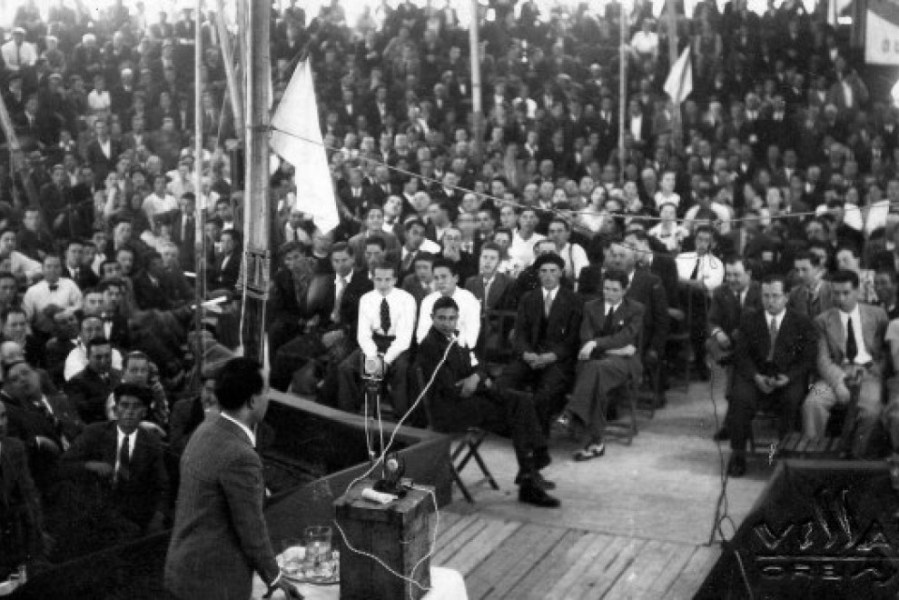
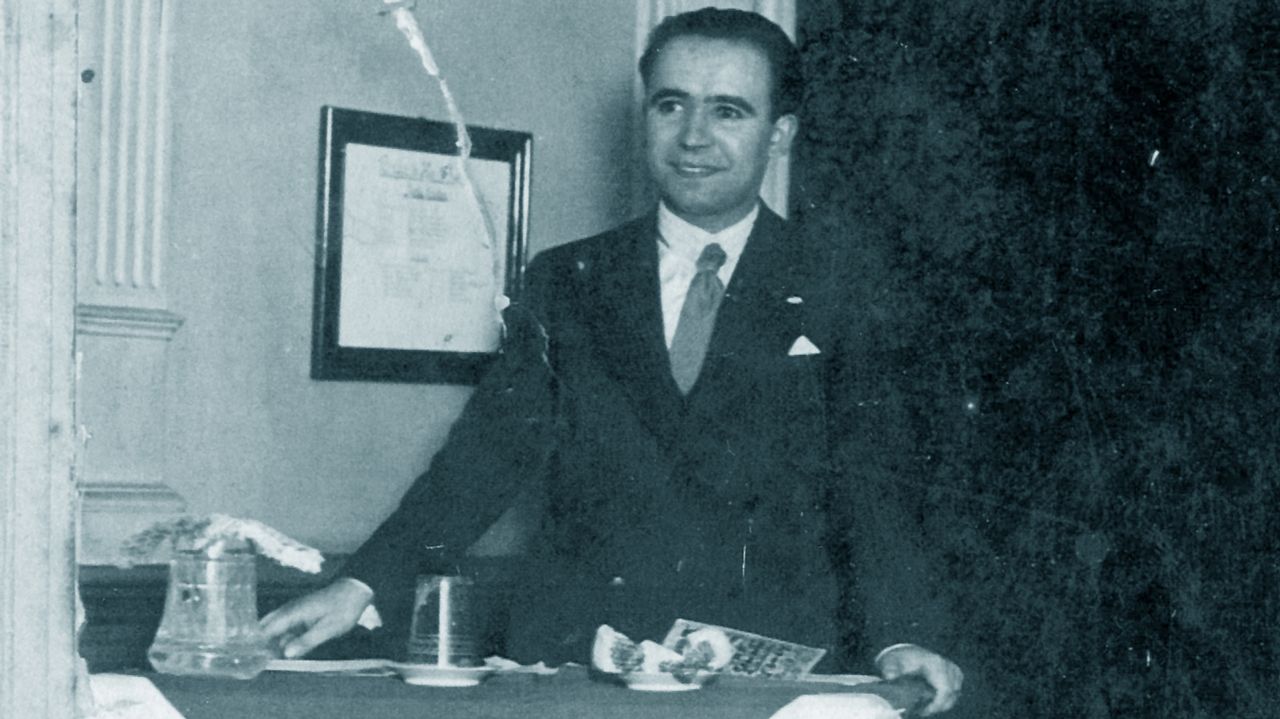


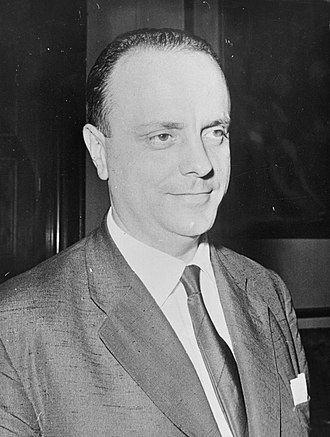
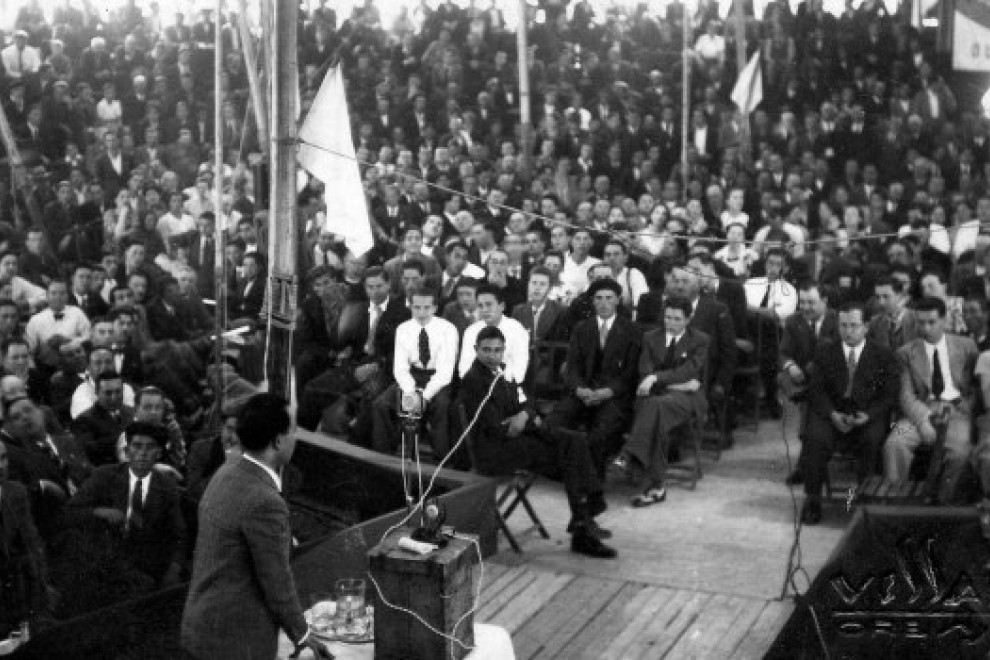


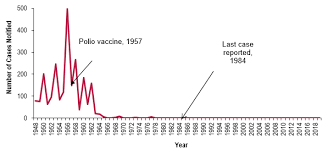
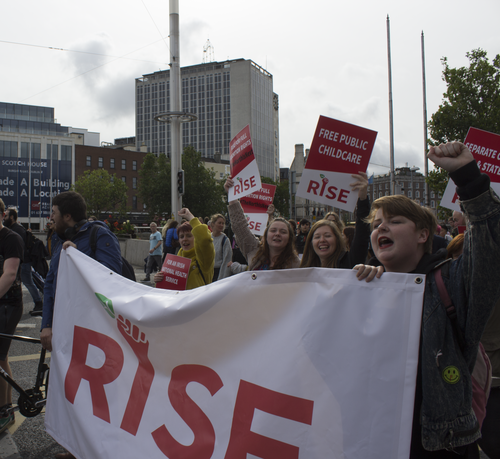
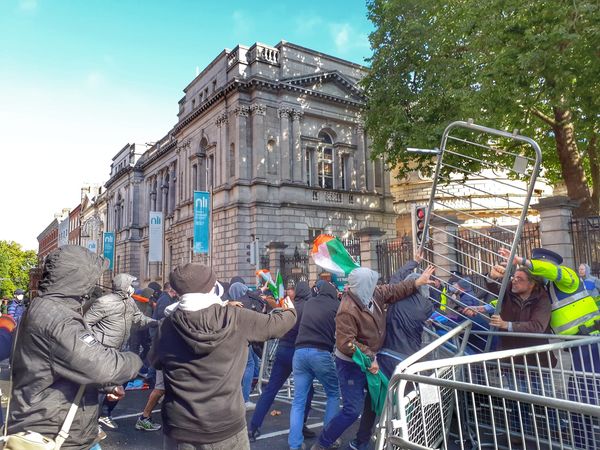

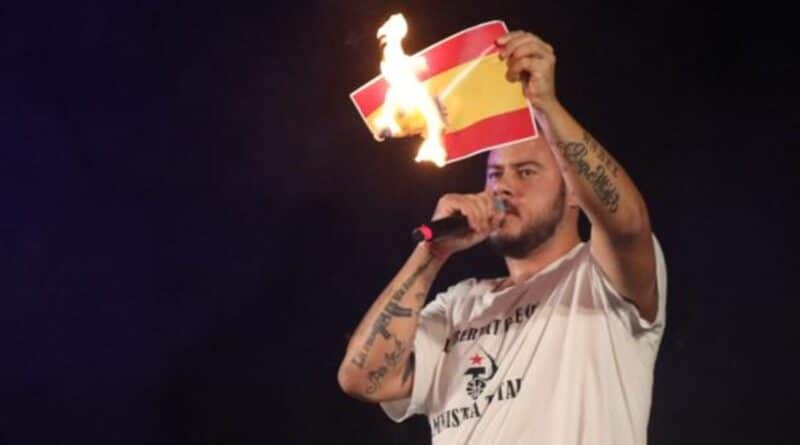








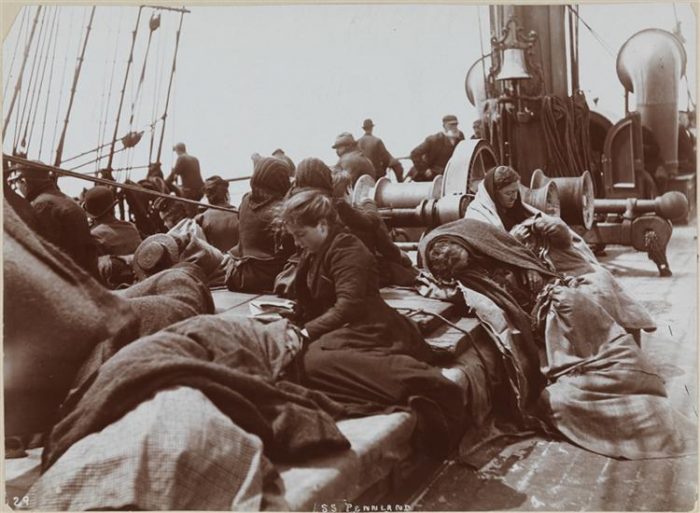

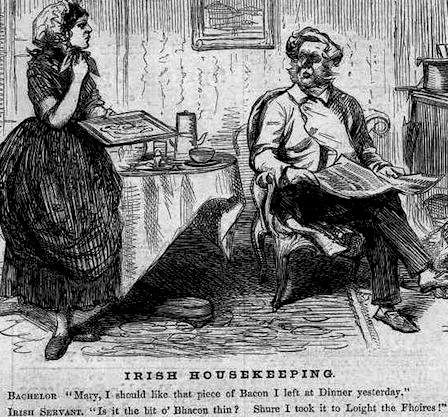
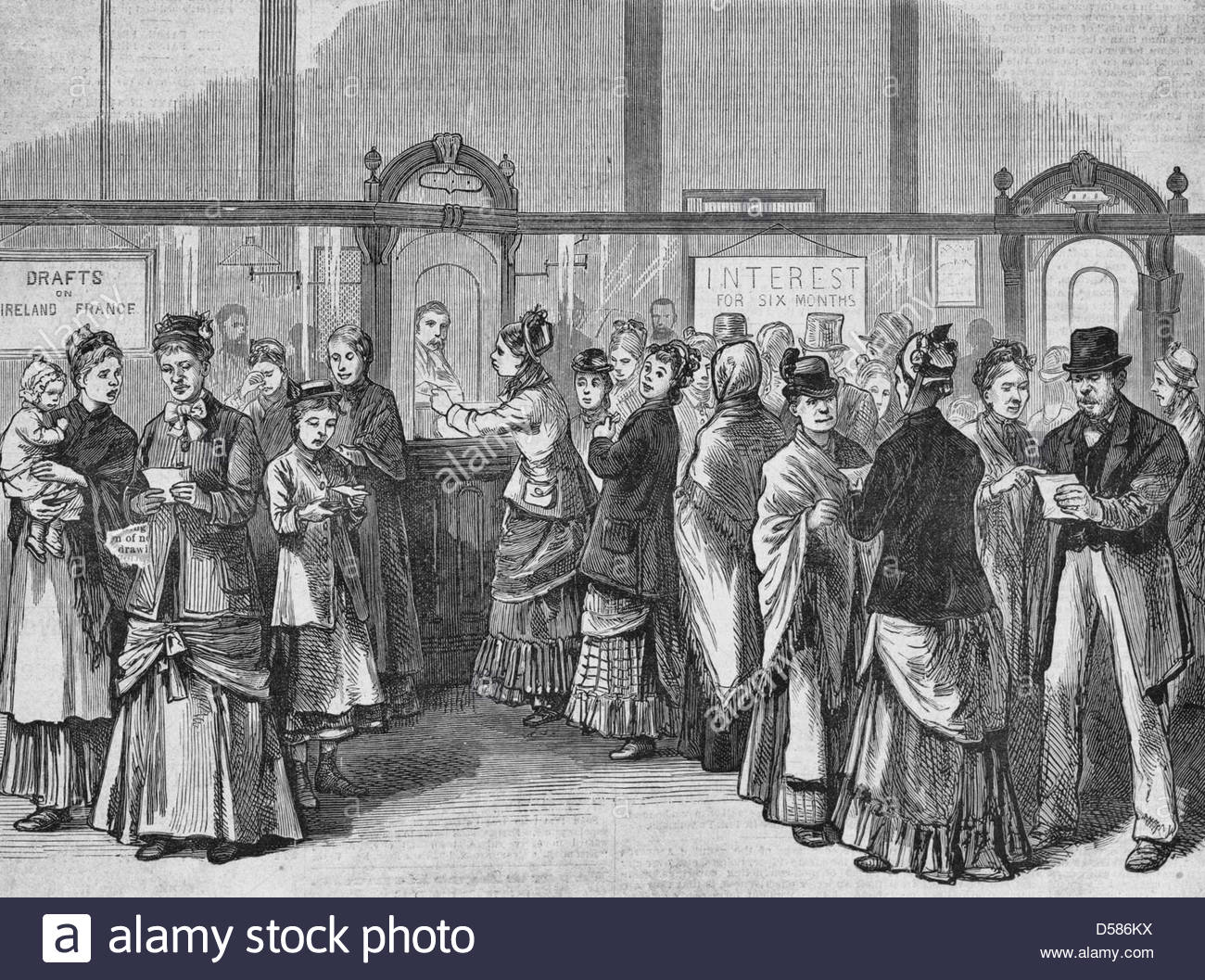
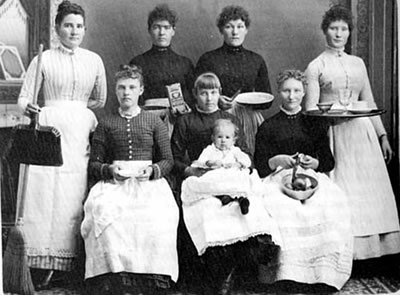





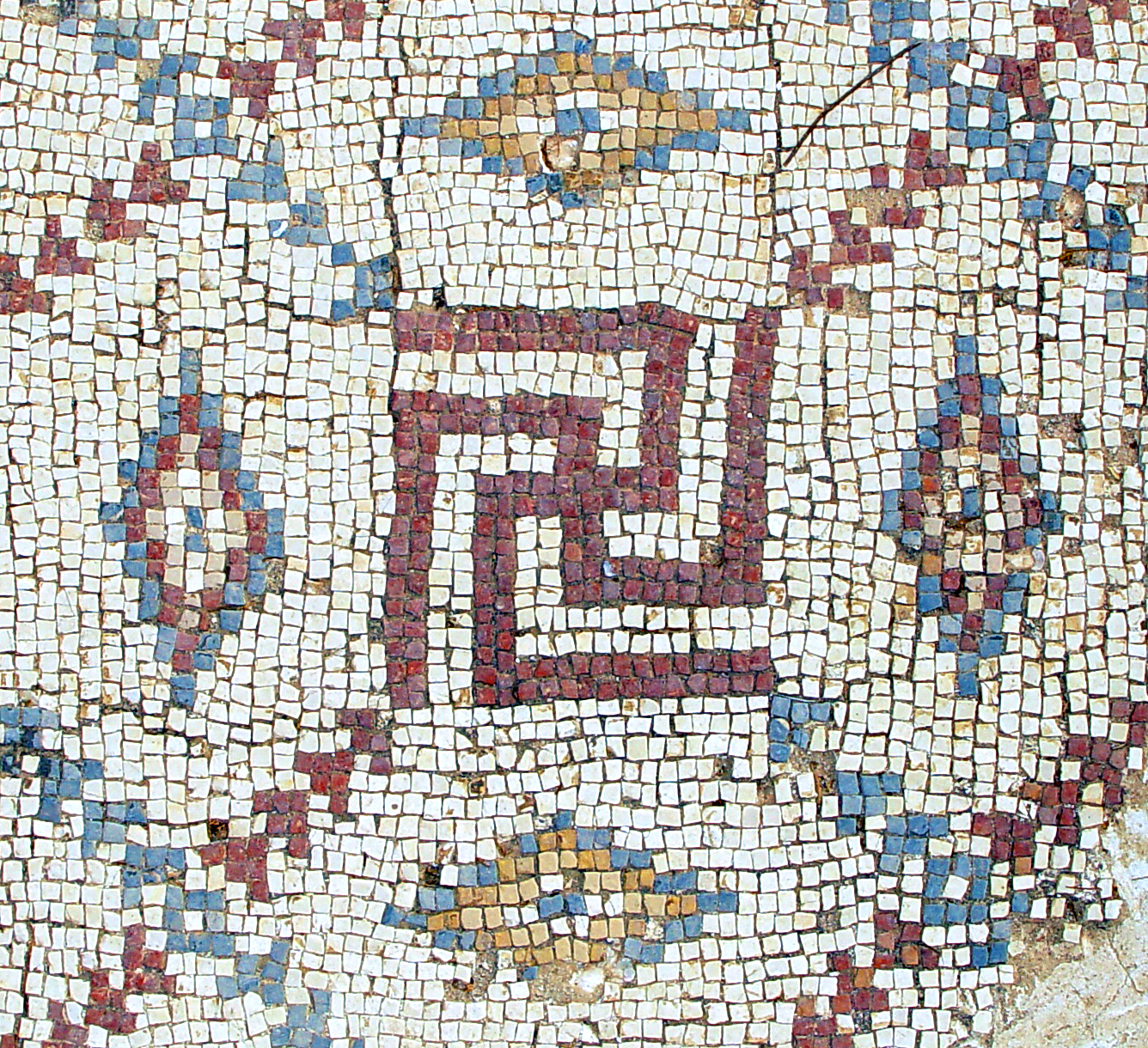
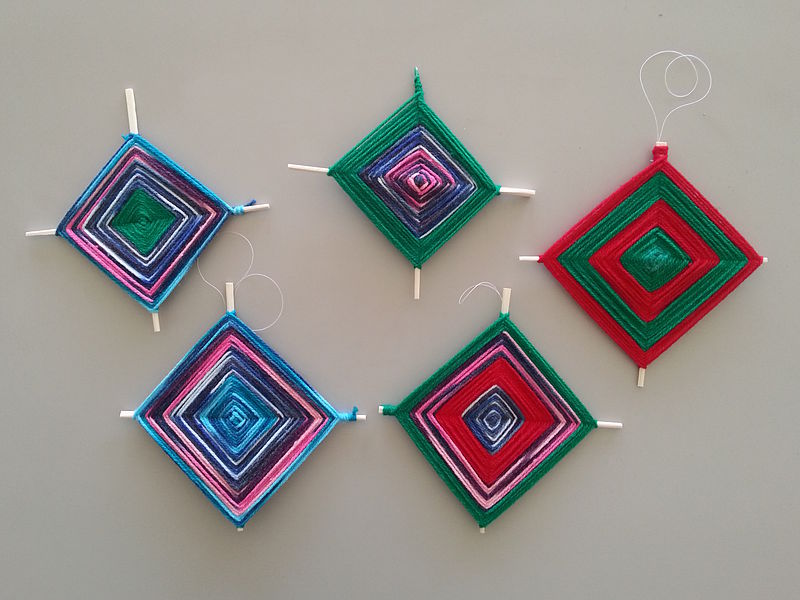


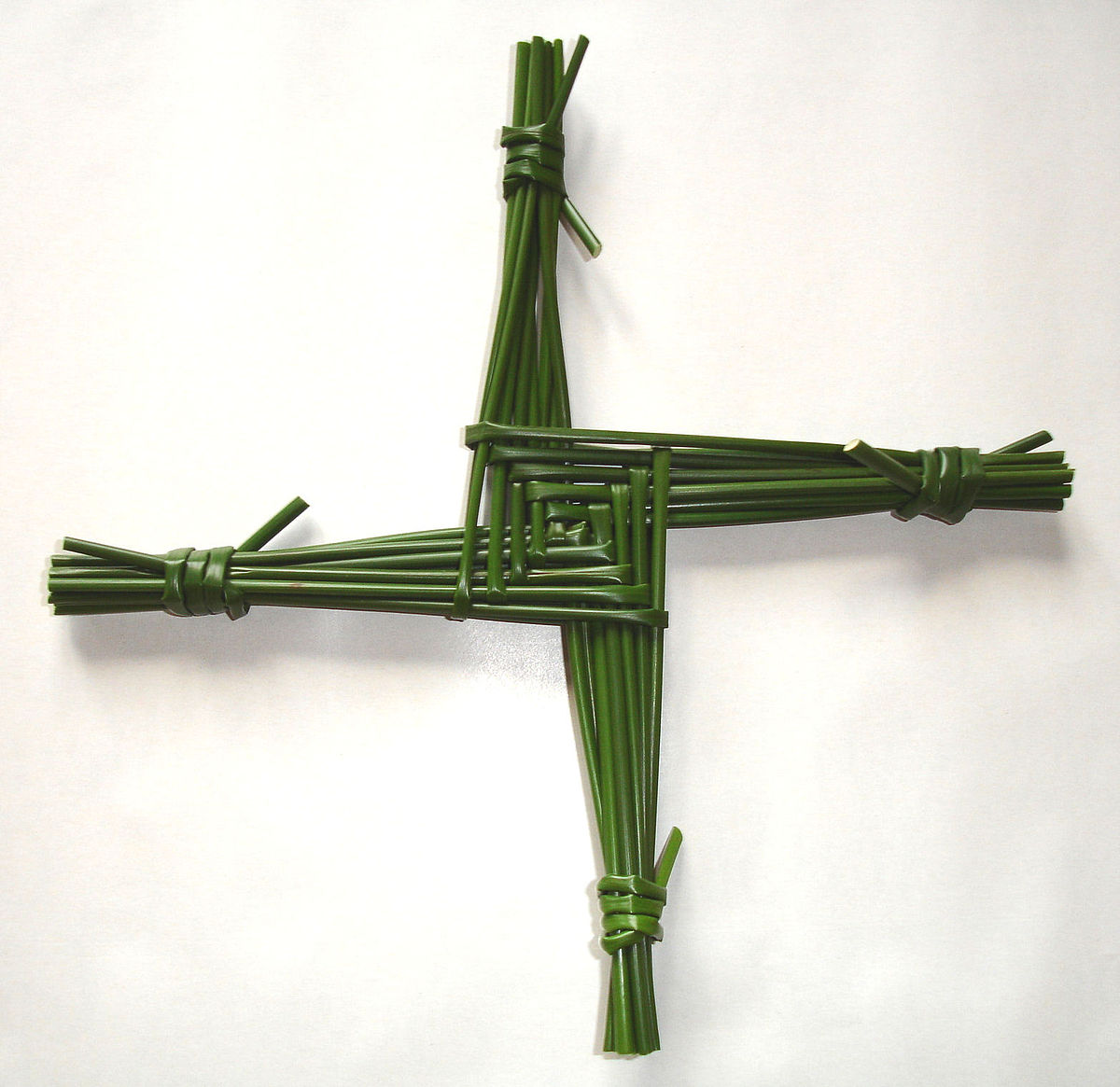
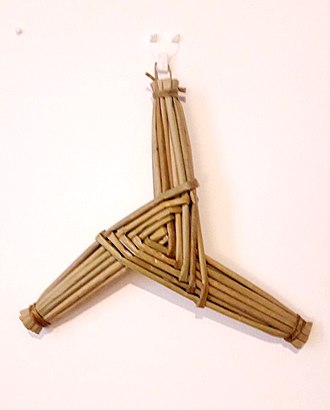




 rebelbreeze