British Embassy Dublin petrol bombed in rage at Bloody Sunday, Derry 1972Some of the wonderful children’s artistic impressions of the Rising on display at the launch of “Our Rising”.
The terrace of houses in Moore Street, No.s 10–25, in the Irish capital of Dublin, much in the news of late, is of great importance to the world and should be recognised as such by Irish people and internationally. The terrace is of great importance in terms of being
an urban WWI battlefield
of opposition to imperialist war
of the struggle of the working class
of women’s struggle for equality
of the struggle of the world’s people against colonialism and
a surviving centuries-old European street market.
In this article I intend to develop this argument and these points.
In the closing days of Easter Week, in the cancelled and hurriedly rescheduled Easter Rising in Dublin, after five days of fighting, siege and a number of days of artillery bombardment, the garrison of the General Post Office, the Headquarters of the Rising, evacuated their burning building and occupied a terrace of sixteen houses in Moore Street. They broke into No.10 and tunneled from house to house up to No.25, until the whole of the terrace and back yards had been occupied.
Meanwhile, a charge of a dozen Volunteers on the British Army barricade at the northern end of that street, at the junction with Parnell Street, had failed to reach its objective; machine-gun fire had injured some and killed others. The leader of that charge, mortally wounded in a side-street, wrote a note to his wife as he lay dying there (the words are reproduced on a plaque in the laneway named after him: O’Rahilly Parade).
That history, and of it as a market in childhood memory, is what engages many people — perhaps most – of those campaigning for the preservation of that terrace of houses and of the thousands who support their efforts. But there are aspects of international importance to that 1916 Rising not usually alluded to and which deserve to be noted, celebrated and commemorated.
A RISING AGAINST WORLD WAR
James Connolly, the revolutionary socialist or communist and trade union leader, had been calling for an uprising for years and his public exhortations intensified with the onset of WWI. A section of the Irish Republican Brotherhood was also anxious to engineer an uprising during that War — “England’s difficulty is Ireland’s opportunity” was a well-known saying among Irish nationalists. But for Connolly, the issue was much more than that – the dispute between some capitalists about which of them would control the Earth’s resources and markets was sending millions to die, workers fighting workers in battlefields in which the instigators of the slaughter would never set foot. While millions died, those big capitalists would continue to make great profits, supplying armies with weapons, transport and equipment, fuel, clothing, food …..
A declaration of war against war — banner on the old Liberty Hall, HQ of the Irish Transport & General Workers’ Union. A parade of a section of the Irish Citizen Army is drawn up in front of it. (Photo from Internet)
A few years earlier, an international socialist conference had threatened revolution on their capitalist masters should they dare to start a world war. Indeed, some revolutionary socialists saw war as anopportunity to instigate socialist revolution. Unfortunately they were outnumbered by social democrats who, despite their earlier militant words, when it came to the crunch, lined up the workers of each country behind their capitalist masters against their own class brothers in other countries.
There were few socialist parties and prominent socialists that took the opposite stand but one of those who did was James Connolly. Among the other things that characterised the 1916 Rising was that it was the first significant uprising of the 20th Century against World War. The next uprisings of that kind would be the 1917 Revolutions of February and October in Russia, with another in Germany in 1918.
“IRISHWOMEN”
The Proclamation of the insurgents in 1916 addressed itself to “Irishmen and Irishwomen”. Although not one of the seven signatories was a woman, there were a number of them prominent in the command structures of the Rising and in the preparations also. And also of course in the lower ranks during the Rising itself.
Constance Markievicz (nee Gore-Booth) of the ICA was, despite her planter family and quasi-aristocratic background, third-in-command of the Stephens Green/ College of Surgeons area. Kathleen Lynne, also of the ICA was Chief Medical Officer for the Dublin insurrectionary forces and third in command in the Dublin Castle/City Hall garrison. It was at the premises of Cumann na mBan founder member Jenny Wyse-Power, No.21 Henry Street, that the 1916 Proclamation was signed in secret a week before the Rising.
Constance Markievicz, Irish Citizen Army, second-in-command of the Stephen’s Green/ College of Surgeons garrison
Kathleen Clarke was de facto a member of the IRB, work and powers delegated to her on the eve of the Rising by her husband, Tom Clarke, one of the architects of the Rising and first of the seven signatories. Elizabeth O’Farrell was one of the Cumann na mBan nurses accompanying the men in the GPO and one of three to proceed to occupy Moore Street; she carried the short truce communications to the British and back to the leaders on the Rising surrender day, accompanied Pearse to the surrender point in Parnell Street and then carried Pearse’s and Connolly’s surrender instructions to a number of garrisons in Dublin. And Winifred Carney, James Connolly’s secretary, was in the GPO and later Moore Street with her typewriter and a Webley revolver.
Winifred Carney was the first woman into the GPO, accompanying Connolly and carrying a typewriter and a Webley revolver
It is difficult for us today perhaps to realise how progressive it was for any general public document 16 years into the 20th Century to address itself specifically to “Irishwomen”. No country in the whole world had given all its women the right to vote by 1916 although the suffragette movement was in full flow throughout most of Europe and in the European colonies. While it is true that New Zealand gave European women the right to vote as far back as 1893, it was for European settlers only and also linked to a reform movement against the sale and consumption of alcohol. Elsewhere in the world outside the colonial Antipodes and the Scandinavian democracies, the extension of the franchise to women did not seem close in 1916. Nevertheless, in Canada, women got the vote in 1917 – but again, women of European descent only. In Britain, women did not receive full rights to vote until 1928. Yet in a large part of the United Kingdom, a cross-section of people making a bid for independent nationhood, were ostensibly recognising women as citizens with equal voting rights as early as 1916.
Given the preponderance of males in all organisations of all shades of Republican and Nationalist outlook, the inclusion of women in the address had to have been agreed by the men in the top leadership. No doubt women, through their agitation for full franchise as well as by their active participation in so many facets of the movement, helped to convince the men. Connolly is often credited with responsibility for this inclusion but there is no reason to believe others among the signatories would not have taken that position themselves (although Kathleen Clarke did allege that one of those would not). Patrick Pearse had previously supported the vote for women and a number of men in the leadership had female partners who were active on that issue, as for example was Grace Gifford, Joseph Plunkett’s fiancee. The 1916 Proclamation was the first insurrectionary proclamation of the 20th Century (and almost first ever) to specifically include women in its address on a basis of gender equality.
The participation of women in the Rising however had a much sharper illustration than their inclusion in the Proclamation – they were present in most of the fighting posts throughout the Rising, whether as members of Cumann na mBan or of the Irish Citizen Army – several were killed or injured, many were arrested and one was sentenced to death (though sentence was commuted later).
The participation of Cumann na mBan made the 1916 Rising the first uprising of the 20th Century (and probably prior to that) in which women participated in their own organisation, in their own uniform.
The participation of women in the Irish Citizen Army, where they shared equal status with men, made the 1916 Rising the first uprising of the 20th Century (and almost first ever) in which women participated in an armed and uniformed organisation, and in equal status with their male comrades.
HOPE AND ENCOURAGEMENT TO THE PEOPLE OF THE COLONIES
The British Empire in 1916 was huge – around 13 million square miles of territory in 1916, nearly a quarter of the world’s area. It was said that the “sun never set” upon the Empire because at any moment during 24 hours, some part of the Empire would be receiving light from the sun. Around 450 million people were under the Empire’s dominion.
Map of the British Empire in 1914 (of course the British ruling class had dominant influence over many other areas, for example over much of Latin America). (Image sourced from Internet)
And of course, there had been resistance. Even after resistance had been beaten, there had been further uprisings – in fact, some areas such as that of the present-day Afghanistan were in almost constant rebellion. But rebellions were mostly localised and even when they took on a more sweeping character, such as the Mahdist War of 1881-’89 in the Sudan or the Boxer Uprising in northern China in 1900, they had been crushed by British military might.
The news of the Easter Rebellion in Dublin ran around all parts of the British colonial world, from the nearer to the most remote. And some of the news was carried by the Irish in the British armed forces. Tom Barry, later to be undefeated guerrilla leader in the War of Independence in West Cork, read about the Rising while serving in the British Army in Mesopotamia (now Iraq). The Connaught Rangers, hundreds of which were to mutiny in India in 1920, were also in Mesopotamia in 1916. These Irish units of the British Army and Irish men in British units serving outside the United Kingdom, served not just next to English, Welsh and Scottish soldiers but also next to soldiers drawn from colonial peoples; they were often serviced too by colonial people in auxiliary roles and mixed to a degree with the colonial populations among which they were stationed, in markets, eating houses, bars and sex-houses. Just four years later, during the mutiny of the Connaught Rangers, it is recorded that Irish rebels in British Army uniforms had communicated their mutiny and their reasons to the Indian traders.
The 1916 Rising took place in what had been considered, the previous century, the second city of the British Empire. Now past those ‘glory days’, Dublin was still a city of the Empire’s “home base”, the United Kingdom. And the Empire’s Army had been obliged to shell one of the UK’s own cities in order to suppress that Rising! To many a colonial subject contemplating resistance or even outright revolt, it must have seemed like a signaling bonfire, one that proclaimed that the end of the Empire was nigh and called the peoples under subjugation to revolt, to finish it off. And, indeed during the War of Independence, the Nehru and Ghandi families were to make contact with Irish Republicans and Ho Chi Minh is reported to have been inspired by the Irish struggle.
Nor was it only those colonial people in the British Empire who were inspired but those in the French, Dutch, Belgian, Portuguese and Spanish colonies too. Ho Chi Minh, as a Vietnamese, was under the French empire and led his people in armed resistance to the Japanese and French occupation in 1941. Over the three decades following the Easter Rising, anti-colonial struggles around the world intensified and pushed the former colonial powers into “de-colonisation” — i.e. imperialism and neo-colonialism.
WORKERS OF THE WORLD
The Irish Citizen Army had been founded in 1913 as a workers’ armed organisation to defend against the attacks of the Dublin Metropolitan Police. The DMP carried no firearms then, though they were well able to kill and maim with their truncheons, a fact they demonstrated during the 1913 Lockout. But it was clear that Connolly at least knew that at some point the workers would come up against the full force of the State which, at that time, meant the British empire and the Colonial regime in Ireland. He called publicly for the ICA to train in and to carry firearms. The Royal Irish Constabulary, policing the rest of the colony outside Dublin, was indeed armed. And British Army units were stationed across the country, many of the garrisons in Dublin alone.
The ICA fell into a kind of disrepair after the workers’ defeat in the Lockout but was soon enough dusted off and reorganised. WWI began the same year the last striking workers of the Lockout, the Jacobs girls and women, marched back to work. It was certain that Connolly would try to stage a rising during the war and suspected that the Republicans, or “advanced nationalists” as they were called then, would do so too. As the war dragged on and the bodies heaped higher, Connolly grew increasingly impatient, contemptuous and even desperate, berating the “nationalists” for not rising and threatened to bring out the couple of hundred ICA on their own.
Irish Citizen Army on the roof of Liberty Hall during a flag-raising activity (Photo sourced from Internet)
But the Irish Republican Brotherhood had been planning to rise and in late January 1916, alarmed by Connolly’s threats, brought him into secret negotiations. When he emerged a few days later after what many thought had been his kidnapping, he had been sworn into the IRB and was part of the Military Council, planning the Rising for the Easter weekend. And that would mean that the ICA would also commit to the Rising.
On Easter Monday morning, around 220 men and women of the Irish Citizen Army marched out of Liberty Hall or mobilised elsewhere in Dublin. Two of the important fighting areas in Dublin were given over to their command, Dublin Castle and Stephens Green. ICA members fought elsewhere too, including the GPO. One account has them as the first to occupy the top of the GPO’s roof and another as hoisting the “Starry Plough” on top of William Martin Murphy’s Imperial Hotel in Clery’s building (the last flag of the Rising to remain flying). At least one was killed in the fighting evacuation of the GPO and a number took part in the occupation of the 1916 Terrace in Moore Street. The 1916 Rising was the first occasion of the 20th Century when a workers’ unit rose in their own units, in their own uniforms and under their own commanders.
SURVIVING STREET OF A CENTURIES-OLD MARKET QUARTER
Authorisation was granted for the development of a market in the Moore Street area by the Dublin and General Markets Act of 1831. But the Act mentioned the location as being around “Coles Lane market”, which means there was already a street market in the area. It is probable that street trading had been going on in that area for centuries before that. Moore Street was something of a modern street of its time in the area, laid down around 1763 (and, it is worth noting, before the Great Hunger and earlier than the city’s main street, O’Connell Street), mainly as a residential street with some businesses. In following decades Moore Street would become the main street of a whole market area which included the aforementioned Coles Lane along with many other streets, laneways, cul-de-sacs (“turnings”) and mews.
The streets and lanes of the old street market quarter now buried under the ILAC (Image cropped by Save Moor Street From Demolition from J Roques Map 1754, sourced on Internet). In 1754 the street across the top was called “Great Britain Street” but by 1916 it had been renamed “Parnell Street”.
All of that was demolished and buried by the 1970s ILAC “development” of Irish Life ltd.(later joined by Chartered Land, which dispossessed the households, shops, stalls and workers for a paltry compensation, to the benefit not only of the ILAC partners but also of Dunne’s Stores and Debenhams. All that remains of that street market quarter is Moore Street, with street traders struggling in difficult circumstances to make a living, harassed by Dublin City Council officials, along with small shops, granted short leases or expensive longer ones by Chartered Land or the ILAC – and under constant threat of demolition or of ILAC expansion.
CONCLUSION
Since the 1916 Rising has all those aspects of international importance listed above, clearly the Moore Street terrace also embodies them all, being the last fighting place of the Rising’s HQ garrison and containing around 300 men of the Irish Citizen Army, the Irish Volunteers and three members of Cumann na mBan.
On the basis of those points alone, the site should be a recognised world heritage site. That the terrace and surrounding streets are, according to the National Museum of Ireland ‘the most important historic site in modern Irish history’and ‘a surviving urban WWI battleground … beyond price’ (as stated by the Imperial War Museum) and they include the last street of a centuries-old European street market adds icing to the cake – a cake that should be made available for the world to share.
End.
Documents consulted include
various accounts of the 1916 Rising,
including biographies and Witness Statements of participants (latter now available on line),
along with Moore Street – the story of Dublin’s market district (2012) by Barry Kennerc and
Introduction with some very little additional text by Diarmuid Breatnach
Main text from East Wall History Group
Among the many events packed into History Week by the East Wall History Group was a walking history tour of the area on Sunday 27th September. Over a score of people took part in “East Wall and the Irish Revolution” to hear Joe Mooney, a long-time community activist, outline the relevant events of history at various points along the way, covering
Paul O’Brien performing his 1913 Lockout song in front of mural marking the eviction of 62 families from Merchant’s Road in December 1913 by the Merchant’s Company. (Photo: EWHG)
local connections with the Fenians, docks and migrants, the Lockout, 1916 Rising and the Spanish Civil War. Appropriate songs and music accompanied the tour, Paul O’Brien performing compositions of his own at some of those points and Diarmuid Breatnach singing verses from Viva La Quinze Brigada at another.
“We set out from St Joseph’s School, originally opened in 1895. The first Principal of the Boys’ school was J.F. Homan, who served as a St. John’s Ambulance Brigade volunteer during the Rising and also during the Civil war. A number of former pupils from the school were involved in the revolutionary events of the time (the following decades) and of course in 1911 a schoolboys’ union was declared and a short strike ensued (complete with pickets!). Their demands included a shorter day and free school-books.
Part of crowd at the starting point. (Photo: DB)
“Our first stop was Merchant‘s Road, where during the 1913 Lockout 62 families (almost the entire population of the street) were evicted by their employer the Merchants Warehousing Company (their yard was Merchant’s Yard on East Wall Road, just before the T-junction by the Port Authority. At the fantastic mural (erected by the community) Paul paid tribute to the families and the workers‘ struggle with his song “Lockout 1913“. Amongst the evicted families were the Courtneys from number 1 – their son Bernard was a ‘Wharf’ school pupil and fought with the Jacob‘s garrison in 1916, before succumbing to TB in 1917.
Joe Mooney pointing out Jack Nalty’s house.Jack Nalty’s house.(Photo: DB)
“Next we visited the East Road, where Diarmuid set the tone with a stirring rendition of the Christy Moore song “Viva la Quinze Brigada” (explaining that Christy incorrectly called it “Quinta” but had since corrected it – as the lyrics in English make clear, it was the FIFTEENTH Brigade). Gathered opposite the family home of Jack Nalty, we heard the story of another former ‘Wharf ‘ school-boy who became an active Republican and Socialist, eventually losing his life fighting Fascism in Spain in 1938. Jack (who was also a champion runner) was amongst the last of the International volunteers to die, while his friend and comrade Dinny Coady was amongst the first. Many of Dinny Coady‘s relatives still live locally, and we plan to commemorate them properly in the future.
Jack Nalty in uniform of the 15th International Brigade. (Photo: Internet)
“Next was a quick stop at the junction of Bargy and Forth Roads, which along with Shelmalier, Killane and Boolavogue were the names given to streets of Corporation houses erected here in the 1930’s and ’40s. They are of course synonymous with places in Wexford in the 1798 Rebellion.
“At the rear of the former Cahill printers‘ premises we learned how an innovative glass–making factory (Fort Crystal Works) once stood there, perhaps the first industry in the area, but by the early 1800’s lay in ruins. As reported in newspapers as far away as New York, in 1848 a hundred men gathered here and spent an entire day in musketry practice, even setting up a dummy of the Lord Lieutenant of Ireland (the Queen’s representative) to practice on. These were members of the Young Ireland movement, preparing for rebellion.
Joe speaking at the ‘Scotch Block’ — some of the crowd are out of shot, as is Paul O’Brien, who is just getting ready to play. (Photo: DB)
“On Church Road we remembered former resident Edward Dorin, a Sergeant in the IRA who was part of the operation to burn the Custom House during the War of Independence. Another former ‘Wharf’ school pupil (he started there the same year as Jack Nalty), he was shot dead alongside a young volunteer from Ballybough when they engaged a lorry–load of Auxillaries at Beresford place (just by Liberty Hall). (They were covering the attacking party). There had been a suggestion in the 1950’s to rename Custom House Quay as Dorin‘s Quay .
“A short stop at the “Scotch Block”, Fairfield Avenue, where Paul played two songs recalling Glasgow immigrants to the area and also Edinburgh–born James Connolly. An incident in 1918 when Union Jack–waving residents from these buildings attempted to disrupt a Sinn Féin election rally also got a mention.
Diarmuid Breatnach singing “Viva La Quinze Brigada” opposite Jack Nalty’s house. (Photo: EWHG)
“As we passed Hawthorn Terrace its most famous resident Sean O’Casey was briefly discussed, as was his former neighbour Willy Halpin, the diminutive Citizen Army man most famous for almost escaping capture at City Hall by climbing up a chimney.
“As we passed Russell Avenue a dishonorable mention was given to those who attempted to raise a 5,000 strong Fascist militia from an address here in the late 1950’s. Thankfully they failed miserably, as did the Italian fascist sympathiser resident of Caladon road who was banned from the U.S.A. during World War Two and eventually arrested by the Irish state and handed over to British authorities via the Six Counties.
“At Malachi Place the action–packed tale of Fenian leader John Flood was recounted. He lived here in the 1860’s as he worked on plans to stage a rebellion against British Rule. After an audacious attempt to seize weapons from Chester Castle was betrayed, he was eventually arrested following a boat chase on the Liffey and deported to Australia on the last convict ship to sail there. A memorial stands above his grave, unveiled there in 1911, two years after his death. This story could be a movie script!
“We finished off the day at the base of Johnny Cullen‘s Hill at the block of houses formerly named Irvine Crescent (now incorporated into Church Road). It was here the Scott family lived and in 1916 their 8–year–old son was shot from the gun boat Helga. He lingered on for months after his wounding before finally dying, making him the last of the child casualties of 1916. The same year his father died in an accident in the Port, leaving his mother to raise five children on her own while coping with this double tragedy.
“Their next–door neighbours were the Lennon family. On Bloody Sunday 1913 Patrick Lennon was one of those injured in the baton charge on O’Connell Street. Bloodied but unbowed, he worked alongside Sean O’Casey to raise funds for the relief of strikers‘ families, a project which eventually led to the establishment of the famous soup kitchen at Liberty Hall.
“And finally on to Bloody Sunday 1920. Everybody knows the story of how the Squad under Michael Collins (and the Dublin Brigade of the IRA) targeted British Intelligence agents in the City but not many know of the East Wall operation. A house on Church Road was targeted but the agent had left the evening before and was in Cork when the IRA group arrived. The exact location is unknown but we suspect it was within this block here as many of the houses were sub-divided at that time.”
A coincidence in Merchant’s Road, opposite the mural (note the date). (Photo: EWHG)
Even if they didn’t get to tell half the stories of East Wall and the Irish Revolution, it was an enjoyable and informative walking tour … and the weather was beautiful – and there’s always next year!
Diarmuid Breatnach (published originally in Dublin Political History Tours)
(Miren de bajo para la versión en castellano).
The 31st of August 1913 was one of several ‘Bloody Sundays’ in Irish history and it took place in O’Connell Street (then Sackville Street).
A rally had been called to hear the leader of the IT&GWU) speak. The rally had been prohibited by a judge but the leader, Jim Larkin, burning the prohibition order in front of a big demonstration of workers on the evening of the 29th, promised to attend and address the public.
On the day in O’Connell Street, the Dublin police with their batons attacked the crowd, including many curious bystanders and passers by, wounding many by which at least one died later from his injuries.
One could say that on that street on the 31st, or in the nearby Eden Quay on the night of the 30th, when the police batoned to death two workers, was born the workers’ militia, the Irish Citizen Army, in a desire that very soon would be made flesh.
La carga policial contra los manifestantes y transeúntes en la Calle O’Connell en el 31 Agosto 1913/ DMP attack on demonstrators and passers-by on 31st August 1913 in Dublin’s O’Connell Street
THE EMPLOYERS’ LOCKOUT
Bloody Sunday Dublin occurred during the employers’ Lockout of 1913. Under Jim Larkin’s leadership, the Liverpudlian of the Irish diaspora, the young ITGWU was going from strength to strength and increasing in membership, with successful strikes and representation in Dublin firms. But in July 1913, one of Dublin’s foremost businessmen, William Martin Murphy, called 200 businessmen to a meeting, where they resolved to break the trade union.
Murphy was an Irish nationalist, of the political line that wished for autonomy within the British Empire; among his businesses were the Dublin tram company, the Imperial Hotel in O’Connell Street and the national daily newspaper “The Irish Independent”.
The employers decided to present all their workers with a declaration to sign that the workers would not be part of the ITGWU, nor would they support them in any action; in the case of refusal to sign, they would be sacked.
The members of the ITGWU would have to reject the document or leave the union, which nearly none of them were willing to do.
Nor could the other unions accept that condition, despite any differences they may have had with Larkin, with his ideology and his tactics, because at some point in the future the employers could use the same tactic against their own members.
The Dublin (and Wexford) workers rejected the ultimatum and on the 26th began a tram strike, which was followed by the Lockout and mixed with other strikes — a struggle that lasted for eight months.
Dublin had remarkable poverty, with infectious diseases such as tuberculosis and others, including the sexually-transmitted ones, the city being a merchant port and also having many British Army barracks. The percentage of infantile mortality was higher than that in Calcutta. Workers’ housing was in terrible condition, often with entire families living in one room, in houses sometimes of 12 rooms, each one full of people, with one or two toilets in the outside yard.
In those conditions, 2,000 Dublin workers confronted their employers, the latter aided by their Metropolitan Police, the Irish colonial police and the British Army. As well as the workers, many small traders suffered, those selling in the street or from little shops.
On that Monday, the 31st of September 1913, some trade unionists and curious people congregated in Dublin’s main street, then called Sackville Street, in front of and around the main door of the big Clery’s shop. In the floors above the shop, was the Imperial Hotel, with a restaurant.
The main part of the union went that day to their grounds in Fairview, to avoid presenting the opportunity for another confrontation with the Dublin Municipal Police. Others in the leadership had argued that the police should not be given the opportunity and that there would be many other confrontations during the Lockout. But Larkin swore that he would attend and that a judge should not be permitted to ban a workers’ rally. There were many police but nothing was happening and Larkin did not appear. After a while, a horse-drawn carriage drove up and an elderly church minister alighted, assisted by a woman, and entered the shop. They took the lift to the restaurant floor. A little later Larkin appeared at the restaurant open window, in church minister’s clothing, spoke a few words to the crowd and ran inside. Those in the street were very excited and when the police took Larkin out under arrest, they cheered him, urged on by Constance Markievicz. The police drew their batons and attacked the crowd — any man not wearing a police uniform.
THE UNION’S ARMY
The Irish Citizen Army was founded for the union on the 6th November 1913 by Larkin, Connolly and others with Seán Ó Cathasaigh/ O’Casey, playwright and author, including the first history of the organisation.
The Citizen Army at Croydon House, at the ITGWU’s grounds in Fairview/ El Ejercito Ciudadano en su parte del parque en Fairview.
As distinct from the Irish Volunteers, women could enter the ICA, within which they had equal rights.
Funeral of James Byrne, who died as a result of his imprisonment during the 1913 Lockout/ Procesión funébre de James Byrne, fallecido por razón de su encarcelamiento durante el Cierre de 1913, pasando por el muelle sur Eden’s Quay, partiendo de la Salla de la Libertad.
It was reorganised in 1914 as the union was recovering from its defeat during the Lockout, and 200 fought alongside the Volunteers in the 1916 Easter Rising, after which two of its leaders, Michael Mallin and James Connolly, were executed. Among the nearly 100 death sentences there were others of the ICA, including Markievicz, but their death sentences were commuted (14 were executed in Dublin, one in Cork and one was hanged in London).
The main fighting locations of the ICA in 1916 were in Stephen’s Green and in the Royal College of Surgeons, in City Hall and, with Volunteers in the GPO and in the terrace in Moore Street, the street market.
The Imperial Hotel on the other side of the street from the GPO was occupied too by the ICA and on top of it they attached their new flag, the “Starry Plough/ Plough and Stars”, the design in gold colour on a green background, the
The flag of the ICA, flown over Murphy’s Imperial Hotel in 1916
constellation of Ursa Mayor, which the Irish perceived in the form of a plough, an instrument of work. And there the flag still flew after the Rising, having survived the bombardment and the fire which together destroyed the building and all others up to the GPO, on both sides of the street. Then a British officer happened to notice the flag and ordered a soldier to climb up and take it down — we know not where it went.
TODAY
Today, after various amalgamations, the once-noble ITGWU has become SIPTU, the largest trade union in Ireland but one which does not fight. The skyscraper containing its offices, Liberty hall, occupies the spot of the original Liberty Hall, prior to its destruction by British bombardment in 1916.
The Irish newspaper the “Irish Independent” continues to exist, known as quite right-wing in its editorial line. Murphy’s trams came to an end during the 1950 decade and those in Dublin today have nothing to do with Murphy.
The Imperial Hotel no longer exists and, until very recently, Clery had taken over the whole building, but they sacked their workers and closed the building, saying that they were losing money.
In front of the building, in the pedestrianised central reservation, stands the monument as a representation of Jim Larkin. The form of the statue, with its hands in the air, is from a photo taken of Larkin during the Lockout, as he addressed another rally in the same street. It is said that in those moments, he was finishing a quotation which he used during that struggle (but which had also been written previously by James Connolly in 1897, and which something similar had been written by the liberal monarchist Étienne de La Boétie [1530–1563] and later by the French republican revolutionary Camille Desmoulins [1760–1794]): “The great appear great because we are on our knees – LET US ARISE!”
The Jim Larkin monument in O’Connell Street today/ El monumento de Jim Larkin in la Calle O’Connell hoy en día
EL 31 DE AGOSTO EN El 1913 FUE UNO DE LOS DOMINGOS SANGRIENTOS DE IRLANDA Y OCURRIÓ EN LA CALLE PRINCIPAL DE DUBLÍN.
Hubo una concentración para escuchar al líder del sindicato de Trabajadores de Transporte y de General de Irlanda (IT&GWU) hablar. La manifestación fue prohibida por juez pero el líder, Jim Larkin, quemando el documento de prohibición en frente de manifestación grande la noche del 29, prometió que iba a asistir y hablar al publico.
El día 31 en la Calle O’Connell, la policía de Dublin con sus porras atacaron la concentración y a muchos otros curiosos o pasando por casualidad, hiriendo a muchos por lo cual murió uno por lo menos mas tarde de sus heridas.
Se puede decir que en esa calle en el 31, o en la cerca muelle, Eden Quay, la noche del 30, cuando mataron a porras dos trabajadores, se dio luz a la milicia sindical, el Ejercito Ciudadano de Irlanda, en deseo que poco mas tarde estaría fundado en actualidad.
EL CIERRE PATRONAL
El Domingo Sangriento ocurrió durante el Cierre Patronal de Dublín en el 1913. Bajo el liderazgo de Jim Larkin, el Liverpoolés de diáspora Irlandesa, el joven sindicato ITGWU fue yendo de fuerza a fuerza y aumentando en miembros, con éxitos en sus huelgas y reconocido en muchas de las empresas de Dublín. Pero en Julio del 1913, uno de los principales empresarios de Dublín, William Martin Murphy, llamó a 200 de los empresarios a mitin y resolvieron romper el sindicato.
Murphy era nacionalista Irlandés, de la linea de pedir autonomía pero adentro del Imperio británico; entre sus empresas le pertenecía la linea de tranvías de Dublín, el Hotel Imperial en la Calle O’Connell y el periódico diario nacional The Irish Independent.
Resolvieron los empresarios presentar a todos sus trabajadores una declaración para firmar que no serían parte del sindicato ITGWU ni les darían ningún apoyo en cualquiera acción; en caso de negar firmar, se les despedirían.
Los miembros del ITGWU tendrían que rechazar el documento o salir del sindicato, lo cual casi lo total no estuvieron dispuestos hacer.
Los otros sindicatos, pese a cualquiera diferencias tuvieron con Larkin, con sus pensamientos y sus tácticas, tampoco podían acceder a esa condición por que mas tarde se podría usar la misma táctica en contra de sus miembros también.
Los trabajadores de Dublín (y de Wexford) rechazaron el ultimátum y empezaron el 26 de Agosto una huelga de los tranvías, seguido por el Cierre Patronal, mixta con otras huelgas, una lucha que duró ocho meses en total.
Dublín tuvo una pobreza impresionante, con infecciones de tuberculosis y otras, incluido las transmitidas por el sexo, siendo puerto mercantil y teniendo muchos cuarteles del ejercito británico. El porcentaje de la mortalidad infantil era mas de la de la ciudad de Calcuta. Las viviendas de los trabajadores estaban en terribles condiciones, con a menudo familias grandes enteras viviendo en una habitación, en casas a veces de 12 habitaciones, cada uno llena de gente, con una o dos servicios en el patio exterior.
En esas condiciones 2,000 trabajadores de Dublín se enfrentaron al patronal de Dublín, con su policía metropolitana, la policía colonial de Irlanda y el ejercito británico. Además de los trabajadores, muchos pequeños empresarios, vendiendo en la calle o en tiendas pequeños, sufrieron.
Ese Domingo, del 31o de Setiembre 1913, algunos sindicalistas y gente curiosa se congregaron en la calle principal de Dublín, entonces nombrado Sackville Street, en frente y al rededor de la puerta principal de la gran tienda de Clery. En las plantas después de la primera, estaba el Hotel Imperial, con un restaurante.
La mayor parte del sindicato se fueron ese día a una parte de parque que les pertenecía por la costa, para evitar otra enfrentamiento con la Policía Metropolitana de Dublín. Habían argumentado otros de la dirección del sindicato que no se debe dar les la oportunidad a la policía y que habría muchos otros enfrentamientos durante el Cierre. Pero Larkin juró que lo iba a asistir y que no se podía permitir a un juez prohibir manifestaciones obreras.
Había mucha policía pero nada pasaba y Larkin no aparecía. Después de un rato, un coche de caballos llegó y un viejo sacerdote salió, apoyado por una mujer, y entraron en la tienda de Clery. Subieron en el ascensor hacía el restaurante. Poco después, Larkin apareció en la ventana abierta del restaurante, en el traje del cura y habló unas palabras, antes de correr adentro. Los de abajo en la calle muy entusiasmados y cuando la policía salieron agarrando le a Larkin, la multitud le dieron vítores, alentados por Constance Markievicz. La Policía Municipal sacaron sus porras y atacaron a la multitud – a cualquier hombre que no llevaba uniforme policial.
EL EJERCITO DEL SINDICATO
El Ejercito Ciudadano de Irlanda (Irish Citizen Army) fue fundado para el sindicato en el 6 de Noviembre del 1913 por Larkin, Connolly y otros con Seán Ó Cathasaigh/ O’Casey, escritor de obras para teatro y algunas otras, incluso la primera historia de la organización. A lo contrario de Los Voluntarios, el ICA permitía entrada a mujeres, donde tenían derechos iguales.
Fue reorganizada en 1914 cuando el sindicato se fue recobrando de la derrota del Cierre Patronal, y 200 lucharon con los Voluntarios en el Alzamiento de Pascuas de 1916, después de lo cual dos de sus líderes, Michael Mallin y James Connolly, fueron ejecutados. Entre los casi 100 condenas de muerte, habían otros del ICA, incluso Constance Markievicz, pero sus condenas de muerte fueron conmutadas (se les ejecutaron a 14 en Dublín y a uno en Cork, y a otro le ahorcaron en Londres).
Los lugares principales de lucha del ICA en 1916 fueron en el Stephen’s Green y en el Collegio Real de Cirujanos (Royal College of Surgeons), en el Ayuntamiento y, con Voluntarios, en la Principal Oficina de Correos (GPO) y en la manzana del Moore Street, el mercado callejero.
El Hotel Imperial al otro lado de la calle del GPO lo ocuparon también el ICA, y encima colocaron su nueva bandera, el Arado de Estrellas (“Starry Plough/ Plough and Stars”), el diseño en color oro sobre fondo verde, la formación celeste del Ursa Mayor, que lo veían los Irlandeses en forma del arado, una herramienta de trabajo. Y ahí ondeó la bandera después del Alzamiento, habiendo sobrevivido el bombardeo británico y el fuego que destruyeron el edificio y la calle entera hacía el GPO, en ambos lados. Entonces un oficial británico se dio cuenta de la bandera y le mandó a soldado hir a recoger la – no se sabe donde terminó.
HOY EN DÍA
Hoy en día, después de varias fusiones, el noble ITGWU se ha convertido en el SIPTU, el sindicato mas grande de Irlanda y parecido en su falta de lucha a Comisiones Obreras del Estado Español. El rasca cielos de sus oficinas, La Sala de la Liberta (Liberty Hall), ocupa el mismo lugar que ocupó la antigua Liberty Hall, antes de su destrucción por bombardeo británico en 1916.
El periódico Irish Independent sigue existiendo, conocido por ser bastante de derechas en su linea editorial. Los tranvías de Murphy terminaron en la década del 1950 y los de hoy en Dublín no tienen nada que ver con los de antes.
El Hotel Imperial ya no existe y, hasta hace muy poco, la empresa Clery lo tenía todo el edificio, pero despidieron a sus trabajadores y cerraron el edificio, diciendo que perdían dinero.
En frente del edificio, en la reserva peatonal del centro de la calle, está el monumento representando a Jim Larkin. La forma de la estatua, con las manos en el aire, lo tiene de foto que le hicieron durante el Cierre Patronal, cuando habló en otro manifestación en la misma calle. Dicen que en ese momento, estaba terminando una frase famosa que usó durante esa lucha (pero que también lo escribió Connolly antes en 1897, y que lo había escrito algo parecido primero el monárquico reformista Étienne de La Boétie [1530–1563] y luego el revolucionario republicano francés Camille Desmoulins [1760–1794]): “Los grandes aparecen grande por que estamos de rodillas – levantamanos!”
The final resting place of Patsy o’Connor at Plot UE 18 St.. Paul’s Glasnevin.
The following story and research is by local Dublin historian Jason Walsh-McLean. Thanks to Jason for sending in this excellent account of the life and death of Patsy O’Connor and his own journey in uncovering the remarkable tale of this brave Fianna scout. We have featured Patsy before on this page a number of times. Here is his story:
It was during the Lockout centenary year of 2013 that I finally got around to reading Pádraig Yeates’ seminal work on the subject Lockout – Dublin 1913. It had been purchased as a birthday present for me some years previously by my Mother. Being a bit of a “trivia buff” when it comes to these things, I noticed upon completing the book that there was no mention of Patsy O’Connor of Na Fianna Éireann, whose name…
I recently went to London in order to visit my daughter and son, their partners and their children. My son and his wife Natalie had recently had a baby girl; and my daughter and her husband Irwin have a boy and a girl. It turned out for a number of reasons that I had more spare time than I expected, so with the help of a friend I got in some sight-seeing and with the help of another, attendance at quite few singing sessions. I also attended one political rally. The following is an account of those events with the least said about my family and friends since their lives are private, with the exception of my host, Jim Radford, who has a very public side with regard to political and community activism and singing.
Archictecture and Transport System
Visiting London, where I spent 30 years of my life was strange, in particular staying about ten minutes’ walk from where I had lived for about half of my time in that city. I had a sense of being an observer at a familiar place but of which I was no longer part, something like a ghost, perhaps.
Not only Kings Cross Station but the whole area around it has been redeveloped and changed so much. In the early ’90s I worked shifts as a Project Worker in a ‘wet hostel’ (one where street drinkers are permitted to continue drinking), very near to St. Pancras Hospital and about fifteen minutes’ walk from the station (if one walks very fast, which I often did to get in for my early shift). On a late shift, walking down St. Pancras Road, on my way to the Underground to head back to SE London, I would often pass a solitary sex worker or two hoping for custom. Displaying the goods on sale is a trade requirement and I felt especially sorry for them in cold or wet weather.
The area was well-known for a high level of sex work and illegal drugs – selling and buying. Four years later, after two years as a Deputy Manager in a number of hostels in other parts of London, I was back in the area again, with a different NGO, as Manager of a hostel for active drug users (most of them injecting). The area had been very familiar to me then but visiting now I could hardly recognise it. The train and Underground stations have been remodeled and an international train station connecting with the Channel Tunnel has been built. In addition the areas in front of them and to the side are unrecogniseable. A big plaza fronts the station and around the side and back is another plaza with the de rigueur converted warehouses and similar-type buildings also around the back of the station now hosting eateries and fashionable offices.
No doubt the area is much more heavily policed now in order to present a clean image for tourists and the middle class young eating and drinking there but I am sure that sex work and drug commerce continues. Perhaps much more cocaine rather than heroin or crack is sold now for the new client group. But though I was there on a weekend night, I observed many of the restaurants and winebars only half-full.
I went out to Stratford too to see the Olympic Stadium and surrounding area. I had worked in that area as a community development worker for six months and taught an adult education beginners’ class in Irish for some years there too — but again, would not have recognised the area now. Like King’s Cross, it had changed completely but unlike the former, in almost unbelievable ugliness. The shopping centre wasn’t too bad but very much of the UStater “mall” type. Apparently many people in the US spend much of their free time in such places and, indeed, there seemed little other choice in Stratford now, especially for teenagers, unless they were of the outdoor type and accessed the Lee Valley, Wanstead Flats etc.
The observation tower/ sculpture by London Olympic Stadium, near Stratford, East London. (Photo DB)
An observation tower which is also a sculpture or “installation”, apparently, stands outside the the Olympic Stadium. It was chosen in competition but aesthetics can hardly have been one of the required features. I once saw metal girders and joists twisted in the aftermath of a very hot fire – the sculpture instantly brought back the memory.
Unfortunately that was not the only ugly construction in the vecinity: almost in any direction one cared to look, other ugly and often grotesquely-shaped buildings came into view. It was in truth almost impossible to credit that not only was I in the same country but in the same city as the work that had been done around Kings Cross.
But sadly, it was not the only place for ugly buildings. Just by London Bridge I had seen a few others and indeed could see the same ones as part of the distant skyline from Stratford too. The “Shard” is one of them, looking like some kind of unsafe rocket about to take off. Another building reminds me of one of those free-standing electric fan heaters.
Some pieces of metal fell off the Shard recently – perhaps the beginning of a suicide attempt by the building, prompted by shame – and would have killed anyone they had struck. The various companies involved, both in its construction and in renting space in it, have said that there is no danger and everything is being checked again. I’m sure that is very reassuring to people working there and to passers-by.
A strange but not pleasing building near Stratford — in Dublin this would probably have earned a nickname like “The Handball Alley”. (Photo DB)A barrack-looking building near Stratford. (Photo DB)Another strange building near Stratford, East London. — Maybe it would have been called “The Cheesgrater” in Dubln? (Photo DB)View from overpass, Stratford, looking south-westward (Photo DB)London Olympic Stadium, Stratford, East London (Photo DB)
It occurred to me at some point that an Irishman taking photos of buildings around the Olympic arena could get into trouble, even these days — so took myself off inside the ‘mall’ to eat.
On a positive note about London other than the Kings Cross development, the new Overground system links up with much of the Underground and throws a public travel net around the city and outskirts, linking up a great many areas which were previously only accessible by using a combination of public transport systems often taking hours.
Irish tricolour in someone’s yard right next to an Overground station in NW London (Photo DB)
I was told about the Overground and even used it but it was some time before I noticed that both that system and the Underground use exactly the same logo design, the difference being the word written across the bar and perhaps the colour. Once one becomes used to a symbol, one no longer reads the words on it or notices anything except very different colours. That didn’t matter until the day I had to catch an Overground train at a station not organically connected to the Underground, on which I was travelling. My ticket was good for both and the Overground station was less than a minute’s walk away down the street. Seeing what looked like the same design and taking it for another entrance to the Underground station I had left earlier, I walked past it three times and once almost got on to the nearby British Rail (intercity trains) platform and wondered why everyone was giving me wrong directions!
It was going down to an Overground station in NW London that I saw a big Irish tricolour in someone’s yard, flying right next to the station.
Family
Kian, absorbed in an electronic game (Photo DB)
Although I had prepared myself, I was a little shocked at how tall my grandson Kian had become. He is (of course) a very bright lad and was doing tests and making applications for different secondary schools.
Caitlin Rose, his little sister, seemed very excited to see me and I only had to look at her to make her break out in laughter. Grandad is very funny, apparently. Sadly, they have only two living grandparents now – me and my ex-wife. Their other grandfather died shortly before Kian was born and their other grandmother only recently.
Caitlin Rose was born prematurely – I dashed to London at the time and remember holding her in the palm of my hand fpr a little while out of the incubator. She did well but was later diagnosed as suffering from cerebral palsy – the most obvious way it affected her was that her muscles spasmed and drew the tendons in her calves and feet tight, bending her legs and putting her on tiptoe so that she could hardly walk. The condition can be aleviated but so far is incurable. But she is very competitive and determined as well as being very bright (of course). In addition, she had the SDR operation in the USA, a relatively new surgical technique, after which she improved enormously. (See this incredible footage taken about a year after the operation https://www.youtube.com/watch?v=Q6SGhuYzng8, from the blog recording her progress and others in the family and promoting the SDR operation http://caitlinroseford.com)
Caitlin dancing (Photo DB)Caitlin Rose on her daily exercise treadmill in her gym, paid for by fundraising (Photo DB)
I didn’t get to spend much time during the day with my son-in-law, Irwin, who was busy figuring out how to plumb their new washing machine in to the waste water disposal system. I am not familiar with the closed system so didn’t offer too much advice. But later we went out to eat so I could chat to him a bit more.
The “plumber”, my handsome son-in-law Irwin. (Photo DB)
Eating out
We went out to a tapas restaurant not too far from where they live and I ordered the fish skewers from the menu, imagining them to be the size of pintxos in the Basque Country or chicken satay skewers one sees over here. When the skewers arrived I was shocked to see each contained three large pieces, each one the size of an individual fish portion in many expensive and niggardly restaurants, with what looked like a dagger or bayonet pushed through them, mounted on a stand.
The most surprising thing for me however was that all the staff were actually from the Spanish state1 with the exception of one from Latin America. In Dublin, I had become used to these places being staffed by people from non-Castillian-speaking countries.
In a Latin American restaurant in Camden to which a friend took me, allegedly Patagonian and with some beautiful enlarged photographs of that area on the wall, I asked our table attendant whether he knew any Welsh. There had been a Welsh-speaking colony in Patagonia, founded in 1865 and there is still some Welsh spoken there today. “Que va, hombre!” he exclaimed. “De eso no sé nada. Yo soy de Andlalucia” he concluded, smiling. (“Not at all, man! I know nothing about that — I’m from Andalucia”).
I queried some of the wines I didn’t recognise, not sure whether I wanted a glass or not, so he brought some for us to try and …. left the bottle! Of course it would have been discourteous to refuse such good fortune and, the wine being fine, we had a few glasses before he remembered and returned for the bottle. We paid for some of it, of course. I had a feeling he might have left it that long deliberately.
In a Turkish restaurant in Dalston, I wondered whether I might have a taste of a Turkish lager, which I had never previously tasted, before deciding whether to have a pint. The attendant paused and then nodded, coming back with a half-pint. I looked at her perplexed — “It’s on the house,” she said with a little smile. She was half-Scottish and half Egyptian, it turned out. I did like it and ordered some more. Turkish food is nice enough but not one of the world’s more impressive cuisines, in my experience (and I have eaten it there too, including in Turkish-occupied Kurdistan).
Food from Everywhere, apparently on sale in this shop in Dalston. The smaller lettering along the bottom of the awning, lists that the shop caters for “English, Turkish, Polish, Italian, Spanish, Greek, French” food. (Photo DB)
Stoke Newington and Dalston are multi-ethnic areas but especially prominent are Kurdish and Turkish businesses. Without a doubt however the most visible ethnic minority are the Hassidic Jews, the men with their long black coats and homburgs, boys with skull caps and side-locks. This sect is anti-Zionist and they are known, on occasion, to demonstrate against the state of Israel. However, I was shocked to learn that the women shave their heads upon marriage and wear wigs when they go out.
Family again
Elora Mae — I forgot to take any other photos of her 😦
At the other end of London from my daughter and her family and also far from where I was staying, it was great to see my son Kevin and his wife Nat and the baby – Elora Mae. London is huge and a return ticket covering the zones on Underground and train cost nearly £10 each time. The Oyster Card they are introducing, like the Leap Card in Dublin, in an attempt to eliminate cash exchanges, makes the journeys a little cheaper but I hadn’t known about that.
I’m usually OK with babies but Elora Mae wouldn’t let me hold her for long before she started to cry. On my last visit, however, she seemed ok with me (or probably my smell) and even gave me a few lovely smiles. Smiling, by the way, as well as focusing on the face, are responses genetically built in to us. Babies do not “learn” to smile, which is instinctive programming but may learn different types of smiles, as well as appropriate times for smiling.
Songs and Singing in London
I was staying with a long-time folk and shanty singer, Jim Radford and he took me along with him to his weekly singing events. In one, an “open mic” event, I was not a little disturbed at the amount of noise in the bar in which it was held. Noise is distracting and I tend to sing louder to get over it, straining my voice and maybe also singing at the wrong pitch and key and therefore not at my best. I got more and more apprehensive as my turn to sing, indicated by the MC to me, approached and in trepidation when my turn came, went up to the microphone to sing two songs as expected. I sang Danny Farrell as an Irish (and Dublin) song unlikely to antagonise anyone there and to my relief the noise level dropped somewhat. My second song was the Pat O’Donnell Ballad, which although it involves the the “Invincibles” and the British administration in Ireland, was not too confrontational, I thought. Besides, it the story is interesting as it may be the first recorded “witness protection” operation in history, though one that went very badly wrong for the “witness” (or traitor) in question.
I was asked to sing a third song, as a courtesy to a visiting guest, I thought. Into the second line of Go and Leave Me, the silence around me became profound – so much that it scared me a bit. But I took confidence from it too. The lyrics are not bad and the air is lovely, especially in my opinion when it’s sung the US version way. It’s a reasonably well-known song about love and desertion in preference for someone richer and is one in my regular repertoire. “Regular”, by the way, might mean “sung two or three times a year”, since I don’t like to sing the same song too often and, like many other frequent singers, I have quite a few others. My host has about 250 …. I might have around a hundred, built up over years. And a few discarded along the way too.
The following week, back at the venue, I was asked to sing three songs and chose the Jim Larkin ballad by Donagh Mac Donagh (son of the executed 1916 Proclamation, Thomas Mac Donagh) and The Ludlow Massacre, by Woody Guthrie. A lot connects these two songs to one another and although in general I dislike song introductions (or “spoken sleeve notes”), I briefly explained a few of those connections before singing them.
Both the Southern Colorado Coal Strike and the Dublin Lockout/Strike began in the same year, only a month apart, although the Colorado strike didn’t end until December 1914. Both strikes involved attacks by state forces and scabs on the workers resisted, in Ireland forming the Irish Citizen Army, although many more were killed in Colorado (and in turn were killed by workers fighting back too). Evictions from company houses were a feature throughout both strikes as was general media and court hostility with open collusion between the forces of the ‘justice’ system and the employers. And, of course, both strikes essentially lost in the short term but, in the longer term, the trade unions involved, the ITGWU and the UMA, far from being broken, came out stronger.
For the third song my choice was Back Home in Derry, lyrics from a poem by Bobby Sands organised into a song by Christy Moore but to my own air. With this song I break my general rule about not singing the same song often, because I want to popularise my air with the lyrics. The lyrics are currently mostly sung to the tune of Gordon Lightfoot’s The Wreck of the Edmund Fitzgerald and I thought they deserved an air of their own.
At the various events, as one would in Dublin, I heard some good singers and some bad ones and some who were not particularly good but were interesting. However the general standard seemed noticeably lower than what I would encounter in the singing circles and sessions around Dublin – I have no idea why that should be but it can hardly be due to physiological differences. Also, many read from sheets while singing, a practice rarely seen in the Dublin singing circles (although prompts by mobile or IPad are not unknown).
On this trip I heard Jim sing a number of songs and a couple I remember in particular: The Shores of Normandy, Song for Stephen Lawrence and Home Boys Home. The last of those is about horses and English rural men in WWI and based on a poem, a lovely song which I have slowly started to learn. Jim wrote the other two himself.
Stephen Lawrence was a British Afro-Caribbean youth walking home in SE London with his friend in 1993 when they were both pursued by a gang of white racist young men. Stephen was mortally stabbed and left to bleed to death. Within a week the names of the murderers were on the lips of all the young people in the area. I can personally testify to that since the daughter of a friend was attending a school in that area at that time. First the police questioned Stephen’s surviving friend, treating him as a suspect. Then they couldn’t find the culprits, they said. But it turned out that the house in which some of the racists lived had been under police surveillance for some time and was actually being video-taped inside. It was a long time before that came to public knowledge.
Eventually five men were brought to trial but the incompetence (or sabotage) of police trial preparation allowed them to escape. In a long saga of the fight for justice by the Lawrence family and their supporters, two of the five racists were finally re-tried in 2012 and convicted, receiving long sentences. In the interim the McPherson Enquiry found the Metropolitan Police force to be “institutionally racist” (which Black, Asian and Irish people had been saying for decades) and later a former undercover police officer revealed that he had been tasked by his senior officers to find material with which to discredit the family and the campaign. The Lawrence family broke up under the strain and at least one of them left to go back to Jamaica. Jim’s song contains a powerful indictment of the racist murderers and of the police.
The Shores of Normandy was written by Jim when he visited the beach that he had last seen as a teenage seaman on D-Day on 6th June 1944. Jim was a merchant seaman on a tugboat, many of which were leased by the British Navy and their crews paid merchant seaman rates (which were higher than those of the Royal Navy). Over a few evenings sharing Jim’s whiskey and tea, he told me some things about the tugs’ role. They were of great importance to Britain in the War – they accompanied convoys and towed many torpedoed ships to safety, mainly merchant marine vessels (2. After some time the tugs themselves became targeted by submarines as they were saving so many tons of shipping to be repaired and re-outfitted to go to sea once more and 24 British naval rescue tugs were sunk.
Sherman tanks landing from transporting ship on to pier assembled at Normandy beach during D-Day, WWII. The sections were towed from Britain by tugboats across the sea then assembled under fire at the beaches. (photo sourced on the Internet)
In some of the photographs of the Normandy landings one can clearly see piers being used to disembark vehicles, equipment and men. As Jim says: “Those piers didn’t drop from the sky”. (No, but death was dropping from the sky and scything across the beaches too. I thought). The piers were made of concrete caisons, hollow cubes that could float and were towed across the Channel by the tugs. When they reached Normandy they were maneuvered into position at the correct depth and the sea allowed to enter them until they sank in a line on the seabed, making a pier. All this was done under fire at least some of the time. Over a year earlier, the battles of Stalingrad and Kursk had broken the Nazi advance and turned the war in East Europe, now the Sicily and Normandy Landings combined with the advances from the East towards the liberation of Western Europe and the final defeat of Nazi Germany. The air Jim chose for his lyrics is The Dawning of the Day.
Among the events at which Jim was to sing was the launch of Confronting a Culture of Militarism by David Gee, in Housmans Radical Bookshop. The shop, a little like Connolly Books in Dublin, stores a wide variety of radical and socialist book, pamphlets and periodicals. Looking at the many different British periodicals there, I reflected how much more impact they could have if many of them were to amalgamate.
The bookshop was soon crowded, with some late arrivals having to stand. First off was what I thought an impressive monologue performance by Steve Pratt, ex-SAS and now against war, also a painter. After that, David Gee, the author, spoke – a little too long but interestingly. Finally, Ben Griffin spoke, ex-Paratroopers and also SAS but now Secretary of Veterans for Peace. Ben referred to the vilification that soccer player James McClean had endured when playing for Sunderland and Wigan, for refusing to wear the Red Poppy. (3 He spoke about a visit Veterans for Peace had made to the Six Counties of Ireland in October and how people had spoken to them about harrassment, raids and shootings by the British Army during the recent 30 Years War; Ben asked how anyone could reasonably expect someone from one of those communities to wear the Poppy? (4
Jim was plugging the upcoming Cenotaph anti-war commemoration by Veterans for Peace and sang Where Have All the Flowers Gone?, inviting the audience to attend the ceremony and to sing the song with them. He also sang Eric Bogle’s famous anti-war song, No Man’s Land (better known to us as The Green Fields of France, thanks to the Fureys); he sang it in full to underline what a speaker had earlier said about the Joss Stone song promoted by the British Legion, a truncated version that sentimentalised the war and ripped the strong anti-war heart out of Bogle’s song.
Jim singing at the launch of David Gee’s book at Housemans Radical Bookshop. (Photo DB)
Although a veteran libertarian socialist activist who considers the Royal Family to be “spongers”, Jim had accepted an invitation to sing The Shores of Normandy at the Albert Hall as part of the annual “Remembrance” concert, with members of the Royal Family present. He was wearing a Red Poppy too. I argued with him about the latter but his line is that the militarists and Royals have usurped Remembrance, which was intended to mark the terrible sense of loss after WWI with so many men dead in every town and village4.
The day after the concert, on “Remembrance” Sunday, when processions march in Whitehall and lay wreaths at the Cenotaph, Jim marched with comrades of Veterans for Peace there, with a banner declaring “Never Again!” They and their supporters sang Where Have All the Flowers Gone, an anti-war song, one recited a poem strongly attacking war and its financial foundations and they laid a wreath made entirely of White Poppies with two Red Poppies inside it. (5 Their bugler played The Last Post. I’d have been there to support them and to add my voice to the song but I was already several days back home in Dublin.
Jim brought me to a music session in The Jolly Farmer pub, right next to Lewisham Hospital. I had attended sessions there when I lived in Catford, 20 minutes’ walk away, and the pub now had another name. In those years there had been three, sometimes four weekly Irish traditional music sessions in the Borough of Lewisham, none very far from one another, in which I had played percussion and sung. There had been a few in the next borough, Greenwich, too. None of those seemed to be currently functioning.
The core of the Jolly Farmer session is formed by “Flaky” Jake on accordion, Guillermo on guitar and Jim on percussion (spoons and bodhrán), with other musicians and listeners in attendance. Jake has a huge repertoire of songs from rock to cajun, including songs in French and in Spanish. Guillermo knows some of the French ones and is from Mexico. During the course of the session we heard – and often sang – Rolling Stones, Irish ballads, Cajun songs, English shanties and music-hall, Woody Guthrie ….
The core of the Jolly Farmer session: Flaky Jake on accordion, Jim Radford on bodhrán an spoons, both facing and Guillermo, guitar, seen from behind. Each also sings. (Photo DB)Jim, Jake and violinist (whose name I can’t remember) at the weekly music session at the Jolly Farmer pub. (Photo DB)Jolly Farmer session, looking down. (Photo DB)
A few strange incidents occurred around that time in that pub. The first week, there was a man there with an undiscliplined German Shepherd dog on a leash which his owner kept yanking to get the dog to stay by him. A man entered in a wheelchair and the dog went up to him and stuck his nose in the man’s crotch, whereopon the offended man slapped the dog across the muzzle (but not too hard – the dog did not yelp but just went back to his master). The dog’s owner, who I think had not seen where the dog had put his nose, was livid and began to swear and act out how if the man were not in a wheelchair he would do this … and that …. The man in the wheelchair turned and wheeled himself out of the pub. The atmosphere continued somewhat tense for a while but eventually the man and dog left.
Later that evening, I went to the toilet and saw legs sticking out of the cubicle next to the urinal. I pushed open the door to see a man lying in there on the floor, apparently very drunk. I informed the landlady and left her to it, as she requested. Later, at a music party, we heard that after we had left the pub, there had been some kind of disturbance with a drunk breaking glasses and furniture and that the police had been called!
Another night at the music session at the Jolly Farmer. The guy on guitar there sang some interesting songs and was a good guitar player. Leaning back, black cap on head at extreme right of photo is Guillermo. (Photo DB)
The house party invitation came through afficionados of the session. Attendance at the house felt strange at first since I didn’t know the people but then I realised I did know one of them, although not well, a fiddle player. And later another person recalled that she remembered me from music sessions over a decade previously. When the music and singing got going it was great and again we covered a wide range. We went through a huge range of songs and tunes with accordion, guitar, fiddle, banjo, spoons and bodhrán. In honour of our hosts, one of whom was German, I sang Mus I’ Den and The Peat Bog Soldiers combined with Hans Beimler.
The first is a German folk song of departure by one promising to return and to be true to the other in the meantime. Such songs are fairly common and we have more than our fair share of them in Ireland. Elvis Presley’s songwriters used the tune for Wooden Heart in one of his many badly-acted and badly-scripted films GI Blues. The first of the remaining two is a song that was sung by German political prisoners in Nazi concentration camps; somewhat allegorical, it was tolerated by the guards for awhile but eventually earned a death sentence for anyone heard to sing it. Hans Beimler was a German communist who was imprisoned by the Nazis but escaped and went to the Spanish state in 1936 to fight fascism there where, like many other International Brigaders, he was killed. Because of the history of each as well as because the Beimler song is a very short one, I like to precede it with two verses of the The Peat Bog Soldiers.
It happened that the “Return to Camden Festival” took place during my London visit, spread around a number of venues in the borough, including of course the Camden Irish Centre, which is where I went with a friend. I knew the Centre from a long time past, a social and welfare agency for Irish migrants run by the Catholic Church for many years and notable through much of my time in London for steering clear of politics. Of course one can never really do that and one ends up supporting one kind of politics or another. The Centre gradually secularised itself in a time of grants for ethnic minority support work but did not raise issues uncomfortable for the British state such as the unjust murder convictions of a score of Irish people in five different cases during the mid-1970s, the iniquities of the Prevention of Terrorism (sic) Act, nor the prevalence of anti-Irish racism in treatment by many state and local authority agencies and its wide acceptance in news and entertainment media.
Gradually during the late 1980s (or perhaps early 1990s) the Camden Irish Centre was pulled into some of those issues but in an NGO-type of way and within such parameters and re-branded itself as “The London Irish Centre” (there were by then another five Irish centres in different parts of London but none claiming to be The Irish Centre). By that time the Centre’s management was connecting itself to the Federation of Irish Societies, an organisation that infamously at its AGM in 1981, as news of the death of Bobby Sands reached delegates, failed to even table a vote of sympathy for the family of the deceased. (7
The “Return to Camden Festival” at the Camden Irish Centre seemed to be owned by Comhaltas Ceoltóirí Éireann (often mistakenly called “Ceoltas”), a huge largely volunteer organisation promoting Irish traditional music, song and dance. The Centre was heaving and service at the bar was quite slow. The bar staff were all young and someone told me that they were on job schemes, all employed by a contractor who manages the catering for the Centre. It was hardly suprising therefore that they understood not one word in Irish, not even go raibh maith agat.
We sat and listened to a large number of musicians playing together, some as young as eight or nine, then peeked in at the céilí, after which we set off for the singing session. It is run by a Connemara man who sings sean-nós style, who was very welcoming and encouraging; we sat in a circle and sang (or declined) in turn. Again I met people who remembered me from music sessions or from other Irish community activity. The singing was interesting and some singers were exceptional, especially a couple of young female musicians who had to leave early to play their instruments and a few others. I heard a couple of songs I had not heard before, which is always welcome, as well as some I had not heard in a long time. But after about two hours the session came to an end; time then to get something to eat and start the journey back across the city by Underground, changing to Overground at Canada Water station. Reaching Honor Oak Park and walking up to Jim’s house, I passed by foxes twice; the London ones probably became urbanised long before their Irish cousins did.
Solidarity with Kobane’s resistance to ISIS
I knew from an email notification that there was to be a Kobane solidarity demonstration scheduled for a Saturday in central London while I was there and, since this was not one of the days I was visiting grandchildren, I headed out to Charing Cross station, next to Trafalgar Square. Kobane is defended by a Kurdish guerrilla resistance organisation composed of the PKK, some Kurds within the Syrian state’s borders and the few Peshmergas who didn’t flee ISIS. There are probably some Assyrians and Yezidi involved in the defence too.
The Kurds are a huge nation of around 30 million people, spread over territory currently within the borders of Iraq, Turkey, Syria, Iran and Azerbaijan, with a sizable diaspora also in parts of the US and in some parts of Europe, notably in Germany and France. The politics of the Kurds within Turkish and Syrian borders tend to be secular and the PKK has always espoused some kind of socialism. Kobane, a town in the northern part of the Syrian state, is run mostly by Kurds from there and from the Kurdish resistance movement inside Turkey’s borders. Despite the hype about the Peshmergas (Iraqi Kurdish guerrillas), it was the PKK and Syrian Kurds who rescued the Yezidi and some other religious and ethnic minorities from ISIS in Sirjan and opened up a 100-Km long corridor to bring them to safety in Rojava (Kurdish northern “Syria”). A large proportion of these Kurdish guerrila fighters are women, perhaps as much as 30%, fighting inside their own units under the overall leadership of the PKK-affiliated organisation the YPG.
Kobane is under attack and surrounded on three sides by ISIS (“Islamic State”). The fourth side is the heavily-guarded Turkish border and the Turkish state is hostile to the Kurds, both within their own borders and within Syria. Based on ISIS behaviour to date, should Kobane fall, massacre of civilians and defenders will follow, along with enslavement of women as prostitutes or concubines.
Nelson looks down from his pedestal at the Kurdish solidarity rally in Trafalgar Square. (Photo DB) (A similar column and statue in Dublin was blown up in 1966 and the “Spire” now stands on the spot.)Wide view of the Kobane solidarity rally in Trafalgar Square, London. (Photo DB)
While living in London I had been to Trafalgar Square many times for rallies on different causes that I supported (including of course Ireland, until that plaza was banned to Irish solidarity demonstrations). Nelson stands tall on a pillar there, reminiscent of the one we had in Dublin city centre until it was blown up in 1966, the 50th anniversary of the Rising. I wondered whether I would meet people I knew, either from the British Left or from Kurdish solidarity work, in which I had been pretty active during the early 1990s (8. The area was a-flutter with various Kurdish organisational flags and some from the Turkish left, also some banners and a number of placards were on display.
A speaker at the Kobane solidarity rally (identity unknown) (Photo DB)Another speaker at Kobane solidarity rally, London (identity unknown to me). (Photo DB)
Most of the crowd looked like they came from the Kurdish part of the world. The stage seemed to be taking a long time to get set up but eventually the Kurdish MCs, a man and a woman, began to announce the reason for the rally and to introduce a list of speakers to the crowd. I was suprised to hear an Irish priest, an O’Brien, I think, introduced as having been a long time active in Kurdish solidarity, although in the 1990s I had never come across him nor heard his name mentioned. I had the same reaction to a few others introduced in similar terms.
A Kurdish traditional musician, seemingly well-known, played a short percussion piece on what looked like a slim but wide bodhrán. Looking for it on Google, I would say it was the Daf, which apparently is in wide use across a number of Near and Middle Eastern regions by a number of ethnic groups. There was no song sung throughout the rally before I left.
The Irish priest introduced as a good friend of the Kurds (Photo DB)
The speakers were from a number of British Left and ethnic minority organisations, one MEP and a number of elected representatives. There was also a report from Kobane itself broadcast through speakers. Mark Thomas, a left-wing comedian, spoke emotionally on the issue. Peter Thatchell spoke strongly as well. One Left-wing woman with an English accent, in the course of her speech, attacked the SWP for supporting Islamicism in the past. The next person to speak, also a woman with an English accent, declared that she was in the SWP and that her organisation is strongly in solidarity with Kobane and with the Kurds.
Comedian and political activist Mark Thomas speaking at the rally (Photo DB)Another speaker at the rally (identity forgotten) (Photo DB). Images of the imprisoned PKK leader, Abdullah Ocalan, can be seen.
Some of the speakers praised the Kobane ‘government’, saying it was secular, egalitarian, socialistic …. The speakers all attacked ISIS and called for solidarity with Kobane. Some called for British Government intervention (to drop weapons and supplies to Kobane) while others called for military intervention against ISIS. Some called for the unbanning of the PKK and some for the release of Ocalan. The PKK was declared a “terrorist” organisation by the EU years ago, a totally unjustified action by any means of definition, since the organisation was engaged in armed resistance against the attacks of the Turkish state, which is still not a part of the EU; furthermore it was not engaged in any armed action outside its part of the world and nearly all of that within Turkey’s borders. (9
Me, holding a placard I borrowed from a Kurdish couple I had been talking to. The YPG is the Syrian Kurdish resistance, organised and led by Kurds but attracting some Arabs and Assyrians also. It contains large numbers of women fighters, organised in their separate units.Another speaker whose identity I cannot confirm. (Photo DB)
Abdullah Ocalan (pronounced “otch-al-an”) was the leader of the PKK when he was kidnapped in Nairobi by the CIA in 1999, taken to Turkey, sentenced to death and, after Turkey abolished its death penalty to gain EU entry, sentenced to life in prison. He is kept on an island prison – the only prisoner there, at least for 10 years. Prior to his incarceration, Ocalan had a position within the PKK that arguably went considerably beyond recognised leadership. Nicknamed “Apo” (“uncle” in Kurdish), his image was carried on Kurdish solidarity demonstrations and pickets by many Kurds in London and in Dublin.
Abdullah Ocalan, imprisoned leader of the PKK (image sourced on Internet)
After Ocalan’s capture he declared that the Turkish government should engage in peace talks with the Kurds, that the PKK were not seeking immediate independence but some kind of regional autonomy. Furthermore, he declared that his own release was a necessary prerequisite to carry this process through. This is not too disimilar to the position of Arnaldo Otegi, of the Basque independence movement’s leadership, also of the Sortu party and of many of their new allies since they renounced armed struggle and ETA declared a “permanent and verifiable ceasefire”.
Ocalan’s change of tack surprised many on the Left; I don’t know how the PKK’s own followers reacted at first but soon they were issuing statements along the same lines, (although they have given no hint of intention to disarm). That position of the PKK and of Ocalan explains to me the relatively sudden interest in them within much of liberal and Left quarters. The other factor is the Left and liberal fear of ISIS and the fact that the only coherent and effective defence of Kobane and the rescue of the Yezidi in Sinjar is and was carried out by the PKK, not the “Peshmergas” loudly praised by the Western media (but only mentioned by one speaker at the rally) or by the US, imaginatively claimed by some media.
Another Anarchist banner at the Kobane solidarity rally in London, October 2014. (Photo DB)Anarchist banner at Kobane solidarity rally, Trafalgar Square, October 2014 (Photo DB)
The “Peshmergas” are Kurds and guerrillas, but of the tribal factions of Bardani and Talibani within Iraq’s borders. On one occasion years ago, they cooperated with a huge Turkish military operation against the PKK by attacking them simultaneously from their side of the border. During the war of the Western states against Iraq around Kuwait, the Peshmergas followed the call of the West to rise against Sadam Hussein; the Western powers then left them to be slaughtered by the Iraq military. During the Western powers’ invasion of Iraq, the peshmergas formed war bands that as well as attacking the Iraq military, looted the Iraqi hospitals, museums, commercial enterprises and people’s homes. At times they even fought among themselves and there were many accusations of murder of military and civilian prisoners, kidnapping for ransom and even of rape. Among much hype, some moved to the rescue of the Yezidi in Sinjar but most quickly withdrew after armed contact with ISIS, totally abandoning the Yazidi, although Sinjar is within Iraq’s borders.
Placard accuses Turkey of directly assisting ISIS (Photo DB)
Many speakers at the London rally denounced Turkey for their indirect assistance to ISIS by harrasssing PKK guerilla reinforcements trying to get through to reinforce their Kurdish brothers and sisters in Kobane. Some alleged more direct assistance to ISIS and called for the NATO and the EU to pressure Turkey into ceasing their obstruction of reinforcements for Kobane. Some spoke against Assad and one for him but mostly neither he, his government nor the war there were discussed.
I recognised not one of those speakers present as having been active on the Kurdish issue in London back in the early 1990s. This would be understandable of younger people who had not yet become politically active then, perhaps – but the others? No, Thatchell and others like him had not been. Back then, the PKK had been in armed struggle against the Turkish regime and was being looked to by national liberation activists around the world. But Turkey was – as it is now – an ally of the West, a member of NATO, so the EU did not want to attack it for its widescale abuse of human right among the Kurds, although it considered Turkey too unstable to admit it to the EU. The Left organisations were campaigning on other issues and had no time – or perhaps tolerance – for Kurdish solidarity.
Not a nuclear explosion over London but an interesting effect of the declining sun. (Photo DB)Contrasting flags seen from Trafalgar Square — and a spying eye in the sky (Photo DB)
But now that that the PKK has indicated a willingness to enter a “peace” process, they seem to have many friends in left and liberal quarters than they had before. They may even end up, like the Abertzale Left of the Basque Country and like Gerry Adams and Co. of Sinn Féin, having lots of capitalist and imperialist friends too. Some may say that is one important reason for entering a “peace process” but the problem seems to be that in order to keep those new friends on board one has to abandon so much of the goals about which one’s movement was that it becomes something very different, the goals hugely reduced and arguably bringing not peace but co-opting of resistance and a deferment of struggle, probably to another generation (as happened in Palestine, after Arafat’s and Al Fateh’s agreement at Oslo).
One or two of the speakers called for Western armed intervention to assist Kobane, most notably Peter Thatchell, who called for NATO intervention. It was noticeable that this call garnered hardly any applause from the crowd, as distinct from calls to pressurise Turkey to stop trying to block the PKK sending reinforcements to the beleaguered Kobane and for the EU to drop arms to the Kurdish resistance. The London Kurds seem to be quite politically sophisticated and know that NATO is far from being a friend of the Kurdish people. I expressed some of my opinions to a Kurdish couple in their 30s or early 40s and they indicated agreement, particularly the man, who confided many of his own opinions. After hearing about a dozen speakers, I shook hands with the Kurdish couple and bade them farewell, taking a similar journey back to my friend’s house as had Jim Connell, while writing The Red Flag in 1889.
The Red Flag, written by an Irishman in London
Although he had lived in the area for decades, Jim was not aware that Jim Connell, the author of the communist anthem The Red Flag, had been living nearby for many years and had in fact been on his way to his earlier address, also in SE London, by train from a Trafalgar Square demonstration, via Charing Cross, when he began to compose the song. Jim Connell was from Kells in Co. Meath and a member of the Socialist Democratic Federation and later of the Independent Labour Party. He put the lyrics to the Jacobite air The White Cockade. For some reason it began to be sung to the air of Tanenbaum, a German Christmas hymn, which upset Jim Connel: “Ye ruined me poem!” he stormed.
View of former address of Jim Connell, the house with the tall hedge, from across the road (Photo DB)The plaque commemorating Jim Connell who lived in this house for many years. (Photo DB)No. 22 Stondon Park, the house upon which outer wall the plaque to Jim Connell is affixed. (Photo DB)Lewisham IBRG influenced the wording of the plaque but unknown to them the words “Labour Party” were inscribed on the plaque. (photo sourced on Internet)
I knew a good bit about this because the Lewisham branch of the IBRG, of which I was Secretary, had been in correspondence with a local history employee of the local authority about putting a plaque on the house. The plaque had been the council employee’s idea but we had influenced the wording (10) and in 1989, the centenary of the writing of the song, attended the small unveiling ceremony outside the house. A little-known MP called Gordon Brown had spoken and never once mentioned Jim’s wish for a free Ireland or the war then going on in the Six Counties, so I felt obliged to jump up on a garden wall and in a short speech, supply the missing information. There were no police present and I was not interfered with although the applause was scattered. The event and the fact of my speech was covered in the Irish Post soon afterwards. A half-hour before I was to catch the train to Gatwick Airport, Jim drove me to Stondon Park and I found the house and photographed it and the plaque (and also Jim in front of it, for his own album).
It would probably be another year before I would see my kids, their spouses and my grandchildren in the flesh. Of course, there is always Skype ….
Back home
Waiting for either the number 16 or 41 bus home from Dublin Airport, I noted the inadequate shelters from weather, the general lack of Dublin information and the tatty state of the one map of Dublin that someone had thoughtfully sticky-taped to one of the shelters. Even the Bus Átha Cliath timetable for the 16 route was tattered and flapping in the breeze. Ireland, I do love you but sometime you disgust me too.
Tattered Bus timetable in inadequate weather shelters at Dublin Airport, Nov. 3014. (Photo DB)A tattered Dublin tourism map which someone had thoughtfully sticky-taped to the inside of one of the inadequate weather shelters at the No.s 16 and 41 route stops at Dublin Airport, Nov. 2014. (Photo DB)
I arrived home to find that in delaying paying my Eircom bill, they had without notice cut my ability to reply to emails but strangely the Facebook connection continued. I got some money together and paid my bill.
A chríoch/ Ends
Footnotes
1 I don’t like to say “Spain” as the term is objected to by people in a number of nations within the borders of that state, some of which want total independence and to create their own states.
2 Despite this, 2,426 ships of the British Merchant Marine were sunk with 25,070 men killed, including of course many Irish but also others from the British Commonwealth and many Chinese. In 1942 a special camp for merchant marine seamen prisoners was built at Westerimke ten miles north of the German port city of Hamburg. Around 5,000 men, including 2,985 from 211 British ships, were interned at this camp commonly known as ‘Milag Nord’.
4 One wonders whether the footballer is aware of John Maclean (24 August 1879 – 30 November 1923), Republican Communist from Glasgow who was jailed in 1918 for “sedition” due to his anti-war activities and force-fed while on hunger strike.
7 There had been many pickets and demonstrations in Britain to try to save Sands’ life and those of the nine hunger-strikers to die subsequently. The 1981 Hunger Strikes had a huge effect on the Irish community in Britain, breaking the terror stranglehold of the Prevention of Terrorism Act and the neglect of the Federation of Irish Societies was answered by the formation of the Irish in Britain Representation Group. See https://rebelbreeze.wordpress.com/2014/02/15/how-to-silence-an-ethnic-community/
8 Including a trip in a small delegation of trade unionists in the early 1990s across much of the Kurdistan lying within Turkey’s borders.
9 From Wikipedia: “…NATO has declared the PKK to be a terrorist group;[121] Turkey has been a member of NATO since 1952, and fields the group’s second-largest armed contingent. Closely tied to NATO,[122] the European Union—which Turkey aspires to join—officially lists the PKK as having “been involved in terrorist acts” and proscribes it as part of its Common Foreign and Security Policy.[123] First designated in 2002, the PKK was ordered to be removed from the EU terror list on 3 April 2008 by the European Court of First Instance on the grounds that the EU failed to give a proper justification for listing it in the first place.[124] However, EU officials dismissed the ruling, stating that the PKK would remain on the list regardless of the legal decision.[125] Most European Union member states have not individually listed the PKK as a terrorist group.” Three Permanent Members of the EU Security Council list it so but the remaining two, Russia and China, do not.
10 We had not been told that the words “Labour Party” would be affixed and only noticed it on the plaque much later.
Glasnevin Cemetery (Reilig Ghlas Naíon) is a famous Irish graveyard on Dublin’s northside, on the south bank of the Tolca river and not far from the Royal Canal and Mountjoy Jail. As well as those of other people of great fame and none, it contains the remains of the fallen in a number of battles. However, the cemetery itself has become something of a battleground of late.
Rainbow over the tower in Glasnevin Cemetery (photo by Lorcán Collins as mourners left the funeral of his colleague, Shane Mac Thomáis, resident historian of the Cemetery, who died 20th March 2014)
There was the Alan Ryan funeral around this time last year, early September 2013. Ryan had been a prominent member of the 32-County Sovereignty Movement and allegedly head of the Dublin Real IRA (also now known as “the New IRA”) and was shot dead, reportedly as a result of a conflict with drug dealers.
Ryan’s funeral was a massive affair attended by hundreds of mourners; the Irish state police, the Gardaí, policed it heavily. The hearse and cortege were temporarily stopped at the cemetery’s entrance by uniformed and plainclothed police while the grieving mother and family members were taken out of their car, which was searched. Scuffles with police broke out a number of times as the latter even penetrated to Ryan’s graveside.
More recently, on 31st March this year, a commemoration in Glasnevin of soldiers of the British Commonwealth who had been killed in the First World War attracted a smallish protest from Irish Republicans and socialists across the road from the cemetery’s gates. These commemorations are viewed by Irish Republicans and many socialists as events glorifying Britain’s part in WWI and also an attempt to build unity between Irish people and the British Armed Forces. The Commonwealth event, the unveiling of a “Cross of Sacrifice”, was attended by a member of the British Royal Family, which added metaphorical fuel to the fire. However, there were real flames as a British Union flag, brought by the protesters, was set alight and Gardaí Special Branch rushed to apprehend the burners. In the melee, a number of protesters were handled roughly by the police, some were pepper-sprayed and one was handcuffed and taken away by Gardaí, reportedly beaten on the way. Another who objected to being jostled by Gardaí was also promptly arrested.
Most recent of all was the Hunger Strikers’ Commemoration in the Republican Plot inside the cemetery on 23 August. The event was organised by the Sean Heuston 1916 Society to honour the 22 Irish Republicans who have died on hunger strike between 1917 and 1981. The 1916 Societies is a broad collection of organisations of Irish Republicans in different localities who do not agree with the Good Friday Agreement and wish to see Ireland united and independent; one of their main objectives in the interim is to campaign for a referendum on the question of Irish unity. The commemoration was the second of its kind organised by the Sean Heuston 1916 Society and, as the previous year’s had passed without any untoward incident other than the usual Special Branch photographing and taking notes, they had no reason to believe that this year’s would be any different.
The event proceeded as planned with orations, song and laying of wreaths but the trouble came as people tried to leave the cemetery. They were waylaid inside the cemetery’s gates by plainclothes police of the Special Branch, i.e. the political police, and told to identify themselves and to give their addresses. Two who refused to do so unless they were shown reasonable cause were handcuffed and bundled into separate police vehicles. Others who had attended the event then blocked the police vehicles from leaving and many uniformed Gardaí arrived to assist the Special Branch. In the struggle, police were again quite rough and one punched a child in the face. Eventually the Gardaí were successful but both detained men were released later that day without charge.
Many visitors and unconnected mourners attending the famous cemetery were visibly shocked by the incidents. The organisers made it clear to the staff of the cemetery who it was who had initiated the disturbance and had chosen to do so inside the cemetery grounds.
Apart from general harassment and attempted intimidation of Irish Republicans, it is difficult to see what the Gardaí hoped to gain from this provocation and why they had escalated their behaviour at a peaceful commemoration. `One possibility is that the intention was to discourage the management of the Cemetery from permitting such commemorations in future. The organisers moved quickly to call a meeting with the Cemetery management, which has already taken place and reportedly concluded positively. And so it should.
The Republican Plot, managed by the National Graves Association, a voluntary body which does great work, is within the Cemetery. The graves of many Irish Republican and Socialist martyrs and prominent activists are within this plot and also in other places within the grounds. Some, like the great hero Anne Devlin, go back as far as the United Irish of 1798 and of 1803. James Connolly gave the oration here in 1913 at the graveside of the ITGWU martyr Jame Byrne, a victim of the State during the Lockout that year.
Funeral at Glasnevin of Republican Cathal Brugha, shot dead by Free State Army in O’Connell Street, 1922.
In 1915, Patrick Pearse gave his famous oration to a huge crowd at the Glasnevin graveside of the Fenian Jeremiah O’Donovan Rossa, whose body had been returned to Ireland by the IRB in the USA. O’Donovan Rossa had been jailed for planning an insurrection against the British in 1865 and, though released in 1870 as part of a general amnesty, had to agree to emigrate. In 1922, Cathal Brugha, having survived 14 bullet wounds during the 1916 Rising, was killed in O’Connell Street by Free State Army soldiers and his funeral cortege too, also to Glasnevin Cemetery, was a huge affair. In 1966, the remains of Roger Casement, hanged by the British for his role in the 1916 uprising (the last of the death sentences of the 1916 insurgents to be carried out), were brought home from England and reinterred in Glasnevin with an Irish state ceremony.
These historic moments and connections between Glasnevin Cemetery and the national and class struggles may be uncomfortable for some and the police harassment may be intended to deepen that discomfort. However, it is difficult to see how anyone, whether of State or of Cemetery management, could successfully impose a ban on commemorations within this famous graveyard where so many of the Republicans and Socialists of previous years lie and which has been the scene of commemorations for over a century.
A well-prepared Paul O’Brien and a much-less prepared Diarmuid Breatnach singing at the Seán O’Casey Centre as part of the Songs From the Docks events.
Paul sings mostly his own compositions.
Diarmuid singing the Ballad of Pat O’Donnell and (most of) the Jim Larkin Ballad. I believe this is the first posting of “Pat O’Donnell” on Youtube.
Thanks to Bas Ó Curraoin for the videoing.
Pat O’Donnell was a man with an interesting life — the little we know of it — which was sadly cut short. Born in Gaoth Dobhair (Gweedore) in Donegal, even still an Irish-speaking area, he had spent time mining in the USA and had also spent time with cousins who were in the Molly Maguires in the coal-mining area of Pensylvania there. A further article on him and on the killing of Carey, along with other links and a clip of another version of the song is here: https://rebelbreeze.wordpress.com/2014/12/17/pat-odonnell-patriot-or-murderer/
On April 20th 1914, Colorado National Guardsmen and mining company guards opened fire on a striking coal miners’ camp, with rifles and machine gun, killing up to 26 people, including women and children. They had set fire to the camp before opening fire and some of the casualties died of smoke inhalation.
The event and the response of the workers were the inspiration for the songThe Ludlow Massacre, composed by Woody Guthrie, the socialist troubadour from Oklahoma, around 30 years later. Here in Ireland it was recorded by Christy Moore in 1971 on the Prosperous album and it has long been a favourite of mine (I’ll be singing it as part of the selection for Songs of Struggle 1913-1923, part of the 1916 Festival at Liberty Hall on Saturday 26th April 2014).
Colorado Strikers and families in front of tent town
The massacre took place during the great Southern Colorado Coal Strike which began in September 1913, a month after the strike of the IT&GWU tram workers began the eight month-long Dublin Lockout. But the Southern Colorado Strike lasted until December 1914 – sixteen months. And, in common with many industrial struggles in the USA, it was very violent.
The chief antagonists in this strike were the Colorado Fuel & Iron Co., of which John D. Rockefeller was the main owner; the Rocky Mountain Fuel Co. and the Victor-American Fuel Co. As events were to show, the mine-owners could also draw on the armed force of the state of Colorado, as well as on their own hired gunmen.
Opposing them was the United Mineworkers of America trade union. The UMA presented seven demands:
Recognition of the union as bargaining agent
An increase in tonnage rates (equivalent to a 10% wage increase)
Enforcement of the eight-hour work day law
Payment for “dead work” (laying track, timbering, handling impurities, etc.)
Weight-checkmen elected by the workers (to keep company weightmen honest)
The right to use any store, and choose their boarding houses and doctors
Strict enforcement of Colorado’s laws (such as mine safety rules, abolition of subs), and an end to the company guard system
The employers rejected the demands and prepared to bring in scab labour.
Living in company houses
As in a number of other countries, many mineworkers rented rooms or houses in company “towns” served by company shops, from which the miners also had to buy their equipment. Apart from that, they were also overcharged, so that often at the end of the week’s work the deductions left little pay to collect. This is the meaning behind the song Sixteen Tons (by either Merle Travis in 1946 or by George S. Davis in the 1930s — the origin is disputed):
You shift sixteen tons and what do you get?
Another day older and deeper in debt.
St. Peter don’t you call me ‘cos I can’t come —
I owe my soul to the company store.”
Living in company houses often meant eviction when workers struck work, as happened in Dublin in 1913 to a number of strikers, including those of the Merchant Co. in Merchant Street, near North Wall.
The evicted miners in Colorado set up a tent town of 1,200 people which was being harassed by company guards and then, when the workers resisted, by Colorado state’s National Guard. Pot-shots were taken at the camp and stragglers were beaten up; eventually strike leaders were assassinated.
On April 20th 1914, about eight months into the strike, the Colorado National Guard and company guards set fire to tents and as people scrambled around, opened fire on the camp. Some workers claimed a loss of life of 26 while others numbered it at 19; the lack of municipal or government recording meant that there were no “official” counts of the dead.
Officers of the Colorado National Guard
After the massacre — the workers’ response
In the aftermath of the massacre the workers armed themselves (union officials were seen openly handing out weapons) and fought back over a 40-mile front, from the town of Trinidad to Walsenburg (both of which are mentioned in the song). The death toll is recorded as between 69 and 199. The lack of municipal or government recording has already been mentioned; biased newspaper reporting was another problem and these two factors probably accounted for most of the discrepancies in accounting for the workers’ dead.
The UMA eventually lost the strike but the union survived that defeat and went on to fight and win other victories; in addition Congressional investigations into the events did result in improvement in miners’ conditions, the enforcement of the eight-hour day and legislation limiting employment of child labour. Today the Ludlow tent colony site is a USA National Historic Landmark and the area is owned by the UMA.
The lessons
The strike showed the ferocity of the US mine-owners in defence of their high profits as well as the readiness of municipal and government authorities in a prosperous democracy to collude with them — in the case of Colorado State, most actively and murderously. Also apparent was the heroism and solidarity of the workers in that long strike and the readiness of at least many of them to meet the capitalists’ violence with their own and to sacrifice their lives if necessary.
Like the Dublin Lockout, which was also a defeat for the ITG&WU, the Southern Colorado Coal Strike showed the necessity for workers and their organisations on occasion to fight losing battles. Apart from it not being possible at the outset to predict the outcome of all struggles, hard fights teach lessons and steel the class in its battles. If workers were to avoid all battles except those they were certain to win, they would fight very few, become weak and lose the ability to fight, to say nothing of carrying out a successful revolution.
A hundred years ago, the mineworkers in the Southern Colorado coalfields and their families wrote a great chapter in the history of workers’ struggles, even if a lot of the blood in which it was written was their own.
The Ludlow Massacre Monument, erected by the union 1916Woody Guthrie, socialist troubadour, composed the Ludlow Massacre song about 1944.
The Ludlow Massacre by Woody Guthrie
(The lyrics accuse “they” sometimes and “you” at others; I sing “they” or “their” all through, along with a few other minor changes)
It was early springtime that the strike was on
They moved us miners out of doors
Out from the houses that the company owned
We moved into tents at old Ludlow
I was worried bad about my children
Soldiers guarding the railroad bridge
Every once in a while a bullet would fly
Kick up gravel under my feet
We were so afraid they would kill our children
We dug us a cave that was seven foot deep
Carried our young ones and a pregnant woman
Down inside the cave to sleep
That very night the soldiers waited
Until us miners were asleep
They snuck around our little tent town
Soaked our tents with your kerosene
They struck a match and the blaze it started
They pulled the triggers of their Gatling guns
I made a run for the children but the fire wall stopped me
Thirteen children died from their guns
I carried my blanket to a wire fence corner
Watched the fire till the blaze died down
I helped some people grab their belongings
While their bullets killed us all around
I will never forget the looks on the faces
Of the men and women that awful day
When we stood around to preach their funerals
And lay the corpses of the dead away
We told the Colorado Governor to call the President
Tell him to call off his National Guard
But the National Guard belong to the Governor
So he didn’t try so very hard
Our women from Trinidad they hauled some potatoes
Up to Walsenburg in a little cart
They sold their potatoes and brought some guns back
And put a gun in every hand
The state soldiers jumped us in a wire fence corner
They did not know that we had these guns
And the red neck miners mowed down them troopers
You should have seen those poor boys run
We took some cement and walled that cave up
Where those thirteen children died
I said, “God bless the Mine Workers’ Union”
And then I hung my head and cried.


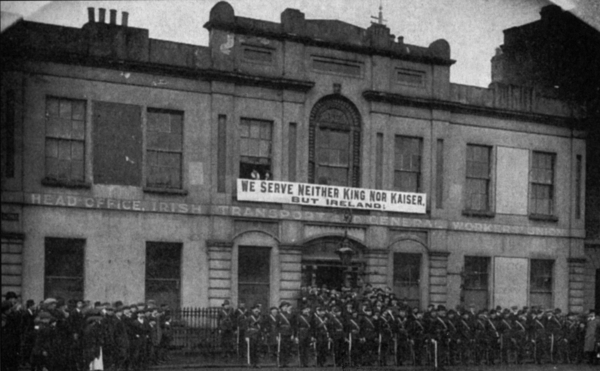

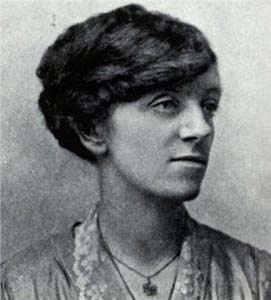
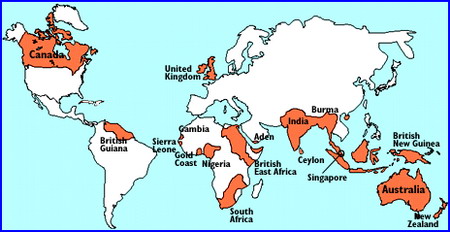

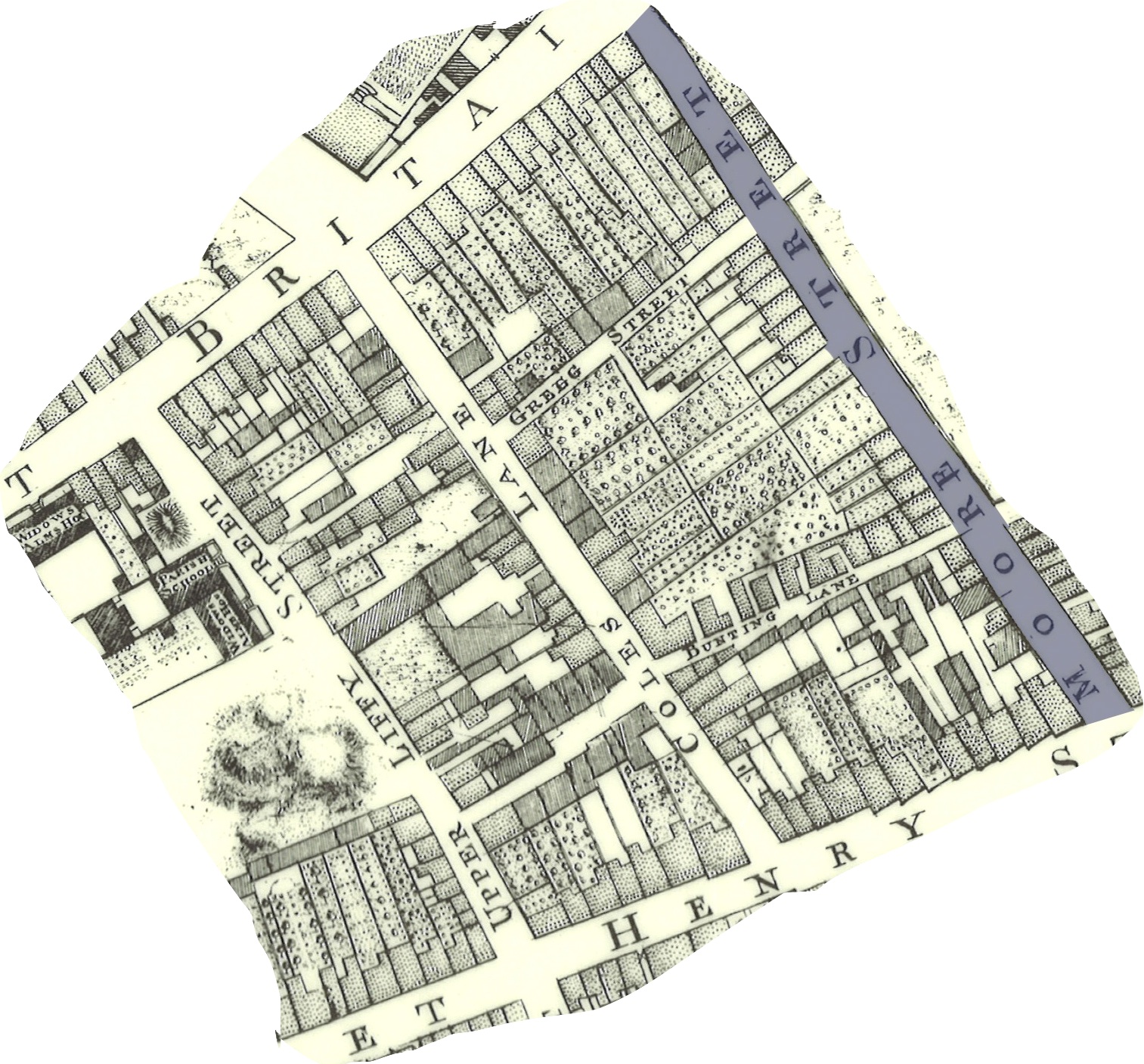
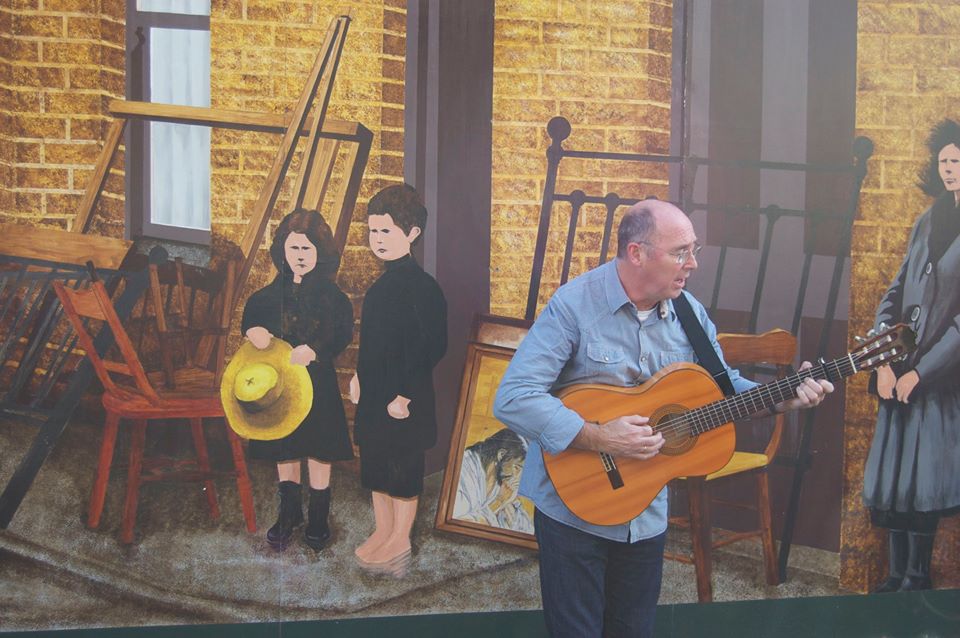
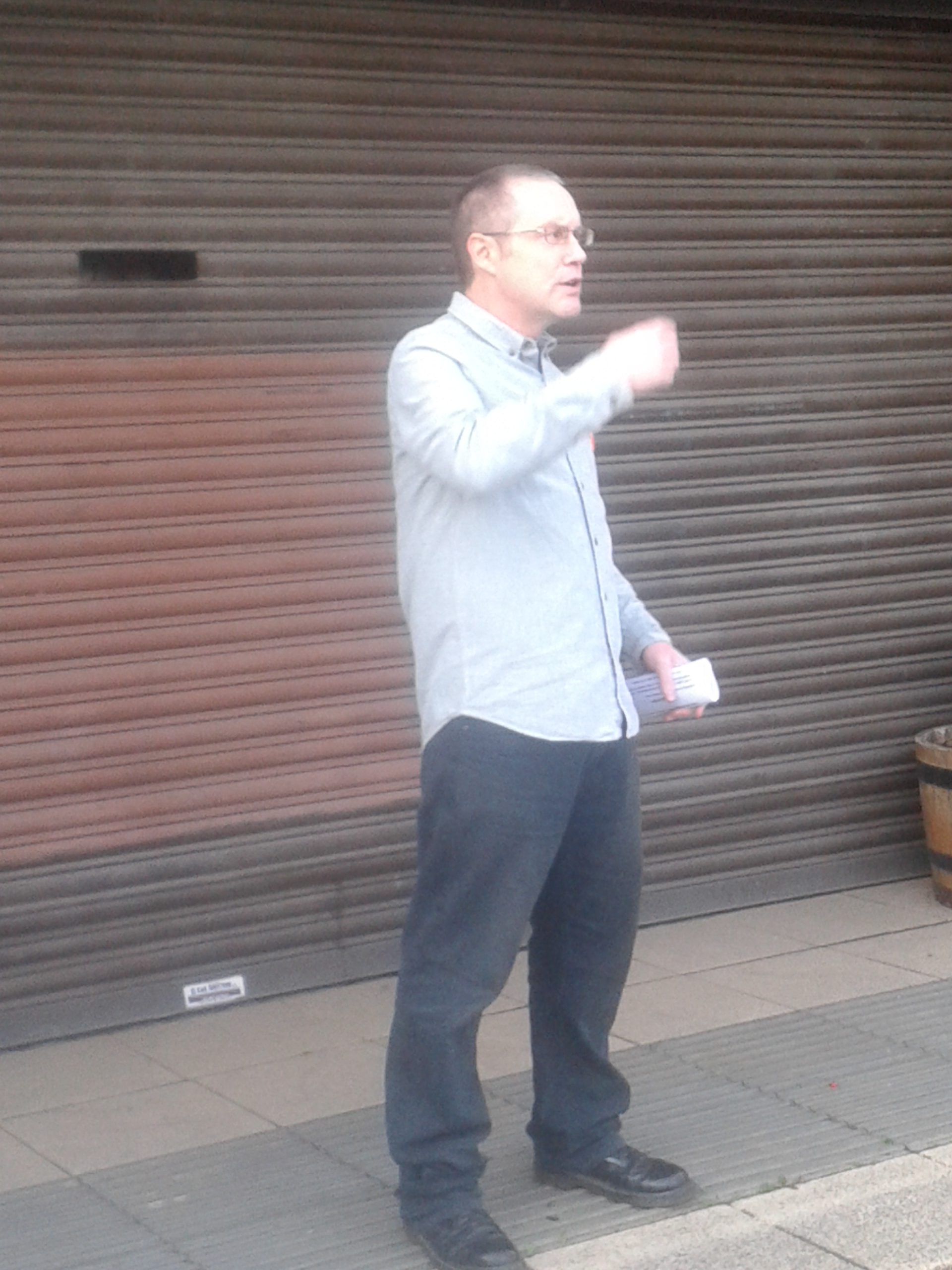
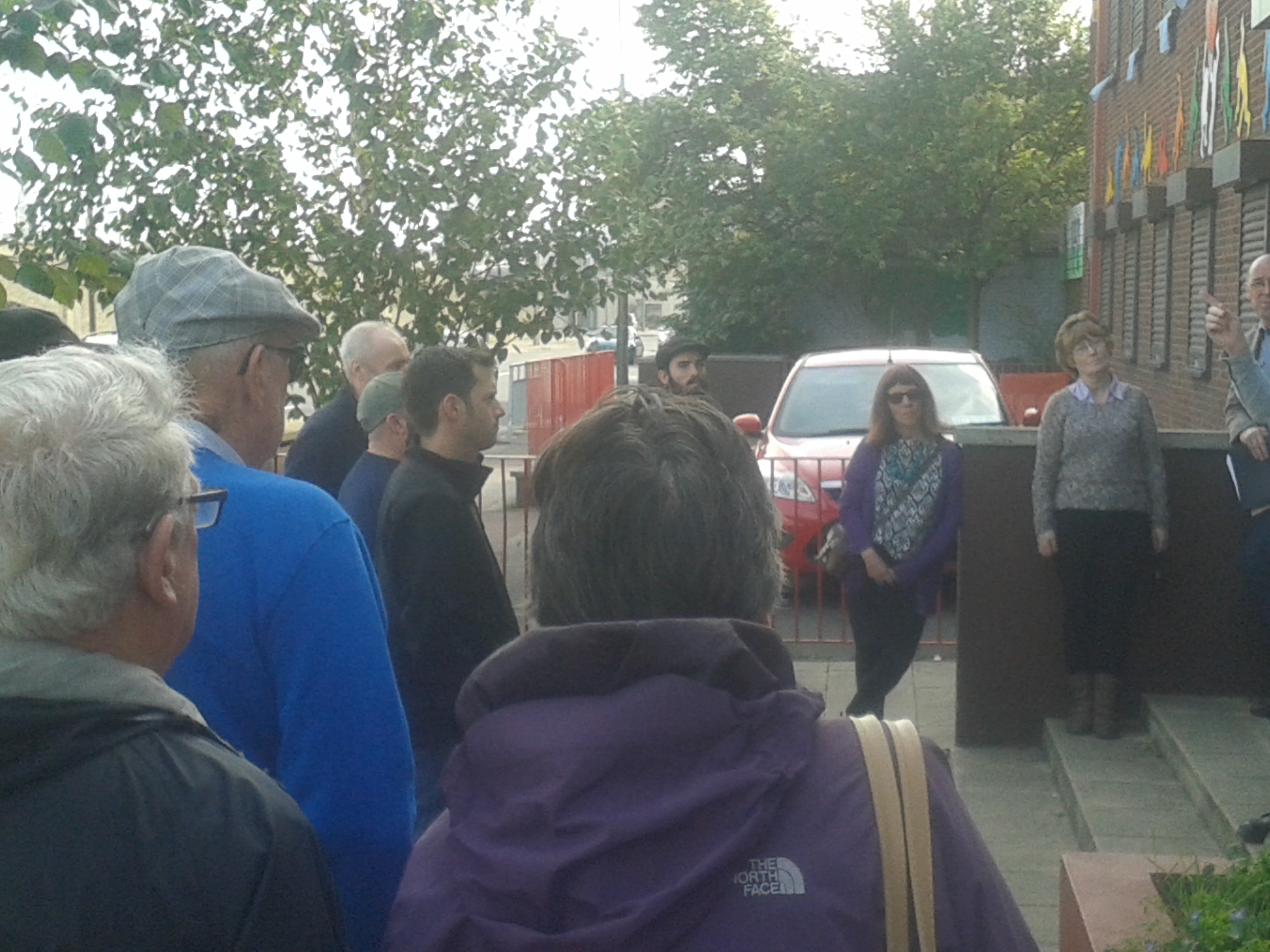
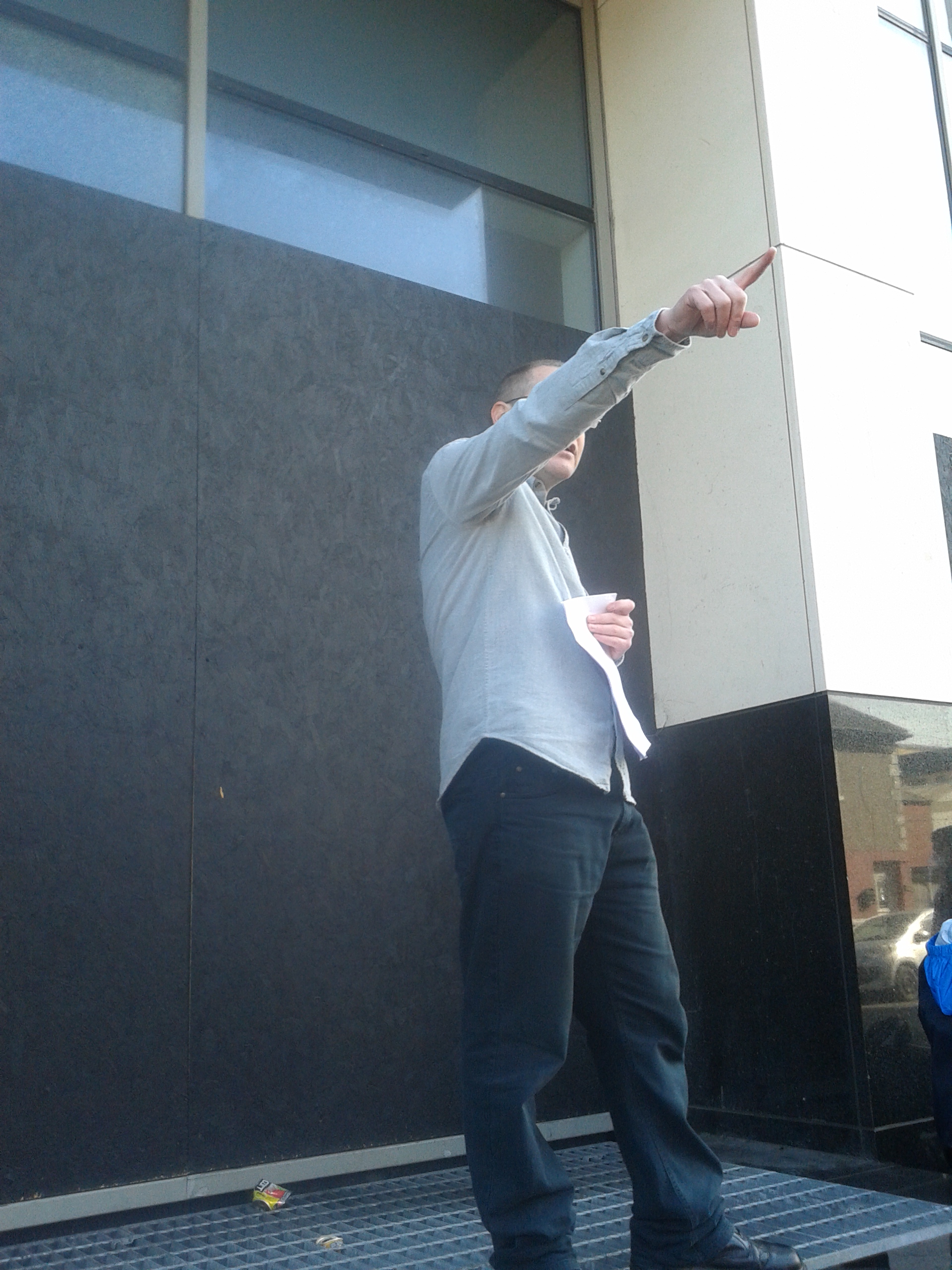
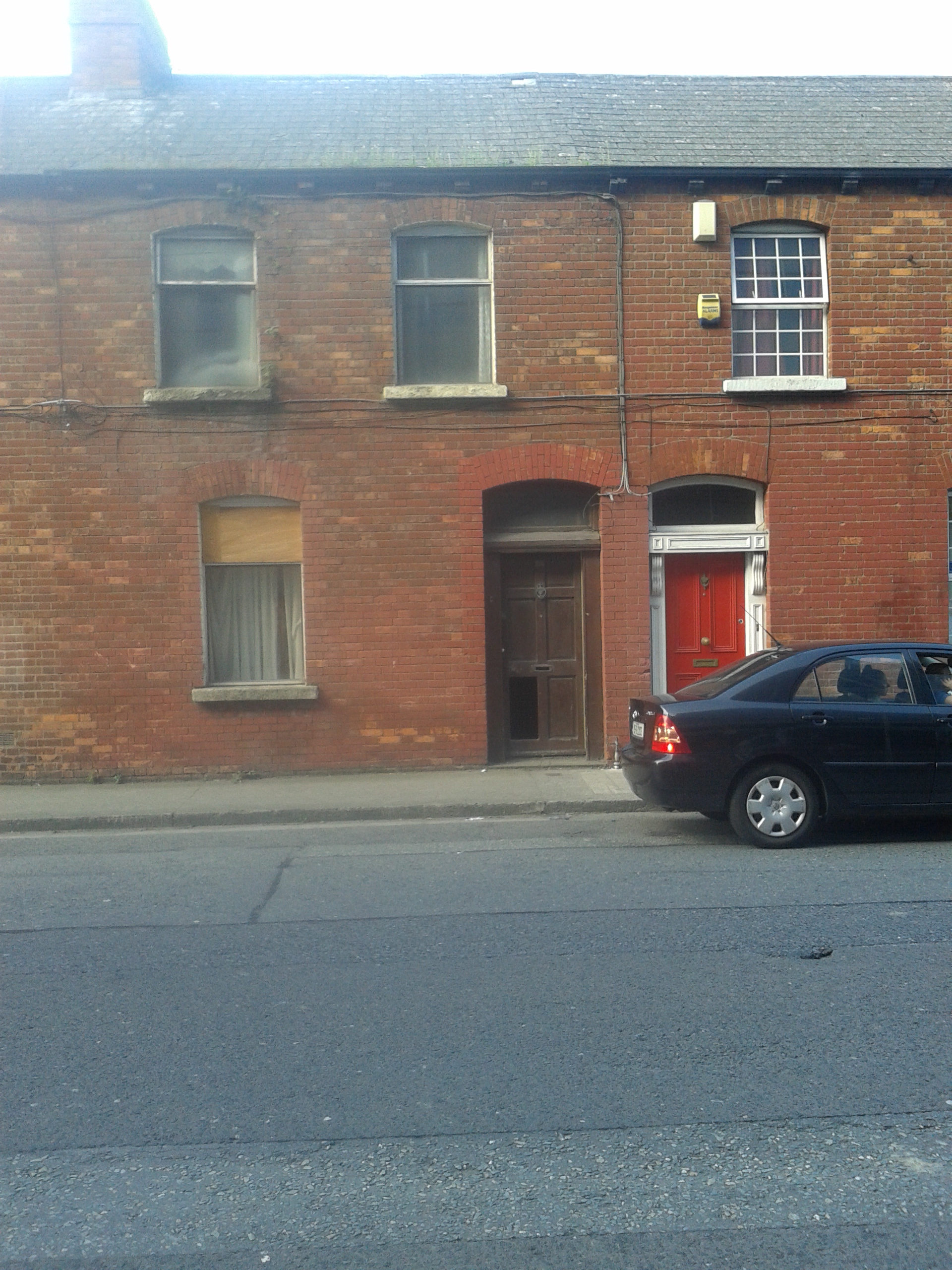
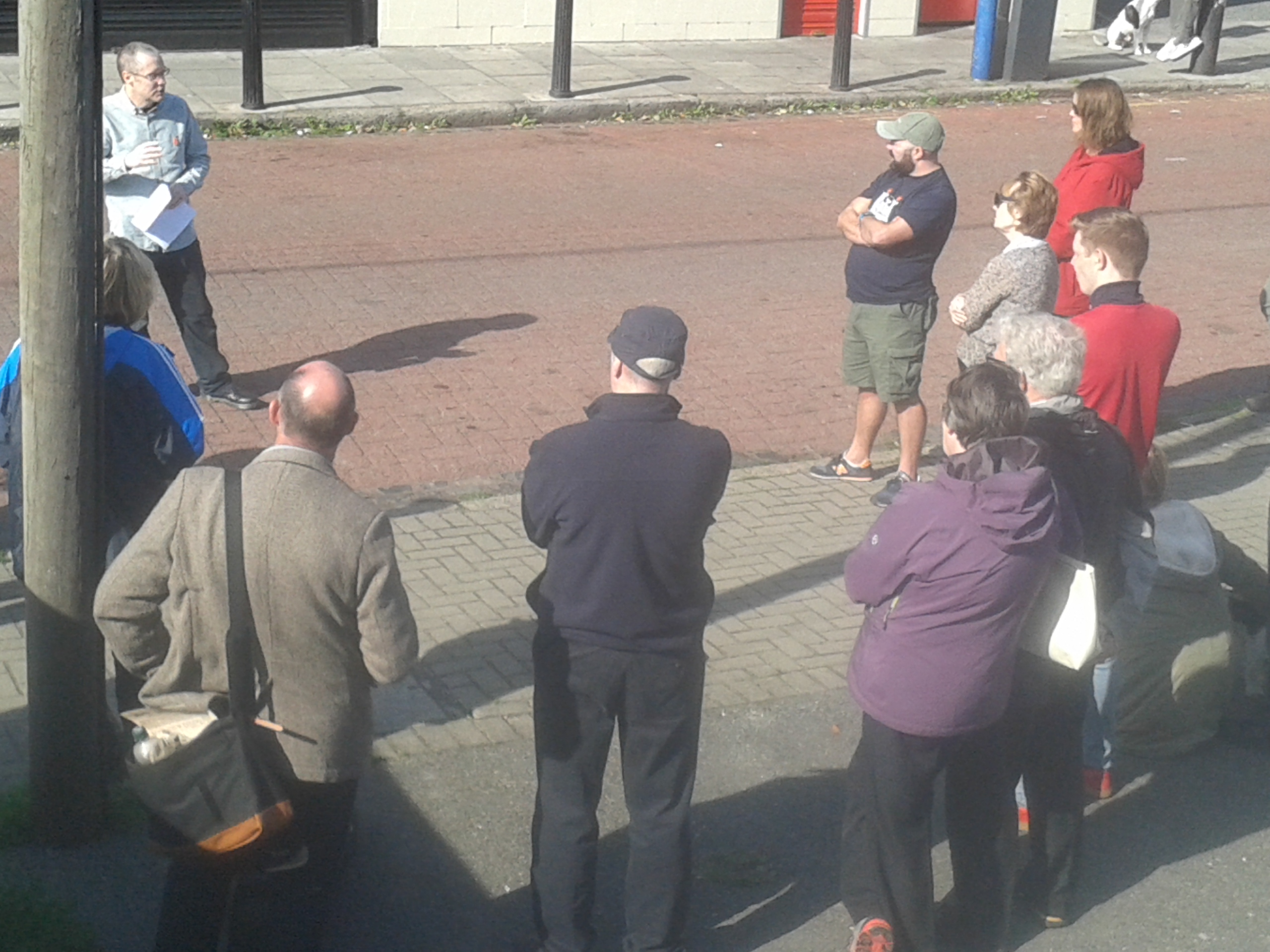
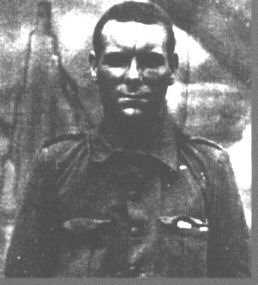
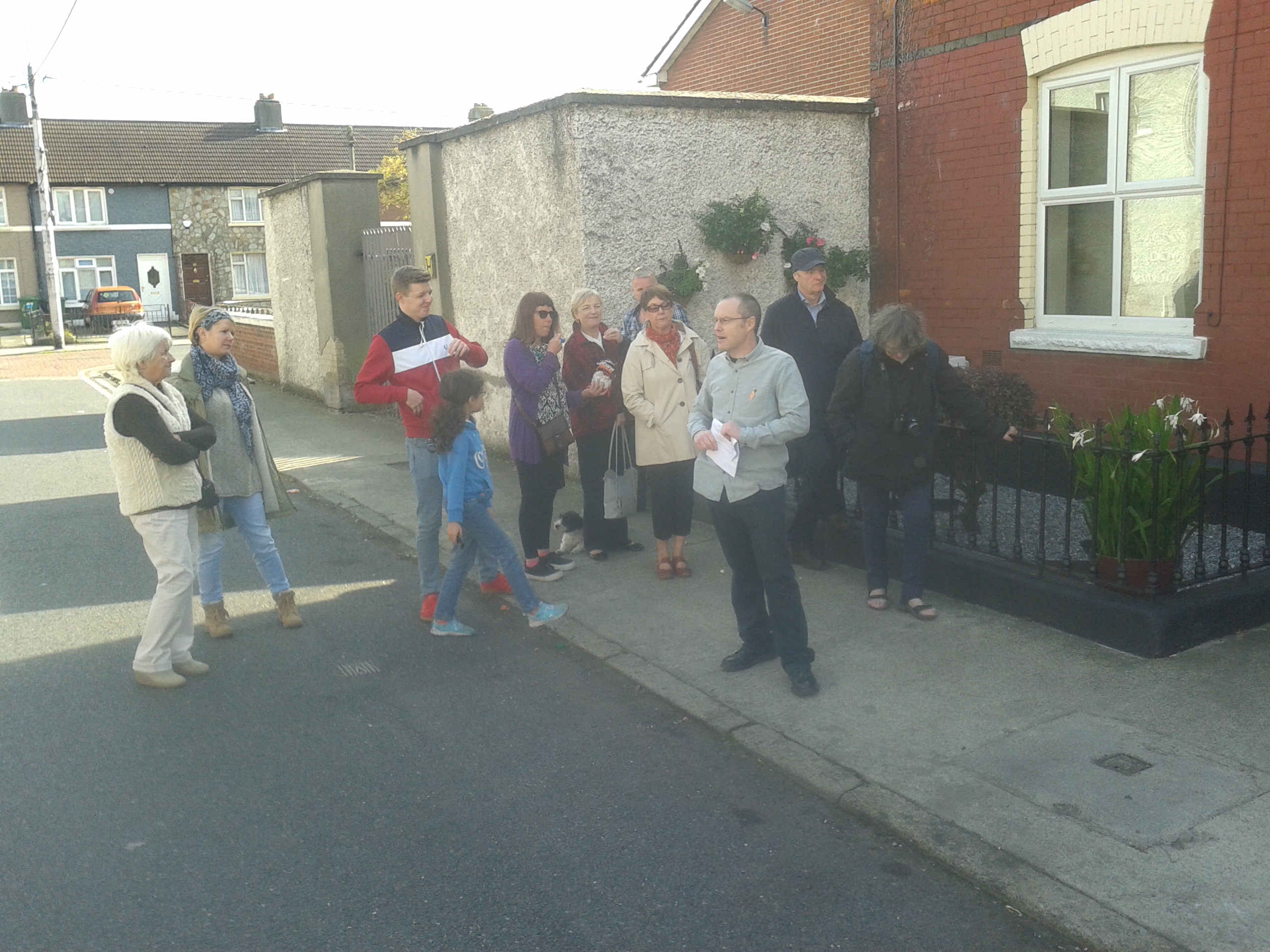
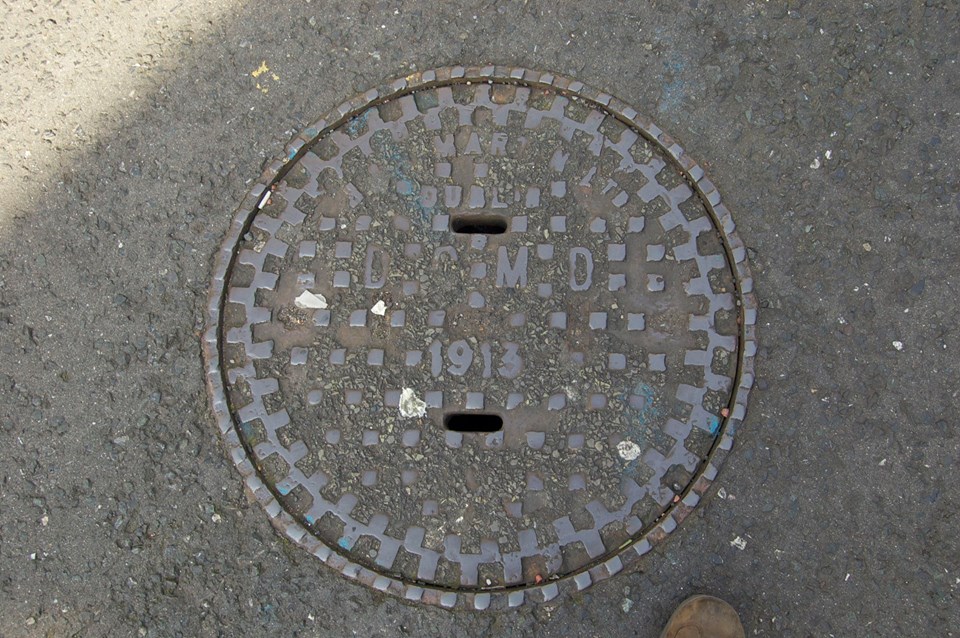

 There were many police but nothing was happening and Larkin did not appear. After a while, a horse-drawn carriage drove up and an elderly church minister alighted, assisted by a woman, and entered the shop. They took the lift to the restaurant floor. A little later Larkin appeared at the restaurant open window, in church minister’s clothing, spoke a few words to the crowd and ran inside. Those in the street were very excited and when the police took Larkin out under arrest, they cheered him, urged on by Constance Markievicz. The police drew their batons and attacked the crowd — any man not wearing a police uniform.

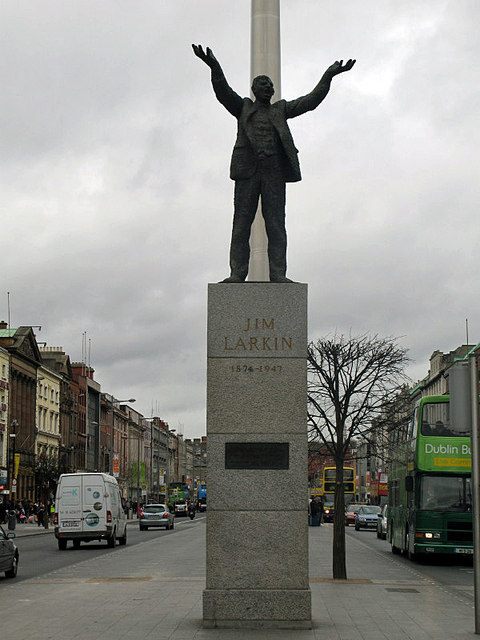



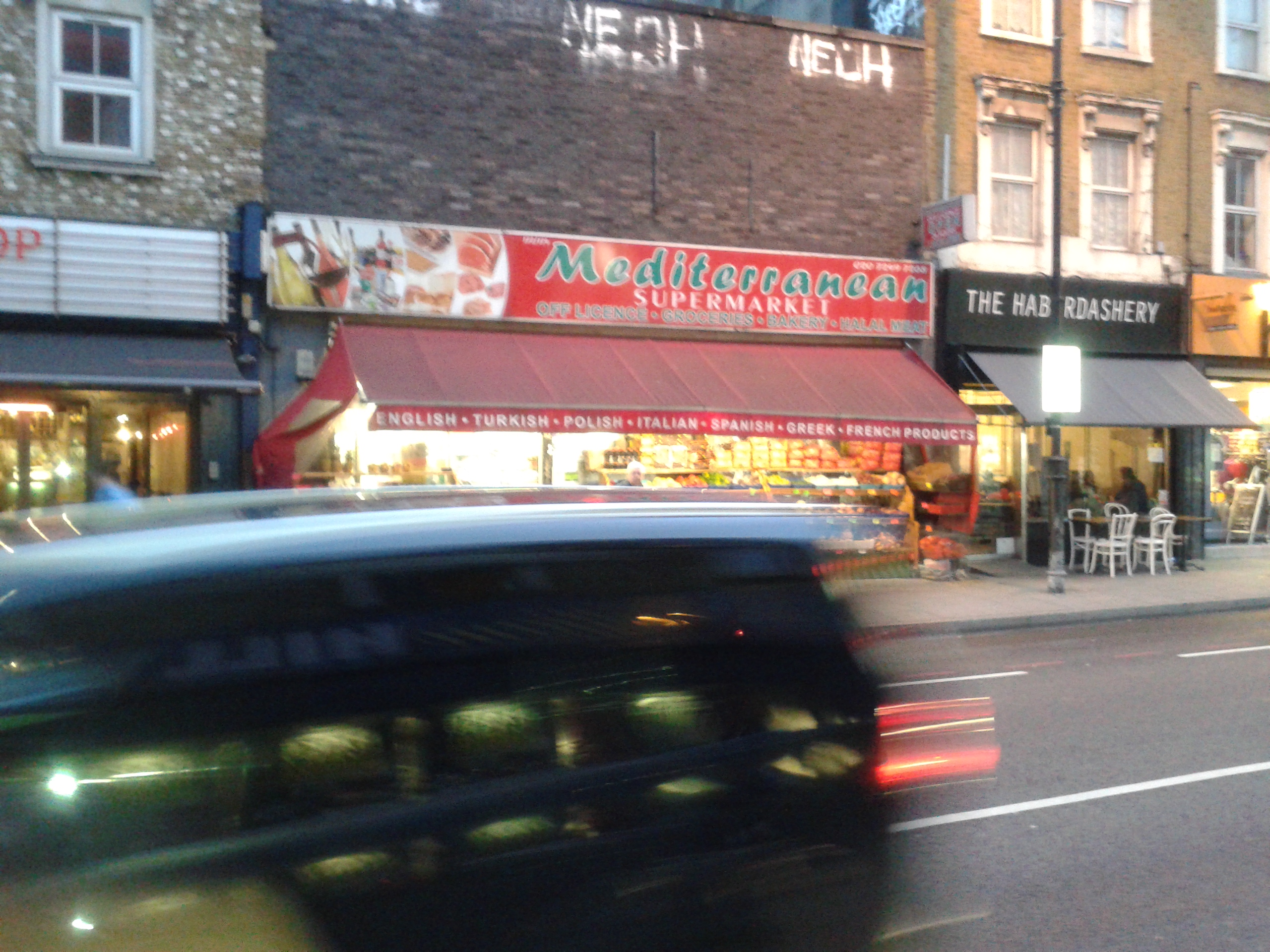


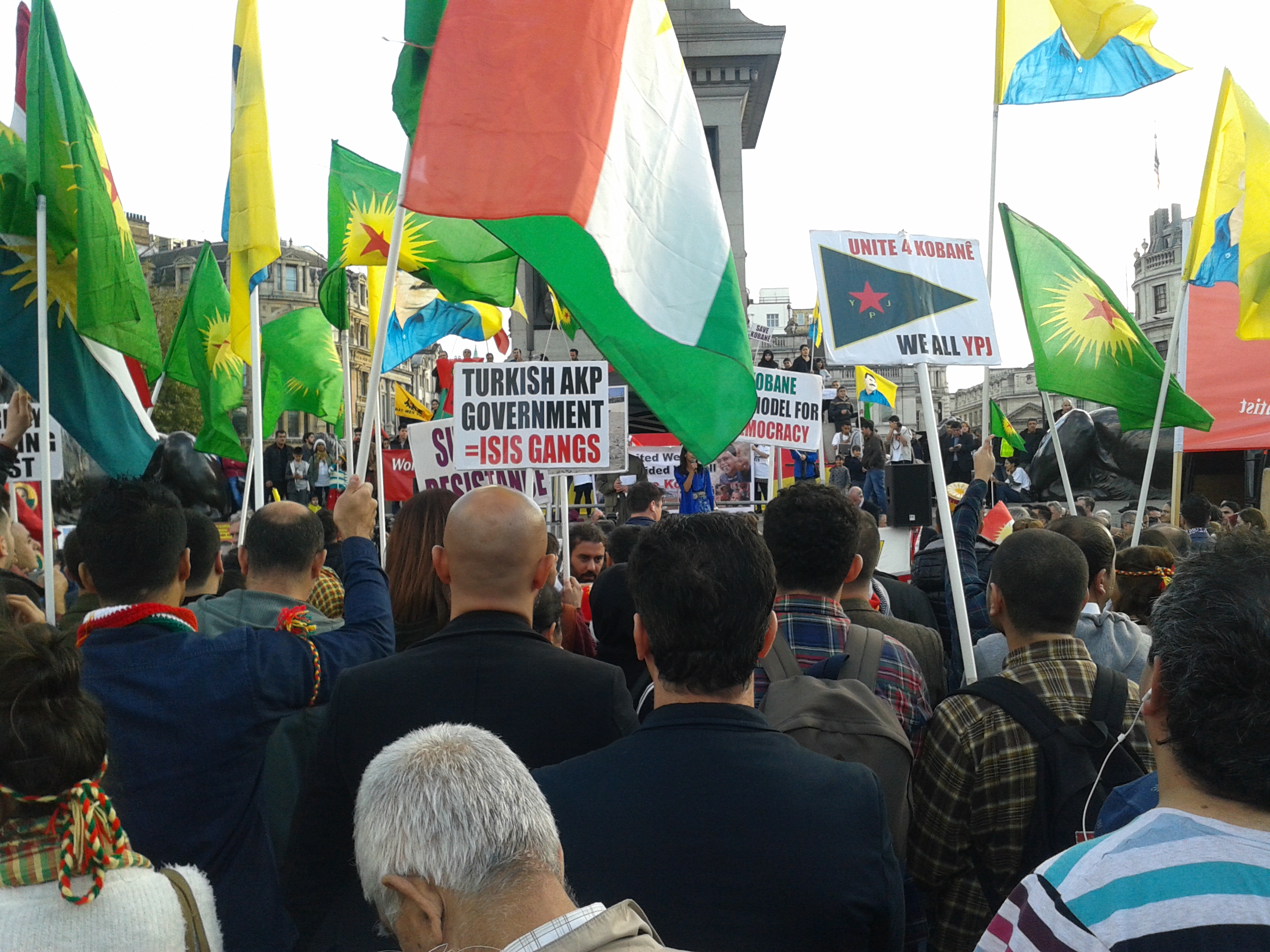


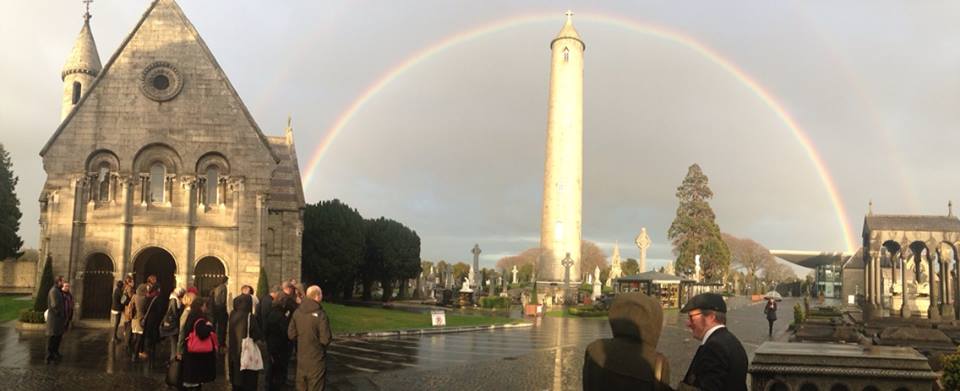
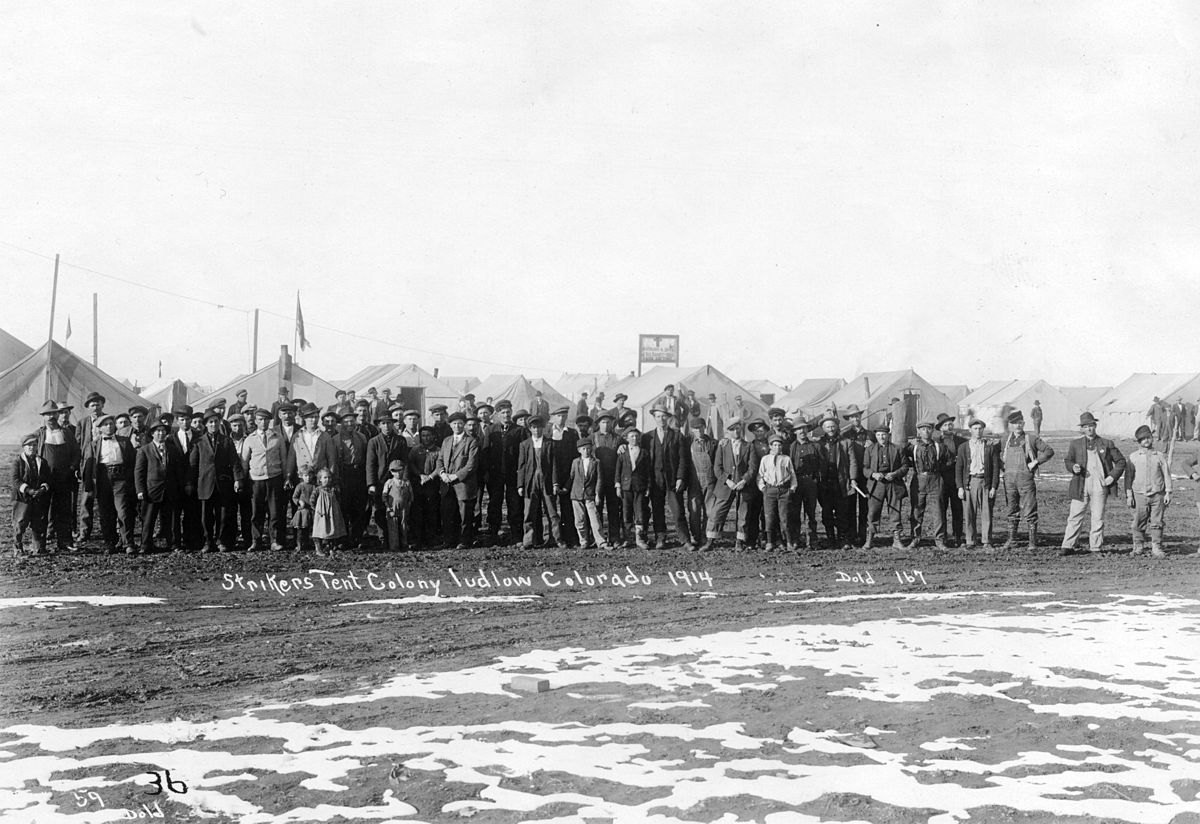


 rebelbreeze