“SOLIDARITY WITH THE RESISTANCE” AND “DOWN WITH COLLABORATION OF THE PALESTINIAN AUTHORITY!”

Clive Sulish

(Reading time: 5 mins.)

A large Palestine solidarity march once again in Dublin included a Resistance Bloc, part of which also broke away to picket the Palestinian Authority’s Embassy, where collaboration and collusion were denounced in three languages.1

A section of the march has arrived in Molesworth Street in view of Leinster House but others are still arriving. (Photo: R.Breeze)

As Israel freed 200 of their Palestinian prisoners Saturday in exchange for four female Israeli Occupation Army soldiers, Dublin City Centre rang again to shouts of Palestinian solidarity and some banners of the Resistance Bloc saluted the Resistance and denounced the Palestine Authority.

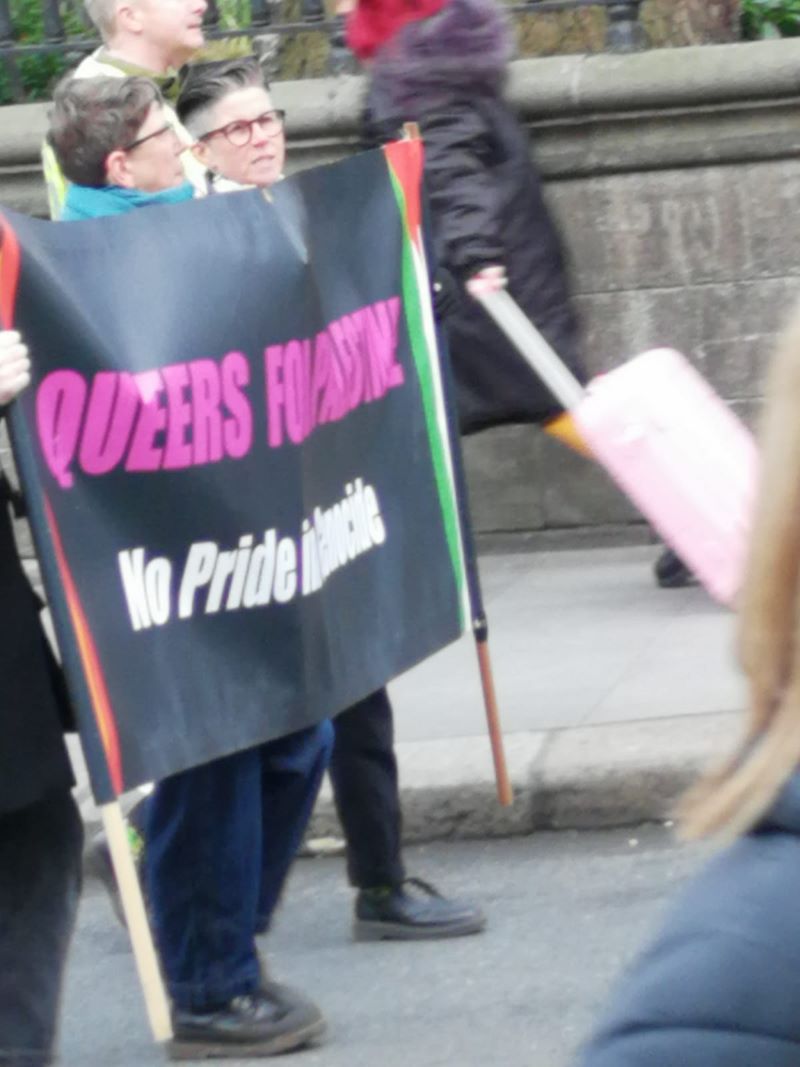
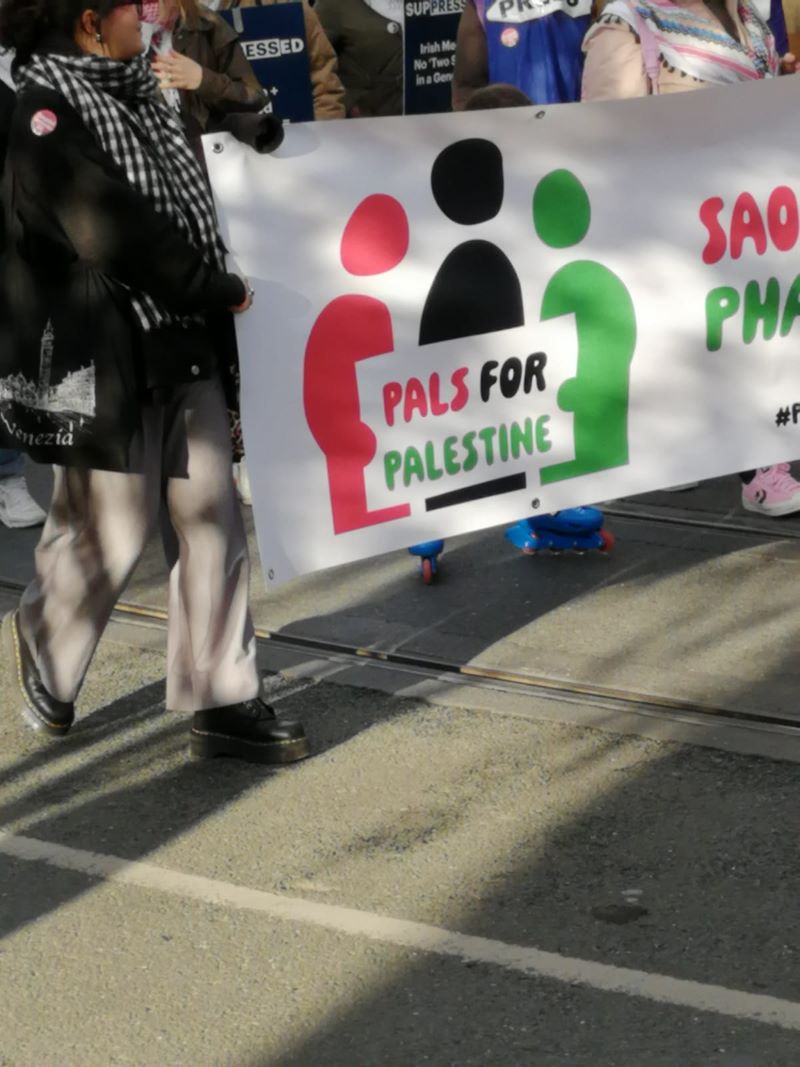
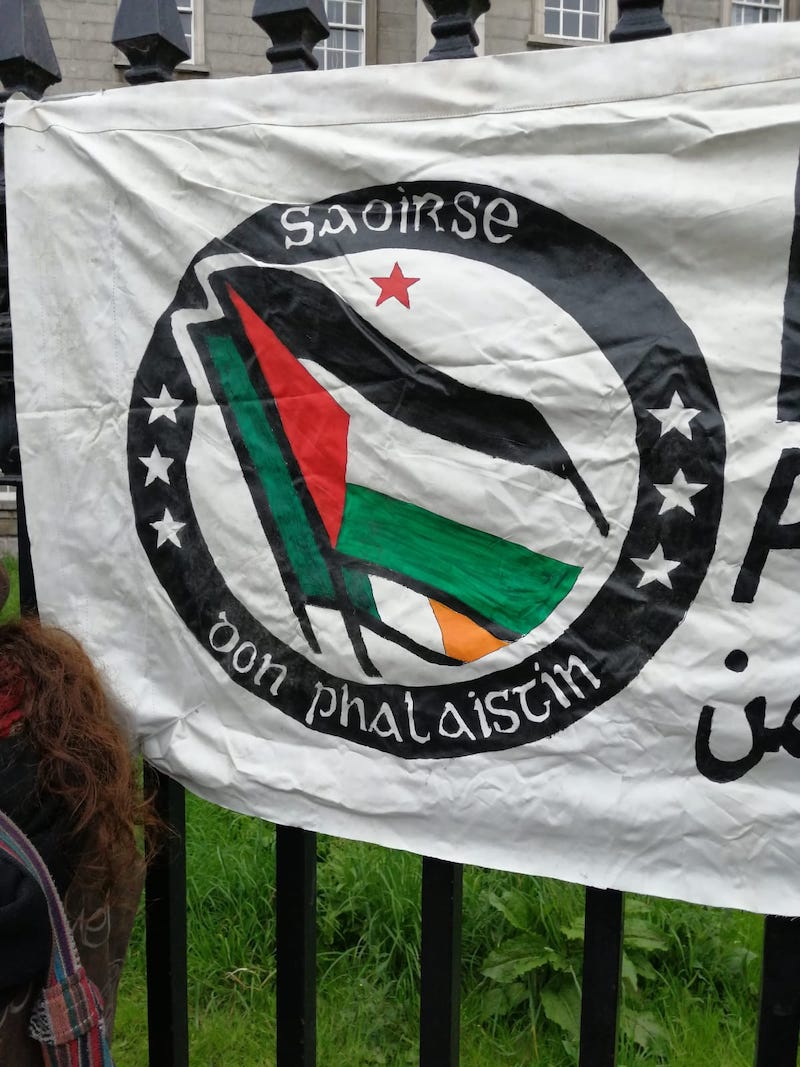
The Resistance Bloc was organised by a broad front of organisations: Action on Palestine, Saoirse Don Phalaistín and Queer Intifada and was also supported by independent activists.

(Photo: R.Breeze)
(Photo: R.Breeze)

There had not been a major Palestine solidarity march in Dublin since 7th December, though they had been held pretty regularly every two or three weeks throughout the previous year. On Saturday, as Netanyahu stopped blocking it, the ceasefire and prisoners transfer agreement finally went ahead.

The Agreement is in three phases, each including prisoners of each side to be exchanged but also the removal of the IOF from Gaza in matched stages and the return of Gaza residents to the South also including the delivery of food, fuel and medicine. But they return to a rubble wasteland.

(Photo: R.Breeze)
(Photo: R.Breeze)

THE PA AND OSLO

The PA is a product of what was called the Palestinian Peace (more correctly called Pacification) Process and since it failed spectacularly to pacify the Palestinian people is more usually now called the Oslo Accords, from which the PA was established in 1994.

Reading a statement in Arabic outside the PA Embassy (Photo: R.Breeze)

The Oslo Accords is one of a wave of imperialist pacification processes or agreements of the last decade of the 20th Century and in particular one of interrelated processes in three distinct regions: in chronological order South Africa, Palestine and Ireland.

The ANC2 of South Africa recommended it to the Fatah3 of the Palestinians; then Fatah and the ANC recommended to the Provisionals4 in Ireland. In no case was what they had fought for achieved, with the exception of universal suffrage in South Africa.5
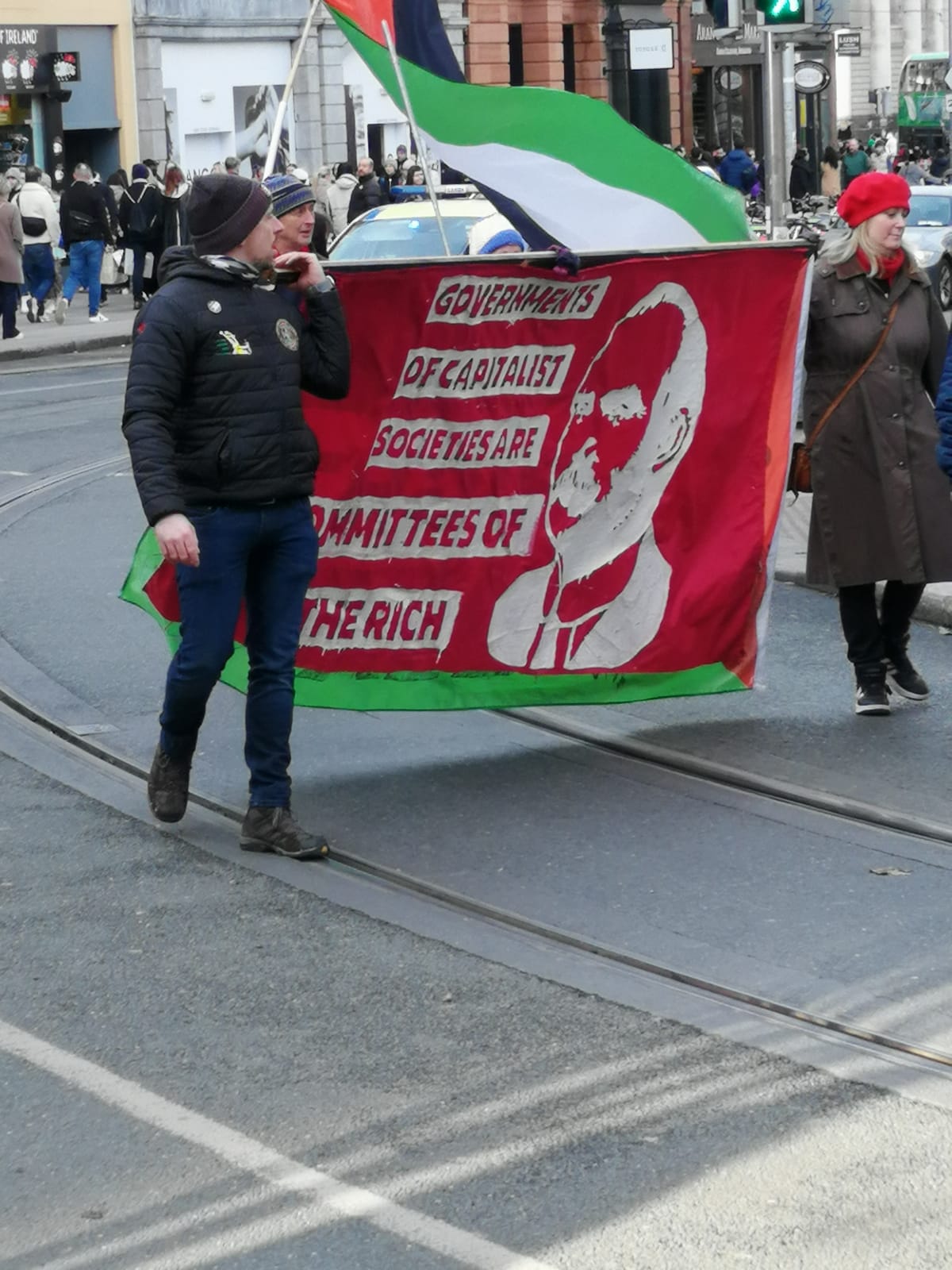
Banner Dublin Footballers for Gaza on the main march to Leinster House (Photo: R.Breeze) (Photo: R.Breeze)
On the main march to Leinster House (Photo: R.Breeze)

Later, the ANC and Sinn Féin would also recommend it to the liberation movements of the Basque Country, Colombia and the Kurds of Turkey, always with disastrous results for the movements in fragmentation, confusion, collusion with imperialism and disarming in the face of repression.

The Palestinian Embassies represent in fact the PA and this is the case in Ireland too. Despite th. PA’s long history of treachery to the Palestinian people and their struggle, including repression of the Resistance, it is being officially “recognised” as the representation of the Palestine people.

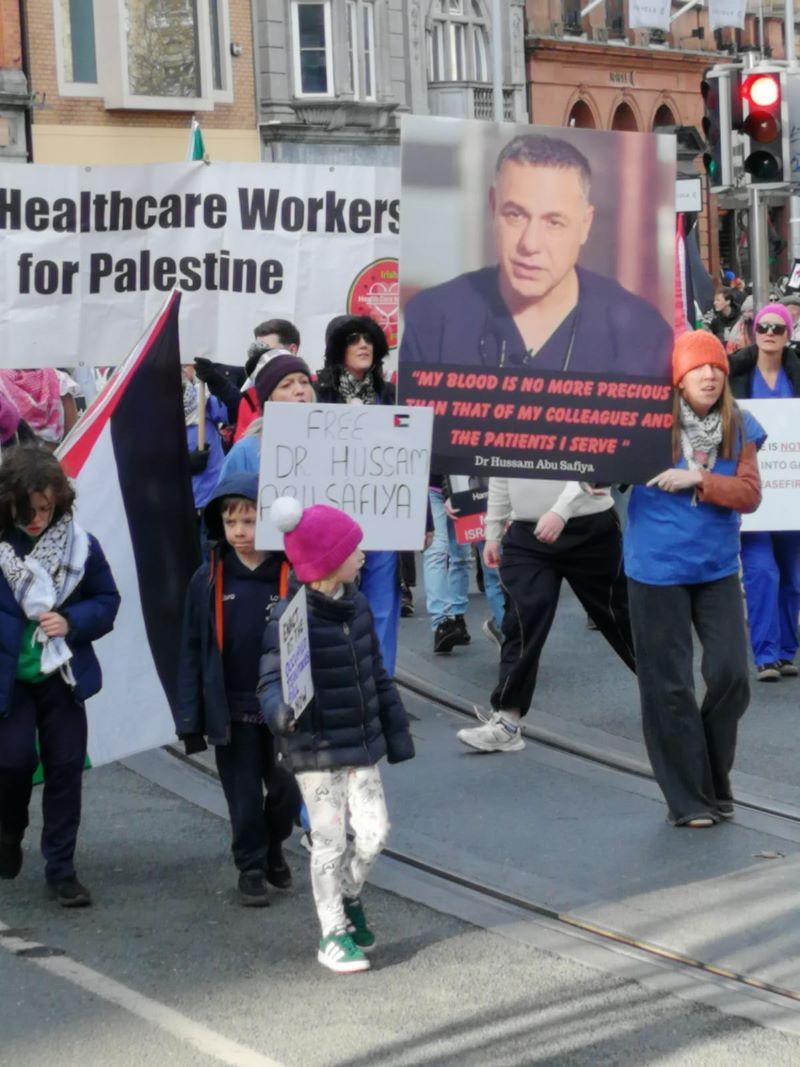
On the main march to Leinster House (Photo: R.Breeze)

Not only the traditional State Government parties of Fine Gael and Fianna Fáil uphold the PA but so also does the major oppositional party, the former Republican party of Sinn Féin. This is also the case with the major political parties in the EU, UK and US.

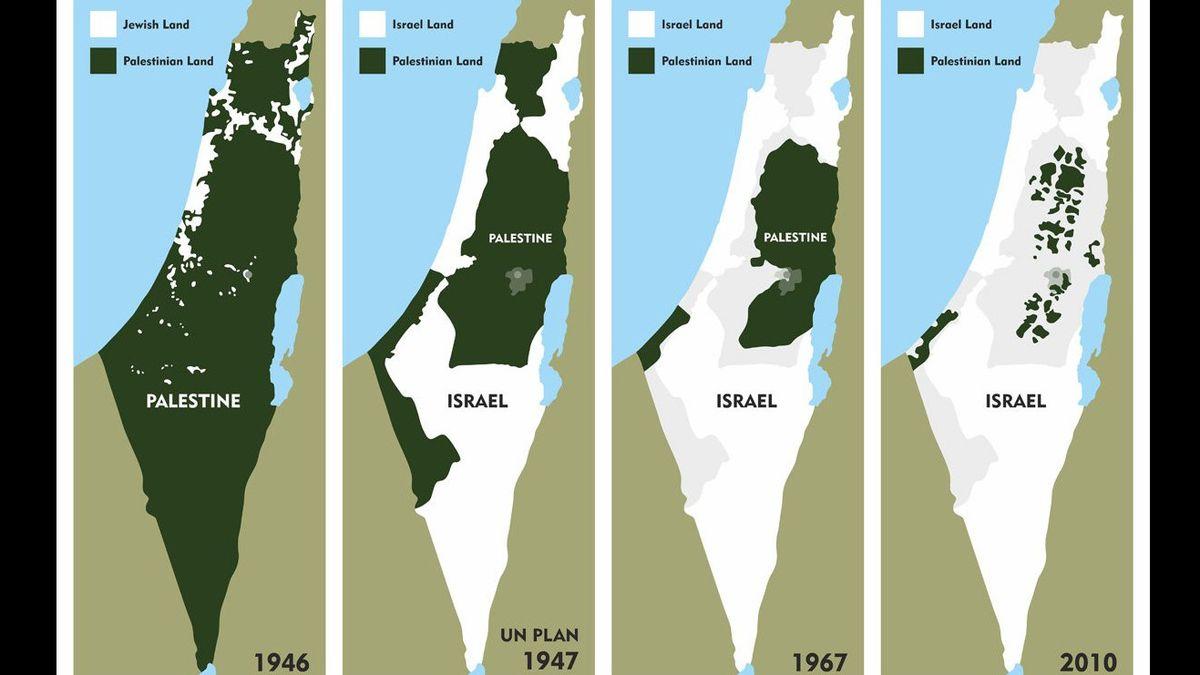
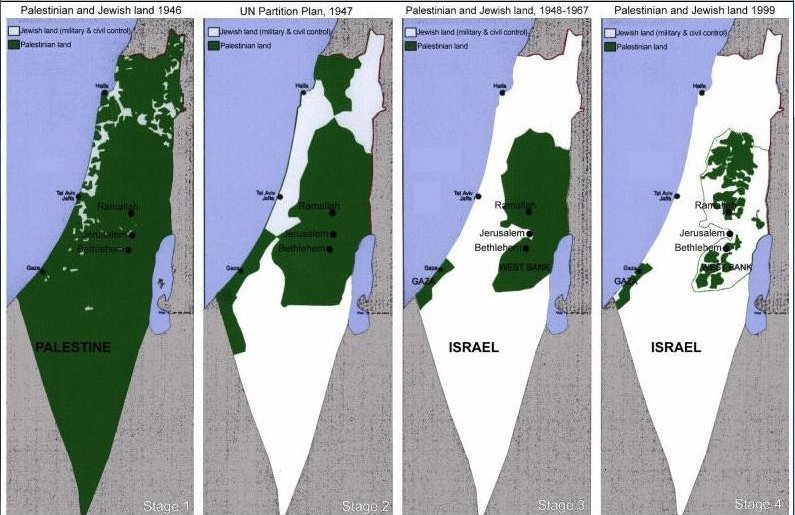
These also support the ‘two-state solution’ (sic) which would see the indigenous Palestinian people get less than 20% of their country, with the least water resources under the eyes and guns of the Israeli State. In any case it is considered unworkable by most experts and serious commentators.
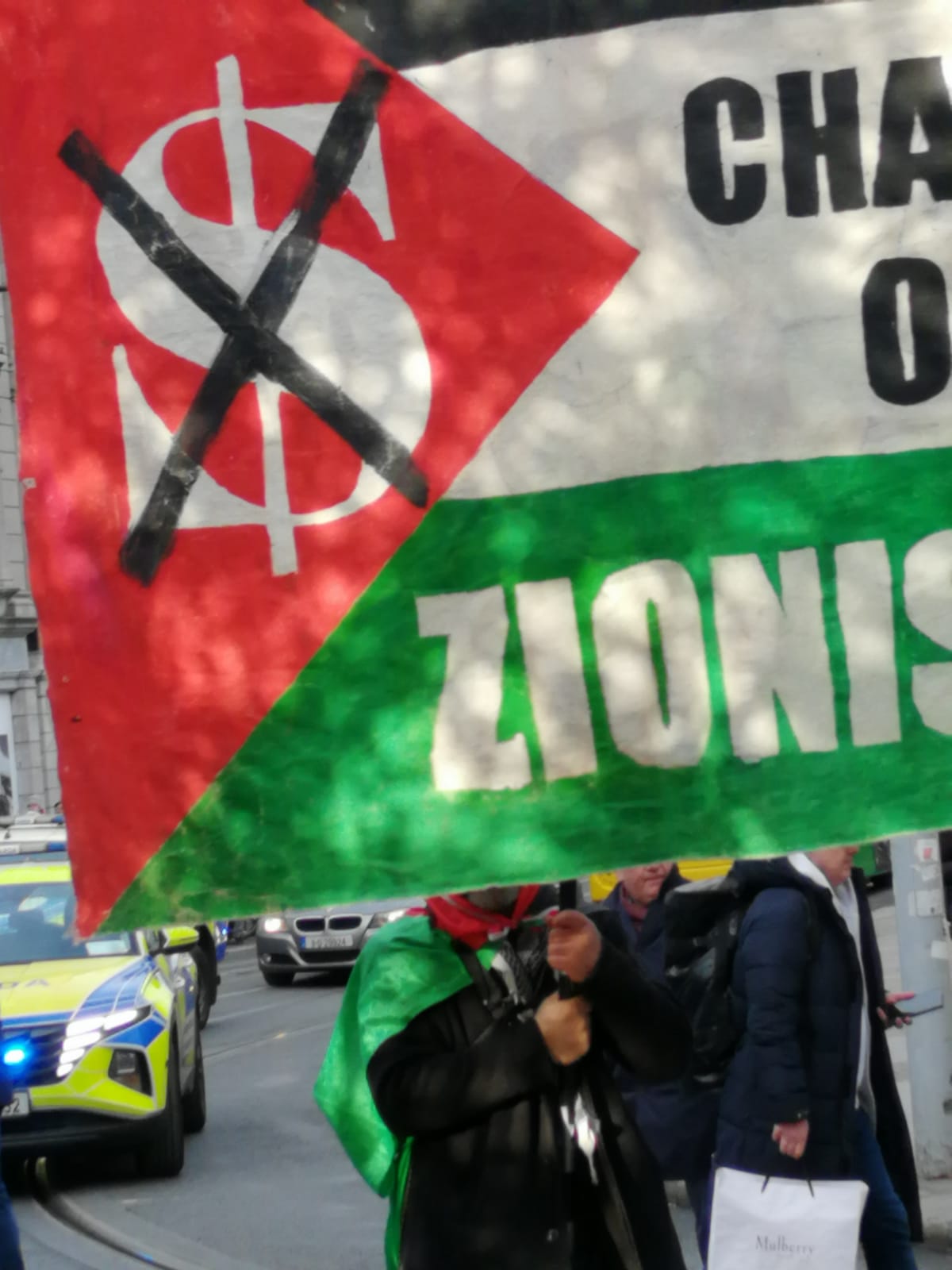
“Smash the chains of Zionism” banner on the main march to Leinster House (Photo: R.Breeze)
Howth Stands With Palestine banner on the main march to Leinster House (Photo: R.Breeze)

In a recent statement on the ceasefire agreement in Gaza, the Secretary-General of the United Nations, Antonio Guterrez, also promoted the ‘solution’ of splitting Palestine into two states as a way towards peace. The PA too upholds that same plan.

Major Palestine solidarity organisations like the IPSC in Ireland have no formal position on the PA or the Two-State plan. Standing on the base of Palestine solidarity, ‘neutrality’ on the question is not excusable, even on a kind of basis of ‘it’s up to the Palestinians and not for us to intervene’.

On the main march to Leinster House (Photo: R.Breeze)

The PA is an imperialist creation against the Palestine struggle; for years it has been periodically attacking the Resistance and has now stepped up that aspect in its 6-week siege of Jenin in the West Bank and even military assaults on the Resistance groups in collusion with the IOF.

True solidarity with the struggle of a people also entails solidarity with their resistance, whether in non-violent or violent form and it also entails opposition to individuals and organisations that are colluding with the enemy; the PA should be publicly denounced by the solidarity movement.
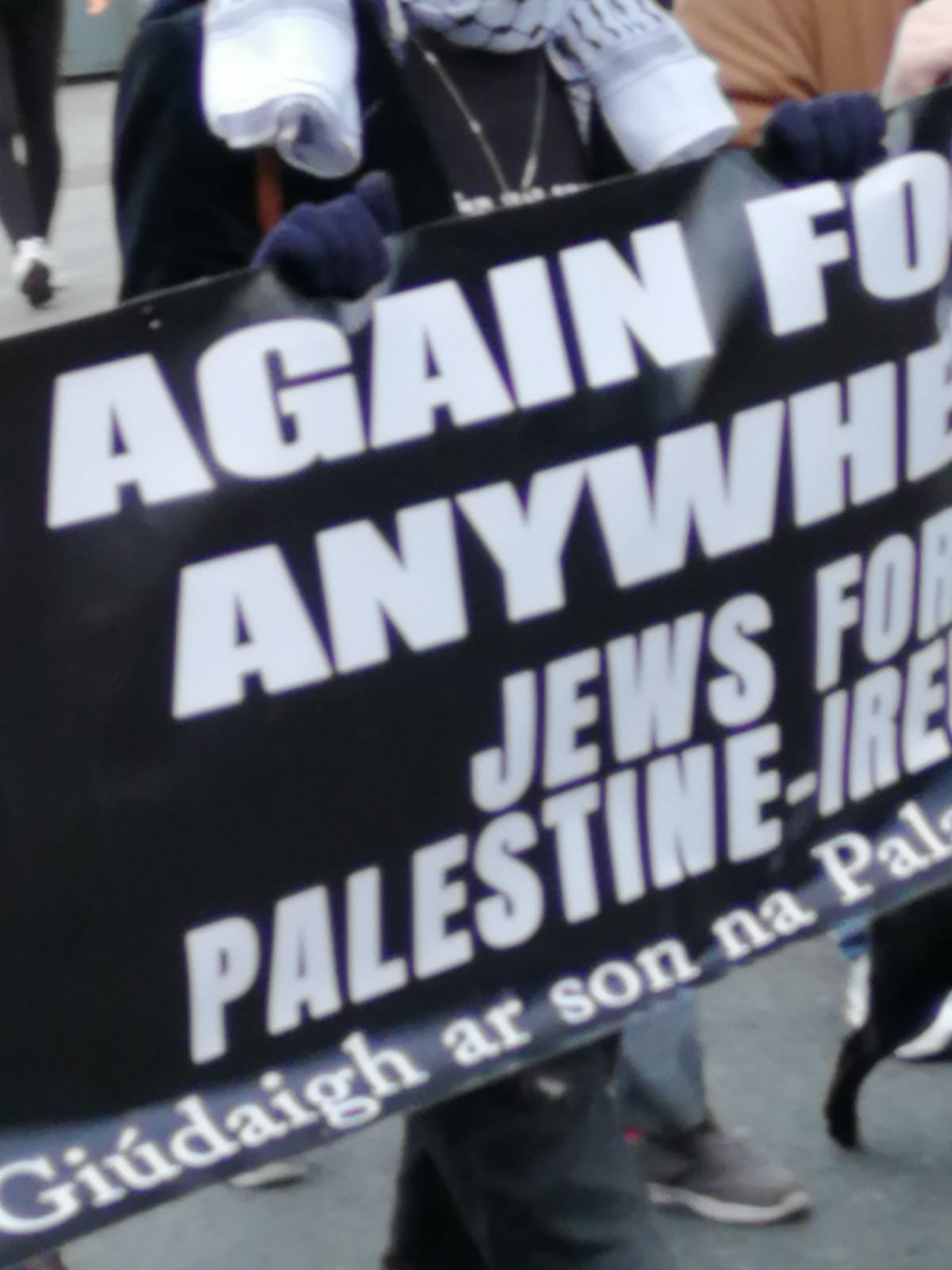
On the main march to Leinster House (Photo: R.Breeze)

THE MARCH IN DUBLIN

In Dublin on Saturday any fears that much support would have dropped away6 disappeared as large numbers marched through the city centre, some having come from Kerry or Limerick. Not far from the front marched the Resistance Bloc which had assembled earlier outside the Rotunda.

Flying the national flag of Palestine, the Starry Plough and flags of Palestinian Resistance factions Hamas and Islamic Jihad, along with the national flag of Syria, the bloc marched behind banners upholding the Resistance and denouncing the PA.

Placard and flags outside the PA Embassy (Photo: R.Breeze)
Banners, flags and statement reading outside the PA Embassy (Photo: R.Breeze)

The usual chants of Palestine solidarity marches could be heard from the Bloc in call-and-answer but also included From Ireland to Palestine – Occupation is a crime! Saoirse don – Phalaistín! Resistance is an obligation – In the face of occupation!

Soon after the main march reached its destination, much of the Resistance Bloc marched away to Leeson Street Lower and soon after crossing the bridge over the Grand Canal into Leeson Street Upper, crossed the road to assemble in front of the “Palestine Embassy”.

One of the placards outside the PA Embassy (Photo: R.Breeze)
Reading translation of the statement in English outside the PA Embassy (Photo: R.Breeze)

The breakaway march was closely followed by a number of Irish police patrol cars and a Public Order Unit Van which remained at the PA Embassy until the event concluded.

One of the organisers then presented a man to read a statement in Arabic, the translation of which she followed to read in English, which pointed to happiness at the freeing of Palestinian prisoners in the exchange with the Resistance – but sadness at the collusion of the PA with the Occupier.
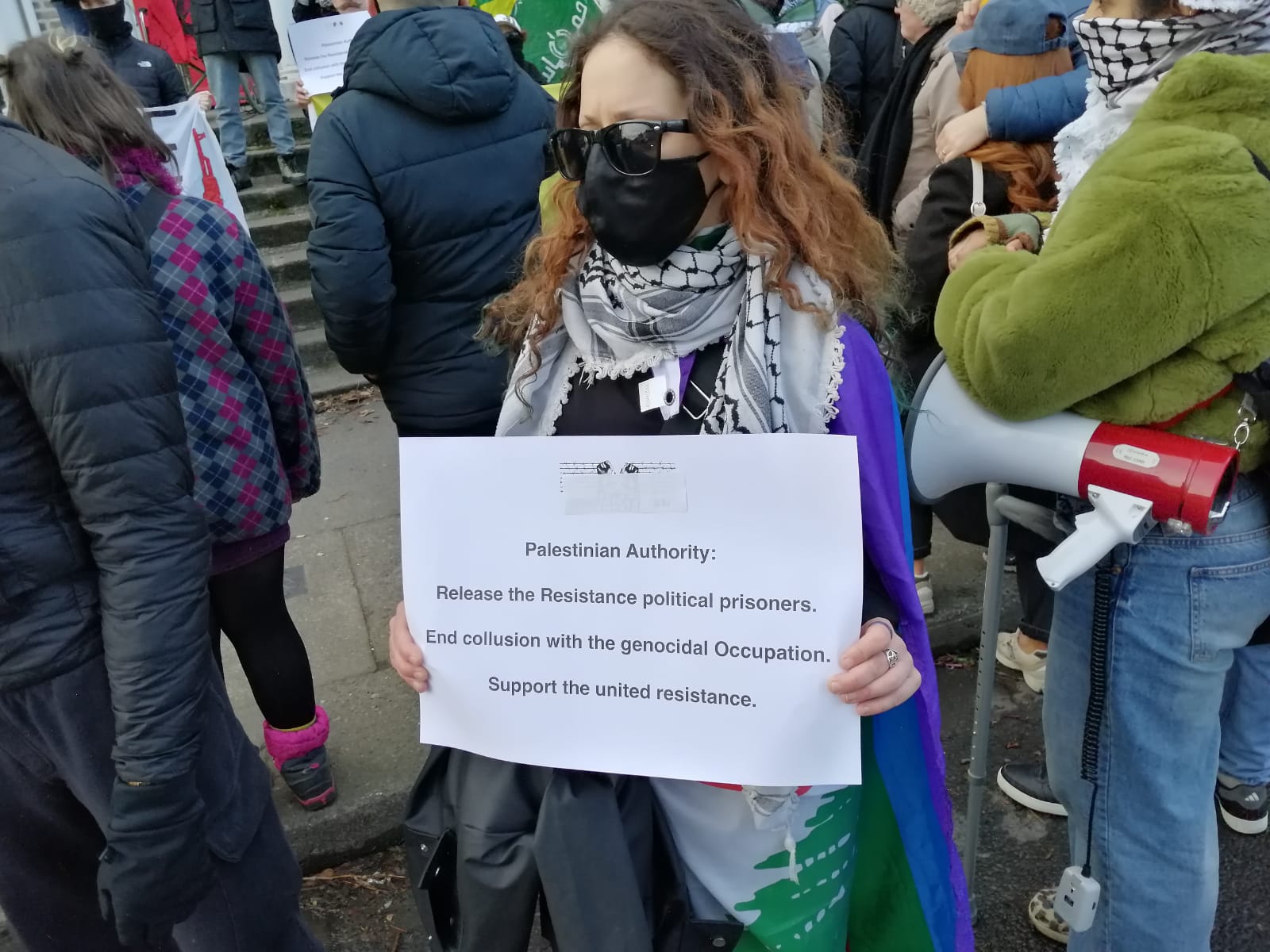
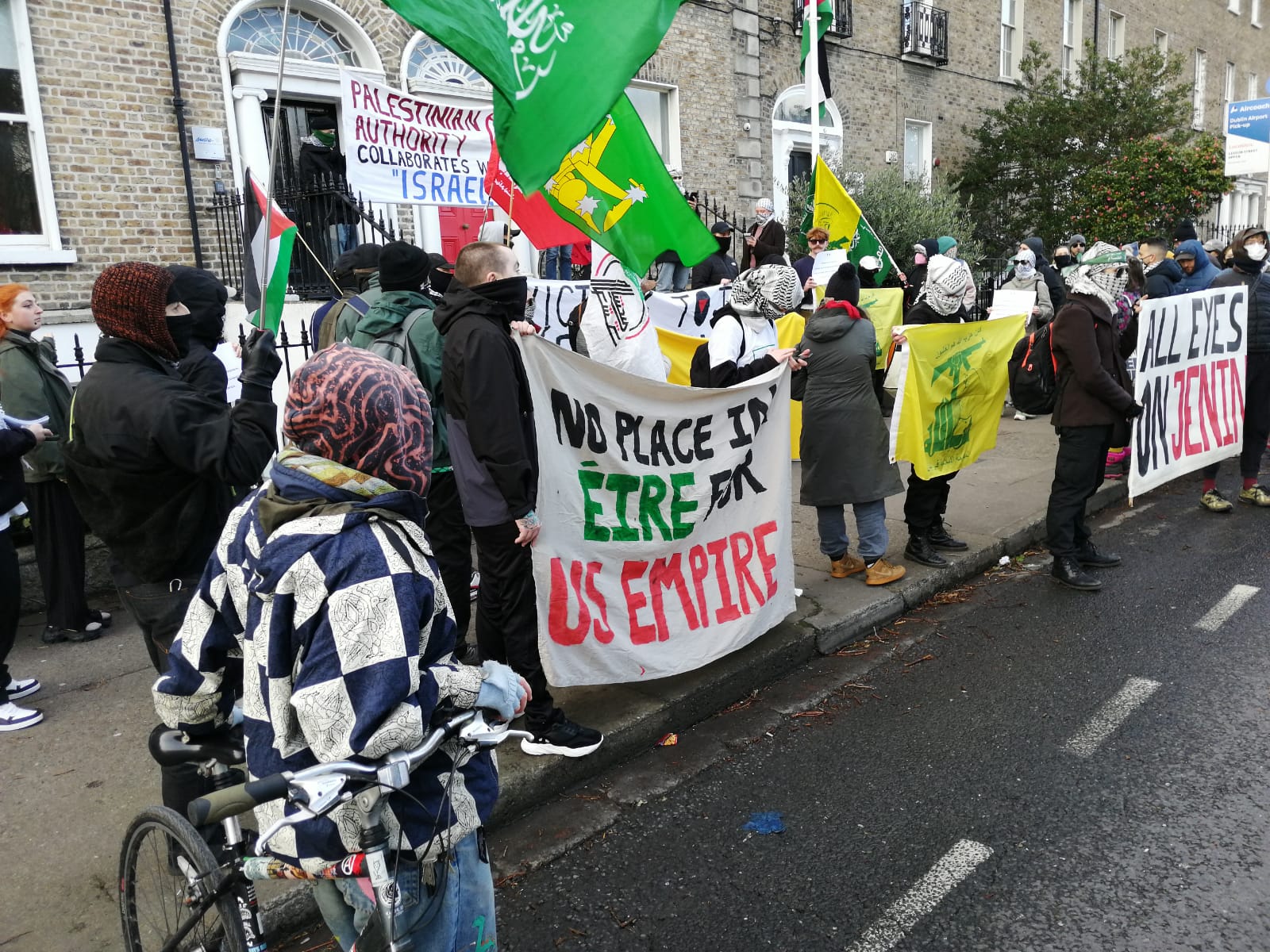
A protester holds a placard denouncing the PA outside their Embassy (Photo: R.Breeze)
Section of the crowd outside the PA Embassy (Photo: R.Breeze)

The speech declared that Palestinians have been striving for over a century to achieve their independence and freedom in their struggle against Israeli occupation. This has cost hundreds of thousands of Palestinian lives and displaced nearly nine million Palestinians around the world.

Later: Given the current circumstances, Palestinians must resist the Israeli occupation and simultaneously confront the Palestinian Authority, which acts as an agent in killing and besieging Palestinians to defend Israel. The speech concluded in thanking the Irish people for their solidarity.

One of the banners outside the PA Embassy bears a slogan but also the name of one of the organising groups (Photo: R.Breeze)
Another view of the crowd outside the PA Embassy (Photo: R.Breeze)

Another man spoke in part-Irish and part-English, congratulating people on having publicly confronted the PA with its collusion. This had only been done twice before in Ireland, once in Belfast when the “Palestinian Ambassador” had been addressing a Sinn Féin meeting.

There had been another outside the “Embassy” in Dublin some months earlier by a small gathering supporting a picket called by the Ireland Anti-Internment Campaign. He drew parallels between the PA and the treason to the Irish resistance that had led to Partition and a subservient state.

Next to the PA Embassy (Photo: R.Breeze)

Underlining the parallel in song, he sang verses of the Take It7 Down From the Mast ballad (against the Irish State during the Civil War 1922-1923), adapting a verse to call on the PA to Take it down from the mast Palestinian traitors ….. for you’ve (they’ve) brought on it nothing but shame.

The picket concluded with thanks to the attendance and after a period of shouting slogans including There is only one solution – Intifada Revolution! From the river to the sea – Palestine will be free! Shame on you PA – Shame, shame, shame!

End.

On the main march to Leinster House (Photo: R.Breeze)

FOOTNOTES

1Arabic, English and Irish.

2African National Congress

3The major secular Palestinian national liberation organisation at the time.

4Provisional IRA with its corresponding party, Sinn Féin, the major Irish national liberation organisation at the time.

5But no other social or economic progress; in addition, fragmentation of the movement and enlisting of the former liberation fighters as ‘enforcers’ of the imperialist agreement.

6Due to a possible but mistaken attitude of “the war’s over”.

7A reference to the Irish Tricolour: Take it down from the mast Irish traitors/ It’s the flag we Republicans claim/ It can never belong to Free Staters/ For you’ve brought on it nothing but shame. “The Free State” was the name adopted by those who agreed to the Anglo-Irish Treaty, including Partition.

USEFUL LINKS

@actionforpalireland

@saoirsephalastin

@queerintifada.ireland

WHAT WE’VE LEARNED FROM SINWAR’S DEATH

Diarmuid Breatnach

(Reading time main text: 4 mins.)

Yahya Sinwar, head of the Palestinian resistance organisation Hamas, was killed in action by an Israeli Occupation Force in what was for them a routine operation in Gaza on 16th October, his last moments captured on video and broadcast widely.

From that event alone there is much for us to learn about Hamas and the Palestinian Resistance in general as well as about Sinwar himself — but also about the IOF, the way it fights and the extent of its self-discipline.

For the bare details as publicly shared, Sinwar was in military outfit, in tac vest, armed with a pistol and automatic rifle and accompanied by two local Hamas commanders in the Tal as-Sultan, Rafah area of Gaza patrolled by the IOF, very close to the semi-permanent IOF front lines.1

One may assume Sinwar was on a reconnaissance operation.

Sinwar with Hamas comrades in 2021 (photo cred: John Michillo)

Something gave away their position to a passing patrol in an area where, as far as the IOF were concerned, nothing should be alive except themselves. Pursued, they split up, local commanders in one building and Sinwar into another so the patrol called a tank to fire into each.

The patrol attempted to enter the building into which the individual fighter had gone but two grenades beat them back, injuring one soldier,2 so they retreated and called for a tank to put another shell in the building.

Still wary in the aftermath, they sent a surveillance drone into the building and the image it captured was what was seen in the widely-circulated video: a Palestinian fighter, apparently unarmed, right hand mangled. As they watched, he threw a stick at the drone with his left hand but missed.

So the IOF patrol had another tank round fired into the building and they went on their way.3

The last image of Hamas chief Yahya Sinwar alive. Right arm mangled he stares at the IOF drone videoing him in house ruined by IOF bombing in Tal Al-Sultan, Rafah, before throwing a stick at it. Moments later the IOF call a tank to put a shell in the building, collapsing it on top of him.

But unusually,4 they came back. Perhaps someone thought they recognised Sinwar in the camera video? It was then they discovered that one of the three fighters they had killed was Yaha Sinwar, confirmed by test results matching his DNA records they had from his years in captivity.

According to ‘Israeli’ postmortem, although he’d been hit by shrapnel and his right hand was mangled, what killed Sinwar was a bullet to the brain – which raises other questions.5

Whatever he was doing at that time, it was clear that he was there as a commander and Resistance fighter, armed and dressed for combat in a highly dangerous area, regularly patrolled by the IOF and only a short distance from their secured front lines.

That alone spoke of courage but also his and his comrades’ resistance in the face of superior numbers declared their courage and determination. But Sinwar’s continuing to resist while badly wounded and his comrades dead, spoke of heroism.

Although only weeks from his 62nd birthday and after 22 years in a Zionist jail, Sinwar seems to have been quite fit. However, according to the results of a postmortem examination carried out by the IOF, Yahya Sinwar had not eaten in 72 hours prior to his death – a period of three days.6

The event was revealing in outlining how the IOF infantry is accustomed to fighting. They are fine with killing civilians but when confronted with armed resistance fighters, they hold for a short while if at all before retreating and calling up artillery or air strikes.

Their dead and wounded are picked up by helicopter and rushed to undamaged ‘Israeli’ hospitals, well equipped and staffed less than an hour away, a journey that is never fired upon by the Palestinian Resistance.

The contrast could not be starker, as the IOF fire on Palestinian paramedics and their vehicles, blockade Palestinian hospitals from receiving fuel and other essential supplies, even bombing and occupying them, kidnapping and killing medical personnel.

What people saw in the video of Sinwar’s last moments exposed Israeli lying propaganda about Sinwar, accusing him of living safe and well inside the tunnels and never emerging or, if he does, going about in a burka, disguised as a woman, also of intending to flee to Egypt with ‘hostages’.7

Iconic photo of Yahya Sinwar in May 2021, sitting in an armchair outside his home in Gaza, ruined by IOF bombardment. He went there directly after concluding an interview with words to the effect that he did not fear assassination by the IOF, that they knew who he was and the route he would take and if they wanted to kill him “Be my guest … I won’t bat an eyelid.”

The quick circulation of the video by the IOF exposed also the renowned indiscipline of their military and their total lack of comprehension of the mental and emotional processes of the people they have been occupying and oppressing for seven decades.

Their indiscipline is attested to by the thousands of videos on social media posted by the IOF during their genocidal operations as, contrary to orders, they film themselves blowing up buildings including a university, humiliating and brutalising prisoners, even on occasion raping them.

The IOF are renowned too for leaving graffiti inside occupied houses and for prancing around houses they have destroyed, often wearing the intimate underclothing of Palestinian women, whom they have at least turned into refugees and may have killed.

In those circumstances their release of the video before discussing it with their intelligence and propaganda department is not surprising but doing so underlines their failure to understand their enemy. They thought that killing Sinwar would undermine Palestinian morale.

They, colonialists and other oppressors in general fail to take account of the human will to resist and the potency of the memory and example of martyrs. This is an aspect we understand well in Ireland.

The Zionist intelligence services would surely have preferred not to have Sinwar’s last moments shared publicly and possibly would have liked the opportunity to lie about them.

Yahya Sinwar gives the victory sign with both hands while speaking from a rally in Gaza.

Sinwar was clearly a remarkable individual, Palestinian Resistance fighter, thinker and leader but the IOF made him a martyr and in their arrogance showed his heroism not just to the Palestinians — nor to Arabs alone — but to the world.

End.

APPENDIX: HIGHLY ABBREVIATED BIOGRAPHY (Reading time: 2 mins.)

Yahya Ibrahim Hassan Sinwar (Arabic: يحيى إبراهيم حسن السنوار, romanizedYaḥyá Ibrāhīm Ḥasan al-Sinwār; 29 October 1962 – 16 October 2024) was a Palestinian resistance fighter, former political prisoner and subsequently politician who was killed in action.

Sinwar served as chairman of the Hamas Political Bureau from August 2024 and as the leader of Hamas in the Gaza Strip from February 2017, until his death in October 2024, succeeding Ismail Haniyeh (assassinated by Israeli strike while on a fraternal visit to Iran) in both roles.

He was born in the Khan Yunis refugee camp in Egypt-ruled Gaza in 1962 to a family who were refugees from Majdal (Hebrew: Ashkelon) during the 1948 Palestine War. He gained a bachelor’s degree in Arabic studies at the Islamic University of Gaza.8

Sinwar’s first arrest was in 1982 for ‘subversive activities’, serving several months in the Far’a prison where he met other Palestinian activists and dedicated himself to the Palestinian cause. Though arrested again in 1985, upon his release he continued his organising trajectory.

Israeli propaganda has claimed that during this period his work in internal security against Zionist agents and informers earned him the nickname “Butcher of Khan Younis” but no-one who knew him or seriously studied him even heard of that alleged nickname until after his death.9

Ismail Haniyeh, leader of the Hamas politburo, welcomes Sinwar with a kiss after the latter’s release from jail in the prisoner exchange of 21 October 2021 (Photo cred: Abed Rahim Khatib/ Flash 90)

Sentenced to four life sentences in 1989, Sinwar spent 22 years in prison until his release among 1,026 others in a 2011 prisoner exchange for Israeli soldier Gilad Shalit. According to John Elmer10 Sinwar wanted others released before him but the prisoners insisted he be one of those leaving.

The prisoners had elected Sinwar as their leader in the prison11 and he was known for encouraging prisoners to use their time productively and to study – in particular to study the enemy. He certainly practised what he preached, becoming fluent in Hebrew and studying IOF tactics.

And also, incredibly, in writing a political novel, The Thorn and the Carnation.12

Sinwar (centre photo) photographed carrying the son of Mazen Faqha, a Hamas leader who was shot dead by unidentified gunmen in Gaza at martyrs’ memorial 27 March 2017. Another photo of Sinwar shows him carrying the child and an automatic rifle; yet another, carrying an automatic rifle and a child who might be a girl, perhaps the child of another martyred fighter. The child and the gun may be seen as symbolising the future through resistance.

On 21 November 2011, a month after his release, Sinwar married Samar Muhammad Abu Zamar and the couple had three children. Sinwar’s wife received a master’s degree in theology from the Islamic University of Gaza. His brother Mohamed remains active in the resistance and is being sought by the IOF.

Re-elected as Hamas leader in 2021, Sinwar survived an ‘Israeli’ assassination attempt that same year.

FOOTNOTES

1At their ‘Philadelphi Corridor’

2According to Jon Elmer, admittedly only days after the event, this is not mentioned in most reports or discussion on line. https://www.youtube.com/watch?v=Dj43mbQ3AiE

3All of this is according to the Israeli Occupation Force.

4 According to Jon Elmer, blogger and weekly podcast military analyst for the Electronic Intifada, also in discussion with Justin Podur https://www.youtube.com/watch?v=Dj43mbQ3AiE (at 1.23.3), that was so unusual because the IOF don’t usually go back to carry out battle analyses for intelligence.

5https://www.firstpost.com/explainers/hamas-leader-yahya-sinwar-death-autopsy-report-idf-israel-13827027.html Not that carrying out field executions would be any stranger to the IOF

6https://www.firstpost.com/explainers/hamas-leader-yahya-sinwar-death-autopsy-report-idf-israel-13827027.html

7https://thecradle.co/articles/netanyahu-aide-arrested-over-intel-leak-used-to-sabotage-gaza-ceasefire

8 Often attacked by the IOF and once by Fatah, its campus was bombed and its buildings destroyed on the night of 10 October 2023.

9This is admitted even in the hostile Wikipedia page about Sinwar.

10Discussion Justin Podur and Jon Elmer on https://www.youtube.com/watch?v=Dj43mbQ3AiE

11This seems not unusual among political prisoners:Irish Republican prisoners also elected their OC in the British Occupation jails: Mairead Farrell had been O/C in Armagh Jail and, before he entered his fatal hunger strike, Bobby Sands had been O/Cof the H-Blocks.

12https://books.google.ie/books/about/The_Thorn_and_the_Carnation_Part_I.html

FUNERAL OF ZIONISM HELD IN DUBLIN – ITS COFFIN DUMPED IN THE RIVER

Clive Sulish

(Reading time: 4 mins.)

Scores of people participated in a symbolic ‘funeral of Zionism’ on Monday evening (7th October) in Dublin’s city centre. In front of the James Connolly monument1 and near a mock coffin of ‘Zionism’, they listened to a song and short speeches.

This was followed by a march carrying the ‘coffin’ through city centre streets to O’Connell Bridge, where it was dumped in the Liffey river.

The ethnic composition of the mostly young mixed-gender crowd, by appearance and accent, seemed to be a mixture of Irish and Middle Eastern origin.

The chairperson of the event recalled that a year had passed since the heroic action from Gaza of October 7th and the events that followed, all being gathered there at the James Connolly memorial to hold a funeral for Zionism, the ideology of settler colonialism and genocide.

The first contribution was from a man introduced as Seán Óg with a song of his own composition, three verses rendered acapella in fine voice to the air of two well-known Irish patriotic ballads, Men of the West/ Fir an Iarthair and The Boys of Killmichael.2

The audience began to pick up and join in the chorus lines:

So here’s to the boys of Gaza,
Jenin, Nablus and Hebron,
Who fought ‘neath the brave flag of Palestine
and sent the Settlers on.

Section of crowd at event listening to speeches, viewed facing north-eastwards. (Photo: R. Breeze)

Two speakers followed, pointing out the unanimity of imperialism nowadays in supporting Zionism as distinct from the 1950s and the importance of struggles such as that in Palestine to our own in Ireland, of internationalist solidarity and the need for that solidarity to be for the Resistance.

One speaker interspersed his words in English with some phrases in Irish and recalled the protest against the 1897 visit of the British Queen Victoria which saw James Connolly and Constance Markievicz leading a funeral cortège through the streets bearing a coffin for British Imperialism.

Though a ‘funeral’ for British Imperialism might’ve seemed only aspirational in 1897, the speaker said, signs of its decline were there to be seen for the educated, the intelligent and those who wished to see them — and before two decades elapsed it had received a major challenge.

(Photo: R. Breeze)

It survived that challenge of the First World War victorious but weakened and the embers of revolt were burning around its Empire. Before two decades after that funeral march, the torch of freedom had been lit in Dublin,3 the first uprising against world war of that century anywhere in the world.

The speaker went on to recall the subsequent War of Independence in Ireland three years later and remarked that had it not been for some Irish failures in unity and resolution that British Imperialism might have been given its mortal blow then in Ireland.
Subsequently British Imperialism survived by serving as a subject ally to US Imperialism. “Zionism is a rotten tree”, he said, “planted in Palestine by British Imperialism and nurtured by US Imperialism. Even so, Zionism is damaging its very fosterers and we welcome that.”

“Rotten trees don’t fall on their own,” the speaker continued. Trees that are rotten inside may seem healthy on the outside but when a strong storm comes along, they are knocked down. It is then we can easily see the rot inside them that we may not have noticed before.

Storms are now breaking out around the world, he said. We can and need to play our own part in those storms, “to knock down the rotten tree of Zionism and go on to demolish the whole rotten evil forest of imperialism.”

Section of crowd listening to speeches at the event, photo taken facing south-eastwards. (Photo: R. Breeze)

After applause some chants were led, among them: From Ireland to Palestine – Occupation is a crime! Saoirse don-Phalaistín! There is only one solution – Intifada revolution! From the river to the sea – Palestine will be free! Resistance is an obligation – in the face of Occupation!
The attendance then took to the street, carrying the coffin and flying Irish and national flags of Palestine along with those of factions of the Resistance, also Hezbollah’s and Lebanon’s, continuing the chants as they marched up lower Abbey Street,4 then turning left along O’Connell Street.

Along the way, some bystanders cheered and a man leaned out of a delivery van to shout encouragement with clenched fist in the air.

On O’Connell Bridge, after a few words, the ‘coffin’ containing ‘Zionism’ was pushed over the parapet into the river Liffey, to cheers, which then changed to cycling through the accustomed solidarity chants.

The ‘coffin’ is on the Bridge parapet (left of photo) and about to be dumped into the river Liffey. (Photo: R. Breeze)

There were three external interventions.

A known Irish Zionist who regularly tries to harass Palestinian solidarity participants appeared at the outset in attempted intimidation of an activist but was quickly discouraged from doing so. At the Bridge, a person under the influence of alcohol and shouting confusedly was calmed by activists.

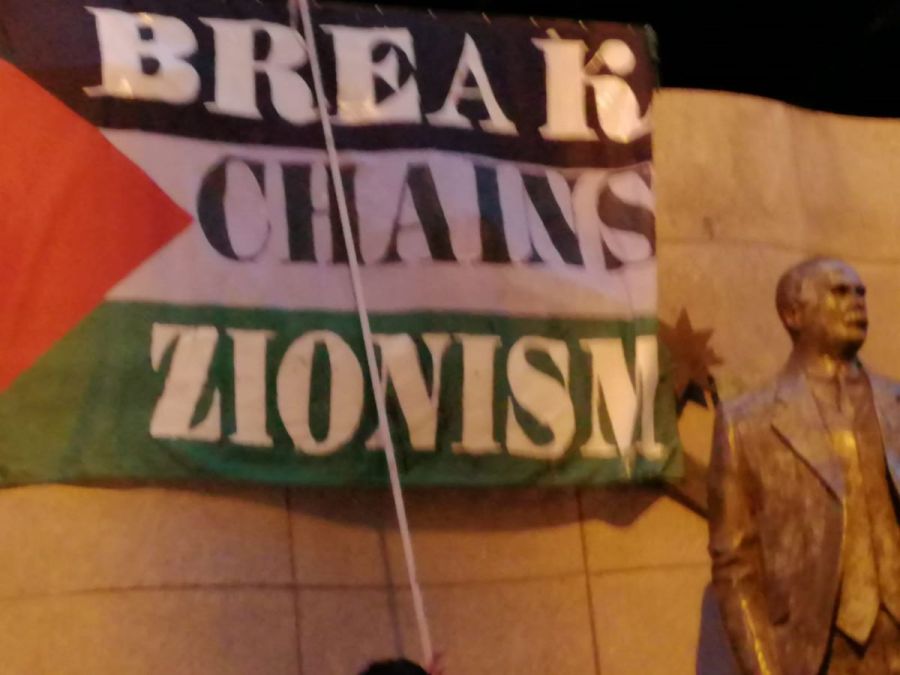
Break the Chains of Zionism banner next to James Connolly Monument (Photo: R. Breeze)

A Garda patrol car crew whose political undercover colleagues had clearly overlooked keeping informed drew up at the Bridge bemusedly during the chanting and, after attempting to gain some information as to events, left again – as did the participants soon afterwards.

The event was organised by Anti-Imperialist Action Ireland and Saoirse Don Phalaistín, the former’s Facebook page having been taken down by Meta while the event was being organised but the groups may be followed on Instagram and Twitter.
End.

Footnotes

1The location of this fine monument is in Beresford Place, across from the site of the original Liberty Hall, home of the Irish Transport and General Workers Union which Connolly led after Jim Larkin departed for the USA at the end of the 1913 Dublin Lockout. The site is now occupied a multi-storey building of SIPTU.
2The first is about the last major engagements of the 1798 Republican uprising, when a relatively small French force landed in Co. Mayo and was joined by Irish Republican insurgents; the second celebrates the IRA ambush of a column of the Auxiliary Regiment in West Cork, wiping it out almost to the last British terrorist.

3The 1916 Rising.

4Until they reached O’Connell Street they were following in the footsteps of the GPO Garrison on Easter Monday, 1916 and passed by a number of historical political and artistic locations of 1848 and of the early 20th Century.

A FOUNDER OF THE PALESTINIAN RESISTANCE AND MARTYR

(The following text is taken with minor organisational editing from Resistance News Network as are also the images)

(Reading time: 3 mins.)

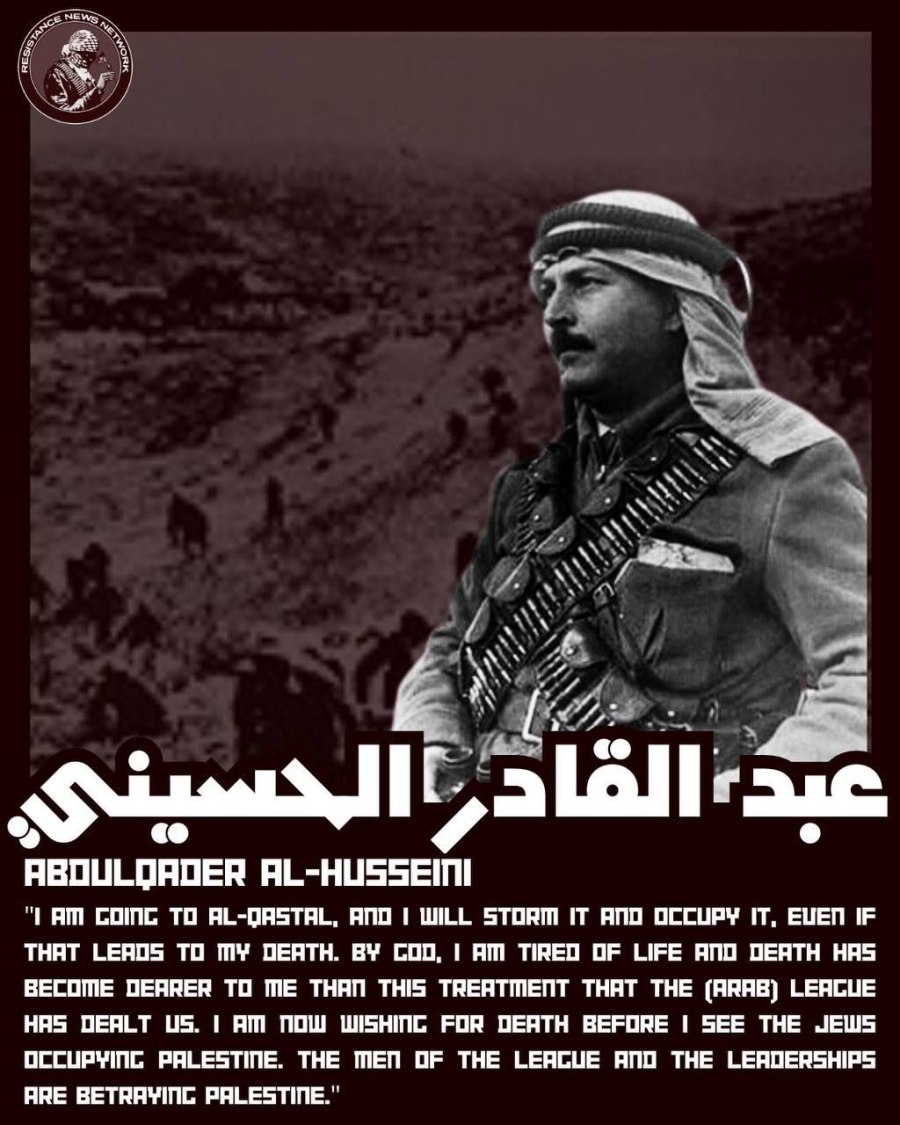
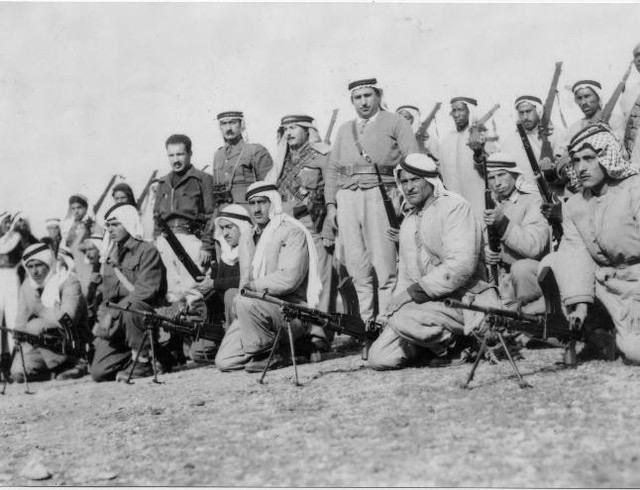
On April 8th, we commemorate the anniversary of the martyrdom of one of Palestine’s foundational resistance leaders in 1948, the eternal Martyr Abdulqader Al-Husseini, who gave his life in the noble pursuit of our people’s liberation. 

(Image sourced: Resistance News Network)

From childhood, Al-Husseini witnessed the beginnings of the colonial zionist project in Palestine and its implementation at the hands of the British. As he grew older, he became actively involved in organizing protests and demonstrations against the British occupiers.

After completing his secondary studies in Egypt, he returned to Al-Quds in 1933, and received a job in the land department. This job meant he was able to not only learn about the plans of land theft by the zionists, but also get close to the people of the villages. 

That same year, Abdelqader and other Palestinian leaders began laying the foundations of a new type of struggle: revolutionary armed struggle and founded the Organization for Holy Jihad (Munathamat al-Jihad al-Muqadas).

In May, they announced the beginning of the Great Palestinian Revolt. 

Al-Husseini, as one of the commanders of the Army of the Holy Jihad, led his troops in acts of resistance against both British and zionist occupiers during the Great Revolt between 1933-1936.

(Photo sourced: Resistance News Network)

In October 1936, he was arrested after he was wounded during the Battle of Al-Khader but managed to flee from the hospital to Damascus. 

His leadership extended beyond military operations in Palestine, as he also worked tirelessly to mobilize support for the Palestinian cause abroad and participated in the Iraqi struggle for liberation against the British, where he was arrested until 1943.

He remained in exile, passing through Germany where he learned to make explosives and mines and Cairo, setting up training camps and importing weapons, and finally returning to his homeland in 1947 when the partition plan was announced.

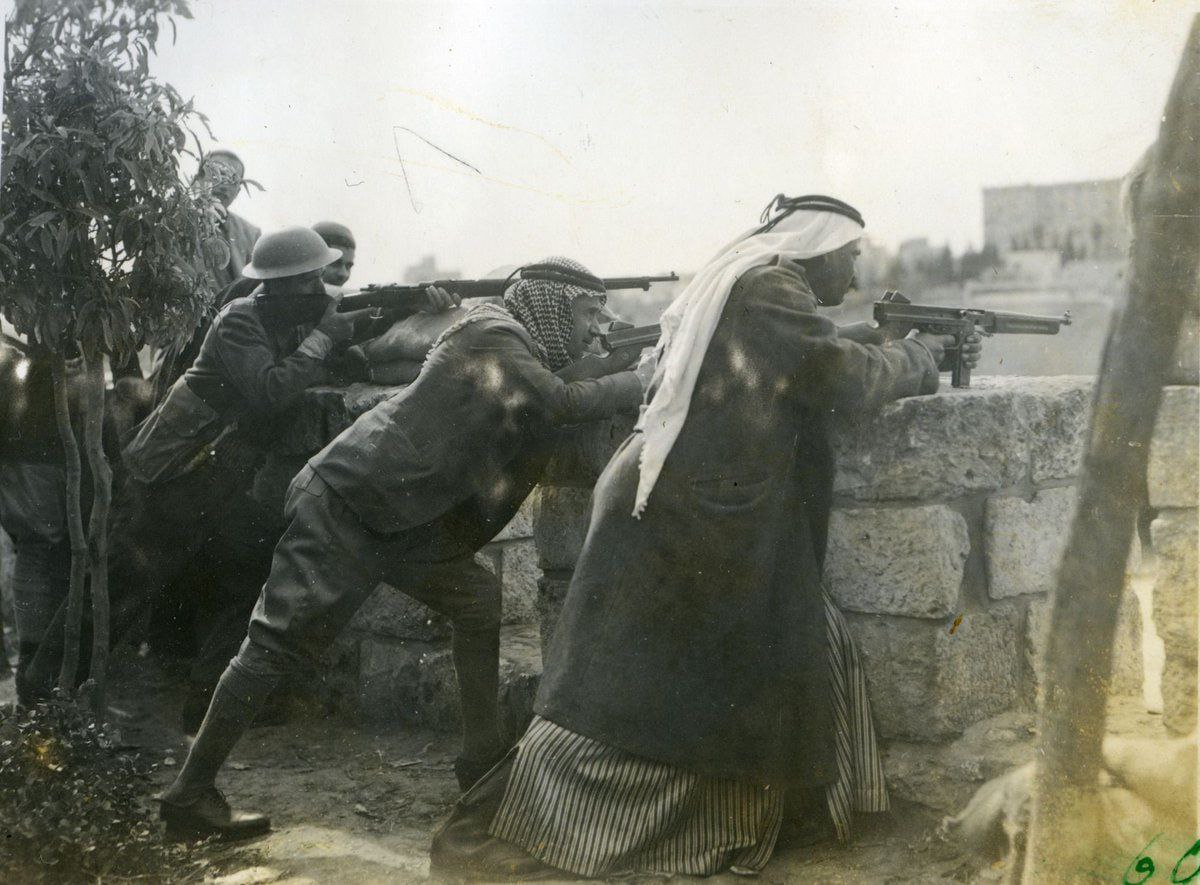
(Photo sourced: Resistance News Network)

Upon his return he instantly began orchestrating and taking part in armed actions against zionist expansion.

In April 1948, Al-Husseini left for Damascus to meet with the Military Committee of the League of Arab States in order to ask for arms to repel the zionist incursion into Al-Quds, but the League failed him and the people of Palestine.

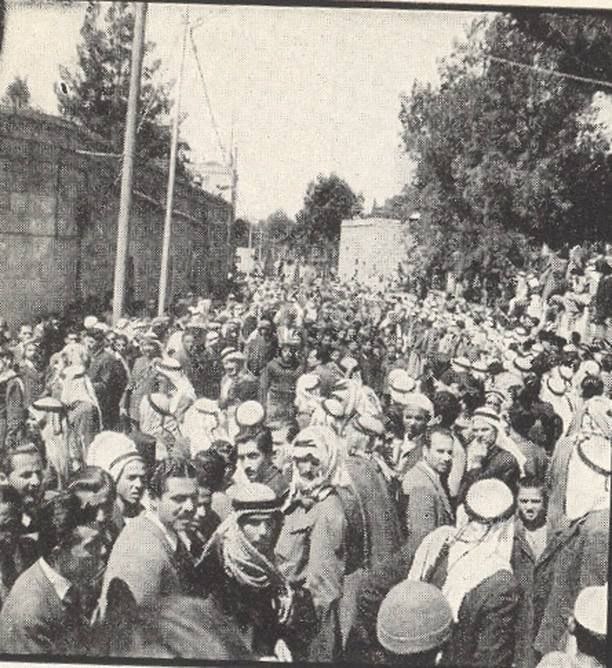
(Photo sourced: Resistance News Network)

It was at that time he received news of the occupation of Al-Qastal, a strategically located village west of Al-Quds. Before he left, Al-Husseini wrote a letter to the League in which he says, “I hold you accountable after you left my soldiers at the heights of the victories without aid or weapons”. 

He returned one last time to fight, waging a fierce battle against the incursion into Al-Quds and proclaimed, “I am going to al-Qastal, and I will storm it and occupy it, even if that leads to my death.”

(Photo sourced: Resistance News Network)

“By God, I am tired of life and death has become dearer to me than this treatment that the League has dealt us. I am now wishing for death before I see the Jews occupying Palestine. The men of the league and the leadership are betraying Palestine.”

When the news spread that he planned to liberate Al-Qastal, fighters across Palestine came to his aid, liberating the village and raising the Palestinian flag later that afternoon on April 8, 1948. Fighters would later find out he was martyred during its liberation. 

(Photo sourced: Resistance News Network)

His legacy was carried forward by his wife Wajeeha Al-Husseini who was his partner in struggle, a daughter and three sons, who fought in the ranks of the Palestinian revolution after the Nakba of 1948.

Al-Husseini’s unwavering bravery and tireless efforts to defend our homeland and resist occupation continue to inspire us in our struggle for liberation. His courage and sacrifice remain a guiding light as we persevere steadfastly in the face of the cowardly zionist enemy.

We honor Al-Husseini’s legacy by renewing our commitment to our struggle. We draw strength from his sacrifice and all those who followed in his footsteps. Together, we will continue the struggle until martyrdom or victory. 

(Photo sourced: Resistance News Network)

Glory to the eternal Martyr Abdelqader Al-Husseini. 

Long live the resistance. 

Long live Palestine.

End.

STEP FORWARD, YOUTH!

Diarmuid Breatnach

(Reading time: 8mins.)

University students in the USA protesting, setting up encampments, occupying university buildings; threats from administrators; police invasions, assaults on students, resistance, arrests …

Step forward, Youth and shake the towers

Those ivory towers stand on sweat and blood

Make those lies fall in showers —

Become the earthquake and the rushing flood.

Step forward youth

For solidarity and truth!

Academic freedom and investigation

and principles too of democracy

Have taken now academic vacation

Revealing true base in hypocrisy.

Step forward youth

For solidarity and truth!

Look down below your feet

Reach out to workplace and street

Stretch out solidarity’s hand

to the struggling in another land.

Step forward youth

For solidarity and truth!

only thus can you also be

in a better world, at peace and free.

(Dublin, May 2023)

It seems as though we’ve been here before, a sense of dejá vu … Ah, yes! During the Vietnam War (1955-1975). University students in the US were in conflict with the authorities about lifestyle, content and style of the curriculum, racism, sexism, sexuality and .. yes, the US’s war in Indochina.

Students lost their study and work plans, got hit by truncheons, were sickened by teargas and some were shot dead, as in Kent State University, Ohio by the National Guard and in Jackson, Mississippi 11 days later.1

Which is why the suggestion of House Speaker Mike Johnson to send that same body in against the students last week was a vicious act of intimidation.

In the 1960s Trinity College Dublin, the academic bastion of the British-unionist Ascendancy, was a hotbed of protest and even revolutionary organisation along many fronts – including gay rights, contraception rights, Irish socialism and national liberation.2

The Ulster University in Belfast, in the British Six-County colony saw protests for Catholic civil equality, a struggle that faced armed repression and developed into a responding armed struggle of three decades.

In the USA those years coincided too with marches for black civil rights and also the rise of militant revolutionary groups such as the Black Panthers, the Young Lords, Weathermen, SLA and later the American Indian Movement.

Women’s liberation and Gay & Lesbian liberation movements3 also moved more to the fore.

The responses of the US State to many of those movements were even more vicious than they had been against the students, with trials, jailings,4 shootings5 and downright unofficial executions.6 As the campus protests now draw in wider communities, are we heading for something similar?

In the USA, the authorities seem terrified of that conjunction — or how else can we understand the violence of their reaction which has even horrified some university senates?

DIFFERENCES BETWEEN THEN AND NOW

When the students in the USA fought the institutional authorities, it was partly in solidarity with the people of Vietnam (and later of Laos and Cambodia). Yes, but many also feared being sent to the Vietnamese War meat grinder and being airlifted home from there in body bags.

The draft had been introduced in 19647 and though middle-class students had a better chance of avoiding conscription, they were far from immune.8 Being an officer might make one safer from the enemy than being a grunt but not from the grunts themselves as “fragging” incidents soared.9

The students now protesting in US Universities are doing so in solidarity with Palestinians, in horror at their state’s support of Israeli genocide. They may have other issues with their universities’ management and society at large but in general we can rule out the motive of self-preservation.

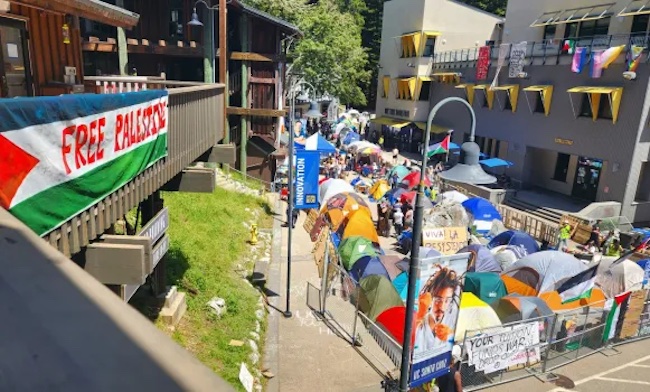
Encampment Palestine solidarity Vera Cruz University California Thursday (Photo cred: Aric Sleeper Santa Cruz Sentinel)

The drug culture was very much seen as part of the protest movement back then, though opposed by some such as Panthers and viewed with suspicion by other revolutionaries. Pacifist trends were strong and Timothy Leary’s “turn on, tune in and drop out” mantra attracted many.

Much of the revolutionary potential of the movement was lost under that influence, nowhere near as powerful now and revolutionaries who know their history will be aware that such arch-opponents of the system as Leary became an FBI informant to get out of jail.10

Many may argue as to degree but the power of patriarchy and oppression of LBG sexuality, though certainly present, are nowhere near as strong today in the “western world” as they were in the 1960s.

The power of the Catholic Church hierarchy in Irish society has been greatly weakened by struggles, Church scandals and society’s evolution. Discrimination against Catholics in the Six Counties is also less than it was in the previous era.

The armed struggle is not currently being waged.

However, Ireland remains divided between a 26-County neo-colony and a Six-County colonial statelet. The economies are hugely penetrated by foreign multinationals, the health services tottering and a huge housing crisis due to turning housing over to big landlords and property speculators.

The main parties of the ruling classes have been exposed to such degree that they no longer act in the charade of opposition: Sinn Féin and the DUP share political administration of the British colony while Fine Gael and Fianna Fáil share it for the neo-colony, prepared to admit SF there too.

Fascists gather some of the disenchanted, marginalised and disinherited to try to mould them into a fascist movement against migrants and refugees, against LGBT rights, against socialism. The State facilitates that development while it grows more repressive in both the administrations.

The ruling class will be aware of the potential of a rise in student protest coinciding with a feeling of Palestine solidarity and frustration at Irish state complicity very widely spread throughout Ireland. But then the Irish state is not imperialist, it’s just complicit in imperialism.

UNIVERSITY PROTESTS NOW

Students in universities across the USA have staged occupations or built encampments in explicit solidarity with Palestine against their own government and against the collusion of their academic institutions with zionist genocide of Palestinians and the destruction of every university in Gaza.

The response of the academic authorities has been denunciation, threat, eviction and false characterisation of the high motives of the students as “anti-semitism”.11

Municipal, county and state police forces have responded violently to peaceful protest, including bodily assault, pepper spray, tear gas, rubber bullets and arrests. The Government has drafted a change of the legal meaning of anti-semitism to include opposition to the Israeli zionist State.12

Rutgers students tents 29 April 2024 (Photo cred: Sophie Nieto-Munoz/ New Jersey Monitor)

The violence of the authorities has not been confined to the protesting youth but has been extended to staff who stood with them. During the week Dr. Steve Tamari, professor at the University of Southern Illinois got nine ribs fractured by cops – for filming what was going on.

Chair of Jewish Studies at Dartmouth University, New Hampshire, Annelise Orleck (senior citizen) was violently arrested and banned from campus for six months.

In some cases not only have the protesters resisted valiantly but actually drove the cops into retreat and in Portland, Oregon, police cars were set alight. Also a fascist who drove at protestors and pepper-sprayed them was, according to reports, identified and his car destroyed.

On the other hand, Zionists (and suspected fascists) have mobilised against the students in many universities, with the tired old propaganda of “anti-semitism” and in one case attacked an encampment with sticks and fireworks, also playing a “crying child” Israeli drone recording.13

Irish Republicans and other anti-fascists will not be surprised to learn that a) the police disappeared shortly before the violent attack and b) none of the attackers were arrested when the cops returned.

More than 2,100 people have been arrested at US campuses since April 1814 and students have been barred from their own campuses which, for many, means also their own accommodation.

Police Attack Palestine solidarity UCLA campus Thursday 2 May 2024 LA (Photo cred: Ethan Swope/ AP)

The university protests have spread beyond the USA and have broken out in Canada (McGill), Australia (Brisbane and Sydney) and even Humbold in Germany, main Israel arms supplying country after the US, where state repression of Palestine solidarity has been particularly heavy.15

In France, where there has also been much repression of Palestinian solidarity activity, there have been occupations at the Sorbonne and Sciences Po in Paris) and in England, Newcastle and London, while an encampment was set up in Edinburgh in front of the Scottish Parliament.16

SHAMEFUL SILENCE”

In Ireland, the universities have been relatively quiet until now but the Trinity College Dublin administration fined their Students Union €214k for a one-day Palestine solidarity picket outside the building housing the Book of Kells exhibition, citing loss of visitor revenue in justification.

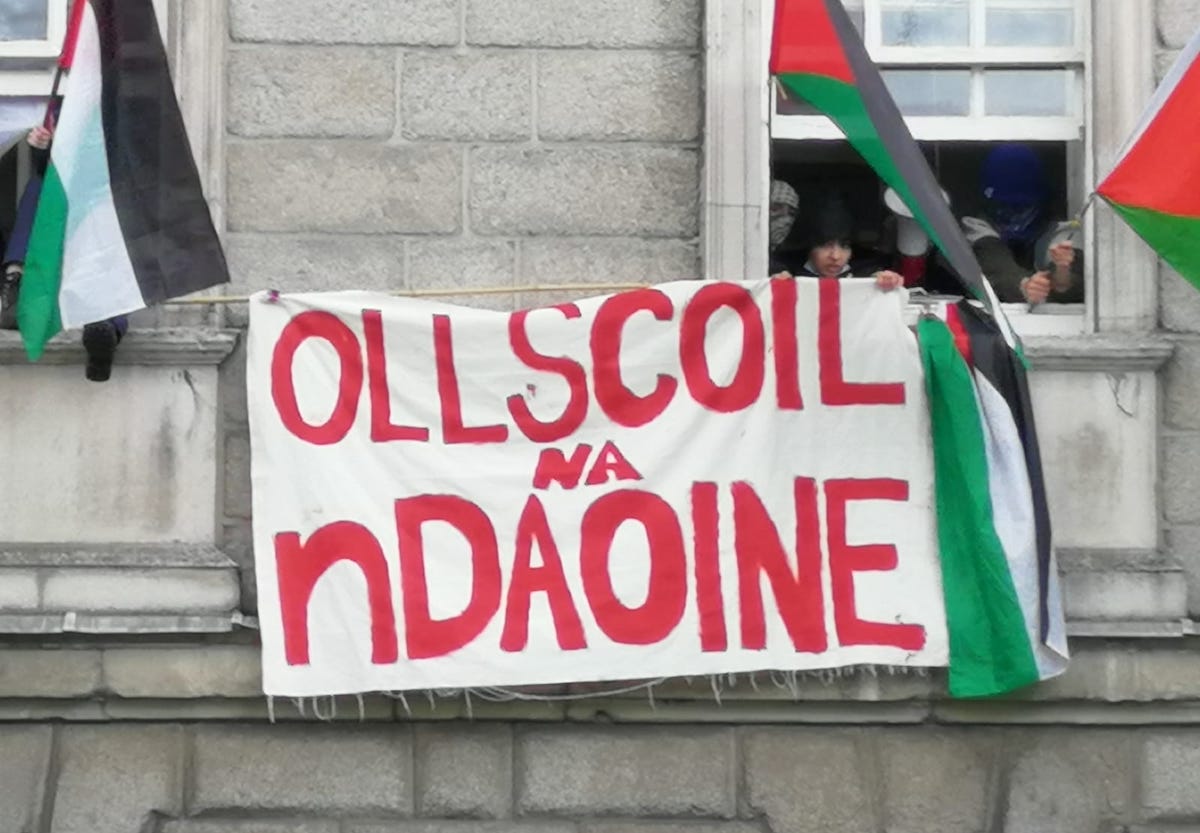
“The People’s University” banner hanging from windows in Trinity College Saturday (Photo: D.Breatnach)

But repression leads to resistance; now there is a Palestine solidarity encampment on the green in front of the Kells exhibition. People are mobilising to support the student resistance in Trinity and today saw a march there from the Spire with the administration locking the gates shut.

“We plan on staying here indefinitely, our message is there is no ‘business as usual’ during a genocide,” outgoing students’ union president Laszlo Molnarfi said.17

(Photo: Social Rights Ireland)

“When our academic institution, Trinity College Dublin, has ties to Israeli companies, entities and universities that are complicit in the war industry, we must speak up. That is why we are doing this.

“And we must speak up in this disruptive, powerful way. Because when we tried to engage with the authorities, with petitions and letters and meetings, we were met with shameful silence.”18

Inside Trinity College grounds Friday night/ Saturday morning (Photo: Social Rights Ireland)

In the wider ‘global South’, Palestine solidarity protests have been seen in India at Jawaharlal Nehru University in New Delhi against a visit from the US Ambassador to the country, Eric Garcett, which had to be cancelled.

More dangerous by far to the US ruling class and Israeli-colluding King of Lebanon, so geographically close to Palestine and with a strong Hizbollah guerrilla presence, are the student demonstrations at the university of Beirut.

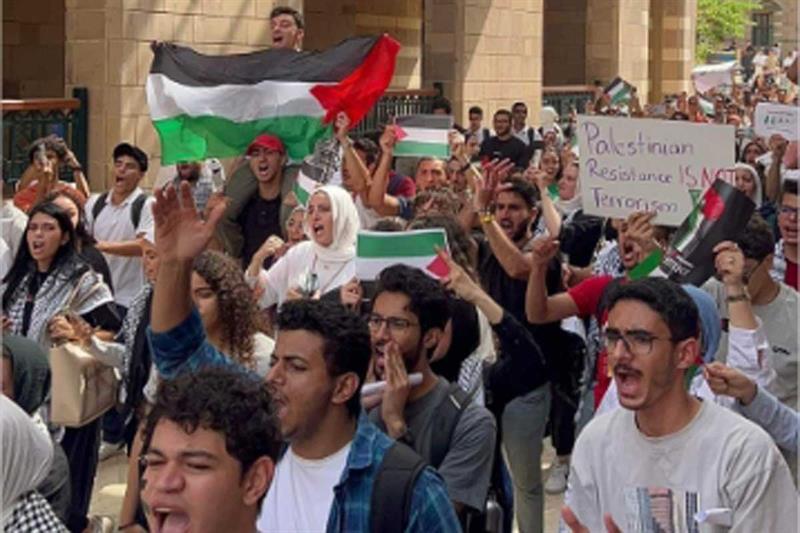
Students at American University in Cairo (AUC) Demonstrating Monday in Solidarity Palestinians (Photo source: X Twitter)

Whether overall these actions of students, who comprise a large and influential section of youth, will significantly deepen, widen and energise the growing Palestine solidarity movement, and simultaneously the wider anti-imperialist movement, remains to be seen.

End.

Victory to the Palestinian Resistance” banner on Trinity College railings Saturday (Photo: D.Breatnach)

FOOTNOTES

14th May 1970, killed by the Ohio Kent National Guard during a protest against the Vietnam War. The Jackson killings occurred 11 days later on Friday, May 15, 1970, at Jackson State College (now Jackson State University) in Jackson, Mississippi. On May 14, 1970, city and state police confronted a group of students outside a campus dormitory. Shortly after midnight, the police opened fire, killing two students and injuring twelve.

https://en.wikipedia.org/wiki/Jackson_State_killings

2Ironically, precisely because it was free of the major socially controlling agency in Ireland at the time, the Catholic Church hierarchy.

3See the Stonewall Riots of 1969 in the US against homophobic police harassment.

4Including many frame-ups, some of which were only exposed decades later. Leonard Peltier was jailed on dubious evidence in 1977 which had already collapsed against a co-accused but is still in jail, 79 years of age with diabetes and other health problems.

5See MOVE organisation in the late 1970s https://en.wikipedia.org/wiki/MOVE_(Philadelphia_organization)#1978_shoot-out

6Fred Hampton and Mark Clarke were assassinated by police and other Black Panthers wounded in 1969 https://en.wikipedia.org/wiki/Fred_HamptonS and Black Panther George Jackson, shot dead by prison guards in 1971 allegedly while participating in a prison escape. https://www.freedomarchives.org/George%20Jackson.html

7Between 1964 and 1973, the U.S. military drafted 2.2 million American men out of an eligible pool of 27 million https://michiganintheworld.history.lsa.umich.edu/antivietnamwar/exhibits/show/exhibit/draft_protests/the-military-draft-during-the-

855% working class, 25% poor and 20% middle class, according to one study https://www.studentsofhistory.com/vietnam-war-draft

9Attack from lower ranks by fragmentation grenade rolled into a toilet being used by an officer or his tent. Between 800 to 1,000 such incidents are thought to have occurred among US Marines during the Vietnam War https://www.marxists.org/history/etol/writers/geier/1999/xx/vietnam.htm

10https://www.independent.co.uk/news/timothy-leary-was-an-fbi-informer-1103070.html

11Thereby also devaluing the meaning of that particular form of racism which was a basic ideological aspect of Nazism and Fascism and continues to be a strong trend in European fascism today.

12Ditto.

13One of the latest horrors from the Israeli Zionist cabinet, killer drones playing sounds of a crying baby or a woman needing help in order to bring would-be helpers out where they can then be shot dead, being played in this case mockingly.

14https://edition.cnn.com/2024/05/03/world/pro-palestinian-university-protests-worldwide-intl-hnk/index.html

15https://www.aa.com.tr/en/europe/german-police-break-up-pro-palestinian-protest-at-humboldt-university/

16A semi-autonomous legislative assembly but part of the United Kingdom.

17https://www.itv.com/news/2024-05-04/students-at-protest-camp-inside-trinity-college-vow-to-stay-indefinitely

18Ibid.

SOURCES

https://en.wikipedia.org/wiki/Jackson_State_killings

https://edition.cnn.com/2024/05/03/world/pro-palestinian-university-protests-worldwide-intl-hnk/index.html

Trinity College protest: https://www.bbc.com/news/articles/cn0wzgp7q0do?

https://www.itv.com/news/2024-05-04/students-at-protest-camp-inside-trinity-college-vow-to-stay-indefinitely

The Trinity occupation: https://www.instagram.com/tcd_bds

LESSONS THE PALESTINIANS AND THE ISRAELI ZIONISTS HAVE TAUGHT US

Diarmuid Breatnach

The past six months of an almost incredible level of Israeli genocide and Palestinian resistance have taught the world some valuable lessons but particularly perhaps to those of us living among the Western powers.

PART ONE: LESSONS FROM THE PALESTINIANS

Diarmuid Breatnach

(Reading time: 11 mins.)

  • Resistance – ongoing, preparation, striking, unity

The Palestinians have taught us the strength and value to an occupied and oppressed people of resistance, from generation to generation, maintaining and developing culture and nurturing historical memory while the occupier tried to erase it all and make the endeavour seem hopeless.

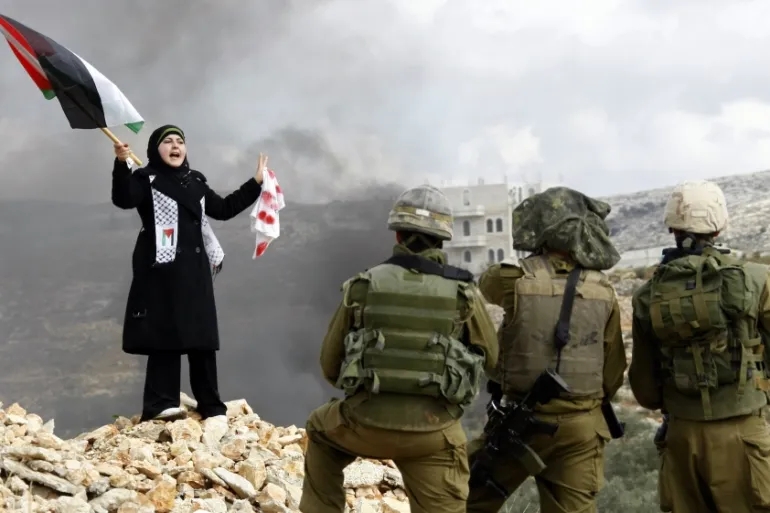
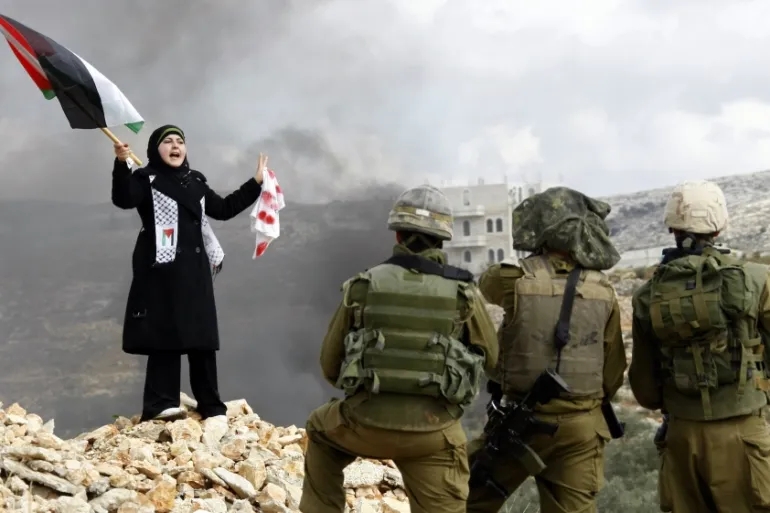
Palestinian woman in Gaza defiant, January 8, 2009 (Photo cred: Eric Gaillard/Reuters)

Without a navy, air force, tanks, armoured vehicles or standard artillery (apart from home-made rockets and missiles), they faced what is often called the “strongest military power in the Middle east”. Despite periodic massacres they have regularly risen against the oppressor.

In truth, it was a lesson that at one time we hardly needed in Ireland, learned even earlier than the Palestinians. But we needed reminding of it.

It is also important for the morale and dignity of the resistance that it shows itself capable of striking at the enemy.

We’ve been reminded of the importance of long-term preparation. The Palestinian resistance built kilometres of tunnels underground in which they also set weapon production factories, developing their own weapons and repurposing existing weapons, including unexploded Israeli Army bombs.

In their Al Aqsa Flood attack on October 7th and fighting since, the Palestinians taught us the value of not only of daring and prior preparation but of coordination and unity, as a number of resistance organisations cooperated in struggle, some secular and some Islamic fundamentalist.1

Palestinian resistance fighters from different organisations displaying their unity in struggle in this photo (Photo sourced: Internet)

In meeting the subsequent genocidal rage of the occupier, the Palestinian resistance have taught us that all the technological might and expertise of the enemy was incapable of crushing a prepared, courageous, united and determined resistance.

The Israeli domination of the air from which it rained down genocidal bombing on civilians and civilian infrastructure, or targeted assassinations of the families of resistance fighters, was not sufficient to defend its ground troops from attack and is itself under attack from GTA missiles.2

The occupier was effective only in genocidal actions against the civilian population and civilian infrastructure for which it will forever be reviled in historical memory. It achieved neither of the objectives it declared as it unleashed its war against Gaza: the wiping out of the resistance and release of captives.

  • Imperialism

We been shown – if we were willing to see it – the unity of western imperialism in supporting the ‘right ‘of a European settler group to establish itself on the land of the indigenous, creating an ethnocentric and theocratic state founded with an act of ‘ethnic cleansing’.3

We have been taught the willingness of the western imperialist states to tolerate the proliferation of acts and policies which it claims go against its fundamental liberal values: oppression, apartheid, discrimination and repression, while lauding the ‘European liberal values’ of the occupier state.

  • Betrayal

Another lesson which we should have learned too within the necessity of unity in a broad front is that it needs to be on a principled basis and the dangers in unity without such safeguards, leading to treachery, betrayal and collusion with the occupier.

The secular left-wing Fatah4 organisation may have seemed at one time the ideal one to follow though some would have favoured the further-left People’s Front for the Liberation of Palestine.5 But it was Fatah, as leading element in the PLO alliance, that signed up to the Oslo accords.6

In return for limited autonomy in a fraction of Palestinian land and without consideration of the right of return to the expelled Palestinians, the Fatah leadership with Yasser Arafat at its head agreed to this “peace process” while its officials scrambled for the gains of official corruption.

Hence the Palestinian Authority, corrupt, unrepresentative, undemocratic and repressive, working in collusion with the occupying authority. Again, our own history should have taught us that lesson but again, it is good to be reminded.

The Palestinians taught us how to deal with such a poisonous fungal growth with the Second Intifada and their last elections, those of 20067 and the carrying through of the electorate’s wishes in 2007, along with the ongoing resistance since.

  • Western Mass Media and alternatives

In reporting the events in Palestine over the decades but in particular over the last six months, we have learned the heavy anti-Palestinian and pro-Israeli bias of the WMM, that accepted without question the transparent lies of the Israeli regime and even questioned the massacre statistics.

Never once has the unjust claim of the occupiers to their stolen gains been questioned, never once the fundamentally just claim of the indigenous even mentioned. The Palestinian resistance has been reduced to one organisation in reporting, to be held up as a bogeyman monster.

(Image sourced: Internet)

If atrocities from across the Palestinian people were reported in the media, they were framed as of dubious provenance, while the most outlandish and illogical claims of the occupier were reported as reasonable fact.

We have, in fact, been taught not to trust the western mass media when reporting on international events and, by extension, not to trust it on domestic issues either. Conversely we have learned to rely more on alternative Internet media but also on the need to navigate those with some caution.

We have also learned that some of the most prominent alternative sources on the war between NATO/Ukraine and Russia, attacked by liberals and sections of the Left as “Russian-controlled” or “Putinistas” turned out to be the most reliable in reporting the realities of the Israeli genocide.

  • Internationalist solidarity

We have relearned the importance of international solidarity, both as we expressed it ourselves and saw its outpouring across the globe. We have been taught the existence of an alternative world of human solidarity in opposition to one based on expropriation, exploitation and competition.

We saw Hizbolah in Jordan and Syria come to the assistance of the Palestinians and pay the price for doing so, as did Ansar Allah (“Houthis”) in Yemen and as has also Iran — what the Electronic Intifada has called “the Axis of Resistance”.

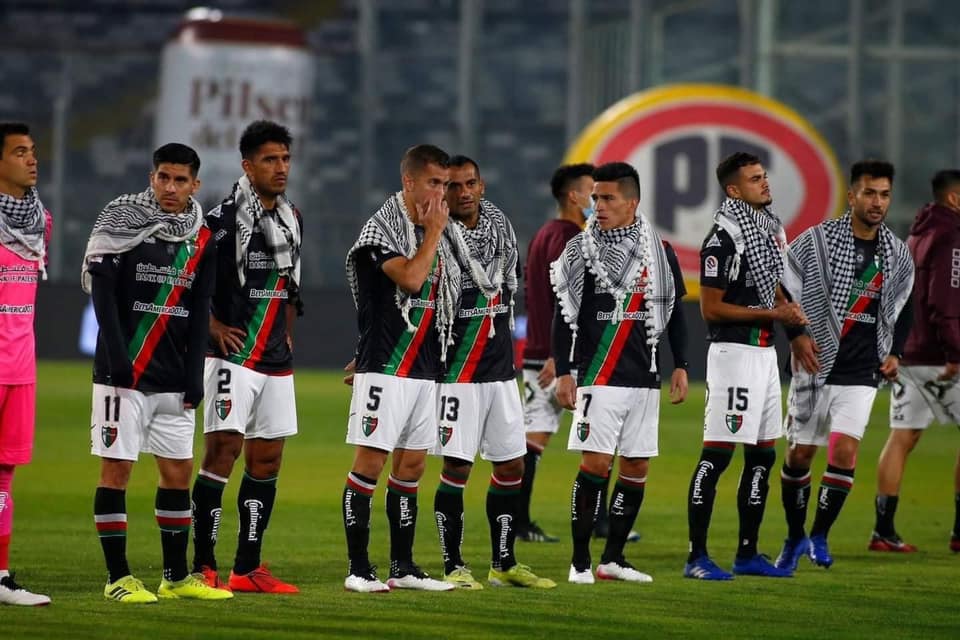
Chilean football team players May 2021 (Photo sourced: Internet)
London, January 2024 (Photo cred: PA)

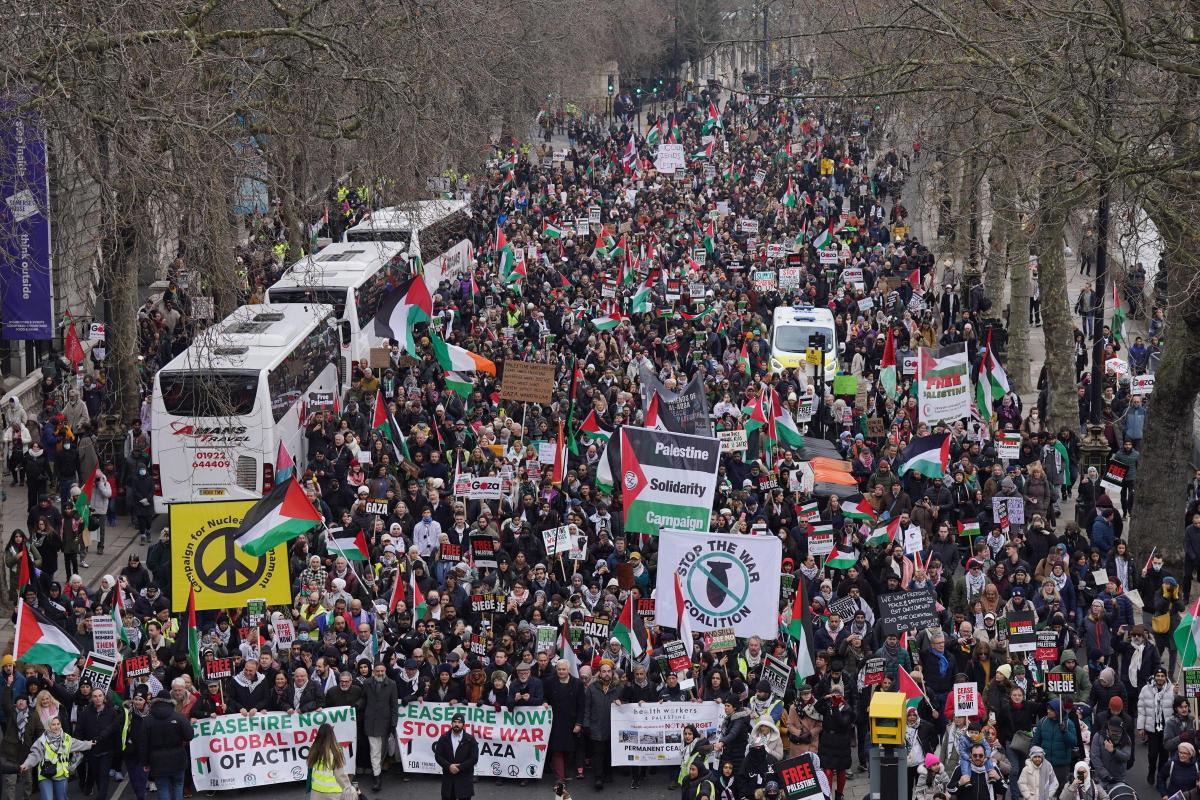
And we have learned to use internationalism as a measuring stick also in evaluating institutions, political parties and politicians in our own countries. We have seen the meaning of anti-semitism twisted and employed in repression with a stifling censorship across public life – academic, political and social.

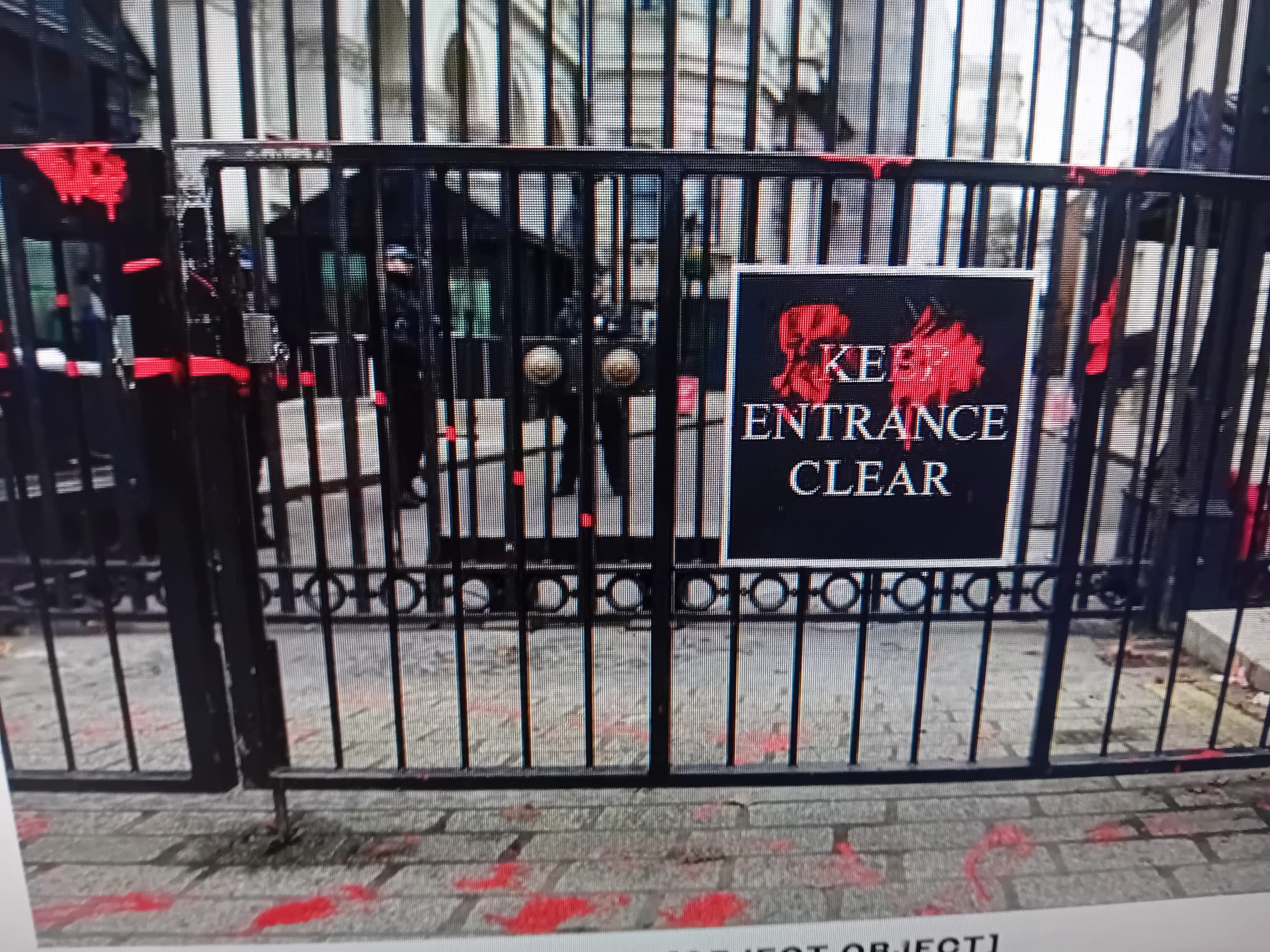
Downing Street (containing home of the UK Prime Minister) 29 December 2023 (Photo sourced: Internet)

Political parties and politicians have revealed either their complicity in and collusion with the criminal Israeli genocide or alternatively their inability to resist and effectively oppose it. That has exposed their lack of fitness to lead us in our domestic struggles too.

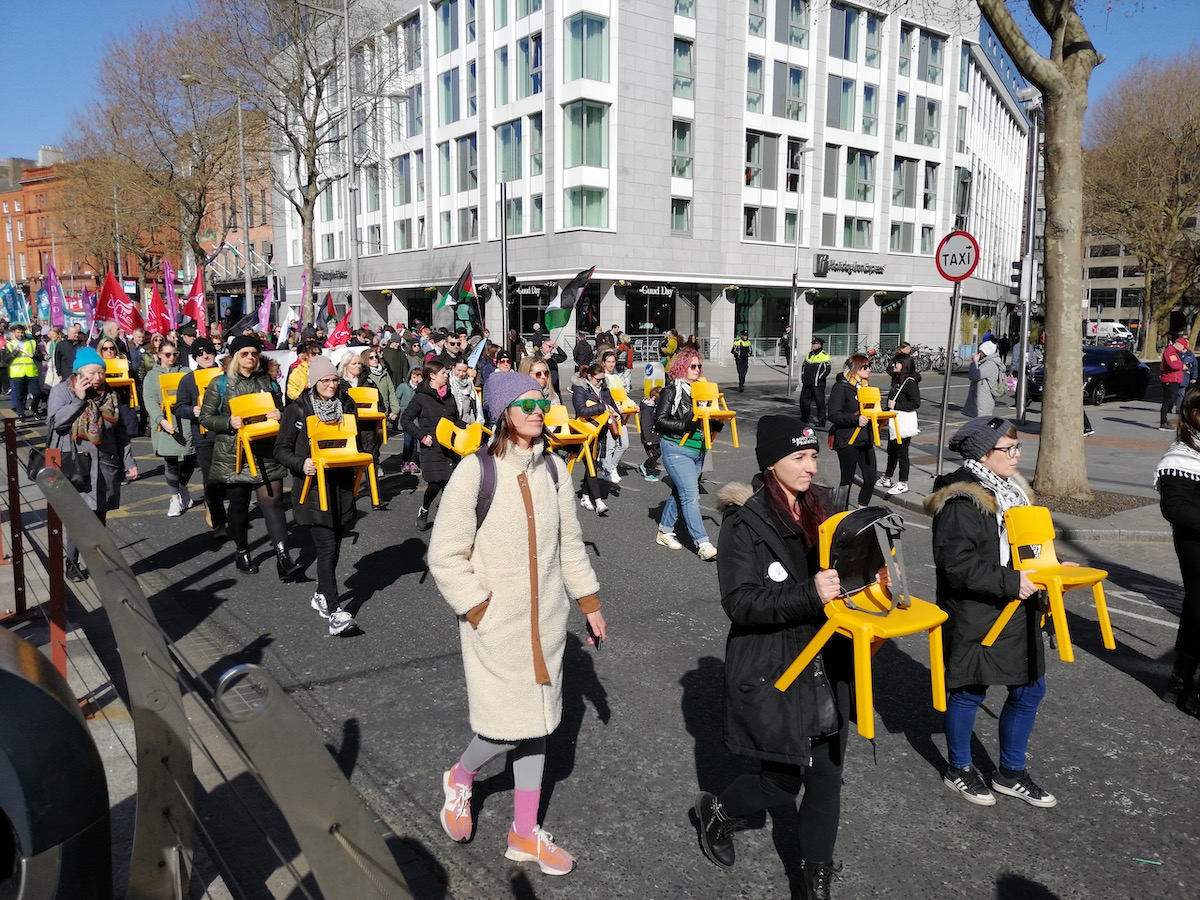
Teachers and others in Palestine solidarity demonstration in Dublin, March 2024 symbolically carrying infant school chairs in protest against the Palestinian children murdered by the Israeli armed forces. (Photo: D.Breatnach)

IN CONCLUSION

  • The need for revolutionary resistance

The Palestinian resistance has taught us important lessons, including the need of revolutionary resistance in addition to revolutionary organisation and preparation.

It remains to us to learn those hard-earned lessons, to internalise them and to apply them externally. We owe that to the Palestinians and to ourselves.

End.
(Read also Part B What the Israeli Zionists have taught us follows.)

FOOTNOTES

1Hamas – Izz ad-Din al-Qassam Brigades; Palestinian Islamic Jihad – Al-Quds Brigades; Popular Resistance Committees Al-Nasser Salah ad-Din Brigades; Popular Front for the Liberation of Palestine’s Abu Ali Mustafa Brigades; Popular Front for the Liberation of Palestine – General Command Jihad Jibril Brigades; Democratic Front for the Liberation of Palestine (DFLP) – National Resistance Brigades, Al-Aqsa Martyrs’ Brigades; Palestinian Mujahideen Movement and its Mujahideen Brigades.

https://www.newsweek.com/not-only-hamas-eight-factions-war-israel-gaza-1841292

2Ground To Air missiles.

3The expulsion of 700,000 Palestinians and massacres such as the one in the village of Dir Yassin.

4Fatah wasfounded in 1957 and was the majority party in the Palestine Liberation Organisation.

5The PLO was founded in 1964 and the PFLP in 1967, next in size of organisation in the PLO to Fatah (Islamic organisations were excluded from the PLO; Hamas recently proposed the reconstruction of the PLO open to all resistance organisations).

6The Oslo Accords were the result of a number of conferences, overseen by the USA and was part of the second of the current“peace processes” which include Ireland, the Basque Country and Colombia.

7Hamas won the elections throughout the accepted Palestinian territories but Fatah tried to continue to keep control, being dislodged from Gaza in 2007 by Hamas, which held back from doing the same thing in the West Bank which has remained under the undemocratic, repressive and colluder control of the Palestine Authority.

SOURCES

https://www.addameer.org/statistics

https://en.wikipedia.org/wiki/South_Africa_v._Israel_(Genocide_Convention)

https://www.unrwa.org

https://en.wikipedia.org/wiki/Israeli_allegations_against_UNRWA

AN PHOBLACHT ABÚ CALLS FOR BROAD UNITY IN STRUGGLE

Diarmuid Breatnach

(Reading time: 4 mins.)

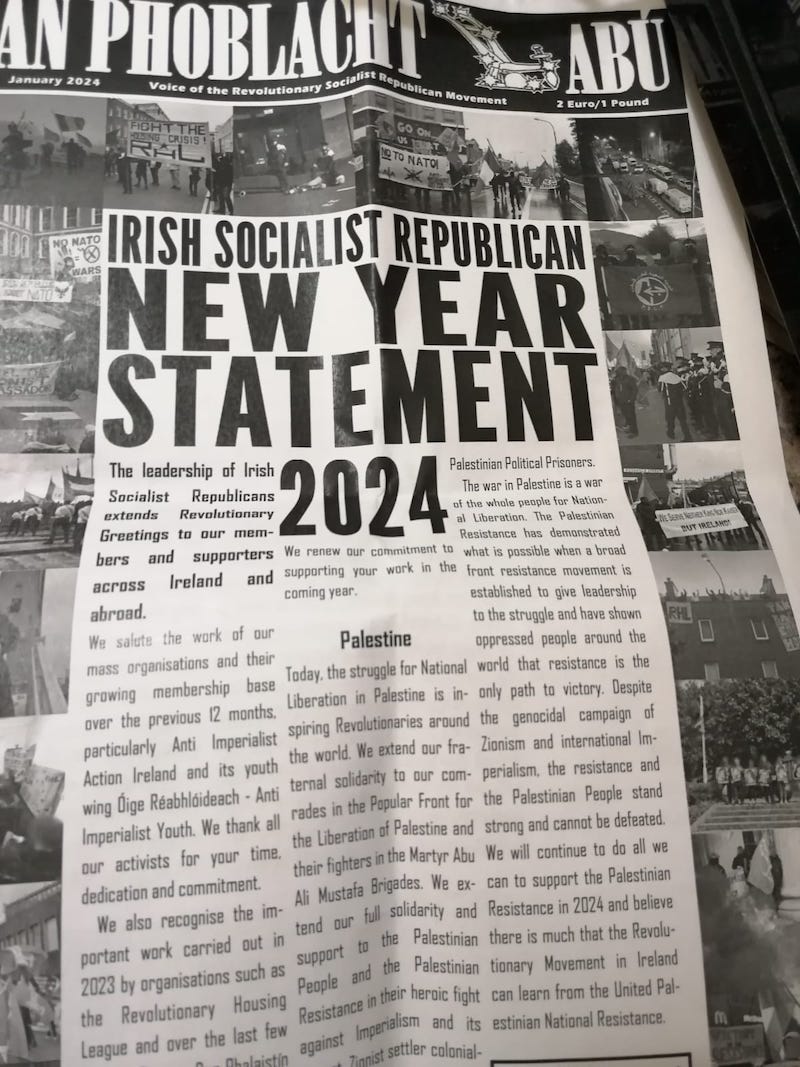
The first edition of the socialist republican weekly newspaper An Phoblacht Abú for 2024 has been available in hard copy from sellers now for several weeks; I am reviewing it here as I have done on occasion with another few issues during 2023.

APA is a hard-copy newspaper of usually 12 x A4 sides, produced monthly from I believe the last months of 2022, including articles on anti-imperialism, anti-fascism, recent Irish history, internationalist solidarity and sometimes on older history, culture and reports on events, selling at €2/£1 per issue.

Hard-copy revolutionary papers are important as a means of distribution to those who don’t wish – or are unlikely — to seek it online but more than that, they also provide the opportunity to make contact on a personal and organisational level with people with whom to discuss events.

Masthead image taken from the An Phoblacht Abú Facebook page.

However, back issues are also available electronically, I’m told, from the producers.

This particular issue reports on the Palestinian struggle and the solidarity movement in Ireland, featuring a report of an occupation of the Israeli Embassy on 19th December with a following picket and blockade of the gates to the building which hosts it for many hours.

Another page carries a report on Palestine solidarity actions across the country and a “Hands Off Iran & Iraq” item, also an obituary on the death of a recent comrade of the organisers. Separately there is a report and comment on the death of an Irishman in the conflict in Ukraine.

Political prisoners in Ireland and the Basque Country are also covered, the latter focussing on the ‘non-compliant’ Basque prisoners and their support network, in contrast to the colluding “official leadership” and the great majority of prisoners who have come under their influence.

An article comments on the upcoming Referendum on Article 41 of the Constitution of the Irish State, condemns the treatment of women historically by the Irish ruling class and, without recommending how to vote, calls for the destruction of the State.

Commemorations of historical events, including martyrs, are an important part of the culture of all peoples in struggle and APA reports on some. A statement on the escape from justice by natural death of war criminal Brigadier Kitson was widely shared in appreciation on social media.

NEW YEAR CALL FOR BROAD FRONT UNITY

Organisations traditionally issue New Year statements, perhaps reflecting on the past year but always looking to the coming year. The ISR NY Statement covered three pages and called attention to all the struggles discussed in the reports, along with some others.

The one theme in the Statement dominating all others was the call for united action in developing a broad anti-imperialism united front to work for unity “around common Republican principles” while at the same time maintaining “the autonomy and independence of different groups.”

In furtherance, ISR proposes that a “Broad Front Congress” be organised before the end of this year and called on those interested to contact them “to turn the demand of the Republican base into action.”

COMMENT

The importance of revolutionary newspapers is underlined historically by the preparations of the British Government prior to the General Strike of 1926, when they purchased all stocks of newsprint paper to deny them to revolutionaries and other strikers.

Governments today can close down social media transmission and reception over an area and even nation-wide.

The APA editorial is undoubtedly correct in its call for a broad front while stipulating independence of organisations within that front. A congress may further this aim but I wonder if it will, without some advance agreement on working principles (about which I have written previously).

I find it striking that in the New Year’s message which mentions working class communities, there is nothing about workplace organisation, or trade unionism, to give it another name. Working class people do not live in communities alone – they also work many hours outside them.

And in the most commonly-imagined scenario for revolution in western countries, revolution is preceded by a general strike. To organise and carry out such a strike and maintain it against external repression and internal undermining, requires leadership deep and wide within the movement.

How this is to be achieved is an issue, the resolution of which can only follow of course from recognition of its necessity. Across the Left and Socialist Republican movement I see no sign of this recognition.

The founding of this newspaper for socialist republicanism and its monthly production and distribution is a great achievement and to their credit for a young and still relatively small organisation.

Some typographical errors persist in APA which could be removed by greater editorial checking. The reproduction of images might be improved substantially too, space made for enlargement possibly by reduction in the area covered by print, increasing the visual attractiveness of the page.

However, APA is right to concentrate on the written word and the spread of themes, the reporting of actions and the reasoning behind them. A regular revolutionary newspaper has long been needed but missing and monthly production at least is needed for its effectiveness.

Fáilte uaimse roimh an nuachtán míosúil réabhlóideach seo, An Phoblacht Abú!

end.

Note: Back copies of An Phoblacht Abú are available electronically from isrmedia@protonmail.com

Commemorating the Newport Rising of November 4, 1839

Today marks 184 years since the greatest armed rebellion in 19th-century Britain when Chartist workers fought bloody gun battles with the police and army in the heart of industrial Wales, writes STEPHEN ARNELL

A sketch of the huge crowd in Newport in 1839 as it surrounded the Westgate Hotel hoping to free captive Chartist comrades (via the People’s History Museum).

“Come hail brothers, hail the shrill sound of the horn
For ages deep wrongs have been hopelessly borne
Despair shall no longer our spirits dismay
Nor wither the arms when upraised for the fray;
The conflict for freedom is gathering nigh:
We live to secure it, or gloriously die.”
— Chartist song of the South Wales miners

UNLIKE our friends across the channel in France, the inhabitants of Britain appear a remarkably supine people in the main, usually preferring well-organised demonstrations to anything that whiffs of pre-planned armed revolt, no matter how righteous the cause.

Yes, there have been mass meetings, marches and spontaneous events that took a wrong turn and descended into riots, but we seem singularly ill-equipped by nature to contemplate anything more serious.

But this would be doing this island race a disservice; to paraphrase the emperor Tiberius, there was a time when the British were not a people “fit to be slaves.”

There’s a long and storied history of the working classes attempting to seek redress from a variety of wrongs, including poll taxes (the Peasants’ Revolt, 1381), government corruption (Jack Cade’s Rebellion, 1450), religion (the Pilgrimage of Grace, 1536) and the later Pentrich Rising in Derbyshire of 1817, a muddled affair which aimed to cancel the national debt and repeal the Corn Laws.

1839’s Newport Rising was a more coherent and dangerous challenge than Pentrich, in possessing both a specific democratic political manifesto and its unprecedented scale.

That’s not to say the revolt was a carefully co-ordinated business that worked to a timetable with a pre-planned outcome, but the numbers involved, the potential for encouraging similar risings and the essential justice of the Chartist cause gave Lord Melbourne’s Whig government a serious jolt.

Newport had its origins in both national and local events.

The House of Commons rejection of the People’s Charter of 1838 calling for universal male suffrage, secret ballots, salaries for MPs, equal constituencies, and the end of the property qualification for voting on July 12 1839, and the following conviction and imprisonment in Monmouth of the Chartist leader Henry Vincent for conspiracy and unlawful assembly, stoked the fires of rebellion in industrial southern Wales, a stronghold for the movement.

Combined with this were reasons that directly concerned the rising’s leader, John Frost (1784-1877), namely his six-month imprisonment resulting from a dispute regarding his uncle’s will with Newport town clerk Thomas Prothero, and the wealthy political enemies he made on the way to becoming mayor of the Monmouthshire burgh.

A sketch of Chartist leader John Frost on trial at Monmouth after the uprising.

Despite this, Frost was supposedly reluctant to lead a full-scale armed uprising, and doubtful of its prospects, but the zeal of his supporters forced his hand and preparations were made for the march on Newport.

On Monday November 4 1839, Frost led 4,000 followers to the town, his group including allied coalminers, who armed themselves with home-made pikes, bludgeons, and firearms.

The authorities in Newport got wind of the march and detained several known Chartists at the Westgate Hotel in the town centre. This added impetus to Frost’s mission which was presumably to take over the town in the hope of starting a nationwide insurgency.

At 9.30am, a crowd of anything from 8,000 to 20,000 Chartists (ironically including Allan Pinkerton, later founder of the infamous US strikebreaking detective agency known as “the Pinkertons”) filled the square in front of the hotel, demanding the release of their comrades.

The mayor had gathered a mixed force of around 60 soldiers of the 45th Regiment of Foot and 500 special constables to defend the Westgate, all equipped with weaponry superior to the relatively small number of Chartists possessing guns.

To this day no-one knows for sure who fired the first shot, but a heated exchange between the two sides began, with the engagement lasting approximately half an hour. The result was a total rout for the Chartists.

Up to 24 rebels were slain, with around 50 injured. Four of the defenders were wounded, as was the mayor of Newport Thomas Phillips (later knighted by Queen Victoria), when the attackers briefly succeeded in entering the building. So ended the greatest armed rebellion in 19th-century Britain.

In comparison, the better-known Peterloo Massacre of August 1819 saw 18 people killed and as many as 700 injured when army regulars, special constables and local yeomanry charged peaceful demonstrators calling for parliamentary reform.

Weapons from the Newport Rising are displayed in the local museum.

Unlike the French, with the storming of the Bastille, the March on Versailles and the Paris Commune, the Newport Chartists appeared to lack the killer instinct of their Gallic counterparts, which may say something of the passive British national character relating to the ruling class.

The leaders of the rising were convicted of treason and were sentenced to be hanged, drawn and quartered, the last in England and Wales to be condemned with this ghoulish form of execution.

Their sentences were commuted by Queen Victoria to transportation for life to Tasmania. Frost was given an unconditional pardon in 1856 and returned briefly to Newport, where he received a rapturous welcome.

His two co-conspirators were also pardoned, but both opted to stay in Australia. Watchmaker William Price continued to ply his trade, but without success and died in poverty; in contrast, collier Zephaniah Williams (who at one point had planned to escape) discovered coal in Tasmania and became one of the richest men in the colony.

Note: the last people to be hanged, drawn, and quartered for treason in Britain are said to be David Tyrie in 1782, and in 1798, Father James Coigly; both were convicted of spying for the French (the Bourbon and revolutionary regimes respectively).

In 1977, John Frost Square, in Newport city centre, was named in the Chartist’s honour. But in 2013, Kenneth Budd’s mosaic in the square commemorating the Chartists was demolished at the behest of the Labour-run Newport council, prompting widespread outrage (from the likes of actor Michael Sheen and former Archbishop of Canterbury Rowan Williams) and public demonstrations.

Kenneth Budd’s mosaic, sadly demolished in 2013.

In November 2019 a new mural by Budd’s son Oliver was unveiled, consisting of four panels on the site of the former public toilets on Cefn Road, Rogerstone.

Comedian Jack Whitehall is a descendant of Welsh lawyer Thomas Jones Phillips, one of the chief opponents of the Newport Rising. Taking no pride in this fact, in 2019 he commented on BBC1’s Who Do You Think You Are, “What’s next? I suppose probably go and visit a mine our ancestor shut down or maybe an orphanage he burned to the ground.”

The Newport Rising also features in a graphic novel published in 2019, Newport Rising, written and illustrated by local artist Josh Cranton; the book was launched at the Westgate Hotel, which unlike Budd’s original mural still stands, recently reincarnated as a “live music, performance, arts and heritage venue.”

https://morningstaronline.co.uk/article/commemorating-newport-rising-november-4-1839

Stephen Arnell is a writer and cultural commentator. His book The Great One: The Secret Memoirs of Pompey the Great is out now.

COMMENT (No Irish need apply for mention):

Rebel Breeze is grateful for this article about an instance in the long history of workers’ resistance to various features of capitalism.

The article would not have been diminished and might even be thought to be enhanced by mentioning the Irish diaspora’s contribution to the Chartists, both in rank-and-file membership and in leadership, with Bronterre O’Brien and Fergus O’Connor in the latter category.

Or to mention that despite the spying for the French charge against Fr. Ó Coigligh, the last man hanged, drawn and quartered by the civilised British Establishment, the real reason was his membership of and participation in the United Irishmen, an Irish revolutionary Republican organisation.

That organisation had also ‘infected’ the short-lived United Scotsmen and even shorter-lived United English, though in the latter case contributing to the leadership and organisation of the Spithead Naval Mutiny.

Revolt of the English sailors, On each ship they went to tackle, vintage engraved illustration. Journal des Voyage, Travel Journal, (1880-81).

Of course, such references might have tempted the writer to compare revolutionary uprisings in Britain with those in Ireland, rather than in France.

But then, the Communist Party of Great Britain, which owns The Morning Star where the article was published, has never been too fond of the Irish struggle for independence or the means we felt justified in employing.

end.

THE NEW WAILING WALL

Diarmuid Breatnach

(Reading time: 3 mins.)

There’s a new Wailing Wall …
THERE’S A NEW WAILING WALL;
It’s in Gaza, and here mothers and fathers wail
at the bloody bodies of their children;
children wail at the bloody bodies of parents;
all wail over the bodies of friends and neighbours;
the wailing rises and the tears fall.

At this Wailing Wall …
AT THIS WAILING WALL,
we wail the mendacity of Israel and the West,
we wail the complicity of the media in the West;
while rockets, shells and bombs rained down upon us
the lies fell faster and thicker than rain,
a torrent of lies that never stopped.
To surge in flood over the bodies of our slain.

You come now with your flag of peace …
YOU COME NOW WITH YOUR FLAG OF PEACE
tramping along the bloodstained road
and up the mountain of our bones
and the rubble of our homes
and offer us business as before
or – bombardment once more.

Now that the bombs have stopped …
NOW THAT THE BOMBS HAVE STOPPED
we too stop and look around us:
our schools gutted and bloodstained,
mosques and hospitals in ruins,
so many of our buildings rubble,
or with gaping shell-holes,
in the hell-hole
you have made of Gaza.

We had so little and you destroyed so much.
WE HAD SO LITTLE AND YOU DESTROYED SO MUCH!

In the days to come, more will sicken and die,
of wounds on flesh and wounds on soul,
of lack of medicine, fuel or food
as even in pause you take your toll.

Many are numb, some try to forget …
MANY ARE NUMB, SOME TRY TO FORGET,
some try to live without forgetting,
but there is a begetting,
for in many hearts too,
your phosphorus flakes are snowing,
the embers of hate are glowing,
their machine guns and bombs are mowing
you and your children for generations to come.

Against your Goliath …
AGAINST YOUR GOLIATH,
our slingshots were of no use;
yes, God was with you –
he’s no longer Hebrew or English –
He’s American now;
you shot us down like fish
in the shooting barrel
you made of Gaza.

You wish us to recognise you?
YOU WISH US TO RECOGNISE YOU?
Of course we recognise you –
the imprint of your boots are upon our necks;
we carry them from cradle to the grave.

But we will never agree to accept
or agree that you should keep
what you have stolen and plundered
the land you have sundered
or that you can make us second-class
citizens in our own land.

While we struggle to endure …
WHILE WE STRUGGLE TO ENDURE
and to ensure
that you never defeat us
let it be that we do not learn to treat others
as you now treat us.

What did you learn from your oppressors?
WHAT DID YOU LEARN FROM YOUR OPPRESSORS?
If all you learned was how to also
do so much of what they did,
then truly have the six million died in vain
and you mock their memory by invoking them.

Diarmuid, Feabhra 2009

I began to write this just as the December 2008- January 2009 bombardment of Gaza by Israel was coming to an end and I rounded it off in February.  

That was the one they called “Operation Cast Lead”, which killed over 1,400 Palestinians, mostly non-combatants, including 400 children and injured over 5,300 — again, mostly non-combatants.  

I little thought that so few years later Israel would unleash an even worse bombardment upon the beleaguered Palestinians in Gaza, as it did in July 2014, during which it killed over 2,300, again mostly non-combatants and that time nearly 500 children.  

The damage to infrastructure is colossal and the Israeli-Egyptian blockade makes significant repair impossible.

The commentary above was written in 2014. Apart from killing in raids, there were more massacres to come: March 2018, more than 700 Palestinian refugees killed at the borders of the Israeli state and in 2021, over 260 Palestinians killed after Zionist provocation at the Al Aqsa Mosque, in Jerusalem.

In August 2022, over 30 Palestinians, including women and children, killed in Israeli missile attacks and this year, by August, Israel had killed 172 Palestinians. Now, over October-November 2023, they have killed 133 Palestinians in the West Bank and over 9,000 in Gaza, including 3,760 children.

There is no question that this is genocide: “the deliberate killing of a large number of people from a particular nation or ethnic group with the aim of destroying that nation or group.”

Any of the following acts committed with intent to destroy, in whole or in part, a national, ethnical, racial or religious group, as such:

  1. Killing members of the group;
  2. Causing serious bodily or mental harm to members of the group;
  3. Deliberately inflicting on the group conditions of life calculated to bring about its physical destruction in whole or in part;
  4. Imposing measures intended to prevent births within the group;
  5. Forcibly transferring children of the group to another group.”

(https://www.un.org/en/genocideprevention/genocide.shtml)

Nor did that genocide begin in October this year, nor last year, nor the year before. It began in 1948 with the creation of the state of Israel and has been continuing since.

end.

Should Israel be wiped off the face of the earth?

Gearóid Ó Loingsigh
(Reading time: 6 mins.)

28 October 2023


Changes in the Palestinian territories and Israel.

Occasionally in the “debates” on the Arab world and Palestine in particular statements are made that “they want to destroy Israel” as a criticism or “Israel has the right to exist” as if it were a human being. 

The Left abandoned any discussion on the issue following the Oslo Accord where the Palestine Liberation Organisation (PLO) surrendered and agreed to govern some Bantustans(1) in the name of peace. 

The Palestinian “problem” was resolved through the half-measure of autonomy where the Palestinian Authority has less power than a small municipality anywhere in the world and the left replicated and took on as its own the right-liberal demand for Two States.

It is worth looking at the question of destroying Israel and its supposed right to exist.  We should be clear though that no state has a right to exist.  States exist because they exist, through force, popular support, or cunning and guile.  States come and go. 

In the 19th Century two states came into being, ten years apart, one being Italy through the struggles of Garibaldi and others and Germany, unified under Bismarck.  These two states underwent various important changes in their nature, borders and ideological discourse on unity.

In the case of Italy (1861), the Papal States were reduced in size and a significant part of what we now call Italy belonged to Austria.  It wasn’t until after the First World War that Italy came to have borders similar to what it now has and changed from a monarchy to a republic. 

In the case of Germany, its borders waxed and waned throughout the 19th Century until unification under Bismarck in 1871.  Later Hitler would expand them once again under the Third Reich or as it was officially called since 1871, the German Reich. 

Following the Second World War, nobody argued that the Nazi state had a right to exist.  It was partially dismantled.  Poland recovered a part of its land, the Sudetenland, once again, became part of Checoslovakia, Austria recovered its independence. 

The great racial nation of Germans was wiped off the face of the earth.  The Allies divided the rest into four parts, with three of them becoming the Federal Republic of Germany in 1949 and the other the German Democratic Republic, until 1991 when they were united. 

Other states such as the Austro-Hungarian and Ottoman empires also disappeared after the First World War.

These were not the only states to undergo dramatic change.  There are more interesting examples from the anti-imperialist struggles.  The Vietnamese guerrillas wiped off the face of the earth the reactionary (North American) state of South Vietnam. 

The Algerian revolutionaries wiped off the face of the earth the French colonial department of Algeria and erected in its place the Republic of Algeria.

So, is the state of Israel immutable? Does it have a right to exist? Should that right be defended? It is easier to answer that question if we ask ourselves what defending that right means.

Israel’s existence is the theft of land, it is the Nakba, the displacement of 750,000 people in 1948.  It is the invasion of the West Bank and Gaza in 1967.  It is also the current genocide the modern-day Nazis are trying to carry out in Gaza.

Israeli destruction 31 October 2023 of Jabalia Refugee Camp, which was Gaza Strip’s largest of 8 camps. 150 were injured in this attack and 50 killed. (Photo cred: Anas al-Shareef/Reuters)

On that point, there are those who don’t propose to wipe Israel off the face of the earth, but rather to set up two states. 

Amongst those who sometimes wave that flag is the USA and others who are more serious about it, such as Al Fatah, the dominant faction in what was the PLO, European liberals and the press. 

There are also those who believe it is a pragmatic solution, but they are usually people who ignore the question of class as a factor in the Arab world.

Two states means acknowledging and accepting the invasion of 1948, the Nakba, the systematic theft, murder and torture.  It also means not accepting the right of return of those displaced in 1948 i.e. to accept and reward the mass violation of the human rights of the Palestinian people. 

It was worth recalling that the PLO and the various organisations that formed part of it were founded before the 1967 war, so propose two states is to propose the Zionist victory over the territory stolen in 1948. 

It is to accept that if you commit mass human rights violations and crimes against humanity, the solution is to commit even more, so that some liberal or former leftist can come along and say we have to accept some degree of crime and blood.

So, what is the solution?  It is not easy, though it is simple, at least conceptually.  It is the historic Palestinian demand of One State.  The Palestinians themselves proposed this from the word go, knowing that it brought up the problem of what to do with the Jews who had arrived. 

One of the old factions of the PLO stated:

However, the DFLP had come to a premature recognition that as well as the Palestinian national question there was also a “Jewish question” which inevitably has to be resolved if one aims to reach a democratic solution to the conflict, emphasising that the resolution of the Jewish question was conditional on freeing itself from the zionist project and the necessary coexistence with the Palestinian Arabs on an equal footing under the slogan of a “Popular Democratic State” which would be built on the ruins of the State of Israel; but, how would this aim be achieved in the light of the overwhelming superiority of Israel and its firm commitment to North American Imperialism?

The answer is to be found in the “prolonged people’s war throughout the all Palestinian and Arab territories”.(2)

Such voices were, back then and continue to be, a minority, but what they say is true.  Those millions of Arabs that have come out on to the streets to protest against the Zionist regime face various enemies, one of them being their own bourgeoisies, the Arab states that have betrayed the Palestinian people time and again. 

However, a Pan-Arabist revolution is a far way off but not impossible.  None of the Arab regimes are progressive and they exist because they repress their own people, their own working class.  But what would happen to the Jews who lived in the new state?

Well, many of them, Netanyahu style Nazis would flee to the USA alongside the Yanks that have arrived in recent decades, those from Western Europe, and the Ukrainians, amongst others.  Something similar happened with whites when the racist apartheid regime in Rhodesia was overthrown in 1979. 

The white population fell from 240,000 to 28,000 now.  In Algeria a million Pieds-Noirs fled.  Others, those that descend from families that have been in the region for centuries will stay, others will have to negotiate their future in the new state. 

But not an inch can be given on the right of return of ALL the Palestinians, not only to the country, but also to their farms, olive and lemon fields, their rural and urban houses in the whole country.

So, should Israel be wiped off the face of the earth?  Of course it should, and a new Palestinian secular democratic state should be built on the ruins of Zionism and Apartheid.  The Arab states and elites should also be wiped off the face of the earth. 

Later the war criminals and those responsible for crimes against humanity will have to be tried.  The Zionists rightly put the German Nazi Adolf Eichmann in the dock.  It was an act of justice. 

Now the Palestinians and the rest of us have to put Nethanyahu and the other criminals in the dock, perhaps with the same consequences. 

Though whether they spend the rest of their miserable lives in prison or they go to the gallows may be up for discussion, what is beyond debate is whether they should be tried for crimes against humanity.  They should be tried as such.

Long live Palestine Free and United!
 

Notes

(1)  The Bantustans were segregated zones set aside for blacks in South Africa under Apartheid.  They were supposedly independent from the regime but in reality had no autonomy. They were governed by black “leaders” that supported the regime, or at least were not very critical in the same way as the Palestinian Authority.

(2)  F. Suleiman, (n/d), La Izquierda Palestina Revolucionaria: Tres décadas de exp eriencia de lucha (1969-1999), FDLP http://www.fdlpalestina.org/index.htm


Return to top of page