(Article originally written for the Political Prisoners Collective Asociación Arrakala)
Gearóid Ó Loingsigh January 19 2025 (Reading time: 6 mins.)
NB: Edited by RB from original article for formatting purposes
Who and what is a political prisoner is controversial, though it shouldn’t be. Once upon a time we all knew or recognised a political prisoner. It was obvious, evident.
But two centuries of legislative changes, the work of the press and more than one NGO seeking to please its master i.e. those who finance it, has disfigured the political prisoner and its corollary outside, the rebel, the dissident, the activist.
Before trying to vindicate the figure of the political prisoner we should be clear that the prison itself has not been a constant in history.
There have always been places of reclusion, but they were transitory, provisional, where the prisoner was held whilst they awaited their sentence, be it execution, or exile, the confiscation of assets or in the case to debtors’ prison, the payment of the debt or the taxes owed.
The idea of a prison as somewhere you serve a term of a number of years as a prisoner according to the gravity of the crime is novel. It is about 250 years old.
The seriousness of the crime and the proportionality of the sentence are not obvious. In many jurisdictions a bank robbery is more serious than the rape of a woman.
Historically, crimes against property were more severely punished than crimes against the person. There are exceptions to that but in general, in all judicial systems crimes against property are more severely punished.
Of course, murder usually carries a stiff sentence, but countries with long sentences or even life sentences usually consider such sentences for crimes against property and other crimes. In the USA that possibility exists in various states.
In a number of countries the crimes punishable by death include, blasphemy, adultery, prostitution, spying, bribery, corruption, drug trafficking, homosexuality.
Political crimes are also severely punished with harsh sentences and the death penalty, depending on the country. Such punishment for political crimes only disappeared where it was abolished for all crimes.
Political crimes
Margaret Thatcher the British prime minister (1979-1990) once declared that there was no political crime, only criminal offences. She said in relation to IRA and INLA militants in prison in Ireland that political murder, political attacks nor any political violence existed.
With this she aimed to ignore not just the long history of such crimes in national laws in many countries but also International Humanitarian Law.
The preamble to the UN Universal Declaration of Human Rights recognizes rebellion as the last legitimate resort in the face of human rights abuses.
“Whereas disregard and contempt for human rights have resulted in barbarous acts which have outraged the conscience of mankind… if man is not to be compelled to have recourse, as a last resort, to rebellion against tyranny and oppression, that human rights should be protected by the rule of law.”[1]
The Geneva Conventions, the basis of IHL in common article 3 to the four conventions reads “In the case of armed conflict not of an international character occurring in the territory of one of the High Contracting Parties, each Party to the conflict shall be bound to apply, as a minimum, the following provisions…”[2]
And goes on to explain the provisions that apply. With this the Geneva Conventions acknowledge the existence of organised and armed rebellion against a state as something more than criminality. Otherwise, it wouldn’t attempt to govern the behaviour of the parties to the conflict.
Though it is worth pointing out that the IHL never clearly defined what was an internal armed conflict nor a war of national liberation. However, it is clear that it can’t be reduced to mere violence.
There are those that raise high the figure of Prisoner of Conscience, not just as the highest expression of a political prisoner but as the only one. According to Amnesty International such a prisoner is in jail for their ideas without having used or advocated violence.
It is an absurd definition. For years they praised Mandela as a prisoner of conscience, but Nelson Mandela led an organisation with an armed wing and ended up in jail for conspiracy to overthrow the state. He was no pacifist.
The definition Amnesty uses can be summarised as They who opine but do not act are political prisoners, those who think but do not apply their thinking are political prisoners.
This excludes great figures from Colombian history such as Policarpa or José Antonio Galán who were executed following their capture. According to this definition José Martí was a political prisoner when he wrote, but a criminal when he returned to Cuba to free it.
But this is not correct, a political prisoner may be a person who never even raised a rock, not to mention a rifle. They may even be pacifists. It is not necessarily a person linked to armed groups, though neither does it exclude them.
There are various types of political prisoners in Colombia.
· There are the militants of guerrilla groups, the majority of them in prison for armed actions, though there are those who played a political role in such groups, what the courts refer to as ideologues.
· There are also those who are victims of frame ups, the majority of them militants of one or other unarmed Left group, social organisation, trade union etc. The state imprisons them through frame-ups in order to limit their political work.
· Then there are those who are prisoners for things related to their political activity i.e. people who in the midst of protests, strikes, occupations of buildings break some law and are arrested, such as those who carry out pickets that are not permitted.
Amongst this group there are also the youths of the Frontline of the National Strike. Yes, throwing a stone is a crime in and of itself but these youths threw stones in response to state violence during the protests.
But, what distinguishes political prisoner from a common prisoner? Brandishing weapons or throwing stones is done by lots of people from narcos to drunks on a Saturday night. Pablo Escobar attacked the state with weapons and car bombs, but he was never a political prisoner.
He was always a criminal.
The first point is the political prisoner is captured in the struggle for a better world.
They seek changes in society that benefit a broad section of the population when their struggle is national in character or large group when the struggle is local or in the neighbourhood with specific demands.
So, a right-wing paramilitary could never be a political prisoner because they seek the status quo, or even a worsening of the conditions of the people.
A political prisoner acts altruistically, seeking no personal benefit though they may end up benefiting from the changes they seek for peasants, youths or neighbours because they are from that community.
But they never seek personal benefit for themselves but rather for society or a particular group in society. Once again neither the paramilitaries, nor the narcos or the Uribistas could ever be political prisoners because what they seek is always for their own personal benefit or small powerful group.
So a guerrilla may be a political prisoner, as may be the youths from the National Strike and similar protests. The environmentalist that blocks the entry of a mining company’s machinery is also one, even if they commit a crime such as damaging or destroying the company’s installations.
In 1976 eighty intellectuals and figures from the world of culture met in Algiers and proclaimed the Algiers Declaration – Universal Declaration of the Rights of Peoples. The document is entirely political and does not have the force of law but was and continues to be a moral reference point.
In Article 28 it states:
Any people whose fundamental rights are seriously disregarded has the right to enforce them, specially by political or trade union struggle and even, in the last resort by the use the force.[3]
Political prisoners are those who comply with this article.
Though the methods used, whether they are violent or pacific may have some influence, they do not determine who are political prisoners.
Of course, in the case of guerrillas, a war crime may wrest credibility from their status as a political prisoner, but in general the use or not of violence is not what determines who is a political prisoner.
It is the demands and the selfless commitment of the militant to the cause that defines whether they are political prisoners or not. Those who deny this are the ones who benefit from the capitalist system.
Their denial is nothing more than publicity and public relations for Julio Mario Santodomingo, Juan Manuel Santos, Gustavo Petro and the large NGOs. Colombia is full of political prisoners and those who deny this also deny the reality of capitalism in the country.
Israel uses white phosphorus munitions in Gaza during Operation Cast Lead.
Norman Finkelstein published a book a number of years ago entitled Gaza: An Inquest Into Its Martyrdom.
In it he looked at various major episodes in the long bloody onslaught on the people of Gaza, amongst them Operation Cast Lead and also the attack on the boat Mavi Marmara and the Goldstone Report, amongst other issues.
He could have written it yesterday about the current genocidal plans of the Israeli state.
The current Israeli offensive is just one more in a long line of massacres. This is not a review of Finkelstein’s book, though any book by him is worth reading and should be read. Rather I just want to use the book to show that what is happening now is not new, it is just more intense.
Israel has murdered before, it has lied, it has committed war crimes and it has always received the support of western states.
Above all we should be clear that we are where we are partly due to the Oslo Accord and also the role played by the Palestinian Authority and the PLO. They cannot wash their hands of the affair.
“One of the meanings of Oslo,” former Israeli foreign minister Shlomo Ben-Ami observed, “was that the PLO was . . . Israel’s collaborator in the task of stifling the intifada and cutting short . . . an authentically democratic struggle for Palestinian independence.”
Rabin (left) and Arafat shake hands on the Oslo Accords under the management of then US President Clinton. (Photo sourced: Internet)
In particular, Israel contrived to reassign to Palestinian surrogates the sordid tasks of occupation. “The idea of Oslo,” former Israeli minister Natan Sharansky acknowledged, “was to find a strong dictator to . . . keep the Palestinians under control.”
“The Palestinians will be better at establishing internal security than we were,” Israeli prime minister Yitzhak Rabin told skeptics in his ranks, “because they will not allow appeals to the Supreme Court and will prevent the Association for Civil Rights in Israel from criticizing the conditions there. . .
They will rule by their own methods, freeing, and this is most important, the Israeli soldiers from having to do what they will do.”(1)
In other words, Gaza has bled under the passive gaze of the bureaucrats of the Palestinian authorities and of course of the reactionary Arab regimes that have never lifted a finger to help their Palestinian brothers and sisters.
They have not even threatened to cut off the supply of oil to the West, something they could do right now, but won’t. It has also happened under the gaze of those on the Left who run around shouting Implement Oslo! Two State Solution!
They ignore the fact that Oslo represented an ideological, political and military defeat for the Palestinians. The PLO accepted its role as puppet, administrator of a small urban city-like council and as chief repressor of those who continued to fight for Palestinian freedom.
A look at the Oslo II Accord, signed in September 1995 and spelling out in detail the mutual rights and duties of the contracting parties to the 1993 agreement, suggests what loomed largest in the minds of Palestinian negotiators.
Whereas four full pages are devoted to “Passage of [Palestinian] VIPs” (the section is subdivided into “Category 1 VIPs,” “Category 2 VIPs,” “Category 3 VIPs,” and “Secondary VIPs”), less than one page—the very last—is devoted to “Release of Palestinian Prisoners and Detainees,” who numbered in the many thousands…
The barely disguised purpose of Oslo’s protracted interim period was not confidence building to facilitate an Israeli-Palestinian peace but collaboration building to facilitate a burden-free Israeli occupation.(2)
However, Israel is now militarily weak. Finkelstein points to a number of attacks where it has shown its weakness. Its predilection is for attacks on the civilian population that can’t fight back.
In 2006, it opted to bomb civilians in Lebanon rather than engage in a proper fight with Hezbollah “terrorizing Lebanese civilians appeared to be a low-cost method of “education.”(3)
In Gaza in Operation Cast Lead in 2008/9, it followed a similar path of aerial bombardments of civilians rather than land invasions, that would see its troops face the wrath of Hamas and other armed organisations. So first they relentlessly bombed Gaza before any troops went in.
When the troops went in, the civilian population was their preferred target then as it is now. The murder of civilians is not new. It is part of an Israeli strategy of claiming easy victories.
An Israelicombatant remembered a meeting with his brigade commander and others where the “rules of engagement” were “essentially” conveyed as, “if you see any signs of movement at all you shoot.”
Other soldiers recalled, “If the deputyBattalionCommander thought a house looked suspect, we’d blow it away. If the infantrymen didn’t like the looks of that house—we’d shoot” (unidentified soldier); “If you face an area that is hidden by a building—you take down the building.”
Questions such as ‘who lives in that building[?]’ are not asked” (soldier recalling hisBrigadeCommander’s order);
“As for rules of engagement, the army’s working assumption was that the whole area would be devoid of civilians … Anyone there, as far as the army was concerned, was to be killed” (unidentified soldier);
“We were told: ‘any sign of danger, open up with massive fire” (member of a reconnaissance company); “We shot at anything that moved” (Golani Brigade fighter); “Despite the fact that no one fired on us, the firing and demolitions continued incessantly” (gunner in a tank crew).
“Essentially, a person only need[ed] to be in a ‘problematic’ location,” a Haaretz reporter found, “in circumstances that can broadly be seen as suspicious, for him to be ‘incriminated’ and in effect sentenced to death.”(4)
In all around 1,400 Palestinians were murdered in Operation Cast Lead, with 80% of them being civilians including 350 children. Israeli casualties were risible in comparison, just 10 combatants were killed, four of whom were killed by friendly fire.(5)
Then as now, Israel wheeled out the old trope of “human shields”. Amnesty International found no evidence of that,(6) in fact, it found evidence of Israel using children as human shields.(7)
It also found that Israel used then, as it does now, white phosphorous against schools, hospitals and even the UNRWA.(8) Furthermore, 99% of the air attacks were accurate.(9) If they murdered civilians, it is because the civilians were the target.
Following the operation, the Goldstone Report was published. It surprised no-one when it found evidence of Israeli war crimes and to a lesser extent of Hamas. It is a salutary lesson for those who now place their confidence in the International Criminal Court (ICC).
Goldstone made various recommendations.
Individual states in the international community were exhorted to “start criminal investigations in national courts, using universal jurisdiction, where there is sufficient evidence of the commission of grave breaches of the Geneva Conventions of 1949.
“Where so warranted following investigation, alleged perpetrators should be arrested and prosecuted in accordance with internationally recognized standards of justice.”(10)
We know that nothing of the sort happened. In fact, the western governments paid little heed to the report. Goldstone was forced to recant on the conclusions to his report.
Netanyahu for his part announced that he wanted to amend the rules of war leading to Israeli historian Zeev Sternhell asking “What is it that Israel wants … Permission to fearlessly attack defenseless population centers with planes, tanks and artillery?”(11)
Exactly.
And here we are today, with Israel unilaterally amending the rules of war, with the green light from the EU and the USA, amongst others. They murder civilians and no one proposes doing anything.
In Operation Cast Lead, the harshest sentence emitted by an Israeli court was seven and a half months to a soldier who had stolen a credit card!(12) Minor financial crimes are of greater concern than war crimes or crimes against humanity.
After this genocide in Gaza, we can’t expect much from the ICC.
Throughout its history the ICC has opened just 31 cases, including one for genocide. All of them against African leaders. This does not mean that those leaders did not deserve to be judged for their crimes, but that the ICC is just the legal arm of imperialism.
It has never attempted to put on trial the powerful in the West and despite everything even less so Israel. This year it issued a communiqué announcing that it would issue an arrest warrant for Vladimir Putin for war crimes and did so on its own initiative.(13)
In the case of Gaza, it will do nothing of the sort. Those who place their trust in the ICC or in the Palestinian Authority are fooling themselves. This situation is the result of turning a blind eye to Israel for many years whilst it commits all sorts of crimes.
It didn’t act before and it won’t do so now. Neither will the Arab regimes do much, unless their own populations force them. They fear the Palestinians and their own people as they know that the struggle against Zionism is also a struggle against them.
The more revolutionary Palestinian groups used to say that the path to Jerusalem went through Amman and Damascus. They were right, it does pass through those capital cities and also Beirut, Riyadh, Cairo and all the others and not through the ICC.
In fact, one day the judges and prosecutors of that body should be put on trial for their complicity in Israel’s war crimes and crimes against humanity through their inaction and omission.
It is beyond the scope of this article to deal with the role of Amnesty International in its own reports on Palestine.
They are what Finkelstein refers “as far from being the exception that proved the rule, Amnesty actually constituted a variant of the rule: instead of falling silent on Israeli crimes during Protective Edge, Amnesty whitewashed them.”(14)
I will leave it to the reader to look at the book for more information on that particular betrayal. Suffice to say, we can expect little from such organisations. At best they gather data we can sometimes use.
Notes
(1) Finkelstein, N. G. (2018) Gaza: An Inquest Into Its Martyrdom. California. California University Press. pp 6 & 7
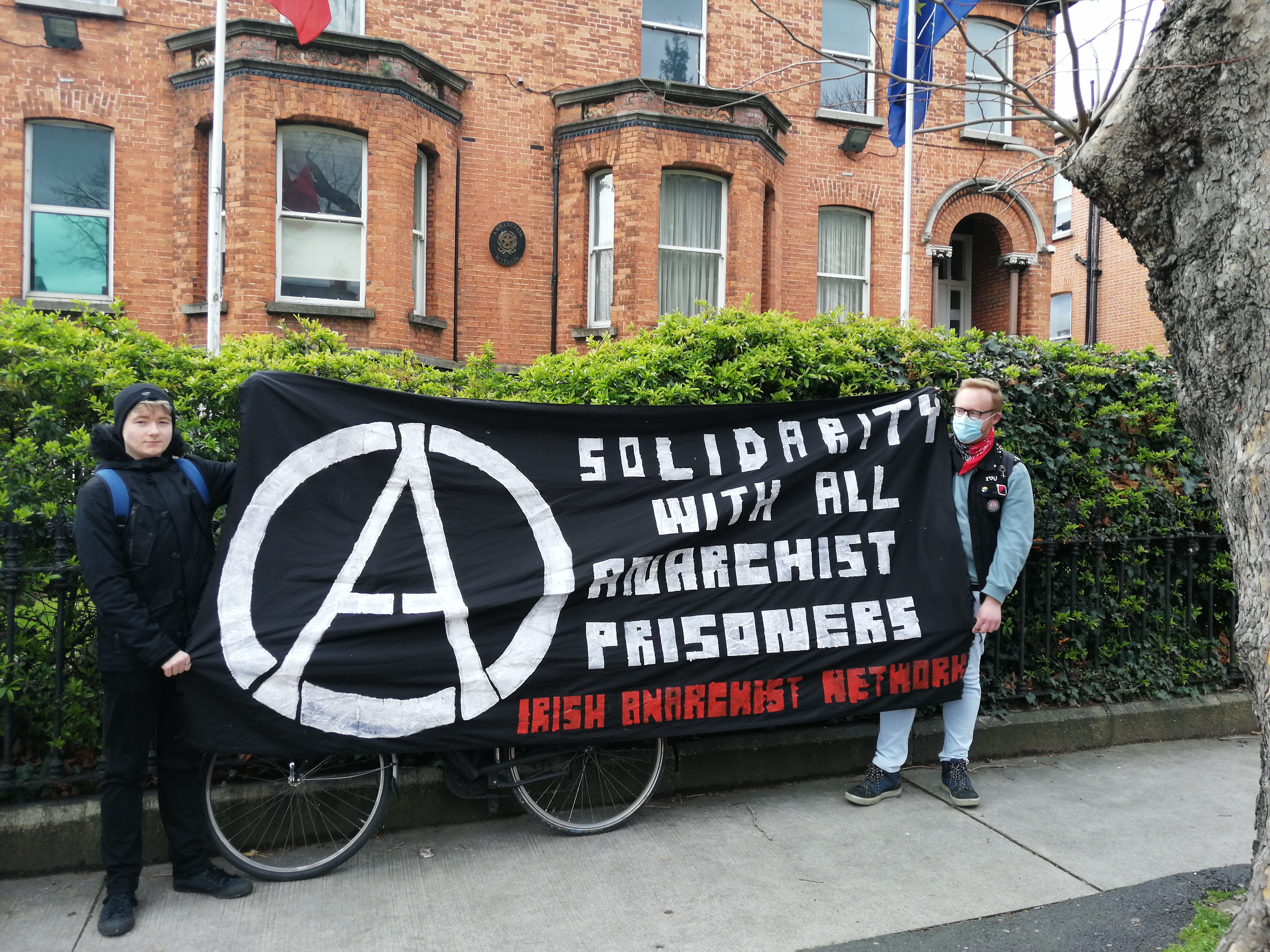
A picket outside the Italian Embassy in Dublin on Thursday (23rd) was part of a day of action across Europe in solidarity with an Anarchist prisoner on hunger strike since October in a struggle for more humane prison conditions.
The picket, organised at short notice, included Irish Republicans, Anarchists and revolutionary Socialists. Banners and placards indicated the presence of Saoradh, Irish Anarchist Network and Ireland Anti-Internment Campaign.
At one point five uniformed Gardaí stood near the Embassy’s gate while three plain-clothes Special Branch (i.e. political police) watched from a car across the road. The police numbers may have been due to a request from the Embassy in the midst of attacks on some Italian Embassies in Europe.
Despite the presence of Gardaí, Embassy staff appeared nervous, meeting one visitor at the gate to check her reason for attendance after speaking to her on her mobile phone, rather than first allowing her to enter the garden and approach the main entrance.
Some of the uniformed Gardaí attending the solidarity picket and some of the protesters. (Photo: IAIC)
Three Special Branch Gardaí (political police) parked across from the picketers, surveilling them (Photo: IAIC)
THE HARSHEST ITALIAN PRISON CONDITIONS
Alfredo Cospito is an Italian political prisoner kept under the harshest Italian prison conditions, “41-bis”, which include solitary confinement for most of the day, family visit once a month through glass, no reading matter sent from outside and no phone calls in either direction or lawyer privacy.
According to information on the Internet, these inhumane conditions were developed for Mafiosa leaders, in order to prevent them running their organisations from inside jail and also to pressure them into breaking ranks and informing on their colleagues.
Whatever we may say about that, what can be the intention of subjecting a political prisoner to those conditions, except to break him or to destabilise him mentally? EU recommended rules on prisoner management don’t recommend more than three weeks in solitary confinement.
Lawyers for political prisoner Nadia Lioce, who has been living under the 41-bis regime for two decades, have said due to limited hours permitted contact, she has effectively only interacted with people for a total of 15 hours in the space of a year.
Italian media reported Lioce’s lawyers as saying she is now so “psychologically isolated” that, when her mother and sister visit, she is unable to speak to them for more than a few minutes.
Some of the picketers, the Italian Embassy in the background (Photo: IAIC)
Amnesty International and the European Court of Human Rights have both criticised several aspects of the 41-bis, and in 2007 a US court refused to extradite a convicted Mafia drug trafficker on the grounds that the 41-bis regime he would face in Italy would have “constituted torture”.
The Anti-Imperialist Front gave a call for an international solidarity day of action which found an active response in many countries.
Alfredo Cospito’s case is up for review by the Italian prison system this month and pickets and other actions have been organised around Europe to exert pressure on the Italian penal authorities to release Cospito into house arrest in his sister’s home.
The picket displayed not only internationalist solidarity but exemplary broad unity of disparate political forces in solidarity with an Anarchist political prisoner. Hopefully this unity will continue to be built upon as time goes on, for the unfolding struggles of class and nation demand it.
Hopefully the international actions will cause the Italian authorities to relax the inhumane conditions of Alfredo Cospito’s incarceration but now Italian authorities are claiming that Cospito is somehow coordinating violent actions from within his extreme isolation.
Another two of the picketers (Photo: IAIC)
A side trip into history
The Italian Embassy is in Northumberland Road, on the south side of the Grand Canal (near the Israeli and US Embassies).
As they were leaving, some of the picketers took time to look at a plaque and monument to the Mount Street Bridge Battle between Irish Volunteers and British soldiers in 1916. Four Volunteers were killed and between 26 and 30 Sherwood Foresters, with 134 more wounded.
Mount Street Battle Monument, on the Bridge over the Grand Canal itself. The English explanation is on the reverse. (Photo: IAIC)
A number of Volunteers were captured but a number got away also. Two of the buildings from which the Volunteers fought remain, bearing the marks of bullet strikes. The third, Clanwilliam House was set on fire by the British and was replaced by a 1960s-type office building later.
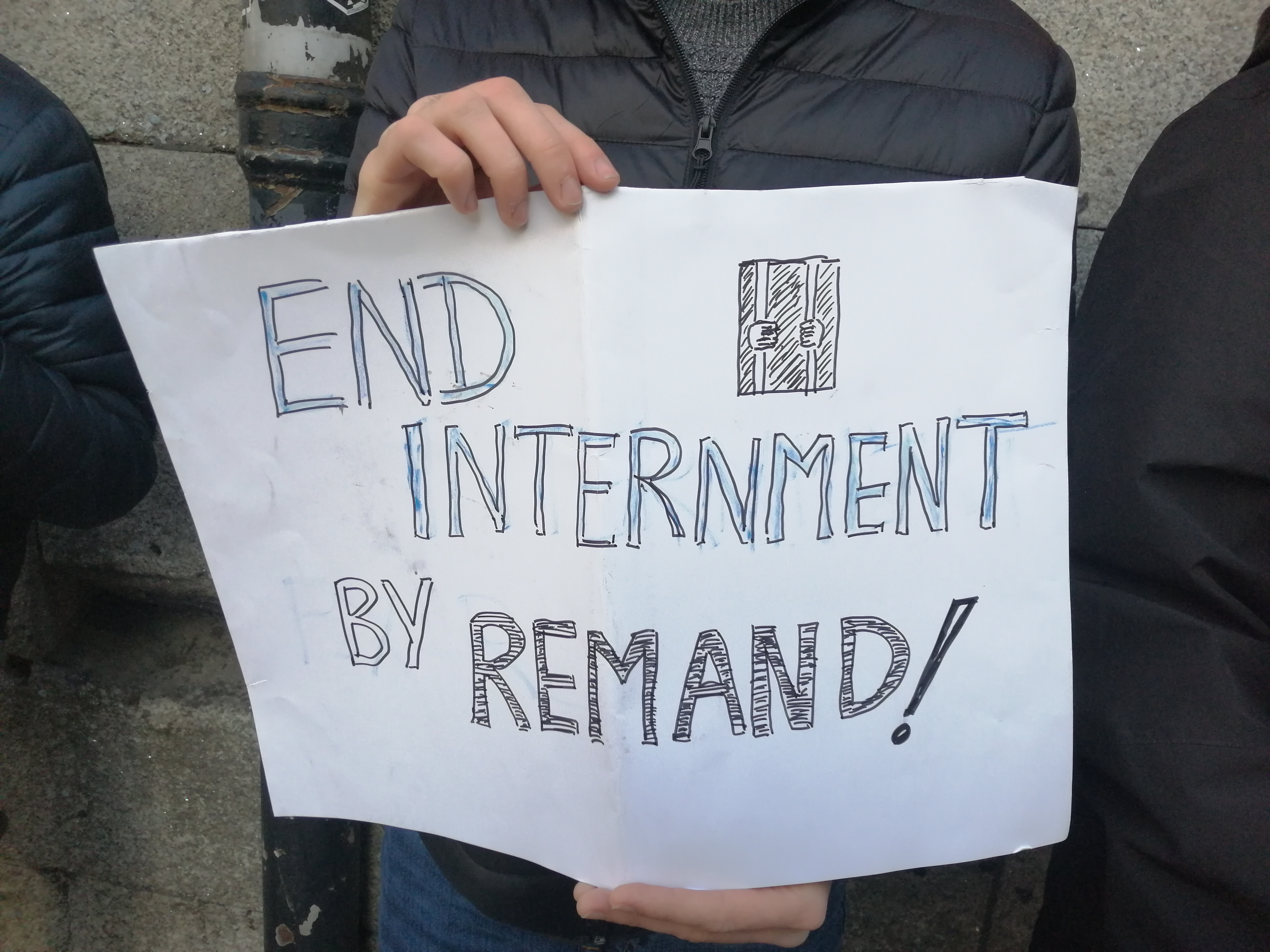
The Dublin Anti-Internment Committee held a well-attended picket on Saturday (5th March) against the continuing practice of interning Irish Republicans without trial and also in support of human rights for political prisoners. At one point the picket was subjected to the unwelcome attention of the Irish political police.
(Photo: C.Sulish)
The event was in furtherance of the Committee’s advertised intention to hold monthly public events to highlight the deprivation of civil rights from Irish Republicans — on both sides of the British border — through the operation of special legislation and in particular of the no-jury political courts (Special Criminal Courts in the Irish state and Diplock Court in the British colony). The Committee has admitted that it does not always succeed in holding a public event every month and in fact its most recent public appearance was during the December festive season, in solidarity with Irish Republican prisoners, when it was supported by a number of organisations and independent activists.
(Photo: C.Sulish)
WHY THESE PUBLIC EVENTS?
The Dublin Committee holds these public events because it believes that most people are unaware of the abuse of civil rights in Ireland, the civil right to belong to an organisation that criticises the State and seeks profound change. The reaction of people receiving a leaflet at their public events would seem to bear this out.
(Photo: C.Sulish)
Choosing a couple of extracts from their current leaflet: ‘At various times in Ireland’s history, people have been rounded up and jailed without bothering with a trial – people whom the government found troublesome and wished removed. Today the same process carries on although they don’t call it “internment” now – other names such as “due process”, “remanded in custody” are used ….”
‘Even when Republican activists are granted bail, it is on outrageous conditions such as not being permitted to reside in their own home, having to observe a curfew and wear an electronic tag, not being permitted to attend meetings and demonstrations …..’
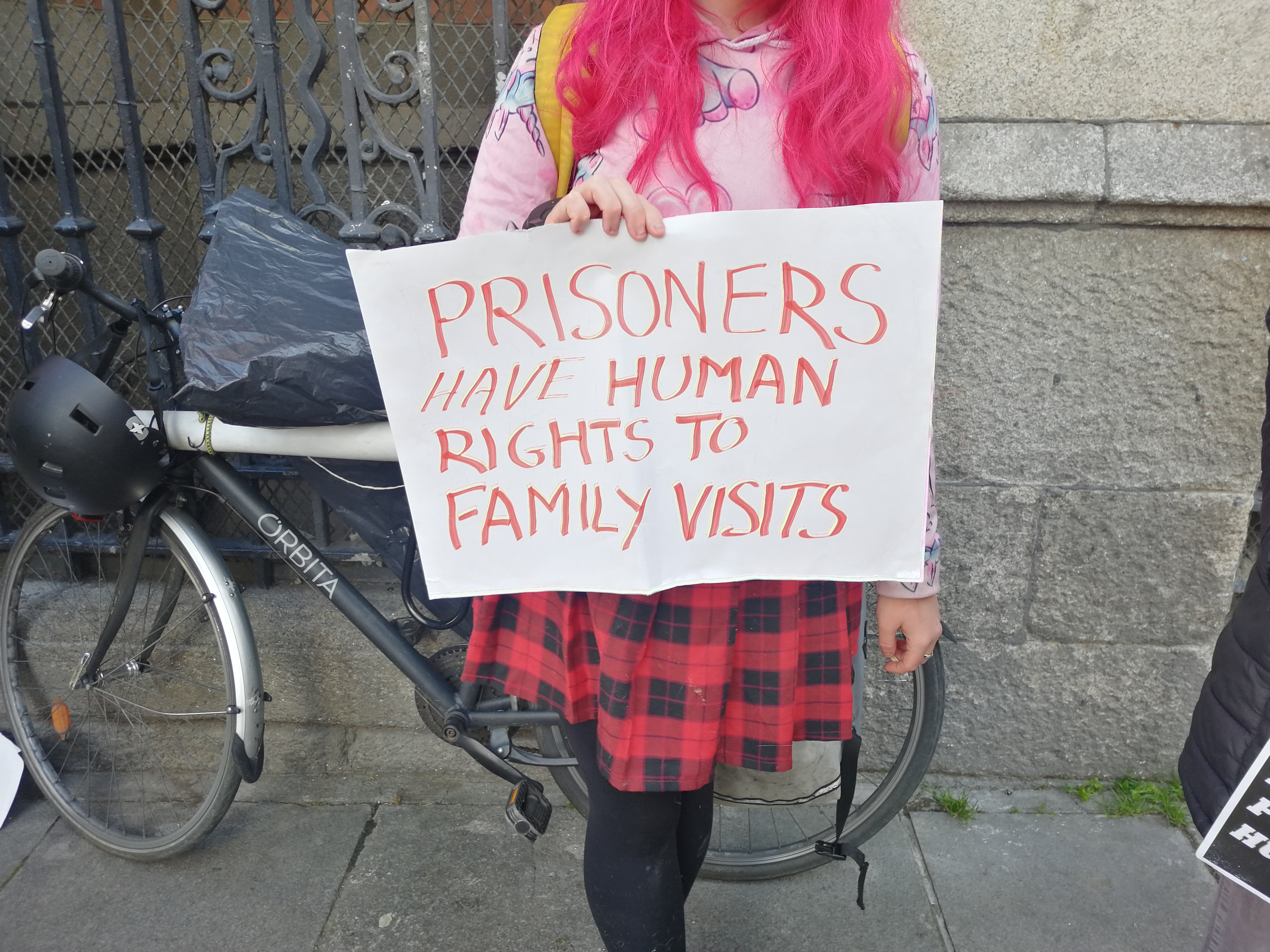
The leaflet text makes the point that one doesn’t have to agree with the politics of Irish Republicans to see that these injustices are profoundly undemocratic abuses of civil rights — and “are ultimately a danger to all oppositional movements, whether Republican or not”. One aspect of their protest was against the denial of open family visits to Republican prisoners in the jails of the British colony in the north-east of Ireland — a violation of human rights.
The surprise in learning the facts is not confined to Irish people because often it is expressed by tourists or migrants, even if they have encountered such practices in their own countries of origin.
INTERNATIONALIST DIMENSION
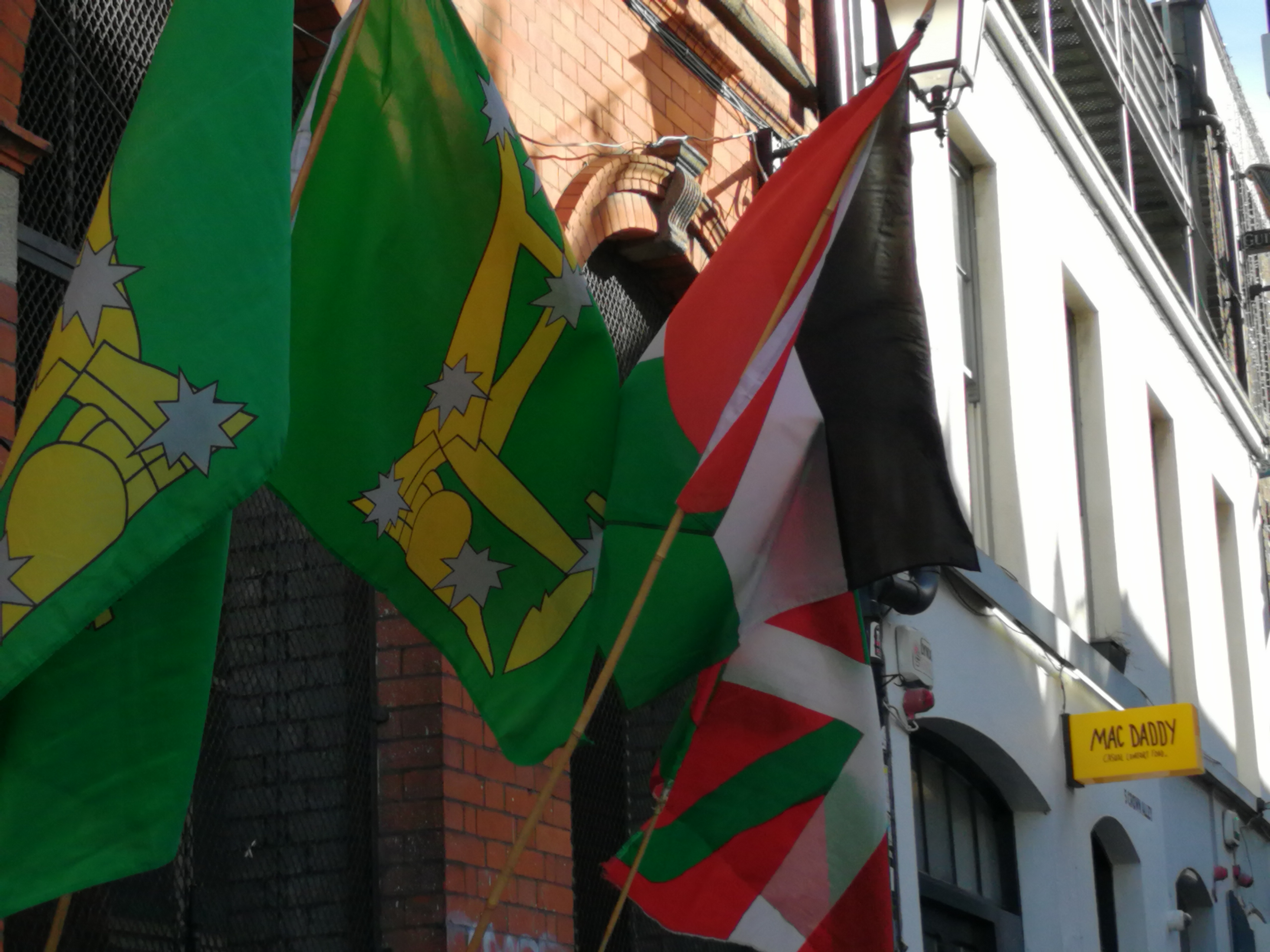
An example of the interest from abroad on Saturday was of a Basque man and, separately, of two young Basque women, reacting warmly to seeing the Basque flag among the picketers. The Dublin Committee objects not only to the incarceration of Irish Republicans but also of people seeking freedom in many other parts of the world, for which reason the Palestinian and Basque flags are frequently flown on their pickets, next to the revolutionary Irish workers’ flag of the Starry Plough.
A person who expressed support for the right to campaign without state repression was, interestingly, from Barcelona. However he did not wish for Catalan independence, wanting instead a unitary but democratic Spanish state – a position held by some communists and the main socia-democratic parties there. Although his position did not concur with that of the picketers, who tend to support the struggles for self-determination, the conversation was conducted without hostility.
Not so with another individual, who approached some picketers to argue for their support for the Ukrainian state in the current armed conflict there, a question that has deeply divided the Irish Left and Republican movements. He went further and announced his support for the Azov Battalion, an East European fascist organisation integrated into the Ukrainian state’s military, at which point the tolerance of the picketers for his intervention ended and he was urged to depart.
Starry Plough flags next to Palestinian and Basque Ikurrina flags at the picket in Temple Bar. (Photo: C.Sulish)
POLITICAL POLICE INTIMIDATION
Another temporary presence unwelcome to the picketers was of three members of the Irish State’s political police. These are members of what used to be called the Special Branch but are now officially called the Special Detective Unit, formerly C3 and successor to the CID when the Irish State was created. This type of political police force is modelled on the Irish Special Branch of Scotland Yard, the HQ of the British police, founded to spy on the influence and activities of the “Fenians” (i.e the Irish Republican Brotherhood) in the cities of Victorian-era Britain. However, in Dublin under British occupation, their parallel force was the G Division of the Dublin Metropolitan Police, known as “G-men”; it was they who identified many Republican and other prisoners of the British military after the 1916 Rising, ensuring death sentences for many (though most commuted to life imprisonment) and jail sentence for many others. During the War of Independence (1919-1921 they were identified as the intelligence service of the British occupation and many were selectively assassinated by the IRA of the time.
The Garda “Branch” (as they are known colloquially) of the Irish State have a long history of harassment of and spying on Irish Republicans, sometimes associated with violence and often with perjury in court. Their unsupported observations through the mouth of a Garda officer at the rank of Superintendent has been enough “evidence”, in the no-jury Special Criminal Court, to send many Irish Republicans to jail on a charge of “membership of an illegal organisation.”
Two picketers confront the plainclothes political police officer harassing a young leafletter on Saturday (Photo: C.Sulish)
One of these gentlemen on Saturday approached the youngest supporter of the picket, who was distributing leaflets to passers-by, identified himself as a Gárda officer in plain-clothes and demanded the young activist’s name. His accosting of the leafletter attracted the attention of others on the picket and two went quickly to support the subject of State harassment. The Branchman demanded no further information and sone moved away. However, when he had reached about half-way along the picketters, he stopped and began filming them.
At that point one of the picketers began to call out to passers-by, many of whom were tourists, that this man was a member of the secret political police, who was filming and attempting to intimidate people on a legal political protest, that this is the kind of ‘democracy’ that exists in the Irish state, etc, etc. Shortly thereafter, the Branchman departed, along with another two of his colleagues that had been observed further down towards Temple Bar.
A picketer loudly denounces the political policeman’s filming of the picketers. (Photo: C.Sulish)
According to picket participants this intervention of the political police represented an escalation of their attentions in recent times, though not in the least unusual in the past, when every picketer might have their name (and even their address) demanded and jotted down.
A spokesperson of the Dublin Anti-Internment Committee stated that it is independent of any political party or organisation and that it welcomes the participation at its public events of democratic individuals, whether independent activists or members of organisations and had distributed many of its leaflets. It regrets that a number of political activists — who should have an interest, even if only in self-preservation – in defending the democratic rights to organise and to protest, decline to support their events.
The Basque pro-independence movement, the Abertzale Left, fought the Spanish State for over four decades. in 2012 its leadership renounced armed struggle without any reciprocal agreement with the Spanish State, declaring its faith in an imagined “Basque peace process”, sought alliances with social democratic and capitalist-nationalist parties and publicly apologised for its past actions of resistance. The movement sank into general inactivity except on the electoral front. But in recent weeks there have been signs of awakening, though under a different leadership – or is the giant merely muttering and twitching in its sleep?
Map of the Basque Country showing the provinces; the three to the north-east are inside the French state, while the other and larger four are in the Spanish state. (Image source: Internet)
THE GIANT
How does the description “Giant” fit a resistance movement in a total population of less than three million people? A nation divided between the Spanish and French states? Part of the answer is precisely in those features, also in its history during the Spanish Civil / Anti-Fascist War and “French” Maquis and earlier. Also in its long struggle in defence of its native language Euskera, almost certainly the oldest in Europe and perhaps the first to reach it in neolithic times.
This is a movement that carried out general strikes against the Franco dictatorship, ensured that three of its provinces rejected the 1978 Constitution of the Spanish State which, in atmosphere of fear and murderous repression and with the collusion of the newly-legalised social-democratic (PSOE) and communist (CPE) political parties, was voted in by a majority in every other region of the Spanish State (population another 35 million people).
The serpent of wisdom and the axe of armed struggle, symbol of ETA. (Image sourced: Internet)
Inspired by the examples of the Algerian independence struggle and socialist Cuba, the Abertzale Left movement rose from the defeat of the nation in the Spanish Civil/ Anti-Fascist War and the terrible repression under the fascist dictator General Franco and in 1959, formed the ETA (Land and Freedom) organisation. The youth wing of the conservative Basque Nationalist Party conceded the Left-inclination in order to join with them. Enduring arrests and torture of its supporters, it was not until 1968 that ETA took an armed action; halted at a police checkpoint and determined not to be arrested, Txabi Etxebarrieta shot a policeman dead and was in turn killed himself by pursuing police.
Mural honouring Txabi Etxebarrieta, first ETA martyr. (Image sourced: Internet)
The first planned armed action carried out was also that year when an ETA squad shot dead Meliton Manzanas, head of the political police in the Basque Country, a notorious torturer of prisoners and a Nazi sympathiser in the past.
A woman dressed in the Basque national colours dances the aurresku, ceremonial honour dance, in commemoration of ETA martyrs. Organising or participating in such an event could easily lead to torture and a prison sentence under the “anti-terrorism” laws of the Spanish State. (Image sourced: Internet)
A number of other actions were taken by ETA over the years, some of them spectacular but, like many armed resistance groups, some also questionable in value or even in justification from a revolutionary point of view. But in December 1973 an ETA squad in Madrid assassinated Admiral Carrero Blanco, General Franco’s nominated successor, an action which many credited with hastening the progress of the Transition of the Spanish State to nominal democracy. General Franco died without a strong agreed political replacement almost exactly two years later, in December 1975 and the Transition process ran from then until 1978.
Admiral Carrero Blanco, Franco’s intended replacement, assassinated by ETA in Madrid in December 1973. (Image sourced: Internet)
The struggle continued after the Transition, since the new Constitution declared any breakaway from the unity of the Spanish State a crime unless a majority in the Spanish Parliament voted in favour. The military and police repression in the Basque Country was huge. In the 1980s the social-democratic (PSOE) Spanish Government was exposed as heavily implicated in a number of terrorist groups operating against Basques through kidnapping, torture, gun and bomb attacks (see GAL) and eventually the Minister of the Interior and a number of high-ranking officers were given jail sentences.
In 1983 mass demonstrations and armed actions by ETA brought about the abandonment of the Spanish State’s nuclear reactor at the picturesque coastal spot at Lemoiz, followed by a new Spanish government declaring a moratorium on all building of nuclear reactors.
1975 mass demonstration against nuclear reactor being built by the Spanish State at Lemoiz. (Image sourced: Internet)
Another aspect of the struggle was against compulsory military service, which the Spanish State only ended in 2002. People not only evaded it but also protested publicly against it.
Many people in the Spanish state opposed being part of NATO in the 1986 referendum but the Basque Country was highly represented in the vote against, around double the vote of those in favour and along with Catalonia being the only regions with a majority voting “no”.1
Photo taken of me by my guide on my camera above the abandoned nuclear site at scenic Lemoiz, possiblt 2016. Not many people can claim to have halted a nuclear reactor building program.
The ideology of the movement which found expression in ETA was national liberationist and socialist and this was reflected to a greater or lesser degree in all its parts, whether military or civilian. The Abertzale Left during the period organised itself into one political party after another after each in turn was banned by the Spanish State and forbidden to field candidates in elections.
Women industrial workers in Basque anti-fascist armaments factory, Spanish Civil/ Anti-Fascist War, 1936. (Image sourced: Internet)
But the movement had a huge social following too, in youth movements, punk and heavy metal bands, social-cultural centres, pirate radio stations and promoters of Euskera as a spoken language (all leaders of the Abertzale Left were required to be able to speak the language and all public meetings were addressed in Euskera and Spanish or even Euskera alone). There was even a popular Abertzale style of haircut and dress. The Abertzale Left also had a sizeable trade union, LAB which, along with ELA, a union founded by the Basque Nationalist party, recruited the majority of unionised Basque workers2. Feminist, LBGT, linguistic, eco-friendly, anti-animal cruelty sectors all contained many people broadly in support of the Abertzale Left or at least of its stated objectives.
The movement also had newspapers, radio stations and internet sites and many of these were closed down by the Spanish State, alleging that they were “collaborating with terrorism”. Currently the Spanish State is moving towards the closure of the movement’s social-cultural centres, the Herriko Tabernak (People’s Taverns). This arises from a judgement by the National Court in 2011, a judgement corresponding to an infamous statement by Baltazar Garcón, at the time a prominent Judge of that Court, that “Everything is ETA”. The closures are to be carried out now although ETA ceased armed activity permanently in 2012 and disbanded itself a little later.
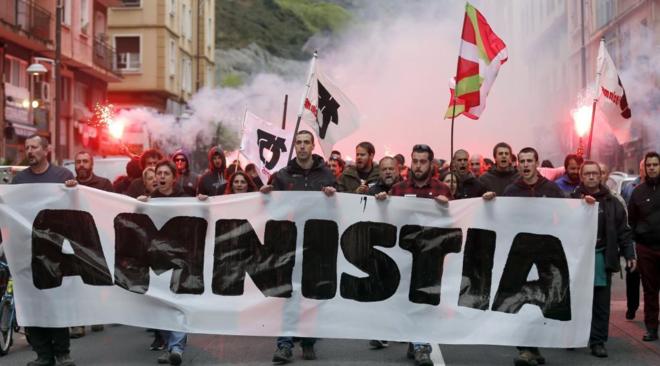
Annual January prisoners’ solidarity march, Bilbao, 2016. (Image sourced: Internet)
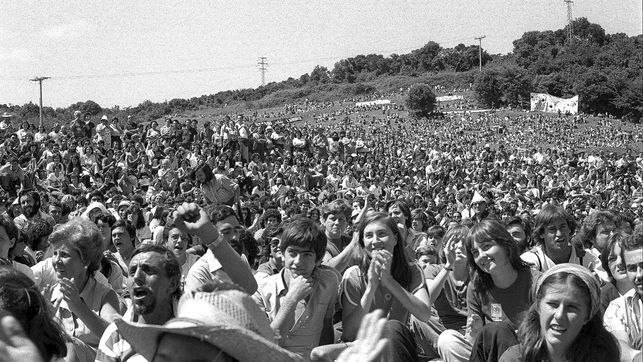
Repression by the Spanish State has included executions and clandestine assassinations and led to relatively huge numbers of Basque political prisoners, not all by any means military fighters and conviction with “confessions” extracted through torture during the five-day incommunicado period ensured a problem-free conveyor belt for the Spanish State. That conveyor belt delivered its victims to jails dispersed all over the Spanish state, nearly every one hundreds of kilometres and sometimes over a thousand from the prisoners’ homes. The financial, physical and mental strains on friends and relatives, including elderly and children having to travel such distances to visit their loved ones are hard to imagine, often facing abuse or harassment on the way or at their destination, apart from serious accidents on motorways (including fatalities). Many pickets and demonstrations are held in the Basque Country throughout the year and each January a monster march clogs the streets of Bilbao.
The issue of the prisoners has always been a big one for the Abertzale Left and despite dispersal the prisoners built an organisation within the jails, responding to their situation in a disciplined manner.
SLEEPING
During the first decade of this century it was clear that ETA was not doing well and the Abertzale Left in general was facing many more years of struggle against an unyielding state with repression everywhere and hundreds of political prisoners in jails.
The leadership was attracted to the much-advertised pacification/ peace processes of South Africa, Palestine and Ireland. By any estimation the Palestine process soon collapsed and its rejection by most of Palestinian society was clearly indicated first by the Intifada and secondly by the electoral gains of Hamas, pushing Al-Fatah into second place. To undiscerning eyes the Irish and South African3 processes seemed to be doing well and both the ANC and Sinn Féin lent strong support to the Abertzale Left’s imagined “peace process”. Despite that support and that of such prominent imperialist figures as Tony Blair and Kofi Annan, the Spanish ruling class was not interested in playing and eventually the Abertzale Left’s leadership was left with nowhere to go. However, they persisted in trying to build alliances with the majority Basque National Party and with smaller nationalist-social-democratic groups; they succeeded with the second sector but failed with the first and seem condemned to second-party status electorally in a Spanish colony, a nation divided by the French-Spanish border.
However, in their search for acceptance by the above-mentioned sectors, the Abertzale Left not only renounced armed struggle but apologised for past actions, ended street confrontations and called on the prisoners to negotiate their progress individually through prison system grades to eventual parole. Some of Abertzale Left public representatives even attended events commemorating Guardia Civil and Ertzaintza (Basque police) killed by ETA in the past.
EH Bildu Mayor of Errenteria participates in commemoration of a Guardia Civil killed by ETA. (Image sourced: Internet)
When the struggle for independence broke out again recently in Catalonia with the 2017 Referendum and the Spanish State responded with a violent Guardia Civil invasion and jailing of politicians and social activists, the Abertzale Left leadership noticeably declined to open up a second front of struggle.
STIRRING
There were early but sporadic signs that not all movement was happy with the Abertzale Left’s new path. Askapena, an organisation set up within the Abertzale Left to work on internationalist solidarity, which at one time could list affiliated groups in Ireland, Germany, Italy4, Paris, Brittany, Barcelona, Madrid, Switzerland, Denmark, Sweden and a number of Latin American countries, broke quietly with with the Abertzale Left over its change of policies5. Notably also, when four members of Askapena were accused of “assisting terrorism” in 2010, they refused to apologise for their work and fought the case, being eventually cleared of all charges in 2016.6
In addition, many Basques were critical of the process, feeling that even if they were prepared to go down the new road, it had been handled badly by the leadership.
A leading Marxist theoretician of the movement, Inaki Gil, resigned from the national leadership years ago, though not from the movement; however he may well be persona non-grata in it now due to a published interview in which he criticised the decision of the 47 on trial in September last year to apologise for past actions of the Basque liberation movement, even after 50,000 had marched through Bilbao streets in their support two days earlier.
When Arnaldo Otegi — generally seen as the architect of the new road for the Abertzale Left7 – was arrested with others in 2009 and, while on pre-trial detention began a hunger strike only to end it soon afterwards, it did not reflect well on him. While he beat a charge of “glorifying terrorism”, he was convicted in 2011 for allegedly reorganising Batasuna, banned political party of the Abertzale Left and sentenced to ten years, reduced on appeal to six and walked free in 2016. In the meantime a Free Otegi campaign (2015) attracted some notable foreign support (including Desmond Tutu) but was criticised in the Basque liberation movement for highlighting the case of one political prisoner above many others8 (including those who were serving much longer sentences).
Arnaldo Otegi, leader of the official Abertzale Left. (Image sourced: Internet)
Some years ago a new Basque political prisoner solidarity organisation came into being, calling itself ATA (Amnistia Eta Askatasuna – Amnesty and Freedom9). They enjoyed a good showing at their first demonstration but came under public attack not only by the Abertzale Left leadership but by a number of ETA members on trial in France. They were accused of using the prisoners as a stalking horse when what they really wanted was to attack the new line of the movement’s leadership. Censorship and condemnation in the Abertzale Left’s daily newspaper GARA followed.
Amnistia Ta Askatasuna demonstration Bilbo 2016. (Image sourced: Internet)
Although their public support waned for awhile, in 2018 a youth group of the Abertzale Left was expelled after they had publicly denounced their annual conference managers for refusing to put their position paper forward for discussion; this youth organisation now collaborates with ATA. Last year, a new Basque revolutionary group called Jarki was formed and drew a sizable crowd to their commemoration of the annual Gudari Eguna (Basque Soldier Day)10.
ATA demonstration Donosti/ San Sebastian, September 2019. (Photo: D.Breatnach)
However the issue of development remained in doubt and no-one could predict with confidence that the movement would be rebuilt along revolutionary lines under a new leadership.
WAKING
The week before last, Basque political prisoner Patxi Ruiz embarked upon a hunger and thirst strike and although he abandoned the thirst component after 11 days he continues on the hunger strike. He took this action in protest against harassment and beatings by the prison administration and jailers and highlighted the fact that prisoners
Patxi Ruiz, Basque political prisoner, now on hunger strike. (Image sourced: Internet)
were being refused virus-protection clothing or testing and that the jailers were not being tested either. He also wanted visits from his family to be permitted and prisoners allowed to attend funerals of family members (he had been refused permission to attend his father’s funeral). More recently he has demanded that prisoners be relocated to jails near their homes, a long-standing demand of the movement and which is entirely in accordance with model rules for prisons in the EU and the UN. Despite the official leadership of the Abertzale Left firstly ignoring the situation and then condemning his supporters, Ruiz’s struggle galvanised the mostly dormant Abertzale movement.
Every day has seen small actions across the Basque Country, including protest pickets on bridges, beaches, town squares etc; solidarity fasts; slogans painted … Large solidarity marches have been held in Irunea/ Pamplona (Nafarroa province), Donosti/ San Sebastian (Guipuzkoa), Baiona (Bayonne), Bilbao and Durango (Bizkaia). ATA’s web page is full of developing news and the facebook page, which had fallen into silence, is active again. Last Sunday in Pamplona/ Irunea, police attacked demonstrators with batons and fired rubber bullets at close quarters.Patxi Ruiz solidarity demonstration 24 May 2020 attacked by police with batons and rubber bullets
Patxi Ruiz solidarity march in Bayonne, northern Basque Country. (Image source: Internet)
Some of the Basque prisoners who are part of the “official list” have begun taking solidarity action, refusing food or to leave their cells for periods in Almería, Brevia-Ávila, Castelló I, Córdoba, Huelva, Murcia (where Patxi is), Puerto III, Rennes, Sevilla II, Topas-Salamanca …. refusal to leave one’s cell also means forgoing family phone calls. Patxi had been expelled from the Abertzale prisoners’ collective in 2017 for speaking out against the new line of the official leadership which another four prisoners have repudiated also11.
However the mass of Basque political prisoners have so far remained quiet, “concentrating on moving through their grades while Patxi lies dying”, in a quotation from an ATA commentary which blamed this new lack of unity on the fragmentation engendered by the official leadership.
A group of ex-prisoners has now also called for solidarity with Ruiz.
“COULD NOT SINK LOWER”
According to a public statement by ATA denouncing political parties Sortu and EH Bildu, the official Abertzale leadership made no comment until Patxi Ruiz was into his fifth day of hunger and thirst strike and then it was to mention him only in passing, while denouncing the spray-painting of political parties’ buildings by protesters and the burning of an ATM. On the 10th day the official leadership again released a statement, saying they were trying to organise one of their elected politicians to visit the prisoner but condemning the mobilisations across the Basque Country and accusing them of endangering Patxi Ruiz’s life. “They could not sink lower”, commented ATA, who also pointed out how late the official leadership had come to comment and that without the public-space protests, neither the media nor the official leadership would have taken any notice whatsoever.
What the future holds for Patxi Ruiz in the short-term is hard to predict, already weakened by ten days of thirst strike and now into his 16th day of hunger strike. What the near and medium-term future holds for the Basque movement is also an open question, depending to some extent on how ATA is able to capitalise on this upsurge and build an organisation or a network of coherence and unity, at least in action.
Patxi Ruiz solidarity march Bilbo 23 May 2020. (Source image: Boltxe)
The official Abertzale leadership will do what they can to destroy any such movement but they have already yielded the streets, one of the main arenas of the movement in the past. Both groups are mutually exclusive and the advance of one in the wider Basque movement can only be at the expense of the other.
The Spanish State too will be watching developments and no doubt considering its own options of repression, although not so easily done as before, without even an ETA existence to justify their response to the public.
Meanwhile the Catalan independence struggle simmers on and if both should link up in mutual solidarity …..
2The main unions in the Spanish state, Unión General de Trabajadores and Comisiones Obreras were founded respectively by the PSOE and the CPE. Both are Spanish unionist and have the majority of unionised workers in every region of the Spanish state except the southern Basque Country and Galicia.
3While the people in South Africa have the vote and the ANC political party has done well out of the deal, going almost straight into Government, the mass of people struggle on low level income, high level violent crime, unemployment and badly-delivered services, while an ANC clique wallow in riches gained through corruption. Sinn Féin went first into the British colony’s government and now has the most elected parliamentary delegates from the February 2020 General Election in the Irish State; however over two decades after the Good Friday agreement the country is no nearer unification or nation-wide independence and is run by neo-liberal capitalist classes selling out the natural resources and services of the nation.
4Germany and Italy had a number of these; in Ireland the cities of Belfast, Dublin and Cork each had one.
5This organisation effectively ceased to exist due to the new line of the Abertzale Left. Although a number of foreign committee delegates did not disagree with the new line (some certainly did) nevertheless it began to fade away from then on.
6In marked contrast to the apology in September last year for previous actions of the movement by 47 members of a number of Abertzale Left organisations, including those against repression and in solidarity with prisoners, before they had even been tried by the court. This shameful action was taken two days after 50,000 had taken to the streets to support them and left deep hurt, bewilderment and shame throughout the movement. https://www.theguardian.com/world/2019/sep/16/mass-trial-of-basque-activists-in-spain-ends-with-plea-deal
7He had come into the political leadership with Joseba Permach of the Abertzale Left in 1997 after 23 members of the Batasuna leadership were jailed for seven years by the Spanish State. He was elected General Secretary of the political party Sortu in 2013.
8The Abertzale Left had never previously endorsed any campaign focusing on individual prisoners except in the case of terminally and seriously-ill prisoners, of which at one time there were as many as 15 who, even under Spain’s own prison regulations, should have been paroled home or to hospital.
9Though now it gives the translation as “Amnesty and Against Repression”. An Amnistia organisation had existed earlier but dissolved or reformed after banning by the Spanish State and one of the accusations of the Abertzale Left is that dissidents misappropriated the name.
Alberto Sicilia in Publico.es, translated by D.Breatnach
Alberto Sicilia in Publico.es, translated by D.Breatnach (Reading time: 3 minutes)
For original version in Castillian (Spanish) click on link.
Greece today suspended the right to asylum. An unprecedented measure in the history of Europe.
How soon we forget. During World War II, thousands of Greeks crossed the Mediterranean in the opposite direction and sought refuge in Middle Eastern countries. That was the most accessible route of escape from Nazi troops.
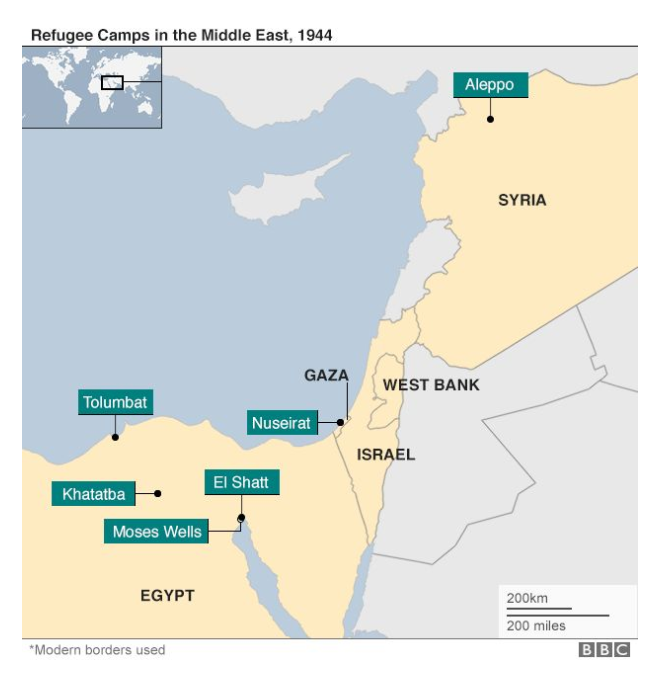
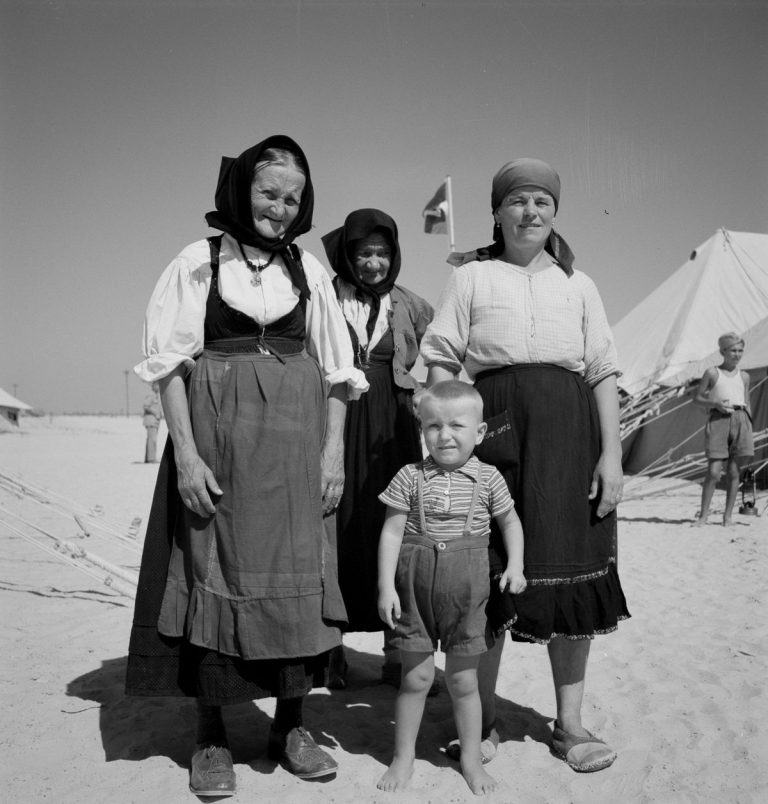
Map of camp sites for European Refugees WW2 (Image source: Publico.blogs. es)
A program called “Organization for Refugees in the Middle East”, launched in 1942 and led by the United Kingdom, helped tens of thousands of Greeks, Poles and Yugoslavs escape eastbound.
The refugees were taken to camps located in Syria, Egypt and Palestine. The city of Aleppo, (yes, you have not misread, Aleppo) became one of the main reception centers.
A number of official reports on the state of the camps were written in March 1944. A study conducted by Public International Radio includes the protocol for the entry of refugees and their daily lives:
Photo source: Publico.blogs. es
“Once registered, newcomers made their way through a thorough medical inspection. The refugees were heading to what were often makeshift hospital facilities, usually tents, but occasionally empty buildings reused for medical care, where clothes and shoes were removed and they were washed until the authorities believed they were sufficiently disinfected.
“Some refugees, such as the Greeks who arrived at the Aleppo camp from the Dodecanese islands in 1944, could expect medical inspections to become part of their daily routine.
Photo source: Publico.blogs. es
“After medical officials were satisfied that they were healthy enough to join the rest of the camp, refugees were divided into homes for families, unaccompanied children, single men and single women. Once assigned to a particular section of the camp, refugees enjoyed few opportunities to venture outside. From time to time they could leave under the supervision of camp officials.
“When refugees in the Aleppo camp made the multi-mile trip to the city, for example, they could visit shops to buy basic supplies, watch a movie at the local cinema, or simply distract themselves from the monotony of country life.
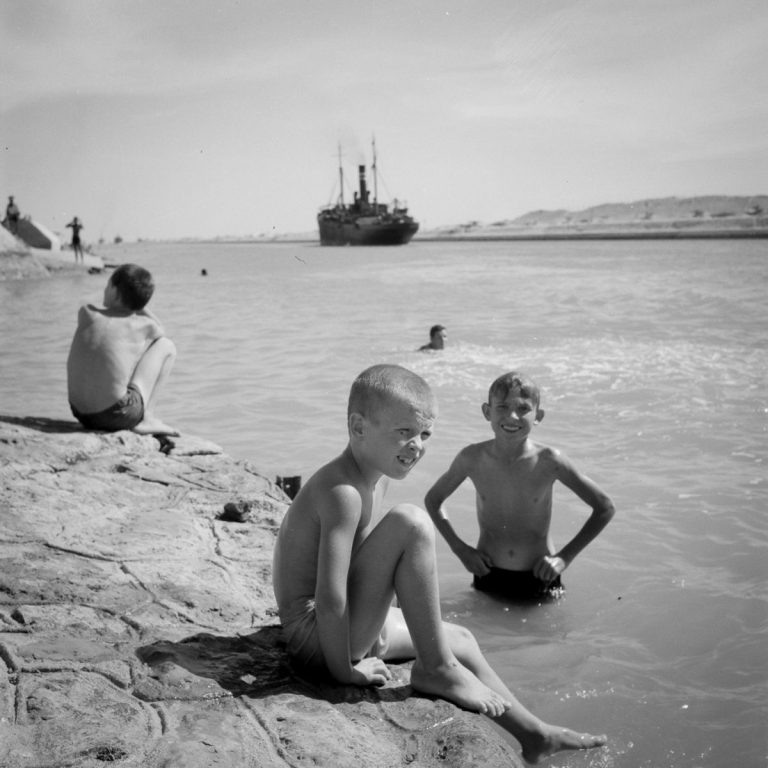
“Although the camp at Moses Wells [in Egypt], located on more than 100 acres of desert, was not within walking distance of a city, refugees were allowed to spend time each day bathing in the nearby Red Sea. “
Photo source: Publico.blogs. es
The “Organization for Refugees in the Middle East” was part of a network of refugee camps around the world that were administered by governments and international NGOs.
And refugees arrived not only in the Arab region: Iran received 200,000 Poles between 1939 and 1941.
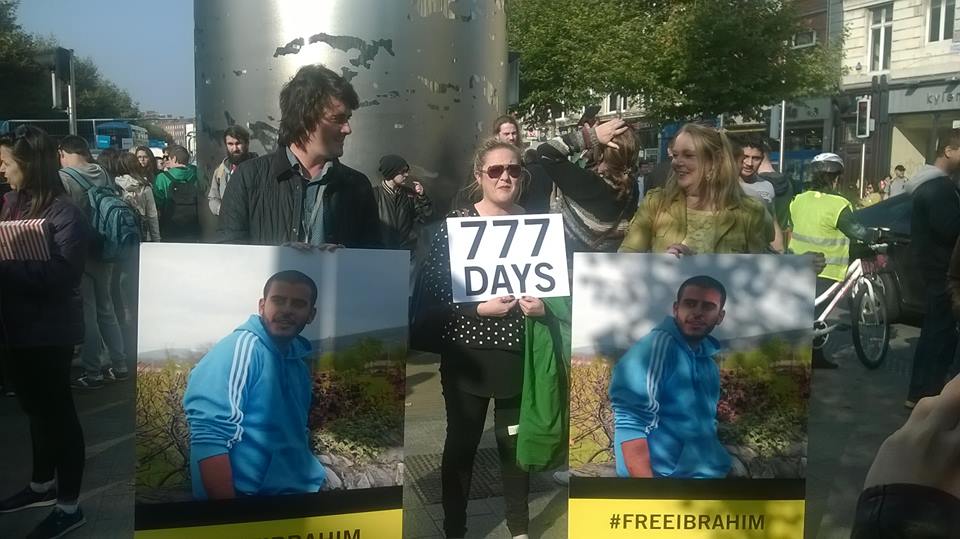
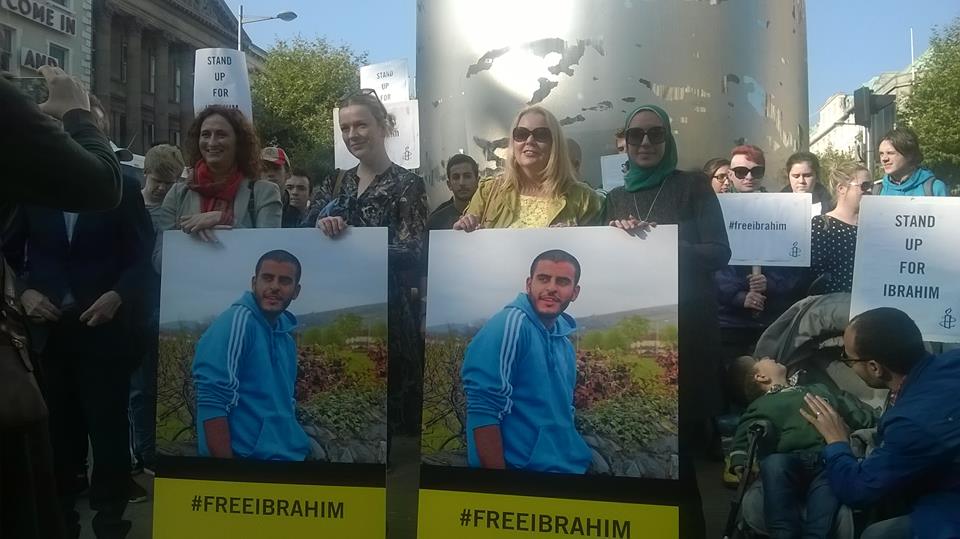
With the Spire in the background, supporters calling for the release of Ibrahim Halawa display placards in Dublin’s main street. (Photo: Ian O Kelly)
People clustered around the Spire structure in Dublin’s O’Connell Street on Friday 2nd October, many of them displaying a placard with the digits “777”, sometimes nothing else. But some also held an enlarged photo taken of a Dublin youth of Arab extraction, Ibrahim Halawa. Members of his family and community were there too with a banner, as were a relatively small number of supporters, including some Left and Republicans.
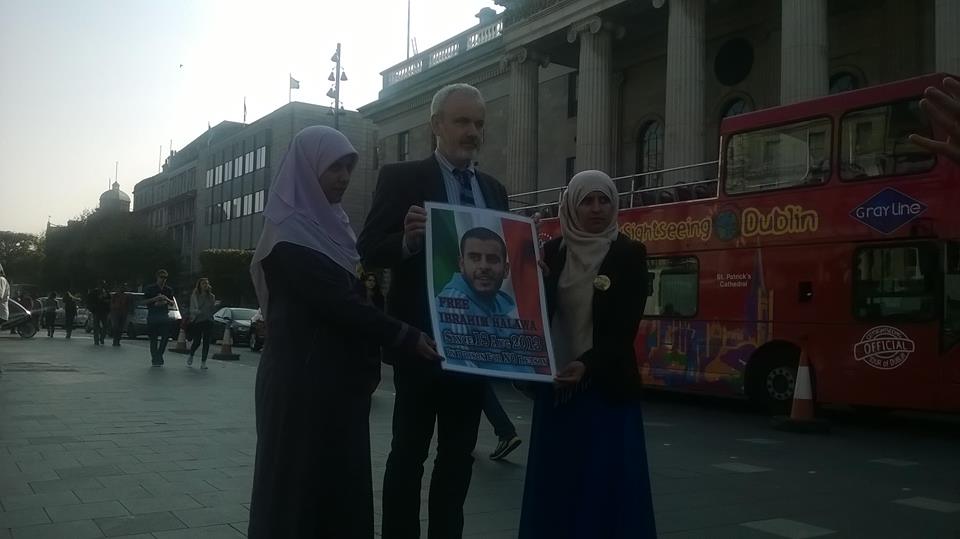
Colm O’Gorman, CEO Amnesty Ireland, with two of Ibrahim Halawa’s family in O’Connell Street, Dublin’s main street. The columns of the iconic GPO are on the right as a Dublin Tour bus passes. (Photo: Ian O Kelly)
Colm O’Gorman, CEO of Amnesty Ireland gave interviews to media personnel present and so did Lynn Boylan, Sinn Féin MEP and of course some members of Ibrahim’s family. Curiously, no leaflets were handed out to explain to passers-by what the rally was about. Nor were there speeches to inform even those gathered there about the background to the case or progress or what people could do to help further.
Dublin Anti-Internment Committee activists support the picket, photographed here with members of the Halawa family. (Photo: D. Breatnach)
Ibrahim Halawa was 17 years of age and on holiday in Egypt nearly two and half years ago when arrested, apparently for participating in a demonstration banned by the Egyptian regime. He may have been a conscious participant or may merely have been swept up in it in passing. But now he faces a possible death sentence if found guilty. Another 420 are also charged, some of them with murder or attempted murder during an attack on a police station on the same day. Ibrahim was arrested with his three sisters but they were granted bail and permitted to return to Ireland after three months.
Friends and relatives were hopeful that the trial would proceed as scheduled at the weekend but on the day some of the defendants were said to be seriously ill and the state declined, despite Defence counsel requests, to proceed without all defendants being present. Defence counsel have now also submitted a motion for all to be released, since they have served two years without the State bringing them to trial – this motion is under consideration by the court at present.
Supporters of Ibrahim Halawa with placards in front of Dublin’s Spire, with Lynn Boylan furthest left in picture. (Photo: Ian O Kelly)
The reason for serious illness among prisoners may well be conditions in the jail (which are believed to be atrocious and were described as “trying” by the Irish Department of Foreign Affairs’ representative after an earlier visit to Halawa in jail), coupled with punishment beatings which, according to one of Ibrahim’s sisters as reported by a human rights campaigning website, the Dublin youth has also received.
The Department has taken up the Dubliner’s case with the Egyptian authorities and it is almost certainly its intervention that has gained Halawa’s transfer to a better cell. Three Al-Jazeera journalists were sharing that facility after conviction in Egyptian court but all those have now been released and left Egypt. Others, including former President Hosni Mubarak and members of his family have also been released.
Charlie Flanagan, the Minister for Foreign Affairs, stated that he was “disappointed and concerned” at the adjournment, which is diplomatic language for “really pissed off”. He claimed that his department is doing all that they can. Perhaps they are – but is the Government as a whole? Would the threat of expulsion of a few Egyptian diplomats not gain the release of Ibrahim Halawa? Or perhaps the threat of a tourist embargo?
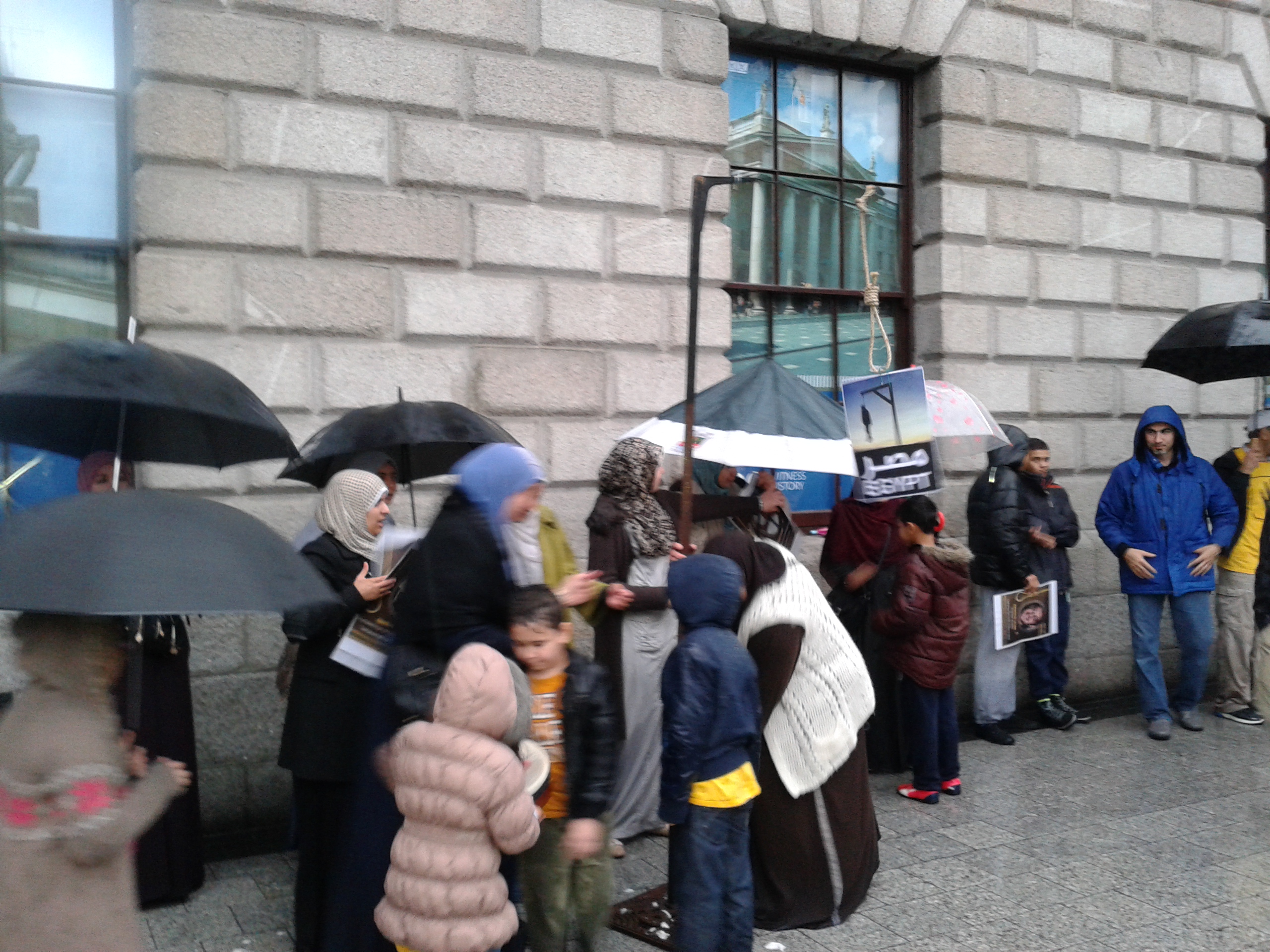
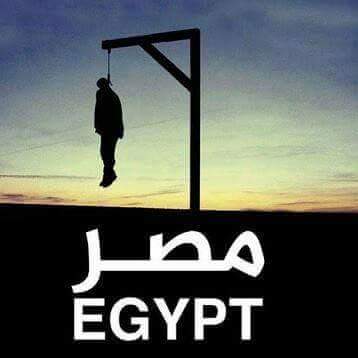
The relatively small numbers at the Dublin rally were probably due to it being called for 3pm on a Friday afternoon, i.e within office working hours. But there may be more to it than that – this case has not been generally pushed in Left and Republican political circles, nor indeed in the liberal human rights sector. Very recently some of Ibrahim’s Dublin Arab community held a protest at the GPO against the Egyptian regime getting ready to streamline its trial and death sentence procedures in order to facilitate the hanging of more political dissidents. It was notable that every single one of those on the protest was Arab in appearance. The word ‘on the street’ is that Ibrahim and members of his family belong to a religiously fundamentalist group. Whether true or not, this does not of course diminish his human rights one iota – but unfortunately it may diminish the enthusiasm of some on the Left to support him.
Amnesty International Ireland was the body that organised the rally. Their website said that they were calling “again” for the release of Ibrahim but it seems that this is the first time they have organised a rally for him in nearly two and a half years.
Some of Ibrahim’s relatives and others of their community in protest at Egypt’s streamlining of conviction and execution processes some weeks earlier outside the GPO. (Photo: D. Breatnach)
Poster of the Stop Egypt Executions campaign
Generally the states in the West support the current Egyptian regime and the USA very much so. In turn, the Egyptian regime is very pro-Western and its armed forces very dependent on the USA, its main arms supplier. This friendship towards or dependency on the USA has been demonstrated in a number of way over the years and one of the most significant has been its policy towards Gaza.
The besieged Palestinian enclave, which has been called “the biggest concentration camp in the world”, has two land border exits, one of which is controlled by Egypt and the other by Israel. But Egypt has for years, under different governments, been restricting what and how much can go through its Rafah Crossing, more or less in line with Israeli prohibitions or restrictions, which include forbidding cement much in demand to repair the huge damage of Israel’s bombardment to housing, hospitals, schools, roads, bridges, reservoir, sewage treatment facility ….. and fuel for heating, electricity generation …. The resourceful Palestinians dug tunnels under the border wire to circumvent Egyptian restrictions but the Egyptian regime has demolished these in the past and recently flooded them.
It is important for the Irish Left and all democratic people to show solidarity with Ibrahim and his family. It should not be ok for the Egyptian government to behave in the way it does and we should protect those that we are able to protect from them. That ability is strongest in cases where the citizenship of the victim is Irish. The Government needs to up the pressure on the Egyptian authorities and we need to up the pressure on our Government to achieve that. Those republicans, socialists and democrats who are tempted to pick and choose the recipients of their solidarity would do well to reflect on the oft-quoted words of Pastor Martin Niemoller.



















 rebelbreeze