THE SHAMROCK IS BLOOMING

Diarmuid Breatnach


This month the shamrock is blooming all around. The cluster flower is not very prominent individually but together can produce a yellow-green carpet effect, yellow for the flowers and green for the leaves.

The flowering shamrock in short grass in Dublin north city centre
(Photo: D.Breatnach)


Who is to say that the shamrock has a yellow flower? Why not the white clover? Well, amateur botanist and zoologist Nathaniel Colgan (1851-1919) once asked people from around Ireland to send him specimens of what they believed to be an Irish shamrock and identified the five most common plant species, of which the two most common were the yellow (flowering) clover followed by the white. A hundred years later, Dr Charles Nelson repeated the experiment in 1988 and found that yellow clover was still the most commonly chosen. According to Wikipedia, yellow clover is also the species cultivated for sale in Ireland on Saint Patrick’s Day and is the one nominated by the Department of Agriculture as the “official” shamrock of Ireland.

But sometimes, the yellow-flowered species Trifolium dubium (Irish: Seamair bhuí) can be found growing next to the white-flowered Trifolium repens (White Clover; Irish: Seamair bhán), although they never really intermingle.

White Clover and flowering Shamrock growing near one another in Glasnevin, Dublin.
(Photo: D.Breatnach)

The clover family belong to a group of plants that have the ability to fix nitrogen in nodes around their roots and, as a result, provide nutrition for plants that need nitrogen. The plant, like the rest of its family, produces pods but in the shamrock’s case, the pods are tiny and contain only a single seed. Pods protect the development of seeds until they are ready to shed (or in some cases, like the gorse or furze, to explode!).

In cropped or mown lawns, or in poor soil, the shamrock hugs the ground. However, given conditions for growth but having to compete with other plants for sunlight, it will grow long stems reaching upwards.

Once flowering is over, probably in August, one can dig up a small section and transplant to flower box or pot in order to harvest sprigs of it for St. Patrick’s day on March 17th (a tradition that is nothing as old as people might think).

Closeup view of the flowering shamrock, Glasnevin, Dublin.
(Photo: D.Breatnach)

But nobody planted the shamrock in the lawn – it got there by its own natural methods, possibly by wind or in animal excreta. Unlike the lawn on which it has set up its colonies, which was seeded on raked earth or, more likely, laid in grass turf rolls, it is in fact a part of wildlife in the city.

end


NOT BLIND TO THE TRUTH – IVY MANAGEMENT CONTINUE TO TAKE TIP MONEY FROM STAFF

Diarmuid Breatnach

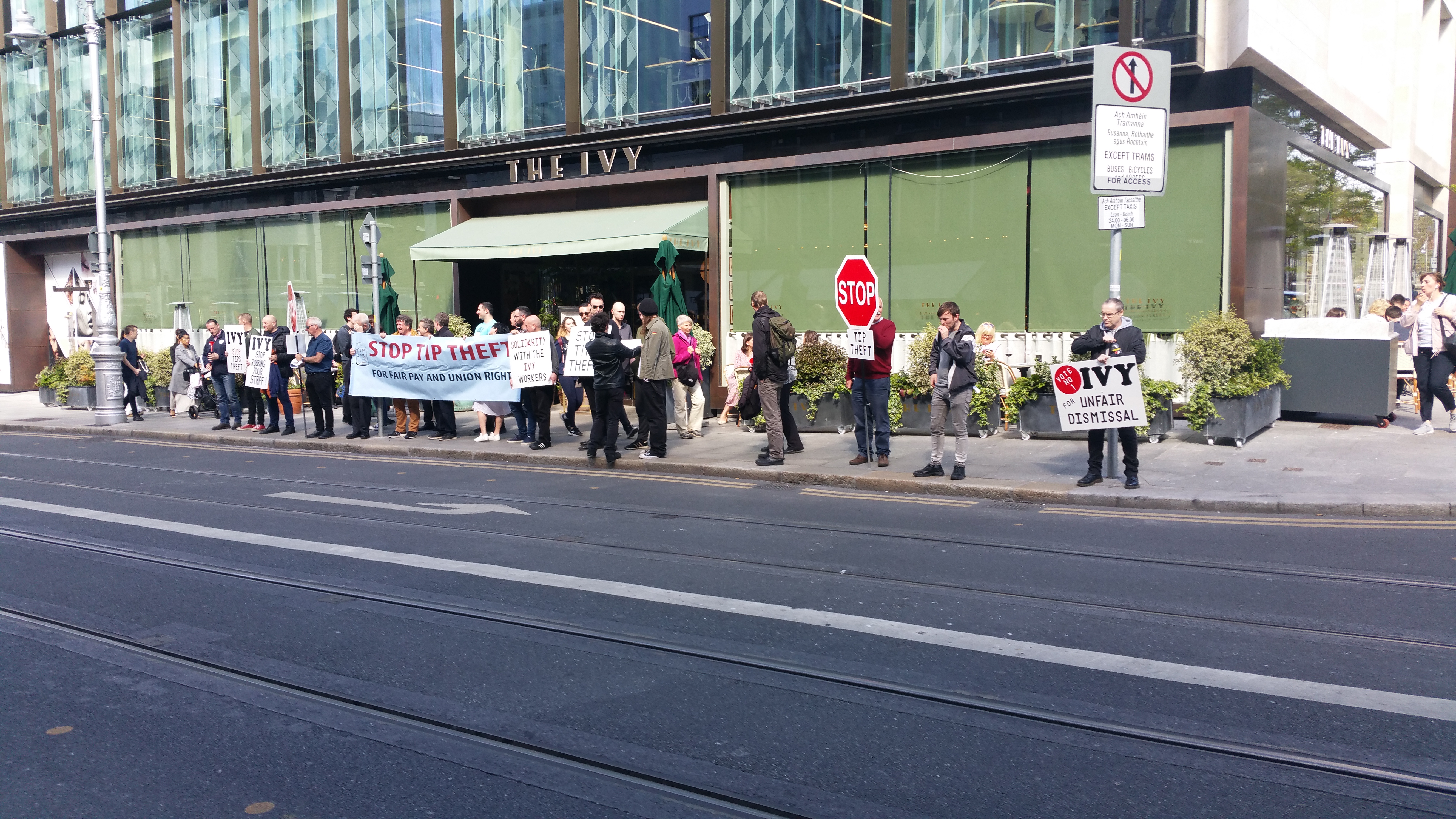
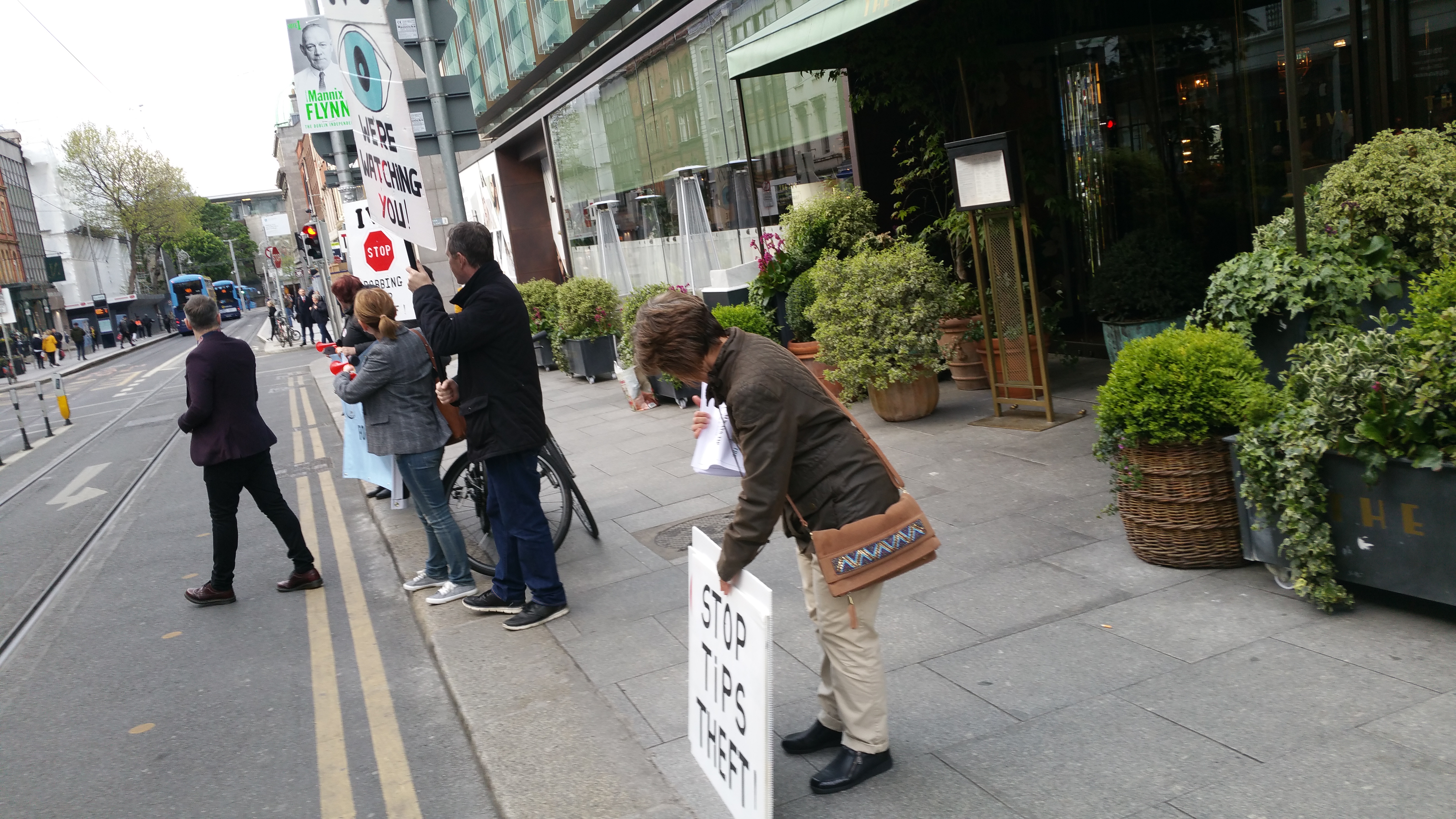
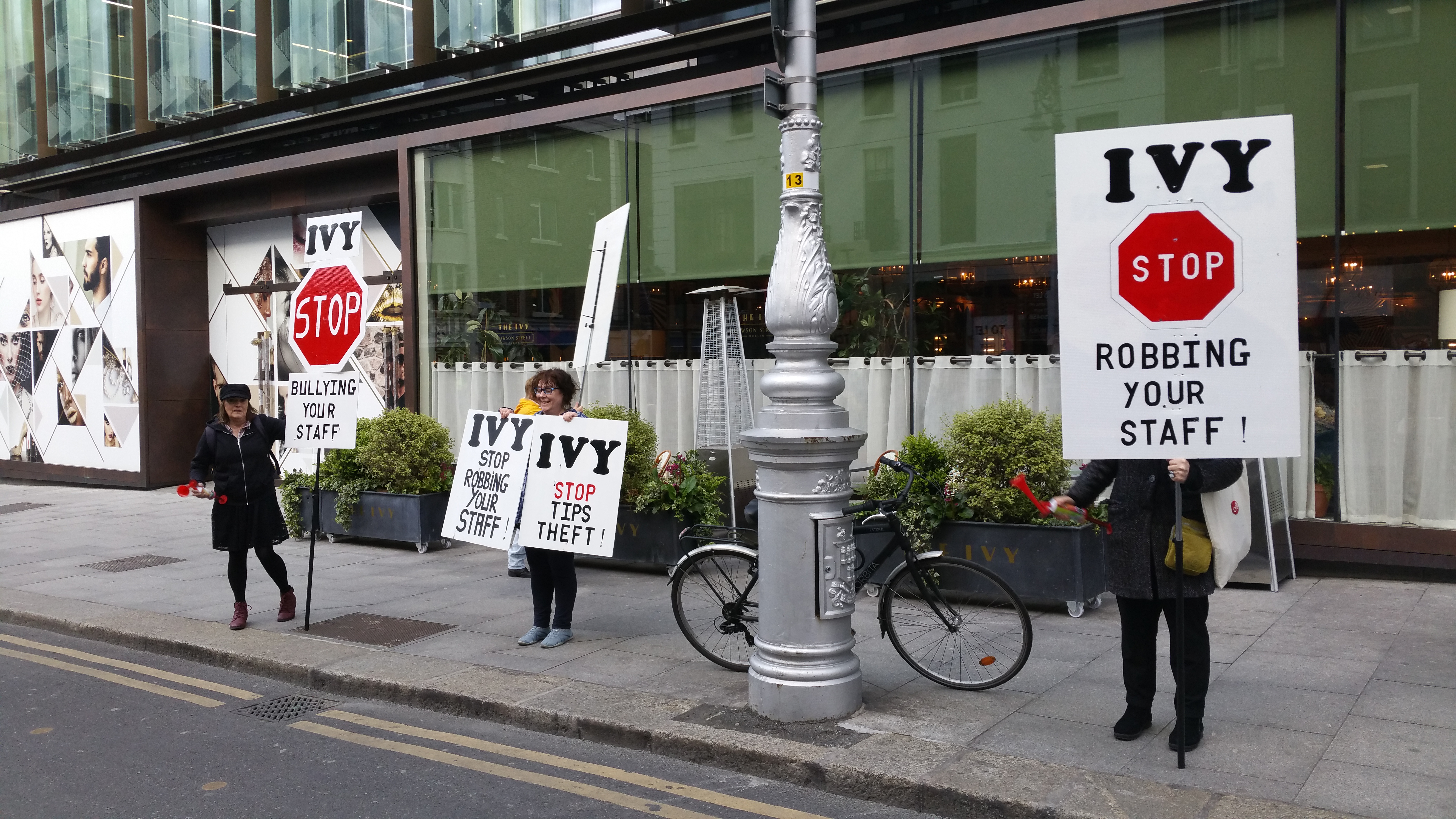
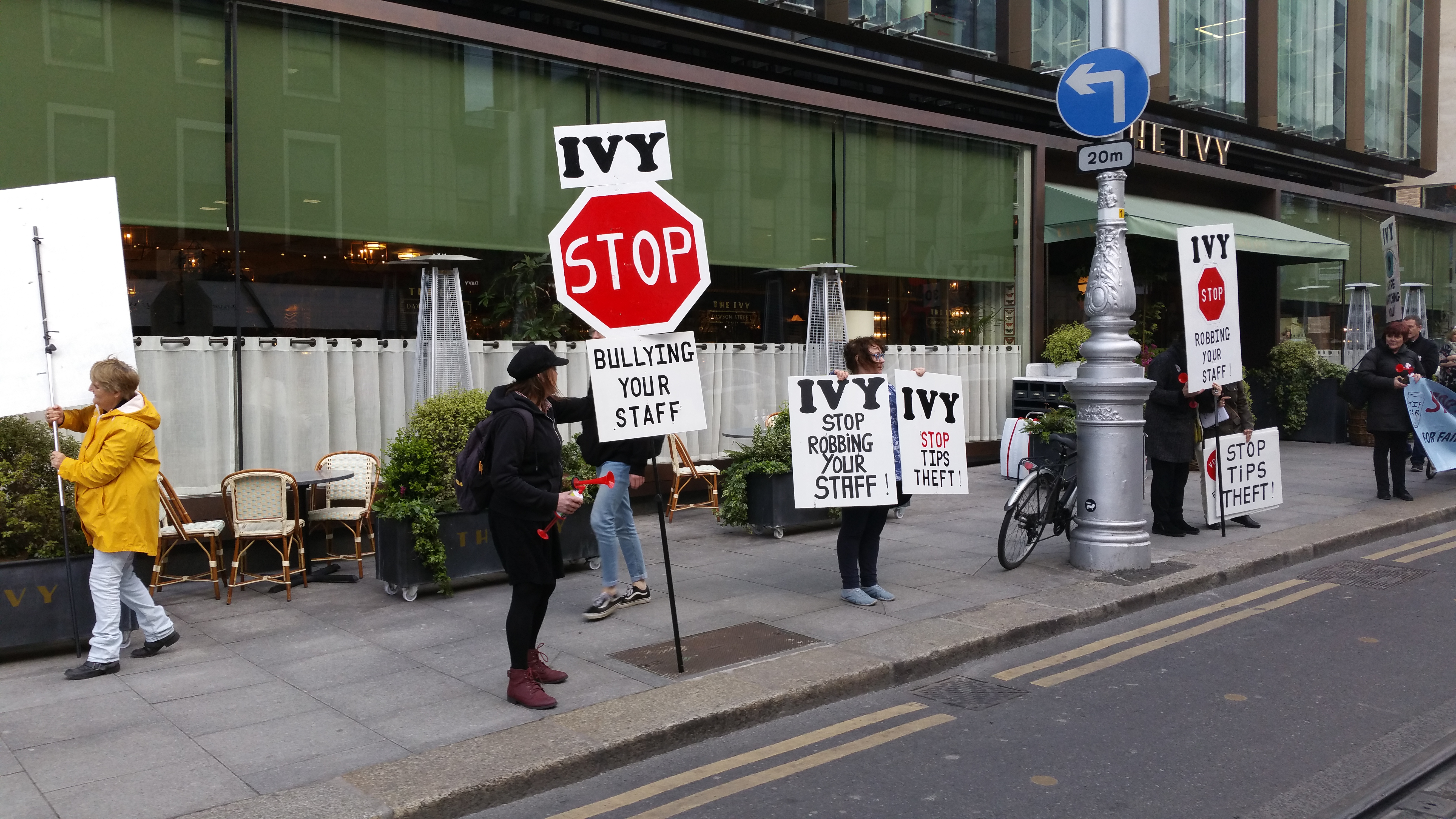
Solidarity protest picket lines up outside the The Ivy restaurant in Dublin city centre’s Dawson Street and, as management draw the blinds to hide the event from their customers, passers-by take photos and passing traffic sound horns in solidarity.

Solidarity protester with placard outside the Ivy Restaurant on Saturday.
(Photo image: protester)

          On Saturday afternoon (8th June) round a score of men and women participated in a picket outside the The Ivy restaurant in protest against management deducting a percentage of the waiting staff’s tips. The management are able to take this action when customers pay by bank card for their meals as well as the service charge. The protesters were also in solidarity with two sacked workers who protested the practice.

The business pays minimum wage every day except Sunday and staff expect to make a decent wage up from tips ….. but, much of the tips money is being taken by the management.

Picket line outside The Ivy restaurant on Saturday afternoon.
(Photo: D.Breatnach)

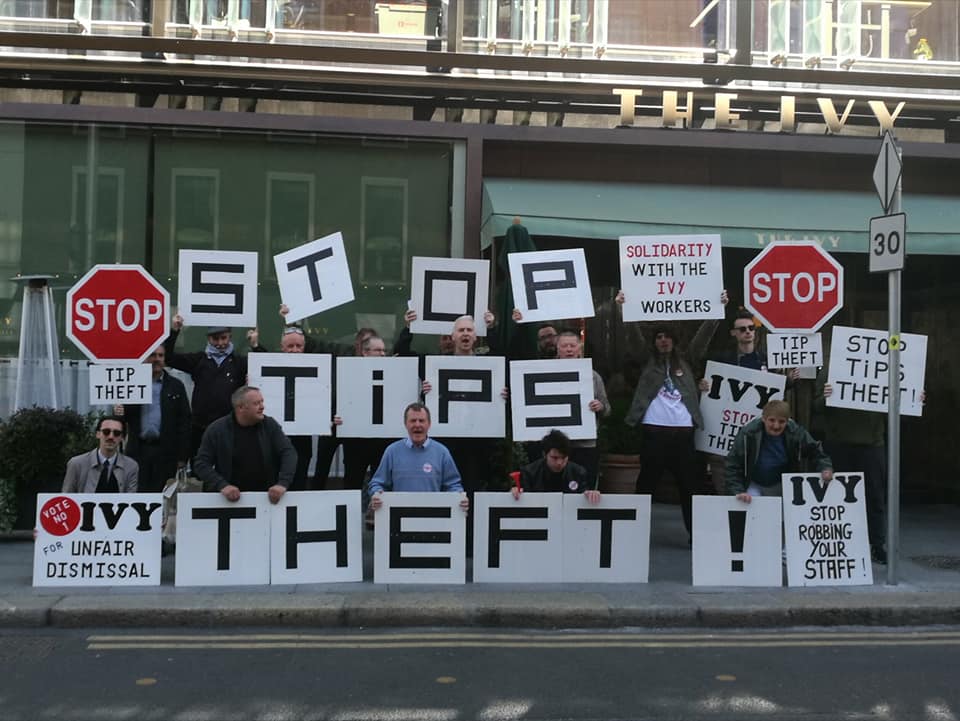
The protesters held up large placards bearing the slogans: “Ivy: stop robbing your staff!”, “Vote Ivy No.1 for unfair dismissal”; “Ivy, stop tip theft!”; “Solidarity with sacked workers” and also displayed a banner which, as well as reading “Stop tip theft” also called for “fair pay and union rights”. The picketers later also held up large letters to display the message STOP TIPS THEFT.

Dawson Street, in which the Ivy Restaurant is located, is an upper-class southside city centre street of mostly old architecture, filled with eateries, art galleries and bookshops and also containing the Mansion House, a historic building and the Lord Mayor’s business residence. It is one of two public bus routes from the south-east into the city centre and also contains a LUAS (tramline) stop.

Section of picket seen closer and front door of The Ivy (note the blinds!) (Photo: D.Breatnach)


Drivers of a number of passing private and public transport vehicles sounded their horns in solidarity while passing the picket while tourists and others took photos and promised to post them on social media. A number of tourists from the Spanish state asked about the protest and I when I explained, were fully supportive.

Since I participated in this protest myself, I was able to identify participants from a range of political allegiances and independents and they included a number of recently-elected Dublin City Councillors (a previous picket I wrote about included a TD – member of the Irish Parliament).

ONGOING STRUGGLE

          This controversy has been going on for some time and has been reported in the Irish Times (see Links and References). Since the protests began, management of the once-highly-patronised restaurant had blinds installed so that they could shield their customers from the sight of the picketers but even so, they could not avoid hearing the bullhorns and the chanting outside.

Chants included “Shame, shame, shame on you; pay the workers what they’re due!”

Reports indicate that business at the restaurant in fashionable Dawson Street is down by as much as 40% on many days which bodes ill not only for the restaurant at present but also if the owners try to sell it, since the reputation associated with the business will be of a negative kind.

Catering workers through much of the world are typically unorganised into trade unions, have insecure employment, are often immigrants to the country and are particularly vulnerable to extra exploitation. Ireland is no exception to this rule and there are many examples of it in Dublin. Campaigners for better conditions of employment and pay for catering workers are aware that the Ivy is one among many but hope that breaking the tip-deducting practice at this high-visibility eatery will spread a beneficial effect around the rest of the industry.

Meanwhile the two workers sacked by The Ivy are awaiting their day in the Labour Court.

End.

LINKS AND REFERENCES

Explanation of many of the issues: https://www.irishtimes.com/life-and-style/food-and-drink/restaurant-reviews/tips-at-the-ivy-restaurant-following-the-money-1.3714844

Link to Irish Times article (and photo): https://www.irishtimes.com/life-and-style/food-and-drink/protest-held-outside-ivy-restaurant-in-dublin-over-waiters-tips-1.3827055

More recent Irish Time article with good explanation: https://www.irishtimes.com/life-and-style/food-and-drink/just-because-it-is-legal-for-restaurants-to-keep-tips-does-not-make-it-right-1.3917220?fbclid=IwAR3s_e1b9B4E0WZje04qTUGpbj9SL-BHyb0FWtcitYP6shyU-9pTPb2tuak

Previous article by me on this subject: https://rebelbreeze.wordpress.com/2019/05/02/tipping-the-bosses/

GREENS ELECTED — MORE OF THE SAME


(Reading time: 3 minutes approximately)

Diarmuid Breatnach

I am rubbish at predicting broad election results.  But the mass media is predicting, on early returns, a huge electoral swing in Ireland towards the Green Party — at least in the municipal elections.

(image source: Internet)


As I type these words the other candidates who failed to get elected as municipal councillors in the Irish state — or barely scraped through — will be licking their wounds.  The Greens will be celebrating, of course, spouting their analysis of what this means, of a huge change in the Irish people, of climate change awareness ….


And the media will be parroting them.


MORE OF THE SAME

I don’t believe the voting results are because of any great change in the consciousness of the Irish electorate — in fact I think it’s basically more of the same.


Why then the electoral surge towards the Greens? I don’t think that climate change issues — or more accurately the public perception of them — are enough to explain it, though it will no doubt have influenced some voters. I think the fundamental reason is that the Greens are not Fianna Fáil, Fine Gael, Labour or Sinn Féin. True, they are tainted from partnership with FF in the past but that was only a couple of them and a lot of water has gone under the bridges of Irish rivers since then.

I wouldn’t trust the Greens in power as far as I could throw an iceberg but I think what I’ve said above is the reality.
The 26-County electorate has traditionally voted either FF or FG into power. The latter normally needed another partner to form a majority, which Labour opportunistically gave them and later the party always paid the price, while a few of its leaders got fat pensions out of it.

Apparently every Irish government since the intervention of Hunger Strike candidates in 1981 has been a coalition, which testifies to an electorate generally unconvinced by either main party. But since the bank bailout, the electorate seems to have been even more disenchanted, voting for outsiders in the race and hedging their bets between parties, like spreading the risk in investments.


In the 2011 General Election, the voters kicked out FF to the lowest vote in the party’s history along with wiping out its Green party partners and, apart from voting in a lot of independents (mostly left-wing ones), they gave most votes to the party most likely to dislodge FF, which of course was FG.  And they spread the risk by giving Labour a lot of votes. Despite the hopes of the electorate this coalition basically gave us more of the same — privatisation of lucrative state services, mismanagement of others, expanding housing crisis and austerity measures.

So they put in a lot of SF in another year and what do they get? A party that votes in Dublin to hand over Council land to speculators because SOME ‘social housing’ will be built on it. Resignations of elected representatives through alleged internal party shenanigans. A party that has long ago lost interest in organising a base for anything except voting — a mirror, in fact, of FF in the past. And which, while playing sectarian politics in the Six Counties has supported — and implemented — austerity measures of the British State.


Media commentators will search for many reasons for this change — youth vote, middle-class vote, climate change consciousness and general environmental awareness.  I think there is a more fundamental reason which the commentators would probably rather not acknowledge, since it questions, not the viability of this or that party, but the whole system.

I don’t believe the people have any great faith in the Green Party and this elections seems more of the same behaviour of the electorate. Change the faces every so often — and spread the risk.
Nor do I blame the electorate — for what visible and realistic alternative has presented itself?

End.


REFERENCE

Talk: “Struggle Against Racism & Fascism In The 21st Century”

Diarmuid Breatnach

(Report reading time: 3 minutes)

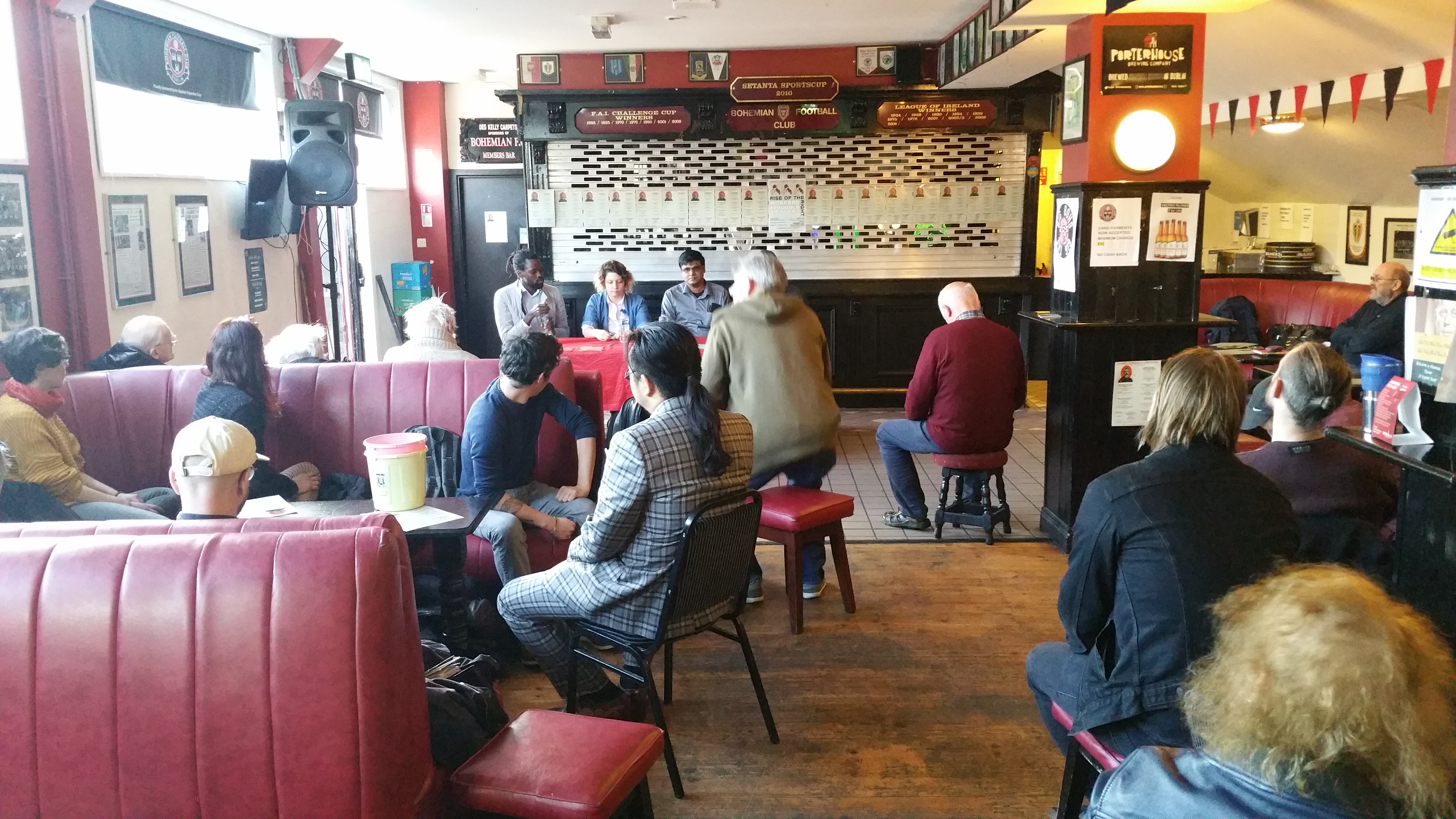
The above was the title of an event as part of the James Connolly Festival 2019 and was held in the Bohemians FC Members’ Bar in Dalymount Park, Phibsborough, Dublin on 7th May. The event was chaired by Spark Podcast and had three speakers, one from a Direct Provision asylum seeker’s hostel, another from a Brazilian immigrant community and a third from Kerala state in India but resident in Ireland.

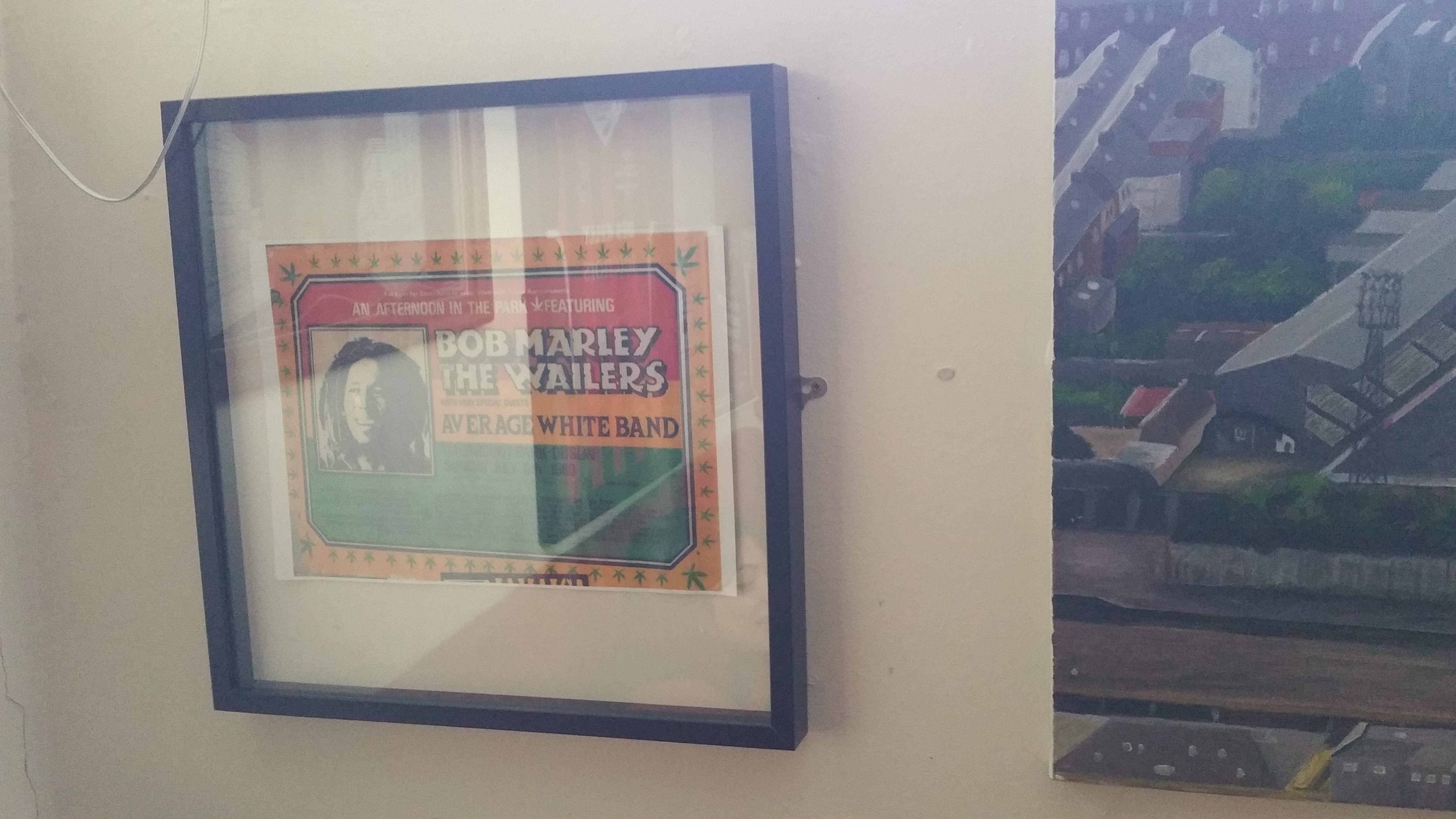
Poster commemorating Bob Marley and the Wailers concert in Dalymount Park, July 1980.
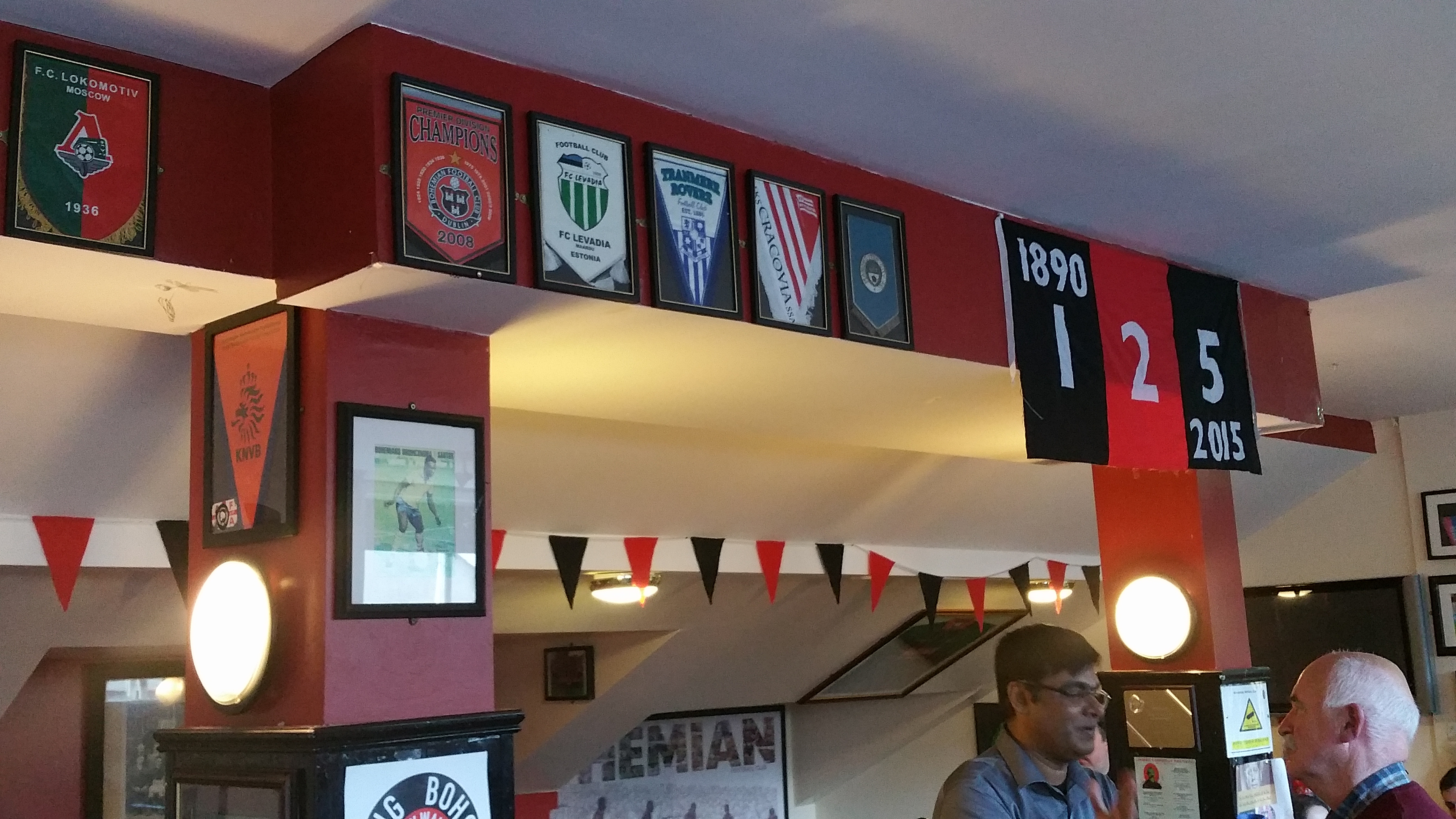
Section of Bohemians’ supporters bar with memories of games played int the past.
Memorials of past games played by Bohemians FC
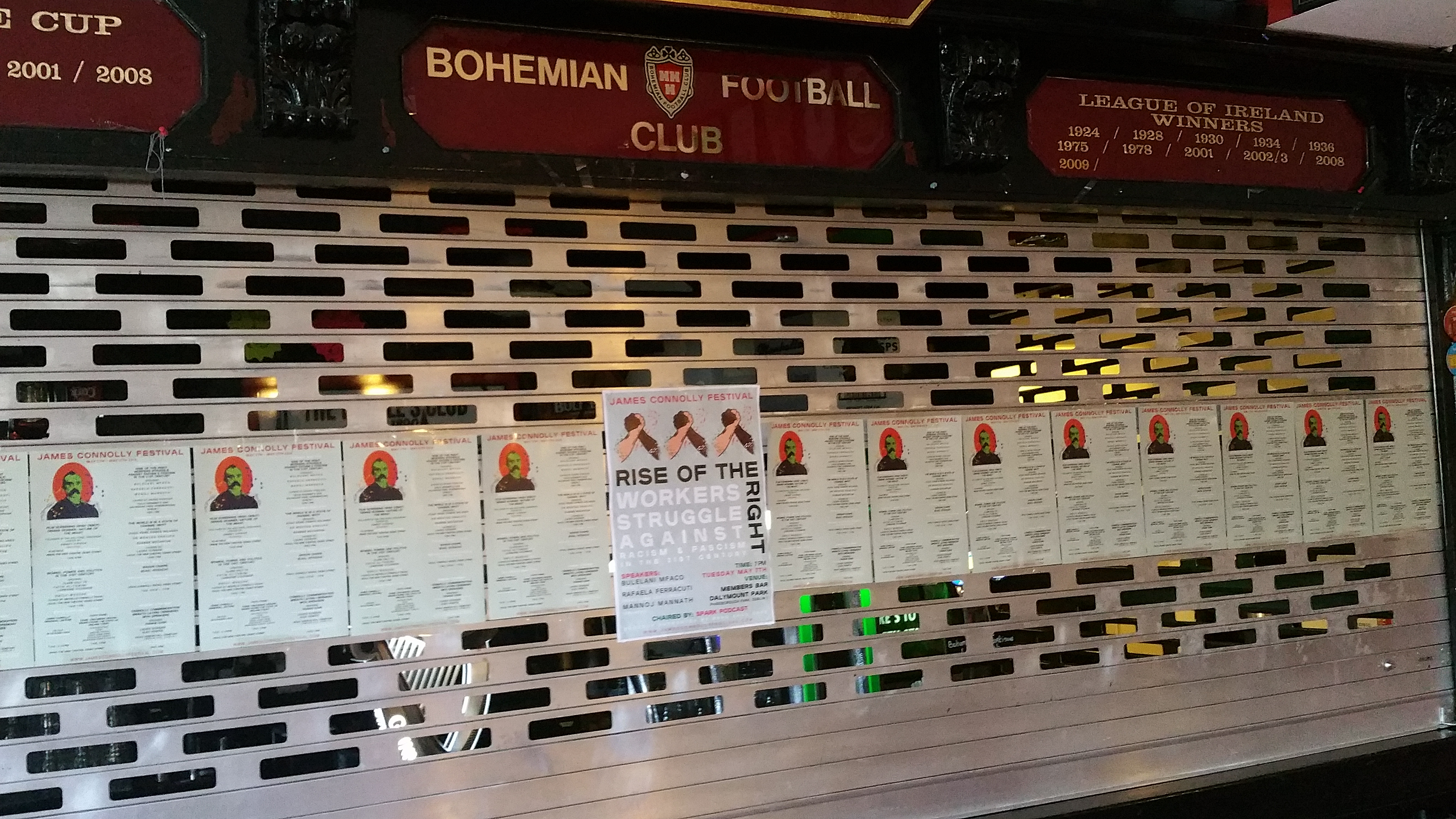
Bohemians’ supporters’ bar with posters for the JCF and one for the specific event of the night.

The first speaker was Bulelani Mfaco who introduced himself as a South African, gay and an asylum seeker. Speaking about racism, he said that it was necessary to stand up to it and quoted the example several times of Mary Manning, who was one of eleven strikers (“Ten Young Women and One Young Man”, song by Ewan McColl) in Dunne’s Stores in Dublin in pursuance of their union’s policy (IDATU) not to handle South African goods while the white racist regime was in power.

Bulelani said that fascists mean what the say in their threats about their targets, blacks, gays, asylum seekers, women who won’t act as the fascist think they should …. and so they should be prevented from coming to power. He said that as a black man he is aware of racism often on the street.

Speaking about the conditions of asylum seekers and the conditions imposed on them, including being asked to prove that he was gay (!!!), he said they do not come as freeloaders but are prevented from working while their cases are examined, which can take years, therefore the Government’s system forces them to be recipients of aid. Once a judgement is given, which in 9 out of 10 cases is a rejection of the application to stay, they can appeal and racists say they are just doing that to delay the process of their expulsion. In reality, many cases are successful on appeal as the reasons stated for rejection at the first stage were so irrational.

He also pointed out that seeking asylum has no necessary link to war but is about a person “having a reasonable fear of persecution because of their race, religion, nationality, membership of a social group or political opinion and is expelled or chooses to leave their country because of one of those factors”. A “social group” under threat could mean and often does, being one lesbian, bisexual, gay or transgender.

Eloquent and with wide knowledge about people seeking asylum in different countries, Bulelani was at times in danger of leaving the other speakers without enough time for their own contributions.

Rafaela Ferracuti (Brazilian Left Front) spoke about the fascist and racist policies of the current regime in Brazil and the harmful reforms of workers rights’ and open justification of attacks on indigenous people. Ferracuti spoke also about the situation of Brazilian migrants working in Ireland and referred to a fairly recent attack on some of them by Travellers. Asking for people to support Brazilian workers here, Rafaela also spoke about links with the Workers’ Party (which I assumed incorrectly at the time to be a generic term or a Brazilian party I had not heard of).

Manoj Mannath (of Kranthi organisation) talked about the slow climbing to power in an Indian state of a fascist party and talked about the process they had followed to do so, using Hindu religion in a supremacist way and also targeting those of the “untouchable” (sic) class.

Both Ferracuti and Mannath were speaking with difficulty in a language other than their own and I found it quite hard to follow them at times.

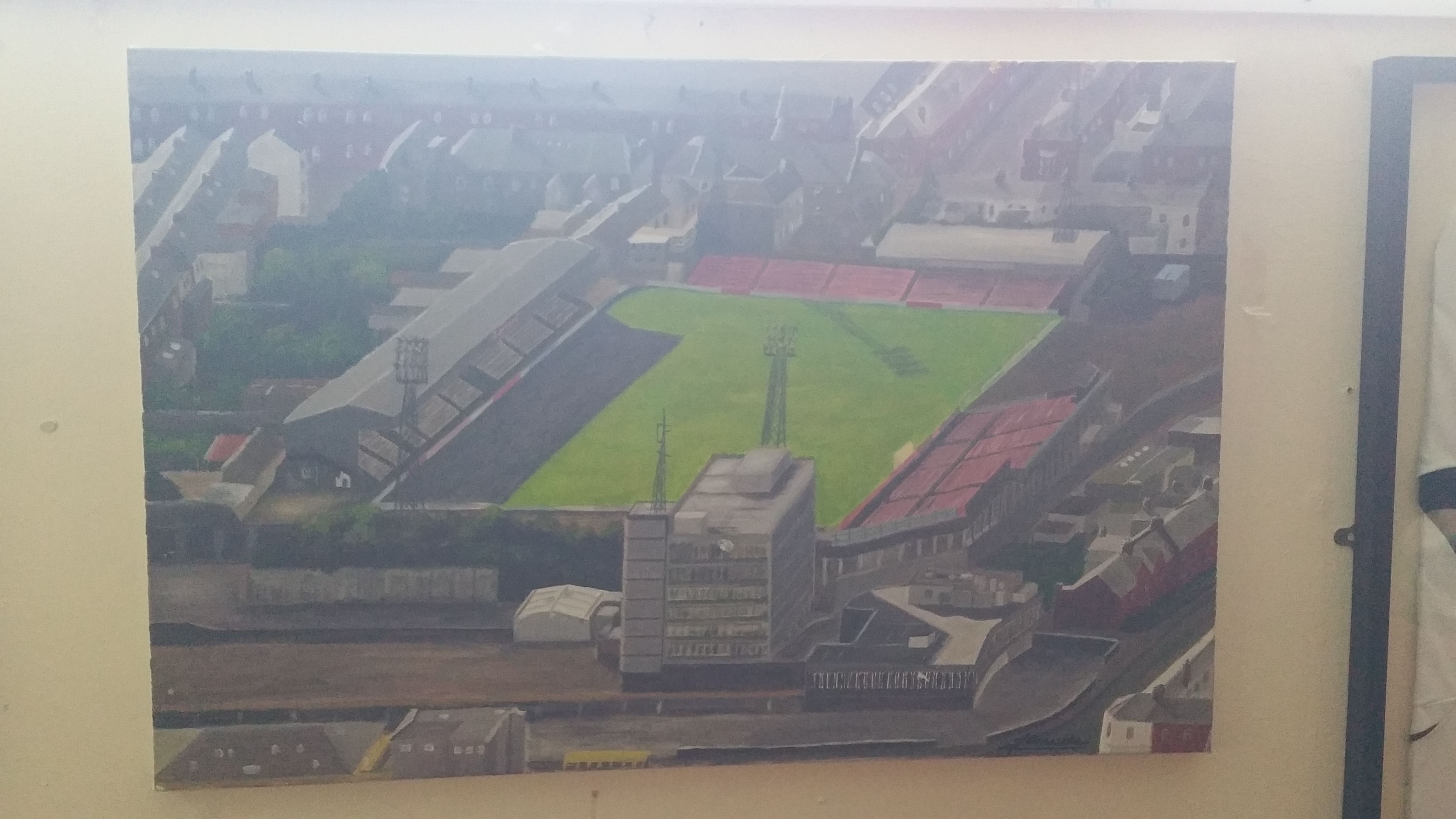
Framed photograph of birds-eye view of the Dalymount football stadium (apologies for the shine off the glass in the frame).

During questions and contributions, the following points were made or clarified:

  • The attack on Portuguese migrants by Travelers was wrong but some of the response by Portuguese migrants had been to leave racist graffiti, which would not help matters.

  • Irish Travelers are or have been for a long time the most discriminated-against section of Irish society with hard living conditions and high infant mortality and as often happens with people pushed to the bottom, some of them have turned to drugs and feuds are breaking out between rival gangs.

  • One person opined that the Government does not want to stop immigration but to control it and keep migrants insecure and with little rights, the easier to exploit them. The trade unions should recruit migrants to help them and also to prevent them being used as cheap labour to undermine any conditions won by Irish workers.

  • The Irish have been migrants to many countries and some had joined the oppressors while others became prominent in workers’ resistance.

  • Another ascertained that Rafaela had been referring to the Irish organisation the Workers’ Party and she stated that it is an anti-immigration party.

  • Another contribution stated that as well as the work of attacking racist policies and statements, fascists had to be prevented from establishing themselves and referred to the prevention in Dublin a few years ago of the launch of Pegida, a Europe-wide fascist organisation targeting Muslims. The Irish and Polish components had been physically prevented from holding their rally and anti-fascists are currently being taken through the courts on serious charges. He felt that these people should be supported.

  • Yet another responded that although that action was good, when one got to that stage, it was already too late.

  • The use of religion to divide people in India was compared to its use by the British occupation in Ireland but also by the same British colonisers in India and in some other lands.

  • Another said that the real target of fascists was the indigenous mass of people and that the other targets were being put up as diversions. As the economic situation worsens, the capitalists need to suppress the struggles of the working class and sections are targeted in order to divide the opposition.

  • There was general agreement that the various targeted sectors and the Irish working people needed to support one another.

The James Connolly Festival is an annual week-long event of talks on political events and sometimes cultural performances organised in the month of May in Dublin by the Communist Party of Ireland and open to the public. There is a program of other events continuing every day until Sunday: http://jamesconnollyfestival.com/#about

COMMENT:

Overall, I felt quite disappointed. I had assumed the talks and the meeting would concentrate on the practical and ideological struggle against fascism and the rise of the far-right in Ireland and perhaps in Europe, with some lessons from further afield. Or possibly even on concrete actions that might be taken to support asylum seekers. Perhaps that was an unwarranted assumption but in any case, apart from the contribution of Bulelani Mfaco, the South African asylum seeker, the examples (as far as I could understand them), though of interest, seemed to have little direct relevance to the struggle here in Ireland.

End.

Tipping the Bosses!

Diarmuid Breatnach

Supporters of staff at a prominent Dublin eatery protested yesterday over the management’s appropriation of some of the tips left by customers for the staff. They are able to do this quite easily when the customer pays the tip by credit card but when staff asked customers to leave their tips in cash, management accused them of “deplorable greed”. They have also dismissed two staff who are currently taking a case for unfair dismissal, accusing the management of sacking them for their unionisation of the staff.

View of some early protesters outside the Ivy Dawson Street restaurant (Photo: D.Breatnach)

          The photographs taken here show a smallish group, including Independents for Change TD Joan Collins but more were coming later from the Mayday march on the north side of the river. A supporter claimed that the management offers an hourly rate above the minimum wage but then makes that difference up with tips.

Catering work in general is notoriously low-paid and with transitory staff, making it difficult for trade unions to organise them and relatively easy for management to hire and fire.

View of some early protesters outside the Ivy Dawson Street restaurant (Photo: D.Breatnach)

There have been a number of protests about the tips issue at Ivy, including one on which the Irish Times reported in March.

The report stated that a number of protestors who had booked tables in the restaurant began the protest and were then joined outside the restaurant by a group of 30 people led by Independent TD Joan Collins who held up placards stating “Stop tip theft”.

View of some early protesters outside the Ivy Dawson Street restaurant (Photo: D.Breatnach)

Ms Collins was reported as saying that she was aware of other Dublin restaurants who have are engaging in similar practices when it comes to tips and was quoted as saying that: “The Ivy are abusing the good nature of diners who are tipping staff well because and they are not aware that management are taking some of their tips”.

“Workers are hugely concerned as they are not earning a high hourly wage and they work hard for their tips only for a portion of it to go to the company,” she said.

end.

Link to Irish Times article (and photo): https://www.irishtimes.com/life-and-style/food-and-drink/protest-held-outside-ivy-restaurant-in-dublin-over-waiters-tips-1.3827055

TRAGEDY AND THE CONDEMNATION BANDWAGON

(Comment: Approximate reading time 5 minutes)

Diarmuid Breatnach

A woman dies; she was young, a tragedy. Where did this happen and when? In Derry on Thursday evening. How did she die? Apparently (and I say that advisedly, for I do not know the examining doctor‘s verdict nor has an inquest yet been held) by a gunshot to the head. And according to a number of witness statements, she did not have a gun herself and therefore the bullet came from someone else.

THE CONTEXT

          All this and more has been reported in unanimity. What was the context? Ah, there we have to do some digging.

There was a riot going on at the time – there were petrol bombs and stones thrown at the police. Oh, why? Well, some of the early reports didn’t even try to answer that. But later, we were told: the police were searching houses for IRA arms. The police had “a tip-off”, some papers reported.

OK, now we’re getting somewhere. Reading between the lines, if we know enough about the general situation, we can reconstruct a probable narrative: British armed colonial police were searching the homes of Irish Republicans in ‘nationalist’ areas, just before their Easter commemoration, a commemoration during which they attacked another Republican group in Newry last year and one which was for decades banned under the Special Powers Act in the Six Counties – a ban enforced violently by the forerunners of the very police force carrying out those house searches on Thursday.

And it turns out, as admitted by senior PSNI command and reported in only some media outlets, including the Irish Examiner, that the purpose of the police raid was harassment: PSNI officers were carrying out a search operation in the Creggan area of Derry aimed at disrupting dissident republicans ahead of this weekend’s commemoration of Irish independence.”

And we might know, though not from the general media, that the colonial police have been carrying out these raids on numerous occasions of late, as well as stopping cars of Republican activists and searching them, stopping people out walking and searching them too, as well as questioning them about where they are going and where they have been. Most people of course won’t know that – how could they?

So now that we have context, we might see the rioting as a justified response, even natural perhaps, of a colonised people to provocation and harassment by a militarised police force of a colonial occupation. And a colonial administration with a long history of atrocities by the occupying power. Or we might not – but context gives us the opportunity to interpret, while its absence leaves us bewildered or manipulated.

If we take the view that the people are justified in resistance, does that excuse the killing of the woman in question? No, not at all. But it does take us some way to understanding the situation and perhaps we wouldn’t want to see Irish Republicans as monsters then.

Lyra McKee’s death is a tragedy, as is the premature death of any innocent person and particularly a young person. The Six Counties too, that repressive backward statelet, can ill afford the loss of an LGBT campaigner.

Firing a gun in that situation was highly irresponsible and unnecessary. The shooter (or shooters) could not be sure of hitting a police officer and did, in fact, hit a totally innocent bystander. And if the police had fired back, the shooter(s) would have put everyone around them in mortal danger too.

CONDOLENCES AND CONDEMNATIONS

            Saoradh, an Irish Republican organisation active in the area who were involved in preparing for the Easter Rising commemoration in Derry felt they had to cancel the event after the death. They issued a statement providing context for the riot and also extended condolences to the bereaved family and friends. Most media didn’t quote the relevant parts of the statement and some never even mentioned it.

On Saturday, their representative at their Easter Commemoration outside the GPO building in Dublin repeated the statement and amplified it, saying also that the IRA was not always right and, when they erred, they should apologise for it. The media didn’t report that either.

The media rushed, not to report the shooting and its context, but to condemn Irish Republicans who don’t agree with the Good Friday Agreement, i.e the ‘dissidents’. The BBC, in its first report on line, along with some others, called it a “murder”. Were they justified in saying that?

In law, not all homicides can be called murders.  According to Wikipedia, Murder “…. is considered the most serious form of homicide, in which one person kills another with the intention to cause either death or serious injury unlawfully.” So there has to be intention to cause either death or serious injury to the victim. Are the BBC and other commentators really suggesting that the person or persons intended to kill a journalist? Apart from seriously inaccurate reporting, one might see those kind of claims as prejudicial to a fair trial for anyone arrested for the homicide.

THE CONDEMNATION BANDWAGON

          And then, of course, jumping on to the condemnation bandwagon, we have the usual collection of hypocrites and opportunists. What would we expect from Unionist politicians? They have been running that colony with regular pogroms and armed repression for nearly a century – Irish Republicans are their enemies to the marrow. Arlene Foster couldn’t resist using the opportunity to praise their colonial police and to take a swipe at SF: Those who brought guns onto our streets in the 70s, 80s & 90s were wrong. It is equally wrong in 2019.” Actually, at first it was usually the RUC with the guns on the street, wasn’t it? And then the British Army. But then after the Ballymurphy Massacre, Bloody Sunday …. well, you shoot at people long enough, they shoot back.

British Ministers and politicians had their condemnation to get in as well – well, the colony is theirs, isn’t it? The Republicans are their enemies too (and Theresa May must’ve been glad to be talking about something other than Brexit, for a change).

But then we had the Irish politicians also, including our own Taoiseach (Prime Minister), who presides over a State that is made secure for native and foreign capitalists by, among other things, persecution of Irish Republicans and sending them to jail through non-jury Special Courts. Mr. Varadkar is so supportive of the people of Derry, so sensitive to their needs, that whilst he condemns the Republicans, he praises the people of Derry for being “as strong as your walls.” Is he expressing Loyalist views or is he so ignorant of the people of Derry and their history?

Is Varadkar unaware that the Derry Walls belonged to the foreign occupation force? That the song that celebrates them is a triumphalist anti-Catholic sectarian and colonist song? That during the recent war in the Six Counties those walls were frequently a point of surveillance for the occupying military and that during the Bloody Sunday massacre, some British soldiers were up there with special rifles?

Oh yes and let’s not forget Nancy Pelosi, she too found a place on the bandwagon (well, to be fair, the others made room for her). This is long-standing career US Congresswoman who, although an outspoken opponent of the Iraq War and supporter of civil rights, blocked her party colleagues from going for impeachment of war criminal President Bush because “you never know what might come out”. She also voted for the Patriot Act, a huge attack on civil liberties in the USA and labeled Edward Snowdon “a criminal” for his whistle-blowing. And yes, after a briefing relating to a CIA agent destroying hundreds of hours of videotaping of torture in their US base in Guantanamo, she issued a statement saying that she eventually did protest the techniques (e.g “waterboarding”, euphemism for simulated drowning of prisoners under interrogation – DB) and that she concurred with objections raised by a Democratic colleague in a letter to the C.I.A. in early 2003. Yes you did, Nancy – but you waited four years to do so.

And what are we to say of Sinn Féin, they of association with the late Provisional IRA, putting their name to a joint statement of colony politicians? One would think that considering their past, they would hesitate to join the mob or to climb upon this particular bandwagon. One might think they would remember the innocent people the PIRA killed on occasion by accident, such as for example the Birmingham pub bombings where 21 people were killed and 182 injured or even, on some occasions, with intention.

Perhaps Michelle O’Neill did remember, perhaps she did hesitate, perhaps she wished to issue SF’s own statement. But climb aboard they did – and isn’t it all about climbing with them now?

The political parties that support the occupation said in joint statement: “Lyra’s murder (see that “murder” word again – DB) was also an attack on all the people of this community, an attack on the peace and democratic processes.

“It was a pointless and futile act to destroy the progress made over the last 20 years, which has the overwhelming support of people everywhere.” (Oh, that was its purpose, was it? And this progress has been what, exactly? And towards what?– DB).

O’Neill was herself quoted as saying that the “murder” (that word again !) was “an attack on our peace process and an attack on the Good Friday Agreement.”

And We will remain resolute in our opposition to the pointless actions of these people who care nothing for the people of Derry.

I can’t say whether those people putting up a resistance to the colonial police care for the people of Derry or not but presumably they care for the people of their own neighbourhoods who are being harassed by the PSNI. And I remember in another city, Belfast, how the Loyalists had been threatening the Ardoyne area for many months and that in 2015, the PSNI blocked the Anti-Internment League from marching down to the city centre. Although the march eventually dispersed without incident, the heavy police presence in the area provoked some residents to remonstrate with them and, when the police began to arrest a woman, the area erupted in a riot. Who did SF blame? The local youth and the anti-internment marchers! And when a meeting was convened soon afterwards in a local venue for the march organisers and SF to explain their views, it was the latter that failed to attend.

* * *

Well, it must have been getting tight up there on the bandwagon but there’s always room hanging off the sides and if that doesn’t work …. why, one can run behind. And if not, not to worry, there’ll be another one along soon.

End.

LINKS

BBC initial news on line: https://www.bbc.com/news/uk-northern-ireland-47985469

Irish Examiner (including intention of PSNI to disrupt Republicans): https://www.irishexaminer.com/breakingnews/ireland/a-senseless-loss-of-life-journalist-lyra-mckee-29-shot-dead-during-riots-in-derry-918754.html

The Saoradh statement: http://saoradh.ie/the-death-of-lyra-mckee-in-derry-saoradh-statement/?fbclid=IwAR2nH20ILtiGjgCyih2eo0HEpkK27_F89MRptEb_OIMfA0SbRz4YB8Fneiw

CATALAN PRESIDENT-IN-EXILE MEETS IRISH PARLIAMENTARIANS IN DUBLIN

Rebel Breeze Reporter

Puigdemont. President-in-exile of Catalonia, visited Dublin to take part in a debate in Trinity College on Tuesday 29th January and visited the Dáil and a number of Irish politicians on the same day.

Puigdemont and Puignól at the Barcelona-ireland friendship tree in Cow’s Lane, bracketed by activists of Casals Catalá de Irlanda, Catalan cultural organisation in Ireland on each side.
(Photo source: ACN, El Nacional).

          Carles Puigdemont was elected President of the pro-independence Catalan Government, declared an independent Catalan Republic but immediately suspended it; then had his Presidency abolished by the Spanish State, which took direct control of Catalonia for a period. He went into exile with a number of other Catalan Government ministers in order to avoid arrest; the Spanish State issued a European Arrest Warrant for him which was party unsuccessful and then withdrew it; however, he remains in exile in Brussels. Most pro-independence Catalans and even others consider him the legitimate President of Catalonia, though another had to be elected to fill his place; Quim Torra, who is currently the elected President, says that he considers himself only “the interim President”.

Carles Puigdemont was elected President of the Govern, the Catalan Government, in January 2016, in an agreement between pro-independence parties. On 27th October 2017, with a majority of October 1st Referendum votes salvaged and counted — after the Spanish police attacks on the voters – in favour of independence, he declared a Catalan Republic on behalf of the Govern. However, he almost immediately suspended it, to the dismay of many Catalans, including supporters of his own party. The Spanish State, the Constitution of which forbids any secession without the majority vote of the Parliament of the whole territory, was not mollified by the suspension and, as the Spanish State prepared criminal charges against him and Catalan Ministers, Puigdemont went into exile (as did another five Catalan ministers).

ARRESTS AND EXILE

          The Spanish State arrested a number of others, including seven ministers and two leaders of grass-roots movements and charged them with sedition, rebellion and misuse of public funds, carrying 30, 15 and six years in prison respectively and European Arrest Warrants were issued for Puigdemont and other ministers. On 25th March 2018, Puigdemont was detained on that warrant while passing through Germany on his way back to Brussels from a speaking engagement in Finland. A German judge decided the issue of the “rebellion” charge first, declaring that any such charge had to provide evidence of violence, of which there had been none by the detainee (there had been plenty of violence but all by the Spanish police) nor under his direction.

The German court decided in July that Puigdemont could be extradited to the Spanish State to be tried for misuse of public funds but the Spanish State, not wishing to have to try him and the other ministers only on those while the other ministers were being tried on the more serious charges, withdrew the arrest warrants. These charges can of course be renewed at any time and another warrant issued.

Since his return to Brussels after release by the German court, this Dublin visit has been Puigdemont’s first venture outside Belgium.

Accompanied by Jordi Puigneró, the current Minister of Digital Policies and administration of Catalonia, also visiting Ireland, Puigdemont paid a brief visit to an olive tree donated by Barcelona to Dublin in acknowledgement of the Irish who had fought for Catalonia in the War of the Spanish Succession. After a meeting with the Mayor of Dublin for the year, Niall Ring, Carles Puigdemont attended the Dáil (the Irish Parliament) for a private meeting with Bertie Ahearn, a Fianna Fáil party parliamentarian and ex-Taoiseach (Prime Minister).

Puignól attaches a yellow ribbon to the Barcelona-Ireland olive tree in solidarity with the Catalan political prisoners.
(Photo source: Casals Catalá de Irlanda)

MEETING IN THE DÁIL

          Afterwards Puigdemont addressed a meeting room of around 100, organised by the Dáil organisation Oireachtas Friends of Catalonia, with its chairperson Pat Gavan, Sinn Féin Senator, presiding.  Jordi Puigneró sat beside Puigdemont as did Lynn Boylan, Sinn Féin MEP.

Puigdemont in the packed Dáil meeting room, Leinster House, Dublin.  Others L-R: Minister Jordi Puignól, MEP Lynn Boylan, Sen. Paul Gavan.
(Photo source: Internet)

Fifty-seven years of age last December, Carles Puigedemont is a journalist by trade and ex-Mayor of Girona, a major Catalonian city of over 100,000, just under 100 kilometres (62 miles) north-east of Barcelona. In 2006, after a track record of activism in Catalan culture and nationalist activism, he was adopted as a political candidate by the CIU (Convergence and Union) political party and later to represent the reformation of that party in the Junts per Si (Together for Yes) coalition, composed of mostly nationalist capitalist elements. He has been successful in every election and currently heads the uneasy coalition platform Junts per Cat (Together for Catalonia). The current Govern is made up of a coalition between JuntsXCat and ERC (Republican Left of Catalonia), with the other pro-independence party, CUP (Popular Unity Candidacy) in opposition, though not voting with the Spanish-unionist opposition.

In what seems an action contradictory to his political position, in January 2019 Puigdemont filed a constitutional application for amparo (remedy, to put right) directed against the President of the Catalan Parliament, Roger Torrent and the Board of the Chamber, to the Spanish Constitutional Court. The application argues Puigdemont had been denied the use of his political rights as Torrent did not allow him to delegate his vote from Belgium after Puigdemont’s criminal indictment and suspension of his parliamentary position by Supreme Court judge Pablo Llarena.

Despite constant Spanish-unionist claims from both Right and Left, the Catalan pro-independence movement has shown itself more tolerant of migrants and diversity than can be said in general of much of the rest of the Spanish State and one of the laws of the Govern, twice squashed by the Spanish Supreme Court, sought to give migrants equal access to Catalan national health care. Puigdemont is himself married to Romanian journalist (Marcela Topor in 2000) and they have two daughters, Magali and Maria, the family home in Girona. His children are multi-lingual and Puigdemont himself speaks Catalan and Castillian (Spanish), as do most Catalans but also English, French and Romanian.

Addressing the full room, after thanking Gavin for presiding over the meeting and those assembled for their presence, Puigdemont presented his case that Catalonia had the right to secede, that holding a referendum was a democratic activity per excellance, that the arrest and trial of politicians for having promoted that referendum was undemocratic and that such activity was not within keeping of the EU ethos.

Replying to questions on what he would ask Irish politicians to do in order to help Catalonia’s struggle and on how he saw his nation’s struggle combining with other nations within the Spanish state, for example the Basque Country, Puigdemont said he did not wish to tell other countries what do and that the struggle of Catalonia stood on its own. He declined to relate the content of his discussions with Aherne, which he said were confidential. One member of the audience reminded Puigdemont that 100 years ago, the first democratically-elected Irish national parliament had met and that many of its delegates were also in jail or in exile.

To a question about alleged flight of business from Catalonia, Puigdemont said that one had to read alternate media to some of the dominant ones and make up one’s own mind, critically examining all sources – including himself! But he did say that although some addresses of head offices were transferred to the Spanish State in what he said was not legally right, not one factory, working office or member of staff had been transferred out of Catalonia. Also, the struggle with the Spanish State and some Spanish attempts at boycott had obliged Catalans to look outside the Spanish state for their markets and business links whereas previously, imports from and exports to the Spanish state had accounted for 90% and 80% respectively. Jordi Puigneró commented that he was in Ireland in part because of that, in particular to follow up on the Irish state’s success in attracting and developing information technology business.

After the Dáil meeting, Puigdemont and Puignól pose for photos with Catalan solidarity supporters.
(Photo source: Casals Catalá de Irelanda)

Outside in the icy cold after the fairly short meeting, Puigdemont lined up for a few photos surrounded by Catalan and other well-wishers and departed to the singing by them of Catalan’s national anthem, Els Segadors (The Reapers). He had a debate at which to speak in a few hours and most of the Catalans in attendance would be there too.


End.

OTHER MEDIA REPORTS:

https://www.independent.ie/irish-news/politics/well-continue-fighting-for-our-freedom-it-doesnt-matter-if-were-in-jail-excatalan-president-tells-tds-37763055.html

https://www.irishtimes.com/news/world/europe/carles-puigdemont-i-may-participate-in-the-european-elections-1.3776372


Priceless Solidarity on the Ha’penny Bridge

Diarmuid Breatnach


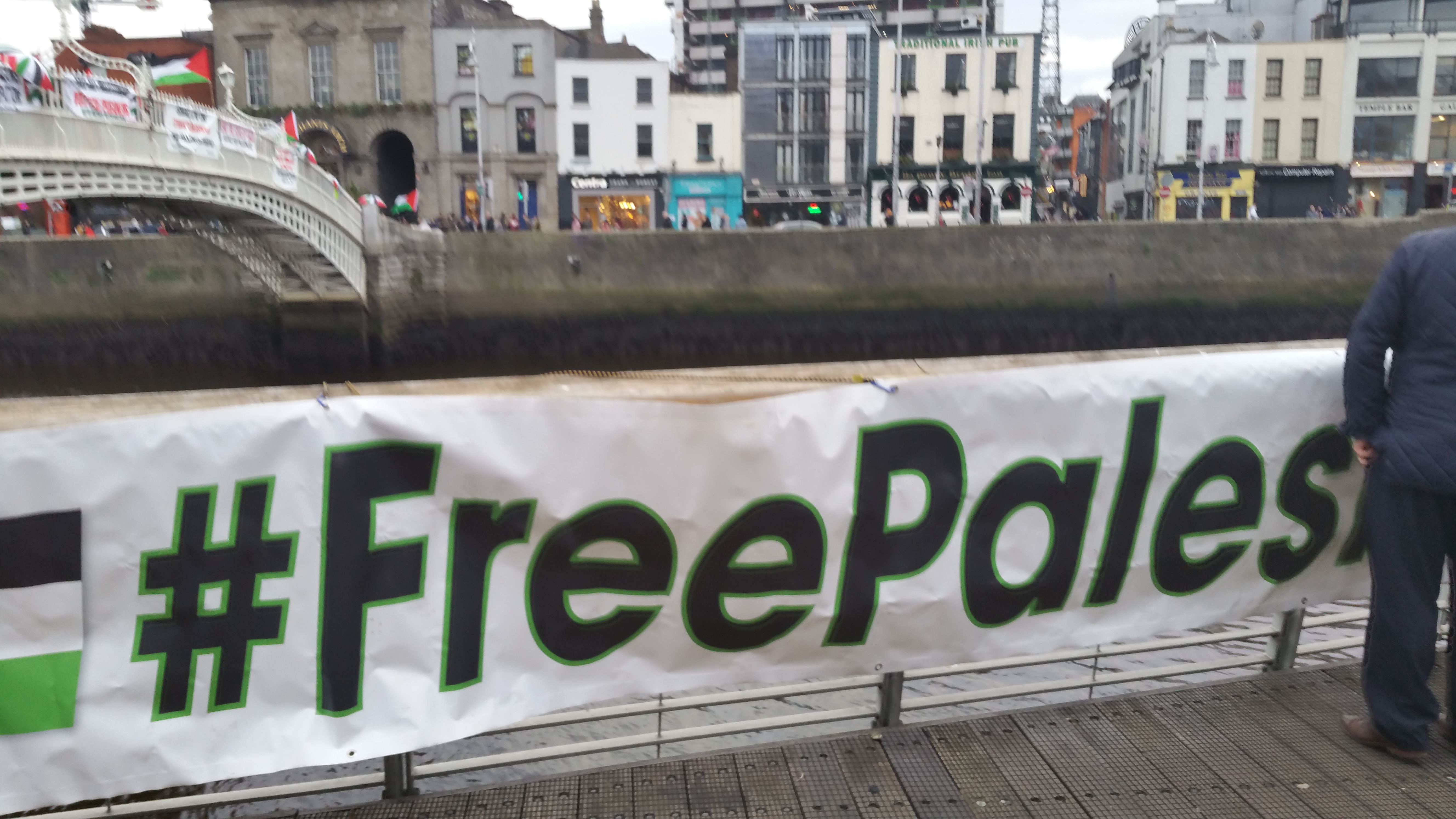
Palestinian flags and solidarity banners decorated each side of Dublin’s iconic Ha’penny Bridge on Sunday 31st December as people crossing towards both sides of the river passed between people holding flags, wearing kifiyehs or standing under umbrellas in the Palestinian colours. The overwhelming majority of the supporters seemed Irish and could be identified as from a range of socialist and republican backgrounds, whether independent or not.

A bridge of Solidarity (Photo: D.Breatnach)

This is an annual New Year’s Eve event, organised by the Ireland Palestine Solidarity Campaign, whose stall had been set up on the south side, near Merchant’s Arch.

On the Boardwalk
(Photo: D.Breatnach)

Two versions of leaflets were being distributed; one which called for an end to the siege of Gaza pointed out that in 1017 a UN report stated that “the unliveability threshold has already been passed there.” Among other recommended actions the leaflet asked people to contact their TDs (Irish parliamentary representatives) and urge them to support Senator Frances Black’s Bill this year which will ban trade with Israeli illegal settlements in Palestine. Those settlements seize Palestinian land and water resources and are illegal by UN declaration.

The west side of the bridge, from the northern side of the river (Photo: D.Breatnach)

According to a report “Between July 2016 and June 2017, Israeli authorities authorized construction work on more than 2,000 new housing units for settlers in the West Bank, excluding East Jerusalem”, another area of Zionist expansion.

The Bridge was busy (Photo: D.Breatnach)

During the same period, “Israeli authorities destroyed 381 homes and other property, forcibly displacing 588 people as of November 6, in the West Bank, including East Jerusalem, as part of discriminatory practices that reject almost all building permit applications submitted by Palestinians.”

A closeup on some of the banners on the east side of the bridge.
(Photo: D.Breatnach)

During the Great March of Return protests on Gaza’s border which began in May, Israeli Occupation Force snipers shot dead or caused death by gassing of 168 Palestinians and injured 17,259 people, including women, children, medical workers and journalists. During the same period one Jewish Israeli was killed 11 and injured, six of which were soldiers.

A great many passers-by expressed their approval of the demonstration, some stopping a while to talk with the demonstrators.

It was a child-friendly affair (Photo: D.Breatnach)

Some chanting of Palestinian supporters could be heard as well as occasional passing drivers tooting their horns in solidarity, occasionally with a clenched fist also raised outside the window. A counter-protest planned by the zionist Irish Friends of Israel on Essex Bridge however failed to materialise.

End.

LINKS FOR REFERENCES & FURTHER INFORMATION:

IPSC (an organisation independent of all political parties): www.ipsc.ie

Information and statistics: https://www.hrw.org/world-report/2018/country-chapters/israel/palestine

Biased Wikipedia entry which however could not disguise the casualty statistics: https://en.wikipedia.org/wiki/2018_Gaza_border_protests


ABUSE OF POWER AND VIOLATION OF CIVIL RIGHTS IN IRELAND ARE NOT THINGS OF THE PAST

Diarmuid Breatnach

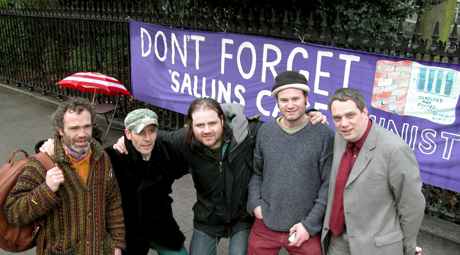
The violation of the civil rights of Osgur Breatnach (then a leading member of the IRSP) exposed in the program in the Finné series on TG4 (Irish language TV channel) shown recently and repeated a week later was set in the 1970s but the injustice did not end there.

Osgur Breatnach, photographed recently and still wanting his beating and framing investigated
(Source image: Dara Mac Dónaill, Irish Times).

          Even after a High Court admission that he and McNally had been subjected to “oppression” and his conviction thereby overturned 17 months after his jailing, the court still maintained he had beaten himself up – a fiction it maintains to this day.

Of course to say otherwise would have been to admit the Gardaí special unit that came to be known as “The Heavy Gang” were vicious thugs who fabricated “confessions”. And that the judiciary of the Special Criminal Court had, despite the medical evidence and signs of beating on all, including the three who had “confessed” and the repudiation of those statements in court, colluded with the beatings, accepted the statements as true confessions and convicted three of the men for up to 12 years’ jail. And to admit that the Court of Appeal and High Court had been complicit in accepting as a “finding of fact” which could not be overturned that they had beaten one another up (and done it to himself, in the case of Breatnach).

All of which meant that the Heavy Gang got more encouragement for their ‘work’ so that some of them were able to turn up on the scene of other scandals, including that of the false confessions of Joanna Hayes and her family (about which Gardaí nothing has been done either).

Even today, not one of those Gardaí has been even charged and the complicit judiciary and State Prosecution carried on in their jobs and in some cases rose higher.

The injustice did not stop there, for when Nicky Kelly, who had been on the run, gave himself up, even though exactly the same evidence had been used to convict him, he was told he had run over the timeframe in which he could appeal and it took four years of campaigning to get him out too. And then only for “humanitarian reasons,” so the “guilty of armed robbery” verdict still stood for his reputation, potential relationships, job prospects etc.

Another eight years later he received a Presidential “Pardon” from Uachtarán Mary Robinson.

Then the State fought the financial compensation case, taking it to the extreme of bringing Gay Byrne to court over an interview he had given Osgur Breatnach. At this point some wiser heads decided to limit the damage, pay up but with the condition that the three did not go after the police or proceed with any case about the beatings.

A facet of British and Irish civil law of which many are probably unaware is this: If the respondent (i.e the one against which you are taking the case) offers you a sum and you refuse it, and you later win the case but are awarded less than what you were offered earlier, you have to pay all the costs of the defence! You can actually end up owing money!

But back to ongoing injustice. Since not a single one of the Heavy Gang was ever even charged or disciplined over this and other similar behaviour and some were even promoted; since not a single member of the legal profession or judiciary was even reprimanded for their part in it; no warning about where the boundaries are has been given to the Gardaí much less to the judiciary. Which means that it can all easily happen again.

The defendants in the Jobstown case were not beaten up to force them to ‘confess’ but when we hear Garda after Garda, including a senior one, affirm under oath in court that one of the defendants said something which all the video evidence proves he did not, at what conclusion can we arrive other than that they were all lying? But not one of them has been charged or even disciplined either.

Conversely, the State has no problem with dragging anti-fascists to court recently and this to answer charges such as “violent disorder” arising out alleged actions preventing the European fascist organisation Pegida from launching a branch in Dublin.

12-hour protest at Department of Justice in January 2004 –Cormac Breatnach, musician and brother of heavy gang victim Osgur with other musicians including of the Ó Snodaigh family and TD Aongus, their brother.
(Photo source: Indymedia — see Links)

ARE THINGS TODAY IMPROVED?

          The Heavy Gang is not operating as such today (or at least not yet) but in some respects things are actually worse than they were back in the 1970s ad ’80s. There was one Special Criminal Court then – now there are two! The Public Order Act was brought into force in 1994 to give Gardaí great powers to repress public protests and the scheduled offence of Violent Disorder was included in that Act: three unconnected individuals at the scene of a “disorder” can be convicted under the latter provision and sentenced up to ten years in jail or fined an unlimited amount (or both)!

The non-jury Special Criminal Court on its last day in Green Street before it moved to its new location in Parkgate Street (Photo source: Internet)

Courts are imposing bail conditions preventing activists from continuing to be politically active, i.e from attending public meetings, rallies, demonstrations, pickets etc – for up to the two years it can take the case to come to trial.

And just as in the ‘bad old days’, the unsupported opinion of a Garda of Superintendent rank or over is sufficient to convict Republicans of “belonging to an illegal organisation” and visitors to the public gallery of the SCC have to give their names and addresses to the Gardaí before being admitted.

Special Branch officers still routinely and openly watch Republicans carrying out their peaceful political work and demand their names and addresses on pickets. But now not only is surveillance carried out on people’s electronic communication equipment, communication is also being blocked at times by special equipment of the Gardaí.

Sadly, as the struggle over social and political issues becomes more acute in this state, we will see more repression, as the State tries to force the whole of civil society into compliance, especially by concentrating that repression on society’s more politicised and active sectors. Already in Dublin we have seen masked bailiffs and masked police carrying out an eviction of a small token occupation group in an empty house and, a week later, armed police turning up to a dispute between a couple and their landlord.

Only by admission of wrongdoing followed by actions overturning the current impunity of the Gardaí and the judiciary can a worsening of the situation perhaps be averted. But there is no sign of that happening.

End.


LINKS FOR REFERENCE/ FURTHER INFORMATION

https://www.irishtimes.com/news/crime-and-law/wronged-man-still-seeking-answers-40-years-after-sallins-train-robbery-1.3673264

https://www.indymedia.ie/article/63140?userlanguage=ga&save_prefs=true

https://www.independent.ie/opinion/analysis/from-heavy-gang-to-bailey-case-how-gardai-havent-learnt-lessons-30201431.html


FREE CARPETS AND PERFUME!

Diarmuid Breatnach


The carpet is a lush deep kind of green – not too deep a green though. We didn’t order it but I’m not complaining – I like it. Much better than that yellow one we had for a while a few months back.


Next to it is another kind of carpet – very different. The same green background but covered in big blobs of yellow, brown, orange and mixtures of all three. Even some reds. The blobs are large and small, some shaped like the spades suit in a deck of cards, others like a cat’s iris, some with many points, like a star … Didn’t order that carpet either but I like it too. It might not sound that great but you’d have to see it.

There was the wallpaper too, great stretches already unrolled, ready to look at. A blue-white background with puffs of white and, in the foreground, thin black shapes, some of them decorated with those blobs of colours, like those on that carpet. Great contrast with the thin black shapes.

The carpets and wallpaper were just delivered – no order was placed by phone or email. And no request for payment by cash or credit card. Not even an invoice. Totally free! Hard to believe, I know.

Then there was the perfume. No, not in bottles, in the air. I swear! (Yes, I know that rhymes but I didn’t plan it). It was heady but not in the way that rose is, or honeysuckle, or privet flower. Those aromas make you kind of want to sit down and drowse …. or even lie down and go to sleep. Then you remember the story of the artist who died inhaling in his sleep the aroma of flowers he had in a vase to paint – and you don’t linger too long. Did that really happen? Not sure – best not take the chance. Didn’t take a chance on the dandelion flowers when you were a kid either. Waking up in a wet bed is not a pleasant experience at any age but definitely gets worse, even if rarer, as one grows older.

Glade part-sunlit, Botanic Gardens November 2018
(Photo: D.Breatnach)

No, this perfume does not make you want to sit or lie down; it makes you want to jump, run (or at least stride purposefully). It is invigorating. That too was delivered free.

All of this – well, most of it – was donated by the trees. Not the green, surely? Not directly, no … but indirectly, yes. The grass grows in the earth which is fed by dead leaves and other material, broken down by insects and fungi and especially recycled through the digestive tracts of worms. May those gardeners who poison worms on their lawns be forever damned!

Autumn leaves on green grass, Botanic Gardens November 2018
(Photo: D.Breatnach)

Before Ireland was denuded of her mixed forests, what a site she must have been!

All this visual, olfactory and mood-enhancing stuff was delivered free to us but there is, you are right to suspect it, a hidden cost. The weather is getting colder and sitting nearly naked on a beach is definitely out, to say nothing of plunging into the freezing water (well, with some lunatic exceptions). Outdoor cafe-sitting is becoming more of an endurance test than a pleasure. There are days coming when lots of good arguments (convincing at the time anyway) will be found against getting up to go about once’s business.

Trees on banks of Tolka River, Botanic Gardens November 2018
(Photo: D.Breatnach)

But then there will be glittering jeweled grass, constellation of stars in the pavement, artwork fronds on glass, white star patterns in things floating from the sky, white blankets over everything or at least over the hilltops in the distance, the special joy of a hot soup, a warm fire and blankets (if you have them) ….

And not too long away, sprouting buds pushing through bark and soil, misty green branches, a different perfume, quickening the blood in a different way.

End.