(click on the link above to find the whole article)
“During this past week, near Strokestown, County Roscommon, a usually tranquil corner of rural Ireland, events have unfolded that exhibit undeniable echoes of the Land War of 1879-82. On 11December, three siblings in their fifties and sixties were brutally evicted from their homestead and family farm by private security goons backed by An Garda Síochána (the ‘Guardians of Peace’, aka the police) at the behest of KBC Bank, or by a receiver acting on behalf of the bank.”
The area in 1879: “Evictions of tenant farmers by bailiffs, agents, and sheriffs, with the backing of the Royal Irish Constabulary, were commonplace during this period. As were organized blockades, rent strikes, social ostracism, and other forms of civil disobedience to resist them.”
We often hear stupid statements. I know I’ve made some myself. I suppose the only way to be absolutely sure of not making a stupid statement is to say nothing – not even thinking carefully before speaking is probably going to be enough protection for the length of one’s whole life. Besides, thinking carefully beforehand is not always appropriate. But we can — and should — avoid repeating the stupid statements of others and making them often.
It’s no surprise that a recent statement by a Government Minister got me thinking along these lines – politicians as a group are particularly prone to making stupid statements. By “stupid’ in this case I mean contradicting logic or common sense, although the intended effect may be carefully considered and cunning.
The Minister in question, Charlie Flanagan, was quoted in a number of newspaper reports as having said, in reference to a recent eviction case in Roscommon, that “violence is never justified”. Nothing unusual in that, you might think and that does show how inoculated we have become by stupid statements.
Charlie Flanagan, Minister for Justice of the Irish Government (Source image: Internet)
Charlie Flanagan is Minister for Justice of the Irish Government. As such, the courts, police and prison service come under his oversight. The police force of the Irish State contains, according to the appropriate Wikipedia entry, 10,459 Garda officers. All of these officers are, it is reasonable to assume, trained in the use of their batons, pepper-spray, handcuffs and physical restraint. Some – and it does seem to be more and more of them – are also carrying firearms. In other words, Charlie Flanagan oversees a force of nearly 10,460 people who are trained to use violence and on many occasions expected to use it – and yet he says that “violence is never justified.”
Yes, I know – he didn’t mean the Gardaí in general, or the prison officers who are also trained to use force, or the judiciary who send people to be incarcerated. He didn’t mean the thugs who were using violence to evict people either. Or the specific Gardaí who supervised the violence being used on the evicted and by their presence prevented defence or retaliation.
Bailiffs working for KBC Banks evicting elderly people from their home in Roscommon (Source image: Irish Central.com cropped from video)
In system-politician-speak, “violence” is never what the State does and hardly ever what the capitalists do, it is invariably what the victims of the system do to protect themselves or in retaliation. And true to form, Flanagan was referring to the punishment meted out to those eviction gang thugs. So, a statement with cunning intent, to make one action, the violent eviction of people from their home an alright one, and another, the retaliation towards the thugs and repossession of the home, the only one that is “violent”. It makes perfect sense in the way that those who run the system see it and in the way, by perversion of the meaning of words, they want us to see it too.
Burned-out vans of KBC Bank bailiffs outside the house from which they had earlier evicted the residents. (Source image: Internet)
But in strictly logical terms, what Flanagan said was nonsense. Unfortunately, it’s the kind of nonsense we hear repeated again and again.
And something like it, through constant repetition, becomes almost common sense. Look at the statement that “Violence never solved anything”: another stupid statement which gets a lot of airtime and mass media repetition with a lot of currency – particularly but not exclusively among the liberal sections of the middle class.
If someone other than a teacher decides to bully you in school and you decide to make it hard for him or her, by responding to violence with violence, in most cases the bully will leave you alone and probably go looking for an easier pick-upon. In that case violence has indeed solved something – at least for you. Of course, it is possible (though not usual) that the situation will escalate from there and the liberal middle class person will tell you that you should report it to the teachers, your parents, etc. What they are expecting is that pressure will be brought upon the bully either directly or indirectly by heavier forces than yours alone. And what lies behind those heavier forces? Ultimately? Violence. It may be the best way to go at times but ultimately it is not non-violent – it is relying for effectiveness on the capacity for violence of others.
Of course, it is possible that the bully may be dissuaded through logic and therapy but that is not often going to happen in our society for a number of reasons.
OK, so you grow up and somebody one night comes to beat you up and take your wallet or purse but you put up a good resistance and either stretch him out on the ground or he runs off. Seems to me that violence did solve that situation.
Taking a more macro look at situations of violence, most people would agree that nations have a right to self-determination. Yet that right has been obstructed and repressed many, many times in history. To take Europe alone, the current nation-states of Poland, Hungary, Czech, Slovakia, Croatia, Austria, Switzerland, Holland, Denmark, Norway and Finland have all been faced with violence and had to respond with violence in order to achieve their independence. Ireland had to do similarly and was partially successful, while a number of other nations remain suppressed despite upheavals and stirrings.
While it may be true that some of those conflicts had questionable results it does not refute the general rule that nations under domination of another state are ultimately controlled by violence and that violence has had to be used many times in response. Nor is the case refuted by territorial share-outs among powers, such as some of the treaties between big powers – the Treaty of Versailles at the end of WWI, for example, authorised the English and French to plunder the Ruhr Valley and was one of the German grievances that helped the Nazis to gain control and begin world expansion. Other treaties have regularly led to violence too, either in states or peoples trying to re-negotiate or negate them, or in suppression of those rebellious forces by the states benefiting from the treaties.
Let us suppose that we are subject to an invasion by a foreign state – that is not too difficult for the Irish to imagine and most European countries experienced it during WWII as did, earlier and later, most of the nations of Latin America, Africa and Asia. The invading force uses violence, of course and they use it more effectively than our defence forces do. Violence worked – in this case for the invading forces. It solved the issue for them – how to overcome our defence forces and occupy our territory for whatever reason they set out to do so.
If we want to resolve the issue to our advantage – to end the invasion and occupation – we would not be able to do so peacefully. That is not a choice the invader will permit us. Our resistance would sooner or later be met with violence by the occupier, whether wholesale in massacres, internment, bans, ’emergency’ laws, curfews etc — or by more selective violence, arrests of leaders and activists, torture, jailing or even executions. And often by a combination of the wholesale and the selective repression.
To rid ourselves of the invader we would have to employ violence too, violence in resistance. It would of course be necessary to combine it with many other tactics – sabotage (violence against things), insurgent propaganda, cartoons, graffiti, song, humour, sarcasm and irony, boycott, demonstrations, pickets, subversion of the enemy’s forces ….. but violence would have to be part of it. There is no nation that freed itself from the domination of a state which was at the time capable of violently suppressing it, without the insurgent nation having had to resort to revolutionary violence.
Returning for a moment to our middle-class liberals, let us imagine the home or business of one is subject to an attempted burglary or robbery. The victim will feel justified in the use of violence in defence of his or her property or home. He or she may choose not to employ that violence themselves – or be unable to — but in that case will certainly turn to the police to employ it on their behalves: “Use cunning to find them and violence to subdue them, bring them to trial by force and punish them by jail. And keep them there for a long time, using violence if necessary.” The middle-class liberal whose business has been robbed or home violated will in most cases not hesitate to, if not use those actual words, to fully imply them by calling for “justice”. However, commenting on the course of a worker’s strike or protest demonstration, he or she will undoubtedly lecture the perceived offenders that “Violence solves nothing.”
Summary: Fascism is mobilising across many parts of the world including the very Spanish state where it caused a war through a military-fascist coup and brought in four decades of a fascist dictatorship. The main point of commemorations of the anti-fascist resistance and of the International Brigades should be of raising the alarm and mobilising resistance anew. Why in some instances is this not happening?
What is the point of commemorations of the International Brigades? Or of the ‘Spanish Civil War’? Yes of course I believe these things should be commemorated but I still want to know what the point is.
I would think that most people would agree with two reasons:
To remind us never to let fascism take over again
To honour the memory of those who fought it, many who sacrificed their lives or their liberty or their health in the struggle against fascism.
I believe there is a third important reason though perhaps most people wouldn’t put it up there right away, though I doubt they’d disagree with it:
To learn from the successes and mistakes of the past.
How is it then that one can go to an event to celebrate the the Irish International Brigaders but at the same time not hear a mention once in a number of hours about the mobilisation of fascist forces in Europe? How is it one cannot hear even a passing reference to the fascist forces that are stridently mobilising within the very Spanish state, at this moment? How is it that there is no mention of the Irish State bringing antifascists before the courts now for allegedly taking part in actions against the intended launch of the fascist Pegida organisation in February 2012?
Sure, we can all forget some very important point in a speech, forget to name somebody who should get a mention, etc. But all throughout the evening? And no placards or posters to challenge the rising fascism of today? That cannot be just a slip. Were it amnesia, it would be bad enough but if a tacit or tactical agreement not to remind us that would be worse, much worse.
Bob Doyle, the last of the Irish Brigaders to die, who is often mentioned at such events, would not have had it that way. In his nineties, I heard him speak a couple of times and he was always clear that the main point is to stop the fascists today. Frank Ryan, who regularly gets references at commemorative events (often without anyone mentioning he was IRA before he went out, as were many of the other Irish Brigadistas), would have agreed with Doyle, I’m sure.
TODAY FASCISM IS RISING IN THE SPANISH STATE – but then, it never went away.
In the very territory where what is usually called the Spanish Civil War and less frequently the Spanish War Against Fascism (and other things)1 took place, Spanish fascists are openly organising, marching, threatening right now. A few weeks ago they were commemorating the dictator General Franco and Primo Rivera, founder of the Spanish fascist organisation, La Falange. Earlier in November they were provoking Catalans by having a rally in Barcelona. A little earlier still, they were provoking Basques by rallying in Altsasu, the town from which Basque youth got jail sentences of up to thirteen years arising out of a late-night pub brawl with off-duty Spanish policemen who provocatively went into an independentist bar and in which the most serious injury (if it was an actual result) was a damaged police ankle.2
Fascist organisation Falange women guard of honour for commemoration of the fascist founder of the Falange, Primo Rivera (Photo source: Internet)
All that would be bad enough if it were not that the Spanish State is actively tolerating them. Throwing fascist salutes, flying the Spanish fascist flag and shouting fascist slogans are all illegal under Spanish law; but the fascists brazenly do all these things and they do not get arrested!.
Fascist salutes and symbols at a recent fascist commemoration in Madrid (Photo source: Internet)
Of course, fascism was never defeated in the Spanish state. Fascism won there. We can shout “No Pasarán” (‘they shall not pass), the slogan for the defence of Madrid3 as much as we like but sadly, eventually sí pasaron (‘they did pass’), despite the enormous sacrifices of Castillians, Asturians, Andalucians, Basques, Asturians, Catalans and other peoples there, despite the bright internationalist spirit of the International Brigaders from well over 60 nations and states. And the victorious fascists tortured, shot, raped, humiliated, confiscated and stole food, valuables, businesses, imprisoned and half-starved the vanquished. And exported prisoners and jews to Nazi concentration camps.
Then the fascist regime consolidated their power, converting the schools to places of instruction in fascist and religious indoctrination, re-imposed a patriarchal ideology and ‘morality’ on girls and women, repressed languages other than Castillian, banned all trade unions except the fascist one, beat up and shot strikers and demonstrators, tortured independentist activists, shot some dead …. All of this went on for 40 years under General Franco.
During the first decade of that fascist reign of terror in the Spanish state, Fascism at first trampled over western and eastern Europe, North Africa, Asia …. until the tide began to turn, first in Eastern Europe and then in Asia and at last the fascist powers were defeated. Fascist leaders faced popular vengeance and Nuremberg and Tokyo Tribunals, executions and prison sentences. The societies they had sprung from were subjected to anti-fascist education. A great many of the guilty escaped but some were hunted down in following years.
During World War II on the other hand, Spanish fascism gave material and intelligence aid to the German and Italian fascist states and cooperated in hunts for the “French” (i.e Basque, Asturian, Catalan, Occitan and some Spanish anti-Nazi resistance, the maquis or maquisards4along the French-Spanish Border. It also sent back to the Nazis escaped prisoners, Jews and downed Allied airmen.
After the War, nothing happened to Spanish fascism (except that it sheltered hundreds of Nazi war-criminals, either permanently or on their way to South America, often with Vatican help). Fascism continued unimpeded in the Spanish state until ETA assassinated Carerro Blanco, Franco’s nominated successor and Franco himself died5 two years later.
Under internal pressure from Opus Dei and externally by European powers and especially by the USA, it was decided to modernise and rebrand the State6. The social democratic PSOE and its affiliated trade union the UGT were legalised under conditions and so were the Communist Party of Spain and its union, the Comisiones Obreras7. The conditions were that these would control their supporters (hence the trade unions) while the Transition was being carried through with repression; although republicans all, they would agree to the reimposition of a monarchy; that they – God forbid! — not go hunting fascists if they ever got into government; that they support the inviolability of the Spanish state union. The PSOE and the CPE agreed to the conditions and delivered, the latter even swallowing the fascist murder of five of its trade union lawyer members and serious injury to another four during the Transition and the PSOE swallowing the attack on the offices of the CGT.
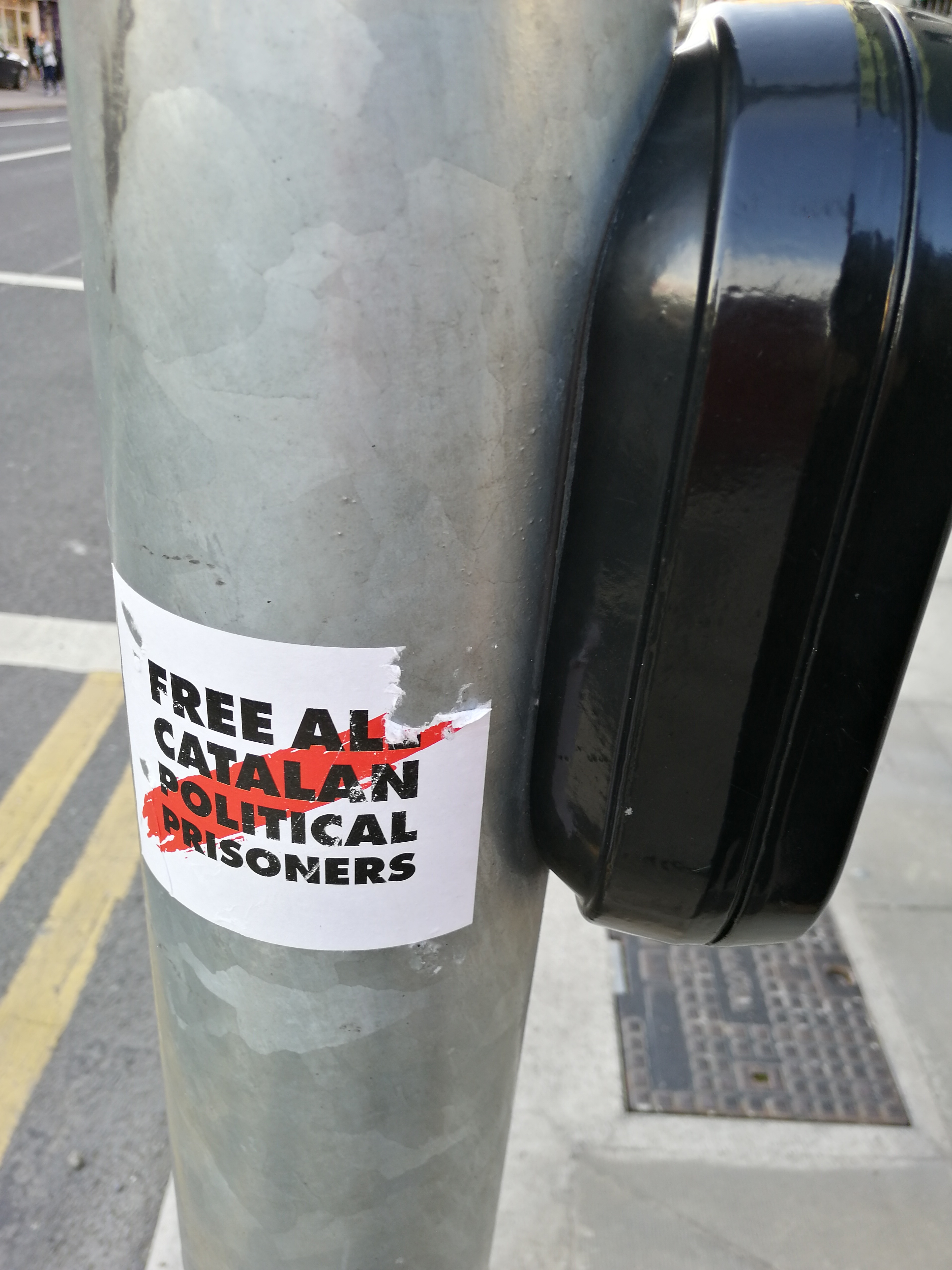
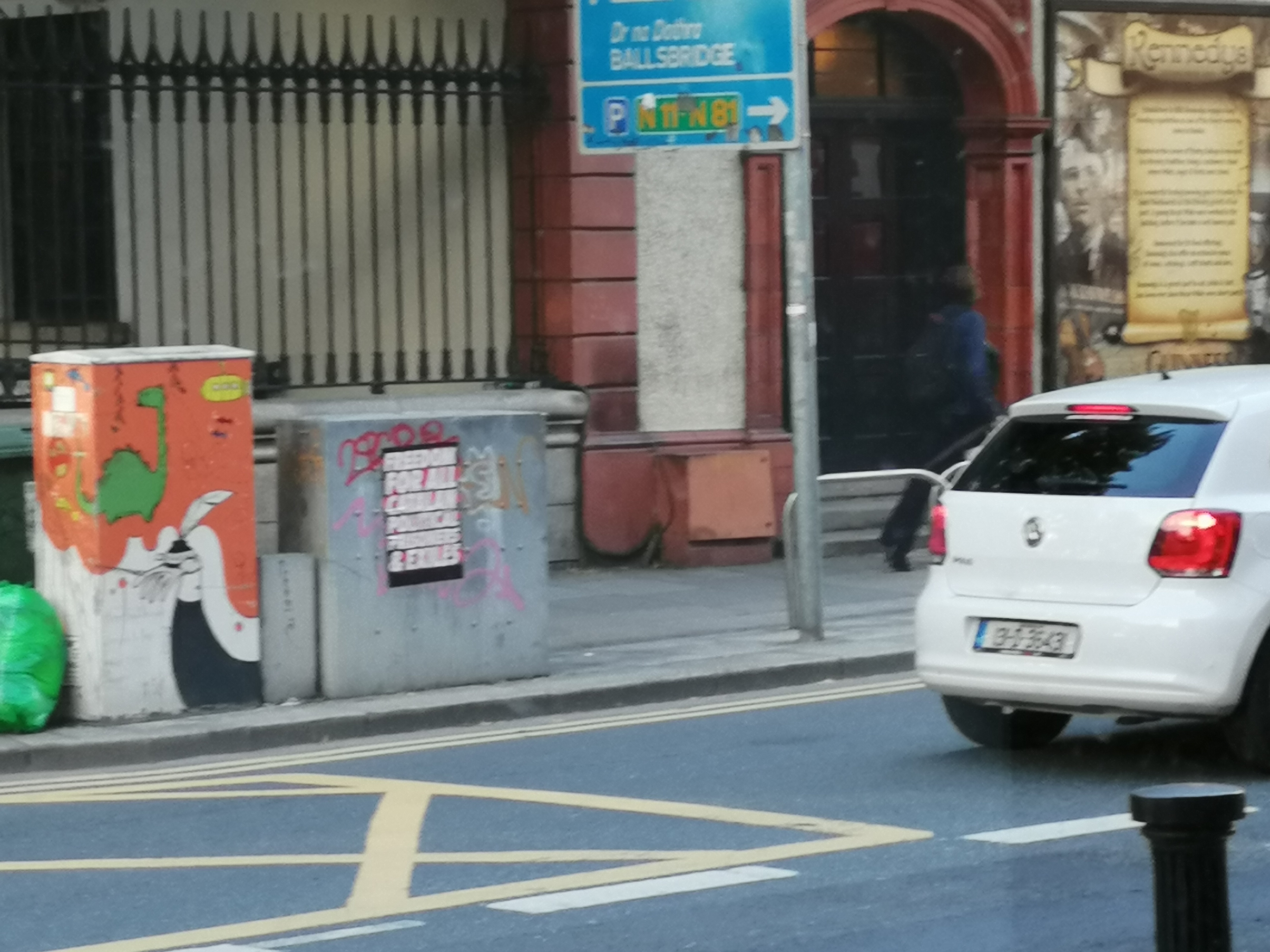
The Transition took place in an atmosphere of hope and fear, repression against resistance: the new Spanish unionist and monarchical constitution was voted in, with regional autonomy to placate subjugated historical nations within the state; the new King, Juan Carlos de Borbón was installed. Ten years later, the Spanish State was admitted to the European Union8. That same year, the new Spanish Government under the PSOE was conducting fascist-police-military assassination squads against left-wing Basque independence activists9.
But all throughout those years and still, the fascists kept their plundered wealth. The fascist clergy, judges, civil servants, police, military and media all kept their positions and wealth. They just had to open up their ranks a little to let in the climbing social democrats and “communists”. Not one fascist was tried for any of the crimes carried out during the “Civil War” or during the Franco regime afterwards.
WHY THE FASCISTS ARE COMING BACK (but then, they never went away)
Two things are exercising the Spanish fascists at the moment. First among these is the long struggle of the Spanish State to hold on to its forced union of the nations and regions conquered by monarchs of the Royal Houses of Spain and by fascist dictators, then maintained by both the mainstream constitutional political parties, the PP an the PSOE.
As a combination of factors combined with State repression to halt and disintegrate the southern Basque march towards independence, Catalonia took up its own struggle10. The independence movement there, which has left, right and centre elements but at base is popular and democratic and with wide support, has been steadily advancing. At institutional level, the ‘autonomous’ Catalan Government is a coalition of pro-independence forces (but with a numerous, strong, right-wing and Spanish-unionist opposition) and the majority of town councils have pro-independence majorities and Town Mayors. At grassroots level, the cultural organisation Omnium and especially the ANC (National Catalan Assembly) have organised massive independence demonstrations, a referendum on independence (disrupted with violence by the Spanish police11) and a protest General Strike. Some of the movement’s social and political leaders are in jail (four on hunger strike as this is published) and about to go on trial for their activism.
The union of the Spanish state is an article of faith for the Spanish fascists and reflected in the Spanish fascist slogan of España, Una, Grande y Libre!12 The “Una” is the forced unity, the denial of independence to the Basques and Catalans (or any others who might consider going for it).
But it is not only an article of faith for the fascists in the Spanish state, it also the case with regard to the Spanish ruling class. Catalonia and the southern Basque Country are two of the best-performing economic areas in the Spanish state and together account for a substantial part of the State’s exports and revenues, apart from land mass and extent of coast. Furthermore, the successful exit of these two regions would undoubtedly encourage similar plans among others, such as Valencia and the Balearic islands (which are also Catalan-speaking) and the Celtic nations of Galicia and Asturias. Uprisings might be the result in impoverished Andalucia and Extremadura …. None of that is a scenario which the Spanish ruling class is inclined to even consider and it has its Constitution to depend on, with legal punishment for any secession without a majority vote in its Parliament and the ultimate guarantor in the Spanish Armed forces.
All this is bad enough but a substantial section of the Spanish Left is also against any secession from Spanish State territory. The PSOE of course (which also means the UGT), since it takes its turn as the government of the Spanish ruling class, is one opponent but also the Spanish Communist Party (and the Comisiones union), much of the Trotskyist-Communist alliance of Izquierda Unida (the inappropriately-named ‘United Left’) and the populist Podemos, to which it gave unclaimed birth. For those, the argument against secession is about “the unity of the working class”13. That the “unity of the working class” against Spanish unionism, capitalism, imperialism and fascism might be achievable by agreeing to the right of secession and supporting it, while building a united front against all that is reactionary in the state, does not seem to have occurred to them. Of course their issue might be in reality about control.
DIGGING UP THE PAST
The other issue exercising the fascists is the movement around the historical memory of the anti-fascist struggle and the effects of the 40 decades of Franco dictatorship.
Throughout the territory of the Spanish State, which currently includes the southern Basque and Catalan countries, there are graves of dead anti-fascists, usually unmarked and sometimes of many bodies together. The Catholic Church in most areas refused funeral services to the families of “los Rojos” (the Reds, i.e anyone who opposed the fascists) and the terror was such that often relatives were afraid for themselves and their children if they were too insistent with enquiries as to where their relative had been killed or buried. These burial sites are by roadsides, in quarries as well as in or near cemeteries and other places. Many of those were combatant and non-combatant prisoners who were executed, others fell in battle. Historical memory associations in different communities have been documenting the sites and trying to identify the occupants, an activity which fascists and some others consider as “causing divisions in society”.
Mass grave of executed anti-fascists in Burgos, one of many across the Spanish state. (Photo source: Aranzadi, in El Pais newspaper — see Links).
In 2008 Judge Baltasar Garzón (since disbarred) ordered the opening up of 19 mass graves from that War14. Naive liberals and leftists (or perhaps those with very limited concerns) rushed to hail Garzón as a defender of democratic rights while ignoring his history as a judge presiding over repression of Basque independentists, including closure of newspapers and radio station, and prison sentences based on ‘confessions’ obtained through torture15. Despite Garzón’s repressive credentials there was an outcry from the Spanish right-wing and the exhumations were halted.
Also across the Spanish State’s territory there are plaques, monuments and street names dedicated to Franco and other fascist notables which in some areas have been the scene of protests. Most notable of all these sites is the mausoleum of General Franco and of Primo Rivera (founder of the fascist Falange), located within the Valle de los Caídos (‘Valley of the Fallen’). This monument, constructed in part by political prisoner labour,
“covers over 3,360 acres (13.6km2) of Mediterranean woodlands and granite boulders on the Sierra de Guadarrama hills, more than 3,000 feet (910m) above sea level and includes a basilica, a Benedictine abbey, a guest house, the Valley, and the Juanelos — four cylindrical monoliths dating from the 16th century. The most prominent feature of the monument is the towering 150-metre-high (500ft) cross erected over a granite outcrop 150 metres over the basilica esplanade and visible from over 20 miles (32km) away.” (Wikipedia).
The mausoleum, only 60 kilometres (just under 38 miles) from Madrid is the scene of many fascist ceremonies and demonstrations of adherence to the ideology of Franco and Rivera.
The Valle de los Caidos monument, containing the mausoleum with bodies of General Franco and Primo Rivera (Photo: Paul Hanna, Reuters, published in Washington Post — see Links)
For all of these reasons, varying forces on the Spanish Left and other antifascists‘ spectrum have called for the removal of the cadavers of the two fascists to ordinary graves, the destruction of the mausoleums and the rededication of the whole area to the victims of fascism. When last in government, the PSOE committed itself to some of these objectives but did not carry them out. Now in government again, it has renewed that commitment which is another reason for Spanish fascist hysteria. The two main political parties of the constitutional Right (Partido Popular and Ciudadanos) combined with some smaller right-wing parties in abstaining from a recent Parliamentary motion “strongly condemning” the dictatorship and “any kind of exaltation” of the Franco regime. The motion was passed on 21st November 2918 with 97 votes of Spanish social democrats, Basque and Catalan independentists …. but there were 136 abstentions.
The Spanish Left has a serious difficulty in opposing fascism, committed as so much of the Left is to a central tenet of Spanish fascism, the current territorial integrity of the State. Also the Left in many other places besides the Spanish state is divided on how to respond to fascism in general; responses varying from replying with force by popular action to calling on the State to ban them, campaigning politically against them to generally ignoring their mobilisation.
Is it possible that some notion of preserving the ‘unity of the Left’ could be at the bottom of the silence about the growing fascism in the world and in particular within the Spanish state at some commemorative events?
THE WORTH OF COMMEMORATIONS
The Friends of the International Brigades and other associations of what is often described as “historical memory” have done very important work in recovering the history of resistance to fascism. Not only that but also in tying that history not just to the territory of the Spanish state where battles were fought by the International Brigades but to places where those Volunteers came from in Ireland, England, Wales and Scotland. That work helps the people of those areas to locate themselves within the continuum of history and to emulate the ideals of those Volunteers should they choose to do so. The narratives of the sacrifice made and risk taken by the Volunteers counter the capitalist ethos of greed and of self-preservation above all else and suggest an alternative.
Such commemorations and monuments, if they are to survive and if they are to have real practical meaning, must also serve as calls to action, to mobilise to stop the rise of Fascism and to drive it back. And to support those who are fighting fascism, here, in the Spanish state and elsewhere. If we are to shout No pasarán! let us mean:Ésta vez no pasarán – y nunca jamás! (‘This time they shall not pass – and never again!)
end.
FOOTNOTES
1Although there people of fascist mentality everywhere in the Spanish state, they were outnumbered in most places by anti-fascists and without the logistical and manpower assistance of Nazi Germany and Fascist Italy, fascism could not have succeeded. Therefore many argue that it was not a civil war but instead a coup, a military uprising though supported by fascists both native and foreign. In the southern Basque Country and probably in Catalonia, some view it as a military invasion rather than a civil war. In Nafarroa (Navarra), because of the reactionary Carlist movement there, it did take on the character of a civil war and the Carlists murdered 3,000 leftists and republicans – when the Falange got there, there was no-one left for them to kill.
2A debate in the EU on a ban in all its membership against fascist symbols took place in December 2012 but has not yet resulted in a decision. A Catalan independentis MEP contributed to the discussion https://www.greens-efa.eu/en/article/press/eu-wide-ban-on-nazi-and-fascist-symbols-and-slogans/ with perhaps a rather tongue-in-cheek declaration that the Spanish Government had no interest in fascist symbolism; the truth is more complicated than that (see WHY THE FASCISTS ARE COMING BACK and DIGGING UP THE PAST sections).
3This slogan is said to have been coined for the crucial antifascist defence of Madrid by Dolores Ibarruri, known as “La Passionara” because of text she wrote in her youth and later her speeches too. She was a Basque and a member of the CPE. The slogan has been repeated many times since in different parts of the world but in Cable Street in 1936 it became a reality when an alliance of forces, chiefly Jewish and Irish community with some local Communist leadership, stopped 20,000-30,000 of Mosley’s “Blackshirts” and their escort of 7.000 police, along with all the mounted police in London, from marching through a predominantly immigrant Jewish quarter.
4“Maquis” is “dense scrub vegetation consisting of hardy evergreen shrubs and small trees, characteristic of Mediterranean coastal regions” (Internet description) which is where the ‘French’ rural anti-fascist or anti-Nazi Occupation resistance fighters camped and hid. “Maquisards” was the word describing those Resistance fighters in French but “the Maquis” was erroneously later applied to the fighters and their organisation.
6The Spanish State was not a member of the European Union and there was concern in many quarters about admitting an unreconstructed fascist dictatorship into membership. However, under USA patronage, it had joined NATO in 1982 and US air bases were being built across the territory. Opus Dei is a Catholic association mostly of people from professional and upper-middle classes and, in Spain, with right-wing views but with a technocratic approach rather than ideological which pitched them against the fascist Falange in the “democratisation” of the Spanish State.
7Both the PSOE (Partido Socialista Obrero de España) and the Unión General de Trabajadores had been illegal and persecuted under Franco, as had the more militant PCE (Partido Comunista de España) and the Commisiones Obreras trade union (in acronym in Castillian usually shown as CCOO). Those two trade unions are by far the most widespread in the Spanish state with the majority of members (except in the Basque Country and Galicia). The PSOE is one of the two mainstream political parties in the state, alternating with the right-wing Partido Popular.
8The Spanish State was admitted in 1986 but negotiations had been going on for some time.
9See GAL and BVE assassination squads operating in the Spanish and French states (1983-1987).
10Catalunya is an ‘autonomous’ region under the post-Franco Spanish Constitution, as are the two divisions of the southern Basque Country, Euskadi and Nafarroa (Navarre, Navarra). The Popular Front Government of the Spanish State had recognised the self-administering right of both Euskadi and Catalunya and they were important parts of the anti-fascist resistance; their autonomous status was revoked under the Franco dictatorship.
11On 1st October 2017, one of a number of Spanish police invasions of Catalunya last year.
13This argument has over the course of time been used by sections of social democrats, Communists, Trotskyist and Anarchists against liberation struggles in colonies and also in opposition to a boycott against South Africa or Palestine. The argument of class solidarity has been employed in a manner and in situations which have actually weakened the class struggle, bound the working class to their masters in common cause and also encouraged the growth of racism. As long ago as the mid-19th Century, Marx and Engels and others argued against this identification interest with the ruling class, encouraging the British workers in their own interest to support the Irish people in their liberation struggle against British colonialism.
Summary: Alarm is being expressed in a number of quarters, especially within the Spanish state’s territory, at the gains made by the hard right in the regional elections in the southern Spanish province of Andalucia. Held on 2nd December this year, a fairly new party, hard-right Vox won seats for the first time – 12 of them. Ciudadanos, another hard-right party which has been around longer, increased their share of the seats by twelve to 21. Should we be afraid? I think not …. we should certainly be alert – but for other reasons.
Vox supporters celebrate their party’s results in Andalusian elections (Photo source: Internet)
NB: This is not a deep analysis but rather a look at some of the circumstances in Andalusia in relation to those of the Spanish state as a whole and in the context of its history and current situation.
On 2nd December, elections were held in the Andalusian region, one of the 17 ‘autonomous communities’ of the Spanish state. At the time, the social-democratic PSOE controlled the regional government but only with the ‘confidence and supply’ support of the very right-wing party Ciudadanos; the latter withdrew their support and the PSOE called a snap election. The extremely right-wing (to use the most neutral description applicable) political party Vox for the first time had some electoral success and took 12 seats.
Vox is opposed to the right to choose abortion and also to equal same-sex marriage, proposing instead a different “civil union” for gay and lesbian couples. Like all the main Spanish political parties (and many smaller ones), Vox upholds the territorial integrity of the Spanish state but unlike most others opposes also the Statute of Autonomy which created regions with a degree of autonomy (which was part of the deal of ‘Transition’ from the Franco dictatorship, mainly to placate the nations within the state’s territory). The party is critical of multi-culturalism and immigration policies in general and regarding Islam in particular.
The election of those 12 Deputies has caused a wave of panic across many left-wing and democratic sectors across the Spanish state and one hears and reads comments that “this is the first time a party of the extreme right has gained seats in the Spanish state since the end of the Franco Dictatorship.” If that is true, it is so only in the perception of those commentators.
NOT ONLY FASCIST DEPUTIES HAVE BEEN ELECTED SINCE FRANCO BUT FASCIST GOVERNMENTS TOO
The fact is that fascism was never defeated in the Spanish state after the Popular Front Government was overthrown by Spanish military-fascist coup, aided by Nazi Germany and Fascist Italy, in 1938. For four subsequent decades, there was a fascist dictatorship. After that, there was a fake “Transition”1 in which political groupings directly related to the dictatorship formed political parties and the first two governments (September 1975-July 1976) were of unashamed fascist background followed by two of the UCD (July 1976-December 1982), also of fascist background but wearing the veneer of being ‘centre-right’. One of UCD’s most important movers and shakers was Manuel Fraga, the director of murderous State repression of all antifascist, anti-monarchical and independentist resistance during the “Transition”, his slogan being “The streets are mine”.
The next Government was of the social-democratic PSOE, which swept the board, assisted by a panic about the restoration of a fascist dictatorship, aroused by a somewhat farcical very minor attempt at a military coup, the supporters of which entered the Parliament while it was in session and took it over for a while before they surrendered when it was clear they were out on their own.
The PSOE and its associated trade union, the UGT, had been illegal under Franco. The attempt to rebrand the Spanish State as a “democracy” required a bipartisan social democratic party and also a restraining hand on the illegal trade unions (i.e all that were not fascist). But legalising the PSOE and the UGT would be insufficient if the Communist Party of Spain and its allied trade union, the Comisiones Obreras (CCOO) were left out in the cold, where they would certainly cause a lot of trouble. Both parties were anti-monarchist — would they agree to to monarchy being foisted on the public after more than four decades without one? Could they guarantee not to go after any fascists for crimes of torture and murder? Would they support a unionist constitution? Would they control their unions? They could, would and did, even putting up with the murder of union lawyers (PCE/CCOO) and bombing of the UGT headquarters during the ‘Transition’.
The PSOE was in government from December 1982 to May 1986, during which time it ran assassination and terror squads (GAL 1983-1987) against the Basque left-wing pro-independence movement with the aid of high-ranking Spanish military and police officers directing Spanish and foreign fascist mercenaries.
A number of scandals including the one about GAL helped push the social democrats out of government and next in was a new party of the ‘centre-right’. Well, a new name anyway: Partido Popular — its founder was “The-streets-are-mine” Manuel Fraga, leading a split from the UCD. The PP has been consistently alternating in government of the Spanish State with the PSOE ever since: 1996-2004; 2011-2018.
The PSOE got into government of the state again in 2004-2011 and is in once more at the moment, in a minority government, having unseated the PP on a vote of no confidence on a corruption scandal.
THE 2018 ELECTIONS IN ANDALUCIA
The first thing to note perhaps is that the total turnout was under 57% which indicates a high level of disenchantment with the electoral and political system. The PSOE had been in government there for thirty-six years, i.e since the incorporation of the regional government in 1982. What had it delivered for the people in those years? One need only look at the region’s place in the Spanish state’s economic tables – second from bottom.
The election results gave the the PSOE a drop of 7.4% in votes on their last performance and they lost 14 seats. However, with 33 seats they remain the party with the most deputies in the regional Government, with a seven-seat majority over their nearest rival, the Partido Popular and its 26 seats.
Diaz with PSOE party faithful after making statement on the party’s results in Andalusian elections (Photo source: Internet)
The other social-democratic party, a coalition around Podemos, also took a drop: 5.57% in votes and lost three seats.
The combined or total loss of seats to parties of social-democracy was 17 and the sum of their loss of votes was 12.61%.
As it happens, the right-wing Partido Popular also dropped votes and seats, -5.99% and seven respectively.
Ciudadanos, a newer party than the PP but just as hard right, benefitted with 12 additional seats and 8.99% increase in their votes. And then Vox took the remaining 12 seats from a previous zero on only a 10.51 % increase in their percentage of votes (they had stood before but got no deputies elected).
Where did the other votes go? Apart from the 1.8% invalid votes (exactly the percentage drop of voters on the last turnout, curiously), they were spread between 22 other parties or platforms, of which no less than 15 were totally new in elections. Some of those are right-wing but most, going by their titles, seem to represent a band varying from soft to hard Left to Independentist or regional.
In conclusion, the election results show no sudden far-right advance in reality but a newish party of the far right, competing with other far-right parties, took 22 seats it had not had before, while the social democrats, though losing votes, remain in government for the moment.
Some commentators, including many on the Left, have sought to ascribe the rise in the support for Vox as a reaction to insecurity around the fear of the secession of Catalonia from the Spanish state. This is bit rich from often the very commentators who have tried to portray the popular Catalan movement for independence as an elitist movement, motivated by selfishness to keep their wealth and not share it with poor regions like Andalusia.
So we can all relax, we needn’t worry? No, we DO need to worry but not so much for the reason of these election results. We need to worry because of the fascist nature and history of the Spanish ruling class and its State; because fascist groups are on the rise in the Spanish territory; because the Left has real problems in countering fascism and because fascism is on the rise in Europe in general.
The fact is that most of the Spanish Left, from social-democracy to ‘revolutionary’ socialists, are also totally committed to Spanish territorial integrity. That, and their reluctance to mobilise the masses to take decisive firm action against fascist mobilisations and provocations, makes it very hard for the Left to build a mass and effective anti-fascist movement.
ANDALUCIA
Map of Spanish state (yellow) including Canary Islands with Andalusia in red. (Source image: Wikipedia)
The southernmost part of the Spanish state is where to find Andalucia, sharing a land strip with the Rock of Gibraltar; it is the most populous and the second largest in area of the autonomous communities in the state and its capital is Sevilla (Seville). It is the only European region with coastline on both the Atlantic and the Mediterranean. Parts of the province record the highest temperatures of the state but other parts see quite high rainfall.
The earliest known paintings of humanity have been found in the Caves of Nerja, Málaga.2.The region has been under Phoenician, then Carthagenian control, later under the Visigoths, followed by the Romans and even by the Eastern Roman Empire. For three-and-a-half centuries Andalusia became a Moorish domain from which comes the name (Al Andalus) the region bears today. It was an area of great culture and learning and Christians and Jews were tolerated and protected. The Spanish Christian conquest employed divisions among the Moors, conquered Al Andalus and eventually forced all Muslims and Jews to convert to Christianity or suffer expulsion, allowed only to take the clothes on their backs.
Andalucia in the early-to-mid 20th Century was ruled by a landed aristocracy in a semi-feudal relationship with the mainly rural working population. The region got an early visit from Franco’s military invasion in 1936 and, although there was little armed resistance apart from Malaga and that ill-equipped, an estimated 55,000 were killed deliberately, in executions of thousands of workers and activists of the leftist parties during Franco’s repression.3
The region is characterised by a variety of climatic conditions and topography, inhabited by a great biodiversity of flora and fauna, although some of the latter are quite threatened, such as the Iberian Wolf, Iberian Lynx and the Ibex.
Agriculture and husbandry have traditionally been the main products, with olives, citrus fruits, stone fruits, nuts, alongside some other produce in lower percentages; there is also a depleted but active fishing industry. Andalucia is the single largest producer of olive oil with about 40% of the world market. “One-third of Andalucía’s agricultural land is planted with olive trees, and sales of Andalucian olive oil grew a staggering 56 per cent between 2011 and 2015, to a million tonnes, worth 2,000 million euros. Nearly 500 companies export their olive oil from Andalucía, with Britain the fifth-largest market at nearly 100 million euros.
“Another world-renowned product from Andalucía which is exported all over the world is jamón ibérico de bellota, gourmet air-cured ham made from Iberian acorn-fed pigs, nothing less than a religion for Andalucians, while sustainably-caught bluefin tuna caught off the coast is frozen and sent to Japan to be served as delectably tender sushi.
“In total, one-fifth of all Spanish food and drink exports originate in Andalucía, where the number one area is fruit and vegetables – and tomatoes are the top product”.4
What cause would people in that province have for dissatisfaction that right-wing parties could then exploit? Well, there are no shortage of reasons.
Andalucia is the second-poorest administrative region in the Spanish state. Although unemployment has taken nearly a 4% drop over the previous year, it still stands at an average of 24.4%. Averages conceal other realities and though average male unemployment is almost 3% lower, the female average share is higher than the average by 3.5%. As they age profile drops below twenty-five, the unemployment figures soar to almost 50%.
Table unemployment statistics in Andalucia
Unemployment rate (LFS)
24.4%
28.3%
Male unemployment rate (LFS)
21.6%
25.7%
Female unemployment rate (LFS)
27.9%
31.4%
Unemployment rate less than 25 years
47.9%
57.8%
Unemployment male less than 25 years
48.9%
55.0%
Unemployment rate female less than 25 years
46.6%
61.3%
Unemployed rate over 24 years
22.7%
26.2%
Male unemployment rate over 24 years
19.6%
23.6%
Female unemployment rate over 24 years
26.5%
29.3%
Unemployment rate less than 20 years
66.4%
78.2%
Male unemployment rate less than 20 years
66.8%
76.4%
Female unemployment rate less than 20 years
65.7%
80.5%
(Source: see link for “Unemployment statistics Andalucia)
The situation then in Andalusia may be characterised as one where about every fourth person is unemployed as is every second one under the age of twenty-five. Where paid employment is hard to find, wages are likely to be low, trade union victories harder to achieve and conditions therefore far from the optimum obtainable from the system.
“Between 2000–2006 economic growth per annum was 3.72%, one of the highest in the country. Still, according to the Spanish Instituto Nacional de Estadística (INE), the GDP per capita of Andalusia (€17,401; 2006) remains the second lowest in Spain, with only Extremadura lagging behind.” (Wiki)
Traditionally a region known for agriculture and husbandry, these sectors are now the lowest contributors to GDP in Andalusia. Construction for the tourist industry siphoned off many workers but the collapse of the construction boom left most of those workers with nowhere to go, much of their old agricultural employment mechanised or replaced with migrant labour. Despite agriculture’s very low position in GDP, 45.74 percent of the Andalusian territory is cultivated. That does not mean that those areas are efficiently5 cultivated however and one of the activities for which one Andalusian trade union movement6 has become known is the occupation of agricultural land which is not being adequately or at all maintained, due to absentee owners or land held by banks but not in production.
“The large landowner past of Andalusia has not changed substantially although the banks and some companies now own much of what belonged to semi-feudal aristocrats. “The agrarian census of 1982 found that 50.9 percent of the country’s farmland was held in properties of 200 or more hectares, although farms of this size made up only 1.1 percent of the country’s 2.3 million farms. At the other end of the scale, the census showed that 61.8 percent of Spain’s farms had fewer than 5 hectares of land. These farms accounted for 5.2 percent of the country’s farmland.”7
In May of this year the trade union SAT (Andalusian Union of Workers) published a denunciation of a new Land Law proposed by the PSOE in which they also pointed to some structural problems and their impact on the working people of the region8.
“The most recent act of savagery is the new Land Law that they (PSOE) intend to approve, to finish hanging any dream of Agrarian Reform for our working people of Andalusia. Andalusia is not understood without the struggle for land, and this is more recent than it seems, much more real and topical than we would like.
“The concentration of land ownership is a problem that annihilates our people, currently in Andalusia, 2% of the owners have more than 50% of the arable land, and the worst is that this figure is increasing.
“If we go to Jaén, this figure is even more scandalous, because 4% have 66%, and much of it without giving a job, as is the case of Cortijo del Aguardentero, our Cerro Libertad, one of more than 150 farms, the majority underutilized by the BBVA9 in the Jaén de Piedras Lunares and Olivares de Miguel Hernández areas.
“These figures contrast with the alarming fact that in Andalusia every three days a worker dies, or that more than 60% of Andalusian employees earn less than € 1,000 per month. Also alarming are the number of marginalizations, risk of poverty and lack of school resources, all at more than 40%.
“There are laws that can put an end to all this, but there is no political will in a government that is more a plug-in factory than a socialist party, which only seeks to perpetuate itself in power, being supporters of corrupt banks, all at the cost of death of our land.
“There are alternatives:
1 ° Repeal of this Land Law proposal.
2 ° Implementation of Law 8/1984 of Agrarian Reform of the Statute of Autonomy of the Junta de Andalucía on farms that can be clearly improved.
3 ° The land has to fulfill a social function, for the human and sustainable development of Andalusia.
4th Comprehensive Agrarian Reform, which allows the Usufruct and Land work in Andalusia. Work in the labor force, in the sowing and harvesting, in the primary sector. We do not want property, which must be of a public entity, we want to work and live in peace.
5th Creation of productive, industrial and agro-sustainable Andalusian fabric, generating employment in the transformation and packaging of the product collected.
6 ° Domestic consumption and export of the sown, harvested and agro-transformed product, giving employment and work in the tertiary sector, services.
“This would suppose a Revolution of our earth, a valorization of what we were, of what we are and what we want to be: A FREE PEOPLE WITH FREE PEOPLE.
“This is possible, but political will is needed, and for that, and more importantly, we need the human will to mobilize, as we are defending with our sweat and our lives El Humoso in Marinaleda, Somonte in Córdoba and Cerro Libertad in Jaén10.
“Challenge to the Andalusian society to face with arguments and mobilization the nonsense and unreason of the government of the PSOE of the Junta de Andalucía.
“We announce mobilizations this summer for this, and we call for you to join.
“Andalusians and Andalusians, get up, ask for land and freedom.”
And then, on top of capitalist exploitation and mismanagement, there is corruption. “A recent probe revealed the extent to which PSOE officials exploited their power in the region of Andalusia, where the party has governed without interruption since the return to democracy. Two former regional presidents, Manuel Chaves and José Antonio Griñán, are currently on trial for their alleged part in a scam that included fraudulent early retirement packages, company subsidies and commissions handed out to the tune of €136 million”.11
A recent corruption table based on individual cases puts Andalucia way over all other regions and the PSOE in about 25% of the corruption cases by party (see References for the link to the report).
CONCLUSION
There was no huge swing to the hard right although considering how the social-democrats had abused the votes the people gave them, it would not have surprising if there had been (and there still might be).
Despite their appalling record, the PSOE got 33 seats, the party with the most in the regional Government. That is worth thinking about – despite the crap the working people of Andalusia have had to put up with from the PSOE, they still gave most of their votes to the social democrats. Since this cannot logically — on the performance of the party for the people – be as a result of great affection for thePSOE, it seems likely to indicate at least a dislike or fear of the right-wing parties.
What actually happened is that in a regional election in an impoverished region, on a low turnout and with many candidates; within a state where fascism was never overthrown, with huge legal and illegal repression, with the Partido Popular — a part of the Franco heritage — regularly in government and other right-wing parties snapping at its heels, where social democracy and the established communist party colluded most shamefully with fascism and an imposed monarchy, where the history of the Anti-Fascist War is not taught: a new version of the bedrock Right in Spanish politics won seats in a regional government which it had never won before.
That is what happened. But that is far from being the first time the hard Right won seats in the Spanish state – it has done so regularly in all elections outside parts of the Basque and Catalan countries and has regularly been in government.
Those on the Left who are now wailing about Vox’s success have been and are upholding the myth of Spanish democratic politics since the Transition. They are colluding in the decades of suppression of the Basque and Catalan national movements and the propaganda against them. And many of them have marched with the Right – including fascists – in demonstrations in support of permanent Spanish union, against ‘terrorism’, etc.
Those on the Right who are complaining about Vox are being disingenuous too: they marched with Vox and other fascists for a ‘stronger Spain’ and against the independence of the nations; they saw the fascist salutes and emblems and heard the fascist slogans (whether they joined in with those or not). They were happy to have Vox take out prosecutions against Catalan independence activists and politicians.
NEVERTHELESS, WE SHOULD BE WORRIED. Because generally throughout the Spanish state, the fascists are mobilising on the streets. The fascists are particularly worried by the independentist movements in Catalonia and in the southern Basque Country as well as by proposals to demolish the shrine to Franco and Riveras12 and to remove their remains to a common graveyard. The fascists have strong links with the Spanish police and armed forces and the latter have shown themselves particularly tolerant of the behaviour of fascists on the streets. And in preparation for the repression of the working class in economically austere times to come, fascists have been mobilising throughout Europe with state laws and procedures becoming more repressive. Migrants are being targeted both for extra exploitation and for attack by word and action. We need to do more than worry – we need to mobilise and find ways to unite in effective action.
1All the fascist police commanders, senior armed forces officers, judiciary, lawyers, clergy, senior civil service administrators and academics retained their positions. All the business men and media barons continued and kept whatever plunder they had managed to appropriate during the war and after.
3Executions: “ …. in the city of Cordoba 4,000;in the city of Granada 5,000;in the city of Seville 3,028;and in the city of Huelva 2,000 killed and 2,500 disappeared. The city of Málaga, occupied by the Nationalists in February 1937 following the Battle of Málaga experienced one of the harshest repressions following Francoist victory with an estimated total of 17,000 people summarily executed” (Wiki).
5To be confused with “intensively” which usually implies large-scale monoculture, chemical fertilizers and chemical sprays of fungicides, pesticides and insecticides, along with very advanced mechanisation.
6Sindicato Andaluz de Trabajadores (SAT, ‘Andalusian Union of Workers).
12Valle de los Caídos, a park built in part by political prisoner labour, containing a mausoleum for Franco and Rivera’s remains, a site of frequent fascist demonstrations in homage to the memory of both men.
Recently someone objected to my use of the word “militant” to describe a movement with which I am in solidarity, saying that the word implied “violent”. My initial reaction was that I disagreed.
I understand “militant” to mean “determined, assertive, courageous, not awed by confrontation” and that one could even be a “militant pacifist”.
But I decided to look up some dictionary definitions online. The first two or three did indeed include violence as a possibility but not necessarily integral. Another two came closer to my way of thinking: “aggressively active (as in a cause) : COMBATIVE “(Miriam-Webster).
“You use militant to describe people who believe in something very strongly and are active in trying to bring about political or social change, often in extreme ways that other people find unacceptable. Militant mineworkers in the Ukraine have voted for a one-day stoppage next month. …one of the most active militant groups.“ Collins Dictionary.
The meaning of words shifts from language to language, culture to culture and across time. One of the most obvious and startling examples of this is the word “gay”, up to the 1970s probably understood in English by most people as meaning “happy, light-hearted” etc but now, the first interpretation in the English-speaking world would be “homosexual” (in a non-pejorative way).
“Tramp” was a verb in the 19th Century to the extent that a famous marching song of the Union Army in the American Civil War was known as “Tramp, tramp, tramp”1. By the 20th Century its use as a verb was in decline but it was becoming better known as a noun, the meaning of which was understood variously as “vagrant” or even “beggar”.
And one could fill volumes with similar examples, I am sure.
“MILITANT”
But returning to “militant”, was I the only one who understood its meaning in the way that I had? Well, apparently not, as Wikipedia showed, for example in descriptions of “militant trade unionists” and even a political organisation within the British Labour Party before its expulsion, calling its group “Militant Labour” and its newspaper “Militant”, probably drawing a parallel with those very same trade unionists2.
It would not take much pondering to guess that “militant” had some relation to “military” and apparently the word does indeed have such an origin, from Latin “miles”, ‘a soldier‘.3 But over the years, as with many other words, its meaning has changed.
But apparently, violence is again becoming associated with the word, more so than in the second half of the 20th Century. How did this happen? I am not sure but it appears to have been a spin-off from the more recent imperialist wars of, in particular, the United States. It seems that organisations resisting USA control or dominance in the Middle East, most of which were Muslim in religion, began to be termed “militant” in US and western reporting. Why this became so seems hard to fathom – it was not a word that these organisations applied to themselves — but it has had that spinoff effect on the word “militant”, so that “militant trade unionists” and “militant feminists”, for example, are now likely to be associated with violence, i.e the use of physical force.
How loaded and partisan usage of the word can become is well illustrated in the definition supplied by the Oxford living Dictionary: Favouring confrontational or violent methods in support of a political or social cause. ‘the army are in conflict with militant groups’.
The example given is very interesting. Conflict requires, one supposes, at least two parties and both sides are listed in that quoted phrase. But the impression given is one where “the army” is an authoritative, legitimate force which is being opposed by groups that are none of those things. One almost feels that the source of “the conflict” is the “militant groups” (especially with the current loading of ‘violence’ into definition of the word “militant”).
The ‘army’ is an armed organisation at the very least latently violent (training with deadly weapons) and in this context, almost certainly practicing violence by invasion. Yet it is portrayed as somehow neutral and the opposition as violent. This is further accentuated when the army and armed police are termed “security forces”. How could one be against security? Don’t we all want to be secure? Obviously quite a lot of people don’t want whatever ‘security‘ is being offered by these military and militarised forces and the question of “security for whom?” is hardly ever explored in such discourse, leaving us with the impression that the good guys are the army and police, deserving of our support, while whoever opposes them must be bad and we should line up against them.
As the meaning of words shifts, we have to decide whether to stick with the meaning we had and insist on its primacy, or to adapt and move with it. Up until the 1960s it was generally considered ill-mannered among white and black people to refer to people of noticeable African descent as “black” or as “negro” and Martin Luther King’s campaigning organisation was called the National Association for the Advancement of Coloured People. Back earlier, in the 18th and early 20th centuries, “negro” would have been acceptable to most. Nowadays, “coloured” or “negro” would generally be considered either offensive or ignorant and “black” is the word, unless one is to use the Africa-derived word, e.g Afro-American, Afro-Caribbean, etc.
And in a strange reversal, whether in self-mockery or appropriation, many Afro-Americans began in the 1970s and 80s describing themselves with the word “nigger”, a word long associated with racism4.
“DISSIDENTS”
Leaving those examples and dealing with Ireland, a number of organisations advocating Irish independence and unity and denying the legitimacy of the administrations of either side of the partition Border, would happily term themselves and one another “Irish Republicans”. That term came first to exclude the supporters of the Irish Free State, who waged a Civil War against those who would not accept the British terms, including Partition, of the 1921 Treaty. Not much over a decade later, it excluded also the Fianna Fáil party, which had split from Sinn Féin, got elected into government and at different times interned Republicans without trial, executed some and passed emergency-type legislation against them.
Subsequent splits in later years were still all described, along with various versions of the Sinn Féin party, as “Irish Republicans”. After the Good Friday Agreement was endorsed by what had been Provisional Sinn Féin and they subsequently became part of the administration of the British colony of the Six Counties, all those Irish Republicans who did not agree with them on that came to be called “dissidents” in the media and in much political discourse.
Those who are called “dissidents” however did not, for the most part, agree with the term. As far as they are concerned, they are sticking to the “official line” or at least the original one and it is the Provisional Sinn Féin (which now terms itself just ‘Sinn Féin‘) which has diverged from the line and furthermore, departed from the ranks of Irish Republicans.
Let’s do a trawl for definitions similar to what I did with “militant” but this time for “dissident”.
Wiktionary: “A person who formally opposes the current political structure, the political group in power, the policies of the political group in power, or current laws.
“(Christianity) One who disagrees or dissents; one who separates from the established religion.”
Mirriam-Webster: “disagreeing especially with an established religious or political system, organization, or belief
“dissident elements in the armed forces”.
Collins: “people who disagree with and criticize their government, especially because it is undemocratic.
“Dissident people disagree with or criticize their government or a powerful organization they belong to”
Oxford: “A person who opposes official policy, especially that of an authoritarian state.
“‘a dissident who had been jailed by a military regime’”.
And one I hadn’t used before, but which caught my eye, Vocabulary.com: “If you are a dissident, you are a person who is rebelling against a government. Dissidents can do their work peacefully or with violence.
“Dissidentis closely related to the word, dissent, which means objecting. People who are dissidents show their dissent5. Catholic priests who advocate allowing women into the priesthood could be called dissidents, as could the Puritans who left England to live in colonial America. As an adjective, a dissident member of a group is one who disagrees with the majority of members.”
Since it is not a religious movement, “one who separates from the established religion” would seem non-applicable (though when one sees how many Republicans cling to certain practices like non-recognition of the court trying them, or refusal to stand in elections, it is tempting to think of those prohibitions as religious dogma rather than tactics for particular times and place).
Most Irish Republicans would consider themselves as in opposition to the “established (political) order” of the country, i.e Ireland partitioned, with one part run by an anti-Republican Irish ruling class and the other by a colonial ruling class. They would consider the relevant governments as “authoritarian” and “undemocratic”, certainly in their treatment of Irish Republicans by harassment, intimidation, detention, subjecting them to special emergency-type legislation, non-jury courts and prison.
In that sense of “dissident”6, the Sinn Party in its various encarnations has until recentlyalways been a party of dissidents, first against a foreign monarchy subjecting Ireland without an Irish king (the party founded by Arthur Griffiths), then to a Republican party campaigning against British rule (the coalition that was the reformed post-Rising party 1918-1921), after that a party against the Irish Free State Government and the colonial administration of the Six Counties, subsequently a Republican socialist party opposing the same forces, then after a split, a Republican party with similar objectives but supporting an armed resistance to the the British occupation. To that can be added the existence of the Republican Sinn Féin party from a split and at least one other group of similar construction for a time but with more socialist emphasis.
Clearly (formerly Provisional) Sinn Féin can no longer legitimately describe itself as dissident, should it want to, as it is now party to that repressive colonial government to which it was previously vehemently opposed and also now straining to become part of a coalition in government of the Irish state.
Many people who left the SF party did so precisely because they opposed those policies and actions7 and on most terms could legitimately claim to be “dissidents” – if they wished to. Not just dissidents recently within the party but dissidents against the State and British colonialism.
Clearly then descriptions such as “rebelling against a government” and “disagree with and criticize their government, especially because it is undemocratic” are not going to be the problem and “formally opposes the current political structure, the political group in power, the policies of the political group in power, or current laws” seems just tailor-made for Irish Republicans.
The objection to the appellation of “dissident” then must surely be based on either a misunderstanding of the meaning of the word or a concept of some kind of historical Irish Republican authority. If the latter, then the SF party can been seen as having gone against that authority and those Irish Republicans not following the SF path as being the true and loyal followers, faithful to that historical authority. This would be an entirely understandable attitude – but is it helpful? Aren’t the most important things theaims that Irish Republicans have and how they conduct themselves in working towards them, rather than whether they are called “dissidents” or not? After all, there is nothing fundamentally pejorative in the term.
There is no doubt that “dissidents” is a handy catch-all term to describe Republicans who belong to a number of political groups or who are independent activists (the latter of which Ireland and especially Dublin has a great many) but is it conferring some kind of implicit legitimacy on the collaborationist and now constitutionalist Sinn Féin party? And if so, legitimacy in the eyes of whom? Remember how one time there was an “Official Sinn Féin” (and IRA) and the “Provisional Sinn Féin (and IRA) who split from them? It was the latter that went on to gain dominance in the Republican movement while the “Official” organisation split again and shrank to a tiny remnant.
If I were to count myself among the ranks of Irish Republicans8, would I object to the term of “dissident”? I don’t think so.
1Coincidentally, the word “gay” is employed in its older sense in the lyrics of the song. A lot of interesting information is contained in the Wikipedia page on this song (see link in Sources and References).
2This was an organisation run by the entryist British Trotskyist organisation which later became the Socialist Party (like its great rival, the Socialist Workers Party, it too has an offshoot in Ireland).
3Through Latin into French and from there into English. However, the word may have been of an older root, possibly Celtic: “ ‘Míle’, word in Irish, meaning ‘a warrior, a champion, a hero’” given p.23 in How the Irish Invented Slang, Daniel Cassidy (2007).
4The term is not accepted equally among black people: I recall a black workmate of mine telling me that he had punched another black man who had referred to him as “nigger”.
5Actually, as Wiktionary tells us, it means more correctly “not in agreement” and comes from the Latin word for “to sit apart”
6Lest it be thought that I dissent from this opinion, let me put on record that this is one of the things about which I entirely agree with Irish Republicans. I suspect however that this definition is generally only used by media and mainstream commentators to describe regimes other than the ‘western democracies’.
7Some people had left that party already by that time, some because they perceived its direction and some because they objected to procedures within the party, especially those they considered undemocratic. Others left over time due to decisions to contest elections in the Irish state or to take their seats in the parliaments if elected, or because of rapprochement with the colonial police, over alleged harassment, party promotions or personal reasons.
8“Irish Republican” is a specific political designation and does not describe me, although I am Irish and I do aspire to a Republic of social equality. I am a revolutionary and a socialist as well as being anti-imperialism; I am many other things as well but that will do as a basic platform on which to seek others of like mind. In the course of struggles I do of course join in a front of one or the other of those tendencies but always with an eye to the full objective. Or so I try, at least.
Two very interesting talks were given last night as part of a series of history talks at the Sean O’Casey Community Centre in East Wall, Dublin. The theme was black civil rights in the USA and Catholic civil rights in the Six Counties of Ireland (‘Northern Ireland’ according to some).
Joe Mooney of the East Wall History Society introduced the speakers and chaired the question-and-answer session afterwards.
The session opened at 8pm and Cecilia Hartsell had a lot of ground to cover. She spoke on the history of the Civil Rights movement of blacks in the USA, going through the history of seminal events, illustrated with Powerpoint slides and recordings of two White House phone calls between President JF Kennedy and Ross Barnett, Governor of Mississippi and key figure trying to prevent the historic enrollment of James Meredith, a black man, into the University of Mississippi.
Cecilia Hartsell delivering her talk on the black civil rights movement in the USA
Recalling that in the first two years of his term, JF Kennedy had little to say about black civil rights but was focusing on other issues,Cecilia Hartsell somewhat undermined the (incorrect) image we tend to have in Ireland of Kennedy as an ardent civil rights fighter. In fact he was enforcing Federal legislation on equality and trying to go slowly, while the black campaigners were pushing the agenda along and white racist reaction was holding the USA up to international ridicule and opprobrium during the Cold War with the Soviet Union.
When Brian Hanley took the floor for his talk he fairly zipped along, which he does very well. Hanley undermined some myths or wrong impressions too. Early organisers of the civil rights marches and other events such as the Dungannon house occupation were Irish Republicans; Loyalists had killed four people before the first Civil Rights march. The rhetoric of SDLP and Labour Party notables was much more militant in the early years and Fine Gael was agitating more about issues of discrimination in the Six Counties than was Fianna Fáil, the party in government. And FF had been pushing a referendum to do away with the proportional representation electoral system at the same time that the PR system was among the demands of civil rights campaigners in the Six Counties.
Brian Hanley delivering his talk on the civil rights movement in the Six Counties.
In the session for questions, answers and contributions later, Hanley pointed out that the Southern Democratic Party was the pro-slavery party historically and, after the Civil War, anti-integration and civil rights, whereas the Republican Party was anti-slavery (debunking another false image we tend to have in Ireland).
Both historians made the point that a hundred years is not as long as some might think (this is especially true in ‘historical memory’). The 1940s, when some historians would say, as Hartsell told us, is the date from which to date the renewed fight for black equality in the USA, as surviving black soldiers returned from WWII, was only 80 years from when Federal troops were withdrawn from the former Confederate states. The partitioning of Ireland had been carried out less than 50 years before the Civil Rights protests broke out in the Six Counties, Hanley reminded his audience and many Catholics still lived who remembered vividly the fierce repression that had accompanied it.
It also emerged that albeit there were many similarities, there were also profound differences between the two movements. The black campaigners in the USA were saying that they were citizens of the USA State and demanding the same rights as other citizens, they often marched with the Stars and Stripes flag and even called for the intervention of US troops to defend their rights. The Catholics marching for civil rights in the Six Counties mostly saw themselves as Irish citizens and would never march with the Union Jack. Some did call for the intervention of British troops but many did not; it was mostly Irish troops they hoped would intervene.
The importance of the presence of news photographers at events and their covering in newspaper reports and on television broadcasts was an important factor in both struggles.
USA soldiers facing unarmed marchers for black civil rights. (Source: Internet).
Cecilia Hartsell did not feel that the Black Power movement could have survived Southern racist repression in the 1940s, ’50s and early ’60s and most of the big gains on desegregation of education, public transport, eateries and voter registration and effective right to vote in the Southern States were won during those years with peaceful marches and pickets and legislation (which however were met by much racist violence, including a number of murders). By the time the Black Power movement was coming on to the political stage, so was the Vietnam War and huge changes were taking place in the US, including many mass violent struggles on race and other issues.
Section of march for civil rights in the Six Counties (Source: Internet).
TERMINOLOGY AND DEEPER MEANING
Wikipedia: “Though often used in history books to refer to the seven states that originally formed the Confederacy, the term “Deep South” did not come into general usage until long after the Civil War ended. Up until that time, “Lower South” was the primary designation for those states. When “Deep South” first began to gain mainstream currency in print in the middle of the 20th century, it applied to the states and areas of Georgia, southern Alabama, Florida, Mississippi, north Louisiana, and East Texas, all historic areas of cotton plantations and slavery. This was the part of the South many considered the “most Southern”.”
“Later, the general definition expanded to include all of South Carolina, Georgia, Alabama, Mississippi, and Louisiana, and often taking in bordering areas of East Texas and North Florida. In its broadest application today, the Deep South is considered to be “an area roughly coextensive with the old cotton belt from eastern North Carolina through South Carolina west into East Texas, with extensions north and south along the Mississippi”.
“Lower South” probably originally referred to its location on the typical north-orientated map of the USA. But I speculate that “Deep” has another meaning – a deeper psychological one, in fact. It suggests that this is a place difficult to understand for people not from there, which means most people. Different rules apply there, we might believe.
I speculate further that after the initial first years of the Civil Rights movement in the Six Counties, that area and the people living in it came to be seen as “different” too. Of course, it was different in that it was a colony (as had the whole country been only 50 years earlier) and that it was run along blatantly sectarian lines, the Catholics a minority there, unlike in the rest of Ireland. And of course, people in a different environment respond differently. But they were still people and the substantial Catholic minority were so clearly oppressed in a statelet into which the Irish ruling class had delivered them. For many people in the 26 Counties it became easier to think of them as somehow foreign in a foreign kind of land, hence my description as “Deep North”.
Cecilia Hartsell and Brian Hanley during the question-and-answer session.
THE SPEAKERS (as posted by EWHG)
Cecelia Hartsell is a researcher of American history. She has been a contributor to the RTE History Show and Radio Kerry on topics in U.S. history and frequently gives U.S. history talks for the Dublin Festival of History and in the Dublin Public Libraries. Cecelia has a Masters degree in U.S. history from Fordham University and a Masters degree in History from UCD.
Brian Hanley is an historian and author. He is currently a Research Fellow at the School of Classics, History and Archaeology, University of Edinburgh . He has lectured at a number of major Irish universities and was Historian in Residence at Dublin City Library and Archives . His books include “A Documentary History of the IRA, 1916-2005” (Dublin, Gill and MacMillan, 2010) with his most recent being “The impact of the Troubles on the Republic of Ireland, 1968-79: boiling volcano?” (Manchester University Press, 2018).
NEXT HISTORY TALK
There will be another talk in the series next week when Dr. Mary Muldowney will present a talk on “The 1918 Election – the Woman Who Stood for a Worker’s Republic.”
This is a short report of very interesting interview of Spain’s Foreign Minister, Josep Borrell, who is both a Catalan and a convinced Spanish unionist.
He says that
§ he would rather have the Catalan political prisoners released on bail;
§ Catalonia is a nation, not a region (but does not have the right to self-determination in violation of the Spanish Constitution);
§ there is no automatic international right to national self-determination and
§ Scotland does not have the legal right to hold a referendum without the permission of the UK Parliament (for which he provides a very convincing argument).
Comment:
Borrelll is no friend of Catalan independence (he would hardly have been chosen by the Spanish Government as its Foreign Minister if he were) and has made some very disparaging remarks about the movement (liking it to “an infection”) and some individuals. He is no democrat either. However it is interesting that he is prepared to express a difference from Spanish Government policy.
His remark about Scotland will not be liked by many Catalan independentists who are fond of quoting Scotland and the referendum there as a model. But I think he is correct, both in his explanation and the situation at the time. It seems to me that the British conceded a referendum, expecting it to fail. It did fail but the result was closer than they expected. But, like self-determination of the occupied Six Counties of Ireland, any vote in favour would have to be ratified by the UK Parliament.
The main difference between the UK and the Spanish State on this is that the UK allowed a referendum but expected it to lose. The Spanish State will not permit a referendum because they know it would succeed.
The Catalan activists, politicians and intellectuals need to stop looking elsewhere for easy examples for comparison. They would be much better served, in my opinion, by examining the general history of imperialist-colonialist states against the struggles of subjugated nations and of course the history of the state in which they find themselves.
No imperialist or colonialist state has ever given up what it considered its property without resorting to violence. When that desire for separation and independence comes from a part of what it considers its own base, the resistance is even stronger and violence highly predictable. And the history of the Spanish State itself? Violent acquisition of all of its neighbouring lands –until Portugal broke away and stopped at the French border (another major thief). Violent suppression of peasants and workers and the overthrow of two democratically-elected Republican governments, followed by violent repression. War conducted against the Basque independentists. The Spanish state will use much more violence than it did on October 1st last year, repressing the Referendum on Catalan independence. The only questions are § when and
§ will the Catalans be prepared for it.
Death threat, fascist salute and Franco’s version of the Spanish flag, all illegal and displayed with impunity at this demonstration against Catalan independence and many other fascist events. (Photo credit: EFE/ Enric Fontcuberta 4651#Agencia EFE)
Some 2,000 people (according to the Urban Police) demonstrated this Sunday in Barcelona to reject any negotiation with Catalan sovereignty and in support of the unity of Spain.
(Translation from Catalan newspaper report — see link below end translation — by D.Breatnach)
The protest, called by real estate entrepreneur and former Guardia Civil (spanish state police — Trans) member Juan Manuel Opazo with the support of the ultra-royalist party Vox, crossed the Avenida del Paralelo under the slogan “No [pacts] with either terrorists or separatists.” Sixty associations and movements such as the Catalan Civic Convivencia, the Catalan Association of Victims of Terrorism, Catalonian Employers or Somatemps supported the event.
At the top of Avenida Mistral the demonstration came in sight of an anti-fascist protest called by anti-fascist movements and booing booing was exchanged from both sides. The Mossos (Catalan Police) kept both groups apart.
The march ended on Avenida María Cristina, where the Parliament is situated. Many of there asked the Spanish Prime Minister, Pedro Sánchez, to not negotiate “with separatists” and to convene elections.
Coaches from 30 cities throughout Spain, such as Alicante, Malaga, Bilbao or Valladolid, among others, brought supporters to the protest.
Photo: Unionist march supporters give the fascist salute and threaten shooting at the anti-fascists and carry Spanish fascist symbols.
COMMENT (D. Breatnach):
The comparatively small size of the march and the fact that it was only possible by bussing in supporters from other parts of the state may be taken as an indication of how small the support base is for this far-right variety of Spanish unionism.
The monster march for independence Diada (Catalan National Day) on Tuesday will provide a useful comparison: one million marchers are expected.
The list of organisations supporting the march gives the lie to their frequent representations as “concerned citizens” who are “opposed to terrorism” etc, particularly the Catalan chapter of the “Association of Victims of Terrorism”, an organisation which for yearshas been hounding Basque independentist organisations with the assistance of the Spanish courts. To outsiders it might seem like a legitimate organisation held together in solidarity against terrorism but it is well known to be an extremely right-wing organisation, composed of ex-military and Spanish police (and no doubt serving members too) and their relatives. Some of them were indeed victims of armed Basque actions but it has to be acknowledged that was in a war which the Spanish state first launched against the Basques themselves, not only during Franco’s time but for decades afterwards too.
The impunity of fascists breaking the laws against fascist symbols, gestures, slogans and against threats, which has often been remarked upon throughout the Spanish state, was once again demonstrated. On the other hand even rap words, a poster, video or a verbal argument with police officers coming from a left-wing or independentist perspective can and have resulted in prison sentences.
Spanish unionism has a number of types and the one displayed in the reported march is the most extreme – the type that led to the creation of the fascist Falange, a military uprising, massacres of surrendered prisoners and civilians, rapes and other tortures and Franco’s dictatorship. But this could not exist on its own. With the collusion of the leaderships of the social-democratic PSOE and the Communist Party of Spain – and their respective trade unions – after the death of Franco, torture and all kinds of undemocratic laws and court rulings continued with the addition of death squads to force a rejected monarchy on the people and the obligatory unity of the state in the Constitution now in force. All of this together is what now confronts the Catalan independentist movement. But it also confronts any Spanish democrat and should call them to mobilise against Spanish unionism which is inextricably bound up with fascist ideology.
Like fascists in many other parts of the world, those on the Oregon demonstration marched under the slogan of “free speech”. NO FREE SPEECH FOR FASCISTS!
Police in Oakland, Oregon, went into riot police mode at a fascist march on Saturday (4th August 2018) which was opposed by anti-fascists. After maintaing a presence between the two forces for some time they eventually moved to break them up and employed ‘flash-bangs’ and other methods. The march without a permit by fascists was organised by the Patriot Prayer organisation led by Joey Gibson who is running for election to the US Senate and who declares that they are demonstrating for free speech.
Right-wing supporters of the Patriot Prayer group gather during a rally in Portland, Oregon, U.S. August 4, 2018. REUTERS/Jim Urquhart – RC1E0096DB40
Feelings in the town are already running high after a Patriot Prayer supporter was charged with stabbing a man who allegedly intervened to defend from harassment two women on a light-rail train last year, one of whom was wearing a hijab.
According to reports, Gibson declared to supporters that they were there “to teach a lesson to the country” minutes before they began to march. On June 30th, a previous Patriot Prayer event led to clashes with anti-fascist demonstrators, during which the Oakland police revoked the permit for the demonstration and declared a riot. Earlier on Saturday, in a response to Oakland Police reminding people of a city code banning carrying weapons in the public park, Gibson posted: “We’ve always had guns at the rally. I cannot think of one rally when we didn’t have guns with us. Everywhere we go, we have guns.”
Anti-fascist opposition to Patriot Prayer march in Oregon USA. Note mixed attitudes of people wearing improvised riot gear and a placard apparently calling for peaceful opposition (photo US Media).
Earlier, Portland Mayor Wheeler had expressed concern about the planned Patriot Prayer march, as had the Police Chief. Portland Police Bureau Chief Outlaw (yes, honestly) was appointed to post last year; an African-American woman, she started her career as a patrol officer and was appointed Deputy Chief to Oakland’s police department in 2013.
FASCISM AND FREE SPEECH ACROSS THE WORLD
In 2016 Tommy Robinson led a couple of hundred supporters in Birmingham, Britain to launch the anti-Muslim group Pegida UK, which he founded as part of a Europe-wide fascist initiative intending to launch Pegida in a city in every European state (they failed spectacularly in Dublin, see Rebel Breeze report in Links). Two years earlier, he had led the Islamophobic English Defence League which soon split and melted away.
(photo US Media).
Like Robinson, who was recently given a 13-month sentence for contempt of court in Britain and even more recently released on bail for retrial, the call of fascists when not in power or in position of strong dominance is always for “free speech”. Once dominance is achieved, the fascist call for “free speech” changes to slogans such as ending freedom of speech if it is considered “unpatriotic”, advocating “race-mixing” or “moral degeneracy” and, of course “communist propaganda”. When in power they enforce the elimination of what they consider undesirable free speech, including criticism of policies or leadership even from within their own ranks. When in a dominant position in a country, region or area, fascists enforce their control of “free speech” through terror attacks on their opposition or target communities, with or without collusion with the State, military or local police force. When fascists have state control, they limit free speech through laws, court and prison, in addition to extra-legal fascist attacks and assassination squads.1
Fascists seek to establish a safe “beach head” upon which to build and from which to extend. If successful, they attract more and more followers, while they intimidate their opposition and their targets. But in failure, as when driven off the street, their opposition and targets grow in confidence and the fascist organisations usually disintegrate in internal struggles between cliques and denunciations of their unsuccessful leaders.
That is the well-documented history of fascism which the fascists try to conceal while weak but in which they glorify when in power. Unfortunately, liberals, whose bodies exist in the real world but whose ideology lives in a world of make-believe, unknowingly collude with this trajectory. Again and again they insist that the fascists and racists which they abhor must be given freedom of speech and even accuse the anti-fascists of a kind of fascist authoritarianism.
When liberals do turn to wanting to control the freedom of fascists to organise, as some do at some stages, they always appeal to the State to carry out that task for them. Sometimes, according to its interests at the time, the State will oblige, with measures sometimes including a wholesale banning2 but will often simultaneously ban progressive resistance movements. More often it will oblige liberals by fines or short prison sentences on fascists or by anti-racist or anti-”hate” legislation. And often, fascists attempt to turn these too to their advantage, projecting themselves as martyrs of “free speech”.
The only effective remedy is that anywhere and everywhere, fascists are denied free speech – not by the State (whose capitalist interests are anti-socialist and will often recognise the usefulness of fascists) but by the alliance of anti-fascist interests: ethnic minorities, LBGT groups, communists, women, trade unions. This thesis has emerged out of an ideological battle that has been largely won decades ago among the Left and Republican movement in Ireland but which the general Left at times fails to put into practice – had it been left to them, Pegida’s attempted Dublin launch would not have been quite the ignominious defeat it was.
In this context the stand of the “Resist Patriot Prayer” march must be applauded. Their Facebook event description included the following sentence: “We make no apologies for the use of force in keeping our communities safe from the scourge of right-wing violence.”
1 Fascist movements and states are often plagued by splits, attempted coups and conspiracies. In June 1934, the Nazi SS and Gestapo attacked their former allies, the Nazi SA (Brownshirts), wiping out the leadership and dispersing the organisation in the event often called “The Night of the Long Knives”. They also wiped out a number of conservative anti-nazis. The death-toll has been widely debated, some estimates placing it between 700 and 1,000.
2 As by the British state of the British Union of Fascists during WWII, while their leader Oswald Mosely was placed under house arrest in a comfortable country house and land (or by De Valera of the Blueshirt movement in 1930s Irish state). However, less than a decade earlier in 1936, at the Battle of Cable Street when anti-fascists defeated the Blackshirts’ attempted invasion of London’s East End, the primary force fighting the anti-fascist resistance was 7,000 foot police and all the mounted police in London.
Most people here in Ireland and probably in large parts of the world, don’t believe in revolution, i.e in the act of overthrowing the social class in control. It’s not so much that they are against it, although a minority might fear the consequences or others might think that whatever gains they’d make would be transitory; it’s that they don’t believe it’s possible. Or they think it might be but in some distant future.
This is not surprising because if they did, if the mass of ‘ordinary’ people believed that a revolution was not only necessary but possible, it would already be occurring or at least well on the way.
What is surprising is that so many revolutionaries, or individuals, parties and organisations who think of themselves as revolutionary, or who would, if pressed, claim that they were – they don’t believe in it either!
By that I mean that they don’t see revolution as somewhere down the road, within sight if not necessarily close now, something to be moving towards that could well be reachable within their lifetimes. They might argue that it is not so, that they study revolutionary theory, try to conduct themselves according to revolutionary principles, study revolutionary struggles in history, organise, propagate revolutionary ideas ….. In general, I would not refute those claims but I would still say: They don’t believe in revolution.
And what’s more, that applies equally but in different ways to Irish socialists and to Irish Republicans.
I remember attending a small discussion group once organised by one of the small Irish socialist parties (small are the only kind we have in Ireland) at which the topic being discussed was the H-Blocks campaign. At one point, a prominent member of the organisation declared that the Republicans believe in armed struggle and that their party did not believe in that. Of course I pointed out Lenin’s position on this and the person backtracked but still …..
That was but a small indication of the general malaise but significant all the same. Both socialists and Republicans declare that they are not merely for reform but for the overthrow of the Irish native and colonial ruling classes. Objectively they would acknowledge that this endeavour would require an enormous effort and sacrifice. They would also concede that the ruling classes would not go quietly and, if pressed, would admit (some more readily than others), that the ruling class would resort to imprisonment, repressive legislation and, ultimately, armed power in order to prevent their overthrow.
If they believed the above and also believed a revolution was not only necessary but possible, they’d be preparing for that – but they are not.
Clearly an understanding of the theory of class, history, economics, culture etc. are all necessary. Principles of personal conduct and of organisation are very important too. But the application of principles of revolutionary organisation, the organisational preparedness for conflict and repression, the bringing of the objective into view as attainable – where is that? In the socialist camp, it is generally nowhere to be seen. In the Republican camp, it is visible only in very limited and restricted forms.
ORGANISATION
Socialists accept on a theoretical level that the revolutionary organisation of at least a large section of the working class is necessary in order to achieve a socialist revolution. Many Republicans would probably agree. But the overall practice of both camps is in clear contradiction to that principle.
We can see that clearly if we investigate a little how the working class needs to be organised as a fighting movement in which a large section can become revolutionised, conscious of itself as the leading class of the revolution and not only preparing for but engaging in struggle to that end.
Clearly, an actual mass workers’ organisation is required, a mass organisation based on workplaces, industries, communities where workers live. For the moment, I don’t wish to discuss whether that mass organisation be a party, a movement, a trade union, or a federation of collectives — nor do I think it necessary to specify type in order to develop the point I am making.
OK, so what are the Republicans or socialists doing to achieve that mass organisation of the working class?
In Ireland the most readily-understood and ready-to-hand mass organisations for workers are the trade unions. They are led for the most part by bureaucrats from the top down to shop steward and often even there, the dominant societal ideology is some level of reformist social democracy, the higher leadership is dominated by careerists and opportunists, often linked to a political party of the capitalist system and, as if that weren’t enough, all those tendencies brought them into two decades of formal social partnership (sic) with State and Employers which totally atrophied whatever fighting muscle they may once have had.
Yes, all that. And even so, it is the place to begin.
On the whole, except for some exceptional individuals and perhaps some very short historical periods, Irish Republicans have not bothered with trade unions. Certainly, the Republican movement as a whole has not considered it an important area of struggle for the movement.
Socialists, on the other hand, have generally rated the importance of struggle in the trade union movement very highly. They have participated in elections to become shop stewards, organised industrial resistance action, at times combined to try to elect more militant higher officials, produced leaflets for and about workers’ struggles, sold papers on picket lines and brought speakers from strikes to speak at public meetings. But all those efforts have not produced a revolutionary or even a militant workers’ movement.
A shop steward represents the members who elected her and, her personality apart, they will have a range of views about her political ideology. A more militant trade union higher official may push for more militant action with more or less success – or may increasingly become part of the problem. Some workers may find an interest in some of the ideas expressed in newspapers of the Left and may or may not join this or that party. None of that is organising a worker’s mass movement.
How about then, organising a broad worker’s movement, across many different workplaces?
Now, that has actually been done. Such organisations have been given titles like “Broad Left” or “Grassroots”. And in terms of building a workers’ organisation, they were a colossal failure, the experience of them probably enough to put most workers off socialist politics for a long time, if not forever. The main reason for their failure is that various socialist organisations or parties used them as forums to fight for the dominance within the broader organisation of their party, their organisation, over others.
In one kind of work or large organisation, one of those parties became dominant while another party claimed dominance in another. Sometimes control of one “grassroots” union organisation shifted backwards and forwards, year after year, between different political Left parties as the latter’s fortunes waxed and waned, as they suffered splits, as they formed different alliances.
Pickets outside the Dublin depot of the Greyhound waste collection company in a 14-week dispute in 2014. Community and political activists organised support but there was no workers’ grassroots movement do the same. (Photo: D.Breatnach)
Still, it does seem to me, as one who has been a worker in both the manual and what might be called the clerical types of work, as a revolutionary and active trade unionist, that the grassroots model is the one to follow, in order to create the nucleus for the mass workers’ movement. It needs to be based not in one union, not organised around electing different officials (though it may do that from time), certainly not around parliamentary electoral politics in general and not to be the fief or plaything of any political party or parties of the Left. It needs to be based in general on active resistance, on struggle, on solidarity across unions, across workplaces and across industries. It can develop participative democratic forms of membership and representation, its own mass media and in time, cultural and education groups, mutual aid etc, extending into the whole life of the working class.
But who is undertaking that work? Nobody.
REPRESSION & UPRISING
Moving on to another area of preparation for revolution, if we accept that the revolutionary path necessarily incurs repression from the class (or classes) that we seek to overthrow, then we’d need to know something about street fighting, about being interrogated in detention, and prison life, right? At least here we find quite a few Republicans nodding in agreement. But the socialists? Blank looks from them.
Deviating from the rich literature on the Irish Republican jail experience, this is about the prison struggles of John Barker, an English political prisoner jailed with social criminals in British jails in the 1970s. (Image source: Internet).
However, not all is well here among the Republicans, either. Not all will be having any kind of training in resisting interrogation and hardly any at all in discussion of theory and practice in street fighting. Due to traditions in particular from the 1970s onwards, prison for Republicans in Ireland usually means segregation from people convicted of social crimes and segregation from other Republicans too, according to organisational membership or alliance. Still, a lot of experience has been accumulated in that kind of environment and extensively written and talked about in the Republican movement. But next to nothing about street fighting, unless we include in that the use of firearms or at least the construction of a Molotov cocktail. The engagements envisaged in that respect are of a hit-and-run nature, skirmishes and small battles ….. and not at all a popular uprising in which extended conflicts will become the rule, at least until revolution occurs or the ruling class, at least temporarily, gains the upper hand.
Two sides of street fighting — the people and the forces of repression — the Battle of the Bogside, Derry 1969. (Image sourced: Internet)
CONCLUSION
If the areas I have pointed out are crucial areas of revolutionary preparation, we can perhaps agree on some principles: A revolution in a developed capitalist society is not possible without a mass, militant and socially-politicised workers’ movement.
A revolutionary struggle entails physical confrontation, including large-scale street fighting and must expect repression; therefore revolutionary preparation must include training revolutionaries in conducting the first and resisting the second.
Those who are not undertaking work around those principles above, or at least considering how to do so, no matter how energetic or militant they may be, cannot be said to really believe in revolution; at most they can only see it as some distant thing, which perhaps another generation will undertake, some kind of life after their death.
And if they don’t believe in it, how can they expect others to believe?