DUBLIN FIRE BRIGADE AMBULANCE SERVICE WORKERS PROTEST AT CITY HALL — hundreds of workers protest Dublin City Council Executive Officer’s plan to “outsource” their service.
Gathering to hear the speakers on Cork Hill, outside the side entrance of Dublin City Hall (left of photo). (Photo: DBreatnach)
The monthly meeting of the elected representatives of Dublin City Council is often an occasion for protest, with placards and banners, of a number of campaigns protesting measures of the Council’s administrators or for calling on City Councillors for support ffor the campaigners’ objectives.
The March meeting of the Council on Monday night this week was no different in that respect but on this occasion, unusually, there were hundreds of protesters outside, the majority of them in uniform, filling the Cork Hill space in front of City Hall’s side entrance, up to the ceremonial entrance gates of Dublin Castle.
Several hundred thronged the area, most of them in either the dark blue of the Dublin Fire Brigade or in red-and-yellow or tan-and-yellow jackets, also bearing the legend “Dublin Fire Brigade”. Dotted among the crowd too were others in ordinary street clothes, presumably members of the public and a few with young children, probably relations to fire fighters or paramedics.
A young supporter of the fire-fighters’ struggle (Photo: D.Breatnach)
The protest meeting was seeking the support of elected Dublin City Councillors in their dispute with the Chief Executive of the Council, Owen Keegan. The highest officer in the Council does not want the local authority responsible for funding the Dublin Fire Brigade’s ambulance service call-and-dispatch service and announced two years ago that it would be transferred from the Tara Street centre and put under the control of the HSE at their national control centre in Tallaght.
However, his plan ran into trouble not only with the fire-fighters themselves but with a large number of the elected public representatives and as a result a consultative forum was set up. Its eventual recommendations were not however what Keegan wished for, proposing instead a technological linkup between the HSE’s and the DFB ambulance services and as a result Keegan and other DCC senior management pulled out of the consultative forum in January. Brendan Kenny, second-in-command at DCC said that there was no point in continuing with the forum since it did not carry out the task it was set up to do but came up with different recommendations.
STRIKE NOTICE
View from the steps of City Hall (State Entrance gates to Dublin Castle to the extreme left of photo). (photo: D.Breatnach)
Since the intention of the City’s management was clearly to proceed with their plan, both the main trade unions affected, SIPTU and IMPACT, balloted their members for strike action and obtained an overwhelming majority in February: 93% to 7% in favour of strike action and 97% to 3% in favour of industrial action. On Monday SIPTU served strike notice on Dublin City Council management and IMPACT did likewise the following day.
The strikes are due to take place from 9am on Saturday, March 18th and Monday, March 27th.
The demonstration on Monday night was addressed by a number of speakers, including many elected Councillors. However, first to address them was SIPTU’s Brendan O’Brien who expressed regret that “SIPTU members in Dublin Fire Brigade have been forced into conducting these work stoppages” which he said was aresult of his “members’ total commitment to providing the best emergency services possible to the residents of Dublin” and the intransigence of DCC management, headed by Owen Keegan.
Speaking to the press, he said that “These firefighters are withdrawing their labour to indicate, in the strongest manner open to them, their complete opposition to an attempt by senior management in Dublin City Council to break up the DFB Emergency Medical Service by removing its ambulance call and dispatch function.”
Before speakers addressed the crowd: top section of the crowd, approaching the State Entrance gates of Dublin City Castle (photo: D.Breatnach)
Addressing the demonstration on Monday evening, O’Brien said that if the strikes were not sufficient to make DCC management see reason, “make no mistake, this fight will become a national one.”
A number of Councillors addressed the crowd, representing most of the political groupings on the Council. Christy Burke, ex-Lord Mayor (2015), representing a group of Independent councillors, stated that DCC management had refused to let them use the power in the nearby building for amplification for speakers. Burke drew cheers when he quipped that what the Management did not realise was that “the power is not in there, it is out here on the street.”
Burke also stated that the DFB Ambulance Service was working well and asked rhetorically “why fix something that isn’t broken”, a theme taken up by a number of other speakers. The Sinn Féin speaker made the point that she was representing the largest political party in the Council, totally supported the Fire Fighters and would be seeking legal advice on Keegan’s plan and the other speakers likewise promised support to the fire-fighters.
OTHER UNDERLYING ISSUES IN THE DUBLIN FIRE-BRIGADE AMBULANCE SERVICE PROTEST
Although speakers for the fire-fighters a number of times expressed support for the colleagues employed by the Health Servive Executive, their members must be concerned at the prospect of coming under the management of an organisation so under-funded and reportedly often mismanaged as has been the HSE for decades now.
Another element playing itself out here is the recurring conflict between many elected City Councillors and the unelected City Management. The political colouring of the public representation in the Council changed considerably with the local elections in 2014, when Sinn Féin with 16 seats and Independents with 12 became the groups most represented. Next in numbers of Councillors is Fianna Fáil with 9 seats, while Fine Gael and Labour each have 8 each and People Before Profit have 5. The remaining 5 are divided between the Greens, Anti-Austerity Alliance and United Left.
This struggle between many of the elected and the appointed few has broken out on a number of issues previously, most notably perhaps on the Moore Street Quarter issue, with Keegan and Jim Keoghan, formerly second-in-command and head of the Planning Department, proposing a deal with a property developer for a ‘land swap’ involving Council buildings on Moore Street, a plan which mobilised significant campaigning opposition and which was defeated by a large majority of Councillors voting in November 2014. The Councillors were however unable to prevent Keoghan’s “executive action” in agreeing a number of property speculator planning applications and the most controversial extension of the ‘giant shopping mall’ permission towards the end of last year.
This level of conflict between the elected Dublin public representatives and the appointed senior officials has perhaps not been seen since the War of Independence (1919-1921), when an Irish Republican and Labour majority on the Council, after the 1920 Local Government elections, found itself in recurring confrontation with officials appointed under a colonial administration.
BACKGROUND
“According to Dublin Council’s website, “The Fire Brigade has provided the citizens of Dublin City and County with a fire and rescue service since 1862. This service was enhanced in1898 by the addition of an emergency ambulance service. In 2007 with 12 emergency ambulances DFB responded to 78,864 ambulance incidents, with the figure growing each year.
“Dublin Fire Brigade provides an emergency ambulance service to the citizens and visitors of Dublin. Dublin Fire Brigade is the only Brigade in the country to provide an Emergency Ambulance Service. Dublin Fire Brigade operates 12 emergency ambulances with one ambulance operating from each full time station with the exception of Dun Laoghaire.
“DFB’s Firefighters are trained to Paramedic level and are registered as practitioners with the pre-hospital Emergency Care Council (PHECC), meaning there are over 100 Paramedics available on a 24/7 basis in the event of a major emergency. All operational firefighters rotate between Fire and Rescue to Emergency Ambulance duties. Dublin Fire Brigade Ambulance Service has achieved accreditation under the ISO 9001/2000 Quality Management System.”
Lively ladies active in the Campaign for social housing Irish Glass Bottle site, Ringsend. (photo: D.Breatnach)Banner of campaign for social housing Irish Glass Bottle site, Ringsend. (photo: D.Breatnach)
OTHER CITY HALL PROTESTS
Also protesting outside City Hall (see photos) were lively and good-humoured campaigners for social housing on the former Glass Bottle company site in Ringsend and others calling for the renaming of the Artane Band (it is hoped to cover these campaigns in a little more detail in future reports).
Campaigners to rename the Artane Band because of the abuse that went on in the Artane Industrial School, which formed the original Artane Boys’ Band. (photo: D.Breatnach)
Yes we do – or at least most of us do. There are a few who do not.
Some people think that those few who do not want change are our rulers, the big capitalists — but they are mistaken. The capitalist class forced change to overthrow the feudal system, which was hampering their growth and the development of industry and commerce. And capitalists know that change is inevitable, so it is better to go with it than to try to stop it. That is why they set up courses such as those called “Change Management” — if change is inevitable, then manage it, the thinking goes. Manage it so that it comes out to capitalist advantage, naturally.
(Source Internet, using “change management” as search words)
Change Management courses, particularly those dealing with personnel, emphasise managing change as smoothly as possible, making it non-traumatic. In that way, it is assumed, there will be less reaction against the change, less opposition.
But in fact, sometimes capitalism wants the exact opposite – it wants change to be as traumatic as possible. These are the situations described under the title “Shock Doctrine” by economic/ environmental activist and theorist Naomi Klein (2007). This has two mechanisms: in the first, the shocking change taking place disarms people from the psychological ability to organise resistance; in the second, the speed of the shock (or shocks) of the economic and political manoeuvres of the capitalists moves faster than the opposition can organise, achieving their goals before opposition can coordinate an effective resistance.
Klein has described how huge natural disasters such as earthquake (Haiti), tsunami (Thailand, Indonesia) and flood (New Orleans, USA) are used to force foreign or native private takeovers of sectors of the national economy while the people and the regime in power are reeling under the impact of the disaster.
Political and economic disasters are also used in this model, such as the military coup in Chile and the collapse of the USSR (in the case of Poland), the economic collapse in Bolivia, the invasion of Iraq, the financial collapse of the “Tiger economies” of SE Asia. Even a potentially beneficial change of great magnitude may be used, such as the collapse of white minority rule in South Africa, during which the black majority won formal equality and citizenship but lost control of most of the economy (and lost a lot more which I do not intend to discuss here).
There is in fact a military precursor to this which has been called, in the context of US military strategy, “Shock and Awe”. This doctrine was described by its authors, Harlan K. Ullman and James P. Wade (1996), as “attempting to impose this overwhelming level of Shock and Awe against an adversary on an immediate or sufficiently timely basis to paralyze its will to carry on … [to] seize control of the environment and paralyze or so overload an adversary’s perceptions and understanding of events that the enemy would be incapable of resistance at the tactical and strategic levels”.
Of course there were many elements of this in the Blitzkrieg of the Nazi German army in its invasions of other countries and even the medieval invasions by the Huns and of the Mongols. Cromwell employed elements of it in Ireland in his army’s massacres at Wexford and Drogheda.
Aside from needing change to overcome feudalism, managing change to its advantage and use of shock doctrine to facilitate changes it wants, the capitalist system itself promotes change as part of its system. Small capitalists combine and form conglomerates, in which big capitalists come to power and, in turn, eat up smaller capitalists in order to dominate their sphere of economic activity. We have seen the growth of supermarkets and the decline of small shops, the rise of chain stores killing independent clothes shops, chain cafes and eateries driving indpendent cafes and restaurants out of business.
Capitalists also promote inventions and discoveries so as to increase their wealth but also in order to stay in front of the competition – a capitalist concern that stays at its original level will be taken over or driven out of business by its competitors. Our grandparents hardly knew about the possibility of mobile phones and computers, let alone small hand-held audio-visual connections to the Internet; our children today play with visual electronic games, films and music before they learn to talk. To be sure, monopolies also suppress inventions but they can only do so to an extent as some capitalist somewhere will break the embargo or consensus (if the discovery can be used to make sufficient profits making the attempt worth the risk).
OK, but we want change too and, we think, what we want is not the capitalist kind of change we’ve been talking about until now, although innovations and discoveries should continue and in fact accelerate – but for the benefit of the people, not the capitalists. Technological advances and innovations that do not make big profits may nevertheless be very valuable to us for all kinds of reasons.
So, yes, we want change. But what kind of change? Change to what? Change how? There a vast panorama opens.
We want to eliminate homelessness; have an efficient universally affordable health service; not to have to struggle for a decent standard of living in food, housing and small luxuries; to enjoy universal and affordable access to education at all levels; not to harm the environment; to have the positive aspects of our cultural inheritance, including history, valued and promoted. We want equal rights and respect between people regardless of race or ethnicity, gender, sexuality, ability … and freedom of choice.
In 1930s Germany, people wanted those things too, except that a lot of people were convinced that the contents of the last sentence above were harmful and not what they wanted. But there were many, many people who did want those contents too. The issue was in doubt for awhile.
In the 1928 elections the Nazi Party achieved just 12 seats (2.6% of the vote) in the Reichstag (German Parliament) and in three areas the Nazi Party failed to gain even 1% of the vote. In the Presidential elections of March 1929, the Nazi candidate Erich Ludendorff gained only 1.1% of votes cast, and was the only candidate to poll fewer than a million votes.
We know that elections are not everything – but still.
Five years later, the Nazis were in power — but even after the Communist Party was declared illegal their candidates polled a million votes.
The people definitely wanted change and the established ‘democratic’ parties were unable or unwilling to deliver it. The change the people ended up with was not probably what most had imagined and for some time it spelt disaster for Germany – and unbelievable suffering for large parts of the rest of the world … and also for millions of German citizens.
To look closer to home, people wanted change here too and from 1917 onwards they showed that electorally by voting for the newly-reorganised Sinn Féin party. From 1919 a significant section of the populace took to arms to pursue change and had the active or tacit support of a huge part of the population. But in 1921 the movement and the people split about what kind of change they wanted. A civil war followed with a heavy level of brutality against civilians and combatants, particularly by the State side, which won the contest — and we ended up with the State we now have.
Bombardment of Republican-held Four Courts in Dublin by Free State forces from the bottom of Winetavern Street (with British artillery on loan) starts the Civil War on 28 June 1922 (Source image: Internet)
It is well to be fairly clear about the change we want and what we do not want. There was no such general clarity in the ranks of those fighting for change from 1916 to 1921. It turned out that many who were fighting for change were fighting for different things.
Differences must have come up over the years of struggle and we know from some evidence that they did. We also must assume from the political nature of prominent people in the struggle that there were differences. Even within the IRB itself, only one of the organisations involved, there were differences that surfaced in attitude to the 1913 Lockout, the control of the Volunteers in 1914 and the Treaty of 1922.
Of course, we need maximum unity against the principal enemy. But that is unity in action only. If we put unity in thought, principles or political or social program first, as some organisations have and some others claim to do, we end up with small organisations unable to effectively counter the resistance of the ruling class to the change we want and, in the end, unable to overcome that resistance. On the other hand, if we sacrifice everything to unity against the enemy, we leave ourselves hostages to events in the future and to what kind of society will emerge from the struggle.
Somewhere between those two is where we need to be, preserving the freedom to discuss, explore and proclaim differences of opinion and social program, while avoiding unnecessary squabbles and maintaining unity in action. It is a difficult balance to strike but it needs to be done. In the midst of fighting the common enemy and striving for unity in action against it, we must fight for that freedom also inside the resistance movement, the freedom to discuss, explore and yes, also to criticise.
A most interesting and stimulating lecture was held on Wednesday night at Pearse House in Dublin. Hosted by Misneach, an Irish language campaigning organisation, the lecture was titled “Miotas agus Aineolas faoin nGaeilge” (“Myth and Ignorance about the Irish Language”).
What Colm Ó Broin, who described himself as an Irish language activist, has done is to take a number of frequently-expressed ideas hostile to or dismissive of the Irish language and to deconstruct them, analyse them and compare them with other languages and social situations. For the purpose of the lecture, he took around ten of those ideas, encapsulated in stock phrases well known to Irish speakers and campaigners – and probably to many others not within those categories.
Some of the attendance at the lecture before its start
Over the years, we have heard and read these stock phrases and ideas expressed with tedious regularity, for example that the language is archaic or dead, is full of English words, that it is an expensive commodity, that Irish language schools are elitist, that the language is or was badly taught or that it was “beat into” people. Over the years, many speakers and activists have of course countered these ideas, sometimes by reasoned argument and sometimes by a trenchant phrase, such as: “What, was it only Irish that was bet into you then?” or “Was it only Irish that was taught with an overwhelming concentration on grammar to the exclusion of conversation?”
But Ó Broin has gone about this work scientifically, methodically. For the purpose of his lecture he took around ten of these propositions, deconstructed and exploded them, revealing their underlying lack of logic and scientific fact. For example, dealing with the proposition that the language is dead, Ó Broin produced a long list of living languages around the world – the vast majority, actually – that have less speakers than does Irish. On the allegation that Irish is full of English words, he produced pages of English-language words that are of French origin (leaving aside the easier and also huge list of words or Greek or Roman origin).
Colm Ó Broin, Irish language activist and presenter of the lecture
Having revealed the lack of scientific truth or logic as a basis for hostility or contempt towards the Irish language, Ó Broin turned to psychology as an explanation, finding fear and/or shame as the motivating factor. Turning back to history, he reminded his audience of the Statutes of Kilkenny of 1366, when the England-based descendants of the Norman Conquest of England dating from 1066, attacked the ‘gone native’ customs of the Irish-based descendants of the Norman Conquest of Ireland beginning in 1169 (though Ó Broin did not say so, the English Normans had gone quite ‘native’ themselves by then, integrating with the Saxon nobility and the Statutes were written in English, not French).
The Statutes forbade the Irish Normans (“the degenerate English” who had become “more Irish than the Irish themselves”) from playing Irish games and music, speaking Irish, submitting themselves to Irish law, adopting Irish cultural and social customs including marriage. It was the coloniser’s fear, fear of the Irish-Normans losing their allegiance to the English Crown, that was at the heart of that hostility.
Since the Irish who oppose the Irish language cannot be said to be “the coloniser”, something else must be at work there. Ó Broin twice in his lecture called on the state-funded or supported Irish-language organisations Foras na Gaeilge and Connradh na Gaeilge to undertake social research into what is behind this attitude among large sections of the public (according to opinion polls).
Some of the attendance at the lecture
This would of course be useful work, especially if it led to the production of measures to counter such myths and ignorance. It is likely however that the answer has already been supplied, by for example the work Patrick Pearse (1879-1916) and Franz Fanon (1925-1961), though it would be useful to have more up-to-date validation. Fanon’s work focused on the coloniser’s view being culturally and psychologically internalised by the colonised individual and society and Pearse focused more on the mechanisms by which that was done through the educational system run by the coloniser. The idea is expressed succinctly, though in a different context, in the words of a popular nationalist song, Memory of the Dead by John Kells Ingram (1823 – 1907):
“He’s all a knave or half a slave
who slights his country thus …”.
The lecture was delivered by Ó Broin in Irish to an audience that contained Irish speakers and presumably all present could at least understand the language. My feeling was that this research and deconstruction needs to go out to the non-Irish-speaking public in this country. In response to a question, Ó Broin replied that he had in fact written some of it in English some years ago and that material had been posted on a website that no longer exists. Currently, his work exists only in Irish. It is to be hoped that he returns to putting this work out there among the people who perhaps most need it.
A convoy of cars set off from the Six Counties to Dublin on Saturday morning, arriving in Dublin that afternoon to join in a short march through the city centre, to highlight the ongoing internment of Irish Republican activists. The event was organised by two organisations independent of political parties or organisations: Duleek Independent Republicans and Anti-Internment Group of Ireland.
Convoy passing through Dundalk (photo: S. Lynch )
The convoy set out on Saturday morning at 11am am from Newry and passed in turn through the towns of Dundalk, Drogheda, Julianstown and Whitehall to conclude at the Garden of Remembrance in Dublin city centre. Unusually for such events, the convoy received no harassment in the Six Counties from the RUC/ PSNI – that work was left to their counterparts in the Twenty-Six Counties.
Supporters of the Dublin march began to gather at the Garden of Rembrance around 1.15pm and from then on every arrival was stopped by Irish Special Branch asking them their names and addresses. Some refused to give them.
The political police also asked for the driving licences of three of the convoy cars that arrived at the Garden of Rembrance (others had parked elsewhere in the city).
Garda Special Branch harassing convoy arrivals near Garden of Remembrance (photo D.Breatnach)
All of this harassment was exceeding the legal powers of the Gardaí and some of those they targeted told them so and refused to cooperate with them.
The march set off from its mustering point and proceeded down Dublin’s main street, O’Connell Street, passed by the Larkin Monument and the location of Bloody Sunday 1913, on to pass the O’Connell Monument (which still bears bullet holes from the 1916 Rising and possibly from the Civil War also) and across O’Connell Bridge.
Then D’Olier Street going south, turning right at the wall of Trinity College then right again at the Bank of Ireland building (until 1800 the Irish Parliament, from which Catholics and Presbyterians were barred).
The march turned right again into Westmoreland Street and headed back across the bridge to the GPO, along the same route as so many British artillery shells and rifle and machine gun bullets had poured one hundred years ago.
The march attracted considerable attention from people along its short route with many audible exclamations about internment still being in existence in Ireland.
Duleek Independent Republicans in O’Connell Street with their new banner (photo: S. Lynch )
SPEAKERS AT THE GPO
At the GPO building (the Headquarters of the Rising in 1916) the marchers gathered around to hear speakers. Diarmuid Breatnach from the Anti-Internment Group of Ireland greeted the marchers and other listeners briefly in Irish and then went on in English to note that internment without trial, which people believed had ended decades ago, continues still being used against Republican activists.
Breatnach recalled that one Republican had been sent to jail without trial for four years in the Six Counties. Another Republican activist had spent two years in jail on remand only to have the case against him collapse and he had been set free – however, having spent two years in jail already. Breatnach then introduced Cait Trainor, an Independent Republican.
Cait Trainor speaking at rally at GPO (Photo: T. Conlon)
Speaking in a strong carrying voice, Trainor pointed out that the Good Friday Agreement had not brought an end to political prisoners in Ireland and that among the crowd there that day there were “family members of Irish political prisoners and indeed some who have been prisoners themselves in the not-so-distant past.”
Trainor pointed out that different forms of internment have emerged over the years, including internment by remand, where activists are held in jail for long periods of time before coming to trial or sometimes the charges are dropped before they even get a chance to have their say in court but “in the meantime the person could have done the equivalent of a five-year sentence”. Moving on to another type of internment, that reserved for prisoners released “under licence”, Trainor mentioned that for example Martin Corey, Marion Price and currently Tony Taylor do not get to trial nor to see the reason they are being put in prison, it being a secret which will only be heard in a court hearing also held in secret.
“Every man was a right to know his accuser and to know at least what he is accused of,” Trainor pointed out.
Front of the march in O’Connell Street (Photo: T.Conlon)
Speaking to those who believe that there are no political prisoners in Ireland, Trainor asked how they explain “the scores of men currently in Roe House and Maghaberry Gaol”? Trainor stated that “while there has been British occupation of Ireland there has always been resistance to it, that did not end with the Good Friday Agreement.”
“The Freestate Government is no better,” stated Trainor and referred to the case of Dónal Ó Coisdealbha remanded in custody since May 2015 and convicted, not on anything he has done but on what he has said in conversation. To that has been added “the usual trumped-up charge of membership of an illegal organisation” and the state broadcaster RTÉ added the fabrication that he was in court on explosives charges.
At the GPO (Photo: D.Breatnach)
Referring to special legislation in the 26 Counties by which the word of a Garda Superintendent is sufficient to secure a conviction on a charge of membership of an illegal organisation, Trainor highlighted the cases of five men from Sligo and three from Dublin so charged and reminded her listeners that these Gardaí are part of a force “rotten with corruption as Garda whistle-blowers will attest to.”
Trainor pointed out that December is traditionally prisoners’-focus month for Republicans and called for unity around the issue of prisoners, stating that in the future it will be only through the ridding Ireland of British occupation that there will be no political prisoners.
At the GPO (Photo: D.Breatnach)
After the applause had died down, Breatnach referred to the special powers of the Offences Against the State Act in the Irish state and reminded listeners that a few days previously had been the day on which in 1972, British agents had exploded two bombs in Dublin City Centre in order to help the state push through the amendment to that legislation. Two years later they had exploded another two bombs in Dublin and one in Monaghan, killing more people in one day than any other explosion during the conflict. Yet little is said about those explosions, because they were not caused by Republicans.
Breatnach referred also to another point made by Trainor, saying that the Irish state is also becoming increasingly repressive and using its courts against people resisting the water tax and evictions. But those victims of the State appear not to see themselves as sharing the fate of Irish Republicans. “If we do not stand together we will fall,” said Breatnach, “but if we unite against repression we can defeat it.” In that context Breatnach regretted that “Irish socialists are not yet marching with us against internment.”
Breatnach then introduced Dave Hopkins, of the Irish Republican Socialist Party.
David Hopkins, who spoke at the rally on behalf of IRSP ( Cropped from photo by: T.Conlon)
Hopkins addressed some of the points that had earlier been made by Cait Trainor and stated that “even being in the company of a known dissenting voice could be deemed reason enough to charge a person with ‘membership’ now in this failed statelet.”
Turning to the Six Counties, Hopkins attacked the “stop and search tactics” being used by the PSNI (“the unreformed RUC”) to harass activists.
As Trainor had earlier, Hopkins also referred to the wrongful conviction of John Paul Wooton and Brendan McConville (the Craigavon Two) and to previous cases of wrongful conviction such as the Birmingham Six, the Maguire Seven and the Guildford Four and pointed out that it had taken decades for these to clear their names.
Hopkins went on to discuss further repressive legislation which will “ensure further abuses of power and lead to more and more people becoming victims of injustice.” Hopkins referred to the “Investigatory Powers Act 2016” introduced by the Westminster Government which gives intelligence agencies …. the powers to track, monitor and use in evidence web browsing and internet use against all kinds of individuals.”
“What London does, Dublin will surely follow,” said Hopkins.
At the rally GPO (Photo: T.Conlon)
Following the applause at the end of Hopkins’ speech, Breatnach thanked both speakers on behalf of the Anti-Internment Group of Ireland and Duleek Independent Republicans, also pointing out that both organisations are independent of any political party or organisation, thanked all who had come to support the event, also the speakers and wished them all a “Slán abhaile.”
End
Irony intrudes (photo: T. Conlon)Family of supporters leaving Garden of Remembrance ad tail end of march (Photo: T. Conlon)A bunch of an Craoibhín SlíbhínSpecial Branch harassment at work (but don’t like being photographed)
One often hears it said that we need more unity, that “unity is strength” and on the other side the despairing wail (and sometimes facile sneer) that “the Left (or Republicans) are too disunited to do anything”. But rarely does one see the question analysed. Unity with whom? On what basis? For how long? Can unity actually contribute to weakness instead of strength?
I have five siblings and at times we quarreled among ourselves, especially the older ones. I remember my mother telling me about a father (or it might have been a mother), who asked his five sons (who presumably also quarreled) to bring him ten sticks as long as their hands and as thick as their thumbs. Of they went, probably quarreling about where would be the best place to get them, who should be in charge, what kind of wood etc……. But eventually, they arrived and produced the ten sticks.
The father handed one stick to each son and then asked them to snap it in two. Puzzled, each one tried and, of course, succeeded easily. Then the father picked up the remaining five sticks and tied them together in a bundle. He handed the bundle over to his youngest son and asked him to snap the bundle in two. The youngest son tried until sweat broke out on his brow but was unable to break them.
“Hand the bundle over to your brother,” said the father, indicating the next youngest of the brothers. The son shamefacedly handed over the bundle. But he cheered up when he saw that brother couldn’t break it either. And so it went, the bundle passing up the line until it came to the eldest and though he sweated and strained, he also failed.
“Do you see,” asked the father, “how easy it was to break any one of you on your own? And how impossible when you were all together?”
My mother had adapted an old European story attributed to a Greek slave called Aesop in the 4th or 5th century BCE but we didn’t know that then. As we grew older the story seemed to reflect a truism, one that had been incorporated into movements of resistance including defensive ones such as trade unions.1
The bundle of sticks motif on advertisement by union banner artists, with the motto “Unity Is Strength” (Source: Internet)
But of course, we also saw movements and organisations grow and split. I witnessed a lot of such activity (and participated in some of it) while working in London and some of my siblings passed through Sinn Féin, Official Sinn Féin and the IRSP and another passed through Sinn Féin and Provisional Sinn Féin (as did my father before he left that and joined Republican Sinn Féin).
And always the wailing cry all around – if only we were all united! The call for unity seems so intuitive, so basic that one rarely gets to hear any of the harmful effects of unity. But is that because there are no harmful effects? On the contrary!
IRELAND AND CHINA
The nationalist Irish Volunteers organisation was formed in 1913, ostensibly in response to the formation of the Ulster Volunteers the previous year with a declared aim of preventing Home Rule (a kind of national autonomy similar to that of the Dominion territories then) which had been promised to the nationalists (broadly-speaking, the vast majority of the Irish population). The Irish Republican Brotherhood, the moving force behind the foundation of the Irish Volunteers, had plans to use it in insurrection against Britain.
The nationalist Irish Parliamentary Party, the preferred conservative, constitutionalist and even pro-Empire party of the Catholic Irish bourgeoisie, at first ignored the movement. But when it grew to 100,000 members amid enormous enthusiasm, the IPP became worried it might oppose them politically and John Redmond, the party leader, demanded an additional 25 places for nominees of theirs on the Volunteers’ 25-member executive, even though it already contained some supporters of theirs. The IRB, who despised Redmond as a collaborator with British rule, held a meeting among themselves and agreed to vote against accepting that pressure. Most of them did vote against but some changed their mind and, along with some non-IRB nationalists on the executive voted in favour, so that the Redmonites were admitted on to the organisation’s controlling body.
At that time, the IPP was the largest Irish nationalist party and no other party came even close in winning the votes of Catholic men eligible to vote. It is easy to see what the majority on the executive must’ve thought when they voted to accept them: “We’ll be stronger after this, more united; the Catholic Church and the Catholic media will be friendly towards us and encourage even more recruitment. Britain will have to give us Home Rule and we can have an argument later about what kind of politics we want for Ireland when we have our own Dáil” (Parliament). On the other hand, they might have thought that unity with Redmond and his IPP would be far better than being opposed by them.
IRB men Thomas Clarke and Seán Mac Diarmada and others were furious – they foresaw a time in the future when Redmond and his IPP would use their positions, along with allies they had made on the Executive, to try to sabotage the project of Irish independence, upon which the IRB had set its mind and heart. Such an event came to pass after the outbreak of the First World War when John Redmond made his speech on 20th September 1914, on the occasion of reviewing a Volunteer troop at Woodenbridge, Co. Wicklow, encouraging the Volunteers to enlist in the British Army.
That call, and the resistance to it from within the movement and its executive body, led to a split which reduced the Irish Volunteers from the 170,000 membership which it had reached to a force of 12,300, the majority siding with Redmond and many going on to the war slaughter on the Continent.
The IRB continued to organise in secret among the remaining Volunteers but a number of the Volunteers’ founding executive had always been non-IRB, such as Eoin Mac Neill and The O’Rahilly, and that continued to be the case. When they learned at the last moment that the IRB nucleus planned to proceed with an uprising on Easter Sunday 1916 and calling out the Volunteers to join, Eoin Mac Neill and The O’Rahilly2 did everything they could to halt it. They succeeded only in sabotaging it sufficiently that only about on third of the Volunteers mobilised, and they mostly in Dublin, on Easter Monday instead.
The above lines in these examples are not typed to suggest that thousands of Irish would not have gone to join the British Army in 1914 or even that the whole of the Irish Volunteers would have taken part in the Rising were it not for a) Redmond’s split and b) the cancellation by Mac Neill. I reproduce them only to show that unity can have harmful effects too.
After the 1916 Rising, the survivors of Cumann na mBan, Irish Volunteers, Fianna Éireann and some from the Irish Citizen Army reformed their military organisation which in time came to be called the Irish Republican Army and fought the War of Independence from 1919-1921 against the British. The IRA and the party that had grown around them, Sinn Féin, was also a coalition of people of different ideologies and, when the British offered a partial compromise of a partitioned Dominion status “independence”, the movement split again, out of which emerged the State and its vicious Civil War, with the execution of 83 Republicans by the new State and many unofficial murders carried out by its security forces.
L-R: Chiang Kai Shek, Mao Zedong, photographed in 1945 during short-lived repetition of Chinese Nationalist-Communist alliance against Japanese invasion (photo: Jack Wilkes, Internet)
Let us go a bit further in geography though not so far in time to the unity between the Communist Party of China and the Kuomintang of Chiang Kai Check, a national bourgeois party, against feudal warlords and the plunder of their country by foreign imperialists. The First United Front, also known as the KMT–CPC Alliance, was formed in 1923. Together, they formed the National Revolutionary Army and set out in 1926 on the Northern Expedition. The alliance fell apart due to factors and incidents we need not go into but the result was an anti-communist purge of Communists and the Shanghai massacre of 1927, in which between 300 and 400 were purged and 5,000 communist and trade union militants disappeared. It took the Communist Party two decades to recover their strength and begin to build their influence.
Again, recounting this history is not necessarily in order to prove that the Communists were wrong in their attempt at unity but merely to show the disastrous effect of the way in which events turned out for them and how vulnerable they were because of that unity at that time. In the 1940s, on the other hand, another unity worked out better for the Communist-led patriotic forces, though Chiang Kai Shek had to be forced into that alliance.
“THE PEOPLE, UNITED, CAN NEVER BE …”
In Chile in the early 1970s, a left-wing democratic anti-imperialist movement grew. It had many different components: nationalistic and/ or social democratic petit-bourgeoisie; revolutionary communists; revolutionary socialists of other types; masses of supporters of unclear ideology but focused on social justice and opportunity to make more of their lives and the lives of their children. Its party was the Popular Unity party and the leader of this coalition was Salvador Allende, essentially a social-democrat, who was elected President.
The United States ruling class, the major imperialist power in the area, not only seriously disliked many of the policies of the new Chilean regime but also feared that the ideas might catch on in other parts of the world or, even worse, that people outside Chile in Latin America would gain hope and confidence from what was going on in Chile and attempt the same in their own countries. The problem was that the Chilean people had voted by majority for the Allende option. Well, not so much of a problem for the USA – they had disposed of democratically-elected governments in the under-developed world before. Obviously a coup was what was needed – and the CIA began to work for one.
The CIA or even 50 CIAs cannot overthrow a government – to do so they need an army of some sort. It might be by US military invasion, as they did in Nicaragua in 1912, Haiti in 1915, or Dominican Republic in 1916. Or it might be by invasion of a neighbouring region, as they did by supporting and instigating the invasion of Guatemala from Honduras in 1954 or of Iran by Iraq in 1980. The Iraq-Iran war lasted eight years but the Iranian government did not fall and Iraq was defeated. Or it might be by a “rebel” army, such as the infamous Bay of Pigs US-funded invasion of Cuba in 1961 or the Contras, funded and trained by the USA, against the Sandinista Nicaraguan Government from 1979 to the early 1990s. Or it might be the army of the very State they want to subvert — and so it was in Chile in 1973.
Now, how was it that Allende didn’t see that coming? Was he stupid? Far from it – Allende knew the history of the USA in Latin America and he knew that the commanders of Chile’s Army, Navy, Air Force and Police, and most if not all of the higher ranks of the three services too, were right-wing in ideology, some downright fascist in outlook.
Allende’s options were to try and deal with the senior military ranks and hope they would remain loyal, or to dismiss them and appoint others more trustworthy, from lower ranks. But dismissing them might precipitate the very thing he was trying to avoid – a right-wing military coup. However, that threat could be met by arming the workers.
On the other hand, arming the workers might provoke the military and police.
Both options were risky. To a revolutionary, I would think, relying on the loyalty of the military was the riskiest while the second, much less so. But Allende was a social-democrat, not a revolutionary. He chose to hope thatthe military would not revolt and when the coup came, it was not just he who paid with his life but thousands of his followers and others on the Left. They didn’t have enough arms with which to resist for long and arrest, torture and death awaited them. The toll of the coup was over 3,000 dead or missing, thousands of prisoners tortured, and 200,000 Chileans forced into exile.
Poster bearing the alternative slogan, sourced on Internet. It was produced by the Ad Hoc Committee to Establish Solidarity With Resistance in Chile, on the occasion of the Speaking and Fund Raising Tour Across Canada by a Representative of the People’s Front of Chile.
Before the coup, a slogan that had become popular in Allende’s Chile declared: “El pueblo, unido, jamás sera vencido”. It has been changed by socialists abroad to “The workers, united, will never be defeated”, as though saying “workers” instead of “people” made the slogan more revolutionary. But a large swathe of the people in Chile were united, and even more united were the workers — they had marched and voted for the Allende option and were eagerly awaiting the benefits of a different regime. And still they were defeated – by a much smaller but much better armed and much more ruthless enemy.
A different slogan came into being after the coup (and perhaps it had been around earlier too but got drowned out by the other): “El pueblo, armado, jamás sera aplastado” (the armed people will never be crushed). People may argue that is simplistic and they may be right – but it contains a lot more truth and sophistication than the slogan it replaced.
IRELAND TODAY
We are constantly being urged today in Ireland towards “unity of the Left” and “unity of Irish Republicans” and, before we nod our heads in reflex action and shake them in despair, it would be worthwhile to look at this proposition a little more closely.
Firstly, what is the unity for? As a minimum it can only be, if we are to consider it a serious proposition, to strengthen our resistance and to defeat austerity measures and state repression.
Then, who are we to unite with? “The Left” means different things to different people and that too needs some exploring. For example, is the Labour Party to be included? Some would say “yes”, including many trade union leaders and activists.
Yet the Labour Party is part of a Government that is heaping austerity upon working people and of a State that is using its police, courts and jails to repress resistance. How can we unite with that? And if the Party is not the same as its members in the Government, why doesn’t the Party denounce and disown those Ministers? No, this cannot be – we cannot have unity with those who work with our enemies.
Others would include Sinn Féin in the list of groups with which we should join for “unity of the Left”. But in what way can Sinn Féin be seriously considered to be part of the Left? In the Six Counties, it is part of a Government of a colonial state and has imposed austerity on the working people there. It has also colluded in State repression of Republicans. SF is mounting no serious opposition to any austerity measure either side of the Border although it often makes the appropriate noises. It does not support the necessary and appropriate action of civil disobedience, never mind organise it. Its mantra is “Vote for us and we’ll see everything is made ok”. That is not a suitable partner in any “unity of the Left”.
Excluding Sinn Féin and the Labour Party removes the largest party and the most TDs from the proposed “united Left” and that is one reason some do not wish to exclude them. However it would be dangerously stupid to try to build unity with these and, even if temporarily successful in some imagined scenario of the future, both elements would desert and even betray us at a crucial moment when we would be preparing a campaign of serious disobedience, to say nothing of revolution.
PRINCIPLES AND TACTICS OF UNITY
Who does that leave? Well, tiny parties and even smaller groups of independent TDs and local authority Councillors, a wide variety of independent activists and a number of campaigns of varying size. Well, better small than rotten at the core, right? And there are millions of others out there yet for us to draw support from in future!
But having unity across that broad mass of individuals and organisations? How? Shall we draw up a constitution and get everyone to agree? They never will and we’ll waste valuable time on the project. Is it all hopeless then?
Not at all. What we need is agreement upon a few fundamentals – the bare necessities, as in the title of Terry Gilkison’s lyrics in the 1967 Disney film “Jungle Book”. Let’s imagine we have come together to discuss cultivating a field. We dropped the Labour Party from our work force because they had been sowing fields with weedkiller. We dropped Sinn Féin because they had sowed a part of the field with weedkiller and were arguing that we didn’t need to clear stones and weeds or dig in the rest of it.
That’s not to say that we won’t have any problems with any of those left but let’s see, eh?
So all the remainder agree that the field needs cultivating, that stones and weeds need removing and digging needs doing. There might be some who don’t (or won’t) agree on what crops to sow and when but at the moment we have the maximum unity, admittedly on paper, for the minimum tasks required.
It might be that on the first day some turn up at the appointed time, 8am and others straggle in at 9, 10, 11 …. OK, it’s early days yet. But those who didn’t turn up at all? They are on notice of dismissal. That is fair – we all agreed that this work needed doing and they are not contributing to it at all.
Now, it turns out that some got tired or bored at noon and left the job, while others worked on to 8pm. Some of those who worked until later are those who turned up later so, although not in the way we expected and agreed, they have put in their hours (and twice that of some who turned up at 8am and were gone by noon). We don’t expect people to work 12 hour shifts every day but we will set a minimum – a realistic one according to our numbers and our people.
Probably, when we started we set up a committee to administer and organise the work – organise tools, meals, accommodation, allocate work to different areas, organise delivery of fertilizer …. And later, decisions will need to be made about what seeds to sow and seasonal work priorities but we can make those at a democratic assembly. And assemblies can elect the members of the administration too – but as individuals, not as the slates of parties or coalitions.
As the year progresses, more will join the work and some will leave or be expelled – but the decision will be made on the basis of the minimum necessary work for the minimum task. If the project succeeds or is seen to be doing well, others will become interested and some of those will join. And they will see who works well and who does not, whom they feel they can trust and who not. And they will also learn to organise, propose solutions or questions, join in collective decision-making.
We may lose the small political parties along the way and some will wail at the loss. But what we have noticed about the parties up to now is that on the whole they put the Party first and the struggle (which also means the people) second. Of course not all ego-trippers, glory-hunters, niche-seekers and petty dictators are in political parties and we’ll have to deal with those individuals too, and their cliques. And not everyone in a party is a party hack. But the work decides (or it doesn’t and we learn from our mistakes) and the decisions are democratic, by popular vote of people involved in the work.
When the work required for the day or week is done or in quiet seasons we should run courses on agriculture. There will be different schools of agricultural thought – OK, fine, let each set up a school, or run workshops, print manuals, newsletters, run FB pages, etc, etc.
It seems to me that is a practical unity, one that can work. We can and I think need to tolerate differences of opinion. But anyone found spreading weedkiller on crop-ground – well, that needs dealing with very firmly. And those who don’t want to dig, remove stones, pull weeds? Their choice — but they won’t be in our workforce or eat from our field.
So, the principles developed in the example were:
The maximum unity on the minimum task
Unity in practice more than in words
Equal rights for all who contribute (and no special rights for anyone)
Freedom of speech and press (subject to the basic safeguards) for all who contribute
Open to all who join on the same basis
Democratic decision-making
It seems to me that kind of unity will indeed be strength. Unity on other bases? Disaster waiting to happen, early or late.
FOOTNOTES
1 In doing a snap piece of research for this article I note that the Nottinghamshire Miners’ Association had the fable represented on their banner – ironically or perhaps of necessity, considering the fractured history of the miners in that area. It was also on a Durham trade union banner, according to Wikipedia.
2The O’Rahilly, seeing the Rising going ahead despite his efforts, joined it and presented his car for use in a barricade. On the Friday of Easter Week, he was mortally wounded leading a charge against rifles and a machine-gun behind a British Army barricade at the Parnell Street end of Moore Street. He died in a nearby laneway which now bears the name O’Rahilly Parade and where there is a monument to him, including a copy of his farewell letter to his wife in his own words script.
SATURDAY NOVEMBER 12th AN ANTI-FASCIST ACTION CONFERENCE WAS HELD IN DUBLIN CITY CENTRE, TITLED “THEY SHALL NOT PASS – 80 YEARS OF FIGHTING FASCISM”
The speakers were Dr.Brian Hanley, Dr.Mark Hayes and Ciaran Crossey, with the event chaired by Helen Keane.
Poster for the event which used as its main image a section of the Battle of Cable Street mural.
I missed the beginning of the conference and unfortunately the whole of Ciaran Crossey’s presentation, arriving near the start of Brian Hanley’s to a packed conference room.
Brian Hanley gave a comprehensive history of the main components of the development of fascism in Ireland in the 26 Counties until the collapse of its impetus at the end of the 1930s. Hanley’s talk built on his Pamphlet: Ireland’s shame: the Blueshirts, the Christian Front and the far right in Ireland, (Belfast, 2016) by adding a review of Ailtirí na hAiséirghe, the minor but energetic organisation formed in 1942 under the leadership of Gearóid Ó Cuinneagáin, which aimed for an anti-semitic Catholic and corporatist state.
Hanley packed all that into 45 minutes with apparently occasional deviations from his notes, full of interesting observations. Locating the thrust towards fascism in the strongly Catholic and anti-communist atmosphere of the 1930s in Ireland (with elements of anti-semitism), it was surprising to hear excerpts from speeches and right-wing periodicals of the period referring to the Fianna Fáil Government as “communist” and “under orders from Moscow”. It was interesting too to hear brief accounts of pitched battles between fascists and Republicans around the country during the height of the Blueshirt era, how much of a social base and energy the latter gave to the Fine Gael party and to accounts of the Soldiers’ Song (the Irish National Anthem) being attended to with the fascist salute (which led to violence in one cinema at least). Another interesting if somewhat disappointing snippet was that the AT&G, a trade union with HQ in Britain, was the one that most prominently took a stand against Franco in the 1930s while many Irish union leaderships took the opposite side.
The Chair announced a short break immediately after Hanley’s contribution which sadly resulted in no questions on Hanley’s contribution when the conference reconvened with perhaps 80% of the earlier attendance.
The post-break session began with a talk by Mark Hayes, well-known in Britain in particular as a veteran anti-fascist activist and organiser.
Hayes began by seeking to establish a description of fascism and then went on to dissect and disprove a number of reasons given by commentators for its incidence – religion, psychology of the masses of certain countries, psychology of fascist leaders, the middle class — but concluded that fascism occurs when the ruling class of a country is ready to implement it and able to do so. During the 1930s and ’40s, the ruling classes of a number of European countries opted for fascism while others did not. Britain for example had leaders who admired fascism, including Churchill (and Hayes quoted some of the latter’s public statements) but could not tolerate a Europe under the control of one country, which explained, Hayes said, why Britain went to war with Hitler and Mussolini.
Some individuals apart, the profile of fascists and supporters was “depressingly normal”, Hayes maintained which demonstrates that a successful rise of fascism is potentially possible anywhere. There is no firewall between capitalist democracies and fascism and commentators who maintain that “it couldn’t happen here” or that its time has run out, as one prominent commentator claims, are sadly mistaken.
The growth of fascism is assisted by the capitalist State with increasing attacks on civil freedoms and on the rights of workers. Hayes saw this as being particularly initiated in Britain under the Prime Ministership of Margaret Thatcher and her Government, with attacks on the legal rights of trade unions and the use of massed ranks of police. He drew attention to the “prevent” strategy in Britain today as a state-introduced oppressive and repressive measure.
Mark Hayes during his presentation. (Photo: D.Breatnach)
Questions & Contributions
At the end of Hayes’ presentation the Chairperson Helen Keane opened up the floor to questions.
There were four contributions from the floor, only one of which was a question: it was about the content of the Prevent Strategy which Hayes’ had mentioned earlier. Hayes replied that managers of colleges in “the UK” now have a legal obligation to identify and report to the authorities anyone exhibiting “extremism” which is turning them into part of the police force, which was an aspect of fascist rule in society. “Extremism” is problematically identified as being in opposition to “British values” which are formulated as “moderation, fair play”, etc but those alleged values completely ignore the history of Britain’s colonial conquest and imperialism.
A contributor addressed the liberal dismay at the election of Trump, criticised the alleged feminist politics of Hilary Clinton with regard to the USA’s war policies and their effects on women elsewhere in the world; finally he expressed his belief in the necessity to stand by Russia and Syria.
Anothercontribution framed as a question but in reality more of a comment was made in relation to the history of the growth of state fascism in Britain, which the contributor ascribed to the Prevention of Terrorism Act, introduced by a Labour Government a year before Thatcher’s Conservative Party gained a majority. That year, 1974 was also the year of the killing by police of the first known anti-fascist martyr in modern times in Britain, Kevin Gately in Red Lion Square in London.
The contributor went on to express the view that although AFA had made a huge and the principal contribution to the defeat of modern fascism in Britain, the policy of “No Free Speech for Fascists” had been put forward by the Communist Party of England (Marxist-Leninist) in the very early 1970s1 before the formation of AFA2, a policy which no other political party on the Left would support at the time. That policy had been popularised through the action of the Afro-Asian Student Society, which had close links with the CPE (m-l) and which was influential in bringing about the “no platform for fascists” policy in the National Union of Students in Britain in 1974.
A section of the attendance after the break in the conference. (Photo: D.Breatnach)
Hayes agreed that of course there had been earlier organisations and also stated that the actions of the Labour Government in Ireland had been fascist but felt that in Britain, Thatcher had brought about the definitive introduction of State fascism and that “in 30 minutes it’s not possible to cover every detail.”
The issue of the attitude towards “our only native ethnic minority”, the Irish Travellers, was raised by another contributor, attacking the endemic wrongs in the treatment of this group within the country and defending their need to be recognised as an ethnic minority.
The event ended with a reading by Máirín Ní Fháinnín of the translation into English of a short poem by Flor Cernuda, who after a period of post-war imprisonment in a concentration camp, worked for many years for the underground resistance against Franco’s regime. The poem’s title is Las Brigadas Internacionales.
CONCLUSION
The conference was full of interesting information and the speakers I heard were of good quality in presentation, in knowledge of history and in analysis. There was undoubtedly a lack of discussion, which was a pity. In addition I was surprised that the Dublin anti-fascists’ victory in denying Pegida their Irish launch was not mentioned – small-scale though the battle was, Dublin was as far as I’m aware the only city in a European state which Pegida had targeted to launch their party and had failed to do so, being driven out of the city centre by vigorous action.
Máirín Ní Fháinnín reading Flor Cernuda’s poem. (Photo: D.Breatnach)
You will not question the Leadership of the Organisation. That is disrespectful. Besides, they know better than you. They are more intelligent and/ or better educated or have been at it longer than you.
The Leadership are incorruptible and have suffered much along the way. That makes it disloyal to question them.
You don’t want to be disrespectful and disloyal, do you?
Let the Leadership do the thinking. Is that not easier?
You must not listen to those who challenge or criticise the Leadership. Those people are disloyal and disrespectful. Besides, some of the things they point out will make you uncomfortable. Put your trust and faith in the Leadership and be comfortable and at ease.
Those who challenge the Leadership are troublemakers. They seek to upset things. It is right that they be expelled and then things will return to the state with which we can be comfortable. If remaining inside the Organisation, they will create disorder. If they are outside the Organisation, their words should not be reported or their criticism printed. Their activities should not be publicised.
You know and your comrades know that you are not a troublemaker, or disrespectful or disloyal. But if you associate with those critics, the ones from outside or that left or were expelled, people will begin to suspect that you too are like them. You want the Leadership and comrades to trust you, to be at ease with you, don’t you? Best ignore the critics, not have anything to do with them.
Besides, what can they possibly have to offer, outside the Organisation?
Solidarity against the attacks of the enemy is a good thing, but not with the critics. They have forfeited any right to solidarity when they broke from or criticised the Leadership and the Organisation. They have brought all this down upon themselves.
Concentrate upon the path pointed out by the Leadership. Concentrate upon the tasks of the moment. All will be well. You are in good hands. The Organisation is in good hands. Everything is fine.
One of my appointments on a recent trip to Euskal Herria, the Basque Country, was with a “free radio station”, with a dual purpose: to learn about their operation and to give them an interview about my thinking on the political phenomena known to most people as “peace processes”. The radio station in question is Zintilik and located in the Orereta area of Errenteria town, not far north from Donosti/ San Sebastian, in the souther Basque province of Gipuzkoa and my hosts were Hektor Gartzia and Julen Etxegarai.
View of side of building which houses Zintilik. Photo D.BreatnachJulen and Hektor setting up for the interview Photo D.Breatnach
Not long after I arrived, one of my hosts related his memory of events in the area after a local ETA fighter had been killed. The Guardia Civil had swamped the area to prevent an “homenaje” (an event honouring the dead) taking place, guns pointing at men and women; the children, of which he had been one, gathered into their grandparents’ house ….. He showed me where the police vehicle had parked at the end of the street, his sweeping hand indicating the places where the armed police had stood.
THE “FREE RADIO”
The “free radio station”, also known as “pirate radio” has been broadcasting for 32 years, which I find amazing. It began broadcasting from an “okupa”, an occupation of a private empty building, turning it into an alternative social and political centre. Under popular pressure, the local authority, under the control at the time of the PSE, i.e. (Spanish unionist social democratic party), granted them the building they currently use.
Front of Zintilik building from the street. Photo D.Breatnach
Originally built to house a smithy, for some reason the building never saw service in that capacity. It is in my estimation an attractive building in a traditional-enough local style, of thick stone, compact without being squat. It has an attractive back yard, no doubt intended at one time to receive the horses with hooves in need of iron shoes, fitted and nailed. The roof is tiled in what seems the usual way for the Basque Country.
Zintilik broadcasts 24 hours a day, which it is able to do using repeats. The Zintilik collective owns its equipment and funds itself through fund-raising concerts, txosnak (stalls/ marquees) at festivals and occasional donations. They run advertisements for
Julen and Hektor again. Photo D.Breatnach
local community groups and announce events but accept no commercial sponsorship – nor does their wish for independence stop there. “We don’t receive any funding from the local authority or from the Basque Autonomous Government,” declares Julen, “nor do we wish to.”
“Funding from such sources comes with strings attached”, adds Hektor.
“Or one becomes dependent on it and unable to function without it”, further explains Julen.
Partial scenic view from the back of the building. A block of flats to right just out of shot does restrict it however. (Photo D.Breatnach}
As a further illustration of self-reliance, they tell me how they climbed on to the roof of their building to repair a leak, rather than ask the municipal authorities to do it. And it was the same when branches of a nearby plane tree needed cutting to prevent them knocking against the radio aerial on windy days.
“We know it’s work that the local authority owes us and that we and the rest of the community pay their salaries but we prefer not to depend on them,” they explain.
As an example of how dependency – although of a different sort – can undermine a community resource, they relate the story of building which was occupied in order to be used as a community resource. As time passed, many were using it as a social resource but less people were volunteering for the work involved in maintenance at any level. Appeals of the four or so committed people who ended up doing everything fell on the deaf ears of the clientele until one day the four locked the centre doors after the last user had left for the evening and, the next day, handed the keys over to the local authority.
The back yard to the building where we ate a meal after the interview. The structure there is an outhouse. (Photo D.Breatnach)
“As you imagine, this was a great shock to the clientele,” they tell me, “but it was the result of their own lack of commitment to the project.”
I reflect that many activists will identify in one way or another with that sad experience.
RECORDING THE INTERVIEW
Julen and Hektor discuss the format and general content of the interview with me and map it out, do sound checks and then we go to it. Hektor, who knows quite a bit about the more recent Irish history and about the current situation in the Six Counties, is my interviewer, while Julen monitors from the control room and occasionally joins in with comment or question.
Interview room. Photo D.Breatnach
For music in between sections of interview, Irish Ways and Irish Laws (John Gibbs) and Where Is Our James Connolly? (Patrick Galvin) have been chosen, both sung by Christy Moore and Joe McDonnell (Brian Warfield), by the Wolfe Tones.
They also invited me to sing Back Home in Derry, Christy Moore’s lyrics arrangement of Bobby Sands’ poem – but to the air I composed for it. I am happy to oblige – I enjoy singing but it is more than that: I want the air I composed to get a hearing. Christy Moore used Gordon Lightfoot’s air to The Wreck of the Edmund Fitzgerald for Sands’ poem and, excellent though that fit is, especially with Moore’s chorus, I think that the poem (and its author) deserves an air of its own.
Recording room. Photo D.Breatnach
Although the main focus of the interview was the phenomenon of “peace (sic) processes”, we discussed aspects of Irish, Spanish, Palestinian and South African recent history, including the 1916 Rising in Ireland, along with the backgrounds to the songs chosen. For the most part, I left it to my interviewers to draw conclusions relating to their experience of political processes in their own country.
FESTIVALS AND STORMS
Upstairs in the broadcasting/ recording and interview rooms, all is in good order: equipment and facilities. After the interview, I note that downstairs, in the main space, things are a in a bit of a mess, for which Julen apologises (he has never seen the state of my flat).
“Some of the community groups we support store their placards and banners here,” he says. “Besides, we’ve just finished our local festival and everyone relaxes, dumps their equipment and goes on holiday.” Throughout the Summer and early Autumn, each village, town, city and even area will have its own week-long festival for which the community groups and campaigns will organise and participate.
Down in Donostia (San Sebastian), to where Hektor and Julen accompanied me after we ate the food they had prepared, the city was in the midst of its own festival and was heaving with people – tourists from everywhere, it seemed, as well as Basques.
With that picturesque bay and its island in our background, they got a passing young woman to take our photo, the three of us – the conversation with her was in Euskara only. I held up the placards I had prepared for the photo in turn, one in Irish and another in English, supporting the Moore Street quarter in Dublin.
R-L: Julen, Diarmuid, Hektor. Donosti bay in the background with island partly visible. Storm building in the sky.
Dark clouds were gathering overhead and on the horizon the sky was a baleful orange. A storm or at least a downpour was being promised and, as we turned back towards the bus station, the first drops began to fall. In the humid heat, the light rain was welcome for awhile but for part of my solitary journey back to Bilbo, it formed a silvery curtain in the coach’s headlights and streamed down the windows.
I remembered being told that one can frequently witness a violent storm in the Donosti bay while not so far away in Bilbao, as a result of local conditions, all is calm. As for winter storms in Donosti, the waves hitting and surging over the seafront and piers have to be seen to be believed; occasionally the sea reaches inland, floods cellars and converts parked cars into boats or semi-submarines.
The rain eased off and stopped about half-way through my journey and when I got into San Mames station in Bilbo, the streets were not even wet.
A REPRESENTATIVE OF THE CAMPAIGN TO SAVE THE MOORE STREET HISTORIC QUARTER ADDRESSED THE ANTI-INTERMENT MEETING AFTER OTHER SPEAKERS, TO ASK FOR SUPPORT FOR THE FORTHCOMING CAMPAIGN MARCH IN DUBLIN.
Clive Sulish
A Chairde,
gabhaim buíochas libh as éisteacht a thabhairt dom agus buíochas freisin as cead cainte ag an ócáid seo ón Anti-Internment Group of Ireland.
A chairde, Níl saoirse gan stair. That is a saying in Irish which means “There is no freedom without history.” This is true in the sense that every struggle for freedom has a history but also in the sense that we cannot win freedom if we don’t know our history.
History is not dead; it is a living thing. We here today are all part of history, in our small way, part of the history of the struggle against the reintroduction of internment in our country, in particular in the Six Counties but creeping into the Twenty-Six as well.
History is not just about battles, although battles form an important part of the historical record. But more, history itself is a battleground! And there are historians who take their sides in that battle: some celebrate our struggles and relate the story of our heroes, while others lie about and twist our history, cast our heroes and martyrs as villains or even try to hide our history completely.
NÍL SAOIRSE GAN STAIR. Those who control the history of a people will find it much easier to control the people too.
On the Friday of Easter Week, as the GPO was in flames and the roof about to fall in, four evacuations from the GPO took place. There were two evacuations of Cumann na mBan, one of them taking the wounded under fire to Jervis Street Hospital. Then another two evacuations, one for a charge on the British barricade at the end of Moore Street, all of which were shot down, dead, dying or wounded. Another evacuation of more than 200 men and women occupied a terrace of houses, tunneling through the walls, from house to house and it was from there that they eventually surrendered on the Saturday.
For some reason that history was kept from us. As depicted in the Michael Collins film, where the GPO garrison is shown coming out from the GPO with their hands up, we thought that’s how it was. But it didn’t happen like that. The Moore Street history was kept from from us.
Decades later, in the 1970s, as property speculators crawled over Dublin and ripped it apart for their own constructions, a strong financial reason was created to conceal the Moore Street history. Then after 16 years of campaigning, the State finally granted a concession and nominated just four buildings as a National Monument. But their plan involved pulling down neighbouring buildings. This would then have facilitated the property speculator’s plan to demolish the rest and to build a huge shopping centre over and around those four houses, all the way from O’Connell Street down to Moore Street and all the way from Parnell Street down to Henry Street. Into that shopping centre, the four houses would be a shoebox museum, with a cafe inside and perhaps a Mac Donald’s on one side and a Starbucks on the other.
But they were stopped. They were stopped by men and women who occupied those buildings, and who blockaded it for six weeks.
Then there came that decision of a High Court judge, that the whole quarter was a historic battleground. Not just four buildings, not just a terrace, but other houses too, the streets and back lanes. He declared the whole to be a National Monument.
So of course there were great celebrations among the campaigners. But what happened next? The Minister of Heritage, which had been her title, announced she was going to appeal the decision. And the speculators asked for a seven-year extension on their planning permission, which it seems Dublin City Council will grant them.
NÍL SAOIRSE GAN STAIR. We are all a part of history. We need to know it. We need to defend it. Not for the past – or at least, not only for the past. But for our present. And for our future. The future of our children and of generations to come. A future free from colonialism. Free from speculators. Free from vulture capitalists.
As an aspect of that resistance, that defence of our history, we will be marching next week on Saturday in Dublin. There are leaflets here beside me on the table for you to take, not just advertising the event but also explaining the situation.
We would hope that you would all stand and march with us, shoulder to shoulder, in Dublin next week, in defence of our history against State and speculators, in defense of our heritage, our past and our future.
Of what use is history? It’s a question we may ask and, I would contend, should ask ourselves.
A lot of people would suppose that is of no real use at all – just part of one’s “education”, by which they mean gaining test certificates with favourable results, a number of which, at a high enough percentage of marks scored, will help gain access to desired employment. A probably smaller number would believe it is of some use, probably in giving them a sense of pride of belonging to a group. From my observation, it would seem that this sector, in Ireland at least, is mostly composed of working and lower middle class people. Some of these will go to third level education and study history – but very few.
Since History is a core subject on primary and secondary schools’ curricula in most countries around the World, and since at third level education entire departments of universities cater for the subject, one assumes that it must be widely considered to be of some use — by educational authorities at least. But those university departments receive funding so there must be people in political parties and perhaps industry who also think history is of value.
Many extensive libraries could be filled easily with published books of and about history, without taking into account related subjects of social studies and archaeology (for examples), not to mention historical novels, poetry and songs dealing with history, biographies, paintings, drama …. Clearly enough people think history sufficiently important to write it or to integrate it into their writing and enough companies can make a business out of publishing those products.
However, though many might agree that history is of use, the precise nature of that ‘use’ is a matter of some debate. It is linked to the question of what history is — and there’s an ongoing debate about that too. So it would be worthwhile to look at that issue first, if only to ensure that we agree on what we’re talking about.
WHAT IS HISTORY?
Los Angeles Police Sergeant Joe Friday, in the Dragnet television series of the 1950s, often asked witnesses to a crime to give him “Just the facts, ma’am, just the facts”. Which is actually what most people probably think of as being history – the facts or “what happened”. They might add “when”, “how” and even “why” to the definition “what happened”. But “what happened” is not, of itself, history. And when “what happened” IS history, there’s a lot more to it than just the bare facts.
Joe Friday from the “Dragnet” TV series: “Just the facts, ma’am.” (Image from Internet)
Let’s imagine that John was knocked down in the road by a vehicle. We might say that those are facts, if there is sufficient evidence for them and, in a “history” of the event, they should be recorded. But more happened. John was taken to hospital, where he was diagnosed as being in a coma; he was operated on and put on life support regime. Those too are facts that should be recorded in the “history”.
But there are a myriad of other facts involved; for example: where John was going and why, what he was thinking, what his general health was like, what he was wearing, what he had for lunch – and that’s just about John. We could ask lots of questions also about the vehicle driver, staff at the hospital, relatives and friends visiting the hospital. And about the vehicle, the weather, the road ….. In fact, we could smother the story in an avalanche of facts. We have to select the facts that seem to us relevant and confine ourselves to those, if we want to write a meaningful (and readable) history of the event.
And how do we know which are the relevant facts? We don’t, at least not all of them – the selection of them is based on subjective opinion which may or may not be “informed” by experience. But also by ignorance, superstition, prejudice, bias – and even experience is not infallible, since it too is conditioned by place and time, among other variables.
Ask two people what, in their experience, are the dangers to watch out for in crossing rivers: the person accustomed only to African conditions might say that the main dangers are drowning, being killed by hippopotomus or being eaten by crocodiles, while another, accustomed only to European conditions, might say that drowning or slipping and incurring an injury in falling are the only possible dangers and perhaps, in winter, contracting pneumonia after hyothermia. Yet others around the world might reply “Being cheated by the ferryman” or “Bandits on the other side” and still a fifth might consider contracting illness from polluted water to be the most prevalent risk of all.
Obviously, the same question can receive different but equally valid answers in different contexts.
BIAS AND SUBJECTIVITY IN HISTORY-WRITING
EH Carr directly addressed the question we are discussing in a series of lectures which were published by Cambridge University Press in 1961 under the very title: “What Is History?” I would highly recommend this book as an introduction to the study of history to the ordinary reader who, if she or he were to read nothing else about the subject would, despite its publication date and the volumes written on the subject since, gain a good basis for understanding what history is and what it is about. And it is short.
In an extract from The Uses of Facts, historian G. Kitson Clark comments on EH Carr’s work: “Invited to deliver the 1961 George Macaulay Trevelyan lectures, he chose as his theme the question ‘What is History?’ and sought to undermine the idea, then very much current, that historians enjoy a sort of objectivity and authority over the history they study.
“At one point he pictured the past as a long procession of people and events, twisting and turning so that different ages might look at each other with greater or lesser clarity. He warned, however, against the idea that the historian was in any sort of commanding position, like a general taking the salute; instead the historian is in the procession with everyone else, commenting on events as they appear from there, with no detachment from them nor, of course, any idea of what events might lie in the future.”
The historian is an observer but she is not impartial. She has her national or ethnic cultural background conditioning her, her class background, her gender, her sexuality and her political-religious-philosophical outlook. She can try for detachment but can never truly achieve it and, if as became the fashion for a while, she claims detachment or lack of bias, her history becomes accordingly suspect. Those historians who truly believe in their objectivity are the most dangerous of all. The historian herself is in the march of history, another actor – and people in her generation will be influenced by her writing to some degree, as may others in generations to come … and future historians will have something to say about her history writing.
The bias of the historian affects not only his interpretation of what he sees but also wherehe looks and what he looks for. Investigating a historical battle, for example, our past traditional historians would look to see who were the generals, who the overall commanders, what regiments participated, what weaponry and tactics were deployed and, of course the political-military objectives.
The political social historian will look for the economic causes underlying the conflict and the objectives of each side, the class and ethnic make-up of the leading participants but also of the participating masses, their culture and even their food. And at the attitudes to the conflict and the battle in the home grounds of the participants. Emperors may command (thinks this historian) and generals order battle … but which economic class rules and benefits or loses? Who does the actual fighting? What do they think? How fare the people at home and those where the military campaigns are being fought?
These are not small matters, even in affecting the outcome – we know the effect of morale on soldiers. The Russian Tsar’s participation in the First World War was one of the precipitating causes of the February Revolution in Russia in 1917 – it exacerbated civilian class tensions and economic complaints, as well as impeding delivery of food from the countryside to the cities as the use of trains was diverted instead to transporting troops. Lack of supplies and effective leadership, as well as defeats, affected the morale of soldiers; the failure of Kerensky’s Government to abandon that War was even more a cause of the October Socialist Revolution later that year. Soldiers and sailors took a decisive role in supporting both revolutions.
A year earlier, the morale of the insurgents in the 1916 Rising in Dublin was such that they were able to put up amazing resistance to attacking forces at least ten times their numbers, armed with artillery and machine guns, of which the insurgents had none. Later, during the War of Independence, in May 1921, General Sir Nevil Macready, in command of all British land military in Ireland, reported to the British Cabinet on the adverse impact of the resistance of the Irish people, both military and otherwise, on the morale of the British soldiers and police under his command.
Morale was also a big factor in the long attritional but successful defence of Leningrad, Stalingrad and of Moscow against Nazi forces in WWII, grimly positive on the defenders’ side and slowly seeping into negativity among the invaders.
Jumping forward in history, there was eventually huge civilian opposition to the Vietnam War in the USA as well as vehement support for it, which was splitting its society more seriously than probably at any time since the American Civil War. From 1969 to 1972 there were nearly 900 incidents recorded in which US troops in Vietnam attempted to or succeeded in killing or injuring their superior officers, typically by fragmentation grenade – they had become so common that the act gained a nickname: ‘fragging’. History records, ‘Rambo’ fantasies aside, that the USA lost that war.
THE CONSTRUCTION BASE OF THE NARRATIVE
There is no great mystery about the construction base of the story, the narrative of history. It is composed of primary sources, artifacts, secondary sources and bibliography.
Primary Sources are accounts by observers or participants, related or written (or otherwise recorded) during, shortly or a long time after the event. Those must be the most reliable, surely? Well, not necessarily. A soldier might want to justify why he ran from battle or a general to justify why he ordered a retreat or why he was defeated. A participant might want to denigrate one side, question their valour, discipline, intelligence or to depict their behaviour as bloodthirsty – while of course painting his own side’s behaviour in different colours.
We also know that witness accounts of the same event vary and that time and reflection and discussion or external manipulation can remove or add to some elements observed, in addition to ‘remembering’ ones that were not actually observed (imagined memory)1. Let’s imagine that John was knocked down in the road by a vehicle. What colour was the vehicle? Answers from witnesses immediately after the event may vary from green to blue to a number of other colours and shades. At what speed was it travelling? Some might say 40mpm, others 50 or 60. What was John’s behaviour immediately before? He wasn’t paying attention/ he was crossing with due care but the car was too fast/ maybe he could have avoided it had he been a bit more alert …. the brakes didn’t seem to work very well. And so on.
Now suppose John was well-liked and the driver whose vehicle hit him is unknown or a member of any group that might be the subject of mistrust or dislike. After a few weeks, all actual witnesses might be convinced that John had been crossing with due care and attention, the car had been speeding and driving erratically and had hit John without giving him a chance. Furthermore there might now be a widely-held belief, the origin and justification for which may murky, that the driver had been drinking. Or that he had been involved in previous accidents. Or a theory may even have arisen that the driver had some reason to kill John – it had been no accident!
On the other hand, can an investigator ignore the accounts of eye-witnesses? Of course not – but they need to be treated with caution.
Secondary sources is the name given to accounts written by people who gather the accounts of participants and contemporary observers and other evidence. What they report finding and their conclusions form the secondary sources – somewhat like the report of the investigator of a traffic accident. So surely the removed investigator, who writes a report, can be considered more reliable?
Well, perhaps the investigator didn’t like John or was bribed by a member of the driver’s family. Or she could be suspicious of or even hostile to the ethnic group to which the driver belongs. Perhaps the investigator drove the same make of car and thought the brakes were fine, or perhaps she was on a retainer from the car manufacturers. Or most of the witnesses were female and she felt they were trying for attention and tended to discount their evidence. Or she discounted the evidence of the witnesses from a particular social class because they used unscientific words and interjected swear words and on the whole she didn’t think their education was sufficient for her to rely on their accounts. Or she was aware that John was well liked and had a lot of powerful friends and that reporting that he crossed the road without due care and attention would do her career no favours.
No investigator is completely impartial and nor is the historian, as we discussed earlier.
Artifacts are a variety of inanimate objects such a trenches, weapons and fragments of tools and utensils, medals, uniforms and clothes, jewelry, tunnels, buildings, roads, vehicles, skeletons, grave stones, letters, graffiti, drawings, rubbish tips. All inanimate and, apart from some like drawings and gravestones, must surely bear impartial witness?
Impartial perhaps but they actually bear no witness at all – they must be evaluated, described and interpreted and it is the historian or archaelogist who does that. The investigator at the scene of the accident must measure the tyre skid marks, check the brakes, identify the model, check MOT examinations, collect the reports of the paramedics and pathologist. And remember, the investigator is never completely impartial and even less so is the historian.
Bibliography (or literature) is what other historians or investigators have written about the period or events, or biographies, or additional reading throwing some light on periods, people, lands, societies or some aspect covered in the history. Sometimes they contain accounts purporting to be primary sources which cannot be checked as they are anonymous or of which the source is not clear. It is not indeed unknown for some accounts to be deliberately falsified. But even without going to those extremes, we have already commented on the many sources of bias operating upon the historian.
The political social historian, the one who is consciously and admittedly investigating from apolitical and social standpoint will want to know what were the economic, social and cultural backgrounds of the combatants – and not just of both supreme commanders and their generals. She will want to investigate their conditions at home and at the war front, how well they were dressed for the conditions and fed. What was their opinion of the war, of their officers, of the enemy?
Letters home and from home, testimonies and biographies, records of oral history, courts martial, food commissary, equipment inventories, reports of public meetings at home, church sermons, political speeches, demonstrations for and against war – all these will be examined to build the story. Some of these are classified as Primary Sourcess, while others are Artifacts.
Of course the historian is unlikely to examine the original sources of all these and will be relying in many cases on special-focus work done by other historians, in published articles or books. Although their original authors draw on primary sources, unless the historian now goes to these directly herself but instead quotes from the literature, they become secondary sources, in the way that they are being used.
And here we have another factor – it is difficult to examine what cannot be found. If there were no letters or personal accounts surviving, as for example from the Peloponnesian Wars, we are reliant on the accounts of historians, while taking their probable bias into account – these contain Secondary Sources and are contained in theBibliography, i.e the books and articles written about the period or events.
In those cases we are reliant too on archaeological finds – back to artifacts again. To take another Greek example, the truth or otherwise of most of the events recounted in Homer’s Iliad are a matter of speculation and the factual existence of the city of Troy was established only by comparatively recent archaeology – later in the 19th Century (most historians by that time had come to believe it all a fable). More recent archaeology and geographical work has come to the conclusion that a battle or battles did occur and that the probable site of the Greek invaders’ camp corresponds with the account given by Homer.1
To continue with the role of archaeology, the investigation of the wiping out of five companies of the US 7th Cavalry in 1866, went some way to undermining the myth of Custer’s “charge” against hostile Native American indigenous people and a long “last stand”, of a static battle against the surrounding Lakota Sioux, Northern Cheyenne and Arapahoe who gradually wiped out his 7th Cavalry and himself. Many elements of this story were disputed by witness accounts of Indigenous people and by their folk history or “historical memory”. According to Indigenous accounts, the battle was a short running one, as Custer’s troop had tried to attack a camp, believing it to be mostly occupied by women, children and the elderly. He didn’t know it was full of braves sleeping late. As the warriors poured out of their tents, according to those accounts, Custer and his men turned to flee, firing as they ran but were soon killed “in the time it takes a hungry man to eat a meal”. Much later, archaeological work with metal detectors found a pattern of shell cases that tended to bear out the Indigenous account.
In 1955-’56, Thor Heyerdahl’s expedition team to Easter Island were told a legend in which the people on the island had been ruled by a group called “long ears”, who were represented in the giant carved stone heads, against which the “short ears” had rebelled. Across one end of the island, to which the “long ears” retreated, the story went, they had dug a trench which they filled with flammable material, ready to fire if they were attacked. During an actual attack, the “long ears” fired the material in the trench but the “short ears” had found a way around and attacked them from behind, forcing them into the flames. There was indeed a depression in the ground across that part of the island but the story could have been created to explain the depression rather than the origin being the reverse. Excavating in the trench, Heyerdahl’s group found charcoal and human bones and teeth.2
What there is left to examine is of course a great help to the historian but it can also be a curse. We know how useful the Internet can be but also how much trivia and even incorrect information is stored there. Sifting through and making sense of it now is difficult enough but what will historians centuries from now make of it? In some historical periods, large number of household accounts were kept and these were preserved. Useful information, certainly but since they were available they were examined and written about by historians to a degree that was arguably out of proportion to the historical value of the information extracted.
All those things, the artifacts, the records, the personal stories, the marks left on the land, become history. But only when they are spoken about (oral history) or written about (written history). And in telling or writing about them, the historian is looking at them through his bias and, in doing that, becoming part of history himself.
THE CONSTRUCTION OF THE OVERALL NARRATIVE ITSELF
One might say that history is a story, a story of how we became who we are. In telling that story, it must also come to some kind of belief or statement about who we are now. In fact, the story teller makes an assumption about who we are now, then looks back to history, then according to findings adapts the view of who we are now, then looks back again and adapts the view of who we were and the road we travelled to get where we are now, and so on. And it is a story. In order to be history, it cannot be a totally imagined story unrelated to artifacts or scientific knowledge — but it is still a story.
So history is a story — and it needs to be, to an extent, an interesting story. Who wants to listen to a boring story? But not just for the reason of not boring the audience – the facts need to be significant. If “for the want of a nail a kingdom was lost”, as the old adage tells us, and that can be shown, then the loss of that nail was significant. But that doesn’t mean that every loss of a nail will be historically significant – indeed we might assume that most will not be. So we don’t want to fill every narrative with lost nails but nor would we want to exclude the loss of that particular nail, in that particular time, at that particular battle: the one for which the horseshoe was lost, and for which the horse stumbled, through which the king fell, and his troops lost heart and his kingdom was lost.
But was the nail loss, though significant then, a once-off, a chance in a million? If so, it is still history but not a general event in history, not one that we could apply to other battles. I don’t know, but perhaps examining horses’ shoes for possible loose nails became part of standard cavalry preparation for battle. Perhaps the cautionary tale arises from that practice and the knowledge that badly-disciplined or badly-trained cavalry or mounted infantry had suffered through insufficient attention to their horses’ shoes.
CHANCE IN HISTORY-WRITING
Some historians, especially perhaps from the Marxist school, have sought to eliminate the question of chance as factor in history. EH Carr was famous for his attack on historians who gave chance as an explanation for historical events and this is well expounded in the substantial Wikipedia article on his theory of history. What is not documented there, however, is that Carr conceded that chance had indeed influenced some important historical events and gave the example of the leader of an army who had become very ill at a crucial point during a military campaign. What Carr went on to say from that example was that yes, chance had affected the outcome but that one cannot generalise on chance and that therefore it is not worthy of historical study.
Despite my regard for Carr as a historian and a historiographer, i.e. as one who writes about the study of history itself, I wonder whether he was right on this. Napoleon famously asked about young officers being recommended to him, whether they were lucky. He seems to have ascribed great importance to “luck” and thought good luck accompanied certain people and bad luck others. He seems to have considered himself, on that basis, as lucky – but he did not neglect his study of military history, science or collection of current intelligence. His decisions then might have been influenced by feelings of luck but were not totally dependent on them.
Napoleon Bonaparte — asked “Is he lucky?” when told about a new commander in his army. (Image from Internet)
And luck does seem to exist. Apart from the fact that we all know individuals who seem to be lucky and others who seem the opposite, some individuals are demonstrably more lucky at cards, for example. In scientific tests on drawing high or low cards, even when the human element is removed from the testers, some test subjects do score a higher than average rate of success. I don’t know but would expect that some subjects would also regularly achieve a lower than average score.
So it would seem to me that one can generalise about chance and luck – but only to extent that it is an unpredictable factor about which we need to be aware. Chaos theory in physics hints at this, although patterns are also being found in deeper study of chaos. And there exists a saying which sums up the importance of chance: “The first casualty of any battle is the plan of attack.” This does not come from a famous military strategist but from a writer, Cory Doctorow, in a kind of science fiction novel, For TheWin (2010). This statement is becoming so widespread now that I expect it to become an adage widely quoted not only among civilians but also among military strategists.
WISE SAYINGS FROM LESSONS OF HISTORY
There’s a general warning in our cultures not to underestimate the enemy. And there are many examples in history of generals underestimating the fighting ability or determination of their opponents, or their ability to cross difficult terrain. The Romans under several successive military leaders underestimated Spartacus and his band, for example, until the end of the uprising, thinking that these were a rabble to be easily defeated by Roman soldiers. Those Roman leaders paid for their mistake with their lives and the lives of many of their soldiers.
Statue in Bulgaria celebrating Spartacus, leader of the slave rebellion against Rome 72-71 BCE. (Image from Internet)
The British at Singapore in 1942 had all their major artillery pointing to sea, because the Japanese could not march through the thick jungle on the peninsula mainland– but nobody told the Japanese that, so they did and took 130,000 British, Commonwealth and Empire troops prisoner after little fighting.
The German Nazis at Moscow, Stalingrad and Leningrad in 1941, thought they would take the cities in weeks at most; not only were the struggles there long and hard but they turned out to be locations or sources of disaster for the invaders. The leaders of the French military at Dien Bien Phu in 1954 did not consider that the Viet Minh could haul artillery up mountain sides in order to fire on the French forces below. The USA overall, in the Viet Nam war, a superpower fighting essentially a “Third World” enemy in a territory smaller than the US State of Virginia, expected to win through massive firepower, airpower and technology; history records that they did not.
So we could say that the danger of underestimating one’s enemy has been a constant throughout history with harsh lessons periodically for those who failed to take account of it. Presumably its opposite, overestimation of the enemy’s potential is also possible and no doubt there are historical examples of this too.
But this article is about history and not all of history by any means involves military affairs, although certainly a great deal of it does.
HISTORY IN EDUCATION
When all of Ireland was under British occupation, for a time the Catholic Irish (which is to say the vast majority) were obstructed from receiving education of any kind. But in the 1830s the National School System was set up and it proceeded to teach a history that would make each Irish child “Thank the goodness and the grace …… that made me a happy English child” (short school prayer)3. Patrick Pearse, himself a progressive educationalist though without formal qualification in that field, called this system “The Murder Machine” and wrote an essay about it under that title4. It was important for Britain, as a colonial power, that the Irish should identify themselves ideologically and culturally with their colonial master, in order to reduce the likelihood of movements for self-determination gaining a large following or to reduce the supply of manpower for its imperial armed forces. This was a process imposed not just on Irish people by British colonialism but was the general rule practiced by colonial powers on their subject peoples.
After Ireland gained partial independence in 1921 and the new Irish state had defeated its internal Republican opposition in 1923, it was concerned that the education system foster a kind of Irish nationalism and, apart from the addition of the Irish language to the national education curriculum, this was perhaps reflected nowhere as much as in the teaching of history.
Nations are built from different elements and it is necessary for those involved in nation-building to create a narrative that validates that which upon they are engaged. Therefore a largely shared history is necessary and where there are different elements, these need to be stitched or woven into the whole – or some deleted. The narrative may be largely ‘true’ or largely ‘not’ but all nations and all states embark upon creating such a narrative.
The national historical narrative for Ireland was basically that the Irish were Celts, Irish-speakers, sharing a common culture and ruled by the Brehon Laws, until we were first part-occupied by the Vikings and then by the Normans. The Normans in Ireland became largely Gaelicised while their brethren in England became English and then, largely because of the English King declaring himself Head of the Church instead of the Pope, most of the Irish-Normans allied with the indigenous Irish and fought at a number of junctures during the 17th Century but were defeated and the old Gaelic order destroyed. Subsequently the Irish (now including descendants of invaders and settlers) rallied and rose up again but this time for an independent Irish Republic, which subsequently they kept doing or trying to do until the 1916 Rising and the War of Independence, when they finally succeeded in part-defeating the English and won Independence for part of their country. Such was the narrative.
Since the new state was a Catholic confessional one, in which the Church was in close alliance with the temporal power (and in control of most first and second-level education), it was important that the historical narrative reflect that too and so the representation of “the island of Saints and Scholars” was prominent and the Brehon Laws, which were essentially a product of a pre-Christian, i.e. pagan society and later of “Celtic Christianity”, were not represented in standard primary or in secondary education. Furthermore, as the almost exclusively Anglican and Presbyterian leadership of the United Irishmen in 1798 could not be swept under the carpet, nor the overwhelming Presbyterian membership of the Antrim rising, it became necessary to promote the Wexford and Mayo uprisings (although it also true these lasted longer than the others) and to promote the role of Catholic priests in the Wexford Rising. It should be noted that this is not a matter of falsification but a process of emphasising the desired and glossing over the undesired aspects.
It was less logical during the 20th Century that the oppositional national movement to the colonial State, the Irish Republican movement, should also seek to represent itself as Catholic in so many ways, from public praying with rosary for their fighters condemned to die, for example, to incorporating religious services and personnel into Republican political ceremonies. This accommodation might seem particularly bizarre in view of the abiding public hostility of the Catholic Church’s hierarchy and much of the priesthood to the Republican Movement from the time of the United Irishmen up to the present.
Not only national states create a historical narrative but also national movements, both before gaining independence and after. In this narrative imagining an essentially Catholic nationalist movement, Jim Larkin, James Connolly and the Irish Citizen Army were represented as nationalists – somewhat different to the Irish Volunteers, perhaps, but nationalists nevertheless. It would not do for them to have been represented as socialists with a very different programme to that of the IRB and the Volunteers, however united they were in their desire to free Ireland from British colonialism.
“James Connolly, the Irish Rebel” was the title of this LP by Eugene McEldowney, which also featured the song by the same title — curiously enough, because McEldowney was not a nationalist and espoused a socialist republicanism. (Image from Internet)
As stated, not only the State created this narrative but also the Irish Republican movement, the leaders and members of which would see no contradiction in listing Connolly among the martyrs of 1916 and as one whose principles they were following while at the same time the IRA formally banned communists from membershipin the 1930s5 A song about the execution of Connolly sums it up in the title and refrain: “James Connolly, the Irish Rebel”: “He went to his death as a true son of Ireland” one of the lines of lyrics tells us but not one mention of the working class, the Irish Citizen Army, Connolly’s trade union or his socialist ideas.
HISTORICAL REVISIONISM
Revisionist historians in Ireland have come to be viewed not only as hostile to nationalism or Republicanism but further, as apologists for colonialism and imperialism. They are associated in the minds of nationalists and republicans with character assassination on martyrs and iconic figures of the anti-colonial movement and with depictions of the anti-colonial struggles which are even more distorted and partisan than any of the nationalist-republican view. The media courting of these historians, seemingly out of all proportion to their academic importance or degree of rigour in their investigation and research, has deepened their effect on historical perception in Irish society and caused much bitterness among those holding to the previously-dominant narrative or to a general anti-colonial and anti-imperialist viewpoint.
But in many other countries, historical revisionism has been espoused and promoted by progressive movements. In those parts of the world, historical revisionism has been concerned to ask questions like “What did so-and-so period mean to the workers/ women/ ethnic minorities at that time?” Also, “What was the role of workers/ women/ ethnic minorities in bringing about significant historical changes?” Historical revisionism also exposed the collusion with the German Nazi Occupation in a number of European countries where historians had previously sought to show the people in those countries as overwhelmingly actively resisting the Occupation. This debunking of the previous post-Occupation narratives had both positive and negative aspects, as with the debunking at times came an undervaluing of the heroism and sacrifice of those who did resist. Completely different of course were the revisionists who sought to deny the extent of the Nazi Holocaust (on Jews especially but also on Roma, Sinti, communists and socialists, homosexuals, disabled people).
But what is revisionism, actually? It is going over previous narratives and re-examining them critically, looking at alternative sources and documents, examining from a different perspective …. In fact, one might say that ALL historical writing is revisionist, to one degree or another. And essentially, that is as it should be – shoddy and dubious methodology and political motivation apart.
SO – AGAIN: WHAT IS HISTORY?
So, we can say that history is an account of events which are judged (subjectively) to be significant to the culture in which the history is being written, based on available evidence (subjectively chosen) and human accounts (subjectively “remembered”) and the whole subjectively interpreted by a person who is product of a time and place and a social, political and economic environment.
So anyone’s history is as good as another’s? I don’t think so. A historian who makes no attempt to allow for his or her bias and subjectivity, to weigh the evidence for and against, is not writing worthwhile history. And a person who does substantial research and then all the required weighing and sifting, but neglects to attempt a judgement, or whose prose is so boring that merely reading it becomes a great effort, is not writing worthwhile history. Of course, that is my subjective opinion too.
The narrative should be meaningful, based on sound research, open about its author’s bias, honest in its evaluation of sources and artifacts– and readable.
OF WHAT USE IS HISTORY?
Well, we have spent some time on answering the question “What is history?” — and now we need to go back to the original question, “OF WHAT USE IS HISTORY?”.
Of none, if we were to take Henry Ford at his word; “History,” he is famously quoted as saying, “is bunk!” Yet I doubt if even this anti-intellectual, anti-semitic and nazi-sympathiser Capitalist was entirely serious in that reply. He would surely have drawn some lessons from the history of motor-car development and mass production. Ford’s anti-semitic book, “The International Jew – The World’s Foremost Problem” (1920), drew on history and pseudo-history.
The Nazis, which Ford financed for a while, and who in 1938 presented him with their highest honour for a foreigner (though he subsequently made big money from the USA’s war against them) were certainly big on history. In proclaiming the start of the “Thousand-Year Reich” (“reign”, or “kingdom”), they were consciously seeking to surpass the 400 years of the Roman Empire; the adoption of the Swastika also drew on a historic (and pre-historic) symbol. Despite the non-Teutonic origins of the Roman Empire, the standards and flags of Nazi units with the eagle on top copied those of the Roman Legions and even the Nazi’s salute mimicked what is believed to have been the Roman salute.
The Nazis cared so much about history that they consciously went about searching for items that would agree with their view of the past and predict the future (upon some of which they had already decided), and consciously concealing items that would not support their view. Ironically, that process is most closely mirrored today in Israel’s study of the history of the Jews and of Palestine, which most non-zionist historians would agree is, for the most part, riddled with non-historical assumptions and inconsistencies. We may look with distaste or contempt at these attempts and yet need to be aware that all history is a construct and ‘national’ histories are constructed to suit a national identity. National identities in turn are constructed to suit a specific narrative which suits the dominant caste or class in the state in question.
HISTORY TELLS US WHO WE ARE, THE PATH WE HAVE TAKEN – BUT WHAT IF ….?
History tells us that we are human beings and, more precisely than any physiological examination of homo sapiens, of what we are capable – not so much as individuals, although that too, but as societies. It shows us that we are capable of measured reflexion and inflamed madness, of sadistic brutality and of great compassion, of incredible courage and craven cowardice, of sacrifice for principle and of self-seeking, of greed and of sharing, of honesty and of hypocrisy and deceit. And it also has something to say about which kinds of conditions have favoured the expression of one or the other attribute.
History shows us the path we have taken that has resulted in us being where we are now. In that, it is like an inquest or forensic examination (but on a living body), or a biography of an individual. Of course, in all cases there are some assumptions made about the body or the individual.
It also tells us what paths we have not chosen and we can only speculate, from educated to wild guesses, on what might have happened if we had chosen those other paths instead. Many historians have declared this “What If-ery” to be a fruitless field – “it didn’t happen and that’s that”, they say. Although indulging in endless “What If-ing” or failing to study what actually did happen may indeed be fruitless, it seems to me that some speculation on what might have happened is actually useful. Because we may be in a similar situation again and on that occasion may wish to try out a different path and having thought about it in advance will certainly be useful. Also, considering alternatives helps us to understand the nature and extent of what actually happened and its causes.
I hadn’t read the British historian Hugh Trevor-Roper’s essay when I wrote the above but he makes a similar point: he said Carr’s dismissal of the “might-have-beens of history” reflected a fundamental lack of interest in examining historical causation. Trevor-Roper said examining possible alternative outcomes of history is not a “parlour-game”, but is an essential part of historians’ work and that a historian could properly understand the period under study only by looking at all possible outcomes and all sides; historians who adopted Carr’s perspective of only seeking to understand the winners of history and treating the outcome of a particular set of events as the only possible outcomes, were “bad historians”.
History informs us of some mistakes to be avoided but also tells us that doesn’t prevent people from repeating them. Nevertheless, it must surely be better to study those mistakes than to ignore them. In our own history, we saw a part of the Republican movement rely on non-interference by the USA’s ruling circles in 1886, when the Fenians invaded Canada; for their support during the War of Independence, when the movement sought representation at the Paris Peace Conference and at the League of Nations; yet again during the recent 30 Years War in the Six Counties. The notion that the ruling class of the USA, at the behest of a pressure group within, no matter how numerous and organised, would go against its own foreign interests and confront another imperial power to do so, was silly in the extreme. It was silly the first time it was thought of, although at that time the US had a solid gripe against British imperialism, which had helped the Confederacy in the American Civil War. But the second and third times, there was no excuse for thinking that whatsoever. US Imperialism DID confront British imperialism sternly, and French Imperialism too and even its own protege, Israel – it did so when those three, in alliance, invaded Egypt to overthrow Nasser and seize the Suez Canal. When US Imperialism publicly condemned them, however, its rulers did so in their own interests and were telling the other two which power was now Boss of the World.
History tells us about the political biases of historians and the times in which they have written. We need to be aware of this because most of what we are going to learning about history is going to be from historians. Historians’ bias was discussed earlier on but we need to be aware of it in the specific conditions of the historian and the time, in order to understand where their writing is “coming from”. That helps us to judge how much of it to accept, how much to reject and upon how much to keep an open mind for the moment.
History is not only often about battles but is itself a battleground. In our own time we see history written from a nationalist perspective clashing with not only that written from a colonialist perspective, for example in Britain, but also from a neo-colonialist perspective, by Irish historians apologising for colonialism and imperialism. But nationalist-perspective history has also come under attack from social democracy, revolutionary socialism, left-wing republicanism and feminism. And these historical viewpoints criticising nationalist history, also clash against one another.
History hints at the future. This is strange, because the subject of history is the past.
We may view the existence of humanity as a tree, or perhaps as a tightly-knit copse of interwoven trunks: the roots are our past and history, the trunk (or interwoven trunks) our present and the branches spreading overhead, seen dimly, our possible futures.
5 First published by PH Pearse in 1912 and later by Whelan’s (1916)
6 Up until the 1960s, children and teenagers were usually taught about Connolly as one of the Irish patriots who had signed the proclamation, whereas his socialist teachings and organisational actions were concealed. In the Irish Republican Movement, Connolly’s image was similarly employed while his teachings were ignored (apart from some with regard to colonialism) – indeed there was a ban on Communism in the IRA until the 1960s. While it is common today to find Irish Republicans as individuals and organisations openly espousing “Socialism” as part of their Republicanism, there exists a wealth of confusion about what that entails and how it is to be implemented.
BIBLIOGRAPHY
Carr, E.H, What Is History? (1961) University of Cambridge Press.
E. H. Carr’s Success Story”, Encounter, Volume 84, Issue No 104, 1962 pp. 69– 77.

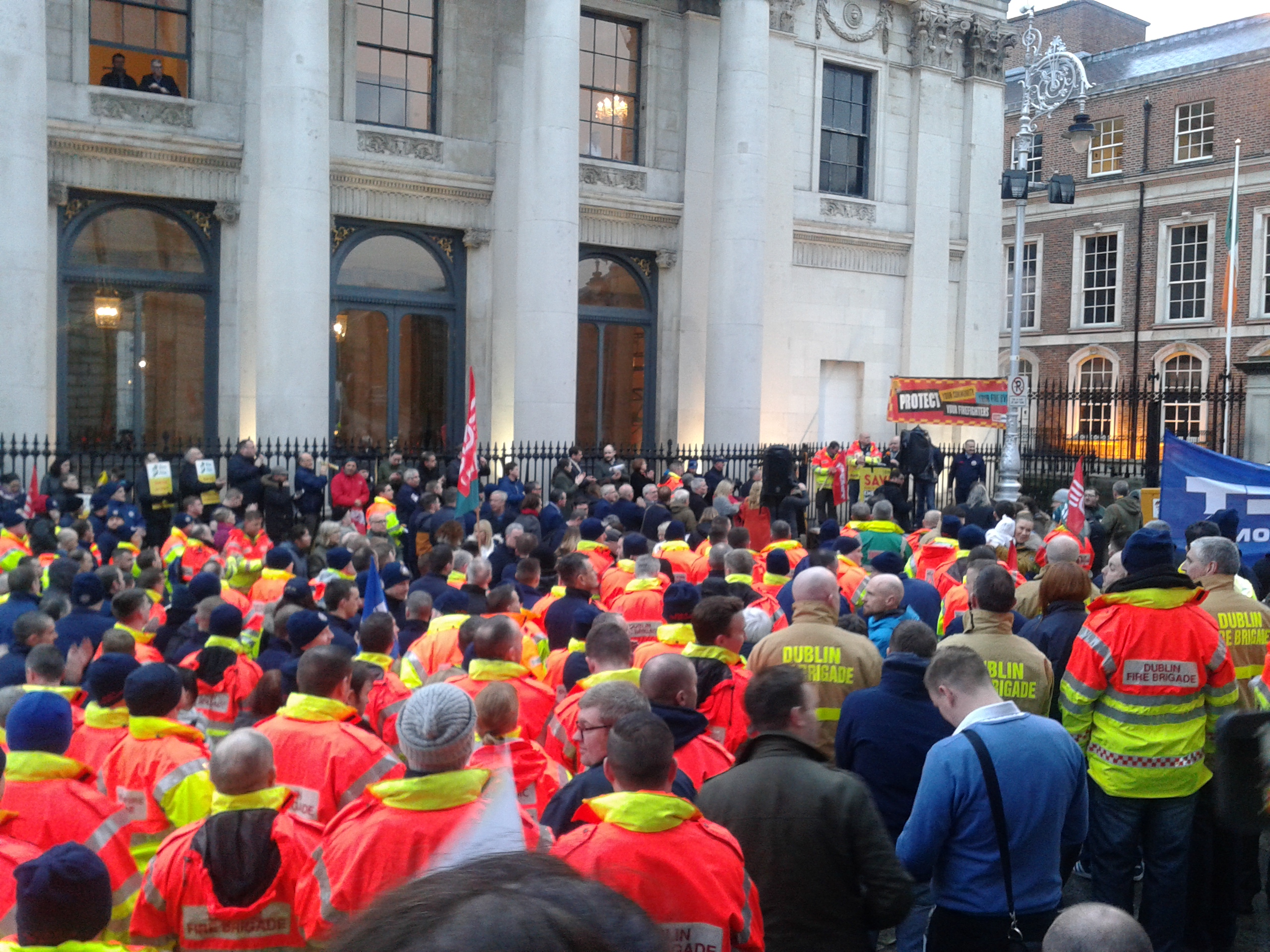


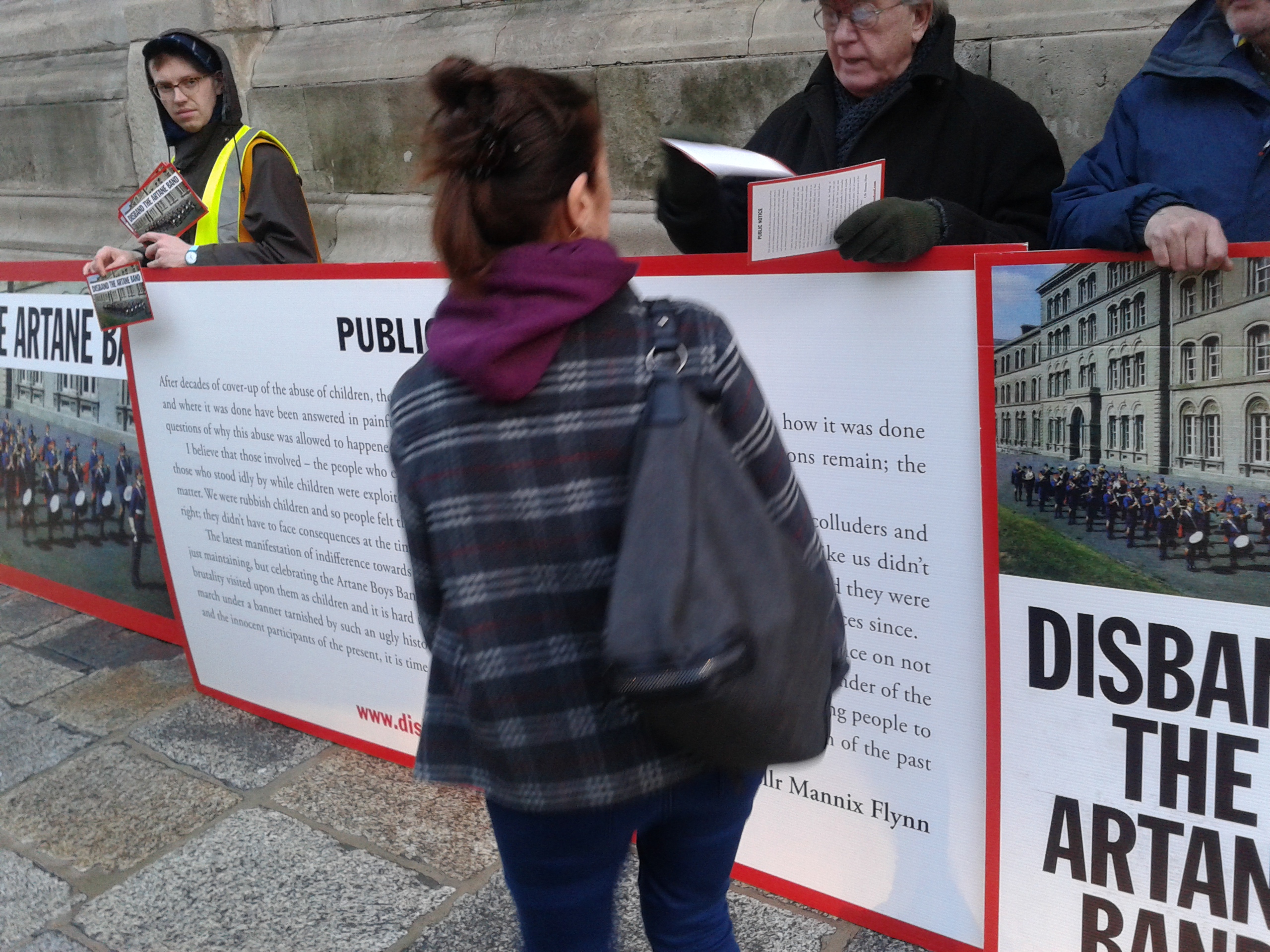


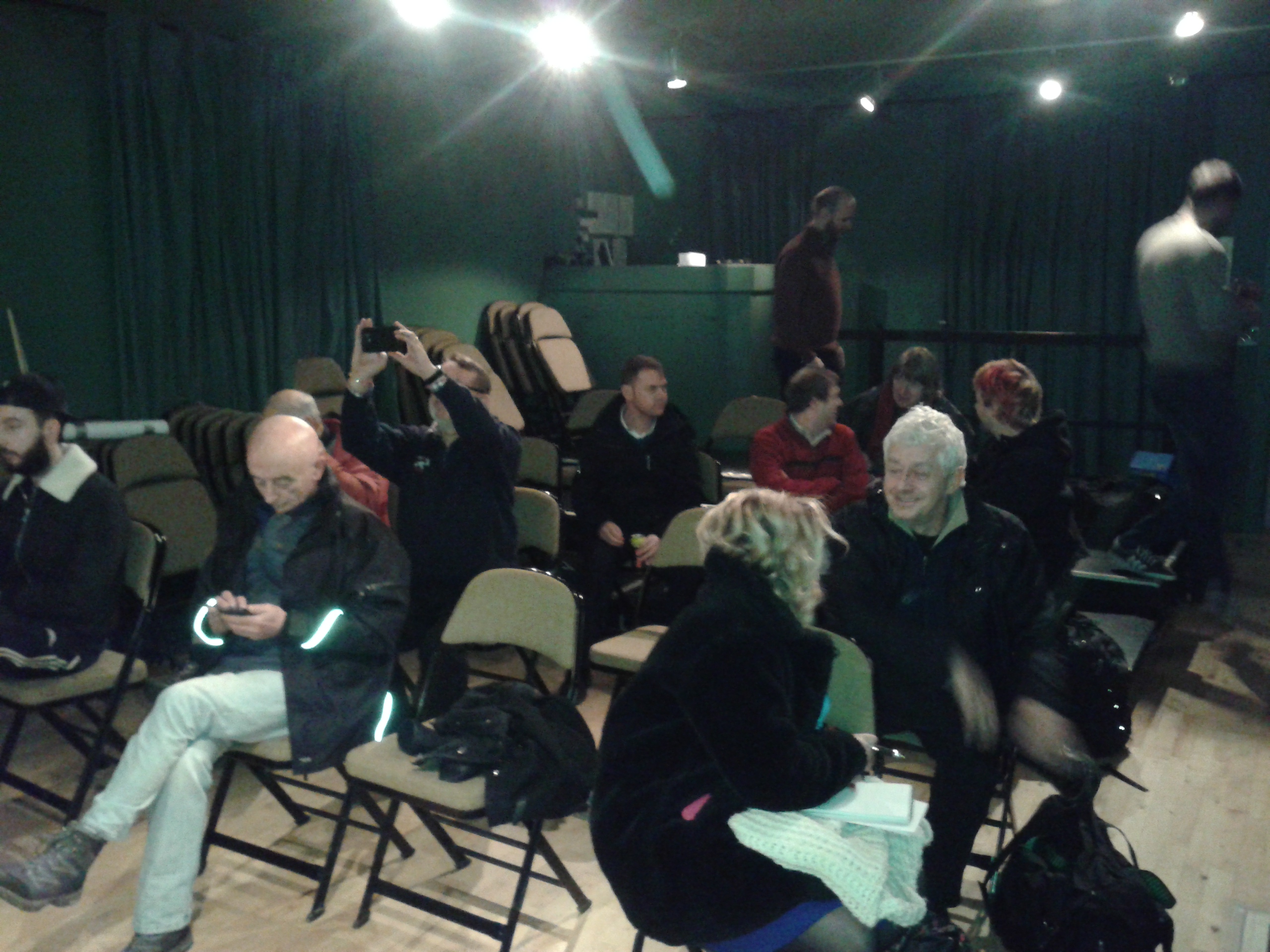
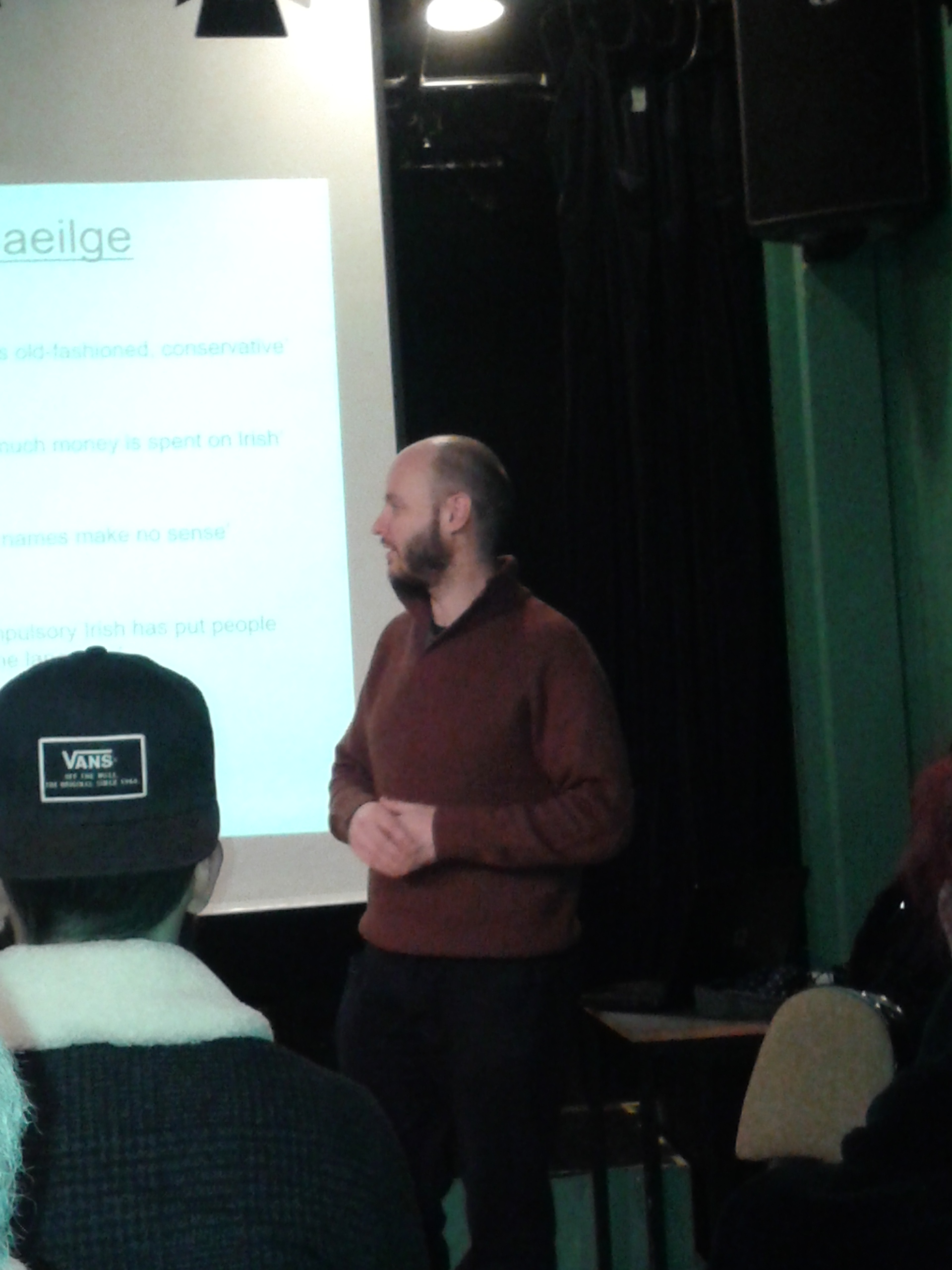
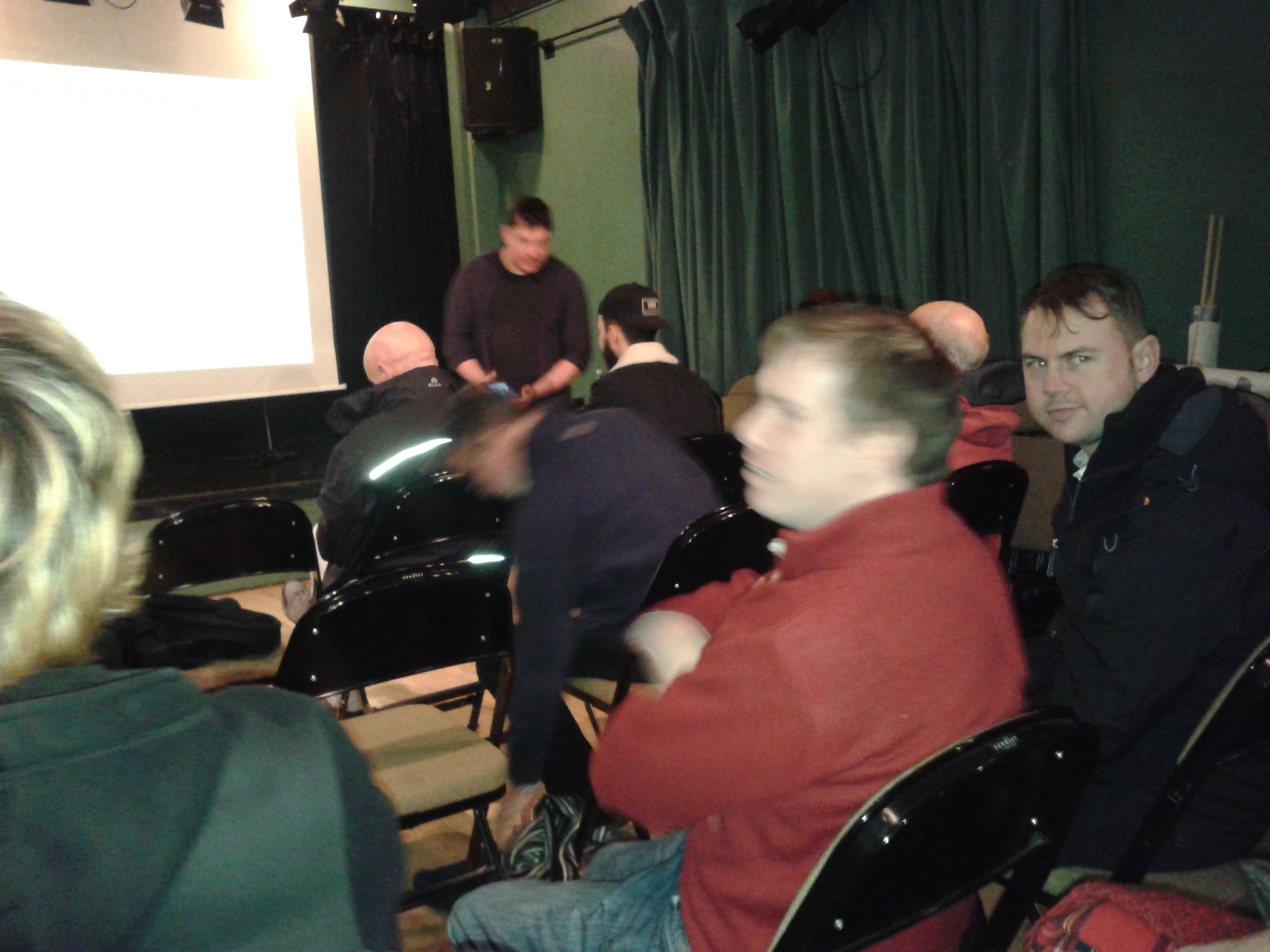
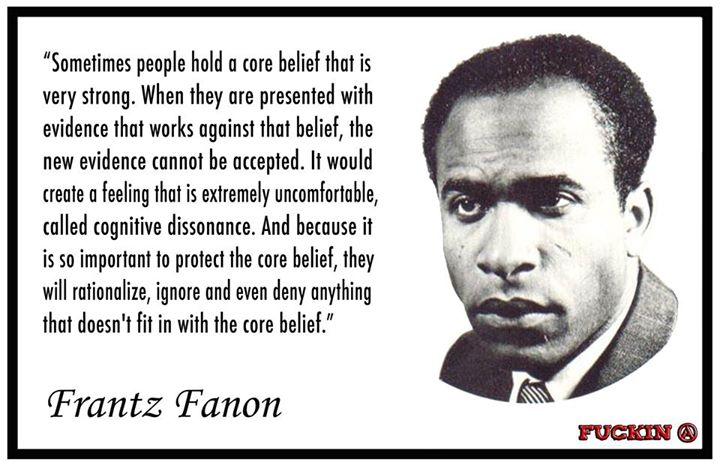
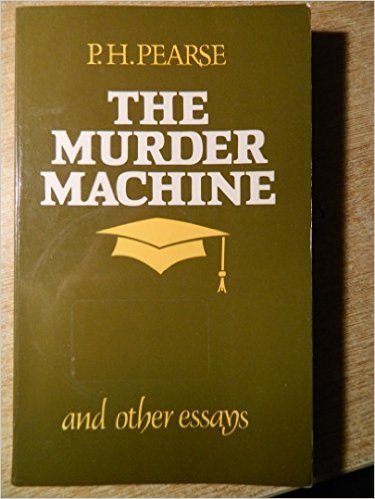


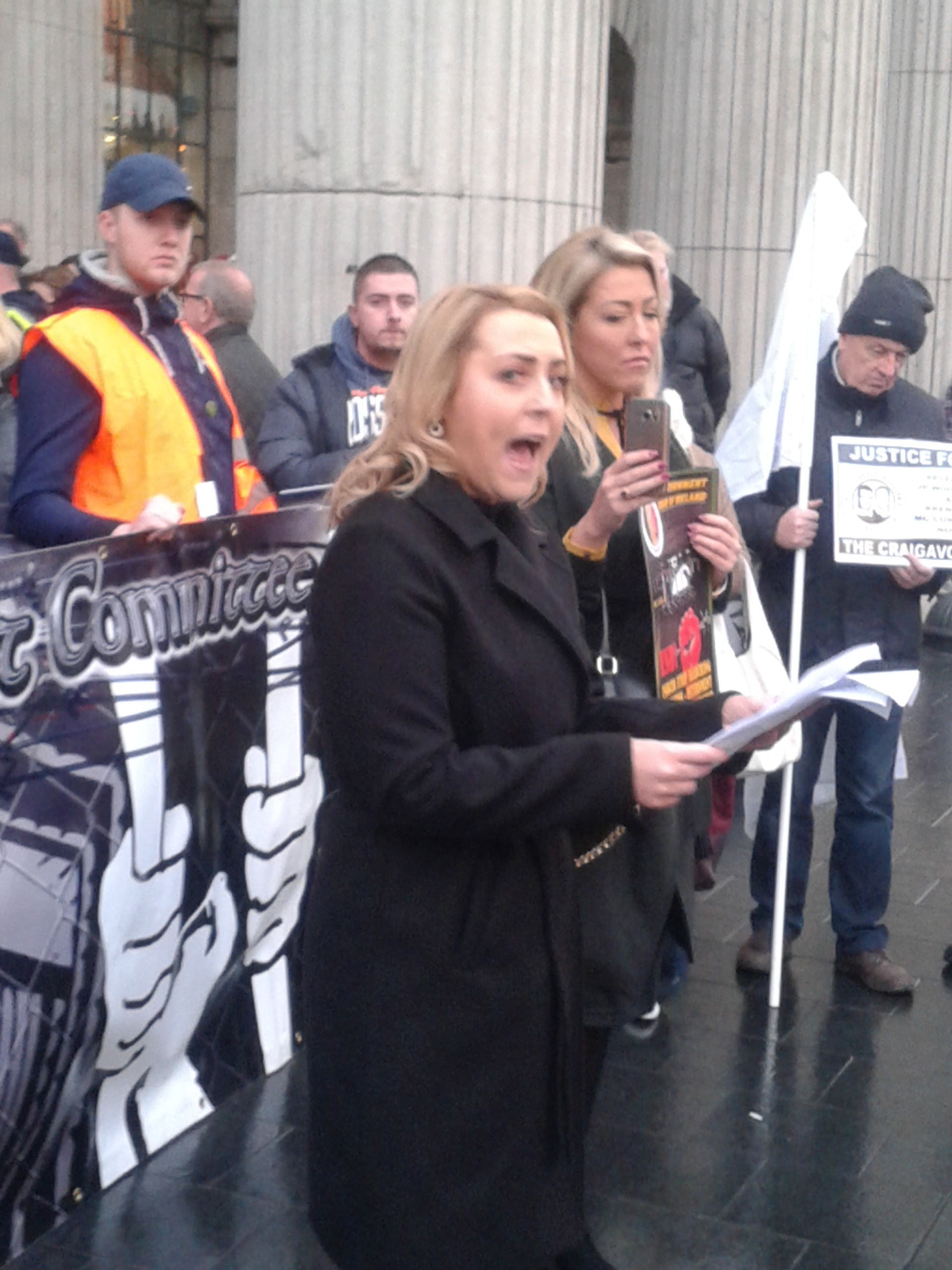
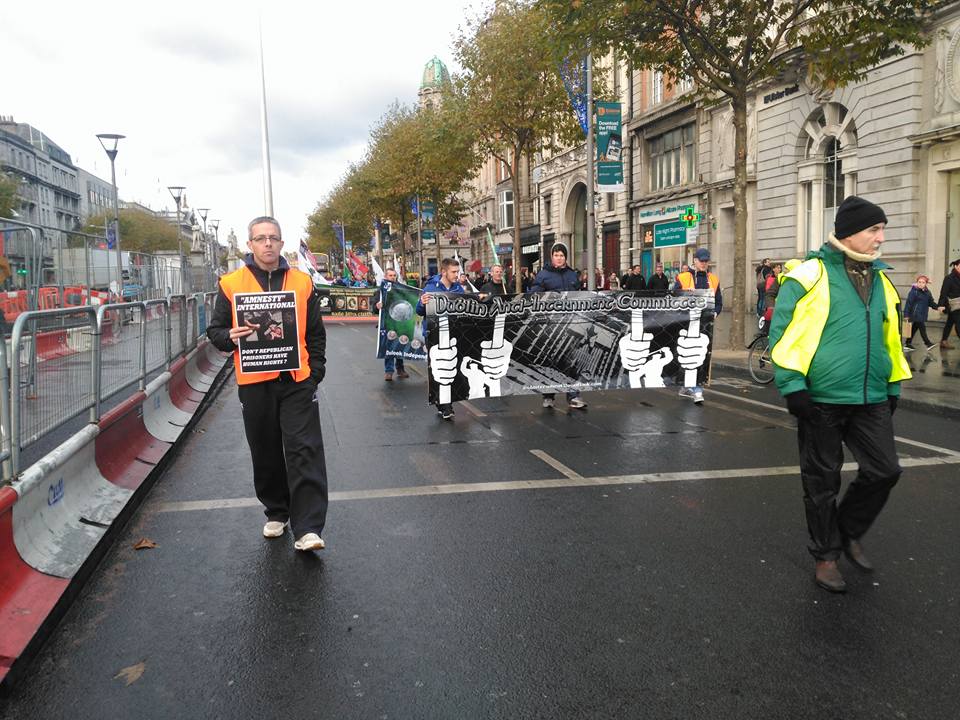

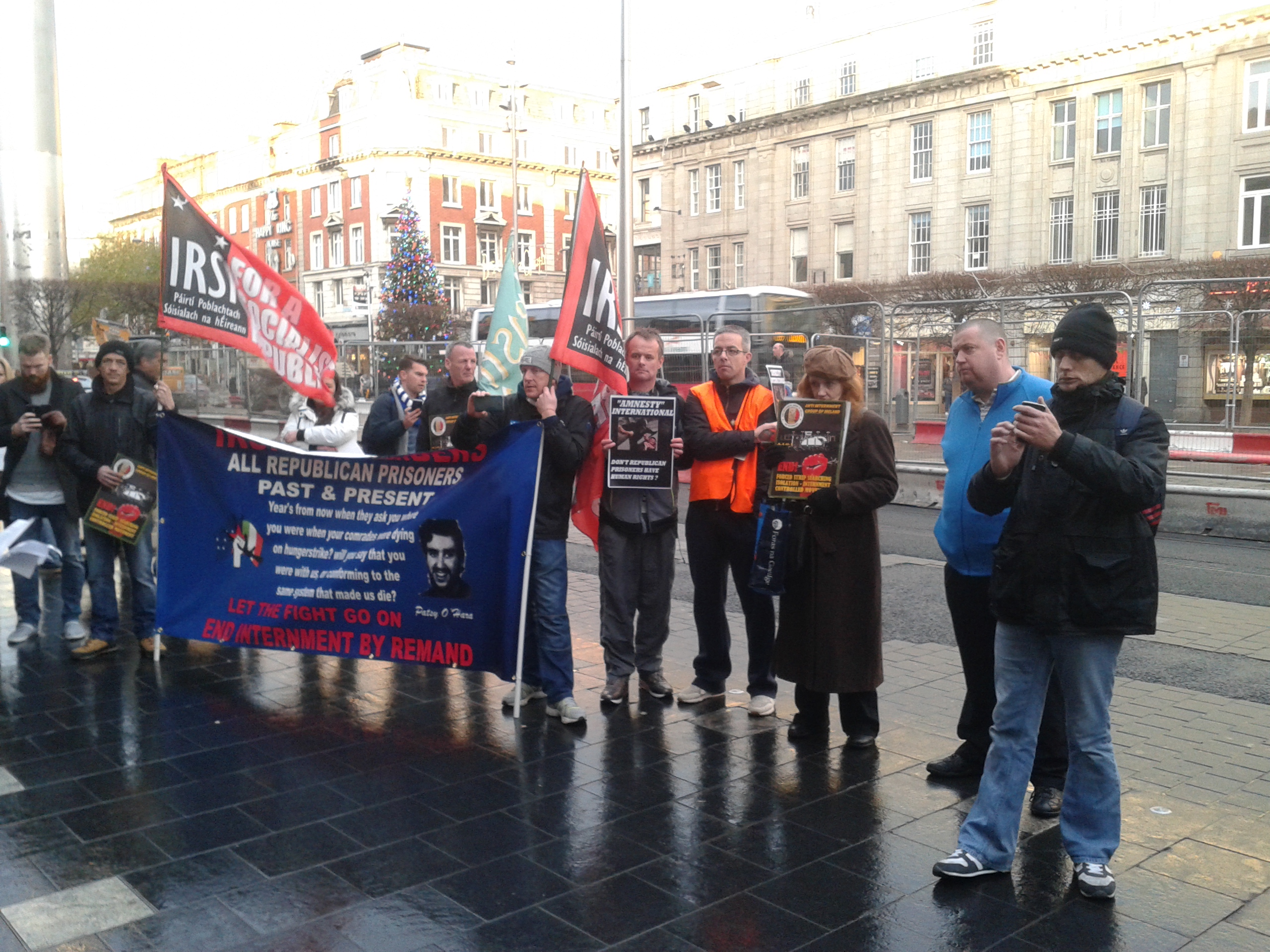


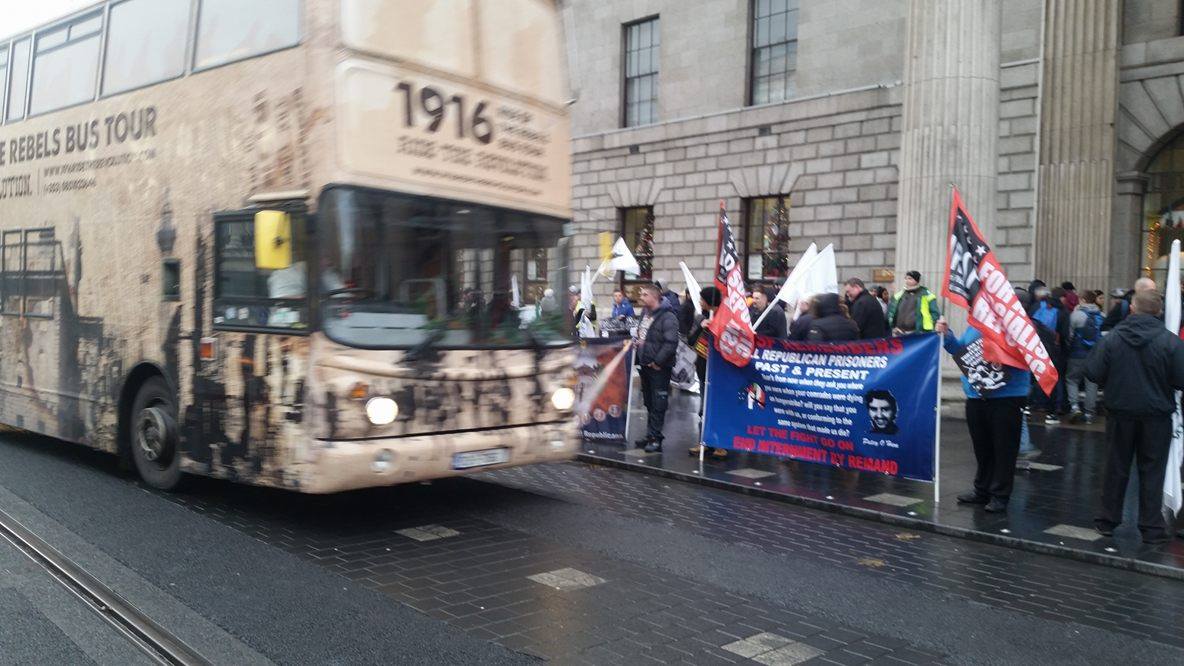


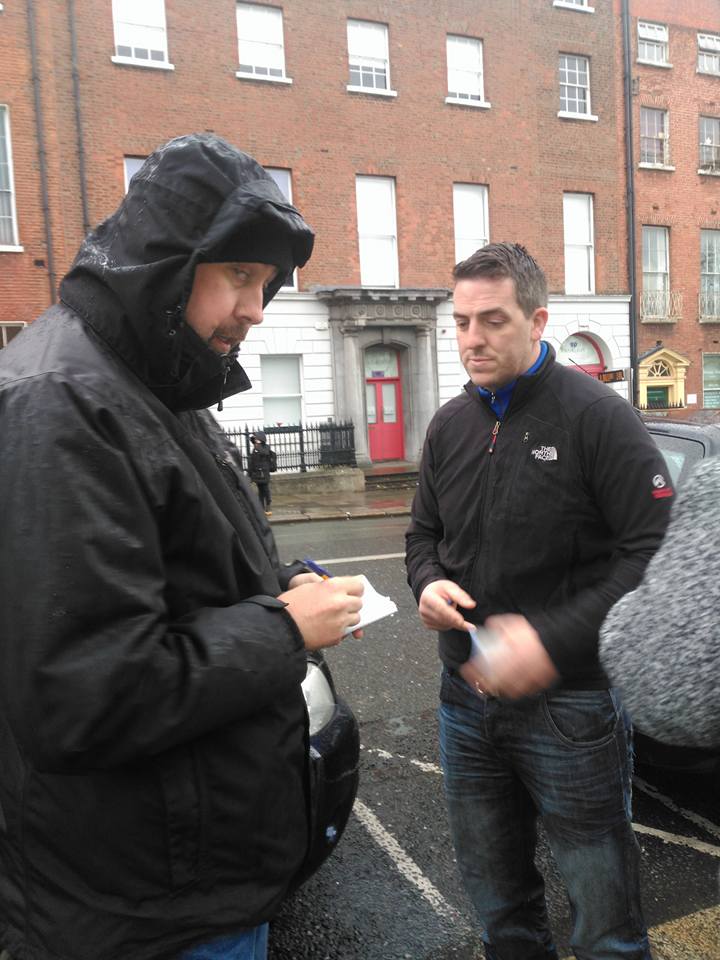
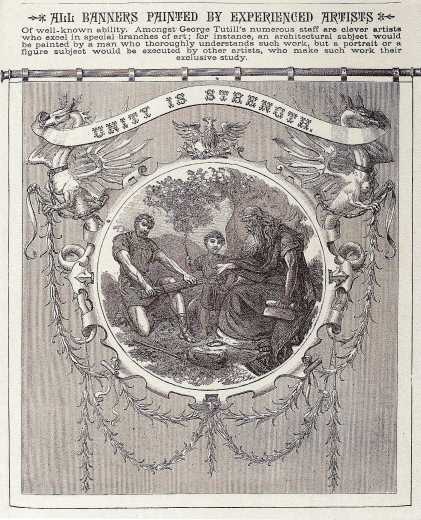


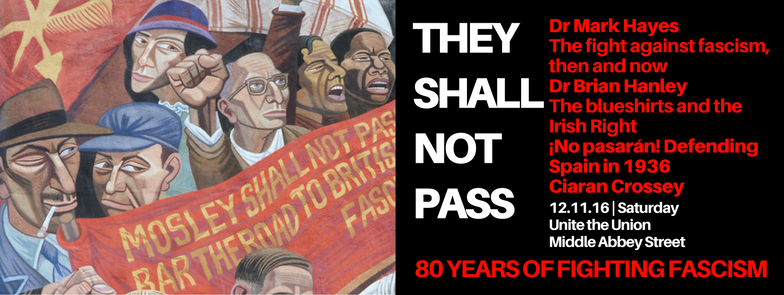
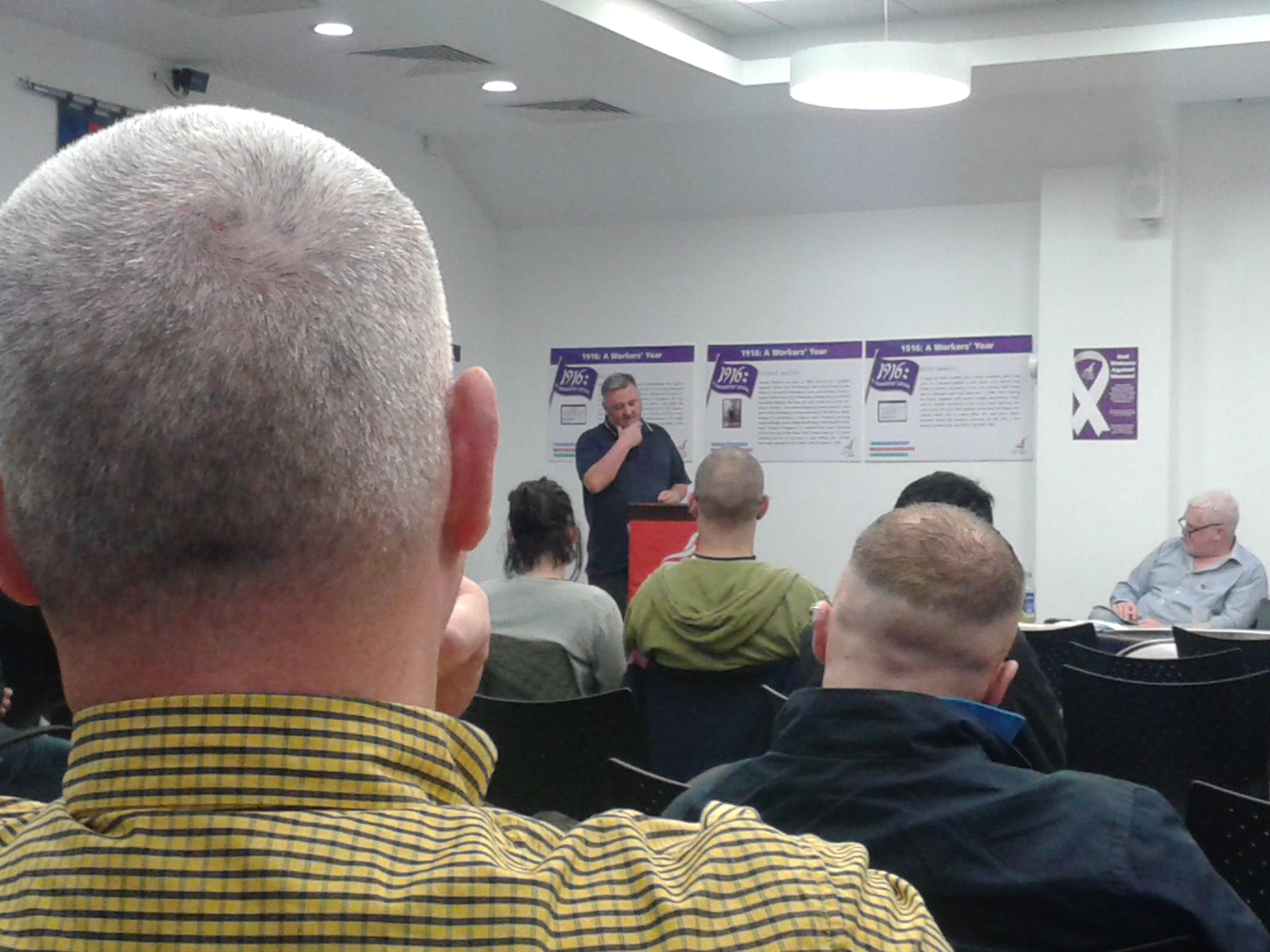

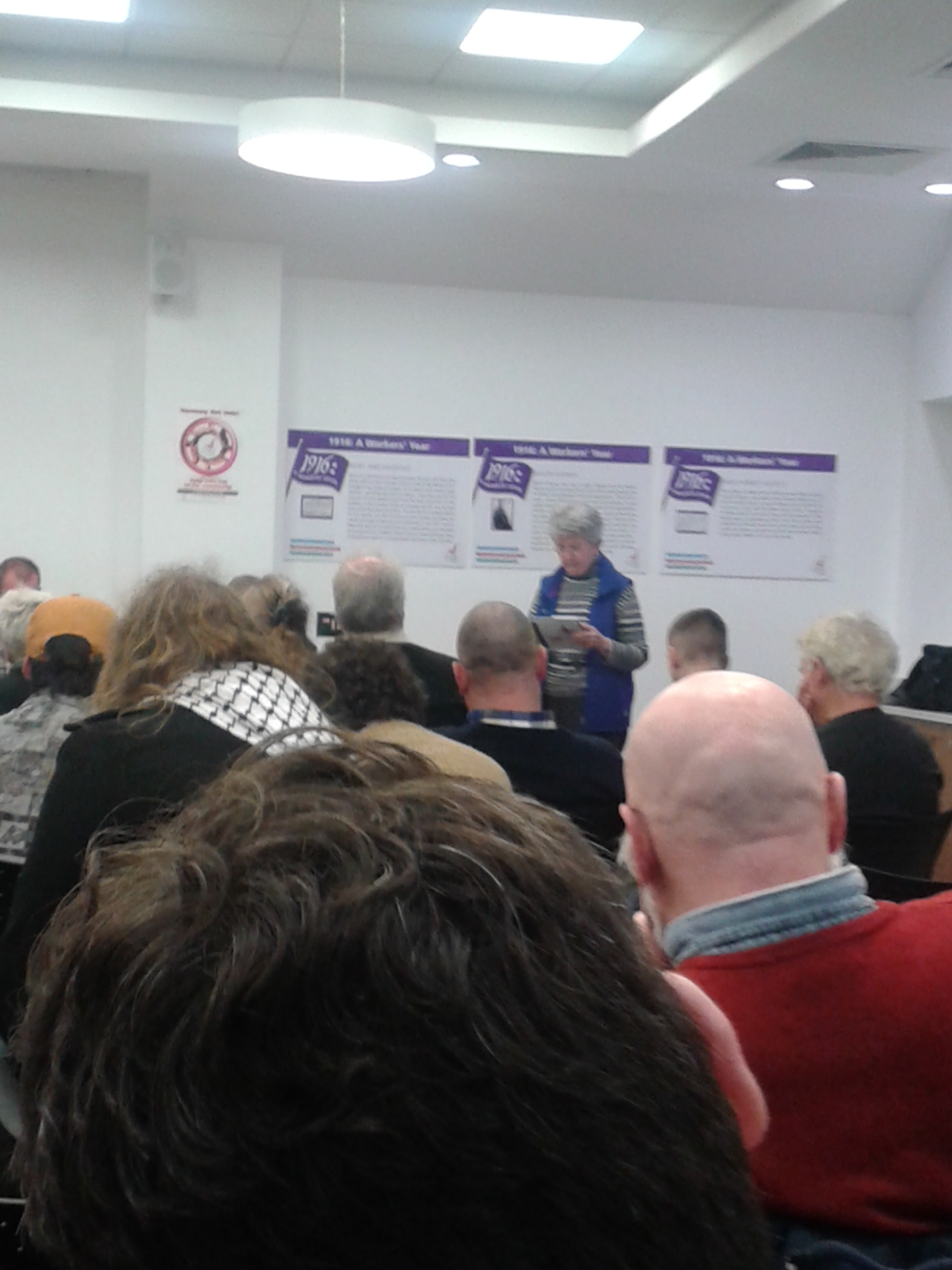


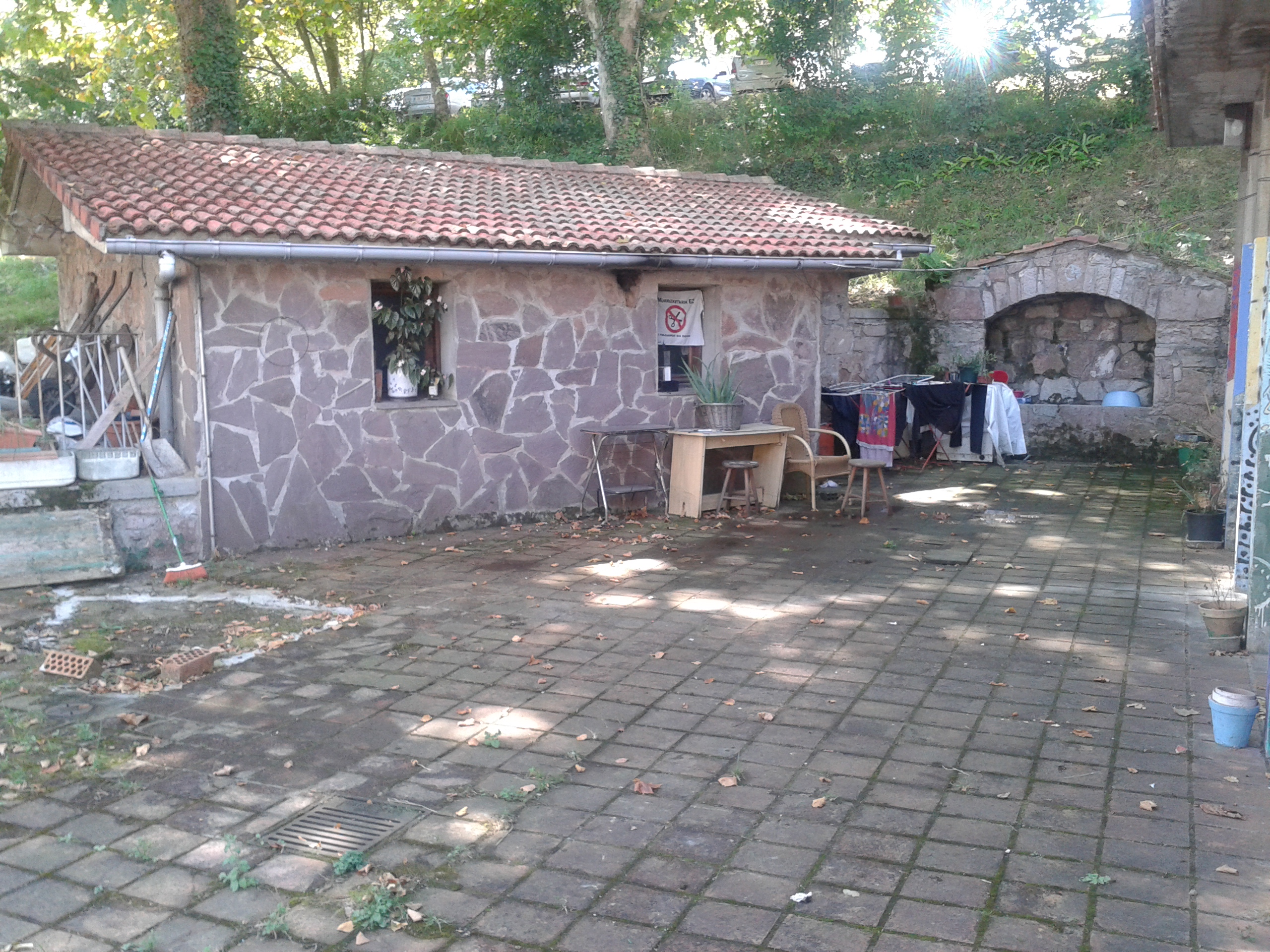


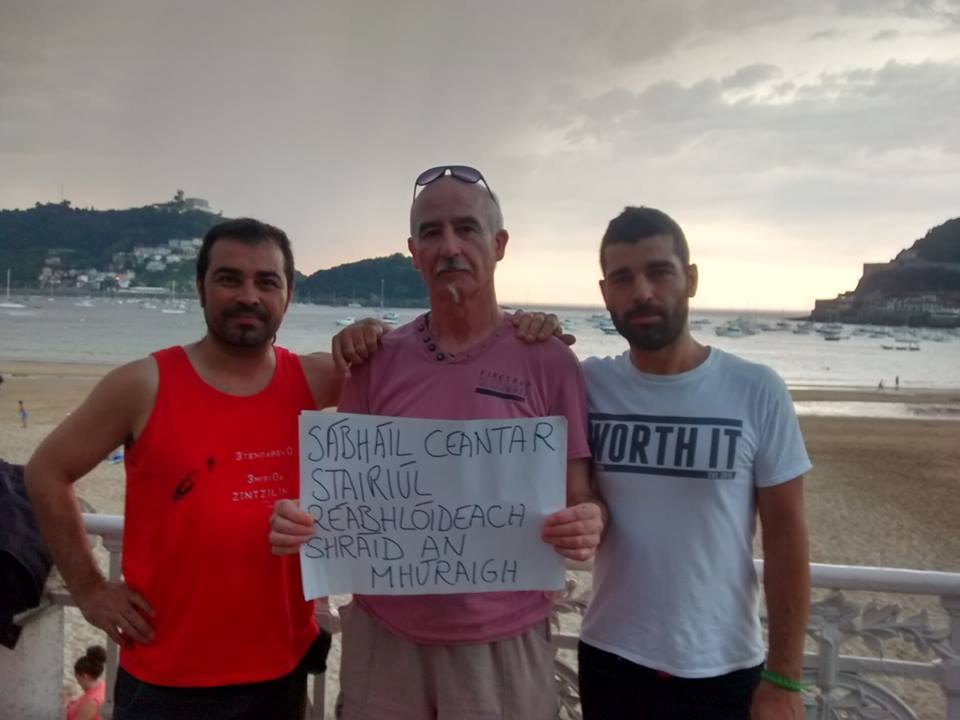
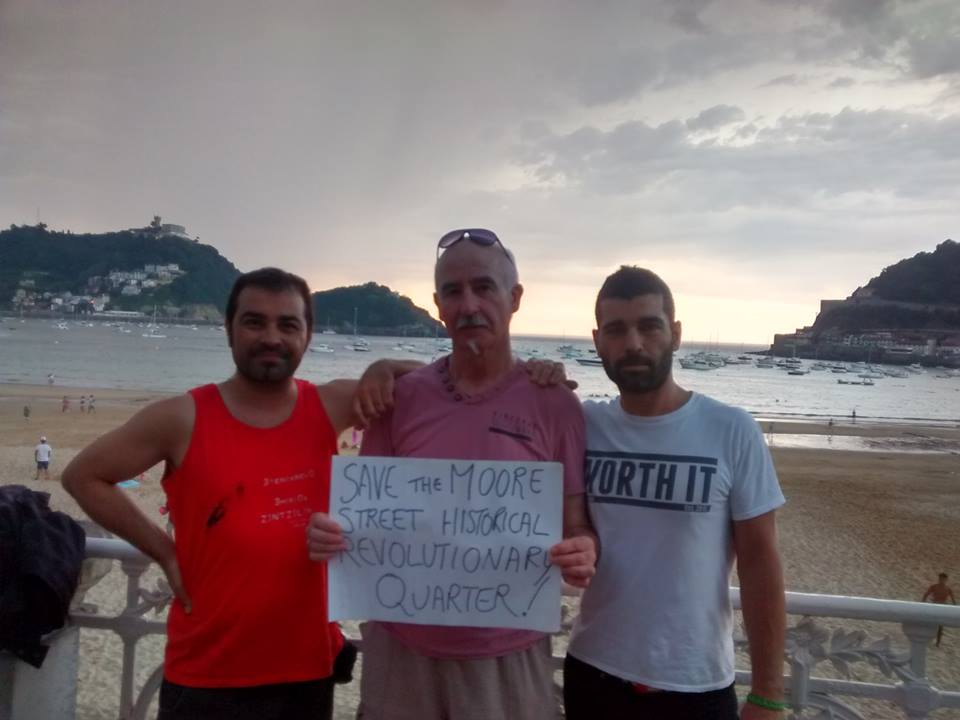
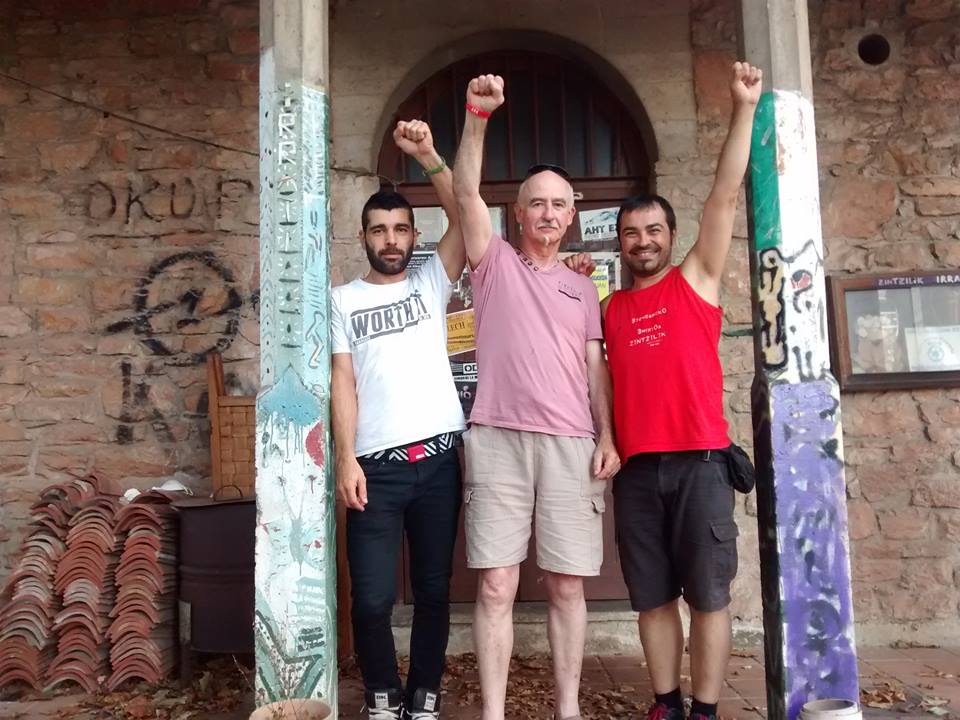

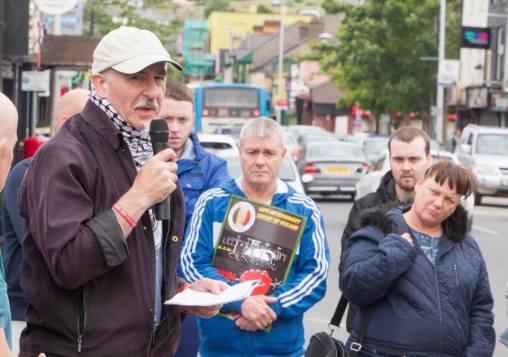


 rebelbreeze