Diarmuid Breatnach
(Reading time: mins.)
The last person of the 10 Republican prisoners to die in the 1981 Hunger strikes died on August 20th but hunger strikes continued for a while until relatives began instructing the doctors to give the strikers alimentation.
What can be said about those strikes? Clearly, a tremendous sacrifice requiring immense courage and determination in a non-violent protest by national liberation fighters in jail in a struggle against British colonialism.
Certainly we lost individuals of great worth in that struggle. It may be asked whether the gain was worth the sacrifice or whether the prison struggle might have been fought in some other way.
The medieval Irish society practice of fasting as a means of protest may or may not have been original but it was an important part of the people of India’s struggle against English colonial rule. Palestinian prisoners have used mass and individual hunger strikes on a number of occasions.
The effects of the Irish 1981 hunger strikes were many and wide, most probably far beyond the intentions or expectations of the prisoners. The news went around the world, bringing expressions of solidarity from many regions, including actions by parliaments of various states.
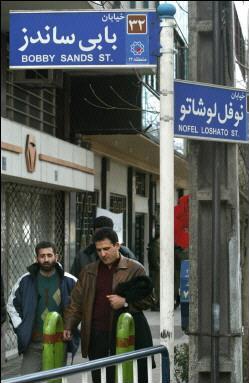
The Islamic Republic of Iran sent delegates to Bobby Sands’ funeral and renamed the street in which stood the British Embassy in Teheran ‘Bobby Sands Street’. The British Embassy to Iran had to give that as their address until they moved their main entrance around the corner.
Hunger strikers stood in parliamentary elections in Ireland on both sides of the British Border, winning some seats and coming very close to winning some others. One result was that the British changed their electoral laws so that convicted prisoners could no longer stand in elections.
In the Irish state there has not been an outright majority government since that year – every single Irish government since then has been a coalition of one kind or another.
In Britain, the hunger strikes made a huge difference amongst the Irish community there. The 1974 Birmingham Pub Bombings massacre had been jumped on by the British Labour Government to pass the Prevention of Terrorism Act 1974 (now the Terrorism Act 2000).
Probably already drafted, it was brought before Parliament and passed within days, giving the police power to hold suspects for seven days without charge, wide-scale powers of stop and search and interrogation, usually without legal representation for the victim.
Within the year a score of people from the community had been framed on serious charges, convicted and jailed: Birmingham Six, Guildford Four, Maguire Seven, Judith Ward. Subsequently many Irish people stayed away from Irish solidarity marches and meetings – just in case.
The hunger strikes of 1981 blew away much of that fear and the Irish community came out in their thousands in an attempt to save the lives of the hunger-strikers — and have never been cowed down to the previous degree since.
The Irish in Britain Representation Group was formed in 1981 after the refusal of the Federation of Irish Societies to even pass a motion of sympathy for the family of Bobby Sands, who had died only days earlier; the IBRG provided radical and resolute leadership for the next 20 years.
One of a number of songs arising from the 1981 hunger strikes was the Ballad of Joe McDonnell, by Derek Warfield. It is a good song in general but what is most excellent is its chorus, where it turns the accusation of terrorism away from the Resistance and back to British Imperialism.
And you dare to call me a terrorist,
While you look down your guns!
When I think of all the things that you have done:
You have plundered many nations,
Divided many lands,
You terrorised their people,
Ruled with an iron hand …
And you brought the stain of terror to my land.
And it could just as well apply to US Imperialism, EU imperialism and their NATO military alliance.
I have sung the song many times over the years and did so again recently at the weekly Dubs For Palestine gathering outside Leinster House. And more recently still outside the British Embassy. I changed only a couple of words to provide a more optimistic line at the end.
End.
Note: If you found this article of interest, why not register with Rebel Breeze for free, so that you will be notified by email of subsequent articles. You can de-register any time you wish.

