SATURDAY NOVEMBER 12th AN ANTI-FASCIST ACTION CONFERENCE WAS HELD IN DUBLIN CITY CENTRE, TITLED “THEY SHALL NOT PASS – 80 YEARS OF FIGHTING FASCISM”
The speakers were Dr.Brian Hanley, Dr.Mark Hayes and Ciaran Crossey, with the event chaired by Helen Keane.
Poster for the event which used as its main image a section of the Battle of Cable Street mural.
I missed the beginning of the conference and unfortunately the whole of Ciaran Crossey’s presentation, arriving near the start of Brian Hanley’s to a packed conference room.
Brian Hanley gave a comprehensive history of the main components of the development of fascism in Ireland in the 26 Counties until the collapse of its impetus at the end of the 1930s. Hanley’s talk built on his Pamphlet: Ireland’s shame: the Blueshirts, the Christian Front and the far right in Ireland, (Belfast, 2016) by adding a review of Ailtirí na hAiséirghe, the minor but energetic organisation formed in 1942 under the leadership of Gearóid Ó Cuinneagáin, which aimed for an anti-semitic Catholic and corporatist state.
Hanley packed all that into 45 minutes with apparently occasional deviations from his notes, full of interesting observations. Locating the thrust towards fascism in the strongly Catholic and anti-communist atmosphere of the 1930s in Ireland (with elements of anti-semitism), it was surprising to hear excerpts from speeches and right-wing periodicals of the period referring to the Fianna Fáil Government as “communist” and “under orders from Moscow”. It was interesting too to hear brief accounts of pitched battles between fascists and Republicans around the country during the height of the Blueshirt era, how much of a social base and energy the latter gave to the Fine Gael party and to accounts of the Soldiers’ Song (the Irish National Anthem) being attended to with the fascist salute (which led to violence in one cinema at least). Another interesting if somewhat disappointing snippet was that the AT&G, a trade union with HQ in Britain, was the one that most prominently took a stand against Franco in the 1930s while many Irish union leaderships took the opposite side.
The Chair announced a short break immediately after Hanley’s contribution which sadly resulted in no questions on Hanley’s contribution when the conference reconvened with perhaps 80% of the earlier attendance.
The post-break session began with a talk by Mark Hayes, well-known in Britain in particular as a veteran anti-fascist activist and organiser.
Hayes began by seeking to establish a description of fascism and then went on to dissect and disprove a number of reasons given by commentators for its incidence – religion, psychology of the masses of certain countries, psychology of fascist leaders, the middle class — but concluded that fascism occurs when the ruling class of a country is ready to implement it and able to do so. During the 1930s and ’40s, the ruling classes of a number of European countries opted for fascism while others did not. Britain for example had leaders who admired fascism, including Churchill (and Hayes quoted some of the latter’s public statements) but could not tolerate a Europe under the control of one country, which explained, Hayes said, why Britain went to war with Hitler and Mussolini.
Some individuals apart, the profile of fascists and supporters was “depressingly normal”, Hayes maintained which demonstrates that a successful rise of fascism is potentially possible anywhere. There is no firewall between capitalist democracies and fascism and commentators who maintain that “it couldn’t happen here” or that its time has run out, as one prominent commentator claims, are sadly mistaken.
The growth of fascism is assisted by the capitalist State with increasing attacks on civil freedoms and on the rights of workers. Hayes saw this as being particularly initiated in Britain under the Prime Ministership of Margaret Thatcher and her Government, with attacks on the legal rights of trade unions and the use of massed ranks of police. He drew attention to the “prevent” strategy in Britain today as a state-introduced oppressive and repressive measure.
Mark Hayes during his presentation. (Photo: D.Breatnach)
Questions & Contributions
At the end of Hayes’ presentation the Chairperson Helen Keane opened up the floor to questions.
There were four contributions from the floor, only one of which was a question: it was about the content of the Prevent Strategy which Hayes’ had mentioned earlier. Hayes replied that managers of colleges in “the UK” now have a legal obligation to identify and report to the authorities anyone exhibiting “extremism” which is turning them into part of the police force, which was an aspect of fascist rule in society. “Extremism” is problematically identified as being in opposition to “British values” which are formulated as “moderation, fair play”, etc but those alleged values completely ignore the history of Britain’s colonial conquest and imperialism.
A contributor addressed the liberal dismay at the election of Trump, criticised the alleged feminist politics of Hilary Clinton with regard to the USA’s war policies and their effects on women elsewhere in the world; finally he expressed his belief in the necessity to stand by Russia and Syria.
Anothercontribution framed as a question but in reality more of a comment was made in relation to the history of the growth of state fascism in Britain, which the contributor ascribed to the Prevention of Terrorism Act, introduced by a Labour Government a year before Thatcher’s Conservative Party gained a majority. That year, 1974 was also the year of the killing by police of the first known anti-fascist martyr in modern times in Britain, Kevin Gately in Red Lion Square in London.
The contributor went on to express the view that although AFA had made a huge and the principal contribution to the defeat of modern fascism in Britain, the policy of “No Free Speech for Fascists” had been put forward by the Communist Party of England (Marxist-Leninist) in the very early 1970s1 before the formation of AFA2, a policy which no other political party on the Left would support at the time. That policy had been popularised through the action of the Afro-Asian Student Society, which had close links with the CPE (m-l) and which was influential in bringing about the “no platform for fascists” policy in the National Union of Students in Britain in 1974.
A section of the attendance after the break in the conference. (Photo: D.Breatnach)
Hayes agreed that of course there had been earlier organisations and also stated that the actions of the Labour Government in Ireland had been fascist but felt that in Britain, Thatcher had brought about the definitive introduction of State fascism and that “in 30 minutes it’s not possible to cover every detail.”
The issue of the attitude towards “our only native ethnic minority”, the Irish Travellers, was raised by another contributor, attacking the endemic wrongs in the treatment of this group within the country and defending their need to be recognised as an ethnic minority.
The event ended with a reading by Máirín Ní Fháinnín of the translation into English of a short poem by Flor Cernuda, who after a period of post-war imprisonment in a concentration camp, worked for many years for the underground resistance against Franco’s regime. The poem’s title is Las Brigadas Internacionales.
CONCLUSION
The conference was full of interesting information and the speakers I heard were of good quality in presentation, in knowledge of history and in analysis. There was undoubtedly a lack of discussion, which was a pity. In addition I was surprised that the Dublin anti-fascists’ victory in denying Pegida their Irish launch was not mentioned – small-scale though the battle was, Dublin was as far as I’m aware the only city in a European state which Pegida had targeted to launch their party and had failed to do so, being driven out of the city centre by vigorous action.
Máirín Ní Fháinnín reading Flor Cernuda’s poem. (Photo: D.Breatnach)
Saturday was the day selected by Pegida for their Irish launch, which they had planned to do at the Dublin GPO at 3pm on Saturday (6th February). Anti-Racist Network Ireland called a demonstration for the same location from 1.30pm but from around noon bands of antifascists were on the street hunting fascists and met them at various locations with painful results for the fascists.
Section of anti-racist rally on central reservation O’Connell Street, looking southward. The GPO building is to the right out of frame. (Photo from ENAR Ireland) FB page).
BACKGROUND
Founded in Dresden, in eastern Germany in October 2014, Pegida (Patriotic Europeans against the Islamisation of the West) is a broad European network of loosely linked groups opposed to what they claim is the “Islamisation of Europe”. Although Dresden remains its stronghold, the organisation has spread to a number of European countries.
In January last year, marches in German cities reportedly attracted up to 25,000 people at their peak, before numbers began to drop severely, rising again however in October as politicians and media stoked fears of a massive influx of migrants and refugees arriving in Europe from war-torn countries (countries, incidentally, where some European powers have played a major role in instigating or directly carrying out those wars).
Pegida claims to be not fascist and ‘solely’ against Muslims as has been the case with so many fascist organisations in the past – they have been ‘only‘ against communism, or against Jews, or against blacks etc. The organisation has been frequently associated with general anti-immigration diatribes and in January last year derogatory descriptions of immigrants by its German leader, Lutz Bachman, in a closed Facebook discussion, were made public. He stepped down from the leadership after those revelations and the circulation of images appearing to show him posing as Adolf Hitler. The following month however he was reinstated with claims that the images were faked.
In Ireland the Blueshirts, popular name for the Army Comrades Association, mobilised and recruited in the 1930s. They were in part a response to the election of the new Fianna Fáil party, a split from Sinn Féin, in a popular national reaction to the hounding of socialists and republicans by the victors of the Civil War, 1922-1923. The Blueshirts presented themselves as Irish nationalists (even Republicans) with their targets being Communists, Jews and the IRA. Meanwhile elsewhere in Europe, fascist groups were organising, variously declaring their targets to be Jews, Communists, Socialists, Anarchists, trade unionists, Roma and Sinti, immigrants, gays and homosexuals and various religious groups.
The Blueshirts were fought on the streets by Republicans, Communists and some social democrats and, when they threatened a coup, their activities were banned by the De Valera government. It seemed that the majority of the Irish capitalist class had decided that Fianna Fáil were a safe pair of hands and would manage the country better and, besides Britain might go to war with some countries where fascists were in power. The Blueshirts lost active members after that and with other right-wing organisations, formed the Fine Gael political party which became the principal mainstream opposition party from then on, occasionally going into Government in coalition with other parties.
Blueshirts marching, 1930s (Photo sourced from Internet)
PRELUDE TO DEMONSTRATIONS AND ANTI-FASCIST ACTION
Saturday was chosen as “a day of action” for the groups that fall under the Pegida banner, with a number of anti-immigration and anti-Islam demonstrations planned to take place across Europe. The Irish far right anti-immigration organisation Identity Ireland supported Pegida on their Facebook discussions and claimed that Saturday would see the launch of the Irish branch of their organisation. According to a report by the Russian news agency RT, Identity Ireland’s leader addressed a Pegida rally in Dresden last month.
The ARN called for a large peaceful demonstration and even encouraged people to bring their children, advertising it as “a family affair”. Some debate between them and antifascists took place on the Internet and in person on what are the effective methods of resistance to fascism to employ. One of the anti-racist event organisers, Bulgarian Mariya Ivancheva, sociologist and anthropologist based at UCD, was reported in The Journal as calling for a “nice rally to celebrate diversity”. “When Pegida are there we are ready to face them but not to confront them,” she went on to say.
Anti-fascists referred to history to verify their case that fascism has always ultimately had to be stopped by physical force and that being the case, application of that approach at an early juncture was most effective and meant less suffering for working people, ethnic minorities and other targeted groups. The response of ARN to these antifascists was that the latter were not welcome on their rally.
Barricade against a Blackshirt march at Cable Street, East London, 1936. The attack was spearheaded by the police but the antifascists were successful. (Photo from Internet)
Many Republicans and Socialists were also angered by reports that the ARN had applied for police permission to hold their rally. Unlike in Britain or in the Six Counties, this is not required by law in the Irish state and the police are required to facilitate with traffic restrictions the right to march or rally on the streets or pavement. The antifascists’ disapproval was based on what was perceived as giving the police more power than they already had and which they often abuse. One veteran of demonstrations in Britain recalled that permission had once not been required in London either but liberals, social democrats and officials of the Communist Party of Great Britain had made it a practice to ask the police in order to cultivate good relations with them. In time, prior police permission became a requirement which at times was withheld or granted with conditions on times and changes of route.
However, subsequent to the publication of this report, I ascertained that ARN had not asked permission of the police, one of them pointing out that such is not required. The misunderstanding may have arisen from one person stating that he had informed the police that the event would be taking place. This of course is quite some distance from asking permission.
The antifascists, composed of Irish Republicans from virtually all organisations and independents, along with a few socialist and anarchist independent activists, organised their own mobile forces.
ON THE DAY
The anti-racist rally at the GPO was attended by a couple of thousand, from the Spire almost to the Jim Larkin monument and covering the road from the GPO to the central pedestrian reservation. O’Connell Street was closed by the authorities to all northbound traffic and stewards were having difficulty in preventing the rally spilling into the southbound lanes. It was addressed by speakers from People Before Profit, the Anti-Austerity Alliance, Sinn Féin and a number of other speakers, including migrants.
Small section of crowd on east pavement, O’Connell St, with Misneach organisation flags visible (Photo D. Breatnach)
Clashes occurred at the pre-arranged Dublin meeting points of fascists on the Luas line with the handful of Irish fascists being attacked and some, including their leader Peter O’Loughlin and member Ian Noel Peeke being reportedly hospitalised. Clashes broke out again in the city centre at a number of points; one of the latter being at Earl Street North. It seems that some Pegida supporters had gathered at the junction with O’Connell Street and were watching the demonstration opposing them across the road and some were filming it. There were reports of some of them abusing women supporters of the antiracist rally who were near the junction with North Earl Street. The Rabble independent media group reported them shouting anti-communist insults at them (see their video link at end of article). In any case, although generally free of visible insignia and carrying no banners, they began to attract an antifascist crowd, scuffles quickly broke out and the fascists ran down North Earl Street and Talbot Street. A couple of the Pegida supporters ducked into a nearby ‘poundshop’ apparently for safety but they were followed and received a pounding.
Police stormed the shop and evicted the antifascists, lashing out at almost anyone close by, as can be seen in the Irish Times video (see link at end of article). RTÉ has lodged a complaint about one of their camera operators being deliberately struck by a police baton. The riot police with batons drawn then set up cordons with barking German Shepherd dogs behind them and cleared North Earl Street of all pedestrians, allowing no others to enter from either direction.
North Earl St. after incident (facing westward). (Photo D. Breatnach)
This cordon was maintained until a few more Pegida supporters were permitted to escape through Malborough and Talbot Streets. All of the fascists in this area at least were identified by a number of sources as being of East European background, both by their accents and appearance. Some posts on fascist sites later on seemed to confirm this (see AFA Ireland statement link at end). Earlier reports gathered by antifascist intelligence had indicated that Pegida supporters from fascist Polish organisations were planning to support the Pegida launch.
North Earl St. facing westward, Police and their vans (Photo D. Breatnach)
Subsequently, word reached antifascist patrols that 5-7 other Pegida supporters had gathered in a pub in Cathedral Street, again off O’Connell Street and scores of anti-fascists raced to arrive outside the pub almost at the same time as police. Another struggle with police took place outside the pub with riot police using their batons to jab and occasionally lash out, though with a degree more restraint than they had earlier at North Earl Street (perhaps due to an initial complaint from RTÉ having reached their senior officers by then). Police continued to violently push protesters and to jab with truncheons and one demonstrator showed a badly swollen and blue hand.
A standoff took place here for some time until the Pegida supporters appeared to be getting bussed out in police vans which sparked a rush of 50 or more antifascists southward down O’Connell Street. Riot police on foot and in vans followed them and at the intersection with Lower Abbey Street, drew up two cordons, one facing eastward down Lower Abbey Street and the other facing the Liffey, while crowds of antifascist gathered on the eastern pavements and Lower Abbey Street and mostly spectators gathered on the central pedestrian reservation. More police arrived and drew plastic shields out of their vans while a number of dogs were in evidence barking, one jumping up and straining on the leash towards antifascists.
Many spectators, natives and others, expressed bemusement and asked people near them what was occurring, evidence of the low level of advance news coverage by the mainstream media. Alternative, liberal, socialist and Republican media and independent sites on the other hand had given extensive coverage and encouraged people to attend the anti-racist demonstration or the antifascist action. Some among the crowd who were ‘in the know’ explained the events to one or two in their immediate vicinity. The overall atmosphere in the crowd seemed opposed to the fascists with mixed attitudes to the police and antifascists. These crowds offered fertile ground for being publicly addressed by word of mouth or leaflets but none seemed available to fulfill that role.
After some time in apparently purposeless deployment, given that nothing was moving, the Gardaí simply returned most of their forces and riot shields to their vans and most drove off. This seemed to indicate that the police maneouvre had been in the manner of a decoy while the fascists were spirited away quietly from the vacated vicinity of the pub. The Rabble video seems to confirm this.
Melee in Cathedral Street as riot police force antifascists away from pub where fascists are in hiding (photo from Internet)Riot Squad police in Cathedral Street facing off antifascists. (Photo D.Breatnach)Standoff Abbey St. junction O’Connell St, facing westward (Photo D.Breatmach).Many spectators — view northwards along O’Connell St. from the William O’Brien monument (Photo D.Breatmach)
SUMMARY ANALYSIS
The State, probably in anticipation of antifascist action, mobilised and deployed considerable forces. Garda vans moved through the city centre, sometimes in convoys, in addition to police on foot, mounted on horse and bicycle (though the horse police were often discreetly out of site in several locations around the demonstration area). Riot police waited in vans while other vans were stacked with plastic riot shields (which in the end were not needed, if a missile was thrown at the police it was a rare one).
In line with the general history of the relationship between capitalist states, their police forces and fascist movements, the police showed their determination to protect the fascists moving around the city centre. The eagerness of officers at times caused them some problems, including one of them striking a cameraman from the national broadcasting network, RTÉ, with a baton. On another occasion, a riot police officer can be heard calling “Hold the line!” at a time when the video shows the line is not under pressure – the only danger to the police line at that point is seen to be from over-eager officers breaking away to pursue and attack demonstrators.
A number of demonstrators and some spectators suffered bruises from police batons as well being violently shoved by police. In one video a police officer is briefly visible striking at a person lying on the ground – a visual echo of that famous photograph of Bloody Sunday during the 1913 Lockout, when the Dublin Metropolitan Police had run riot less than 100 yards away. In other footage police are seen shoving a man, apparently disorientated (perhaps by a blow to the head) to the ground at least three times although he is no threat to them and is not even resisting.
A feature of the antifascist active resistance was the unity in action across the Irish Republican spectrum, a feature that has been growing in solidarity work around Republican prisoners, in resistance to some features of repression and in the defence of the historical heritage represented by the struggle to save the 1916 Terrace in Moore Street. On this occasion however the unity in action included some SF activists. A sprinkling of independent socialists and anarchists were also among them. Some activists of the socialist, anarchist and communist organisations left the rally to join the antifascists blockading the fascists and their police protectors at Cathedral Street. There were a number of reports of football youth ‘casuals’, supporters of four Dublin soccer clubs, also cooperating in hunting for fascists. At least two of these were observed taking ‘selfies’ of themselves against a riot police background!
It is not known how many arrests were made nor what their outcome has been. Fascists were filmed being handcuffed as they were being put in police vans to take them to safety but it is unlikely they were charged. A number of fascists were reportedly hospitalised where no doubt their medical care teams will include a number of migrant background and perhaps even of Muslim religion.
The police and the Government will be considering their response but the ritual condemnations by their mouthpieces of antifascist force can be expected, as well as attempts to isolate the antifascists as some kind of hooligan or sinister element. The capitalist class will not be impressed with Pegida or Identity Ireland’s performance and, if considering building up a fascist movement in the future, will probably look elsewhere.
Both the ARN and the antifascists were pleased with the outcome of their respective efforts but liberal elements can be expected to condemn the antifascists for what the former perceive as marring the message of their demonstration. The ARN statement (see link at end of article) did so in fact albeit in muted tones, “regretting skirmishes”. In a parallel to some Jewish leaders in 1930s Europe during the rise of fascism, a Muslim religious leader was quoted criticising violent actions “by a minority” and called for defeating them by “dialogue”.
The fascists will be licking their wounds and trying to put a brave face on their defeat, also condemning the antifascists for using “undemocratic violence” or words to that effect. All fascist movements in history have been extremely violent while often, while in their growth period, presenting themselves in public as peaceful and condemning the violence of their opponents. This is a fact that liberal elements usually fail to appreciate, while other elements among the middle class are ultimately content to see their order being maintained, whether by the State or by fascists.
Whatever spin the fascists, the State, mass media or liberals may put on it, the fact remains that the fascists have been prevented from staging a publicity coup that would have raised the morale of their few recruits and encouraged more to join them. Fascist movements throughout history have required such morale-boosters and encouragement for potential recruits and, incidentally, intimidation of their opposition. What happened on Saturday in Dublin has been the reverse – the fascists and potential recruits have been intimidated and discouraged. Over 200 indicated intention to attend on the Pegida “Irish launch” Facebook event but reports on the ground in the city centre indicate a total of perhaps 30 fascists being chased around the city in small groups. The 170 or so, whether Irish or from elsewhere interested in supporting islamophobia, racism and fascism won’t be in a hurry to enlist now.
But should a new attempt be made to launch a mass fascist movement in Ireland, on whatever divisive basis, the antifascists are likely to turn out in even greater numbers.
“Supporting organisations (in alphabetical order):
Anti Austerity Alliance, Akidwa Ireland, Africa Centre Dublin Ireland, Anti Racism Network Ireland, Attac Ireland, Autistic Rights Together, Communist Party of Ireland, Conference of Religious in Ireland, Dialogue & Diversity, Dublin Calais Refugee Solidarity, Dublin City Centre Citizens Information Service, Doras Luimni, EDeNn, ENAR Ireland, Fighting for Humanity – Homelessness, Galway Anti Racism Network, Gaza Action Ireland, Gluaiseacht for Global Justice, Green Party of Ireland, Ireland Says Welcome, Ireland Palestine Solidarity Campaign (IPSC), Irish Anti-War Movement, Irish Housing Network, Irish Refugee Council, Irish Missionary Union, Irish Traveller Movement, Migrant Rights Centre Ireland, National Traveller Womens Forum, Shannonwatch, Show Racism the Red Card – Ireland, SARI – Sport Against Racism Ireland, SIPTU, Sinn Féin , The Platform, Pavee Point, People Before Profit, United Against Racism, The Workers Party, Workers Solidarity Movement, You Are Not Alone.” (From their statement published on European Network Against Racism Ireland’s site)
J. K. O’Reilly (1860-1929) of 181 North Circular Road, Dublin, was author of of the patriotic ballad, “Wrap The Green Flag Round Me, Boys”. Not alone did he take part in the 1916 Rising but so didall his sons: Kevin (1893-1962), Sam (1896-1988), Desmond (1898-1969), Tommy (1900-1985) and Donal O’Reilly (1902-1968). J. K. and Kevin, Sam and Desmond served in the Irish Volunteeers, while Tommy and Donal served in Fianna Eireann.
This November 7th saw over 200 people turn out for the launch by the Cabra 1916 Rising Committee of a marvellous 156–page historical publication. Among the Cabra residents honoured in “Our Rising: Cabra and Phibsborough in Easter 1916” are the O’Reilly family.
IN THE 1916 RISING AT 13 YEARS OF AGE
In March 1966 the “Irish Socialist”, publication of the then Irish Workers’ Party (now the Communist Party of Ireland), brought out a special issue to commemorate the 50th anniversary of the 1916 Rising. A highlight of that publication had been Party veteran Donal O’Reilly’s memories of how, as a 13 year old boy, he had followed his father and brothers into the Rising, to the horror of Rising leader Tom Clarke, who considered him far too young to be involved in war. It was subsequently republished by my father, Micheal O’Riordan, in his 1979 book, “Connolly Column”.
Included in Donal O’Reilly’s memoir was his own day-by-day account of Easter Week, 1916:
“Monday, Easter Week: In our home it was the ordinary week-end mobilisation. There was the cancellation order by McNeill in the “Sunday Independent” of course, but somehow we didn’t seem to pay much attention to newspapers then. Certainly all the adult members of my family went on parade. At two o’clock, I knew there was a difference. A barricade was up at the Railway Bridge in Phibsboro, which was just a few hundred yards from our home. Houses were occupied and all sorts of guns were in evidence. Down I went into O’Connell Street.
“The Proclamation was up. The windows of the G.P.O. were barricaded. The looting had already started and despite efforts by a few Volunteers, shop after shop was destroyed. How fires were prevented by the few Volunteers that were on the streets seemed a miracle. Back through the barricades of Phibsboro I went home with wondrous tales to tell! Nobody was at home; all were out on their barricades!
“Tuesday, Easter Week: There was a silence that I had never known before or since. Nothing moved on the North Circular or Old Cabra Roads. I wanted to go into the city centre again, but how could I get across the barricade on the Railway Bridge? I knew Jim O’Sullivan, the officer in charge, but that would be of little value. I hung around and eventually nobody knew which side of the barricade I should be on. I discovered my own private route into O’Connell Street; down Mountjoy Square, into Hutton’s Place, across Summerhill, an area that was then teeming with life, all living in big and small tenement dwellings.
“I got to the G.P.O. The looting had ceased and the only movement now was of determined men that came and went. A few groups were gathered around the Post Office trying to get in, but were rejected. At three o’clock there was a movement at the side door in Henry Street and the “War News” made its appearance. I duly appointed myself as official newsboy to the Garrison. Within an hour-and-a-half, the “War News” was sold and I was back in the G.P.O. with my my official status and the money. I got into the main hall.
“Tom Clarke, whom I had met in his shop and at the lying-in-state of O’Donovan Rossa at the City Hall, saw me and was horrified. I was sent to Jim Ryan and he sent me off to Purcell’s with a parcel of bandages. At the Purcell’s post I stayed and there I met CylMacParland, a man who was to be very close to me for many years afterwards.
“Wednesday, Easter Week: The silence had gone. The occasional crack of a rifle had given way to the boom of artillery.
“Back at G.P.O: Thursday, I returned to the G.P.O; there was no difficulty in getting in now. The guns were battering away and all the women and youth were being prepared for evacuation. It was proposed that we should go via Princes Street, Abbey Street and Capel Street. I left, crossing O’Connell Street, Marlborough Street and then up by Hutton’s Place. Eventually I got to old houses in Berkeley Road, and stayed there until Sunday morning.”
20 YEARS LATER, FIGHTING IN SPAIN
So ended Donal O’Reilly’s memoir. He went on to fight in Ireland’s War of Independence (1919-1921), and on the Republican side in the Civil War (1922-1923), serving in the Four Courts garrison and, on surrender, being imprisoned in Mountjoy Gaol. But Donie, as he was known among friends and comrades, went on to fight for a second Republic, accompanying Frank Ryan in the first group of Irish International Brigade volunteers he led out to fight in the Spanish Anti-Fascist War (1936-1939). If Easter 1916 in Dublin had been Donie’s baptism of fire for the Irish Republic, Christmas 1936 on the Cordoba front was to be his baptism of fire for the Spanish Republic.
Photograph taken of some of the Connolly unit in Spain
(See http://www.irelandscw.com/part-IrDem3709-10.htm#371002Cordoba for his account of going into action, which was published in the “Irish Democrat” on 2 October 1937. In the opening two paragraphs the editor introduced Donal O’Reilly to readers, while his own account began with “Christmas time”).
Donal O’Reilly’s life both began and ended in the Cabra area of Dublin, and he ultimately resided at 31 Cabra Park. As the son of his fellow International Brigader Micheal O’Riordan, it was my privilege to have personally known Donie O’Reilly during my 1960s teens, and to have attended his 1968 funeral in Glasnevin Cemetery. Full military honours were rendered to this veteran of Ireland’s War of Independence, as the Irish Army fired a volley of shots at his graveside, before veteran Irish Republican Congress leader Peadar O’Donnell gave an inspiring funeral oration. Peadar was at that juncture Chair of the Irish Voice on Vietnam, on whose Executive I was the representative of the Connolly Youth Movement.
This photograph of Donie O’Reilly was taken in 1966 in the German Democratic Republic, at the grave of Irish International Brigade leader Frank Ryan, in Dresden’s Loschwitz Cemetery. (Frank Ryan’s remains would subsequently be repatriated to Ireland, in 1979, for reburial in Dublin’s Glasnevin Cemetery). In this photo, Arno Herring, in GDR army uniform, a veteran of the XI (German-speaking) International Brigade, salutes the memory of Frank Ryan, as three Irish veterans of the XV (English-speaking) International Brigade stand to attention: Donal O’Reilly, on the far left, and Mícheál O’Riordan and Frank Edwards, on the right.
Introduction with some very little additional text by Diarmuid Breatnach
Main text from East Wall History Group
Among the many events packed into History Week by the East Wall History Group was a walking history tour of the area on Sunday 27th September. Over a score of people took part in “East Wall and the Irish Revolution” to hear Joe Mooney, a long-time community activist, outline the relevant events of history at various points along the way, covering
Paul O’Brien performing his 1913 Lockout song in front of mural marking the eviction of 62 families from Merchant’s Road in December 1913 by the Merchant’s Company. (Photo: EWHG)
local connections with the Fenians, docks and migrants, the Lockout, 1916 Rising and the Spanish Civil War. Appropriate songs and music accompanied the tour, Paul O’Brien performing compositions of his own at some of those points and Diarmuid Breatnach singing verses from Viva La Quinze Brigada at another.
“We set out from St Joseph’s School, originally opened in 1895. The first Principal of the Boys’ school was J.F. Homan, who served as a St. John’s Ambulance Brigade volunteer during the Rising and also during the Civil war. A number of former pupils from the school were involved in the revolutionary events of the time (the following decades) and of course in 1911 a schoolboys’ union was declared and a short strike ensued (complete with pickets!). Their demands included a shorter day and free school-books.
Part of crowd at the starting point. (Photo: DB)
“Our first stop was Merchant‘s Road, where during the 1913 Lockout 62 families (almost the entire population of the street) were evicted by their employer the Merchants Warehousing Company (their yard was Merchant’s Yard on East Wall Road, just before the T-junction by the Port Authority. At the fantastic mural (erected by the community) Paul paid tribute to the families and the workers‘ struggle with his song “Lockout 1913“. Amongst the evicted families were the Courtneys from number 1 – their son Bernard was a ‘Wharf’ school pupil and fought with the Jacob‘s garrison in 1916, before succumbing to TB in 1917.
Joe Mooney pointing out Jack Nalty’s house.Jack Nalty’s house.(Photo: DB)
“Next we visited the East Road, where Diarmuid set the tone with a stirring rendition of the Christy Moore song “Viva la Quinze Brigada” (explaining that Christy incorrectly called it “Quinta” but had since corrected it – as the lyrics in English make clear, it was the FIFTEENTH Brigade). Gathered opposite the family home of Jack Nalty, we heard the story of another former ‘Wharf ‘ school-boy who became an active Republican and Socialist, eventually losing his life fighting Fascism in Spain in 1938. Jack (who was also a champion runner) was amongst the last of the International volunteers to die, while his friend and comrade Dinny Coady was amongst the first. Many of Dinny Coady‘s relatives still live locally, and we plan to commemorate them properly in the future.
Jack Nalty in uniform of the 15th International Brigade. (Photo: Internet)
“Next was a quick stop at the junction of Bargy and Forth Roads, which along with Shelmalier, Killane and Boolavogue were the names given to streets of Corporation houses erected here in the 1930’s and ’40s. They are of course synonymous with places in Wexford in the 1798 Rebellion.
“At the rear of the former Cahill printers‘ premises we learned how an innovative glass–making factory (Fort Crystal Works) once stood there, perhaps the first industry in the area, but by the early 1800’s lay in ruins. As reported in newspapers as far away as New York, in 1848 a hundred men gathered here and spent an entire day in musketry practice, even setting up a dummy of the Lord Lieutenant of Ireland (the Queen’s representative) to practice on. These were members of the Young Ireland movement, preparing for rebellion.
Joe speaking at the ‘Scotch Block’ — some of the crowd are out of shot, as is Paul O’Brien, who is just getting ready to play. (Photo: DB)
“On Church Road we remembered former resident Edward Dorin, a Sergeant in the IRA who was part of the operation to burn the Custom House during the War of Independence. Another former ‘Wharf’ school pupil (he started there the same year as Jack Nalty), he was shot dead alongside a young volunteer from Ballybough when they engaged a lorry–load of Auxillaries at Beresford place (just by Liberty Hall). (They were covering the attacking party). There had been a suggestion in the 1950’s to rename Custom House Quay as Dorin‘s Quay .
“A short stop at the “Scotch Block”, Fairfield Avenue, where Paul played two songs recalling Glasgow immigrants to the area and also Edinburgh–born James Connolly. An incident in 1918 when Union Jack–waving residents from these buildings attempted to disrupt a Sinn Féin election rally also got a mention.
Diarmuid Breatnach singing “Viva La Quinze Brigada” opposite Jack Nalty’s house. (Photo: EWHG)
“As we passed Hawthorn Terrace its most famous resident Sean O’Casey was briefly discussed, as was his former neighbour Willy Halpin, the diminutive Citizen Army man most famous for almost escaping capture at City Hall by climbing up a chimney.
“As we passed Russell Avenue a dishonorable mention was given to those who attempted to raise a 5,000 strong Fascist militia from an address here in the late 1950’s. Thankfully they failed miserably, as did the Italian fascist sympathiser resident of Caladon road who was banned from the U.S.A. during World War Two and eventually arrested by the Irish state and handed over to British authorities via the Six Counties.
“At Malachi Place the action–packed tale of Fenian leader John Flood was recounted. He lived here in the 1860’s as he worked on plans to stage a rebellion against British Rule. After an audacious attempt to seize weapons from Chester Castle was betrayed, he was eventually arrested following a boat chase on the Liffey and deported to Australia on the last convict ship to sail there. A memorial stands above his grave, unveiled there in 1911, two years after his death. This story could be a movie script!
“We finished off the day at the base of Johnny Cullen‘s Hill at the block of houses formerly named Irvine Crescent (now incorporated into Church Road). It was here the Scott family lived and in 1916 their 8–year–old son was shot from the gun boat Helga. He lingered on for months after his wounding before finally dying, making him the last of the child casualties of 1916. The same year his father died in an accident in the Port, leaving his mother to raise five children on her own while coping with this double tragedy.
“Their next–door neighbours were the Lennon family. On Bloody Sunday 1913 Patrick Lennon was one of those injured in the baton charge on O’Connell Street. Bloodied but unbowed, he worked alongside Sean O’Casey to raise funds for the relief of strikers‘ families, a project which eventually led to the establishment of the famous soup kitchen at Liberty Hall.
“And finally on to Bloody Sunday 1920. Everybody knows the story of how the Squad under Michael Collins (and the Dublin Brigade of the IRA) targeted British Intelligence agents in the City but not many know of the East Wall operation. A house on Church Road was targeted but the agent had left the evening before and was in Cork when the IRA group arrived. The exact location is unknown but we suspect it was within this block here as many of the houses were sub-divided at that time.”
A coincidence in Merchant’s Road, opposite the mural (note the date). (Photo: EWHG)
Even if they didn’t get to tell half the stories of East Wall and the Irish Revolution, it was an enjoyable and informative walking tour … and the weather was beautiful – and there’s always next year!
In the third week of the month of December two daring ambushes took place, one in Ireland and one in Spain. Both were carried out by national liberation organisations and both were very daring, aimed at extremely high-level military and state targets who were well-protected in cities controlled by the occupying state. The ambushes were one day on the calendar apart but 64 years separated them; the date of the Dublin one was December 19th 1919 and the the other took place on December 20th 1973 in Madrid.
BACKGROUND TO THE IRISH ASSASSINATION ATTEMPT
The target of the Irish ambush was Field Marshal John French. No-one resident in Ireland could rank higher in the British Empire; the British Queen and state’s representative in Ireland, French had been appointed Lord Lieutenant and Supreme Commander of the British Army in Ireland in 1918. Of course, it was not the first time that the Irish resistance had set its sights so high – in 1882 in Phoenix Park in Dublin, the Republican group The Invincibles had assassinated the Chief Secretary for Ireland, at that time the Queen’s representative, along with Thomas Burke, the Permanent Undersecretary and the Queen’s most senior civil servant in Ireland.
Field Marshal John French had previously held the positions of Commander-in-Chief of the British Home Forces and, at the start of the First World War, Commander-in-Chief of the British Expeditionary Force in France. Under General Maxwell, he oversaw the suppression of the 1916 Rising and subsequent executions. Had the British government imposed conscription in Ireland in 1918, as threatened, he would have been in charge of seeing it through and had in fact pressed for the measure to be introduced. In the event, the opposition to conscription in Ireland was so widescale, including from the Irish Catholic Church, usually so loyal to the British, that an insurrection was feared if they went ahead with it.
John French was from a Norman-English family settled in Wexford in the fourteenth century with large property in Roscommon and, though his family had gone to live in England in the eighteenth century and he himself was born in Kent, French always regarded himself as “Irish”. John’s father had been a Royal Navy Commander and John himself pursued a military career, first in the Royal Navy and later in the Army. His record in the Navy was below expectations, as was his initial Army career. However, he made his name on a number of military engagements in the Second Boer War and Second Morocco Crisis and with the help of some allies who had political and military clout, was appointed Chief of the Imperial Military Staff in 1912. He resigned his position over the Curragh ‘Mutiny’ incident in 1914 but was given command of the British Expeditionary Force in France and in Belgium during the First World War. He was later forced to resign over his handling of this command, particularly in regard to his difficult relations with high-level French officers, but was given command of the defence of Britain.
In May 1918, French was appointed Lord Lieutenant and Supreme Commander of the British Army in Ireland. The political situation in Ireland was unstable as the republican (or “advanced nationalist”) opposition was gaining ground against the old nationalist opposition. The latter had been embarrassed by the British failure to implement Home Rule, which was on the statute books but not enacted, while the former varied from those demanding Home Rule immediately to those who wanted complete national independence. The formerly Irish monarchist party Sinn Féin had been coopted by the Irish Republican Brotherhood after the 1916 Rising and it became a republican/nationalist hegemonising political force while at the same time being a coalition of different political viewpoints. Outside of this, Labour also had some sway, particularly in some areas and was also opposed to the Nationalist party; Sinn Féin and Labour Councillors cooperated with one another on many occasions. In the British General Elections of December 1918, in Ireland, the newly-changed Sinn Féin nearly wiped the Nationalist party off the electoral map and decided to set up their own parliament, or Dáil, in Ireland and not to attend the British Parliament in Westminster.
The Royal Irish Constabulary, the armed colonial police force in Ireland since 1822, was the subject of a boycott campaign and physical attacks on its members.
The Irish Republican Army, reorganised after the Rising, was in training in many areas. Some of its foremost soldiers and leaders, men like Dan Breen, Sean Treacey, Sean Hogan and Séamus Robinson were of the opinion that only through a liberation war could Ireland be freed from British rule; they were therefore eager for that war to start.
There was no indication that this was the dominant opinion among the elected representatives of Sinn Féin, the TDs (Teachtaí Dála) and, indeed, many were of the opinion that the British could be pressured into a negotiated settlement, without the need for any armed struggle. One of the latter was Arthur Griffiths himself, founder of the party.
On the same day as the setting up of the Dáil and its declaration of independence from Britain, 21st January 1919, Breen, Treacey, Hogan, Robinson and five other less famous IRA volunteers ambushed a Royal Irish Constabulary escort for a consignment of gelignite in Tipperary, during which they shot dead both of the police escort and took their weapons as well as the explosives. The shooting dead of the RIC in the Soloheadbeg Ambush was a calculated act and Dan Breen later wrote:
“ …we took the action deliberately, having thought over the matter and talked it over between us. Treacy had stated to me that the only way of starting a war was to kill someone, and we wanted to start a war, so we intended to kill some of the police whom we looked upon as the foremost and most important branch of the enemy forces … The only regret that we had following the ambush was that there were only two policemen in it, instead of the six we had expected.”
Nevertheless, they had begun the War of Independence, which was to last three years.
A number of times during 1919, the armed struggle advocates in the IRA carried out military operations through which they sought to provoke a response from the British that would launch the national liberation war and sweep the Dáil into going on a war footing too. Tens of RIC were killed along with a few British soldiers. The British responded by imposing martial law on particular areas and carrying out raids and arrests. The IRA however were moving towards a full war footing with the British and, in many areas, were already there.
As 1919 moved on the British outlawed Irish political and cultural organisations: the Dáil, Sinn Féin, Conradh na Gaeilge and other nationalist organisations and publications had been banned, along with the Freeman’s Journal and some other weeklies. In addition, cattle fairs and other gatherings had been forbidden and all car licences apart from those for lorries had to be applied for to the police, a requirement which had occasioned a chauffeurs’ strike. However, neither Sinn Féin nor the Dáil considered itself at war yet.
The planned ambush on Ashtown Road on 19th December 1921 was intended to change that irrevocably for the target was none other than Field Marshal John French, Lord Lieutenant and Supreme Commander of the British Army in Ireland.
THE ASHTOWN ROAD AMBUSH
According to some sources, the IRA had set out to kill French on 12 separate occasions but each time something had intervened. One of those occasions was on November 11th 1919. Expecting him to pass in minutes on Grattan Bridge on his way to a banquet at Trinity College, Seán Hogan had pulled and thrown away the pins on two grenades and was holding down the timers with his fingers. French did not show and Hogan had to walk all the way to a safe house with his fingers holding down the timers on the grenades in his pockets. Luckily they had spare pins in the house.
Lord John French and General Macready, probably 1920
In December, French had gone down to his family country estate at Frenchpark, Co. Roscommon, to host a reception there and was expected back in a couple of days. His movements were being monitored and the day he would set off by train for Dublin was reported to the ambush squad. He was expected to get out at Ashtown train station, the last one before the Broadstone terminus, and go from there with military escort to the Lord Lieutenant’s Residence (nowadays the US Ambassador’s) in Phoenix Park. An IRA party of 11, including Breen, Treacey, Robinson and Hogan set out to ambush the convoy and assassinate Lord Lieutenant French. The ambush party was already in place at Kelly’s pub (now called the Halfway House) on the Ashdown road as ‘chance customers’ when word reached them that French had alighted from the train. A Royal Irish Constabulary officer who had accosted them earlier had been knocked unconscious and dumped to one side. The information received was that French would be in the second car in the convoy.
A hay cart had been placed half-way across the road. As the first car and outrider passed it, the IRA Volunteers pushed the cart the rest of the way and engaged the second car with grenades, Mills bombs, rifles and pistols. However, French was in the first car and got away unhurt and the soldiers in the third car in the convoy arrived and began firing with machine guns and rifles at the Volunteers, along with the soldiers in the second car returning fire.
Martin Savage, a Volunteer who had met Breen and Hogan by chance the previous day and begged to be allowed to participate, was fatally wounded and his body had to be left near the scene. Several RIC and British soldiers were wounded with perhaps a fatality and the convoy withdrew towards Phoenix Park. The Volunteers knew that reinforcements would be sent soon so they dispersed to safe houses. Breen had been shot in the leg but managed to get away by bicycle.
Volunteer Martin Savage
The next morning, the Irish Independent published an article which described the attackers as “assassins” and included other such terms as “criminal folly”, “outrage” and “murder.” Taking these terms as an insult to their dead comrade, on Sunday, at 9pm, between twenty and thirty Volunteers under Peadar Clancy entered the offices of the Independent and began to dismantle and smash the machinery.
REACTION OF THE DÁIL AND SOME OTHER REPUBLICANS
Many of the Dáil TDs were shocked by the assassination attempt and among Irish Republicans who severely criticised the IRA within the movement was Charlotte Despard.
Charlotte Despard and Maud Gonne at prisoners’ solidarity protest outside Mountjoy Jail
This might have been expected since she was sister to Field Marshal French, except that Charlotte had developed Republican sympathies and had settled in Dublin after the War. She had a background in social welfare and socialist political activity in Britain, including active membership in the Social Democratic Federation, the Independent Labour Party and the sufragette Women’s Social and Political Union and was a fierce critic of her brother. During the Irish War of Independence, Charlotte Despard, together with Maud Gonne, formed the Women’s Prisoners’ Defence League which organised support for republican prisoners. Later, as a member of Cumann na mBan, she was to oppose the Anglo-Irish Treaty and to be imprisoned by the Free State Government during the Civil War.
REACTION OF THE BRITISH
The British military and police, under orders from French, of course replied to the assassination attempt with intensified repression and harassment of the civilian population in an attempt to drive a wedge between them and the IRA. The ambush and attempt on the life of the Lord Lieutenant and Supreme Commander of the British Army in Ireland no doubt helped Churchill, Secretary of War and Minister of the Air, push his idea of special counter-insurgency forces to act as auxillary police in Ireland, i.e. forces of state terrorism, who were to become known as the “Black and Tans” (abbreviated to “Tans”). Recruitment began that very month in London and the first recruits were in the field in January 1920. In July, the Auxillary Division of the RIC was set up, a much more efficient terror force composed almost entirely of British ex-soldiers of former NCO and officer rank.
With the “Tans” and the “Auxies” in the field, along with the crumbling RIC and the British Army, a full guerrilla war raged in many counties and cities of Ireland from 1920 to 1921, with torture and shooting or imprisonment of prisoners by the British, along with the burning of non-combatants’ homes and cooperatives. The IRA were carrying out ambushes and assassinations of RIC and their special auxiliary forces, British soldiers and Irish spies. Ironically 1921 was the year the Dáil finally declared war on the British and also the year of the Truce, negotiations and the controversial signing of the Treaty by the Dáil’s delegation in London, in which they accepted Dominion status for a partitioned Ireland.
Dominic Behan wrote a song about the ambush. It has been sung in different versions and with some verses added and omitted. Dominic Behan’s version is on here on 30.23 mins: Wolfhound did their own version here which, on the whole, I prefer, though a little too drawn out and finishing on a climax (which traditional songs never do, anywhere in the world, apparently) .
BACKGROUND TO THE MADRID AMBUSH
Like John French, Don Luis Carrero Blanco, 1st Duke of Carrero Blanco, Spanish Grandee, was a military career man. He entered the Spanish naval academy in 1918, at the age of 14 and participated in the colonial Rif War of 1924-1926. When General Franco and the other Generals led the military uprising against the Popular Front Government in 1936, Carrero Blanco was behind the Republican line and took refuge in the Mexican and later French embassies before working his way across the front to reach the fascist side in June 1937 and serving in their navy.
Admiral Luis Blanco Carerro, Gen. Franco’s chosen successor
After the victory of the fascist forces in April 1939 and the instalation of General Franco as Dictator, Carerro Blanco became one of his closest collaborators; he was made vice-admiral (1963) and admiral (1966); he held the post of Vice-President of the state council from 1967 to 1973 and commanded the Navy. On 8th June 1973 Franco named Carerro Blanco Prime Minister of Spain.
Carrero Blanco was very much a supporter of the Spanish military-fascist dictatorship of Franco, a monarchist (Franco had himself installed Juan Carlos de Borbón, the present monarch, as King of Spain) and close to the secretive Opus Dei organisation of Catholic technocrats. Opus Dei, although in favour of authoritarian control of society, was opposed to the fascist Falange and favoured liberalisation of some laws and the penetration of foreign capital, particularly from the US and Europe, to which the Falange were opposed.
It is said that Carrero also opposed the state entering into World War II on the Axis side, for which the Falange were pushing. In the event, neither the Spanish state nor Portugal, both under fascist dictatorships, entered the War and as a result were the only two European fascist regimes which were not overthrown by invasion of one or various of the Allied forces or by popular resistance around the end of the War.
In the 1970s the Spanish ruling class was under pressure to relax its fascist grip and bring in the trappings of capitalist democracy: legalised opposition parties, legalised trade unions, a “free” press, etc. But Spain was ruled by a coalition of various interests, including the fascist Falange, the military caste, Spanish aristocracy, arriviste capitalists, Catholic Church hierarchy …. And they faced not only demands for democracy but also for socialism, including from the rank-and-file of the Communist Party of Spain and of the social-democratic party, the PSOE. Other groups specific to regions or nations within the Spanish state also had demands for democracy and socialism. The Basque Nationalist Party (PNV) and ETA had been raising demands for regional autonomy or independence and a similar desire was evident in Catalonia.
But most of the Spanish ruling class feared the breakup of the Spanish state and also feared socialism. Many opposed even social-democracy, from those who feared being held to account for their crimes against humanity during the Civil War to those afraid of a moral ‘loosening’ and loss of social control by the Church. But they were also increasingly aware that the military-fascist lid could not be kept on the pot forever – the pressure was building up and something would have to give. However, as Franco went into his old age and illness the Spanish ruling class also feared what would happen after his death. He had been such a central figure of authority, his face even on coinage and stamps, and a unifying force either through fear or loyalty. Although Carrero Blanco was not favourable towards the Falange they trusted him to keep the state going essentially the way it was and so Franco nominating the Admiral as his successor calmed a lot of fears.
ENTER ETA
Euskadi Ta Askatasuna, ETA, had been formed in the Basque Country in 1959 from socialist and Basque patriotic youth. A youth section of the Basque Nationalist Party, tired of the timidity and lack of action of the parent organisation, had been part of its forming and had accepted the socialist orientation of others graduating from the group EKIN. The young ETA organisation was subjected to the repression usual in the Spanish state after the Civil War and particularly harsh wherever the breakup of the State was threatened – and this was particularly so in the Basque Country. ETA’s supporters were watched and arrests and torture were a constant danger.
The ETA symbol: the axe for armed resistance and the snake for wisdom (“bietan jarrai” = both always/ continuously)
In the late 1960s some ETA members began to carry arms. On 7th June 1968, ETA member Txabi Etxebarrieta faced a routine road check by the Guardia Civil. Txabi was armed and determined not to be arrested and tortured — he shot a Guardia Civil member dead and fled on foot; he was chased and himself shot dead. The next ETA armed action that year was however a planned operation. Chief of secret police Melitón Manzanas had a long record of torture inflicted on detainees and of hunting Jews escaping Occupied Europe over the French border and returning them to the Nazis. ETA killed him and from then on ETA was on a guerilla war footing.
In the summer of 1973, a group of Basques pretending to be sculptors rented a flat in Madrid to carry out Operación Ogro (Operation Ogre). Over five months they dug a tunnel under the street outside and filled it with 80 kgs of explosives which had been stolen from a government depot.
On December 20th, 1973, Carrero Blanco was being driven from attending mass to his home in Madrid and accompanied by his bodyguard. As it travelled down the road, a bomb exploded in a tunnel under it with such force that the vehicle was blown right over the roofs of nearby buildings and landed on a balcony on the other side. Both driver and bodyguard were killed immediately and Carrero Blanco died shortly after. One epitaph of macabre humour was that Carerro Blanco had lived a very complete life: he had been born on earth, had lived at sea and died in the air.
In an interview explaining their rationale for Operación Ogro, the ETA operation group said:
“The execution in itself had an order and some clear objectives. From the beginning of 1951 Carrero Blanco practically occupied the government headquarters in the regime. Carrero Blanco symbolized better than anyone else the figure of “pure Francoism” and without totally linking himself to any of the Francoist tendencies, he covertly attempted to push Opus Dei into power. A man without scruples conscientiously mounted his own State within the State: he created a network of informers within the Ministries, in the Army, in the Falange, and also in Opus Dei. His police managed to put themselves into all the Francoist apparatus. Thus he made himself the key element of the system and a fundamental piece of the oligarchy’s political game. On the other hand, he came to be irreplaceable for his experience and capacity to manoeuvre and because nobody managed as he did to maintain the internal equilibrium of Francoism.”
—Julen Agirre, Operation Ogro: The Execution of Admiral Luis Carrero Blanco (1975)
There was little criticism of the assassination from the Spanish opposition in exile or underground in the Spanish state. The Spanish ruling class of course condemned the action but it was thrown into disarray. In the confusion, the “modernising” and “liberalising” elements were able to take the initiative.
Left to right: General Franco and his protege, King Juan Carlos de Borbón (who in June 2014 abdicated in favour of his son, Felipe)
Less than three months after Carrero Blanco’s assassination his successor, the new prime minister Carlos Arias Navarro, in his first speech to the Cortes (Parliament) on 12 February 1974, promised liberalizing reforms including the right to form political associations. He faced opposition from hardliners within the regime but the transition had begun (how much of a “transition” is another issue).
The assassination of Carrero Blanco was an action taken by ETA perhaps primarily for the Basque struggle for independence and socialism but it had a deep effect across the whole Spanish state. It hastened the “Transition” and turned out to be a Christmas present to the Spanish social democratic and reformist opposition. Later years were to witness how badly they were to repay the Basque resistance.
What tactics should we use in political resistance struggle? Physical action or not? If we think physical action is valid, what type do we support and when should we employ it? On the other hand, the same questions arise with regard to non-physical action ….
For most people in this country, the closest they come to physical action in politics is to present themselves at the polling booth. One of the primary declared objectives of most political groups, in fact, is to deepen the involvement in political action of the majority of the population of the country (although what each means by this and to what degree they are serious about it differs greatly).
Something of an ideological struggle has been taking part in the movement against austerity measures as to how best to increase public involvement in effective resistance. Some advocate participation in demonstrations and pickets as their main activity, with perhaps a sprinkling of public meetings. Others advocate civil disobedience and/or disruption as the most effective tactics. Curiously, most agree with participation in on-line petitions and “liking” particular ideological Facebook pages. Many agree with voting for candidates perceived to be in opposition to austerity measures, while some do not. For some, membership of a political party is an important step while for others it is of no value at all. Faced with this lack of general agreement across the spectrum opposed to the status quo, how are we to make decisions, to make reasonable choices?
I’d like to attempt to answer this question but first I’d like to give an example from which to learn, a parable, if you will.
ONCE UPON A TIME ….
Let us imagine a country called Awtaegin. Across the world in the 1960s and 1970s, youth and students were in a ferment, disenchanted with the dominant system as they perceived it and in this Awtaegin was far from being an exception. This disenchantment with the dominant system also extended to many of the oppositional political parties, such as the main social democratic opposition party (which we can call the “Labour Party”) and the USSR-aligned Communist Party (which we can call the UCP).
A number of organisations arose which were opposed not only to the existing order but also to those aforementioned political parties which they considered to be no more than a slightly alternative way to manage the same system and order to which they were opposed, in the case of the Labour Party and a hindrance to mobilising for real change, in the case of the UCP.
One of the opposition organisations to arise was a communist group advocating revolution but which did not support the system in the USSR, which it considered oppressive and imperialist. This group in fact supported the system in China and the politics of its leader at the time, Mao Tse Tung. At that time this leader and his country were very popular among revolutionary communist and national liberation organisations around the world. Let us call this group the MCP.
In its early days, the MCP was something of an object of derision for most of the Left organisations including those advocating revolution in Awtaegin. It was very small and put a lot of store in the Red Book of Mao’s sayings. The MCP popularised Chinese posters. The leaflets and newspapers produced by the MCP tended to contain many quotations from “Chairman Mao” (but also from Lenin and Marx, which the other revolutionary organisations liked to quote too) and the party insisted on using revolutionary political terminology which had gone somewhat out of fashion in Awtaegin.
No-one could deny that the members and supporters of the MCP were hard-working. They went on to the streets and door to door in working class areas with their newspapers and leaflets, attended demonstrations and strike pickets, held internal discussion meetings, organised public meetings, put up posters. Nor could anyone deny that they had guts – their activists often vigorously resisted arrest, they carried their political struggle into the courts instead of, as had become the norm, just trying to be found “not guilty” or to receive the least possible punishment. It was not long before some of them found themselves being sent to jail by the State and there too they often continued their struggle.
If the members and supporters of the other revolutionary organisations had a sneaking respect for those of the MCP, they did not show it. The commitment to work and resistance exhibited by the MCP was explained as fanaticism.
The MCP had built links with a loose network of ethnic minorities in Awtaegin, most but not all students. Mao and China were very popular among many of these ethnic minorities, particularly among the students from Africa, Asia and Latin America, whether on grounds of the national liberation of their home countries from imperialism and colonialism or on the grounds of overthrowing capitalism and of building socialism. Many of these students were organised into a broad organisation which we can call the Progressive Afro-Asian Association (PAAA).
The MCP developed fraternal links with the PAA, which had quite a large network. Through reading, through internal discussions and discussions with the PAA, the MCP developed a theory on racism and its relation to fascism in application to conditions in Awtaegin. In that country at that time racist ideology was dominant and also a number of organisations with an openly racist agenda were on the rise.
The MCP theorised racism as a product of and justification for colonialism and imperialism and also as a method of dividing the working class to facilitate capitalist exploitation. They characterised the organisations with a racist agenda as fascist, as both a concentrated reflection of the dominant racist ideology in Awtaegin and as organisations encouraged to attack revolutionary and progressive people and to intimidate ethnic minority people, in particular settled and migrant ethnic minority workers. MCP articles also analysed and criticised racist writings and statements by politicians and authors.
Although some of these attitudes were to be found in the rest of the revolutionary organisations to some extent, there was a general agreement among them that the racist organisations could not be termed “fascist” and the MCP was criticised for adopting the position that they were. The opposition to the MCP however arose to fever pitch when the party put forward the political position that “Fascists have no right to speak” and advocated this with regard to authors and politicians. The rest of the Left at this time was largely split into two camps: those who thought the racists should be ignored and those who thought they should be defeated in public argument.
But the MCP and PAA applied this policy in action, refusing public debate with racists and those they considered fascists and disrupting lectures, book launches and public meetings that featured speakers they considered racist or otherwise fascist. These disruptions tended to take place mostly in institutions of higher education, where space was being provided for racist and fascist idealogues but also where the PAAA had many members and supporters. The disruptive actions of the PAAA and MCP were criticised by both pro-establishment figures and by most of the Left in Awtaegin. But many people began to consider seriously the arguments put forward by the MCP and the PAA. In time, the position of “Fascists have no right to speak” became popularised as “No platform for fascists” and gained widespread acceptance across the Left spectrum in Awtaegin – it was even adopted as official policy for a year or two by the Students’ Union in that country.
The MCP had been studying, as related earlier, and attempting to popularise the teachings of Mao Tse Tung but they had also studied and discussed other writings and had examined specific contemporary conditions in Awtaegin about which Mao had written nothing. The MCP also investigated the history of earlier struggles against fascism and racism. They uncovered and popularised the history of the resistance to fascism and racism (mostly anti-Jewish racism in those years) in Awtaegin, which had been led for a period by the UCP, the same party that in the more modern struggle was leading people away from confrontation with racist organisations. In the 1930s, the anti-fascists had fought fierce battles with the fascists and with their police protectors.
A barricade against a fascist march in Awtaegin in 1936. The alliance of ethnic minorities, communists and anarchists fought off thousands of police spearheading the intended fascist march. One main barricade was breached but no others were and the fascist march had to retreat (being harassed along the way).
The policy of “fascists have no right to speak” was applied by the MCP to the racist organisations organising outside the institutions of higher education. The public meetings of racist organisations were beginning to be picketed and their rallies met with counter-demonstrations. Such opposition now had to be taken into account by racist organisations planning public meetings and rallies, as well as by local authorities and other bodies considering hiring out venues to such organisations. By now the disruptive response was becoming popular among the revolutionary Left, with the exception of the UCP which generally tried to outnumber the racist organisations in counter-demonstrations but then lead a march away from them so as to avoid clashes. Another exception included some libertarians, who thought it wrong to deny even racists the right to free speech.
The policy of confrontation with racist organisations, now becoming widespread in the Awtaegin revolutionary movement and even among radical and democratic anti-racist sections of society, was largely confined in practice to peaceful demonstrations and pickets, with the exception of some ethnic minority youth taking actions into their own hands and opportunist physical attack by some members of the Awtaegin Left.
But the MCP took their policy to its logical conclusion and openly advocated physical attack on fascists in the street. When they could, the MCP also physically attacked members and supporters of the racist organisations, particularly during counter-demonstrations to fascist ones. Once again, the MCP appeared to be isolating itself from the rest of the revolutionary movement in Awtaegin. However, their position found favour with many in the PAAA and with ethnic minorities who were under attack by racist organisations, the racist state police force and by racist immigration legislation. In time, the MCP’s position was adopted by the fringes of some of the revolutionary organisations too (some of which were expelled or split from their parties as a result) and the broad anti-fascist and anti-racist ‘physical force’ organisations that arose at that time spent the next decade or so successfully beating the fascist organisations off the streets. The threat of fascist organisations gaining dominance in Awtaegin did not resurface for another two decades.
So what are we to make of this history of the MCP and of the revolutionary movement and the racist organisations at that time? First of all, is it true? Yes, it is, though a little simplified and with names of country and organisations changed.
WHY WERE THEY SUCCESSFUL?
Why and how did the MCP succeed in having their political line with regard to fascism and racism, at first so widely disparaged, adopted so widely later? It certainly was not due to the influence of numbers as the MCP was a very small party. Even with the support of the PAAA, their numbers were smaller than some other revolutionary Left organisations and the PAAA split and diminished after a few years anyway, leaving the MCP to depend totally upon itself.
The MCP had very few individuals within it who had fame as intellectuals or a personal following of any kind – any influence the MCP had came about as a result of their work. Revolutionary organisations opposed to the MCP’s line included in their membership well-known journalists, actors and public speakers.
I can see no reasonable alternative to the judgement that the MCP’s line of physical opposition to racist organisations and idealogues gained popularity because it was the correct one, at least for its time and that implementing it also proved effective, giving victories in the short term to the anti-fascist anti-racist movement.
OK, so if we can agree on that, how was it that the MCP came up with this correct line when so much of the rest of the revolutionary and radical Left in Awtaegin were in disagreement with it? Was it because the MCP’s political ideological position was so generally advanced that they could not help but be correct on the question of fascism and racism? Hardly – they were followers of Mao’s and his ideology has been rejected by most of the revolutionary Left today; China has become a state facilitating internal capitalist expansion and foreign imperialist penetration within a few years of the death of Mao. In Europe, the MCP supported Albania under Enver Hoxha’s leadership, a state the collapse of which took mere days with the bankruptcy of its political line exposed to the world. In fact, the MCP itself is no longer in existence and in real terms lasted little more than a decade after the death of Mao.
It seems to me that the MCP was correct on the question of fascism and racism in the 1970s in Awtaegin because they started from a position of ‘commitment to revolution, whatever it takes’. In that regard, their “fanaticism” worked in their favour. In addition, they studied not only the writings of Mao but also those of other writers on the topic and discussed their opinions internally and with other progressive people. Then they also studied the history of the world’s people in struggles against fascism and racism and that of Awtaegin in particular. Finally, they had the courage (or arrogance) to advocate their line publicly and to put it into practice when the opportunity presented. They used research, investigation and analysis to develop their theoretical position and they progressed it to practical application.
The MCP could have decided that the task of convincing the rest of the movement was too great and either abandoned it or thrown themselves into it in isolation. What they did was take on the task of convincing the rest of the movement with polemics and historical example and also putting it into practice themselves, seeking allies who agreed with that approach without necessarily agreeing with the rest of their ideology.
TODAY, IN IRELAND
So, in deciding what are correct tactics in struggles in Ireland today, I suggest that we should use the same overall approach as did the MCP in the example given. Study writings on revolutionary tactics, research and study our own class and national history, study current circumstances, discuss ….. then advocate publicly and, when appropriate, apply in practice.
If we look around us in Ireland at the moment, we see that the majority of the population, as observed earlier, is not engaged in political struggle. The sector in opposition to the status quo that has the most people in it, with however a wide spread in ideology, is the Republican movement. This sector has revolutionary and non-revolutionary parts; the major part of it has become non-revolutionary and the rest of it is struggling with fragmentation and ideological confusion. Traditionally, with some exceptions, the Republican movement has concentrated on the struggle against British colonialism and left the rest of the political, social and economic issues more or less alone. As a movement, the revolutionary rump of the Republican movement has given virtually no leadership to — and organised little participation in — the current and recent mass struggles against the Household and Property Taxes and the Water Charge (though its members are clearly in sympathy with the resistance).
In the historically small Socialist sector in Ireland, revolutionaries and radicals sometimes occupy the fringes of the social democratic Labour Party while the rest operate as independents or belong to a number of small revolutionary Left organisations. Chief in size of the latter, although comparatively still very small indeed, are the Socialist Party and Socialist Workers’ Party, with their respective front organisations, the Anti-Austerity Alliance and People Before Profit. While these organisations exhibit little interest in the Irish anti-colonial struggle (other than to condemn periodically those engaged in it) or in the struggle against the repression of the anti-colonial movement, they have concerned themselves very much with social and economic issues.
Both the SWP and the SP have concentrated their activities in opposition to the recent and current taxes and water charge in trying to build large protest mobilising organisations and in electoral campaigns. The mobilising organisations for mass demonstrations and pickets have also been seen as areas of contention between the SP and the SWP. The electoral campaigning is also intended to promote one party or the other, as well as promoting the resistance to the economic and financial attacks upon the working people.
The mass mobilisation has yielded numbers which at first surprised even the activists, growing in thousands succesively from the first demonstration in October to the next in November and many predict even larger numbers this week, on the 10th December. These numbers have forced some recognition of the level of public dissatisfaction by the mass media along with significant initial water charge reductions from the Government. The latter concessions are clearly intended to mollify public discontent and reduce the oppostion to the water charge while the State and the media concentrate on driving a wedge between the general opposition to the charge and some of its more active elements.
Meanwhile, some activists, mostly independent of any political party, have been organising physical opposition to the instalation of water meters. Let us remember that mass non-registration coupled with the threat of non-payment defeated the Household Tax but that the Property Tax replaced it, with the change in the law permitting the Revenue Department of the State to collect the tax through people’s salaries and pensions. In order to levy a charge on water consumption, however, in the absence of a blanket same-for-everyone charge, the State has to install water meters. Currently this work is being undertaken by a private company on behalf of the State with widespread speculation that capitalists involved in that company (such as Denis O’Brien) will eventually buy the water “industry” cheaply from the State.
The resistance to the instalation of the water meters has been taking the form of groups of people turning out in some communities where the meter instalation teams are in operation and physically impeding them in carrying out that work. The tactics have involved parading slowly in front of the company’s vehicles, slowing down their progress enormously and also by physically blocking with their own bodies access to the spots outside houses or estates where the meters are planned.
The Irish state has responded to these physical but peaceful tactics in some cases by postponement of instalation but mainly by a physical repression of the resistance with methods varying from deployment of sufficiently large numbers of police to force the resisters aside, to assaults on those resisting. In one area in Clonmel, even armed police were deployed for a while. In addition, the State issued court injunctions against a number of activists but for the moment has suspended them, for fear of giving the movement some martyrs in jail and augmenting the resistance. This fear is a realistic one, given that public condemnations of the water meter resisters by two Government Ministers, backed up by a compliant media, have resulted mainly in antagonizing public opinion against the Government and the police. Detecting political opportunity in the changing breeze, a number of political parliamentary representatives, notably Sinn Féin TDs, who previously announced they were going to pay the Water Charge but under protest, have now indicated they will not be paying (though however being careful not to advocate a general campaign of non-payment and thereby ruining their party’s chances of integration into the system).
To sum up: the SP and SWP, to varying degrees, are concentrating on two main approaches, building mass demonstrations and electoral campaigning. A group of non-aligned individuals are concentrating on physical opposition to the instalation of meters. Which should we support?
The mass demonstration mobilisation approach is already idealogically split between insistence on non-payment one the one hand and on the other, a broader church tolerating payment under protest by its numbers. Increasing numbers at the cost of an important tactic such as non-payment, particularly at a time when the opposition to the meters is growing, seems a particularly retrograde step. On the other hand it seems tactically unsound, in the absence of a convincingly large presence in the resistance movement, to split on this issue rather than to remain inside it fighting for the line of non-payment.
It is hard to avoid the suspicion that the SWP, through its front PBP, has agreed to tolerate in the ranks of the mobilising organisation those who refuse to advocate non-payment, like for example Sinn Féin and the Unite trade union, even to dropping or muting the SWP’s own line of non-payment, in order to be the left-wing of a larger campaign – i.e. political opportunism. Since the SP and the AAA do not have anything like the numbers or connections necessary to have a significant impact on the resistance movement from a lone position, it is also hard to avoid the suspicion that they have left the broader campaign in order to posture at being more revolutionary than the SWP and, perhaps, if the broad resistance movement continues to grow, to gain in recruitment from its more militant Left members.
However, the general strategy of both the SP and the SWP is in any case wrong. Large demonstrations have a morale-building effect, of course; they give the resistance a physical presence representing many who could not be present and they strengthen the hopes of the resistance – up to a point. But building successively larger demonstrations will not in itself change the ruling class’ determination to make the people pay for the financial crisis. And at some point, demonstrations may peak and then begin to reduce in numbers as people perceive that nothing will be changed through this tactic. This in fact occurred a couple of years ago when the SWP tried to organise a programme of escalating demonstrations against austerity measures. The demonstrations then have a demoralising effect as those who continue to attend see them getting smaller.
The “Pink Ladies” in Coolock protest Garda violence against water meter resisters November 2014. A similar demonstration took place in Tallaght. (Photo John Ayres, published in The Broadsheet – see link for the issue and more photos).
Those who advocate physical resistance with regard to the meter installation seem to me to be on the right track but they are too few in numbers to have a decisive impact. They need the support of the rest of the resistance movement. It is the meter resisters who have widely exposed the connection between the State and private company installing the meters and the degree to which the State is willing to go in order to push its program through. They have done this through their actions and through filming police violence and disseminating the videos through the Internet. It is they who have rattled the Ministers into making ill-considered statements which in turn have deepened the mood of resistance. The rest of the resistance movement needs to find ways to support the physical resistance, physically if possible and ‘morally’ when not, e.g. by statements of support, pickets of news media demonising physical resisters as for example recently against Independent Newspapers and protest pickets of the police, as the “pink ladies” did for example in Coolock and in Tallaght (photos: http://www.broadsheet.ie/2014/11/20/the-pink-ladies/)
In the long run, of course, the Irish capitalist class can content itself with installing meters where it can do so without difficulty, then later isolating each area of resistance in turn, swamping it with police and installing the meters. But if the meter installation resistance were to be combined with large demonstration mobilisations and identified with by the broader movement, then the State would risk the development of a situation that could threaten its very existence unless it abandoned its Water Charge plan and thinks again about how to finance its debt. That is far from being all that revolutionaries would want but that kind of victory, transitory though it may be in the longer term, would provide a welcome respite for the people. It would also give rise to a huge boost in confidence for the ordinary people and lessons in effective tactics of resistance, as well as a sorting through of who are worthy to lead future struggles and who are not.
I recently went to London in order to visit my daughter and son, their partners and their children. My son and his wife Natalie had recently had a baby girl; and my daughter and her husband Irwin have a boy and a girl. It turned out for a number of reasons that I had more spare time than I expected, so with the help of a friend I got in some sight-seeing and with the help of another, attendance at quite few singing sessions. I also attended one political rally. The following is an account of those events with the least said about my family and friends since their lives are private, with the exception of my host, Jim Radford, who has a very public side with regard to political and community activism and singing.
Archictecture and Transport System
Visiting London, where I spent 30 years of my life was strange, in particular staying about ten minutes’ walk from where I had lived for about half of my time in that city. I had a sense of being an observer at a familiar place but of which I was no longer part, something like a ghost, perhaps.
Not only Kings Cross Station but the whole area around it has been redeveloped and changed so much. In the early ’90s I worked shifts as a Project Worker in a ‘wet hostel’ (one where street drinkers are permitted to continue drinking), very near to St. Pancras Hospital and about fifteen minutes’ walk from the station (if one walks very fast, which I often did to get in for my early shift). On a late shift, walking down St. Pancras Road, on my way to the Underground to head back to SE London, I would often pass a solitary sex worker or two hoping for custom. Displaying the goods on sale is a trade requirement and I felt especially sorry for them in cold or wet weather.
The area was well-known for a high level of sex work and illegal drugs – selling and buying. Four years later, after two years as a Deputy Manager in a number of hostels in other parts of London, I was back in the area again, with a different NGO, as Manager of a hostel for active drug users (most of them injecting). The area had been very familiar to me then but visiting now I could hardly recognise it. The train and Underground stations have been remodeled and an international train station connecting with the Channel Tunnel has been built. In addition the areas in front of them and to the side are unrecogniseable. A big plaza fronts the station and around the side and back is another plaza with the de rigueur converted warehouses and similar-type buildings also around the back of the station now hosting eateries and fashionable offices.
No doubt the area is much more heavily policed now in order to present a clean image for tourists and the middle class young eating and drinking there but I am sure that sex work and drug commerce continues. Perhaps much more cocaine rather than heroin or crack is sold now for the new client group. But though I was there on a weekend night, I observed many of the restaurants and winebars only half-full.
I went out to Stratford too to see the Olympic Stadium and surrounding area. I had worked in that area as a community development worker for six months and taught an adult education beginners’ class in Irish for some years there too — but again, would not have recognised the area now. Like King’s Cross, it had changed completely but unlike the former, in almost unbelievable ugliness. The shopping centre wasn’t too bad but very much of the UStater “mall” type. Apparently many people in the US spend much of their free time in such places and, indeed, there seemed little other choice in Stratford now, especially for teenagers, unless they were of the outdoor type and accessed the Lee Valley, Wanstead Flats etc.
The observation tower/ sculpture by London Olympic Stadium, near Stratford, East London. (Photo DB)
An observation tower which is also a sculpture or “installation”, apparently, stands outside the the Olympic Stadium. It was chosen in competition but aesthetics can hardly have been one of the required features. I once saw metal girders and joists twisted in the aftermath of a very hot fire – the sculpture instantly brought back the memory.
Unfortunately that was not the only ugly construction in the vecinity: almost in any direction one cared to look, other ugly and often grotesquely-shaped buildings came into view. It was in truth almost impossible to credit that not only was I in the same country but in the same city as the work that had been done around Kings Cross.
But sadly, it was not the only place for ugly buildings. Just by London Bridge I had seen a few others and indeed could see the same ones as part of the distant skyline from Stratford too. The “Shard” is one of them, looking like some kind of unsafe rocket about to take off. Another building reminds me of one of those free-standing electric fan heaters.
Some pieces of metal fell off the Shard recently – perhaps the beginning of a suicide attempt by the building, prompted by shame – and would have killed anyone they had struck. The various companies involved, both in its construction and in renting space in it, have said that there is no danger and everything is being checked again. I’m sure that is very reassuring to people working there and to passers-by.
A strange but not pleasing building near Stratford — in Dublin this would probably have earned a nickname like “The Handball Alley”. (Photo DB)A barrack-looking building near Stratford. (Photo DB)Another strange building near Stratford, East London. — Maybe it would have been called “The Cheesgrater” in Dubln? (Photo DB)View from overpass, Stratford, looking south-westward (Photo DB)London Olympic Stadium, Stratford, East London (Photo DB)
It occurred to me at some point that an Irishman taking photos of buildings around the Olympic arena could get into trouble, even these days — so took myself off inside the ‘mall’ to eat.
On a positive note about London other than the Kings Cross development, the new Overground system links up with much of the Underground and throws a public travel net around the city and outskirts, linking up a great many areas which were previously only accessible by using a combination of public transport systems often taking hours.
Irish tricolour in someone’s yard right next to an Overground station in NW London (Photo DB)
I was told about the Overground and even used it but it was some time before I noticed that both that system and the Underground use exactly the same logo design, the difference being the word written across the bar and perhaps the colour. Once one becomes used to a symbol, one no longer reads the words on it or notices anything except very different colours. That didn’t matter until the day I had to catch an Overground train at a station not organically connected to the Underground, on which I was travelling. My ticket was good for both and the Overground station was less than a minute’s walk away down the street. Seeing what looked like the same design and taking it for another entrance to the Underground station I had left earlier, I walked past it three times and once almost got on to the nearby British Rail (intercity trains) platform and wondered why everyone was giving me wrong directions!
It was going down to an Overground station in NW London that I saw a big Irish tricolour in someone’s yard, flying right next to the station.
Family
Kian, absorbed in an electronic game (Photo DB)
Although I had prepared myself, I was a little shocked at how tall my grandson Kian had become. He is (of course) a very bright lad and was doing tests and making applications for different secondary schools.
Caitlin Rose, his little sister, seemed very excited to see me and I only had to look at her to make her break out in laughter. Grandad is very funny, apparently. Sadly, they have only two living grandparents now – me and my ex-wife. Their other grandfather died shortly before Kian was born and their other grandmother only recently.
Caitlin Rose was born prematurely – I dashed to London at the time and remember holding her in the palm of my hand fpr a little while out of the incubator. She did well but was later diagnosed as suffering from cerebral palsy – the most obvious way it affected her was that her muscles spasmed and drew the tendons in her calves and feet tight, bending her legs and putting her on tiptoe so that she could hardly walk. The condition can be aleviated but so far is incurable. But she is very competitive and determined as well as being very bright (of course). In addition, she had the SDR operation in the USA, a relatively new surgical technique, after which she improved enormously. (See this incredible footage taken about a year after the operation https://www.youtube.com/watch?v=Q6SGhuYzng8, from the blog recording her progress and others in the family and promoting the SDR operation http://caitlinroseford.com)
Caitlin dancing (Photo DB)Caitlin Rose on her daily exercise treadmill in her gym, paid for by fundraising (Photo DB)
I didn’t get to spend much time during the day with my son-in-law, Irwin, who was busy figuring out how to plumb their new washing machine in to the waste water disposal system. I am not familiar with the closed system so didn’t offer too much advice. But later we went out to eat so I could chat to him a bit more.
The “plumber”, my handsome son-in-law Irwin. (Photo DB)
Eating out
We went out to a tapas restaurant not too far from where they live and I ordered the fish skewers from the menu, imagining them to be the size of pintxos in the Basque Country or chicken satay skewers one sees over here. When the skewers arrived I was shocked to see each contained three large pieces, each one the size of an individual fish portion in many expensive and niggardly restaurants, with what looked like a dagger or bayonet pushed through them, mounted on a stand.
The most surprising thing for me however was that all the staff were actually from the Spanish state1 with the exception of one from Latin America. In Dublin, I had become used to these places being staffed by people from non-Castillian-speaking countries.
In a Latin American restaurant in Camden to which a friend took me, allegedly Patagonian and with some beautiful enlarged photographs of that area on the wall, I asked our table attendant whether he knew any Welsh. There had been a Welsh-speaking colony in Patagonia, founded in 1865 and there is still some Welsh spoken there today. “Que va, hombre!” he exclaimed. “De eso no sé nada. Yo soy de Andlalucia” he concluded, smiling. (“Not at all, man! I know nothing about that — I’m from Andalucia”).
I queried some of the wines I didn’t recognise, not sure whether I wanted a glass or not, so he brought some for us to try and …. left the bottle! Of course it would have been discourteous to refuse such good fortune and, the wine being fine, we had a few glasses before he remembered and returned for the bottle. We paid for some of it, of course. I had a feeling he might have left it that long deliberately.
In a Turkish restaurant in Dalston, I wondered whether I might have a taste of a Turkish lager, which I had never previously tasted, before deciding whether to have a pint. The attendant paused and then nodded, coming back with a half-pint. I looked at her perplexed — “It’s on the house,” she said with a little smile. She was half-Scottish and half Egyptian, it turned out. I did like it and ordered some more. Turkish food is nice enough but not one of the world’s more impressive cuisines, in my experience (and I have eaten it there too, including in Turkish-occupied Kurdistan).
Food from Everywhere, apparently on sale in this shop in Dalston. The smaller lettering along the bottom of the awning, lists that the shop caters for “English, Turkish, Polish, Italian, Spanish, Greek, French” food. (Photo DB)
Stoke Newington and Dalston are multi-ethnic areas but especially prominent are Kurdish and Turkish businesses. Without a doubt however the most visible ethnic minority are the Hassidic Jews, the men with their long black coats and homburgs, boys with skull caps and side-locks. This sect is anti-Zionist and they are known, on occasion, to demonstrate against the state of Israel. However, I was shocked to learn that the women shave their heads upon marriage and wear wigs when they go out.
Family again
Elora Mae — I forgot to take any other photos of her 😦
At the other end of London from my daughter and her family and also far from where I was staying, it was great to see my son Kevin and his wife Nat and the baby – Elora Mae. London is huge and a return ticket covering the zones on Underground and train cost nearly £10 each time. The Oyster Card they are introducing, like the Leap Card in Dublin, in an attempt to eliminate cash exchanges, makes the journeys a little cheaper but I hadn’t known about that.
I’m usually OK with babies but Elora Mae wouldn’t let me hold her for long before she started to cry. On my last visit, however, she seemed ok with me (or probably my smell) and even gave me a few lovely smiles. Smiling, by the way, as well as focusing on the face, are responses genetically built in to us. Babies do not “learn” to smile, which is instinctive programming but may learn different types of smiles, as well as appropriate times for smiling.
Songs and Singing in London
I was staying with a long-time folk and shanty singer, Jim Radford and he took me along with him to his weekly singing events. In one, an “open mic” event, I was not a little disturbed at the amount of noise in the bar in which it was held. Noise is distracting and I tend to sing louder to get over it, straining my voice and maybe also singing at the wrong pitch and key and therefore not at my best. I got more and more apprehensive as my turn to sing, indicated by the MC to me, approached and in trepidation when my turn came, went up to the microphone to sing two songs as expected. I sang Danny Farrell as an Irish (and Dublin) song unlikely to antagonise anyone there and to my relief the noise level dropped somewhat. My second song was the Pat O’Donnell Ballad, which although it involves the the “Invincibles” and the British administration in Ireland, was not too confrontational, I thought. Besides, it the story is interesting as it may be the first recorded “witness protection” operation in history, though one that went very badly wrong for the “witness” (or traitor) in question.
I was asked to sing a third song, as a courtesy to a visiting guest, I thought. Into the second line of Go and Leave Me, the silence around me became profound – so much that it scared me a bit. But I took confidence from it too. The lyrics are not bad and the air is lovely, especially in my opinion when it’s sung the US version way. It’s a reasonably well-known song about love and desertion in preference for someone richer and is one in my regular repertoire. “Regular”, by the way, might mean “sung two or three times a year”, since I don’t like to sing the same song too often and, like many other frequent singers, I have quite a few others. My host has about 250 …. I might have around a hundred, built up over years. And a few discarded along the way too.
The following week, back at the venue, I was asked to sing three songs and chose the Jim Larkin ballad by Donagh Mac Donagh (son of the executed 1916 Proclamation, Thomas Mac Donagh) and The Ludlow Massacre, by Woody Guthrie. A lot connects these two songs to one another and although in general I dislike song introductions (or “spoken sleeve notes”), I briefly explained a few of those connections before singing them.
Both the Southern Colorado Coal Strike and the Dublin Lockout/Strike began in the same year, only a month apart, although the Colorado strike didn’t end until December 1914. Both strikes involved attacks by state forces and scabs on the workers resisted, in Ireland forming the Irish Citizen Army, although many more were killed in Colorado (and in turn were killed by workers fighting back too). Evictions from company houses were a feature throughout both strikes as was general media and court hostility with open collusion between the forces of the ‘justice’ system and the employers. And, of course, both strikes essentially lost in the short term but, in the longer term, the trade unions involved, the ITGWU and the UMA, far from being broken, came out stronger.
For the third song my choice was Back Home in Derry, lyrics from a poem by Bobby Sands organised into a song by Christy Moore but to my own air. With this song I break my general rule about not singing the same song often, because I want to popularise my air with the lyrics. The lyrics are currently mostly sung to the tune of Gordon Lightfoot’s The Wreck of the Edmund Fitzgerald and I thought they deserved an air of their own.
At the various events, as one would in Dublin, I heard some good singers and some bad ones and some who were not particularly good but were interesting. However the general standard seemed noticeably lower than what I would encounter in the singing circles and sessions around Dublin – I have no idea why that should be but it can hardly be due to physiological differences. Also, many read from sheets while singing, a practice rarely seen in the Dublin singing circles (although prompts by mobile or IPad are not unknown).
On this trip I heard Jim sing a number of songs and a couple I remember in particular: The Shores of Normandy, Song for Stephen Lawrence and Home Boys Home. The last of those is about horses and English rural men in WWI and based on a poem, a lovely song which I have slowly started to learn. Jim wrote the other two himself.
Stephen Lawrence was a British Afro-Caribbean youth walking home in SE London with his friend in 1993 when they were both pursued by a gang of white racist young men. Stephen was mortally stabbed and left to bleed to death. Within a week the names of the murderers were on the lips of all the young people in the area. I can personally testify to that since the daughter of a friend was attending a school in that area at that time. First the police questioned Stephen’s surviving friend, treating him as a suspect. Then they couldn’t find the culprits, they said. But it turned out that the house in which some of the racists lived had been under police surveillance for some time and was actually being video-taped inside. It was a long time before that came to public knowledge.
Eventually five men were brought to trial but the incompetence (or sabotage) of police trial preparation allowed them to escape. In a long saga of the fight for justice by the Lawrence family and their supporters, two of the five racists were finally re-tried in 2012 and convicted, receiving long sentences. In the interim the McPherson Enquiry found the Metropolitan Police force to be “institutionally racist” (which Black, Asian and Irish people had been saying for decades) and later a former undercover police officer revealed that he had been tasked by his senior officers to find material with which to discredit the family and the campaign. The Lawrence family broke up under the strain and at least one of them left to go back to Jamaica. Jim’s song contains a powerful indictment of the racist murderers and of the police.
The Shores of Normandy was written by Jim when he visited the beach that he had last seen as a teenage seaman on D-Day on 6th June 1944. Jim was a merchant seaman on a tugboat, many of which were leased by the British Navy and their crews paid merchant seaman rates (which were higher than those of the Royal Navy). Over a few evenings sharing Jim’s whiskey and tea, he told me some things about the tugs’ role. They were of great importance to Britain in the War – they accompanied convoys and towed many torpedoed ships to safety, mainly merchant marine vessels (2. After some time the tugs themselves became targeted by submarines as they were saving so many tons of shipping to be repaired and re-outfitted to go to sea once more and 24 British naval rescue tugs were sunk.
Sherman tanks landing from transporting ship on to pier assembled at Normandy beach during D-Day, WWII. The sections were towed from Britain by tugboats across the sea then assembled under fire at the beaches. (photo sourced on the Internet)
In some of the photographs of the Normandy landings one can clearly see piers being used to disembark vehicles, equipment and men. As Jim says: “Those piers didn’t drop from the sky”. (No, but death was dropping from the sky and scything across the beaches too. I thought). The piers were made of concrete caisons, hollow cubes that could float and were towed across the Channel by the tugs. When they reached Normandy they were maneuvered into position at the correct depth and the sea allowed to enter them until they sank in a line on the seabed, making a pier. All this was done under fire at least some of the time. Over a year earlier, the battles of Stalingrad and Kursk had broken the Nazi advance and turned the war in East Europe, now the Sicily and Normandy Landings combined with the advances from the East towards the liberation of Western Europe and the final defeat of Nazi Germany. The air Jim chose for his lyrics is The Dawning of the Day.
Among the events at which Jim was to sing was the launch of Confronting a Culture of Militarism by David Gee, in Housmans Radical Bookshop. The shop, a little like Connolly Books in Dublin, stores a wide variety of radical and socialist book, pamphlets and periodicals. Looking at the many different British periodicals there, I reflected how much more impact they could have if many of them were to amalgamate.
The bookshop was soon crowded, with some late arrivals having to stand. First off was what I thought an impressive monologue performance by Steve Pratt, ex-SAS and now against war, also a painter. After that, David Gee, the author, spoke – a little too long but interestingly. Finally, Ben Griffin spoke, ex-Paratroopers and also SAS but now Secretary of Veterans for Peace. Ben referred to the vilification that soccer player James McClean had endured when playing for Sunderland and Wigan, for refusing to wear the Red Poppy. (3 He spoke about a visit Veterans for Peace had made to the Six Counties of Ireland in October and how people had spoken to them about harrassment, raids and shootings by the British Army during the recent 30 Years War; Ben asked how anyone could reasonably expect someone from one of those communities to wear the Poppy? (4
Jim was plugging the upcoming Cenotaph anti-war commemoration by Veterans for Peace and sang Where Have All the Flowers Gone?, inviting the audience to attend the ceremony and to sing the song with them. He also sang Eric Bogle’s famous anti-war song, No Man’s Land (better known to us as The Green Fields of France, thanks to the Fureys); he sang it in full to underline what a speaker had earlier said about the Joss Stone song promoted by the British Legion, a truncated version that sentimentalised the war and ripped the strong anti-war heart out of Bogle’s song.
Jim singing at the launch of David Gee’s book at Housemans Radical Bookshop. (Photo DB)
Although a veteran libertarian socialist activist who considers the Royal Family to be “spongers”, Jim had accepted an invitation to sing The Shores of Normandy at the Albert Hall as part of the annual “Remembrance” concert, with members of the Royal Family present. He was wearing a Red Poppy too. I argued with him about the latter but his line is that the militarists and Royals have usurped Remembrance, which was intended to mark the terrible sense of loss after WWI with so many men dead in every town and village4.
The day after the concert, on “Remembrance” Sunday, when processions march in Whitehall and lay wreaths at the Cenotaph, Jim marched with comrades of Veterans for Peace there, with a banner declaring “Never Again!” They and their supporters sang Where Have All the Flowers Gone, an anti-war song, one recited a poem strongly attacking war and its financial foundations and they laid a wreath made entirely of White Poppies with two Red Poppies inside it. (5 Their bugler played The Last Post. I’d have been there to support them and to add my voice to the song but I was already several days back home in Dublin.
Jim brought me to a music session in The Jolly Farmer pub, right next to Lewisham Hospital. I had attended sessions there when I lived in Catford, 20 minutes’ walk away, and the pub now had another name. In those years there had been three, sometimes four weekly Irish traditional music sessions in the Borough of Lewisham, none very far from one another, in which I had played percussion and sung. There had been a few in the next borough, Greenwich, too. None of those seemed to be currently functioning.
The core of the Jolly Farmer session is formed by “Flaky” Jake on accordion, Guillermo on guitar and Jim on percussion (spoons and bodhrán), with other musicians and listeners in attendance. Jake has a huge repertoire of songs from rock to cajun, including songs in French and in Spanish. Guillermo knows some of the French ones and is from Mexico. During the course of the session we heard – and often sang – Rolling Stones, Irish ballads, Cajun songs, English shanties and music-hall, Woody Guthrie ….
The core of the Jolly Farmer session: Flaky Jake on accordion, Jim Radford on bodhrán an spoons, both facing and Guillermo, guitar, seen from behind. Each also sings. (Photo DB)Jim, Jake and violinist (whose name I can’t remember) at the weekly music session at the Jolly Farmer pub. (Photo DB)Jolly Farmer session, looking down. (Photo DB)
A few strange incidents occurred around that time in that pub. The first week, there was a man there with an undiscliplined German Shepherd dog on a leash which his owner kept yanking to get the dog to stay by him. A man entered in a wheelchair and the dog went up to him and stuck his nose in the man’s crotch, whereopon the offended man slapped the dog across the muzzle (but not too hard – the dog did not yelp but just went back to his master). The dog’s owner, who I think had not seen where the dog had put his nose, was livid and began to swear and act out how if the man were not in a wheelchair he would do this … and that …. The man in the wheelchair turned and wheeled himself out of the pub. The atmosphere continued somewhat tense for a while but eventually the man and dog left.
Later that evening, I went to the toilet and saw legs sticking out of the cubicle next to the urinal. I pushed open the door to see a man lying in there on the floor, apparently very drunk. I informed the landlady and left her to it, as she requested. Later, at a music party, we heard that after we had left the pub, there had been some kind of disturbance with a drunk breaking glasses and furniture and that the police had been called!
Another night at the music session at the Jolly Farmer. The guy on guitar there sang some interesting songs and was a good guitar player. Leaning back, black cap on head at extreme right of photo is Guillermo. (Photo DB)
The house party invitation came through afficionados of the session. Attendance at the house felt strange at first since I didn’t know the people but then I realised I did know one of them, although not well, a fiddle player. And later another person recalled that she remembered me from music sessions over a decade previously. When the music and singing got going it was great and again we covered a wide range. We went through a huge range of songs and tunes with accordion, guitar, fiddle, banjo, spoons and bodhrán. In honour of our hosts, one of whom was German, I sang Mus I’ Den and The Peat Bog Soldiers combined with Hans Beimler.
The first is a German folk song of departure by one promising to return and to be true to the other in the meantime. Such songs are fairly common and we have more than our fair share of them in Ireland. Elvis Presley’s songwriters used the tune for Wooden Heart in one of his many badly-acted and badly-scripted films GI Blues. The first of the remaining two is a song that was sung by German political prisoners in Nazi concentration camps; somewhat allegorical, it was tolerated by the guards for awhile but eventually earned a death sentence for anyone heard to sing it. Hans Beimler was a German communist who was imprisoned by the Nazis but escaped and went to the Spanish state in 1936 to fight fascism there where, like many other International Brigaders, he was killed. Because of the history of each as well as because the Beimler song is a very short one, I like to precede it with two verses of the The Peat Bog Soldiers.
It happened that the “Return to Camden Festival” took place during my London visit, spread around a number of venues in the borough, including of course the Camden Irish Centre, which is where I went with a friend. I knew the Centre from a long time past, a social and welfare agency for Irish migrants run by the Catholic Church for many years and notable through much of my time in London for steering clear of politics. Of course one can never really do that and one ends up supporting one kind of politics or another. The Centre gradually secularised itself in a time of grants for ethnic minority support work but did not raise issues uncomfortable for the British state such as the unjust murder convictions of a score of Irish people in five different cases during the mid-1970s, the iniquities of the Prevention of Terrorism (sic) Act, nor the prevalence of anti-Irish racism in treatment by many state and local authority agencies and its wide acceptance in news and entertainment media.
Gradually during the late 1980s (or perhaps early 1990s) the Camden Irish Centre was pulled into some of those issues but in an NGO-type of way and within such parameters and re-branded itself as “The London Irish Centre” (there were by then another five Irish centres in different parts of London but none claiming to be The Irish Centre). By that time the Centre’s management was connecting itself to the Federation of Irish Societies, an organisation that infamously at its AGM in 1981, as news of the death of Bobby Sands reached delegates, failed to even table a vote of sympathy for the family of the deceased. (7
The “Return to Camden Festival” at the Camden Irish Centre seemed to be owned by Comhaltas Ceoltóirí Éireann (often mistakenly called “Ceoltas”), a huge largely volunteer organisation promoting Irish traditional music, song and dance. The Centre was heaving and service at the bar was quite slow. The bar staff were all young and someone told me that they were on job schemes, all employed by a contractor who manages the catering for the Centre. It was hardly suprising therefore that they understood not one word in Irish, not even go raibh maith agat.
We sat and listened to a large number of musicians playing together, some as young as eight or nine, then peeked in at the céilí, after which we set off for the singing session. It is run by a Connemara man who sings sean-nós style, who was very welcoming and encouraging; we sat in a circle and sang (or declined) in turn. Again I met people who remembered me from music sessions or from other Irish community activity. The singing was interesting and some singers were exceptional, especially a couple of young female musicians who had to leave early to play their instruments and a few others. I heard a couple of songs I had not heard before, which is always welcome, as well as some I had not heard in a long time. But after about two hours the session came to an end; time then to get something to eat and start the journey back across the city by Underground, changing to Overground at Canada Water station. Reaching Honor Oak Park and walking up to Jim’s house, I passed by foxes twice; the London ones probably became urbanised long before their Irish cousins did.
Solidarity with Kobane’s resistance to ISIS
I knew from an email notification that there was to be a Kobane solidarity demonstration scheduled for a Saturday in central London while I was there and, since this was not one of the days I was visiting grandchildren, I headed out to Charing Cross station, next to Trafalgar Square. Kobane is defended by a Kurdish guerrilla resistance organisation composed of the PKK, some Kurds within the Syrian state’s borders and the few Peshmergas who didn’t flee ISIS. There are probably some Assyrians and Yezidi involved in the defence too.
The Kurds are a huge nation of around 30 million people, spread over territory currently within the borders of Iraq, Turkey, Syria, Iran and Azerbaijan, with a sizable diaspora also in parts of the US and in some parts of Europe, notably in Germany and France. The politics of the Kurds within Turkish and Syrian borders tend to be secular and the PKK has always espoused some kind of socialism. Kobane, a town in the northern part of the Syrian state, is run mostly by Kurds from there and from the Kurdish resistance movement inside Turkey’s borders. Despite the hype about the Peshmergas (Iraqi Kurdish guerrillas), it was the PKK and Syrian Kurds who rescued the Yezidi and some other religious and ethnic minorities from ISIS in Sirjan and opened up a 100-Km long corridor to bring them to safety in Rojava (Kurdish northern “Syria”). A large proportion of these Kurdish guerrila fighters are women, perhaps as much as 30%, fighting inside their own units under the overall leadership of the PKK-affiliated organisation the YPG.
Kobane is under attack and surrounded on three sides by ISIS (“Islamic State”). The fourth side is the heavily-guarded Turkish border and the Turkish state is hostile to the Kurds, both within their own borders and within Syria. Based on ISIS behaviour to date, should Kobane fall, massacre of civilians and defenders will follow, along with enslavement of women as prostitutes or concubines.
Nelson looks down from his pedestal at the Kurdish solidarity rally in Trafalgar Square. (Photo DB) (A similar column and statue in Dublin was blown up in 1966 and the “Spire” now stands on the spot.)Wide view of the Kobane solidarity rally in Trafalgar Square, London. (Photo DB)
While living in London I had been to Trafalgar Square many times for rallies on different causes that I supported (including of course Ireland, until that plaza was banned to Irish solidarity demonstrations). Nelson stands tall on a pillar there, reminiscent of the one we had in Dublin city centre until it was blown up in 1966, the 50th anniversary of the Rising. I wondered whether I would meet people I knew, either from the British Left or from Kurdish solidarity work, in which I had been pretty active during the early 1990s (8. The area was a-flutter with various Kurdish organisational flags and some from the Turkish left, also some banners and a number of placards were on display.
A speaker at the Kobane solidarity rally (identity unknown) (Photo DB)Another speaker at Kobane solidarity rally, London (identity unknown to me). (Photo DB)
Most of the crowd looked like they came from the Kurdish part of the world. The stage seemed to be taking a long time to get set up but eventually the Kurdish MCs, a man and a woman, began to announce the reason for the rally and to introduce a list of speakers to the crowd. I was suprised to hear an Irish priest, an O’Brien, I think, introduced as having been a long time active in Kurdish solidarity, although in the 1990s I had never come across him nor heard his name mentioned. I had the same reaction to a few others introduced in similar terms.
A Kurdish traditional musician, seemingly well-known, played a short percussion piece on what looked like a slim but wide bodhrán. Looking for it on Google, I would say it was the Daf, which apparently is in wide use across a number of Near and Middle Eastern regions by a number of ethnic groups. There was no song sung throughout the rally before I left.
The Irish priest introduced as a good friend of the Kurds (Photo DB)
The speakers were from a number of British Left and ethnic minority organisations, one MEP and a number of elected representatives. There was also a report from Kobane itself broadcast through speakers. Mark Thomas, a left-wing comedian, spoke emotionally on the issue. Peter Thatchell spoke strongly as well. One Left-wing woman with an English accent, in the course of her speech, attacked the SWP for supporting Islamicism in the past. The next person to speak, also a woman with an English accent, declared that she was in the SWP and that her organisation is strongly in solidarity with Kobane and with the Kurds.
Comedian and political activist Mark Thomas speaking at the rally (Photo DB)Another speaker at the rally (identity forgotten) (Photo DB). Images of the imprisoned PKK leader, Abdullah Ocalan, can be seen.
Some of the speakers praised the Kobane ‘government’, saying it was secular, egalitarian, socialistic …. The speakers all attacked ISIS and called for solidarity with Kobane. Some called for British Government intervention (to drop weapons and supplies to Kobane) while others called for military intervention against ISIS. Some called for the unbanning of the PKK and some for the release of Ocalan. The PKK was declared a “terrorist” organisation by the EU years ago, a totally unjustified action by any means of definition, since the organisation was engaged in armed resistance against the attacks of the Turkish state, which is still not a part of the EU; furthermore it was not engaged in any armed action outside its part of the world and nearly all of that within Turkey’s borders. (9
Me, holding a placard I borrowed from a Kurdish couple I had been talking to. The YPG is the Syrian Kurdish resistance, organised and led by Kurds but attracting some Arabs and Assyrians also. It contains large numbers of women fighters, organised in their separate units.Another speaker whose identity I cannot confirm. (Photo DB)
Abdullah Ocalan (pronounced “otch-al-an”) was the leader of the PKK when he was kidnapped in Nairobi by the CIA in 1999, taken to Turkey, sentenced to death and, after Turkey abolished its death penalty to gain EU entry, sentenced to life in prison. He is kept on an island prison – the only prisoner there, at least for 10 years. Prior to his incarceration, Ocalan had a position within the PKK that arguably went considerably beyond recognised leadership. Nicknamed “Apo” (“uncle” in Kurdish), his image was carried on Kurdish solidarity demonstrations and pickets by many Kurds in London and in Dublin.
Abdullah Ocalan, imprisoned leader of the PKK (image sourced on Internet)
After Ocalan’s capture he declared that the Turkish government should engage in peace talks with the Kurds, that the PKK were not seeking immediate independence but some kind of regional autonomy. Furthermore, he declared that his own release was a necessary prerequisite to carry this process through. This is not too disimilar to the position of Arnaldo Otegi, of the Basque independence movement’s leadership, also of the Sortu party and of many of their new allies since they renounced armed struggle and ETA declared a “permanent and verifiable ceasefire”.
Ocalan’s change of tack surprised many on the Left; I don’t know how the PKK’s own followers reacted at first but soon they were issuing statements along the same lines, (although they have given no hint of intention to disarm). That position of the PKK and of Ocalan explains to me the relatively sudden interest in them within much of liberal and Left quarters. The other factor is the Left and liberal fear of ISIS and the fact that the only coherent and effective defence of Kobane and the rescue of the Yezidi in Sinjar is and was carried out by the PKK, not the “Peshmergas” loudly praised by the Western media (but only mentioned by one speaker at the rally) or by the US, imaginatively claimed by some media.
Another Anarchist banner at the Kobane solidarity rally in London, October 2014. (Photo DB)Anarchist banner at Kobane solidarity rally, Trafalgar Square, October 2014 (Photo DB)
The “Peshmergas” are Kurds and guerrillas, but of the tribal factions of Bardani and Talibani within Iraq’s borders. On one occasion years ago, they cooperated with a huge Turkish military operation against the PKK by attacking them simultaneously from their side of the border. During the war of the Western states against Iraq around Kuwait, the Peshmergas followed the call of the West to rise against Sadam Hussein; the Western powers then left them to be slaughtered by the Iraq military. During the Western powers’ invasion of Iraq, the peshmergas formed war bands that as well as attacking the Iraq military, looted the Iraqi hospitals, museums, commercial enterprises and people’s homes. At times they even fought among themselves and there were many accusations of murder of military and civilian prisoners, kidnapping for ransom and even of rape. Among much hype, some moved to the rescue of the Yezidi in Sinjar but most quickly withdrew after armed contact with ISIS, totally abandoning the Yazidi, although Sinjar is within Iraq’s borders.
Placard accuses Turkey of directly assisting ISIS (Photo DB)
Many speakers at the London rally denounced Turkey for their indirect assistance to ISIS by harrasssing PKK guerilla reinforcements trying to get through to reinforce their Kurdish brothers and sisters in Kobane. Some alleged more direct assistance to ISIS and called for the NATO and the EU to pressure Turkey into ceasing their obstruction of reinforcements for Kobane. Some spoke against Assad and one for him but mostly neither he, his government nor the war there were discussed.
I recognised not one of those speakers present as having been active on the Kurdish issue in London back in the early 1990s. This would be understandable of younger people who had not yet become politically active then, perhaps – but the others? No, Thatchell and others like him had not been. Back then, the PKK had been in armed struggle against the Turkish regime and was being looked to by national liberation activists around the world. But Turkey was – as it is now – an ally of the West, a member of NATO, so the EU did not want to attack it for its widescale abuse of human right among the Kurds, although it considered Turkey too unstable to admit it to the EU. The Left organisations were campaigning on other issues and had no time – or perhaps tolerance – for Kurdish solidarity.
Not a nuclear explosion over London but an interesting effect of the declining sun. (Photo DB)Contrasting flags seen from Trafalgar Square — and a spying eye in the sky (Photo DB)
But now that that the PKK has indicated a willingness to enter a “peace” process, they seem to have many friends in left and liberal quarters than they had before. They may even end up, like the Abertzale Left of the Basque Country and like Gerry Adams and Co. of Sinn Féin, having lots of capitalist and imperialist friends too. Some may say that is one important reason for entering a “peace process” but the problem seems to be that in order to keep those new friends on board one has to abandon so much of the goals about which one’s movement was that it becomes something very different, the goals hugely reduced and arguably bringing not peace but co-opting of resistance and a deferment of struggle, probably to another generation (as happened in Palestine, after Arafat’s and Al Fateh’s agreement at Oslo).
One or two of the speakers called for Western armed intervention to assist Kobane, most notably Peter Thatchell, who called for NATO intervention. It was noticeable that this call garnered hardly any applause from the crowd, as distinct from calls to pressurise Turkey to stop trying to block the PKK sending reinforcements to the beleaguered Kobane and for the EU to drop arms to the Kurdish resistance. The London Kurds seem to be quite politically sophisticated and know that NATO is far from being a friend of the Kurdish people. I expressed some of my opinions to a Kurdish couple in their 30s or early 40s and they indicated agreement, particularly the man, who confided many of his own opinions. After hearing about a dozen speakers, I shook hands with the Kurdish couple and bade them farewell, taking a similar journey back to my friend’s house as had Jim Connell, while writing The Red Flag in 1889.
The Red Flag, written by an Irishman in London
Although he had lived in the area for decades, Jim was not aware that Jim Connell, the author of the communist anthem The Red Flag, had been living nearby for many years and had in fact been on his way to his earlier address, also in SE London, by train from a Trafalgar Square demonstration, via Charing Cross, when he began to compose the song. Jim Connell was from Kells in Co. Meath and a member of the Socialist Democratic Federation and later of the Independent Labour Party. He put the lyrics to the Jacobite air The White Cockade. For some reason it began to be sung to the air of Tanenbaum, a German Christmas hymn, which upset Jim Connel: “Ye ruined me poem!” he stormed.
View of former address of Jim Connell, the house with the tall hedge, from across the road (Photo DB)The plaque commemorating Jim Connell who lived in this house for many years. (Photo DB)No. 22 Stondon Park, the house upon which outer wall the plaque to Jim Connell is affixed. (Photo DB)Lewisham IBRG influenced the wording of the plaque but unknown to them the words “Labour Party” were inscribed on the plaque. (photo sourced on Internet)
I knew a good bit about this because the Lewisham branch of the IBRG, of which I was Secretary, had been in correspondence with a local history employee of the local authority about putting a plaque on the house. The plaque had been the council employee’s idea but we had influenced the wording (10) and in 1989, the centenary of the writing of the song, attended the small unveiling ceremony outside the house. A little-known MP called Gordon Brown had spoken and never once mentioned Jim’s wish for a free Ireland or the war then going on in the Six Counties, so I felt obliged to jump up on a garden wall and in a short speech, supply the missing information. There were no police present and I was not interfered with although the applause was scattered. The event and the fact of my speech was covered in the Irish Post soon afterwards. A half-hour before I was to catch the train to Gatwick Airport, Jim drove me to Stondon Park and I found the house and photographed it and the plaque (and also Jim in front of it, for his own album).
It would probably be another year before I would see my kids, their spouses and my grandchildren in the flesh. Of course, there is always Skype ….
Back home
Waiting for either the number 16 or 41 bus home from Dublin Airport, I noted the inadequate shelters from weather, the general lack of Dublin information and the tatty state of the one map of Dublin that someone had thoughtfully sticky-taped to one of the shelters. Even the Bus Átha Cliath timetable for the 16 route was tattered and flapping in the breeze. Ireland, I do love you but sometime you disgust me too.
Tattered Bus timetable in inadequate weather shelters at Dublin Airport, Nov. 3014. (Photo DB)A tattered Dublin tourism map which someone had thoughtfully sticky-taped to the inside of one of the inadequate weather shelters at the No.s 16 and 41 route stops at Dublin Airport, Nov. 2014. (Photo DB)
I arrived home to find that in delaying paying my Eircom bill, they had without notice cut my ability to reply to emails but strangely the Facebook connection continued. I got some money together and paid my bill.
A chríoch/ Ends
Footnotes
1 I don’t like to say “Spain” as the term is objected to by people in a number of nations within the borders of that state, some of which want total independence and to create their own states.
2 Despite this, 2,426 ships of the British Merchant Marine were sunk with 25,070 men killed, including of course many Irish but also others from the British Commonwealth and many Chinese. In 1942 a special camp for merchant marine seamen prisoners was built at Westerimke ten miles north of the German port city of Hamburg. Around 5,000 men, including 2,985 from 211 British ships, were interned at this camp commonly known as ‘Milag Nord’.
4 One wonders whether the footballer is aware of John Maclean (24 August 1879 – 30 November 1923), Republican Communist from Glasgow who was jailed in 1918 for “sedition” due to his anti-war activities and force-fed while on hunger strike.
7 There had been many pickets and demonstrations in Britain to try to save Sands’ life and those of the nine hunger-strikers to die subsequently. The 1981 Hunger Strikes had a huge effect on the Irish community in Britain, breaking the terror stranglehold of the Prevention of Terrorism Act and the neglect of the Federation of Irish Societies was answered by the formation of the Irish in Britain Representation Group. See https://rebelbreeze.wordpress.com/2014/02/15/how-to-silence-an-ethnic-community/
8 Including a trip in a small delegation of trade unionists in the early 1990s across much of the Kurdistan lying within Turkey’s borders.
9 From Wikipedia: “…NATO has declared the PKK to be a terrorist group;[121] Turkey has been a member of NATO since 1952, and fields the group’s second-largest armed contingent. Closely tied to NATO,[122] the European Union—which Turkey aspires to join—officially lists the PKK as having “been involved in terrorist acts” and proscribes it as part of its Common Foreign and Security Policy.[123] First designated in 2002, the PKK was ordered to be removed from the EU terror list on 3 April 2008 by the European Court of First Instance on the grounds that the EU failed to give a proper justification for listing it in the first place.[124] However, EU officials dismissed the ruling, stating that the PKK would remain on the list regardless of the legal decision.[125] Most European Union member states have not individually listed the PKK as a terrorist group.” Three Permanent Members of the EU Security Council list it so but the remaining two, Russia and China, do not.
10 We had not been told that the words “Labour Party” would be affixed and only noticed it on the plaque much later.
They had been preparing for this for some time. The infants were selected, received special care and food and were raised carefully in the Palace chambers inside the Citadel. They were now adolescents, maturing sexually. As the time approached for their great expedition, the tunnels leading to the departure terminal were widened and cleared of all obstructions. Experts tested the weather conditions daily and, when the majority of these were in agreement, the Queen gave the order to launch.
The adolescents took off then, a great host of them, amidst great excitement. Their pheromones, male and female, filled the air around them and those who could, which was most of them, quickly found a partner and coupled. It was a maiden flight from which the adolescent females would land no longer maidens.
Those who would land, that is. For suddenly the air was filled with giant flying monsters with huge eyes and giant whirring wings. Much more accustomed to flight, these monsters flew among them, gobbling them up. Some even held rows of their hapless victims in their huge beaks as they flew off to feed them to their young. Hundreds, perhaps thousands of the little flyers perished in minutes.
Those who managed to land safely and didn’t end up drowning in a lake or a river, or snapped by denizens of the deep who sprang up at them as they passed overhead, or caught in sticky webs, or who were not stamped carelessly to death by huge walking giants or flattened by roaring, stinking monsters, still had to contend with smaller predators on the ground. The casualty rate was huge but some made it alive – some always did.
The males who made it down to ground safely would all die within a couple of days. Their wings were only intended for their nuptial flight; on the ground, they were nothing more than a nuisance, impeding their progress over and underground.
The females, sexually sated and no longer interested, had left their male partners behind. They bit off their own wings, ate them and, quickly finding some reasonably soft ground, began to dig. Each one dug down as though her life depended on it, which of course it did; and not only her own life – each one was pregnant. Then she blocked the entrance to her tunnel, went back down it, excavated a chamber and began to lay eggs. It was completely dark down there but she had been reared in darkness – she had one day of daylight only, the day she flew.
The young grubs who hatched were all females. She supplied them with some sparse nutrition from herself and cared for them as they grew, shed skin, grew … until they spun a cocoon from which they emerged as very small worker ants. They were infertile workers and tended to their large mother, their Queen; even when they were fully-grown she was still one-and-a-half times their size, although about half the size she had been when she left her old nest. Her most recent meal had been her own wings the day she had flown and mated. If she got past this crucial stage, she would recover her size and weight and lay more and more eggs.
The workers soon went up the tunnel, unblocked it and spilled out into daylight for the first time in their lives, beginning to forage for food. They found small seeds and, if they were lucky, sweet material such as soft-skinned ripe or rotting fruit. They soon had their surroundings covered with their hive-scent, carried by each and every worker. Sometimes they found insects they could kill but these had to be very small indeed – these workers had been fed on insufficient nutrition and were, compared to the majority of their kind, puny. If they found a food-source worth another visit, they left a specially-scented trail on their way back to their home, to guide theirs sisters back to the prize later. A rich source of food typically would show two streams of traffic between their nest and the food – one empty–jawed heading for the food and the other, with pieces in their jaws, heading away from it and towards the nest. The food gathered by the workers fed them and their Queen, while she continued laying eggs. As time went by, more and more workers were born, who would care for the hundreds of eggs their matriarch laid and raise more and more workers. Extensive tunnel networks were dug.
At some point the workers found aphids and began harvesting their sugary secretions; tending them on the stems of the plants the aphids infested and carrying them down to their citadel but bringing them back up later. The workers would fight to protect the aphids from those who preyed on their ‘herds’.
Successive generations of ant workers grew bigger, until they reached the optimum size of five milimetres (still four millimetres short of the Queen in her prime). A well-established citadel could in time house as many as 40,000 individuals (although between four and seven thousand would be more common) – they, and previous generations, all daughters of the same mother and the product of one mating only. Their Queen, barring unusual disasters, might live to 15 years of age.
Once the citadel is built, it is vulnerable in the ordinary course of things only to parasites, flood, fire and severe surface disturbance. In Ireland, without bears, wild boar and largely without foraging pigs, severe surface disturbance is unlikely away from human construction or ploughing and digging. Fire might not reach underground but the heat generated or the lack of oxygen might kill anyway; flood, of course, would be the biggest threat. If a citadel should be uncovered or invaded by flood waters, some workers will rush to deal with the problem while others rush to save the young, trying to carry eggs, pupae or cocoons away in their jaws to a safe place. Some others will rush to do whatever they can for their Queen. A black ant defends itself by running away if possible and if not, by biting. But intruders to the citadel are swarmed by biting ants. However most human skin is impervious to the bite and this species does not sting.
Black Ant nest under a stone, disturbed. Ant larvae and pupae visible as the workers rush to take them to safety.
One day, perhaps three years from the Queen’s maiden flight, she will decide it is time to send her own children into the wider world. She will lay eggs and have these emerging grubs fed special food, which will produce males for the first time in her citadel, as well as other fertile females besides herself. Then, one day in July or in August, she will send them out too, to start new colonies.
Lasius niger, the Black or Garden Ant, is the most common of the 21 species of ant in Ireland. It is the most common also across Europe and a sub-species, L. neoniger, is known in the USA where however, it is not one of the most numerous ant species. Lasius niger is a very active, hardy and adaptable species, living mostly outdoors under rocks and but rarely inside houses (although it may well enter houses repeatedly if it learns of food within, especially sweet food). In cities, its nests are to be found in parks and gardens but also under street paving stones, the workers emerging to forage from tunnels leading to the joints between the stone. When those joints are surrounded by thin lines or small heaps of bright sand in summer, one knows that the workers are clearing the tunnels for the adolescents’ flights. Another indication is an unusual amount of
Black ants, emerging from under their nest. The larger winged ones are fertile and, if they survive, future queens. The winged males are much smaller and all are doomed.
seemingly erratic ant activity around a nest, though one would need to be aware of what normal activity looked like, for comparison. The ants may delay, awaiting what they judge to be optimum conditions but someday soon, mid to late afternoon, they will take to the air, to fly, to mate, to die or to live, to start a new population.
On the morning of August 5th 1939 thirteen women were shot dead against the walls of the Eastern Madrid Cemetery.
Nine were minors, because at that time the age of majority was not reached until twenty-one. Ranging in age from 18 to 29, all had been brought from the Sales women’s prison, a prison that was designed for 450 people and in 1939 contained 4,000. Apart from Brisac Blanca Vazquez, all belonged to the Unified Socialist Youth (JSU) or PCE (Communist Party of Spain). Although they had not participated in the attack that killed Isaac Gabaldon, commander of the Civil Guard, they were charged with being involved and conspiring against the “social and legal order of the new Spain”.
The trial was held on August 3rd and 56 death sentences were issued, including the perpetrators of the attack. The Thirteen Roses went to their execution hoping to be reunited with their JSU comrades. In some cases it would have meant a boyfriend or husband but their hopes crumbled upon learning that the men had been shot already.
The brick wall clearly showed the bullet holes and the earth had been turned dark by blood. Some days, the death toll exceeded two hundred and machine guns were used to facilitate the work. Between 1939 and 1945, four thousand people were shot in the Eastern Cemetery, including Julián Zugazagoitia, Minister of the Interior with Juan Negrín and remarkable writer and socialist politician.
According to Maria Teresa Igual, prison officer and eyewitness, the Thirteen Roses died with fortitude. There were no screams or pleas. In an eerie half-silence, only the steps of the firing squad were heard, the sound of the guns striking the straps and the voice of the commanding officer. Lined up shoulder to shoulder, after the shooting all received the coup de grace, which was clearly heard in the Sales women’s prison. Apparently, one of the condemned (whether Anita or Blanca is not known), did not die immediately and had shouted, “Am I not to be killed?”
Antonia Torre Yela was spared execution by a typing error. In transcribing her name, the letters danced and became Antonio Torres Yera. The error only postponed death for Antonia, a member of the JSU and only 18. She was shot on February 19th, 1940, becoming the 14th Rose. In her farewell letter, Julia Conesa, nineteen and member of the JSU, wrote: “Let my name not be erased from history.” Her name and that of her comrades has not been forgotten, unlike those of their tormentors, who enjoyed impunity for 38 years of dictatorship and a shameful amnesty which only helped to deepen the hurt suffered by all victims of Francoism.
The PSOE (main social-democratic party — DB) tried to appropriate the Thirteen Roses, concealing that at the time of the executions the PSOE had split from the JSU to found the Socialist Youth of Spain (JSE), with the purpose of clearly distancing themselves from the Communist Party of Spain (PCE). In fact, the Law of Historical Memory of Zapatero’s government (the first PSOE government after Franco — DB) did not even consider overturning the dictatorship’s judicial verdicts. It should be remembered that nearly fifty men were also shot dead that sad August 5th, the “43 Carnations”. Franco showed the same ruthlessness to men and women.
A hell
Sales jail was a hell, with children, elderly and mothers with children huddled in hallways, stairs, patios and bathrooms. Manuela and Teresa Basanta Guerra were the first women executed against the walls of the Eastern Cemetery. They shot them on June 29th 1939 along with a hundred men. Some historians claim that other women preceded them but their names were not recorded in the cemetery’s files. Like others on death row, the Thirteen Roses could only write to their families after receiving confession. If they did not take confession, they gave up the opportunity to say goodbye to their loved ones.
Brisac Blanca was the eldest of the thirteen and active in no political organization. Catholic and one who voted for the Right, she nevertheless fell in love with a musician who belonged to the PCE, Enrique Garcia Mazas. They married and had a son. Both were arrested and sentenced to death in the same trial. In fact, Enrique was in Porlier prison and would be shot a few hours before her. Blanca wrote a letter to her son Enrique, asking him not to harbour ill-will towards those responsible for her death and to become a good and hardworking man.
In postwar Madrid there was vicious persecution and resentment of any citizen suspected of “joining the rebellion”, the technicality that was used to reverse the law, accusing supporters of the Second Republic of violating the law in force. Only the military, the clergy, the Falange and the Carlists could breathe easily. No one dared to walk around in workers’ overalls or wearing the traditional local bandanna (worn by men around the neck and by women as a kerchief around the head, it is still worn today at festival in Madrid — DB).
The city was a huge prison where “hunt the red” was taking place. The earlier militia-women aroused particular animosity. The Arriba newspaper edition of May 16th 1939, featured an article by José Vicente Puente in which his contempt does not mince words: “One of the greatest tortures of the hot and drunk Madrid were the militia-women parading openly in overalls, lank-haired, with sour voice and rifle ready to shoot down and end lives upon a whim to satiate her sadism. With their shameless gestures, the primitive and wild, dirty and disheveled militiawomen had something of atavism, mental and educational. … …. They were ugly, low, knock-kneed, lacking the great treasure of an inner life, without the shelter of religion, within them femininity was all at once extinguished.”
In this climate of hatred and revenge, denunciations proliferated — they were the best means of demonstrating loyalty to the fascist Movement.
The interrogations …. copied Gestapo tortures
The interrogations in police stations copied Gestapo tortures: electric shock on the eyes and genitals, the “bathtub”, removing fingernails with pliers, mock executions. Women suffered especially because the torture was compounded by sexual abuse, castor oil and hair cut down to the scalp. In some cases they even shaved eyebrows to further depersonalize. Rapes were commonplace. The testimony of Antonia Garcia, sixteen, “Antoñita” is particularly chilling: “They wanted to put electric currents on my nipples but since I had no chest they just put them in my ears and burst my eardrums. I knew no more. When I came to I was in jail. I spent a month in madness”.
Among those responsible for the interrogations was General Gutierrez Mellado, hero of the Transition and Captain in the Information Service of the Military Police (CPIS ) during the toughest years following the war. He regularly attended executions, seeking last-minute confessions. On August 6th 1939 he pulled Cavada Sinesio Guisado, nicknamed “Pioneer”, military chief of the JSU after the war, out of the execution line. “Pioneer” had been lined up against the Eastern Cemetery wall and was awaiting the discharge of lead along with the rest of his comrades. Gutiérrez Mellado stepped forward and ordered his release. He forced him to witness the executions and asked for more information about PCE clandestine activity. Although he was cooperative and diligent, he was shot in the end on September 15th. Some claim that Gutierrez Mellado witnessed the execution of the Thirteen Roses but I was not able to verify the data.
The women’s prison in Sales was run by Carmen Castro. Her inflexibility and lack of humanity found expression in the conditions of life of the children in prison with their mothers. No soap or hygienic facilities — almost all had ringworm, lice and scabies. Many died and were placed in a room where the rats were trying to devour the remains. Adelaida Abarca, JSU activist, said the bodies were only skin and bones, almost skeletons, for hunger had consumed them slowly. Another prisoner said: “The situation of the children was maddening. They were also dying and dying with dreadful suffering. Their glances, their sunken eyes, their continuous moans and stench are branded on my memory.” (Testimony given to Giuliana Di Febo in Resistance and the Women’s Movement in Spain [1936-1976] , Barcelona 1979).
The prisoners lived within the shadow of the “pit”, the death penalty. Since the execution of the Basanta Guerra sisters, they knew that the regime would have no mercy on women. On the morning when the Thirteen Roses were shot, Virtudes Gonzalez ‘s mother was at the jail doorway. When she saw her daughter climbing into the truck that was carrying prisoners to the cemetery walls, she began shouting: “Bastards ! Murderers ! Leave my daughter alone!” She chased the truck and fell. Alerted by the commotion, the Sales jail officers went outside and picked her off the ground, taking her into the prison. She was kept inside as yet another prisoner.
“If I had been sixteen they would have shot me too”
No less dramatic were Enrique’s repeated attempts to find out the whereabouts of his parents, Blanca and Enrique Garcia Brisac Mazas. In an interview with journalist Carlos Fonseca , author of the historical essay Thirteen Red Roses ( Madrid, 2005 ), Enrique gave his bitter account: “I was eleven years old when they shot my parents and my relatives tried to conceal it. They said they had been transferred to another prison and therefore we could not go to see them, until one day I decided to go to Salesas and there a Civil Guard Brigadier told me they had been shot and that if I had been sixteen they would have shot me too, because weeds had to be pulled up by the roots.
My grandmother and my aunts, my mother’s sisters, who had fallen out with my mother, ended up telling me that if Franco had killed my parents it would be because they were criminals. They even concealed my mother’s farewell letter for nearly twenty years.”
I will not end this article by invoking reconciliation, because the Transition was not based on repairing the pain of the victims, but rather on the acquittal of the executioners. In fact, the reform of the criminal dictatorship was designed by those as low as Manuel Fraga, Rodolfo Martín Villa and José María de Areilza. Martín Villa concealed and destroyed documents to bury the crimes of Francoism and the dirty war he organized against anarchist and pro-independence activists of the Basque, Catalan and Canaries areas, from his post as Minister of the Interior between 1976 and 1979. Among his achievements one should list the Scala case (an attack that killed four workers, which was blamed on the CNT), the attempted assassination of Canaries independence leader Antonio Cubillo, the machine-gunning of Juan Jose Etxabe, historic leader of ETA and his wife Rosario Arregui (who died from eleven bullet wounds), also the murder of José Miguel Beñaran Ordeñana, “Argala”.
The impunity of the perpetrators
He is now a successful businessman, who gets excited talking about his role in the Transition. He lives quietly and no one has called for his prosecution. His example is an eloquent one of the impunity of the perpetrators, who continue to write the narrative while demonizing those who dared to stand against the miseries of the dictatorship and false democratic normalization.
No justice has been done. So it is absurd to talk of reconciliation, because nobody has apologized and repaired the damage. Franco committed genocide but today Manuel Gonzalez Capón, Mayor of Baralla (Lugo), of the Partido Popular (the main right-wing party), dares to declare that “those who were sentenced to death by Franco deserved it.” The Biographical Dictionary of the Royal Academy of History, funded with nearly seven billion euros of public funds, says Franco “set up an authoritarian but not totalitarian regime”, although in his speech in Vitoria/ Gastheiz, Franco himself said that “a totalitarian state in Spain harmonises the functioning of all abilities and energies of the country …”. The current scenario is not a reconciliation but instead is a humiliation of the victims and society, obscenely manipulated by a media (ABC, El País , El Mundo, La Razón), playing a similar role to newspapers of the dictatorship (ABC, Arriba, Ya, Pueblo, Informaciones, El Alcázar), covering up and justifying torture cases and applauding antisocial measures that continue reducing working class rights.
Let us not remember the Thirteen Roses as passive and submissive but instead for their courage and determination. With the exception of Blanca, trapped by circumstances, all chose to fight for the socialist revolution and the liberation of women. I think that if they were able to speak out today, they would not talk of indignation and peaceful disobedience, but would ask for a rifle to stand in the vanguard of a new anti-fascist front, able to stop the crimes of neo-liberalism. Let us not betray their example, forgetting their revolutionary status, they who sacrificed their lives for another world, one less unjust and unequal.
La madrugada del 5 de agosto de 1939 fueron fusiladas trece mujeres en las tapias del Cementerio del Este de Madrid.
Nueve eran menores de edad, pues en aquellas fechas la mayoría no se alcanzaba hasta los 21. Con edades comprendidas entre los 18 y los 29, todas procedían de la cárcel de mujeres de Ventas, una prisión que fue concebida para 450 personas y que en 1939 albergaba a 4.000.
Salvo Blanca Brisac Vázquez, todas pertenecían a las Juventudes Socialistas Unificadas (JSU) o al PCE. Aunque no habían participado en el atentado que costó la vida a Isaac Gabaldón, comandante de la Guardia Civil, se las acusó de estar implicadas y de conspirar contra “el orden social y jurídico de la nueva España”. El juicio se celebró el 3 de agosto y se dictaron 56 penas de muerte, que incluían a los autores materiales del atentado. Las Trece Rosas acudieron a su ejecución con la esperanza de reencontrarse con sus compañeros de las JSU. En algunos casos se trataba del novio o el marido, pero sus expectativas se desmoronaron al saber que ya habían fusilado a los hombres.
La tapia de ladrillo visto mostraba claramente los agujeros de bala y la tierra se había vuelto negra por culpa de la sangre derramada. Algunos días, el número de víctimas superaba los dos centenares y se empleaban ametralladoras para facilitar el trabajo. Entre 1939 y 1945 se fusiló a 4.000 personas en el Cementerio del Este, incluido Julián Zugazagoitia, Ministro de la Gobernación con Juan Negrín y notable escritor y político socialista.
Según María Teresa Igual, testigo presencial y funcionaria de prisiones, las Trece Rosas murieron con entereza. No se produjeron gritos ni súplicas. En mitad de un silencio sobrecogedor, sólo se escuchaban los pasos del piquete de ejecución, el sonido de los fusiles al chocar contra los correajes y la voz del oficial al mando. Alineadas hombro con hombro, todas recibieron un tiro de gracia después de la descarga, que se oyó nítidamente en la cárcel de mujeres de Ventas. Al parecer, una de las condenadas (no sé sabe si Anita o Blanca), no murió en el acto y gritó: “¿Es que a mí no me matan?”
Antonia Torre Yela se libró de la ejecución por un error mecanográfico. Al transcribir su nombre, bailaron las letras y se convirtió en Antonio Torres Yera. El error sólo aplazó el fin de Antonia, militante de las JSU y con sólo 18 años. Fue fusilada el 19 de febrero de 1940, transformándose en la “Rosa” número 14.
En su carta de despedida, Julia Conesa, diecinueve años y afiliada a las JSU, escribió: “Que mi nombre no se borre de la historia”. Su nombre y el de sus compañeras no ha caído en el olvido, pero sí el de sus verdugos, que disfrutaron de la impunidad de 38 años de dictadura y de una vergonzosa amnistía que sólo contribuyó a profundizar el agravio de todas las víctimas del franquismo.
El PSOE intentó apropiarse de las Trece Rosas, ocultando que en el momento de la ejecución ya se había desligado de las JSU para fundar las Juventudes Socialistas de España (JSE), con el propósito de manifestar su alejamiento del PCE. De hecho, la Ley de Memoria Histórica del gobierno de Rodríguez Zapatero ni siquiera se planteó anular los juicios de la dictadura.
Conviene recordar que ese triste 5 de agosto se fusiló además a casi medio centenar de hombres, los 43 Claveles. El franquismo mostró la misma crueldad con hombres y mujeres.
Un infierno
De hecho, la cárcel de Ventas era un infierno, con menores, ancianas y madres con hijos, hacinadas en pasillos, escaleras, patios y baños. Manuela y Teresa Guerra Basanta fueron las primeras mujeres ejecutadas en las tapias del Cementerio del Este. Se las fusiló el 29 de junio de 1939, con un centenar de hombres. Algunos historiadores sostienen que otras mujeres las precedieron, pero sus nombres no figuran en los archivos del cementerio.
Al igual que otras condenadas a muerte, las Trece Rosas sólo pudieron escribir a sus familias después de confesarse. Si no lo hacían, perdían la oportunidad de despedirse de sus seres queridos.
Blanca Brisac era la mayor de todas y no militaba en ninguna organización política. Era católica y votaba a la derecha, pero se enamoró de un músico que pertenecía al PCE, Enrique García Mazas. Se casaron y tuvieron un hijo. Ambos fueron detenidos y condenados a muerte en el mismo proceso. De hecho, Enrique se hallaba en la Cárcel de Porlier y sería fusilado unas horas antes. Blanca le escribió una carta a su hijo Enrique, pidiéndole que no guardara rencor hacia los responsables de su muerte y que se convirtiera en un hombre bueno y trabajador.
En el Madrid de la posguerra, se persiguió con saña y encono a cualquier ciudadano sospechoso de “adhesión a la rebelión”, el tecnicismo jurídico que se empleó para invertir la ley, acusando a los partidarios de la Segunda República de atentar contra la legalidad vigente. Sólo los militares, los curas, los falangistas y los requetés podían respirar tranquilos. Ya nadie se atrevía a pasear con un mono de obrero o un pañuelo castizo. La ciudad era una enorme cárcel donde se ejercía la “caza del rojo”.
Las antiguas milicianas despertaban una especial inquina. En el diario Arriba, el 16 de mayo de 1939 aparece un artículo de José Vicente Puente, que no escatima palabras de desprecio: “Una de las mayores torturas del Madrid caliente y borracho del principio fue la miliciana del mono abierto, de las melenas lacias, la voz agria y el fusil dispuesto a segar vidas por el malsano capricho de saciar su sadismo. En el gesto desgarrado, primitivo y salvaje de la miliciana sucia y desgreñada había algo de atavismo mental y educativo. […] Eran feas, bajas, patizambas, sin el gran tesoro de una vida interior, sin el refugio de la religión, se les apagó de repente la feminidad”. En ese clima de odio y venganza, proliferaban las denuncias, pues eran el mejor recurso para demostrar la adhesión al Movimiento.
Torturas copiadas de la Gestapo
Los interrogatorios en las comisarías se basaban en torturas copiadas de la Gestapo: descargas eléctricas en los ojos y los genitales, la bañera, extracción de las uñas con alicates, simulacros de ejecución. Las mujeres sufrían especialmente, pues a las torturas se sumaban las vejaciones sexuales, el aceite de ricino y el corte del pelo al cero. En algunos casos, se les afeitaban incluso las cejas para despersonalizarlas aún más. Las violaciones eran moneda corriente. Es particularmente escalofriante el testimonio de Antonia García, de dieciséis años, “Antoñita”: “Me quisieron poner corrientes eléctricas en los pezones, pero como no tenía apenas pecho me los pusieron en los oídos y me saltaron los tímpanos. Ya no supe más. Cuando volví en mí estaba en la cárcel. Estuve un mes trastornada”.
Entre los responsables de los interrogatorios, se encontraba el general Gutiérrez Mellado, héroe de la Transición y capitán del Servicio de Información y Policía Militar (SIPM) durante los años más duros de la posguerra. Solía ser un testigo habitual de las ejecuciones, buscando confesiones de última hora. De hecho, el 6 de agosto de 1939 sacó de la hilera de condenados a Sinesio Cavada Guisado, “Pionero”, jefe militar de las JSU al acabar la guerra. “Pionero” había sido alineado en la tapia del Cementerio del Este y esperaba la descarga de plomo con el resto de sus compañeros. Gutiérrez Mellado se adelantó y ordenó su liberación. Le obligó a presenciar el fusilamiento y le pidió más información sobre la actividad clandestina del PCE. Aunque se mostró colaborador y diligente, el 15 de septiembre sería finalmente fusilado. Algunos afirman que Gutiérrez Mellado presenció la ejecución de las Trece Rosas, pero no he conseguido verificar el dato.
La cárcel de mujeres de Ventas estaba dirigida por Carmen Castro. Su intransigencia y falta de humanidad se reflejaba en las condiciones de vida de los niños encarcelados con sus madres. Sin jabón ni medidas de higiene, casi todos tenían tiña, piojos y sarna. Muchos morían y eran depositados en una sala, donde las ratas intentaban devorar los restos. Adelaida Abarca, militante de las JSU, afirma que los cadáveres sólo eran huesos y piel, casi esqueletos, pues el hambre los había consumido poco a poco. Otra reclusa afirma: “La situación de los niños era enloquecedora. También estaban muriendo y muriendo con un sufrimiento atroz. Tengo clavadas sus miradas, sus ojitos hundidos, sus quejidos continuos y su olor pestilente” (Testimonio recogido por Giuliana Di Febo en Resistencia y movimiento de Mujeres en España [1936-1976], Barcelona 1979).
Las presas convivían con la “pepa”, la pena de muerte. Desde la ejecución de las hermanas Guerra Basanta, sabían que el régimen no tendría misericordia con las mujeres. La madrugada en que fusilaron a las Trece Rosas se hallaba en la puerta de la cárcel la madre de Virtudes González. Cuando vio cómo subían a su hija al camión que trasladaba a las reclusas a las tapias del cementerio, comenzó a gritar: “¡Canallas! ¡Asesinos! ¡Dejad a mi hija!”. Corrió detrás del camión y cayó de bruces. Alertadas por el escándalo, las funcionarias de la cárcel de Ventas salieron al exterior y la recogieron del suelo, introduciéndola en la prisión. Quedó ingresada como una reclusa más.
“Si yo hubiera tenido dieciséis años también me habrían fusilado a mí”
No fueron menos dramáticos los reiterados intentos de Enrique de averiguar el paradero de sus padres, Blanca Brisac y Enrique García Mazas. En una entrevista con el periodista Carlos Fonseca, autor del ensayo histórico Trece Rosas Rojas (Madrid, 2005), Enrique cuenta sus amargas peripecias: “Yo tenía once años cuando fusilaron a mis padres y mi familia trató de ocultármelo. Me decían que habían sido trasladados de prisión y por eso no podíamos ir a verlos, hasta que un día fui decidido a las Salesas y allí un Brigada de la Guardia Civil me dijo que los habían fusilado, y que si yo hubiera tenido dieciséis años también me habrían fusilado a mí, porque las malas hierbas había que arrancarlas de raíz. Mi abuela y mis tías, hermanas de mi madre, con quien estaban enemistadas, llegaron a decirme que si Franco había matado a mis padres sería porque eran unos criminales. Incluso me ocultaron durante casi veinte años la carta de despedida de mi madre”.
No voy a terminar este artículo invocando la reconciliación, pues la Transición no se basó en la reparación del dolor de las víctimas, sino en la absolución de los verdugos. De hecho, la Reforma de la dictadura fue diseñada por criminales tan abyectos como Manuel Fraga, Rodolfo Martín Villa y José María de Areilza. Martín Villa ocultó y destruyó documentos para enterrar los crímenes del franquismo y organizó la guerra sucia contra anarquistas e independentistas vascos, catalanes y canarios desde su cargo de Ministro de la Gobernación entre 1976 y 1979. Entre sus hazañas, hay que mencionar el caso Scala (un atentado atribuido a la CNT que causó la muerte de cuatro trabajadores), el intento de asesinato del líder independentista canario Antonio Cubillo, el ametrallamiento de Juan José Etxabe, dirigente histórico de ETA, y su esposa Rosario Arregui (que murió a consecuencia de once balazos), y el asesinato de José Miguel Beñaran Ordeñana, “Argala”.
La impunidad de los verdugos
Ahora es un empresario de éxito, que se emociona hablando de su papel en la Transición. Vive tranquilamente y nadie ha planteado su enjuiciamiento. Su ejemplo es una muestra elocuente de la impunidad de los verdugos, que siguen escribiendo la historia, mientras demonizan a los que se atrevieron a resistir contra las miserias de la dictadura y de una falsa normalización democrática.
No se ha hecho justicia. Por eso, es absurdo hablar de reconciliación, pues nadie ha pedido perdón ni se ha reparado el daño causado. El franquismo cometió un genocidio, pero hoy mismo Manuel González Capón, alcalde de Baralla (Lugo) por el PP, se atrevía a declarar que “los que fueron condenados a muerte por Franco se lo merecían”.
El Diccionario Biográfico de la Real Academia de la Historia, costeado con casi siete millones de euros de fondos públicos, afirma que Franco “montó un régimen autoritario, pero no totalitario”, pese a que en el Discurso de la Victoria el propio Franco afirmó que “un estado totalitario armonizará en España el funcionamiento de todas las capacidades y energías del país…”. El actual Estado español no es un escenario de reconciliación, sino de humillación de las víctimas y de la sociedad, obscenamente manipulada por unos medios de comunicación (ABC, El País, El Mundo, La Razón) que desempeñan un papel semejante a los periódicos de la dictadura (ABC, Arriba, Ya, Pueblo, Informaciones, El Alcázar), encubriendo y justificando los casos de torturas y aplaudiendo las medidas antisociales que no cesan de restar derechos a la clase trabajadora.
No recordamos a las Trece Rosas por su pasividad y sumisión, sino por su coraje y determinación. Salvo Blanca, atrapada por las circunstancias, todas eligieron luchar por la revolución socialista y la liberación de la mujer. Creo que si hoy pudieran alzar su voz, no hablarían de indignación y desobediencia pacífica, sino que pedirían un fusil para ocupar la vanguardia de un nuevo frente antifascista, capaz de frenar los crímenes del neoliberalismo. No malogremos su ejemplo, olvidando su condición de revolucionarias que inmolaron sus vidas por un mundo menos injusto y desigual.

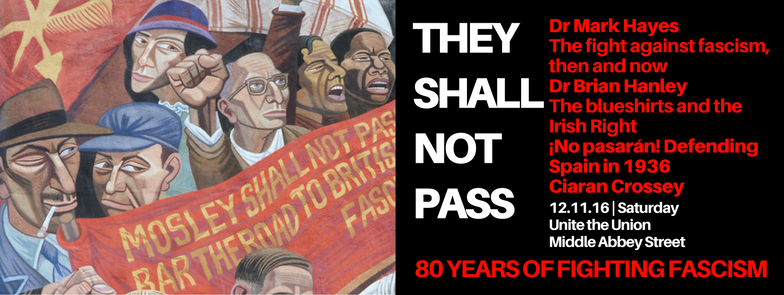
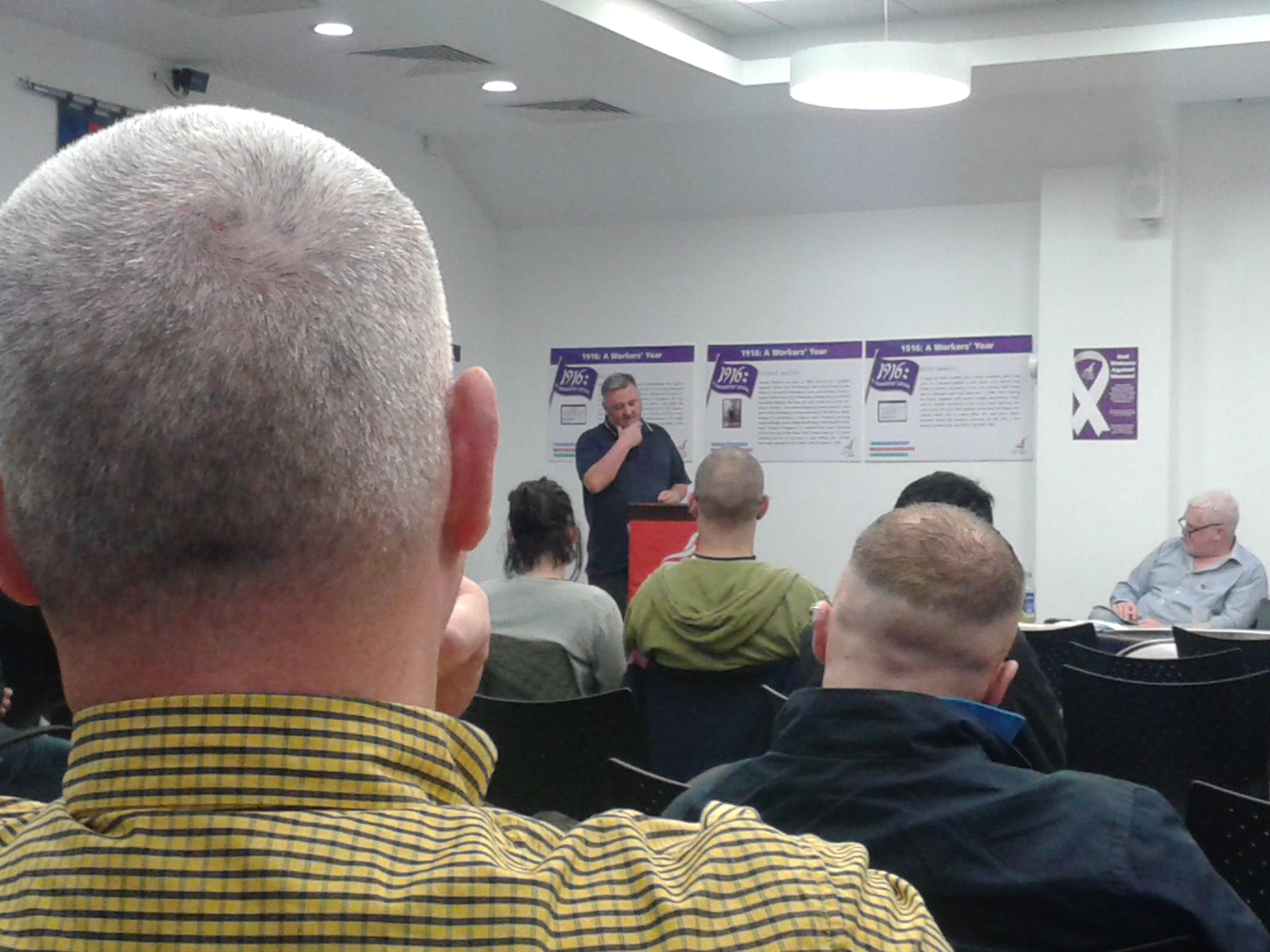

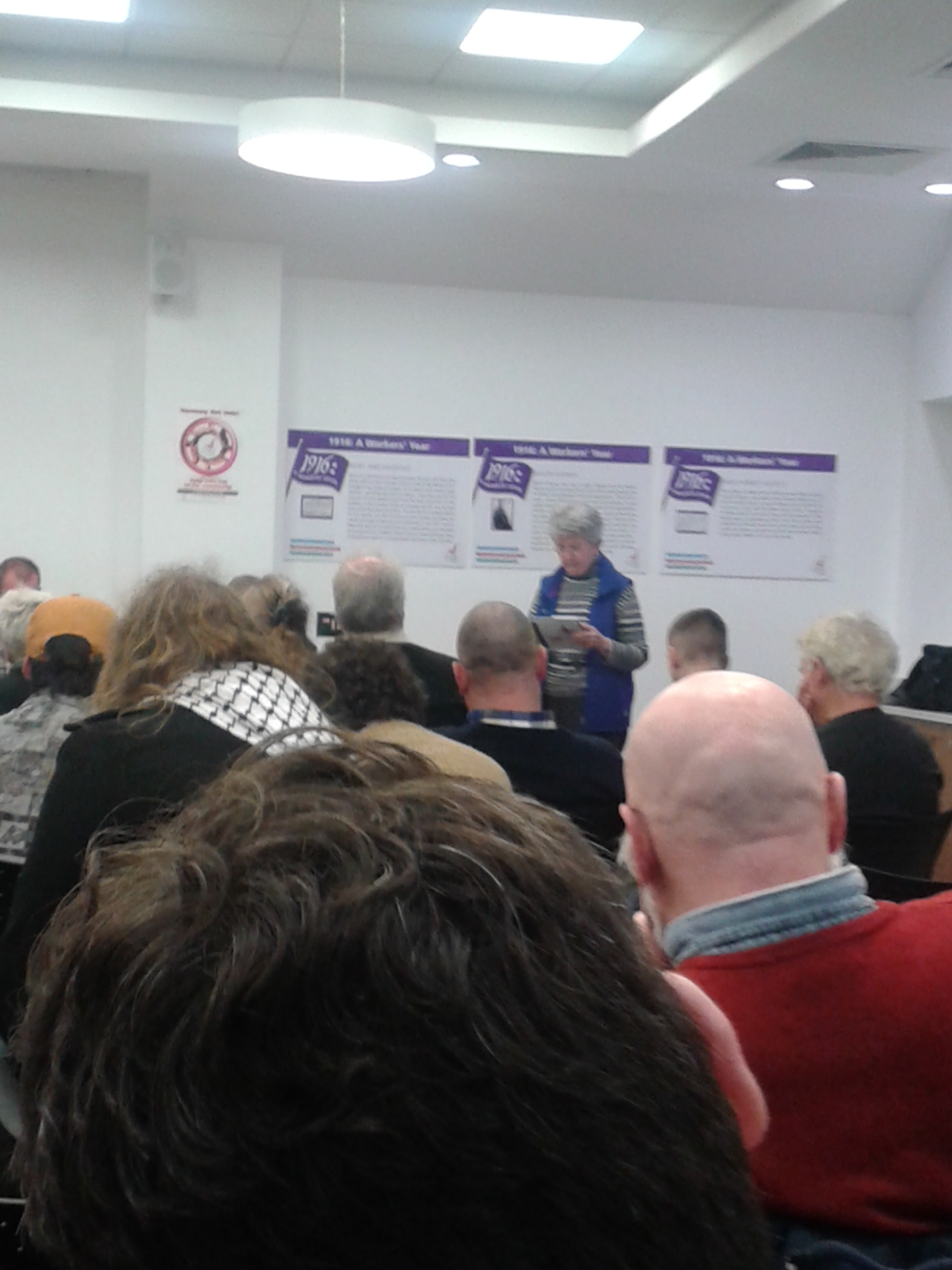
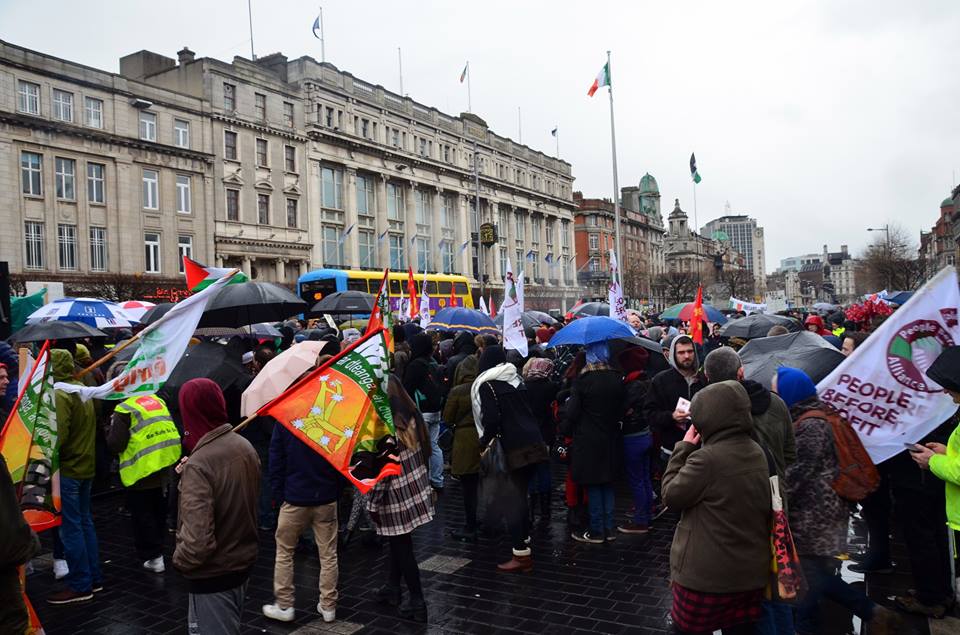
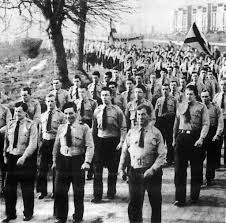
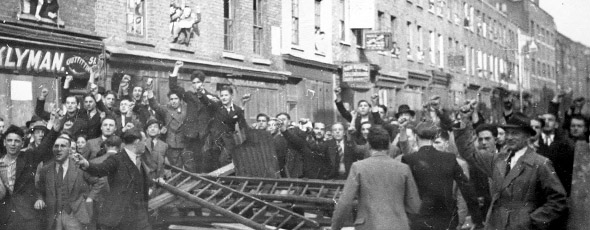
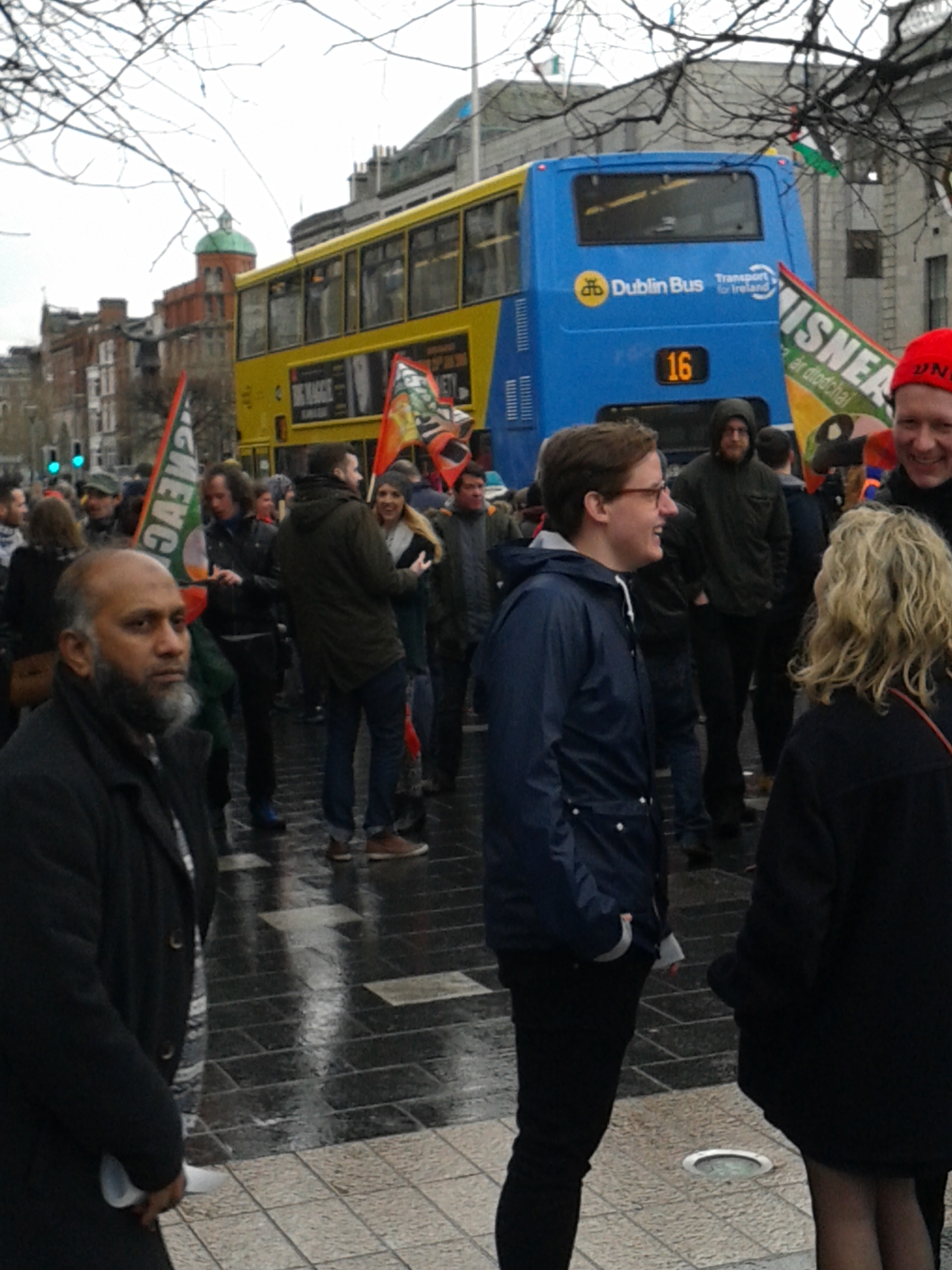
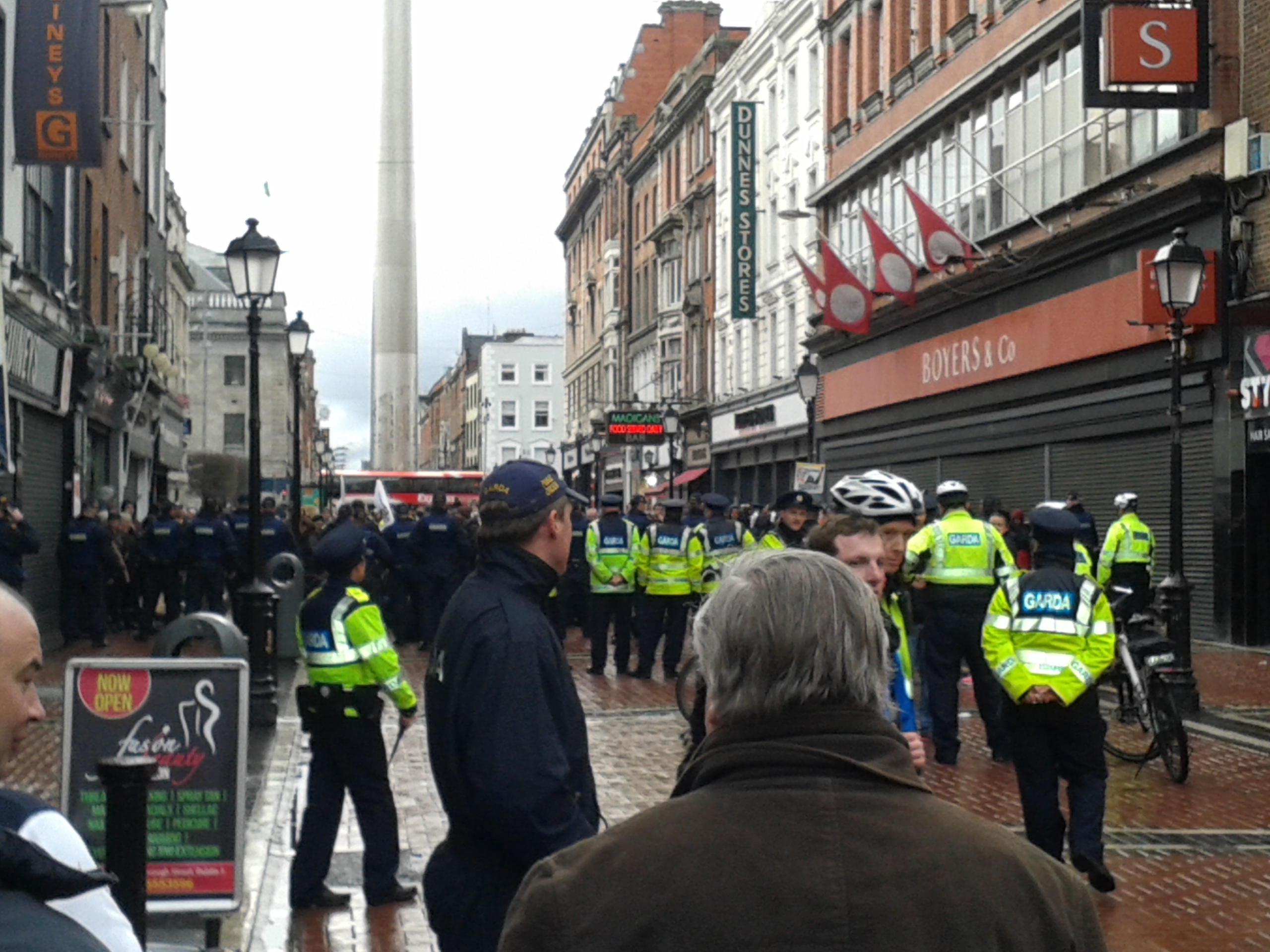
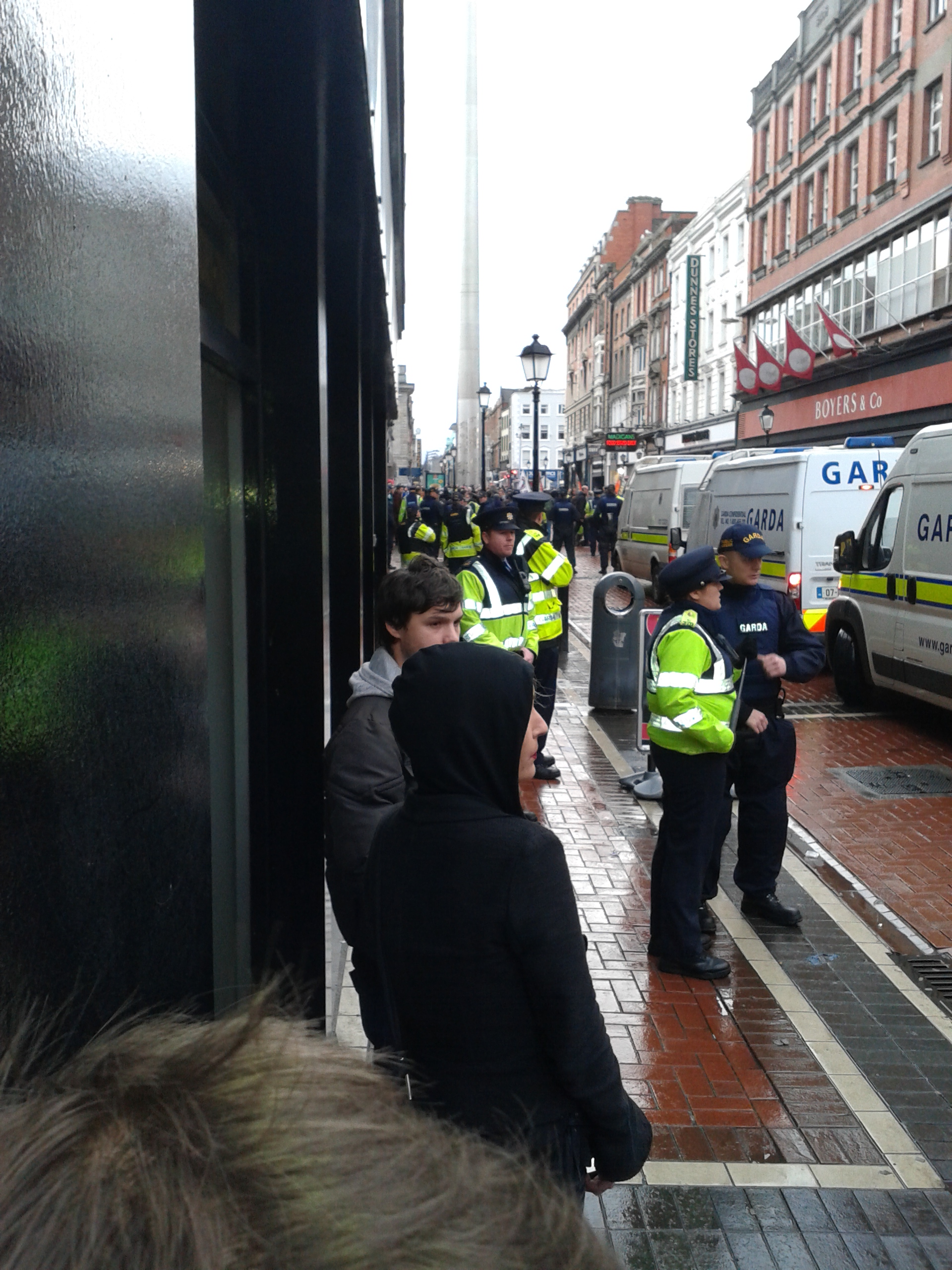
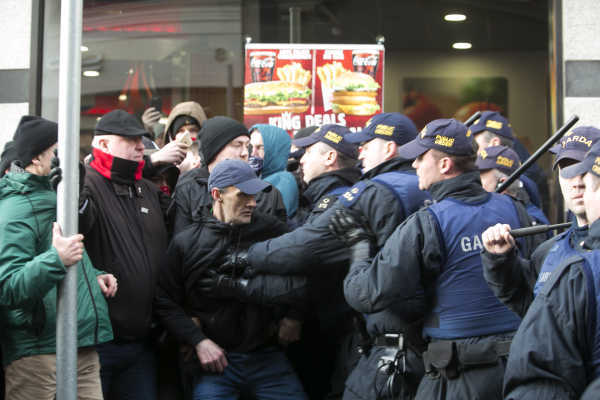
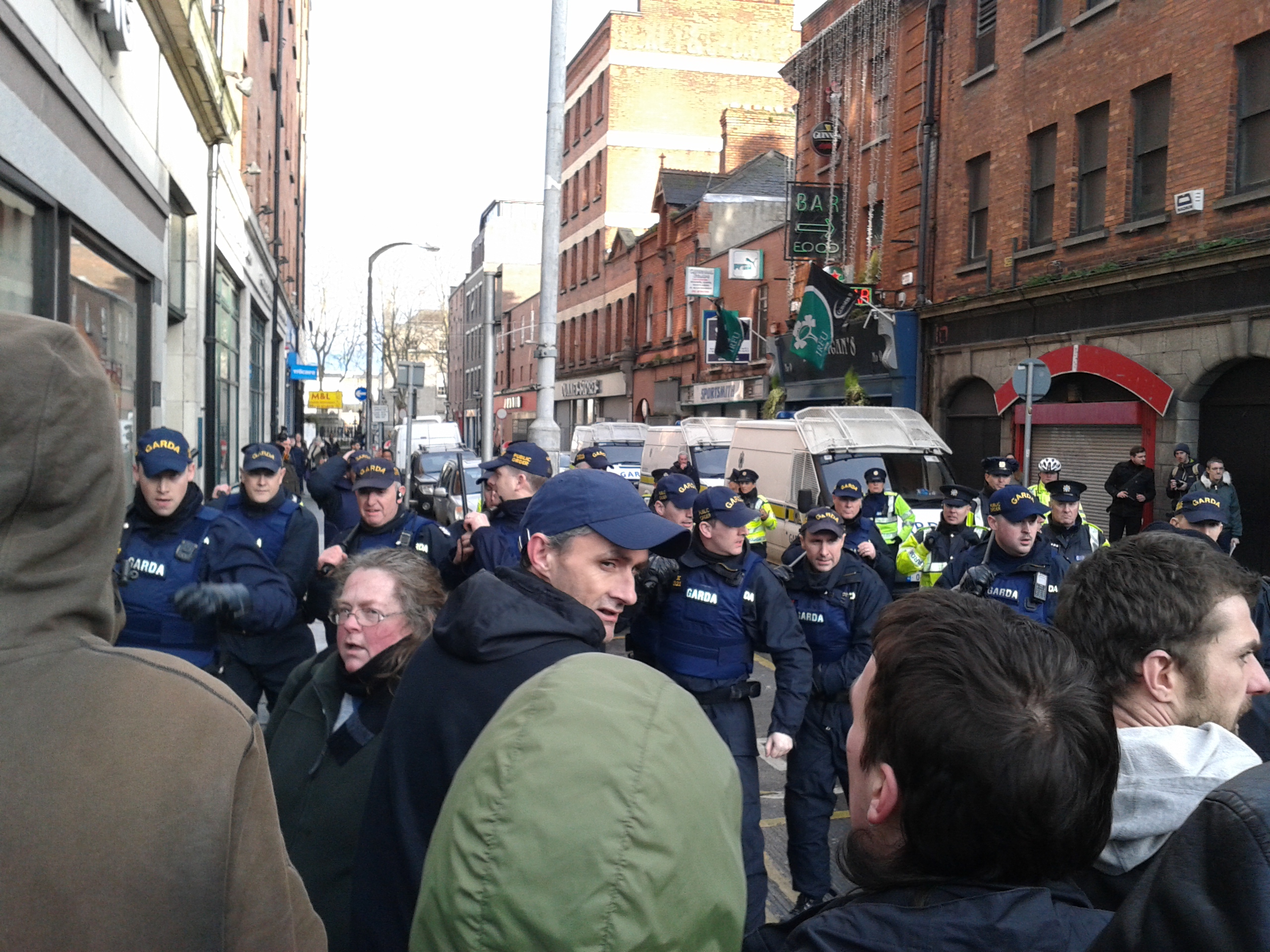
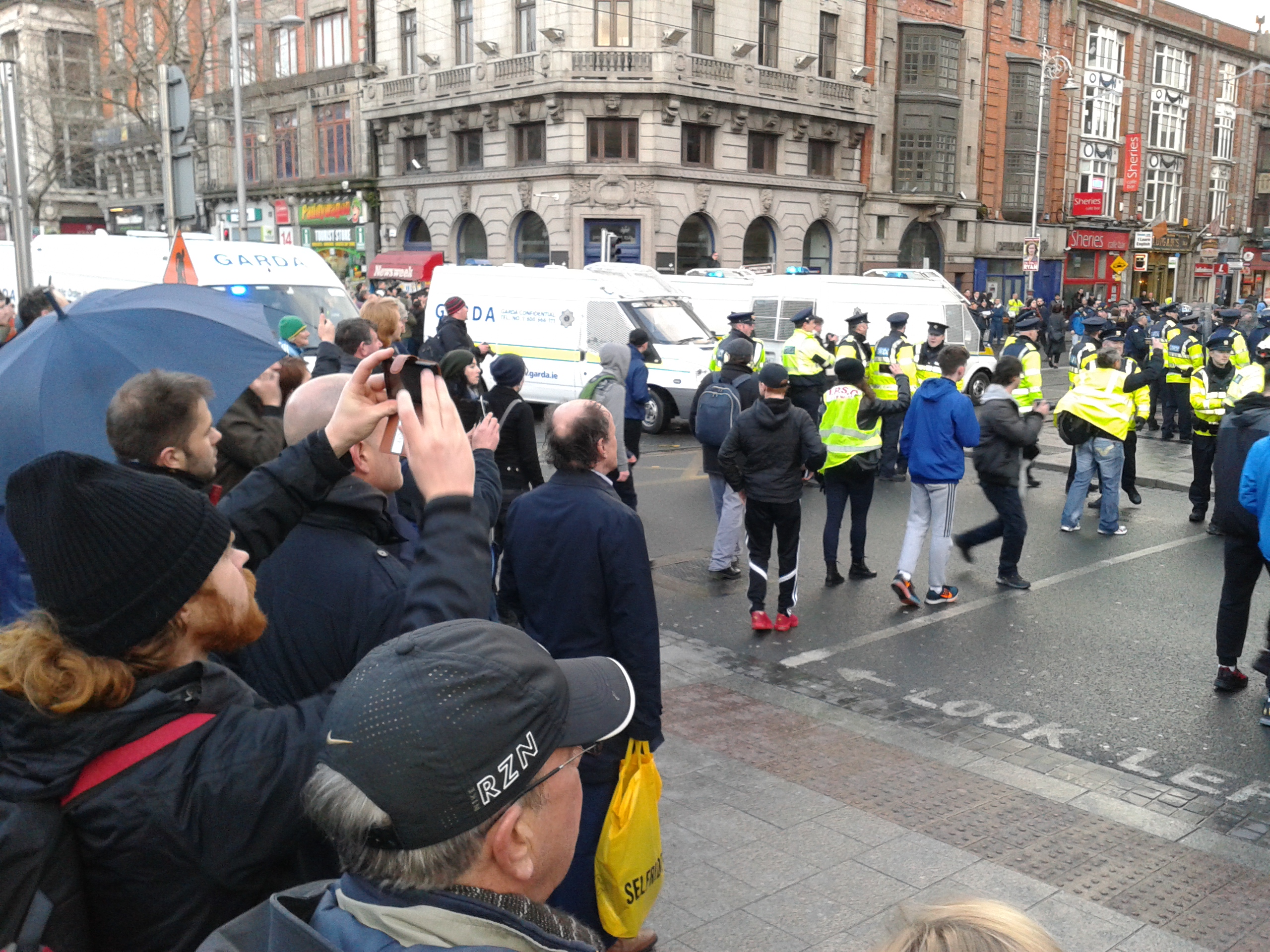
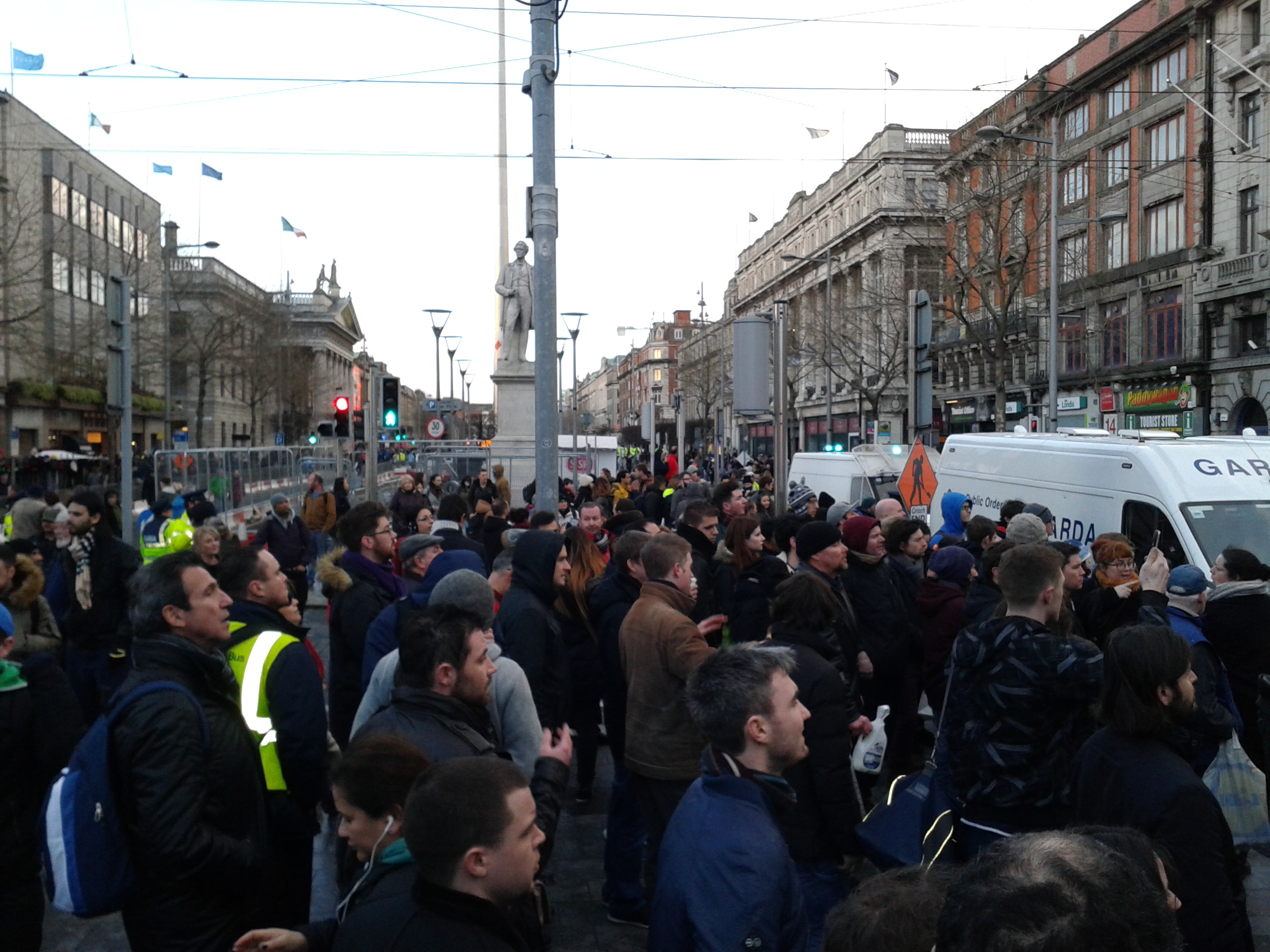
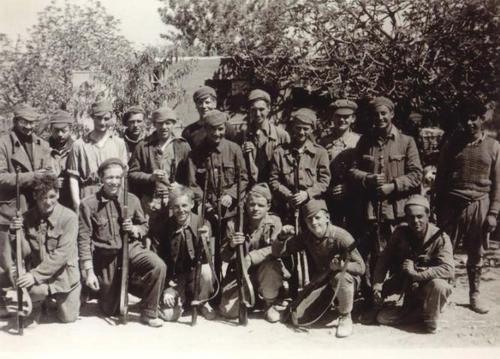
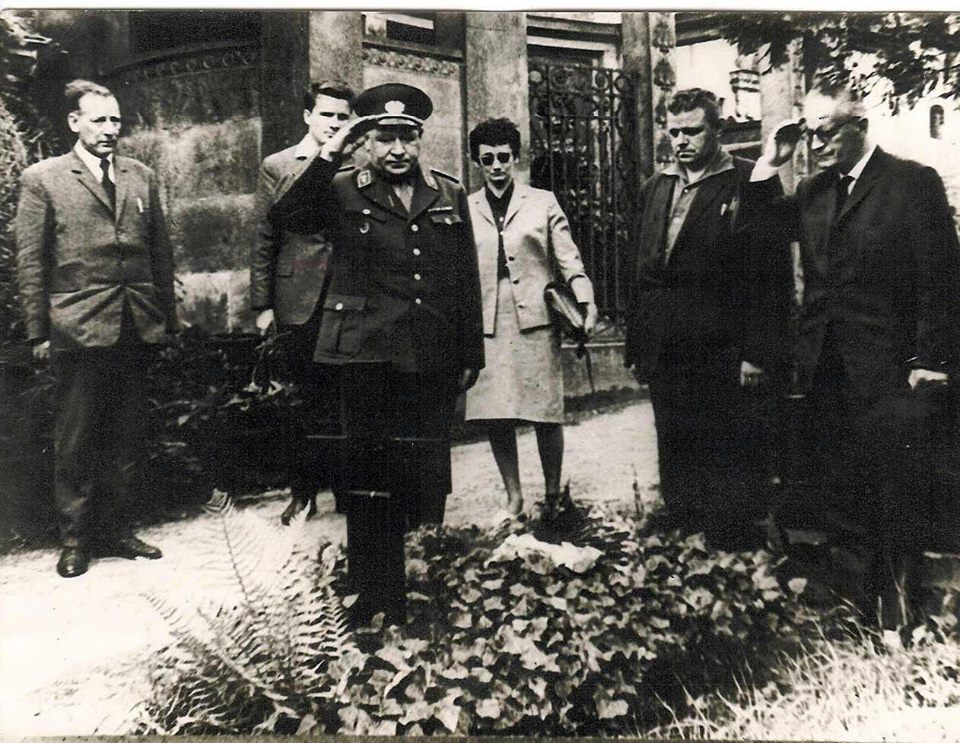
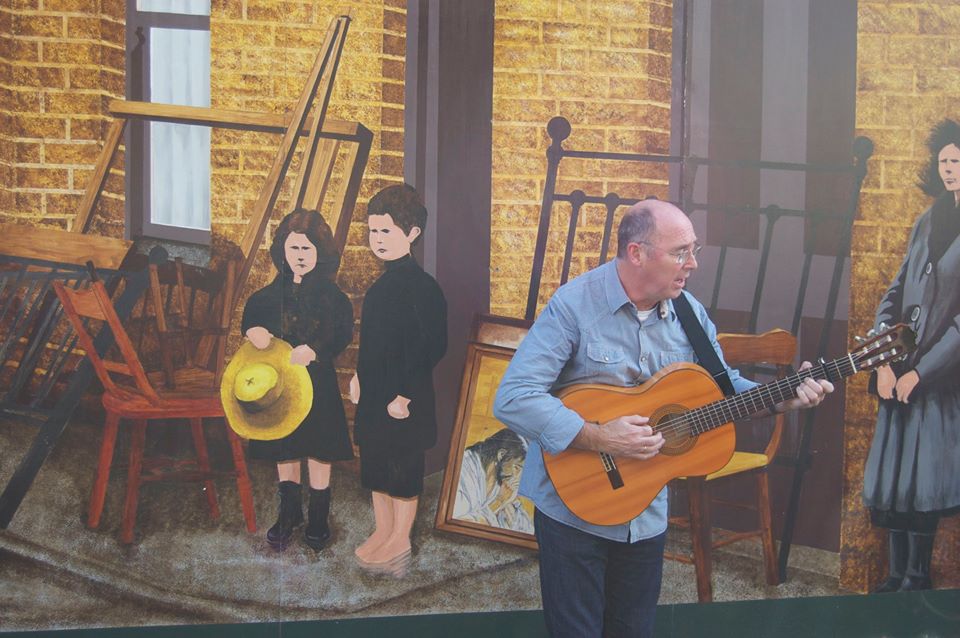
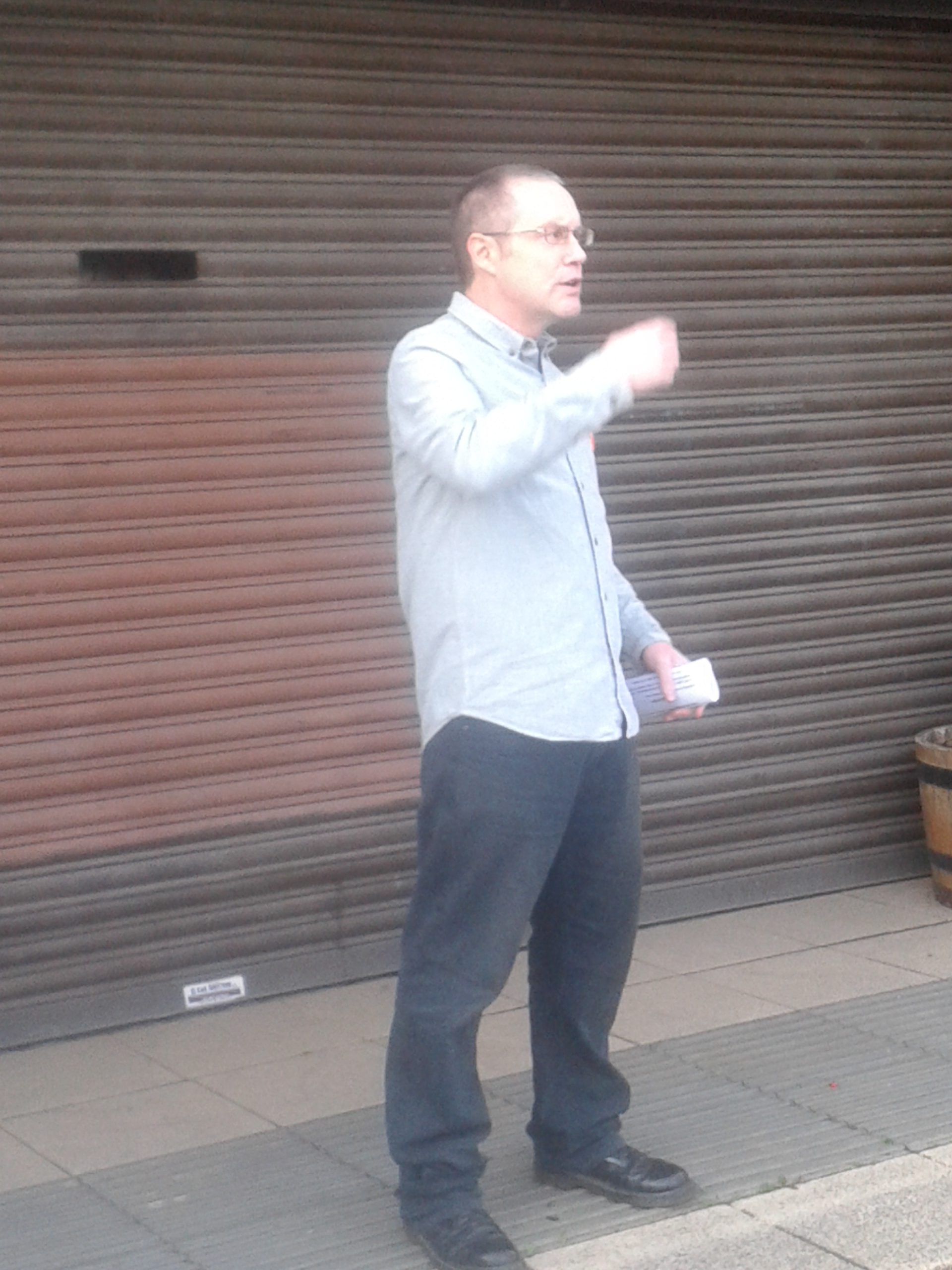
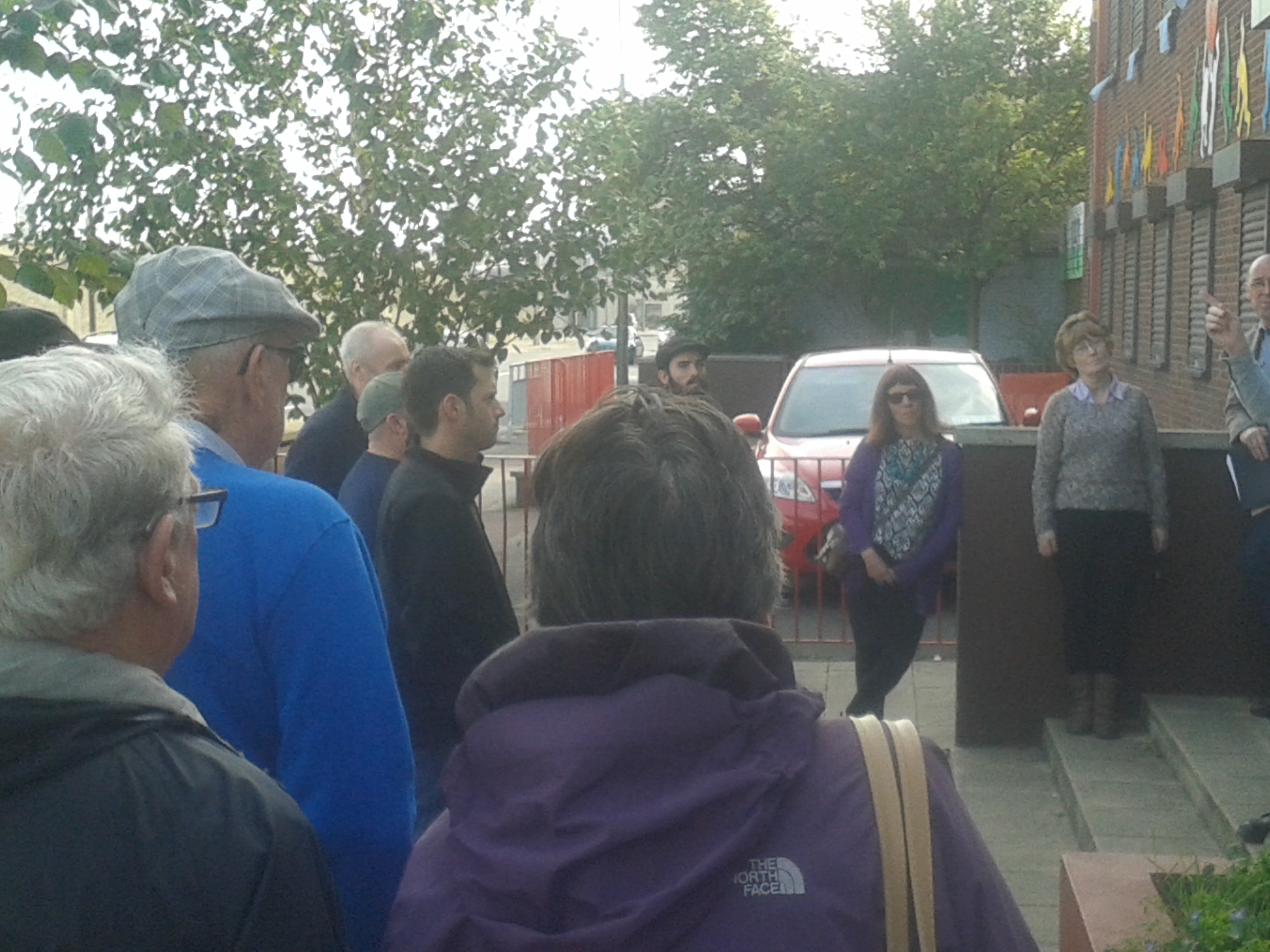
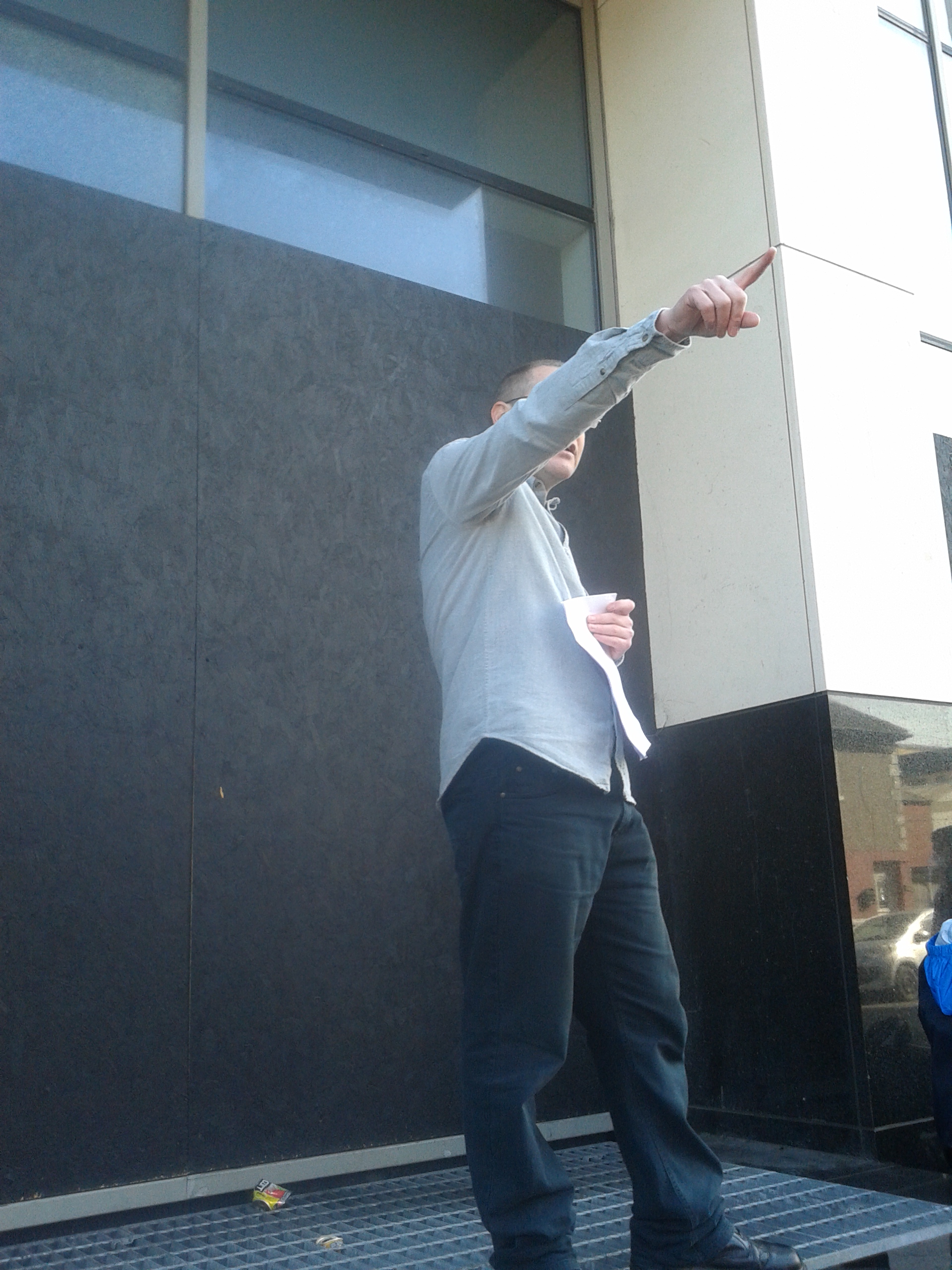
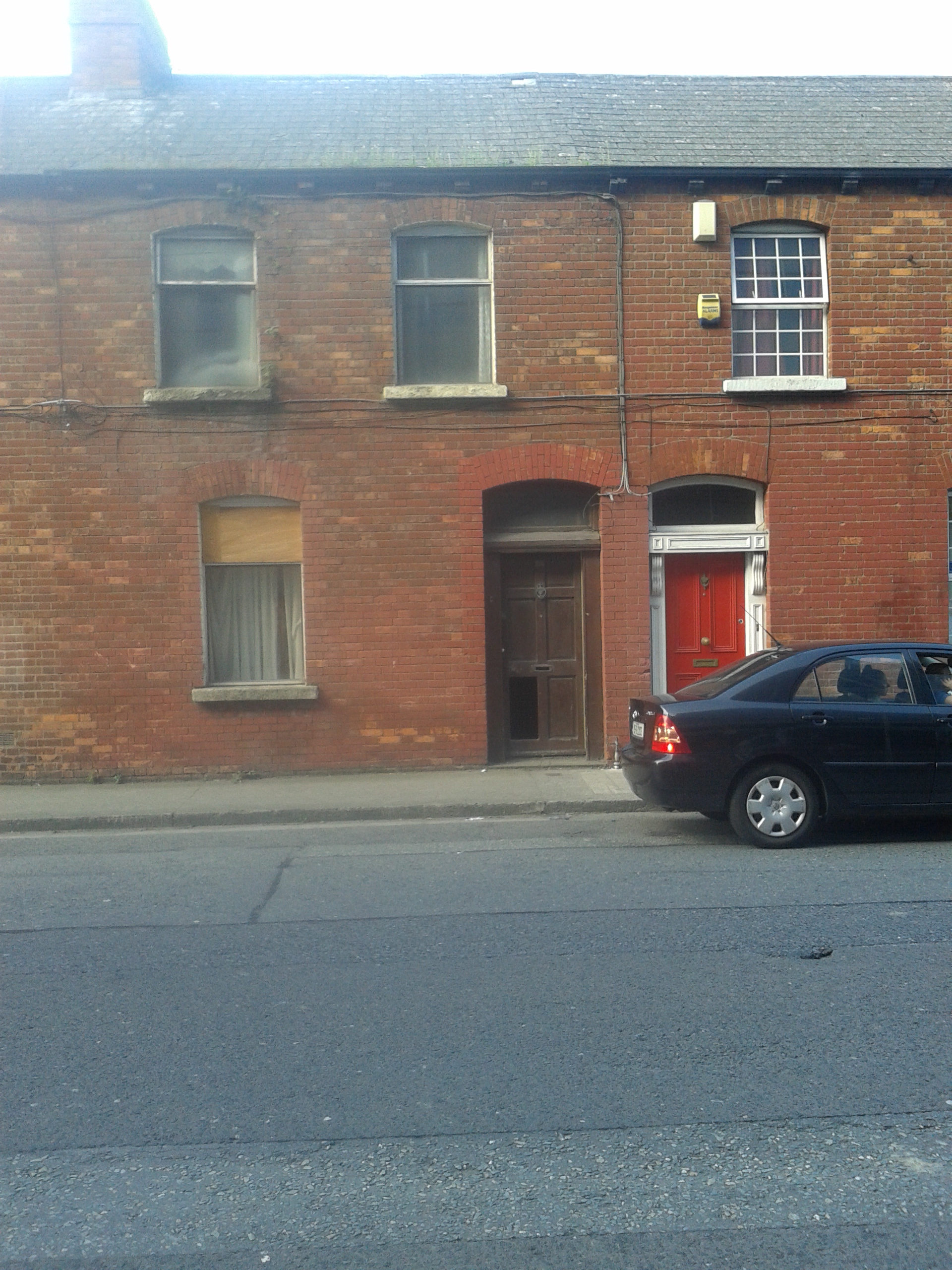
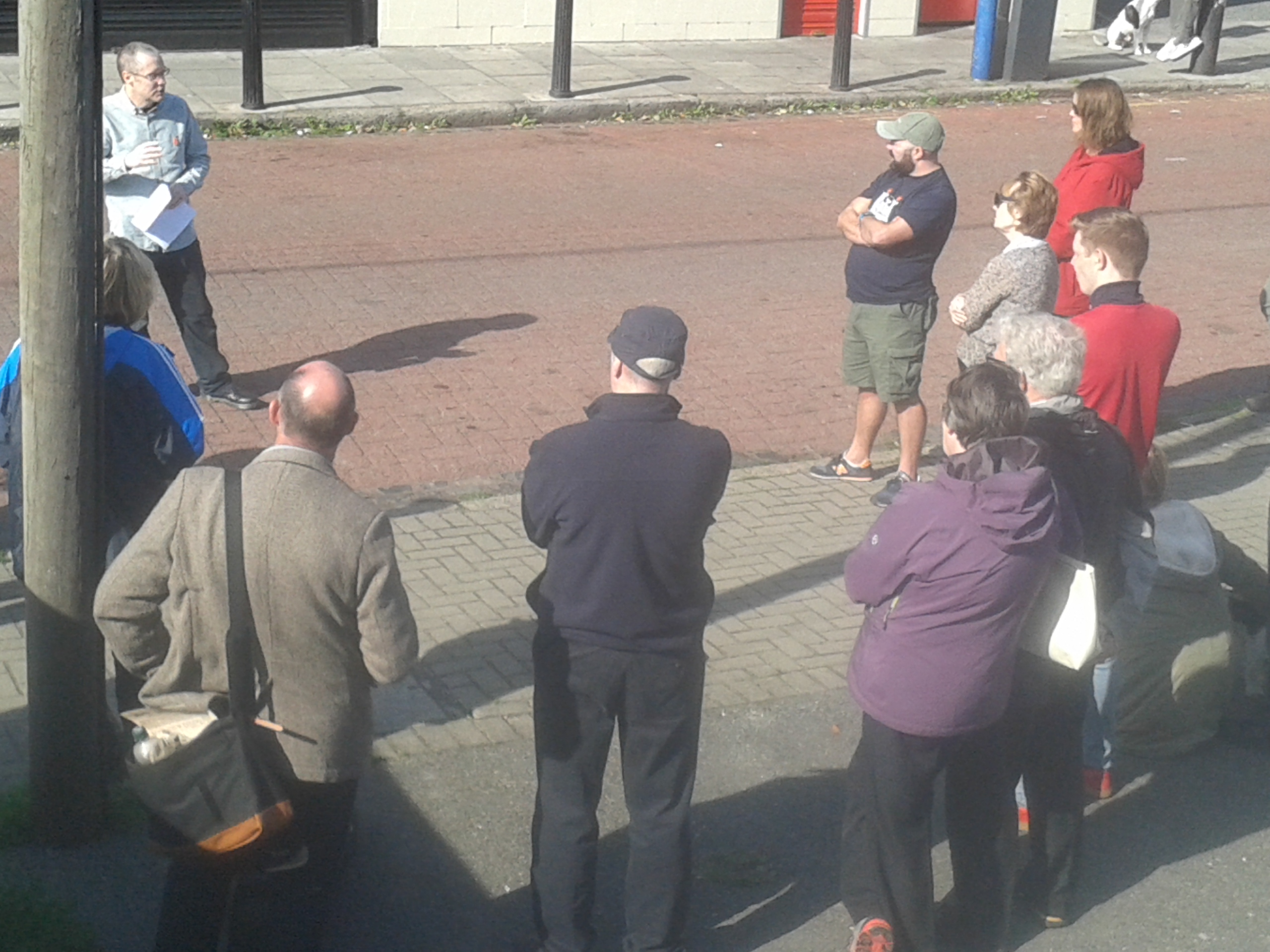
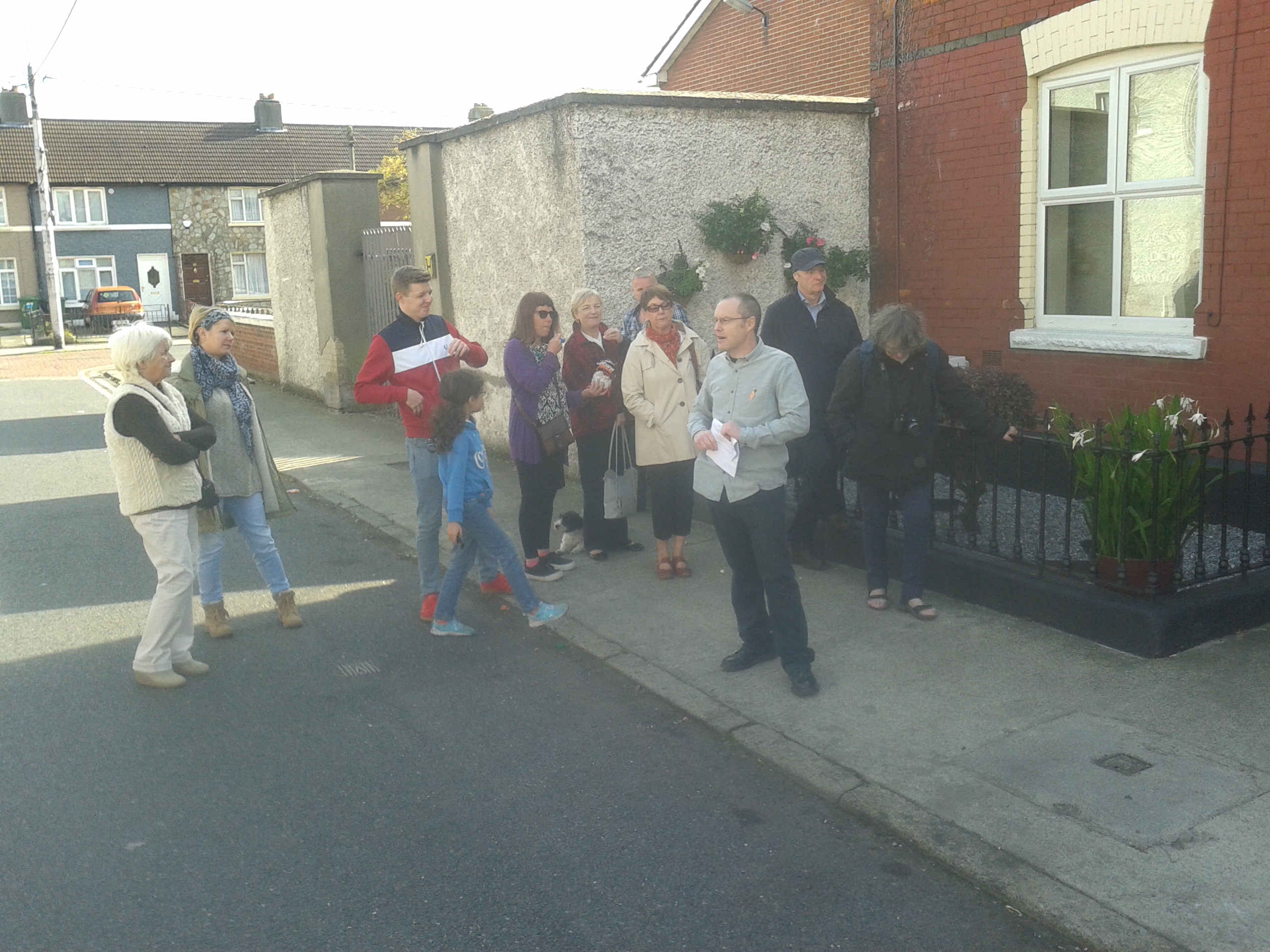
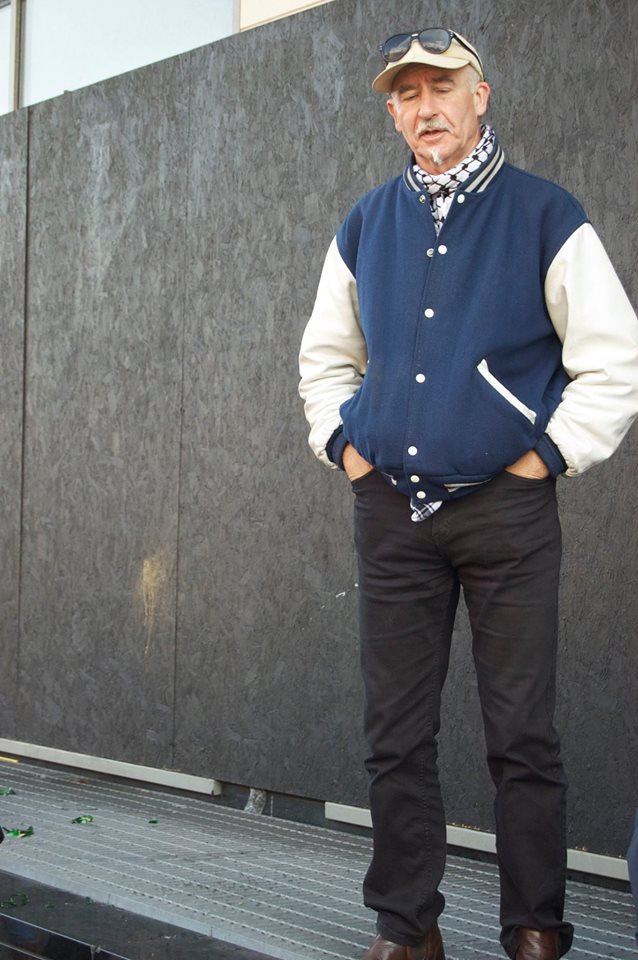


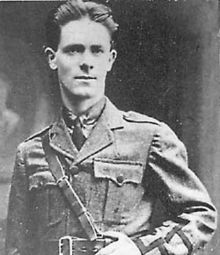
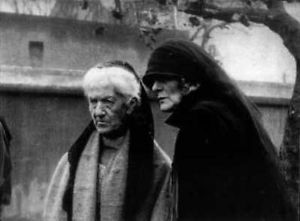


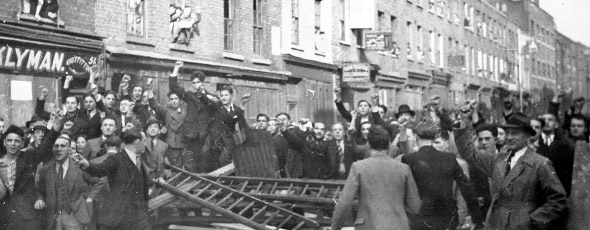




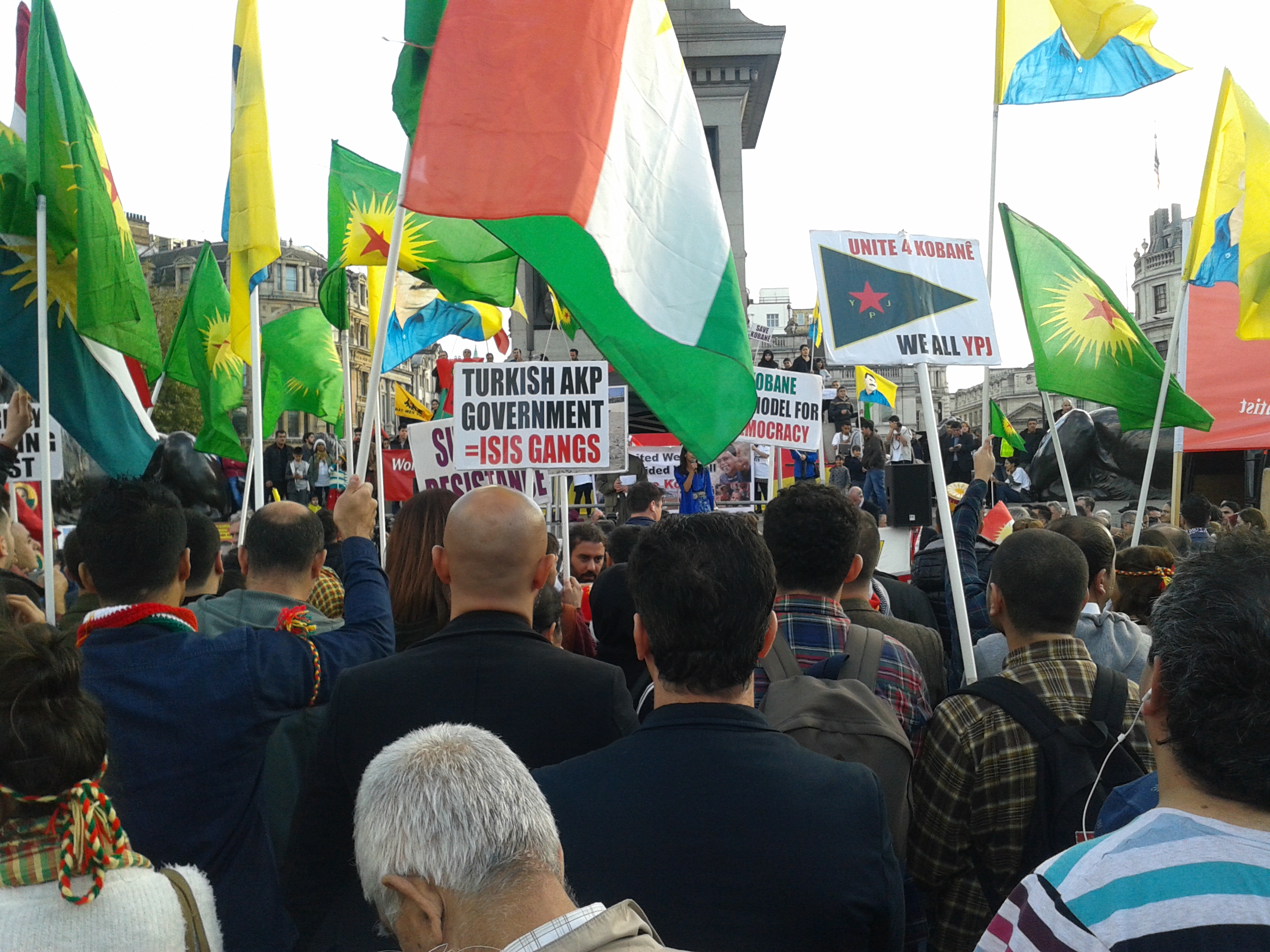




 rebelbreeze