The photo of the massive antifascist rally in London on 28th July following a march from Russel Square shows the recapture of Trafalgar Square from Tommy Robinson and his sea of Union Jacks. Not for the first time, the Irish made their mark upon the place.
There the only two high flying flags were the Irish Tricolours and the Palestinian flags, the Irish contingent being one of the few on the day to see the fight in Britain against the fascists as part of the same fight against the fascist Zionist regime.
Irish and Palestinian flags in Trafalgar Square rally against racism, end July 2024 (Photo cred: PA)
We are mindful of the history of our occupied territories and our 1930s fight against the anti-Semitic Blackshirts1 in London (e.g. standing with the Jewish community at the Battle of Cable Street, 1936) and against the Bridgeton Billy Boys in Glasgow in the 1930s.2
On 28th July our flags sent out a message: We stand against all fascists, at home or abroad. That day we could not but remember all our brave men and women who marched past here from 1971 to 1998 carrying our fight to the heart of government3 in harder times.
We also know that the anti-racist movement now takes its new life from the strength of the Palestinian solidarity movement in Britain and needs to recognise this.
It was strange being in Trafalgar Square again with Tricolours given that we were barred from being there during the ‘Troubles’. Irish solidarity events were banned from using the Square under any circumstances from 1972 to 2001, well after the Good Friday Agreement.
The ban was lifted only once for an Irish event during that period and that was for the Peace Women4 (sic) calling for an ‘end to violence’ (mainly that of the Resistance) and famous US folk singer/ political activist Joan Baez displayed her ignorance of the Irish situation by speaking there.
It was interesting that a reporter for GB News of the British mass media was aware that a picket had been held in Dublin in protest against the assassinations of Palestinian and other Arab resistance leaders. He tried to link the Irish contingent in Trafalgar Square with ‘support for Hamas’.
The linkage was hinted in his broadcast report though he was careful enough not to report a direct link as the Irish group in Trafalgar Square had in fact no connection with the Dublin group. The reporter asked how to pronounce ‘Saoirse Don Phalaistín’ — but still got it wrong in his report.
One of the Irish contingent spoke to the young GB News journalist: He had the stuff from Dublin on his phone and wanted to say that the Irish in the Square were part of the Dublin group.
“Next thing you’d know the Zionists would call for a ban on the Irish for ‘supporting Hamas’”,5 commented one of the veteran Irish activists. “We also get targeted because of the flag and our placards.”
The UK State and the police are all pro-Zionist and the Zionist press tries to trap the Irish into dangerous statements but “We know our history and are well able for them; we just say we support Palestinian resistance to Israeli occupation just as we did with the British in Ireland.”
Irish contingent with flags on Palestine solidarity march to Downing Street very recently (not sure whether the SW person is part of it). (Photo sourced from participant).
The Irish Tricolours, often in the company of the Palestinian national flag with Saoirse Don Phalaistín printed on it have been seen on Palestine solidarity marches in London since the current Zionist genocide began but also on anti-fascist rallies and in support of Julian Assange.
This is in keeping with the history and tradition of the Irish in Britain who helped found the republican United Englishmen6, the Chartists,7 many trade unions, a section of the First International8 and also gave the British working class their anthem9 and their classic novel.10
Classic novel of the working class in Britain was written by Robert Noonan, aka Robert Tressell, from Dublin. (Image sourced: Internet)
In later times they were prominent in organising solidarity with Vietnam and of course Ireland, against repressive legislation and fascist organisations, solidarity with Nicaragua, Palestine etc. and in struggles against state repression, including within the jails.
The Prevention of Terrorism Act (1974), forerunner of the current Terrorism Act (2000) specifically targeted the Irish community in Britain with suspension of habeas corpus for a period of up to five days, refusal of access to solicitor, as did also the framing of a score of people.
In the midst of the Irish Hunger Strikes of 1981, the Irish community broke out of the State terror stranglehold and formed the Irish in Britain Representation Group, among its objectives being the abolition of the Labour Government-introduced Prevention of Terrorism Act.
End.
Saoirse don Phalaistín and Irish Tricolour flags on Palestine solidarity march this year photographed against Westminster’s ‘Big Ben’. (Photo cred: being investigated)
NOTE ON AUTHORS
Pat Reynolds is a former trade unionist, social worker, a veteran anti-racist, anti-fascist activist, also for Irish independence and for rights for the Irish community in Britain. He was PRO for the Irish in Britain Representation Group for two decades, founding the Haringey Branch and the Green Ink Bookshop. Reynolds is from Granard in Co. Longford and lives in London.
Diarmuid Breatnach is a former trade unionist, worker with homeless/ substance misusers (manual worker before that), also a veteran anti-racist, anti-fascist activist and campaigner for Irish independence. For a decade he was on the Ard-Choiste of the IBRG, founder of the Lewisham Branch and of the Lewisham Irish Centre. Breatnach is from Dublin to which he has returned to settle.
FOOTNOTES
1The British Union of Fascists led by Sir Oswald Moseley which had substantial support in the British elite, including the publisher of the The Daily Mail with police attacks on anti-fascists.
2The Billy Boys were founded and led by Billy Fullerton, a former member of the British Fascists. Fullerton also later became a member of the British Union of Fascists in the 1930s. The Billy Boys adopted a militaristic style of behaviour, marching on parades, forming their own bands, composing their own songs and music, and all dressed in a similar manner.[3] The Billy Boys also formed a junior group whose members were teenagers called the Derry Boys. (Wikipedia)
3From Trafalgar Square to the Houses of Parliament in Westminster runs a broad thoroughfare, in the centre of which is the Cenotaph and a little further, the entrance to Downing Street.
4The organisation/ campaign was founded by Betty Williams and Mairead Corrigan in 1976 after a car driven by an IRA fighter mortally wounded by British soldiers in Belfast crashed into pedestrians and mortally wounded three children of Anne Maguire, sister of Mairead. Branding itself as against all violence the Peace Women in fact targeted primarily the Republican movement, secondarily the Loyalist paramilitaries and hardly ever the Occupation Army. Williams accused the IRA unit of having fired on the Army unit that killed the driver which was untrue (but is repeated on her Wikipedia entry). Both founders received the Nobel Peace Prize in 1976 and a substantial cash prize. Williams resigned from the group in 1980 and disappeared from Irish-related activities though prominent externally. Corrigan however remained politically active in Ireland and elsewhere against war and has campaigned among other things for the end of the ‘Israeli’ siege on Gaza, being arrested with crew and passengers on the Spirit of Humanity aid ship in 2009 by by the Zionist navy, taken to ‘Israel’ and subsequently deported.
5Hamas is proscribed organisation in the UK since March 2001 and a person promoting it would be liable to prosecution under the Terrorism Act.
6A spin-off from the United Irishmen in Ireland; the English chapter led the Spithead and Nore naval mutinies. The Irish also reformed the United Scotsmen when it was faltering.
7Karl Marx called the Chartists “the true mass movement of the working class” – two of its principal leaders, Bronterre O’Brien and Fergus O’Connor were Irish, as their surnames would suggest.
8The Fenians were accepted into the First International Workingmen’s Association.
9The lyrics of The Red Flag were composed by Jim Connell from near Kells, Co. Meath and set to the brisk air of The White Cockade, later changed to the mournful air of Tannebaum.
10The Ragged-Trousered Philanthropists was written by Robert Tressell (real name Robert Noonan) from Dublin.
The Irish Tricolour has been in the news recently in an unhappy circumstance. The flag was featured borne in a group of anti-immigration racists carrying a banner declaring Coolock Says No,1 next to Union Jacks2 and Loyalist flags at a Belfast riot.
This was a bizarre juxtaposition given that Loyalists are hostile to any signs of Irish Republicanism, of which the Tricolour is chief among its historical symbols. Furthermore, the Unionist state banned its public display in most situations between 1954 and 1987 leading to resistance and arrests.3
In the sectarian society created by the British in its occupied Six County colony, the Tricolour is burned annually on British Loyalist bonfires and is reviled by Unionism and its more extreme progeny, Loyalism, which in turn is associated with state-sanctioned sectarian murder gangs.4
The strange juxtaposition was remarked upon in mass media not only in Ireland (both sides of the Border) but even in Britain — and Irish State Taoiseach (prime minister) Simon Harris remarked that he found the flag in association with racism to be “repugnant”.5
But does Harris have the moral right to make that comment?
Origin and History of the Irish Tricolour
The Tricolour as we know it and its use dates from its sewing in silk by revolutionary women in Paris in 1848 and presentation to a delegation of the Young Irelanders, a revolutionary Irish Republican group of that period and its subsequent unfurling in Ireland by Thomas Meagher.
Thomas Francis Meagher as captain in the Union Army (Source: Drawing in Library of Congress, USA)
Irish revolutionary Thomas Francis Meagher was convicted by the English Occupation of sedition during trials around the planning and carrying out of the Irish Rising of 1848 and, with death sentence commuted, transported to Australia as a felon, from which he escaped to the USA in 1852.
As the American Civil War approached, Meagher, along with most of the Irish in the USA took the side of the Union, leaving only a rump following Mitchell, formerly a comrade of the Young Irelanders, to side with the slave-owning Confederacy in the conflict.
Meagher not only fought in the Union Army in the American Civil War against the slave-owning Confederacy, gaining the rank of Brigadier but he and his wife raised a regiment, the 69th New York Infantry, unofficially called The Irish Brigade or even Mrs. Meagher’s Own.
Plaque in Lower Abbey Street (opp. side of Abbey Theatre) to the first unveiling of the Irish Tricolour in Dublin, 1848. (Source: Internet)
The Young Irelanders were Republicans and the Tricolour was always seen not only as embodying the unity of all in Ireland, regardless of origin, against the British occupation but also for national liberation, against Monarchy and for complete separation of Church and State.
In addition, it had a strong internationalist element in that it was associated with revolution throughout Europe, presented to us in solidarity by French revolutionary women and flown alongside French Tricolours in Ireland at celebrations of the French revolution of 1848.
It was the principal flag of Irish anti-fascism too in the 1930s when Irish Republicans fought the fascist Blueshirts on Irish streets and a number of them went to fight in defence of the Spanish Republic against the fascist military coup of Franco and his Nazi German and Italian Fascist allies.
More recently when Irish Republicans and socialists mobilised against the attempts of the Irish ruling class to promote NATO and to ease cooperation with that alliance of Western imperialism, Harris also ranted against supporters of Anti-Imperialist Action flying of the Irish Tricolour.
The Tricolour among Loyalists was of course newsworthy and was covered by Irish mainstream media and Unionist mouthpiece The Belfast Telegraph along with photos by The Guardian on line. But all without comment on its presence in Palestine solidarity events in London.
Irish Tricolours have been flown at every current Palestine solidarity march in London (ten of them at the most recent London march) and, along with Saoirse Don Phalaistín printed on the Palastinian flag, have been seen also at university solidarity encampments and at events to free Julian Assange.
Section of Palestine solidarity protest at Barclays Bank, Tottenham Road, London on 24th April this year, showing Irish Tricolour and Saoirse Don Phalaistín flags. Zionists and British fascists are united in opposition to them across the road. (Photo cred: Northern Times)
The Tricolour Flown by Racists and Fascists?
Given its origins and history, why is the Tricolour being flown by fascists?
In recent years it seemed that whenever one saw a crowd with Tricolours among them, it was most likely a fascist or at least racist-led event. One reason for this is that the fascists historically try to portray themselves as nationalists, i.e organising ‘for the nation’.
In all cases historically, the “nation” represented by the fascists turned out to be that of the ruling class, the financial and industrial elite – never that of the working people, not even of those sections of the lower middle class that supported the rise of fascist movements.
Fascists however have also frequently colluded with the invader of their nation, for example with the Nazis in Europe, particularly in France, Greece, Yugoslavia, Ukraine.6 The fascists in Ireland today represent the neo-colonial,7 colonial and imperialist financial-industrial interests in Ireland.
Racist group from Dublin suburb finds common cause with British Loyalists in Belfast anti-immigration demonstration and riots 3 August 2024 (Photo cred: Irish News)
In that context, the unity of fascists from the Twenty-Six Counties with Loyalists from the Six Counties is not surprising, nor even with notorious English fascist Tommy Robinson. Prominent Irish fascists have had friendly interactions with Loyalist Jim Dowson and British fascist Farrage.
Portraying themselves as saviours of the nation, as moral guardians etc., just as the German Nazis did in the 1930s is hypocritical but absolutely necessary for them. If they revealed the class interests they represent and the kind of regime they really want, where would they get supporters?
The fascists are few and need those supporters, their easily-led mobs and stormtroopers. It is among sections of the down-trodden in society that they will find them, the ignorant, marginalised, abandoned by the capitalist system but all too often by the liberals and the Left also.
Substance addiction, mental illness, crime and cultural poverty is rife in these communities and it is sections of those who are presented with false enemies – migrants, LGBT people, muslims – by false saviours masquerading as patriots. Many in those communities are ripe for manipulation.
But the attempted takeover of the Tricolour and subversion has not occurred by Fascist manipulation and through historical and political ignorance alone.
When antifascists mobilise, rarely is the Tricolour seen amongst them, assisting the impression that it is the racists and fascists that are representing the nation. Understandably, Anarchists may not wish to fly the flag of a state and socialists may feel that the flag is representing a capitalist state.
Often too in the past, Republicans have been absent from antifascist mobilisations but on occasion too went to them ready for physical confrontation and therefore without flags. But what message do antifascists think is presented by Palestinian flags among them and Tricolours on the other side?8
Invited to speak at a conference on anti-fascism in Dublin some years ago, I raised the question of the appropriation of the Tricolour by fascists and how it was necessary for the antifascists to show it among themselves also but my recommendation did not win approval9.
It is depressing to see that the situation has not noticeably improved in this regard some years later.
A welcome recent exception to the rule: a number of Irish flags including the Tricolour among antifascists outnumbering fascists and racists in Dundalk, Co. Louth on 4 August 2024 (the day following the Belfast racist riots). The fascists and racists had to be escorted out of town by the Public Order Unit of the Gardaí (Source photo: Anti-Imperialist Action FB site)
The Irish state and the Tricolour
It took some time for the Tricolour to be adopted as the national flag in the Republican movement until its fluttering above the GPO at the Henry Street Corner during the 1916 Rising.10 Thereafter it represented the forces of national liberation in the War of Independence (1991-’21).
The Irish Tricolour (Photo cred.: Getty Images)
Facing treason and counter-revolution in 1922, it was the flag of the Anti-Treaty forces, the neo-colonial traitors only flying it in order to deny it to the Irish Republicans. Despite that fact it has remained the flag of Irish Republicanism, irreconcilable with neo-colonialism, racism or fascism.
Republican women activists of Cumann na mBan designed ‘Easter Lilly’ paper lapel pins to raise funds for dependants of Republicans imprisoned or killed during the Civil War and they did so in the colours of the Irish Tricolour: Green, White and Orange. The emblem is worn to this day.
The counter-revolutionary faction that spawned the fascist Blueshhirts11 did not formally adopt the Tricolour as the State flag in law, that was done by the next wave of counter-revolution, Fianna Fáil,12 while in government, situating it in the 1937 Constitution.
The Tricolour is in a sense the flag of everyone in Ireland who does not reject it or defile it but evidently too, in its origins and among those who bore it forward, it is anathema to racism.
Furthermore, it is symbolically anathema to colonialism, loyalism, neo-colonialism and monarchy. Clearly the Tricolour is not legitimately the flag of racists and fascists but neither is it of the gombeen regime that flies it; Harris and the neo-colonial State claiming it is also repugnant.
Effigy of Simon Harris showing the bloody hands of collusion in the ‘Israeli’ genocide against Palestinians at a Palestine solidarity protest last weekend (organised by Mothers Against Genocide, North Wicklow Against Genocide, Arklow Against Zionism) at the annual Bray Air Show which features UK Military fliers. (Photo cred: Aisling Hudson)
End.
FOOTNOTES
1Coolock (from the Irish place-name An Chúlóg) is a Dublin city suburban district that has seen riots and arson recently against plans to house refugees in a disused factory building there.
2Common name for the flag of the United Kingdom, more derogatorily known as ‘The Butcher’s Apron’, featuring heraldic cross and salterres of the nations of England, Scotland and Ireland (Wales had already been conquered and incorporated into the Kingdom of England).
4Such as the Ulster Defence Association and the Ulster Volunteer Force (see also ‘the Glennane Gang’) which targeted most of their victims on the assumption of their being of the Catholic faith but also occasionally those from the Protestant community they considered disloyal (see ‘the Shankill Butchers’) or with which they were in competition around gang crime. All operated with colonial police and British Army assistance.
6These fascist groups supplied police and auxiliary units to the Nazi occupation, collecting information on the antifascist Resistance and on fugitive Jews and Roma. In some cases, as in Ukraine, they also acted as prison and concentration camp guards (but their chief leader, Stepan Bandera, was nominated as a national hero by the current Kiyv regime).
7Sometimes called ‘comprador capitalist’ or ‘client regime’, a term describing a state that is nominally independent but is under the actual domination of an external state or states. The Irish state has been in turn dominated by Britain, the USA and the EU imperialists.
8This is an issue on Palestine solidarity marches and pickets upon which I have also commented before.
9A speaker from a very sectarian migrant group ridiculed the idea but no-one else spoke up in support.
10Incidentally, at the other corner of the GPO above Princes Street in 1916 flew the green flag with the words “Irish Republic” inscribed upon it in white and gold letters, which had been created for the occasion in the home of Constance Markievicz, socialist revolutionary of a settler landowning family and born in London. And the man who erected it was Argentinian-born-and-raised Eamon Bulfin. It is ironical in the extreme that this flag also is sometimes brandished by Irish racists opposing immigration.
11Irish fascist organisation officially called the Army Comrades Association (later The National Guard), led by former Gárda Commissioner Eoin O’ Duffy which later joined with two conservative parties to form the current Fine Gael, currently in the Coalition Government with its erstwhile opposition Fianna Fáil and the Green Party.
12A major split from Sinn Féin in the early 1930s, currently in the Coalition Government with its erstwhile opposition Fine Gael and the Green Party.
The role of culture in revolution is of great importance – greater even than that of the armed struggle, certainly in the initial and later stages. We are created by evolution but we are born into and raised in culture.
The question of whether that culture is to be revolutionary or liberal is of crucial importance.
I have remarked on how Mandela, jailed for his revolutionary armed activities, was marketed as a peacemaker and later became a figurehead of pacification of the South African struggle. Bobby Sands, a revolutionary fighter to the last, has also been represented as a peaceful icon.1
And so also was Terence McSwiney who, like Bobby Sands, died on hunger strike.2
The following article from Resistance News Network, reflecting on the work of the revolutionary writer Ghassan Kanafani who was murdered by Israeli Zionism and his subsequent representation as an icon is I think of substantial interest. D.Breatnach
Ghassan the poet? Ghassan the Palestinian? No, Ghassan the revolutionary!
In colonial wars, the creation and dissemination of symbols to the public is a crucial battle in the war of consciousness building, even if its effects are not clearly visible in the present.
Perhaps the most prominent example of these battles was the image of Che Guevara in the wars of liberation in Latin America. Ernesto Guevara’s persona represented an individual model that encapsulated the revolutionary spirit of people fighting for their freedom from American hegemony.
As the American empire recognized its inability to destroy Guevara’s image, they transformed his image into a consumer commodity.
This was to divert his image from its original revolutionary meanings and repurpose it in the service of economic and cultural agendas that contradicted Guevara’s own principles and what he represents.
In the Arab context, the war to liberate Arab symbols from the captivity of history monopolists continues to intensify, as it involves obscuring forgotten heroes in favour of fabricating mythical legends designed to tamper with the boundaries of nationalism and betrayal in the Arab mind.
In this context, the fiftieth anniversary of the assassination of the martyr Ghassan Kanafani is being observed, with pages and websites filled with commemorations of Ghassan’s life, his quotes, and his most significant works.
It is no longer surprising that Ghassan Kanafani is celebrated on both normalization platforms as well as liberal ones, when voices are raised to commemorate Ghassan even as they are in the heart of the hostile project under the umbrella of its military bases.
Thus, the question arises: which Ghassan Kanafani are we commemorating today? And how do we protect the Ghassan we know?
Ghassan Kanafani’s life provided rich material for readers, followers, and analysts after his martyrdom.
However, the perception of Ghassan was not independent of the political contexts of the recipient interpreting his word, resulting in multiple “versions” of Ghassan Kanafani, some of which we review below.
Ghassan Kanafani: The Writer (only?)
The most widespread version of Ghassan Kanafani is that of a “writer” who wrote stories, plays, and depicted the Palestinian reality.
The spread of this version may be justified since Ghassan’s literary works are the most popular among people and have played a significant role in spreading his name.
However, confining Ghassan Kanafani to the realm of “literature” is not always innocent, and in some respects, it is a deliberate reduction of Ghassan Kanafani’s political work.
Ghassan was responsible for mobilization, media, and was a part of the political decision-making circle in the Popular Front for the Liberation of Palestine since it was part of the Arab Nationalist Movement. He remained in this role until his martyrdom.
Moreover, Ghassan’s literary output never compromised or was at the expense of his political positions or took precedence at any point in his career.
In terms of production, his political studies, research, articles, and editorial journalism are as abundant and important as his narrative and theatrical works.
Even the latter were never detached from the political context; instead, the narrative served as a framework through which Ghassan conveyed his political, social, and even philosophical ideas.
Consequently, the image of Ghassan as “the writer engaged in politics” falls away, replaced by the truth of Ghassan — the politician who harnessed literature in the service of a political cause.
The danger of this deliberate reduction lies in paving the way for a sanitized image of Ghassan Kanafani, presented to the public by liberal (and even normalization) pages and platforms to gain credibility in Ghassan’s name.
Kanafani tackles a fundamental dilemma that burdens our political reality to this day, which is the crisis of “the prioritization of internal change over liberation.”
Thus, reductionism turns into deliberate distortion, making Ghassan Kanafani’s name a “honey” slipped into the poison of isolationist, liberal, and anti-resistance ideas on our land under the guise of freedom and liberation.
Otherwise, how can we understand the celebration of Ghassan Kanafani by liberal platforms and influencers at Al-Udeid Air Base?
Ghassan Kanafani: the Palestinian (only?)
One of the unjust reductions of Ghassan Kanafani is the confining of his personality and his works to “Palestine,” as delineated by colonialism.
Again, one can find an excuse for this reduction because Palestine represents the primary aspect of Kanafani’s political and literary identity, and his experience is closely tied to the general Palestinian experience of war, forced displacement, diaspora, and the struggle for return.
Some people overly emphasize Ghassan’s Palestinian identity, overshadowing his Arab dimension, which he never concealed.
In reality, examining Ghassan Kanafani’s political studies unveils to us the truth of Ghassan as an Arab nationalist thinker who worked hard and struggled to develop practical frameworks for Arab revolutionary theory.
This is made clear in his in-depth study, “The Arab Cause in the Era of the United Arab Republic,” where he discusses the essence of the imposed war on our region, identifying enemy and friend camps, and ultimately defining the main goal of the war: liberation as a condition for unity and renaissance.
Ghassan further elaborates on this study’s conclusions in another study titled “The Revolutionary Applications of Arab Nationalism,” published in 1959, in which he masterfully details the concept of Arab unity and the tools for its practical implementation.
Ghassan Kanafani goes beyond this by considering the confrontation of isolationist (regionalist) thought a revolutionary necessity, describing “isolationism” as something that “contradicts the nature of the formation of societies.”
Isolationism or “regionalism” are anti-unity tendencies, based on defining society’s interests from colonial borders and treating each Arab state as “independent” in itself, as Sykes and Picot intended.
Kanafani tackles a fundamental dilemma that burdens our political reality to this day: the crisis of “the prioritization of internal change over liberation.”
No better formulation to this question can be found than Ghassan’s own words when he stated that “raising the concept [of focusing on internal development first] is a deliberate exclusion of the popular current directed towards unity with determination,
and diverting it to side and regional battles that are easily manipulated (as long as each Arab country is not -nationally- at a level of complete liberation worthy of proper social construction).”
Ghassan concludes his argument by asserting that “unity is a prerequisite of the renaissance… even its regional aspect.”
We mention these ideas as examples of Ghassan Kanafani’s Arab nationalist thought, which fundamentally opposed isolationism and the canned projections of Marxism and others, with strength and clarity.
Therefore, the celebration of Ghassan by the proponents of these ideas indicates their exploitation of Ghassan’s legacy (from their side) and a significant failure in protecting Ghassan (from the side of those who believe in his ideas).
How, then, do we protect Ghassan Kanafani?
The starting point lies in defining ourselves. Are we believers in Ghassan Kanafani’s approach and vision for the ongoing conflict on our land, which comes at the expense of our blood, lives, and destinies?
If so, our foremost duty is to reclaim Ghassan Kanafani from the chains of cheap consumerism and to present him to the public in his true and impeccable form: an Arab nationalist fighter who made among the most significant contributions to modern Arab revolutionary theory.
Additionally, our responsibilities also include reviving the spirit of party work, in which Ghassan was a pioneer, and correcting the Arab party frameworks to harness the wasted energies in the prisons of virtual activism,
within the halls of “non-governmental organizations” and the labyrinths of despair and discouragement.
Our obligation towards Ghassan Kanafani demands that we comprehend our reality and its conditions and that we clearly define our goals, grounded in a deep conviction in our civilizational role as a nation.
We must believe that the liberation of the land is a step towards unity, and that unity is a prerequisite for the renaissance that will elevate us to our rightful civilizational status among nations. Finally, here is a part from Ghassan Kanafani’s ongoing will:
“A human being who does not live the average of sixty years will not find enough space to live peacefully; instead, they will carry the crisis from the moment they are born… and pass it on to their children at the hour of their death.
“The results of this struggle will be for a generation we do not know when it will arrive, even though we are optimistic about witnessing its early days towards the end of our lives…
“Our only reward may be that the next generation, the happy generation that will enjoy our victories, will envy us for having earned the honour of living in the age of struggle for life. And that is enough for us temporarily.”
End.
Footnotes
1In particular by the constant reproduction of his statement that “our revenge will be the laughter of our children”, completely abstracted from his role as an armed freedom fighter and what he wrote in support of that.
2Similarly to Bobby Sands, his statement that is those who who endure, rather than inflict the most who will triumph. The statement taken in isolation seems to endorse passive resistance but McSwiney was an officer of the IRA in the War of Independence, a role skated over in the Wikipedia entry dedicated to him.
Diarmuid Breatnach – Talk given at 1916 Performing Arts Club, May 2024.
(Reading time: 6 mins.)
There was a time when from Dublin to Galway, from Kerry to Donegal, the dominant language was Irish. There was a time too when it was widespread in Scotland, in parts of Wales and the main language on the Isle of Man.
Now however one can travel through all of those places and not hear it.
Irish was the first vernacular language to be written down in Europe and though island people, its speakers were not “insular”. The educated spoke Greek and Latin too and when the Dark Ages fell upon Europe it was the Irish intellectuals, the monks who revived and spread literacy there.
But here we are, you and I, speaking English – which did not even exist until at least the 12th Century.
She (I say ‘she’ because language in Irish is a feminine noun and in many other languages too) – she is all around us in place names, though we may know them only through their corrupted forms into English.
Árd/ Ard, a height; Baile/ Bally, a town or village; Béal/ Bel, the mouth of; Bun, the bottom of; Carraig/ Carrig, a rock; Cnoc/ Knock, a hill; Cluain/ Clon, a meadow; Dún/ Dun, a fort or castle; Inis/ Inis or Ennis, an island or a raised mound surrounded by flat land; Loch/ a lake …
The English-language names of twenty-nine of our counties are corruptions of words in Irish: from Ciarraí to Dún na nGall, from Átha Cliath Duibhlinne to Gaillimh. This includes all six counties in the colony: Aontroim, Árd Mhacha, Doire Cholmcille, An Dún, Tír Eoghain, Fear Manach.
Just over half the States of Stáit Aontaithe Meiriceá on Turtle Island have names in the indigenous native languages, so we’re doing well with placenames and also of course have survived the colonial genocidal campaigns and wars much better.
By the way we also have Irish names for some places in Britain: Glaschú, Dún Éidin, Manchuin, Leabharpholl, Brom agus Lúndain. In fact probably none of the names of those cities are originally English anyway.
Irish has left only a small imprint on the general English language for example with “a pair of brogues, whiskey and slogan” (from slua-ghairm, a call to or by a multitude), banshee, carn and smithereeens. And shebeen, in parts of the USA, the Caribbean and in South Africa.
But its influence on the way we speak English in Ireland is clear.
We might say, instead of complaining that we are thirsty, that we have a thirst on us – a direct translation from Tá tart orainn. Or that the humour is on us – Tá fonn orainn. We might “have a head on us”, as in a headache. “The day that’s in it” – an lá atá ann.
We pronounce “film” with a vowel between the L and the M, as it would be in Irish – take the name for a dove and also a personal male name, Colm. We get that with R and M and R and N too, in some areas “a carun of stones” or “down at the farrum”.
We often indicate the absence of ‘Yes’ or ‘No’ in Irish by replying in English to the verb in the question: ‘Will you be there?’ ‘I will surely’ (Beidh, cinnte). ‘Will you do it?’ ‘I will not’ (Ní dhéanfad).
We have an extra tense in Irish, the very recent past tense, which we translate into English as spoken in Ireland: ‘I’m just after cleaning that floor!’ Táim díreach thréis an urlár sin a ghlanadh!
Renaissance of language and culture has often preceded periods of heightened national struggle: the Harp Festival of 1792 was followed soon by the uprising of the United Irish; the cultural work of The Nation newspaper was followed by the rising of the Young Irelanders.
The Nation newspaper of the Young Irelanders sought to create and encourage a nationalist republican culture and was followed by an unsuccessful rising in 1848, during the Great Hunger. (Source image: Internet)
LANGUAGE AND NATIONAL STRUGGLE
The Fenians too had their cultural precursors and the great revivals of the Irish language, Irish sport, speaking and writing in Irish and Irish theatre were not long in finding expression of another kind in the 1916 Rising and the War of Independence.
And campaigns of civil disobedience in the 1960s secured for us Irish-language broadcasting in Radió na Gaeltachta and TG4. Not to mention motor insurance documentation in Irish which Deasún Breatnach won only after going to jail for refusing to display the documentation in English.
Though we can hear the influence of the indigenous language upon our speaking Sacs-Bhéarla, or English, the Irish language itself at this point is in retreat. In fact some might say that it’s in a rout.
Yes, the Gaelscoil movement is broader and deeper than ever before but outside the schools? The Gaeltacht areas are receding, receding … and where can the language be heard outside of those?
Though the Great Hunger caused the most impressive loss of Irish-speaking modern Ireland on the map, the percentage lost during the period of the Irish State is greater. (Image source: Internet)
I had an experience recently that illustrates the problem. In a pub with some friends, I observed a man wearing a silver fáinne, the ring that many people wore to show a proficiency in Irish. It identified the wearer to other Irish-language speakers (my father wore a gold one).
The man had overheard me bidding farewell to friends in Irish and asked me: “Are you an Irishman?” I thought the question strange and said so. Then he asked me was I an Irish speaker, to which I replied in Irish language.
Eventually he came over and said that he didn’t speak Irish himself.
The fáinne was a family heirloom and he had been wearing it, he said, for six months in Dublin, wanting to come across an Irish speaker to whom he would give the ring. Since I had been somewhat abrupt with him, he gave the ring to one in the company who can speak Irish.
Badge inviting people to speak Irish to the wearer (Image sourced: Internet)
LABHAIR Í
Six months in Dublin without hearing Irish spoken or recognition of the fáinne! That illustrates one aspect of the linguistic problem in Ireland. But it is one that we can resolve, fairly easily too. And that brings me to the kernel, the poinnte or point of this talk here today.
I am asking you to speak a cúpla focal, regularly, go rialta, so that she may be heard. Labhair í ionnas go gcloisfear í. Imagine if everywhere in Dublin, on every side, one heard just a few words in Irish – imagine the social and psychological effect over time!
Those who know some Irish would speak her more often. Many who don’t, would feel it worthwhile to learn at least some phrases and some responses. Some might take it further and learn Irish well. Public services might regularly facilitate services through Irish.
Dia dhuit. Dia’s Muire dhuit. Or the non-religious form: Sé do bheatha. Go mba hé duit.
Má sé do thoill é or le do thoill.
Go raibh maith agat in many situations, including to the driver of the bus.
Tá fáilte romhat.
Gabh mo leithscéil.
Would you like a bag? Ní bheidh, go raibh maith agat.
Cash or card? Íoch le cárta, le do thoill as you wave your bank card. Or Airgead thirm, as you take out your wallet or purse.
Go léir, as you indicate that you wish to pay the full amount.
Isteach, le do thoill, when returning a book to the library. Amach, le do thoill, when borrowing one.
Slán, as you leave.
Easy enough, yes? Yes? But though a part of the mind is willing, another part is afraid.
“What if I get a big load of Irish in response and not even understand it? Won’t I look like a right eejit!” Well, there are risks in anything worth doing as was demonstrated in a short play here some time back when two fellas were debating whether and when to chat up a certain woman.
She was not uninterested but they took so long about it she walked out and left them, like fish brought up by fishing line, gasping on the dry quay.
So you could prepare a small survival kit: “Gabh mo leithscéil. I only have a few words/ níl agam ach cúpla focal.”
“Níl agam ach beagán ach tá mé ag iarraidh í a úsáid/ I only have a little but I want to use it. Is foghlaimeor mé/ I am a learner.”
I am not asking for any of us to campaign, to agitate for services to be provided through Irish though that is certainly a linguistic civil right and, as far as state or semi-state services go, a constitutional one.
I am only asking that you contribute to the audibility of the language, to use a few standard greetings and responses and to use them not only to people you know to be Irish speakers, not only to friends and relations … but everywhere in public.
Everywhere
in public.
Go ye out among the people and spread the word – or rather the few words. Scapaigí an cúpla focal.
The anniversary on Sunday of the death on hunger strike of IRA Volunteer Bobby Sands was marked with a number of posts on social media. I would like to add an Irish migrant’s1 perspective and some analysis of his legacy.
The Irish diaspora was a powerful sector in solidarity for the Irish struggle not only because of their cultural background but also because of their numbers. Some British cities had an estimated diaspora population of 10% (Irish-born and 1st and 2nd generations).
Furthermore, the higher proportion of those in turn was of the working class, a section of society which, although they in no way had their hands on the standard levers of power, certainly had a strong potential of the kind the British ruling class had learned to fear.
Irish Republicans of course formed part of that sector and organised within it but on the other hand the IRA’s bombing campaign in Britain was of no help at all. The popular fear of being caught in an explosion greatly enabled the Government to tighten the screws under the guise of “security”.
Karl Marx, a strong supporter of Irish freedom had commented after the Clerkenwell prison bombing of 18672 that “One cannot expect the London proletarians to allow themselves to be blown up in honour of the Fenian emissaries” (i.e who they were trying to free from the jail).
In 1974 the Labour Government had repressive legislation ready and on 29 November, using hysteria arising from the Birmingham and Guildford pub-bombings they rushed through the Prevention of Terrorism Act (1974) which permitted the holding of suspects for two days without charge.
An underground cell in London’s Paddington Green police station – this is where Irish detainees under the Prevention of Terrorism Act might be kept and interrogated for seven days without visitors or access to solicitor. “The old cells were 12-foot square, contained no windows and were reportedly too hot in the summer and too cold in winter” (Wikipedia).(Photo: Posted in 2020 on Internet by Green Anti-Capitalist Front who occupied the empty building intending to turn it into community centre.)
That could be extended for another five days – and often enough was — by application to the Home Secretary. Access to solicitor was usually denied and though not lawful, the fact of the detention itself was often denied to concerned people making enquiries of the police station.
The prospect of disappearing for seven days into police custody somewhere was naturally terrifying and a ‘suspect’ could also be deported without trial to Ireland – even to the British colony of the Six Counties, which amounted according to their law to “internal exile”.
Snapshot of London police harassment and intimidation of Irish solidarity activists in 1981. (Photo sourced: Internet)
The framing of a score of innocent Irish people3 in five different trials4 with very heavy sentences added to the intended terrorising of the Irish community in Britain, the “suspect community”5, many of whom believed the victims to be not only innocent but most not even politically active.6
Irish solidarity activity in Britain diminished greatly after 1974 as state repression impacted across the Irish community. But the hunger strikes and concerns to save the lives of the strikers in 1981 broke the hold of state terror as people took to the streets in their thousands once again.
They were unsuccessful but never returned to that state of immobilising fear that had settled over the community.
The Irish in Britain Representation Group got its initial start in 1981 which happened as follows: the bourgeois Federation of Irish Societies had its AGM in May 1981 and one of the members proposed that a motion of sympathy to the Sands family be recorded when he died.
IBRG and Irish Republican POW Support Committee banners on march Birmingham 1984 (Source: Mullarkey Archive)
The meeting’s Chairperson ruled the proposal out of order and ‘the Fed’ continued with their ordinary business. The then Editor of the Irish Post7, writing in his “Dolan” column, found this disturbing and suggested there might be a need for a new type of Irish community association.
A number of individuals wrote in and the ball got rolling, though it took until 1983 to set up the branch-based organisation with a constitution and democratic safeguards in operational rules. The IBRG soon had a number of branches in London and others in the North and Midlands.
For the next two decades the organisation campaigned for the release of the framed prisoners, against the Prevention of Terrorism Act, strip-searching, all racism but in particular the anti-Irish and anti-Traveller varieties, for Irish representation in education, services, Census category, etc.
Lewisham Irish Centre Management Committee and Staff, possibly 1994. The Centre was campaigned for and won by the Lewisham Branch of the IRBG in conjunction with the Lewisham Irish Pensioners’ Association (which the IBRG had also founded).
The IBRG also called for British departure from Ireland and collaborated with other organisations in marches, demonstration, pickets, conferences, producing also a number of important report documents. The organisation’s officers were drawn from migrant Irish and those born in Britain.
Bobby Sands Mural on gable end of a house in Belfast (Photo cred: Brooklyn Street Art)
REPRESENTATION OF BOBBY SANDS
Bobby Sands was a man of great courage whose leadership qualities were recognised by his fellow political prisoners when they elected him as their Officer Commanding in the H-Blocks. He was also an accomplished writer and poet.
When the British reneged on the agreement that ended the 1980 hunger strike and a new one was planned, Sands insisted on being first on the list, which also meant that in the event of resulting deaths, his would be the earliest.
Most people will agree easily with all the above evaluation of the man but from that point onwards, his representation is manipulated to suit different agendas, in particular those of pacifists, social democrats, liberals and a variety of opportunists.
Some of them love above all his quotation that “Our revenge shall be the laughter of our children”. They forget many other things he wrote and seek to turn him into an angel or saint of pacifism.
Since they embraced the pacification process, Sinn Féin try to represent Sands as an advocate for and proof of the effectiveness of participating in the parliamentary electoral system, based on his success in a 1981 Westminster by-election with 30,492 votes, 51.2% of the total of valid votes.
What both these groups fail to recognise is that Sands was an IRA volunteer and was sentenced for possession of handguns in 1972 and again in 1976. If he was an angel, it was of the Archangel type, fighting against what he considered evil.
He was proposed in the Fermanagh-South Tyrone by-election mainly in order to support the campaign of the prisoners against criminalisation and for the political status recognition that they had previously. Saving the lives of the hunger strikers was of course part of the plan too.
Nine protesting Republican prisoners contested the general election in the Irish State in June. Kieran Doherty and Paddy Agnew (who was not on hunger strike) were elected in Cavan-Monaghan and Louth respectively, and Joe McDonnell narrowly missed election in Sligo-Leitrim.
But that is a long way from proving that the electoral process is a viable way of dislodging the ruling class and their system and, in fact, history has proven the opposite.
Nobody knows what position Sands and the other nine would have taken on the electoral process had they lived. Possibly some would have gone along with the SF leadership on that and some others would now be reviled as “dissidents” (as are indeed some H-Block survivors).
All we can say for certain is that they were men of courage in that all of them had joined the armed struggle for Irish national liberation. They had even higher courage of a level hard to imagine, to risk and then experience slow physical disintegration and death by the day and by the hour.
Long after their erstwhile prominent enemies are forgotten, their names will shine in our history and Bobby Sands’s, the brightest of them all.
2A bomb was planted against the prison wall to free a member of their group who was being held on remand awaiting trial at Clerkenwell Prison, London. The explosion damaged nearby houses, killed 12 civilians and wounded 120; no prisoners escaped and the attack was a failure. Michael Barrett was found guilty of the bombing despite his claim supported by witness testimony of having been in Glasgow during the bombing and was hanged on Tuesday 26 May 1868 outside Newgate Prison, the last man to be publicly hanged in England (the practice was ended from 29 May 1868 by the Capital Punishment Amendment Act 1868). https://en.wikipedia.org/wiki/Clerkenwell_explosion.
3Carole Richardson of the Guildford Four was not Irish but she was the girlfriend of one of three Irishmen.
4Birmingham Six, Guidford Four, Giuseppe Conlon, Maguire Seven and Judith Ward. They were not acquitted and released until decades later, by which time Giuseppe Conlon had died in jail.
5Suspect Community by Paddy Hillyard, Pluto Press (1993)
6Believing them innocent and not active worked even better to terrorise because if the likes of those could be framed and jailed, no-one was safe. But perhaps safest was to do absolutely nothing to draw the attention of the State.
7Brendán Mac Lua, co-founder of the Irish community newspaper in 1970 which is now a very different periodical.
8The lark is associated with Sands because he wrote a story about a man who had captured a skylark, a bird that unusually sings in flight. In the cage the bird would not sing so the man draped the cage with cloth and still the bird would not sing, nor would it do so when he refused it food and water until eventually, it died in the dark, silent to the last.
Although the 1916 Rising had been planned to take place on Easter Sunday, April 23rd, it was publicly cancelled by the titular head of the Irish Volunteers, Eoin Mac Néill and it went ahead instead on the 24th, the following day.
The 1916 Rising was unsuccessful but is considered the birth event of the Irish Republic and for some therefore Republic Day is on April 24th, the first day of that Rising and when Patrick Pearse, with James Connolly by his side, read out that remarkable Proclamation of Independence.
Banner of the Republic Day event organisers in Arbour Hill (Photo: R.Breeze)
Tom Stokes, an independent Irish Republican campaigned for some years for April 24th to be recognised as Ireland’s national day, replacing St. Patrick’s Day which is religious festival and now an excuse for excessive drinking and pseudo-Irishness.
Replacing too Easter Sunday and Monday, these being religious dates that move around on the calendar, never being on the same dates in any consecutive year.
Tom Stokes died in December 2018 and a small group of disparate independent Republicans have striven to keep his campaign going.
Stokes always held his Republic Day event at noon on the 24th in front of the GPO, the location of the first public reading of the Proclamation (as did also the Save Moore Street From Demolition one year) but this group carrying on his campaign have been holding their event in Arbour Hill.
This is the location of an old British prison containing the location of a mass grave into which had been put the bodies of 14 of those executed by British firing squads after the surrender of the leadership and majority of the fighters, their bodies covered in quicklime and earth.
The mass grave of 14 of the sixteen executed in 1916, with their names in Irish one side and in English on the other. (Photo: R.Breeze)
CEREMONY IN ‘ARBOUR HILL’
The name Arbour Hill is a corruption of the original Irish name for the location which meant something distinct from “arbour”: Cnoc (hill) an (of the) Arbhair (cereal crop). Today it is a quiet spot tastefully laid out, the names of the dead etched around the mass grave-site in both languages.
A little distance away is a tall flagpole bearing the Irish Tricolour in front of a high wall on which are chiselled the words of the Proclamation in their original English and also in Irish translation.
Dramatist Frank Allen welcomed those present, in particular members of Limerick Men’s Shed who had travelled a distance to be present at the event. He also referred to descendants who were present of martyrs of the struggle Cathal Brugha, Thomas McDonagh and Harry Boland.
Frank Allen as MC for the event (Photo: R.Breeze)
Allen also reviewed the history of Tom Stokes’ campaign for the marking of the date as Republic Day and a national holiday, outlining also the man’s background and his family connections to the struggle for Irish independence, along with his support for Palestine..
First to be called to perform was Pat Waters, professional musician and a regular contributor to the 1916 Performing Arts Club who accompanied himself singing his own composition Where Is Our Republic Day? composed at request from Tom Stokes.
Pat Waters performing his composition Where Is Our Republic? (Photo: R.Breeze)
Allen called on Glen Gannon also of the 1916 PAC to read the Proclamation and then on Shane Stokes to read one of his father’s articles which clearly outlined the man’s socialist Republican principles and their distance from the reality of the current national society and polity.
In succession Fergus Russell of the Goleen Singers organising committee was called to sing The Foggy Dew, a song about the 1916 Rising which he performs every year and Shannon Pritzel to read Patrick Pearse’s famous oration on the grave of Ó Donnabháin Rosa.
Aidan recited the eulogy poem to the 1916 fighters composed by an ex-British Army officer living in Ireland. Anne Waters of the 1916 PAC was asked to present red roses to a number of those present to lay on the named dead on the stonework surrounding the mass gravesite.
Larry Yorell (best known as a long-time activist of the National Graves Association)1, made an appeal for support for an initiative to build a monument to Patrick Pearse.
Aidan reciting a eulogy poem for the 1916 Rising fighters (Photo: R.Breeze)
Frank Allen declared total opposition to a trend seeking to eliminate Amhrán na bhFiann as the “National Anthem” for being thought too war-like.
The Anti-Imperialist Action group called a picket against imperialism to take place in the evening of the 24th outside the General Post Office, which had been the HQ of the Rising forces in 1916.
(Photo: R.Breeze)
While a number distributed leaflets, others lined out carrying a number of national flags of Palestine and one of the PFLP, in addition to a large Irish Tricolour, smaller Starry Plough and flags of the New Philippines Army.
Along with some of the standard Palestine solidarity slogans heard everywhere in Ireland on demonstrations, they called out “From Ireland to Palestine – Occupation is a crime!”; “There is only one solution – Intifada revolution!” and “Saoirse – don Phalaistín!”
Flag of the New People’s Army of the Phillippines displayed alongside other flags of anti-imperialist struggle. (Photo: R.Breeze)
A number of passers-by congratulated the picketers while some stopped to discuss. A representative of the organisers gave a short address regarding the background to Republic Day and the current situation in Ireland, commenting also on the zionist genocide in Palestine.
The event concluded with a youth reading the 1916 Proclamation out loud, followed by an acapella singer performing The Larkin Ballad which relates a compressed history of the 1913 Dublin Lockout but concludes with verses about the 1916 Rising.
A youth reads the text of the Proclamation of Independence near where Patrick Pearse read it out on 24th April 1916 (Photo: R.Breeze)
End.
Southward view of part of the group marking Republic Day with a statement against imperialism today. (Photo: R.Breeze)
FOOTNOTES
1The main organisation throughout Ireland maintaining and renovating and erecting monuments, graves, plaques in memory of Irish patriot men and women and battle sites; the NGA remains independent of political parties and declines to be in receipt of funding from government or political party.
2Kearney wrote the lyrics in 1907 in cooperation with musical composer Patrick Heeney. The music for the chorus was adopted by the Irish Free State as its national anthem. The lyrics were translated into Irish in the 1930s and unusually it is the Irish version that one most often hears, first verse and chorus. The opening sentence of the chorus “Sinne fianna fáil” (‘we are soldiers of destiny’) have been changed by some to “Sinne laochra fáil” (‘warriors of destiny) in order to avoid reference to a specific political party that called itself Fianna Fáil.
Liberals claim to have discovered amazing new principles of political change. Chief among these is that socialism and national liberation can – and usually will – come about without any violence in the struggle.
It is true that the liberals are currently having difficulties identifying any historical examples to validate their radical new theory but in a brilliant departure from traditional ways of thinking they say they don’t have to rely on history at all.
“Besides,” as Bel Eaver said in a discussion held to announce the new theoretical framework, “just because it didn’t happen before doesn’t mean it can’t ever.”
This is of course theoretically true and difficult to counter. One who attempted to do so during the discussion stated that just because no-one had (so far as is known) survived a direct hit by a high explosive tank shell, didn’t mean no-one ever would. He was clearly being sarcastic.
Bel Eaver didn’t deign to rise to the bait, just calling him a “hidebound doctrinaire” and walking away from the provocative individual.
“It’s so liberating not to have to read boring old history,” said Ivan Luzion. “This way is so much simpler. We simply desire what we want to be true about politics and economics and then assert it.”
“So, for example, we want change to be possible peacefully, so we insist that it is. Naturally, having asserted it, we won’t be using violence to achieve change.”
But what happens if violence is used against you when you’re advocating change? “Using violence in response just breeds more violence,” says Rosie Vue, “And it gives the authorities the excuse to use violence in return.”
“But have there not been many incidents of those in power using violence against peaceful protest?” asked another doubter. “Where did the violence being used against peaceful advocates of change come from in the first place?”
“And did the violence used against the Nazis breed more violence – or actually end it?” Asked another, adding: “If we don’t respond to violence and they kill our best activists and put the rest in jail – what then?”
Ivan Luzion maintains that these “what-ifs” are merely objections thrown in by people who oppose the newly-discovered principles and don’t want to give them a chance. “But neither they nor their pedantic historians will prevent us spreading these principles,” said Bel Eaver.
Beyoncé, Cowboy Carter (2024) (Image sourced: Internet)
Beyoncé was back in the news once again for a spot of cultural appropriation. It was not her first brush with cultural Neanderthals, she has been here before for apparently “stealing” Egyptian culture by dressing as Nefertiti.
Added into the mix was a lesser-known black artist, Kaitlyn Sardin, who excels at Irish dancing and dared produce some fusion dance routines.
I have dealt with Beyoncé and Rihanna wading into the murky cesspit of the cultural appropriation debate in the past when they were accused of appropriating Egyptian culture(1) and won’t deal with it here.
This time though, the debate is clearly about music, produced by people who are still around and not the attire of long dead Egyptians with little connection to the modern country.
The fact that white country music fans are still around to complain, doesn’t make the debate any less sterile or ridiculous.
Beyoncé’s faux pas was apparently to record a country & western album titled Cowboy Carter. Apparently, some were of the view that a black artist shouldn’t record a “white” song or perform in a “white” musical genre.
Her first release from the album was a song she composed, Texas Hold ‘Em.(2) And the hounds of hell were let loose to howl and drown out the music.
Some radio stations refused to play the song, though that didn’t stop it going to No.1 in the country music charts and the debate, though debate might be too fine a word to put on it, erupted.
She is not white, she is not part of the country music scene and she should stay in her lane, is a crude but accurate summary of most of those criticising her. She is actually from Houston, Texas, not that it matters.
One person interviewed by The Guardian responded that “It doesn’t matter that you came from Texas. It matters if you’re actually living a country lifestyle. It bothers me that her song is being called country.”(3) These words might be familiar to some.
They are normally advanced by identitarians when talking about whites playing genres considered “black” and in some cases other non-whites have levelled this accusation against a whole array of non-white artists including Beyoncé.
It is reactionary rubbish with the racism, in this case, hiding just under the surface, behind a veil of cultural purity. One even went as far as to say that he would bet that Beyoncé had never been in the country saloon he was being interviewed in.
Well, many black women would steer clear of such venues, for more than obvious reasons.
Cultures are not pure, ever. None. Not now, not ever, not even going back to the stone age.
I am very sure, no stone age hunter armed with a flintstone hatchet ever shouted “You’re appropriating my culture” when he realised some other village had come up with the same invention, or even just “stole” the idea.
Country music is not pure either and to the shock and horror of many a man yearning for the days he ran around in his white bedsheets, it isn’t even that white. Blacks have made significant contributions to country music, not least the musical instrument known as the Banjo.
What would country be without the banjo? Rhiannon Giddens, the black musician has dedicated her time to reviving the banjo as a black instrument and recording some excellent music, though unsurprisingly she doesn’t quite stick to genres either.(4)
Her site describes her thus: Singer, multi-instrumentalist, composer, and impresario, Rhiannon draws from many musical traditions including blues, jazz, folk, hiphop, African, Celtic, classical, and jug band. She bridges contemporary and traditional forms, and few musicians have done more to revitalize old-time influences in current music.(5)
Rhiannon Giddens with banjo (Image sourced: Extra.ie)
She composes her own songs, covers others, even ones such as Wayfaring Stranger, recorded by many white country artists, though actually written and composed by two Germans in the 1660s.
As far removed from her as from the whites who might like to claim the song as their own (Links below to Gidden’s version,(6) Johnny Cash’s(7) the Mormon Tabernacle Choir(8) and even Ed Sheeran’s(9) very uncountry version.
I have included links to all songs and routines mentioned in this article). The song belongs to whoever wants to sing it, however they wish to, though I personally think Sheeran murders the song with a flintstone hatchet, but each to their own.
So, Beyoncé is quite entitled to record in whatever style she wants. Part of what rankles some is that she went straight to No.1 and will make a fortune from the album and this is part of the ‘stay in your lane’ slogan applied to blacks and whites.
Elvis made a fortune singing what was essentially considered, at least initially, to be a black musical form and other white artists who have done this have been criticised by a black bourgeoisie who want that slice of the cake for themselves.
Some of the whites criticising Beyoncé are undoubtedly racist, some might just be musical purists, though music is one art form that just doesn’t lend itself to purity. Others, like identitarians everywhere, think that the money is theirs. Flip sides of the same coin.
Beyoncé is not the only black artist to venture into the world of country,(10) Charley Pride and Ray Charles did so back in the 1960s at times of heightened tensions in the midst of the racial violence meted out against those demanding civil rights for blacks.
When Charley Pride released his first country album, his image was not put on the record sleeve and they initially hid the fact he was black as part of their marketing strategy. He would eventually make it to the Grand Ole Opry in 1967.
He had a total of 52 top ten hits on the Billboard Hot Country Songs chart.(11) No mean feat and not a once-off foray into country music either, he was a country artist.
Linda Martell fared worse as she never hid that she was black and though she would also perform at the Grand Ole Opry in 1970, her album Color Me Country(12) never had the same success.
Ray Charles also dipped his fingers into the pond producing Modern Sounds in Country and Western Music(13) in 1962. It was a best seller, topping the charts. So, Beyoncé is by no means the only or even the first black artist to find success in the genre.
Black artists have always ventured into genres that were not considered to be black.
Others have gone the other way and identitarians tend to criticise white artists doing “black” music, though when Gene Autry, the white country and western singer, nicknamed The Singing Cowboy recorded a blues album, nobody accused him of cultural appropriation.
Though even non-whites get accused by the black bourgeoisie closely aligned to the US Democratic Party of cultural appropriation, Jews, Asians, even Africans get in the neck.
Samuel Jackson infamously accused black British actors of stealing their jobs because they were cheaper and questioned the cultural bonafides of British-Nigerian actor David Oyelowo when he was cast as Martin Luther King in the film Selma.(14)
He never criticised the decision to cast the black Yank, Morgan Freeman as Nelson Mandela in the film Invictus or Matt Damon as the white South African rugby captain in the same film.
Given the backlash against his comments he decided to keep his mouth shut when the British-Ugandan actor Daniel Kaluuya was chosen to play the black revolutionary leader of the Black Panther Party, Fred Hampton. No one is safe from the accusation.
It is a bit like the MacCarthy trials. “Are you now or have you ever been a homosexual? No, but I slept with a man who was. Have you ever appropriated a culture? No, but I hummed a tune by a man who had.”
Which brings us now to Kaitlyn Sardin, the US black Irish dancer. She has recently gone viral, though not for the first time, with her dance routines and not being as powerful as Beyoncé has come in for some vile racist abuse.(15)
She produced a new video which is what is now termed fusion i.e. Irish dance with some developments.
This is now quite common and there is a host of Irish groups producing fusion. My favourite is a routine called Freedom with the voice of Charles Chaplin and images from Belfast in the early seventies.(16)
Though the first person to do this was Michael Flatley with River Dance which not only broke many of the “rules” of Irish dancing, it even went as far as to incorporate the Lambeg War Drums in a much more positive sense than the annual announcement of Protestant supremacy for which they are used every July 12th.
Of course, Flatley, unlike Sardin is white and of Irish descent.
Kaitlyn Sardin (Image sourced: Internet)
As I said there are many fusion groups in Ireland, the one I previously mentioned and even one which is danced to classical music titled Fusion Fighters Perform Fusion Orchestra.(17) Again, all as white as the driven snow in Siberia.
There is even an all-female Fusion Fighters group from the USA that does a tap dance routine to William Tell.(18)
The particular group started off with Irish dance and moved into other styles over time, so much so that even their website acknowledges it has less to do with Irish dance than they used to.(19) It is what happens with culture. It evolves, all the time.
Again, they are white and no one said fusion is not Irish dancing and no one said anything about not being Irish, even though their Irish connections may be as tenuous as Darby O’Gill.
The term fusion is one of those designed to assuage musical purists more than racists. In reality there is no such thing as fusion music. ALL music and dance are fusion till it becomes accepted as the standard, when new deviations or fusions arrive.
Though dancing has existed in Ireland for centuries it has not been immune to outside influences such as French Quadrilles in the 1800s or other forms.
The clues are in the names, hornpipes and polkas for example are two types of music that you will find in other parts of Europe and indeed in the case of polkas they clearly originated in Eastern Europe, though most forms including reels and jigs are not exclusively Irish either.
All cultures borrow.
Most instruments used in Irish music are not Irish in origin. Some, like the flute have arisen in most cultures around the world and archaeological remains have thrown up examples everywhere of flutes and whistles made from everything, including animal bones.
Fiddles arose over a long process around the world and it is a bit difficult to pinpoint them to one country. Uillean pipes are Irish, though they too were part of a wider process in Europe with different types of pipes arising.
Though Scottish bag pipes are perhaps the most famous type of pipe, there are in fact lots of pipes throughout Europe and parts of Africa, Iran, Azerbaijan and even India.
Other instruments such as the banjo are African in origin, though the modern banjo has developed over time since it was first brought to the western world by slaves.
The piano accordion is a relatively recent European invention from the mid 1800s, a further development of the accordion, which was also a European instrument.
If we rejected all outside influences and demanded purity, we would have little in the way of Irish music or dance, were we to have any at all.
So, Kaitlyn Sardin should be celebrated. She is from the US, is black and more importantly is very good at what she does: dancing. The fact that she is not Irish or she recently produced a fusion routine is neither here nor there.
Any liberal who got lost on the internet and accidentally read this article will probably have nodded most of the way down: until now. The ridiculous statements made about Beyoncé and Sardin are generally rejected by liberals.
But when the cultural capitalists hiding behind identity politics make similar claims against white artists or indeed between other non-white artists this rubbish is taken seriously.
Culture does not belong to anyone, you don’t have to be white, black, Asian or Latin to perform in a particular style. Culture is a gently flowing river you bathe in, swimming ashore where you please along its route or letting it sweep you out into the sea.
It has always been thus and always will be, despite the attempts of cultural capitalists to appropriate culture for their own grubby money-making ends, or racists imagining some non-existent purity. It doesn’t mean that some of the commercial outings by Beyoncé and other artists do it well.
They don’t.
Beyoncé was criticised for her depiction of India as a white paradise and other artists such as Gwen Stefani, Nicki Minaj and Iggy Azalea have been accused of engaging in crass portrayals of the cultures they seek to borrow from(20) and in Ireland we know a thing or two about how crass Hollywood can be when it comes to depicting Irish music.
But that is another matter, many artists in particular genres have come up with really crass portrayals of their own cultures. The point is whether culture is pure, has lanes and you stick to them due to an accident or birth.
The legendary US folk singer Pete Seeger would joke that plagiarism was the basis of all culture and he was a wonderful plagiarist who introduced musical forms from around the world to a US audience at a time when there was no internet and it was not an easy feat.
He introduced the song Wimoweh to the world, which has gone through multiple adaptations,(21) some of them very good and others absolutely dire, such as that recorded by the English pop group Tight Fit in the 1980s.(22)
The original song however was quite different in style and written and recorded by the South African musician Solomon Linda(23) who was swindled out of the royalties on the song.
Had Seeger stayed in his lane, most of us would never have ever heard of Linda or the story behind his song.
Demands for cultural purity are inherently reactionary, as are demands to ‘stay in your lane’, be they levelled by whites, blacks or Asians. Culture is to be celebrated and expanded.
The accusation of appropriation would only make sense if someone like Seeger had said he wrote Wimoweh, that would be straightforward dishonesty, something he could never be accused of in his multiple adaptations of songs from Ireland, Japan, China, Indonesia, Scotland, Chile, Nicaragua amongst other places.
Beyoncé’s foray into country is perfectly fine, though personally, I don’t like her music, including her country. But that is my personal taste and has nothing to do with appropriation or other rubbish from cultural capitalists.
The Irish radio on Saturdays used to broadcast an Irish music show from the musical company Walton’s. It always finished off saying “If you do feel like singing a song, do sing an Irish one.” The exhortation was for all, not some; the point was to celebrate and enjoy music.
Let’s leave the cultural capitalists, purists, identitarians and racists to the handful of songs they mistakenly believe to be pure.
Easter is the time of year in Ireland for Easter Egg hunts and/or for attendance at religious services but for the Republican movement it is one of commemoration of the Easter Rising and its martyrs, with parades and speeches.
The commemoration parade proceeding along Phibsboro and approaching the Cross Guns canal bridge. (Photo: Rebel Breeze)
Easter Monday in Dublin saw one of those commemorations organised by the Socialist Republican organisation Anti-Imperialist Action at the Citizen Army plot in the St. Paul’s section of the famous Glasnevin Cemetery at the Republican Struggle Monument1.
Participants rallied near the Phibsboro Shopping Centre to march from there to the Cemetery, a distance of around two kilometres, over the “Cross Guns” bridge over the Royal Canal, then passing the main entrance to the Glasnevin Cemetery on the right before turning left for St. Paul’s.
Garda POU van parked extremely dangerously, hiding left turn from view of eastbound traffic, as they chat with other Gardaí and a ‘Branch man.As is said, “one rule for the people …!” In the laneway between houses visible in the background, a cameraman lurked taking photos. (Photo: Rebel Breeze)
In a marked departure from the previous year, the State’s political police, plainclothes Gardaí of the “Special Branch”2 did not approach the participants to attempt to intimidate them and gather intelligence, demanding their names and addresses under the Offences Against the State Act.3
That had been followed up by a raid on the home of one of the leading activists. Sunday’s police behaviour was an even greater difference from Saturday’s, when a different Republican group, Saoradh, had their Easter Rising commemoration in Dublin’s city centre.
Around 300 police, including many in riot cop uniform (Public Order Unit) had harassed the participants demanding names, addresses and other information, attempting to intimidate them. At least seven police vans had been in attendance also to the bemusement of onlookers.4
(Photo: Rebel Breeze)
LOCAL 1916 HISTORY
The Phibsboro/ Glasnevin area also figured in the 1916 Rising, with an insurgent barricade in Phibsboro and a Fianna youth, Sean Healy, mortally wounded at the crossroads by a British artillery shell fragment (a plaque on the ground at the SW corner commemorates his death.
Earlier, Irish Volunteers had guarded the canal bridge briefly; these were seen by the dozen Volunteers that marched along the canal from Maynooth, slept in Glasnevin Cemetery and got into the headquarters garrison at the General Post Office on Tuesday.
Later British soldiers set up a barricade on the Bridge preventing even foot traffic across and shooting dead a deaf and dumb man who could not hear their challenge.
EYE IN THE SKY? (Photo: Rebel Breeze)
PARADE THROUGH STREETS TO CEMETERY
The parade from Phibsboro on Sunday was led by the Glasgow Republican Flute band (formerly the Garngad RFB, which is where most of them are based) playing the airs of known Republican ballads, muted to regular tocks on their drums as they entered the housing estate.
(Photo: Rebel Breeze)
Also leading was the colour party dressed in white shirts, black trousers, jackets, berets and sunglasses, carrying the traditional flags for Republican colour parties: the Tricolour, Starry Plough, Sunburst, followed by the flags of the four provinces of Ireland: Connacht, Leinster, Munster and Ulster.
Over the marchers the flags of the Tricolour and the Starry Plough, flag of the Irish Citizen Army flew in the breeze while those of the Basque nation, Palestine and of the People’s Front for the Liberation of Palestine lent an international flavour to the commemoration of the Irish Rising.
There was some beeping of passing traffic and cheering from bystanders at the entrance to the laneway that leads to the bridge across the railway tracks to the St. Paul’s section of the graveyard. The marchers filed in and proceeded to the monument.
The Chair of the proceedings welcomed the attendance before reading from the 1916 Proclamation of Independence and calling a singer to step forward. Revolutionary activist Diarmuid Breatnach introduced the two songs he was going to sing as emphasising the role of the working class in the Rising.
(Photo: Rebel Breeze)
“The decision to go ahead with the Rising on Easter Monday was taken in Liberty Hall, the headquarters of the working class at the time,” he reminded the gathering, “which is also where the Proclamation of Independence was printed.”
He sang the “JimLarkin Ballad”: In Dublin City in 1913, the boss was rich and the poor were slaves; The women working, the children hungry, till on came Larkin like a might wave …
Diarmuid Breatnach singing(Photo: Donated by participant)
Pausing to focus on a different key, the singer followed the ballad with Patrick Galvin’s Where Is Our James Connolly?
After applause, floral tributes were laid on behalf of Anti-Imperialism Action Ireland and of Dublin Republicans Against Fascism.
(Photo: Rebel Breeze)(Photo: Donated by participant)
The chairperson asked for a minute’s silence in honour of those men and women who had given their lives in the struggle for freedom in Ireland. The colour party lowered their flags slowly in homage to the fallen, raising them again slowly to signify the continuation of the struggle.
(Photo: Rebel Breeze)
John Heaney, Republican ex-prisoner from Armagh was called to give the oration for the event, which he dedicated to all those men and women who had opened their doors and their homes to fighters in the struggle, whether the latter were in hiding or just resting – his audience applauded.
The speaker also congratulated on those who came forward to carry on the struggle, youth, women and stated he was proud to see the traditions of struggle being upheld in the process to achieve the Republic for which so many gave their lives.
The speaker, John Heaney delivering his oration. (Photo: Rebel Breeze)
The marching band then played the air of Amhrán na bhFiann/ The Soldiers’ Song, verse and chorus and the formal part of the event came to an end. Band members lined up in front of the Monument for photos and a little later played the air of “Black Is the Colour” on whistles, to general applause.
SECOND 1916 COMMEMORATION FOR AIA THIS EASTER
This was the second 1916 Rising Commemoration to be attended by Anti-Imperialist Action as they had also participated in another organised by the Seamus Costello Memorial Committee in Bray on the previous day.
AIA is a young organisation, founded by socialist Republicans unhappy with the direction of the Republican organisation of which they had been members but now containing many young people.
AIA gave rise to the Revolutionary Housing League that occupied empty buildings in a campaign against homelessness and called for a general occupation campaign across the state. A number of court cases against them followed but sadly their lead was not followed.
(Photo: Rebel Breeze)
AIA have also been very active against NATO, picketing promotional meetings and a number have been charged following a demonstration against a visiting British Navy ship in Dublin last November.5 They have also been active as part of the Saoirse don Phalaistín activist group.
Following the event in Glasnevin, many of the participants relaxed at a social evening in a different part of the city where many songs of struggle were sung.
(Photo: Rebel Breeze)
OTHER EASTER COMMEMORATIONS
Other Easter Rising commemorations have been held around this time, for example: Lasair Dhearg held one in Belfast on Easter Monday, while Independent Dublin Republicans held theirs in the capital, marching from Liberty Hall to the GPO, then to Moore Street to lay a floral tribute.
On Monday too the Derry 1916 Memorial Committee held an event in its city.6
Former revolutionary Republican party Sinn Féin held theirs in Arbour Hill7 cemetery on Sunday; a large part of their President’s address was devoted to justification of support for the EU and a plea to support the party whenever the state’s general elections are held (this year or next)8.
1My name for the Monument in the St. Paul’s part of Glasnevin Cemetery which stands in recognition of six periods of Irish Republican-led insurrectionary activity in Ireland: 1798-1916.
2Now officially the Special Detective Unit, they were previously known as the “Special Branch”, a name they inherited from the British occupation which had set up a political intelligence unit, the Irish Special Branch, to spy on and disrupt the Fenian movement among the Irish diaspora in British cities. Most political activists in Ireland continue to call them “the Special Branch” or simply “the Branch”. Their equivalent in Britain today and in a number of its colonies and former colonies continues to officially bear the name “Special Branch”.
3As amended in 1972 after a British Intelligence bombing killing two public transport workers in Dublin but blamed on the IRA; the amendment also permitted the setting up of no-jury Special Courts which are in existence to this day.
4In the context of assaults on persons in the city centre there have been regular complaints in the media and in the Parliament about the lack of Gardaí visibly patrolling the area.
7Where the 14 Dublin 1916 executed were buried, now a national monument in a former prison and church graveyard around the back of the former military barracks and now National Museum of Collins Barracks
Thousands on Saturday (24th) witnessed Palestine supporters demonstrating outside the Israeli Embassy in Dublin’s Ballsbridge, their reactions for the most part ranging from neutral to applause, some having their photos taken alongside the picketers.
On this Saturday there was no Palestine solidarity march in Dublin and some instead attended a picket of the Zionist Embassy.
There were also a handful of hostile provocative reactions, ranging from mention of “the hostages” to cheering “Israel” and one who tried to make an issue of Jewishness but was firmly told that opposition to Zionism has nothing to do with anti-semitism.
Palestinian solidarity flag displaying designed by Brazilian political cartoonist Carlos Latuf during an earlier attack by the Zionist State on Palestinians.The building housing the Israeli Embassy is in the background. (Photo:Rebel Breeze)
Those who mention “the hostages” refer only to the 130 or so prisoners taken by the Palestinian resistance in their operation of October 7th, never to the thousands of civilians, including children, taken prisoner by the Zionist state and, if judicially processed, tried in Israeli military courts.
Initially the crowds leaving the Rugby game between the Irish and Welsh teams, seemed neutral as they passed the picketers but gradually grew warmer.
The handful of passersby who expressed support for the Zionist state were militantly denounced by the picketers as “Genocide supporters” but much more common from the crowds were signs of approval such as applause, thumbs-up and occasional cheers and clenched-fist gestures.
A few in the crowd also shook hands with or gave a fist-bump to a demonstrator and some also thanked the picketers.
Some asked to have their photos taken alongside a picketer, one also waving a borrowed Palestinian flag. A woman approached one of the demonstrators, removed her Ireland rugby colours scarf and wrapped it around the picketer’s neck, saying “We support you” before walking away.
One of the Palestine solidarity picketers wearing the Irish rugby colours scarf with which he was presented by one of the Irish team’s fans returning from the game. (Photo: Rebel Breeze)
The nearly non-stop chants of the picketers, led by a young man of Middle Eastern appearance in a keffiyeh were directed at solidarity with the Palestinians and denunciation of the Israeli State, including calls for boycott and sanctions and the expulsion of the Israeli Ambassador.
One of the female demonstrators, a regular at the site, is garbed in white “blood-stained shroud.” At least half the picketers appeared Irish by appearance and accent. A majority were female, which seems to be the pattern in pickets, rallies and marches in solidarity with Palestine.
The thousands who passed the picketers were in contrast to the earlier near-deserted Shelbourne Road, as the Gardaí had closed the road to vehicular traffic in the vicinity of the Aviva Stadium where the Ireland rugby team was playing the Welsh one.
A fragment of the rugby fans leaving the Aviva Stadium after the game and passing the picketers. (Photo: Rebel Breeze)
The Israeli Embassy moved in 2019 to its current location on the fifth floor of a multiple-business-occupied building at 23 Shelbourne Road. Formerly the zionist embassy occupied an upper floor at Carrisbrook House, Northumberland Road, with every other floor unoccupied.
Some of the occupants of the current building, which is protected by a Garda presence, have reportedly asked their landlord to remove the Embassy but the request was denied.
When Gardaí reopened the road a senior Garda officer directed the demonstrators, ‘for their safety’, to remove from the road in front of the Embassy building to the side. However, it is the Gardaí who have barricaded off the entire section of pedestrian pavement in front of the building.
It seems likely that this will become an issue at some point in the future.
The scene outside the Israeli Embassy in Dublin shortly before the commencement of the protest, showing the pedestrian footpath completely fenced off by Garda barricades. (Photo: Rebel Breeze)
THE RUGBY
The Irish team beat the Welsh one 31-7 on Saturday. The Irish rugby team is a 32-County team, unlike soccer, where the Irish state and the colony each has their own ‘national’ team and are obliged to compete against one another internationally.
However, the song played for the Irish rugby team is the anodyne Ireland’s Call and not Amhrán na bhFiann/ The Soldiers Song, which is played for the Irish soccer team and in Gaelic Athletic games.
Rugby has gained in wider popularity in Ireland in recent decades but formerly in most parts of Ireland was considered a game for Anglophiles or “West Brits”.
Also, with the exception of Limerick, socially a game of the upper middle class, being played in Anglican colleges and in Catholic colleges of the English public school model.
Until the advent of the now-defunct Irish Press(1931-1995), neither of the main national newspapers, TheIrish Times nor TheIrish Independent reported on Gaelic Athletic Association games, reporting instead on the minority rugby, hockey and cricket matches.


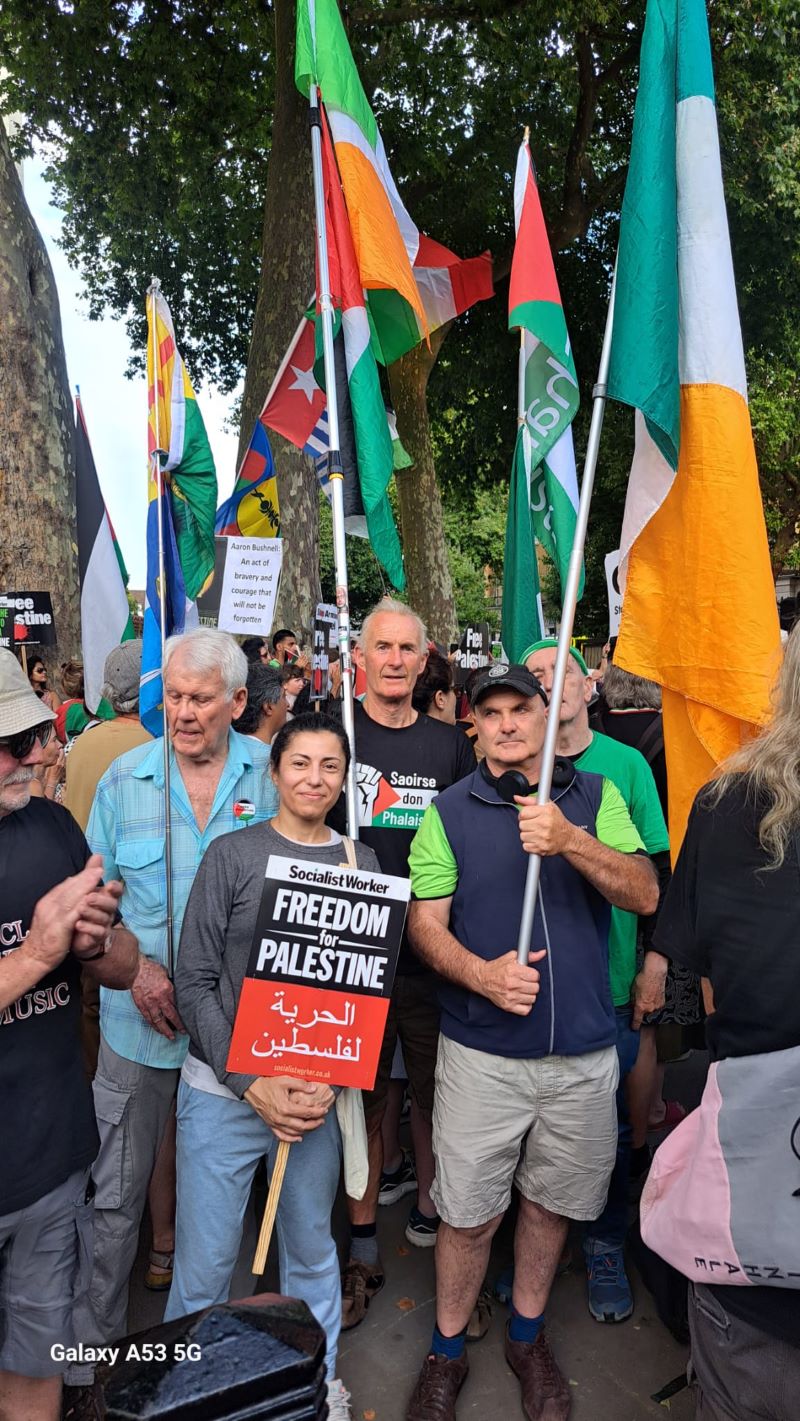

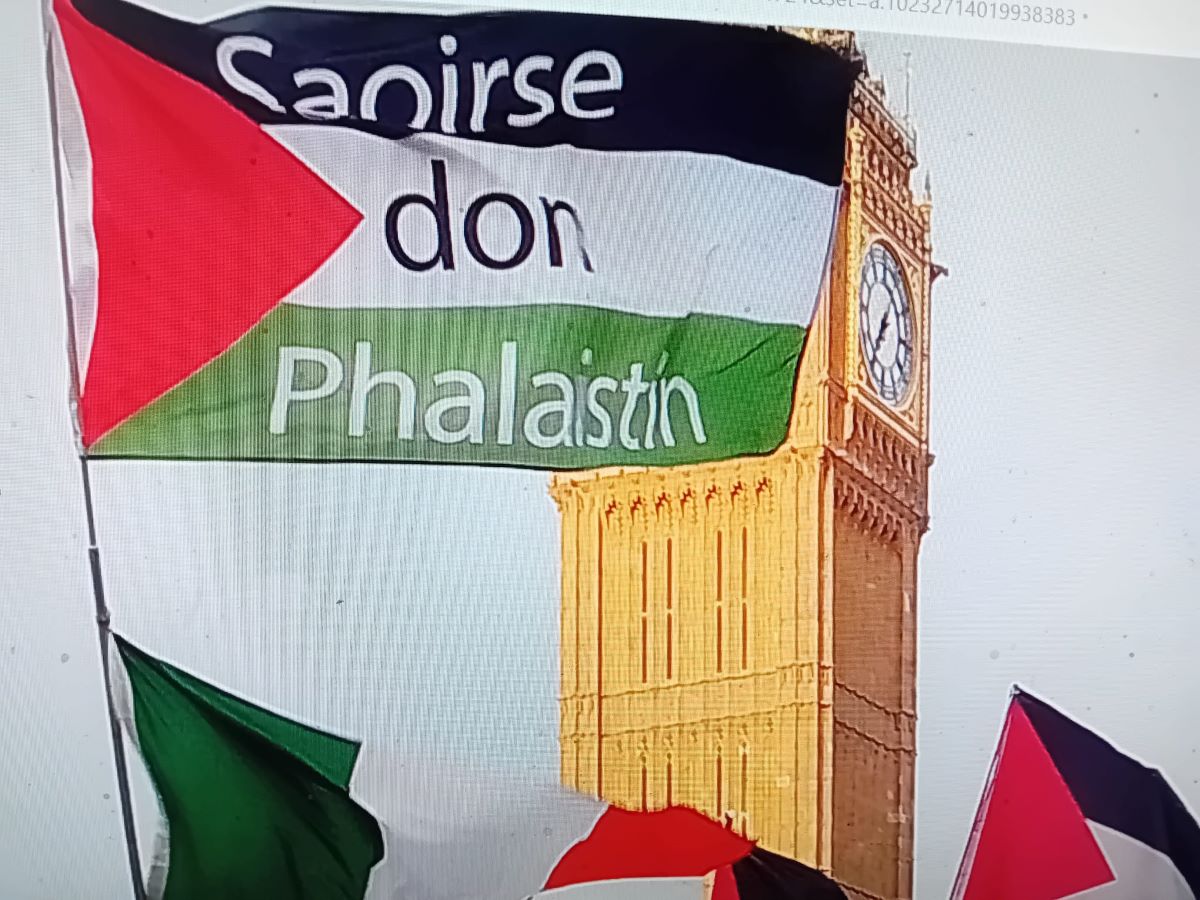


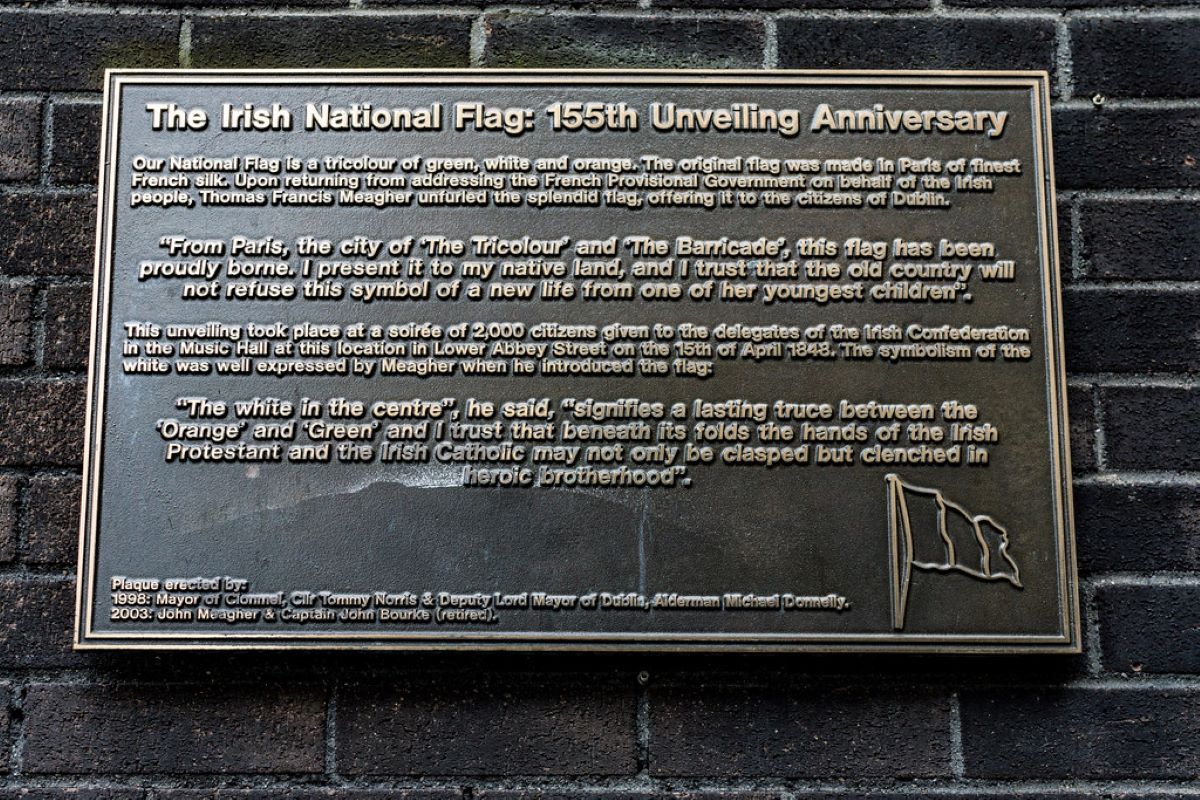


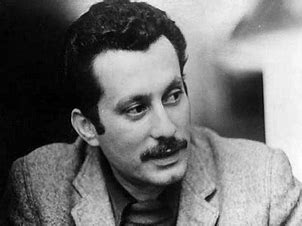
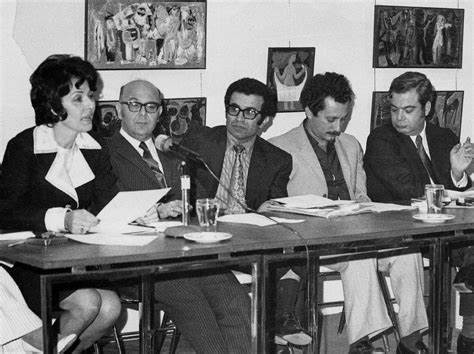

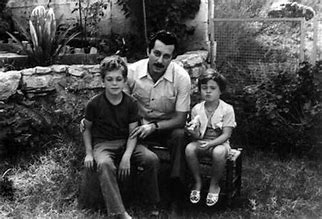
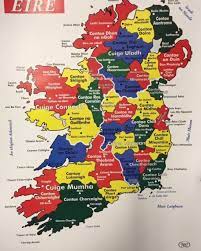


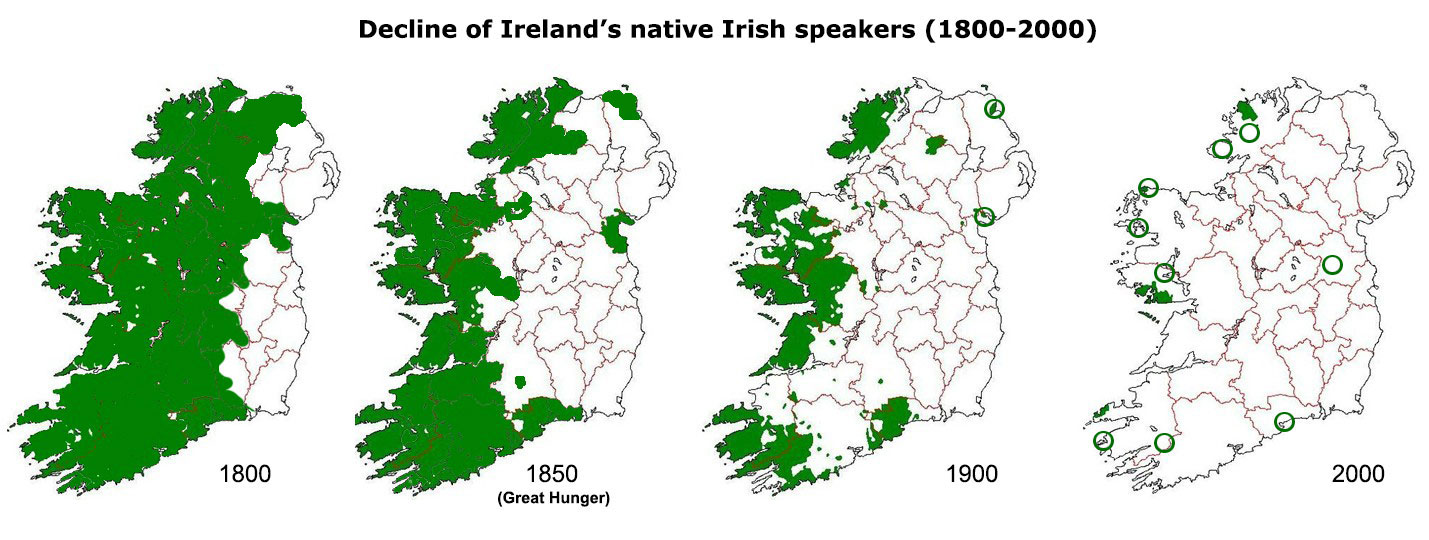


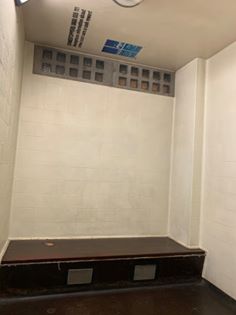


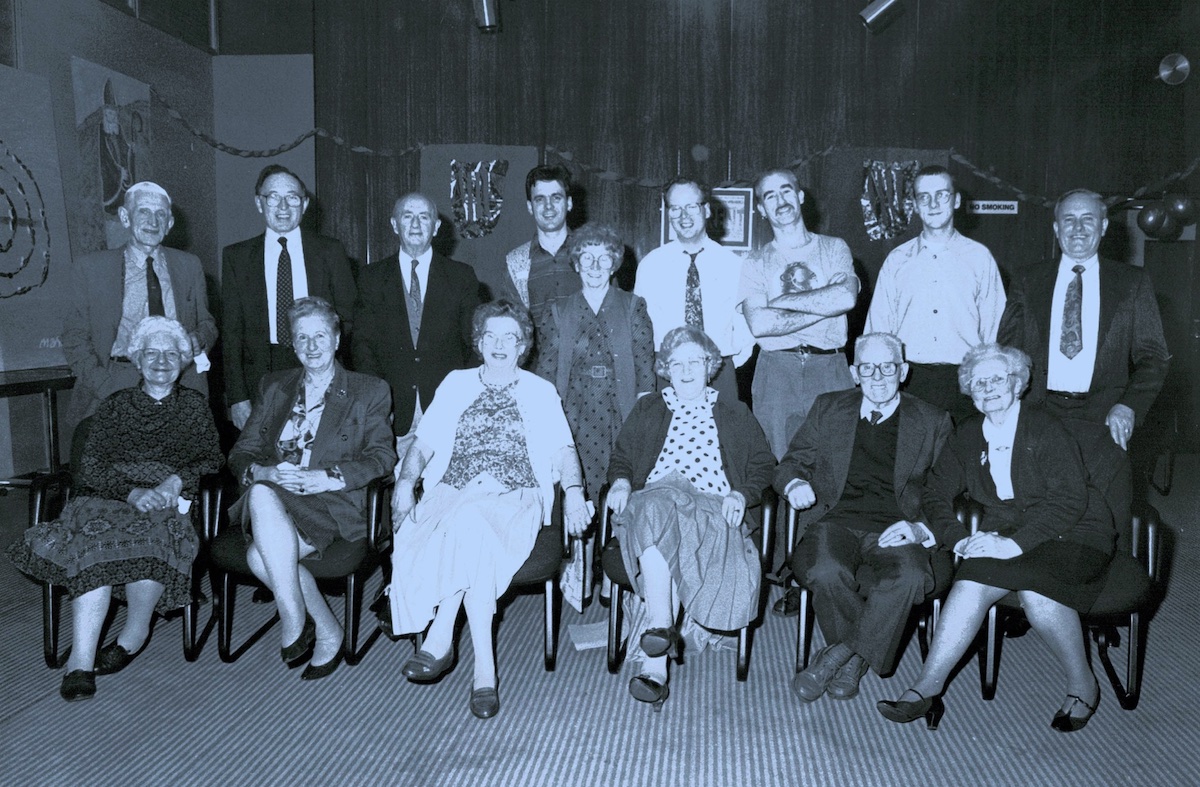

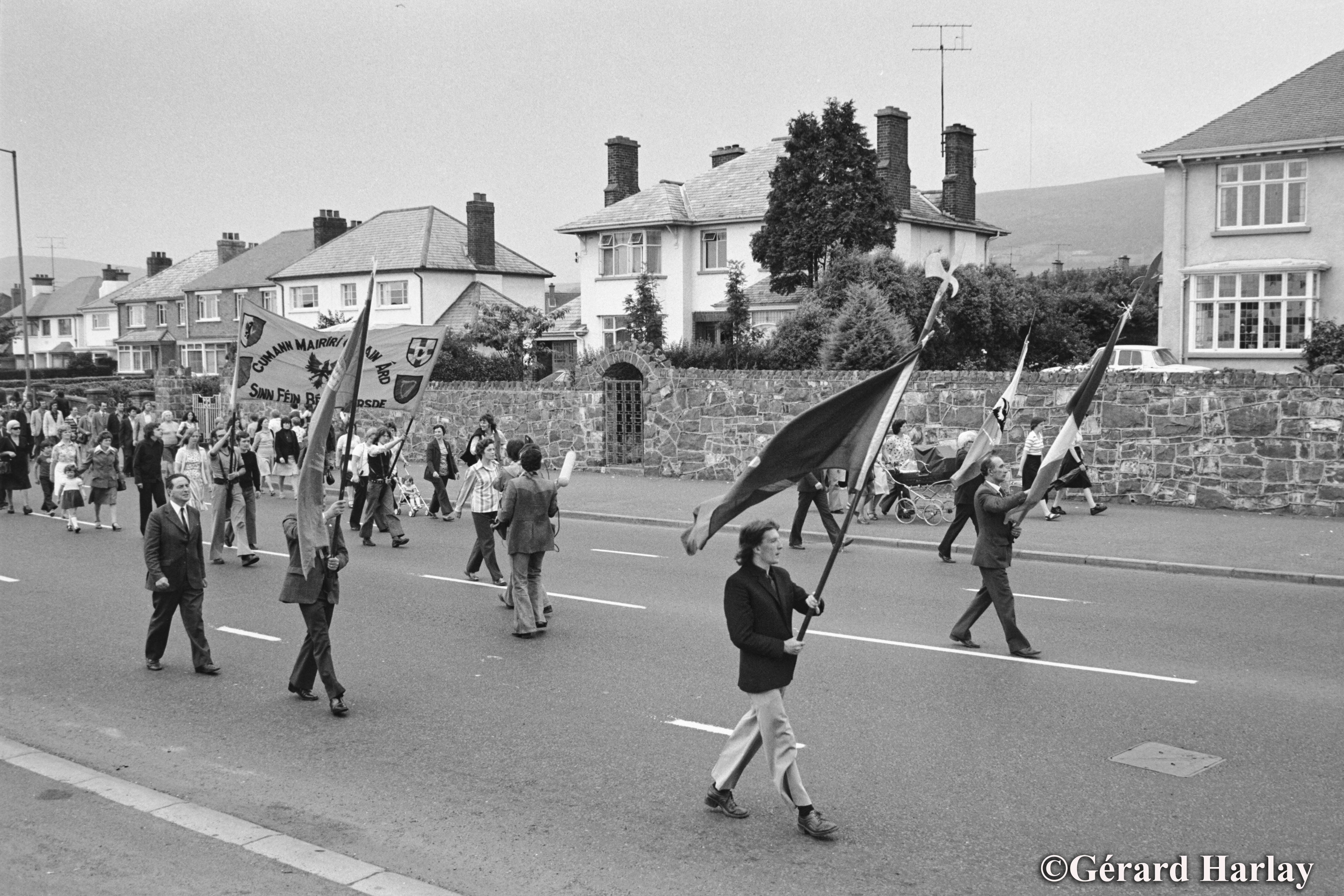


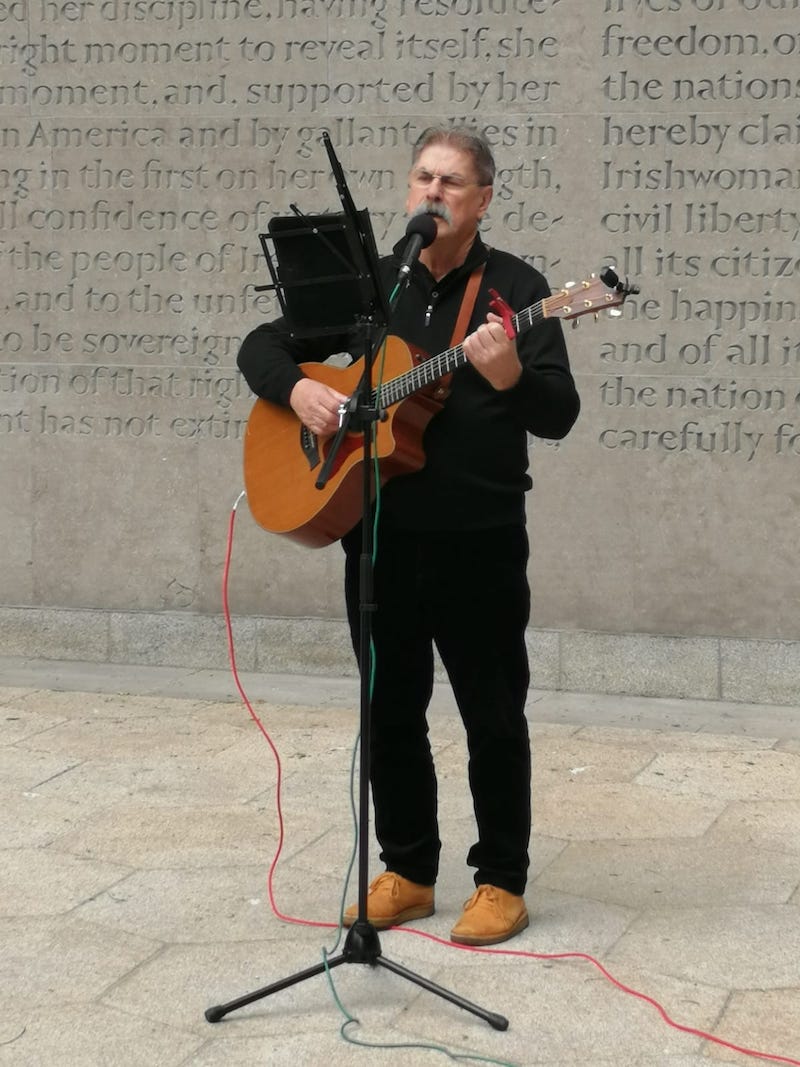
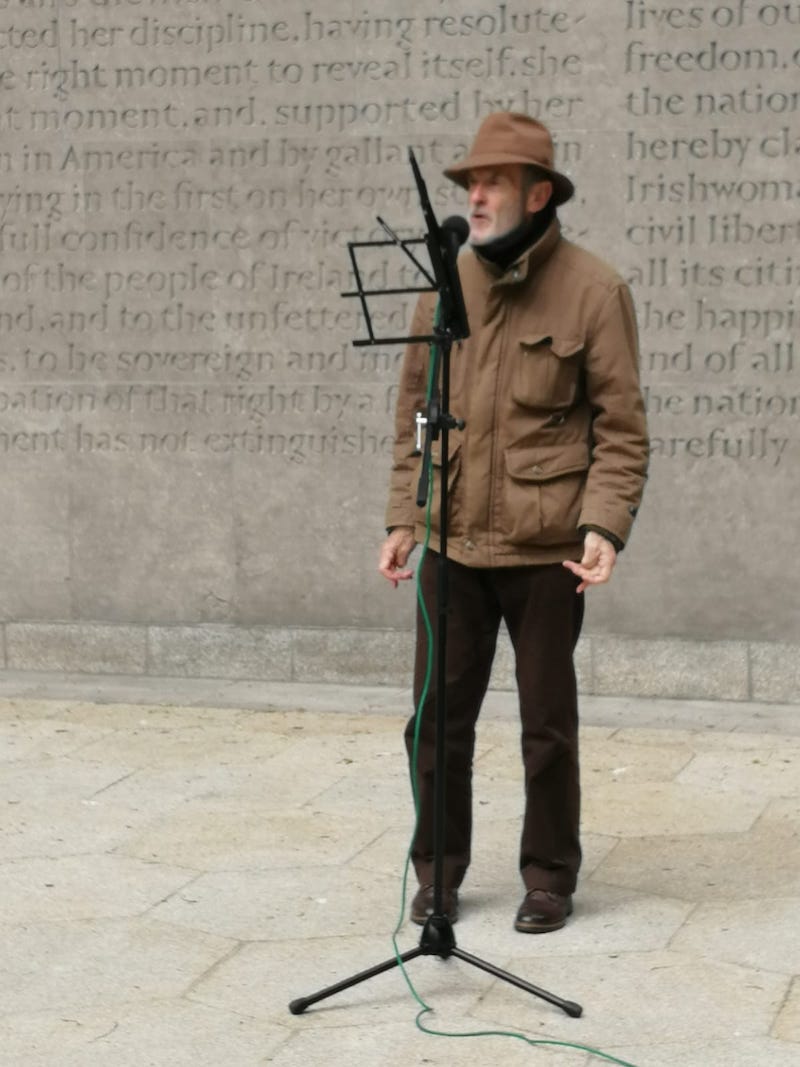


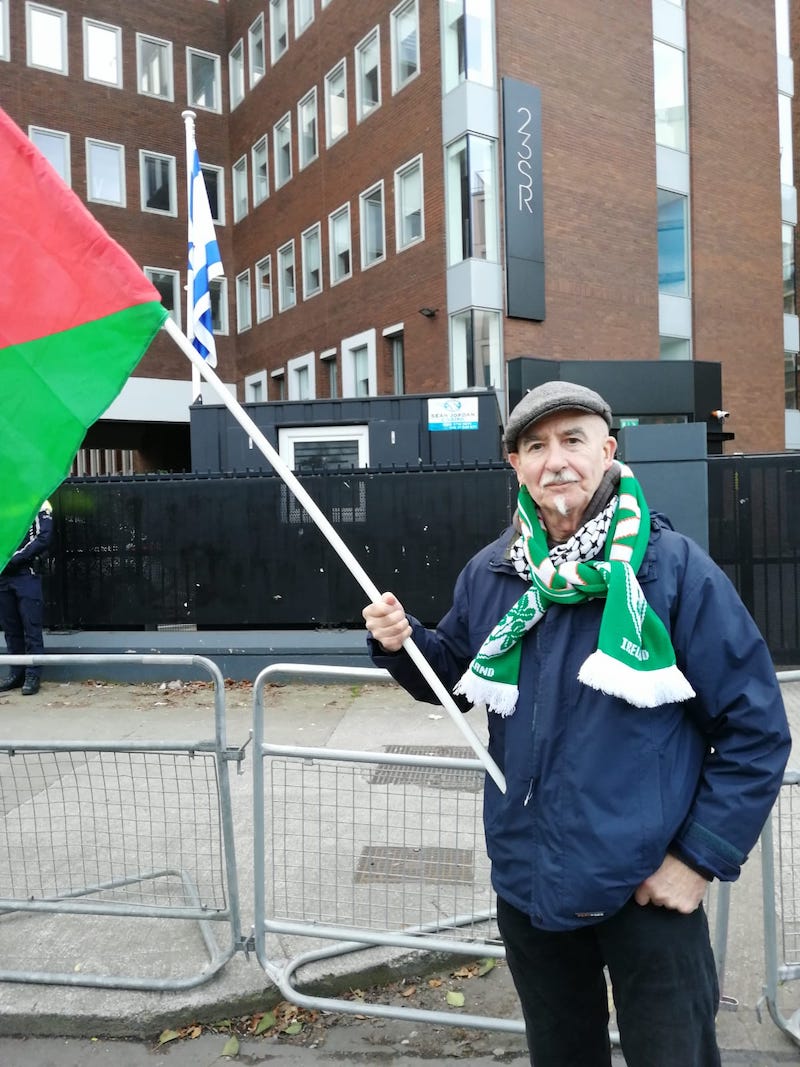
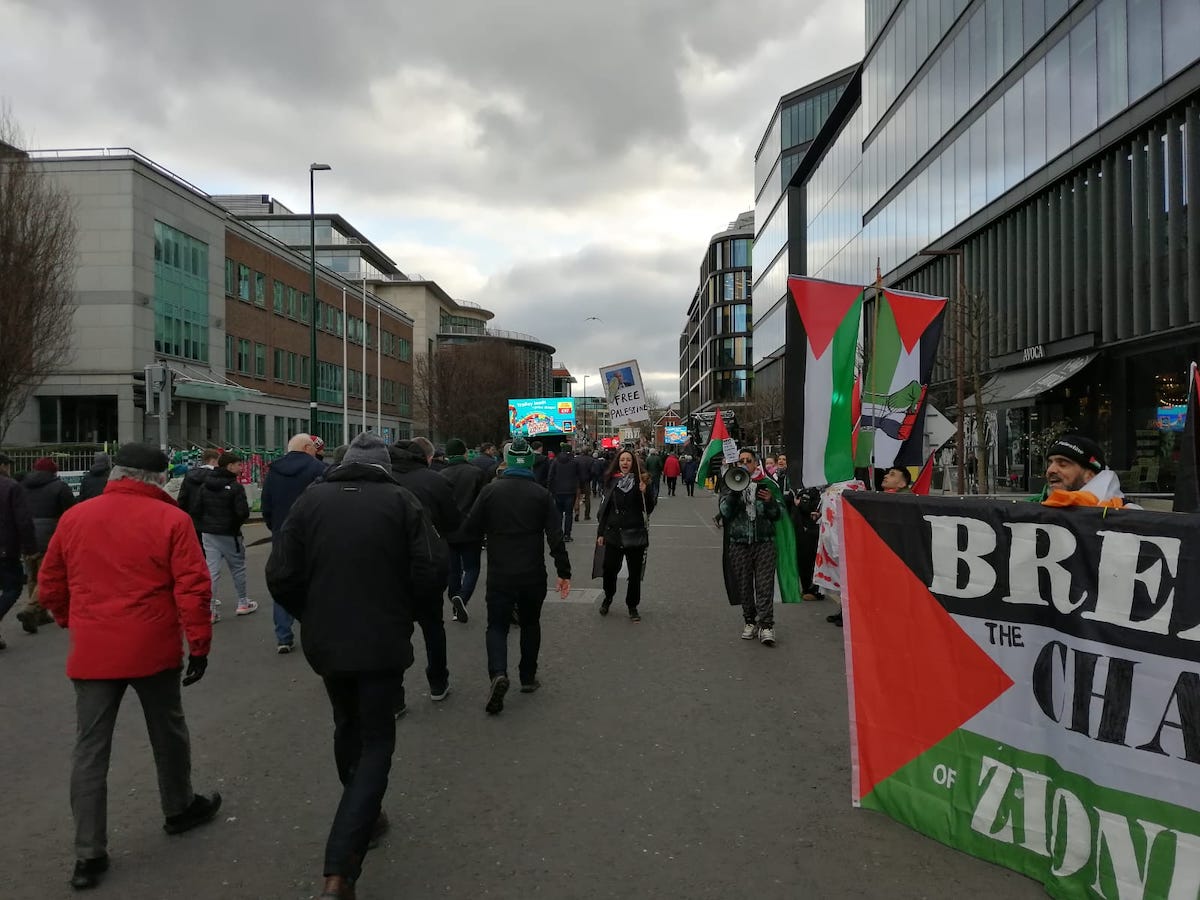


 rebelbreeze