Israel is justifying its bombardment of Gaza as the right to defend the state, effectively in the right to take revenge, with which the western states are in agreement.
Leaving aside the question of whether bombing homes, bakeries, markets and hospitals constitutes ‘defence’, what should we think about the right of a state to defend itself as a principle?
It seems natural that every state should have the right to defend itself; perhaps that right is extrapolated from the generally-agreed right of the individual to self-defence. In bourgeois law, the need to defend oneself can be a valid legal defence even against a murder charge.
The individual is generally understood to have the right of self-defence particularly in their home but also in public places. However, it is important to note that this right, even in bourgeois law, is not considered valid in every conceivable case.
For example, the right of one individual to use violence in their defence can be cancelled by the right of their victim to self-defence if the latter is being seriously harmed by the former, so that violence by the victim might be considered a reasonable response in their own self-defence.
People carrying out a robbery or kidnapping, to take another instance, are not considered to have the right to use violence if attacked in the course of the robbery by the victim or by security forces or even a passer-by.
Proceeding to the question of the rights of states to defence, we might say that the UK had the right to defend itself from Nazi attack during WWII and certainly so did the USSR, so too later with the rights of Vietnam, Laos and Cambodia from the USA’s invasions and bombings in the 1970s.
But did the Cambodian state have the right to defend itself from Vietnamese invasion when the Pol Pot regime was carrying out mass exterminations of sections of its population? Or the did the states of Nazi Germany and Fascist Italy have the right to defence against the Allied forces?
Continuing in consideration of the right of a state to defence, how does that go when the attack comes from within the territory of the state itself?
Most Irish and democratic people outside would probably deny that the English Crown had the right to defend itself against the Irish rebellions of the clans (1167-1690s) or of the United Irish republicans, or against the Fenian insurrections, the 1916 Rising and the War of Independence (1919-1921).
Similarly, most would deny the right of the English or French monarchies to defend themselves against the internal republican uprisings of 1649 and 1789, respectively.
When the “internal” force attacking is a nation, then national rights of self-determination counter and supersede the rights of the state to self-defence. The case of the United Irishmen has already been noted but slave colony Haiti and colonial Algeria against France could be listed there too.
ISRAEL
The Israeli State is a colonial regime sitting on the Palestinian people’s land. It is in addition a state which is deeply religiously sectarian on the basis of Judaeism, in a sense which is far more racial than it is religious and, in many cases, may have no religious aspect at all.
Aftermath of Israeli militia massacre of Palestinian village Deir Yassin (9th April 1948 – five weeks before the the founding of the Israeli state). After the massacre, the Zionists took over the village, and in 1980 the occupation established settlement units on top of the original buildings of the village, and gave the names of the “Argon”, “Etzel”, “Palmach” and “Haganah” murder gangs to places in it. 700,000 Palestinians were expelled or forced to flee the land. (Source photos: Internet)
Being able to claim Jewish descent is the qualification for Israeli citizenship, not religious practice or even belief. As for the Palestinians, whether Muslim or Christian, Arab or Berber, they are ‘other’, second-class or even third-class at best.
Third-class because the Ashkenazi Jewish colonists discriminate against other Jews too, for example the Ethiopian (because many are black), the Sephardic and Mizrahi (because they are not Ashkenazi). They will all speak Hebrew now but many additional languages are spoken too.
The Zionist trend in the Jewish world insisting that Jews had a right to a state of their own on a land of their own, even if some other people already lived there, was a minority trend among Jews until fairly recently, though it gained dominance in the West over years after the establishment of Israel.
Indeed there are sections of Jewish society that consider the creation of a Jewish state to be contrary to the teachings of the Torah. But as observed earlier, Zionism is not really about religion.
The establishment of the Zionist state was achieved at the price of the expulsion of 700,000 Palestinians, the imposition of racist and sectarian laws, apartheid, massacres,1 oppression of the Palestinians and repression of their resistance.
The story of the state of Israel in the land of Palestine until now can be characterised by two images: the murder of Palestinian people along with the expulsion of 700,000 Palestinians in 1948 as the Zionist state came into being – and the genocidal bombing of Gaza these three weeks.
As of some hours ago, over 7,000 Palestinians have been killed in the past three weeks – including nearly 3,000 children.
Medical staff in Gaza treating children and woman injured by Israeli bombing, uploaded 26 October. (Source image: Al Jazeera)
There are many ways to kill, including despair, lack of or obstruction to medical treatment or access to good water and food. But from 1948 to 2021 (i.e excluding the killings since then and this year’s), well over 20,000 Palestinian civilians have been directly killed by the Israeli state’s military and settlers.
To claim that “Israel has the right to defence” is to say that all those things are justified and must be defended, must be perpetuated, that we must be complicit in it and that the best we can do is to ask Israel to practice its racism, colonialism, oppression and repression somewhat more gently.
Israeli bombing wide-scale destruction of Gaza, October 2023 (Photo sourced: Internet)
Israel – which is to say the Zionist project — has absolutely no right to defence.
End.
FOOTNOTES
1When hostilities erupted in 1948, the villagers of Deir Yassin and those of the nearby Jewish village of Giv’at Shaul signed a pact, later approved at Haganah headquarters, to maintain their good relations, exchange information on movement of outsiders through village territory, and ensure the safety of vehicles from the village. The inhabitants of Deir Yassin upheld the agreement scrupulously, resisting infiltration by Arab irregulars. Though this was known to the Irgun and Lehi forces, they attacked the village on April 9, 1948. The assault was beaten off initially, with the attackers suffering 40 wounded. Only the intervention of a Palmach unit, using mortars,[20] allowed them to occupy the village. Houses were blown up with people inside and people shot: 107 villagers, including women and children, were killed. The survivors were loaded on trucks that were driven through Jerusalem in a victory parade,[19][21] with some sources describing further violence by Lehi soldiers.[22] Four Irgun or Lehi men were killed.[23] The incident became known as the Deir Yassin massacre.
On April 10, 1948, one day after the Deir Yassin massacre, Albert Einstein wrote a critical letter to the American Friends of Fighters for the Freedom of Israel (the U.S chapter of Lehi) refusing to assist them with aid or support to raise money for their cause in Palestine.[24][25] On December 2, 1948, many prominent American Jews signed and published an op-ed article in The New York Times critical of Menachem Begin and the massacre at Deir Yassin. (Wikipedia)
On a wet Tuesday night in the large lobby of Windmill Lane Recording Studios, local community representatives met with representatives of political parties, Dublin City Council and the Gardaí to press for their community’s needs to be met.
The meeting on 24th October 2023 was convened by the City Quay Committee and its organiser, Patrick (“Paddy”) Bray raised concerns about the unmet needs of the local communities currently and for following generations.
Apart from the City Quay Committee, also represented were representatives of housing areas Markievicz House and Conway House, along with volunteer-managed youth service Talk About Youth.
Also in attendance were representation from political parties Fianna Fáil, Labour and Sinn Féin, all of which have TDs (members of Irish parliament) elected in the area. Dublin City Council was represented as the local municipal authority and Pearse Street as the nearest Garda station.
Presumably the presence of a Garda representative was in relation to discussion around a recent period of violent confrontations between opposing gangs of youth on the Samuel Beckett Bridge (but also Sean O’Casey Bridge) connecting South and North Liffey docklands.
It was striking that nearly all the community representatives were female, while most of the political representatives and each of DCC and the Gardaí were of male gender.
Paddy Bray opened the meeting outlining the local concerns about the area’s youth and the lack of constructive activities for them, the local youth service being underfunded, under-staffed and with no permanent base.
Bray went on to outline a dire absence of any kind of community facility for the local community, while property development went on around them, including four hotels in recent times, with no sites designated for affordable housing or community needs.
Looking across from the north quay, central background, the 8-storey Clayton Hotel, along with other buildings dwarfing even the four-storey reconstructed The Ferryman, the last of the original pubs along the South Docks between Tara St. Station and the East Link Bridge. (Photo sourced: Internet)
Other community representatives also pressed their needs hard and raised issues of applications for building on existing sites without consideration of the community’s needs in housing, parking, child and young person development, mental health or green space.
A number raised concerns about rat infestation in a housing area, emanating from a derelict site, followed by some discussion about where responsibility lay to address the problem as the site is in private ownership (though there was a suggestion of an enforceable abatement order).
The responses of the political party representatives and the Dublin City Council Area 2 officer were generally supportive, though a disagreement did emerge as to whether the City Council were doing enough to control the rat infestation.
Evoking a medieval or early 1900s scenario, a community representative reported that a man visited their housing area on a voluntary basis to kill rats and at a recent visit, had killed seven. Photos of live and dead rats on a phone were handed around (to shudders from some of the men).
The meeting concluded with an agreement to form a campaigning committee for the resources and sites needed, for the political representatives to support its aims and for the Area 2 DCC Manager to report back to his own management.
Paddy Bray asked all present to spread the word among their contacts to enlist further support.
THE COMMUNITY: LOSS, NEEDS AND HISTORY
The name of the building in which the meeting was held is famous in Irish recording events though most probably associate it in particular with the previous recording studio on the site and the rock group U2.
A plan for a six-storey block on the site was defeated by local protests in 2008 but the original studios were demolished with the exception of the U2 fans’ graffiti wall, which was later sold and proceeds donated to a charity fundraising for awareness of men’s health and treatment needs.
The new building is owned by the formerly investment trust company, now Hibernia property development company which, despite the name, as is now common in Ireland, is owned by a foreign corporation.1
Property speculators plan to demolish the City Arts Centre, a resource for the community but derelict and empty for two decades on Moss Street on the South docks, in order to build a 24-storey office block.
City Arts Centre building, derelict for years, property speculator high-rise plan appealed by many including Dublin City Council to An Bord Pleanála, now speculator taking DCC to court. (Photo sourced: Internet)
Unusually perhaps, the demolition application is being opposed by Dublin City Council2 which has appealed it to an Bord Pleanála3 and the speculator has taken the case to court.
As mentioned in the meeting, an existing facility for the community, the Markievicz swimming pool, despite 1,600 signatures to save it, is to close for the construction of a station for the projected underground Metrolink, another infrastructure planned for private or part-private ownership.4
As one of the community representatives commented, there is already a train station nearby; not only that but the tracks of that station are several storeys above ground, making an underground connection with Metrolink quite feasible.
A rally to promote saving the swimming pool in 2019 (Photo sourced: Internet)
The swimming pool facilities are now to be located at a site 3 km away in Ringsend, a housing district at the end of the docks and partly on the seafront, which has football pitches and green space very close nearby. 5
It is indeed late in the day as indicated by the huge property development on the South Quays but the communities are getting organised as can be seen from this meeting, a commemoration of a fatal 1960s housing collapse and protests about local church neglect by the Diocese.6
Some may think it is too late or that the speculative property and financial forces ranged against them, with their multiple political and other connections, are too strong. But their community’s needs now and for generations to come are powerful incentives for which to struggle too.
The south and north quays communities, neglected by the authorities and rode over roughshod in the past, with their remnants now under threat, are essentially working and lower-middle class communities which have never been given the resources they earned and deserved.
As in many other parts of Dublin, working class communities were ravaged by the heroin epidemic in the 1980s and regarded in the main by the authorities as a policing problem, with anti-drug campaigners ironically targeted more than drug lords.
In the course of that social crisis, many developments of physical and political nature took place which the working class was not well-placed to resist.
An outing on the old Liffey ferry boat, in regular use when there was no bridge crossing the Liffey eastward and downriver past Butt Bridge (Photo sourced: Dublin Dockers’ Preservation Society)
However, the people of the docklands were an important part of the working class movement in the early 1900s, winning many union battles against the employers until defeated by the latter’s alliance with police, magistrates, churches and media after eight months of struggle 1913-1914.
They rose out of that defeat and rebuilt their fighting organisations, including the first workers’ army in the world (and which recruited women, some of them appointed officers),7 fought again in the 1916 Rising and after that in Dockland areas during the War of Independence.
Indeed, during the 1916 Rising it is remarkable that despite British shelling from naval units in the Liffey, they did not attempt to land soldiers on any of the Dublin quays at that time, disembarking British reinforcements into Dun Laoghaire instead and marching 8 miles8 in from there.
If the working class of the south Dublin dockland is stirring it may still achieve more than many may expect.
End.
The Travelodge Hotel, corner of Townsend and Moss Street (Photo sourced: Internet)
FOOTNOTES
1Purchased by Brookfield Asset Management, a Canadian company, in 2022
3Many applications agreed by DCC Planning Department have also been appealed to An Bord Pleanála and that organisation has been immersed in controversy over criminality in management and low staff morale leading to a high backlog of appeals awaiting judgements.
5One could form the suspicion that the ultimate plan is to move south docks working class facilities to Ringsend and Irish Town, with the communities themselves to follow or to fade away, leaving the whole area free for property speculators.
6The diocese protest was not reported on in Rebel Breeze but the housing collapse commemoration, at which the lack of local affordable housing was raised, was.
7The Irish Citizen Army, founded after calls by both James Connolly and Jim Larkin.
The roar of Palestinian solidarity slogans outside the Irish Parliament, Leinster House on Wednesday night must surely have reached the ears of the elected representatives as they debated a motion that “Israel has a right to defend itself”.
The motion is widely seen as part of a narrative, under the cover of self-defence, endorsing the Israeli State in its decades of racism, apartheid, genocide and war crimes and takes place during the Zionist state’s genocidal bombardment of Gaza.
Solidarity colours in the rain (Photo: D.Breatnach)
The rally, the third since last Saturday week1 organised by the Ireland Palestine Solidarity Campaign, attracted many hundreds willing to stand in persistent rain, listen to contributions from speakers and chant slogans, these led by voices in both Irish and Middle Eastern accents.
In fact, a strong trend increasing over recent years has been the presence of Palestinian voices at such rallies, both in speaking and in leading slogan chants, which the rally organisers have not hesitated to facilitate.
View late in the rally (Photo: D.Breatnach)
SLOGANS, SONG AND POEM
On Wednesday evening, some slogans were in Arabic also, such as I think “Tahya Filistina!” (long live Palestine) but sadly not the equivalent in Irish, such as “An Phalaistín abú!” or an alternative, for example: “Saoirse don Phalaistín!” However, one placard in Irish was present (see photos).
(Photo: D.Breatnach)
The slogans in English ran the usual range of call and answer: “Free, free – Palestine! From the river to the sea – Palestine will be free! One, two, three, four – occupation no more; five, six, seven, eight – Israel is a terrorist state! (I prefer “Israel is a fascist state!” myself).
In our thousands, in our millions – we are ALL Palestinians! Boycott — Israel! Irish Government – shame on you!
In 2009, as yet another Gaza bombardment came to an end, I had composed a poem I called The New Wailing Wall. On Wednesday I got it printed in a photocopying shop on my way to the event, by which time it was raining fairly heavily but I was glad to be permitted to read it out at the rally.2
A Palestinian woman sang in Arabic a “song of sadness”, i.e a lament the rhythm of which a lot of people got into, clapping in time. In Irish singing we often don’t like this, as it tends to drown out the words and the musical detail but it seemed to work well enough there.
Later she told me that she very rarely sings but felt she had to give voice to her feelings – and I know some of what she means.
Seen from behind, Palestinian woman singing a lament in Arabic at the rally (Photo: D.Breatnach)
MOTION DEBATED
Inside the home of the Irish Parliament,“the Dáil”3 a motion of support for the Zionist state proposed by the Government had run into problems even before Israel’s bombing of the hospital in Gaza, after which they intensified; the Government insists it will not condemn Israel to any degree.
It is likely that a majority-agreed motion amendment will pass but however will neither assert the right of the Palestinians to their land nor to resistance, nor to the return of refugees, much less condemn Zionism; it should be a cause of shame to all parties and individuals who support it.4
Section of the rally crowed after an hour (some had gone home) in front of the gates of Leinster House (Photo: D.Breatnach)
“Expel the Israeli Ambassador!”
In the street outside Leinster House, there were many calls for the expulsion of the Israeli Ambassador (Out! Out! Out!)
Truly that seems the most effective solidarity move of which we are capable currently.5 Sadly there seems no chance that the Government would even consider doing so.
Even among the Opposition, Sinn Féin these days looks unlikely to support such a move. This is so even though the party’s President, Mary Lou called for the expulsion of the Russian Ambassador in April last year6 and a decade ago, Gerry Adams, for the expulsion of the Israeli Ambassador.7
Some solidarity demonstrators as far back as Molesworth Street while most are in front of Leinster House (Photo: D.Breatnach)Rally supporters refuse to be squashed up on the pavements and spill over into the road. Once again the Gardaí have failed to close a road to avoid accidents and Dublin Bus has failed to instruct drivers to take alternate routes; the roof of a trapped bus may be seen in the far background. (Photo: D.Breatnach)
Colombia threatened to expel8 the Israeli Ambassador but the leaderships of the EU and the UK are securely tied to the war-chariot of the USA and there’s never any doubt about what the US wants, which is total support for its safe9 Middle Eastern foothold – Israel.
Colombia told the ambassador to behave himself or leave, after the Zionist publicly criticised Colombia’s President comparing the Israeli state’s discourse about and treatment of the Palestinians to that of the Nazis towards the Jews10 (but Israel is Colombia’s main weapons supplier).
A sentiment increasingly finding favour (Photo: D.Breatnach)
OUTLOOK FOR THE FUTURE
In the immediate future, the Zionist authorities have said they intend to invade Gaza to clear out “Hamas”, in which they will of course include all Palestinian armed resistance. Of course, solidarity demonstrations will continue or even intensify.
If Israel invades, it is difficult to imagine that the Palestinian guerrilla resistance movement, including Hamas, Islamic Jihad and PFLP11, will allow that without putting up a fierce struggle.
(Photo: D.Breatnach)
Israel has the tanks and planes but fighting on the ground in ruined urban landscapes, when every pile of rubble may hide a tunnel, a bomb or a rocket-launcher, is a different game.The 5-months-long Battle of Stalingrad comes to mind and an Al Jazeera contributor came to the same conclusion.12
Also, other elements such a Hizbollah may open up new fronts, in particular in the Golan Heights and Lebannon, as the PFLP has urged. Imperialism and complicit Arab regimes are extremely worried about a flame reaching their combustible possessions in the region.
Massive solidarity demonstrations marched through Yemen, Lebanon and Jordan and even the collaborator military regime in Egypt was obliged to open the Rafah crossing gates for humanitarian aid to reach Gaza (with which the Zionists and the US had to reluctantly agree).
Huge solidarity and protest demonstrations have also taken place in Athens, London and other European cities, while the French government banned any such demonstrations. Texas in the USA also saw a huge demonstration and 500 Israeli protesters were arrested demonstrating in Israel.
However the regimes have weathered such storms before and may do so this time again.
Possibly the West Bank will rise up too, although Al Fatah still has a lot of influence there, despite its discrediting by corruption, nepotism and signing the Oslo Accords and with its leadership deeply compromised as a result.13
The Palestinian Authority goons (there are 80,000 of them) fired on demonstrations demanding action in solidarity with Gaza, and in Jenin killed a 12-year-old girl and seriously wounded a first-year university student. 14
The military command of Al Fatah told collaborator Abbas to step down15 but their objective is still the discredited and impossible two-state “solution”.
The 2-State idea was bad in 1993 but …
… even worse in 2019 (Source image: Carnegie Council)
This “solution”, which the US and the rest of the Western states support, proposed to give the Palestinians less than 40% of their territory, the worst and least-watered, chopped into sections with narrow corridors through the Israeli lands and always under the guns of Israel.16
A Palestinian state would have neither true environmental, population, political nor civil control. Never a good choice instead of a secular state of Palestine for all, even this colonial option is clearly unworkable, sabotaged by the Zionists themselves with their settlements dotted all over it.
It is shameful to even propose it as any kind of solution.17
In the longer term, Israel’s consolidation of partnerships with a number of Arab states may have been harmed by the Zionists’ savagery and racist discourse towards the Palestinians but how deeply is difficult to predict.
Whether the Palestinian resistance and particularly Hamas is strengthened or weakened in the eyes of the Palestinian mass likewise remains to be seen.
The mostly imperialist western states of Europe and America show no sign of weakening their allegiance to the world imperialist leader, the USA and therefore, once they get over their weak criticisms of Israel’s genocide, will continue to support the Zionist state into the future.
Like many other problems on this Earth, workable solutions depend on changing some fundamental features in the world order.
end.
A historical reference to the Balfour Declaration of the Imperial Conference of British Empire leaders in 1926 giving European Jews rights to the British Mandate territory of Palestine, where approximately 10% of the population were Middle Eastern Jews at the time, the rest being Palestinian Muslims and Christians. (Photo: D.Breatnach)The rally, though thinning, is still ongoing behind photographer after perhaps two hours. Gardaí have FINALLY closed Kildare Street and a Dublin Bus has managed to turn around and exit. This has been the pattern in a number of Palestine solidarity rallies so far, when the Gardaí must have known the attendance would be large and the street should be closed for safety and traveler convenience sake. (Photo: D.Breatnach)
FOOTNOTES
1Another, last Monday week, had been organised by the Irish Anti-War Movement (effectively the People Before Profit political party).
3That is its name but there are those who refuse to call it that, saying that only an all-Ireland parliament deserves that title, such as the one founded during the War of Independence 1919-1921.
8It was reported that Colombia HAD expelled him and that was repeated at the rally but according to reports from there reaching now, he was only threatened with expulsion if he didn’t shut up.
9Probably the only state in the Middle East, because of its colonialist nature, that is safe from either national liberation uprising or Muslim fundamentalist revolution.
10This is a parallel so obvious that it occurs to a great many people across the globe but it is one that the Israeli authorities rejects and which it condemns as “anti-semitic” with the backing of many different authorities in the West.
17And the history of the Zionist colonisers shows that even with that, they would be forever pushing further, grabbing more land, killing more Palestinians in flare-ups (think the history of the European colonisation of the indigenous Americans in what is now the USA).
As smoke rose over the homes and shops of Gaza, an unseasonal October brought sunshine on to the streets of Dublin city centre and the crowds with Palestinian flags outside Leinster House, the home of the parliament of the Irish State.
As the sound of explosions, wailing of ambulances and of people rang around the streets of Gaza, the call-and-answer of solidarity rang out in Kildare Street: In our hundreds, in our millions – We are all Palestinians! From the river to the sea – Palestine will be free!
The Dublin rally was one of a number of Palestine solidarity events organised in Ireland after the unprecedented attack on Israel by Hamas’ military wing, the Al Qassam Brigades on Saturday and the Zionist State’s bombardment of civilian structures and people in Gaza.
Small section of the rally (Photo: D.Breatnach)
The Zionist State, which also controls Palestine’s water supply to Gaza, as well as exit from and entry to the enclave, has cut off water and electrical power as well as barred entry to everything including food, medicine and heating gas.
The Dublin rally was called at very short notice by the Irish Anti-War Movement (IAWM), a broad front organisation formed by the People Before Profit party around 2003 to oppose the imperialist war against Iraq waged by the Coalition of states led by the USA.1
Section of the solidarity rally earlier (Photo: D.Breatnach)
A branch of the Student’s Union of Ireland also supported the rally, which had a high percentage of Middle Eastern people present, presumably mostly Palestinians. The flags in evidence were mostly national Palestinian, some of the PFLP,2 a couple of Starry Ploughs and one Tricolour.3
Speakers from the Palestinian community, IAWM and PBP condemned the decades of attacks by the Israeli state on the Palestinians in general and on those in the Gaza enclave in particular, going back to the expulsion of 700,000 Palestinians4 as the Zionist state was founded in 1948.
Starry Plough flag can be seen centre distance next to some PLPF flags (Photo: D.Breatnach)
Richard Boyd-Barret TD (PBP) spoke as did also Ibrahim Halawa from Dublin, who was a prisoner of the Egyptian regime for four years without trial. Halawa said that awareness-raising and education served the ignorant but that action is required from those who know the real situation.
Some of the orators spoke about the right to resistance of the Palestinians, some about being against killing and war (but blaming the Zionist state for causing it), some about the plight of the Palestinian civilians, particularly in Gaza and one referred to the thousands of political prisoners.
Woman carries home-made giant placard spray-painted “Victory to the Palestinians!” (Photo: D.Breatnach)
MIND THE LANGUAGE!
A number of speakers referred to the “International Community” and when one listens to them in context it becomes clear that this imagined “community” is one of capitalism and imperialism.
It is not the community of workers, much less the community of people struggling for freedom. In Ireland, the overwhelming majority of people have over decades seen through the Zionist propaganda and switched from being pro-Israeli State to being pro-Palestinian.
We should take more care with the words we use lest we reinforce capitalist-imperialist dominance in the world of concepts in addition to their dominance over the physical world. Another trap is the term “illegal” and Boyd-Barret used it in reference to Russia’s invasion of eastern Ukraine.
Banner seen at the rally (Photo: D.Breatnach)
Who makes the international laws by which something is ‘legal’ or ‘illegal’? It is of course the imperialists who do so on the international scale while the capitalists define legality within their states; by their standards the actions of Israeli Zionism are lawful but of Palestinians, illegal.
All the speeches and all the slogans chanted were in English, as were the words on banners. I participated in some Irish conversation near where I was standing but saw only one placard in Irish. The fact that this is normal is part of the problem in this neo-colonial state.
A lone placard in the Irish language seeks “Freedom for Gaza” (Photo: D.Breatnach)
Eoghan Ó Ceannabháin, from an Irish speaking-family from Connemara and himself an Irish speaker, also spoke in English as he introduced the song he was about to sing, in the same language as the lyrics of Patrick Galvin’s Where Is Our James Connolly?
Eoghan is a PBP supporter and a fine singer, particularly in sean-nós5 style and has an amazing range. It was good to hear references to James Connolly at such a rally, something that all too rarely happens, nor is the flag of his Irish Citizen’s Army often seen at internationalist events either.6
CONDEMNATION IN COLLUSION, CONFUSION AND ILLUSION
The imperialist states that united in condemnation of the attack by the Izz ad-Din al-Qassam Brigades, Hamas’ military wing, were joined by leaders of neo-colonial states such as the Irish one. Naturally also by parties competing to lead the neo-colonial Executive, such as Sinn Féin.
Media reports noted Mary Lou Mac Donald’s condemnation of Hamas as a change in Sinn Féin policy7. Indeed it is such a change but is generally in line also with the party’s trajectory of presenting itself as a safe pair of hands for management of the neo-colonial state.
Sinn Fein President Mary Lou McDonald and Micheál Martin, leader of Fianna Fáil and currently Tánaiste. (Images sourced: Internet)
Mícheál Martin, Tánaiste (Vice-Premier), who earlier had condemned Hamas, stated that the Government’s position is to support the “two state solution”, more correctly “the two-state illusion” and this, if not already SF’s position on Palestine will no doubt soon be so.
This is the position of all the imperialist and capitalist states, also of social-democratic and liberal groups. It is worth taking a minute to look at this “solution” which in the first place was totally undesirable and which since conceived has been undermined by the Zionists themselves by their colonial expansion.
If it could even be implemented now it would leave the Palestinians with in reality a colonial-type Bantustan-status client of the Israeli Zionist state8, owning less than 40% of their land area and most of their good land and water taken by Zionist settlers.
In addition, their territory would be fragmented, linked by “corridors” through areas of Israeli dominance. In any case, as of 2021, in a poll by the Palestinian Centre for Policy and Survey Research most Palestinians were against the two-state solution.9
Since this is not in the least a practicable solution, why does Mícheál Martin and Joe Biden, among many others10 keep saying it’s their preferred solution?
Biden, because it allows US imperialism to pretend that it supports some kind of solution other than total Zionist appropriation and expansion. Mr. Martin? For the same reason or just because his Gombeen class follows the world imperialism leader’s lead.
The only real solution, i.e the only one both just and capable of bringing peace, is the one that we hardly ever see or hear even mentioned: a secular republic with equal citizenship for all, return of refugees and reparations to the dispossessed Palestinians.
(Photo: D.Breatnach)
The Zionists will not accept the loss of their Zionist empire; US imperialism (and other imperialisms) won’t accept the loss of their only safe strategic foothold in the Middle East – free from the dangers of either Islamic fundamentalist or national liberationist revolution.
US imperialism, now sending an aircraft carrier against the Palestinian people who have neither air force nor navy, is the main financial and political prop supporting the Zionist state. But whatever they thought, I heard no speaker in Dublin call for the necessary defeat of US imperialism.
end.
Scene earlier of the rally as people keep arriving (Photo: D.Breatnach)
FOOTNOTES
1The IAWM seems to have no permanent existence but can be revived in order to organise events such as today’s from time to time. There is nothing wrong with a party creating a broad front on a specific issue but when it is a front of the Party rather than a people’s front, it will of course suffer when the party’s activists, limited in number, are organising on other issues and cannot keep the ‘broad front’ going, much less expand it.
2The Popular Front for the Liberation of Palestine, a secular socialist organisation fighting for Palestinian national liberation; it has consistently been the 2nd-largest of the groups comprising the Palestine Liberation Organisation.
3The Starry Plough was the flag of the Irish Citizen Army, the first workers’ army in the world and usually signifies socialist Irish republicanism. The Plough painted in gold follows the shape of the Ursa Mayor constellation on a green background, the seven stars in white or silver. Another version appeared in the 1930s, the Ursa Mayor shape in white stars on a light blue background.
Obviously people carry Palestinian flags to show solidarity with Palestine but would it not be useful to carry Irish flags at such an event to demonstrate the solidarity of the Irish movements for national liberation and social progress with the corresponding movements in Palestine?
4That figure represented over half the pre-WWII Arab population (Muslim and Christian) of Palestine.
5Literally “old-style”, a traditional style of singing with ornamentation having a number of regional variations, nearly always unaccompanied and solo-voiced.
6James Connolly was a Scottish-Irish socialist revolutionary, writer, journalist, trade union organiser and historian, one of the Seven Signatories of the 1916 Proclamation, Dublin Commandant in the 1916 Rising, one of the 16 executed by British firing squads. He was a co-founder of the Irish Citizen Army to defend the strikers and locked-out workers in 1913 from vicious police attacks, the first workers’ army in the world, which also recruited women, some of whom were officers. The ICA fought alongside other progressive organisations in the Rising.
7And one which cut across the quoted posts of a number of the party’s TDs, including those of Chris Andrews (see Irish Times report in Sources).
8A real irony since Israel is a kind of colony, a state founded by Zionist settlers with imperial support.
Diarmuid Breatnach – previously published in the Pensive Quill
(Reading time main text: 6 mins.)
At the end of last month, in Johannesburg, South Africa, over 76 residents perished in a fire sweeping through one of a number of “illegal” buildings, home to some of the city’s poor who are desperate for somewhere to live.
How is this possible we may ask. Didn’t the South African people win their struggle after many years of sacrifice? Didn’t Mandela and the ANC lead them to victory in 1994?
The huge South African majority people fought a long and hard struggle against the domination and exploitation of a European settler minority and institutional racism. But they also fought against capitalist exploitation and imperialist plunder of their rich natural resources.
Some of the results of the Sharpeville Massacre, 1960 after South African police opened fire without warning at unarmed black people protesting the pass (apartheid) laws. In total, 69 people were killed and more than 180 people were injured, mostly shot in the back as they fled the violence. A later report would state over 700 bullets had been fired, all by police. (Photo sourced: Internet)
Despite the riches of those natural resources in gems, precious metals and minerals,1 most non-white Africans2 in South Africa lived in abject poverty with poor health care, scarce or non-existent infrastructures and services, including education and training.
In the decades leading up to the fall of the formal apartheid system, that struggle was led by the ‘triple alliance’ of the (banned) African National Congress,3 the National Union of Mineworkers (of S.A.) and the (banned) Communist Party of South Africa.
Township in South African photographed in 2018, over 20 years after enfranchisement and ANC government (Photo credit: Andrea Lindner/ Getty Images)
Their struggles defeated the apartheid system and in April 1994 all residents of South Africa were enfranchised. National elections brought 1990, was elected President of the country.
Yet shortly after that great change, it was noted that the living standards of the mass of people were even lower than before, that the settler capitalists continued to reap their profits and that imperialism had actually intensified their penetration of the South African economy.5
Today approximately 55.5 percent (30.3 million people) of the S.A population is living in poverty at the national upper poverty line (~ZAR 992) while a total of 13.8 million people (25 percent) are experiencing food poverty. Municipal services to the huge ‘townships’ are unreliable at best.
Almost one in every three of work-available people is unemployed and only 95% of the population have basic literacy, which means that one in 20 doesn’t have it.
It is in that context that we can begin to understand hundreds of people living in an “illegal” building without even a fire escape, obliged to take the risk of such accommodation, in a land that continues to be rich in great wealth which however, never comes near the mass of people.
PACIFICATION PROCESSES
In the 1990s a number of people began to promote processes to resolve a number of long-ongoing conflicts around the world, mostly where imperialism or colonial settlers were oppressing the people of a country. The promoters called them “peace processes”.
Palestine was the first of those in which a “peace process” was introduced and South Africa was next in 1994, followed by Ireland in 1998. As it took root in one country, former resistance activists went from there to other conflicts to encourage people there to embrace the process too.
In fact the progress of this process seemed like the US imperialist ‘dominoes’ theory, only in reverse: rather than ‘communism’ in one country influencing people in another to go the same way, capitulation in one country was used to infect the next.
Palestinian and South African delegates attended Sinn Féin congresses to promote their ‘peace process’ to the party’s membership; subsequently SF delegates in turn joined South African ones in selling the process to the Basque national liberation movement.6
Arnaldo Otegi (centre photo) foremost of the Basque movement’s ‘official leadership’ and EH Bildu party in 2019 – the banner behind asks for “one further step” in Castilian (Spanish) and “yes” in Euskera (Basque). (Photo cred: EFE)
Some movements declined to imbibe the process wine but those that drank it found their movements split, their leaderships increasingly accommodated to their people’s exploiters and nowhere at all were any of the movement’s principal objectives achieved.
Except, that is, in South Africa, where at least the people were enfranchised. But the right to vote is intended to help shape the polity for improvement and that has not happened in South Africa. The ANC, NUM and CPSA of the ‘triple alliance’ have become part of the system instead.
THE OPPOSITION BECAME THE SYSTEM’S GUARDIANS
Western imperialism recognised the vulnerability and isolation of the minority settler regime, convincing its leadership to concede mass enfranchisement rather than suffer revolution. And in order to prevent the mass going ‘too far’, they brought the resistance leaders into the deal.
Bishop Tutu7 once remarked that “The ANC stopped the gravy train just long enough to get on it”, which angered his friend, Nelson Mandela. But when forty striking miners were murdered by police of the ANC Government with NUM collusion in 2012, Mandela did not condemn them.
The kopje or hillock at Marikana, near the Lonmin mine, South Africa, where the striking miners were massacred by police of the ANC government in 2012. Over a decade later, plans for a memorial park have still not borne fruit. (Photo sourced: Internet)
This corruption did not grow overnight. Jacob Zuma,8 while President of the ANC, has been formally accused of rape, indicted a number of times and eventually convicted of financial corruption. Winnie, Mandela’s ex-wife led a clique accused of political corruption and murder.
Cyril Ramaphosa, now President, was a millionaire even during the apartheid regime while General Secretary of the National Union of Mineworkers and, because the striking mineworkers in 2012 were rejecting the NUM as corrupt, is widely believed to have organised the massacre.
There should have been many signs of this corruption in the ANC prior to entering government – and there were.
The ANC ran concentration camps notably in Angola, Zambia, Tanzania and Uganda where they punished and even killed “dissidents”.9 And in South Africa perhaps they had their own ‘Steak Knife’10 to organise “Pirelli necklacing”11 for alleged informers.
Mandela knew about the camps and the “necklacing” but did not condemn them, possibly out of mistaken solidarity or ‘the greater good’ theory, as acted upon by some of the solidarity movement abroad.
Ronnie Kasrills, a senior member of the Communist Party of SA and formerly on the ANC’s National Executive Council, who now criticises the pacification process, claims they were concentrating on the political process and took their eye off the economic one.
And no doubt many at home and abroad thought all this could be sorted out once the domination of the white settler regime was broken and African majority had the vote. But political plants grown in contaminated soil do not grow healthy fruit.
And so we come to 76 or more poverty-stricken dead and well over a hundred injured by fire in a building owned by the City, which is run by a black South-African administration that doesn’t care, in a state run by a corrupt black South African government in partnership with the settler class.
Plastic-shrouded bodies of some of the 76 fatal victims of the fire in the housing block in Johannesburg, South Africa. (Photo cred: Jerome Delay/AP )
Armed resistance campaigns, uprisings and revolutions kill but they have in their favour that they are striving for a better world. Pacification processes kill without any chance of achieving a substantial improvement.
Pacification processes murder dreams but kill physically too: in massacres and avoidable disasters but also by overwork, ill-health, work injury, despair, substance abuse, suicide, and the many ways in which the capitalist-imperialist system causes misery wherever it lives.
End.
FOOTNOTES
1South Africa holds the world’s largest reported reserves of gold, platinum group metals, chrome ore and manganese ore, and the second-largest reserves of zirconium, vanadium and titanium. In 2021, South Africa’s diamond production amounted to 9.7 million carats, an increase on the previous year’s 8.5 million carats. The country ranked fifth among the world’s largest diamond producers by volume.
2The racialcategories introduced by the Apartheid regime remain ingrained in South African society with South Africans officially continuing to classify themselves, and each other, as belonging to one of the four defined race groups (Blacks, Whites, Coloureds and Indians).
3Banned by the South African settler government from 1960 until early 1990; now a mass party in government.
4The ANC is still in government at the time of writing, without a break since 1994.
5See The Shock Doctrine – the rise of disaster capitalism by Naomi Klein (2007).
6Palestine faded as a promoter of the pacification process since it had failed spectacularly there, its mass rejection resulting in the resistance upsurge of the Second Intifada followed by the fall of Al Fatah and the Palestinian Authority from their leadership position and the huge turn to the Islamist Hamas by a society generally voting along political rather than religious lines.
The Spanish ruling class was interested only in crushing the Basque resistance and made little attempt to sweeten the surrender of the leadership (Arnaldo Otegi and company) who nevertheless capitulated. Other areas where the process landed or attempted to do so were Colombia, Sri Lanka, Turkey (Kurdish national liberation movement), India, Phillipines (both latter agrarian movements). Only in Colombia was it adopted by both the rulers and the resistance and proved a disaster for the latter.
7A Christian bishop and campaigner for most of his life against the rule of the settler minority.
8South African politician who served as the fourth President of South Africa from 2009 to 2018. Zuma was a former anti-apartheid activist, member of the ANC’s military wing Umkhonto we Sizwe, and president of the ANC from 2007 to 2017.
10MI5 codename for senior Provisional IRA member Freddie Scappaticci who led the guerrilla organisation’s internal security department, which tortured and executed alleged informers.
11A car tyre, doused in flammable fuel, was placed over the terrified victim while still alive and set alight, often in front of a crowd.
“Six innocent men” … “Garda oppression and perjury’ … “Longest case in the history of the State”
Four leading human rights organisations this week delivered a petition to the Irish Government asking the Minister for Justice to establish an inquiry into the abuse suffered by six innocent men in the Sallins case almost half a century ago.
Not to do hold such an inquiry, maintained Liam Herrick of the Irish Council for Civil Liberties at a press conference on Tuesday, is to continue the abuse of the victims’ human rights and to fail to prevent such an abuse in the future.
Osgur Breatnach, Liam Herrick and Nicky Kelly at the petition launch press conference (Photo: Rebel Breeze)
Apart from the ICCL, the other three organisations pushing the petition are the Committee for the Administration of Justice (CAJ), the Pat Finucane Centre (PFC) and Fair Trials; the first three are Ireland-based organisations and Fair Trials is a global criminal justice watchdog.
The six innocent men were named as Osgur Breatnach, Michael Barrett, John Fitzpatrick, Nicky Kelly, Brian McNally and Michael Plunkett (deceased1).
At the time in 1976 all were members of a legal political party (the Irish Republican Socialist Party) but were tortured and some jailed in the Irish state.
In the longest series of trials in the history of the State, three of the men were sentenced at the end of 1978 to prison terms of between nine and twelve years each on the basis of no ‘evidence’ but their confessions obtained by torture and which in court they completely retracted.
Michael Plunkett, who had signed no confession walked free while Nicky Kelly absconded the day before the sentence, eventually reaching the USA where he remained until a strong campaign saw Breatnach and McNally freed, whereupon Kelly returned to Ireland and was immediately jailed.
Although the nature of the ‘evidence’ against Kelly was of the same kind as that which had been declared ‘unsafe’ for Breatnach and McNally, Kelly remained in jail forfour-and-a-half years, despite another strong campaign2 and was only freed eventually on ‘humanitarian grounds’3.
PRESS CONFERENCE
ICCL’s Liam Herrick chaired the conference in Buswell’s Hotel4 flanked by survivors Osgur Breatnach and Nicky Kelly, while Chris Stanley of KRW Law sat nearby, all facing the audience which included Sinn Féin’s Pa Daly TD5 and Fionna Crowley of Amnesty International.
Opening the proceedings, Herrick listed the four organisations backing the call for an inquiry and pointed out the present-day relevance of that call, both in terms of the survivors and their families and in terms of wider society.
Not to have that inquiry would be an ongoing violation of human rights, Herrick maintained and pointed out that the ICCL was founded arising out of concerns regarding the post-Sallins robbery arrests and the activities of the Garda CID unit colloquially known as the “Heavy Gang”.
The ICCL Director stated that they could not rest until the demand for an inquiry was met and referenced also “crucial legislation before the Oireachtas”6 and recognition of past injustices in a series of TV documentaries linking the cases, in particular through actual Garda individuals.
Introducing Osgur Breatnach, Herrick acknowledged the leading role he had played in keeping the demand for the inquiry going over the years.
Breatnach read from a prepared statement that there had been cases of torture, perjury and framing innocent people in England, Northern Ireland and the Republic.
It was wrong and hypocritical of the State raising concerns about cases elsewhere not to hold an inquiry into the Sallins case, of which there had been five trials, one the longest in the history of the State.
Breatnach said he went through the process expecting to be jailed but to expose the political nature of their persecution; his and McNally’s convictions were overturned, the ‘confessions’ having been obtained by oppression but despite that none were indicted for that oppression.
Breatnach concluded saying that the State’s refusal to hold an inquiry amounted to cruel and inhuman treatment of the victims and their families and that without the investigation of an inquiry a similar scenario could be repeated at some point ahead.
Nicky Kelly, introduced by Herrick thanked the ICCL for organising the events that day. Speaking apparently ex-tempore with perhaps reference to some bullet-points, he expressed the opinion that the State wanted the victims to die so that they had no need to hold an inquiry.
“Ireland has an impeccable reputation with regard to foreign relations,” Kelly said, but not so within the state. He believed that the Sallins case is “too big in its implications for politicians, judiciary and police force” and all attempts to investigate were obstructed by successive governments.
Liberal politicians in government have been “no different from the rest”, the Wicklow man said and referred to his own personal battle even to get out of jail after the ‘evidence’ to convict him had been discredited and how he had been obliged to undertake a hunger strike to be freed.
Now, rather than hold the inquiry into what went on, they were waiting for him “to be over and done with” Kelly said in conclusion.
Herrick introduced Chris Stanleyof KRW Law who said that cases such as the Birmingham pub bombings and the Dublin and Monaghan bombings, like the Sallins one, all related to the recent conflict and required investigation for the sake of the victims.
Chris Stanley of KRW Law speaking at the petition launch press conference (Photo: Rebel Breeze)
Stanley commented that perhaps the State had been too reliant on the Good Friday Agreement for resolution of these matters.
Commenting on the UK’s new legislation blocking much resolution of historic cases, all but become law, the solicitor regretted the UK had chosen to disengage from Europe but remarked that that they remained signed up to the European Commission of Human Rights.
From among the seated audience, Fionna Crowley of Amnesty International spoke to underline the importance of having an inquiry into the case and that her organisation had been in support of the victims’ campaigns and was fully in support of the current petition for an inquiry.
Breatnach acknowledged that within one week of the arrests, Amnesty had raised public concerns about them.
DELIVERY OF PETITION TO DEPARTMENT OF JUSTICE
After the conclusion of the press conference with Herrick’s summing-up and thanks to those in attendance, Herrick and ICCL staff along with Chris Stanley, Breatnach, Kelly and a couple of others walked to the Dept. of Justice’s offices on the south side of Stephens Green.
Delivering the petition to the Department of Justice: (from bottom up) Nicky Kelly, Osgur Breatnach, Chris Stanley, Liam Herrick. (Photo: Rebel Breeze)
Pausing for some photos to be taken, a delegation entered the building and presented the petition. Then some more photos were taken outside and Breatnach was interviewed by a TG4 reporter in Irish and Nicky Kelly in English while a light rain began to fall.
TG4 (Caoimhe Ní Laighin) interviews Osgur Breatnach outside the Department of Justice in Stephen’s Green (Diarmuid, brother of Osgur is centre photo and Nicky Kelly to the right). (Photo: Rebel Breeze)
The group split up into smaller groups then, the ICCL staff returning to their office to issue a press statement and others to hope, perhaps with further pushing, for positive developments further – but not too far – down the road. For all and for some much more than others, it’s been a long haul.
End.
Outside the Department of Justice with copies of the four-agency petition (right to left): Liam Herrick of ICCL, Chris Stanley of KRW Law, victims/ campaigners Osgur Breatnach and Nicky Kelly (Photo: Rebel Breeze)
APPENDIX (A): BACKGROUND
The IRSP was the result of a split from what had remained in Sinn Féin after an earlier split in 1969, the group leaving the party then calling themselves ‘Provisional Sinn Féin’.
Not all who had become unhappy with the direction of Sinn Féin departed into Provisional Sinn Féin because they perceived the new group as being much more nationalist than socialist and being also socially conservative.
After some internal struggle that section remaining within what became known as “Official Sinn Féin” left in 1974 under the leadership of Séamus Costello to form the IRSP.
The armed wing of the Republican movement had split along the same lines into Provisional IRA, Official IRA and the Irish National Liberation Army, the latter loyal to the perspective of the IRSP.7
Bernadette Devlin (now McAlliskey) and Tony Gregory (now deceased) were on the IRSP’s Executive but however departed soon afterwards from the party on what they perceived as the dominant relationship of the armed group INLA to the political party.
It appears that the Irish State at that time viewed the IRSP as more dangerous than the two Sinn Féin parties and determined to ensure its demise, framing them for the Sallins Mail Train Robbery in March 1976.8 And framing, rather than mistaking, it was.
The 40 arrested included IRSP members who, tortured by the SDU Garda unit known colloquially as the “Heavy Gang”, confessed to participating in the robbery but who could not possibly have been there. The State decided to put on trial those whose only alibis were with family.
The court chosen was the Special Criminal Court, set up under the Offences Against the State Act in the panic of the 1974 Loyalist and British Intelligence Bombing of Dublin and Monaghan which somehow got blamed on Irish Republicans. The SCC has three judges and no jury.
Until the SCC moved to the court building near the main gate to Phoenix Park, it was located in Green Street, in the very same building where Robert Emmet was tried in 1803 and sentenced to death, his sentence carried out in public in Thomas Street, in the Dublin Liberties area.
The Four IRSP eventually selected for the second of what became four trials included senior member of the party’s Executive and the Editor of its newspaper, The Starry Plough, Osgur Breatnach.9
In the second trial, one of the three judges hearing the case was regularly seen to be sleeping. Only after the judge died suddenly was there another retrial ordered.
In the fourth trial, Kelly being tried in his absence, the judges accepted as fact10 the Prosecution case that the injuries of the accused were due to beating one another up (in Breatnach’s case, that he’d beaten himself up) and that their withdrawn confessions were true.
Mick Plunkett, in the absence of a ‘confession’, was found not guilty but the other three were sentenced to 12 years in jail. In May 1980 Breatnach and McNally were freed by the Appeal Court on grounds that they had suffered ‘oppression’ and that their confessions could not be relied upon.
No investigation took place into who had carried out the ‘oppression’ or how the judiciary had jailed the victims purely on withdrawn confessions and Garda perjury or which political decisions by whom were behind it.
Nicky Kelly returned to Ireland in 1980 — but to jail.
He was only freed by a Minister of Justice on ‘humanitarian’ grounds after four-and-a-half years in jail, a strong campaign seeking his release and finally a hunger strike of 38 days which pushed the European Court of Human Rights to agree to hear his case.
He received a presidential pardon in 1992 from Mary Robinson and in 1993 Breatnach, McNally and Kelly were awarded compensation, allegedly a six-figure amount. But to get that, they had to forgo any litigation on torture or police brutality.
No official inquiry has ever been carried out in the whole set of State actions and in fact some of the Heavy Gang went on to force false confessions from others, most notably the Joanna Hayes and relatives case.11
APPENDIX (B): SUPPORTING STATEMENTS FROM OTHER ORGANISATIONS
Also speaking elsewhere on the day, Director Daniel Holder of the Campaign for the Administration of Justicesaid they support this call and that
“an inquiry into the case of the Sallins Men is long overdue.”
He went on to say that “Over the last few years inquests and other legacy mechanisms in the north have been finally delivering like never before for families who have had to wait decades.
“They are providing important historical clarification for victims and accountability for past human rights violations but now face being shut down by the notorious UK Legacy Bill.”
Pat Finucane Centre (PFC) Director Paul O’Connor said that
“PFC welcomes this demand to the Irish Government for a human rights compliant investigation into the miscarriage of justice that followed the Sallins Trains Robbery 1976.
For too long human rights violations that occurred in the Republic of Ireland during the Conflict have been at best marginalised or at worst ignored.
Successive Irish governments have either relied upon the British to address the investigatory deficit of the Conflict or deflected it as an inconvenient non-issue.
“Now the human rights deficit created by those successive Irish governments is clear – and will be clearer when the legislative effect of the British Legacy Act starts to bite.
The Irish Government was right to challenge the British about the use of torture suffered by the Hooded Men; now it must look to its own police and criminal justice system and acknowledge the torture suffered by the Sallins Men.”
Verónica Hinestroza, Senior Legal Advisor at Fair Trials said:
“According to international standards, States must investigate complaints and reports of torture or ill-treatment.
We call on the Minister for Justice to ensure that a prompt, impartial and independent investigation is conducted into the allegations made by Mr Osgur Breatnach, Mr Michael Barrett, Mr John Fitzpatrick, Mr Nicky Kelly, Mr Brian McNally and Mr Michael Plunkett (deceased), considering that torture and ill-treatment violations are not to be subject to any statutes of limitation.”
2 The campaign PRO was CaoilteBreatnach, a brother of Osgur’s and was supported by many people in the fields of politics and culture, including the band Moving Hearts who performed Christy Moore’s song about the Nicky Kelly case, The Wicklow Boy.
3 By Minister of Justice Michael Noonan after Kelly’s hunger strike of 36 days. According to law, Kelly had exceeded the time period after conviction permitted for registering an appeal and it was claimed that only a ‘pardon’ could set him free.
4 Buswell’s is across the road from Leinster House, the Irish Parliament building and is frequently host to political meetings and press conferences.
5 Recently appointed to Sinn Féin’s front bench as spokesperson on Justice, he is by profession a solicitor.
7 The history of the IRSP is a separate and contentious story but suffice it to say that of the ten hunger strike martyrs in 1981, three were INLA; at one point a number of INLA factions were feuding within it leading to a number of fraternal murders. After the Provisional prisoners embraced the Good Friday Agreement and left the jails renouncing armed resistance, the much smaller contingent of INLA prisoners did the same. The IRSP remains a legal though much reduced political party.
8 The robbery was carried out by a unit of the Provisional IRA which however did not acknowledge operations carried out within the Irish State, to which ion 27th April 1980 they made an exception in a public statement taking responsibility for the robbery. The Irish State chose to ignore their statement as had the British State when the Balcolme Street group ibn 1977 admitted in court their responsibility forthe Guildford Pub Bombingsfor which the UK had jailed the innocent Guildford Four and Maguire Seven.
9 Apart from anything else, the notion that prominent Executive members under constant police surveillance, including one regularly working on the newspaper in the Dublin office (in the days before this could be done from anywhere else), could carry out such an operation, was clearly ridiculous.
10 According to the Court of Criminal Appeal in the “Madden” Case in November 1976, Appeal Courts should usually accept as a finding of fact anything decided by the Special Criminal Court (SCC) to be a fact. Therefore although a court verdict of guilt or innocence can be overturned on appeal, a decision as to fact made in the non-jury Special Court cannot be overturned in any appeal court.
11 Three separate cases of false confessions obtained by Gardaí, including the Sallins and Joanna Hayes cases, were covered in the three-part documentary series Crimes and Confessions by the Irish TV channel RTÉ July 2022- January 2023: https://www.rte.ie/player/series/crimes-and-confessions/SI0000012595?
In a Sinn Féin “think-in” on Friday regarding a national election, the party’s leader was reported stating that in any coalition government of which they were a member their party would insist on taking the ministry responsible for housing.
Mary Lou McDonald was quoted as saying this was a “red line” for them. Some will be surprised since the housing situation in the Irish state is in crisis and any new government will be under considerable pressure to deliver significant improvements in that sector.
(Picture: David Young/PA Wire)
Sinn Féin does not look like a party that is prepared to embark on an extensive program of building public housing for rent and taking over empty properties, in other words stepping on the toes of landlords, property speculators and banks – although clearly what’s needed is nothing less.
Still, the party’s own supporters and many who decide to vote for its candidates in a general election will be relieved to see the newcomer to government take over a sector which has been visibly neglected by all the other parties that have been in government in recent decades.
“A Sinn Féin-led government will build the homes that our people need,” said Ms. McDonald, going on to say “we will deliver the biggest affordable and social housing programme this state has ever seen. That is the level of action needed to match the scale of the challenge we face.”
However, supporters may be in for a substantial disappointment, given that the party spokesperson reportedly refused to give a date by which the numbers of homeless would have dropped significantly or even disappeared.
A crash program of building affordable housing for rent, the only real solution to the housing crisis, if seriously undertaken, could be completed in two years at most. The fact that the party is unwilling to give a date for the completion of such a program cannot inspire confidence.
According to media reports, Taoiseach Leo Varadkar said he expects to see a united Ireland in his lifetime. I think he’s wrong but he’s entitled to his opinion. However, some of his following remarks are objectionable and need to be challenged.
Varadkar claimed that in a united Ireland “there will be roughly a million people who are British.” That is false. There may – or may not – be a million IRISH PEOPLE who consider themselves British in a united Ireland, we’ll see. But they will be IRISH CITIZENS.
And they should have equal rights with all other citizens. They should have an equal right to vote, to housing, to their language, without any special restrictions, not to mention pogroms – in other words, nothing like the way their statelet treated its large Catholic minority.
A British soldier stands in front of a section of the burned out houses of Catholics in Bombay Street, Belfast in 1969 (which the Army did not try to prevent Loyalists burning). The arson was the Loyalist response to demands of Catholics for civil rights (while the colonial police response was batons, bullets and gas). (Photo source: Clonard Residents’ Association)
I agree with Varadkar that the quality of a country should be judged “by the way it treats its minorities.” So Varadkar, how did and does your Gombeen State treat its probably oldest ethnic minority? You know, the Irish Travellers?
It is true that “a Republican ballad, a nice song to sing, easy words to learn for some people can be deeply offensive to some people.” Presumably he means to Unionists and Loyalists. Yes, and antifascist and anti-racist songs can be deeply offensive to fascists and racists.
It is also true that some people in the Southern States sing songs about the Confederacy and Robert E. Lee and call it their culture. And the comparison fits – but not with Republicans but with Loyalists!
One of the charming annual expressions of Loyalist culture: a huge bonfire to burn Irish Tricoloursand representations of Catholicism. Palestinian flags and representations of Celtic FC are frequently burned too. Slogans such as KAT (‘Kill All Teagues [i.e Catholics]) are often displayed also. (Photo source: Wikipedia)
It’s not Irish Republicans who spread racism and sectarianism: the Republican creed came into existence precisely against sectarianism. And we know Varadkar actually knows that because not long ago he made some remarks about the wide embrace of the Irish Tricolour.
The Irish Tricolour: a flag presented to revolutionary Irish Republicans by revolutionary French Republican women in Paris in 1848. Not a flag of monarchism, sectarianism or collusion with imperialism or colonialism.
While we uphold Republican principles we don’t have to apologise to anyone, least of all in our own country, Varadkar. It’s you and your party (and the rest of them serving the Gombeen class who threw away independence and slaughtered Irish Republicans) who need to be ashamed.
Leo Varadkar, Taoiseach (Prime Minister) of the current Coalition Government, who made the remarks this week. (Photo sourced: Internet)
People living in Ireland can think and feel what they like, good or bad. But in public, we will celebrate the valuable things in our history and culture. And we’ll do so proudly without apology to anyone.
On the other hand, public displays of Orange sectarianism, racism, homophobia, fascism and anti-LGBT targeting won’t be tolerated in an independent, reunited Ireland. Not for one minute.
Friends and relations of Terence Wheelock and supporters of the campaign for justice for his family rallied outside the GPO Thursday afternoon before marching to Leinster House and on to the Department of Justice.
Terence Wheelock was 20 years of age when he was arrested by Gardaí following a car stealing by others in Dublin and taken to Store Street Garda Station. Subsequently he was removed to hospital in a coma from which he never recovered, dying three months later.
People gathering outside the GPO for the rally and march (Photo: D.Breatnach)Supporter of the campaign holds a placard (Photo: D. Breatnach)(Photo: D.Breatnach)
The cause of the coma? A severe beating. Not that it should be relevant but he had nothing to do with the car stealing and has been officially cleared of involvement. On the day of his arrest, Terrence was on his way to buy a paintbrush to decorate his room and stopped to talk to some youths he knew.
Though this occurred 18 years ago the family has not ceased seeking acknowledgement of the Garda crimes and are now insisting on an independent official enquiry.
(Photo: D.Breatnach)
MARCH THROUGH CITY CENTRE & THREE RALLIES
Wheelock family supporters, including people from Terence’s north inner city area, socialists, socialist republicans, anarchists and independent activists gathered at the advertised rally point outside the iconic building of the General Post Office on Dublin city centre’s main street.
James O’Toole of Rebel Telly briefly addressed the march supporters outside the GPO before the march set off, speaking about antisocial behaviour in the city and its connection to deprivation of working class areas, a fact admitted by the Gardaí in a report, a copy of which he held aloft.
James O’Toole addressing the rally outside the GPO (Photo: D.Breatnach)
Large printed placards were provided with a variety of texts – one also carrying Terence’s image – and most participants carried one for a group photo and again as they crossed O’Connell Street to march southwards to Leinster House, seat of the Irish Parliament.
Many tourists and shoppers watched with interest, read the placards and listened to the chants of call and reply led by Sammy Wheelock, older brother of Terence: “Say his name!” “Terence Wheelock!” “For justice to be imposed, the guilty must be exposed!” “Guilty:” “Garda!”
“What do we want?” “Justice!” “When do we want it?” “Now!” “No justice!” “No peace!” “Say his name!” “Terence Wheelock!” The driver of an occasional passing car or taxi blew its horn in solidarity as the march crossed O’Connell Bridge and swung around Trinity College.
The march after leaving the GPO (Photo: D.Breatnach)
Outside Leinster House the marchers stopped for a second rally which was addressed by Sammy Wheelock and the slogans were repeated there too. Senator Marie Sherlock addressed the crowd also, promising her support for the campaign.
Cllr Madeleine Johansson, one of a group who recently fought a successful holding action against a mass eviction at Tathony House, also spoke at the rally outside the Dept. of Justice and quoted James Connolly as having stated that ‘an injury to one is an injury to all’.
Sammy Wheelock then led the crowd on again chanting slogans in a march up Kildare Street, left at the Shelbourne Hotel and right again, along the buildings facing Stephens Green to the Department of Justice building, where another rally took place.
Supporters of the campaign being addressed by Sammy Wheelock in front of Leinster House. (Photo: D.Breatnach)
GARDA HARASSMENT OF THE FAMILY
Larry Wheelock, another brother of Terence’s, had been the driver of the campaign but died in January last year. Outside the Department of Justice building Sammy read a letter from his widowed mother Esther, who felt unable in recent years to attend the protests.
“When this whole ordeal first happened it left a hole in my heart so big that for me it’s like a window … or a door that won’t close because as his mother I refuse to let it go, our family refuses … my son was stolen from me at such a young age …” Mrs. Wheelock had written.
(Photo: D.Breatnach)
For a long time during the campaign for justice, as Sammy told the rally outside the Dept. of Justice Thursday afternoon, the Gardaí harassed the family home by passing at night in vehicles blowing their horns and riding police horses on to the road outside their house.
In addition the Gardaí also stood in the family’s garden and shone lights on to the windows, raided the house and struck their pregnant sister in the stomach, knocking her to the ground, also stopping and searching Trevor’s brothers in the street.
The Gardaí also drove slowly in their vehicles past Trevor’s younger siblings, laughing as they made ‘hanging’ gestures at them through the windows. Despite the harassment and intimidation of the family, they “are not going away”, Sammy said.
Garda vehicles and personnel present while rally held outside the Dept. of Justice (Photo: D.Breatnach)
The initial ‘independent’ Garda investigation into Terence’s death, Sammy told his listeners, was headed by an officer who had spent 15 years of his career stationed at Store Street Garda station and it was no great surprise that he found that Gardaí had committed no wrong in the case.
Due to Terence’s case being in the public eye in 2006 when the Garda Síochána Ombudsman Commission (GSOC) was set up, it was the first case to be examined by them, Sammy Wheelock told the rally but once again the Gardaí were exonerated.
The Wheelock family believe such investigations, Sammy told the rally, are a case of “friends investigating friends”.
Announcing he was going to deliver a letter to Minister for Justice McEntee, Terence’s brother read its content out to the participants before mounting the steps to deliver the letter by hand to the Department of Justice, stepping inside for a period.
Sammy Wheelock delivering letter addressed to Minister for Justice McEntee to the Dept. of Justice (Photo: D.Breatnach)
Shortly thereafter, Sammy Wheelock once again thanked the participants for their solidarity on that day and in the past and assured them that the campaign for an independent public enquiry would continue.
(Photo: D.Breatnach)
DEATHS IN GARDA CUSTODY
There were 34 fatal incidents in 2001 in which people died either in or shortly after Garda custody, official figures show; this represents almost three per month. The statistics also reveal a steady increase in such deaths over the years.
The Garda Síochána Ombudsman Commission (GSOC) compiles a database of what are known as Section 102 referrals, which involve situations where the conduct of a member of the Gardaí may have resulted in the death of, or serious harm to, a person.
However, GSOC has not separated referrals for deaths from those of serious harm, meaning the number of people who have died in garda custody is not available.
Vicky Conway, Associate Professor at DCU School of Law and Government, who sadly died prematurely last year, attempted to compile the data on deaths in custody and expressed concern last year that this information is not readily available and broken down into categories.
Three youths from the area hold placards on the steps of the Dept. of Justice (Photo: D.Breatnach)
COMMENT:
The fatal treatment of Terence Wheelock by the Gardaí 18 years ago may or may not be an extreme case but the discriminatory treatment of working-class people is a pattern, of which violence often forms a part, followed by official collusion by ensuring impunity for the Gardaí.
The treatment of the family in their long campaign is a disgrace. It is said also that Terrence’s parents were told that he was in St. James’ hospital, which gave the Gardaí time to get to him first in the Mater and remove his clothes, which have never been produced for forensic tests.
It is of course of great importance to support campaigns to hold the repressive forces of the State to account, as pointed out by Conor Reddy (People Before Profit) to the rally at the Department of Justice building across from Stephens Green.
The message that revolutionaries give in such campaigns is of great importance in reflecting and strengthening the spirit of resistance of the working people, that it may serve them beyond overcoming individual injustices towards achieving justice for the class as a whole.
The reference at the rally outside the GPO by O’Toole to antisocial behaviour in the city, though a live subject at the moment, was inappropriate for the occasion since it could be understood to indicate that Terence had been engaged in such when he was arrested, which was not the case.
Conor Reddy addressing rally outside the Dept. of Justice (Photo: D.Breatnach)
Marie Sherlock, a Labour Party Senator, addressing the rally outside Leinster House, of course put forward the liberal positions of “Garda accountability” and the equivalent of the “few rotten apples in the barrel” analysis of the police force of the Irish State.
While the support of a senator in Leinster House is to be welcomed, revolutionaries have to ensure that social democrats are not permitted to steer campaigns towards unhealthy compromise and that the liberals’ view of the State is countered by the more realistic revolutionary one.
The Gardaí were founded to be a first-line repressive force of the Gombeen Irish State, replacing the repressive police forces of the British occupation, the Dublin Metropolitan Police Force, the Royal Irish Constabulary, Black and Tans and Auxiliary Division.
Their second Commissioner appointed , Eoin Duffy, was the founder of the Blueshirt Nazis in 1932 and the force has amply demonstrated its anti-working class and anti-Irish Republican bias repeatedly since; if the “apple” analogy is to be used, we’d have to say that the orchard itself is rotten!
The death of a teenager is a devastating experience for any family but the importance of this case goes far beyond that of one family as was pointed out by a number of speakers and as is clear from some of the statistics quoted earlier.
(Photo: D.Breatnach)
Garda violence towards sections of the community followed by impunity cannot be tolerated and must be combatted. In that respect it is sad to note the low number of Irish Republicans in the campaign, though they tend to be the chief political target of Garda repression.


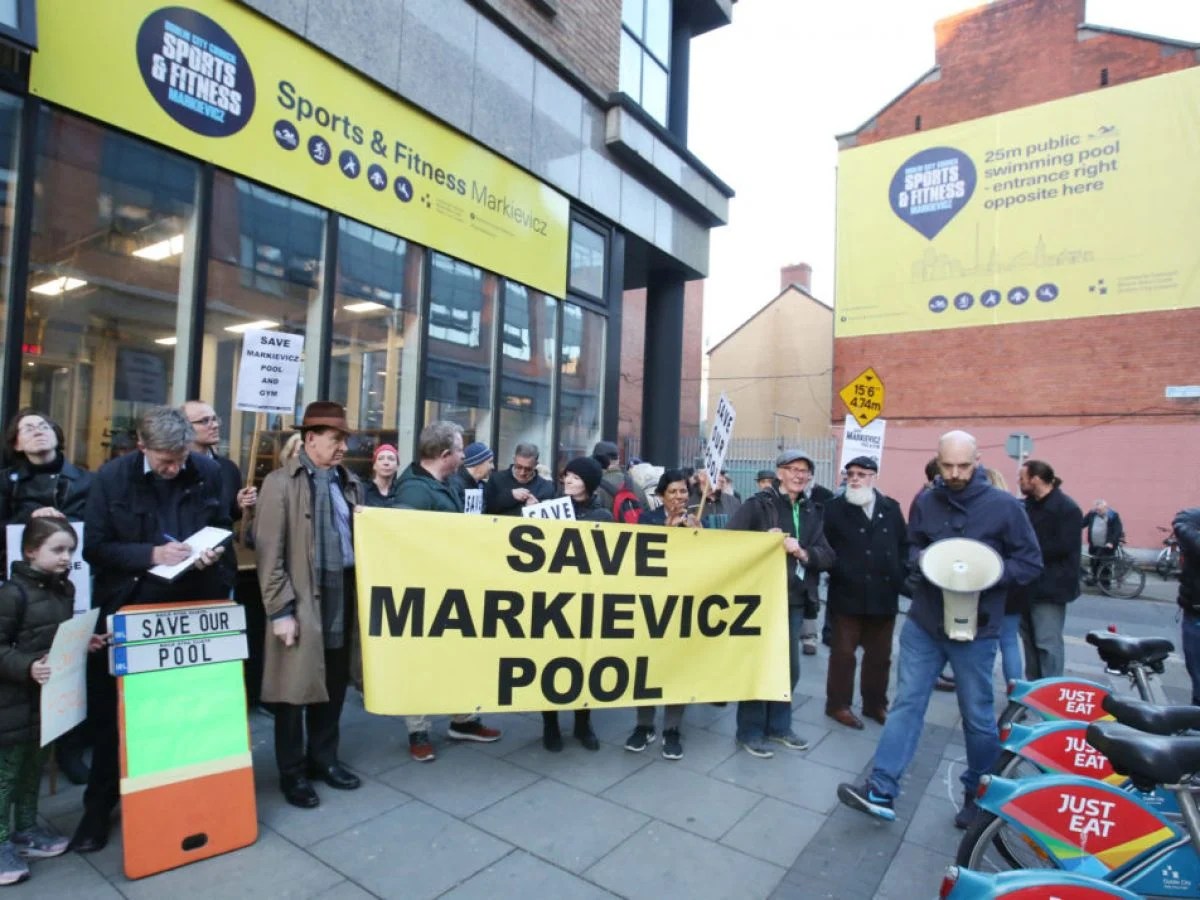
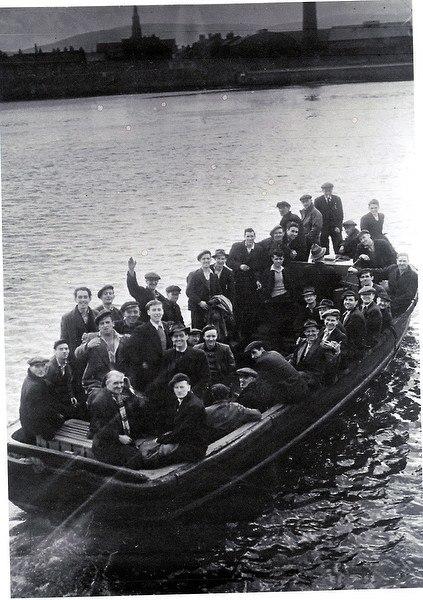
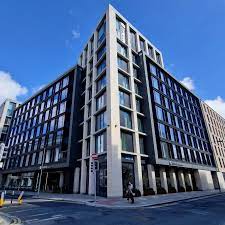


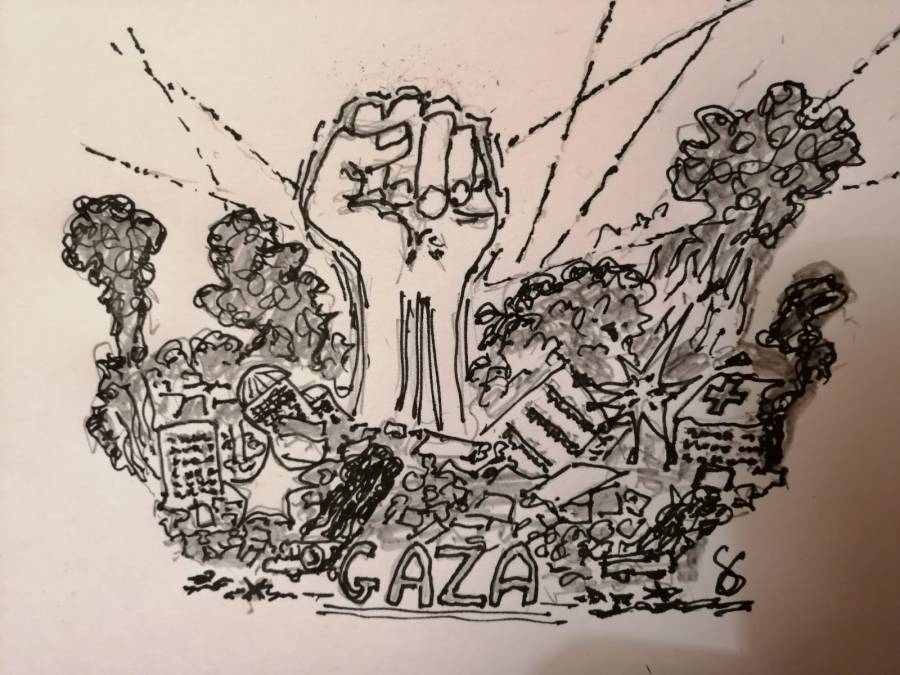


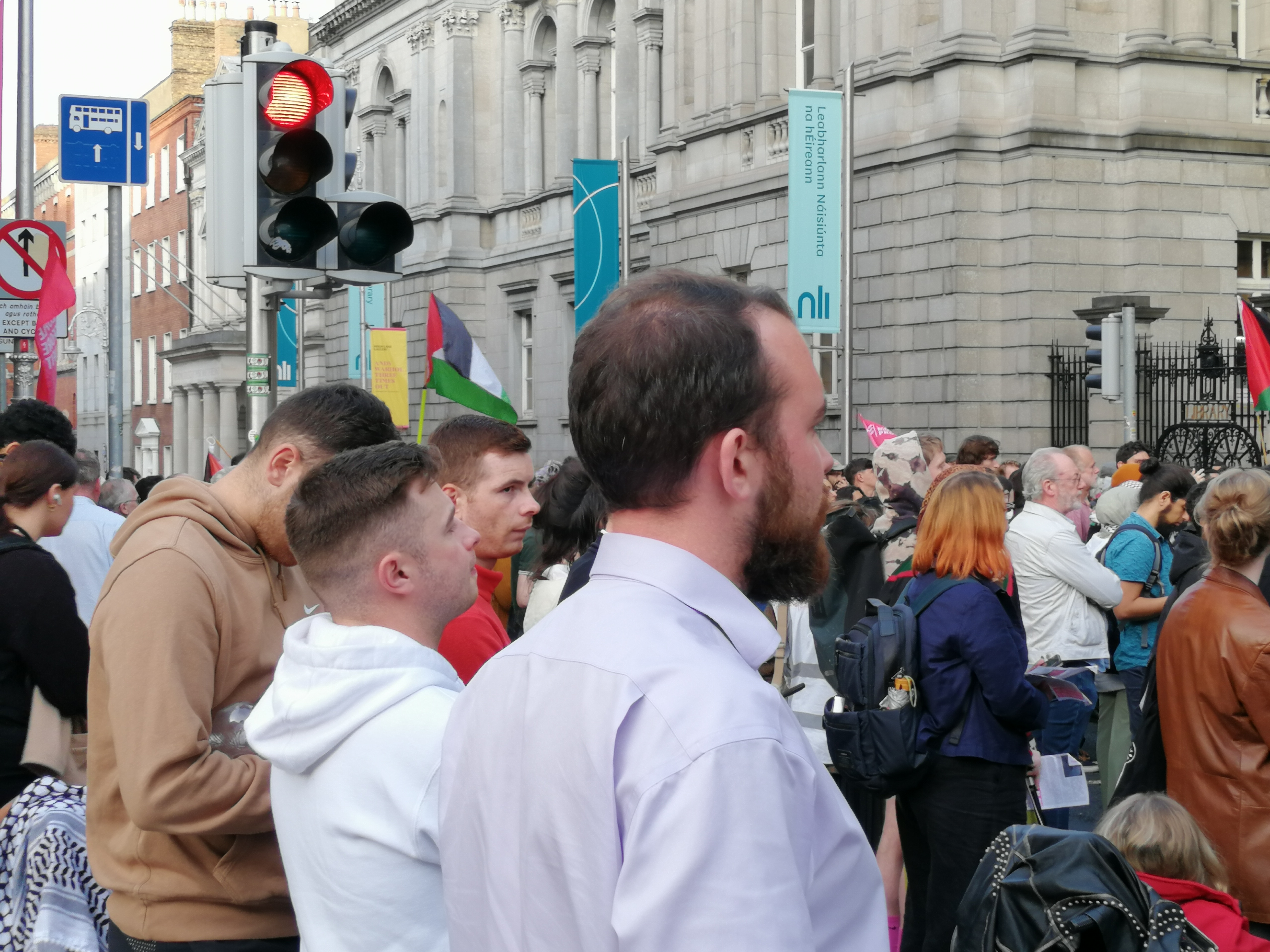

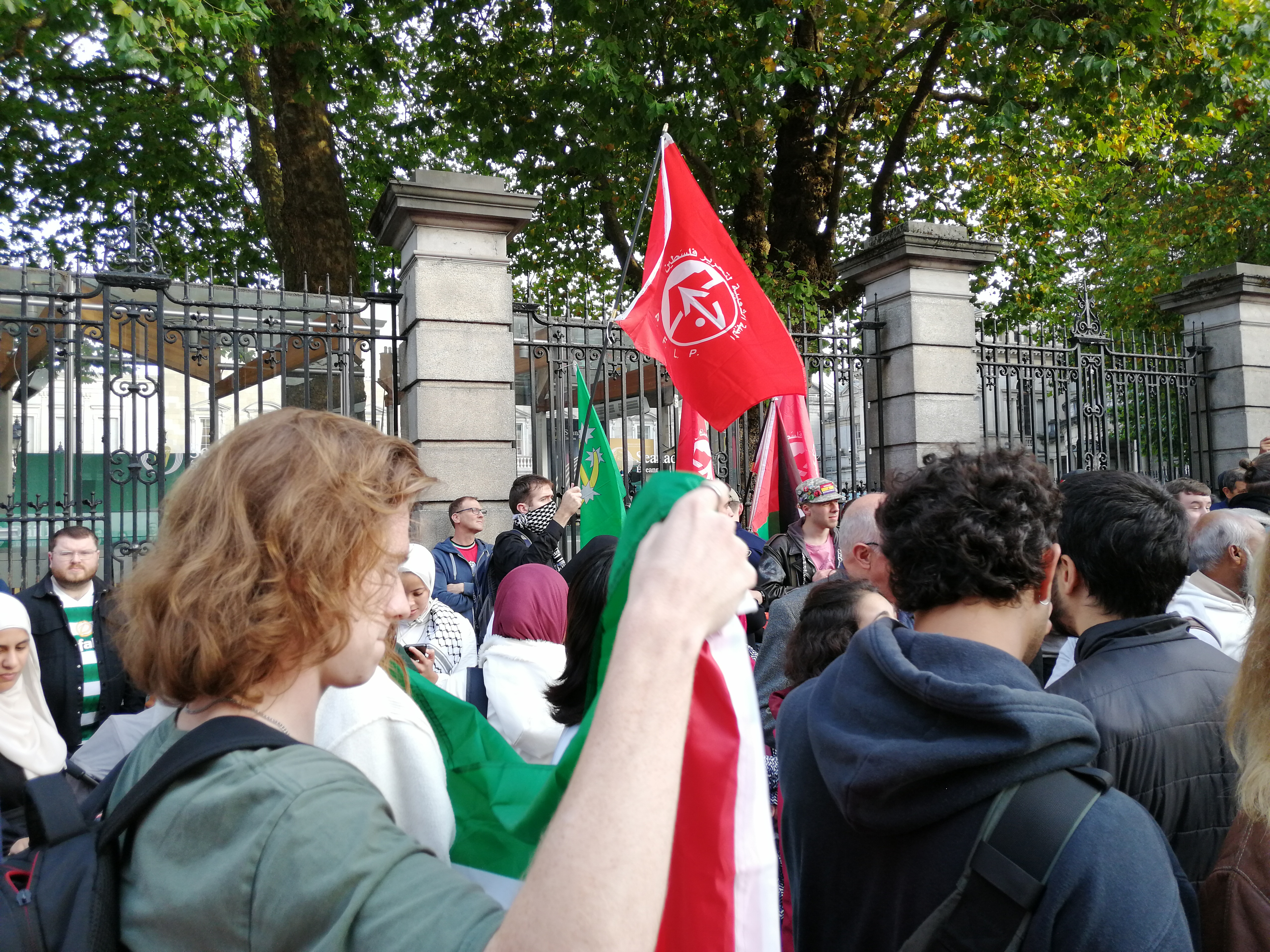

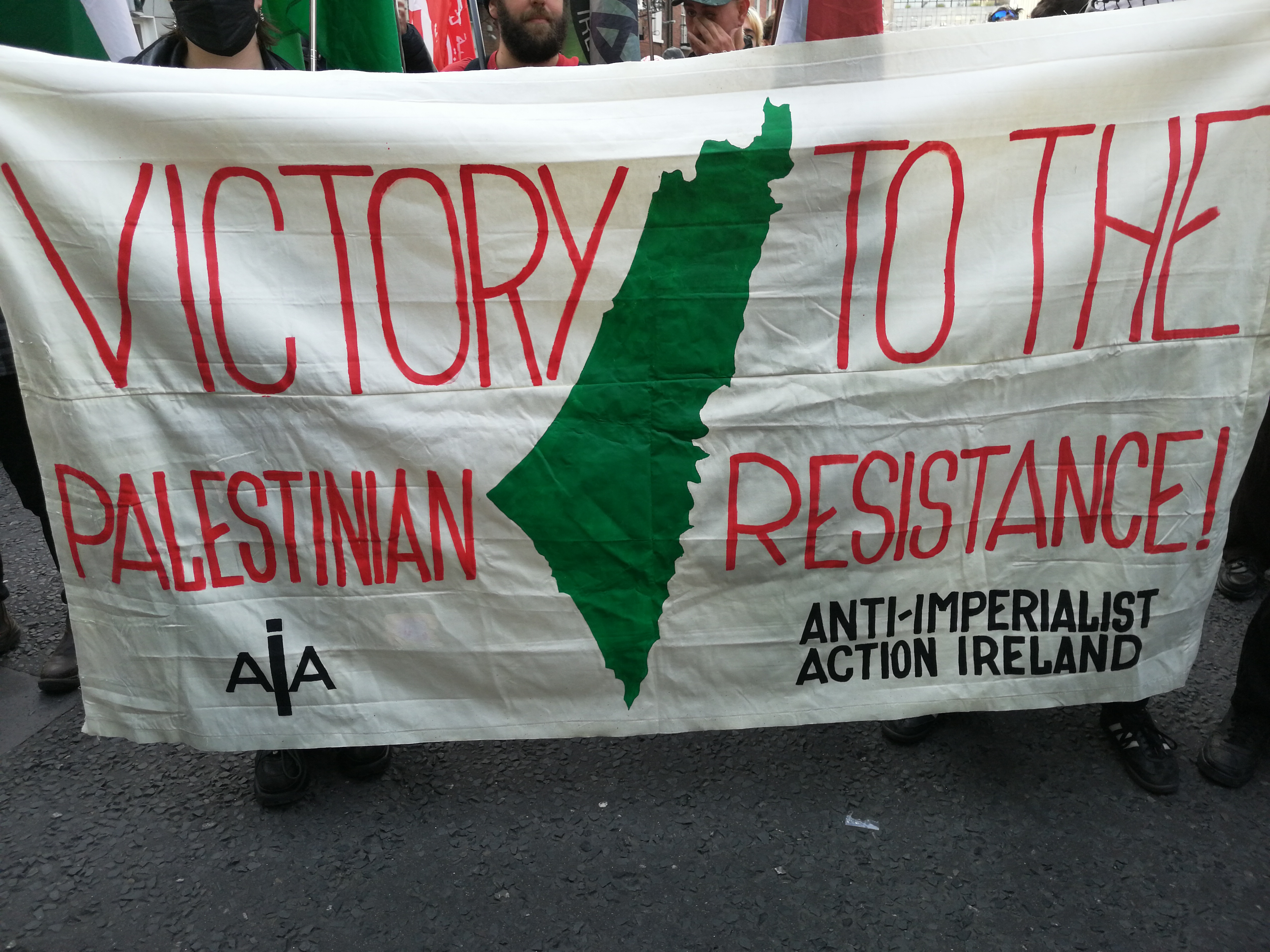


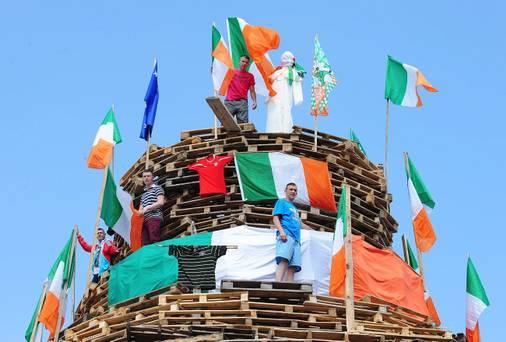
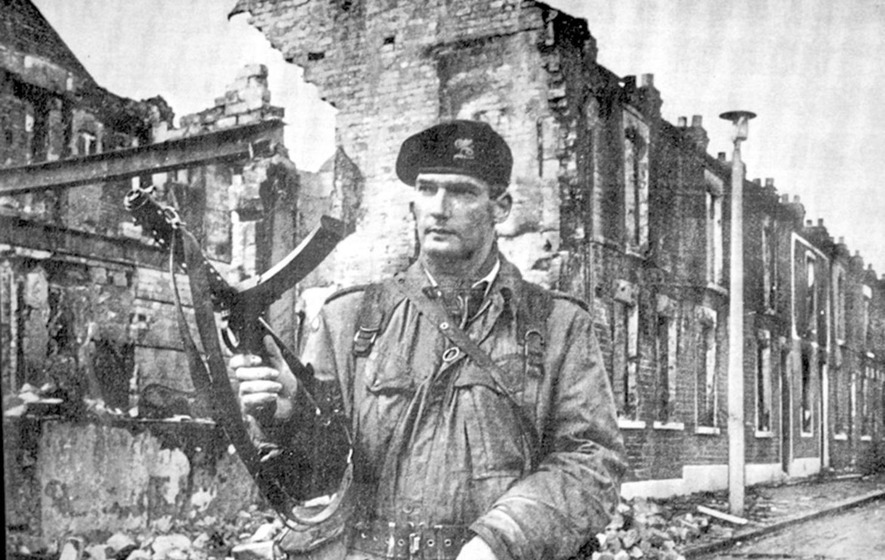

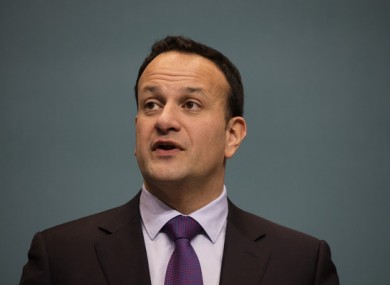


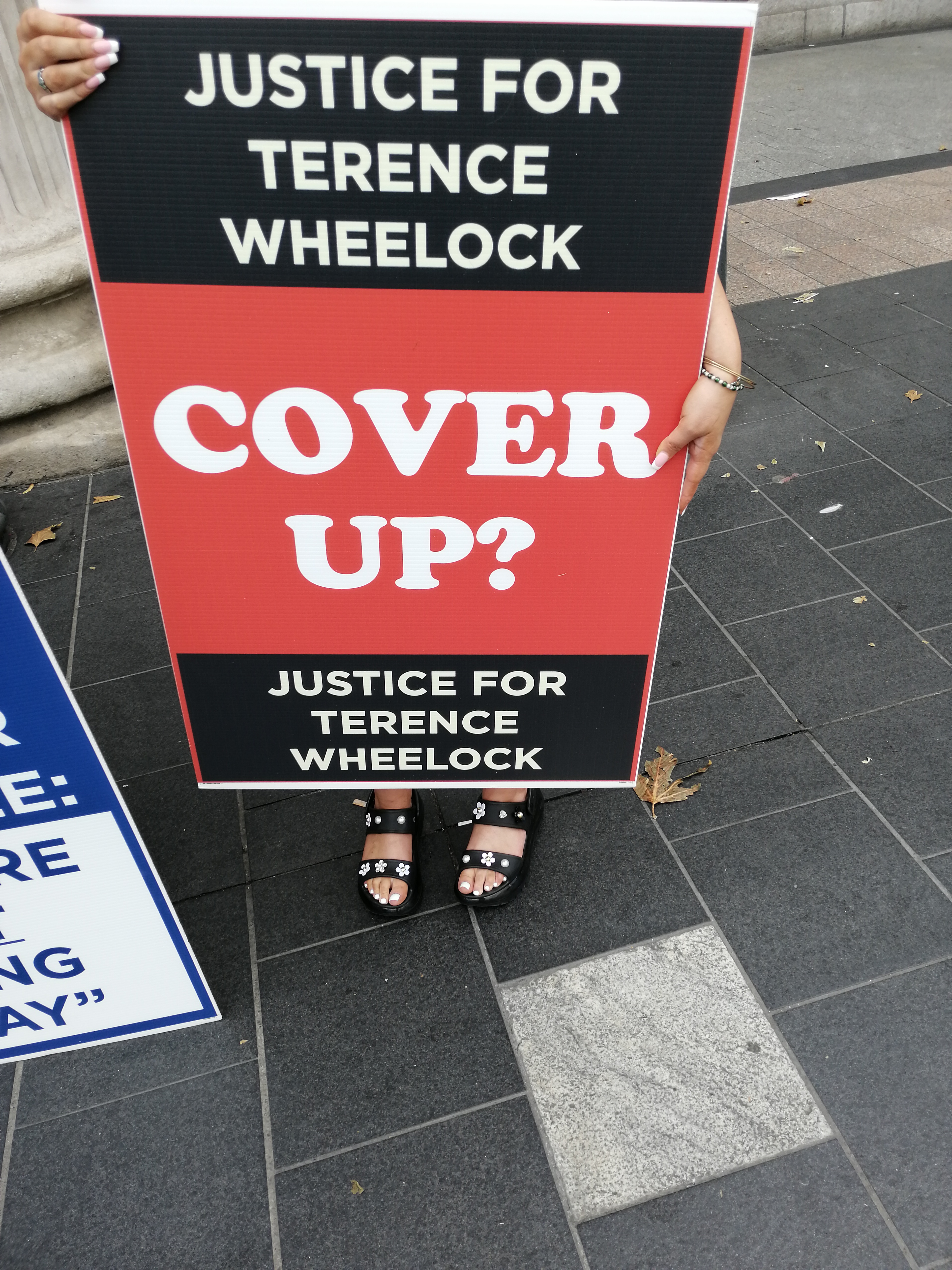
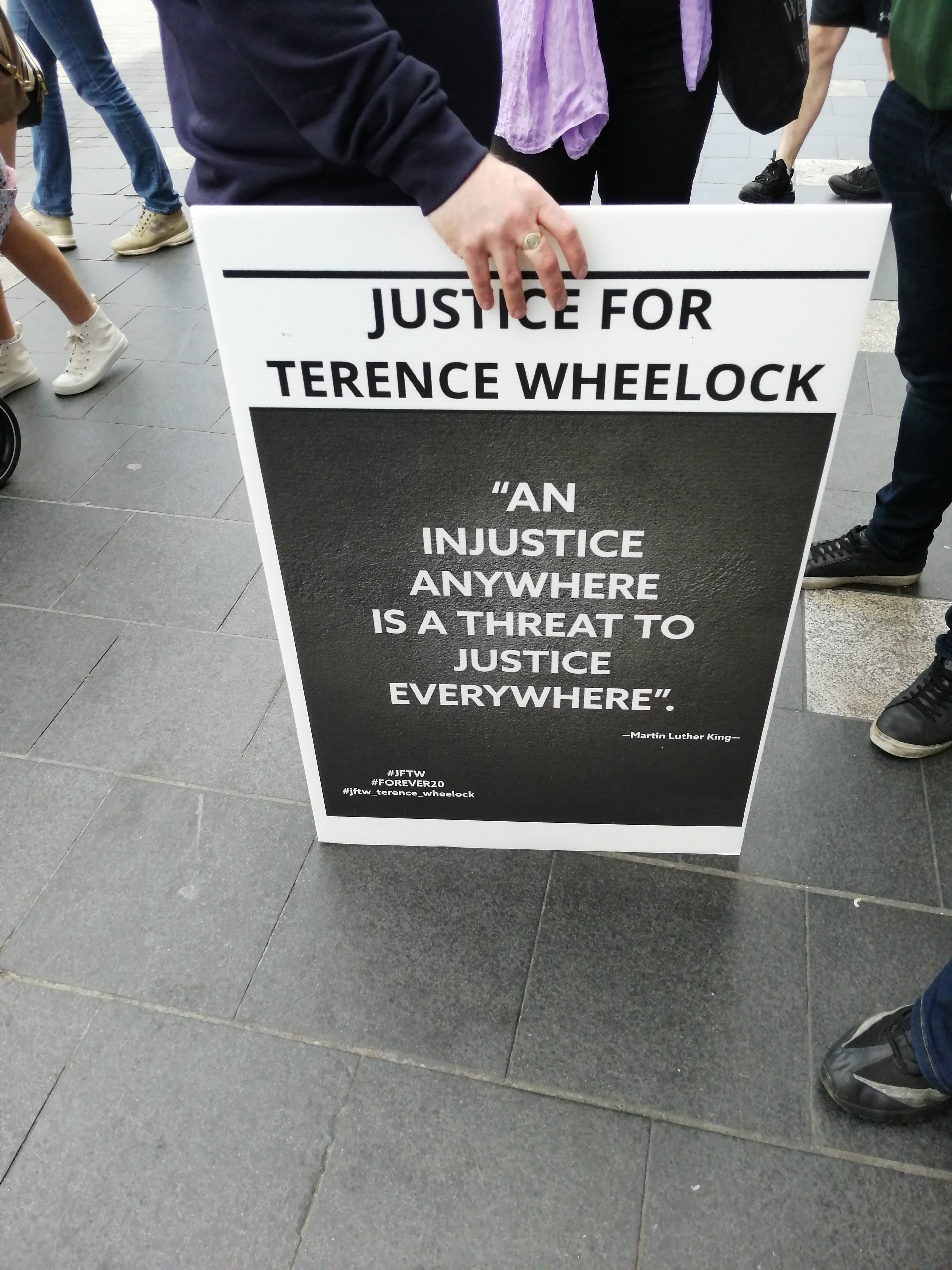


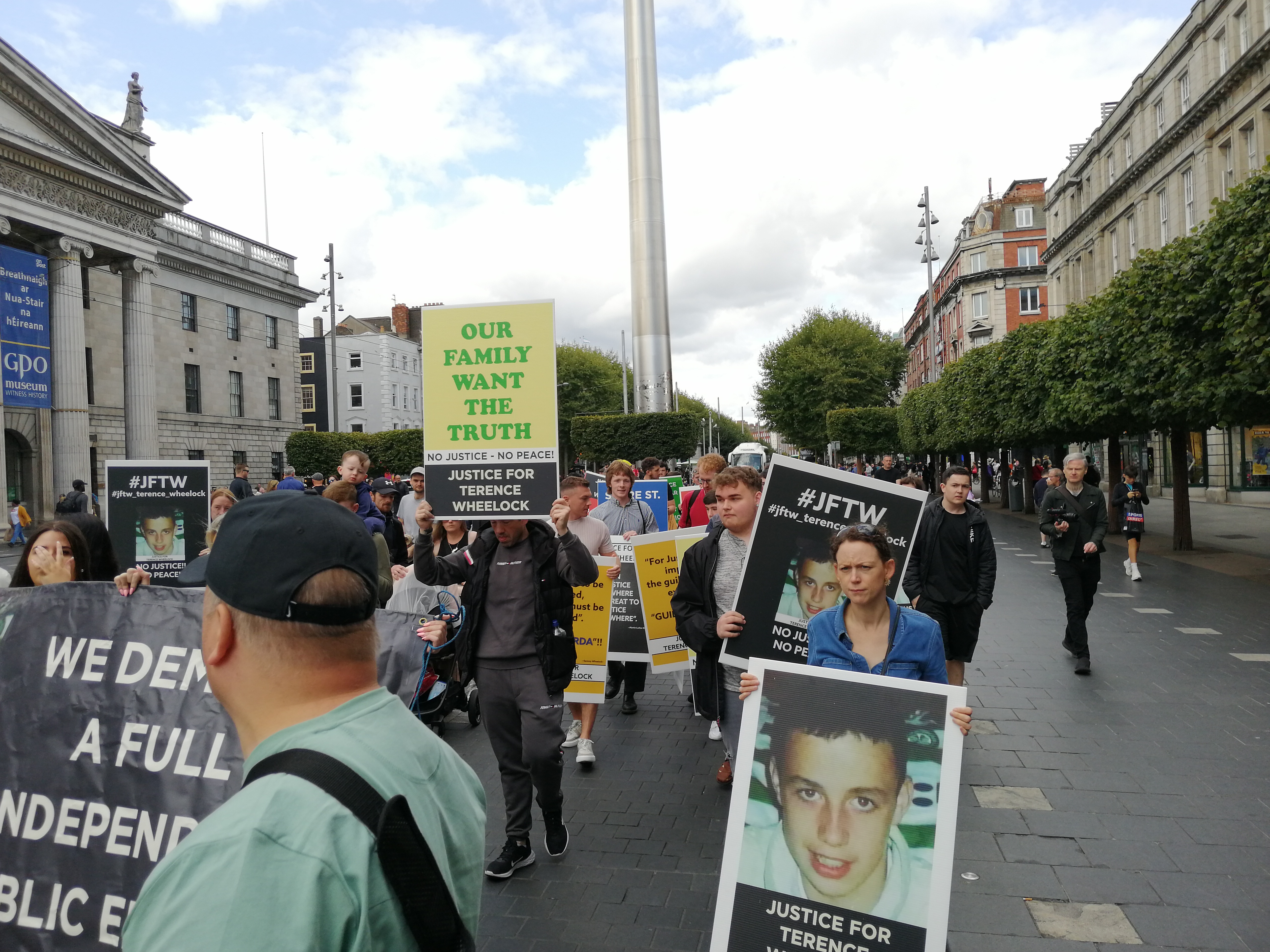

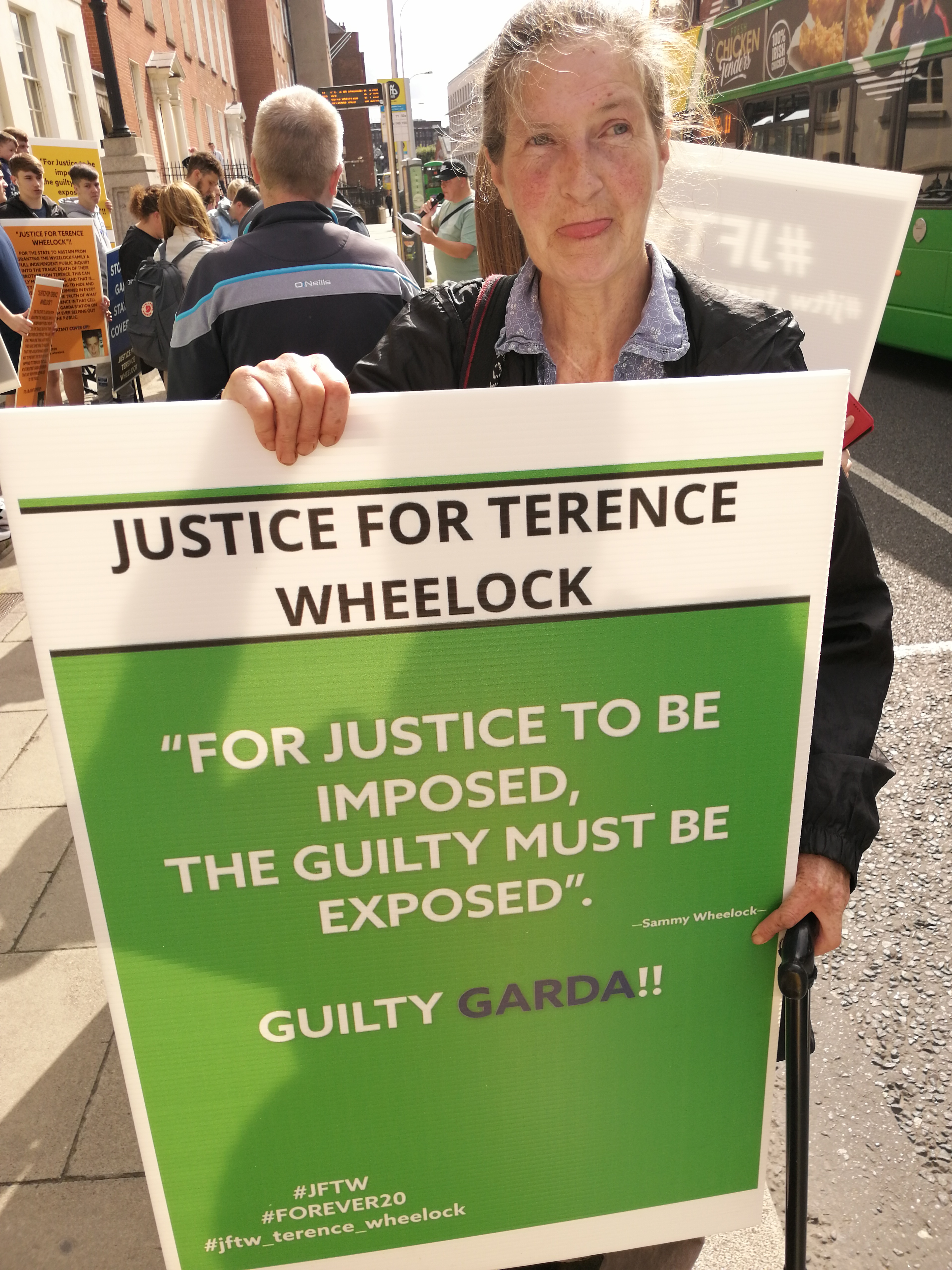


 rebelbreeze