‘Wha’ – the Junior Minister for Education and his travel distance claims?’
‘Yeah. I mean, according to The Ditch he would’a hav’ta driven more than twice as much as the average taxi driver in Ireland, which averages at 30,352 kilometres a year. Collins claimed 73,807 kilometres.’
‘With a head for figures like that, he should be Minister for Finance!’
‘Heh, heh. But maybe he was moonlighting as a taxi super-driver on top of his parliamentary travelling.’
‘Could be. Those poor TDs only get €107,376 a year to live on.’
‘Apart from expenses. Like tax-deductible driving expenses.’
‘Exactly!’
‘Well, it does certainly look like he’s been taking the country for a ride.’
‘Ha, ha, ha. And ye can’t fault his drive!’
‘I think they’ll soon be calling him ‘Miles’ Collins.’
Late Tuesday night and early hours of Wednesday morning an operation with large numbers of Gardaí and their helicopter circling overhead disturbed residents in the north Dublin city centre area of Berkeley Road and surroundings.
It looked like drug bust, hostage rescue situation or siege, but it was none of those things, instead being an eviction of four housing activists.1
Supporters of the occupation by the RHL gathered at short notice by Berkeley Road during the Garda operation but were roughly pushed far back by Gardaí from the building under attack (Photo: RHL)
The building had been “acquisitioned” by the Revolutionary Housing League which for a couple of years has been occupying buildings lying empty around Dublin in order to house homeless people and to inspire people to take over empty buildings to end the homeless crisis.
One of those buildings was the red-brick building on Eden Quay and corner of Marlborough Street; it had been operated by the Salvation Army as a night shelter for homeless young people but left empty for years after losing funding.
Supporters in front of James Connolly House occupation over a year ago. (Photo: Rebel Breeze)
On 1st May 2022, RHL2 activists ‘acquisitioned’ the building, renamed it James Connolly House and repaired a leak in the roof. In the early morning of 9th June 2022, an estimated 100 Gardaí (some reportedly armed) stormed the building with a Garda helicopter circling overhead.
Two RHL activists performing overnight security on the building were arrested and brought to court, where they declined to be bound over or to give an undertaking that they would not return to the building.
The Salvation Army said that they were renovating the building in order to house Ukrainian refugees. Not only was there no evidence of that in the building when it was occupied but it is empty still, over a year after that eviction3.
Garda evictions have taken place around other acquisitions of empty properties and RHL activists have on each occasion refused to commit to an undertaking not to occupy other properties.
Rather, the RHL has called for empty buildings to be occupied around the country.
The eviction this week
The massive Garda operation this week, including road-blocks, to evict RHL occupants of the Berkeley Road house. (Photo: RHL)
After the eviction in Berkeley Road, four RHL activists were taken to Court where they followed the previous pattern of refusing to be bound over or to promise not to occupy other buildings. Nevertheless they were released with a threat of jail-time if they re-occupied.
The lessee of the building, advertising as Cabhrú and formerly Catholic Housing Aid Society (Chas), has faced allegations of improper use of that building and another, Fr. Scully House on nearby Gardiner Street, some of which were borne out in an investigation by Charities Regulator.4
Supporters of the RHL occupiers outside the High Court (Photo: RHL)
The housing crisis
The numbers of homeless people in the the Irish state passed 12,000 for the first time in May this year and over 4,000 of those are children,5 nor do those figures include people defaulting on their mortgage loans, sleeping on the street or ‘sofa-surfing’ with friends and relations.
According to figures published in April this year, there are over 100,000 empty homes within the Irish state, not counting holiday homes (the Berkeley Road one was empty for three years).
Housing the homeless on the face of it can be accomplished without the revolutionary overthrow of the State and its Gombeen6 ruling class. All that is necessary is a public housing program financed by the State, which it could easily accomplish.
However, the stubborn clinging of the Gombeens to keeping a wide high-return market for property speculators, bank funders and big landlords, year after year as the housing crisis worsens, seems to indicate that a revolutionary remedy is necessary.
This week the Taoiseach,7 Varadkar, inferred that a contributory cause of the housing crisis was that homeless people had turned down alternative accommodation, a nonsensical claim since one person’s declined accommodation could just be offered to the next.
Addressing him in the Leinster House parliament, Sinn Féin TD8 Pearse Doherty9 took him to task for inferring that the homeless were to blame for their situation, in response to which Varadkar denied accusing the homeless and ungraciously amended his statement to “some homeless people”.
He went on to say that homelessness has a number of causes but neglected to name the principal one, viz. that the State does not supply funds to municipal authorities to provide public housing, leaving property speculators, banks and big landlords free to exploit the housing ‘scarcity’.
According to media reports, Doherty neglected to take this opportunity to point out the real cause of the problem and the solution, which confirms the doubts of those who say that his party is “Fianna Fáil Mark II”,10 with no intention to fundamentally alter the economic system in the state.11
Revolutionary Housing League flag on top of the occupied building during the massive Garda operation (Photo: RHL)
In conclusion
The housing crisis shows no sign of being resolved and the ruling class have ridden high-profile ‘shaming’ token occupations such as that of Apollo House in January 2017 without changing anything. RHL occupations do seem to show a way forward if they are widely emulated.
Heavy Garda operations on the one hand and comparatively light treatment by the courts on the other seems to indicate a determination not to tolerate this kind of direct action on homelessness while at the same time moderated by a fear of creating housing action martyrs.
Meanwhile the numbers of homeless grows by the month without any other credible solution in sight.
End.
FOOTNOTES
1This is the police force that has been described by its chief, Commissioner Drew Harris (formerly Asst. Commissioner of the colonial gendarmerie PSNI and therefore also MI5), as his “gang” but which seems unable to prevent serious assaults in the city centre, even in its main street.
2Originally Revolutionary Housing Union, later became RHL.
4Some of those included a friend of the charity’s Chief Exeutive being accommodated in the building allegedly providing only for the elderly, rooms being let to short-stay students without proper guarantees or rights and one of the houses being used as a business address.
8Teachta Dála, member of the Irish Parliament, equivalent to “MP”.
9Deputy leader of the party in the Irish parliament. Holly Cairns, leader of the Social Democrats also attacked Varadkar on the statement.
10Fianna Fáil is one of the two main government parties; originally a split from Sinn Féin led by De Valera, it has been in government more than any other party in the Irish state.
11A number of SF party leaders including its current president have publicly stated that big business has nothing to fear from their party.
Una multitudinaria reunión pública en el centro de la ciudad de Dublín el sábado escuchó y aplaudió a personas destacadas que hablaron en contra de que el Estado irlandés se convierta en parte de alianzas militares, ya sea PESCO1 (“OTAN a escondidas”2) o la propia OTAN.
El panel de oradores de alto perfil presidido por la eurodiputada irlandesa Clare Daly contó con la participación de su colega eurodiputado Mick Wallace, Sevim Dagdalen (MP Die Linke), Medea Benjamin (fundadora de Code Pink) y Anne Wright (ex comandante del ejército de EEUU pero opositora a la Guerra en Irak).
El célebre rapero antiimperialista Lowkey también participó como orador, al igual que Yanis Varoufakis (ex-Syrza)3, quien se dirigió a la reunión mediante un video grabado desde el extranjero y aplaudió a los irlandeses por su larga resistencia al colonialismo y los instó a estar orgullosos de la neutralidad de su estado.
El video del discurso grabado de Yanis Varoufakis se proyectó en la reunión de Neutrality Who Cares el sábado (Foto: Rebel Breeze)
FONDO
Existe un impedimento constitucional para que el estado irlandés participe en una asociación de guerra con otro estado y durante la Segunda Guerra Mundial la posición oficial del estado fue la neutralidad.
Sin embargo, siempre fue una neutralidad pro-aliada con los aviadores británicos derribados que podían cruzar al territorio del Reino Unido y los militares estadounidenses a menudo cruzaban la frontera del Reino Unido para visitar el “sur”, mientras que los aviadores alemanes derribados eran internados durante la guerra.
El impedimento no es absoluto y generalmente se lo conoce como el “Triple bloqueo”, que enumera las tres condiciones que permitirían al gobierno enviar más de 12 tropas al extranjero:
En los últimos años, algunos políticos y comentaristas públicos han planteado la idea de que el estado irlandés podría reincorporarse a la Commonwealth británica y, desde la guerra en Ucrania, ha surgido un discurso de que el estado debe unirse a una alianza militar externa para protegerse de la Rusia.
Sevim Dagdalen, diputado del partido Die Linke, hablando en la reunión de Neutrality Who Cares el sábado (Foto: Rebel Breeze)
La encuesta Irish Times/Ipsos de abril, en medio de críticas por no seguir las mejores prácticas en su diseño e incluso acusaciones de tratar de incitar a los encuestados a favor de unirse a alguna alianza militar externa, arrojó dos tercios claramente en contra de que el Estado irlandés haga tal cosa.
La propaganda rusofóbica ha especulado sobre las actividades de los arrastreros rusos en el Mar de Irlanda. Esto es completamente una alarma y una discusión agitadas sin el más mínimo fundamento, ya que Rusia nunca ha presentado la más mínima amenaza, militar o políticamente, para el pueblo irlandés.
Por otro lado, Gran Bretaña ha invadido y ocupado Irlanda durante más de 800 años y todavía está en posesión de una quinta parte de su territorio y tiene importantes intereses económicos y financieros en el país como, más recientemente, los Estados Unidos y la Unión Europea.
La Royal Navy del Reino Unido entra con frecuencia en aguas nacionales irlandesas y el Estado ha permitido regularmente que sus barcos, junto con los buques de guerra de otros países de la OTAN, atraquen en puertos irlandeses. Y también la Royal Air Force, ha surgido recientemente, para patrullar el espacio aéreo territorial irlandés.
Medea Benjamin, fundadora de Code Pink, hablando en la reunión de Neutrality Who Cares el sábado (Foto: Rebel Breeze)
Como parte de esta falsa alarma y discurso, el Gobierno irlandés5 fundó recientemente el Foro Consultivo sobre Política de Seguridad Internacional que tenía previsto reunirse la semana pasada en Cork y Galway, y luego durante dos días en el Castillo de Dublín.
El presidente del Estado, Michael D. Higgins, en una intervención inusual durante una entrevista con el Examiner expresó su preocupación por lo que percibía como la “deriva hacia la OTAN” y criticó la composición de los oradores y presidente de esta organización por ser pro- OTAN.
Michael D comentó sobre “los almirantes, los generales, la fuerza aérea, el resto” y describió a su presidenta, Louise Richardson, como una persona “con un DBE muy grande – Dama del Imperio Británico”.
El presidente Higgins se disculpó más tarde por lo que calificó como “un comentario trivial” sobre Richardson, pero no retiró sus comentarios sobre la composición general del Foro, que de hecho ha sido criticado por otros, incluidos Richard Boyd Barrett TD6 y la senadora Frances Black.
LA REUNIÓN EN DUBLÍN
Varoufakis se refirió a Irlanda como si la nación hubiera ganado su independencia, como sucedió con todos los oradores que siguieron (con la excepción de Lowkey).
Se escuchó a un miembro de la audiencia comentar irónicamente a otro que estaba agradecido de haber asistido ya que hasta ahora no había estado al tanto de la “independencia” de Irlanda.
Lowkey, Rapero antiimperialista de bajo perfil de Londres, hablando en la reunión en Dublín. (Foto: Rebel Breeze)
Lowkey, el rapero radicado en Gran Bretaña, hizo trizas la ilusión de la neutralidad del estado irlandés al relatar el uso de los aeropuertos irlandeses no solo para los vuelos del Ejército de los EE.UU en el territorio estatal.
El rapero expuso la ‘neutralidad’ del gobierno irlandés en el entrenamiento de soldados que iban a luchar en Ucrania y también en su continuo apoyo al Estado de Israel y fue aclamado cuando declaró que, como iraquí, estaba orgulloso de que su país hubiera “pateado el culo de los británicos”.
En un ejercicio magistral de crítica respaldada por la investigación, Lowkey pasó a despojar de la pretensión de independencia e imparcialidad del “Foro Consultivo” fundado por el gobierno, exponiendo los antecedentes imperialistas e incluso de la OTAN de los principales miembros del panel y su presidente.
Todos los miembros del panel de Neutrality — Who Cares fueron oradores efectivos e hicieron puntos útiles, aunque fue curioso escuchar a uno de ellos denunciar a los “fascistas rusos” sin comentar sobre las unidades fascistas en el ejército nacional del régimen ucraniano.
Fue Lowkey quien clavó los clavos más largos y afilados en la crucifixión verbal de la campaña del gobierno irlandés hacia la OTAN y quien provocó los vítores más fuertes de su audiencia, en su mayoría irlandesa.
Incluso el célebre orador Daly no estuvo muy cerca, aunque ella también expuso la propaganda del Gobierno y las porristas pro-OTAN. El eurodiputado desmintió la excusa de proteger los cables de comunicación subterráneos, señalando que el 25% de ellos están fuera de servicio regularmente.
La eurodiputada Clare Daly hablando en la reunión de Neutrality Who Cares el sábado (Foto: Rebel Breeze)
El eurodiputado irlandés también satirizó la idea de que cualquier cable submarino esté protegido por la OTAN, ¡teniendo en cuenta dónde reside la responsabilidad de la voladura del gasoducto Nord Stream!7
Finalmente, advirtió a la audiencia que esté atenta a un intento de eliminar el Triple Lock bajo algún tipo de excusa como un primer paso para permitir que el Gobierno ingrese a una alianza militar.
UNA PARTE DE IRLANDA YA EN LA OTAN
Se dejó a un joven miembro de la audiencia en la sección de preguntas y respuestas, leyendo una declaración en nombre de la organización Acción Antiimperialista, señalar que una parte de Irlanda ya está en la OTAN, a saber, los Seis Condados, ocupados por Gran Bretaña y una parte del Reino Unido.
El joven llamó a un frente amplio para unirse en torno a la oposición a formar parte de una alianza militar externa y el imperialismo (ver declaración completa en el apéndice). Antes se habían distribuido pequeños volantes que abogaban por el mismo curso de acción dentro de la reunión.
El partido People Before Profit también distribuyó folletos en contra de unirse a la OTAN a las personas que asistieron a la reunión.
De hecho, es difícil ver por qué la presencia de la OTAN en una parte de Irlanda debería estar tan ausente de los discursos del panel. Dado que no puede haber sido accidental, debemos reflexionar sobre cuál podría haber sido la razón de su omisión.
¿Están de acuerdo los del panel con la ocupación colonial de una parte de Irlanda? Eso parece difícil de creer, al menos para algunos de ellos. O tal vez creen que su discusión sería una distracción del tema de la neutralidad y, de ser así, ¿cómo puede ser eso?
¿O es que buscan el apoyo de sectores de la sociedad irlandesa que se sienten cómodos con la continua ocupación y partición de Irlanda? Si es así, están tratando de construir el movimiento contra el ingreso irlandés en la OTAN en términos que consideren aceptables para los tímidos sectores de la clase media.
Cuando se hace necesaria una acción resuelta o cuando la reacción comienza a hacer mella, esas secciones se desvanecerán del movimiento anti-OTAN. Por razones tanto prácticas como ideológicas, la campaña debe atraer a la clase obrera sobre una base descaradamente anticolonial y antiimperialista.
Pancarta de protesta en la reunión del Foro Gubernamental para la Seguridad Internacional en Cork mientras Tánaiste (Viceprimer Ministro, en el extremo izquierdo de la foto) hablaba (Foto obtenida: Internet)
Dondequiera que ha ido el Foro del Gobierno, ha encontrado oposición pública. Hubo piquetes en sus sedes de Cork y Galway, mientras que dentro de la primera se desplegó una pancarta contra la OTAN y muchos en la audiencia denunciaron la dirección del Gobierno.
Incluso después de que sacaron a los manifestantes, otro se puso de pie para denunciar el discurso del presidente antes de que él también fuera maltratado.
En el Castillo de Dublín, sede del Foro el lunes y martes con una larga historia como centro administrativo de la ocupación británica, personas contrarias a la OTAN, la guerra o el militarismo ya favor de la independencia irlandesa desplegaron pancartas y pancartas de protesta y enarbolaron banderas nacionales.
Manifestantes dentro de un patio del Castillo de Dublín contra el Foro Gubernamental sobre Seguridad Internacional celebrado dentro del complejo esta semana. (Foto fuente: Acción Antiimperialista)Tweet del AIA en el que aparece la cadena de televisión nacional RTÉ citando los comentarios ridículos de los líderes del gobierno irlandés sobre la exhibición de banderas republicanas irlandesas por parte de los manifestantes frente a la entrada peatonal principal al Castillo de Dublín en el centro de la ciudad.
EN CONCLUSIÓN
El silencio general de los medios de comunicación sobre la reunión de Neutrality Who Cares en Dublín y la minimización de las protestas contra el Foro en todos sus lugares es parte de la campaña de la clase irlandesa Gombeen para unirse a la OTAN, a pesar de la conocida oposición de la amplia población irlandesa.
No se olvida que cuando decenas de miles atestaron las calles de Dublín marchando contra la triple imposición de impuestos del servicio de agua y la privatización, cómo los medios de comunicación informaron de la participación simplemente de “varios miles” o incluso “cientos”.
Sin embargo, los comentarios del Presidente del Estado y las declaraciones de algunos periodistas en los medios de comunicación revelan que incluso en sus propias secciones, los Gombeen no se salen con la suya. En la población general, sin embargo, el estado de ánimo es claramente de no militarización de Irlanda.
Si el movimiento anti-OTAN permanece activo y militante y adopta una postura antiimperialista generalmente amplia, yendo a la mayoría de los sectores de la sociedad pero especialmente a la clase trabajadora, el impulso de los Gombeen hacia la participación en PESCO y la OTAN será derrotado de manera decisiva.
Fin.
NOTAS AL PIE
1 Cooperación Permanente Estructurada es el extraño nombre de esta alianza militar propuesta para toda la Unión Europea.
3 Syriza es un partido de coalición socialdemócrata de izquierda que fue elegido para el gobierno de Grecia en 2015 con la promesa de implementar las reformas sociales y económicas necesarias frente a la UE y otras resistencias imperialistas. Sin embargo, una vez que la UE y el BCE comenzaron a apretar las tuercas, la resistencia de la dirección del partido se desintegró. Varoufakis había sido nombrado ministro de Finanzas y, para darle lo que le corresponde, trató de reunir a sus colegas del gabinete en torno a un programa de incumplimiento de los dictados de la UE, pero no tuvo éxito. Aunque sigue siendo la principal oposición socialdemócrata en Grecia, el partido ha seguido perdiendo popularidad en las elecciones desde entonces.
4. Las fuerzas irlandesas de mantenimiento de la paz de la ONU que superaban los 12 efectivos han sido enviadas al extranjero con esas tres condiciones satisfechas a muchos conflictos por todo el mundo, sobre todo al Líbano, donde han sufrido algunas bajas y al Congo, donde han sufrido muchas.
5. El Gobierno irlandés es una coalición de los dos principales partidos de oposición tradicionales, Fianna Fáil y Fine Gael, con el Partido Verde. El Partido Laborista no tiene una posición notablemente diferente sobre la alianza militar externa y el Sinn Féin recientemente abandonó su oposición de décadas a la membresía irlandesa en la OTAN y la UE.
6. Barrett es Teachta Dála (miembro del parlamento irlandés) y miembro del partido político de izquierda People Before Profit. Frances Black, con una exitosa carrera como cantante, es una senadora independiente en el mismo parlamento que ha patrocinado un proyecto de ley para prohibir los productos de los asentamientos ilegales israelíes. El Proyecto de Ley de Control de la Actividad Económica (Territorios Ocupados) de 2018 fue aprobado en su totalidad por el Senado en 2018 y pasó su primera votación en el Dáil Éireann a principios de 2019. Luego se envió para un escrutinio detallado en el Comité Selecto de Asuntos Exteriores y Comercio del Oireachtas. Esta revisión se llevó a cabo durante varios meses, escuchando el testimonio y los aportes de expertos, y en diciembre de 2019 el Comité también votó a favor del proyecto de ley. Desde entonces el Gobierno está tardando en sacarlo adelante.
7. Aunque aún no se dispone de pruebas directas, la evidencia circunstancial apunta hacia la responsabilidad de las fuerzas armadas estadounidenses y el periodista Seymour Hersh (ganador del premio Pullitzer por exponer la masacre militar estadounidense en Mai Lai, Vietnam y su posterior intento de encubrimiento) ha confirmado la responsabilidad de las fuerzas armadas estadounidenses sobre la base del conocimiento de sus contactos internos.
APPÉNDICE
Traducción del texto de la declaración leída durante el período de preguntas y respuestas de la reunión pública Neutralidad – a Quien Le Importa? en Dublín el 24 de junio de 2023:
Acción Antiimperialista Irlanda mantiene la posición revolucionaria de que Gran Bretaña, la OTAN y cualquier otro poder imperialista no son bienvenidos en Irlanda. La Acción Antiimperialista se ha mostrado activa en la oposición a todas las formas del imperialismo en Irlanda y ha estado en primer plano en la oposición a la OTAN.
La OTAN es una gran amenaza para Irlanda y el pueblo irlandés, y al darnos cuenta de ello, instamos y llamamos a todos aquí a oponerse abiertamente a la presencia de la OTAN en Irlanda, ya sea uno activista contra la guerra, un republicano socialista, un anti- Fascista, sindicalista o simplemente en contra de la presencia de una potencia extranjera en Irlanda, apoye esta posición y asegúrese de que sus hijos e hijas no sean enviados a ser masacrados en guerras ilegales de conquista.
Si bien todo el enfoque se ha centrado en el impulso hacia la OTAN para los 26 condados, no podemos olvidar que los Seis Condados ya están ocupados por la OTAN en virtud de la ocupación ilegal de Gran Bretaña. Solo un amplio frente militante de fuerzas progresistas en los 32 condados puede oponerse firmemente a la presencia de la OTAN en Irlanda. Todos tienen un papel que desempeñar en tan amplio frente que Acción Antiimperialista y otras se esfuerzan por establecer.
Rechazar la OTAN. ¡Gran Bretaña y la OTAN fuera de Irlanda ahora!
A packed public meeting in Dublin city centre on Saturday listened to and applauded prominent people speaking against the Irish State becoming part of military alliances, whether PESCO1 (“NATO by stealth”2) or NATO itself.
The high-profile panel of speakers chaired by Irish MEP Clare Daly featured fellow MEP Mick Wallace, Sevim Dagdalen (MP Die Linke), Medea Benjamin (founder of Code Pink) and Anne Wright (ex-US Army Major and opponent of the US-Iraq War).
Celebrated anti-imperialist rapper Lowkey was also a speaker as was Yanis Varoufakis (ex-Syrza)3 who addressed the meeting by recorded video from abroad and applauded the Irish for their long resistance to colonialism and urged them to be proud of their state’s neutrality.
Yanis Varoufakis’ recorded speech video screened at the Neutrality Who Cares meeting on Saturday (Photo: Rebel Breeze)
BACKGROUND
There is a constitutional impediment to the Irish state’s participating in a war partnership with another state and during WW2 the state’s official position was neutrality.
However, it was always a pro-Allied neutrality with British downed airmen allowed to cross over into UK territory and US servicemen often crossing the UK border to visit the ‘south’, while German downed airmen were interned for the duration of the War.
The impediment is not absolute and is usually referred to as the ‘Triple Lock’, listing the three conditions which would enable to government to send more than 12 troops overseas:
In recent years some politicians and public commentators have floated the idea that the Irish state could rejoin the British Commonwealth and, since the war in the Ukraine, a discourse has arisen that the State needs to join an external military alliance in order to protect itself from Russia.
Sevim Dagdalen, Die Linke party MP, speaking at the Neutrality Who Cares meeting on Saturday (Photo: Rebel Breeze)
The Irish Times/Ipsos poll in April, amid criticisms of not following best practice in its design and even accusations of trying to steer respondents towards favouring joining some external military alliance, delivered two thirds clearly against the Irish state doing any such thing.
Russophobic propaganda has speculated on the activities of Russian trawlers in the Irish Sea. This is entirely a whipped-up alarm and discussion without the slightest foundation in fact since Russia has never presented the slightest threat, militarily or politically, to the Irish people.
On the other hand, Britain has invaded and occupied Ireland for over 800 years and is still in possession of one-fifth of its territory and has substantial economic and financial interests in the country as, more recently, have the USA and European Union states.
The UK’s Royal Navy frequently enters Irish national waters and the State has regularly permitted its ships, along with warships of other NATO countries, to dock in Irish harbours. And also the Royal Air Force, it has recently emerged, to patrol Irish territorial air space.
As part of this false alarm and discourse, the Irish Government5 recently founded the Consultative Forum on International Security Policy which was scheduled to meet last week in Cork and Galway, then for two days in Dublin Castle.
The President of the State, Michael D. Higgins, in an unusual intervention during an interview with the Examiner expressed concern at what he perceived as the “drift towards NATO” and criticised the composition of the speakers and chairperson of this organisation as being pro-NATO.
Michael D commented on “the admirals, the generals, the air force, the rest of it” and described its chair Louise Richardson, as a person “with a very large DBE – Dame of the British Empire”.
President Higgins apologised later for what he said was “a throway remark” about Richardson but did not withdraw his remarks about the overall composition of the Forum which has indeed been criticised by others, including Richard Boyd Barrett TD6 and Senator Frances Black.
THE DUBLIN MEETING
Varoufakis referred to Ireland as though the nation had won its independence, as was the case with every speaker that followed (with the exception of Lowkey).
A member of the audience was heard to remark ironically to another that he was grateful he had attended as heretofore he hadn’t been aware of Ireland’s ‘independence’.
Lowkey, the British-based rapper, tore the illusion of Irish state neutrality to tatters by recounting the use of Irish airports not only for US Army flights under Air America through Shannon, but also airlines run by the CIA and others using other airports in Irish state territory.
Lowkey, anti-imperialist rapper from London, speaking at the meeting in Dublin. (Photo: Rebel Breeze)
The rapper exposed the ‘neutrality’ of the Irish government in training soldiers going to fight in Ukraine and also in its continued support for the Israeli State and was cheered when he declared that, as an Iraqi, he was proud that his country had “kicked the ass of the British”.
In a masterful exercise in research-backed criticism, Lowkey went on to strip the pretence of independence and impartiality from the Government-founded “Consultative Forum”, exposing the imperialist and even NATO background of the main panel members and its chairperson.
All the members of the Neutrality Who Cares panel were effective speakers and made useful points although it was curious to hear one of them denouncing “Russian fascists” without commenting on the fascist units in the Ukrainian regime’s national army.
Medea Benjamin, founder of Code Pink, speaking at the Neutrality Who Cares meeting on Saturday (Photo: Rebel Breeze)
It was Lowkey who drove the sharpest and longest nails into the verbal crucifixion of the Irish Government’s drive towards NATO and who brought the loudest cheers from his mostly Irish audience.
Even celebrated speaker Daly did not come very close, though she too exposed the propaganda of the Government and pro-NATO cheerleaders. The MEP debunked the excuse of protecting underground communication cables, pointing out that 25% of them are out of action regularly.
The Irish MEP also lampooned the idea of any underwater cable being protected by NATO, considering where the responsibility for the blowing up of the Nord Stream gas pipeline lies!7
Finally she warned the audience to be on the look out for an attempt to remove the Triple Lock under some kind of excuse as a first step to permit the Government to enter a military alliance.
Clare Daly MEP speaking at the Neutrality Who Cares meeting on Saturday (Photo: Rebel Breeze)
A PART OF IRELAND ALREADY IN NATO
It was left to a youth member of the audience in the Q&A section, reading a statement on behalf of the Anti-Imperialist Action organisation, to point out that a part of Ireland is already in NATO, viz. the Six Counties, occupied by Britain and a part of the United Kingdom.
The youth called for a broad front to unite around opposition to becoming part of an external military alliance and imperialism (see full statement in appendix). Small flyers advocating the same course of action had been distributed inside the meeting earlier.
The People Before Profit party also distributed leaflets against joining NATO to people attending the meeting.
Indeed, it is hard to see why the presence of NATO in a part of Ireland should be so markedly missing from the panel’s speeches. Since it cannot have been accidental we must ponder what the rationale for its omission could have been.
Do those on the panel agree with the colonial occupation of a part of Ireland? That seems hard to believe, at least of some of them. Or perhaps they believe its discussion would be a distraction from the neutrality issue and if so, how can that be?
Or is it that they seek the support of sections of Irish society who are comfortable with the continued occupation and partition of Ireland? If so, they are seeking to build the movement against Irish membership of NATO in terms they think acceptable to timid sections of the middle class.
When resolute action becomes necessary or when reaction starts to bite, those sections will fade out of the anti-NATO movement. For practical as well as for ideological reasons, the campaign must appeal to the working class on an unashamedly anti-colonial and anti-imperialist basis.
Protest banner at Government’s Forum for International Security meeting in Cork while Tánaiste (Deputy Prime Minister, on far left of photo) was speaking (Photo sourced: Internet)
Wherever the Government’s Forum has gone, it has encountered public opposition. It was picketed at its Cork and Galway venues, while inside the former, an anti-NATO banner was unfolded and many in the audience denounced the Government’s direction.
Even after the protesters had been hustled out, another stood up to denounce the chairperson’s speech before he too was manhandled away.
In Dublin Castle, venue for the Forum on Monday and Tuesday with a long history as administrative centre of British occupation, people against NATO, war or militarism and for Irish independence displayed banners and placards of protest and flew national flags.
Protesters inside a Dublin Castle courtyard against the Government Forum on International Security held inside the complex this week. (Source photo: Anti-Imperialist Action)
AIA Tweet featuring National TV broadcaster RTÉ quoting Irish Government leaders’ ridiculous comments on the display of Irish Republican flags by protestors outside main pedestrian entrance to Dublin Castle in the city centre.
IN CONCLUSION
The general mass media silence on the Neutrality Who Cares meeting in Dublin and in downplaying the protests against the Forum at all its locations is part of the Irish Gombeen class drive to join NATO, despite the well-known opposition of the wide Irish population.
It is not forgotten that when tens of thousands thronged Dublin streets marching against triple water service taxation and privatisation, how the mass media reported participation merely by “several thousand” or even “hundreds”.
Nevertheless the comments of the President of the State and remarks by some journalists in the mass media do reveal that even in their own sections, the Gombeens do not have it all their own way. In the general population, however, the mood is clearly for non-militarisation of Ireland.
If the anti-NATO movement remains active and militant and adopts a generally broad anti-imperialist stance, going to most sections of society but especially to the working class, the Gombeens’ drive towards participation in PESCO and NATO will be decisively defeated.
End.
FOOTNOTES
1Permanent Structured Cooperation is the strange name of this proposed European Union-wide military alliance.
3Syriza is a Left social-democratic coalition party that was elected to government in Greece in 2015 on a promise to implement necessary social and economic reforms in the teeth of EU and other imperialist resistance. However, once the EU and the ECB began to tighten the screws, the resistance of the party’s leadership disintegrated. Varoufakis had been appointed finance minister and to give him his due, he tried to rally his cabinet colleagues around a program of non-compliance with EU diktats but was unsuccessful. Although it remains the main social-democratic opposition in Greece, the party has continued to slide in popularity in elections since.
4Irish UN peacekeeping forces exceeding 12 personnel have been sent overseas with those three conditions satisfied to many conflicts around the world, most notably Lebanon, where they have suffered some casualties and to the Congo, where they suffered many.
5The Irish Government is a coalition of two traditional main oppositional parties, Fianna Fáile and Fine Gael, with the Green Party. The Labour Party does not have a noticeably different position on external military alliance and Sinn Féin recently dropped their decades-long opposition to Irish membership of NATO and the EU.
6Barrett is a Teachta Dála (member of the Irish parliament) and member of the People Before Profit left-wing political party. Frances Black, with a successful career in singing, is an independent Senator in the same parliament who has sponsored a Bill to ban products from the illegal Israeli settlements. The Control of Economic Activity (Occupied Territories) Bill 2018 was passed in full by the Senate in 2018, and passed its first vote in Dáil Éireann in early 2019. It was then sent for detailed scrutiny in the Oireachtas Select Committee on Foreign & Affairs and Trade. This review took place over several months, hearing from expert testimony and input, and in December 2019 the Committee also voted in favour of the bill. Since then the Government is delaying bringing it forward.
7Although direct proof is not yet available, circumstantial evidence points towards US armed forces’ responsibility and journalist Seymour Hersh (Pullitzer Prize winner for exposing the US military massacre in Mai Lai, Viet Nam and its subsequent attempted cover-up) has confirmed the US military’s responsibility on the basis of inside knowledge from his contacts.
APPENDIX
Text of statement read out during Q&A period of Neutrality – Who Cares public meeting in Dublin 24 June 2023:
Anti Imperialist Action Ireland hold the revolutionary position that Britain, NATO and any other imperialist power is not welcome in Ireland. Anti-Imperialist Action have been active in opposing all forms of imperialism in Ireland and have been to the fore in opposition to NATO.
NATO is a great threat to Ireland and the Irish People, and in realisation of that, we urge and call on everyone here to vocally oppose the presence of NATO in Ireland whether you be an anti-war activist, a Socialist Republican, an anti-Fascist, a trade unionist, or just against the presence of a foreign power in Ireland, get behind this position and ensure that your sons and daughters aren’t sent off to be slaughtered in illegal wars of conquest.
While all the focus has been about the push towards NATO for the 26 Counties we cannot forget that the Six Counties are already occupied by NATO by virtue of Britain’s illegal occupation. Only a militant broad front of progressive forces all across the 32 counties can make a firm stand against NATO’s presence in Ireland. Everyone has a part to play in such a broad front which Anti-Imperialist Action and others are working hard to establish.
The collapse of multi-occupation buildings in Dublin’s Fenian Street killed two girls. A day from the anniversary of the tragedy sixty years later, local residents in a working-class block of flats organised a moving and informative commemoration.
On 12th June 1963, Marion Vardy and Linda Byrne, returning from a shop were killed when the buildings collapsed.
After another two people were killed in a Bolton Street collapse, a galvanised Dublin City Council inspection condemned many other buildings in the city and 155 families were rehoused immediately, though some in Army barracks.
And a number had to camp out for some days in the street. But it was not the first fatal building collapse in Dublin. On 2nd September 1913 (with the epic Lockout struggle only days old), two adjacent buildings had collapsed in Church Street, killing seven people.1
All the buildings in question were privately-owned with working class people paying rent to the owners. Emergency inspections by Dublin City Council inspectors in 1963 resulted in the condemning of 156 Dublin buildings as too dangerous for residence.
For years, other buildings in the Dublin inner city could be seen braced on a side by a massive timber frame.
Organisers’ panel photographed by D.BreatnachOrganisers’ panel photographed by D.Breatnach
COMMEMORATIVE EVENT
A display of panels describing the tragedy and panels of photos had been erected around the entrance to St.Andrew’s Court block of flats in Fenian Street, where a crowd had gathered for the well-organised commemoration.
Paul McKeown chaired the event speaking eloquently when he could be heard (there was no public address facility) about the actual tragedy and the context of housing provision for working class people in the inner city.
Paul McKeown, who chaired the event, speaking. (Photo: D.Breatnach)
As a Catholic priest had performed the religion’s Last Rites over the bodies of the girls in 1963, McKeown invited a priest to recite some prayers at the event, which he duly did, after which the MC introduced a representative from the Henrietta Street Tenement Experience.2
The Henrietta Street speaker provided interesting snapshots of what past life was like for working people of the inner city in terms of occupation, accommodation and schooling. Some women sewed shirts in a factory while others sold items in street markets, such as Moore Street.3
Speaker from the Henrietta Street Tenement Museum. (Photo: D.Breatnach)
The floors in the poorest homes had no covering and toilets were very few, their use often shared by a great many residents. Although virtually all children would end schooling at the age of 14, the eldest boy often left years earlier to work, as a newsboy or shop messenger, for example.
Labouring on the nearby docks and carting would be the main employment for the men. No doubt emigration, almost a constant in Irish history, played a part too. Rats and mice were endemic in the buildings.
Though alternative and eventually new housing was found for all, it was to Dublin’s outlying areas, breaking up communities and their ways of life, separating them from services used, employment, etc. Many felt isolated and took the long journey to return to the city centre for social contact.
Organisers’ panel photographed by D.Breatnach
ATTACK ON NEARBY REFUGEES
The local flats overlook the location in Sandwith Street that in May had seen an attack by fascists on refugees who had been living in tents because the nearby International Protection Office, a State body, had failed to allocate them accommodation while processing their applications.
A few locals might have joined in and certainly some had attended the crowd but the fascists were imported (as indeed were the refugees and subsequently their antifascist defenders). Some locals at least resented the way they were being portrayed in some social media subsequently.
Refreshments, some of which were provided by Dublin City Council, were served by residents in the inner courtyard after the speeches. (Photo: D.Breatnach)
“We’ve had generations of Travellers4 in the flats and migrant people too,” commented one. “We’re more ethnically diverse than Dalkey,” he added. “Middle class people don’t talk to us, they talk down at us,” was another comment.
They claim that they have been neglected for generations by all the government parties but also by small left-wing parties, also by people who were quick to criticise them and to see them in negative stereotypes. “Nobody talks about class prejudice”, commented McKeown.
The inner city working class population has been moved out of much of the city and this area, which was previously seen as the least valuable real estate in Dublin, as McKeown observes, is now attracting property speculators for gentrification.
Some of the residents and others in attendance in the inner courtyard after the speeches. (Photo: D.Breatnach)
McKeown feels his people are not wanted in the area and he’s probably right. It’s not just that they are not the typical users of the wine bars and coffee bars of gentrified areas but that their current location would take in big rents after construction of hotels and upper-market flats.
Past the site of the attack on the refugees there is a new block of apartments, two bedrooms for 3,000 euro a month, one bedroom for 2,000. An empty bloc across the road which people say was well-maintained, remains empty since Dublin City Council moved the residents out 5 years ago.
The local residents say that they have been promised that a new block of apartments will be built on the latter site and that all the units will go for “social housing”, presumably meaning for affordable rent.5They want that to be true but are not sure whether they should trust the authorities.
After the speeches of the commemoration people were invited to partake of food and music in the inside square of the flats which contains minimal playground facilities.
Shay Connolly (centre) and friends performing at the event (Photo: D.Breatnach)
The music was provided by a trio including Shay Connolly playing ballads with the food served by local residents, in a relaxed atmosphere. The area at the back of the flats had become a sun-trap and while some soaked it up, I and some others eventually fled the heat.
PAST, PRESENT AND FUTURE
The commemoration of historical events can be of great importance. The event in 1963 forms part not only of an older story but also of the present, which is the lack of decent housing provision for the population of Ireland, in particular for those living in the inner cities.
Some of the residents and others in attendance in the inner courtyard after the speeches. (Photo: D.Breatnach)
Working and lower middle class people were wanted in the inner city to work its industries and its shipping port and to service the houses of higher social classes. As industry and port declined and the higher social classes moved out, the need for their work declined.
When their poor areas are seen instead as development prize areas, there is even less demand for the people who have lived in these areas for generations.
One can see this as the inexorable play of impersonal market forces or as the operation of finance and rentier capitalism in a capitalist economy and more, a Gombeen capitalist state where everything is done for the foreign capitalists and as little as possible for the working classes.
From the latter viewpoint, voting different political parties in to government will make no essential difference; what is needed is a fundamental change in the economy which can only be brought about by an organised, conscious and militant working class seizing their rightful inheritance.
End.
Organisers’ panel photographed by D.BreatnachOrganisers’ panel photographed by D.Breatnach
FOOTNOTES
1 I recall reading that a number of Dublin City Councillors, including Nationalist ones, were slum landlords.
2 It is open for visits from Wednesdays through to the weekend, I am told.
3 The market and area are subject to a long war between property speculators and conservationists (see smsfd.ie)
4 An Irish indigenous nomadic ethnic group of at least five centuries existence, much discriminated against.
5 “Social housing” is often understood as provision for people unemployed and on state welfare provision. Perhaps “Public housing on affordable rent” is a better description, housing both people working and those on benefits, the rents adjusted to means. This was widely built in the middle of the last century but none has been built in Dublin for decades, all governments insisting that the “private sector” (i.e big landlords, property speculators and vulture funds) can solve the problem while the housing crisis intensifies year after year.
Can you tell which of the clovers growing wild in Ireland is the genuine Shamrock (Seamair óg)?
Now, while it is still in bloom, is a good time to spot the plant, the smaller leaves and the yellow (buí) flower on it is what really distinguishes it from its clover cousins, with their bigger leaves and flowers in white (S. Bhán, T. repens) or pink-red-purple (S. Dhearg, T. Pratense).
How do we know that the Seamair Bhuí (Lesser clover, Trifolium dubium) is the genuine “shamrock”? Well, perhaps we can’t be certain but in the 1890s out of a survey of opinions of people in a still quite traditional Irish society, T. Dubium emerged as the first choice.
The shamrock, Seamair Bhuí/ Trifolium dubium/ Lesser trefoil, about real size, photographed in Dublin city with grass growing through it. (Photo: D.Breatnach)
Amateur botanist and zoologist Nathaniel Colgan (1851-1919) asked people from around Ireland send him specimens of what they believed to be an Irish shamrock, of which the two most common were the yellow clover followed by the white.1
A hundred years later, Dr Charles Nelson repeated the experiment in 1988 and found that yellow clover was still the most commonly chosen.2 According to Wikipeida, the yellow clover is the species nominated by the Department of Agriculture as the “official” shamrock of Ireland.
If you want to pick your own for St. Patrick’s Day, you’ll need to learn to identify it by its leaves because in Ireland it won’t be flowering in March. However, you can spot it now by its flowers and get a mental picture of the size of its leaves to retain in your memory.
THE IRISH AND THE SHAMROCK
What is it with the shamrock and the Irish anyway? The children’s fable of the Christian missionary Patrick using the leaf to explain the Christian Holy Trinity is just that, a fable, although repeated in one of the Wikipedia entries for “shamrock”.
Neither the Celts in general nor the Gaels in particular needed anyone to explain a three-in-one deity, since they had their own pagan trinities (Éiriu, Fódlha, Banba; the Mór-Righean/ Morrigu). Researchers have found no reference to any importance of the shamrock prior to 1681.3
Patrick himself, in what is considered his genuine autobiographical Confessio, never mentioned the shamrock once. My suspicion is that the shamrock-Christian-Trinity fable was fancifully created either by British settlers such as botanist Caleb Threkeld or by native Irish Christians around 1726.4
Although a few sources on line have claimed medicinal properties or druidic use for the shamrock, they never quote the actual original sources which may indicate that the references are undependable or obscure, if they exist at all.
Interestingly, writing a little before the 1798 Rising, Drogheda Presbyterian and United Irishman John Sheil used the shamrock as a reference for a different trinity, i.e that of Catholic, Protestant (Anglican) and Dissenter (all the non-Anglican Protestant denominations).
“ ….. the three-leaved plant …. It is three in one To prove its unity In that community That holds with impunity To the Rights of Man.”5
However, green was the colour of the United Irishmen and at times of repression by the occupation forces and the Loyal Orange Order, a sprig of shamrock on St. Patrick’d Day could be a useful way of indicating resistance while also claiming it was a harmless obeisance to a Christian saint.
Nevertheless, even wearing it on St. Patrick’s Day might have been dangerous in some quarters as when TheWearing of the Green reported, in reference to the shamrock, that
“… It’s the most distressful country that you have ever seen For they’re hanging men and women for the wearing of the Green.”
5The Rights of Man, by John Sheils. The air to which it is most commonly sung is that of the Irish Language song Eanach Cuain/ Anach Cuan but I have composed an original air for it and sing it a little faster than the song about that boat sinking tragedy.
The media announces that “the population of Ireland has reached 5 million … for the first time in 170 years”. Interesting – and a barefaced lie! The population of Ireland passed 5 million some time ago and is actually around 6.5 million now.1
Ireland remained with negative population growth until near the end of the last century – mismanaged for most of the population first by the British occupiers of the whole of the island, then by a combination of the native neo-colonial bourgeoisie and of the settler colonial ruling class.
Filling in a census form from which population statistics can be extracted (Photo sourced: Internet)
For more than a century the population of Ireland stood at around 5 million, static despite a high birth rate. This was mathematically possible only through continual massive emigration – mostly to English-speaking regimes: Britain, USA, Australia, New Zealand and Canada.
But it is true that 170 years ago it was more than 5 million – in fact it was around 8.5 million. And it is worth reflecting on how they were able to produce enough food domestically to feed that entire population while now, with a smaller population, we import as much as 80% from abroad.2
It was the Great Hunger that wiped out much of the earlier population, statistics somewhat hiding the pain and sorrow of millions of Irish in death, disease and emigration — and the great transfer of land for cultivation (and rent) to pasturage, with its dangerous environmental impact.
It provided an opportunity for growth of the Catholic Irish capitalist class, the Gombeens, huckstering money-lenders buying up the lands of afflicted neighbours.
The kind of class that the British could depend on in 1921 to manage the neo-colony and to murder and jail those of national liberation3.
Emigration kept population stats steady and, combined with unemployment, ensured a low internal home market for development. An educated workforce and natural resources could be developed but the Gombeen class opened it all to foreign multinationals rather than develop it themselves.
Even with foreign exploitation of the workforce at home, the education system turned out mostly emigration fodder: the Irish tax-payers funded an education system to provide a literate and numerate English-speaking workforces for capitalist exploitation abroad.
No wonder the Irish political class declined to give the Irish abroad a vote in the Irish state – unlike for decades any other state in the European Market. Yet during the 1930s through to the 1960s, money sent home by Irish migrants accounted for an estimated 30% of the Irish State’s economy.4
The Irish state remains a neo-colony with low taxation and other incentives for foreign companies to take over our few industries5 and local and foreign property speculators to rake in profits out of the despair of homelessness or of struggling to meet rent or mortgage payments.
A neo-colonial market for produce of foreign companies and to plunder not only our labour force, not only our natural resources on land, sea and wind and but even our infrastructures in transport and communication, energy, health service, water supply and even our city sanitation.
TRUNCATED
The announced statistics were truncated, appropriate perhaps for a truncated country, with the history behind those statistics not so much truncated as obliterated.
That is our present and our past but not how the future has to be – we can write our own future but we won’t do it by putting a mark on a ballot paper.
3The Irish Civil War or Counterrevolution, 1922-1923.
4I have read this in the past but am unable now to find the reference; however I have posted some references on the figures of remittances from Irish emigrants.
5 For a few examples of foreign takeover: Irish stout, beer and lagers (Guinness, Smithwicks, Harp); Irish whiskey (Paddy, Jameson, Bushmills); cigarettes (Afton); preserved vegetables (Erin); aviation (Aer Lingus); public transport (Transport for Ireland; LUAS); sugar (Irish sugar beet replaced by subsidised cane sugar from the USA); woodlands (Coillte).
On the 49th anniversary of the Dublin and Monaghan Bombings a number of speakers criticised the Garda closure of its investigation a mere four months after the bombing with the highest number killed in any one day of the 30 years war.
The criticisms were made on 17th May at the annual commemoration of the atrocity in Talbot Street, Dublin, organised by the Justice For the Forgotten campaign, held at the location of the memorial on the site of one of the bombings of that day.
The annual commemoration has been organised for many years by the Justice For the Forgotten campaigning group at the Talbot Street monument to the bombing1. It usually comprises reminiscences, poetry and music and a call for the British State to release its secret papers.
As of rote, an Irish Government Minister is invited to speak who routinely says how hard the Irish Government has been trying to get the British State to release the secret papers revealing the latter’s connection to those who carried out the bombing.
Years after the bombings, a British TV company (!) pointed the finger at the Ulster Volunteer Force, a British Loyalist paramilitary group but believed acting under British Intelligence agency direction, named some of those involved and a week later the UVF claimed responsibility.
In addition to British Intelligence, the British colonial police2 and British Army3 had been widely known to be working in collusion with Loyalists.
But few would have suspected Irish State collusion.
THE BOMBINGS AND AFTERMATH
On 17th May 1974 three car bombs exploded without warning in crowded Dublin city centre streets and another in Monaghan town centre. Thirty-three people were killed along with a full-term baby and a miscarriage with around 300injured. No-one was ever even charged in relation to the atrocity.
Scene post-bombing in Talbot Street, the site where the Monument was erected later is out of shot to the right. (Photo sourced: Internet)
The intention, unlike that of many other city car-bombings in the Six Counties and in England, was clearly to cause maximum death and injury to civilians. The areas chosen in Dublin were full of shops with bus stops and 5.30pm was going home time from shopping and work.
And no warning was given.
In the course of the short Garda4 investigation, in macabre irony the remains of the exploded cars were sent for forensic examination to their very source: the Six Counties, i.e to the colonial police force (at the time, the RUC5). Unsurprisingly, nothing useful came back.
In a war that was already five years old (six years, if the civil rights marches are included) the collusion between the British colonial police and Loyalist paramilitary murder gangs was well known and collusion with the British Army widely suspected.
Floral tributes on the north face of the monument in Talbot Street. (Photo: D.Breatnach)Floral tributes on the south face of the monument in Talbot Street. (Photo: D.Breatnach)
CAMPAIGN OF BOMBING DUBLIN
The Loyalist bombing of two cities in the Irish state in 1974, although by far the worst of the whole period, were not the first in Ireland, not even the first fatal ones.
In 1973 a Loyalist bomb in Dublin city killed Tommy Douglas and the year before that another killed George Bradshaw and Tommy Duffy – all were employees of Irish public transport state company CIE.
Even after the horror of 1974, on 29th November 1975, another a bomb at Dublin Airport killed John Hayes, a worker there.
And there were other earlier ones where no-one was injured, such as the blowing up of the Wolfe Tone monument just outside Stephens Green on 8th February 19716 and the Daniel O’Connell Monument in Glasnevin Cemetery (the round tower) in December 1971.
Pieces of the statue of Theobald Wolfe Tone on St Stephen’s Green. The statue was blown up by a loyalist bomb. A report at the time noted that ‘Huge slabs of the bronze sculpture were hurled 20 feet in the air’. 08/02/1971 (Photo sourced: Internet)The O’Connell Monument in Glasnevin (round tower) seen here at sunset from the Botanic Gardens was a target of Loyalist bombing in 1971. (Photo: D.Breatnach)
If the Irish State had pursued investigations and cross-Border links after the earliest of those bombings, they might have headed off the carnage that followed later.
Not only did they not do so but in fact used the 1972 bombing to blame Irish Republicans so as to get an unpopular piece of repressive legislation through parliament, the Amendment to the Offences Against the State Act, along with the establishment of the no-jury Special Criminal Court7.
The Garda Commissioner at the time of the 1974 bombings was Patrick Malone and Ed Garvey, his Assistant Commissioner, was later exposed as a British Secret Service asset run by Fred Holroyd, a disenchanted British agent who revealed he had visited the policeman in his Dublin HQ.
Garvey, by then Commissioner, denied being a British agent and claimed no memory of the visit.
The Barron Report (2003) concluded that visit had undoubtedly occurred and that he had not informed his superiors, contrary to all rules regarding contact with agents working for a foreign government.8 When Fianna Fáil came into Government again, they sacked Garvey.
Since FF had not subjected him to a regular disciplinary process, probably in order to avoid the sordid story going public, Garvey was able to sue the Irish Government, win damages and ensure he received his former pension entitlements.
THE COMMEMORATION EVENT
Aidan Shields, who lost his sister Maureen in the bombing, chaired the event for Justice for the Forgotten and introduced its Secretary Margaret Unwin who, as all speaking or performing at the event seemed conscious that next year would be the 50th anniversary of the atrocity.
(Photo: D.Breatnach)
The regular Government slot was occupied by the current Tánaiste (Dep. Prime Minister) Mícheál Martin who, as has every Government representative since the JFTF commemorations began, claimed energetic diplomatic discussions for release of the papers with their British counterparts.
Martin also criticised the British Government’s widely-criticised intended legislation to prevent official investigations and trials regarding past crimes committed by British forces, while he simultaneously praised the British pacification process.
A young Italian woman played the theme from the Schindler’s List film and another air on violin. A visiting Italian couple had been killed in the bombing also but that was not mentioned when she was introduced.
Rachel Hegarty read from her poetry compilation about the victims, based on testimonies by surviving relatives and friends. Cormac Breatnach on high D whistle and Eoin Dillon on uileann pipes played the Irish air Tabhair Dom Do Lámh (“Give Me Your Hand”).
Poet Rachel Hegarty reciting from her work on the bombing. (Photo: D.Breatnach)Closeup of Cormac Breatnach on high whistle playing at event. (Photo: D.Breatnach)Eoin Dillon playing uileann pipes at event. (Photo: D.Breatnach)Fuller shot of Cormac Breatnach playing at event with Eoin Dillon out of shot to the left. (Photo: D.Breatnach)
The Shillelagh North Ukulele Group played and sang The Sound of Silence and Things (we used to do), both appropriate in metaphorical context, the first for the official silence about the perpetrators and their British intelligence organisation, the second about the loss of the victims and to their loved ones.
Dublin City Lord Mayor Caroline Conroy, of the Green Party, spoke about the atrocity and criticised the closing of the Garda investigation a mere four months after the bombing.9
Vincent Browne giving his oration. (Photo: D.Breatnach)
Well-known journalist and former TV presenter Vincent Browne gave the oration at the event and went into horrific detail on some of the injuries he had witnessed as a journalist at the scene with his doctor brother as they struggled to help the victims still alive.
Browne departed from the subject of the bombing, as a few had done to speak of the long war and the Good Friday Agreement but in his case also to accuse the Provisional IRA of having killed most of the people during the 30 Years War which seemed not appropriate on this occasion.
Seán Conlon, Cathaoirleach (Chair) of Monaghan Council10 spoke of the bombing and focused on the effect on his town. He also condemned the early closing of the Garda investigation and the failure to pressurise the British State into releasing security papers relevant to the bombing.11
Seán Conlon, Cathaoirleach of Monaghan Council, speaking with part of monument visible to his left. Aidan Shields is standing right next to the Monument. (Photo: D.Breatnach)
A number of speakers referred optimistically to the investigation into the Glenanne Gang by former English police chief Jon Boucher, who was present in the crowd at the commemoration. Boucher is heading a number of other historical investigations, including that of Stakeknife.12
The older age profile of the attendance was noticeable with only two teenagers visible and this in itself must be of concern.
FATAL CONSEQUENCES OF STATE COLLUSION AND COVER-UP
The failure to investigate the earlier Loyalist bombings and apprehend the perpetrators made the planning and execution of the Dublin and Monaghan bombings much easier. The early closing of the Garda investigation of the 1974 bombings ensured the perpetrators would run free.
As well as failing relatives and friends of those murdered and injured in Dublin on the 17th May 1974, the lack of pursuit had repercussions for many other victims of Loyalist murder squads, in particular the over 120 victims of the Glenanne Gang, including the Miami Band Massacre in 1975.
An aspect not normally commented upon was the choice of predominantly working class areas for Dublin massacre victims. It was not the high-end Henry or Grafton Streets that were chosen but the more working-class shopping areas of Talbot Street and Parnell Street.
The fatal Dublin bombings of 1972 and 1973 had also been directed at workers by location: three public transport workers and an airport worker.
Section of the Shillelagh North Ukulele Group playing and singing at the event (Photo: D.Breatnach)
THE GOMBEENS: A CRAVEN CLIENT RULING CLASS
The whole chain of events from the first Loyalist bombing of Dublin points quite clearly to the client nature of the Irish national bourgeoisie, the ruling class of the Irish State. Even if it wanted to, it is too weak to make strong demands of the British State.
What self-respecting national ruling class would allow a foreign power to send terrorists to bomb its capital city? And then collude with that power in drawing silence and secrecy over the atrocity?
None, of course. But the Irish bourgeoisie came into being in a truncated client state and, armed and equipped by its master, went to war for two years (1922-1923) against the very national liberation forces that had brought the British State with offered concessions to the negotiation table.13
To talk of uniting Ireland under such a class, apart from being impractical nonsense, is a travesty. To expect any real change by electing a party or combination of parties to government in such a situation is a pipe-dream.
The 1974 bombing, the subsequent investigation and the record of Irish governments since in relation to the bombing are together a stark illustration of the spineless nature of the Irish bourgeoisie when dealing with their masters.
A client ruling class yes but more accurately, a servant.14
End.
Section of the crowd in attendance viewed from the north-east of the location. (Photo: D.Breatnach)Section of the crowd with the tower of Connolly (formerly Amiens Street) Station in the background. During the British suppression of the 1916 Rising, British Army machine-gun fire was directed from there along Talbot Street towards the General Post Office garrison and North Earl and Henry Streets. (Photo: D.Breatnach)
FOOTNOTES
1There was originally a plaque at the Garden of Remembrance and the Talbot Street monument was erected in 1977 after campaigning by relatives and victims. There is also a monument in Monaghan Town. In Dublin there is also a plaque at the site of another explosion that killed people that day in Parnell Street.
2Now the Police Service of Northern Ireland, formerly the Royal Ulster Constabulary (and before that, up until 1921, the Royal Irish Constabulary, when the whole of Ireland was under direct British rule).
3In particular the Ulster Defence Regiment, which had recruited from the part-time RUC B-Specials when the latter were disbanded but also special units such as the MRF in special operations and more generally across the whole of the occupation forces.
5When the Irish State and colony statelet were created in 1921, the colonial gendarmerie of the Royal Irish Constabulary in the colony became the Royal Ulster Constabulary. In more recent years the force has change its name to the Police Force of Northern Ireland.
6The body of the monument to the Anglican leader of the United Irishmen was destroyed but the head was salvageable and rests on the re-cast body of the monument today.
7The Irish Council for Civil Liberties has dubbed that Court “a sentencing tribunal” but every party in government since has upheld those repressive provisions and Sinn Féin has abandoned its decades of opposition to them as it prepares to enter government in coalition with one party or another.
8Having a Garda Commissioner who was or became a British Intelligence agent might be shocking until we remind ourselves that the current Garda Commissioner, Drew Harris, coming from being Assistant Commissioner of the PSNI, was at least formerly part of MI5 operations in the colony and that must have been known to those who appointed him!
9Mayors of Dublin City are selected for one year from among the elected councillors. It is more of a ceremonial role than an executive one and the choice is usually negotiated in turn from among the represented political parties.
11A number commented that his contribution was so much better in every way than that of last year’s Monaghan Cathaoirleach. Conlon is a member of the Sinn Féin party and some may say his posture would therefore be expected. However, given changes in the party’s public position on many questions in recent years, a hard stand against the British administration no longer seems natural for this party’s public representatives.
13Irish Civil War (or as some see it, the Irish Counterrevolution) 1922-1923.
14It should be noted that the Gombeen class has also been a client in turn of US Imperialism and of EU Imperialism, with all of which it aligns itself on most questions of international policy and to which it opens up its markets, natural resources and infrastructure networks.
The May issue of this newspaper has been out for some weeks and the organisers did well to manage that in the midst of disruptive arrests of their housing activists and raids and arrests following their Easter Rising Commemoration1.
As before, this issue consists of sixteen A4 sides, therefore easy enough to handle and contains what seems the right mixture between short event reports and news items, along with a couple of analytical pieces, one on ‘workerism’ and a thought-provoking other on peat-cutting and energy.
A two-page spread on James Connolly and the Irish Republic quotes extensively from Connolly but without giving any references. This can be an issue since a number of statements commonly attributed to both Connolly and Lenin are lacking in substantial (or even any) verification2.
This edition discusses issues and events in Ireland but also internationally. Reports from the agrarian revolutionary movements in parts of India and in the Phillipines are featured – a list of attacks and casualties inflicted upon the oppressors’ forces.
Another piece marks the death of Palestinian activist Adnan Khader on the 76th day of his hunger strike protest against Israeli ‘administrative detention’ – internment in fact. The mass struggles in France against the raising of the retirement age are also featured.
For Ireland there are reports on the housing struggle, against police repression in the Six Counties, historical commemorations, poster and graffiti campaigns, a sectarian attack in Lurgan and another article deals with mental health issues and the shortage of services in Tipperary.
As commented in an earlier review of this newspaper, the Irish revolutionary movement has long needed a hard-copy revolutionary newspaper. As Lenin commented3, the revolutionary newspaper is an organiser as it requires production and distribution.
Of course, distribution networks for a newspaper can become action-organising networks also but in any case meeting a person to give them a newspaper is a personal contact, when questions and criticisms can be discussed and other information from the community collected to act upon.
This form of contact for the individual is superior to those available on the Internet and also less easy for the State to monitor. A newspaper can also go from hand to hand in a way that only short pieces or videos can compare with in electronic distribution.
Though of course, the latter also has its strengths.
Future editions of APA are to be welcomed and in the fullness of time perhaps we can even graduate to a weekly revolutionary Irish socialist newspaper, not seen here for decades.
End.
An Phoblacht Abú is available from personal contact with AIA or by post from Isrmedia@protonmail.com
FOOTNOTES:
1. See https://rebelbreeze.com/2023/05/07/gardai-arrest-republican-denouncing-the-monarchy-british-occupation/ Although the raid may well have been intended to disrupt plans for protests against US Imperialism’s chief, Joe Biden’s visit to Ireland, a socialist Republican still faces concocted charges relating to membership of an imaginary “illegal organisation”. Under special repressive legislation such a charge without credible evidence has been sufficient, in the no-jury Special Criminal Courts, to jail Republicans for two years.
2 For example, I have searched diligently for the description of the Irish Citizen Army attributed to Lenin, viz. “the first Red Army in Europe” but have thus far failed to find verification.
Refugees living in tents on streets in Dublin were targeted last week by fascists and antifascists have confronted the latter in defence. Shelters of refugees have been torched.
There’s been some anti-immigrant discourse in Ireland, especially promoted by fascists and racists for a few years but it really took off during the Government’s handling of the Ukrainian refugee influx.
The Irish Government for pro-NATO reasons prioritised these over other refugees, also placing the Ukrainians in empty buildings in working class areas already low on social infrastructure and without consultation with the local community, some of whom reacted angrily.
The Irish Government handed the fascists and other racists a great opportunity and they grasped it.
After that issue had died down a bit, the fascists were looking for something to take its place and found it again in other refugees, this time those who were NOT being housed by the Government and were instead living in tents on streets around the IPO office in Mount Street.
Refugee tents near the International Protection Office (left of photo) in Dublin recently (credit Sasko LazarovRollingNews.ie)
The International Protection Office was supposed to organise to provide for the basic needs of refugees – in fact are legally obliged to – while their cases were being processed and had been failing to do so, hence the people it had failed living in tents around the area.
FASCISTS GO TO ATTACK THE REFUGEES
The refugees got some sympathetic coverage in articles in the Cork Examiner and Irish Times1. Perhaps it was this that stirred up well-known fascist Phillip Dwyer (known hater of women, migrants, LGBT and Muslims) to go and attack those people living on the street.
On Thursday 11th Dwyer turned up with his “security” people, i.e fascist goons, thinking to run the refugees out of there and perhaps do worse. But he was met with resistance including some people helping the refugees, two of the goons got hurt and they backed off.
According to a statement on Revolutionary Housing Action’s Twitter account, one of the defenders was ambushed when he went to collect his bike and while fighting them off, they threw a bike at him. Dwyer and his fascist hounds promised to be back.
Streetlink homeless service stated that on Friday, they were threatened and their outreach van pummelled while they packed refugee belongings and then boxed in so they had to suspend their outreach service for that evening, handing on outreach contacts to other services.
On Friday 12th Dwyer was back with a larger mob but met by a broad group of antifascists, including RHL, AIA, PBP, CATU, CYM, DCAR and independent antifascist activists2 (AIA statement onTwitter, Saturday 13 May). Dublin Republicans Against Fascism were there too.
Section of antifascists in the foreground on Friday, police in the middle distance and fascists and the curious beyond. (Photo: Rebel Breeze)
The violence against persons was now turned on the pitiful shelters and belongings which, on Friday night were set on fire.
On Saturday 13th, the fascist Irish Freedom Party held their rally on Custom House Quay against hate speech legislation being considered by the Government. From there they marched, not against the Government but against the homeless refugees.
According to local sources, the fascists distributed leaflets asking people to be electoral candidates and promising to help the inexperienced.
What was the connection between a protest allegedly about ‘free speech’ and a march on homeless refugees? Absolutely none, except the standard fascist agenda of targeting minorities to divide the working people and scream about free speech while using violence against their targets.
But in a cunning move, the NP who have never helped any area, were there afterwards cleaning up the area and placing flowerpots there.
Meanwhile, on Thursday night, the Revolutionary Housing League stated that they had opened one of the many empty buildings in Dublin to house the targeted refugees. The RHL have been opening up empty buildings for over a year now and encouraging others to do so.
Subsequently, Leo Varadkar, of the very Government that set up the conditions for this to happen, declared how unacceptable the attack on the refugees was. And following strong criticism from the Refugee Council, the State suddenly found it could house most of the refugees.
If true, hopefully good for those refugees but the fascists will now bleat about how “foreigners are getting treated better than the Irish” to the gullible and, also among themselves, be commenting that violence brings results.
The fascists have been stirring up local community fears with allegations that some of the refugees are paedophiles on the run from justice in their own countries, for which there is not a shred of evidence.
Ironically, while they attacked LGBT people as “paedophiles” some of the far-right have for decades been defending the Catholic Church hierarchy in Ireland from criticism and accusations of abuse of children and women in their institutions.
Lies spill from fascist lips as a matter of course: “immigrants are rapists and paedophiles, LGBT people are paedophiles, migrants are rapists, migrants are being treated better than the natives, the whites are being replaced by people of colour, muslims are taking over”, etc, etc.
THE GARDAÍ AND THE FASCISTS
The Gardaí, including the Public Order Unit, stood between the antifascists and the fascist-led mob on Friday, then kettled the antifascists for awhile, then followed the antifascist contingent up Pearse Street with fascists tailing along. When the antifascists dispersed, some of them were attacked.
The Irish Times on Monday 15th reported on a complaint from the Garda Representative Association that they are unable to police these events, don’t know about refugees, need training, etc.3
What is there to know? Refugees are as entitled as anyone else to be kept free from violence and the Gardaí could have arrested a number of fascists, had they wanted to, under the Public Order Act, which they regularly use against left-wing protests.
In September 2020, when unarmed antifascists went to counter-protest a Yellow Vest4 rally against masking5 and were attacked by masked (!) thugs recruited by the National Party with wooden and metal clubs, the POU understood enough to draw batons and attack – the antifascists!
Scene on Butt Bridge in September 2020 after armed fascists had attacked the unarmed counter-protesters at Custom House Quay and then the Public Order Unit had attacked them also, pushing them back off the Quay with raised batons, threatening to strike. (Photo: Dublin Republicans Against Fascism)
The following week, the Gardaí allowed NP fascists in Kildare Street to jostle and threaten a handful of LGBT campaigners and to club one of them to the ground. The Gardaí then ordered the woman, blood streaming from her head, to leave.
On both occasions the Garda press office issued statements saying that there had been no serious incidents. But the videos of the woman being assaulted and then ordered away went wide on social media and within a few hours, the Gardaí had changed their story.
In September 2020, longtime fascist and member of the National Party Michael Quinn (left, carrying wooden club disguised as Irish Tricolour flag) attacked veteran LGBT campaigner Izzy Kamikaze while she observed fascists in Kildare Street. The Gardaí forced Izzy to leave and later told the media nothing of any note had occurred, later having to change their press statement after the circulation of video footage. Quinn was later convicted of the attack and jailed for two years. (Images sourced: Internet).
However, it was ‘up to the victim’ whether she made a complaint (for an armed attack in a public place seen on video?)! She did, and eventually the particular assailant, Michael Quinn of the NP, was jailed for two years.6 But for Gardaí collusion with fascists and lying to the press? Nothing.
WHAT NOW?
Given the wars instigated by US/NATO and EU around the world and deprivation by foreign exploitation of people’s natural resources, refugees and other migrants will continue coming to Europe, including Ireland.
The fascists will continue to target minorities and wave their fake patriotism and social concern while they recruit for their parties, diverting attention from the housing profiteers and the facilitating ruling class while they strive to drive wedges into the working people.
The local working class residents, for example in the block of flats overseeing the site of the conflict, will gain nothing except an undeserved bad reputation for what happened in their area and in which perhaps a few teenagers were opportunistically involved.
Already the recently-completed block of apartments just down the road from them is advertising one-bed apartments for 2,000 euro a month and two-beds for 3,000. None of the local working people of course will be renting those.
The cause of the housing crisis in Dublin will continue: property speculators, vulture funds and multi-unit landlords will continue to rake in profits because the Government won’t build housing for affordable rent in case it should compete with them.
Unless, that is, a real hard struggle including militant occupations and defiance of court orders is taken to them forcing a change, be it reform or revolution. This is a task for the Left which of course can never be carried out by fascists.
But hopefully many anti-fascists have learned or had reaffirmed the need for unity in a broad front against fascism and that confrontation and preparedness for physical defence against fascists is needed, while also discussing the most appropriate tactics for different situations.


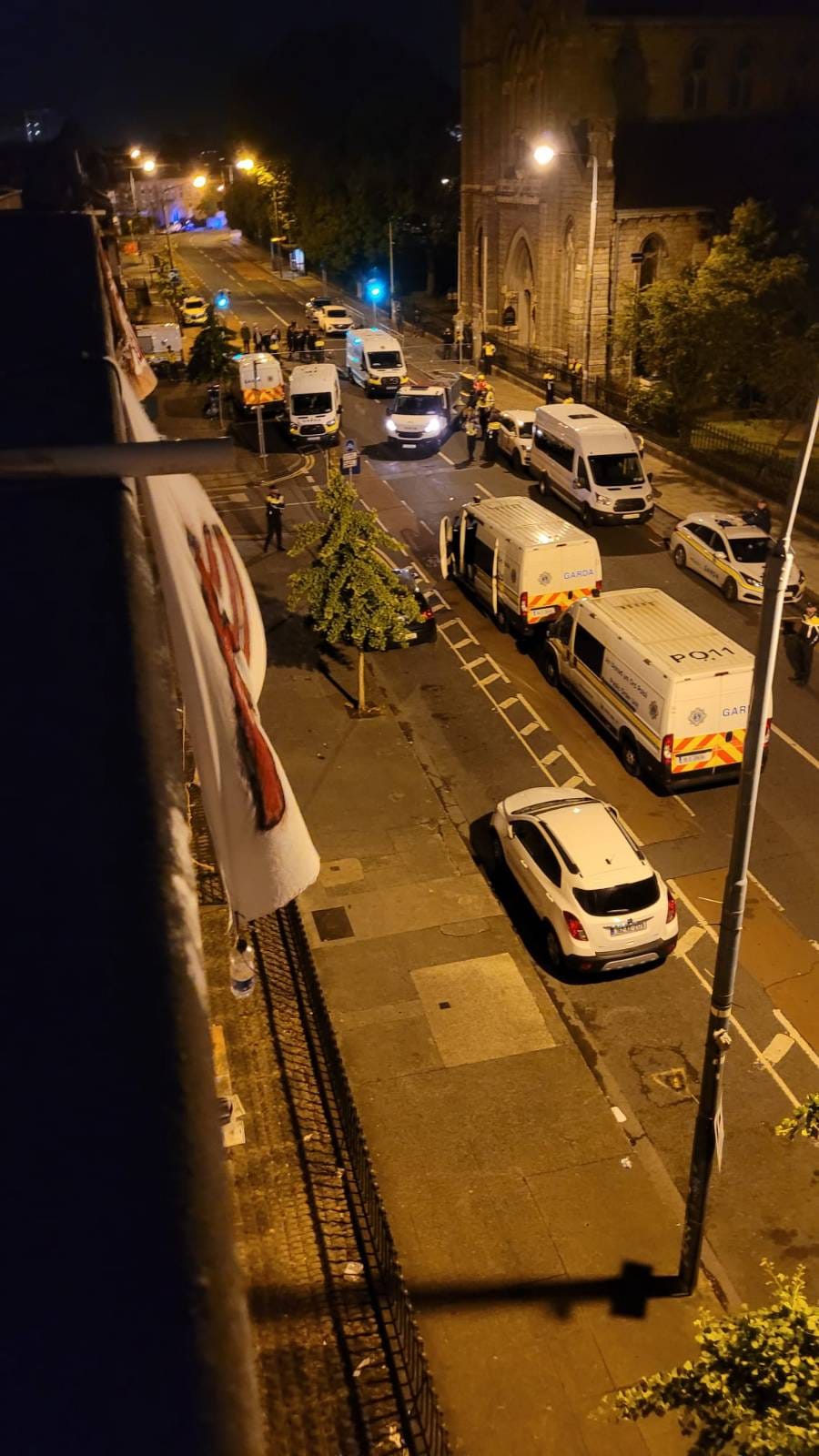

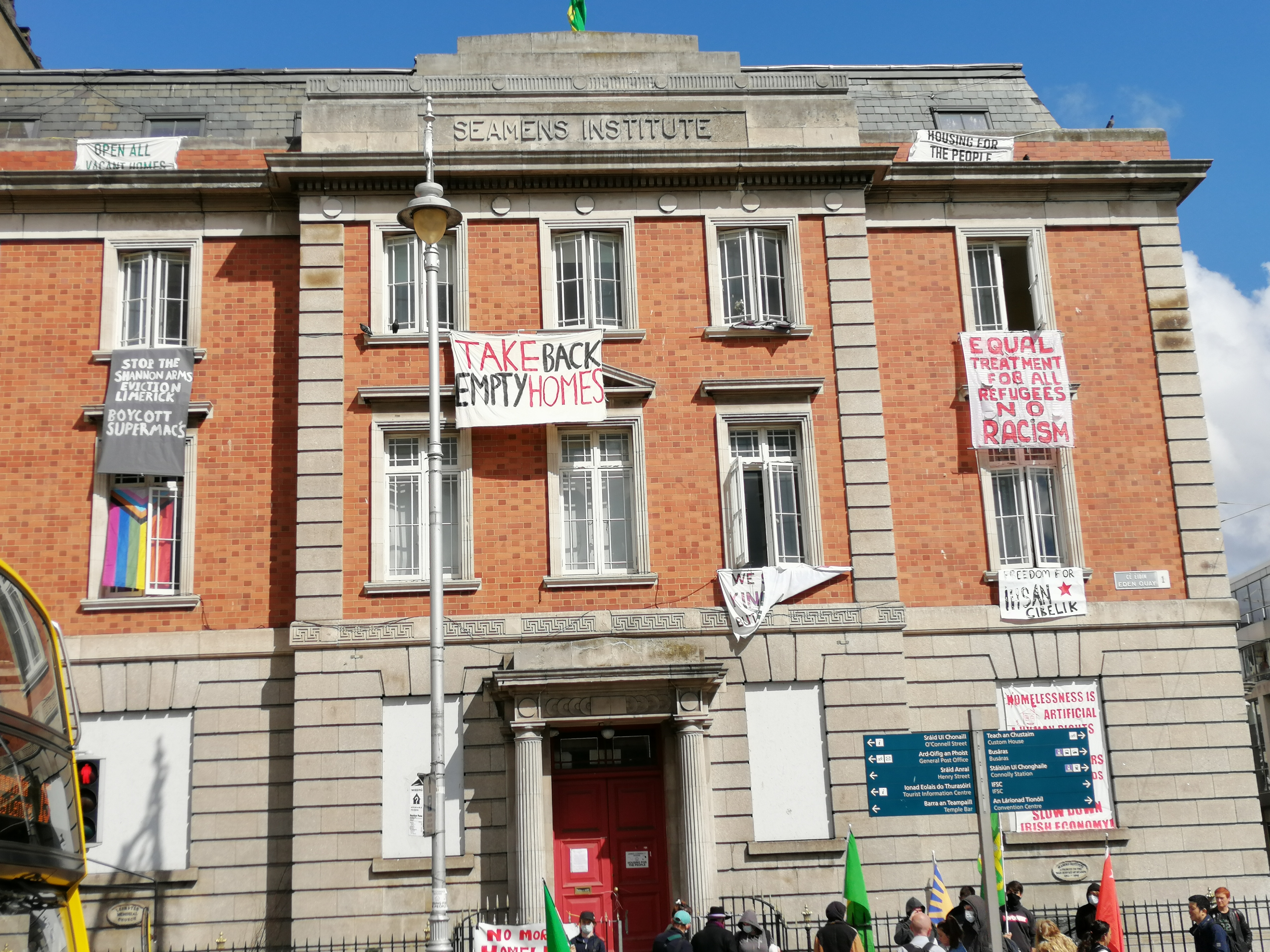


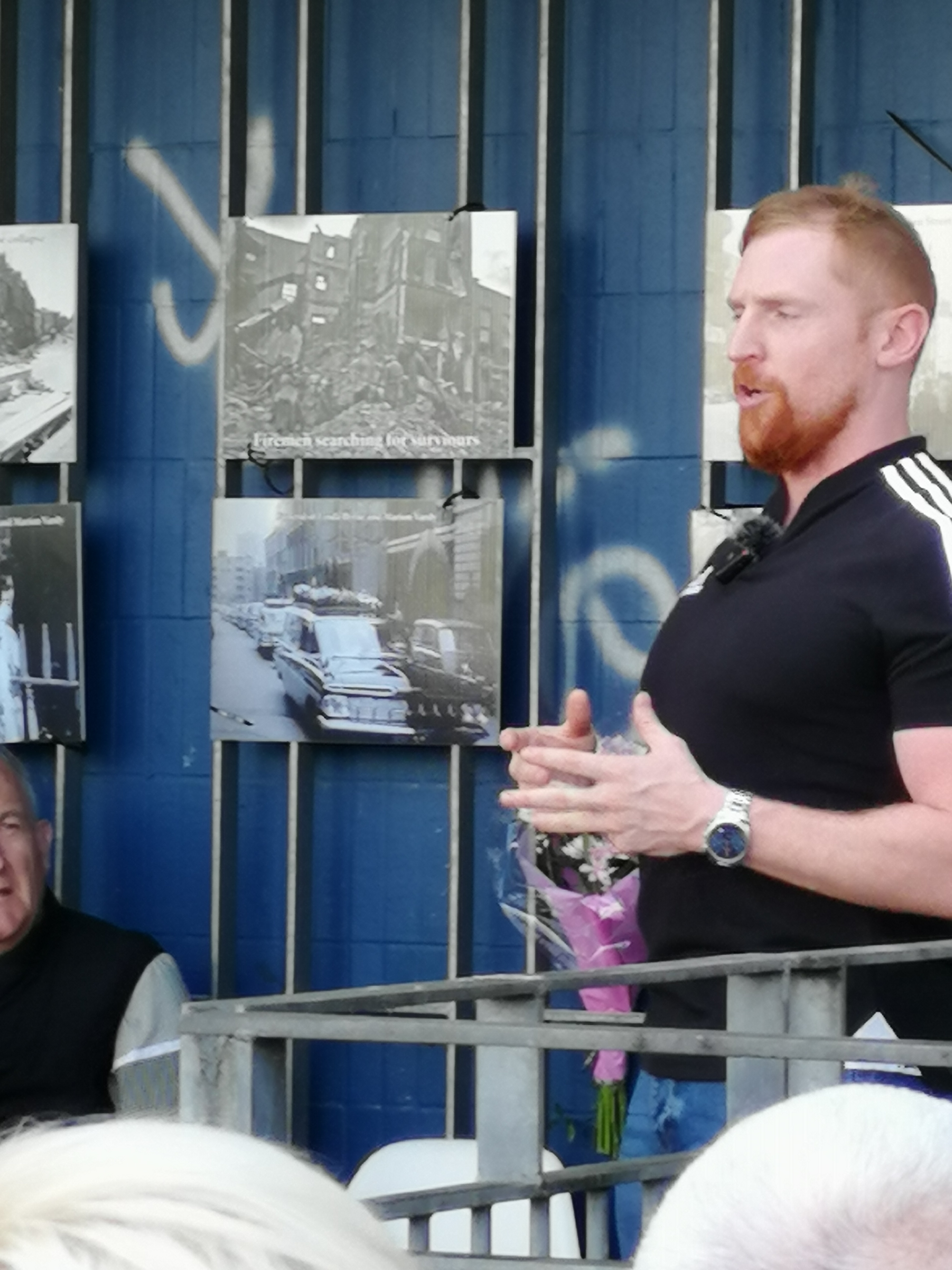


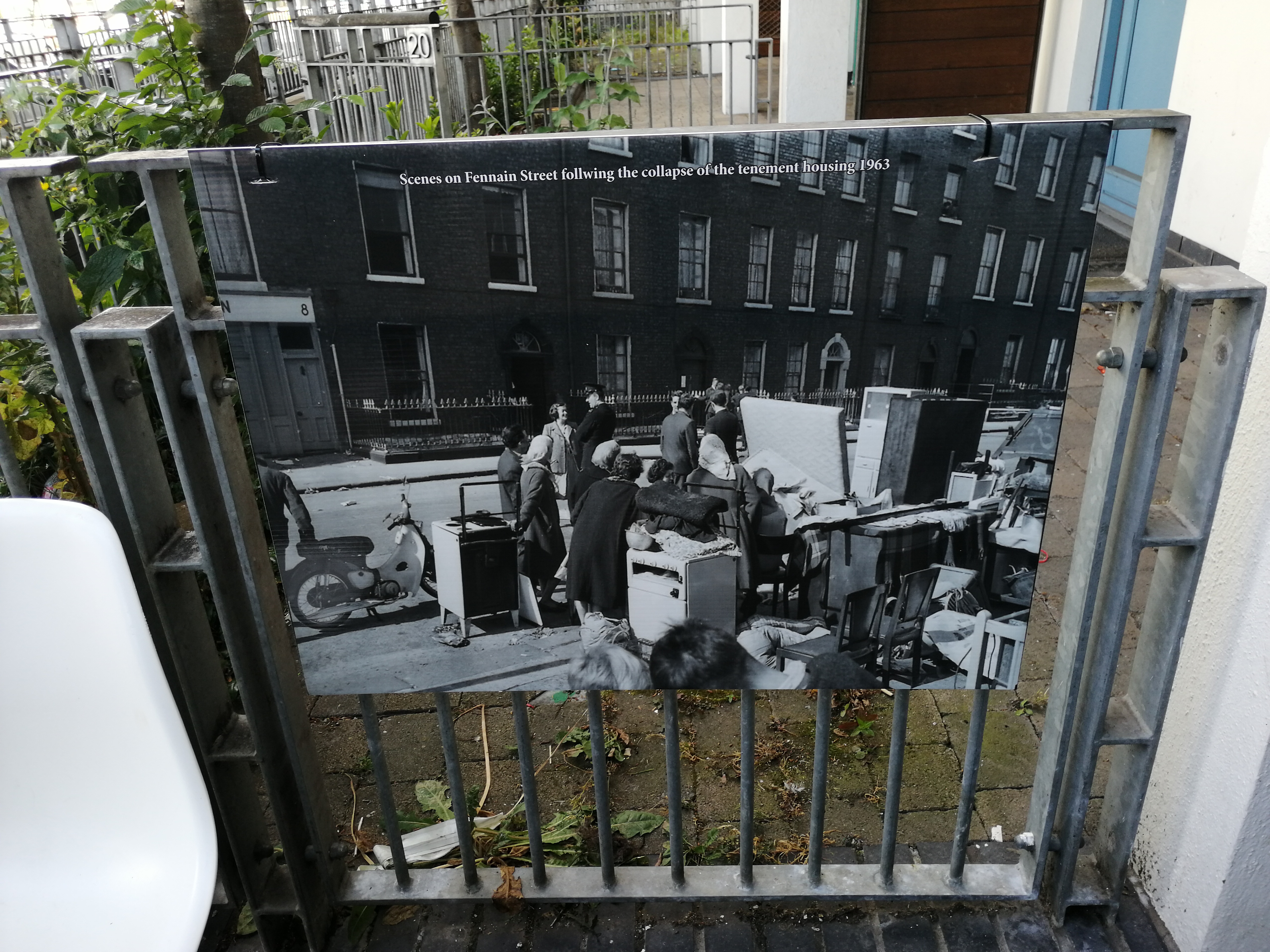


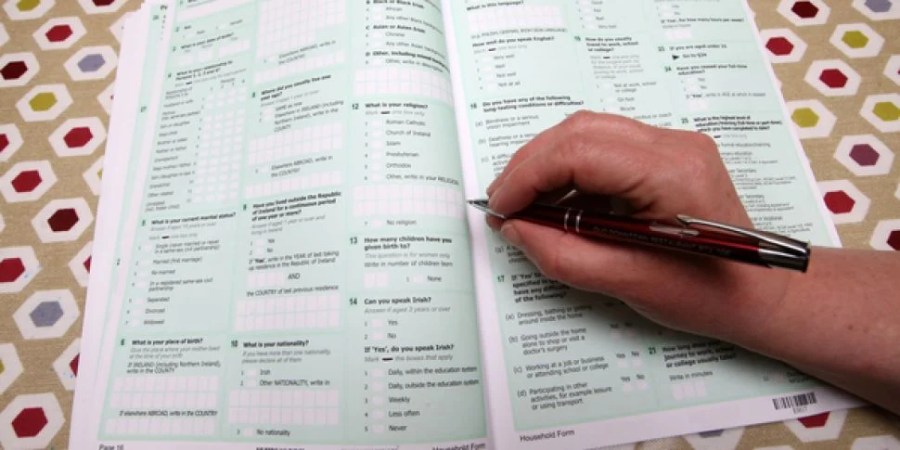
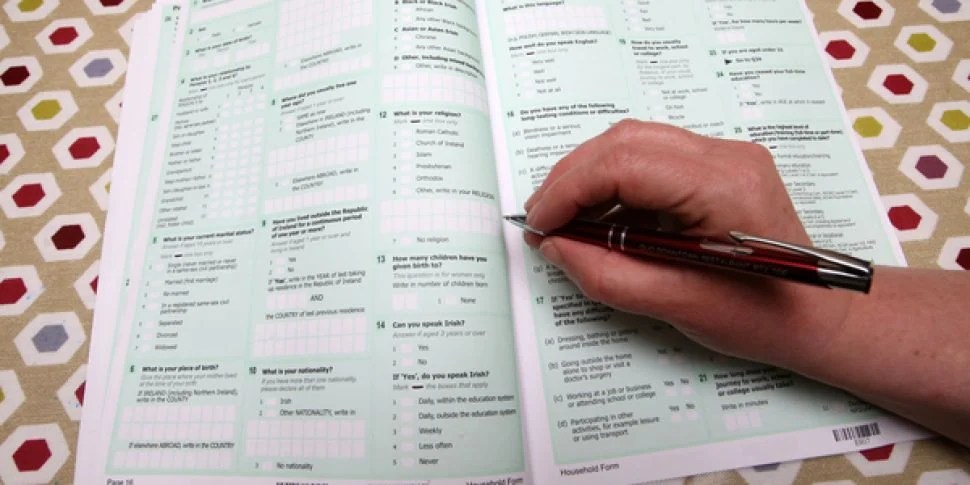
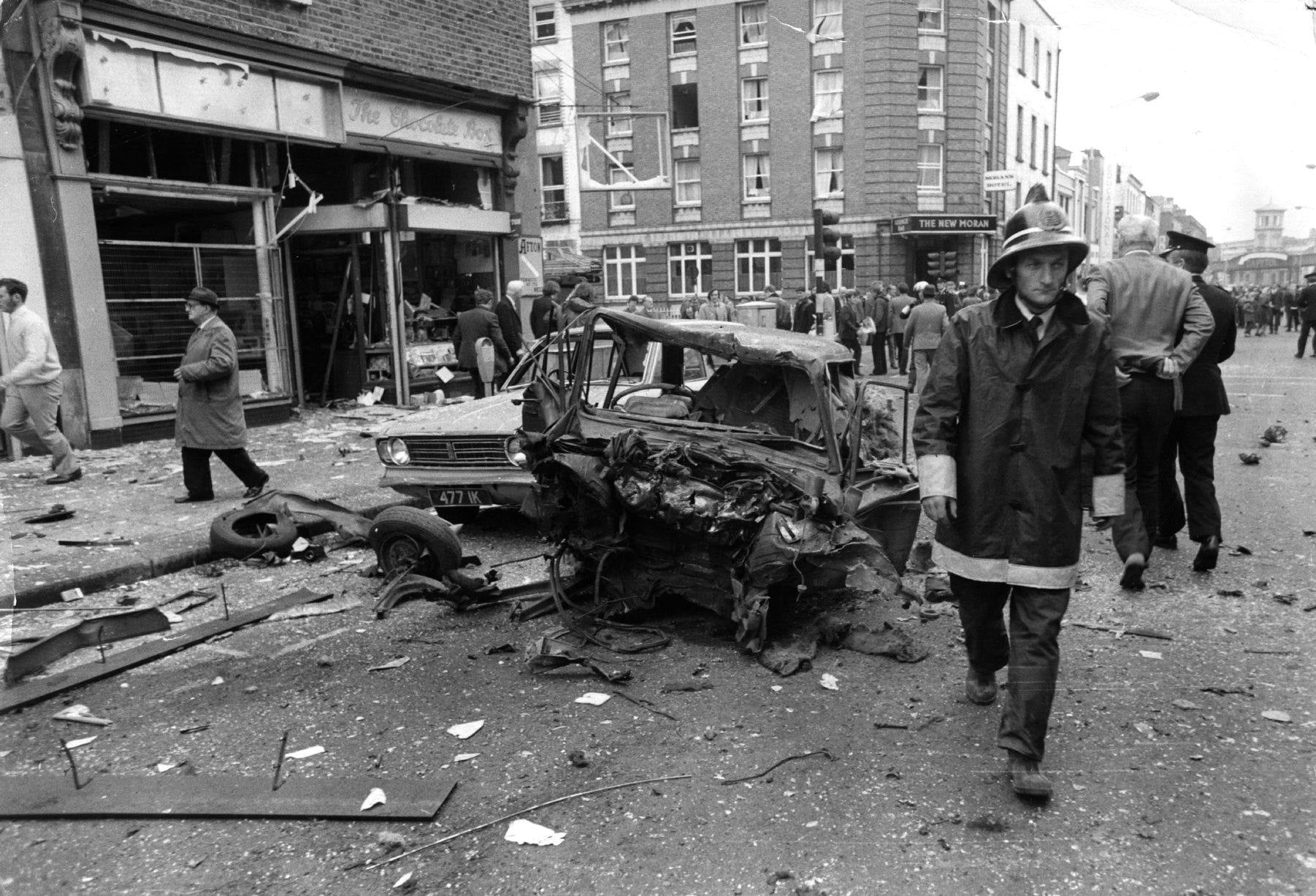
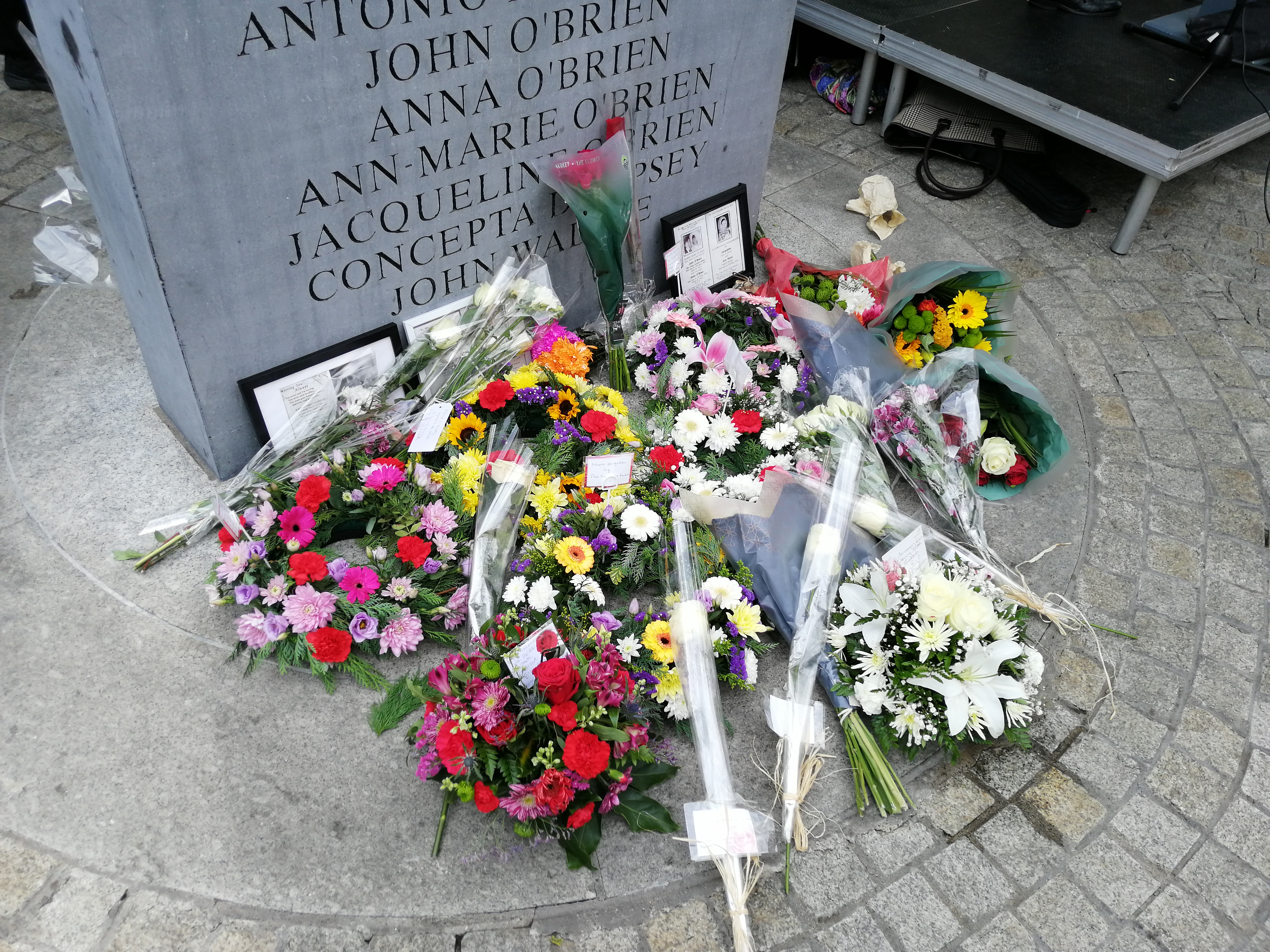

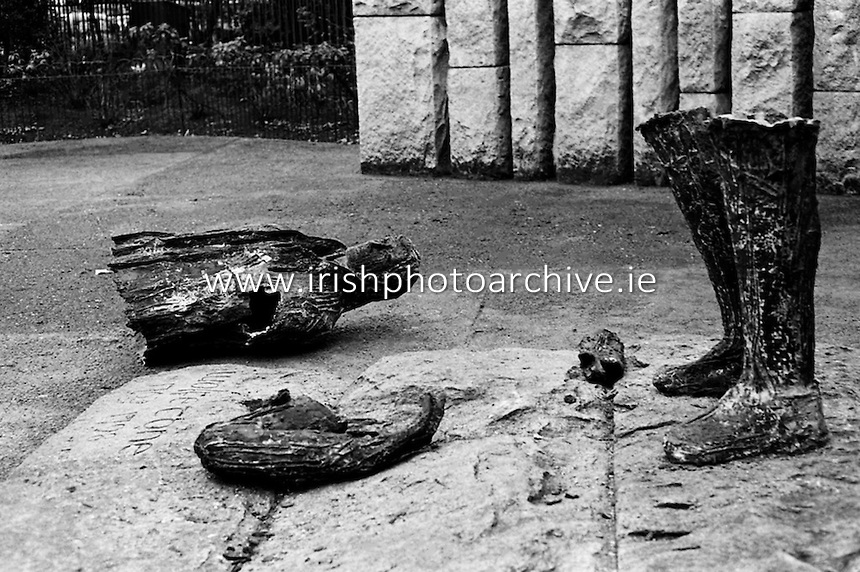

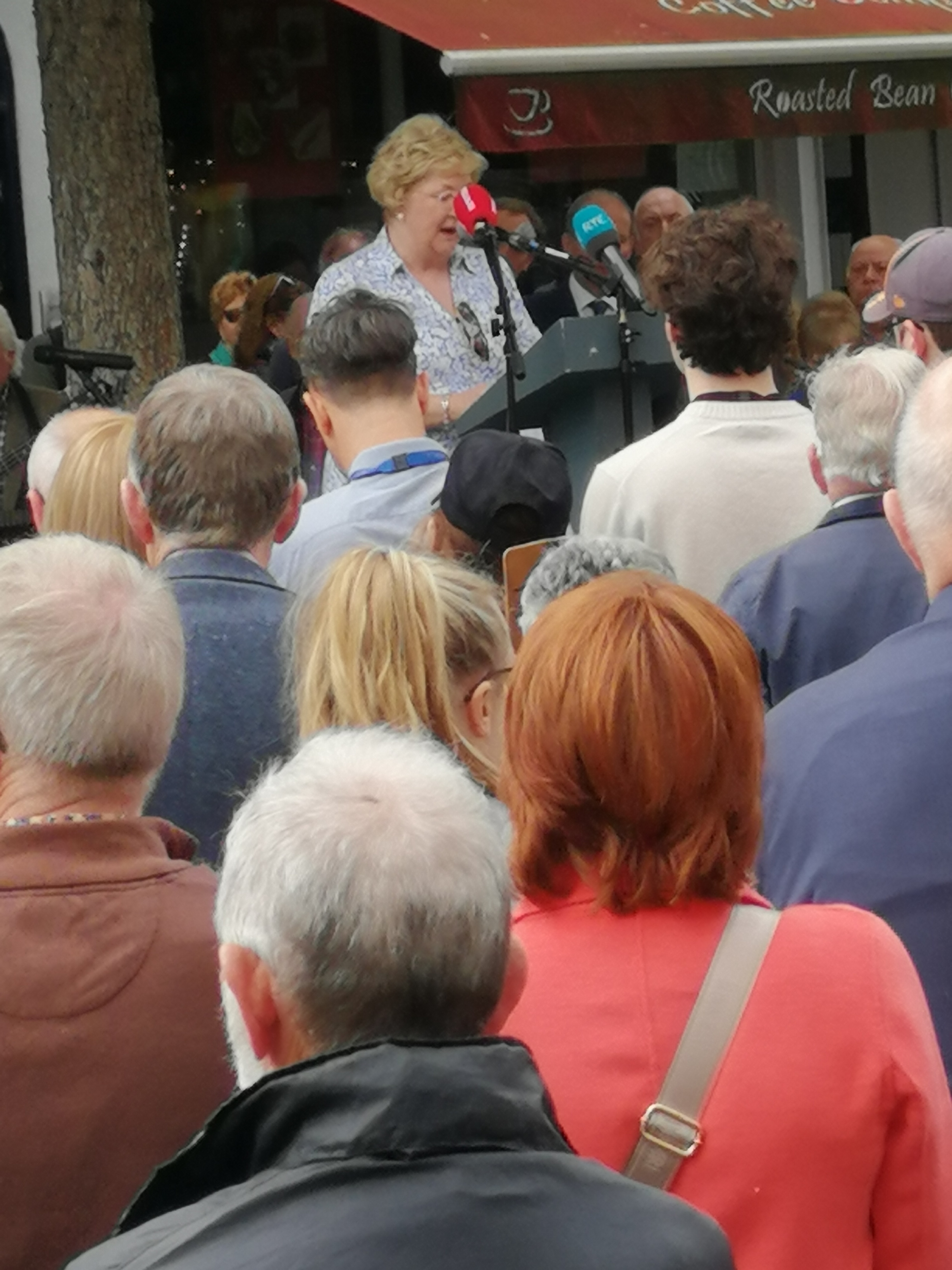
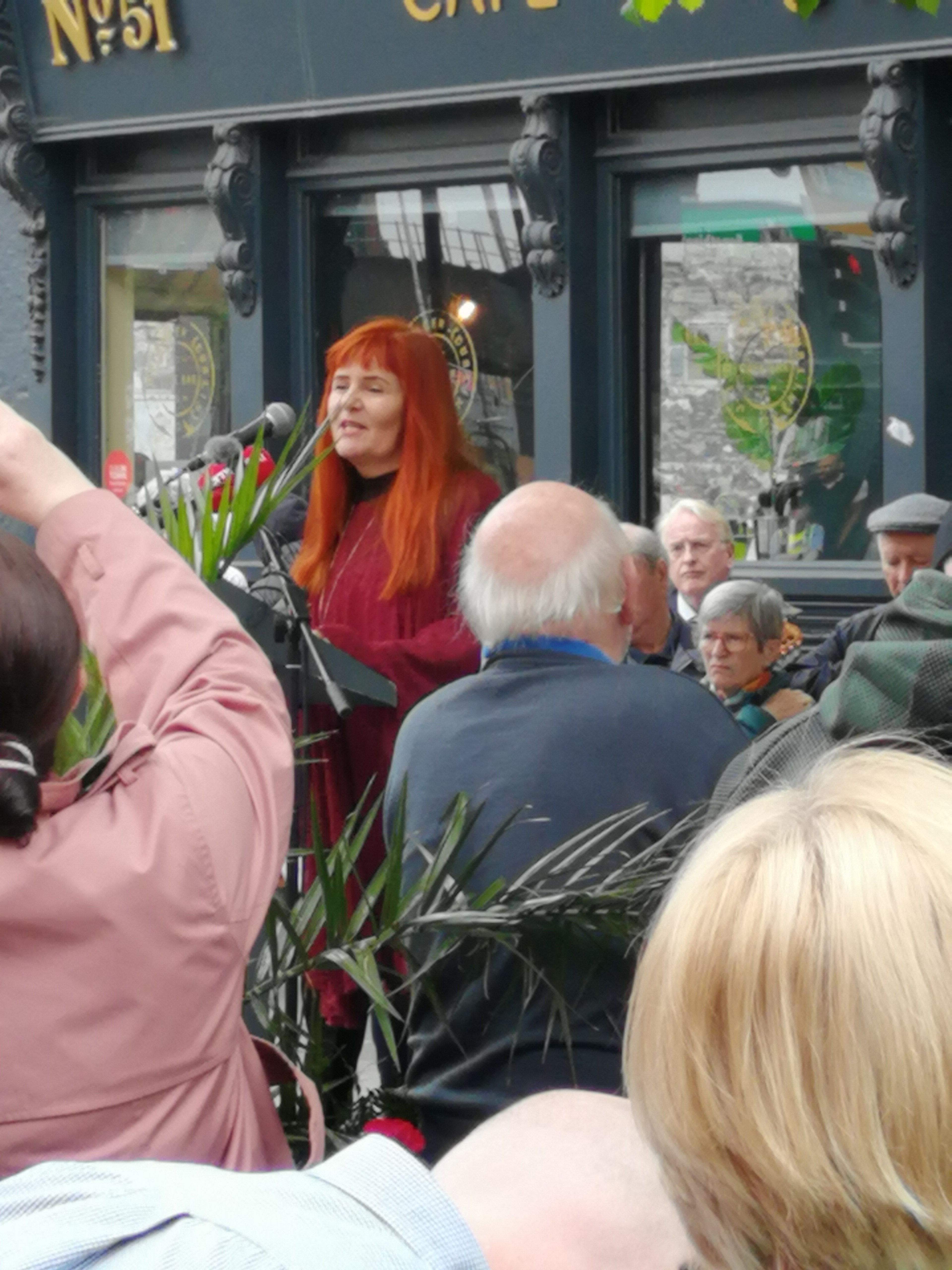
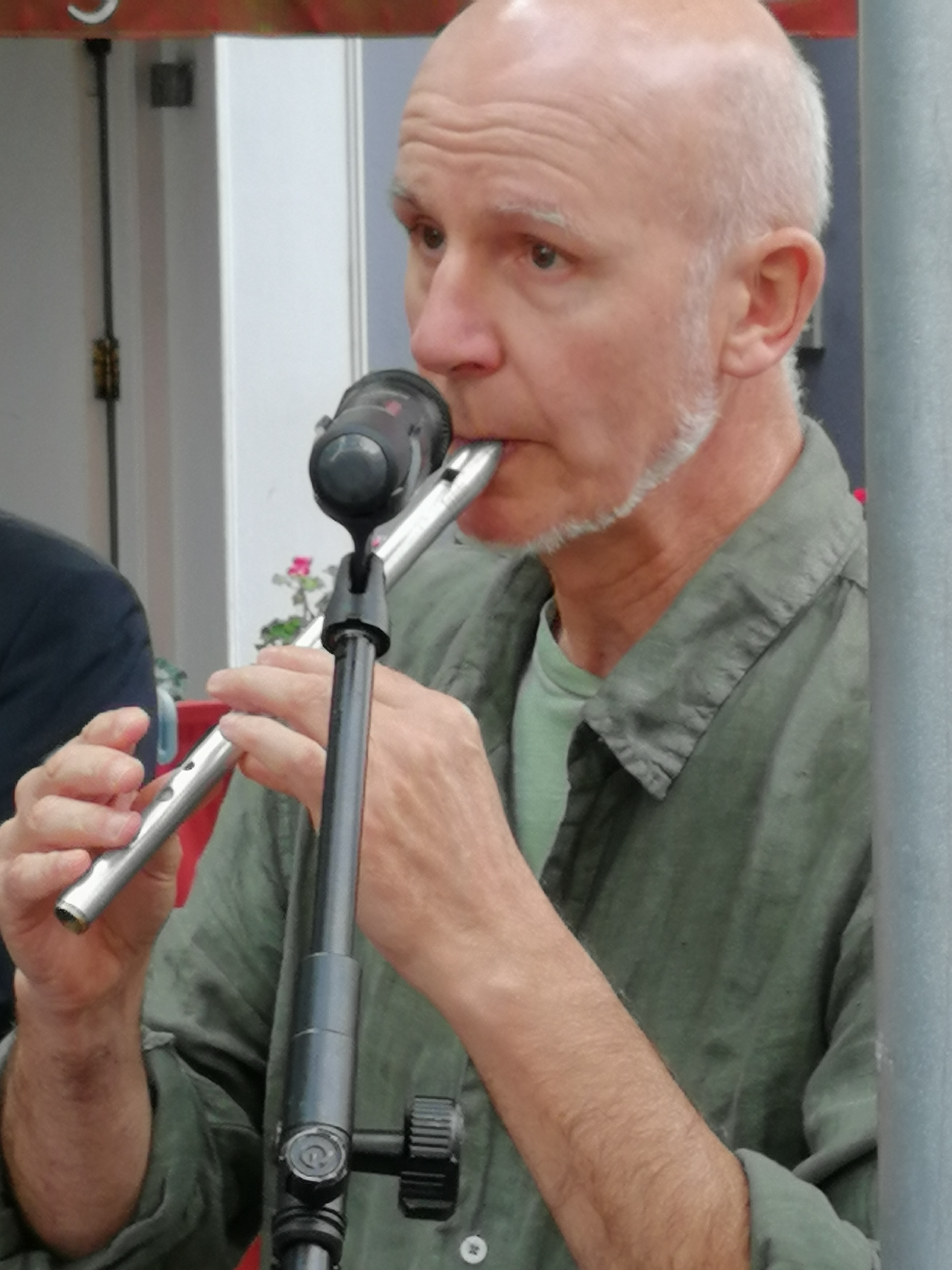

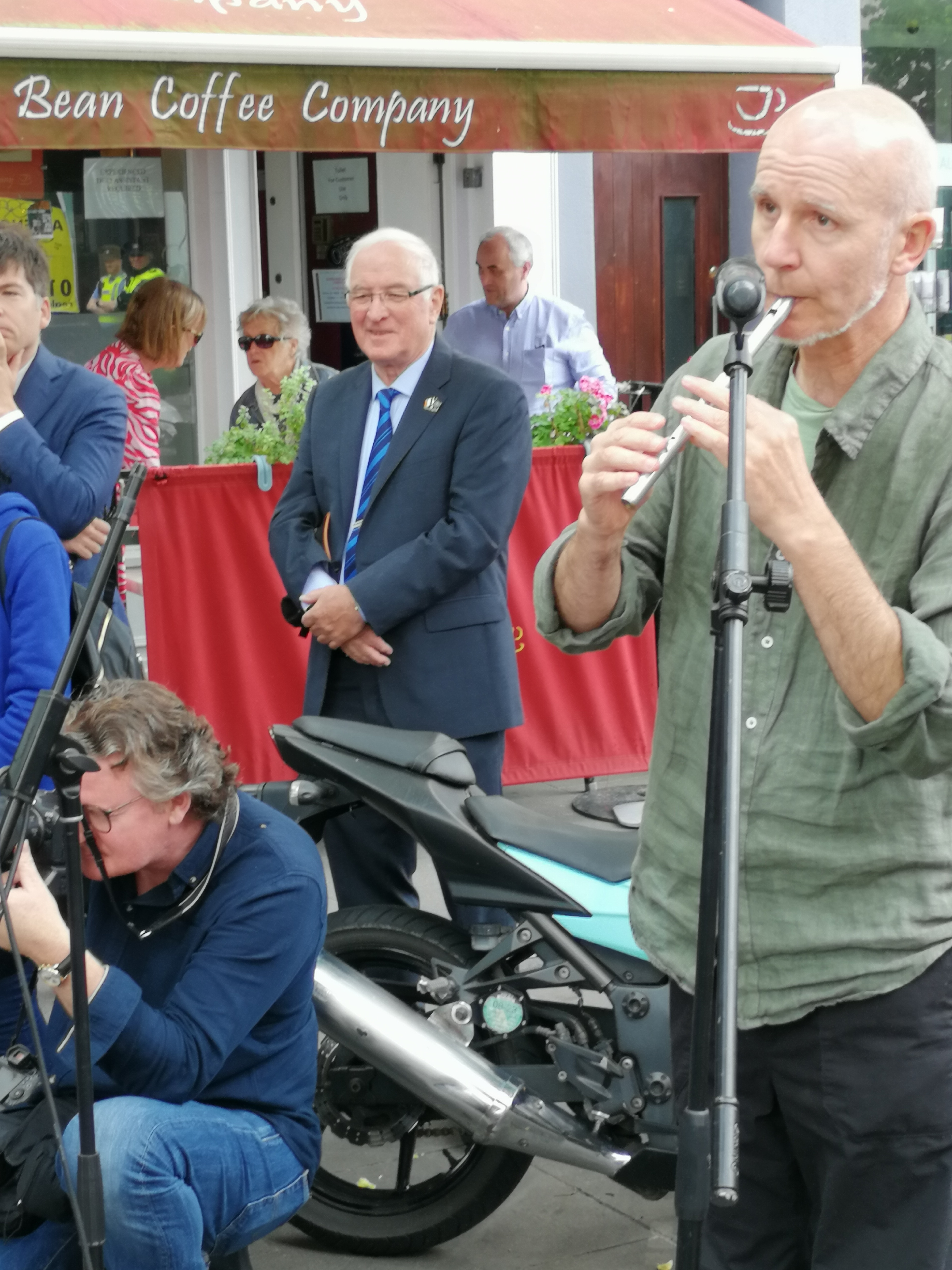
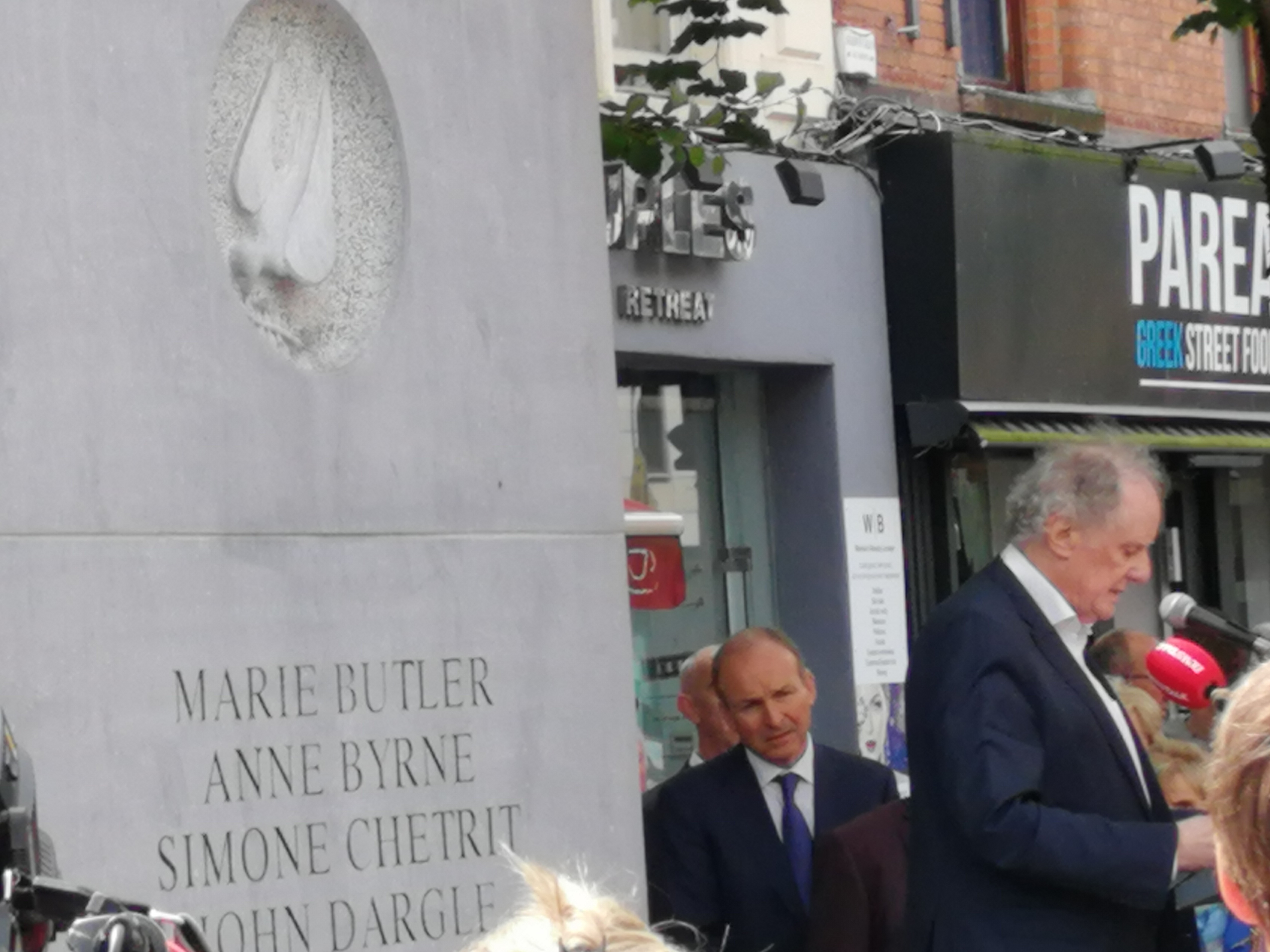
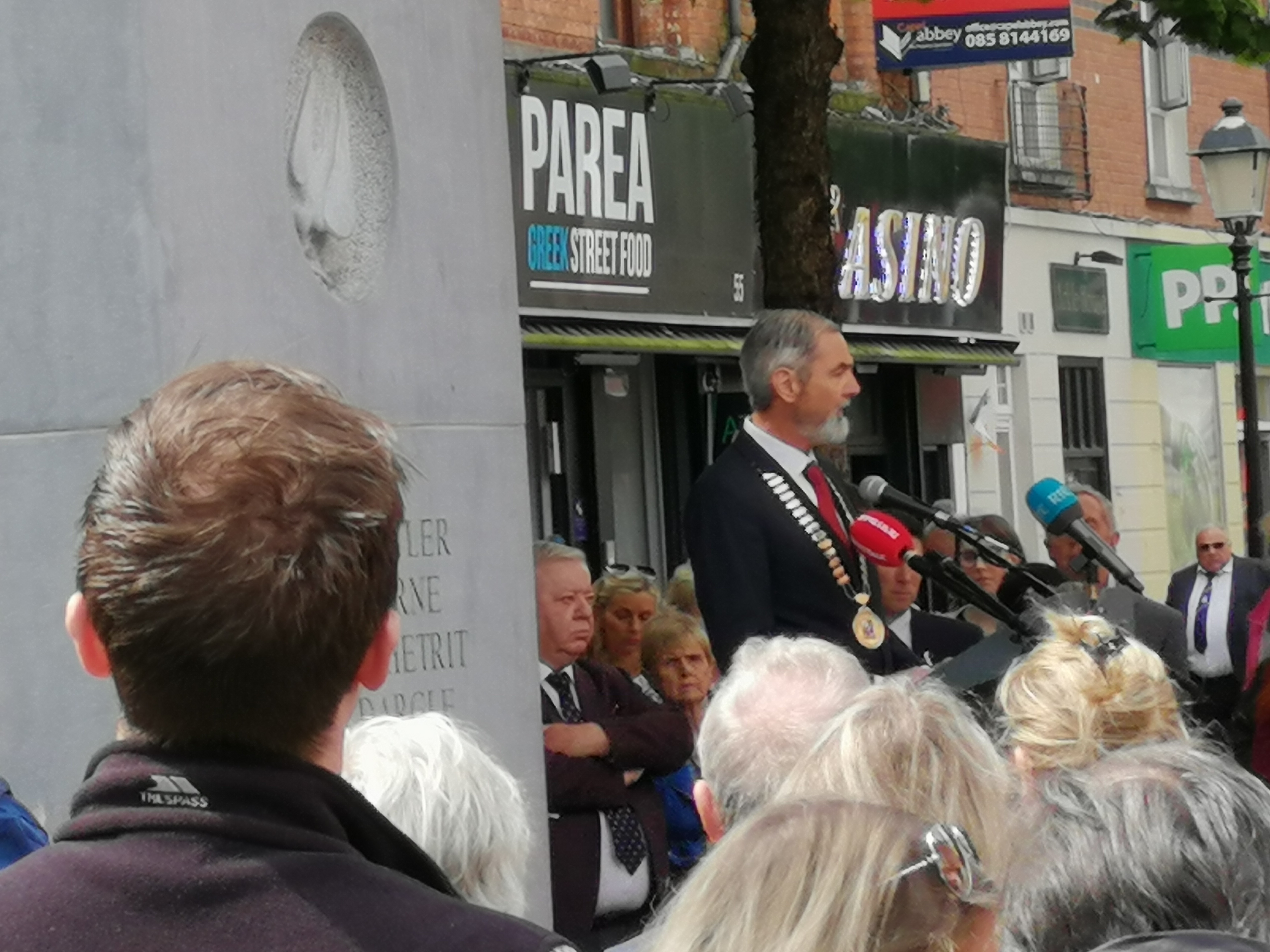

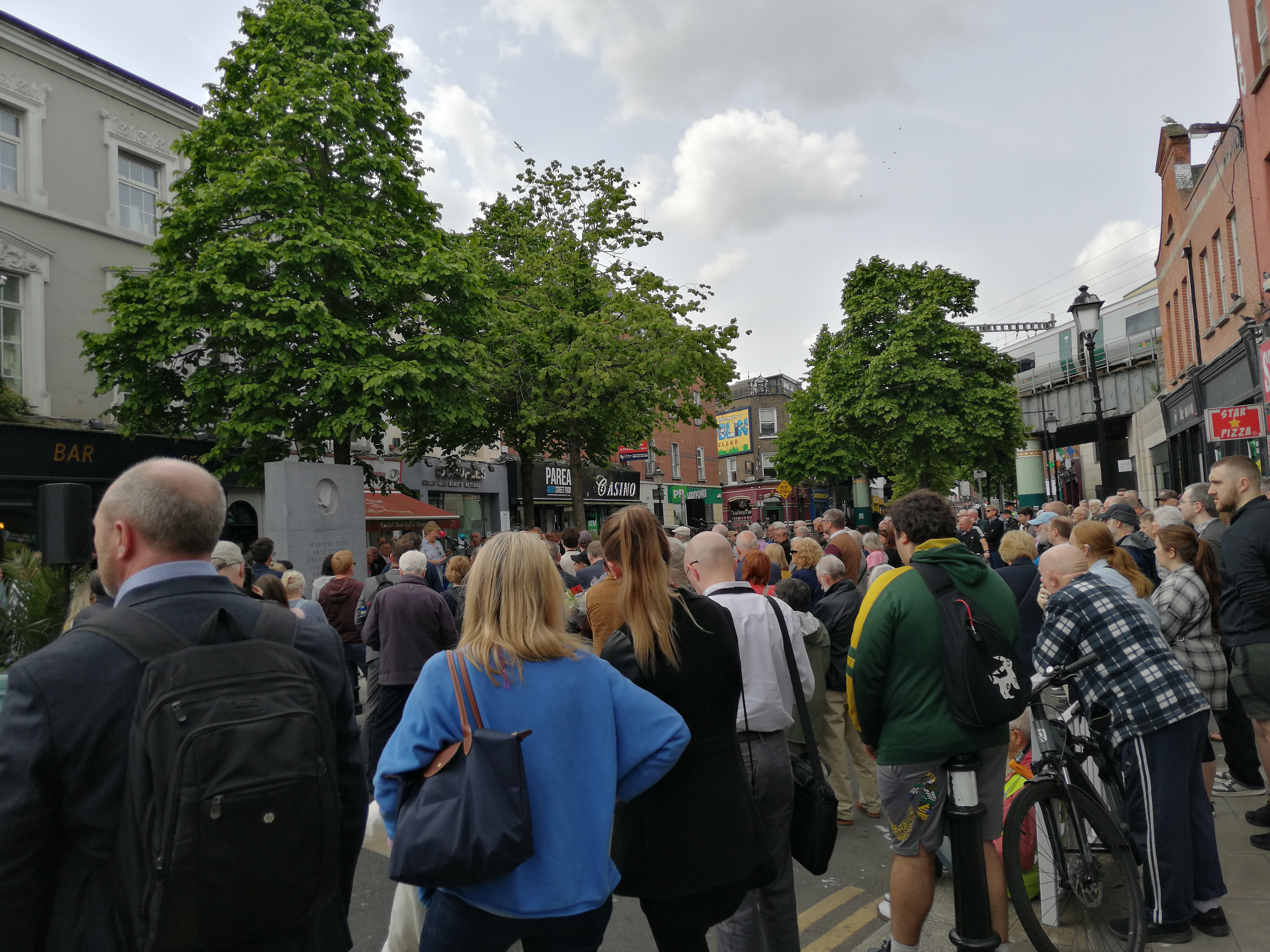


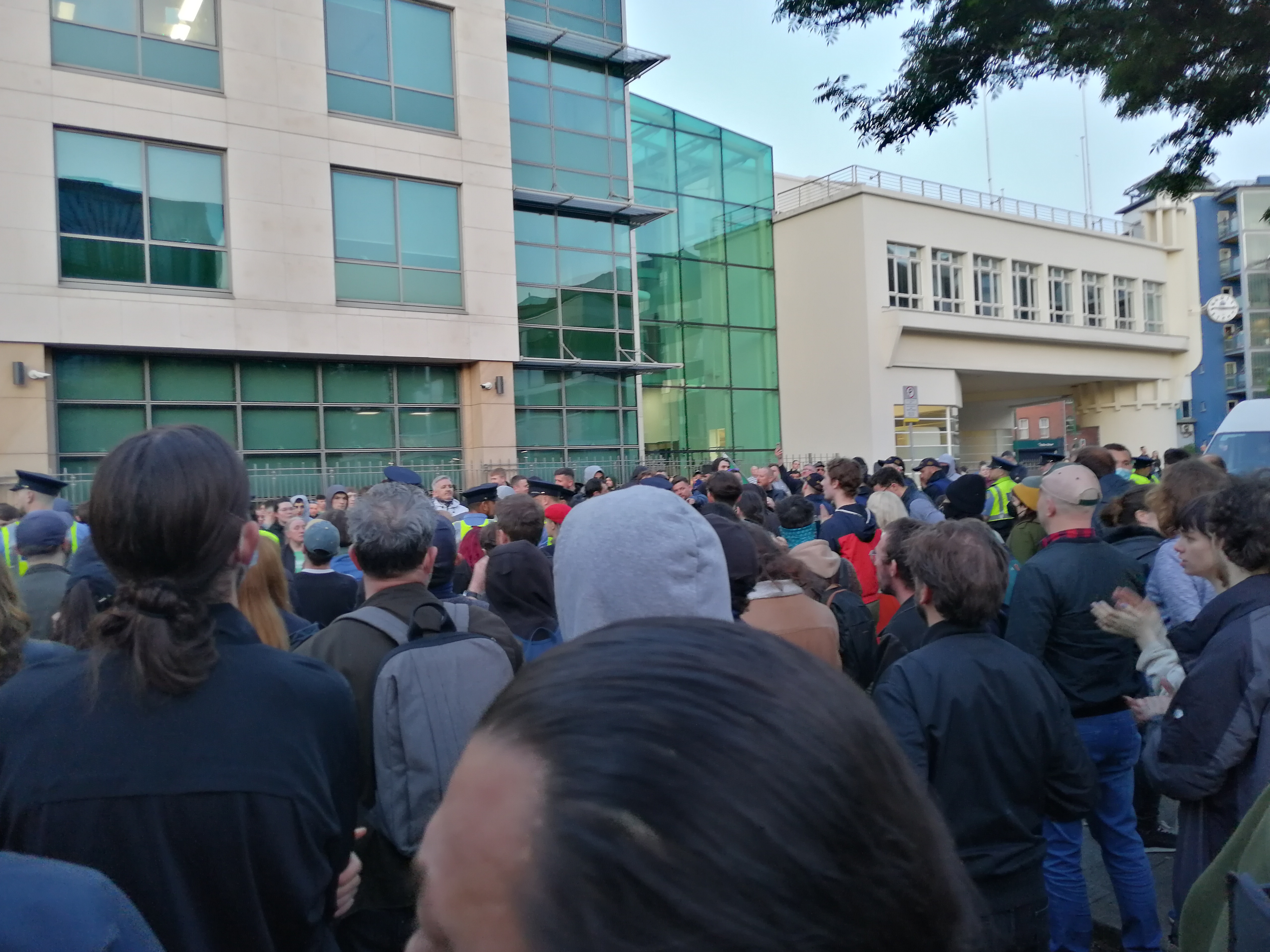


 rebelbreeze