SECOND PALESTINE SOLIDARITY RALLY IN THREE DAYS IN DUBLIN

Diarmuid Breatnach

(Reading time: 6 mins.)

Dublin city centre saw the second rally in one week in solidarity with Palestine on Wednesday evening. Unlike Monday’s outside Leinster House, this one was on the central pedestrian reservation on Dublin’s main O’Connell Street.

Thursday’s was organised by the Ireland Palestine Solidarity Campaign whereas Monday’s, outside the home of the Irish State’s parliament, had been organised by the Irish Anti-War Movement (more or less really the People Before Profit party).1

(Photo: D.Breatnach)

After Monday’s rally, a substantial number had spontaneously marched to the Israeli Embassy where an Anti-Imperialist Action supporter had painted their door in red to symbolise blood before Gardaí knocked him to the ground and kept him lying handcuffed before arresting him.

The crowd had objected to this treatment whereupon the Garda attacked and arrested more demonstrators. The AIA supporter was later charged with “criminal damage” which is ironic considering the criminal and murderous damage by Zionist bombs and missiles on Gaza.

A rather blurry view of section of the rally from the west side. (Photo: D.Breatnach)

BOMBING GAZA

For the sixth consecutive day Israeli air strikes are pounding the Gaza Strip, Israel on Thursday boasting it has dropped 6,000 bombs weighing 4,000 tonnes on Gaza during the period, according to Palestinian sources killing more than 1,400 people and destroying huge amounts of housing.

At least 140 of those Palestinians killed are children.

There’s nowhere safe in Gaza (Photo cred: Edel Hana/ AP)

This is the fifth siege and bombing of Gaza by Israel in the last 15years, each time destroying what the Palestinians rebuild or patch and repair, such as their sewage treatment plant. Palestinian casualties overall during the period have been 6,407 Palestinians as against 308 Israelis.2

One siege lasted 51 days! Factories and apartment blocks, flower and vegetable production glasshouses and sewage treatment plants have all been destroyed and the coastal waters are polluted, while the Israeli Navy attacks fishing boats that dare go further out to sea.

Gaza was already a severely-deprived area occupied by 2.2 millions with 59% below the poverty level, 46% unemployment but youth unemployment at 63%. Since Hamas won the elections the Israeli state permits no-one to leave or enter Gaza except by special arrangement.

One of the most advanced military states in the world is attacking a people that has no navy, no airforce, no anti-aircraft defences and no standing army. The Zionists say they will soon send in a ground attack also, tanks grinding over the rubble to kill and maim more Palestinians.

Imagine you went into Sousi Mosque to pray for your family and neighbours to be kept safe, or just because the Israelis wouldn’t bomb it, would they? This is what’s left of it now. (Photo cred: Mahmoud Hams/ AFP)

Meanwhile the Zionist state is permitting no water, electricity, fuel, food, medicine, building materials or equipment to enter Gaza through the gate they control and, shamefully, the Egyptian regime in step with the Zionists is doing the same at the other gate, which the Arab state controls.

War crimes? We hear a lot about them in the war in Ukraine, right? The Israeli state is committing them daily now and has been doing so yearly, often monthly since 1948. But the USA backs Israel and so the western states do so too, supporting the war criminals and complicit in their crimes.

https://www.euronews.com/video/2023/10/12/watch-aftermath-of-strikes-in-gaza-as-missiles-continue-to-fall

WEDNESDAY’S RALLY IN O’CONNELL STREET

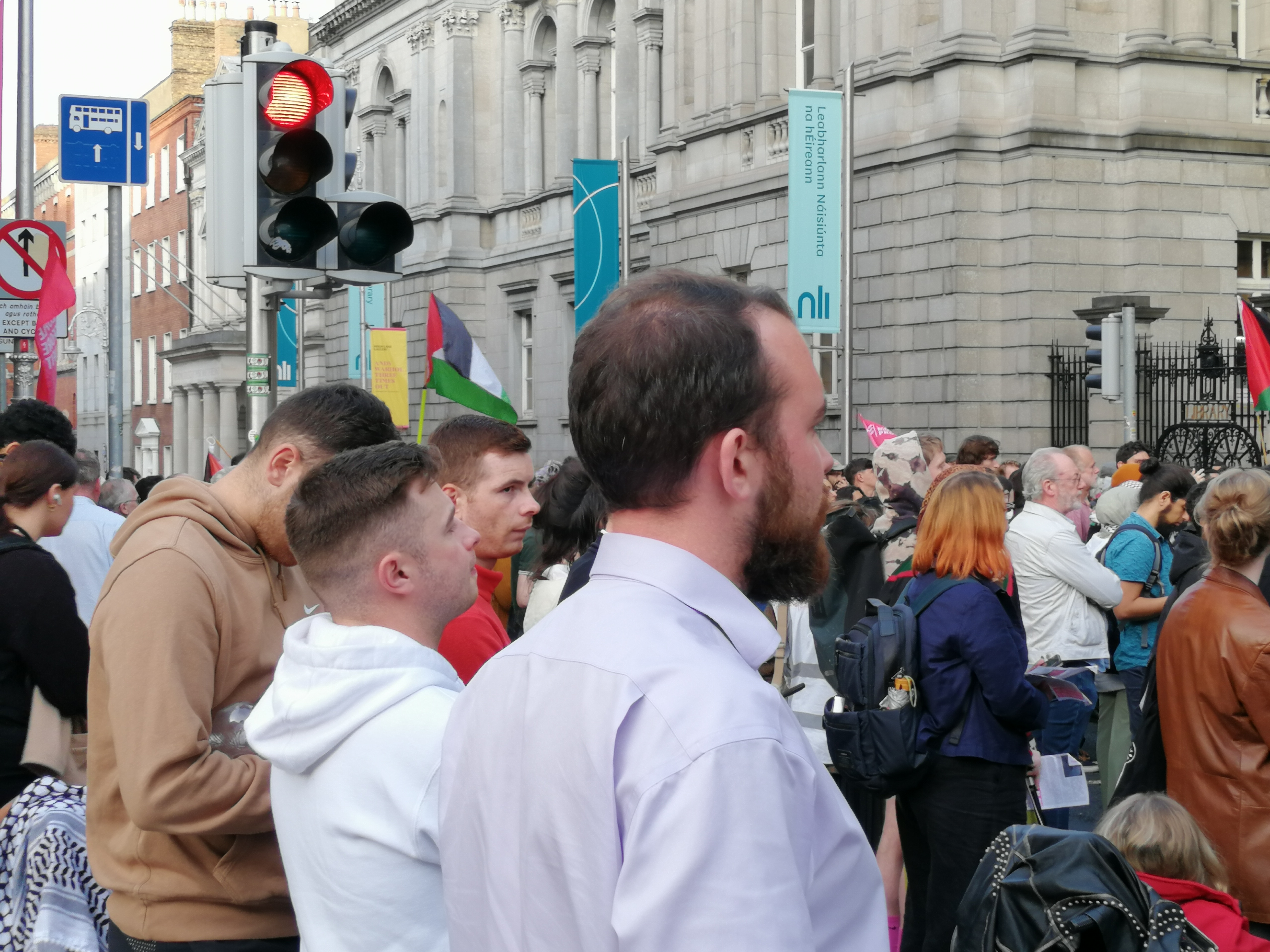
The IPSC rally was advertised for 5.30pm but people had begun to gather a half hour earlier, with more continuing to arrive until after 6pm. From physical appearance it seemed that people from the Middle East, presumably Palestinian, at least equalled those Irish present.

Rally supporters very tightly packed and before Gardaí move patrol cars in keeping them hemmed in (Photo: D.Breatnach)
Gardaí beginning to move patrol cars in to keep rally packed in the central reservation (Palestine supporters also visible to left of photo, i.e on eastern pavement. (Photo: D.Breatnach)
Gardaí place patrol car to keep the Palestine supporters (or this particular section?) off the road. (Photo: D.Breatnach)

The chanting of solidarity slogans was almost continuous, with short breaks for speakers, most of whom were introduced as Palestinians. These were the usual chants but often led in non-Irish as well as native accents: From the river to the sea – Palestine will be free!

Also: In our hundreds, in our millions – we are all Palestinians! One, two, three, four – occupation no more! Five, six, seven, eight – Israel is a terrorist state! But there were also new ones from a section: Long live the Resistance! And: Only one solution – intifada revolution!

(Photo: D.Breatnach)

That was taken up by many whereas Saoirse don Phailistín! And: You’ve got tanks, we’ve got hang-gliders – glory to the freedom fighters! were chanted by a small section. Four Palestinians were briefly heard trying without success to get the Alah’ akbar!3 chant going.

From Irish backgrounds, Senator Frances Black, Richard Boyd Barret TD, Chris Andrews TD and Cnlr. Daithí Doolan spoke. Senator Black sponsored the Occupied Territories Bill4 which was approved by all sides of the Oireachtas but held back by the Government from becoming law.

Richard Boyd Barret of PBP spoke with passion as he usually does and was applauded. Some of his observations, though more liberal than socialist, unequivocally however put the blame on the Israeli state and castigated also the western states’ support of the Zionists.

(Photo: D.Breatnach)

Many of the Palestinian speakers were very complimentary to the Irish people present at the rally but also to the Irish population overall for their generally supportive attitude towards the Palestinians and their struggle.

Andrews and Doolan are both prominent members of the Sinn Féin party and, as a result of their President’s recent condemnation of Hamas (a change in position for the party), came in for some heckling.

They may be genuinely supportive of the Palestinian resistance as individuals but if they tolerate their party’s leader lining up with the Zionists and imperialists in condemnation of the resistance of the oppressed, they must accept the criticism thrown at them.

(Photo: D.Breatnach)

THEY SAID

The leaders of Sinn Féin and of the DUP both separately and recently claimed that the pacification negotiations in Ireland can be used to assist in resolving the conflict in Palestine.5

Really? It was precisely following a similar road that led to the corruption and fall from position of Palestinian leadership of Al Fatah and Yasser Arafat, eruption of the Second Intifada and the generally secular-voting Palestinians electing Muslim fundamentalist Hamas in 2007.

(Photo: D.Breatnach)

On Thursday the Prime Minister of the Irish State said that Israel was inflicting collective punishment on Gaza by cutting off water and electricity but no mention of the bombing, which he seemed to endorse.

Collective punishment is a war crime in international law so what is Varadkar saying the Irish Government will do? Demand action by the EU and UN? Expel the Israeli Ambassador? Demand sanctions against Israel? No – request a humanitarian corridor for food and medicine.

Photo taken from west side, with LUAS tram rails showing and northward bus stopped at traffic lights. (Photo: D.Breatnach)

At the rally there was generally little denunciation of the Irish Government.

From Palestinians possibly because they felt they were guests in the country but one would have expected much harder criticism by the native speakers of the Government’s condemnation of the Palestinian resistance.

View of section from western side (Photo: D.Breatnach)

INTO THE STREET, ON TO THE BRIDGE

Over a thousand Palestine supporters were mostly crammed into a short section of the central pedestrian reservation on O’Connell Street, boxed in by police vehicles and the northward and southward traffic lanes on one side and the LUAS tram line on the other.

Rally participants have taken the initiative to relieve the crush in the central section by moving on to the road (Photo: D.Breatnach)

There was also an overspill on to the western and eastern pavements but at an initiative from within the crowd, demonstrators spilled from the east pavement and the central reservation on to the southward traffic lane, bringing traffic to a halt there.

After some time, one of the IPSC’s leaders approached the demonstrators in the road and asked them to allow the trapped cars and buses to continue southward, with which request the demonstrators complied – but the police had made this a dangerous exercise.

With the rally supporters now in the road, southbound traffic is unable to go forward and also unable to turn back. Senior IPSC activist (in green T-shirt) may be contemplating how he get the traffic through for awhile. (Photo: D.Breatnach)

A Garda patrol car was parked in the road next to the central reservation, obliging buses moving southward to manoeuvre around it, bringing them very close to the thickly-crowded eastern pavement. Some shouts of “Move the cop car!” were ignored by the Gardaí.

When the trapped vehicles worked their way past the rally, the supporters returned to the road, remaining there until the conclusion of the rally. Clearly the road should have been closed earlier and traffic diverted but the authorities prefer to have people complain about protesters.

With the road temporarily cleared willingly by Palestine supporters, the trapped traffic can move forward. But the placing of the Garda patrol car obliges the driver to swing over to their left bringing the bus dangerously close to the crowded eastern pavement, instead of staying in the middle of the street. (Photo: D.Breatnach)

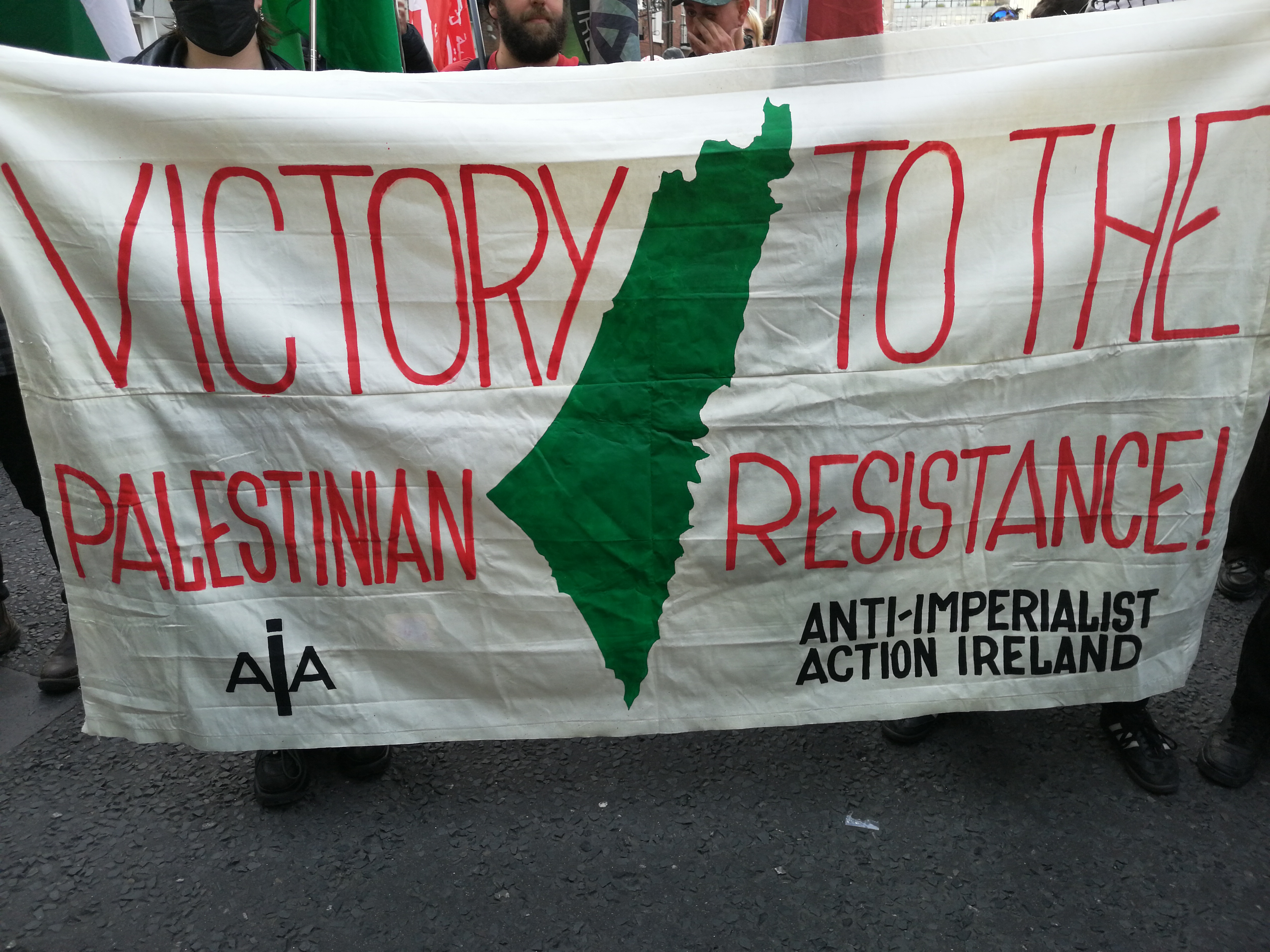
Subsequently that evening, by which time the rally had been continuing for getting near to three hours, many of the attendance followed a banner of the Anti-Imperialist Action group to occupy O’Connell Bridge for a period and light flares there, after which they dispersed.

This is the southbound lane, so no traffic will approaching the rally on the road from this side. So why all those Gardaí there? Perhaps intending to prevent an impromptu southward march, perhaps to the Israeli Embassy (as occurred on Monday). In any case, they did not managed a march to O’Connell Bridge to occupy that traffic junction for a while. (Photo: D.Breatnach)

Rallies in solidarity with Palestine have been held and new ones are being organised across Ireland, including Belfast, Cork, Derry, Galway, Limerick, Naas, Sligo and the IPSC has called another one for this Saturday for Dublin 1pm in O’Connell Street.

The people in Ireland will continue to express their solidarity with Palestine but the main political parties and Government …!

End.

“The root of violence is oppression”. (Photo: D.Breatnach)

FOOTNOTES

1See https://rebelbreeze.com/2023/10/10/collusion-delusion-in-repression-of-the-palestinians/

2https://thewire.in/world/chart-6407-palestinians-and-308-israelis-killed-in-violence-in-last-15-years

3“God is great” in Arabic.

4 The bill would ban any goods or services produced, even partially, in the territories occupied by Israel after 1967 and ruled ‘illegal’ by the UN —including the Golan Heights.

5Presumably she means the process that her party embraced which entailed colluding with a colonial occupying power, a sectarian armed colonial gendarmerie and aspiring to manage a neo-colonial, neo-liberal state.

SOURCES

https://www.aljazeera.com/news/2023/10/12/israel-says-6000-bombs-dropped-on-gaza-as-war-with-hamas-nears-a-week

https://thewire.in/world/chart-6407-palestinians-and-308-israelis-killed-in-violence-in-last-15-years

https://en.wikipedia.org/wiki/Occupied_Territories_Bill

https://news.sky.com/story/israel-hamas-war-dup-leader-urges-uk-to-use-experience-of-northern-ireland-to-secure-dialogue-in-middle-east-12983184

https://www.irishnews.com/news/northernirelandnews/2023/10/10/news/mary_lou_mcdonald_ireland_must_lead_a_decisive_international_intervention_for_peace_and_palestinian_freedom-3686850/

COLLUSION & DELUSION IN REPRESSION OF THE PALESTINIANS

Diarmuid Breatnach

(Reading time: 5 mins.)

As smoke rose over the homes and shops of Gaza, an unseasonal October brought sunshine on to the streets of Dublin city centre and the crowds with Palestinian flags outside Leinster House, the home of the parliament of the Irish State.

As the sound of explosions, wailing of ambulances and of people rang around the streets of Gaza, the call-and-answer of solidarity rang out in Kildare Street: In our hundreds, in our millions – We are all Palestinians! From the river to the sea – Palestine will be free!

The Dublin rally was one of a number of Palestine solidarity events organised in Ireland after the unprecedented attack on Israel by Hamas’ military wing, the Al Qassam Brigades on Saturday and the Zionist State’s bombardment of civilian structures and people in Gaza.

Small section of the rally (Photo: D.Breatnach)

The Zionist State, which also controls Palestine’s water supply to Gaza, as well as exit from and entry to the enclave, has cut off water and electrical power as well as barred entry to everything including food, medicine and heating gas.

The Dublin rally was called at very short notice by the Irish Anti-War Movement (IAWM), a broad front organisation formed by the People Before Profit party around 2003 to oppose the imperialist war against Iraq waged by the Coalition of states led by the USA.1

Section of the solidarity rally earlier (Photo: D.Breatnach)

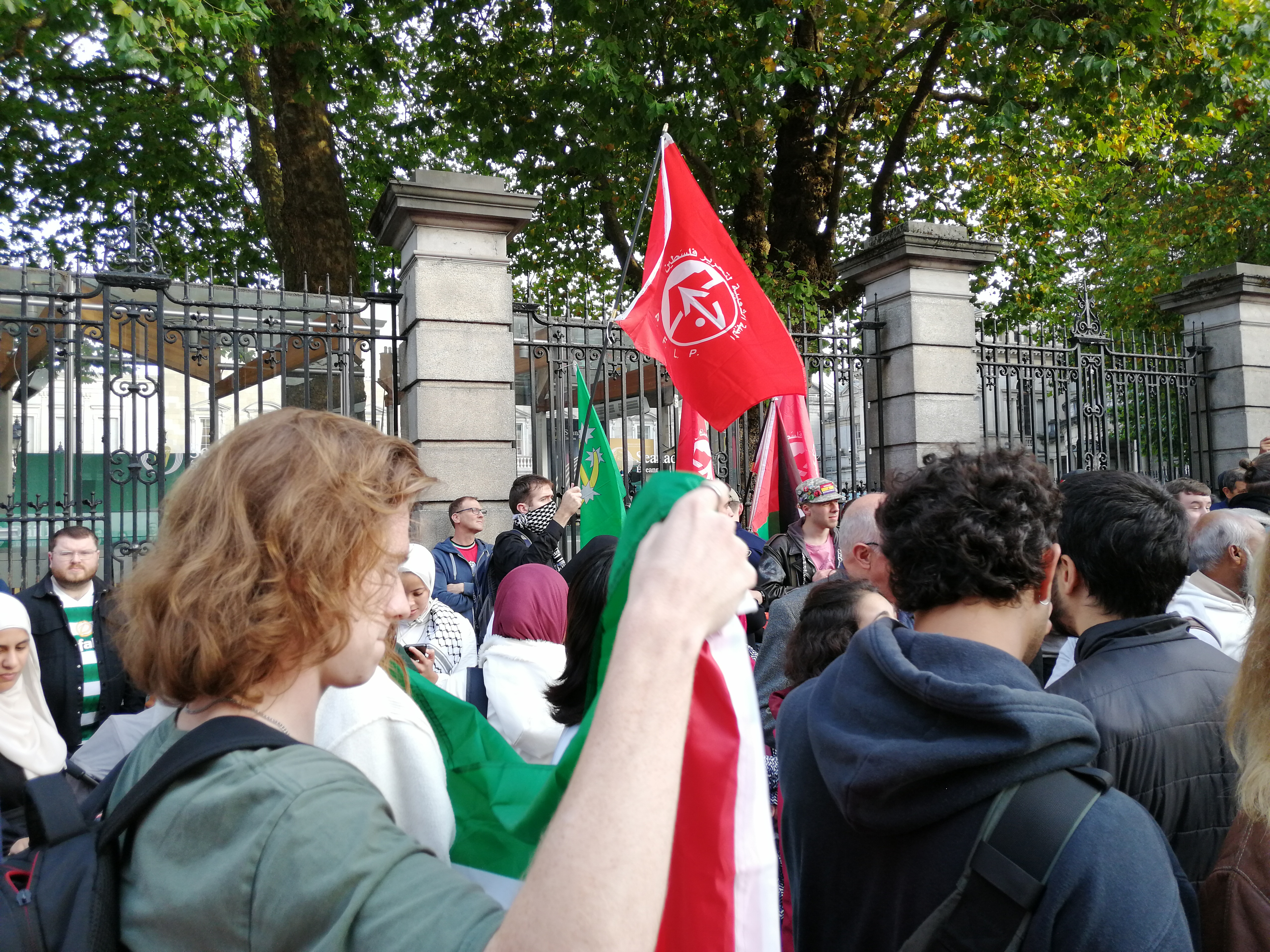
A branch of the Student’s Union of Ireland also supported the rally, which had a high percentage of Middle Eastern people present, presumably mostly Palestinians. The flags in evidence were mostly national Palestinian, some of the PFLP,2 a couple of Starry Ploughs and one Tricolour.3

Speakers from the Palestinian community, IAWM and PBP condemned the decades of attacks by the Israeli state on the Palestinians in general and on those in the Gaza enclave in particular, going back to the expulsion of 700,000 Palestinians4 as the Zionist state was founded in 1948.

Starry Plough flag can be seen centre distance next to some PLPF flags (Photo: D.Breatnach)

Richard Boyd-Barret TD (PBP) spoke as did also Ibrahim Halawa from Dublin, who was a prisoner of the Egyptian regime for four years without trial. Halawa said that awareness-raising and education served the ignorant but that action is required from those who know the real situation.

Some of the orators spoke about the right to resistance of the Palestinians, some about being against killing and war (but blaming the Zionist state for causing it), some about the plight of the Palestinian civilians, particularly in Gaza and one referred to the thousands of political prisoners.

Woman carries home-made giant placard spray-painted “Victory to the Palestinians!” (Photo: D.Breatnach)

MIND THE LANGUAGE!

A number of speakers referred to the “International Community” and when one listens to them in context it becomes clear that this imagined “community” is one of capitalism and imperialism.

It is not the community of workers, much less the community of people struggling for freedom. In Ireland, the overwhelming majority of people have over decades seen through the Zionist propaganda and switched from being pro-Israeli State to being pro-Palestinian.

We should take more care with the words we use lest we reinforce capitalist-imperialist dominance in the world of concepts in addition to their dominance over the physical world. Another trap is the term “illegal” and Boyd-Barret used it in reference to Russia’s invasion of eastern Ukraine.

Banner seen at the rally (Photo: D.Breatnach)

Who makes the international laws by which something is ‘legal’ or ‘illegal’? It is of course the imperialists who do so on the international scale while the capitalists define legality within their states; by their standards the actions of Israeli Zionism are lawful but of Palestinians, illegal.

All the speeches and all the slogans chanted were in English, as were the words on banners. I participated in some Irish conversation near where I was standing but saw only one placard in Irish. The fact that this is normal is part of the problem in this neo-colonial state.

A lone placard in the Irish language seeks “Freedom for Gaza” (Photo: D.Breatnach)

Eoghan Ó Ceannabháin, from an Irish speaking-family from Connemara and himself an Irish speaker, also spoke in English as he introduced the song he was about to sing, in the same language as the lyrics of Patrick Galvin’s Where Is Our James Connolly?

Eoghan is a PBP supporter and a fine singer, particularly in sean-nós5 style and has an amazing range. It was good to hear references to James Connolly at such a rally, something that all too rarely happens, nor is the flag of his Irish Citizen’s Army often seen at internationalist events either.6

CONDEMNATION IN COLLUSION, CONFUSION AND ILLUSION

The imperialist states that united in condemnation of the attack by the Izz ad-Din al-Qassam Brigades, Hamas’ military wing, were joined by leaders of neo-colonial states such as the Irish one. Naturally also by parties competing to lead the neo-colonial Executive, such as Sinn Féin.

Media reports noted Mary Lou Mac Donald’s condemnation of Hamas as a change in Sinn Féin policy7. Indeed it is such a change but is generally in line also with the party’s trajectory of presenting itself as a safe pair of hands for management of the neo-colonial state.

Sinn Fein President Mary Lou McDonald and Micheál Martin, leader of Fianna Fáil and currently Tánaiste. (Images sourced: Internet)

Mícheál Martin, Tánaiste (Vice-Premier), who earlier had condemned Hamas, stated that the Government’s position is to support the “two state solution”, more correctly “the two-state illusion” and this, if not already SF’s position on Palestine will no doubt soon be so.

This is the position of all the imperialist and capitalist states, also of social-democratic and liberal groups. It is worth taking a minute to look at this “solution” which in the first place was totally undesirable and which since conceived has been undermined by the Zionists themselves by their colonial expansion.

If it could even be implemented now it would leave the Palestinians with in reality a colonial-type Bantustan-status client of the Israeli Zionist state8, owning less than 40% of their land area and most of their good land and water taken by Zionist settlers.

In addition, their territory would be fragmented, linked by “corridors” through areas of Israeli dominance. In any case, as of 2021, in a poll by the Palestinian Centre for Policy and Survey Research most Palestinians were against the two-state solution.9

Since this is not in the least a practicable solution, why does Mícheál Martin and Joe Biden, among many others10 keep saying it’s their preferred solution?

Biden, because it allows US imperialism to pretend that it supports some kind of solution other than total Zionist appropriation and expansion. Mr. Martin? For the same reason or just because his Gombeen class follows the world imperialism leader’s lead.

The only real solution, i.e the only one both just and capable of bringing peace, is the one that we hardly ever see or hear even mentioned: a secular republic with equal citizenship for all, return of refugees and reparations to the dispossessed Palestinians.

(Photo: D.Breatnach)

The Zionists will not accept the loss of their Zionist empire; US imperialism (and other imperialisms) won’t accept the loss of their only safe strategic foothold in the Middle East – free from the dangers of either Islamic fundamentalist or national liberationist revolution.

US imperialism, now sending an aircraft carrier against the Palestinian people who have neither air force nor navy, is the main financial and political prop supporting the Zionist state. But whatever they thought, I heard no speaker in Dublin call for the necessary defeat of US imperialism.

end.

Scene earlier of the rally as people keep arriving (Photo: D.Breatnach)

FOOTNOTES

1The IAWM seems to have no permanent existence but can be revived in order to organise events such as today’s from time to time. There is nothing wrong with a party creating a broad front on a specific issue but when it is a front of the Party rather than a people’s front, it will of course suffer when the party’s activists, limited in number, are organising on other issues and cannot keep the ‘broad front’ going, much less expand it.

2The Popular Front for the Liberation of Palestine, a secular socialist organisation fighting for Palestinian national liberation; it has consistently been the 2nd-largest of the groups comprising the Palestine Liberation Organisation.

3The Starry Plough was the flag of the Irish Citizen Army, the first workers’ army in the world and usually signifies socialist Irish republicanism. The Plough painted in gold follows the shape of the Ursa Mayor constellation on a green background, the seven stars in white or silver. Another version appeared in the 1930s, the Ursa Mayor shape in white stars on a light blue background.

Obviously people carry Palestinian flags to show solidarity with Palestine but would it not be useful to carry Irish flags at such an event to demonstrate the solidarity of the Irish movements for national liberation and social progress with the corresponding movements in Palestine?

4That figure represented over half the pre-WWII Arab population (Muslim and Christian) of Palestine.

5Literally “old-style”, a traditional style of singing with ornamentation having a number of regional variations, nearly always unaccompanied and solo-voiced.

6James Connolly was a Scottish-Irish socialist revolutionary, writer, journalist, trade union organiser and historian, one of the Seven Signatories of the 1916 Proclamation, Dublin Commandant in the 1916 Rising, one of the 16 executed by British firing squads. He was a co-founder of the Irish Citizen Army to defend the strikers and locked-out workers in 1913 from vicious police attacks, the first workers’ army in the world, which also recruited women, some of whom were officers. The ICA fought alongside other progressive organisations in the Rising.

7And one which cut across the quoted posts of a number of the party’s TDs, including those of Chris Andrews (see Irish Times report in Sources).

8A real irony since Israel is a kind of colony, a state founded by Zionist settlers with imperial support.

9See Wikipedia entry

10Including China – a sad disillusionment for those who somehow still believe it to be a socialist state.

SOURCES
https://edition.cnn.com/middleeast/live-news/israel-hamas-gaza-attack-10-09-23/index.html

https://www.irishtimes.com/world/middle-east/2023/10/09/sinn-fein-leader-mary-lou-mcdonald-condemns-hamas-attack-on-israel-as-truly-horrific/

https://www.breakingnews.ie/world/eu-reverses-announcement-that-it-was-immediately-suspending-palestinian-aid-1537029.html

https://en.wikipedia.org/wiki/Two-state_solution

https://www.hrw.org/report/2021/04/27/threshold-crossed/israeli-authorities-and-crimes-apartheid-and-persecution

50 YEARS OF DAMAGE – VICTIMS SEEK INDEPENDENT STATUTORY INQUIRY

Clive Sulish

(Reading time main report: 6 mins.)

“Six innocent men” … “Garda oppression and perjury’ … “Longest case in the history of the State”

Four leading human rights organisations this week delivered a petition to the Irish Government asking the Minister for Justice to establish an inquiry into the abuse suffered by six innocent men in the Sallins case almost half a century ago.

Not to do hold such an inquiry, maintained Liam Herrick of the Irish Council for Civil Liberties at a press conference on Tuesday, is to continue the abuse of the victims’ human rights and to fail to prevent such an abuse in the future.

Osgur Breatnach, Liam Herrick and Nicky Kelly at the petition launch press conference (Photo: Rebel Breeze)

Apart from the ICCL, the other three organisations pushing the petition are the Committee for the Administration of Justice (CAJ), the Pat Finucane Centre (PFC) and Fair Trials; the first three are Ireland-based organisations and Fair Trials is a global criminal justice watchdog.

The six innocent men were named as Osgur Breatnach, Michael Barrett, John Fitzpatrick, Nicky Kelly, Brian McNally and Michael Plunkett (deceased1).

At the time in 1976 all were members of a legal political party (the Irish Republican Socialist Party) but were tortured and some jailed in the Irish state.

In the longest series of trials in the history of the State, three of the men were sentenced at the end of 1978 to prison terms of between nine and twelve years each on the basis of no ‘evidence’ but their confessions obtained by torture and which in court they completely retracted.

Michael Plunkett, who had signed no confession walked free while Nicky Kelly absconded the day before the sentence, eventually reaching the USA where he remained until a strong campaign saw Breatnach and McNally freed, whereupon Kelly returned to Ireland and was immediately jailed.

Although the nature of the ‘evidence’ against Kelly was of the same kind as that which had been declared ‘unsafe’ for Breatnach and McNally, Kelly remained in jail forfour-and-a-half years, despite another strong campaign2 and was only freed eventually on ‘humanitarian grounds’3.

PRESS CONFERENCE

ICCL’s Liam Herrick chaired the conference in Buswell’s Hotel4 flanked by survivors Osgur Breatnach and Nicky Kelly, while Chris Stanley of KRW Law sat nearby, all facing the audience which included Sinn Féin’s Pa Daly TD5 and Fionna Crowley of Amnesty International.

Opening the proceedings, Herrick listed the four organisations backing the call for an inquiry and pointed out the present-day relevance of that call, both in terms of the survivors and their families and in terms of wider society.

Not to have that inquiry would be an ongoing violation of human rights, Herrick maintained and pointed out that the ICCL was founded arising out of concerns regarding the post-Sallins robbery arrests and the activities of the Garda CID unit colloquially known as the “Heavy Gang”.

The ICCL Director stated that they could not rest until the demand for an inquiry was met and referenced also “crucial legislation before the Oireachtas”6 and recognition of past injustices in a series of TV documentaries linking the cases, in particular through actual Garda individuals.

Introducing Osgur Breatnach, Herrick acknowledged the leading role he had played in keeping the demand for the inquiry going over the years.

Breatnach read from a prepared statement that there had been cases of torture, perjury and framing innocent people in England, Northern Ireland and the Republic.

It was wrong and hypocritical of the State raising concerns about cases elsewhere not to hold an inquiry into the Sallins case, of which there had been five trials, one the longest in the history of the State.

Breatnach said he went through the process expecting to be jailed but to expose the political nature of their persecution; his and McNally’s convictions were overturned, the ‘confessions’ having been obtained by oppression but despite that none were indicted for that oppression.

Breatnach concluded saying that the State’s refusal to hold an inquiry amounted to cruel and inhuman treatment of the victims and their families and that without the investigation of an inquiry a similar scenario could be repeated at some point ahead.

Nicky Kelly, introduced by Herrick thanked the ICCL for organising the events that day. Speaking apparently ex-tempore with perhaps reference to some bullet-points, he expressed the opinion that the State wanted the victims to die so that they had no need to hold an inquiry.

“Ireland has an impeccable reputation with regard to foreign relations,” Kelly said, but not so within the state. He believed that the Sallins case is “too big in its implications for politicians, judiciary and police force” and all attempts to investigate were obstructed by successive governments.

Liberal politicians in government have been “no different from the rest”, the Wicklow man said and referred to his own personal battle even to get out of jail after the ‘evidence’ to convict him had been discredited and how he had been obliged to undertake a hunger strike to be freed.

Now, rather than hold the inquiry into what went on, they were waiting for him “to be over and done with” Kelly said in conclusion.

Herrick introduced Chris Stanley of KRW Law who said that cases such as the Birmingham pub bombings and the Dublin and Monaghan bombings, like the Sallins one, all related to the recent conflict and required investigation for the sake of the victims.

Chris Stanley of KRW Law speaking at the petition launch press conference (Photo: Rebel Breeze)

Stanley commented that perhaps the State had been too reliant on the Good Friday Agreement for resolution of these matters.

Commenting on the UK’s new legislation blocking much resolution of historic cases, all but become law, the solicitor regretted the UK had chosen to disengage from Europe but remarked that that they remained signed up to the European Commission of Human Rights.

From among the seated audience, Fionna Crowley of Amnesty International spoke to underline the importance of having an inquiry into the case and that her organisation had been in support of the victims’ campaigns and was fully in support of the current petition for an inquiry.

Breatnach acknowledged that within one week of the arrests, Amnesty had raised public concerns about them.

DELIVERY OF PETITION TO DEPARTMENT OF JUSTICE

After the conclusion of the press conference with Herrick’s summing-up and thanks to those in attendance, Herrick and ICCL staff along with Chris Stanley, Breatnach, Kelly and a couple of others walked to the Dept. of Justice’s offices on the south side of Stephens Green.

Delivering the petition to the Department of Justice: (from bottom up) Nicky Kelly, Osgur Breatnach, Chris Stanley, Liam Herrick. (Photo: Rebel Breeze)

Pausing for some photos to be taken, a delegation entered the building and presented the petition. Then some more photos were taken outside and Breatnach was interviewed by a TG4 reporter in Irish and Nicky Kelly in English while a light rain began to fall.

TG4 (Caoimhe Ní Laighin) interviews Osgur Breatnach outside the Department of Justice in Stephen’s Green (Diarmuid, brother of Osgur is centre photo and Nicky Kelly to the right). (Photo: Rebel Breeze)

The group split up into smaller groups then, the ICCL staff returning to their office to issue a press statement and others to hope, perhaps with further pushing, for positive developments further – but not too far – down the road. For all and for some much more than others, it’s been a long haul.

End.

Outside the Department of Justice with copies of the four-agency petition (right to left): Liam Herrick of ICCL, Chris Stanley of KRW Law, victims/ campaigners Osgur Breatnach and Nicky Kelly (Photo: Rebel Breeze)

APPENDIX (A): BACKGROUND

The IRSP was the result of a split from what had remained in Sinn Féin after an earlier split in 1969, the group leaving the party then calling themselves ‘Provisional Sinn Féin’.

Not all who had become unhappy with the direction of Sinn Féin departed into Provisional Sinn Féin because they perceived the new group as being much more nationalist than socialist and being also socially conservative.

After some internal struggle that section remaining within what became known as “Official Sinn Féin” left in 1974 under the leadership of Séamus Costello to form the IRSP.

The armed wing of the Republican movement had split along the same lines into Provisional IRA, Official IRA and the Irish National Liberation Army, the latter loyal to the perspective of the IRSP.7

Bernadette Devlin (now McAlliskey) and Tony Gregory (now deceased) were on the IRSP’s Executive but however departed soon afterwards from the party on what they perceived as the dominant relationship of the armed group INLA to the political party.

It appears that the Irish State at that time viewed the IRSP as more dangerous than the two Sinn Féin parties and determined to ensure its demise, framing them for the Sallins Mail Train Robbery in March 1976.8 And framing, rather than mistaking, it was.

The 40 arrested included IRSP members who, tortured by the SDU Garda unit known colloquially as the “Heavy Gang”, confessed to participating in the robbery but who could not possibly have been there. The State decided to put on trial those whose only alibis were with family.

The court chosen was the Special Criminal Court, set up under the Offences Against the State Act in the panic of the 1974 Loyalist and British Intelligence Bombing of Dublin and Monaghan which somehow got blamed on Irish Republicans. The SCC has three judges and no jury.

Until the SCC moved to the court building near the main gate to Phoenix Park, it was located in Green Street, in the very same building where Robert Emmet was tried in 1803 and sentenced to death, his sentence carried out in public in Thomas Street, in the Dublin Liberties area.

The Four IRSP eventually selected for the second of what became four trials included senior member of the party’s Executive and the Editor of its newspaper, The Starry Plough, Osgur Breatnach.9

In the second trial, one of the three judges hearing the case was regularly seen to be sleeping. Only after the judge died suddenly was there another retrial ordered.

In the fourth trial, Kelly being tried in his absence, the judges accepted as fact10 the Prosecution case that the injuries of the accused were due to beating one another up (in Breatnach’s case, that he’d beaten himself up) and that their withdrawn confessions were true.

Mick Plunkett, in the absence of a ‘confession’, was found not guilty but the other three were sentenced to 12 years in jail. In May 1980 Breatnach and McNally were freed by the Appeal Court on grounds that they had suffered ‘oppression’ and that their confessions could not be relied upon.

No investigation took place into who had carried out the ‘oppression’ or how the judiciary had jailed the victims purely on withdrawn confessions and Garda perjury or which political decisions by whom were behind it.

Nicky Kelly returned to Ireland in 1980 — but to jail.

He was only freed by a Minister of Justice on ‘humanitarian’ grounds after four-and-a-half years in jail, a strong campaign seeking his release and finally a hunger strike of 38 days which pushed the European Court of Human Rights to agree to hear his case.

He received a presidential pardon in 1992 from Mary Robinson and in 1993 Breatnach, McNally and Kelly were awarded compensation, allegedly a six-figure amount. But to get that, they had to forgo any litigation on torture or police brutality.

No official inquiry has ever been carried out in the whole set of State actions and in fact some of the Heavy Gang went on to force false confessions from others, most notably the Joanna Hayes and relatives case.11

APPENDIX (B): SUPPORTING STATEMENTS FROM OTHER ORGANISATIONS

Also speaking elsewhere on the day, Director Daniel Holder of the Campaign for the Administration of Justice said they support this call and that

“an inquiry into the case of the Sallins Men is long overdue.”

He went on to say that “Over the last few years inquests and other legacy mechanisms in the north have been finally delivering like never before for families who have had to wait decades.

“They are providing important historical clarification for victims and accountability for past human rights violations but now face being shut down by the notorious UK Legacy Bill.”

Pat Finucane Centre (PFC) Director Paul O’Connor said that

“PFC welcomes this demand to the Irish Government for a human rights compliant investigation into the miscarriage of justice that followed the Sallins Trains Robbery 1976.

For too long human rights violations that occurred in the Republic of Ireland during the Conflict have been at best marginalised or at worst ignored.

Successive Irish governments have either relied upon the British to address the investigatory deficit of the Conflict or deflected it as an inconvenient non-issue.

“Now the human rights deficit created by those successive Irish governments is clear – and will be clearer when the legislative effect of the British Legacy Act starts to bite.

The Irish Government was right to challenge the British about the use of torture suffered by the Hooded Men; now it must look to its own police and criminal justice system and acknowledge the torture suffered by the Sallins Men.”

Verónica Hinestroza, Senior Legal Advisor at Fair Trials said:

“According to international standards, States must investigate complaints and reports of torture or ill-treatment.

We call on the Minister for Justice to ensure that a prompt, impartial and independent investigation is conducted into the allegations made by Mr Osgur Breatnach, Mr Michael Barrett, Mr John Fitzpatrick, Mr Nicky Kelly, Mr Brian McNally and Mr Michael Plunkett (deceased), considering that torture and ill-treatment violations are not to be subject to any statutes of limitation.”

FOOTNOTES

1 Michael Plunkett died last year; his memorial services were reported on in Rebel Breeze: https://rebelbreeze.com/2022/05/04/death-of-a-retired-warrior/

2 The campaign PRO was CaoilteBreatnach, a brother of Osgur’s and was supported by many people in the fields of politics and culture, including the band Moving Hearts who performed Christy Moore’s song about the Nicky Kelly case, The Wicklow Boy.

3 By Minister of Justice Michael Noonan after Kelly’s hunger strike of 36 days. According to law, Kelly had exceeded the time period after conviction permitted for registering an appeal and it was claimed that only a ‘pardon’ could set him free.

4 Buswell’s is across the road from Leinster House, the Irish Parliament building and is frequently host to political meetings and press conferences.

5 Recently appointed to Sinn Féin’s front bench as spokesperson on Justice, he is by profession a solicitor.

6 The title of the parliament of the Irish state.

7 The history of the IRSP is a separate and contentious story but suffice it to say that of the ten hunger strike martyrs in 1981, three were INLA; at one point a number of INLA factions were feuding within it leading to a number of fraternal murders. After the Provisional prisoners embraced the Good Friday Agreement and left the jails renouncing armed resistance, the much smaller contingent of INLA prisoners did the same. The IRSP remains a legal though much reduced political party.

8 The robbery was carried out by a unit of the Provisional IRA which however did not acknowledge operations carried out within the Irish State, to which ion 27th April 1980 they made an exception in a public statement taking responsibility for the robbery. The Irish State chose to ignore their statement as had the British State when the Balcolme Street group ibn 1977 admitted in court their responsibility forthe Guildford Pub Bombingsfor which the UK had jailed the innocent Guildford Four and Maguire Seven.

9 Apart from anything else, the notion that prominent Executive members under constant police surveillance, including one regularly working on the newspaper in the Dublin office (in the days before this could be done from anywhere else), could carry out such an operation, was clearly ridiculous.

10 According to the Court of Criminal Appeal in the “Madden” Case in November 1976, Appeal Courts should usually accept as a finding of fact anything decided by the Special Criminal Court (SCC) to be a fact. Therefore although a court verdict of guilt or innocence can be overturned on appeal, a decision as to fact made in the non-jury Special Court cannot be overturned in any appeal court.

11 Three separate cases of false confessions obtained by Gardaí, including the Sallins and Joanna Hayes cases, were covered in the three-part documentary series Crimes and Confessions by the Irish TV channel RTÉ July 2022- January 2023: https://www.rte.ie/player/series/crimes-and-confessions/SI0000012595?

SOURCES & USEFUL LINKS

https://www.irishtimes.com/ireland/social-affairs/2023/09/19/human-rights-groups-call-for-inquiry-into-sallins-train-robbery-trial-in-the-1970s/

https://www.irishlegal.com/articles/irish-government-urged-to-establish-inquiry-into-sallins-train-robbery

TV & Radio:

https://x.com/nuachttg4/status/1704558300228980980?s=48

https://www.rte.ie/news/nuacht/2023/0919/1406193-imscrudu-reachtuil-faoi-iomrall-ceartais-cailiuil-a-eileamh/

https://www.rte.ie/radio/radio1/drivetime/programmes/2023/0919/1406233-drivetime-tuesday-19-september-2023/ (from 1.39 minutes)

The Campaign site: https://sallinsinquirynow.ie/

Timeline of events: https://sallinsinquirynow.ie/timeline/

Cormac Breatnach’s multimedia production about the case: https://www.thewhistleblower.ie/

SINN FÉIN WANTS HOUSING MINISTRY IN COALITION GOVERNMENT

Diarmuid Breatnach

(Reading time: 2 mins.)

In a Sinn Féin “think-in” on Friday regarding a national election, the party’s leader was reported stating that in any coalition government of which they were a member their party would insist on taking the ministry responsible for housing.

Mary Lou McDonald was quoted as saying this was a “red line” for them. Some will be surprised since the housing situation in the Irish state is in crisis and any new government will be under considerable pressure to deliver significant improvements in that sector.

(Picture: David Young/PA Wire)

Sinn Féin does not look like a party that is prepared to embark on an extensive program of building public housing for rent and taking over empty properties, in other words stepping on the toes of landlords, property speculators and banks – although clearly what’s needed is nothing less.

Still, the party’s own supporters and many who decide to vote for its candidates in a general election will be relieved to see the newcomer to government take over a sector which has been visibly neglected by all the other parties that have been in government in recent decades.

“A Sinn Féin-led government will build the homes that our people need,” said Ms. McDonald, going on to say “we will deliver the biggest affordable and social housing programme this state has ever seen. That is the level of action needed to match the scale of the challenge we face.”

However, supporters may be in for a substantial disappointment, given that the party spokesperson reportedly refused to give a date by which the numbers of homeless would have dropped significantly or even disappeared.

A crash program of building affordable housing for rent, the only real solution to the housing crisis, if seriously undertaken, could be completed in two years at most. The fact that the party is unwilling to give a date for the completion of such a program cannot inspire confidence.

End.

SOURCES
https://www.independent.ie/irish-news/mary-lou-mcdonald-says-sinn-fein-will-not-enter-into-coalition-government-unless-party-gets-housing-ministry/a1509329463.html

https://www.irishexaminer.com/news/politics/arid-41226946.html

LOVELY BUT HARDY LATIN-AMERICAN MIGRANT

Diarmuid Breatnach

(Reading time: 2 mins.)

She’s been here a while now but has lost none of her beauty. She’s by no means fragile – very adaptable, in fact, like many of our own emigrants to other lands. She sounds kind of Japanese but isn’t, not at all.

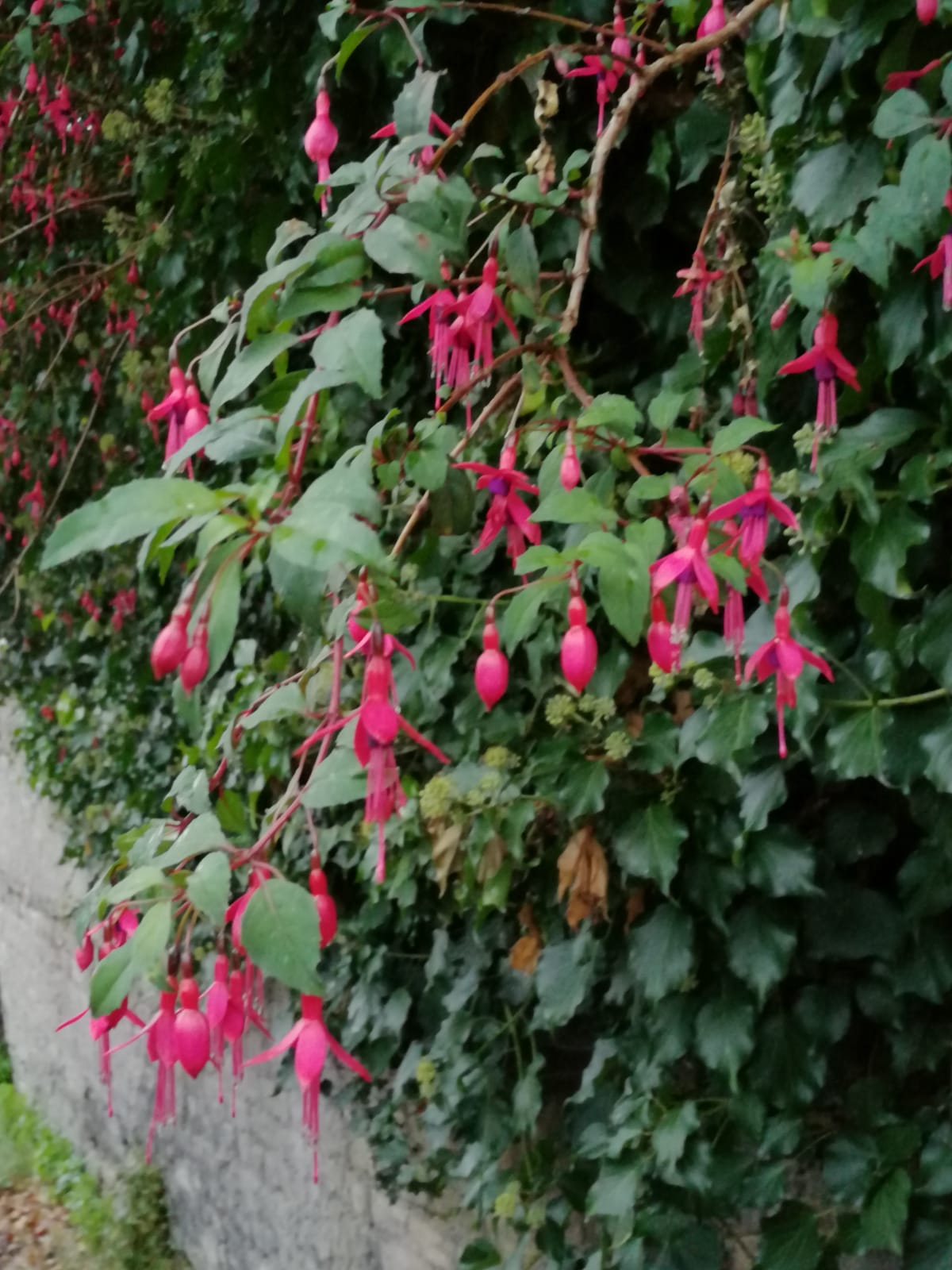
It’s the fuchsia shrub, seen often in gardens but the hardy Fuchsia magellanica ‘Riccartonii’ variety grows naturalised in Ireland, especially along our west and south-west coasts where the soil tends to remain warmer than inland in winter.1

Naturalised Fuchsia (& Montbretia) in a country lane, West Cork (Photo cred: Stone Art Blog)

The first of her kind to receive European classification was Fuchsia triphylla on Hispaniola (now Haiti and Dominican Republic), baptised by French friar and botanist Charles Plumiere in the late 1690s in honour of the German botanist and medical investigator, Leonhart Fuchs (1501-1566).

We tend to pronounce her name as “foo-shia”, which sounds Japanese (to me at any rate) but in keeping with the origin of the name perhaps we should be pronouncing it “fooch-sia”, with the “ch” pronounced as the Irish one, e.g in the word “loch”.

Giúise (g’yoo-sheh) is its Irish botanical name but it has also been popularly known as “Deora Dé” which translates as “God’s tears” but can also mean “Drops of God’s blood” (more appropriately when the flower has yet to open).

There are 110 varieties of the plant, not counting cultivars, of which there are many also. The natural varieties are nearly all native to South and Central America, with a few varieties in New Zealand2 and Polynesia, testifying to the Silurian period connection between those landmasses.

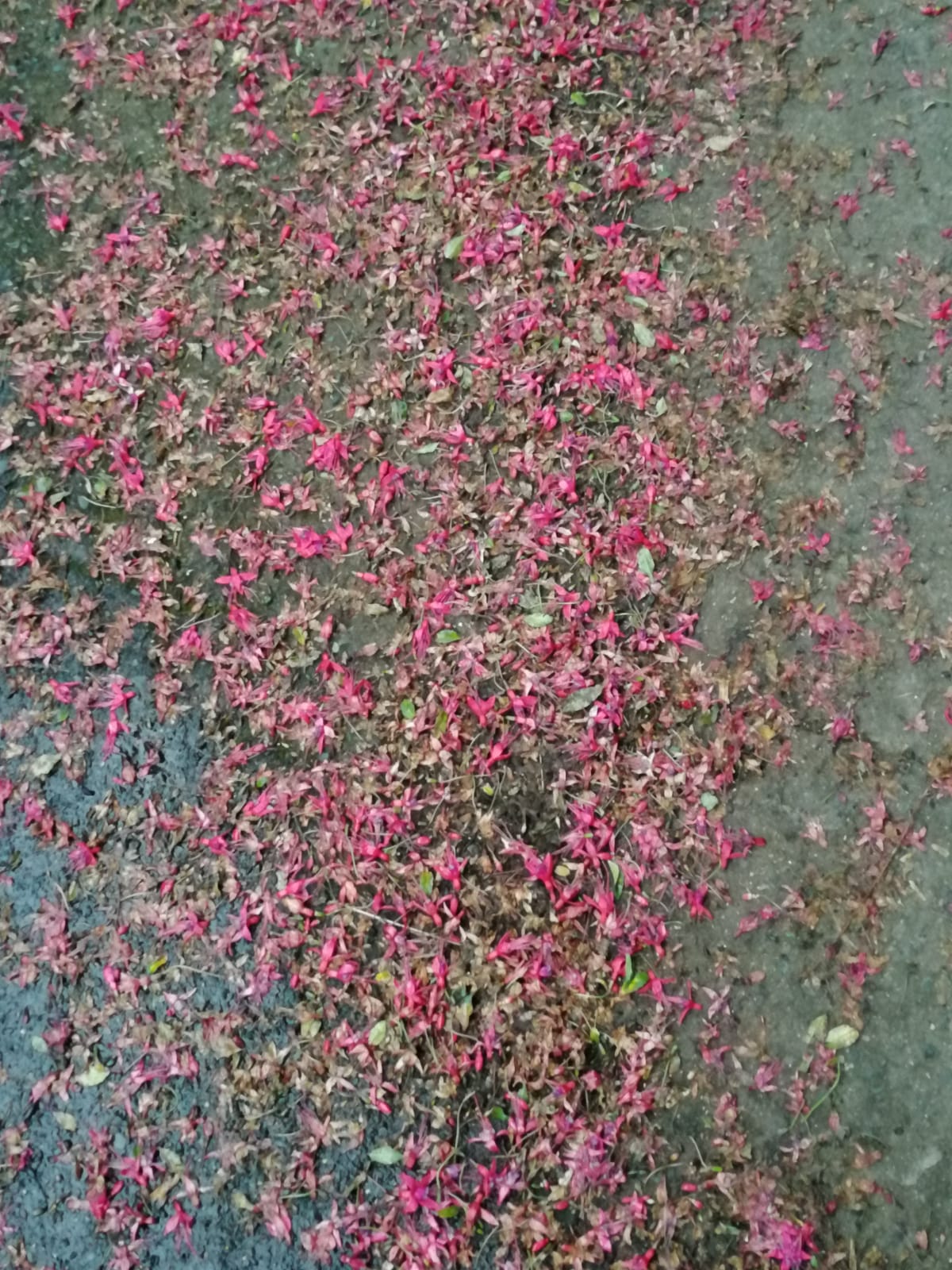
Hanging fuchsia blooms from a bush growing in a Drumcondra garden a few days ago against its back wall, with many dropping to form a carpet in the lane beneath. (Photo: D.Breatnach)

In many parts of Latin America the flowers were pollinated by different species of hummingbirds but here in Ireland they do well enough with bees, both native and imported, to assist in their procreation.

The fruits are small and vary from sweetly edible to unpleasant to taste. As children we didn’t try the developed fruits but we did pluck the flower and chew the dark red part of the stem that becomes the fruit when the flower drops – and could often taste a faint sweetness.3

The fuchsia has been in Ireland a long enough time – since the early 19th Century — and, though not native, is not generally referred to as “alien”, much less “invasive” to Ireland, unlike for example Cherry Laurel, Japanese Knotweed and a number of water plants such as Parrot’s Feather.

The Rhododendron and the Cotoneaster, which probably ‘escaped’ from gardens at the same time as the fuchsia, however do cause serious enough problems.

A fallen fuchsia bloom carpet in a Drumcondra lane at twilight a few days ago. (Photo: D.Breatnach)

The naturalised South American migrant fuchsia brings bright colour wherever she grows for four months of the year, from June to October.

Fáilte roimpi – bienvenida!

end.

FOOTNOTES

1That favours rooted plant life so long as they can withstand the wind-chill factor and Atlantic gales.

2An exception to the bush/ shrub nature of the fuschia is one New Zealand species, the kōtukutuku (F. excorticata), which grows up to 12–15 m (39–49 ft) tall.

3I admit that I still often do that.

SOURCES
https://en.wikipedia.org/wiki/Fuchsia

https://www.independent.ie/regionals/wicklow/lifestyle/fuchsia-a-not-so-fragile-beauty/34145375.html

CONCESSIONS TO COLONIAL LOYALISM

News & Views No.8 – Diarmuid Breatnach
(Reading time: 2 mins.)

According to media reports, Taoiseach Leo Varadkar said he expects to see a united Ireland in his lifetime. I think he’s wrong but he’s entitled to his opinion. However, some of his following remarks are objectionable and need to be challenged.

Varadkar claimed that in a united Ireland “there will be roughly a million people who are British.” That is false. There may – or may not – be a million IRISH PEOPLE who consider themselves British in a united Ireland, we’ll see. But they will be IRISH CITIZENS.

And they should have equal rights with all other citizens. They should have an equal right to vote, to housing, to their language, without any special restrictions, not to mention pogroms – in other words, nothing like the way their statelet treated its large Catholic minority.

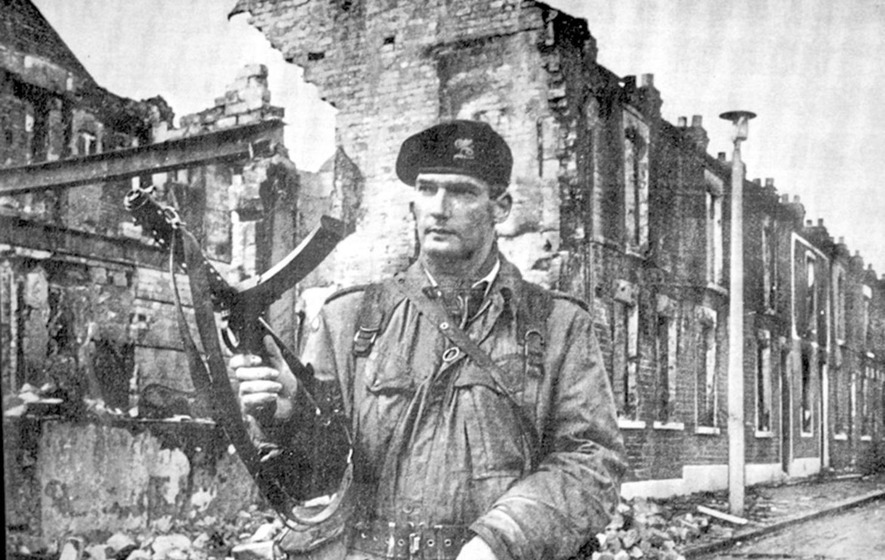
A British soldier stands in front of a section of the burned out houses of Catholics in Bombay Street, Belfast in 1969 (which the Army did not try to prevent Loyalists burning). The arson was the Loyalist response to demands of Catholics for civil rights (while the colonial police response was batons, bullets and gas). (Photo source: Clonard Residents’ Association)

I agree with Varadkar that the quality of a country should be judged “by the way it treats its minorities.” So Varadkar, how did and does your Gombeen State treat its probably oldest ethnic minority? You know, the Irish Travellers?

It is true that “a Republican ballad, a nice song to sing, easy words to learn for some people can be deeply offensive to some people.” Presumably he means to Unionists and Loyalists. Yes, and antifascist and anti-racist songs can be deeply offensive to fascists and racists.

It is also true that some people in the Southern States sing songs about the Confederacy and Robert E. Lee and call it their culture. And the comparison fits – but not with Republicans but with Loyalists!

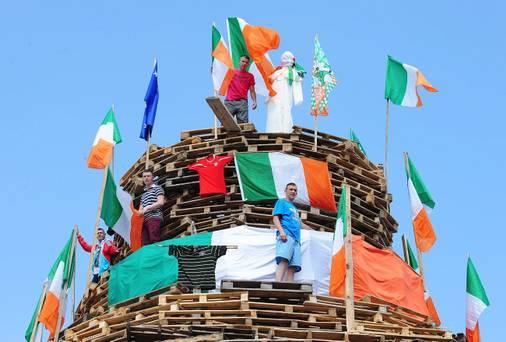
One of the charming annual expressions of Loyalist culture: a huge bonfire to burn Irish Tricolours and representations of Catholicism. Palestinian flags and representations of Celtic FC are frequently burned too. Slogans such as KAT (‘Kill All Teagues [i.e Catholics]) are often displayed also. (Photo source: Wikipedia)

It’s not Irish Republicans who spread racism and sectarianism: the Republican creed came into existence precisely against sectarianism. And we know Varadkar actually knows that because not long ago he made some remarks about the wide embrace of the Irish Tricolour.

The Irish Tricolour: a flag presented to revolutionary Irish Republicans by revolutionary French Republican women in Paris in 1848. Not a flag of monarchism, sectarianism or collusion with imperialism or colonialism.

While we uphold Republican principles we don’t have to apologise to anyone, least of all in our own country, Varadkar. It’s you and your party (and the rest of them serving the Gombeen class who threw away independence and slaughtered Irish Republicans) who need to be ashamed.

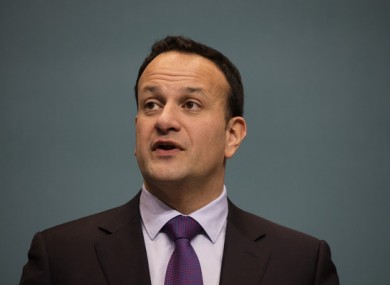
Leo Varadkar, Taoiseach (Prime Minister) of the current Coalition Government, who made the remarks this week. (Photo sourced: Internet)

People living in Ireland can think and feel what they like, good or bad. But in public, we will celebrate the valuable things in our history and culture. And we’ll do so proudly without apology to anyone.

On the other hand, public displays of Orange sectarianism, racism, homophobia, fascism and anti-LGBT targeting won’t be tolerated in an independent, reunited Ireland. Not for one minute.

End.

SOURCES:

https://www.breakingnews.ie/ireland/taoiseach-believes-there-will-be-a-united-ireland-in-his-lifetime-1524031.html

NEW POSTAGE STAMP CELEBRATES PARTITION OF IRELAND AND DOMINATION OF COLONIES

Diarmuid Breatnach

(Reading time maint text: 7 mins.)

The Irish State has issued a new commemorative stamp to celebrate its joining the League of Nations in 1923 to which its representative referred as commemorating “the significance of Ireland taking our place among our fellow nations.”1

Well, sorry to poop on your party, Gombeen Government and to point out your lie. The truncated Irish State was admitted to the League of Nations, not “Ireland”, of which one-fifth was held in arms by the British occupier – who was one of the founders of the League.

Furthermore, the Gombeen state’s management committee entered the League as the victors in the Civil War – Britain’s proxy war in Ireland – dripping in the blood of those who fought for Ireland’s freedom. But that was not unfitting for the League was full of blood-drenched governments too.

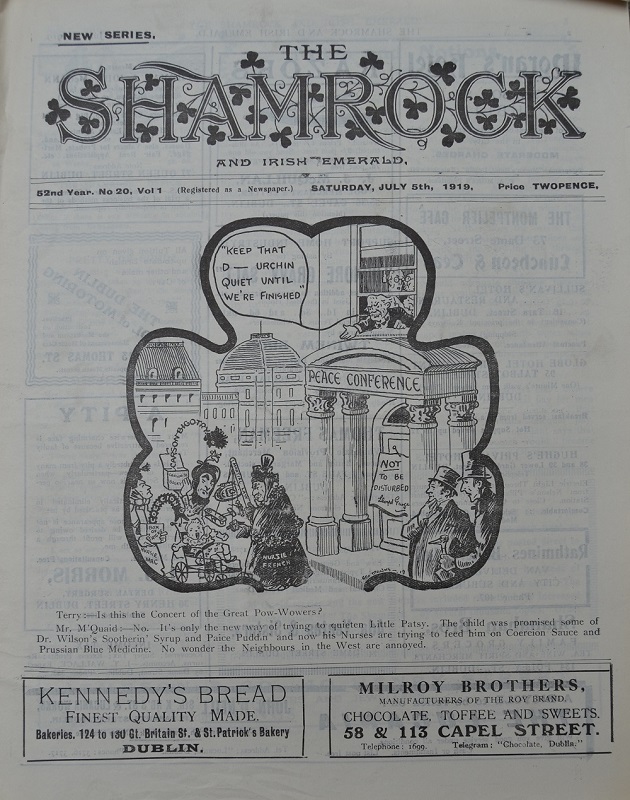
The League was formed in 1920 and though the true government of the Irish nation, the First Dáil,2 applied for membership, its emissaries were not even received. At the Paris Peace Conference, US President Woodrow Wilson did not even reply to the Irish Delegation’s letter.3

Irish nationalist media commentary on the exclusion of Ireland by Lloyd George from the Paris Conference (Image sourced: Internet)

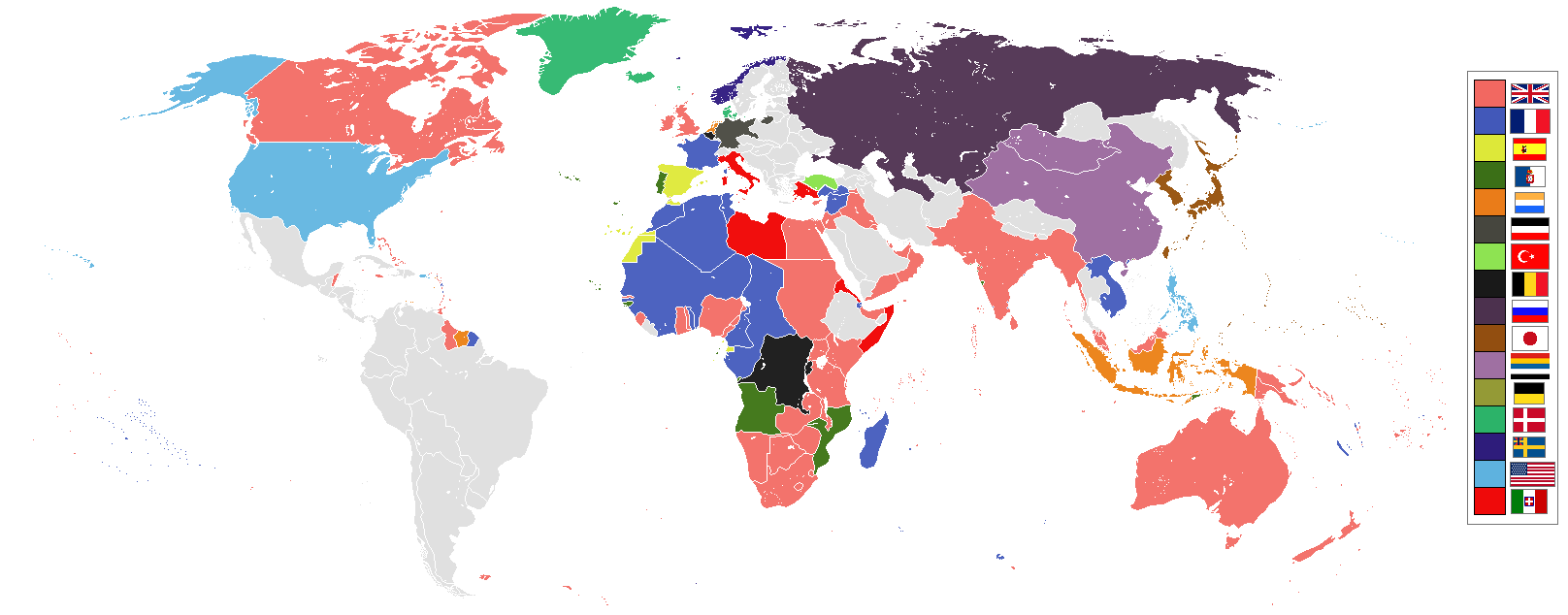
The original permanent members of the League’s Executive Council (it had four non-permanent members too) were Britain, France, Italy and Japan and its languages reflected those of the dominant European and American powers: English and French.

Britain came into the League with its Empire of allegedly independent states: Australia, Canada, India (which incorporated present-day Pakistan and Bangladesh), New Zealand and South Africa.

Map showing empires and colonies in the world in 1920 but there were also areas of influence apart from colonies. (Image sourced: Wikicommons)

PEACE?

Allegedly about peace, the League was formed as a club to discuss the areas of the world owned by the European colonial powers and to create a space where the losers and winners could discuss those lines, over which they had just fought a four-year bloody war.

Henceforth, there would be many, many wars, but mostly of colonial conquest and repression of resistance – but the European powers would not war among themselves, leastways except by finance and diplomacy. Until another 19 years, that is.

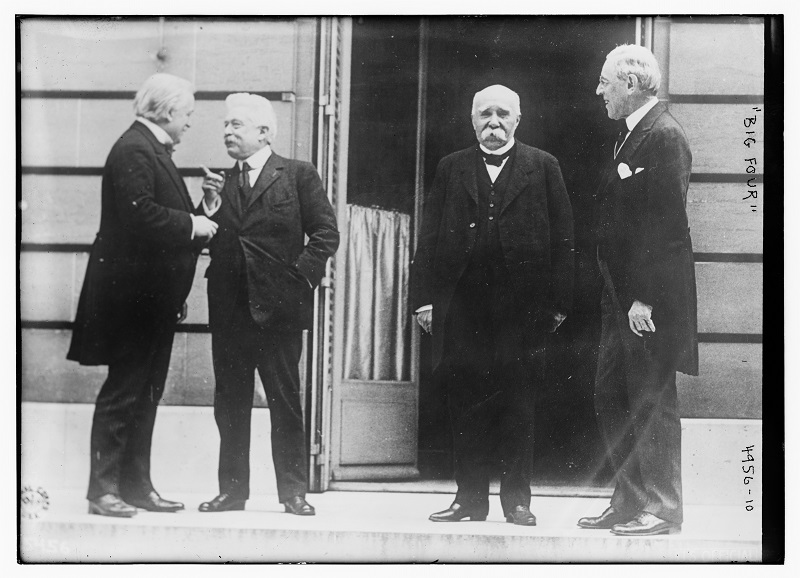
In fact, one of the major causes of WWII was the Treaty of Versailles, containing the crushing and humiliating WWI reparations demanded of Germany by the British and French imperialist powers. That Treaty was incorporated into the terms of the League of Nations.

The Big Four that framed the Treaty of Versailles; L-R: Lloyd George of Britain, Vittorio Emanuele Orlando of Italy, Georges Clemenceau of France, and Woodrow Wilson of the U.S. (Photo sourced: Internet)

Ireland would see short armed liberation struggles in the 1930s, 1940s and of three decades from 1969. Hundreds of armed liberation struggles would break out across the rest of the world, in every continent except Antartica. And yes, including Europe.

The League of Nations was a club, chiefly of European colonial powers in which the conquest and suppression of a huge number of other nations was agreed and ratified. It was followed by the hugely-expanded United Nations after the next World War.

The UN has much the same role and of its 193 members, its only binding decisions are made by five Security Council Permanent Members voting without dissent: USA, UK, France, Russia and China. The vast majority of the other states are clients of one or other of those five.

The Irish state joined that earlier League not as one of the colonial powers but as a defeated nation, a neo-colonial client regime, an experiment in native self-government under external colonial control, one to be adopted by the other imperial powers and replicated across the world.

The Irish state joined the United Nations in December 1955 in exactly the same client relationship to its old masters but over time the yearly tribute has been shared among new part-masters, first the USA and then EU imperialism.

Neither the state’s advent to the League of Nations nor to its successor, the United Nations, has anything whatsoever of which to be proud. An opportunity for Irish real independence and world friendship of nations was squandered.

The new stamp should carry a black border in mourning.

End.

FOOTNOTES

1Words of Mícheál Martin, the Tánaiste (Deputy Prime Minister) of the Irish Government quoted in numerous media reports.

2The First Dáil was founded in January 1919 in defiance of British occupation, based on the results of the UK’s December 1918 General Election results in Ireland which returned 73 MPs of the newly-reconstituted Sinn Féin party out of a total of 101 MPs elected in Ireland. The SF members set about organising an Irish Government and, though declared illegal by the British occupiers shortly afterwards, continued to operate as a government until it split over whether to accept the terms of the British offer in 1921, which led to the Civil War of 1922-1923.

3 See https://www.irishtimes.com/culture/heritage/how-the-plea-for-irish-independence-made-its-way-to-paris-1.3742328. Though interestingly, Wilson did reply to the young Ho Chi Minh’s in respect of Vietnam (Ho Chi Minh, while working in Britain, had commented admiringly on the Irish capacity for resistance at the time of Mac Swiney’s funeral march in London from Brixton Jail to Southwark Cathedral). Most of Indochina at the time was a French colonial possession.

SOURCES

https://www.breakingnews.ie/ireland/new-stamp-marks-irelands-admittance-to-league-of-nations-1523570.html

https://www.dfa.ie/about-us/ourhistory/100years/1919-1929/1923/

https://www.dail100.ie/en/long-reads/message-to-the-free-nations-of-the-world/

Text First Dáil Message to the Nations of the Free World: https://en.wikipedia.org/wiki/Message_to_the_Free_Nations_of_the_World#:~

https://en.wikipedia.org/wiki/Member_states_of_the_League_of_Nations

https://en.wikipedia.org/wiki/League_of_Nations

https://en.wikipedia.org/wiki/Treaty_of_Versailles

An t-Iascaire Coirneach ag pórú in Éirinn arís tar éis 200 bliain in easnamh.”

Aistrithe ag D.Breatnach ó scéal ag Rebecca Black PA24/08/2023
(Achair léitheorachta 3 nóim.)

Tá caomhnóirí ag ceiliúradh tar éis dóibh teacht ar fhianaise gur phóraigh an t-iascaire coirneach in Éirinn don chéad uair le breis agus 200 bliain.

Bhí péire ag pórú ag láthair nead rúnda i gCo. Fear Manach, de réir Fiadhúlra Uladh.

Dúirt an eagras neamhrialtach go raibh an t-éan creiche sainiúil tar éis athchoilíniú go nádúrtha sa cheantar agus gur éirigh leis dhá scalltán ar a laghad a shaolú, b’fhéidir trí chinn – an chéad phéire scaltan fiáine den chineál in Éirinn sa lá atá inniu ann.

Ba é Giles Knight, comhairleoir scéime feirmeoireachta comhshaoil le Ulster Wildlife, a rinne an fionnachtain.

Tá sé ag breathnú ar an mbeirt phóraithe le trí shéasúr anuas le linn a chuairteanna feirme áitiúla sa cheantar.

“Tá an scéala seo á choinneáil gar do mo bhrollach agam le fada an lá chun sábháilteacht agus leas na n-éan iontach ach soghonta seo a chinntiú,” a dúirt sé.

“In éineacht le mo mhac Eoin, tá mé ag faire ar na héin fásta ag filleadh ar an suíomh céanna ó 2021, mar sin d’fhéadfá a shamhlú go raibh sceitimíní orm ar an nóiméad a chonaic mé trí scalltán agus dhá éan fásta i mbliana.

“Nóiméad cimil-do-shúile a bhí ann, ócáid eisceachtúil; an buaicphointe is mó de mo ghairm bheatha fiadhúlra 30 bliain – cosúil len a theacht ar thaisce atá caillte le fada.

“Le dhá scalltán ar a laghad ag teacht aníos an séasúr seo, is scéal an-rathúil caomhantais é seo agus léiríonn sé éiceachóras bogach sláintiúil le neart gnáthóg agus iasc oiriúnach chun an creachadóir géibhinn seo a thabhairt ar ais chuig ár spéartha agus ag tumadh ins na Locha Fhear Manach.

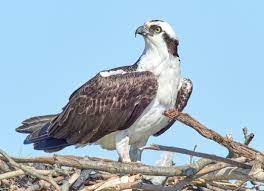
Iascaire Coirnech ar nead (íomhadh le: Wikipedia)

“Filleadh tuaithe beo i ndáiríre.”

Dúirt Fiadhúlra Uladh gur ceapadh go raibh na hiolair chreiche imithe in éag mar éan goir in Éirinn ag deireadh an 18ú haois mar gheall ar ghéarleanúint chórasach.

Cé gur minic a fheictear iad ar imirce chuig an Afraic Fho-Shahárach agus amach uaithi, ní raibh pórú deimhnithe in Éirinn do-ghlactha go dtí seo, agus Albain ina dhaingean pórúcháin sa RA.

Mhol an Dr Marc Ruddock, ó Northern Ireland Raptor Study Group, an “scéal iontach”.

“Tá na comharthaí agus na radharcanna go léir le blianta beaga anuas ag díriú air seo, ach anois tá fíor-rath póraithe dearbhaithe ar deireadh – nuacht iontach,” a dúirt sé.

Dúirt an tUasal Knight nach nochtfaí láthair an tsuímh le sábháilteacht na n-éan a chinntiú.

“Anois go bhfuil na héin seo ar ais in Éirinn agus ag pórú go rathúil, tá sé ríthábhachtach go bhfágfar faoi shíocháin iad ionas gur féidir leo leanúint ar aghaidh ag méadú trí phórú bliain i ndiaidh a chéile.

“Creidimid agus tá súil againn go bhféadfadh sé seo a bheith ina thús le ríshliocht éin chreiche,” a dúirt sé.

Iascaire Coirneach agus iasc gafa (Íomhádh le: Nick Brown)

“Ba ábhar misnigh agus croíúil é an t-úinéir talún, an pobal feirmeoireachta áitiúil agus ár gcomhpháirtithe a fheiceáil ag fáiltiú roimh fhilleadh na n-iolairí.

“Cuirfidh a dtacaíocht leanúnach ar chumas na nglún atá le teacht sult a bhaint as na héin iontacha seo i bhfad amach anseo.”

Ar fud na hÉireann, tá monatóireacht ag eolairí na n-éan creiche, tógáil ardáin neadaithe, agus pleanáil do chláir aistrithe agus athbhunaithe ar siúl le blianta anuas.

A chríoch.

REVISIONISM AND QUOTING OUT OF CONTEXT

Diarmuid Breatnach

(Reading time: 7 mins.)

A post-Irish-Republican party prints a revisionist statement from a prominent British Republican at a festival it promotes.

Jeremy Corbyn spoke at the recent Féile an Phobail in West Belfast and Sinn Féin’s publication reported uncritically on his quoting of some words of James Connolly’s out of context:

“No Irish revolutionist worth his salt would refuse to lend a hand to the Social Democracy of England in the effort to uproot the social system of which the British Empire is the crown and apex.

And in like manner no English Social Democrat fails to recognise clearly that the crash which would betoken the fall of the ruling classes in Ireland would sound the tocsin for the revolt of the disinherited in England”.

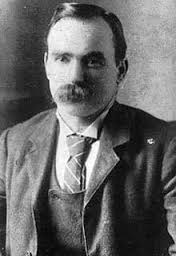
James Connolly, quoted out of context by opportunists who ignore the rest of his writing. (Photo sourced: Internet)

People often pick and choose from revolutionary writings to find what they want and then quote out of context.1 In 1909 Connolly wrote the words Corbyn quoted at the Féile, clearly thinking that the large organised workers’ movement in Britain might bring about a revolution.

And also of the opinion that the revolution there would open the gates to a revolution in Ireland – or vice versa. Those are of course still possible outcomes but it seems to me more likely to occur with the Irish revolution giving the impetus to a British one.

In 1920 Lenin too recommended British revolutionaries to vote for Labour “as a rope supports a hanging man”.

That quotation has been repeated by social-democrats and some Trotskyists out of context and ad nauseam too, right up to the present. Lenin at no time argued that people should support the government of an imperialist state.

I think Lenin was mistaken because the British Labour Party had confirmed the imperialist ideology of its leaders at least six years earlier.

In 1914 most social-democratic parties overturned their earlier agreed declarations against war and supported their own national capitalist classes who were sending hundreds of thousands of working people out to slaughter the working people of other countries.

Connolly in Ireland, John MacClean in Scotland and the Bolsheviks in Russia were among the few who stuck to the flags planted earlier.

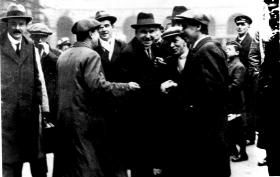
John MacLean photographed during a strike in 1919. The same year he visited Ireland which had a profound effect on the development of his revolutionary thinking. MacLean was one of the few European leaders of the social-democratic movement who, like Connolly and Lenin, stuck to the anti-war revolutionary stance during WWI. (Photo sourced: Internet)

THE BRITISH LABOUR PARTY’S ACTUAL RECORD

The British Labour Party leadership was represented in the WWI War Government and thus colluded in the suppression of the 1916 Rising in Ireland and the execution of 16 leaders, the news of which a number of Labour MP’s cheered in Parliament.

It might have been interesting to hear Corbyn commenting on that and on the subsequent history of the Labour Party. And has British social democracy uprooted “the social system of … the British Empire”? Not in the least, in fact propping it up time and again.

Since 1914 up to the present the party has shown itself, whenever it was not its actual executive, to be the social prop of the imperialist British bourgeoisie. But actually it has often been in government sending troops to suppress national liberation struggles in many parts of the world.

The struggles include those in Vietnam (recruiting Japanese POWs to fight the Viet Minh) so as to hand the country over to French colonialism, which they did. They rearmed Japanese POWs in the Dutch East Indies too in a bloody war against the national movement.

Because of how little-known this war is, I do not apologise from quoting extensively on it from socialist historian John Newsinger.2

Once again, British troops began arriving after Labour had taken office, and found themselves confronting a well-armed nationalist movement that had taken control of most of the country.

Fighting was so fierce that the British turned to the Japanese prisoners-of-war, rearming thousands of them and deploying them against the rebels.

The city of Semarang was taken by Japanese forces, using both tanks and artillery, killing over 2,000 rebel fighters and civilians, and driving the survivors out.

According to one account, ‘Truck loads of Indonesian prisoners with their hands tied behind their backs were driven into the countryside and never seen again.

When the Japanese handed over to the British on 20 October 1945, the British were so impressed that the Japanese commander, a Major Kido, was recommended for the Distinguished Service Order (DSO).

Such an award would, of course, have been political dynamite at a time when British prisoners were being liberated from Japanese camps and would have drawn unwelcome attention to the Labour government’s policy of imperial restoration.

Indeed, both Attlee and Ernest Bevin, the Foreign Secretary, lied to the House of Commons about the extent of the use of Japanese troops. The heaviest fighting took place in the port-city of Surabaya where some 4,000 British troops came under attack towards the end of October.

Over 200 British and Indian soldiers were killed, including their commander, Brigadier Mallaby. Reinforcements were poured into the city and on 9 November a full-scale assault, involving 24,000 troops supported by twenty-four tanks, was launched.

Surabaya was shelled by both land and sea and bombed from the air. On the first day of the assault, over 500 bombs were dropped on the city including 1,500 pounders. Two cruisers and three destroyers joined in pounding the city.

It was, according to one account, ‘one of the largest single engagements fought by British troops since the end of the Second World War’. Only after three weeks of heavy fighting were the nationalist forces driven from the city, suffering some 10,000 casualties in the process.

At the end of the fighting, ‘90 percent of the city’s population were now refugees’. Even today, this major battle is virtually unknown in Britain, although in Indonesia the first day of the British attack, 10 November, is still celebrated as ‘Heroes Day’ … (in) the Indonesian struggle for independence.

Although the Churchill Coalition sent troops and airforce to suppress the Greek Communist resistance after defeat of the Axis troops there, Labour in government continued the policy of restoring the discredited and largely unwanted Greek King against popular resistance.

In Malaya the British banning of strikes and opening fire on unarmed demonstrations of former allies led to armed resistance and war. In Kenya too, treatment of the people led to a war of resistance and British troops committed atrocities in both theatres, including rape and torture.

Later, the UK sent troops to fight in Korea, Cyprus, Aden, Oman, Afghanistan and Iraq and bombed Libya, always with Labour Party support whenever the party was not in the actual executive, i.e in government.

Now, perhaps the author of the article in SF’s publication is weak on international history (clearly the party has never spent any great effort in educating their membership in such areas).

But surely he would be familiar with the events of 1969 in Ireland and of the following three decades there?

Yes, it was a Labour Government that sent troops into the colony in 1969 to crush the struggle for civil rights there, civil rights by the way that were guaranteed by law in every part of Britain.

It was a Labour Government once again that brought in the Prevention (sic) of Terrorism Act in 1974, repressive legislation against the Irish community in Britain which led to intimidation and harassment of thousands of Irish people, raids on homes and deportations.

Under a Labour Government a score of innocent Irish people were framed on extremely serious charges in 1974 and the first antifascist on a demonstration was killed by police – coincidentally of Irish descent too (Kevin Gately, from Leeds, Red Lion Square, London).

In addition to the crimes abroad of British Labour while in government, it supported all the major crimes committed under a Conservative Government, including most definitely those in Ireland.

WHY DO THEY QUOTE THEM?

If social democrats and liberals politicians truly respect those revolutionaries they quote, why do they not follow their teachings? Because in reality, they fear revolution.

But why, in that case, do politicians quote revolutionaries in the first place, even if out of context? It’s because they know that the people love and honour the memory of those revolutionaries and they hope to use them to enlist the people in their reactionary projects.

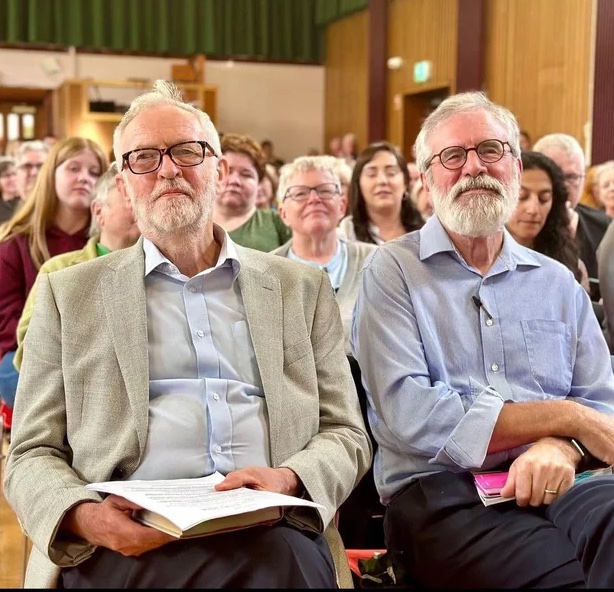
Jeremy Corbyn, former leader of the British Labour Party with Gerry Adams, former leader of Provisional Sinn Féin, photographed at Féile an Phobail in West Belfast this year. (Photo sourced: Internet)

It should not surprise us to see promotion of British social democracy by a party that shares in the administration of a British colony and which is itself dabbling in social democracy — but it is sickening to see them welcoming the use of James Connolly in the course of that.

Connolly was quite clear on his attitude which set it down in song lyrics in Songs of Freedom, published in 1907 in New York3:

Some men, faint-hearted, ever seek
Our program to retouch;
And will insist, whene’er they speak
That we demand too much.
’Tis passing strange, yet I declare
Such statements give me mirth
For our demands most moderate are:
“We only want the Earth.”

“Be moderate,” the trimmers cry
Who dread the tyrants’ thunder;
“You ask too much and people fly
From you aghast in wonder.”
’Tis passing strange, for I declare
Such statements give me mirth
For our demands most moderate are:
“We only want the Earth.”

Our masters all, a godly crew
Whose hearts throb for the poor;
Their sympathies assure us, too
If our demands were fewer.
Most generous souls! But please observe
What they enjoy from birth
Is all we ever had the nerve
To ask, that is, the Earth.

The Labour fakir, full of guile
Base doctrine ever teaches
And whilst he bleeds the rank and file
Tame moderation preaches4.
Yet in his despite we’ll see the day
When with sword in their girths
Workers5 will march in war array
To claim their own, the Earth.

For workers1 long with sighs and tears
To their oppressors knelt;
Yet never yet to aught save fears
Did heart of tyrant melt.
We need not kneel, our cause is high,
Of true hearts there’s no dearth
And our victorious rallying cry
Shall be: ‘We want the Earth!’

End.

FOOTNOTES

1It is even said that “the Devil can quote Scripture”.

2 Newsinger: War, Empire and the Attlee government 1945–1951 65

3No air was indicated for the song; in England I heard it sung to the air of A Nation Once Again, which gives the opportunity for a chorus of “We only want the Earth” etc and of all the airs to which I have heard it sung I believe that one suits it best.

4In my singing, I have reversed the order of ‘preaches’ and ‘teaches’ which to me seems more appropriate, particularly in this era.

5I inserted ‘workers’ rather than ‘labour’ for what should be obvious reasons.

6Ditto.

SOURCES

Jeremy Corbyn returns to West Belfast for Féile35

Newsinger: War, Empire and the Attlee government 1945–1951 65

https://www.marxists.org/archive/connolly/1907/xx/wewnerth.htm

NEW NAME FOR THE GARDAÍ & FAR-RIGHT’S CONTRIBUTION TO TOURISM

News & Views No.7 Diarmuid Breatnach (Reading time: 3 mins.)

Change of Name for Irish Police

The Chief Commissioner of the police force of the Irish state is reputedly “quietly pleased” with the change of name for the force he commands. “It describes the work we actually do” he commented at a press conference earlier today.

There were suggestions that the widely-supported name-change might be held up by bitterness at a recent vote of no-confidence by members of the force against the Commissioner, formerly senior officer in a colonial police force and of MI5 membership but this was not to be.

“He’s used to changes in the names of forces where he comes from,” commented a senior officer. “Besides the new one fits better than the earlier name for the force” he continued but seemed flustered when asked was he referring to the Royal Irish Constabulary.

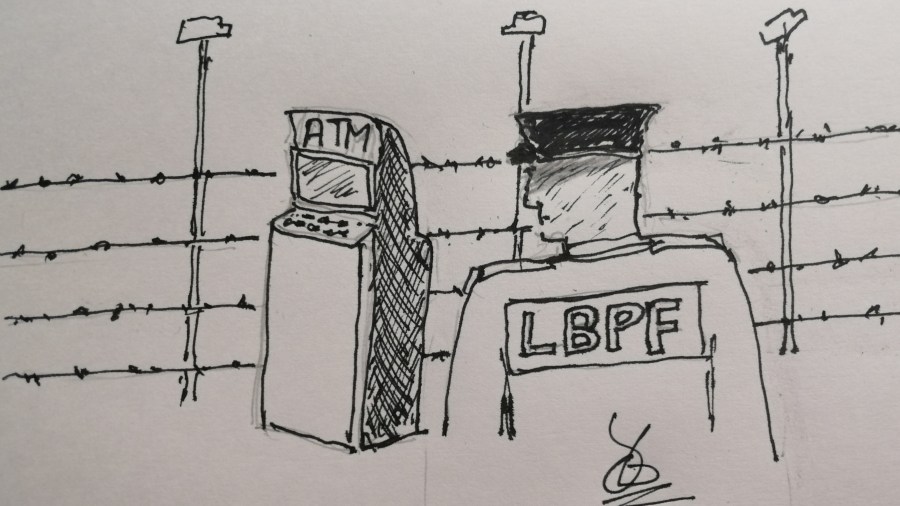
Others have remarked that the new name gives a much more rounded perspective than the earlier suggestion of Landlord’s Protection Force. “The excellent mobilisation to guard ATMs in the recent Bank of Ireland give-away crisis has justified the new name,” commented the Justice Minister.

“The mobilisation was even more remarkable given that no crime was actually being committed”, said the Minister.

The force will henceforth be known as The Landlords and Bankers Protection Force (with apostrophes ruled out of order). The new insignia or emblem will resemble a tall apartment block with a bank on the ground floor, carrying also the acronym LBPF.

Far-Travelling Rightists

The reported words of a Clare TD this week struck a chord among some far-Rightists. Cathal Crowe TD complained that tourists arrive by coach at the Cliffs of Moher, take selfies against the sights, climb back in and are driven off to Dublin, with no benefit all to the local economy.

“Why not flip the model?” he asked, suggesting that tours could be based in the West and set out from there to take in the sights elsewhere.

“We’ve been doing the kind of tourism recommended by Crowe for a long time”, exclaimed far-Right activist Dara O’Flaherty, “organising protest trips up to Dublin from Galway instead of tours the other way around. But of course we don’t get credit for it,” he concluded bitterly.

O’Flaherty blamed “freemasonry in the travel industry” for the lack of acknowledgement they receive.

Andy Heaseman, from Dublin but currently based in Mayo, stated that he has travelled on his own and with others to Dublin, down to Limerick and Cork “and not only by public transport and shared car”, he claimed “but also by boat – until it crashed,” he concluded with a sad face.

Niall McConnell has also visited Dublin as well as other spots with Farright Protest Tours, while Herman (‘Monster’) Kelly has been to Dublin, Limerick and Ballyjamesduff, though being obliged to leave each town shortly after his arrival.

Niall Nine Lies McConnell used to descend from his Donegal fastness to pray the Catholic Rosary on streets in Dublin and elsewhere, in close proximity to Muslims or people whose lives violate his ideas of gender and sexuality but who somehow continue to defy him.

McConnell was baptised “Nine Lies” for among other things, informing a European gathering of fascists that immigrants outnumbered the Irish-born in Ireland. He’s been taking a break and, “as a devout Christian, most emphatically not a Black Sabbatical” as he pointed out to our reporter.

The title “most travelled Farrighter” must surely go to Dublin-based Phil Dwyer, who claims to have been to every protest against migrants, Muslims, mask-wearing during Covid epidemic, Covid vaccines and anyone not 100% male or female-orientated according to genitalia.

Phil, also known affectionately as “Kick the Dog” gained the nickname “Lederhosen” for recruiting ‘real Irish men’ for hill-walking together, organising such activities to counter the feminising effect he believes female primary school teachers are having on Irish boys.

Phil “Kick the Dog” Dwyer was a recruiter of “heavies” for attacks on antifascists until expelled from the National Party for publicly violating the grave of a female victim of male violence. Dwyer is capable of carrying on his noble crusade even in a taxi home after having a skinful.

Farright Protest Tours (Ireland) on their website recently challenged anyone to name a place to which their service had not travelled or a democratic right which they had not opposed.

The successful respondent will be presented with a copy of the 1930s My Struggle, translated from the original into English and signed by the Austrian author.

End.

SOURCES

https://www.dublinlive.ie/news/gardai-defend-sending-officers-clear-27533946

https://www.breakingnews.ie/ireland/growing-problem-of-instagram-tourism-at-cliffs-of-moher-td-claims-1516047.html