Ireland has broken off its love affair with the USA but the breakup’s been coming for a long time. Of course it was always a kind of mythical USA that was the love object, of film stars, rock n’ roll, friendly presidents, Irish-U.Stater politicians, of U.Stater tourists – never the real USA, good or bad. One could feel the tensions in the relationship during the Viet Nam War, though that was mostly to be seen in the youth and some lefties. But then came the lying scandals in the US Presidency of Nixon and Clinton and the naked warmongering throughout all, including the Bushes, Snr. and Jnr.
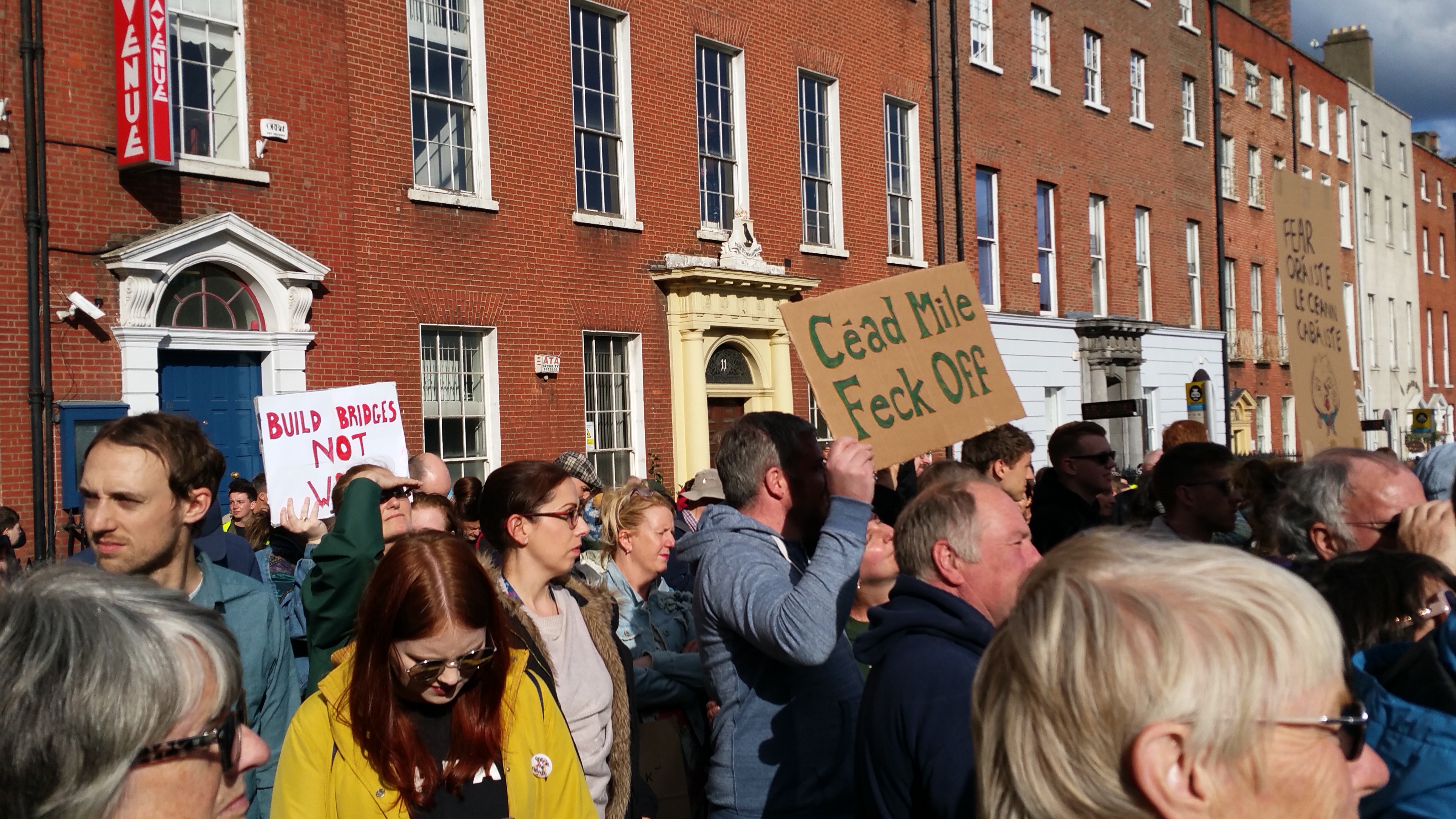
Looking southward from around the middle of the crowd in front of the Garden of Remembrance, Parnell Square, Dublin. (Photo: D.Breatnach)
Ireland, below the level of its Gombeen politicians, has split up with the USA (at the level of ITS politicians and millionaires [often the same thing]) but it has been a relatively civilised breakup and thankfully with no children (well, apart from the Irish illegal immigrants – sorry, undocumented visitors).
While some businesses in an Dún Beag might have turned a profit out the Fear Mór’s visit, having the Chief of the World Superpower drop in on us has cost us – around 10 million euro, according to the Irish Independent. Loads of extra Gardaí on the ground in Co. Clare and Limerick, in the air and on sea, does not come cheap (though I’m sure the overtime was welcome). All would have been bad enough if we had invited him but we hadn’t. Will the Irish Government present the US Presidency with an itemised bill? Probably not.
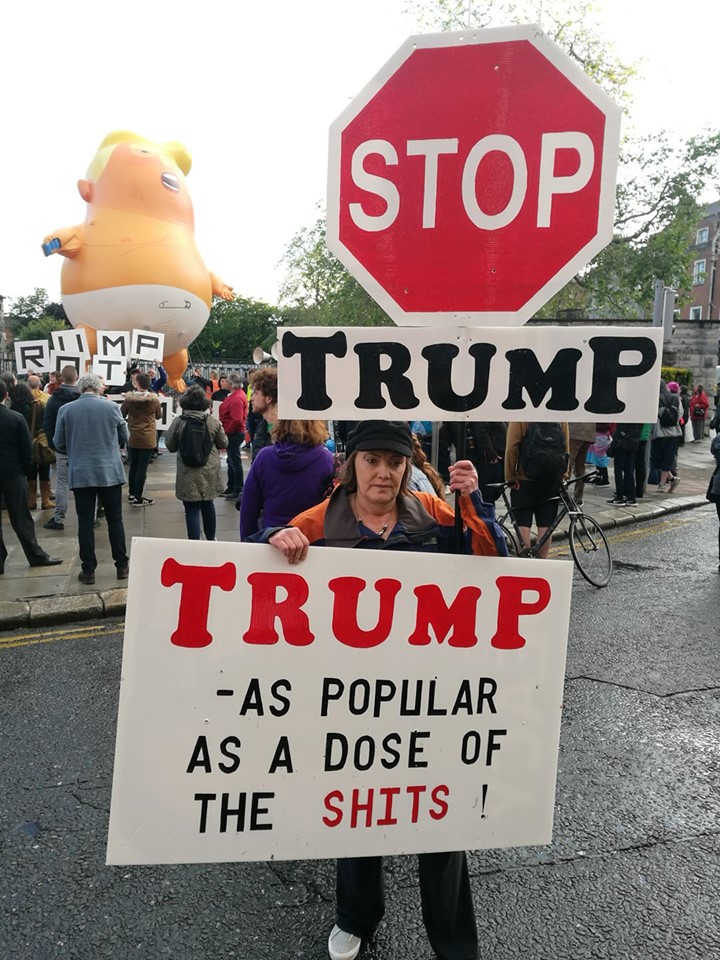
Blimp rising — taken from northern edge of rally. (Photo: D. Breatnach)
At the invitation of The Irish Examiner, a number of organisations and individuals had written letters to Trump for publication (see link below); most were critical and these included Amnesty International, Irish Council for Civil Liberties, Ireland Palestine Solidarity Campaign, National Union of Journalists, National Women’s Council of Ireland, National Union of Students; Brendan Ogle, Tara Flynn and Clare Daly. For entertainment value I’d pick out the IPSC’s and Tara Flynn’s (well, she is a comedian). The ICCL also had a newspaper advertisement criticising Trump, which was sponsored by the American Civil Liberties Union and figured logos of a number of other civil rights organisations.
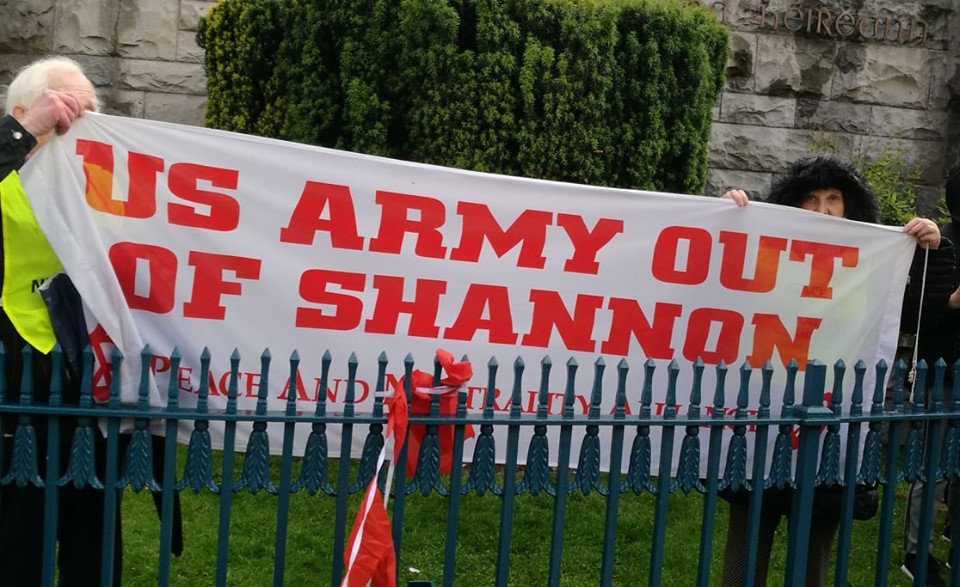
There were protests in various parts of the country, including one to greet his arrival at Shannon airport (hopefully US munitions and troop carriers were pulled to one side so as not to hinder his landing). The Irish Times said there were about 200 protesters there so, on past reporting, there could have been anything between 300 and 1,000. It is not easy to get to Shannon airport unless one has a car, even from Galway the gaps between bus arrival times are substantial. And no train station.
(Photo: G.Guilfoyle)
DUBLIN RALLY
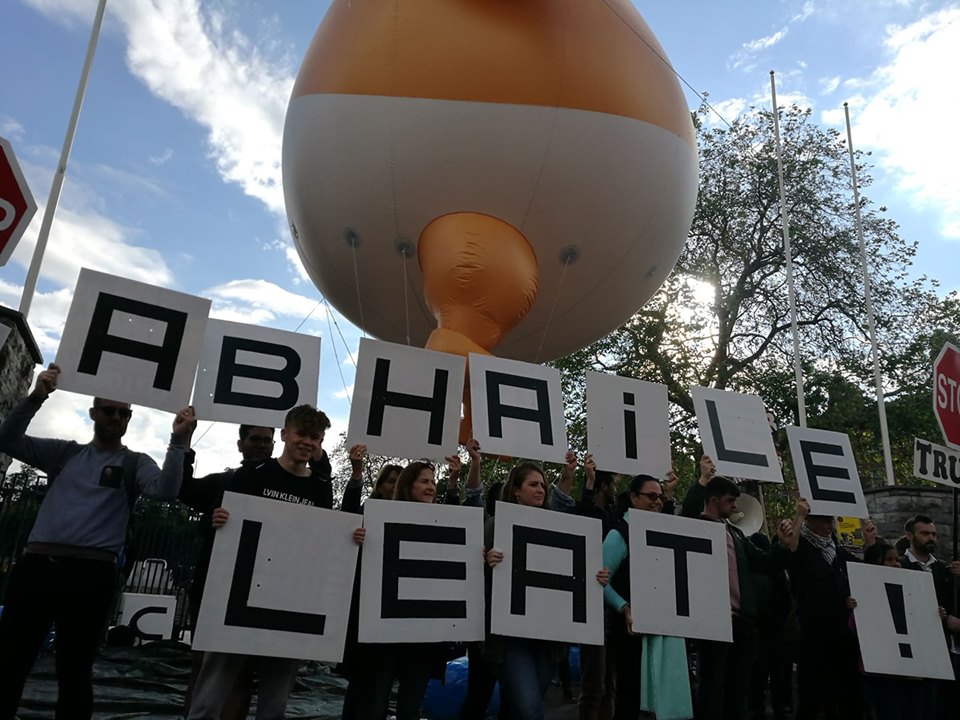
Dublin had a showy and packed anti-Trump rally, with a Baby Trump blimp floating above the crowd outside the Garden of Remembrance. An activist brought big letter placards which, with the help of volunteers from the crowd, spelled out anti-trump messages in English and in Irish. Indeed an interesting feature was a number of placards partly or completely in Irish.
(Photo: D.Breatnach)(Photo: G.Guilfoyle)
The theme of “welcome” or “fáilte” was of course played upon in reverse, in speech and placard, with more than a hinted reference to the old Bord Fáilte slogan inviting tourists to the land of “céad míle fáilte”.
On this placard play is made of the old “Céad míle fáilte” sentence (“a 100,000 welcomes”) but with a different twist.
The event was managed by Unite Against Racism which is, for the most part, People Before Profit, which in turn is really the Socialist Workers’ Party. A number of other left-wing party flags could be seen too. A group of Shinners were at the rally with their trademark flags (never go anywhere without the party’s flag) but no “dissidents” were present as a group, though I certainly noted some as individuals.
The speakers at the rally covered a number of themes, including of course misogyny, migrants, Palestine, war-making and imperialism. Liam Herrick of the ICCL was an unusual sight to see on an outdoors protest platform, speaking at the second part of the rally. Curiously, the rally organisers had sent a major part of the attendance off to march around the city centre for awhile and of course, when they got back, they had shed a great part of their numbers. A torrential downpour no doubt encouraged the desertions.
Glenda, “the woman of letters”, with some of her work.
Coming towards the end of the rally, a performer accompanied himself on guitar while he rendered some songs for the diminished attendance. Woody Guthrie’s “Plane Crash at Los Gatos” (also known as “Deportees”) would have been an apposite choice, a song about Mexican labourers being employed in the south-eastern US fruit harvests and then driven back across the Border. Guthrie was moved to sing about them when in 1948 a plane carrying mostly deported Mexicans crashed, killing all on board and though the names of the crew were given in the news reports, the Mexicans were referred to only as “deportees”.
At the rally, eventually Trump was deflated (the blimp, I mean), tethering weight bags emptied of water, placards were packed, flags furled …. and I went to get some shopping.
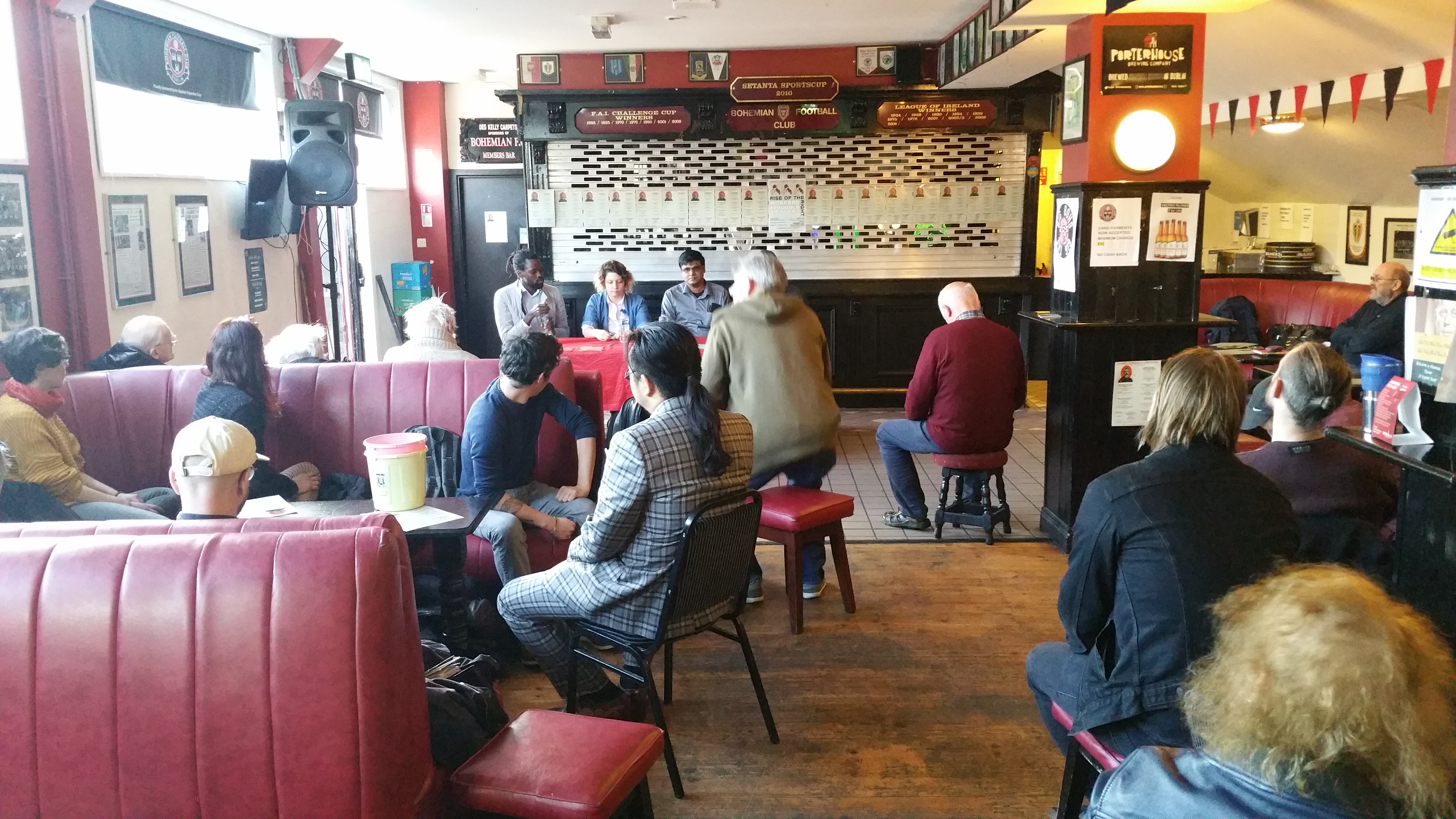
The above was the title of an event as part of the James Connolly Festival 2019 and was held in the Bohemians FC Members’ Bar in Dalymount Park, Phibsborough, Dublin on 7th May. The event was chaired by Spark Podcast and had three speakers, one from a Direct Provision asylum seeker’s hostel, another from a Brazilian immigrant community and a third from Kerala state in India but resident in Ireland.
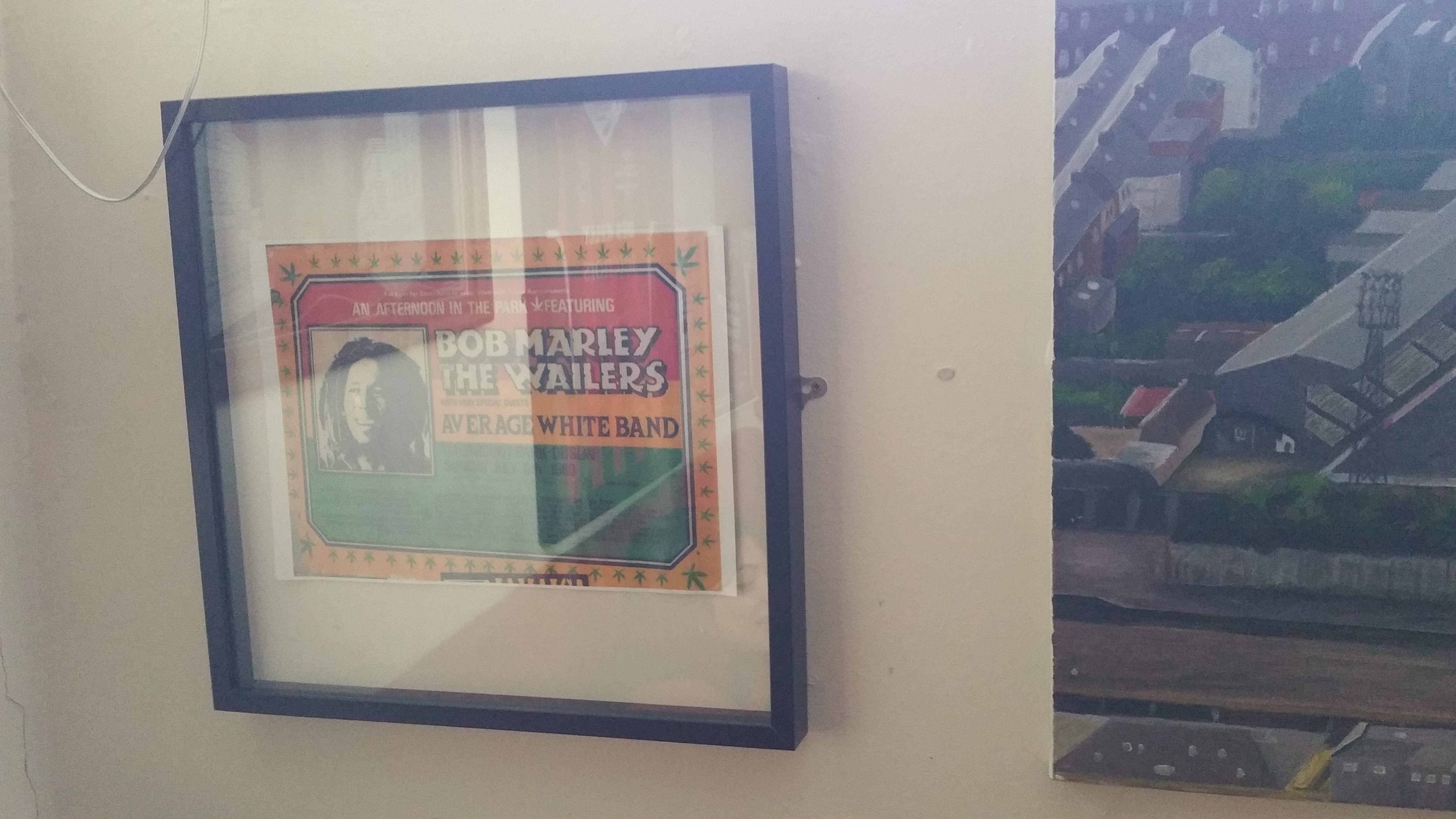
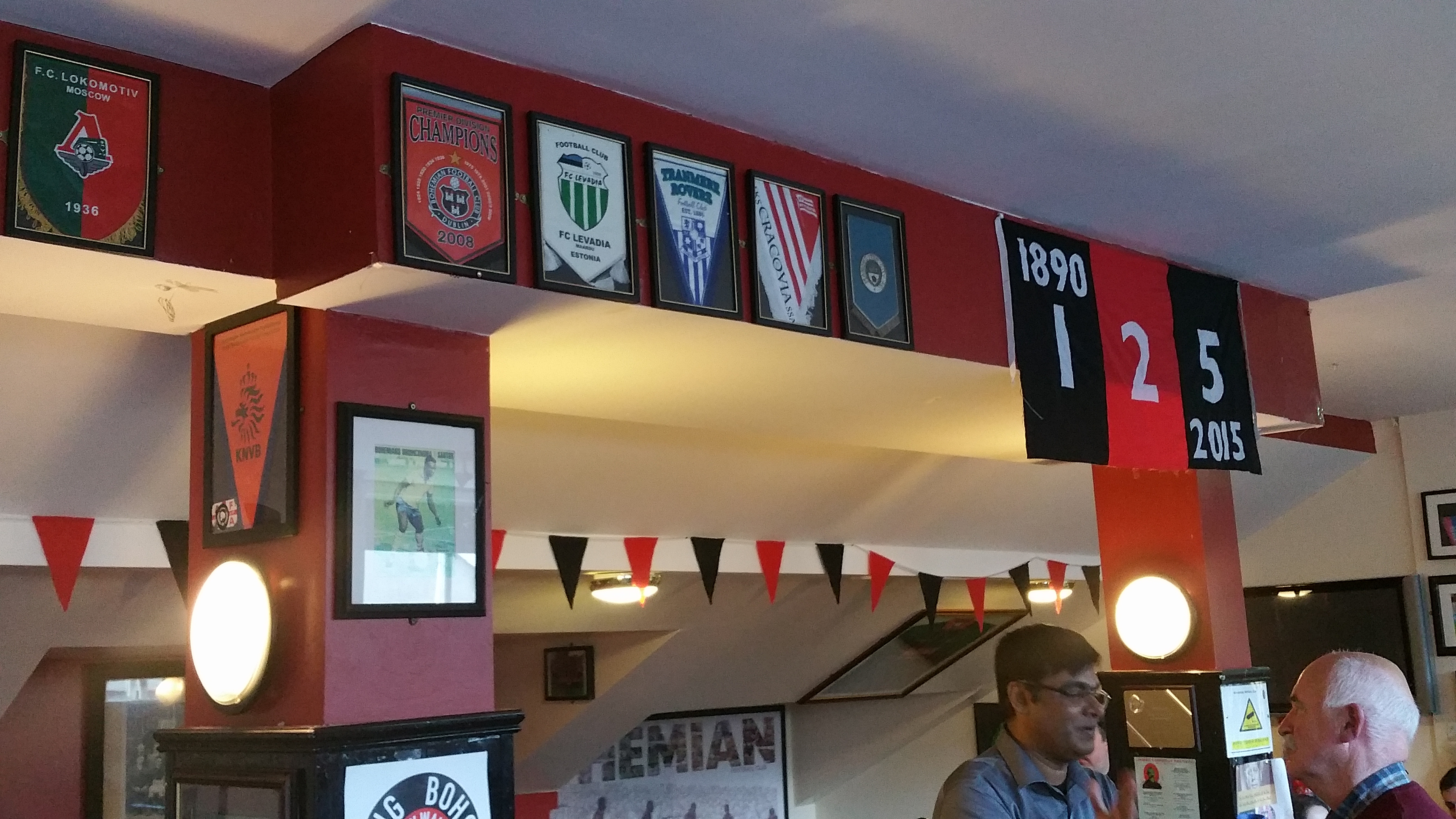
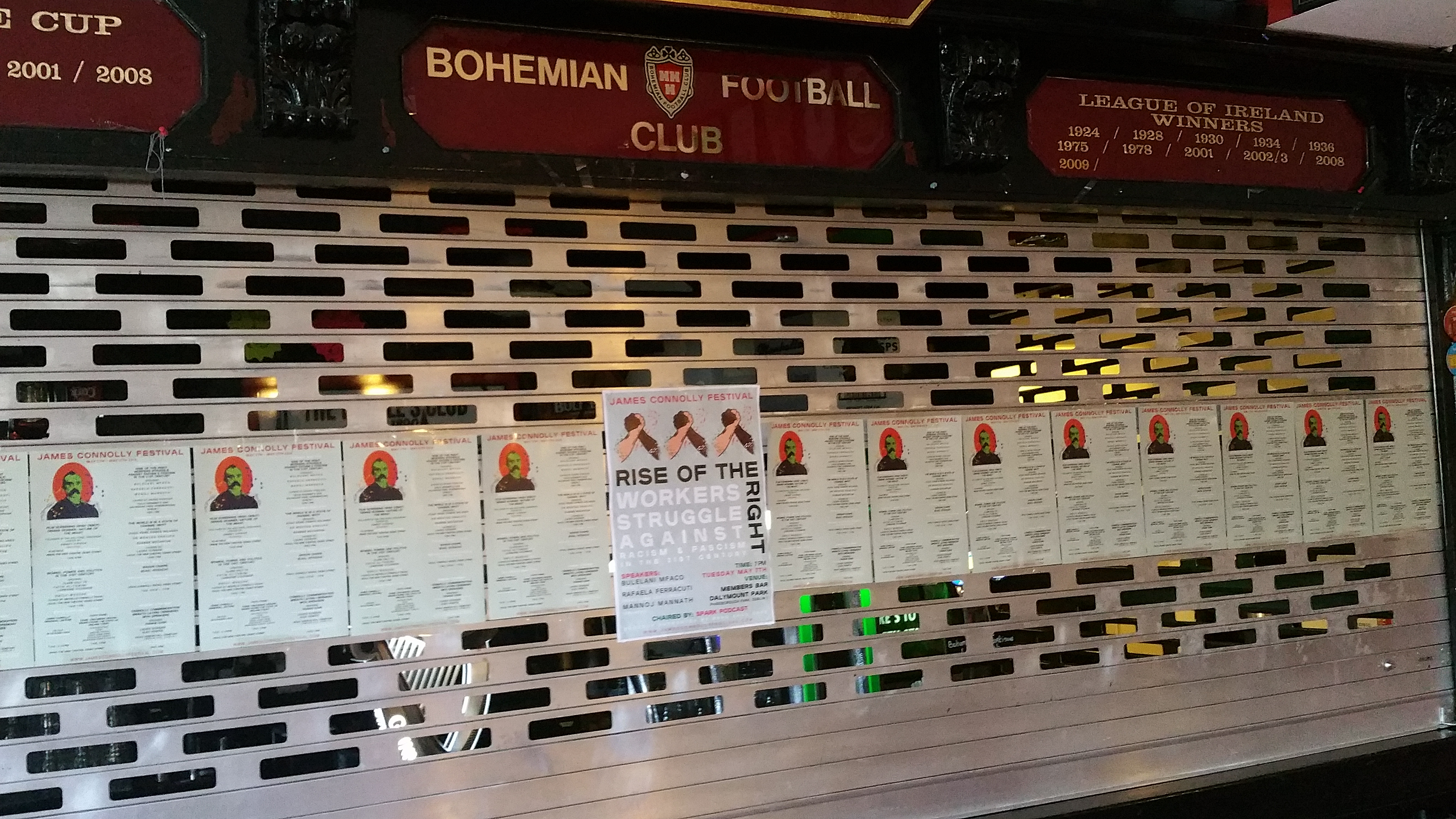
Poster commemorating Bob Marley and the Wailers concert in Dalymount Park, July 1980.Section of Bohemians’ supporters bar with memories of games played int the past.Memorials of past games played by Bohemians FCBohemians’ supporters’ bar with posters for the JCF and one for the specific event of the night.
The first speaker was Bulelani Mfaco who introduced himself as a South African, gay and an asylum seeker. Speaking about racism, he said that it was necessary to stand up to it and quoted the example several times of Mary Manning, who was one of eleven strikers (“Ten Young Women and One Young Man”, song by Ewan McColl) in Dunne’s Stores in Dublin in pursuance of their union’s policy (IDATU) not to handle South African goods while the white racist regime was in power.
Bulelani said that fascists mean what the say in their threats about their targets, blacks, gays, asylum seekers, women who won’t act as the fascist think they should …. and so they should be prevented from coming to power. He said that as a black man he is aware of racism often on the street.
Speaking about the conditions of asylum seekers and the conditions imposed on them, including being asked to prove that he was gay (!!!), he said they do not come as freeloaders but are prevented from working while their cases are examined, which can take years, therefore the Government’s system forces them to be recipients of aid. Once a judgement is given, which in 9 out of 10 cases is a rejection of the application to stay, they can appeal and racists say they are just doing that to delay the process of their expulsion. In reality, many cases are successful on appeal as the reasons stated for rejection at the first stage were so irrational.
He also pointed out that seeking asylum has no necessary link to war but is about a person “having a reasonable fear of persecution because of their race, religion, nationality, membership of a social group or political opinion and is expelled or chooses to leave their country because of one of those factors”. A “social group” under threat could mean and often does, being one lesbian, bisexual, gay or transgender.
Eloquent and with wide knowledge about people seeking asylum in different countries, Bulelani was at times in danger of leaving the other speakers without enough time for their own contributions.
Rafaela Ferracuti (Brazilian Left Front) spoke about the fascist and racist policies of the current regime in Brazil and the harmful reforms of workers rights’ and open justification of attacks on indigenous people. Ferracuti spoke also about the situation of Brazilian migrants working in Ireland and referred to a fairly recent attack on some of them by Travellers. Asking for people to support Brazilian workers here, Rafaela also spoke about links with the Workers’ Party (which I assumed incorrectly at the time to be a generic term or a Brazilian party I had not heard of).
Manoj Mannath (of Kranthi organisation) talked about the slow climbing to power in an Indian state of a fascist party and talked about the process they had followed to do so, using Hindu religion in a supremacist way and also targeting those of the “untouchable” (sic) class.
Both Ferracuti and Mannath were speaking with difficulty in a language other than their own and I found it quite hard to follow them at times.
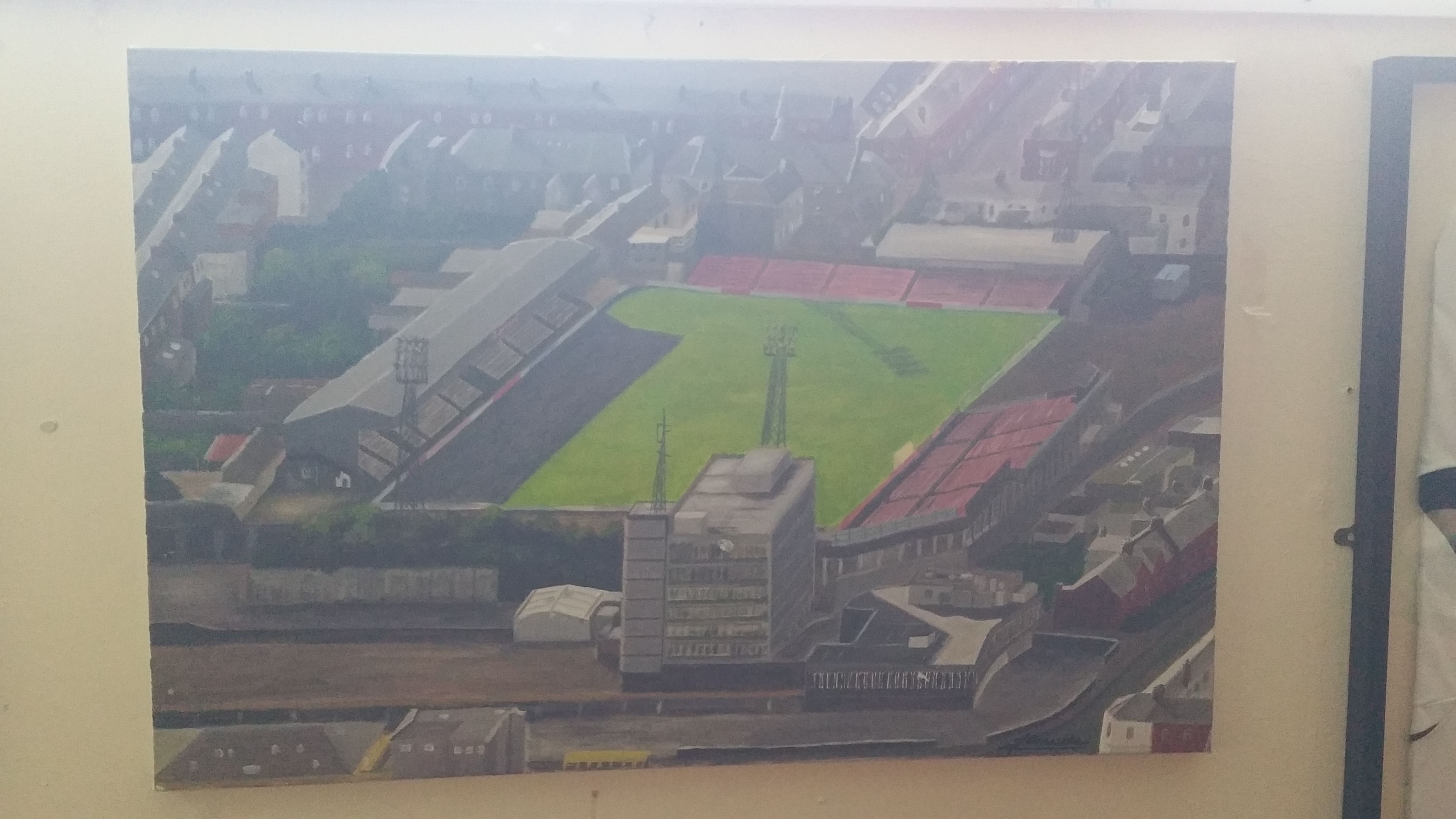
Framed photograph of birds-eye view of the Dalymount football stadium (apologies for the shine off the glass in the frame).
During questions and contributions, the following points were made or clarified:
The attack on Portuguese migrants by Travelers was wrong but some of the response by Portuguese migrants had been to leave racist graffiti, which would not help matters.
Irish Travelers are or have been for a long time the most discriminated-against section of Irish society with hard living conditions and high infant mortality and as often happens with people pushed to the bottom, some of them have turned to drugs and feuds are breaking out between rival gangs.
One person opined that the Government does not want to stop immigration but to control it and keep migrants insecure and with little rights, the easier to exploit them. The trade unions should recruit migrants to help them and also to prevent them being used as cheap labour to undermine any conditions won by Irish workers.
The Irish have been migrants to many countries and some had joined the oppressors while others became prominent in workers’ resistance.
Another ascertained that Rafaela had been referring to the Irish organisation the Workers’ Party and she stated that it is an anti-immigration party.
Another contribution stated that as well as the work of attacking racist policies and statements, fascists had to be prevented from establishing themselves and referred to the prevention in Dublin a few years ago of the launch of Pegida, a Europe-wide fascist organisation targeting Muslims. The Irish and Polish components had been physically prevented from holding their rally and anti-fascists are currently being taken through the courts on serious charges. He felt that these people should be supported.
Yet another responded that although that action was good, when one got to that stage, it was already too late.
The use of religion to divide people in India was compared to its use by the British occupation in Ireland but also by the same British colonisers in India and in some other lands.
Another said that the real target of fascists was the indigenous mass of people and that the other targets were being put up as diversions. As the economic situation worsens, the capitalists need to suppress the struggles of the working class and sections are targeted in order to divide the opposition.
There was general agreement that the various targeted sectors and the Irish working people needed to support one another.
The James Connolly Festival is an annual week-long event of talks on political events and sometimes cultural performances organised in the month of May in Dublin by the Communist Party of Ireland and open to the public. There is a program of other events continuing every day until Sunday: http://jamesconnollyfestival.com/#about
COMMENT:
Overall, I felt quite disappointed. I had assumed the talks and the meeting would concentrate on the practical and ideological struggle against fascism and the rise of the far-right in Ireland and perhaps in Europe, with some lessons from further afield. Or possibly even on concrete actions that might be taken to support asylum seekers. Perhaps that was an unwarranted assumption but in any case, apart from the contribution of Bulelani Mfaco, the South African asylum seeker, the examples (as far as I could understand them), though of interest, seemed to have little direct relevance to the struggle here in Ireland.
Two quite different celebrations of International Workers’ Day took place in Dublin on the afternoon of the appropriate date, 1st of May. One was small and of a decidely revolutionary flavour while the other, much larger, was of a more mixed nature and tending towards the reformist. In addition, a workers’ solidarity picket was mounted on a Dublin city centre eatery.
NOTHING TO LOSE BUT OUR CHAINS
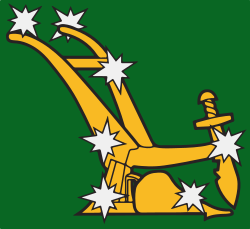
The first of the celebrations was organised by theAnti-Imperialist Action Ireland organisation and took place at the James Connolly Monument in Dublin’s Beresford Place. There a statue of James Connolly stands upon a plinth, behind the the design of the Irish Citizen Army flag, based upon the constellation that in Ireland is called the Starry Plough but in the USA is known as the Big Dipper. James Connolly was a revolutionary socialist and trade union organiser, historian, journalist and songwriter who was Commander of the Dublin insurrectionary forces in the 1916 Rising. The Irish Citizen Army, possibly the first formaly-organised army for and of the workers, had been formed during the Dublin Lockout as a defence force against the attacks of the Dublin Metropolitan Police.
The ICA took part in the 1916 Rising in Dublin and after the surrender of the insurrectionary forces, 16 participants, including two of the ICA, were executed by British firing squad: Michael Mallin on 8th May and James Connoly on 12th May.
In the here and now, on their way to the Connolly Monument, a number of participants were stopped by a man in plain clothes identifying himself as a police officer, i.e a member of the Garda Special Branch. He wished to know their names, which they declined to give them.
At the Monument, both speakers for the Anti-Imperialist Action Ireland organisation were youths.
The first to speak gave his oration in Irish on behalf of Macra – Irish Socialist Republican Youth and said that they were there to celebrate socialism, trade unionism and workers oppressed throughout the world and, that although James Connolly had been murdered in Kilmainham Jail, his work was ongoing.
Stating that James Connolly and the Irish Citizen Army had gone out in 1916 to break with imperialism and found a socialist society, the youth went on to say that “Macra is a revolutionary organisation with socialism as one of our objectives and we also believe in the words of Pearse: ‘Ireland not only free but Gaelic, not only Gaelic but free.’ Free from the bankers, free from landlords, free from poverty.”
The speaker concluded in Irish and in English with the renowned sentence from the Communist Manifesto.: “Bíodh critheagla ar aicmí cheannais roimh réabhlóid Chumannach. Níl tada le cailiúint ag na Prólatáirigh ach a slabhraí. Tá saol mór le gnóthú acu. Oibrithe an tSaoil Mhóir, cuirigí le chéile!”
“Let the ruling classes tremble before a communist revolution. The Proletariat have nothing to lose but their chains, they have the whole world to gain. Workers of the world unite!”
The second speaker delivered his speech in English and linked the liberation of Ireland with the liberation of the working class and went on to praise Séamus Costello (1939-1977), which he said had embodied that aspiration. The youth praised the creation of the Irish Republican Socialist Party by Costello as well as the creation of the Irish National Liberation Army and Costello’s participation and membership in a number of democratic organisations — including his election to Bray District Council.
Condemning “the bankers and politicians” who bring deprivation to the workers, the speaker said that they try to point the finger instead at Muslims and migrants but it is not migrants who cause job losses, create homelessness etc but “the elite”. The speaker ended by saying he wished to remember all those who had given their lives for Irish freedom.
Assembled at the Connolly Monument, Beresford Place, Dublin (Photo: Anti-Imperialist Action Ireland)
WE WANT THE EARTH
Diarmuid Breatnach was then introduced to sing Be Moderate, a song with an ironic title by James Connolly. “The Irish working class does not have a huge history in Ireland, apart from a short period in the early decades of the last century,” Breatnach said, giving as reasons the forced underdevelopment of Irish industry, the British-fostered sectarianism in the most industrialised north-east and the focus on the national struggle as a competing pole of attraction.
“The Irish abroad, however, have made a huge contribution to the workers’ movement,” Breatnach said. “And in 1889, Jim Connell from near Cill Scíre in Co. Meath, composed lyrics of The Red Flag to the air of the White Cockade, starting it on the train to his home in South London from a demonstration in central London and apparently completing it in the home of another Irish man.
The song was later adopted by the International Workers of the World, a syndicalist organisation mostly active in the USA, Breatnach said and reminded them that James Connolly joined the IWW when he migrated to the USA. “In 1907, James Connolly published a songbook, Songs of Freedom, in which he included the lyrics of Be Moderate,” Breatnach stated and went on to say that no air had been published to which the words should be sung. As a result Be Moderate has been sung to a number of airs but in London Breatnach heard it sung by an avant-garde musical composer and Marxist-Leninist, Cornelius Cardew, to the air of A Nation Once Again. In Breatnach’s opinion the lyrics fit well to this air and it also provides a chorus, which he encouraged the participants to sing.
James Connolly’s lyrics were sung by Breatnach then, competing with sounds of passing traffic on the ground and the occasional trains rumbling by on the bridge overhead, participants joining in on the chorus:
We only want the Earth,
We only want the Earth
And our demands most moderate are:
We only want the Earth!
and the last line of the last verse “We want the Earth!” echoing across Beresford Place.
TRADE UNION AND POLITICAL ORGANISATION BANNERS
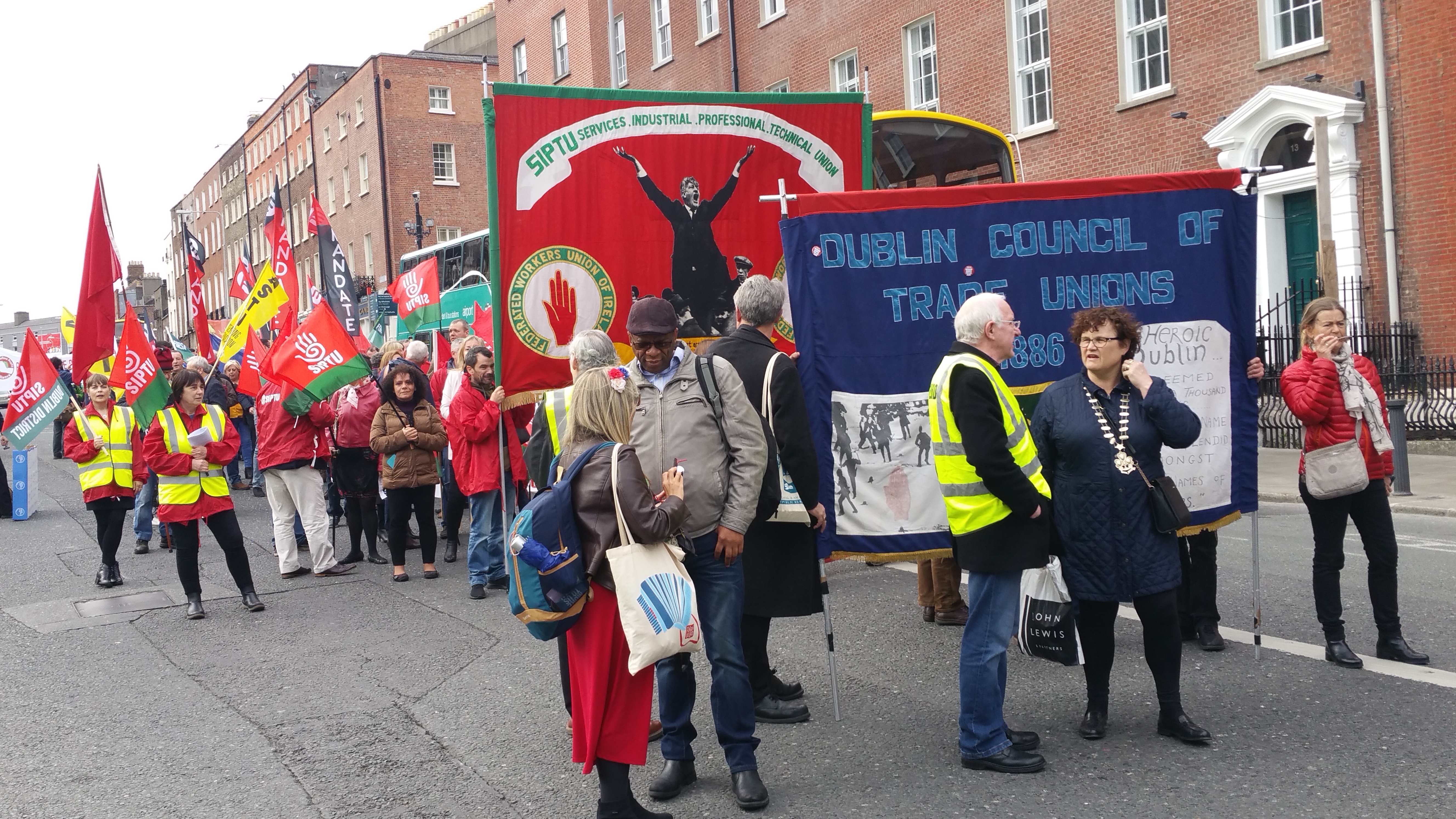
Section of the 1st May parade about to move off from outside the Garden of Remembrance, Parnell Square. (Photo: D.Breatnach)
Across the road, a stage and crowd barriers were being set up outside Liberty Hall, the multi-storeyed headquarters of SIPTU, the largest union in Ireland and which, by amalgamations, had grown from the Irish Transport & General Workers’ Union, originally formed early in the 20th Century by Jim Larkin, James Connolly and others (and the destruction of which had been the object of the 1913 Lockout). The stage was being prepared for speakers to address a rally which would follow a Mayday parade from Dublin’s Garden of Remembrance (a small park dedicated “to those who gave their lives for Irish freedom”).
Even the larger Mayday demonstrations in Dublin, although organised through the Dublin Council of Trade Unions, i.e with affiliation from most trade unions in the city, do not tend to be very big by comparison with other cities in many other parts of the world.
Anti-Pesco banner on 1st May parade (Photo: D.Breatnach)
Banners of some unions mixed with those of political organisations and campaign groups, including the Ireland Palestine Solidarity Campaign and another against Irish state participation in PESCO, which is seen by many as an embryonic EU Army and undermining the Irish state’s neutrality.
Section of the 1st May on the move down Parnell Square. (Photo: D.Breatnach)
Led by a lone piper, the parade made its way past crowds of onlookers down Dublin city’s main thoroughfare, O’Connell Street, then left along Eden Quay to Liberty Hall where they were to be addressed by speakers on the temporary stage in Beresford Place, across from the Connolly Monument.
Anti-Pesco banner on 1st May parade (Photo: D.Breatnach)
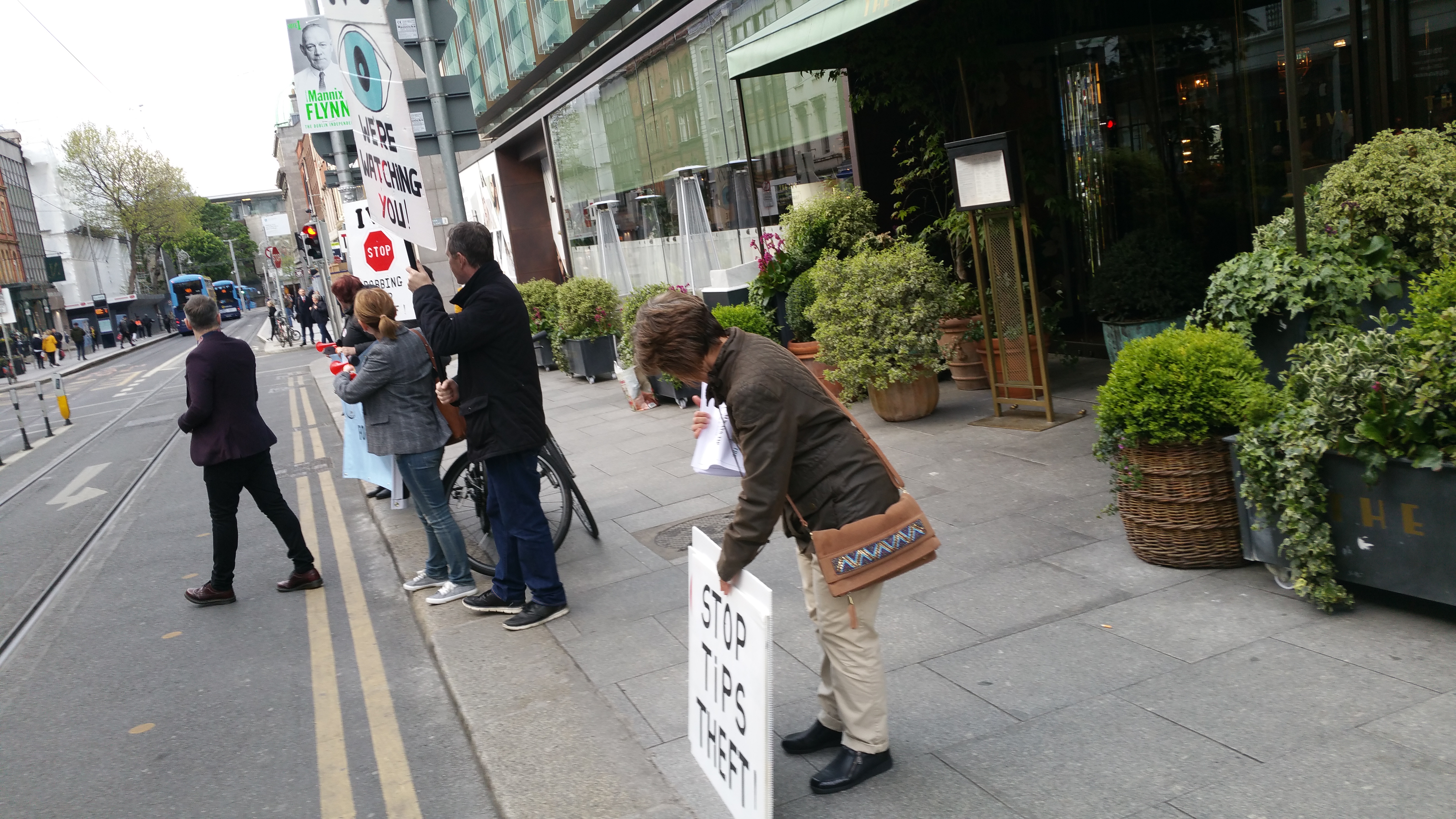
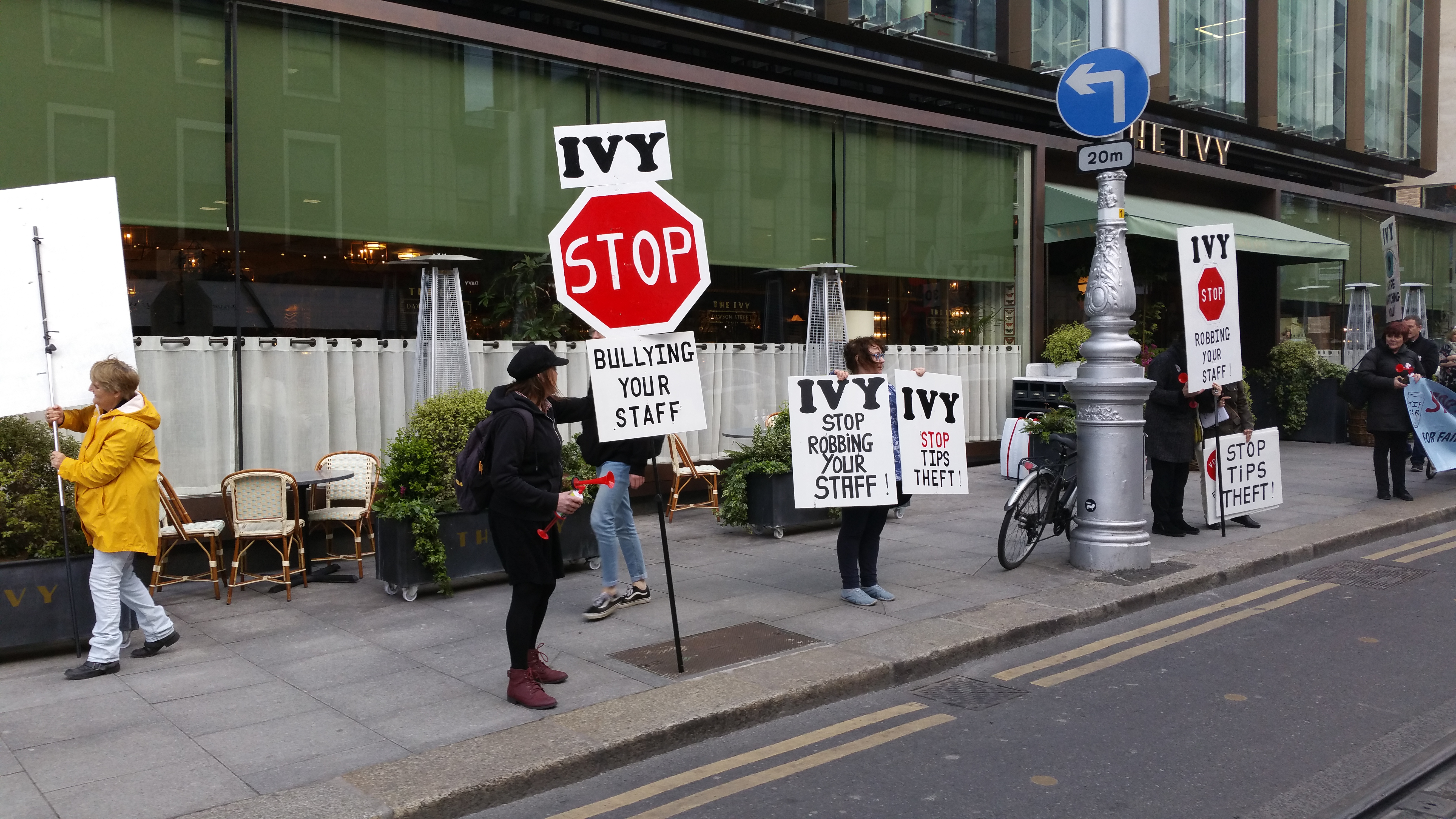
Meanwhile, a small group had left, to form a picket line outside the Ivy Dawson Street restaurant, in solidarity with staff and in opposition to the management appropriating a portion of the tips left for staff, with more to join them there later from the Mayday parade.
(see https://rebelbreeze.wordpress.com/2019/05/02/tipping-the-bosses/).
A NOTE ON THE HISTORICAL ORIGIN OF INTERNATIONAL WORKERS’ DAY
The First of May has been celebrated as the international day for workers since 1892, to call for the 8-hour maximum working day, socialism and universal peace. Its inspiration was a train of events that began with a workers’ strike and demonstrations on May 1st 1886 in many parts of the USA but in Chicago ended in the State execution of four anarchists, with police and state militia massacres of workers along the way as well as with acts of workers’ resistance. The celebration and commemoration throughout the world was formally agreed at the Second Congress of the Second International Workers’ Association in Brussels in 1892 and at its Sixth Congress (Amsterdam, 1904) declared it mandatory for the proletarian organisations of all countries to stop work on that day, wherever that could be done without injury to the workers(bearing in mind violently repressive regimes).
Artwork depicting police attacking striking workers at McCormick’s factory who were agitating for the 8-hour working day. (Image source: Internet)
In many states around the world now, the 1st of May is a public and bank holiday and has been so in Ireland since 1994. Its public celebration was banned under the fascist regimes in Spain and Portugal but is legal in both those states now; however it is still banned in some other states while in some areas, though not banned, may be subject to attack by police, army, state agents or by fascist elements.
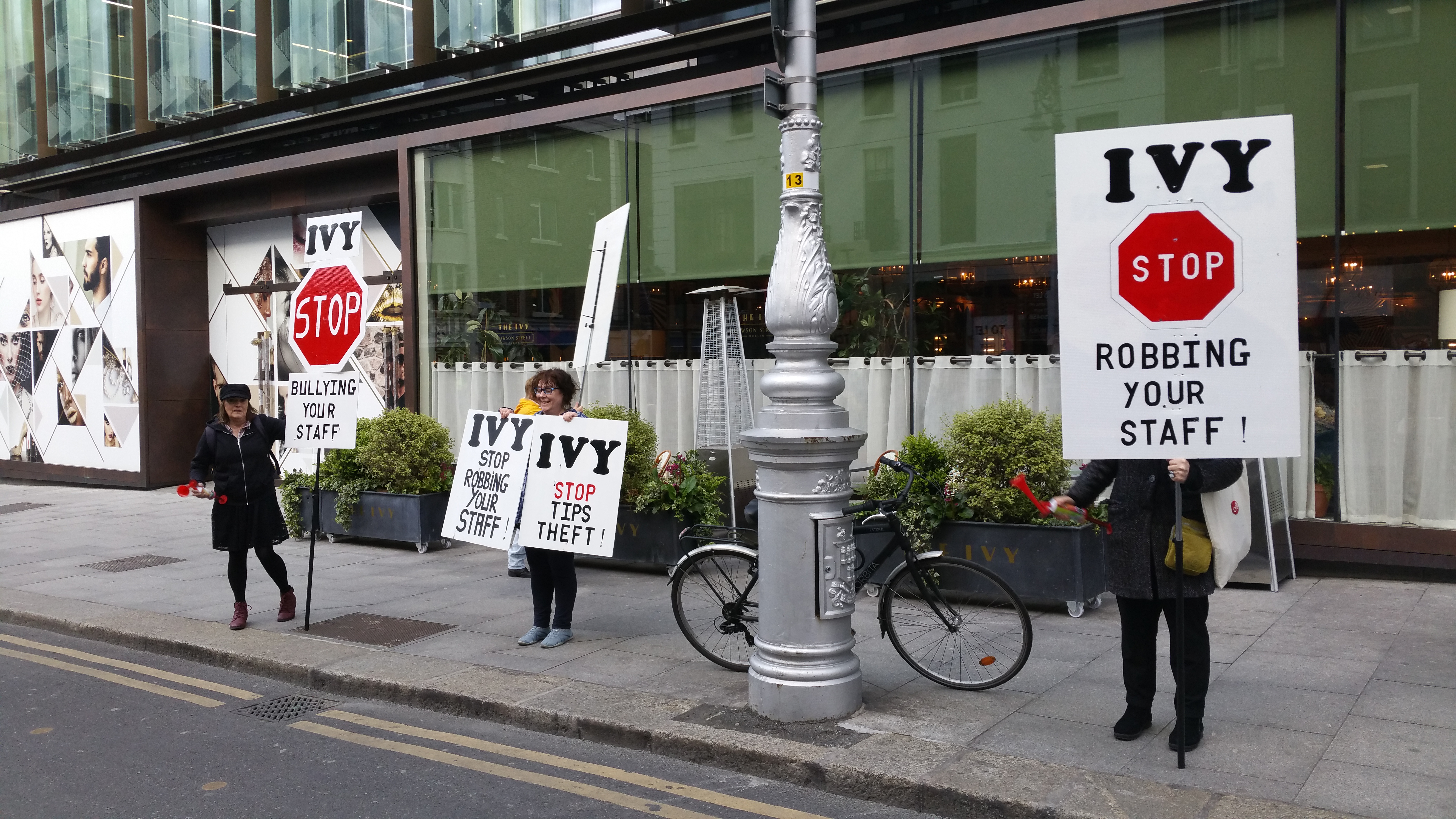
Supporters of staff at a prominent Dublin eatery protested yesterday over the management’s appropriation of some of the tips left by customers for the staff. They are able to do this quite easily when the customer pays the tip by credit card but when staff asked customers to leave their tips in cash, management accused them of “deplorable greed”. They have also dismissed two staff who are currently taking a case for unfair dismissal, accusing the management of sacking them for their unionisation of the staff.
View of some early protesters outside the Ivy Dawson Street restaurant (Photo: D.Breatnach)
The photographs taken here show a smallish group, including Independents for Change TD Joan Collins but more were coming later from the Mayday march on the north side of the river. A supporter claimed that the management offers an hourly rate above the minimum wage but then makes that difference up with tips.
Catering work in general is notoriously low-paid and with transitory staff, making it difficult for trade unions to organise them and relatively easy for management to hire and fire.
View of some early protesters outside the Ivy Dawson Street restaurant (Photo: D.Breatnach)
There have been a number of protests about the tips issue at Ivy, including one on which the Irish Times reported in March.
The report stated that a number of protestors who had booked tables in the restaurant began the protest and were then joined outside the restaurant by a group of 30 people led by Independent TD Joan Collins who held up placards stating “Stop tip theft”.
View of some early protesters outside the Ivy Dawson Street restaurant (Photo: D.Breatnach)
Ms Collins was reported as saying that she was aware of other Dublin restaurants who have are engaging in similar practices when it comes to tips and was quoted as saying that: “The Ivy are abusing the good nature of diners who are tipping staff well because and they are not aware that management are taking some of their tips”.
“Workers are hugely concerned as they are not earning a high hourly wage and they work hard for their tips only for a portion of it to go to the company,” she said.
April 24th is Republic Day, the date on which the 1916 Rising began and when Patrick Pearse read out the 1916 Proclamation. Back in 2014, Tom Stokes began a campaign to have this date acknowledged as the Irish national day. This year, it was celebrated in his absence.
The late Tom Stokes speaking at a Republic Day commemoration (Photo: D.Breatnach)
“Easter Monday is a moving date, different each year,” Tom Stokes had said. “St. Patrick’s Day is based on a religious feast day. The nation needs a fixed day and one to celebrate the Irish Republic.” Tom Stokes would have agree with those who might say that “the Irish Republic” was yet to be achieved, or that it was more aspirational than reality. As he spoke at each annual commemoration of the date, he railed against many of the faults of the Irish state and in particular on its treatment of women. He was a champion of Republican women of the past, for example Margaret Skinnider, Dr. Kathleen Lynne, Winnie Carney, Elizabeth O’Farrell and celebrated that some of the women had been lesbians, supported the right to choose abortion (though some Irish Republicans would have disagreed on the latter).
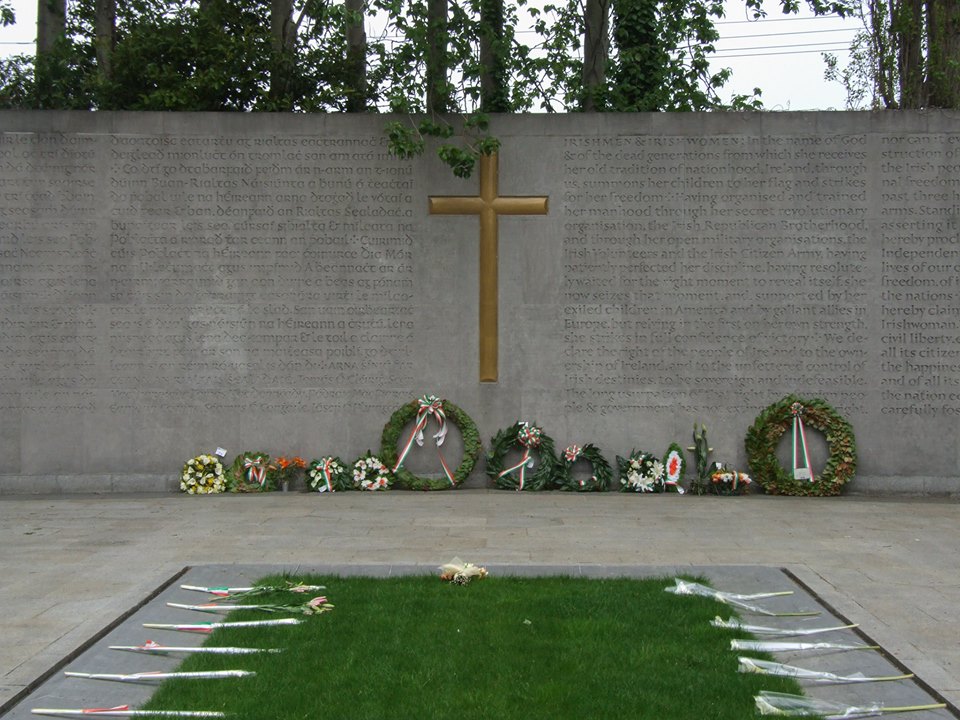
Banner leaning against the Arbour Hill monument wall. (Photo B. Hoppenbrouwers)
Tom Stokes died December last year but some people were determined that the celebration of Republic Day should carry on. On the 24th April 2019, some of them gathered in Arbour Hill, by the monument to the executed in the 1916 Rising, the words of the Proclamation etched in large letters, in Irish and in English, on to the stone wall overlooking the site.
The event was chaired by Pearse Brugha (incidentally a descendant of Cathal Brugha, the 1916 Rising veteran and subsequently part-organiser of the IRA, killed by a Free State soldier in the early days of the Irish Civil Wa)r.
Pearse Brugha chairing the event. (Photo B. Hoppenbrouwers)
Brugha welcomed the attendance and in particular members of the Stokes family, then went through the background to Tom Stokes’ campaign for the commemoration of Republic Day, saying that Tom had wished it to be a national holiday. Brugha then asked on the attendance for a minute’s silence in memoriam and called on Tom’s widow Anne Stokes and their son to lay floral wreaths on behalf of the family at the 1916 Rising Monument.
Next, Brugha presented Cormac Bowel and his young son Fionn, who approached playing Fáinne Geal an Lae (“The Dawning of the Day”) on their bagpipes, Cormac in Volunteer officer uniform and Fionn in traditional piping kilt. It was only Fionn’s second public playing, the attendance were told.
Cormac Bowel reciting the 1916 Proclamation. (Photo B. Hoppenbrouwers)Cormac Bowel and son Fionn approaching the monument while playing Fáinne Geal an Lae. (Photo B. Hoppenbrouwers)
A number of other parts of the ceremony followed.
Fergus Russell sang “The Foggy Dew” and Frank Allen, who had been involved with Frank Stokes in organising Republic Day commemorations, gave an oration praising Tom Stokes as a “true Republican” who believed passionately in equality and also as “a true internationalist, who would be just as likely to be found on a Palestine solidarity demonstration”. Allen also criticised heavily the Irish regime, as Stokes had done in his speeches.
Pat Waters played his own composition, “Where Is Our Republic?”, which he had composed at the request of Tom Stokes.
Cormac Bowell recited from memory the 1916 Proclamation and Fionn played a solo lament on the pipes.
Shane Stokes, speaking, also paid tribute to his father Tom Stokes and to the campaign to have a Republic Day on 24th April.
Fergus Russel singing The Foggy Dew. (Photo B. Hoppenbrouwers)Frank Allen speaking at the event. (Photo B. Hoppenbrouwers)Pat Waters performing his own compostition “Where Is Our Republic?” (Photo B. Hoppenbrouwers)Shane Stokes, a son of Tom Stokes, speaking at the event. (Photo B. Hoppenbrouwers)Very young piper Fionn Bowel playing a solo lament. (Photo B. Hoppenbrouwers)(Photo B. Hoppenbrouwers)
Pearse Brugha, who had been chairing the event throughout, also recited all three verses of the Soldiers’ Song and then sang the chorus, then thanked all for their attendance.
Among those in attendance were members of the 1916 Performing Arts club, activists of the Save Moore Street From Demolition campaign group and Niall Ring, Lord Mayor of Dublin. Also present were Dave Swift, historian and enacter; Las and Dónal Fallon, historians and authors; Brian O’Neill; Deirdre O’Shea; Jim Connolly Heron.
The campaign against continuing internment in Ireland had a visible presence in Dublin’s premier and busy shopping area, Henry Street on Saturday 6th April.
Photo: Dublin Anti-Internment Committee
Republicans and socialists from a number of organisations — and none — supported the picket, called by Dublin Anti-Internment Committee as part of its ongoing campaign to raise awareness that internment without trial of political activists continues in Ireland, though on a much-smaller scale.
Hundreds of leaflets were distributed to shoppers and sightseers and only one complaint was received – that there wasn’t a petition to sign!
DAIC member handing out leaflets to passing members of the public (Photo: Dublin Anti-Internment Committee
If any reminder were needed that internment is continuing in Ireland, it was provided recently with the case of former Republican prisoner Alan Lundy, who was recently jailed without charge and released some weeks later, being yet again detained and put straight into jail, again without trial or even charge.
IF YOU WANT TO HELP
If you live in Dublin and would like to help, why not join the DAIC at the next picket? These are roughly on a monthly basis. The DAIC is completely independent of any political party or organisation and organises itself in a democratic manner – however, it is a participative democracy, in that the people who attend public awareness-raising events are those who make the decisions at notified committee meetings.
If you don’t live in Dublin, you could share our posts from time to time ….
Photo: Dublin Anti-Internment Committee
HISTORICAL NOTES
The Proclamation of Independence was signed in what was then an Irish foods and coffee shop, No.21 Henry Street, about a week before the Rising.
During the actual Rising, the street saw much firing from British troops closing in on the GPO from both directions, east and west. An advance of British soldiers from the west was halted by a Volunteers’ ambush somewhere near where this picket was.
end.
Photo: Dublin Anti-Internment CommitteeThe plaque commemorating the signing of the 1916 Proclamation of Independence at No.21 Henry Street. (Photo: D.Breatnach)
Protesters calling for the urgent construction of public housing marched through Dublin today. Various organisations and many independent activists took part in the protest with a broad range of people took pat, from socialist to republican-orientated, some with their children. The event was organised by the National Homeless and Housing Coalition.
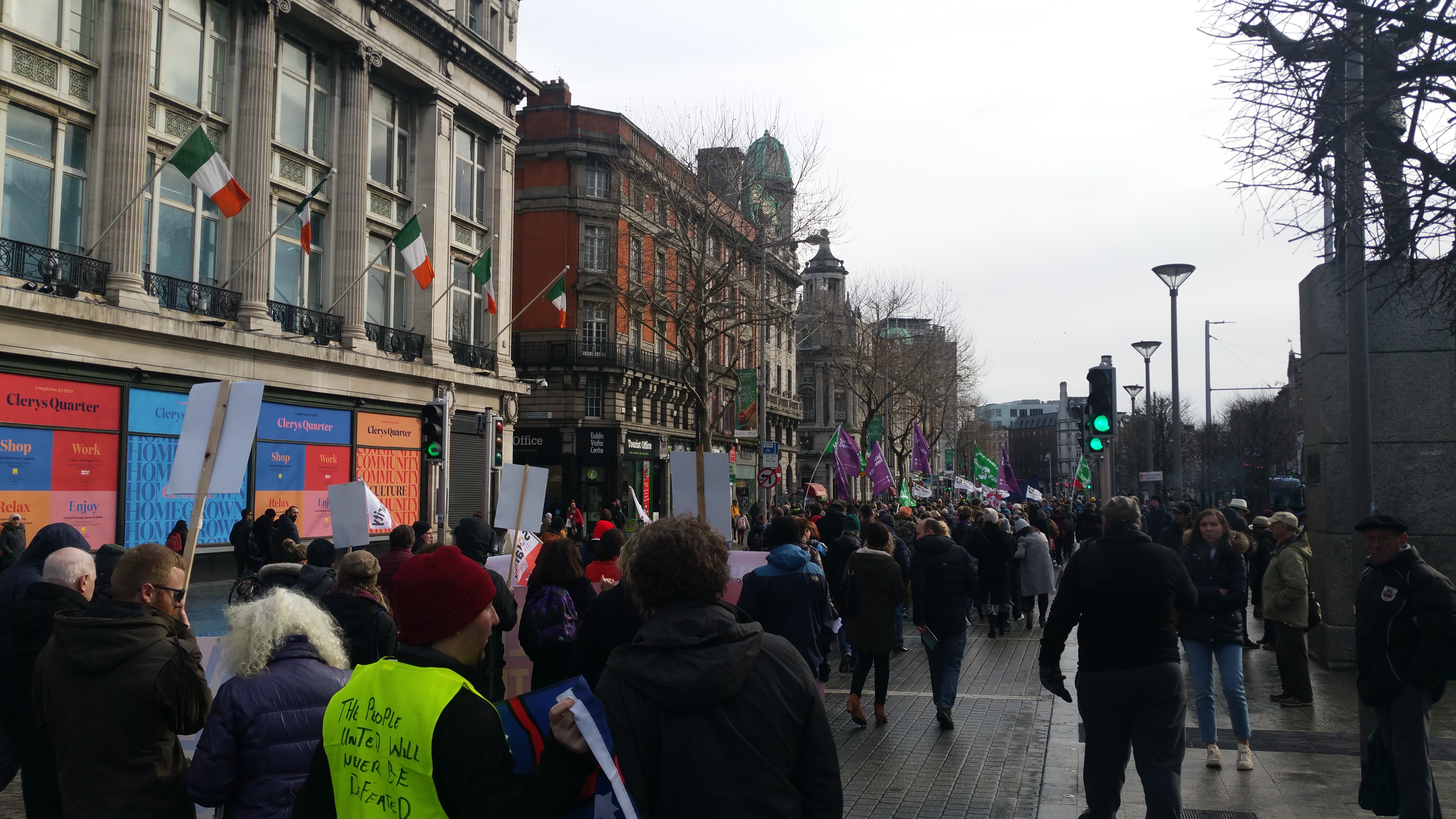
Early part of the march detachment starting from the GPO, here proceeding south along O’Connell St, the long-closed Clery’s department store on the left and the Larkin Monument on the right. (Photo: D.Breatnach)
On their Facebook page, the NHHC had issued a statement, part of which read:
“Rebuild Ireland has been an unmitigated disaster yet the cross party motion that was passed in the Dail in October that called for practical actions that would end the emergency, including making it illegal to evict someone into homelessness, were ignored by the government even though it was supported by all parties except Fine Gael. We are demanding action on the motion.
“We also learned that 15 Dublin hotels received over €1m each in 2018 for accommodating homeless families which further illustrates the reliance on the private sector. These families need public housing built on public lands, they need proper homes. Last year there were 842 cases of children being discharged from the Temple Street Emergency Department back into homeless emergency accommodation. The majority of these cases were a direct result of the fact that these children are living in completely unsuitable and cramped emergency accommodation.”
The march, though far from small, seemed somewhat smaller than expected which may have been due to a cold windy day with lashing rain a little earlier in the day but may also have had another cause. The Coalition of groups has split with ICTU (Irish Council of Trade Unions) and a number of NGOs pulling out to form a different campaign on housing, apparently declining to support the demand for public housing on public land.
Front of the march pausing on Custom House Quay (Photo: D.Breatnach)
The organisers of today’s march published a list of demands:
• Declare the housing and homelessness crisis an emergency. • Provide a minimum of 10,000 public house a year. No to privatization: build public houses on public land. • Make housing a constitutional right. • End evictions, bank repossessions and sell-offs to vulture funds. • Create a national Traveller accommodation agency to oversee and deliver Traveller Accommodation. • Legislate for real security of tenure, real rent control and affordable rents. • End the use of B&B’s and hotels for emergency accommodation. Improve emergency accommodation facilities and provide security for all in need. • Create rent pressure zones for Purpose-Built Student Accommodation (PBSA). Ensure tenant’s rights for students in PBSA and digs-style accommodation.
One group set off from the GPO and after making a circuit on O’Connell Bridge, marched along the north quays, meeting up with another group coming across Butt Bridge to join them from the Housing Agency HQ; apparently another group had marched from City Hall. The march continued on to Samuel Becket Bridge, to the bemusement of some participants, where the participants halted and were addressed by a number of speakers.
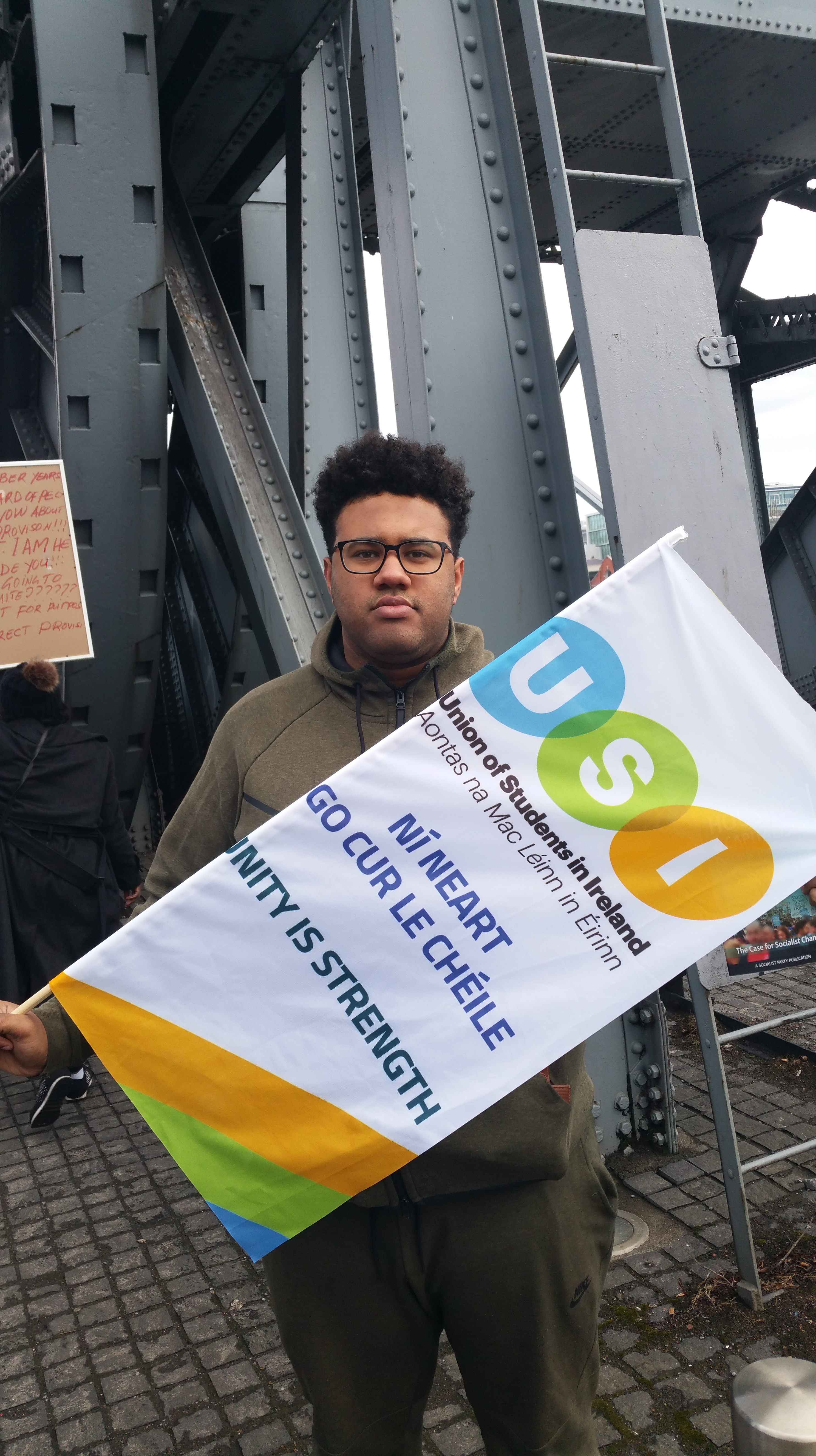
Student on the march displaying flag of Union of Students in Ireland (Photo: D.Breatnach)
Along the route of the march, slogans were shouted, among which were:
“Raise the roof, not the rents!” and “Housing is a human right!”
Section of the march stretching out along the north quays. (Photo: D.Breatnach)One of the organisers speaking at the rally at the end of the march: Tina McVeigh, of PBP. (Photo: D.Breatnach)
As well as Socialists, a number of Republicans were in evidence, marching without party banners. Sinn Féin supporters had a banner and party flags, as did People Before Profit and the Workers’ Party. Some Union of Students in Ireland flags were in evidence too. A Travellers’ group and some community groups also carried banners identifying their group with the march and its cause.
With thanks from Dublin Anti-Internment Committee’s FB page End Internment
DUBLIN PICKET PROTESTS CONTINUING INTERNMENT IN IRELAND WHILE EXPRESSING INTERNATIONALIST SOLIDARITY WITH PALESTINIAN PRISONERS.
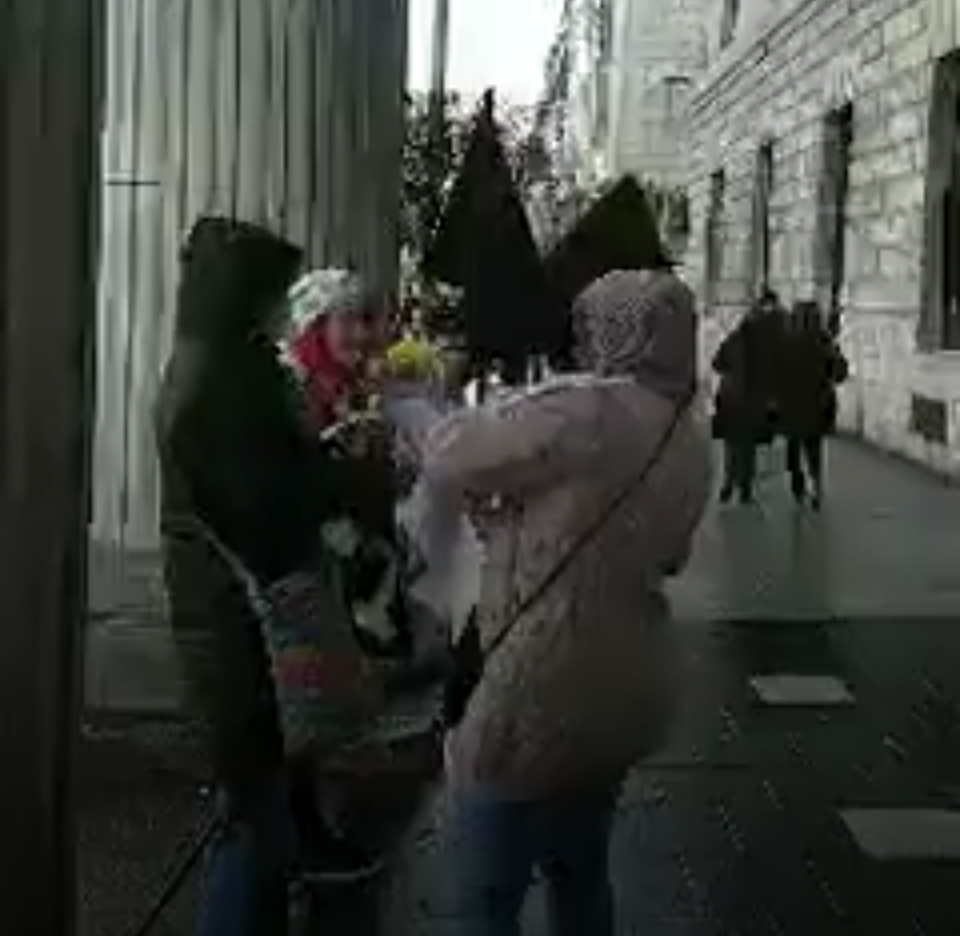
PALESTINIAN Y0UNG WOMAN PRESENTS PICKETERS WITH BUQUET OF FLOWERS.
HUNGER STRIKER MARTYRS OF 1981 REMEMBERED.
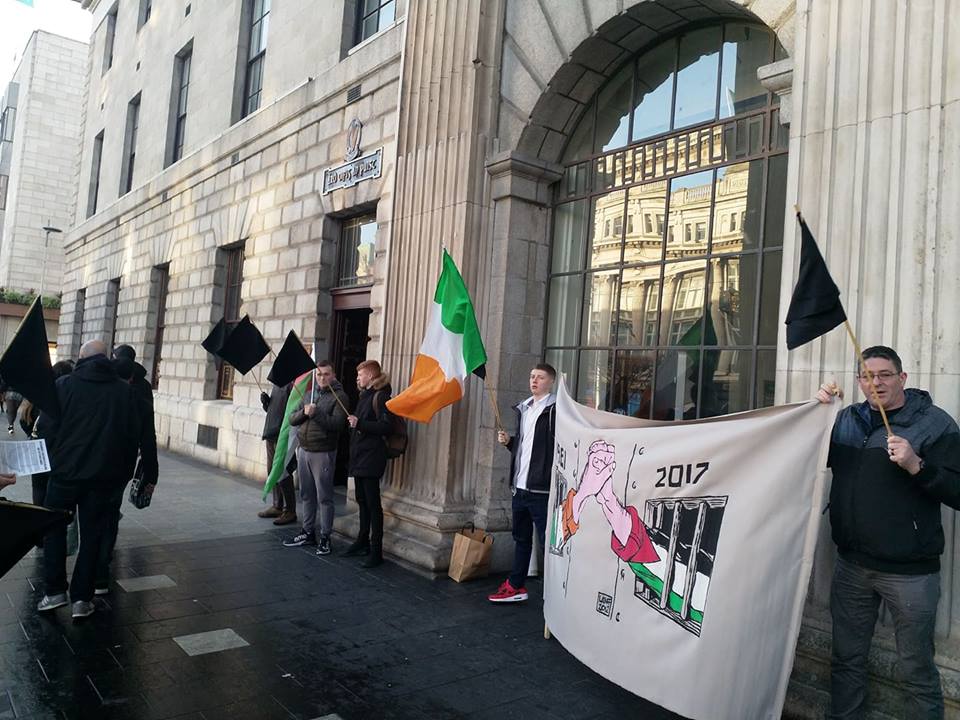
Section of the protest outside the GPO building (photo: Dublin Anti-Internment Committee)
On a cold and wet late Saturday afternoon (2/03/2019) in Dublin city’s main thoroughfare, O’Connel Street, hurrying shoppers and tourists were treated to the sight of protesters outside the General Post Office. One group was flying small flags of a green, white and orange tricolour but not the Irish one – the colour bands were horizontal.
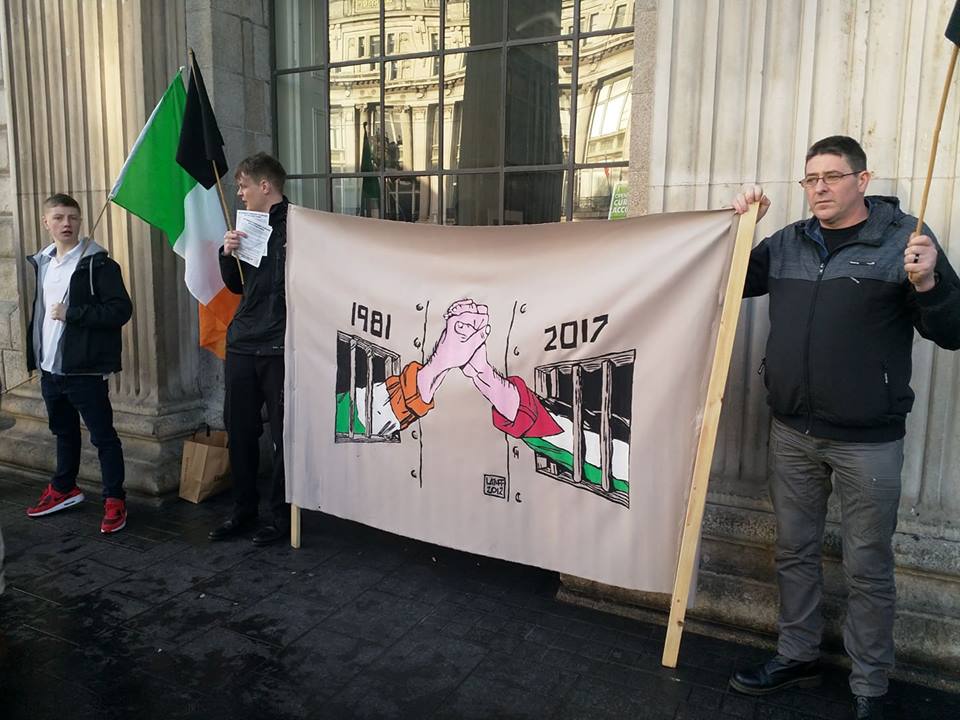
The other group flew a larger tricolour, the Irish national flag, the colours horizontal – and also a Palestinian flag. One of their banners was an enlargement of the cartoon by Brazilian graphic artist Carlos Latuff , showing an Irish hand reaching through prison bars to clasp that of a Palestinian, also emerging through bars.
The first group was of Indians in a protest related to the current tensions between the states of Pakistan and India, while the other had been organised by the Dublin Anti-Internment Committee and was supported by other Republicans and unaligned socialists. The presence of both outside the GPO was a coincidence and they were separated by a little distance.
INTERNMENT WITHOUT TRIAL CONTINUES IN IRELAND
One of the monthly pickets of the DAI Committee to raise awareness of the ongoing internment in Ireland, the picketers combined their action with expressing solidarity with Palestinian political prisoners of which many are held without charge, in “administrative detention”.
The banner depicting Irish and Palestinian political prisoner solidarity, from a cartoon by Latuff. (photo: Dublin Anti-Internment Committee)
In Ireland, there are other kinds of “administrative detention” but they are not called that; instead they go under the names of “revoking of licence” and “refusal of bail”.
The first category relates only to the occupied Six Counties, where those political prisoners were released under the terms of the Good Friday Agreement; however their licence may be revoked at any time in which case the unfortunate person will be brought straight to jail without trial and held there indefinitely. This has been the fate of a number of former prisoners who remain Republican activists. One of those, Tony Taylor, was released without charge at the end of November last year, having spent nearly a thousand days in custody.
The second category and by far the most common, both in the British colony and the Irish state, is that of refusing bail to Irish Republicans while they await trial on as yet unproven charges. In these circumstances the accused, if judged “not guilty” at their trial, may have spent more than two years in prison by that time. A recent example of refusal of bail was that of Republican activist Alan Lundy arrested for alleged armed burglary on 18th February, despite an alibi apparently confirmed by CCTV footage placing him 40 miles away at the time and highly contradictory evidence from the alleged victims.
The intention of these totally undemocratic measures is an attack on the basic civil rights of Republicans to peacefully organise and to assemble in protest. When bail is granted, the intention is made clear since regularly the conditions attached are that the accused wear an electronic tag, may not participate in political meetings or demonstrations and must observe a curfew. Furthermore, the accused are brought before the no-jury Special Courts of both administrations, where special rules of “evidence” apply.
The Dublin Anti-Internment Committee maintains that these measures amount to internment without trial, a continuation of the policy in which courts are used, as Brigadier Kitson of the British Army proudly declared, as “a propaganda cover for the removal of unwanted members of the public”.
The Dublin Committee has also repeatedly pointed out that these measures are a danger to the civil rights of any and all movements of opposition to the State or its policies and should therefore be opposed by all democratic people, whatever their particular political alignment might be.
The solidarity bouquet (photo: Dublin Anti-Internment Committee)
FLOWERS PRESENTED FOR SOLIDARITY
The picketers distributed leaflets to passers-by, some of which took photographs. Two young women who had taken photographs returned a second time, one of them presenting a bouquet of flowers to the surprised protesters. She said that she was doing so in gratitude for she was of Palestinian backround.
Palestinian young woman presenting the flowers to picketers. (photo: Dublin Anti-Internment Committee)
There are approaching 5,000 Palestinian political prisoners in Israeli jails, of which around 170 are held without trial, in “administrative detention”.
REMEMBERING THE HUNGER STRIKES
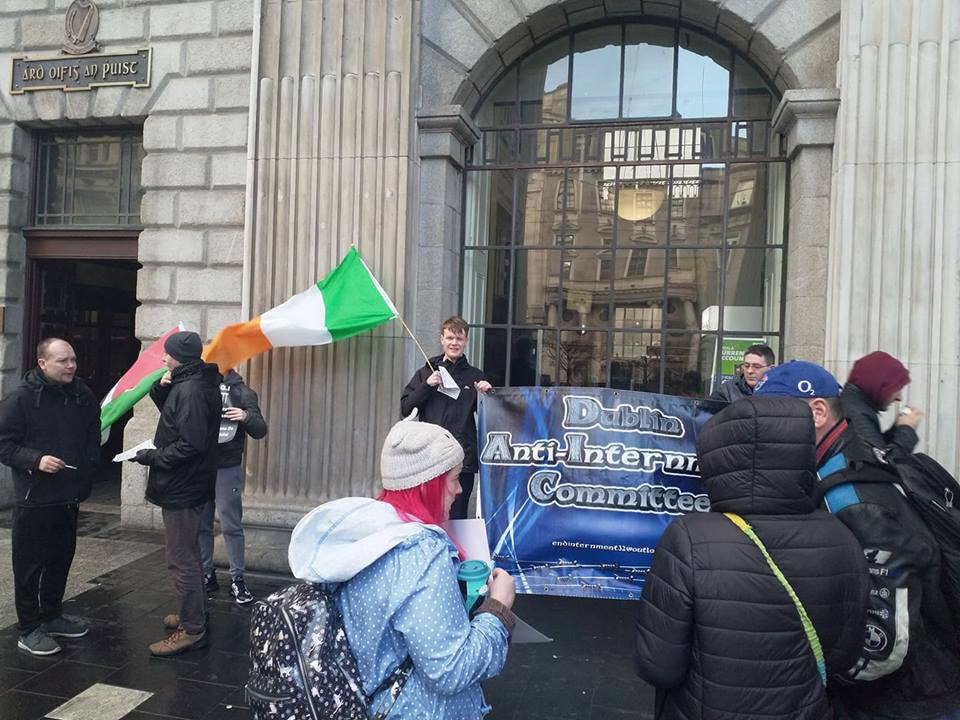
At a certain point during the event, the picketers took up black flags and displayed them until the end of the event in remembrance of the ten dead hunger-strikers of 1981 (seven Provisional IRA and three INLA). March 1st was the anniversary of the first day of the hunger strikes of that year fighting British attempts to paint them as criminals, when Bobby Sands embarked on his 66 days of hunger, the first of ten Republican political prisoners to give their lives. Bobby Sands, revolutionary and poet, died on May 5th and over 100,000 people lined the route of his funeral in Belfast, protests took place throughout much of the world and official marks of respect were given, including a statement of solidarity by Palestinian prisoners of the Israeli State. During his hunger strike Bobby Sands had been elected an MP to the British Parliament and two more, Kieran Doherty and Paddy Agnew, were elected members of the Dáil (Irish Parliament) in Cavan-Monaghan, while Joe McDonnell was narrowly defeated in the Sligo-Leitrim constituency.
These events had long term effects even in electoral politics. The British changed electoral law to prevent prisoners ever being elected again (Representation of the People Act 1981), Sinn Féin became a predominantly constitutional party and every Irish Government since 1981 has been a coalition of some kind.
A chríoch.
Another view of a section of the picketers. (photo: Dublin Anti-Internment Committee)
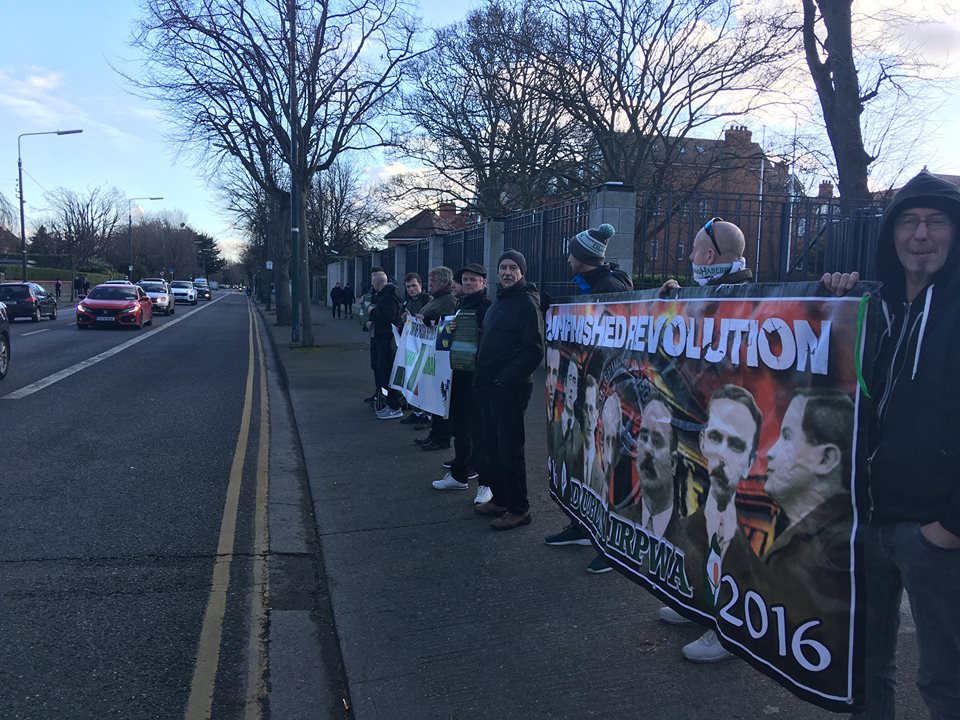
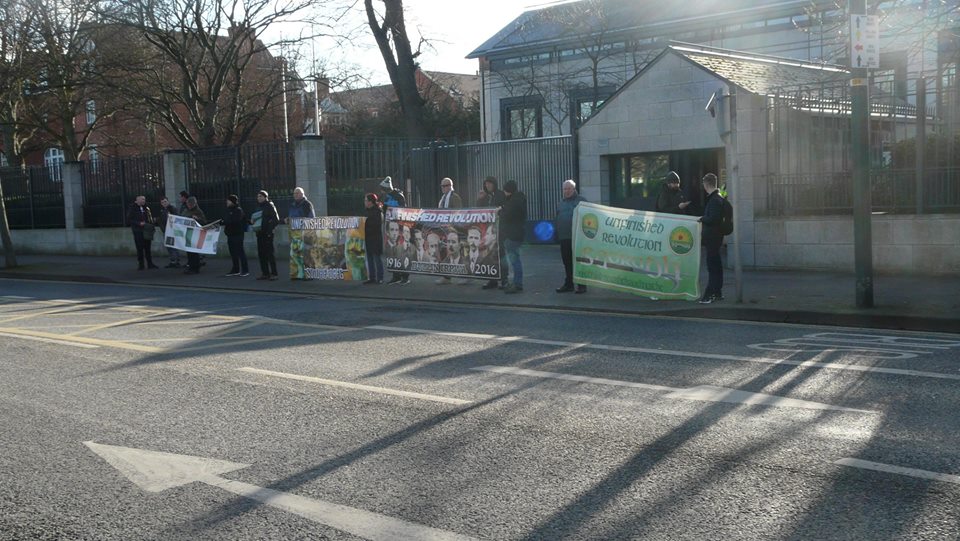
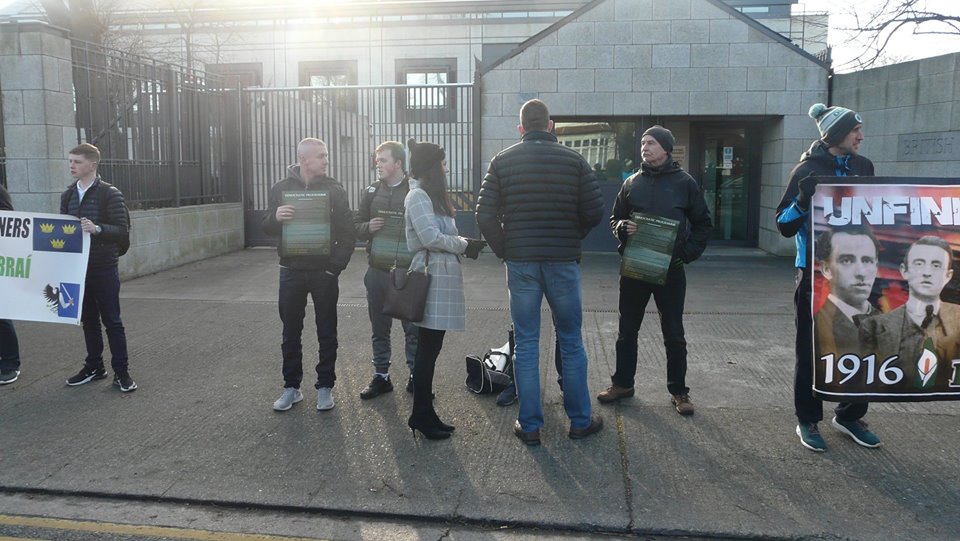
A picket called on the British Embassy to protest against continuing internment and special courts was harassed and kept under heavy surveillance by Irish police, both in uniform and in plainclothes, with marked and unmarked vehicles.
One view of part of the protest (the main entrance to the British Embassy is behind the picketers). (Source photo: Participant in the protest)
The protest was called by Irish Socialist Republicans, Anti-Imperialist Action Ireland, Dublin Anti-Internment Committee and Abolish the Special Courts campaign, was supported by members of a number of Republican and socialist organisations and independent activists.
Another view of the picket with the entrance to the British Embassy behind them (Photo source: Picket participant)
The objective of the protest was to highlight that the undemocratic practices of using the courts to remove the political opponents of those in power continues – the use of the courts”as a propaganda cover … to remove unwanted members of the public”, in the words of Brigadier Frank Kitson (British Army). These abuses of civil rights continue through a number of methods: revoking of ex-prisoners’ licences; refusal of bail; granting of bail under conditions preventing political activity; convictions in special no-jury courts. And they continue in both administrations: the Six-County British colony and the 26-County Irish state.
A Garda Special Branch (political police) male officer, accompanied by a female officer, requiring participants to give their names and addresses. (Photo source: Picket participant)
The harassment of the protesters outside the British Embassy was at a level to which Irish Republicans have become unfortunately accustomed: a Garda officer in plain clothes identifying himself as a member of the Special Branch and displaying his Garda identification request, accompanied by another, approached those in the picket line and required them to give their names and addresses, quoting Section 30 of the Offences Against the State Act1.
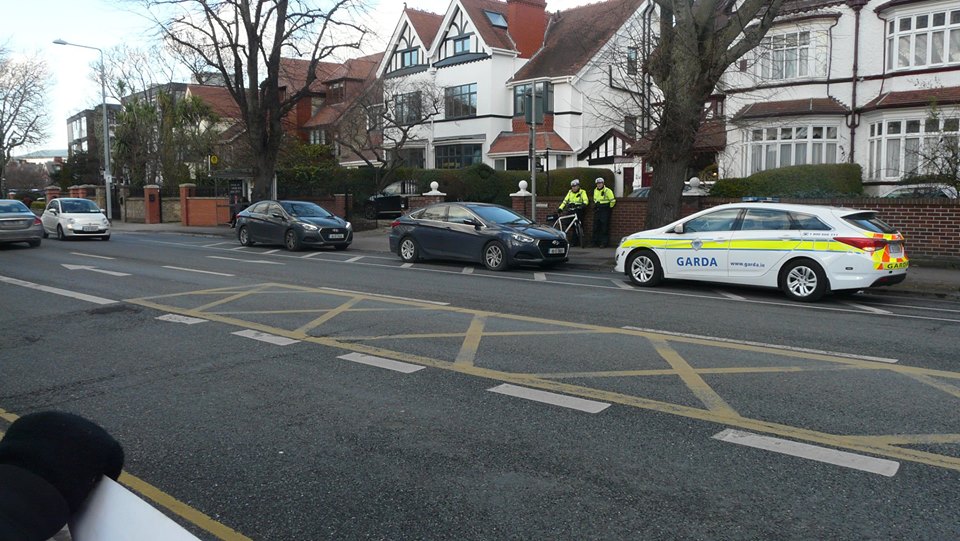
This practice of taking people’s names and addresses is one of intimidation which does restrain some new people from joining such pickets. The surveillance has the same intent, being visible; highly visible on this occasion with three unmarked SB cars, two Garda cyclists and one marked patrol car (in addition to the Garda officer permanently on duty outside the Embassy). “Remember this the next time you hear or read that the Gardaí were unable to respond to a domestic violence call for a number of hours because they were “short on resources’ “, commented one of the protesters. “Or unable to refer young offenders into the Diversion Program2” added another.
Intimidatory police surveillance on the other side of the road from the protest: two unmarked Special Branch cars, two bicycle police and one patrol car. Another SB car was parked on the pavement on the same side as the Embassy, which has a Garda officer on permanent duty also. (Photo source: Picket participant)
The drivers of a number of vehicles, especially taxis, tooted their horns in solidarity as they passed. Although the cold was penetrating through footwear to feet, the protest ended a little after an hour.
FOOTNOTES:
1The section authorises those questions by a Garda officer who has reasonable grounds for suspecting the interrogated may be committing or about to commit a crime – clearly inapplicable in most cases where this is used.
There are many misconceptions about Irish politics and history and the centenary of the inauguration of the First Dáil and of the first shots fired in the War of Independence (one of several of our “wars of independence”) seems like an appropriate occasion to try to tease some of them out.
The Irish Tricolour — national flag of the State but also quintessentially of Irish Republicans.The “Starry Plough”, flag of the Irish Citizen Army. Today it is held to belong variously to socialist Republicans, Revolutionary Socialists and even sometimes social democrats.The Red Flag, flown by Communists, Revolutionary Socialists and even sometimes by Social Democrats.Flag colours of the Anarcho-Syndicalists.A different version of the Starry Plough, usually but not only flown by social democrats. However, it was the flag of the Republican Congress in the 1930s.
For sure, many of those misconceptions belong to those viewing us from outside but here I’d like to deal with those from among our own. These misconceptions are spread equally among the Irish Republicans, Irish Socialists, Irish social-democrats and liberals – but each group believes different ones.
REPUBLICANS
To Irish Republicans (and I think I am objectively correct in not applying that to all who claim the title), the War in the Six Counties was lost because their political and military leadership, or most of it, abandoned the struggle or betrayed it. I think that is a fundamental misconception which leads to further misconceptions about what might be the way forward.
Please do not think for one minute that I am excusing the conduct of that leadership – I am not. Anybody is entitled to abandon the struggle but they are not entitled to claim their departure as a new way forward and to call on others to do the same – that is if they do not wish to be called “traitors”. Nor is anyone, least of all, entitled to take part in the colonial administration and if they do so, they have earned the titles not only of “traitors” but also of “collaborators”.
That judgement has nothing to do with peaceful versus armed struggle, parliamentary participation versus abstentionism or any such debate but is simply this: anyone who participates in colonial government is colluding with the colonist power, the invader, the appropriator. That is a truth understood by most people throughout the world.
It is a different point I am making entirely: the 30 Years War was lost because it could never have been won. To see this written or to hear it said will shock many Republicans and be seen as a kind of heresy – but that does not stop it from being true. Think about it: how could an armed struggle fought in one sixth of the country alone against a modern imperial army, possibly succeed? And that one-sixth further divided with at most 30% (and in reality a lot less) possibly sympathetic to the fighters? Who could sit down to ponder this and believe that struggle had a chance? The remarkable thing is not that it was lost or given up – but that it lasted as long as it did.
The only way that struggle could possibly win would be with the support of the 26-County State and it may well be that those who embarked upon it thought that at some point the Irish bourgeoisie would intervene in some way. They did — but to increase repression of Republicans.
A war might have been won if it had been extended across the whole state. Not necessarily an armed struggle across the whole country but certainly a social, economic, political one. It is not reasonable to expect the mass of people in the 26 Counties to fight year after year for those in only one part of the country, be it a colony or not, and have their own needs ignored. The people in the Six Counties would not do that either if the situation were reversed.
Certainly there was no shortage of issues going begging, from gender and sexuality-related civil rights, housing, unemployment, censorship, clerical domination, bleeding of the national language, sell-out to foreign capital, emigration, absentee landlords, private ownership of natural resources, sexual and other abuse by institutions. However, to take on the spread of issues oppressing or of concern to the people in Twenty-Six Counties would have meant taking on the Irish Gombeen class, its State and its supporting Church. Whether because they still had hopes of the Irish State or did not want to clash with the Church which had the religious allegiance of the majority of their followers – or because they themselves did not want to challenge some or all of those institutions,It is clear that the leadership of the Republican movement then could not bring themselves to that confrontation.
If only a struggle across the whole “island of Ireland” (sic) could possibly have won then it seems logical that only such a struggle has a hope of winning today.
Some of the Republican groups perhaps have this awareness and certainly they have been seen in water and housing protests in the 26 Counties. But they are small groups, their activity patchy, lacking collaboration with one another (even in resisting State repression). More fundamentally there is no strategic plan for organising the working class. In a way, they can’t be blamed for that: they are not communists or anarchists; no matter how revolutionary or left-wing, they are primarily and always Irish Republicans.
REVOLUTIONARY SOCIALISTS
There is another sector whose members might well be nodding their heads in agreement with the above criticism but they too are beset by an important misconception – albeit a different one. They are the communists, socialists and anarchists who would consider themselves revolutionary, i.e who claim to believe in a revolutionary transformation of society. A general disdain of the Republicans runs through this sector, considering Irish Republicans to be simple militarists, adventurist and even sectarian.
Their disdain – or perhaps their fear of being tarred by association – is such that they cheerfully allow all kinds of abuses against Republicans by the Irish State and the colonist statelet. By “allow” I mean that they do not protest against the abuses. Ethically, this is reprehensible but functionally it is dangerous. And in a country where the most numerous section ready to take on the State happens to be Irish Republican of one kind or another, such an attitude by the “revolutionary” Left is nothing short of counter-revolutionary.
This is, in a way, the sector to which I most belong but without that disdain or political apartheid.
Nor do our tiny cliques and small parties exhibit revolutionary spirit even in straight socialist issues, being in general concerned more with peaceful mobilisations and speeches or elections to public office than direct action.
One would think that trade unions would be of particular interest to the revolutionary Left – certainly the Republican movement has paid them little attention. However one finds only small struggles to appoint some Left-winger, usually not even a revolutionary, to the heights of union bureaucracy. When issues of industrial conflict arise, one does find revolutionary socialist shop stewards pushing for militant action.
But where is the education of workers? Where is the mobilisation of revolutionaries of different parties and none to support workers in industrial action? There is in fact no such “Broad Left” organisation in Ireland (not that its example in Britain is anything to emulate) and generally strike support is used for party building. When that particular conflict is over, nothing remains that was not there already.
SOCIAL DEMOCRATS AND LIBERALS
The third sector, shaking their heads at the “militarism” of the Republicans and the “impracticality” of the revolutionary socialists, are the social democrats and liberals. Their misconception is that capitalism and imperialism can be reformed so that they no longer be rapacious.
Maybe there was a time when such a belief was reasonable (though I find it hard to imagine it) but certainly that was long ago. Sincere reformers, benevolent capitalists and aristocrats and scheming reformists have all failed to reform the system of exploitation. Indeed, what historical experience has shown is that even if a capitalist or imperialist wished to subscribe to ownership in common, his or her class colleagues would not permit it.
The electoral path, so detested by some communists and many republicans, is where social democrats and liberals most place their hope and faith. And yet, despite an occasional individual exception, what has the history of those experiments shown us? Corruption of individual activists, wholesale corruption of party leaderships; diversion from the struggles on the ground to bureaucratic struggles in parliaments; careerist trade union leaders and bureaucratic officials; disempowerment of the working people; weakening of organs of real struggle; respect for the capitalists’ laws …..
Not one government of a socialist revolutionary kind has emerged by this process and, whenever it seemed to come close, it was overthrown by military coup or foreign imperialist intervention.
But still, it might work next time, eh? To the advocates of this ideology, of these methods, history does not matter – it can be ignored, denied or expected to cease its operation.
MOVING FORWARD
So where does all this leave us? Yes, I know, in the proverbial cac — but how can we move forward?
This is what I think:
The Revolutionary Left needs to a) organise in a revolutionary manner among the working class and b) to defend the civil right of Republicans;
The Republicans need to unite at least against State repression and take up social and economic issues of working people;
the Social-democrats and liberals should unite with the others on issues of civil rights and social issues;
but ultimately the Republicans and Socialists should ignore reformist illusions.
And what about me?
I do what I can where I think I can have a positive effect – criticise but participate; participate but criticise. And hope to learn not only from the mistakes of others but also from my own.