We knew about gays but we didn’t call them that. That was in our primary school days. Our mammies or das or others had warned us boys about them. We were never to accept sweets from strangers. They were men, older, probably shabby, hanging around in public toilets (when we had public toilets in streets). They would try to see your mickey, try to touch it (they were only interested in boys, which went to show how totally deviant they were). They’d give you sweets or even money. Just for that? It was enough! We thought no further but when we had to use those public urinals, kept as far away as we could from any men (a habit we continued into adulthood) and tried to cover our mickies with our hands and sometimes got some of the urine on them as a result.
Old-style urinal formerly on Ormonde Quay, Dublin, photographed in 1969. One of the types of places where the “Brownies” supposedly lurked. (Image source: Internet)Locked underground toilet in Kevin Street, Dublin, one of many such now all closed or demolished. (Image source: Aoife Barry, the Journal)
We didn’t call them “gays” then but there were other names in our vernacular dictionaries: brownies, dirty men, homos ….. They were always predators and always male. Girls didn’t have to worry, apparently – those dirty men would not be tempted at all. It was the normal men girls had to worry about.
Was there such a thing as female homos? But if they wanted to play with your mickies that would be normal wouldn’t it? And nice even if sinful. Ah, chance would be a fine thing! But girls or women doing it with one another? How? And sure, what for?
Did we know any homos? Well, we were kind of getting to hear about poor Oscar Wilde. He would have been our fifth national Nobel prizewinner for literature and the fourth from our capital city. If not for …. well …. Poor man, he was misguided. And duped. But a lovely writer.
Oscar Wilde quotations, part of his monument in Merrion Square, Dublin. (Image source: D.Breatnach)Head sculpture of a youthful Alexander the Great, from the Hellenistic period. (Image source: Internet)
Our elders, well a great many of them, knew that many famous men had been homosexual – but they didn’t tell us. We knew quite a bit about the military exploits of Alexander, the Macedonian but nobody told us he was homosexual. If we’d known, we’d have asked ourselves whether he went to conquer the world in order to hang around public toilets in foreign lands, waiting to touch boy’s mickies. William of Orange was a homo too but then we had enough reason to hate him already. Wait – William …. Willy …. willies ….. nah, coincidence!
There was another William they might have known about,King William Rufus (1087 – 1110), son of William the Conqueror, openly homosexual. And probably assassinated by order of his brother, King Henry II, not for being gay but to get the kingdom. Well, what would you expect of the English! OK, Norman-English. Whatever.
Mícheál Mac Liamóir as Iago in Orson Well’s production of Shakespeare’s “Othello”. (Image source: Internet)
They surely knew, educated adults and anyone around the theatre, that Mícheál Mac Liamóir was “a practicing homosexual”. An Englishman who became Irish, including a fluent speaker and writer in the Irish language, he lived with his lover Hilton Edwards in Harcourt Terrace. Edwards was another Englishman converted to Ireland. But sure they were English, so our elders only sniffed and turned a blind eye, grateful for the culture of the Abbey and Gate theatres, the formation of An Taidhbhearc and fame on English language stage and screen.
We knew Roger Casement could not be homosexual (even though he was a Protestant) because he was an Irish patriot. The English would do anything to tarnish his reputation and they had forged “the black diaries” to say disgusting things about him1, before they hanged him, not for homosexuality but for “treason” to the Crown. That’s the English Crown, of course. The one on top of the Arms of the Union, with the Lion and the Unicorn below, and below them the shield bearing the Thistle of Scotland, the Rose of England and the Harp of Ireland. You can see the design on the front page of the London Times, or on the roofs of the Bank of Ireland and Customs House buildings in Dublin.
Roger Casement, projected by British espionage service as a homosexual in order to undermine the campaign for clemency on charge of treason. (Image sourced: Internet)
But did we know any homosexuals personally? Perhaps some did. There was a lad at school who liked to knit and listen to opera and whose manner was quite feminine. Probably he was/ is, we thought years later but at the time he was just a boy who was like a girl. There was another one, son of a famous actor, a bit of a bully with a gang around him. He turned out to be gay but I at least never suspected. Then there was a certain barber who seemed quite effeminate but would do his best to cut your hair to any fashionable style which you required.
As we came into our teens, our vision broadened a little and we came upon more sinister knowledge. There were now rumours of homosexual Christian Brothers and priests. Seeing as these two groups, along with the Jesuits, directly controlled most of secondary education in the Irish state, nearly all of us Catholics were going to pass into their hands at some point. Hopefully their educational hands only. They didn’t have to hang around public toilets. They’d have us for six or seven hours a day, five days a week. Not to speak of the residential schools (too many people didn’t).
We knew in general and we knew of specific instances, by rumour or by experience. We resolved not to be victims ourselves and the strong succeeded. The weak? Well ….. Sauve qu’il peut, as they say (or I think they do) in France.
And we didn’t talk of it to our elders. Why? Well ….. hard to say. Would they have believed us? Did we have proof? Would it only have showed how dirty our minds were?
In my teens, a youth selling newspapers in Dún Laoghaire told me of a brawny sailor who one evening wanted to entice him into an alley away from company in order “not to embarrass the girls”. So, homosexuality was not confined to the creepy men hanging around toilets, or to the effeminate and arty, or to the clergy and Catholic brotherhoods. Burly sailors? Dear God!
And now a disturbing but exciting knowledge also came to us. We learned that there were indeed homosexual women – they were called ‘Lesbians’. And almost unbelievably, if you managed to get hold of a copy of the Kinsey Reports (or reviews of them), lesbianism appeared to be even more common than male homosexuality! Disturbing in a number of ways …. women preferring to have sex with women than with men? For some of us, it was difficult enough already to get physically intimate with a girl without some of them preferring other women! Then, a second thought, disturbing in a different way: imagine seeing them together … doing it! Double female nakedness!
As we grew older, we came to know gay men personally. Of course we did. Some of us, the better ones, acknowledged them our equals, did not avoid the subject nor deny them our company. Some of us, while accepting their company, avoided any mention of their preferences; we treated them as heterosexuals, knowing they were not. And some of us avoided them or worse, inflicted violence on them. We found out that some indeed did hang out around toilets but not to feel the mickies of little boys but to make assignations with adult males. Where else could they meet? It was illegal and religiously prohibited too.
Then came gay liberation agitation in the 1970s. Decriminalisation in 1993. And finally, equal rights to wed in 2015. Incredibly almost, that same Ireland of our childhood voted by majority in every county but one in the Irish State of the Twenty-Six Counties, that gays should have the right to marry people of their own gender. In May 2015, Ireland became the first state to legalise on a national level same-sex marriage by popular vote. The New York Times hailed the victory as putting Ireland at “the vanguard of social change”.
A badge in the Irish language calling for a vote in favour of the right to same-sex marriage in the Irish state referendum of 2015. (Image source: D.Breatnach)
We have come a long way, in that respect at least. But oh, the victims of intolerance strewn along each side of the route of our progress!
Generations in Ireland will grow now, hopefully, without the spectre of the Brownie.
End
Footnotes:
1 Roger Casement (1864-1916) was an Irish patriot and Protestant, also a poet and an enthusiast for Irish culture. In 1916, in preparation for the Easter Rising in Ireland, he came in a German submarine to assist in the unloading of German armament, including 20,000 rifles. The German boat, disguised as a Norwegian, was discovered and its captain scuttled it outside of Cork. The IRA Volunteers who went to meet the boat and Casement at its rearranged landing place, of which they had just learned, drowned as their car went off the road into the sea.
Casement was apprehended after landing. He was tried for treason in wartime and a substantial campaign arose to save his life. He had earned fame and a knighthood (CMG) a decade earlier through exposing ill-treatment of indigenous people in the African Congo under Belgian Royal control and in Putamayo in Perú by rubber-exploitation commercial interests.
Extracts from the “Black Diaries” were circulated by the British espionage service to undermine popular support for clemency for Casement. Those Diaries (as opposed to his other diaries of his travels abroad)gave details of his allegedlysexual interludes with men abroad and the extracts circulated substantially undermined the campaign for clemency. Casement was hanged in Pentonville Prison on 3rd August 1916, the last of the 1916 executions, the only one not by firing squad or to take place in Ireland.
The authenticity of the “Black Diaries” continues to be the subject of controversy. Although Wikipedia notes that a handwriting expert concluded by comparison with his other diaries that the entries were genuinely Casement’s, he is the only handwriting expert to have been permitted to examine the original, nor have samples been subjected to modern forensic testing. And the British espionage service did have a reputation for forging documents.
This Autumn I made myself available to give talks in the southern Basque Country (i.e. in the Spanish state) on the situation of Irish political prisoners and a series was arranged for mid-October for nearly two weeks.
As well as having private conversations, I gave a total of five public talks to audiences ranging in size from ten to over forty. The composition of the audiences varied from youths to older middle-aged; in some places the latter predominated and in some, the former.
All the meetings I spoke at were arranged by an organisation called Amnistia Ta Askatasuna which calls for total amnesty for Basque political prisoners. This was also a demand of the whole movement and of the leadership of the Abertzale Left until fairly recently and the Gestoras pro-Amnistia organisation had been created under the Abertzale Left umbrella but then banned by the Spanish State. But the Abertzale Left’s leadership have now dropped this demand from public discourse, saying the conditions are not ripe for it and concentrating instead on the end of the dispersal. (More about this and the Basque prisoner situation later).
Poster on a wall advertising three talks in the southern Basque Country before the remaining two were confirmed. October 2017. (Photo: D.Breatnach)
I had not intended to confine my talks to those organised by ATA but it was they who organised the talks on dates that were offered, with the exception of one from an independent source that unfortunately clashed with one I had already accepted elsewhere.
ATA posters share with other advertising on a wall in the southern Basque Country, October 2017 (Photo: D.Breatnach)
THE TALKS
The types of venues for the talks were community cultural centres (two), occupied buildings (two) and one local (a space for which the users’ association paid rent and used for their activities). Geographically, the talks were held in Gernika and two in Bilbao (Bizkaia province), Etxarri (Nafarroa) and Ibarra (Guipuzkoa province). There were none in Alava province (although earlier this year I gave interviews to Hala Bedi pirate radio there, in Gastheiz/ Vitoria). On this occasion also I gave a video interview to a rapper who also makes videos for Hala Bedi, though he is located in Bizkaia.
From conversations and discussion it became clear that all the older people in the audiences were veterans of the Basque struggle over decades and a number were ex-prisoners. Some had relatives in jail. The youths had come to political activity or thinking in recent years.
Talk in cultural centre in Ibarra, Guipuzkoa, southern Basque Country, October 2017. (Photo: ATA)
For the content of the talks I briefly reviewed the more distant history of political prisoners in Ireland, moving on then to the Good Friday Agreement and the release of
Torn poster advertising the talk in Ibarra, Guipuzkoa province, southern Basque Country, October 2017. (Photo: D.Breatnach)
most Irish Republican prisoners in the Six Counties under its terms. The re-arrest and jailing without charge of a number of these ex-prisoners was part of the talk, in which the specific examples given were of Marian Price, Martin Corey and Tony Taylor. I also dealt with the procedure of arrest on ridiculous charges and refusal of bail, or granting it under undemocratic and restrictive conditions, for which I used Stephen Murney as an example. These were all members of different organisations or none. Conviction on charges which the evidence does not support is also a category I mentioned, giving the Craigavon Two as an example there. Arrest on possession of arms charges is also a feature on both sides of the Border.
With regard to the 26 Counties, i.e the Irish state, I discussed the Special Court, Membership-of-an-illegal-organisation charges and charges of obtaining arms or having assisted terrorism. I mentioned the planned second Special Court in particular in the context of the State’s failure to convict most of the Jobstown protesters on charges that included “false imprisonment” (i.e kidnapping).
While noting that splits had occurred before in the Republican movement – the Provisionals themselves having emerged from such a split in 1970 – I noted that since the GFA, splits had multiplied and listed a number of the resulting organisations, including those that had existed already at that time.
Listing the number of Irish political prisoners (at the latest count then 79) and reminding the audience that the Irish had extended solidarity to Basque political prisoners, I asked the Basques for solidarity towards our political prisoners too. And I did so not only as a moral issue of internationalist solidarity but also in recognition that internationalist solidarity is one of the first casualties (i.e aspects to drop or weaken) by those who are seeking to surrender the struggle or even to become collaborators.
Talk in cultural centre in Etxarri, Nafarroa province, southern Basque Country, October 2017. (Photo: ATA)
QUESTIONS
I timed the talks to give sufficient space for – and encouraged — questions and comments, even critical ones.
It was interesting that the same questions tended to come up again and again:
Did the different Republican organisations cooperate with one another inside and outside the jails?
What were the conditions in the prisons like for the prisoners?
How are political prisoners in ill-health being treated?
Is there a dispersal issue with regard to political prisoners?
Did the population support the prisoners?
What were the conditions for their release under the Good Friday Agreement?
Did INLA prisoners sign the GFA release agreement?
Are there armed actions continuing in Ireland?
Are the youth involved in solidarity actions and campaigns?
What was the attitude of Sinn Féin towards the political prisoners?
Are prisoners “on the run” still in danger of arrest and imprisonment?
In one meeting, one of the smaller audiences and containing only youth, I was asked about the role of women in the national liberation struggle in Ireland today.
Talk in the occupied former Astra factory building, Gernika, Bizkaia province, southern Basque Country, October 2017. (Photo: ATA)
Some of the questions asked reflect the situation of the Basque political prisoners and also of the censored and inaccurate information about Ireland that reaches them, including through the Abertzale Left‘s (the “official” umbrella organisation) daily newspaper, GARA. At a number of times in the past spokespersons of the Abertzale Left’s organisations had claimed that there were no longer Irish political prisoners, a claim repeated in GARA. More recently, the tendency is to ignore their existence or to represent them as very few, without a program other than return to armed struggle and without a support base (i.e Sinn Féin’s line).
The new direction of the Abertzale Left’s leadership, which included a “permanent truce” and disarmament of their armed organisation ETA (formally declared in January 2011) was said at the time to have been agreed by the Basque political prisoners in their organisation EPPK. There have been persistent claims by friends and relatives of some prisoners and by some prisoners released in the last couple of years that they had not even been consulted.
A number of people to whom I spoke claimed that the prisoners’ collective no longer really exists, with prisoners left to act individually; some others said this was true to an extent but not completely. Certainly one feels a general air of disillusionment and uncertainty – and also of anger. And it is true that a small number of prisoners have formally denounced the leadership and left the collective.
Grafitti in Ondarroa, Bizkaia province, southern Basque Country, October 2017. (Photo: D.Breatnach)
From figures collected in 2003, up to 30,000 Basque activists out of a total population of less than three million) had been arrested, 8,170 were accused of being members of ETA and roughly half of those convicted and imprisoned. The prisoners’ relatives and friends’ organisation Etxerat (also under the Abertzale Left’s umbrella) in its July-September report of this year (2017) recognises 315 Basque political prisoners, of which 310 are dispersed through 61 prisons, with only two in 2 prisons in the Basque Country.
In 39 prisons in the Spanish state, 239 Basque political prisoners are being kept and 68 in twenty prisons of the French state. There are 212 (68.85%) Basque political prisoners in prisons at distances of between 600 and 1,100 km of the Basque Country; from a distance of 400 to 590 km from their country there are 67 (21.75 %) and between 100 and 390 km of home another 29 (9.40 %).
The strain on relatives and friends is considerable, road accidents are frequenton their journeys to visit prisonersand a number have been killed.
Twenty-one prisoners (21) are diagnosed as being seriously or terminally ill and according to the states’ own penal codes should have been released on parole to home or hospital but instead of reducing the number of sick prisoners the total is climbing (almost doubled in recent years). I accompanied ATA comrades to the port town of Ondarroa to participate in a demonstration organised by a broad platform calling for the release of terminally-ill Basque political prisoner Ibon Iparragirre.
Section of rally after demonstration in Ondarroa, Bizkaia, in solidarity with local seriously-ill prisoner Ibon Iparragirre, October 2017. (Photo: D.Breatnach)Stage of the rally after demonstration in Ondarroa, Bizkaia, in solidarity with local seriously-ill prisoner Ibon Iparragirre, October 2017. (Photo: D.Breatnach)
The Spanish state has rejected all the “peace process” (sic) overtures of the Abertzale Left leadership and says that ETA should just disappear and prisoners wishing to be pardoned and released must repent their previous actions, apologise to their “victims” and give information on their previous activities and comrades. It also says that all still at liberty and wanted for past illegal activities will continue to be pursued.
COMMENTS AND CONTRIBUTIONS
These too tended to be of a kind to come up again and again throughout the tour:
The situation in Ireland with regard to the liberation movement and prisoners is like that in the Basque Country or that which the latter will face as time goes on
The prisoners’ cause is being deserted by the Abertzale Left leadership
Their media and leadership had lied to the movement about the situation in Ireland
The leadership is only interested in penetrating the institutions and is neglecting the politics of the street
Otaegi and Adams are alike and McGuinness was a traitor when he asked people to inform on paramilitaries
The Abertzale Left did not of course comment on the talks – why would they? However, in Ibarra, I saw posters for the meeting torn down in areas where other political ones remained and according to my hosts, this was the work of the “oficialistas” (i.e followers of the leadership’s line) in the town. It was notable too that with a few exceptions, a number of people within the Abertzale Left but whom I know to be very critical of the change of direction, did not attend the talks held in their areas. Since some had previously attended a meeting at which I spoke a year ago and engaged in discussion critical of the Abertzale leadership, I took it that these either disapproved of the ATA organisers or did not wish, for whatever reason, to be seen attending a meeting held by the organisation.
At all the talks I was received with friendliness and courtesy and after some I had a meal in company in a txoko (Basque building — or part of one — owned or rented by a gastronomic association) or the home of my hosts for the evening. Although I invited criticisms with genuine interest in hearing them, none were voiced publicly, whether of the content of my talk or of the Irish people generally — although there were some questions as to why the people “in the south” had not supported more widely the “struggle in the north”. I explained that what they call “the north” is one-fifth or the country and also divided in its population; in addition the Republican movement had left the social and economic concerns of the people in the other four-fifths largely unaddressed and in fact had opposed some social reforms in earlier times. People in the 26 Counties had given a lot of support but without mobilising them on their own concerns and specific conditions this was likely to be a minority activity and to decline over time.
CATALUNYA: SOUTHERN BASQUE ATTITUDE TO THE STRUGGLE THERE
Inevitably, the struggle in Catalunya came into the discourse at some point – after all, I had arrived in Euskal Herria just under two weeks after the Referendum.
The Catalan national flags, the esteladas (both versions) were in evidence across the Basque Country as were some solidarity banners and posters. The two solidarity demonstrations I witnessed (and in which I participated but for a while – each having been called for the same evening as my talk locally) in Nafarroa and in Bizkaia appeared to have been called by the “official” movement and were fairly small and quiet. The largest, of over fifty people, did not even have a flag, placard or banner, which was puzzling.
Large image on the wall of the youth local in Errekalde, Bilbao, where they hosted one of the talks, October 2017. (Photo: D.Breatnach)
It was reported to me that some time back, the Abertzale Left had been close to the militant CUP (Catalan left-wing and independist popular movement) but now were moving closer to the Eskerra Republicana, often perceived as being less militant and closer to the Catalan bourgeoisie. Among the critics of the Abertzale Left leadership and others there seemed to be a doubt that the Catalan leadership was serious; however, both the “officials” and the “dissidents” had sent people to help the Catalans in their referendum.
After the Spanish police violence on October 1st there was a feeling that the Catalans were enduring what the Basques had endured for decades so why the great shock now? When two leaders of the Catalan movement were arrested and jailed without bail and called “political prisoners”, of course the Basques pointed to their own hundreds of political prisoners (and also to two Catalans who were ETA prisoners). The failure to declare a Republic on the promised day seemed to bear out those with a more cynical view but actions since then and the application of the repressive Article 155 of the Spanish Constitution are bound to raise feelings of respect and solidarity across the Basque national liberation movement, whether “official” or “dissident”.
IN CONCLUSION
It is clear that there is interest in the Irish situation and of that of the prisoners in at least some sections of the broad Basque national liberation movement. It is also clear that there is a substantial discomfort with the direction of the Abertzale Left’s leadership since 2011 (and for some since even earlier). Frustration is also evident as is a great concern for the political prisoners and a worry that they are being left without leadership, to come to their own arrangements with the Spanish state or to endure many more years in jail or die there (as Kepa De Hoyo did in August and as Ibon Iparragirre faces now).
This level of concern, disquiet and even distrust is not currently reflected in great numbers attending pickets or demonstrations organised by ATA, as numbers attending the talks showed in some areas but as the talks also showed, there is a network of support for ATA across the southern Basque Country. It was clear that a greater lead-up would have resulted in talks being hosted in further areas, including the province of Alava which was not included on this occasion. The general composition of the movement represented by ATA is healthy in its spread across generations, comprised of veterans (including ex-prisoners) and youth new to the struggle.
The pedestrian bridge at Ondarroa, scene of one of the “human walls” organised some years ago by Basque youth in resistance to the arrests of activists. Supporters placed the activist whom police were seeking in the middle and then packed the bridge with supporters, causing the police hours of work to carry out the arrest. I was told that the official leadership had ordered the cessation of these events. October 2017. (Photo: D.Breatnach)
From a personal point of view it was an interesting if somewhat hectic and stressful period but also one that increased my understanding of the reality.
From a political perspective I hope it helped build some links for solidarity between the struggles in each of the two nations and an awareness that pacification processes are not an alternative but only another face of repression. For the struggles in which so many have sacrificed so much to succeed, we need to raise our awareness of these processes. In these processes political prisoners, often seen by their populations as heroes and people to be cherished, are used by the repressive power as hostages and often too as bargaining counters, the temptation always there for some of those in struggle to use them in kind.
From Axpe de Busturia train station, Bizkaia, October 2017. (Photo: D.Breatnach)Morning view of misty mountains from a host’s house in Etxarri, Nafarroa province, October 2017. (Photo: D.Breatnach)Bermeo Harbour and some of the town from heights above, October 2017. Near the big building at 9 o’clock on the photo was the location of a Franco prison for Resistance women — I was told that Basque nuns locally brought food to the jail for them every day. (Photo: D.Breatnach)Part of the Bay of Bizkaia (Biscay), October 2017, from the site of a Basque Gudari artillery battery during the Anti-Fascist War. (Photo: D.Breatnach)
I got a phone call today – my drum has been found. I was astonished.
Three or four years ago, my drum went into hiding. No, I don’t mean “I went into hiding in my drum” – I’m not talking Cockney rhyming slang or Romany. I mean a real drum, a music-rhythm drum. It’s a dholak — looks like a smallish bongo in shape but both ends are played and it is South Asian in origin. It was bought for me many years ago from a London charity shop.
Why did my dholak go into hiding? I am not sure. Drums are sensitive; sensitive to vibrations. Yes of course, they are about vibration, that’s how they are made to produce sound. But more than that – they also pick up vibration. The skin or membrane, stretched tight, can pick up vibrations of machines, wind or even speech, which resonate inside the hollow instrument. Perhaps I was giving off bad vibrations. Or more likely not supplying enough vibrations at all.
A dholak, very similar to mine. (Photo source: Internet)
It is true that I had stopped playing her and taking her to music session. I knew I wasn’t a great player but I thought I was OK – most of the time. Percussion gave me something to do at a session, to be part of it when I wasn’t singing. Then something happened that shattered the veneer of confidence. And there was a session I used to go to where I played it but I stopped going there; I can’t even remember why now.
The percussion illness began years ago in London. It was an infection that spread from my tapping feet to my tapping fingers and to rapping on wooden tables; there were nights I got carried away and came home with sore and skinned knuckles.
The infection spread and I took to playing the violin cases of tolerant musicians at London sessions. Or occasionally an accordion case. And then the dholak arrived. I played her indoors for months before I dared bring her to a session.
Musicians’ eyes widened when they saw me bring out a drum more than two feet high from a sports bag. They were apprehensive, for sure. Musicians playing Irish music (not all of them are Irish) have learned – or been taught – to be wary of percussionists. Percussion usually descends on an Irish session in the shape of a bodhrán (from the Irish, literally “a deafener”) and though the instrument can be played very well and sensitively, too often it is not. When played badly it is out of time with the music or a monotonous boom-boom-boom trying to kill the music … and nearly always too loudly.
There is a joke about the banjo which can be even more easily applied to the bodhrán: “You can tell from a fair distance when a man with banjo is approaching – but there is f.a. you can do about it.”
Even the bodhrán has a dubious history in traditional Irish music and it was really a classically-trained Irish musician, the great Seán Ó Riada, who gained the instrument popularity by working it into his suites — his compositions and arrangements. Norman observers in the 12th Century, describing Irish music, mentioned only a kind of drum, some kind of whistle (flute) and the harp (of which there were two, the small and the large). Not even the uileann pipes were mentioned! Over the years, the wooden whistle came in or was developed domestically (replaced for a while by the metal one, mass-produced in Manchester!), also the concert flute from Europe, the violin from Austria-Hungary perhaps, the accordion from Germany and Italy, the banjo from African slaves and their descendants in the USA, the mandolin from Italy, the bouzouki introduced from Greece in the 1960s, the guitar originally from Iberia but probably through English and US folk music, also in the 1960s.
The uileann pipes, despite the Norman observers, have been around for a while too but difficult to say when exactly it came in, some sources say not till the 1700s – certainly later than the marching war pipe depicted in Elizabethan-period drawings and woodcuts.
Instruments in Irish traditional music — a panel carving in St. Michan’s Church, Dublin. (Photo source: Internet)
In Irish music, it is normally the guitarist who plays rhythm and many musicians think that with a guitarist, you don’t need a percussionist. If indeed you ever do – Séamus Ennis, once asked what was the best way to play the bodhrán, famously (or infamously) replied: “With a penknife”.
Whatever else could be said about my playing of the dholak, good or bad, at least I never played it too loudly.
Traditional Irish music sessions in London, at least in those years, tended to be more tolerant and inclusive than I experienced in Ireland on visits home or since. So they let me get on with it and we got on ok – me, the dholak and the musicians. And the ‘audience’ seemed ok with us all too.
When I came home to Dublin, to work and to live, after decades in London, she came with me. There was a session in Rathmines I attended regularly and I took the drum there, played it some to accompany the trad music instruments and sang a few songs. At that particular session one heard a variety of types of song and could sometimes see dancing: set-dancing, freestyle sean-nós and there was an elderly couple who did what I took to be a schottische. There was a bodhrán player or two there most times and when they were, I mostly laid off the dholak until they took a break, went to the toilet or out for a smoke.
Usually, the session would start around 9.30pm and go on till 1.00am or even later. Many a time on my way home from that session, a song or a tune would be running through my head, non-stop. Sometimes I even composed a tune, or thought I did — but had forgotten it by next day.
Walking the 4.5 km.s after a session to catch the night bus from D’Olier Street (and a half-hour wait if I missed one) grew tiresome, which might have been the reason I stopped going. Maybe my bike wasn’t working at that time. The truth is, I don’t know why but I did stop going. There was a Sunday session I was going to for a while but I dropped out of that too, for other reasons. The result was that I stopped playing the dholak, even at home.
Maybe she missed the tapping of my fingers on her skin. Perhaps she missed the vibrations of Irish traditional music. And grew to resent the silence. Maybe she planned to leave me.
If so, the occasion came when a large group of Basque musicians were visiting Dublin and I had organised a musical pub-crawl for them (kantu-poteo), as well as a concert for them to perform. I brought the dholak in case there should be an informal session at the end of the evening but there wasn’t and, in amongst all the leave-taking and so on, I forgot about her.
A few days later I looked for the dholak at home and realised I must have left it behind. To the management of the hall I went rushing — but it could not be found. So, someone had stolen her. Or she had gone off with someone she thought would appreciate her more than I had.
I was upset – of course I was – but there was nothing to be done about it. Of course, if I ever should see someone with her, while on my travels ….!
The years went by and I reconciled myself to my loss. I had already mostly stopped going to traditional sessions and was concentrating on singing. For a while I was singing at a different gathering as often as twice a week. Then that too tailed off. Some sessions were a distance away around Dublin bay and finished after public transport did. One was on a Sunday and I was often tired. But the truth is, although I always enjoyed a singing session, I was losing some of the drive, the urge that had me attending regularly.
And then, this morning, from the manager of the hall where I had lost the dholak about four years ago, I got a phone call. She had been found!
Overjoyed as I am, I can’t help wondering what it means, that she turns up now. Of course, it could mean nothing. Just a lucky happenstance that it turned up, was found among stuff stored away, probably by someone searching for something else or having a clear-out.
The cops and private detectives with starring roles in the novels I sometimes read don’t believe in coincidence and happenstance. Much as I hate to take part of my world view from cops, nor do I.
I wasn’t allowed out at night so, after my parents thought I’d gone to finish my homework and to bed, I went out the window. A younger brother asked to come too and I had to bring him along.
Ah! The pleasure, the joy, the freedom to be out on the streets at night – especially when it had been forbidden. I was wearing my new blue trainer shoes. They felt good. They looked good. I felt good.
We wandered on towards a street of brightly-lit shops, most of them still open. Around the corner we went – and walked into the tail-end of a robbery! It was a sports shoe shop and the robbers, young lads, were spilling out of the shop, bumped into me … and people were shouting. And then one of the bystanders or shop assistants pointed at me and shouted that I was one of the robbers!
Well, even if I could convince people I was not, when the cops questioned me, they’d at least take me home to confirm my address and check my parents. And I was not supposed to be out.
Getting out of there quick seemed like the only rational option.
As I ran, I cursed my new trainers as I heard my accuser shout: “Look, he’s even wearing a pair of the stolen trainers! The blue ones.”
I had to get out of the area and, if possible, change my shoes. How to do that? Nearby was a late-night school gym and that’s where I headed. Asking the brother to wait for me outside in the shrubbery, I ducked in.
I passed by some youth around my age in a corridor and got by them casually with not too many words. It surprised me that they were all black. I soon found a changing room with shoes and clothes scattered about – and no-one in there — great! There was even a pair of white trainers my size — my luck was in! But as I was changing into them, the door opened and a black kid walked in.
“Who’re you?” was his immediate question, eyeing me suspiciously.
“Marlon,” I replied, giving the first reply that came to my head. I was just thinking that was an unlikely name for a white boy and he might even think I was taking the piss out of current Afro-Caribbean youth names when he asked “Marlon who?”
And like some conditioned response, I replied “Brando”. My heart sank but I kept my face unconcerned. With any luck he only watched kung-fu and chain-saw massacre films.
His eyes narrowed. “That’s an actor’s name”. Damn! For a second I considered blagging it but knew it wouldn’t work.
“Yeah, sorry,” I replied, shrugging. “Just a joke.” And I gave him another name.
Just then, the door opened and a younger black kid looked in. I’d met him earlier, on the way in.
“Hi, Ian,” he said when he saw me. I’d probably told him my name was Ian Fleming. That wasn’t the problem, though; the real problem was that was not the name I’d just given tough guy, whose eves widened.
Young black kid had hardly closed the door and gone before tough black kid grabbed my arm, opened a door to another room and shoved me in there.
It was a toilet and looked like there was shit everywhere. And it was not in turds but in semi-liquid form, like an explosion – or more likely, several explosions – of severe diarrhoea. To say it was disgusting would so far below reality as to be a lie.
“It’s covered in shit,” I complained.
“So clean it up,” he replied, shut and locked the door.
The memory of what followed is all too clear to me but I’ll spare any of you the description. Suffice it to say that I cleaned it up, or most of it, dumping it in the pan and pumping the toilet flusher a number of times.
I had nearly finished when the door was unlocked and another black kid, this one in plastic apron, rubber boots and gloves, looked in on me.
“Done?” he enquired.
“Yeah,” I replied, washing my hands in the sink. “And it was truly disgusting.”
“You had it easy,” he replied. “You’d want to see the mountain of dog shit I’ve had to clear.”
He was wrong about that – I definitely did not want to see it. Right then I wished never to see shit again as long as I lived but it was just another of many wishes already in my short life that I knew would not be granted.
“Come along,” he said and beckoned.
He seemed friendly and anyway, what choice did I have? There was no other way out of that room.
He opened another door and I followed him into a compound of dog pens.
“Mamelukes” he said, showing me around.
“You mean Malemutes,” I began to say but trailed off when I saw them. There’s a lot of things I don’t know but I do know these were not malemutes – not even close. And Mamelukes were an Egyptian slave soldier caste. I don’t know what kind of breed these dogs were but they reminded me of that latest of accessory dog breeds, the shar pei. They had very short hair and wrinkled skin. But the pups were kind of grey-coloured and huge.
Despite my guide’s reassurance as he brought me into one pen, the pup was growling fiercely at me. Its mother (I presume) in the next pen, barked at the pup as if to say “Shut up, silly! Can’t you see this guy is a friend? He’s with our feeder and pen cleaner!”
Her head came up to the height of my chest. Even though she looked like she was friendly towards me, I was glad she was in the next pen, with a wire fence between us. Otherwise I would never have dared do what I did next.
Grabbing the pup around the muzzle so it couldn’t bite me, I flipped it on to its back and started scratching its stomach. The pup wriggled madly, at first in anger or fear, but then out of pleasure. When I let it up, dominance and pleasure-giving role established, it was all over me. Wagging its tail like mad, squirming, its wrinkles running up and down its loose skin. It was ugly, really but kind of appealing too.
My guide took me out of the pen and locked it but then, looking off to the side, exclaimed: “Oh no! One’s got out. It likes being chased and it’ll take me ages to catch it. Help me, please.”
I set off after him and we passed beyond the pens into a piece of undulating open ground where cabbages and other vegetables had been grown – some were still there, unharvested. In the distance, something was moving fast. Strangely, it looked like a head of cabbage.
I ran after the guy and caught up with him just in time to see the pup’s hind legs disappearing into a burrow.
“Quick, head it off at the other side,” he said.
The other side of the burrow was only a few steps away and emerging on to a ridge, where I took up station to block the pup. I heard and felt more than saw it coming and what flew out of the burrow at me was no pup or cabbage head but some kind of large flying insect. By reflex I reached out and grabbed it and some of its feet scratched my fingers. And then it was a bird.
It had been some time since I had taken any drugs and never the psychotropic kind but that was definitely a bird in my hand now. A pretty one too.
Next I remember I found the brother and we made our way home, me still with the bird quite placidly in my hand. And we walked into the house through the back garden and it was daylight and no-one was telling us off for being out all night.
We had some visitors I could see through the open door to the kitchen and it looked like my Ma and my younger sister had been having an argument. The visitors seemed quite shocked when the Sis said loudly: “I don’t give a shit!”.
My older brother walked past them munching something and gave me a sardonic lift of the eyebrow in passing. That was really weird – not so much the eyebrow but the fact that I don’t have an older brother – but it didn’t seem to bother me much at the time.
“Look at the bird I have!” I called to my sister.
A smile of malicious delight spread over her face. “Shove it up!” she shouted.
I once knew a cat but, what is more to the point, the cat knew me.
A pair of European Magpies on branches
I knew the cat not well, but as a kind of nearby resident I had helped a little once and made friendly overtures to. He or she (I suspect she and will refer to it so from now on) first came into contact with me when a racket of magpies not far from my home attracted my attention. I found magpies harassing a marmalade (orange tabby) cat in a tree and the cat seemed trapped there.
Since there was no nest in the tree for the magpies to be protecting, I chased them off some distance with the aid of shouts and stones, then tried to persuade the cat to come down but she just looked at me – afraid of me too, I thought. Some days later, I came across a marmalade cat outside some nearby houses and called to her and, when she came, stroked her and then went on my way. She made as if to follow me but then gave up.
A few weeks later, I was coming up the road when I saw a marmalade cat about 50 yards away and wondered if it was her. She however looked up, saw me and hurried over, then began rubbing her body against my leg.
So how did she recognise me? Cats have very good hearing but I very much doubt she could identify my footsteps on a concrete footpath amidst all the traffic noise from so far away. Cats also have a good sense of smell but I don’t think it’s good over distance. They are not good at recognising human faces, according to tests. So, she probably recognised my shape and gait (like those recognition software programmes the secret services have developed and with which they monitor a lot of CCTV coverage — reassuring, huh? Not so much!).
(Photo source: Internet)
It is true I have a somewhat identifiable gait, so I am told – a swagger learned as protective colouring in my teens but about which I am nearly always unconscious and when I am, try to control. Once doing that in New Cross in SE London, a black youth I knew from my work in a local youth club shouted from across the street: “Walk like a white man!” Apparently my attempt to control the Dublin swagger was resulting in the kind of walk adopted by many Afro-Caribbean youth.
But, back to the cat. Anyway, it was an amazing feat of recognition of an individual of a different species and of minimal acquaintance and I think she would have recognised me no matter how subdued my usual type of walk. I wonder how many individuals considered friendly or otherwise a cat can identify by sight at a distance – just how big is their database?
Another time I came upon this cat, she was stretched out on a warm sunny pavement but being persecuted by a pair of magpies (probably the same ones as before). The cat saw me and so did the magpies but I stopped at a distance to observe what was happening.
One magpie distracted her attention by strutting up and down in front of her head, but out of reach of swipe or sudden rush, while the other waited its chance and pecked at the cat’s tail. She lay there suffering this persecution, only twitching her tail from time to time in a futile attempt to keep it away from the bird or perhaps out of tension.
“But why don’t you move, Cat?” I asked her, half in amusement and half in sympathy.
She looked at me and seemed to say:
“Why should I? This is MY pavement and I am harming no-one! I am not going to let two BIRDS chase me off!”
“Well, you could spring at them …”
“What’s the point? They keep just out of range and I’d miss, giving them a reason to mock me.”
The Magpies, in turn, might have been saying:
“This has nothing to do with you, Mister. This is a Cat, ancestral predator on birds and fair game for us at any time. Keep out of it!”
“Yeah, we remember you butting in before!”
And magpies probably can identify human faces – at least tests with their close relatives, crows and jackdaws, show that they can. And magpies are the only bird so far shown able to identify themselves in a mirror.
I did keep out of it. I had things to do and left them to it – the cat after all had the option to leave and even were I to chase them off, the birds would only fly a little distance and then come back. I’ve seen magpies do this “torment-the-cat” thing before. And cats will kill a magpie, if they can.
The cat’s refusal to move or to make a lunge she knew the birds would easily evade, the provocative tormenting by the magpies and the way they worked in unison, all seemed to me so very human, even allowing for anthropomorphism.
But thinking about it later, I came to a different conclusion: it is not the animal behaviour that is human-like – it is OUR behaviour that is animal-like! After all, are we not descended from a common ancestor, albeit nearly 300 million years ago?
In total, I saw that Marmalade Miss maybe four or five times and then no more. Perhaps her owner(s) moved – I hope so and that she was not killed by traffic.
I had nothing I could gain from the cat, other than a kind of feeling of kinship perhaps. Other than a stroke now and again, she had nothing to gain from me. It was an uncomplicated friendship and not, like with some dogs, a dependency by either of us. I know she is gone but years later, as I pass near that street, sometimes still look out for her.
It was nearly ten o’clock at night when she approached me on a badly-lit street near Dublin’s North Circular Road. I had paused my bicycle to send a text on my mobile and I saw her coming towards me. I had the impression that, just before she made for me, she had been looking around as though to determine where she was – perhaps I had seen her doing that in my peripheral vision.
She had a handbag and was dragging one of those suitcases with an extending handle and trundling on little wheels. As she reached me, I asked her could I help her with directions, which actually interrupted her asking me for help. But that was ok, it worked against her being totally dependent, the asker – after all, I had asked too. She had a USA accent.
Yes, of course I would help if I could.
Did I know the whereabouts of a certain hotel? Well, the area in the hotel’s name I do know but I didn’t recall the hotel itself. And sometimes they give themselvess the name of somewhere known or popular even though their hotel is not near the place at all.
Did she have the street name? No.
The phone number? Somewhere in her bag (she meant her case).
I explained that I don’t have Internet on my mobile phone but she could look it up on Google map? She doesn’t have Internet access on her phone either.
Can she afford a taxi? Yes, of course.
Well, why not hail one? She has done that but they tell her the hotel is just down the road.
Well, why not ask them to take her there? She has, but they tell her it’s just down the road.
Hmmmm – a sliver of doubt entered my brain. Taxi drivers refusing a short drive fare on a weekday night? To an address with which they are familiar? And leaving a woman, clearly a tourist, on her own in that area on foot ….. Something is wrong with this story.
Still … what to do?
OK, so I’ll ride around on the bike and find the place (even if I have to stop a taxi and ask the driver, I was thinking). Then I’ll come back and tell her (and accompany her there too, I think to myself).
She is very grateful but I think it is not safe for her to wait for me here. Perhaps the courtyard of a pub a little further back? A well-lit one.
OK.
I walk the bike, she trundles the case. Talks about her plans for her two-week stay, which appear to be to arrive in Dublin and then figure out where to go from there. Relates having been booked into a Dublin hostel which another passenger on a bus told her was in a bad district so she didn’t go there. Something seems wrong about this story too.
We reach the pub – it is still in business hours and the courtyard, though deserted, is brightly lit. There are tables and chairs and and I ask her to wait there for me and I’ll be back in a few minutes. She agrees.
Three minutes later I have found the hotel and in four, five at the most, I am back at the pub.
But the courtyard is empty.
Oh, no! She just got up and went?!
Wait. Maybe she asked someone where it was and set off there on her own. But then I would have passed her on the way back – I couldn’t have missed her.
Maybe …. oh God! Maybe whoever she asked volunteered to take her there. And she went with them. Got into a car ….
Ah, Jayzus! What now? Call the cops?
But now I see her ….. coming out of the pub, pulling the case, carrying her bag, all of it awkward as she manages the door….. Maybe she didn’t feel safe out there on her own and went inside …. but no, she has a pint of lager in her hand.
I remind her that I asked her to wait and that I’d be back in a few minutes. I have found the place and was ready to accompany her there but now she has bought a pint. (I am hoping she will leave the pint but no chance).
She is so grateful and would like to buy me a drink.
It’s an offer I might well have accepted when I had got her to her hotel and she had checked in. Now, though? I show her where her hotel is, a straight walk down the road I point out to her, wish her well and ride off.
Asking for it – bloody asking for it! It’s a phrase that doesn’t usually mean someone wants something bad to happen, rather that their conduct makes that a likely outcome. Unfortunately it is used too often with regard to the victims of rape, when wanting it to happen is occasionally precisely what is insinuated – smearing the victim and exonerating the attacker. But usually, conduct with predictable bad results is what is indicated; for example, leaving your bag or laptop inside your car, visible to passers-by, is asking to have your car broken into. Leaving your bike unlocked in the open out of your sight is asking to have it stolen.
Surely it is not a healthy situation for a person to be walking around in a badly-lit part of a strange city at ten at night? And looking like a tourist, whom a predator might therefore assume to have some money and perhaps a camera, Ipad, etc? And a woman alone, considered a defenceless potential victim?
Surely one would want to get into one’s hotel as soon as possible? OK, I understand the appeal of the pint, particularly if one has been stressed out by travel and then wandering around looking for one’s hotel. But hotels have bars, where the worst that will happen to one (or the best, depending on one’s point of view) is that it will lead to sharing one of the hotel beds with a stranger. OK, if you want local colour with your pint, find a “typical” local pub after you’ve checked in. And be sure you know your way back.
But there she had been, wandering around a badly-lit street at night looking for a hotel (and walking further away from it when I met her). And someone goes to find her hotel and asks her to wait and in less than five minutes she’s bought a pint, which means she won’t be able to go to the hotel when the guy returns. And she blithely offers to buy him a drink.
Maribel Eginoa Cisneros died on the 13th of this August in the Santutxu district of Bilbao. She was many things – a democratic Basque patriot, dancer, choir singer, herbalist, mycologist, carer, wife, mother ….
I and two of my siblings travelled to attend the funeral. For me it was a farewell to a warm, intelligent and cultured person who, along with her husband, two of her daughters and a son-in-law, had been very welcoming to me. More than that or because of that, I thought of them as “my Basque family”.
Somewhere I have a Basque family related through blood and marriage but I don’t know them. Different loyalties and some German blood during the Spanish Civil War took my mother out of the Basque Country; the ties were cut and left behind. My mother became a woman in Madrid, where she met my father soon after.
Although they never met, it was because of my mother that I had first met Maribel. My mother, Lucila Helmann Menchaca (the Basques spell it Mentxaka), was born in Algorta, in the Getxo district, not far from Bilbao and spent her early childhood there. How her parents met is another story but Luci grew up bilingual in Castillian (Spanish) and German, with a Basque mother who hardly knew any Euskera (Basque) and a German father. All of Luci’s children, the five boys and one girl, knew of their mother’s childhood in the Basque Country and as we grew older, a desire grew with it to see where she had been born; each of us individually making the pilgrimage.
ONGI ETORRI – BASQUE WELCOME
I was a total stranger and low on funds on my first visit to the Basque Country. I had one contact, a woman I had met only a couple of times when she worked as an au pair in Dublin; she promised to help me get based and I arranged to phone her when I arrived. But the flight was delayed and then could not land at Bilbao airport – too much cloud, the pilot said – and we would land instead at Zaragossa, over 154 miles (248 Km) away. There the passengers had to wait for a coach and eventually arrived in Bilbao in the early hours of the morning. Of course, I had not booked an hotel, so the driver of the last taxi available tried a few without success and then brought me to the Nervión, a four-star hotel over its namesake river, dark and unlovely with a nightly rate that hit me in the gut.
Maribel and Ziortza on a visit to the Cantabrian coast (Photo from Maribel’s family)
Next morning I phoned my contact, Ziortza and she came to the Nervión and waited while I checked out. I expected to be brought to a cheap hotel or hostel but was instead brought to her family’s home and there, for the first time, I met Ziortza’s parents, Maribel Eginoa and Josemari Echeverria (women don’t change their surnames now when they marry there). I was welcomed, fed and shown to what was to be my room during my stay. It was Ziortza’s, who moved in with her parents – the other two sisters lived in their own apartments with their partners and children. I was fed wonderfully every day too.
I was stunned by the depth of the hospitality from people I did not know, a trait I have encountered again and again among many Basques I have met. Nor was that all. Ziortza took me on her days off on excursions to some different places and towns and her sister Gurrutze and husband Gorka took me on a tour along the Bay of Biscay before turning uphill to iconic Gernika (Spanish spelling “Guernica”). Ziortza also gave me instructions on how to get to Algorta by local train, where my hand-drawn map could take me to where my mother had lived, a trip I preferred to make alone.
The next occasion I returned to Bilbao, this time to begin to know the southern Basque Country, I stayed in their apartment again, in the same room, but this time without discommoding them, since Ziortza had moved out to her own place.
THE UNEXPECTED ONE
Maribel and Josémaria were fairly comfortable and retired when I met them but they had some hard times behind them. Josémari’s father had been a Basque nationalist and fought against Franco, a fact that did not escape the victorious Franco authorities. When it came to time for the Spanish military service obligatory for males (much resisted in the Basque Country and now
Only a few months before her death (hard to believe) — Maribel Eginoa (photo Maribel’s family)
abolished throughout the State), they sent Josémari to one of the worst places to which they could send the son of a Basque nationalist – Madrid. His superior officers took pleasure in reminding him of his father and of what they thought of Basque nationalists (or even Basques in general). For the couple, it was a difficult separation but they married as soon as he was finished with the Spanish Army. Maribel was 21 years of age.
Pyrenean landscape in Iparralde (“the northern country”, the part of the Basque Country ruled by France). (photo from Internet)
In their early years together they often travelled to Iparralde (“the northern country”), the Basque part under French rule, with a Basque dance group called Dindirri. The French state has no tolerance for notions of Basque independence but does not harry the movement as does the Spanish state in Hegoalde (“the southern country”). Maribel was fluent in French as well as in Castillian.
Born ten years after the most recent of another four siblings, Maribel was the result of an unexpected pregnancy. “It was destiny,” commented one of her daughters. “The unexpected one would be the one to take care of everyone in the future.” One of Maribel’s siblings had died after a few days, another at the age of 19 due to surgical negligence, another had cerebral palsy. Maribel’s sister herself had an intellectually challenged boy and, when she emigrated with her husband and daughter, left him in Maribel’s care. As Maribel’s mother grew old and infirm, she took care of her too. Her brother with cerebral palsy, although in a home for his specialist care, spent weeks at a time in the family home. And another relative came to stay with them too, for awhile. Maribel looked after everyone.
Of course, her husband Josémari helped, as did her daughters. And they all accepted that this was how things were. And to add to that, the couple visited friends and neighbours in hospital.
LANGUAGE AND POLITICS
When I met Maribel and Josémari, I heard them speak to their daughters in Euskera — the Basque native language. But they themselves had not been raised speaking it – they went to classes to learn the language and raised their children with it. Speaking or learning Euskera was illegal under Franco except for some dispensation to Basque Catholic clergy. It was the latter who founded the first illicit “ikastolak”1 to teach Euskera and later these were set up by lay people too. The ikastola, teaching all subjects except language through Euskera, is now the school type attended by the majority in the southern Basque Country and is mainstream in the Euskadi or CAV administrative area, encompassing the provinces of Bizkaia, Alava and Guipuzkoa.
Most of “my Basque family: Front R-L: Aimar and Markel, Gurrutze’s sons; Back R-L: Gurrutze, Maider, Josemari, Maddi & Ziortza. (Photo from Maribel’s family)
Under Spanish state repression the old Basque Nationalist Party was decimated and although still in existence, its youth wing became impatient with what they perceived as the timidity of their elders. The PNV youth found a similar impatience among leftish Basque youth who had picked up on the vibrations of the youth and student movement of the 1960s. These youth brought to the table the narratives of anti-colonial and anti-imperialist struggles, mixed with socialist ideas of the Cuban and Algerian revolutions. Thus was Euskadi Ta Askatasuna (Homeland and Freedom) born — doubly illegal, as they espoused Basque self-determination and socialism. And so they were spied upon by the Guardia Civil, harassed, arrested, tortured, jailed … after nine years of which ETA took up arms.
Of the Spanish state’s main political parties today, the ultra-right Partido Popular and the social democratic PSOE, the first receives very little electoral support in the CAV administrative area and the second always less than the total of Basque parties. Maribel and Josémari, like most of patriotic Basque society, were presented with the choice of supporting the PNV (Basque Nationalist Party) or the Abertzale Left, the broad political movement of which ETA was a part. The PNV was known for jobbery and corruption and collusion with the Spanish state so of course Maribel and Josemari raised their family in loose allegiance to the Abertzale Left, attending many marches of the movement, public meetings, pickets and now and then hearing gunshots and explosions, hearing of people they knew going into clandestinity and others arrested, tortured and jailed. Everyone knew someone who became a political prisoner (and that is still largely the case) — a neighbour, work colleague, a past pupil. One of Maribel’s daughters saw most of her quadrilla – a small circle of Basque school friends who typically stay close throughout life – go to jail; part of her life is now organised around making visits to jails throughout the Spanish and French states, thanks to the cruel dispersal policy.
At the funeral service in the packed Iglesia del Karmelo in the Bilbao district of Santutxu, I remembered Maribel’s warm personality and hospitality. In fact it was around that hospitality that I unwittingly caused a rift between us. By the last time I returned to stay with them, I had become active in Basque solidarity work in Ireland. Beset with communication difficulties with the organisations in Euskal Herria (the Basque Country) and desperate for regular sources of accurate information, I was essentially based at their home while seeking out and establishing contacts every day. Maribel, as a considerate Basque hostess, wanted to know in advance whether I was going to be available for meals and I sometimes forgot to tell her when I was not. I also didn’t get into the Basque rhythm of lunch, supper and main meal. In my focus on finding needed contacts I just didn’t appreciate the distress I was causing and that it might have appeared, as one daughter told me, that I was treating her parent’s apartment as an hotel. In subsequent annual visits to Bilbao, staying with others, I tried to make amends but though we remained friendly, it was never as before. Some rips you can darn but the fabric is never what it was.
Iglesia del Karmelo, in Santutxu, Bilbao
In Maribel’s funeral service, the daughters led the singing of the “Agur Jaunak”2; I had the words printed out but didn’t recognise the air at first so by the time I caught on, was unable to find the place to join in. The first time I heard it, sung in performance by Maribel and Josemaria in their choir in another church, the song brought tears to my eyes. The couple belonged to two choirs and had even performed abroad; for many years choirs had been a big thing in the Basque Country but are not so popular now. The Agur Jaunak is a moving piece of music and the final words of farewell, now laden with additional meaning, brought forth my tears at the funeral too (and in fact bring some to my eyes now even recalling it).
When I got back to Dublin I decided to write an article dedicated to Maribel. And to the Basque love of mushrooms. Maribel and her husband were both mycologists (students of fungi) and she was a great cook too. At the time the urge to write struck me, it was autumn, the optimum time for fungi, when the weather is still fairly warm in much of Europe, but also damp.
MOUNTAIN PEOPLE AND MUSHROOMS
The Basques imagine themselves in many forms but the most enduring is probably as a mountain people. Not all the country is mountainy, of course – it has lowlands along most of its coastline (yes, they sometimes see themselves as mariners too) and even some highlands are plateau rather than mountain. But. Mountain people, nevertheless. My mother told us that Basque patriots when they died were often cremated and their ashes carried up the mountains inside the ikurrina, the Basque national flag. On reaching the top, the flag would be shook out, consigning the ashes to the winds. The Basque irrintzi cry, like yodelling, is typical of methods that use the voice to communicate from mountain to mountain. Climbing is a popular sport and so is hill walking, often also done as a form of youth political and social activity.
Mundaka coastline in Bizkaia province on south-eastern coast — with mountains visible behind (photo Wikipedia)
Even among Basques living on the coast or other lowlands, it is hard to meet a native who has not been to the mountains and high valleys and many go there regularly, sometimes in organised groups. One of the reasons they go, apart from reinforcing their cultural affinity, is to pick edible fungi. I am told that there are 100 edible species known in the Basque Country and that “between 40 and 50 varieties are eaten regularly”.3
As opposed to other regional administrations, a fee does not have to be paid in the CAV administration (three of the southern Basque provinces) to collect these mushrooms, although breaching rules can cost between 30 and 250 euros in fines. The regulations specify a collection limit of two kilograms per person per day and one is obliged to use a knife to remove and a wicker basket to store.
Sadly, illegal commercial operations have cashed in on the love of mushrooms in the Spanish state and gangs have been discovered recruiting poorly-paid migrants or unemployed natives to collect without a licence in administrations where such is a requirement, breaching conservation rules and running the risk of arrest. These gangs are less likely to succeed in the southern Basque Country, a society highly organised on a voluntary and local basis and in general quite conscious of the importance of conservation.
Display of edible fungi from the New Forest, England, showing the conservation-friendly collecting basked and knife (photo from Internet)
Further northwards, 25 km. from Iruňa (Pamplona), is the Harana (valley) Ultzama, a natural reserve, over half of it thick woodland. It is in Nafarroa (Navarre), the fourth southern Basque province.
“A mycological park over 6,000 hectares has been marked out, a great luxury for mushroom-lovers. …. The park’s information point, in the municipality of Alkotz, indicates the routes where these mushroom can be found as well as information about the species and how to identify those that have been collected throughout the day.” The collection permit costs €5 per day and is available from the information office or on their website.4
The Basques go in family groups or groups of friends, knowing the edible types (or accompanied by at least one who knows) and they bring baskets, not plastic bags. The idea is that the spores of picked mushrooms will drop through the weave as they walk and so seed growths of new mushrooms further away from where the parent fungi were picked. It is actually illegal to go picking with plastic bags and though there are not many of them, the forest police will arrest people who break that law. In a nation overburdened with police forces, that force is the only one that seems free from popular resentment.
The best mushroom sites are kept secret by those who know and the location of those sites is sometimes handed down through generations. In a peninsula renowned for its types of food and preparation styles, Basque cuisine lays claim to the highest accolade. Yet it uses hardly any spices or herbs. Sea food is high on the cuisine list of course but so is the ongo, the mushroom.
On a Sunday in October 2010, I was present in Bilbao when Maribel and Josemari’s mycological group had an exhibition in a local square, where they also cooked and sold fungi. Josemari and Mirabel worked all day in the hot sun and then had their own feast with their group afterwards, though by then I imagine many would not have had a great appetite.
I was staggered by the number of different species of fungi native to Euskal Herria and their variety of shapes and colours — I was told by the couple, and can well believe it, that their association had exhibited just over 300 species in that exhibition, between edible, inedible and poisonous. This figure was down on the previous year, when they had exhibited 500! Apparently there are over 700 species known to the country.
I tried to imagine how many Irish people would attend such an exhibition in Dublin, even on a sunny day such as we had there — perhaps 20, if the organisers were lucky. The square in that Santutxu district of Bilbao was full, as were the surrounding bar/cafés. There were all ages present, from babies at their mothers’ breasts to elderly people making their way slowly through the crowds. The food was all centred around cooked edible fungi: shish kebabs of mushroom, peppers, onions; burgers made of minced mushrooms and a little flour; little mushrooms with ali-oli on top, served on small pieces cut off long bread rolls; big pieces of brown mushroom almost the size of the palm of one’s hand.
Street in the Casco Viejo medieval part of Bilbao, showing decorations for the Bilbo festival in August (photo D.Breatnach)
The people queued for the food and those selling it couldn’t keep up with demand. And the people also, including children, queued to see the fungi being exhibited. Unlike the Irish, who doubtless also have varieties of edible native fungi in their land but have largely shown an interest in only the common white cultivated kind and, among certain groups of mostly young people, the ‘magic’ variety, the Basques love their fungi.
I ate some there in that square and again, with other food also, down in the Casco Viejo (the medieval part of Bilbo city), where some new friends took me de poteo (from bar to bar) and wouldn´t let me buy even one round. Many bars serve pintxos, small cold snacks, some plain enough and others more involved – normally one eats and drinks and pays the total before leaving. But some of those bars have a room upstairs or to the side where meals are served and one had an excellent restaurant where we ate well and, of course, my friends wouldn’t let me pay my share of that either. True, I had organised some solidarity work for one of their family in prison but all the same ….. When it comes to hospitality, in my opinion the Basques deserve the fame even better than the Irish, who have been justly known for that quality too.
Some of the company had been the previous day in the town of Hernani, where a rally convened to call for Basque Country independence had been banned by the Spanish state. Despite the judicial order, thousands of young people had participated in the rally and had been planning to attend the rock concert afterwards. The Basque Region Police had attacked the peaceful demonstration with plastic bullets and then baton-charged the young people. Many were injured by the plastic bullets, by batons, and by being trampled in the narrow streets when people tried to flee the charging police. It was an object lesson in the drawbacks to regional autonomy or “home rule”. However, the resistance had been so strong that the police eventually had to retreat and allow the rock concert to proceed without further interference. But that too is another story.
AGUR — SLÁN
But five years later, outside the church after Maribel’s funeral, I waited with my two brothers on the margins of the crowd. I saw some youth among the mourners, including Goth and punk types, presumably friends of Maribel and Josemari’s daughters. Most in attendance were of older generations, however. It was noticeable how prominent the women were – garrulous and assertive. There were of course representatives of various branches of the movement, who knew the couple personally.
Small section of the funeral crowd outside the church with Gorka in the foreground in white shirt (photo D. Breatnach)
Inside the church I had already conveyed my condolences to Josemari, who had seemed amazed, amidst his grief, that I had travelled from Ireland for the funeral. I was surprised, in turn, that he would have expected any less; for me, there was no question – I’d have borrowed the money to go if necessary. His son-in-law burst into tears when I hugged him and that was it for me, my composure crumbled and we cried in one another’s arms. Now I waited for the crowd to thin so I could hug the daughters, the two who live in Bilbao and Maider, who lives in Gastheiz (Vitoria).
I stayed in a friend’s house a couple more days, renewing contacts and making a few new ones, meeting some old friends and then it was back to Dublin once more. Agur to Euskal Herria and agur to Maribel Eginoa – a loss to her family, to her nation, to me and to humanity.
End.
Footnotes
1 “ikastola” = school or college; plural “ikastolak”
2Agur translates as “goodbye” butcan also be a greeting. The Agur Jaunak’s lyrics are short and simple; the song is performed usually a capella, in giving honour to a person or persons and traditionally everyone stands when it is sung. The provenance of the air is a matter under discussion but it is only the Basques who are known to have lyrics to it. https://www.youtube.com/watch?v=xNMaMNMpYEk is one of the best versions I could find on the Internet although there is a somewhat cheesy bit by one of the performers in it. https://www.youtube.com/watch?v=d7Z8E-xhYTU is vocally another lovely interpretation sung unusually high although I dislike the crescendo at the end which is not the traditional way of singing it, which is to end on a low note.
CATHERINE BYRNE, DUBLIN TD, SAID “WE SHOULD TAKE BACK OUR FLAG”. MAYBE SHE’S RIGHT ….
Dublin South-Central TD Catherine Byrne was warmly applauded when she said that they should ”take back our flag” from people who have been using it in protests against water charges and other issues. She made the statement at the Fine Gael political party’s two-day conference in Castlebar, Co. Mayo, held under strict security.
Arts Minister Heather Humphreys supported that view and told delegates in a secret session on the 1916 commemorations (a session which exposed divisions in the party): ”Some have used our flag to portray a different message – it’s time to reclaim our flag.”
A younger James Connolly than we usually see. Connolly published his songbook in New York in 1907 — included among the songs was We Only Want the Earth.
Incredibly, I only discovered this recording a few days ago. I first heard this song sung by Cornelius Cardew whom I knew in London through political activism and interest in revolutionary culture. Years later I learned the lyrics and sing it now to the same tune, more or less, i.e. that of A Nation Once Again. Admittedly, it sounds great with a reggae or ska backbeat. I came across this recording while looking for a recording of me singing the song at a talk by Portuguese socialists given in Dublin last year.
The lyrics were composed by James Connolly and were published in the James Connolly Songbook in 1907 in New York with a foreword by Connolly:
“No revolutionary movement is complete without its poetical expression. If such a movement has caught hold of the imagination of the masses, they will seek a vent in song for the aspirations, the fears and hopes, the loves and hatreds engendered by the struggle. Until the movement is marked by the joyous, defiant, singing of revolutionary songs, it lacks one of the distinctive marks of a popular revolutionary movement; it is a dogma of a few, and not the faith of the multitude”.
Cornelius Cardew was a respected composer as well as a revolutionary, a central member of the English Communist Party (marxist-leninist). This small organization had a good track record on a number of fronts, including solidarity with the Irish struggle.
Cornelius Cardew, from a Guardian obituary photo
I remember the shock when hearing of his death 13 December 1981, the victim of a hit-and-run driver near his London home in Leyton. The driver was never found. It might have been an accident but he was not the only political activist to die in mysterious circumstances in Britain in those years, particularly if involved in Irish solidarity.

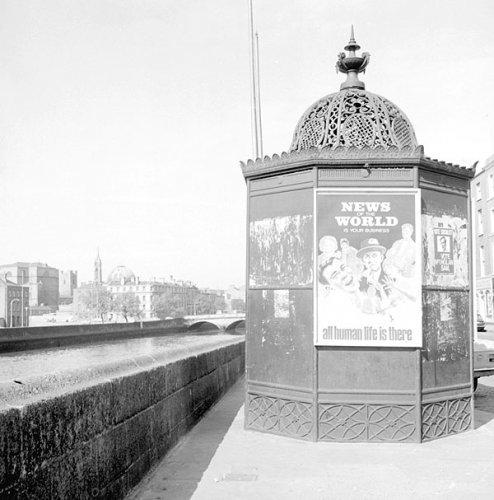
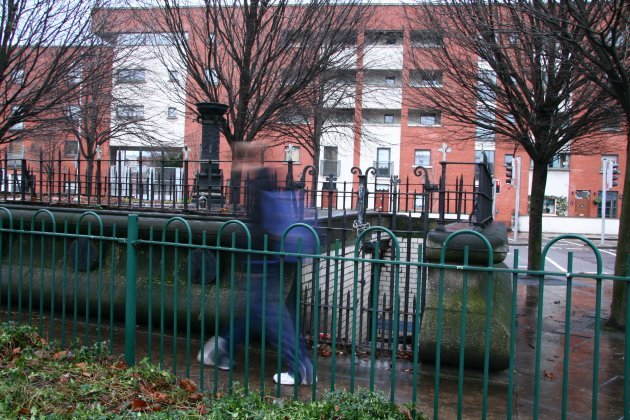
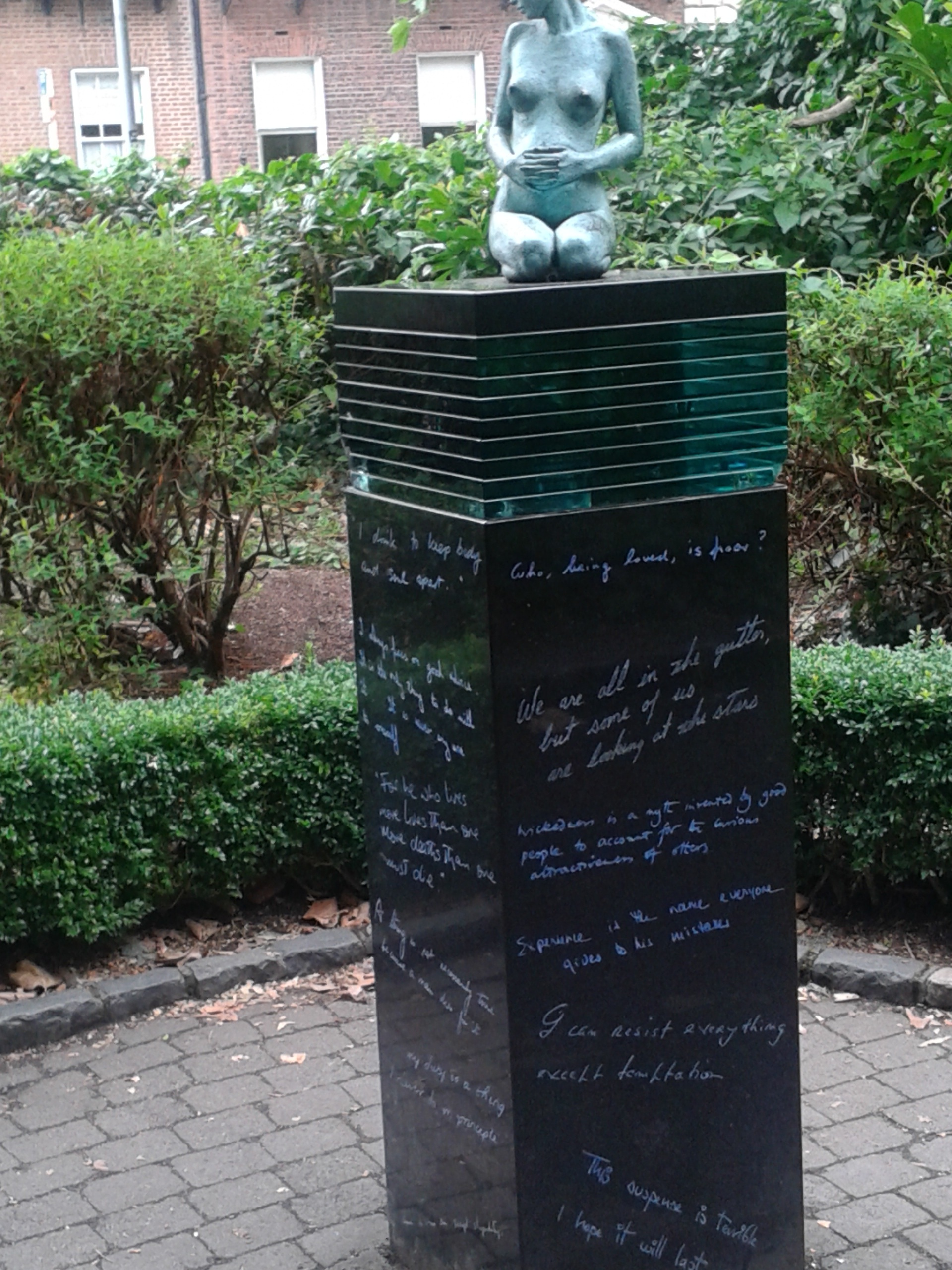
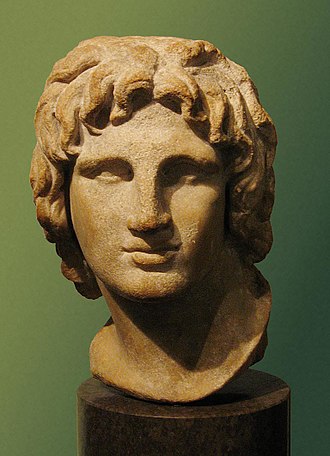

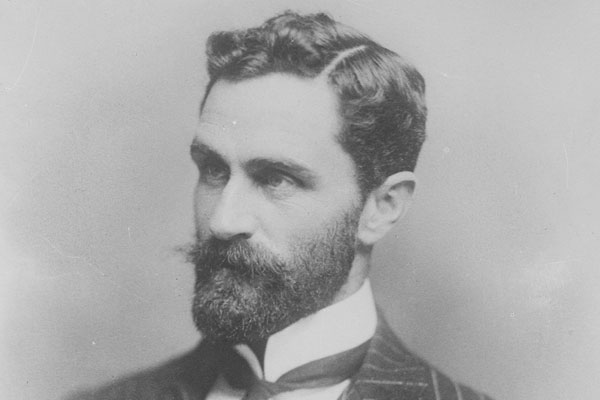

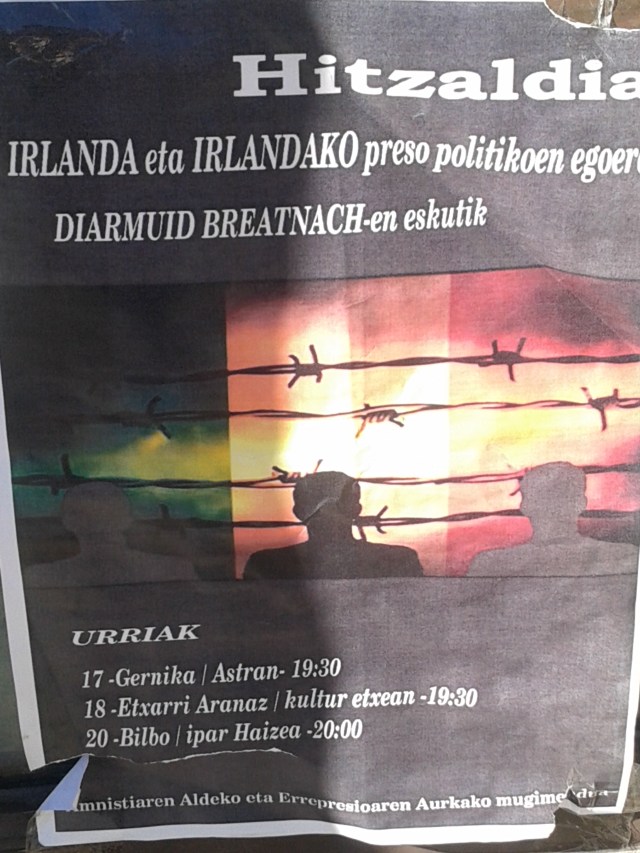
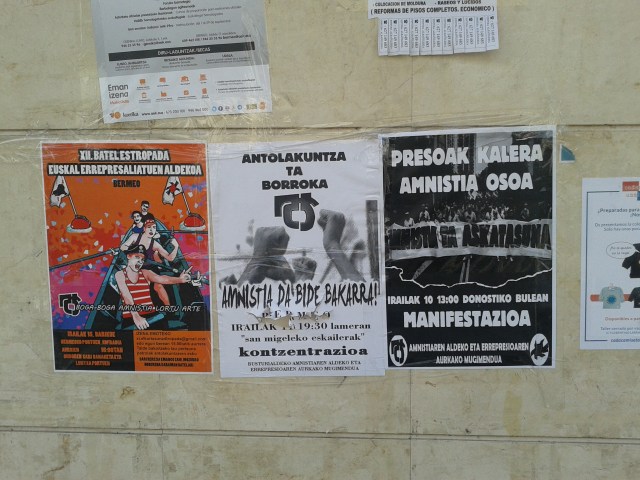


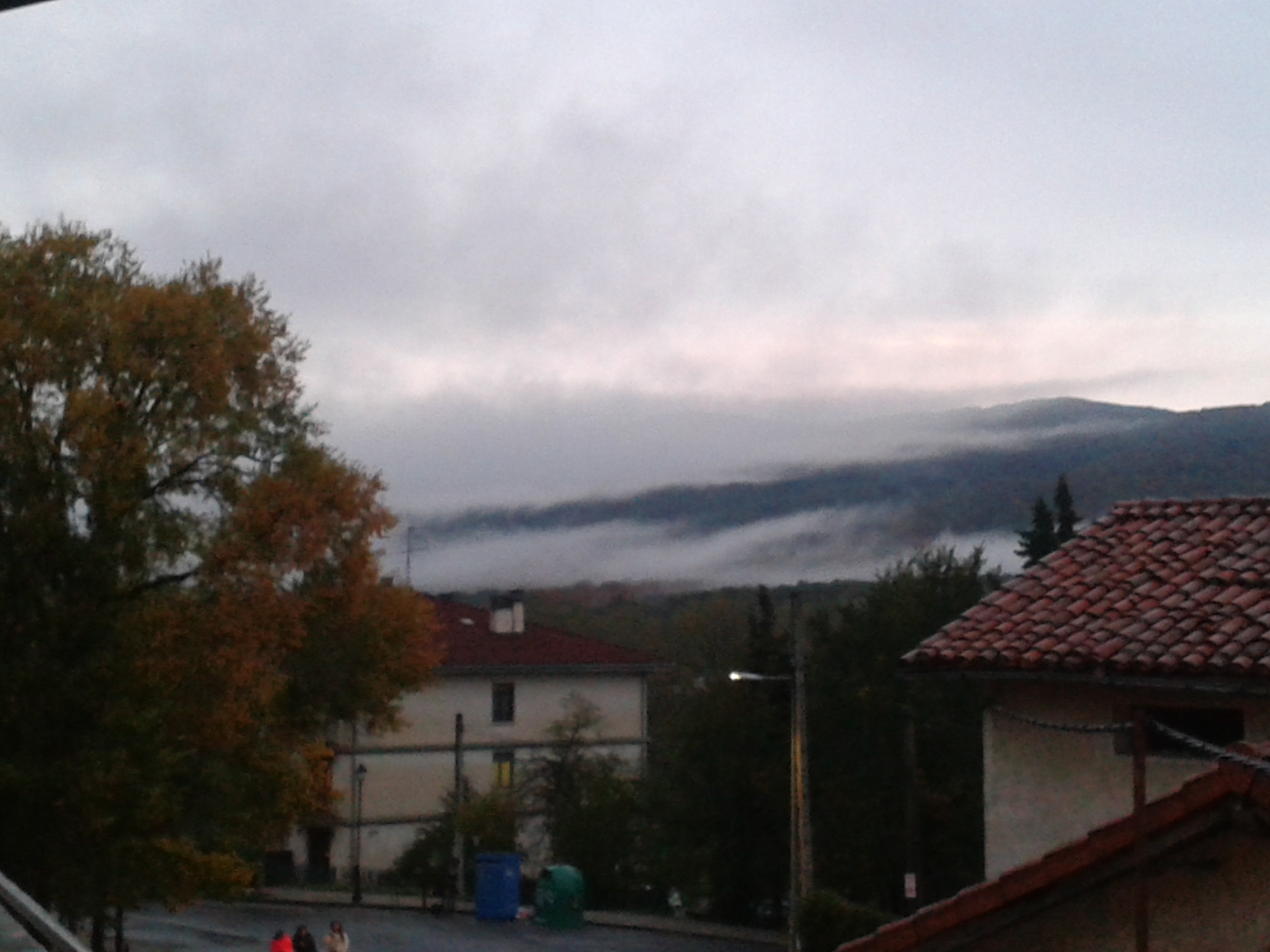


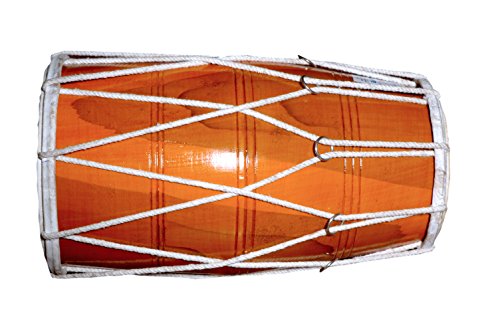
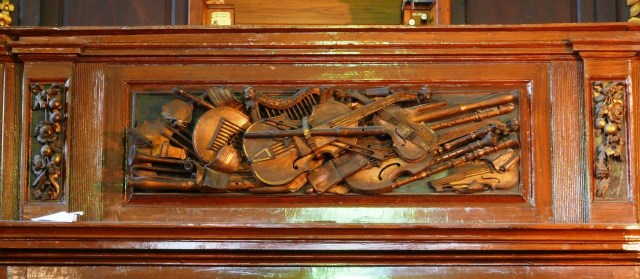
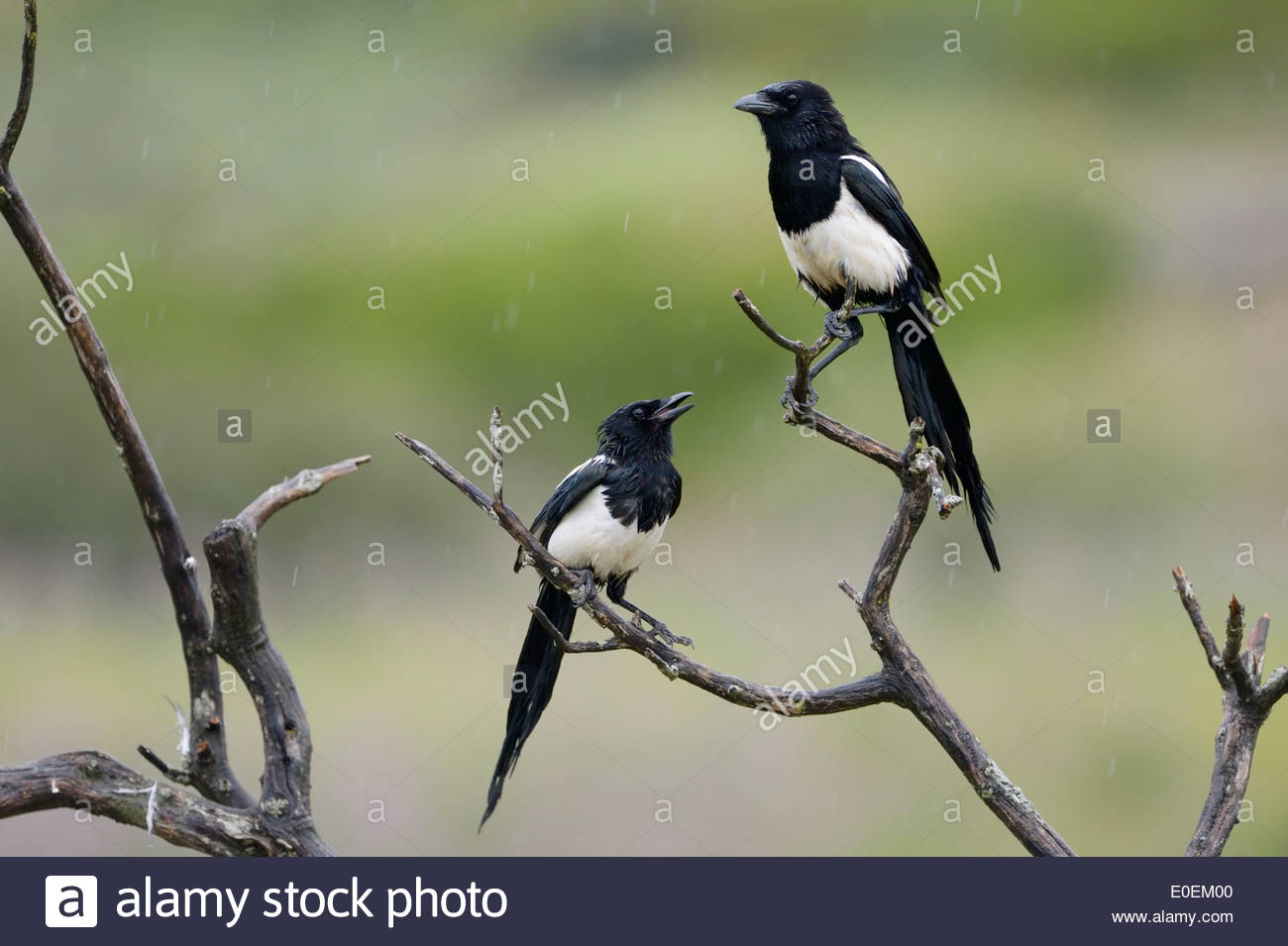


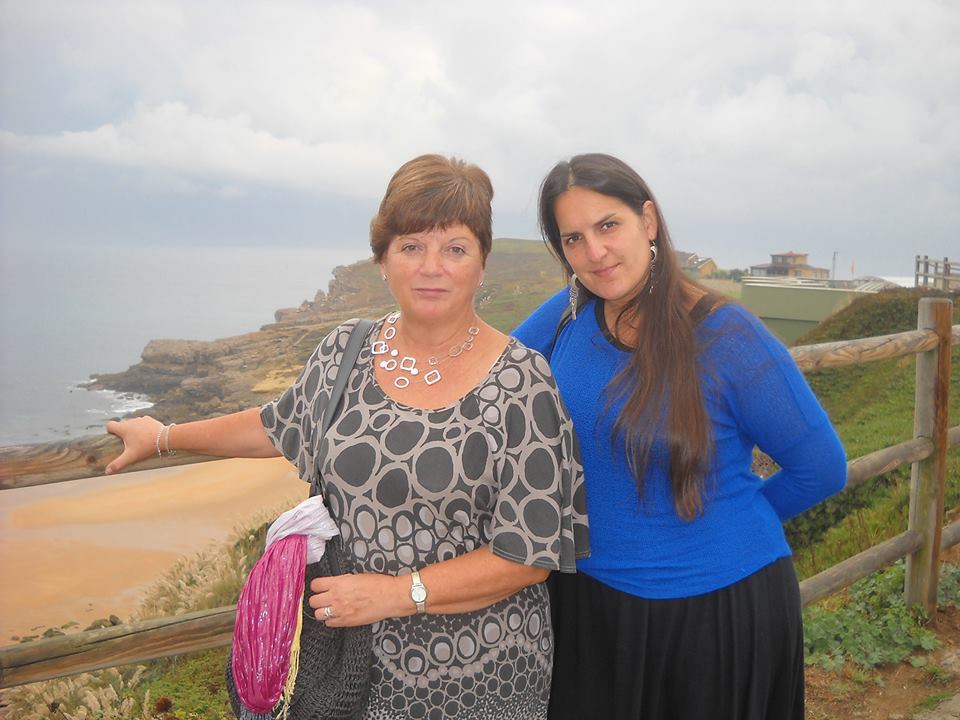
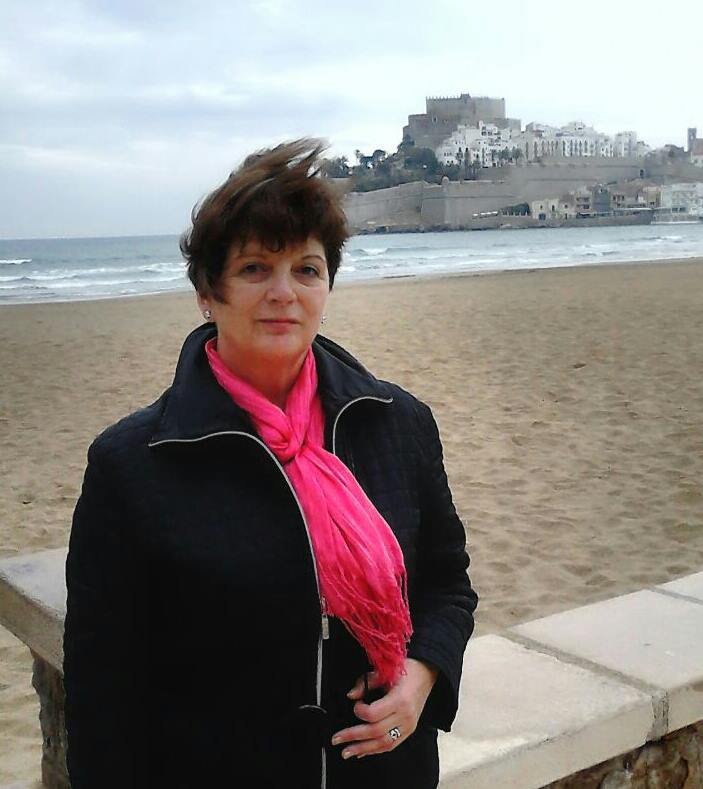
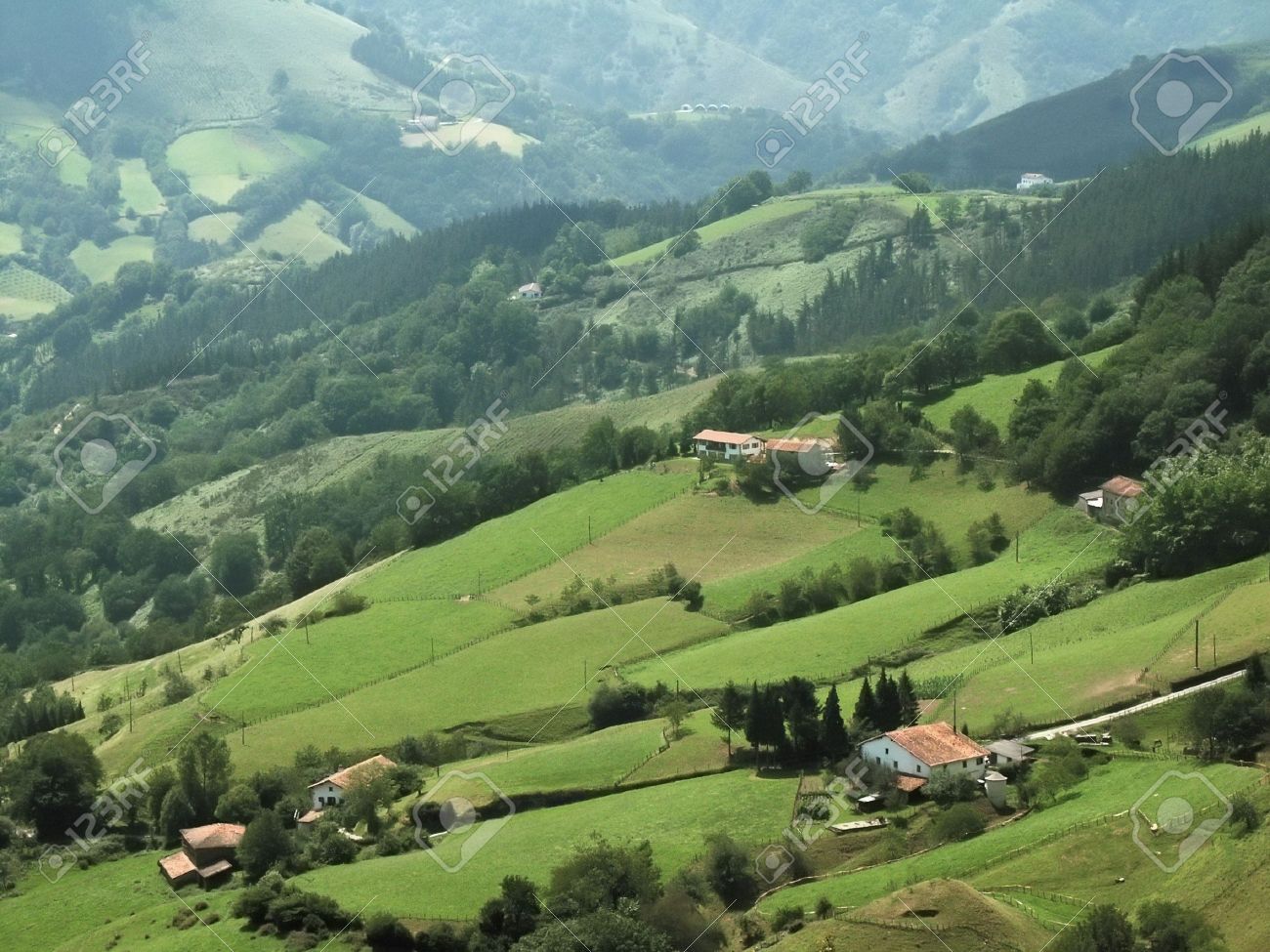
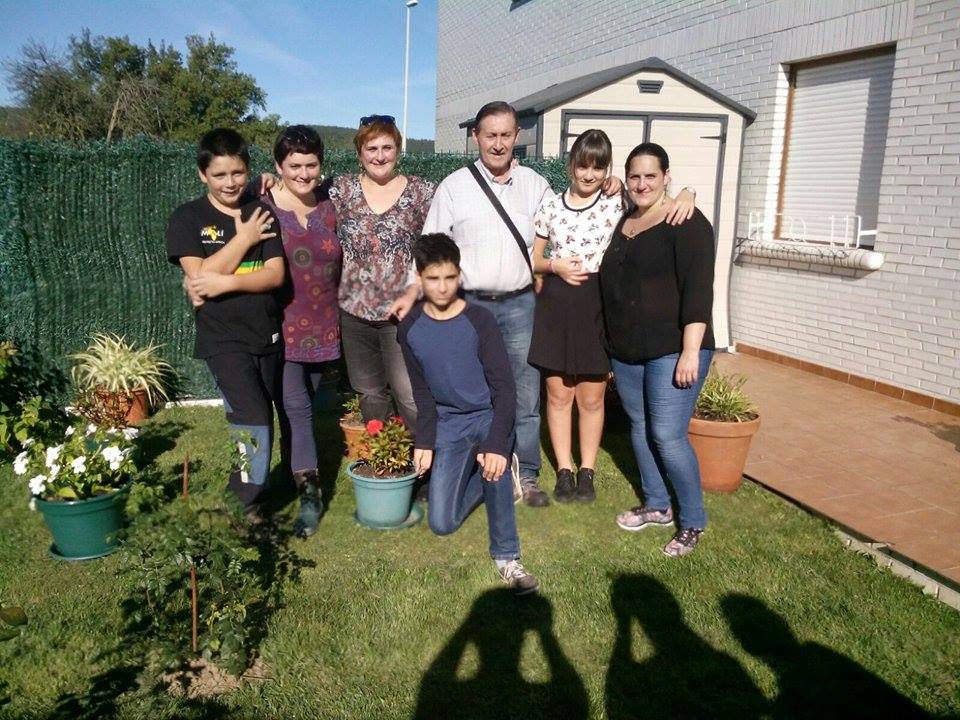

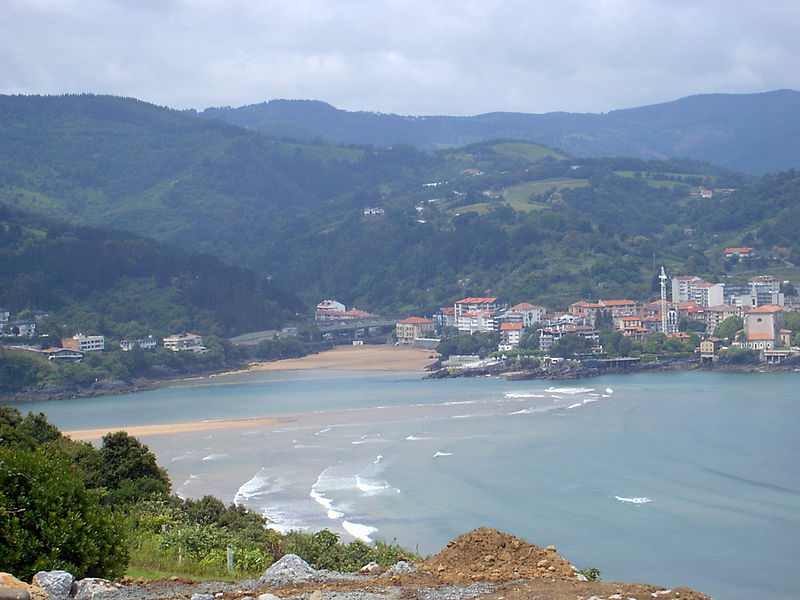

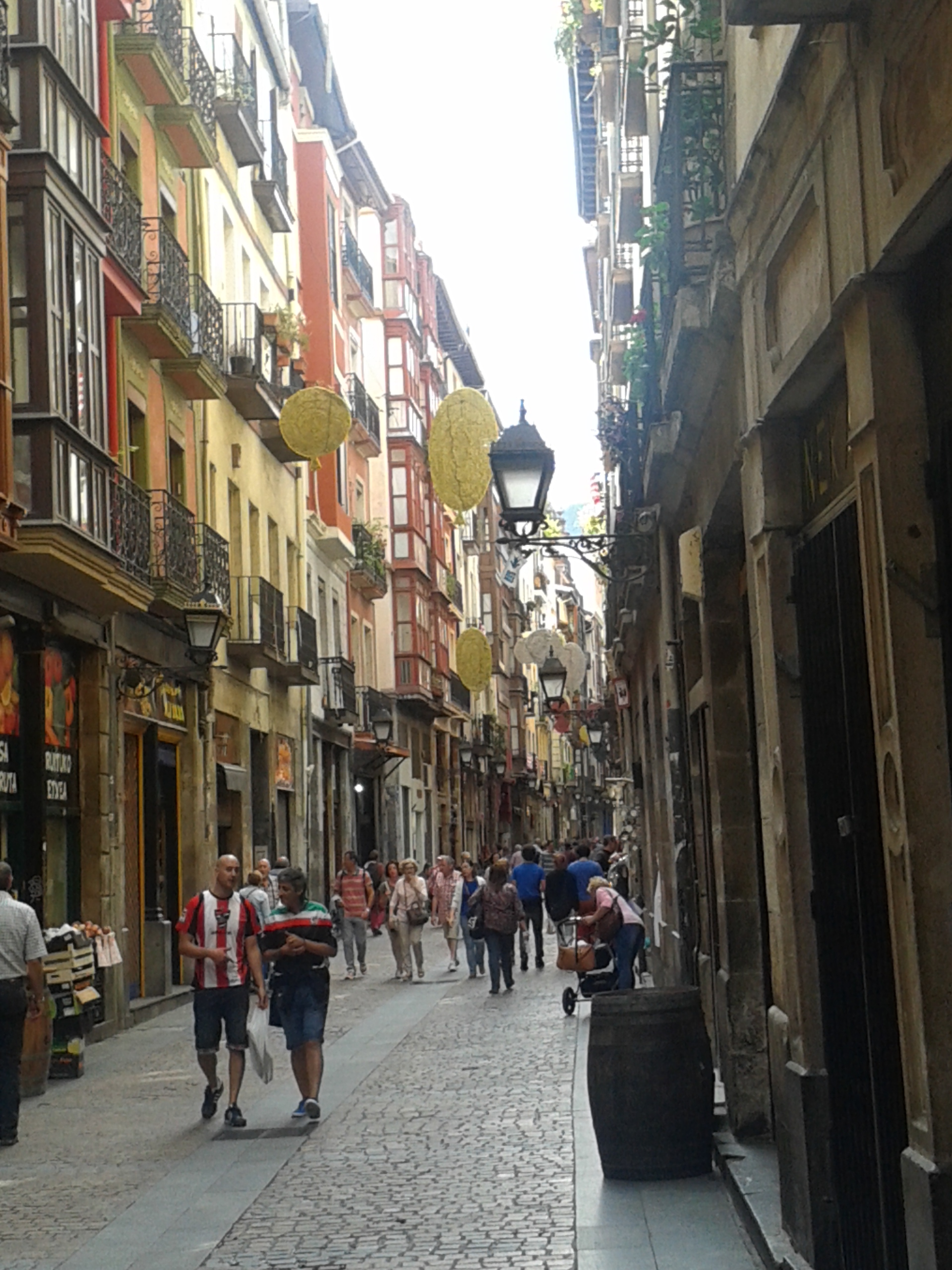
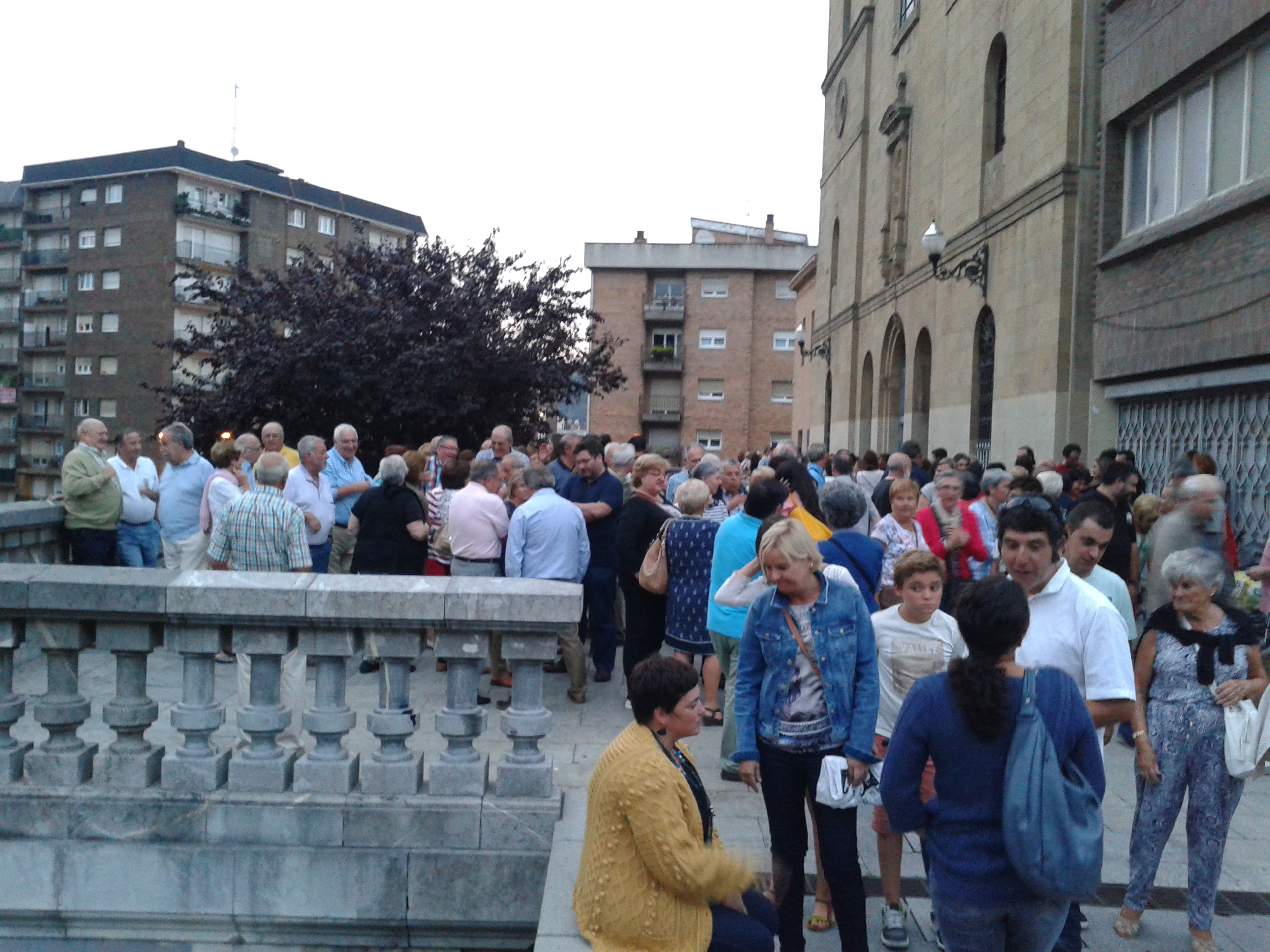
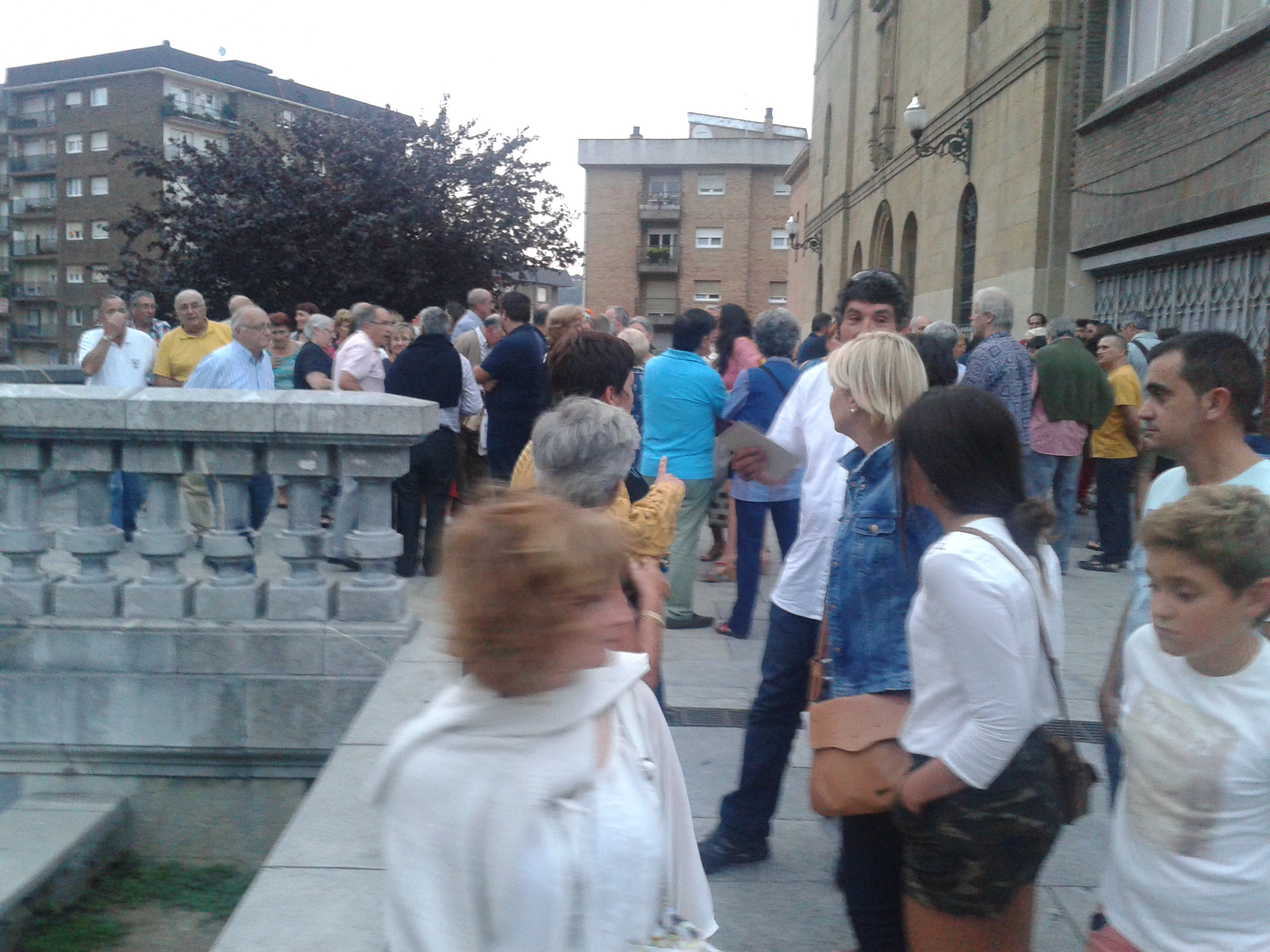
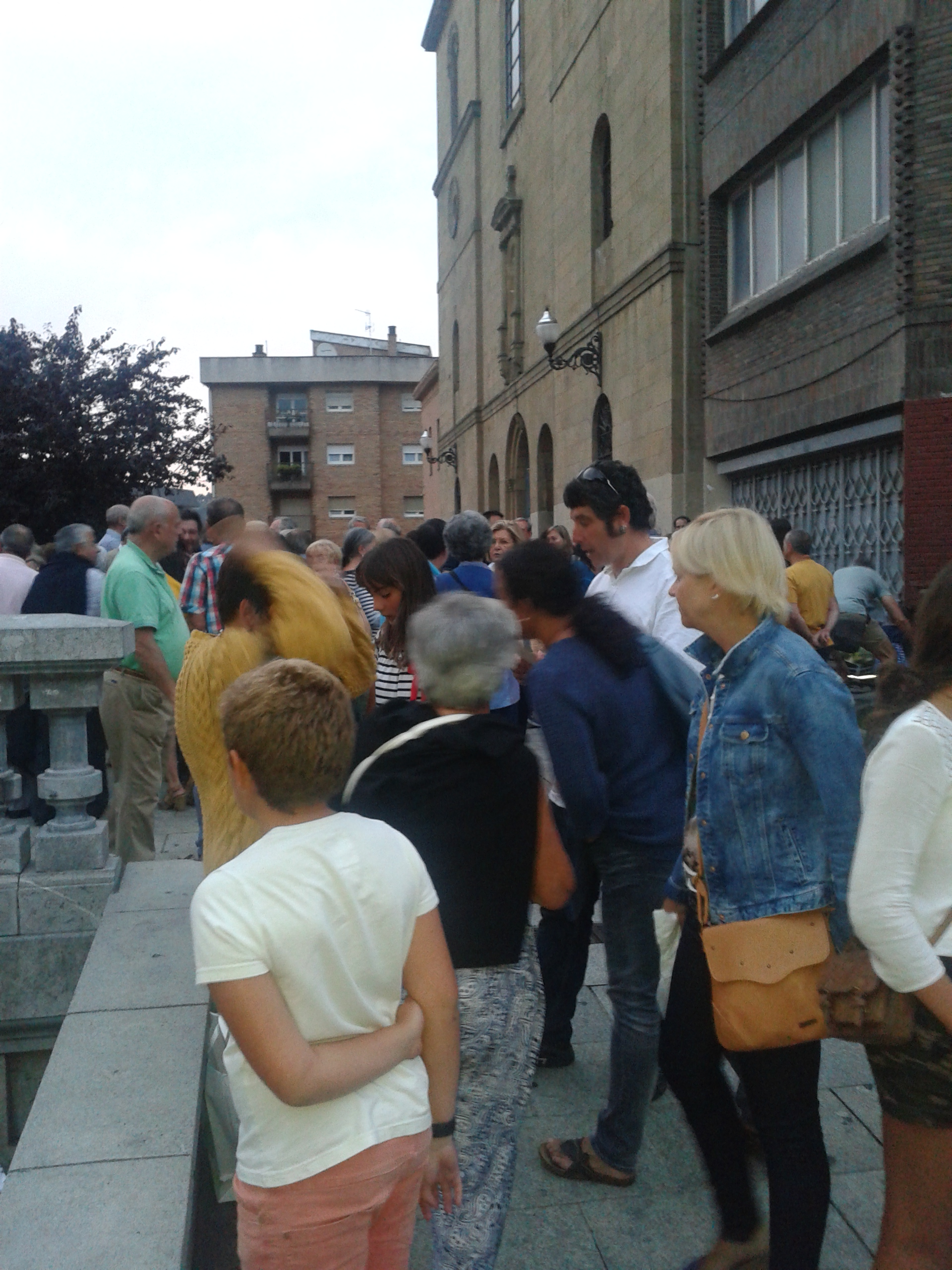
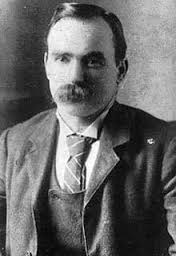
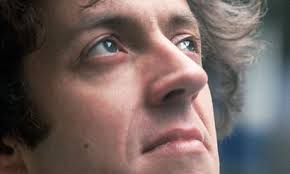
 rebelbreeze