On the platform at Mundaka there are only a few to catch the 9.18 a.m. train to Bilbao. Mundaka is a popular coastal resort town in Bizkaia province, southern Basque Country. “Egun on” (“good day”), I greet those on the platform in Euskara in passing, the Basque language, and they reply the same.
Train on the Atxuri (Bilbao)-Bermeo line. Note the warning sign to bottom left of image, in Euskera first and Castillian second. (Photo sourced on Internet).
A young couple with two little boys come on to the only platform (for both directions) and I think I hear the woman speaking to the boys in Euskara. But soon, I make out some Castillian (Spanish) words; however it is not unusual to hear some Castillian words and even phrases scattered through Euskara conversation, in the southern Basque Country, at any rate. But no, I can tell now that the conversation between mother and child is definitely all in Castillian – I must have been mistaken earlier, when I thought they were speaking in Euskara.
A view from a Mundaka building a number of stories up. The port is out of sight to the left, the station behind. (Photo: D.Breatnach)“Casa de Los Ingleses”, a beautiful if rather gothic-looking old house, residence of an English family with business interests locally many years ago. I passed it on the short walk from the town to the station. Behind it there were plots being worked for vegetables, all due to disappear beneath a new car park construction. (Photo: D.Breatnach)The residence of the servants of the Casa de Los Ingleses, a lovely building in its own right. Its demolition is planned to make way for a new construction (see design in next photo) — my guide encouraged me to write a letter of protest to the municipality. (Photo: D.Breatnach)The construction planned to replace the “servants’ house” after the latter has been demolished. (Photo: D.Breatnach)
“Miao, miao” says the smallest boy, pointing at some feral cats dozing near the platform. “Bai, katua” replies the mother and a flood of Euskara follows, both boys and mother and occasionally father too conversing in Euskara. And so they continue until the southbound train arrives and everyone gets on, except one man, presumably waiting for a northbound train to Bermeo.
On our journey southwards, soon passing alongside salt marshlands, I note that the names of the stations are in Euskara only: Itsasbegi-Busturia, Axpe-Busturia (in the broad estuary of the Urdebai river), San Kristobal Busturia, Forua, Instituto Gernika, Gernika….
The Wikitravel entry for Gernika translates it to the Castillian “Guernica” and opens with this: “Basque town which was the site of the first airborne bombing attack on a civilian town during the Spanish civil war. The bombing, by the Condor Legion of Germany’s Luftwaffe in 1937, inspired Picasso to paint the landmark cubist work Guernica, now on display at the Centro de Arte Reina Sofia in Madrid.”
Well, yes, but one might add for clarity that it was done as part of Franco’s fascist offensive and that the fascist press later blamed it on Asturian Anarchist “fire-bombers”. And one might update it by commenting that the Basques have asked for Picasso’s painting to be located in Gernika itself, a request which the Spanish state authorities, the political descendants of the fascist victors of that war, have refused.
Train tracks from Axpe Busturia, the estuary to the left and salt marshes on both sides. (Source: Internet).
Onwards again, the next stop is Lurgorri-Gernika. At the next after that, Zugast station, a middle-aged man gets on with Berria, the all-Euskara newspaper, under his arm. This periodical, being in many ways the replacement of another newspaper, Egunkaria, has a noteworthy connection with history.
Founded in 1990, Egunkaria was the first all-Euskera daily newspaper in the world; it had a left-nationalist editorial line and a journalistic outlook, which led it to report ETA statements alongside those from Spanish unionist political parties and from the State. The Basque language was no longer illegal or banned since the transición, post-General Franco, when the fascist Spanish oligarchy brought the leaderships of the social democratic party and the Communist Party on board, along with their respective trade union leaders — and called it “Democracy”.
But on 20th February 2003, the Spanish State’s militarised police, the Guardia Civil, raided the newspaper’s premises, seized records, machines and closed down the periodical. They also raided the homes or arrested at the building a total of ten people associated with the newspaper, at least four of which were tortured subsequently. For one of those, the manager, a gay man, the torture included sexual violation.
Massive protest demonstrations ensued from an outraged Basque population. The arrested were released on bail.
On 15 April 2010, seven years later, the defendants were finally acquitted on all charges relating to ‘terrorist’ connections and the judges added that there had been no justification for the closure of the newspaper in the first place.
By then, Egunkaria was beyond recovery and anyway Berria had stepped in to occupy the niche (apparently with the blessing of the Egunkaria team). The case against the State for compensation for the loss of the newspaper and also for torture remains open, sixteen years later. The Court of Human Rights at Strasbourg found the Spanish State guilty of not investigating the manager’s complaint of being tortured and ordered compensation paid. It did not, however, as it usually does not, find the State guilty of the torture itself. Of course, torture is difficult to prove, particularly when the State in question keeps political detainees for five days incommunicado, without access even to independent medical practitioners, while its police go about getting their “confessions”
On the train journey now, the next stop has the delightful-sounding name of Muxika. This causes some amusement to a teenage boy in a nearby seat, accompanied by an older woman – they have been talking in Castillian only since they got on. I wonder are they aware that in June 2013 José Mujica, President of Uruguay until last year, visited the townland that gave rise to his surname. Mujica was presented with a key to the town by the Mayor, who is of the Abertzale Left party Bildu.
The train pulls out of Muxika, then on to Zugastieta-Muxika station as we continue running southward through thick woodlands, occasional industrial parks and small allotments where an occasional middle-aged man tends to his large tomatoes, the small elongated sweet peppers of the region, courgettes, climbing beans …..
Onwards to Morebieta Geralekua before the line takes a sharp twist north-eastwards to more woodlands, rivers, streams and mountains at Lemoa, Bedia, Usansolo, Zuhatsu Galdakoa. Now the built-up areas of Ariz Basauri followed by the contrast of the picturesque Etxebarri before a southward curve to Bolueta and then eastward, to run along the Nervion river to Atxuri station in Bilbo (Bilbao), journey’s end.
All of the stations along this route were named in the Basque language – not one had a Castillian version showing (although there will be plenty of that in streets and squares in Bilbao). The public announcements on this train, as on their counterparts in the Irish 26 Counties, are bilingual but with this difference – on the Basque train, they are always in Euskara first, Castillian second. Likewise with the signage. One is never under any doubt about which language is being given primacy there, nor indeed here, where the English version comes first and, when in text, is in a more dominant type or more contrasting colour.
The Irish language is being derailed even as, to mix metaphors, it is being given lip service. Further down the tracks, unless some urgent repair work is undertaken, lies the final stop – the cemetery of our national language.
Of what use is history? It’s a question we may ask and, I would contend, should ask ourselves.
A lot of people would suppose that is of no real use at all – just part of one’s “education”, by which they mean gaining test certificates with favourable results, a number of which, at a high enough percentage of marks scored, will help gain access to desired employment. A probably smaller number would believe it is of some use, probably in giving them a sense of pride of belonging to a group. From my observation, it would seem that this sector, in Ireland at least, is mostly composed of working and lower middle class people. Some of these will go to third level education and study history – but very few.
Since History is a core subject on primary and secondary schools’ curricula in most countries around the World, and since at third level education entire departments of universities cater for the subject, one assumes that it must be widely considered to be of some use — by educational authorities at least. But those university departments receive funding so there must be people in political parties and perhaps industry who also think history is of value.
Many extensive libraries could be filled easily with published books of and about history, without taking into account related subjects of social studies and archaeology (for examples), not to mention historical novels, poetry and songs dealing with history, biographies, paintings, drama …. Clearly enough people think history sufficiently important to write it or to integrate it into their writing and enough companies can make a business out of publishing those products.
However, though many might agree that history is of use, the precise nature of that ‘use’ is a matter of some debate. It is linked to the question of what history is — and there’s an ongoing debate about that too. So it would be worthwhile to look at that issue first, if only to ensure that we agree on what we’re talking about.
WHAT IS HISTORY?
Los Angeles Police Sergeant Joe Friday, in the Dragnet television series of the 1950s, often asked witnesses to a crime to give him “Just the facts, ma’am, just the facts”. Which is actually what most people probably think of as being history – the facts or “what happened”. They might add “when”, “how” and even “why” to the definition “what happened”. But “what happened” is not, of itself, history. And when “what happened” IS history, there’s a lot more to it than just the bare facts.
Joe Friday from the “Dragnet” TV series: “Just the facts, ma’am.” (Image from Internet)
Let’s imagine that John was knocked down in the road by a vehicle. We might say that those are facts, if there is sufficient evidence for them and, in a “history” of the event, they should be recorded. But more happened. John was taken to hospital, where he was diagnosed as being in a coma; he was operated on and put on life support regime. Those too are facts that should be recorded in the “history”.
But there are a myriad of other facts involved; for example: where John was going and why, what he was thinking, what his general health was like, what he was wearing, what he had for lunch – and that’s just about John. We could ask lots of questions also about the vehicle driver, staff at the hospital, relatives and friends visiting the hospital. And about the vehicle, the weather, the road ….. In fact, we could smother the story in an avalanche of facts. We have to select the facts that seem to us relevant and confine ourselves to those, if we want to write a meaningful (and readable) history of the event.
And how do we know which are the relevant facts? We don’t, at least not all of them – the selection of them is based on subjective opinion which may or may not be “informed” by experience. But also by ignorance, superstition, prejudice, bias – and even experience is not infallible, since it too is conditioned by place and time, among other variables.
Ask two people what, in their experience, are the dangers to watch out for in crossing rivers: the person accustomed only to African conditions might say that the main dangers are drowning, being killed by hippopotomus or being eaten by crocodiles, while another, accustomed only to European conditions, might say that drowning or slipping and incurring an injury in falling are the only possible dangers and perhaps, in winter, contracting pneumonia after hyothermia. Yet others around the world might reply “Being cheated by the ferryman” or “Bandits on the other side” and still a fifth might consider contracting illness from polluted water to be the most prevalent risk of all.
Obviously, the same question can receive different but equally valid answers in different contexts.
BIAS AND SUBJECTIVITY IN HISTORY-WRITING
EH Carr directly addressed the question we are discussing in a series of lectures which were published by Cambridge University Press in 1961 under the very title: “What Is History?” I would highly recommend this book as an introduction to the study of history to the ordinary reader who, if she or he were to read nothing else about the subject would, despite its publication date and the volumes written on the subject since, gain a good basis for understanding what history is and what it is about. And it is short.
In an extract from The Uses of Facts, historian G. Kitson Clark comments on EH Carr’s work: “Invited to deliver the 1961 George Macaulay Trevelyan lectures, he chose as his theme the question ‘What is History?’ and sought to undermine the idea, then very much current, that historians enjoy a sort of objectivity and authority over the history they study.
“At one point he pictured the past as a long procession of people and events, twisting and turning so that different ages might look at each other with greater or lesser clarity. He warned, however, against the idea that the historian was in any sort of commanding position, like a general taking the salute; instead the historian is in the procession with everyone else, commenting on events as they appear from there, with no detachment from them nor, of course, any idea of what events might lie in the future.”
The historian is an observer but she is not impartial. She has her national or ethnic cultural background conditioning her, her class background, her gender, her sexuality and her political-religious-philosophical outlook. She can try for detachment but can never truly achieve it and, if as became the fashion for a while, she claims detachment or lack of bias, her history becomes accordingly suspect. Those historians who truly believe in their objectivity are the most dangerous of all. The historian herself is in the march of history, another actor – and people in her generation will be influenced by her writing to some degree, as may others in generations to come … and future historians will have something to say about her history writing.
The bias of the historian affects not only his interpretation of what he sees but also wherehe looks and what he looks for. Investigating a historical battle, for example, our past traditional historians would look to see who were the generals, who the overall commanders, what regiments participated, what weaponry and tactics were deployed and, of course the political-military objectives.
The political social historian will look for the economic causes underlying the conflict and the objectives of each side, the class and ethnic make-up of the leading participants but also of the participating masses, their culture and even their food. And at the attitudes to the conflict and the battle in the home grounds of the participants. Emperors may command (thinks this historian) and generals order battle … but which economic class rules and benefits or loses? Who does the actual fighting? What do they think? How fare the people at home and those where the military campaigns are being fought?
These are not small matters, even in affecting the outcome – we know the effect of morale on soldiers. The Russian Tsar’s participation in the First World War was one of the precipitating causes of the February Revolution in Russia in 1917 – it exacerbated civilian class tensions and economic complaints, as well as impeding delivery of food from the countryside to the cities as the use of trains was diverted instead to transporting troops. Lack of supplies and effective leadership, as well as defeats, affected the morale of soldiers; the failure of Kerensky’s Government to abandon that War was even more a cause of the October Socialist Revolution later that year. Soldiers and sailors took a decisive role in supporting both revolutions.
A year earlier, the morale of the insurgents in the 1916 Rising in Dublin was such that they were able to put up amazing resistance to attacking forces at least ten times their numbers, armed with artillery and machine guns, of which the insurgents had none. Later, during the War of Independence, in May 1921, General Sir Nevil Macready, in command of all British land military in Ireland, reported to the British Cabinet on the adverse impact of the resistance of the Irish people, both military and otherwise, on the morale of the British soldiers and police under his command.
Morale was also a big factor in the long attritional but successful defence of Leningrad, Stalingrad and of Moscow against Nazi forces in WWII, grimly positive on the defenders’ side and slowly seeping into negativity among the invaders.
Jumping forward in history, there was eventually huge civilian opposition to the Vietnam War in the USA as well as vehement support for it, which was splitting its society more seriously than probably at any time since the American Civil War. From 1969 to 1972 there were nearly 900 incidents recorded in which US troops in Vietnam attempted to or succeeded in killing or injuring their superior officers, typically by fragmentation grenade – they had become so common that the act gained a nickname: ‘fragging’. History records, ‘Rambo’ fantasies aside, that the USA lost that war.
THE CONSTRUCTION BASE OF THE NARRATIVE
There is no great mystery about the construction base of the story, the narrative of history. It is composed of primary sources, artifacts, secondary sources and bibliography.
Primary Sources are accounts by observers or participants, related or written (or otherwise recorded) during, shortly or a long time after the event. Those must be the most reliable, surely? Well, not necessarily. A soldier might want to justify why he ran from battle or a general to justify why he ordered a retreat or why he was defeated. A participant might want to denigrate one side, question their valour, discipline, intelligence or to depict their behaviour as bloodthirsty – while of course painting his own side’s behaviour in different colours.
We also know that witness accounts of the same event vary and that time and reflection and discussion or external manipulation can remove or add to some elements observed, in addition to ‘remembering’ ones that were not actually observed (imagined memory)1. Let’s imagine that John was knocked down in the road by a vehicle. What colour was the vehicle? Answers from witnesses immediately after the event may vary from green to blue to a number of other colours and shades. At what speed was it travelling? Some might say 40mpm, others 50 or 60. What was John’s behaviour immediately before? He wasn’t paying attention/ he was crossing with due care but the car was too fast/ maybe he could have avoided it had he been a bit more alert …. the brakes didn’t seem to work very well. And so on.
Now suppose John was well-liked and the driver whose vehicle hit him is unknown or a member of any group that might be the subject of mistrust or dislike. After a few weeks, all actual witnesses might be convinced that John had been crossing with due care and attention, the car had been speeding and driving erratically and had hit John without giving him a chance. Furthermore there might now be a widely-held belief, the origin and justification for which may murky, that the driver had been drinking. Or that he had been involved in previous accidents. Or a theory may even have arisen that the driver had some reason to kill John – it had been no accident!
On the other hand, can an investigator ignore the accounts of eye-witnesses? Of course not – but they need to be treated with caution.
Secondary sources is the name given to accounts written by people who gather the accounts of participants and contemporary observers and other evidence. What they report finding and their conclusions form the secondary sources – somewhat like the report of the investigator of a traffic accident. So surely the removed investigator, who writes a report, can be considered more reliable?
Well, perhaps the investigator didn’t like John or was bribed by a member of the driver’s family. Or she could be suspicious of or even hostile to the ethnic group to which the driver belongs. Perhaps the investigator drove the same make of car and thought the brakes were fine, or perhaps she was on a retainer from the car manufacturers. Or most of the witnesses were female and she felt they were trying for attention and tended to discount their evidence. Or she discounted the evidence of the witnesses from a particular social class because they used unscientific words and interjected swear words and on the whole she didn’t think their education was sufficient for her to rely on their accounts. Or she was aware that John was well liked and had a lot of powerful friends and that reporting that he crossed the road without due care and attention would do her career no favours.
No investigator is completely impartial and nor is the historian, as we discussed earlier.
Artifacts are a variety of inanimate objects such a trenches, weapons and fragments of tools and utensils, medals, uniforms and clothes, jewelry, tunnels, buildings, roads, vehicles, skeletons, grave stones, letters, graffiti, drawings, rubbish tips. All inanimate and, apart from some like drawings and gravestones, must surely bear impartial witness?
Impartial perhaps but they actually bear no witness at all – they must be evaluated, described and interpreted and it is the historian or archaelogist who does that. The investigator at the scene of the accident must measure the tyre skid marks, check the brakes, identify the model, check MOT examinations, collect the reports of the paramedics and pathologist. And remember, the investigator is never completely impartial and even less so is the historian.
Bibliography (or literature) is what other historians or investigators have written about the period or events, or biographies, or additional reading throwing some light on periods, people, lands, societies or some aspect covered in the history. Sometimes they contain accounts purporting to be primary sources which cannot be checked as they are anonymous or of which the source is not clear. It is not indeed unknown for some accounts to be deliberately falsified. But even without going to those extremes, we have already commented on the many sources of bias operating upon the historian.
The political social historian, the one who is consciously and admittedly investigating from apolitical and social standpoint will want to know what were the economic, social and cultural backgrounds of the combatants – and not just of both supreme commanders and their generals. She will want to investigate their conditions at home and at the war front, how well they were dressed for the conditions and fed. What was their opinion of the war, of their officers, of the enemy?
Letters home and from home, testimonies and biographies, records of oral history, courts martial, food commissary, equipment inventories, reports of public meetings at home, church sermons, political speeches, demonstrations for and against war – all these will be examined to build the story. Some of these are classified as Primary Sourcess, while others are Artifacts.
Of course the historian is unlikely to examine the original sources of all these and will be relying in many cases on special-focus work done by other historians, in published articles or books. Although their original authors draw on primary sources, unless the historian now goes to these directly herself but instead quotes from the literature, they become secondary sources, in the way that they are being used.
And here we have another factor – it is difficult to examine what cannot be found. If there were no letters or personal accounts surviving, as for example from the Peloponnesian Wars, we are reliant on the accounts of historians, while taking their probable bias into account – these contain Secondary Sources and are contained in theBibliography, i.e the books and articles written about the period or events.
In those cases we are reliant too on archaeological finds – back to artifacts again. To take another Greek example, the truth or otherwise of most of the events recounted in Homer’s Iliad are a matter of speculation and the factual existence of the city of Troy was established only by comparatively recent archaeology – later in the 19th Century (most historians by that time had come to believe it all a fable). More recent archaeology and geographical work has come to the conclusion that a battle or battles did occur and that the probable site of the Greek invaders’ camp corresponds with the account given by Homer.1
To continue with the role of archaeology, the investigation of the wiping out of five companies of the US 7th Cavalry in 1866, went some way to undermining the myth of Custer’s “charge” against hostile Native American indigenous people and a long “last stand”, of a static battle against the surrounding Lakota Sioux, Northern Cheyenne and Arapahoe who gradually wiped out his 7th Cavalry and himself. Many elements of this story were disputed by witness accounts of Indigenous people and by their folk history or “historical memory”. According to Indigenous accounts, the battle was a short running one, as Custer’s troop had tried to attack a camp, believing it to be mostly occupied by women, children and the elderly. He didn’t know it was full of braves sleeping late. As the warriors poured out of their tents, according to those accounts, Custer and his men turned to flee, firing as they ran but were soon killed “in the time it takes a hungry man to eat a meal”. Much later, archaeological work with metal detectors found a pattern of shell cases that tended to bear out the Indigenous account.
In 1955-’56, Thor Heyerdahl’s expedition team to Easter Island were told a legend in which the people on the island had been ruled by a group called “long ears”, who were represented in the giant carved stone heads, against which the “short ears” had rebelled. Across one end of the island, to which the “long ears” retreated, the story went, they had dug a trench which they filled with flammable material, ready to fire if they were attacked. During an actual attack, the “long ears” fired the material in the trench but the “short ears” had found a way around and attacked them from behind, forcing them into the flames. There was indeed a depression in the ground across that part of the island but the story could have been created to explain the depression rather than the origin being the reverse. Excavating in the trench, Heyerdahl’s group found charcoal and human bones and teeth.2
What there is left to examine is of course a great help to the historian but it can also be a curse. We know how useful the Internet can be but also how much trivia and even incorrect information is stored there. Sifting through and making sense of it now is difficult enough but what will historians centuries from now make of it? In some historical periods, large number of household accounts were kept and these were preserved. Useful information, certainly but since they were available they were examined and written about by historians to a degree that was arguably out of proportion to the historical value of the information extracted.
All those things, the artifacts, the records, the personal stories, the marks left on the land, become history. But only when they are spoken about (oral history) or written about (written history). And in telling or writing about them, the historian is looking at them through his bias and, in doing that, becoming part of history himself.
THE CONSTRUCTION OF THE OVERALL NARRATIVE ITSELF
One might say that history is a story, a story of how we became who we are. In telling that story, it must also come to some kind of belief or statement about who we are now. In fact, the story teller makes an assumption about who we are now, then looks back to history, then according to findings adapts the view of who we are now, then looks back again and adapts the view of who we were and the road we travelled to get where we are now, and so on. And it is a story. In order to be history, it cannot be a totally imagined story unrelated to artifacts or scientific knowledge — but it is still a story.
So history is a story — and it needs to be, to an extent, an interesting story. Who wants to listen to a boring story? But not just for the reason of not boring the audience – the facts need to be significant. If “for the want of a nail a kingdom was lost”, as the old adage tells us, and that can be shown, then the loss of that nail was significant. But that doesn’t mean that every loss of a nail will be historically significant – indeed we might assume that most will not be. So we don’t want to fill every narrative with lost nails but nor would we want to exclude the loss of that particular nail, in that particular time, at that particular battle: the one for which the horseshoe was lost, and for which the horse stumbled, through which the king fell, and his troops lost heart and his kingdom was lost.
But was the nail loss, though significant then, a once-off, a chance in a million? If so, it is still history but not a general event in history, not one that we could apply to other battles. I don’t know, but perhaps examining horses’ shoes for possible loose nails became part of standard cavalry preparation for battle. Perhaps the cautionary tale arises from that practice and the knowledge that badly-disciplined or badly-trained cavalry or mounted infantry had suffered through insufficient attention to their horses’ shoes.
CHANCE IN HISTORY-WRITING
Some historians, especially perhaps from the Marxist school, have sought to eliminate the question of chance as factor in history. EH Carr was famous for his attack on historians who gave chance as an explanation for historical events and this is well expounded in the substantial Wikipedia article on his theory of history. What is not documented there, however, is that Carr conceded that chance had indeed influenced some important historical events and gave the example of the leader of an army who had become very ill at a crucial point during a military campaign. What Carr went on to say from that example was that yes, chance had affected the outcome but that one cannot generalise on chance and that therefore it is not worthy of historical study.
Despite my regard for Carr as a historian and a historiographer, i.e. as one who writes about the study of history itself, I wonder whether he was right on this. Napoleon famously asked about young officers being recommended to him, whether they were lucky. He seems to have ascribed great importance to “luck” and thought good luck accompanied certain people and bad luck others. He seems to have considered himself, on that basis, as lucky – but he did not neglect his study of military history, science or collection of current intelligence. His decisions then might have been influenced by feelings of luck but were not totally dependent on them.
Napoleon Bonaparte — asked “Is he lucky?” when told about a new commander in his army. (Image from Internet)
And luck does seem to exist. Apart from the fact that we all know individuals who seem to be lucky and others who seem the opposite, some individuals are demonstrably more lucky at cards, for example. In scientific tests on drawing high or low cards, even when the human element is removed from the testers, some test subjects do score a higher than average rate of success. I don’t know but would expect that some subjects would also regularly achieve a lower than average score.
So it would seem to me that one can generalise about chance and luck – but only to extent that it is an unpredictable factor about which we need to be aware. Chaos theory in physics hints at this, although patterns are also being found in deeper study of chaos. And there exists a saying which sums up the importance of chance: “The first casualty of any battle is the plan of attack.” This does not come from a famous military strategist but from a writer, Cory Doctorow, in a kind of science fiction novel, For TheWin (2010). This statement is becoming so widespread now that I expect it to become an adage widely quoted not only among civilians but also among military strategists.
WISE SAYINGS FROM LESSONS OF HISTORY
There’s a general warning in our cultures not to underestimate the enemy. And there are many examples in history of generals underestimating the fighting ability or determination of their opponents, or their ability to cross difficult terrain. The Romans under several successive military leaders underestimated Spartacus and his band, for example, until the end of the uprising, thinking that these were a rabble to be easily defeated by Roman soldiers. Those Roman leaders paid for their mistake with their lives and the lives of many of their soldiers.
Statue in Bulgaria celebrating Spartacus, leader of the slave rebellion against Rome 72-71 BCE. (Image from Internet)
The British at Singapore in 1942 had all their major artillery pointing to sea, because the Japanese could not march through the thick jungle on the peninsula mainland– but nobody told the Japanese that, so they did and took 130,000 British, Commonwealth and Empire troops prisoner after little fighting.
The German Nazis at Moscow, Stalingrad and Leningrad in 1941, thought they would take the cities in weeks at most; not only were the struggles there long and hard but they turned out to be locations or sources of disaster for the invaders. The leaders of the French military at Dien Bien Phu in 1954 did not consider that the Viet Minh could haul artillery up mountain sides in order to fire on the French forces below. The USA overall, in the Viet Nam war, a superpower fighting essentially a “Third World” enemy in a territory smaller than the US State of Virginia, expected to win through massive firepower, airpower and technology; history records that they did not.
So we could say that the danger of underestimating one’s enemy has been a constant throughout history with harsh lessons periodically for those who failed to take account of it. Presumably its opposite, overestimation of the enemy’s potential is also possible and no doubt there are historical examples of this too.
But this article is about history and not all of history by any means involves military affairs, although certainly a great deal of it does.
HISTORY IN EDUCATION
When all of Ireland was under British occupation, for a time the Catholic Irish (which is to say the vast majority) were obstructed from receiving education of any kind. But in the 1830s the National School System was set up and it proceeded to teach a history that would make each Irish child “Thank the goodness and the grace …… that made me a happy English child” (short school prayer)3. Patrick Pearse, himself a progressive educationalist though without formal qualification in that field, called this system “The Murder Machine” and wrote an essay about it under that title4. It was important for Britain, as a colonial power, that the Irish should identify themselves ideologically and culturally with their colonial master, in order to reduce the likelihood of movements for self-determination gaining a large following or to reduce the supply of manpower for its imperial armed forces. This was a process imposed not just on Irish people by British colonialism but was the general rule practiced by colonial powers on their subject peoples.
After Ireland gained partial independence in 1921 and the new Irish state had defeated its internal Republican opposition in 1923, it was concerned that the education system foster a kind of Irish nationalism and, apart from the addition of the Irish language to the national education curriculum, this was perhaps reflected nowhere as much as in the teaching of history.
Nations are built from different elements and it is necessary for those involved in nation-building to create a narrative that validates that which upon they are engaged. Therefore a largely shared history is necessary and where there are different elements, these need to be stitched or woven into the whole – or some deleted. The narrative may be largely ‘true’ or largely ‘not’ but all nations and all states embark upon creating such a narrative.
The national historical narrative for Ireland was basically that the Irish were Celts, Irish-speakers, sharing a common culture and ruled by the Brehon Laws, until we were first part-occupied by the Vikings and then by the Normans. The Normans in Ireland became largely Gaelicised while their brethren in England became English and then, largely because of the English King declaring himself Head of the Church instead of the Pope, most of the Irish-Normans allied with the indigenous Irish and fought at a number of junctures during the 17th Century but were defeated and the old Gaelic order destroyed. Subsequently the Irish (now including descendants of invaders and settlers) rallied and rose up again but this time for an independent Irish Republic, which subsequently they kept doing or trying to do until the 1916 Rising and the War of Independence, when they finally succeeded in part-defeating the English and won Independence for part of their country. Such was the narrative.
Since the new state was a Catholic confessional one, in which the Church was in close alliance with the temporal power (and in control of most first and second-level education), it was important that the historical narrative reflect that too and so the representation of “the island of Saints and Scholars” was prominent and the Brehon Laws, which were essentially a product of a pre-Christian, i.e. pagan society and later of “Celtic Christianity”, were not represented in standard primary or in secondary education. Furthermore, as the almost exclusively Anglican and Presbyterian leadership of the United Irishmen in 1798 could not be swept under the carpet, nor the overwhelming Presbyterian membership of the Antrim rising, it became necessary to promote the Wexford and Mayo uprisings (although it also true these lasted longer than the others) and to promote the role of Catholic priests in the Wexford Rising. It should be noted that this is not a matter of falsification but a process of emphasising the desired and glossing over the undesired aspects.
It was less logical during the 20th Century that the oppositional national movement to the colonial State, the Irish Republican movement, should also seek to represent itself as Catholic in so many ways, from public praying with rosary for their fighters condemned to die, for example, to incorporating religious services and personnel into Republican political ceremonies. This accommodation might seem particularly bizarre in view of the abiding public hostility of the Catholic Church’s hierarchy and much of the priesthood to the Republican Movement from the time of the United Irishmen up to the present.
Not only national states create a historical narrative but also national movements, both before gaining independence and after. In this narrative imagining an essentially Catholic nationalist movement, Jim Larkin, James Connolly and the Irish Citizen Army were represented as nationalists – somewhat different to the Irish Volunteers, perhaps, but nationalists nevertheless. It would not do for them to have been represented as socialists with a very different programme to that of the IRB and the Volunteers, however united they were in their desire to free Ireland from British colonialism.
“James Connolly, the Irish Rebel” was the title of this LP by Eugene McEldowney, which also featured the song by the same title — curiously enough, because McEldowney was not a nationalist and espoused a socialist republicanism. (Image from Internet)
As stated, not only the State created this narrative but also the Irish Republican movement, the leaders and members of which would see no contradiction in listing Connolly among the martyrs of 1916 and as one whose principles they were following while at the same time the IRA formally banned communists from membershipin the 1930s5 A song about the execution of Connolly sums it up in the title and refrain: “James Connolly, the Irish Rebel”: “He went to his death as a true son of Ireland” one of the lines of lyrics tells us but not one mention of the working class, the Irish Citizen Army, Connolly’s trade union or his socialist ideas.
HISTORICAL REVISIONISM
Revisionist historians in Ireland have come to be viewed not only as hostile to nationalism or Republicanism but further, as apologists for colonialism and imperialism. They are associated in the minds of nationalists and republicans with character assassination on martyrs and iconic figures of the anti-colonial movement and with depictions of the anti-colonial struggles which are even more distorted and partisan than any of the nationalist-republican view. The media courting of these historians, seemingly out of all proportion to their academic importance or degree of rigour in their investigation and research, has deepened their effect on historical perception in Irish society and caused much bitterness among those holding to the previously-dominant narrative or to a general anti-colonial and anti-imperialist viewpoint.
But in many other countries, historical revisionism has been espoused and promoted by progressive movements. In those parts of the world, historical revisionism has been concerned to ask questions like “What did so-and-so period mean to the workers/ women/ ethnic minorities at that time?” Also, “What was the role of workers/ women/ ethnic minorities in bringing about significant historical changes?” Historical revisionism also exposed the collusion with the German Nazi Occupation in a number of European countries where historians had previously sought to show the people in those countries as overwhelmingly actively resisting the Occupation. This debunking of the previous post-Occupation narratives had both positive and negative aspects, as with the debunking at times came an undervaluing of the heroism and sacrifice of those who did resist. Completely different of course were the revisionists who sought to deny the extent of the Nazi Holocaust (on Jews especially but also on Roma, Sinti, communists and socialists, homosexuals, disabled people).
But what is revisionism, actually? It is going over previous narratives and re-examining them critically, looking at alternative sources and documents, examining from a different perspective …. In fact, one might say that ALL historical writing is revisionist, to one degree or another. And essentially, that is as it should be – shoddy and dubious methodology and political motivation apart.
SO – AGAIN: WHAT IS HISTORY?
So, we can say that history is an account of events which are judged (subjectively) to be significant to the culture in which the history is being written, based on available evidence (subjectively chosen) and human accounts (subjectively “remembered”) and the whole subjectively interpreted by a person who is product of a time and place and a social, political and economic environment.
So anyone’s history is as good as another’s? I don’t think so. A historian who makes no attempt to allow for his or her bias and subjectivity, to weigh the evidence for and against, is not writing worthwhile history. And a person who does substantial research and then all the required weighing and sifting, but neglects to attempt a judgement, or whose prose is so boring that merely reading it becomes a great effort, is not writing worthwhile history. Of course, that is my subjective opinion too.
The narrative should be meaningful, based on sound research, open about its author’s bias, honest in its evaluation of sources and artifacts– and readable.
OF WHAT USE IS HISTORY?
Well, we have spent some time on answering the question “What is history?” — and now we need to go back to the original question, “OF WHAT USE IS HISTORY?”.
Of none, if we were to take Henry Ford at his word; “History,” he is famously quoted as saying, “is bunk!” Yet I doubt if even this anti-intellectual, anti-semitic and nazi-sympathiser Capitalist was entirely serious in that reply. He would surely have drawn some lessons from the history of motor-car development and mass production. Ford’s anti-semitic book, “The International Jew – The World’s Foremost Problem” (1920), drew on history and pseudo-history.
The Nazis, which Ford financed for a while, and who in 1938 presented him with their highest honour for a foreigner (though he subsequently made big money from the USA’s war against them) were certainly big on history. In proclaiming the start of the “Thousand-Year Reich” (“reign”, or “kingdom”), they were consciously seeking to surpass the 400 years of the Roman Empire; the adoption of the Swastika also drew on a historic (and pre-historic) symbol. Despite the non-Teutonic origins of the Roman Empire, the standards and flags of Nazi units with the eagle on top copied those of the Roman Legions and even the Nazi’s salute mimicked what is believed to have been the Roman salute.
The Nazis cared so much about history that they consciously went about searching for items that would agree with their view of the past and predict the future (upon some of which they had already decided), and consciously concealing items that would not support their view. Ironically, that process is most closely mirrored today in Israel’s study of the history of the Jews and of Palestine, which most non-zionist historians would agree is, for the most part, riddled with non-historical assumptions and inconsistencies. We may look with distaste or contempt at these attempts and yet need to be aware that all history is a construct and ‘national’ histories are constructed to suit a national identity. National identities in turn are constructed to suit a specific narrative which suits the dominant caste or class in the state in question.
HISTORY TELLS US WHO WE ARE, THE PATH WE HAVE TAKEN – BUT WHAT IF ….?
History tells us that we are human beings and, more precisely than any physiological examination of homo sapiens, of what we are capable – not so much as individuals, although that too, but as societies. It shows us that we are capable of measured reflexion and inflamed madness, of sadistic brutality and of great compassion, of incredible courage and craven cowardice, of sacrifice for principle and of self-seeking, of greed and of sharing, of honesty and of hypocrisy and deceit. And it also has something to say about which kinds of conditions have favoured the expression of one or the other attribute.
History shows us the path we have taken that has resulted in us being where we are now. In that, it is like an inquest or forensic examination (but on a living body), or a biography of an individual. Of course, in all cases there are some assumptions made about the body or the individual.
It also tells us what paths we have not chosen and we can only speculate, from educated to wild guesses, on what might have happened if we had chosen those other paths instead. Many historians have declared this “What If-ery” to be a fruitless field – “it didn’t happen and that’s that”, they say. Although indulging in endless “What If-ing” or failing to study what actually did happen may indeed be fruitless, it seems to me that some speculation on what might have happened is actually useful. Because we may be in a similar situation again and on that occasion may wish to try out a different path and having thought about it in advance will certainly be useful. Also, considering alternatives helps us to understand the nature and extent of what actually happened and its causes.
I hadn’t read the British historian Hugh Trevor-Roper’s essay when I wrote the above but he makes a similar point: he said Carr’s dismissal of the “might-have-beens of history” reflected a fundamental lack of interest in examining historical causation. Trevor-Roper said examining possible alternative outcomes of history is not a “parlour-game”, but is an essential part of historians’ work and that a historian could properly understand the period under study only by looking at all possible outcomes and all sides; historians who adopted Carr’s perspective of only seeking to understand the winners of history and treating the outcome of a particular set of events as the only possible outcomes, were “bad historians”.
History informs us of some mistakes to be avoided but also tells us that doesn’t prevent people from repeating them. Nevertheless, it must surely be better to study those mistakes than to ignore them. In our own history, we saw a part of the Republican movement rely on non-interference by the USA’s ruling circles in 1886, when the Fenians invaded Canada; for their support during the War of Independence, when the movement sought representation at the Paris Peace Conference and at the League of Nations; yet again during the recent 30 Years War in the Six Counties. The notion that the ruling class of the USA, at the behest of a pressure group within, no matter how numerous and organised, would go against its own foreign interests and confront another imperial power to do so, was silly in the extreme. It was silly the first time it was thought of, although at that time the US had a solid gripe against British imperialism, which had helped the Confederacy in the American Civil War. But the second and third times, there was no excuse for thinking that whatsoever. US Imperialism DID confront British imperialism sternly, and French Imperialism too and even its own protege, Israel – it did so when those three, in alliance, invaded Egypt to overthrow Nasser and seize the Suez Canal. When US Imperialism publicly condemned them, however, its rulers did so in their own interests and were telling the other two which power was now Boss of the World.
History tells us about the political biases of historians and the times in which they have written. We need to be aware of this because most of what we are going to learning about history is going to be from historians. Historians’ bias was discussed earlier on but we need to be aware of it in the specific conditions of the historian and the time, in order to understand where their writing is “coming from”. That helps us to judge how much of it to accept, how much to reject and upon how much to keep an open mind for the moment.
History is not only often about battles but is itself a battleground. In our own time we see history written from a nationalist perspective clashing with not only that written from a colonialist perspective, for example in Britain, but also from a neo-colonialist perspective, by Irish historians apologising for colonialism and imperialism. But nationalist-perspective history has also come under attack from social democracy, revolutionary socialism, left-wing republicanism and feminism. And these historical viewpoints criticising nationalist history, also clash against one another.
History hints at the future. This is strange, because the subject of history is the past.
We may view the existence of humanity as a tree, or perhaps as a tightly-knit copse of interwoven trunks: the roots are our past and history, the trunk (or interwoven trunks) our present and the branches spreading overhead, seen dimly, our possible futures.
5 First published by PH Pearse in 1912 and later by Whelan’s (1916)
6 Up until the 1960s, children and teenagers were usually taught about Connolly as one of the Irish patriots who had signed the proclamation, whereas his socialist teachings and organisational actions were concealed. In the Irish Republican Movement, Connolly’s image was similarly employed while his teachings were ignored (apart from some with regard to colonialism) – indeed there was a ban on Communism in the IRA until the 1960s. While it is common today to find Irish Republicans as individuals and organisations openly espousing “Socialism” as part of their Republicanism, there exists a wealth of confusion about what that entails and how it is to be implemented.
BIBLIOGRAPHY
Carr, E.H, What Is History? (1961) University of Cambridge Press.
E. H. Carr’s Success Story”, Encounter, Volume 84, Issue No 104, 1962 pp. 69– 77.
Maribel Eginoa Cisneros died on the 13th of this August in the Santutxu district of Bilbao. She was many things – a democratic Basque patriot, dancer, choir singer, herbalist, mycologist, carer, wife, mother ….
I and two of my siblings travelled to attend the funeral. For me it was a farewell to a warm, intelligent and cultured person who, along with her husband, two of her daughters and a son-in-law, had been very welcoming to me. More than that or because of that, I thought of them as “my Basque family”.
Somewhere I have a Basque family related through blood and marriage but I don’t know them. Different loyalties and some German blood during the Spanish Civil War took my mother out of the Basque Country; the ties were cut and left behind. My mother became a woman in Madrid, where she met my father soon after.
Although they never met, it was because of my mother that I had first met Maribel. My mother, Lucila Helmann Menchaca (the Basques spell it Mentxaka), was born in Algorta, in the Getxo district, not far from Bilbao and spent her early childhood there. How her parents met is another story but Luci grew up bilingual in Castillian (Spanish) and German, with a Basque mother who hardly knew any Euskera (Basque) and a German father. All of Luci’s children, the five boys and one girl, knew of their mother’s childhood in the Basque Country and as we grew older, a desire grew with it to see where she had been born; each of us individually making the pilgrimage.
ONGI ETORRI – BASQUE WELCOME
I was a total stranger and low on funds on my first visit to the Basque Country. I had one contact, a woman I had met only a couple of times when she worked as an au pair in Dublin; she promised to help me get based and I arranged to phone her when I arrived. But the flight was delayed and then could not land at Bilbao airport – too much cloud, the pilot said – and we would land instead at Zaragossa, over 154 miles (248 Km) away. There the passengers had to wait for a coach and eventually arrived in Bilbao in the early hours of the morning. Of course, I had not booked an hotel, so the driver of the last taxi available tried a few without success and then brought me to the Nervión, a four-star hotel over its namesake river, dark and unlovely with a nightly rate that hit me in the gut.
Maribel and Ziortza on a visit to the Cantabrian coast (Photo from Maribel’s family)
Next morning I phoned my contact, Ziortza and she came to the Nervión and waited while I checked out. I expected to be brought to a cheap hotel or hostel but was instead brought to her family’s home and there, for the first time, I met Ziortza’s parents, Maribel Eginoa and Josemari Echeverria (women don’t change their surnames now when they marry there). I was welcomed, fed and shown to what was to be my room during my stay. It was Ziortza’s, who moved in with her parents – the other two sisters lived in their own apartments with their partners and children. I was fed wonderfully every day too.
I was stunned by the depth of the hospitality from people I did not know, a trait I have encountered again and again among many Basques I have met. Nor was that all. Ziortza took me on her days off on excursions to some different places and towns and her sister Gurrutze and husband Gorka took me on a tour along the Bay of Biscay before turning uphill to iconic Gernika (Spanish spelling “Guernica”). Ziortza also gave me instructions on how to get to Algorta by local train, where my hand-drawn map could take me to where my mother had lived, a trip I preferred to make alone.
The next occasion I returned to Bilbao, this time to begin to know the southern Basque Country, I stayed in their apartment again, in the same room, but this time without discommoding them, since Ziortza had moved out to her own place.
THE UNEXPECTED ONE
Maribel and Josémaria were fairly comfortable and retired when I met them but they had some hard times behind them. Josémari’s father had been a Basque nationalist and fought against Franco, a fact that did not escape the victorious Franco authorities. When it came to time for the Spanish military service obligatory for males (much resisted in the Basque Country and now
Only a few months before her death (hard to believe) — Maribel Eginoa (photo Maribel’s family)
abolished throughout the State), they sent Josémari to one of the worst places to which they could send the son of a Basque nationalist – Madrid. His superior officers took pleasure in reminding him of his father and of what they thought of Basque nationalists (or even Basques in general). For the couple, it was a difficult separation but they married as soon as he was finished with the Spanish Army. Maribel was 21 years of age.
Pyrenean landscape in Iparralde (“the northern country”, the part of the Basque Country ruled by France). (photo from Internet)
In their early years together they often travelled to Iparralde (“the northern country”), the Basque part under French rule, with a Basque dance group called Dindirri. The French state has no tolerance for notions of Basque independence but does not harry the movement as does the Spanish state in Hegoalde (“the southern country”). Maribel was fluent in French as well as in Castillian.
Born ten years after the most recent of another four siblings, Maribel was the result of an unexpected pregnancy. “It was destiny,” commented one of her daughters. “The unexpected one would be the one to take care of everyone in the future.” One of Maribel’s siblings had died after a few days, another at the age of 19 due to surgical negligence, another had cerebral palsy. Maribel’s sister herself had an intellectually challenged boy and, when she emigrated with her husband and daughter, left him in Maribel’s care. As Maribel’s mother grew old and infirm, she took care of her too. Her brother with cerebral palsy, although in a home for his specialist care, spent weeks at a time in the family home. And another relative came to stay with them too, for awhile. Maribel looked after everyone.
Of course, her husband Josémari helped, as did her daughters. And they all accepted that this was how things were. And to add to that, the couple visited friends and neighbours in hospital.
LANGUAGE AND POLITICS
When I met Maribel and Josémari, I heard them speak to their daughters in Euskera — the Basque native language. But they themselves had not been raised speaking it – they went to classes to learn the language and raised their children with it. Speaking or learning Euskera was illegal under Franco except for some dispensation to Basque Catholic clergy. It was the latter who founded the first illicit “ikastolak”1 to teach Euskera and later these were set up by lay people too. The ikastola, teaching all subjects except language through Euskera, is now the school type attended by the majority in the southern Basque Country and is mainstream in the Euskadi or CAV administrative area, encompassing the provinces of Bizkaia, Alava and Guipuzkoa.
Most of “my Basque family: Front R-L: Aimar and Markel, Gurrutze’s sons; Back R-L: Gurrutze, Maider, Josemari, Maddi & Ziortza. (Photo from Maribel’s family)
Under Spanish state repression the old Basque Nationalist Party was decimated and although still in existence, its youth wing became impatient with what they perceived as the timidity of their elders. The PNV youth found a similar impatience among leftish Basque youth who had picked up on the vibrations of the youth and student movement of the 1960s. These youth brought to the table the narratives of anti-colonial and anti-imperialist struggles, mixed with socialist ideas of the Cuban and Algerian revolutions. Thus was Euskadi Ta Askatasuna (Homeland and Freedom) born — doubly illegal, as they espoused Basque self-determination and socialism. And so they were spied upon by the Guardia Civil, harassed, arrested, tortured, jailed … after nine years of which ETA took up arms.
Of the Spanish state’s main political parties today, the ultra-right Partido Popular and the social democratic PSOE, the first receives very little electoral support in the CAV administrative area and the second always less than the total of Basque parties. Maribel and Josémari, like most of patriotic Basque society, were presented with the choice of supporting the PNV (Basque Nationalist Party) or the Abertzale Left, the broad political movement of which ETA was a part. The PNV was known for jobbery and corruption and collusion with the Spanish state so of course Maribel and Josemari raised their family in loose allegiance to the Abertzale Left, attending many marches of the movement, public meetings, pickets and now and then hearing gunshots and explosions, hearing of people they knew going into clandestinity and others arrested, tortured and jailed. Everyone knew someone who became a political prisoner (and that is still largely the case) — a neighbour, work colleague, a past pupil. One of Maribel’s daughters saw most of her quadrilla – a small circle of Basque school friends who typically stay close throughout life – go to jail; part of her life is now organised around making visits to jails throughout the Spanish and French states, thanks to the cruel dispersal policy.
At the funeral service in the packed Iglesia del Karmelo in the Bilbao district of Santutxu, I remembered Maribel’s warm personality and hospitality. In fact it was around that hospitality that I unwittingly caused a rift between us. By the last time I returned to stay with them, I had become active in Basque solidarity work in Ireland. Beset with communication difficulties with the organisations in Euskal Herria (the Basque Country) and desperate for regular sources of accurate information, I was essentially based at their home while seeking out and establishing contacts every day. Maribel, as a considerate Basque hostess, wanted to know in advance whether I was going to be available for meals and I sometimes forgot to tell her when I was not. I also didn’t get into the Basque rhythm of lunch, supper and main meal. In my focus on finding needed contacts I just didn’t appreciate the distress I was causing and that it might have appeared, as one daughter told me, that I was treating her parent’s apartment as an hotel. In subsequent annual visits to Bilbao, staying with others, I tried to make amends but though we remained friendly, it was never as before. Some rips you can darn but the fabric is never what it was.
Iglesia del Karmelo, in Santutxu, Bilbao
In Maribel’s funeral service, the daughters led the singing of the “Agur Jaunak”2; I had the words printed out but didn’t recognise the air at first so by the time I caught on, was unable to find the place to join in. The first time I heard it, sung in performance by Maribel and Josemaria in their choir in another church, the song brought tears to my eyes. The couple belonged to two choirs and had even performed abroad; for many years choirs had been a big thing in the Basque Country but are not so popular now. The Agur Jaunak is a moving piece of music and the final words of farewell, now laden with additional meaning, brought forth my tears at the funeral too (and in fact bring some to my eyes now even recalling it).
When I got back to Dublin I decided to write an article dedicated to Maribel. And to the Basque love of mushrooms. Maribel and her husband were both mycologists (students of fungi) and she was a great cook too. At the time the urge to write struck me, it was autumn, the optimum time for fungi, when the weather is still fairly warm in much of Europe, but also damp.
MOUNTAIN PEOPLE AND MUSHROOMS
The Basques imagine themselves in many forms but the most enduring is probably as a mountain people. Not all the country is mountainy, of course – it has lowlands along most of its coastline (yes, they sometimes see themselves as mariners too) and even some highlands are plateau rather than mountain. But. Mountain people, nevertheless. My mother told us that Basque patriots when they died were often cremated and their ashes carried up the mountains inside the ikurrina, the Basque national flag. On reaching the top, the flag would be shook out, consigning the ashes to the winds. The Basque irrintzi cry, like yodelling, is typical of methods that use the voice to communicate from mountain to mountain. Climbing is a popular sport and so is hill walking, often also done as a form of youth political and social activity.
Mundaka coastline in Bizkaia province on south-eastern coast — with mountains visible behind (photo Wikipedia)
Even among Basques living on the coast or other lowlands, it is hard to meet a native who has not been to the mountains and high valleys and many go there regularly, sometimes in organised groups. One of the reasons they go, apart from reinforcing their cultural affinity, is to pick edible fungi. I am told that there are 100 edible species known in the Basque Country and that “between 40 and 50 varieties are eaten regularly”.3
As opposed to other regional administrations, a fee does not have to be paid in the CAV administration (three of the southern Basque provinces) to collect these mushrooms, although breaching rules can cost between 30 and 250 euros in fines. The regulations specify a collection limit of two kilograms per person per day and one is obliged to use a knife to remove and a wicker basket to store.
Sadly, illegal commercial operations have cashed in on the love of mushrooms in the Spanish state and gangs have been discovered recruiting poorly-paid migrants or unemployed natives to collect without a licence in administrations where such is a requirement, breaching conservation rules and running the risk of arrest. These gangs are less likely to succeed in the southern Basque Country, a society highly organised on a voluntary and local basis and in general quite conscious of the importance of conservation.
Display of edible fungi from the New Forest, England, showing the conservation-friendly collecting basked and knife (photo from Internet)
Further northwards, 25 km. from Iruňa (Pamplona), is the Harana (valley) Ultzama, a natural reserve, over half of it thick woodland. It is in Nafarroa (Navarre), the fourth southern Basque province.
“A mycological park over 6,000 hectares has been marked out, a great luxury for mushroom-lovers. …. The park’s information point, in the municipality of Alkotz, indicates the routes where these mushroom can be found as well as information about the species and how to identify those that have been collected throughout the day.” The collection permit costs €5 per day and is available from the information office or on their website.4
The Basques go in family groups or groups of friends, knowing the edible types (or accompanied by at least one who knows) and they bring baskets, not plastic bags. The idea is that the spores of picked mushrooms will drop through the weave as they walk and so seed growths of new mushrooms further away from where the parent fungi were picked. It is actually illegal to go picking with plastic bags and though there are not many of them, the forest police will arrest people who break that law. In a nation overburdened with police forces, that force is the only one that seems free from popular resentment.
The best mushroom sites are kept secret by those who know and the location of those sites is sometimes handed down through generations. In a peninsula renowned for its types of food and preparation styles, Basque cuisine lays claim to the highest accolade. Yet it uses hardly any spices or herbs. Sea food is high on the cuisine list of course but so is the ongo, the mushroom.
On a Sunday in October 2010, I was present in Bilbao when Maribel and Josemari’s mycological group had an exhibition in a local square, where they also cooked and sold fungi. Josemari and Mirabel worked all day in the hot sun and then had their own feast with their group afterwards, though by then I imagine many would not have had a great appetite.
I was staggered by the number of different species of fungi native to Euskal Herria and their variety of shapes and colours — I was told by the couple, and can well believe it, that their association had exhibited just over 300 species in that exhibition, between edible, inedible and poisonous. This figure was down on the previous year, when they had exhibited 500! Apparently there are over 700 species known to the country.
I tried to imagine how many Irish people would attend such an exhibition in Dublin, even on a sunny day such as we had there — perhaps 20, if the organisers were lucky. The square in that Santutxu district of Bilbao was full, as were the surrounding bar/cafés. There were all ages present, from babies at their mothers’ breasts to elderly people making their way slowly through the crowds. The food was all centred around cooked edible fungi: shish kebabs of mushroom, peppers, onions; burgers made of minced mushrooms and a little flour; little mushrooms with ali-oli on top, served on small pieces cut off long bread rolls; big pieces of brown mushroom almost the size of the palm of one’s hand.
Street in the Casco Viejo medieval part of Bilbao, showing decorations for the Bilbo festival in August (photo D.Breatnach)
The people queued for the food and those selling it couldn’t keep up with demand. And the people also, including children, queued to see the fungi being exhibited. Unlike the Irish, who doubtless also have varieties of edible native fungi in their land but have largely shown an interest in only the common white cultivated kind and, among certain groups of mostly young people, the ‘magic’ variety, the Basques love their fungi.
I ate some there in that square and again, with other food also, down in the Casco Viejo (the medieval part of Bilbo city), where some new friends took me de poteo (from bar to bar) and wouldn´t let me buy even one round. Many bars serve pintxos, small cold snacks, some plain enough and others more involved – normally one eats and drinks and pays the total before leaving. But some of those bars have a room upstairs or to the side where meals are served and one had an excellent restaurant where we ate well and, of course, my friends wouldn’t let me pay my share of that either. True, I had organised some solidarity work for one of their family in prison but all the same ….. When it comes to hospitality, in my opinion the Basques deserve the fame even better than the Irish, who have been justly known for that quality too.
Some of the company had been the previous day in the town of Hernani, where a rally convened to call for Basque Country independence had been banned by the Spanish state. Despite the judicial order, thousands of young people had participated in the rally and had been planning to attend the rock concert afterwards. The Basque Region Police had attacked the peaceful demonstration with plastic bullets and then baton-charged the young people. Many were injured by the plastic bullets, by batons, and by being trampled in the narrow streets when people tried to flee the charging police. It was an object lesson in the drawbacks to regional autonomy or “home rule”. However, the resistance had been so strong that the police eventually had to retreat and allow the rock concert to proceed without further interference. But that too is another story.
AGUR — SLÁN
But five years later, outside the church after Maribel’s funeral, I waited with my two brothers on the margins of the crowd. I saw some youth among the mourners, including Goth and punk types, presumably friends of Maribel and Josemari’s daughters. Most in attendance were of older generations, however. It was noticeable how prominent the women were – garrulous and assertive. There were of course representatives of various branches of the movement, who knew the couple personally.
Small section of the funeral crowd outside the church with Gorka in the foreground in white shirt (photo D. Breatnach)
Inside the church I had already conveyed my condolences to Josemari, who had seemed amazed, amidst his grief, that I had travelled from Ireland for the funeral. I was surprised, in turn, that he would have expected any less; for me, there was no question – I’d have borrowed the money to go if necessary. His son-in-law burst into tears when I hugged him and that was it for me, my composure crumbled and we cried in one another’s arms. Now I waited for the crowd to thin so I could hug the daughters, the two who live in Bilbao and Maider, who lives in Gastheiz (Vitoria).
I stayed in a friend’s house a couple more days, renewing contacts and making a few new ones, meeting some old friends and then it was back to Dublin once more. Agur to Euskal Herria and agur to Maribel Eginoa – a loss to her family, to her nation, to me and to humanity.
End.
Footnotes
1 “ikastola” = school or college; plural “ikastolak”
2Agur translates as “goodbye” butcan also be a greeting. The Agur Jaunak’s lyrics are short and simple; the song is performed usually a capella, in giving honour to a person or persons and traditionally everyone stands when it is sung. The provenance of the air is a matter under discussion but it is only the Basques who are known to have lyrics to it. https://www.youtube.com/watch?v=xNMaMNMpYEk is one of the best versions I could find on the Internet although there is a somewhat cheesy bit by one of the performers in it. https://www.youtube.com/watch?v=d7Z8E-xhYTU is vocally another lovely interpretation sung unusually high although I dislike the crescendo at the end which is not the traditional way of singing it, which is to end on a low note.
On 6th September 2015, the Galway GAA team played the Kilkenny team in the Croke Park national stadium. I wrote this at the time but never posted it for some reason then and came across it to my surprise today.
Fans making their way along Cavendish Row and along Parnell Street on their way to Croke Park. (Photo D.Breatnach)
Fans making their way up O’Connell Street and along Cavendish Row on their way to Croke Park. (Photo D.Breatnach)
Mary: He’s never struck me as the playful or frivolous type.
FB: Perhaps he wants to ….. you know …..
Mary: What? Have sex with me?
FB: Well, yes. Lots of romances have bloomed between people who met on Facebook.
Mary: Probably a few kidnappings and rape too, I shouldn’t wonder.
FB: We can’t possibly be held responsible for ….
Mary: Oh, please! Spare me the official disclaimer! But do you really think John Brown might be trying to seduce me?
FB: Well, maybe … probably … yes. Why are you laughing hysterically?
Mary: He’s gay! He’s been “out” for ten years! He’s been living with a male partner for three years .. He announced just last week that they broke it off actually.
FB: Well, there you go.
Mary: What? “There you go” what?
FB: He broke up with his partner last week and this week he’s nudging you.
Mary: But he’s gay!
FB: Gay men have been known to convert …. revert … whatever.
Mary: Only in Christian evangelist imagination.
FB: Well, perhaps he’s bisexual.
Mary: He’s not.
FB: How do you know?
Mary: He’s always been quite clear about that. Besides ….
FB: What?
Mary: He didn’t nudge me.
FB: Yes he did.
Mary: No he didn’t.
FB: How can you be so sure?
Mary: He told me.
FB: When? You haven’t been messaging him.
Mary: I texted him just now on my mobile.
FB: Oh ……… He’s lying.
Mary: It could be you that’s lying.
FB: Why would I lie about that?
Mary: Well, to increase traffic on FB. I nudge him, he nudges me, we start additional conversations, other people start nudging …. etc. etc. More FB traffic, more interest from advertisers, more money for you.
FB: ……………….
Mary: Well?
FB: Patrick Smith poked you.
Mary: What! WHAT did you say?
FB: No, no! Poked …. as in …. as in … kind of like “nudged”.
Mary: Oh, for Heaven’s sake! You’re trying it on again!
FB: ………….
Mary: Well, aren’t you?
FB: Well, yes. Would you like to play one of the FB games?
Mary: You mean like pretend I did something I didn’t, lie to my FB friends and generally up traffic on FB?
Bhí léirsiú ollmhór ar son ceart na mban roghnaithe ginnmhilleadh agus go baileach ar son Leasúchan Bunreachta a hOcht a chur ar ceal. Thosaigh an mórshiúil ag Gáirdín Cuimhneacháin, Baile Átha Cliath, agus chríochnaigh ag Cearnóg Mhuirfean, in aice le cúl doras na Dála.
Ba dheacair an líon a thomhais ach bhí sé an-mhór. Ní raibh mórán Gardaí i láthair agus ní raibh aon chíréib ná rud ar bith mar é go dtí gur sroicheadh ceann scríbe (d’fhágas go luath ina dhiaidh sin).
Part of the march is on the north quay while another section crosses Talbot Memorial Bridge and the remaining section has turned left and is marching along the north side.
Ach b’ait an bealach a thógadar: Sr. Uí Chonaill, Cé Éidin, trasna Droichead Cuimhneacháin an Talbóidigh, ar aghaidh ar an dtaobh ó dheas ar Cé na Cathrach, suas Sráid Lombaird agus Rae an Iarthair go Cearnóg Mhuirfeann ag an gcúinne agus thart trí thaobh na Cearnóige — faoi mar go rabhadar ag iarraidh an bac ba lú a chur ar an dtrácht.
Repeal of the 8th Amendment to the Constitution was a central demand of the demonstration.
In 1983, the 8th Amendment inserted a new sub-section after section 3 of Article 40 of the Bunreacht (Constitution) of the State. As a result Article 40.3.3° reads:
“The State acknowledges the right to life of the unborn and, with due regard to the equal right to life of the mother, guarantees in its laws to respect, and, as far as practicable, by its laws to defend and vindicate that right.”
Ag teacht isteach ar thaobh dheis Chearnóg Mhuirfeann (tabhair faoi deara an placárd i nGaeilge sa lár taobh láimhe deise)
The amendment had been proposed by the Haughey Fianna Fáil Government but actually brought into law by the subsequent Fine Gael/Labour Party Government in 1983. As it was a Constitutional change, a referendum was required and it was passed by a majority of close to two to one.
Over the years since then a number of changes have taken place in Irish public opinion and the Irish Catholic Church has lost much of its influence. In addition, a number of scandals relating to women refused abortion have also received prominent media coverage, particularly in recent years, including one fatality. Opinion polls on abortion in Ireland now show a majority in favour of greater access and a fast-growing minority in favour of unfettered right to abortion. However, none of the major political parties. i.e. those with elected representatives in double figures, currently proposes to recommend the repealing of the 8th Amendment.
Mná ó Asturias ag tacú leis an léirsiú
Statistics showed that 4,149 Irish women had abortions in Britain in 2011 and other statistics show that 7,000 women travelled abroad that year in order to obtain an abortion.
The Great Hunger (1845-1849) emigrants’ monument on the north quays of the river Liffey, Dublin, with superimposed image of African woman and children (image from Memet Uludag on Facebook).
Maps showing the decline in the Irish-speaking areas, the Gaeltacht, during the life of the Irish state
“Irish is nearly dead as a spoken language.” A shock ran through the Irish-speaking community at the news…. but although the after-shocks reached linguists afar …. the news caused but a small ripple in Irish society at large.
It should have been big news. In only nine decades of the existence of the Irish state, the Irish-speaking areas had shrunk by 90%. This seemed to herald the imminent death of Irish as a spoken language – a language that, albeit shrunk to being the mother-tongue of small minority of the Irish population, had survived almost a millennium of colonial occupation and a consistent policy to replace it with English.
The loss would be greater than Ireland’s alone – this is an early Indo-European Celtic language of more than four thousand years of development, the language of the earliest vernacular literature of Western Europe, an extremely rich literature of pagan mythology and folklore containing epics which did not suffer the extent of moralistic destruction which either the Reformation or the Inquisition visited upon so many others across Europe. The language is probably unique on the Continent in being that of a state and which is also that of the first recorded settlers of the land. It was (perhaps still is) the Celtic language with the largest number of speakers. It is the mother of Scots Gaelic and Manx Gaelic too.
It seemed almost too difficult to grasp that this had occurred in a state that claims to be independent, which also claimed the language as the first in status in the State, according to its Constitution. And this has, seemingly contradictorily, occurred at a time when there are more Irish-medium schools, Gaelscoileanna, than ever before in the history of the State.
How did it come to pass? Emigration, some might say. Certainly emigration on a large scale has been a feature of Ireland’s demographics since at least the Great Hunger (although it was in the years after that disaster that the outlying western areas began to hemorrhage). Even so, although emigration has been a constant, so also has been the population – in other words, the birth-and-survival-rate kept up with the emigration. Did the Gaeltacht areas experience higher emigration rates than elsewhere then? Certainly – not just to go overseas but also to Irish cities, especially to Dublin. Industry was scarce in the Irish-speaking areas, despite the efforts of cooperatives and Gael-Linn and the land in most places is rocky and poor.
The Gaeltacht Death or Life (image downloaded from the Internet)
Yet, the reality appears to be that the Gaeltacht population reached a level at which it stayed – so how can there be a continual reduction reaching 90% in the Irish-speaking areas? If the population has not decreased, certainly not to that extent – then the Irish-speakers must have. Have many ceased to speak the language then, losing it over a generation, or two, or three? Or has an inward migration of English-language-only speakers replaced Irish-speakers? Yes to the first and yes, to an extent, to the second.
The Basques have a saying: “No language was ever lost because people didn’t learn it but rather because those who had it, stopped speaking it.” (As an aside, I find myself wanting to say “her”, because in Irish the word “language” is of feminine gender: “Beatha teanga í a labhairt” — literally “the life of a language is to speak her”). Observers speak of children raised in Irish-speaking families, or in a mixed-language household, even in the Gaeltacht, speaking English with their peers as they leave the primary school where the subjects are taught through Irish.
So, the people make a choice and some people of other mother-tongues move in – that’s democracy, isn’t it? Freedom to move, freedom to speak the language you want. But is it really so? Certainly one can assume that the people moving in are making a free choice (unless one takes into account dearer house prices in the cities). But are the ones moving out making a free choice? If the absence of industry and therefore employment is a constant in the Gaeltacht then it is not an entirely free choice to leave. If the work were there, one can assume many of the people would stay.
Ok, but the ones who stop speaking Irish – surely that is a free choice? One suspects cultural factors at play there. The attractive world for pre-teenager – which is what most childhood years have become — and teenager, is a world dominated by and represented through the English language. It is transmitted in English through so many media …. all with very little competition in Irish. The Irish-language TV channel, TG4 is in practice a bilingual one. Publishers find only a small market for books aimed at children and young adults in Irish, whereas the English-language market stretches not only throughout Ireland but abroad — Britain, the USA, Canada, Australia, New Zealand … All of this without mentioning TV, pop-song lyrics, video games, Internet, films ….
But one must also take into account the fact that when those Gaeltacht children visit their nearby towns and cities – Letterkenny, Dublin, Waterford, Cork, Tralee, Galway, Ballina – they hear English all around them. Worse … they hear only English around them – unless they hear other languages from tourists or perhaps an Eastern European language from migrants. What they are practically guaranteed NOT to hear is Irish.
So, hardly anyone speaks her – sorry, it – and it’s not cool and most people of your age around the country don’t speak the language and what do you need it for anyway? It’s not surprising Irish-speaking is in decline.
“You can’t blame the State – they tried their best, didn’t they? Sure Irish is still a compulsory subject in the schools.” “The national broadcaster has provided a radio station and TV channel for Irish-language use, too! And they give some grants to families speaking Irish in the Gaeltacht, right?”
Ní mar a shíltear a bhítear (loosely translated as “not all is as it seems”. Yes, Irish is taught in the schools but no attempt has ever been made to make it a language of daily use – for work, public transport, banking, shopping, post office, health service, education … Radió na Gaeltachta was won through a civil rights campaign – Feachtas Cearta Sibhialta Muintir na Gaeltachta – and people refused to pay their radio and TV licenses, were dragged to court, fined, refused and some even went to jail before TG4’s precursor, Teilifís na Gaeilge, was supplied. The Irish-speaking grants were a help to households but were not properly administered so that houses that were not Irish-speaking, or had lapsed, continued to receive them. This gave rise to false statistics that helped to conceal the decline in the Irish-speaking areas.
The Gaelscoileanna outside the Gaeltacht, at 143 in the 26 Counties, though an impressive success story, are not State initiatives — they were started by local groups who then battled for state support. Many are still in temporary buildings or in need of repair while others are awaiting the funding that will allow them to employ teachers. As for the other services – nothing. Oh, yes, some of them are supposed to have one designated member of staff who can provide a service in Irish – you can avail of him or her if she or he is not off sick, on holiday, on training or relocated. And if you can wait ….. and put up with the embarrassment while you hold up the queue. Even having one’s address used in the Irish form requires a battle, sometimes drawn out and one still finds one’s letters, from time to time, forwarded from someone else’s address or disappearing somewhere forever. Or discovering that one’s address, which one gave in Irish, has been converted back to English in some office.
A couple of years ago a Dublin court ruled that a man did not have a right to have the case against him heard through Irish. Gardaí are not subject to even the notional obligations to carry out their tasks through Irish or answerable to the Language Ombudsman and, although citizens have a right to have any legally-required procedure in Irish, cases regularly arise of people detained and threatened for insisting on being dealt with through Irish by the Gardaí (police).
Ó Glíosáin showed in research published in the 1980s the decline in Irish-speaking competency among people who had learned Irish at school and who had considered themselves competent speakers upon leaving secondary education. The rate of decline was in the order of a third for every decade passing since they left school. For all its faults, the blame cannot be placed on the educational system, the usual scapegoat. Ó Glíosáin spoke about the absence of “domains of language” for Irish outside the Gaeltacht. In Dublin, with a population of over a million, there is only one social space where everything should happen through Irish. One social space, in the capital of the State, to serve a population of over a million, more than one-fifth of the entire population of the State!
The lack of Irish services obtains even in the Gaeltacht, believe it or not. A man wrote recently of a bank branch in Connemara unable to deal with him making a withdrawal through Irish that asked him to make an appointment. Some years ago, I went to an AIB branch in the Donegal Gaeltacht area and, among a staff of five who were serving customers, could find not one able to give me a service in Irish. People in the Gaeltacht cannot get a decent service in Irish from their local authority, their health service nor, in many cases, their GP. This was so even when, decades ago, many Gaeltacht people hardly knew English.
Anyway, it’s all over now ….
So beat the drum slowly and play the fife lowly ….
Cnag go mall ar an druma is séid ar an fhíf go híseal …
Or is it? Irish has been in difficult situations before and still managed to survive. But this may be its greatest emergency. Can Irish-speaking survive if the Gaeltacht dies? Some say not, some say yes. But it will be without a doubt another great blow to the language and a great fall in its status. We should say NO — we will not suffer that to happen! We will not bequeath a headstone to future generations.
But what can we do?
What can be done – what must be done – must be done by us, each an every one of us, and also by the State. We must accustom the public to hear Irish spoken. Some will respond and some will not. Some will be hostile. But it must be done and WE must do it. And the more it is heard, the more it will be acknowledged, the more people will think it worthwhile to speak what they know, to learn more, to demand services through Irish, to keep speaking the Irish they know. Spreagan Gaeilge Gaeilge – “Irish inspires/ generates Irish”.
We can greet the bus or taxi driver or shop assistant or post office official in Irish and thank them, saying goodbye in the same language. In pubs and cafes we can ask for our drinks, tea, coffee in Irish (we can repeat the request in English if the response seems uncertain; our purpose here is not to embarrass or shame or be superior, only to have the language heard). I know all of this can be done because a few people have been doing it for years. We can ensure our greetings are always in Irish – “the first word in Irish” is a transposition of a slogan from the Basque Country. We can ensure wherever signs, slogans and banners may be, that we provide these in Irish too. Sure, this is the cúpla focal, tokenistic …. but tokens are not to be disparaged; we do not disparage tokens of love and affection. Of course the tokens must be followed by the real practice, just as needs be the case with tokens of love.
Part of a recent lunchtime demonstration outside the office of the Department responsible for the Gaeltacht. It was called by a new incarnation of Misneach, an organisation active in the mid-1960s. (Photo D. Breatnach)
Deasún Breatnach (1921-2007), a founder member of the language-campaigning organisation Misneach, who went to jail in the 1960s to win the right to have his car insurance documentation in Irish or bilingual.
And there are battles that must be fought with the State, with local authorities, with utilities and service providers including private companies. Both logic and history make it clear that this is so. I have already alluded to the civil rights campaign in the Gaeltacht areas and the refusals to pay radio and TV licenses. In the 1960s a Dublin man asked Norwich Union to supply him a bilingual vehicle insurance document or one in Irish. The company declined. The man bought the insurance but refused to display an English-only document on his car. The State’s laws require that every driver display a document showing that they had insurance but no law required a private company to provide that documentation in Irish. The Gardaí regularly stopped the man who explained his stance and they noted his details and allowed him to proceed. For about a year nothing else happened until one day he was summoned to go to court and, despite his explanation and his reference to his right under the Constitution, he was fined. He refused to pay the fine and went to prison. Demonstrations followed with a friend of his playing the bagpipes outside Mountjoy Jail. In less than a fortnight, “an anonymous cleric paid the fine” and subsequently the law was changed. Every vehicle insurance company wishing to practice in Ireland subsequently has to provide Irish documentation or a bilingual version.
Some policies will have to be put in place in the Gaeltacht and closely followed. Policies relating to housing, employment and service delivery will be among them. Some will be welcome and some controversial … but needs must.
The State has already shown by its attitude and by the sad statistics that it does not wish to save Irish as a spoken language. Nor is it only the record of the Gaeltacht decline which speaks volumes. Recently this Government showcased in a video its plan for the centenary commemoration of the 1916 Rising. Among the many criticisms the video attracted was that the Irish in it was of a terrible quality – the Government had employed a translator who had used Google Translate. The video was withdrawn.
Small section of crowd in large “Dearg le Fearg” (Red with Rage) demonstration March 2014 about lack of support for the irish language. (image downloaded from the Internet)
Towards the end of 2013, the Irish Language Commissioner, a public servant, accusing the State of “lip-service” towards Irish and actual obstruction, announced that he would not seek reappointment at the end of his term – an announcement that led to a number of big demonstrations in 2014 under the slogan “Dearg le Fearg” (Red with Rage). In July 2014, the Government appointed a Minister for the Department of Arts, Heritage and Gaeltacht who does not speak Irish – Heather Humphreys. She has, in turn, a Minister of State with specific responsibility for the Gaeltacht, Joe McHugh, appointed in the same month … and, although apparently he is learning it, he does not speak Irish either. And note that responsibility for “Culture” is longer in the same Department as Irish – it has been moved to the much more prestigious Department of Tourism, Culture and Sport.
The State is being challenged from many diverse directions – on issues of services, state finances, centennial commemoration of the fight for independence, conservation, social housing, social welfare, employment and employment rights, health service, gender and sexuality equality, natural resources, Traveller rights, migrant rights … Irish must be seen and heard in these battles and the civil rights of Irish speakers inside and outside the Gaeltacht must also be presented separately, as an issue in itself. These are battles to be fought in campaigns to be planned and time is short. But we can start today, with ourselves. Beatha teanga í a labhairt.
They came down O’Connell Street in their tens of thousands – colourful banners and heart-shaped balloons, music in sections, black, brown and white faces and if many were old, many were also young – and not just the children brought by a parent. “Right to life” was the most common chant, obviously tailored to undermine their opposition’s “Right to choose”, from those who favour the unfettered right to abortion. And LIFE is the name of the organisation that brought these marchers together on their annual march through Dublin city centre.
Bad photo of approach of anti-abortion march in O’Connell Street
“Nobody has a right to kill!” was the last line in another chant. So with that, the name of their organisation and “Right to life”, we have what they are about, right? They are for life and are upholding, apparently, the Christian Commandment “Thou shalt not kill”. Yes, it was there on the tablets of stone Moses brought down the mountain, Number Six – wayyy down the list. Actually, apparently in Hebrew it translates as “Though shalt not murder”. And defining “murder” is not so simple either. But anyway, the Jewish faith has the same prohibition. In fact, there is hardly a religion that does not. Of course, the Old Testament also calls for “an eye for an eye” and says that “you shall not suffer a witch to live”. But anyway ….
Interestingly, the highest leaders of organised religions across the world have blessed their soldiers as they went off to kill soldiers and civilians in other lands. Sometimes their victims were infidels according to the ones who were killing them but often they didn’t even have that excuse, as when the first Crusade attacked the overwhelmingly Christian city of Damascus, or when Catholic Spain fought Catholic France, or when Protestant England fought Protestant Germany, or Catholic Italy invaded Catholic Spain, Catalonia and the Basque Country. But presumably, those pastors, bishops, pontiffs, cardinals and mullahs can fall back on the dispute about the meaning – it wasn’t “murder”, it was legal killing.
Two Special Branch officers (political police) centre photo in sunglasses — blue pattern shirt and brown T-shirt top next to him. There were eight SB identified, all watching the counter-protesters. The blue-patterned shirt individual threatened a counter-protester without identifying himself.
The wiping out of the Guanches of the Canaries was not murder, the genocide of the indigenous American “Indians”, the enslavement and consequent killing of hundreds of thousands of Africans – they were not murder either. Nor the wiping out of every single Tasmanian and most of the Australian Aborigines. The West was exploring and, by the way, bringing Christianity and civilization to those poor benighted people.
I’d hazard a guess that compiling a list of Christian bishops in most denominations who condemned the wars in Malaya, Korea and Vietnam would a short one. Cardinal Spellman, notorious as anti-communist and anti-militant organized labour, a supporter of McCarthy’s witch-hunts, had the words “Kill a Commie for Christ” put into his mouth due to his enthusiastic support for the US waging the Vietnam War. Leaving out the maimed in mind and body, even in the wombs of their mothers, somewhere between 1.5 and 3.6 million were killed in that war – but presumably they weren’t murdered.
Billions of people are killed by unsafe working conditions, uncontrolled pollution, police and army repression, crime in slums, famine, alcohol and drug addiction, curable disease – almost all conditions that can be avoided except that doing so would cut into profits of local capitalists and/or foreign “multinationals” (read, monopoly capitalists/ imperialists). Those “entrepreneurs” aren’t murdering anyone either, even when their practices are illegal (even by their own laws) …. The ways of God are indeed mysterious, certainly so if the ways of his representatives on Earth are anything to go by.
Some suggested actions for lowering the abortion rate which involve caring for people instead of just foetuses
I have digressed, mea culpa. I have gone down a well-worn philosophical and logical path to ask a particular question: Are those tens of thousands marching down O’Connell Street really for Life and against killing human beings? I doubt it and I have not seen among their number most people I see against the bombardment of Gaza or the invasion of Iraq and Afghanistan, nor vice versa. A few, certainly, but not many. So I have to assume that it is not life that they value so much, except the life of a foetus. And once born, it is pretty much up to luck what happens to that foetus, as far as most of these ardent defenders of life are concerned.
As I said, that philosophical and logical path of discussion has been well trodden before me and no doubt to better effect than mine here. But I wish now to take another path of discussion – I wish now not to criticise the opposition, the anti-abortion brigade, but rather ours, the pro-choice movement of which loosely I am a member.
All Irish surveys and opinion polls published show a rising trend of support for the unfettered right to abortion, even if that section is still a minority. The majority of those polled have been for a greater access to abortion than is currently available in this state. Furthermore, some scandals involving refused abortions, refused permission to travel and the death of a woman who needed an abortion have mobilised considerable passion which the pro-choice movement could enlist in its favour.
Yet, despite what the polls tell us, and despite those high-profile cases, the anti-abortioners succeed in mobilising much larger numbers in opposition to abortion than do those who are in favour of permitting it. Putting this conundrum to some pro-choice campaigners, they have all answered to the effect that the anti-abortioners receive huge funding from reactionary political and religious foundations, especially in the USA. They spend millions on advertising and propaganda, I am told.
I’m sorry, I don’t accept that reply. Because despite their well-funded advertising and propaganda, the opinion polls show a climbing majority for some access to abortion and a climbing minority in favour of unfettered access.
The Riot Squad were also there for the counter-demonstrators. Some may be seen in this misty image of them at the Princes Street end of the GPO.
The Antis just seem to be better at mobilising their supporters – why is that? Well, the funding again, I’m told. They hire coaches and bus people in. So why can’t we do that? Are we incapable of raising money to hire coaches? Obviously not in the case of the Water Tax, for example. Republican groups hire coaches traveling to other parts of the country and pay their share as individuals; they often fund their posters, placards, banners public meeting-room hires, for example through fund-raising events. We don’t see many fund-raising events in support of the right to abortion. In fact, the public doesn’t see much evidence of the movement as a rule except when we come out to protest about a high-profile case or to oppose the march of the anti-abortioners. And our movement doesn’t seem to do much mobilising for the latter, either. And this march happens every year so it can easily be planned for.
Yet how many were there to show their opposition to these tens of thousands of anti-abortion campaigners? Maybe six hundred …. at a very long stretch, a thousand. Going by the opinion polls, in Dublin alone there are a great many more people who support unfettered access to abortion than appear on that counter-demonstration.
Nor did we even distribute our meagre forces in the most effective way.
Each year, it is the same. The anti-abortion people march down from the Garden of Remembrance, and the pro-choice people wait for them at the Spire. Most on the island, some on the east side pavement. The heaviest concentration of people is on the island (or pedestrian reservation), between the Spire and for about 20 or so yards heading north. Then the line starts to straggle. We didn’t even stretch quite to Larkin’s statue. Even those low numbers, properly distributed, could reach from the Spire down to O’Connell Bridge. But we don’t do that. We bunch up in a short concentration so that every section of their march is quickly past us and, what’s more, it allows them to focus their loudhailers and PA systems on our heaviest concentration in order to drown us out, as they were doing on Saturday.
The section containing most of the counter-demonstrators, from left photo to the Spire. The anti-abortioners were able to park two mobile PAs in front of them there to drown out their opposition as the march went by.
Broadly speaking, we outnumber them but on most mobilisations, they outnumber us hugely. They appear more broadly militant and organise better. And they learn. I didn’t see anything like as many people in religious robes this year, which suggests to me that they are tailoring their presentation to avoid an over-identification in popular perception with religion. They can’t keep all their religious nutcases under wraps but I saw much less crosses or rosary-waving this year. They have adapted their slogans and chosen what seems the hardest argument to oppose, that which appears to be for “life”, and they ensure that they are all on message, chanting the same lines, again and again.
They are the reactionaries – how is that they seem better able to learn than us? Should it not be the other way around?
When the votes are counted after today, we will either have a new clause inserted into our Bunreacht (Constitution) or we will not. If we do not, many of the “Vote Yes” campaign and opinion will be despondent. The revolutionaries among them should not be so but should instead reflect on their weakness as a force and on how to make that force stronger.
Should the vote result in a change in the Constitution, it will be probably the biggest blow so far to the power of the Catholic Church in lay society, a power it has enjoyed and abused even before 1921 but certainly since. Some, on both sides of the question, will see it as a blow against the Catholic religion itself but that is not necessarily so. Christianity and its Catholic variant survived and even thrived without State support in the past – indeed when its followers were discriminated against in every conceivable way by State power, a situation its faithful endured for centuries in Ireland as a whole and continue to do today, to a lesser extent, in the Six Counties.
What is the issue upon which we were being called to vote today? Although the NO campaign has tried to make us think it is, it is clearly not about whether two-gender households are better for raising children, whether surrogate birthing is right or wrong. It is not about whether we approve or homosexuality or not – although I suspect that is the real issue at base with many of the NO campaigners. In fact, it seems to me that it would be quite possible to disapprove of homosexuality and still to vote “Tá”, a question I will return to later. This might seem illogical, until we examine the actual issue upon which we are voting: do we agree with inserting a clause into the Bunreacht (Constitution) which states that a couple has a right to marryregardless of gender.
Presented with this question, which is a legal and Constitutional one, a number of issues arise, I think.
What does the Bunreacht say at the moment about this question?
What right has the State to define anything about sexual relationships?
Are we in favour of equal civil rights for people?
1. It may come as a surprise to people that our Bunreacht, our Constitution, currently says nothing about the gender issue in marriage. There is nothing actually in our Bunreacht to prevent same-sex marriage. But the prohibition does exist in law. In other words, legislators at some point decided to propose and pass a law which confined the right (and rite) of marriage to heterosexual couples alone. Why did they do so if it was not an issue at that time? It seems to me that they were aware that same sex relationships did exist and strove to exclude those people from the rights enjoyed by others. This was the point of a number of other pieces of legislation against homosexuality which were not finally overturned until 1993 in this State (1982 in the Six Counties, 1980 in Scotland, 1967 in England and Wales) – five years after the European Court of Human Rights ruled that this state’s laws against male homosexual acts violated human rights.
According to the Catholic Church (and most other churches), despite the current legal situation with regard to homosexuality at the moment, it is still wrong. Well, the Catholic Church – and before them the established Anglican Church of Ireland – can have their views but they are not entitled, nor is any other church, to impose those on lay society, neither by legislation nor by other means. They are, of course, entitled to express their opinion – just like any other organisation.
“God and Nature say NO” was the caption on this placard paraded in O’Connell St. near the Spire, some weeks prior to the Referendum. Some young people are arguing with the placard-holder.
One of the many badges worn in support of a vote to insert the clause into the Irish Constitution. There was also an English-language one and each were to be seen nearly everywhere in public in the weeks prior to the Referendum.
So, going back to the beginning of the legal status of heterosexual marriage within our current legal system, it was introduced as an excluding measure, at a time when male homosexuality was illegal and subject to heavy punishment and when lesbianism was frowned upon (though not actually illegal for complicated reasons). In other words, a law excluding a group of people was passed at a time when any man who declared himself to be one of those people was subject to prison sentence and any woman who did so was subject to extreme opprobrium in society. What chance was there for their point of view to be represented? In the absence of such representation and informed opinion-making, how can any democrat defend the laws passed at that time?
2. Turning now to the question of what right the State has to make a ruling of any kind upon a sexual relationship between any two people, of either gender, it must be difficult indeed for anyone to justify that without recourse to church canon or prejudice. Those who do so tend to bring up questions of childcare, inheritance and taxation – in fact just about the same questions that were brought up in the Irish referendum on divorce in 1995. But childcare, or at least the financial aspect of it, can be regulated by the State without any interference whatsoever in the sexual relationship between the parents. Whether it does so fairly at the moment is another question which has no bearing on the concept. And inheritance – ignoring for a moment whether we agree with a political economy where land and other wealth may be appropriated by individuals or families and then legally handed on through their following generations — can also be managed without recourse to State regulation of marriage. Taxation, similarly. Were we to have a socialist society, one based on other principles than that which we now have, even those current excuses for state interference should no longer be even a consideration. In fact, it is difficult to see any reason why even now the State continues to have a role in the formalisation of a sexual contract between two individuals or, indeed, in its dissolution, except perhaps in ensuring fair divisions of belongings.
3. Those opposed to insertion of the new clause into the Bunreacht have done so from a number of perspectives of opposition: to lesbianism and homosexuality on religious or other grounds; to formalising same sex relationships; to the alleged undermining of the “sanctity of marriage” or of “romance”; in opposition to surrogate child-bearing and raising of children by gay and lesbian parents ….
Those supporting the new clause have defended the naturally-occurring continuum of sexual preference; maintained that the “sanctity of marriage” will be the same between same-sex couples, as will “romance”; denied that it opens the way to or encourages surrogate child-bearing and raising of children within a gay or lesbian household ….
Who is right and who is wrong? There is no doubt that as long as cultural beliefs and practices have been recorded, homosexuality and lesbianism have existed within societies — sometimes tolerated, often repressed, on rare occasions celebrated. We see homosexuality occurring too among animals. If there is such a thing as “sanctity of marriage” and “romance”, why should same-sex couples have any less of it than heterosexuals? Surrogate child-bearing is already possible and the hugely unequal distribution of wealth in our society – and between even our society and many others – ensures it can and will continue while the rewards are financial. Raising of children within a same-sex household is already happening, even without surrogacy. It is more difficult for gay men at present, but in the case of a gay man having custody of his children through widowhood (yes, some gay men do marry women), or the mother deserting the children or being deemed unfit by a court to have custody, a gay man may bring up his children within a homosexual parent household.
But will this change in the Constitution (and therefore also in the law) make surrogacy and child-rearing by gay couples more likely to happen? Will it increase the frequency of its occurrence? I think the answer to that, logically, must be yes – despite all the denials of the “Vote Yes” camp. And I think some of them must know that. Slowly perhaps and who knows by how much – but logically it must tend to increase the chances. But is that so awful? I find the idea of surrogacy in general distasteful but isn’t that just a prejudiced reaction? Probably. Will children reared by same-sex parents experience uncertainty about their own sexuality? Some will probably and some won’t. And if they do, why should they not be able to resolve that in time – as children reared in heterosexual relationships also find themselves having to do? Is uncertainty about sexuality such a terrible thing? In a judgmental, prohibitive and penalising society, it can be – so let’s create a society that is the opposite.
However, I have to say that I think all those questions and considerations are beside the point. If marriage is to be a legal status, then it is a civil right for everyone who is at the age of consent (and of sufficient mental ability to know to what they are consenting — in so much as any one of us was or does!). The right to same-sex marriage, as a civil right, should be supported even by people who do not approve of homosexuality, or marriage, or surrogacy, of child-rearing in a homosexual household. As for myself, someone who seeks revolutionary social, economic and political change, who wishes to see the overthrow of this State, a revolutionary as opposed to a reformist, I must nevertheless support reforms that extend civil rights, even when not led from below …. and so I voted “TÁ”.

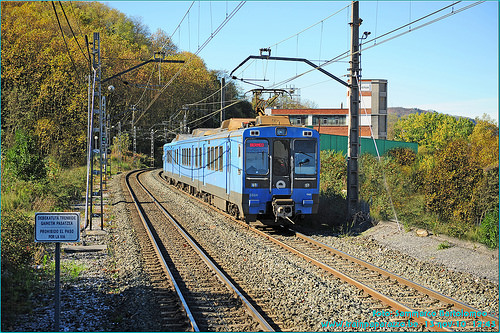


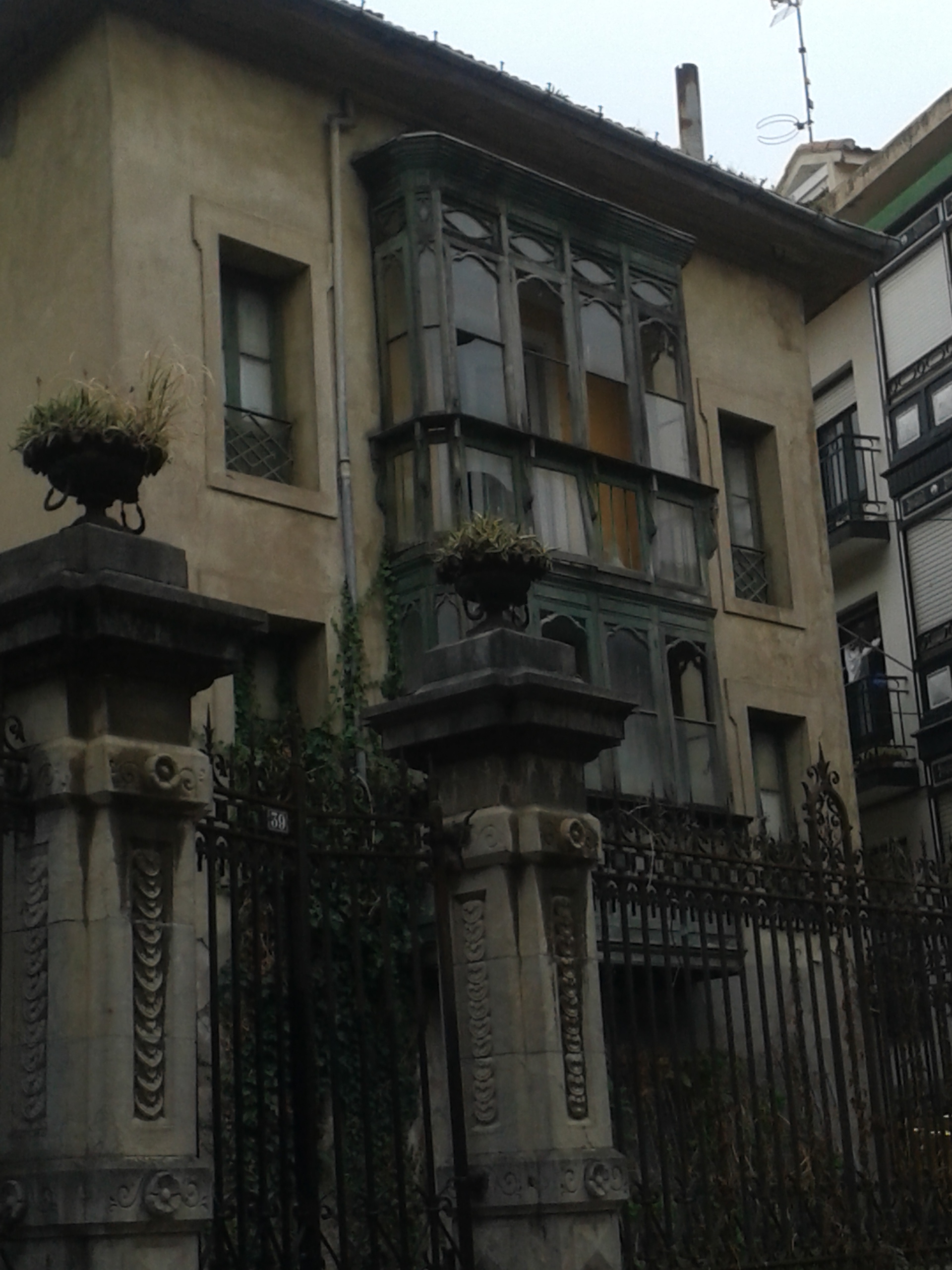

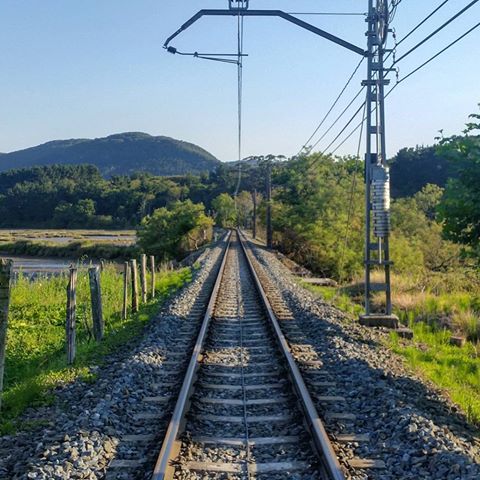


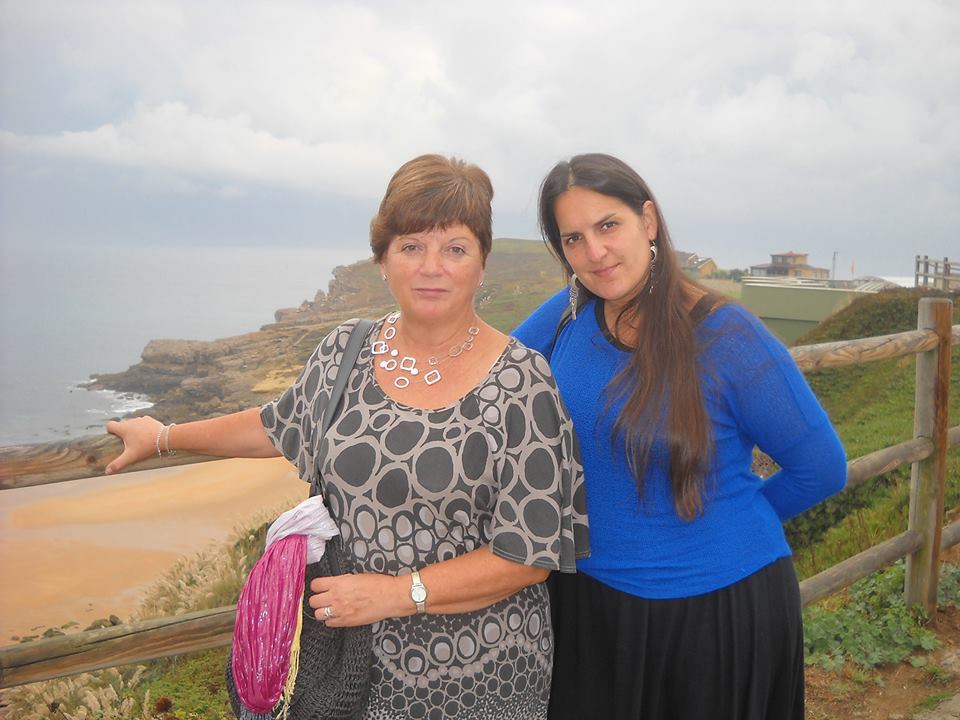
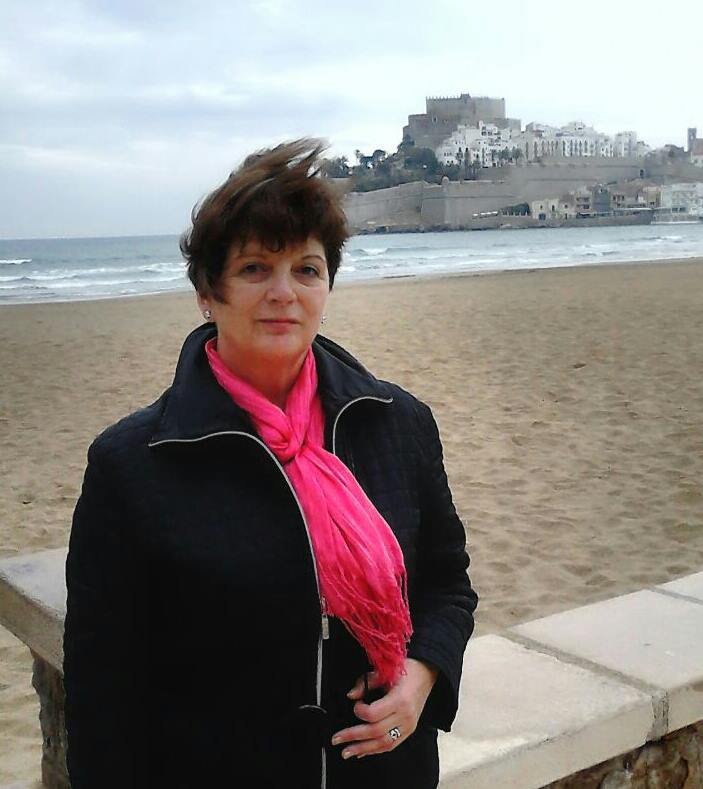
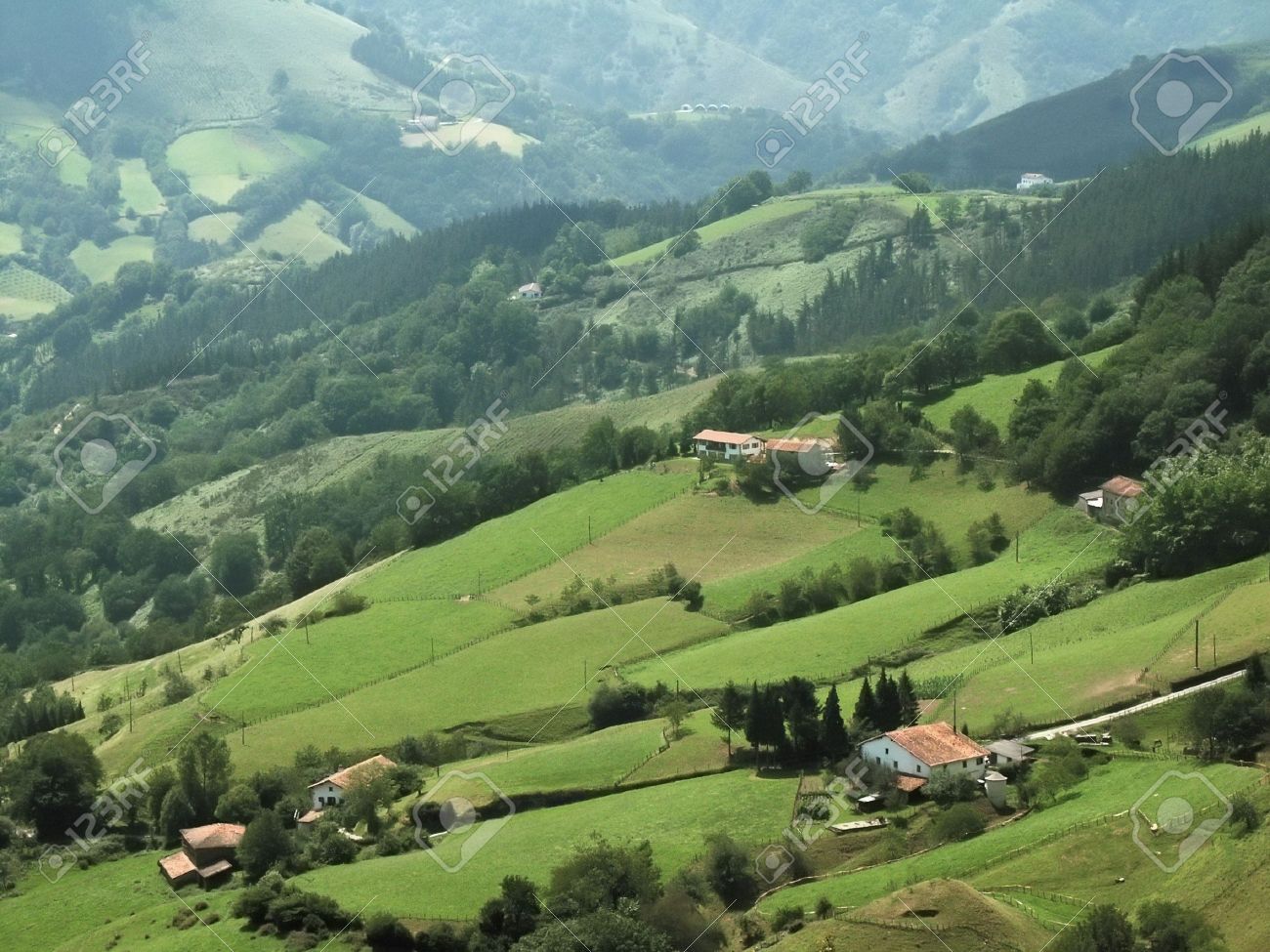
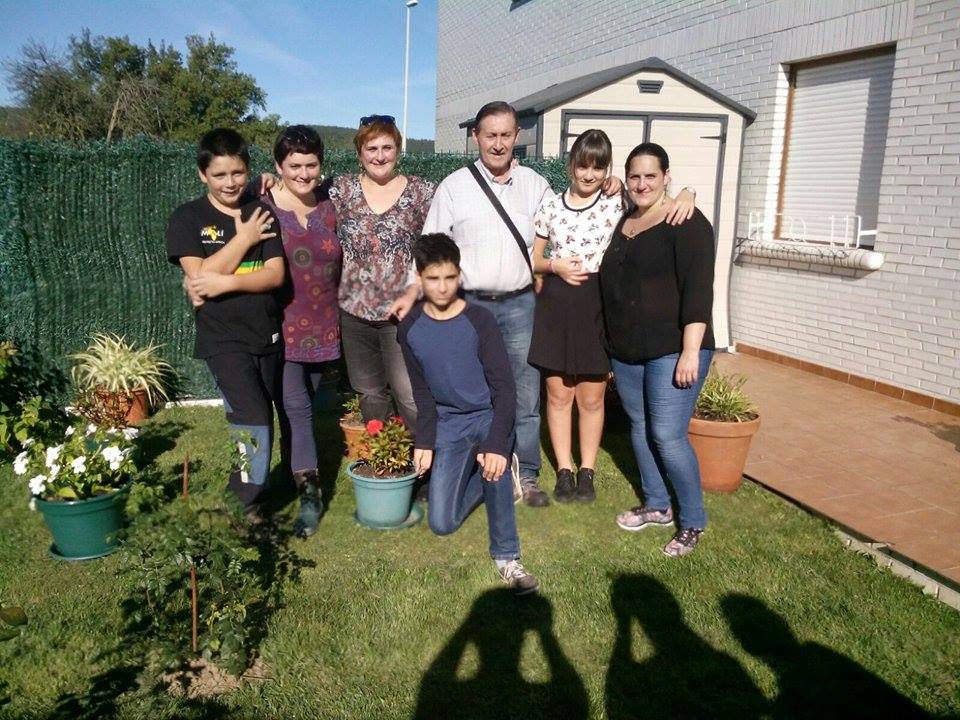

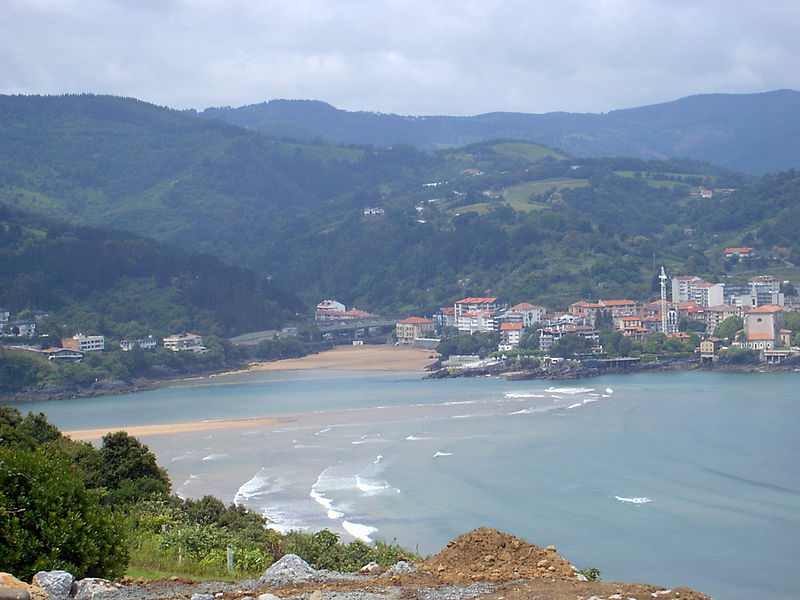

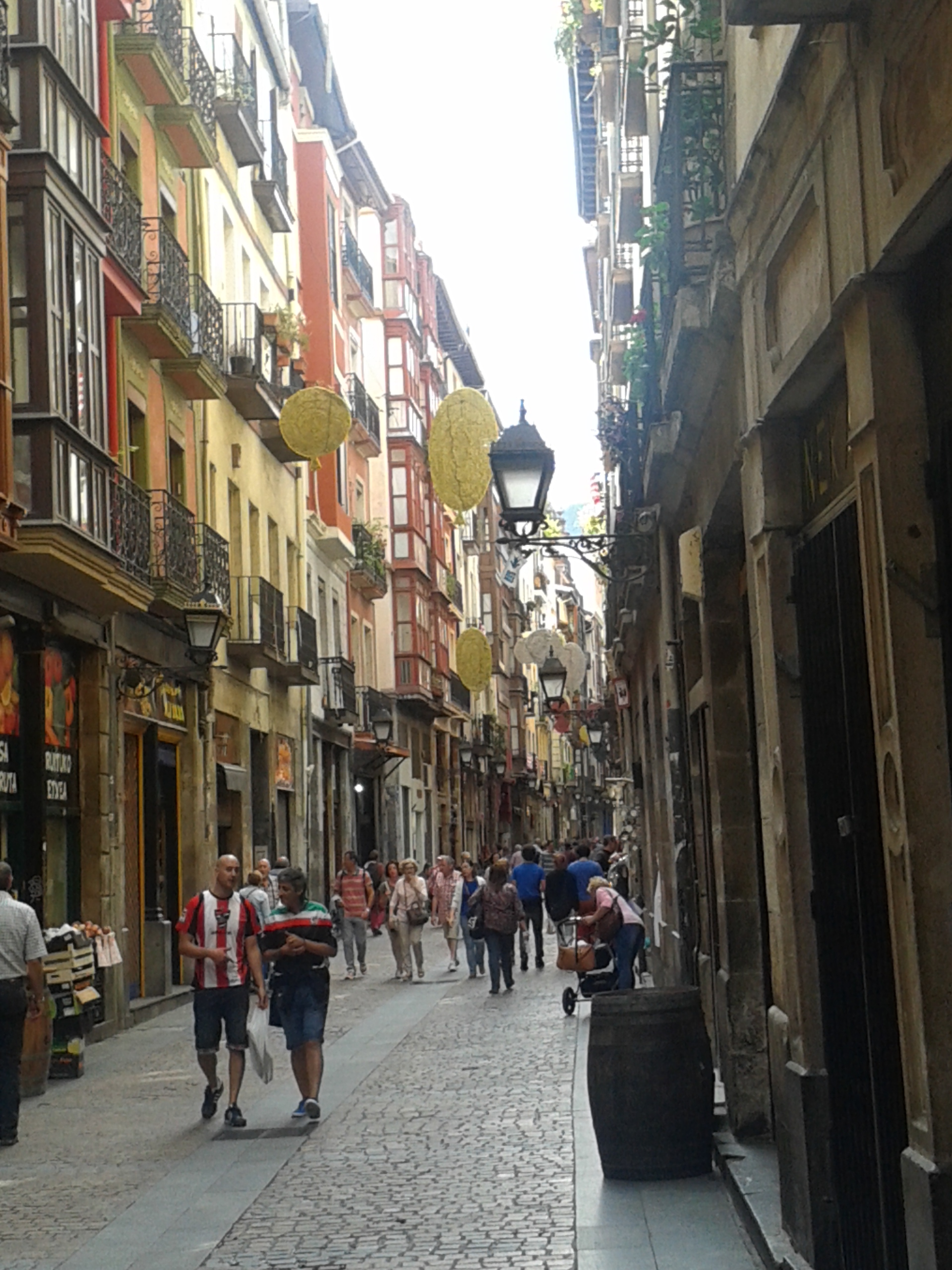
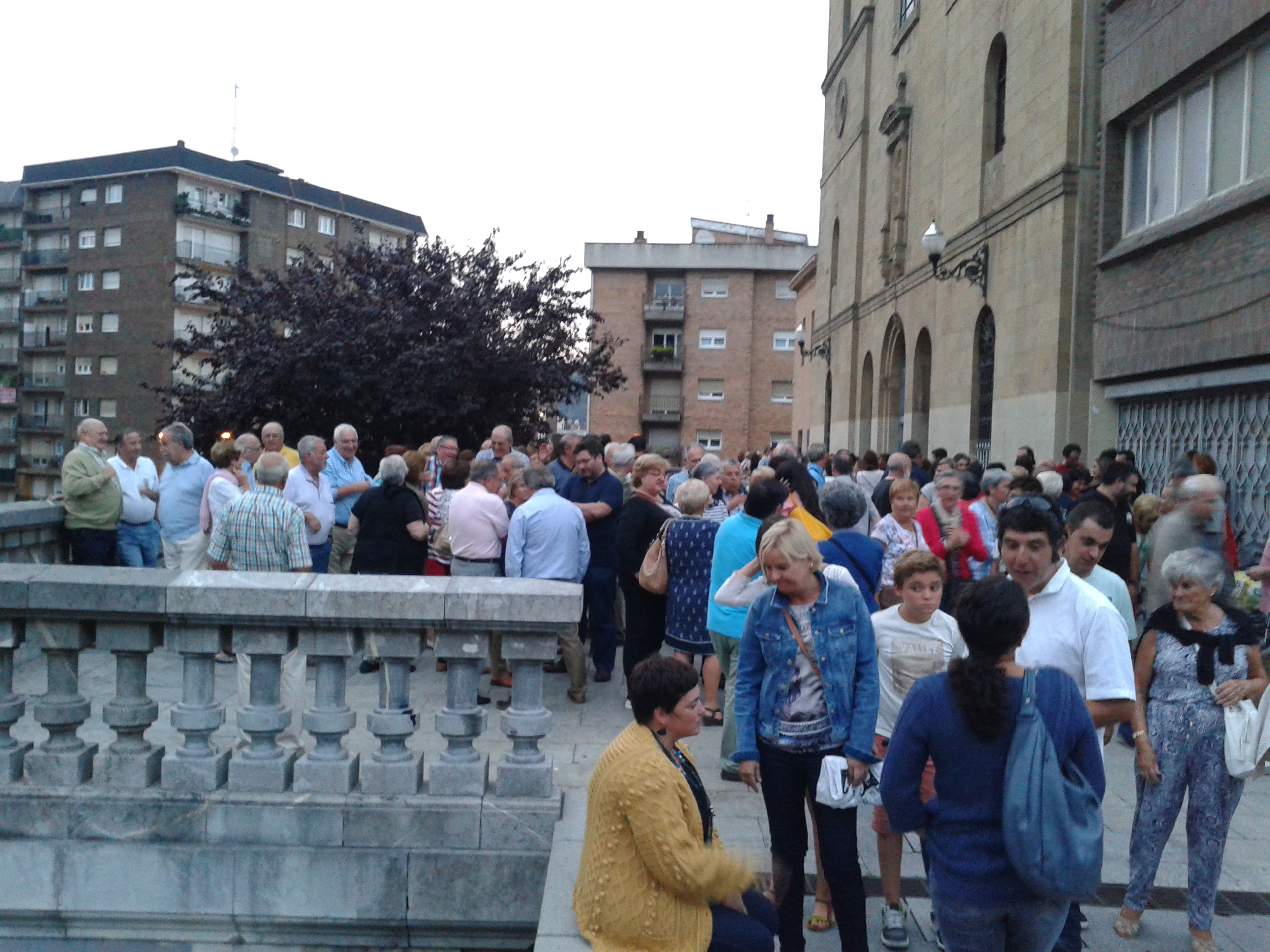
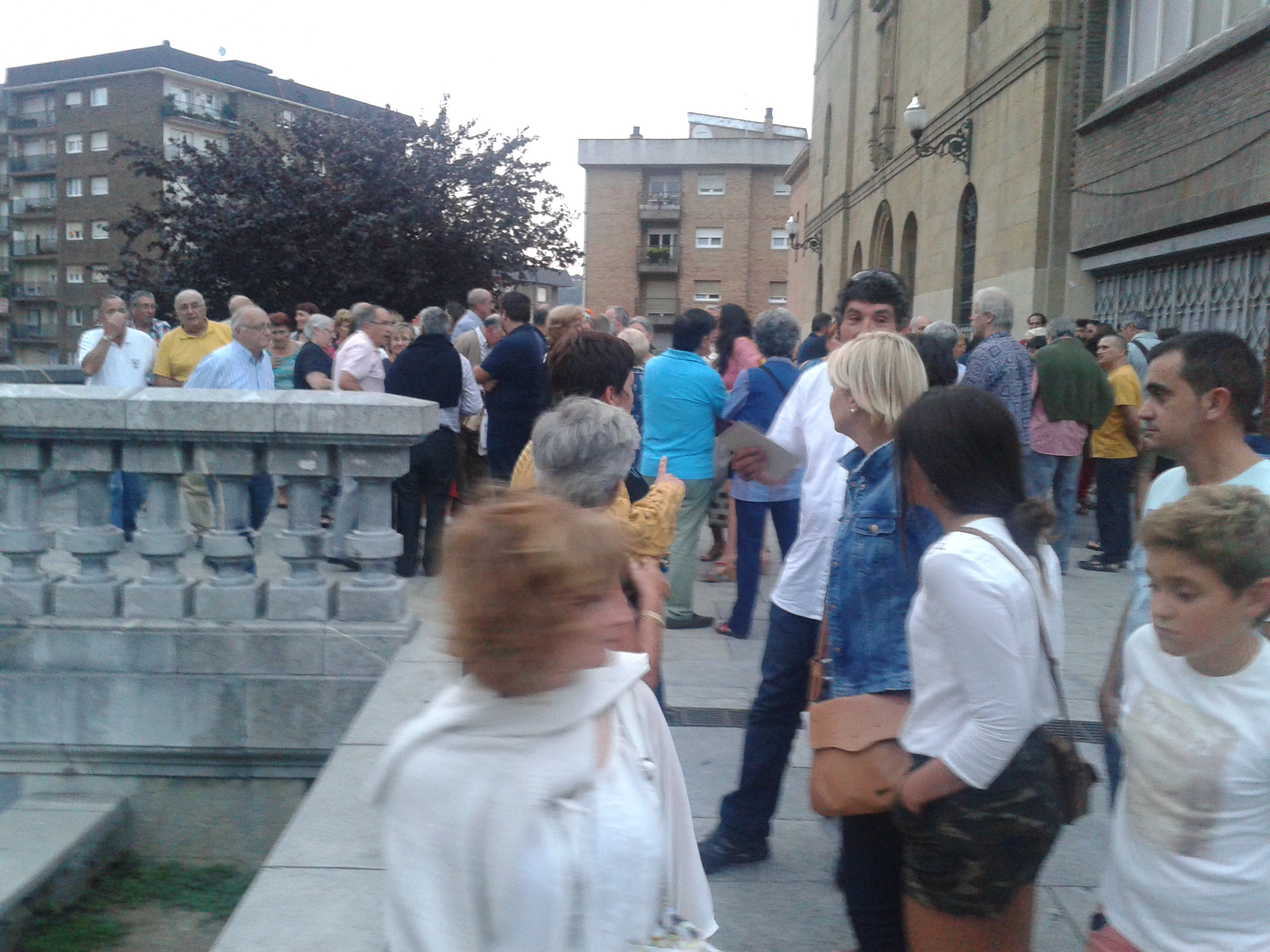
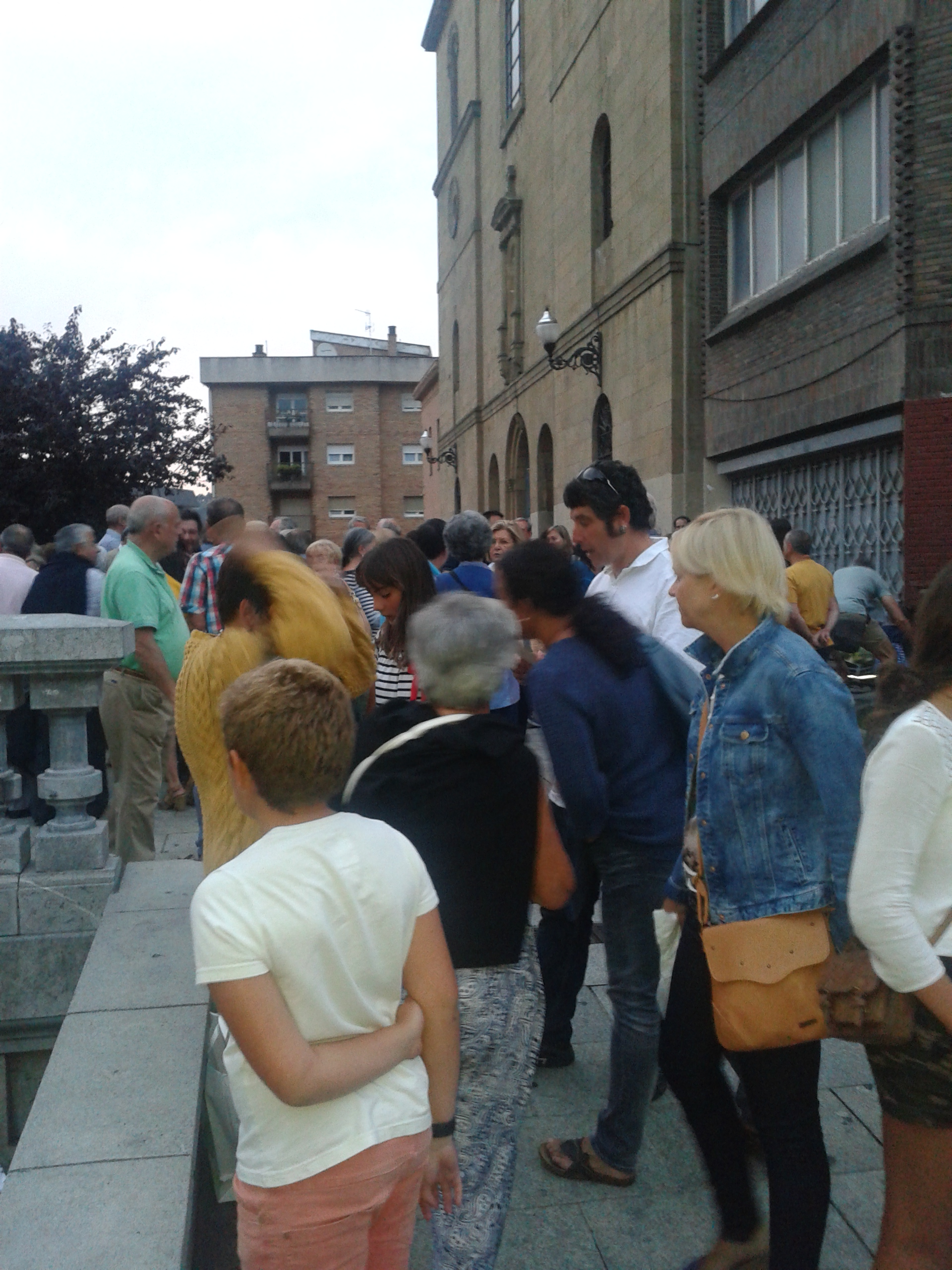


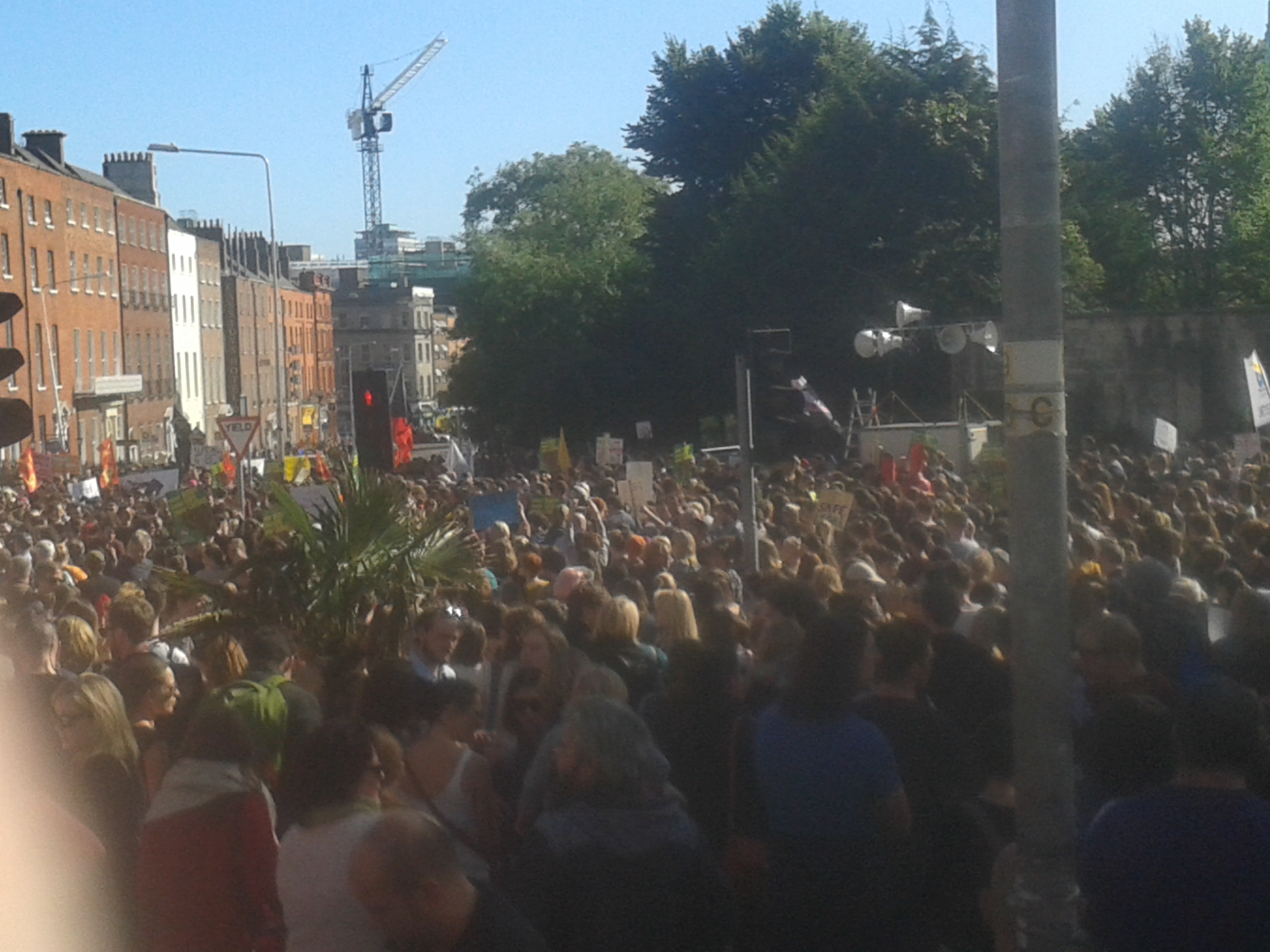

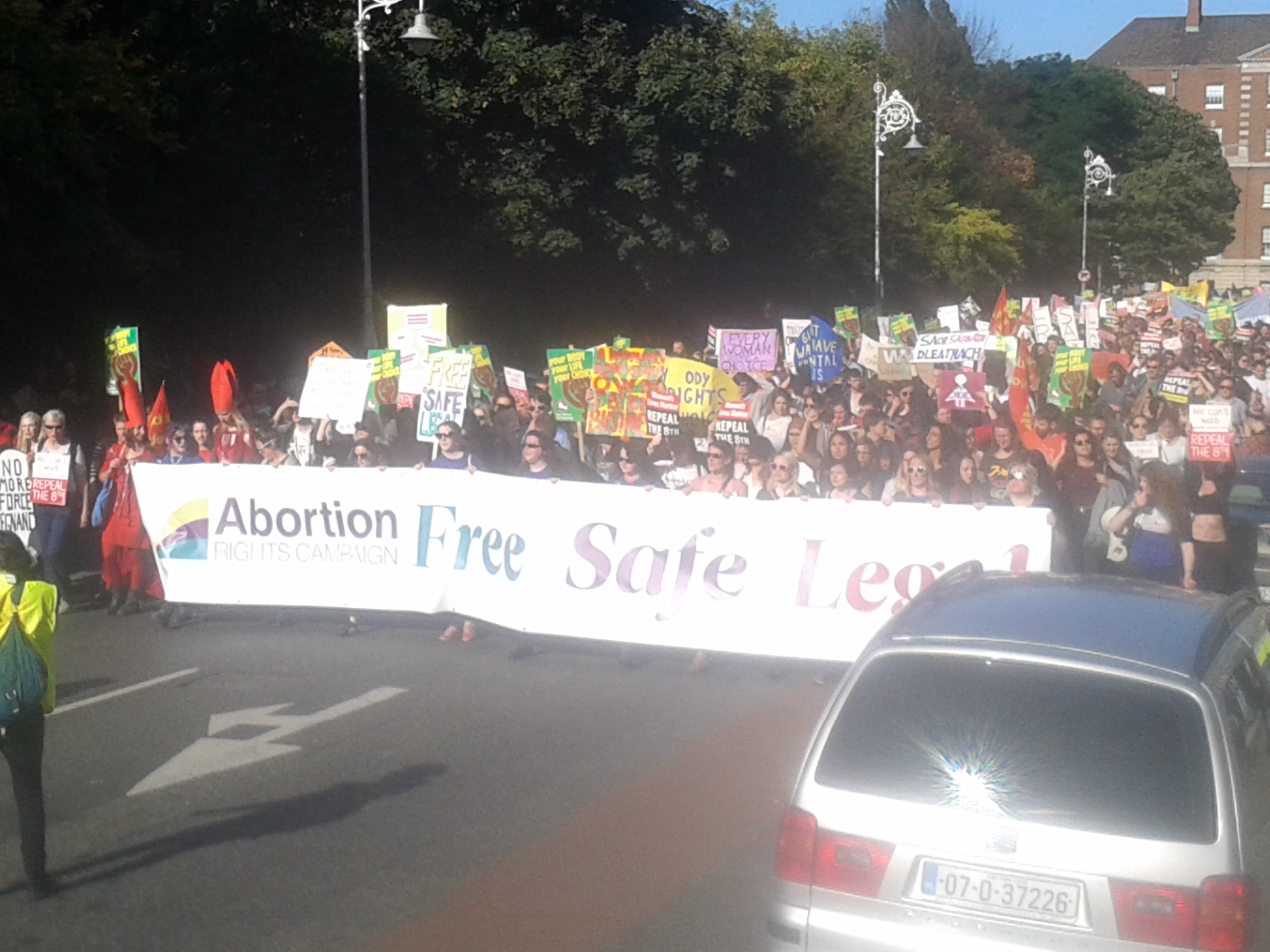
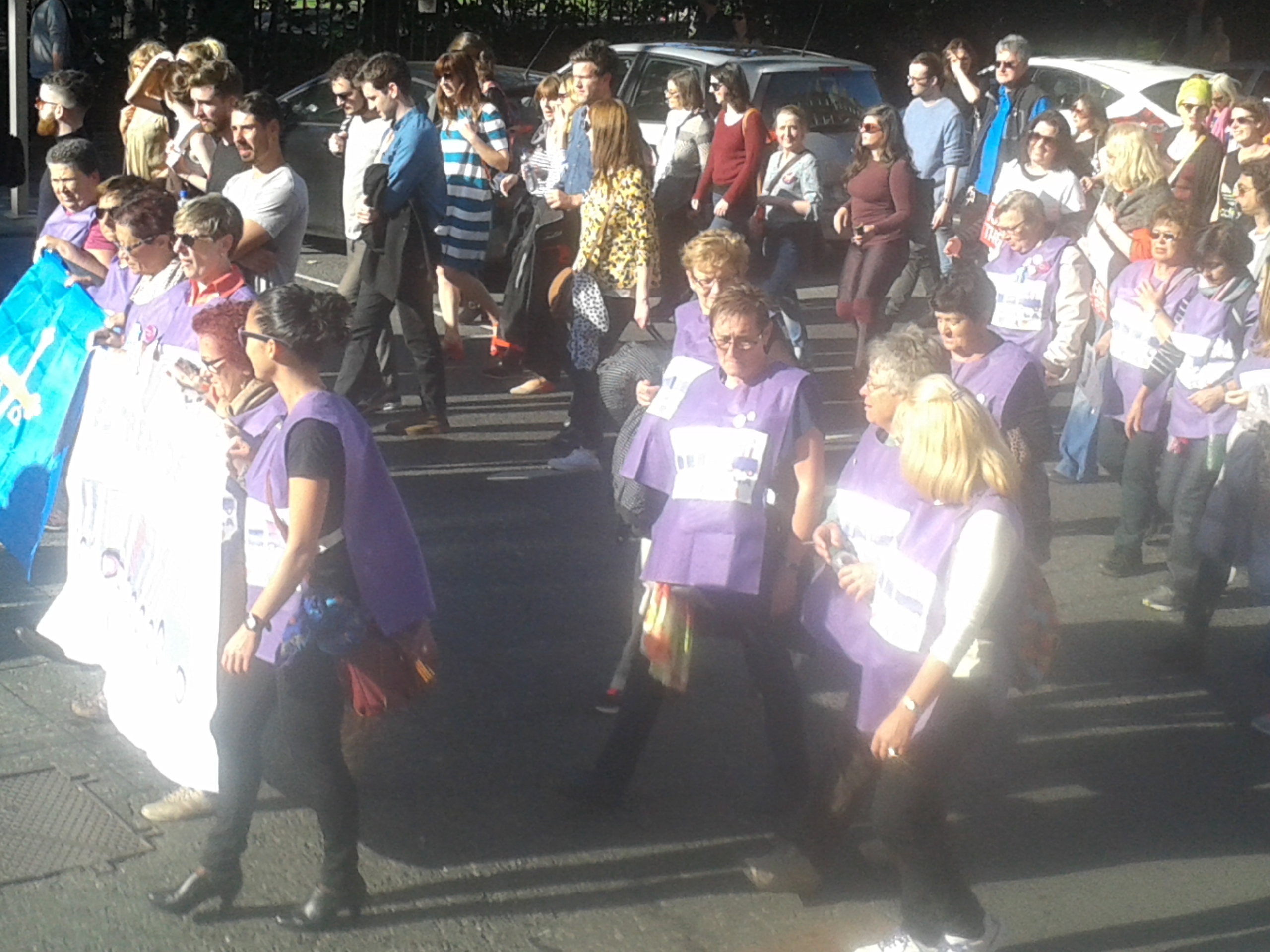
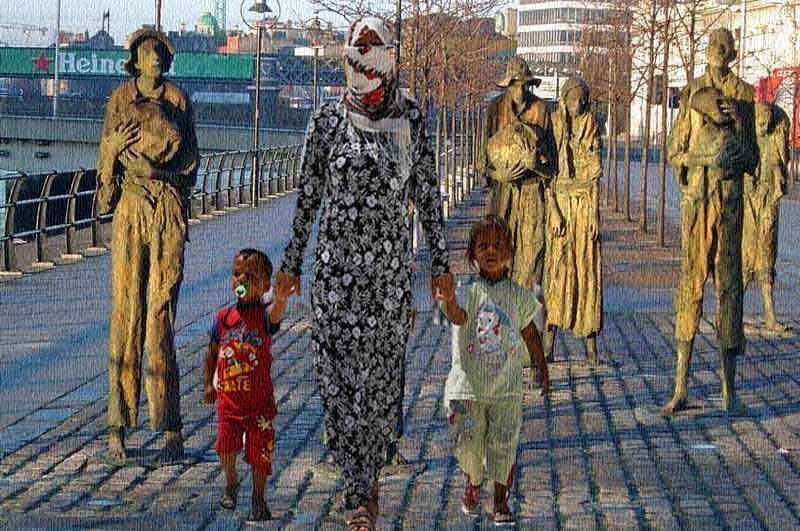
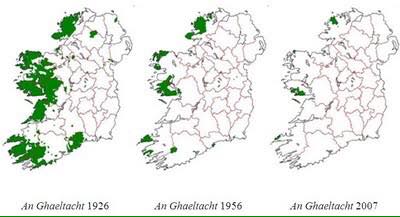
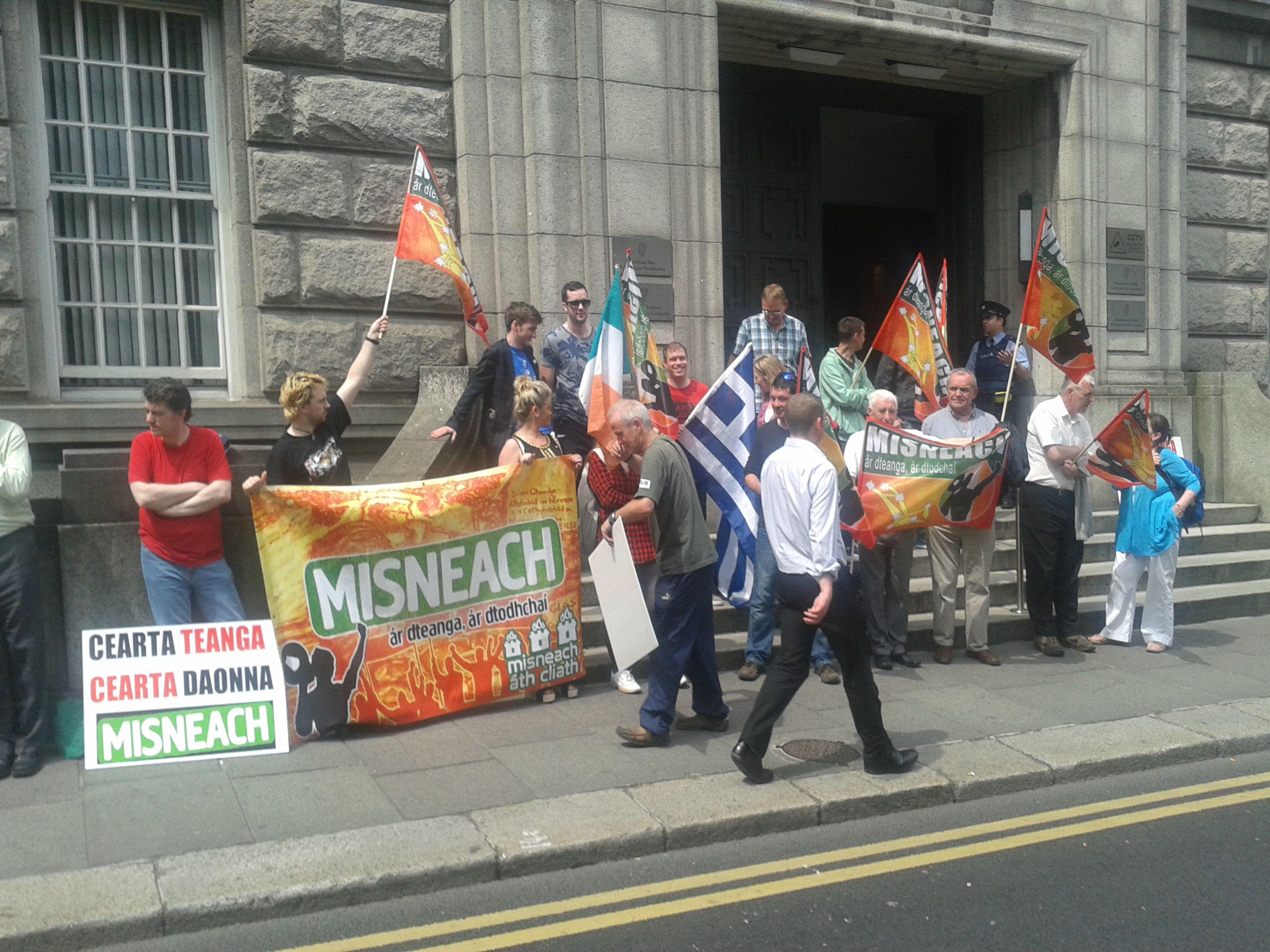
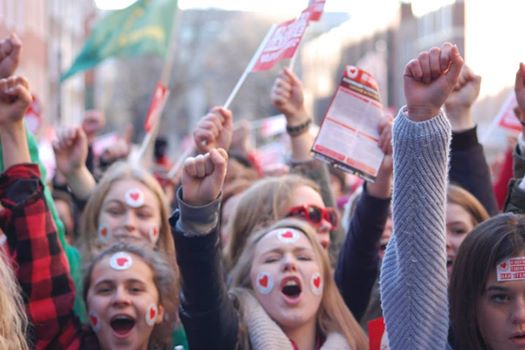
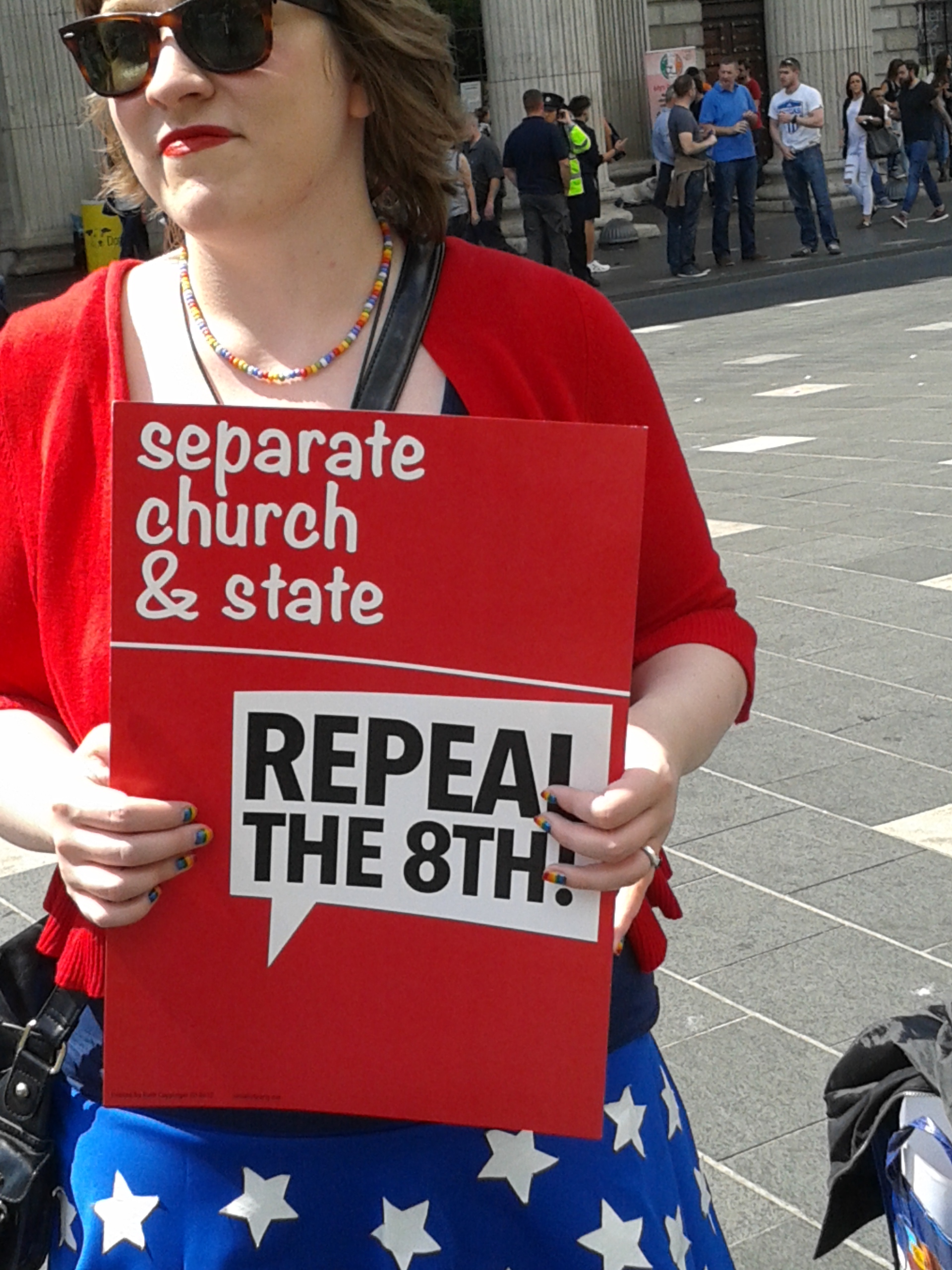
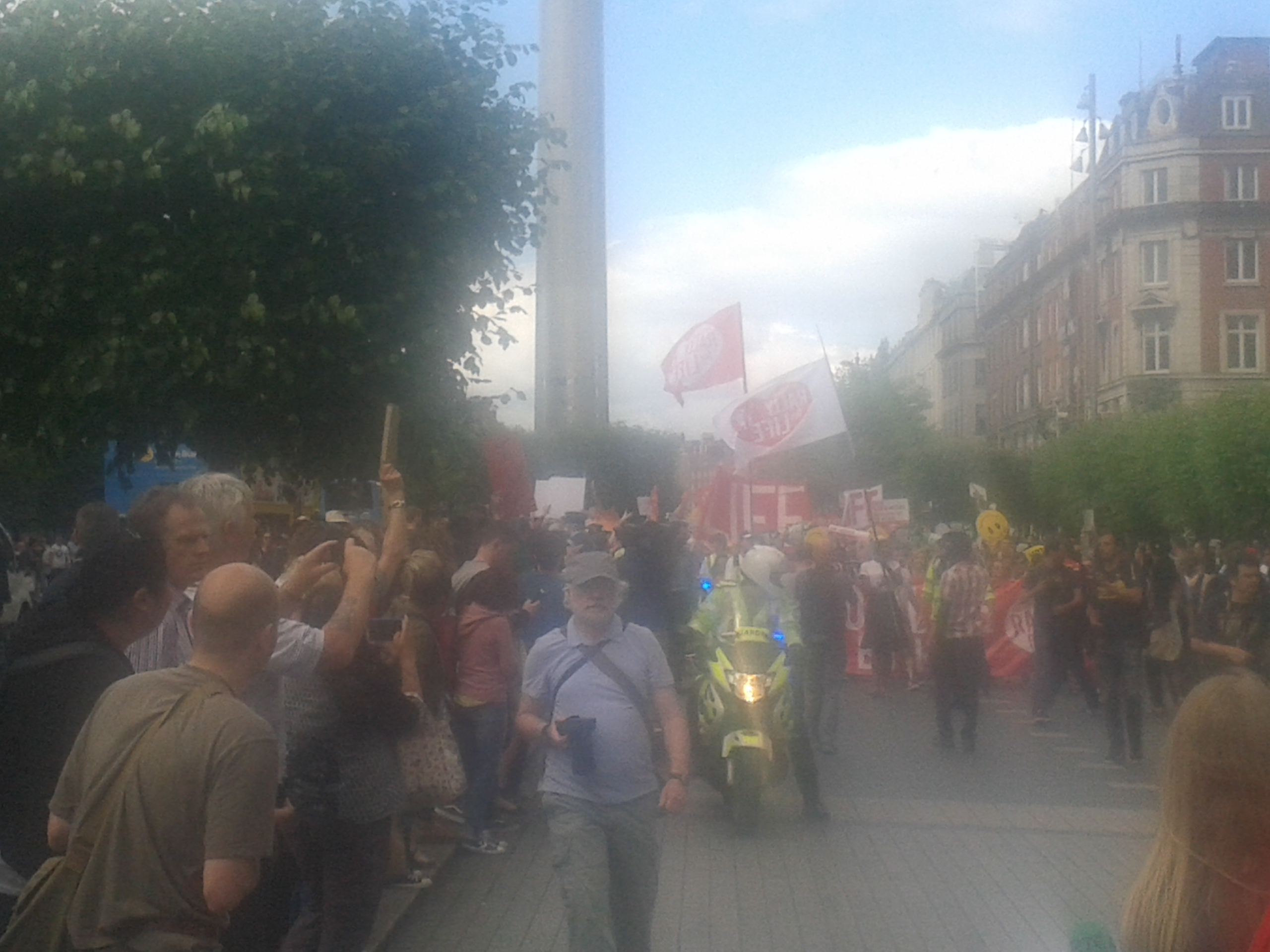




 rebelbreeze