Thousands of people gathered this Saturday in Barcelona to defend the rights of the Palestinian people and to condemn the bombings and attacks by the State of Israel in the Gaza Strip.
The demonstration was sponsored by the Palestinian Community of Catalonia and the Prou Complicitat amb Israel (Enough of Complicity with Israel – trans.) coalition and supported by more than 100 entities and social movements in Catalonia.
The event began at six in the afternoon at the crossroads between Avinguda Diagonal and Passeig de Gràcia of the Catalan capital.
Demonstration in support of Palestine in Barcelona, October 21, 2023. — Lorena Sopêna / EUROPA PRESS
All organisations signed the manifesto “Let’s stop the genocide in Palestine. Stop the arms trade with Israel” with a clear desire to condemn the historical repression of the Palestinian people and calling on governments “to stop being complicit in this televised massacre.”
The participating entities declare what is being done is “not in our name.”
The call brought together a cross-section in attendance, from young people to seniors and entire families.
Shouting “Long live the Palestinian struggle” or “Israel murders, Europe sponsors”, the protesters proceeded to Plaça de Catalunya, waving Palestinian flags and posters with slogans in Catalan, Spanish, English and Arabic and images of the crimes committed in Gaza by the Israeli army.
Explanatory leaflets were also distributed directing use of correct terminology when talking about Palestine, encouraging protesters to change expressions such as “conflict between Israel and Palestine” to “Israeli colonisation of Palestine” or “IDF (Israel Defense Forces)” by “FOI (Israel Occupation Forces).
In this same vein, banners could be read expressing “if you are the occupying force, you are not defending yourself”, “Collective punishment is a war crime. Stop the genocide in Palestine” or “Apartheid was wrong in South Africa and is wrong in Palestine.”
EUROPE AND USA DENOUNCED
Given the latest visits by the President of the United States, Joe Biden, and of the European Commission, Ursula von der Leyen, to Israeli President Benjamin Netanyahu, the protesters also accused the European and American institutions of “complicity” and ” sponsorship of genocide.”
The manifesto signed by the more than 100 entities stated: “The EU continues to consider Israel, despite being an extremely racist and far-right government, as a strategic partner, and the United States provides $1 billion in military aid.”
The Spanish Government is not free from reproach either, since, as the manifesto describes, “they have authorised the export of weapons to Israel worth 137 million euros since 2000.”
Faced with the recent Israeli forces’ attacks on Gaza, protesters demanded that the Spanish Government and the EU force Israel to declare an immediate ceasefire and the establishment of humanitarian corridors.
They also called for the suspension of the arms trade and the sanctioning of Israel to end the “occupation, colonialism and apartheid of the Palestinian people” and to “allow the return of the eight million Palestinian refugees.”
(Photo sourced: Prou Complicitat amb Israel)
Finally, they also demanded that the Generalitat of Catalonia “stop considering Israel as a strategic region in the Agency for Business Competitiveness” and have required the breaking of the friendship association between Barcelona and Tel Aviv.
The current Mayor, Jaume Collboni, reinstated that relationship after taking office, overturning its suspension by the former mayor Ada Colau.
COMMENTby D.Breatnach
Despite the overall majority for Catalan independence in Catalonia, there are sharp divisions within the movement on how to proceed and respond to Spanish State repression and these differences find expression also in attitudes to the Israeli State.
In the Basque Country too there have been demonstrations in towns across the southern country (i.e in the Spanish state) by different organisations which have been very clear in their condemnation of the current Israeli bombing but also of the entire Zionist project and Israel’s history.
On the other hand, the only demonstration organised by the “officialistas” of EH Bildu and social democratic allies, which took place in Donosti/ San Sebastian on 20th September confined itself to calls for “peace”, “negotiation” and equal treatment by the Israeli state.
Publicity poster for Palestine solidarity and defending the right to resistance demonstration scheduled for Saturday 28th in Bilbao.
This sharp divergence in what might be called “the Palestinian solidarity movement” has been observed in other parts of Europe too, including Ireland as some elements seek not to stray too far from their state’s consensus while others are determined to break from it.
Diarmuid Breatnach (Reading time main text: 11 mins.)
LANGUAGE IS A TREASURE CHEST – 2
I observed in Language Is a Treasure Chest 1 that while language is full of wonders, it has some horrors in it too. And I found that to be true again.
I was reading a novel in which the word “Cimarron” appeared and, doing some quick research on the word, I came across a 2004 query in an email website or page called Word Wizard:
What is the etymology of the word cimarron? I’ve always been told that it means “runaway slave” in Mexican Spanish. Can anyone verify this?
The reply is dated the same day:
From Greek. It refers to people who live in perpetual mist and darkness, akin to the ‘land of the dead’. Latin ‘Cimmerius’, Greek ‘Kimmerios’, Assyrian ‘Gimirri’ even the bible ‘Gomer’ Gen.10:2 and Esk. 38:6.
In Western United States it refers to a stretch of land that gets rainfall when other near by areas are desert year round.
Apart from the topographical reference, I thought the expert’s explanation highly dubious. And in fact I happen to know something about the Spanish-language origins of the word.
The searcher replied:
Thanks, Jim. I just wonder what connection this word has to Hispanics of Mexican origin because it shows up in their surnames (although not as common as Lopez or Vargas or Garcia).
Is it just Mexican in origin or did that also come from Spain? So the “runaway slave” theory has no foundation then?
The expert’s reply did come back with a Spanish-language connection and he may be on to something with the topography, though I think he has it the wrong way around (as we shall see).
The “runaway slave” theory is not so obsolete. Mexico did not have slaves (outlawed in 1810) but American slaves who fled to Mexico had to pass through lands with water, or else parish (sic).
When relating their tales of woe to the locals the word ‘cimmaron’ arose to describe their flight through the South West desert.
Very curiously, there was no further contribution to the discussion. I tried to leave one of my own but was required to register, which I did (though wondering if worth the trouble) and never received confirmation1.
“A view of the Cimarron National Grassland, the largest piece of public land in Kansas, a 108,175-acre property in the southwestern part of the state. It was recovered from the Dustbowl ecological devastation by soil recovery and management practices.” (Photo source: The Armchair Explorer – Kansas)
THE FOLK MEMORY WAS TRUE
Continuing with a little light online research I found that the Castilian-language (Spanish) origin is the explanation most often given, with rarely a reference to Greek or other classical or archaic languages. For example, in yourdictionary.com:
American Spanish cimarrón, wild, unruly (from Old Spanish cimarra, thicket): probably origin, originally referring to the wild sheep (bighorn) found along its banks.
(Latin America, of animals) feral (having returned to the wild)
Synonyms: alzado, bagual, feral
(Latin America, of people) rural; campestral
(Latin America, of plants) of a wild cultivar.
But …. what about the “runaway slaves”? Under the title Cimarron People, Wikipedia has this to say: The Cimarrons in Panama were enslaved Africans who had escaped from their Spanish masters and lived together as outlaws.
In the 1570s, they allied with Francis Drake of England to defeat the Spanish conquest.
In Sir Francis Drake Revived (1572), Drake describes the Cimarrons as “a black people which about eighty years past fled from the Spaniards their masters, by reason of their cruelty, and are since grown to a nation, under two kings of their own.
The one inhabiteth to the west, the other to the east of the way from Nombre de Dios”. (location in Panama — DB)
We may indulge ourselves in a sardonic smile at commissioned pirate Francis Drake talking about the cruelty of others, or about slave-owning by a country other than England in 1570.
But we remember also that at the time Spain was the main competitor with England in the rush to plunder the Americas – and had got there well before them.2 Both colonial powers were already plundering Africa for raw materials and slaves.
The meanings of animals having gone “feral” or “returned to the wild” would easily have been applied by the society of the time to escaped African slaves.
A European society which, despite evidence to the contrary including agriculture in Africa, would have considered indigenous inhabitants of Africa as people living in the “wild”. Once escaped and no longer under European control, they would be seen as “returning to the wild”.
So what happened to the Cimarron People? Their settlements were subject to punitive raids by the Spanish, killing people and burning crops, so that in the end they came to a treaty with their old enemy.
The Wikipedia entry says no more except that the “Cimarrons” and the English quarrelled (not surprising, given that they were of no further use to the latter).
I believe some of their settlements in Florida were raided and burned by US “pioneers” and soldiers, the remainder becoming part of the Seminoles, a native American tribe that resisted the USA in the longest and most costly of the USA’s wars against the indigenous people.
The Seminole had many tribe members of part-African origin in their midst.
And here – a surprise: The word “Seminole” is derived from the Muscogee word simanó-li, which may itself be derived from the Spanish word cimarrón, meaning “runaway” or “wild one”!
So, in line with what that on-line searcher back in 2004 had heard, no doubt a folk belief, the word cimarronis, in Mexico (and in the USA), of Castillian (Spanish) language origin and is connected to escaped slaves of African origin.
Some of the sources for “cimarron” also give us “marron” or “marrón” which is also related to escaped slaves and, in English, became “Maroons”. These were escaped slaves inhabiting mountainous regions of Jamaica and elsewhere and became a great problem to English settlers.
The latter had taken the island from the Spanish but they failed totally to quell the Maroons, these emerging victorious in many military engagements.
In the Cockpits area of Jamaica, I have read, there is a place called Nanny Town, which is believed to be one of the settlements of the Maroons; their chief was said to be a woman called “Granny Nanny”3, whether because of her former slave occupation or for other reason4.
In the end, like the Spanish with the Cimarron People, the English had to treat with them. Sadly the treaty required the Maroons to return newly-escaped slaves, which they did and for which they received payment.
Maroons in treaty with the British, shown here in a reversal of the actual power relations in the “Pacification with Maroons on the Island of Jamaica”, by Agostino Runias (1728-96). (Source image: Internet)
However if instead of being a voluntary escapee to go to a wild place, you were forced by people or circumstance, well then, like Alexander Selkirk’s “Crusoe”, you’d be “marooned”!
Well then, what about the “cimarron strips” in the southwest of the USA? Could the word refer to strips of land “gone wild”? Or could the expert replying to the question in 2004 have been on to something?
If the slaves escaping through the desert from the USA to Mexico did indeed make their way through strips of watered land (not just for the water, as the expert speculates but for vegetation to conceal them), then there is a connection between escaped slaves and these strips of land.
But not as the expert sees it, rather the other way around: since the escaped slaves, the “cimarrones” were travelling the strips, they would be called by those who knew about it (escapee hunters, escapee helpers and just observers), “cimarron strips”.
Or in other words, “those strips through which the runaway slaves travel.”
2. CHRISTIAN ETHNIC PREJUDICE
However, if the word comes from Castilian (Spanish) what were the origins of the word in that language?
Perhaps a year before this word-quest, I was reading a book that described the Spanish State as having been characterised, contrary to many other European states, by mass expulsions and exiles on a number of occasions throughout its history5.
First on the list of expulsions was the well-known example of the Moors and the Jews.
Those who were not slaughtered by the forces of the “Christian Monarchs” of Ferdinand and Isabella in the “reconquest” were obliged to convert to Christianity or to leave “with only the clothes on their backs”. This also occurred in Portugal.
Those Jews who left were the Sephardim or Sephardic Jews, who spoke Ladino, an archaic kind of Iberian Romance6 language with Aramaic and Hebrew words, along with the Moors, who spoke an Iberian-Arabic mixture or Arabic.
The key of their houses or gates have been handed down to this day in families of both groups.7
Many converted, often referred to by Christians as “conversos” (Jews) or “moriscos” (Muslims) but were constantly under suspicion of reverting to their old religion even with the threat and constant trials and torture of the Spanish Inquisition.
According to what I have read the latter too were sometimes called “marronos”, i.e in the eyes of the Spanish Christian ruling class, those who had been “domesticated” (Christianised) but had “returned to the their wild way” (Moslem), i.e “gone feral”.
Forcedconversionsthat had to appear genuine: “The Moorish Proselytes of Archbishop Ximenes”, Granada, 1500 by Edwin Long (1829–1891). (Image source: Internet)
Wikipedia on Marrones in Iberia confirms: The (Spanish) Inquisition was aimed mostly at Jews and Muslims who had overtly converted to Christianity but were thought to be practicing their faiths secretly. They were respectively called marranos and moriscos.
However, in 1567 King Phillip II directed Moriscos to give up their Arabic names and traditional dress, and prohibited the use of Arabic. In reaction, there was a Morisco uprising in the Alpujarras from 1568 to 1571. In the years from 1609 to 1614, the government expelled Moriscos.
3. THE BUSH FROM THE NUT?
And is “ci” or “cy” in “cimarron” then merely a prefix? The word “marrón” exists as a colour in Castilian and a number of Romance languages and came into English as the colour “maroon”.
Its development is taken as originating from the colour of the large ripe edible chestnut, rather than given to it later. Of course there are a number of words for colours or tints which have a botanical origin, “orange” being an obvious one.
Castanea Silva, the edible or Sweet Chestnut in Mallora. (Image source: Internet)
Alright, then the nut and tree might have been associated with uncultivated or “wild” areas, similar to those to which the “cimarrons” would escape.
But where did the “ci” suffix come from? Somewhere in the midst of what I have been researching I came across an explanation, derived from Latin, meaning “towering”, “high” etc. But can I find it now? No.
The online sources are telling me that the relevant pages are up for deletion and I can join the discussion. No thanks, I do not have anything like sufficient knowledge to enter a debate on that, nor the patience of an academic to research it thoroughly.
But “high” and “wild” could easily correspond, given that valleys and plains lend themselves more easily to cultivation, as a rule, than mountainy areas, which might remain wooded or with with thick undergrowth.
And that might also give us the “bush” or “thicket” referred to in a number of references for “cimarron”, which in turn might describe the “cimarron strips”. In parts of Latin America such as Chile (and for all I know, in all of them), a “cimarra” is also a thicket or densely-grown area.
The article in the Language Journal (see reference) comments that the “arra” cannot be a Romance language word-ending.
But even if true it seems to me that the author (or authors) quoted might be unaware that among those from Iberia who colonised or settled in the Americas, Romance language speakers were not alone. There were also Basques who spoke Euskera/ Euskara.
And for evidence, they applied a number of toponyms and left family names from the Basque Country (Basque descendants make up to 10% of the population of some Latin American countries). And “-arra” would be a common enough suffix or word-ending in Euskera.8
Opening title for the weekly TV Western series ‘Cimarron Strip’, starring Stuart Whitman, Judy Gleeson, Percy Herbert and Randy Boone. Though popular, only a years’ worth of episodes were screened. (Image source: Internet)
OKLAHOMA PANHANDLE AND THE CIMARRON STRIP
In the 19th Century wars between the Mexican Republic, the USA and the Native Americans in the area, the area was carved up with less and less left to the Native Americans.
Prior to the American Civil War, white Texas wanted to join the Union as a slave state and due to a US federal law prohibiting slavery north of 36°30′ parallel north, white Texas surrendered a strip of land north of that latitude.
The settlement (temporary of course), left a strip as “Neutral Territory” (one can only imagine the temptation for African slaves in Texas to make for there). After the Civil War big cattle ranchers moved in, disregarding treaties and named the area the Cimarron Strip.
Map of Oklahoma territory and “Neutral Strip” before the American Civil War. (Image source: Wikipedia, Texas Panhandle)
But that was because the word ‘Cimarron’ was already in the area, from the “Cimarron Cutoff” leading to a crossing of the ‘Cimarron’ river.
And yes, there was a popular 1967-1968 TV series called “Cimarron Strip”, starring Stuart Whitman. But, though I have watched it, that is only faintly related to the story of the word that set me out on this quest.
End.
FOOTNOTES
1Which days later had still not arrived – perhaps the site is no longer in operation, which would explain the silence after those two posters.
2Columbus voyage to America 1641 and Spain’s first colonial settlement 1565 (now Florida); Mayflower expedition to America with English settlers 1587 (now Virginia). However, Europeans had founded settlements much earlier, as with the Norse in the 10th Century and very likely Irish monks in the 6th Century. But it was the English and Spanish who conquered most, the Dutch, French and Portuguese less. The descendants of the English settlers after gaining independence from England completed the seizure and colonisation of most of the North American continent, while English colonists remaining loyal to the English Crown seized land to form what is now Canada.
4All the folk tradition, albeit conflicting on some points, declares that she had not been a slave which leaves one to wonder how she might have reached Jamaica from Africa without having been enslaved.
5I borrowed the book from the public library and cannot remember its title at the moment. Interestingly it mentioned Ireland as having the only comparable history (though of course there the ‘expulsions’ were due to colonial occupation rather than actions of the indigenous state.
6“Romance languages” is a name given to the group of Indo-European languages including Castilian (Spanish), Catalan, Galician, Portuguese, Romanian, Italian and French. They are sometimes called “Latin-based” or “Latin Languages” but there is some dispute about the origins and developments of these languages.
7Ironically, the door or gate “key” is also a symbol of return for Palestinian refugees driven from their homes by Zionist massacres, threats and fear during the founding of the State of Israel.
8Among toponyms of North America’s southwest, Durango (Colorado and Mexico), Navarro and Zavala Counties (Texas) are perhaps the best known; while Aguirre, Arana, Bolívar (Bolibar), Cortazar (Kortazar), Duhalde, Echevarria (Etxebarria), García, Guevara (Gebarra), Ibarra, Larrazábal, Mendiata, Muzika, Ortiz, Salazar, Ugarte, Urribe and Zabala are but some among a host of family names of Basque origin from the American south-west in Latin America. And of course the country of Bolivia, from Simon Bolívar, a Basque surname from a Basque toponym.
Excerpt on-line from Language journal, Linguistic Society of America, Leo Spitzer, Vol. 14, No. 2 (Apr. – Jun., 1938), pp. 145-147: https://www.jstor.org/stable/408879?seq=1
I have been sent this article from The Morning Star, newspaper of the Communist Party of Great Britain, a reprint from The People’s World, like-minded newspaper from the USA.
The article is about the removal by right-wingers in the USA of a marker commemorating worker organiser, women’s suffrage campaigner, anti-racist and anti-fascist Elizabeth Gurley Flynn in her home town of Concord, Massachusetts, USA.
An omission in the article, which the Morning Star chose not to correct, is the Irish background of the article’s subject, class fighter Elizabeth Gurley Flynn. Is this important? It certainly was to the subject herself who, in her biography, emphasised her Irish background.
Cover of her biography (Source photo: Internet)
She wrote of the importance to her of claiming both Irish family names in her ancestry and always used them both: Gurley and Flynn. But in particular for the CPGB, operating in a state that is oppressing Ireland, it should be of importance how Irish people are represented.
Especially in a culture with a deep and long streak of anti-Irish racism.
Elizabeth Gurley Flynn speaking at a mass meeting in the USA (Source photo: Internet)
The CPGB never supported the armed struggle by Irish people against its masters nor stood up for the defence of the Irish diaspora in Britain, subject to racism in the media, to police persecution and to judicial and legal racism in the 1970s, ’80s and ’90s.
This is despite the enormous contribution of the Irish diaspora to the trade union and socialist movement in Britain in shop stewards, activists and leaders.
International Workers of the World (‘Wobblies) organisers: Elizabeth Gurley Flynn (centre) next to Big Bill Haywood (right). (Source photo: Internet)
With Bronterre O’Brien and Fergus O’Connor, the Irish diaspora gave the British working class two leaders of the first mass movement of workers in Britain, the Chartists. The anthem of the class, The Red Flag, was composed by Jim Connell from Co. Meath (though they used the wrong air).
And the classic novel of the class, The Ragged-Trousered Philanthropists, was penned by Robert Tressel, pen-name of Robert Noonan, born and reared in Dublin.
The CPGB in fact has a long association with British colonialism and its very title is an indication of that.
End.
Left: Famous photo of Gurley Flynn as a public speaker. Right: The marker in her hometown now removed by right-wingers there. (Photo sourced: Internet)
Norman Finkelstein has published a new book on cancel culture. It comes from a man who as he points out became a high-profile victim of one of the more modern iterations of cancel culture, that of Zionism.
The latter was unashamedly right wing and did not dress itself up in liberal or even bastardised Marxist tropes, peddled by people who should know better.
He is perhaps, one of those with a vantage point on the issue, who deserves to be listened to.
He opens the book with an epigraph from Bertrand Russell: “I feel a real and solid pleasure when anybody points out a fallacy in any of my views, because I care much less about my opinions than about their being true.”
A statement that should be basis of all discussion is now frowned upon in a world of unassailable truths, wicked witches who should be burned at the stake, dogmas that once enunciated can never be challenged.
And whether the statement is true, matters not as it is more important how many semi-literate university graduates are offended by it that counts. Of his own cancellation and the hypocrisy of some of those who signed the Harper’s Letter decrying cancellation he is not bothered.
This is because he contends that “Hypocrisy was rife, for sure. But the irrefragable fact remains that “woke” politics are intellectually vacuous and politically pernicious.” He forewarns us that the book is laced with vitriol… because so much of “woke” culture deserves contempt.”
But that “a large amount of space is devoted to dissecting this nonsense… because it’s not immediately obvious why it’s nonsense.” This Foreword alone entices the reader to delve deeper into its pages and the plea from Tariq Ali for him not to throw a tantrum makes it all the better.
Cancel culture as Finkelstein points out is not new.
He gives a short list of some of his heroes who were cancelled at one point or another, Pete Seeger, Paul Robeson, Lee Hayes and even Malcolm X and Martin Luther King and even Chomsky were cancelled and reviled in their day.
Pete Seeger, veteran folk singer, folk song collector and political activist, was among victims of cancel culture in his day. (Photo sourced: Internet)
Yes and by the same newspapers, journals and political quarters that are now to the fore in cancelling one and all and in some cases, those involved in the cancelling now decry the cancel culture that affects them.
He divides the book into two parts, one dealing with woke politics and the other with academic freedom, though they are not separate and there is some overlap, even in the book.
In the first part he looks at some of the figures of woke politics, those who make the case for identity politics in particular. Some of the people he looks at, such as Ta-Nehisi Coates and Ibram X Kendi, are well known in the US but not so much outside of it.
He eviscerates them rather well describing Kendi’s writing as being “as supple as a calcified femur and as subtle as an oversized mallet”. Obama is of course, well known, though his politics are modern in how they are sold.
Obama is all about style over substance, partly because the substance is not new, he represented no great change in US society, though that is not the image he sought to portray. His message was vacuous, Yes we can, and Finkelstein asks the question, can what?
And gives the very direct and truthful answer “Yes we can, elect me”. Obama is shredded in the book, his famed oratory derided for what it is, speeches that were written by an all-white team of writers, despite Obama’s identitarian claims.
A parsing of Obama’s public addresses reveals a relentless concatenation of the most vapid, sententious, shoeworn, fatuous, hollow, saccharine clichés—a cornucopia of the commonplace—without a single clever phrase, metaphor or aperçu to redeem or relieve them, interlarded with oleaginous homilies to humility before God.
That does not mean that his speeches and politics are devoid of consequences. Obama epitomises the reality of identity politics. It is another con job. For all his blackness Obama did very little for blacks in terms of socio-economic advancement.
Not even in terms of a relatively simple issue, police violence against blacks. In one of the first rows in his presidency on the issue, he backed down and instead of taking action invited the policeman and his victim for a beer.
Identity politics is waived about, not to solve any problems but to divide. Finkelstein asks whether it advances causes or provokes their retreat.
The objective of politics, Mao Tse-Tung famously exhorted, was to “unite the many to defeat the few.” Whereas, identity politics divides the many so as to, designedly or not, enable the few.
It conjures a hierarchy of oppressions, in which each group vies with the others for the position of most oppressed— Kimberlé Crenshaw says Black women are most oppressed, Angela Davis says it’s transgender people, Ibram X. Kendi says it’s poor transgender Black women.
The victors in this inverted Oppression Sweepstakes, where you win by being the biggest loser, get to leap to the head of the queue as most worthy of preferential treatment, while, simultaneously, fomenting new resentments among those shoved further and further behind…
This, in effect, performance politics has spawned a disgusting den of thieves who brand themselves with radical-sounding hashtags, churn out radical-sounding tweets, and insinuate themselves into positions of prominence, as they rake in corporate donations and cash corporate paychecks.
Theyhang out at the watering holes of the rich and famous, and thence can be safely relied upon not to bite the hand that feeds them. In a word, identity politics is a business—in the case of Black Lives Matter “leaders,” a most lucrative and dirty business.
Cancel culture is about silencing voices other than those sticking their snout in the trough and their grubby hands in the greasy till, a point he is right about, not just in the US but around the world.
Finkelstein found himself cancelled, though not silenced, as he points out, because his views go beyond the grimy quest for self-aggrandisement and enrichment. Identity politics is utterly reactionary.
He contrasts the fumbling for pennies and the endless categories of oppressions with an historical figure that our perpetually offended money grabbers in search of the latest shakedown could never match: Rosa Luxemburg.
My mind drifts back further still to Rosa Luxemburq, this exotic creation of a lost epoch: Polish, Jewish, bourgeois, handicapped, female—
Rosa didn’t wallow in or capitalize on her “intersectionality” but, on the contrary, triumphed over it as she became the brilliant, impassioned (and then martyred) revolutionary leader of the German workinq class;
A class which—be it noted as a robust class rejoinder to claustrophobic identity politics —fervently embraced this Polish-Jewish-bourgeois handicapped-female as one of their own.
And that is exactly the point. Luxemburg is a real hero, many of the heroes of the woke do not measure up to their own standards, not even Frederick Douglass, who had a very poor opinion of native Americans, a fact overlooked by modern day identitarians.
Though many don’t have a positive opinion of native American themselves. Douglass however, is despite this a towering admirable figure in history, not one that should be cancelled, a hobby now of every spoilt ignorant brat that mammy and daddy got into an overrated expensive university.
And though it is only a matter of time before some hippy in Berlin decides to reinvent Luxemburg as intersectional, she was not and had no time for the woke equivalents of the day.
Academic freedom is the other area of concern for Finkelstein, conformity, banal ideas and salivating over money is not limited to our woke warriors in the press, NGOs and politics but in academia. It is not new, but is more pronounced now than before.
Bertrand Russell summed it up nicely and Finkelstein agrees that “As a rule, by the time a man becomes a professor, he has been tamed, and has learnt the advantages of submission” the advantage being measured now in euros, dollars, yen and shekels, though many would deny this.
Again as he points out “For self-deception, you can hardly beat academics,”. There are of course exceptions, but in the current atmosphere, the younger new academics are bowed and beaten by those who went before them.
Given his own personal experience, he is obviously in favour of academic freedom which he describes as not just the freedom to teach but to enquire and travel the road less travelled.
He points out that in the US the idea went through various stages, freedom from churches, then from corporations and later the state (MacCarthy). Nowadays, all three encroach upon it, sometimes in unison and to the same end.
He goes again into some detail on the issue and chooses the thorny ground of Holocaust denial.
He is Jewish, so he is clearly not advocating that the Holocaust did not happen, but rather how it is dealt with on campus and links it up to other issues, giving examples when he himself has been uncomfortable teaching and the examples he relies on.
He makes an argument for challenging ideas. This section, like the Obama part is overly long and could also have done with a bit of editing. But he clearly comes out against censorship and new morality police that abound everywhere.
It’s easier to fight against codified speech restrictions than against “enlightened” campus opinion, which, in the name of its “special duty,” insinuates itself in campus life and throttles free speech with its asphyxiating pieties.
The situation now is that debate is being stifled on a whole range of issues, beyond the obvious ones and the high profile debates on Men’s Rights i.e. the right to id your way into women’s spaces. Due to his own experience, he does seem to think that it is more the case when an academic goes off campus that the trouble arises.
But actually, the baying mob throttling free speech are doing so on campus now to people who have never ventured off it, or at least have never been given much opportunity to do so. He cites a very interesting case, that of Bertrand Russell when he was appointed to City University.
His morals, his sex life and general outlook were brandished about as reasons for not hiring him. Russell defended himself, saying they were irrelevant, he was appointed as a lecturer in “modern concepts of logic,” “foundations of mathematics,” and “relations of pure to applied science.”
In the modern cancel culture that wouldn’t stand. People are sacked precisely because of their private lives or their opinions on matters wholly unrelated to the area in which they teach.
It didn’t stand back then either, Russell lost the case precisely because he argued in favour of homosexuality and premarital cohabitation, amongst other things. Our woke liberals on campus, those who hounded Kathleen Stock out of her job are as reactionary as the judge in the case.
He goes on to look at other cases before finishing off with the details of his own case and his unemployment and unemployability in academia.
The book is interesting, though far too long with too much detail about some cases and aspects which makes it difficult to see the wood from the trees at times. But it does offer arguments on issues that are current with reference to historical precedents and also to philosophy.
It is worth reading, as he is a rather high-profile victim of cancel culture. His book the Holocaust Industry was thrashed by the New York Times, which had positively reviewed the Bell Curve and even gave a better review of Mein Kampf than Finkelstein’s book.
They probably keep quiet about that aspect.
Cancel culture, identitarianism, intersectionalism are amongst the biggest intellectual challenges to the left.
They deny class and reduce politics to the acceptance of pre-ordained dogmas, that are espoused by the US Democratic Party, Facebook, Google and many major multinationals i.e. from the right of the political spectrum.
They are the wolf in sheep’s clothing, though the sheep is clearly showing the fangs for anyone who wants to see. History is unlikely to be kind to them.
Whilst Finkelstein has some illusions of his own in some liberals like Bernie Sanders, his point about freedom of speech, the search for the truth, discussion and debate are his main point in the book.
A point that cannot be overemphasised in its importance, nor of the need to persevere through the current darkness. As Finkelstein says.
Many of the heroes of my youth had been blacklisted, but also had, despite all, stayed true to their youthful convictions; not dogmatically, as almost all of them had left the Communist Party, but still unreconciled to the capitalist system, and committed, at any rate in theory, to its overthrow.
A picture of Robeson sits on my bookshelf beside a picture of Marxist economist Paul Sweezy.
The cancel culture advocates and wokerati have, unlike Finkelstein, reconciled themselves to fumbling in the till and harassing those who might speak out against the system in any meaningful way.
The fascists and racists are going about in fear (or whipping up fear) of the replacement of whites by people of colour and this is particularly so in some of the places colonised by people of European background. David Rovics looks at the fascist conspiracy theory and the very real replacement of indigenous people by colonialists in a number of those places.
Map of early localisation of Native Americans (Image sourced: Internet)
A maverick who denounces the political and economic establishment, Bernie Sanders is longest-serving independent in congressional history. Amazingly he came from the far Left and an urban background to win elections in one of the most rural states in the country. Serving as United States Senator from Vermont since 2007, Sanders has finished second twice in his bids to win the presidential nomination of the Democratic party. An icon of the American left, Sanders’ attacks on the rich and support for the struggles of working people have shaken the Democratic Party establishment and also earned him the adoration of tens of millions of Americans.
Born in Brooklyn to Polish Jewish parents who could not go to a college, Bernie Sanders grew up in on East 26th Street. His father, Eli, worked most of his life as a struggling paint salesman. His mother, Dorothy Sanders, was a stay-at-home mother who died young — she was 46 — the year after Bernie Sanders graduated from high school. The family barely made ends meet and arguments about money were a regular feature of the Sanders’ Home. His brother Larry Sanders recalledT that they didn’t really know whether they’d have the rent the following month. They probably would, but it wasn’t sure.:
“We had what we needed in general, but it was the fact that our parents were arguing that was the problem. And I think what Bernard and I took from that is that financial problems are never just financial problems. They enter into people’s lives in very deep and personal levels.“
Educated in public schools and Hebrew schools, Sanders was taught that all people are equal and that they are entitled to be treated with dignity. Sanders grew up in an immigrant Jewish culture that stressed the importance of getting an education and doing something worthwhile in life. Sanders graduated from James Madison High School, where in addition to being a good student, Sanderswas also an excellent middle-distance runner.
Sanders spent a year at Brooklyn College before transferring to the University of Chicago, which had a smart, precocious student body that was passionate about fighting racism and achieving social justice. At the university, Sanders spent a lot of time in the library reading about politics and social issues. In 1963, Sanders traveled to Washington for the famous march where Dr. Martin Luther King made his iconic “I have a dream speech.” He became active in protesting against segregation in Chicago and did his first public speaking in rallies denouncing segregation.
While Sanders was at Chicago, he discovered the life and writings of Eugene Debs, the founder of the American Socialist Party and a five-time presidential candidate. Sanders would echo Debs’ conviction that there was something fundamentally wrong in America where so few had so much and so many had so little. Debs’ campaign focus on wealth equality and social justice would later become the central issues of Sanders’ presidential campaigns.
MOVING TO VERMONT
As a child Sanders had read brochures about the bucolic beauty of Vermont. After graduating from college, Sanders his then-wife and brother pooled their money and bought a piece of land in Middlesex, about six miles north of the state capital of Montpelier. “We had never been to Vermont in our lives; we just drove up,” Sanders told NPR. “We bought 85 acres or $2,500. How’s that? But it was woodland.”
Rural Vermont was vastly different than the intellectual, activist scene that Bernie Sanders experienced seven at the University of Chicago, but Sanders enjoyed life in Vermont. Sanders became an activist in Vermont’s tiny, radical, Liberty Union Party, which opposed the Vietnam War and was trying to become a viable third party in Vermont. The state was seeing an influx of young people, a demographic shift that later became known as the “hippie invasion.” Sanders ran for United States Senator on the Liberty Party line in 1971, as well as a 1974 race for Senate and a 1976 race for governor, never breaking more than 6%. In 1979, he broke with the Liberty Union. In his book, Outsider in the House, Sanders said it was a painful decision, but that the small third party wasn’t attracting members, energy or leadership.
Though Sanders had lost four elections in Vermont, undeterred Sanders ran in 1980 as an independent for mayor of Burlington, Vermont’s largest college town. Burlington was economically depressed and the city’s Democratic mayor did little to address the housing affordability crisis that the city was grappling with. During the campaign, Sanders turned his attention to local concerns including unplowed streets and a City Hall that listened to business and developers more than ordinary people. The mayor dismissed Sanders as a fringe candidate and did not campaign vigorously against him. Sanders shocked not only Burlington, but also America when he won election as mayor by a ten-vote majority. Sanders became the only mayor in the entire country who was neither a Democrat nor a Republican, and one of the few self-described socialists to gain public office. Burlington’s political establishment was aghast, but Sanders proved himself to be a competent mayor who could fashion bipartisan coalitions to achieve results. Sanders was re-elected mayor three times, laying the foundations for his later campaigns for statewide office.
In 1986, Sanders ran as an independent for governor, losing to the Democratic incumbent as well as the Republican, Peter Smith. In 1988, Sanders faced Smith again, this time in a race for Vermont’s lone seat in the U.S. House of Representatives. Smith won, but Sanders surprisingly received more votes than the Democratic candidate Paul Poirier.
Bernie Sanders on election campaign trail (Photo sourced: Internet)
THE LONE INDEPENDENT IN CONGRESS
In 1990, Sanders again challenged Smith, who made some costly political miscalculations, including support for a ban on assault rifles. Sanders then won the endorsement of the National Rifle Association and the election, shocking the national political establishment.
Sanders was the lone independent in Congress. He had never been a legislator previously, and also had no party affiliation. At first, the Democrats refused to let him caucus with them but, after they lost control to the Republicans in 1995, they decided they needed Sanders’ vote. Ever since, Sanders has caucused with the Democrats and earned seniority in the congressional system, even though he was not a member of either party. Sanders took extremely controversial positions by opposing the War in Iraq and supporting normalization of trade with China.
In 2006, when Sanders ran for an open U.S. Senate seat, he garnered more than twice as many votes as his opponent. In 2012, he was re-elected with 71 percent of the vote. On December 10, 2010, Sanders rose to speak against President Obama’s extension of tax cuts for the rich. Speaking for more than eight hours, so many people tuned in to Sanders’ filibuster that the Senate’s web servers crashed.
PRESIDENTIAL RUN
In 2015, Sanders announced he was seeking the Democratic Party’s presidential nomination. His run for the White House was described as quixotic, and pundits have labeled his goals as unrealistic and unachievable. Sanders and his policies however attracted millions of voters and amazingly he won 23 primaries and caucuses and around 46% of pledged delegates before losing the nomination to Hillary Clinton. A feature of his campaign was his supporters’ enthusiasm. He also stood out from other candidates for rejecting large donations from corporations, the financial industry, and associated political action committees.
Bernie Sanders campaigning for the Democratic Party’s Presidential Nomination (Photo sourced: Internet)
Though he lost again four years later to Joe Biden, Sanders continued to articulate his social and economic justice platform. Sanders showed that he has had more influence on American politics than almost any other failed presidential candidate in the country’s history. Many of his ideas, which were once considered fringe concepts, became part of the party’s platform, including Medicare for All, tuition-free college, and the Green New Deal.
California has long been home to the eccentric and free spirits, so naturally the highly eccentric Irish mystic, poet and Celtic mythologist Ella Young found a home there. The first woman to hold an endowed lectureship in the English Department at the University of California at Berkley, Young left several enduring legacies on the Golden State’s literature, counterculture, and environmental movement.
Nearing old age in Ireland, Young helped spark a new age consciousness in the Bay Area. Young lived the first fifty-eight years of her life in her native land, but even before leaving for America, she traveled far from her conservative Ulster roots. Born in December 1867, in Fenagh, a townland near Ballymena, Co. Antrim, Ella was eldest of five daughters of a Presbyterian minister. The family moved to Dublin at an early age and Young graduated with a BA in History, Political Economy and Law from the Royal University of Ireland. Abandoning Christianity, Ella’s interest in the spirit world led her to join the Hermetic Society, the Dublin branch of the Theosophical Society, which sought to awaken the power and presence of Ireland’s ancient spirits. Young was greatly influenced by fellow Ulster mystical poet AE Russell, and she soon became one of his select group of protégés known as the “singing birds.”
Ella Young in Oceano, California, image in Princeton University of Art Museum.
She found her muse and published her first volume of verse in 1906, and her first work of Irish folklore, The Coming of Lugh, appeared in 1909. Young mixed with luminaries of the Celtic revival including J.M. Synge, W.B. Yeats and Maud Gonne, with whom she might have had a romantic relationship. Like other writers of her day, Ella found great spiritual riches in the West of Ireland, where Irish was still the spoken language of the locals and where she was also able to hear what she called the Music of the Faerie, the ceol sídhe.
Ella completed a master’s degree at Trinity, but she would be drawn into the revolutionary fervor then sweeping Ireland. Young’s immersion in Celtic mythology and theosophy led her to promote a spiritually inflected Irish nationalism. A friend of Patrick Pearse, Ella became a member of Sinn Féin in 1912 and a founding member of Cumann na mBan in 1914. Ella witnessed the 1916 Rising in Dublin and is alleged to have hidden ammunition under the floorboards of her home and helped two fugitive Republican prisoners to escape Dublin. An anti-Treaty Republican, she strongly opposed the Anglo–Irish Treaty and, after supporting different sides, she and her mentor Æ Russell never spoke again. Because of her anti-Treaty stance, Young was interned by the Free State in Mountjoy jail and in the North Dublin Union.
An ardent cultural Nationalist, Young fervently believed the revitalization of Irish culture could be realized through a reconnection with its Celtic mythological roots. She taught in Dublin, but she came of age as an anti-Treaty woman at a time and in a state where her gender, politics and Protestant background severely limited her career opportunities. Young left Ireland for the US In the mid-1920s, where she would spend the rest of her life. Her emigration, she claimed, had been foretold in 1914 by a Romani fortune teller.
Ella Young 1930, Edward Weston Centre for Photography
Fortunately for Ella, Celtic studies scholar William Whittingham Lyman Jr. left his Berkley lectureship in 1922 and Young was hired to fill the vacancy in 1924. Ella, however, was almost forbidden entry into the United States. During an interview in Ellis Island, Young was detained as a probable mental case when the authorities learned that she believed in the existence of fairies, elves, and pixies. However, outrage by her American readers at the ban helped her finally gain entry.
Young fell in love with Berkley, California and Berkley loved her back. Young adored the college town, especially its exotic flora, breathtaking views, and its student culture. She quickly inspired a cult-like following in California. A striking woman, Young cut a dramatic figure with a noble forehead and face that seemed to shine with an inner light. She lectured in what she considered the traditional purple robes of a Druid bard, which she called her “reciting robes,” to visually portray an authentic Irish identity. She let her shoulder-length silver hair hang free and instead of shaking hands when introduced, she raised her hands high in the ancient druid greeting. Poet Padraic Colum compared her to the ancient “women who knew the sacred places and their traditions, who knew the incantations and the cycles of stories about the Divine Powers, and who could relate them with authority and interpret them wisely. . . She speaks of Celtic times as if she were recalling them.” A gifted speaker, Ella held her listeners spellbound with the heroic myths and sagas told in her lilting Irish voice – the voice of the bard, a keeper of the ancient teachings of her ancestors.
Young was above all a gifted storyteller and children’s author. She published The Wonder-Smith and his Son (1925), The Tangle-Coated Horse (1929), and The Unicorn with Silver Shoes (1932), stories for children, inspired by themes from Celtic myth, with beautiful illustrations and written in her delicate, carefully cadenced prose. The Unicorn with Silver Shoes was nominated for the American Newbery Prize for children’s literature in 1932; all her children’s stories were repeatedly reprinted until the 1990s.
(Image sourced: Internet)
Young was a frequent guest at the home of the celebrated California poet Robinson Jeffers, who was also deeply influenced by the Celtic revival. Jeffers and Young both identified the physical and spiritual similarities between California’s Big Sur and the West of Ireland. Ella considered dramatic Point Lobos in Marin County, where she communed with the dryads of the pine trees, the sea spirits, and the great guardian Deva who hovered over the sea with shining wings, to be the center of psychic power for the entire Pacific Coast. Young also became a close friend of Virginia and Ansel Adams, the renowned photographer of California’s wilderness, who made Yosemite Valley a symbol of the state. Adams took several dramatic portraits of Young in her “reciting robes.”
Ella Young lectured that an awareness of the supernatural world in Celtic folklore and literature could bring her listeners into a closer relationship with the natural world around them. Her love for the beauty of California made her an environmentalist long before it became fashionable, and also she saw the Earth as a great living being. She forged a close friendship with Dorothy Erskine, an early California environmentalist and advocate for limiting growth. Young also founded The Fellowship of Shasta, which became involved in environmental activism, working successfully to prevent developers from building on Point Lobos and also with the Save the Redwoods League, which preserved the remaining old-growth forests of California.
An enemy of materialism and egotism, Young espoused “the natural world and our relationship to it” as an alternative to consumerism. Ella moved to a Theosophic commune in Oceano, near San Luis Obispo in the early 1930s, and became part of a community of artists and writers living on the sand dunes, known as the Dunites. Thanks to her friendship with Ansel Adams, Ella stayed with the community of artists in Taos, New Mexico, where she met Georgia O’Keeffe and Frieda Lawrence and studied Native American and Mexican myths.
Back in California, Young assembled around herself a fascinating circle of artists, writers and freethinkers. She became close friends with the Irish-born landscape painter John O’Shea and other West Coast painters. Ella also became intimate with composer Harry Partch, who set several of her poems to music. Perhaps a lesbian herself, Young befriended California pioneers of sexual liberation, such as Elsa Gidlow, the British-born lesbian poet, and Gavin Arthur, a bisexual astrologer and sexologist whom Young first met in 1920s Dublin.
Young developed cancer. In the last year of her life, she claimed that she had been in communication with the occupants of a thimble-sized spaceship which came and hovered in her garden. Ella died in her cottage on July 23rd, 1956, aged eighty-eight. She was cremated, and her ashes were scattered in a redwood grove. She left the royalties from her books to a society that protected those redwoods.
Like many Brooklyn Jews of his generation, Howard Zinn, an icon of the American left, questioned laissez fair American capitalism and American nationalist glorification of country. He was the author of “A People’s History of the United States,” a best seller which sold more than two million copies and inspired a generation of high school and college students to rethink American history. He was also a strong supporter of the civil rights movement and an opponent of the Vietnam war, as well as being a much-loved professor. Proudly, unabashedly radical, Zinn delighted in debating ideological foes, including his own college president, and in attacking conventional ideas, not the least that American history was a heroic march toward democracy.
One of the many different jacket covers for reprints of Zinn’s most famous book — this one abridged for teaching purposes (Image sourced: Internet)
Born Aug. 24, 1922, Howard Zinn grew up in Bedford Stuyvesant. His parents were Jewish immigrants who met in a factory. His father worked as a ditch digger and window cleaner during the Depression. His father and mother ran a neighborhood candy store for a brief time, barely getting by. For many years his father was in the waiter’s union and worked as a waiter for weddings and bar mitzvahs. “We moved a lot, one step ahead of the landlord,” Zinn recalled. “I lived in all of Brooklyn’s best slums.”
“NO LONGER A LIBERAL”
His parents were not intellectuals and Zinn recalled that there were no books in his home growing up. At some point his parents, knowing his interest in books, and never having heard of Charles Dickens, sent in a coupon with a dime each month to the New York Post and received one of ultimately twenty volumes of Dickens’ complete works. He became interested in fascism and began to read about its rise in Europe and to engage in political discussions and debates with some young Communists in his neighborhood. Zinn was radicalized thanks to a peaceful political rally in Times Square, where mounted police charged the marchers, hit Zinn knocked him unconscious. Zinn explained, “From that moment on, I was no longer a liberal, a believer in the self-correcting character of American democracy. . . The situation required not just a new president or new laws, but an uprooting of the old order, the introduction of a new kind of society—cooperative, peaceful, egalitarian.”
After graduating from Thomas Jefferson High School, Zinn became an apprentice shipfitter in the Brooklyn Navy Yard, where he and a few other apprentices began to discuss books and strategize about how to improve their dangerous working conditions. Excluded from the craft unions of skilled workers, they formed their own Apprentice Association. On an overnight boat trip he organized to raise money for the association, he met his future wife, Roslyn Shechter, who shared Howard’s progressive views and was also a Jewish child of immigrants. Zinn joined the Army Air Corps in 1943, eager to fight the fascists, and became a bombardier in a B-17. While in the Air Force he was disturbed by the race and class inequality among the servicemen. It wasn’t until years after the war that he questioned the necessity of the bombs that he dropped. But at the end of the war, back in New York, he deposited his medals in an envelope and wrote: “Never Again.”
View of students and faculty carrying signs during a strike by faculty and staff of Boston University, on Commonwealth Avenue, Boston, 1979. Historian Howard Zinn, then a professor at BU, is just visible in the centre foreground. (Photo by Spencer Grant/Getty Images)
“I would not deny that [WWII] had a certain moral core, but that made it easier for Americans to treat all subsequent wars with a kind of glow,” Zinn said. “Every enemy becomes Hitler.”
After the war, he went back to interview victims of the bombing, and later wrote about it in two books. His own experience and his subsequent interviews led him to conclude that the bombing had been ordered more to enhance the careers of senior officers than for any military imperative, and he later wrote about the ethics of bombing in the context of Hiroshima and Nagasaki, Tokyo and Dresden, as well as Iraq.
Zinn and Roz married in 1944. While Zinn worked various jobs after the war, they lived on meager income in a rat-infested basement apartment in Brooklyn. Their daughter Myla was born in 1947 and Jeff in 1949. They moved to new public housing in 1949 and Zinn went to New York University for his B.A in history.
Thanks to the GI Bill, which paid the tuition of veterans, Zinn went to Columbia, where he earned an MA in 1952 with a thesis about a famous coalminers’ strike in Colorado, then obtained his PhD with a dissertation about the career in Congress of Fiorello LaGuardia, the reforming mayor of New York. He studied at Columbia under Richard Hofstadter who taught Zinn that American liberals were not as liberal as they thought they were, and that the two common threads in all American history were nationalism and capitalism.
PROFESSOR ZINN
In 1956, Zinn accepted a professorship at Spelman College, a traditionally black college for women in Atlanta, Georgia. Among his students were Maria Wright Edelman, the campaigner for children’s rights, and the future novelist Alice Walker, author of The Color Purple. At Spelman, he was a mentor to and later the historian of the Student Non-Violent Co-ordinating Committee (SNCC), the radical student wing of the civil rights movement. Zinn took part in many civil rights protests, and he encouraged his students to join him in these marches, which angered Spelman’s president. Zinn angered the authorities at Spelman over his insistence that its students should not be trained to be ladies, but should be actively involved in politics. “I was fired for insubordination,” he recalled. “Which happened to be true.” Zinn moved to Boston University in 1964, where he quickly became an outspoken critic of the Vietnam War. He angered many Americans, including Boston University’s president, by traveling with the Rev. Daniel Berrigan to Hanoi to receive prisoners released by the North Vietnamese, and produced the antiwar books “Vietnam: The Logic of Withdrawal” (1967) and “Disobedience and Democracy” (1968). When Daniel Ellsberg, a previously gung-ho John F Kennedy and Lyndon B Johnson administration official, came out against the war, he gave one copy of the Pentagon Papers (officially titled United States-Vietnam Relations, 1945–1967: A Study Prepared by the Department of Defense, the government’s secret history of the war) to Zinn and his wife, Roslyn. Zinn and Noam Chomsky edited what became known as the Mike Gravel edition, published in Boston in 1971-72 by the Beacon Press.
In 1980, he published his most successful work, A People’s History of the United States, which was a highly controversial revision of American history. Instead of the usual congratulatory tone of most American history textbooks, his work concentrated on what he saw as the genocidal depredations of Christopher Columbus, the blood lust of Theodore Roosevelt and the racial failings of Abraham Lincoln. He also highlighted the revolutionary struggles of impoverished farmers, feminists, laborers and resisters of slavery and war. Bruce Springsteen said the starkest of his many albums, “Nebraska,” drew inspiration in part from Mr. Zinn’s writings.
For decades, he poured out articles attacking war and government secrecy.
When President Ronald Reagan bombed Tripoli in 1986, Zinn wrote: “There is no flag large enough to cover the shame of killing innocent people for a purpose which is unattainable.” He denounced the invasion of Iraq and also criticized President Barack Obama’s intensification of the war in Afghanistan. He was sharply attacked in Israel and by many of his fellow American Jews for saying that war was morally the equivalent of terrorism.
Howard Zinn (Photo sourced: Internet)
Mr. Zinn retired in 1988, concluding his last class early so he could join a picket line. He invited his students to join him. Zinn also wrote three plays: “Daughter of Venus,” “Marx in Soho” and “Emma,” about the life of the anarchist Emma Goldman. All have been produced. Zinn died in 2010.
Zinn always believed in standing up to injustice and fighting for oppression. He said near the end of his life, “Where progress has been made, wherever any kind of injustice has been overturned, it’s been because people acted as citizens, and not as politicians. They didn’t just moan. They worked, they acted, they organized, they rioted if necessary to bring their situation to the attention of people in power. And that’s what we have to do today.”
End.
POSTSCRIPT from Rebel Breeze:
TRUMP ATTACKS ZINN AFTER LATTER’S DEATH
“If you want to read a real history book,” Matt Damon’s character tells his therapist, played by Robin Williams, in the 1997 film “Good Will Hunting,” “read Howard Zinn’s ‘A People’s History of the United States.’ That book will knock you on your ass.”
It is very unlikely that President Donald Trump knew who Howard Zinn was before he saw the name on his teleprompter. And it is even less likely that he’s read “A People’s History of the United States.” But that didn’t stop him from saying — at the White House Conference on American History on Thursday — that today’s “left-wing rioting and mayhem are the direct result of decades of left-wing indoctrination in our schools. It’s gone on far too long. Our children are instructed from propaganda tracts, like those of Howard Zinn, that try to make students ashamed of their own history.”
The wolf was hunted to extinction in Ireland during English occupation1 – in fact, a similar bounty was paid by the colonial administration on delivery of Catholic priests and resistance fighters as was paid on a wolfskin2. They were extirpated in most of western Europe and in large parts of the USA and plans to reintroduce them run into lots of opposition. But really, what is the problem with wolves?
The canine with closest ancestry to our domestic dog is the wolf, the Eurasian and American subspecies – close enough to our dog to mate and produce viable offspring – and the divergence from a common ancestor is estimated to have occurred 11,00 to 16,00 years ago.3 The wolf is an apex predator usually in a pack ruled by an alpha male and alpha female, the only ones permitted to mate and their offspring are cared for by the whole pack.
Highly social, adaptable to different terrain and weather, the wolf is a highly-intelligent animal able to travel long distances and fierce in defence or attack. Many people might fear wolves through imagining they or their children being attacked by them – and certainly there are enough childhood stories to feed that fear — but the main opposition to their conservation or reintroduction does not come from that source. Nor is the source those pet owners, particularly of weak or diminutive descendants of the ancient canine stock, like those for example in Los Angeles who complain that a coyote ate their toy poodle.
Wolves playing among themselves in juxtaposition to humans in Gorbeia, the largest natural park in the south-western Basque Country. The presence of wolves there is mentioned in only some of the tourist promotional literature and no explanation was provided with the youtube posting of this remarkable video.
The main opposition, and by far the most powerful, are the livestock farmers4. And their fears are far from irrational. Wolves are top-range predators easily capable of killing a sheep, pig or goat and, as a pack, of killing cows and even horses too5. Most livestock farmers are not going to be convinced by arguments in favour of biodiversity when they largely favour one or two breeds of meat or dairy animal, selectively-bred for high production relative to maintenance cost.
And the bigger the livestock farmer, the more realistic his problem with wolf conservation — or worse, wolf reintroduction. The bigger the herd, the more widely it is dispersed for grazing, the more difficult to protect. Paid guards with high-powered rifles are only effective by day. Corralling by night requires electrified fencing and even they are not infallible.6
So how did people manage before? In some parts of Western Europe, there have been wolves in living memory and people raising livestock in those areas made a reasonable living. How did they do it?
The answer is dogs7. Not the poodle or spaniel or terrier type but big strong dogs capable of fighting wolves and, in the case of some breeds, more than a match in a one-on-one contest. The studded or spiked collar was invented to shield the dog’s vulnerable neck and throat.
PROTECTION FROM WOLVES BY DOG
In a video from the Basque Country I viewed some years ago, some villagers talked about wolves and the mastiff dogs they had and these are discussed also in a video in Spanish included here with shepherds from the Zamora region, in Castille and León, in central Spain. This type of dog is not a sheep or cattle herder8 but rather a livestock guard; living around the livestock, it knows them and does not permit predators of any size to approach them. In some parts of the world and in the case of some breeds, nor will they permit the approach of any humans, other than their masters and their known associates. Livestock guardian dogs are not all mastiffs but all are typically big and strong breeds, hardy to the prevalent weather conditions typical to their area, socialised to the herd animals and therefore at ease with them (and vice versa), protective of the livestock and inhibited from injuring or killing them, even when hungry. They are comfortable enough with their owners (although reputedly some do not enjoy petting) and his or her close associates, with some breeds also very protective of their owners.
Vikham LGD from Pakistan (Image sourced: Internet)
There are around fifty currently known breeds around the world to fill this role9 including: Akbash and Aksaray Malaklisi of Turkey, Bakharawal of India, Beauceron of France, Cane di Manara of Sicily, Estrella Mountain dog of Portugal, Georgian Mountain Dog, Great Pyrenees and Pyrenean Mastiff, Greek Shepherd, Himalayan Sheepdog, Karakachan of Bulgaria, Mazandrani of Iran, Mucuchies of Venezuela, Slovak Cuvac, Vikhan Sheepdog of Pakistan. The Irish Wolfhound was probably not one, it seems to have been primarily a hunting chase dog, though its name suggests it might have been used to hunt wolves too.10
2019 interviews in Castillian Spanish with shepherds who use Mastiffs livestock guard dogs in Zamora region, central Spain.
It should be born in mind that in many parts of the world, wolves are not the only mammalian apex predators; big cats and bears compete with them; in those regions guard dogs have to be and are willing and able to confront those species too. Despite the size and armament differential, a good guard dog will confront such predators displaying extreme threat in appearance and sound (and possibly also summoning assistance). Livestock guard dogs have been known to fight to the death but bear or even lions will usually back off to seek easier prey. Besides, a flock needs a minimum of two livestock guard dogs and and there might be more.11
These breeds are mostly comparatively rare now in many parts of the world, where apex predators have been extirpated, since their function has largely been dispensed with, or they are maintained as pets or competition show dogs.
Carpathian LGD (Image sourced: Internet)
None of the Basque villagers interviewed had mastiffs any longer, although one Basque livestock farmer informed the interviewer that his father had two. However, in some other parts of Iberia, the mastiff breed is still active as a working dog and a shepherd in Zamora (Castille and León autonomous community, central Spain) with a flock of 450 sheep has five mastiffs; all five might not be necessary but as he explains, one must have a working reserve in case of injury, sickness etc among the guard dogs. He spends €5,000 p.a on the dogs. The shepherds there have no interest in the show specimens of the breed saying that they are not being judged by their working ability. “If a wolf sees a show dog, it laughs,” says another shepherd. “If our dogs see one, they’d laugh too.” “It is impossible for the necessary qualities of a working dog to be judged in show environment”, says another shepherd, pointing out too that a mastiff that is too heavy cannot run, thereby rendering it it useless for guarding the flock.12 The dogs also need to learn from experience how to respond not just to an individual wolf but to a pack, where individual members of the pack will seek to lure the dog away towards others in ambush, or to detach it from the prey which others will then attack.
Iberian Mastiffs LGD with sheep (Image sourced: Internet)
A wikipedia entry on Livestock Guard Dogs links their use with wolf coexistence: “With the reintroduction of predators into natural habitats in Europe and North America, environmentalists have come to appreciate Livestock Guard Dogs because they allow sheep and cattle farming to coexist with predators in the same or nearby habitats. Unlike trapping and poisoning, LGDs seldom kill predators; instead, their aggressive behaviors tend to condition predators to seek unguarded (thus, non-farm animal) prey. For instance, in Italy’s Gran Sasso National Park, where LGDs and wolves have coexisted for centuries, older, more experienced wolves seem to “know” the LGDs and leave their flocks alone.”13
Adult Akbash LGD & juvenile Central Asian Ovcharkas guarding beef calves, Sublette County, Wyoming, USA. (Photo sourced: Internet)
Some Basque and Spanish shepherds seem to agree and are prepared to coexist with the wolf, using more traditional methods of livestock farming, corralling their stock by night with dogs to protect on duty as they are also by day.14 With a different apex predator in Australia, the widely-hated by farmers dingo, a few farmers are seeking to coexist with the predator against the opposition of the majority of their colleagues, in areas where dead dingoes may be seen suspended from trees or even roadside structures.
Dingoes are pack animals in which only the alpha pair breed (like wolves) and one of the cattle farmers states that dingo extermination attempts break up the pack, resulting in more individuals breeding. He also relates that kangaroos eat down the vegetation which competes with his cattle but also contributes to drying out of the land. When he stopped trying to eliminate the dingo, he says, they preyed on the kangaroo which in turn resulted in more surviving vegetation and land in better condition.15
A shepherd in the Zamora range states too that the wolf keeps down the numbers of wild boar and deer and generally across Europe these ungulates are reported to be on the increase (the white-tailed deer also in the USA). Boar are well-known in some regions for raiding cultivated fields, trampling growing plants to reach what they find edible, well able to knock down types of fencing, squeeze through gaps and so on. Increasingly on the Internet one can find videos of wild boar, often accompanied by their litter, foraging in villages and towns (in one video, even successfully overturning a trash dumper to feed on the contents). These types of ungulates contribute their own kind of environmental damage in addition in some cases to nuisance to humans16.
The Zamoran shepherd comments also that deer, a natural prey of wolves, often carry brucelosis and infect cattle, which in turn is is transmissible to humans and treated as a serious disease. In cattle it results in loss of weight, abortion of fetuses and lower milk production and as the shepherd says, state control procedures require the destruction of the whole herd upon finding of some infected animals. Apart from anything else, clearly this measure can have serious economic consequences for the farmer and for the whole state in question.17
If wolf conservation and reintroduction is be successful in the long-term, it will require livestock farmers to have smaller herds and a partnership with herd guard dogs, as well as other defensive means. This entails the irony that the expansion in herd protector dogs results in protection for wolves, in preventing their cousins from causing depredation in the herds, which would entail reprisals from humans.
It may be that farmers will occasionally lose a lamb or a calf or a pig from their ranges to a predator – but they lose occasional animals anyway, to pests, disease and mishap. Their stock animals will probably be healthier and tend towards the sturdier types.
Yes, but smaller herds? Well, is it not widely accepted (except by big farmers and banks) that we breed too many meat animals, with huge emission of greenhouse gasses and lots of waste? Smaller herds would surely be environmentally welcome.
Map of Grey Wolf distribution in the present (green) and past (red). (Source: Wikipedia, Grey Wolf distribution by Country)
CONSERVATION AND REINTRODUCTION PROGRAMS
Reintroduction methods for wolves vary from releasing adult animals from captivity, whether alone or as a pair, to placing captive-bred pups within a wild litter, when according to reports they are fostered without difficulty by the wolf bitch.
The problems involved in projects of conservation and reintroduction are not small. The wild mammalian apex predators can compete with and threaten the other mammalian apex predator – the human. Direct predation on humans by the other land-based predators is statistically low; fatal encounters for humans are much, much rarer than those for the other mammal involved and, when occurring, usually arise from self-defence by the animal or defence of kind (especially of the young), along with rabid animals. So, in general, leave them alone and they’ll leave us alone.
Still of a Mexican Wolf Reintroduction from video (Videocredit: Arizona Game & Fish Dept. 2018)
OPPOSITION
But leaving our livestock alone is a different proposition entirely and even more so if our livestock and livestock management systems have reduced the wolves’ natural prey, both in number and variety. And we tend to do that. Our systems tend to reduce forest to favour grassland for our domesticated grazers, which reduces or wipes out forest prey. Then we set out to reduce or even eliminate the wild grazers competing with our domesticated ones. Even when we develop forests we tend to favour monoculture or restrict to a few species of commercial timber with high turnover in comparatively shorter time.
Hunting and fishing reserve managers kill predators ranging from hawks, eagles, and owls to stoats, badgers, wolverines, foxes, otters, bears, felines and wolves; legal and illegal means of killing predators include shooting, trapping and poisoning. But those practices also favour only those particular wild species valued for hunting, often edging out a diversity of other species which are now faced with “unfair competition” from the “sport” species, resulting in damage to diversity and to the particular eco-system.
Large-scale elimination of prey animals in order, for example, to protect crops, also reduces the natural prey available to predators. Growing only particular kinds of trees will result in quicker turnover and or greater profits but also in monoculture forests giving little shelter to diverse wild life.
For good reasons as explained by their supporters, the presence of apex predators affects not only their prey and other predators but also vegetation, which in turn affects other animals, birds and fish (through their effect on water courses) – in fact, a top-down effect on the whole local environment which has been shown to beneficial.
The objectors argue that large mammalian predators can cause significant problems to humans and most significant among those humans are the livestock farmers. They, ranging from rancher livestock operations of thousands of animals, down through the medium enterprises of some hundred head, to small farmers with up to a sore or so, are the main source of opposition to wolf conservation or – what are we thinking of? — reintroduction.
The opposition based on fear of attack on person, largely without contemporary logic but relying on ignorance and some folklore, can be educated and managed by conservationists but the livestock farmers are a different proposition. Those who rely on livestock to make a decent living and those companies for which it is big business, along with their shareholders and banks, are not going to be easily persuaded. The smaller or even medium-sized concerns are potentially more amenable to convincing, especially if aided by state grants to offset losses to predation18. The evidence is that for them a change to investing in livestock guard dogs would be manageable and very possibly more emotionally rewarding19.
Big business is another matter. Grants would have to be substantial to convince them and, in any case, ecological grants to big business have not turned out to be of benefit to the environment overall. Quite crudely, big business will need to be forced to reduce the size of its operations or be put out of business one way or another; how that may be achieved is another day’s discussion. Meanwhile, progressing with smaller and medium-sized livestock farmers will make some difference and play an important educational role in what is good for the environment and for us.
NATURAL REINTRODUCTION AND VIABILITY
Not all reintroduction is human-initiated. In the Pyrenean region of the Iberian peninsula, in areas devoid for years of the native wolf, they speak of the appearance of the Italian wolf (sub-species) slightly divergent from its Iberian cousin), though none of those migrants having yet bred and thereby established a pack. This situation is leading to increased discussion around the pros and cons of wolf conservation and herd protection there.
The wolf is protected in Iberia and though classified as game species in the northern part of the Spanish state20 a ban on hunting wolf was introduced even there in February of this year (2021). This had been agreed some years earlier by the Euskadi regional Government but not implemented, until conservationists (with the support of some traditional shepherds took a successful court case to force the implementation.21 Compensation is paid for livestock killed by wolf or bear but in uneven amounts and by different systems across the state.
In the case of achieving general agreement and support for reintroduction, there remains the problem of viability of the reintroduced animals. Although the White-Tailed Eagle reintroduction to Ireland has been successful, reintroduced Golden Eagles struggle to survive and expand on the amount of suitable prey available to them. Wolves might not fare much better, once they had reduced the red and roe deer populations in the country.
However, a puzzle for us is that the earlier well-referenced wolf existence in Ireland predates that of the deer, raising questions on what were its main prey animals at that time. Perhaps it was the wild boar and certainly the presence of the torc is attested to in many Irish place-names.
In a number of other European countries, wolves could probably build sustainable populations preying on deer and boar, in addition to rodents and lagomorphs, along with some waterfowl (in particular ground-nesting ones such as the mallard). Swans in Ireland for example would presumably have to change their nesting habits to more isolated reed-beds and islands (though wolves are good swimmers).
In countries with large wild areas the problems of wolf and human interaction are reduced but Ireland is not such a country. The success of such a project in Ireland would require substantial areas apart from bogland being given over to wildness, with substantial forest coverage (the benefits of the latter are discussed below). Sheep flocks and cattle herds would need to be smaller and require guarding by day and night; the benefits of smaller livestock herds and a mechanism for their protection has been discussed earlier here.
Also required would be a rigorous enforcement of predator protection legislation which does not have a good record in Ireland (see http://trinitynews.ie/2016/10/farmers-wildlife-freak-outs-and-facts/) and and a compensation scheme for farmers in case of livestock loss (or indeed cultivated land loss to wilding habitat, multi-species deciduous forest planting, etc).
SUPPORT — WHY BOTHER?
The financial and educational benefits of eco-tourism are often quoted in defence of reintroduction of wolves and other terrestrial apex predators and, for some, those are sufficient justification. Eco-tourists are particularly interested in seeing apex predators and even hearing them, especially in the case of wolves. Certainly providing for such tourism is a niche which can permit a living to be made from management of low livestock numbers or even land without any livestock at all. As such it can be a convincing argument for small herding communities or for individual farms in livestock country.
Another reason quoted is the psychological and scientific benefits of living more in tune with the natural world and, though hard to quantify, in a world heading for ecological disaster such potential benefit should not be ignored. Which is what it is likely to be, however, in communities and enterprises focused on surviving in the present (not to mention those for whom extracting maximum profits is the only viable reason for any undertaking).
Another and more tangible benefit of encouraging mammalian apex predator conservation or reintroduction is the early and visible environmental improvement resulting in places where it has been tried. Wild grazers compete with livestock grazers, often more efficiently than livestock can manage. Not only that but they will graze areas being left for regrowth by the farmer. Such overgrazing results in arid ground, retaining little moisture, soil erosion and can even end in desertification. What long-term benefit to the environment if reducing domestic herds results in more and more land being overgrazed?
In addition, there are the problems of infection of livestock and in turn humans by diseases carried by wild ungulates (e.g. deer, bison, antelope, boar, wild goats, mountain sheep22).
The large predator can be the solution. Wolves and other apex predators keep down the numbers of wild ungulates, keeping them also on the move (in fear of predators), allowing vegetation to recover from grazing, in turn assisting moisture retention in the soil. These changes in turn benefit many other animals and plants, from invertebrates up to birds, mammals, reptiles and amphibians.
Previously to wolf reintroduction to Yellowstone, the moose had only the occasional bear to worry about and they chewed their way through branch and leaf; rangers had to cull large numbers every year and even so there was substantial deforestation and large numbers of moose would die during severe winters, only to be quickly replenished the following year. Only one family of beavers was seen at work (their food of shrubs and low trees by the water margins was being eaten by the moose).
Twenty-five years after the reintroduction of wolves, willow and aspen had recovered in some areas of Yellowstone, beaver colonies had increased 14-fold, song-birds had recovered and some new species were being seen. The soil is retaining greater moisture. There are arguments about how much these changes are due to the action of the wolves but most experts grant the wolves at least some credit while some others give them a lot.23
Yellowstone Park protected wolf pack (Photo credit: Doug Smith, via National Park Service)
So that’s good news for the environment and the wolf, not so good for the moose, right? Actually, it seems to be good news for the moose too, with lower die-off for moose in winter,24 signalling a general improvement in health of the stock surviving predation.
When the numbers of grazers is controlled, tree seedlings of willow and alder get a chance to grow on the edges and banks of bodies of freshwater, which tends to control soil erosion on banks and reduce flooding. When grazers are prevented or restricted from eating seedlings, new trees survive to extend the woods and forests or to replace fallen trees and harvested timber.
Beaver in Yellowstone National Park (Photo crdt: Neal Herbert, National Park Service). Although wolves will kill and eat beaver if they can, the wolves also control Moose which were a greater threat to the beaver, eating the woody waterside vegetation upon which the beaver depends for food.
Many ecologists and forestry experts blame the white-tailed deer for changes across large parts of the USA, involving reductions in canopy-cover, reductions in diversity of tree species and general forestry maintenance (to say nothing of failure to extend)25.
For the ecology of the world, the thinning out of wild grazers is perhaps the most valuable service rendered by large mammalian predators although other factors need to be taken into account, including pattern and variety of planting and management, domestic herd sizes, along with of course responses to insect and fungal pests.26
It has long been known too that many species of trees prevent or restrict soil erosion and restrict flooding by holding water margins and, in some cases such as mangroves, sap the effects of hurricanes coming from the seaward side, along with tidal waves.
More crucially, trees produce oxygen and consume or hoard carbon. According to the U.S. Department of Agriculture, “One acre of forest absorbs six tons of carbon dioxide and puts out four tons of oxygen”.
We all know that we need oxygen to breathe and also to combine with other elements, such as carbon dioxide, to produce water.27 But the problem of excess loose carbon dioxide is recognised as one of the most serious confronting the eco-system at this moment, with carbon dioxide emissions creating part of the “greenhouse” cover over the earth, contributing hugely to global warming. This process in return is causing sea-levels to rise and also to warm, causing mass deaths in seas, along with big changes in weather systems with devastating effects for human and animal populations.
The wolf can also play a role in mediating the effect of other predators and has done so in part of the USA with regard to the coyote, similar to what the dingo has done to the European-introduced red fox, which has become a problem in Australia.
American mink in Ireland, an invasive versatile semi-aquatic predator (Photo sourced: Irish News). Could the wolf help control this pest?
In Ireland another introduced species, more likely through escape from fur farms, the american mink, is also a problem and is spreading.28 It may be that the wolf can play a helpful role there too, along with having some effect in controlling that other american, the grey squirrel which, in turn, might assist the red squirrel’s return to areas from which it has long been absent.
End.
FOOTNOTES
1Though indications exist of some hunting of wolves by humans in Ireland, in England, wolf persecution was enforced by legislation and the last wolf was killed in the early 16th century during the reign of Henry VII (see Wikipedia on the Eurasian Wolf). Ireland was invaded by British-based forces in 1169 and over time native forces were defeated and the whole country came under English rule until partly independent in 1921.
2For priests: “An 1709 Penal Act demanded that Catholic priests take the Oath of Abjuration and recognise the Protestant Queen Anne as Supreme Head of the Church of England and, by implication, in Ireland. Priests who refused to conform were arrested and executed. ……….The reward rates for capture varied from £50–100 for a bishop, to £10–20 for the capture of an unregistered priest; substantial amounts of money at the time. The work was dangerous, and some priests fought in self-defence. https://en.wikipedia.org/wiki/Priest_hunter
For Wolves: “In AD 1652 the Commissioners of the Revenue of Cromwell’s Irish Government set substantial bounties on wolves, £6 for a female, £5 for a male, £2 for a subadult and 10 shillings for a cub”. https://en.wikipedia.org/wiki/Wolves_in_Ireland
4In some parts of the USA and Western Europe, where hunting big game is a widespread activity, fear of competition with the wolf in hunting season is also an important factor and one where “the common man” may come into conflict with those wishing to protect or reintroduce the wolf.
5It is worth noting that wild grazing mammals are capable of defence against hunting canines by outrunning them and, usually as a last resort, by fighting them with horn, antler, tusk, teeth or hoof. In turn, wolves have to plan, ambush, select targets and coordinate attacks. Old and very young grazers are vulnerable but calves and foals are pushed by their mothers to stand minutes after birth; in an hour or two, they can run. A wolf injured in attack cannot travel with the pack and will miss out on most food and, if failing to heal rapidly enough, will die. There is a constantly flexing relationship between the survival mechanisms of both prey and predator.
6In the first place they need to be high enough to prevent wolves leaping or scrambling over them, also proof against digging under. And since anecdotal evidence relates livestock guard dogs being willing to stand the pain of electric shock if sufficient stimulus is provided to get out of an electrified enclosure, one must assume that wolves will develop that same resolution at some point. Finally, there is the issue of possible weather damage and failure of the power supply to the barrier.
8There are a few types that can combine the characteristics of herding and guard, such as the Beauceron but in general livestock dog breeds specialise in either guarding or herding. In Australia, where the apex land predator is not the wolf but the smaller and lighter Dingo, some herding breeds also act as livestock guard dogs.
9Two are known to be extinct: The Alpine Mastiff and the Molossus.
10It seems that this breed was so valued abroad that Irish chieftains and English occupiers exported them, so that no originals of the breed remain. The current breed that goes by that name, a gentle attractive dog of high stature, is derived by cross-breeding. Wikipedia: “Based on the writings of others, Graham had formed the opinion that a dog resembling the original wolfhound could be recreated through using the biggest and best examples of the Scottish Deerhound and the Great Dane, two breeds which he believed had been derived earlier from the wolfhound. Into the mix went a Borzoi (“Korotai”), who had proved his wolf hunting abilities earlier in his native Russia. For an outbreed a “huge shaggy dog” was added, which may have possibly been a Tibetan Mastiff.
14See videos in Spanish from Zamora and the Basque Government region (latter in References & Resources)
15See Sources and References at article end for items in relation to dingo conservation,
16Apart from upending trash containers and raiding farms, boar may also attack humans, especially in the case of a sow accompanied by her litter and is capable of inflicting mortal wounds. Should boar become widespread in very close contact with humans, children might be attacked too.
18A Zamoran shepherd says he receives no grant and though not asking for one, says he should be supplied free of charge the ID chip he is required by law to embed in his dogs. On the other hand the Euskadi regional Government agreed to pay a grant and other regions have done so too, in areas where the wolf and bear are known to be in residence, without having to prove or even claim a kill of any of their stock.
19Partnership with working dogs is likely to be therapeutic in itself and surely wholly preferable to setting out traps, poison bait (which kills other predators and scavengers too) and shooting, including even killing cubs. Besides, break up the pack and more wolves will mate and bear litters.
20Ironically that status can serve to protect predators from extermination and since it was given that status in Poland, the wolf population increased substantially (see Wikipedia the Eurasian Wolf).





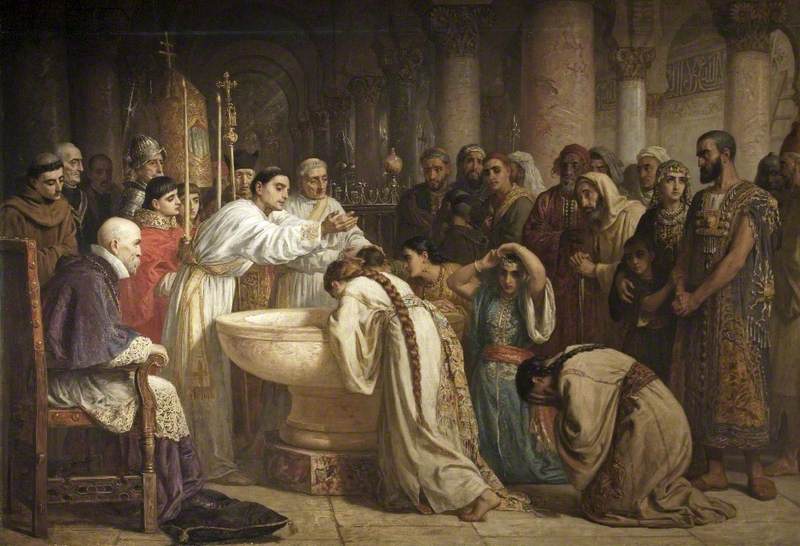



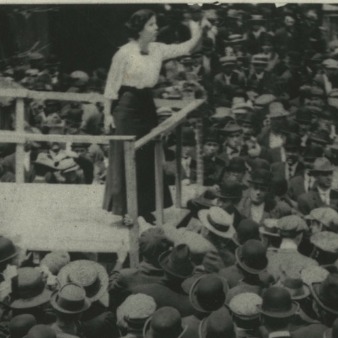
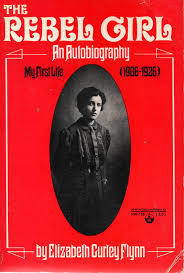
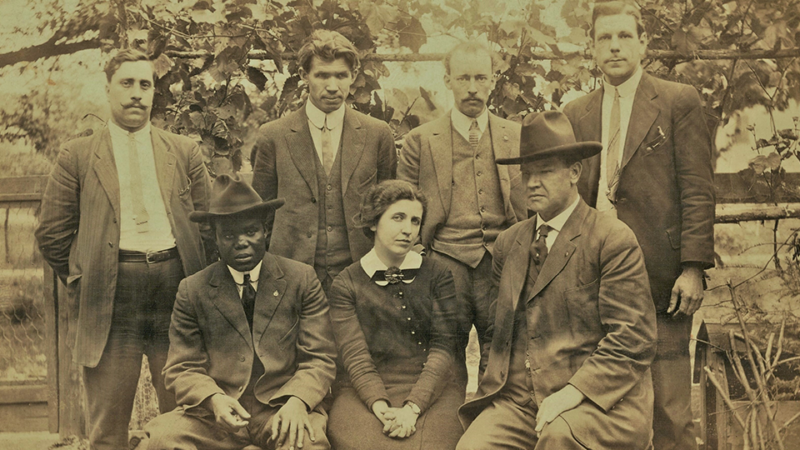
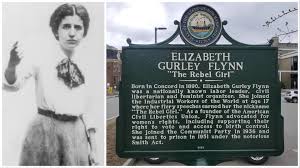


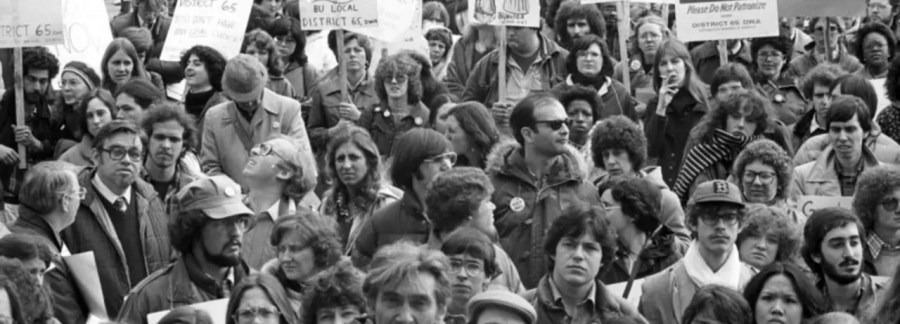


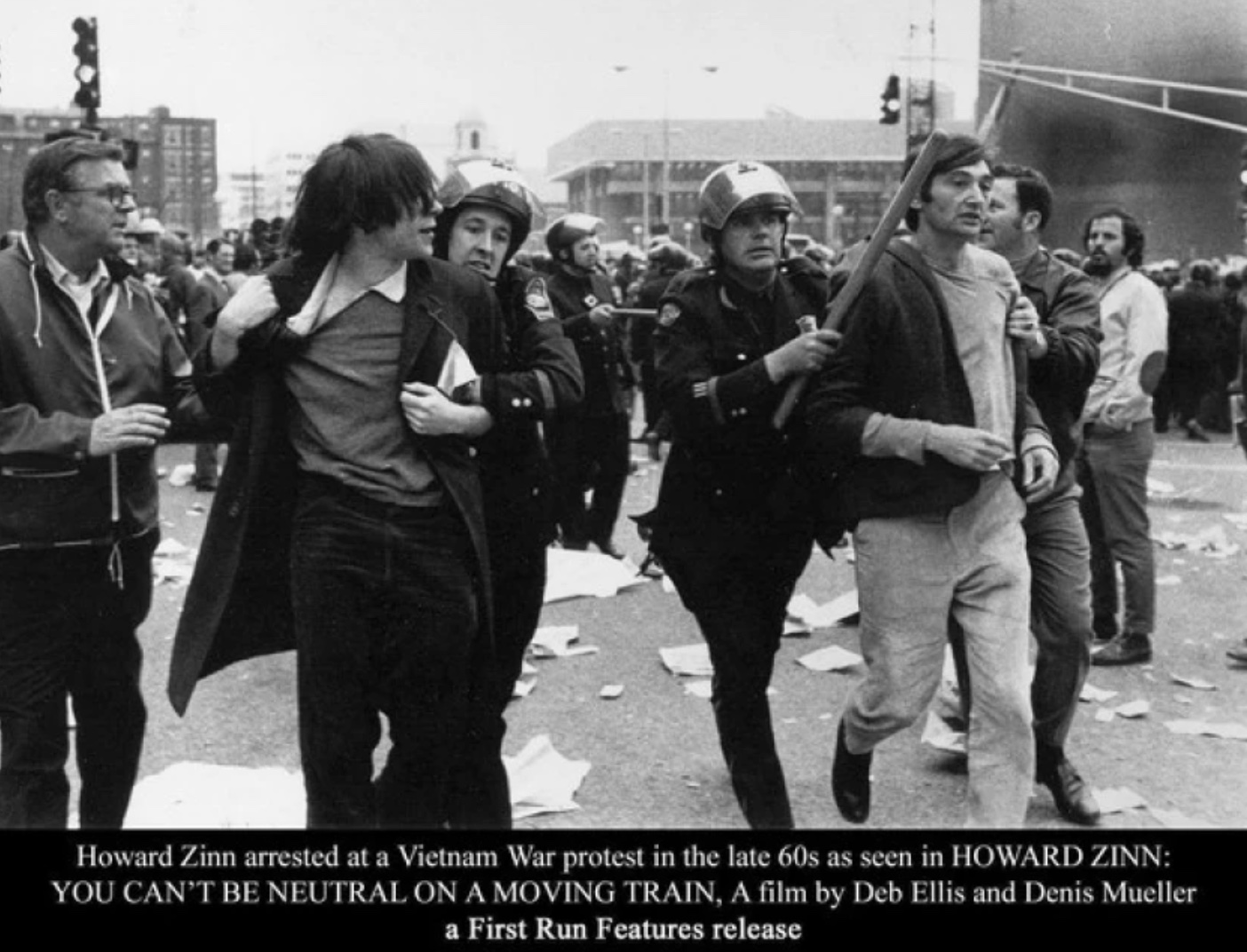


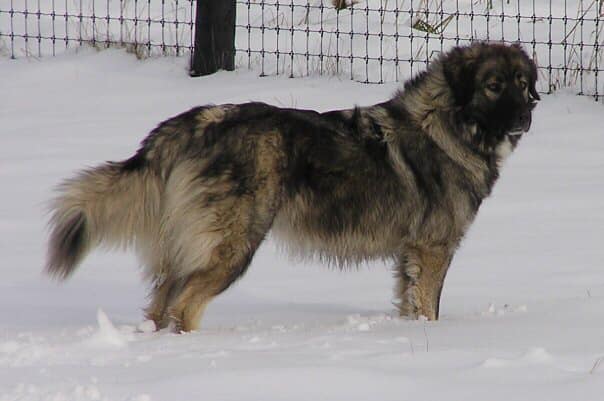


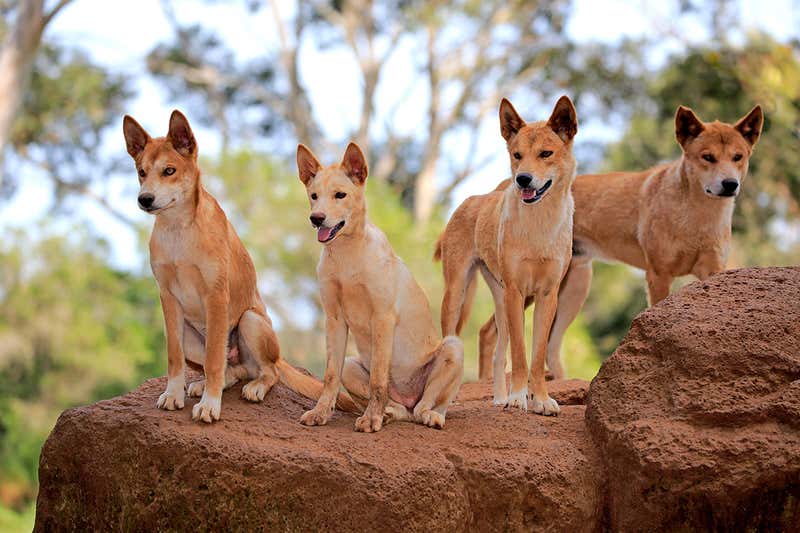

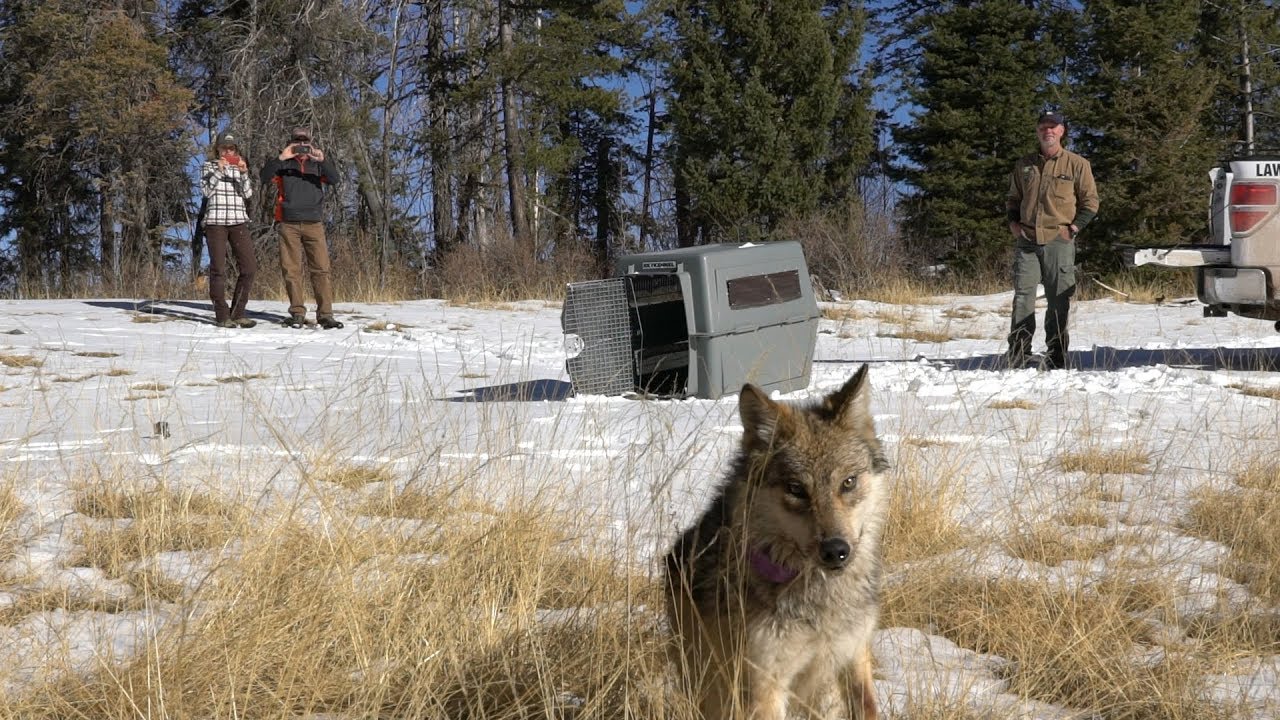

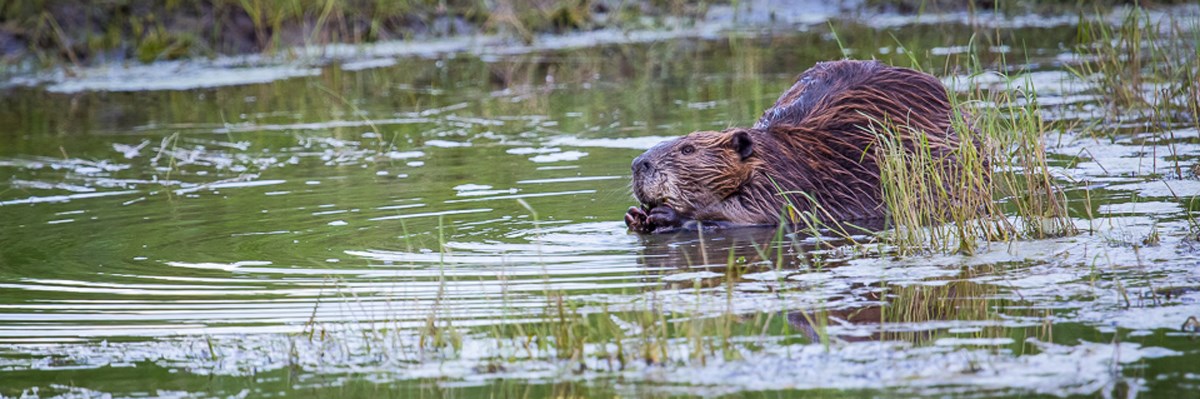

 rebelbreeze

