Replying to a query on Quora on the above question, I spent some time thinking and typing the reply and then thought I might as well make that effort available to a wider audience. I have participated in many Irish instrumental music and singing sessions over decades, mostly in London and Dublin and I have two brothers who are musicians and another who is a singer. I am myself a singer, not an instrument player, nor an academic but will attempt an answer. I would recommend consulting the Irish Traditional Music Archive and reading books on the subject such as Ó Súilleabháin’s and Ó Lochlainn.
Traditional Irish music has had many external influences and among the main forms of its dance expression, jigs, hornpipes and reels, only the latter is considered originally Irish. Polkas are particularly popular in Kerry and, I suppose, built around reels. There are also slip-jigs.
The best way to experience these is probably is probably at or viewing a set-dancing session. These are based in form on the “quadrilles” of the Napoleonic period (which can be found as far away as Latin America and Cuba) and are similar to English and US Old Timey square dancing. Probably all the variants of the Irish instrumental dance music will be heard performed among the various set-dances — virtually all sequentially in the deceptively-named “Plain Set”.
Note a number of features in this good exhibition of a part of a set: hard shoes, not trainers (one exception there) to give good floor contact and sound); also some individual flourishes in footwork and body movement etc but still remaining within the music. (Source: The Harp Irish Set Dancers)
The form of dance called “sean-nós” (see description of the singing form by the same name further down) is individual expression, fast footwork with what one might also call “ornamentations”, similar to tap-dancing. The arms are held loosely down to the side or elbows to the side, slightly extended but also loosely. The overall posture may be erect or slightly stooped.
In terms of instruments used today, not one is believed to be originally Irish except the harp (which incidentally is the symbol of the Irish state, the only state in the world to feature a musical instrument in that capacity though we are far from being the only nation with a harp tradition).
The harp is an ancient Irish instrument but also symbol and was re-used by the revolutionary and republican United Irishmen, who rose in insurrection in 1798 and 1803. The later Fenians too used the symbol in less stylised form. (Image sourced: Internet)
The harp (there two main kinds, the smaller knee-standing and the larger resting on the floor between the knees) was described by Norman travellers (spies) prior to their invasion of Ireland but were known also in Wales (observers remarked not only on the aesthetic quality of the performances but also on their speed). A kind of drum was referred to by the travellers and some kind of flute but without any detail on either. The proliferation of instruments in a traditional Irish session are therefore far from being originally Irish: fiddle (violin), uilleann pipe, flute, whistle, accordion (piano or more likely button), concertina, melodeon, bazouki, mandolin, banjo and …. guitar. This last is mostly performed as an underlying rhythm instrument, a function also of the bodhrán (a kind of one-sided drum) and one may also hear a pair of spoons or sections of rib bones played for percussion. The guitar-player is often also the singer and given space to do so accompanied by his guitar, presumably in recompense for his restriction to rhythm performance the rest of the time. In many sessions there has grown sadly a tendency to restrict the performance of song to this individual or some other in the circle of musicians whereas in the past a member of the audience would perform the song; this restriction has led to the growth of song and even voice-only sessions (such as the Góilín in Dublin).
We owe the typical instruments in traditional Irish music to northern and central Europe, the Middle and Far East and to Africa. Many other instruments have been brought into use in performing Irish traditional music (including, famously, the Australian didgeridoo) but, apart from the proliferation of variations on the whistle, they have as yet failed to win popularity among musicians.
(Image sourced: Internet)
Traditional march airs also exist and, to my ear, have a tendency to be fast for the purpose. I have speculated that these represented trotting horses of the elites or warrior-caste with lower-ranking fighters running alongside — but that is pure speculation.
There are many slow airs and waltzes, definitely an import, have been composed and are also played.
TRADITIONAL, ETHNIC
With regard to the ethnicity of the performers this is not of great relevance and Irish traditional music on instruments and in voice is being played well in many different parts of the world or in Ireland by musicians with a non-Irish ethnic background. Naturally too the Irish diaspora has spawned many excellent traditional Irish musicians (and, we can remark in passing, in many other genres too: rock, pop, blues, jazz, classical).
The term “traditional” itself can open up a debate but with regard to song, I was offered this interesting definition some years ago: “author unknown, performed over three generations.” Authorship is therefore an issue as is permanency (or at least persistency). One feature of traditional music throughout the world, according to Ó Súilleabháin is never to end in a crescendo (although occasionally one may hear a traditional song or ballad treated in this way, it is rare).
However, as with “tunes” or “airs” in instrumental music, songs are being composed all along within the traditional or folk form, sometimes re-using known airs, sometimes adapting them and on occasion composing new ones.
It is important to note that ballads are not considered a “traditional” form, having entered Ireland in the 18th and 19th centuries but they are accepted in traditional singing circles.
Ballads and traditional songs were on many themes of course but given Ireland’s history, the national struggle was bound to feature often. (Image sourced: Internet)
THE SINGER AND THE SONG
Traditional-style singers not only eschew crescendos but also, in general, bodily gestures or dramatic pauses or changes of volume. There are emphases rendered on occasion but these tend to be subtle.
A form of singing known as “sean-nós” (literally ‘old style’) exists with regional variations. From experience and perception (but without formal study) I would say that the main distinguishing feature of this form is in the ornamentation of notes, viz. drawing some out to briefly twist around them (interestingly, one verb in Irish for “play” as in instrument or “sing” is “cas”, literally “twist/ turn/ weave”) and the ending of a line may have an additional note added. The Qawwali religious music of Pakistan and Indian shares many features as does parts of the Flamenco singing, albeit the latter is loudly expressive.
In terms of the great themes of Irish song (and at times of instrumental pieces) these are overwhelmingly love, patriotic struggle and emigration, with sub-categories, including some that merge two or even three of the main themes (hear for example “Skibereen” or the waltz-air “Slieve na mBan”.
PLEASE DON’T CLAP ….
A very important element of Irish traditional and folk singing is not only the performance but also the audience. The tradition is not for choral or duet etc singing with harmonies, though these exist but rather for the single voice. In this we differ from other Celtic nations such as the Welsh and Bretons but parallel the Scottish tradition as well as some other folk traditions, including some English and USA Old Timey expressions.
The tradition has been that a singer will be heard through to the end with perhaps some sounds of encouragement at various junctures (on occasion I have observed a noisy Irish pub become suddenly silent as the customers become aware that a song is being sung, remaining totally silent until the end of the song). Should there be a chorus, listeners may join in and a well-known and appreciated line may get listeners joining in too (think for example of the last line in the non-traditional form — but often sung in sean-nós style — ballad about the Great Hunger: “… revenge for Skibereen!”).
I should mention here that accompanying the beat in traditional music by clapping is certainly not “cool”, although traditional musicians performing on stage have been seen to encourage it (presumably in order to reduce the isolation feeling of the performers and to increase the enjoyment of non-perceptive listeners). In fact clapping overcomes the nuances of the performance as well as the concentration of the listener, therefore limiting the depth of the experience. “Tap feet by all means and clap at the end if you please” is the general rule.
I must note also in conclusion that Irish/ Scottish traditional music with some English folk contribution are the main influences in not only Old Timey USA music but also bluegrass and country & western, with spillover into some other forms. As such, this fount of music is responsible for the creation of the “white” or “European-origin” popular music of the USA, ie around half of the entire body. The other half is of African origin, in blues and jazz (in so far as these are not the same thing), giving rise to rock n’roll, swing etc. But both these “halves” have naturally had an influence on the other and in Ireland, traditional music is also influenced by — and contributes to — “crossover” variations of music.
I would comment also that socially and politically Irish musicians have tended to identify to one degree or another with the people and their resistance and were often persecuted for doing so. This was natural, given that they mostly came from the Irish population and that was where they found their audience. In that regard it is sad to note that some, including the Chieftains musician group and singer Imelda May, performed at a state banquet in Dublin a few years ago for the English Queen, who is head of the UK state and of the British Armed Forces, currently occupying one-sixth of our small national territory and also invading other parts of the world.
Most tourists in Wroclaw, Poland sadly, never make it to Nadodrze, a gritty area of often run-down, gray and battered tenements far from the city’s glorious market square and the sleek, new glass buildings that have sprung up around it. Although investment poured into other areas of the city, transforming them into trendy magnets for real estate speculators, Nadodrze has been largely overlooked and had retained much of its grim East Block appearance.
Walking into Nadodrze today, most outsiders would never guess that the walls of the area’s battered nineteenth century tenements hide an amazing collection of brightly colored paintings that transform the inner courtyards behind the walls into places of rich imagination, bold design and skilled creation, evidence of the great talent of local working-class people and the Roma community who helped create them.
(Photo credit: Geoff Cobb)
(Photo credit: Geoff Cobb)
These colorful inner-courtyards are the conception of Wroclaw artist Mariusz Mikołajek, who in 2014, along with other local artists, formed the Center for Cultural Backyard Animation (OKAP)with the goal of transforming the drab inner-courtyards into a bright space all the residents could take pride in. Creating the art was a real community endeavor and the participants included everyone in the area, seniors, children and untrained adults, who all took part in the project. They set up classes first for children and then for adults. Everyone was allowed to discover his or her own painting or sculptural abilities. The locals embraced the project, pouring large amounts of time and effort into its completion. The design of colourful courtyards in Nadodrze eventually covered many other other courtyards in the once-gloomy area.
The art decorating the inner courtyards is referred to as un-murals because the art there is often three dimensional. Ceramic figures, household items and other materials often protrude out from the walls. There is also an astonishing variety of scenes and images on the walls, adding to the wonder of seeing these fantastic creations.
(Photo credit: Geoff Cobb)
The link below is for a virtual tour of one of the courtyards.
The colorful courtyards have helped the area to revitalize and the once forgotten area has now become a magnet for artists, Bohemians and students. Local residents speak with great pride about the artwork they have created. Nadodrze serves as a model for the transformative power of art to build a community.
On Friday morning passing pedestrians, public and private transport drivers and passengers on Dublin’s Finglas Road witnessed a funeral cortege in which trade union banners and flags were carried by some of the mourners. The hearse leading the procession, followed by a lone piper did not bear the Starry Plough-draped coffin which instead was carried on the shoulders of a rota of family, comrades and friends on the approximately one-kilometre walk from the home of Manus O’Riordan to service at the famous Glasnevin Cemetery.
A large crowd participated in the funeral procession composed of a wide cross-section of the Irish Left, from revolutionaries to radical reformers to sedate social democrats. Manus was well known in Irish left-wing circles for a number of reasons. At various times he had been an active socialist, a member of the very small but influential and very controversial B&ICO, a senior official in the major trade union SIPTU and an active senior member of the Friends of the International Brigades Ireland. This last owed much to the fact that Manus’ father had fought in Spain and the veneration in the Irish Left and much of the Irish Republican movement for the Irish volunteers who fought to defend the Spanish Republic against the fascist-military uprising led by General Franco and aided by Nazi German and Fascist Italy. Mick O’Riordan survived the Spanish Antifascist War and was General Secretary of the Communist Party of Ireland and the last time some of the mourners had walked this route was in the elder O’Riordan’s funeral in 2006.
One of a number of combined Spanish Republic and Starry Plough flags attached to lampposts along the funeral route (Photo: D.Breatnach)
The trade union banners marked Manus’ trade union work while another signalled his support for the Cuban Republic against the blockade imposed upon it by the USA. Two large flags in the red, gold and purple of the Spanish Republic of 1936-1939 were carried too, bearing the legend “Connolly Column” (in Irish and in English) to represent the Irish volunteers who fought against the military-fascist coup. Along the route, copies of a combined Spanish Republic and Starry Plough, attached high upon lampposts, fluttered or strained outwards in the breeze. Among the procession a number of Starry Plough flags flew also, the green and gold version of the Irish Citizen Army, along with a Basque and a Palestinian flag, the latter recalling the stand of the Basque country against Franco and the former, Manus’ solidarity with the struggle of the Palestinian people. At one point, the Catalan Senyera (flag) was also displayed, recalling that in the Ebro Offensive, Michael O’Riordan had been chosen to carry the Catalan flag across the Ebro river. A number of people also wore scarves of the Bohemian Football Club, with supporters among Manus’ family and friends.
Banner of SIPTU, the largest trade union in Ireland (Photo: D.Breatnach)
Banner of the Irish Transport & General Workers’ Union, precursor of SIPTU (Photo: D.Breatnach)
Though cold, the day remained sunny and most thankfully of all, rain-free. Upon reaching the cemetery, the coffin was taken into the chapel near the entrance at which non-religious or religious services may be chosen. Due to Covid19 restrictions, the service was reserved for family and close relatives only.
The rest of the crowd gathered outside and perhaps before 11 am a burst of applause heralded the approach of the President of the Irish State, Michael D. Higgins, accompanied by a senior member of the Irish armed forces in ceremonial uniform. The applause was no doubt in appreciation for Higgins’ appearance and due to his office but also certainly in approval of his decision not to attend a forthcoming British colonial state function to celebrate the centenary of the partition of Ireland in 1921. And also no doubt in sympathy to the controversy regarding his decision whipped up by sections of the British and Irish media and a handful of politicians, not only British and Unionist.
Another IT&GWU banner bearing a scene from Bloody Sunday 1913 (Photo: D.Breatnach)
There was an ex-president of a different kind present too, Jack O’Connor, who was elected General President of the SIPTU (trade union) in 2003 for three terms and in 2009, President of the Irish Congress of Trade Unions. O’Connor took a stint sharing the weight of the coffin and though no doubt he had his supporters in the crowd he had a substantial number of enemies in the trade union movement too, though this is not the place to speak of the reasons.
Among others who attended to pay their sympathies to the O’Riordan family and Manus’ partner Nancy Wallach were Minister for Finance Paschal Donohoe, Sinn Féin president Mary Lou McDonald and Sinn Féin TDs Louise O’Reilly and Sean Crowe.
Former Labour Party leader Ruairí Quinn, former Press Ombudsman and Labour TD John Horgan, Communist Party of Ireland Gen. Sec. Eugene McCartan and retired trade union leader Mick O’Reilly of Unite were also there.
(Photo: D.Breatnach)
After the service, some of the attendance repaired to the not very distant Maples Hotel in Iona Road, where food had been prepared and refreshments could be purchased. Even with the crowd by then much diminished, they were spread over two reception rooms and had to be fed in shifts.
Manus’ sister Brenda playing a piece on the harp by medieval Irish musician Turlough O’Carolan while his daughter, Jess read a poem by Charlie Donnelly, who died fighting fascism in Spain, “The Tolerance of Crows” and his son, Luke sang the “Roll Away The Stone” song celebrating workers’ leader Jim Larkin (a song often sung by Manus himself in the past.
Manus was a regular participant in the singing session of the Góilín where he sang songs, in some of which the lyrics were his translations into Spanish, Irish or English and some were of his own composition. He composed poetry too. Accordingly, a significant section of the attendance at his funeral was composed of singers and participants of the Góilín and it was strange to hear no song sung during the procession or among the crowd outside; however folk singer Radie Peat of Lankum sang Liam Weldon’s song Via Extasia and Gerry O’Reilly sang The Parting Glass before Francis Devin sang the socialist anthem The Internationale before Manus O’Riordan’s coffin draped in The Starry Plough was removed for cremation.. At least one occasion to pay respect to Manus’ memory is promised in the future and no doubt song will play an important part of the proceeding then.
Manus O’Riordan wrote and lectured copiously over the years on a number of topics and over time revised some of his opinions, never shrinking from doing so publicly and renouncing a previous position strongly held. All his assertions were backed by arguments in favour and never merely by assertion.
(Photo: D.Breatnach)Approaching the corner of the cemetery (guarded by a watchtower), with the coffin and procession just out of shot. (Photo: D.Breatnach)
Despite the numerous verbal battles in which Manus took part in speech and print, a number of them quite heated, he managed to remain on speaking terms with most people including his political enemies and had a wide range of friends and of people with whom he was on good terms. He lived an active and useful life but one cut short too soon at the age of 72.
There will be a number of groups and occasions where his absence will be keenly felt and of course by his family and his partner Nancy Wallach.
(Report by Jardun Koordinadora translated by Dublin Basque Solidarity Committee)
The atmosphere was tense on September 25, 2021 in Leitza due to the presence from the early hours of the morning of the Civil Guard and the secret police. To this must be added the checkpoint and identification by the GAR (Guardia Civil “anti-terrorist” Rapid Response Organisation – Translator) of many of those attending the political event organized by the revolutionary organization JARKI. In the same way, the Civil Guard had no problem in stopping and subjecting to identification those who traveled by bus organized from Bilbao and Gernika. This was not the only episode of police repression since several JARDUN activists from Leitza complain of having been followed by the secret police over recent days.
One of the posters for the event (Photo source: Jardun Koordinadora)
The event organized by the revolutionary organization JARKI gathered hundreds of people in Leitza square. Once the flame was lit, to the sound of the adarras and the txalapartaris (traditional ox horns blown and wooden percussion instrument played – Trans.), the act began, under a gigantic ikurriña (flag of the Basque Country – Trans.). Next, the dantzaris exhibited the “agintariena” (see Notes) while a gust of wind snapped the rope securing the ikurriña and two young people had to climb the pediment to hold it for the rest of the act. Later, two bertsolaris took the stage asserting with their verses independence, socialism and amnesty, as the legitimacy of the fight of the gudaris (volunteer liberation fighters).
Dancing the Aurresku, the honour dance and presenting red flowers to the memory of the martyrs of the Basque struggle for independence and socialism. (Photo source: Jardun Koordinadora)
To conclude the ceremony, a member of JARKI read a statement in reference to the commemoration of Gudari Eguna. The statement among many other things vindicated the struggle for memory of Euskal Herria, and of those who have given all in for it, thus legitimizing their struggle and the celebration of this day. He also mentioned the presence of ‘dogs’ in different uniforms that act with total impunity, making it clear that there is no type of coexistence between the oppressed and the oppressors. To the revolutionary organization JARKI this underlines a clear principle: confronting who is oppressing you and who is keeping you under their control is not an option, but a necessity.
End of the event, singing the Internationale and the Eusko Gudariak (Photo source: Jardun Koordinadora)
The act ended with the singing of the Internationale and the Eusko Gudariak.
The Gudari Eguna (Day of the Soldier) originally celebrated the Basques who fell fighting the fascist-military coup in the ‘Spanish’ Anti-Fascist War or who were executed when captured or died as a result of their prison conditions. The martyrs in the struggle against the Franco dictatorship and after required that they also be included in the Gudari Eguna celebrated in October but since the Basque Nationalist Party dominates that commemoration and excludes the later martyrs, the patriotic left movement has changed the date to the last weekend in September and celebrates all the Basque martyrs. The last weekend in September was chosen because of the Franco regime’s execution of two ETA and three FRAP volunteers on 27th September 1975.
Jarki is a revolutionary socialist organisation for Basque independence. Statement on who Jardun are: “It is an image that includes a group of organizations fighting for the achievement of the Basque socialist state, operating under common agreed ideological bases and minimums. JARDUN is a meeting place for different organizational frameworks, a movement that promotes their collaboration. To this end, it provides a common framework for the adoption, coordination and decision-making of the various organizations that make it up. Therefore, at different levels, it is a tool for solidarity between militancy, organizations and groups within it. Using these coordination frameworks, the ACTION will be made up of sectoral organizations with specific functions and well-defined roles to carry out in a sector-specific way. The aim of this sectoral framework is to promote the efficiency of the organizations, which, in turn, incorporate the Basque Country Workers’ Alternative in the field in which they work. In this way, all the organizations that make up JARDUN work within the framework of the same objective and strategic line, each of which deals autonomously with its own line of work.As long as we understand that the workers are the subject of the struggle for an independent, socialist and united Basque state. So, when we talk about the Basque Country Workers’ Alternative, we are talking about a comprehensive political alternative that meets the needs of the Basque Country Workers. Its aim is to reach all areas of Basque society as a tool for activating and organizing the critical pro-independence and socialist masses in the Basque Country. In other words, the Basque Workers’ Alternative must be a tool for confrontation that will lead us to a break with the states. Ultimately, JARDUN must be the organizational framework for the Basque Revolutionary Workers. In order to achieve the strategic goals of the Basque Revolutionary Workers, which must carry out the Basque socialist revolution, it must be a comprehensive alternative that must provide the means to carry out the necessary struggles.”
Leitza is a town in northern Nafarroa (Navarra), one of four provinces of the Basque nation within the Spanish state.
The Guardia Civil are a Spanish state-wide gendarmerie or militarised police force, armed and living in barracks. They were the physical backbone of Franco’s dictatorship and continued in a repressive political role following the “Transition to democracy”.
The Agintariena is a ‘dance’ which resembles a short military parade with ‘arms’ to music; two lines of dancers march while a flag-bearer proceeds between them. At a particular point the dancers all go down on one knee with heads bent while the flag-bearer waves the flag over them all, seemingly in blessing over the fallen in battle. A mass example in a festival can be seen in the video clip https://www.youtube.com/watch?v=kfoTmQZC_gs with the irrintzi (traditional ullulating call) thrown in for good measure.
Bertxolaris are performers of a traditional format of expression in song and rhyme on any theme. Competitions among these are held in the Basque Country in which the performers must extemporise rhyming verses on a given theme; these receive great public interest.
“dogs in uniform” — “txakkurak” (dogs), a pejorative slang name given for generations to the police in the Basque Country.
The Internationale is a song of revolutionary socialist struggle with lyrics written by an Anarchist activist in the Paris Commune of 1871 and put to music later by Marxist; it has been translated into a great many languages with examples in every populated continent. Eusko Gudariak (Basque Soldiers) is a Basque national anthem (in theme somewhat like the Irish national anthem “The Soldiers’ Song”). It was reputedly sung by ETA martyr Juan Paredes Manot (Txiki) while being executed by Guardia Civil firing squad in 1975, even continuing while mortally wounded by the first volley.
Artist Eoin Mac Lochlainn goes looking of oak galls (“oak apples”) to make the brown ink used by the Irish monastic scribes.
Sometimes it’s right there under you nose but you don’t see it. I’ve been looking all over for oak galls this last while, oak galls for making ink but no, any oak tree that I checked, I couldn’t find a single one. Until yesterday – and believe it or not, I found them here on the street where I live.
The dark brown ink used in the Book of Kells was made from oak galls. The monks used this ink in the 9th Century and it is still as clear and dark today as it ever was – so I thought to myself: I could use some of that!
Page from Book of Kells showing brown ink.
These galls form on the branches of oak trees when a Cynipid wasp lays its eggs there. The tree responds by forming a woody shell around the egg but inside, the larva continues to develop. If you see a little hole in the gall (like in the one above), you know that by now, the occupant has grown up and flown away – leaving the little gall behind for scribes (and artists like me) to collect and use to make pigment.
One recipe I found says that, along with the oak galls, you need rainwater, gum Arabic, some vitriol and 3 table-spoons of red wine. I’m not sure about the vitriol, I try to avoid the internet trolls but everything else seems manageable. I’ll let you know how I get on.
PS: someone suggested since that ‘vitriol’ might be the medieval term for iron sulphate
Thank you so much for taking the time to explain to me how I am being manipulated and why I should not wear a mask. It is true as you said that fearful people are controlled more easily and what is more fearful than an invisible danger, an alleged virus?
But the thing is always of course: controlled by whom and what for?
When you explained that I was going to be controlled by Jews that was worrying but the lizards who were going to control me (as well or instead of?) were really scary. Then the Chinese Communists, with one of the permanent seats on the UN Security Council taking over those of the other four powers – that was terrifying. And then controlling the whole EU!
It’s amazing that the secret manipulators have managed to frighten or fool nearly every doctor, nurse and medical expert in the world – must be millions of them — into supporting the hoax and masking and vaccines. Thank God we have a handful of medical people spilling the beans. Still, it’s all quite terrifying.
And the plan to replace all white people through contraception, abortion, LGBT rights is frightening too – well, I’m white of course and I don’t want to be replaced. I’ve already been replaced by a machine at the checkout desk where I worked, which was easily done since most people during the pandemic – sorry, the hoax – preferred to use the machines and pay by bank card. Of course the bosses took advantage of the situation to replace some of us but nobody warned us about that.
Like you advised, I have refused to have the vaccine because I don’t want nanobots injected into me so They can control me and see where I go and what I do – even when I’m in the toilet or the shower. I can’t understand how all those controlled people are still managing to hold protests – like about housing, or people killed by police, or for the Palestinians. It’s very confusing so you’ll have to explain that to me again.
I told Brigid (remember, next door but one) about all the antifascists being pedophiles and she said does that mean all the people who fought against Hitler and Mussolini were pedophiles too? Then she said some disrespectful things like if you’re really concerned about pedophilia how come yous are always defending the Catholic Church? When I told her about Hillary Clinton running a pedophile ring from above a pizza restaurant, Brigid just burst out laughing so hard she said she’d have to go to the toilet. When she came back, she asked if John Kennedy and Bill Clinton couldn’t even keep their affairs secret from the public, how would Hillary Clinton manage to run a whole pedophile ring and keep it quiet? I didn’t know what to say and felt quite stupid. I wish you’d been there to answer her.
Brigid’s nephew has been wearing a mask in public since the authorities advised it. He got 99% in one of his exams and mostly around 90s, so I was wondering about that Dolores Cahill saying our children would end up stupid through inhaling carbon dioxide. Then I was wondering whether Brigid was lying or being manipulated. Or her brother, the boy’s father, was. Or the school, faking the results. Or the Government forcing the school to fake the results and fool the father and the son.
So anyway I’m confused and frightened. Tell me what to do, please.
(Changed headline andtranslated from article in Publico.es by D.Breatnach)
(Reading time main text: 7 mins.)
Franco’s repression in Fregenal de la Sierra executed more than 80. Now, a second excavation seeks to recover the bodies of those who did not come to light in 2012, when the skeletons of 43 victims were recovered. The remains found indicate cruelty towards women, disrespecting them even after they were shot.
Central plaza Badajoz, probably influenced by its Moorish heritage — what the tourists are advised to see of Badajoz. (Photo credit: Stephen Colebourne via Wikipedia)
When they gave her the jacket of her son, who had just been shot, she lost her speech. She was like this for two and a half years, in silence, until she died. The father, a lifelong labourer, said on his deathbed that he bequeathed his little house to his five children. “You only have four,” one of the witnesses told him. “Until they give me the body of my son, I still have five,” replied the man. They were the mother and father of Juan Serrano García, shot in September 1936 in Fregenal de la Sierra (Badajoz1), when the rebels tricked him into returning: “They said that all those who had not committed crimes of blood, would be free of reprisals,” adds Andrés Serrano, representative of the Association of relatives of the executed from the town and Juan’s nephew.
His body was found in 2012 in a mass grave in the town’s cemetery along with 42 other bodies, although many more are still waiting in the ground. At that time, there were seven graves opened. Now, five more are uncovered to try to account for the more than 80 murdered by Franco’s troops of which there is a record. Among the bodies there is an unusually high percentage of women for the situation, points out Laura Muñoz-Encinar, archaeologist and forensic anthropologist at the Institute of Heritage Sciences (Incipit), attached to the Higher Centre for Scientific Research (CSIC), and who is participating in the exhumation.
The forced and almost physical silence of Juan’s mother testifies to the decades and decades of internal repression of the thousands of victims of the Franco regime. So much so, that Serrano learned about the story of his uncle obliquely from his mother, the political one of the family. She did not tell him directly: “An anthropologist friend wanted to interview her for a job, so I took the opportunity and told him to ask her about what happened in the Civil War. I hid in a room next to the terrace, where they were and thus I was able to hear first-hand and for the first time in my life about the execution of my uncle, the hardships my grandparents went through and the stigmatization my family suffered for being, for everyone else, ‘reds’ “, related the historical memorialist at 68 years of age.
Massacre by the fascist-military in the Bullring in Badajoz 1936, artist unknown (image sourced on Internet)
They were in a hurry to kill them
The case of Juan, a militant in the UGT2 and of socialist sympathies, assassinated at the age of 21, is just one more. In Fregenal, more than eight dozen people who were related to politics and social struggle during the Republican period were executed. Located in Badajoz, many townspeople joined “The Column of 8,000”, coming from the north of Huelva, to flee from the fascist barbarism between the air raids. The troops took Fregenal on September 18 and three days later Juan returned to the town together with another comrade. They thought that nothing would happen to them, because they had not committed any blood-crime.
“They arrived at 10:30 in the morning and at 11:15 they were both arrested. They were taken to jail, and no matter how hard my grandparents tried to intervene with some powerful people from the town to save him from being shot, on September 22 he was murdered”, relates Serrano. The same thing happened a few meters away, in those days, in the town square: “They shot about four people in the center of town; it was an exemplary shooting. They wanted to increase the fear that there was already,” he says.
That same September 22nd, Juan’s parents had already guessed the worst. They knew that their son had been detained and that the Francoists had no mercy. Their suspicions were confirmed when, a few hours later and for greater confirmation, they were given the jacket that their son had been wearing. According to Serrano, the rebel soldiers also told them that they should stop searching, that they already knew where he was, and not to bother people, referring to the people to which they had gone to ask for compassion for their young son.
The first exhumation: 43 bodies
More than 70 years later, the team to which Laura Muñoz-Encinar, the archaeologist belongs, arrived. It was 2010 and they couldn’t start the excavation for two years. After the surveys and a research project approved by the Ministry of the Presidency, they excavated seven mass graves. “There were men and women. They were from young to very advanced ages. Among the seven women we found, one of them had a full-term fetus of between 7 and 9 months,” explains the Incipit scientist.
A bullet found in the mass graves excavation in Fregenal de la Sierra this year. (Photo credit: Laura Muñoz-Encinar)
The change of central government in 20113 meant the cancellation of the funding allocation related to the investigation of what happened during the Civil War and the Dictatorship, so they had to wait nine long years until they were able to return to the town. Muñoz-Encinar explains that “During this time almost all the children of the victims, of which there were many, have died. There is only one daughter living, María Lobo Villa. The Francoists executed her mother, three uncles and a grandfather. Now, mainly, grandchildren and great-nephews and great-nieces remain. “
In that excavation they found the body of a woman buried between two men, something recurring according to the expert. Once again, and as always, they got the worst of it. This is demonstrated by what happened to Antonia Regalado Carballar, known as “La chata carrera” (“the flat racer”?-DB). A 22-year-old political activist, this woman transgressed the traditional roles of the patriarchal culture of the time. “They detained her and took her to the cemetery. There they physically and psychologically abused her, and several of them raped her. After killing her, said the undertaker, they put her in the ditch between the bodies of two men,” Muñoz-Encinar explains further. Serrano adds what the rebels who were there said, as the gravedigger recalled, “As men tempt you, there you have men for your whole life.” They haven’t found her body yet.
This type of symbolism, highly contemptuous for all victims and sexualized in the case of women, is not an isolated event. “In the current excavation we have already found a body face down. In a Judeo-Christian culture like ours, the placement of the bodies responds to a ritual of elevating the soul to heaven, that is why the bodies are placed face up and with the limbs stretched , and not doing it like that is a post-mortem humiliation”, the archaeologist explained.
Killed without trial years after the War
She herself points out that all the remains already found and those they are still looking for were civilian victims of extrajudicial repression, executed on the basis of the war party in force from 1936 to 1948. That is that, almost ten years after the end of the war, it was still possible to execute civilians without the need to bring them through a judicial procedure. That is what happened in Fregenal de la Sierra in 1946 to a party of guerrillas4. This is how Muñoz-Encinar relates it: “We know that they were fighting in the mountains, that they were pursued, until one night they entered a brothel. There they were betrayed and, after a scuffle, they were arrested. They were murdered, their bodies were exhibited in the street entrance to the cemetery and then put in a grave.” Also victims of extrajudicial repression years after the Civil War ended, the team of experts does not know if their bodies will be in the five graves they are currently studying and in which they have already found three bodies.
Human remains uncovered in 2012 excavations in Fregenal de la Sierra, Badajoz. (Photo credit: Laura Muñoz-Encinar)
End report.
COMMENT:
By Diarmuid Breatnach
The Spanish state territory holds more mass graves than any country in the world with the exception of Cambodia. Most of their occupants were killed during the Spanish Antifascist struggle with or without a military court hearing outside of conflict zones, that is to say, either in the rear areas of the fascist-military forces, i.e areas already safely conquered. In some of the areas, there had been little or no military resistance whatsoever but that did not halt the arrests and executions. And after the conclusive defeat of the Republic, the executions continued. Many victims, perhaps even the majority, had never even fired a gun in defence of the Republic but were considered enemies of the fascist State through their support for the Republic, their political ideology, social attitude or sexual orientation.
Photograph taken of massacred bodies in Badajoz before they were burned and buried (Photo sourced: Internet)
The punishment was not always a death sentence but people died also in prison due to massive overcrowding, disease, inadequate food or clean drinking water, water for washing or inadequate medical care.
Despite the frequent assertion that the 1936 military-fascist uprising against the elected Republican Government was to “restore Christian values” and was supported by most of the Spanish Catholic Church hierarchy, rape of women and girls was frequent, whether they were afterwards shot or not. This was widely attested in evidence by victims, witnesses and even some war reporters.
Those who survived or did not go to jail faced constant harassment, confiscation and theft of land, animals and produce; fines and public humiliation, in particular the women who were force-fed laxatives and then paraded in nightclothes or underclothes through the neighbourhood, sometimes to the doors of the Catholic church, unable to control their bowels as they walked.
Babies were also taken from murdered supporters of the Republic and later from working class women (who were told their baby had been stillborn) and given to childless fascist couples. Children of the “Reds5” were taunted at school and insulted by teachers.
After its sharpest form abated the repression nevertheless continued throughout the nearly four decades of the Dictatorship and it was extremely dangerous to even speak of disinterring the mass graves and reburying the victims in dignity, not to speak of honouring them as antifascist martyrs. Even after the death of Franco and the Transition to an alleged democracy, many kept silent to protect their families. Schools suppressed the history6. Murderers and torturers were not prosecuted. Thieves kept what they had taken. The ruling class consisted for the most part of supporters of the fascist-military uprising and their descendants and they thronged the civil service, military, police, judiciary, church hierarchy, media (State and private), the education system – along with many businesses and a number of political parties.
More recently, the work of generations of those keeping the historical memory alive, investigating, speaking, marking areas, even disinterring on their own initiatives, is bearing fruit. The Law of Historical Memory, passed through the Spanish Parliament under a social-democratic Government in 2007 helped for a little while but then fell into disuse under the PP Government, though it was not abolished.
Its renovation in 2020 by the PSOE-Unidas Podemos coalition has spurred more excavation bu the Law and its renovation had been preceded by the work over decades by volunteers of historical memory associations in many different parts of the State, such as the Basque Country, Catalonia, Asturias, Galicia, Andalucia and Madrid. The associations have been assisted by forensic experts working voluntarily. This work has helped create the political-social-cultural atmosphere in which in October 2019 the long-promised removal of the remains of the Dictator General Franco and the leader of the fascist Falange, Primo Rivera, took place from their fascist mausoleum in the Valle de Los Caidos7 (“Valley of the Fallen”, a fascist monument constructed with prisoner labour and a shrine for Spanish fascists).
Nevertheless the renovated Historical Memory Law, or its program posted by the Government, has been criticised by relatives and other historical memory activists, because it rules out any reparations. They are bitter that most of the known torturers, murderers and rapists died natural deaths without having faced even a trial and their accusers8 and that not only do their families hang on to their ill-gotten gains but that the State does not acknowledge its duty to the victims. The State itself, or one of its departments, is also engaged in a judicial-political struggle to recover from organisations and families some properties, including national monuments and one of them of UNESCO World Heritage status. Some local authorities face prosecution and reductions in allocation of central funds because they are holding on to commemorative signs exalting Franco or someone of his supporters.
Of course, the fascists and most varieties of the Right in the Spanish polity are angry at these events and link them to the struggle for Catalan independence as fatal to the Spanish State; they demonstrate and threaten a coup or some kind of repercussion, retired Army senior officers sign declarations and some rattle their sabres in public, the spokesperson of the Franco Foundation reminds the current King Felipe that it is entirely due to Franco that his father became monarch (which is true and Juan Carlos also swore allegiance to that regime, an oath which he never recanted).
Even some liberals are uneasy, feeling that “it’s reopening old wounds”, to which the relatives of the victims and others reply: “the wounds have never closed.”
2Unión General de Trabajadores, a general workers’ union allied to the social-democratic PSOE party. The union was outlawed by Franco and many of its supporters suffered imprisonment or even execution or murder without trial. It is one of the largest unions in the Spanish state today and the PSOE is one of the traditional parties of government.
3In that year’s General Election the right-wing Partido Popular won a landslide victory against the PSOE and the political climate changed considerably. Both the PP and the PSOE support the unionist and monarchist Spanish Constitution but the PP contains a harder Right, including supporters of the Franco regime and memory and outright fascists, some of which have split off at times to form the right-wing Ciudadanos and fascist Vox parties.
4Guerrilla struggle persisted in parts of the Spanish state after the defeat of the Republic, in some cases for decades.
5To sustain the fiction that they were fighting against “Communism”, (no doubt believed by many), those leading the fascist-military uprising constantly referred to their enemies as “Reds”. Some of course were but the Republic was also supported by Basque, Catalan and Galician nationalists, democrats, social-democrats, revolutionary socialists, anarchists, libertarians and anarcho-syndicalists. The foreign press mostly referred to them as Republicans (sometimes as “Government supporters”) and the fascist-military side as Nationalists (sometimes as “rebels”). Communists, revolutionary socialists and anarchists predominated among the foreign volunteers who joined the Republican forces through the International Brigades and other routes (for example, Orwell, a member of the Independent Labour Party, fought with the mostly Trotskyist POUM) but they also included socialist Republicans from Ireland for example along with simply dedicated antifascists.
6Indeed, writing a review of the city history this very year, the author skips from 1921 to the 1970s, missing out the entire Antifascist War and the Massare of Badajoz, in an article featuring photos of the bullring where much of the massacre took place! https://www.hoy.es/opinion/peldanos-historia-20210110005509-ntvo.html
7An event covered in detail on Spanish TV in the style of a state funeral.
8Notable exceptions were Melitón Manzanas, Commander of the Political-Social Brigade of the Guardia Civil, a notorious torturer and Nazi collaborator, assassinated by the Basque armed group ETA in San Sebastian/ Donosti in 1968 and Admiral Carrero Blanco, Franco’s nominated successor, also assassinated by ETA in Madrid in 1973. Manzanas was awarded posthumously the Medal of Civic Merit by the Aznar Government in 1998 as “a victim of terrorism”.
“WELCOME TO REFUGEES” EVENT SANDYMOUNT 3 SEPTEMBER 2015
Diarmuid Breatnach
(Reading time: 3 mins.)
On 13 September 2015, six years ago a remarkable event took place on the strand in Sandymount (Dumhach Trá) in Dublin (Baile Átha Cliath), of which I have been reminded by the Facebook anniversaries function. I wrote a short report with photos for a FB album at the time but it deserves a more easily accessible record on Rebel Breeze. Text from the album follows:
WELL OVER A THOUSAND PEOPLE (that will be just “several people” for RTÉ1), gathered at Sandymount strand today to spell out the message “Refugees Welcome” on the sand.
The day looked bad earlier with rain and, at the original time set, was still raining. But due to tide conditions, the start time had been set back an hour and the rain had stopped and there was even some intermittent sunshine as the crowds assembled.
I had to strip off rainproof clothes under which I was already sweating. Starting was slow and some singers tried to keep us entertained as we waited. We were also led in shouting some slogans — all in English (would using the word “Fáilte” have hurt?). We were each assigned to a column behind the letter we were going to spell out.
Section of the crowd standing on the wet beach, formed up in their letters. (Photo: D.Breatnach)
Eventually we were led off by our letter-leader to a spot marked out in the shape of the letters by string tied to pegs stuck in the sand. We shuffled into shape obediently.
A drone flew over us filming (I had unpleasant associations with the word, especially in a US-Syria context) and then we all had to be reformed, as according to the drone operator, the letters didn’t look right. So yes, we all became reformists .
Drone in the sky — refugee-friendly one for a change (top right). (Photo: D.Breatnach)
Then it was finally right, the “heart” had to be reformed too — it was bleeding people out at the edges. Finally, we were judged to be right, waved to the drone, film was taken.
Then the organisers thought it would be good for us to “scatter” for the film effect. We did, kind of, a half-hearted scatter …. nothing like we would have done from incoming ordinance. And then we went home.
After standing in the wet sand I discovered that dubbin did not keep the water out of my boots and, no matter how much knocking of boots together, I still had some sand on them when I got home. Remember how you always managed to bring some sand home from the beach, no matter how hard you tried not to?
The event followed on the more than two thousand (“hundred” according to RTÉ) who gathered at the Spire yesterday to extend the hand of welcome to refugees fleeing murder and even sexual slavery (by ISIS); a counter to the xenophobia and especially Islamophobia which had awoken echoes of the anti-Irish Catholic rantings of Cromwell and his kind in the 15th Century. Well done to the organisers and those who turned up to support the event.
Wide view of Sandymount beach as the “letters” break up (Photo credit: uncertain)
POSTCRIPT:
A lot of organisations had put their name to the event but effectively it had been organised by a coalition of ENAR Ireland (now Ireland Network Against Racism), Migrant Resource Centre Ireland and Irish Refugee Council — maith iad in conception, planning and execution.
Section of crowd forming up on their letter-group prior to going out to form up on the wet sand for the aerial photos. (Photo: D.Breatnach)
As though their traumal from the cause of leaving and its own pain were not enough, many die in the attempt. Thousands of refugees have died trying to reach Europe, most of them in the Mediterranean. Those who survive face racism and ghettoisation.
“From January to June 2021, it was estimated that 827 migrants died while crossing the Mediterranean Sea. In 2020, the number of deaths amounted to 1.4 thousand. However, the accurate number of deaths recorded in the Mediterranean Sea cannot ascertained. Between 2014 and 2018, for instance, about 12,000 people who drowned were never found”.2
Casualties and missing people
“Worldwide, it was estimated that eight thousand people died in the attempt of fleeing their country. According to estimations, over five thousand refugees lost their lives in the attempt to reach the European shores in 2016. Therefore, the Mediterranean Sea was the deadliest migration route. Indeed, over the last couple of years, the Mediterranean Sea held the largest number of casualties and missing people”.3
Western, Central, and Eastern route
“According to migration studies, the Mediterranean Sea is crossed by a Western, a Central, and an Eastern route. Out of these routes, the Central Mediterranean route was the deadliest. In 2016, roughly 4,6 thousand people lost their lives while pursuing this route. Sadly, the identification of bodies is challenging due to the sea. In 2019 for instance, the vast majority of refugees who drowned in the Mediterranean were not identified and their country of origin was untraceable.”4
Aerial view of the letter-volunteers on the sand photographed from the drone (Photo credit: Stephen Kingston)
REMEMBER
Remember? Remember when we were migrants?
Remember when we fled murder and rapine
and many another terrible scene
When death and torture were at hand
and we sought succour in other lands?
Remember?
Remember when our little nation
was devastated by starvation.
disease and desolation,
our hope in emigration ….
Remember?
Remember when we died by
mountain, valley and sea
or we braved
the rolling waves
to go where we might be free?
Remember, oh do you remember?
Escape, the vote,
in leaky boats
in anything to float,
fear in throat,
today they launch
for our shores.
Remember?
We must remember!
Diarmuid Breatnach
End.
Side view of the crowd that formed the “heart” on the sand (Photo: D.Breatnach)
FOOTNOTES
1Radió Teilifís Éireann, the state broadcasting service.
In Henry Street on Saturday I stopped to contribute to a fund-raising event for a child to have an operation in the United States. I was partly motivated by remembering when a granddaughter of mine, Caitlin Rose, needed to go to the US also for a special operation. I remembered too how generous people had been to my fund-raising for that objective. I had no idea when I stopped in Henry Street that the girl, Sienna, was heading for the same surgeon who had operated on my granddaughter Caitlin Rose some years ago.
Dublin Fire Brigade truck parked at Henry Street/ Liffey Street junction for the fund-raising event. (Photo: D.Breatnach)
Sienna in June (Source photo: Sienna’s family)
Men from Dublin Fire Brigade were doing the fund-raising, their fire truck carrying big posters advertising the campaign. One of them told me that he does a number of charity fund-raisers a year, always in Henry Street, where he finds the response of the people supportive. They don’t get time off from work for this activity and he would be heading into his Blanchardstown Fire Station that evening for a 12-hour shift.
One of the Dublin Fire Brigade firefighters fund-raising in Dublin’s Henry Street for Sienna’s operation on Saturday 11th (Photo: D.Breatnach)
Another of the firefighters taking part in the fund-raising for Sienna on Saturday in Henry Street. (Photo: D.Breatnach)
As I stopped to take some photos, I noticed a woman wearing a fire-fighter jacket and went to talk to her, asking how many women were now in the Dublin Fire Brigade. But she wasn’t a firefighter — she was the girl’s mother and only wearing the jacket on loan for the occasion. Chatting to her I discovered that her daughter Sienna is heading to Louisville, USA, to be operated on by Dr. Park, just as was my granddaughter some years ago. When Dr. Park first pioneered it, the operation was a startling new one and, though it is now available through the NHS (Caitlin Rose lives in London) and the HSE, for some reason the recovery time is much slower than under Dr. Park’s treatment.
In the most crude and simplified explanation, in SDR operation the surgeon opens the patient’s back to test which of the sensory nerves are pulling limbs taught and — cuts them! It sounds scary and crazy even but when one sees the results ….!
Dr. Park, a US-based surgeon from Korea, perfected this operation which he carries out in Louisville, Kentucky. Of course, lots of other work is required, including physiotherapy, exercising and often, orthopaedic surgery to correct bone deformity, etc. On 15th November 2018, Dr. Park performed his 4,000th SDR operation.
Lesley Ann, Sienna’s mother, taking part in the fund-raising in Henry Street on Saturday (Photo: D.Breatnach)
The cost of the operation, for the flights and the accommodation for the parents while the child is in treatment, time off work – all this is piles up frighteningly high. My daughter, my son-in-law and my son all organised fund-raising events and I was lucky that singers and musicians here supported two fund-raising events I organised, with support from Club na Múinteoirí here in Dublin — and that so many bought tickets. Before the operation, Caitlin Rose could barely walk; now she can even run and dance a bit, ride a bike, etc, and go to school on her own.
I hope at least as much for Sienna.
And that the same operation at the same level of effectiveness be available to all people in Ireland without having to fundraise or leave the country to access it.
Language is many things and only part-things too and languageS are only part of languaGE. All humans have it to some extent and some animals also. It communicates but it is not in itself communication. That might sound weird until you realise that when you say Ouch! or Oh! you have usually communicated pain or surprise to anyone within hearing but without any intention of doing so. So language must be intentional communication and that means it can be used to communicate information we believe to be true — but also that which we do not. I think it was Umberto Eco who commented to the effect that if you can’t lie in it, it is not language.
Of course, we do other things with it apart from just communicating our sense or reality or being deliberately false – we can add overtones of emotion, playfulness, disdain, love, respect, hate and many other things besides. If we could not, poetry, acting and novels would not exist in our cultures.
NON-VERBAL
It is strange to think that language is only the minor partner in a human communication system. We are told non-verbal communication is 73-91% of our communication1 and that that words are only part of even the verbal – which contains – apart from non-verbal sounds — also articulation, volume, tone, pitch, speed, rhythm and the pauses in between words or phrases. If we understood only words themselves we would stumble through interactions with other humans as through a mist. There are people who suffer something approaching that condition, in fact.
Despite its comparatively minor role in communication, we relate language to the spoken and intentional communication by the very name we give it: language, from langue, French for “tongue” and indeed in slightly archaic English, we use the word “tongue” also, as in “speaking in tongues” or “in a foreign tongue” for example. Not just in English – for example in Castillian (“Spanish”), lengua and Irish, teanga.
But there are other words too, even in those languages, for example idioma in Castillian and béarla in Irish. Wait a minute, doesn’t béarla mean the “English language”? With a capital letter it does, as we use it now but originally it was Sacs-bhéarla, i.e Saxon language2. I would hazard a guess (but avoiding doing the research) that the word “béarla” is related to béal, i.e “mouth”3. So, still something spoken and the German has that too, with its word for language: sprache (from “speaking”).
Not all languages are spoken and there are systems of codes and also sign languages, of which there are an estimated 300 in use around the world4, divided into deaf sign languages, auxiliary sign languages and signed modes of spoken languages.5 We all use auxiliary sign language, for example in traffic signaling to turn left or right, in pointing “over there”, in indicating “come” and “go” and to insult (various in different cultures) along with “maybe” or “sort of” (hand outstretched palm down, level, then wobbled a little one side to the other). We use a surprising number of those if we stop to count them and those are only hand-signals, without taking into account soundless movements of head, lips, eyes, eyelids, eyebrows, shoulders ….
One of a number of alphabet sign languages, this one two-handed. (Image accessed: Internet)
Some work-trades or specific operations have their own signal-systems too and, for example, in sub-aqua in Europe at least, the “thumbs up” doesn’t mean what it does on land but rather the need to swim to the surface.
My brother Oisín expressed the interesting speculation that the Irish pre-Roman letters system of Ogham could have been used as a sign language also, using the position of fingers across the face. As the European invasion into parts of America pushed tribes out of their traditional areas, many met on the Great Plains and, lacking a common spoken language, developed a common sign language. Early European traders, hunters and explorers learned parts of that sign language too.
Many animalsuse sign communication and some of it, in animals of higher intelligence, is intentional,6 which means it is language. However we run into problems with that qualification in some cases: bees are not animals of higher intelligence and yet a worker bee acts out a “dance” to indicate to the hive where much nectar and pollen may be found, direction and distance included and clearly the communication of information is intended. However, one supposes that while the bee could not lie, those animals of higher intelligence have the ability to do so, for example pretending nothing is wrong (when it is) or that they have not just transgressed some prohibition (when they have) or that they do not intend to do so (when they do).7
A cleaner wrasse enters the mouth of a cod to remove its parasites; the cod holds its mouth open until the cleaner finishes. But the cod also comes to the ‘cleaner station’ and indicates its wish to be cleaned by remaining stationery and wobbling slightly from side to side. (Photo accessed: Internet)
There are, as we are all aware, many different spoken languages in the world but we may still be surprised by just how many: 6,500 according to one on-line source and 6,700 to another8. One state or country alone may be host to many; ask for a phrase translated to Nigerian language and you may be asked to specify which of over 500 languages you mean.9
And then there are dialects, distinct forms of the same language. People learning Irish sometimes complain that Irish has four (or five, by some calculations) main dialects: different words for the same things, distinct pronunciations of the same words ….. They rarely reflect on the different dialects in the language to which they are accustomed: for example, English may have the most dialects in the world, across English-speaking countries and even in Britain (anyone who doubts this should listen to typical examples of Newcastle, Glaswegian and South London speech). The English imposed a southern dialect as their standard but although a standard has been created in Irish too (an chaighdeán) it has official versions in the main dialects, in addition to non-standard Irish forms being recognised as valid in writing. This may make learning Irish seem more difficult to a learner but, apart from the respect this shows to different regional cultures, one might ask how well learning standard English equips one to exchange communication effectively at certain societal levels in many of the English-speaking cultures of the world.
Map of language groups in Nigeria (Photo accessed: Internet)
ONE WORLD LANGUAGE?
The Christian Old Testament (also containing a number of Hebraic texts) gives us the fable of how those who in their arrogance tried to build a tower to reach God were inflicted with so many languages that they could no longer understand one another, thereby causing the failure of the project. The fable is usually called the Tower of Babel (the words “babble” and “babbling” are supposedly not derived from it but I wonder). The fable seems a harsh judgement on the value of different languages in the world but even some atheists have expressed a wish to have only one language so that we could all instantly understand one another – and some socialists are not free of this notion and consequently disdain national cultures and languages.
As different cultures met one another across the world some types of languages in common have evolved, generally categorised as either pidgins or creoles. Both kinds are composites of two or more languages but a pidgin remains a second language while a creole becomes a mother tongue10. “Pidgins have been particularly associated with areas settled by European traders; examples have been Chinook Jargon, a lingua franca based on an American Indian language and English that was formerly used in Washington and Oregon, and Beach-la-mar, an English-based pidgin of parts of the South Seas. Some pidgins have come to be extensively used, such as Tok Pisin in Papua, New Guinea and the pidgins of the West African coast11.”
Traffic sign in Tok Pisin, one of the world’s pidgin languages (Photo accessed: Internet)
We know also of the past existence of a north-sea maritime pidgin that included words in Euskera (Basque) and Nordic and no doubt others have existed, probably at different times Phoenician or Greek or Chinese-based. Certainly there was a Norse-English-Irish one in existence which became a creole. Perhaps for a short while there was an Irish-Norman one too, before most of the settled Norman conquerors became Irish-speaking12. The Jewish community languages of Yiddish and Ladino probably started off as pidgins but became creoles, based in the first case on German and the second on archaic Spanish.13
Kouri-vini is a French-based creole spoken by less than 10,000 people mostly in the USA state of Louisiana.14Patois, Patwah or Patwa is a Jamaican Creole spoken in Jamaica and among parts of its diaspora15. “Notable among creoles is Haitan Creole, which grew primarily from the interactions between French colonists and enslaved Africans on Haiti’s plantations.”16 The Irish Traveller language, Shelta,Cant or De Gammon is also a creole, containing words from Irish, Latin and Romany as well as English.
ONE WORLD LANGUAGE?
To have a world language in addition to others would be no bad thing of course and there have been some attempts at that but never one that succeeded in encompassing the whole world; English has probably come closest, so far. That language had the earlier backing of the largest colonial empire the world has ever seen, the British but now primarily has the backing of the world’s strongest super-power, the United States of America17. In the past, English competed for world cultural dominance with French and both were agreed as official languages for shipping and air transport based sorely on the colonial power of both states rather than the number of speakers, in which case Chinese and Spanish would have been chosen. In earlier times, German was spoken over most of central Europe from Poland to Germany and in the Tyrol. Still further back in the past, Latin, because of the power of Rome and Greek, partly through its earlier colonisation but also through its science and culture, were widely spoken across large parts of the world. Still, even in the Roman Empire, many spoke only a few words of Latin, even in Rome itself at the height of its dominance, where Greek and Hebrew might be more common.
States where English is the official language (Image accessed: Internet)
Before its conquest by Roman legions and the destruction of its culture, a Celtic language or group of languages known as “Gaulish” was spoken from what is today the Italian side of the Alps to what is now northern France and possibly variants of it also in Iberia. Today, Gaulish is gone and of the Celtic languages, only Irish, Scots Gaelic, Manx (the Q-Celtic group) and Welsh, Breton and Cornish (the P-Celtic group) remain. Latin is no longer a spoken language.
Esperanto was conceived of as a world language, though largely euro-centric in origin and for a time was popular as a project with many socialists18. It is still in use but estimates give us a figure of only 100,000 speakers at present19. However that number may grow, through the Internet for example and as a project to internationalise ease of communication while at the same time resisting the current linguistic dominance of the US empire.
Even within one state, the need for a common language may struggle with the claims of different languages or even varieties of the same language. For example many different languages and varieties of language were spoken across what is now Italy and the unification of all that variety into a one-State Italy was assisted by the imposition of standard Italian20.
Huge states with many languages on the African and South Asian continents have adopted the languages of their colonisers as languages of state, which is why so many people from those parts of the world can speak English in addition to their native tongues (or French, especially in parts of Africa).
The adoption of a common language for use across different cultures and languages has its advantages but also its dangers, in particular for those languages that find themselves at a power disadvantage. Those languages may suffer a lowering of respect among speakers of the dominant language and, in time, even among their own native speakers. They can struggle with reduced resources in education, publishing or physical resources in their heartlands. They can even be forbidden and their speakers punished.
REPRESSION OF LANGUAGES
In fairly recent times child-speakers of Welsh and Irish were punished in school for speaking their maternal tongues, one example being the count of physical blows to be inflicted by a teacher for the number of words spoken in the forbidden language. That was an expression of the cultural domination of British colonialism through the English language21 in the respective conquered nations and it has a history dating back at least to the 14th Century in Ireland when a number of attempts were made to prevent its settlers from speaking Irish.22
Euskera (Basque), Asturian, Gallician and Catalan were all banned or restricted at different times in the Spanish kingdom and most definitely banned under three decades of the Franco dictatorship. Breton, Catalan, Corsican and Euskera are not forbidden in France but they do suffer from under-resourcing in education and infrastructure.
Irish suffers similarly in the British colony of the Six Counties and also in the Irish state despite being officially the latter’s first language.
Kurdish was forbidden in any official domain in Turkey and its speakers still suffer discrimination. Esperanto was banned by the Nazis and the Franco regime and though never officially banned in the Soviet Union, Esperantists did suffer severe persecution there for a period under Stalin23. Native Peoples’ languages were banned in the state (and many Christian) schools in the USA and in Canada.
As a result of past repression, cultural domination, starving of resources and other factors, 40% of languages in the world are in danger of extinction24, according to UNESCO, a great number of those being of colonised peoples.
LANGUAGE IS MUCH MORE THAN COMMUNICATION
Earlier on, we noted that as well as variations of tongue and speaking, there is another word forlanguage which we find in Castillian (Spanish) as idioma. There is a reflection of that word in English too, in idiom25, which a dictionary explains as
a group of words established by usage as having a meaning not deducible from those of the individual words (e.g. “over the moon”, “see the light”).
a characteristic mode of expression in music or art. (e.g. “they were both working in a neo-impressionist idiom”)
Digging deeper into the origins of the word, through etymology, we find: late 16th century: from French idiome, or via late Latin from Greek idiōma ‘private property, peculiar phraseology’, from idiousthai ‘make one’s own’, from idios ‘own, private’.
Clearly it cannot be private, by very definition of language, but language is ‘owned’, it does ‘belong’. It belongs to the culture from which it comes. It can be shared, of course but some at least of it always remains an expression of the culture that gave birth to it, that moulded it over centuries. And even of its adoption of other words, expressions or concepts in the course of its development.
The language of a culture expresses its way of seeing, its understanding of aspects of the world around it and how it sees itself. That also finds its expression in song, poetry, instrumental music, yes and even visual art.
When a language is lost, so is all that. And so too is the future of that language and its mother culture. It may be replaced of course. And the dead language may carry much of its furniture, baggage and knick-knacks into its replacement home26. But not all – much is lost and lost forever. Especially that language’s future – where it might have gone, could have become.
Bilingualism is good and multilingualism better but the better bilingual or multilinguist is aware, as is a good translator, of the many different ways of speaking and seeing and also the less than satisfactory experience of translating some expressions from one language into another. In the latter case, we search for approximations.
According to UNESCO, 40% of languages in the world are in danger of extinction27. According to the same organisation, Irish is one of 12 languages in the EU area that are in danger28. The loss of such a language would be a pity anywhere but perhaps particularly damaging for a small nation struggling to develop to serve the people it encompasses. Irish predates English by centuries and has a wide body of literature and artistic expression form and was the earliest expression in Europe of literature in the vernacular, i.e in the language of the common people. The harp is our oldest recorded musical instrument and also our national state symbol …. but its playing was often accompanied by spoken, chanted or sung words. In Irish. Most our place-names even in their English forms retain their Irish origin, including 29 of our 32 Counties.
Languages of Europe and their respective groups (note that Basque is an “isolate”, i.e not recognised as belonging to any other group; note also the current position of two languages of formerly great European reach: Greek is much reduced and Latin non-existent). Kurdish, of the Iranian family, does not appear appear because its area is out of view on the Turkish part of the map. (Image accessed: Internet)
A world containing one, two or three languages only may seem useful but it would kill so much history, so much variety in the world around us. Ultimately perhaps, even with globalisation and internet, speciation of language might take place, as areas developed dialects that might possibly develop into new languages. We don’t know that would happen, however and it makes sense to hang on the variety in the world at the moment. To spend some time, effort and yes, even physical resources to protect languages that are in danger. To speak more than one language ourselves and to protect our own if it is threatened. The strategies to carry out that protection are subjects for another day’s discussion. But first we have to understand the value of doing so or at the very least, some idea of what its loss will cost us.
We might begin by learning some Irish and speaking what we know of it – in Ireland, most everywhere. Beatha teanga í a labhairt29.
2In all the surviving Celtic languages, the English are still referred to as “Saxons” (e.g in Irish Sacsannach/ aigh, which became Sasanach/ aigh), which testifies to an enduring memory (and not a good one) of the people who overran the Celts in much of Britain many centuries ago.
3and that word can be found in many place-names around Ireland, usually denoting a river-mouth and corrupted in English to “bel”, as in Belmullet in Mayo and Belfast.
6Most of it, however (like our own), is unintentional: the startled cry and flight, the erection of ears to hear better or to focus, the turning of the head to look in the direction of movement, sound or scent, etc. All of those actions communicate information to neighbouring animals (even of different species) but they are not intentional.
7Most will have seen this behaviour perhaps in dogs, cats or pigs.
12The Yola of Wexford was more an ancient English sprinkled with Irish words.
13Of course, Hebrew is a Jewish language and many of its words are to be found in both Ladino and Yiddish but for centuries there were many more speakers of those creoles than there were of Hebrew.
15I heard it often enough in my decades in London.
16https://www.britannica.com/topic/language/Pidgins-and-creoles (and perhaps its survival is partly due to the fact that 1) the African slaves were from different language groups and 2) that Haiti was the first slave colony to achieve liberation in a successful uprising (1791-1804))
17Yet even there Hispanic has made great penetration from some US states, from Latin America and from the Caribbean.
18I use the word here to include reformist social democrats and revolutionary communists and anarchists.
21The irony here is that English is historically a fairly new language, a fusion of in the main of Anglo-Saxon with French, in which the latter is the origin of around 60% of its words.
22The Statutes of Kilkenny in 1366 castigated the Anglo-Normans who had conquered parts of Ireland and settled in them as “the degenerate English” who had “become more Irish than the Irish themselves” through their adoption of Irish customs and culture. The Statutes forbade the now Irish-Normans from adopting those cultures and from speaking Irish (without success except in the heart of the colonial administration in Dublin).
25In fact, reading a discussion on this word alone can teach us so much about language, expressions we use without thinking and how language works.
26Generations that have not spoken Irish still retain not only some words from the language but even forms of construction and of pronunciation. Take for example the reply to “Will you go?” as “I will” or “I won’t”, because in Irish there are no words for “yes” or “no”. Or to say “I have a thirst on me” instead of “I am thirsty” (very close in fact to the “I have thirst” in Romance languages – e.g tengo sed or j’ai soif). Hear also the pronunciation of a hidden vowel between L and M (or R and N) in pronouncing the Irish name Colm and words like “film” (fil-um).


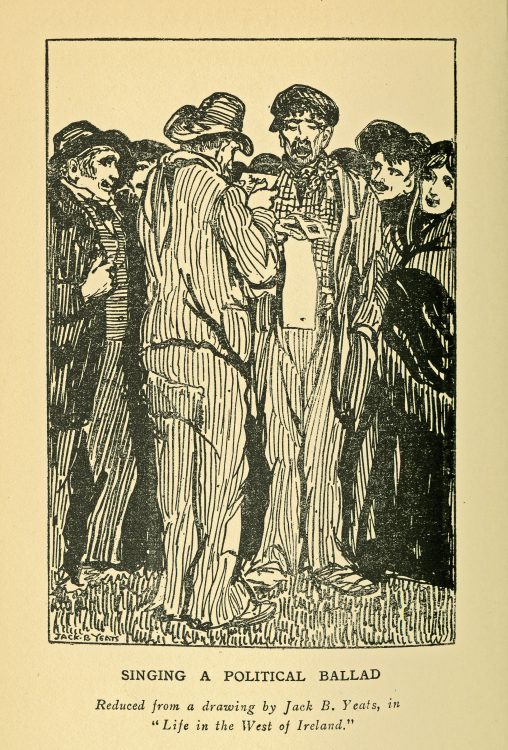


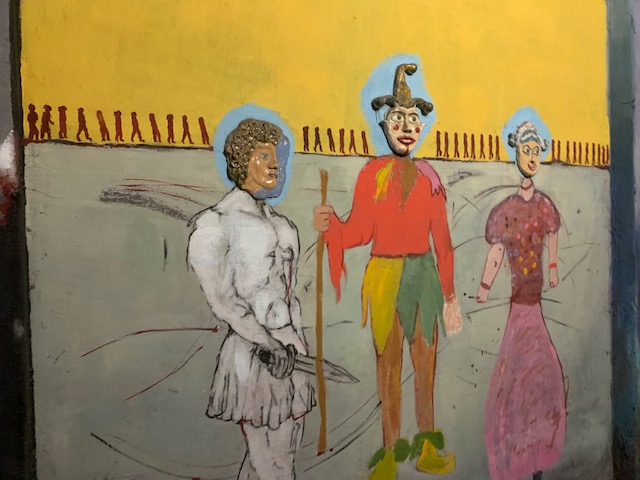


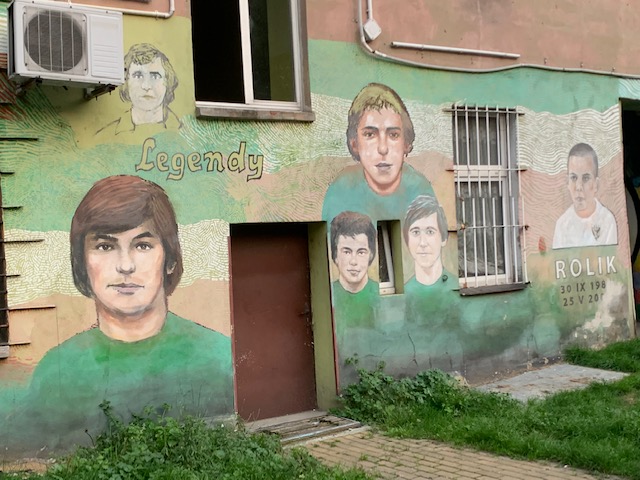
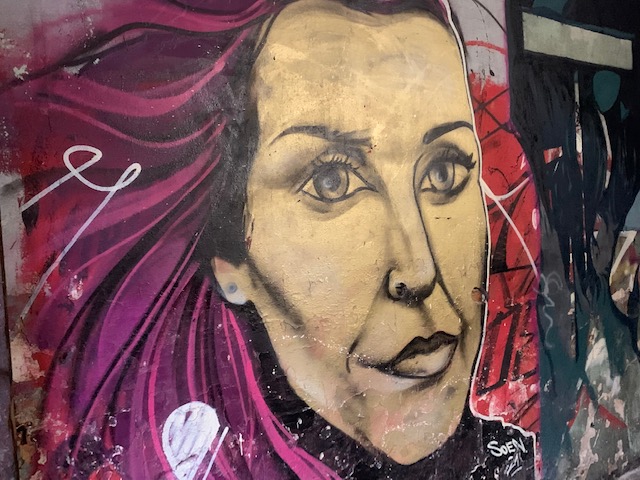


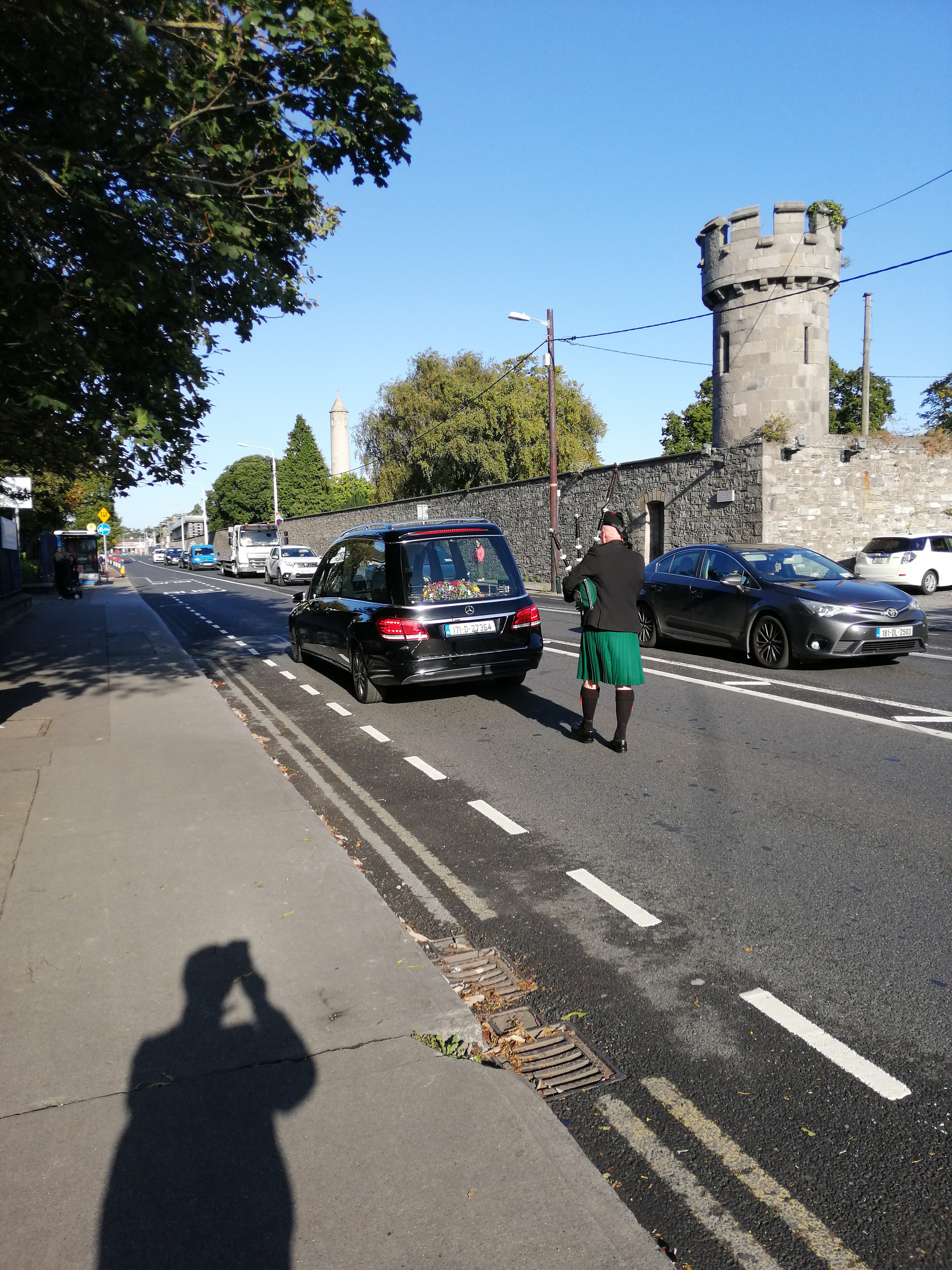
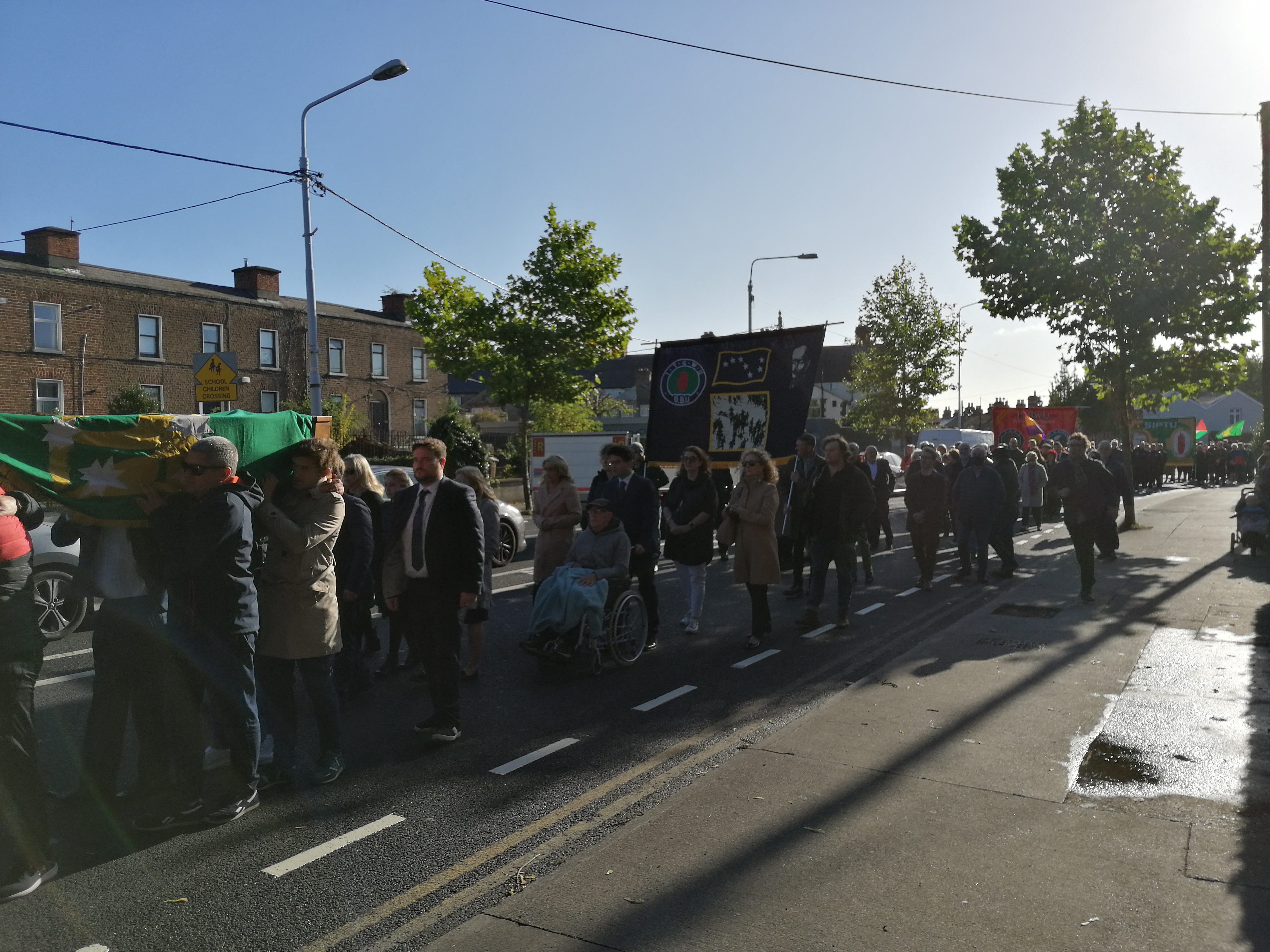

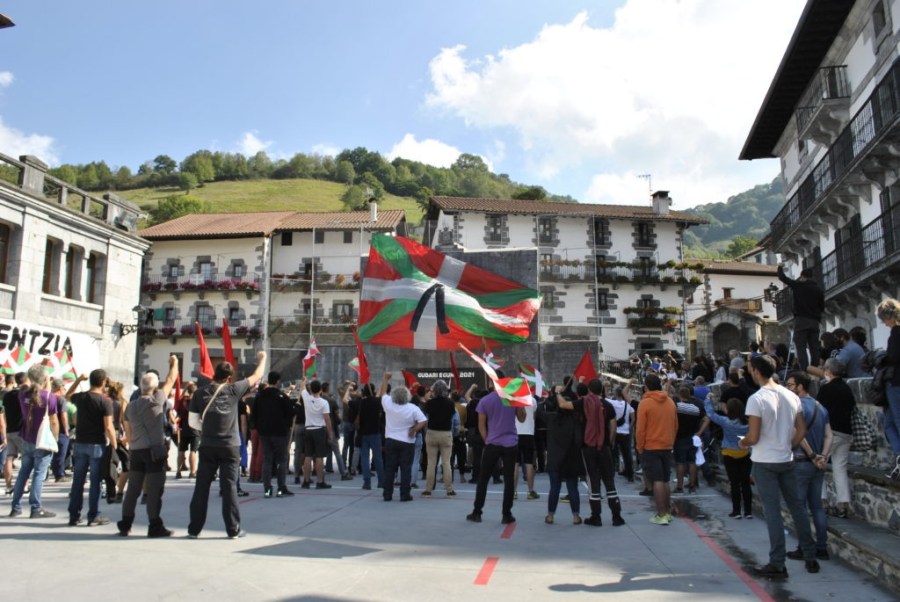

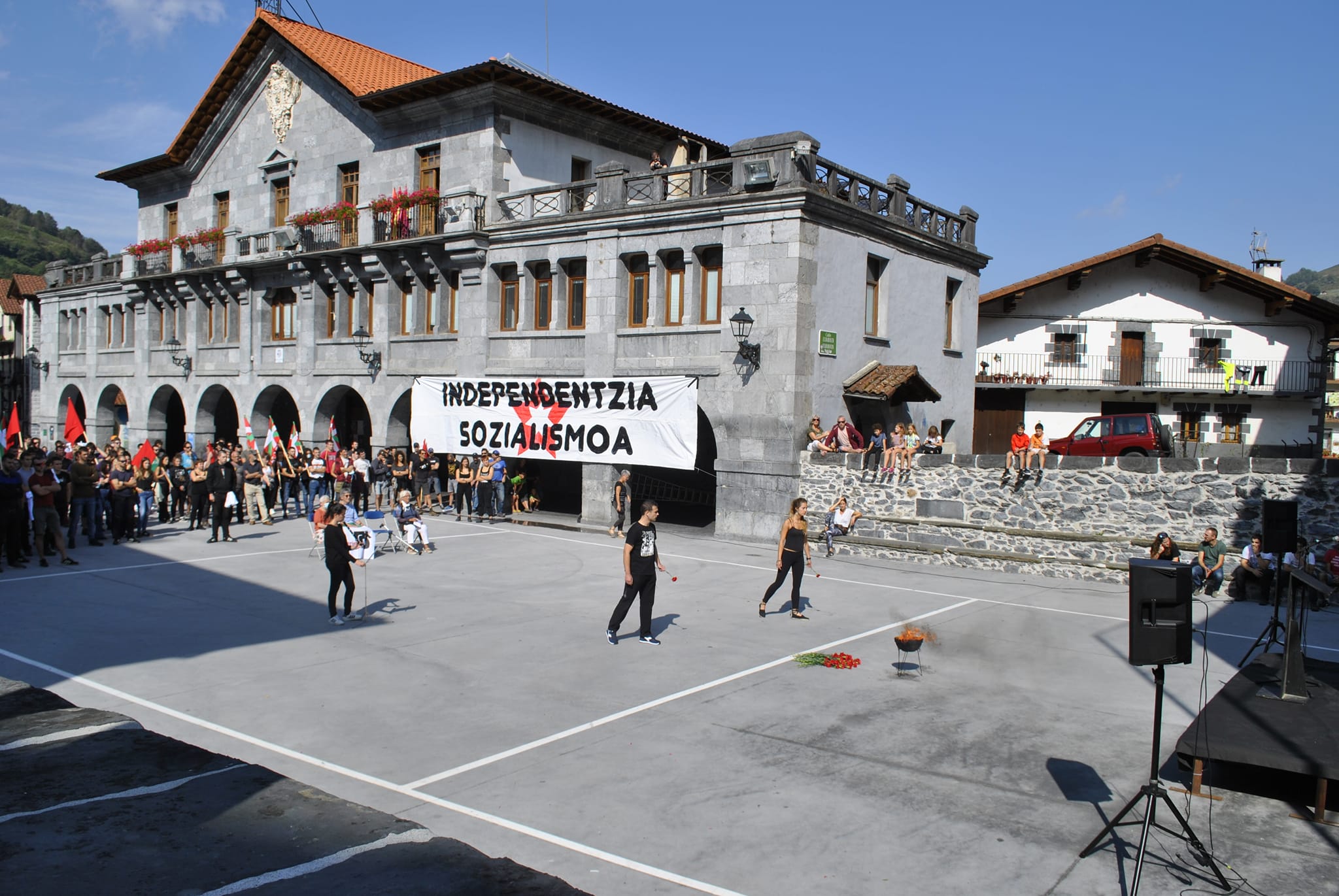


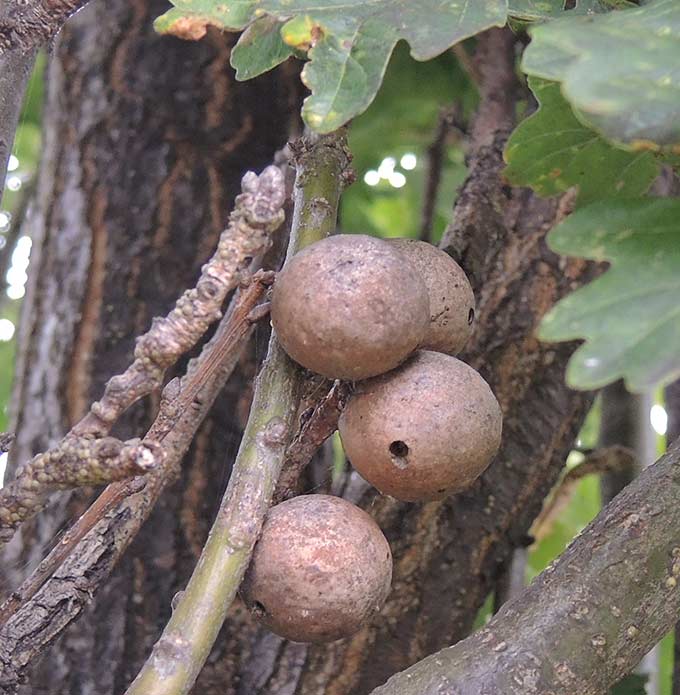




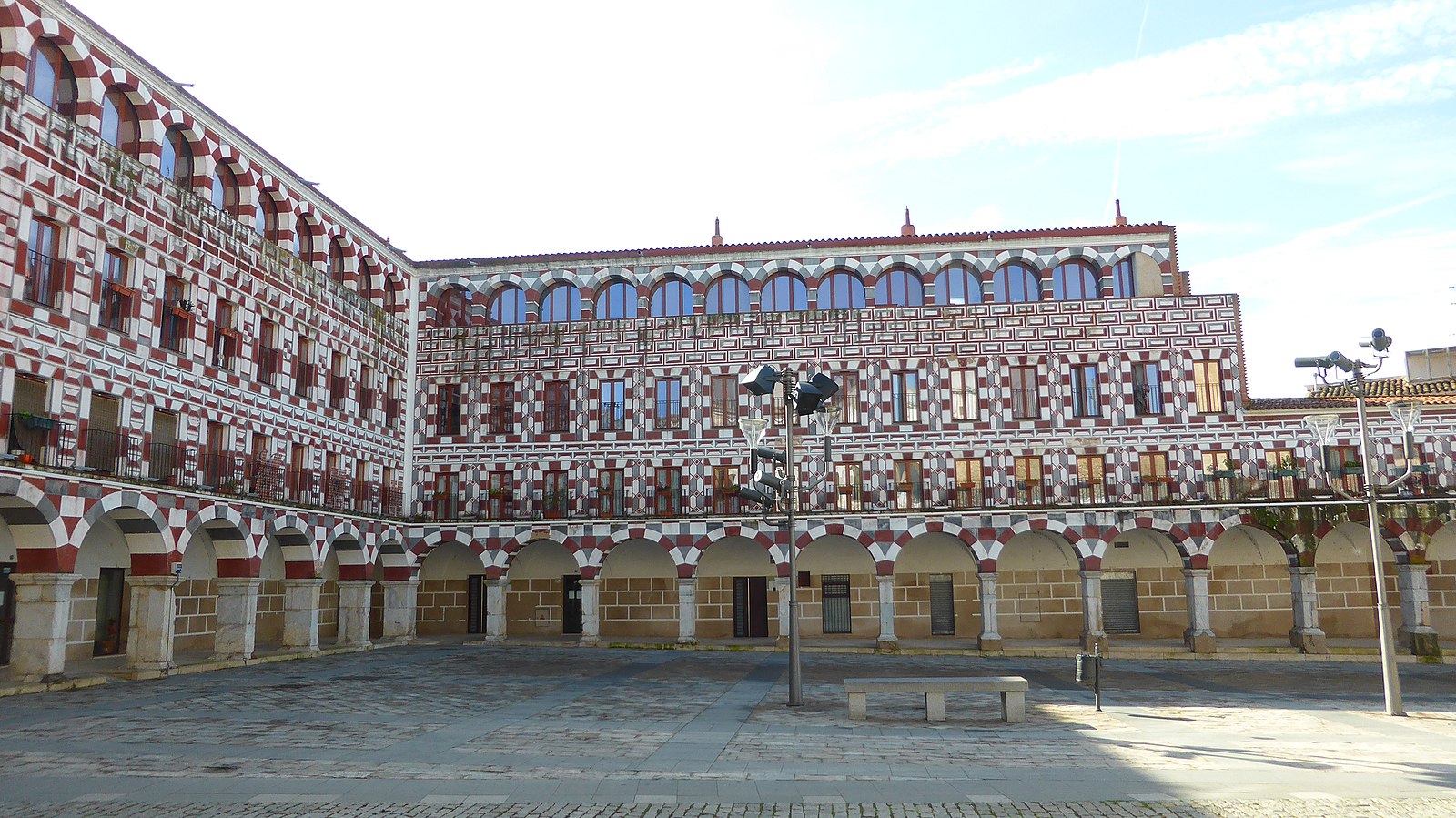


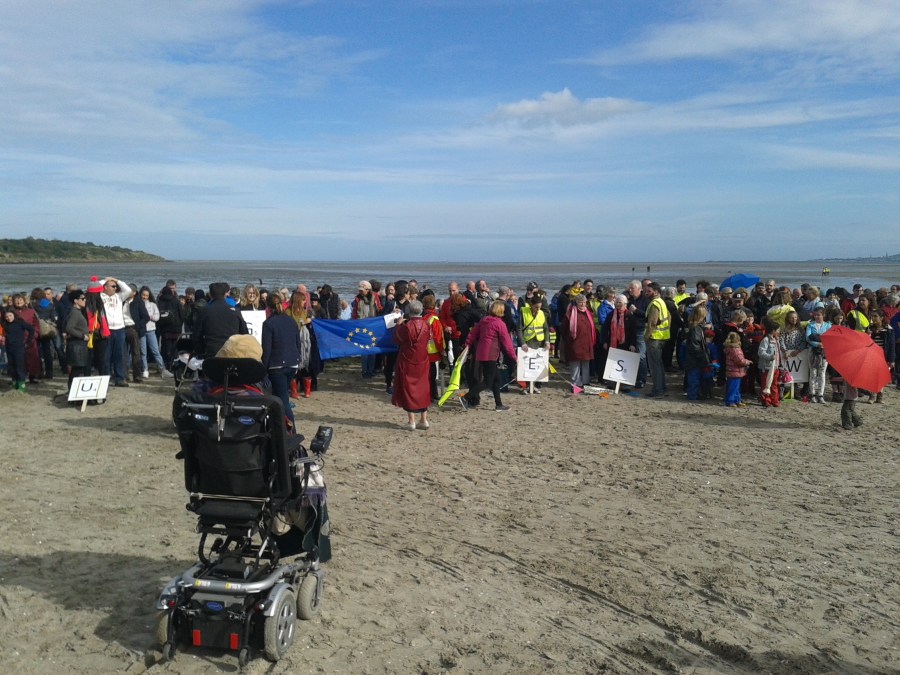
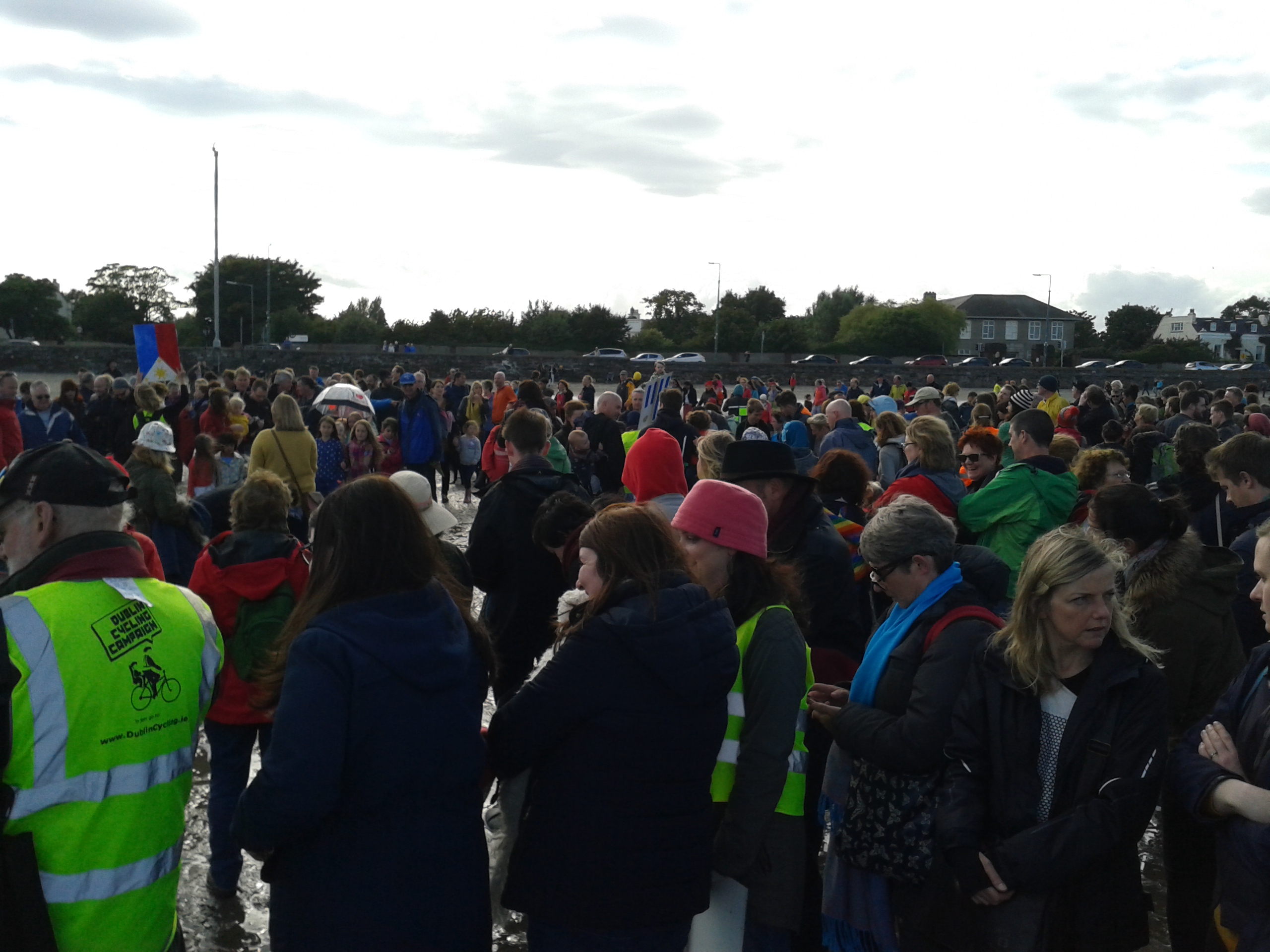


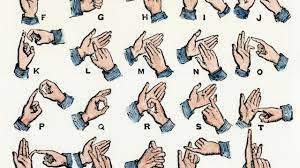


 rebelbreeze