SEPTEMBER 8, START OF NEARLY 900 DAYS OF NAZI SIEGE

Diarmuid Breatnach

(Reading time: 3 mins.)

SEPTEMBER 8, START OF NEARLY 900 DAYS OF NAZI SIEGE

On 21st June 1941 Hitler broke Nazi Germany’s non-aggression Treaty with the Soviet Union and invaded through Poland, sending roughly 3 million personnel through, in addition to its Finnish and Romanian allies, in a three-pronged attack.

Leningrad was one of the primary objectives as it was the most industrialised next to Moscow, with numerous arms factories among its 600 factories turning out 11% of all Russia’s industrial production, along with being the port of the Russian fleet. For those reasons it was important to the Soviet Union too but there was another very important one: the Petrograd Soviet had played a key role in the 1917 February and October revolutions in Russia.

The Nazi German advance in its various Army Groups through Soviet Russia overcame most resistance fairly easily but in September the advance of Army Group North was finally halted in the Leningrad suburbs. The German and other Axis troops had air dominance and a massive artillery capability. Hitler instructed his troops not only to besiege the city but to wipe it out. The Finnish troops controlled the area to the north and the Nazis placed the División Azul (the Blue Division), the fascist Spanish unit, along the south-east1.

“The Führer has decided to erase the city of Petersburg from the face of the earth,” he wrote in a memo. “It is intended to encircle the city and level it to the ground by means of artillery bombardment using every caliber of shell, and continual bombing from the air.” The memo stressed that requests for surrender negotiations were to be ignored, since the Nazis didn’t have the desire to feed the city’s large population.2

Civilians in Leningrad worked frantically on the construction of defences, digging trenches and constructing antitank fortifications as the Red Army and partisans lost one battle after another. The town of Mga was taken, recaptured and then taken again by the Nazis, severing the city’s last rail connection. With the capture of Shlisselburg in early September, the last road was cut. The only way to supply Leningrad now was across Lake Ladoga.

IRON RING AROUND THE CITY

Artillery and air bombardment of the city began almost immediately; the city could receive supplies only by barge across the lake which could also be targeted by Luftwaffe attack. Incendiary attacks caused huge damage and destroyed vital supplies of oil and food and on September 19th Nazi aircraft dropped 2,500 high explosive and incendiary bombs.

Buildings damaged by Nazi German artillery in Leningrad during the siege (Photo credit Vsevolod Tarasevich)

The authorities evacuated around 600,000 civilians before the Nazi “iron ring” closed around the city but 2.5 million civilians still remained inside. It is said that officials had been negligent in stockpiling food, so the only way to feed the city was to bring fresh supplies across Lake Ladoga, the only open route into the city. Transport of Food and fuel was by barge until the lake froze, then by trucks and sleds – all of these frequent targets of Nazi aerial attack.

Women on the move during the siege of Leningrad, perhaps being evacuated or merely relocated from damaged buildings (Photo credit Unknown)

“By November, food shortages had seen civilian rations cut to just 250 grams of bread a day for workers. Children, the elderly and the unemployed got a scant 125 grams—the equivalent of three small slices.”3

The winter of 1941-’42 was bitterly cold and as many as 100,000 a month died of starvation. “In their desperation, people ate everything from petroleum jelly and wallpaper glue to rats, pigeons and household pets. For warmth, they burned furniture, wardrobes and even the books from their personal libraries. Theft and murder for ration cards became a constant threat, and the authorities eventually arrested over 2,000 people for cannibalism. As the famine intensified, one 12-year-old Leningrader named Tanya Savicheva recorded the dates of the deaths of all her family members in a journal. “The Savichevs are dead,” she wrote after the passing of her mother. “Everyone is dead. Only Tanya is left.””4

And yet the city held out. Another 500,000 civilians were evacuated early the following year, 1942, which reduced the city’s population to 1,000,000. As the city thawed in Spring, the survivors went out to bury the dead lining their streets and cleared bombardment rubble. Courtyard areas and parks were planted for vegetables but even so and despite the “Road of Life” across Lake Ladoga, food was short.

Young girls assembling machine guns during siege of Leningrad (image source uncertain)

A number of Red Army attempts to break through to the city failed, with very high loss of Russian soldiers. In January 1943 the Red Army won a land strip from the Nazis and its engineers built a special railway link to run through it which, by the end of the year nearly 5 million tons of food and other supplies had been delivered into Leningrad. Machinery and ammunition were soon being turned out in the factories by a workforce nearly 80% composed of women.

Trucks driving on the “Road of Life” across the ice of Lake Ladoga to bring food and material to the besieged city (Photo credit Unknown)

MUSIC OF RESISTANCE

In august 1942 it was played and broadcast towards the Nazi German lines over loudspeakers.

The Red Army finally broke the Nazi blockade on 27th January 1944 and, with the Nazi forces all over Russia in retreat, the city was free. Survivors celebrated but the death toll was huge; some had lost all their family during the siege.

Altogether an estimated 75,000 bombs were dropped on Leningrad during the period of the siege and killed many – but more died from hunger and hunger-facilitated illness.

Because of the declared intentions of Hitler and the Nazis and the effect on the civilian population of the city, many historians categorise this siege as genocide; it was also the longest siege of WWII and one of the longest in history.

“In total, the siege of Leningrad had killed an estimated 800,000 civilians—nearly as many as all the World War II deaths of the United States and the United Kingdom combined. Soviet-era censorship ensured that the more grisly details of the blockade were suppressed until the end of the 20th century, yet even while World War II was still underway, the city was hailed as a symbol of Russian determination and sacrifice.”5

Perhaps the most appropriate accolade to the resistance of Leningrad was penned by the New York Times in 1945: “There is hardly a parallel in history for the endurance of so many people over so long a time. Leningrad stood alone against the might of Germany since the beginning of the invasion. It is a city saved by its own will, and its stand will live in the annals as a kind of heroic myth.”6

End.

FOOTNOTES

1https://en.wikipedia.org/wiki/Siege_of_Leningrad

2https://www.history.com/news/the-siege-of-leningrad

3Ibid.

4Ibid.

5https://www.history.com/news/the-siege-of-leningrad

6Ibid.

SOURCES

https://www.britannica.com/event/Siege-of-Leningrad

https://www.history.com/news/the-siege-of-leningrad

https://en.wikipedia.org/wiki/Operation_Barbarossa

https://en.wikipedia.org/wiki/Siege_of_Leningrad

https://en.wikipedia.org/wiki/Symphony_No._7_(Shostakovich)

Shostakovich’s Seventh Symphony performed by the Frankfurt Radio Symhony in 2019 (Russian composition, played by a German Orchestra, conducted by a Finn!) almost 1 hour 25 minutes: https://www.youtube.com/watch?v=GB3zR_X25UU

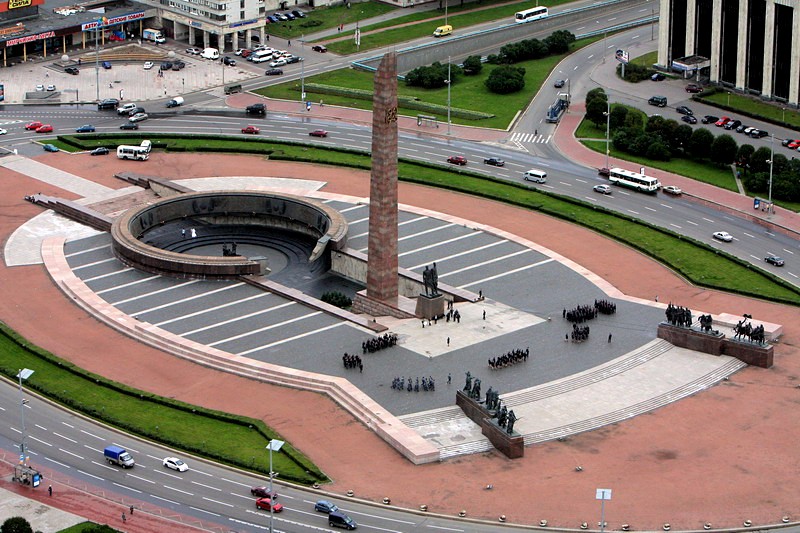
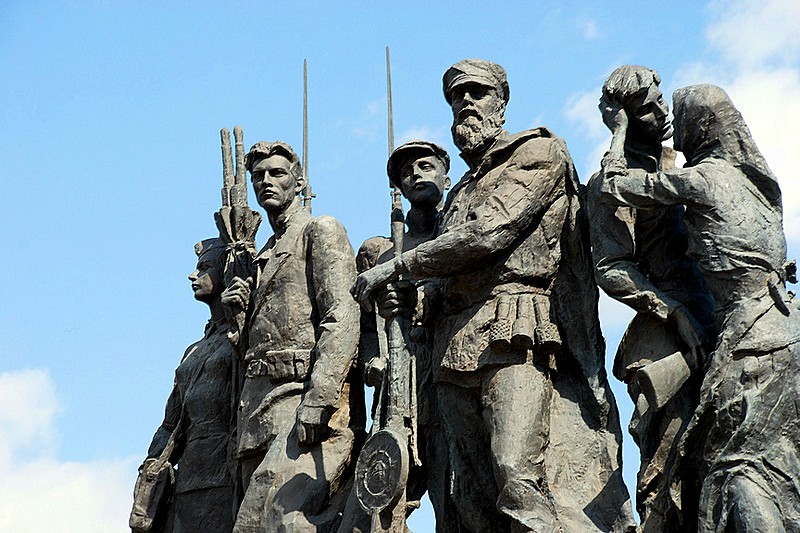
MONUMENT TO THE HEROIC DEFENDERS OF LENINGRAD AND SCULPTURAL GROUPS IN VICTORY SQUARE PETROGRAD
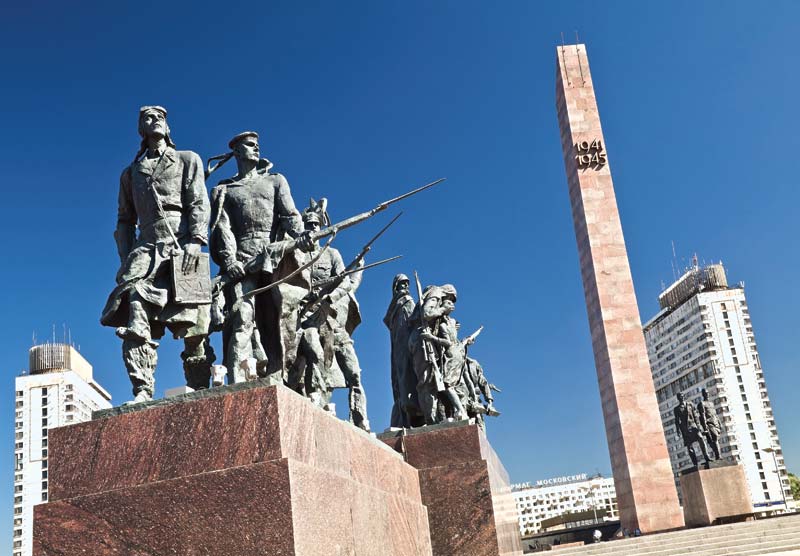
Sculptural group airmen and sailors in front of the Monument to the Heroic Defenders of Leningrad (image sourced: Internet)

Aerial view of the Monument to the Heroic Defenders of Leningrad and sculptural groups in Victory Square (image sourced: Internet)
Sculptural group workers building the city’s defences, front the Monument to the Heroic Defenders of Leningrad in Victory Square (image sourced: Internet)
Sculptural group snipers (one saying goodbye to a child) in front of the Monument to the Heroic Defenders of Leningrad, Victory Square (image sourced: Internet)
Sculptural group partisans (one being bid goodbye by a woman) in front of the Monument to the Heroic Defenders of Leningrad, Victory Square (image sourced: Internet)
Death, loss and resistance depicted by sculptural group in front of the Monument to the Heroic Defenders of Leningrad, Victory Square (image sourced: Internet)

POLICE RIOTS — THE BIRTH OF THE IRISH CITIZEN ARMY

Diarmuid Breatnach

(Reading time main text: 2 mins.)

The Dublin police played a fundamental role in the creation of the first workers’ army in the world, the Irish Citizen Army.

The Dublin employer syndicate’s offensive against the working-class “syndicalism” of the Irish Transport & General Worker’s Union1 began with the 1913 Lockout, in turn triggering strikes on August 26th, when workers were presented with a document they were to sign declaring that they would leave the ITG&WU or, if not a member, would refuse to support it in any action2. Most workers of any union and none refused to sign and 20,000 workers were confronted by 400 employers.

However, the employers’ numbers were added to by the Dublin Metropolitan Police and the Royal Irish Constabulary, backed up by the judiciary. Morally and ideologically the Irish Times and Irish Independent (the latter owned by W.M. Murphy, leader of the employers) backed the employers as, to a large extent, did the Irish Catholic Church hierarchy3.

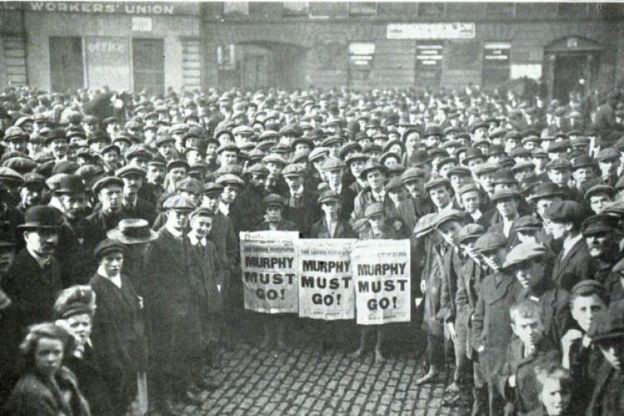
Workers’ demonstration with newsboys (WM Murphy owned the Irish Independent newspaper). (Source image: Internet)

The national (non-workers’) movement was divided in its opinion: many of Redmond’s Irish Parliamentary Party representatives were employers or landlords and their sympathies were naturally not with the workers. But for example Seán Mac Diarmada, a republican and national revolutionary, organiser for the secret Irish Republican Brotherhood4, opposed the strike on the basis that foreign business interests would profit by the paralysing of Irish business concerns5. On the other hand, Mac Diarmada’s mentor and head of the IRB in Ireland, Tom Clarke, was sympathetic to the strikers.

POLICE RIOTS

Unlike the gendarmerie6 British police force throughout Ireland of the Royal Irish Constabulary, at this time the constables of the DMP were unarmed except with truncheons but even with those they managed to kill people. On 30th August 1913 the DMP baton-charged a crowd in a street meeting on Eden Quay, outside Liberty Hall, HQ of the union7. Among the many injured were James Nolan and John Byrne who died 31st August and 4th September respectively, both in Jervis St. Hospital. (see also other riots and police attacks in Sources & Further Reading below).

On the 31st Jim Larkin went in disguise to address an advertised public meeting, banned by a magistrate, in Sackville (now O’Connell) St., Dublin. In view of the behaviour of the police, most of the IT&GWU activists went instead to their rented facilities at Fairview but a large enough crowd of the committed and the curious were assembled in O’Connell Street, along with large force of the DMP. Larkin, disguised as an elderly Protestant minister arrived by horse-drawn carriage and, as befitted a man made infirm by age, was assisted by Nellie Gifford8 into the Clery’s building which housed the Imperial Hotel restaurant, which belonged to W.M. Murphy (as did the Dublin Tram Co.). In order that Larkin’s strong Liverpool accent should not give him away, Nellie Gifford did all the talking to the staff inside. Shortly afterwards Larkin appeared at a restaurant window on the first floor and, top hat removed, spoke briefly to the crowd below but, as DMP rushed into the building, tried to make his getaway.

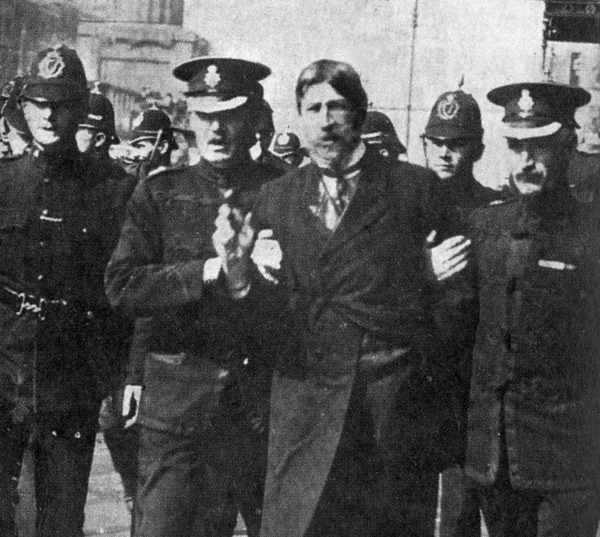
The arrest of Jim Larkin on 31st August 1913, being removed from the Clery’s building (see plinth of the Nelson Pillar behind and to the left) in O’Connell Street, just before the Dublin Metropolitan Police attack on the crowd. (Source image: Internet)

The DMP arrested Larkin and when the crowd cheered him (led by Constance Markievicz), the DMP baton-charged the crowd, striking out indiscriminately, including knocking unconscious a Fianna (Republican youth organisation) boy Patsy O’Connor who was giving First Aid to a man the police had already knocked to the ground. Between 400 and 600 were injured and Patsy suffered from headaches thereafter; though active in the Republican movement (he was prominent in the 1914 Howth guns collection9) he died in 1915, the year before the Rising. Among those beaten were journalists and casual passers-by. Those caught in Princes Street10 between DMP already in that street and the police charging across the main street were beaten particularly savagely.

The police attack became known as “Bloody Sunday 1913” (though two workers had been fatally injured on Eden Quay the day before and are often wrongly listed as having been killed on that day).

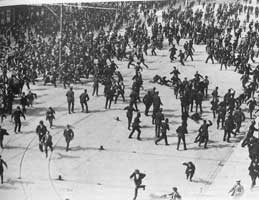
A photo of the police riot taking place on 31st August 1913 in O’Connell St; police can be seen striking with their truncheons even those on the ground. (Source image: Internet)

Also on that day the DMP attacked the poor working-class dwellings of Corporation Buildings (in “the Monto”, off Talbot St11), beat the residents and smashed their paltry furniture. The raid was a revenge attack for the reception of bottles and stones they had received on the 30th, when they were chasing fleeing workers from Liberty Hall (others crossed Butt Bridge to the south side and a running battle took place along Townsend Street and almost to Ringsend.

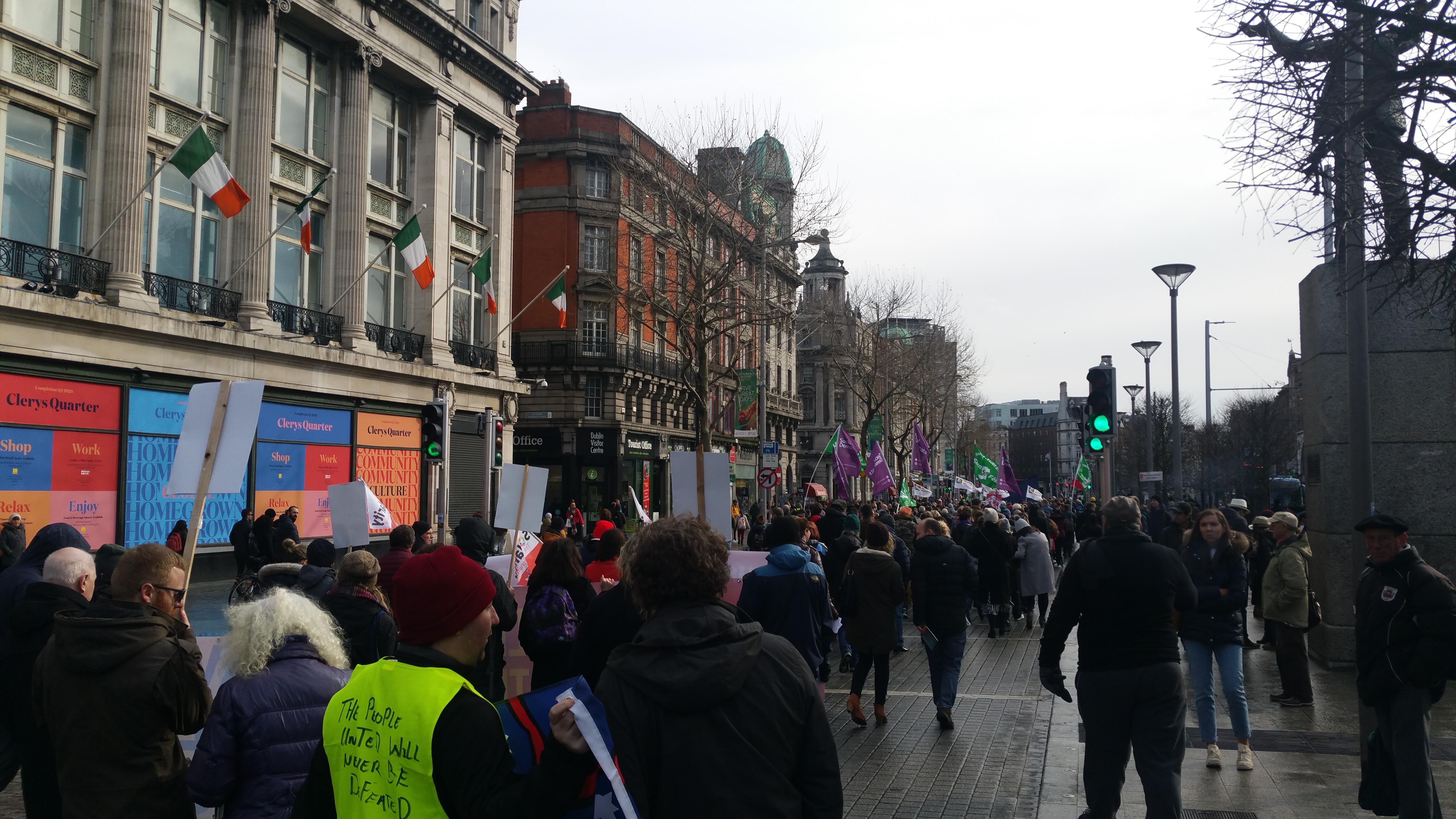
Protest march goes past closed-down Clery’s to the left in 2016 while Larkin looks down from his pedestal to the right. (Photo: D.Breatnach)

THE IRISH CITIZEN ARMY 1913 AND 1916

Very soon after those attacks, Larkin and Connolly each called publicly for the formation of a workers’ defence force, which became the Irish Citizen Army. Around 120 ICA, including female members fought with distinction in the 1916 Rising and raised their flag, the Starry Plough on the roof of WM Murphy’s Imperial Hotel on the upper floors of Clery’s building, opposite the GPO13. A number of its Volunteers were killed or wounded in action and two of the ICA’s leaders, Connolly and Mallin, were executed afterwards; another, Constance Markievicz, had her sentence of death commuted.

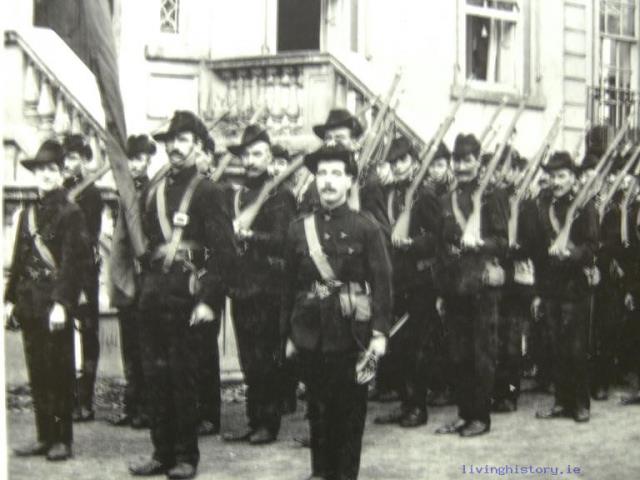
Irish Citizen Army on parade at their facility in Fairview. (Source image: Internet)

A much-diminished ICA took part in the War of Independence.

The end of August 1913 on Eden Quay and in O’Connell Street may be seen as the period and birthplaces of the ICA, the “first workers’ army in the world” and the first also to recruit women, some of whom were officers.

The Jim Larkin monument stands opposite the Clery’s building, which is now under renovation but without a mention on the monument or on the building of Bloody Sunday 1913 or its background and result. Sic transit gloria proletariis

end.

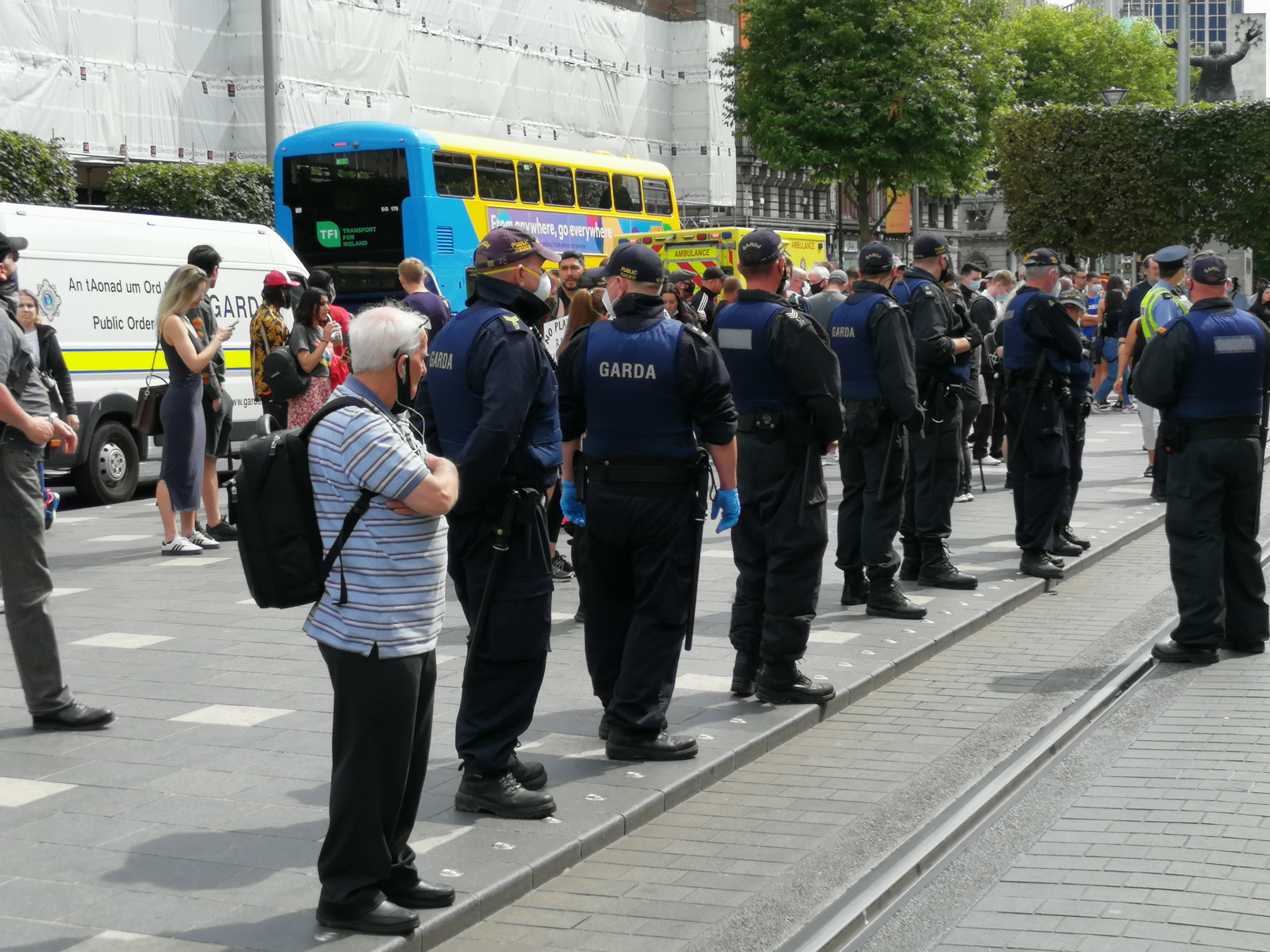
Today’s DMP, Garda Public Order Unit guarding far-Right gathering in O’Connell Street in 2020 (facing them, out of photo view). The Larkin monument can be seen in part at the top right-hand corner. (Photo: D.Breatnach)

FOOTNOTES

1The ITGWU was formed in 1909 by James Larkin, former organiser for the National Union of Dock Labourers after his bitter departure from that union. Most of the members Larkin had recruited for the NUDL, with the exception of the Belfast Protestant membership, left the NUDL and joined the IT&GWU.

2The provision in the declaration for members of unions other than the iT&GWU was necessary for the employers because of the general credo in Irish trade unionism that one did not cross a picket line, whether of one’s own union or of another, a credo that persisted in Ireland until the 1980s when the Irish Trade Union Council joined the “Social Partnership” of the State and the employers’ Federation. In addition, Larkin had added the principle that goods from a workplace on strike, even if strike-breakers could be got to bring them out, were “tainted goods” and would not be handled by members of the IT&GWU, nor should they be by any other union either.

3 Apart from any statements by bishops and priests, the religious charity organisation, the St. Vincent de Paul, refused assistance to families of strikers.

4 The IRB was founded simultaneously in Dublin and New York on 17th March 1858 and became known as “the Fenians”. In 1913 the movement had declined but was being rebuilt under the leadership of Tom Clarke, who went on to become one of the Seven Signatories of the 1916 Proclamation of Independence, all of which were executed b y firing squad after surrendering, along with another nine. Both were signatories of the Proclamation of Independence.

5It is one of the many ironies that on May 12th 1916, the last of the of the 14 surrendered leadership executed in Dublin (another two were executed elsewhere, one in Cork and the last in London) were Mac Diarmada and James Connolly, shot by British firing squads in Kilmainham Jail; the one an opponent of the workers’ action and the other one of its leadership.

6The gendarmerie is a particular militarised type of police force, armed and often operating out of barracks, like the Carabinieri of Italy, Gendarmerie of Turkey and Guardia Civil of the Spanish State. It is an armed force of state repression designed to control wide areas of potentially rebellious populations and it is notable that the parallel of the RIC did not exist in Britain, where the police force was mostly unarmed except by truncheon.

7Liberty Hall is still there today but a very different building (the original was shelled by the British in 1916) and SIPTU is a very different union too.

8Nellie was one of 12 children of a mixed religion marriage and was, like all her sisters (unlike the six unionist boys), a nationalist and supporter of women’s suffrage. Her sister Grace married Volunteer Joseph Plunkett hours before his execution and is, with Plunkett, the subject of the plaintive ballad “Grace” and Muriel married Thomas McDonagh, one of the Seven Signatories of the Proclamation, all of whom were among the 16 executed after surrendering in 1916. Nellie Gifford was the only one who participated in the Rising; she was a member of the Irish Citizen Army and was active in the Stephen’s Green/ College of Surgeons garrison, jailed and continued to be active after her release.

926th July 1914, when the yacht Asgard, captained by the Englishman Erskine Childrers, delivered a consignment of Mauser rifles and ammunition to the Irish Volunteers.

10Those may have been heading for Williams Lane which even today leads out from Princes Street to Middle Abbey Street (the junction of which is where James Connolly received the impact to his ankle in 1916).

11Corporation Buildings as one might expect housed working class people and the “Monto” (Montgomery Street) was a notorious red light district.

12The police station is still there, staffed by the Garda Síochána but in 1913 it housed also a British Army garrison.

13This flag, one of at least four different flags flown during the Rising, is now in the Irish National Museum at Collins Barrack. Shortly after the Rising it was noted by a British Army officer still in place upon the gutted Clery’s building and taken by him as a trophy to England. In 1966, the 50th anniversary of the Rising, the officer’s family returned the flag to the Irish people.

SOURCES AND FURTHER READING

Nellie Gifford: https://en.wikipedia.org/wiki/Nellie_Gifford

The Fianna boy who suffered a head injury: https://fiannaeireannhistory.wordpress.com/2014/12/

http://multitext.ucc.ie/…/Report_of_the_Dublin

1913 Ringsend Riot: http://comeheretome.com/…/04/07/1913-the-riot-in-ringsend/

Witch-Hunting in the imperialist British Labour Party

Diarmuid Breatnach

(Reading time comment: 2 mins; and article: 5 minutes)

People who’ve been following the witch-hunts in the British Labour Party — or even just generally aware of them — have seen left-wingers like Jeremy Corbyn, the party’s elected leader, actually expelled. Though Corbett has now been allowed back in with his electoral wings clipped, others have been expelled, including left-wing film-maker Ken Loach. It is witch-hunting, a type of McCarthyist hounding in which victims must prove themselves innocent of anti-semitism, which turns out to be impossible. This is because the Zionists and their supporters have succeeded in making any attack on Israel or Zionism, a political target, correspond to anti-semitism, a religious-racist view. That is all wrong certainly but it is not the job of socialists nor of anti-imperialists to “save” or “democratise” the British Labour Party.

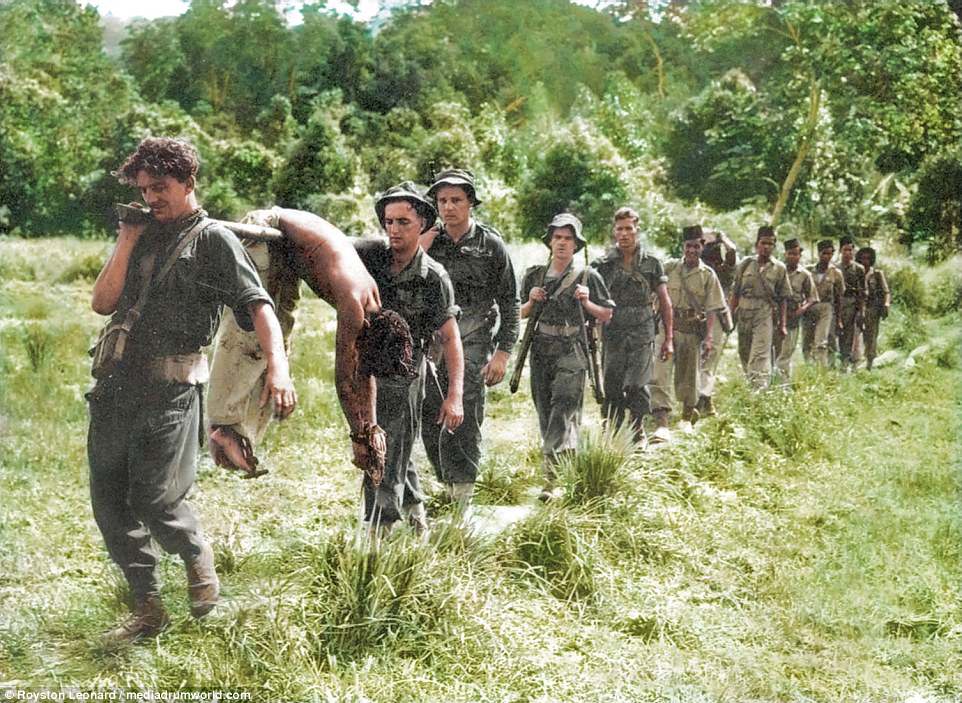
British troops suppressing anti-colonial struggle in Malaya 1948-1960, (then a part of what is now Malaysia), carrying a bloodied Malayan prisoner (Photo sourced: Daily Mail)

Lenin famously once advised British socialists to support the Labour Party “as a rope supports a hanging man”. He was saying that as Labour had never yet been in sole government, it was bound to carry the idealised hopes of many working people — therefore give them the opportunity to see it in action. Whether Lenin was correct in his advice to help get Labour into government or not (and not all revolutionary socialists agreed with him), Labour was in the coalition War Government in 1915-1918 and subsequently in the periods 1924, 1929, 1945-1950, 1964-1970, 1974-1977, 1997-2010. It has had plenty of opportunities to show its real nature and has done so.

However, over the years, radical social democrats and various Trotskyist trends, along with the old Communist Party of Great Britain, have sought to support the Labour Party, not by pulling the rope, kicking the chair or unlocking the scaffold trapdoor, but by desperately getting underneath the body and propping it up. General elections were replete with slogans from the Left exhorting us to elect Labour “under a socialist program”, “under Left pressure” and “with socialist demands” or even “internal democracy” (to give the entrists room to move).

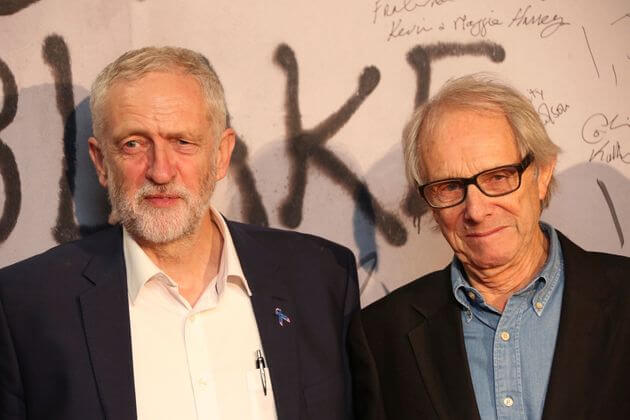
Ken Loach (right) and Jeremy Corbyn at premier of the film “I, Daniel Blake in 2016. (Photo credit: Joel Ryan, AP via Getty Images).

Such demands and manoeuvrings are in complete contradiction to history or a basic socialist class analysis. Lenin was certainly correct when he analysed the Labour Party as fundamentally capitalist and imperialist and the party has obligingly gone on to vindicate that analysis both in and out of government. But how could it be otherwise? It is a capitalist imperialist class that runs the UK and a party truly representing the working class will not be permitted to take over except if the ruling class is overthrown in revolution.

And such attempts will be met with whatever force the ruling class has at its disposal. In the Hebrew-Christian creation myth, the originators of humanity are driven from Paradise by an angel with a flaming sword and apparently never try to get back in (not in this life anyway). It will certainly take a flaming sword to drive capitalism from its Paradise of exploitation of labour power but in fact its predicament then is worse than Adam and Eve’s — for to be barred from entry forever means its very extinction as a class.

This is all Basic Socialist Theory 101 and proven time and again by Modern Class History 101. And yet, people on the Left who can quote volumes of Marx, Lenin, Trotsky and even sometimes Bakunin, have somehow come out of those 101 courses with an entirely different understanding. And so time and time again, the hunt for the Left Messiah to lead the Labour Party and within, the gatherings of radical Leftists cliques, conspiring like the Christians in the Catacombs beneath Rome.

British troops and detainees in Kenya; the record of tortures inflicted on many is truly horrific. Although the Conservatives were in government throughout the period, it was never seriously challenged by the Labour Party on the actions of the troops. (Photo sourced: Internet)

Just a moment’s review will show that at its first opportunity, Labour participated in management of the imperialist WWI which, by the way, included the murder of surrendered Irish insurgent leaders in 1916. The review will also reveal the agreement in the partition of Ireland in 1921, undermining of the 1926 UK General Strike, complicity in the anti-liberation wars in Persia (now Iraq), Egypt, Greece, Korea, Malaya, Cyprus, Kenya, Aden (now Yemen), Oman …. and participation in joint invasion or attacks on Libya, Iraq, Syria, Afghanistan. Not to mention being the party actually in Government when in 1969 it sent the troops in to quell the large oppressed Catholic minority in the Six Counties seeking civil rights.

Well, actually yes, let us mention it because that and its collusion with the Conservative government’s introduction of internment without trial in 1971 and subsequent massacres of protesters that year and in 1972 ratcheted up a cycle of violence that lasted three decades, with huge loss of human life among civilians, liberation fighters and its own soldiery and Loyalist auxiliaries.

The first anti-fascist fighter killed in Britain by police, by the way, Kevin Gately, was killed by mounted police in 1974 — under a Labour Government.

Those who really want an end to capitalism and imperialism — and the attendant racism — in Britain need to find a solution that does not involve electing a “Left Labour Government” or anything of that kind. We can argue and discuss what that solution might involve but one thing we should insist upon is that a “Left Labour Government” is not one of the options on the table for discussion.

End.

SOURCES:

UK Labour Party pro-Israel purge continues: celebrated film maker Ken Loach latest member to be expelled

https://en.wikipedia.org/wiki/List_of_British_governments

BULLFIGHTING ENDS IN GIJÓN AFTER BULLS NAMED BY RACISTS AND SEXISTS

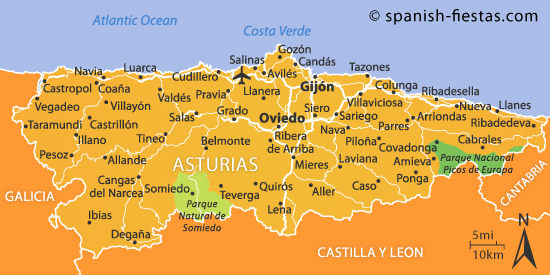
Fascist supporters of bullfighting in Asturias thought they were having fun by naming two bulls due to be killed “Feminist” and “Nigerian” respectively. But their racist and sexist joke-jibes backfired on them in Gijón (Xixón), cultural centre and largest city of Asturias, the celtic nation in the north of the Spanish state.

Map of Asturias.

Bullfighting is generally supported by a traditionalist conservative constituency in Spain, including fascists, who often project it as integral to their image of Spain. On the other hand, the practice is opposed by large sections of the Left and those who want independence for their nations from Spain, such as Catalonia (banned some years ago) and three southern provinces of the Basque Country (where it was suspended for years but limited fights permitted again recently).

BULLFIGHTING IS ENDED IN GIJÓN

Translation by D.Breatnach from Publico.es report

The El Bibio de Gijón bullring will no longer host the traditional Begoña bullfighting fair, as the City Council will not renew the licence of the bullring because it considers that bulls cannot be used to “deploy an ideology contrary to the human rights”.

“The bullfighting festival is over,” said the mayor of Gijón, Ana González, in statements to journalists, after stating that what happened in the last running of the fair this year, where two of the bulls from Daniel Ruiz’s cattle ranch were named “Feminist” and “Nigerian”, has caused great discontent among feminist and animalist associations and has precipitated a decision that was already in the pipeline.

“A city that believes in the equality of women and men, that believes in integration, in doors open to all cannot allow this type of thing,” said the Councilor before stating that “several lines have been crossed”.

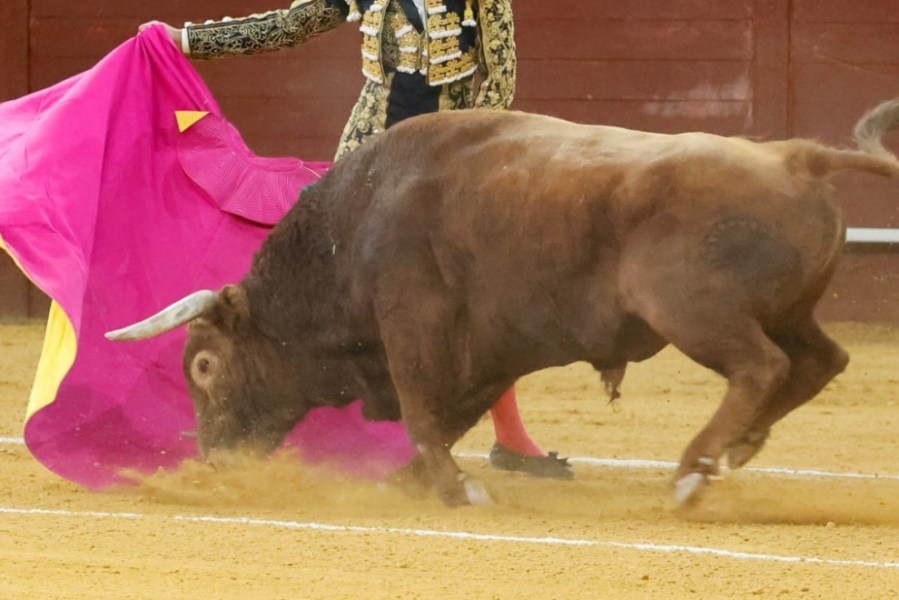
Bullfight in Las Ventas (Photo credit: EFE)

González explained that the idea was to end the licence of the El Bibio bullring and later put an end to it, as contemplated in the resolutions of the PSOE congresses but these events have advanced the decision. For this reason, the Consistory will not grant a third extension of the concession signed in 2016 nor will it issue a new call, despite the fact that the payment of the successful bidder represents 50,000 euros per year for the city council.

“The bullfighting fair is over because it seems that too many things were hidden,” explained the Councilor, who argued that if the world of bullfighting is what was seen in the last run of the fair “it does not contribute much to a city like Gijón “.

“The Mayor indicated that in recent years the bullfighting was “clearly challenged” and that there were more and more voices calling for an end to the bullfighting fair in Gijón, a demand that has now been met.

“The names given to these two bulls which were fought by Morante de la Puebla last Sunday, August 15, in Gijón, generated controversy on social networks and have aroused complaints from feminist and animalist associations.”

End.

SOURCE:

https://www.publico.es/sociedad/ayuntamiento-gijon-acaba-feria-taurina.html?

TEN SIMPLE STEPS IN INVASION VENTURE

Diarmuid Breatnach

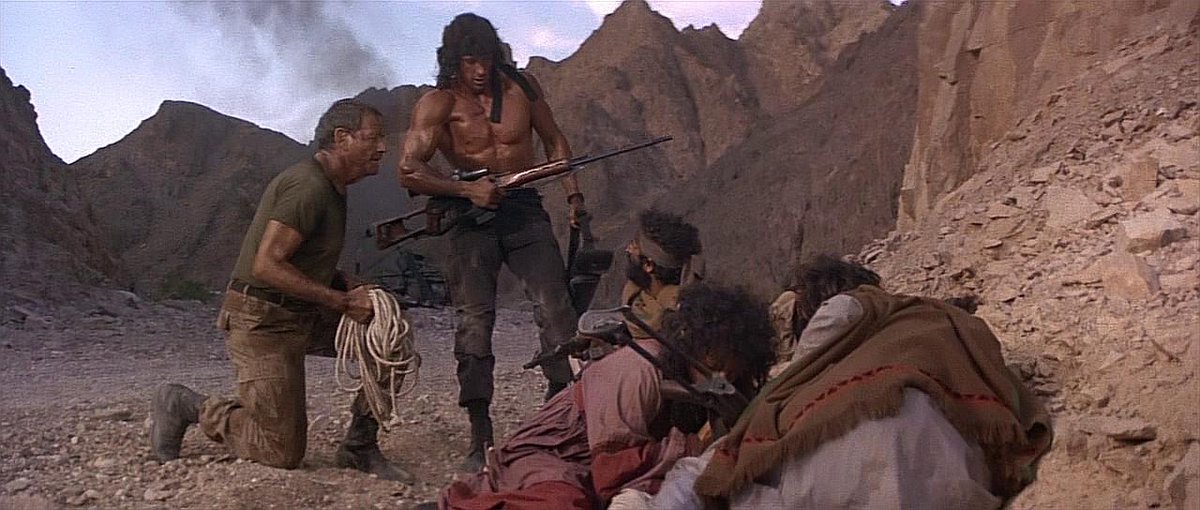
Scene from Rambo film promoting USA-aided Islamic fundamentalist insurgency against Soviet puppet Afghanistan Government (Photo sourced: Internet)
  1. Foster Islamic fundamentalist groups and arm them to overthrow a competitor’s puppet government. Use a nearby ally as a conduit.
  2. Portray the fundamentalist insurgency as a liberation war and keep supplying them with weapons, training, through your nearby ally. This might cost as much as US$20 billion. Have a film made about it in which a former male porn film star is the USA hero with the local fundamentalist Islamic militias (underplay the Islamic part).
  3. When they’ve overthrown the competitor’s puppet, attempt to instal your own puppet instead.
  4. When your Islamic fundamentalist warlords don’t accept this and become a problem, invade the country. You have to get lots of your own soldiers killed because you armed and trained the opposition, they have grown more powerful and why should anyone fight them for you?
  5. Keep telling the relatives of your dead soldiers (and those not yet dead) that they are fighting for democracy and to protect their homes (although they are nowhere near their homes).
  6. Set up your own puppet regime, build a local army, let your investors back home in to gobble up what they can, dispense bribes (even to notorious warlords, torturers, murderers).
  7. Use airpower to bomb your previous allies, even though you will be killing a lot of uninvolved people (and even though airpower didn’t work in the end for the other’s puppet government).
  8. When it’s clear you are not going to win without an even more massive investment of money and your soldiers’ lives (which will make your politicians unpopular at home), pull out. Leave your puppets and local employees behind (shoot some as they try to get on your planes).
  9. Then blame your puppet government for running. Blame the puppet army soldiers for surrendering, ignoring the fact that thousands of them have been killed even when you gave them air cover and that was then withdrawn or that surrounded units fought on for days on promises of relieving columns that never came.
  10. You might lose some superpower status and get criticised at home. BUT your arms industry has increased its profits at least TEN TIMES since the invasion. After all, who really matters in all this?
  11. Get ready for your next adventure.
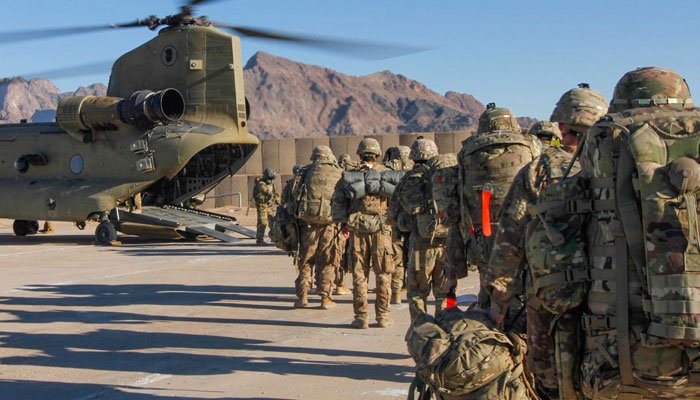
US troops in Afghanistan marching towards evacuation helicopter (Photo sourced: Internet)
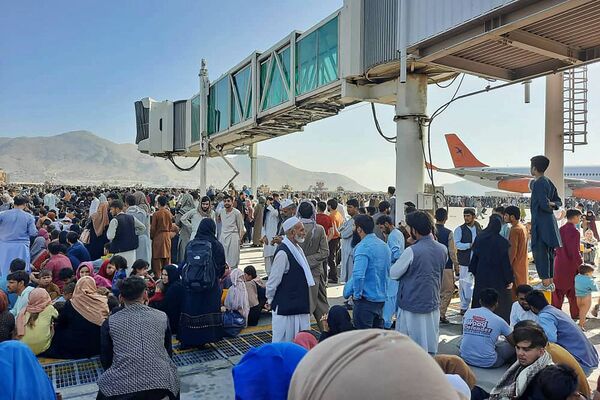
Afghan people climb on plane Kabul Airport Photo- Wakil Kohsar / AFP 16 Aug 2021
Afghans crowd the tarmac of Kabul airport to flee the country. Photo- AFP
Taliban fighters take control of Afghan presidential palace in Kabul after Afghan President Ashraf Ghani fled the country. Photo- AP/Zabi Karimi
U.S soldiers take a position to guard along a perimeter at the international airport in Kabul, Afghanistan, Monday, Aug. 16, 2021. Picture- AP Photo/Shekib Rahmani
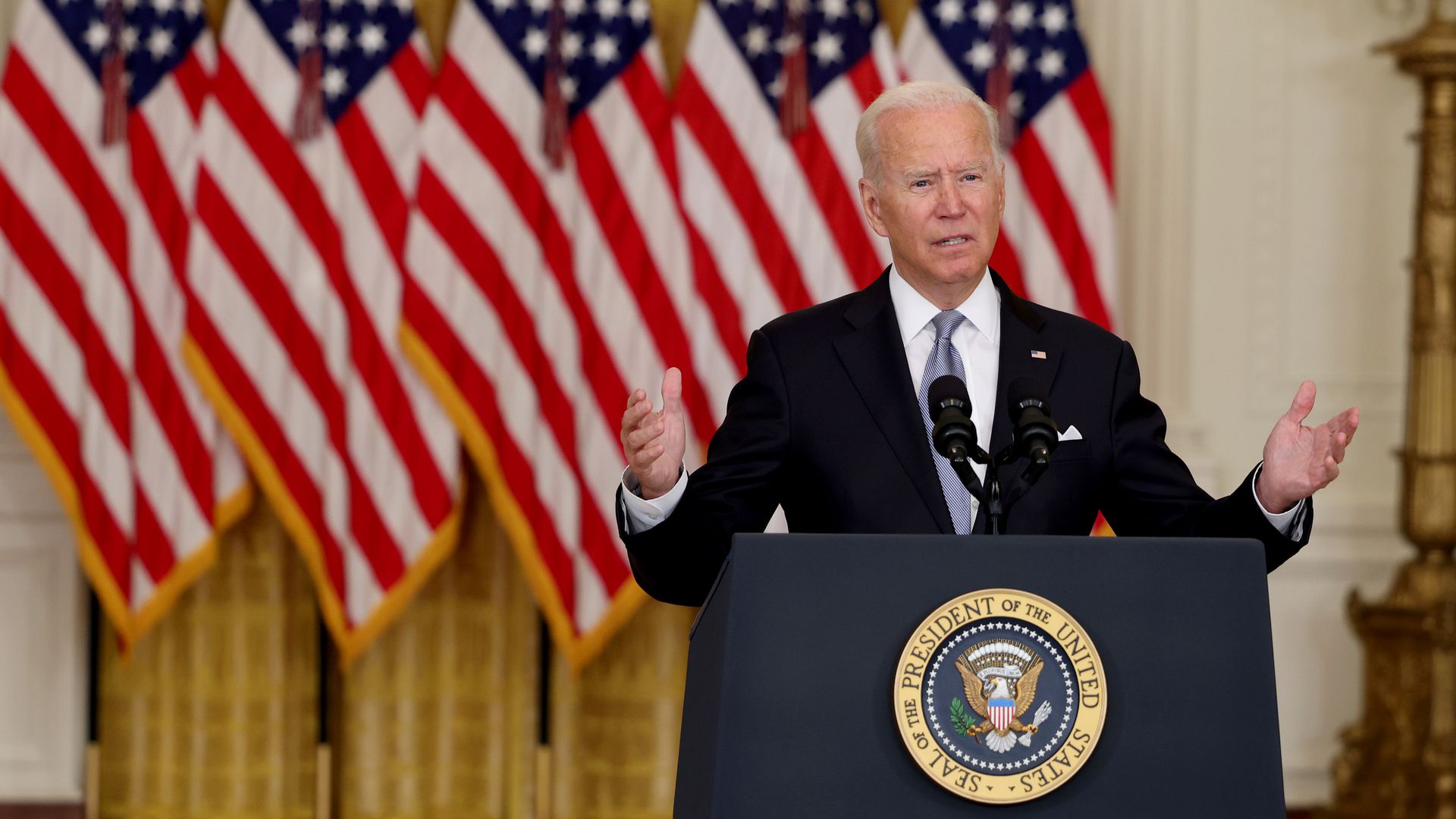
USA President justifying USA pullout of Afghanistan and blaming Afghan people (Photo sourced: Internet)

FURTHER READING

Quick overview of Afghanistan history (without listing USA support for Taliban: https://www.nationalgeographic.com/history/article/how-centuries-of-strife-shaped-modern-afghanistan

US support for Taliban: https://www.jstor.org/stable/29768089

https://www.democracynow.org/shows/2021/8/17# (For Afghanistan jump to Haran Rahoumi at 17.19 mins. on video to 31.4 mins; and again to from 37mins. with Azmat Khan to 46mins. In my opinion much more informative than ex-US Col. Amy Wright, now in Codepink, Vets for Peace.)

https://www.foxnews.com/world/taliban-fighters-execute-22-afghan-commandos

WWII AGENT “GARBO” WAS ACTUALLY A HUSBAND AND WIFE TEAM

Many people know of “Garbo”, the Catalan spy who passed false information to the Nazis but few know of his partner, the Galician woman from Lugo who changed history.

By IVÁN FERNÁNDEZ AMIL06: 00 · 12/06/2020

(Translated from Castillian https://www.elespanol.com/quincemil/articulos/cultura/araceli-gonzalez-la-espia-gallega-que-engano-a-hitler? by D.Breatnach)

(Reading time: 5 mins.)

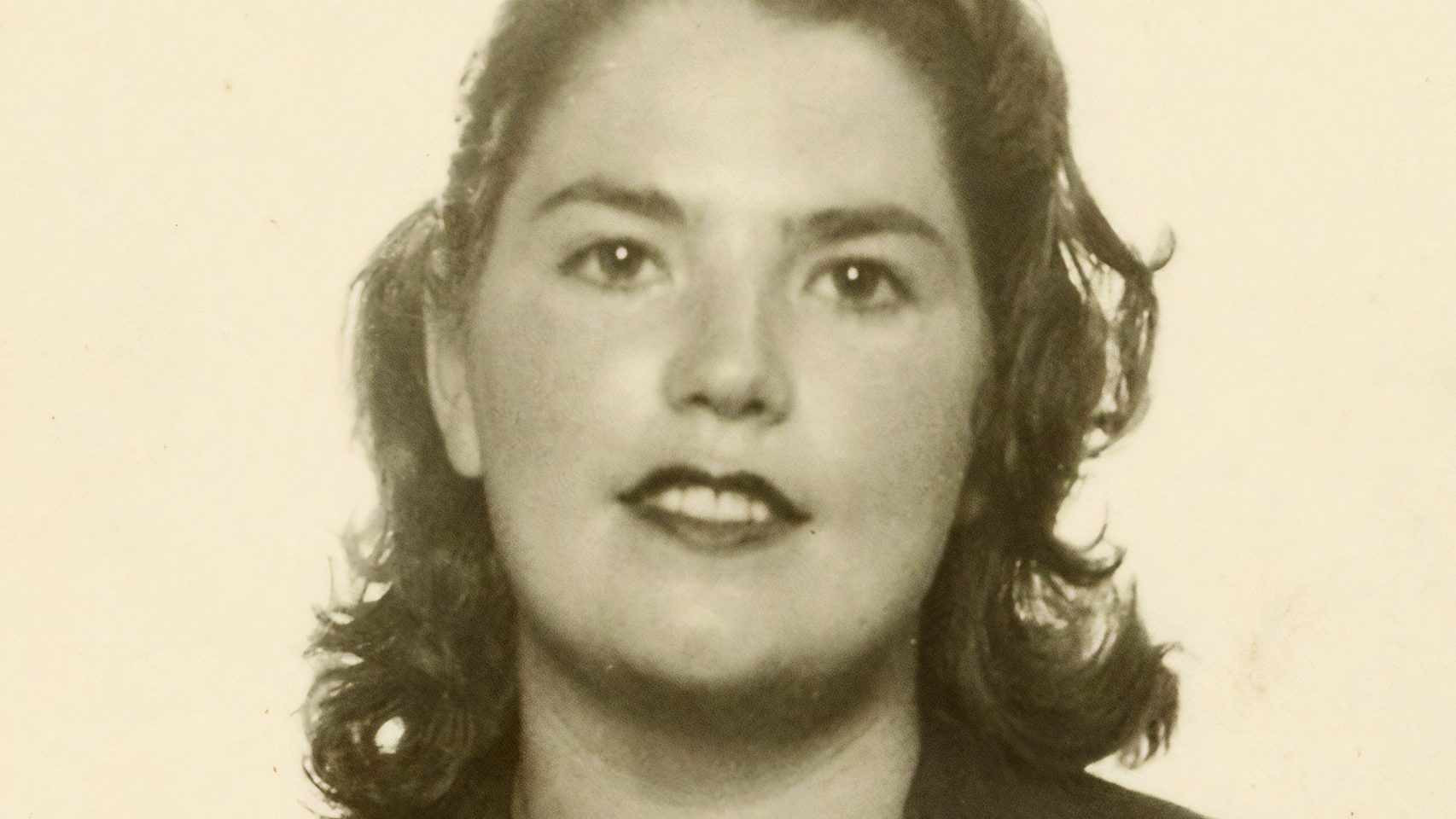
Araceli. https-//blog.nationalarchives.gov.uk

On June 6th 1944, a flotilla of more than 4,500 ships would transport 130,000 soldiers, and 20,000 vehicles across the English Channel, becoming the largest movement of people and material in the history of mankind. Known as D-Day, the Normandy Landing was the beginning of the end for Nazi Germany, but it would not have been possible without the key participation of a Spanish double agent, Juan Pujol, alias “Garbo,” who led Hitler to believe that the invasion would take place in Calais, 300 kilometers away. Garbo became a legend but recent investigations seem to indicate that perhaps the spy was not he but rather his beautiful wife. Today we know of a film-like story, the story of Araceli González Carballo, the Galician who deceived Hitler and who changed the course of a war1.

Araceli was born in Lugo in 1914, into a wealthy family. In the middle of the Civil War she volunteered to work in a blood bank hospital, until in 1938 she decided that she wanted to leave her hometown. Her father got her a position in Burgos, where she would work as secretary to the Governor of the Bank of Spain.

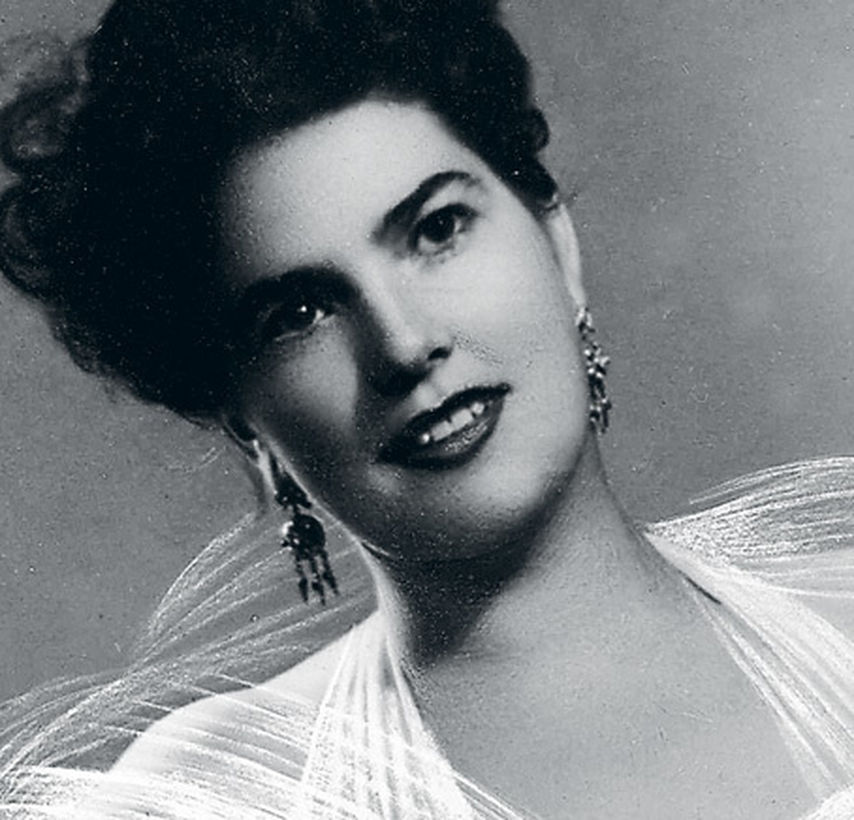
A young Araceli https-//www.garboespia.com

In February 1939, she met Juan Pujol, a young Catalan officer who had started the war on the Republican side and later switched to the National2 side, although he no longer believed in it. They get married and move to Madrid.

Juan Pujol Garcia in his uniform as a lieutenant in the Spanish Republican Army. https-//www.npr.org.jpeg

The two were of the opinion that Hitler would eventually lead Europe into disaster so they decided to offer themselves to the British to act as spies on the Germans in Madrid.

The British turned a deaf ear to her offer, so, in a risky decision, Araceli suggests to her husband that if they win the trust of the Third Reich, then they will be accepted by the British. Pujol, an officer in Franco’s army, appears at the German embassy in Madrid and offers himself to the Nazis. The ploy works and he begins working for the Third Reich’s Secret Services, the Abwehr. He is christened “Arabel” (from Araceli bella) and Friedrich Knappe is assigned as his contact.

Admiral Wilhelm Canaris https://es.wikipedia.org

Without knowing a single piece of information of interest, they pass reports to the Nazis, making them believe that they reside in London and that they have a network of informants when, really, they live in Lisbon and all they share with the Germans are inventions and rumors.

Declassified MI5 Index card for Araceli https://www.elespanol.com

Knowing that their cover was really weak, Araceli travels to Madrid to fake a fit of jealousy in front of Knappe. She shows up at the Embassy to tell him that she knew the German had held meetings with her husband and to ask him if he knew anything about Pujol, since she had left for London unannounced and had no news from him, fearing that he has abandoned her. Knappe succumbs to Araceli’s tears and beauty and reveals to her that Juan Pujol is doing essential work for the Third Reich. The deception had worked.

Juan’s identification card declassified by MI5. https://elpais.com

After that meeting, Pujol sent Germany highly valuable information about a British fleet that had left for Malta. He had learned the details by chance and considered it to be as false as the rest of the information he sent to the Nazis. But this time he was right, and the Abwehr took the information as a sign of Pujol’s skill.

That report was intercepted by the British and made their Secret Services very nervous so Araceli, without informing Pujol, decided that it was time to try again. And for this she turned to the North American Naval Attaché in Lisbon, Edward Rousseau, who got her an interview with the English. Araceli drops the bomb: “The spy you are looking for is my husband.” British Intelligence recruits Pujol and that is how “Garbo” was born, one of the most important and decisive double agents of the Second World War who, from London, and with a network of 27 false spies, misinformed the Nazis from the year 1942 until the end of the war.

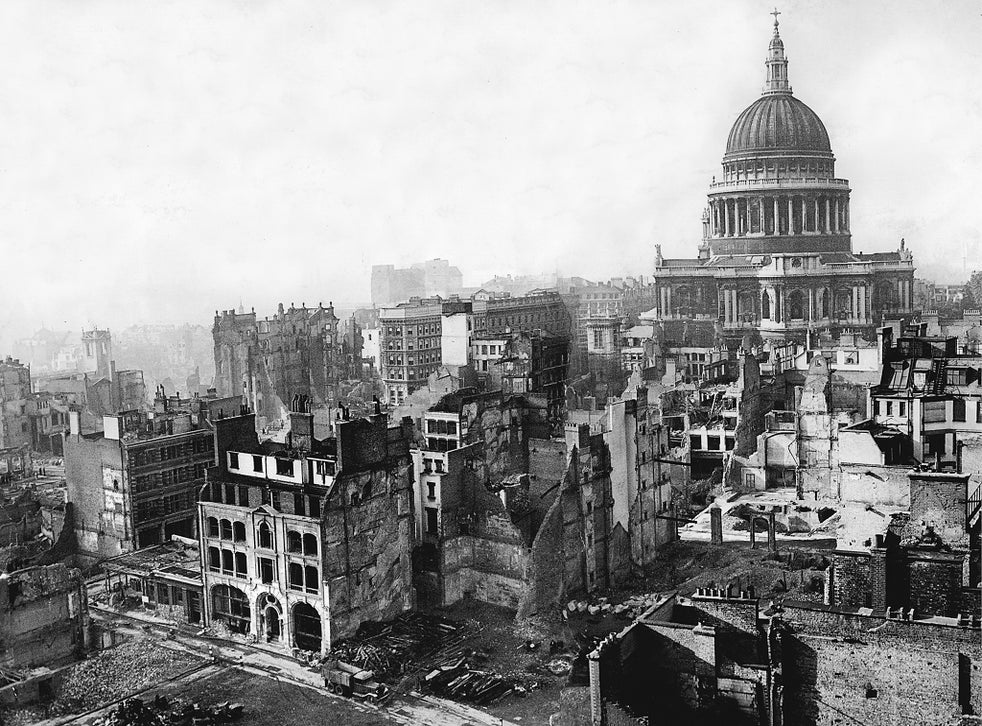
At the orders of MI5, the British Secret Service, they transmitted information to the Germans about which areas should be bombed by their air force, the Luftwaffe, without the Nazis knowing that they were unpopulated targets and without strategic interest. To confuse them, they sent them doctored photos of ruins and corpses, making them believe that the bombings had been a success.

London bombed WWII. https://www.independentespanol.com

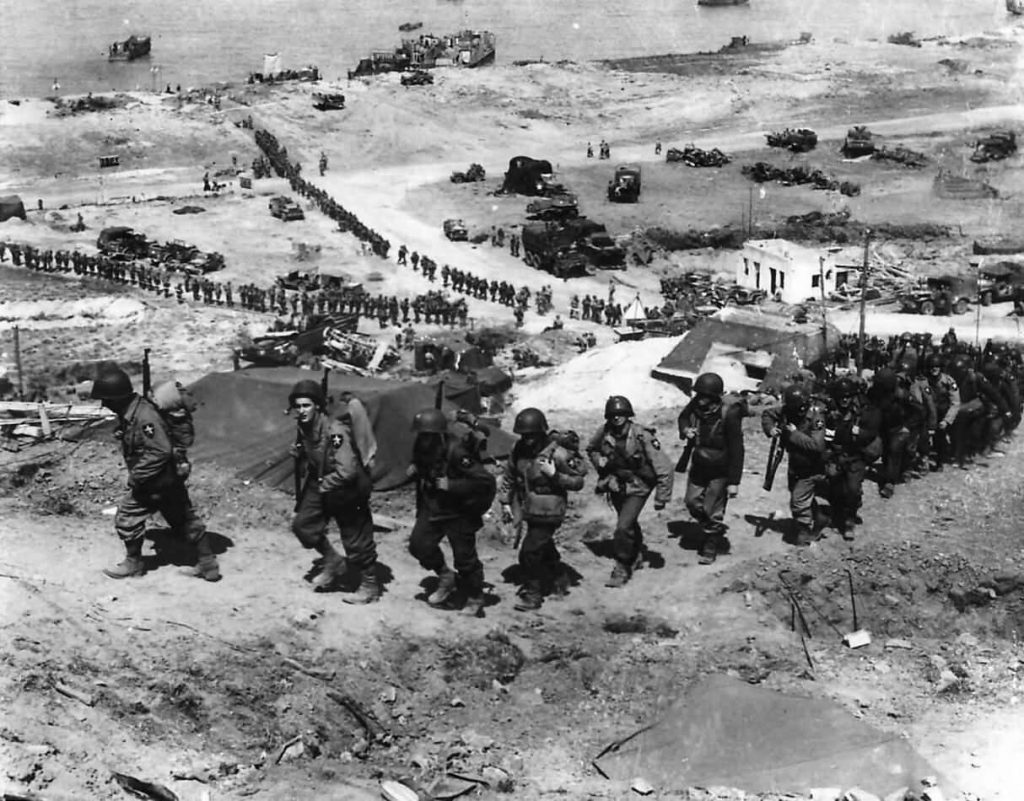
But it is in 1944 when his performance becomes so decisive that there are those who consider that thanks to this couple the Allies won the Second World War3. With their fake spy network, they informed German Intelligence that the D-Day invasion would take place at Calais and not on the beaches of Normandy. That information delayed the German response long enough for the invasion to be a success. The same morning of June 6th, Pujol sent a message to the Germans in which he told them that the real landing was not the one that was taking place, but that it would be in Calais, days later. Hitler bought it.

Normandy’s landing. https://www.worldwarphotos.info
USA troops moving inland from Normandy landing beaches. https-//www.worldwarphotos.info

What is surprising is that, according to declassified MI5 reports, Araceli almost ruined the entire operation. In 1943, Pujol was keeping his wife and his two children confined and controlled at home, which eventually enraged Araceli. “I don’t want to live another five minutes with my husband. Even if they kill me, I’m going to the Spanish Embassy to reveal the truth about him”. To avoid this, the British deceived the Galician woman into believing that her husband had been arrested because of her, so that she would come to her senses, which she finally did.

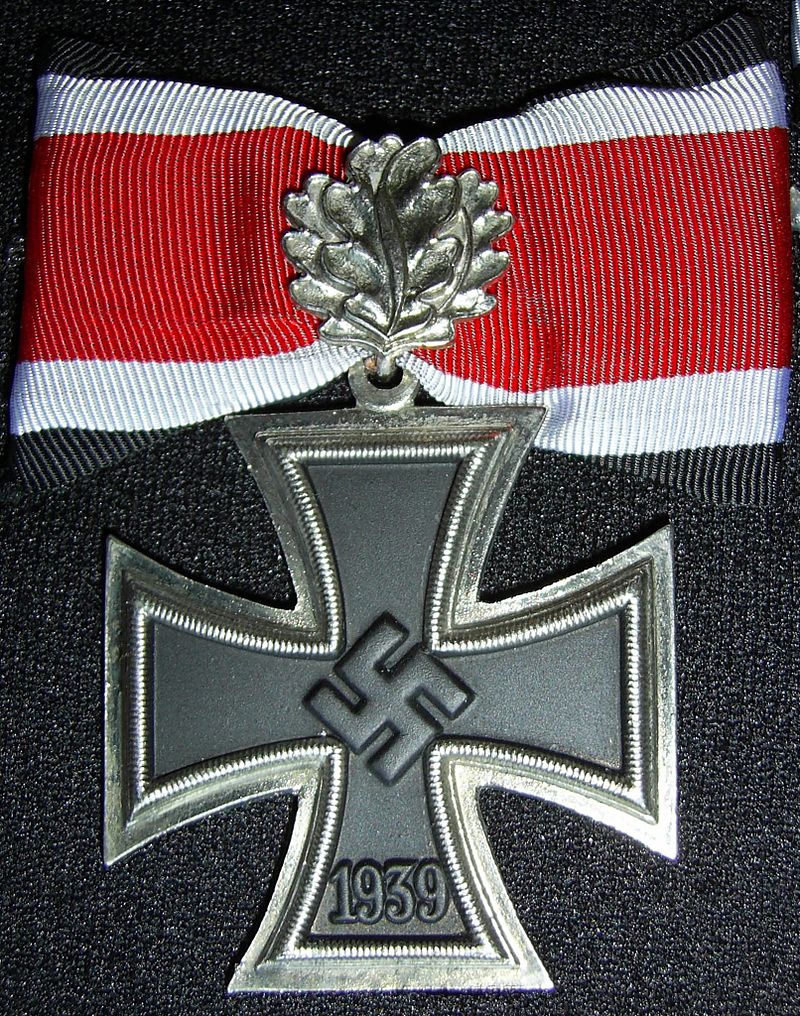
Despite the collapse of Germany, the Nazis never suspected Garbo, and Hitler would award him the Iron Cross, the highest decoration of the Third Reich.

Iron Cross, Nazi military decoration awarded to Pujol
. https://es.wikipedia.org

He would also receive the Order of the British Empire, becoming the only person decorated by both sides of World War II, but was unable to collect it, since he returned to Madrid with his family before he could receive it. In Madrid he was summoned by the Abwehr but it was Araceli who attended for fear that it was a trap. However the Germans just wanted to give him a monetary bonus for services rendered to the late Reich.

Order of the British Empire — Pujol is the only person to have received both the OBE and the Iron Cross. https://es.wikipedia.org

Now separated from MI5, they moved to Venezuela but Araceli did not adapt to that life, so she returned to Lugo with her children and separated from Pujol. Three years later, in a precarious financial situation, she settled in Madrid, where the British remembered that Garbo’s wife also got them to win the War, so they helped her with a job as an interpreter for the British and American embassies.

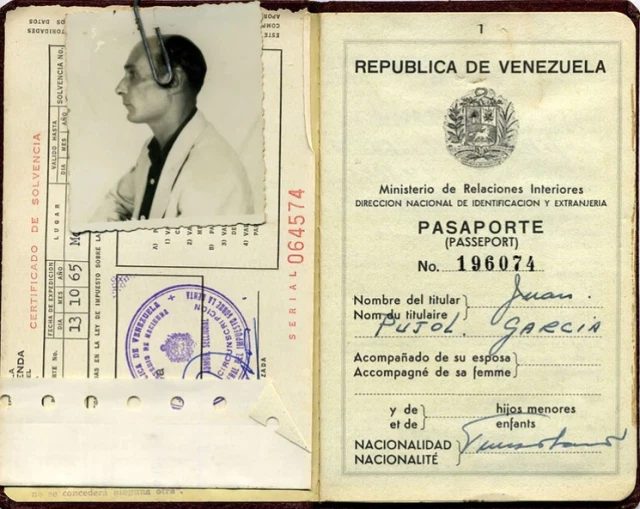
Venezuelan passport of Juan Pujol. https://albertonews.com

In 1956 news reached her that her husband had died in Angola4 from malaria and she married Edward Kreisler, with whom she maintained a hectic social life in the capital, where they received the most illustrious guests from the United Kingdom and the United States, and they founded an art gallery that would eventually have branches in New York and Miami and which is still in operation today.

However, a twist in this real-life film script was still missing. In 1984 the writer Nigel West met Pujol on the shores of Lake Maracaibo and convinced him to return to London and receive formal recognition of his achievements during the war. It turns out that his former boss at MI5 had spread a rumour that he had passed away in order to get the spy out of circulation. All the British and Spanish newspapers and different European television stations presented him as the hero that he was. And Prince Philip of Edinburgh publicly paid tribute to him in a commemoration of the 40th anniversary of the Normandy Landings.

Juan Pujol with the Order of the British Empire outside Buckingham Palace in 1984. https://www.xlsemanal.com

The former spy traveled to Spain and, after asking Araceli for permission, he was reunited with his children and met his grandchildren. The Spain-based family also traveled to Venezuela where Pujol had rebuilt his life and had three other children.

DEATHS

Juan Pujol died in Venezuela in 1988, in Choroní where, in one of his residences, can be read: “Here was the greatest spy in history.” Araceli would die too just two years later, in Madrid, following a stroke. Her remains rest in the Sacramental Cemetery of San Isidro.

San Isidro Cemetery, Madrid. https://www.pasionpormadrid.com

No one knew her true story until MI5 declassified a large part of the files that revealed Araceli’s true participation in her husband’s adventures, and writers and journalists such as José de Cora, director of Progreso de Lugo, Ben Macintyre, editor from The Times, Javier Juárez or Edmond Roch (winner of a Goya for his documentary on Garbo), began to investigate.

But Garbo was not a person, it was a team. It would not have existed without Pujol, but neither would it have existed without the help and courage of Araceli. One has to wonder which of the two was really the spy. The answer is not as clear as it might seem.

The Garbo spy team – Araceli and Juan https-//www.garboespia.com

This is the story how a Galician from Lugo allied herself with a Catalan from Barcelona to have an adventure that would change the course of history, in which they would deceive the Third Reich, the Nazis and Hitler himself. Without them the history of Europe and of the world would have been very different.

End.

FOOTNOTES

1Certainly the Nazi focus on Calais allowed the the US, British and Dominion troops to fight their way ashore and eventually establish a beachhead. But most analysts would say that it was the Battle of Stalingrad that was the real turning point in the War and sealed the fate of the Nazi’s military plans and of the regime.

2The military-fascist side called themselves the “Nationalists” and much of the world’s media used that description in their reporting and many historical references continued that description. They were engaging in a coup against a democratically elected government and in so far as they were “nationalists” they were Spanish nationalists but suppressing the nationalist aspirations of the Basques, Catalans and Galicians, also doing so with foreign military forces of Nazi Germany and Fascist Italy. They should be called what they were: military-fascist coupists.

3This is obviously an inflated claim, if it is indeed true that historians are of that opinion; there is rarely one point other than the final battle which can be said to “win” a war (see also earlier footnote with reference to Stalingrad).

4Angola was then a Portuguese colony

SOURCES AND REFERENCES

  • MACINTYRE, B. La historia secreta del Día D: La verdad sobre los superespías que engañaron a Hitler. Editorial Crítica, 2013
  • JUÁREZ, J. Juan Pujol, el espía que derrotó a Hitler. Ediciones Martínez Roca, 2004
  • DE CORA, J. El estornudo de la mariposa. Editorial Edhasa, 2016
  • es.wikipedia.org
  • elpais.com
  • elprogreso.es
  • lavozdegalicia.es
  • farodevigo.es
  • galiciaunica.es
  • elespanol.com
  • radiomitre.cienradios.com
  • garboespia.com
  • blogs.20minutos.es
  • laopinioncoruna.es
  • elpais.com
  • finanzas.com
  • lasexta.com


IN DUBLIN, WORKING ON THE SOUP RUN

Diarmuid Breatnach

(Reading time: 5 mins.)

Go to Dublin city centre any evening and you will see people queuing up for food and water, being dispensed by teams of volunteers. There are at least 16 different organisations carrying out this work in the city centre, mostly outside the General Post Office, an imposing building and historical icon, the location of the HQ of the 1916 Rising from Easter Monday to Friday1. These are mostly community initiatives or if not, religious organisations (Christian, Muslim, Sikh), their staff volunteers, their efforts supported by donations. I arranged to speak to one of those volunteers.

DB: Orla, thank you for talking to me. You help with one of the soup-run-type initiatives? In Dublin City Centre?

Orla: That’s ok. Yes. Ours is one of the ones that sets up in front of the GPO, under the arch. We take over after another group has already been there.

And there are still people to feed? Even though a group has been feeding people before you?

Oh, yes. Sometimes the queue is already stretching to the corner of the GPO when I get there.

How long have you been doing it?

Since September last year with this group and a few stints with another group before that.

What made you take it up?

Over the years, like I suppose lots of other people, I’ve been seeing the rich get richer, the poor poorer. It’s made me more sympathetic to people in difficult situations. I don’t think people get where they are just by entitlement. It’s given me different perspectives. One Christmas Night … it was 2016 …. I got to go with a homeless outreach team, supporting people sleeping on the street …. It really opened my eyes. So I got to know a few of the volunteers, started off donating to their teams. Then one day I joined the volunteers.

What is it like to do that?

It can be challenging. We need to wear masks and gloves. Some of the people have mental health issues. You might get someone trying to take more than their share – well, if you see they have kids, that’s OK, or you really know they are taking one for someone else …. but you have to explain that the food is being shared, it’s for all and has to last. The queue has to form up at one end and has to keep moving …. Most are grateful and cooperate.

So, what do you and the other organisations provide?

Mostly food and bottled water.

You spoke earlier about donations. I have heard some volunteers say they don’t want money, also claims that some organisations asking for money have been scams. Would you like to talk a little about all that?

It is an issue. Most of the organisations are not registered charities that have audited accounts ….

Some registered charities have been found to be crooked too …

Yes, some certainly have. There was concern about a particular organisation that was collecting in front of the GPO. A reliable person who knew the score challenged them and warned others about them and we haven’t seen them since.

But getting back to donations to the teams feeding people …. are they in money or in food and water?

Mostly they are in water food and – bread, cakes, chocolates. There’s some shops, including convenience stores, that donate us bottled water and also food. Some of the food is prepared elsewhere and then brought down to the teams, already packed into single containers – because of the danger of infection. And we provide plastic forks and spoons. And there’s hot water containers for hot drinks. There’s one group of people who make sandwiches to bring down – they’re very popular. Some people help in preparing stuff but don’t work on the table handing it out.

But money?

Occasionally, but we usually ask people to buy food with the money and donate it. Occasionally a money donation might be accepted and a receipt would be given. But what can you do when someone just walks up to us when we’re busy, hands over a ten-euro note and walks away? Oh by the way, we don’t do a clothes service but if we know someone in particular needs clothes or shoes, we might bring them in. Or pass them on to the Lighthouse or Inner City Homeless.2 Sometimes outreach teams from registered services will come along to us too, so they can get someone into a hostel.

I have heard of some groups of far-Right or fascist orientation saying we should only be looking after the Irish. What would you say about that?

Well, I don’t agree. We feed people of whatever nationality, so long as they’re not scamming. Sometimes we get some Irish people in the queue making remarks like that and we have to be careful not to rise to it, to get in big arguments with them — but we don’t agree. They shouldn’t be judging. We don’t get people from Direct Provision but I’ve heard those are certainly not holiday camps. Racists say foreigners get things for free but any accommodation they get, they pay rent for. People might be here from abroad, working, paying rent, then they lose their job, things go wrong for them …. could happen to anyone.

Then, you might be from one county and be refused help in another. I remember a program on TV early in the year about a young person left on the street because he was from another county …. shocked a lot of people.

Has there been any trouble from racist organisations?

I remember that just before Christmas there were some threats made on social media from some far-Right people to some of the volunteers.

I heard about those threats too. Did anything happen?

No …. supporters turned up to defend them and stayed near for the whole shift.

So, is it tiring, after a day’s work, helping on the soup run line for two hours,?

Yes, after work I get something to eat, then head over there.

Well, thank you Orla for taking the time for the interview and for your work.

Thank you.

List of groups organising and serving the soup-runs (may not be complete)

  • Ocras Éire
  • Éire Nua Food Initiative
  • Grubs Up Homeless Services
  • Caring Is Sharing
  • Muslim Sisters of Éire
  • Gurdwara Nanak Darbar
  • Snowball Church
  • Church of God
  • Hope In The Darkness
  • Lámh Fáilte
  • Lending Hand
  • Streetlink Homeless Services
  • Liberty Soup Run
  • Ballymun Soup Run
  • Everyone Matters
  • Kilkenny group on Grafton Street

Go raibh maith agaibh go léir and to those who supply them with donations of food and bottled water.

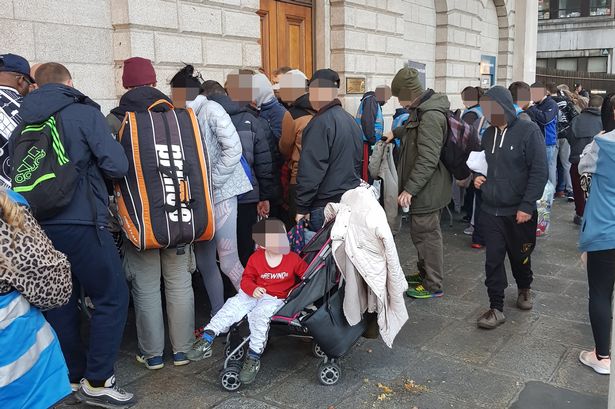
Queuing for food from one of the voluntary services outside the GPO, Dublin 2020. (Photo sourced: Internet)

Comment

Thankfully these organisations are providing services but it is a sad comment on any society that they are needed, let alone in a State that claims it won independence a century ago. The GPO is a central location in the city centre and is obviously convenient for the operation of the services. Nevertheless the fact the building housed the headquarters of the 1916 Rising for nearly five days is a poignant counterpoint to the aspirations of those who fought for independence and a better life for the people.

That some far-Right and outright fascist organisations such as the National Party are using the issue of poverty and homelessmess to point the finger not at the system but at migrants, is disgusting. Preying on the vulnerable, poisoning their minds and using them as a front to pretend that they are actually doing charitable work, filming their occasional propaganda forays into the city.

Meanwhile, there are real people of many different ethnic backgrounds actually out there week after week, doing the real work, whether by religious or communal solidarity. Some of the latter are also, at other times, political activists and to learn that they have been threatened by fascists makes one’s blood boil.

Fair play to those who are doing the real work. But it shouldn’t be necessary. The system is sick. It needs a fundamental change or at least a sharp shock.

…. charging ….. step back ….. JOLT!

…. charging ….. step back ….. JOLT!

End.

FOOTNOTES:

1On that afternoon some of the garrison left to take wounded to Jervis Street Hospital and the major part, to head for the north-east of the city to continue the resistance but having to stop in Moore Street.

2Registered NGO services working with the homeless in Dublin.

GUNSHIPS IN THE MERSEY, ARMED TROOPS ON THE STREET — LIVERPOOL 1911

Diarmuid Breatnach

(Reading time: 6 mins)

As part of a general rise in workers trade union militancy in the UK (including then Ireland), a general transport strike was called in August 1911. This involved train operators, dockers, sailors, carters and other types of worker. At one point the British State drafted extra police into Liverpool and, eventually, armed soldiers (as had been done against striking miners in the Rhonda Valley, Wales) and Royal Navy gunboats were sent up the Mersey river. On 12th August a massive police charge on workers attending a rally in Liverpool resulted in nearly two hundred injuries and became known as the city’s Bloody Sunday1.

BACKGROUND

1888 is seen by many labour historians as the point at which the weight of importance in the trade union movement shifted from the craft unions with their guild traditions, to the general workers, the “unskilled” (sic) and “semi-skilled” and when trade union actions began to be more militant and sustained. Over the following years, the working class built up its strength through many industrial struggles, many of which it lost but the general impetus was forward.

The great areas of need for capitalism were coal extraction for power, factory production for producing commodities and machines, along with transport to convey the coal to the factories and the commodities from the factories to the country and to the world. In 1911 transport involved trains and shipping, as well as horse and cart (motor transport had yet to generally oust the horse), the unions being those of train workers, ship-builders, carters and sailors. Factory workers were in engineering, textile and other unions. Miners unions recruited the coal-diggers and sorters. Construction workers were needed to build housing for workers, factories for them to work in, roads, railways and canals to transport goods and fuel.

In general, workers were becoming more militant and more politicised, more aware of ideas about the situation of their class and its future. Increasingly, workers in one union would support those of another on strike (although it was not until 1914 that three unions formed the Triple Alliance: The Miners Federation of G. Britain, The National Union of Railwaymen and The National Transport Workers’ Federation).

LIVERPOOL

In Liverpool on May 11th 1911 there was a huge demonstration in the port city of Liverpool as part of the seamen’s strike led by the Transport Workers Federation. The strike being total and with difficulty in employing trained scabs, the employers were obliged to agree new terms with the union.

Mass workers meeting, Liverpool August 1911 (Sourced photo: Gunboats article)

“Hearing of the victory of the seamen, 4,000 dockers immediately walked off the job on June 28 demanding improved pay and conditions. The dockers, many of whom had refused to load ships during the national strike, were quickly followed out by the scalers and coal heavers, and by the end of the day 10,000 men were on strike. Seeing this, the seamen walked out on strike again purely in support of the dockers. Mass meetings were held, and the largely un-unionised dock workers began to flock to the National Union of Dock Labourers (NUDL2).” (Libcom)

“It was the Transport strike during August that was to see matters escalate even further and near pushed the country to revolution. This incidentally was a national dispute with the railways going out on strike. This in turn was supported by dockers and other transport workers that saw the transportation of goods being brought to a grinding halt.

“Tensions were rising with the shipping companies stating that the dockers were in breach of their contract and declaring a lockout. To add fuel to the fire they also tried to call the military in as strike breakers.” (Gunboats up the Mersey)

As the rail strike began to spread across the country, a mass demonstration in Liverpool was declared as a show of support.

Support for the strike cut across the sectarian lines existing in Liverpool. “Reading Fred Bower’s account of workers marching from all over Liverpool must have shaken the establishment. ‘From Orange Garston, Everton and Toxteth Park, from Roman Catholic Bootle and the Scotland Road area they came. Forgotten were their religious feuds. The Garston band had walked five miles and their drum major proudly whirled his sceptre twined with orange and green ribbon.’

‘Never in the history of this or any other country had the majority and might of the humble toiler been so displayed. A wonderful spirit of humour and friendliness permeated the atmosphere.’ ” (Gunboats etc)

Tom Mann addressing a mass meeting in Liverpool August 1911 (Sourced photo: Gunboats article)

“Taking place on August 13 at St George’s Plateau, 100,000 workers came to hear speeches by workers and leaders of the unions, including Tom Mann. The demonstration went without incident until about 4 o’clock, when, completely unprovoked, the crowds of workers suddenly came under attack from the police. Indiscriminatedly attacking bystanders, the police succeeded in clearing the steps of St George’s Hall in half an hour, despite resistance from strikers who used whatever they could find as weapons. Fighting soon spilled out into nearby streets, causing the police and troops to come under attack as workers pelted them with missiles from rooftops. Becoming known as Bloody Sunday, the fighting resulted in scores of injuries on both sides.” (Libcom)

Mounted Police escorting material with armed troops marching behind them, Liverpool August 1911 (Sourced photo: Gunboats article)

“There are no records of why the Police decided to charge a peaceful crowd which resulted in a mass panic with 186 people being hospitalised and 95 arrests. Fred reports how after the carnage caused by the Police that it resembled a battlefield with wounded men, women, and children, lying singly in heaps over a vast area.” (Gunboats etc)

(Police with prisoners, Liverpool August 1911 (Sourced photo: Gunboats article)

“Fighting across the city continued for several days, coming to a head when a group of workers attacked a prison van carrying some arrested strikers. Two workers were shot dead by troops during the ensuing struggle, one a docker and the other a carter.

“A general strike of all transport workers in Liverpool was arranged for the night of August 14, and the next day saw the city come to a complete halt. Any movement of goods was closely guarded by troops, most of whom were drafted in from outside of Liverpool as the territorials of the city had largely been confined to barracks, the authorities wary of their loyalty3.” (Libcom)

Liverpool August 1911 (Sourced photo: Gunboats article)

“Following Bloody Sunday a convoy of prisoners who had been arrested on that day were being escorted by thirty-two soldiers of the 18th Hussars on horseback fully armed with live ammunition along with mounted Police. A magistrate was also present carrying a copy of the riot act. However before it could be even read a disturbance broke out on Vauxhall road with troops opening fire, injuring five people, two fatally. The victims were John W. Sutcliffe and a twenty-nine year old docker Michael Prendergast. Five days later, on the 19th August two more civilians were shot by troops in Llanelli. These are the last occasions in history when British soldiers have killed civilians on the streets of mainland Britain.” (Gunboats etc)

Troops ride a lorry load of material, Liverpool August 1911 (Sourced photo: Gunboats article)

“However, the strike’s days were numbered. Under intense pressure from the government to end the dispute, the railway employers and moderate leaders of the railwaymen’s union began a series of talks. A deal was struck ensuring that all strikers would be reinstated, and the railwaymen returned to work on August 21, with a general return to work ordered for the next day. Sporadic rioting occurred in working class districts throughout the end of August.” (Libcom)

Troops bearing rifles, Liverpool August 1911 (Sourced photo: Gunboats article)

“The show of strength displayed by the transport workers of Liverpool in 1911 clearly demonstrated the material gains that could be won through cross-industry solidarity. Paving the way for the massive industrial revolts by British workers during 1910-1914, the strike movement inspired similar action throughout the pre-war years.” (Libcom)

COMMENT:

Some historical commentary from the Left criticises the union leadership for their actions in settling the strike but I find it hard to see the justification for this. They got reinstatement of all sacked and locked-out workers (which is a lot more than the union leaders did in 1926 as, under the influence of the Labour Party, they scrambled to call off the General Strike). The alternative would seem to have been to go for revolutionary insurrection (which would certainly have impeded the later carnage of WWI 1914-1918) but: a) is it reasonable to expect revolutionary leadership from trade union leaders and (b) were conditions such that a significantly large section of the workers in Britain would have answered the call to revolution?

A different question is perhaps that of preparation for a possible police charge, of which there had been enough examples. Workers could have been encouraged to prepare pieces of timber as placard holders and staffs as flag and banner-poles. A defeat of a police attack is both a welcome defensive action as well as a confidence-building one for oppressed people.

The role of Churchill is striking in this period, particularly in the midst of recent disputes about his racism in general and his encouraging the setting up of the terror units of the Auxiliary Royal Irish Constabulary (Black and Tans) and the Auxilliary Division in Ireland. Although it must be remembered that Government Ministers generally act as representatives and in the interest of the ruling class, Churchill was a particularly imperialist and capitalist reactionary and had in January of that same year sanctioned the burning of an East End building in which anarchists had taken refuge in the Siege of Sidney Street.

In fact, Churchill was so reactionary and bellicose that during the 1926 General Strike he was kept away from any operational control in the Cabinet and entrusted with editing and producing eight editions of the virulent anti-striker British Gazette. The challenge to the adulation of the British ruling class and sycophantic historical cheerleaders of the historical person of Churchill does not lack for material to justify that challenge.

The fact that local troops in Liverpool could not be trusted by the ruling class is interesting and occurred again during the Glasgow General Strike in 1919 when, arguably a revolution should have been called for. By then the soldiers had been conscripted into a horrific imperialist war and were being prevented from demobilisation because they were going to be needed to suppress the national liberation struggles breaking out across the Empire. And one of those struggles was the War of Independence in Ireland which one can confidently predict would have allied with a British insurrection both from class solidarity and from opportunism. One of the leaders of the Glasgow workers, Willie Gallacher, of Irish descent (so was Tom Mann, by the way), member of the Independent Labour Party and later a Communist, commented later that the workers were ready but that the leaders were not. A revolutionary outlook should alert one that if the ruling class does not trust a part of their repressive forces, the least revolutionaries should do would be to call on those to join the struggle.

Liverpool’s son Jim Larkin was already in Ireland as an organiser for the NUDL and by 1911 leading the breakaway Irish Transport & General Workers Union, with the great struggle of the Lockout still to come in 1913. Then with Edinburgh-born-and-raised James Connolly, he went on to initiate the first workers’ army in the world, the Irish Citizen Army.

The 1911 martyrs of Sutcliffe and Prendergast were recorded as being A contingent of Liverpool city’s Irish diaspora would join the Irish Volunteers and embark for Dublin to take part in the 1916 Rising, when a Royal Navy gunboat would sail up a different river and open fire on what was considered a British city. Later, sailors and dockers operating from Liverpool would be sending consignments of arms to the IRA for their War of Independence.

But in Britain, the workers of Liverpool fought some great battles and those of August 1911 were a harbinger of others to come.

End.


FOOTNOTES

1 (NB: I remember reading about this many years ago and as the anniversary is with us decided to write it up however briefly. I have used material from some articles rather than the articles themselves because some lacked detail, others were more general or I did not agree with descriptions of workers’ motivations being solely about wages and good working conditions. However I hope this article encourages people do their own reading on the events or at the very least raises their awareness of the history of the working class and of its enemies.)

2This was the trade union that employed Jim Larkin as an organiser and also sent him to organise in Belfast. Subsequently Larkin was sent to Dublin where he led the building up the NUDL up very successfully with a number of successful strikes. Subsequently Larkin and the NUDL’s Irish leader, Sexton, parted company after the latter had Larkin tried in court. After that, Larkin founded the Irish Transport & General Workers’ Union and most of the Dublin members of the NUDL left that union to join the ITG&WU, of which James Connolly also became a leader.

3This is similar to the situation of the 1919 Glasgow General Strike, when the locally-garrisoned troops were confined to barracks for fear they’d support the workers.

REFERENCES AND SOURCES

https://en.wikipedia.org/wiki/1911_Liverpool_general_transport_strike

https://libcom.org/history/1911-liverpool-general-transport-strike

Send the gunboats up the Mersey.

https://en.wikipedia.org/wiki/Triple_Alliance_(1914)

IRISH: AT THE CENTRE OF EUROPEAN AND WORLD LANGUAGE DEVELOPMENT

Language is a Treasure Chest IV

Diarmuid Breatnach

(Reading time main text: 5 mins.)

There is a tendency to think of Irish as some kind of an isolated language in Europe, an anomaly, out on the margins of continental language development. Despite how much the language has been reduced through centuries of English occupation and a century of the Irish State, this is a very mistaken assessment, as examination of some features of the language will show.

In Irish, all but two of the words1 necessarily used to ask question begin with a “k” sound:

  • Cathain — when?
  • Conas/ Cad é mar/ Cén chaoi – how?
  • Cén – which/ what?
  • Cé – who?
  • Cad/ Céard – what?

Of course, English-speakers will note immediately the difference between this and English, where the words denoting questions begin with a “w” or a “h”. And they might remark that they share this with some other European languages, in the Germanic group, where the question words also tend to begin with a “v” or a “w”. The exception is the use of the verbs “to do” and “to be” in asking a question, viz. are they there? will you go? have you been? did they do it?

But it is the Irish language more than the Germanic ones which are most at the heart of European language development.

Irish is a branch of the Celtic languages that philologists describe as Goidelic (also “Q-Celtic”): Irish and its derivative languages of Scots Gaelic and Manx2. The “K” or “Q”-sound in most questions is a feature of all three, which is not surprising. However, it is also a feature of the Romance group of languages, as the following table shows:

EnglishCastillian (Spanish)CatalanGalicianPortugueseFrenchItalianRomanianIrish
WhatQueQueO QueO QueQuest-ce queCosaCeCad/ Céard
WhoQuienQuiQuenQuemQuiChiCareCé hé/hí
WhenCuandoQuanCandoQuandoQuandQuandoCând
Cathain/ cén uair
WhereDonde*On*OndeOndeOu*Dove*Unde*Cén áit
HowComoComComoComoCommentComeCumConas/ cén chaoi
WhyPor QuePer QuePor QuePor QuePourquoiPer CheDe ceCén fáth
WhichCualQuinCalQualQuelQualeCareCé acu
How muchCuantoQuantCantoQuantos?CombienQuantoCât
Cé mhéid
How manyCuantosQuantsCantosQuantos?Combien deQuantosCâteCé mhéid

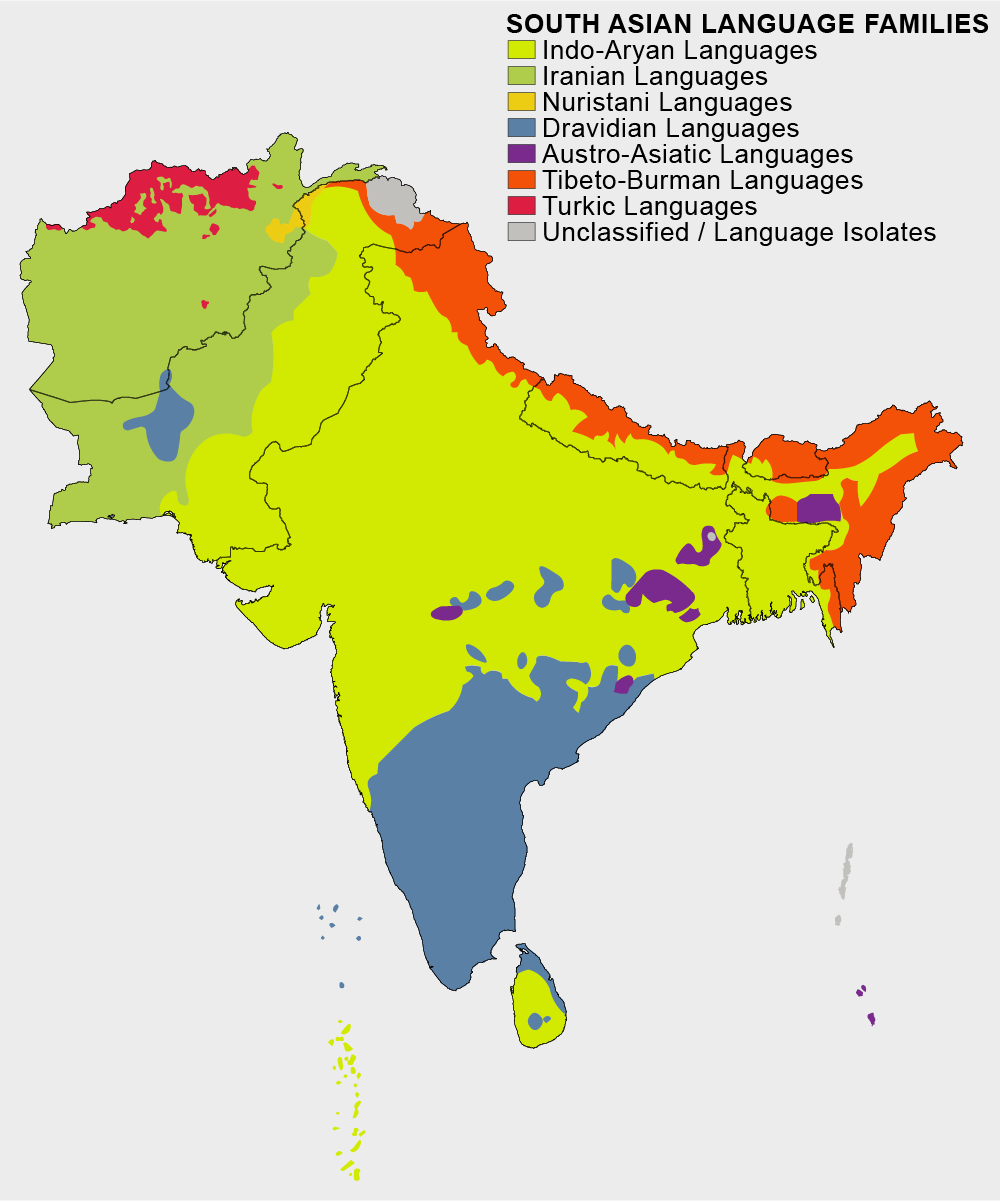
So Irish shares the same consonant sound for question words with a large number of major European languages. But not only that. It does so with major South Asian languages as well, as in Hindi (widely spoken in India) and Urdu (Pakistan) also! (Not only that but, along with the “tch”-sound, in Iranian and Kurdish also!)

THE SOUTH ASIAN CONNECTION

HindiEnglish
क्या (kya)What
कब (kab)When
कहा (kaha)Where
क्यों (kyu)Why
कौन (kaun)Who
कौन (kaun)Which
जिसे (jise)*Whom
जिसका (jiska)*Whose
कैसे (kaise)How
kitnaHow much
कितने (kitne)How many
English QuestionsUrdu Questions
which?kon
how?keysa ? – کیسا ؟
how many?kitni (ee)?
how much?kitni hai?
what?keya ? – کیا ؟
who?keon ? – کون ؟
why?keyon ? – کیوں ؟
where?kehan sai ? – کہاں سے ؟
when?jab*
which?kunta?
(* exceptions to the K-sound)

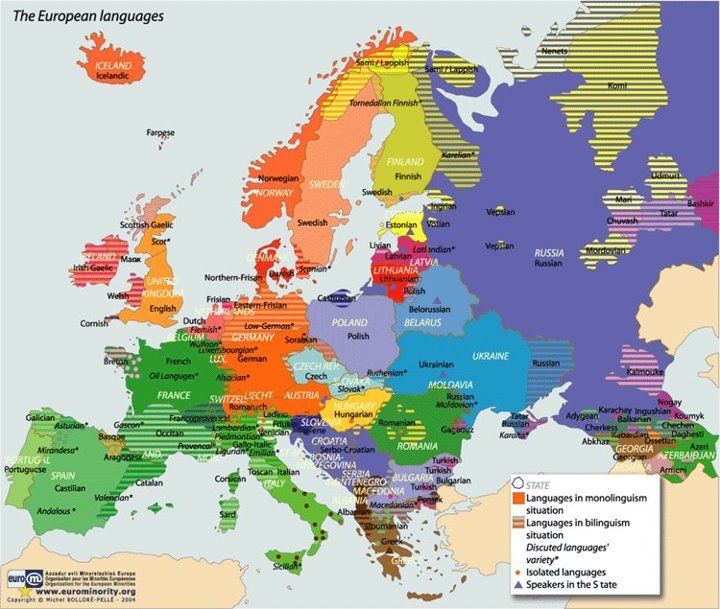
When one sees all that one is not surprised to learn that most European languages are grouped together by philologists into the “Indo-European group”3 of languages, with a believed ancestor language in India. And Irish clearly shows that inheritance.

A EUROPEAN AND WORLD LANGUAGE

Asking questions is an essential function of language and of learning; all but one of the question words in Irish show a close relationship to all the Romance languages of Europe, demonstrating that Irish is a European language with central features in common with a great number of other European languages, including the official languages of three major states of Europe: France, Italy and Spain.

But Irish clearly shows also its links with the languages of India and Pakistan, major languages of the South Asian subcontinent. Irish is therefore part of an important wider group of world languages.

End.

FOOTNOTES

1The exception is the use of “an” preceding verbs (“ar’’ also preceding all verbs in the past tense), viz. an í (is she?); an bhfuil (is there?); an bhfuair (did receive?); ar rith (did run?) etc. See also in the following paragraph the use of verbs in English to ask questions which, combined with an interrogative note, is also a feature of Romance and other languages, viz. vas a comer? (are you going to dine?). Or in German (and English), reversing the order of verb and pronoun, as in du wirst trinken (you will drink) to ask wirst du trinken? (will you drink?).

2The Brittonic (also “P-Celtic”) is the other branch: Welsh, Breton and Cornish, where most of the question words begin with a “p” or a “b”-sound.

3The major exceptions are Euskara (Basque), believed to be an original European language going back to the neolithic era and Hungarian, Finnish and Sami, which are believed to be historically later arrivals in Europe.

REFERENCES AND SOURCES

Celtic languages: https://en.wikipedia.org/wiki/Celtic_languages

For question words in languages other than Irish, Castillian (Spanish) and English, I have used a mixture of online phrase pages for tourists and/or learners in addition to Google Translate (regretfully I was unable to complete a list for Sardu – Sardinian).