Skimming through some of the material posted on the internet today as “breaking news”, I came across items under the categories listed above.
To take the first, a car driver on Interstate 95 highway in Florida was stunned by an object that flew through her windscreen and struck her on the head. Luckily for her and her mother who was a passenger, the woman managed to guide the car to the roadside where her mother summoned assistance.
A man who stopped to help was surprised to find a turtle among the broken glass inside the car but not as surprised as both women.
The media report speculated that the turtle was probably crossing the road and got knocked into the air by another vehicle.
Though there was a lot of blood as is often the case with a scalp wound, the woman was not badly injured. “I swear to God this lady has the worst luck of anything,” the daughter told the 911 operator as she tended to her injured mother, according to the report. Her daughter will no doubt remember those words of comfort for a long time.
What about the turtle? According to a Port Orange police officer, the turtle was uninjured apart from some scratches on its shell and was released into some local woods (where it has no doubt gained legendary status already among the local wildlife; hopefully the woods were in the direction in which it had been headed, so it did not have to cross the road once more).
In this part of the world we tend to think of turtles as those big marine animals or, for some, as little stripey shellback reptiles kept in aquaria. There are actually four species of native land turtles in Europe, which we call “tortoises”, found mostly around the Mediterranean and at one time it was not unusual to have one as a pet in Ireland, even at loose in the garden, where dogs, cats and other predators eventually learned the uselessness of attacking them. Sometimes they survived winters by hibernation and lived on for years, becoming quite accustomed to their owners, extending their heads out of their shell to accept bits of lettuce from people, etc. Perhaps the expression of a shy person “emerging from their shell” comes from such instances.
The cute little stripey ones in the aquarium if they lived could grow to a similar size as their land cousins but unlike European tortoises, were carnivorous. There are seven European species of which two have been introduced but none indigenous or large-scale colonisers here or in Britain (yet, at any rate – but see concern about the “Florida Turtle” invasion).
These animals in general on land or in water when fully grown are about a foot long at most but the shell adds considerable weight.
The United States is home to more species of tortoises and freshwater turtles (which we call “terrapins”), along with marine turtles than any other country in the world – 57 of the world’s 320 currently recognized species. A handful of the turtles of the Florida state are land-dwellers and like most land-dwellers, have on occasion to cross those avenues of death: roads and motorways. Which is why predators and scavengers regularly patrol these for the motor vehicle-impact corpses strewn along them.
In areas where deer might be expected to be encountered crossing the road, or even in areas near airports, traffic signs warn of the possible danger of accidental impact. Can we now expect flying turtle warning signs in Florida?
SINN FÉIN AND THEIR VOTER DATABASE
Shock and horror greeted the news that the Sinn Féin political party has a voter database. Really, how could they! Yes, they keep track of who voted for them so they can call them out for a repeat vote when they need to. Of course, most political parties do that but … but … this is different!
Actually, SF are probably emulating Dublin Fianna Fáil in this respect – it was said years ago that a Dublin FF Councillor could name his voters and that a FF T.D (parliamentary representative) could name the streets in their constituency where the majority voted for them. And since SF are emulating FF in so many other ways, why not? As one of the party’s policy advisors Éoin Ó Broin remarked also, they are “a professional party” – yes indeed.
Eoin Ó Broin TD, SF spokesperson on Housing answering press questions (photo: Gareth Chaney/ Collins)
The next horror revelation was not only that SF had such a database but that they had removed it from its usual location and lodged it somewhere else – Serbia! However this turned out to be a complete invention based on the fact that one SF member was married to a Serb. Really? A whole scandal was built on that?
So if not Serbia, where is that database now? In Germany, boss of the EU, it is rumoured, though Ó Broin declined to say. Well that’s alright then. But where was it before? In Britain, it turns out, from where SF moved it due to the UK’s Brexit. The state whose invaders Irish people have been fighting for eight-and-a-half centuries and which is still in military occupation of one-sixth of our land. Of course, no worry there for our political class and media – but Serbia! Thankfully it was never there.
POSSIBLY EXTENDED LOCKDOWN
It is reported that Leo Varadkar, the Tánaiste (like Prime Minister in Irish government) said publicly that he is not as confident as he was recently about the pace of relaxation of restrictions.
Those who are hostile to Varadkar and his party, or even the whole Government Coalition may let forth an expletive while the vast majority who are sick of restrictions on so many levels of normal life may groan in despair. But Varadkar is right to be cautious.
He has been made so, he says by the state’s experience in December, when the Government ignored their medical advisors and strong statements from left-wing TDs and, under pressure from commercial interests, relaxed the restrictions in the run-up to the Christmas period. A spike in rates of Covid19 infections and death rates a few weeks later was the result.
Currently infection rates in the state have fallen to the lowest level since October last year (i.e before the disastrous decision to relax restrictions) but even a composite table of a number of agencies’ predictions envisages a possible fall to 1,558 cases a week or 222 cases per day by May 15th. However that is still high enough and really the way to go is what has been advocated by left-wing TDs, which is a zero-level target. In a capitalist system that will not be the choice of the Government but rather one of managing the number of sick and tolerating the number of dead within “acceptable limits”. But hopefully the Government will at least wait until the vaccines are widely available and being administered, with testing stations throughout the state, before they risk any further relaxations of the restrictions.
We do not wish to return to the climbing rate of infection and hospital cases of earlier this year, nor do our hospital staff need any such repeat. And France and India have given graphic evidence of the penalties of too-early lifting of restrictions, if our own experience has not been enough.
End.
A US land turtle on a road (image sourced: Internet)
(Translated by D.Breatnach; la versión en castellano al fondo)
(Reading time: 8 mins.)
To this day, many people, both from the Spanish state and foreigners, believe that Franco’s repression only occurred in areas where the coup failed and war followed. But this is not the case for in areas such as Galicia (1), the Canary Islands, Castilla y Leon, Ceuta, Melilla, where the coup d’état triumphed in just a few days, the repression was equally brutal.
Photo of the executions taken from a distance by a Guardia CivilPhoto montage of original photo of the executions in 1936 and the memorial monument there today.
I am going to expose the events that occurred in my Galician homeland, which is what I know best. There was not a single battle there, so that some historians say that there was no war in Galicia; there are also those who think that the majority of Galicians were Francoists because Franco was born in Galicia. This is another myth, which is refuted by the fact that on June 28, 1936 its Statute of Autonomy was voted and approved by a large majority with almost one million votes in favor of the Statute. One of the main promoters of the Statute was Daniel Castelao, father of the Galician nation, writer, politician, draftsman, painter, etc., who was luckily in Madrid presenting this Statute in the courts, which is how he was able to save his life. The other was Alexandre Bóveda, shot in A Caeira, Pontevedra, on August 15, 1936, which is why every August 15th we Galicians commemorate the day of the GALIZA MARTIR, in memory of all the acts of repression.
“The fascist ‘stroll'” (Daniel Castelao) [The Falange, who carried out many of the non-judicial killings, would round up people and say “We’re going for a stroll.”- DB]
“That will teach them to have ideas” (Daniel Castelao)
The reason why the coup triumphed in Galicia has nothing to do with the Galicians supporting the coup but rather that in Galicia, as in many of the communities where the coup triumphed, it had more to do with the four civil Governors: Francisco Pérez Carballo, Gonzalo Acosta Pan, Ramón Garcia Nuñez and Gonzalo Martín March, who decided not to hand over arms to the people. They thought that the coup was not going to take place, or that in any case it would be easily controlled. They were very mistaken and they paid for it with their lives, because the Francoists, despite this, shot them. I should highlight here also the story of Juana Capdevielle, wife of the civil Governor of A Coruña, who was raped, shot and her breasts torn off. (2)
“All for Country, Religion and Family” (Daniel Castelao)
The repression that I know best about occurred in my city, A Coruña, where in a place near the Tower of Hercules, called Campo De La Rata, about 700 people were shot and thrown into the sea and where veritable mass meetings of fascists were convened to attend the shootings. Here is told the sad story of the brothers known as “La Lejia”, because their father had a bleach factory (3); of these brothers it is told that Bebel de la Lejia was a player of Deportivo de A Coruña (4) and a socialist, like his four brothers — when he went to be shot he lowered his pants and urinated on his murderers. Pepin de la Lejia was the only one of the brothers who managed to escape, he did so on a fishing boat to Asturias where he joined the Republican army and in the subsequent bombardment he lost a leg but managed to escape to France and from there into exile in Argentina. There is a beautiful song that tells his story. (5)
GUERRILLA ORGANISATION IN GALICIA POST-ANTIFASCIST WAR
In Galicia, one of the first guerrilla resistance organisations was also formed, the guerrilla army, part of the Leon-Galicia Guerrilla Federation and formed mostly by refugees who fled to the mountains, people who simply hid in the mountains but that the Communist Party managed to turn into a guerrilla organisation, one of the most numerous in the state, in order to deliver economic blows to the landowners or to carry out sabotage on the Tungsten mines, a mineral that was sold by the Francoists to the Nazis to make cannons for tanks. The guerrilla organisation ended up being abandoned by the Allies who recognized the Franco regime, but even so the last guerrillero was shot in 1968, a Galician they called “O Piloto”. The best known was Benigno Perez Andrade, known as “Foucellas”, an avid fan of the DEPOR, who went every Sunday in disguise to the stadium to see Deportivo A Coruña after which he posted the tickets to the civil Government.
We should also note that of the last five officially shot by the Franco regime (6,) two were Galicians: Xose Humberto Baena and Jose Luis Sanchez Bravo, both members of the FRAP (Frente Revolucionario Antifascista y Patriota) tried in a farce of a trial in which the Defence lawyers were even threatened beforehand by pistols aimed at them and all the evidence presented by the Defence was denied.
PLUNDER BY FRANCO AND FAMILY
And to conclude, I cannot end on the Francoist repression in Galicia, without mentioning something very recent that only occurred a few months ago, when the Department of Justice recognised that the State was the legitimate owner of the Pazo de Meiras (pazo in Galician means “palace”) which was literally usurped, stolen, etc by a series of Francoist characters to give to Franco, supposedly as a gift from the Galician people. The reality was that they created a kind of revolutionary tax (and I know this because my mother is from the same town where the pazo is located), in which whoever did not give money to buy the pazo for the Dictator was called “a Red”, which we all know entailed imprisonment and one could even be shot. After much struggle, there was success in getting the Justice Department to return the pazo to the State, originally without any compensation but the Dictator’s family appealed and once again the Court declared that the State had to pay one million euros, allegedly for a series of repairs they had made. However this has been appealed again by the State and in addition there is another series of processes underway, for other properties confiscated by the Franco family, such as the Casa Cornide, various statues of the Santiago Cathedral, several medieval baptismal fonts of many other churches etc. End.
“They killed her son” (Daniel Castelao)
“Final lesson from the schoolteacher” (Daniel Castelao). [Non-fascist teachers, as intellectuals, were high on the list for execution by fascists – DB]“They could not be buried in consecrated ground”. (Daniel Castelao)
FOOTNOTES
Galicia is a nation of Celtic origin with a coast on the north-west of the Spanish state but speaking a Romance language very similar to Portuguese. It is bordered by Asturias (another Celtic nation) and Castilla y León to the east, Portugal to the south and otherwise the Atlantic Ocean. It is recognised as a historic nationality by the Spanish State and is governed as one of the “autonomous communities”.
“According to Carlos Fernández Santander, at least 4,200 people were killed either extrajudicially or after summary trials, among them republicans, communists, Galician nationalists, socialists and anarchists. Victims included the civil governors of all four Galician provinces; Juana Capdevielle, the wife of the governor of A Coruña; mayors such as Ánxel Casal of Santiago de Compostela, of the Partido Galeguista; prominent socialists such as Jaime Quintanilla in Ferrol and Emilio Martínez Garrido in Vigo; Popular Front deputies Antonio Bilbatúa, José MiñonesDíaz Villamil, Ignacio Seoane, and former deputy Heraclio Botana); soldiers who had not joined the rebellion, such as Generals Rogelio Caridad Pita and Enrique Salcedo Molinuevoa and Admiral Antonio Azarola; and the founders of the PG,Alexandre Bóveda and Victor Casas as well as other professionals akin to republicans and nationalists, such as the journalist Manuel Lustres Rivas or physician Luis Poza Pastrana (Wikipedia).
“Lejia” is “bleach” in the Castillian (Spanish) language.
Real Club Deportivo de La Coruña (‘Royal Sporting Club of La Coruña’), commonly known as Deportivo La Coruña, Deportivo or simply Dépor, is a professional soccer club based in the city of A Coruña, Galicia, in the Spanish state. They currently play in the third tier of the League in the Spanish state. Founded in 1906 as Club Deportivo Sala Calvet by Juan Parra Rois, the Blue and Whites were a regular in top positions in La Liga for some 20 years, from 1991 to 2010, finishing in the top half of the table in 16 out of 19 seasons, and are 12th in the all time La Liga table. As a result, the club was a regular participant in European competitions, playing in the UEFA Champions League five seasons in a row, reaching the quarterfinals twice and reaching the semi-finals in the 2003-04 season (Wikipedia).
https: //youtu.be/ywhOfjNEuZY
The other FRAP member was Ramón García Sanz; also executed on the same day 27th September 1975 were two ETA members, Ángel Otaegi and Juan Txiki Paredes Manot.
A dia de hoy, mucha gente, tanto del estado español, como extranjeros, creen que la represión franquista sólo se dio en las zonas en donde el golpe de estado fracasó, esto no es asi, zonas como Galicia, Canarias, Castilla y Leon, Ceuta, Melilla, donde el golpe de estado triunfó en apenas unos pocos dias, la represión fue igualmente brutal, yo voy a exponer, los hechos que ocurrieron, en mi patria gallega, que es lo que más conozco, donde no hubo ni una sola batalla , tanto es asi que algunos historiadores dicen que en Galicia no hubo guerra , también hay quienes piensan que la mayoría de gallegos eran franquistas porque Franco nació en Galicia, es otro mito, que no es real.
Para demostrar esto decir que Galicia , el 28 de junio de 1936 voto y aprobó su estatuto de autonomia ( https://es.m.wikipedia.org/ ) por una amplia mayoria con casi un millón de votos a favor del estatuto, cuyos principales impulsores fueron Daniel Castelao, padre de la Patria gallega , escritor, politico, dibujante, pintor etc . , quien por suerte se encontraba en Madrid presentando este estatuto en las cortes, por eso pudo salvar su vida, y Alexandre Bóveda, fusilado en A Caeira , Pontevedra , el 15 de Agosto de 1936, por eso todos los 15 de Agosto los gallegos conmemoramos el dia de GALIZA MARTIR, en homenaje a todos los represaliados . Coleccion de cuadros pintados por Castelao sobre la represión en Galicia https://youtu.be/ljyuasmr9iY
El motivo por el que el golpe triunfó en Galicia , no tiene nada que ver con que los gallegos apoyaran el golpe, si no que en Galicia, como en muchas de las comunidades donde triunfó el golpe tiene más que ver con que los 4 gobernadores civiles : Francisco Pérez Carballo, Gonzalo Acosta Pan, Ramón Garcia Nuñez y Gonzalo Martín March , decidieron no entregar armas al pueblo , pensaban ellos que el golpe no se iba a producir, o que en todo caso , seria facilmente controlado, estaban muy equivocados e incluso lo pagaron con sus vidas, porque los franquistas, pese a esto, los fusilaron : https:// , destacar aqui tambien la historia de Juana Capdevielle, mujer del Gobernador civil de A Coruña , a quien violaron, fusilaron y arrancaron los pechos.
La represión que mas conozco ocurrió en mi ciudad, A Coruña, donde en un lugar próximo a la Torre de Hercules , llamado el CAMPO DE LA RATA, se fusilaron y arrojaron al mar a cerca de 700 personas y donde se organizaban autenticas multitudinarias reuniones de fascistas para asistir a los fusilamientos. Aqui contar la triste historia de los hermanos conocidos como de LA LEJIA , porque su padre tenia una fábrica de lejia, de estos hermanos contar que BEBEL DE LA LEJIA , era jugador del DEPORTIVO DE A CORUÑA y socialista , como sus 4 hermanos , cuando iba a ser fusilado se bajó los pantalones y orinó a sus asesinos : https://youtu.be/93VlSccyLxE Pepin de la Lejia fue el unico de los hermanos que consiguió escapar, lo hizo en un barco pesquero hasta Asturias donde se enroló en el ejercito republicano y en bombardeo perdió una pierna , pero consiguió escapar a Francia y exiliarse en Argentina , esta es una linda canción que cuenta su historia :https://youtu.be/ywhOfjNEuZY
En Galicia también se constituyó una de las primeras formaciónes guerrillera de resistencia, el exercito guerrilleiro, integrado en la Federación de guerrillas Leon-Galicia y formado en su mayoria por huidos al monte, personas que simplemente se escondieron en el monte , pero que el partido Comunista logró convertir en guerrilla, una de las mas numerosas del estado, con el fin de llevar acabo golpes economicos a los terratenientes o de realizar sabotajes a las minas de Wolframio, mineral que era vendido por los franquistas a los nazis para fabricar cañones para tanques. La guerrilla acabó al verse abandonados por los aliados que reconocieron al regimen de Franco, pero aun asi el ultimo guerrillero fue un gallego al que llamaban O PILOTO, fusilado en 1968. El más conocido fue BENIGNO PEREZ ANDRADE, conocido como FOUCELLAS , reconocido seguidor del DEPOR , que iba todos los Domingos al estadio a ver al DEPORTIVO A CORUÑA , disfrazado y luego enviaba las entradas al gobierno civil por correo
También comentar que de los últimos 5 fusilados por el franquismo, 2 eran gallegos :Xose Humberto Baena y Jose Luis Sanchez Bravo , ambos militantes del FRAP ( Frente Revolucionario Antifascista y Patriota ) juzgados con una farsa de juicio en el que incluso encañonaron en la previa a los abogados defensores con pistolas y fueron denegadas todas las pruebas presentadas por la defensa
Y para acabar, no puedo terminar sobre la represion franquista en Galicia, sin mencionar algo muy reciente que tan sólo hace pocos meses cuando la justicia reconocia que el estado era el legitimo propietario del Pazo de Meiras ( pazo en gallego significa palacio ) que fue literalmente usurpado, robado , etc por una serie de tipos franquistas para regalarselo a Franco, supuestamente como un regalo del pueblo gallego a los Franco , cuando la realidad fue que crearon una especie de impuesto revolucionario, y esto lo sé porque mi madre es del mismo pueblo donde esta el pazo , en el que quien no daba dinero para comprarle el pazo al dictador , se le llamaba rojo, lo que todos sabemos que conllevaba prision y hasta podia ser fusilado. Despues de mucho luchar, se consiguió que la justicia devolviera el pazo al estado, en un principio, sin ninguna indemnizacion, pero la familia del dictador recurrió, y otra vez la justicia declaró que el estado debia de pagar 1 millon de euros , ellos alegan por una serie de reparaciones que hicieron, pero esto ha vuelto a ser recurrido por el estado , al margen de que hay en marcha otra serie de procesos , por otras propiedades confiscadas por los Franco , como la Casa Cornide, diversas estatuas de la catedral de Santiago, varias pilas bautismales medievales de otras tantas iglesias etc: https://www.lavanguardia.
Iván Ramírez was the last of those arrested for the Andino Case to be freed by the Colombian authorities after spending almost four years arrested as part of the legal frame up. I spoke to him a number of weeks after his release.
Ivan Ramirez, managing to smile after his ordeal (Photo: G.Ó.Loingsigh).
Iván graduated from the National University as a sociologist and before his arrest he worked for the National Centre for Historical Memory (CNMH) as part of an accord with the official German international aid agency GIZ. His work consisted of carrying out workshops to collate information on the murders and massacres committed against members of the Unión Patriótica in the department (administrative area) of Meta in order to build a Memory Centre in the city of Villavicencio. This centre was never built and when his house was raided the Police took various files collected as part of his work. He also worked on the issue of the infamous Massacre of Trujillo, carried out by the Third Division of the Army whose boss, not to say capo, Manuel Bonnet Locarno would become the highest commander of the State’s armed forces. There was a chance of continuing to work with this body, but his arrest put paid to any hope of a new job with them and he went on to be part of another nefarious chapter in the Colombian State’s war on its own people.
“At that time, I didn’t think about it, but neither was I unaware that the activity I was engaged in — e.g. academic or professional life — could have certain consequences. Well, looking at our national history and context, you realise no one is immune from ending up in prison or being murdered for political reasons. So I never thought I would end up being part of a judicial frame up. Obviously in the context that one looks at the background and cases of other people that were also sociologists who had been victims of frame ups, well it was always possible, but it wasn’t on my mind.“
Prior to his arrest, two of the people he had known in Meta in the context of his work with the CNMH were murdered. Little did he know that in a short time he would go on to be part of the sad story of the dirty war against social fighters and the judicial frame ups. Neither did he know that documents related to his legal work with a state body would be presented in court as evidence against him. Almost every researcher of the Colombian conflict has a copy of the report ¡Basta Ya! (Enough!) published by the CNMH.
It was not the only document that they took from his house as evidence.
“There were also texts on the history of the insurgencies that are also academic works in Colombia and in the hearing they were introduced, as propaganda texts when when they were really academic documents and there was one on the Quintin Lame armed movement which was also published by the National Centre for Historic Memory. They are publicly available documents and as a professional you have to study them.“
A prosecutor has to be really stupid or desperate in the face of the weakness of his case to introduce such documents in a trial. Amongst the credits for these documents are the name of ministers and high-ranking politicians such as Germán Vargas Lleras, Angelino Garzón the former Vice-President of the country and the publication was financed by the European Union, the Spanish Embassy and the official wing of the US government USAID. It would seem that the Prosecutor saw subversives everywhere. Though it should be pointed out that this type of manoeuvre is common and there are many cases where the prosecutors introduced widely published books as evidence. It would seem, on occasions that the prosecutors have not even read the Penal Code, less still would they read literature or sociological texts.
The evidence against him was not the only farce, his arrest seemed like an episode of Key Stone Cops.
“I was arrested four times. The first time was in Bogotá on public transport. I was going to meet my partner at some workshops she was doing to start working at Compensar. I was in a public transport bus at about four in the evening, I was going towards the centre. I was in the bus and some motorised cops stopped the bus. They took three people off it. They asked for our I.D. and they gave the I.D. back to the two others and let them go. They detained me under the pretext that I was supposedly a burglar. There was a white van behind the bus and one of the cops told me to get into it and that my accomplice was in it. When they opened the van, there was a very suspicious looking guy inside and the first thought that went through my head, was that they are going to do something to me, kill me or disappear me.“
He didn’t want to get in the van and told the police that he didn’t trust them, but even so, they took him to the Police Station as a suspected burglar and moved him from one place to another at all times as a suspected burglar. At last they took him in handcuffs to his apartment, whilst they interrogated him about his family. When he got there two secret police officers turned up to search his home.
“They went into the house and went through absolutely everything. It began at 7.30 P.M. and lasted till 2 A.M. It was an irregular procedure, when house searches are carried out after 7 P.M. there must be a representative of a supervisory body present and there wasn’t. In the preliminary hearings, I was freed due to the illegal nature of my arrest.“
THE “TALIBAN”
He went to Sasaima, a county in Cundinamarca, near Bogotá, seeking some peace and quiet, but the nightmare followed him there and he noticed the presence of plain clothes police following him and hanging around the town, which made him anxious as the difference between a plain clothes police officer and a paramilitary is one of opportunity and convenience. In this second arrest he was presented to the media as the worst terrorist. He was called alias The Taliban (1), perhaps a reference to his physical appearance or a play on words with his name, but as they later acknowledged this nickname was invented by the police themselves, but it was not the only stupidity in the case. When he shaved, this was presented as evidence of his presumed guilt by trying to change his appearance. The process against him is a complete farce from start to finish. But as a result of it he spent almost four years in prison and during his imprisonment his daughter was born and he could only see her during normal visits, once a fortnight. The searches and treatment were the usual ones, a Colombian prisoner receives no special treatment for being the father of a newly born child, “to them, even if the person is blind or is paralysed in 90% of their body, they are just another prisoner”.
As a sociologist Iván well understands the problems of the country and the rampant inequality. His experience in the prison confirmed that. He saw the luxuries enjoyed by some and the poverty of others depending on the wing they were held on. When he was in the Modelo Prison, for reasons unknown to him, he was transferred to Wing 3. There he saw another prison world.
“You see how people with money live inside the prison with lots of privileges whilst there were other prisoners who had nowhere to sleep, they had to make do with cardboard, no food. On Wing 3 there was a lot more space and a library, it was impressive, a very good coffee shop and very good workshops. There was a good gym, it was big with gym machines, not just free weights and ovens to cook with.“
Ivan Ramirez in a serious moment (Photo: G.Ó.Loingsigh).
CAPITALISM WITHIN THE JAIL
Of course, on Wing 3 there were various high level prisoners, from the Odebrecht case (2) and also from Interbolsa (3). It could also be seen in that some of the cells cost up to 12 million pesos (3000 euros), in addition to the monthly rent. Property speculation takes place inside the walls, especially where there are prisoners of that ilk. Capitalism doesn’t stop at the gate, but rather it reproduces itself within the prison system.
Iván was the last one to be freed. As happened with the others the Prosecutors sought out judges in their pockets to justify the unjustifiable, and between those manoeuvres and the lethargy of the prison service in obeying orders, he was imprisoned over and again without ever really stepping out into freedom. In one of his rearrests a Prosecutor from Popayán legalised his arrest in a court in Medellín when the criminal case is in Bogotá and then they applied a law passed after his first arrest and the events. Although he did hold on to some hope, he knew that in Colombia many judges are not objective and don’t always make findings in law, causing him to despair, as happens with many prisoners in the country, who are unjustly imprisoned, at the mercy of the whim of the judge on duty, or as happens with many, they lack the money to hire a good lawyer.
After his last rearrest Iván did not go back to prison, instead he was held for various months in a Police Station, a place of detention which is supposedly temporary, although there are people held in them for up to a year or more, in places like that where the conditions of imprisonment are worse than in the jails, if that were possible.
“In that Station, overcrowding was at 100%. For example, in the cell I was in, it was very small, about 3 x 8 metres, or something like that and there were more than 100 people held in difficult sanitary conditions, you had sleep on top of each other and you couldn’t stretch. You spent the day sitting down, there was no way to walk or exercise. The food was also rancid and you had to eat it.“
His view of a certain class of prisoner changed having seen how some of them also fought for their dignity. “The kid who sells drugs, the bloke who robs buses and others, are sometimes classed as worthless people, but it is simply the circumstances that bring people along a different path and that shouldn’t be judged but rather understood in all its complexity.”
Iván, the sociologist lived through a field work on the injustices of the legal system, the dirty war in Colombia, poverty, inequality that no one wants to go through. His passage through the halls of injustice have not quenched his thirst for knowledge and like his fellow accused in the Andino Case he continues to be committed to a better future for this country.
end.
FOOTNOTES
In Colombian Spanish, “that guy Ivan”, el tal Ivan, pronounced the same as “the Taliban”.
The anti-maskers, racists and outright fascists strutting around under the Irish Tricolour or the “Irish Republic” flag habitually claim not only to be patriots but to be more patriotic than anyone else – in fact the only true patriots. They refer to Ireland’s past struggles against the British colonialists (up to 19211, not after!) and to Irish patriotic martyrs, totally ignoring or even denying the kind of democratic and inclusive Republic for which those people fought. As all that were not bad enough, they display no interest in the Six Counties nor in what is going on there and that was demonstrated again during the past week when there was hardly a word of comment on their social media about events there.
Fascist group shot: Irish Freedom Party faithful, 2nd from right founder Herman Kelly with Croft to his right again (behind them the 1916 Proclamation, the actual words of which they work against). (Photo sourced: Internet)The Far-Right like to portray themselves as patriots and usually a number of tricolours will be in evidence, as in this Gemma O’Doherty solidarity protest in Stephen’s Green, Dublin, November 2019 (Photo D.Breatnach)
BELFAST RIOTS: REASONS, FAKE AND REAL
Riots broke out in Belfast last week and have been ongoing, firstly by Loyalists against the colonial police, then by ‘Nationalists’ against the police and Loyalists trying to attack their area. Since Brexit, Unionists have been unhappy with the decision of their masters in England to pull out of the EU and complain that they are being left with obstructions to trade as a result. Whatever their own wishes, they are bound by the decisions taken at Westminster and they have been complaining of those. Of course the whole situation has exposed the unnatural existence of the colony, the Six Counties, since most of Ireland continues to be a member of the EU.
Rioters on the (Loyalist) Sandy Row on 9th April (Photo sourced: Internet)
Next, Sinn Féin carried out a massive public funeral in Belfast for a prominent Republican veteran, Bobby Storey, in which large crowds of mourners and viewers could be seen flouting the pandemic restrictions and Michelle O’Neill, Vice-President of SF and Deputy Prime Minister of the colony’s government, was present. This was apparently intended in part as a demonstration of the strength of the party’s hegemony of ‘Nationalist’2 voters in Belfast.
Although unrelated to the Unionists’ problems with their over the sea masters and Brexit, the Unionists pounced on this violation of pandemic regulations to attack SF. When it emerged that the colonial police had held some discussions with SF prior to the funeral and that no-one had been arrested, the Loyalists, the more extreme wing of the Unionists3, jumped on the issue.
Coincidentally, the colonial police had very recently seized yet another consignment of drugs bound for a Loyalist gang, the South East Antrim UDA4 who then got youth to riot against the police pretending it was about the latter’s alleged deal with SF around the funeral event. Unionist politicians opportunistically stoked the whole event up as a distraction from their own helplessness over Brexit and possibly as an attempt to pressurise the British Government (to give them what it has no power to do, to effectively remain inside the EU market).
Loyalists would also be aware of the recent hyping of the question of a “Border Poll” and the possibility of a united Ireland in the near future – “hyping” because there seems little likelihood of such a poll, not to speak of a such a result, anytime soon. Such talk would increase their paranoia and anxiety and the usual result of that would be riots and attacks on Catholics.
Whenever the Loyalists feel unhappy with how they perceive themselves treated by the British or Unionist leaders, not long afterwards they will attack the “Taigues” or “Fenians”, i.e the large ‘Catholic’ or ‘Nationalist’ minority and at the weekend that is what happened. Loyalists stole a car and rammed it against a gate in a wall separating the two communities in Belfast and also gathered at the Springfield Road interface with the ‘Nationalist’ area of the Falls Road.
The youth and some older residents of the ‘Nationalist’ area naturally assembled at the Springfield Road junction to defend their area and naturally also the colonial police, the PSNI, appeared too. But these were not facing the invading Loyalists or trying to drive them back – instead, in riot gear, they faced the defending residents. The latter, having long experience with the sectarian and brutal colonial police saw this as a provocation and responded forcefully and so there was now a ‘nationalist’ riot against the colonial police who through the rest of the week had been attacked by the Loyalists, the latter now cheering on the police attacking the ‘Nationalist’ youth.
Colonial riot police on the Springfield Road 10th April, facing not the invading Loyalist mob but the ‘nationalist’ youth defending their area (Photo sourced: Internet)
FAKE PATRIOTS AND THE SIX COUNTIES
All of this was a prominent issue in the news in Ireland (though the drugs find issue quickly faded to be replaced by a solely sectarian narrative), clearly of relevance to the nation but somehow escaped any degree of discussion among the fake patriots who make up the ranks of organised fascists, racists, and anti-maskers.
Of course, if this Far-Right rag-bag were to evince an interest in the Six Counties, what could they say? They could not ally with Republicans, whom they sometimes call “terrorists” and who they know are antifascist. One might think the Far-Right would support the ‘Catholic’ minority, since most of those Far-Rightists are militant Catholics of one kind or another and all the fascist parties say they want a Catholic state. However, supporting ‘nationalist’ resistance rather than their usual nonsense about opposing masks and vaccinations could bring them up against both states in a real way. But it’s even worse than that, because fascists Rowan Croft (aka Gran Torino) and Herman Kelly of the Irish Freedom Party are recorded on a video sharing a platform in friendly discussion with Loyalist and British Fascist (formerly BNP and Britain First parties) Jim Dowson (who also posted a comment congratulating the National Party on their armed attack on unarmed counter-protestors in August last year in Dublin).
A patriot is a person who loves their country and its people and the Irish far-Right are constantly telling us how patriotic they are. But their patriotism, fake though it is for the rest of Ireland, stops completely at the British Border. Only the fascist Irish Freedom Party (under the cover of Irish Yellow Vests) has tried to set up in the Six Counties, where it has been resolutely opposed by Irish Republicans, after which it enlisted the help of the colonial police for protection.
Irish Freedom Party stall being disassembled by Republicans in Belfast July 2020. The next time the IFP set up they did so with colonial police protection. (Photo sourced: Belfast Telegraph)
The fake patriots will not be found supporting Republican prisoners nor protesting about the prisoners’ treatment under administrations both sides of the British Border, nor confronting the colonial police to oppose harassment on the streets nor their raids on the homes of Irish Republicans. The Irish fascists who hide among the anti-maskers, anti-lockdown protesters and flaunt their alleged “patriotism” represent nothing but a more repressive and vicious version of more of the same: capitalist neo-colonialism in the 26 Counties and capitalist British colonialism in the Six Counties. And should they get into power we’d hear a lot less about “freedom of speech and of movement” and a lot more about the need for “strong government” and “law and and order”.
End.
FOOTNOTES
1i.e the point at which the British divided Ireland; those subsequently fighting for Irish freedom were being hunted down by the new Irish State and, in the Six Counties, by the colonial authorities.
2Alternatively described as ‘Catholic’ or ‘Nationalist, the large minority within the British colony has been subjected to sectarian discrimination, cultural oppression and physical repression since the inception of the colony and before. The majority faith was Catholic and the majority political aspirations for a united and independent Ireland but it is not fundamentally a religious issue, nor is every resident in those areas a Catholic in religious faith or even necessarily a nationalist.
3The Loyalists as a sector tend to be working or lower middle-class while the Unionists tend to be upper middle-class or top of the pile and to manage the system, using the generally right-wing and virulently sectarian Loyalists in a similar way to that in which the racist Southern USA authorities used the Klan in the past – to repress the minority in ways which would look bad for the Unionists were they to do so. However, there are ups and downs and the Democratic Unionist Party, currently in power representing the Unionists, is a former Loyalist party that, under the leadership of Ian Paisley, overtook the Official Unionist Party decades ago.
4A “dissident” group within the Loyalist ‘family’; the Ulster Defence Association is a sectarian paramilitary association with connections to State’s repressive forces and controls the drugs traffic in Belfast; Antrim is the county in the NE of Ireland in which Belfast is located.
Dear Michelle O’Neill, Deputy Prime Minister of the British Colony in Ireland, I write to tell you that you are a disgrace. In many ways and for many reasons but on this occasion in particular for your message to the Chief of the Royal Parasites, Monarch of the Occupying Power and Commander in Chief of the Colonial & Imperial Armed Forces by which power her State currently occupies six counties of our land.
Michelle O’Neill, Deputy First Minister Six County Colony and Vice-President Sinn Féin party. (Photo sourced: Internet)
“I wish to extend my sincere condolences to Queen Elizabeth and her family on the death of her husband Prince Phillip. “Over the past two decades there have been significant interventions by the British Royal family to assist in the building of relationships between Britain and Ireland. “It is appropriate that this contribution to the advancement of peace and reconciliation is rightly recognised. “To all those of a unionist tradition and of British identity – those who value and cherish the Royal family – I wish to acknowledge the sense of loss felt.”
Had you confined yourself to a note expressing sympathy for the sorrow of another human being, even that one, that might have been forgivable. But you went further and made it political. “The building of relationships between Britain and Ireland” indeed! We’ve been having a relationship with the rulers of Britain for more than eight and a half centuries — a relationship of conquest, oppression and repression on their side and resistance on ours.
“Contribution to peace and reconciliation” indeed! The best contribution they could make to that — and probably the only one of any significance — would be to pull their forces and administration out of our country.
As for “those of …. British identity”, outside of the unionist sector in our country, most them had no great love for this racist and arrogant parasite whose exposure in the British media on a number of occasions has caused him to be given strong advice within the imperial administration to keep his mouth shut unless he is speaking off a script.
What does it matter what I think about the message you have sent? Not much to anyone except myself, one would assume. But Michelle, most self-respecting socialists, republicans or democrats will be thinking along similar lines. There must be hundreds of close supporters of your own party who are squirming in shame right now, trying to ignore your words or fumbling for rationalisations.
Michelle O’Neill last year taking part in recruitment for the sectarian colonial armed police. (Photo sourced: Internet)
I am not a supporter of your party and I do not approve, of course, of your participation in the administration of the occupiers’ colony, so I shouldn’t care perhaps. It’s strange though because in some way I feel you have tainted and diminished me.
Are these words going to make any difference? Not at all — except to make me feel a little better. To endure injury without protest is perhaps a worse option.
I would cry “for shame!” if it were not clear for some time now that you are completely shameless.
A debate is currently taking place about whether armed struggle is appropriate in the context of achieving national liberation in Ireland. The debate is hardly new — traditionally some sections of the polity have opposed armed struggle and some have advocated, even embraced it. However tiresome it may be for some, revolutionaries need to address questions as they emerge and re-emerge but there is another reason to enter this debate, which is that in my opinion bothsections in the main are basing themselves on a false premise.
The composition of the sections opposed to or in favour of armed struggle has varied but in general and hardly surprisingly, the social democratic and liberal sections have opposed its use, while the revolutionary Republicans have defended it. But sections of the Republican movement at various times have also moved out of the armed struggle camp and into the ‘constitutionalist’ quarter. As to the revolutionary Left (or that claiming to be revolutionary), the main parties1 have opposed it not only in terms of Irish national liberation (with which they hardly concern themselves as a rule2) but also in the class struggle, while smaller parties and groups have at different times endorsed it as a legitimate or even necessary mode of struggle.
Before going deeper into this question it would be as well to look at the current situation in general and also to review the usual relevant scientific rules, which is to say those tested in the laboratory of Irish and world history.
OVERVIEW OF IRISH ANTI-COLONIAL HISTORY
Ireland is a small country in size and population but historically has had an effect on the history of large parts of the world out of all proportion to its size. Currently this is not the case which is perhaps not surprising since it is partitioned with one-sixth of its land mass under British colonial rule and the rest ruled by a neo-colonial capitalist class that came from under direct colonial domination a little over a century ago. The process of that colonial domination began eight and a half centuries ago3 and the decades and centuries since that time have seen Ireland colonised, most of its land appropriated, cultural, economic and political domination, famines and mass emigration, all of which the Irish have resisted and against which they and sections of the settler population have risen time and time again. The resistance has taken many forms but in general has always included armed struggle: sword, pike or gun.
Monument in Dublin to the 1798 Rising but equally so to the repression suffered before, after and during it — the site is Croppies’ Acre, the location of a mass grave of insurgents. The grey stone buildings in the background are part of the former British Army barracks in Dublin, subsequently barracks of the army of the Irish State, now a military history and clothing state museum. (Photo: D.Breatnach)
The phase of the national liberation struggle in the early decades of the last century resulted in the granting of nominal independence to five-sixths of the country and the retention of the remaining portion as a direct British colony, formally part of the United Kingdom but with a number of administrative and legislative elements peculiar to itself4. This was followed almost immediately by a civil war in which the Republican movement was defeated and all governments of the Irish state since then, regardless of their political party composition, have been of the “Gombeen” neo-colonialist class.
Elements of the Irish Republican movement have never reconciled themselves to this situation and surges of armed struggle took place in the 1930s and 1940s, after that usually restricted to the Six County colony in the mid 1950s to early 1960s and again from the beginning of the 1970s to the end of the 1990s, since when there have been what could best be described as sporadic armed incidents.
During the course of those years sections of the Irish Republican movement have abandoned armed struggle for national liberation, denouncing their erstwhile comrades and even participating in repression against them, whilst those who continue to support armed struggle accuse those who have left the fold of treason.
HISTORICAL EXPERIENCE
The history of Irish resistance to colonial domination and expropriation has been replete with armed instances which should surprise no-one, since that colonial domination was achieved in the first place by force of arms, a force employed again and again in repression also. Whenever other means of repressing Irish resistance were employed, e.g by legislation or cultural imposition, the arms of the conqueror were never far from view. “Dieu et mon droit” is the historical motto of the English monarch5, meaning “God and my right”; however “my right” in English at least has the other meaning of “my right hand”, which can also be understood as the hand used to strike a blow, whether as a fist or holding a weapon. And neither monarchs, feudal or capitalist classes of England have been historically reticent in employing force, including armed violence, in pursuit of their “right” to rule – their own country or others’.
Some of the damage to Dublin city centre from British artillery and subsequent fires in order to suppress the 1916 Rising. The shell to the right of photo is that of the GPO which was the HQ of the insurgents. To the left is the corner of Moore Street, an old market street still in existence today, to which most of the GPO garrison relocated. Centre background is “Nelson’s Pillar” which survived the Rising almost intact but was later demolished by dissident Republican explosion. (Photo source: Internet)
Indeed, it took an armed rising in 1916 followed by three years of guerrilla war (1919-1921) to convince the rulers of Britain that they should grant even limited autonomy to Ireland, albeit with partition as part of the deal. The intervening peaceful gain of 73 out a total of 105 Irish seats in the 1918 British General Election, every seat won on a public commitment to Irish independence and a rejection of the British Parliament, did not at all sway the British ruling class.
Furthermore, around the world the history of nations that have liberated themselves from colonial occupation or incorporation has been, almost without exception, that of armed repression overcome eventually by armed resistance.
AGAINST ARMED STRUGGLE IN IRELAND
Those who oppose the right and indeed necessity to resist armed occupation with armed resistance are opposing a law of history. Granted that in theory, Ireland may be an exception or that the historical rule may no longer apply in this historical period and if that is the claim, then it is incumbent on those who oppose armed struggle to explain why they believe one of those to be the case.
In general, they do not even try to do so but rely instead on emotional appeal and moral argument. These are irrelevant in this context: yes, people get killed and otherwise suffer in armed struggle but the deaths and suffering imposed by imperialism and colonialism world-wide are hundreds of times greater. If we want to apply emotional and moral rules to the question then logically we should support the most widescale and energetic struggle everywhere to overthrow imperialism in the shortest possible time.
Those who argue that the current historical situation provides an exception to the general rule of history usually rely on two issues:
1) The gaining of the most seats in the parliament of the Irish state by the Sinn Féin political party in the 2020 General Election6 and 2) the discussion current in society about the holding of a “Border poll” at some point in the near future.
Neither of these is valid for positing that Ireland is currently — or about to enter – a historical phase that will nullify the general historical rule.
1) The Sinn Féin political party has done much more than abandon armed struggle – it has accepted the partition of the country and joined the administration of the British colony, accepting its legal system and repressive apparatus, in particular its police force. Its party within the Irish state is striving to become the dominant party of the Gombeen capitalist class, as first step towards which it seeks to join a coalition government of one or more of the parties of that class, manoeuvring to appeal to the Gombeen class while at the same time keeping its popular base. Nor is this the first time this has happened in Ireland, for what became the foremost party of the Gombeen class, Fianna Fáil, followed that trajectory after splitting from Sinn Féin in 1926.
2) The question of a “Border poll” does not change the historical rule because it is not the expression of the desire of the colonised that governs the decisions of the coloniser, as evidenced from 1918 to 1921 in Ireland for example. Indeed, even during the most recent war in Ireland, opinion polls repeatedly showed a majority of the British population wishing to have their governments pull out of the colony, those wishes never acted upon or even tested in referendum. On a purely legalistic level, even if (and it is by no means certain) a majority of the population of the colony should favour formal unification with the rest of Ireland, the question of how large that majority should be remains uncertain, as does whether – despite the words of some politicians of the British State – the wishes of such a majority would find a majority in the British Parliament and, in the final analysis, the endorsement of the British monarch.
Nor is there any guarantee that such a poll would even be held. And in the final analysis the right to self-determination of a nation in its entirety is not to be decided by a minority made into an artificial majority by colonialism and backed up by its repressive apparatus.
THOSE IN FAVOUR OF ARMED STRUGGLE
The section of our polity supporting the right to armed struggle therefore has a well-established international historical rule and the nation’s historical experience to vindicate its position. But neither factor necessarily dictates the form or the timing for such struggle. And our history has had many occasions when armed struggle was not the most appropriate form of resistance, either because the subjective or objective conditions did not favour it or because we had suffered a recent crushing defeat in arms.
Taking up the option of armed struggle usually occurs in a revolutionary situation but can also be in others, for example against a fascist takeover or other repression, or in defence of some gains (both were present in the case of the Popular Front Government of Spain in 1936 and the second in the case of the Civil War in Ireland). It does not seem to me that any of the periods of armed struggle in Ireland since 1922 fit into any of those categories except perhaps in the recent war in the Six Counties which in part might be categorised as defensive armed struggle against repression.
To wage war against a superior armed and experienced enemy is a serious undertaking. To do so with the struggle largely confined to one-sixth of one’s country and in a part in which almost two-thirds of the population is ideologically opposed to one’s forces has to be considered madness. Extremely courageous but madness nevertheless. How could those leading that armed struggle ever expect to win? Only by basing themselves on a flawed analysis or a reformist one – never on a revolutionary one.
The flawed analysis was that the British ruling class had no great interest in holding on to the colony and could therefore be encouraged to leave if only they could be made to suffer enough. The theory that the British ruling class places no great importance in maintaining its grip on the Six Counties has been amply debunked by its actions since 1921 and even more so since 1968. Of course, that does not prevent liberals, social democrats, unionists and other defenders of British imperialism from peddling that theory but revolutionaries at the very least should be able to see through it.
The reformist analysis was that if only the struggle became serious enough then sections of the Irish capitalist class would oppose British colonial rule in Ireland and move towards the reunification of the country. This analysis is deeply mistaken in that it fails to take account of the nature of the native Irish capitalist class, which is weak and foreign-dependent and has never been anything else. The last time the Irish capitalist class or a substantial section of it was revolutionary was in the time of the United Irishmen and they were led and in some areas largely constituted by descendants of planters and settlers. The development of the native Irish capitalist class under British colonialism was hampered by Penal anti-Catholic laws, destruction of native industry and the influence of a large section of its intelligencia, viz. the conservative Catholic Church hierarchy and much of the priesthood. In 1921, this native capitalist class, raised in huckstering, clientism and corruption, preferred to murder and jail its own national fighters than to carry the struggle for independence through to the end. Since then it has largely allowed foreign capitalists to exploit its labour force and other natural resources on land and sea, along with large parts of its infrastructure. It was never going to take a serious stand for independence and national reunification.
Irish Free State Army firing cannon loaned by the British at Republican resistance centre in the Four Courts, SW Dublin city centre. This action was the beginning of the Civil War (1922-1923). (Photo source: Internet)
If both those analyses are mistaken, what other rational basis can there be for waging an armed struggle confined to the Six Counties? And if there be no such rational basis, how can the sacrificing of idealistic and courageous young people to years of prison and negligible employment prospects be justified, to say nothing of loss of life and serious injury?
IN CONCLUSION: THE URGENT TASKS OF REVOLUTIONARY STRUGGLE
If an armed struggle confined to the Six Counties is unwinnable, it does not follow that the time is therefore right for armed struggle across the whole of Ireland.
The task for revolutionaries in Ireland, i.e people who are determined to work for a revolution, is to analyse objective and subjective conditions and work in accordance with them in order to advance the struggle to the point of insurrection, at which point there will be no choice but to take up arms, since foreign imperialism and native capitalism will both send their armed forces against us. While it is true that an effective resistance to armed attack requires certain preparations in advance of that crisis, concentration on armed struggle at this stage will not bring us to that point. The mass of the population, including our potential mass base, does not require armed struggle at this point and therefore would not support it. In these conditions and at this time, different forms of struggle are called for.
Nevertheless there are many struggles which working people undertake now and will do in future and revolutionaries need to participate in them and also to use them to help the working people to see their potential. If people must go to jail — and historical experience tells us that they must — would it not be better for them and even more so for the overall struggle, if they did so for taking part in a social or economic struggle of wide sympathy, for example around housing, rather than for “membership of an illegal organisation” or possession of firearms? This would be so even if the immediate objective were the reformist one of forcing the Irish Government to release funds to the local authorities for a construction program of public housing for rent.7
While at times we fight for reforms, we should not advocate any faith in a reform of the system, nor in organisations or leaders who advocate such faith but we rather use the struggles to educate the working people in struggle, showing their strengths and of what they are capable but also the need to go further, to take power into their own hands. It also means that we have to organise against oppression and repression in all their forms – political, economic, religious/cultural, sexual, intellectual ….. And that we have to find ways to participate in all those struggles, putting forward a revolutionary analysis.
This approach calls for both temporary and long-term alliances, both of which have to be managed with care and never by surrendering our revolutionary direction.
We need to build fighting organisations and revolutionary media. We lack broad fighting organisations of any size on any one of the fronts on which we have to fight, including (crucially) fighting trade unions or grassroots trade union organisations. We do not even have a mass revolutionary weekly newspaper.8 Nor a wide political education program. Without those things, it does not seem a realistic proposition to overthrow the ruling classes in Ireland. Towards the building of those elements is where the energies of revolutionaries in Ireland should be directed, whether they be Irish Republicans, Socialists, Communists, Anarchists (or any combination of the above).
In the face of such tasks, does it really matter much why at this time this or that individual speaks out for or against armed actions by relatively small organisations?
End
Gaelic society pattern sword with ring pommel of a type wielded against the Norman invaders of the 12th Century and later (Photo source: Internet)
Typical pike head with hook, popular in the 1798 United Irish uprising in Wexford (Photo source: Internet)
Armalite semi-automatic rifle popular with the IRA in the war in the Six Counties 1970s to 1990s. (Photo source: Internet)
FOOTNOTES
1These are two, both of Trotskyist ideology: the Socialist Party and the Socialist Workers Party (both now part of the Anti-Austerity Alliance — People Before Profit parliamentary coalition).
2While usually supporting it in areas of the underdeveloped world.
3The British occupation of Ireland is normally dated from 1169.
4These included permanent emergency repressive powers and a number of blatantly sectarian discriminatory provisions.
5It is also displayed on the coat of arms above and behind judges in British courts, which should alert people to the nature of the justice dispensed there.
6However they fell short of the absolute majority required to form a government and would have needed others to form a coalition government which instead, was formed by parties (of previous governments) that had won less support: Fianna Fáil, Fine Gael and the Green Party.
7The housing crisis within the territory of the Irish State is acute but no local authority is building housing for rent — they do not have the funds to do so. Successive governments are starving local authorities of that funding in order to benefit the property speculators and private landlords, which in turn the State funds through a number of measures including social welfare payment for the homeless converted to rent. Funding construction of public housing could also be used to expand public employment and training in construction, thereby pulling away from neo-liberal domination of the capitalist economy and strengthening workers’ rights. Meanwhile some fascists are using the housing need to push their “house the Irish first” propaganda against migrants and asylum-seekers.
8Ireland has two ruling classes: the native Irish neo-colonial one and the colonial unionist class ruling in the colony.
The right-wing patrician UStater William F Buckley (despite the Irish surname) and two dogs, one of them the imminently slappable racist Tory Roger Evans, take Bernadette Devlin (now Devlin-McAlliskey) on and she wipes the floor with them. She was a month short of 25 years of age when she sat this interview in late March 1972, without any notes to hand, keeping up with the arguments, never losing her temper, reeling off historical facts and financial figures. It was a stellar performance.
Even more remarkable, not two months had passed since the Paras had shot 26 unarmed marchers in Derry, murdering 14 men at a march she had herself attended and, though then an MP, she had been refused permission to speak on it in the House of Commons, while lies were being stated by people who had not been there. Also, her interview took place only a month after the travesty of an inquiry into the murder by Lord Widgery who completely exonerated the gunmen and their officers, maintaining they were acting in self-defence against all evidence except the soldiers’ and Widgery even claimed a march of at least 30,000 was at most around 3,000! It seems that there must’ve been an agreement not to mention Bloody Sunday, perhaps as a condition for the interview, otherwise what else can explain its omission?
Bernadette Devlin, Member of Parliament for Mid-Ulster, speaking at a rally in Trafalgar Square, London, on June 1, 1971. (AP Photo) (Note: Trafalgar Square was later banned to Irish solidarity demonstrations for decades).
Bernadette came out against the Good Friday Agreement when it was born, not pushing armed struggle as an alternative but stating that the GFA institutionalised sectarianism and because she accused the Provos of seeking alliances with the Right and capitalism rather than with the Left and the working class. She would have been a powerful voice against the GFA and could not be accused of being in a ‘dissident’ armed group but the British State held her daughter Roisin, who was pregnant, hostage and Bernadette stepped back from that issue. She was marginalised by the Republican movement in the 1970s and 80s, along with being shot 14 times in front of her children (her husband shot too) in 1981 and lost to us as a national leader again in the first decade of the GFA.
Watching this discussion brings back to mind all the economic and political issues that were around at the time, especially as Bernadette reels them off, many of them largely forgotten. All the fudges and lies of British governments avoiding doing anything fundamental to improve things even within an illegitimate colonial context.
Cumann na mBan (“Women’s Association”), a female military auxiliary and counterpart to the Irish Volunteers, was founded on this day in 1914, one hundred and seven years ago. Its members took part in the 1916 Rising and perhaps even more importantly in keeping up the momentum of the militant movement for independence during martial law after the defeat of the Rising and for years afterwards. They were part of the War of Independence and the Civil War in military and political activities. Many were jailed. The Easter Lily emblem, which many will wear to commemorate the Rising, is their invention. The role of Cumann na mBan, along with that of other women in Irish history, is to this day still not sufficiently highlighted or valued.
Wynne’s Hotel, Lwr. Abbey Street, viewed almost from the junction with O’Connell Street, looking eastward. (Photo sourced: Internet)
Cumann na mBan was formed as a female counterpart and auxiliary to the Irish Volunteers, which had been formed the previous year (as had, separately, the Irish Citizen Army). The inaugural public meeting was held in Wynn’s Hotel, Thursday, 2 April 1914. It was presided over by Agnes O’Farrelly, who was elected President. The provisional executive unveiled at the meeting included Jennie Wyse Power, Nancy O’Rahilly, Agnes MacNeill, Margaret Dobbs, Mary Colum, Nurse McCoy, Louise Gavan Duffy and Elizabeth Bloxham. A constitution was adopted which stated that Cumann na mBan aimed: 1. To advance the cause of Irish liberty 2. To organise Irishwomen in the furtherance of this object 3. To assist in arming and equipping a body of Irishmen for the defence of Ireland 4. To form a fund for these purposes to be called the ‘Defence of Ireland Fund’.
Plaque constructed to be located in Wynne’s Hotel on the centenary of the founding of Cumann na mBan (Photo sourced: Internet)
It was not the first organisation of women to stand for Irish independence that century – Inghinidhe na hÉireann had been formed in 1900 as a cultural organisation and had developed a militant Irish independentist political outlook along with a suffragettist one. Inghinidhe formally dissolved itself and joined Cumann na mBan in 1914 but in effect formed one of its branches and continued to represent a trend for greater activism and female independence within Cumann.
Unlike the Volunteers, membership of the socialist Irish Citizen Army, founded in 1913, was open to both genders and the women who joined that tended to disdain the membership of Cumann na mBan because not only did they not have a social program but were, at that time, under the overall authority of the all-male Irish Volunteers.
Prior to 1916, Cumann na mBan took part in agitation and publicity actions, a number of which they organised themselves. Their marching in the procession to the grave of O’Donavan Rosa’s grave in 1915 was apparently what most impressed other women, in particular young women; they had never witnessed a self-organised women’s organisation on the streets before and the Cumann’s membership swelled thereafter. When Redmond promised Irish men to the rulers of Britain to fight in WW1 the minority part of the movement but the most active split in order to fight for independence from the UK. Cumann na mBan split also but in their case, the majority went for fighting against Britain.
The flag of Cumann na mBan, flying in Dublin (Photo sourced: Internet)
In preparation for the 1916 Rising all members of the main female organisation learned First Aid and prepared field dressings for wounds, which perhaps brought them to face the physical dangers of insurrection more than did the training schedules of the Volunteers. They also engaged in anti-British Army recruitment activities which, after Britain declared War in 1914, increasingly meant being assaulted and arrested by the Dublin Metropolitan Police and the Royal Irish Constabulary. Many also transported secret messages and weapons, often storing the latter. In an informal way, they also provided intelligence they were able to gather. Through their cultural and social activities they provided diversion for male activists as well as a cover for clandestine meetings and other activities. During the Rising, Cumann na mBan members helped deliver arms, ammunition and equipment, construct barricades, set up field hospitals, provided food and water/ tea to combatants, acted as messengers. ICA women did most of that but a number of them were snipers also and one of those, Vol. Margaret Skinnider was gunshot-wounded three times while sniping and in other military activity in the Stephen’s Green/ College of Surgeons garrison area. Most of the Dublin garrisons had Cumann na mBan in them and those in the GPO garrison were asked to leave with some wounded when the building was in danger of collapse. Three women refused to leave with them and were there at the final surrender in Moore Street: Vols. Elizabeth O’Farrell, Winifred Carney and Julia Grenan.
Around 300 women are known to have taken part in the Rising and from the relative numbers of women in CnmB and the ICA, most of those had to be Cumann members; only 157 womens’ names appear on the Roll of Honour for the Rising.
Cumann na mBan was the first organisation of its kind in the world, a point that is often lost sight of: an insurrectionary female military organisation with its own uniform and officers.
Highly decorative and artistic logo of Cumann na mBan — note the rifle fitted into the acronym in the centre. (Photo sourced: Internet)
The greater role of the women in general and in particular of members of Cumann na mBan however was after the Rising when, even under martial law, they organised fund-raising for relief for families who had lost a breadwinner to death or prison; organised also public commemorations, defying arrest to keep the flame and memories alive, helping to create the sea-change in attitude to the Rising and giving a fertile ground for them to plant the seeds of resistance, along with the male and female prisoners released under amnesty.
In 1918 members of the Cumann worked to help the landslide victory for Sinn Féin in the British General Election in Ireland and then helped in the War of Independence, this time greatly organised into intelligence work but also as before as couriers, carrying and hiding weapons, caring for the wounded, running safe houses and other actions, as well as in public demonstrations and pickets, for example outside prisons. They were assaulted on occasion and jailed, sometimes replying with a hunger strike. They could not easily go “on the run” and were subjected by British Army and colonial Police to invasions of their homes and ill-treatment which included shearing their hair.
In 1921, Cumann na mBan again split over the Treaty but once more with the majority against it and in 1922 took the Republican side in the Civil War, for which they suffered repression, home invasions and imprisonment anew, this time by the forces of the Free State.
In 1926 Cumann na mBan invented the Easter Lily emblem in order to raise funds for the dependents of prisoners and killed in action fighters, in addition to those officially and unofficially executed, abducted an murdered. It is purely as a result of their efforts at this time that the emblem is so widely worn and appreciated in the wide Irish Republican movement, especially around this time of year.
Easter lily emblems printed on paper, attached with a pin. (Photo credit: Bryan O’Brien, Irish Times)
Two Cumann na mBan members as part of a Republican commemoration in 1944 (Photo sourced: Internet)
Cumann na mBan ceased to exist soon after the split between the “Officials” and “Provisionals” in 1969 but women continued to be active in the political organisations and also to be recruited into the various military ones.
(note the omission of the Moore Street battlefield at the end, with a Winifred Carney, Elizabeth O’Farrell and Julia Grenan noted as staying on in the GPO but omitting to mention where they went soon afterwards, or Farrell’s important roles thereafter): https://www.richmondbarracks.ie/women-1916/cumann-na-mban/
There is a blind eye being turned to oppression in Ireland – and I use the expression in its usual meaning of “deliberately not seeing”. And it is not the Irish ruling circles I am accusing of that deliberate act, for one could hardly expect anything else of them. No, it is the Irish socialist and liberal sectors I am accusing, along with a section of the Republican movement.
All of these are in Ireland; each of these sectors either knows of this oppression or has chosen not to know. In that respect, in so far as they cry out about injustice or inequality in other areas, they are being hypocritical. And in how much hypocritical activity can one indulge and how long, before one is really and totally a hypocrite, not to be trusted on anything they say they believe?
For years, before the Good Friday Agreement, wide areas in the Six Counties suffered oppression from the colonial statelet, its police force and the imperial armed forces. Those were the working and lower middle-class “nationalist/ Catholic” areas. Prior to the signing of the Good Friday Agreement, sections of the Irish Left and liberal consensus were actively ignoring this oppression and in that respect, nothing has changed. But what has happened since is that while smaller areas, neighbourhoods, are continuing to be oppressed, sections of the Republican movement have joined in that blindness and resultant silence.
Raid by armd British colonial police Belfast and arrest of two Republicans, including pregnant woman, 4th March 2021. (Photo sourced: Republic Media)
British Colonial Police invading the Bone area, Belfast, 4th March (Photo sourced: Republic Media)
HOUSE RAIDS, HUMILIATION, HOSPITALISATION & DEATH THREATS
From Republic Media: A statement released by the Republican party Saoradh quoted Cliodhna McCool, daughter of Kieran McCool who was arrested last week in Derry following a heavy house raid, reading a statement on behalf of the McCool family. Describing the ongoing and escalated harassment she said:
“As a family who hold strong traditional Republican views we have become accustomed to many forms of harassment and intimidation, in fact we have almost come to expect it. However, in recent months the occupiers have escalated this harassment by constantly following every member of our family during almost every aspect of our lives. Something that is somewhat creepy and very distressing is the fact they seem to have prior knowledge of where we are going to or coming from and will be there to mete out their harassment. “
Detailing incidents over the last year she continued: “In the last year alone we have been attacked resulting in my mother, father and younger brother being hospitalised and we have received death threats from British soldiers dressed in Crown Force uniforms.”
Describing the events of last week she said: “Once my father was removed from the house, what can only be described as a nightmare for our family began. My family were shouted at aggressively, verbally abused and threatened with arrest by masked gunmen.”
“My younger brother Fionn, who is autistic, was again manhandled and removed from his bed, searched and evicted from his home; as was my mother and other brother.”
Giving the public details of some of the more grim details of what a search entails for Republicans she explained: “While they were forced to leave our house they were refused access to a toilet, food or water. My mother was also denied her medication. My entire family was searched in an intimate manner of which I prefer not to go into detail; I will let you use your own imagination“
Concluding the family statement she said: “No matter what you think of our family’s politics, no family should ever be treated like this. If it was wrong in the 1970’s, 1980’s and 1990’s then it’s wrong now. Our family have feelings too and refuse to be treated as lesser human beings because politicians say it’s acceptable. It’s not!”
Cliodhna McCool’s statement was read out at a protest press conference of which the purpose was, according to Saoradh “to highlight the continued profiling and targeting of Creggan residents, community activists and those who hold traditional Republican beliefs.”
British colonial police raid and arrest Ardoyne, Belfast, 9th March 2021 (Photo sourced: Republic Media)
“THUGS IN UNIFORM CLIMBING OVER EACH OTHER TO GET TO ME”
Pete Cavanagh, who suffered injuries during the raid, spoke next, describing sectarian jibes and threats handed out to residents. “It was here they began to trade in sectarian and snide remarks, calling Creggan and the people in it ‘dirty and unwashed.’ Some of them began mentioning personal details of individuals gathered there. Some raised and showed off their weapons in an attempt to intimidate us. Many of the cops gathered there were very shaky and nervous. “
Describing his attack by armed police he explained:
“After trying to push us further down the street, these thugs in uniform drew their batons and launched what can only be described as a frenzied attack. It is here I was beat between two cars with my head busted open by a British baton. So reckless was this attack that these thugs in uniform were fighting with each other to get at me. They were climbing over each other to get at me again as I lay on the ground busted open. The cop who hit me called me a “Fenian prick.”
Pete also told how the police lied about how he received the injuries: “When I was in the back of an armoured car I seen and heard the inspector who attacked me tell his superior that I had fell and busted by head. But when asked at the hospital the doctor said there is no way I could have sustained this injury by either falling backwards or forwards given the severity and location of the strike. I received eight stitches.”
Despite Pete being on the receiving end of the physical attacks from Crown forces, he and another member of Saoradh were detained overnight and given bail with restrictive and oppressive measures.
A local resident Clare Friel also gave testimony at the conference:
“The actions and behaviour of the PSNI witnessed on Thursday 18th March were reminiscent of our past. These attacks, as described by our neighbours and community activists, were supposed to be of a bygone era, again that is not the case.
“What happened to the McCool family, residents of Ballymagowan and the wider Creggan community along with political and community activists has only served in raising further tensions between our young people, residents and the police.
“Our young people are sick and tired of being targeted by police; they are sick and tired of watching community and political activist being stopped and searched; they are sick and tired of seeing their school friends being stopped and searched while attempting to get an education; they are sick and tired of the fake community policing being rolled out in Creggan as the PSNI cycle around streets with armoured jeeps on every entry and exit of the estate. This behaviour can’t continue without our youth saying enough is enough! Is it any wonder they react!”
Saoradh National executive member Stephen Murney wrapped up proceedings by giving Saoradh’s analysis of recent events and in reference to other world events he said:
“Whilst this raid was taking place two women were forced to the ground outside and knelt on by several members of the British Forces. This bears all the hallmarks of George Floyd and the recent disturbing images in England. Are all members of the British Forces trained in how to attack women?
Criticising P Sinn Féin’s false promises, Murney pointed out that after such incidents the party regularly promises to complain to the authorities and have the attacks stopped which, however, continue and that the SF party’s support for “the oppressing force” is “unwavering”1.
Continuing, Murney asserted:
“On the other hand the Republican position is clear as day. These raids and attacks are the outworking of British occupation, they were wrong and unjust in previous years and decades and are wrong today. The Crown forces responsible are not welcome or wanted in Creggan, or indeed in any Republican community in the Six Counties.”
Murney called on people to support those being subjected to this harassment and violence and pledged his party to do so too.
HARASSMENT AND INTIMIDATION OF COMMUNITIES AFTER THE GOOD FRIDAY AGREEMENT
This harassment of activists and oppression of neighbourhoods has been ongoing since the signing of the Good Friday Agreement but has intensified in recent years. The colonial statelet wishes to normalise its situation, which means gaining acceptance of the population. But colonial status is not a natural or even desirable state of affairs and human history, in particular perhaps its Irish component, demonstrates that it will always be resisted. When that is so, the State moves in to harass, provoke, disrupt and intimidate the sectors that continue to resist.
Those who expect the resistance to die down and wish for acceptance of the Good Friday Agreement are being unrealistic and flying in the face of human and in particular Irish history. Whatever their wishes, when they turn a blind eye to the continuing oppression of sections of the Irish nation, they are helping it to continue. And when, instead, they support the oppressors or condemn those who continue to resist, they are in active collusion with the oppressor, the colonial invader and occupier. From a different but similar historical experience, history has given a name for such collaborators: Quisling.
One needs to ask what can account for this willful ‘blindness’ and resultant silence? Since those afflicted with the condition do not usually explain it, one must speculate and it seems to me that the following are the likely reasons:
For the socialists:
they do not wish to even seem to be endorsing armed resistance to the statelet
they wish to give no assistance to what is their biggest competition in the opposition to the status quo, along with the one with the largest working class base: the Republican movement,
For a section of the Republicans:
They do not wish to give any support to their competition inside the Republican movement
The Left and Liberals never had any difficulty in supporting the ANC despite the fact that had an armed wing, membership of which was the main charge of which Mandela was convicted. Or if they did, they kept quiet about them. They kept quiet too about the horrific practice of “Pirelli-necklacing”, when alleged informers or spies had tyres doused in petrol placed around their necks which were then set on fire.
And in a sense, that was mostly right, because the main target had to be the South African racist white minority regime and its foreign imperialist backers. Similar positions were taken with regard to the Vietnamese liberation forces and to the Palestinian resistance.
“YOU DON’T HAVE TO BE A REPUBLICAN TO KNOW THAT THIS IS WRONG”
But even if one did not agree with the objectives of the ANC, the NLF in southern Vietnam and NVA, the PLO etc, that should not prevent one from speaking out against oppression of the people. Pastor Niedermeyer put it well in his famous quotation about the oppression of different groups under the Nazis. Anti-Imperialist Action Ireland put it well too when their post stated:
“Last week following a violent attack by a British Police force on women in London there was international media coverage, justified anger and protests in a number of countries including Ireland, as people rightly expressed their outrage at such disgraceful events.
“This week, as Britain’s Colonial militia in Ireland once again attacks women in Derry, some of those same Irish voices so loudly speaking out against police violence in London have said absolutely nothing. These voices remain silent because to speak out would be to raise and condemn Britain’s ongoing illegal occupation of Ireland, something they are ideologically opposed to doing. Are the women of the Creggan to be left fighting alone?
“Police violence is wrong against women in London and it is wrong in Derry. The RUC/PSNI are attempting to provoke the community in Creggan and are invading homes and attacking women and children with impunity.
“It is not acceptable for so called Socialist and progressive forces to stay silent on this. It’s not acceptable to look the other way. You don’t have to be a Republican to know that this is wrong.
“Anyone who is really an advocate for women’s liberation would be calling British Imperialism out for the violence its imperialist militia regularly perpetuates against Republican women in occupied Ireland.
“Ní Saoirse go Saoirse na mBan.”
The point about provocation is well made. It was during one such raid in Creggan on 18th April in advance of a planned Republican commemoration of the 1916 Easter Rising that a Republican youth fired at the colonial police, a bullet of which tragically killed Lyra McKee, a journalist who was standing near an armoured police Land Rover2.
Those who are afflicted with the blind eye need to turn the other eye on the situation in the Six Counties and speak out. Or give up forever any credibility when speaking about injustice towards anyone.
End.
British Colonial police raiding Republicans August 2020 (Photo sourced: Saoradh)
FOOTNOTES:
1The Sinn Féin leadership has formerly accepted the colonial police force in the Six Counties, doing so publicly a number of times.
2Numerous politicians, State figures and mass and social media at the time called her killing “murder”, a clearly inaccurate statement and prejudicial to the trial outcome of anyone who might be charged as a result of her killing.
(Translated by Diarmuid Breatnach from Castillian [Spanish] in Publico)
(Reading time: 4 mins.)
At the end of the 1970s, an elderly woman came to to live alone in the town of Moià, 50 kilometers from Barcelona. Nobody knows anything about her. No neighbour knew her or knew anything of her past. The only thing that is becoming apparent, little by little, is her unfriendly character. The old woman doesn’t communicate much but when she does she is dry and sharp. Like a knife just sharpened. She has a reputation for being elusive and sullen. Some people joke that not even dogs dare to bark at her. She will live twenty years in the village, the last of her life. And it will only be after her departure that the mystery that surrounds her will begin to fade. Under so much loneliness and silence a secret could only throb. When they find out, those who crossed paths with her in that last bitter stage of her life will be shocked.
The first time he came across the name Anna Maria Martínez Sagi (1907-2000), Juan Manuel de Prada was reading a González-Ruano interview book. The author, in the same volume in which he conversed with Unamuno or Blasco Ibáñez, referred to that woman as “a poet, trade unionist and virgin of the stadium.” It was these last three words that triggered De Prada’s curiosity, that he began to follow the trail of that person of which he had strangely never heard. He asked colleagues, academics, and historians, but they could not help him much. He searched archives and newspaper back-issues without luck. And, when he was about to give up, a friend who worked in the Treasury found the address of his missing woman, which confirmed that she was still alive. The novelist sent her a letter so they could meet and chat about her story.
“Why do you want to resurrect a dead woman?” was the answer that came from Moià. Martínez Sagi, at age 90, had resigned herself to anonymity — or more, to oblivion. Because someone who has been famous at some point is no longer anonymous, no matter how much they disappear from the conversations or stop being mentioned in the newspaper. Rather she fades from memory. And that is what she found when she returned home from the long exile to which the conclusion of the Civil War condemned her; she had been wiped off the map. Her vibrant reports had been of no use (she had become one of the most influential journalists of the Second Republic), her penetrating verses (the poet Cansinos Assens saw in her “the heiress of Rosalía de Castro”) or her milestones as a pioneer of feminism in Spain (she founded the first women workers’ literacy club in Barcelona) during the 1930s. Her interesting and unusual life had been reduced to zero.
That enormous and valuable legacy had been buried under the mantle of the dictatorship, first, and later by the passage of time. And now it seemed that Martínez Sagi did not exist. Or, worse, that she hadn’t existed. Something that De Prada remedied when, respecting the pact they had reached, he published her unpublished work two decades after the death of the author. That volume that was released in 2019, La Voz Sola (The Lone Voice), served to begin to repair the injustice of this inexplicable ignorance.
Anna Maria Martínez Sagi became the first woman member of the board of a soccer club
But where did that “virgin of the stadium” reference come from that had piqued De Prada’s interest? Anna Maria was born into a family of the Catalan gentry. Her father was in the textile industry and her mother was a conservative woman who wanted her daughters to study in Spanish and French and not in Catalan, which she considered “a peasant language.” That child would not have mastered the language with which she would later write so many journalistic texts if it weren’t for the help of her nanny Soledad, who would also open the doors to the world of the popular masses who got on the trams, populated the bars and walked through the streets of the city centre.
In any case, Martínez Sagi’s life would not change completely until, having hormonal problems, the doctors recommended that she play sports. She felt the benefits of physical exercise. And not only that, but she was especially good at it. Skiing, tennis, swimming. There was no discipline in which that girl with agile and resolute movement did not stand out among the young men. Neither in soccer, which she practiced assiduously with her cousins and her brother. Or the javelin throw, in which she would later become the national champion. Precisely as a result of her other vocation, that of a reporter, she began to collaborate with the sports weekly La Rambla, where she met its founder, Josep Sunyol, a member of Esquerra Republicana1 party and president of FC Barcelona,2 who was later shot by the Francoists. In 1934, when the writer had just turned 27, Sunyol would even give her a position in the Barça organization to create a women’s section. In this way, Anna Maria Martínez Sagi became the first woman to be a member of a football club board.
Anna Maria Martínez Sagi about the throw the javelin 1931
She would last a year in office, from which she escaped as soon as she realized that those men in suits with cigar stink in their mouths didn’t really want to change anything. “The environment at that time was one of very densemasculinity,” says De Prada. “And they saw her as a threat, because she was not only a woman with her own ideas, but she also fought them to the end.” She understood sport as a necessary vehicle to lead women to modernity. She dressed in the latest fashion, she attended the demonstrations of the progressives and did not allow herself to be stepped on by anyone. In the newspapers, she interviewed from beggars and prostitutes to politicians, and she also made a name for herself writing reports in defense of women’s suffrage, which at that time was not even supported by some sectors of the Left. She also aligned herself with the proclamations of Buenaventua Durruti, who dazzled her in a speech the anarchist gave at the Palau de Pedralbes. In 1936, when the war broke out, she asked permission to accompany the antifascists to Aragon and report from the front.
Those who saw her write in the conflict say that when she heard the whistle of bullets she did not crouch low. Perhaps that reckless bravery is nothing more than a legend, but it helps to focus Martínez Sagi in the time, a person who defied roles and stereotypes. With the arrival of Franco’s troops in Barcelona, she was left with no choice but to flee to France. That circumstance would initiate the process of her loss. And would forever mark the exile, whose life continued to follow the dips of a roller coaster.
She first settled in Paris and then she went to Châtres, where she slept on the park benches and ended up working as a clerk in a fishmonger’s shop. She later joined the Resistance. “All my life I have fought against injustice, dictatorship, oppression, so I decided to join and saved many Jews and many French fleeing the Nazi advance,” she said. “It was always voluntary. I always did it because I wanted to.” In 1942 she herself was on the verge of being caught by the Gestapo, who appeared by surprise at her apartment. She escaped through a window and by miracle was saved. On French soil she also became a street painter, selling patterned scarves to passersby, and thus she met the Aga Khan’s wife in Cannes, who hired her to decorate their house for them. When she had some more money, she retired to a town in Provence to dedicate herself to the cultivation of aromatic flowers, and later she moved to the United States, where she taught language classes at the prestigious University of Illinois.
While her story jumped and changed landscapes, Martínez Sagi did not abandon poetry either, which was perhaps of all her passions that to which she gave herself most vehemently. Her poems were a mark of her existence, the sentimental record of what was happening to her. And for a long time they rested in the shadow of another woman, Elisabeth Mulder. Martínez Sagi met Mulder when the latter reviewed one of her first collections of poems and praised her, defining her as “a woman who sings among so many screaming women.” Martinez fell madly in love with her, despite the fact that Mulder was a widow and had a seven-year-old son. They came to spend a vacation together in Mallorca during Easter 1932, but the idyll was unexpectedly broken. The pressures of the young poet’s family and distancing by her lover, who never wanted the relationship to develop, ended the relationship and opened a wound that Martínez Sagi took many years to heal. “I found myself in front of you. You looked at me. / I was still able to stammer a banal phrase. / It was your livid smile … Later you walked away. / Then nothing … Life … Everything has remained the same”.
Anna Maria Martínez Sagi
This frustrated love, conditioned by the rejection that the writer received for wanting to live freely in homosexuality, may be one of the causes that explain why the flame of her memory was allowed to go out so abruptly. Also the distancing by exile, the story of politics, inclement weather, the cruelty of memory. Faults that portray a country with very poor retention that always forgets those who matter most. Among many other reasons, that is why it was necessary for someone to renovate the name of Anna Maria Martínez Sagi and make an effort to rescue her from oblivion.To do justice.
1Republican social democratic pro-Catalan independence party that had many members killed in battle, executed or tortured and jailed during the Spanish Antifascist War and the following Franco dictatorship. Currently the party has a couple of leaders in Spanish jail, including elected members of the Catalan autonomous Government and Members of the European Parliament. The party is currently negotiating coalition government with other Catalan pro-independence parties; ERC has one seat less than Junts per Catalonia, another independentist party (D.B)
2Famous Catalan and international soccer club (D.B).




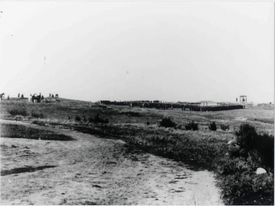


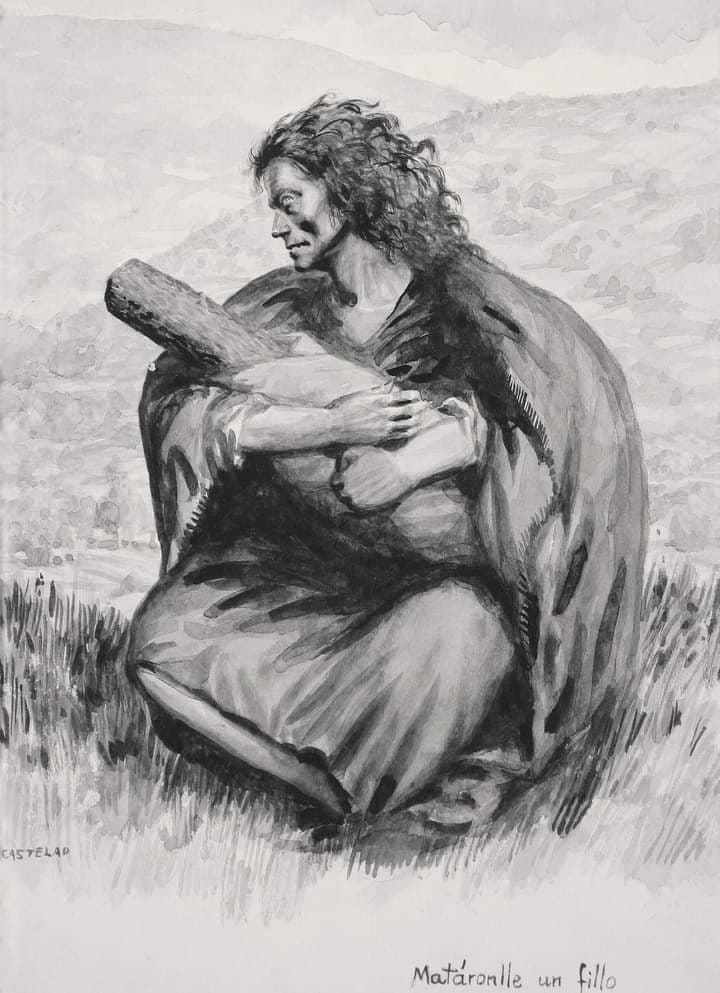


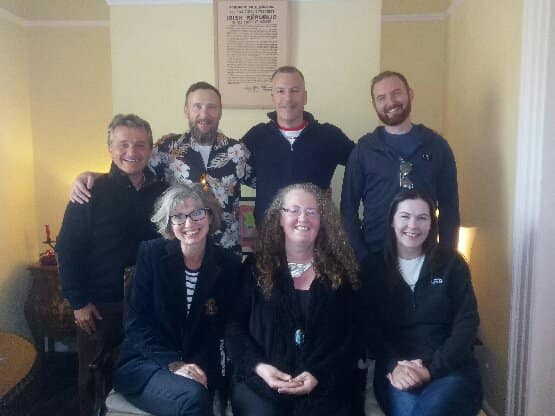
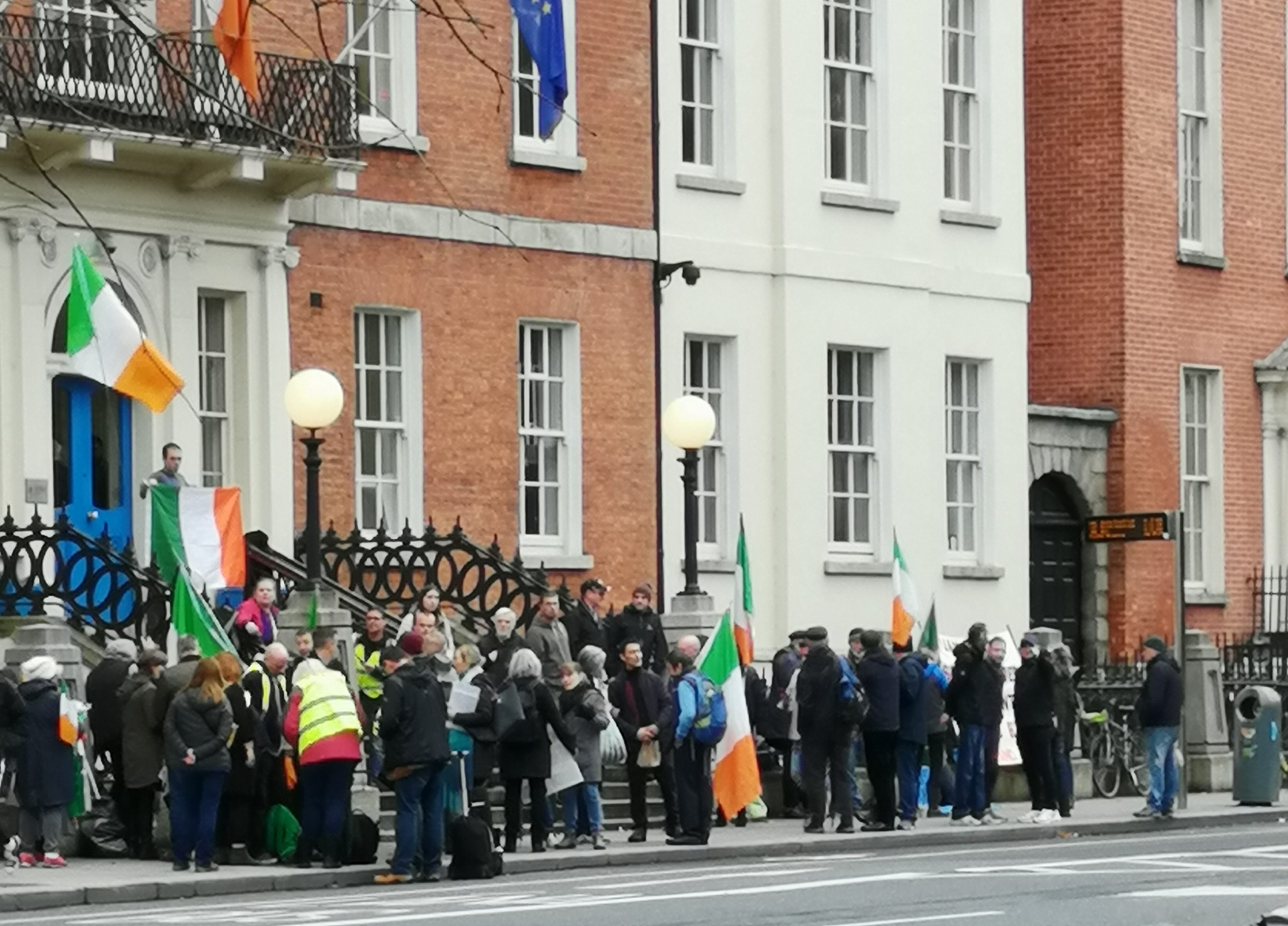
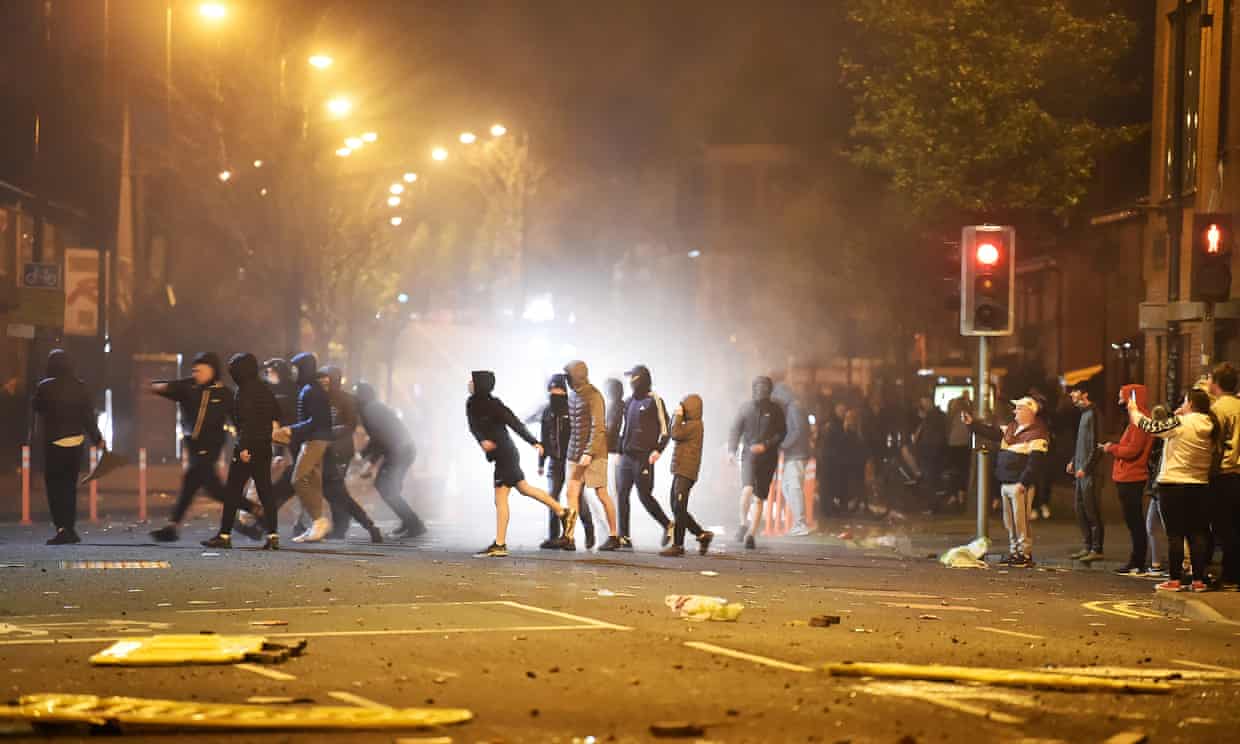
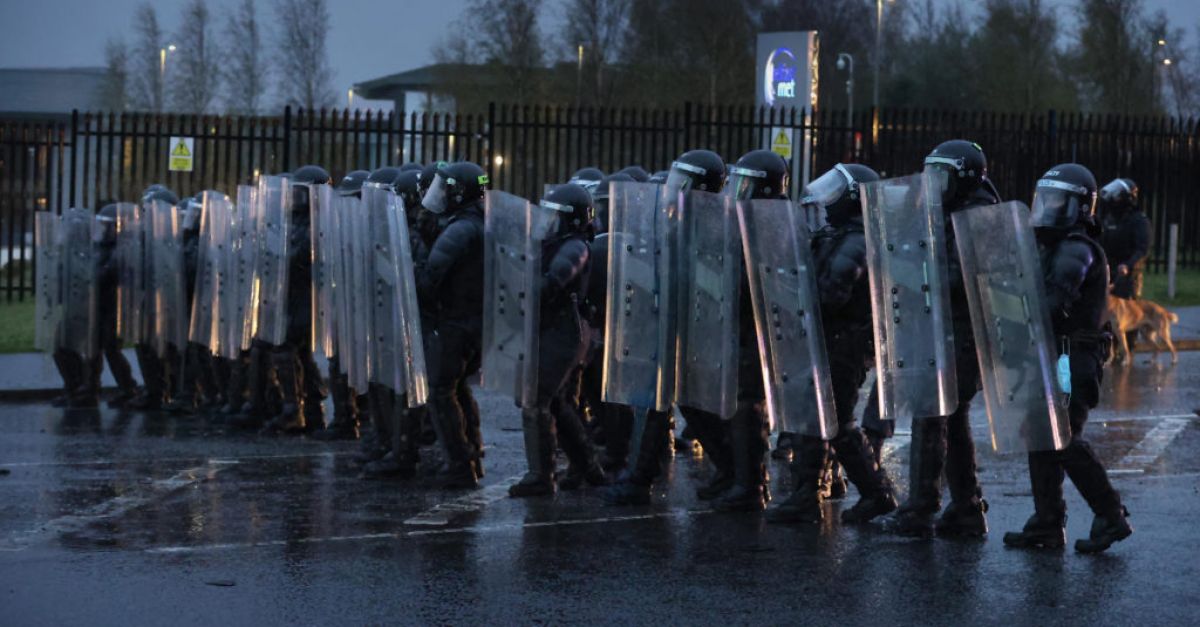
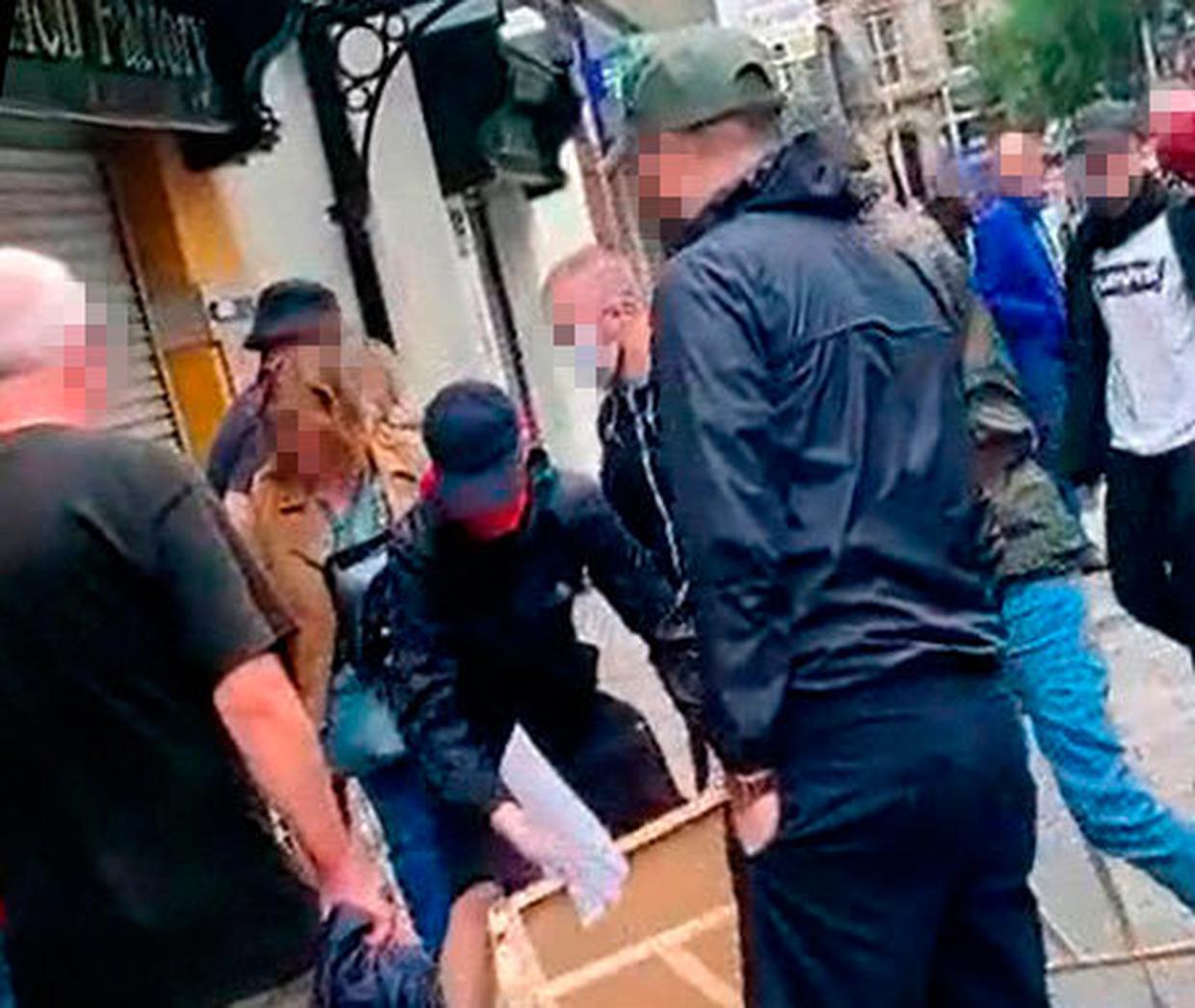


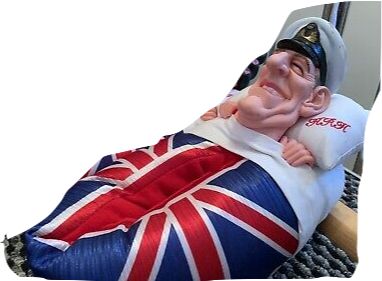
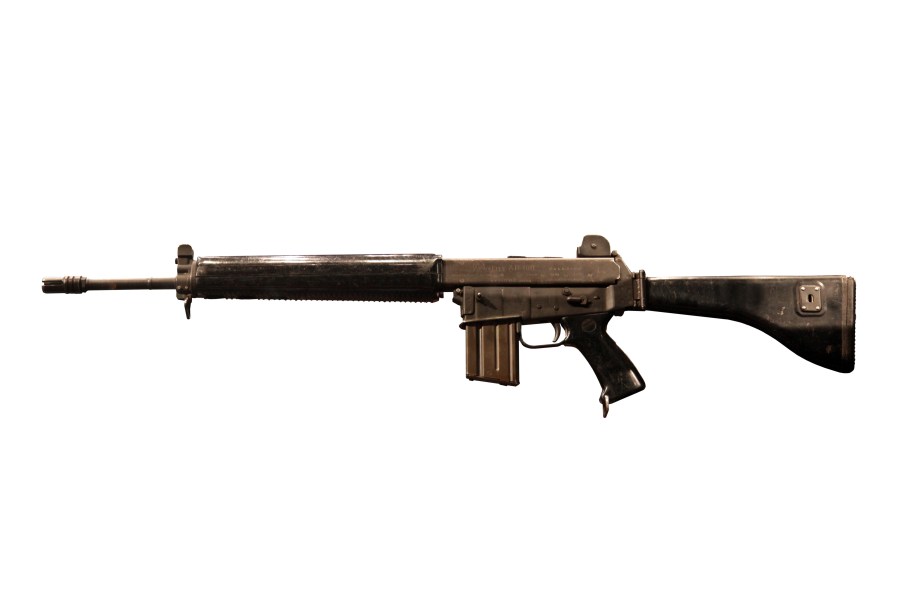


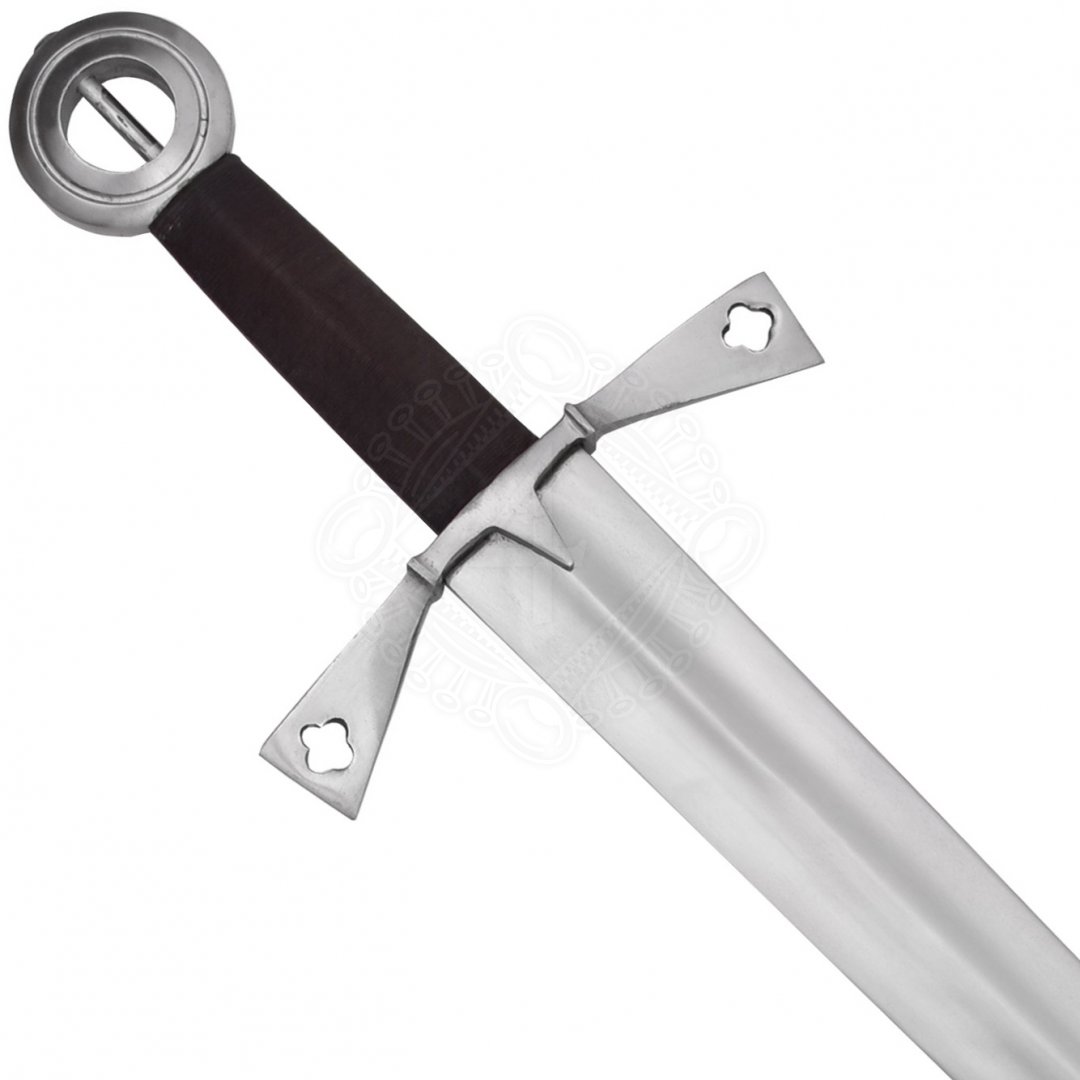


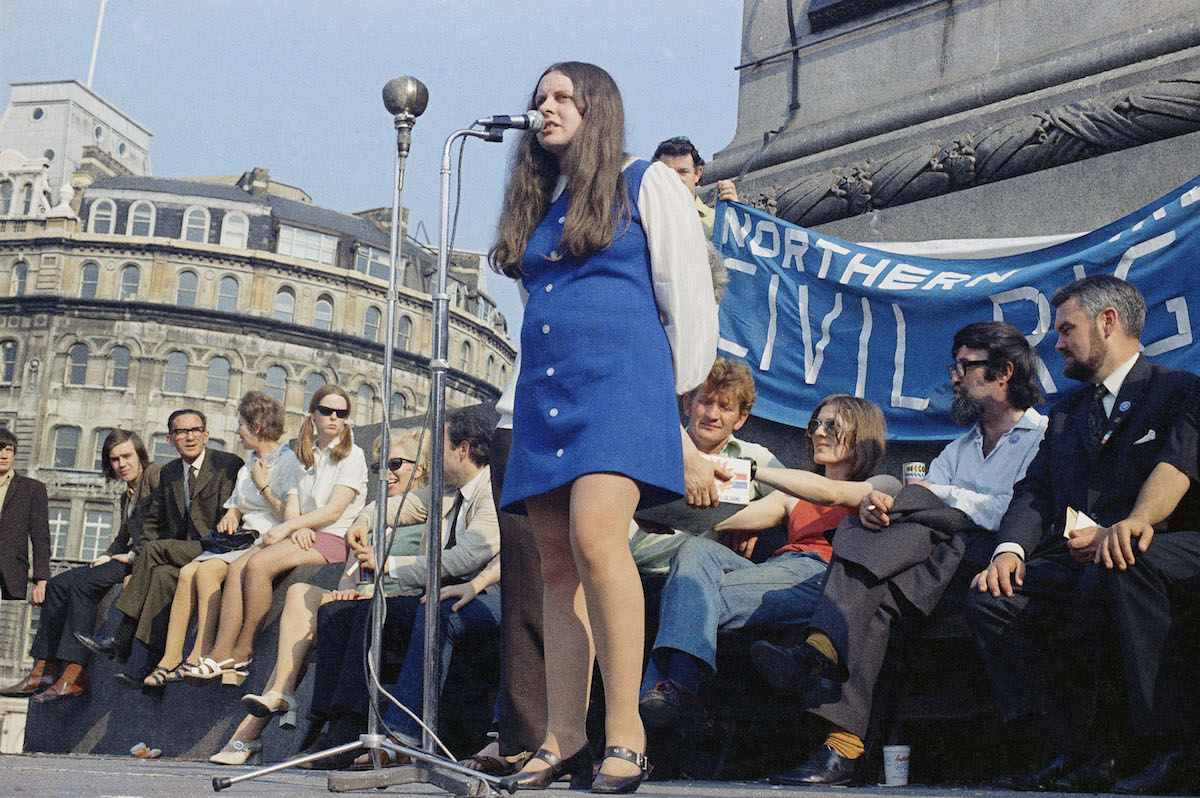
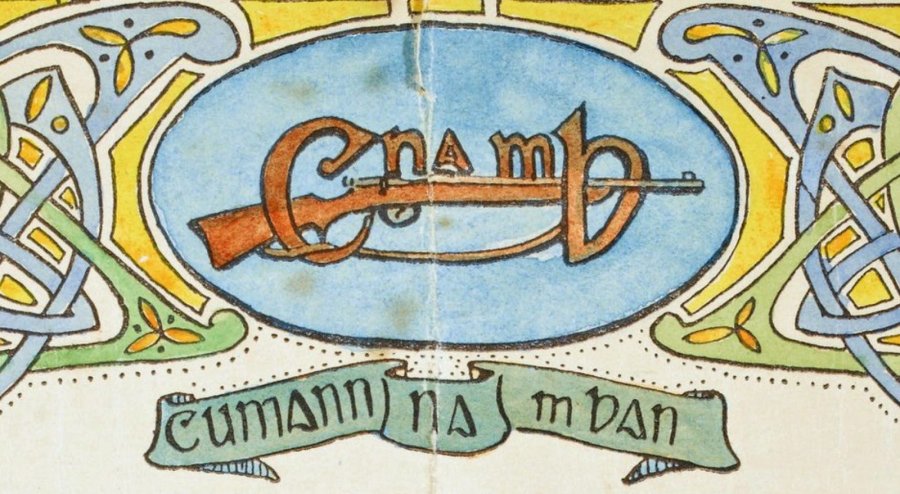
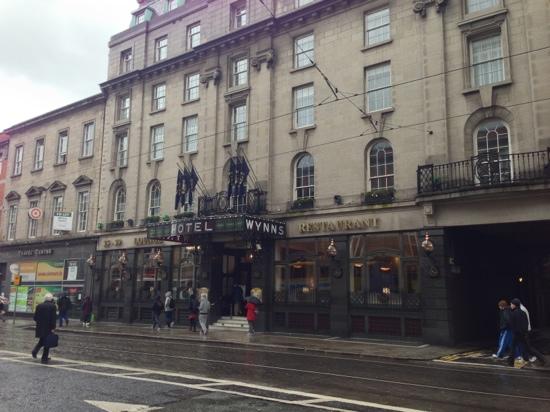
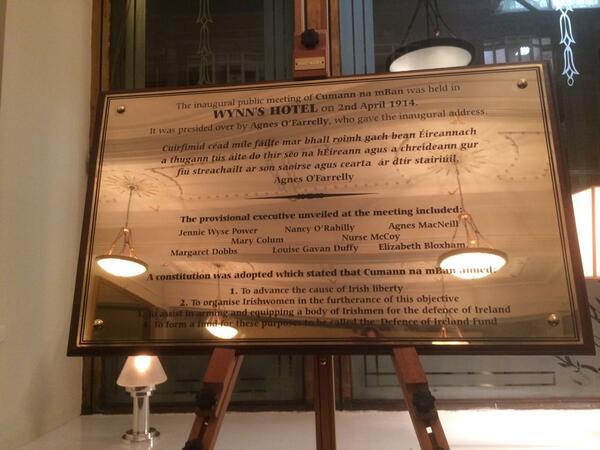
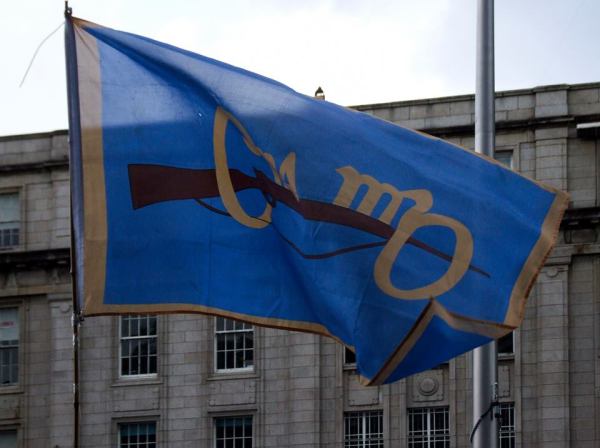
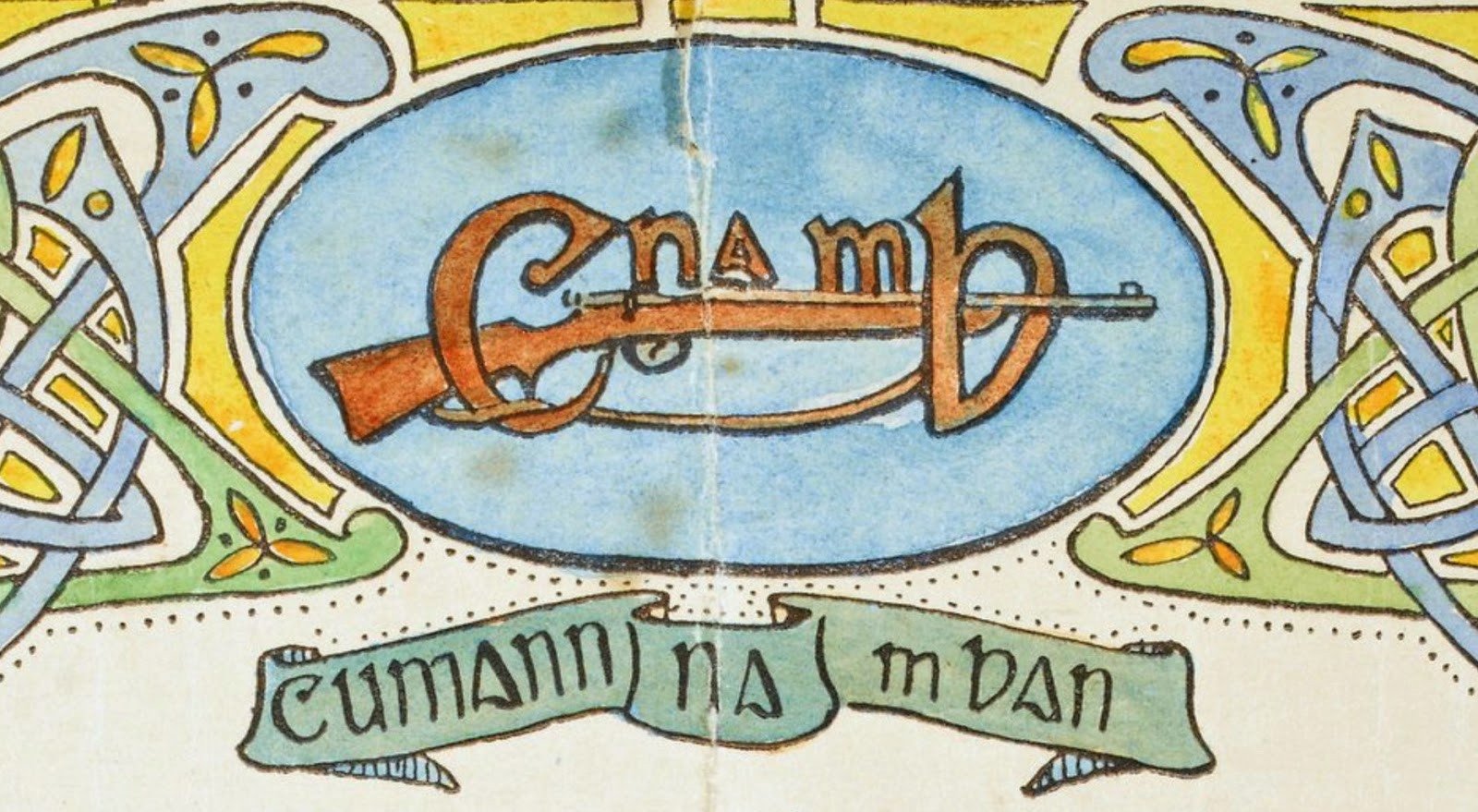
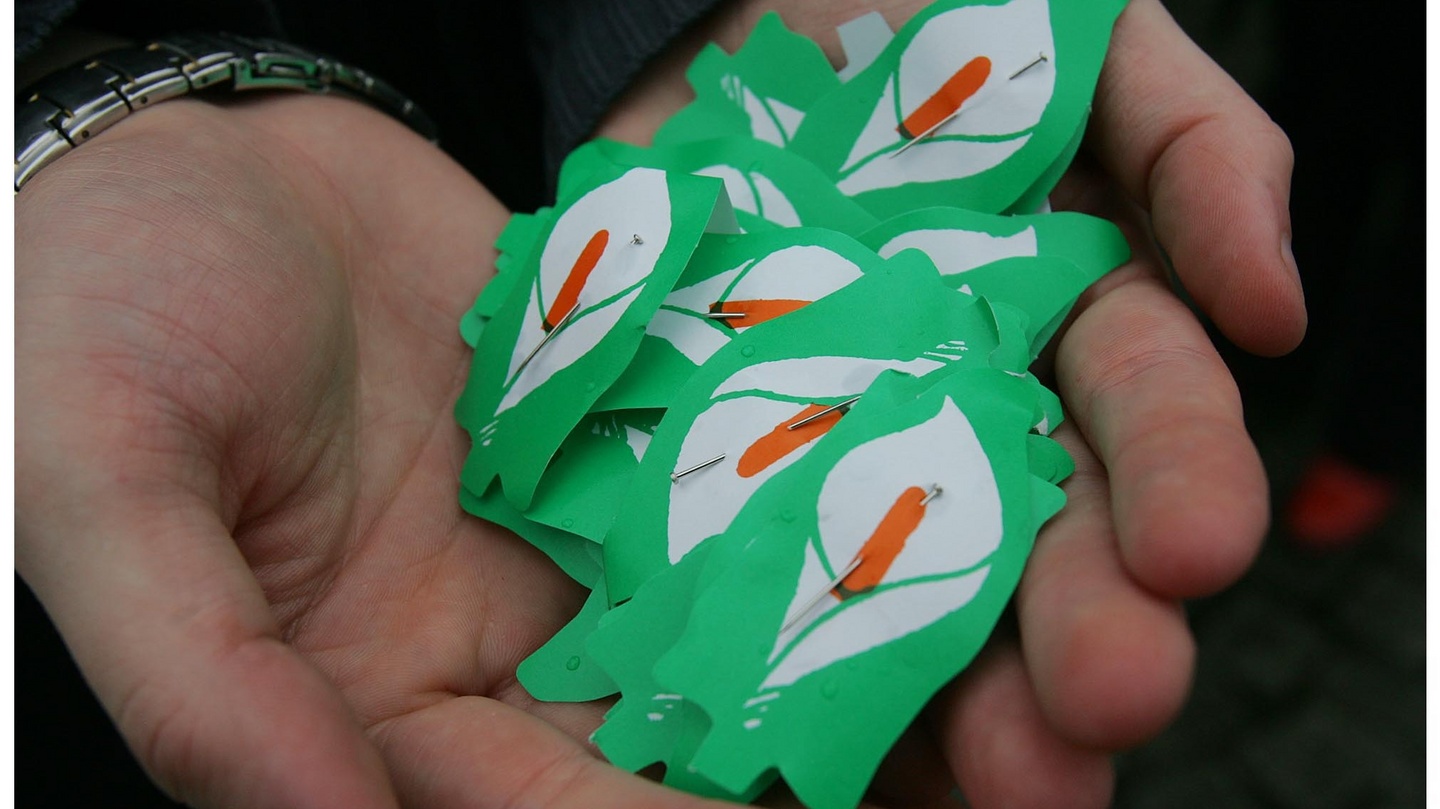
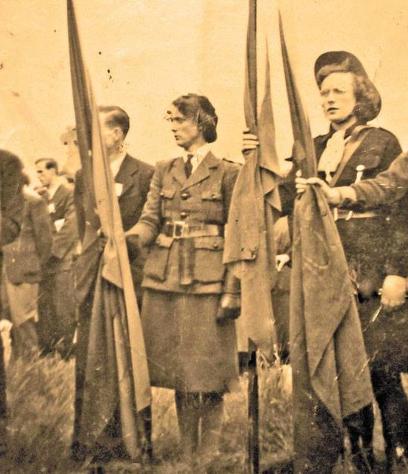


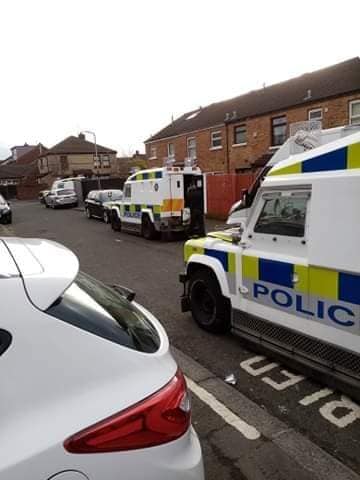



 rebelbreeze