British colonial police in Ireland, Auxilliaries and RIC in Dublin raid during War of Independence 1920 or 1921.Drawing depicting Cromwellian troops massacre at Drogheda 1649
A little bit rough in places but think I should get it out now and hopefully get people singing it ASAP. I am surprised no-one seems to have used this tune, The Sea Around Us, and the mention of “water”, already. Thanks to Ruairi O’Broin at the February session of Song Central for suggesting the “bank guarantee” line in the chorus, much better than what I had there originally.
Amended a little again since I wrote the above but still not sat down and really consistently worked at it. Amended yet again slightly in 2020.
THEY’RE STEALING OUR WATER
Diarmuid Breatnach (To the air of “The Sea Around Us”, also known as “The sea, Oh the sea”)
Chorus:
The sea, oh the sea, a ghrá gheal mo chroí,
‘though long it may roll between England and me,
We’ve still got our gombeens* with a bank guarantee
and they’re trying to steal our own water!
(The chorus can go in after each verse, or each second, as people prefer).
1.
The Norse came to Ireland right outa’ the blue,
took us as slaves and plundered and slew;
But their days were all numbered from Clontarf they knew
— they never troubled us much for the after.
2.
Then the English came over our patience to try,
our land for to steal and our culture deny
And they took all that we had … I tell you no lie —
but at least they left us our water!
3.
‘Twas many a hard battle with the English we fought,
as used be our wont and indeed so we ought;
but as time went by, it all came to naught
and they put poor aul’ Éire in a halter.
4.
But we rose up once more and again and again —
we had stalwart youth and women and men;
We fought them in city and mountain and glen
and forced them their plans for to alter.
5.
Then those who at our struggle took fright
stepped in and took over the fruits of our fight;
The Gombeens and Church turned our dawn into night
and in a wink we were back under the halter!
6.
The parasites live off our sweat and our blood —
they’d tax the very air that we breathe if they could;
But our media says to resist is not good …
and compliance would get us much further.
7.
Our resources are for the people to share in —
is linne ar fad é, uisce na hÉireann;
and it’s now the baton and prison we’re darin’ —
they’ll not steal from our sons and our daughters!
8.
The people are standing firm and steady —
they know that we’ve paid for the water already!
Our banners unfurled and more things ready:
You can be sure this time we won’t falter!
February 2015.
Denis O’Brien, a billionaire widely believed to have plans to buy Irish Water if/when it becomes privatised. He is a major shareholder in Sierra Construction, the company installing water meters and also in Independent Newspapers. The Moriarty Tribunal found that he had benefited from information from the Irish Minister for telecommunications whom O’Brien had paid €50,000 through circuitous channels. The information had assisted him in bidding for the mobile phone contract, which he later sold at a personal profit of €317 a few years later.Brian Cowen, former Taoiseach (equivalent to Prime Minister) in the Fianna Fáil-Green Party coalition Government 2011, which began the bank bailout.Joan Burton (Labour), Minister for Social Protection in the Labour-Fine Gael coalition Government at time of writing
Enda Kenny (Fine Gael), Taoiseach (equivalent to Prime Minister) in the Labour-Fine Gael coalition Government at time of writing
!
* “Gombeen”, from the Irish “Gaimbíneach” is a profiteer, a venal person, a moneylender, a capitalist.
Tribute by David Rovics in 2015, the anniversary year of the execution of Joel Haglund, alias Josef Hilstrom a.k.a. Joe Hill)
David Rovics is a socialist troubadour from and in the USA of many years’ standing and has composed many songs about many issues. He also regularly tours and this year plans to go on a tour of Joe Hill’s homeland to celebrate this worker organizer, singer, song and other text writer and martyr. You can look him up on
davidrovics.com
(The punctuation arrangement below is mine — there was none in the text I received).
1.
Joel Haglund came from Sweden
Which was very far from Eden:
By the time he left most of his family died;
His sisters and his mother,
His father and his brothers
So with one remaining sibling at his side,
He got a notion
To sail across the ocean
Where he heard the streets were paved with gold;
Not long after his arrival
As he toiled for survival
He realized the bill of goods that he’d been sold.
Sixteen years after the signing of the Good Friday Agreement, cases of Irish Republican political activists appearing before colonial judges are none too rare in what some call “Northern Ireland”. Of course, the Republicans are not from Provisional Sinn Féin, who have made their peace with Queen and Empire – but they are Irish Republicans none the less.
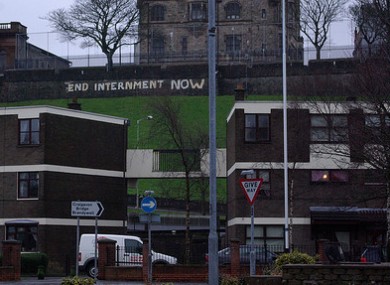
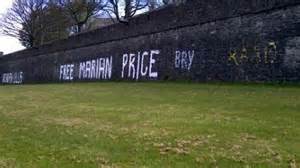
Despite their fairly common occurrence, one recent case seemed to symptomise the state of civil liberties in the colonial statelet so as to deserve some detailed analysis. On January 6th Gary Donnelly (43) and two other Derry Republicans, Terry Porter (56) and William Brogan (51), won their appeals against a sentence of six months imprisonment for painting slogans on the famous Derry Walls but money was paid on their behalves into the court.
The judge, Philip Babbington, ordered the £2,600 (€3,300) compensation to be equally divided between the Northern Ireland Environment Agency, which has responsibility for the upkeep of the Derry Walls, and the charity Foyle Search and Rescue. No explanation seems to have been given as to why the total sum, which was supposed to have been necessary to remove the anti-internment slogans, was not to be paid in its entirety to the Environment Agency; nor am I aware of any detailed examination of the alleged cost of £2,600 (€3,300) to remove a few painted slogans.
“Speaking outside the court Colr. Donnelly said he was ‘relieved’ that the case was finally settled. He said: “I am glad that I am now able to represent the voters of the Moor ward who elected me. There had been a lot of donations made towards this case by people in the city and I am glad that it is going to Foyle Search and Rescue.” He denied that there had been any brinkmanship in the case and said when first arrested they had been held for two days and police had tried to prevent them getting bail.
“Cnclr. Donnelly went on: “Graffiti has long been a tool of the working class for years and there was even graffiti on the walls calling for Home Rule1. More damage was caused to the Walls by the installation of lights and the building of the Millennium Form than by anything we did. “I have no regrets for anything I have done.”2
A previous use of Derry’s Walls to highlight a case of internment
The appeal hearing was attended by four TDs3: Éamonn O’Cuív (Fianna Fáil), Clare Daly (United Left Alliance), Thomas Pringle and Maureen O’Sullivan (both Independents). Also in attendance were numerous councillors from local authorities on both sides of the Border. This attendance, at the court case of one with whose politics most of them would not be in agreement, indicated perhaps some sense of solidarity among public elected representatives but probably more a rising concern among some (albeit not nearly enough) at the state of civil liberties in the Six Counties.
When Donnelly and the other two republicans had last appeared before another judge to answer a charge of “malicious damage” to the Walls (by painting the slogans), no money had been made available to the court and they had been sentenced to six month’s imprisonment. The judge hearing the appeal, Babbington, replaced that sentence with a conditional discharge for 12 months. This means that they will serve no prison term on this charge but if, within 12 months they are again arrested and convicted, this conviction will be taken into account and could result in prison terms.
The original sentence of six months’ jail for painting slogans, even at such an alleged cost of their removal, was excessive. But the impact of this sentence in the case of Gary Donnelly went far beyond that on him, his family and friends. Gary Donnelly is a Councillor, elected to the Derry & Strabane Super-Council and, according to the rules of that body, a sentence in excess of three months would cause him to lose his seat. That in turn would have disenfranchised those who voted for him.
Donnelly was one of four new Independent councillors elected last year, the other three being Darren O’ Reilly, Dee Quigley and Paul Gallagher (Strabane). Gary Donnelly, standing as an Independent, topped the poll in the Moor ward (home of the Deputy First Minister Martin McGuinness), out-polling former Sinn Féin Mayor Kevin Campbell by 50 votes. The three Derry-based Independent councillors have taken two SDLP and one Sinn Féin seat.
These new Independent councillors have a background of years dealing with issues affecting their local communities, often on a daily basis, such as poverty, anti-social behaviour and the growing addiction crisis. Judge McElholm had been made aware that Donnelly would lose his seat if the judge went ahead with his sentence but he was not to be swayed from his course.
Naturally, it is not being suggested that elected Councillors (or any others, including appointed judges) should be permitted to act as they please without consequences, merely because of their office. However, a judge behaving in accord with the principles of a democratic system would take care that the sentence leanedaway from disenfranchisement of voters if possible. And of course, it was possible, since a non-custodial sentence or one of anything up to three months’ jail would not have had Donnelly lose his seat or disenfranchised his voters.
For those who are aware of the history and current reality of the Six Counties, that colonial statelet often called “Northern Ireland”, associating it “with the principles of a democratic system” is bound to raise at least one eyebrow. The formation of the statelet was in itself a denial of democracy and self-determination to the Irish people in 1921 and its laws and practice were so undemocratic, so discriminatory against the large Catholic minority, as to give rise to the popular movement for civil rights that began in 1968. The infamous repression exercised by the statelet’s police and courts and its sectarian civilian allies on that movement led in turn to a war of 30 years. Not a single democratic reform was granted by the statelet until that war was well underway. Nevertheless, since its administrators claim it is democratic, it may be useful to subject it to the test of compliance with recognised democratic principles.
THE JUDGES AND THE SYSTEM
During all that history of lack of democracy, institutional discrimination and repression in the Six Counties, judges played their part, faithful to the system. Today, despite some hard-won reforms especially in housing allocation and in voting qualification, the statelet continues to be a colonial one, undemocratic still in many ways, with a sectarian and repressive police force. And the judges continue to play their part.
The original judge dealing with Donnelly’s case, McElholm, revealed his own political bias on a number of occasions during the conduct of the case, even without taking into account the six-month jail sentence. According to media reports, when the three appeared before him again for non-payment of the fines, he said that the painting of the walls was a “wholly uncalled-for exercise”. He stated that “internment ended ‘a long time ago’, and that it was insulting to the entire legal system to say it continues.”4
Well, was the judge sentencing the three Republicans for “criminal damage”, the words appearing on their charge-sheet, or for carrying out what he considered politically or morally to be a “totally uncalled-for exercise” and for “insulting … the entire legal system”? I would have thought that his words are evidence of a clear political bias.
Nor was it the only occasion when the same judge expressed political bias in respect of Gary Donnelly. When the Irish Republican made his application for the abolition of his curfew (which he had accepted as a condition of being granted bail when first charged), he did so on the basis that having to be indoors by 8pm was a serious restriction on his campaigning work for election, an infringement on his democratic rights and on those who might vote for him. Again, Judge McElholm saw fit to express his political bias in heavy sarcasm. According to media reports, although he granted an exemption of two hours (i.e. until 10pm) on the curfew, Judge McElholm then asked: “Is he going to put up posters or paint his name on walls saying vote Donzo?” He went on to say: “It is clear the democratic process is very dear to Mr Donnelly’s heart”5 and “The great working class people I’m sure will now come flooding to his door.”6
BAIL CONDITIONS AND CURFEW AS A POLITICAL WEAPON
The issue of Donnelly’s bail conditions and curfew have been alluded to earlier. People in the West outside of the Six Counties (with the exception of people in other European areas of repressive colonial occupation, such as the southern Basque Country) may be surprised to learn that the imposition of a curfew has become customary as a condition of granting bail to Republicans in the colony. This might have made some sense in the case of slogan-painting, with which Donnelly was accused, and which one would imagine would take place at night. But even so, did a curfew have to be imposed? Would it not be enough that if he were caught doing it again before trial, that his bail would be revoked?
In a democratic system, since the accused are to be “presumed innocent until proven guilty”, they should be at liberty until such time as are tried and receive a verdict. That is the purpose of releasing those charged “on bail” while awaiting trial. They may be found “not guilty” at the end of their trial and even if found “guilty”, the sentence may be a non-custodial one. So, if the accused is thought not to require a custodial sentence, why should he already have spent time in jail? However it is a fact that many Irish Republicans have spent time in jail while awaiting trial. In Donnelly’s case, after two days in custody and against police advice, he was given bail but on a number of conditions.
The purpose of conditions being set for bail is supposed to be related to the specific case and to be reasonable. A financial surety is set in order to deter the accused from absconding before trial. Other than that, what conditions are reasonable? Well, a man accused of assault on another may have a bail condition not to approach his alleged victim and to stay away from that person’s home or place of work. Or to stay away from people who are to be called as witnesses. But how is it to be considered reasonable to set a curfew as a bail condition? And of wearing an electronic tag to ensure compliance? Or of not going to political meetings or meeting with political activists? Or to not reside in a particular town?
These conditions and variations of them have been imposed on a number of Irish Republican activists in the Six Counties. In fact, that same Judge McElhome also imposed a nightly curfew on Gary Donnelly on a previous charge, in August 2010, when he released him on bail to face charges under “anti-terror” legislation, relating to pipe bombs incidents in September 2009. In December 2010, the charges were dropped.
Martin Corey, a Republican prisoner released under licence under the Good Friday Agreement, had his licence revoked and after four years in prison (without even a police interview or charge, never mind a court appearance) was released on a kind of bail or licence under conditions which he is not permitted to divulge but are rumoured to include wearing a tag and not associating with “known dissidents”.
Perhaps one of the most illustrative examples was that of Stephen Murney, an activist with the Éirigí group, who was arrested on spurious charges in November 2012 and refused bail. When his appeal against that refusal was heard after six months in jail, the judge granted bail but on conditions: Murney was to wear a tag, observe curfew, stay away from certain political activists and stay away from Newry — the town in which he lived and where his partner and child also lived. To his credit and taking an important stand for civil rights, Murney refused to accept the conditions and spent 14 months in custody awaiting trial. Eventually, some of the charges were dropped and he was found not guilty of all remaining charges.
CRIMINAL OR POLITICAL CONVICTIONS?
A member of the 32-County Sovereignty Movement, Gary Donnelly has been politically active for many years. Something has been made in reporting of the case that Gary Donnelly has previous criminal convictions – he has a police record and he has also had a number of charges eventually dropped. In March 2010, he was sentenced to seven months jail on a charge of assaulting a police officer. At one of his recent court appearances, a police officer said he he had criminal convictions also for public order offences and one for arson.
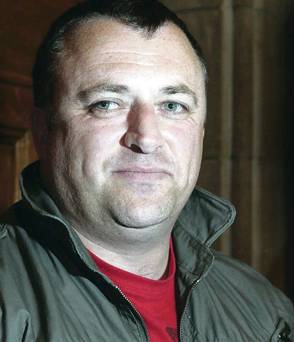
Garry Donnelly, Irish Republican and elected Councillor
In many societies outside the Six Counties this might seem extraordinary for an elected representative but I would submit that it is the system in the Six Counties that is extraordinary, at least with regard to what might be expected of a European democracy.
Donnelly’s “criminal convictions” would have been no secret and his voters put him in office despite those convictions and quite possibly even in part because of them. I do not have the details of the incidents that gave rise to them but any half-awake observer of life in the Six Counties knows that with a sectarian and repressive police force hostile to Republicans, acquiring convictions for “assault on police officers” may be the result of police concoction, self-defence by the charged or even actual assault but in all those cases, the likelihood is that the incidents are overtly political in nature.
Convictions for “public order offences” are probably the most easily-acquired by political activists and often mean merely that the person convicted refused to cease his or her protest when ordered to do so by a police officer. It is rarely possible, with any hope of success, to challenge the justification of the police officer in ordering the protest to finish.
“Arson” can also be a political offence and I once heard a Garda senior officer declare that burning a purchased US flag in a public protest was “arson”! And, as has been clearly demonstrated, the “criminal damage” which has now been added to Donnelly’s police record, both in its content and in its treatment, was political.
INTERNMENT – WHEN IS IT NOT?
Although no-one denies that the British implemented internment between August 1971 and December 1975, when 342 people were subjected to it7, there is far from universal agreement that the British are practicing internment in their colony today. One supposes that the socialists and social-democrats there at present don’t agree that it is being practiced — or surely they would be protesting against it! And, as we saw earlier, Judge McElhone declared that internment had ended back in the 1970s and that to state that it was still being practiced was “insulting …. to the entire legal system”. Sinn Féin don’t call it internment on the rare occasions upon which they refer to the victims but that may be more an issue of convenience than of terminology. Even a member of a Republican organisation which is opposed to the Good Friday Agreement recently argued with me that what is happening is repression but is not internment.
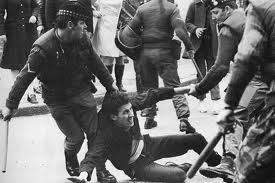
British soldiers detaining a man in the Six Counties during the internment operation in August 1971.
Well, I’m quite interested in correct use of terminology myself, so I thought I’d better look up the definition in a number of on-line dictionaries. It turns out that dictionary definitions of “internment” vary somewhat. Wikipediahas it as “the imprisonment or confinement of people, commonly in large groups, without trial, while for Dictionary.comit is “the act of interning or state of being interned, esp of enemy citizens in wartime or of terrorism suspects”.Dictionary.com goes on to elaborate that “Internment means putting a person in prison or other kind of detention, generally in wartime. ………….. Internment usually doesn’t involve a trial, so you’re being held because someone thinks you might be dangerous, but there’s no proof.”
Grammaristhas it as “the act of detaining a person or a group of people, especially a group perceived to be a threat during wartime,” while forCambridge Dictionaries on lineit is“the act of putting someone in prison for political or military reasons, especially during a war.”Macmillan Dictionarydefines it as “the act of putting someone in a prison without officially accusing them of a crime, especially when this is done for political reasons”.
Sifting through these definitions then, the most common aspect is that internment involves imprisonment without trial. It may be applied to many or a few (and let us remember that Oswald Mosley, of the British Union of Fascists, was interned by the British on his own during WW2 albeit in a house with grounds). Two definitions mention wartime, while some allude to “terrorism” and a few mention “political reasons”. On the basis of those definitions, internment is undoubtedly being practiced in the Six Counties.
Refusing Republicans bail (e.g. Stephen Murney, Colin Duffy and man others) and revoking licences (e.g. Marian Price, Martin Corey) have all resulted in imprisonment without trial – for periods varying from a year to four years. The individuals may be – and often are – eventually found “not guilty”, or their convictions overturned (as with Colin Duffy, Brian Shivers and, one hopes, the “Craigavon Two”) or released on “humanitarian grounds” but they will already have spent time in jail. This was the reasoning which no doubt lies behind a number of political activities against the current internment and certainly was expressed at the founding meeting of the Anti-Internment Group of Ireland (of which I am proud to be a member) which has organized public meetings, demonstrations and information pickets in various communities in Dublin and in other parts of Ireland. The non-party Group was set up by some of the campaigners in the also non-party Dublin Free Marian Price Campaign after the partially-successful conclusion of that struggle (Marian Price was released on “humanitarian grounds” but already in broken health). The AIGI can be found on https://www.facebook.com/pages/End-Internment/581232915354743?fref=ts
Information picket (with table across the road) organized by Anti-Internment Group of Ireland in September 2014 at Thomas St./ Meath St. junction, Dublin. They returned there in December and in January supported a picket in Cork, handing out leaflets on the Craigavon Two injustice.
Imprisonment puts a strain on the individual prisoner and also on friends and relations – and, indeed, on relationships. It disrupts the political work of the person jailed and of their organizations. And it serves as a threat to others considering becoming active in opposition to the State. Its purpose in these cases is primarily political. The deprivation of liberty without due cause is a violation of human rights and to do so for political reasons, which is clearly the case here, is a violation too of civil rights.
That the legal system in the Six Counties is being used in this way should come as no surprise to those familiar with the operation of colonial law or indeed to any readers of Brigadier Frank Kitson’s Low Intensity Operations (1971)8. Kitsoncompletedthe book while on military service in the Six Counties but mainly drawing on his experiences in repression of resistance in Kenya and in Malaya in the 1950s. In the Six Counties Kitson was commander of 39 Airportable Brigade from September 1970 to April 1972, with responsibility for one of the British Army’s three main regional sub-commands in the Six Counties, the greater Belfast and Eastern area.
One of the units under Kitson’s command, 1st Para, was the main actor in killing and wounding a large number of civilians in Ballymurphy in July 1971 and in Derry’s Bloody Sunday in January 1972.
The Military Reaction Force, a special covert operations unit, was based at Kitson’s headquarters in Palace Barracks outside Belfast. Last November (2013), a BBC ‘Panorama’ investigative program on British counterinsurgency in the Six Counties in the early 1970s featured members of the MRF admitting to the murder of suspects and unarmed Catholic civilians.
Back in April 1972, within a few weeks of Bloody Sunday and his receipt of a CBE for his service in the Six Counties, Brigadier Kitson was flown to England to head the Infantry School at Warminster and Low Intensity Operations would become a British Army manual on counterinsurgency and counter-subversion.
In that book, Kitson approvingly quoted another repression “expert”9:
“…the Law should be used as just another weapon in the government’s arsenal, and in this case it becomes little more than a propaganda cover for the disposal of unwanted members of the public. For this to happen efficiently, the activities of the legal services have to be tied into the war effort in as discreet a way as possible..”
And so it has been in the Six Counties (and long before Kitson described its operation): the legal system being “just another weapon in the government’s arsenal.” At the moment, the “unwanted members of the public” being “disposed” of are Irish Republicans who do not agree with the Good Friday agreement and who organise to oppose British colonialism, some with arms but most through political agitationn — “unwanted” by British imperialism and Six County capitalism, that is. Their treatment should be enough to bring democratic people out in oppositon to these state practices but should it not do so, those people may wish to consider that tomorrow those designated as “unwanted members of the public” may be people protesting cuts in services, fracking operations, privatisation, or militant trade unionists ….
end
Footnotes:
1 A movement for Irish autonomy within the UK (or, later, Commonwealth) between 1870 and 1914. Teachtaí Dála: Members of the Irish Parliament
7 Even now a case is being taken by the Irish state against the British state to the European Court of Human Rights, over the torture of 14 victims of that internment. The Irish Government took the case of the 14 “hooded men” to the ECHR in the 1970s and won a judgement that the men had been tortured; however the British state appealed the verdict and it was changed to “cruel and inhuman treatment” (!). The Irish Government left the case there but recently RTÉ, the Irish TV broadcasting service, screened their programme The Torture Files based on documentation uncovered by the Pat Finucane Centre, showing the British Government had lied to the ECHR. Amnesty International publicly called on the Irish Government to reopen the case with the ECHR.
The month of January is the start of the year, according to the calendar most of us use but, for the Celts and some other peoples, it was the last month of winter, which had begun in November, after the feast of Samhain.
I am notified of many birthdays in January from among my Facebook friends. That would seem to indicate a higher rate of conception at the end of March/ early April and onwards but a quick search on the internet did not supply me comparative figures. However, in our climate, new food begins to be available inland in January as salmon arrive to spawn and with sheep lactating from February. Onwards from there, plants begin to grow again and birds lay eggs, animals give birth and so on. The pregnant mother needs a ready supply of food to sustain a viable pregnancy.
Though January may be a month of births, from what I see of history it is also a month of deaths … early, unnatural deaths …. of executions, in fact. These particular executions to which I refer took place in Ireland and in the United States of America and they were carried out by the respective states of those countries.
Executions by the Irish Free State
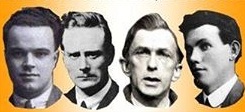
This week saw the anniversary of five such executions, on the 15th January 1923 — executions by the Free State of IRA Volunteers. Four of these were in Roscrea and the fifth was in Carlow:Vol.F. Burke; Vol.Patrick Russell; Vol.Martin Shea; Vol.Patrick MacNamara; Vol.James Lillis.
They were not the first executions by the Free State: eight had been executed the previous November and thirteen in December. The killing for the new year of 1923 had begun with five in Dublin on the 8th January and another three in Dundalk.
The Mountjoy Four reprisal executions by the Irish Free State on 8th December 1922 of one IRA Volunteer from each province.
Nor were those executed on the 15th January to be the last for that month: on the 20th another eleven stood against a wall to be shot by soldiers of the Irish state; on the 22nd, another three; on the 25th, two more; and another four on the 26th before the month’s toll of 34 had been reached. As we progress through the year, each month will contain the anniversary of an executed volunteer and in all but one, multiple executions.
Apart from those who died while fighting, seventy-seven Volunteers and two other supporters of the struggle were officially executed by the Irish Free State between November 1922 and 29th December 1923. In addition there were many (106-155) murdered without being acknowledged by Free State forces — shot (sometimes after torture) and their bodies dumped in streets, on mountains, in quarries .…1
Soiidarity demonstration outside Mountjoy Jail, probably organized by Cumann na mBan, perhaps in protest at Mountjoy executions December 1922
These deeds and others led to the composition of a number of songs, among the best of which are in my opinionMartyrs of ’22 (sung to the air of The Foggy Dew) and Take It Down from the Mast. The latter was written in 1923 by James Ryan, containing two verses about the Six Counties which one doesn’t normally hear sung. Dominic Behan in the 1950s added a verse of his own about the four executions by the State in reprisal for the assassination of TD Sean Hales, when the State deliberately shot one Volunteer from each province, each of whom had been in custody when the assassination took place: Rory O’Connor, Liam Mellows, Richard Barrett, Joseph McKelvey, Dominic Behan recorded the latter in the 1950s: https://www.youtube.com/watch?v=-b2EL8Jytao
This was the bloody baptism of the new state, a neo-colony state of twenty-six counties on a partitioned island, with six counties remaining a British colony.
MARTYRS OF ’22
1
When they heard the call of a cause laid low, They sprang to their guns again; And the pride of all was the first to fall — The glory of our fighting men. In the days to come when with pipe and drum, You’ll follow in the ways they knew, When their praise you’ll sing, let the echoes ring To the memory of Cathal Brugha.
2
Brave Liam Lynch on the mountainside Felll a victim to the foe And Danny Lacey for Ireland died in the Glen of Aherlow Neil Boyle and Quinn from the North came down To stand with the faithful and true And we’ll sing their praise in the freedom days ‘Mong the heroes of ’22.
3
Some fell in the proud red rush of war And some by the treacherous blow, Like the martyrs four in Dublin Town, And their comrades at Dromboe: And a hundred more in barrack squares and by lonely roadsides too: Without fear they died and we speak with pride of the martyrs of ’22.
Executions of “Molly Maguires”
Wednesday, 14th January, was the anniversary of the executions of James McDonnell and Charles Sharp at Mauch Chunk jail, Pennsylvania. Both had been accused of being “Molly Maguires”, a resistance group of workers, mostly miners, in the Pennsylvania region. Today, the 16th, is the anniversary of the execution of another “Molly”, Martin Bergin; 20 were executed over two years. And many more had been murdered in their homes or ambushed — many others had been beaten; these activities were carried out by “vigilantes” hired by the coal-mine owners and by Iron & Coal Guards, also employed by them.
The exact origin of the name Molly Maguires is uncertain but they were among a number of agrarian resistance organizations of previous years in Ireland; according to accounts, they gathered at night wearing women’s smocks over their clothes to attack landlords and their agents. Since these smocks tended to be white in colour, Whiteboys or Buachaillí Bána was another name for them.
Molly Maguires tribute statue by Zenos Frudrakis in Molly Maguires Memorial Park, Mahanoy City, Pennsylvania, USA
Somewhat Ironically, the state of Pennsylvania was itself named after a man with connections to Ireland: William Penn’s father, the original William, had commanded a ship in the Royal Navy during the suppression of the Irish uprising in 1641, for which he had been given estates in Ireland by Cromwell.
His son, William went to live on the Irish estates for a while and was suppressing Irish resistance there in 1666. Not lot long afterwards he became a Quaker in Cork.
In 1681 the younger Penn’s efforts to combine a number of Quaker settlements in what is now the eastern United States were successful when he was granted a charter by King Charles II to develop the colony. The governance principles he outlined there are credited with influencing the later Constitution of the United States. Charles II added the name “Penn” to William’s chosen name of “Sylvania” for the colony, in honour of the senior Penn’s naval service (he had by then become an Admiral).
Less than two hundred years later, Pennsylvania was one of the United States of America and the anthracite coal discovered there was being mined by US capitalists. The mine owners squeezed their workers as hard as they could and regularly replaced them with workers who were emigrating in mass to the United States in the mid-19th Century.
According to James D. Horan and Howard Swiggett, who wrote The Pinkerton Story sympathetically about the detective agency, about 22,000 coal miners worked in Schuylkill County, Pennsylvania, at this time and 5,500 of these (a quarter) were children between the ages of seven and sixteen years. According to Richard M. Boyer and Herbert M. Morais in Labor’s Untold Story, the children earned between one and three dollars a week separating slate from the coal. Miners who were to injured or too old to work at the coal face were put to picking out slate at the “breakers”, crushing machines for breaking the coal into manageable sizes. In that way, many of the elderly miners finished their mining days as they had begun in their youth. The life of the miners was a “bitter, terrible struggle” (Horan and Swiggett).
Workers who were illiterate and immigrants without English were unable to read safety notices, such as they were. In addition immigrants faced discrimination and Irish Catholics, who began to arrive in large numbers in the United States after the Great Hunger of 1845-1849 faced particular discrimination although (or because) most spoke English (as a second language to Irish, in many cases). The mine-owners often employed Englishmen and Welsh as supervisors and police which also led to divisions along ethnic lines.
As well as wages being low and working conditions terrible, with deaths and serious injuries at work in their hundreds every year, the mine-owners cut corners by failing to ensure good pit props and refused to install safety features such as ventilating or pumping systems or emergency exits. Boyer and Morais quote statistics of 566 miners killed and 1,655 seriously injured over a seven-year period (Labor, the Untold Story).
In 1869 a fire at the Avondale Mine in Luzerne County, Pennsylvania, cost the lives of 110 miners. There had been no emergency exit for the men’s escape. It is a measure of the influence of the mine and iron capitalists that the jury at the inquest into the deaths did not apportion blame to the mine-owner, although it did add a rider recommending the instalation of emergency exits in all mines.
Earlier at the scene, as the bodies were being recovered from the mine, a man had mounted a wagon to address the thousands of miners who had arrived from surrounding communities: “Men, if you must die with your boots on, die for your families, your homes, your country, but do not longer consent to die, like rats in a trap, for those who have no more interest in you than in the pick you dig with.”
The speaker was John Siney, a leader of the Workingmen’s Benevolent Association, a trade union that had been organizing among the miners for some time; his words were a call to unionize and thousands did so there and then and over the following days.
Trade union organisers in the USA throughout the 19th Century (and later) were routinely subject to harassment, threats and often much worse and the workers at times responded in kind. Shooting and stabbing incidents were far from unknown, with fifty unexplained murders in Schuykill County between 1863 and 1867. The mine-owners had the Coal and Iron Police force and were known to hire additional “vigilantes” to intimidate and punish trade union organisers. They also hired the Pinkerton Detective Agency to gather intelligence on union organisers and on the Molly Maguires.
The employers watched concerned as the WBA trade union grew to 30,000 strong with around 85% membership among the coal miners of the area, including nearly all the Irish. The “Great Panic” of 1873 changed the situation. A stock crash due to over-expansion was followed by a decrease in the money supply and staggering levels of unemployment followed. As is often the case, the capitalists maintained their life-styles while claiming inability to pay living wages to their workers. As is often the case too, they used the opportunity of high unemployment to force worse wages and conditions upon the workers.
One of those capitalists owned two-thirds of the mines in the southeastern Pennsylvania area; he was Franklin B. Gowen, owner of the Reading & Philadelphia Railroad and of the Reading & Philadelphia Coal & Iron Company. Gowen was determined to break the WBA and formed his own union of employers, the Anthracite Board of Trade; in December 1874 they announced a 20% cut in wages for their workers. On 1st January 1875 the WBA brought their members out on strike.
The history of the coal mines of Pennsylvania and their terrible conditions and mortality in the 19th Century, the extreme exploitation of the mine-owners’ systems and their use of prejudiced and corrupt courts, media and vigilantes to have their way, is a long one. The history of the workers’ resistance is also a long one and the “Molly Maguires” were a part of it. Their own history is also dogged by controversy, with some even doubting the existence of the Mollies, claiming that the secret society was an invention of the employers to create panic and to associate the unionized workers with violence in the minds of the public. The brief notes following are part of a narrative accepted by some historians but not by others.
In order to defend themselves, the miners developed two types of organisation which, in many areas where the workers were Irish, existed side by side. One was the Workingmen’s Benevolent Association, a trade union the methods of which were those of industrial action, demonstrations and attempts to use the legal system in order to improve working conditions and gain better remuneration for the workers.The leaders of the WBA condemned violence used by workers as well, of course, as denouncing the employers’ violence.
The other was the Molly Maguires, a secret oath-bound society which organized under the cover of the Ancient Order of Hibernians. The AOH in turn was a self-help or fraternal organization for Catholics of Irish origin, mostly in the Irish diaspora, particularly in the USA, where early Catholic Irish migrants had encountered much hostility and discrimination from the WASP establishment and from “nativist” groups. In keeping with the history of their namesakes, the Molly Maguires of the USA were prepared to use violence in response to the violence of their employers.
In March1875, Edward Coyle, a leading member of the union and of the Ancient Order of Hibernians, was murdered, as was another member of the AOH; a miners’ meeting was attacked and a mine-owner fired into a group of miners (Boyer and Morais).
Reprisals by the Mollies followed as attacks on their members and the miners in general escalated. These attacks were carried out by State police, the Coal and Iron Police of the mine-owners and in particular by the “Vigilantes”, also hired by the mine-owners.
The information supplied by the Pinkerton Agents in their daily reports, although often only initial speculations from surveillance, were used to target individuals who were then often murdered2. One of the Pinkerton agents, James McParlan3from Co. Armagh, who hadpenetrated the Mollies under cover of the alias “James McKenna”, was reportedly furious that his reports were being used to target people for the “Vigilantes”, including people he considered innocent. His job as he saw it was to gather information which would stand up in court to convict the leading Mollies, sentence them to death and break the organisation. Although his employer tried to pacify him in fact Alan Pinkerton himself had urged the mine-owners to employ “vigilantes”.
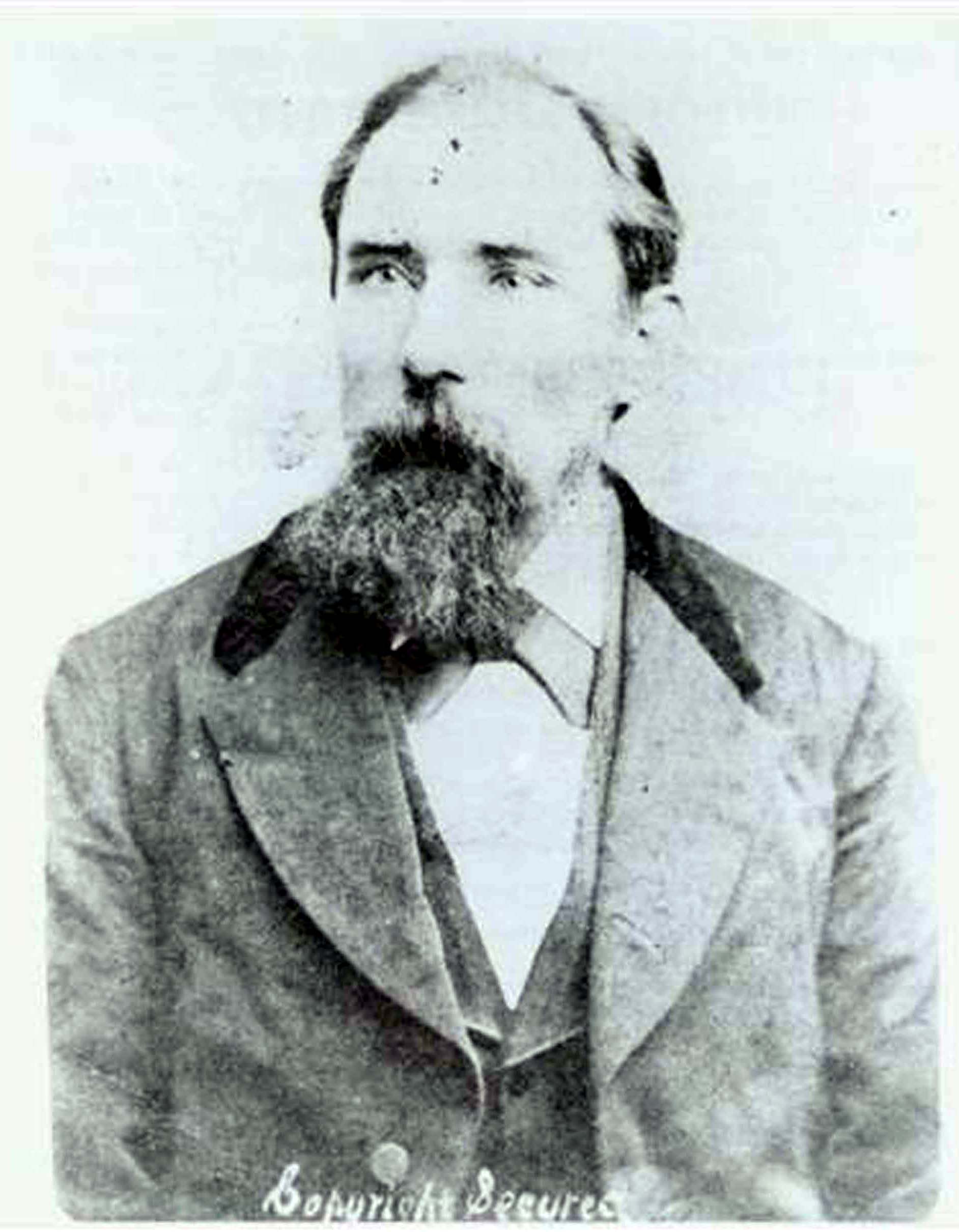
John “Black Jack” Kehoe, allegedly one of the leaders of the Molly Maguires
The mine-owners pursued a dual strategy of violence against Mollies and other leaders and members of the WBA, while also preparing legal charges against trade union officials and collecting evidence to have the Mollies tried for murder. The courts collaborated, as did the mass media. Much of the clergy were not found wanting either and denounced the union leaders to their congregations.
The state militia and the Coal and Iron Police patrolled the district, maintaining an intimidatory presence during the strike. On May 12th John Siney, a leader of the WBA was arrested at a demonstration against the importation of strike-breakers. Siney had opposed the strike and advocated seeking arbitration. Another 27 union officials were arrested on conspiracy charges. Judge Owes’ words while sentencing two of them are indicative of the side on which the legal system was, at least in Pennsylvania in 1875:
“I find you, Joyce, to be President of the Union and you, Maloney, to be Secretary and therefore I sentence you to one year’s imprisonment.”
Stories appeared in the media of strikes as far away as Jersey City in Illinois and in the Ohio mine-fields, all allegedly inspired by the Mollies. Much of the anti-union propaganda in the media was directly provided by Gowen who planted stories therein of murder and arson by the secret society.
With the workers starving and deaths among children and the infirm, surrounded by armed representatives of the employers and the state militia (also friendly to the employers), their leaders arrested, the union nearly collapsed and the strike was broken, miners going back to work on a 20% cut in their wages. The strike had lasted six months but the Mollies fought on and McPartland noted increased support for them, including among union members who had earlier declined to support their methods.
When the Mollies were brought to trial in a number of different court cases of irregular conduct, Gowen had himself appointed as Chief Prosecutor by the State. One of the accused, Kerrigan, turned state’s evidence and his and McPartland’s evidence helped send 10 Molly Maguires to their deaths:Michael Doyle, Edward Kelly, Alex Campbell, McGeehan, Carroll, Duffy, James Boyle, James Roarity, Tom Munley, McAllister.
Execution of Molly Maguire 1877 (French soure: I have been unable to find the name of the victim or the exact date of his execution)
In that area and in many other major industrial areas across the United States throughout the rest of that century and well into the next, employers continued to use spies and “vigilantes”, company police, local law enforcement agencies, state militia, labour-hostile press, fixed juries and biased judges to break workers’ defence organisations, often martyring their leaders and supporters.
A number of books have been published about the Molly Maguires and their story of has been dramatised in the film of the name (1970), starring Sean Connery as Jack Kehoe and Richard Harris as McPartland. The Mollies have also been celebrated in a number of songs, among which the lyrics of the Dubliner’s version is probably the worst and those of The Sons of Molly Maguire are the best I have heard (see Youtube recording link below end of article).
Molly Maguire tribute banner ITGWU (Cork branch)
In June 2013 the East Wall History Group organized a talk on the Mollies by US Irish author John Kearns at the Sean O’Casey Centre in Dublin’s North Wall area (video of the talk and audio of a radio interview with the author are accessible from this link:http://eastwallforall.ie/?p=1505).
In 1979, on a petition by one of John “Black Jack” Kehoe’s descendants and after an official investigation, Governor of Pennsylvania Milton Shapp posthumously pardoned Kehoe, who had proclaimed his innocence until his death (as had Alex Campbell). Shapp praised Kehoe and the others executed as “martyrs to labor” and heroes in a struggle for fair treatment for workers and the building of their trade union.
End
The Sons of Molly Maguire:
Footnotes:
1 I gratefully acknowledge the listing of that wonderful voluntary and non-party organisation, the Irish National Graves Association, which has done such important work to document and honour those who have fallen in the struggle for freedom of the people of our land http://www.nga.ie/Civil%20War-77_Executions.php
2 In what one may see as a strange coincidence, among the Mollie victims of Vigilante violence were cousins of Pat O’Donnell, with whom he had stayed for some time. Pat O’Donnell shot dead Carey in 1883 because he had turned state evidence against the Invincibles (see https://rebelbreeze.wordpress.com/2014/12/17/pat-odonnell-patriot-or-murderer/).
3 Also sometimes referred to as “McParlan”. In addition some researchers have expressed the opinion that there in fact two McParlands, brothers, working for Pinkerton against the Molly Maguires.
By José Antonio Gutiérrez Dantón / Friday 9 January 2015 (translated from the original in Castillian)
To begin with, let me make it clear from the outset that I consider the attack on the satirical magazine Charlie Hebdo to be an atrocity and that I do not believe that it is justifiable under any circumstances to make a military target of a journalist, no matter what our opinion on the quality of his journalism may be. The same is valid in France, as it is in Colombia or in Palestine.
Also, nor do I identify with any fundamentalism, whether it be Christian, Jewish or Muslim, nor indeed with Frenchified mock-secularism either, which makes a goddess of the “République”.
I present these necessary explanations since no matter how much the high priests of politics insist that we live under an “exemplary democracy” with “great liberties”, we all know that Big Brother is watching us and that any speech outside the script is severely punished. But I believe that to condemn the attack on Charlie Hebdo is not the same as celebrating a magazine that is, fundamentally, a monument to intolerance, racism and colonial arrogance.
I cannot view with equanimity the constant symbolic aggression that has as its counterpart a physical and real aggression, which is the bombing and military occupation of countries belonging to this cultural horizon. Nor can I happily these cartoons and their offensive texts with a light heart, when Arabs are one of the most marginalized, impoverished and exploited sectors of French society which has historically been brutally treated.
I do not forget that in the early 1960s, in the Paris Metro, the police massacred 200 Algerians by clubbing, just because the latter were demanding an end to the French occupation of their country, which had already led to a total of a million dead “uncivilized” Arabs.
This is not about innocent cartoons drawn by free thinkers but rather about messages produced by mass media (yes, though in an alternative posture, Chalie Hebdo is part of the mass media), loaded with hatred and stereotypes reinforcing a discourse that considers the Arabs as barbarians to be contained, uprooted, controlled, represed, oppressed and exterminated. These are messages the implicit purpose of which is to justify the invasions of Middle Eastern countries as well as the many interventions and bombings orchestrated in the West in defence of the new imperial map. The Spanish film actor Willy Toledo controversially commented, no more than was obvious, that “The West kills every day. Silently.” And that is what Charlie and his black humour hides under the cover of satire.
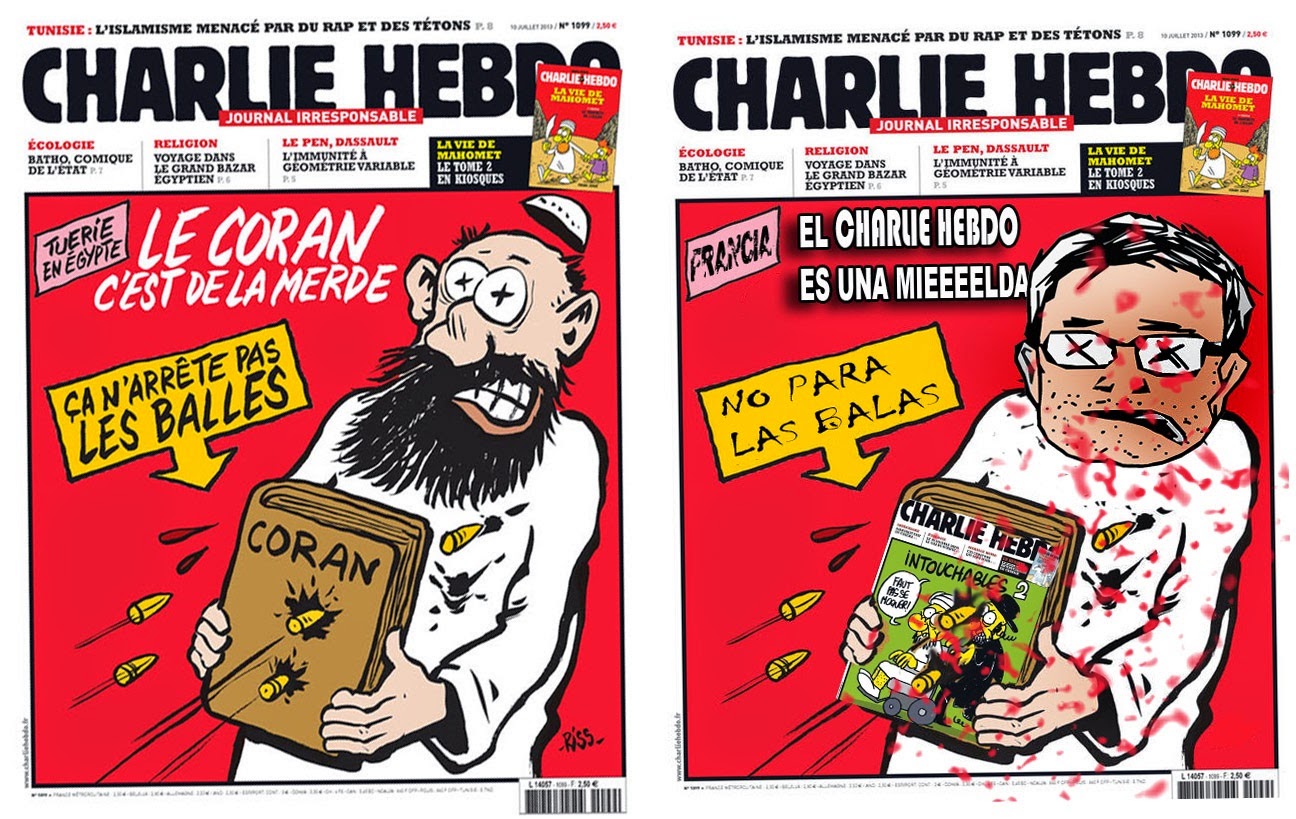
I do not forget the front cover of Charlie Hebdo issue N°1099, in which it trivialized the massacre of more than a thousand Egyptians by a brutal military dictatorship which has the approval of the USA and of France, carrying a cartoon with a text declaring “Slaughter in Egypt. The Koran is shit: it doesnt stop bullets.” The cartoon showed a Muslim man riddled with bullets that had passed through a copy of the Koran, with which he had been trying to protect himself. Perhaps some find this funny. In their time too, the English colonists in Tierra del Fuego, Argentinia, thought it funny to have photographs of themselves taken, with wide smiles and rifle in hand, a foot on the corpses of the still-warm and bleeding bodies of the native people they had hunted.
Charlie Hebdo cartoon referring to the attack on Egyptian protesters in which 1,000 were killed. Juxtaposed, an imaginary cartoon treating the attack on Charlie Hepdo in a similar manner.
Rather than funny, that cartoon to me seems violent and colonialist, an abuse of the fictitious and manipulated western freedom of the press. How would people react if I were to design a magazine cover bearing the following text: “Slaughter in Paris. Charlie Hebdo is shit: it doesn’t stop bullets” and made a cartoon of the deceased and gunned-down Jean Cabut holding a copy of the magazine in his hands? Clearly that would be outrageous: the life of a Frenchman is sacred. The life of an Egyptian (or Palestinian, Iraqi, a Syrian, etc.) is “humoristic” material. For that reason I am not Charlie, because for me, the life of each one of those Egyptians pestered is as sacred as is any of those caricaturists assassinated today.
We already know what to expect now: there will be speeches defending press freedom from countries which in 1999 gave their blessing to the NATO bombing of the Serbian public TV station in Belgrade, calling it “the Ministry of Lies”; countries that remained silent while Israel bombed the Al-Manar TV station in Beirut in 2006; those that respond with silence to the murders of Colombian and Palestinian critical journalists.
After the beautiful pro-freedom rhetoric will come the liberticide action: more McCarthyism, disguised colonial “anti-terrorism”, more colonial interventions, more restrictions of those “democratic guarantees” threatened with extinction and, of course, more racism.
Europe is consumed in a spiral of xenophobic hatred, islamophobia, anti-semitism (in fact, the Palestinians are Semitic) and this atmosphere has reached unbearable levels. The Muslims are already the Jews of 21st Century Europe and neo-Nazi parties are becoming respectable again, 80 years later, thanks to this detestable feeling.
Because of all this, in spite of the feelings of repulsion engendered in me by the Paris attack, Je ne suis pas Charlie.
Note on author: José Antonio Gutiérrez D. is a libertarian political activist living in Ireland, where he participates in the movements of solidarity with Latin America and with Colombia, a contributor to the CEPA (Colombia) magazine and to El Ciudadano (Chile), and also to the international web page www.anarkismo.net. He is author of “Problemas e Possibilidades do Anarquismo” (in Portuguese, Faisca ed., 2011) and coordinator of the book “Orígenes Libertarios del Primero de Mayo en América Latina” (Quimantú ed. 2010).
Diarmuid Breatnach (translation of material from Naiz and writing of article)
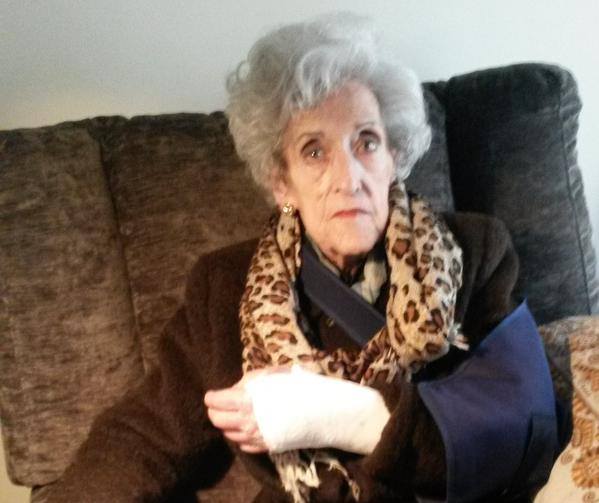
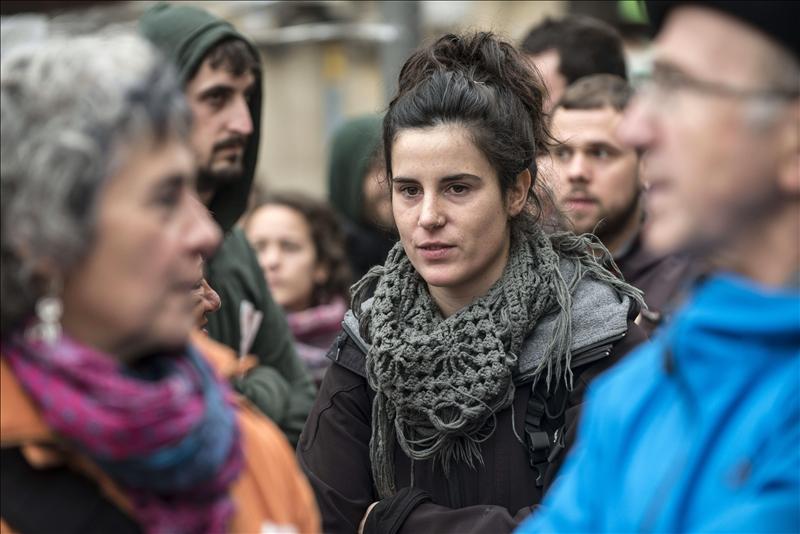
Julia Lanas Zamakola, 94 years of age, went shopping as usual in Gernika on Monday 15th December 2014 but ended up in hospital after the Ertzaintza, the Basque Police, raided the market to arrest a Basque political activist.
Julia Lanas, 94 years of age, struck and knocked to the ground by Basque police in raid to arrest a Basque activist in Gernika
Jone Amezaga, a young female activist of the Basque pro-Independence Left movement, had been sentenced to 18 months’ jail for allegedly hanging a banner which the State Prosecutor said “glorified terrorism”. Jone denied doing it and said the Ertzaintza, the Basque police, had framed her and declined to present herself to the authorities.
Many things are considered by the Spanish state to be “glorifying terrorism”, including putting up photographs of Basque political prisoners in a public place, bar, café or social centre.
Elderly pensioner Julia Lanas said she had been pushed to the ground by the police during the raid. “My wrist was broken. It was an invasion, of terror. …. The Ertzaintza does not belong to the Basque (Autonomous) Government, they are nothing less than managers for imperial Spain.” “It reminded me of the Civil War,” she said and went on to say that she had survived the dictatorship (Franco’s) and the war and had relatives imprisoned and tortured.
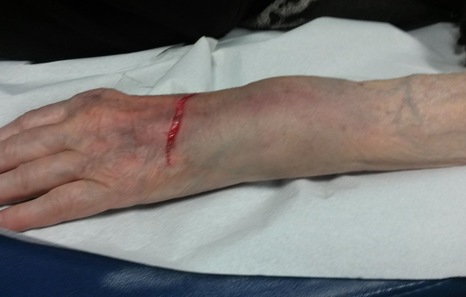
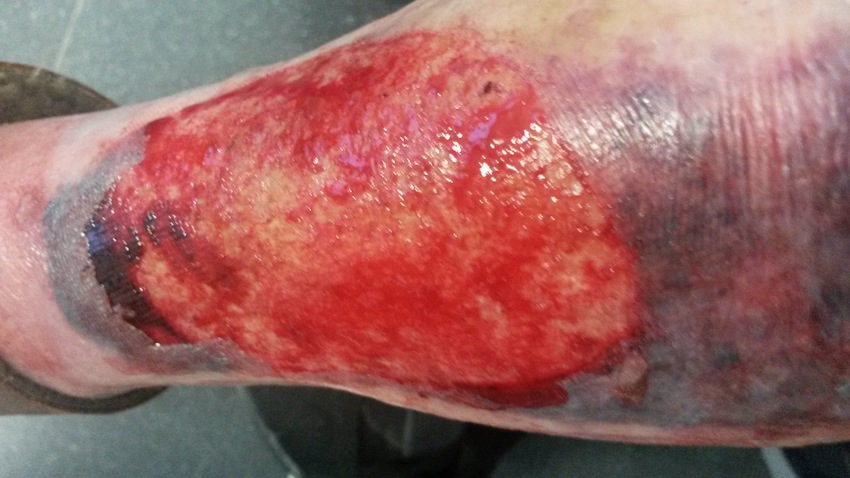
Julia Lanas was given first aid by people in the crowd and then taken by ambulance to the Gernika hospital but they had to leave there because it was full. “There was a lot of solidarity” said Julia Lanas, referring to the crowd in support of Jone Amezaga and to the help she herself received. The 94 year-old woman was treated by the paramedics who then took her home and her son took her to hospital in Bilbao the following day. “The injury was from a telescopic baton,” she said.
94-year-old Basque woman Julia Lanas’ broken wrist and arm injury after police raid in GernikaJulia Lanas’ injured leg after Basque police raid in Gernika
After a sustained tussle between uniformed and plain-clothes police and Jone Amezgaga, the Basque activist was taken prisoner by the Ertzaintza, some of whom used their batons on the crowd. Having secured their prisoner, the uniformed Ertzaintza then retreated backwards through the market, followed by the hostile crowd, until they gained the entrance, near to their vehicles and there stopped and faced their opposition.
Jone and her supporters had been expecting the police raid. In 2008 the Abertzale Left, the mass collective of organisations of the Basque pro-Independence Left, announced that they would henceforth use only peaceful methods in pursuit of their goal of self-determination, and the armed organization ETA subsequently declared their “permanent ceasefire”. The Spanish state’s response was to continue its repression of the movement.
The youth section of the Abertzale Left sought to find an appropriate method of resistance and developed the “human wall”. Some of the youth movement activists who had been sentenced by the State, instead of surrendering to the authorities or going “on the run”, presented themselves in public places, surrounded by supporters. The police – always the Basque police except in Nafarroa but sometimes backed by the Guardia Civil – then were obliged to spend a long time pulling people out of the “human wall” before reaching their quarry.
The first of these “human wall” resistance acts was at Donostia/ San Sebastian in April in 2013 when 500 mostly youth surrounded the six youths convicted of membership of SEGI, the Abertzale Left youth organization. SEGI is classed as a “terrorist organization” by the Spanish state and by the EU despite not a single conviction, even in Spanish courts, of an act of violence by the youth organization. The Donosti human wall was followed by another a month later on the bridge at the port of Ondarroa, when hundreds sat, arms linked, between Urtza Alkorta and the Ertzaintza. In October 2013 in Iruňa/ Pamplona, the Policía Nacional of the Spanish state had to dismantle another human wall of resistance to get at Luis Goňi, another youth convicted of SEGI membership. Last year there were two, one in Loiola (Azpeitia) for five youths and the one in Gernika. These “human walls” have now been constructed in three of the four southern Basque provinces (see video links below): Bizkaia, Gipuzkoa, Nafarroa – only Álava has yet to have one. Jone Amezaga’s arrest was the fifth occasion of the use of the “human wall” in the Basque Country and the second in the province of Bizkaia.
Amezaga, who refutes the charge and the police “evidence’ of “glorification of terrorism”, has been refused permission to remain at liberty while her appeal is being considered. Also it has been the custom of the Spanish state, in cases where the sentence is less than two years, for the convicted not to be taken to jail. The state declined to apply this custom in Amezaga’s case.
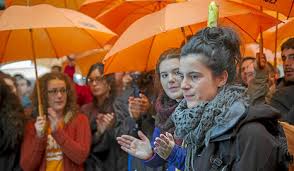
Jone Amezaga surrounded by supporters in Gernika prior to police raid
That Monday morning of the 15th December in Gernika, the town containing the ancient meeting place of the Basque chiefs and victim of the infamous bombing by Franco’s German bombers during the Civil War, the stalls were set out for the weekly market as usual. However, a number of events of a political nature also took place and the town was draped in the orange colours of LIBRE (“free” in Spanish), an organization created in 2013 to expose and resist Spanish state repression. Around noon, Jone made her appearance, no doubt marked by undercover police and soon afterwards the police raid took place.
Jone Amezaga surrounded by supporters with orange (LIBRE’s colour) umbrellas prior to police raid in Gernika
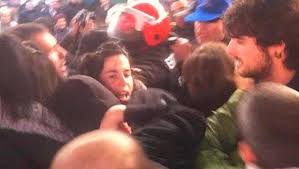
It was plain-clothed police who led the assault, a number of individuals, some seen in the video dressed in black-and-white tops and one in a green top. There is no evidence of their identifying themselves by display of their police cards, for example, but it is clear that Jone’s supporters are in no doubt as to who they are. The Ertzaintza, masked and helmeted, in their red-and-black uniforms soon join the fray and eventually Jone is taken into custody. The crowd chants partly in Castillian and partly in Basque: “Jone libre!” (Free Jone!); “Guard dogs of the System!” “Hired killers!” “Abuse of power!”
Jone Amezaga’s face in the midst of the battle as supporters try to block the police arrest, 15 Dec 2014
While awaiting her appeal hearing, a wait which can take many months, Jone may be kept in any of the many prisons across the Spanish state (or across the French state, for those arrested there) throughout which political prisoners, most of which are Basque, are dispersed. She may also be transferred without warning to yet another jail. All this places an enormous strain on the visiting relatives and friends of such individuals — a financial, organizational, emotional and physical strain. And of course there are those who through infirmity are unable for journeys of thousands of kilometres. A number of serious traffic accidents occur on those journeys every year and to date twelve Basque prisoners’ relatives and friends thave lost their lives in those accidents..
On April 20th 1914, Colorado National Guardsmen and mining company guards opened fire on a striking coal miners’ camp, with rifles and machine gun, killing up to 26 people, including women and children. They had set fire to the camp before opening fire and some of the casualties died of smoke inhalation.
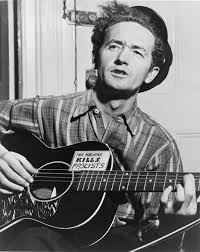
The event and the response of the workers were the inspiration for the songThe Ludlow Massacre, composed by Woody Guthrie, the socialist troubadour from Oklahoma, around 30 years later. Here in Ireland it was recorded by Christy Moore in 1971 on the Prosperous album and it has long been a favourite of mine (I’ll be singing it as part of the selection for Songs of Struggle 1913-1923, part of the 1916 Festival at Liberty Hall on Saturday 26th April 2014).
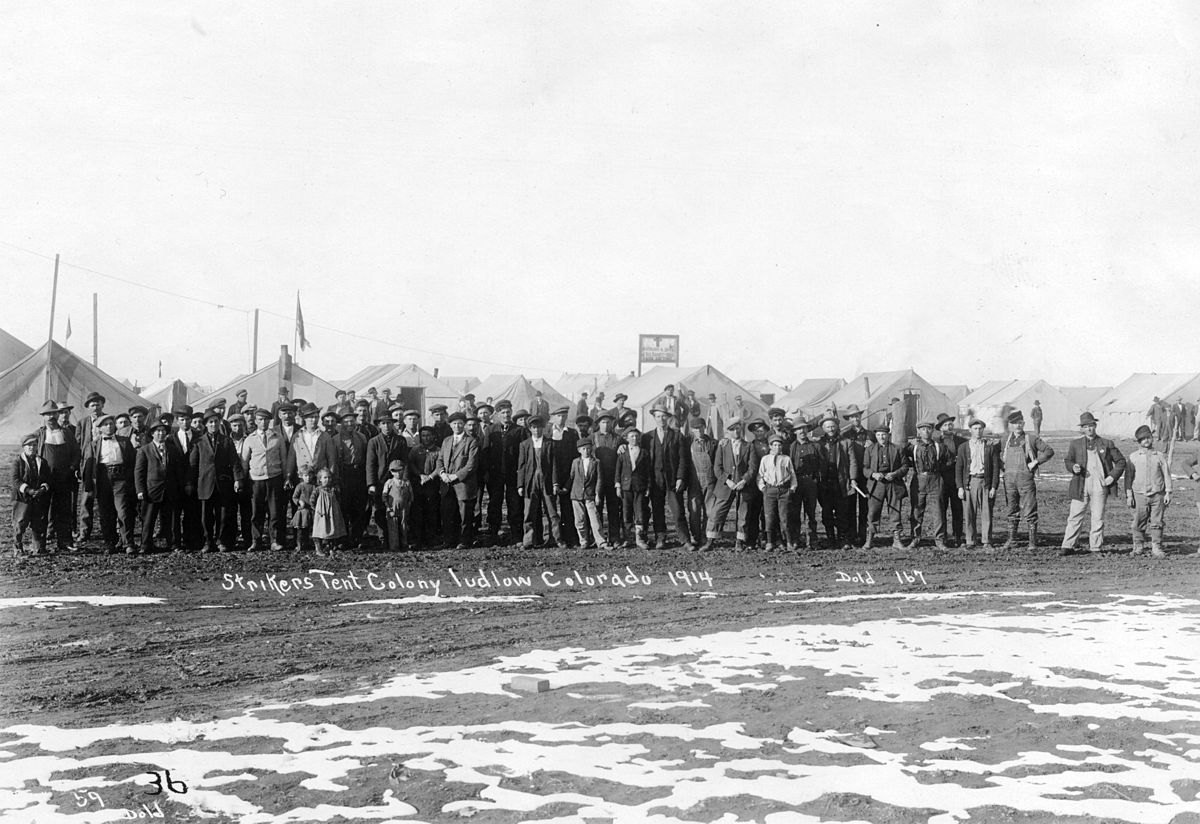
Colorado Strikers and families in front of tent town
The massacre took place during the great Southern Colorado Coal Strike which began in September 1913, a month after the strike of the IT&GWU tram workers began the eight month-long Dublin Lockout. But the Southern Colorado Strike lasted until December 1914 – sixteen months. And, in common with many industrial struggles in the USA, it was very violent.
The chief antagonists in this strike were the Colorado Fuel & Iron Co., of which John D. Rockefeller was the main owner; the Rocky Mountain Fuel Co. and the Victor-American Fuel Co. As events were to show, the mine-owners could also draw on the armed force of the state of Colorado, as well as on their own hired gunmen.
Opposing them was the United Mineworkers of America trade union. The UMA presented seven demands:
Recognition of the union as bargaining agent
An increase in tonnage rates (equivalent to a 10% wage increase)
Enforcement of the eight-hour work day law
Payment for “dead work” (laying track, timbering, handling impurities, etc.)
Weight-checkmen elected by the workers (to keep company weightmen honest)
The right to use any store, and choose their boarding houses and doctors
Strict enforcement of Colorado’s laws (such as mine safety rules, abolition of subs), and an end to the company guard system
The employers rejected the demands and prepared to bring in scab labour.
Living in company houses
As in a number of other countries, many mineworkers rented rooms or houses in company “towns” served by company shops, from which the miners also had to buy their equipment. Apart from that, they were also overcharged, so that often at the end of the week’s work the deductions left little pay to collect. This is the meaning behind the song Sixteen Tons (by either Merle Travis in 1946 or by George S. Davis in the 1930s — the origin is disputed):
You shift sixteen tons and what do you get?
Another day older and deeper in debt.
St. Peter don’t you call me ‘cos I can’t come —
I owe my soul to the company store.”
Living in company houses often meant eviction when workers struck work, as happened in Dublin in 1913 to a number of strikers, including those of the Merchant Co. in Merchant Street, near North Wall.
The evicted miners in Colorado set up a tent town of 1,200 people which was being harassed by company guards and then, when the workers resisted, by Colorado state’s National Guard. Pot-shots were taken at the camp and stragglers were beaten up; eventually strike leaders were assassinated.
On April 20th 1914, about eight months into the strike, the Colorado National Guard and company guards set fire to tents and as people scrambled around, opened fire on the camp. Some workers claimed a loss of life of 26 while others numbered it at 19; the lack of municipal or government recording meant that there were no “official” counts of the dead.
Officers of the Colorado National Guard
After the massacre — the workers’ response
In the aftermath of the massacre the workers armed themselves (union officials were seen openly handing out weapons) and fought back over a 40-mile front, from the town of Trinidad to Walsenburg (both of which are mentioned in the song). The death toll is recorded as between 69 and 199. The lack of municipal or government recording has already been mentioned; biased newspaper reporting was another problem and these two factors probably accounted for most of the discrepancies in accounting for the workers’ dead.
The UMA eventually lost the strike but the union survived that defeat and went on to fight and win other victories; in addition Congressional investigations into the events did result in improvement in miners’ conditions, the enforcement of the eight-hour day and legislation limiting employment of child labour. Today the Ludlow tent colony site is a USA National Historic Landmark and the area is owned by the UMA.
The lessons
The strike showed the ferocity of the US mine-owners in defence of their high profits as well as the readiness of municipal and government authorities in a prosperous democracy to collude with them — in the case of Colorado State, most actively and murderously. Also apparent was the heroism and solidarity of the workers in that long strike and the readiness of at least many of them to meet the capitalists’ violence with their own and to sacrifice their lives if necessary.
Like the Dublin Lockout, which was also a defeat for the ITG&WU, the Southern Colorado Coal Strike showed the necessity for workers and their organisations on occasion to fight losing battles. Apart from it not being possible at the outset to predict the outcome of all struggles, hard fights teach lessons and steel the class in its battles. If workers were to avoid all battles except those they were certain to win, they would fight very few, become weak and lose the ability to fight, to say nothing of carrying out a successful revolution.
A hundred years ago, the mineworkers in the Southern Colorado coalfields and their families wrote a great chapter in the history of workers’ struggles, even if a lot of the blood in which it was written was their own.
The Ludlow Massacre Monument, erected by the union 1916Woody Guthrie, socialist troubadour, composed the Ludlow Massacre song about 1944.
The Ludlow Massacre by Woody Guthrie
(The lyrics accuse “they” sometimes and “you” at others; I sing “they” or “their” all through, along with a few other minor changes)
It was early springtime that the strike was on
They moved us miners out of doors
Out from the houses that the company owned
We moved into tents at old Ludlow
I was worried bad about my children
Soldiers guarding the railroad bridge
Every once in a while a bullet would fly
Kick up gravel under my feet
We were so afraid they would kill our children
We dug us a cave that was seven foot deep
Carried our young ones and a pregnant woman
Down inside the cave to sleep
That very night the soldiers waited
Until us miners were asleep
They snuck around our little tent town
Soaked our tents with your kerosene
They struck a match and the blaze it started
They pulled the triggers of their Gatling guns
I made a run for the children but the fire wall stopped me
Thirteen children died from their guns
I carried my blanket to a wire fence corner
Watched the fire till the blaze died down
I helped some people grab their belongings
While their bullets killed us all around
I will never forget the looks on the faces
Of the men and women that awful day
When we stood around to preach their funerals
And lay the corpses of the dead away
We told the Colorado Governor to call the President
Tell him to call off his National Guard
But the National Guard belong to the Governor
So he didn’t try so very hard
Our women from Trinidad they hauled some potatoes
Up to Walsenburg in a little cart
They sold their potatoes and brought some guns back
And put a gun in every hand
The state soldiers jumped us in a wire fence corner
They did not know that we had these guns
And the red neck miners mowed down them troopers
You should have seen those poor boys run
We took some cement and walled that cave up
Where those thirteen children died
I said, “God bless the Mine Workers’ Union”
And then I hung my head and cried.
(click on the title immediately above to access the video)
(A mobile-friendly version is also available, click on the author’s name below the video and the other version should show).
RAP POEM, VIDEO IMAGES WITH MUSIC IN PROTEST AT THE 3-MONTH INCARCERATION OF MARGARETTA D’ARCY, 79 YEAR-OLD ACTIVIST AND DRAMATIST, BECAUSE OF HER PROTESTS AGAINST THE CONTINUING USE OF SHANNON AIRPORT BY THE US MILITARY IN COLLUSION WITH SUCCESSIVE IRISH GOVERNMENT IN VIOLATION OF OUR NEUTRAL STATUS.















 rebelbreeze