How does a rat-ridden eyesore become a charming garden? And how does a sheet-metal fabricator-welder who knew nothing about gardening become its creator? The answers are: slowly, learning as he goes along and with support in the community.
In a little housing cul-de-sac or ‘turning’ as we used to call them, in a Dublin inner-city southside dockland, there was a disused area overgrown with brambles harbouring rats. Its only attractive feature was a big beech tree (Feá) left there when the area was cleared for housing construction.
But Jimmy saw something else there. In the eye of his mind, he saw a garden, a place of calm and beauty. The vision nagged at him until he began to clear the brambles and other undergrowth. And then to plug the rat-runs inside the brick back wall.
Though he was no stranger to the area, living as he does in the Markievicz flats, the neighbours might have been wary at first of what he was doing. But before long, they were bringing him cups of tea and biscuits, commenting approvingly on progress.
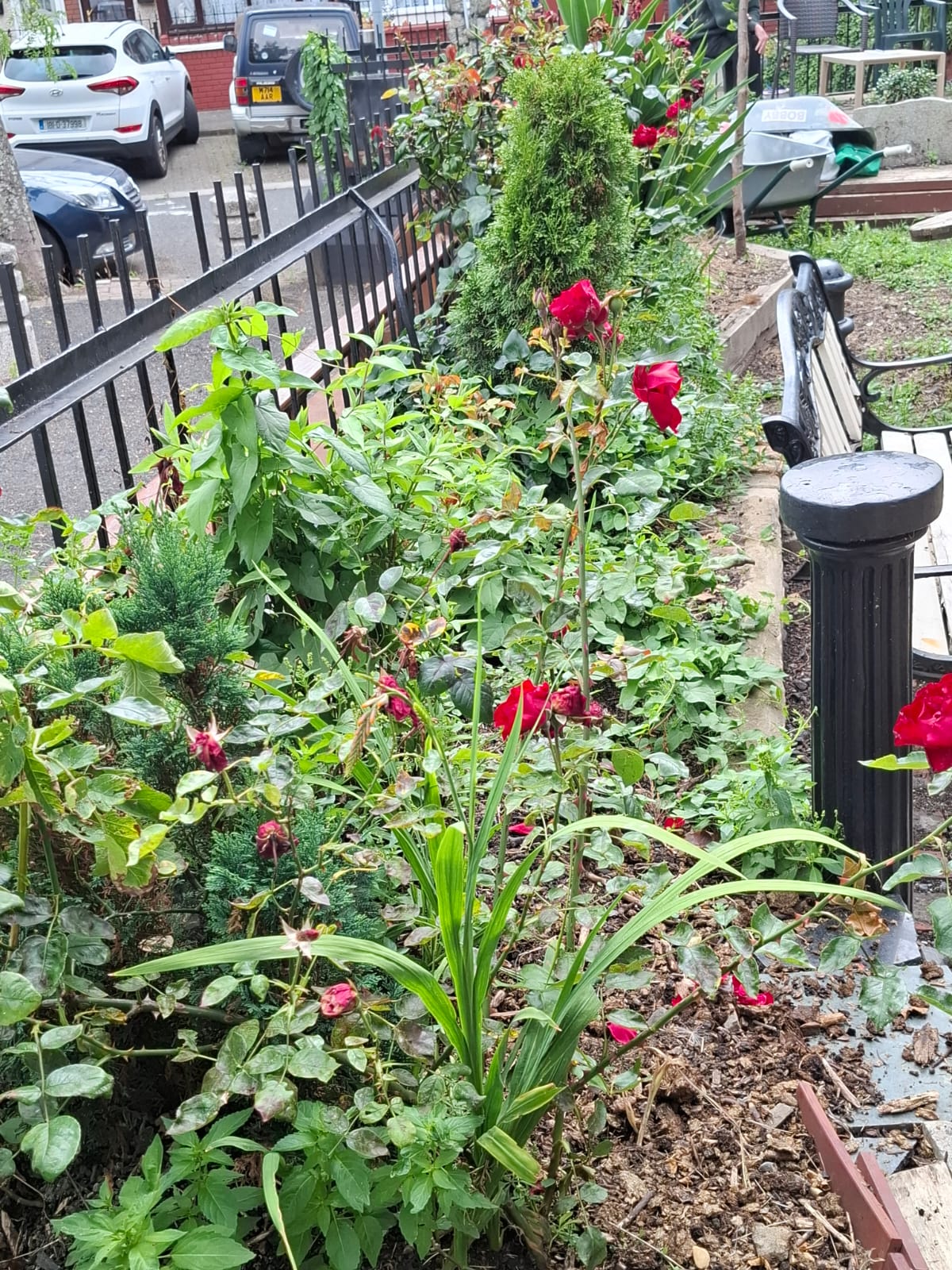
Flower bed in the garden (Photo: D.Breatnach)“… in vacant or in pensive mood, they flash upon that inward eye which is the bliss of solitude …“ Jimmy Browne, creator of the garden, caught in a moment of reflection. (Photo: D.Breatnach)
NOW AND FUTURE
Trees are valuable oxygenators and carbon-sequestrators, absorbing CO2 in the environment, as well as attractive but the big beech tree was shading the whole garden, restricting many other plants from growing. Sadly it had to go and two of its sections provide nice features in the garden.
Flowering shrubs and perennial flowers now grow in borders around an attractive brick floor. To those Jimmy has added other features of stone, metal posts and a garden bench.
Among the many that Jimmy acknowledges helping him is Shane Daly of the Windjammer, Leo for garden bench donation and Christy Barry who transported materials Jimmy collected to the garden.
Younger Rowan trees in the garden. (Photo: D.Breatnach)
The beech has been replaced by some Rowan trees, also known as Mountain Ash (Caorthainn), some in full berry flush when I visited the garden with local man Christian, who introduced me to Jimmy. I hoped Jimmy would install a pond that frogs or newts might breed in, attracting also damselflies.
The garden is attractive now and safe for children to visit but Jimmy has plans for a rockery, a fountain, a small shelter from rain showers over a seat and bird nest boxes, for tits for example. The Blackbird and robin are sure to nest in trees there in time, sending their songs into the area.
Section of beech trunk, now the stand for a table. (Photo: D.Breatnach)
FROM DERRY TO DUBLIN
Jimmy Browne is from Derry and came to Dublin in the 1970s, “on the hop” he says and indeed there were many from the Catholic areas that did the same in those years, whether temporarily or permanently. Coincidentally, the area around the garden has a strong political history too.
Around the corner, next to the Windjammer pub, is a plaque commemorating the founding of the Irish Republican Brotherhood in a wood yard there on St. Patrick’s Day, 1858, its counterpart in the USA being formed on the same day, soon to be known as “Fenians” which was adopted here too.
(Photo: D.Breatnach)
Almost facing the open end of Lombard Close is a little park with a monument, both dedicated to Elizabeth O’Farrell, of the 1916 Rising GPO Garrison, who took part in the occupation of Moore Street, where she had the dangerous responsibility of negotiating the surrender.
She grew up in that area as did nearby also her childhood friend, comrade and later lifelong house partner Julia Grennan, who also fought in the Rising and was there in Moore Street at the end also.
By strange coincidence, both Jimmy’s employers in Dublin, before he set up his own fabrication/ welding shop, had his own family name: Browne’s Foundry and Brownes Brothers.
Older Rowan trees in the garden (Photo: D.Breatnach)
Contrary to the drive for profits that dominates our society, a great many people contribute their physical and mental energy not only to their immediate family and friends but to the community at large. The garden is a benefit to the 19 homes in the Close and 40 others in attached streets.
Jimmy is not being paid to do this work. But he is being rewarded and not only by cups of tea and biscuits. He enjoys the feeling of creation, of making things from his mind come to life, of keeping busy in retirement, of feeling contentment. And of knowing his work is appreciated in the area.
End.
View of the garden from the outside: (Photo: D.Breatnach)Plaque to the birth-place of the Ireland section of the Fenians in Lombard Street, Dublin. (Photo sourced: eadingthesigns.weebly.comblog).(Photo: D.Breatnach)Garden bench – suigh síos and relax (Photo: D.Breatnach)
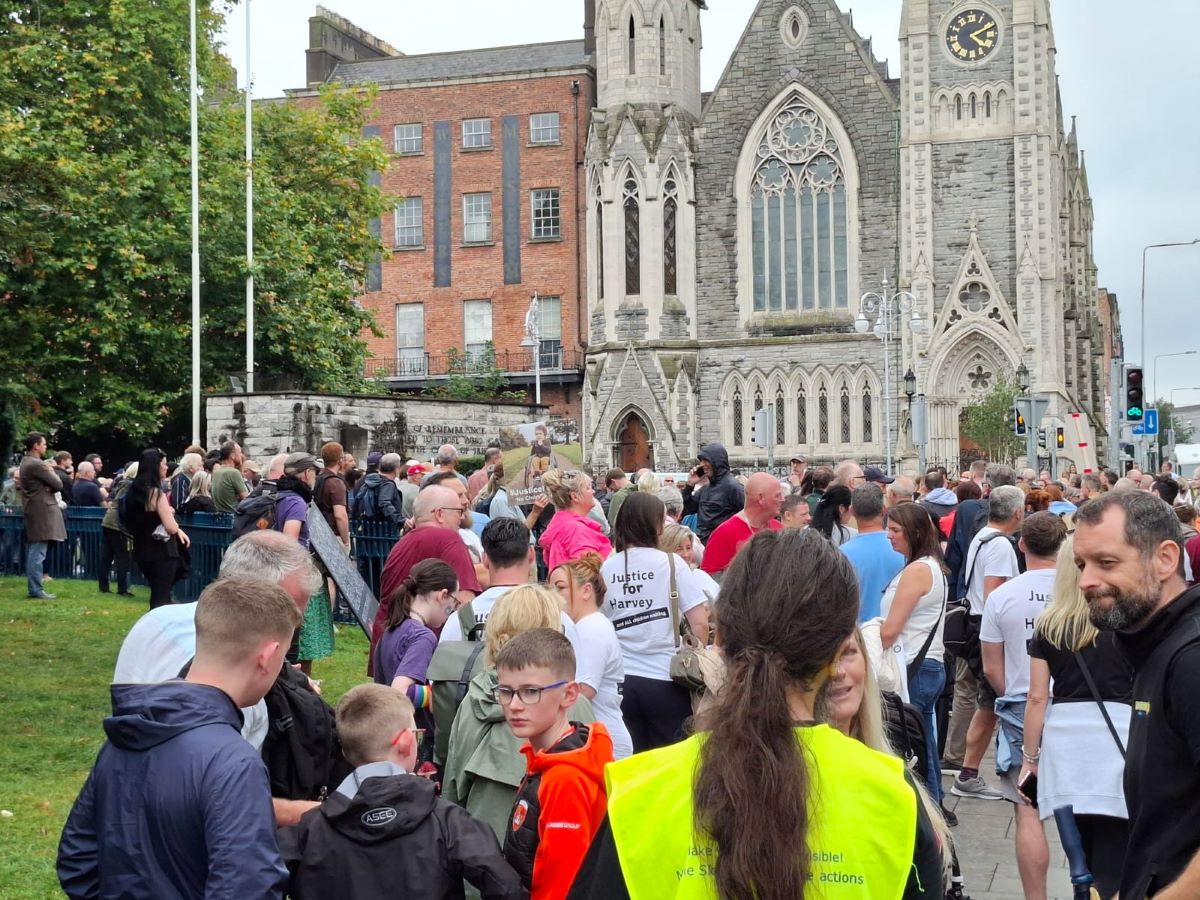
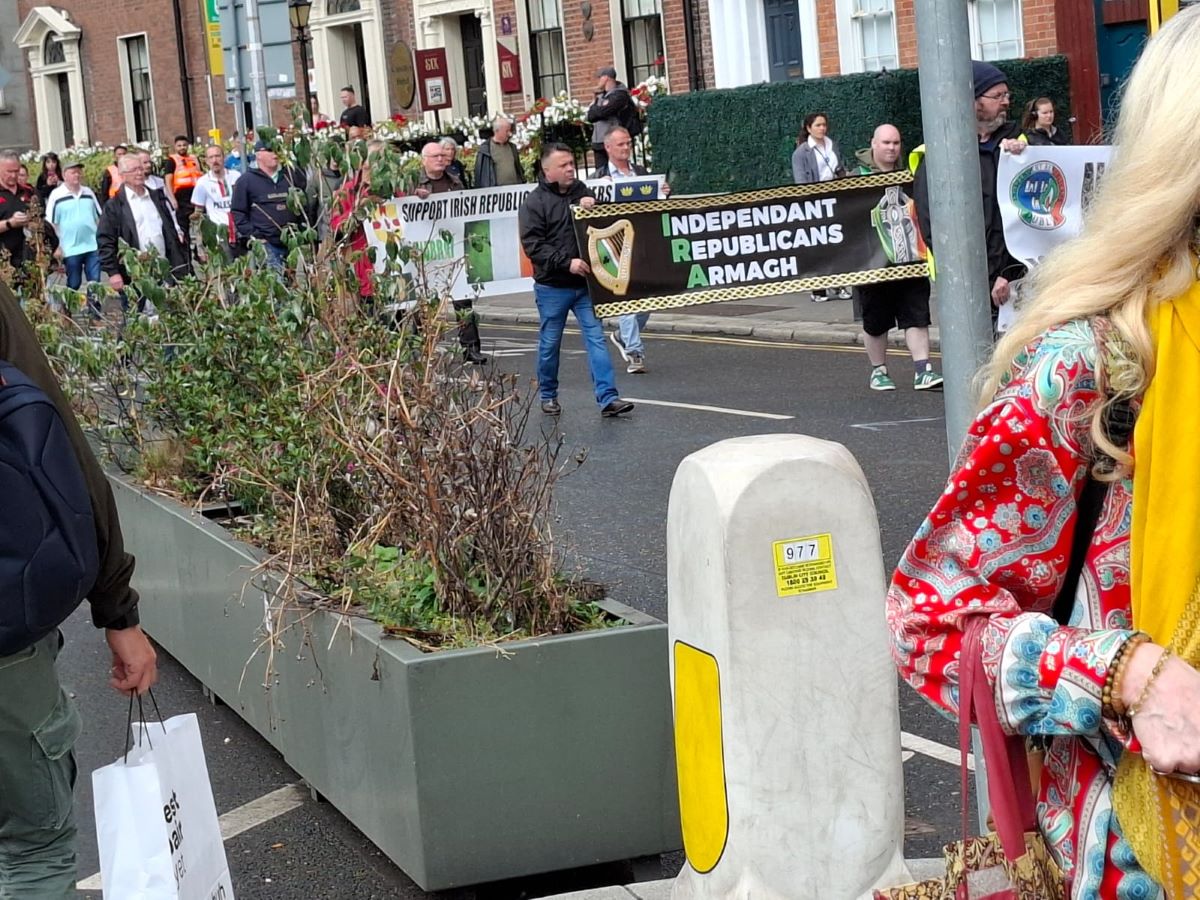
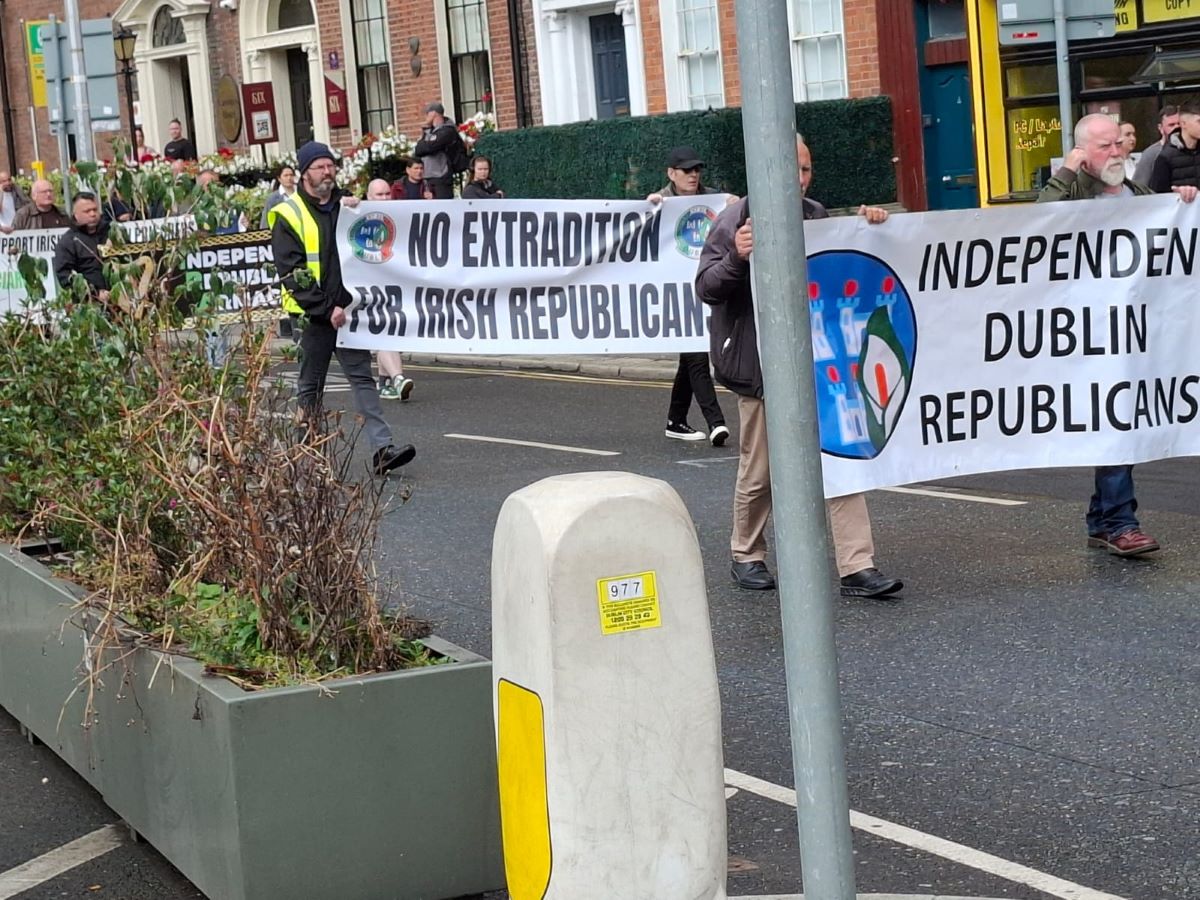
In recent days we have seen the far-Right mobilise people to allegedly defend the GPO and protest homelessness, not against its causes but instead against migrants. In defence of ‘Irishness’ they also menaced an annual religious Muslim procession.
Participants in these and similar events wave the Irish Tricolour and Irish Republic flags and claim to be ‘Irish patriots’ standing up for ‘the Irish nation.’ However, it’s far from that they are in reality as we can see.
They
disgrace the Proclamation
The far-Right claim to honour our national history of resistance to colonialism and occupation and even display copies of the 1916 Proclamation of Independence.1
Yet they are often also seen and heard denouncing Muslims, in direct contravention of the Proclamation’s words: “The Republic guarantees religious and civil liberty … to all”; similarly they held protests when use of Croke Park was hired to celebrants of the Eid festival.
disgrace the GPO as HQ of the 1916 Rising
They have and do disgrace the very symbolic building they claim to be trying to protect.
They have often held racist gatherings outside it; one of their organisers2 (e.g. of weekly protests during the Covid crisis) leading a chant of support for British fascist Tommy Robinson, who defended the Paratroopers who carried out the 1972 Bloody Sunday massacre in Derry.
Their recent protest at the GPO featured as speaker a man known for his active membership of the sectarian UVF murder gang, who admitted working for British Intelligence and who called for the strengthening of the colonial British Border – and was cheered for saying so.
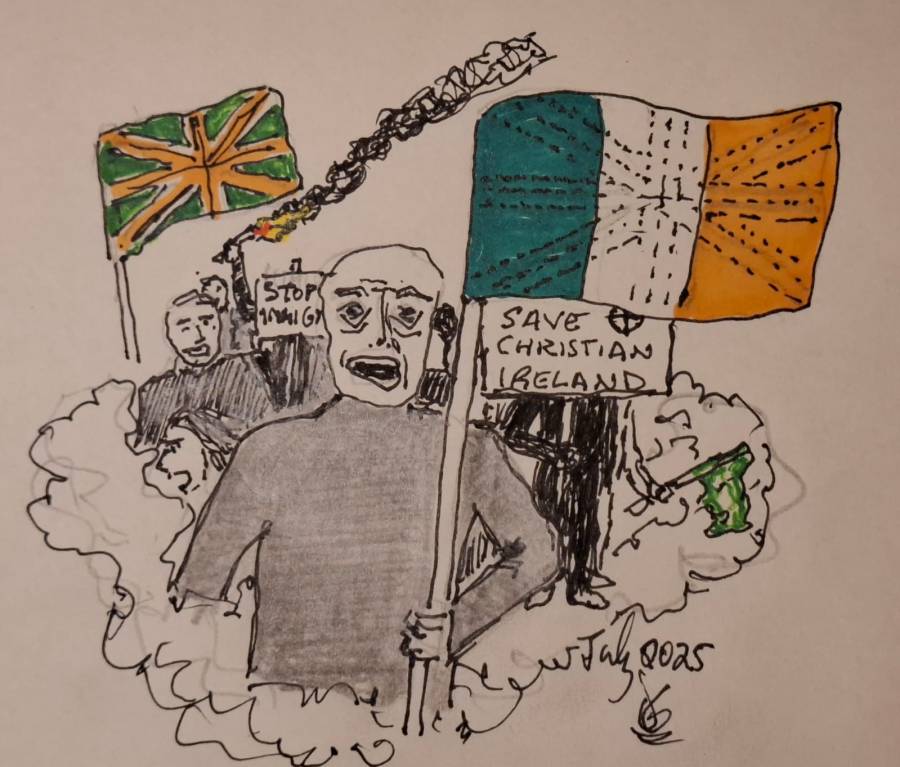
Cartoon by D.Breatnach
disgrace the flags
The far-Right disgrace and misuse the very flags they wave so keenly.
The Tricolour was presented to the revolutionary Young Irelander republicans3 by French revolutionary republican women in 1848. It signified peace and unity between the descendants of settlers and the indigenous Irish in revolutionary struggle against the British colonial occupation.
The flag with the words “Irish Republic” painted in white and gold on a green background was made on domestic material of socialist Republican Constance Markievicz (see next section) in her house and delivered by her to the GPO.
It was installed and flown on the roof at the Princes St. corner by Eamon Bulfin4 (see next section), a migrant from Argentina.
disown but also misappropriate real patriots
In dishonest manipulation, the far-Right claim to honour our patriots and even invoke them in their campaigns. In their agitation against migrants they hide the fact that Constance Markievicz, Thomas Clarke and James Connolly were all migrants (Connolly and Clarke no less than three times).5
Also a migrant was Eamon Bulfin (see previous section) along with many others who fought for Irish freedom and even sacrificed their lives (including Erskine Childers)6.
Placards on an anti-racist rally on Custom House Quay some years ago. The text placard quotes the 1916 Proclamation: “The Republic guarantees religious and civil liberty to all”. (Photo: D.Breatnach)
Of the Seven Signatories of the 1916 Proclamation (see earlier section), two – Pearse and McDonagh7 – were children of migrants and two were themselves migrants (Connolly and Clarke).
Among many such examples, the father of Young Irelander Republican patriot Thomas Davis (author of the song A Nation Once Again) was a migrant.
join with Loyalists and British fascists
A far-Right organiser calling for three cheers for British fascist Tommy Robinson was not the only such example and outside the GPO this week far-Right elements welcomed as speaker Mark Sinclair, a member of the UVF, a British colonial sectarian murder and terrorist squad.8
Prominent Irish leaders of fascist organisations have also shared a platform with Scottish fascist and Loyalist Jim Dowson.9 And of course how can we forget the desecration of the Tricolour unfurled among Union Jack and Loyalist flags in Belfast by some Dublin far-Right activists!10
Admitted UVF/ MI5 Sectarian Loyalist UVF murder gang member Mark Sinclair. (Photo sourced: Internet)
don’t act against British occupation
With all that background, it’s hardly surprising that the far-Right “patriots” don’t organise against the British occupation of the Six Counties or in support of Irish Republican political prisoners in jails on either side of the British Border.
burn buildings
Apart from misleading people and distracting them from the real sources of problems to Irish working people and seeking to intimidate refugees, what do the far-Right actually do? Ah, yes, they burn buildings that might be used as accommodation. A great help to the homeless indeed!
attack homeless refugee and migrant tents
But no, that’s not all. No, the brave ‘patriots’ slash tents and threaten migrants and refugees who are sleeping on the streets. They don’t take on the big landlords, bankers, property speculators and vulture funds – no, they strike down at people poorer and in worse conditions than themselves.
cover for the property speculators and vulture funds, big landlords, bankers
So with all this whipping up fear and hatred of migrants, the far-Right obscure the actual cause of the problems, which is not only Irish capitalism but its total subjection to foreign capitalism. The only ones to benefit from this activity are those who are the real causes of the problems.
are not patriots, nor nationalists
Despite their claims and flag-waving, the far-Right in Ireland are neither patriots nor true nationalists. They do not organise in defence of Irish sovereignty and against British occupation nor against foreign capitalist exploitation of Irish natural resources, labour or infrastructures.
Or the contrary, they work to distract attention away from these centrally-important issues for the Irish nation and raise false issues to divide the people. And usually their concept of ‘Ireland’ ends at the British border which the recent far-Right rally at the GPO called for strengthening!
are a sub-class of deprived individuals allowing themselves to be manipulated by fascists, MI5 and NATO
Many of those being mobilised against migrants come from parts of the cities neglected for generations, often associated with low educational level, substance misuse, unemployment and unresolved mental health issues.
The ideological fascists will recruit those elements to fight, not against the cause of their deprivation, the neo-colonial ruling class or the flooding of foreign capitalist companies into Ireland, assisted by banks and political decisions -but instead against migrant workers and refugees.
are filling a vacuum left by the Republican and Socialist movement
WILL WE LEARN FROM OUR FAILURES?
Many of those participating, while some are also unfortunate victims of Irish capitalism, will be recruited as the boot boys of fascism.
While it is true that historically capitalism in crisis turns to fostering fascism and that capitalism, including the neo-colonial variant in the Irish state is running out of other options, we must evaluate our own role in this development, examine our own failures, learn from and remedy them.
The ground was largely ceded to the Far-Right in the period of their initial growth during the Covid crisis. The socialist Left and Republican movement, in particular its organisations, had little response to the early FR mobilisations or to responding creatively to state-imposed restrictions.
Throughout that period and subsequently the socialist Left sector, despite its protestations of anti-imperialism and anti-colonialism, completely ceded the ground of Irish national sovereignty and its symbols to anyone who wished to occupy it.
They did not, for the most part, protest the use of State repression against Irish Republicans both sides of the British Border, whether through police harassment, special legislation and special no-jury courts, nor stand up for the human and civil rights of Republicans, including political prisoners.
Their distaste for the very issue of national sovereignty was reflected in their refusal to fly the Irish Tricolour, which, although now also the official flag of the Irish State, is originally and remains still a potent symbol of Irish Republican anti-colonial struggle over 170 years.
They might argue that they wished to be identified with the struggle of the working class rather than a nationalist one but they also chose not to fly the flag of the insurrectionary Irish working class, the Starry Plough, in among their internationally-recognised red flags.
The Irish Republican organisations in their fragmented movement, on the national question, failed to sustain unity even around opposition to repression of the states or even around solidarity with the movement’s political prisoners.
They also failed and, to an even greater extent, in fighting for universal affordable housing in a crisis which seems to offer no end and is seized upon by the Far-Right to target refugees and economic migrants, who of course have no responsibility whatsoever for the crisis.
This area too has been a notable failure of the socialist Left organisations which, although marching often enough in public demonstrations and participating in a couple of media-orientated occupations,11 failed to organise and lead a state-wide campaign of empty building occupations.
And so, here we are today, when the FR are able to bring Tricolour and Irish Republic flag-waving crowds on to the streets in false claims of patriotism, dividing and seeking to intimidate migrant workers and anti-racists, burning buildings and insisting on their definition of ‘Irish’ being correct.
Our omissions and failures, if we recognise and act to remedy them, also point the way forward.
End.
1In a travesty of frequent Irish Republican ceremonial occasions, it was even read out at the recent Far-Right gathering outside the GPO which was addressed by a known member of the UVF sectarian murder gang.
2Under the name Dee Wall (real name Dolores Webster).
3Including to Thomas Meagher ‘of the Sword’ who later recruited for, joined and fought in the Union Army in the US Civil War against slavery. Meagher unfurled the flag first in Wexford and later in Dublin, both acts in 1848.
4Bulfin came to Ireland around the age of ten with his family and later joined the IRB and the Irish Volunteers. After the surrender in Moore Street he was sentenced to death, later commuted to life sentence, then from Frongoch prison camp deported to Argentina from where he was the Latin American representative for the Movement.
5Clarke and Markievicz were both born in England. Clarke was first a migrant to Ireland, later to the US, then back again. Connolly was born in Edinburgh and a migrant to Ireland, then to England, then to the USA before his return to Ireland.
6Childers was born in England. He captained the yacht that brought the Mauser rifles and ammunition to Howth. Later he joined the IRA, took the anti-Treaty side and was executed by the Free State during the Civil War.
7The father of the Pearse brothers was English, as was McDonagh’s mother.
8During his trial for bank robbery for the UVF in Glasgow, Sinclair declared he had been working for MI5 which was well known to be steering Loyalist organisations. The UVF and British Intelligence bombed Dublin and Monaghan in 1974, causing the deaths of 34 people and a full-term baby, the highest death toll of one day during the recent 30 Years War.
9Rowan Croft, Herman Kelly (Irish Freedom Party) and Niall McConnell (Síol na hÉireann).
10A prominent group among the Dublin far-Right calling themselves Coolock Says No.
12For example, the 27-day occupation of Apollo House, Dublin, from 15 December 2016 by housing activists and homeless people, with speeches and performances by prominent musicians.
(Reformatted entire for publishing in Rebel Breeze from article of same title in his Substack)
(Reading time: 8 mins.)
Kneecap’s music is not really my thing. I am perhaps too old, or maybe my musical tastes are more conservative. But I do love their politics and their stance on Palestine.
I don’t think much of Hezbollah, but I do think waving their flag is not a criminal offence.
The BBC think otherwise as evidenced by their decision to not broadcast Kneecaps’s performance at the Glastonbury festival. The only reason for this was their support for Palestine. There was no other reason.
Though, it didn’t work out well for the BBC as Bob Vylan who was broadcast live got the crowd to chant Death to the IDF!, one of the noblest of chants ever to be heard at Glastonbury.
But there is a long history to the BBC and other British media censoring musicians. The BBC in its statement said:
Whilst the BBC doesn’t ban artists, our plans ensure that our programming meets our editorial guidelines.
We don’t always livestream every act from the main stages and look to make an on-demand version of Kneecap’s performance available on our digital platforms, alongside more than 90 other sets.[1]
In other words, the BBC does ban artists.
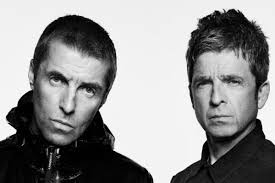
The rapper trio under the band name of Kneecap (Image sourced: on line)
It is not like this is the first time they have banned some of them. Following the Bloody Sunday massacre by the British Army in Derry in 1972, Paul McCartney, penned a song titled Give Ireland Back to the Irish.[2] It was the debut single of Wings.
It was instantly banned in Britain by the BBC but managed to get to No. 16 in the British charts nonetheless and got to No. 1 in Ireland.
They banned songs that mentioned sex, even Shirley Bassie’s Burn My Candle[3] and they banned songs that were considered more political such as The Sex Pistols’ Anarchy in the UK,[4] a song that wasn’t really political at all.
Not surprisingly they banned the then relatively unknown Heaven 17’s debut (We Don’t Need This) Fascist Groove Thang,[5] over concerns it might upset the then recently-elected US president Ronald Reagan.
This was a man whose government through the CIA went on to support deaths squads in Latin America and set up cocaine smuggling networks to finance them through his loyal servant Oliver North.[6] Reagan of course is referred to in the song.
Democrats are out of power Across that great wide ocean Reagan’s president elect Fascist god in motion
That wasn’t the last of it either. The BBC went on to ban a song by The Police, Invisible Sun[7] because of a possible slight on the British Army contained in the lyrics and of course the official video to the song.
I don’t want to spend the rest of my life Looking at the barrel of an Armalite I don’t want to spend the rest of my days Keeping out of trouble like the soldiers say
I don’t want to spend my time in hell Looking at the walls of a prison cell I don’t ever want to play the part Of a statistic on a government chart
The BBC would, during the 1st Gulf War ban a total of 67 songs for the duration of the war, amongst them songs by such establishment figures as Elton John whose song Act of War[8] recorded in 1985 with Millie Jackson was put on the list.
As was Pat Benatar’s Love is a Battlefield,[9] recorded even earlier in 1983. It takes little to upset the BBC it would seem.
The former Irish Taoiseach (Prime Minister) Leo Varadkar criticised Keir Starmer’s call for Kneecap to be not allowed play at Glastonbury stating that
It’s not great for politicians to get into deciding which artists should be allowed to perform where or not.
To me, that’s illiberalism. Part of the whole point of art and music and literature is to be inappropriate, is to be challenging, is often to be anti-establishment,” he said.
We’ve had a situation now for quite some time in Ireland and in Europe and Britain, where politicians didn’t get into the space of saying who should be allowed to perform, who shouldn’t, what books you should be allowed to read, and I hope we don’t slip back into doing that under the guise of national security and anti-terrorism when it isn’t really about that.[10]
Varadkar tut tuts the BBC and Starmer. Sounds great, except his party and the Irish state in general does not have a great record in the matter.
The state broadcaster took an insidious approach to censorship with songs rarely being banned outright. Rather they were just not simply played on the radio station. Hint hint, nudge nudge. A very Irish way of doing things.
The Irish group The Wolfe Tones released many songs over the years about the conflict in the north of Ireland and got little to no airtime. Such was the situation that they even recorded a song about it, called Radio Toor I Li Ay (sometimes called They Don’t Play Our Songs on the Radio) [11].
The lyrics are pertinent to Kneecap and Starmer and sum up exactly what the Establishment are about.
You don’t play our songs on radio You say they’re too political! Who controls the mind, where’s the mind’s control? For the music on the airwaves Follows empty minds, those empty heads Play songs of sex and drugs instead Don’t tell them how it really is
Won’t MI5 look after you, control your thoughts Feed information to your hearts and minds To save you all from thinkin’, thinkin’, thinkin’, thinkin’
It is a fact that RTE didn’t give them much airtime and still don’t. So much so that in 2024, Derek Warfield the lead singer with the group said it was time to end the ban on them.[12] It still hasn’t happened, nor will it.
In fact, the Irish women’s football team got into trouble for singing one of their songs, Celtic Melody,[13] and were excoriated by British sports journalists, who are not renowned for their knowledge of music, politics, history or much else aside from who ran how fast and where.
Not exactly intellectual heavyweights. Nonetheless these idiots led to the Irish women’s team being eventually fined €20,000 for singing the song.[14]
The Irish singer Christy Moore found himself on the wrong end of state repression in Ireland on many occasions and his songs, like those of The Wolfe Tones were not banned per se, but they never received much airplay.
Except those that were considered to be humorous and non-political, such as Don’t Forget Your Shovel.[15]
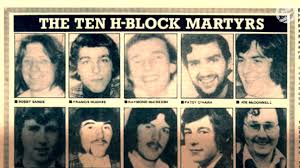
But other songs of his were censored on the radio without the need for an official ban, such as Ninety Miles From Dublin,[16] which was about the IRA and INLA prisoners on the Blanket and Dirty Protests in the H-Blocks of Long Kesh.
Likewise, other songs he recorded about the prisoners and later on about the Hunger Strikers equally received no airplay. There was one brief exception to this.
Patsy O’ Hara (INLA) died on hunger strike on May 21st 1981 after 61 days. His mother Peggy O’Hara was initially adamant that she would not let her son die and that when he lapsed into a coma she would intervene and give the doctors the order to break his strike with an intravenous drip.
However, in her last conversation with her son, he said to her that he was sorry they had not won and asked her to let the fight go on, before lapsing back into unconsciousness. Christy Moore wrote a song about that exchange called The Time Has Come.[17]
It was well received and got airplay and praise. Then someone informed the ignorant and arrogant mandarins at RTE what the song was about and suddenly it got no more airplay. Listening to the song, it is obvious what it is about.
The gentle clasp that holds my hand Must loosen and let go Please help me through the door Though instinct tells you no
Our vow it is eternal And will bring you dreadful pain But if our demands aren’t recognized Don’t call me back again
Ironically Christy Moore would record another song that got no airplay. It was called Section 31,[18] a reference to the article of the Broadcasting Authority Act (1960) that gave the minister power to ban interviews with members of Sinn Féin and proscribed organisations such as the IRA.
But in effect it led to RTE’s scant reporting of or carrying out of few interviews that were critical of state policy on the conflict. The song explained exactly why some issues are censored.
Who are they to decide what we should hear? Who are they to decide what we should see? What do they think we can’t comprehend here? What do they fear that our reaction might be, might be?
The Kneecap trio with friends at the Sundance Festival in January. (Photo sourced: RTÉ)
It is always about silencing the opposition and preventing a reaction to their repression and in this case genocide.
So back to Kneecap. They stand in a long line of artists who have put their money where their mouths are. They stand side by side with giants from other musical genres such as Woody Guthrie and Pete Seeger who were repressed by the McCarthyite wave in the US in the 1950s.
The BBC for its part continues to be the propaganda arm of the British Empire, or what is left of it, covering up, lying about or justifying murder, massacre, torture and plunder from India to Kenya, Ireland and now Palestine.
Woody Guthrie had the words This Machine Kills Fascists carved into his guitar, a slogan that might earn him a jail sentence nowadays.
It was meant more in the sense that his music was part of the struggle against fascism, carrying political messages to workers, Dustbowl refugees and migrants.
It didn’t literally kill anyone, though in his song Ludlow Massacre,[19] Guthrie celebrated the workers taking up arms to kill the scab thugs that came to shoot them.
Scabs at the behest of the Colorado Fuel and Iron Company, owned by the infamous Rockefeller family murdered 26 people, mainly the wives and children of the striking miners.
However, the massacre was just one large incident, the Baldwin-Felts Detective Agency had harried and harassed the striking miners, murdering them in ones and twos.
The detective agencies celebrated in comics and films were what would later become known in Latin America and elsewhere as death squads. The miners fought back and Guthrie celebrated this in his song. Resistance, including armed resistance was legitimate.
The state soldiers jumped us in a wire fence corners, They did not know we had these guns, And the Red-neck Miners mowed down these troopers, You should have seen those poor boys run.
The press, at the time, described the striking miners as savages.
Any similarity to the current media onslaught on Palestine is not a coincidence, it shows the class interests of the media moguls and the western states. Working class people, foreign resistance movements will always be savages to the media.
And the use of armed masked thugs by the state is not new either. Before ICE, there were the detective agencies. Most of the dead at Ludlow were migrant workers. The final death toll according to Howard Zinn’s People’s History of the US was sixty six men women and children.
Kneecap have contributed to the fight against fascism and Bob Vylan’s chant Death to the IDF! should be on everyone’s lips. There is no reforming the IDF, just like there was no reforming Hitler’s SS. Only the complete destruction of the IDF will bring any change.
Can their music, like Guthrie’s be said to kill fascists? I don’t know, time will tell, but from the reception they got at Glastonbury it is looking good.[20] What I do know is Keir Starmer and Trump finance fascists.
Starmer like a fascist wants to ban Palestine Action. The BBC covers up for fascists, praises them and censors those who stand up to fascists. I know who is on the right side of history.
A large number of tenants organised by the Community Action Tenants’ Union (CATU) from a number of Dublin City Council housing estates gathered outside City Hall on Monday 12th May evening to lobby the monthly elected Councillor’s meeting.
Those attending for the most part came from public housing blocks and estates from Ballymun to the Liberties and Coolock to Pearse Street. They carried placards and demanded that Dublin City Council negotiate with them.
A section of the lobby outside City Hall facing Parliament Street (note on top extreme left of photo plaque commemorating two leaders of the Irish Citizen Army shot dead in 1916). (Photo: D.Breatnach)
The recently-appointed Assistant Chief Executive over housing and community came out to receive the Union’s demands and petitions from tenants organising within their complexes and areas andthe lobbyistsalso forced the issues onto the agenda of the council meeting that night.
The protest was organised by the Dublin city CATU branch with wide support from community organisers and was attended by a number of elected councillors from some political parties and independents.
(Photo: D.Breatnach)
The problems CATU representatives listed verbally and in writing included a general low level of maintenance and upkeep of their estates and blocs, of the actual dwellings, communal areas, playgrounds and rubbish chutes. Rat infestations were a problem in some.
Damp leading to mould, rainwater penetration, inadequate proofing, badly fitting windows and doors were also listed at a number of sites, as were inadequate insulation leading to high heating costs and a need for overhaul of the heating system itself.
Among the slogans chanted was: Dublin City Council – Negotiate!
(Photo: D.Breatnach)
Included in their demands was that DCC officials recognise the right of their tenants to be represented by CATU as their union, which they stated was not always respected and they sought formal meetings with named officials responsible for the areas in question within one month’s time.
Although apparently currently not members of CATU, the organisation had invited the Pearse House Residents’ Committee to attend and speak at the lobby. Their chairperson Neil Maloney did so, addressing the issue of the long overdue regeneration of their housing bloc.
(Photo: D.Breatnach)
Maloney described the “blow to the community” when funding for stage two of the regeneration project to eliminate overcrowding was withdrawn, after their hopes had been raised by presentation of a regeneration timescale and a physical design in August of the previous year.
Ironically, the housing crisis was implicated in the Government’s reason for refusing to support the regeneration going ahead, in that the increase in inner space of the dwellings would reduce the number of actual housing units.
(Photo: D.Breatnach)
The Pearse House chairperson commented that “the current bedsits are illegal” and that their homes currently don’t meet European standards, going on to state “a real need for bigger homes to address overcrowding and family needs.”
“This was always going to be a challenge for this protected structure, but in phases 2 and 3 of the regeneration plan, there would be 2 additional blocks built. The additionality that the Government is seeking would be gained through the social homes gained during the decanting process.”
Pearse House residents attended CATU’s protest “to highlight our anger and what we see as another block on this project,” Maloney said. And note that although DCC has committed to redesigning the project for submission to the Government there is no guarantee this will be successful either.
(Photo: D.Breatnach)
“Ireland is still in breach of the European Charter for social housing and our human rights. Our community has seen the redevelopment and construction of new buildings, offices etc. and Pearse House is the eyesore in the middle of our community.”
“We were the community before all this redevelopment, and we will be the community when it’s all over,” concluded Maloney, voicing a common complaint along the south Dublin dockside. 1
A section of the lobby outside City Hall viewed looking down Dame Street. (Neil Maloney is pictured after his speech). (Photo: D.Breatnach)
Public Housing Background
There was little public housing in Dublin under British rule and the big town houses of the rich had been sold and sub-divided for rent by private landlords (including some who were elected councillors (or aldermen).
The new State built “2,000 local authority homes by 1924, a feat all the more remarkable in the context of a shortage of State funds, and the need to rebuild much of the infrastructure damaged in the War of Independence.”2
But of course it was not keeping up with the existing need or population growth and 40% of the population were forced to emigrate in the first 50 years of the Irish State.3
However 1924 too was the introduction of legislation facilitating state money subsidising the building of private housing.4 “In the decade after 1932 some 82,000 homes were built, the vast majority (public and private) with State subsidies.”5
Prof. Kenna relates that by 1940, some 41% of the Irish housing stock had been built by local authorities, far higher than that in England and Wales (25%) and also comments on the effect this had on subsidiary employment not only in construction but in sourcing and supply of materials.6
Although by 1964, a further 74,000 private and 63,000 local authority homes were built with State support and that between the 1950s and 1960s a million people had left the country, there was still a housing shortage and rents on private properties dug deep into workers’ incomes.7
Prof. Kenna comments that little attention was paid to the need for housing estate management, amenities, shops and the social, educational or other needs of the new community established there. That this should coincide with a boom time for property developers should not surprise us.
(Photo: D.Breatnach)
Government schemes to facilitate the purchase of their local authority accommodation from the 1950s resulted in the disappearance of much public housing stock into the private sector.8 Theoretically they would be replaced by new public housing builds but that didn’t happen.
Public land and land held by NAMA9 has been increasingly sold or even given away to private developers on promises of provision of a low percentage of public housing and often those individuals or consortiums do not even keep their earlier promises.
The Report of the Commission on the Relief of the Sick and Destitute Poor in 1927, Prof. Kenna reminds us, found 3,257 homeless people including 901 children, while in January 2021 there were 5,987 homeless adults and 2,326 homeless children in Ireland.
The Far-Right has jumped on the opportunity of the current housing crisis to blame it – not upon lack of public housing construction, big landlords, property speculators and vulture funds – but on migrants.
The Left in Ireland has until now in practical terms left this ground for exploitation of racists.
One of a number of speakers, photographed from across the street as too crowded there. (Photo: D.Breatnach)One of a number of speakers, photographed from across the street as too crowded there. (Photo: D.Breatnach)One of a number of speakers, photographed from across the street as too crowded there. (Photo: D.Breatnach)
GOING FORWARD
CATU seemed pleased with the lobby turnout and announced their intention to organise a housing protest march on Saturday July 5th. In the meantime they will no doubt be following up on the meetings they requested with area housing managers and agreeing objectives and deadlines.
Hopefully, seeing the initial results in the attention of DCC housing and amenity officials, and reflecting on their numbers when they take joint action, tenants of DCC will take heart and grow in confidence in their ability to ensure provision of decent housing and services for their needs.
Of course, the Far-Right won’t like that as it distracts from their targets – but the extension of this campaign does provide some hope of something like a solution to the current terrible grinding crisis of both housed and homeless.
End.
One of a number of speakers, photographed from across the street as too crowded there. (Photo: D.Breatnach)
APPENDIX: I916 Battleground
It might or might not have been mentioned (I couldn’t hear much of the speeches) that City Hall, outside of which CATU were protesting, had been a 1916 resistance centre, occupied by a small force of the Irish Citizen Army, known in some circles as the first workers army in the world.
Unaware of the extremely low British garrison on the Castle that day, the ICA had failed to take the complex and retreated to City Hall and some outposts in Dame Street and Parliament Street where they resisted until overwhelmed by British Army reinforcements.
The symbolism of the Castle, the administrative seat of the British occupation in insurgent hands, resulted in a ferocious assault on the ICA garrison and it fell on the Monday/ Tuesday of that week. One of the statues inside bears what appears to be a bullet hole to this day.
A steel plaque on the right of the outside front of the building lists the names of the ICA garrison of the area, around 50% of which were women. An older cast plaque at the east corner lists the names of two of the five who were killed there, Sean Connolly (OC) and Sean O’Reilly (2i/c).
The 1916 Rising was followed by the election of the First Dáil in 1919 with its Democratic Program affirming that all right to private property must be subordinated to the public right and welfare, and that no child should suffer hunger or cold from lack of food, clothing, or shelter.10
That was followed by the War of Independence and the Anglo-Irish Agreement; and the new State that came into being had no intention of fulfilling the promise of the Democratic Program but rather a determination to suppress any who tried for that fulfilment.
Footnotes
1For example the construction plans for the Irish Bottle Glass site (sold by Nama to the Ronan consortium) contain no components of public housing and units at expected prices will not be affordable by most local people.
I was jarred recently hearing the Irish actor and Palestine solidarity activist Liam Cunningham mention “700 years of British occupation”.1 And I have heard others not from Ireland speak admiringly of the “Irish freedom struggle of 700 years.”
Quite a few of those from other countries who quoted the “freedom” after “700 years” did so admiringly and may not be well acquainted with our nation’s history.
Liam Cunningham in Italy with two of the humanitarian activists about to sail on the Mayleen’s expedition to Gaza.
The foreign occupation of Ireland is normally dated from the Norman invasion of 1169 (although we could add to it the foreign occupation of Dublin by the Vikings from roughly 853 AD to 1170 AD).
I’m aware that I can be somewhat challenged in mathematics but after checking and re-checking I find that 856 years have elapsed since 1169, which means that the British-based occupation of Ireland has continued for well in excess of the 700 years quoted by Cunningham and others.
So where did the “700” years figure come from? It occurred to me that in some people’s heads this might be based on the creation of the Irish State and an assumption that was the point at which we threw off the British colonial yoke. Well, even then it would be 752 years but o.k, that might be it.
So, all of Ireland was occupied for centuries, then after numerous uprisings, in 1921 the British ceded 26 counties to Irish State control. But Ireland has 32 counties – what happened to the missing six counties? Well, we know, they remained occupied.
The Irish State in 1921 abandoned the people of the Six Counties, in particular the 34%+ who were of Catholic background; abandoned them to institutional sectarian religious discrimination in housing, employment and representation — and to repression.2
And in fact, the fairly recent 30 Years War was precisely about that occupation. Inevitably, the people rose up against their repression and oppression. The Irish State formally claimed those Six Counties but took no steps to regain them and cooperated with the colonial forces.3
Clearly we can’t change history but we can choose not to collude with injustice. We can refuse to conceive of Ireland as missing six counties, as only four-fifths of its actual landmass. We used to have a word for the thinking that had a Six-County blind spot – we called it ‘partitionist’.
In other words, an attitude that agreed with, colluded with or merely accepted the partition of the Irish Nation.
The Irish State that was born in 1921 was dominated by a capitalist ruling class which was pro-British and socially conservative, even beyond the social conservatism of Britain. And the social conservatism of the colonial Six County regime was even more extreme.
The agreement to abandon the Six Counties was a good indication of the servile nature of the ruling class of the Irish State which became even more evident as the State developed — and even under a later government of former opponents of the State, the Sinn Féin split of Fianna Fáil.
The Irish economy was neither developed nor diversified. Emigration continued unchecked as it had for centuries under British rule and. Irish State obeisance in turn switched to the USA and then to the EU. Currently the Irish ruling class is trying to eliminate any Irish State neutrality.
In 1845 Ireland was able to feed over 8 million but today in 2025 cannot even feed a little over 7 million in (over 5.3 million in the Irish state, nearly 2 million in the Six Counties). Yes, we must import food in order to eat.
Most large companies and banks within the state are foreign-owned, including such national brands and flagships as Aer Lingus, Guinness (including Harp and Hop House lagers and Smithwicks ale), Jameson and Paddy’s whiskeys,4Erin Foods, our telecommunication system5.
Most financial institutions within the state such as insurance companies in health, life, accident, motors, travel are also foreign-owned, including the now ironically-named Irish Life. The health, transport and mail systems and infrastructures are increasingly penetrated by foreign companies.
Foreign-owned hotels, housing apartment and office blocks are the rule and growing while vulture companies gobble up the properties of people who already paid the construction costs of their homes.
In economic policies and in foreign political policy it is clear that the Irish State remains close to the major Western Powers. Responding to popular feeling over the genocide in Gaza, its political leaders may posture a little away from the pack but in effect?
The Irish State imports productsfrom the Israeli State (US$4.15 Billion in 2024),6 allows genocidal state munitions through the State’s ‘neutral’ air space, US munitions and personnel through Shannon International Airport while maintaining all normal links with the Zionist state.
What we believe and say is important
In his interview with The Group Chat Cunningham, with the agreement of the panel, stated that no state was fulfilling its legal duty to practically oppose genocide. This was an unjustified slur on Yemen, which has shut down Israeli inward or outward Red Sea traffic and hit the state itself.7
It is very interesting that even among the many condemnations of Israel by media commentators and politicians we rarely hear acknowledgement, never mind commendation of the anti-genocidal action and sacrifice of the Ansarallah state and the Yemeni people.
Perhaps the contrast is too painful.
However, in an interview during a Palestine solidarity march in Dublin8 Cunningham referred to 800 years. Was that a slip of the tongue, or were the references to 700 centuries instead the slips? Interestingly he also referred to foreign vulture funds and landlords in the same interview.
Liam Cunningham speaking about the seizure by the ‘Israeli’ navy of the humanitarian mission ship Mayleen. (Source photo: The Irish Star)
It is important that an actor in a popular drama series speaks up for Palestine and also for the Irish people and Cunningham has been doing so for years.
What we say and how we recall history is also important because they have an impact on the present and on the future. On what we aspire to. On how we act and think, on how those around us act and think.
Ireland is partitioned between a colonial ruling class and an Irish foreign-dependent ruling class. We fought the Viking occupation for 300 years and the British occupation for well over 800 years – and we are still fighting it. Without sovereignty we cannot develop our economy.
Without sovereignty we will be dragged into imperial and colonial conflicts but never to our historical and traditional place – on the side of the Resistance.
2It also abandoned the Protestant majority, including many descendants of the United Irishmen particularly in Antrim, to a sectarian, bigoted, racist and colonial ideology that helped maintain them for decades with the worst housing and lowest wages in the UK of which they were part.
NB: Edited by Rebel Breeze for formatting purposes
(Reading time: 6 mins.)
Kneecap, the Belfast Irish language rap group, have found themselves at the centre of what is an artificially contrived furore dreamt up by people with little sense of real moral outrage.
The basics of the story are well known. They finished off their act at the Coachella event projecting pro-Palestinian statements. Given the band’s history and well-known politics, it could hardly have come as a surprise. Perhaps it was more that the fans welcomed it that upset some.
They were denounced by the non-entity known as Sharon Osbourne, a reality star famous for being the wife of Black Sabbath lead singer Ozzy Osbourne and also the mother of another reality star, her daughter Kelly Osbourne.
Kelly to her credit did carve out a brief musical career on the back of her reality tv exposure.
Sharon as part of the wider Zionist attempt to silence all those who criticise the genocide called for their visas to be cancelled, which in effect happened following the decision by their promoter and sponsor to drop them.
She also called for them to be more like Bono. Kneecap responded with a humorously devastating comeback that they would rather be Rangers fans than emulate Bono.
Bono still has some credibility in certain parts, mainly where they haven’t a clue about the man’s actual politics and obviously amongst the clueless, witless, gutless glitterati like Sharon Osbourne. But what would it mean to be like Bono?
Is he actually some sort of reasonable counterweight to Kneecap?
Well, first of all, in relation to Palestine, Bono is a Zionist, so even before the genocide began, he, unlike them, was already on the wrong side of history. Not for the first time, mind you. Bono has a habit of cropping up where he is not wanted like an ugly cold sore (my apologies to the virus).
He has, as Harry Browne, the author of The Frontman: Bono in the name of power, pointed out dedicated a lifetime to the service of imperialism and was rewarded with a Presidential Medal of Freedom from Genocide Joe.[1]
I am sure it will go well on his mantle piece alongside his KBE (Knight Commander of the Most Excellent Order of the British Empire), for which he was fulsome in his praise of Her Majesty’s Ambassador, as he put it, and grinned like a cheshire cat during the ceremony.[2]
The claims made by Blair and others about Bono’s achievements were exaggerated, of course. But he is, if nothing, an equal opportunities imperialist and will get around to doing his bit for the others.
The idea that Kneecap would prostrate themselves before the British king is laughable and they wouldn’t be the first artists to reject one, were the Brits ever to mistakenly consider them for it.
The late black poet Benjamin Zephaniah was offered the lesser award of OBE (Order of the British Empire) by the same Tony Blair. He turned it down stating:
I get angry when I hear that word “empire”; it reminds me of slavery, it reminds of thousands of years of brutality, it reminds me of how my foremothers were raped and my forefathers brutalised…
Benjamin Zephaniah OBE – no way Mr Blair, no way Mrs Queen. I am profoundly anti-empire…
If they want to give me one of these empire things, why can’t they give me one for my work in animal rights? Why can’t they give me one for my struggle against racism? What about giving me one for all the letters I write to innocent people in prisons who have been framed? I may just consider accepting some kind of award for my services on behalf of the millions of people who have stood up against the war in Iraq. It’s such hard work – much harder than writing poems.[3]
He also referred to his brother’s death in police custody and to Lizzie II as Mrs Queen, not Her Majesty. A display of dignity.
He pointed out that those who accept such awards, the Queen’s Shilling, though he didn’t use that archaic military expression for those who enlist in the British armed forces to put down uppity types in the colonies, always sell out.
However, calling Bono a sell-out, presumes he was ever anything other than a fan of empire. He tied his mast to the pro-British politics of the Irish chattering classes in the 1980s.
His song Sunday Bloody Sunday was always introduced with the line This is not a rebel song, lest someone think Bono actually had something interesting to say.
The song is quite vacuous though clear in saying he “won’t join the battle cry,” i.e. denounce those who had massacred 14 people on the streets of Derry. The British army is not mentioned once in the song.
You wouldn’t know who had done what, but you know not to point the finger “Cause tonight we can be as one”. John Lennon on the other hand, shortly after the massacre did not hold back.
Is there any one among you Dare to blame it on the kids? Not a soldier boy was bleeding When they nailed the coffin lids![4]
Bono couldn’t bring himself to condemn the British army for a televised massacre, so it comes as no surprise that he has little to say about a live-streamed genocide.
He hobknobbed with neoliberals such as Jeffrey Sachs, various presidents of the World Bank, promoted pharmaceutical companies in Africa and of course was on the side of Bush in the Iraq War, at least in practice and helped whitewash the reputations of many of those involved.
He hedged his bets a bit on Iraq, not wanting to seem too hawkish, saying the war was justified but the US should get UN backing for it. He then went on to endorse Clinton and Blair time and again. Jim Kerr from the Scottish band Simple Minds put it succinctly at the time.
How can Bono, having graced concert stages for over two decades, draped in the white flag of peace and screaming ‘No More War’ [sic] at the top of his lungs contemplate praising and back slapping Tony Blair? … I can’t believe that anyone could fail to identify that no matter what gesture Blair may make towards African debt relief, his slippery hands are currently dripping in the fresh warm blood of Iraqi men, women and children.[5]
Bono of course, could and did, and wined and dined with such hawks as Senator McCain. There were no depths to which he would not plummet, which brings us to Palestine.
Shortly after October 7th he endorsed the Zionist genocide by changing the lyrics of his song about Martin Luther King, Pride (In the name of love)[6]to “Early morning, Oct 7, the sun is rising in the desert sky… Stars of David, they took your life but they could not take your pride.”[7]
As part of the introduction to the reworked song he state “our prayers have always been for peace and for non-violence… But our hearts and our anger, you know where that’s pointed.” Not at the Zionist occupiers was the answer. Roger Waters lambasted him for it.[8]
Not only that, he was criticised by Irish singer Mary Coughlan for his links to Israeli companies.[9] He did not fly out to Gaza as he had done in Ukraine, nor did he have much to say.
When he eventually did mention Gaza, he was always careful to lay the blame on Hamas for starting it all, ignoring history since the Nakba in 1948.
A good example of that is his piece in The Atlantic after receiving his Medal of Freedom from Genocide Joe.[10] An exercise in saying nothing, whilst attempting to sound profound, something Ireland’s most famous poisonous dwarf never pulls off.
Kneecap on the other hand have been clear from the word go about their support for the Palestinian cause. It didn’t take a genocide for them to take note. They have consistently been on the side of the oppressed, in this case the Palestinians, against the oppressor the Zionists.
So, Sharon Osbourne should probably stick to what she knows best, which is precious little.
As for Bono, as Harry Browne points out, perhaps nothing sums him up quite so succinctly as a piece of graffiti in Dublin that appeared following the scandal when they moved one of their companies to the Netherlands for tax purposes, “Bono is a poxbottle”.
We need more like Kneecap who stand with the oppressed, and a lot less of Bono and the likes who can’t condemn the powerful ever.
At best you can expect some “We are all guilty type” of fudge, which was the preferred slogan of the Irish trade union bureaucracy when the British or their proxies in the UVF or UDA ever did anything, coming as no surprise that they have also done next to nothing on Palestine other than issue the occasional banal statements.
I fully expect them to turn up with Bono somewhere to chastise Kneecap.
The states of India and Pakistan seem to be approaching war, never a good thing but particularly worrying when both states have nuclear weapons. The British Raj ran both territories as one colony but separated them from one another in 1947.1
Since then there have been a number of conflicts between them including war and it will be no surprise to any politically-educated person that Imperialism has had a hand in that. But they may be surprised to find that so also did the Irish State.
(Image credit: Al Manar)
Ireland of course had a strong connection with the anti-colonial movement in what might be called the Indian sub-continent at least from the time of the Fenians and much more so during the War of Independence, for example with the McSwineys in correspondence with the Ghandi family.2
I found the reference to the Irish State’s involvement in a 2nd-hand copy of This Great Little Nation (1999) by Gene Kerrigan and Pat Brennan, about scandals of corruption and injustice in Ireland which I am reading, a few scandals at a time.
It is always interesting reading, at times highly amusing but largely depressing, even for one who holds that this is a neo-colonial state.
I reproduce the relevant article here verbatim and in full (but reformatted for WordPress publication).
It is difficult, looking back from this distance, to comprehend that Ireland once had an independent policy on international affairs.
Those dour, pompous, conservative old men – of whom De Valera was the most visible – sincerely saw themselves as founders of a state, as statesmen, as the equals of the leaders of the great powers.
While aware of the realities of Ireland’s economic dependence on British markets, they sought to take an independent line. As leaders of a former colony, they had particular sympathies with the Third World.
The trimming of that dependence, and the gradual falling into line with the new world order, began in the early 1960s.
The USA was taking over the role previously filled by Britain and the other European colonisers, now exhausted by the Second World War. The USA, confident, triumphant, had a young, assertive President, John Kennedy.
In 1962 India was taking a particular line in its long-running dispute with Pakistan over the former state of Kashmir. Ireland’s representative in the United Nations, Frederic Boland, had discussed the matter with India’s foreign minister, Krisna Menon and had agreed to back the Indian position.
In June, John Kennedy phoned the Irish Ambassador to the US, Thomas Kiernan, and asked him to help change Ireland’s position on Kashmir. He wanted Ireland to propose a motion pushing the US line.
John F Kennedy, flanked by the Tricolour and the Stars and Stripes, speaking during his four-day visit to Ireland in 1963 (Photo sourced: Internet)
“We can’t put it forward ourselves, without it being knocked, and we want Ireland to put it forward”, Kennedy said, according to Kiernan. “If we can get you to come along we’ll get others.”
In the same phone call, Kennedy said that his friend and aide Kenny O’Donnell had “mentioned something to me. I’ll look after that.” Kevin Boland balked at proposing the US line. He already had a deal with Krisna Menon. “He’ll be wild,” he said.
“We have a certain friendship with India from the old days, and so on, and we can’t do it.” Ambassador Kiernan went over Boland’s head, to the Fianna Fáil Minister for External Affairs, Frank Aiken. And Aiken immediately directed that the US line be followed.
“When he heard the request came from Kennedy he agreed without demur, no difficulty whatever”, Kiernan remembered. “We introduced the resolution, it was put through.”
So far, no scandal. Just some top-level and effective lobbying by Kennedy, the kind of thing that happens every day in foreign affairs. But was that something that Kenneth O’Donnell mentioned to John Kennedy, about which the president said “I’ll look after that”?
Ireland had for some time been trying to get into the US sugar market. To do that it needed to be included in a number of countries allowed to sell a sugar quota to the US. Ambassador Kiernan lobbied the president’s friend Kenny O’Donnell, and O’Donnell mentioned it to Kennedy.
Nothing happened for quite some time, until Kennedy mentioned it obliquely in his phone call to Kiernan. In his book, JFK and his Irish Heritage, Arthur Mitchell reports that “a new bill suddenly appeared, specifically including Ireland.”
Ambassador Kiernan said, “We, for the first time, got into the US sugar market. The Wall Street Journal said that it was hard to understand how it happened, but somebody with a large smile in Washington seemed to have been responsible.” We sold our independence for a few tons of sugar.
The following year, Kennedy visited Ireland. The young master, taking over responsibility from the tired old colonialists of Europe, was touring his estate.
Four years later, when an RTÉ current affairs crew was about to depart Ireland to do a first-hand report on Vietnam war, Frank Aiken intervened and the RTÉ Authority were told to call off the trip, which they did.
Independent reporting of the war would probably be critical; this would annoy the Americans; and that wasn’t allowed. The cancellation, said the government, “was in the best interests of the nation.” Not to mention the sugar business.
COMMENT
It’s interesting to identify the exact moment (or something like it) at which the Gombeen State switched from being England’s to being the United States’ bitch. Of course, there’s been a period of EU imperialism subservience and there’s always England, again3 … The bitch can switch.
By some kind of coincidence, considering the story earlier, India is a major sugar-producing country too. But … the Irish state was exporting sugar?!!
Ireland once had its own sugar industry going back to the mid-19th Century and the Irish State, building on that, nationalised it in 1930. In 1976, according to a study, the company was employing more than 10,000 people full-time, in fields, refineries, factories and in sales teams overseas.4
A further 15,000 people found employment in industries using the sugar as a raw material, industries that sprung up in the wake of the sugar factories and which, by 1976, were themselves earning the nation £20 million annually in foreign currency5.
Sugar quotas were imposed by the EEC and the State began successively to reduce the industry in Ireland, finally privatising it in 1991 by selling to Greencore, who closed the last factory down in 2006.6 We were still consuming high amounts of sugar but now importing it all.
We used to import it from the USA, and so the earlier story comes around to its starting point once more. More recently France, Netherlands, UK and Belgium have taken over supplying us.7
We imported sugars and sugar confectionery to US$536.42 Million during 2024, according to the United Nations COMTRADE database on international trade.8
Sugar is used directly as a sweetener for the table but also in the making of confectionery and it is an important component in the fermentation process of drinking alcohol. Beet pulp waste can be a valuable animal feed and production, refinement, packaging and transport all provide employment.
Nowadays, ethanol fuel and bio-degradable plastics could also be produced from beet9 which would be great for Ireland, along with the more traditional benefits. But that requires an independence-conscious planned State economy — so looks like it will remain just a nice idea.
An Irish Republican Easter Rising commemoration conducted on Sunday 20th April followed tradition in some aspects but departed in others. The event in Glasnevin Cemetery was organised by the Anti-Imperialist Action group.
As the 1916 Rising commenced on Easter Monday it is traditionally commemorated on various days around the Easter weekend. The actual date however was 24th April which a now-deceased socialist Republican activist publicly celebrated every year as Republic Day in front of the GPO.1
Taken from near rear of the marching columns approaching Cross Guns Bridge. (Photo: R.Breeze)
Among the commemorations organised by Irish Republicans around the past weekend was that by the AIA group on Sunday, rallying by the Phibsboro shopping parade for 1pm, before marching out to Glasnevin cemetry along the Phibsboro Road in two parallel separate lines.
This gathering in the past has been marred by the Special Branch, the political plainclothes police, harassing and attempting to intimidate those present, demanding their names and addresses under anti-terrorist (sic) special legislation. This time they were there but did not approach.2
Just after passing Crossguns Bridge over the Royal Canal, a flare was lit and the march stopped in the street.3
After a short pause the march resumed, led by the colour party,4 six men and women, each carrying a different flag with the Tricolour and Starry Plough in the lead, all dressed in black trousers, white shirts, black berets, sunglasses and lower face masked.
The images of each of the Seven Signatories of the 1916 Proclamation, all shot by British firing squads were on large placards were carried among the marchers: Tom Clarke, James Connolly, Patrick Pearse, Seán Mac Diarmada, Joseph Plunkett, Thomas McDonagh, Eamonn Ceannt.
(Photo: R.Breeze)
A variety of flags were also flown among the marchers, including the green and gold Starry Plough,5 Palestinian flag, Basque Ikurrina and red flags (with gold hammer and sickle emblem on at least one).6 The AIA banner carried at the front bore a quotation from Bobby Sands in Irish.
The march soon passed the main gates of Glasnevin Cemetery to their right but continued before turning leftward to then cross over the pedestrian railway bridge to the newer part of Glasnevin Cemetery and up to the monument to the Six armed struggles referred to in the Proclamation.7
Formed in two lines the attendance was welcomed in Irish and English by the event’s MC, calling also for the reading of the Proclamation of Independence, which a man stepped forward to do. The MC recommended a careful reading of the still-relevant document to attendees from abroad.
Section on the left of the attendance at the commemoration rally with another section to the right out of shot. (Photo: R.Breeze)
Following the reading, the MC commented on the important role of culture in the 1916 Rising8and called on an activist who he said has done much to promote traditional and folk Irish song, who proceed to sing Patrick Galvin’s Where Oh Where Is Our James Connolly? “with some changes”.
Next the call was given for those who wished to lay floral tributes while the colour party lowered their flags in homage to the fallen to commands in Irish, then slowly raised them again before responding to the command in Irish to stand ‘at ease’.
(Photo: R.Breeze)
Another activist was called to read the 1915 statement on the Irish Citizen Army by James Connolly in which the revolutionary leader outlined the police violence during the 1913 Lockout that created the need for the ICA and how it had gone beyond defence in assertiveness.
The statement declared its class allegiance and origins “Hitherto the workers of Ireland have fought as parts of the armies led by their masters, never as members of an army officered, trained, and inspired by men of their own class.”
Reading Connolly’s “To the Irish Citizen Army” (Photo: R.Breeze)
The PA amplification failed on the reader but she carried on in a strong voice reading Connolly’s words that the ICA sought alliance with all progressive forces but remained independent, not to be bound by the limits others set themselves and going further on their own if necessary.9
Another singer was called to perform Erin Go Bragh10 specifically about the 1916 Rising (by Dominic Behan, originally called A Row in the Town).
Singing Erin Go Bragh at the Monument (Photo: R.Breeze)
It is traditional for organisations to deliver a keynote message or statement of aims at 1916 commemorations and a statement was read on behalf of the Irish Socialist Republican Movement (of which the AIA is a part) restating the objectives of national independence and socialism.
In that context the struggles against the Irish ruling class putting the State into imperialist alliance and against the British occupation of the nation, also a NATO member, were greatly important and the Gardaí had broken a comrade’s foot in that struggle.
(Photo: R.Breeze)
Referring to the international context of the 1916 Rising and the international connections of the revolutionary movement in 1916, the MC read out a fraternal message to AIA from the People’s Front for the Liberation of Palestine,11 declaring that the struggles of both peoples are one.
The event concluded at around 2.45pm with a singer performing Amhrán na bhFiann12 (first verse and chorus) followed by an announcement or reminder of a public meeting organised by the AIA titled Rebuilding the Republic to take place at 4pm at a venue not very far distant.
End. Footnotes
1Easter is a religious festival and its date varies from year to year according to computations based on the lunar and solar calendars and cannot fall on the same date annually in the Gregorian calendar (or the Julian one). After the insurrectionary forces had taken possession of the building, Patrick Pearse with James Connolly by his side read the Proclamation outside the General Post Office (GPO) building on the first day of the Rising (after its rescheduling from the previous day, Sunday): 24 April 1916. Tom Stokes tried for years to have the date adopted as Republic Day and annually organised an event outside the GPO on that date. After his death others carried on commemorating the date but rather than outside the GPO, at Arbour Hill. The Republican movement continues to hold its 1916 commemoration events over the Easter weekend.
2Possibly because the dust has not yet settled on the Gardaí’s recent violent arrests on 23 peaceful activists in three different events over four days (See Rebel Breeze’s IrishState Ramps Up Repression) recently.
3This spot has a 1916 history: A group of Irish Volunteers walked from Maynooth on Easter Monday along the banks of the Royal Canal, meeting two Irish Volunteers guarding the bridge and that night slept in Glasnevin Cemetery. The following morning they continued their journey to the city centre. Later, as the Rising was being suppressed, the British soldiers placed a barrier on the Bridge and prevented most people from passing through. A local man who had been deaf from birth failed to heed the soldiers’ challenge and they shot him dead.
4The ‘colour party’ carries the ‘colours’, i.e the flags and usually marches at the front. The number and type of flags varies but Irish Republican colour parties always carry the Tricolour among them, usually followed by the Starry Plough of which for many years the white stars on a blue background version was the most common. Often a flag of each of the four provinces would also carried and the Gal Gréine (or Sunburst) of the Fianna and of the Fenians would be carried too. The Harp on a Green background was another flag that was often carried by Colour Parties.
5The original design of the flag of the first workers’ army in the world, the Irish Citizen Army, created in 1914. It is a plough following the form of the Ursa Mayor constellation with a sword replacing the ploughshare.
6This is usually considered a symbol inherited from the Bolsheviks, the sickle representing the agricultural workers and the hammer, the industrial workers, their conjunction symbolising unity of peasants and industrial proletariat.
71798 and 1803 (United Irishmen), 1848 (Young Irelanders), 1867 (Fenians), 1882 (Invincibles group within the Fenians), 1916 (IRB, Irish Volunteers, Irish Citizen Army, Cumann na mBan, Fianna Éireann)
8Irish language revival, national theatre groups, national sports, poetry, music and song all contributed to an atmosphere conducive to resistance and uprising.
9However it may be for others, for us of the Citizen Army there is but one ideal – an Ireland ruled, and owned, by Irish men and women, sovereign and independent from the centre to the sea, and flying its own flag outward over all the oceans. We cannot be swerved from our course by honeyed words, lulled into carelessness by freedom to parade and strut in uniforms, nor betrayed by high-sounding phrases.
The Irish Citizen Army will only co-operate in a forward movement. The moment that forward movement ceases it reserves to itself the right to step out of the alignment, and advance by itself if needs be, in an effort to plant the banner of freedom one reach further towards its goal. https://www.marxists.org/archive/connolly/1915/10/forca.htm
10The slogan Éirinn (or Éire) go brách (“Ireland for ever”) was rendered in English spelling as Erin go bragh.
11 A socialist and secular resistance Palestinian resistance organisation; its armed wing is Brigades of the Martyr Abu Ali Mustafa which has been part of the armed resistance throughout the period, often in coordination with other groups.
12In a reversal of the usual sequence, the lyrics of this song by Peadar Kearney and Patrick Heeney were first composed in English but later translated to Irish, that being the most popular version of the chorus today.
A night of resistance and other songs on Friday night in Peadar Browne’s Dublin pub raised funds to assist in fighting state repression of Palestine solidarity activists in Ireland, as Palestine solidarity activists face persecution across the Western world.
The evening’s performance consisted of a mix of political and other songs, a number of which were original material. However it was the political material that most drew interest, ranging from international struggles to the rich Irish Republican tradition.
Olive and Fynn in performance at the fund-raising event (Photo: R.Breeze)
To begin the event Diarmuid Breatnach explained the need to support Palestine solidarity activists against the repression of the Irish authorities, hence the fundraising event and announced that in addition to performing he would be standing in for the event’s MC who had been unable to attend.
Breatnach began his set combining two songs from the German antifascist tradition, three verses of Peat Bog Soldiers and three from the Hans Beimler ballad.1 Then from the Spanish Anti-Fascist War he sang Ay Carmela!, the air of which he said was from an anti-French occupation folk song.
Next the MC announced a performance by two performers, half of the four-strong Croí Óg ballad band. During their performance with voice, guitar and banjo there was an incident from a couple of unruly elements nearby who had substantial drink taken and had been very loud throughout.
Two members of the Croí Óg band performing at the fundraising event (Photo: R.Breeze)
A man who had been refused permission to sing solo began shouting that the songs were not Republican, ironically interrupting Grand Old Country, a song about the Fenian tradition. It became clear that what he wished was to perform the Grace ballad, which he began to sing loudly.
A male confronted the interrupter; the latter’s friend, a big elderly Glaswegian protested; others took to the floor … but the incident wound down, the interrupters and audience resuming their seats. However, the putative Grace singer threw threats at his earlier confronter across the room.
The big Glaswegian then crossed the room to confront the audience member, a female audience member intervened, he brushed her aside and the audience section erupted, only the quick arrival of the pub’s landlady preventing a fight … And the musicians resumed their performance.
Among the songs performed by Croí Óg were Crossmaglen and British Soldier Go on Home. The MC called for appreciation applause for them, made some barbed comments about the recent anti-social behaviour and welcomed the song-and-guitar duo Olive and Fyn to the stage.
Sage Against the Machine performing at the fundraiser event (Photo: R.Breeze)
The duo performed their own material in lovely harmonies, mostly non-political, also including their ironically titled Save the Landlord! After they had left the stage to applause Breatnach got up on stage again to announce a short break and to remind the audience to contribute to the funds.
His additional comment: “Remember when someone sang in a Dublin pub and everyone went quiet? Remember those days? Remember?” was followed by loud applause throughout the pub.
Breatnach restarted the second half, singing a capella again two songs celebrating Irish women’s resistance,2 ending with songs in Irish including the ballad of Rodaí Mac Corlaí. After concluding he introduced Sage Against the Machine to take to the stage, singing solo with guitar.
Sage’s material was mostly original, sung in English but went on to Masters of War in a spirited concluding verse, followed by Gallo Rojo, Gallo Negro3 in Spanish from the anti-fascist tradition in Spain. The MC then presented Eoin Ó Loingsigh, also with voice and guitar.
Eoghan Ó Loingsigh performing at the event (Photo: R.Breeze)
Although no further incidents occurred, the volume of ‘conversation’ between a number of people not far from the stage was high. Loingsigh’s material included Only Our Rivers Run Free, Viva La Quince Brigada4and a satirical song contrasting the fates of the rich and the poor after death.
The evening’s scheduled performances concluded with Seán Óg, also solo with voice and guitar, his selection including Ho Chi Minh, republican ballads Boys of the Old Brigade, The Patriot Game, Boolavogue and his own composition Boys of Gaza to air and structure of The Boys of Kilmichael.5
Breatnach thanked the attendance for their support, restating the context of the event and asked for another round of applause for all the performers, who gave their time and creativity for free, then called for people to stand for the Irish national anthem6 which he led with the first verse in Irish.
Diarmuid Breatnach in performance at the fundraiser event (Photo: R.Breeze)
At the concluding line of “seo libh, canaig …” the audience exploded to complete the words “Amhrán na bhFiann!” followed by launching into the chorus, also in Irish.
The event had been organised by two broad Palestine solidarity organisations, Saoirse Don Phalaistín and Palestine Action Ireland and among the attendance were a number of their activists, including some victims of state repression.
Most of the charges to date have been under the Public Order Act but also some around ‘criminal damage’ and the potential is there for more serious charges and possible jail sentences, as have been the case in some other European administrations.
In addition to actions of their own, including occupying and picketing the Israeli Embassy, Axa Insurance and picketing the Palestine Authority, Saoirse don Phalaistín and Palestine Solidarity Action organised Resistance Blocs to participate in mass demonstrations organised by the IPSC.
Seán Óg performing at the fundraiser event (Photo: R.Breeze)
Peadar Browns pub has become increasingly known as an Irish Republican tavern on the south side of Dublin city. Its small stage area is decorated with Republican artwork on the walls and on many of the bodhráns7 hanging there, along with some Glasgow Celtic celebratory material.
The side of the pub, on a minor street, carries a large mural representation of the Palestinian national flag, along with the slogan SAOIRSE DON PHALAISTÍN. However Dublin City Council have directed that it must be removed, to the anger of a great many people.
Mural on the side of the Peadar Brown pub (Photo sourced: Internet)
Historically cultural events of this type have a function other than to raise defence funds and to promote the cause: they are also occasions for replication of the cultural face of resistance and for expression of new cultural compositions but additionally for the creation of a community of resistance.
4About the Irish who went to fight against fascism in 1930s Spain.
5Also known as The Kilmichael Ambush, celebrating a famous event in West Cork during the War of Independence (1919-1921). However, the air of both songs is that of an older ballad about the 1798 Rising called Men of the West.
6The lyrics were originally written in English and later translated to Irish in which language it most usually sung today.
7A shallow one-sided Irish drum, same shape as a tambourine but much larger, played with a wooden striker on the outside with variation in tension achieved by hand pressure on the inside.
No Nations No Borders was the title of a meeting I saw advertised recently and also a slogan I had heard chanted some years ago1 on a counter protest to fascists and other racists. I wondered then and wonder now: Have they thought this through?
Clearly the utterers and followers of such a slogan see many negative things emanating from nations, probably war, oppression, repression, racism, even genocide. But are those things fundamentally attributes of nations – or even of states that are founded upon nations?
The definition of a nation is not universally shared among historians, philosophers and sociologists but they are generally agreed that it is applied to a people who share a territory and common history, along with a language and culture, incorporating customs and law.
Some argue that nations only came into existence historically in the 18th century, others maintain that they existed long before that, in the Middle Ages and even further back. In Ireland, Thomas Davis published the lyrics of A Nation Once Again in 1844, nearly half-way into the 19th Century.2
Davis, whose father was Welsh, drew on the classical Romano-Greek education of the British ruling class as inspiring his awakening nationalism:
When boyhood’s fire was in my blood/ I read of ancient freemen/ Of Greece and Rome who bravely stood/ Three hundred men and three men3/ And then I hoped I yet might see/ Her fetters rent in twain/ And Ireland long a province be/ A nation once again!
Plaque in Middle Abbey Street to mark the site of The Nation, a patriotic newspaper founded in Dublin in 1842 by leaders of a group that became known as The Young Irelanders. (Photo sourced: Internet)
However, the United Irishmen who rose in revolt in 1798,4 the first Republican uprising in Ireland, certainly conceived of their nation, the French too in their 17895 revolution and the 13 Colonies, the precursor of the United States of America, in the American Revolution 1765–1783.6
The leaders of the United Irishmen were mostly English-speaking while the majority of the population, indigenous clans and Gaelicised descendants of Normans and Vikings, were all Irish-speaking and they had earlier appealed to Rome in terms of an oppressed nation.7
It can be argued that in passing the Statutes of Kilkenny in 13668 the English occupation recognised Irish nationhood, albeit in the form of a malignant influence upon the Norman invaders who were ‘going native’, “the degenerate English” having become “more Irish than the Irish themselves”.
An Irish nation-building process may be perceived over three centuries earlier, with Brian Boróimhe trying to unify Ireland under his kingship and defeat the Dublin Viking colony. As Brian was killed9 at the Battle of Clontarf (sic),10 this remains unproven.
All the attempts to achieve national independence starting with the United Irishmen until at least 1923 were built upon democratic formulations according to their time and – in the case of the 1916 Proclamation – in actual advance of it in terms equality of women and of civil and religious liberty.
Monument to Thomas Davis (1814-1845), writer, publisher (founder of The Nation newspaper) and composer, erected in Dublin’s Dame Street 1966. (Photo sourced: Internet)
NO NATIONS?
If nations are to be abolished, how might this be achieved? Presumably their languages, cultures and customs would need to be eradicated … and replaced with what? Actually, there have been ongoing attempts at that eradication for centuries – by colonialism and imperialism!
In those cases, the conquering power would seek to replace the language, culture and history of the conquered with their own – or with an allegedly ‘cosmopolitan’ culture (i.e allegedly independent of any national culture). It might be unpleasant for the “no nations” people to reflect upon that.
It was fashionable in the 1980s among certain intellectuals to claim that nationalism was moribund (and history too), quickly refuted even in Europe by the Balkan wars, not to mention by the Irish and Basque anti-colonial struggles.
A German movement among the Left known as anti-nationalismus in opposition to the nationalism of the German State, because of fears of return to nazism, extended its application of that to opposing national liberation struggles (e.g in Ireland, Basque, Palestine) and to support for Zionism.
I have heard John Hume quoted as saying that “We are all Europeans now”, understood to indicate the end of the various national entities in Europe – or at least their importance as nations.
I failed to find that quotation but he said something similar in his acceptance speech for the 1998 Nobel Peace Prize (shared with Loyalist leader Trimble)11 — a speech either hugely naive or reflective of imperialism at a time of its rampant reign and proxy wars across the world.
The eradication of nationalism, even were it possible, would entail the elimination of a huge reservoir of different languages and cultures around the world, the different ways of expressing being human as we understand that concept.
The replacement, if achievable, would be a sterile mono-culture. Or possibly even that culture might fragment over time into different forms of expression in parts of the world.
NO BORDERS?
Let us suppose that the people of a nation are not to be removed nor their culture eliminated but that it’s merely proposed that its borders be removed. If we do not agree – or it should prove impossible to – eliminate the nation as a political-cultural construct, what about just removing borders?
It would be wonderful to be able to travel around the world without ever encountering customs posts or border guards – wouldn’t it?
The monument to Charles Stewart Parnell (184 -1891), political party and Land League campaign leader, erected in Dublin at the junction of Sackville (now O’Connell) and Parnell Street in 1911. An inscription on the monument opposes borders or boundaries but in another sense, as a limit to the nation’s independence: “No man has a right to fix the boundary to the march of a nation. No man has a right to say to his country thus far shalt thou go and no further.” (Source photo: Wikipedia)
Of course it would and hopefully one day that will be a reality, without having eliminated nations. But in the era of imperialism and colonialism, nations that free themselves will need to maintain borders as part of the defences against their invasion by their former masters or prospective ones.
During that period, those borders will need to be defended and monitored in terms of financial, scientific and commercial exchanges, imports and exports and – yes — passport control. Not very libertarian, for sure but some idea of entrances and exits will be needed for a number of reasons.
This is the era of imperialism and colonialism on the one hand and national liberation on the other. To attack the idea of the nation at this time is to objectively side with the projects of those reactionary forces and progressive forces need to oppose projects against nationalism.
However, inside the nations, there are also necessary struggles to be fought: of class, of democratic rights and freedoms and these can and should be fought, while at the same time defending the rights of nations to exist and develop.
End.
FOOTNOTES
1This was by a small politically sectarian group which seems to have left the active stage for some years now.
3The ‘three hundred men’ men refers to the Spartans (who actually had other allies there too) led by Leonidas I at the battle at the Pass of Thermopylae to delay the Persian army’s invasion of Greece led by Xerxes I in 480 BCE; the “three men” is a reference to Horatio’s stand with two comrades on the bridge in 509 BCE in an attempt to deny an invading Etruscan army access to the city of Rome. Coincidentally or not, the story was published in McCauley Lays of Ancient Rome in1842, two years before the publication of Davis’ A Nation Once Again.
4Although the leadership was nearly all descended from settlers, they did seek a democracy enfranchising the indigenous Irish.
5The French Republic could justifiably claim to represent the French nation but what of the Breton and Corsican nations, along with parts of the Basque and Catalan nations over which La Republique claimed domination? Or the French colonies in Africa, Asia, America and the Caribbean?
6This is a most problematic concept of a nation, being entirely constructed of a minority of settlers imposed on the Indigenous population and the imported slave population, both of which were totally excluded from the polity.
7I have seen a copy of the appeal but now cannot find it, however at the time of post-WWI Paris Peace Conference Seán T. Ó Ceallaigh seeking Vatican support for Irish independence declared: Ireland’s righteous and time-honoured claims have been frequently recognised by Your Holiness’s Predecessors and even actively assisted by them as far back as the sixteenth century.https://www.difp.ie/volume-1/1920/appeal-to-vatican/35/#section-document page.
8Quotations from the preamble to The Statutes of Kilkenny 1366 legislation: “In essence its purpose was to codify laws passed over the previous decades which had sought to halt and reverse the Gaelicisation of English settlers in Ireland. For instance the use of Irish language, dress, and customs by all English and Irish subjects who had sworn loyalty to the king was forbidden.” https://cain.ulster.ac.uk/othelem/chron/ch1169-1799.htm
101014, the Battle lasting around 12 hours could not have been fought at present-day Clontarf, which did not exist then and that site is not mentioned in any of the early accounts of the Battle. The site has never been indentified but was likely around the Glasnevin/Drumcondra area.
11Awarded for his work in helping to create the imperialist pacification process in Britain’s colonial conflict in Ireland: If I had stood on this bridge 30 years ago after the end of the second world war when 25 million people lay dead across our continent for the second time in this century and if I had said: “Don’t worry. In 30 years’ time we will all be together in a new Europe, our conflicts and wars will be ended and we will be working together in our common interests”, I would have been sent to a psychiatrist. But it has happened and it is now clear that European Union is the best example in the history of the world of conflict resolution and it is the duty of everyone, particularly those who live in areas of conflict to study how it was done and to apply its principles to their own conflict resolution.https://www.nobelprize.org/prizes/peace/1998/hume/lecture/