THE SCREAM ON A DECEMBER NIGHT


Diarmuid Breatnach


A high-pitched but hoarse scream cuts through the night. Again and again it is heard, then is silent. A frightening sound, perhaps of a person being attacked …. But no, it is a vixen, a female red fox (Vulpes vulpes). Why is she screaming? Is she in pain?  Not exactly — she is informing dog-foxes in the area that she is ready to mate and where they can find her.

Vixen screaming (sourced on Internet)


But this is December and, according to Internet site after site dealing with foxes in Britain and in Ireland, she is at least a month early1. Perhaps she is a rare exception, this vixen in the Drumcondra area but it seems to me more likely that the sites have it wrong: either urban foxes breed earlier or the breeding pattern of foxes is changing. Actually, a combination of both is likely.

A vixen breeding in January would give birth to her cubs just over 50 days later, when in rural areas the earth is warming up in the Spring and when lambs are born, hares are boxing, eggs are being laid, greens are growing and being eaten by rabbits – in other words, food is becoming available for the vixen. Obviously vixens breeding in February or March will have yet more food available in April or May but may also find greater competition, in food and for a mate.

Say this rural vixen conceived on 1st January, then she would give birth on or around 22nd February. She will need feeding just before that and probably up to 24th March, a task falling to the dog fox and to unmated young females who may be part of the community. The cubs need the warmth of the mother’s body for up to three weeks after birth and she cannot leave the den. One month after giving birth the mother vixen may go hunting while the “aunts” look after the cubs, who are now venturing out of the den or “earth” (but staying very close to it).

The food brought to the young is carried inside the hunters’ bellies and regurgitated for the young to consume along with their mother’s milk which they will suckle until six weeks of age. After weaning, the cubs will eat solid food but cannot yet hunt for it themselves until perhaps mid-late Summer and, if males, will leave to establish their own territories in the Autumn.2 Males become sexually mature at one year of age.

A vixen breeding in December in an Irish rural area might have difficulty receiving enough sustenance in January or even early February, especially in decades past when winters were usually harder. However, with changing seasonal weather patterns tending to warmer winters – and in urban areas where a lot of food tends to be available for scavenging all year round – these problems are substantially reduced and so breeding in December should present little difficulties. So the thinking goes among the vixens in Drumcondra, anyway and, I suspect, in many other Irish and British urban areas.

The male or ‘dog’ fox can be heard sometimes too in a staccato bark, normally three (but occasionally four) rapid barks: bak, bak, bak!


THE URBAN FOX

The urban fox is a relatively new phenomenon in Ireland3, as far as we know, although in Bristol, for example, they have been recorded since the 1930s. Up to fairly recently, a number of experts maintained that the fox populations of city and countryside had little contact with one another. But in January 2014 “it was reported that “Fleet”, a relatively tame urban fox tracked as part of a wider study by the University of Brighton in partnership with the BBC’s Winterwatch, had travelled 195 miles in 21 days from his neighbourhood in Hove, at the western edge of East Sussex, across rural countryside as far as Rye, at the eastern edge of the county. He was still continuing his journey when the GPS collar stopped transmitting, due to suspected water damage.”4


and the Country Foxes

Decades before I heard of this I often fancifully imagined a conversation between a fox, now settled in the “big city”, and his country relations when he returned on a visit. After the initial customary welcoming, sniffing, licking etc are over, the conversation might go like this:

So, Darkie, tell us, what is life like in the big city?”

Ah, it was scary at first, with cars and buses and lorries going all day. You wouldn’t believe the noise.”

(Sympathetic whine from the audience).

But I’m used to it now, Redthree, I have to say. And the food! You could not imagine!”

Good, is it?”

Lovely, Whitepatch, absolutely delicious.”

(Sounds of salivating all around).

Chicken, beef, lamb, fish, potatoes, bread, rice, vegetables, fruit – just left out there to be eaten!”

Ah, you’re havin’ us on, Darkie. We might be “Culchies” but we’re not stupid! You expect us to believe the humans feed you like they do their dogs, do you?”

No, of course not, Greymuzzle. Well, actually a few do leave out food on purpose for us but no, this is mostly food that humans are throwing away. We find it in plastic bags and metal containers.”

They throw away food?”

They do and huge amounts of it too. Then big lorries come and take away what we have not eaten ourselves.”

Where do they take it?”

I am not sure. I’ve never troubled to find out because, to be honest, I have all the food I need nearby.”

(Silence while country foxes imagine a huge mountain of food somewhere).

Er …. Darkie, so you never hunt now?”

Oh, yes, some – the city rats and mice eat the discarded food too and they grow plump and big. Yes, I catch and eat them too.”

Well now, what about all the humans?”

What about them, Lighteyes? They don’t bother us.”

Don’t the humans have guns in the city?”

Some of them do, Lighteyes. But they don’t shoot foxes with them.”

Really? What do they shoot with their guns then?”

Other humans, Lighteyes, just other humans.”

(Noises of amazement and disbelief)


THE INNER CITY FOX

The Internet sites all agree that foxes are more likely in suburbia than in the inner city but I think they ignore some important features of the inner city which foxes can frequent in relative safety and around which they are likely to find sufficient food: railroad lines and their banks, canal and river banks, parks, allotments, cemeteries and derelict sites. One can’t get much closer to Dublin’s inner city than Parnell Square, yet I have seen foxes in a laneway off there and also squeezing through the railings to enter the Garden of Remembrance. They have been photographed near the Irish Parliament, the Dáil (though some people might say that’s less surprising with the number of scavengers nearby :). I’d be surprised if they are not to be found along the banks of the Dodder, the Liffey, the Tolka and both canals, also along the railway lines and in Glasnevin and other cemeteries.

Fox in Leinster House car park in the winter of 2013 (Source: Sasko Lazarov via Photocall Ireland, reproduced in Journal.ie)
Fox in Leinster House (Irish Parliament building) car park in the winter of 2013 (Source: Sasko Lazarov via Photocall Ireland, reproduced in Journal.ie)


According to one Internet site5, the urban fox population in Dublin may be growing too big for its own health, as the ready availability of food allows unhealthy individuals to exist, diseased and covered in mange infestation (mites that denude patches of fur). I would need to explore this argument before I could accept it.

I am familiar with the overpopulation argument in the case of grazing animals or rodents, where too many individuals consume the available resources and the whole population suffers – a fate usually occurring when natural predators are not present to thin out the weaker individuals and thereby unconsciously preserve the general population in a healthier state.

But how would this work with regard to Dublin foxes? It seems unlikely that the food available is being reduced yet and if and when it is, one presumes healthier foxes will outcompete their sicker species members. Also, sick and undernourished foxes are less likely to come into oestrous and should they do so and conceive, to be able to raise their young. It seems to me most likely that what is occurring is that foxes that would normally have been winnowed out in the struggle of survival are now able to sustain themselves, which might be distressing to see but which will not necessarily have any effect on the healthy population.6 And will healthy individuals necessarily succumb to mange infection from infested individuals? And if they do now, might they not in time learn to chase infected individuals away?

Theories of overpopulation and scare stories about foxes attacking babies, cats and so on seem prompted by the intention to cull foxes, as Boris Johnson, Mayor of London, proposed. Johnson seems unwilling to learn from history, as “there was a large and expensive effort to reduce the number of urban foxes across the UK in the 1970s, but the population subsequently bounced right back.”7 The average litter now may be four cubs but vixens have been known to bear up to a dozen and with a low population-to-high-food-sources ratio, are likely to bear a greater number of cubs. And a recent National Health Service survey in the UK indicated that nearly 60% of all stings and bites admitted to emergency rooms were inflicted by dogs8 but anyone suggesting a cull of urban dogs would probably find a gathering bearing pitchforks and burning torches outside their home.

Boris Johnson, Mayor of London, was proposing a cull of London foxes (source photo: Internet)

There have been claims that foxes kill and eat lambs, cats, other domestic pets and poultry. Most experts have concluded that if indeed a fox killed a lamb, such incidents are very rare. A ewe is capable of protecting a lamb from a fox, an animal not much larger than a cat. However, foxes have been found to eat the afterbirths of lambs and would of course eat a stillborn lamb or one that died soon after birth, after which its mother would leave and the opportunist would move in; such incidents may have convinced some people in rural areas that the fox was the cause of the lamb’s death.

The Foxwatch study program in Bristol city filmed a number of confrontations between urban foxes and cats and found that in all cases, it was the fox that backed down. This makes sense, for a predator does not usually take on another predator of similar size except in defence of its young, its own life or, at times, its kill.

Yes of course foxes will kill poultry if they can get at them and are often accused in such situations of going on a killing spree. Foxes do kill and gather more food than they need at times and, like many other animals, hide it for recovery later, marking the spot with their scent. But when a fox breaks into a poultry pen and kills its inhabitants, it usually has to leave with what it can carry and will not be permitted to return for the rest. The answer for humans is to build secure pens into which to bring the poultry at night – and that applies also to rabbits kept as pets or for the table, etc. — or keep a dog outside, unleashed.

Scare stories and unscientific suggestions to one side, wild animal populations living alongside humans frequently do need management. All species of bats are protected in Ireland and Britain and should you find them in your attic you are not permitted to remove them but must instead notify the appropriate authorities. Some people have suggested that the red fox should be granted protected species status but it is difficult to see the rationale for this, since it is on the species of “least concern” list of the International Union for the Conservation of Nature. Pigeons receive no protection and, though often fed by people who consider them cute or pretty, do have a negative effect on our urban environment and, in the case of seagulls, who are protected, may be responsible for the disappearance of the many species of ducks that once were common in Stephens’ Green. Rats and mice are not deliberately fed or considered cute by most people (though I have kept both myself and found the individuals tame and harmless and, in the case of rats, quite intelligent) and humanity wages war upon them with traps and poison.

Do urban foxes require management? Zoologist Dave Wall9, who has studied Dublin’s urban foxes for some years, thinks not. In his opinion, the fox population in Dublin has remained constant since the 1980s. According to statistics regularly quoted but never referenced that I can find, Dublin fox families occupy on average 1.04 Km². 10 Given a rough and probably low estimate of six individuals per fox family (a mated pair and two unmated females and two cubs) and a Dublin City area of 115 km² would give us a fox population of 663 in the city. That might seem a lot, until one hears that London holds an estimated 10,000.

Given statistics of that sort, and information that the average litter is of four cubs, one may wonder why most urban dwellers see them but rarely and also why urban foxes are not a massively growing population. There are a number of controlling influences, ranging from the need to establish territory and fight to hold it, which may cost in injuries or even death, to deaths by traffic, the most common cause of fox death according to Internet sites (although how often do we see a dead fox on the road?). A common non-captive life-span of from two to four years and a fertility “window” of only three days for a vixen would be population-controlling factors and yet the allegedly stable population is puzzling, to me at least.

The rural fox tends to inhabit, widening when necessary, burrows already excavated by rabbits and badgers. In urban areas, the fox may have to excavate its own – under buildings and sheds and into railroad banks, for example – but will also use and expand other holes and gaps.

Many urban human dwellers, probably most, never see urban foxes, although they are becoming increasingly visible. They are active mostly at dusk and shortly before dawn and are mostly likely to be seen by people who rise very early for work, or who work at night or who are returning from late night socialising on foot, by bicycle or on foot.

In the Lewisham area of South-East London where I lived for some decades, I regularly saw them on the roads while cycling home from a late music session or a friend’s house. Lewisham would be considered midway between being city and suburban in nature and contained parks, cemeteries, allotments, streams or rivers and railway lines, houses with gardens but also high-rise blocks of local authority housing and very busy roads. I once passed about three yards near to an adult fox on the housing estate I lived on for awhile between Grove Park and Eltham (also in SE London). On my allotment in Catford, if I worked until dusk (which I did often enough when I managed to find the time), they would come out and play and dig for food less than ten yards away from me. And I frequently found trainers (running shoes) and balls they had taken from outside local houses and gardens, discarded on my allotment.

A number of theories have been forwarded for the penetration of urban areas by the fox, including the shameful wiping out of rabbit populations by state-inflicted plagues of myxomatosis but the real reasons are probably the same as those of the pigeon, rat and mouse – availability of food and home provided by humans and the adaptability of the species themselves.


THE MOST WIDESPREAD CARNIVORE ON EARTH

Indeed, the red fox has proved an adaptable animal – much like ourselves. She is an omnivore, as are we and can take her prey from animals as large as a goose to those as small as beetles or earthworms, also frequently eating wild fruit, especially in the Autumn. Studies in the former Soviet Union found that up to 300 animal and a few dozen plant species were known to be consumed by her11. Mice and rats are frequently on her menu and her ancestors are thought to have developed as specialist rodent hunters in Eurasia five million years ago but her kind is now the most widespread carnivore on Earth, with 46 recognised subspecies.

The fox has binocular vision which is particularly effective at night, excellent hearing over distance, including the ability to detect the squeaking of mice at about 100 metres (330 ft) and capable of locating sounds to within one degree at 700–3,000 Hz, though less accurately at higher frequencies12, compensated for by an ability to hear at very low frequencies, including a rustle in grass or leaves and the burrowing of rodents underground. It has evolved many tactics for hunting, including tracking, ambush, stalking, leaping, pouncing and digging.

The fox can also run at a speed of 42 km/ hour, climb some trees, leap high and swim well. Considering the latter, its absence from many islands near to mainlands may come as a surprise but I think that is easy to explain through eradication by human agency.

The red fox is to be found everywhere in Europe (where she is thought to have reached 400,000 years ago) and in North America, Canada, China, Japan and Indochina. Sadly, in the mid-19th Century her species was introduced to Australia by European settlers (at first for sport and later perhaps to control the rabbit, also introduced there by Europeans), where a population of 7.2 million red foxes now is wreaking damage among rarer indigenous wildlife and is considered responsible for the extinction of a number of species. It is classified as the most harmful invasive species in Australia and eradication and population control measures are adopted against it there, as are also against feral domestic cats and dogs, also imported by Europeans.

The dingo is regarded as a controlling agent on red fox population growth in Australia though not totally effective due to the fox’s habit of burrowing; this is interesting for a number of reasons: firstly, the dingo (Canis lupus dingo) is itself a wild dog most likely imported from Asia by Aborigine settlers somewhere between 4,500 and 10,000 years ago and secondly, the red fox in Ireland and Britain does not tend to excavate its own burrows but rather to enlarge existing ones and then generally only for mating and rearing cubs. The Red Fox is currently absent from Iceland, Greenland, South America and sub-Saharan Africa.

The fox has been hunted by humans primarily for its fur, especially in winter when it is thicker and from foxes in the far north its silkiness is considered very valuable.

Reynard (one of the names traditionally given to the fox) has also been hunted for sport, usually by the aristocracy or country gentry, on horseback with hounds, an activity which gave rise to one of Oscar Wilde’s many memorable phrases: The English country gentleman galloping after a fox – the unspeakable in pursuit of the inedible.” Of course, it was not only the English who did this but also the Anglo-Irish Ascendancy (from which Wilde’s father himself came) and the upwardly-climbing Irish who aped them, ag sodar i ndiaidh na nuaisle.13 There have been numerous attempts to get fox-hunting banned and direct action such as protests and sabotage of hunts but it is still legal in Ireland and in Britain, though substantially reduced from a century ago.

Gamekeepers have also hunted the fox in order to keep it from killing ground-nesting birds such as wild pheasants, grouse and partridge, so that the landowner and his friends could shoot these birds down later14. Finally, the farmer has taken his toll, sending specially-bred dogs such as cairn terriers down earths to kill a hiding fox and in particular the cubs. The farmer wishes to protect his poultry but avoid the cost of building secure pens and so hunts foxes down; he could let his dogs roam his poultry area which would keep foxes away but dogs do often go chasing sheep too, which will also represent a loss to the farmer, either because the sheep are his or because his neighbours will claim compensation from him.


AN MAIDRÍN RUA and tradition

In Ireland, the fox was known as Sionnach, Madagh Rua (“red dog”) or Maidrín Rua (“little red dog”) and has given its name to a number of places, eg Cnoc an tSionnaigh (Fox Hill, Co. Mayo; another as a street name in Co. Laois); Oileán an tSionnaigh (Fox Island, Co. Galway); Carraig an tSionnaigh (Foxrock, Co. Dublin); possibly Léim an Mhadaigh, (Limavady, Co. Derry) and Lag an Mhadaigh (Legamaddy, Co. Down); possibly Ráth Sionnaigh (Rashenny, Co. Donegal), etc.15

Fox is also a family name and the Irish language version of it is Mac an tSionnaigh (literally “Fox’s son”).  The Maidrín Rua or Sionnach features in a number of songs in Irish and in English and here is one from the Irish language tradition of song but in a non-traditional choral arrangement: https://www.youtube.com/watch?v=6bJyqbPxTwU.

Widely represented in folklore from China to Ireland, the fox is also mentioned in the Old Testament Bible and in Greek stories such as the fables of Aesop as well as among the Indigenous people of the Northern Americas. He is never stupid but his intelligence or cunning is also often portrayed as devious, tricky and even malicious. On the other hand, let us not forget that the anti-feudal Mexican hero created by USA writer Johnston McCulley (February 2, 1883 – November 23, 1958), who fights for the downtrodden and indigenous people and mocks the Mexican aristocracy and large landowners, always escaping them, used the nom-de-guerre of “El Zorro”, the fox.

There is a sexual connection too in the representation for the fox: for example in English a “foxy lady” is one with a high level of sexual attraction and in Castillian (Spanish) a “zorra” (vixen) is a pejorative term for a woman trading in sexual favours or “of low morals”16. Have we come around in a circle to where we began, to the vixen’s scream? I think so, but loaded now with a patriarchal outlook. Men can openly want and enjoy sex, of course, that is natural – but a woman? Surely not … or, if she does, she must be bad!


End.


Internet Sources:

http://www.thejournal.ie/fox-urban-dublin-1537602-Jun2014/

http://www.newforestexplorersguide.co.uk/wildlife/mammals/foxes/family-life.html

http://www.wildlifemanagement.ie/dublins-urban-foxes/

http://www.irishtimes.com/life-and-style/people/our-confused-relationship-with-foxes-cull-them-feed-them-hunt-them-kill-them-1.1251806

http://www.newsfour.ie/2013/04/city-fox-controversy/

http://www.noticenature.ie/files/enfo/factsheet/en/WL33%20Foxes.pdf

http://www.conserveireland.com/mammals/red_fox.php

https://en.wikipedia.org/wiki/Red_fox

https://books.google.ie/books?id=GjK93IUdAX4C&pg=PA96&lpg=PA96&dq=fox+can+hear+low+frequencies&source=bl&ots=BdWCosvgXg&sig=z76bvVOGnUjEQMnGTf4w44mqTyU&hl=en&sa=X&ved=0ahUKEwjN-dOm7v7QAhXoKsAKHQtsCGcQ6AEILTAD#v=onepage&q=fox%20can%20hear%20low%20frequencies&f=false


Footnotes:

1This is one of the very few sites to state that breeding may start in December http://www.newforestexplorersguide.co.uk/wildlife/mammals/foxes/family-life.html and Wikipedia also gave December as the start of the mating season and also as the month when the dog-fox’s testes are heaviest.

2Young females may remain another season and help care for the next litter of cubs.

3Although one article, without giving a reference, stated that foxes have been in Dublin since Victorian times.

6Other feature which makes this claim suspect are a number of scare items in the article: a) the sensationalist reference to the alleged danger to a baby from a fox in a bedroom and a link to the article reporting this event. Such an event, supposing it occurred, must be on a level of likelihood way below the danger to babies from, for example, pet cats and dogs. Also b) the reference to the danger of contracting roundworm (Toxocara canis), which can cause toxocariasis in children, while not however mentioning how low that risk is and that infection for children is most likely to be encountered from dogs and cats.

9Dave Wall B.A. is a postgraduate researcher in zoology at UCD. He has studied otters, marine mammals and Alpine badgers as well as studying Dublin’s urban foxes for the past few years. He is a Director of the Irish Whale and Dolphin Group.

12Ibid

13“Trotting after the nobles”, a derogatory phrase in Irish.

14Gamekeepers in Ireland and Britain also shot, poisoned or trapped badgers, otters, pine martens, stoats, escaped mink, eagles, hawks, buzzards, crows and magpies and often hung their carcasses in near their lodges to display their diligence in their tasks

16Often the condemnation of “low morals” is applied to a sexually active female but not to a sexually active male.
VARIATIONS ON A NAME

Diarmuid Breatnach

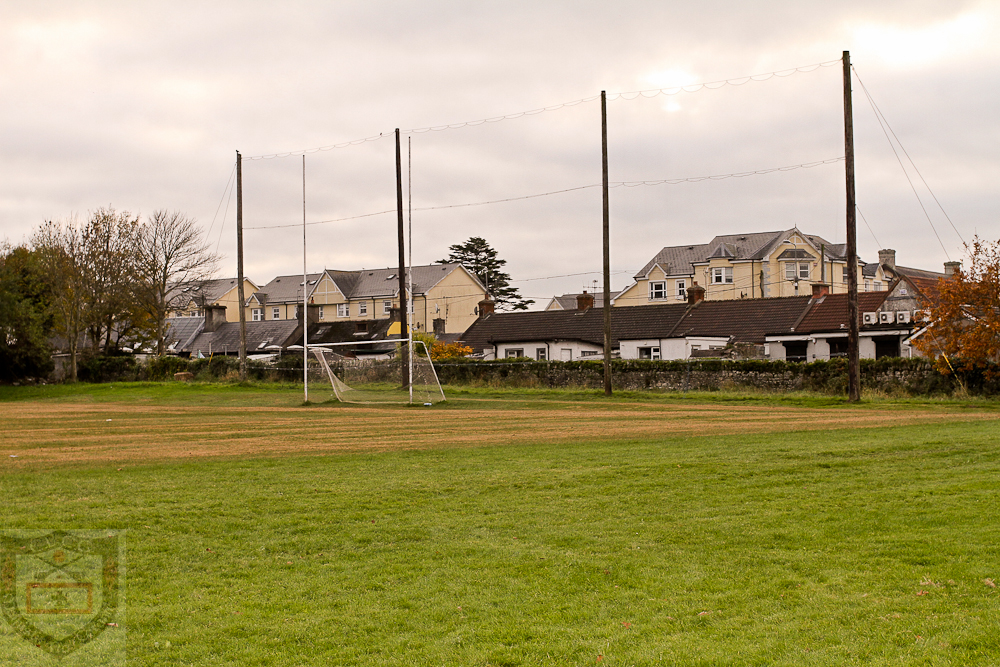
(Gaelic football team Sheares Brothers has been doing very well for a change. A reporter from the Irish Times is about to conclude his interview of the club’s Bainisteoir).

gaa-empty-field-changing-rooms
(Photo sourced: Internet)

Your club’s local nickname is “the Pats”, I’m told.

Yes, I’ve heard that too.

Is it true – what I’ve been told – that all your players, in your entire team, are called Patrick?

Well, now, many are named Patrick, right enough, but they are not all called Patrick.

[Reporter jots down in his notebook: ‘named not called – wtf???’]    Does that not cause problems, though, on the field? I mean, it must be difficult at times for your players to know to which of them the Captain is referring when he shouts out: “Patrick”.

[The interviewer smiles. He has shown the ridiculousness of this situation].   (Fucking unbelievable that this team got as far as its current position in the League! he thinks)

No, not all. Sure if the Captain called out “Patrick”, he’d be referring to himself! That would be a strange thing to do, for sure, to be talking to himself! Well, when with the team, anyway.

(This man is an idiot. An idiot managing a ridiculous team. Still, get the interview done, file the story. Then the pub ….)   Ok …. what if he wants to say, to indicate to a player, to pass the ball to the left midfielder? Would he just call the position – as in “Pass the ball to Left Midfield”?

Well, he might …. but he’d more likely say “Give Paudie the ball”. That’s Paudie’s usual position, you see.

Oh, right.

No, left.

(What a thicko!)     I meant “ok”. Your left Midfielder’s nickname is “Paudie”?

Well, it’s the name he goes by anyhow. Paudie Whelan.

So are all your players called a variation on Patrick?

Pretty much, yes.

Fifteen variations on Patrick?  And no repetitions?  That’s not possible, is it?

It seems to be.

OK, all right …. what about say, your Centre Forward?

Pa. Pa Walsh.

Hmm. Left Forward?

Packy Ó Braonáin.

Right Forward?

Emm …

(Got you now!)

Sorry, he’s just back from an injury. Patchy …. Patchy Stokes.

Left Half-Forward?

Patchik Mulhearn.

Centre Half-Forward?

Paddy plays that position – Paddy McGuinness.

Right Half-Forward?

Patch Hennessy.

(Has to run out of them soon).    Left Mid-Field?

You had his name already – Paudie Whelan.

(Smartass!)    Yes, of course. Right Mid-Field?

That’d be Pád Óg Trainor.

That’s P, a, u, d ……

No. P, á, d; Ó, g.

Right.

Right Half-Back?

No, I meant just “Right” , as in “OK’.

Right.

(Is he taking the piss?)    Well ….. where was I?

Midfield.

Yes …. thanks …. Right Half-Back?

I thought you said ….? Never mind …Paudeen Sullivan.

Centre Half-Back?

Pád …. Pád Carney.

P, a, u ….

No, P, á, d; C, a, r ….

I know how to spell Carney, thanks.

Oh, ok.

Left Half-Back?

That’s Patrick … our Captain. Patrick Burke.

Left Corner-Back?

Ah ….

(Have I got him?)

Ah, sorry ….

(Aha! At last!)

Pat Sheehan. His name slipped me mind there for a minute, sorry.

Oh …. Ah. Good. Full Back?

Páraic Ó Flaithearta. Will I spell it for you?

(Fucking smart-ass! I’ll get it from their website. Just let me run him out of Patrick variants first.)    No, it’s ok, I know my koopla fokol, gurra mah hugut.

Muise, tá fáilte romhat. Bail ó Dhia ort.

Well …. let’s carry on. Right Corner-Back?

Pádraig. Pádraig Lehane.

(Got you now!)  Pádraig. The same as the man next to him, the Full Back.

No, that’s Páraic. P, á, r, a, i, c.

Oh!  Ok, yes, I see. My mistake. Goalie?

Patsy O’Farrell.

Yes. Well, thanks. Yes …. I don’t suppose your substitutes are called Patrick?

No, neither is.

Oh, good.

Sorry?

Good … good story, thanks. I must be going ….

Don’t you want to know their names?

The subs?

Yes.

OK, yes I suppose. Yes, please.

PJ Hanley and Packer Dunne.

I …. see …. ‘PJ’ as in ….. Patrick Joseph?

Dead on!

Um … Well …. Thanks for your time. All the best for your next game in the League. I don’t suppose, heh, heh, your Junior team are all variants of Patrick too?

Ah, not at all! Of course not. Sure, that would be awful confusing. No, there’s Michael Fitzgerald, Mick Smith, Mickey Doyle, Mícheál Connors, Micilín Seoighe, Mikhail ….

End.


Appendix:


The Sheares Brothers GAA team.

Packy Ó Braonáin, Pa Walsh, Patchy Stokes.

Patchik Mulhearn, Paddy McGuinness, Patch Hennessy.

Paudie Whelan,                         Pád Óg Trainor.

Patrick Burke, Pád Carney, Paudeen Sullivan.

Pat Sheehan, Páraic Ó Flaithearta, Pádraig Lehane.

                       Patsy O’Farrell.

Subs: PJ Hanley, Packer Dunne

ASKING FOR IT!


Diarmuid Breatnach

travelling-bag-womans-legs
(image from Internet)

It was nearly ten o’clock at night when she approached me on a badly-lit street near Dublin’s North Circular Road. I had paused my bicycle to send a text on my mobile and I saw her coming towards me. I had the impression that, just before she made for me, she had been looking around as though to determine where she was – perhaps I had seen her doing that in my peripheral vision.

She had a handbag and was dragging one of those suitcases with an extending handle and trundling on little wheels. As she reached me, I asked her could I help her with directions, which actually interrupted her asking me for help. But that was ok, it worked against her being totally dependent, the asker – after all, I had asked too.  She had a USA accent.

Yes, of course I would help if I could.

Did I know the whereabouts of a certain hotel? Well, the area in the hotel’s name I do know but I didn’t recall the hotel itself. And sometimes they give themselvess the name of somewhere known or popular even though their hotel is not near the place at all.

Did she have the street name? No.

The phone number? Somewhere in her bag (she meant her case).

I explained that I don’t have Internet on my mobile phone but she could look it up on Google map?  She doesn’t have Internet access on her phone either.

Can she afford a taxi? Yes, of course.

Well, why not hail one? She has done that but they tell her the hotel is just down the road.

Well, why not ask them to take her there? She has, but they tell her it’s just down the road.

Hmmmm – a sliver of doubt entered my brain. Taxi drivers refusing a short drive fare on a weekday night? To an address with which they are familiar? And leaving a woman, clearly a tourist, on her own in that area on foot ….. Something is wrong with this story.

Still … what to do?

OK, so I’ll ride around on the bike and find the place (even if I have to stop a taxi and ask the driver, I was thinking). Then I’ll come back and tell her (and accompany her there too, I think to myself).

She is very grateful but I think it is not safe for her to wait for me here. Perhaps the courtyard of a pub a little further back? A well-lit one.

OK.

I walk the bike, she trundles the case. Talks about her plans for her two-week stay, which appear to be to arrive in Dublin and then figure out where to go from there. Relates having been booked into a Dublin hostel which another passenger on a bus told her was in a bad district so she didn’t go there. Something seems wrong about this story too.

We reach the pub – it is still in business hours and the courtyard, though deserted, is brightly lit. There are tables and chairs and and I ask her to wait there for me and I’ll be back in a few minutes. She agrees.

Three minutes later I have found the hotel and in four, five at the most, I am back at the pub.

But the courtyard is empty.

Oh, no! She just got up and went?!

Wait. Maybe she asked someone where it was and set off there on her own. But then I would have passed her on the way back – I couldn’t have missed her.

Maybe …. oh God! Maybe whoever she asked volunteered to take her there. And she went with them. Got into a car ….

Ah, Jayzus! What now? Call the cops?

But now I see her ….. coming out of the pub, pulling the case, carrying her bag, all of it awkward as she manages the door….. Maybe she didn’t feel safe out there on her own and went inside …. but no, she has a pint of lager in her hand.

I remind her that I asked her to wait and that I’d be back in a few minutes. I have found the place and was ready to accompany her there but now she has bought a pint. (I am hoping she will leave the pint but no chance).

She is so grateful and would like to buy me a drink.

It’s an offer I might well have accepted when I had got her to her hotel and she had checked in. Now, though? I show her where her hotel is, a straight walk down the road I point out to her, wish her well and ride off.

Asking for it – bloody asking for it! It’s a phrase that doesn’t usually mean someone wants something bad to happen, rather that their conduct makes that a likely outcome. Unfortunately it is used too often with regard to the victims of rape, when wanting it to happen is occasionally precisely what is insinuated – smearing the victim and exonerating the attacker. But usually, conduct with predictable bad results is what is indicated; for example, leaving your bag or laptop inside your car, visible to passers-by, is asking to have your car broken into. Leaving your bike unlocked in the open out of your sight is asking to have it stolen.

Surely it is not a healthy situation for a person to be walking around in a badly-lit part of a strange city at ten at night? And looking like a tourist, whom a predator might therefore assume to have some money and perhaps a camera, Ipad, etc? And a woman alone, considered a defenceless potential victim?

Surely one would want to get into one’s hotel as soon as possible? OK, I understand the appeal of the pint, particularly if one has been stressed out by travel and then wandering around looking for one’s hotel. But hotels have bars, where the worst that will happen to one (or the best, depending on one’s point of view) is that it will lead to sharing one of the hotel beds with a stranger. OK, if you want local colour with your pint, find a “typical” local pub after you’ve checked in. And be sure you know your way back.

But there she had been, wandering around a badly-lit street at night looking for a hotel (and walking further away from it when I met her). And someone goes to find her hotel and asks her to wait and in less than five minutes she’s bought a pint, which means she won’t be able to go to the hotel when the guy returns. And she blithely offers to buy him a drink.

Conduct over all? Asking for it.

End.

BASQUE PIRATES ON THE WAVES

Diarmuid Breatnach

One of my appointments on a recent trip to Euskal Herria, the Basque Country, was with a “free radio station”, with a dual purpose: to learn about their operation and to give them an interview about my thinking on the political phenomena known to most people as “peace processes”. The radio station in question is Zintilik and located in the Orereta area of Errenteria town, not far north from Donosti/ San Sebastian, in the souther Basque province of Gipuzkoa and my hosts were Hektor Gartzia and Julen Etxegarai. 

View of side of building which houses Zintilik. Photo D.Breatnach
Julen and Hektor setting up for the interview Photo D.Breatnach
Julen and Hektor setting up for the interview
Photo D.Breatnach

Not long after I arrived, one of my hosts related his memory of events in the area after a local ETA fighter had been killed. The Guardia Civil had swamped the area to prevent an “homenaje” (an event honouring the dead) taking place, guns pointing at men and women; the children, of which he had been one, gathered into their grandparents’ house ….. He showed me where the police vehicle had parked at the end of the street, his sweeping hand indicating the places where the armed police had stood.

THE “FREE RADIO”

The “free radio station”, also known as “pirate radio” has been broadcasting for 32 years, which I find amazing. It began broadcasting from an “okupa”, an occupation of a private empty building, turning it into an alternative social and political centre. Under popular pressure, the local authority, under the control at the time of the PSE, i.e. (Spanish unionist social democratic party), granted them the building they currently use.

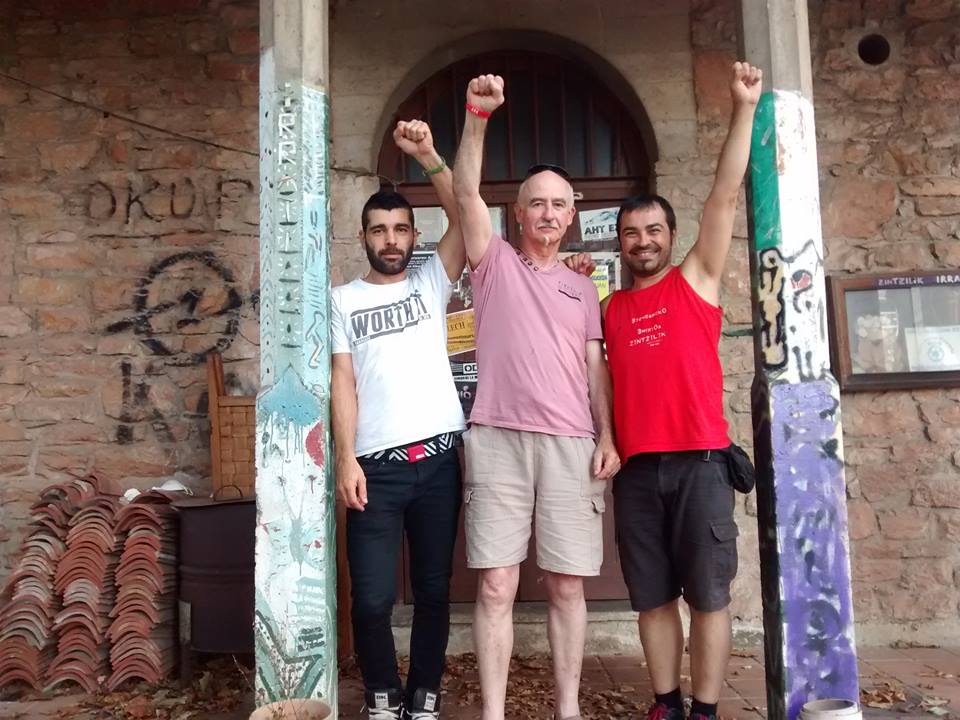
Front of Zintilik building. Photo D.Breatnach
Front of Zintilik building from the street.
Photo D.Breatnach

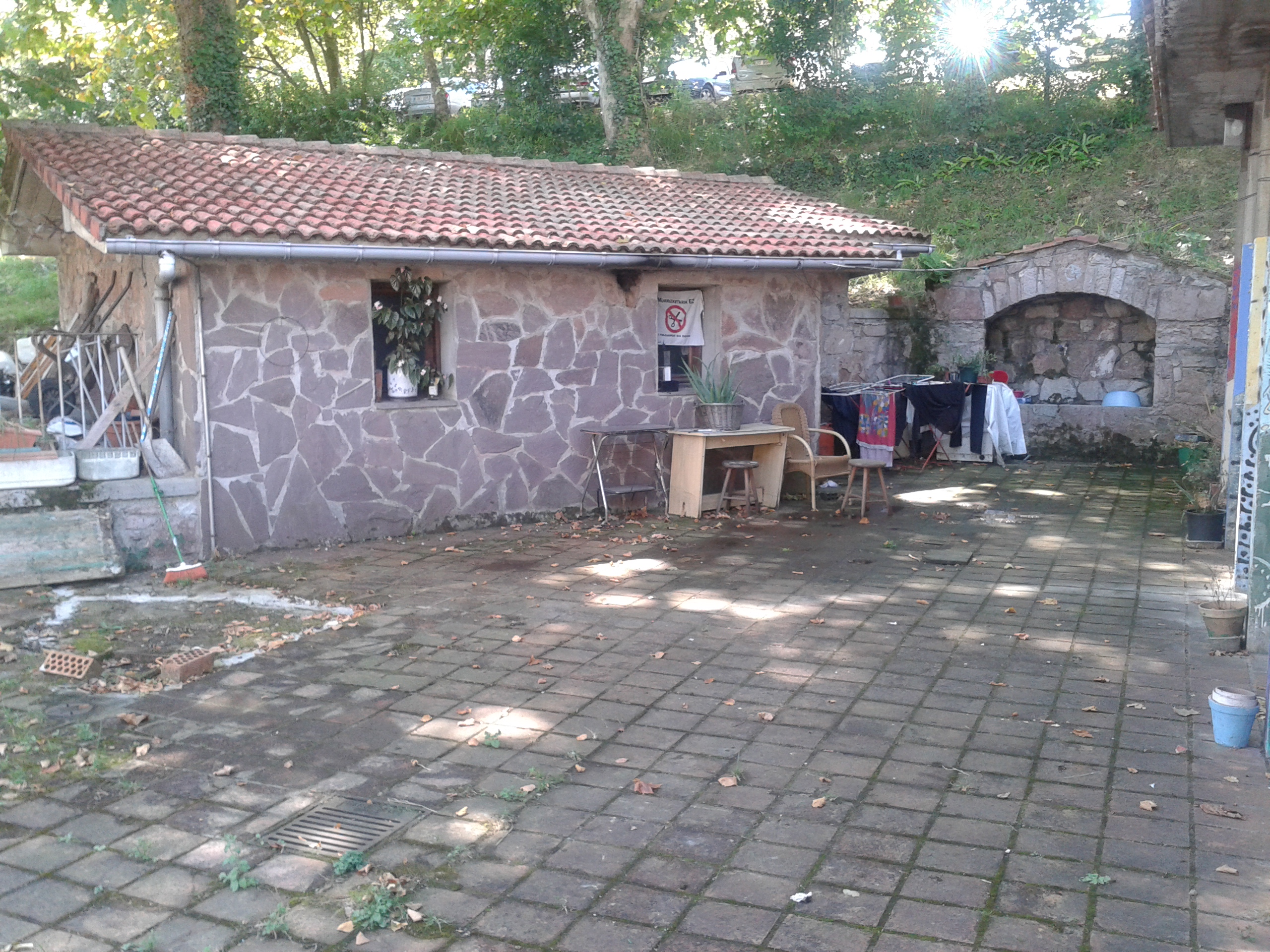
Originally built to house a smithy, for some reason the building never saw service in that capacity. It is in my estimation an attractive building in a traditional-enough local style, of thick stone, compact without being squat. It has an attractive back yard, no doubt intended at one time to receive the horses with hooves in need of iron shoes, fitted and nailed. The roof is tiled in what seems the usual way for the Basque Country.

Zintilik broadcasts 24 hours a day, which it is able to do using repeats.  The Zintilik collective owns its equipment and funds itself through fund-raising concerts, txosnak (stalls/ marquees) at festivals and occasional donations. They run advertisements for

Julen and Hektor again. Photo D.Breatnach
Julen and Hektor again.
Photo D.Breatnach

local community groups and announce events but accept no commercial sponsorship – nor does their wish for independence stop there. “We don’t receive any funding from the local authority or from the Basque Autonomous Government,” declares Julen, “nor do we wish to.”

Funding from such sources comes with strings attached”, adds Hektor.

Or one becomes dependent on it and unable to function without it”, further explains Julen.

Partial scenic view from the back of the building. A block of flats to right just out of shot does restrict it however. (Photo D.Breatnach}
Partial scenic view from the back of the building. A block of flats to right just out of shot does restrict it however.
(Photo D.Breatnach}

As a further illustration of self-reliance, they tell me how they climbed on to the roof of their building to repair a leak, rather than ask the municipal authorities to do it. And it was the same when branches of a nearby plane tree needed cutting to prevent them knocking against the radio aerial on windy days.

We know it’s work that the local authority owes us and that we and the rest of the community pay their salaries but we prefer not to depend on them,” they explain.

As an example of how dependency – although of a different sort – can undermine a community resource, they relate the story of building which was occupied in order to be used as a community resource. As time passed, many were using it as a social resource but less people were volunteering for the work involved in maintenance at any level. Appeals of the four or so committed people who ended up doing everything fell on the deaf ears of the clientele until one day the four locked the centre doors after the last user had left for the evening and, the next day, handed the keys over to the local authority.

The back yard to the building where we ate a meal after the interview. Photo D.Breatnach
The back yard to the building where we ate a meal after the interview.  The structure there is an outhouse.  (Photo D.Breatnach)

As you imagine, this was a great shock to the clientele,” they tell me, “but it was the result of their own lack of commitment to the project.”

I reflect that many activists will identify in one way or another with that sad experience.

RECORDING THE INTERVIEW

Julen and Hektor discuss the format and general content of the interview with me and map it out, do sound checks and then we go to it. Hektor, who knows quite a bit about the more recent Irish history and about the current situation in the Six Counties, is my interviewer, while Julen monitors from the control room and occasionally joins in with comment or question.

Interview room. Photo D.Breatnach
Interview room.
Photo D.Breatnach

For music in between sections of interview, Irish Ways and Irish Laws (John Gibbs) and Where Is Our James Connolly? (Patrick Galvin) have been chosen, both sung by Christy Moore and Joe McDonnell (Brian Warfield), by the Wolfe Tones.

They also invited me to sing Back Home in Derry, Christy Moore’s lyrics arrangement of Bobby Sands’ poem – but to the air I composed for it. I am happy to oblige – I enjoy singing but it is more than that: I want the air I composed to get a hearing. Christy Moore used Gordon Lightfoot’s air to The Wreck of the Edmund Fitzgerald for Sands’ poem and, excellent though that fit is, especially with Moore’s chorus, I think that the poem (and its author) deserves an air of its own.

Recording room. Photo D.Breatnach
Recording room.
Photo D.Breatnach

Although the main focus of the interview was the phenomenon of “peace (sic) processes”, we discussed aspects of Irish, Spanish, Palestinian and South African recent history, including the 1916 Rising in Ireland, along with the backgrounds to the songs chosen. For the most part, I left it to my interviewers to draw conclusions relating to their experience of political processes in their own country.

FESTIVALS AND STORMS

Upstairs in the broadcasting/ recording and interview rooms, all is in good order: equipment and facilities. After the interview, I note that downstairs, in the main space, things are a in a bit of a mess, for which Julen apologises (he has never seen the state of my flat).

Some of the community groups we support store their placards and banners here,” he says. “Besides, we’ve just finished our local festival and everyone relaxes, dumps their equipment and goes on holiday.” Throughout the Summer and early Autumn, each village, town, city and even area will have its own week-long festival for which the community groups and campaigns will organise and participate.

Down in Donostia (San Sebastian), to where Hektor and Julen accompanied me after we ate the food they had prepared, the city was in the midst of its own festival and was heaving with people – tourists from everywhere, it seemed, as well as Basques.

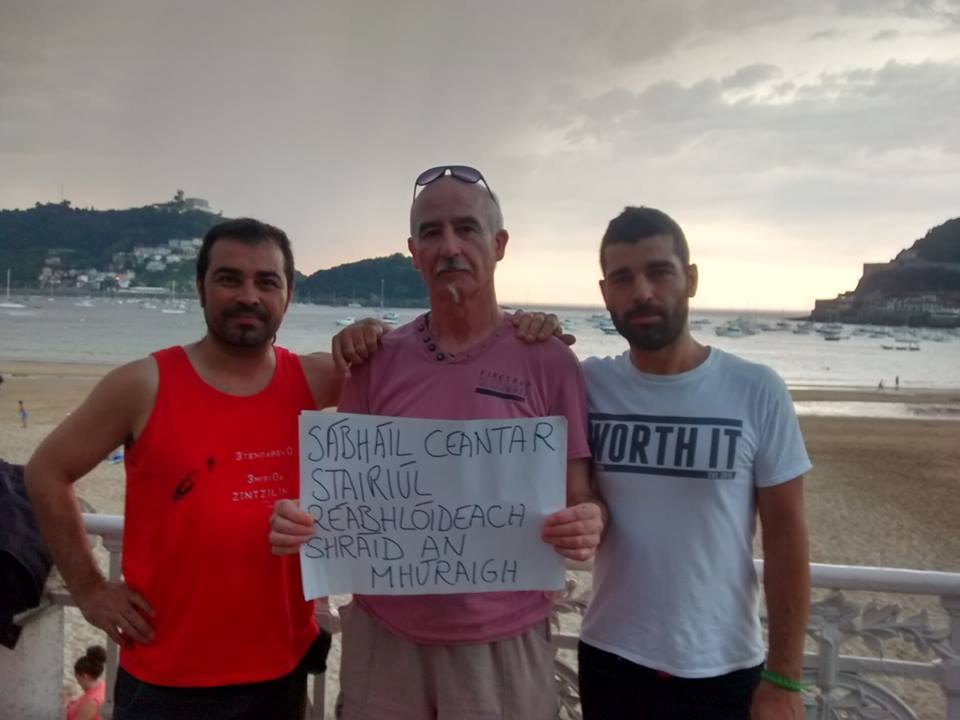
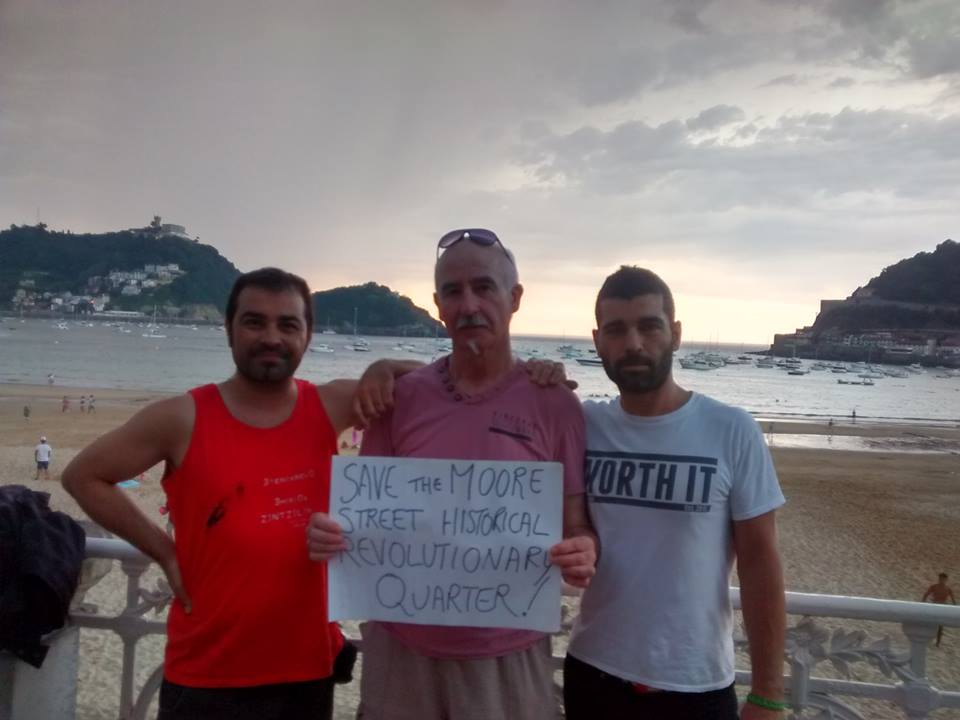
With that picturesque bay and its island in our background, they got a passing young woman to take our photo, the three of us – the conversation with her was in Euskara only. I held up the placards I had prepared for the photo in turn, one in Irish and another in English, supporting the Moore Street quarter in Dublin.

R-L: Julen, Diarmuid, Hektor. Donosti bay in the background with island partly visible. Storm building in the sky.

Save M St Quarter Donosti backgroundDark clouds were gathering overhead and on the horizon the sky was a baleful orange. A storm or at least a downpour was being promised and, as we turned back towards the bus station, the first drops began to fall. In the humid heat, the light rain was welcome for awhile but for part of my solitary journey back to Bilbo, it formed a silvery curtain in the coach’s headlights and streamed down the windows.

I remembered being told that one can frequently witness a violent storm in the Donosti bay while not so far away in Bilbao, as a result of local conditions, all is calm. As for winter storms in Donosti, the waves hitting and surging over the seafront and piers have to be seen to be believed; occasionally the sea reaches inland, floods cellars and converts parked cars into boats or semi-submarines.

The rain eased off and stopped about half-way through my journey and when I got into San Mames station in Bilbo, the streets were not even wet.

end

Clenched Fists 3 Tzintilik Irratia 2016

ON THE BASQUE LANGUAGE TRAIN

Diarmuid Breatnach


On the platform at Mundaka there are only a few to catch the 9.18 a.m. train to Bilbao. Mundaka is a popular coastal resort town in Bizkaia province, southern Basque Country.  “Egun on” (“good day”), I greet those on the platform in Euskara in passing, the Basque language, and they reply the same.

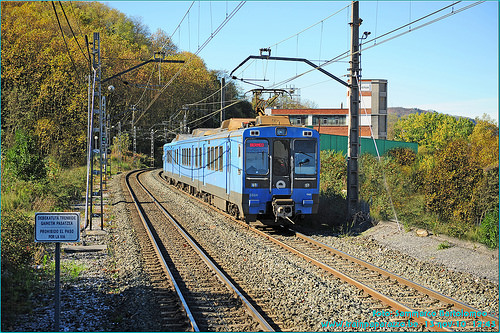
Bizkaia Train & Notice on Track
Train on the Atxuri (Bilbao)-Bermeo line. Note the warning sign to bottom left of image, in Euskera first and Castillian second. (Photo sourced on Internet).

A young couple with two little boys come on to the only platform (for both directions) and I think I hear the woman speaking to the boys in Euskara. But soon, I make out some Castillian (Spanish) words; however it is not unusual to hear some Castillian words and even phrases scattered through Euskara conversation, in the southern Basque Country, at any rate. But no, I can tell now that the conversation between mother and child is definitely all in Castillian – I must have been mistaken earlier, when I thought they were speaking in Euskara.

Mountains over Mundaka rooftop
A view from a Mundaka building a number of stories up. The port is out of sight to the left, the station behind. (Photo: D.Breatnach)
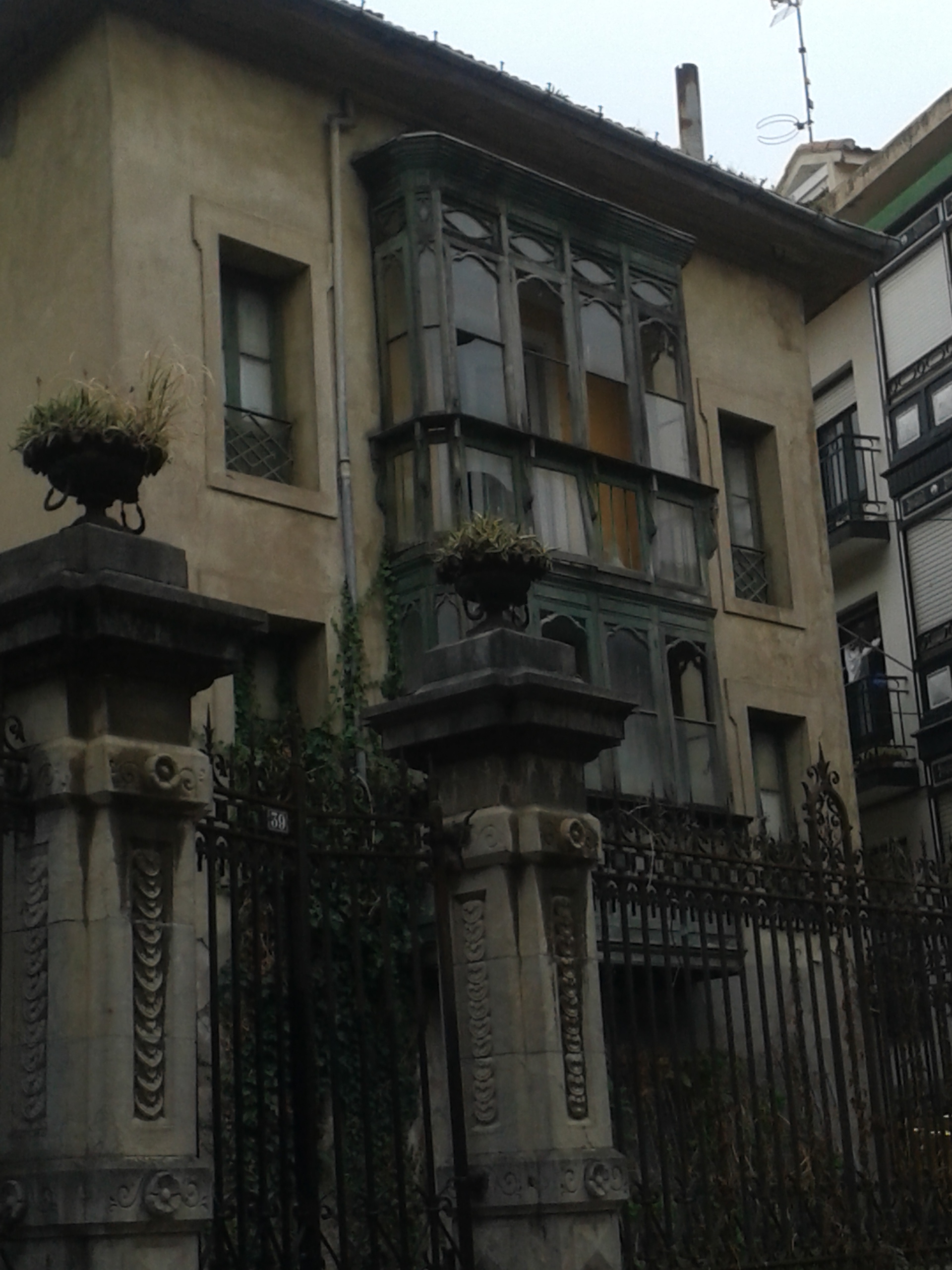
Casa de los Ingleses
“Casa de Los Ingleses”, a beautiful if rather gothic-looking old house, residence of an English family with business interests locally many years ago. I passed it on the short walk from the town to the station. Behind it there were plots being worked for vegetables, all due to disappear beneath a new car park construction. (Photo: D.Breatnach)
The Servants House
The residence of the servants of the Casa de Los Ingleses, a lovely building in its own right.  Its demolition is planned to make way for a new construction (see design in next photo) — my guide encouraged me to write a letter of protest to the municipality.  (Photo: D.Breatnach)
The construction planned to replace the "servants' house" after the latter has been demolished. (Photo: D.Breatnach)
The construction planned to replace the “servants’ house” after the latter has been demolished. (Photo: D.Breatnach)

“Miao, miao” says the smallest boy, pointing at some feral cats dozing near the platform. “Bai, katua” replies the mother and a flood of Euskara follows, both boys and mother and occasionally father too conversing in Euskara. And so they continue until the southbound train arrives and everyone gets on, except one man, presumably waiting for a northbound train to Bermeo.

On our journey southwards, soon passing alongside salt marshlands, I note that the names of the stations are in Euskara only: Itsasbegi-Busturia, Axpe-Busturia (in the broad estuary of the Urdebai river), San Kristobal Busturia, Forua, Instituto Gernika, Gernika….

The Wikitravel entry for Gernika translates it to the Castillian “Guernica” and opens with this: Basque town which was the site of the first airborne bombing attack on a civilian town during the Spanish civil war. The bombing, by the Condor Legion of Germany’s Luftwaffe in 1937, inspired Picasso to paint the landmark cubist work Guernica, now on display at the Centro de Arte Reina Sofia in Madrid.”

Well, yes, but one might add for clarity that it was done as part of Franco’s fascist offensive and that the fascist press later blamed it on Asturian Anarchist “fire-bombers”. And one might update it by commenting that the Basques have asked for Picasso’s painting to be located in Gernika itself, a request which the Spanish state authorities, the political descendants of the fascist victors of that war, have refused.

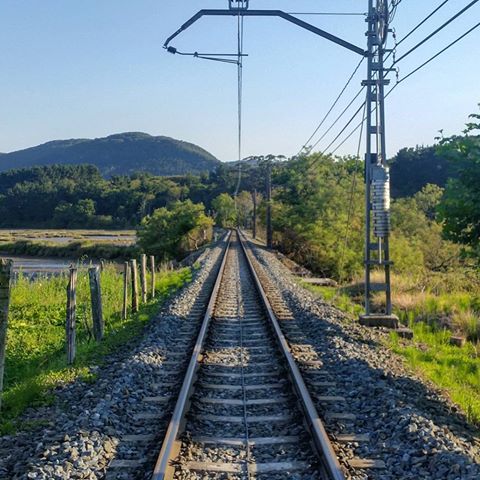
Train tracks Axpe Busturia
Train tracks from Axpe Busturia, the estuary to the left and salt marshes on both sides.  (Source: Internet).

Onwards again, the next stop is Lurgorri-Gernika. At the next after that, Zugast station, a middle-aged man gets on with Berria, the all-Euskara newspaper, under his arm. This periodical, being in many ways the replacement of another newspaper, Egunkaria, has a noteworthy connection with history.

Founded in 1990, Egunkaria was the first all-Euskera daily newspaper in the world; it had a left-nationalist editorial line and a journalistic outlook, which led it to report ETA statements alongside those from Spanish unionist political parties and from the State. The Basque language was no longer illegal or banned since the transición, post-General Franco, when the fascist Spanish oligarchy brought the leaderships of the social democratic party and the Communist Party on board, along with their respective trade union leaders — and called it “Democracy”.

But on 20th February 2003, the Spanish State’s militarised police, the Guardia Civil, raided the newspaper’s premises, seized records, machines and closed down the periodical. They also raided the homes or arrested at the building a total of ten people associated with the newspaper, at least four of which were tortured subsequently. For one of those, the manager, a gay man, the torture included sexual violation.

Massive protest demonstrations ensued from an outraged Basque population. The arrested were released on bail.

On 15 April 2010, seven years later, the defendants were finally acquitted on all charges relating to ‘terrorist’ connections and the judges added that there had been no justification for the closure of the newspaper in the first place.

By then, Egunkaria was beyond recovery and anyway Berria had stepped in to occupy the niche (apparently with the blessing of the Egunkaria team). The case against the State for compensation for the loss of the newspaper and also for torture remains open, sixteen years later. The Court of Human Rights at Strasbourg found the Spanish State guilty of not investigating the manager’s complaint of being tortured and ordered compensation paid. It did not, however, as it usually does not, find the State guilty of the torture itself. Of course, torture is difficult to prove, particularly when the State in question keeps political detainees for five days incommunicado, without access even to independent medical practitioners, while its police go about getting their “confessions”

On the train journey now, the next stop has the delightful-sounding name of Muxika. This causes some amusement to a teenage boy in a nearby seat, accompanied by an older woman – they have been talking in Castillian only since they got on. I wonder are they aware that in June 2013 José Mujica, President of Uruguay until last year, visited the townland that gave rise to his surname. Mujica was presented with a key to the town by the Mayor, who is of the Abertzale Left party Bildu.

The train pulls out of Muxika, then on to Zugastieta-Muxika station as we continue running southward through thick woodlands, occasional industrial parks and small allotments where an occasional middle-aged man tends to his large tomatoes, the small elongated sweet peppers of the region, courgettes, climbing beans …..

Onwards to Morebieta Geralekua before the line takes a sharp twist north-eastwards to more woodlands, rivers, streams and mountains at Lemoa, Bedia, Usansolo, Zuhatsu Galdakoa. Now the built-up areas of Ariz Basauri followed by the contrast of the picturesque Etxebarri before a southward curve to Bolueta and then eastward, to run along the Nervion river to Atxuri station in Bilbo (Bilbao), journey’s end.

All of the stations along this route were named in the Basque language – not one had a Castillian version showing (although there will be plenty of that in streets and squares in Bilbao). The public announcements on this train, as on their counterparts in the Irish 26 Counties, are bilingual but with this difference – on the Basque train, they are always in Euskara first, Castillian second. Likewise with the signage. One is never under any doubt about which language is being given primacy there, nor indeed here, where the English version comes first and, when in text, is in a more dominant type or more contrasting colour.

The Irish language is being derailed even as, to mix metaphors, it is being given lip service. Further down the tracks, unless some urgent repair work is undertaken, lies the final stop – the cemetery of our national language.

end

MASS CROPPIES’ BURIAL GROUND OPEN TO THE PUBLIC ONCE AGAIN

Clive Sulish

Croppies’* Acre, a piece of parkland believed to the site of a mass grave of United Irishmen insurgents and non-combatant victims, situated between the Liffey’s Wolfe Tone Quay and the Collins Barracks complex of the Irish National Museum, was some weeks ago reopened to the public for the first time in four years. Few if any of the campaigners for its saving or its reopening were invited to the event or given credit in the short newspaper report about the occasion.

This report seeks to correct that omission, to give a brief account of efforts made over the years and to comment on the care of the park today.

(* “Croppy” was a name given to supporters of the United Irishmen, apparently because of the males wearing their hair cut short and close to the scalp, in the style of the revolutionary French of the time.  “Crapaí” and “Cnapaí” were the versions of the word in the Irish language).

The Pedestrian Gate on Wolfe Tone Quay, Liffey side, open to the public again after four years (Photo C. Sulish)

HISTORY OF THE SITE AND OF THE CAMPAIGNS AROUND IT

In 2012, after the site had been closed for some time allegedly due to health and safety concerns for visitors due to drug-injecting paraphernalia left there by people using the site at night-time, Pádraig Drummond and Diarmuid Breatnach set up the Croppies Acre Rejuvenation project with a Facebook page to promote the importance of the site and to gather forces to pressure the authorities into reopening the site and maintaining it properly.

Prior to this, a number of visits had been made by Irish Republicans (the 1916 Societies on some occasions, independent Republicans on others) to the closed site to collect and dispose safely of drug-injecting paraphernalia and other waste and it was felt that a public campaign was needed.

Memorial stone about halfway along the the Liffeyside of the park. In the distance, the heaped earth of works in October last year which had caused concern (Photo: D. Breatnach)
Memorial stone about halfway along the the Liffeyside of the park. In the distance, the heaped earth and earth-moving machine in October last year which had caused concern (Photo: D. Breatnach)

As part of the campaign a letter to the media was composed by Drummond and Breatnach in consultation with the National Graves Association (a voluntary independent organisation that marks and maintains the graves of those who fought for Irish freedom and which also erects plaques to commemorate people and events). Although none of the main media published the letter it is reproduced here not only as a document of the history of campaigning for the site in its own right but also because it summarises well what had gone before.

Croppies Acre is remembered in Dublin folklore as the site of a mass grave in which the bodies of dead insurgents were thrown in 1798. Among those lying in Croppies’ Acre are reputedly the bones of Bartholomew Teeling and Matthew Tone (brother of Wolfe Tone — CS), both hanged at the Provost Prison on Arbour Hill after the Battle of Ballinamuck on 8 September 1798.


In 1898, the centenary of the United Irish uprisings, 100,000 marched to the site and placed a plaque there. As many people will be aware, the centenary commemoration of the United Irish played a significant part in the creation of a national pro-independence culture which fed into the Easter 1916 Rising, less than twenty years later, and which in turn fed into the War of Independence 1919-’21 and the creation of an Irish state.

Memorial stone placed during 1798 centenary commemoration which was attended by 100,000 (Photo: D. Breatnach)

Although a 1798 rising commemoration plaque was laid at the site by “soldiers of the Eastern Command” of the Irish Army in 1985, soldiers were sometimes to be seen playing football on the field until the mid-1990s, while Collins Barracks was still in use by the Irish Army. This practice ceased after a number of complaints from members of the public who felt the practice was not respectful to the dead insurgents. The Irish Army vacated Collins Barracks in 1996 or thereabouts and the National Museum moved into the buildings in 1997.

In 1997 a proposal to turn the graves of the Patriot Dead into a car and bus park was all the more stunning as the bi-centenary of the United Irishmen’s Rising of 1798 was imminent and groups everywhere were renovating monuments and graves, organising seminars and lectures and planning pike marches.

The then secretary of the National Graves Association, Tess Kearney (since deceased — SC), was in poor health, but decided that such an occasion required action regardless of her personal circumstances. Tess turned in a magnificent effort for the television cameras and organised a campaign to “Save the Croppies Acre”. Within days, various interested parties came together and, under the leadership of the NGA, the plan to build a coach park on the site was defeated and the Croppie’s Acre site was developed two years ago (i.e in 2010 — CS) as a national monument with an expenditure of some €35,000. The field layout is simple with `(some individual) flagstones throughout the site presumably symbolising the bodies lying below and a small open circular stone structure on which are reproduced parts of the text and facsimile typeface of the Droites del Homme (Rights of Man) document from the French Revolution (1789). Also featured is the text of Seamus Heaney’s poem “Croppies” and the motif of the barley seed head is reproduced on the stone in reference to the poem and Irish folk memory.

The enclosure monument, with National Museum, Collins Barracks in the background. (Photo: D.Breatnach)
The enclosure monument in Croppies’ Acre, with National Museum, Collins Barracks in the background.
(Photo: D.Breatnach)

The Drummond/ Breatnach letter, signed by a number of historians, history tour guides, authors and history enthusiasts, also noted that:

The Office of Public Works has closed the site because it considers it unsafe to permit public access due to some night-time activities there. Recently some of us went to inspect the site and were shocked at the condition into which it has sunk. Used syringes, discarded needles, bottles, cans and other rubbish were found at a number of locations but especially inside the stone structure.

Rubbish bags were filled and disposed of, with the hazardous waste disposed of in bio hazard containers that were then handed into the local authorities. A return visit found almost as much rubbish as had been disposed of previously. A third visit found even more. This is not acceptable and must change.

The letter concluded by stating that
“It may be that some will say that the expense, even though relatively small, of looking after a national monument, cannot be justified in the current climate of austerity. To those we would say that possibly, had we valued sufficiently our independence and the sacrifices made for it in the past, we would not have allowed foreign finance speculators to bring us to sad straits in which we find ourselves now. The image of our past locked away while we are plundered as a nation in the present is a stark contrast.

However about that, the Office of Public Works must take the appropriate action to look after this site properly and offer safe access to the park during the hours of daylight seven days a week. At night, the site needs to be well-lit and protected. Mr. Brian Hayes, TD, Minister of State responsible for the OPW since 2011, must take urgent action.”

At the time, the OPW probably seemed a much safer bet as custodians than Dublin City Council, especially with the Council’s Planning Department having granted property speculators planning permission to construct a giant shopping centre over the Moore Street battleground and market. However, it was eventually Dublin City Council that took responsibility for the maintenance and reopening of the site to the public.

But throughout the years after the setting up of that campaign, from 2012 to 2014, nothing seemed to be happening to put matters right. Groups of Republican volunteers paid visits from time to time to clean up the site, collecting horrifying amounts of used hypodermic needles and other paraphernalia and waste but the authorities appeared unmoved.

Twice in February 2014, questions were asked in the Dáil, the Irish Parliament, of Minister for Public Expenditure and Reform Brian Hayes. Pádraig Drummond had written to TDs (elected representatives) Clary Daly and Maureen O’Sullivan, who received replies to their questions, the former written and the latter an oral reply. Daly’s reply from Minister of State Hayes was that The Office of Public Works and Dublin City Council have agreed in principle that the management and maintenance of the Croppies Acre Memorial Park will be undertaken by the Council. OPW and Dublin City Council are reviewing the Council’s proposals regarding improved access to the park prior to formalising a licence arrangement, following which the park is expected to re-open to the public.”

The oral reply was much longer but the nub of it was the same.

We weren’t getting people signing up to form a campaigning group and we were running out of energy”, said one of the campaigners about those years.

In September 2015, soon after DCC staff were seen to have been cleaning up the site and cutting the grass, concerned Republicans visited the site and posted photos on the campaign FB page of drug paraphernalia and mess which had quickly accumulated again on the site.

In October of that year, Dublin City Council staff began work inside the park with earth removers. In the absence of any notice of what was intended and no public consultation, protesters including Éirigí mobilised and halted work. Dublin City Council gave a written guarantee (see photo) that the work was only to create or upgrade a circular pathway. The protests ceased but an eye was kept on proceedings.

However photographs taken during a visit by other concerned people that same month showed drug paraphernalia again accumulating at the site.

View from the west pedestrian gate to the east since the Acre opened (Photo: C. Sulish)

The letter guarantee which led to calling off the protests in October 2014

THE SITE REOPENS TO THE PUBLIC

By June this year, the site had been cleaned up, planted, a path put through part of it and finally reopened to the public, four years after the campaign to reopen it had begun. The Daily Herald reported on the opening ceremony (see link for their report below) on the 15th, presided over by Lord Mayor Críona Ní Dhálaigh in one of her last acts before her year as Mayor was up.

The Herald report alluded to the years of closure and “problems with drug users” but not once did it mention the National Graves Association, the Republican groups that repeatedly visited the site and those that mobilised to protect it in October last year, or the campaign set up in 2012 and the letter to the media of that year and TDs questions in the Dáil

A sleeping bag, perhaps, against the wall within the monument park weeks after reopening. (Photo: C.Sulish)
A sleeping bag, perhaps, against the wall within the monument park weeks after reopening.
(Photo: C.Sulish)

The report did mention Councillor Mannix Flynn who, it said, had been campaigning over the years for the site’s reopening. “Councillor Mannix Flynn, for all I know, may have been campaigning hard for the site’s reopening,” said Diarmuid Breatnach. “I can’t say he has and I can’t say he hasn’t. But I can say that not once in those years of agitation, campaigning and trying to raise the profile of the issue, did we ever hear from or about him in connection with Croppies’ Acre.”

This month, I visited the site again and found it open and being used by the public, reasonably clean and with some attractive plantings of flowers and grasses. But inside the circular monument, there was a small pile of excreta in one spot and, on the way out, I noted what seemed to be a sleeping bag against the eastern wall. The site will need continual watching.

End.

White Purple Flowers Grass close
(Photo: C. Sulish)

White Purple Grass
(Photo: C. Sulish)

Grass Blue Flowers Close
View southwards across the park (Photo: C. Sulish)

The Tricolour in this case would have been better replaced by the green flag of the United Irish with the harp in gold.
The Tricolour in this case would have been better replaced by the green flag of the United Irish with the harp in gold. (Photo: C. Sulish)

APPENDIX

LINKS TO QUOTED AND RELATED MATERIAL

Letter sent to mass media in 2012, after DCC had locked up the site:
http://www.politics.ie/…/221010-croppies-acre-rejuvenation.…

Daily Herald report on the reopening of Croppies’ Acre

http://www.herald.ie/news/drughit-city-park-is-reopened-after-120k-cleanup-34801856.html

Article about Bartholomew Teeling and Matthew Tone https://rebelbreeze.wordpress.com/2014/03/23/captain-bartholomew-teeling-united-irishmen-hero-believed-to-be-buried-in-croppies-acre/

NAMA & RECEIVERS EVICTING HOMELESS FAMILIES TO SELL MAIN STREET PROPERTY

Diarmuid Breatnach

Lynam’s Hotel in O’Connell Street is a building you could easily pass without realising what its business was. The hotel takes in mostly tourists on short-stay bookings but, as the homelessness crisis totally exceeds Dublin City Council’s minute stock and specific funded provision, DCC has also used it to place homeless families within it as with many other hotels around the city and county (and even further out).

When the owners of the hotel found themselves over-extended on loans, NAMA moved to take over the building; naturally the State agency would not wish to be seen evicting homeless families. Five families with a total of ten children were being placed there by Dublin City Council. The Hotel’s management at first wanted to cooperate with NAMA and force out the families but these, supported by Irish Housing Network, refused to leave as they had no suitable alternative accommodation (see their letter in the Appendix). One by one, the families won short extensions on their stay from the management.  Incidentally, eight workers’ jobs are also at stake.

Supporters and members of the public at campaign table outside Lynam Hotel during the week
Campaign supporters and supportive members of the public at campaign table outside Lynam Hotel during the week (photo: D. Breatnach)

During the week, the IHN set up a campaign table outside the hotel, staffed by volunteers on a rota and some additional helpers; they began to collect signatures to a petition demanding Dublin City Council take over the hotel and for NAMA not to evict the families.  They distributed leaflets (the IHN also have an on-line petition on their FB page) and by mid-week, had collected 1,000 signatures to the petition.


FAMILIES AND SUPPORTERS CONFRONT NAMA AND RECEIVERS

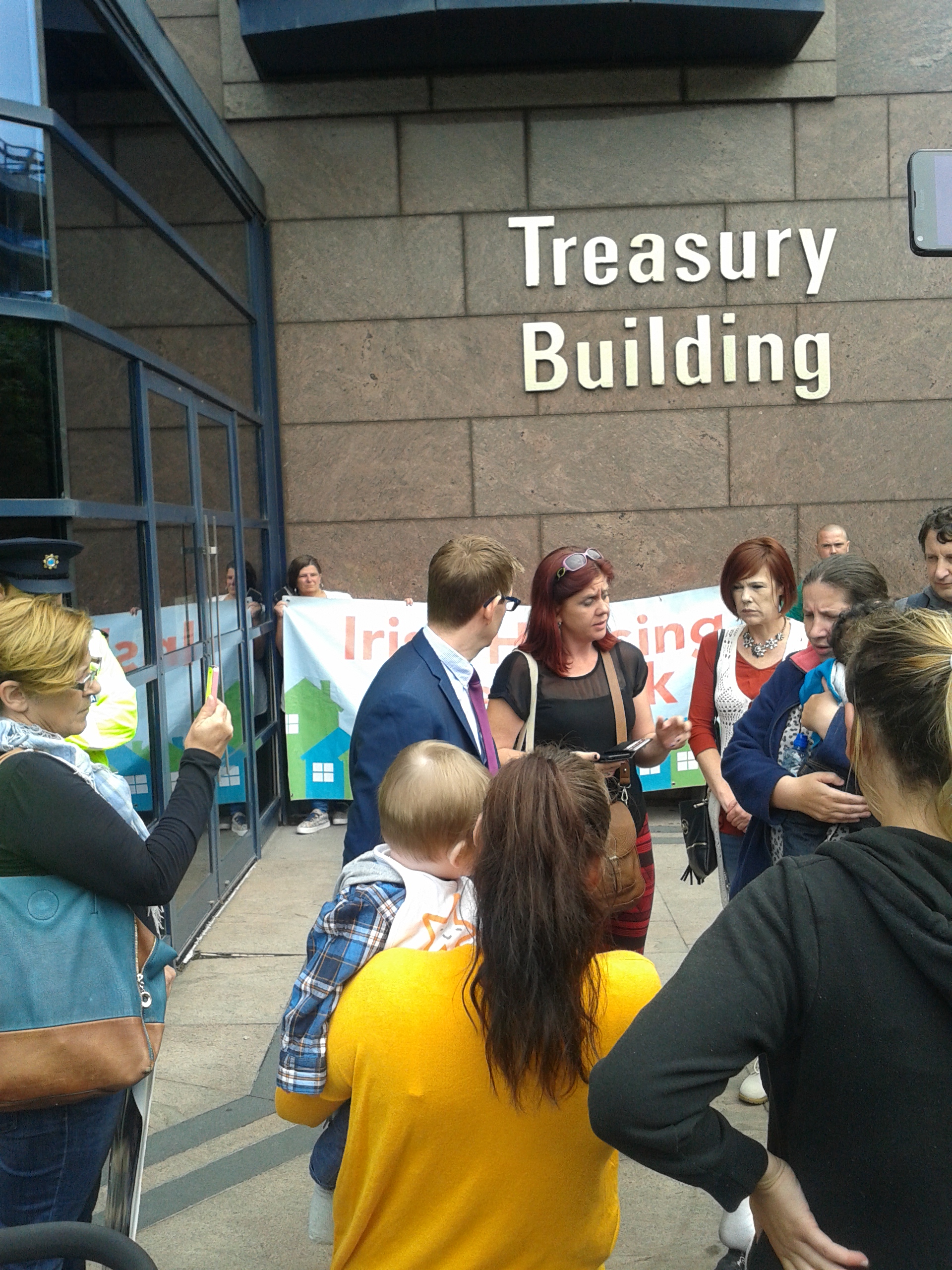
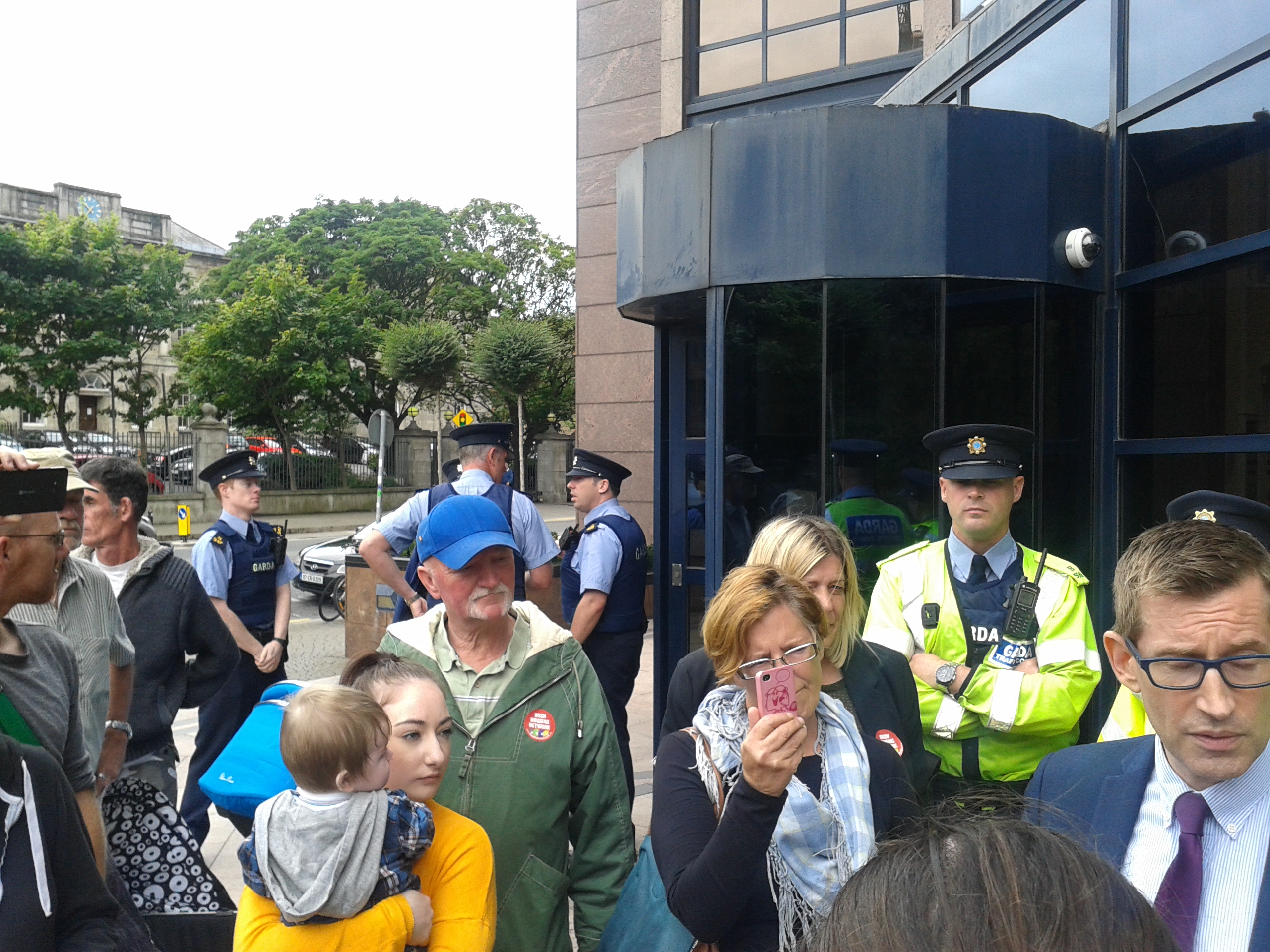
On Wednesday 27th, the families and supporters went to NAMA’s Head Office in Treasury Buildings, Grand Canal Street, D2 and from outside, asked to see the head of the state agency. Treasury Buildings management locked their building and called the police, who arrive in one squad car, then another, and then more of them on foot.

After talking to the police, NAMA offered to see one of the families only, accompanied by a supporter. The families discussed this and rejected it but offered the concession of two families plus supporter. The senior Garda officer seemed to be trying to persuade the families’ representative to accept the NAMA offer but they stood firm.  After rejecting that offer, NAMA PR spokesperson Martin Whelan came out to speak to the families and their supporters from the steps of the building. One of the campaigners speculated that this was the first occasion ever for NAMA to explain their actions to the public.

Families and supporters outside NAMA building during the week Supporters and members of the public at campaign table outside Lynam Hotel during the week (photo: D. Breatnach)
Families and supporters outside NAMA building during the week Supporters and members of the public at campaign table outside Lynam Hotel during the week (photo: D. Breatnach)

Whelan’s position was, in essence, that NAMA had no choice but to put the properties it received on the market and to sell them on. He rejected the accusation of one of the campaigners that NAMA “takes over properties and sells them at knock-down prices to vulture capitalists,” maintaining that all properties are sold at their market value.

With regard to the demand that the building be put under management as a homeless hostel by Dublin City Council, Whelan would say only that they had received no offer from the Council. That would be a decision for the Receiver, he said, in a statement that many saw as an exercise in passing the parcel.

To those who quoted him some lines from NAMA’s founding charter that its purpose was, in part “… to address the compelling need ….. to contribute to the social and economic development of the State …”, Whelan had nothing to say apart from repeating what he had said previously.

The families and campaigners presented Whelan with 1,000 signatures on petitions and indicated they would return with more and began to leave, the police also leaving as they did so.

Families and supporters confronting NAMA PR representative Martin Whelan (in blue suit) (Photo: D. Breatnach)
Families and supporters confronting NAMA PR representative Martin Whelan (in blue suit)
(Photo: D. Breatnach)

However, the families and their supporters were not finished yet and headed off for the

Some of the police that NAMA called to protect them from homeless families and supporters
Some of the police that NAMA called to protect them from homeless families and supporters with NAMA PR spokesperson Martin Whelan in the foreground (Photo: D. Breatnach)

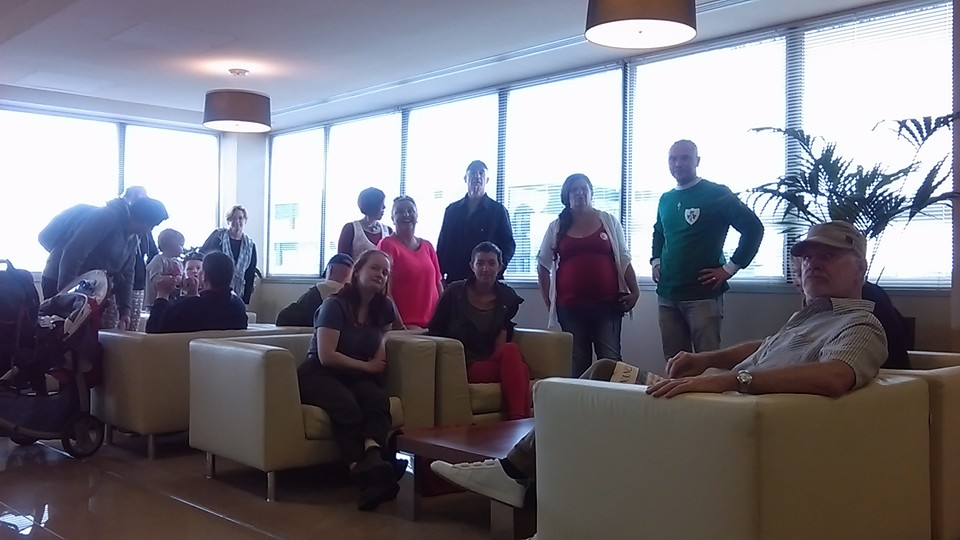
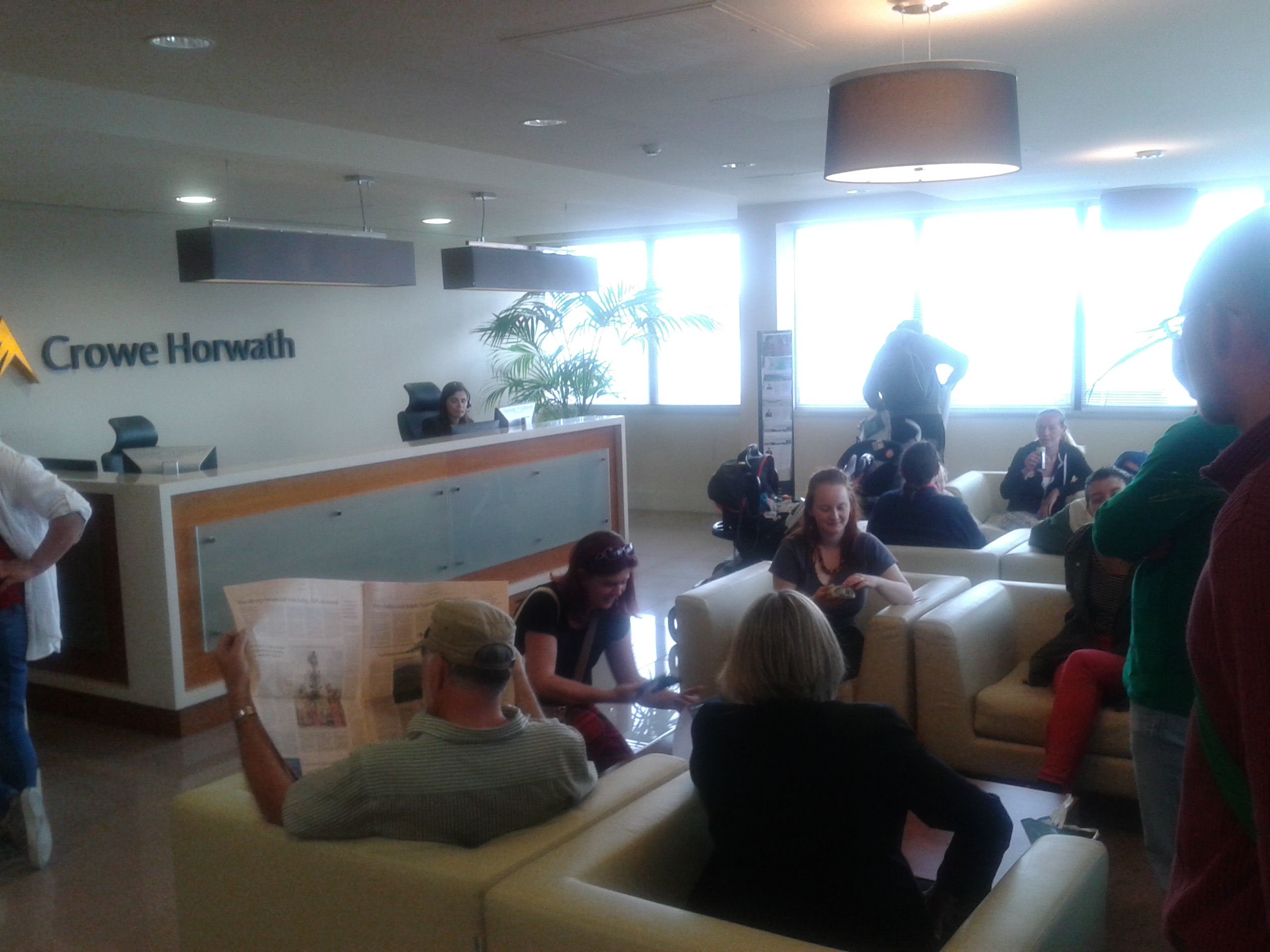
Receivers’ office which, at Marine House, Clanwilliam Place, took some finding. Eventually located overlooking the canal in a very quiet section of the city, they entered and ascended to the 5th floor, to the business address of Crowe Howarth, a member company of the Swiss firm Crow Howarth International. The families and supporters asked to see the person in charge, Aiden Murphy, a partner in the Crow Howarth, who was allegedly outside the building and due back in ten minutes but who appeared from inside after keeping them waiting nearly an hour. Then he wanted to meet them in the lobby, which they refused and insisted on the respect of a meeting in a private office space, which Murphy eventually granted.

According to reports of that meeting, Murphy was civil to the families and assured them he would not be asking for their eviction prior to the court hearing on receivership of Lynam’s Hotel.

Some families and supporters in the lobby of Crow Howarth, Receivers (Photo source: IHN FB page )
Some families and supporters in the lobby of Crow Howarth, Receivers (Photo source: IHN FB page)

Upstairs in the Receivers' lobby (Photo: D. Breatnach)
Upstairs in the Receivers’ lobby

He was due to meet the families the next day but, apparently worried about meeting demonstrators, arranged a meeting with them in the Gresham Hotel instead (no doubt chargeable to the public). His reticence for meeting possible demonstrators was somewhat different to his previous arrival as reported by sources. with a takeover workforce, bullying staff, changing locks and issuing orders.

View down to the ground from the Crowe Howarth lobby. Ordinary people must look very small from here. (Photo: D. Breatnach)

THE COURT CASE

In advance of the court hearing, hotel management seemed to be moving to place the families as a buffer between themselves and the Receiver and were reported to have asked the families for a letter stating that the accommodation offered by DCC was unsuitable. Judge Gilligan asked Dublin City Council to appear in court to answer whether they had alternative accommodation available.

On Friday 29th, DCC duly presented themselves at the High Court and assured Judge Gilligan that they had indeed alternative accommodation ready for the families. Judge Gilligan did not ask the DCC spokesperson to detail the type of accommodation they were offering nor its location and Crow Howarth made no move to do so either. The families themselves were not permitted to have a letter detailing their conditions and the type of “alternative accommodation” available (see Appendix) read out in court.

Some of the rota for the table outside the Lynam Hotel (Photo: D. Breatnach)

The outcome pf the case was that Lynam’s Hotel was wound up, ordered to cease trading beyond August 1st and the building is to be sold (if it is not, as rumoured, already sold) on behalf of the State to some unknown capitalist. The families will presumably be placed somewhere in the kind of conditions about which their letter complains, affecting not only the parents but the children now and into the future, perhaps for the rest of their lives.

And the housing crisis continues without any State agency or Dublin City Council making serious efforts to address it; according to the Irish Housing Network there are over 8,000 families homeless within the state and the total is growing daily.  This is in the centenary year of the 1916 Rising when that inspirational document was printed in Liberty Hall, signed in Henry Street (around the corner from Lynam’s Hotel by seven who would be shot later by firing squad) and read out and posted on Easter Monday outside the GPO in the same street as the Hotel, declaring that
The Republic guarantees equal rights and equal opportunities to all its citizens, and declares its resolve to pursue the happiness and prosperity of the whole nation and of all its parts, cherishing all of the children of the nation equally …..”

end

To help support these and other homeless families contact https://www.facebook.com/irishhousingnetwork


APPENDIX


LETTER OF LYNAM HOTEL FAMILIES TO HIGH COURT

Dear Judge Gilligan,

We the Lynams families would like to thank you for your consideration of our situation in this High Court decision. We are choosing to remain anonymous due to fear of being targeted as we are under threat to take offers that are not suitable or find ourselves with no accommodation what so ever.

We appreciate that you realise that we are extremely vulnerable at this time and are being used as pawns in the political maneuvers of the Hotel management, DCC, the Receivers and NAMA.

As a group we would like to highlight the situation in Emergency Accommodation we are currently finding ourselves in.

We are HOMELESS, yes we are lucky to have a roof over our heads but we are without a fixed abode. We are under the control of the whims of Hotel Management and the DCC.

The accommodation we can usually find ourselves in is one double sized room for one family, two rooms if you have a larger family not necessarily in the same building. Imagine if you will having to live your whole life within the confines of this room where there is:

No drinking water. No fridges to store milk for young babies. No cooking facilities. No laundry facilities to wash your own or your children’s clothes. No area for the children to play, do homework or socialise with others.

We have been offered Alternative Accommodation which is below the standard that we currently experience at Lynams and is still not suitable for our families needs. In fact there is no minimum standard for Emergency Accommodation.

Families that enter Emergency Accommodation initially start off their journey in shock with a loss of home, structure, security. Children sit in their school uniforms waiting for the hotel restaurant to open in order to grab a quick breakfast before they start their long journey to the only anchor they know which is the school they were enrolled in, before they became homeless. Families cling to this anchor, in order to enable their children to have some degree of normalcy in their lives.

Those children who do not have a home and proof of residence do not have any chance of enrolling in school, getting a doctors appointment, being referred to services or getting counseling.

Children spend their days trying to be quiet around adults that are stressed trying to find new accommodation for that night. Forbidden to associate with other children as per rules in certain establishments. They are hungry, as they wait for their parents to source food, often eating whatever food is left over from breakfast until they share one takeaway meal between the family. There is no money is left by the end of the week as it has been spent on transport. These children are disorientated, with some families ending up in hotels in Bray, Aughrim & Brittas Bay trying to get to school in north Dublin. These children lose any hope of being in a normal home, they cling to already anxious parents.

The average families moves every 5 days unless they are lucky to get a hotel/guesthouse that takes on DCC customers as permanent until placed, the length of time that takes can be upwards of 2 years. There is one family that was in Lynams for 7 months, and were informed by DCC with 4 days notice to move, they have been in hotels in several different counties in the space of 3 weeks since they moved.

We ask you to consider that this is our home, we are powerless to fight the combined forces of DCC, NAMA and the Receivers and the pressure they are putting on us. On July 22nd Management in Lynams continued to accommodate us when DCC failed us.

We ask you to consider that we are not just names on a list, we are real people, we have real lives, we have jobs, our children are being directly affected by the decision being made here today.

Even though we have no hope of a good outcome for our families we can only hope that you find it in your heart to consider all these issues of how the system for homeless families has failed us all and will continue to fail unless properly addressed.

Thank you for taking the time to read this letter.

The Lynam families

To help support these and other homeless families contact https://www.facebook.com/irishhousingnetwork/?fref=ts

THE 1916 RISING — THE FIGHT IN THE DUBLIN DOCKS

Diarmuid Breatnach

Many people know about the Battle of Mount Street and how 15 men fought a force of Sherwood Forresters 1,600 strong and, with the support of some rifle fire from the coastal railway line (and at very long range, from Jacobs Factory), kept them from crossing the Grand Canal for five hours. But what if the British soldiers had been landed at the Dublin docks instead? In fact, why did the British prefer to land them in Dun Laoghaire, seven miles away?

British Soldiers on roof of the Customs House, almost certainly after the 1916 Rising (source Internet)

THE FIGHTING IN THE NORTHSIDE DOCKLANDS

It has been historian Hugo McGuinness’ contention for some time that it was the resistance that British troops encountered around the docks and at Ballybough at the beginning of the Rising, coupled with a history of the workers’ resistance of the 1913 Lockout, that convinced the British that it would be a very bad idea to attempt to land troops in the Dublin docks. Hence the choice of Dún Laoghaire and bringing them from there into Dublin along the coast road. From there, unless they took a considerably roundabout route, they would pass by either the Volunteers in Bolands’ Mill or their comrades at the Mount Street and Northumberland Road outposts. And so, the Battle of Mount Street Bridge.

At the start  of the 1916 Rising on the outskirts of the northside Dublin area of Ballybough, the Volunteers and the Irish Citizen Army mobilised to prevent British troops approaching from the Musketry School in Fairview or from any other units approaching from that direction. For a number of recent years, the East Wall History Group and historian Hugo McGuinness have been working to acquaint people with the history of the 1916 resistance in this area.  See map of Annesley Bridge area today here: https://www.google.ie/maps/place/Annesley+Bridge,+Dublin/@53.3609037,-6.2409037,17z/data=!3m1!4b1!4m2!3m1!1s0x48670e5ee8f4dad1:0x9d9ebc34b28e0aa4

In 2014, the “1916 Rising: Battle at Annesley Bridge” walking tour organised by the East Wall History Group was a huge success. Led by Hugo McGuinness as guide, it was estimated that almost 200 people took part.

As the East Wall History Group commented in an introduction to eight videos they have put up from the walking tour ( http://eastwallforall.ie/?p=2376 ):

The events at Annesley Bridge in 1916 generally receive only a small mention in the history of the Rising. In fact, there was fierce fighting at the time, not only at the bridge but throughout the surrounding areas. There were a great number of casualties, including civilians, though an exact figure has been difficult to compile. Our walking tour, for the first time, attempted to tell the whole story – from the radicalisation of the local residents in the years previous, to the events on Easter Week 1916 and how sporadic sniper battles continued after the Rising had ‘officially’ ended.

That there was a military engagement at Annesley Bridge was known but it has been generally thought of as a minor skirmish. Hugo McGuinness’s original research along with compilation and examination of references has uncovered a much more important story, one containing a number of armed engagements – and with far-reaching consequences.


THE RECENT PRESENTATION

On 28th April, a full hall in the Gibson Hotel of mostly North Wall residents received a presentation from historian Hugo McGuinness on “The 1916 Rising: The Fight in the Docklands”, a talk organised by the East Wall History Group. Using an electronic slideshow of photos and maps to illustrate his talk, Hugo took the audience through an amazing story of Irish resistance courage, tragedy, comedy, bungling and initiative, with lots of little vignettes.

Front view of most of the audience at the talk
Front view of most of the audience at the talk (source D.Breatnach)

Of particular impressiveness was the group of Volunteers who ran down a street to engage a detachment of British soldiers from the Musketry School at Dollymount who were heading down East Wall Road towards the docks. The detachment of British soldiers had slipped out of an engagement with a blocking force facing Annesley Bridge. A small group of Volunteers ran down North Dock Road to cut them off and engaged them, stopping their progress. Then there was the Volunteer who put a British machine gun out of action with one shot when he hit the water-cooling mechanism.

Hugo McGuinness speaking beside screen
Hugo McGuinness speaking beside screen  (Photo: D.Breatnach)

(source Internet)

Hugo’s audience were told of the Irish sniper in the docks whom the British nicknamed the ‘trade unionist’ – he took up position around 8am and always finished at 5pm. There was the floating gun platform in the Liffey, not just the Helga. There were no feeding arrangements made for the soldiers sent into Dublin so they looted homes and warehouses.

Many local people were interned in a large goods shed.  Many houses were strafed by machine guns and a number of civilians shot dead – one man later put an empty picture frame on the wall in his hall to surround a pattern of bullet-holes there. A member of the Dublin Metropolitan Police was killed by British troops and his colleague pallbearers were held up for hours at a checkpoint manned by the Dublin Fusiliers – some residual hostility from the Lockout perhaps? Martial law here meant that if you were seen in the area, you were warned and, if seen again, you were shot! If you did not respond to a military challenge you would also be shot. Nevertheless, children hung around the troops and gathered intelligence for the insurgents – but one was killed too.

Just before concluding, Hugo mentioned the research of another historian (whose name I did not catch), showing a rise later in 1916 and in subsequent years of names give to children following some of the better-known participants in the Rising and also a rise in personal names in Irish.

Long Audience back
(source D.Breatnach)

As is often the case with those who are passionate about their subject, Hugo’s presentation was a little overlong, in my opinion and he had to rush the end. The projector threw the bottom part of the image frames, which often contained a separate photo or map, too low, so that one had to stand to see them over the heads of those in front. Those are the only two faults I felt in what was an engaging and engaged presentation of well-researched material about a fascinating but understated part of the history of the 1916 Rising, with a working class and lower middle class flavouring sprinkled throughout.

After the talk, a number of the audience joined the organisers in the bar of the Gibson Hotel where history continued to be discussed. In the foyer to the bar/restaurant, a small exhibition of panels entitled “Casualties and Prisoners” had been set up.

Part of the "Casualties and Prisoners" panel exhibition in the Gibson Hotel
Part of the “Casualties and Prisoners” panel exhibition in the Gibson Hotel (source D.Breatnach)

Part Exhibition 1916 Prisoners
(source D.Breatnach)

Christina Caffrey
(source D.Breatnach)

Inside the bar, the surroundings were plush and out of synch with the area. Although the bar was only moderately busy, the service was very slow; later we were harassed to leave as the bar was closing, although we had been served pints only ten minutes earlier. There was no arguing from the group but a number remarked that they would not be drinking there again.

The refreshments element apart, for which no responsibility lies with the group, this was another very successful event among a number organised by the East Wall History Group. Rumour has it Hugo may have a book coming out soon – I can hardly wait.


end

THE GREAT HUNGER – WAS IT GENOCIDE?

Diarmuid Breatnach

That was the subject of a debate between historians Tim Pat Coogan and Liam Kennedy on Wednesday 20th, organised by the 1916 Societies’ San Heuston branch and held in Club na Múinteoirí, Parnell Square, Dublin.

Coogan has a long track record as a journalist and historian of a nationalist/ Republican perspective: for nearly two decades Editor of the now-defunct nationalist daily Irish Press, broadcaster and author of many works including The IRA, Ireland Since the Rising and biographies of Michael Collins and Éamonn De Valera. Kennedy is Professor Emeritus of Economic and Social History at Queen’s University, Belfast. He is the author of a number of articles and of books, most of the latter collaborations, including (with L.A. Clarkson et al), Mapping the Great Irish Famine (Dublin: Four Courts Press, 1999). His most recent, on his own, is Unhappy the Land: The Most Oppressed People Ever, the Irish? (Dublin: Irish Academic Press, 2015).

"Irish Famine Memorial/ Leacht Cuimneacháin na nGael" in Philadelphia. USA (Photo from Internet)
“Irish Famine Memorial/ Leacht Cuimneacháin na nGael” in Philadelphia. USA
(Photo from Internet)

Given that the Great Hunger or Famine is a subject on which historians tend to take oppositional sides and with at least one prominent historian on the panel, I would have expected a very large turnout. Therefore when I arrived and looked at the seats in the large hall of Club na Múinteoirí, I was surprised to see that although there was a respectable number in attendance, some of the seats laid out were unoccupied.

I had got the start time wrong (yes, even though I had shared the poster for the event on my Facebook page!) and so missed some of Tim Pat Coogan’s presentation (but a friend told me Coogan had mistaken the subject and began to talk about the 1916 Rising until he came back on track). When I entered, Coogan was dealing with the Great Hunger’s death toll and referring to the “accelerated deaths” method of calculating population loss that took into account further likely births had early deaths of potential parents not occurred. By that method, Coogan estimated the deaths at two million, not counting those who died on the “coffin ships” or after arrival at their destination.

Tim Pat Coogan (Photo from Internet)
Tim Pat Coogan
(Photo from Internet)

Coogan said that New York State included study of the Great Hunger under “Holocaust Studies” which he thought entirely appropriate and concluded by stating that the Great Hunger was indeed genocide.

Liam Kennedy
Liam Kennedy

Liam Kennedy then took the floor and began with a personal anecdote of the unveiling of a stained glass window in Belfast, dedicated to the Famine, at which he had been invited to speak some years ago. It was a somewhat rambling story through which his audience sat quietly, awaiting his arrival at the question up for debate.

During his anecdote, Kennedy related that he had, in the course of his speech, referred to punishment shootings and exiling” (instructions to leave the country) carried out by both Republican and Loyalist paramilitaries, which had angered in particular his Republican audience, including Gerry Adams (which he described but did not name). So of course, in retelling, he was once again referring to it – in a debate about whether the Great Hunger was genocide or not. Kennedy related this in the alleged context of showing that the Hunger is a controversial subject – of course it is, so it hardly needs any other controversial subjects dragged into the discussion.

Kennedy went on to allude to “amnesia” around the subject of the Great Hunger, which he compared to a similar “amnesia” which he believed attached to the issue of the thousands of Irishmen who had “fought for the Empire (or he may have said “England”, or “the UK”) and for Ireland during WWI.” Yes, it seem to me that he was engaging in a certain amount of coat-trailing in front of his audience which, given the Dublin location and the 1916 Societies host, he must have assumed to have many Republicans in its midst.

Eventually he got the job for which he had been invited and began, helpfully, by quoting part of a definition of “Genocide”. I cannot recall which authority he quoted but a search reveals many definitions, most of which entail intent. One of the most recent authorities is Article 6 of the Rome Statute which provides that “ “genocide” means any of the following acts committed with intent to destroy, in whole or in part, a national, ethnical, racial or religious group …” and goes on to describe a number of means of carrying that out.

It was clear that Kennedy was going to rely on denying the intention to cause, rather than to deny the effect of the catastrophe; this was entirely as I expected and it is the stock approach of genocide deniers and colonial apologists (not always the same thing). But in reality he had little to say on this subject, other than to point at the “laissez-faire” nature of the UK Government’s economic policy at the time and the weakness of the Whig party in power, managing a minority government. To be fair, it is extremely difficult to prove lack of intent but all the same I would have expected something better.

In its absence, Liam Kennedy went on to talk about culpability, which is not the same thing – one might be to blame for something which one didn’t, however, intend. And Kennedy spread the net of blame pretty wide, throwing it not only over the British Government but on the Irish middle class (could have done more), the Catholic and Protestant Churches (opposition to emigration and continued church-building), the Irish landlords (absentee or callous), the Young Irelanders (had no solutions), O’Connell’s 40 MPs at Westminster (didn’t raise much trouble at Westminster, although they were supporting the minority government).

Kennedy didn’t stint however on the severity of the Great Hunger nor on its huge impact on Ireland and on its diaspora. On that he said he agreed with Coogan, although his estimate of deaths was closer to 1.5 than two million. Any disaster in which one in seven died was an extremely severe one — it was the worst disaster in Irish history and one of the worst internationally, Kennedy stated. And it was most severe on the poor – and here Kennedy quoted a sentence of Karl Marx – and proportionally struck hardest at the Irish-speaking areas.

THE DEBATE OPENED TO THE FLOOR

When Kennedy finished, the Chairperson Kevin Keane summed up the main points elaborated by each speaker and the meetings was thrown open to questions and contributions from the floor. I wanted to get my comment in early, as I was scheduled to sing as soon as the questions and answers were over; since for a moment no-one stirred, my hand was the first up. Handed the roving microphone, I thanked both speakers and remarked that the question of intentionality did not relate only to the Government of the time but also to the ruling class of the time – the British capitalist class. An analysis of their opinions as expressed in correspondence and in their media of the time, for example editorials in the London Times, has indeed revealed the intention to get rid of the Irish cottier class and, to a degree, the Irish landlord class too. They wanted most Irish agricultural land turned to grazing and deliberately used the opportunity to do so.

Other contributors talked about food leaving Ireland while people starved, the low numbers of Irish permitted to vote; another countered the criticism of the Young Irelanders by pointing to the Rising they attempted in 18481. Yet another contributor pointed to comparisons with famine in other areas due to the potato blight such as the Highlands of Scotland, Belgium and the Netherlands – but did not express an opinion from those studies on the question being debated here. One contributor amusingly took Kennedy to task on standard academic grounds relating to questions on examination papers: “Read the question carefully, prepare your answers, ensure they are relevant …”

RESPONSES OF THE SPEAKERS

Returning to both speakers for the final responses, Kennedy admitted that the Government had wanted to get rid of the Irish cottier class but not by famine and disease. The “coffin ships” were only relevant to one year of the Great Hunger, he maintained and also that the Irish had, according to statistics, survived the journey in better health than for example the Germans, who had a much higher mortality rate during the journey and on arrival. On hearing that, I wondered whether he was taking into account the giant graveyard of Grosse Isle on the St. Lawrence, where “5,424 persons who fleeing from Pestilence and Famine in Ireland in the year 1847 found in America but a Grave.”2

Grosse Isle Memorial bilingual notice, Quebec (Photo from Internet)
Grosse Isle Memorial bilingual notice, Quebec — 5,424 Irish people got no further than this spot, where they died and were buried, in 1847


The island mass graveyard of Grosse Isle, Quebec, from a distance (Photo from Internet)
The island mass graveyard of Grosse Isle, Quebec, from a distance
(Photo from Internet)

Kennedy returned again to the question of the “laissez-faire” economic doctrine and maintained that the rulers of the UK at that time were convinced that government interference in economics was not only undesirable but would make things ultimately worse. He also stated that we should not judge the people of then by the knowledge and beliefs of today – another argument often put forward by bourgeois historians (and to which I was going to reply in a very short poem I had written on the subject).

Tim Pat Coogan had the final say in the debate and wandered somewhat while however displaying the breadth of his learning. With regard to the Catholic Church he related that the Papacy in Rome had dictated to the Irish Church that they should continue building churches during the Great Hunger and he went on to criticise Rome in terms that might come as a surprise to those familiar with Irish nationalists/ Republicans of Coogan’s generation. He accused the Papacy, through a certain Cardinal, of instructing the Bishops in the Church to cover up cases of abuse, by the Cardinal’s admonition that the Bishops were to act as fathers to the priests and not as policemen.3 Coogan also defended O’Connell who was already sick then, dying in 1847, and the Irish MPs, having to go to Westminster, where they were in a small minority, to put their case and to where letters from Ireland could take a week to arrive.

Returning to the subject under discussion, Coogan made the trenchant point that the Government runs the country and ultimately responsibility lies with it; if it does not, then there is in fact no responsibility for anything, he implied. It was a good point with regard to culpability and he went on to deal with intentionality. He drew attention to a London gentlemen’s club whose members were influential in forming Government economic opinion, and a discussion reported among two members that one million deaths would be required to bring Ireland to a healthy economic state while the other disagreed, saying that two million would be required. “The potato blight gave them the opportunity and they took it”, said Coogan. “It was genocide.”

IN CONCLUSION

Poster for the event (image from 1916 Societies)
Poster for the event
(image from 1916 Societies)

Some points which did not get a response in my opinion were the issues of “bad Irish landlords” and “chaotic land tenancy” and perhaps the others “to blame” apart, of course, from the British ruling class and their Government. Briefly, who was to blame for the absentee landlord situation in Ireland? Who stole the land for them and then protected them and their agents with soldiers and police? Who bought out the Irish Parliament in 1800, giving the political class even less reason to hang around in Ireland? This was the result of invasion, colonisation, planting, repression and bribery – the principal culprit all along was English colonialism.

Yes the peasantry (and landless tenantry’s) situation was chaotic and yes they depended too much on the potato crop. Whose fault was that? Who organised the land in that way (and refused security of tenancy, penalised tenants for improvements by raising the rents, etc)? Who stifled profitable Irish industry if it competed with English and taxed Irish production for the English Crown? Again, British colonialism.  Could the country’s economics have been differently organised, to support that population (and even larger) in reasonable comfort?  Of course it could — but at that point in history, it would have needed an independent national capitalist class to organise it, something Ireland did not have (and has not had since that section of it she had in 1798 was beaten by Crown forces).

In the last analysis, it does not matter how badly one group or another behaved during the failure of the potato crop – the British Government was the principal body with the power to act to avert catastrophe and the real power behind them, the British ruling class, were the ones with the interest in doing nothing to avert the disaster.

Finally, a thought worth considering: would the British ruling class have tolerated a disaster on this scale in Britain? Laissez-faire economics or not, I am pretty sure they would not.

The 1916 Societies and in particular their Sean Heuston branch have been putting on talks and debates on important Irish historical questions for some time, some of which I have been fortunate to attend. The Great Hunger debate was worth having and the contenders were well known with a track record in historical studies and public fame – the debate promised to be interesting. Despite this however, I found the event overall somewhat flat. Kennedy’s presentation manner was hesitant in speech and devoid of liveliness; Coogan wandered off the core subject too often. One cannot blame the 1916 Societies for that, however.

HISTORY AND “SKIBBEREEN”

I was called up to the stage to sing my song which had been announced earlier; by now there were about half the audience remaining. I explained that the song I was going to sing was called “Skibbereen”, published in Boston in 1880, not far from the time of the Great Hunger, and attributed to Patrick Carpenter, a poet and native of Skibereen. The song is in the form of a dialogue between a migrant father and his son but I sing it as though his dialogue is with his daughter. I also intended to omit a verse, one which has the man’s wife dying in shock during the eviction – I felt that women were much stronger than that.

“That’s revisionist!” interjected Tim Pat Coogan.
“That’s right,” I replied, “but progressive revisionism.”

It’s revisionist!” Coogan said again.

I felt like reminding him that I had not heckled him during his public speaking. Instead I said

All history is revisionist. The issue is what kind of revisionism.
“No it’s not – not good history!” Coogan replied.

Reading the short poem "History" (Tim Pat Coogan in background) (photo Denis Finegan)
Reading the short poem “History” (Tim Pat Coogan in background)
(photo Denis Finegan)

I turned from him and read a short poem.

ALL our history is important,

not just 1916,


teaching us what we are


and what we have been.


How we came to reach the now;


of those who fought

or those who bowed,


                                                                                  through bloody pages,

                                                                                 down through the ages;


                                                                                  it relives the struggle to be free


                                                                                 and whispers soft what we might yet be.

                                                                                 (Diarmuid Breatnach, January 2016)

DB Singing Skibereen
Singing “Skibbereen”. In the background, L-R: Liam Kennedy, Kevin Keane and Tim Pat Coogan. (photo Denis Finegan)

I then sang Skibbereen.

As I leaned over to hand back the microphone after finishing the song, Coogan told me his mother had loved that song. I took this as a peace overture and smiled, murmuring something about it being a good song to love. But no, I was mistaken: “And she liked that verse”, he added.

“Well, that was her opinion,” I replied, “and this is mine,” and left the stage.

Liam Kennedy was much more polite. Up in the bar, in passing, he thanked me for the song and added that he had heard the slogan “Revenge for Skibbereen” (also an alternate title for the song) alright but never the song. I expressed amazement at this, since the song is well known and even more so among people of his generation. Kennedy was born “in rural Tipperary” and, I believe, raised there too.  There must have been many a kitchen and pub where that song was sung in Tipperary, surely?

End.

1In a longer debate, I could have pointed out that James Connolly himself had criticised the Young Irelanders’ response the the Hunger but that his solution would not have pleased Kennedy either – Connolly wrote that the Young Irelanders should have led the people in breaking open the granaries, feeding the starving and preventing food from leaving the country.

2http://www.historyireland.com/18th-19th-century-history/grosse-ile-canadas-island-famine-memorial/
3Actually, a highly secret instruction, including requirement of vows of secrecy and threats of excommunication for whistle-blowers, had been circulated by the Papacy to bishops around the world as far back 1962 http://www.theguardian.com/world/2003/aug/17/religion.childprotection

RTE’s ‘Rebellion’ series, and its propaganda value

Source: RTE’s ‘Rebellion’ series, and its propaganda value

By Tom Stokes, from his Irish Republic blog


There are occasions in life when time that can never be retrieved is expended on something that is worthless. So far, three valuable hours of my life has been wasted on what RTE describes as a ‘commemorative drama’ to herald the beginning of the Centenary year of the 1916 revolution. Wasted, other than in terms of understanding the propaganda value to the political class even of badly constructed ‘historical’ costume drama – although describing ‘Rebellion’ as coherent drama is stretching it.

I quibbled after the first episode about the use of the term ‘Rebellion’ instead of the more accurate term ‘Revolution’, but it finally dawned on me with Episode 3 that what the writer, director and producers really mean is that this is about rebelliousness within the featured families, to which the 1916 Revolution is just a backdrop.

It would be a useful exercise after the series comes to an end to put a stopwatch to good use to work out the proportion of the five hours of screen-time that is devoted to an exceedingly poor and skewed telling of the story of the 1916 Revolution, and what proportion was used to tell the confusing, intertwined, and fairly inconsequential stories of domestic disagreement. There is of course a market for the latter, and for its setting in a sort of ‘upstairs-downstairs’ genre, but this series, more soap than serious drama, should not be its vehicle.

The 1916 Revolution – what was it really about, who made up the rank-and-file – essential to the creation of a revolution, what scale of operation was in play, what impediments to success existed? Nobody can be any the wiser by relying on this series.

The leaders – who were they, what were they like, what did they believe in, was there a plan, had they some endgame, some vision? Nobody can be any the wiser by relying on this series.

Where is Tom Clarke, or Seán MacDiarmada, or Joe Plunkett, three iconic signatories of the Proclamation, all present in the GPO – but not so far in this sorry series? No clue as to their characters, and precious little of James Connolly’s – relegated to a bit part, or of Patrick Pearse’s – other than his addiction to prayer, his deference to the clergy, his obsession with blood sacrifice, and a capacity for rhetorical exaggeration – as RTE would have us believe.

Where is the evidence of strong public support particularly in the impoverished inner city tenements, without which the revolution could not have lasted almost a week? We know it was there, we who have bothered to acquaint ourselves with the true narrative. Instead, that hoary old myth of widespread public disaffection with the revolution is hammered home at every opportunity.

Episode 3 begins with some bearded chap being put up against a wall and shot by firing squad. Who was he? We are none the wiser by the end of Episode 3. Why might it be important to know that he was Francis Sheehy-Skeffington, a journalist, an advanced-feminist, a pacifist who had played no part in the revolution itself? Because, perhaps, that it is true, and that he was murdered on the command of a crazed, out-of-control British army officer – an essential detail of the 1916 narrative – but not as the masses are supposed to know it since it would upset the entirely revisionist slant of this television disaster, a revisionism that is deliberately applied. And so it goes on.

Against fleeting scenes of chaos, created as we are led to believe by violent anti-democratic nutcases hell-bent on creating a Catholic state, we are encouraged to note the stabilising influence and the manners and the etiquette of both the Irish ‘Castle Catholics’ and their British masters in Dublin Castle. Fast-forward by 100 years and we see the same spurious choice being presented to the people by the political class – ‘stability’ or ‘chaos’, white or black, good or bad. No need to tease out what each side really stood for back then, or what each side stands for now.

There are those who ask ‘what matter – it is only TV drama?’. Propaganda is at its most effective when it is inserted subtly into the thought-processes of its target audience, and repeated through various forms from news and current affairs, commentary, and yes, entertainment. That works, as Joseph Goebbels knew all too well.

RTE claims an audience of 600,000 for its first episode of ‘Rebellion’. A large proportion of these will vote in the upcoming general election in which the main choice will be between, the political class tells us, stability or chaos. And that audience is also entering into the centenary year of the 1916 revolution with its competing interpretations, one of which champions the Redmondite parliamentarian Home Rule option over the other – the right of a people to self-determination and self-government, to be established through revolution where no other viable option was available. Presenting a partisan and therefore skewed version of the 1916 revolution primes at least a part of that audience to adopt a negative view of the legitimacy of that revolution and of its leaders, and that represents a highly political intervention in the popular history of 1916 on the part of the State broadcaster, RTE. It is not, presented in that way, just TV drama.

‘Rebellion’ looks like a cheap production, but cost as much as Ken Loach spent making The Wind That Shakes The Barley – an excellent production for the big screen, which grossed three times its production costs at the international box-office. Why wasn’t Loach asked to make this series? It is not as if he lacks experience. But then, he could be relied on to create a credible narrative around the main story of revolution and to consign the less consequential sub-plots to their rightful places. That would not suit the political class, including its RTE functionaries.

The 1916 revolution is an intriguing, exciting and rich human story, as rich in dramatic potential – characters, incidents and plot-lines – as was the highly successful and accurate 1913 Lockout TV drama ‘Strumpet City’, produced by RTE in 1980. ‘Rebellion’ on the other hand is dross. Some people, their names figuring prominently on the credits of each episode, opted for dross, and each received a considerable reward tor taking that option.

The foundational narrative of modern Ireland – in which the 1916 Revolution is the inciting incident – deserves to be treated with a modicum of respect. That is entirely absent in this spurious version.

There are times when we remark that ‘you couldn’t make it up’. The series writer did, with input from others.

And there are times when we remark that ‘it couldn’t get any worse’. Oh yes it can, and it will.

Of that I am certain.