MARXISM 2016 AND STATE REPRESSION OF IRISH REPUBLICANS


Diarmuid Breatnach

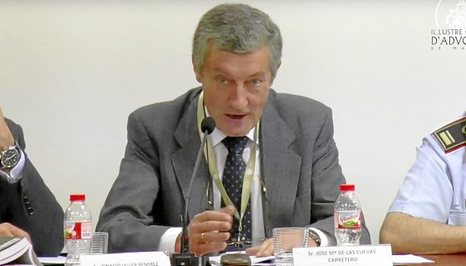
The Sunday November 6th meeting of Marxism 20161 on the theme “When Governments Lie” hosted as speakers four women campaigners and Eamon McCann, a male campaigner, addressing the packed downstairs hall of the Club na Múinteoirí. A number of cancellations of speakers had taken place, including Gareth Pierce who sent a message which was read out to the meeting.

hillsborough-speaker-when-gvts-lie-marxism-2016
Brid Smith of the SWP (centre photo) chairing the meeting When Governments Lie public meeting at Marxism 2016 weekend (Photo: I.O’Kelly)

On the podium, taking turns to speak, were Sheila Coleman of the Hilsborough Justice Campaign, Kate Nash of the Bloody Sunday Justice Campaign, Joanne Donnelly of the Justice for the Craigavon Two Campaign, and Antoinette Keegan of the Justice for Stardust/ 48 Never Came Home Campaign (summary of these campaigns below).

After being introduced by Bríd Smith, chairing the event, Joe Black with guitar, accompanied wonderfully by a musician on bazouki (if I can get his name will insert it here), launched the evening with Black’s powerful song about Giuseppe Conlon, father of Gerry Conlon of the Guildford Four. The Guildford Four were wrongly convicted in 1975 of IRA bombings and served fourteen years before they were cleared. Giuseppe Conlon, who went to England to clear his son, was also jailed, as were his relatives the Maguire family. The Maguire1 Seven were cleared in 1991 but by that time Giuseppe had died in prison, an event that, along with his own imprisonment, devastated his son and affected him for his remaining years until he died in 2004 at the age of only sixty years.

All of the speakers emphasised that the State’s officials lied with regard to their respective cases and concealed evidence and most speakers also accused the media of complicity. In the cases of Bloody Sunday, the Craigavon Two and Hillsborough, the British state was placed in the dock by the speakers while the Stardust fire cover-up was laid at the feet of the Irish state.

Most of the speakers also warned people in similar circumstances to beware of establishment party politicians who try to flatter campaigners and decide which are the “reasonable” ones to deal with, always at the price of reducing the objectives being sought. The speakers for the Bloody Sunday and Hillsborough campaigns in particular warned against this element, Kate Nash singling out Sinn Féin as the party that acted that way with regard to Bloody Sunday (Kate Nash’s brother was killed that day and her father shot and injured) and how they tried to bring the campaign to an end with an apology from the then British Prime Minister, while no senior officer or government official was held to account and while one of the unarmed dead remained accused of carrying a nail bomb.

Brid Smith of the SWP (also SWP/AAA) addressing When Governments Lie public meeting at Marxism 2016 weekend (Photo D.Breatnach)
Sheila Coleman of the Hillsborough Justice Campaign addressing When Governments Lie public meeting at Marxism 2016 weekend (Photo D.Breatnach)

Eamon McCann, who was on the march in Derry on Bloody Sunday 1972, finished the evening with one of the rants for which he is famous, going beyond his allocated time by a fair bit and despite the Chairperson’s frequent reminders. McCann located the similarities of the cases within the class system – most of those injustices represented were about repression of working class communities, or ignoring the damage done to them and the lies were told to protect the system and its supporters – big businessmen, politicians, the police, the Army.

The meeting ended to sustained applause but without any opportunity to ask questions or to make contributions, to the regret certainly of a number of Republicans and campaigners against what they consider to be ongoing internment without trial. All however seemed agreed that the talks had been interesting and educating in at least some aspect of the issues and events covered.

WHY SO LONG?

It is good that this meeting about State injustice and lies was held by an Irish socialist organisation. It is the duty of socialist organisations to point out the injustice of the State even when the victims are not socialists – or not socialists in the way that socialist organisations think they should be. Prominent socialists Karl Marx and Frederick Engels were not Fenians but they campaigned for the release of Fenian prisoners being held in English jails (where, by the way, it said that one third of them died and one third went insane).

It is said that we learn more from our mistakes than we do from our successes and certainly, if we are to bring about a revolution and the society we want, we must learn from our failures. And in that spirit, I must ask: why has it taken so long for Irish socialist organisations, particularly in Dublin, to wake up to the repression being exercised against Irish Republicans?

Five years ago Marian Price, a former Republican prisoner released under licence as part of the Good Friday Agreement, had her licence revoked and was taken to Maghaberry jail, kept for months without charge or bail, eventually charged and kept in jail without bail, sick, until her mental and physical health was broken. In Dublin the socialist organisations sent a couple of representatives to one demonstration for her freedom and never attended a picket about her case afterwards.

After the Marian Price campaign ended with her release in 2013 on “compassionate (sic) grounds”, some of those involved in Dublin launched a campaign against “internment by other names”, a process by which ex-prisoners released on licence are returned to jail without even a trial in the no-jury courts of the Six Counties2 and other Republican political activists are harassed and arrested and refused bail on spurious charges which eventually collapse after the accused have been held for months or years in jail3.

I must ask again: why has it taken so long for Irish socialist organisations, particularly in Dublin where the major part of their organisation is located and most of their activities organised, to wake up to the repression being exercised against Irish Republicans?

Is it perhaps because the socialists feared to be painted with the nationalist brush? But did they not fear being daubed with complicity with imperialism instead? It is a strange kind of socialist organisation that can’t make common cause with Republicans against the tyranny of the colonial statelet and capitalist State! In that failure, it misses the opportunity to unite forces against its enemies’ state and also to disseminate its ideas among Republican activists. One might also remark that a failure of people who are prepared at times to unite with social democrats for reforms, to unite with Irish Republicans against a capitalist state is a strange indication of revolutionary socialism!

Or is it purely because they didn’t care – it wasn’t happening to them – that Irish socialist organisations haven’tt campaigned against State repression of Irish Republicans, or even protested in solidarity with them? If so, they will by the seed of their inactivity one day certainly reap a harvest of repression for themselves too. Solidarity against State attacks is not only a noble thing with a long tradition; it is a necessity for revolutionaries.

So now that this “Marxism” weekend is over, when its organisers are taking a deserved rest, or writing it up for the British and Irish version of their newspaper, or compiling their recruitment slips to see how many new members or at least mailing list contacts they have gained – will they do anything different?

Will we see the highlighting, from time to time, of the almost everyday harassment of Irish Republicans in the leaflets and newspaper of the SWP and PBP? Will their TDs in the Dáil raise these issues where they might get some bourgeois media coverage? Are we going to see PBP and SWP militants on the regular pickets organised by the Anti-Internment Group of Ireland anywhere and, in particular on those called by the Dublin Anti-Internment Committee?

We can hope, I suppose.

Diarmuid Breatnach

APPENDIX: THE CAMPAIGNS

Hillsborough Justice Campaign seeks vindication that the original disaster was due to crowd mismanagement by the South Yorkshire Police and that some of the subsequent deaths were also due to their mismanagement of some still-breathing victims and lack of coordination of the emergency services. The disaster took place at Hillsborough football stadium in Sheffield, England, UK, on 15 April 1989, during the 1988–89 FA Cup semi-final game between Liverpool and Nottingham Forest. With 96 fatalities and 766 injured it is the worst disaster in British sporting history. Originally, the Liverpool football fans were blamed for the disaster but subsequently it became clear that the blame lay elsewhere.

Bloody Sunday Justice Campaign seeks a proper accounting of the deaths of 14 and injury of at least 14 after British troops opened fire on unarmed people demonstrating in Derry on 30th January 1972 against Internment. Originally, the British Army and Government claimed that they had shot “terrorists” in “returning fire” after being first fired on and a British enquiry backed them on this and claimed to have evidence that some of the dead had been handling weapons.

The campaign organises a march every year on the Sunday nearest to the date of the massacre https://www.facebook.com/BloodySundayMarch/?fref=ts.

Justice for the Craigavon Two Campaign https://www.facebook.com/JFTC2

Founded in 2012, a campaign to overturn the clearly unjust convictions in May 2012 of John Paul Wooton and Brendan McConville for the killing of a member of the British colonial police force, the PSNI, in March 2009.

The forensic evidence was contradictory and in a number of cases even pointed to the innocence of the accused, electronic surveillance equipment had been interfered with by the British Army; the State produced no witnesses to the incident and only one who placed one of the accused at the scene – this witness came forward a year after the arrests of the two, his account of his movements that evening were not supported by his wife; a close family relative called him a habitual liar and then this family member was arrested and subjected to intimidation by the colonial police after he had given a statement to the accused’s legal team..

(see also forthcoming fundraiser in Dublin https://www.facebook.com/events/705695282938993/)

Justice for Stardust/ 48 Never Came Home Campaign https://www.facebook.com/JusticefortheStardust48/?fref=ts

In the early hours of 14 February 48 young people died in a fire at a disco at the Stardust nightclub in Artane, Dublin and 214 were injured.

The campaign seeks to shift the blame from alleged “arsonists” to a fault in the premises wiring and other factors within the responsibility of the club’s management and owners, including blocked emergency exits. The allegation is that there has been a cover-up connived at by the Irish Government to exonerate businessmen friends, who to add insult to injury, received substantial financial compensation for the loss of the building. An ongoing controversy over inquiry findings and ignoring of important pieces of evidence have lent increasing credence to the version of the campaigners.

1This is organised annually in Dublin, Ireland by the Socialist Workers’ Party

2A prominent example in the past has been Martin Corey of Republican Sinn Féin; a current example is Tony Taylor

3For example Stephen Murney of the éirigí political party and the independent activist Colin Duffy and members of his family

15 YEARS PRISON THREATENED FOR BASQUE YOUTHS IN BAR ALTERCATION PROVOKED BY SPANISH POLICE

BREAKING NEWS …………… BREAKING NEWS …………… BREAKING NEWS ……………

FIFTEEN YEARS PRISON THREATENED FOR BASQUE YOUTHS IN BAR ALTERCATION PROVOKED BY SPANISH POLICE – SIX ALREADY IN JAIL


Monday 15 November 2016

Diarmuid Breatnach


Six Basque youths are in jail without bail tonight and altogether twelve face fifteen years in prison, in a case arising out of an altercation in a bar in the southern Basque Country (i.e under Spanish occupation) involving two officers of the Guardia Civil (Spanish militarised police force) in Altsasu in the province of Nafarroa (Navarra).

Protest demonstration in Altsasu tonight. The slogan says: "FREE THE DETAINED!" (Source: Basque contacts)
Protest demonstration in Altsasu tonight. The slogan says: “FREE THE DETAINED!”
(Source: Basque contacts)

Altsasu is known as a town with a particularly strong history of Basque resistance and a continuing sympathy among the population. The town also has, by no means accidentally, one of the strongest barracks of the Guardia Civil.

On the night of 15th October, the two male Guardia Civil officers, off duty and with their female partners, went into Taberna Koxka, a well-known bar and night spot frequented by the Abertzale (pro-Basque Independence) Left, where they behaved provocatively. Inevitably the policemen were challenged by some of the patrons of the bar and a scuffle broke out.

No injuries were sustained by the police although one of them claimed an injury to his ankle, a story that fell flat when it was revealed that he was already on sick leave at the time of the incident due to an injury to his ankle. In addition, the Guardia Civil report itself, though claiming the officers’ behaviour was non-provocative and peaceful, did not claim police injuries and the province’s “autonomous” police force (but very hostile to the Abertzale Left), the Policía Foral, also denied there had been any injuries.

The pro-Spanish media not only spread police lies but added to them, one surreal story alleging that the quietly relaxing police officers and their partners had been attacked by 50 Abertzale Left youth throwing martial arts punches and kicks. Tragically, such lies will find a ready audience in much of the Spanish state outside the Basque and Catalan countries.

At first the police classified the incident as a “hate crime” but the State Prosecution upgraded its classification to “terrorism”.

The eight youths were detained in police raids this morning and taken to the National Court in Madrid although, upon learning that they had been named by the Guardia Civil in a list of 12 people involved, they had already voluntarily presented themselves to testify before a judge in Irunea who, however, could not be found. Despite that earlier voluntary attendance, arisk of fleeing” was given as the primary reason for refusing them bail. Two others were released under stringent reporting to police conditions and two others, who also presented themselves voluntarily to be tried with the others, were told to return to court tomorrow.

Guardia Civil provocatively driving through an Abertzale Left demonstration. The people in costume are Zapantzarak, traditional performers particularly in Spring festivals but often participating in Abertzale Left events also. (Source: Basque contacts).
Guardia Civil provocatively driving through an Abertzale Left demonstration.
The people in costume are Zapantzarak, traditional performers particularly in Spring festivals but often participating in Abertzale Left events also.
(Source: Basque contacts).

“Terrorism”

The Prosecution has asked for the Basque youths to be tried under Article 573 of the new Penal Code, set aside for crimes of “terrorism”, the definition of which even the UN has declared to be “excessively imprecise and broad” and which “may criminalise behaviour which is not terrorist.” Conviction under Article 573 can carry a sentence of 15 years in jail.

Tonight in Altsasu, Basque youth took to the streets in peaceful but militant protest demonstration (see photo).

This incident is not without a context: in recent months the town has seen hundreds of Guardia Civil driving through the town at various times and a demonstration organised by Abertzale Left on 22nd October was penetrated by Guardia Civil vehicles (see photo). The strongest anti-repression organisation in the Basque Country, “Ospa Mugimendua”, has an active following in the town.

Guardia Civil has his photo taken mocking an event organised by the anti-repression organisation Ospa Mugimendua. (Source: Basque contacts).
Guardia Civil has his photo taken mocking an event organised by the anti-repression organisation Ospa Mugimendua.
(Source: Basque contacts).

The Guardia Civil, although established in the Spanish state in 1844, is a militarised police force (type of carabinieri) associated in the minds of most Basques, Catalans and progressive Spaniards with the Spanish Civil War and with General Franco, whom the force enthusiastically supported. The force has a long history of violent repression, torture, murder and even rape. After the “reform” of the State with the death of Franco, the force was neither abolished nor reformed. The Guardia Civil is also much loved by the Spanish Right and the “Association of Victims of Terrorism” (sic), which regularly demands increased repression against Basques and Basque political prisoners, is mostly composed of relatives of the Guardia.

end

(Sources: Naiz and contacts in Euskal Herria)

“They Shall Not Pass — 80 years of fighting fascism” AFA Dublin conference

SATURDAY NOVEMBER 12th AN ANTI-FASCIST ACTION CONFERENCE WAS HELD IN DUBLIN CITY CENTRE, TITLED “THEY SHALL NOT PASS – 80 YEARS OF FIGHTING FASCISM”

The speakers were Dr.Brian Hanley, Dr.Mark Hayes and Ciaran Crossey, with the event chaired by Helen Keane.

poster-afa-conference-dublin-nov2016-jpeg
Poster for the event which used as its main image a section of the Battle of Cable Street mural.

I missed the beginning of the conference and unfortunately the whole of Ciaran Crossey’s presentation, arriving near the start of Brian Hanley’s to a packed conference room.

Brian Hanley gave a comprehensive history of the main components of the development of fascism in Ireland in the 26 Counties until the collapse of its impetus at the end of the 1930s. Hanley’s talk built on his Pamphlet: Ireland’s shame: the Blueshirts, the Christian Front and the far right in Ireland, (Belfast, 2016) by adding a review of Ailtirí na hAiséirghe, the minor but energetic organisation formed in 1942 under the leadership of Gearóid Ó Cuinneagáin, which aimed for an anti-semitic Catholic and corporatist state.

Hanley packed all that into 45 minutes with apparently occasional deviations from his notes, full of interesting observations. Locating the thrust towards fascism in the strongly Catholic and anti-communist atmosphere of the 1930s in Ireland (with elements of anti-semitism), it was surprising to hear excerpts from speeches and right-wing periodicals of the period referring to the Fianna Fáil Government as “communist” and “under orders from Moscow”. It was interesting too to hear brief accounts of pitched battles between fascists and Republicans around the country during the height of the Blueshirt era, how much of a social base and energy the latter gave to the Fine Gael party and to accounts of the Soldiers’ Song (the Irish National Anthem) being attended to with the fascist salute (which led to violence in one cinema at least).  Another interesting if somewhat disappointing snippet was that the AT&G, a trade union with HQ in Britain, was the one that most prominently took a stand against Franco in the 1930s while many Irish union leaderships took the opposite side.

The Chair announced a short break immediately after Hanley’s contribution which sadly resulted in no questions on Hanley’s contribution when the conference reconvened with perhaps 80% of the earlier attendance.

The post-break session began with a talk by Mark Hayes, well-known in Britain in particular as a veteran anti-fascist activist and organiser.

Hayes began by seeking to establish a description of fascism and then went on to dissect and disprove a number of reasons given by commentators for its incidence – religion, psychology of the masses of certain countries, psychology of fascist leaders, the middle class — but concluded that fascism occurs when the ruling class of a country is ready to implement it and able to do so. During the 1930s and ’40s, the ruling classes of a number of European countries opted for fascism while others did not. Britain for example had leaders who admired fascism, including Churchill (and Hayes quoted some of the latter’s public statements) but could not tolerate a Europe under the control of one country, which explained, Hayes said, why Britain went to war with Hitler and Mussolini.

Some individuals apart, the profile of fascists and supporters was “depressingly normal”, Hayes maintained which demonstrates that a successful rise of fascism is potentially possible anywhere. There is no firewall between capitalist democracies and fascism and commentators who maintain that “it couldn’t happen here” or that its time has run out, as one prominent commentator claims, are sadly mistaken.

The growth of fascism is assisted by the capitalist State with increasing attacks on civil freedoms and on the rights of workers.  Hayes saw this as being particularly initiated in Britain under the Prime Ministership of Margaret Thatcher and her Government, with attacks on the legal rights of trade unions and the use of massed ranks of police. He drew attention to the “prevent” strategy in Britain today as a state-introduced oppressive and repressive measure.

Mark Hayes during his presentation. (Photo: D.Breatnach)
Mark Hayes during his presentation.
(Photo: D.Breatnach)

Questions & Contributions

At the end of Hayes’ presentation the Chairperson Helen Keane opened up the floor to questions.

There were four contributions from the floor, only one of which was a question: it was about the content of the Prevent Strategy which Hayes’ had mentioned earlier. Hayes replied that managers of colleges in “the UK” now have a legal obligation to identify and report to the authorities anyone exhibiting “extremism” which is turning them into part of the police force, which was an aspect of fascist rule in society. “Extremism” is problematically identified as being in opposition to “British values” which are formulated as “moderation, fair play”, etc but those alleged values completely ignore the history of Britain’s colonial conquest and imperialism.

A contributor addressed the liberal dismay at the election of Trump, criticised the alleged feminist politics of Hilary Clinton with regard to the USA’s war policies and their effects on women elsewhere in the world; finally he expressed his belief in the necessity to stand by Russia and Syria.

Another contribution framed as a question but in reality more of a comment was made in relation to the history of the growth of state fascism in Britain, which the contributor ascribed to the Prevention of Terrorism Act, introduced by a Labour Government a year before Thatcher’s Conservative Party gained a majority. That year, 1974 was also the year of the killing by police of the first known anti-fascist martyr in modern times in Britain, Kevin Gately in Red Lion Square in London.

The contributor went on to express the view that although AFA had made a huge and the principal contribution to the defeat of modern fascism in Britain, the policy of “No Free Speech for Fascists” had been put forward by the Communist Party of England (Marxist-Leninist) in the very early 1970s1 before the formation of AFA2, a policy which no other political party on the Left would support at the time. That policy had been popularised through the action of the Afro-Asian Student Society, which had close links with the CPE (m-l) and which was influential in bringing about the “no platform for fascists” policy in the National Union of Students in Britain in 1974.

section-attendance-plus-banner
A section of the attendance after the break in the conference. (Photo: D.Breatnach)

Hayes agreed that of course there had been earlier organisations and also stated that the actions of the Labour Government in Ireland had been fascist but felt that in Britain, Thatcher had brought about the definitive introduction of State fascism and that “in 30 minutes it’s not possible to cover every detail.”

The issue of the attitude towards “our only native ethnic minority”, the Irish Travellers, was raised by another contributor, attacking the endemic wrongs in the treatment of this group within the country and defending their need to be recognised as an ethnic minority.

The event ended with a reading by Máirín Ní Fháinnín of the translation into English of a short poem by Flor Cernuda, who after a period of post-war imprisonment in a concentration camp, worked for many years for the underground resistance against Franco’s regime.  The poem’s title is Las Brigadas Internacionales.

CONCLUSION

The conference was full of interesting information and the speakers I heard were of good quality in presentation, in knowledge of history and in analysis. There was undoubtedly a lack of discussion, which was a pity. In addition I was surprised that the Dublin anti-fascists’ victory in denying Pegida their Irish launch was not mentioned – small-scale though the battle was, Dublin was as far as I’m aware the only city in a European state which Pegida had targeted to launch their party and had failed to do so, being driven out of the city centre by vigorous action.

Máirín Ní Fháinnín reading Flor Cernuda's poem. (Photo: D.Breatnach)
Máirín Ní Fháinnín reading Flor Cernuda’s poem.
(Photo: D.Breatnach)


Footnotes

11971 or ’72

21985

DEFENDING DUBLIN FROM JAPANESE INVASION

Manager of Dublin City Council Road Management Department

Dear Sir/ Madam,

Please allow me to extend my heartfelt thanks for your work on the city roads and more than that, the ingenuity displayed by your staff. Dublin and to an extent the whole of Ireland is being kept safe, thanks to the work of your Department, from Japanese Army invasion. Or any other cycle-born troops.

I must admit I was not expecting to find that people working for the local authority had studied the Imperial Japanese Army assault on Singapore in 1942 and who had learned from it. If only there were more like your staff in the rest of Ireland! But no, complacency rules. “Ah, sure it’ll do” is the order of the day.

Few people now seem to recall the complacency with which Lieut. General Arthur Percival faced the Imperial Japanese threat to Singapore in 1942. Almost an island, Singapore had massive artillery pointed out to sea, ready to pound the Japanese invasion fleet. No artillery of any size was pointing towards the mainland. The jungle there was impassable to an army of any size, apparently.

Unfortunately someone neglected to tell the Imperial Japanese Army that. They sent their soldiers on bicycles down jungle trails, moving thousands of troops into position in days. Then they stormed across the Causeway and attacked Singapore.

Lieut. General Arthur Percival surrendered an estimated 85,000 soldiers, most of whom had never fired a shot in Singapore. The Japanese had nothing but contempt for these soldiers and officers who had been surrendered by Percival, not only that, but had done so for the most part without putting up any kind of resistance at all. That was part of the reason they treated the prisoners so badly.

British soldiers surrendering to Japanese Army at the Surrender of Singapore 1942.
British soldiers surrendering to Japanese Army at the Surrender of Singapore 1942. (Sourced on Internet)

Had the British command in the region not been so complacent, they would not only have turned some of Percival’s big guns around to fire on the mainland but would have sent sappers – British and Commonwealth Armies’ engineers — out into the jungle to dig bicycle traps. Like your engineers have installed on Dublin city streets, roads and laneways.

How Lieut. General Arthur Percival could have used your engineers, if only he had realised the danger in time! But your engineers have used ingenuity above and beyond anything that British sappers might have thought up. A simple hole in the road after all is visible, even at night in dim Dublin street lighting — and may be avoided. But your engineers are more skilled than that – they consider: “OK, so the invading cyclist will see this hole and swerve to avoid it. He’ll swerve on the inside, so he doesn’t get hit by a passing vehicle. So we’ll place another hole, a little further on, on the inside.”

bad-road-surface-henry-place-bend
Excellent bicycle trap designed by Dublin City engineers, one of many in a whole defence network

Now, a rather pedestrian (if you’ll forgive the pun) engineer, might very well leave it at that. But no – your engineers ask themselves: “But after a number of disasters, jarring bumps, split tires and crashes, won’t the invading cyclists automatically swerve to the outside when they spot a hole ahead?” And so naturally, just to vary the rule, the engineers put another hole on the outside of the first from time to time.

Your engineers go yet further. “Wouldn’t it be better if they couldn’t see the hole at all?” they ask one another. After all, this is a common feature of traps – almost obligatory, one might think — so no great credit to your engineers in thinking of that. No, their genius is in how they carry out the disguising.

Normally, on a jungle path or trail, a pit (or a land-mine) would be covered over with loose earth and dead leaves to disguise it. But on a tarmacadamed road such is not possible (and even if it were, might claim the lives of innocent pedestrians or even motorists, for example trying to pass other traffic on the inside). This is where the true genius of your engineers is displayed.

Firstly, they place the holes in dark places – e.g where street lamps are not functioning, or under shade of trees. Sometimes instead of a hole, they construct a sharp dip in the tar macadam. And aware that cyclists often look ahead, see darker patches in the shade and swerve to avoid them, thinking “Aha! The sappers have placed a hole in the shade!” (sorry, I don’t know how to say that in Japanese) – yes, imagining that, your sappers darken a small area of road a little before a real dip! The cyclist sees the darker spot, thinks “Aha!” etc, swerves to avoid and, a moment later, hits the real dip. Masterly!

Of course, holes and dips are not the only useful anti-cycling device – ridges function quite well at times and can take unawares a cyclist who has been on the lookout for holes. Another clever ruse is the one of making the ridge small, therefore not too destructive to ride over, but placing a number of ridges beyond it, so that the cyclist experiences a shuddering sensation going over one ridge after another. He might even be induced to swerve here, when a passing vehicle may obligingly side-swipe him.

Then there is the principle of distraction. I don’t know what Percival’s engineers might have done, perhaps placed pictures of disrobing geishas near a pit but your engineers are more prosaic. Besides, exposure to many pictures of disrobing geishas might dull the effect over a period, or even become unfortunately forever associated in the minds of Japanese soldiers with pits and horrible crashes. No, your engineers think to themselves: “At what locations are the eyes of all cyclists likely to be diverted from the road surface straight ahead?” And they hit upon the answer, of course (perhaps they even had some cyclist double-agents working for them?).

Cyclists take their eyes off the surface of the road ahead when approaching traffic lights, or intersections, or crossing intersections or just having crossed one. They want to be sure that they obey the traffic lights and even more than that, that they don’t get hit by a vehicle coming from another direction, or side-swiped by one as they swerve out to avoid a parked vehicle just after having safely got across another intersection. So holes, dips and wheel seizing cracks are placed in shortly before traffic lights, in the middle of intersections or just on the other side!

There is also an economic benefit to all this necessary work of cyclist-trapping, and it is in the saving of the Motor Tax allocated to the local authority. The money saved by not filling in these holes goes to pay the Water Charge – a worthy recipient and appropriate diversion of revenue, if ever there was one!

There is even, dare I say it, a greening side-benefit, for inside those holes, little plants, grasses and even shrubs can take hold, bringing more green to our sometimes too grey city.

In days to come I hope that the work of your engineers, ably led and directed by yourselves, of course, may become properly recognised. Some recognition is surely due to men (and women?) who toil in anonymity to save us from a bicycle-mounted troop invasion. Besides which we don’t want to have to learn Japanese, being already fluent in another conqueror’s language – we have enough difficulty ordering food by numbers in Chinese restaurants. And if were taught Japanese in school, we wouldn’t want to have to actually speak it (as can be seen from the case of our National Language).

For appropriate recognition of the work of your Department, a public monument could be considered – perhaps one constructed from crushed bicycles. And plaques – perhaps set into roads at appropriate places or on signs as one approaches traffic lights and junctions. One can only hope. Keep up the good work!

Yours etc.

SHUT UP AND DON’T QUESTION

Diarmuid Breatnach


You will not question the Leadership of the Organisation. That is disrespectful. Besides, they know better than you. They are more intelligent and/ or better educated or have been at it longer than you.


The Leadership are incorruptible and have suffered much along the way. That makes it disloyal to question them.

You don’t want to be disrespectful and disloyal, do you?

Let the Leadership do the thinking. Is that not easier?

You must not listen to those who challenge or criticise the Leadership. Those people are disloyal and disrespectful. Besides, some of the things they point out will make you uncomfortable. Put your trust and faith in the Leadership and be comfortable and at ease.

Those who challenge the Leadership are troublemakers. They seek to upset things. It is right that they be expelled and then things will return to the state with which we can be comfortable. If remaining inside the Organisation, they will create disorder. If they are outside the Organisation, their words should not be reported or their criticism printed. Their activities should not be publicised.

You know and your comrades know that you are not a troublemaker, or disrespectful or disloyal. But if you associate with those critics, the ones from outside or that left or were expelled, people will begin to suspect that you too are like them. You want the Leadership and comrades to trust you, to be at ease with you, don’t you? Best ignore the critics, not have anything to do with them.

Besides, what can they possibly have to offer, outside the Organisation?

Solidarity against the attacks of the enemy is a good thing, but not with the critics. They have forfeited any right to solidarity when they broke from or criticised the Leadership and the Organisation. They have brought all this down upon themselves.

Concentrate upon the path pointed out by the Leadership. Concentrate upon the tasks of the moment. All will be well. You are in good hands. The Organisation is in good hands. Everything is fine.

VARIATIONS ON A NAME

Diarmuid Breatnach

(Gaelic football team Sheares Brothers has been doing very well for a change. A reporter from the Irish Times is about to conclude his interview of the club’s Bainisteoir).

gaa-empty-field-changing-rooms
(Photo sourced: Internet)

Your club’s local nickname is “the Pats”, I’m told.

Yes, I’ve heard that too.

Is it true – what I’ve been told – that all your players, in your entire team, are called Patrick?

Well, now, many are named Patrick, right enough, but they are not all called Patrick.

[Reporter jots down in his notebook: ‘named not called – wtf???’]    Does that not cause problems, though, on the field? I mean, it must be difficult at times for your players to know to which of them the Captain is referring when he shouts out: “Patrick”.

[The interviewer smiles. He has shown the ridiculousness of this situation].   (Fucking unbelievable that this team got as far as its current position in the League! he thinks)

No, not all. Sure if the Captain called out “Patrick”, he’d be referring to himself! That would be a strange thing to do, for sure, to be talking to himself! Well, when with the team, anyway.

(This man is an idiot. An idiot managing a ridiculous team. Still, get the interview done, file the story. Then the pub ….)   Ok …. what if he wants to say, to indicate to a player, to pass the ball to the left midfielder? Would he just call the position – as in “Pass the ball to Left Midfield”?

Well, he might …. but he’d more likely say “Give Paudie the ball”. That’s Paudie’s usual position, you see.

Oh, right.

No, left.

(What a thicko!)     I meant “ok”. Your left Midfielder’s nickname is “Paudie”?

Well, it’s the name he goes by anyhow. Paudie Whelan.

So are all your players called a variation on Patrick?

Pretty much, yes.

Fifteen variations on Patrick?  And no repetitions?  That’s not possible, is it?

It seems to be.

OK, all right …. what about say, your Centre Forward?

Pa. Pa Walsh.

Hmm. Left Forward?

Packy Ó Braonáin.

Right Forward?

Emm …

(Got you now!)

Sorry, he’s just back from an injury. Patchy …. Patchy Stokes.

Left Half-Forward?

Patchik Mulhearn.

Centre Half-Forward?

Paddy plays that position – Paddy McGuinness.

Right Half-Forward?

Patch Hennessy.

(Has to run out of them soon).    Left Mid-Field?

You had his name already – Paudie Whelan.

(Smartass!)    Yes, of course. Right Mid-Field?

That’d be Pád Óg Trainor.

That’s P, a, u, d ……

No. P, á, d; Ó, g.

Right.

Right Half-Back?

No, I meant just “Right” , as in “OK’.

Right.

(Is he taking the piss?)    Well ….. where was I?

Midfield.

Yes …. thanks …. Right Half-Back?

I thought you said ….? Never mind …Paudeen Sullivan.

Centre Half-Back?

Pád …. Pád Carney.

P, a, u ….

No, P, á, d; C, a, r ….

I know how to spell Carney, thanks.

Oh, ok.

Left Half-Back?

That’s Patrick … our Captain. Patrick Burke.

Left Corner-Back?

Ah ….

(Have I got him?)

Ah, sorry ….

(Aha! At last!)

Pat Sheehan. His name slipped me mind there for a minute, sorry.

Oh …. Ah. Good. Full Back?

Páraic Ó Flaithearta. Will I spell it for you?

(Fucking smart-ass! I’ll get it from their website. Just let me run him out of Patrick variants first.)    No, it’s ok, I know my koopla fokol, gurra mah hugut.

Muise, tá fáilte romhat. Bail ó Dhia ort.

Well …. let’s carry on. Right Corner-Back?

Pádraig. Pádraig Lehane.

(Got you now!)  Pádraig. The same as the man next to him, the Full Back.

No, that’s Páraic. P, á, r, a, i, c.

Oh!  Ok, yes, I see. My mistake. Goalie?

Patsy O’Farrell.

Yes. Well, thanks. Yes …. I don’t suppose your substitutes are called Patrick?

No, neither is.

Oh, good.

Sorry?

Good … good story, thanks. I must be going ….

Don’t you want to know their names?

The subs?

Yes.

OK, yes I suppose. Yes, please.

PJ Hanley and Packer Dunne.

I …. see …. ‘PJ’ as in ….. Patrick Joseph?

Dead on!

Um … Well …. Thanks for your time. All the best for your next game in the League. I don’t suppose, heh, heh, your Junior team are all variants of Patrick too?

Ah, not at all! Of course not. Sure, that would be awful confusing. No, there’s Michael Fitzgerald, Mick Smith, Mickey Doyle, Mícheál Connors, Micilín Seoighe, Mikhail ….

End.


Appendix:


The Sheares Brothers GAA team.

Packy Ó Braonáin, Pa Walsh, Patchy Stokes.

Patchik Mulhearn, Paddy McGuinness, Patch Hennessy.

Paudie Whelan,                         Pád Óg Trainor.

Patrick Burke, Pád Carney, Paudeen Sullivan.

Pat Sheehan, Páraic Ó Flaithearta, Pádraig Lehane.

                       Patsy O’Farrell.

Subs: PJ Hanley, Packer Dunne

WHEN DUBLIN WANTED MAYO TO WIN — MEN OF THE WEST AND THE MAN FROM DUBLIN

Diarmuid Breatnach

As Mayo began to prepare for a replay of the 2016 championship Gaelic Football final against Dublin, I stood with others on a very wet day in Dublin’s Croppies’ Acre to commemorate and honour Robert Emmet and the United Irishmen – an event replete with Mayo connections.

line-enniscorthy-group-at-monument
Eniscorthy Historical Reenactment Society inside the monument during the ceremony. (Photo: Paddy Reilly)

The event, organised by the Asgard Howth 1916 Society, was graced by the presence of the Enniscorthy Historical Reenactment Society, men and women in 1798 costume bearing pikes, including officer uniforms – they had travelled up from Wexford that morning to attend the event. Donal Fallon, historian, blogger, tour guide and broadcaster was to give the oration. Padraig Drummond, the organising persona, had asked me to sing two songs at the event, one near the start and the other near the end.

For the first song, I had chosen the Bold Robert Emmet ballad1 (originally known as The Last Moments of Robert Emmet2), a song that commonly sung more often a few decades ago but still reasonably well remembered. For the second, I was spoiled for choice of relevant songs: Anne Devlin, Boolavogue, The Croppy Boy, Henry Joy, The Irish Soldier Laddie. Kelly the Boy from Killane, The Rising of the Moon, Rodaí Mac Corlaí, Sliabh na mBan, the Three Flowers, The West’s Awake, The Wind That Shakes the Barley …… or I could finish learning some of which I knew bits, like the Sean Bhean Bhocht, General Munroe, Memory of the Dead (Who Fears to Speak of ’98?) or the Mayo version of An Spailpín Fánach.

Drawing depicting the trial of Robert Emmet in Green Street Courthouse, Dublin
Drawing depicting the trial of Robert Emmet in Green Street Courthouse, Dublin. (Photo source: Internet)

Though a beautiful song in lyrics and air, I felt Sliabh na mBan was too long for the event and cutting it would also feel wrong. Anne Devlin remembers an extremely brave comrade of the United Irishmen and gives rare acknowledgement to the role of women in the struggle for Irish freedom, which had me veering towards that choice. However, I eventually settled on Men of the West, celebrating the 1798 uprising in Mayo when a small French force under General Humbert landed to support them.

Diarmuid Breatnach singing "Men of the West/ Fir an Iarthair". (Photo: Paddy Reilly)
Diarmuid Breatnach singing “Men of the West/ Fir an Iarthair”.
(Photo: Paddy Reilly)

MEN OF THE WEST

The Mayo connection in the forthcoming GAA final was one reason for the choice, another was that this time of year is that which witnessed the repression in Mayo after the defeat of the last rising of that year (and the last forever, the British and their Orange supporters may have thought, until Emmet came out five years later). And other reasons were that I could sing it as a macaronic song (with some of the verses in Irish and some in English), the song was not too long and it has a chorus in which participants could join.

Bartholomew Teeling, with the French who landed at Mayo, captured when they surrendered at Baile na Muc. Hung in Dublin and his body thrown into the "Croppy Hole".
Bartholomew Teeling, with the French who landed at Mayo, captured when they surrendered at Baile na Muc. Hung in Dublin and his body thrown into the “Croppy Hole”. (Photo source: Internet)

There were yet other reasons for the choice too – not in our culture of song and game, nor in the calendar, but in the ground under our feet, for somewhere under there in what was first called “The Croppies’ Hole” and later “Croppies’ Acre”, the mass grave of many United Irish, lie the bodies of the executed Matthew Tone — younger brother of Theobald Wolfe Tone (who was soon after to give his own life to the Rising) – and Bartholomew Teeling. The younger Tone and Teeling had landed with the French in Mayo, been taken prisoner after the surrender of the French at Baile na Muc, in Co.Longford, brought to Dublin and, despite their French Republican Army officer rank, tried as rebels and hung there.

And in researching background for this article, I came across even further Mayo connections.

The lyrics of Men of the West were written by William Rooney and put to the air of an Irish song called Eoghan Chóir written in turn — and also air apparently composed — by a Mayo United Irishman and songwriter, Riocard Bairéad (Richard Barrett3), who composed the even better-known Preab San Ól4.

The lyrics of Men of the West were later translated into Irish by Conchúr Mag Uidhir, who won a prize for that work at a Feis Ceoil in 1903 – again in Mayo. It was the lyrics of both these versions that I combined to make the macaronic version I chose to sing at the commemoration at Croppies’ Acre5.

THE DUBLIN SONGWRITER — BACKGROUND

While I need to do some research to find out more about this Mag Uidhir, quite a lot is known about William Rooney (Liam Ó Maolruanaigh). Born in the Dublin former red-light district known as “The Monto”6 in 1873, Rooney grew up in a what had been considered the second city of the British Empire but had declined in status with the abolition of the Irish (colonial) Parliament in 1800. The city contained the residence of the Crown’s representative in Ireland, a number of British army barracks and the administration apparatus of the colony, the latter in Dublin Castle. Dublin also contained a substantial loyalist population of the Ascendancy, in addition to “Castle Catholics”7. However, Dublin was also a focal point in Irish nationalist and separatist politics. Relatives and descendants of members and sympathisers of the United Irishmen of 1798 and 1803 lived in the city and the events were in the living memories of some.

William Rooney, journalist, organiser, Irish language revivalist and author of songs.
William Rooney, journalist, organiser, Irish language revivalist and author of songs. (Photo source: Internet)

Irish Republicanism had seen a resurgence with the Young Irelanders of 1848 and some of their supporters were easily alive when William Rooney was born in 1873 and during his childhood. The founding of the Irish Republican Brotherhood in 1858 preceded Rooney’s birth by only 15 years and although the raid on the The Irish People newspaper took place in 1865, followed by the trial and conviction to penal servitude of Ó Donnobháin Rosa, Thomas Clarke Luby and John O’Leary, they would have been still talked about during Rooney’s childhood.

The following year, 1866 saw the failed rising of the Fenians in Ireland and also their shock invasion of Canada and, in 1867, the stirring freeing of the American Fenian prisoners in Manchester and the subsequent hanging of the three martyrs, Allen, Larkin and O’Brien. The spectacular rescue of escaping Fenian prisoners from Australia by the Catalpa and their celebrated delivery to the freedom in the United States took place in 1876.

Although these events were all over (or just occurring, in the case of the Catalpa) by the date of Rooney’s birth, their echoes remained – in living memory, in the cause of prisoners serving sentences in English jails or penal colonies and in agitation for a political prisoners’ amnesty. And God Save Ireland8, written to commemorate the Manchester Martyrs in 1866 by Timothy Daniel Sullivan would have been an extremely popular song among a wide section of the Dublin population during Rooney’s childhood, along with patriotic verses and songs by Thomas Moore (1779-1852), Thomas Davis (1814-1845) and James Clarence Mangan (1803-1849). Verse and songs by these poets were learned by ear and recited or sung but were also available in printed form, in songbooks, song sheets and nationalist publications.

Sullivan was a journalist, owning and editing the publications The Nation, Dublin Weekly News and Young Ireland. As a journalist, Sullivan published reports of meetings of the banned National League in December 1887, for which he was convicted and imprisoned for two months by the British administration. William Rooney was in his late teens at that time and Sullivan lived until 1914.

At the age of around thirteen William Rooney became acquainted with a leading Irish nationalist of his times, Arthur Griffith, through Rooney’s membership of The Irish Fireside Club, a literary discussion group. Both of them joined the Leinster Debating Society (which later became the Leinster Literary Society) which they soon led, Griffith as presidents and Rooney as Secretary. The early 1890s controversy surrounding Parnell’s relationship with Catherine O’Shea caused a serious disruption in the nationalist movement of the time and caused a serious split in the Irish Parliamentary Party of which the Leinster Literary Society became a casualty.

Rooney then formed the Celtic Literary Society in 1893, of which he became president; he also edited An Seanachuidhe (old spelling of “Seanchaí”, a story-teller, a relater of things past), the Society’s journal. The Society’s aims were the study of the Irish language, history, literature and music; it had branches in different parts of the country and its members included John O’Leary, Frank Hugh O’Donnell and Arthur Griffith.

AN GHAEILGE

William Rooney was fluent enough in the Irish language to write and to give orations in it and journalists of his times, after summarising a speech in English from the same platform, generally wrote only that he had spoken in Irish9. When he learned his Irish is not clear but he was teaching it in the offices of the Celtic Society. Then Eoin MacNeill got him to join the Gaelic League/ Connradh na Gaeilge after it was formed in 1893.

The Connradh was mainly concerned with promoting the Irish language and literature but also became a social focus in later years, hosting céilidhe (dances and occasion for songs, recitations). Patrick Pearse advocated a more political approach to promoting Irish culture and this accorded with Rooney’s opinion. On the other hand Rooney regarded Irish independence without the revival of the language and culture as meaningless and he castigated the Irish Parliamentary Party for its inaction on the Irish language.

Rooney gave an alternative example, traveling the country speaking publicly in Irish and in English on the need for Irish independence and for the revival of the Irish language.

JOURNALISM AND POLITICAL ORGANISATION

Building on his earlier writing in An Seanachuidhe, Rooney founded with Griffith The United Irishman newspaper in 1899 and his articles and other writings were published in a number of publications of his times:United Ireland, The Shamrock, Weekly Freeman, The Evening Herald, Shan Van Vocht and Northern Patriot (the latter two in Belfast).

Near the end of 1900, again in conjunction with Griffith, William Rooney helped found Cumann na nGaedheal.  The former Fenian John O’Leary was president and the Cumann was intended as an umbrella organisation to co-ordinate the activities of a number of nationalist groups (it was merged with others in 1907 to form the original Sinn Féin).

As the centenary of the 1798 Uprising approached, there was something of a fever of preparation with many indicating an interest in participation. Rooney would see his 25th birthday during centenary year and became of the most prominent organisers for the National Commemoration committee, if not, indeed, the main one.

The year 1898, somewhat similarly to the current centenary of the the 1916 Rising, saw commemorative plaques and monuments being erected, along with talks, meetings, lectures, articles and songs being written. According to historian Ruan O’Donnell, a feeling that the 1889 events had not reached an appropriate level led in 1903 to substantial commemorative events of Emmet’s rising in 1803. Many political working relationships were made during those years which were to survive into much more active days less than two decades since. Many of the songs we have today about the 1798 Rising were written during this period too and Rooney’s Men of the West was presumably also.

In the year of the 1798 centenary commemoration, one of the main centenary commemorations was held in Croppies’ Acre, attended by a reported 100,00010. Rooney was one of the main organisers and a stone was laid on the site which is there to this day.

Stone laid (or unveilled) during commemoration event in Croppies' Acre in 1898, the first centenary of the Rising. (Photo: Paddy Reilly)
Stone laid (or unveilled) during commemoration event in Croppies’ Acre in 1898, the first centenary of the Rising. The stone is on the ground near the north-west gate and corner of the park. (Photo: Paddy Reilly)

WILLIAM ROONEY IN MAYO

(The following text is taken from an article by Brian Hoban in the on-line edition of the Castlebar News for 22, Apr 2011)

William Rooney had visited Castlebar with Maud Gonne in 1898 for the centenary celebrations of ‘The Year of the French’. He gave a passionate speech in Irish in which he exhorted people to think for themselves, to educate themselves, and not to take their teachings from others.

He founded Castlebar’s first Public Library at the Town Hall, to which he dedicated his books. Three years later, at the early age of twenty-eight, William Rooney was dead, but the esteem in which he was held in Castlebar continued to grow. In 1911, a new Hurling Club in the town was named the ‘William Rooney’ in his honour. The following year “The Rooney Hall” was opened in Tucker Street. It became a local landmark for several generations, much used by various civic and voluntary organisations, including the PTAA.

The one surviving connection is in ‘Poems and Ballads’, a collection of Rooney’s poetry edited by Arthur Griffith and published in 1902, a year after his death. An original of this title is held by Mayo County Library where it can be consulted.

1798 Centennial Celebrations

William Rooney was one of the main protagonists in establishing the National Commemoration to celebrate the centennial of the 1798 rebellion. Only one month after its inception nationalists in Mayo formed the “Castlebar Central and Barony of Carra ’98 Centenary Association with James Daly appointed as president of the Connaught ’98 Centenary Council. On the 9th January 1898 a commemoration, which was presided over by James Daly, was held at Frenchill, near Castlebar. This was attended by Maud Gonne Mac Bride and addressed by James Rooney. ……………….

James Daly pointed out that the event was both about remembering dead patriots and undertaking “to abide by the principles of the men of ’98 until their country was free again and took its place among the nations of the earth.”

EARLY DEATH AND MEMORY

William Rooney died of TB in 1901 at the age of 27, shortly before he was due to marry. He is buried in Glasnevin Cemetery.

In 1902 the United Irishman published a collection of his writings and in 1908 a collection of his work edited by Griffith, Poems and Ballads of William Rooney, was published. The publication was reviewed disparagingly in the Daily Express that year by James Joyce but Yeats dedicated the 1908 edition of Cathleen Ni Houlihan “To the Memory of William Rooney”. A collection of his lectures and articles, from the United Irishman was published by M.H. Gill the following year.

Griffith described William Rooney as “the Thomas Davis of the new movement”. Brian Ó hUigín (“Brian na Banban1882–1963), editor for many years of The Wolfe Tonne Annual and himself no slouch as a writer of songs and verse, said of Rooney that “he blazed the trail to 1916 and gave his life for Ireland”.

And many of William Rooney’s songs are still being sung.

End.

Wreath being laid by Pól Ó Scannaill inside the monument on behalf of a number of groups. (Photo: Paddy Reilly)
Wreath being laid by Pól Ó Scannaill inside the monument on behalf of a number of groups.  Padraig Drummond of Asgard 1916 Society MC of event.
(Photo: Paddy Reilly)


APPENDIX

THE MACARONIC VERSION OF MEN OF THE WEST/ FIR AN IARTHAIR

(Arranged by D.Breatnach)

1.

Má mholtar le dán is le h-amhrán,

Na fir a bhi tréan agus fíor,

Donal Fallon, historian, blogger, tour guide and broadcaster who gave the main oration

Chuir clú agus cáil lena ndánacht

Ar shruthán ‘s gleann agus sliabh:

1798-panel-monument-wall
One of the panels inside the circular monument. (Photo: Paddy Reilly)

Ná fágaidh ar deire na tréan-fhir

Do chruinnigh ar phlánai Mhuigheo –

Nuair a ghnóthaí na Gail I Loch gCarman,

Said muinntir an Iarthair ‘bhí beo.

Chorus

I give you the gallant old West, boys,

Where rallied our bravest and best;

When Ireland lay broken and bleeding:

Hurrah boys, hurrah for the West!

enniscorthy-marching-to-gat
(Photo: Paddy Reilly)

2.

The hilltops with glory were glowing

‘twas the eve of a bright harvest day,

And the ships we’d been wearily awaiting

Sailed into Killalla’s broad bay.

And over the hills went the slogan

To awaken in everyone’s breast

That spirit that’s never been broke’ boys

Among the true hearts of the West.

Curfá

Seo sláinte muinntir an Iarthair daoibh,

Section of Croppies Acre showing circular 1798 monument in middle distance and Collins Barracks Museum in the far background. View is from NE gate on Wolfe Tone Quay. (Photo: D.Breatnach)
Section of Croppies Acre on a drier day, showing open circular 1798 monument in middle distance and Collins Barracks Museum in the far background. View is from SE gate on Wolfe Tone Quay. (Photo: D.Breatnach)

Do chruinnigh le cunamh san áir,

Mar sheas siad in aimsir an ghéar-chaill:

Seo sláinte fear Chonnacht go brách!

3.

Níor bhuail sé an dó dhéag san oíche

Gur ghlan’mar Cill Ala go breá:

‘S ní dheachaidh an ghrian síos ‘na dhiadh sin

Go raibh brat glas ar chúirt Bhéal an Átha.

Chruinnigh na céadta le cúnamh,

Agus mairfidh an scéal sin go buan;

An chaoi inar ruaigeadh na redcoats

As Caisleán an Bharraigh go Tuaim!

Chorus

I give you the gallant old West, boys,

Where rallied our bravest and best;

When Ireland lay broken and bleeding:

Hurrah boys, hurrah for the West!

4.

Agus gairim na Franncaigh breá láidre

Do tháining le Humbert anall,

Mar thug siad dúinn croí agus misneach

Nuair a bhíomar go brónach sa ngabháil.

Agus trócaire Dé ar na céadta

Do thuit is do leagadh san áir;

Tá a gcnámha faoi fhód ghlas na hÉireann

‘s cuimhneoidh muid orthu go brách.

Curfá

Seo sláinte muinntir an Iarthair daoibh,

Do chruinnigh le cúnamh san áir,

Mar sheas siad in aimsir an ghéar-chaill:

Seo sláinte fear Chonnacht go brách!

5.

Though all the bright dreamings we cherished

Went down in disaster and woe,

That spirit of old is still with us

That never will yield to the foe;

And Connacht is ready and awaiting

When the loud rolling tuck of the drum

Rings out to awaken the echoes

to tell us the morning has come.

Chorus.

I give you the gallant old West, boys,

Where rallied our bravest and best;

When Ireland lay broken and bleeding:

And looked for revenge to the West!

THE VERSES OMITTED IN THE MACARONIC VERSION

IN THE TRANSLATION INTO IRISH

2.

Tháinig na longa lá Fómhair,

Go cuan Chill Ala ag snámh,

‘S bhíomar chomh fada ag súil leo

Gur shíleamar nach dtiocfadh go brách.

Agus thosaigh na hadharca ag séideadh,

Ag fógairt go raibh siad ar fáil,

Agus corraíodh spreagadh in Éirinn

Nach múchfar i gConnacht go brách!

5,

Má caitheadh le fána ár smaointe,

S ár ndóchas faoi scrios agus léan,

Tá an fíor-spiorad beo inár gcroíthe

Nach ngéillfidh don námhaid go héag!

Agus féach: Táimid réidh ar an nóiméad

A chluinfimid torann an áir

Ag fógairt ar chlanna na hÉireann

Go bhfuail saoirse ár n-oileáin ar fáil!

Also, the final chorus in the Irish version:

Seo sláinte na gConnachtach fíora

Do chruinnigh le cúnamh san ár!

Siad togha agus rogha na tíre:

Seo sláinte sean-Chonnacht go bráth!

IN THE ENGLISH ORIGINAL

1.

While you honour in song and in story

the names of the patriot men,

Whose valour has covered with glory

full many a mountain and glen,

Forget not the boys of the heather,

who marshalled their bravest and best,

When Éire was broken in Wexford,

and looked for revenge to the West.

4.

And pledge we “The stout sons of France”, boys,

bold Humbert and all his brave men,

Whose tramp, like the trumpet of battle,

brought hope to the drooping again.

Since Éire has caught to her bosom

on many a mountain and hill

The gallants who fell so they’re here, boys,

to cheer us to victory still.

MODERN LAST VERSE ADDITION TO “BOLD ROBERT EMMET”

11Erin, mo mhuirnín, my love and my country!

Ireland, my Ireland, though dead I shall be,

Hear now the words of my final oration:

Write me no epitaph ‘til my country is free!

FOOTNOTES

1

Unknown author but sometimes credited to Tom Maguire (1892– 1993, famed leader of the Mayo Flying Column [yet another Mayo connection!] in the War of Independence, who later took the Republican side in the Civil War). On the other hand Zimmermann (1967) gives the song its earliest appearance as c.1900, when Maguire would have been around only eight years of age. For Tom Maguire credit see http://thewildgeese.irish/profiles/blogs/robert-emmet and a number of other references, some of which state inaccurately that Emmet was “hung, drawn and quartered”; that was indeed his sentence but the British practice of cutting the body of “traitors and rebels”open while still alive to access the entrails had been discontinued for decades although the decapitation part was still practiced and was carried out on Emmet.

2Bottom p.159, Remember Emmet, Ruan O’Donnell

3In the very brief research I carried out on the Mayo songwriter, I came across another songwriter by the name of Richard “Richie” Barrett (1933– 2006), an Afro-American who was also a singer, musician and band promoter, involved with such famous rythm ‘n blues groups as the Chantels and Three Degrees. One might hope for a family connection ….

4Translated later into English, recorded by the Dubliners folk and ballad group under the title Another Round.

5For lyrics, see the Appendix after article body and Sources.

6No.39 Mabbot Street, D1

7A pejorative term to describe Catholics who cooperated with the colonial Ascedancy regime in Ireland and sought admission to their social circles (for example, to balls and receptions held at the Castle in the 19th Century). An even more contemptuous description for the behaviour of this stratum was the Irish “ag sodar i ndiaidh na h-uaisle” (‘trotting after the nobles’, i.e. like dogs or perhaps servants)

8He also wrote the All for Ireland! anthem, Song from the Backwoods and the Michael Dwyer ballad.

11This last verse was written in 2014 by Alan P. Barrett

INFORMATION SOURCES:

http://www.castlebar.ie/Nostalgia/HISTORIC-PAINTING-RETRIEVED.shtml

http://www.anphoblacht.com/contents/4034

http://www.ricorso.net/rx/az-data/authors/r/Rooney_W/life.htm

http://www.iol.com/~fagann/1798/songs.htm

http://www.ainm.ie/Bio.aspx?ID=1038 (NB: I am not the Diarmuid Breathnach, joint author of this piece — please note the slightly different spelling of his family name)

http://www.historyireland.com/20th-century-contemporary-history/and-william-rooney-spoke-in-irish/

https://rebelbreeze.wordpress.com/2016/08/01/mass-croppies-burial-ground-open-to-the-public-once-again/

https://rebelbreeze.wordpress.com/2014/03/23/captain-bartholomew-teeling-united-irishmen-hero-believed-to-be-buried-in-croppies-acre/

O’Donnell, Ruan: Remember Emmet: Images of the Life and Legacy of the Irish Revolutionary Robert Emmet, National Library of Ireland (2003)

Zimmermann, Georges-Denis, Songs of Irish Rebellion: Political Street Ballads and Rebel Songs 1780-1900 (1967), Allen Figgis, Dublin; reprinted (2012) by Four Courts Press.

ASKING FOR IT!


Diarmuid Breatnach

travelling-bag-womans-legs
(image from Internet)

It was nearly ten o’clock at night when she approached me on a badly-lit street near Dublin’s North Circular Road. I had paused my bicycle to send a text on my mobile and I saw her coming towards me. I had the impression that, just before she made for me, she had been looking around as though to determine where she was – perhaps I had seen her doing that in my peripheral vision.

She had a handbag and was dragging one of those suitcases with an extending handle and trundling on little wheels. As she reached me, I asked her could I help her with directions, which actually interrupted her asking me for help. But that was ok, it worked against her being totally dependent, the asker – after all, I had asked too.  She had a USA accent.

Yes, of course I would help if I could.

Did I know the whereabouts of a certain hotel? Well, the area in the hotel’s name I do know but I didn’t recall the hotel itself. And sometimes they give themselvess the name of somewhere known or popular even though their hotel is not near the place at all.

Did she have the street name? No.

The phone number? Somewhere in her bag (she meant her case).

I explained that I don’t have Internet on my mobile phone but she could look it up on Google map?  She doesn’t have Internet access on her phone either.

Can she afford a taxi? Yes, of course.

Well, why not hail one? She has done that but they tell her the hotel is just down the road.

Well, why not ask them to take her there? She has, but they tell her it’s just down the road.

Hmmmm – a sliver of doubt entered my brain. Taxi drivers refusing a short drive fare on a weekday night? To an address with which they are familiar? And leaving a woman, clearly a tourist, on her own in that area on foot ….. Something is wrong with this story.

Still … what to do?

OK, so I’ll ride around on the bike and find the place (even if I have to stop a taxi and ask the driver, I was thinking). Then I’ll come back and tell her (and accompany her there too, I think to myself).

She is very grateful but I think it is not safe for her to wait for me here. Perhaps the courtyard of a pub a little further back? A well-lit one.

OK.

I walk the bike, she trundles the case. Talks about her plans for her two-week stay, which appear to be to arrive in Dublin and then figure out where to go from there. Relates having been booked into a Dublin hostel which another passenger on a bus told her was in a bad district so she didn’t go there. Something seems wrong about this story too.

We reach the pub – it is still in business hours and the courtyard, though deserted, is brightly lit. There are tables and chairs and and I ask her to wait there for me and I’ll be back in a few minutes. She agrees.

Three minutes later I have found the hotel and in four, five at the most, I am back at the pub.

But the courtyard is empty.

Oh, no! She just got up and went?!

Wait. Maybe she asked someone where it was and set off there on her own. But then I would have passed her on the way back – I couldn’t have missed her.

Maybe …. oh God! Maybe whoever she asked volunteered to take her there. And she went with them. Got into a car ….

Ah, Jayzus! What now? Call the cops?

But now I see her ….. coming out of the pub, pulling the case, carrying her bag, all of it awkward as she manages the door….. Maybe she didn’t feel safe out there on her own and went inside …. but no, she has a pint of lager in her hand.

I remind her that I asked her to wait and that I’d be back in a few minutes. I have found the place and was ready to accompany her there but now she has bought a pint. (I am hoping she will leave the pint but no chance).

She is so grateful and would like to buy me a drink.

It’s an offer I might well have accepted when I had got her to her hotel and she had checked in. Now, though? I show her where her hotel is, a straight walk down the road I point out to her, wish her well and ride off.

Asking for it – bloody asking for it! It’s a phrase that doesn’t usually mean someone wants something bad to happen, rather that their conduct makes that a likely outcome. Unfortunately it is used too often with regard to the victims of rape, when wanting it to happen is occasionally precisely what is insinuated – smearing the victim and exonerating the attacker. But usually, conduct with predictable bad results is what is indicated; for example, leaving your bag or laptop inside your car, visible to passers-by, is asking to have your car broken into. Leaving your bike unlocked in the open out of your sight is asking to have it stolen.

Surely it is not a healthy situation for a person to be walking around in a badly-lit part of a strange city at ten at night? And looking like a tourist, whom a predator might therefore assume to have some money and perhaps a camera, Ipad, etc? And a woman alone, considered a defenceless potential victim?

Surely one would want to get into one’s hotel as soon as possible? OK, I understand the appeal of the pint, particularly if one has been stressed out by travel and then wandering around looking for one’s hotel. But hotels have bars, where the worst that will happen to one (or the best, depending on one’s point of view) is that it will lead to sharing one of the hotel beds with a stranger. OK, if you want local colour with your pint, find a “typical” local pub after you’ve checked in. And be sure you know your way back.

But there she had been, wandering around a badly-lit street at night looking for a hotel (and walking further away from it when I met her). And someone goes to find her hotel and asks her to wait and in less than five minutes she’s bought a pint, which means she won’t be able to go to the hotel when the guy returns. And she blithely offers to buy him a drink.

Conduct over all? Asking for it.

End.