Revolutionary socialist & anti-imperialist; Rebel Breeze publishes material within this spectrum and may or may not agree with all or part of any particular contribution. Writing English, Irish and Spanish, about politics, culture, nature.
Basque actress Clara Galle, criticised for not wearing a bra under her t-shirt at Basque team Osasuna’s football ground, kicks the ball back to score. “You have learned nothing,” she adds.
From Publico.es 09/26/2023Translation by D.Breatnach (Reading time:2 mins.)
The Navarrese actress Clara Galle went to Osasuna’s stadium, El Sadar, last weekend. As a famous fan of theirs, the club decided to honour her with a reception before the match against Sevilla. Luis Sabalza, president of Club Atlético Osasuna, gave her a t-shirt with her name on the back.
Actress Clara Galle photographed while watching her team play Sevilla at El Sadar, Osasuna’s stadium.
The visit was eagerly showcased on the official accounts of X and the club’s Instagram. However, as is often the case, the photos in which the outlines of her nipples were visible due to the absence of a bra triggered a multitude of sexist comments.
The actress, far from remaining silent, decided to respond forcefully with a comment on Instagram: “I’ve been going to El Sadar to see my team since I was a little girl … Given the comments I’ve read, I feel that I have to react.
“When I was getting dressed before arriving at the field, it didn’t occur to me that my nipples were to be such a topic of conversation,” she said. “If you notice them, it’s because I have them. I have never seen this kind of hullabaloo when any player from any team takes off his shirt on the field,” she added.
Osasuna’s president presents actress Clara Galle with a club t-shirt with her name on the back.
“I have a clear conscience, I’m not doing anything wrong by not wearing a bra.
“It doesn’t bother me that they say that I was wearing the two points that they didn’t win, it bothers me that my breasts are the only topic, among so many more interesting ones in existence, that many choose to talk about”, she declared.
Gale ended with an urgent reminder after the controversy over Luis Rubiales’ kiss of Jenni Hermoso: “It seems that we have learned nothing in recent weeks,” the actress concluded.
COMMENT
Sexism and adolescent behaviour by male adults is oppressive to women and at least tiresome to everyone else. It is an unfortunate feature of many – perhaps all – countries but the Spanish state seems to have a particularly high share of it.
The imagination’s land of the Red Cross, cheese, cuckoo clocks and chocolates plans the massacre of 70% of its wolf packs.1
In reality of course Switzerland is a very regulated country, with a rich financial/ industrial economy and is a major arms producer.
However in 2020 Swiss voters made their desire to protect endangered species clear, when 52% of voters rejected a hunting law that would have made it easier to kill endangered species such as wolves.2
Despite the vote, the Swiss parliament passed a new law in December 2022 that allows the wolf population to be ‘regulated’. Then, just days ago, the government proposed a regulation that will wipe out 19 of the 31 wolf packs remaining in Switzerland!
Eurasian Grey Wolf in snow (Photo sourced: Internet)
WOLF MYTH & REALITY
Childhood and adult fiction is replete with horror stories about wolves (to say nothing of werewolves) attacking humans but, when set against reality, these seem like propaganda. The reality is that it’s not to humans that wolves are generally a danger but to their livestock.
Wolves (Canis lupus) are highly intelligent pack canines and, apart from having donated the dog (Canis lupus famialaris) as a worker and companion for humans, is well aware of its survival boundaries with Earth’s very apex predator – humans (Homo sapiens).
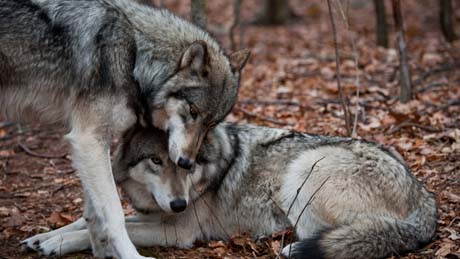
Wolf fondling another; pack members are very affectionate to one another while the alphas maintain boundaries. (Photo source: Internet)
Wolves prey substantially on rodents but must also, for pack survival, prey on larger mammals such as deer, mountain goats and boar. When these are in poor supply or other prey is temptingly easy, such as cattle and sheep, they will take those too.
The traditional human fear of wolves is therefore not one based on self-preservation but on economic priorities. And in the moralistic story of “The Boy Who Cried ‘Wolf’” it is not the human villagers that are attacked by the wolf pack but the community’ssheep.
However, if humans are to continue consuming a diet that will include meat, they will of course need to protect their livestock from wolves and have being doing so even before history was written.
Traditionally the main agent in that protection has been, ironically perhaps, the wolves’ own descendant, the dog – or more specifically, several livestock guardian breeds of dog.
Known livestock guardian dog (LDG) breeds include the Aidi (Atlas Mountain Dog), Carpathian Shepherd, Estrela, Greek Shepherd, Komondor, several breeds of Mastiff and Sardinian Shepherd; a known extinct breed is the Alpine Mastiff (before 5th century BC to 19th century AD).3
Mastín (Mastiff) amidst sheep it guards near Lagunas de Somoza (León, Spain). (Photo sourced: Internet)
Livestock guardian dogs are socialised to the livestock and to their immediate human ‘family’ and will not tolerate the close approach of any potential predator (which often includes even other humans). The primary role is to protect the herd, warn of danger and if necessary, attack.
Where employed in the past, LGDs have been highly effective in protecting their charges, in most cases not even having to fight predators but rather intimidating them. If they have to fight, they are bred for fearlessness and tenacity and their throats also protected by a “wolf-collar”.
Anatolian or Kangol Livestock Guard Dog, with sheep herd it is protecting, Eastern Turkey. (Photo sourced: Internet)
Predators, however courageous, also have strong survival instincts which warn against danger to life or limb (the latter, for a predator in the wild, often in time equalling the first). Unless absolutely desperate they will move on to safer although more difficult-to-catch prey.
For a good LGD however, there is no backing down possible, it is in defence of its own (as a wolf pack might defend its pups). The herder, when present with a firearm, is mainly an additional protection, as well as an alpha member of the dog’s ‘pack’ to obey and protect.
In contemporary times, LGDs have proved effective throughout the world, even in the experimental reintroduction of wolves to the USA.4 So why are they not being more widely employed and, instead, the remaining large predators being exterminated?
Central Asian breed of Livestock Guardian Dog beside its owner (Photo sourced: Internet)
It is no doubt more profitable for big livestock famers to have huge herds roaming freely and when they run out of edible pasture, to move the herd by herding dogs, mechanised herding vehicles or even helicopters. But is it all-around better? And are huge herds environmentally viable?
Apart from other considerations, wolves have been shown to have an environmentally positive effect in a balance between predator, prey and the environment, including vegetation and even water courses, for example in the famous case of the reintroduction of wolves to Yellowstone.5
Deer are pretty to look at but eat young trees and cause damage to reachable branches, while wild goats will eat almost anything, right down to the roots. Wild boar can also be very destructive and, being omnivorous like humans, even prey on ground-nesting birds.
Eurasian Grey Wolf in woodland (Photo sourced: Internet)
All of those invade agricultural crop lands to eat, in the course of which they also trample other crops; wild boar6 are now invading villages and suburbs in a number of towns and cities, overturning large refuse containers for their edible contents.
Female wild boar with litter of piglets in German urban area (Photo cred: Florian Mollers)
Wolves and other predators keep those species down to numbers in better balance with the environment but also of less bother to human settlements. Wolf packs on the other hand do not grow in size beyond the food supply that is fairly safely available.
The human race has made a huge impact on the environment which is sustainable up to a point beyond which, however, we are rapidly passing. We live in a sustainable balance with the environment — or we perish. Perhaps “let the wolf live” can be part of the lesson we need.
4“After the reintroduction of wolves, that were eliminated in the United States in the 1930s, American farmers were losing about a million sheep annually to wolf attacks. 76 farmers took part in the Coppingers program, which introduced European livestock guardian dogs into the US sheep breeding (in their project they used Anatolian Shepherd Dogs). In all farms, where, in the absence of dogs, up to two hundred attacks of wolves per year happened, not a single sheep was lost under the protection of LGDs. At the same time, none of the predators protected by law got killed: the dogs simply did not allow them to approach the herd.” – https://en.wikipedia.org/wiki/Livestock_guardian_dog
6A wild boar is much more likely to attack a human than is a wolf in Ireland, where the Wolfehound breed was famous, it was a boar that mortally gored Diarmuid of the legendary Fianna after his return from exile. Wild boar also carry diseases that can infect domestic pigs and humans.
“Six innocent men” … “Garda oppression and perjury’ … “Longest case in the history of the State”
Four leading human rights organisations this week delivered a petition to the Irish Government asking the Minister for Justice to establish an inquiry into the abuse suffered by six innocent men in the Sallins case almost half a century ago.
Not to do hold such an inquiry, maintained Liam Herrick of the Irish Council for Civil Liberties at a press conference on Tuesday, is to continue the abuse of the victims’ human rights and to fail to prevent such an abuse in the future.
Osgur Breatnach, Liam Herrick and Nicky Kelly at the petition launch press conference (Photo: Rebel Breeze)
Apart from the ICCL, the other three organisations pushing the petition are the Committee for the Administration of Justice (CAJ), the Pat Finucane Centre (PFC) and Fair Trials; the first three are Ireland-based organisations and Fair Trials is a global criminal justice watchdog.
The six innocent men were named as Osgur Breatnach, Michael Barrett, John Fitzpatrick, Nicky Kelly, Brian McNally and Michael Plunkett (deceased1).
At the time in 1976 all were members of a legal political party (the Irish Republican Socialist Party) but were tortured and some jailed in the Irish state.
In the longest series of trials in the history of the State, three of the men were sentenced at the end of 1978 to prison terms of between nine and twelve years each on the basis of no ‘evidence’ but their confessions obtained by torture and which in court they completely retracted.
Michael Plunkett, who had signed no confession walked free while Nicky Kelly absconded the day before the sentence, eventually reaching the USA where he remained until a strong campaign saw Breatnach and McNally freed, whereupon Kelly returned to Ireland and was immediately jailed.
Although the nature of the ‘evidence’ against Kelly was of the same kind as that which had been declared ‘unsafe’ for Breatnach and McNally, Kelly remained in jail forfour-and-a-half years, despite another strong campaign2 and was only freed eventually on ‘humanitarian grounds’3.
PRESS CONFERENCE
ICCL’s Liam Herrick chaired the conference in Buswell’s Hotel4 flanked by survivors Osgur Breatnach and Nicky Kelly, while Chris Stanley of KRW Law sat nearby, all facing the audience which included Sinn Féin’s Pa Daly TD5 and Fionna Crowley of Amnesty International.
Opening the proceedings, Herrick listed the four organisations backing the call for an inquiry and pointed out the present-day relevance of that call, both in terms of the survivors and their families and in terms of wider society.
Not to have that inquiry would be an ongoing violation of human rights, Herrick maintained and pointed out that the ICCL was founded arising out of concerns regarding the post-Sallins robbery arrests and the activities of the Garda CID unit colloquially known as the “Heavy Gang”.
The ICCL Director stated that they could not rest until the demand for an inquiry was met and referenced also “crucial legislation before the Oireachtas”6 and recognition of past injustices in a series of TV documentaries linking the cases, in particular through actual Garda individuals.
Introducing Osgur Breatnach, Herrick acknowledged the leading role he had played in keeping the demand for the inquiry going over the years.
Breatnach read from a prepared statement that there had been cases of torture, perjury and framing innocent people in England, Northern Ireland and the Republic.
It was wrong and hypocritical of the State raising concerns about cases elsewhere not to hold an inquiry into the Sallins case, of which there had been five trials, one the longest in the history of the State.
Breatnach said he went through the process expecting to be jailed but to expose the political nature of their persecution; his and McNally’s convictions were overturned, the ‘confessions’ having been obtained by oppression but despite that none were indicted for that oppression.
Breatnach concluded saying that the State’s refusal to hold an inquiry amounted to cruel and inhuman treatment of the victims and their families and that without the investigation of an inquiry a similar scenario could be repeated at some point ahead.
Nicky Kelly, introduced by Herrick thanked the ICCL for organising the events that day. Speaking apparently ex-tempore with perhaps reference to some bullet-points, he expressed the opinion that the State wanted the victims to die so that they had no need to hold an inquiry.
“Ireland has an impeccable reputation with regard to foreign relations,” Kelly said, but not so within the state. He believed that the Sallins case is “too big in its implications for politicians, judiciary and police force” and all attempts to investigate were obstructed by successive governments.
Liberal politicians in government have been “no different from the rest”, the Wicklow man said and referred to his own personal battle even to get out of jail after the ‘evidence’ to convict him had been discredited and how he had been obliged to undertake a hunger strike to be freed.
Now, rather than hold the inquiry into what went on, they were waiting for him “to be over and done with” Kelly said in conclusion.
Herrick introduced Chris Stanleyof KRW Law who said that cases such as the Birmingham pub bombings and the Dublin and Monaghan bombings, like the Sallins one, all related to the recent conflict and required investigation for the sake of the victims.
Chris Stanley of KRW Law speaking at the petition launch press conference (Photo: Rebel Breeze)
Stanley commented that perhaps the State had been too reliant on the Good Friday Agreement for resolution of these matters.
Commenting on the UK’s new legislation blocking much resolution of historic cases, all but become law, the solicitor regretted the UK had chosen to disengage from Europe but remarked that that they remained signed up to the European Commission of Human Rights.
From among the seated audience, Fionna Crowley of Amnesty International spoke to underline the importance of having an inquiry into the case and that her organisation had been in support of the victims’ campaigns and was fully in support of the current petition for an inquiry.
Breatnach acknowledged that within one week of the arrests, Amnesty had raised public concerns about them.
DELIVERY OF PETITION TO DEPARTMENT OF JUSTICE
After the conclusion of the press conference with Herrick’s summing-up and thanks to those in attendance, Herrick and ICCL staff along with Chris Stanley, Breatnach, Kelly and a couple of others walked to the Dept. of Justice’s offices on the south side of Stephens Green.
Delivering the petition to the Department of Justice: (from bottom up) Nicky Kelly, Osgur Breatnach, Chris Stanley, Liam Herrick. (Photo: Rebel Breeze)
Pausing for some photos to be taken, a delegation entered the building and presented the petition. Then some more photos were taken outside and Breatnach was interviewed by a TG4 reporter in Irish and Nicky Kelly in English while a light rain began to fall.
TG4 (Caoimhe Ní Laighin) interviews Osgur Breatnach outside the Department of Justice in Stephen’s Green (Diarmuid, brother of Osgur is centre photo and Nicky Kelly to the right). (Photo: Rebel Breeze)
The group split up into smaller groups then, the ICCL staff returning to their office to issue a press statement and others to hope, perhaps with further pushing, for positive developments further – but not too far – down the road. For all and for some much more than others, it’s been a long haul.
End.
Outside the Department of Justice with copies of the four-agency petition (right to left): Liam Herrick of ICCL, Chris Stanley of KRW Law, victims/ campaigners Osgur Breatnach and Nicky Kelly (Photo: Rebel Breeze)
APPENDIX (A): BACKGROUND
The IRSP was the result of a split from what had remained in Sinn Féin after an earlier split in 1969, the group leaving the party then calling themselves ‘Provisional Sinn Féin’.
Not all who had become unhappy with the direction of Sinn Féin departed into Provisional Sinn Féin because they perceived the new group as being much more nationalist than socialist and being also socially conservative.
After some internal struggle that section remaining within what became known as “Official Sinn Féin” left in 1974 under the leadership of Séamus Costello to form the IRSP.
The armed wing of the Republican movement had split along the same lines into Provisional IRA, Official IRA and the Irish National Liberation Army, the latter loyal to the perspective of the IRSP.7
Bernadette Devlin (now McAlliskey) and Tony Gregory (now deceased) were on the IRSP’s Executive but however departed soon afterwards from the party on what they perceived as the dominant relationship of the armed group INLA to the political party.
It appears that the Irish State at that time viewed the IRSP as more dangerous than the two Sinn Féin parties and determined to ensure its demise, framing them for the Sallins Mail Train Robbery in March 1976.8 And framing, rather than mistaking, it was.
The 40 arrested included IRSP members who, tortured by the SDU Garda unit known colloquially as the “Heavy Gang”, confessed to participating in the robbery but who could not possibly have been there. The State decided to put on trial those whose only alibis were with family.
The court chosen was the Special Criminal Court, set up under the Offences Against the State Act in the panic of the 1974 Loyalist and British Intelligence Bombing of Dublin and Monaghan which somehow got blamed on Irish Republicans. The SCC has three judges and no jury.
Until the SCC moved to the court building near the main gate to Phoenix Park, it was located in Green Street, in the very same building where Robert Emmet was tried in 1803 and sentenced to death, his sentence carried out in public in Thomas Street, in the Dublin Liberties area.
The Four IRSP eventually selected for the second of what became four trials included senior member of the party’s Executive and the Editor of its newspaper, The Starry Plough, Osgur Breatnach.9
In the second trial, one of the three judges hearing the case was regularly seen to be sleeping. Only after the judge died suddenly was there another retrial ordered.
In the fourth trial, Kelly being tried in his absence, the judges accepted as fact10 the Prosecution case that the injuries of the accused were due to beating one another up (in Breatnach’s case, that he’d beaten himself up) and that their withdrawn confessions were true.
Mick Plunkett, in the absence of a ‘confession’, was found not guilty but the other three were sentenced to 12 years in jail. In May 1980 Breatnach and McNally were freed by the Appeal Court on grounds that they had suffered ‘oppression’ and that their confessions could not be relied upon.
No investigation took place into who had carried out the ‘oppression’ or how the judiciary had jailed the victims purely on withdrawn confessions and Garda perjury or which political decisions by whom were behind it.
Nicky Kelly returned to Ireland in 1980 — but to jail.
He was only freed by a Minister of Justice on ‘humanitarian’ grounds after four-and-a-half years in jail, a strong campaign seeking his release and finally a hunger strike of 38 days which pushed the European Court of Human Rights to agree to hear his case.
He received a presidential pardon in 1992 from Mary Robinson and in 1993 Breatnach, McNally and Kelly were awarded compensation, allegedly a six-figure amount. But to get that, they had to forgo any litigation on torture or police brutality.
No official inquiry has ever been carried out in the whole set of State actions and in fact some of the Heavy Gang went on to force false confessions from others, most notably the Joanna Hayes and relatives case.11
APPENDIX (B): SUPPORTING STATEMENTS FROM OTHER ORGANISATIONS
Also speaking elsewhere on the day, Director Daniel Holder of the Campaign for the Administration of Justicesaid they support this call and that
“an inquiry into the case of the Sallins Men is long overdue.”
He went on to say that “Over the last few years inquests and other legacy mechanisms in the north have been finally delivering like never before for families who have had to wait decades.
“They are providing important historical clarification for victims and accountability for past human rights violations but now face being shut down by the notorious UK Legacy Bill.”
Pat Finucane Centre (PFC) Director Paul O’Connor said that
“PFC welcomes this demand to the Irish Government for a human rights compliant investigation into the miscarriage of justice that followed the Sallins Trains Robbery 1976.
For too long human rights violations that occurred in the Republic of Ireland during the Conflict have been at best marginalised or at worst ignored.
Successive Irish governments have either relied upon the British to address the investigatory deficit of the Conflict or deflected it as an inconvenient non-issue.
“Now the human rights deficit created by those successive Irish governments is clear – and will be clearer when the legislative effect of the British Legacy Act starts to bite.
The Irish Government was right to challenge the British about the use of torture suffered by the Hooded Men; now it must look to its own police and criminal justice system and acknowledge the torture suffered by the Sallins Men.”
Verónica Hinestroza, Senior Legal Advisor at Fair Trials said:
“According to international standards, States must investigate complaints and reports of torture or ill-treatment.
We call on the Minister for Justice to ensure that a prompt, impartial and independent investigation is conducted into the allegations made by Mr Osgur Breatnach, Mr Michael Barrett, Mr John Fitzpatrick, Mr Nicky Kelly, Mr Brian McNally and Mr Michael Plunkett (deceased), considering that torture and ill-treatment violations are not to be subject to any statutes of limitation.”
2 The campaign PRO was CaoilteBreatnach, a brother of Osgur’s and was supported by many people in the fields of politics and culture, including the band Moving Hearts who performed Christy Moore’s song about the Nicky Kelly case, The Wicklow Boy.
3 By Minister of Justice Michael Noonan after Kelly’s hunger strike of 36 days. According to law, Kelly had exceeded the time period after conviction permitted for registering an appeal and it was claimed that only a ‘pardon’ could set him free.
4 Buswell’s is across the road from Leinster House, the Irish Parliament building and is frequently host to political meetings and press conferences.
5 Recently appointed to Sinn Féin’s front bench as spokesperson on Justice, he is by profession a solicitor.
7 The history of the IRSP is a separate and contentious story but suffice it to say that of the ten hunger strike martyrs in 1981, three were INLA; at one point a number of INLA factions were feuding within it leading to a number of fraternal murders. After the Provisional prisoners embraced the Good Friday Agreement and left the jails renouncing armed resistance, the much smaller contingent of INLA prisoners did the same. The IRSP remains a legal though much reduced political party.
8 The robbery was carried out by a unit of the Provisional IRA which however did not acknowledge operations carried out within the Irish State, to which ion 27th April 1980 they made an exception in a public statement taking responsibility for the robbery. The Irish State chose to ignore their statement as had the British State when the Balcolme Street group ibn 1977 admitted in court their responsibility forthe Guildford Pub Bombingsfor which the UK had jailed the innocent Guildford Four and Maguire Seven.
9 Apart from anything else, the notion that prominent Executive members under constant police surveillance, including one regularly working on the newspaper in the Dublin office (in the days before this could be done from anywhere else), could carry out such an operation, was clearly ridiculous.
10 According to the Court of Criminal Appeal in the “Madden” Case in November 1976, Appeal Courts should usually accept as a finding of fact anything decided by the Special Criminal Court (SCC) to be a fact. Therefore although a court verdict of guilt or innocence can be overturned on appeal, a decision as to fact made in the non-jury Special Court cannot be overturned in any appeal court.
11 Three separate cases of false confessions obtained by Gardaí, including the Sallins and Joanna Hayes cases, were covered in the three-part documentary series Crimes and Confessions by the Irish TV channel RTÉ July 2022- January 2023: https://www.rte.ie/player/series/crimes-and-confessions/SI0000012595?
In a Sinn Féin “think-in” on Friday regarding a national election, the party’s leader was reported stating that in any coalition government of which they were a member their party would insist on taking the ministry responsible for housing.
Mary Lou McDonald was quoted as saying this was a “red line” for them. Some will be surprised since the housing situation in the Irish state is in crisis and any new government will be under considerable pressure to deliver significant improvements in that sector.
(Picture: David Young/PA Wire)
Sinn Féin does not look like a party that is prepared to embark on an extensive program of building public housing for rent and taking over empty properties, in other words stepping on the toes of landlords, property speculators and banks – although clearly what’s needed is nothing less.
Still, the party’s own supporters and many who decide to vote for its candidates in a general election will be relieved to see the newcomer to government take over a sector which has been visibly neglected by all the other parties that have been in government in recent decades.
“A Sinn Féin-led government will build the homes that our people need,” said Ms. McDonald, going on to say “we will deliver the biggest affordable and social housing programme this state has ever seen. That is the level of action needed to match the scale of the challenge we face.”
However, supporters may be in for a substantial disappointment, given that the party spokesperson reportedly refused to give a date by which the numbers of homeless would have dropped significantly or even disappeared.
A crash program of building affordable housing for rent, the only real solution to the housing crisis, if seriously undertaken, could be completed in two years at most. The fact that the party is unwilling to give a date for the completion of such a program cannot inspire confidence.
She’s been here a while now but has lost none of her beauty. She’s by no means fragile – very adaptable, in fact, like many of our own emigrants to other lands. She sounds kind of Japanese but isn’t, not at all.
It’s the fuchsia shrub, seen often in gardens but the hardy Fuchsia magellanica ‘Riccartonii’ variety grows naturalised in Ireland, especially along our west and south-west coasts where the soil tends to remain warmer than inland in winter.1
Naturalised Fuchsia (& Montbretia) in a country lane, West Cork (Photo cred: Stone Art Blog)
The first of her kind to receive European classification was Fuchsia triphylla on Hispaniola (now Haiti and Dominican Republic), baptised by French friar and botanist Charles Plumiere in the late 1690s in honour of the German botanist and medical investigator, Leonhart Fuchs (1501-1566).
We tend to pronounce her name as “foo-shia”, which sounds Japanese (to me at any rate) but in keeping with the origin of the name perhaps we should be pronouncing it “fooch-sia”, with the “ch” pronounced as the Irish one, e.g in the word “loch”.
Giúise (g’yoo-sheh) is its Irish botanical name but it has also been popularly known as “Deora Dé” which translates as “God’s tears” but can also mean “Drops of God’s blood” (more appropriately when the flower has yet to open).
There are 110 varieties of the plant, not counting cultivars, of which there are many also. The natural varieties are nearly all native to South and Central America, with a few varieties in New Zealand2 and Polynesia, testifying to the Silurian period connection between those landmasses.
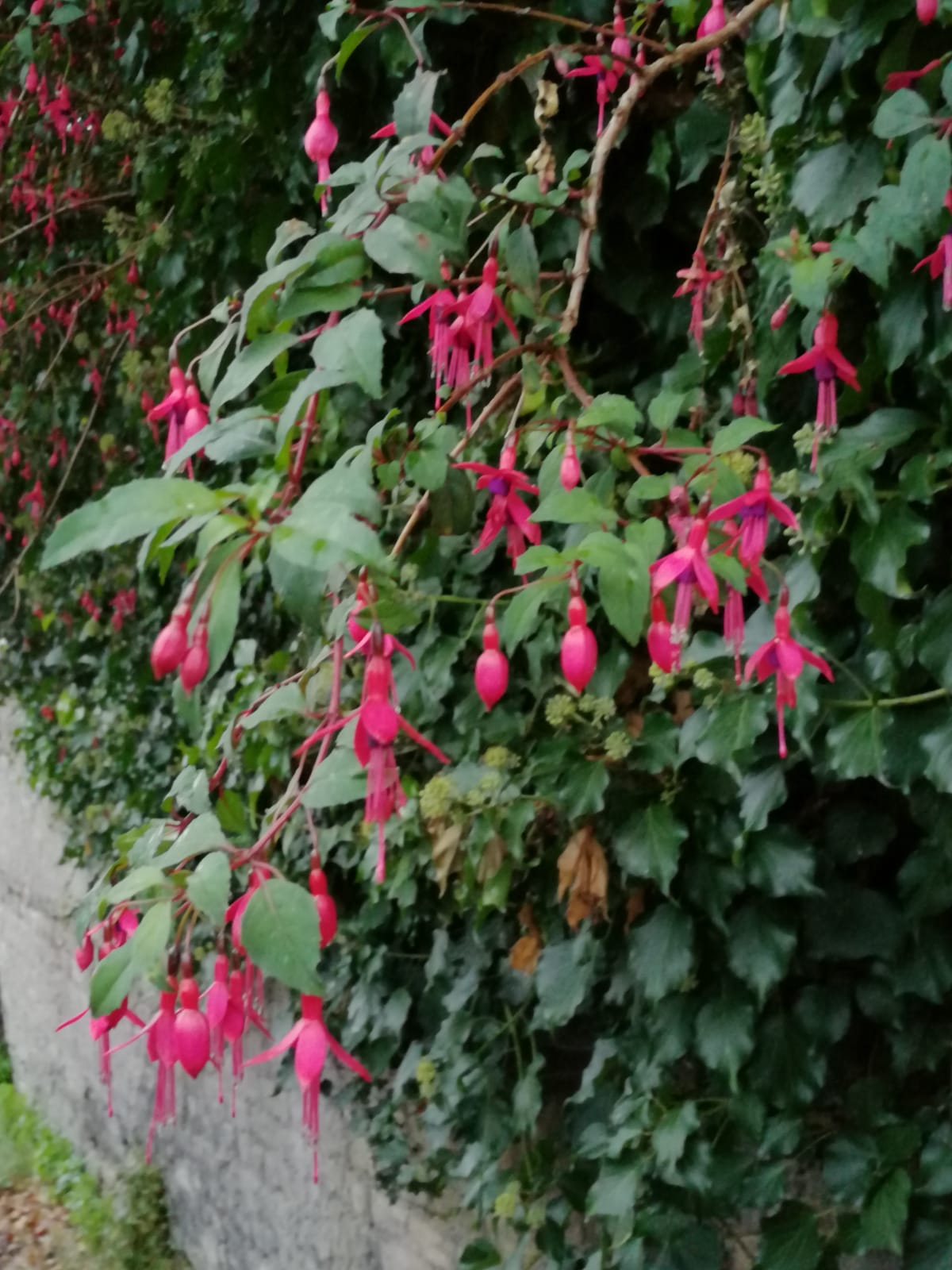
Hanging fuchsia blooms from a bush growing in a Drumcondra garden a few days ago against its back wall, with many dropping to form a carpet in the lane beneath. (Photo: D.Breatnach)
In many parts of Latin America the flowers were pollinated by different species of hummingbirds but here in Ireland they do well enough with bees, both native and imported, to assist in their procreation.
The fruits are small and vary from sweetly edible to unpleasant to taste. As children we didn’t try the developed fruits but we did pluck the flower and chew the dark red part of the stem that becomes the fruit when the flower drops – and could often taste a faint sweetness.3
The fuchsia has been in Ireland a long enough time – since the early 19th Century — and, though not native, is not generally referred to as “alien”, much less “invasive” to Ireland, unlike for example Cherry Laurel, Japanese Knotweed and a number of water plants such as Parrot’s Feather.
The Rhododendron and the Cotoneaster, which probably ‘escaped’ from gardens at the same time as the fuchsia, however do cause serious enough problems.
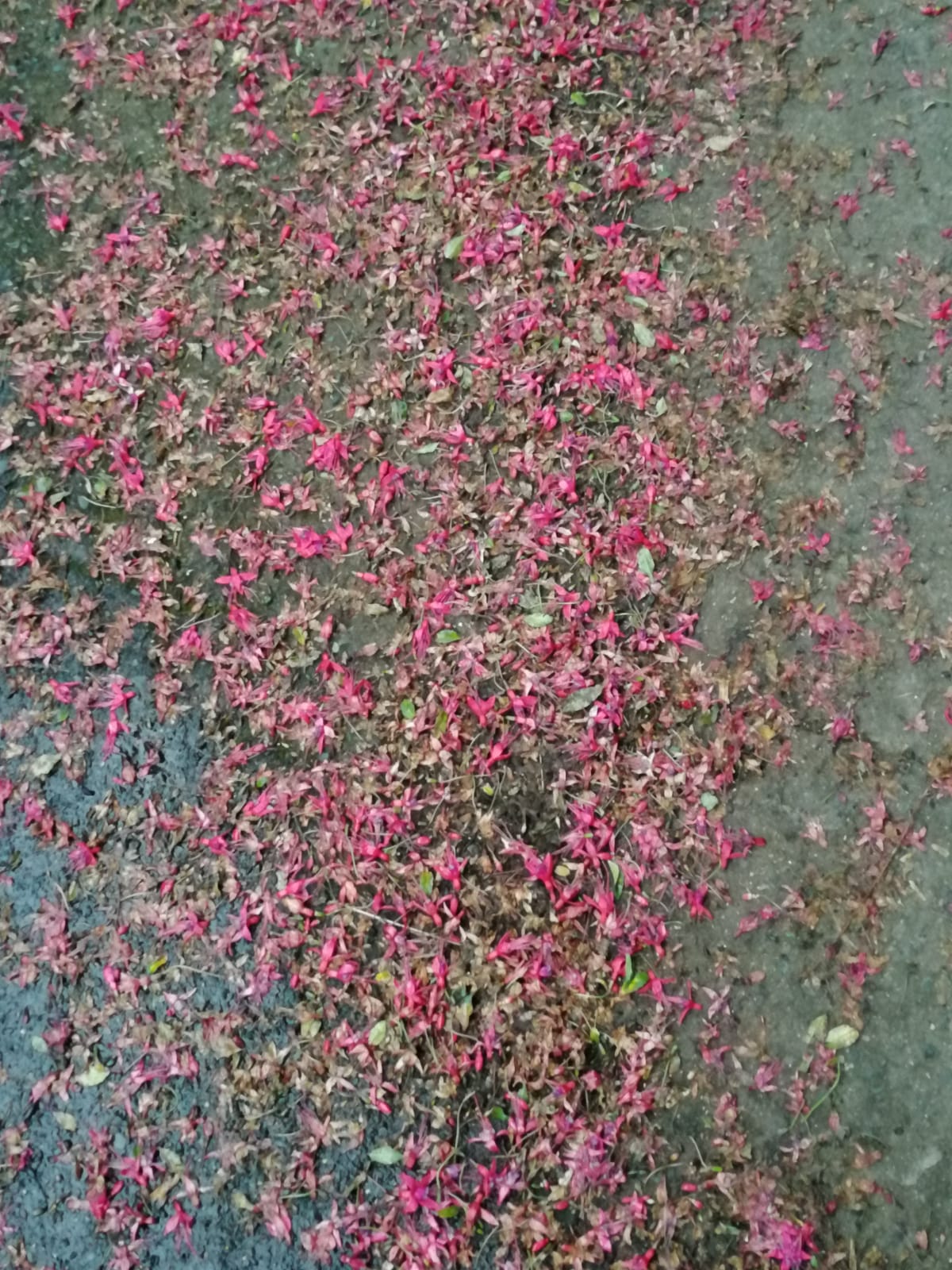
A fallen fuchsia bloom carpet in a Drumcondra lane at twilight a few days ago. (Photo: D.Breatnach)
The naturalised South American migrant fuchsia brings bright colour wherever she grows for four months of the year, from June to October.
Fáilte roimpi – bienvenida!
end.
FOOTNOTES
1That favours rooted plant life so long as they can withstand the wind-chill factor and Atlantic gales.
2An exception to the bush/ shrub nature of the fuschia is one New Zealand species, the kōtukutuku (F. excorticata), which grows up to 12–15 m (39–49 ft) tall.
I am engaged in an extermination war and I’m not winning.
It’s against those tiny brown fruit flies. Apparently they live by consuming bits of fruit and other vegetable stuff. But no matter how much I seal kitchen refuse and fruit into bags, large of small, they still fly around and around, annoying me. Deliberately taunting me.
Since I seal the bags, what do they live on? Just the faintest of smells is enough for the little f…ers, it seems! And I use the term advisedly. They are renowned fast breeders and an adult female fruit fly can lay up to 2,000 eggs on the surface of anything that’s moist and rotting.
Within 30 hours, tiny maggots hatch and start to eat the decayed food. Within 2 days, they’re all grown up and ready to mate, too! Luckily a fruit fly only lives 8 to 15 days – but still.
With such a fast turnaround, they’ve been used for genetic experiments, with even a flightless subspecies developed for the purpose.
Unfortunately, the ones at my place are all fully able to fly. And sometimes not just around me but flying right at me, inches away from my eyes. Do you know how difficult it is to kill something tiny mere centimetres away from your eyes? I really, really hate them.
I could spray them with insecticide, or course but that would mean poisoning my living space environment. I use anti-bacterial surface cleaner spray instead, hopefully less toxic for me. I know it’s less toxic for them also but it does slow them down or stick them to the wall so I get them.
Sometimes.
When they’re at a good distance for me to focus, I reach out really fast and smack my two hands together on them. Success rate? About one in ten. And even then, sometimes, when I open my hands, the little f..ker flies away, apparently unharmed and no doubt fly-sniggering.
But what about all those times I know for certain I caught one, open my hands and … nothing there. It’s not like I missed it because I didn’t see it fly away and it is nowhere to be seen. Except a few seconds later, it reappears – from nowhere.
Of course, it can’t appear from nowhere, not really.
So where did it go? Obviously, into an alternate universe and then back out to laugh at me. You don’t believe in alternate universes? Well a lot of physicists treat the subject with great seriousness and even think they might conform to quantum theory.
Don’t ask me to explain quantum theory but the multiple universes theory has to do with time and space or something. And we do know that time is objective (we’re getting older) but also subjective, as we experience when we sit through an interview or a haranguing from a partner.
Anyway, my war with the fruit flies continues. But what is their alternate universe like and why do they come back into mine? No fruit there? No oxygen? Really clever (but not quite quick enough) spiders?
I’m engrossed by the possibilities. Maybe there’s no cops or other fascists there.
So, I talked to this tech geek I know and he’s working on designing a micro-micro video camera. When he has it developed, we’ll trap some of those irritating flies, attach the micro-camera to one, threaten it until it jumps into the next universe and catch it when it returns.
Then, remove the camera and download the film.
What will we see? Who knows. Wonders, perhaps. But maybe only a giant hand swatting at the camera carrier as the fly dodges and shifts-universes back into this one.
News & Views No.9: Chile Coup – Twin Towers – the Legacy Bill
Diarmuid Breatnach (Reading time: 5 mins.)
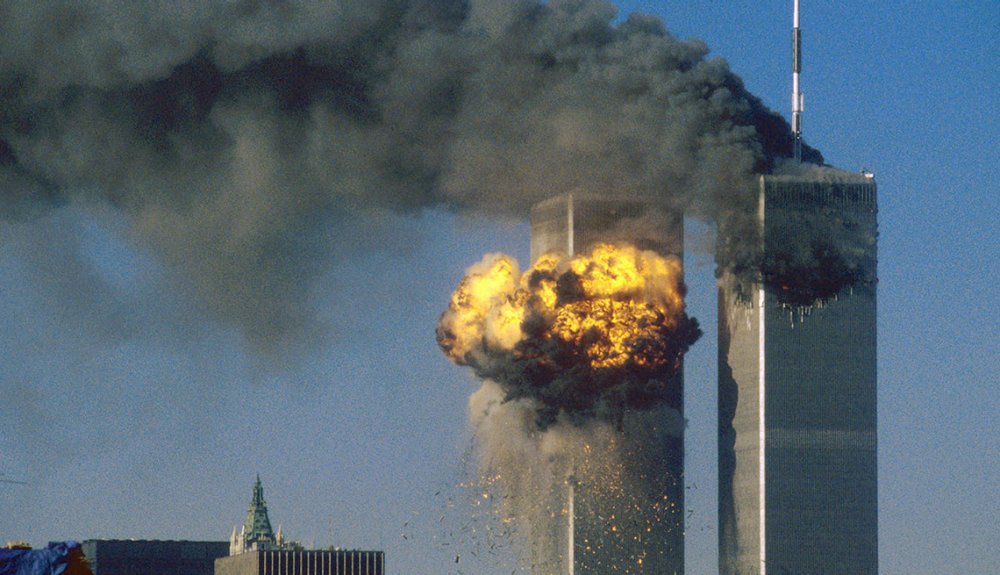
September 11th is the anniversary of the al Qaeda attack on the new World Trade Center in the USA known as “the Twin Towers” and also of the Pinochet Coup in Chile. The former caused the deaths of 2,996 people and the latter of over 40,000.
These are not happy anniversaries and US Imperialism bears a major portion of the blame for both events.
How so, one might ask? The coup in Chile, probably with CIA help, sure. But the Twin Towers? That was a Muslim jihadist attack AGAINST the USA! Surely we’re not expected to believe that stupid conspiracy theory that the USA ruling class actually staged the attack?
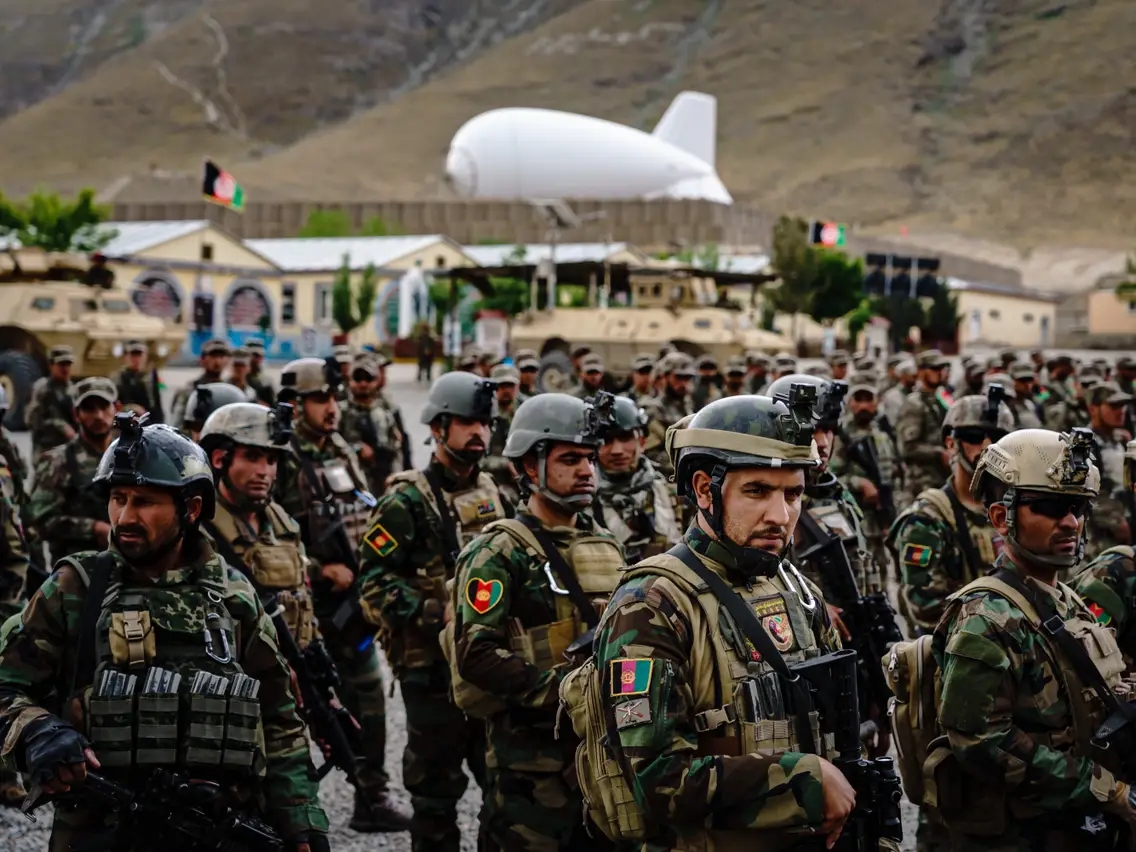
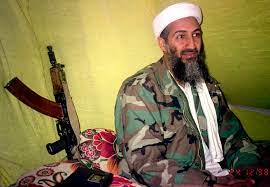
US proxy soldiers, Special forces Afghan National Army, 2021 (Photo sourced: Internet)Osama Bin Laden (10 March 1957 – 2 May 2011), Saudi-born founder and first general emir of Al Qaeda from 1988 until his assassination. (Photo sourced: Internet)
That is truly a crazy conspiracy theory but the historical truth does indeed involve a conspiracy. In 1997 the government of Afghanistan was socialist which was worrying for the USA, so in partnership with Saudi elements, they funded and even founded Muslim jihadist groups there.
These groups were to be encouraged to overthrow the socialist regime and when the USSR sent troops to support the government, to defeat the Russians too. Which they did.
But forget about fantasy stories of traditional tribesmen with ancient muskets fighting a world power’s army – these were jihadists, fundamentalists, armed with modern automatic weapons and mobile missile launchers including SAMs (Surface to Air Missiles).
Forget too about Rambo-led simple hill people – since the US achieved the overthrow of the socialist regime and invaded Afghanistan alongside their British allies, those jihadist groups have been squabbling over their share of the spoils, often murderously.
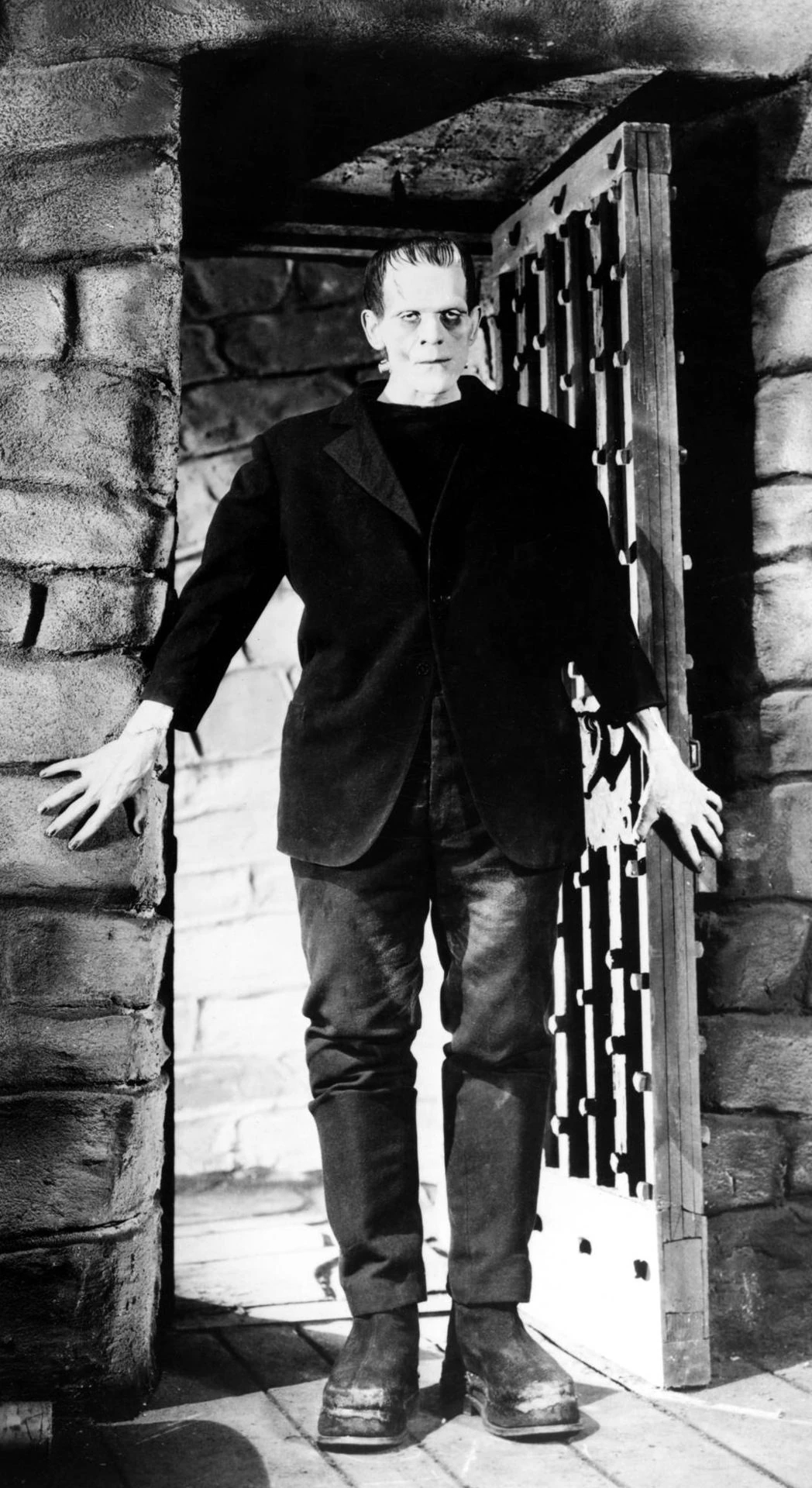
In fact, US imperialism is largely responsible for the world pestilence of not only jihadism of the Al Qaeda type, but the even more virulent Islamic State variety (which indicates Mary Wollstonecraft’s story of Frankenstein’s monster to be more prediction than fiction).
Explosion in one of the Twin Towers on 11th September 2001 in Al Qaeda attack. (Photo: Sean Adair/ Reuters)Frankenstein’s monster in Mary Wollstonecraft’s famous story; he returns to attack his creator (Image sourced: Internet)
Although US Imperialism had created Al Qaeda and although Saddam Hussein’s regime in Iraq was totally opposed to the jihadist group (and vice versa), US politicians used the attack on the Twin Towers to ‘justify’ the US military invasion of Iraq.
“Sweet are the uses of adversity” indeed when manipulated by US Imperialism for domestic consumption and for world public opinion, also when assisted by British Imperialism’s Labour Government, in particular by lying-through-his-teeth Tony Blair.
The US-led campaign against Iraq resulted in about 1.5 million deaths through economic sanctions alone followed by over 300,000 civilians in the Western military campaign. These figures do not include deaths and injuries of Iraqi military and of the invading allies under the USA and UK.
Nor do those figures include the many deaths, military and civilian, in internal conflicts since the invasion of Iraq which continue to mount.
The deaths resulting from the coup in Chile were overwhelmingly of civilians as the coup was carried out by the Army with little opposition within the military and the civilian population were mostly unarmed.
Most of the deaths occurred in succeeding days and years as the regime rounded up communists, trade union militants and others suspected of having supported Allende’s party, to torture and execute them, including most famously the renowned musician and singer-songwriter Victor Jara.
The anniversaries of both the Pinochet coup and the Twin Towers have been commemorated in various parts of the world with, it appears, the coup being remembered in most of them, not only in Latin America but also in many countries in Europe where Chilean political exiles found refuge.
In the USA, of course, the attack on the Twin Towers was officially commemorated and probably communally too much more so than the coup in Chile.
Another imperialist-generated disaster, the anniversary of which falls only a couple of days after those two, is that of the Oslo Accords, signed on 13th September 1993 and often also known as a stage in “the Palestinian Peace Process”.
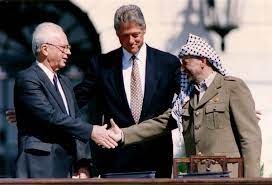
At the White House, supervised by Bill Clinton, elected chief of US Imperialism at the time, Yitzak Rabin for the Israeli Zionist state and Yasser Arafat, for the Palestine Liberation Organisation, signed an agreement, as a result of which the PLO would be permitted to run their own statelet.
Oslo Accords, 13 September 1993, Washington: Yasser Arafat of the PLO shakes hands with Yitzak Rabin of the Zionist State under the stewardship of (then) US President Bill Clinton, representing US Imperialism. (Photo: Gary Hershom/ Reuters)
Hailed as a great breakthrough by most media at the time, the PLO, dominated by Arafat’s Al Fatah, got to have limited self-government within the Zionist State, with the borders of any future Palestinian state undefined and no mention of the millions of Palestinian exiles around the world.
Although the increasing encroachment on Palestinian lands by Zionist settlers was temporarily halted, the land already taken and built upon remained in Zionist hands, that issue and others ‘to be discussed later’ but the Palestinians were to give up the armed resistance immediately.
The South African pacification process had begun earlier and, though enfranchisement of non-white South Africans was not to come until 1994, it was clearly on the way. The ANC promoted pacification processes to Al Fatah and both parties promoted them to Provisional Sinn Féin.1
The Palestinian ‘Process’ was controversial among their people from the start and grew more so as it became clear how little the Palestinian cause had gained and how much had been set aside, along with the growing official corruption and nepotism growing among the Al Fatah organisation.
Though the pacification process was widely rejected in Palestine and failed to install a widely-recognised ‘official’ collusive leadership, it did achieve the fragmentation of the Palestinian leadership and helped to ‘justify’ the demonisation of Hamas, winner of the 2006 elections.
ALTERNATIVES
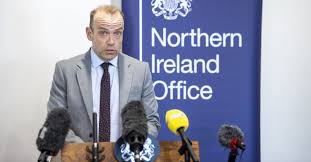
The Secretary of State for Northern Ireland (sic) is quoted in the media as saying that there is no alternative to the UK’s legacy legislation, which proposes to prevent recourse in law for any crimes committed by its soldiers, colonial police, proxies or Government Ministers.
Secretary of State for the Northern Ireland (sic) colony, Chris Heaton Harris (Photo cred: PA)
The legislation in question is titled The Troubles (Legacy and Reconciliation) Bill.
All political parties in Ireland on both sides of the British Border have vigorously opposed this legislation and THERE CLEARLY IS AN ALTERNATIVE, which is to abandon it. What the UK’s ‘colonial governor’ of the Six Counties means is: no alternative acceptable to the ruling class.
While we’re on alternatives, all liberation movements had and have the alternatives to embracing pacification processes, which is to maintain the path of resistance upon which they embarked until the day they win that for which their people and fighters have sacrificed their liberty and lives.
Allende and the communists in Chile had the alternative of arming the people and purging the Army but instead chose to put their faith in the ‘loyalty’ of Pinochet, ‘democracy’ and the opinion of the Western powers.
“The people armed cannot be harmed”, perhaps, rather than “The people united can never be defeated”.2 Allende’s error cost him his life but also the lives of hundreds of thousands of others.
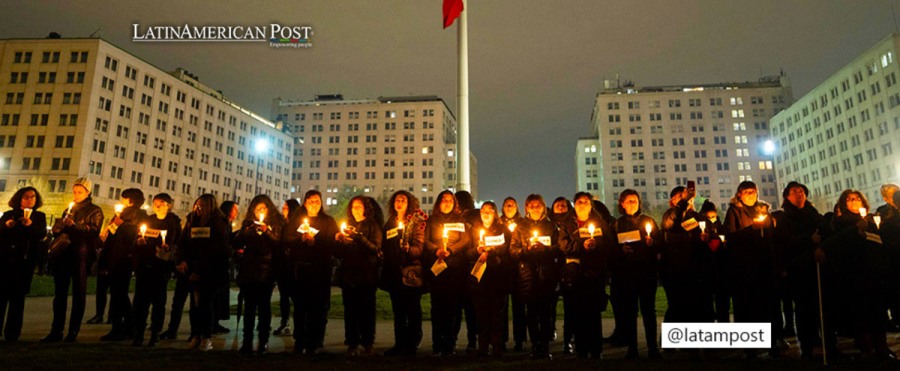
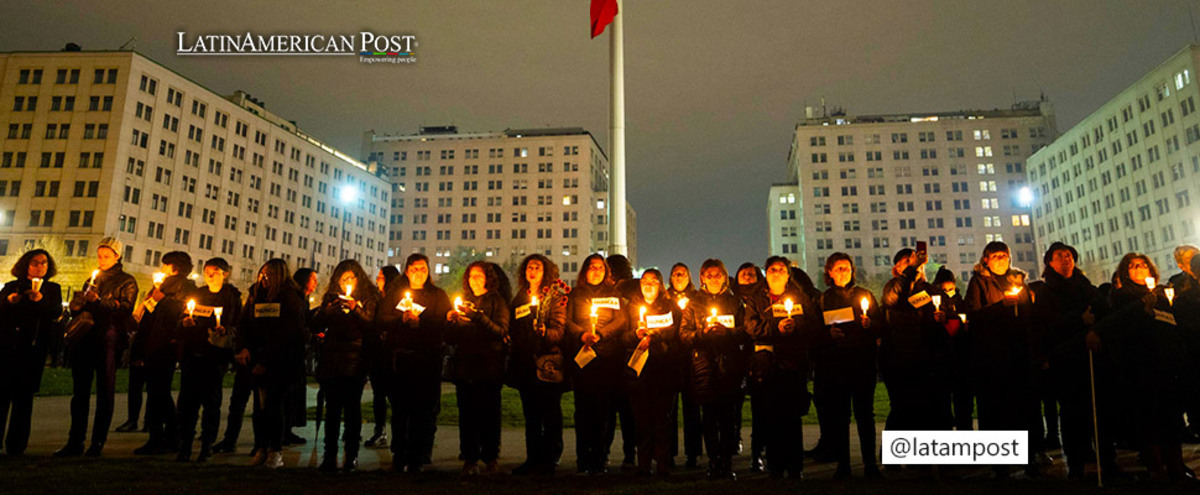
Women on 11th September hold a candlelit commemoration at La Moneda, Santiago, Chile for the victims – in particular of sexual violence – of the Pinochet coup and dictatorship. (Photo: Adriana Thomasa / EFE)
Imperialists have the alternative of respecting the right to self-determination of the peoples of the world and to cease from exploiting, oppressing and repressing them.
But if they did that, they wouldn’t be imperialists, would they? And since they cannot change their nature, they have to be overthrown.
End.
FOOTNOTES
1Provisional Sinn Féin signed up to the Irish Pacification Process in 1998 and they and the ANC then moved on to promote a pacification process to the leadership of the Basque movement for independence, which also finally signed up to it without even obtaining release of the political prisoners. By that time the Palestinian Process had shown its empty promise and the Second Intifada (2000-2005) demonstrated its rejection by most Palestinian youth and the elections to the 2006 Palestinian Legislative Council were won convincingly by Hamas.
2An alternative slogan to “El pueblo unido jamás será vencido” was even then being promoted by a smaller communist group: “El pueblo armado jamás será aplastado!”, i.e ‘The armed people will never be crushed’.
We are very sincere about defending democracy in the Ukrainian state and particularly so since the Russian invasion of February 2022. This is not easy since increasingly some people are doubting that there is democracy at all in Ukraine.
One of the acts of the Ukrainian Government being quoted as ‘anti-democratic’ was the banning of a dozen different political parties. However, surely being banned is no great problem when the due elections have been postponed indefinitely.
Some people have complained about the cancellation but after all, the country is under martial law, as Prime Minister Zelensky says, so it’s not a good time for elections.
(Martial Law is when all civil rights are suspended and the Government can make laws without parliament and jail people without trial if it needs to).
There have been some accusations about censorship and state control of media but some of those allegations are by journalists hostile to the Ukrainian regime, such as Gonzalo Lira who is in jail for posting material critical of the Ukrainian government.
And Natalie Sedletska reported on former premier Poroshenko holidaying in the Maldives with his family while our country was at war. Obviously he should not have done that but really is this the time to report on such things?
Naturally she got into trouble over that with state security, even when Zelensky took over.
So did her agency, the Ukrainian Service of Radio Free Europe/Radio Liberty. You’d think they’d know better, since the US State funds that radio network and everybody knows that the USA is thankfully supporting our fight against Russian occupation.
However, whilst it is true that all mass Ukrainian media is now under state control, not many Ukrainian journalists complain about censorship. And yes, it is illegal to criticise the memory of Ukrainian national heroes – unless they were communist, of course.
Stepan Banderas is a national hero of Ukraine with annual torchlit parades in his honour but he was definitely not Communist. It is true that Banderas killed many Poles and Jews but at the time he was working with German Nazi occupiers of the Ukraine during WWII against the Soviets.
One of the most frequent slanders on Ukrainian democracy is to suggest that the state is fascist, which is ridiculous. It is true that the Azov Battalion and Right Sector militias were – shall we say – extreme nationalists; but they have now been incorporated into the National armed forces.
Another propaganda attack on the Zelensky government regards recruitment for our valiant armed forces, with accusations of people being grabbed off the street – even sick and disabled people – and forced into the army. Well, not nice if true but the Russians have many more soldiers than us …
Thankfully, not many of these allegations reach the public in the West; if they did, it might lead to emotional demands to cease supplying us with weapons. We know we’re going to get a huge bill for aid at some time in the future but right now we desperately need it to keep fighting!
Of course, there are communists in the West (why are they permitted to even be there?) who spread these allegations, especially through social media, although some of the platforms like Face Book, Twitter and even Youtube do their best to block them.
It may be hard to believe, perhaps, but there are also some socialists in the West who work hard to discredit those communists, calling them “Putinistas”, supporting the social media platforms closing them down and even sometimes demanding they do so!
In fact, anyone who publicises those allegations, if not a communist, is surely some kind of fellow-traveller. Even though the Russian Federation is no longer communist.
Thank you for reading. We must all keep on working hard to continue defending democracy in Ukraine under President Zelensky.
According to media reports, Taoiseach Leo Varadkar said he expects to see a united Ireland in his lifetime. I think he’s wrong but he’s entitled to his opinion. However, some of his following remarks are objectionable and need to be challenged.
Varadkar claimed that in a united Ireland “there will be roughly a million people who are British.” That is false. There may – or may not – be a million IRISH PEOPLE who consider themselves British in a united Ireland, we’ll see. But they will be IRISH CITIZENS.
And they should have equal rights with all other citizens. They should have an equal right to vote, to housing, to their language, without any special restrictions, not to mention pogroms – in other words, nothing like the way their statelet treated its large Catholic minority.
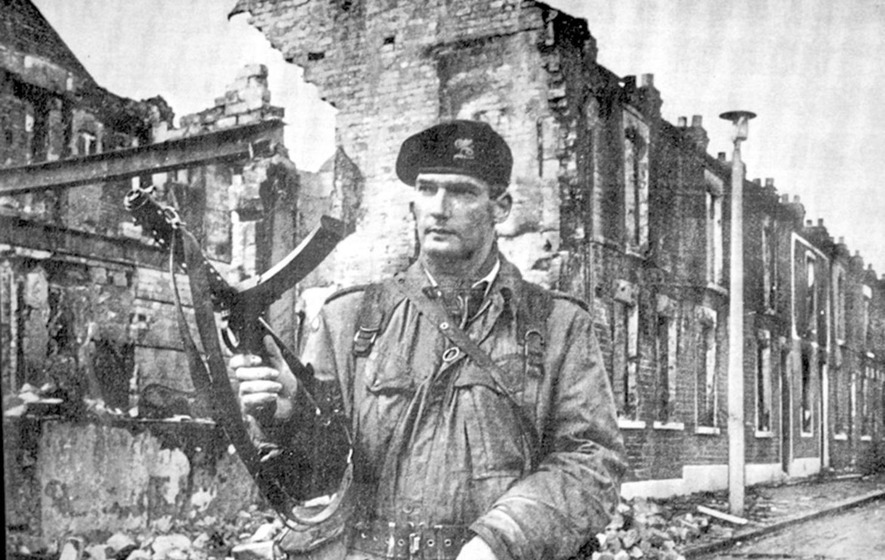
A British soldier stands in front of a section of the burned out houses of Catholics in Bombay Street, Belfast in 1969 (which the Army did not try to prevent Loyalists burning). The arson was the Loyalist response to demands of Catholics for civil rights (while the colonial police response was batons, bullets and gas). (Photo source: Clonard Residents’ Association)
I agree with Varadkar that the quality of a country should be judged “by the way it treats its minorities.” So Varadkar, how did and does your Gombeen State treat its probably oldest ethnic minority? You know, the Irish Travellers?
It is true that “a Republican ballad, a nice song to sing, easy words to learn for some people can be deeply offensive to some people.” Presumably he means to Unionists and Loyalists. Yes, and antifascist and anti-racist songs can be deeply offensive to fascists and racists.
It is also true that some people in the Southern States sing songs about the Confederacy and Robert E. Lee and call it their culture. And the comparison fits – but not with Republicans but with Loyalists!
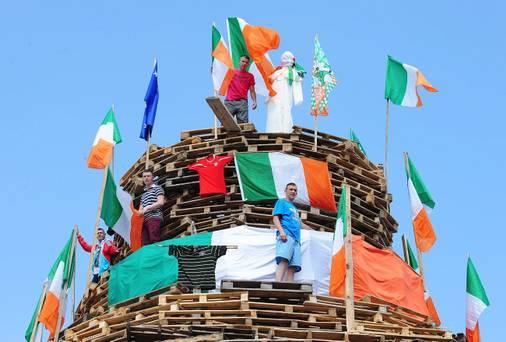
One of the charming annual expressions of Loyalist culture: a huge bonfire to burn Irish Tricoloursand representations of Catholicism. Palestinian flags and representations of Celtic FC are frequently burned too. Slogans such as KAT (‘Kill All Teagues [i.e Catholics]) are often displayed also. (Photo source: Wikipedia)
It’s not Irish Republicans who spread racism and sectarianism: the Republican creed came into existence precisely against sectarianism. And we know Varadkar actually knows that because not long ago he made some remarks about the wide embrace of the Irish Tricolour.
The Irish Tricolour: a flag presented to revolutionary Irish Republicans by revolutionary French Republican women in Paris in 1848. Not a flag of monarchism, sectarianism or collusion with imperialism or colonialism.
While we uphold Republican principles we don’t have to apologise to anyone, least of all in our own country, Varadkar. It’s you and your party (and the rest of them serving the Gombeen class who threw away independence and slaughtered Irish Republicans) who need to be ashamed.
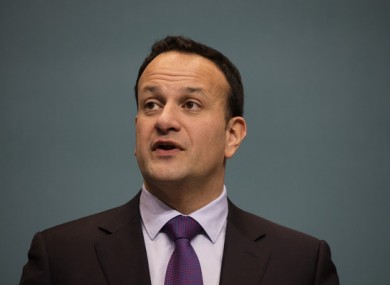
Leo Varadkar, Taoiseach (Prime Minister) of the current Coalition Government, who made the remarks this week. (Photo sourced: Internet)
People living in Ireland can think and feel what they like, good or bad. But in public, we will celebrate the valuable things in our history and culture. And we’ll do so proudly without apology to anyone.
On the other hand, public displays of Orange sectarianism, racism, homophobia, fascism and anti-LGBT targeting won’t be tolerated in an independent, reunited Ireland. Not for one minute.







 rebelbreeze