Revolutionary socialist & anti-imperialist; Rebel Breeze publishes material within this spectrum and may or may not agree with all or part of any particular contribution. Writing English, Irish and Spanish, about politics, culture, nature.
The Irish State has issued a new commemorative stamp to celebrate its joining the League of Nations in 1923 to which its representative referred as commemorating “the significance of Ireland taking our place among our fellow nations.”1
Well, sorry to poop on your party, Gombeen Government and to point out your lie. The truncated IrishState was admitted to the League of Nations, not “Ireland”, of which one-fifth was held in arms by the British occupier – who was one of the founders of the League.
Furthermore, the Gombeen state’s management committee entered the League as the victors in the Civil War – Britain’s proxy war in Ireland – dripping in the blood of those who fought for Ireland’s freedom. But that was not unfitting for the League was full of blood-drenched governments too.
The League was formed in 1920 and though the true government of the Irish nation, the First Dáil,2 applied for membership, its emissaries were not even received. At the Paris Peace Conference, US President Woodrow Wilson did not even reply to the Irish Delegation’s letter.3
Irish nationalist media commentary on the exclusion of Ireland by Lloyd George from the Paris Conference (Image sourced: Internet)
The original permanent members of the League’s Executive Council (it had four non-permanent members too) were Britain, France, Italy and Japan and its languages reflected those of the dominant European and American powers: English and French.
Britain came into the League with its Empire of allegedly independent states: Australia, Canada, India (which incorporated present-day Pakistan and Bangladesh), New Zealand and South Africa.
Map showing empires and colonies in the world in 1920 but there were also areas of influence apart from colonies. (Image sourced: Wikicommons)
PEACE?
Allegedly about peace, the League was formed as a club to discuss the areas of the world owned by the European colonial powers and to create a space where the losers and winners could discuss those lines, over which they had just fought a four-year bloody war.
Henceforth, there would be many, many wars, but mostly of colonial conquest and repression of resistance – but the European powers would not war among themselves, leastways except by finance and diplomacy. Until another 19 years, that is.
In fact, one of the major causes of WWII was the Treaty of Versailles, containing the crushing and humiliating WWI reparations demanded of Germany by the British and French imperialist powers. That Treaty was incorporated into the terms of the League of Nations.
The Big Four that framed the Treaty of Versailles; L-R: Lloyd George of Britain, Vittorio Emanuele Orlando of Italy, Georges Clemenceau of France, and Woodrow Wilson of the U.S. (Photo sourced: Internet)
Ireland would see short armed liberation struggles in the 1930s, 1940s and of three decades from 1969. Hundreds of armed liberation struggles would break out across the rest of the world, in every continent except Antartica. And yes, including Europe.
The League of Nations was a club, chiefly of European colonial powers in which the conquest and suppression of a huge number of other nations was agreed and ratified. It was followed by the hugely-expanded United Nations after the next World War.
The UN has much the same role and of its 193 members, its only binding decisions are made by five Security Council Permanent Members voting without dissent: USA, UK, France, Russia and China. The vast majority of the other states are clients of one or other of those five.
The Irish state joined that earlier League not as one of the colonial powers but as a defeated nation, a neo-colonial client regime, an experiment in native self-government under external colonial control, one to be adopted by the other imperial powers and replicated across the world.
The Irish state joined the United Nations in December 1955 in exactly the same client relationship to its old masters but over time the yearly tribute has been shared among new part-masters, first the USA and then EU imperialism.
Neither the state’s advent to the League of Nations nor to its successor, the United Nations, has anything whatsoever of which to be proud. An opportunity for Irish real independence and world friendship of nations was squandered.
The new stamp should carry a black border in mourning.
End.
FOOTNOTES
1Words of Mícheál Martin, the Tánaiste (Deputy Prime Minister) of the Irish Government quoted in numerous media reports.
2The First Dáil was founded in January 1919 in defiance of British occupation, based on the results of the UK’s December 1918 General Election results in Ireland which returned 73 MPs of the newly-reconstituted Sinn Féin party out of a total of 101 MPs elected in Ireland. The SF members set about organising an Irish Government and, though declared illegal by the British occupiers shortly afterwards, continued to operate as a government until it split over whether to accept the terms of the British offer in 1921, which led to the Civil War of 1922-1923.
3 Seehttps://www.irishtimes.com/culture/heritage/how-the-plea-for-irish-independence-made-its-way-to-paris-1.3742328. Though interestingly, Wilson did reply to the young Ho Chi Minh’s in respect of Vietnam (Ho Chi Minh, while working in Britain, had commented admiringly on the Irish capacity for resistance at the time of Mac Swiney’s funeral march in London from Brixton Jail to Southwark Cathedral). Most of Indochina at the time was a French colonial possession.
Oscar DíazTranslation from Castilian Spanish by D.Breatnach (Reading time main piece: 10 mins.)
1. What is Herri Ekimena?
Herri Ekimena is an initiative that emerged in March 2022. A series of organizations began to get together due to concern about the offensive of Atlanticist imperialism in Ukraine, in addition to the blatant manipulation of the media to get us to support their war strategy.
We also observed that, in a context of capitalist crisis and with the excuse of the war against Russia, economic measures were being imposed that resulted in greater impoverishment of the working class.
That is why we took to the streets at that time with the slogan “NATO and the EU condemn us to war and misery”, to turn the official discourse around a little and point to these two organizations as the main ones responsible for the increase in international tensions, as well as for the oppression of the working classes of the imperialist bloc itself.
Also in the month of June of that 2022 we called a demonstration in Bilbo, “against the imperialism of NATO and the EU” and calling for the end of the Russophobia that is still being promoted.
In parallel to the NATO summit that was held in Madrid, we also carried out a 48-hour poster campaign in Gernika, a city with great anti-fascist symbolism that the Ukrainian Nazis tried to appropriate, citing it in a speech before the Spanish Parliament by Zelensky himself.
After a short break, we resumed the fight in the streets at the end of the year, with the “Free Euskal Herria out of NATO and the EU” campaign. In March we held a massive demonstration in Bilbo, together with Askapena1 and the Bardenas Ya2 collective.
View of demonstration against NATO and war in Bilbao, June 2022. (Photo source: Bultza Herri Ekimena)
This demonstration was exciting to us as we saw that the work that had been done was already bearing fruit and that the anti-imperialist spirit that has historically characterized Euskal Herria was projected in the streets.
We are currently in a restructuring process in order to be more effective, and give new impetus to the anti-imperialist struggle in the streets, which is where this game is truly played.
2. Why combine anti-fascist and anti-imperialist slogans?
The imperialist offensive, which has to do with the systemic crisis of capitalism and the rise of new economic powers, is being accompanied by a general reduction of rights and freedoms.
Those in power fear popular revolts, like those that have been taking place in the French State in recent months.
In Euskal Herria we know well what emergency laws or illegal practices are employed to put an end to dissent, but these types of measures are spreading and becoming normalized throughout Europe. Concentration camps for migrants, deportations without any type of legal guarantee, electronic anklet tags are also normalized…
And also in the case of the countries bordering Russia, imperialism is responsible for waving old supremacist and anti-Slavic flags, such as is happening in Ukraine or Poland.
We see therefore that capitalism, in its most decadent phase, has little scruple when it comes to reactivating liberticidal policies or inciting openly Nazi military and paramilitary shock forces.
So in effect, we believe that the anti-imperialist struggle and the anti-fascist struggle are inseparable parts of the same struggle for our rights and freedoms.
3. A few years ago one could see Donbass flags in the stands of Atlethic3. Why mix football and politics?
Through various institutions, including football clubs, they want to force down our throats the supposed “depoliticization of public spaces.” It is false, because they are the first to try to control absolutely all areas of our lives that we may become submissive and uncritical people.
The media bombardment is constant, generating false debates among humble people about insecurity, occupying empty properties… They thus try to legitimize, by action or omission, measures of social control and police repression that are very, very worrying.
So when someone puts a poster on the street to denounce any injustice, or puts up a banner, or paints graffiti… They are calling into question that false normality that they want to impose on us.
Banner displayed by Athletic Bilbao FC fans during a match. The text is difficult to see in its entirety but in general it is clearly in solidarity with the Donbas region against attack from the Kiev administration.
It is sad — but this situation also reflects the weakness of the system in terms of political legitimacy. Who explicitly supports them? Who is not fed up with everything that is happening? So they are afraid of the flame that starts a prairie fire.
Sports venues do not escape this logic of imposing false normality, even if the laws have to be twisted or passed directly through the triumphal arch.
A Donetsk flag, for example, ruins their photo and calls into question the story that people agree with what they do. So they impose fines of €3,000 just for displaying the flag of a People’s Republic.
Let’s hope that in not many years we will be able to analyze all this as the blows of a dying regime, but for now it is up to us to organize the response and popular solidarity. Repression should not be normalized, nor should people who step forward feel alone.
We do not believe that the social base of EH Bildu is in favor of NATO. That is, if we asked EH Bildu voters if they were in favor of NATO, surely 99% would say no. The problem is that, for its leaders, opposing Atlanticist imperialism is not currently on the list of priorities.
Regarding the issue of the war in Ukraine, Arnaldo Otegi5 has openly positioned himself in favor of Ukrainian “sovereignty” and against the Russian “occupation.” Is Ukraine now a sovereign state? Or is it rather a puppet of NATO in its offensive against Russia?
Doesn’t Russia have the right to defend itself from NATO attacks? What about the thousands of people killed in Donbass since 2014? Should Russia have been obliged to watch this genocide impassively?
Have the self-determination processes in Donetsk, in Lugansk, in Crimea … not been practical exercises of sovereignty? In this context, we can say that the speech of some EH Bildu leaders has favored and continues to favor the interests of NATO.
Their support for the State Budget deserves special mention, which includes a 25% increase in military spending. A measure imposed precisely by NATO to approach 2% of GDP in 2029, which is truly outrageous.
So… perhaps it is harsh to say that EH Bildu is in favor of NATO so let us put it another way: What is EH Bildu doing to make Euskal Herria break with NATO? What teaching are they carrying out among their social base and at a public level to create a truly anti-imperialist consciousness?
Very little or nothing, we believe, that is the reality.
5. Will it be possible to continue to see reliable information about Ukraine in the Basque Country and the Spanish state now that military juntas have been formed in African countries that have expelled French embassies? They are very different countries and thousands of kilometers away…
The events that are taking place in the SAHEL area are complex processes, and surely have many sides that make it difficult for us to equate them with the decolonization processes that we have known historically.
But we would be committing a mistake if, due to these supposed “imperfections” with respect to the theoretical manual, we stopped supporting countries that are fighting for nothing less than to expel their occupiers (since those are true occupiers who try to impose themselves by force of weapons thousands of kilometers from their borders) and also to gain control of their enormous natural resources.
How can it be that in extraordinarily rich countries, like Niger or Gabon, the majority of the population survives in absolute poverty? We will have to carefully observe all these processes, but in anti-imperialist Euskal Herria we can only rejoice and tell them that they are not alone.
In this land that, to a degree, also knows what it is to fight against armed occupiers and various collaborators, we know very well that solidarity is the love between people.
Regarding the quality of the information that we are able to receive in Euskal Herria or in the Spanish state, we believe that right now it is below minimum.
It is pathetic to see how, every time an event occurs that could undermine the hegemony of Atlantic imperialism, the mainstream media wait to receive instructions before even reporting the event.
The control of capital over the big media is a reality, so we must promote and support alternative means of information and communication. And also to fight openly in the streets, so that they have no choice but to report our demands.
6. Couldn’t the creation of a multipolar world be dangerous on a war level?
Yes, in fact it already is. We had been talking for years about the end of Yankee hegemony and the economic rise of countries like Brazil, Russia, India, China and South Africa, the so-called BRICS.
Perhaps we thought that this change of orientation of world hegemony was going to be a calm process, without any surprises…
But nothing could be further from the truth. While it is true that Yankee imperialism is mortally injured (which we believe it is), the truth is that it seems willing to kill as it dies.
Currently it has restructured NATO in a few months, has de facto absorbed the European Union and is reconfiguring its alliance policy on a global scale. It is increasingly easier to identify “which side” the different states are on, which can be the prelude to a conflict on a planetary scale.
We have been able to verify this recently with Morocco. NATO and the EU buy Morocco and abandon the Sahara to its fate.6 What should the Sahrawis do if Algeria, Russia or China offer them help to win their rights and survive as a people?
Of course there may be geopolitical interests in this aid from emerging powers, but it is necessary to analyze whether the agreements, commercial exchanges, donations and aid are produced with mutual respect for sovereignty and benefit the currently oppressed nations.
Of course, from a revolutionary point of view we have to be exacting, and not give a blank cheque to these emerging powers.
In this entire process of multipolarity, whether we like it or not, which is already making its mark upon world geopolitics, there is a class struggle that we must not ignore.
But this critical stance cannot lead us to fall into ninism and evade our own historical responsibility: to combat Atlanticist imperialism from the very heart of the beast.
7. You say “Euskal Herria free from NATO.” And what about the rest of the Spanish state?
We say Euskal Herria should be free outside NATO, but also outside the EU. We believe that this contribution is important, since for many years consideration of leaving the EU has been a kind of taboo, also in Euskal Herria.
Some thought that the EU might even support a possible independence process in Euskal Herria, just as was thought in Catalonia.
“A Free Basque Country out of NATO and the EU”.
But the EU has definitively been revealed as a capitalist lobby, as an instrument at the service of elites with a more than dubious past, even with regard to their support for Nazism.
Úrsula von der Leyen, Josep Borrell… are faithful representatives of the EU of Capital, authoritarian and totally committed to the interests of the US. That is why we say that neither the nation nor as a class have a future within the EU.
We make this statement from Euskal Herria, which is our area of struggle. But of course it extends to the entire Spanish State, as well as to the French State and all the peoples of Europe.
A future in freedom is not possible belonging to these criminal organizations, neither in Euskal Herria nor anywhere else.
8. What do you think of the military administration by Margarita Robles of the PSOE/UP government?7
Margarita Robles is a pit bull of Spanish politics, a woman who knows perfectly the ins and outs of the State from the offices to the sewers. Not for nothing has she been in positions of power for more than 30 years, originally in the shadow of Belloch, later of Rubalcaba…
At first it may have been surprising to see her at the head of a Ministry like the Defense Ministry, she who comes from the judiciary and who, even in relation to the conflict between Euskal Herria and the Spanish State, had adopted a dialogue profile at certain times.
We are missing a lot of information (I wish that we in Herri Ekimena knew what was going on in the Ministry of Defense, haha), but Margarita Robles is probably dedicating herself to doing in the Spanish military what she also did in her day in the Ministry of Justice and Interior.
That was to send the most archaic elements to the refrigerator in a non-traumatic way to perfectly adapt to the current standards and guidelines of NATO and the EU. Change a minimum so that everything remains absolutely the same.
Can anyone imagine Spanish generals standing up for Spanish national sovereignty in the face of Atlanticist imposition? This could happen in the French State, in fact it would not be unreasonable for something like this to happen.
In the Spanish State it is much more unlikely, but it is the responsibility of politicians like Mrs. Robles that nothing should deviate from the script written by Washington and Brussels.
In this regard, it is worth highlighting the role of the PSOE in what has been the process of integration of the Spanish State into imperialist structures. In addition to Felipe González, we could mention Javier Solana (who became Secretary General of NATO), Josep Borrell8…
Whether it is a matter of affinity, or a matter of pragmatism, the truth is that it appears that the PSOE generates a lot more trust among the imperialist powers than any other political party at the level of the State.
9. There were elections this past July 23, 2023. Did any of the political forces propose the departure of NATO from the Spanish state?
We are not aware that this was the case. As we have said before, this government is responsible for the largest increase in military spending in history, and faithfully complies with NATO and EU mandates.
“No to NATO – Out of Bardenas!”
Vice President Yolanda Díaz has publicly supported sending weapons to Ukraine and, as far as we know, no party that supports the government has opposed these shipments as a matter of principle.
We remember that these are weapons that are being used by Nazi soldiers to bomb and murder, not alone Russian soldiers but also the civilian population of Donbass. So we have to organize and fight in the streets, because if we don’t, things will remain exactly the same or worse.
This is the reason for existence of Herri Ekimena, to activate the popular struggle against the imperialism of NATO and the EU. We are working at it and, if all goes well, there will be good news in this regard in the coming weeks.
1Askapena was the internationalist solidarity arm of the broad Basque national liberation organisation but split from it many years ago in concern at the deviation from the path of resistance by the leadership under Arnaldo Otegi.
2Bardenas Ya is an organisation campaiging against the military installation in Bardenas, Nafarroa (Navarre).
3Athletic Bilbao FC, whose fans and many of its players have a strong anti-fascist and pro-Basque independence tradition.
4EH Bildu is the political party of the current compliant ‘official’ leadership of the Basque national movement, replacing the Herri Batasuna of the past.
5Leader of EH Bildu who has led the party into what many consider its collaborationist current stance.
6Western Sahara was a Spanish colonial possession and it abandoned it without decolonisation, which allowed Morocco and Mauritania to invade and occupy it against the wishes of the Saharawi people. As a result of the national liberation struggle of the Polisario Front, Mauritania withdrew but Morocco remained in occupation and carrying out repression against the resistance. Shortly before Trump’s departure from the USA’s presidency, he agreed to endorse Moroccan defiance of the UN-recognised Sahawarwi resistance to occupation in exchange for Morocco reversing its long anti-Zionist policy and formally recognising the Zionist occupation of Palestine, which the Moroccan Kingdom has done.
7The recent coalition Government of the Spanish State, the social-democratic PSOE with the Left-social democratic alliance of Unidas Podemos. Currently, the PSOE is endeavouring to form a government in coalition with a somewhat reconfigured Left-social democratic coalition called Sumar.
8All three have been PSOE politicians, Felipe González a prime minister and widely believed head of the GAL anti-Basque terrorist gang. Borrell was President of the European Parliament (2004-2007) and Minister of Foreign Affairs of the Spanish Government from 2018 to 2019. He attacked Catalan self-determination which he characterised as part of a disease, despite his own Catalan origin and he is now the Foreign Minister of the European Union.
News reaches us that military forces in Gabon, yet another colony (say neo-colony) of French imperialism in West Africa, have carried out a coup, deposed the titular President and put him under house arrest.
Actually, some of the reporting called it “an attempted coup” which seems strange: the military in control of its own bases, national broadcastings stations and with the former leadership under arrest seems a lot more than an “attempt”.
Map of African states and cities (By: GISGeography Last Updated: August 9, 2023). Gabon is located on the west coast (down from Cameroun and up from Angola).
Given recent nationalist military coups in a number of former French colonies, a lot of speculation is taking place as to whether this case is a harbinger of future uprisings against French imperialism and also as to whether the new apparently nationalist administration of Gabon has a future.
CENTURIES OF SCRAMBLE FOR AFRICAN RESOURCES
Throughout the 17th, 18th 19th centuries, European colonial powers scrambled for control of African natural resources, including slaves (and slave-like labour after the abolition of slavery). Vast resources of oil, valuable metals, minerals and gem stones are still being extracted from Africa.
Much of Africa was conquered and occupied by French colonialism1 and in most of those countries French is a ‘national’ language of the state and sometimes the only one so recognised. After “independence” France continued to extract natural resources and labour power from the regions.
Recently2 the military of some of those neo-colonies carried out coups and overthrew their France-aligned rulers, accusing them of being effectively administrators of French neo-colonialism. Niger was the most recent in July 2003, Burkina Faso in January 2022 Mali in August 2020.
There have been others too but those three countries border one another and have also declared an alliance against any invasion, such as that threatened by the pro-imperialist alliance of ECOWAS3 of which the dominant member is Nigeria.
NEO-COLONIALISM
There have been historically more than one method of effectively colonising a country. It may be invaded and resistance crushed, the administration (taxation etc) henceforth being managed directly from the invading country or from a government dependent on the invader.
The system may include large-scale settlement of land (as in Ireland and Algeria) but in any case the cities will include enclaves of invader settlers and administrators, charitable, religious and educational institutions, nearly always teaching a curriculum based on the occupiers’ culture.
Deposed President Ali Bongo Ondima in Residence Libreville 30 September 2023 (Photo cred: BTP Advisors to the President via AP)
There were also ‘protectorates’, such as Palestine for example, under British control and accepted so by other powers, without a direct system of colonial occupation or administration.
Ireland had the colonial-settler-parliament system under the British occupation until 1800 when by bribery and self-interest, the Irish Parliament4 dissolved itself and almost immediately joined the United Kingdom, Irish elected MPs then having to attend parliament in Westminster.
In 1921, that system continued for the British colony of the Six Counties but control of the rest of Ireland was exercised a distance through the governments and State departments of the majority section of the Irish national capitalist class, the Gombeens.5
That system was developed by British imperialism throughout its Empire, piece by piece. The French followed but the ruling classes of Belgium, Holland and Portugal were slower to adapt. After WWII, the USA used the system increasingly in Latin America6, Africa and Asia.
GABON HISTORY
Gabon of course has a long history before Africa was ever occupied and settled by European powers. Africa after all is the cradle of humanity.
Bantu migrants settled the area in the early 14th century. In the late 15th century Portuguese explorers and traders arrived in the area and in the 16th century the coast became a centre of the transatlantic slave trade with European slave traders arriving to the region.
France occupied Gabon in 1885, but did not administer it until 1903. In 1910 Gabon became one of the four territories of French Equatorial Africa. On 15 July 1960 France agreed to Gabon becoming an independent state but the reality was that it became one of France’s neo-colonies.
Unexpectedly perhaps, there was a WWII battle there: in November 1940 Free French forces were sent by De Gaul to take the area from the Vichy-loyal administration there. The Battle of Gabon lasted four days and ended in victory for De Gaulle’s forces.
WHERE TO NOW?
Whether Gabon’s neighbours would invade remains to be seen and the country is separated by over 2,000 km distance from Niger, the nearest one of the three Sahel French colonies in rebellion, a shortest distance that traverses the currently hostile major state of ECOWAS, Nigeria.
Crowds celebrating the army coup in Libreville, capital of Gabon, 30 August 2023 (Photo cred: Al Jazeera)
The three Sahel colonies themselves seem somewhat more secure in so far as they can support one another7 and also in so far as the clients of the Western powers are reluctant to take military action against them, a reluctance already demonstrated by the failure of ECOWAS to invade to date.8
Overall, these developments cannot but have given heart to national liberation forces, including revolutionary ones, across Africa and even beyond. French client regimes will be looking over their shoulder but so too will the client regimes of the British and the USA.
2Not so recent was Algiers, where the people fought a hard and bitter struggle against the colonists and France and declared independence in 1954. Some other countries also declared independence but were subverted or imperial client regimes came to power in them, often also by coup.
4For most of its history since the Reformation, only Anglican MPs had been admitted to this Parliament and for much of that time too, only Anglicans could vote. Progressive national bourgeoisie such as Grattan and Tone had failed to overturn this exclusiveness and it was that which convinced Wolfe Tone and other United Irishmen that a revolution was necessary. They rose unsuccessfully in 1798 and again in 1803.
5Na Gaimbíní, the Irish capitalist class that arose under British occupation to which it was subservient. Some at least of the wealth accumulated by this class was through gaining control of lands abandoned or having to be sold at a loss by their occupants during the Great Hunger of 1845-1849. The name has now passed on to describe the foreign-dependent client capitalist class of the Irish state, first subservient to British colonialism, then to US imperialism and finally to EU imperialism.
6As we recognise USA dominance of Latin America today through invasions, sponsored coups and financial controls, we are likely to be surprised to find that Latin America was largely a British imperialist preserve through much of the 19th Century and up until WWII, when it had to cede much of it to the USA in exchange for war material support.
Aistrithe ag D.Breatnach ó scéal ag Rebecca Black PA24/08/2023 (Achair léitheorachta 3 nóim.)
Tá caomhnóirí ag ceiliúradh tar éis dóibh teacht ar fhianaise gur phóraigh an t-iascaire coirneach in Éirinn don chéad uair le breis agus 200 bliain.
Bhí péire ag pórú ag láthair nead rúnda i gCo. Fear Manach, de réir Fiadhúlra Uladh.
Dúirt an eagras neamhrialtach go raibh an t-éan creiche sainiúil tar éis athchoilíniú go nádúrtha sa cheantar agus gur éirigh leis dhá scalltán ar a laghad a shaolú, b’fhéidir trí chinn – an chéad phéire scaltan fiáine den chineál in Éirinn sa lá atá inniu ann.
Ba é Giles Knight, comhairleoir scéime feirmeoireachta comhshaoil le Ulster Wildlife, a rinne an fionnachtain.
Tá sé ag breathnú ar an mbeirt phóraithe le trí shéasúr anuas le linn a chuairteanna feirme áitiúla sa cheantar.
“Tá an scéala seo á choinneáil gar do mo bhrollach agam le fada an lá chun sábháilteacht agus leas na n-éan iontach ach soghonta seo a chinntiú,” a dúirt sé.
“In éineacht le mo mhac Eoin, tá mé ag faire ar na héin fásta ag filleadh ar an suíomh céanna ó 2021, mar sin d’fhéadfá a shamhlú go raibh sceitimíní orm ar an nóiméad a chonaic mé trí scalltán agus dhá éan fásta i mbliana.
“Nóiméad cimil-do-shúile a bhí ann, ócáid eisceachtúil; an buaicphointe is mó de mo ghairm bheatha fiadhúlra 30 bliain – cosúil len a theacht ar thaisce atá caillte le fada.
“Le dhá scalltán ar a laghad ag teacht aníos an séasúr seo, is scéal an-rathúil caomhantais é seo agus léiríonn sé éiceachóras bogach sláintiúil le neart gnáthóg agus iasc oiriúnach chun an creachadóir géibhinn seo a thabhairt ar ais chuig ár spéartha agus ag tumadh ins na Locha Fhear Manach.
Iascaire Coirnech ar nead (íomhadh le: Wikipedia)
“Filleadh tuaithe beo i ndáiríre.”
Dúirt Fiadhúlra Uladh gur ceapadh go raibh na hiolair chreiche imithe in éag mar éan goir in Éirinn ag deireadh an 18ú haois mar gheall ar ghéarleanúint chórasach.
Cé gur minic a fheictear iad ar imirce chuig an Afraic Fho-Shahárach agus amach uaithi, ní raibh pórú deimhnithe in Éirinn do-ghlactha go dtí seo, agus Albain ina dhaingean pórúcháin sa RA.
Mhol an Dr Marc Ruddock, ó Northern Ireland Raptor Study Group, an “scéal iontach”.
“Tá na comharthaí agus na radharcanna go léir le blianta beaga anuas ag díriú air seo, ach anois tá fíor-rath póraithe dearbhaithe ar deireadh – nuacht iontach,” a dúirt sé.
Dúirt an tUasal Knight nach nochtfaí láthair an tsuímh le sábháilteacht na n-éan a chinntiú.
“Anois go bhfuil na héin seo ar ais in Éirinn agus ag pórú go rathúil, tá sé ríthábhachtach go bhfágfar faoi shíocháin iad ionas gur féidir leo leanúint ar aghaidh ag méadú trí phórú bliain i ndiaidh a chéile.
“Creidimid agus tá súil againn go bhféadfadh sé seo a bheith ina thús le ríshliocht éin chreiche,” a dúirt sé.
Iascaire Coirneach agus iasc gafa (Íomhádh le: Nick Brown)
“Ba ábhar misnigh agus croíúil é an t-úinéir talún, an pobal feirmeoireachta áitiúil agus ár gcomhpháirtithe a fheiceáil ag fáiltiú roimh fhilleadh na n-iolairí.
“Cuirfidh a dtacaíocht leanúnach ar chumas na nglún atá le teacht sult a bhaint as na héin iontacha seo i bhfad amach anseo.”
Ar fud na hÉireann, tá monatóireacht ag eolairí na n-éan creiche, tógáil ardáin neadaithe, agus pleanáil do chláir aistrithe agus athbhunaithe ar siúl le blianta anuas.
Friends and relations of Terence Wheelock and supporters of the campaign for justice for his family rallied outside the GPO Thursday afternoon before marching to Leinster House and on to the Department of Justice.
Terence Wheelock was 20 years of age when he was arrested by Gardaí following a car stealing by others in Dublin and taken to Store Street Garda Station. Subsequently he was removed to hospital in a coma from which he never recovered, dying three months later.
People gathering outside the GPO for the rally and march (Photo: D.Breatnach)Supporter of the campaign holds a placard (Photo: D. Breatnach)(Photo: D.Breatnach)
The cause of the coma? A severe beating. Not that it should be relevant but he had nothing to do with the car stealing and has been officially cleared of involvement. On the day of his arrest, Terrence was on his way to buy a paintbrush to decorate his room and stopped to talk to some youths he knew.
Though this occurred 18 years ago the family has not ceased seeking acknowledgement of the Garda crimes and are now insisting on an independent official enquiry.
(Photo: D.Breatnach)
MARCH THROUGH CITY CENTRE & THREE RALLIES
Wheelock family supporters, including people from Terence’s north inner city area, socialists, socialist republicans, anarchists and independent activists gathered at the advertised rally point outside the iconic building of the General Post Office on Dublin city centre’s main street.
James O’Toole of Rebel Telly briefly addressed the march supporters outside the GPO before the march set off, speaking about antisocial behaviour in the city and its connection to deprivation of working class areas, a fact admitted by the Gardaí in a report, a copy of which he held aloft.
James O’Toole addressing the rally outside the GPO (Photo: D.Breatnach)
Large printed placards were provided with a variety of texts – one also carrying Terence’s image – and most participants carried one for a group photo and again as they crossed O’Connell Street to march southwards to Leinster House, seat of the Irish Parliament.
Many tourists and shoppers watched with interest, read the placards and listened to the chants of call and reply led by Sammy Wheelock, older brother of Terence: “Say his name!” “Terence Wheelock!” “For justice to be imposed, the guilty must be exposed!” “Guilty:” “Garda!”
“What do we want?” “Justice!” “When do we want it?” “Now!” “No justice!” “No peace!” “Say his name!” “Terence Wheelock!” The driver of an occasional passing car or taxi blew its horn in solidarity as the march crossed O’Connell Bridge and swung around Trinity College.
The march after leaving the GPO (Photo: D.Breatnach)
Outside Leinster House the marchers stopped for a second rally which was addressed by Sammy Wheelock and the slogans were repeated there too. Senator Marie Sherlock addressed the crowd also, promising her support for the campaign.
Cllr Madeleine Johansson, one of a group who recently fought a successful holding action against a mass eviction at Tathony House, also spoke at the rally outside the Dept. of Justice and quoted James Connolly as having stated that ‘an injury to one is an injury to all’.
Sammy Wheelock then led the crowd on again chanting slogans in a march up Kildare Street, left at the Shelbourne Hotel and right again, along the buildings facing Stephens Green to the Department of Justice building, where another rally took place.
Supporters of the campaign being addressed by Sammy Wheelock in front of Leinster House. (Photo: D.Breatnach)
GARDA HARASSMENT OF THE FAMILY
Larry Wheelock, another brother of Terence’s, had been the driver of the campaign but died in January last year. Outside the Department of Justice building Sammy read a letter from his widowed mother Esther, who felt unable in recent years to attend the protests.
“When this whole ordeal first happened it left a hole in my heart so big that for me it’s like a window … or a door that won’t close because as his mother I refuse to let it go, our family refuses … my son was stolen from me at such a young age …” Mrs. Wheelock had written.
(Photo: D.Breatnach)
For a long time during the campaign for justice, as Sammy told the rally outside the Dept. of Justice Thursday afternoon, the Gardaí harassed the family home by passing at night in vehicles blowing their horns and riding police horses on to the road outside their house.
In addition the Gardaí also stood in the family’s garden and shone lights on to the windows, raided the house and struck their pregnant sister in the stomach, knocking her to the ground, also stopping and searching Trevor’s brothers in the street.
The Gardaí also drove slowly in their vehicles past Trevor’s younger siblings, laughing as they made ‘hanging’ gestures at them through the windows. Despite the harassment and intimidation of the family, they “are not going away”, Sammy said.
Garda vehicles and personnel present while rally held outside the Dept. of Justice (Photo: D.Breatnach)
The initial ‘independent’ Garda investigation into Terence’s death, Sammy told his listeners, was headed by an officer who had spent 15 years of his career stationed at Store Street Garda station and it was no great surprise that he found that Gardaí had committed no wrong in the case.
Due to Terence’s case being in the public eye in 2006 when the Garda Síochána Ombudsman Commission (GSOC) was set up, it was the first case to be examined by them, Sammy Wheelock told the rally but once again the Gardaí were exonerated.
The Wheelock family believe such investigations, Sammy told the rally, are a case of “friends investigating friends”.
Announcing he was going to deliver a letter to Minister for Justice McEntee, Terence’s brother read its content out to the participants before mounting the steps to deliver the letter by hand to the Department of Justice, stepping inside for a period.
Sammy Wheelock delivering letter addressed to Minister for Justice McEntee to the Dept. of Justice (Photo: D.Breatnach)
Shortly thereafter, Sammy Wheelock once again thanked the participants for their solidarity on that day and in the past and assured them that the campaign for an independent public enquiry would continue.
(Photo: D.Breatnach)
DEATHS IN GARDA CUSTODY
There were 34 fatal incidents in 2001 in which people died either in or shortly after Garda custody, official figures show; this represents almost three per month. The statistics also reveal a steady increase in such deaths over the years.
The Garda Síochána Ombudsman Commission (GSOC) compiles a database of what are known as Section 102 referrals, which involve situations where the conduct of a member of the Gardaí may have resulted in the death of, or serious harm to, a person.
However, GSOC has not separated referrals for deaths from those of serious harm, meaning the number of people who have died in garda custody is not available.
Vicky Conway, Associate Professor at DCU School of Law and Government, who sadly died prematurely last year, attempted to compile the data on deaths in custody and expressed concern last year that this information is not readily available and broken down into categories.
Three youths from the area hold placards on the steps of the Dept. of Justice (Photo: D.Breatnach)
COMMENT:
The fatal treatment of Terence Wheelock by the Gardaí 18 years ago may or may not be an extreme case but the discriminatory treatment of working-class people is a pattern, of which violence often forms a part, followed by official collusion by ensuring impunity for the Gardaí.
The treatment of the family in their long campaign is a disgrace. It is said also that Terrence’s parents were told that he was in St. James’ hospital, which gave the Gardaí time to get to him first in the Mater and remove his clothes, which have never been produced for forensic tests.
It is of course of great importance to support campaigns to hold the repressive forces of the State to account, as pointed out by Conor Reddy (People Before Profit) to the rally at the Department of Justice building across from Stephens Green.
The message that revolutionaries give in such campaigns is of great importance in reflecting and strengthening the spirit of resistance of the working people, that it may serve them beyond overcoming individual injustices towards achieving justice for the class as a whole.
The reference at the rally outside the GPO by O’Toole to antisocial behaviour in the city, though a live subject at the moment, was inappropriate for the occasion since it could be understood to indicate that Terence had been engaged in such when he was arrested, which was not the case.
Conor Reddy addressing rally outside the Dept. of Justice (Photo: D.Breatnach)
Marie Sherlock, a Labour Party Senator, addressing the rally outside Leinster House, of course put forward the liberal positions of “Garda accountability” and the equivalent of the “few rotten apples in the barrel” analysis of the police force of the Irish State.
While the support of a senator in Leinster House is to be welcomed, revolutionaries have to ensure that social democrats are not permitted to steer campaigns towards unhealthy compromise and that the liberals’ view of the State is countered by the more realistic revolutionary one.
The Gardaí were founded to be a first-line repressive force of the Gombeen Irish State, replacing the repressive police forces of the British occupation, the Dublin Metropolitan Police Force, the Royal Irish Constabulary, Black and Tans and Auxiliary Division.
Their second Commissioner appointed , Eoin Duffy, was the founder of the Blueshirt Nazis in 1932 and the force has amply demonstrated its anti-working class and anti-Irish Republican bias repeatedly since; if the “apple” analogy is to be used, we’d have to say that the orchard itself is rotten!
The death of a teenager is a devastating experience for any family but the importance of this case goes far beyond that of one family as was pointed out by a number of speakers and as is clear from some of the statistics quoted earlier.
(Photo: D.Breatnach)
Garda violence towards sections of the community followed by impunity cannot be tolerated and must be combatted. In that respect it is sad to note the low number of Irish Republicans in the campaign, though they tend to be the chief political target of Garda repression.
The leaders of the Nigerien coup of 31st July, breaking the bondage of the country to its neo-colonial French masters, may be applying lessons from French history all the same.
Not from the Liberté, Egalité et Fraternité of the French Revolution of 17891, however.
No, instead they may be remembering the history of the Paris Commune on 18th March 1871, the first city in the world to come under a revolutionary socialist regime.2
The final battle in defence of the Paris Commune 1871 (Image sourced: Internet)
In the midst of a crisis impelled by the defeat of France by Prussia under Bismark and Paris being under siege, along with crushing armistice terms for France accepted by Chief Executive Adolphe Thiers, Paris was experiencing much social and political unrest.
The authorities under the leadership of Thiers moved to disarm the people by removing canon that had been paid for by popular subscription. Crowds refused to allow this and protests grew into insurrection as soldiers of the National Guard3 joined the demonstrators.
The Communards overthrew the authorities in Paris but failed to prevent many of their enemies leaving the city.
Advised by General Vinoy, Thiers ordered the evacuation to Versailles of all the regular forces in Paris, some 40,000 soldiers, including those in the fortresses around the city; the regrouping of all the army units in Versailles; and the departure of all government ministries from the city.
Thiers set up his government in Versailles where he and his advisors plotted the retaking of Paris and the defeat of the Commune, which showed all the signs of becoming permanent.
However, Thiers lacked sufficient armed forces to fight through the Prussians. In the end he reaffirmed their crushing armistice terms in defeat and begged the Prussians to allow his armed forces (partly composed of released POWs) through the Prussian encirclement to attack Paris.
Bismark agreed and the French troops under Marshall Mahon4 (who had himself escaped from Paris) were given safe conduct towards Paris and through the besieging Prussians so that they could attack the city.
After fierce fighting but often under inefficient military leadership, the Commune was defeated by French troops on 28th May 1871, with wounded defenders bayoneted and prisoners executed en masse or, in the cases of some leaders, tried and executed or exiled.5
Plaque in Paris at the scene of many of the French executions of Communards (Image sourced: Internet)
NIGER TODAY
The Niger coup leaders today are holding the former elected President, Mohamed Bazoum, the neo-colonial puppet of the French, along with his family, under house arrest. Western leaders call for their release, which no doubt seems humanitarian, but the coup leaders refuse.
Nigerian military including coup leaders and civilian administrators (Photo sourced: Internet)
Certainly the coup leaders are treating their captives better than have been many leaders of former regimes overthrown by coup or invasion.
General Franco’s regime tortured and murdered around 200,000 civilians in his military-fascist coup 1936-1939, most of them after the war in Spain.
Nationalist elected President Patrice Lumumba of the Congo was murdered in 1961 by the Belgian-USA puppet Moise Tshombe’s forces.
When South Vietnam’s USA-friendly President Ngô Đình Diệm began to show tendencies towards independence in 1963, he was murdered in a coup by General Dương Văn Minh with CIA collusion. Salvador Allende was murdered in the 1976 CIA-masterminded coup in Chile.
National leader of Iraq Saddam Hussein6 (2006) and Muammar Ghadaffi of Libya (2011) were murdered by internal but USA-allied forces.
MohamedBazoum, deposed President of Niger and Emmanuel Macron, President of France, photographed in happier days for them both (Photo cred: Ludovic MARIN / AFP)
Mohamed Bazoum is alive and under house arrest with his wife and son, reportedly with canned food but without electricity and running water, though he is permitted regular contact with the West and recently met with the premier of Chad on 31st July.
Although Niger is a land extremely rich in natural resources including oil, gold and uranium being exploited by foreign companies, 80% of the population ruled under Bazoum’s presidency have never had electrity or domestic running water.
Despite demands from the Western powers, the coup leaders, perhaps remembering the history of the Paris Commune, refuse free Mohamed Bazoum, perhaps to act as a figurehead to lead a western-supported army back to ‘liberate’ Niger and to ‘restore democracy’.
End.
FOOTNOTES
1 These principles were of course not applied to France’s colonies, as the sad history of Haiti demonstrates. The African slaves there took the principles seriously but Napoleon waged war upon them and eventually, through the treachery of captains of Toussaint L’Ouverture, leader of the successful slave insurrection, delivered L’Ouverture and his family to end their days in French dungeons. Haiti was returned to French rule, where it remained until eventually overthrown again but under French neo-colonial, later USA neo-colonial dominion where it remains today.
prohibition of fines imposed by employers on their workmen.
3 The National Guard had defended Paris while the French Army was in the field and became the army of the Commune.
4 Patrice de Mac Mahon, of part of the Mac Mathúna/ Mac Mahon clan from Ireland emigrated to and settled in France (14 members of the family served in the army).
5 The national forces killed in battle or quickly executed between 10,000 and 15,000 Communards, though one unconfirmed estimate from 1876 put the toll as high as 20,000. Fifteen thousand were tried, 13,500 of whom were found guilty. Ninety-five were sentenced to death, 251 to forced labor, and 1,169 to deportation (Wikipedia).
6 Saddam Hussein at least had a trial and the question is not whether, if one agrees with a death penalty, he deserved to die but that it was the ‘justice of the victor’, in this case that being the USA, certainly guilty of many more murders and tortures than was Hussein. Ghadaffi was murdered most painfuly without any trial by his captors.
A post-Irish-Republican party prints a revisionist statement from a prominent British Republican at a festival it promotes.
Jeremy Corbyn spoke at the recent Féile an Phobail in West Belfast and Sinn Féin’s publication reported uncritically on his quoting of some words of James Connolly’s out of context:
“No Irish revolutionist worth his salt would refuse to lend a hand to the Social Democracy of England in the effort to uproot the social system of which the British Empire is the crown and apex.
And in like manner no English Social Democrat fails to recognise clearly that the crash which would betoken the fall of the ruling classes in Ireland would sound the tocsin for the revolt of the disinherited in England”.
James Connolly, quoted out of context by opportunists who ignore the rest of his writing. (Photo sourced: Internet)
People often pick and choose from revolutionary writings to find what they want and then quote out of context.1 In 1909 Connolly wrote the words Corbyn quoted at the Féile, clearly thinking that the large organised workers’ movement in Britain might bring about a revolution.
And also of the opinion that the revolution there would open the gates to a revolution in Ireland – or vice versa. Those are of course still possible outcomes but it seems to me more likely to occur with the Irish revolution giving the impetus to a British one.
In 1920 Lenin too recommended British revolutionaries to vote for Labour “as a rope supports a hanging man”.
That quotation has been repeated by social-democrats and some Trotskyists out of context and ad nauseam too, right up to the present. Lenin at no time argued that people should support the government of an imperialist state.
I think Lenin was mistaken because the British Labour Party had confirmed the imperialist ideology of its leaders at least six years earlier.
In 1914 most social-democratic parties overturned their earlier agreed declarations against war and supported their own national capitalist classes who were sending hundreds of thousands of working people out to slaughter the working people of other countries.
Connolly in Ireland, John MacClean in Scotland and the Bolsheviks in Russia were among the few who stuck to the flags planted earlier.
John MacLean photographed during a strike in 1919. The same year he visited Ireland which had a profound effect on the development of his revolutionary thinking. MacLean was one of the few European leaders of the social-democratic movement who, like Connolly and Lenin, stuck to the anti-war revolutionary stance during WWI. (Photo sourced: Internet)
THE BRITISH LABOUR PARTY’S ACTUAL RECORD
The British Labour Party leadership was represented in the WWI War Government and thus colluded in the suppression of the 1916 Rising in Ireland and the execution of 16 leaders, the news of which a number of Labour MP’s cheered in Parliament.
It might have been interesting to hear Corbyn commenting on that and on the subsequent history of the Labour Party. And has British social democracy uprooted “the social system of … the British Empire”? Not in the least, in fact propping it up time and again.
Since 1914 up to the present the party has shown itself, whenever it was not its actual executive, to be the social prop of the imperialist British bourgeoisie. But actually it has often been in government sending troops to suppress national liberation struggles in many parts of the world.
The struggles include those in Vietnam (recruiting Japanese POWs to fight the Viet Minh) so as to hand the country over to French colonialism, which they did. They rearmed Japanese POWs in the Dutch East Indies too in a bloody war against the national movement.
Because of how little-known this war is, I do not apologise from quoting extensively on it from socialist historian John Newsinger.2
Once again, British troops began arriving after Labour had taken office, and found themselves confronting a well-armed nationalist movement that had taken control of most of the country.
Fighting was so fierce that the British turned to the Japanese prisoners-of-war, rearming thousands of them and deploying them against the rebels.
The city of Semarang was taken by Japanese forces, using both tanks and artillery, killing over 2,000 rebel fighters and civilians, and driving the survivors out.
According to one account, ‘Truck loads of Indonesian prisoners with their hands tied behind their backs were driven into the countryside and never seen again.
When the Japanese handed over to the British on 20 October 1945, the British were so impressed that the Japanese commander, a Major Kido, was recommended for the Distinguished Service Order (DSO).
Such an award would, of course, have been political dynamite at a time when British prisoners were being liberated from Japanese camps and would have drawn unwelcome attention to the Labour government’s policy of imperial restoration.
Indeed, both Attlee and Ernest Bevin, the Foreign Secretary, lied to the House of Commons about the extent of the use of Japanese troops. The heaviest fighting took place in the port-city of Surabaya where some 4,000 British troops came under attack towards the end of October.
Over 200 British and Indian soldiers were killed, including their commander, Brigadier Mallaby. Reinforcements were poured into the city and on 9 November a full-scale assault, involving 24,000 troops supported by twenty-four tanks, was launched.
Surabaya was shelled by both land and sea and bombed from the air. On the first day of the assault, over 500 bombs were dropped on the city including 1,500 pounders. Two cruisers and three destroyers joined in pounding the city.
It was, according to one account, ‘one of the largest single engagements fought by British troops since the end of the Second World War’. Only after three weeks of heavy fighting were the nationalist forces driven from the city, suffering some 10,000 casualties in the process.
At the end of the fighting, ‘90 percent of the city’s population were now refugees’. Even today, this major battle is virtually unknown in Britain, although in Indonesia the first day of the British attack, 10 November, is still celebrated as ‘Heroes Day’ … (in) the Indonesian struggle for independence.
Although the Churchill Coalition sent troops and airforce to suppress the Greek Communist resistance after defeat of the Axis troops there, Labour in government continued the policy of restoring the discredited and largely unwanted Greek King against popular resistance.
In Malaya the British banning of strikes and opening fire on unarmed demonstrations of former allies led to armed resistance and war. In Kenya too, treatment of the people led to a war of resistance and British troops committed atrocities in both theatres, including rape and torture.
Later, the UK sent troops to fight in Korea, Cyprus, Aden, Oman, Afghanistan and Iraq and bombed Libya, always with Labour Party support whenever the party was not in the actual executive, i.e in government.
Now, perhaps the author of the article in SF’s publication is weak on international history (clearly the party has never spent any great effort in educating their membership in such areas).
But surely he would be familiar with the events of 1969 in Ireland and of the following three decades there?
Yes, it was a Labour Government that sent troops into the colony in 1969 to crush the struggle for civil rights there, civil rights by the way that were guaranteed by law in every part of Britain.
It was a Labour Government once again that brought in the Prevention (sic) of Terrorism Act in 1974, repressive legislation against the Irish community in Britain which led to intimidation and harassment of thousands of Irish people, raids on homes and deportations.
Under a Labour Government a score of innocent Irish people were framed on extremely serious charges in 1974 and the first antifascist on a demonstration was killed by police – coincidentally of Irish descent too (Kevin Gately, from Leeds, Red Lion Square, London).
In addition to the crimes abroad of British Labour while in government, it supported all the major crimes committed under a Conservative Government, including most definitely those in Ireland.
WHY DO THEY QUOTE THEM?
If social democrats and liberals politicians truly respect those revolutionaries they quote, why do they not follow their teachings? Because in reality, they fear revolution.
But why, in that case, do politicians quote revolutionaries in the first place, even if out of context? It’s because they know that the people love and honour the memory of those revolutionaries and they hope to use them to enlist the people in their reactionary projects.
Jeremy Corbyn, former leader of the British Labour Party with Gerry Adams, former leader of Provisional Sinn Féin, photographed at Féile an Phobail in West Belfast this year. (Photo sourced: Internet)
It should not surprise us to see promotion of British social democracy by a party that shares in the administration of a British colony and which is itself dabbling in social democracy — but it is sickening to see them welcoming the use of James Connolly in the course of that.
Connolly was quite clear on his attitude which set it down in song lyrics in Songs of Freedom, published in 1907 in New York3:
Some men, faint-hearted, ever seek Our program to retouch; And will insist, whene’er they speak That we demand too much. ’Tis passing strange, yet I declare Such statements give me mirth For our demands most moderate are: “We only want the Earth.”
“Be moderate,” the trimmers cry Who dread the tyrants’ thunder; “You ask too much and people fly From you aghast in wonder.” ’Tis passing strange, for I declare Such statements give me mirth For our demands most moderate are: “We only want the Earth.”
Our masters all, a godly crew Whose hearts throb for the poor; Their sympathies assure us, too If our demands were fewer. Most generous souls! But please observe What they enjoy from birth Is all we ever had the nerve To ask, that is, the Earth.
The Labour fakir, full of guile Base doctrine ever teaches And whilst he bleeds the rank and file Tame moderation preaches4. Yet in his despite we’ll see the day When with sword in their girths Workers5 will march in war array To claim their own, the Earth.
For workers1 long with sighs and tears To their oppressors knelt; Yet never yet to aught save fears Did heart of tyrant melt. We need not kneel, our cause is high, Of true hearts there’s no dearth And our victorious rallying cry Shall be: ‘We want the Earth!’
End.
FOOTNOTES
1It is even said that “the Devil can quote Scripture”.
2 Newsinger: War, Empire and the Attlee government 1945–1951 65
3No air was indicated for the song; in England I heard it sung to the air of A Nation Once Again, which gives the opportunity for a chorus of “We only want the Earth” etc and of all the airs to which I have heard it sung I believe that one suits it best.
4In my singing, I have reversed the order of ‘preaches’ and ‘teaches’ which to me seems more appropriate, particularly in this era.
5I inserted ‘workers’ rather than ‘labour’ for what should be obvious reasons.
The Chief Commissioner of the police force of the Irish state is reputedly “quietly pleased” with the change of name for the force he commands. “It describes the work we actually do” he commented at a press conference earlier today.
There were suggestions that the widely-supported name-change might be held up by bitterness at a recent vote of no-confidence by members of the force against the Commissioner, formerly senior officer in a colonial police force and of MI5 membership but this was not to be.
“He’s used to changes in the names of forces where he comes from,” commented a senior officer. “Besides the new one fits better than the earlier name for the force” he continued but seemed flustered when asked was he referring to the Royal Irish Constabulary.
Others have remarked that the new name gives a much more rounded perspective than the earlier suggestion of Landlord’s Protection Force. “The excellent mobilisation to guard ATMs in the recent Bank of Ireland give-away crisis has justified the new name,” commented the Justice Minister.
“The mobilisation was even more remarkable given that no crime was actually being committed”, said the Minister.
The force will henceforth be known as The Landlords and Bankers Protection Force (with apostrophes ruled out of order). The new insignia or emblem will resemble a tall apartment block with a bank on the ground floor, carrying also the acronym LBPF.
Far-Travelling Rightists
The reported words of a Clare TD this week struck a chord among some far-Rightists. Cathal Crowe TD complained that tourists arrive by coach at the Cliffs of Moher, take selfies against the sights, climb back in and are driven off to Dublin, with no benefit all to the local economy.
“Why not flip the model?” he asked, suggesting that tours could be based in the West and set out from there to take in the sights elsewhere.
“We’ve been doing the kind of tourism recommended by Crowe for a long time”, exclaimed far-Right activist Dara O’Flaherty, “organising protest trips up to Dublin from Galway instead of tours the other way around. But of course we don’t get credit for it,” he concluded bitterly.
O’Flaherty blamed “freemasonry in the travel industry” for the lack of acknowledgement they receive.
Andy Heaseman, from Dublin but currently based in Mayo, stated that he has travelled on his own and with others to Dublin, down to Limerick and Cork “and not only by public transport and shared car”, he claimed “but also by boat – until it crashed,” he concluded with a sad face.
Niall McConnell has also visited Dublin as well as other spots with Farright Protest Tours, while Herman (‘Monster’) Kelly has been to Dublin, Limerick and Ballyjamesduff, though being obliged to leave each town shortly after his arrival.
Niall Nine Lies McConnell used to descend from his Donegal fastness to pray the Catholic Rosary on streets in Dublin and elsewhere, in close proximity to Muslims or people whose lives violate his ideas of gender and sexuality but who somehow continue to defy him.
McConnell was baptised “Nine Lies” for among other things, informing a European gathering of fascists that immigrants outnumbered the Irish-born in Ireland. He’s been taking a break and, “as a devout Christian, most emphatically not a Black Sabbatical” as he pointed out to our reporter.
The title “most travelled Farrighter” must surely go to Dublin-based Phil Dwyer, who claims to have been to every protest against migrants, Muslims, mask-wearing during Covid epidemic, Covid vaccines and anyone not 100% male or female-orientated according to genitalia.
Phil, also known affectionately as “Kick the Dog” gained the nickname “Lederhosen” for recruiting ‘real Irish men’ for hill-walking together, organising such activities to counter the feminising effect he believes female primary school teachers are having on Irish boys.
Phil “Kick the Dog” Dwyer was a recruiter of “heavies” for attacks on antifascists until expelled from the National Party for publicly violating the grave of a female victim of male violence. Dwyer is capable of carrying on his noble crusade even in a taxi home after having a skinful.
Farright Protest Tours (Ireland) on their website recently challenged anyone to name a place to which their service had not travelled or a democratic right which they had not opposed.
The successful respondent will be presented with a copy of the 1930s My Struggle, translated from the original into English and signed by the Austrian author.
The Petro government has reached the end of its first year in which it promised a lot, came through on some things and changed a lot of other things, particularly its position on certain issues.
Before taking a look at it, it should be pointed out that the Historic Pact (PH) is not the first left-wing government in Colombia. The country is still waiting for that. It is a remould of liberalism in the style of Ernesto Samper.
Even so, it is worth looking at its proposals and what it did in this year, as unlike Samper, it did give a lot of hope to the people.
It is generally accepted that Petro would not have been elected President if it were not for the big popular revolt that began on April 28th 2021, an uprising that cost the life of over 80 youths.
We don’t know the exact number of dead and disappeared and less still of the number of young women who were raped and sexually abused by the Police as part of the repression. Even the number of political prisoners is a matter of dispute.
Not due to the absence of the number of people detained but because the amongst Prosecutor’s Office, the press and sections of the PH there are those who seek to divest the detained youths of any political motivations.
They simply paint them as criminals and vandals, the last of these words having been covered in glory during those protests.1
The heroic ‘vandals’:Demonstrators clash with riot police during a protest against a tax reform bill launched by Colombian President Ivan Duque, in Bogota, on April 28, 2021. (Photo cred: Juan Barreto/ AFP). (Photo choice and caption by Rebel Breeze)
So, it comes as no surprise that Petro, like Boric in Chile, did not free the political prisoners from the revolt. He made a few lukewarm attempts to get a handful of them out, but a long way from all of them.
They are still in prison, despite his electoral victory being thanks to their struggle and actions that led them to prison.
It is perhaps the most symbolic transgression as it says sacrifice yourselves but don’t expect anything from me, not even when I owe you everything. Petro has defended himself by saying that it is not his decision to free or imprison anyone.
Recently he stated:
There are still many youths in prison and I get blamed, as if it were up to me to imprison or free them. State bodies and people inside them have decided that these youths should not be freed.
Not because they are terrorists, who would think protesting is terrorism? If not a dictator or Fascist. No, but because they want to punish the youths who rebel.2
Some may feel that he is right in a technical sense, i.e. that it is the Prosecution and the judges who imprison them. But that is to ignore reality.
He himself denigrated them when he referred to them as ‘vandals’ during the protests and since taking office, neither Petro nor the PH have been the visible heads of any initiative to free the prisoners. They washed their hands of the issue.
He didn’t even disband the specialised riot squad, the ESMAD. Unlike other proposals he didn’t even try to.
He changed its name and promised a couple of human rights courses for its members, as if the problem was their lack of attendance at a course or two given by some NGO and not a deep-rooted problem. The ESMAD is a unit that murdered many youths.
It is a body whose name is synonymous with violence, torture, sexual abuse and murder. A name change won’t wash away the blood.
… the promise to put an end to the ESMD was just lip service during the presidential campaign.It wasn’t carried out and the government will fail to carry through on its commitment to the youths who brought the president to power, through the existence of a repressive violent force like this one.
The temptations to infiltrate the marches in order to justify confrontations with the kids will continue to be part of the landscape.3
Petro gives his voters a clenched fist on his inauguration as President in August last year but many remain in jail and the rest get little or nothing. (Photo sourced: Internet) (Photo choice and caption by Rebel Breeze)
In economic terms the government promised a lot during the campaign, but once in power, it quickly softened its proposals and in some other cases they didn’t get a majority of votes in Congress.
The lack of votes in Congress is not a simple one of not coming through, nor is it due to betrayals by the PH nor manoeuvres by other forces that Petro can’t control.
The PH is a coalition of sectors of the right with sectors of what passes for social democracy in Colombia. It was not inevitable, but rather Petro actively advocated that it be like that.
It is worth recalling that at first, he wasn’t going to choose Francia Márquez as his vice-president but rather a right winger like Roy Barreras.
However there are economic aspects that are under his control, but for the moment they remain as just proposals, rather than real policies that have gone through Congress. On the land question, Petro proposes monocultures and agribusiness.
This was clearly to be seen in the proposal to buy three million hectares from the cattle ranchers.
Petro’s vision of the countryside is one of it being at the service of big money and the promotion of cash crops, despite some references to the production of foodstuffs for internal consumption and the so-called bio-economy.
Something similar can be seen with his proposals for clean energy. He spoke a great deal about it during the electoral campaign and some of his proposals, or outlines as they stand, look good.
That Colombia no longer depend on oil and coal is not a bad idea and that it be replaced with alternative energy sources such as solar and wind power looks good, until we actually examine the details.
One of his first stumbles, in that sense, was with the Indigenous people, as La Guajira is a poor area that has suffered the consequences of coal mining.
He did not take them into account and they reminded him that what is proposed for their territory should have their support, though legally it is not quite the case, and that it should also benefit them.
He partially rectified the case, but the big question is, if he wants an energy transition why does he have to seek out French and other foreign capital to finance it. Does he want to hand over the wind and solar power as they are still doing with oil and coal?
It would seem so. According to Petro:
We need investments that help us carry this out: we would have a matrix of foreign investment centred on the construction of clean energies in South America, with a guaranteed market, if we have direct link to the United States and by sea with the rest of the world.4
If you substitute oil and coal for clean energy, you begin to see the problem: the resources of Colombia in the service of big money and the countries of the North.
If we are to have a real change and energy transition, we must end the idea of Northern energy consumption regardless of where it comes from as sustainable and that countries such as Colombia must supply energy for a planet-destroying consumption model.
Neither have there been great advances on the issue of peace. He did reactivate the dialogue with the ELN, but stumbled with something that is still an integral part of his policy, the so-called Total Peace.
In his proposal he compared the insurgent group, the ELN to the drug gangs and paramilitary groups such as the Clan de Golfo. It was not a mistake, Petro really does see the ELN as a criminal gang.
He made it clear in his speech to the military and he reaffirmed it when he named the blood thirsty Mafia boss and former Murderer-in-Chief of the paramilitaries, Salvatore Mancuso as a Peace Promoter.
With that he placed the ELN leadership on the same plane as the paramilitaries. And they have implicitly accepted it for the moment.
In Petro’s discourse Colombia is a violent country and there is no way to understand it and peace has to be made with everyone as they are all the same, the insurgency and the narcos. Not even Santos was that creative in delegitimising the guerrillas.
Mancuso took on his role and once again spoke of the land they had stolen, the disappeared etc. He has been telling us for two decades now that tomorrow he will reveal all, but tomorrow never comes.
When Uribe invited Mancuso to the Congress of the Republic, Petro had a different attitude.
His response was blunt and he described Uribe as a president that was captured by the paramilitaries and that Mancuso manipulated the Congress stating that “if under this flag of peace, dirtied by cocaine what is essentially being proposed is an alliance with genocidal drug traffickers and political leaders… then we are not contributing to any sort of peace.”5
And we end the year with a scandal. I have on many occasions compared Petro and the PH to Samper and the Liberal Party of the 90s. But not in my most fertile delirium could I imagine that Petro and his son would give us another Process 8000.
Samper managed to reinvent himself as a statesman and human rights defender, despite his government’s dreadful record, following the outcry over drug money in his election campaign. He has publicly supported Petro and the PH.
Now he can advise them on how to deny what is as plain as day. Illicit funds went into the PH’s campaign as has happened with all election campaigns.
Petro finds himself in the eye of the storm due to the manoeuvres of his son in asking for and receiving money. His ambassador in Caracas has boasted about obtaining 15,000 million pesos [3.3 million euros] that were not reported to the authorities.
Those on the “left” who gave Petro unconditional support defend him, saying that it all happened behind his back.
The only thing left to say about that is, a little bit of respect for Samper please! He established his copyright, authorship of that expression in relation to dirty money. They will have to come up with another one.
For the moment Petro says, I didn’t raise him, which is true. But his son is the beneficiary of a type of political nepotism. As was the case with Samper, the only doubt is whether Petro knew or not.
That a government which is supposedly progressive has found itself entangled in such a storm is revealing of a government in which politics is a family business.
Something similar happened to the FARC commander Iván Márquez with his nephew who turned out to be a DEA informant.
On the drugs issue it is clear that the discourse and reality do not match at any point. Petro went to the UN to announce a new drugs policy. He put forward various aims for his government and criticised the war on drugs.6
It seems like a bad joke that the said policy has not yet been published. What we have seen is that the fumigations continue, the Yanks smile on and occasionally there is talk of going after the big fish, without saying who they are.
We know that he is not talking about the banks, and less still of the European companies that supply the precursor chemicals. The big fish will turn out to be middle ranking thugs in the cities of Colombia, at best.
So, it has been a year that wasn’t that different to others. Yes, there were changes, some proposal or other that was half interesting, but even the right wing does that occasionally.
The vote of confidence cast in the ballot box is still waiting to see the promised changes. But we increasingly see a government without a clear aim and reinventing old policies as new ones, with the same results as before.
End.
FOOTNOTES
1 See Ó Loingsigh’s article Long Live the Vandals – R.B.
Diarmuid Breatnach (Reading time main text: 11 mins.)
LANGUAGE IS A TREASURE CHEST – 2
I observed in Language Is a Treasure Chest 1 that while language is full of wonders, it has some horrors in it too. And I found that to be true again.
I was reading a novel in which the word “Cimarron” appeared and, doing some quick research on the word, I came across a 2004 query in an email website or page called Word Wizard:
What is the etymology of the word cimarron? I’ve always been told that it means “runaway slave” in Mexican Spanish. Can anyone verify this?
The reply is dated the same day:
From Greek. It refers to people who live in perpetual mist and darkness, akin to the ‘land of the dead’. Latin ‘Cimmerius’, Greek ‘Kimmerios’, Assyrian ‘Gimirri’ even the bible ‘Gomer’ Gen.10:2 and Esk. 38:6.
In Western United States it refers to a stretch of land that gets rainfall when other near by areas are desert year round.
Apart from the topographical reference, I thought the expert’s explanation highly dubious. And in fact I happen to know something about the Spanish-language origins of the word.
The searcher replied:
Thanks, Jim. I just wonder what connection this word has to Hispanics of Mexican origin because it shows up in their surnames (although not as common as Lopez or Vargas or Garcia).
Is it just Mexican in origin or did that also come from Spain? So the “runaway slave” theory has no foundation then?
The expert’s reply did come back with a Spanish-language connection and he may be on to something with the topography, though I think he has it the wrong way around (as we shall see).
The “runaway slave” theory is not so obsolete. Mexico did not have slaves (outlawed in 1810) but American slaves who fled to Mexico had to pass through lands with water, or else parish (sic).
When relating their tales of woe to the locals the word ‘cimmaron’ arose to describe their flight through the South West desert.
Very curiously, there was no further contribution to the discussion. I tried to leave one of my own but was required to register, which I did (though wondering if worth the trouble) and never received confirmation1.
“A view of the Cimarron National Grassland, the largest piece of public land in Kansas, a 108,175-acre property in the southwestern part of the state. It was recovered from the Dustbowl ecological devastation by soil recovery and management practices.” (Photo source: The Armchair Explorer – Kansas)
THE FOLK MEMORY WAS TRUE
Continuing with a little light online research I found that the Castilian-language (Spanish) origin is the explanation most often given, with rarely a reference to Greek or other classical or archaic languages. For example, in yourdictionary.com:
American Spanish cimarrón, wild, unruly (from Old Spanish cimarra, thicket): probably origin, originally referring to the wild sheep (bighorn) found along its banks.
(Latin America, of animals) feral (having returned to the wild)
Synonyms: alzado, bagual, feral
(Latin America, of people) rural; campestral
(Latin America, of plants) of a wild cultivar.
But …. what about the “runaway slaves”? Under the title Cimarron People, Wikipedia has this to say: The Cimarrons in Panama were enslaved Africans who had escaped from their Spanish masters and lived together as outlaws.
In the 1570s, they allied with Francis Drake of England to defeat the Spanish conquest.
In Sir Francis Drake Revived (1572), Drake describes the Cimarrons as “a black people which about eighty years past fled from the Spaniards their masters, by reason of their cruelty, and are since grown to a nation, under two kings of their own.
The one inhabiteth to the west, the other to the east of the way from Nombre de Dios”. (location in Panama — DB)
We may indulge ourselves in a sardonic smile at commissioned pirate Francis Drake talking about the cruelty of others, or about slave-owning by a country other than England in 1570.
But we remember also that at the time Spain was the main competitor with England in the rush to plunder the Americas – and had got there well before them.2 Both colonial powers were already plundering Africa for raw materials and slaves.
The meanings of animals having gone “feral” or “returned to the wild” would easily have been applied by the society of the time to escaped African slaves.
A European society which, despite evidence to the contrary including agriculture in Africa, would have considered indigenous inhabitants of Africa as people living in the “wild”. Once escaped and no longer under European control, they would be seen as “returning to the wild”.
So what happened to the Cimarron People? Their settlements were subject to punitive raids by the Spanish, killing people and burning crops, so that in the end they came to a treaty with their old enemy.
The Wikipedia entry says no more except that the “Cimarrons” and the English quarrelled (not surprising, given that they were of no further use to the latter).
I believe some of their settlements in Florida were raided and burned by US “pioneers” and soldiers, the remainder becoming part of the Seminoles, a native American tribe that resisted the USA in the longest and most costly of the USA’s wars against the indigenous people.
The Seminole had many tribe members of part-African origin in their midst.
And here – a surprise: The word “Seminole” is derived from the Muscogee word simanó-li, which may itself be derived from the Spanish word cimarrón, meaning “runaway” or “wild one”!
So, in line with what that on-line searcher back in 2004 had heard, no doubt a folk belief, the word cimarronis, in Mexico (and in the USA), of Castillian (Spanish) language origin and is connected to escaped slaves of African origin.
Some of the sources for “cimarron” also give us “marron” or “marrón” which is also related to escaped slaves and, in English, became “Maroons”. These were escaped slaves inhabiting mountainous regions of Jamaica and elsewhere and became a great problem to English settlers.
The latter had taken the island from the Spanish but they failed totally to quell the Maroons, these emerging victorious in many military engagements.
In the Cockpits area of Jamaica, I have read, there is a place called Nanny Town, which is believed to be one of the settlements of the Maroons; their chief was said to be a woman called “Granny Nanny”3, whether because of her former slave occupation or for other reason4.
In the end, like the Spanish with the Cimarron People, the English had to treat with them. Sadly the treaty required the Maroons to return newly-escaped slaves, which they did and for which they received payment.
Maroons in treaty with the British, shown here in a reversal of the actual power relations in the “Pacification with Maroons on the Island of Jamaica”, by Agostino Runias (1728-96). (Source image: Internet)
However if instead of being a voluntary escapee to go to a wild place, you were forced by people or circumstance, well then, like Alexander Selkirk’s “Crusoe”, you’d be “marooned”!
Well then, what about the “cimarron strips” in the southwest of the USA? Could the word refer to strips of land “gone wild”? Or could the expert replying to the question in 2004 have been on to something?
If the slaves escaping through the desert from the USA to Mexico did indeed make their way through strips of watered land (not just for the water, as the expert speculates but for vegetation to conceal them), then there is a connection between escaped slaves and these strips of land.
But not as the expert sees it, rather the other way around: since the escaped slaves, the “cimarrones” were travelling the strips, they would be called by those who knew about it (escapee hunters, escapee helpers and just observers), “cimarron strips”.
Or in other words, “those strips through which the runaway slaves travel.”
2. CHRISTIAN ETHNIC PREJUDICE
However, if the word comes from Castilian (Spanish) what were the origins of the word in that language?
Perhaps a year before this word-quest, I was reading a book that described the Spanish State as having been characterised, contrary to many other European states, by mass expulsions and exiles on a number of occasions throughout its history5.
First on the list of expulsions was the well-known example of the Moors and the Jews.
Those who were not slaughtered by the forces of the “Christian Monarchs” of Ferdinand and Isabella in the “reconquest” were obliged to convert to Christianity or to leave “with only the clothes on their backs”. This also occurred in Portugal.
Those Jews who left were the Sephardim or Sephardic Jews, who spoke Ladino, an archaic kind of Iberian Romance6 language with Aramaic and Hebrew words, along with the Moors, who spoke an Iberian-Arabic mixture or Arabic.
The key of their houses or gates have been handed down to this day in families of both groups.7
Many converted, often referred to by Christians as “conversos” (Jews) or “moriscos” (Muslims) but were constantly under suspicion of reverting to their old religion even with the threat and constant trials and torture of the Spanish Inquisition.
According to what I have read the latter too were sometimes called “marronos”, i.e in the eyes of the Spanish Christian ruling class, those who had been “domesticated” (Christianised) but had “returned to the their wild way” (Moslem), i.e “gone feral”.
Forcedconversionsthat had to appear genuine: “The Moorish Proselytes of Archbishop Ximenes”, Granada, 1500 by Edwin Long (1829–1891). (Image source: Internet)
Wikipedia on Marrones in Iberia confirms: The (Spanish) Inquisition was aimed mostly at Jews and Muslims who had overtly converted to Christianity but were thought to be practicing their faiths secretly. They were respectively called marranos and moriscos.
However, in 1567 King Phillip II directed Moriscos to give up their Arabic names and traditional dress, and prohibited the use of Arabic. In reaction, there was a Morisco uprising in the Alpujarras from 1568 to 1571. In the years from 1609 to 1614, the government expelled Moriscos.
3. THE BUSH FROM THE NUT?
And is “ci” or “cy” in “cimarron” then merely a prefix? The word “marrón” exists as a colour in Castilian and a number of Romance languages and came into English as the colour “maroon”.
Its development is taken as originating from the colour of the large ripe edible chestnut, rather than given to it later. Of course there are a number of words for colours or tints which have a botanical origin, “orange” being an obvious one.
Castanea Silva, the edible or Sweet Chestnut in Mallora. (Image source: Internet)
Alright, then the nut and tree might have been associated with uncultivated or “wild” areas, similar to those to which the “cimarrons” would escape.
But where did the “ci” suffix come from? Somewhere in the midst of what I have been researching I came across an explanation, derived from Latin, meaning “towering”, “high” etc. But can I find it now? No.
The online sources are telling me that the relevant pages are up for deletion and I can join the discussion. No thanks, I do not have anything like sufficient knowledge to enter a debate on that, nor the patience of an academic to research it thoroughly.
But “high” and “wild” could easily correspond, given that valleys and plains lend themselves more easily to cultivation, as a rule, than mountainy areas, which might remain wooded or with with thick undergrowth.
And that might also give us the “bush” or “thicket” referred to in a number of references for “cimarron”, which in turn might describe the “cimarron strips”. In parts of Latin America such as Chile (and for all I know, in all of them), a “cimarra” is also a thicket or densely-grown area.
The article in the Language Journal (see reference) comments that the “arra” cannot be a Romance language word-ending.
But even if true it seems to me that the author (or authors) quoted might be unaware that among those from Iberia who colonised or settled in the Americas, Romance language speakers were not alone. There were also Basques who spoke Euskera/ Euskara.
And for evidence, they applied a number of toponyms and left family names from the Basque Country (Basque descendants make up to 10% of the population of some Latin American countries). And “-arra” would be a common enough suffix or word-ending in Euskera.8
Opening title for the weekly TV Western series ‘Cimarron Strip’, starring Stuart Whitman, Judy Gleeson, Percy Herbert and Randy Boone. Though popular, only a years’ worth of episodes were screened. (Image source: Internet)
OKLAHOMA PANHANDLE AND THE CIMARRON STRIP
In the 19th Century wars between the Mexican Republic, the USA and the Native Americans in the area, the area was carved up with less and less left to the Native Americans.
Prior to the American Civil War, white Texas wanted to join the Union as a slave state and due to a US federal law prohibiting slavery north of 36°30′ parallel north, white Texas surrendered a strip of land north of that latitude.
The settlement (temporary of course), left a strip as “Neutral Territory” (one can only imagine the temptation for African slaves in Texas to make for there). After the Civil War big cattle ranchers moved in, disregarding treaties and named the area the Cimarron Strip.
Map of Oklahoma territory and “Neutral Strip” before the American Civil War. (Image source: Wikipedia, Texas Panhandle)
But that was because the word ‘Cimarron’ was already in the area, from the “Cimarron Cutoff” leading to a crossing of the ‘Cimarron’ river.
And yes, there was a popular 1967-1968 TV series called “Cimarron Strip”, starring Stuart Whitman. But, though I have watched it, that is only faintly related to the story of the word that set me out on this quest.
End.
FOOTNOTES
1Which days later had still not arrived – perhaps the site is no longer in operation, which would explain the silence after those two posters.
2Columbus voyage to America 1641 and Spain’s first colonial settlement 1565 (now Florida); Mayflower expedition to America with English settlers 1587 (now Virginia). However, Europeans had founded settlements much earlier, as with the Norse in the 10th Century and very likely Irish monks in the 6th Century. But it was the English and Spanish who conquered most, the Dutch, French and Portuguese less. The descendants of the English settlers after gaining independence from England completed the seizure and colonisation of most of the North American continent, while English colonists remaining loyal to the English Crown seized land to form what is now Canada.
4All the folk tradition, albeit conflicting on some points, declares that she had not been a slave which leaves one to wonder how she might have reached Jamaica from Africa without having been enslaved.
5I borrowed the book from the public library and cannot remember its title at the moment. Interestingly it mentioned Ireland as having the only comparable history (though of course there the ‘expulsions’ were due to colonial occupation rather than actions of the indigenous state.
6“Romance languages” is a name given to the group of Indo-European languages including Castilian (Spanish), Catalan, Galician, Portuguese, Romanian, Italian and French. They are sometimes called “Latin-based” or “Latin Languages” but there is some dispute about the origins and developments of these languages.
7Ironically, the door or gate “key” is also a symbol of return for Palestinian refugees driven from their homes by Zionist massacres, threats and fear during the founding of the State of Israel.
8Among toponyms of North America’s southwest, Durango (Colorado and Mexico), Navarro and Zavala Counties (Texas) are perhaps the best known; while Aguirre, Arana, Bolívar (Bolibar), Cortazar (Kortazar), Duhalde, Echevarria (Etxebarria), García, Guevara (Gebarra), Ibarra, Larrazábal, Mendiata, Muzika, Ortiz, Salazar, Ugarte, Urribe and Zabala are but some among a host of family names of Basque origin from the American south-west in Latin America. And of course the country of Bolivia, from Simon Bolívar, a Basque surname from a Basque toponym.
Excerpt on-line from Language journal, Linguistic Society of America, Leo Spitzer, Vol. 14, No. 2 (Apr. – Jun., 1938), pp. 145-147: https://www.jstor.org/stable/408879?seq=1


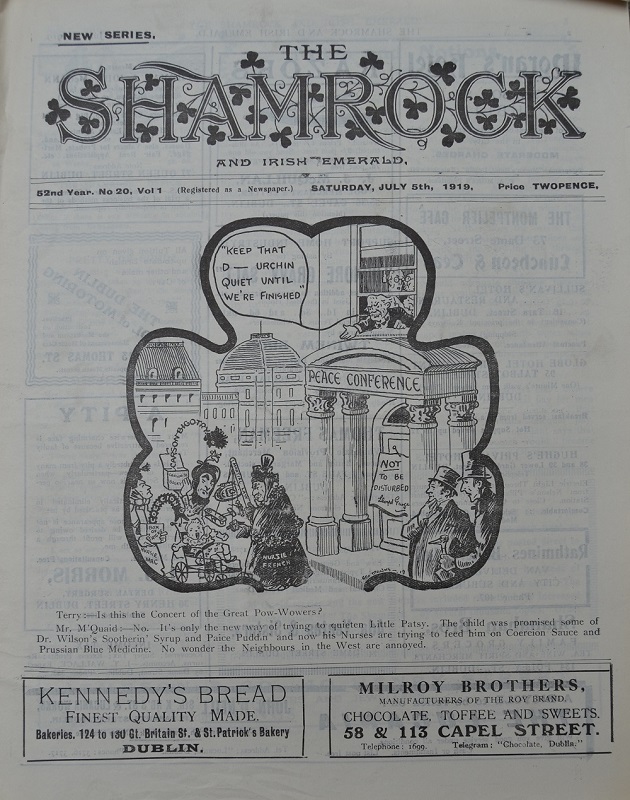
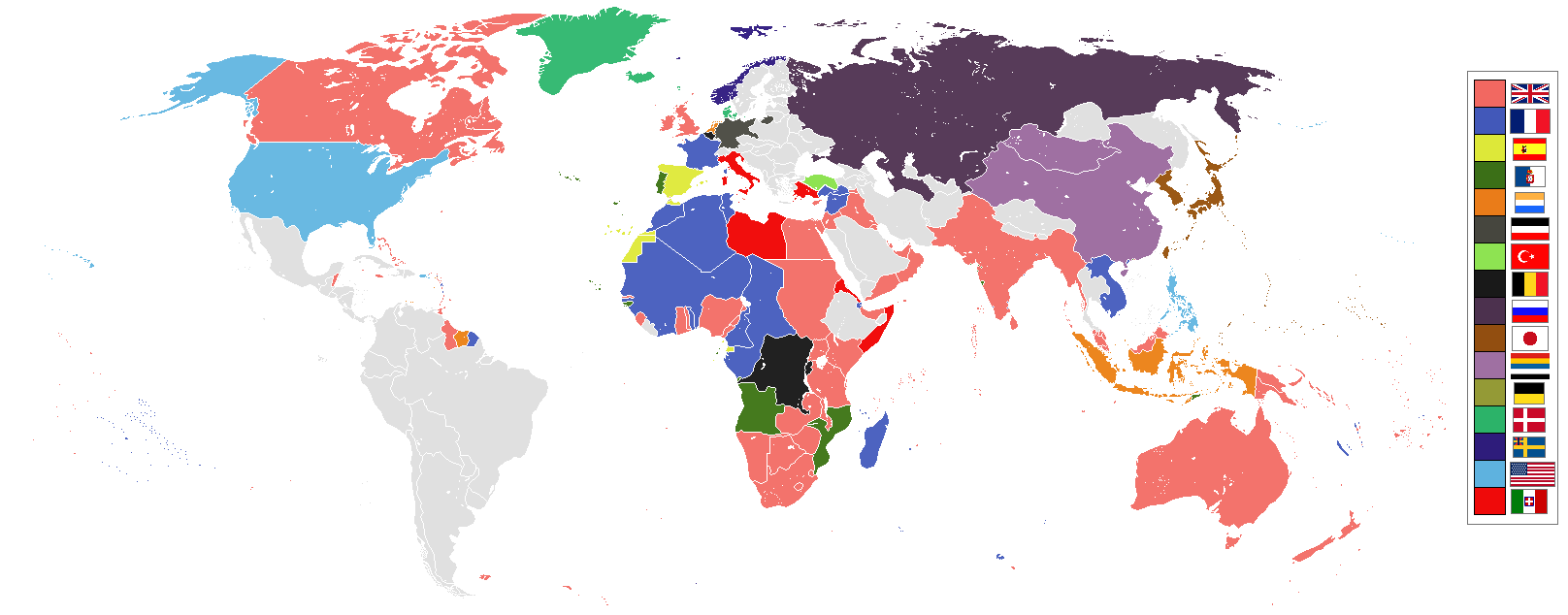
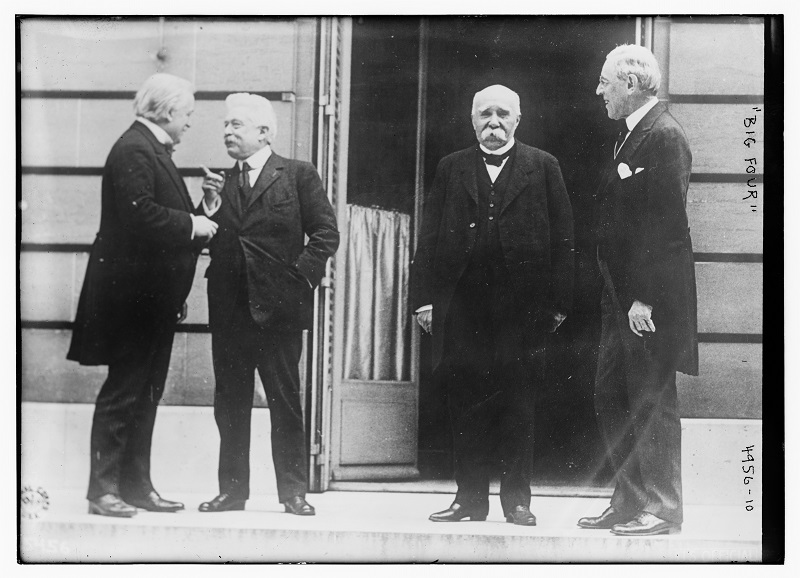


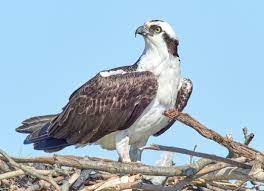


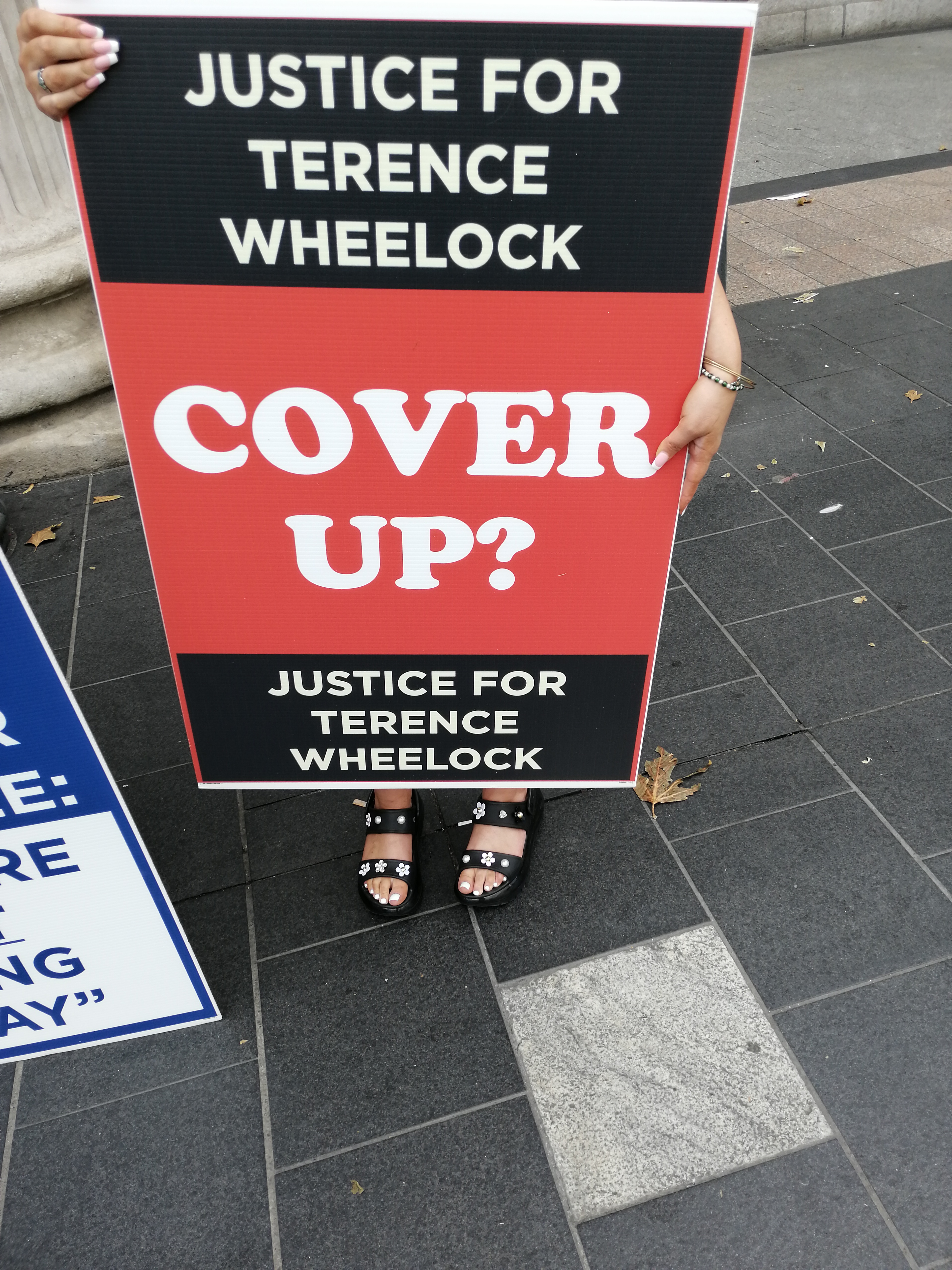
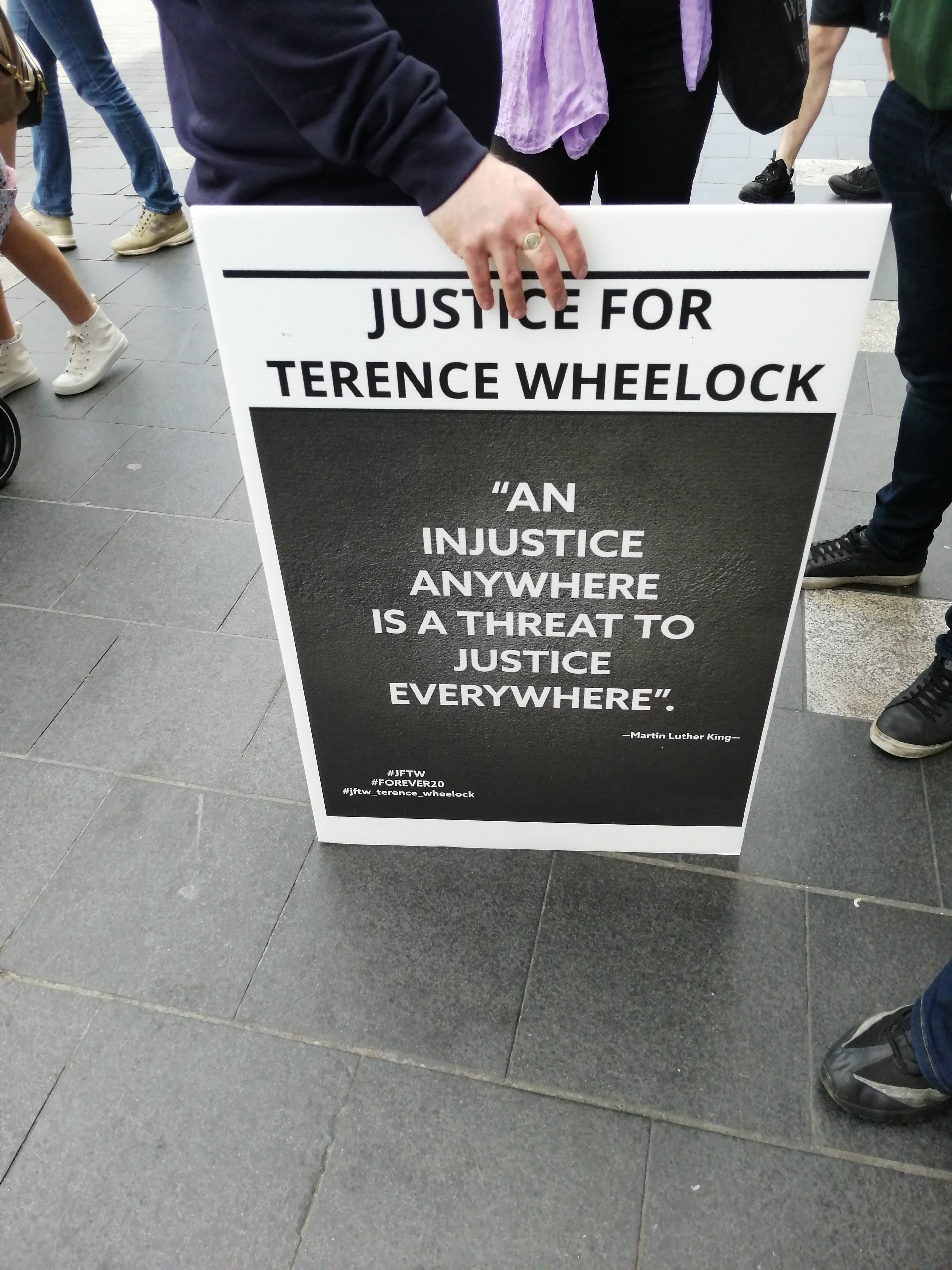


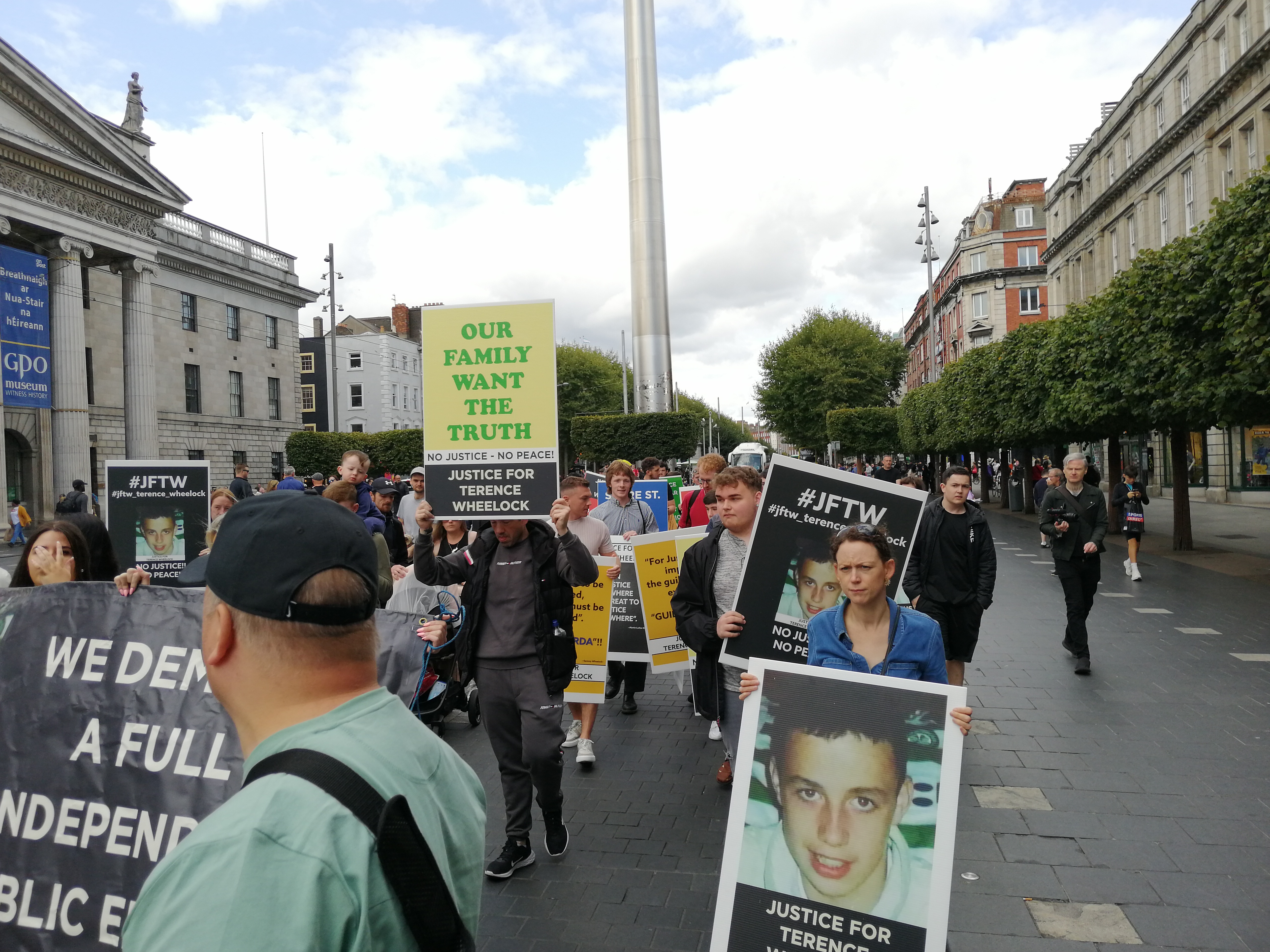

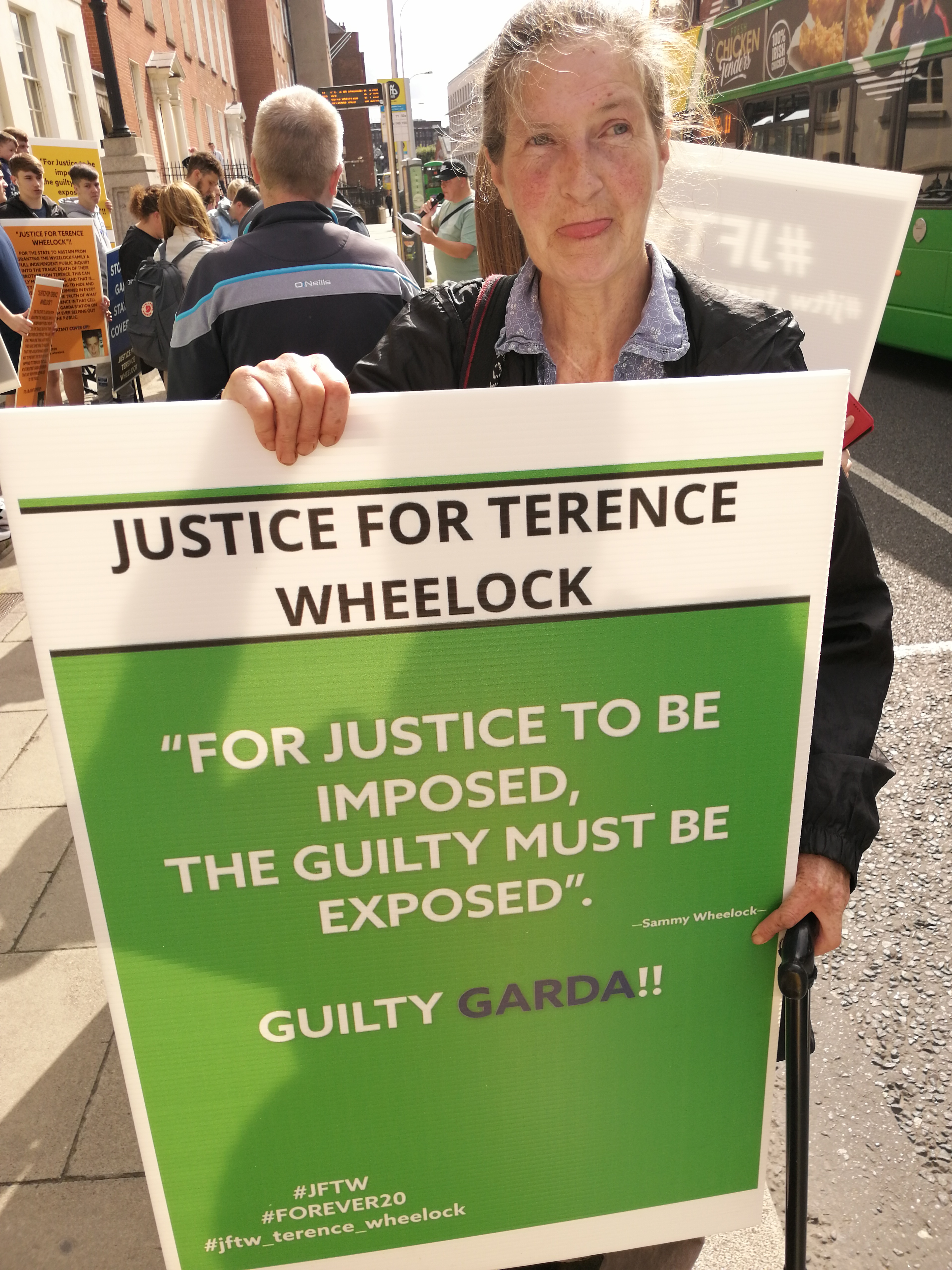


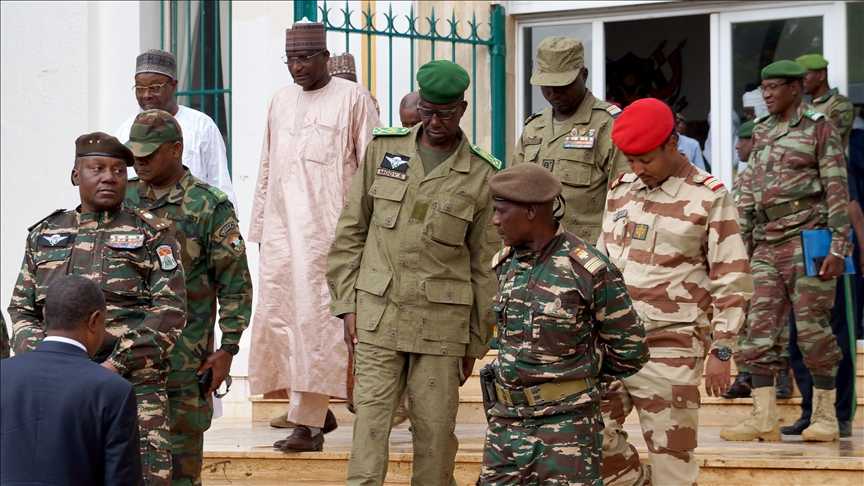
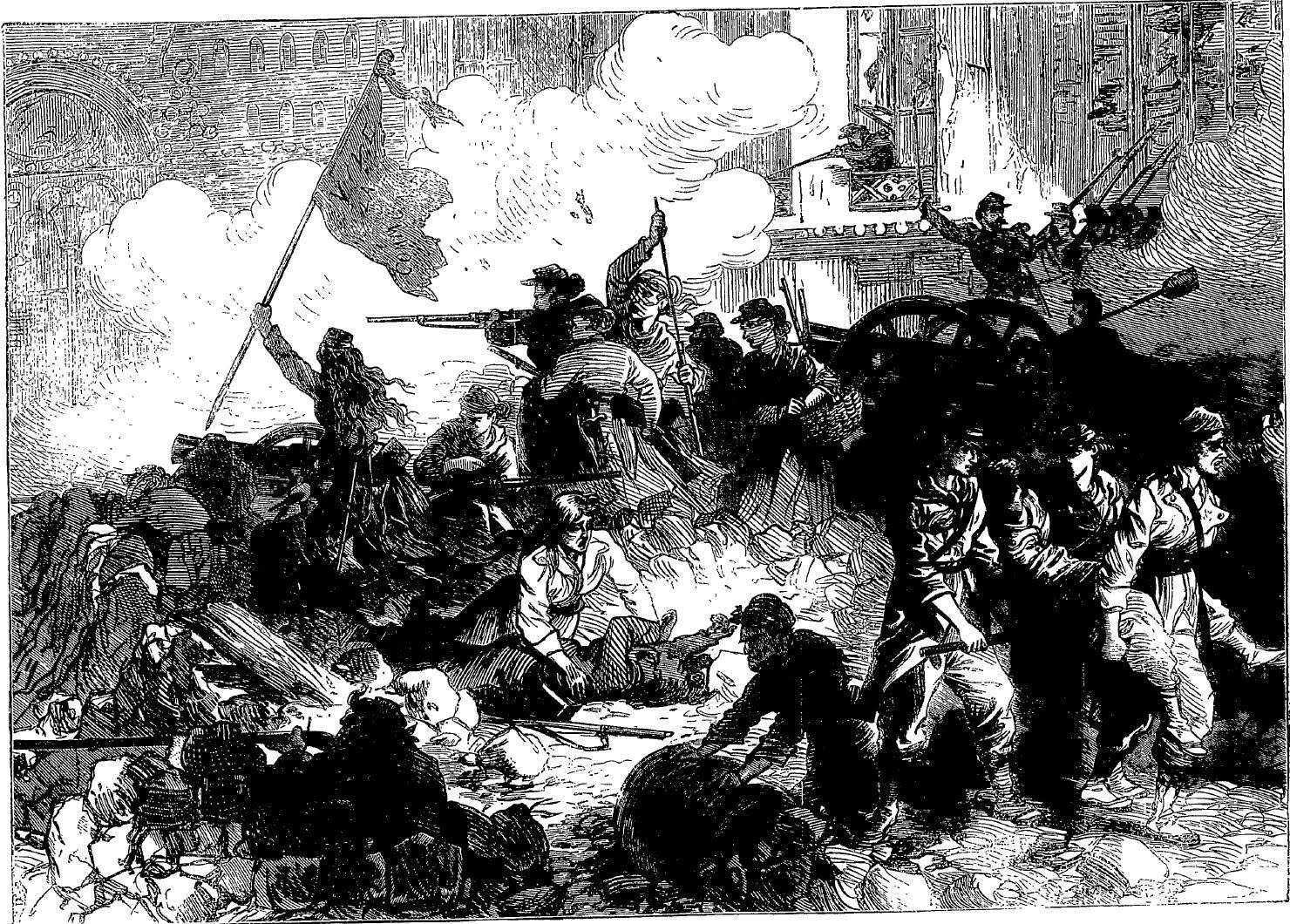
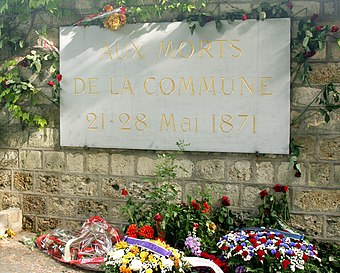
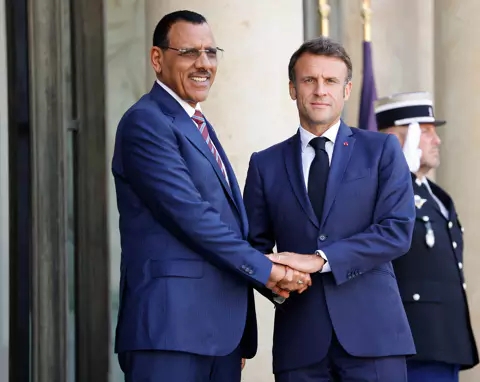
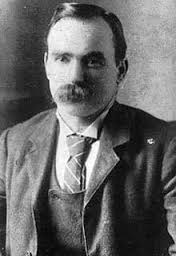
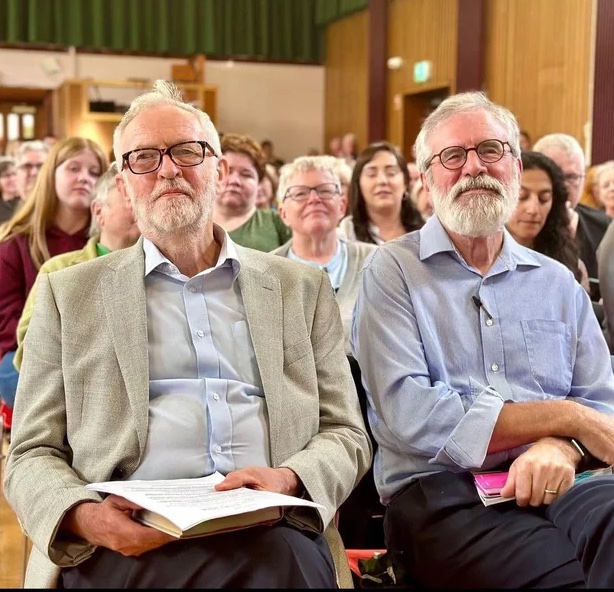
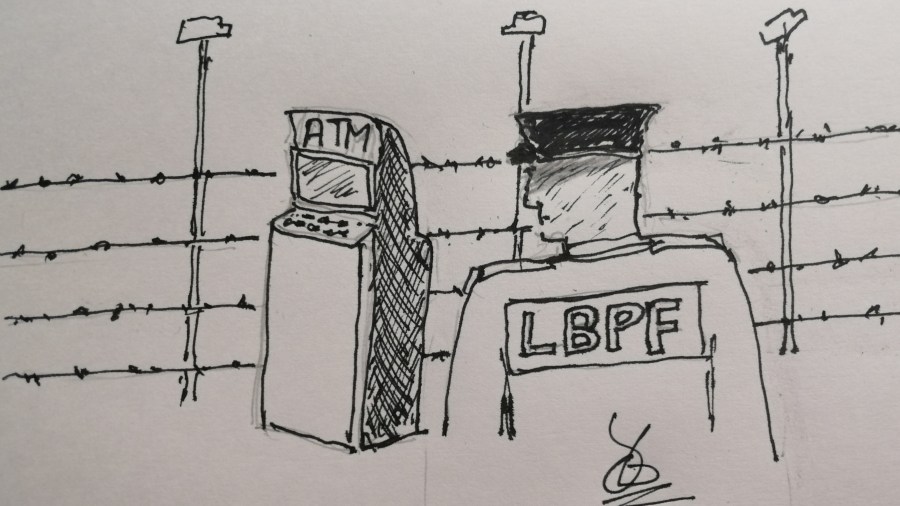




 rebelbreeze

