Artist’s representation of the public hanging of the Manchester Martyrs. (Image source: Internet)
The 23rd November is the anniversary of the hanging of the Manchester Martyrs by the English State in 1867 in front of Belle Vue Gaol, Salford1, Manchester.
The “noble-hearted three” were Phillip Allen, William Larkin and Michael O’Brien.
The Wikipedia page on the Manchester Martyrs says they were hanged for the murder of Constable Brett but this is completely incorrect. Although it was indeed the verdict, no murder occurred and, it is doubtful if even a verdict of manslaughter would have been correct.
On the 18th December of that year, Colonel Thomas J. Kelly and Captain Deasy, Fenian Brotherhood officers and Union Army veterans of the American Civil War, who had been arrested in England, were being transported in a horse-drawn prison van from the courthouse to Belle Vue Gaol.
Manchester was an industrial town with a large working class population, of which at least a 10% of the population was of Irish origin. A large group of Fenians ambushed the prison van at a place since called locally “Fenian Arch”, as a railway line ran overhead.
The Irish rescue party drove off the 12-man mounted police escort but failed to break open the van door with hatchets and crowbars and one of them fired a pistol shot at the lock.
Artists’ impression of the rescue of the Fenian prisoners. (Image source: Internet)
It was unfortunate that just at that moment, Constable Charles Brett was peering through the keyhole – the bullet entered his brain through his eye and killed him.
The lock was not broken and keys were still inside with the dead policeman but a female prisoner recovered them from his body and passed them out to the rescue party through a grille.
Kelly and Deasy were spirited away. A reward of £300 (£24,000 as of 2015, according to Wikipedia) was offered for information leading to their recapture but was never paid.
Friedrich Engels, communist revolutionary lived in Manchester at the time with his common-law Irish patriot wife, Mary Burns and some say they were involved in hiding the fugitives (the Fenian Brotherhood had been welcomed by Marx and Engels into the First International Workingmen’s Association). Kelly and Deasy were never recaptured, getting back eventually to the USA.
A heritage plaque marks the spot. (Phot sourced: Internet)
A WAVE OF ANTI-IRISH HYSTERIA
But a huge wave of British State repression descended upon the working class areas of Manchester, in particular upon “Little Ireland” and scores of people were arrested. The British media named the events the “Manchester outrages”.
Twenty-six were sent for trial in a wave of anti-Irish hysteria and and eventually five were convicted of murder and sentenced to hang. As noted earlier, without any intention to kill the officer, there should not have been even a charge of murder, never mind a conviction.
Thomas O’Meagher Condon and Thomas Maguire had their sentences overturned; the first through the offices of the USA (of which he was a citizen) and the second was a Royal Marine and had a cast-iron alibi, as they say and the witnesses against him were exposed in lies.
No convincing evidence was ever produced against the remaining three, Allen, Larkin and O’Brien and of those, only one had probably even been present at the rescue. But they hanged them all the same.
Artist’s impression of the trial of the five convicted including the three Manchester Martyrs. (Image source: Internet)
When their sentences were passed down by the judge, they cried “God Save Ireland!” and it was that which inspired TD Sullivan, an Irish constitutional nationalist politician, to write the lyrics to the ballad, known and sung to this day.
TD Sullivan remarked that within a month of the executions, the song could be heard performed in pubs in England and Ireland, a remarkable feat for a time without radio, not to speak of mobile phones and the Internet! (Listen to Youtube video of the song being performed by the Dubliners ballad group).
(Image sourced: Internet)
Commemorations of the Manchester Martyrs became part of the events on the Irish Republican and Nationalist calendars and formed part of the tradition and history that helped form subsequent Irish revolutionaries. Six Irish counties hold monuments to the three, two of those counties holding two each.
The Irish community in Manchester commissioned a memorial to them in Moston Cemetery, Manchester, which was several times defaced by fascists and an annual commemorative march was held there for years (sometimes too clashing with British fascists). There is a grand memorial to them too in Dublin’s Glasnevin Cemetery.
The monument erected in Moston Cemetery, Manchester, by the Irish community. (Photo sourced: Internet)
FOOTNOTES
The plaque on the Monument to the Manchester Martyrs in Glasnevin, work of that wonderful voluntary organisation, the National Graves Association. (Photo: Wikipedia)
1Salford has received a number of uncomplimentary literary references, one in Frederik Engels’ The Condition of the Working Class in England (1845) and another being in Ewan McColl’s song Dirty Old Town (1949).
All kinds of socialists deride nationalism, as do some republicans. It is often seen as a recruiting base for fascism, for imperialism and the cause or justification for war. Indeed it has been all those things. And yet …. Perhaps the way in which nationalism has been viewed by the Left and Republicans is one-sided and its progressive potential overlooked. And perhaps taking a look at Basque, Catalan and Irish nationalism can demonstrate this.
James Connolly (Photo sourced: Internet)
Was James Connolly1 being reactionary when he upheld the rights of the Irish nation to separation from the United Kingdom, to self-determination? Was Thomas Davis being reactionary when he composed the words
Thomas Davis monument, statue and fountain, College Green/ Dame St, Dublin. (Photo: D.Breatnach)
Recently I began to question some of the criticisms of nationalism politically while at the same time I had struggled with them culturally for much longer. A few people may say that it matters nothing to them whether they are Irish, Italian or Iraqi. But most Irish people identify themselves quite strongly as “Irish”. I think that is primarily a cultural question. They have accents, sayings and history they share, character flaws and positive aspects, heroes, songs, poems, writers …. It is not the same for everyone but some of those aspects, in some kind of mix, are there for each person who identifies themselves as Irish. And of course, the sadly neglected Irish language. I don’t believe identifying oneself as Irish (or Icelandic, Iranian or Indonesian) makes one any less an internationalist.
“OK,” the socialist and the republican might say, especially the socialist, “but what does that matter? You can have regional cultures too. They do not detract from the fact that we are all socialists, fighting for the working class everywhere.”
And I would agree.
But the socialist is not finished. “It’s a different matter entirely when you elevate that cultural distinction to a political one, which is nationalism. That creed puts your nation above others and is a breeding ground for fascism and war and, in powerful nations, for imperialism.”
He has a strong case – but we’ll see.
Fascism is on the rise all across Europe and many other parts of the world and we see signs of its resurgence here in Ireland, with discourses against migrants, moslems and social freedoms on the rise. The fascists and the racists working among those discourses are indeed using nationalism as a cover and at the same time as some kind of a base. Recently, supporting Gemma Doherty, they were playing the Soldiers’ Song and Irish Republican ballads and they were waving the Tricolour. Some of them approached the antifa opposing them, asking questions like “Are we not all Irish?” 3
Now, as it happens, the national flag, the Tricolour, is not only about inclusiveness, i.e of a unity (white) between the descendants of colonists (orange) with those of the indigenous (green), but was also made by foreigners and presented by them to the Irish. It was in fact republican women of Paris, which was then amid revolution, who presented it to Thomas Francis Meagher in 1848.
The Irish tricolour flag, design presented to the Irish nation by French women revolutionaries in 1848. (Photo sourced: Internet)
Of the heroes and martyrs mentioned in the ballads, many were born outside of Ireland, including two of the signatories of the 1916 Proclamation of Independence: Tom Clarke and James Connolly. Constance Markievicz too was born in England, daughter of a colonist family in Ireland; Wolfe Tone and Henry Joy McCracken, Republican leaders and martyrs of the 1798 United Irish uprising, were descendants of French Protestants. Many too were the sons of a non-Irish parent, such as Thomas Davis, whose father was Welsh and Patrick and William Pearse, whose father was English., also Eamonn De Valera, son of a Cuban father. The man who organised the sea journey to Howth with German Mausers as illicit cargo for the Irish Volunteers in 1914, Erkine Childers, was English and his wife and one of his crew, Molly, was from the USA.
On the other hand, those who made the deal with the British ruling class after years of liberation struggle were Irish — in 1921 they paralysed the revolutionary struggle, agreed to the partition of the country and in 1922 set out, even using artillery on loan from the British, to slaughter their opposition, their former comrades who wished to continue the revolution. Childers, the English gun-runner to Howth, joined the IRA in the War of Independence and in the Civil War, during which the new Irish State executed him.
The conservative forces, political and religious, that were the base of the new state and gave rise to the Civil War, had a kind of nationalism but it was quite weak. Most of Ireland became part of the British Dominions4, owed allegiance to the British Crown and “God Save the King” continued to be played at state occasions even while the Tricolour waved overhead. And it was from that seedbed that Irish fascism sprung for the first time, in the form of the Army Comrades Association, popularly known as “The Blueshirts”.
Irish fascists, the “Blueshirts”, at Bluebell Cemetery 1934. (Photo sourced: Internet)
And because this fascism came from what was perceived as a State that had sold out the struggle to the foreign oppressing power, the Irish Republican movement found itself obliged to fight it and did so. From the most anti-communist right-wing Republicans to the most left-wing, they fought the fascists with publicity and physically, with fists and boots and, occasionally, with pistol shots. Socialists and democrats fought them too but it was the Republican-nationalist Government of Fianna Fáil5 that banned the Blueshirt march intended to lead to a coup and forced the organisation to back down, after which, despite enthusiastic support of the Catholic Church hierarchy, it did not again pose a serious threat of assuming state power.
Since those years and particularly since the end of WWII, Irish society has been on the whole anti-fascist in sentiment and the Irish Republican movement, with some exceptions, particularly so.
It seems to me, upon reflection, that although much of this sentiment is based on democratic and even socialist ideals, it is also, in part, a defence of Irish nationalism, a deep-seated wish for independence and self-determination, a memory that fascism in Ireland serves British domination.
And not only a memory but current reality: British Loyalism in Ireland, the militant force that garrisons and underpins colonial possession of the Six Counties (one-sixth of the area of Ireland) by Britain, is extremely reactionary. Apart from the numerous links with British (and even European) fascist groups over the years, Loyalism is deeply socially and politically reactionary. British Loyalism in Ireland is opposed to immigration, has been implicated in racist attacks on migrants, is opposed to any state recognition of the Irish language or civil rights for people of Catholic background, in addition to being against the struggles of the Palestinians, Basques, Catalans; also to gay rights and to the right to choose abortion.
SPAIN AND “THE RISE OF THE RIGHT”
In another part of Europe, there is a state which had experienced a military-fascist coup and war, after which it suffered four decades of fascist repression. Spain, after the death of the dictator Franco, went through a supposed Transition to democracy but the fascists remained in their positions of power which they handed down to their sons and daughters, these making room for a few social-democratic climbers at the table.
The November 10th elections this year in the Spanish State saw the rise, it is being widely said, of the far-right. It would seem so on the surface but one needs to understand that all the parties of the Right in the Spanish state have their origins in the Dictatorship: the allegedly “conservative” Partido Popular was created by followers of Franco; the allegedly “centre-right” Ciudadanos was formed by deserters of the Partido Popular, while the “ultra-Right” Vox was formed by deserters of Partido Popular and of Ciudadanos. There is in fact little political difference between those who vote for different parties of the Right and certainly none between those who voted for Ciudadanos before and those who have now voted for Vox. Most of the trumpeted “rise of the Right” in the Spanish territory is in fact a re-allocation of votes from one right-wing quasi-fascist Spanish party to another, rather than an increase of votes for fascism. Of course, that does not at all mean that there is no danger to popular and democratic forces but still …..
Map of voting results in the November elections in the Spanish state. (Image source: Wikipedia)
Viewing the rise of those votes for Vox and their pattern across the territory of the Spanish State, one can see that Catalonia and the Basque Country remain untouched, as any map of voting results will show. Basque and Catalan independentists tend to be proud of this, no doubt justifiably so but perhaps there is a danger here too. Do they think that at base, Basque and Catalan people are superior to those in the rest of the Spanish state? If so, they should think again …. and think deeply.
The Basque Country was, until the military-fascist coup, ruled by deeply conservative and Catholic elites. When Franco and the other Generals struck with German Nazi and Fascist Italian assistance in 1936, of the four Basque provinces within the territory, only two unequivocally decided to fight it: Bizkaia and Gipuzkoa. Alava’s resistance was half-hearted and in Nafarroa, the conservative Carlists wiped out three thousand socialists, anarchists and democrats and joined the fascist-military forces.
Until very recently, the Nafarroan regional government has been dominated by the UPN, a Basque version of the Partido Popular and, after a brief interval, they are in power again. The other three southern Basque provinces have a separate regional government which, for most of its existence, has been in the hands of the right-wing Basque Nationalist Party and the only time it has not, has been a brief period under the Basque version of the Spanish social-democratic party, the PSOE.
In 1936 the attempt to bring Catalonia into the fascist-military side was only prevented by a workers’ uprising and actual street battles. After the death of Franco Catalonia was also run, until very recently, by right-wing Catalan forces which, not so long ago, sent its regional police force, the Mossos d’Esquadra, to beat social and economic protesters off the streets and to shoot them at close range with rubber bullets, causing around a dozen young men and women to lose an eye.
On the other hand, the regional Government of Andalusia, now seen as a stronghold of the Vox party, has been ruled by the social-democratic PSOE from the moment the region had democratic elections after the Transition. However years of corruption and lack of concern for the fate of working people and high unemployment in the region has whittled away the electoral lead of the PSOE until this year, when Vox and Ciudadanos were able to combine and to take over the regional government.
FOR NATION, AGAINST FASCISM
Within both Catalonia and the Basque Country, independentist forces, which is to say, those of a nationalist and republican motivation, have evolved to be led by groups espousing left-wing ideology. Generally, the young activists and supporters are atheist or agnostic, anti-racist, liberal socially and environmentally conscious. But they also defend their language, enjoy their cultural expressions and either support independence or at least the right to self-determination. The opposition of these forces to fascism seems to me to rest on two pillars: 1) left-democratic ideology and 2) defence of the nation.
Similarly to the case of Ireland, those of unionist ideology and opposed to self-determination in Catalonia and the Basque Country tend to be on the Right with a fascist core and the major support for those fascists and unionists comes directly from the Spanish State through its police, military and judicial systems, as well as from fascist groups mobilised from outside Basque and Catalan territories. English and English-colonist nationalism tends to be based on colonial and imperialist history and thinking, to be reactionary and even fascist, features which it shares with Spanish nationalism, with the added factor that the forces creating and managing the Spanish state in its current form have been actually fascist and fascist-collusive.
A fairly recent Spanish fascist commemoration in Madrid, including Spanish colours and fascist salutes. (Photo sourced: Internet)
I have therefore come to the conclusion that Basque, Catalan and Irish people are no better than anyone else fundamentally, including the English and the Spanish, but that the conditions governing the development of their culture and their resistance to foreign occupation and domination have given rise to a different kind of nationalism. This nationalism tends to be progressive, democratic, inclusive and anti-fascist …. and is playing a progressive role in the world.
End.
FOOTNOTES
1James Connolly (1868-1916), born into the Irish diaspora in Edinburgh, is considered by many the foremost revolutionary socialist thinker in western Europe in his time but he was also a trade union organiser, founder of political parties, journalist, historian, author and song-writer. He was a co-founder of the Irish Citizen Army, the first worker’s army in the world, which also recruited women on an equal basis.
2A Nation Once Again, published in The Nation, by Thomas Davis (1814-1845), Irish Republican journalist and song-writer.
3Protest of racist campaigner Gemma Doherty against proposed restrictions on “hate speech” at the Irish Department of Justice, Stephens’ Green, Dublin at the beginning of November this year.
4This however changed in 1937 with De Valera’s new Bunreacht (Constitution) which declared the Irish State to be a Republic and the Articles 2 and 3 of which laid claim to the Six Counties (overturned in 1999).
5A 1926 split from Sinn Féin on the issue of occupying seats in the Dáil (the Irish Parliament), it grew quickly and was soon elected to government (1932) and, as the preferred party of the native Irish capitalist class, has been in government more years than any other Irish political party. Despite its Republican origins and rhetoric, it continued to support the capitalist-Catholic Church alliance of its predecessor until very recently, when it criticised abuses by the Church of those in its care and failure to pay adequate compensation.
A recent article of the Belfast Telegraph, a British-Unionist paper, reports that nationalist youth have built a bonfire and decorated it with, among other things, a banner representing the Parachute Regiment and another representing “Soldier F”. The article reports that the Police Service of Northern Ireland are treating this as “a hate crime”.
The bonfire preparation referred to in the Belfast Telegraph article (Photo source: Internet)
The newspaper comments also that this bonfire is associated with “anti-social behaviour” the nature of which however they neglect to specify. Although the article treats the PSNI statement as unremarkable and neglects to interrogate it as responsible journalism should do, the police statement is actually not only totally inaccurate in terms of law but also discriminatory and oppressive.
One definition of “hate crime” from an on-line dictionary is a crime, typically one involving violence, that is motivated by prejudice on the basis of race, religion, sexual orientation, or other grounds.
Wikipedia posts at greater length and depth:A hate crime (also known as a bias-motivated crime or bias crime is a prejudice-motivated crime which occurs when a perpetrator targets a victim because of their membership (or perceived membership) in a certain social group or race.
“Hate crime” generally refers tocriminal acts which are seen to have been motivated bybias against one or more of the social groups listed above, or by bias against their derivatives. Incidents may involve physical assault, damage to property, bullying, harassment, verbal abuse or insults, mate crime or offensivegraffiti or letters (hate mail).
Now, how does placing an emblem or banner to represent the Paratroop Regiment constitute a “hate crime” under any of those definitions? First of all, is it a crime to burn the banner? Not in itself, no and therefore it cannot be a hate crime. But even if burning a banner were defined in law as a crime, how would it fit the definition of “hate crime” as given above? It is none of those categories above that leads to the Parachute Regiment being reviled.
It is interesting, since the issue of “hate crimes” was brought into law, how incorrectly they are being ascribed by people in authority and by mass media and, curiously, applied to people struggling for national self-determination against repressive states and also to those opposing fascists. In other words, it is progressive forces that are being accused of “hate crimes” because of their resistance to oppression and resistance. Not the reactionary forces one might suppose were the object of the classification.
Certainly, it is the discriminatory and repressive behaviour towards its large Catholic minority of the ‘Northern Ireland’ statelet since its formation which clearly fits into the definitions of “hate crime”, although often its actions were not defined as crimes since they were authorised by its repressive legislation. Nevertheless, even within the parameters of that body of legislation the Statelet and its police committed thousands of crimes, including petty harassment, beatings, torture, perjury, arson, collusion with Loyalist paramilitaries and murder.
The British Army became an active participant in those crimes when it was sent into the Six Counties to bolster the crumbling government and exhausted sectarian police. Chief among those in criminality was the Parachute Regiment, responsible for an admitted list of unarmed civilian fatalities which includes 10 in Ballymurphy in August 1971, 13 in Derry in January of 1972 and another five in July of that year on the Springfield Estate.
Booklet published by the Pat Finucane Centre documenting the murderous activities of the Parachute Regiment in just four years in Belfast. The bonfire preparation referred to in the Belfast Telegraph article (Photo source: Internet)
It is perfectly reasonable, natural and, I would say healthy to hate the people who carried out those massacres. And to hate them cannot reasonably be called a crime.
“Soldier F” is the only member of that regiment to have been charged with the crime of murder and to be facing trial. As a representative of that murderous regiment he did not become a public target of hate until the Loyalists chose to publicly flaunt their support for him with banners, graffiti and badges. None of those, motivated by hate for the nationalist community, were charged with committing a hate crime. However, when nationalist youth, responding to that hateful campaign of the Loyalists, place the soldier’s alias on a bonfire, suddenly it is they who are accused of perpetrating a “hate crime”.
Photographs of a small selection of prominent street banners in different areas of the Six Counties supporting ‘Soldier F’ and the Parachute Regiment erected by Loyalists (and over which no action was taken by the authorities). The bonfire preparation referred to in the Belfast Telegraph article (Photos source: Internet)
Unfortunate it may be that the nationalist youth have focused on this individual soldier but it is not a hate crime. They are targeting him not because of race, ethnicity, colour, religion, sexuality, disability etc, etc but because of his membership of a murderous regiment and, furthermore, in response to a campaign of provocation by Loyalists against which the sectarian PSNI and Statelet authorities have taken no action whatsoever.
And you know what? Although I am not from Derry or Belfast, I hate the Paratroop Regiment too.And the sectarian Statelet and its sectarian police force and the Loyalist bigots who support it and try to suppress the democratic rights of the nationalist population, as well as of migrants, women and LBGT people.
I could get to hate the Belfast Telegraph as well.
(Reading time: Introduction, one minute; Part One: 5 mins; Part Two 2 mins: Part Three: 3 mins; Part Four: 2 mins; Total: 13 mins.)
Diarmuid Breatnach
INTRODUCTION:
Although I often think about the big questions – and am generally guided by my philosophy on them, my mind and energy are usually too occupied with specific struggles to focus on them for long. Recently however I had the opportunity and the need to think about the war, the one we have yet to win.
The Storming of the Bastille (translation), French Revolution, 1789 by Jean-Pierre Houel. (Image sourced: Internet)
But to which war am I referring? The Irish war of national liberation that has been flaring up for centuries, being lost each time before flaring up again? Or the class war, which has had a few sharp Irish episodes but has been, for the most part in Ireland, in abeyance? The answer is BOTH, though it may seem that my emphasis in the discussion, certainly in the early part, is on the national liberation war.
In order to imagine how we might win, it is helpful to examine past struggles and analyse what went wrong with them. Pessimists love to focus on those things I know – but in order to push us towards reformism or just surrender; my approach instead is from a revolutionary perspective.
Generally, Socialists analysing the class struggle don’t even ask themselves why we have not had a revolution yet. From week to week, month to month, they tend to focus on this or that particular trade union or social struggle but without going into the big picture. It seems as though they can’t even imagine a socialist uprising in Ireland, it’s just too far away to think about, apparently. But if one can’t even imagine such a revolution, how could one consider the necessary steps to get there?
Communards at barricade, Paris Commune 1871. (Image source: Internet)
Irish Republicans on the other hand are often thinking in terms of revolution, usually including armed struggle. However it seems to me that Irish Republicans don’t like analysing past failures of the movement but when they do, their verdicts tend to be that the leaders betrayed the struggle or that taking part in public elections corrupted the movement; or that infiltration, spies and informers was the problem. And some other reasons. The thing is, although all those things played a particular part, they are not the fundamental reason.
“Defeat of the Rebels at Vinegar Hill” by George Cruikshanks, i.e United Irishmen last major position in Wexford overrun, 1798.
PART ONE: THE THIRTY-YEARS’ WAR – DOOMED TO LOSE
(Reading time this section: less than 5 minutes)
Derry Monument and Mural of the Civil Rights struggle which preceded the armed struggle in the Six Counties. (Image sourced: Internet)
The national liberation war that began in 1969 in the Six Counties and ended in 1998 (though some armed incidents continue from time to time) began as a civil rights struggle and changed into a war of communal defence and of national liberation. The military part of the struggle for the most part took place in the occupied Six Counties. The political element of the struggle was waged all over Ireland (and abroad) but in the main consisted of support for the struggle in the Six occupied Counties.
Fought in that way, the struggle was bound to lose. It could never win. How could anyone imagine that they could win a struggle fought against a world power in one-sixth of the country, where even the population there was divided against them? What could they have been thinking?
To my mind, there are only two possible sane replies to that question, which is that they believed: 1) that the British ruling class would get worn down by struggle and leave and/ or 2) that the Irish ruling class would intervene in some way to assist the struggle and make continued British occupation untenable.
1) ‘The British ruling class would get worn down and leave’: This theory must have depended on British repression being condemned abroad and being unpopular at home but had to rest fundamentally on the British having no great stake in continuing its possession of its colony there.
Anyone who thought that (and there were many who did and still many who do, not just Irish Republicans) made a fundamental error. Time and again the British ruling class has shown its determination to hang on to what might be considered its first colony, even as the ruling class’ composition changed from feudal-colonialist to capitalist-imperialist and as the world changed around it.
Mural in nationalist area in the Six Counties (Image sourced: Internet)
Even when the British ruling class, weakened by WW1 and facing an Irish guerrilla war which enjoyed the support of the vast majority of Irish people, with national liberation uprisings breaking out across its Empire and with its repression in Ireland increasingly unpopular at home, entered into negotiations with the Irish resistance, it held on to a foothold, the Six Counties.
Subsequently, it had that colony managed in a permanent state of emergency laws, with institutionalised sectarian discrimination at all official levels and outbreaks of pogroms in the street and workplace.
That became even more exposed during the civil rights struggle and the national liberation war that followed when the British State compromised whatever good international reputationremained to its Armed Forces, its judiciary, its legal establishment, its media and its very legal framework.
Even now, when many believe that the Good Friday Agreement means that a 50% plus-one-vote in favour in the Six Counties will be sufficient to end Partition, they do not realise that such a decision will have to also obtain a majority in the British Parliament and be endorsed by the British Monarch. They are also forgetting the broken promises that surrounded Partition in the first place.
British Army in Belfast 1969 (bayonets and guns pointed towards nationalist area). (Image sourced: Internet)
When analysing what holding on to the Six Counties has cost the British State in terms of reputation, military and financial contributions, one can only rationally assume that continuing to hold on to that foothold is of great importance to the British State. One may speculate as to the reasons underlying that but the central fact cannot be denied.
2) ‘The Irish ruling class would intervene in some way to assist the struggle and make continued British occupation untenable’:
There was some basis for this belief in that a section of Fianna Fáil, a party that had emerged from a split in Sinn Féin in the 1930s and had become one of the mainstream parties in the Irish state, had retained some traditional commitment to seeking a united Ireland. However it was a thin enough basis on which to depend in a national liberation struggle since that section had no majority within the party itself, to say nothing of the foreign-dependent nature of the Irish native capitalist class, the Gombeens, as a whole.
The question came to a trial of strength in the Arms Crisis of 1970, in which at least two Fianna Fáil Government Ministers were involved in secretly buying arms for the defence of nationalist areas in the Six Counties (since the IRA had insufficient weapons at the time) from rampaging Loyalist mobs and the Royal Ulster Constabulary (including the part-time B-Specials). The Ministers alleged that they had acted in the full knowledge of the rest of the Government. By the time the whole affair was over, two Ministers had been sacked and another two resigned in protest.
If it had not been clear before that the Gombeens, the native Irish capitalist class was no patriotic capitalist class but rather a neo-colonial one, it should have been clear after that. But the armed struggle in the Six Counties intensified, especially after the massacres of unarmed civilians carried out by British Paratroopers the following year, 1971 in Belfast and again in Derry in 1972. And the war lasted until 1998.
If, as had been demonstrated to be the case that the British ruling class were determined to hold on to the Six Counties and the Irish ruling class was not going to seriously challenge that possession, did the Republican movement have any other option than to fight on a war that they could not possibly win?
I am clear that it did.
Clearly, in order to have a chance of success, the war had to be extended to the other five-fifths of the country, which is to say into the territory under the control of the Irish native capitalist class. This class had seized power after the War of Independence (1919-1921) and had beaten and suppressed its opposition duringand afterthe Civil War (1922-1923) and furthermore was supported by a powerful ally, the Irish Catholic Church. Since the founding of the first Irish Republican organisation, the United Irishmen of the late 1790s, the Catholic Church hierarchy had opposed Irish Republicanism; it had condemned four Irish priests who participated in the uprising of 1798, excommunicated the Fenians, had at first condemned the 1916 Rising and the War of Independence only to latch on to it at the end along with the Gombeen class.
The general Irish population likely would not have supported or sustained an armed struggle in the 1970s against the Gombeen class but that class could have been fought politically, through agitation and mobilisation, on many social, political and economic fronts. Without going into the specific details of each, these were:
against the huge wastage of Irish youth through emigration
to remedy the shortage of affordable housing (which in part contributed to the above)
to end unemployment (also contributing hugely to emigration)
to raise the level of wages and lower wage earners’ taxation
for the right to divorce
for equality for women in law
for the right to contraception devices and medication for men and women
against decriminalisation and for equal rights for gay and lesbians
to halt the decline of the Irish language, in particular of the rural Irish-speaking areas
to improve services for the rural areas
to oppose the open-door policy for foreign multinationals to exploit Irish natural and human resources
to secularise the education service
and the health service.
to remove the privileged status of the Catholic Church within the state.
Irish women photographed at Connolly Station 1971, about to board train to Belfast to purchase contraceptives to bring back to the Irish state, illegal at the time. There was no right to abortion either or divorce and a husband’s signed permission was necessary to take out a hire purchase agreement. (Image sourced: Internet)
The Republican movement in general, with some exceptions, declined to take on any of those struggles. They did not organise in the trade union movement, left the social struggles to others and most of all, declined to take on the Catholic Church on any issue except its opposition to the national liberation struggle. Even there, it was happy to publicly avail of the services of members of the Church clergy who supported them. Republicanism was, from its very beginning, as well as anti-monarchist, about separation of Church and State but it was difficult to see that in the Irish Republican movement, particularly after the War of Independence.
A full half of those fourteen points above (nos. 5,6, 7, 8, 12, 13 and 14) would have meant taking on the Church head-on and no doubt the hierarchy would have hindered the struggle over most of the others too, due to its strong links with the State and its ruling class.
Because of its tactical and no doubt ideological refusal to take up those struggles, the Republican movement could do little more in the 26-County state than to agitate for solidarity with the beleaguered nationalist population inside the British colony.
Though this could be effective for a time it could not become a mass movement, nor survive a long struggle, without any remedy being sought for the issues facing the population within the state.
The wonder is not that the majority leadership of the Republican Movement threw in the towel on the military struggle in 1998 but that they had waited so long to do it. Of course, they never admitted the true nature of what they were doing: abandoning the armed struggle and revolution in total and instead, using their negotiating position to advance themselves politically – not in the economic, social and political struggle envisioned above but rather in a political struggle to find themselves a place among the Gombeen political class in the Irish state and as accomplices in the governing of the colonial state.
PART 2: COLLECTING THE FORCES FOR REVOLUTION
(Reading time this section: 2 minutes)
A successful revolution in Ireland, as in most places, would require the involvement of a mass movement. That mass movement would be unlikely to be one that had national self-determination as its only aim – certainly not in the 26 Counties (the Irish state). Mass movements arise at times around different issues and exist as long as the issue does or instead until the movement gets worn down or broken up. Such movements arose around the Household Tax and, later, around the additional Water Charges.
Section of protest against water charges, O’Connell Street, Dublin, 29 Aug. 2015 (Image source: Internet)
Even though the objectives of such movements are often not revolutionary, the participation in them by revolutionaries is necessary if, in the future, there is to be a revolution. Revolutionary activists can make contacts and prove themselves by the way they participate whilst at the same time pointing out that a revolution is necessary in order to resolve all these issues completely and permanently. Such activists can also influence the movement (or sections of it) to act in more revolutionary ways, so that the movement can be guided by – and imbued with — revolutionary spirit.
Working people in struggles come up against concrete problems which need to be resolved in order to move forward. Prior to 1913 in Ireland, workers learned the need for unity in struggle which was emphasised by the employers’ attempts to break the Irish Transport and General Workers’ Union in August 1913. The attacks on them by the Dublin Metropolitan Police illustrated the need for organised defence and Larkin and Connolly called for the formation of what became the Irish Citizen Army, which later also fought prominently in the 1916 Rising.
Members and supporters of the Irish Transport & General Workers’ Union cheering outside the union’s HQ, Liberty Hall, August 1913. Later the union formed the ICA to defend themselves from the DMP; the ICA took a prominent part in the 1916 Rising. (Image source: Internet)
Trade unions are the only mass organisations of the working class in Ireland and it is necessary for revolutionaries to be active within them. Currently, other than social democrats, it is mainly members of both trotskyist parties and independent activists who engage politically with the trade unions. Those members are mostly in clerical work and their political work tends to concentrate on employment demands around wages and working conditions. When they introduce politics it is generally to get some motion passed by their branch. Also at times, they will campaign to get a perceived left-wing candidate elected to some position within the trade union bureaucracy.
None of the above are without value but they remain disjointed in terms of program and often confined to just one trade union. Not only that, but often the Left party involved will engage in order to recruit some new members and in order also to retain their own members by providing them with activity. When broad front trade union groups are formed, they tend to become an arena where the dominant trotskyist parties compete for dominance.
If we are to have a successful revolution – and in particular a socialist one – participation in the struggles of workers in the trade union movement is absolutely necessary. But participation should be primarily among the rank and file of the trade union and also across trade unions, focused on providing solidarity to members of whichever union is in struggle – in addition to encouraging unorganised workers to organise and become active. The objective is not to help make one trade union or one section more militant but rather to create a militant workers‘ solidarity movement within the whole trade union movement. It is essential to have members in the ‘blue-collar’ work unions or departments as well as in the clerical unions or sections. And the cross-union organisation I advocated should be independent — the preserve of no political party.
Participation in such struggles provides an opportunity for revolutionaries to make contact with people who are activists but not yet revolutionaries and to give those people an opportunity to evaluate the revolutionaries in terms of their actual practice. Revolutionaries can support the people struggling for worthwhile reforms while at the same time pointing to their partial and temporary nature. Revolutionary activists can play an educational role in the mass movements while at the same time becoming educated themselves by the daily reality faced by the masses in this system.
PART 3: THE ABSOLUTE NEED FOR UNITY – BUT WHAT KIND?
(Reading time this section: 3 minutes)
It is, most people would think, a ‘no-brainer’ (i.e an obvious truth) that unity is necessary in the struggle to overthrow the current system. It might be thought surprising, therefore, that disunity is more the rule among those who aspire to revolution.
Generally, those who claim to be revolutionary socialists will not unite with Irish Republicans. In addition, those socialists of one party will often fail to unite with those of a different party. The same dynamic is to be seen among Irish Republicans also.
There have been many attempts to overcome this problem. In the 1930s the Republican Congress sought to unite Irish Republicans with revolutionary socialists. In the face of hostility within the mainstream Republican movement and also with divisions among the communist element in Ireland at the time, faced in addition with anti-communist hysteria whipped up by the Catholic Church, the experiment failed. The leadership of the Sinn Féin and the IRA of the later 1960s tried to combine socialism and republicanism within one party and military organisation, an attempt that crashed when it was discovered that the arms necessary to defend ‘nationalist’ community areas in the Six Counties, particularly in Belfast, were unavailable, leading to an acrimonious split in the movement. A subsequent attempt to combine the socialist and republican elements in another organisation survived a little longer but also failed for a number of reasons, some internal and also due to Irish State repression.
Socialist Republicans, members of Republican Congress from Shankhill Road, marching to annual Wolfe Tone commemoration, Bodenstown 1934. They were attacked by conservative Republicans. (Photo source: Internet)
There have been some attempts to unite the non-republican Left itself also, which usually failed due in part to ideological differences but also to political sectarianism and personality clashes. Currently both trotskyist parties have an uneasy working relationship, the small grouping of Independents for Change exists also, the Communist Party is very small too and the anarchists are scattered and unable for years now, for the most part, to mount united action.
Attempts to unite the various parts of the Irish Republican movement have, in general, focused on creating a new organisation or absorbing activists unhappy with one organisation into another.
A frequent approach has been for some people to sit down and produce what they consider solid policy and a constitution, then to propose this format to others around which to unite. Even when accepting amendments from the elements they seek to recruit, these attempts too have largely failed.
It seems a rational approach: if we want unity, surely first we have to agree on what for, how, etc, etc before we can go into action? I believe, contrary though it may seem, that actually we should unite in action first. Uniting in action tends to break down barriers of mistrust that are built on hearsay or suspicions fostered by sectarian elements. Action also tends to clarify certain questions that until then are theoretical only. Of course, at some point, action will need to be guided by worked out policy but initially the action itself can be sufficient guide, especially since approaching the question the other way around has been so generally unproductive.
The question then arises: with whom to unite? In general, I would say that the answer is: with all with whom we can, in actual practice, unite: different types of revolutionary socialists (including anarchists), Irish Republicans, Left social democrats, human and civil rights activists.
There are some exceptions I think necessary to mention: fascists, racists, religious sectarians and parties that participate in Government. Fascists seek to impose an undemocratic regime completely hostile to the interests of working people and, far from our uniting with them, need to be defeated; racists and religious sectarians seek to divide the movement along lines of ethnicity or religious affiliation. Revolutionaries need to draw a clear line of distinction between the movements of resistance and those who participate in a native capitalist or colonial government, i.e the management organisations of the enemy.
Many issues lend themselves to united action but perhaps none more so, and none are more essential, than against repression.
PART FOUR: UNITY AGAINST REPRESSION
(Reading time this section: 3 minutes)
All revolutionary movements – and many that are progressive but not revolutionary – face repression at some point in their existence. Not to recognise that fact and to have some kind of preparation for it, even if very basic, is indicative of a non-revolutionary attitude to the State. Nor have we any reason in Ireland to be complacent on this question.
The Irish State turned to military suppression in the first year of its existence as did also the colonial statelet. Detentions, torture, murders and official executions were carried out by Free State forces over a number of years, followed by censorship and arrests, all facilitated by emergency repressive legislation. In the Six Counties, in addition to similar even more repressive legislation, there were two sectarian militarised police forces and sectarian civilian organisations.
After a change of government, the Irish State introduced internment without trial during the Emergency (1939-1946), the Offences Against the State Act in 1939, Special Criminal (sic) Courts in 1972 and the Amendment to the OAS in that same year.
Poster for 2014 Commemoration of Bloody Sunday massacre, Derry 1972. The poster calls for unity. (Image source: Internet)
The Six County statelet had the Special Powers Act (1922) and brought in internment without trial in 1971 (the Ballymurphy Massacre that year and the Derry Massacre the following year, both by the Parachute Regiment, were of people protesting the introduction of internment). The statelet also introduced the Emergency Provisions Act and the no-jury Diplock Courts in 1973 and, though technically abolished in 2007, non-jury trials can and do take place up to today.
The British state targeted the Irish diaspora in Britain in 1974 with the Prevention of Terrorism (sic) Act and that same year and the following, framed and convicted nearly a score of innocent people of bombings in five different cases – had the death penalty not been previously abolished for murder, most of them would have been executed. It took the victims over 15 years to win their freedom, by which time one had died in jail. Brought in as a temporary measure, the PTA continued in force until 1989 but a general Terrorism Act was brought into British Law in 2000 and remains in force today.
Photos of the Birmingham Six, Irishmen resident in England, showing bruises from police beatings after their arrest in 1974; they were also beaten by jailers. Also arrested, brutalised, framed and convicted were the Guildford Four, Maguire Seven and Giuseppe Conlon and Judith Ward. (Photo source: Internet)
State repression rarely targets the whole population and, particularly in a capitalist “democracy” focuses on particular groups which it fears or feels it can safely persecute. However, we should also recall Pastor Niemoller’s words about the creeping repression which even the German Nazi state instituted, going after first one group, then another, and another …. Among the list of groups targeted eventually by the Nazis were Jews, Roma, Communists, Socialists, Anarchists, Social Democrats, Jehova’s Witnesses, Free Masons, Gays and Lesbians, Mentally Ill or challenged, physically challenged ….
It is in the interests of the vast majority of the population to oppose repression of different groups, whether those groups be based on ethnicity, gender, sexuality, citizenship status or democratic politics. Not everyone recognises this of course but one might expect that political activists challenging the status quo would do so. Sadly, experience shows that they do not in practice (though they may acknowledge it intellectually).
Anti-Internment and political prisoner solidarity picket September 2016 at Kilmainham Jail, Dublin (a former place of detention and execution for political prisoners under both the British occupation and the Irish State, now a museum). (Photo source: Rebel Breeze)
With some periodic exceptions, socialist groups in Ireland do not support protests against repression of republicans. Furthermore, some republican groups will not support others when the latter are subjected to repression. Yet at any time, Republicans of any group can be and are regularly harassed in public or raided at home; their employers may be warned about them by the political police; they may be detained on special repressive legislation, denied bail, effectively interned; they can be easily convicted in the non-jury Special Criminal Courts or Diplock Courts; ex-prisoners released on licence in the Six Counties can be returned to jail without any charge or possibility of defence.
The Irish State’s non-jury Special Criminal Court is a tempting facility for putting away people whom the State finds annoying and it is widely thought it was considered for the trials of the Jobstown protesters. The result of the trial, where the jury clearly took a different view to the presiding judge, may well have justified the opinion of those in the State who considered sending the defendants to the SCC.
Unity against repression is a fundamental need of a healthy society and of movements that challenge the status quo. Practical unity in any kind of action also tends to break down barriers and assists general revolutionarybroad unity. Unity against repression is so basic a need that agreement with this or that individual is unnecessary, nor with this or that organisation in order to defend them against repression. Basic democratic rights were fought for by generations and have to be defended; in addition they give activists some room to act without being jailed. On this basis, all must unite in practice and political sectarianism has no place in that.
Without some basic unity in practice across the sector challenging the status quo, there can be no revolution. But more than that: we stand together against repression ….. or we go to jail separately.
End.
Diarmuid Breatnach is a veteran independent revolutionary activist, currently particularly active in committees against repression, in some areas of internationalist solidarity and in defence of historical memory.
Well, I can see that it would be for Britain, to leave the European Union, the European Economic Community, the Common Market …… It will impact in particular on trade and they’ll have to leave the euro currency ….. no, wait, they never joined that anyway, kept their own currency throughout. In fact, British ruling circles were never that keen to join a “community” that they were not in charge of and, even worse, that Germany was.
And I can see that the Brexit drama has has had quite an unsettling effect on the leadership of the Conservative Party (sorry, Conservative and Unionist parties), with one Prime Minister getting sacrificed so an apparently worse one can step into the vacancy.
I can also see that it has rocked the shaky Union, with the majority of Scotland and the Six Counties voting to stay in the EU and (unproven) concerns among many in Britain that the vote in favour of leaving was dominated by right-wing, jingoistic and even racist elements.
But why is it a problem for the population of Ireland, as we keep being told it is – or will be?
Well, apparently we might get a “hard Border” around the British colony of one-sixth of our nation. There might be customs and military controls, checkpoints, watch towers ….. And this will all undermine the Good Friday Agreement. Apparently.
Why would it? Apparently the illusion of normality around the armed occupation of our country will disappear, once we have to go through checkpoints and pay tax on shopping from one side of the Border or the other. Once that illusion is swept away, those “dissident” Republicans will take arms and launch another war of resistance, or campaign of terrorism, according to how you feel about it.
Really? Border checkpoints will do that? Amazing!
So, was that what started the last three decades or so of armed conflict in what some geography-challenged people call “Northern Ireland”? Well, no, not really. Firstly, it was that fifty years earlier, those six counties (hence the title of “The Six Counties”) had been hijacked when the rest of the nation was being given a measure of independence, then had been put under a police state run by sectarian religious bigots. Yes I know it’s not nice to say that but when you go into a hardware shop to buy a spade, you don’t ask for “a spoon”.
And then those people who were at the receiving end of that bigotry and police state treatment felt a wind of change blowing around the world and had the temerity to demand an end to sectarianism in the allocation of work, housing and voting rights, along with wanting ordinary civil rights that were available in the rest of the UK but not for the people in the Six Counties, despite the colony being, we were told, “as British as Finchley”.
Naturally the police and the sectarian bigots set upon those marchers with batons, rocks and toxic tear gas – and even live rounds – but still couldn’t get them to give up their outrageous demands. The poor cops were getting worn down so, naturally again, the colonial power sent in the troops, with guns and fixed bayonets. And so the war started.
It wasn’t the checkpoints that led to war, honestly. It was other things completely.
Of course, it is possible that something different from before might trigger another war. That’s the thing about occupation forces and indigenous populations – the relationship usually begins with violence, has a number of recurrent bouts of violence …. and is ended by violence.
British colonial police force, the PSNI, harassing an Irish Republican in Newry. If armed struggle breaks out anew, it is more likely to be about regular incidents such as these rather than the customs checkpoints of a “hard Border”!
So, the Good Friday Agreement – a great achievement, right. Er … why? Oh, it brought peace. Actually no, it didn’t. It brought a pause in the armed resistance struggle is what it did. And that’s only something like peace if it holds. I don’t think it will, nor do I think border controls are what will undermine it. And even if it stayed as it is, it would be pacification, not peace.
The Good Friday Agreement amounts to this, in crude essence:
Colonising power: We can kill you and you can kill ours – but you can’t send ours to prison for decades and make their families suffer. We can’t beat you but we can outlast you and outhurt you.
Republican organisation: We will resist.
CP: Yes, you have been. But you are not going to win. Why not do a deal?
RO: What deal is on offer?
CP: Peace process.
RO: What does it involve?
CP: 1. We get to keep the colony. 2. You stop fighting. 3. You destroy your weapons.
RO: What do we get out of it?
CP: 1. You get your prisoners out (but under licence of good behaviour). 2. You get to build a political career, if you want it. 3. And if you do, one day you could help us manage this colony.
RO: Hmmm. OK, we’ll take it.
In all the discussion about the Brexit question, particularly by mass media pundits and establishment politicians (and wannabe establishment politicians like SF’s), when do we hear it being said that the Six Counties is a colony occupied by force?
This isn’t another country with which we happen to have a border, such as between Germany and the French state, for example, or between the French and Spanish states. They aren’t people of another nation on the other side of that Border — they are Irish. It is a part of our country and for nearly eight centuries the British invaders and colonisers saw it as one country too — until they had to pull out and decided it was important to keep a foothold in it.
So, coming back to the question of the people in Ireland, why should we be too concerned, one way or another with regard to Brexit? Apart from people in the Border areas who need to travel regularly across it and are going to be greatly inconvenienced by it, I don’t think we should.
Maybe we can find some real problems for us to deal with instead. Apart from the colonial status of those Six Counties, along with its continuing dominant sectarianism and bigotry, which is not even mentioned in the dominant discourse, we have a continuing bank bailout debt, a massive social housing deficit, a crumbling health service, public services and natural resources being plundered and a corrupt police force …..
Part of series HOW TO WIN THE WAR — GETTING INTO POSITION.
See also: INTRODUCTION:
PART ONE: THE THIRTY-YEARS’ WAR – DOOMED TO LOSE
PART TWO: COLLECTING THE FORCES FOR REVOLUTION
PART THREE: THE ABSOLUTE NEED FOR UNITY – BUT HOW AND WHAT KIND? WITH WHOM?
All revolutionary movements – and many that are progressive but not revolutionary – face repression at some point in their existence. Not to recognise that fact and to have some kind of preparation for it, even if very basic, is indicative of a non-revolutionary attitude to the State. Nor have we any reason in Ireland to be complacent on this question.
The Irish State turned to military suppression in the first year of its existence as did also the colonial statelet. Detentions, torture, murders and official executions were carried out by Free State forces over a number of years, followed by censorship and arrests, all facilitated by emergency repressive legislation. In the Six Counties, in addition to similar even more repressive legislation, there were two sectarian militarised police forces and sectarian civilian organisations.
After a change of government, the Irish State introduced internment without trial during the Emergency (1939-1946), the Offences Against the State Act in 1939, Special Criminal (sic) Courts in 1972 and the Amendment to the OAS in that same year.
Poster for 2014 Commemoration of Bloody Sunday massacre, Derry 1972. The poster calls for unity. (Image source: Internet)
The Six County statelet had the Special Powers Act (1922) and brought in internment without trial in 1971 (the Ballymurphy Massacre that year and the Derry Massacre the following year, both by the Parachute Regiment, were of people protesting the introduction of internment). The statelet also introduced the Emergency Provisions Act and the no-jury Diplock Courts in 1973 and, though technically abolished in 2007, non-jury trials can and do take place up to today.
The British state targeted the Irish diaspora in Britain in 1974 with the Prevention of Terrorism (sic) Act and that same year and the following, framed and convicted nearly a score of innocent people of bombings in five different cases – had the death penalty not been previously abolished for murder, most of them would have been executed. Brought in as a temporary measure, the PTA continued in force until 1989 but a general Terrorism Act was brought into British Law in 2000 and remains in force today.
Photos of the Birmingham Six, Irishmen resident in England, showing bruises from police beatings after their arrest in 1974; they were also beaten by jailers. Also arrested, brutalised, framed and convicted were the Guildford Four, Maguire Seven and Giuseppe Conlon and Judith Ward. (Photo source: Internet)
State repression rarely targets the whole population and, particularly in a capitalist “democracy” focuses on particular groups which it fears or feels it can safely persecute. However, we should also recall Pastor Niemoller’s words about the creeping repression which even the German Nazi state instituted, going after first one group, then another, and another …. Among the list of groups targeted eventually by the Nazis were Jews, Roma, Communists, Socialists, Anarchists, Social Democrats, Jehova’s Witnesses, Free Masons, Gays and Lesbians, Mentally ill or challenged, physically challenged ….
It is in the interests of the vast majority of the population to oppose repression of different groups, whether those groups be based on ethnicity, gender, sexuality, citizenship status or democratic politics. Not everyone recognises this of course but one might expect that political activists challenging the status quo would do so. Sadly, experience shows that they do not in practice (though they may acknowledge it intellectually).
With some periodic exceptions, socialist groups in Ireland do not support protests against repression of republicans. Furthermore, some republican groups will not support others when the latter are subjected to repression. Yet at any time, Republicans of any group can be and are regularly harassed in public or raided at home; their employers may be warned about them by the political police; they may be detained on special repressive legislation, denied bail, effectively interned; they can be easily convicted in the non-jury Special Criminal Courts or Diplock Courts; ex-prisoners released on licence in the Six Counties can be returned to jail without any charge or possibility of defence.
The Irish State’s non-jury Special Criminal Court is a tempting facility for putting away people which the State finds annoying and it is widely thought it was considered for the trials of the Jobstown protesters. The result of the trial, where the jury clearly took a different view to the presiding judge, may well have justified the opinion of those in the State who considered sending the defendants to the SCC.
Anti-Internment and political prisoner solidarity picket September 2016 at Kilmainham Jail, Dublin (a former place of detention and execution for political prisoners under both the British occupation and the Irish State, now a museum (Photo source: Rebel Breeze)
Unity against repression is a fundamental need of a healthy society and of movements that challenge the status quo. Practical unity in any kind of action also tends to break down barriers and assists general revolutionary broad unity. Unity against repression is so basic a need that agreement with this or that individual is unnecessary, nor with this or that organisation in order to defend them against repression. Basic democratic rights were fought for by generations and have to be defended; in addition they give activists some room to act without being jailed. On this basis, all must unite in practice and political sectarianism has no place in that.
Without some basic unity in practice across the sector challenging the status quo, there can be no revolution. But more than that: we stand together against repression ….. or we go to jail separately.
End.
Diarmuid Breatnach is a veteran independent revolutionary activist, currently particularly active in committees against repression, in some areas of internationalist solidarity and in defence of historical memory.
(Part of series “HOW TO WIN THE WAR — GETTING INTO POSITION”. See also INTRODUCTION; PART 1: THE THIRTY-YEARS’ WAR – DOOMED TO LOSE; PART 2: COLLECTING THE FORCES FOR REVOLUTION; PART 4: UNITY AGAINST REPRESSION)
It is, most people would think, a ‘no-brainer’ (i.e an obvious truth) that unity is necessary in the struggle to overthrow the current system. It might be thought surprising, therefore, that disunity is more the rule among those who aspire to revolution.
Generally, those who claim to be revolutionary socialists will not unite with Irish Republicans. In addition, those socialists of one party will often fail to unite with those of a different party. The same dynamic is to be seen among Irish Republicans also.
There have been many attempts to overcome this problem. In the 1930s the Republican Congress sought to unite Irish Republicans with revolutionary socialists. In the face of hostility within the mainstream Republican movement and also with divisions among the communist element in Ireland at the time, faced in addition with anti-communist hysteria whipped up by the Catholic Church, the experiment failed. The leadership of the Sinn Féin and the IRA of the later 1960s tried to combine socialism and republicanism within one party and military organisation, an attempt that crashed when it was discovered that the arms necessary to defend ‘nationalist’ community areas in the Six Counties, particularly in Belfast, were unavailable, leading to an acrimonious split in the movement. A subsequent attempt to combine the socialist and republican elements in another organisation survived a little longer but also failed for a number of reasons, some internal and also due to Irish State repression.
Socialist Republicans, members of Republican Congress from Shankhill Road, marching to annual Wolfe Tone commemoration, Bodenstown 1934. They were attacked by conservative Republicans. (Photo source: Internet)
There have been some attempts to unite the non-republican Left itself also, which usually failed due in part to ideological differences but also to political sectarianism and personality clashes. Currently both trotskyist parties have an uneasy working relationship, the small grouping of Independents for Change exists also, the Communist Party is very small too and the anarchists are scattered and unable for years now, for the most part, to mount united action.
Attempts to unite the various parts of the Irish Republican movement have, in general, focused on creating a new organisation or absorbing activists unhappy with one organisation into another.
A frequent approach has been for some people to sit down and produce what they consider solid policy and a constitution, then to propose this format to others around which to unite. Even when accepting amendments from the elements they seek to recruit, these attempts too have largely failed.
It seems a rational approach: if we want unity, surely first we have to agree on what for, how, etc, etc before we can go into action? I believe, contrary though it may seem, that actually we should unite in action first. Uniting in action tends to break down barriers of mistrust that are built on hearsay or suspicions fostered by sectarian elements. Action also tends to clarify certain questions that until then are theoretical only. Of course, at some point, action will need to be guided by worked out policy but initially the action itself can be sufficient guide, especially since approaching the question the other way around has been so generally unproductive.
The question then arises: with whom to unite? In general, I would say that the answer is: with all with whom we can, in actual practice, unite: different types of revolutionary socialists (including anarchists), Irish Republicans, Left social democrats, human and civil rights activists.
There are some exceptions I think necessary to mention: fascists, racists, religious sectarians and parties that participate in Government. Fascists seek to impose an undemocratic regime completely hostile to the interests of working people and, far from our uniting with them, need to be defeated; racists and religious sectarians seek to divide the movement along lines of ethnicity or religious affiliation. Revolutionaries need to draw a clear line of distinction between the movements of resistance and those who participate in a native capitalist or colonial government, i.e the management organisations of the enemy.
Many issues lend themselves to united action but perhaps none more so, and none are more essential, than against repression.
Diarmuid Breatnach is a veteran independent revolutionary activist, currently particularly active in committees against repression, in some areas of internationalist solidarity and in defence of historical memory.
PART THREE: THE ABSOLUTE NEED FOR UNITY – BUT HOW AND WHAT KIND? WITH WHOM?
PART FOUR: UNITY AGAINST REPRESSION
The national liberation war that began in 1969 in the Six Counties and ended in 1998 (though some armed incidents continue from time to time) began as a civil rights struggle and changed into a war of communal defence and of national liberation. The military part of the struggle for the most part took place in the occupied Six Counties. The political element of the struggle was waged all over Ireland (and abroad) but in the main consisted of support for the struggle in the Six occupied Counties.
Derry Monument and Mural of the Civil Rights struggle which preceded the armed struggle in the Six Counties. (Image sourced: Internet)
Fought in that way, the struggle was bound to lose. It could never win. How could anyone imagine that they could win a struggle fought against a world power in one-sixth of the country, where even the population there was divided against them? What could they have been thinking?
To my mind, there are only two possible sane replies to that question, which is that they believed: 1) that the British ruling class would get worn down by struggle and leave and/ or 2) that the Irish ruling class would intervene in some way to assist the struggle and make continued British occupation untenable.
1) ‘The British ruling class would get worn down and leave’: This theory must have depended on British repression being condemned abroad and being unpopular at home but had to rest fundamentally on the British having no great stake in continuing its possession of its colony there.
Anyone who thought that (and there were many who did and still many who do, not just Irish Republicans) made a fundamental error. Time and again the British ruling class has shown its determination to hang on to what might be considered its first colony, even as its ruling class’ composition changed from feudal-colonialist to capitalist-imperialist and as the world changed around it.
Mural in nationalist area in the Six Counties (Image sourced: Internet)
Even when the British ruling class, weakened by WW1 and facing an Irish guerrilla war with the support of the vast majority of Irish people, with national liberation uprisings breaking out across its Empire and with its repression in Ireland increasingly unpopular at home, entered into negotiations with the Irish resistance, it held on to a foothold, the Six Counties.
Subsequently, it had that colony managed in a permanent state of emergency laws, with institutionalised sectarian discrimination at all official levels and outbreaks of pogroms in the street and workplace.
That became even more exposed during the civil rights struggle and the national liberation war that followed when the British State compromised whatever good international reputation its Armed Forces had, its judiciary, its legal establishment, its media and its very legal framework.
Even now, when many believe that the Good Friday Agreement means that a 50% plus one vote in favour in the Six Counties will be sufficient to end Partition, they do not realise that such a decision will have to also obtain a majority in the British Parliament and be endorsed by the British Monarch. They are also forgetting the broken promises that surrounded Partition in the first place.
When analysing what holding on to the Six Counties has cost the British State in terms of reputation, military and financial contributions, one can only rationally assume that continuing to hold on to that foothold is of great importance to the British State. One may speculate as to the reasons underlying that but the central fact cannot be denied.
2) that the Irish ruling class would intervene in some way to assist the struggle and make continued British occupation untenable:
There was some basis for this belief in that a section of Fianna Fáil, a party that had emerged from a split in Sinn Féin in the 1930s and had become one of the mainstream parties in the Irish state, had retained some traditional commitment to seeking a united Ireland. However it was a thin enough basis on which to depend in a national liberation struggle since that section had no majority within the party itself, to say nothing of the foreign-dependent nature of the Irish native capitalist class, the Gombeens, as a whole.
British Army in Belfast 1969 (bayonets and guns pointed towards nationalist area). (Image sourced: Internet)
The question came to a trial of strength in the Arms Crisis of 1970, in which at least two Fianna Fáil Government Ministers were involved in secretly buying arms for the defence of nationalist areas in the Six Counties (since the IRA had insufficient weapons at the time) from rampaging Loyalist mobs and the Royal Ulster Constabulary (including the part-time B-Specials). The Ministers alleged that they had acted in the full knowledge of the rest of the Government. By the time the whole affair was over, two Ministers had been sacked and another two resigned in protest.
If it had not been clear before that the Gombeens, the native Irish capitalist class was no patriotic capitalist class but rather a neo-colonial one, it should have been clear after that. But the armed struggle in the Six Counties intensified, especially after the massacres of unarmed civilians carried out by British Paratroopers the following year, 1971 in Belfast and again in Derry in 1972. And the war lasted until 1998.
If, as had been demonstrated to be the case that the British ruling class were determined to hold on to the Six Counties and the Irish ruling class was not going to seriously challenge that possession, did the Republican movement have any other option than to fight on a war that they could not possibly win?
I am clear that they did.
Clearly, in order to have a chance of success, the war had to be extended to the other five-fifths of the country, which is to say into the territory under the control of the Irish native capitalist class. This class had seized power after the War of Independence 1919-1921 and had beaten and suppressed its opposition during the Civil War (1922-1923) and after and furthermore was supported by a powerful ally, the Irish Catholic Church. Since the founding of the first Irish Republican organisation, the United Irishmen of the late 1790s, the Catholic Church hierarchy had opposed Irish Republicanism; it had condemned four Irish priests who participated in the uprising of 1798, excommunicated the Fenians, had at first condemned the 1916 Rising and the War of Independence only to latch on to it at the end along with the Gombeen class.
The general Irish
population likely would not have supported or sustained an armed struggle in the 1970s against the Gombeen class but that class could have been fought politically, through agitation and mobilisation, on many social, political and economic fronts. Without going into the specific details of each, these were:
against the huge wastage of Irish youth through emigration
to remedy the shortage of affordable housing (which in part contributed to the above)
to end unemployment (also contributing hugely to emigration)
to raise the level of wages and lower wage earners’ taxation
for the right to divorce
for equality for women in law
for the right to contraception devices and medication for men and women
against decriminalisation and for equal rights for gay and lesbians
to halt the decline of the Irish language, in particular of the rural Irish-speaking areas
to improve services for the rural areas
to oppose the open-door policy for foreign multinationals to exploit Irish natural and human resources
to secularise the education service
and the health service.
to remove the privileged status of the Catholic Church within the state.
The Republican movement in general, with some exceptions, declined to take on any of those struggles. They did not organise in the trade union movement, left the social struggles to others and most of all, declined to take on the Catholic Church on any issue except its opposition to the national liberation struggle. Even there, it was happy to publicly avail of the services of members of the Church clergy who supported them. Republicanism was, from its very beginning, as well as anti-monarchist, about separation of Church and State but it was difficult to see that in the Irish Republican movement, particularly after the War of Independence.
Irish women photographed at Connolly Station 1971, about to board train to Belfast to purchase contraceptives to bring back to the Irish state, illegal at the time. There was no right to abortion either or divorce and a husband’s signed permission was necessary to take out a hire purchase agreement. (Image sourced: Internet)
A full half of those fourteen points above (nos. 5,6, 7, 8, 12, 13 and 14) would have meant taking on the Church head-on and no doubt the hierarchy would have hindered the struggle over most of the others too, due to its strong links with the State and its ruling class.
Because of its tactical and no doubt ideological refusal to take up those struggles, the Republican movement could do little more in the 26-County state than to agitate for solidarity with the beleaguered nationalist population inside the British colony.
Though this could be effective for a time it could become a mass movement, nor survive a long struggle, without any remedy being sought to the issues facing the population within the state.
The wonder is not that the majority leadership of the Republican Movement threw in the towel on the military struggle in 1998 but that they had waited so long to do it. Of course, they never admitted the true nature of what they were doing: abandoning the armed struggle and revolution in total and instead, using their negotiating position to advance themselves politically – not in the economic, social and political struggle envisioned above but rather in a political struggle to find themselves a place among the Gombeen political class in the Irish state and as accomplices in the governing of the colonial state.
Diarmuid Breatnach is a veteran independent revolutionary activist, currently particularly active in committees against repression, in some areas of internationalist solidarity and in defence of historical memory.
(Reading time: Introduction, one minute; Part One: 5 mins; Part Two 2 mins: Part Three: 3 mins; Part Four: 2 mins; Total: 13 mins.)
Diarmuid Breatnach
INTRODUCTION:
Although I often think about the big questions – and am generally guided by my philosophy on them, my mind and energy are usually too occupied with specific struggles to focus on them for long. Recently however I had the opportunity and the need to think about the war, the one we have yet to win.
The Storming of the Bastille (translation), French Revolution, 1789 by Jean-Pierre Houel. (Image sourced: Internet)
But to which war am I referring? The Irish war of national liberation that has been flaring up for centuries, being lost each time before flaring up again? Or the class war, which has had a few sharp Irish episodes but has been, for the most part in Ireland, in abeyance? The answer is BOTH, though it may seem that my emphasis in the discussion, certainly in the early part, is on the national liberation war.
Communards at barricade, Paris Commune 1871. (Image source: Internet)
In order to imagine how we might win, it is helpful to examine past struggles and analyse what went wrong with them. Pessimists love to focus on those things I know – but in order to push us towards reformism or just surrender; my approach instead is from a revolutionary perspective.
Generally, Socialists analysing the class struggle don’t even ask themselves why we have not had a revolution yet.
From week to week, month to month, they tend to focus on this or that particular trade union or social struggle but without going into the big picture. It seems as though they can’t even imagine a socialist uprising in Ireland, it’s just too far away to think about, apparently. But if one can’t even imagine such a revolution, how could one consider the necessary steps to get there?
“Defeat of the Rebels at Vinegar Hill” by George Cruikshanks, i.e United Irishmen last major position in Wexdord overrun, 1798.
Irish Republicans on the other hand are often thinking in terms of revolutionary struggle, usually including armed struggle. However it seems to me that Irish Republicans don’t like analysing past failures of the movement but when they do, their verdicts tend to be that the leaders betrayed the struggle or that taking part in public elections corrupted the movement; or that infiltration, spies and informers was the problem. And some other reasons. The thing is, although all those things played a particular part, they are not the fundamental reason.
Sections to follow:
PART ONE: THE THIRTY-YEARS’ WAR – DOOMED TO LOSE
PART TWO: COLLECTING THE FORCES FOR REVOLUTION
PART THREE: THE ABSOLUTE NEED FOR UNITY – BUT HOW AND WHAT KIND? WITH WHOM?
PART FOUR: UNITY AGAINST REPRESSION
Diarmuid Breatnach is a veteran independent revolutionary activist, currently particularly active in committees against repression, in some areas of internationalist solidarity and in defence of historical memory.


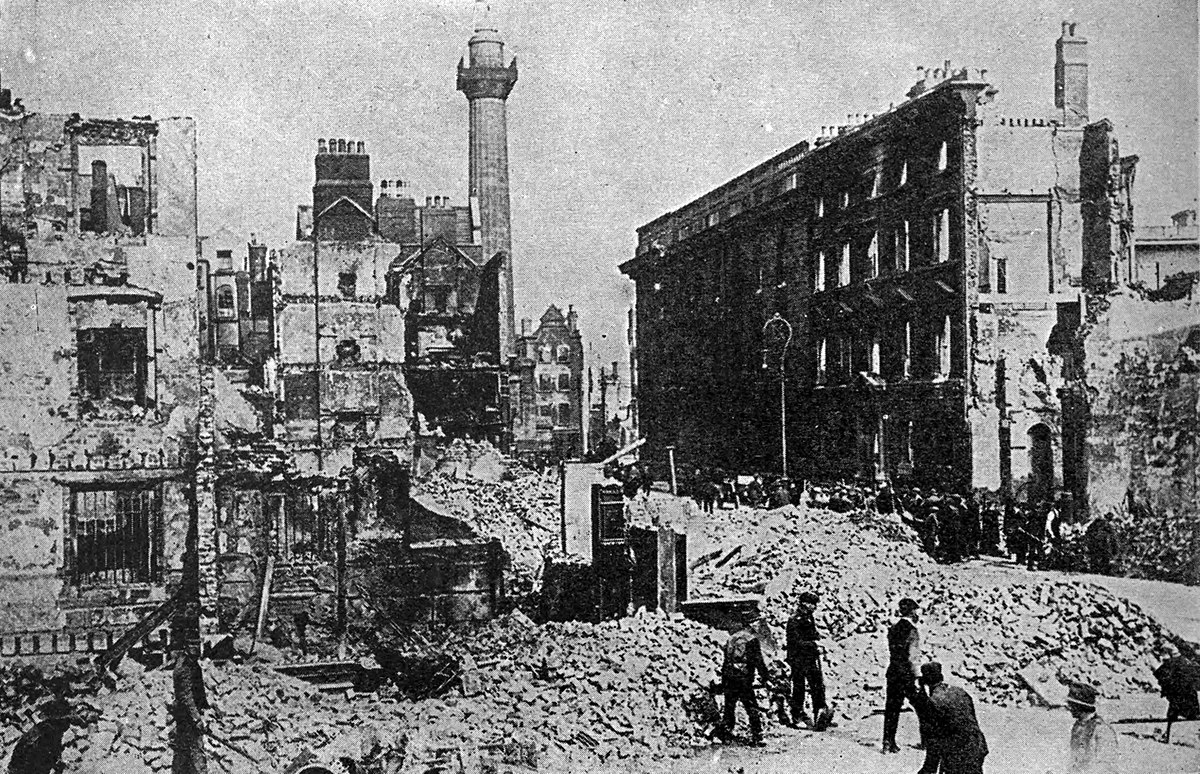


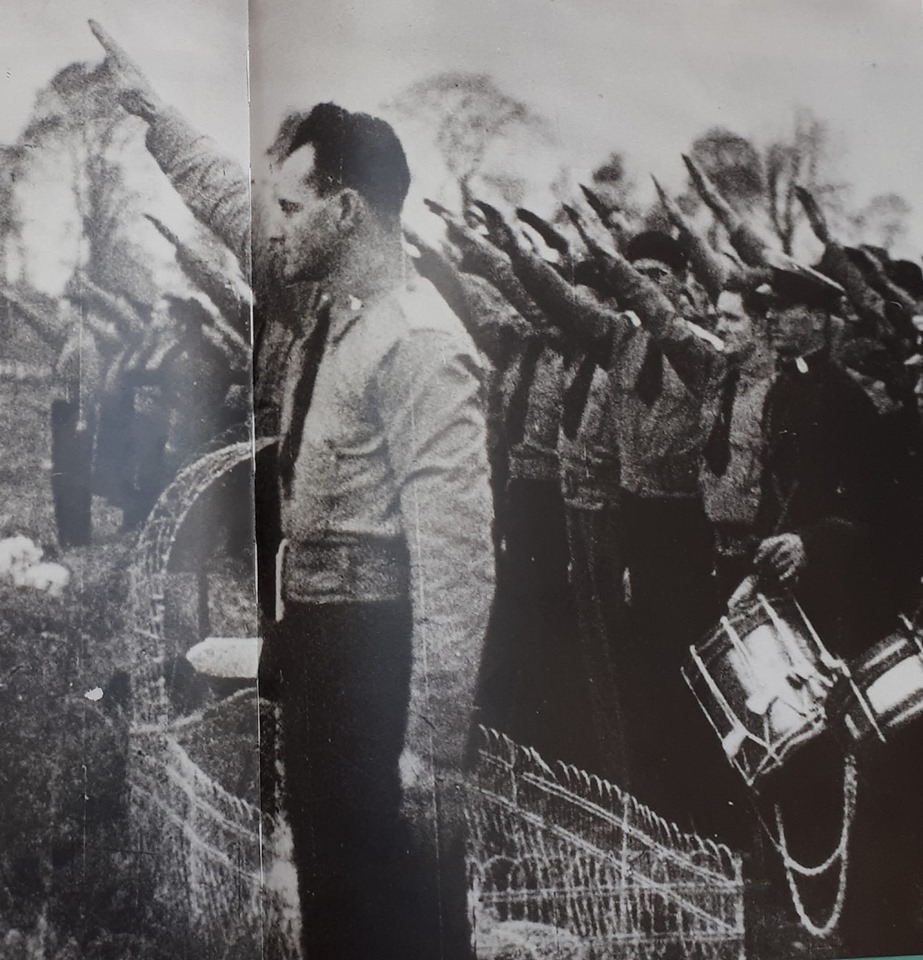

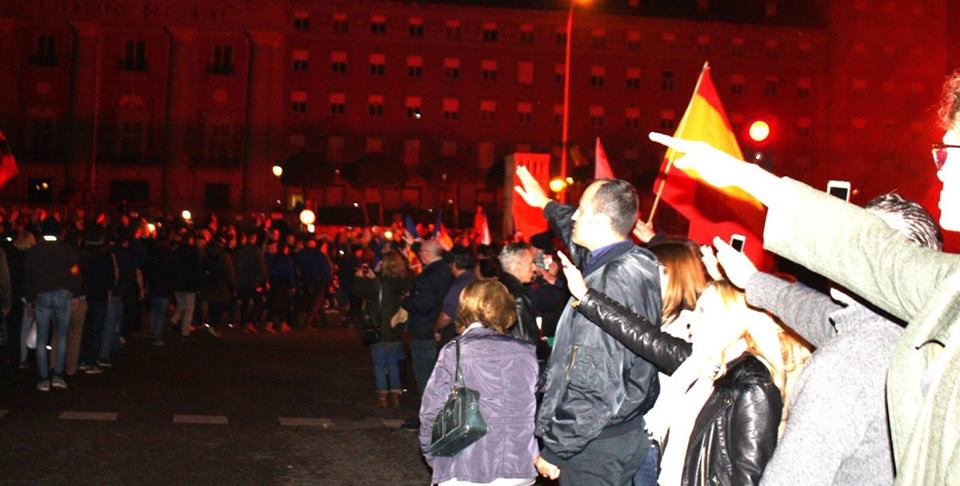

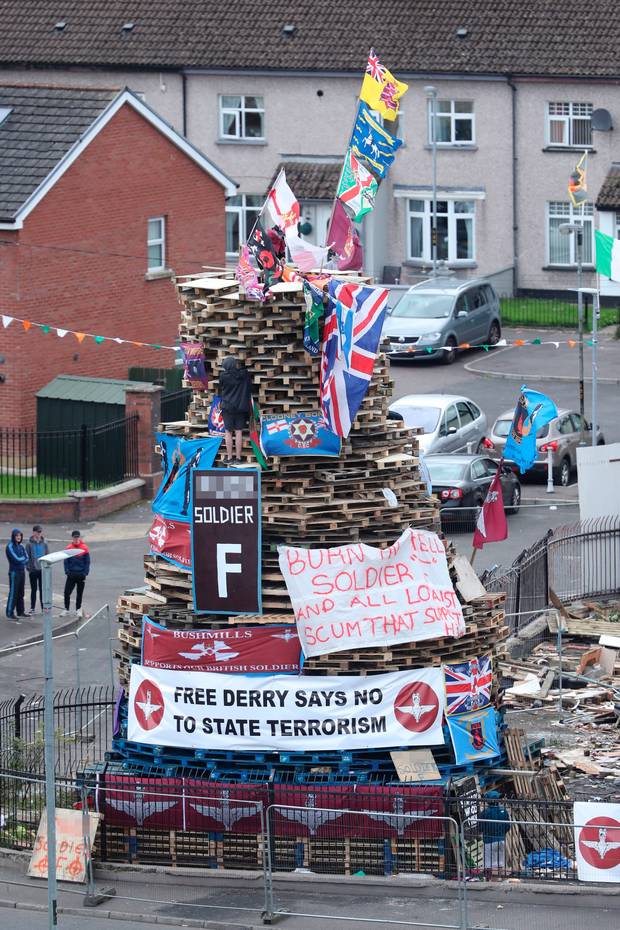
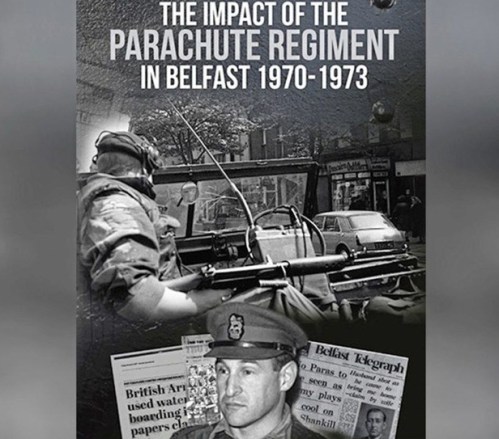


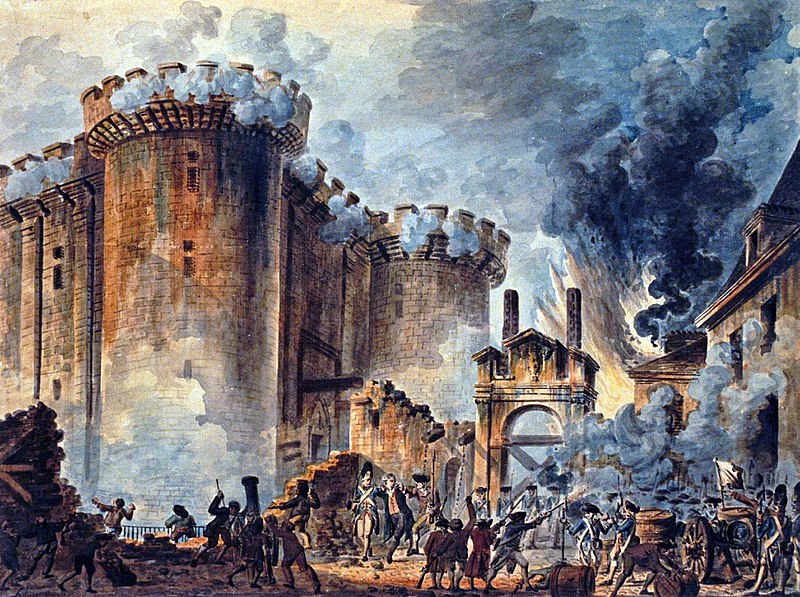

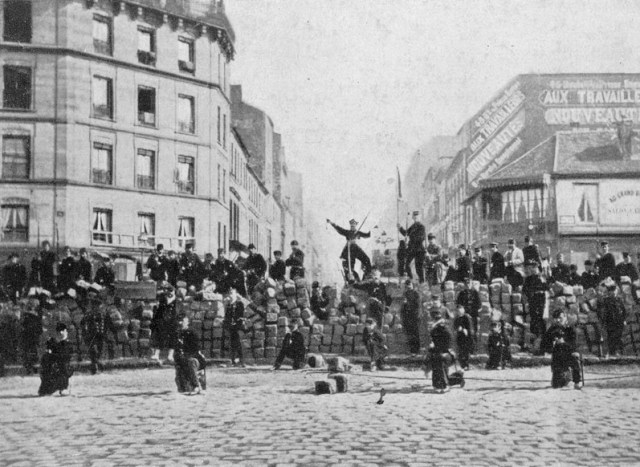


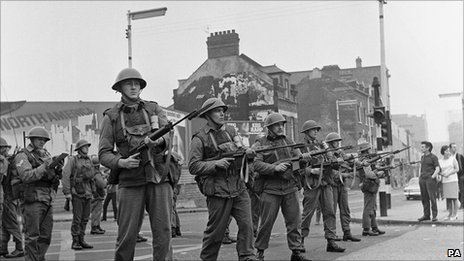
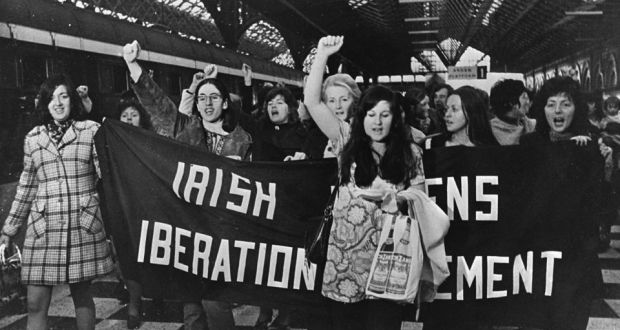


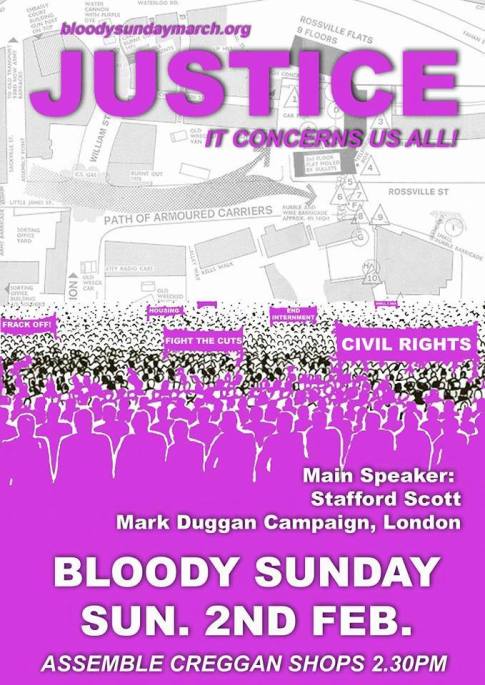
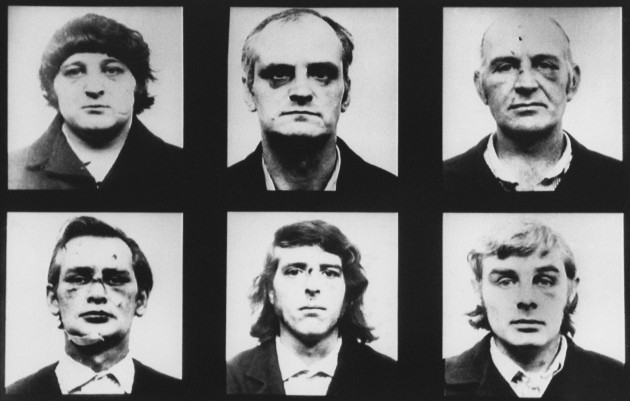
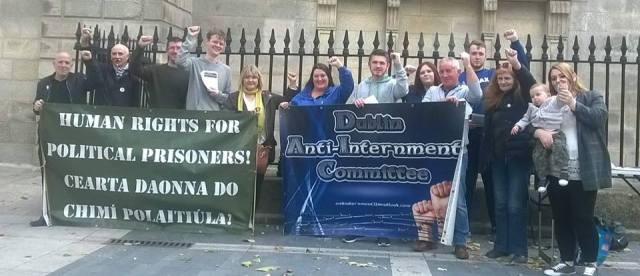


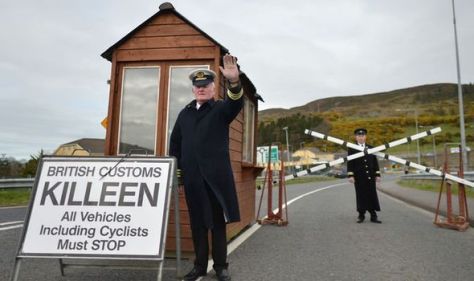

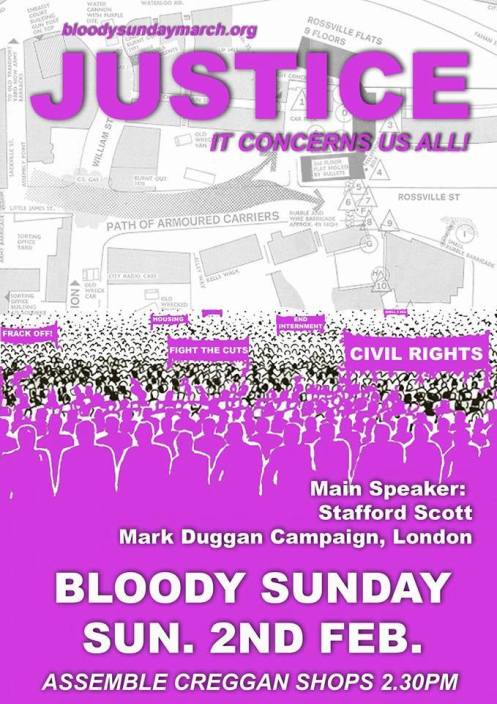


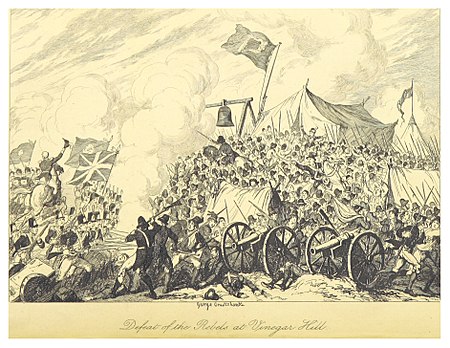
 rebelbreeze