IRA Volunteer Michael Gaughan was killed in Parkhurst Jail on the Isle of Wight this month in 1974. He was killed on the 3rd June that year by force-feeding while on hunger strike. An honour guard of Provisional IRA had presided over his body’s removal by ferry to the mainland and from there to London, where the first of his three funeral processions was to take place.
Volunteer Michael Gaughan, the image most often associated with him. (Photo source: Internet)
Also on hunger-strike with Gaughan although in different jails in Britain were other Provisional IRA prisoners: Gerry Kelly, Paul Holmes, Hugh Feeney and fellow Mayoman Frank Stagg. They were acting in support of the struggle of Volunteers Dolours and Marion Price1 to obtain political status and to be transferred to a jail in Ireland. The prisoners’ demands were as follows:
The right to political status
The right to wear their own clothes
A guarantee that they would not be returned to solitary confinement
The right to educational facilities and not engage in penal labour
The setting of a reasonable date for a transfer to an Irish prison2
At the time I was a young and fairly inexperienced activist supporting an English-based Marxist-Leninist group.3
LONDON
Vol. Gaughan’s funeral procession in Kilburn, London. (Photo source: Internet)
On the 7th a funeral procession was being organised by Provisional Sinn Féın in an area of strong Irish diaspora settlement in North-West London. I took a bus from my South-East London home by a part of the canal near Peckham (now filled in) to the Elephant & Castle and changed on to the London Underground metro system to travel to Kilburn, from where I walked up to the Cricklewood area. There in the forecourt of the Crown pub was where I had been told the funeral procession would gather and where I would also meet my comrades of the organisation.
After a little, preparations were being made for departure. A priest was to lead the procession, which I strongly disliked but obviously had no say in the arrangements. A lone piper would follow, a traditional feature of mourning where Irish resistance is involved. The coffin would be carried for a period on the shoulders of volunteers, before being transferred to the hearse and a senior comrade of my organisation approached me.
Another view of the funeral procession of Vol. Gaughan through Kilburn, London. (Photo source: Internet)
“Some representatives of British Left organisations are going to carry the coffin,” he said. “We’ve been asked if we’d like to take part. What do you think?”
He was asking me, I presumed, because I was the only Irish supporter of the organisation present, although it had an excellent record of supporting Irish resistance and prisoners and several of its comrades had gone to jail as a result.
He seemed not keen on the idea and I got the impression that he felt as I did that it was tokenism, distasteful posturing by the British Left. Tariq Ali (now a journalist but then a member of the now-defunct Trotskyist organisation in Britain, the International Marxist Group) was one of those hefting the coffin. I agreed with my comrade and said we should not (a decision I now regret) and so we didn’t. No organisation on the British Left at that time, in terms of commitment and actions in proportion to its size, deserved the honour more than our organisation.
From the forecourt of the Crown a long parade escorted Gaughan’s coffin from Cricklewood in West London along the main road to the Church of the Sacred Heart of Jesus in Quex Road church in Kilburn. It was a very Irish area then with nearly every pub being of mainly Irish clientele and it contained a dance hall where Irish bands played. Every shop and pub along the way was closed for the funeral and crowds lined the route. The atmosphere was very solemn with the laments being played by the piper very audible.
DUBLIN
Michael Gaughan’s funeral procession approaching O’Connell Bridge, Dublin city centre. (Photo source: Internet)Another view of the Michael Gaughan funeral, Dublin
On the 8th of June 1974, the body of IRA Volunteer Michael Gaughan arrived in Dublin, where it was met by mourners and an IRA guard of honour. The body was brought to the Adam and Eve’s Franciscan church on Merchant’s Quay, where thousands filed past as it lay in state (no doubt under the watchful eyes of the Garda Special Branch).
Vol Gaughan lying in state with IRA honour guard in Dublin. (Photo source: Internet)
MAYO
On the following day, the 9thof June1974, Michael Gaughan’s funeral took place in Ballina, County Mayo.The funeral mass was held at St. Muiredach’s Cathedral, Ballina, procession then to Leigue Cemetery, Ballina. He was given a full republican burial and laid to rest in the Republican plot (where Frank Stagg, also killed by force-feeding, would join him after being reburied in November 1976 –see further below). Vol. Gaughan’s coffin was draped in the same Tricolour that had been used for Terence McSwiney’s funeral 54 years earlier (the same flag would later be used in the funeral of James McDade, IRA member killed in a premature explosion in Coventry). Gaughan’s funeral was attended by over 50,000 people, larger than the funeral of former Irish president Éamon de Valera.
FRANK STAGG
Frank Stagg, the image most frequently used. (Image source: Internet)
It was no doubt to avoid scenes such as this that the Irish state took certain steps when two years later, on 12th February 1976, a comrade of Gaughan’s, Vol. Frank Stagg, also from Mayo, was also killed in Wakefield Prison, Yorkshire, by force-feeding while on hunger-strike. Although much of this this took place during the IRA truce of 1975-January 1976, the British authorities refused to grant any of the demands. The Wikipedia entry says that “Stagg died on 12 February 1976 after 62 days on hunger strike” which, though not untrue is a lie by omission.4
The repatriation of the body of Frank Stagg at Shannon Airport from Wakefield Prison in Britain where he died on hunger strike on 12 February 1976.
The Irish Government had the flight carrying his coffin diverted from Dublin where a large crowd awaited it, to Shannon airport.
On arrival at Shannon, the Gardaí snatched the coffin and drove it straight to Ballina, Mayo under armed guard, to a cemetery near Stagg’s family home, where it was placed in a prepared grave into which wet concrete was then poured, six feet deep, instead of soil. And the site remained under guard until the concrete had set and for some time after.
Sean, one of Frank Stagg’s brothers, being assaulted at Shannon Airport by Gardai (Photo source: Internet)
Although those proceedings would have been in complete opposition to the wishes of the deceased, the State had obtained agreement for them from Frank Stagg’s widow and one of his brothers, the Labour Party’s Emmet Stagg. It was opposed by another two of Frank Stagg’s brothers and of course by the dead Volunteer’s comrades.
The first burial of Vol. Frank Stagg, managed by the State, contrary to his wishes of the deceased. One of his brothers, Emmet, who colluded in that operation, is on the back left, lowering the coffin. (Photo source: Internet)
In November of that year, a number of those comrades dug down near the grave, tunneled under the concrete, removed the coffin and re-interred it in the Republican plot, near to Michael Gaughan’s grave, where it rests today.
A simple but plaintive song about Michael Gaughan survivesin not uncommon use: Take Me Home to Mayo. There are a number of versions on Youtube; this one contains relevant images and film footage: https://www.youtube.com/watch?v=14-kuxsHjPg
National Graves Association memorial in the Republican Plot, Leigue cemetery, Ballina, to which the names of Vol.s Stagg and Gaughan were added. The NGA is a nationwide non-State-funded organisation caring for the graves and erecting memorials to Ireland’s patriot dead. (Photo source: Internet)
end
FOOTNOTES
1Although Gerry Kelly is a current Sinn Féin MLA, both the Price Sisters denounced the Good Friday Agreement and Sinn Féin; Marian was effectively interned for a period because of her politics and has not been active politically due to ill-health since her release in May 2013. On January 23rd of that year she was escorted from jail to attend the funeral of her sister, Dolours. Of the surviving hunger strikers of 1975-’76, Paul Holmes was the only other one to attend that funeral.
2The British promised to concede the demands after Gaughan’s death – they had already conceded them to Loyalist prisoners – but reneged on the promise. The Price Sisters did eventually win repatriation to jail in the Six Counties, Ireland. The struggle on the issue of repatriation, which the British authorities conceded to British prisoners in Irish jails but not generally in reverse, carried on for many years. It is UN and generally human rights policy that prisoners should serve their sentences in jails close to their family networks.
3I had previously been an unaffiliated Anarchist activist, then came to support the English Communist Movement (M-L), which later became the Communist Party of England (M-L), which I left some years later. It has since gone through a number of bigger changes and evolved into the current Revolutionary Communist Party of Britain (M-L), a much-changed organisation from the days referred to in this article.
4This is an important omission because the death of Vol. Stagg at the State’s hands after Gaughan’s brought about a change in policy of the British Medical Association, which afterwards recommended to its members that people in sound state of mind embarking on a hunger strike should not be forcibly fed even if they were heading for death. In consequence, the British State no longer has a policy of force-feeding prisoners on hunger-strike, since such would have to be supervised by medical personnel.
It is time for plain speaking. Preserving a united front is not always a good thing. This I know will seem like a kind of heresy, maybe the talk of an individualist, a wrecker of some kind. Whether unity is a good thing or not depends on the cost – what is gained by it and what is lost. So allow me to give some examples from Irish history to illustrate my point.
At the end of the 19th Century the Irish Parliamentary Party, also known as the Irish Party or the Home Rule Party, had by far the widest support of Irish people seeking some degree of independence from British rule. The Irish Parliament, a minority parliament to which only Anglicans were admitted, had been abolished by fraud and bribery in 1880 and in 1881 Ireland formally became part of the United Kingdom, with its elected representatives taking seats in Westminster, where the Irish population was under-represented proportionally by MPs who were outnumbered and sure to be outvoted.
CRITICAL VOICES
There were other voices, of course, which did not support that party. Connolly castigated it often, partly because it contained capitalists and slum landlords and partly because they postured around commemorations of Irish nationalists and even Republicans of the past, without fighting for Irish independence in the present. The tiny Irish Socialist Republican Party which Connolly jointly founded was hostile to the Irish Party, as was the somewhat larger Irish Labour Party, which he also led in founding.
The small Sinn Féin, a nationalist dual-monarchy party, did not support the Irish Party, nor did the remains of the IRB, nor Ininí (modern spelling) na hÉireann. But the Irish Party was unquestionably dominant on the Irish political scene, not only in the elections for seats in Westminster but in many local authorities too. In fact, their only united opposition of any weight in Ireland was from the Unionists. The Irish Party called on all who supported any measure of Irish independence to support their party but others argued that the Irish Party would never lead them to independence, that it did not support the vote for women, that it was full of corruption and cronyism, and so on. History proved the critics right.
DISASTROUS AGREEMENTS
John Redmond addressing a mass meeting c.early 1916. (Image source: Internet)
When the Irish Volunteers was formed in 1913, at first the Irish Party (then under the leadership of John Redmond) took little interest and only a few of its supporters joined the organisation’s executive committee but many of its electoral support flocked to join the ranks. Redmond, taken aback by the numbers joining, demanded the doubling in numbers of the executive, with all the additional seats going to his nominees; the threat was that otherwise he would denounce the organisation. Since he already had some of his party on the committee, such a change would give him overall control of the organisation.
It would seem to us now that this was an undemocratic demand in addition made under a threat and should have been resisted. The IRB, who had members on the executive committee, agreed to resist Redmond’s move. This was a correct call for unity among the IRB and their allies in this instance but it was broken by leadin IRB member Bulmer Hobson and, with a number of others voting in favour. Redmond’s proposal gained a majority.
The consequences of this were proved disastrous when, during a Volunteer exercise in the first year of WWI, Redmond, without any consultation much less debate within the Executive, called publicly on the Irish Volunteers to join the British Army to fight in the War. A split followed in which the majority of the Volunteers took his lead and a smaller part kept the name of Irish Volunteers, while the others became the Irish National Volunteers and faded into the British Army.
Cartoon in the Irish Worker depicting Redmond as one of a shanghailing part delivering the Irish Volunteers to the British Army. (Image source: Internet)
In this case, Redmond called for unity with his leadership and with the British in the War, stating that the latter would reward Ireland afterwards by enacting the Home Rule Bill which was on the statute book. The IRB, the Irish Citizen Army, the Irish Volunteers, Na Fianna Éireann, Cumann na mBan and the Labour Party did not agree. There were elements of Sinn Féin, the Gaelic League, GAA and even the Ancient Order of Hibernians (normally a stronghold of support for Redmond) which did not agree either.
Redmond WW1 British Army Recruitment poster. (Image source: Internet)
The Irish Volunteers prepared for insurrection under the initiative of the IRB but with the reluctant leadership of Mac Neill who, after the British prevented the landing of German guns, cancelled the Rising and countermanded the mobilisation order. The Rising went ahead a day later with a much reduced force.
The political effect of the Rising and the reaction against its brutal suppression by the British led to the electoral wiping out of the Irish Party two years later in the British General Election of 1918 and the domination instead of Sinn Féin, a party reformed into a Republican Party and containing many disparate elements and basing itself on the 1916 insurrectionists. The call for unity with the Irish Party had been proven wrong.
The War of Independence began the following year, which brought the British to negotiations, after three years of State repression and terror and rural and guerrilla resistance war. The terms agreed by the Irish delegates in London were opposed by the majority of the Irish fighters but agreed by a majority of the TDs in the Dáil (elected representatives in the Irish Parliament). The Pro-Treaty forces called for unity with them, arguing that a partitioned Ireland as a Dominion of the British Commonwealth was a step towards an independent and united nation.
The Anti-Treaty side (also often referred to as “the Republican side”) disagreed and went to war over it, which in less than two years, they lost, again after a campaign of State terror and repression but this time, by an Irish State.
Free State soldiers bombarding Republican stronghold in the Four Courts with British cannon, 1922. The Republicans refused unity with the Free State government of a divided country under British dominion. (Image source: Internet)
Whether the Anti-Treaty decision to go to war at that point was correct or not, history has proven the Republicans correct in their prediction. The Free State was ruled by a conservative alliance of the Catholic Church and Irish capitalists, content to remain under British domination but with an Irish Parliament. The more nationalist Government of De Valera and his 1937 Bunreacht (Constitution) did not change matters much. Nearly one hundred years later, Ireland is still partitioned and still dominated by foreign capital, although British foreign capital has been joined by others.
History has proven that the call for unity with the Free State on the Treaty had been wrong.
MORE RECENT TIMES, AROUND MOORE STREET
Fast forward to 2007: The State declared four out of the sixteen houses in the main terrace to require preservation and some wanted campaigners to accept that and to work with the speculator on providing a shoebox museum in the planned shopping mall.
Some 1916 relatives accepted that and a split took place among the campaigners who were insisting that their goal was no less than the whole 16 houses, back yards, surrounding streets and laneways.
In 2015, after nine years of neglect by the property speculator who owned the buildings, the State bought the four houses and some encouraged us to accept that victory and to go no further. Until, that is, it emerged that the State intended to demolish three houses bracketing the four they had bought. The Save Moore Street From Demolition campaign called emergency rallies in Moore Street in January of 2016, during which the houses were occupied by protesters, preventing any demolition.
After five days of occupation, Colm Moore, an individual taking a case about Moore Street against the Minister of Heritage, went to the High Court and obtained an interim order forbidding any demolition until Moore’s case against the Minister had been heard and on that assurance the occupiers left. Subsequent evidence of use of heavy machinery and a refusal to allow campaigners or public representatives to inspect work resulted in protesters imposing a blockade of nearly six weeks on the site, preventing any building workers from entering the premises.
Some of the activist campaigners in Moore Street upon receiving the news from the High Court on March 18th. (Photo: Alan Betson, Irish Times)
And on March 18th the High Court judgement was delivered – that the whole quarter, backyards and surrounding streets and laneways is a battlefield, a National Historical 1916 Monument . But then the Minister of Heritage appealed the judgement, seeking to overturn it.
The Minister set up her hand-picked Advisory Group on Moore Street and eventually a Report was produced, apparently agreed by all within the Advisory Group (whether wholeheartedly or with reservations).
DISSENT AS A PUBLIC DUTY
When dissenting voices are kept quiet or stifled, what happens? The dominant voice – the one that is not silenced — carries the day ; it becomes the ‘official’ voice of the struggle. The media chooses which people and what voices to promote and the authorities recognise which voices to deal with. Those voices then become the ‘official’ voices and the path they point to is seen as the “correct” one. Those who raise a different voice, if they are loud enough or positioned strongly enough to be heard, are labelled the “disruptors”, “dissidents”, “wreckers”. But what if the dissenting voices are correct?
The Report of the Minister’s Advisory Group (from which she excluded the most active campaigning groups of recent years, the Save Moore Street From Demolition and Save Moore Street 2016 campaigns), in response to submissions made to it (including by the two campaign groups mentioned) contained some very positive Recommendations (although the Minister has not specifically said whether she accepts them) — but it also contained some very dangerous ones.
The Moore Street struggle has been fought against three main enemies: Property Speculators, DCC Planning Department and the Ministry of Heritage. And who does the Report say should decide the future of the Moore Street quarter? Those very three! And this is despite the public position taken by many of those before they entered the Minister’s Consultative Group that the Minister should accept the High Court judgement.
As for the newly-founded Minister’s Advisory Group being some kind of check on them, it has no statutory powers, it is a smaller group than was even the Consultative Group, the most active campaigners of recent years are again excluded and it is chaired by the former Chair of the Water Forum set up by the Government.
The Minister did not accept the High Court judgement of March 18th 2016 which declared the whole Moore Street quarter to be a battlefield and a Historic 1916 National Monument and she is fighting it in the courts. The Recommendations did not call on the Minister to drop her legal fight against that judgement but in somewhat nuanced language, they did encourage the litigant who won that judgement to give up his legal defence of it, the ‘sweetener’ being that he and his legal team would get their costs paid.
Should the Minister win her appeal, the giant shopping mall plan will be back on the table – Jim Keoghan of DCC’s Planning Department, before he retired, extended the planning permission for that horrible plan for another five years.
At recent public meeting of a political party about the future of Moore Street, (the first-ever by the party in question), a prominent Moore Street campaigner who was part of the Minister’s Advisory Group made a strong call for public unity among the campaigners, with differences to be discussed in private. The chairperson and both other speakers, all members of the political party, supported that call. The same individual repeated that call at a much larger event in Liberty Hall. It seemed a good call – but it wasn’t.
(Image source: Internet)
Effective unity has to agree on basic steps – like that which was entered into for insurrection in 1916, between the Irish Citizen Army, Irish Volunteers, Na Fianna Éireann, Cumann na mBan, Hibernian Rifles. Effective unity did not exist between those organisations and Redmond’s Irish Party, although the latter would have said that “We all want the same thing.” Tom Kettle, the Irish Party’s most brilliant activist, condemned those who took part in the Rising for allegedly damaging Ireland’s chances of achieving legislative autonomy. He put his faith in British gratitude to the Irish fighting for the Empire (and was killed on the Continent doing so). Effective unity in the Moore Street struggle cannot be on a vague promise that our aims are the same: we need to unite on the minimum basic demand that the Minister drop her appeal.
We’re on the one road
It may be the wrong road
But we’re together now who cares?
I care. We should care. We don’t want to be on the wrong road, to lose this battle.
When agreement is harmful, dissent is a duty. And when silence helps to conceal what is happening, dissent needs to be public.
RECENTLY DISCOVERED DURING DEMOLITION WORK, THE UNDERGROUND COMPLEX HAD NOT BEEN SEEN BY HUMAN EYES SINCE 1938
(Translation to English by D.Breatnach from article by Daniel Ramirez in El Espanol on line on 14 May this year — link given at end of translation. Photos reproduced and article translation published by kind permission of El Espanol)
A hole in the ground, in the entrails of the city. Dry earth covered with mud. It had rained. The American girlsand those dressed up run in search of a taxi when the Raimundo Fernández Villaverde street dies, just as they rise in the Nuevos Ministerios area. Noise from horns, ambulances, shouts. And in the middle of it all, the big hole.
It is surrounded by cranes and scrap metal. Also building workers and architects in yellow vests. In the centre, five or six metres deep, a door of cement and brick. It may not be interfered with. In the guts of the Artillery Workshop, recently demolished, the financial heart of Madrid has just discovered an air raid shelter, built in 1938. That’s the reason for the dug earth, the mud, the emptiness.
The Condor Legion was a Luftwaffe air force unit supporting Franco) (Image source: Internet)
The demolition of this neomudéjar-style building to make room for a block of housing split the Madrid City Council of which Carmena is Mayor. Those who wanted to keep it lined up against the rest, but few knew what was hidden by the floor of the now defunct first concrete construction of the city, built in 1899 by the Ministry of War. It belonged to the state – in military use for decades – until 2014, when it was sold to a real estate cooperative for 111 million euros.
“It’s the first visit after its discovery”
Steps descending from entrance. (Photo Jorge Barreno, El Espanol newspaper)
Just beyond the open door, stairs. The cement benches that allayed the fear of death appear six metres down. Virgin earth for camera and notebook. “This is the first visit after its discovery,” says Isabel Baquedano, archaeologist of the General Directorate of Heritage of the Community of Madrid, which froze the work permit until the survival of the shelter had been ensured.
One last look at daylight. Baquedano brings to life the race to the basement. The hole in the earth was then an inner courtyard in the Artillery Workshop. On the floor, a door. Then another, like the one that we are now going through.
Photo showing entrance to air-raid shelter in a demolition/ building site (Photo Jorge Barreno, El Espanol newspaper)
HEMINGWAY AND THE AERIAL BOMBING
Hemingway said that, at the beginning of the war, the citizen would quickly see the enemy plane and the sirens would soon be screaming. Then they flew much higher and the deaths multiplied. A bomb was “that growing whistle, like a subway train that crashes against the cornice and bathes the room in plaster and broken glass.” The American, with lively irony, used to joke: “While you hear the glass tinkle as you fall you realize that, at last, you are back in Madrid.”
The stairs and walls are brick. “Like those of almost all shelters,” explains Baquedano. The archaeologist who acts as a guide for this visit outlines a universal, institutionalised architecture, fruit of necessity, constructed in a race against time. “The International Red Cross came to draw up a map of the air raid shelters in Madrid,” says Javier Rubio, a historian whose brother was hiding in Madrid at the time.
The shelter, when built, had an electricity supply. (Photo Jorge Barreno, El Espanol newspaper)
Small steps for the flashlight to illuminate. In 1938, a filthy, rusty cabling gave light to the whole refuge. There were also subterranean armchairs and red velvet, but this is not the case now.
The chroniclers wrote that seeing a drunk and desperate man who pushed and jumped over elderly people and children was not unusual. Here is a quick but military descent. It is believed that this basement only sheltered the military of the Artillery Workshop, when a few meters away, in the Glorieta de Cuatro Caminos, a hospital had a similar space.
One of the galleries (Photo Jorge Barreno, El Espanol newspaper)
The lightbulbs, intact, but empty. The shelter is a labyrinth of intersecting galleries. The photographer and Javier, one of the construction workers, leads the route with lanterns. The cement benches show some marks, made by the archaeological study commissioned by the Community, which confirmed the finding. They are almost at ground level. “Capacity is estimated for between 80 and 100 people,” says Baquedano.
WHAT DID NOGAL KEYS SAY?
In 1938, Madrid was the epic of a lost war. General Miaja, a Republican hero, defended the trenches exposed to gunfire. Gun in hand, he shouted for men who knew how to die. Strips of paper were stuck to shop windows to prevent the bombing’s vibration from shattering them.
“Everybody went scared to his hole.Life had fled streets and squares; not a light, nor a noise in the ghostly environment of the big city,” said journalist Manuel Chaves Nogales. “This little bourgeois liberal” – so he described himself – who predicted the birth of a dictatorship regardless of the colour of victory, saw in the bombings a sort of lottery in which Madridians participated unconcerned: “Insensate and heroic, Madrid learned to live with joyful resignation. “
Little is left of that daily fear in these difficult tunnels, sometimes too narrow, fresh, guardians of absolute silence, still oblivious of the shopping centres that have grown up around them.
Intersection of galleries in the underground complex (Photo Barreno)
SÁNCHEZ MAZAS AND TALES TO FORGET
Some spoke, others were silent. Close or open your eyes? Different ways of coping. The fearful Rafael Sánchez Mazas, in the words of those who dealt with him then, wrote a novel to the rhythm of the bombs. For evasion and for other reasons. Chapter by chapter, he read it to his Falange colleagues at the Chilean embassy, where Carlos Morla Lynch, the diplomat in charge, provided refuge for them.
In the famous photo, Sánchez Mazas in the middle, several refugees listen to that unfinished novel of the title Rosa Kruger. Here the benches, in a row, do not invite conversation. Only recollection, although it may be the lack of habit.
In line with what Chaves said, Agustín de Foxa, in his “De Corte a Checa”, reflected: “At five o’clock in the morning, the local people commented on the bombardment by eating churros and drinking glasses of anise.”
“To leave a trail, not to disappear at all”
At the doors of the shelter, or perhaps inside, in these benches unequivocal proof of the finding, the tears of farewells ran. “Like those insects that perform the nuptial flight before they die, the men who were being sent to the Sierra or those who awaited in agitation their execution were longing for female presence and love so as to leave a trail, so as not to disappear altogether.”
Old cabling from 1938 (Photo Jorge Barreno, El Espanol newspaper)
“Little is known of this shelter,” Baquedano continues on this path of short steps. Archaeologists found no traces beyond the benches. The soldiers who arrived after the war used the subway as a shooting gallery. That is the reason for the gouges that bullets have left in the brickwork.
THE NOISE OF THE BOMBS
Suddenly a noise. Loud, deafening. The conversation ends abruptly. The cameraman and the journalist look at Javier, who laughs. “Calm down, the cranes are moving the scrap and it will have fallen up above.” It is a noise to make one cower and which makes the legs tremble.
A cosmopolitan and naive noise, which has nothing to do with the thunder of the shell that haunted Arturo Barea. In his “Forging of a Rebel” he confessed to having nightmares about the impact. He imagined the mutilation of bodies, their rotting, the limbs torn off the sidewalk … When the sirens began to sound and the danger became true, Barea reported feeling “a deep relief”, a result of the return to reality, the only way out then fromthat spiral of madness.
“My mouth was filled with vomit”
“We would go down to the basement, sit there with other guests, all in pajamas or gowns, while the antiaircraft barked and the explosions shook the building, sometimes my mouth filled with vomit, but it was a comfort because everything was real, I was deeply asleep,” he wrote.
On leaving, the light, and a city that beats, has nothing to do with that Madrid that, in Foxa’s words, turned off the lanterns for fear of bombing, while the last trams passed on their routes with their tragic, blue-green painted lights.
At the fence, several curious people approach the hole. Office workers, clerks, consultants, lawyers … In 1938, Barea said, there were neighbors of distant neighborhoods who came to see up close what a bombing was. “They left happy and proud with pieces of shrapnel, still hot, as a souvenir.”
Additional notes from translator, D. Breatnach:
There were a few words and phrases with which I had difficulty since the apparent translation from dictionaries did not seem to make sense in the article and I converted them into what seemed to be the sense in the text and context.
The future of the archaelogical site by law requires protection from the owners of the site in which it is located. It may or may not be open to limited or full public access.
In the original article there was a lovely version of the Viva la Quinta Brigada song, about the 5th Brigade of the Republican forces (not Christy Moore’s wonderful song which, despite the original title is about the 15th International Brigade). I tried to embed it here but failed but you may find it on the original article link below.
The Report contains some very welcome elements which campaigners will appreciate, as well as being proud in bringing them about. But those elements are combined with some very dangerous ones, specifically in some of the recommendations at the end of the Report — and recommendations are the strongest part of any report. That combination of welcome and dangerous elements may or may not be specifically designed to split the forces campaigning for the conservation and appropriate development of the Moore Street Historic Quarter but it will almost certainly have that effect. This, taken together with the offending recommendations means that the Report in total is a dangerous and divisive document containing a number of significant recommendations which it seems to me we are duty bound to oppose.
Source: Internet
The positive elements in the Report are bound to engender a touch of euphoria about the Report among many close and distant supporters of the broad campaign to save the Moore Street historical quarter. Those who do not read on to the Recommendations or who do not think them through.
Consequently there is bound to be an element of criticism of those who do not support it as a whole – epithets such as “begrudgers” or “Utopians” are bound to come to minds and even be hurled.
The temptation is to “win something” after many years of campaigning. Another temptation is to see the positive and imagine it contains more than it actually does, while ignoring the looming negatives. Junctures like this test campaigners, sometimes even more than decisions about whether to risk fines and jail by breaking the law when that seems the only viable action left to halt an injustice or to remedy one. There have been many difficult junctures like this in Irish history.
Indeed a number of occasions of this sort have occurred before in this very campaign.
A HISTORY OF APPARENT CONCESSIONS TO SPLIT OR DISCREDIT CAMPAIGNERS WHILE FACILITATING SPECULATORS
1) When there were murmurs in Government circles that No.16 might be saved some people were very happy and, indeed, one campaign FB page had been named “Save 16 Moore Street”. Others objected and stated that this was insufficient historical recognition of what had gone on there.
2) Again, when the State accorded protective and preservation status to Nos.14-17 in 2007, there was a similar reaction of euphoria and congratulation from many people. This was resisted by some campaigners who pointed out that almost at the same time, the giant shopping mall plan had been agreed by the local authority (and later by the State), which would see the rest of the block and the laneways demolished and that the historic buildings were being allowed to deteriorate. The ‘nay-sayers’ were proved correct on this occasion.
3) It is worth recalling that around this time, the property speculator involved (at that time only Joe O’Reilly of Chartered Land), proposed to turn the four houses into a museum upstairs with a cafe and toilets downstairs and to incorporate the whole into the giant shopping mall. He had the shoebox museum plan promoted in a flashy video and he succeeded in splitting the campaigning 1916 relatives group, bringing four of them (including one of James Connolly grandsons) out in favour of his proposal (a fact that the State and the media have regularly used to counter the objectives of the broader campaign).
Speculators’ original plan for Shopping Centre from O’Connell Street to Moore St. — note the four houses to be “saved” in the centre left. (Image source: Internet)Artist’s Impression of Shopping Centre planned by Chartered Land, much of it agreed by DCC Planning Department (Image source: Internet)
4) In the summer of 2014, the speculator O’Reilly of Chartered Land, by this time being paid by NAMA to manage his debts, proposed to Dublin City Council to swap them two of the four protected houses for their two at the north end of the terrace, which was where the Council had their cleaning depot. The head of the Planning Department (also Deputy Chief Executive of the Council) Jim Keoghan and the Chief Executive Jim Keegan, unsurprisingly in view of their record, recommended the deal.
The early days of the weekly SMSFD stall in Moore St. — 4th October 2014 (Photo: D.Breatnach)SMSFD lobbying City Hall to prevent ‘land swap’ deal going ahead, stretching some petition sheets already signed in previous two months. Nov.2014 (Photo source: supporter)
At this time, even some supporters of the broad campaign stated that campaigners should take the deal because it put four houses of preservation status into public ownership. Thankfully they were outvoted, since with those end-of-terrace buildings in his possession, the speculator would have been free to begin to demolish houses all the way at least up to No.18 – at total of seven houses and approximately half the terrace.
But a new campaign was launched specifically to defeat this deal, bringing a sustained weekly presence on Moore Street into being, along with a petition of thousands of signatures. As opposition to the deal gathered force, the speculator offered first a third house in the deal and finally a fourth. However with the assistance of lobbying of elected Councillors, the ‘land swap’ proposal was defeated in a vote by a large majority, much to the publicly-expressed disgust of Heather Humphreys, Minister with State responsibility for Heritage.
5) Towards the end of 2015, the State purchased the four dilapidated buildings from the speculator, reportedly paying him four million euro and promoted the deal as a great historic one, announcing that they would have a 1916 museum on the site.
Again, there was euphoria, with campaigners being congratulated on their victory. However, at this time a substantial number of campaigners from different concerned groups pointed out that this did nothing to save the rest of the block, yards and laneways, that the street market was being steadily degraded and that the plan for the museum seemed to be exactly the same as that proposed by the speculator.
It was actually worse than was thought by many of those campaigners, for in January it emerged that the State planned the demolition of three buildings in the 1916 terrace under the guise of making the “museum buildings” safe. The SMSFD campaign group raised the alarm and brought two demonstrations on to the street, after one of which many people occupied the buildings until a High Court Judge ruled that there be no demolition until a case taken against the State (to which the property speculators joined themselves) be decided, a decision that was enforced by a five-week activist blockade of the site.
Later photo of SMSFD campaigners and table (Photo: D.Breatnach)
6) Once again, there had been concerned people who argued that campaigners should accept the deal, “work with the museum”, that now the houses were in public ownership but many of those were silenced when the State plans were revealed. However, the occupiers were targeted by a number of media, a couple of prominent historians and columnists attacked them, Heather Humphreys labelled them hooligans and wreckers. The activists were accused of preventing the State from opening the museum in time for the Easter Rising commemorations that year (despite the many months of work needed for a commemoration only months away). They were accused of denying 1916 relatives an appropriate monument.
But it was clear on whose side the majority of the public was and it wasn’t with the State or the speculator. This was underlined not only by tens of thousands of petition signatures but by the reaction of many to activists loudly denouncing Minister Humphreys when, as part of the State’s 1916 commemorations, she came to lay a wreath outside a boarded-up No.16 Moore Street. The public’s reaction for the most part varied from “what did she expect?” to “serves her right!” and, perhaps sensing this, even the media’s response was muted and restricted to factual reporting.
On March 18th High Court Judge Barrett delivered his judgement that not only the whole terrace was a “national 1916 historical monument” but the whole block, and the street and three laneways surrounding it. Again there were wild celebrations, shared in by all campaigners but some urged caution as the Minister could appeal the judgement. They were right – she did, the case to open at the end of the year (unless she takes it to the Supreme Court, which she declared she was considering.
Campaigners, including occupiers and blockaders of the buildings, celebrate the Battlefield judgement on March 18th 2016. (Photo: J.Betson, Irish Times)
7) When the Minister set up the Minister’s Consultative Group on Moore Street, despite the fact that she put into it the 1916 relatives supporting the speculators’ plan, despite the fact that she excluded the most active groups of campaigners in recent years, despite the fact that the main political parties were to be represented, concerned people and excluded campaigners were told to have faith in it and even told that it was “the only game in town”.
Having reviewed the history of proposed deals of the past, it is now time to examine the one being offered now.
THE RECOMMENDATIONS
Conclusion 1, commenting on the struggle to save the Moore Street quarter, states that “the background …. has been one of dispute, mistrust and litigation. It has been characterised by deeply held and divergent views, frustration and ultimately stalemate. This has seen Moore St and environs further decline and a failure to progress the National Monument or the wider development of the area.”
While this has elements of truth it also has large elements of obfuscation, of muddying the waters, appearing to apportion blame equally or to imply that no-one is to blame or even perhaps blaming the campaigners for the decline of the buildings. This is quite important because in what follows some of the major villains in this drama are not only being ‘cleaned up’ but it is proposed to give them continuing roles of control in decision-making on the conservation and appropriate development of the Moore Street quarter.
Let us recall once again that the Planning Department of Dublin City Council, backed up by the State, supported the planning applications of property speculators which would have entailed the destruction of the historic quarter and the running down of the street market. The Dept of Heritage took no action until 2007 when it gave protected status to four buildings and took no steps to ensure the speculator maintained the buildings.
Towards the end of 2015 the Department of Heritage planned the demolition of a number of buildings in the historical quarter, a disaster averted by citizens occupying buildings there for five days in January 2016. Subsequently a nearly six-weeks’ blockade was imposed by citizens to prevent damage and demolition, because the Minister prevented and forbade the entry of any independent conservation experts or public representatives, including the Lord Mayor and a number of TDs.
The actions of the campaigners were to preserve historic heritage and to seek transparency. The actions of DCC’s Planning Department and of the State were to facilitate the property speculators, to defeat the aims of the campaigners and to conceal what they intended doing — and were in fact doing — in a number of buildings.
These differences between the opposing forces are important to recognise not only in setting the record straight but in deciding which bodies should and should not be given responsibilities with regard to the Moore Street Quarter.
Conclusion 2 goes on to claim for the Consultative Group set up by the Minister, the centre stage for a resolution of the conflict, as though it were some impartial mediating body. Excluded from Consultative Group were the National Graves Association, the first campaign group to raise the issue of the historical conservation in Moore Street, along with the most active campaigning groups of recent years (the Save Moore Street From Demolition and the Save Moore Street 2016 groups), also excluding a number of individual campaigners and concerned historians and conservation experts. It is true that a number of those groups and individuals were permitted to make submissions to the Consultative Group but they were not permitted any say in its final recommendations.
The plaque placed on a house in Moore Street by the National Graves Association (no State or Council plaque had been put there ever). (Photo: D.Breatnach)
Conclusion 4 states that “the place of Moore St in the narrative of 1916 … is now better understood across a much wider range of interests than previously. The appreciation of the historic importance of the area and of the value attached to the dramatic events fought out there in the closing events of the week of 1916 is now more widely shared. The potential of the area to be developed as a place of cultural and historic importance therefore, alongside appropriate commercial development, offers, the Group believes, positive and substantive opportunity to move forward.”
But the Report has nothing to say about how this came about, which was by hard slogging and sacrifice by campaigners supported by ordinary people. And this happened in the teeth of opposition by the Department of Heritage and Dublin City Council officials and calumny and defamation by the Minister of Heritage of campaigners. Not only should this record be set straight but their history in this affair means that they should not be relied upon in controlling the development of the Quarter.
Conclusion 5 goes on to say that “In the event of consensus being secured on an agreed way forward for the development through dialogue by the Advisory/Oversight Group (see 17 below) with the developer, and agreed to by the Applicant and the State, the Group is strongly of the view that payment of legal costs, incurred by the Applicant’s legal team, by the State is warranted and appropriate. The Group has reached this conclusion after considerable reflection and having regard to the widely acknowledged public interest which informed the taking of the case and the savings which would accrue to the State by settlement through such a process.”
This is, in nuanced language, apart from seeking negotiation with a property speculator, a request to the person who took the case to not to defend it, with the inducement that the lawyers will get their fees and the litigant will not be out of pocket.
The State should of course bear the costs, both because of “the widely acknowledged public interest which informed the taking of the case” and because of the intransigence and obstructionism of the Minister of Heritage which led to the case being taken in the first place. And this should not be done as payment in some kind of sordid deal.
On the other hand, there is no mention whatsoever of the Minister dropping her appeal against the Moore Street Battlefield Quarter judgement that the whole quarter is a National 1916 Historical Monument. In fact the “settlement” envisaged is to give the Minister a clear run without the litigant who won that historic judgement defending it.
Recommendation 9 “supports the retention of Moore Street and adjacent lanes so as to broadly capture the sense of how it would have appeared in 1916 – this covers the street and lanes, key buildings, street paving and lighting. It recognises that this needs to be approached on a practical and authentic basis given that a number of structures in place actually postdate Independence. The preservation of the existing lines of the street and the lanes and the restoration of streetscapes are essential. “
All this seems good until we note words like “key buildings” and “structures in place …. postdate Independence”. Thus far the Minister has only conceded the historical importance of four buildings, Nos.14-17. And, although a number of buildings in the Quarter have been rebuilt since 1916, every single one contains the historical footprint of the 1916 occupation and resistance and every single one contains at least some structural feature of the original buildings.
And No.10, of which the Minister denies importance, was the first HQ of the Rising in Moore Street and field hospital of the evacuated GPO Garrison – and substantial parts of that building also remain intact.
Recommendation 10 actually concedes some of what I say above, albeit in timid language when it states that “… opportunities arise for the State to provide the centre point of historical focus and cultural celebration within 10 – 25 Moore St.”
Indeed, not only “opportunities exist” but the whole terrace should be maintained and developed as a “point of historical focus and cultural celebration”.But where is the recommendation that this actually be done?
Recommendation 15 states that “Critical to the renewal of the area is the regeneration of the Moore St market to its full potential. Particular recommendations in this regard are set out at Chapter 6.”
We should I think support nearly all of the recommendations in that section, i.e. all those that bring greater comfort, freedom from Market Inspector harassment and flexibility in regulations to the street traders. All the campaigners have stated that the market traders should have better conditions and that the market should be upgraded and one campaign group in particular, the Save Moore Street From Demolition campaign, perhaps because it is on that street at least every Saturday, has been very specific about including this in its demands since it was first formed.
Regrettably, the Report has nothing to say about the other independent businesses in the street. Moore Street has always contained shops and other business as well as stalls and it is regrettable that despite SMSFD’s submission commenting on this aspect, the Consultative Group had no representation from the independent shops and business and the Report has nothing at all to say about them, although small independent businesses are the key to regenerating an area by day and by night.
Indeed, other than the street traders, the only business interests mentioned in the report are those of the property speculators, who propose a giant shopping mall to be occupied by chain outlets.
Recommendation 16
The Report’s view of “essential” “well-grounded institutional arrangements for taking the process forward” recommends:
“Policy ownership in relation to the National Monument at No’s 14/17 remaining with the Minister for Arts & Heritage;
“Overall planning framework and designation of other buildings in the quarter should remain with Dublin City Council;
“The development and eventual management of State’s property in Moore St, transferring to the Office of Public Works;
“The next phase of development of the National Monument at No’s 14/17 taking place under OPW control and, where private contractors are involved, such contracting follows a transparent public tendering process that fully accords with good international practice as laid down by EU procurement requirements. In addition, engagement and briefing with the Advisory/Oversight Group (see below) as appropriate should be undertaken in respect of this process.
We emphatically should not agree with the first two sub-recommendations.
If the Department of Heritage and Dublin City Council Planning Department is to have a role it should be in supporting a People’s Consortium, composed of representatives of all the campaigning groups (not cherry-picked by the Minister) and other representatives.
While sub-recommendation 3 and most of 4 seem fair, one cannot agree with the role of the Advisory/Oversight Group as recommended by the Report (more on that later).
Recommendation 17
The Report states that “A critical part of the next phase of the process will involve securing consensus by the relevant players to a way forward” and that “this will require engagement with public bodies, developer interests, traders and voluntary groups.”
Why should the protection of our heritage be subject to protection of “developer interests”, i.e the interests of property speculators who are still at this moment in time trying to destroy that heritage and replace it with a shopping centre? The inclusion of those “interests” in deciding the future of our heritage and our national monuments should be rejected.
Recommendation 18
The Report recommends “that an Advisory/Oversight Group should be established” to steer the project and “will require engagement …. with the public bodies and the developer to seek to find agreement on the way forward.”
As stated earlier, there should be no role in seeking agreement with enemies of our heritage and facilitators of property speculators on the way forward for safeguarding our heritage and our national monument.
But further, the Advisory/ Oversight Group envisaged by the Report (“representatives from among the current membership of the Consultative Group, including appropriate Oireachtas and DCC representation”) is an unrepresentative group, continuing the exclusion of the most active campaigning groups of recent years and of the National Graves Association, the first campaign group to raise the issue of the historical conservation in Moore Street, along with the exclusion of a number of individual campaigners and concerned historians and conservation experts.
Recommendation 22 — The Role of the State
When the Report declares that the State is “the ultimate custodian of our history, culture and heritage”, it is perhaps stating an aspiration but it is demonstrably not stating a fact. The State, as represented by a number of governments during its existence, has done nothing to commemorate nor protect the significance of this historic quarter, save the purchase of four buildings after years of campaigning, and that around the same time it planned the demolition of a number of buildings in the Quarter; the State’s representatives publicly denied the historical importance of 12 buildings and even denied the area had been a battleground.
When Chartered Land’s (Joe O’Reilly) properties were taken over by NAMA, the State should have prevented the speculator from selling or otherwise passing on his stake to British-based property speculators Hammerson. They did not and so became complicit.
Looking beyond Moore Street around the country, it is the voluntary National Graves Association that has been responsible for most of the plaques commemorating the struggle for national independence (and a fair number of monuments) and the upkeep of graves of participants of that struggle, with a number of local authorities coming second and the State possibly a poor third.
Turning to our culture, the body that has done most to promote Gaelic Sports is the GAA, not the State. Comhaltas Ceoltóirí Éireann, smaller associations of musicians and individuals, not the State, have been the promoters and developers of traditional music. With regard to the Irish language, the State has overseen a drastic decline in the Gaeltacht areas, continuously fails to ensure the supply of even State services through Irish for Irish speakers and recently, has appointed a Minister for Heritage and two Ministers of State that were not competent in the use of the Irish language. Irish traditional dancing, whether exhibition and competition step-dancing, céilí, set-dancing and sean-nós have all been conserved and promoted by different organisations, none of them a State one (in fact, for a period, the State banned set-dancing in people’s homes).
The State has failed to protect and preserve a great many other areas of our heritage, including our natural resources.
So who then are “the ultimate custodians of our history, culture and heritage”? It is the PEOPLE!
However, one has to recognise the reality of the governance framework under which we live and the State should, for a change, represent the interests of the people in this case and ensure the Moore Street Historic Quarter is developed appropriately in consultation with campaigners, local independent traders and shopkeepers, workers and residents. And in doing so, the State can make some amends for its compliance and complicity of the past.
WHO SHOULD GUIDE POLICY AND PRACTICE ON THE FUTURE DEVELOPMENT OF THE QUARTER?
The body that discusses and guides policy on the future development of this historic quarter should be composed solely of a wide representation of those who have demonstrated a commitment to the defence of the historic status of the quarter, along with those who work there, in addition to any expert technical advisors they may think right to coopt.
IN CONCLUSION AND SUMMARY, although the Report contains much that is good and I believe campaigners should support those elements, due to a number of unhealthy recommendations which undermine what has been fought for so hard for so long and would leave important decision-making in the hands of the very proven enemies of the preservation, conservation and appropriate development of the Moore Street Quarter, those dangerous Conclusions and Recommendations of the Report should be rejected and I call on all genuine campaigners and supporters to reject them also.
In doing so, I would encourage all campaigners to remain firm in their determination, looking back on the long road traveled to reach this point and not to falter at this juncture, the fate of so many popular movements of the past.
We have been called ‘dreamers’ many times in the past but who could have foretold back in 2001, the gains steadily won over the years? ‘Dreamers’ is usually employed as a term of abuse, of ridicule and no doubt those critics consider themselves wise. To those we may reply in the words of one who spent his last two days of freedom in Moore Street in Easter Week 1916:
“Oh wise men, riddle me this – what if the dream come true?”
In this at least let us make that dream come true.
This is an interesting criticism of the Michael Collins historical biopic 1996. Written and directed by Neil Jordan, the film begins with the end of the Irish 1916 Rising, has the longest part focused on the War of Independence (1919-1921) and ends not long after the start of the Civil War (1922-1923). The film starred Liam Neeson as Michael Collins and included others such as Aidan Quinn playing Harry Boland, Alan Rickman as Eamon De Valera, Stephen Rea as Ned Broy, Julia Roberts as Kitty Kiernan, Gerald Mc Sorley as Cathal Brugha and Brendan Gleeson as Liam Tobin.
The video from Foras Teamhrach presents its criticism using clips from the film while commenting and also comparative clips from other films, which is a useful way of presenting a challenging view. Unfortunately neither the name of the author of the commentary nor of the commentator (possibly the one and same) appeared on the Youtube link, only the company name and the comments function was disabled (perhaps understandably).
Most of the points are well made but there are some omissions which might usefully be added to the criticism.
The GPO surrender scene
The video criticism points out that showing only the GPO makes the Rising look much smaller than it actually was; despite the countermanding order which reduced the forces in Dublin by perhaps as much as two-thirds, the Rising was fought by four major garrisons on the southern and three on the northern side of the Liffey, with other smaller outposts and individual actions. However, the narrator says nothing regarding the historical inaccuracy of portraying the surrender as occurring at the GPO.
In fact, the GPO had been abandoned on the Friday and the Surrender took place on the Saturday, following a decision made in the 1916 Terrace in Moore Street and around 350 insurgents there were the first to surrender following the order. This matters not just from a point of historical accuracy but because there is a struggle (now approaching two decades) to save this area from property speculators and State and Dublin Council Planning Department collusion.
Portrayal of De Valera
One does not have to be a supporter of De Valera’s philosophy and actions to rapidly come to the conclusion that his portrayal in Jordan’s film is so inaccurate as to seem to be someone else. Every person who took up arms in 1916 to fight the British Empire showed courage and those who continued to actively oppose the British occupation during the intense years of the War of Independence showed even more courage in doing so.
Collins, of a much more ebulient character than De Valera, according to witnesses, was more inclined to exhibitions of temper and shouting than was De Valera, whose manner was generally in accordance with his studious appearance – contrary to his behaviour in the Treaty discussion scene of the film. As to another aspect, when we review the record of his actions in preparation for the Rising through to the War of Independence and on through the Civil War and the early years under the Free State, De Valera cannot reasonably be accused of lacking courage. The shivering wreck as which he is portrayed during the Civil War in Jordan’s film runs counter to the historical record.
There is testimony from one or two participants that at a period during his command of Boland’s Mill, De Valera had something of a breakdown. This, if it occurred, could have been as a result of fear or instead of lack of sleep, or of being overwhelmed by responsibility or a number of causes and if this alleged episode is what inspired Jordan’s depiction it was certainly unfair to use it to characterise De Valera at other times. There are many criticisms that can fairly be thrown at De Valera but lack of courage is not one of them.
Portrayal of Cathal Brugha
And likewise with the portrayal of Cathal Brugha. Some of Brugha’s military and political history may help in evaluating the portrayal of this man in Jordan’s film.
One of fourteen children empoverished by the death of their Protestant father, Brugha joined the Gaelic League in 1899 and quickly became fluent, soon changing his name from Charles Burgess to Cathal Brugha. He and Kathleen Kingston, also an Irish language enthusiast, married in 1912 and had six children. Brugha joined the Irish Republican Brotherhood (IRB) and in 1913, the year they were formed, he became a lieutenant in the Irish Volunteers and led a group of Volunteers to land the arms smuggled into Howth by the Asgard in 1914.
In the Easter Rising of 1916 Brugha was second-in-command at the South Dublin Union under Commandant Éamonn Ceannt, scene of some of the fiercest fighting during the Rising. Overlooked in the evacuation on Thursday of Easter Week and, being badly wounded, he was unable to leave. Bleeding from 25 wounds (some of which had penetrated arteries) he continued to fire upon the enemy and when Eamonn Ceannt led a group to investigate who was still firing he discovered Brugha singing “God Save Ireland” surrounded by his own blood and with his pistol still in his hands.
Brugha was not expected to survive which may have saved him from the execution parties and he was discharged from hospital in August 1916 as “incurable”. However he recovered in 1917 though left suffering pain and with a permanent limp and preferred to cycle than walk.
Already in 1917 from his hospital bed, Brugha began to seek out Volunteers and Irish Citizen Army people who were willing to join the new armed resistance group and it seems that he, more than any other, should receive the main credit for the initial formation of that which became the IRA.
Brugha was so respected in the movement that he was elected speaker of Dáil Éireann at its first meeting on 21 January 1919 and it was he who read out the Declaration of Independence in Irish, which ratified ‘the establishment of the Irish Republic’. He was also appointed temporary President, a position in which he remained until de Valera tok his place.
Far from being a bloodthirsty zealot as he is portrayed in the film, Brugha reduced Collins’ ‘Bloody Sunday’ assassination list considerably since in his opinion, there was insufficient evidence against a number of people named on the list. Then again, at the outbreak of the Civil War, a reluctant Brugha only joined the fighting on the Republican (Anti-Treaty) side in order to relieve the pressure on the Four Courts garrison. Cathal Brugha led a detachment in occupying a number of buildings in O’Connell Street and later, having got his men safely away or surrendered, was shot and mortally wounded in debated circumstances by Free State troops (which were under the overall command of Collins).
Brugha had, according to some opinions, alienated a section of waverers at the Dáil debates on the Treaty, by a personal attack on Collins and the way his persona had been elevated (a common problem, the deification of leaders). This was no doubt a tactical mistake but there had been ongoing conflict between both men for some time. Although both had been members, Brugha had left the IRB after 1916 in the belief that their conflict with the Volunteer leadership had damaged the Rising. Collins’ rank in the organisation was supreme in Ireland and it seems that Collins used this at times to circumvent or undermine decisions of the Dáil, where Brugha outranked Collins and which the former believed to be the repository of democratic decision-making.
Collins as a guerrilla war leader
All Collins’ many talents and contributions to the War of Independence aside, his representation in the film as not only directing the whole armed struggle but also as teaching rural people how to wage a guerrilla war is a complete distortion of history that could only be undertaken by a propagandist for Collins.
It was Brugha who began to pull the scattered elements of the armed struggle together and laid the foundations for what became the IRA. It was Robinson, Breen, Tracey and Hogan who began the armed resistance of the War of Independence in Tipperary on 21 January 1919 in which two paramilitary policemen were killed. And they did so without permission from GHQ in Dublin.
As to rural guerrilla tactics, these were such as had been used for centuries or developed in the struggle and were certainly not taught by Dublin. What was taught by instructors sent by Dublin was weapon use and maintenance and personnel disposition for ambushes, moving in extended order through countryside and securing a line of retreat. One of the chief instructors in this kind of instruction was Ernie O’Malley and, in West Cork, the young Tom Barry used his British Army experience and other learning to do the same. The order to create Flying Columns might have come from Dublin but had been advocated already by fighters in Cork, Kerry and Tipperary and it was they and others who developed them in the field.
Collins’ special contribution was in organising intelligence, counter-intelligence and the assassination squad (which turned out to be a double-edged sword) and also, to an extent, supply of weapons. His contribution was notable but it did not lie in initial organising of guerrilla war, much less in rural guerrilla instruction.
The role of women in the struggle
Women are underrepresented in this narrative, as is usual in Irish history and Republican and nationalist narrative. Where women are shown, apart from the brief appearance of Markievicz at the non-existent GPO surrender (when instead she was at the College of Surgeons!), they are objects of romance (Kittie Kiernan) or auxilliaries working for Collins’ intelligence department.
There was a great opportunity lost there to show the women in action during the Rising in the many roles they undertook, including firing weapons, or in keeping the flame lit after the Rising and in particular in commemorating the Rising a year later, organising demonstrations, pickets, and funerals.
The Croke Park Bloody Sunday massacre scene
The film shows the ‘Tans or Auxies shooting down people with machine-gun on the GAA ground. As far as we have been able to establish it was the RIC who did it, although of course the other two were auxilliary forces of the RIC. Thankfully they did not fire with a machine-gun (the Army had one outside the grounds and an armoured car, it seems but did not open fire) or the carnage would have been a lot worse. When one examines the casualty list of those shot, just like more modern British massacres in Derry and Belfast, it is clear that the shooting was mostly disciplined, i.e hitting males of military age. Showing that kind of scenario would in the last analysis not only be more historically accurate but also more telling of the intent and cold-bloodedness.
And what of the three tortured and murdered in the Castle that day, Peadar Clancy, Dick McKee and Conor Clune? Yes, we know, one can’t show everything.
Go raibh maith agat to the individual who sent the video links to this blog.
The play about the Irish miners in Pennsylvania and their exploitation and the secret society they formed to resist, written by US-Irishman John Kearns and directed by Dara Carolan, received its Irish premiere tonight/ last night (Wednesday) in Liberty Hall.
Wonderful banner honouring the Molly Maguires, designed by Jer O’Leary, pictured on Liberty Hall Theatre staircase. (Photo: D.Breatnach)
In the Pennsylvania coalmines of the 1870s, Irish miners resisted their exploitation as workers and the racism they experienced as Irish Catholics to form a trade union. But when their efforts seem to avail them little, drawing on their Irish experience of peasant resistance societies fighting landlords and their agents, some went on to form a secret society: the Sons of Molly Maguire, also known as the “Mollies”.
They suffered unsafe conditions (one fall in a mine with only one exit trapped and killed 110 miners), high prices in the company store and felt they were being cheated even on the agreed wages. Eventually miners began to carry out retribution on informers and on mine-owners’ agents and their property.It seems the “Mollies” used the Ancient Order of Hibernians as a cover but that may also have been political and racial propaganda against them.
The mine-owners engaged the Pinkerton Detective Agency who inserted one of their agents, a CatholicUlsterman called McPartland, among the miners and he gave information on the men leading to their arrest and then gave evidence against them in court.
As the Irish Echo review in the US stated: The play employs an “… effective blending of pageant, mime, kitchen sink realism, and even flights of poetry”. It also has some moments of high drama. An interesting feature from a US playwright is the use of appropriate Irish language phrases at times, reminding us that an Ghaeilge would have been the mother language of many of those migrant Irish while nearly all would have had at least a nodding acquaintance with it.
Photo said to be of hanging of one of the Molly Maguires (Photo source: Internet)
One phrase used a number of times was “Ní thuigeann an sách an seang” of which I had no previous recollection. Looking it up, I noted a number of meanings, of which the prevalent was along the lines ofthe equivalent in English of “No one knows where the shoe pinches, but he who wears it.” But a deeper examination which I found on another site (see link) gives a darker interpretation, which seems more in line with the play: “It is about more than a misunderstanding by the corpulent of the cadaverous. One variant is, “Ní thuigeann an sách an seang, nuair a bhíonn a bholg féin teann.” This literally means, the well-fed one does not understand the slender one, when his stomach is usually taut. In other words, the well-fed do not understand hunger.
“Another variant is, “Ní mhothaíonn an sách an seang.” The verb ‘mothaigh’ can be translated as either ‘feel’ or ‘hear.’ Use either English transitive verb and it suggests that the satiated simply do not care about the starved.”
There is certainly a wealth of meaning to be found in many of the pithy phrases in the Irish language.
Molly Maguire Executions marker. Schuylkill County Prison (Photo source: internet)
Twenty “Mollies” were hanged (including at least some innocent men) between 1877 and 1879 and this is sometimes said to be the largest known mass hanging of any specific group in the USA – it was not. Nor was the hanging of ten “Mollies” on the 21st June 1877 the largest hanging of one group in one day. The dubious honour for most men hanged of any group and on one day goes to the 38 Dakota Native Indians who were hanged on December 26, 1862. However, the Dakota were hanged by the US military and the “Mollies” were tried in civil courts, so the Mollies can claim the most judicially executed in the USA of one group as well as on one day.
Hanging place perhaps in Mauch Chunk jail, Pennsylvania, USA. (Photo source: Internet)
The play’s showing in Liberty Hall was its first on an Irish stage for John Kearns‘ play “Sons of Molly Maguire” but it has previously been performed at the Midtown International Theatre Festival in New York. John Kearns is the Treasurer and Salon Producer for Irish American Writers and Artists. He is the author of the short-story collection, Dreams and Dull Realities and the novel, The World, along with plays including “In the Wilderness”and “In a Bucket of Blood”.
The play received an enthusiastic reception from the audience. Raging you missed it? Don’t worry – you can still catch it tomorrow/ today, that is Thursday 11th May as part of Mayfest at the Liberty Hall Theatre.
Lawyers for the Minister of Heritage (also of Arts and Gaeltacht) were supposed on Friday (28th April 2017) to lay out the legal terms nature of their Appeal Court action against the Moore Street National Monument judgement given on March 18th last year from the High Court. Instead, they came asking for another extension in order to consider taking her case to the Supreme Court.
Apparently over 13 months was not long enough to consider on what grounds and what court to which to take her case! All along the line the Minister has delayed and gone right up the deadline (and arguably beyond it at least once), then asking for yet more time. Meanwhile the buildings in the historic Moore Street quarter deteriorate further.
There are three main villains in this ongoing drama: the property speculators, Dublin Council’s Planning Department and the Irish State, the latter in the particular manifestations of the Department of Heritage and successive governments.
THE STATE
It might be obvious to some but others may need to have it pointed out that Heather Humphreys, the Minister in question, is not acting alone – she has the Fine Gael-Labour Coalition Cabinet supporting her. Nor is it a matter of those two political parties alone either – Fianna Fáil, another major political party, is on record as wanting the Minister to continue with her appeal; apparently the right of a High Court Judge to declare that prime speculation property is a national monument, with all the protection that implies, cannot be left unchallenged.
Senator Peadar Tóibín, Sinn Féin’s representative on the Minister’s Consultative Forum on Moore Street (on which all the members were chosen by her Department), supports the Forum’s Report, including the recommendations that the man who won the court case against the Minister drop his defence of that judgement and that the three major villains in the piece, the Heritage Department, Dublin Council’s Planning Department and the property speculators negotiate over the future of the 1916 Battleground site, with a smaller and even more exclusive Advisory Committee to oversee the negotiations (but without any statutory powers). Whatever the chosen individuals and parties have said prior to their entering the Minister’s Consultative Group, not one member has dissented from those recommendations.
For over 90 years the State did nothing to mark the importance of Moore Street as a 1916 Battleground or that the Surrender was decided here, that Volunteers and civilians fell to British bullets in that street and surrounding laneways, including The O’Rathaille who famously wrote a dying farewell letter to his wife in the lane now named after him. Nothing to mark that of the 16 executed, six had spent their last days of freedom in Moore Street. Or that of the seven Signatories of the Proclamation, five had been in that street until the surrender.
NGA plaque on No.16 Moore Street (Photo source: D.Breatnach)
In 1966, the voluntary and non-state-funded National Graves Association put one of their small commemorative plaques on the front of No.16 Moore Street and it was the removal of this plaque by a property speculator in 2001that gave rise to the NGA starting the campaign to save Moore Street, into which over the years others outside the NGA came to play major roles.
THE PLANNING DEPARTMENT OF DUBLIN CITY COUNCIL
The Planning Department’s pet property speculator was Joe O’Reilly of Chartered Land and TG4’s program Iniúchadh Oidhreacht na Cásca in 2007 traced the process by which this speculator was given extraordinary special facilities even over other speculators. The Planning and Property Development Department’s chief officer is, since a change in the law some years ago, empowered to grant planning applications without reference to the Councillors, the elected representatives. He is also incidentally the Assistant Chief Officer of the Council’s management executive. Jim Keoghan (now retired from DCC) has used that executive power to approve most property speculators’ application for “development” in Moore Street and indeed it was Dublin City Council that oversaw the destruction of most of the centuries-old street market quarter and its replacement by the ILAC Shopping Centre, Dunne’s Stores and Debenhams.
Throughout all these “developments” in the Moore Street area the street traders have had meagre shelters and poor lighting provided by Dublin City Council but no heating, toilet facilities, changing rooms or convenient water supplies for cleaning or flowers maintenance; they are obliged to renew their licenses yearly, licenses which are bound by all kinds of petty restrictions.
Famous photograph taken presumably from GPO roof, showing how busy the market used to be just a few decades ago. Even then, conditions for the street sellers were hard with no alleviation by Dublin City Council. (Photo source: Internet)
As the modern-day battle for Moore Street intensified, Dublin City Council installed not one but two full-time Market Inspectors on the street, which had previously functioned well with one Inspector visiting in the morning and evening. These market inspectors have no role in preventing antisocial behaviour or in monitoring the quality of the food on sale and their main activity seems to consist of telling stall-holders what they may not sell1, or that they are placing merchandise beyond the strict limits of their stall area (in a street which now holds at maximum fifteen stalls, where once before there were many times that number), or that they have continued trading some minutes beyond their official closing time. And they are not permitted to sell on Sundays while, of course, the supermarkets bracketing them, Lidl and Dunnes, face no such restrictions.
These rules have been there for years – it is the degree of enforcement that has changed. One could be forgiven for thinking that some high officials in Dublin City Council want to drive the traders out and, indeed, traders who are now in their third and fourth generations on the street see no-one in their families willing to take over the enterprise when they retire.
THE PROPERTY SPECULATORS
The small shopkeepers are not without their own problems in the street. Most of them are on annual contracts (or even shorter, such as three months), subject to having their business in the street closed at the wish of the property speculators. The ILAC extension currently underway at the south end of the building resulted in the eviction of around ten businesses, most of which received no alternative site. Even the presence of a narrow vegetable produce rack outside a shop can bring down a threat or an actual fine from the Market Inspectors, while ugly hoardings approved by Dublin City Council squeeze the street and restrict the flow of pedestrians.
The ILAC shopping centre was jointly owned by property speculators Chartered Land and Irish Life. As outlined by the TG4 program, Joe O’Reilly of Chartered Land, like many banks and speculators, over-extended himself and Government agency NAMA took over his debts, however paying him €250,000 a year to “manage” them. Subsequently, NAMA approved Chartered Land to sell its debt on to Hammerson, a huge British-based property speculator and vulture capitalist concern.
Exposé by The Daily Mail of €200,000 being paid by NAMA to Joe O’Reilly, of Chartered Land. (Photo source: Internet)
Chartered Land had been granted planning permission for a giant “shopping mall” of nearly seven acres (2.3 hectares), extending from O’Connell Street westwards to Moore Street and from parts of Parnell Street southwards to Henry Street. The planning permission entailed the demolition of every building within those limits, excepting only No.s 14-17, which the State had by then accepted were of historical importance and had granted them preservation status. The laneways and streets were also to disappear. In the meantime the State did nothing to oblige Mr. O’Reilly to maintain the buildings which they had stated were of preservation status.
The giant shopping ‘mall’ intended acreage in dark blue and the existing ILAC spread in green (which has buried a number of streets and laneways of the old street market quarter). Famous photograph taken presumably from GPO roof, showing how busy the market used to be just a few decades ago. Even then, conditions for the street sellers were hard with no alleviation by Dublin City Council. (Photo source: Internet)
The State bought the four houses in question in the latter half of 2015 and planned to demolish houses on each side of the four until in January of 2016 a legal challenge by Mr. Colm Moore and an occupation of the buildings by activists for five days, followed by five-week blockade, brought about a respite. The speculators attached themselves to the case as having an interest to defend.
While the case dragged on, the Minister’s officers and legal team endeavoured to undermine the historical importance of the quarter, arguing that the Moore Street area was not a battleground (instead “the whole of Dublin was a battleground”) and that no other building there other than the four with preservation status was of historical importance. This included the rest of the terrace and even No.10, which had been the first HQ of the Rising after the evacuation of the GPO, and which had been run as a temporary hospital by Volunteer Nurse Elizabeth O’Farrell, caring for nearly twenty wounded men (including a British soldier found in Moore Street).
“Sailor” Simon Betty, front man in Ireland for Hammerson, may find the waters choppier than expected. (Photo source: Internet)
The Save Moore Street From Demolition group (whose campaign stall has been on the street every Saturday since September 2014) raised the alarm and called an emergency demonstration in January 2016, after which people occupied the buildings for five days until the High Court Judge ordered no demolition until Mr. Moore’s case had been heard. Subsequently, with heavy machinery heard at work on the site and the contractors and Minister refusing inspection to campaigners, the Lord Mayor, Councillors or TDs, campaigners blockaded the site and allowed no workers to enter; this was led by a new, broad group that had arisen from the occupation: Save Moore Street 2016.
Minister of Arts, Heritage and Gaeltacht, orchestrating the destruction of our 1916 heritage. (Photo source: Internet)
On March 18th 2016, the 100th anniversary year of the Rising, the High Court Judge delivered his verdict in the case brought by Mr. Moore, declaring that the quarter bounded by Moore Lane, Henry Place, O’Rahilly Parade and Moore Street, including the backyards and those aforementioned lanes and street, is a national historical 1916 monument. The campaigners lifted their blockade.
The Minister took her time deciding whether to appeal the judgement and at the deadline, announced that she would, with the support of the Cabinet and other departments. Then she set up her Consultative Forum, from which she excluded the most active of the campaigners, including the Save Moore Street From Demolition campaign which has just passed its 136th consecutive Saturday on the street collecting over 80,000 petition signatures and distributing leaflets. Also excluded have been the Save Moore Street 2016 campaign group, a broad alliance of people from different organisations and none that arose out of the occupation and blockade of the buildings in early 2016.
Meanwhile, Jim Keoghan of Dublin City Council, in one of his last major acts of office before retirement, in the summer of 2016 extended the planning permission for the giant ‘shopping mall’, despite the fact that it was due to run out in March 2016, despite the High Court judgement, in the face of opposition by the majority of elected City Councillors and despite the fact that it had been conclusively shown in court that the speculator had carried out no substantial work on the buildings as required by the planning permission conditions.
WHERE TO FROM HERE?
And so to where we are today. The Minister has her extension (unspecified length but one supposes up to six weeks) but may not decide to take her case to the Supreme Court and may use the delay instead for other purposes, including setting up her select Advisory Committee, as in the Recommendations of the Report of her Consultative Group. If the case goes to the Supreme Court, a date for hearing will need to be set. If the Minister should continue instead to Court of Appeal, the case date has been set for mid-December this year 2017, which also means it is bound to continue on into 2018.
Meanwhile most of the buildings steadily and visibly deteriorate, prey to speculator neglect and Irish weather. The four buildings now in Government hands have been subject to restoration work with some visible inappropriate results, the whole of the work carried out without independent archaeological and restoration expert assessment or oversight, the Government ‘expert’, Gráinne Shafrey, being the same person who argued for the Minister in the High Court that the other buildings in the street were of no historical importance.
For progress to take place at the moment, the first step is for the Minister to drop the appealand that should be the minimum demand of all who genuinely care for the historic buildings, laneways and street market. When that has been done, we can move on to consultation on the most appropriate way to save and restore the buildings, rejuvenate and expand the street market. And to how that process shall be democratically and transparently controlled.
No foreseeable change of Government seems likely to bring any relief to this situation, given the stand taken in the Minister’s Consultative Forum by the representatives of the four main political parties. Other than the continuing legal action, the real hope resides where it has done from the start – with the wishes of the majority of people and the energy, commitment and at times daring of the active campaigners outside the corridors of power or, one might say, instead on the streets of power.
End.
Historical background notes:
On 28th April 1916, with the GPO and many other buildings in O’Connell Street in flames, the garrison of the GPO and HQ staff of the Rising for an independent Irish Republic evacuated their building and sought to break out of the British Army’s tightening encirclement. They made their way along Henry Place, encountering heavy British fire at the junctions of Moore Lane and Moore Street from British barricades at the Parnell Street ends and from the Rotunda tower, suffering a number of casualties as a result. In Moore Street the major part of the evacuation tunneled from house to house along the No.s10-25 terrace and a number of other houses too. Another section mounted an unsuccessful charge on the British barricade at the end of the street.
On Saturday 29th April, after a number of civilians were shot down in the street by British gunfire, the decision was taken by the insurgents’ leadership to surrender and Volunteer Nurse O’Farrell went out under a white flag of truce to seek terms from the British. None being available, Patrick Pearse and James Connolly surrendered their forces unconditionally and over the next few days the forces in other strongholds in the city and in Wexford surrendered (or evacuated their fighting posts and went into hiding). Nearly 100 death sentences were handed out by British military courts of which fifteen were confirmed and carried out (and a further one in London by civilian court); the executed included six who had spend their last days of freedom in Moore Street houses, including five of the seven signatories of the Proclamation: Thomas Clarke, Patrick Pearse, James Connolly, Joseph Plunkett, Seán Mac Diarmada. Most other prisoners were sentenced to prison or concentration camps in Britain and many others were arrested and interned without trial.
Moore Street was at the time part of a whole centuries-old street market quarter of which most of the rest lies buried under the ILAC Shopping Centre, constructed in the later 1970s. For sixteen years a struggle has been going on for the preservation and restoration of this historical quarter.
Note about the author:
Diarmuid Breatnach is an independent political and social activist who has been campaigning for Moore Street for years, including in September 2014 being a co-founder and active member of the Save Moore Street From Demolition campaign group and is a member too of the Save Moore Street 2016 campaign. He has written a number of articles, given talks and presentations on the Moore Street issue (including to the Minister’s Consultative Group). Breatnach also writes on history in general (among other subjects), conducts history walking tours and has publicly called on Dublin City Council to give Moore Street its correct Irish version of the street name, i.e Sráid an Mhúraigh rather than the “Sráid Uí Mhórdha” which Dublin City Council has named it.
1In 2016, the centenary of the 1916 Rising, they were forbidden from selling Easter Lillies and Easter Rising commemorative products from their stalls, unless they purchased a special license to do so.
The bombing of Gernika during what is sometimes termed “The Spanish Anti-Fascist War” and more often “The Spanish Civil War”1 was commemorated in Dublin by a weekend of events organised by the Gernika 80 — then and now committee. The event featured a launch of a commemorative pamphlet, including talks by Spanish Civil War historian Enda McGarry and by Irish socialist, republican and civil rights activist Bernadette McAliskey; a ska music event; talks and a planting of a “Gernika Tree” at Glasnevin cemetery.2
People in attendance at the talk in Wynne’s Hotel (chairperson’s reflection may be seen in the mirror). (Photo source: Gernika 80 event page)
The pamphlet was on sale for €5 a copy in the large function room of the historic Wynne’s Hotel where the well-attended launch was held. The pamphlet has articles by Richard McAleavey, Enda McGarry, Stewart Reddin, Brian Hanley, Aoife Frances, Sam McGrath, Fin Dwyer, and Goiuri Alberdi.
Enda McGarry was first to speak and in a clear voice, with only an occasional glance at his notes, began by giving the background to the Gernika bombing – the military rebellion against the elected government of the Popular Front and the military campaigns that followed. General Mola was in charge of the fascist forces’ “Northern Front” while battles were taking place elsewhere, including in the suburbs of Madrid.
McGarry outlined the waves of air attack on 26th April 1937, the dropping of incendiary bombs and the strafing of running men, women and children by fighter planes and gave details of some of the horror experienced in the town. The bombing was one of the first aerial bombings of civilian population centres and Gernika, of particular historic-cultural importance to Basques, was hit on a market day. It had no anti-aircraft defences, not surprisingly, since it contained no features of significant military interest.
Going on to describe the lies told by the fascist leaders, McGarry related how in turn the communists, anarchists and Basque nationalists had been blamed for burning the town. Subsequently, apologists had tried to excuse the action by claiming that the Renteria bridge had been the target, in order to cut off the Basque nationalists’ retreat or lines of reinforcement from the northern Basque Country (i.e within the French state).
The speaker pointed out that this line of argument is still being peddled by some, including a fairly recent historian. Demolishing this falsehood by analysing the planes that were used, Heinkels, a Dornier, Junkers 52 bombers, Italian SM 79s and Messershmidt 109, along with the bombs and armament, McGarry showed how this could not be consistent with a bombing run to destroy a bridge. At Burgos airfield sat a number of planes that would have been ideal for destroying the bridge – Stukas, the most advanced dive bomber in general production of the time. They did not use them because neither was the Bridge the target nor pin-point bombing required – what those planning the attack wished to do was to carpet-bomb the area with high-explosive and incendiaries, then machine-gun civilians fleeing the bombing.
Ultimately, the historian continued, of course Generals Franco, Mola and other fascist military leaders were responsible. However McGarry believed that the Spanish fascist leaders, needing to crush Basque resistance but keep the conservative Catholic Carlist troops (from Navarra) and other right-wing Basques on board, would have been unlikely to agree to the destruction of Gernika (a holy historic place to the Carlists as well as to the Basque Nationalists). Oberstleutnant Wolfram Freiherr von Richthofen was the commanding officer of the Condor Legion, Nazi Germany’s “loan” of airforce to the Spanish fascist forces – he, along with others including commander-in-chief of the Luftwaffe, Herman Göring, wanted to use the Spanish conflict as a testing ground for warfare from the air and the tactic of terror-bombing a civilian population, which they later employed at Warsaw, Stalingrad and other cities.
The talk ended to strong applause and the chairperson of the meeting introduced Bernadette McAliskey, a long-time socialist and Irish Republican, campaigner for civil rights and in support of migrants.
The chairperson could also have alluded to her survival of an assassination attempt by Loyalist paramilitaries the “Ulster Freedom Fighters”, in which she was shot 14 times and her husband shot too, and that she had before that twice been elected a Member of the British Parliament. Of course McAliskey herself might have requested the omission of those details.
Bernadette McAliskey speaking; sitting R-L, Finn Dwyer, Enda McGarry. (Photo source: Gernika 80 event page)
McAliskey began by praising the inclusiveness of the pamphlet, which has contributions from many different writers. She then moved on to expounding what kind of people are fascists, a term she believed too widely applied, and what kind of people fascism serves. In a rather long discourse, entirely without notes, the speaker went on to analyse what Republicanism is, rejecting a definition which said the basic unit of a Republic is the State, insisting instead along with Thomas Paine that the basic unit is the individual. Believing otherwise, she declared, makes one a nationalist rather than a Republican, á la Gerry Adams.
At times one could be forgiven for assuming that McAliskey thought she was addressing liberals, saying for example that “we don’t think enough about what goes on in other countries”, or “we don’t think about what is happening to certain groups”, such as migrants, Travellers – those considered “non-people”; or when she declared that she had no understanding of what was going on in Syria because neither her background nor experience could help her to understand it. McAliskey seemed unconscious that this is a line which was also commonly disseminated in Britain about the war in the Six Counties.
But then, McAliskey would switch without warning, as in her mischievous assertion that one should deal with liberals by throwing them in at the deep end: “they either learn to swim or they no longer give you any trouble.” Or when later, she pointed out that those in power never give up their weapons, and that one day we might present ourselves to our exploiters and insist that they step aside, as “there are more of us than there are of you”, to which they will reply: “Maybe so, but we have the weapons.”
When Bernadette McAliskey finished her talk, to sustained applause and cheers, the chairperson invited questions, of which there were three and a comment. The first question was whether McAliskey thought Gerry Adams was a psychopath, to which she discoursed on the question of insanity and on the number of lies that were told by politicians such as Gerry Adams. One of the big lies was that the IRA had forced the British to the negotiating table, which McAliskey emphatically denied was true, insisting that the reality was that the IRA went to the negotiating table because they could fight no longer, the rate of attrition was too great.
The next question, by a woman who announced that she had a USA background, in the context of her declaring that racism is about white supremacy, was about how to make the Irish aware of their role in this supremacy. Bernadette said it was an important question and that the process by which the oppressed can become the oppressors was one observed on a number of occasions in history.
This reporter thought that the questioner’s statement about the nature of racism being white supremacy might also have been questioned, a proposition disproved for example by the experience of the Armenians under the Turks, Jews and Slavs under Nazism, the Irish in Britain or at home under British rule, Irish Travellers in Irish society, etc.
The last question enquired what Bernadette would say to Basques, as some had said to the questioner, that the Irish were “lucky to have a peace process”, given that we were now approaching the second decade after the Good Friday Agreement. McAliskey replied that Ireland did not have a peace process but rather a pacification process, and that the ‘new dispensation’ divided up the Six Counties between political parties along sectarian lines, with cuts to services being imposed by those in power and substantial unemployment and unfair treatment of the “other minorities”: migrants, Travellers …. And that jails in the Six Counties today contain “about as many political prisoners as they did when the Good Friday Agreement was signed but the prisoners with less politics than had their fathers.”
End.
FOOTNOTES
1Neither term sitting well with probably most Catalans and Basques, who do not consider themselves Spanish, having a different cultural identity, most aspects of which were suppressed by the victors of the War, the General Franco dictatorship regime but had been suppressed by others before them too.
2Gernika’s historic importance to the Basques before the bombing was based on the fact that Basque nobles met there to discuss their administration of Basque lands and it was there that a Spanish King had stood, under the ancient Basque oak tree, Gernikako Arbola, the “Gernika Tree”, promising to respect their rights to rule within their territory.
May 1st, International Workers’ Day was celebrated in warm sunshine in Dublin with a parade and rally organised by the Dublin Council of Trade Unions and a later event organised by the Independent Workers’ Union.
Crowd scene outside Garden of Remembrance, the starting point of the DCTU march
The DCTU-organised event met at the Garden of Remembrance at 2pm and set off at nearly 3pm, with numbers although still small by European standards nevertheless larger than has been seen for some time in Dublin, according to the organisers filling O’Connell Street, the city’s main street throughout its whole length (500 metres or 547 yards).
Seen on the parade were trade union banners, those of some political parties, also of campaigns and community groups.
As it has been doing for years, the parade ended in a rally in Beresford Place, in front of Liberty Hall, the very tall building owned by the SIPTU trade union, where the audience were addressed by speakers from trade unions and campaigns and NGOs.
Section of crowd at rally in Beresford Place
Curiously, soon after arrival the comparatively strong showing of Sinn Féin flags, the green one with their logo and the blue and white version of the Starry Plough, were nowhere to be seen.
Similar section with some banners noticeably missing
The issues of lack of affordable housing, of public land being sold for private housing and speculation, of precarious employment, of financial speculation and cuts in services were addressed by speakers, with a mention also of solidarity for the Palestinian prisoners on hunger strike. A number of speakers also addressed the treatment of migrants and in particular the conditions suffered by refugees in the Direct Provision hostels of the state’s welfare service.
Stage erected at Beresford Place, outside SIPTU’s officesThe Moore Street campaign banner was one of the campaign groups present on the parade and mentioned from the stage by the rally’s chairperson.One of the speakers at the rally — she denounced the sale of private land including the deal done at O’Devaney Gardens estate in Dublin.
Somewhat later, the Independent Workers’ Union held their own event, marching with a colour party from their offices to James Connolly monument, also in Beresford Place and across the road from Liberty Hall.
IWU event colour party at Connolly Monument
Damien Keogh chaired the event and introduced veteran campaigner Sean Doyle who gave a short and to the point speech about the situation in which working people find themselves today and ending with a quotation from James Connolly, in which the revolutionary socialist castigated those who claimed to love Ireland but could tolerate seeing poverty and deprivation among its people. Doyle also sent solidarity greetings to the Palestinian political prisoners on hunger strike in Israeli jails.
Paul Bowman was then introduced and in a longer speech covered Connolly’s time in the USA, his membership of and activities of the IWW (“the Wobblies”); the Haymarket Incident in Chicago which led to the choosing of May 1st as International Workers’ Day and the state murder of the Haymarket Martyrs; the principles and attitude of the IWU today.
Another Moore Street campaign banner and supporters in period costume also participated in the IWU eventSome random tourists, one form London and the other from Madrid, who chanced to pass by and remained for the whole ceremony.
Damien then introduced Diarmuid Breatnach to sing “We Only Want the Earth” (an alternative title to the original of “Be Moderate”). Breatnach explained that the lyrics had been composed by James Connolly and published in a songbook of his in New York in 1907 without an air. As a consequence the lyrics have been sung to a variety of airs but Breatnach said he sings it to the air of “A Nation Once Again” (composed originally by Thomas Davis some time between 1841 and 1845). This arrangement provides a chorus and Breatnach invited the audience to join in the chorus with him, which they did.
“We only want the Earth,
we only want the Earth,
And our demands most moderate are:
We only want the Earth!”
A wreath was laid at the monument on behalf of the IWU by Leanne Farrell.
The chairperson then thanked those in attendance, speakers and singer and invited all back to the offices of the IWU in the North Strand for refreshments.
On Monday 25th April people gathered in front of the General Post Office building in Dublin city centre. The occasion was the commemoration and celebration of the reading of the Proclamation of Independence by Patrick Pearse outside that same building, shortly after the 1916 Rising had begun under his overall command. Standing nearby during the reading had been James Connolly, Commandant of the GPO Garrison and also commanding officer of the Irish Citizen Army. Both were executed by the British weeks later for their part in the Rising, along with another thirteen (twelve in Dublin, one in Cork) and months later Roger Casement was tried in civilian court in London and hung.
Tom Stokes, who has been a chief organiser of this event since 2010, opened the proceedings, addressing the crowd and the flag colour party. He reminded his audience that in 1917 it had been Republican women who had organised the 1916 commemoration, printing many copies of the Proclamation and pasting them around the city, also defying British military law to gather outside the GPO to mark the events.
Tom Stokes speaking at the event outside the GPO (photo: D.Breatnach)
Among the reasons for this given by Stokes was that many Republican men had but recently been released from British prisons and concentration camps but also that the women had a special stake in the Republic for which the Rising had taken place – they in particular stood to gain from its achievement the status of citizens and many other changes in their status as a result.
So it was appropriate, Stokes said, to have women take prominent roles in the event, starting with Evelyn Campbell, who accompanied herself on guitar while singing her compositions Fenian Women Blues and Patriotic Games.
Evelyn Campbell performing (photo: D.Breatnach)
Following that, Tom Stokes gave the main oration, outlining his vision of a Republic and castigating the Irish state for what it had produced instead, in particular attacking its treatment of women and declaring that abortion was a private matter in which the State had no right to interfere.
This was followed by Fiona Nichols, in period costume, reading the Proclamation and after that came Dave Swift in Irish Volunteer costume, reading a message given by a wounded James Connolly (he had been injured Thursday of Easter Week by a ricochet in Williams Lane while on a reconnaissance mission).
Fiona Nichols reading the 1916 Proclamation. (photo: D.Breatnach)
Cormac Bowell, in period Volunteer costume played an air on the bagpipes, Fergus Russel sang The Foggy Dew, Bob Byrne sounded The Last Post on the bugle and Evelyn Campbell came forward again, this time to accompany herself on guitar singing Amhrán na bhFiann.
Cormac Bowell playing at the event. (photo: D.Breatnach
Tom Stokes thanked the performers and everyone else for their attendance and said he hoped to see them all again on the 24th April 2018, which will be a Tuesday. He said it was his wish that this day be an annual National Holiday and they had started the annual celebration because no-one else was doing it.
Some of those present marched to Moore Street with a Moore Street campaign banner, taking the GPO Garrison’s evacuation route on Friday of Easter Week through Henry Place, past the junction with Moore Lane and on to Moore Street, where Dave Swift, still in Irish Volunteer uniform, competing with the noise of construction machinery coming from the ILAC’s extension work, read the Proclamation before all dispersed, leaving the street to street traders, customers, passers-by and builders.
A chríoch.
Bugler Bob Byrne sounding The Last Post. (photo: D.Breatnach)(photo: D.Breatnach)(photo: D.Breatnach)(photo: D.Breatnach)(photo: D.Breatnach)Dave Swift reading Connolly’s statement after he had been wounded. (Photo: D. Breatnach)


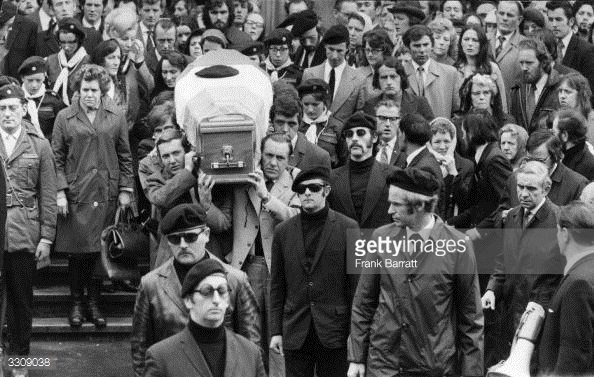
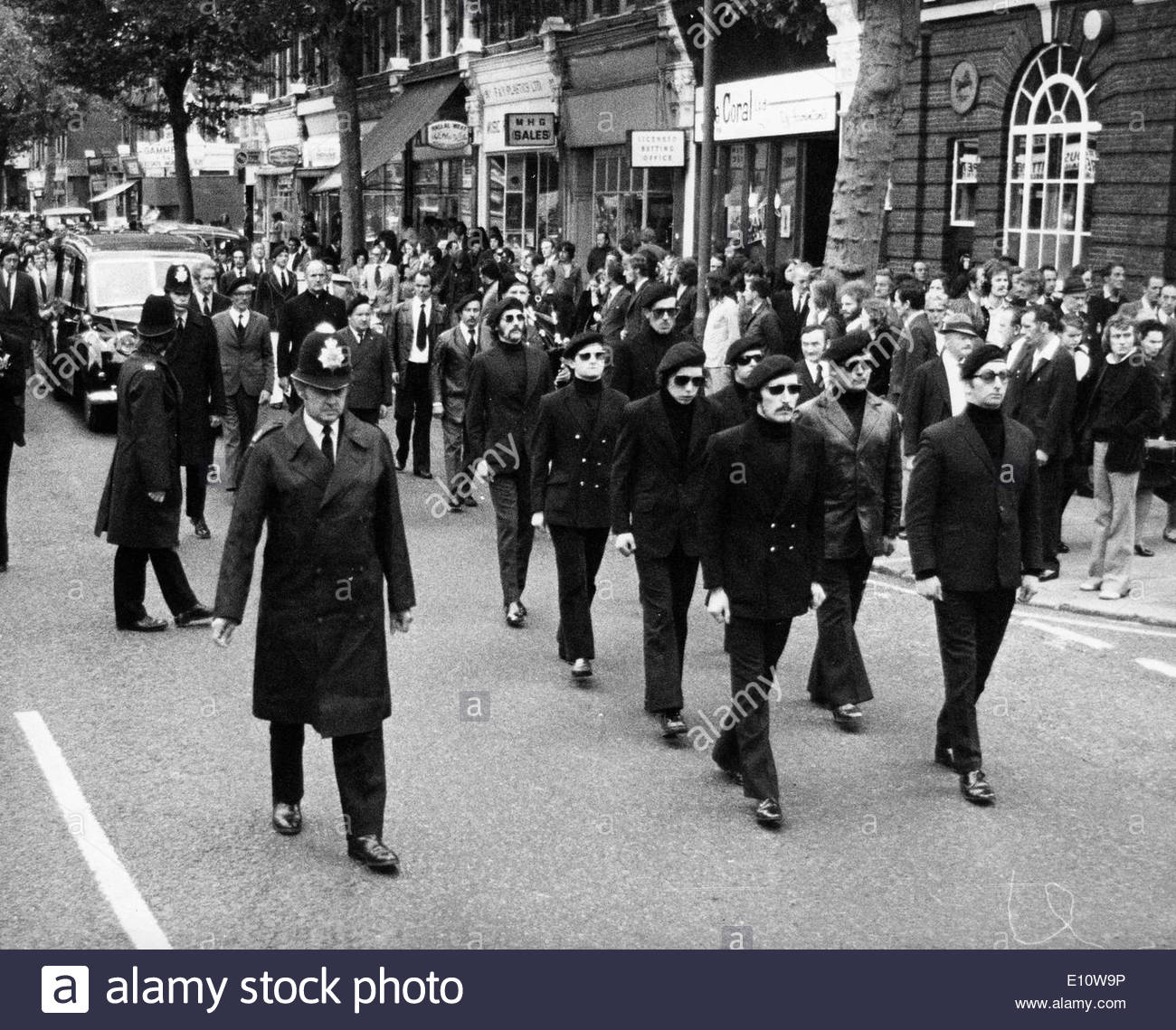
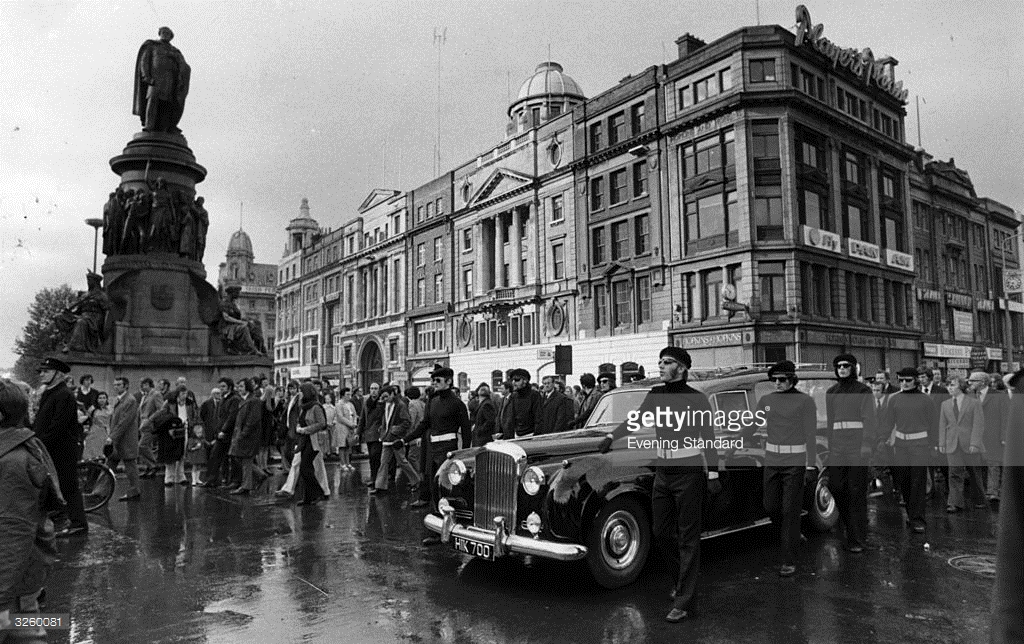

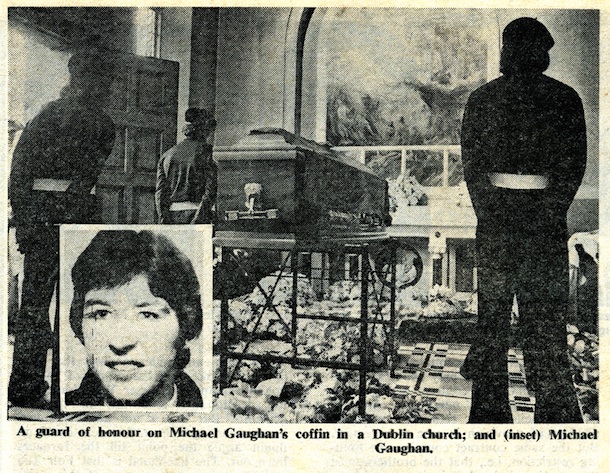
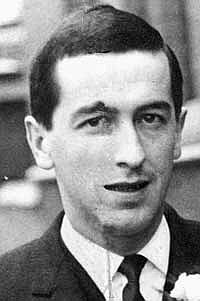

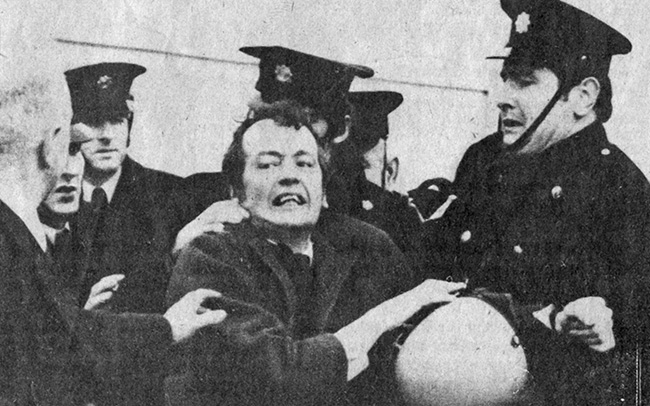


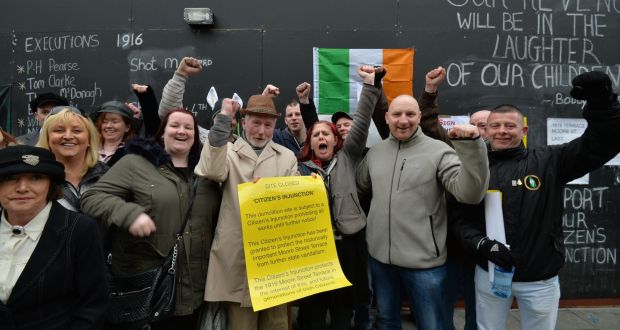

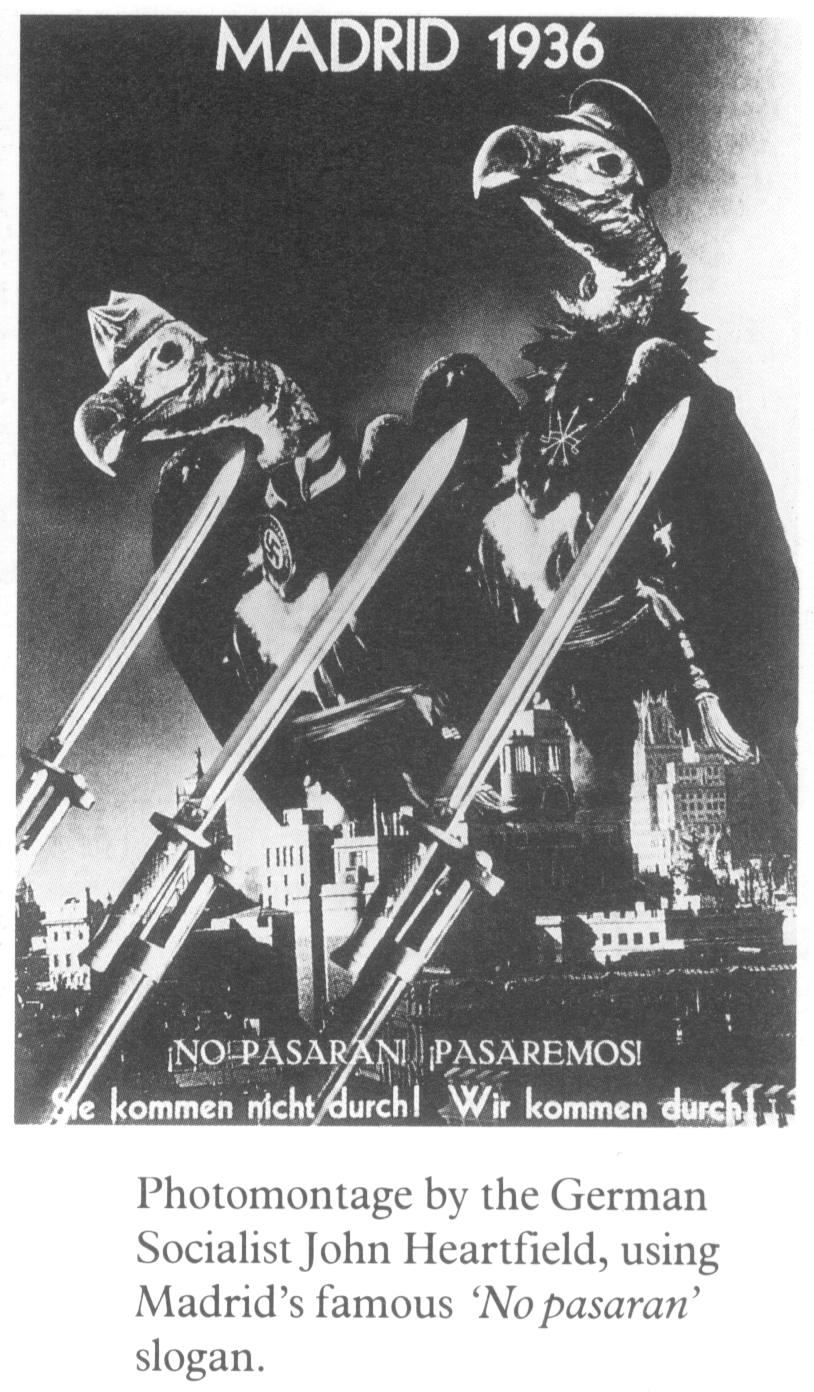
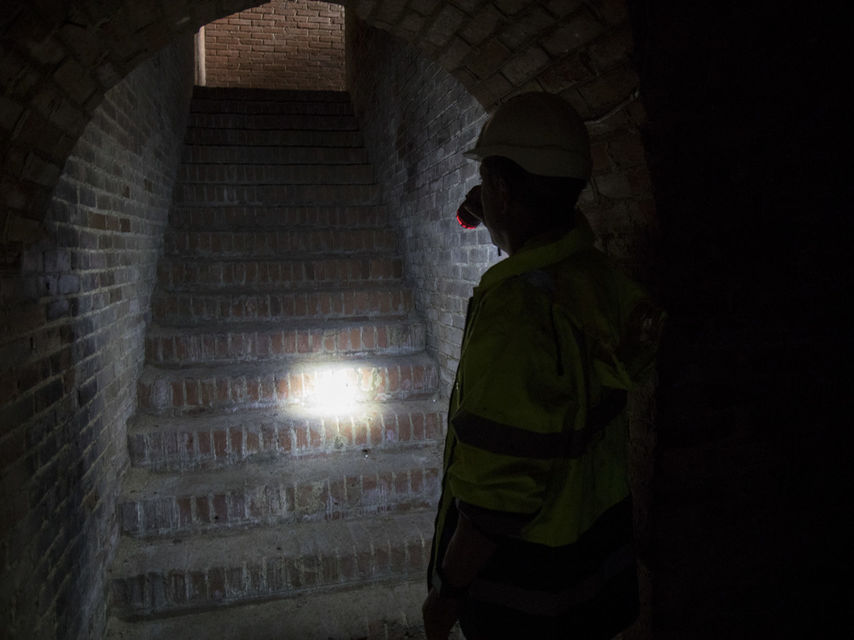
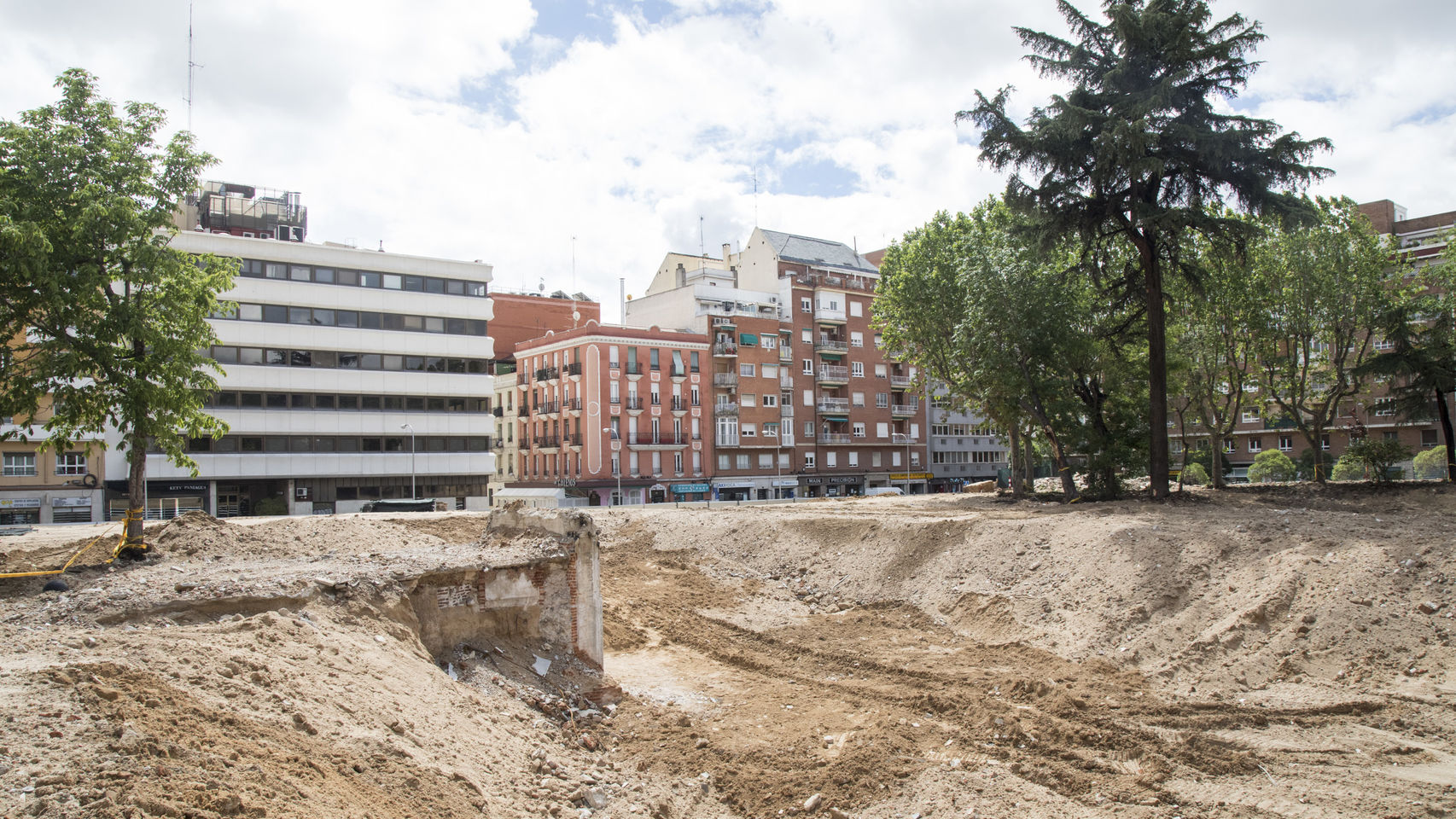
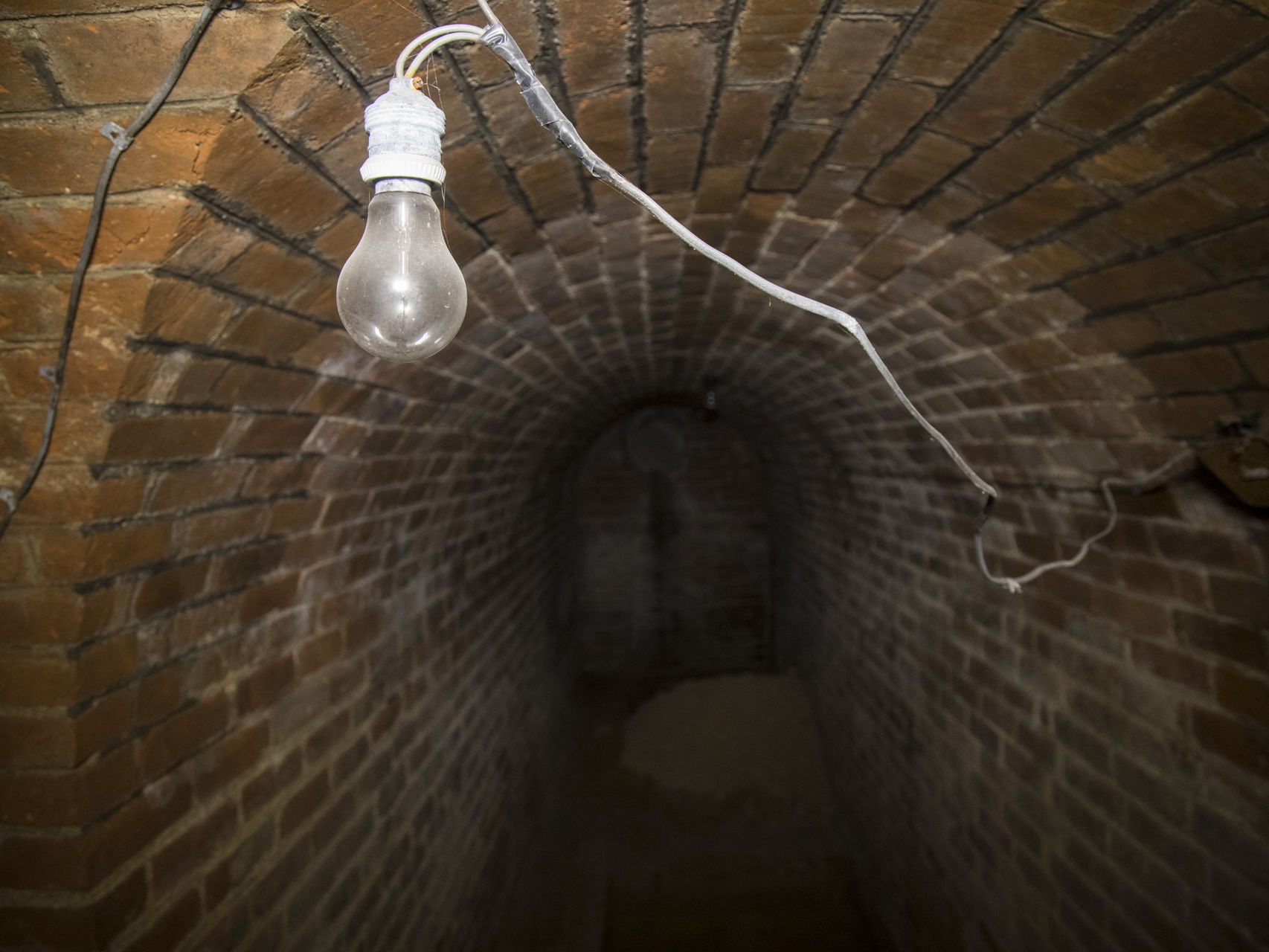
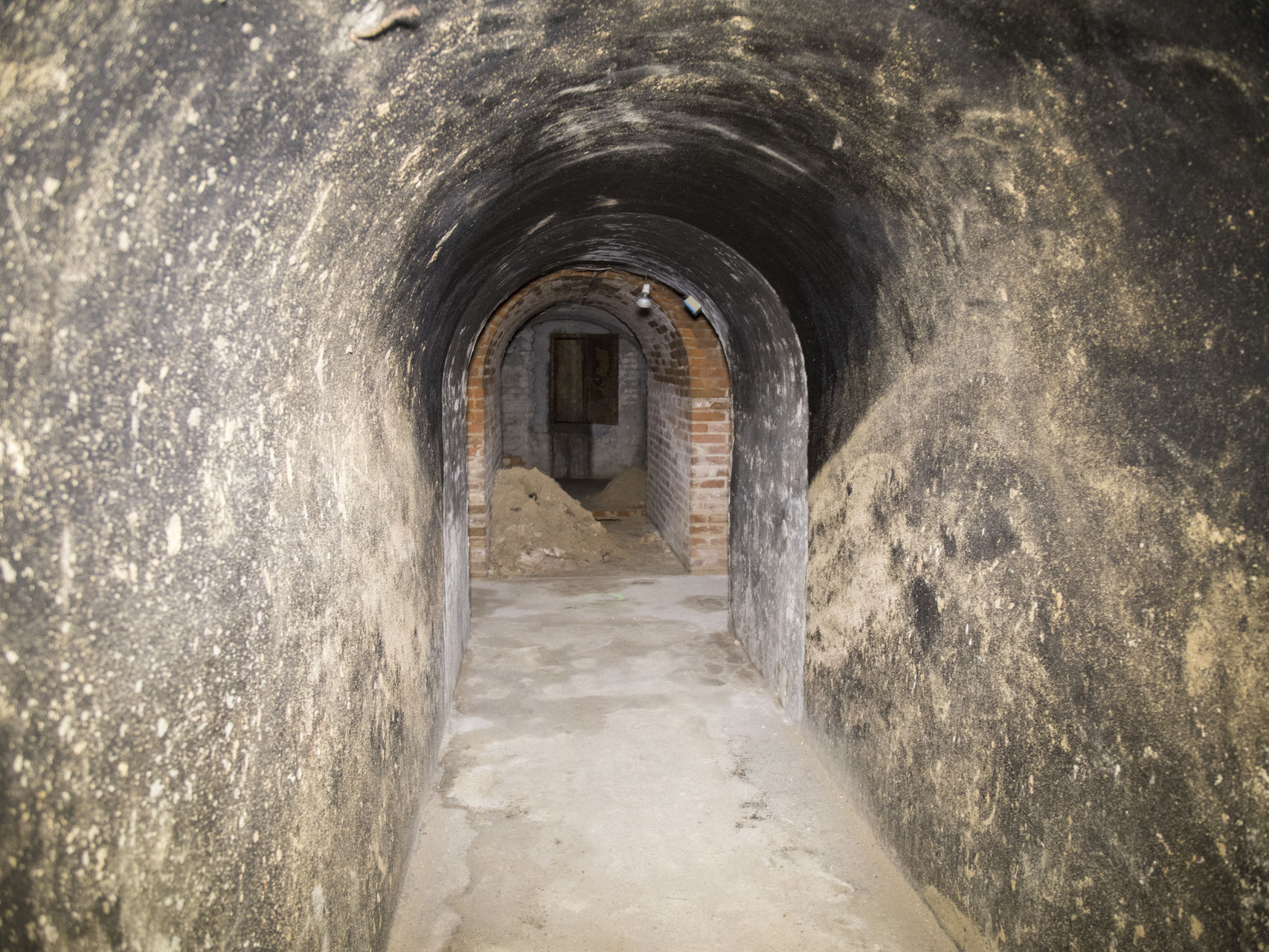
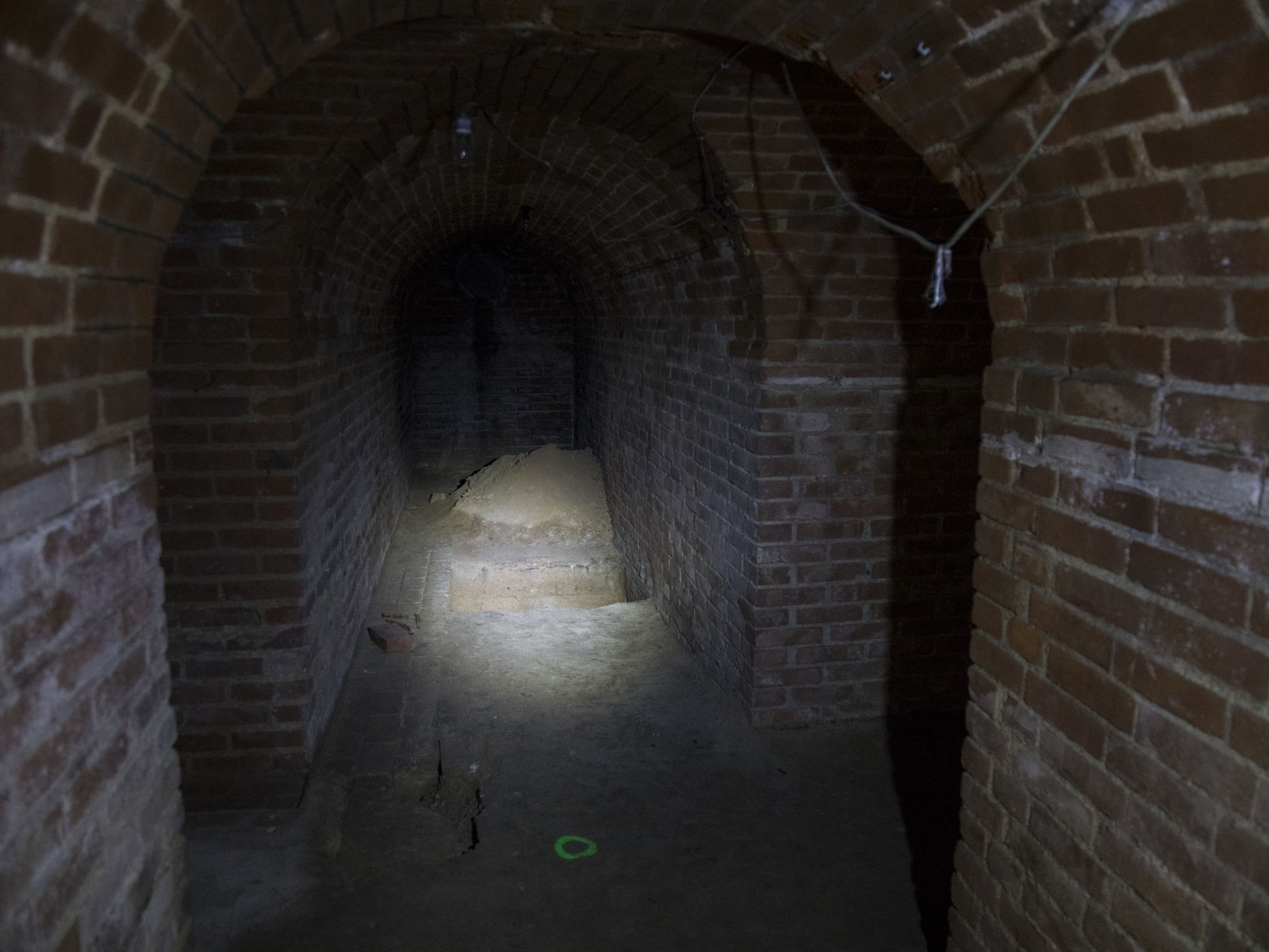
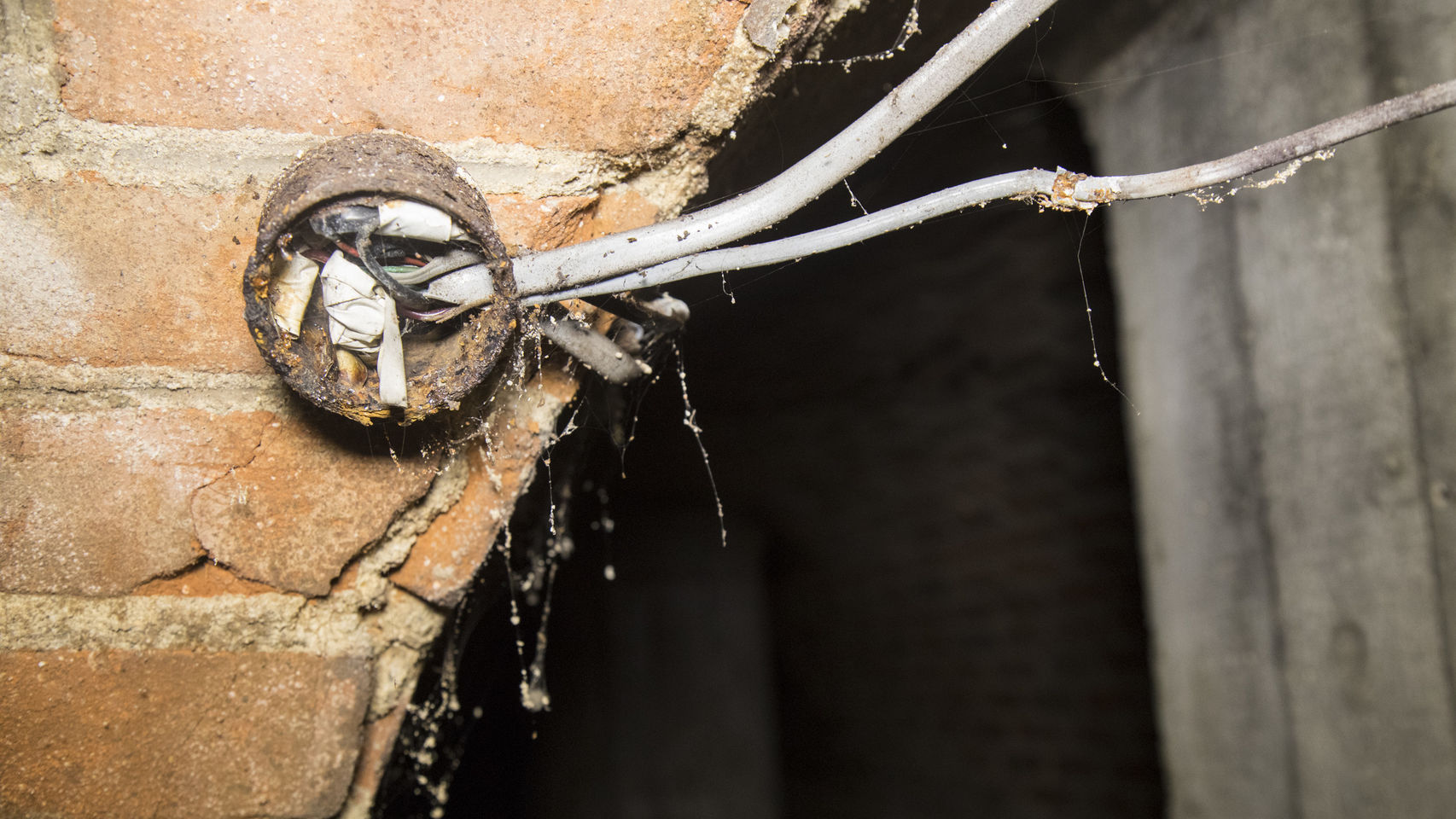


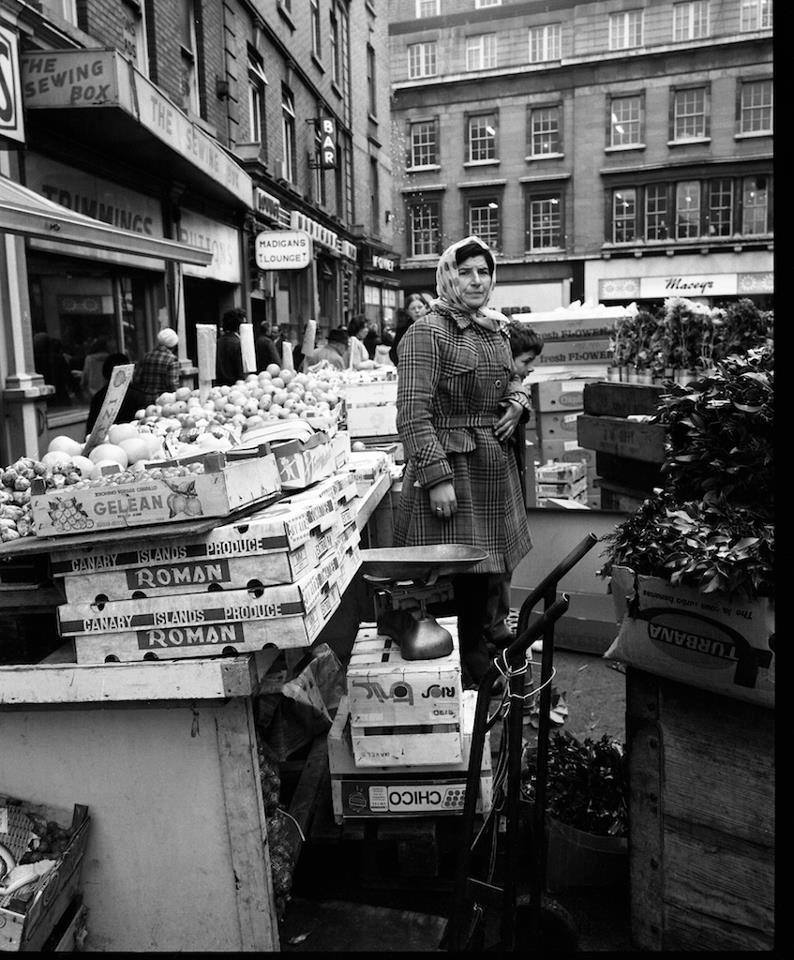

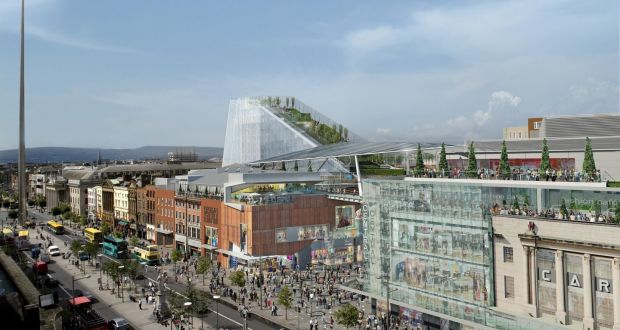

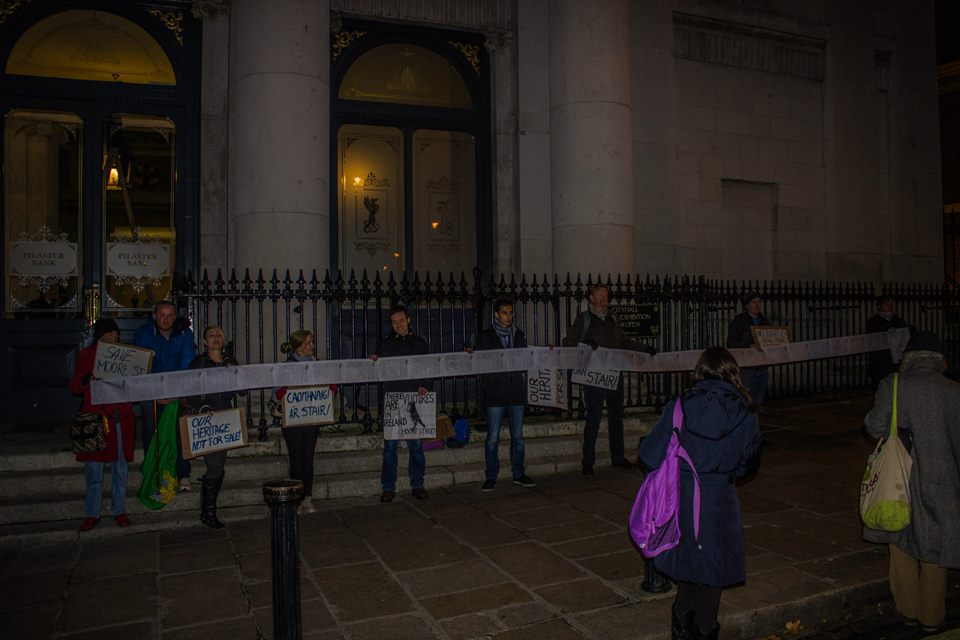


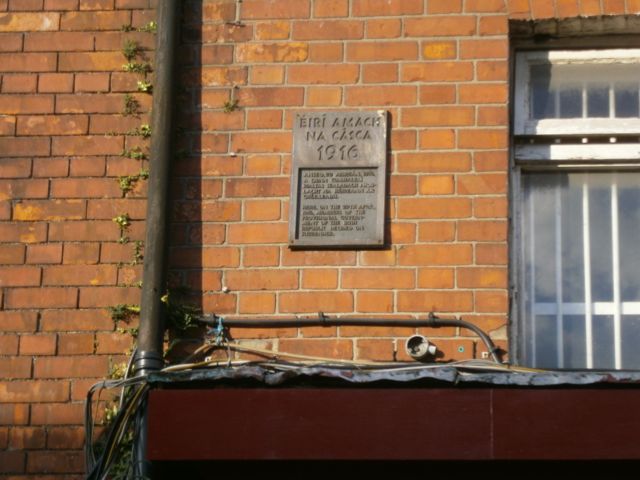

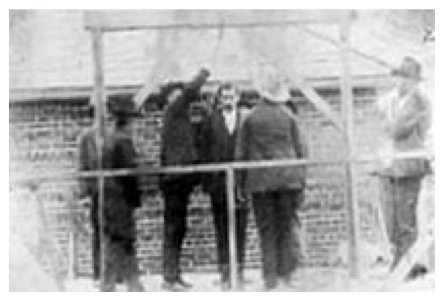

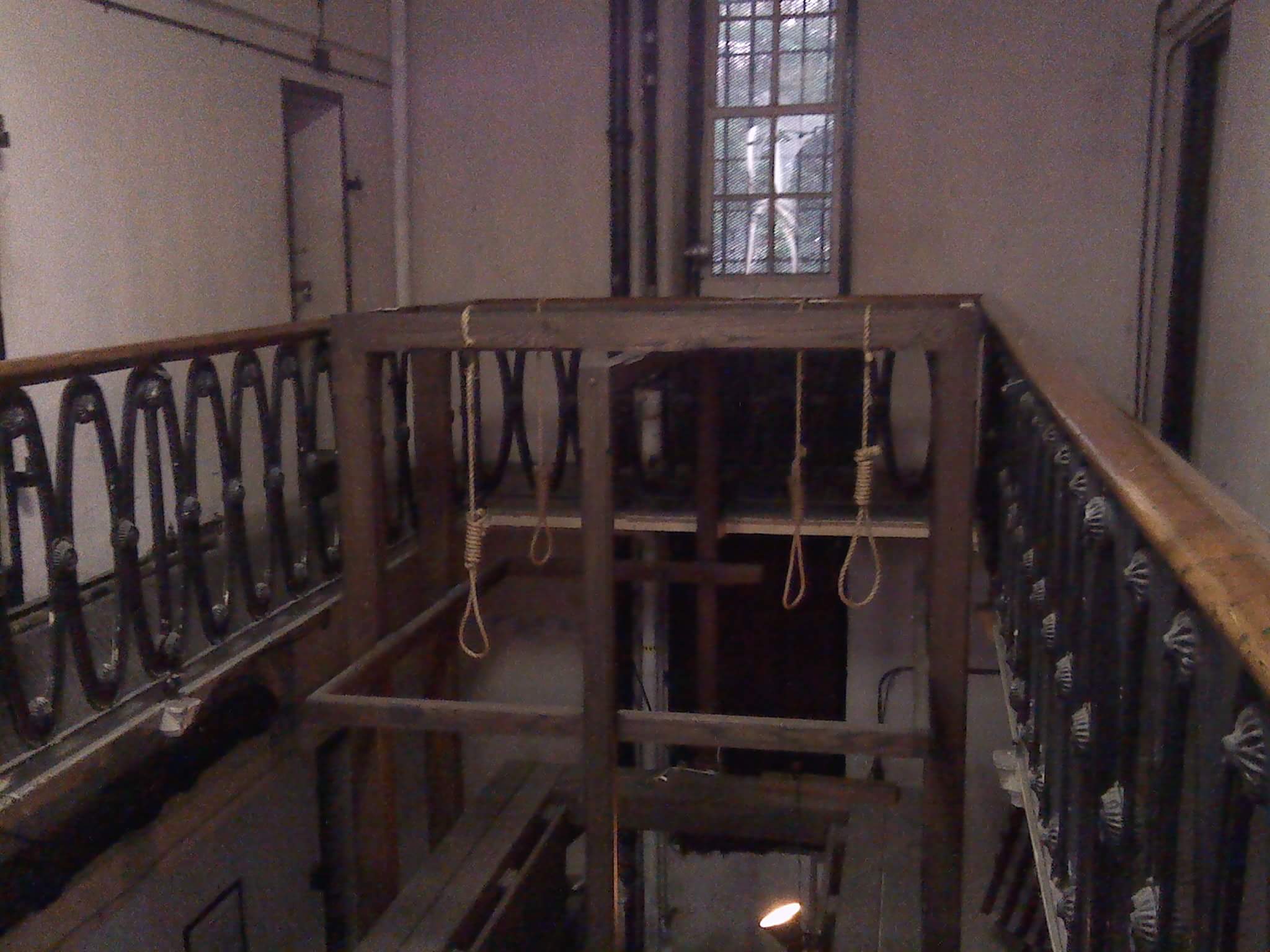


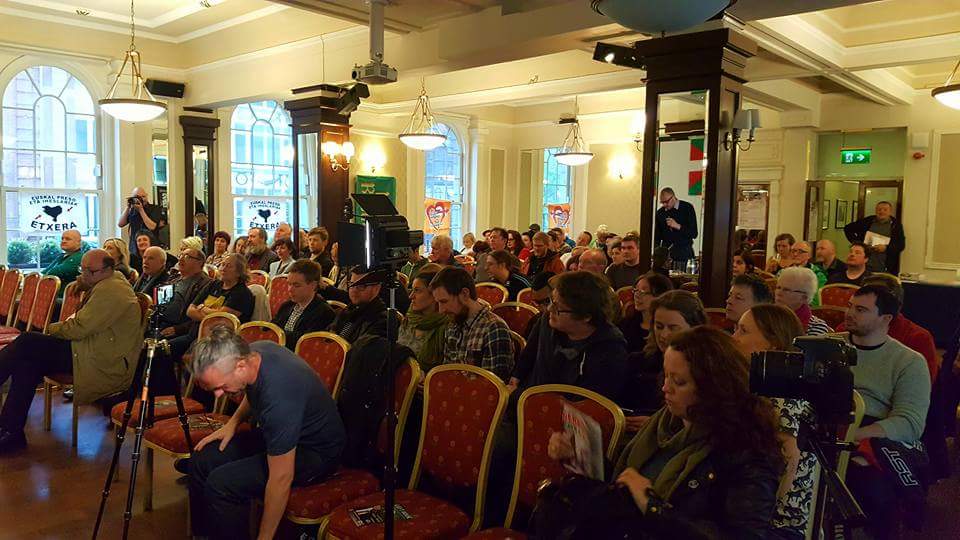
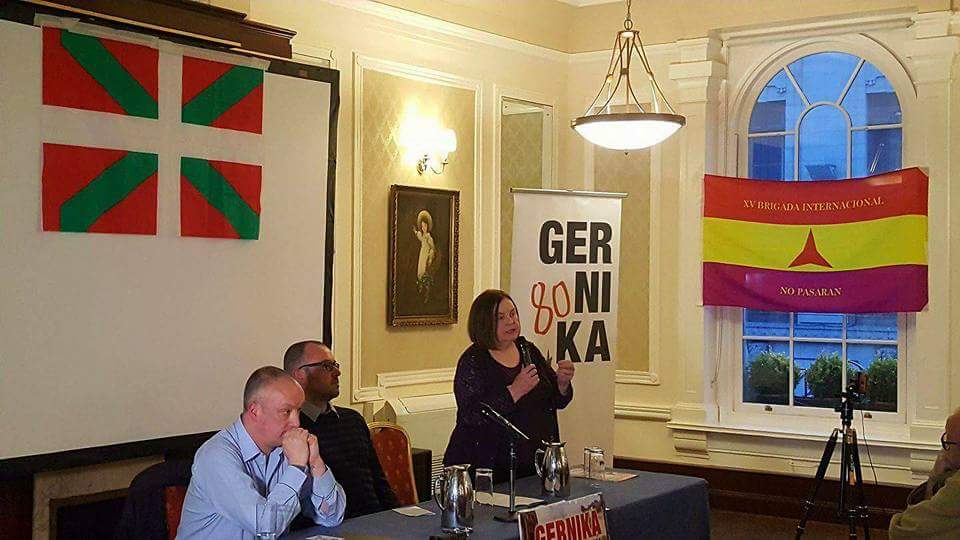
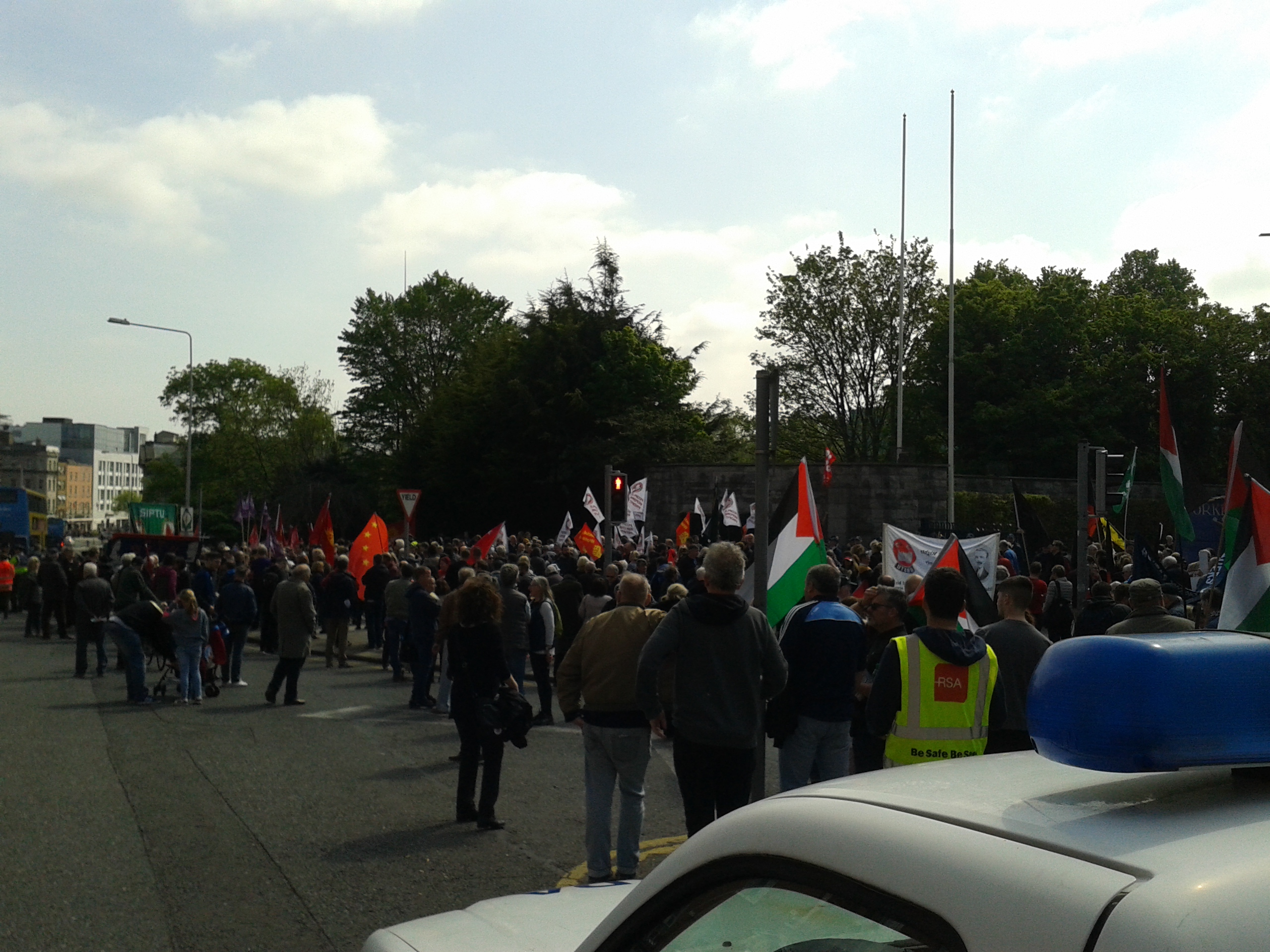


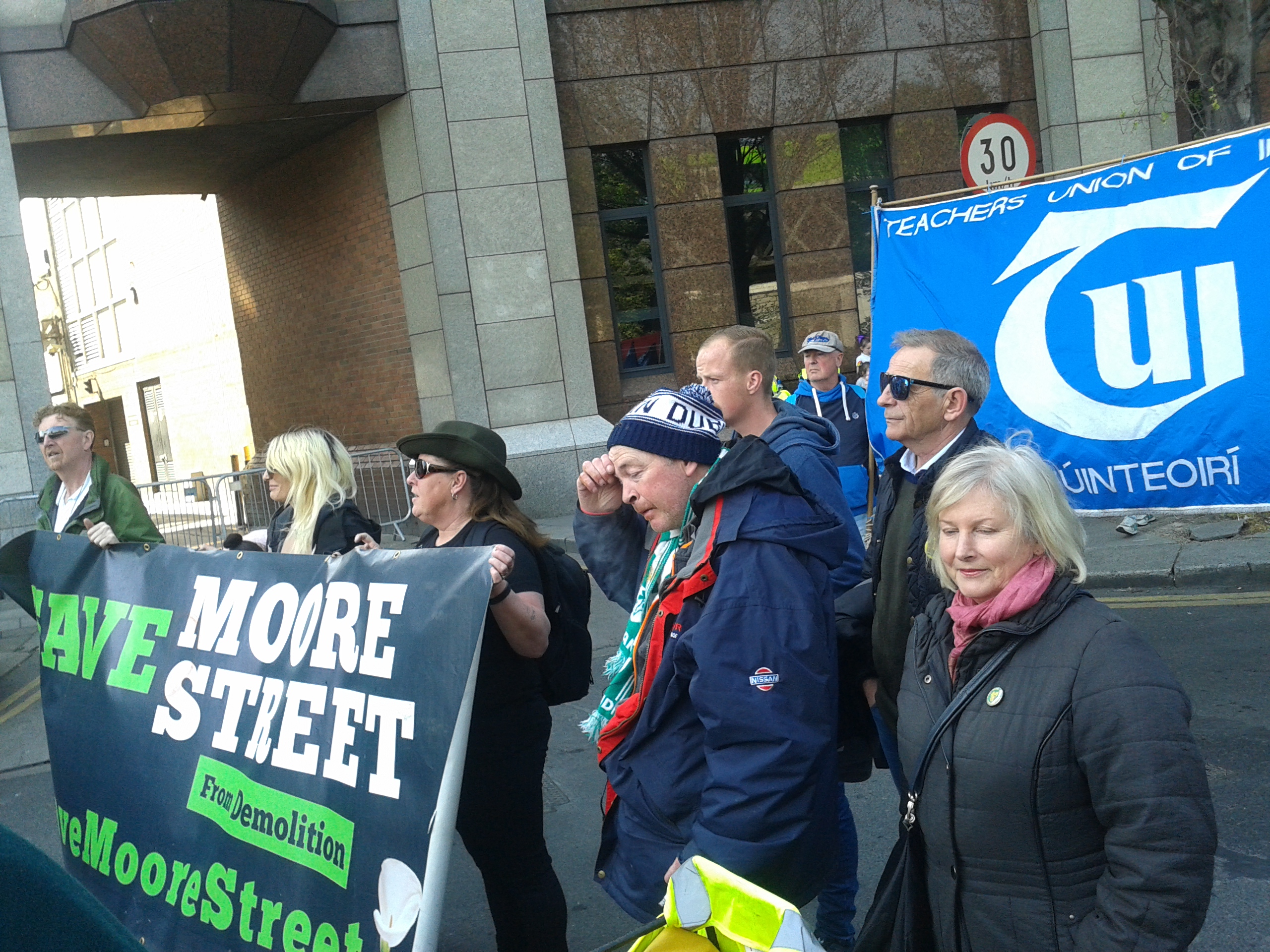


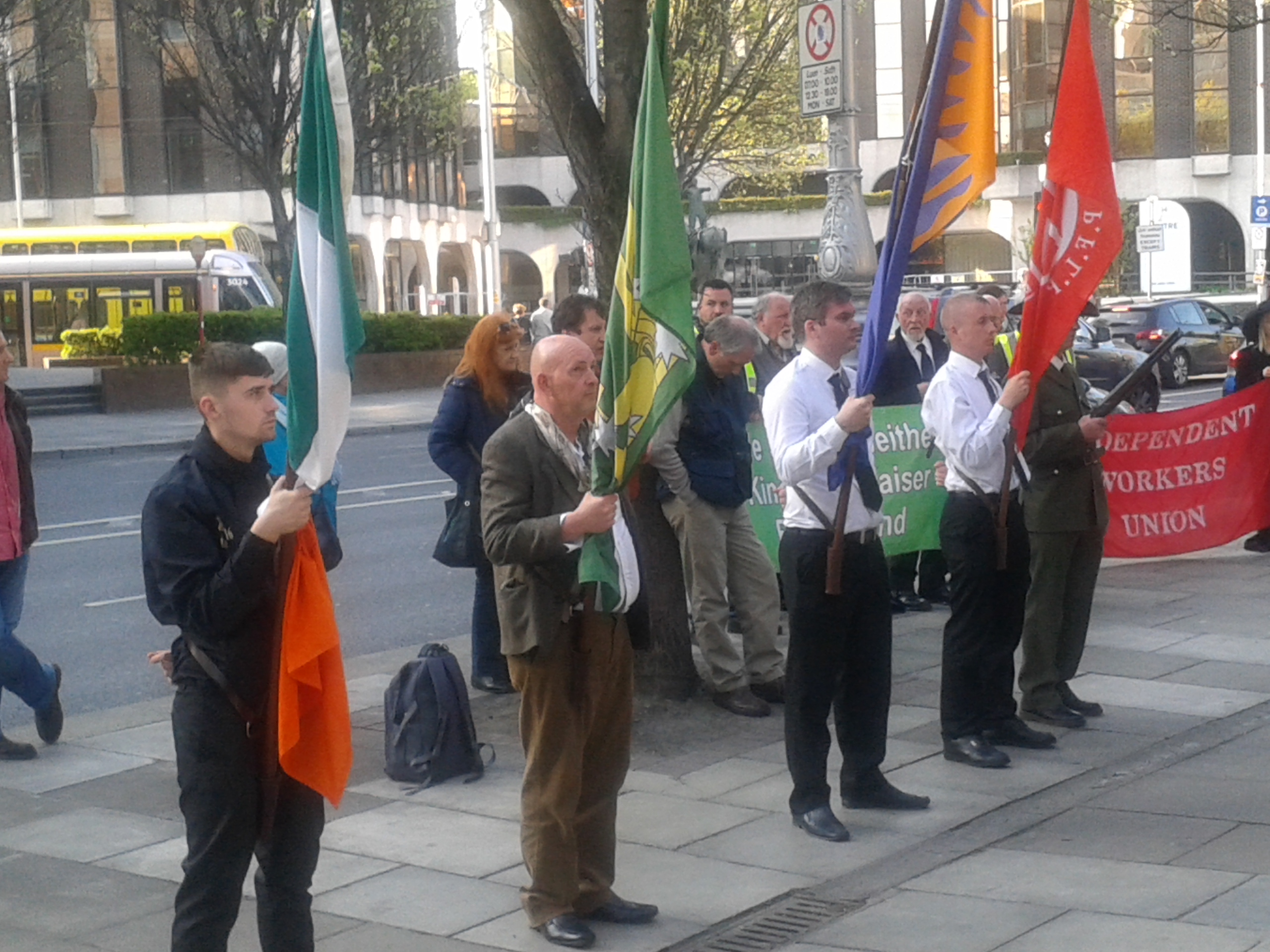


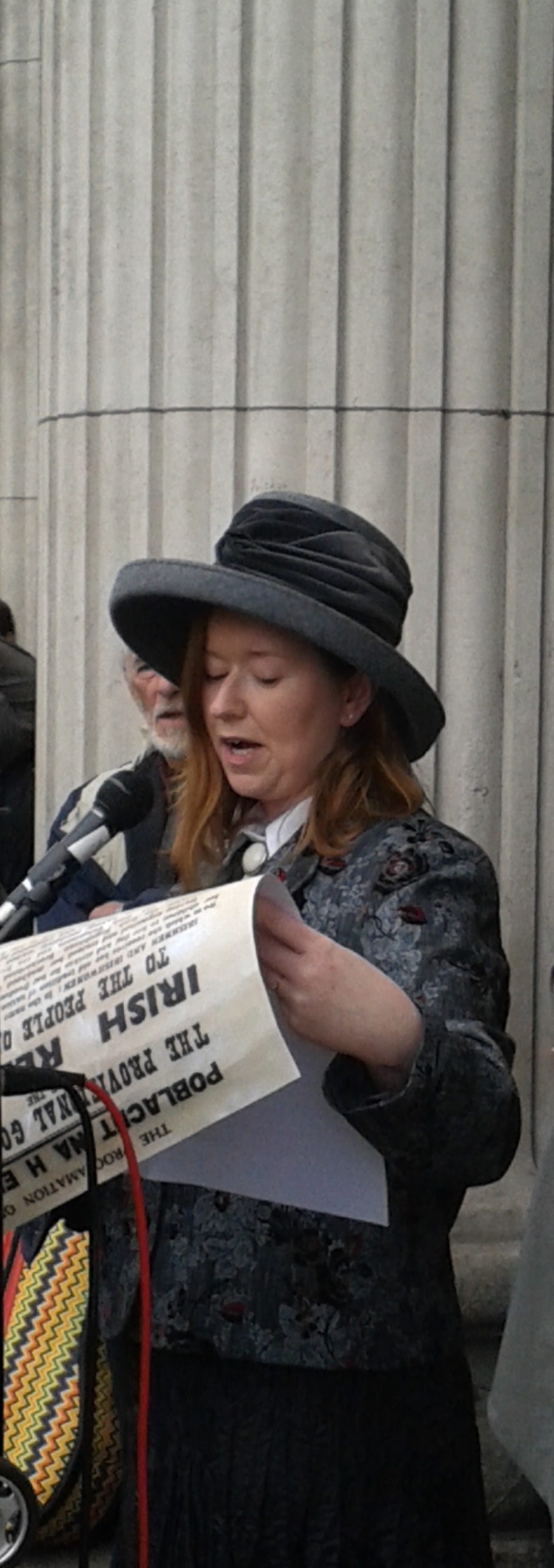

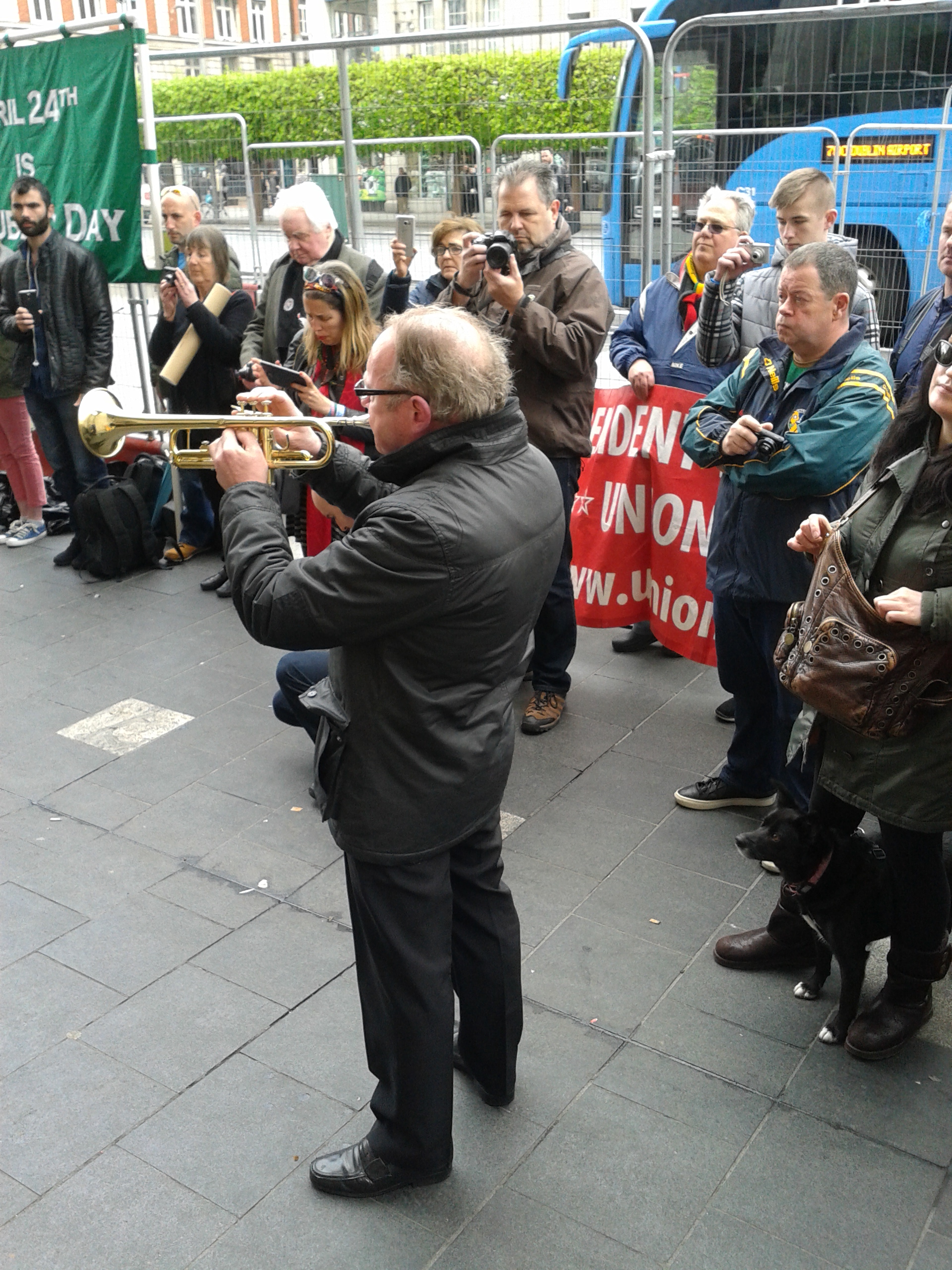
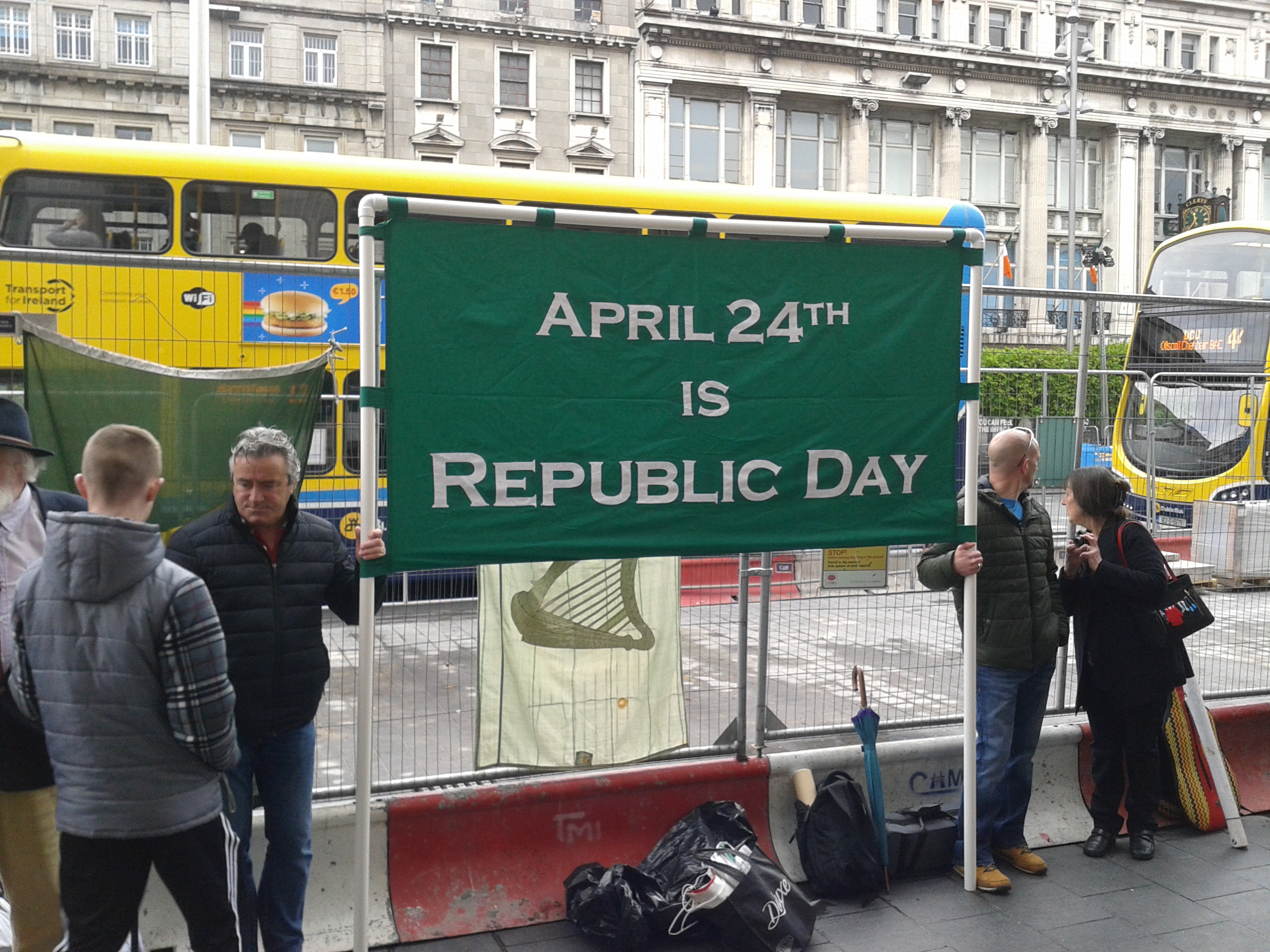


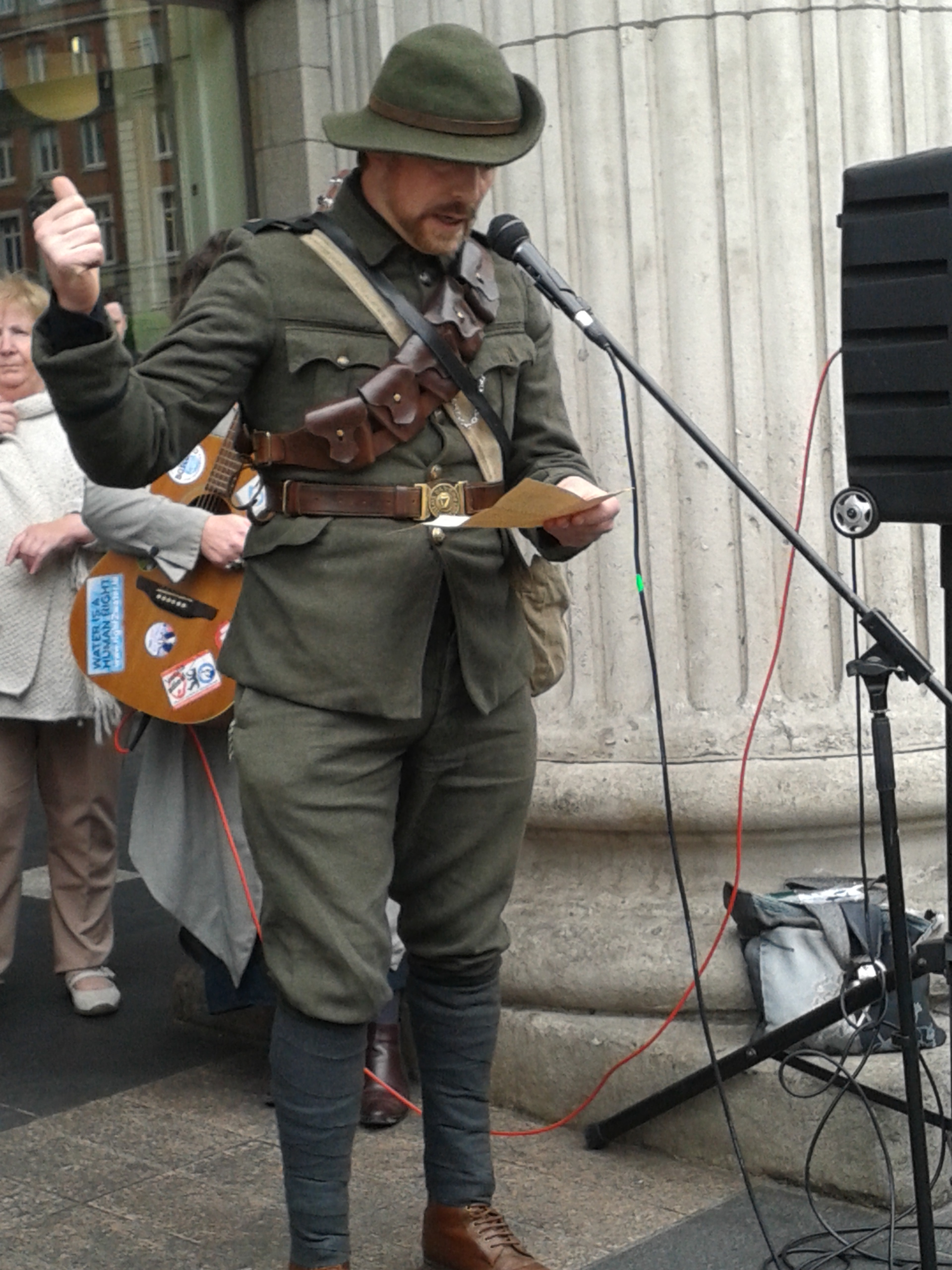
 rebelbreeze