It was waiting to happen. For weeks fascists and racists have been flaunting themselves in particular at the GPO in Dublin city centre and on two weekends assaulted a number of anti-fascists protesting peacefully against them — while the police harassed the victims. Today, the tables turned. Fascists marching across O’Connell Bridge were confronted by Irish Republicans picketing there for an end to internment without trial. Punches were thrown and the police arrested an antifascist. Later, fascists outside the GPO were also attacked, their amplifier and microphone confiscated by antifascists and a loudhailer smashed.
The SB harassment of anti-internment picketers can be seen here too from across the road. (Photo source: Bystander)View of anti-internment picketers on west side of the central pedestrian strip of O’Connell Bridge. (Photo: D.Breatnach)
It was a day of many protests. The usual group of Far-Right, racists and fascists were outside the General Post Office on O’Connell Street, Dublin’s main street, protesting against the Covid19 restrictions, even claiming that the virus does not exist and is rather a creation of governments trying to instal “a world government”. Their weekly protest starts at 2pm but today they moved it back to 1pm, perhaps because another two protests had been scheduled to start at the same time: a national protest of the sacked Debenham workers and a last-minute Black Lives Matter protest.
In addition to the Far-Right at the GPO, another group of the same ilk, led by the fascist Irish Freedom (sic) Party, planned a march – also to start at 1pm — to the location of Radió Teilifís Éireann in Donnybrook. Their intention was to protest against any further lockdown and claiming that the national broadcaster is disseminating lies about the virus.
View of anti-internment protesters on east side of the central pedestrian strip on the Bridge looking southward shortly before the confrontation with the fascist marchers. (Photo: D.Breatnach)
Two weeks ago, a Republican organisation, Saoradh, had advertised a picket to take place today on O’Connell Bridge in protest at continuing internment without trial of Republican activists. The protest was to take place on the anniversary of the introduction of formal internment in the occupied Six Counties in (7th to 9th August) 1971 and was orlginally planned to start at 2pm but, in order to facilitate people supporting the Debenham Workers’ national protest, was re-scheduled to start at 1pm. The picket would also protest the attempted extradition to Lithuania of Liam Campbell, an Irish Republican.
The announcement of the fascist IFP march came a few days before the scheduled picket but, although it was possible that it would pass over O’Connell Bridge and therefore by the picketers, the organisers decided to stick to their schedule and arrangement.
About 30 Irish Republicans and other socialists, including many independent activists took up positions at 1pm on the central pedestrian strip on O’Connell Bridge, unfolding banners and placards against internment and extradition and flying flags of various allegiances: Irish, Irish socialist republican, Basque, Basque Antifa, Palestine.
Another member of the ‘Special Branch’ harassing peaceful protesters. (Photo: D.Breatnach)(Photo source: Saoradh Dublin)(Photo source: Saoradh Dublin)
GARDA HARASSMENT
Tall male member and female member of the ‘Special Branch’ harassing peaceful protesters. (Photo: D.Breatnach)
Soon afterwards, the picketers began to be accosted by three plain-clothes political police, generally known as “the Special Branch” and as the cry went up of “Garda harassment!” the picketers began to parade in a circular movement around the central strip. Confrontations developed between the “Branch” and individuals they had targeted to demand their names and addresses. The Branch were using Section 30 of the Offences Against the State Act, “anti-terrorist” (sic) legislation but, since they refused to confirm that they suspected their victims of committing or being about to commit a crime and in fact quoted association with others who had been convicted in the past, they were using it illegally (as they usually do). Although the illegality was pointed out to them, the political police persisted in threatening their victims with arrest if they did not give their names and addresses until eventually some complied.
Meanwhile, the shouts of “Garda harassment” and “Police harassment of a peaceful protest” could be heard both sides of the Bridge and attracted the attention of passing bus passengers, with many tourists and others stopping to watch.
CONFRONTATION WITH FASCISTS
The Branch had taken the names of perhaps no more than three when the fascist march could be seen approaching. By this time a number of other young men and women had taken position on the Bridge and, as Republican picketers stepped into the street to confront the fascists, the newcomers also jumped into the fray.
Uniformed Garda escorting the fascist marchers and those who had taken up positions on the Bridge waded into the antifascists and arrested at least one Republican there. For awhile the ability of the marchers to proceed seemed in doubt but the numbers of the antifascists were insufficient to overcome both police and fascists and so eventually the latter got across the bridge, being pursued down D’Olier Street with the Gardaí blocking antifascists there, the picketers gradually trickling back to the Bridge.
Gardaí protecting the fascists in D’Olier Street by blocking the antifascists. (Photo source: Bystander)
It was not long before the cry of “Garda harassment!” rang out again as the political police, who had stayed well away from the fighting earlier, returned to their undemocratic repressive activity of intimidating and building up files on Republicans. The picketers began to renew their circling of the central strip and at that point it seemed the political police decided to give up, with perhaps a total of four or five having been coerced by the police.
View of part of the scene at the GPO immediately after the antifascist surge into the lines of the Far-Right. (Photo: D.Breatnach)
Shortly after that, at about 1.45, the organisers decided to to end the picket a little early and some of the participants headed up to the GPO. They were not there long when a surge of antifascists, apparently led by anarchists, crossed from the central pedestrian reservation and into the ranks of the fascists. Uniformed Police rushed in and at least one antifascist was seen being held down by two Gardaí but another was running down the road with the fascists’ amplifier. Their microphone had also been seized and trampled and the remains of a loudhailer could be seen on the road. The fascists appeared badly shocked.
Another view of the scene very shortly after the antifascist surge into the lines of the Far Right. (Photo: D.Breatnach)
About five minutes later, the Public Order Unit, otherwise known as the “Riot Squad” arrived in three large police vans, precipitating a general evacuation of anarchists. The POU took up positions in a line near the antifascists, with uniformed police in a line on the other side of the road, i.e near the fascists.
Line of Public Order police near the antifascists with Jim Larkin monument in far distance, marking the spot of police attack on demonstrators on Bloody Sunday 1913, August 1913. (Photo: D.Breatnach)Line of uniformed police near the badly-shaken Far-Right by the GPO; (Photo: D.Breatnach)
Republicans and some other antifascists remained in the area waiting for the advertised Black Lives Matter protest which did not materialise, nor could it be ascertained who had been allegedly organising it.
Then the Debenham’s Workers march came down O’Connell Street and, turning into Henry Street, proceeded to the site of the former department store (which is still holding stock and equipment). Without warning in the very early days of the Covid19 lockdown, their former employer closed its Irish stores and sacked its workers. They have now been protesting for 121 days and their minimum demand is that they are considered first in the line of creditors for their collective redundancy pay, instead of last of all as is the general practice of capitalism.
Debenham Workers’ march approaching the Spire. (Photo: D.Breatnach)View of section of the Debenham Workers’ rally outside the closed premises of their employer. (Photo: D.Breatnach)Central view of the Debenham Workers’ rally in Henry Street. (Photo: D.Breatnach)Supporters of the Debenham Workers, perhaps mother & daughter. (Photo: D.Breatnach)(Photo: D.Breatnach)(Photo: D.Breatnach)(Photo: D.Breatnach)(Photo: D.Breatnach)
It was a day in which a number of different aspects of capitalism in crisis and State repression could be observed on the streets of the city centre, all in the space of a few hours.
Republicans and other local antifascists countered a Far-Right rally and “prayer circle” who were protesting a Croke Park letting on Friday to some Muslims to celebrate their religious festival of Eid. When confronted by a handful of antifascists, the early fascists folded up their banner and cowered behind police protection, unfolding it later when many more reinforcements arrived. Later still there were some scuffles and a number of arrests.
The first shot fired on social media against the Croke Park letting was by Niall McConnell, leader of the tiny “Síol na hÉireann” group calling for a protest at the venue, followed by Gemma O’Doherty of “Anti-Corruption Ireland”, with other Far-Right posters quickly getting on the bandwagon. The main claim was that they were going there to prevent “creeping Sharia law” but alsotacked on being against ritual animal slaughter, child brides, pedophilia etc. What they were really about however was Christian or even Catholic fundamentalism, racism and fascism and this became crystal clear during the morning.
Eid festival celebrants at prayer in Croke Park on Friday. (Photo source: Internet)In the close foreground, an antifascist displays both languge versions of the quotation from the 1916 Proclamation. Behind him a number of Far-Right protesters. (Photo source: Dublin Republicans Against Fascism)
WHO THEY WERE AND WHAT THEY SAID
In contrast to many of the counter-protesters, none of the Far-Right seemed to be local and indeed many had travelled some distance to be there, some known to have come from Donegal and Mayo.
When calling out the responses of the Catholic prayer cycle of the Rosary1, Niall McConnell was roaring them out through a megaphone. McConnell, a founder of the tiny “Síol na hÉireann” group based in Donegal, believes in an Ireland built solely on Irish ethnicity (by which he means of Irish blood) and that its ethos should be Christian. How Irish blood “ethnicity” is to be judged is not explained, given that the Irish people are a mix of the Celtic population with many others, including Viking, Norman, Scottish, English, Welsh, possibly Basque, Italian, Polish etc. This is being “patriotic” according to McConnell, who is never seen campaigning for an end to the partition of Ireland nor of foreign occupation of one-sixth of the country.
Unloading rifles at Howth, 1915, Erskine and Molly Childers in foreground. Erskine was English but would later join the IRA and was executed by the Free State regime in 1922. (Source photo: Internet).
Patrick Pearse’s father being an English migrant did not prevent his two sons from being true patriots, promoting the Irish language, progressive education, national drama and literature and fighting for independence. Thomas Davis’ father being Welsh did not prevent his son from founding The Nation newspaper or from composing such songs as “A Nation Once Again” (a recording of which the Far-Right played!) and “The West’s Awake!” Erskine Childers being English did not prevent him sailing a yacht into Howth to deliver Mausers to the Irish Volunteers in 1914 nor in joining the IRA during the War of Independence and the Civil War and being executed by the Free State junta. And a missionary called Patricius being Welsh did not prevent him ending up as St. Patrick, a patron saint of Ireland!
Although billing himself as an “Irish Patriot”, McConnell calls for an alliance of “nationalists across Europe” and has posed for a photograph in a line-up of Far-Right European figures that included Nick Griffin, former leader of the fascist British National Party2. McConnell’s party’s website calls on people to join to “resist and turn back the new plantation”, a reference to a paranoid conspiracy in which the Far-Right claim to believe that the EU plans to replace Irish people with migrants.
A far-Right Lineup for meeting at the EU Parliament: Irish “patriot” Niall McConnell at the far right of photo (and in politics) with, among others, fascist Nick Griffin of the British National Party (fourth from left). (Photo source: Internet)
Apart from promising any new members of “Siol nah Eireann” (sic, no such words in Irish) the fantasy of joining “local cumans” (they have none and there is no such word in Irish either), they intend to provide them with “education” (i.e propaganda), “ideology” (fascism), “physical fitness and self-defence” (training in being bootboys) in Ireland and abroad …..!
Another who believes in an “ethnic Ireland” is Gemma O’Doherty who started off as an investigative journalist but turned into a proposer of illogical conspiracy theories and propagandist of racism. Protesting in a tweet against the recent election of Hazel Chu as Lord Mayor of Dublin, she ranted that Ms. Chu, born and raised in Ireland, is part of the Communist Party of China (!) takeover of Ireland. Parts of the Far-Right claim to believe that CPC is taking over the world through the UN (where China has ONE seat on the permanent Security Council out of FIVE!3) and on the other hand, President Trump is wonderful.4
One of the banners displayed by later Far-Right arrivals. The man in the foreground assaulted a Republican some weeks ago in full view of the Gardaí but was not arrested. He was involved in a scuffle here too while filming. (Photo source: Dublin Republicans Against Fascism)
Gemma O’Doherty has at times been caught out posting lying statistics to whip up racial fears and had two of her Youtube sites shut down by Google due to her continuous attempts to whip up race-hate. Since then she has been campaigning for “free speech” but for whom? Outside Croke Park she said that the country needs to become “a Catholic Ireland once again”. In this “Catholic Ireland” of her dreams, would there be “freedom of speech” for dissenting Catholics, Protestants, Jews, Muslims, atheists or agnostics? The “Catholic Ireland” State of the recent past censored films, banned books and newspapers and forbade not only abortion in all circumstances but also contraception and divorce, not to mention LGBT rights.
O’Doherty is another fake “patriot” who told her listeners that “our patriots died for a Catholic Ireland”, despite the fact that nearly every single leader of the United Irishmen was a Protestant, as were many of the Young Irelanders and not a few prominent members of the Irish Volunteers — and she totally ignored the words of the 1916 Proclamation.
Near the end of the event, some members of the National Party appeared, wearing green golf shirts with “NP” marked on them. Although their “Vision” for Ireland on their website claims to include “an Ireland united, Irish and free”, they have never been seen engaged in struggles against British colonialism and the partition of the country. The NP is against “replacement-level immigration”, i.e that racist conspiracy theory again and wants capital punishment for serious crimes, in which they include carrying out a pregnancy termination. Like most of the Far-Right, they oppose the “Black lives matter” campaign and the party’s founder, Justin Barrett (not there on Friday), tweeted that if he gets into government he will remove the Irish nationality of Hazel Chu, a woman who was born in the Mater Hospital in Dublin, was educated in Ireland and spent most of her life here.
The man on the right supports far-Right protests yet claims to be a Irish Republican. (Photo source: Dublin Republicans Against Fascism)Praying in support of religious sectarianism and racism. (Photo source: Dublin Republicans Against Fascism)
Also missing were racist and islamophobe leaders of the “Irish Yellow Vests” Glen Miller and Ben Gilroy, also Herman Kelly, founder of the tiny Irish Freedom Party, another “patriot” who believes in a “Christian and ethnic Irish Ireland”. Kelly has shared a platform with British fascist and Loyalist Jim Dowson and Irish fascist Rowan Croft (aka “Gran Torino”).
Aside from all that, on Friday one woman ‘innoculated’ the ground around the Far-Right protesters with sprinkled salt, apparently proof against “witches” (anti-fascist women). A few of them shook their rosary beads at the protesters while another woman seemed to go into ecstasy, praying with arms alternately raised high or spread. “I don’t know anything about politics,” she said to one of the counter-protesters, “I just come here to pray.” Of course, the handball alley entrance to Croke Park is a well-know prayer venue! (Perhaps for fans of other county teams hoping Dublin won’t win the All-Ireland yet again ….)
“I am not interested in politics, I just come here to pray”! said this woman of the Far-Right ensemble. (Note the Síol organisation have unfurled their banner again with the arrival of more reactionaries). Photo source: Dublin Republicans Against Fascism
One of their leaders, Dee Wall frequently seen at their rallies at the GPO, claimed she supported religious liberty for all but failed to explain how that squared with protesting at Muslims celebrating Eid at Croke Park. Unless that is she was in agreement with those whose reply to the slogan of “religious and civil liberty for all” was “for the Irish” and meant not only that, for some Muslims ARE Irish, but rather “for Christian, Catholic, several generations Irish only”. Another woman called an antifascist a paedophile(the Far-Right regularly call antifascists “paedophiles”) and told him that the Coronavirus was only in his head, i.e in his imagination – many of them believe that the coronavirus is just a scare to bring about “a one-world government”, one woman commenting that mask-wearers are part of the plot.
One of the Far-Rightists shouted that he never saw the antifascists protesting against the Government, which brought a chorus of incredulous protests from his opponents, the most telling being: “You’ve never seen us because you weren’t there!”
After the Muslims had left by another exit and as the antifascists were leaving, one woman called out antifascists that they were being funded by the millionaire Soros – another fantasy they pretend to believe. One of the antifascists shouted ironically back at her: “I haven’t received my cheque yet – can you have a word with him for me?”
Calling antifascists “paedophiles” might be useful in demonising their opponents but if believed by some could cause people real problems in their community. It is also ironic, given that these ultra-Catholics defended the Church hierarchy and its paedophiles right to the last, some even still maintaining that the scandal institutions were innocent and the targets of malicious accusations. Herman Kelly of the INP was for a time Assistant Editor of the Catholic Herald and maintained that the allegations were ‘fake news’. Also many of the Far-Right in Ireland and in Britain have been convicted in court of …. guess what? Yes, pedophilia.
WHAT WAS THE FAR-RIGHT FUSS ABOUT?
There was never going to be ritual slaughter of any animals in Croke Park, of course, nor any of the other scares being thrown by racists and fascists.
Just as the venue has been let for other large gatherings, in particular pop concerts, a Muslim religious organisation obtained permission from the GAA to hold a celebration of their festival of Eid there in the stadium.
The feast Day of Eid is an important one in the Muslim religious calendar and its main features are obligatory acts of charity towards the poor, communal prayer followed by social feasting and visiting of relatives and friends. Areas of large capacity are usually required (and more so if observing social distancing), such as large mosques, community centres or hired halls. A sermon is preached by a religious leader, after which a prayer is recited asking for Allah’s forgiveness, mercy, peace and blessings for all living beings across the world.
As to “creeping Sharia law”, since Muslims account for less than 2% of the population of the Irish state, the fascists and other islamophobes have to talk them up into something bigger as a threat, hence the “creeping”. Nor is it the case that all Muslims would support fundamentalist Muslim law any more than all Christians support fundamentalist Christian law or all Jews support Jewish Orthodoxy.
With regard to “child brides”, an unfortunate feature of many civilisations, including past European ones and parts of the United States, there is an age of consent in Ireland maintained by law and, furthermore, a law supported by the vast majority of the population of all religions and of none.
The Catholic Arch-Bishop of Ireland and leading clerics of the Anglican and Jewish community attended the event, as did Government Minister O’Gorman whose car was surrounded by Far-Right protesters screaming at him and banging on the car despite a walking Garda escort. Among the speeches at the Croke Park event – in a mix of English, Arabic and Irish – was a talk by 21-year-old Abood Aljumaili, encouraging the attendees to try out the native Irish sport played at the stadium, like hurling.
Photograph taken from behind fascist lines. On the other side of the police line a home-made placard against racism is held up by some local people. Some other counter-protesters were also there but are out of the camera view. (photo sourced: Internet)
SCUFFLES AND ARRESTS
In a headline on a video posted on line by one of her supporters, Gemma O’Doherty exclaimed: “Antifa tried to attack me” but the video shows nothing of the sort. It does show a minor confrontation far from her between an antifascist and a fascist, the one doing the filming. In reply to a question, the fascist can be heard saying that Protestants will be admitted to their movement if they convert to Catholicism. It appears that the fascist pushes the antifascist, who pushes back and then the police are separating the two. The rest of the video records O’Doherty talking, talking ….
A month ago a Far-Right poster claimed that the homophobic rally outside Leinster House had been attacked by “Antifa”. However video footage showed a large crowd of rally participants, some of them threatening a tiny group of antifascist counter-protesters. A fortnight ago the leader of theFar-Right organisation the Irish Yellow Vests told a crowd on Custom House Quay that “the Antifa” had attacked the Far-Right with petrol bombs – another fantasy. But it was some of his supporters’ crowd of 500 that attacked the 40 or so counter-protestors. And McConnell of the tiny “Síol” group claimed at a Far-Right gathering in Europe recently that the Israeli secret services were threatening him due to his lip-service support for the Palestinians (in his case, based on anti-semitism rather than Palestinian solidarity).
While regularly practicing violence, fascists like to portray themselves as victims, especially on their way to taking power. A few weeks ago a fascist crossed the road from their rally at the GPO to attack a Republican while their speaker was shouting in her microphone that they would not be provoked by the violence of the antifascists! They also like to pretend that the police are on the side of the antifascists, while historically and in recent times, the reality is otherwise. After all, the police have been facing Republicans and Socialists in protests for decades, on issues as diverse as Republican prisoners, political repression in both administrations, gender and sexuality rights, the BP oil pipeline in Mayo, lack of housing, cuts in welfare …..
This was underlined when one of the Far-Rightists outside Croke Park shouted that he never saw the antifascists protesting against the Government, which brought a chorus of incredulous protests from his opponents, the most telling being: “You’ve never seen us because you weren’t there!”
There were a number of incidents, one when a Far-Rightist threw water at a video photographer and, after the latter complained to the Gardaí, was taken aside and eventually could be seen walking away from the scene.
Altogether there were three arrests: an antifascist woman who was attacked by a woman on the Far-Right fought back. The police dived in but the Far-Right woman did not want to let go of her opponent’s hair even when the police were trying to separate them. It took three police about five minutes to get her away and into a police van. The antifascist woman walked calmly with a police officer to a patrol car. Some time later a young lad who seemed to be a local person but had not been with the counter-protest, pulled the cord on the Far-Right’s amplifier, silencing it temporarily. The police pounced on him and took him away. According to information received, all were released without charges and a Garda report is being prepared for the Director of Public Prosecutions.
Gardaí struggle to get Far-Right woman attacker of antifascist woman into Garda van. Her victim who fought back, also arrested is out of view standing quietly beside a Garda. Two Far-Right men protest to the Gardaí. (Photo source: Dublin Republicans Against Fascism).
WHAT DOES THIS ALL MEAN AND WHAT NEXT?
All over Europe and the USA, the Far-Right is on the rise, as they sense an opportunity in ruling class austerity measures and popular dissatisfaction and disaffection. The latter is demonstrated in street mobilisations but also electorally, as votes for traditional political parties fall and the main parties in Government or otherwise are forced to abandon their false opposition and resort to ruling in coalitions of various forms.
Fascists attempt to mobilise the popular discontent against the established political class but to misdirect the popular anger and throw it against ethnic or social minorities, creating a false unity based on a notion of purity of blood and, in some cases, religion. If they can be seen to build a strong enough movement that seems capable of both mobilising people and attacking the resistance movements of the people to austerity and repression, the ruling class turn to them as they did in Europe in the 1930s and 1940s.
Aside from the difficult circumstances, it is generally accepted by historians that a number of errors were made by the antifascist forces in the past. The leaders of targeted communities often counseled not responding to the threat as that would draw further attention and hostility towards them, some even denouncingthose in their communities who were organising resistance to the police. Some sections of targeted groups did not mobilise until it was too late, others argued that the fascists were a diversion from the anti-capitalist struggle. The antifascists did not all unite across ideological barriers. The fascists were permitted to get a grip at street level and intimidate some areas of their opposition, eventually receiving the full support of the ruling class and their State.
Those errors must not be repeated.
End.
8.45 am, early fascists of Síol na hÉireann confronted by small group of antifascists fold up their banner and cower behind Garda lines until more fascists and racists arrive. (Photo source: Dublin Republicans Against Fascism).
APPENDIX
A HISTORY OF RELIGIOUS OPPRESSION
Ireland has suffered different religions imposed upon it but none of those have been Muslim.
Presumably Christianity was imposed on a pagan Ireland of many centuries, although that seems to have been a largely painless process (unlike in many other parts of Europe). Subsequently the Celtic Church was suppressed across Europe by Rome and in 1155 Pope Adrian IV authorised King Henry II to invade Ireland, allegedly to bring the Irish Christian Church into conformity with Rome.
When Henry VIII of England broke with Rome in 1532 he tried to impose his religion not only on England but also on Ireland, a project continued by his daughter Elizabeth I and most other English monarchs. The administration of the Plantations of Ireland by colonists tried to ensure English-speaking Protestants were given the land taken from the Irish and that no indigenous Irish were allowed to live or work there. For a time priests and bishops were outlawed and hunted.
The Penal Laws (1607 in some degree right up to the 1840s) robbed Catholics of most civil and religious freedom and penalised also non-Anglican Protestant sects. The colonist Irish Parliament excluded Catholics and Presbyterians even after some were permitted to vote. From the moment the Irish Catholic Church stopped being persecuted, it collaborated with the foreign occupation of Ireland and its leaders condemned the Republican uprisings of 1798 and 1803 and every Irish resistance organisation since.
After the Irish national capitalist class joined with the Catholic Church leadership to agree to the partition of the country and Irish membership of the British Commonwealth Dominions and slaughtered those who had fought against foreign occupation 1922-1923, a puritanical conservative Catholic Church dominated the 26-County State while a sectarian, puritanical Presbyterian ethos dominated the 6-County statelet. Elements of anti-semitism were observed in the Church during the 1930s and the hierarchy supported Franco’s military-fascist uprising in Spain and blessed the fascist Blueshirts as they went to support Franco but condemned the Irish Republicans and Socialists who went to support the elected Popular Front Government. The Civil Rights movement in the Six Counties began a fight-back against sectarian oppression there at the end of the 1960s, about the same time as a slower struggle was breaking out in the rest of Ireland against the social and political domination of the Catholic Church.
The Irish people overall have shown that they wish to be free to make their own choices and decisions in matters of faith and social practice without being dominated by any religious authorities. The 1916 Proclamation of Independence declared that “The Republic guarantees religious and civil liberties to all” and, though that has yet to be realised, it seems to be what most people agree with. But clearly not the “patriots” of the Far-Right.
FOOTNOTES
1The prayers that compose the Rosary cycle are arranged in sets of ten Hail Marys, called decades. Each decade is preceded by one Lord’s Prayer (“Our Father”) and traditionally followed by only one “Glory Be” and five decades are recited per rosary. Rosary beads are an aid towards saying these prayers in the proper sequence. There have been several Catholic devotional movements in Ireland that have emphasised praying the Rosary and, in modern times, most associated with Fr. Peyton’s “Rosary Crusade” beginning in the 1940s. In the 50’s and 60’s it was influential in Ireland and the phrase “The family that prays together, stays together” became well-known, which might be considered ironic at least in the physical sense, given the very high rate of emigration from Ireland, which included Fr.Peyton himself and his siblings. According to historian Hugh Wilford, “Peyton himself was deeply conscious of the political dimension of his mission, proudly proclaiming in a 1946 radio broadcast, ‘The rosary is the offensive weapon that will destroy Communism—the great evil that seeks to destroy the faith'” (Living memory and Wikipedia https://en.wikipedia.org/wiki/Patrick_Peyton).
2 In addition to being a racist organisation against immigration, the BNP cultivated links with Ulster Loyalists in the Six Counties, Scotland and elsewhere, also with Nazi groups in Europe. It supported white colonist regimes in Africa and organised attacks on Irish community organisations in Britain and on Irish solidarity demonstrations.
3 The Security Council is the only body of the EU that can decide policy and any one of the five Permanent Members can veto a decision. The Five are France, UK, USA, Russia and China; the UK and France tend to vote in line with the USA.
4 The other permanent seats are held by the UK and France, which normally vote with the USA and Russia.
On June 24th, as the repressive Offences Against the State Act was up for debate in the Dáil, it was voted for renewal by TDs of the Fianna Fáil, Fine Gael and Green parties, along with Labour, while only a Solidarity/People Before Profit and two Independent TDs voted against. For the first time since Sinn Féin had TDs present in the Dáil in 1997, they abstained in the vote. They failed to vote against an undemocratic Act that was brought into being precisely to repress their own political ancestors.
The Offences Against the State Act was made law by the De Valera Government (Fianna Fáil) in 1939 and 1940 to nullify the writ of habeas corpus served by Seán McBride (Irish Republican, former IRA officer and later one of the founders of Amnesty International) which gained the release of IRA prisoners interned without trial under the previous Emergency Powers Act 1939. The Act established the Special Criminal Court which processed the rearrested internees and sent them back to prison and concentration camp in the Curragh.
BRITISH INTELLIGENCE FATAL BOMBING HELPED TOUGHEN LAW AGAINST REPUBLICANS
In 1972 the Fianna Fáil Government sought to strengthen the Act even further, among other attacks on civil liberties to permit an inference of guilt by the Special Criminal Court from refusal to answer questions by the Gardaí, along with the taking of a senior Garda officer’s word, unsupported by any substantial evidence, as the main “proof” of membership of an illegal organisation. However, the forecast looked bad for the Government since the Labour Party and Fine Gael were predicted to vote the Amendment down. During the debate, two bombs exploded in Dublin killing two Dublin public transport workers and injuring a number of others, some horrifically (two years later a similar bombing team was to kill 33 and injure around 260 in Dublin and Monaghan). The 1972 explosions, most likely the work of Loyalists working with British Intelligence, were blamed on the IRA and the opposition to the Amendment crumbled, ensuring it passed into law — and there it has remained.
A photo of the bombing adjacent to Liberty Hall (Photo source: Internet)
The Act empowers the Government to bring internment without trial into force by order (i.e without debate, even if the Government should be a minority one). Among its powers the OAS permits the State to ban organisations and subsequently (with its 1972 Amendment) jail people for membership of said organisation, the unsupported testimony of a Garda not below the rank of Chief Superintendent being considered prima facie evidence of said membership.
In a state where trials of all indictable offences under criminal law are by jury with a judge presiding, the Special Criminal Court is a non-jury court. Virtually all Irish Republicans serving time in prisons of the State have been convicted in the SCC, where even the unsupported word of a senior Garda officer is considered important proof and the standard of additional evidence required is very low. As one might expect in such conditions, the conviction rate is unusually high. On the charge of “membership of an illegal organisation” and largely on the word of senior Garda officer, conviction is almost certain and becomes an easy way to remove Irish Republican activists from circulation for the standard two years.
“GREATEST MISCARRIAGE OF JUSTICE IN THE IRISH STATE”
In two trials in 1978, the Special Criminal Court, in what has been called “the greatest miscarriage of justice of the Irish State”, tried and sentenced three Republicans to long terms of imprisonment for a mail train robbery at Sallins in which they had played no part. The judges in the Court chose to believe what 12 jurors would likely not have done: that the defendants had voluntarily confessed to actions they had not committed, that they had not been beaten by Gardaí and that the defendants’ bruising had been self-inflicted. The Garda “Heavy Gang” went on to obtain “voluntary confessions” from others, including Joanna Hayes and her relations in the “Kerry Babies” case, later also cleared and recipients of a Government apology in 2019. Those convicted of the Sallins mail train robbery were eventually cleared and released. The circumstances of those false “voluntary confessions” accepted by the SCC have never been investigated.
A poster from the campaign in support of four framed activists in the Special Criminal Court. All but the last one to the left were convicted and sentenced for up to 12 years, being eventually exonerated after long campaigning. The Gardaí involved were never even disciplined and some went on to frame others. (Image source: http://www.thewhistleblower.ie).Joanna Hayes, another who “confessed” to a crime she had not committed as did members of her family. Some of the Garda Heavy Gang, permitted by the SCC to get away with beating false confessions in the Sallins Train frameup, went on to be involved in the Hayes case. Even after the Government and Gardaí apologised to her years later, still no investigation. (Photo source: Internet)
In 2001 Colm Murphy was convicted in the Special Criminal Court of conspiracy to cause a bombing on the basis of Garda evidence which Murphy said was untrue — but the judges chose to believe the Gardaí. The Court of Appeal ordered a retrial when it was shown that the Gardaí’s notes had been fabricated and Murphy was cleared in the SCC in 2010.
In 2003 Michael McKevitt was convicted in the Special Court of leadership of the Real IRA on evidence widely believed not to have met the standard necessary for conviction, including that given by a paid informer. McKevitt is still serving his 20-year sentence.
Although the title of the Court includes the word “criminal” it was clearly created for political purposes and until 1998 all but one of its trials have been of Irish Republicans. That did not prevent the TDs of the Greens, a party with a record of previous opposition to the Act, using gang crime along with Labour as an excuse for voting for the Act’s renewal during the recent debate.
“THE SPECIAL BRANCH ACT”
The granting of wide powers to the State to use against their political opponents has resulted in even those powers being regularly exceeded. Without ever even charging anyone with any crime, the Act has been used by generations of the Special Branch, the political police renamed the Special Detective Unit, to harass and intimidate Republican activists and their supporters. People have been approached and their contact details demanded by these secret police when they have attended a protest picket or rally, public meeting, visited a Republican office or were observed talking to a Republican. People have been searched in the street, had their vehicles stopped and searched also.
Sellers and distributors of Republican newspapers have been harassed and threatened. Without any authorisation even by the Act, officers have approached parents of young activists and their school or college, as well as the place of employment of older activists, to express their concern at the activity or associations of the activists concerned. Officers of the special unit, all of which go armed, have displayed their weapons on occasion to intimidate Republicans (on one famous occasion discharging their firearm in a busy shop). They have filmed and photographed Republicans without any legal right to do so, followed them around, sat obtrusively outside their offices and even their homes, often day after day for months or even years. So widely have the secret police of the Irish State come to see the Act as entitling their intimidation and file-building that when, at a recent Dublin picket about political prisoners, a Republican asked what legal authority the officer had for harassing him, the man replied in all seriousness: “Special Branch Act.”
But on the 24th June, only three TDs voted against the Act’s renewal: Mick Barry (Solidarity/ People Before Profit), Michael MacNamara (Independent, formerly Labour) and Thomas Pringle (Independent). Two TD abstentions were recorded: Pa Daly and Martin Kenny (both Sinn Féin).
Leaders of Sinn Féin photographed in 2016 after announcing they would put their traditional opposition to the OAS in their election manifesto. (Photo source: Internet)
“UNTENABLE IN A DEMOCRACY”
Traditionally, Sinn Féin, along with other Irish Republicans, have opposed this undemocratic repressive legislation. But not just SF, also the Irish Council for Civil Liberties, Amnesty International, Irish and international jurists and UN Rapporteurs and Committees on democratic rights of the United Nations. And not just once but a number of times. The following statement was released by the ICCL in the week before the debate.
23 June 2020
The Irish Council for Civil Liberties (ICCL), ahead of the mooted renewal of the Offences Against the State Act next week and the Dáil debate tomorrow, renews our call for repeal of the Act and with it the abolition of the non-jury Special Criminal Court.
There is no jury at the Special Criminal Court and it accepts secret evidence from gardaí. This is in violation of our right to a fair trial, our right to trial by jury and our right to equality before the law. ICCL has opposed both the Act and the Court since their introduction to deal with a terrorist threat in 1972. We continue to strongly oppose these emergency measures which have now become the norm in dealing with organised crime.
ICCL’s Executive Director, Liam Herrick, said:
“It’s untenable that in a democracy like ours, which prides itself on its human rights record abroad, a law and court like these can exist.
The State contends that it needs the Special in order to protect juries but it has never considered alternatives to abandoning jury trial.”
The protection of jury members is of deep concern to ICCL. But the State has never demonstrated, as required by human rights law, that alternatives to a non-jury trial are ineffective. There are a number of obvious options for protecting juries such as anonymising juries, the use of video link for juries, or granting special protections for juries.
Last year at the Special Criminal Court, Judge Tara Burns acquitted two men of IRA membership after the head of the Garda Special Detective Unit refused to disclose underlying evidence pertaining to “belief evidence” to the prosecution. This meant gardaí were seeking a conviction without disclosing evidence to the defendant’s legal team, the Court or the DPP. ICCL welcomed the Judge’s decision but the case revealed some concerning attitudes and practices at the Court.
ICCL is not alone in our opposition to the Special Criminal Court. Various UN human rights independent experts and the UN Human Rights Committee have repeatedly declared the State to be in violation of its human rights obligations because of the continued use of the Court beyond the emergency it was designed to address. Eminent Irish legal experts, Mr. Justice Hederman, Professor Dermot Walsh and Professor William Binchy have also called for abolition of the Court.
At its introduction in 1972, the Special Criminal Court was considered a radical and purely temporary departure from the norm. Forty years have passed since then. It’s time for its abolition. Statement ends.
CONCLUSION
Defenders of Sinn Féin have said that dropping opposition to the OAS from their election program for government and even after their party won the highest number of elected TDs (delegates) in the February 2020 General Election, was purely a temporary tactical one. Presumably this decision was in response to Mícheál Martin’s statement last year that Sinn Féin was not a legitimate choice for government because they were against the Act.
Part of the sculpture outside the modern criminal courts building in Dublin, which also houses the Special Criminal Court. (Image sourced: Intenet)Special no-jury Criminal Court. Image sourced: internet)
Not a legitimate choice for whom? one might ask. Do the mass of working people in the country want this undemocratic Act in place? Not that they were ever asked by any Irish Government! Now there was an opportunity to put this before the electorate — but it is not the opinion of the mass of working people that Sinn Féin worries about but that of the ruling class and their media hounds.
When however the two main parties of the Irish Gombeen capitalist class went into coalition with the “alternative” Green Party in order to exclude Sinn Féin from government – and one might have thought SF had nothing now to lose by voting against the renewal of the OAS – even then they failed to oppose it. Some say SF’s tacticians expected the negotiations between the other parties to collapse and then to be able to put themselves forward as a credible alternative. But again, credible to whom?
For years now, Sinn Féin has been at pains to demonstrate that it is a safe pair of hands for Irish capitalism (which entails also being safe for foreign capitalism and British colonialism). It is not necessarily a question of supporting armed struggle or not but to enter into the administration of an invader, as SF did in 2007 when it became part of the British colony’s government, would for most patriots and anti-imperialists be considered a clear crossing of the line. After WW2 many liberated countries executed a number of those who had taken part in such administrations and from one example, a new adjective entered the English language: “quisling”.
Sinn Féin has gone even further now to show the Irish ruling classes and both states that their panoply of repression on both sides of the British Border is safe: undemocratic legislation granting special powers to the police, politicised police forces and special non-jury courts with low quality “proof” required for convictions.
It is understandable with so little viable alternative choice that so many voted for SF candidates in February and in fact, would probably have elected even more had the party fielded sufficient candidates. All the other main parties and even the Greens have been in Government previously, all have approved bank bailouts and austerity budgets.
Sinn Féin is the only major party who had not been in Government and those who wanted to see them in practice had a reasonable point. But seeing them in “opposition” is also instructive. A political party that is so afraid of the ruling class and its media that even in opposition it will not vote against undemocratic repressive legislation and instruments, that were brought in precisely against its own earlier members and supporters – is not going to be braver in government, when it will inevitably be in a coalition with a capitalist party or parties.
Protesters from a variety of Republican organisations and none protest the Special Courts in Dublin City Centre on a rainy afternoon in 2018. (Photo: D.Breatnach)
However, the undemocratic Offences Against the State Act and its non-jury Special Courts remain and must be opposed. The struggle against them will continue to be waged by its victims, currently the “dissident” Republicans and by people and bodies concerned with civil rights. As the State encounters increasing resistance to austerity measures it may well be that it will widen the list of targets of this Act to include social and economic campaigners, as it was rumoured considering against the Jobstown water protest defendants in 2017, all of whom were cleared by the jury who did not believe Garda witness lies (exposed by recordings).
It is essential to oppose this Act and a wider opposition to it needs to be built – one that does not depend on false friends.
The occasional driver or occupants of a car passing through the quiet leafy and very expensive area of Dublin 4 might have been very surprised to see a large gathering outside one of the houses in Ailsbury Road with a number of flags and placards in evidence. Then again perhaps not, for this area is sometimes known as “Embassy Land” and embassies often attract protests when people object to the actions of the states they represent. The protest was outside the Lithuanian Embassy and just a few doors westward is the French Embassy.
Lithuanian Embassy building. (Photo: C.Sulish)
The targeting of the Lithuanian Embassy on Saturday 4th July was because the State of Lithuania has issued a European Extradition Warrant for Liam Campbell, a long-time Irish Republican activist and the protest had been jointly convened by Anti-Imperialist Action and the Anti-Internment Group of Ireland at the request of Liam Campbell’s family. Last month the Irish State’s High Court opened the way to the extradition, Justice Aileen Donnelly waving aside all objections about the state of the justice system within Lithuania and accepting only the terrible conditions in Lukiskes remand jail in Vilnius as an impediment but considering this removed with news of the closing of that jail. Thus ended a 12-year legal battle, with only the formality of producing Liam Campbell in court on the 13th to hear the judgement remaining, after which he will have one week to seek leave to appeal the order.
Chairing the event for the Anti-Imperialist Action group (he had a recent cycling accident). (Photo: C.Sulish)
On the footpath opposite the Lithuanian Embassy, a number of Gardaí in uniform were in attendance, along with two men in plainclothes, clearly members of the Irish secret political police, known colloquially by their former name, the Special Branch.
Some of the Gardaí at the event. (Photo: C.Sulish)Two members of the Garda Special Detective Unit, otherwise known as “the Special Branch”. (Photo: C.Sulish)
Outside the Embassy itself, the representative of AIA chairing the event thanked the large crowd for attending to oppose the extradition of an Irish Republican and introduced Diarmuid Breatnach to speak on behalf of the Anti-Internment Group. Speaking first in Irish and then repeating some of what he had said in English, Breatnach pointed out that Michael Campbell, Liam’s brother, had been held in Lithuania for four years on charges of which he had then been cleared. Subsequently, after he had returned home, another warrant had been issued for his arrest and he had been tried in absentia, with his legal representation excluded from the trial. Pointing out that no-one should be extradited to an administration so careless of justice and even of basic legal procedures, Breatnach concluded by calling: “No extradition for Liam Campbell!”
REPEATED CALLS FOR UNITY
Cáit Trainor, an independent Republican from Armagh was introduced next and she pointed out that a state was seeking the extradition of a man who had never even been in its territory and so could not have committed any crimes there. Referring as Breatnach had done to the previous treatment of Michael Campbell, Trainor outlined the lack of justice in Lithuania but also how the Irish state was facilitating this process by holding Liam Campbell in jail awaiting judgement on the European Warrant.
Trainor pointed out that this is a political persecution “because Liam Campbell is a well-known unrepentant Irish Republican” and, praising the unity shown in the diversity of political allegiances in evidence among the attendance, declared that this is not a party political issue and that the campaign is an independent one. She stated that this case was setting a terrible precedent and that all Republican activists were in danger of it being used against them in future. “It is not just a political issue,” Trainor continued, “but one of basic human rights”, adding that it should be of concern to all who care about those rights, whether they are Republicans or not.
Closeup section of the crowd at the event. (Photo: C.Sulish)
The Chair then called Diarmuid Mac Dubhghlais from Dublin to say a few words on behalf of Republican Sinn Féin. Beginning with a few words in Irish, the speaker continued with a short speech in English, reiterating the necessity of unity and the human rights aspect of the issue beyond the political targeting.
Liam Scullion from Belfast, called by the Chair, spoke briefly on behalf of RNU along similar lines, as did Mick Finlay, a former prisoner from Dublin, speaking after him on behalf of the Saoradh organisation. Finlay also pointed to the extradition procedures to the colonial administration of the Six Counties against two of their members, Ciarán Maguire currently in Portlaoise jail and Seán Farrell, arrested in Scotland and taken straight to Maghaberry Jail.
Pat Campbell reading family’s statement (Cáit Trainor, Liam Scullion and Michael Campbell in the background). (Photo: C.Sulish)
FOUR YEARS IN SOLITARY CONFINEMENT WITHOUT A TRIAL
The Chair then asked was there any other group represented there who had not been called and wished to speak. Nobody spoke up and after a pause the Chair called on Pat Campbell, a brother of Liam, to read a statement on behalf of the family. Before reading, Pat Campbell thanked all those present for their support, on his own behalf and that of the family.
The speaker reminded his audience that the Lithuanian episode of the persecution of Liam Campbell stretched asfar back as January 2009 when hehad been arrested and issued with his first extradition warrant. Four months later, whilst on bail, he was wrongfully re-arrested by the British, who processed a second extradition warrant by the Lithuanian State, in May 2009.
Some of the banners and placards at the event. (Photo: C.Sulish)
Liam had then been held in solitary confinement in Belfast‘s Maghaberry Prison for four years1, during which time he had never been convicted of any crime, nor even questioned! Liam won his case in the High Court in March 2013; it was appealed by the British State in the supreme Court in London, who ruled in August 2013 that there was no case to answer.
However a third extradition warrant was issued by the Lithuanian state, also in August 2013 and kept quiet for three years before being sent on to Dublin. In December 2016, Liam Campbell was arrested for a third time which began his most recent struggle against extradition.
Section of the crowd, looking eastward. (Photo: C.Sulish)
Pointing to the state of the prison regime in Lithuania, Pat Campbell spoke of reports from the Committee for the Prevention of Torture “which detail to us the extreme prisoner-on-prisoner gang violence (foreign prisoners in particular are targeted), accounts of sexual assault, inhumane treatment and intimidation perpetrated by ‘special intervention units‘, notorious within the Lithuanian prison regime of today.”
Proceeding to speak of the standard of the legal system and human rights in Lithuania, the speaker said: “In May 2018 a European Court delivered a damning guilty verdict against the Lithuanian state, otherwise known as “Camp Violet” by CIA military, for their involvement in operating “black sites” used as torture chambers; and a litany of successive abuses which resulted in hefty convictions from the European courts and testament to their ingrained flagrant denial of fair trial rights and failure to safeguard the right of citizens”.
(Photo: C.Sulish)
“Lithuania,” said Pat Campbell just before concluding, “we call you out on your state’s abuse of process that would prevent repatriation to Ireland for Liam Campbell, in your denial of rights as set out in the United nations declaration on human rights act (UDHR) in the charter of fundamental rights (1998). They are not rights for good behaviour but alienable entitlements to all people.”
The contributions of all the speakers were applauded but before conclusion of the formal part of the event, Áine Daly from Crossmaglen stepped forward “to thank the Anti-Internment group and the Anti Imperialist Action who organised this event at very short notice” and also noted the presence of John McCluskey, who had stepped down as Independent councillor for Fermanagh earlier this year.
Protesters packing up, also showing (centre) John McClusky, recently councillor in Fermanagh who travelled down to attend. (Photo: C.Sulish)
Shortly afterwards people began to disperse without any actions from the Gardaí.
The event and the statements combined to create an impressive show of unity in a badly fractured Irish Republican movement and time will tell whether this unity can be maintained in the face of State repression, where it is badly needed. Aside from the Republican organisations represented, the organisers of the event are known as independent of any political party and there were independent individual activists there too, not just Republicans but some Anarchists as well.
End.
General shot of part of the crowd looking eastward. (Photo: C.Sulish)
FOOTNOTES
1Human rights organisations have quoted psychologists’ evidence that solitary confinement should be a last resort and that in any case longer than three weeks in isolation is likely to prove injurious to the prisoner’s mental health.
After repeated claims from from a woman speaking through a loudhailer that their right-wing rally at the GPO was “peaceful” and would “not respond to your violence” (this addressed to their peaceful opponents on the other side of the road!), right-wingers crossed the road a number of times to insult and threaten their opponents, eventually assaulting one well-known Republican who defended himself vigorously. Gardaí separated assailant and victim but declined to take any action against the fascist.
BACKGROUND, BUILD-UP AND ATTACK
The above took place on Saturday 4th July. Earlier, at 1pm, the Ireland Palestine Solidarity Campaign had hosted at the Spire a very well-attended rally in solidarity with Palestine and against the recently-announced plans of Israel to annex the Palestinian West Bank.
Section of Palestine solidarity rally (Photo: D.Breatnach)View of crowd supporting Palestine southward (Photo: D.Breatnach)View of the Palestine supporters northwards towards the Spire (Photo: D.Breatnach)
Many of the Palestine supporters were still on the pedestrian reservation when the far-Rightists arrived to set up their weekly protest against social distancing, with claims that Covid19 is not real (or, a variation, that it is exaggerated) and that the restrictions are being used to bring in a “New World Order”.
As the Far-Right were setting up, two members of the Special Detective Unit (in the past called the “Special Branch” as they remain known by many, along with less kind names) were seen chatting to them. These political Gardaí in plainclothes were easily identified since some who had attended the earlier demonstration at the Lithuanian Embassy against the threatened extradition of Liam Campbell (see separate report by Clive Sulish on Rebel Breeze) had seen them there, standing near the uniformed Gardaí, watching the protesters. The nature of the conversation of these undercover political police with the Far-Rightists is not known but appeared cordial and certainly they were not asking them for their names and addresses as they had done recently to people protesting in solidarity with political prisoners.
Soon jeers and cat-calls were crossing the street in each direction. The Right-wingers had a loudspeaker advantage for awhile but then one appeared among their opponents too. Even before that, the speaker for the Far-Rightists was accusing their opponents, not one of whom had crossed the road towards them, of being “violent” and claiming that the Rightists were peaceful and were “not going to respond to the violence” of the other side.
It was not long however before some of the Far-Right militants were crossing the road to throw insults and threats at their opponents at closer quarters who of course responded verbally. Gardaí then arrived and gently asked the Far-Rightists to return to the GPO side and one of the Rightists, pointing at the their opponents, who were still on the pedestrian reservation, actually demanded of the cops “Why don’t youse tell them to go back?”
GPO distance: Early arrivals of the Far-Right group portraying themselves as “patriots” (Photo: D.Breatnach)
This went on a number of times with the Gardaí intervening less and less. At one point I had one unmasked ginger-haired thug a few inches from my face photographing me, repeatedly calling me a “scumbag” and a “terrorist” (interesting) but when he told me I was destroying his country (!) I couldn’t resist asking “How am I destroying the country?” He declined to reply to my repeated question, moving on to express his aggression to someone else.
At this point I had become distracted by one of their supporters who was trying to have a conversation with me. I obliged and it was quite revealing on the disparate nature of many of the elements in these right-wing rallies. She told me that she was not racist and was bisexual and not right-wing and her friend (also present) was half-German, so why were we calling them racists and fascists? I was engaging her on some of the things that have been said by some of the group she was with and pointing out some individuals I had seen in support of Gemma Doherty, explaining to her that if she attends rallies of those people, she is going to be subjected to calls against fascists and racists.
Shortly I became aware of a disturbance behind me which, on turning I could see was a fight that was moving towards the east side of O’Connell St. (southbound traffic) where both ended up fighting fiercely on the ground. Before I could see who they were, five or six Gardaí then intervened and separated them, at which point I could identify both combatants: one was a Republican whom I had seen a little earlier sitting on the base of the flagpole in the middle of the pedestrian reservation (apparently where he was when attacked) and his assailant was the very one who had earlier been venting aggression at me and trying to provoke me into physical retaliation.
Once they had separated them the Gardaí were treating this matter as one of equal blame on both sides and saying things like “Don’t be silly now” whereas it was clearly the case that a fascist had crossed the road with aggressive intent and had then taken that further into physical aggression.
Later, when I remonstrated with some of the Gardaí that if we had crossed the road and behaved in that way, they would have at least pulled us out, “Go over there if you want,” said one of them, “I can’t stop you.” I pointed out to him that an antifascist who had approached Gemma Doherty supporters at the Dept. of Justice some months earlier had been threatened by a Garda Sergeant with arrest under the Public Order Act. (On that occasion too, the Gardaí had allowed the Far-Rightists to walk among the counter-protesters).
It seems from recent cases that the line the Gardaí are following is that if it looks like being a serious all-out fight they will police it hard and keep the two sides apart but, if smaller scattered fights break out they will break them up without arrests, especially if Republicans are being attacked and possibly, in future, use these occasions to arrest antifascists who defend themselves or respond to provocation.
It is historically true that police forces in capitalist states favour fascist movements, a fact seen throughout Europe. In London, in the Battle of Cable Street in 1936, fought to prevent a march of the fascist “Blackshirts” through a largely Jewish East End, the main confrontation was between the antifascists on the barricades and the escort for the 2,000-3,000 fascists: 7,000 Metropolitan Police, along with the whole of the London mounted police force.
“WE ARE NOT RACISTS AND WE ARE FOR THE PALESTINIANS”
The above was one of the claims of the speaker of the Far-Rightists, made repeatedly. This is a new development in their rhetoric and they claimed to have some Polish and also a Palestinian among their number. This last at least appeared to be true and a big man of Middle-Eastern appearance was among them and was seen later chatting to some Gardaí. A man I know informed me that this man is a Palestinian but a member of the Muslim Brotherhood (right-wing Islamic fundamentalist group).
Gemma Doherty has posted much racist material (and outright lies), as has Justin Barrett of the National Party, both of them objecting to the election of Councillor Hazel Chu as Lord Mayor, Barrett going so far as to say that he would remove Ms.Chu’s nationality if he were in power, even though she was born in the Mater Hospital and raised and educated in Dublin.
The Far-Right, which is a mixed bag in any case, were happy to use O’Doherty’s notoriety to push their movement further but perhaps they are finding her a bit of a liability now and are remodeling themselves as some kind of inclusive alternative movement for civil freedoms etc. They are still promoting their opposition to the idea of legislation against “hate speech” discussed by the previous Government and demanding their right to “free speech”. This actually does hearken back to O’Doherty’s campaign against Google, who closed down her Youtube channels because of alleged racist abuse.
If they are going to drop the racist rhetoric and claim multi-culturalism, presumably they will have to abandon the “Replacement” conspiracy theory, whereby the EU allegedly has a plan to replace all the Irish with migrants! However the challenge with which their militants first approached their opponents on Sunday of “Are you Irish?”, just as they did at the O’Doherty rallies, hardly exudes multi-culturalism.
The other elements of Far-Right rhetoric and propaganda remain, however: that they are “Patriots” (sic – hence the strutting around with the Tricolour and “Irish Republic” flags); they are Christians (“walking in the steps of God” according to their speaker that day); that their opponents areall in an organisation called “Antifa” and funded by the millionaire Soros (also according to their speaker); and that governments are assisting in a coming to power of a “New World Order”.
CANNOT BE TOLERATED
It is not acceptable that Republicans or any kind of antifascist can be attacked on our streets and it must not be tolerated. Apart from anything else fascists will use incidents like that to promote themselves as some kind of “warriors” to build up their fascist thug forces while at the same time part of their movement will be playing the victim and proclaiming their “peacefulness”, as was amply demonstrated today. This is exactly the dual road of the advance of fascism historically.
The drop-down poster displays their paranoid vista. The woman to the right was their speaker, proclaiming their “peaceful demonstration” a little before participants in their rally crossed the road to insult, provoke, threaten and ultimately assault a Republican. (Photo: D.Breatnach)
There is something wrong with our organisation in the broad sense too, it seems to me, if our opponents, at least some of whom wish us harm, can walk among our ranks with impunity. In some places today they were blocked and one youth was even pursued until he returned to his group but in many places they just walked in and it was one of those who assaulted the Republican today.
On another issue, as I have pointed out in the past, these confrontations may tend to have the Far-Right appear as patriotic to onlookers, since it is they who are waving the Tricolour and “Irish Republic” flags and some wearing green tops too. For the sake of educating the public, the antifascists need to fly their flags too, whether these be tricolours as well and/or Starry Ploughs, Red, Red-and-Black or Black flags, including those with the Antifascist symbol, or that of the LGBT movement or indeed others. Placards countering the fascist and racist propaganda and exposing fake patriotism should also be visible.
The most crucial thing is that the Far-Right movement with its fascist core be not permitted to appear a viable option for the Irish ruling class to choose. We have had some successes, for example in preventing Pegida launching in Dublin in 2016 and some confrontations with the Far-Right – but it is clear that there remains a deal of work to be done.
A few hundred Irish Republicans and other Anti-Fascists gathered today in the Ballybock area north of Dublin city centre to commemorate IRA leader of the 1940s Seán Russell. The event was organised a few weeks after the incumbent Irish Prime Minister, Leo Varadkar, had made a public statement suggesting that Russell was a fascist sympathiser and that his monument and some others in Ireland should be removed. In attendance yesterday (Sunday 21st June) was a cross-section of the Irish Republican movement in addition to independent Irish socialists and anti-fascists.
Note: Photos of the event are from individuals D. Breatnach and C. Perry and organisations Saoradh and Anti-Imperialist Action.
The statue representing Seán Russell on the monument plinth.The theme banner crossing Annesley Bridge on the way to Fairview Park.
“NAZI COLLABORATOR” SLUR
Leo Varadkar’s comment that Sean Russell had been “a Nazi collaborator” was made in the course of a TV discussion on racism, arising out of the killing of George Floyd by a police officer in the USA, an event which sparked off huge protests not only in the USA but, because it had been so clearly documented and shared on social and news media, around much of the world. Among the angry retorts in reply had been an Open Letter by Matt Doyle, of the National Graves Association, pointing out that Russell was an Irish Republican with no elements of fascism in his history or ideology and that in fact Varadkar’s party, Fine Gael, was the one built on fascism, i.e the Blue Shirts movement of the 1930s, which Republicans had fought and defeated.
Seán Russell had gone to Nazi Germany in 1940 to seek assistance from them in ridding Ireland of British colonialism but on his way back to Ireland in a German submarine, accompanied by Frank Ryan, Russell had become seriously ill, died and was buried at sea, 20 miles from Galway. Frank Ryan was also an Irish Republican but had been wounded fighting fascists in the Spanish Civil War; after his capture the Nazi German allies of the Spanish fascists had expressed interest in Ryan for the purposes of assisting Irish Republican action against the English occupation of the occupied Six Counties.
View of section of the parade crossing Annesley Bridge on the way to the monument in Fairview Park.
A BROAD REPUBLICAN PARTICIPATION IN PROCESSION AND RALLY
The attendance had representation from across the Irish Republican spectrum from “Stickles” to “Provies” to “Dissidents”1, mixed with some independent socialists and antifascists but notably absent was a representation from the Irish socialist and communist parties in any numbers, nor were their flags to be seen. No anarchist flags were in evidence either and only one Antifa flag was, that one from the Basque Country. The event was organised by “Independent Republicans”, a headline permitting a wide attendance free from sectional hostilities or the more fundamental division of for or against the Good Friday Agreement. The flags most in evidence among the attendance were the orange rising sun on a blue field of Na Fianna and both versions of the “Starry Plough”, the one in gold on a green field and the one with white stars on a blue field.
Section of the crowd at the event in Fairview Park with Annesley Bridge Road in the background.
The Starry Plough was the flag of the Irish Citizen Army, founded by James Connolly and Jim Larkin and described as “the first workers’ army in the world”; formed in 1913 to defend the Dublin strikers and locked-out workers from the attacks of the Dublin Metropolitan Police, its ethos was socialist and for Irish independence. The ICA recruited men and women and a number of the latter were officers during the 1916 Rising, including third-in-command in two insurgent garrisons. That version was gold-on-green field version but the Republican Congress of the 1930s had the white-stars-on-blue-field version. The Republican Congress was a short-lived attempt to unite communists, socialists and the Irish Republican movement in one front.
Na Fianna Éireann was an Irish Republican youth organisation founded by Bulmer Hobson of the IRB and Constance Markievicz in 1909 and therefore predated the ICA (and the Irish Volunteers). Members of na Fianna were highly motivated and disciplined and played a prominent part in the collection of Mauser rifles smuggled into Howth in 1914, in the 1916 Rising, the War of Independence and in the Irish Civil War.
The colour party at the event. The flags displayed traditionally include the Tricolour, those of the four provinces and that of Na Fianna, along with the Starry Plough (either version but that shown here is the original ICA design).
Led by a traditional Irish Republican colour party and a lone piper, the parade on Sunday set off from under the railway bridge crossing the North Strand road and marched north in the traditional formation of two lines, their flags fluttering in the strong breeze. The procession crossed the Tolka river at Annesley Bridge, scene of a battle in 1916. In fact, the whole area had also been the scene of running battles in 1014 as the defeated Viking mercenaries from Orkneys and Manx ran for their ships, pursued by some of Brian Boróimhe’s (“Boru”) forces, for prior to the draining and reclaiming of the marsh, dunes and mudflats of the “sloblands” to permit laying out of Fairview Park and parts of the East Wall area, the seashore had been there.
Once over the bridge, the procession turned into Fairview Park and marched a short distance under trees until arriving at the Seán Russel monument and its surrounding low iron fence, where a number of people had already gathered. The monument had been erected in 1951 by the National Graves Association, a totally independent NGO and had been attacked twice, once having an arm removed and on the other occasion, its head. The first attack has been attributed to right-wing elements and the second, to antifascists.
The lone piper plays by the monument.
WREATH, SPEECHES AND SONG
Patrick “Parko” Burke as MC for the event welcomed those in attendance and called for the placing of a floral wreath at the monument on behalf of Dublin Republicans. The piper played a short piece while the flags of the colour party were lowered and a moment’s silence was observed, then as the flags were raised again a short piece was played again.
The wreath to be laid on behalf of Dublin Republicans at the monument.Laying the wreath at the foot of the monument.
The MC then introduced Gerry Mac Namara, who is a member of the extended Russell family.
Speaking briefly first in Irish and going on to address the gathering in English, the speaker recounted that Russell’s antecedents had been Fenians and that Seán himself was an Irish Republican who fought in the 1916 Rising and War of Independence and continued in the IRA after De Valera led a split to form Fianna Fáil. Mac Namara denounced Varadkar for his comments and commented that if the Prime Minister was in the mood to remove monuments there are a number of memorials of the British occupation and to English landlords in Ireland with which he might make a good beginning. Mac Namara made some comments in a similar vein in reference to Cnclr. Ray McAdam, “the publicity-seeking Fine Gael Councillor” who had recently sought to desecrate the 1798 mass grave monument at Croppies Acre. “Sean Russell has no grave”, commented Mac Namara, “because he was buried at sea. This monument is the closest thing to a gravestone he has.”
Gerry Mac Namara, a member of the extended Russell family, speaking at the event.
If Varadkar wanted to talk about racism in Irish history, he would do well to refer to Oliver J. Flanagan, a prominent member of the Fine Gael party and Minister in Fine Gael government, who had in the Dáil in 1943 called called on the Irish Government to do as the Nazis had done and to “rout the Jews out of this country …. where the bees are, there is honey and where the Jews are, there is money.”
Liam Manners, a young man came forward then to read a statement from the Irish Republican prisoners in Maghaberry, Mountjoy and Portlaoise jails. The first of those prisons is of the Six Counties colonial administration while the other two are of the Irish State.
Pat Savage at the event performing an Irish ‘rebel’ ballad. The MC, Patrick “Parko” Burke is holding the microphone for him.Liam Manners at the event reading statement on behalf of Irish Republican Prisoners.
Pat Savage was called forward and performed the Republican ballad “White, Orange and Green”, about an anonymous teenage Republican girl who refuses to surrender the Irish Tricolour to an English soldier during the War of Independence.
“A REPUBLICAN LIKE TONE AND PEARSE”
Mallachy Steenson came to stand in front of the monument and gave a resumé of Seán Russel’s service to the Republican movement. In seeking help to rid Ireland of British occupation Russell had been not only to Nazi Germany but to imperialist USA and Soviet Russia, however he had not been accused by Varadkar of being a Soviet or a US imperialism collaborator. Russell was ready to receive help from Nazi Germany to get rid of the British occupation, as he said himself but nothing more.
Steenson stated that Russell had been an Irish Republican in the same mold as Patrick Pearse and Theobald Wolfe Tone: Tone had sought help from France and Pearse from Imperial Germany, yet Tone was not a “French collaborator” nor was Pearse a collaborator with German imperialism or monarchy. Steenson commented that “the enemy of my enemy is my friend” has been a well-known tactical slogan on many occasions.
Briefly touching on John Mitchell, whose statue in Newry some had suggested had suggested should be got rid of, Steenson pointed out that Mitchell had opposed English rule in Ireland for which he had been deported to Australia as a convict. From there he had escaped to the USA. While it was unfortunate that he had taken the side there of the slave states of the Confederacy, were it nor for the English he would have been in neither Australia nor America.
Mallachy Steenson, delivering the main speech at the event.
The Sean Russell monument is not only to commemorate Russell, Steenson pointed out and there are names on the pediment of many other Republicans, including those executed by the De Valera government because they had continued the fight which Fianna Fáil had abandoned. The Irish Republicans of the 1940s, of which group Sean Russell was an important member, passed through a particularly difficult period.
Talking about monuments which he said should be removed, Steenson referrred to the wall of names in Glasnvevin Cemetery, which he said should be called “the Wall of Shame” and went on to refer to the attempt to interfere with the Croppies’ Acre memorial2. Steenson said that there was a concerted effort to remove or rewrite Irish history. There had not been too much controversy during the early part of the “Decade of Commemorations” but coming up soon would be the Civil War. How would Varadkar and Fine Gael justify the Free State’s execution of 77 Republicans after a summary court martial, he wondered. Or the Free State army tying of captured Republicans to a land mine and blowing them up? Or the removal from their cells in Mountjoy Jail of four Republican leaders, one from each province before shooting them dead the next day3?
The MC made a mention of the National Graves Association and announcing that the organisation had a big event planned for later in the summer, then called for another song which Pat Savage performed: “Off to Dublin in the Green”, a Republican ballad about the 1916 Rising.
Patrick Burke acknowledged the presence of Dublin City Councillors Cieran Perry and Christy Burke and invited the latter to say a few words.
Like Steenson, Cnclr. Burk referred to the “wall” in Glasnevin but also reminded listeners that in January of this year the Minister for Justice Charlie Flanagan had proposed to commemorate the Black ‘n Tans4 but his plans had been defeated by the public reaction of outrage. Burke referred also to the plan to build a playground on the United Irishmen mass grave at Croppies’ Acre and that a motion by Councillors such as Cieran Perry against any such desecration had won 50% of the vote and since he had been Chair, he had given the additional casting vote in favour of the protective motion. Cnlr. Burke said that he along with Cnclrs. Mannix, Perry and others were preparing a motion to prevent any Republican monument being removed in Dublin.
The formal part of the event concluded with the playing of the chorus of Amhrán na bhFiann, the Irish National Anthem while some remained in the area to take photographs, have theirs taken in front of the monument or catch up with friends or acquaintances whom they had not seen for some time.
INCIDENTS
There were three minor incidents during the event:
1) Two cyclists had strung a line of bunting in LBTG colours between their bicycles and were at first some distance behind the monument but later moved to the street in front. It is not known whether they were supporting the event or commenting on it in some way.
2) While one of the speakers was addressing the crowd, one of a small group of secret police approached one of the supporters of the event who had become momentarily separated from the general attendance and tried to detain him there for questioning. However, the man shouted to the crowd that he was being “harassed by the Special Branch” and with a snarl the secret policeman stepped out of the man’s way. After all, there were several hundred supporters of the event present but only a handful of secret police!
3) During the proceedings, a middle-aged woman came from behind the monument and stood to one side of it in the space left open, looked at the statue, then at the attendance with an insolent attitude, then stalked away without saying anything.
CONCLUSION
The event was marked by the absence of any obvious representation of the fascists and racists of the far-Right in Ireland who have been for some time now attempting to represent themselves as “Irish patriots” and who, it was rumoured had been warned not to attend.
The mood at the event was defiant and the speeches militant in form, seeming to reflect a determination to defend Irish Republican history and monuments to the anti-colonial resistance of the Irish people from forces in or outside Government who might wish to destroy or misrepresent them.
The calumny that Sean Russell was in any way a supporter of fascism has been staunchly refuted. However the correctness or otherwise of the general thesis that “the enemy of my enemy is my friend” and its specific application to Nazi Germany or other cases remains a subject of some debate even in Irish Republican circles.
End.
FOOTNOTES
1Popular words used to describe the Official Sinn Féin and IRA and its split, Provisional Sinn Féin and IRA and those Republicans of various groups and none, of armed group or none, that rejected the Good Friday Agreement.
2The “wall” referred to is an installation put up in 2016 by the Glasnevin Cemetery Trust commemorating fatalities during the 1916 Rising but which includes the names of soldiers of the British Army alongside those of freedom fighters of the insurgency. Many in Ireland have objected strenuously to this juxtaposition and the installation has been continually guarded by Gardaí, the police force of the Irish State which has failed to prevent at least two attacks on the “Wall” and there are plans to include Black and Tans and Auxilliaries on it in future.
3Actually more than 77 executions of Republicans, since the number does not include a few executed for armed robberies to raise funds for the struggle. The first of the land mine atrocities was the Ballyseedy Massacre in Kerry, on 7th March 1923, followed by others within 24 hours: five at Countess Bridge near Killarney and four in Cahirsiveen. There were many unofficial executions by the Free State during the Civil War, varying from kidnapping and murders to shooting prisoners of war: of the 32 Republican fighters killed in Kerry in March 1923, only five were killed in combat.
4In January Charlie Flanagan, Minister of Justice of the Fine Gael minority Government, had declared his plan to commemorate the colonial police force of the British occupation of Ireland, the Royal Irish Constabulary. In 1920 these had also included two auxiliary special police forces, the “Black and Tans” and the “Auxiliaries”, whose role was to terrorise the Irish population and who committed torture, murder, arson and theft until they were disbanded in 1921 after the signing of the “Anglo-Irish Treaty”. A wave of public repugnance had caused the Government to “postpone the event”.
Two separate political prisoner solidarity pickets took place Saturday 13th in Dublin City centre, one on O’Connell Bridge and the other at the Instituto Cervantes, the cultural arm of the Spanish Embassy, on the one-way traffic system at Lincoln Place, linking Nassau Street and Westland Row.
The Basque political prisoner solidarity protest on O’Connell Street last Saturday, looking northward (Photo: C.Sulish)
The first, at 2pm on the pedestrian reservation on O’Connell Bridge, was the fourth weekly one organised by a broad coalition in solidarity with Patxi Ruiz, who had ended his hunger strike in a Spanish jail on its 31st day earlier in the week. The second picket, outside the Instituto Cervantes at 3pm, was organised by the Irish Republican group Saoradh, not only in solidarity with Basque prisoners but with all political prisoners, although Patxi’s struggle had given the original impulse for a picket at this time. In addition, Irish Republican prisoners in Port Laoise had on Friday embarked on a 72-hour solidarity fast.
Patxi Ruiz is one of around 200 Basque political prisoners serving sentences in the Spanish and French states, almost invariably, in jails far from their homes, their families and friends, if not too sick, elderly or too young, having to travel long distances to visit them. Ending the dispersal policy was one of Ruiz’s demands, the end of beatings by warders another. He also called for the automatic right to attend funerals of close family (he had been denied permission to attend his father’s funeral) and the resumption of family visits. It is not known whether any of those demands have been conceded but thought unlikely.
Poster produced in Derry for Patxi Ruiz solidarity mobilisation (Image source: Internet)
Although Ruiz is one of five prisoners who have publicly rejected the new path of their movement’s official leadership announced in 2012, his struggle was supported during the hunger-strike by protest mobilisations across the Basque Country, involving pickets, solidarity fasts and sit-ins, protest marches and car-cavalcades. After ten days the official leadership criticised his following through statements by the political parties Sortu and EH Bildu (the latter may be seen as a successor to Herri Batasuna). More recently, the leader of EH Bildu Arnaldo Otegi, generally seen as the main architect of the shift in 2012, publicly attacked the hunger-striker and his support movement, including the Amnistia group, accusing them of directing the whole thing against his party. Amnistia, whose full name translates as “Movement for Amnesty and Against Repression”, replied that they had more important things to focus on than damaging that party’s electoral chances, such as conditions in the prisons, the liberation of their nation and of the working class.
INTERNATIONAL SUPPORT
Plainclothes political police and uniformed Gardaí harassing protesters on O’Connell Bridge on June 6th.
Patxi Ruiz’s struggle found support internationally: a monster petition in Argentina, a rally in Italy, a mass picket in Barcelona and a number of public expressions of solidarity in Ireland. An ad-hoc coalition of four groups composed of Anti-Internment Group of Ireland, Dublin Basque Solidarity Committee and Anti-Imperialist Flying Column, all in Dublin, along with Derry Anarchists mobilised to support the prisoner’s hunger and thirst strike. A hunger strike can be sustained by a healthy individual for a number of weeks without irreparable harm, however going without fluids is not only painful but hastens collapse of a number of bodily organs. Fortunately Patxi Ruiz decided to end the thirst part of his strike on the 18th of May.
A Patxi Ruiz solidarity picket in Derry (Photo: Derry Anarchists)
“The method political prisoners choose to protest is their choice, not ours,” one of the organisers said in Dublin on Saturday; “our role is to support them and publicise their situation. We don’t have access to the mass media, so if we need to highlight something, what we have is our social media along with whoever shares our posts — and our presence on the street.”
Their first picket was on O’Connell Street in front of the GPO on May 23, the second by the Jim Larkin monument in the same street on the 30th and the last two on O’Connell Bridge in June, while in Derry people gathered at the Free Derry Corner monument every Saturday. Each week photos were taken, some sent to the Basque Country and some published on social media, with an update on the situation.
SECRET POLICE HARASSMENT IN DUBLIN
One of the secret policemen who was harassing the protesters on Saturday. (Photo credit: Clive Sulish)
During a number of those pickets, participants were approached by plainclothes Gardaí, of the political surveillance section colloquially known as “the Special Branch” and required to give their names and addresses. Although the Special Powers Act does give the Gardaí quite extensive powers to question and even detain suspects, they are supposed to have a reasonable suspicion that the suspects are committing – or about to commit — a crime. It is hard to imagine in this case that such reasonable suspicion existed in the minds of these Gardaí and much easier to believe that the purpose is a cross between intimidation and amassing files on people who are carrying out a peaceful protest and breaking no law. Meanwhile a vocal group of far-Right people demonstrating against pandemic restrictions have been staging protests in front of the GPO, reportedly without any interference by the Special Branch. A number of participants commented that the Irish Council for Civil Liberty should be doing something about this abuse of Garda powers.
One of the Special Branch officers questioning a protester who is holding a placard (Photo credit: Clive Sulish)
The secret political police were again very much in evidence at the second political prisoner solidarity picket on Saturday. Organised by the Irish Republican organisation Saoradh, it began at 3pm and soon collected a half-dozen of these gentlemen who proceeded to demand names and addresses from all present. Unable or unwilling to state which crime they suspected the picketers were committing or about to commit ensured that in the case of a couple of strong-willed individuals who understood the provisions of the quoted Act, the ‘Branch officer was unsuccessful. In a couple of other cases their inability to question in the Irish language left them also without success when confronted with some who were fluent and insisted upon their Constitutional right to have the whole exchange conducted “i nGaeilge”. Some of those problems the ‘Branch had encountered before with the picketers in O’Connell Street and on O’Connell Bridge.
Another view of one of the secret police at his harassment work. The building centre middle distance is Oriel House, interrogation, torture and murder-planning centre of the Irish Free State during the Civil War. (Photo credit: Clive Sulish)
Neither Gardaí nor protesters remarked upon the irony of the presence of Oriel House less than 100 metres away on the corner of Westland Row. The building, which operated as a police station during the Irish Civil War, was notorious for the torture inflicted on detainees within, as well as being used as an operations base for kidnapping and murder by the Free State Army and Gardaí.
IRISH REPUBLICAN PRISONERS IN PORTLAOISE ON 72-HOUR FAST
The protesters, who included some from the earlier protest on O’Connell Street, were spread following the curve of the pavement outside the Instituto, which was closed. A number of Basque flags were in evidence, along with a Palestinian one and a number of Irish ones too. Banners and placards completed the display.
One of the banners on the second picket. The non-jury special courts both sides of the Border are where Republicans are convicted on palry or non-existent evidence and sentenced to terms of imprisonment. (Photo credit: Clive Sulish)
Some time into the protest, the picketers gathered to hear a statement read out on behalf of the Irish Republican prisoners in Portlaoise prison, Co.Laois, Ireland. The statement had been published on social media earlier in the week as part of an announcement of a 72-hour fast of Republican prisoners en Portlaoise, commencing on Friday and expressed solidarity with Patxi Ruiz and other political prisoners arising from the struggles of the Basques, Catalans, Palestinians, Kurds and socialists in Turkey.
One of the banners on the Saoradh picket (Photo credit: Clive Sulish)
The Portlaoise prisoners’ statement went on to point out that they too are political prisoners as are those in Maghaberry and to denounce the strip-searching and sectarian abuse in the latter, along with the antiquated conditions in Portlaoise, as well as the special courts that are used to jail them on both sides of the Border. It also criticised people who campaign about faraway struggles without seeing those at home, along with some ex-prisoners who had signed a recent appeal in solidarity with Patxi Ruiz but who, according to the statement, did nothing about the current Irish political prisoners. (The End Internment Facebook page of the Anti-Internment Group of Ireland lists around 70 Irish Republican prisoners, mostly in Portlaoise or in Maghaberry).
View of the protest outside the Instituto Cervantes, cultural centre of the Spanish Embassy, Dublin. (Photo: C.Sulish)Solidarity with Patxi Ruiz placard in Irish on the 2nd picket last Saturday. (Photo credit: Clive Sulish).
A statement from the Saoradh group was read out too which, though shorter, covered much of the same ground. Both statements were applauded by those present and the protesters dispersed soon afterwards.
What makes leaders good or bad ones? How much power should a leader have? How should they conduct themselves? How do we know when they are no longer leading us well and what can we do about it? The following piece discusses these questions and seeks to answer them.
Most people think human beings need leaders and revolutionaries and insurgents in general are no exception. There are some political-social groups who state that they are autonomous and do not need leaders but it has been my experience even in some of those groups that they do indeed have leaders and that in general they act under that leadership. It seems to be a human trait for groups to accept leadership and to follow leaders and indeed all social animals we may observe have leaders. Nevertheless, the question of leadership historically has been fraught and that is as much the case for human society in its various stages as well as for revolutionary organisations.
Statue in the Louvre, Paris, of Spartacus, leader of the great slave uprising against Rome 73-71 BCE. He is here represented as a thinker. (Photo sourced: Internet)
RESPONSES TO LEADERS – HEALTHY & UNHEALTHY
RESPECT
If our leaders have proved their worth to our endeavours then of course we should respect them. We should not respect them because of their class or family background. It is what one does that makes one worthy of respect, not the social class in which one was raised. And if that class background gave certain advantages in education, in leisure time to study and learn, then those are advantages we value and seek for all, which is far from respecting someone merely because they were raised with those advantages.
As to family background, it seems to me that we are haunted with an old way of looking at human society. It might have seemed natural in ancient times to give the offspring of a valued leader special respect and even to choose the successor from among his/her offspring. It does seem to be the case that some talents and traits are inherited through genes and it is also true that such a family background can familiarise one with some principles of leadership. However, history has provided us with many examples of ineptitude, malice and even madness in leaders who have greatness in their family background. It has also provided us with examples of people who rose from obscurity and from a family background of no particular note to lead masses in historic deeds.
Since we speak of respect, we should talk now about what that means. Of course, when leaders seeks to lead us, to advocate some action or policy, we should listen for if we do not, how can we benefit from what they have to say to us? We listen with respect.
But respect is not the same as servility, nor blind acceptance. We should consider what we are being told and feel free to ask questions and to challenge what we may perceive as assumptions. Further, we should accept that others also have that right, even if we ourselves are convinced in the leaders’ words. Our leaders are not infallible and nor are we.
We said earlier that it is upon what we do that we earn respect and that is so for leaders too. Every judgement on what we do must inevitably be based to some extent on an action in the past, even if it as recent a past as earlier that week, the day before or an hour ago. But one’s past does not grant infallibility and one who took correct decisions in the past can all too easily take wrong ones today or tomorrow. History has also shown us many such examples. Therefore the expectation of any leaders or of their followers that we should accept what they say mainly on the basis of their having been correct in the past is completely unjustified — however emotionally satisfying it may be to some people — and we should resolutely reject the premise.
If we are entitled to question and even challenge leaders there also comes a time when that right should be put aside for awhile. At some point it is necessary to act and endless debate does not lead to action. Nor is the entitlement to question and challenge a justification for ceaseless exercise of that right and it is also the case that such practice will in time devalue future criticism and challenge, perhaps when they are valid and should be most needed. The point at which debate needs to come to an end and a decision made, by the accepted procedures of the group, is ruled by the necessities of the situation and not by simple declaration.
CONDUCT OF LEADERSHIP
Firstly, led us observe that while it is an impossibility for everyone to lead simultaneously, everybody is capable of leadership at some time in some circumstance. Every time one of us suggests a course of action or expresses a criticism in a group, we are in effect offering leadership to others. The one who says “I think we should …” or “Why don’t we …..?” or “Maybe we could ….” are all offering leadership at that moment. Whether it would have been effective leadership or in any case is accepted or not is beside this point.
Spartacus statue in Sandinski, Bulgaria. Here his military leadership is emphasised. (Photo sourced: Internet)
RESPONSIBILITY
We all of us should take responsibility for our actions and their effect. In practice that means weighing up positive and negative aspects before action (should we have time to do so) and afterwards evaluating once again its negative and positive aspects. Should we be constantly hesitant or paralysed by fear of failure we cannot be effective in anything worthwhile, therefore it is necessary that we are prepared to risk making mistakes. Then we have a responsibility to learn from our mistakes which implies a responsibility to admit to them.
Leaders at any level must take responsibility not only for their own actions but for those of their followers also. The leader too must be prepared to make mistakes but should endeavour to ensure that they are not too serious, that the consequences are not too disastrous. This is a heavy responsibility which implies the need to think things through in advance and not to merely react or act mainly out of emotion. And yet, the leader must be prepared to be decisive when that is what the situation requires.
Too many individuals accept leaders as a means of abrogating their own responsibilities. All of us have responsibilities in any endeavour we join together: responsibility in sharing work, risk, and thought. If we leave consideration of the negative and positive aspects of a proposal to others, not only are we shirking our responsibilities but we are hardly justified in complaining later about the actions of our leaders.
SHARING LEADERSHIP
Some leaders are seen to take on multiple responsibilities and many tasks. In capitalist endeavours this has been judged to be wasteful and ineffective in the long run, leading to inflexibility, slowness to react and “micro management”, among other faults. An insecure leader does not trust others and seeks to keep all tasks and initiatives under his/ her control. And yet, shit happens, as they say. Nothing can be completely controlled.
Louise Michel, life-long anarchist revolutionary and one of the leaders of the Paris Commune 1871 and other revolutionary initiatives later. (Photo sourced: Wikipedia)
In revolutionary leadership this tendency to try to control everything by an individual or individuals has also been seen, with harmful consequences that include stifling initiative and learning among the group or organisation. Once this becomes established, the absence of the leader(s) mean the paralysis of the organisation and a similar effect occurs while waiting for them to make a decision. In addition, if they enemy subverts the leadership, the whole organisation and struggle becomes destroyed or at least greatly damaged.
Good leadership encourages the development of different areas by different individuals within the group and spreads participation in — and responsibility for — the decision-making. This model is often called collective leadership but within that itself there are different models too.
It would be very damaging if every individual were to act within an organisation according to how they might feel at different times and to represent the organisation externally without consulting the group. After matters are discussed and collective agreement has taken place, members of an organisation should not represent the organisation in a contrary way to what has been agreed. This is a difficult area with tensions between the right of expression of the individual and of responsibility to the organisation, one which I am unsure has ever been completely resolved.
Collective leadership is usually exercised through a committee or temporary working group and allows for different individuals taking a lead in different areas. One might note that person A regularly calls people to the overall task in hand and pushes for a monitoring of progress, while person B concentrates on developing a specific area, person C looks to the recording of decisions and person D to some external relations. There are of course formal positions in organisations and committees such as Chair, Secretary, Treasurer etc but even without formal elections one finds that successful groups develop areas of responsibility for separate individuals even without the existence of such elected offices. Furthermore, a particular responsibility may fluctuate between individuals at different times. A good argument exists for not entrenching anyone in specific roles over long periods of time. Rotation of roles and encouragement to take up new responsibilities can help broaden the experience and capabilities of members of the group or organisation and also prevent the growth of cliques and controlling leaderships.
Monument under continuing instruction to Crazy Horse, a chief of the Lakota Oglala, who with Sitting Bull led the struggle against the USA’s expansion and confiscation of his people’s traditional lands, including the great defeat of General Custer’s military invasion at the Battle of the Little Big Horn. He was murdered on 5th September 1877 in US Military custody. The statue is finished but the monument on land in Dakota includes the carving of the rock bluff seen in the distant background. (Photo sourced: Internet)
WHAT TO WATCH OUT FOR
Their are certain traits which may be observed repeated in unhealthy leadership and it is well to be aware of them, both for those who follow them and for people put in positions of leadership themselves. The following list does not include timidity, hesitation and prevarication, which are also bad traits of leadership.
The leaders
clearly enjoy issuing orders
direct others to do tasks they would not undertake themselves
monopolise speaking time
push for an end to debate without demonstrable necessity for the organisation
dismiss out of hand opinions opposed to theirs
expect agreement with whatever they say and resent question or challenge
regard question and challenge as treasonous, mutinous
hold grudges against those who have disagreed with them and seek to have them ignored, ostracised or demoted
seek or accept control over multiple areas of work
lie outright to their following
or do not tell their following the whole truth
call upon their past record in order to justify their actions or direction in the present
call upon their family background to justify their actions or decisions
surround themselves with a group who support them without question
accept flattery
flatter particular people (as distinct from commending when appropriate)
never commend any of their followers when deserved or choose only some to commend
criticise others unfairly or out of proportion to what is deserved
consider themselves entitled to special consideration above others in physical and emotional comforts
believe that rules that apply to the majority do not apply to them by virtue of their position or imagined personal superiority
Also, among the group or organisation, those who:
Always agree with the leaders or
Constantly disagree to no apparent concrete purpose
Constantly praise the leaders in private or in public
Praise a leader or leaders while ignoring or downplaying the contribution of others
Deny leaders have committed errors or wrongdoing in the face of evidence to the contrary
Make excuses for wrongdoing or errors of the leaders
Use the past record or family background of the leaders to justify actions in the present
or to imply that the leaders should be followed without weighing up their actions or what they advocate
criticise anyone who criticises the leadership rather than dealing with the point of that criticism
try to justify leaders having special consideration above others in terms of physical and emotional comfort
CONCLUSION
The exploitation of working masses and their resistance to that has been going on since ancient slave societies and has led to outbreaks of revolt down through the centuries. The Paris Commune of 1871 was the first time that the working class succeeded in taking a city and holding it for a period, developing its own instruments of making decisions and carrying them out. At little over two months it was a short-lived experiment and fell to the bloody suppression of Prussian armed forces at the invitation of deposed royalty and dispossessed bourgeoisie.
It was not until 1917 that the working class was able once again to overthrow its oppressors and this time it did so not just in a city but in an entire state, also defeating invasions to overthrow its power. But where is that today? The Soviet Union collapsed in 1991 but had been crumbling within from long before that and, some would say, the working class had lost control in the early years immediately following the Revolution.
The question of leadership and how to handle it by everyone is an important one in an organisation but, for revolutionaries, is essential. It is essential not only for the conduct of the struggle but perhaps even more so for managing society after a revolution. The seeds of that management in the future must be sown in the present.
End.
POSTSCRIPT
I base the above on my personal experience of decades, my reflection upon them and on reading of history. My personal experience has been mostly in unpaid social-political struggles in trade unionism, housing, political groups on a number of fronts,solidarity committees, community and education groups but also employed in few NGOs for a shorter period. I have been either a follower or part of leaderships and have erred in both on occasions while on others acted correctly. I hope that I have learned from them all — and certainly from my mistakes.
In order to concentrate thinking on the general principles I have refrained from giving particular examples of recent leadership, which might have tended to give rise to discussion about individual cases rather than the principles as a whole.
Gárdaí ‘can’t’ enforce social distancing on visitors from the Six Counties…!
Diarmuid Breatnach
(Reading time text: 5 minutes)
Irish Republicans looking at the sub-headline could be forgiven for bursting into laughter, for the Gárdaí, in particular the Special Branch, the political police, have never had any reluctance in harassing, arresting and even refusing bail to Republicans from the Six Counties.
And likewise with their counterparts on the other side of the British Border, who have never had much problem enforcing and even exceeding their laws with regard to Republicans from the Twenty-Six counties.
However, according to a news report in today’s breakingnews.ie, day-trippers from the Six Counties are flooding into the picturesque coastal areas of County Donegal and ignoring Coronavirus-19 legislation. The report says that the day-trippers are from “Northern Ireland” which is nonsense of course, since Donegal is the real Northern Ireland, i.e the northernmost geographical point of the country. And it is in Ulster too, though not under British occupation.
Anyway, back to the main issue in the report, which is that Donegal residents have been complaining that the Gardaí there are not enforcing social distancing on day-trippers from across the Border.
Garda Checkpoint Donegal (Photo source: Internet)
It appears that the Gárdaí were applying the Coronavirus-19 restrictions but were told that they could not. Why would this be? The laws against theft, assault and public disorder apply not only to residents in Ireland but also to visitors – why would laws intended to control a pandemic be any different? Indeed, one would think they’d be, if anything, more enforceable.
Meanwhile, “a Gárda statement” quoted in the report states that “anyone visiting the State even temporarily is amenable to such criminal laws of this State while visiting here.”
So it’s the law, applies to everyone including visitors, so … what’s the problem?
There is a saying that states that “where there’s a will, there’s a way” and it is difficult to see an explanation in this case other than that for some reason there is no political will to enforce the law on visitors from the Six Counties. Of course, if they were Republicans attending some Republican event, well in that case ……
“THE VIRUS DOESN’T RESPECT THE BORDER”
According to a number of Donegal public representatives, local people have been bombarding them with complaints about the incursions and the lack of Gárda action. Councillor Jack Murray, from the Inishowen area, saying he had been “inundated” with complaints about Gárda failure to apply the legislation to people from the Six Counties, said that “the virus does not respect the Border and tackling it should recognise that.” Pádraig Mac Lochlainn, a TD (member of the Irish Parliament, the Dáil) for Donegal, lives in Buncrana, a popular destination in the holiday season. “This error is unacceptable,” he said, “considering that all government legislation goes through the Attorney General’s office.”
Clearly, a rational response to the pandemic would require either an Ireland-wide approach or a strict closing of the Border between the two administrations. The authorities on each side have done neither.
At the end of February, the first person recorded positive for the virus arrived in Dublin from Italy aboard an Aer Lingus plane and was permitted to travel on to Belfast – she is/was a resident of the Six Counties. No quarantine was ordered for the rest of the passengers. And so on.
Ineptitude of Governments apart, it has never made sense to partition Ireland on economic, geographical or human rights grounds. Now we see that it doesn’t make sense on grounds of pandemic control either. How does it make sense? Well, on the wish of the rulers of Britain to keep a foothold in Ireland and of their loyal subjects in the Six Counties to remain in domination of that foothold.
Cartoon DB
GENERAL PROBLEMS WITH 2Km LIMITS
To be honest, I have never seen the point of the 2km limit. Is it the case that you can infect or be infected by someone outside the 2km limit but not inside? Of course that does not make sense but how does this limit make any sense otherwise?
I don’t drive a car but if I did and were to get in my car in my garage, drive out to a secluded spot on the mountains, get out and walk, then return to my car and drive home, how would I have endangered myself or anyone else? If I went to a park or beach outside the 2km limit from my home and, while there, kept my distance from other walkers, how would I be endangering anyone?
The danger in general, we are told, comes from physical contact with people or being within two metres of them, when droplets from an infected person may reach us. Would that danger be reduced if everyone were obliged to wear a face-mask of any kind? Clearly. Yet not only are we not obliged to wear such masks in public but we are being actuallydiscouraged from doing so by statements from the HSE (and also from the WHO). Would the danger be reduced if, in addition to wearing masks, we wore gloves in public and had a safe procedure for removing them at home? Obviously – yet we are not being informed, never mind encouraged, in this regard either.
Mick Healy interviewed me about a number of my experiences in revolutionary work over the years and this is Part 1 (Part 2 will shortly be published), nearly all about some of my three decades in London. It contains a number of errors by me, for example the apartheid rugby team was South Africa’s one which were not called the “All Blacks”, that being New Zealand’s. Also I believe the giant Hunger Strikers solidarity march in London was to Michael Foot’s home, not Tony Benn’s. Still, here it is for what it’s worth with many thanks to Mick.
Diarmuid a long time political agitator was active in London from 1967, in interview part one, he talks about his involvement with Marxism-Leninism-Anarchism. His involvement in the Vietnam and Rhodesia solidarity campaigns, Anti-fascist mobilisation, solidarity Ireland, family squatting. In addition the campaign against the Prevention of Terrorism Act and the 1969 Peoples Democracy march from Belfast-Dublin.

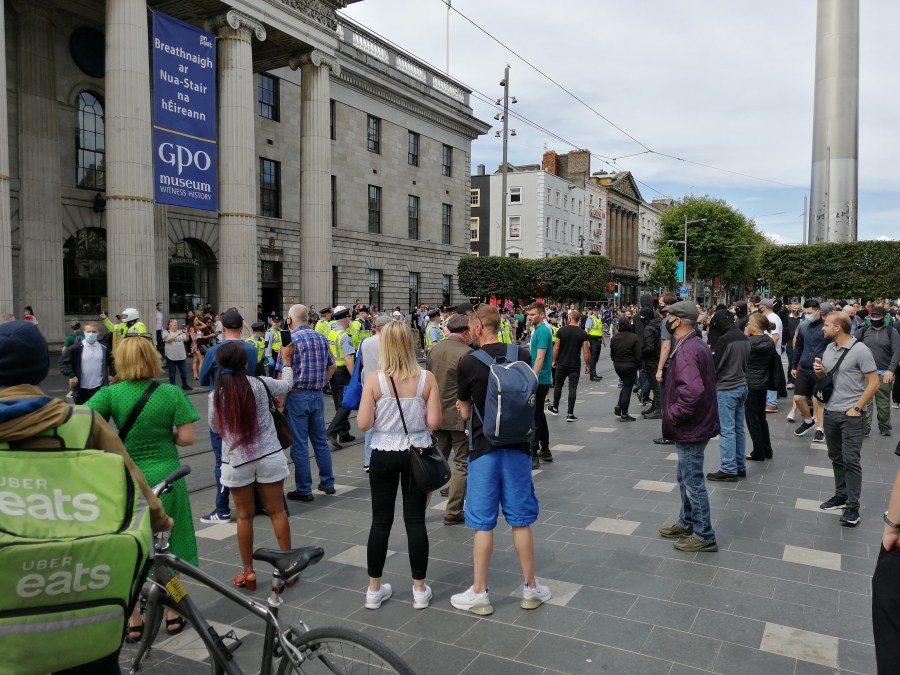
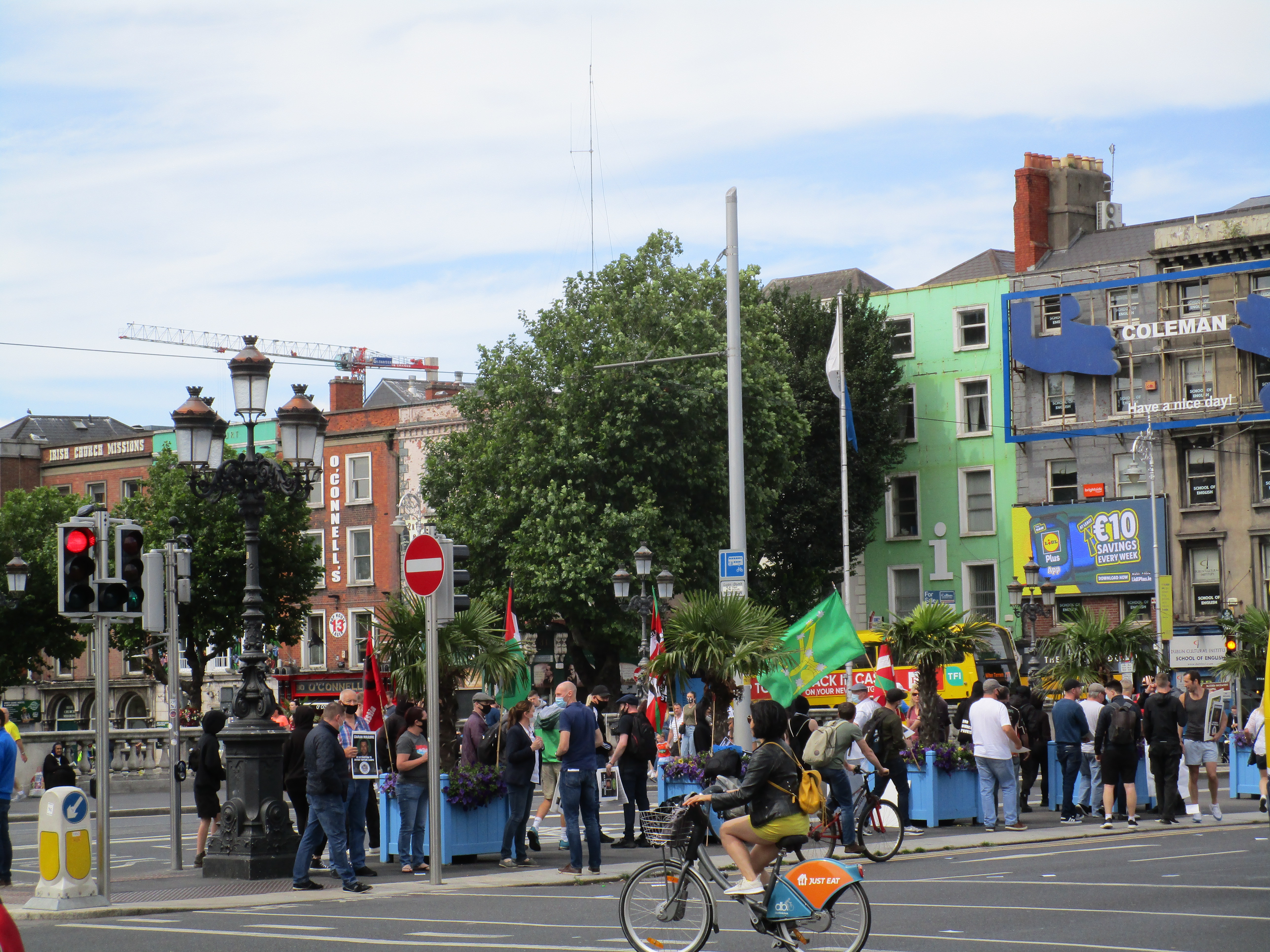
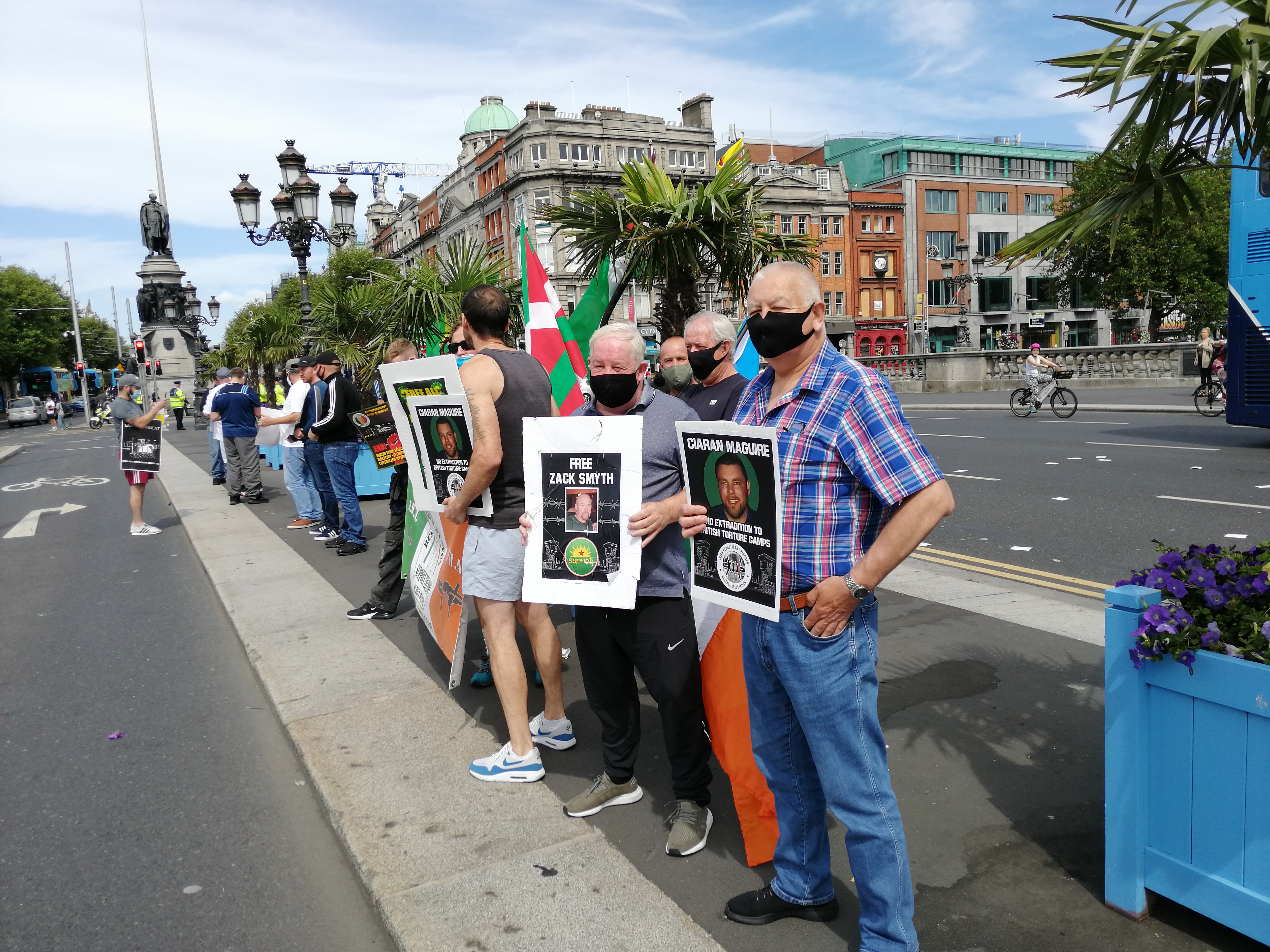
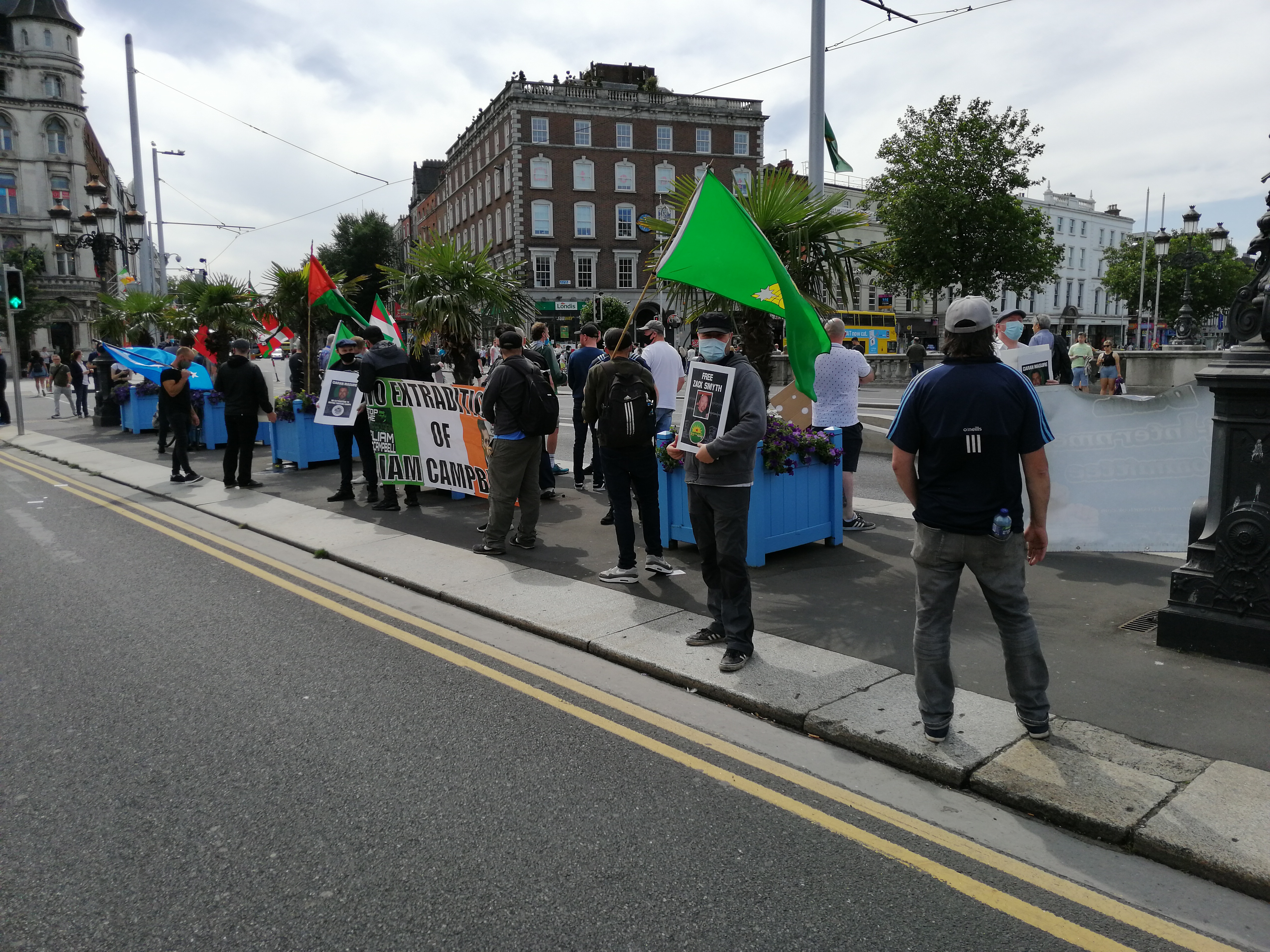
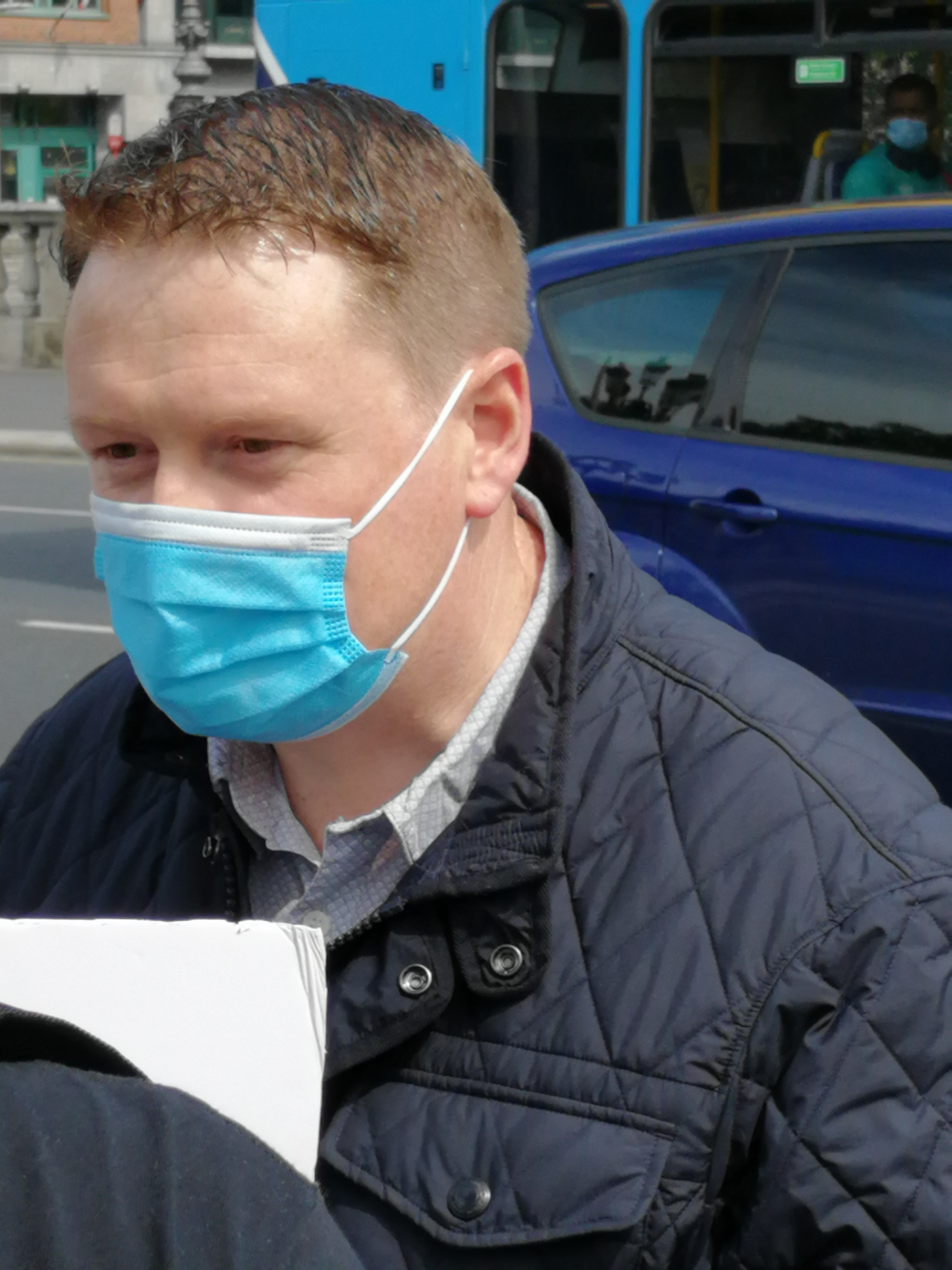
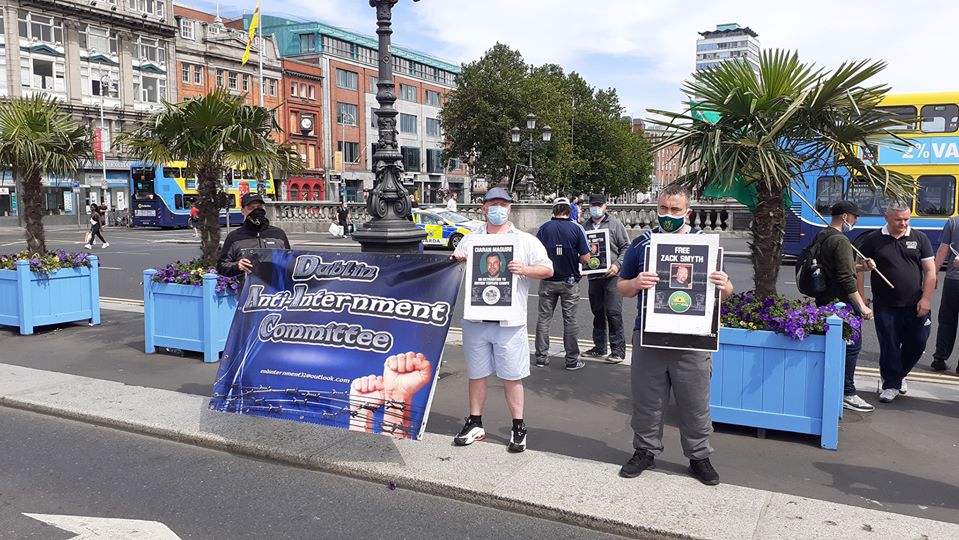

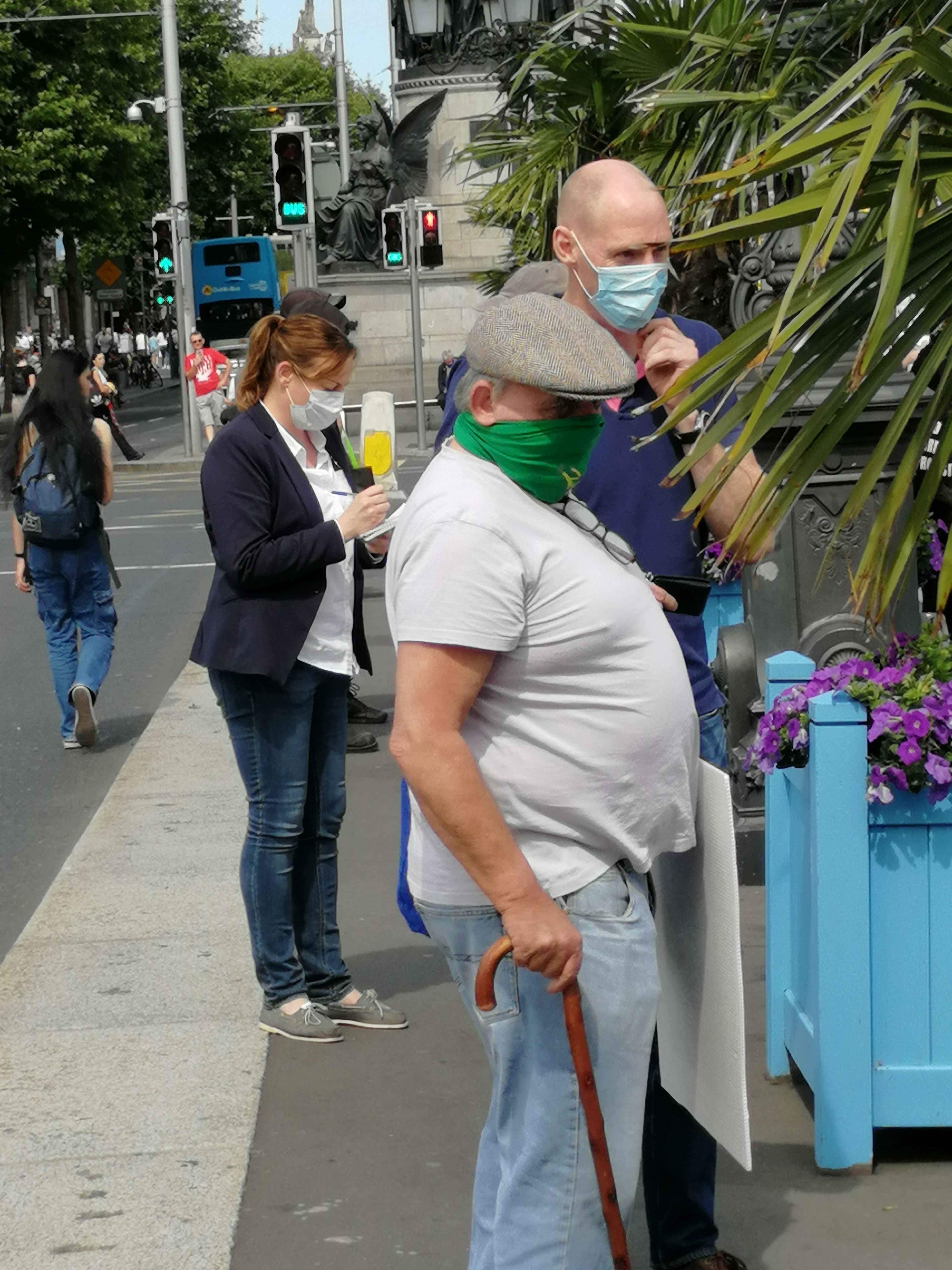
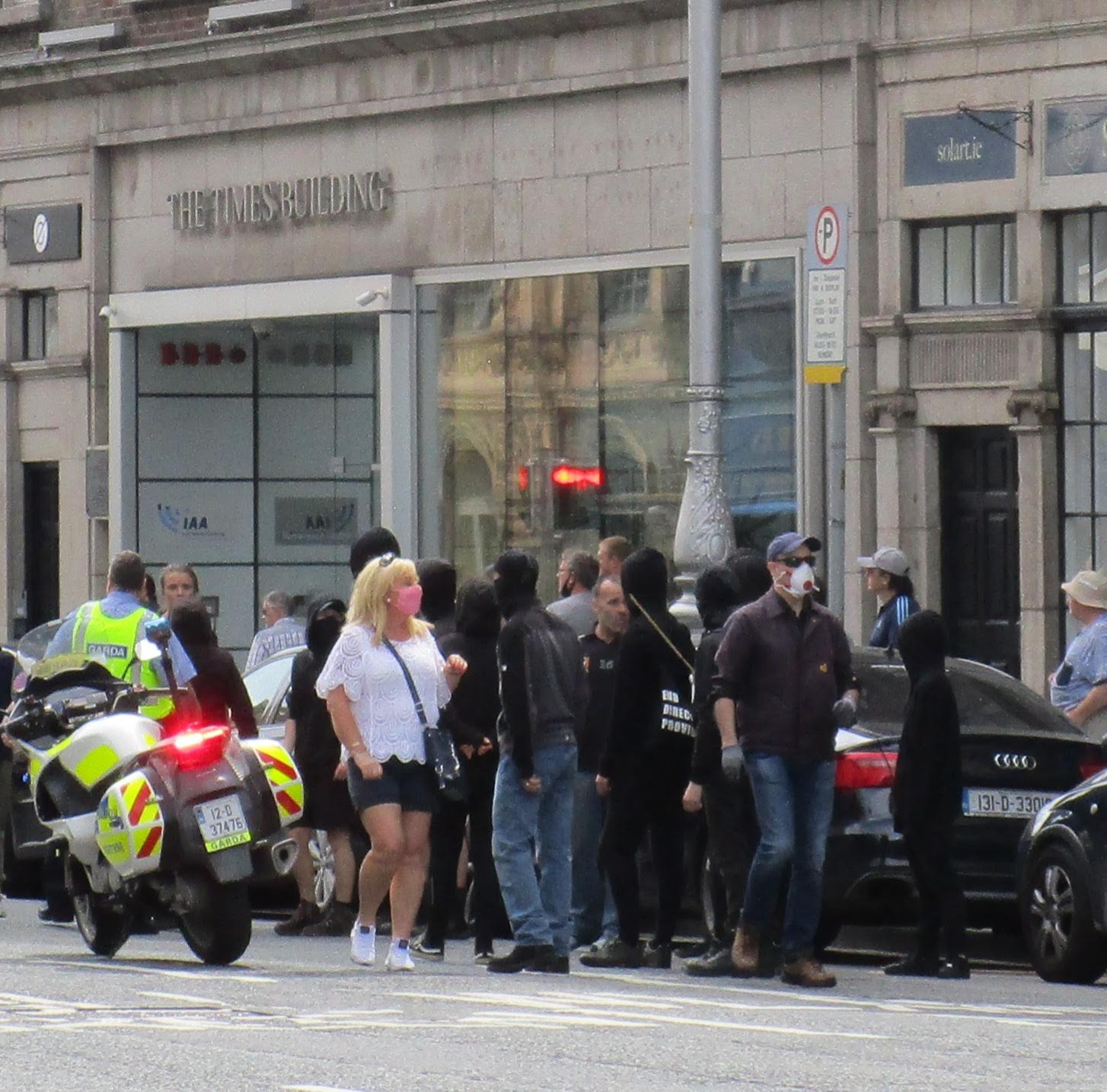

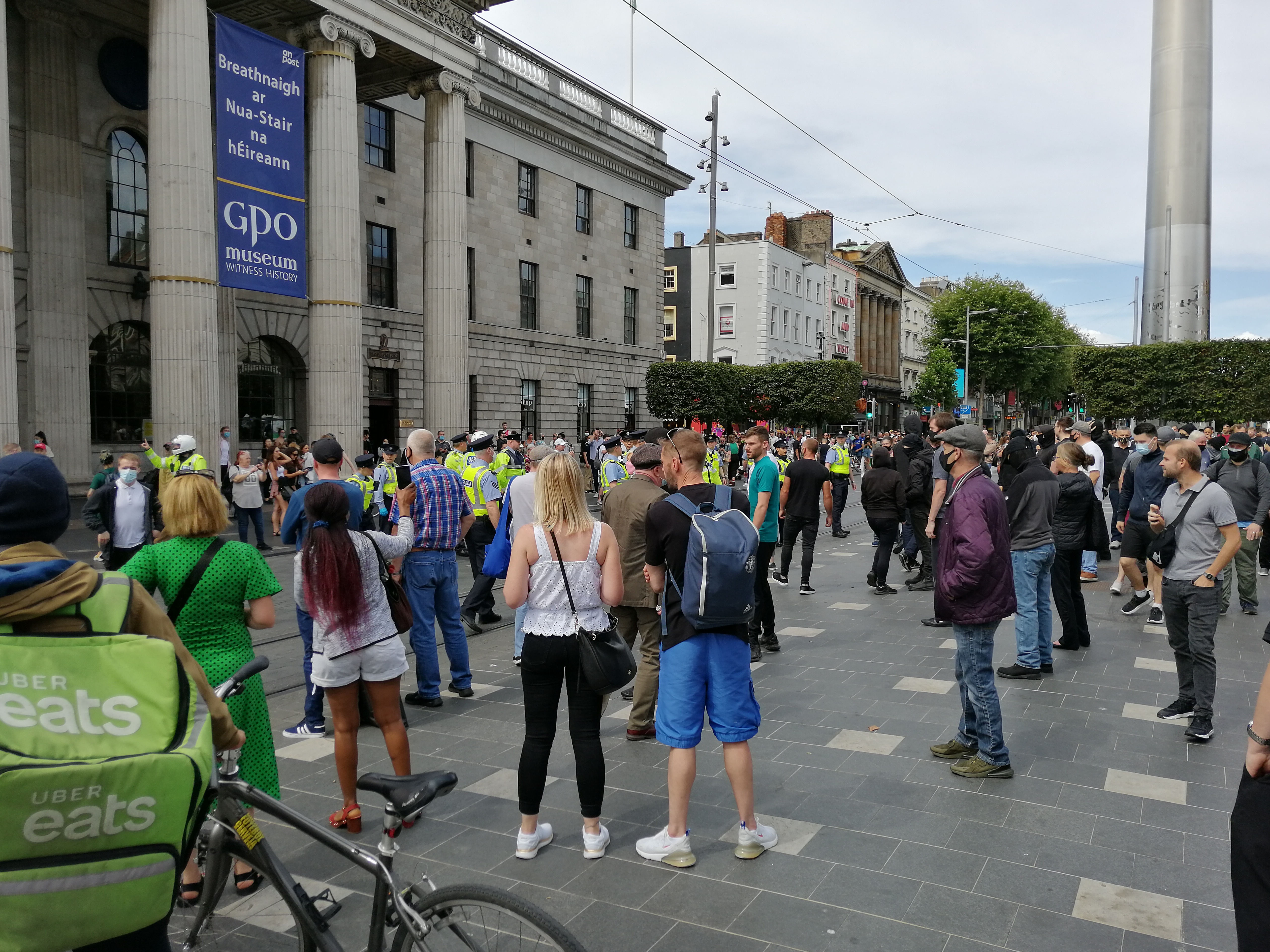
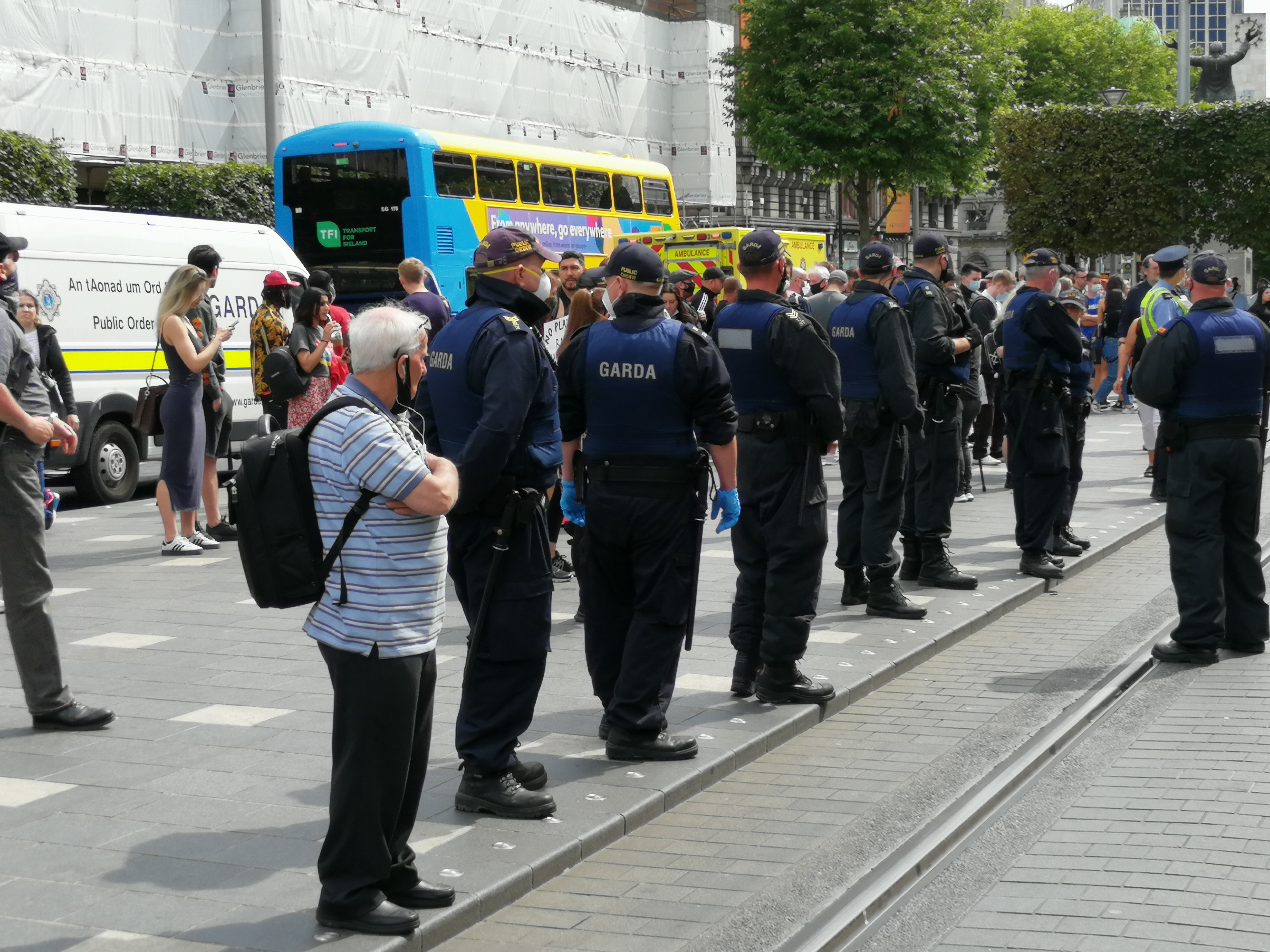
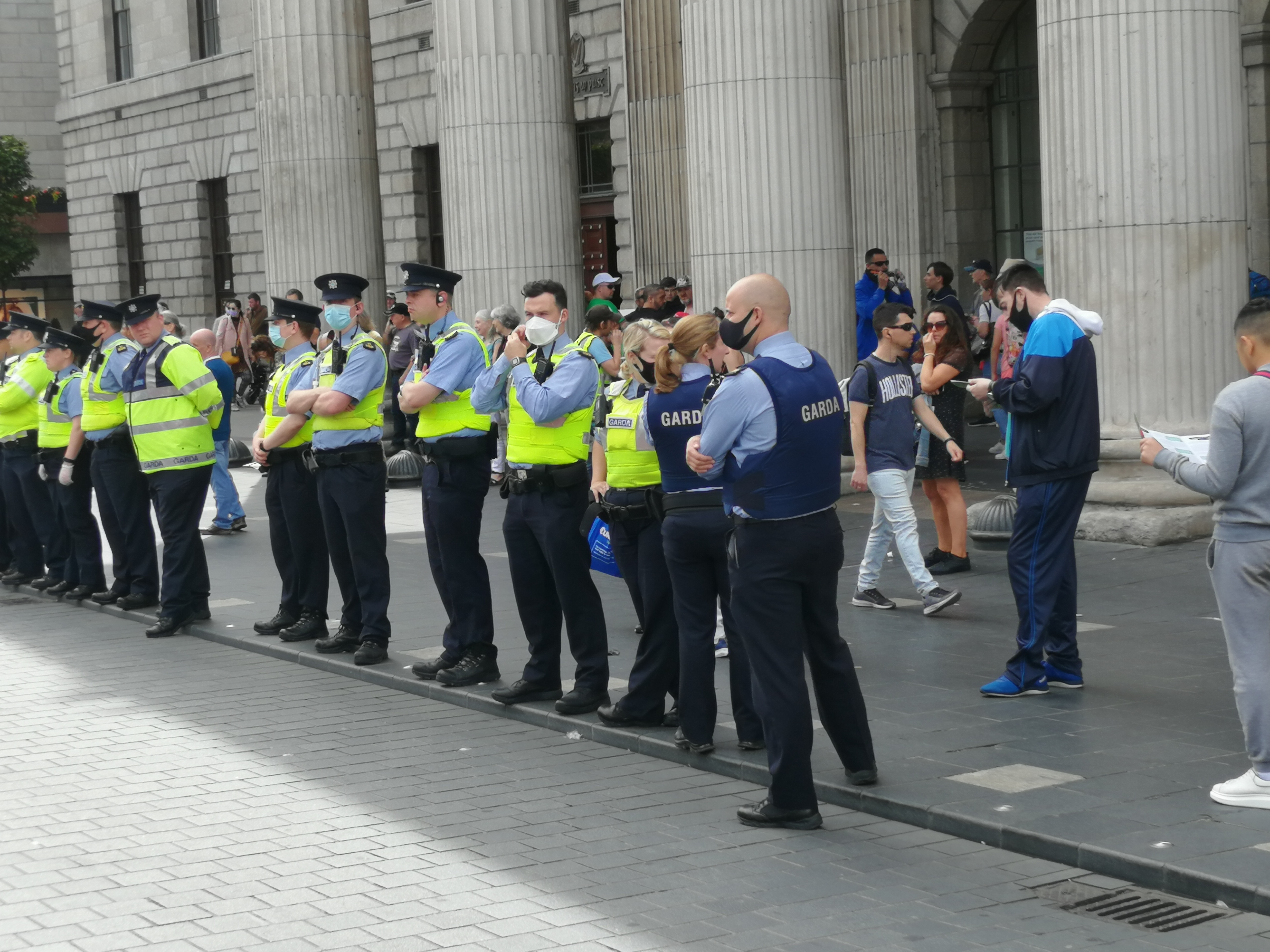
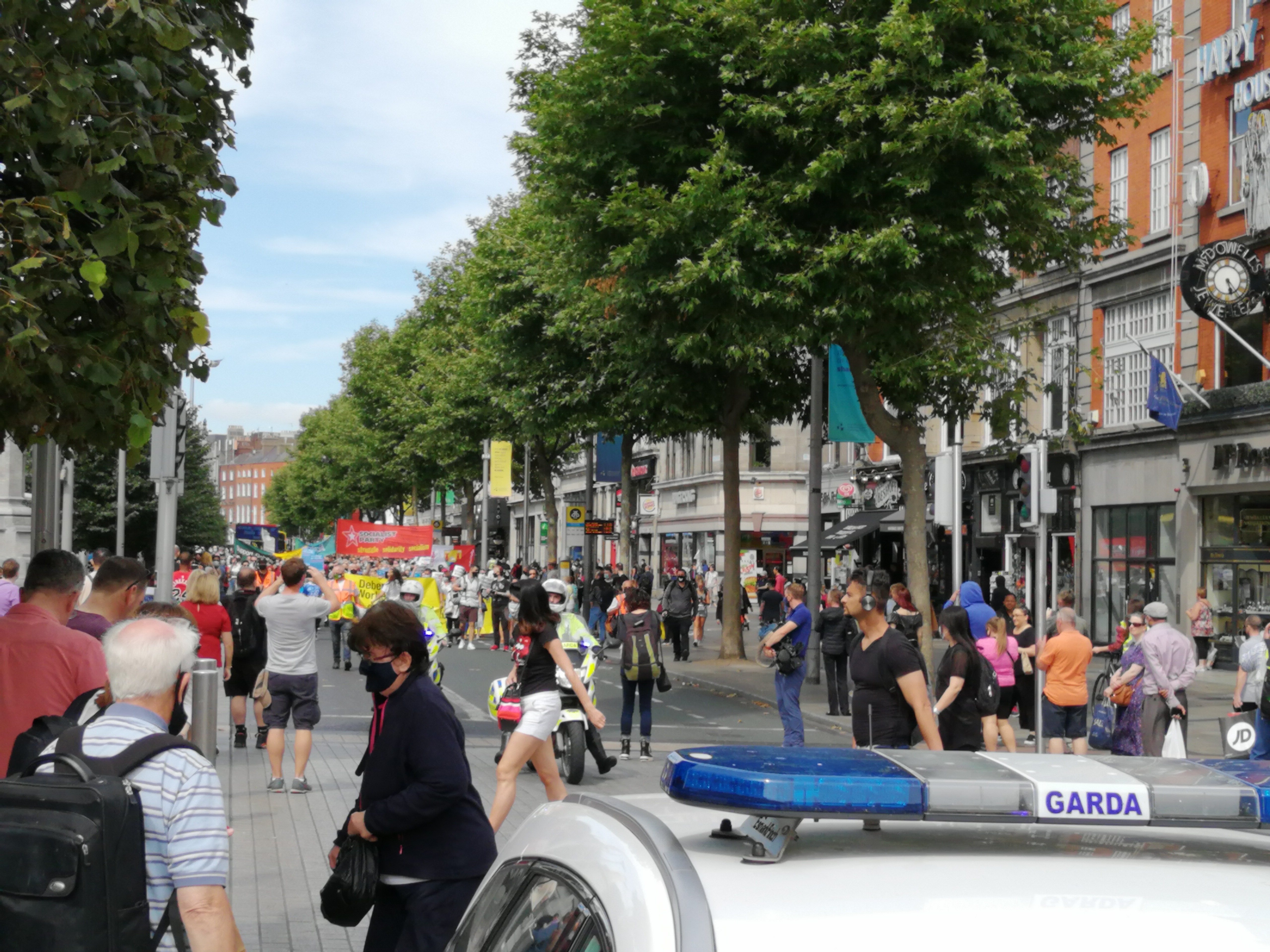

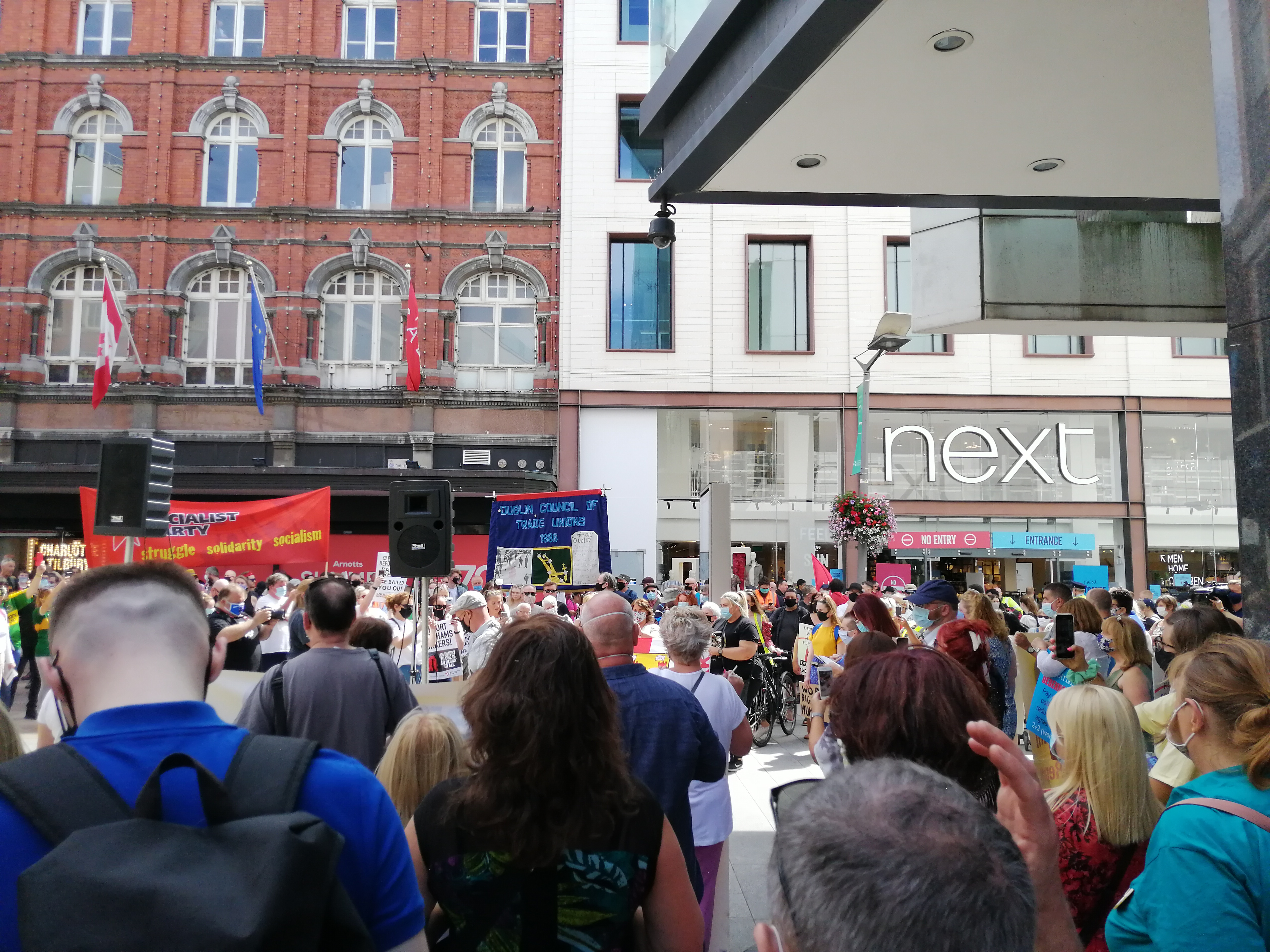
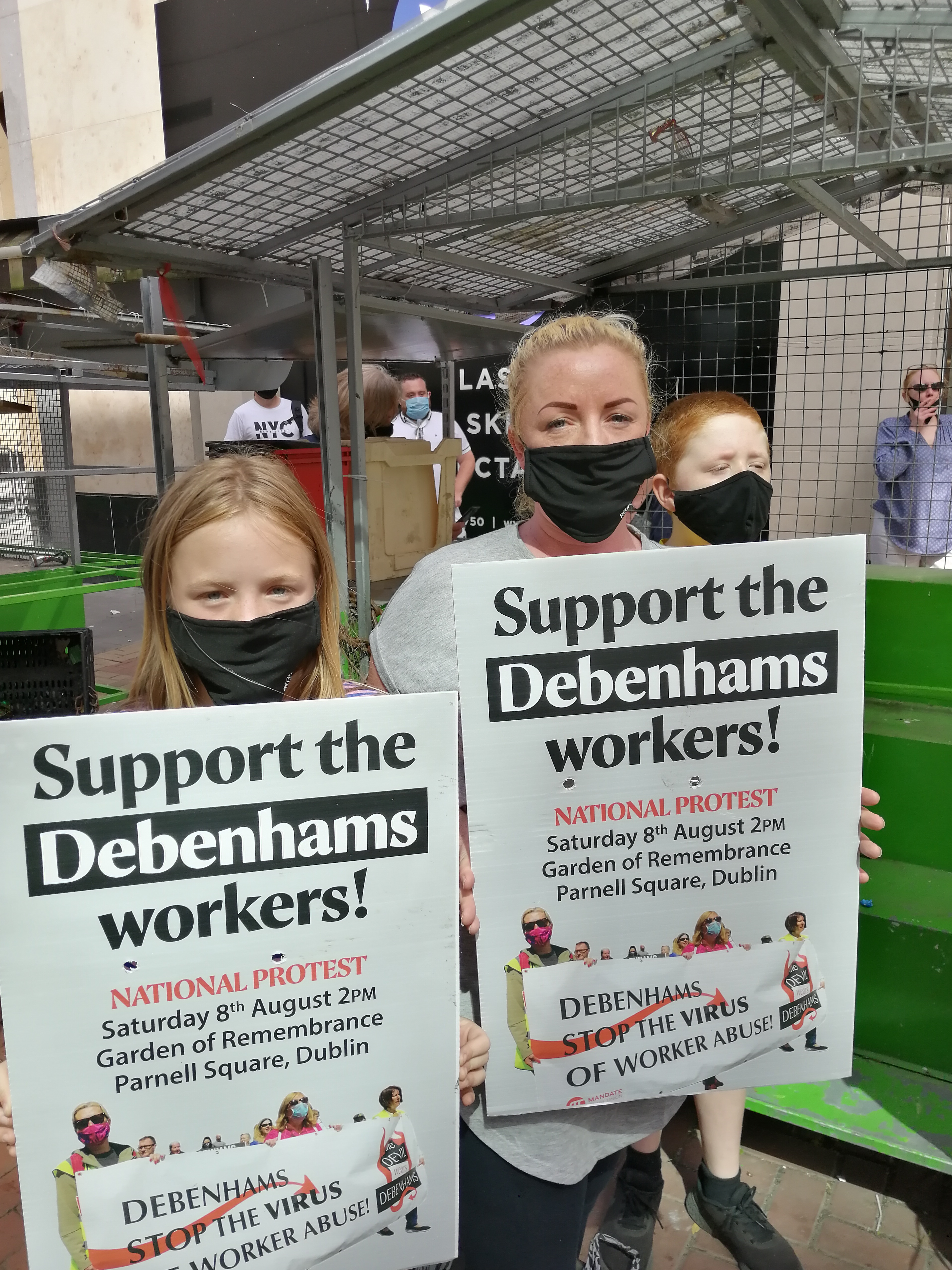

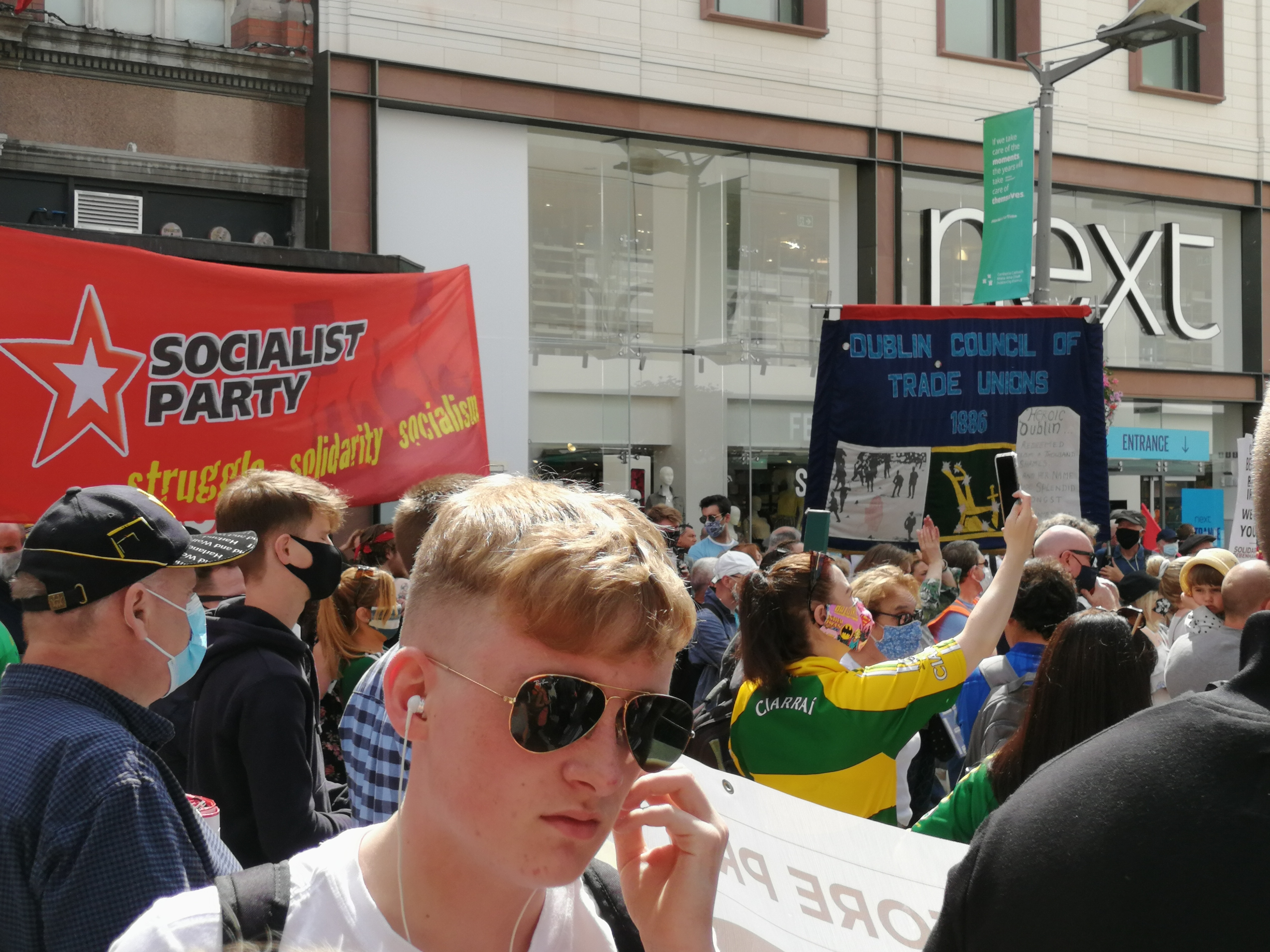
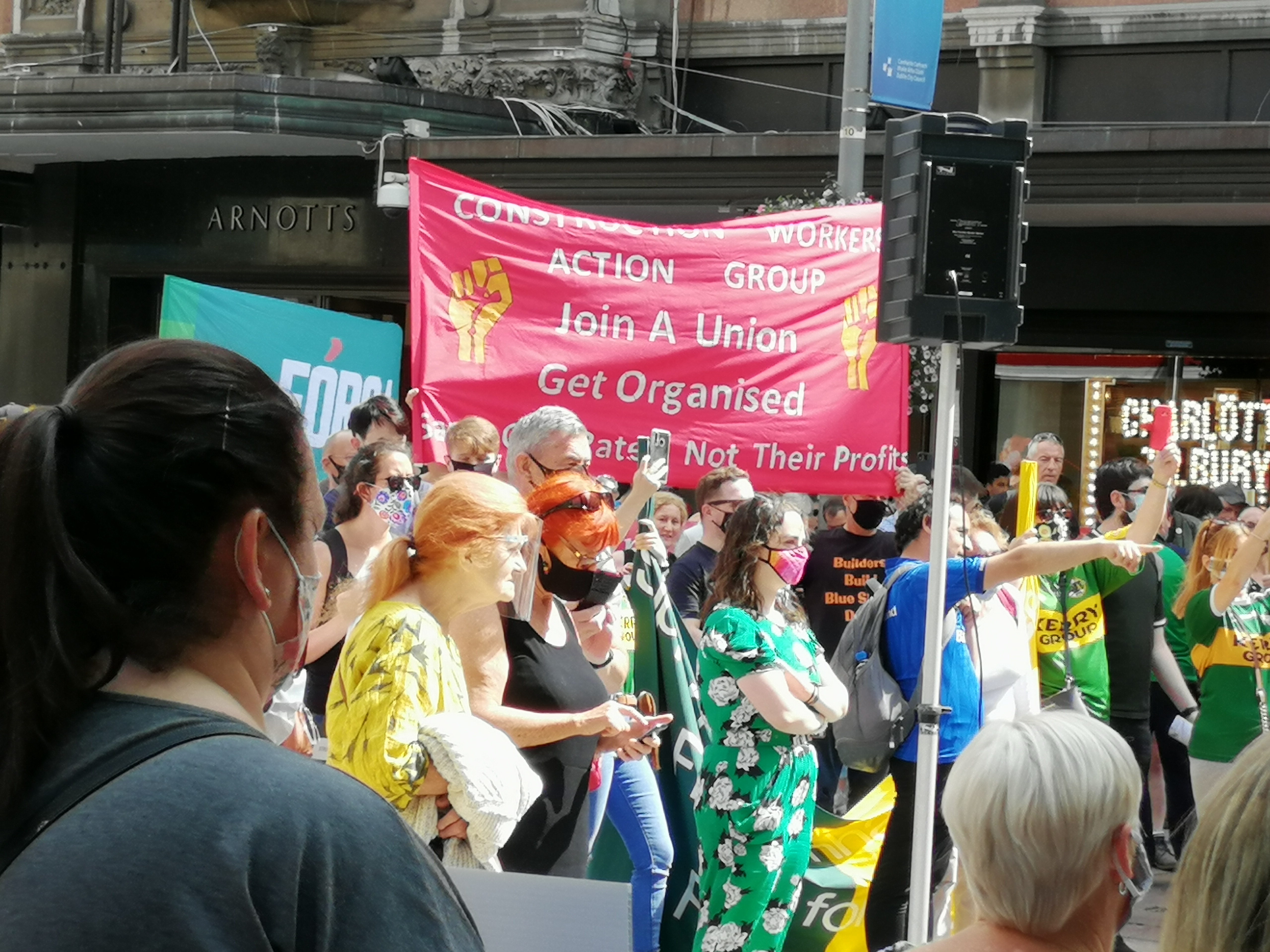


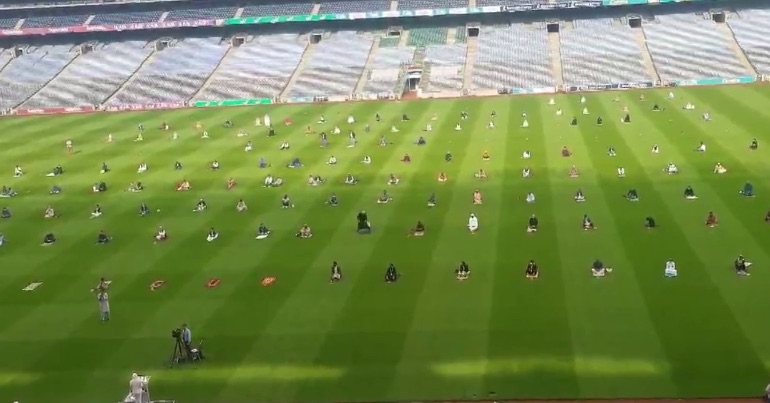


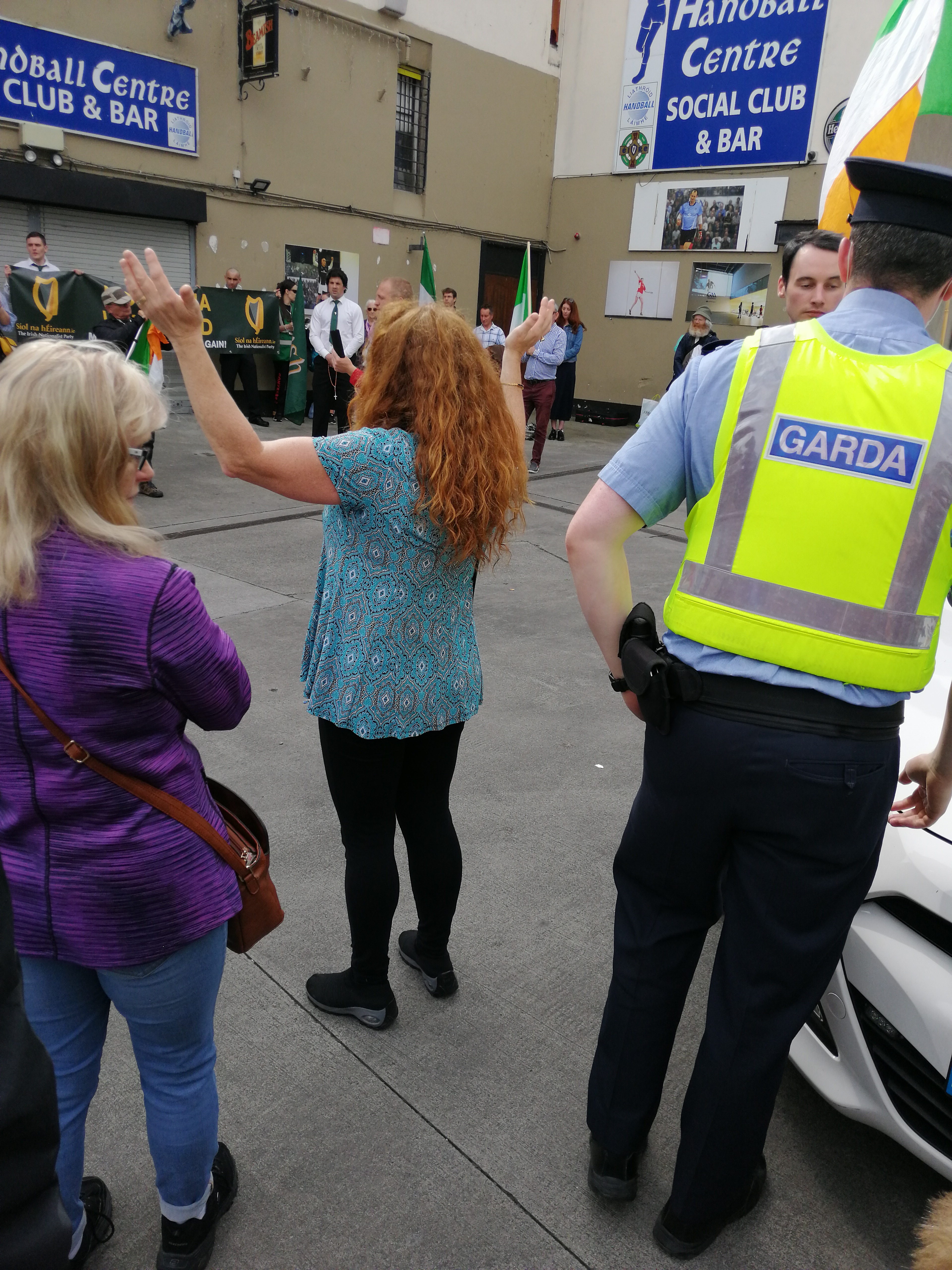

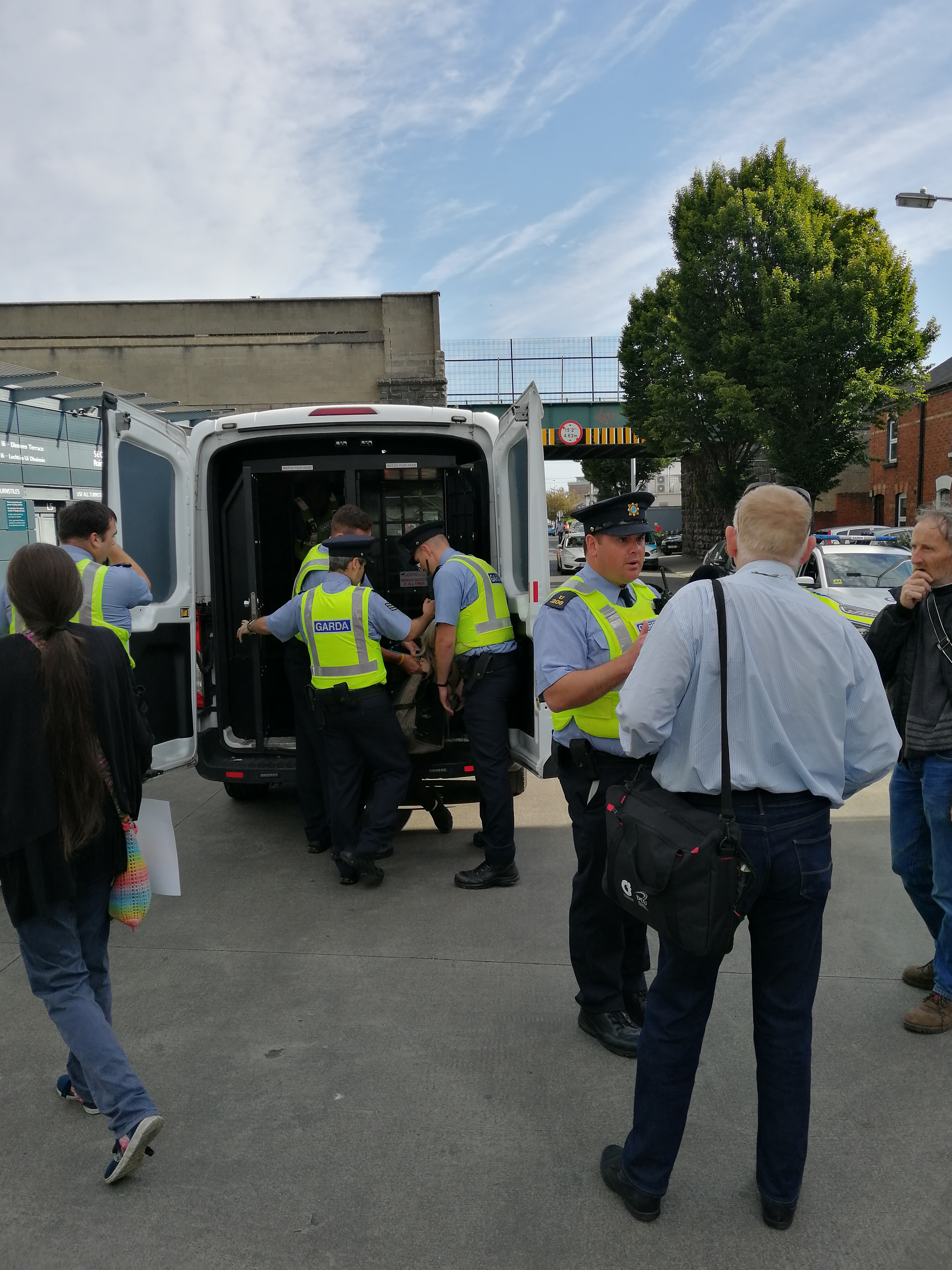

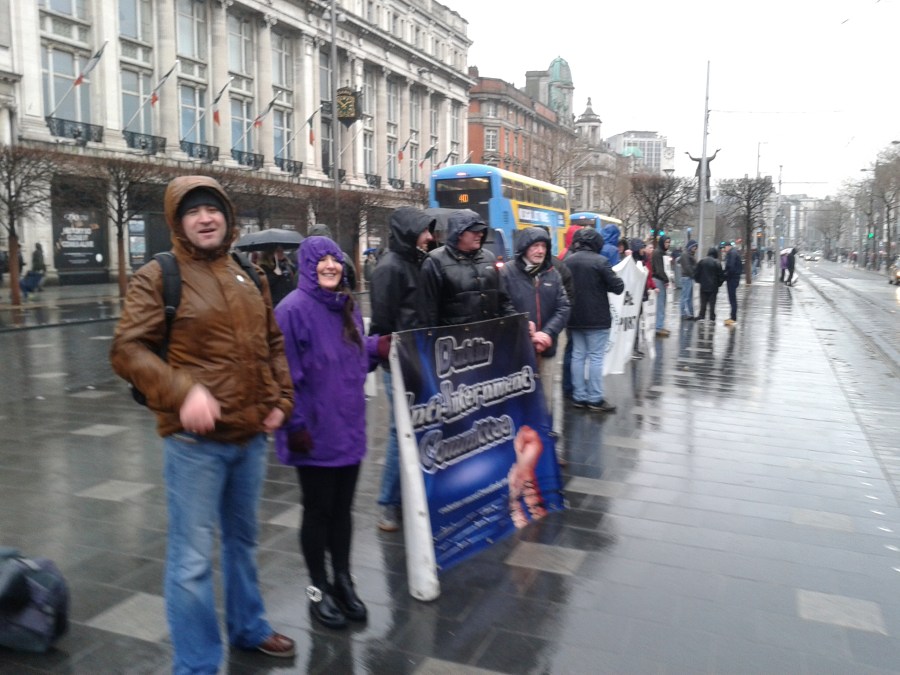
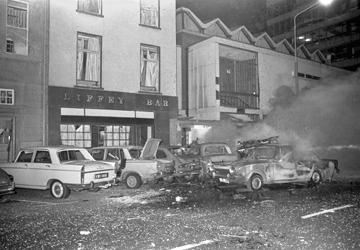


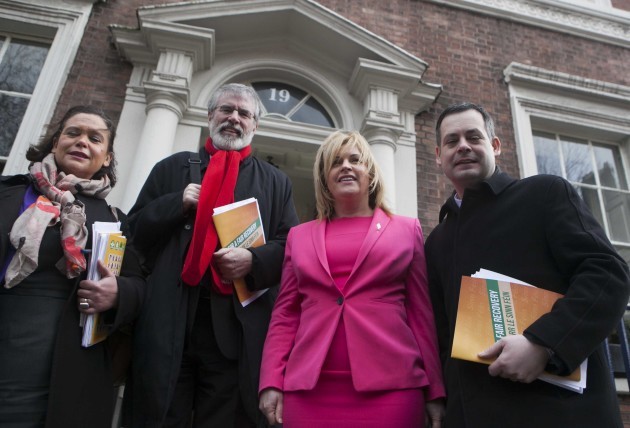


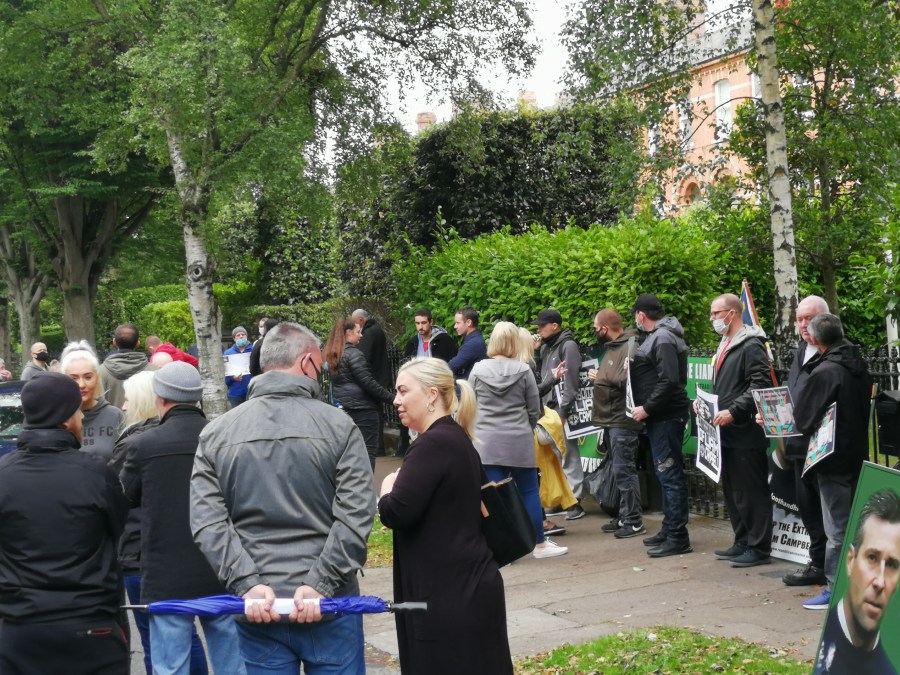
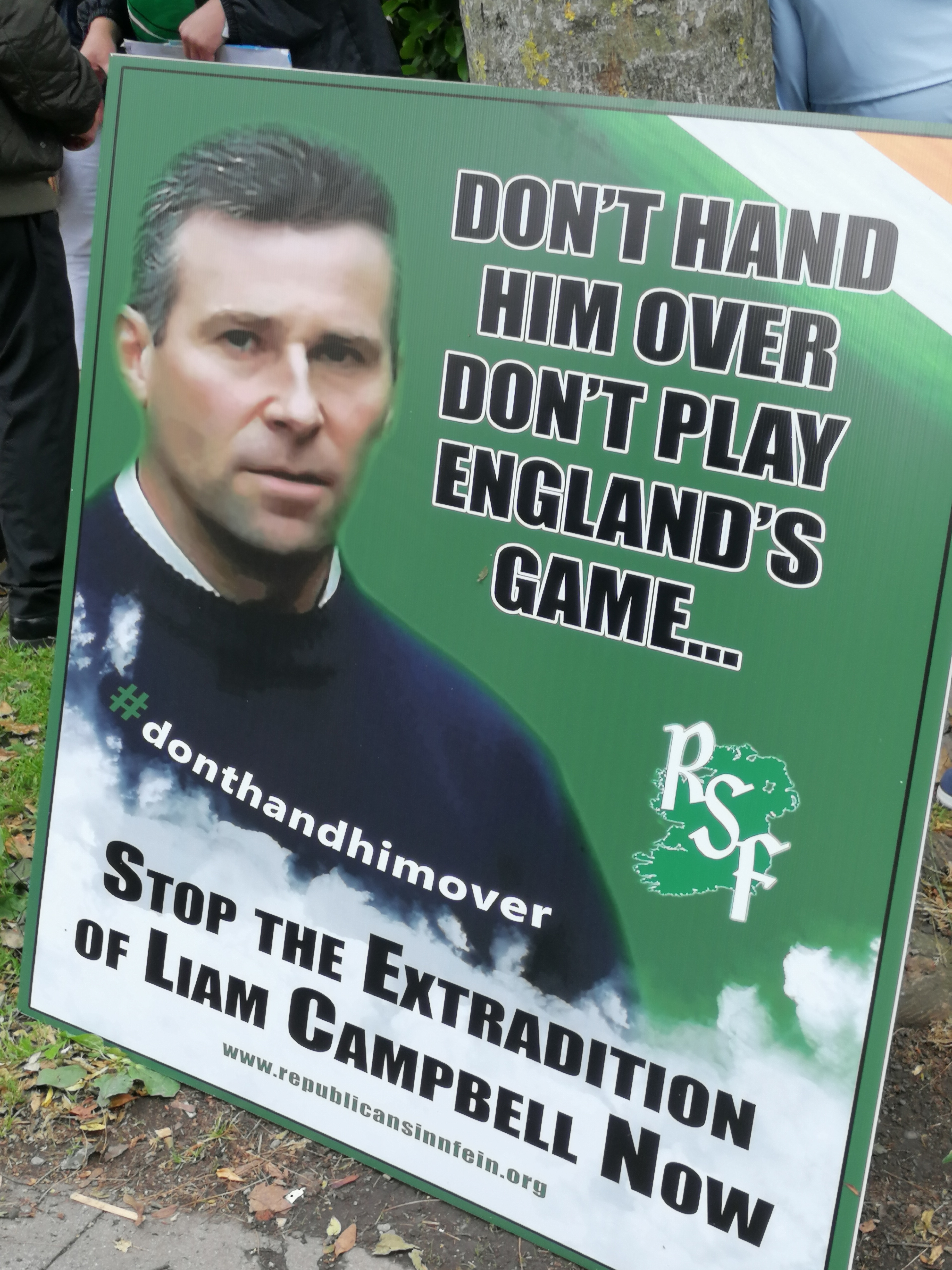
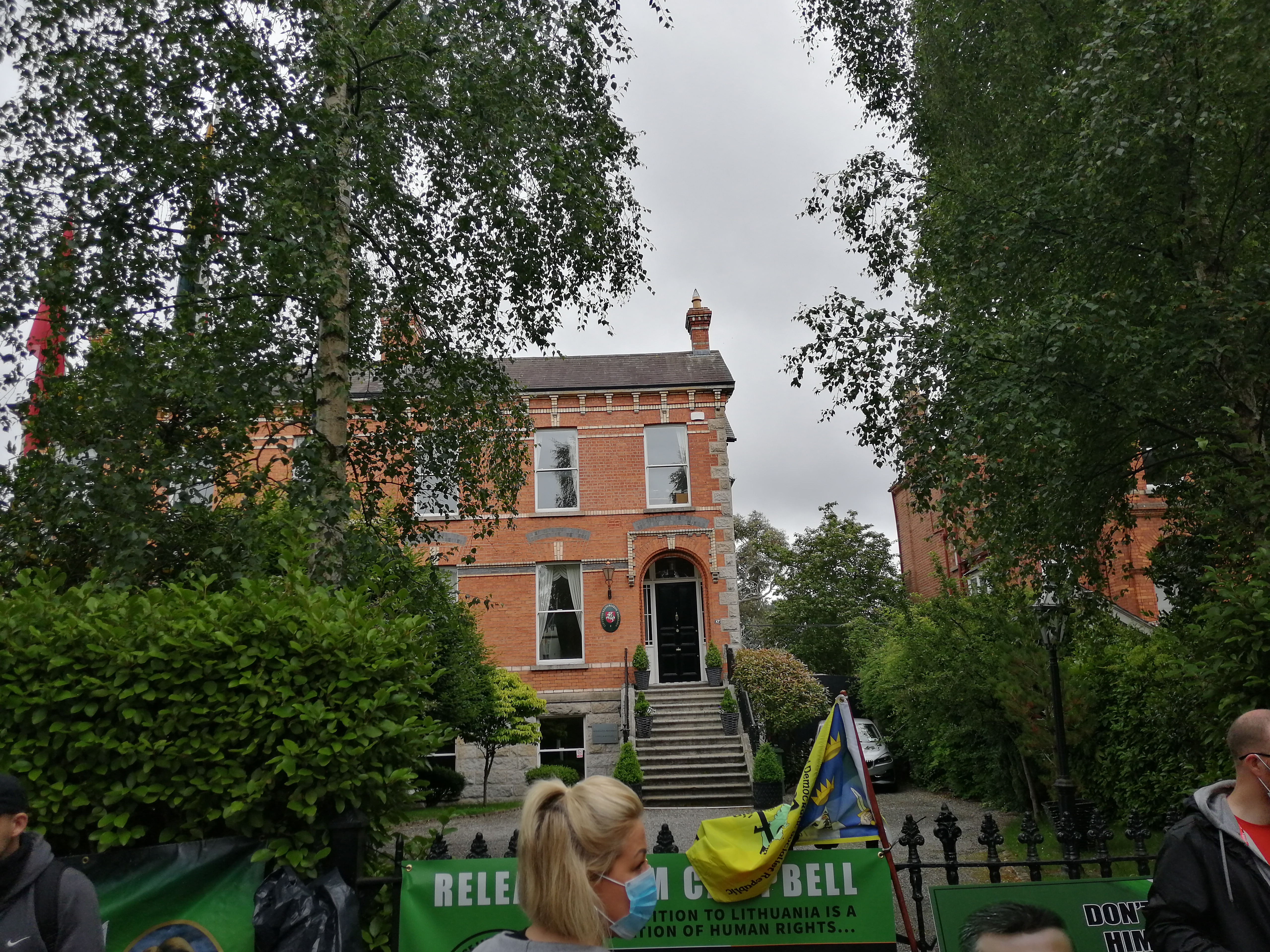
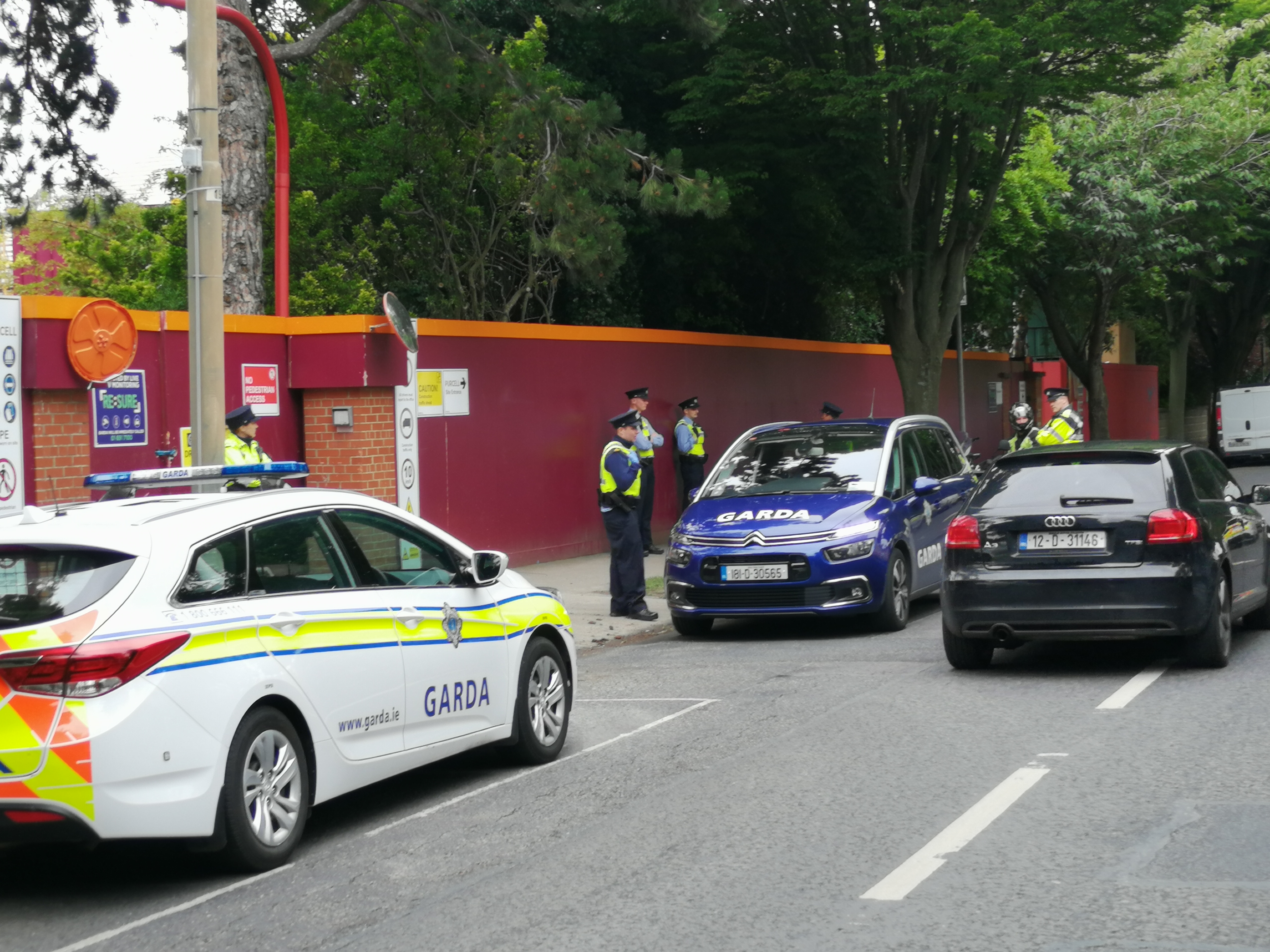
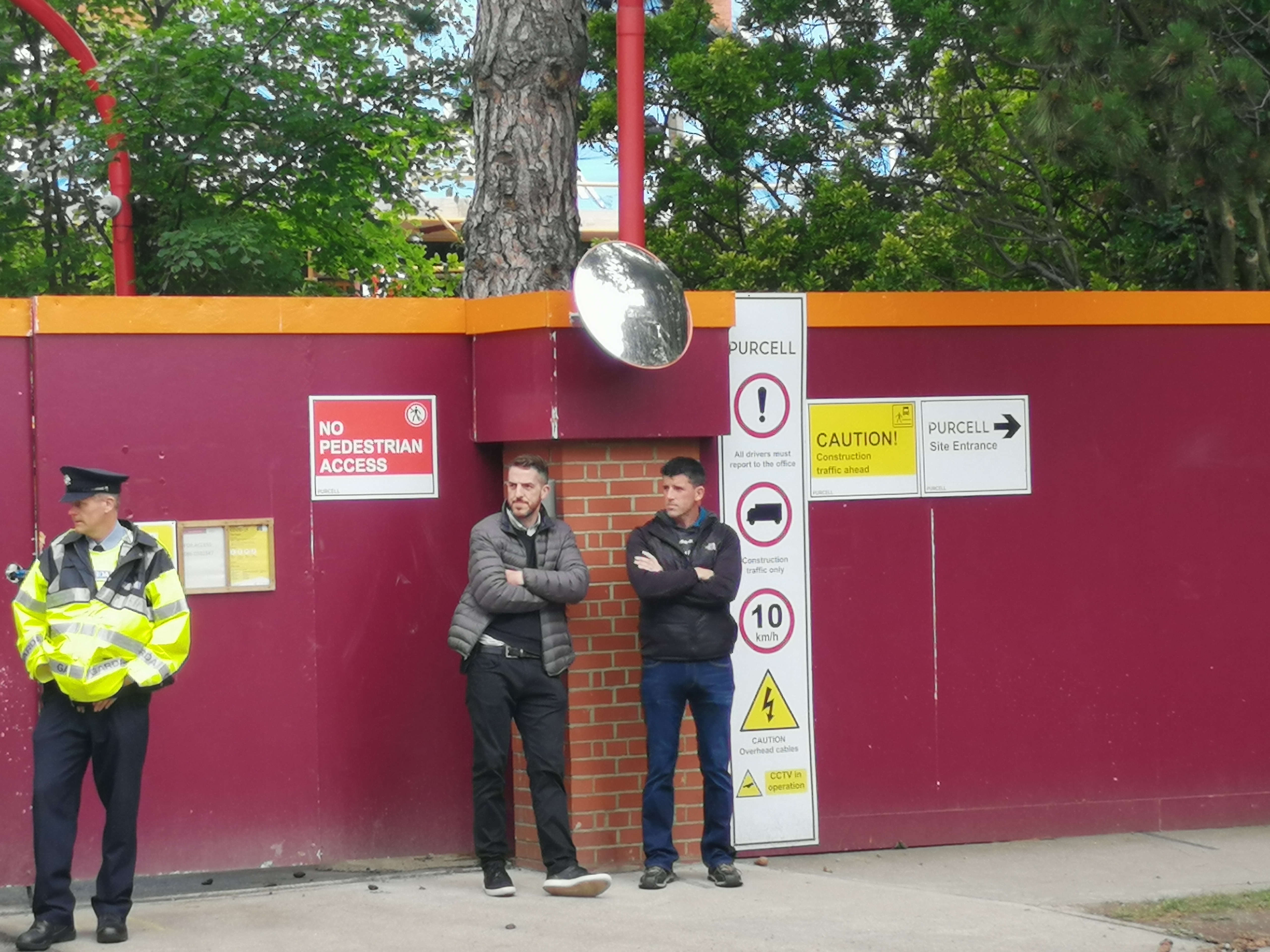
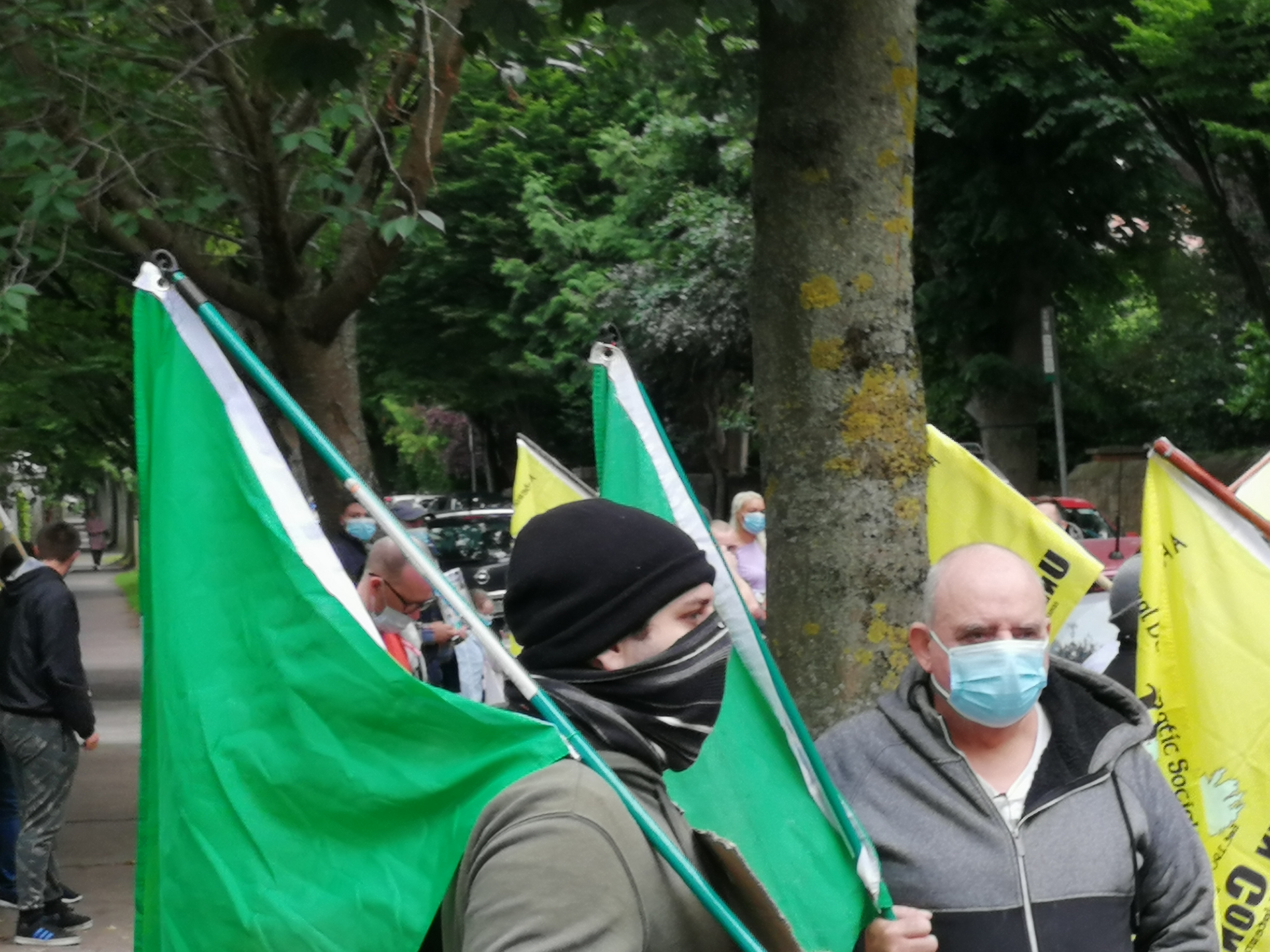
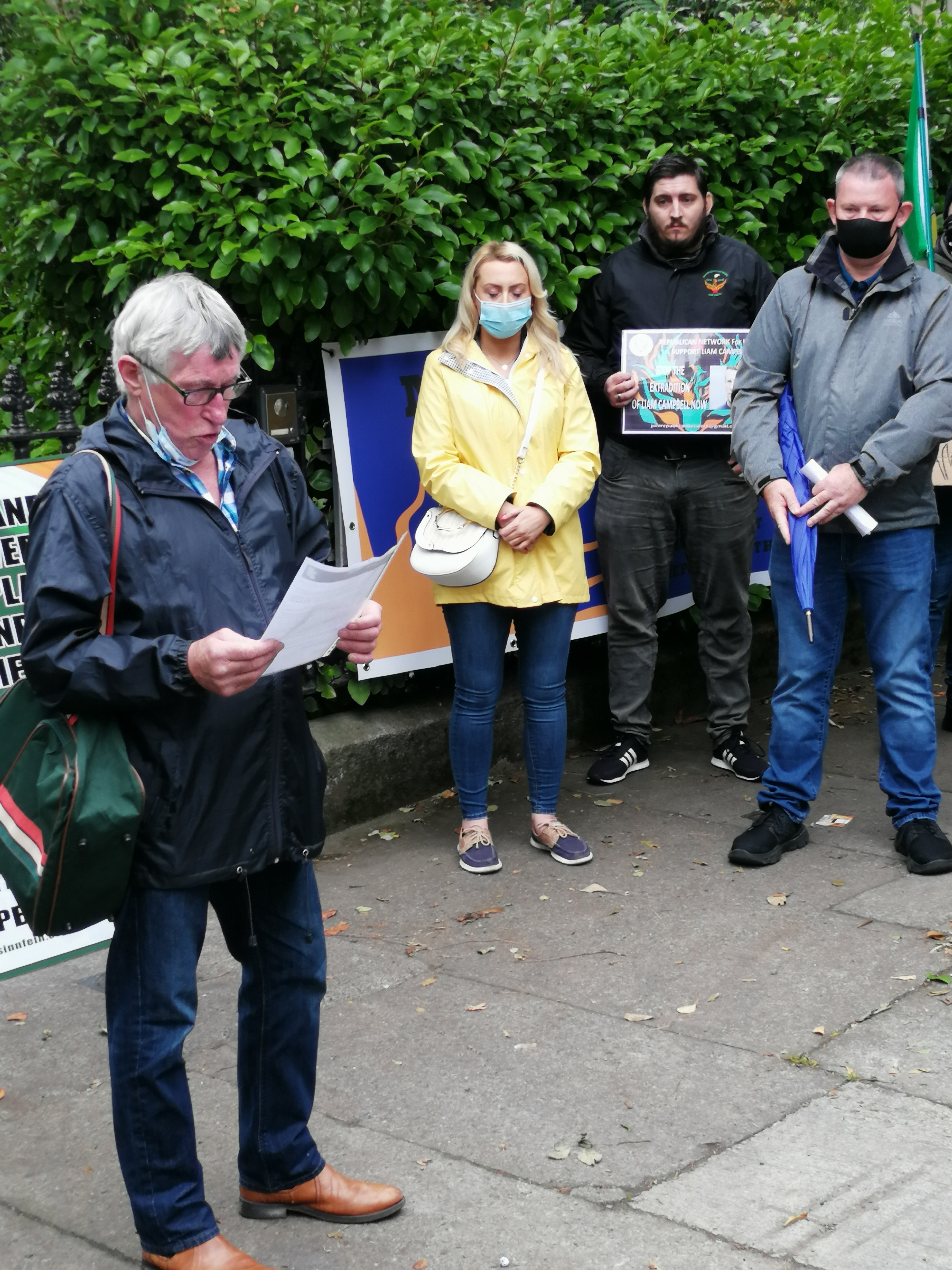
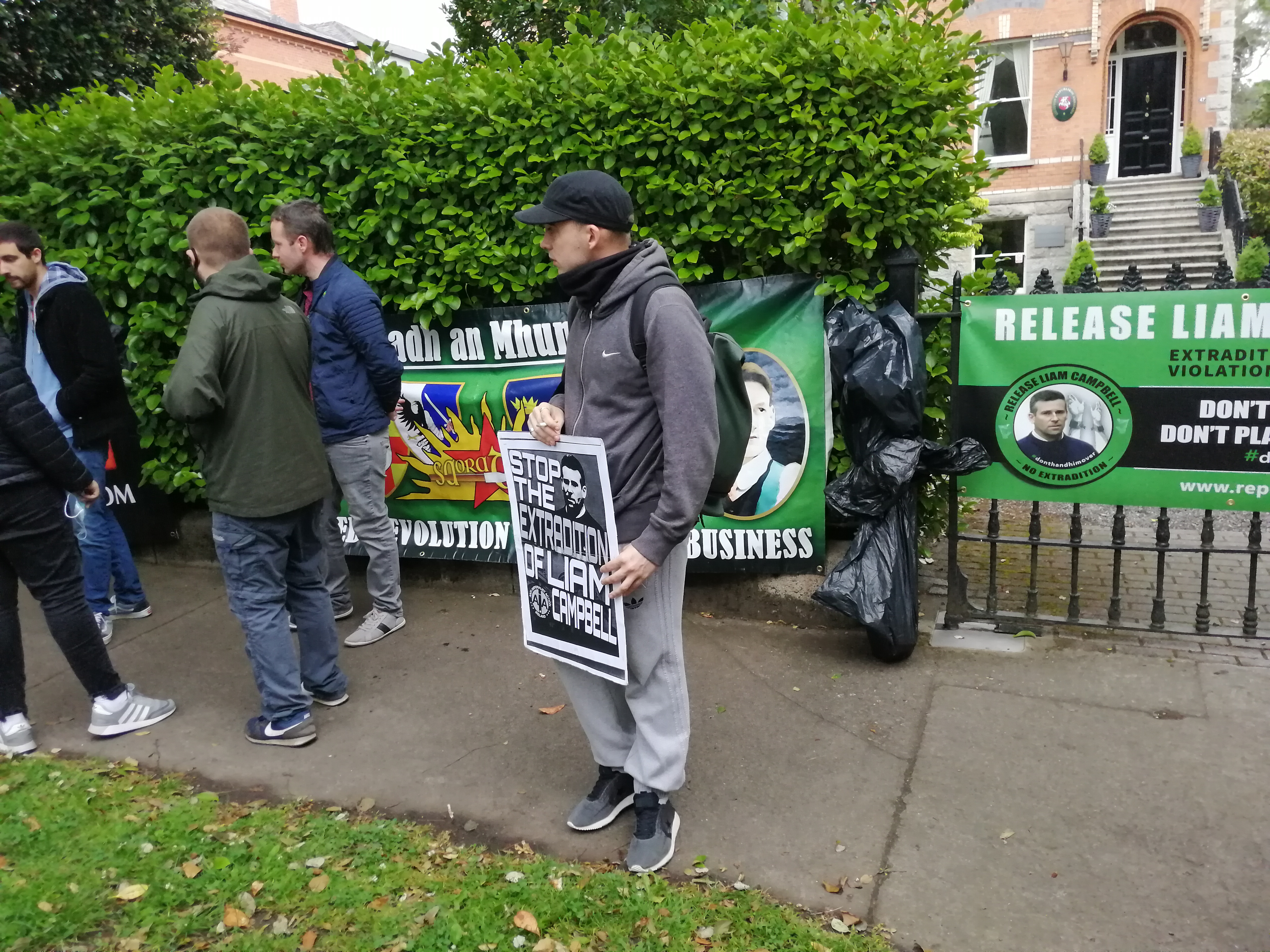
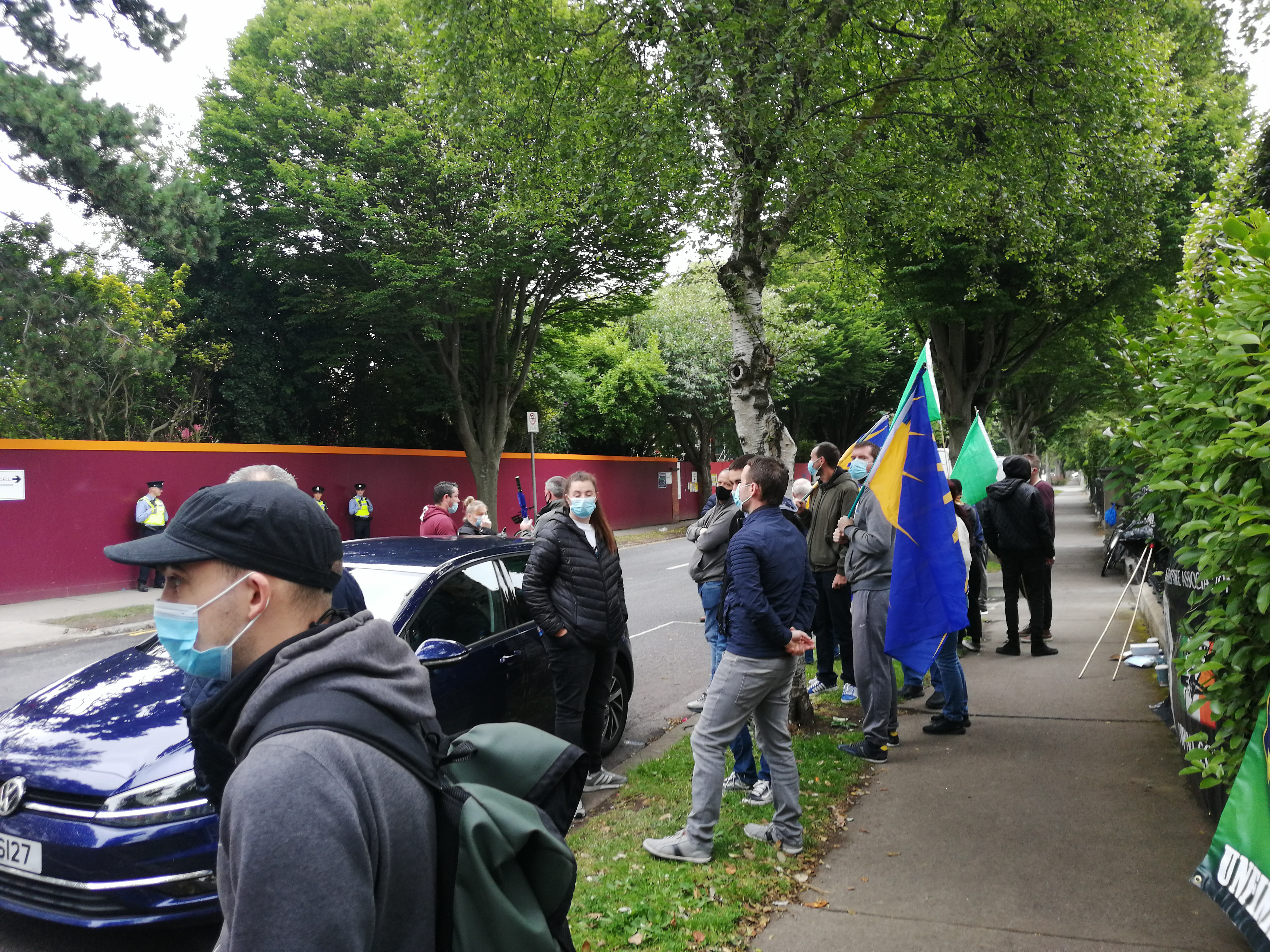
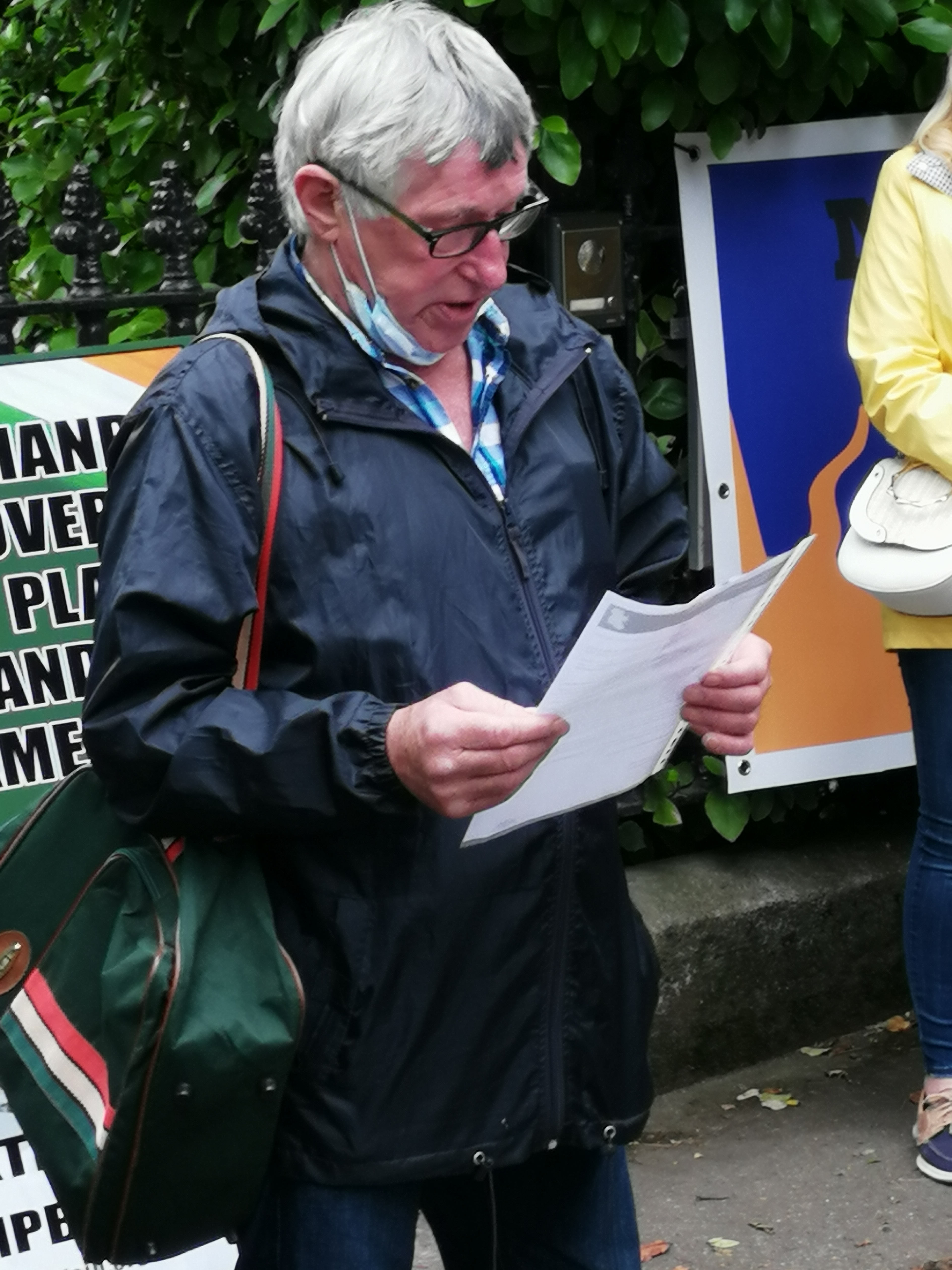
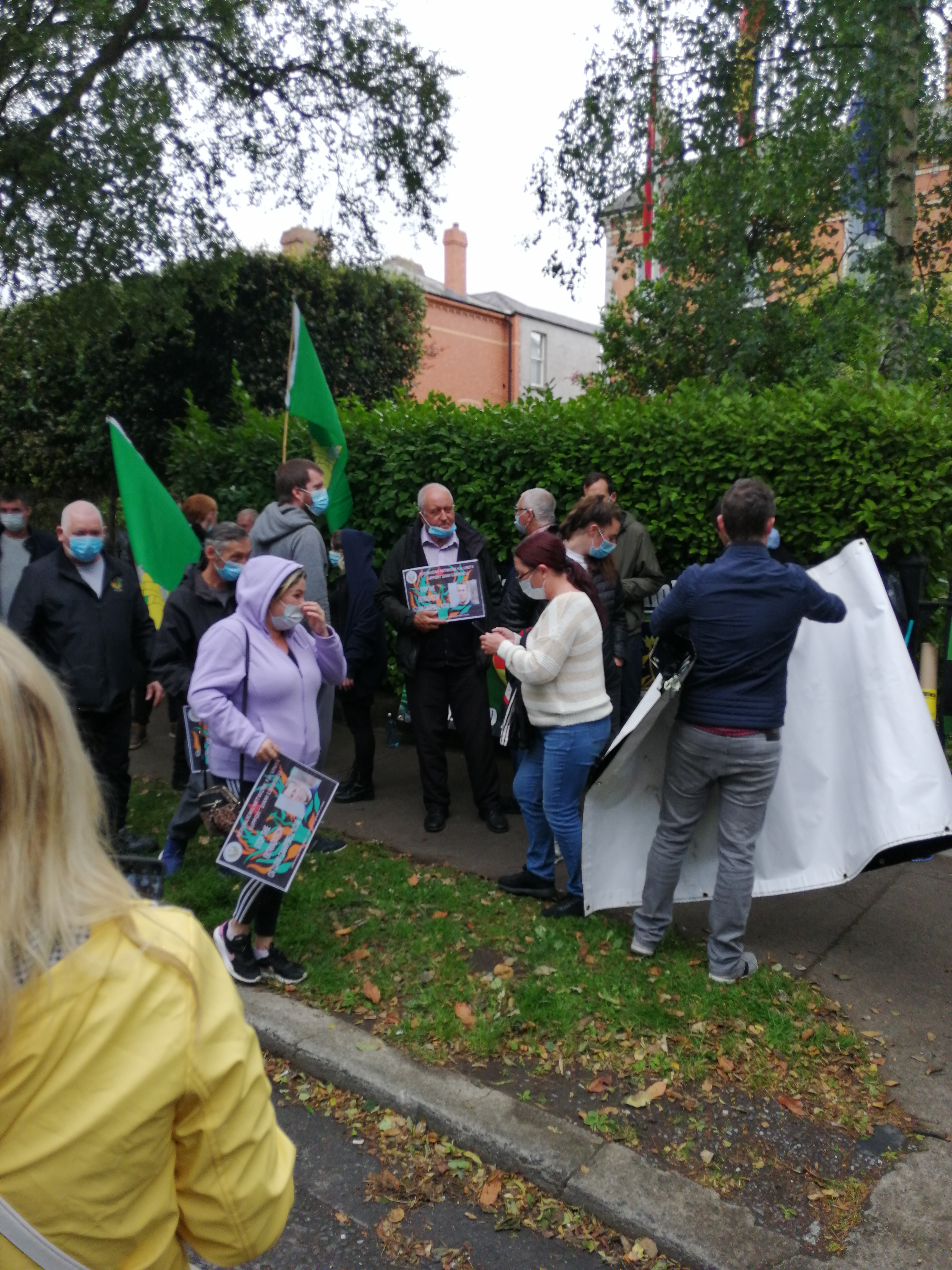
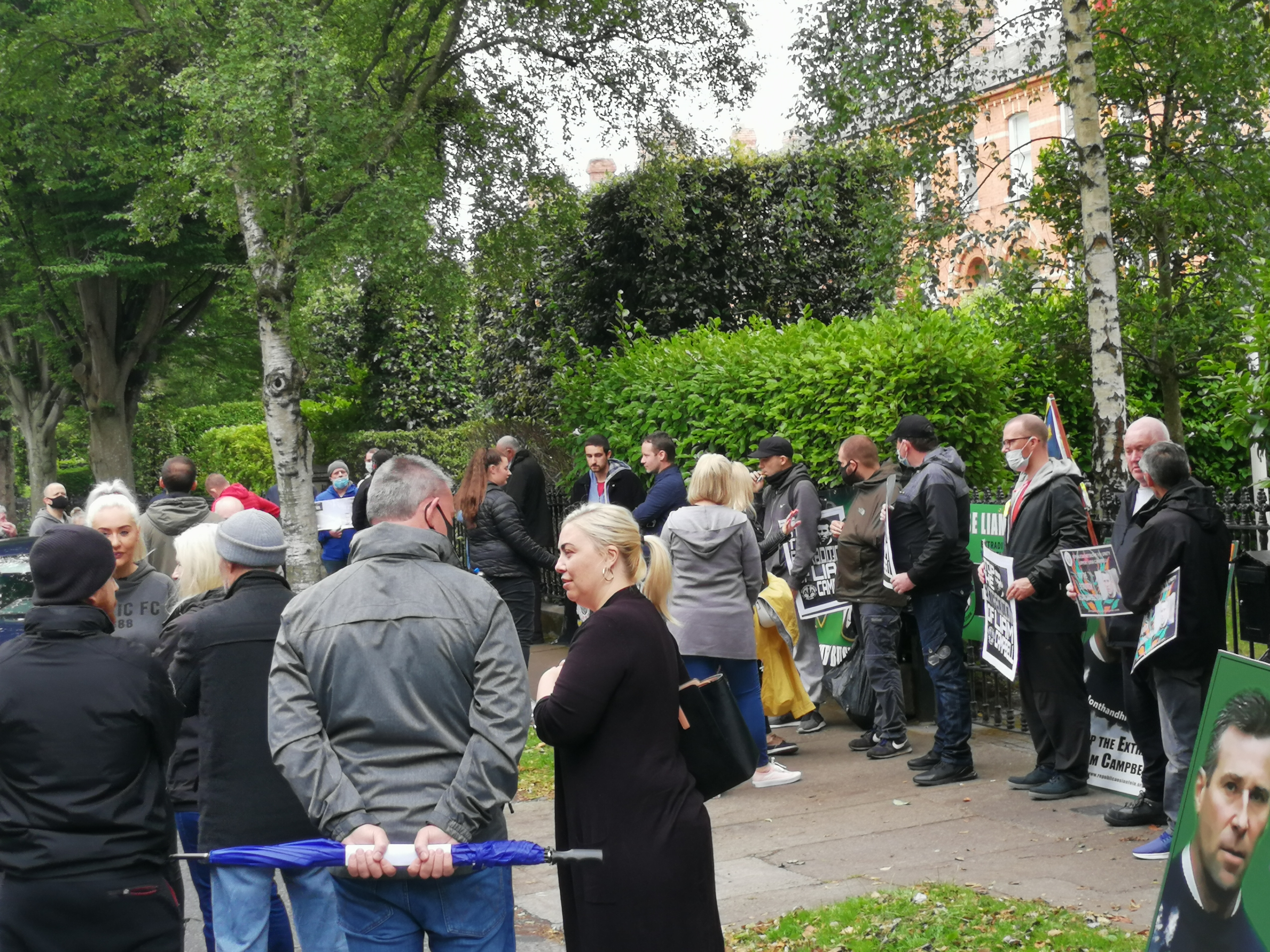


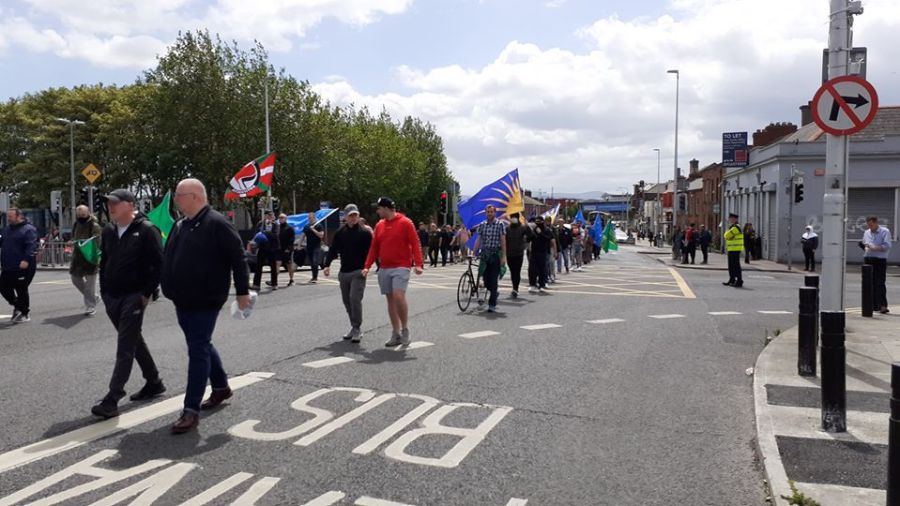


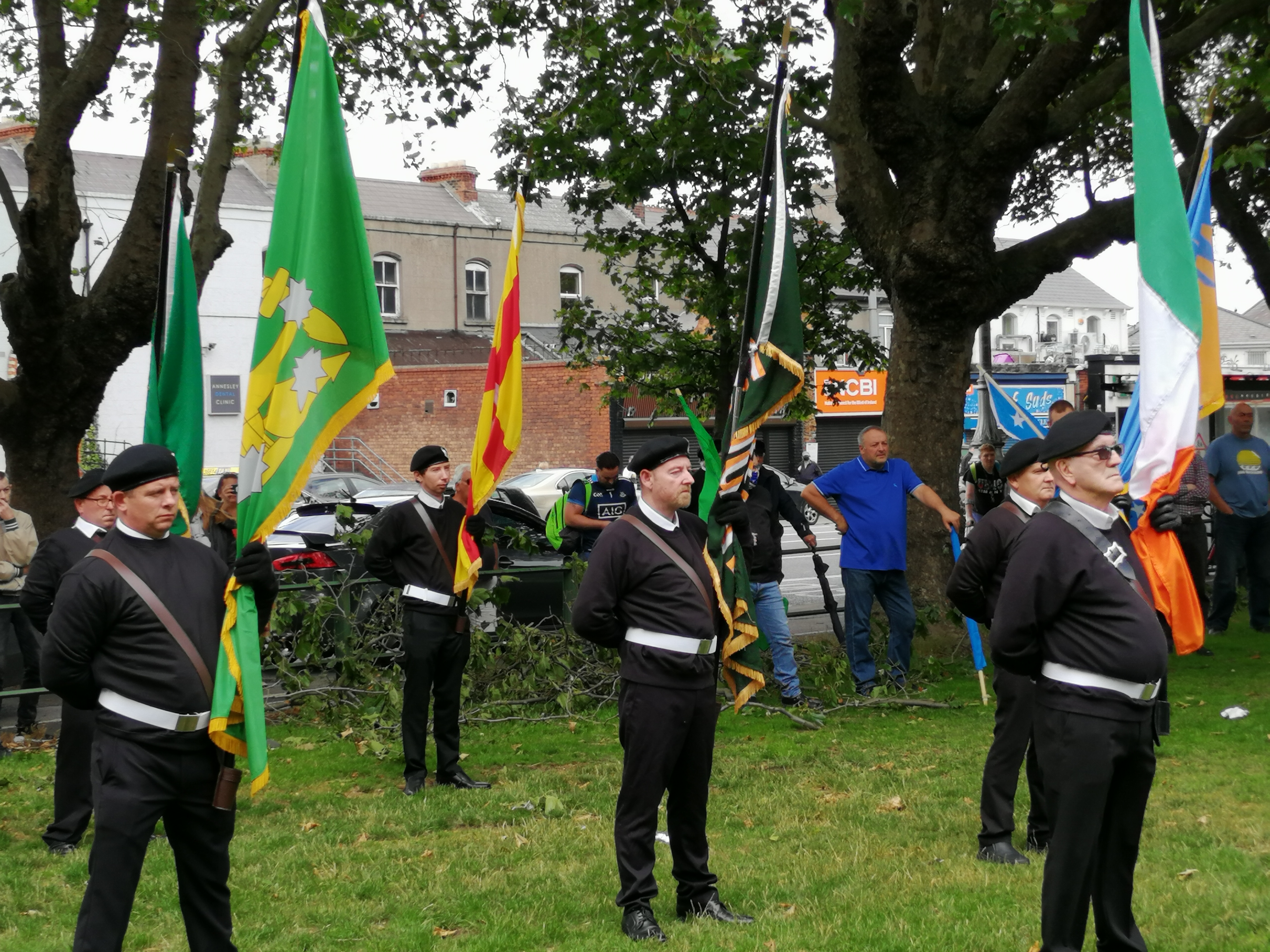


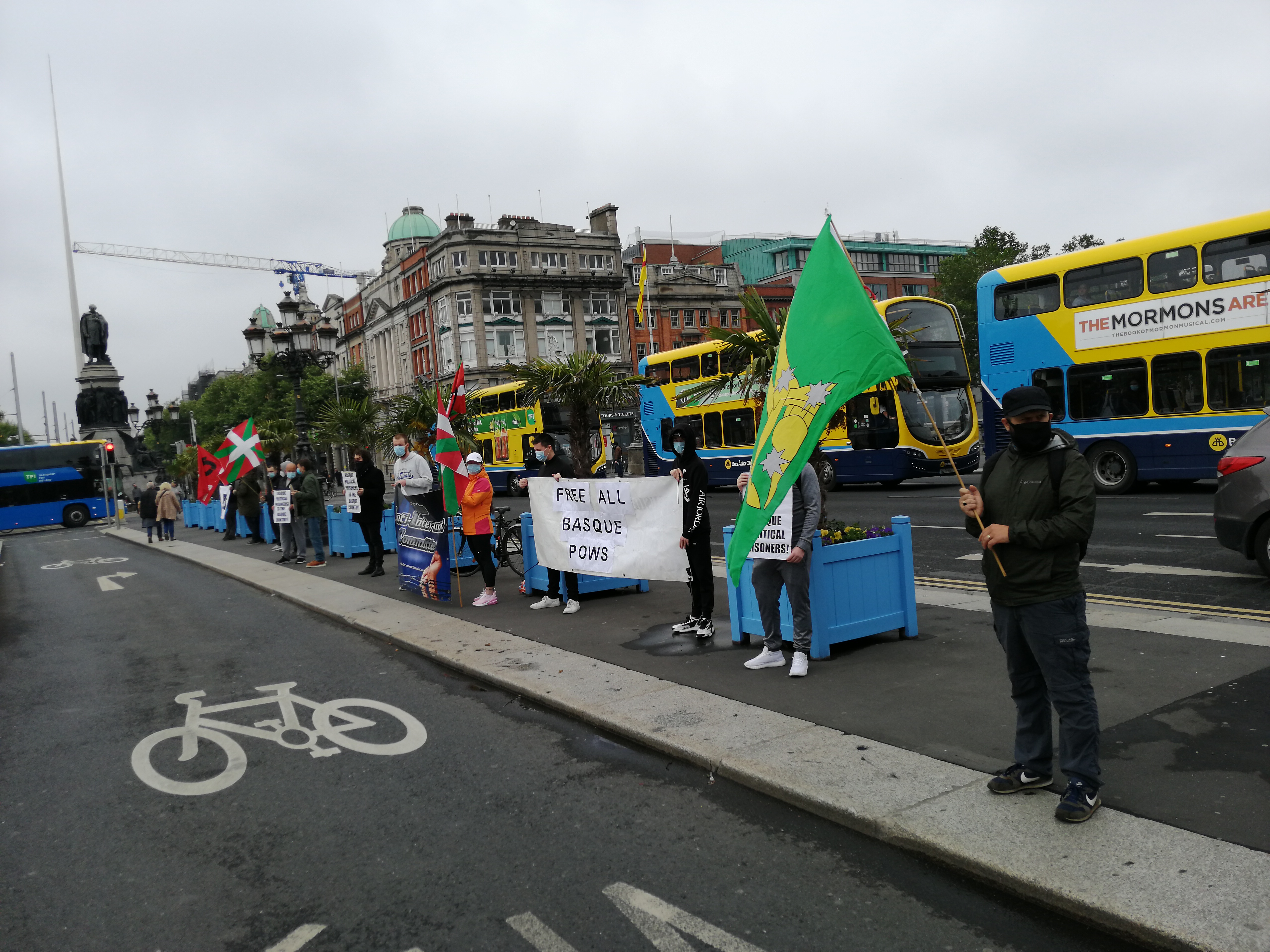
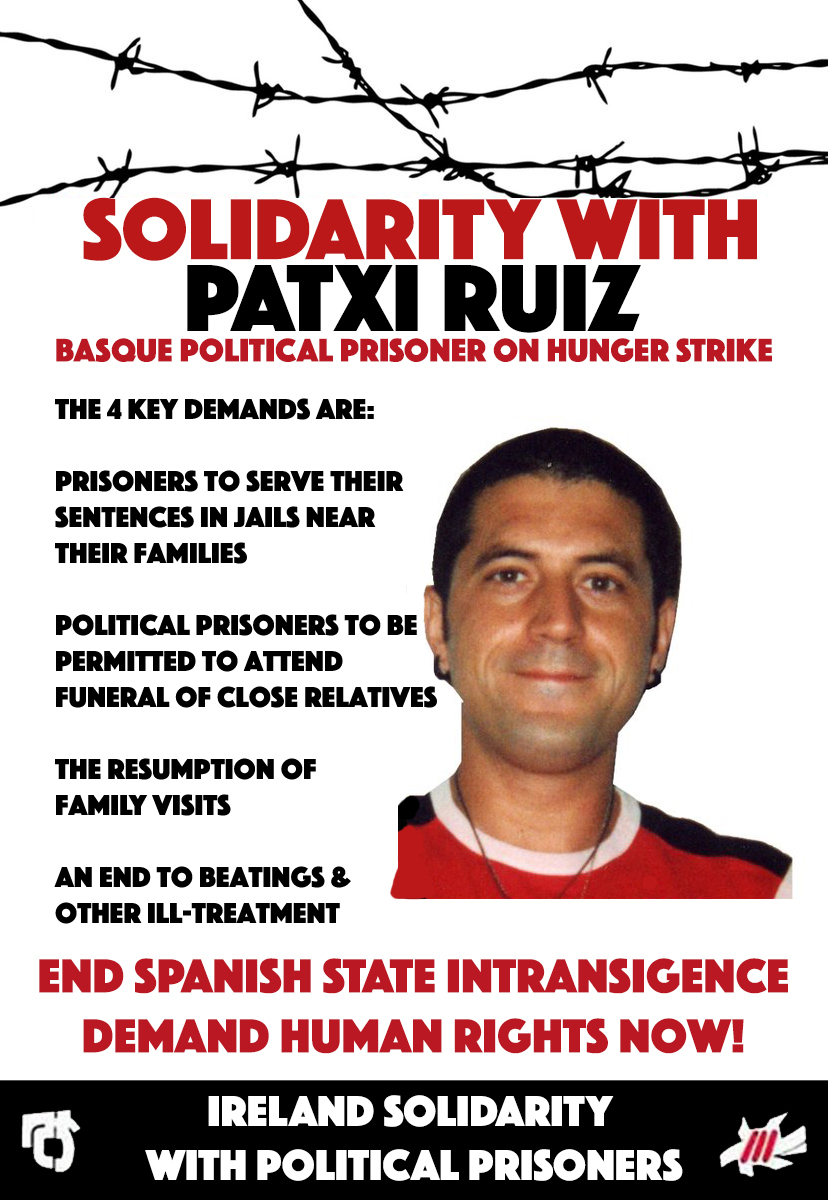
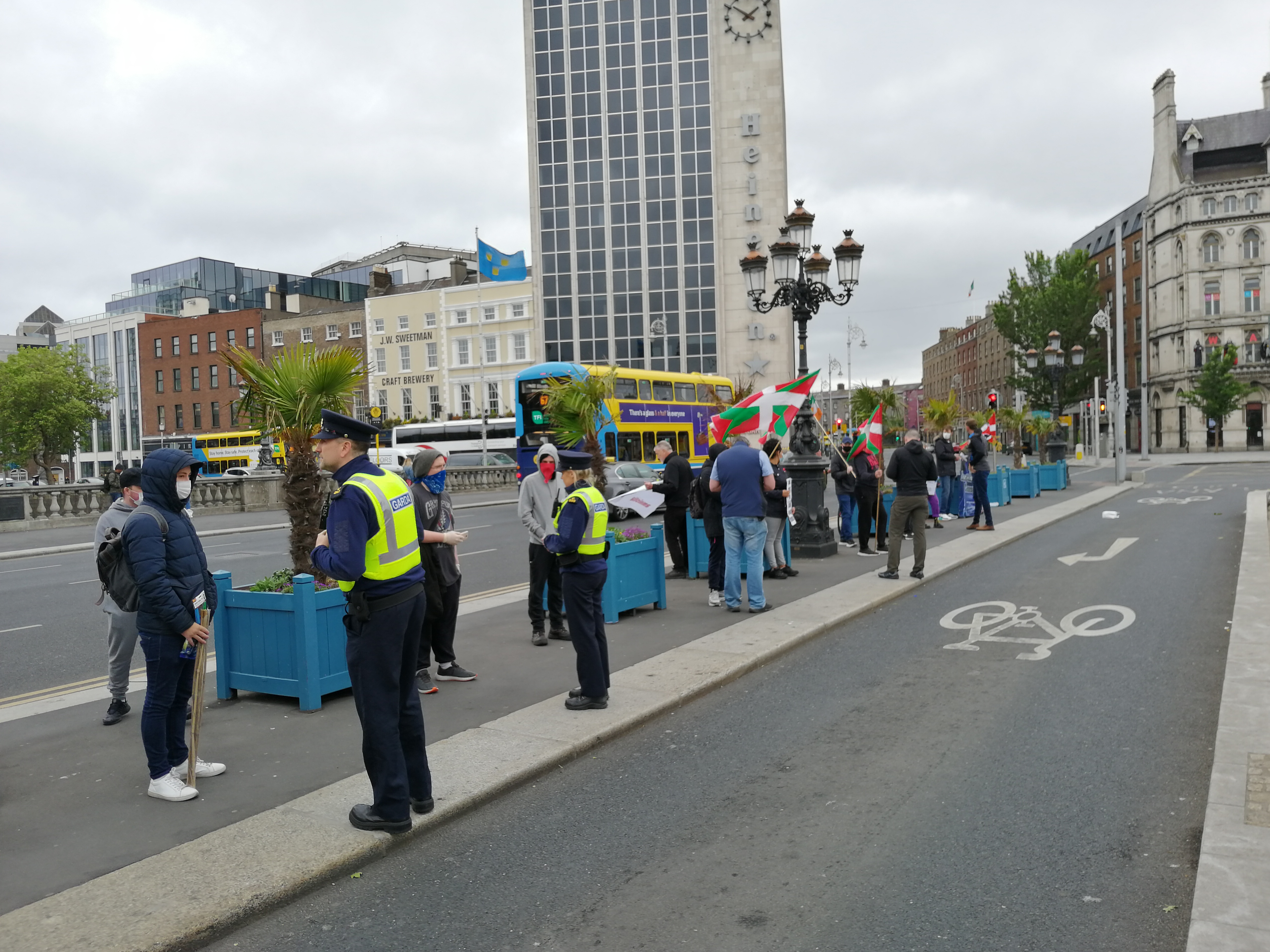

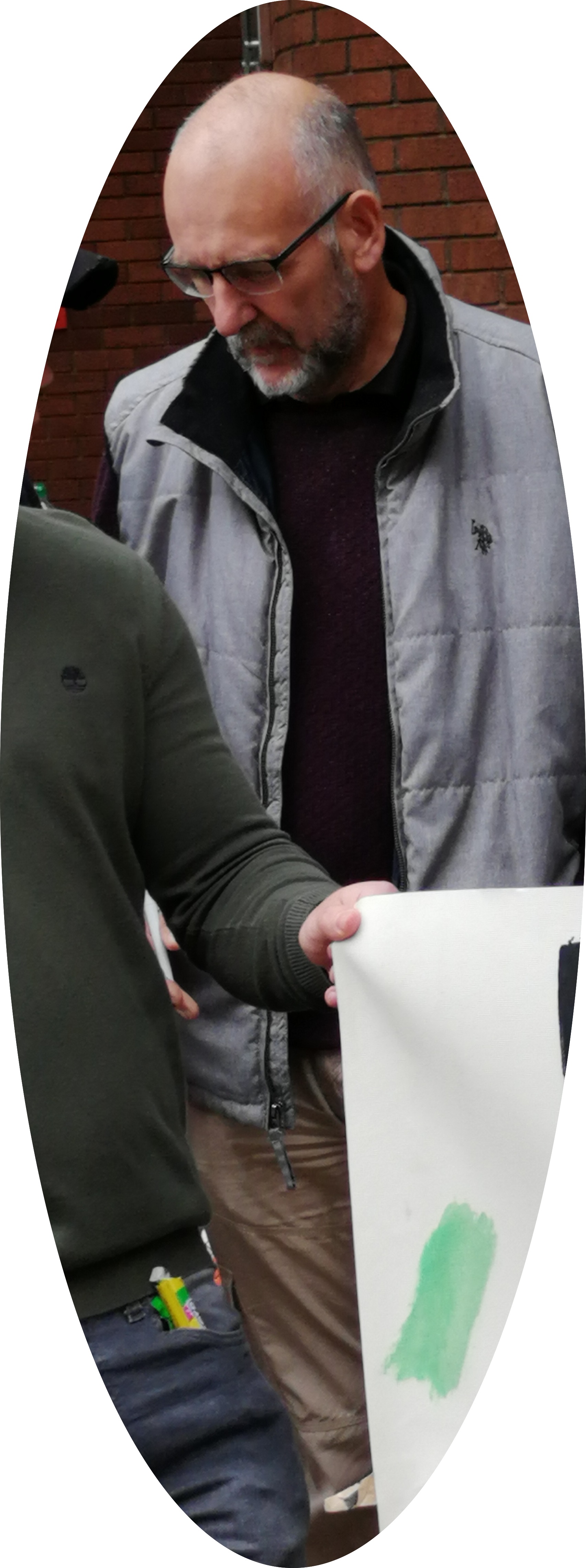
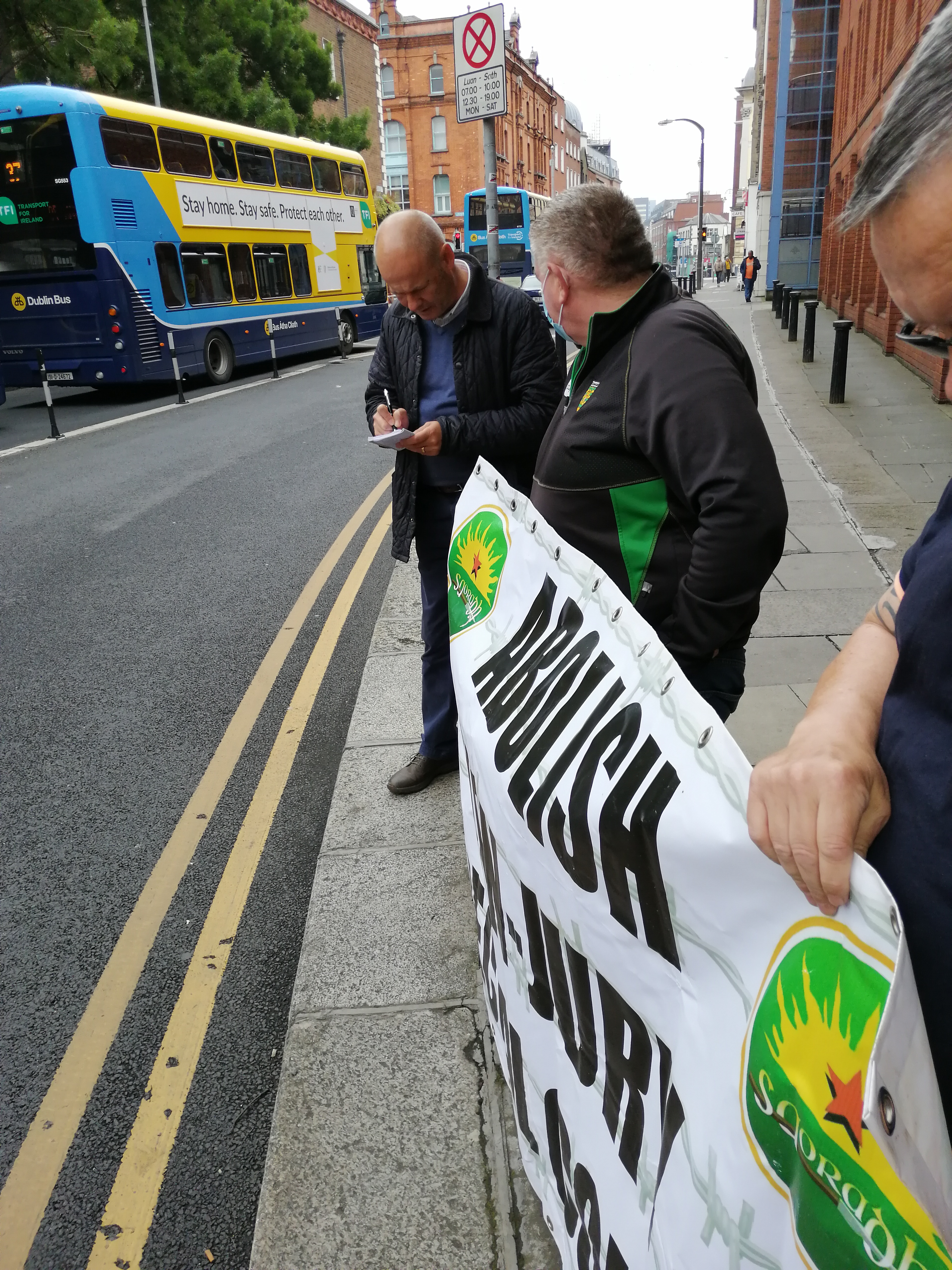


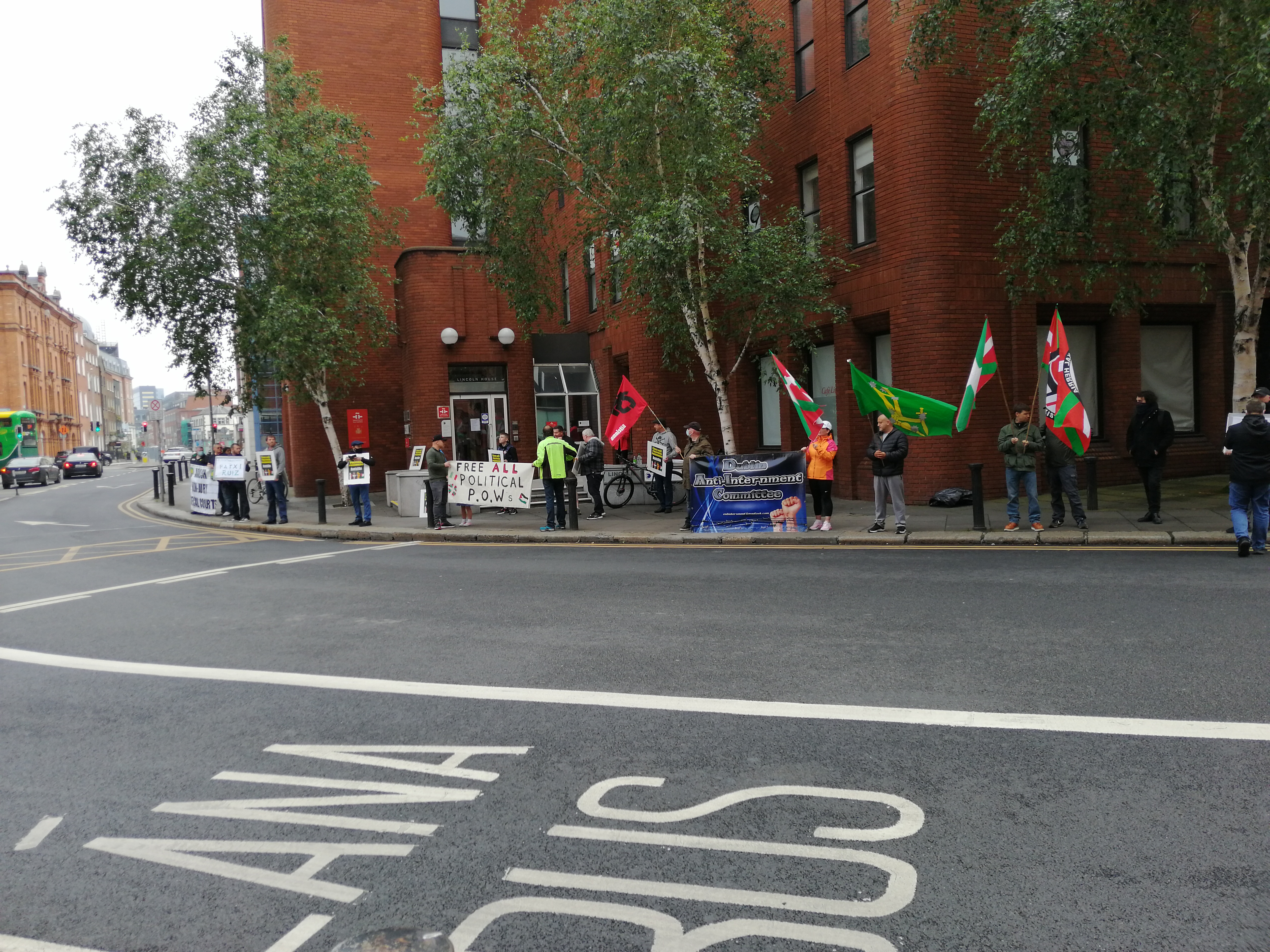


 rebelbreeze